As many of you know, I grew up in an area that’s now called the Silicon Valley. Back in my day, that appellation hadn’t yet been coined. But then Steve Jobs changed all that.
I heard a lot about Steve Jobs throughout my time in high school. He had graduated from Homestead just a few years before I arrived there, and my electronics instructor, Mr. McCollum, endlessly told us about how he (McCollum) had taught Jobs everything he knew. He implied that if we would pay attention in class, we too could become like Jobs. (Steve Wozniak also took classes from McCollum, and Wozniak actually does credit McCollum in his biography.)
Mr. McCollum was indeed a good teacher, but he was a cranky old coot. He was firmly stuck in the past, insisting that we learn to use slide rules to do calculations, even though everyone now owned a calculator. (“But what if the batteries on your newfangled calculator goes dead?” he’d ask. Umm, maybe I’d buy new ones?) He also kept a newspaper clipping pinned to the bulletin board of his classroom, that told the story of a student who got his long hair caught in some machinery in shop class, and had his scalp ripped off his head. “Cut your damn hair” was his not-so-subtle message.
So, reflecting on all the changes to the Silicon Valley when I awoke in Sunnyvale this morning, I made a pilgrimage to a place a few blocks from my old high school. And I saw this:
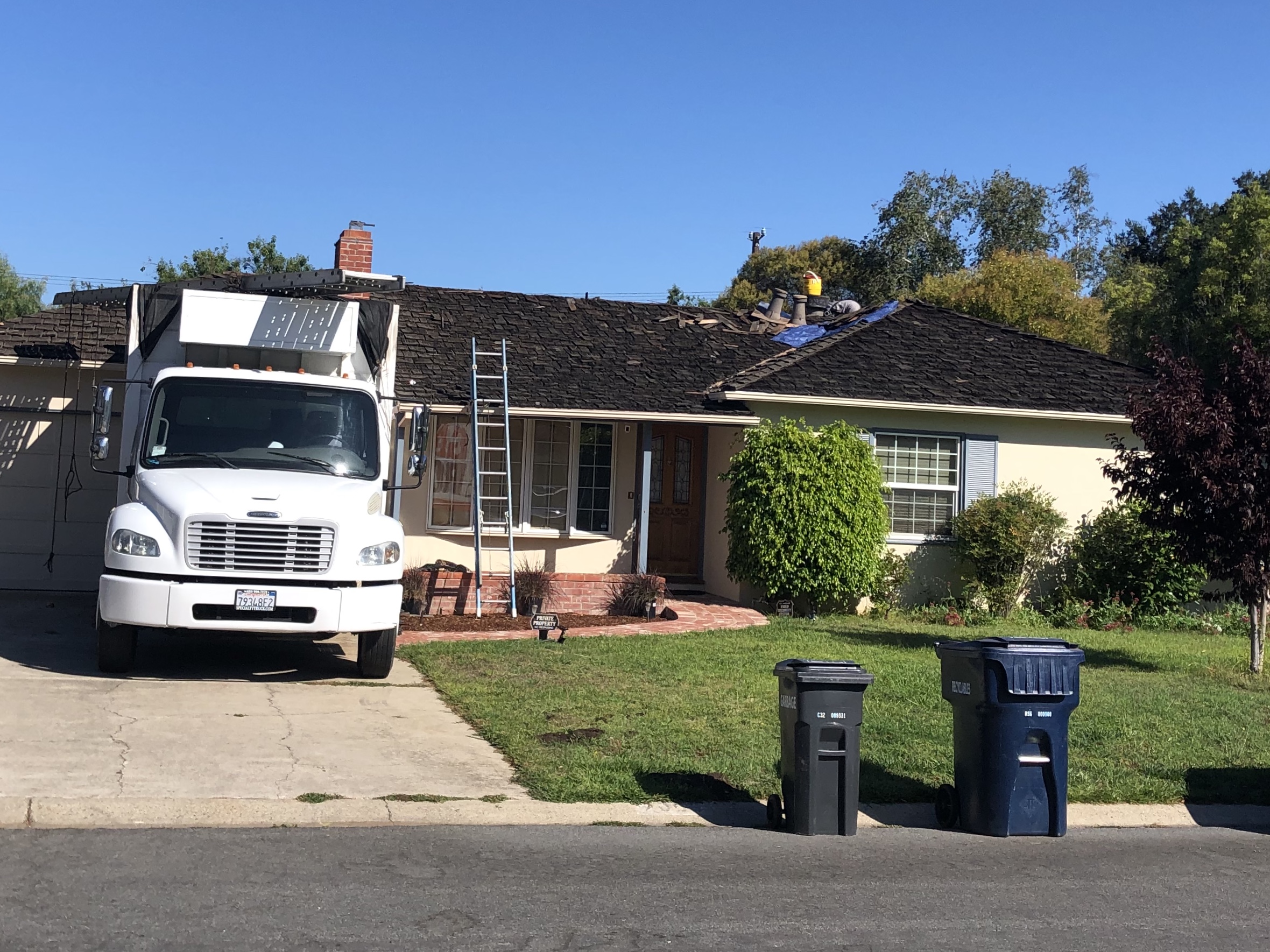
For those of you who don’t recognize it, this is the house where Steve Jobs grew up. It’s where he and Wozniak founded Apple and built the first Apple computer. I’m assume the roof repair was made necessary because iphone prices went through the roof. Haha.
I got back on the road and made my way north along the east bay to the town of Niles, which is an old railroad district that’s actually within the city limits of Fremont. Like many old and small towns, Niles tries to capitalize on its historic past. By accident, I stumbled upon what I think must be the country’s most boring historic building: The Vallejo Adobe. In 1842, the administrator of the local mission, Don Jose de Jesus Vallejo, built this place. That pretty much sums up its history. It’s a small, one-room building that’s used primarily for school field trips. I peeked inside this morning while some kids were having a lesson. The building is bare, except for some classroom chairs and tables.
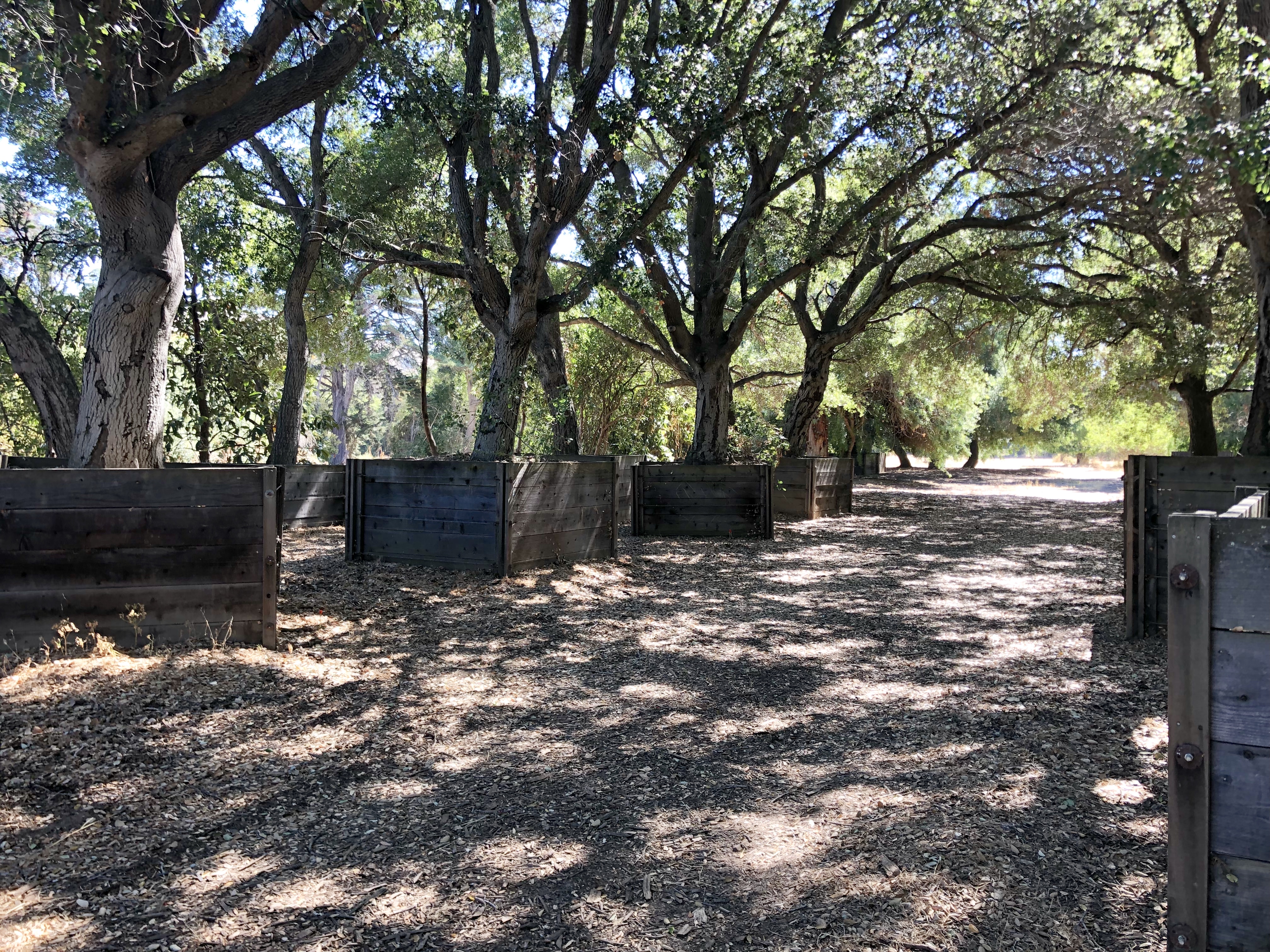
But next to the Adobe of Amazement is an old tree nursery that, as far as I can tell, was abandoned in the 1960s and became the California Nursery Historical Park. The notable thing about this place is a number of the saplings that had been in wooden boxes when the nursery was abandoned eventually took root, and still stand where they’d been left. The Parks service has even maintained and occasionally expanded those original boxes because…well, there’s really no reason to do it. But it looks kind of interesting.
Back to my discussion about how Niles capitalizes on its history. There are really two big themes here. One is silent movies. Essanay Studios was one of the first movie companies in the west, and it was based in Niles. Charlie Chaplin filmed some of his silent movies here, and today statues and signs and posters depicting him in his “little tramp” getup line the main street in the business district. There’s also a silent movie museum and a silent movie theater. Sadly, these were closed when I came through today.
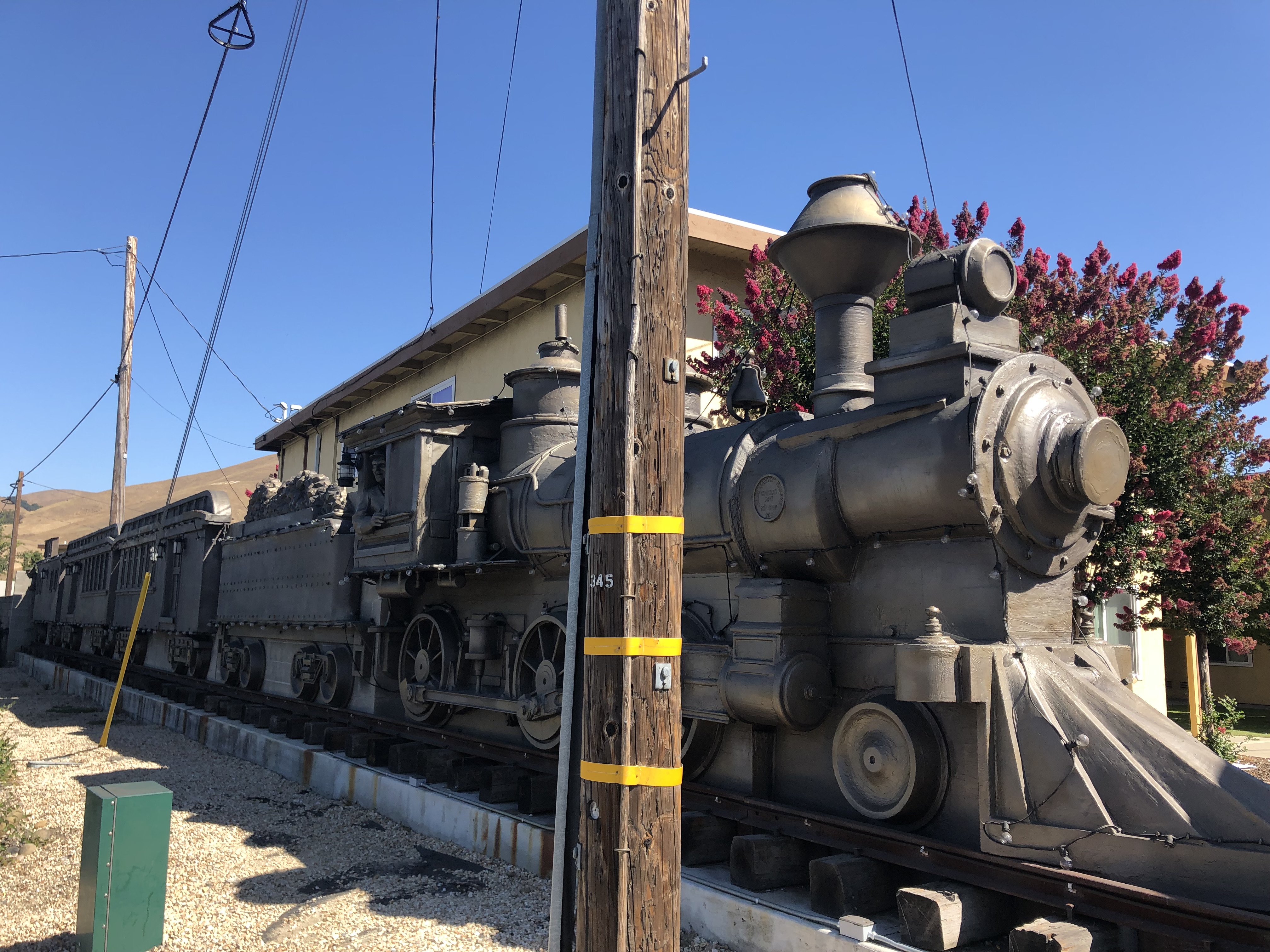
Niles’ other claim to fame is its railroad heritage. Niles is a railroad town, and the crossroads of two major rail lines. It sits near the western end of the First Transcontinental Railroad, and as such saw lots of traffic going to and from San Francisco. Railroad references abound, and are even more plentiful than Charlie Chaplin figures. One of the most recent installations is this half-size steam train sculpture, installed in 2012:
Passenger trains don’t come through Niles much anymore, but their depot does keep moving. I came across the depot this morning in a plaza near the middle of town. It’s a beautiful, colonnade-style depot built in 1901. Check this thing out:
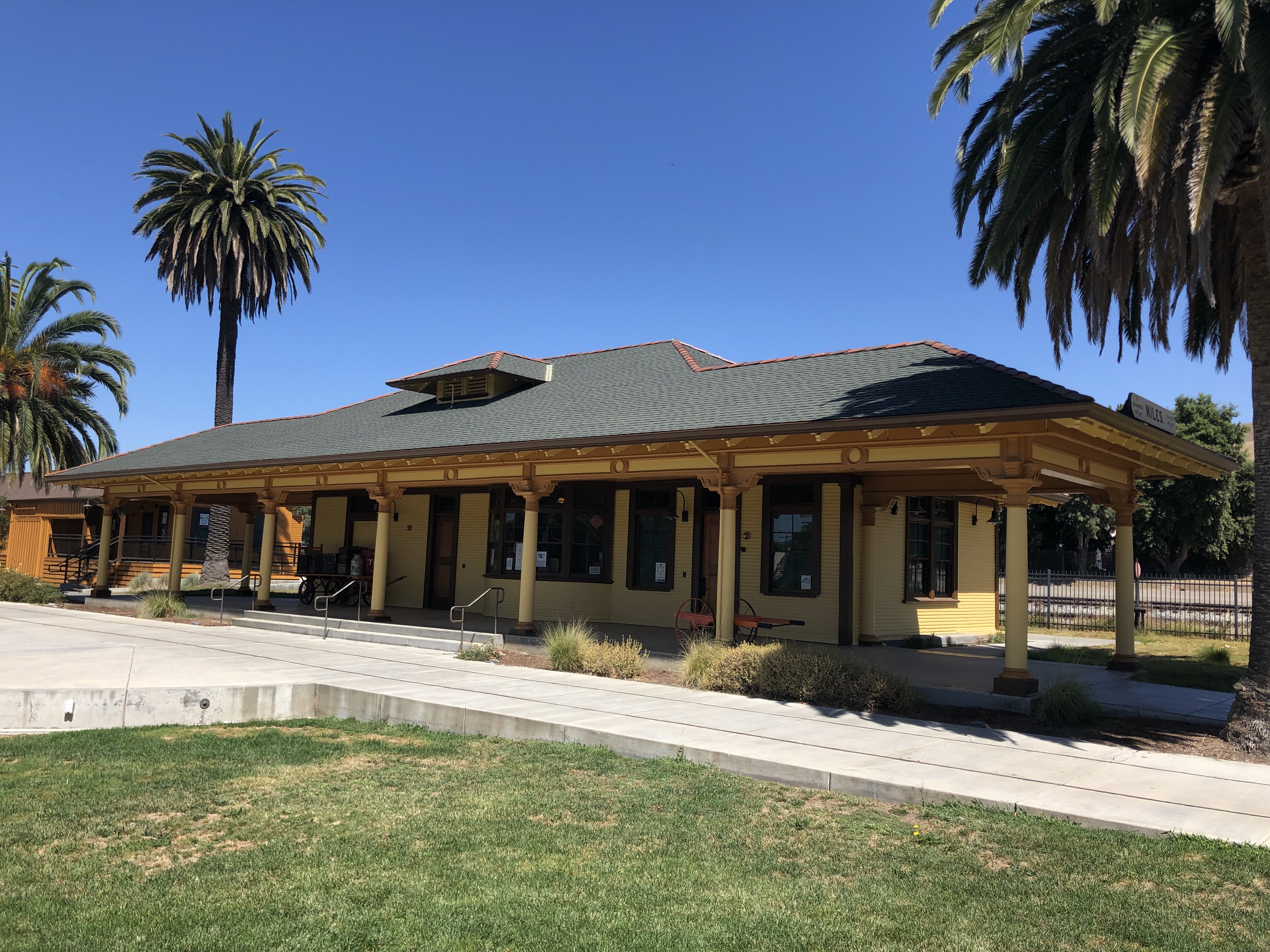
So, here’s the story of the peripatetic depot: Built in 1901, the depot was closed by the Southern Pacific in the 1970s. SP wanted to demolish it in the 1980s in order to make way for some new development on the site. But local advocates raised funds to keep and restore the building. SP agreed to donate the building to the city….so long as they moved it to a different location so the new development could proceed. The city upheld its end of the bargain, moving the entire building a few blocks away. For a variety of reasons, SP never ended up developing the land, and 25 years later the city decided to move the station back to its original location. The station has been “home” since 2009, and now serves as a museum.
Meanwhile, after SP closed the depot and abandoned rail service through Niles, it tore up the tracks. The good people of Niles, feeling their history slipping away, set about the business of re-laying the tracks and resuming rail service to Sunol, on their newly-created Niles Canyon Railway. It runs dinner trains and other excursions frequently.
Incidentally, if you have any interest in the railroad history of Niles, or if you just want to clear up some of the confusion and errors I’ve perpetuated in this blog, check out my Uncle Ed’s website (the Dome of Foam), which is the definitive site for all things Southern Pacific. You can get to some of the Niles stuff here: http://wx4.org/to/foam/sp/niles/tower.html
Now, given that I didn’t have much of an agenda today, I figured I’d follow the Niles Canyon Railway’s route through Niles Canyon up to Sunol. Recall that this had originally been part of the transcontinental route (which at that time, in the late 1800s, was run by Southern Pacific’s predecessor, the Central Pacific). The tracks have been through some realignments since that time, and on my ride I noticed a truss bridge from 1906 and a tunnel from 1909.
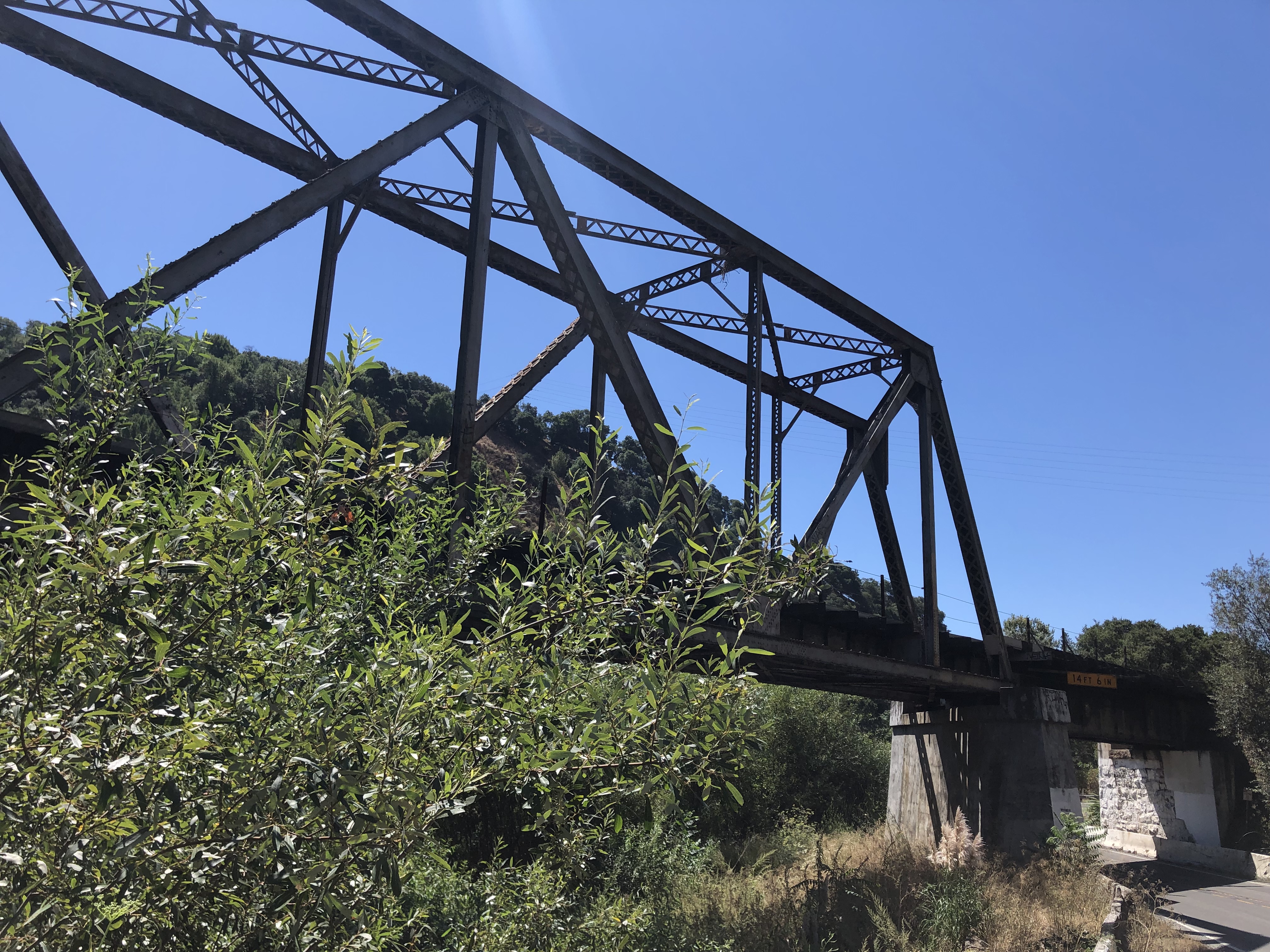
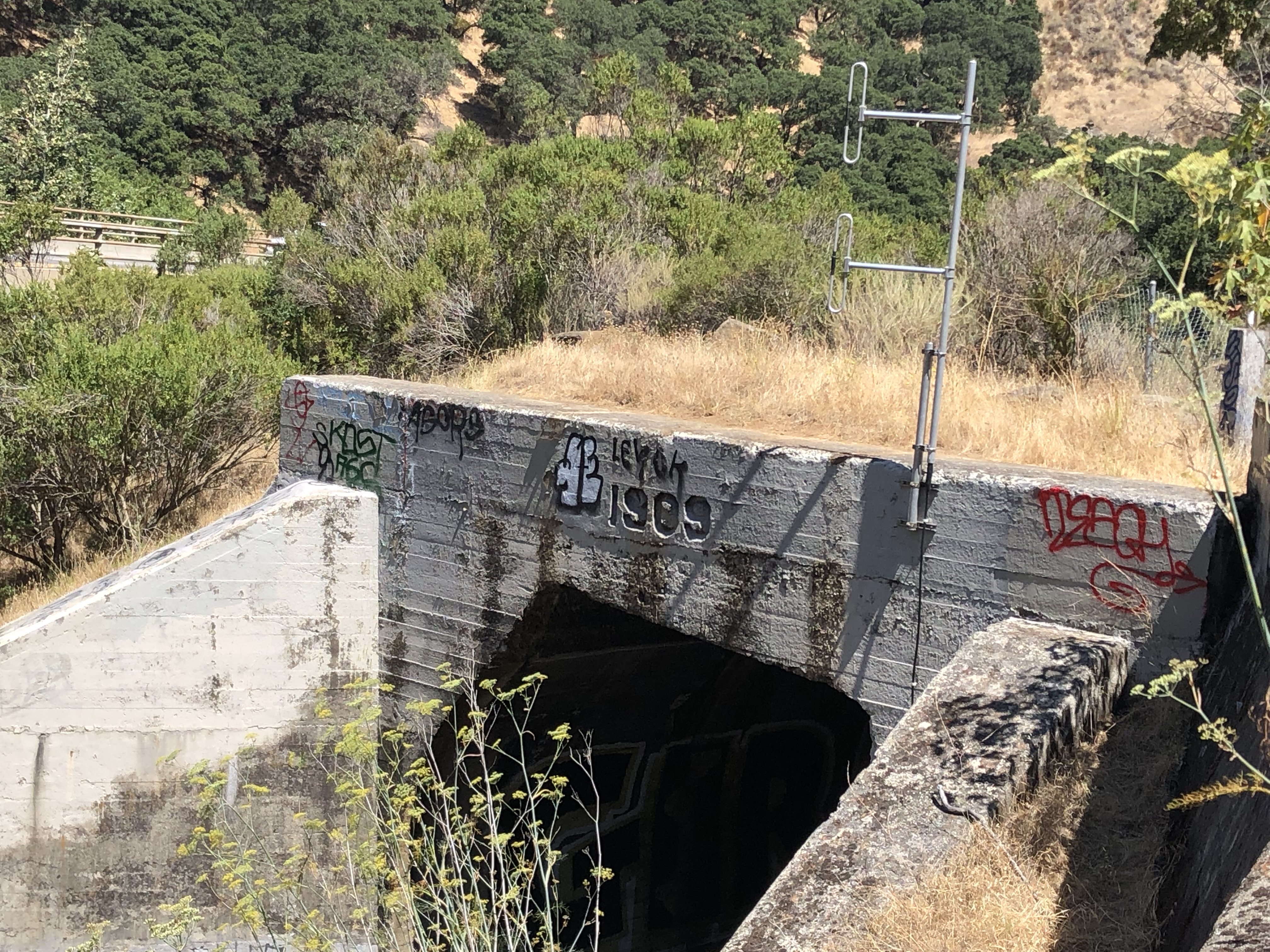
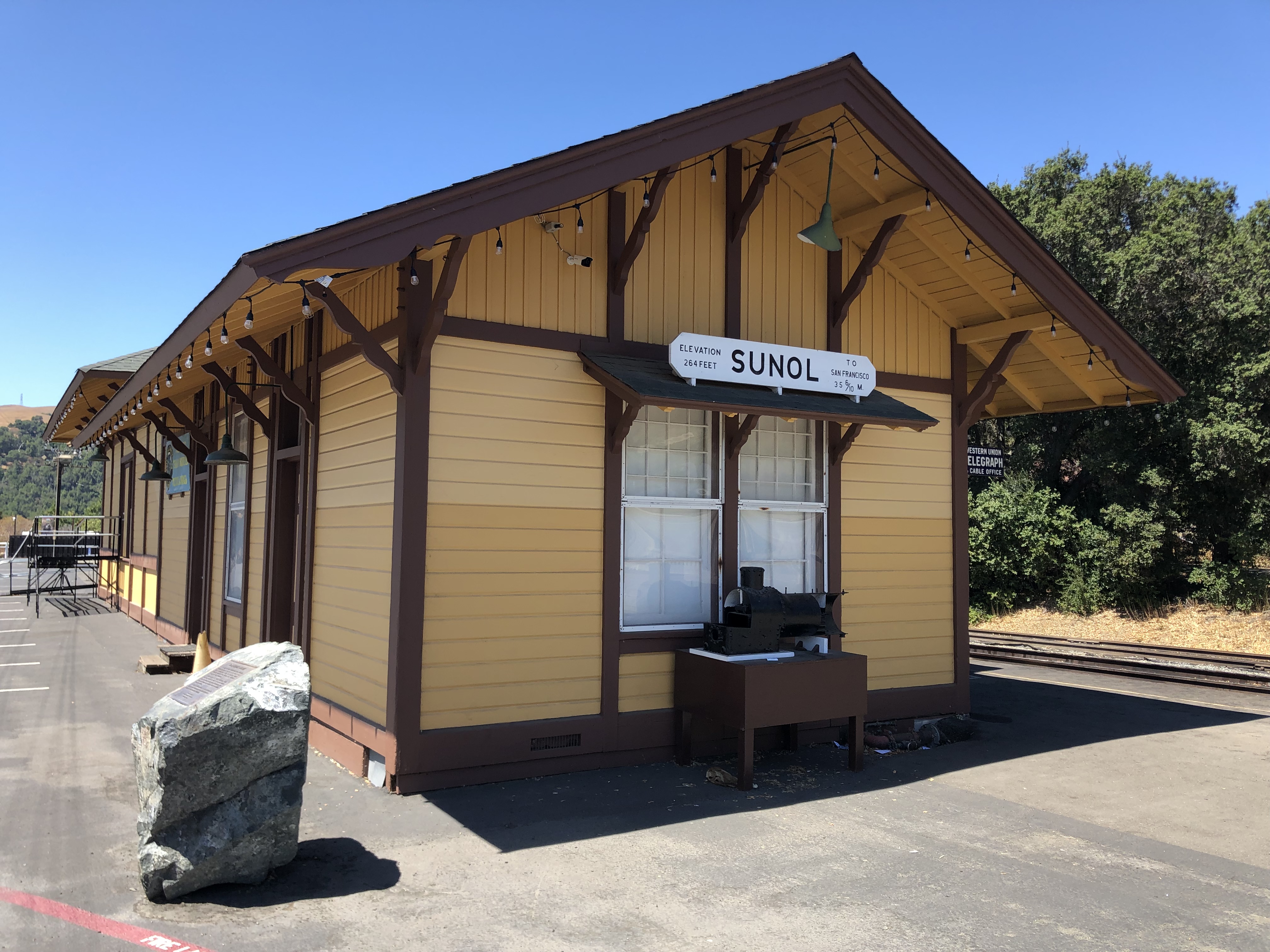
Arriving at Sunol after about eight winding miles, I encountered the old depot that dates back to 1884. It’s not as grand as the Niles depot at the other end, but it gets points for surviving 135 years.
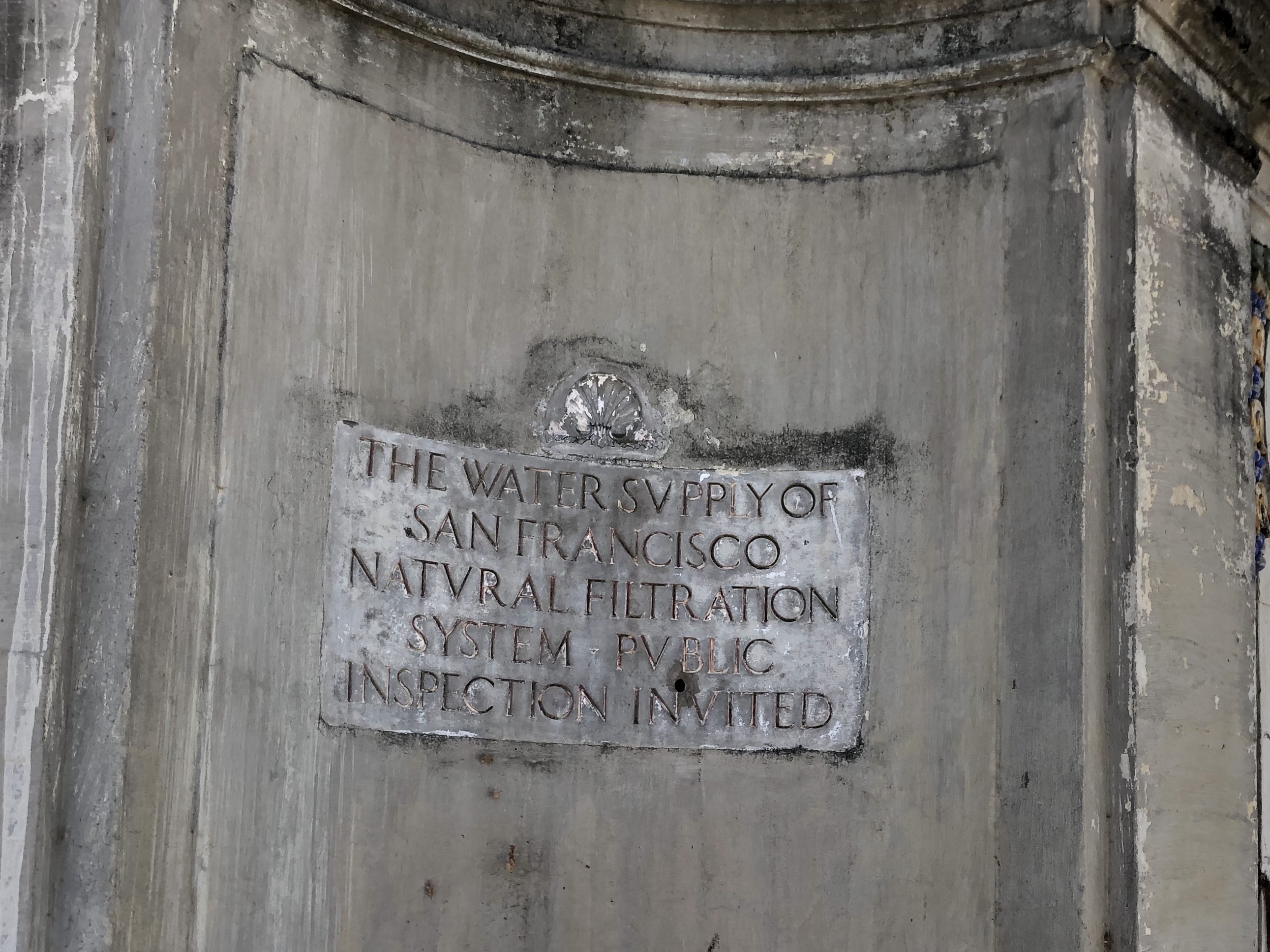
As I left the town of Sunol, I noticed this gateway entrance with signage that seemed out of place: “The Water Supply of San Francisco. Natural Filtration System. Public Invited.” San Francisco is 40 miles away, across the bay. What’s this about?
Intrigued, and always on the lookout for old water mysteries, I passed the gateway and saw, far behind a fence, this structure that looks like an ancient roman temple.
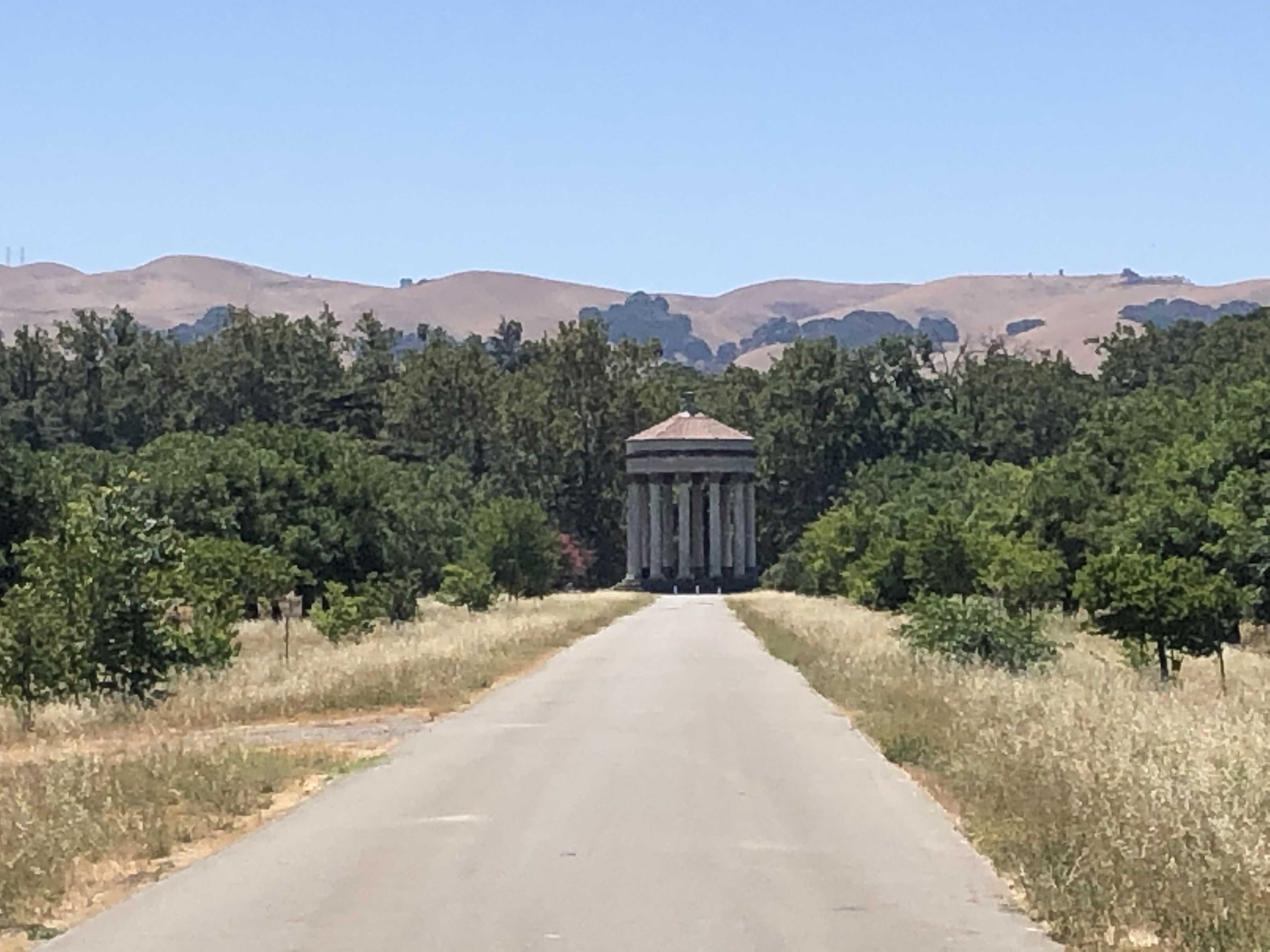
Turns out this is a “water temple” that was built in 1910 by a private company that provided water service to San Francisco. Under the Temple, three water pipelines converge in a huge cistern before heading out through an aqueduct and across the bay to San Francisco. Water flowing through the Temple provided fully half of San Francisco’s water supply until Hetch Hetchy came online in 1934. San Francisco bought the Temple outright in 1930, hence the signage.
I wasn’t able to get close to the Temple because it’s currently behind a fence as it undergoes renovation through 2022. But seeing it, even from afar, once again “whetted” my appetite for exploring major water infrastructure. Later in this trip I plan to see the headwaters of the Los Angeles Aqueduct in the Owen’s Valley.
And speaking of headwaters….
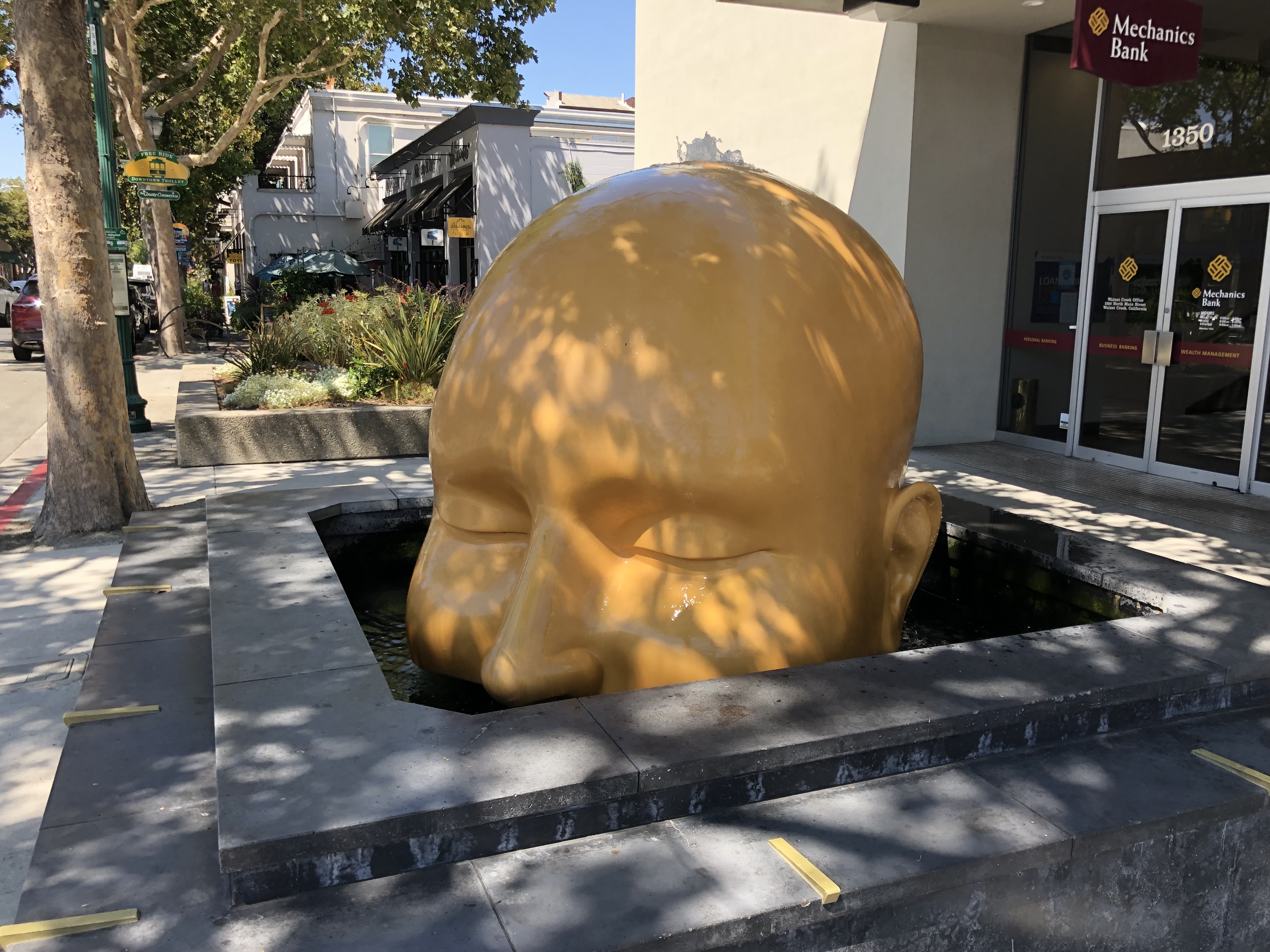
Tomorrow I set out on California Route 4, heading east beyond Stockton.
BREW OF THE DAY
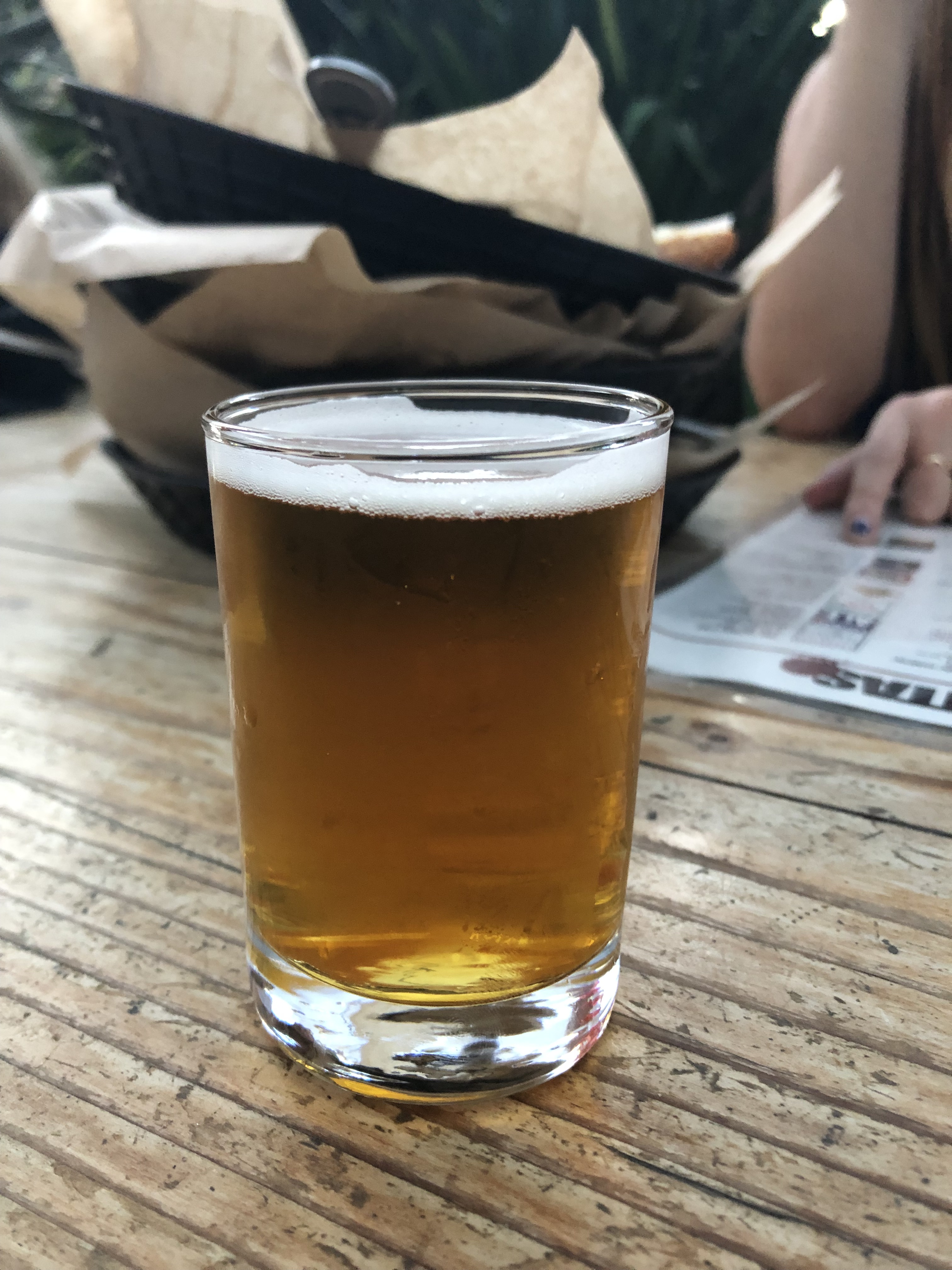
I stopped in Benicia for the night at the home of my son Ian and daughter-in-law Katelyn. We had dinner at Lagunitas Brewing Company in Petaluma, where I tried their Secret Agenda w/Coffee and Cacao. Before I tell you that it was the fourth beer I tried there tonight, let me tell you that (1) they were just 5 ounce “taster” pours, and (2) I wasn’t driving. Anyway, the first three beers were entirely forgettable. But the Secret Agenda hit Nectar of the Gods status for me. The “Secret Agenda” starts with a pale lager (recall that I generally believe lager to be swill), but this was more of a strong bock, with 7.2 ABV. It’s a smooth and light (and strong) base beer, but then it’s infused with Brazilian coffee and (most notably) cacao nibs. The lager really gets out of the way to let the darker, stronger tastes of the coffee and cacao do their thing. If you can find one, grab it!

 Chasing Phantoms