The day started out in Angels Camp, the first town of any interest as Highway 4 starts climbing into the foothills.
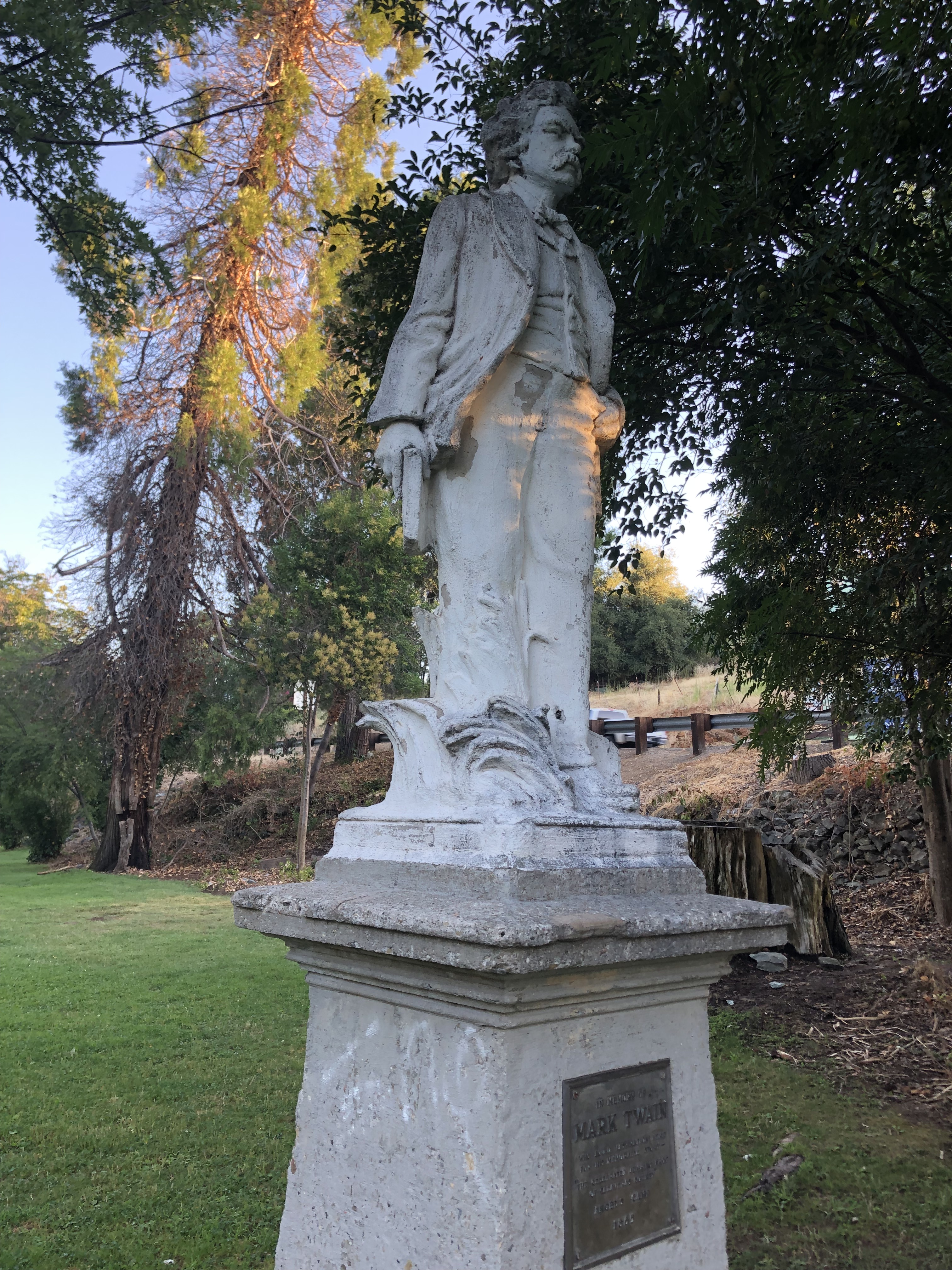
Remember my musings about how towns like to capitalize on some notable aspect of their history? As with Niles and Charlie Chaplin. [note: at the end of this post, I’ve including some more information on Niles that Uncle Ed sent me by email last night.] Or (as I noted on my US Route 60 blog a few months ago), Quartzite, AZ and its camels. Well, Angels Camp has its frogs. In 1865 Mark Twain set his breakout story about “The Celebrated Jumping Frog of Calaveras County” in Angels Camp. The town has capitalized on this connection by holding its annual Jumping Frog Jubilee each spring. In 1944 Warner Bros premiered its new movie, “The Adventures of Mark Twain,” at the Jubilee. WB also donated a statue of Twain, which I visited this morning. The statue originally had three bullfrogs set at Twain’s feet, but a gang of Hells Angels sawed them off while terrorizing the town in 1957. I’m not making this up.
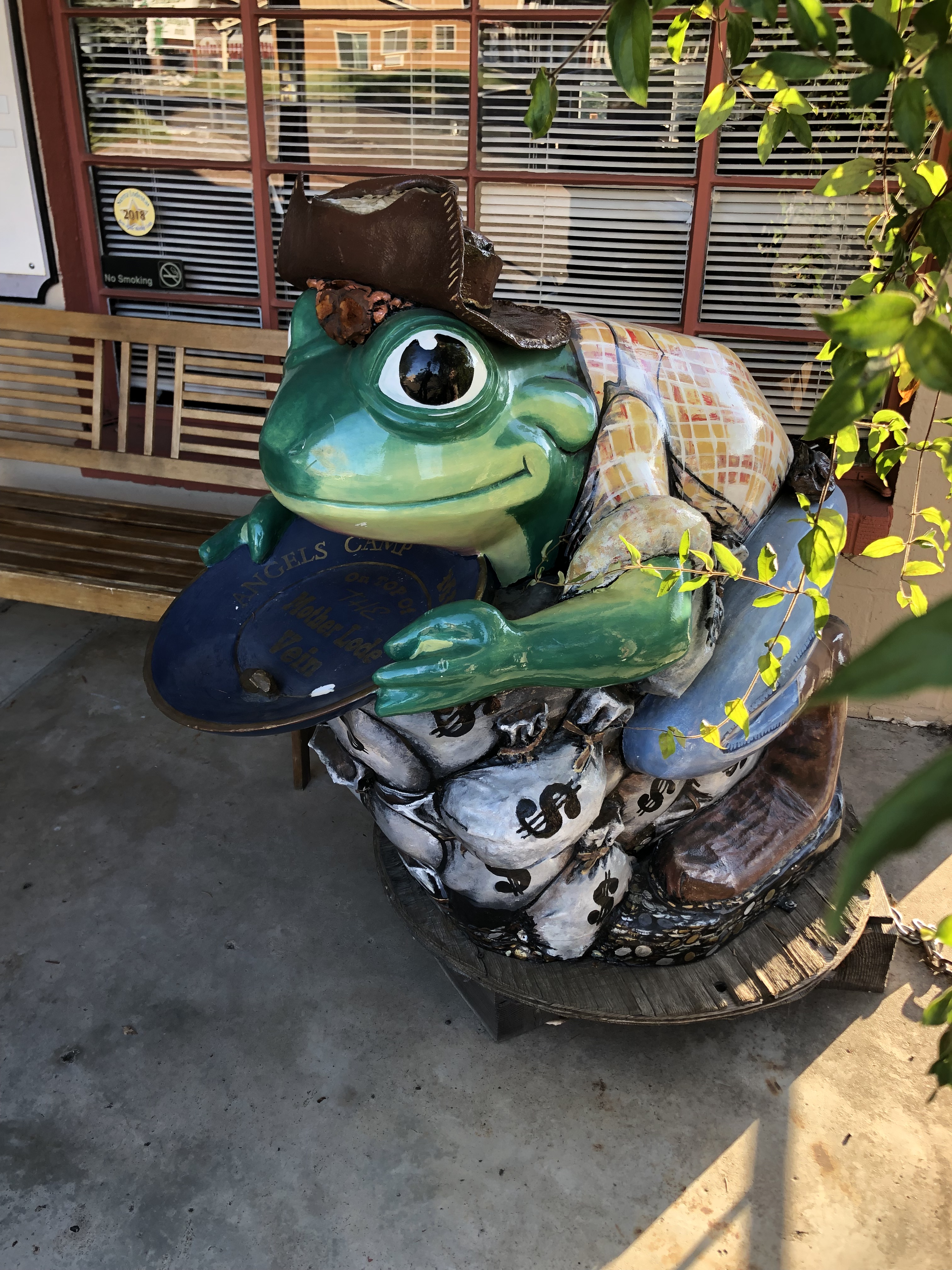
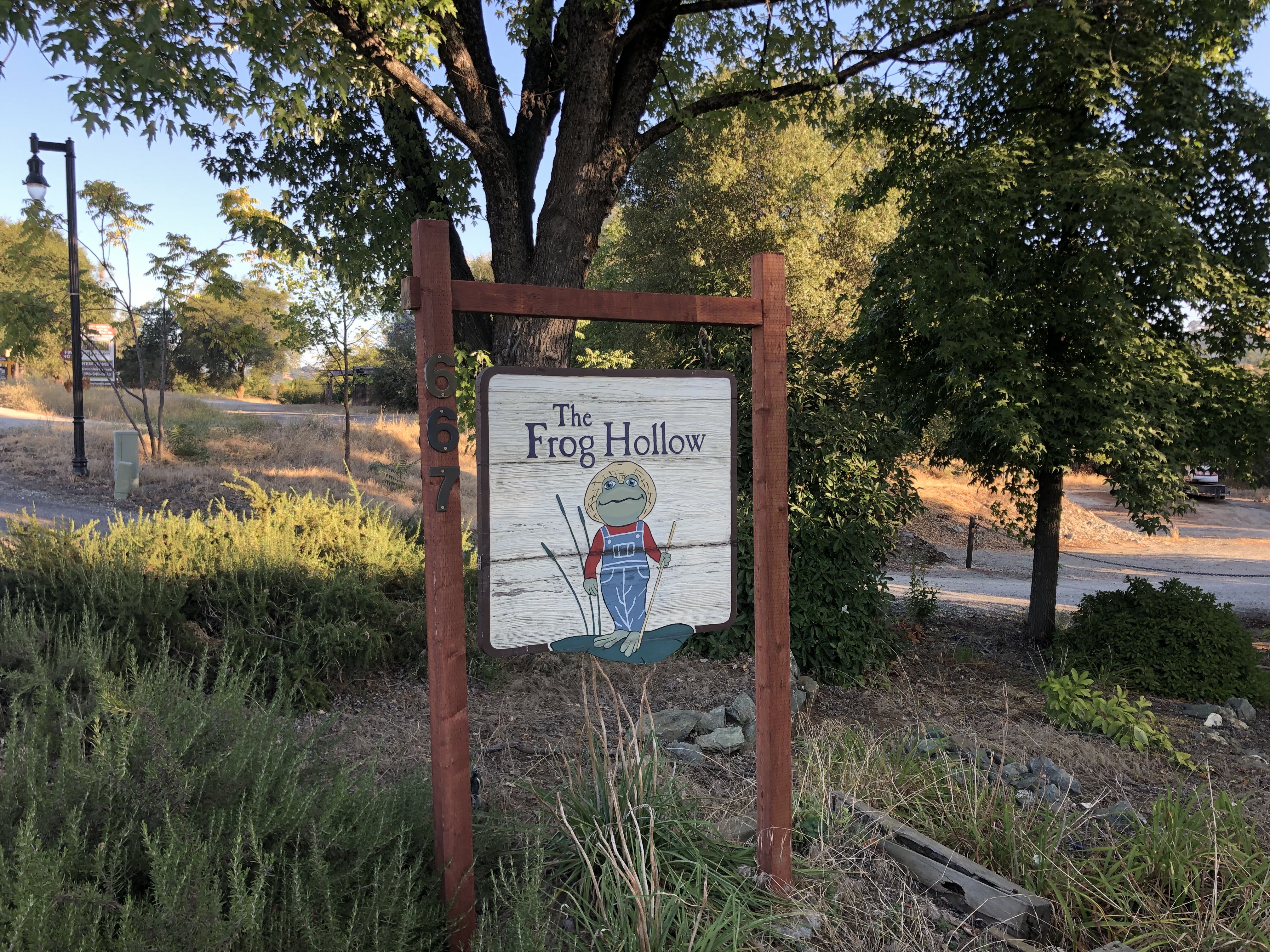
Today it seems that every business uses “frog” in its name or has a frog on its sign. Even the local high school’s mascot is a bullfrog.
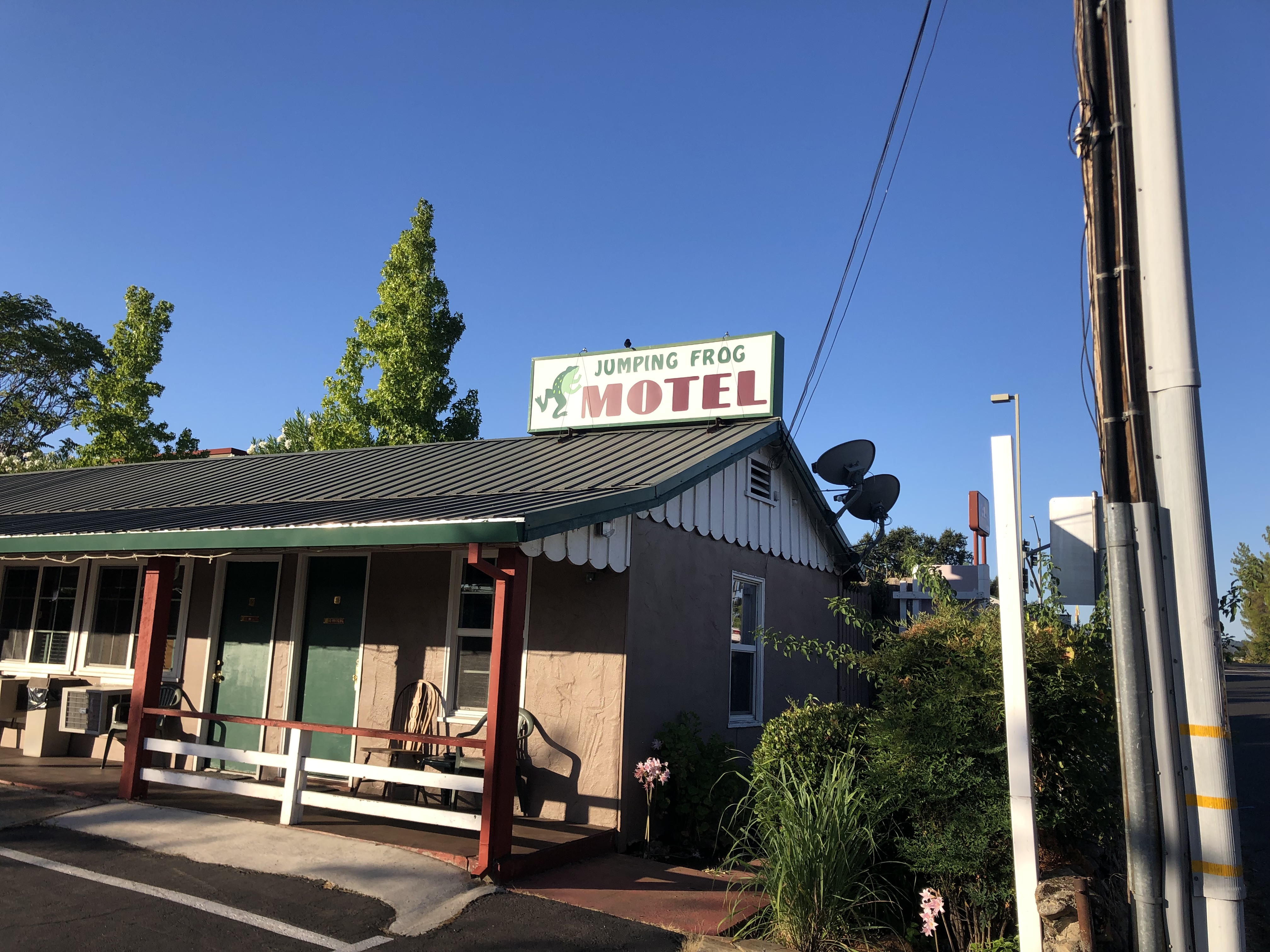
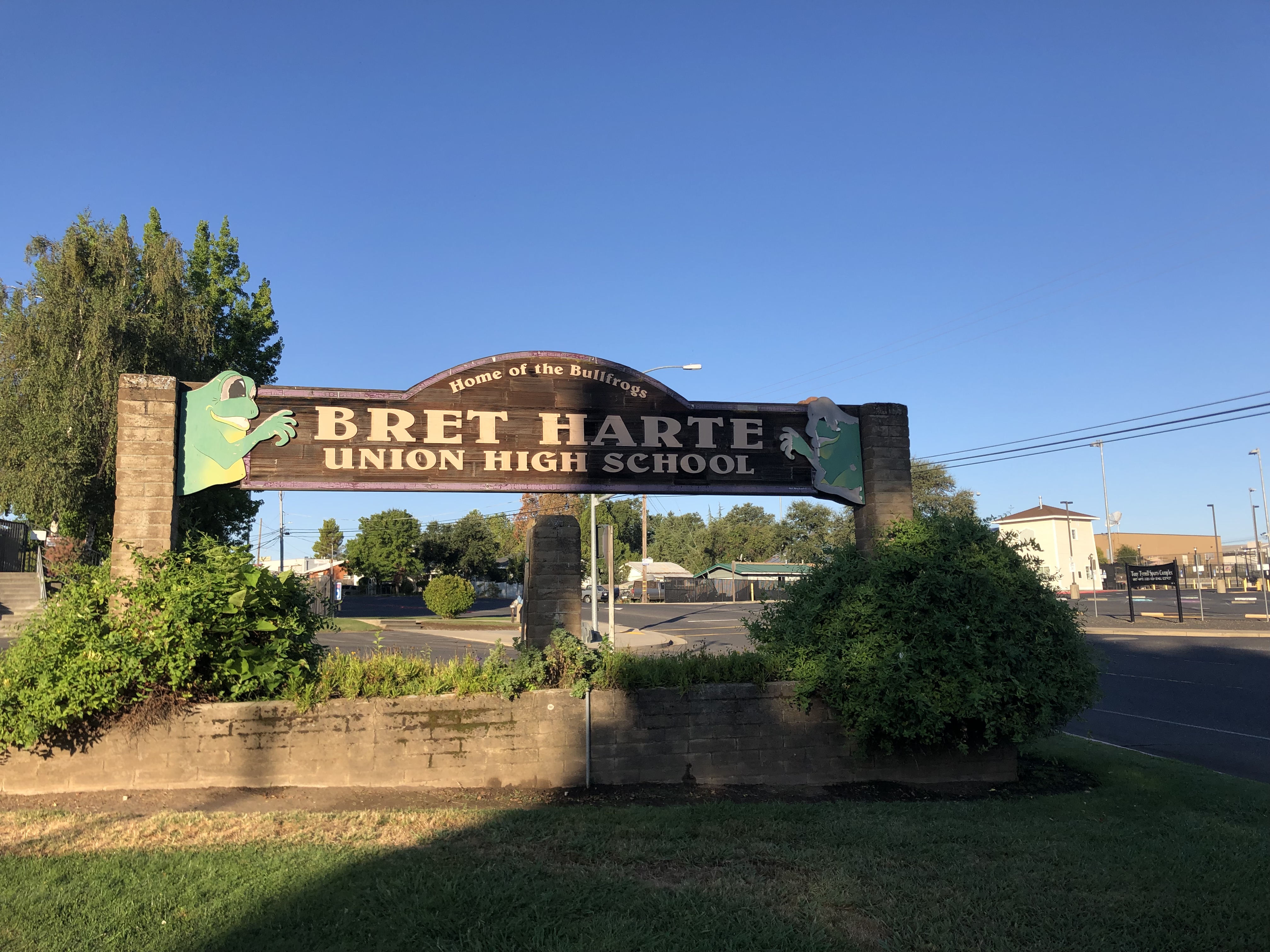
After making my Tour of the Frogs, I got back onto Route 4 and took a very pleasant ride up into the mountains. Highway 4 is really a study in contrasts. It begins in the Bay Area, with traffic and multiple lanes and urban crowding. But by the time you get into the hills it becomes a winding, two-lane road through beautiful country with almost no traffic.
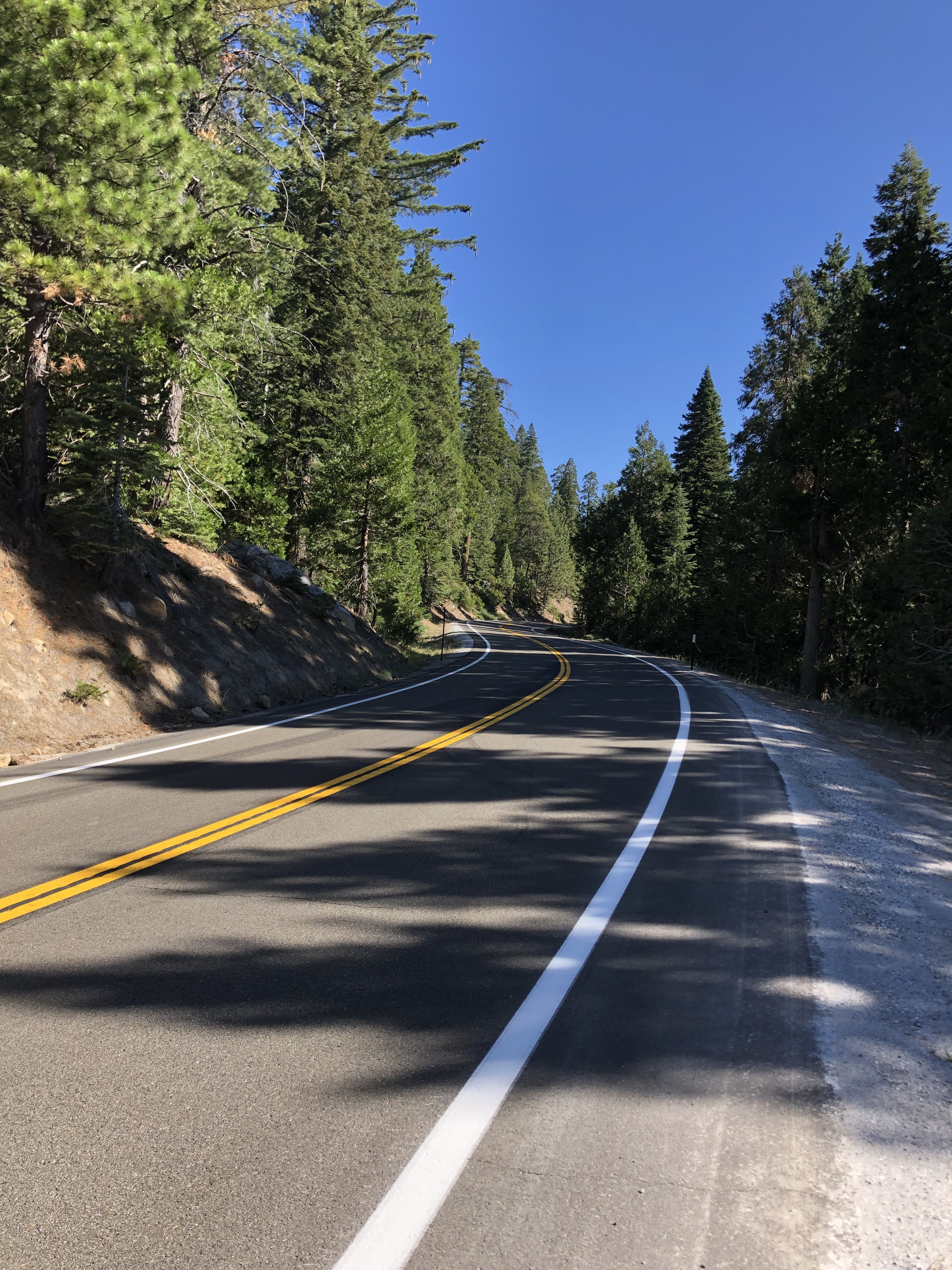
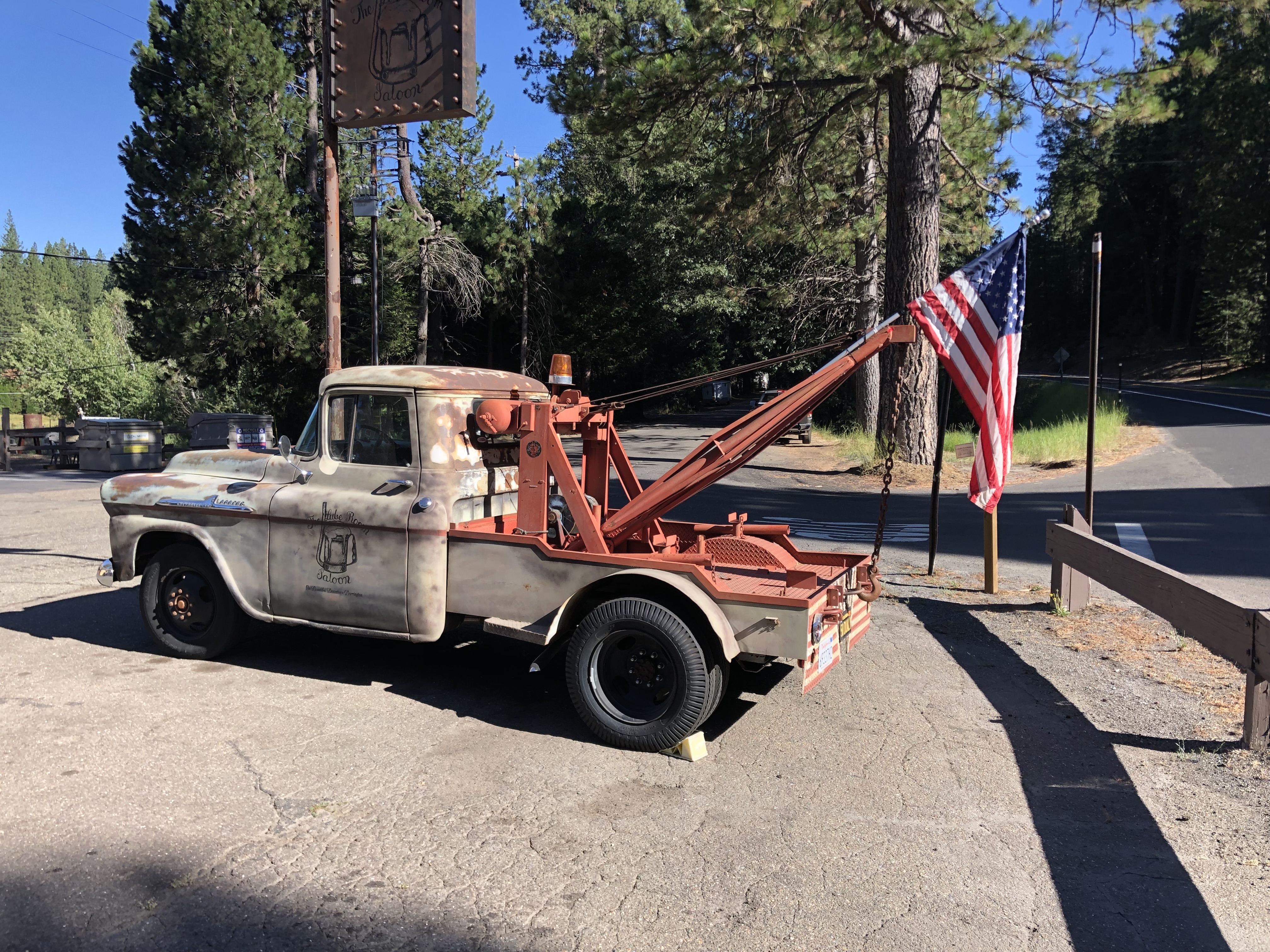
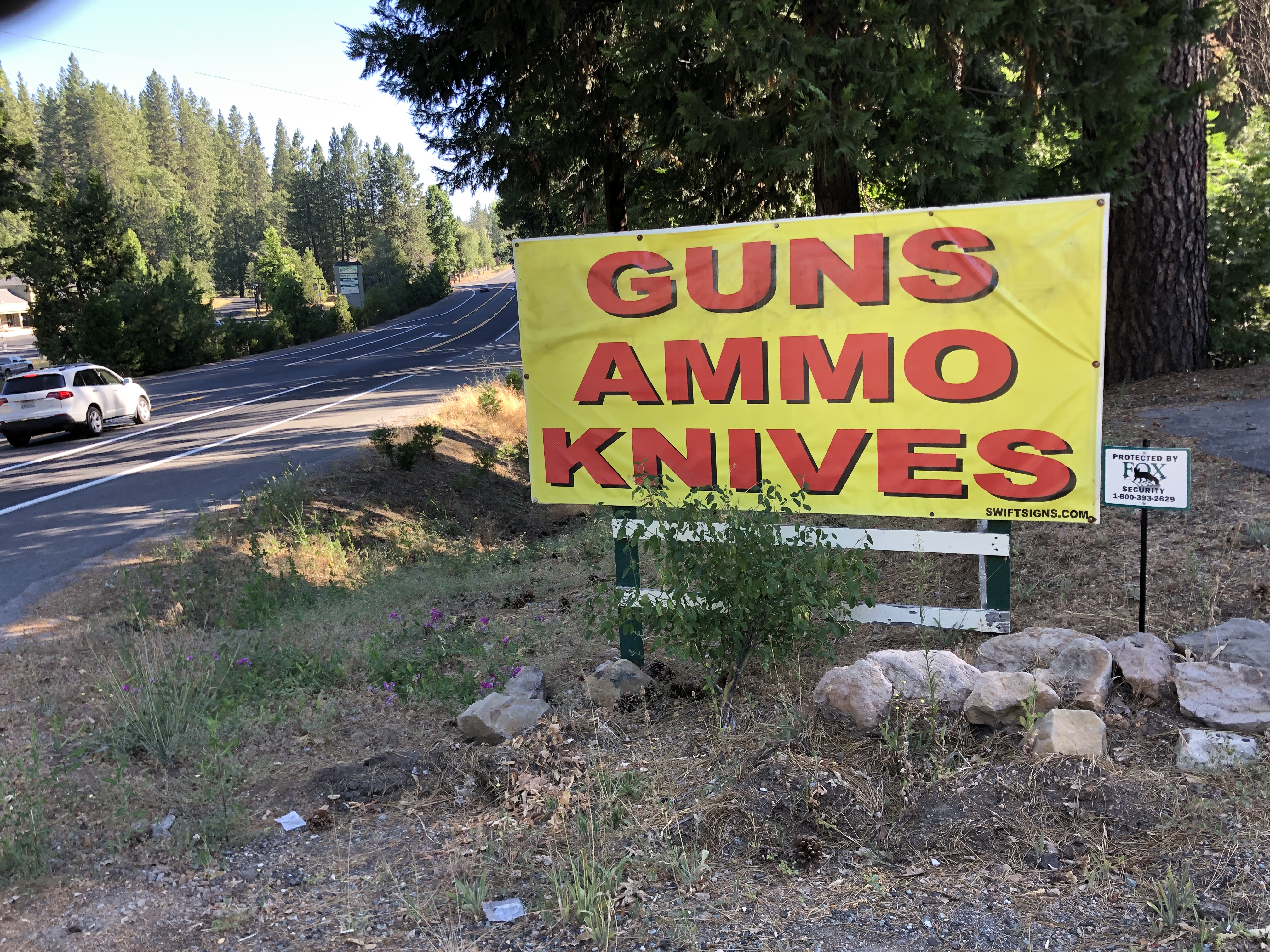
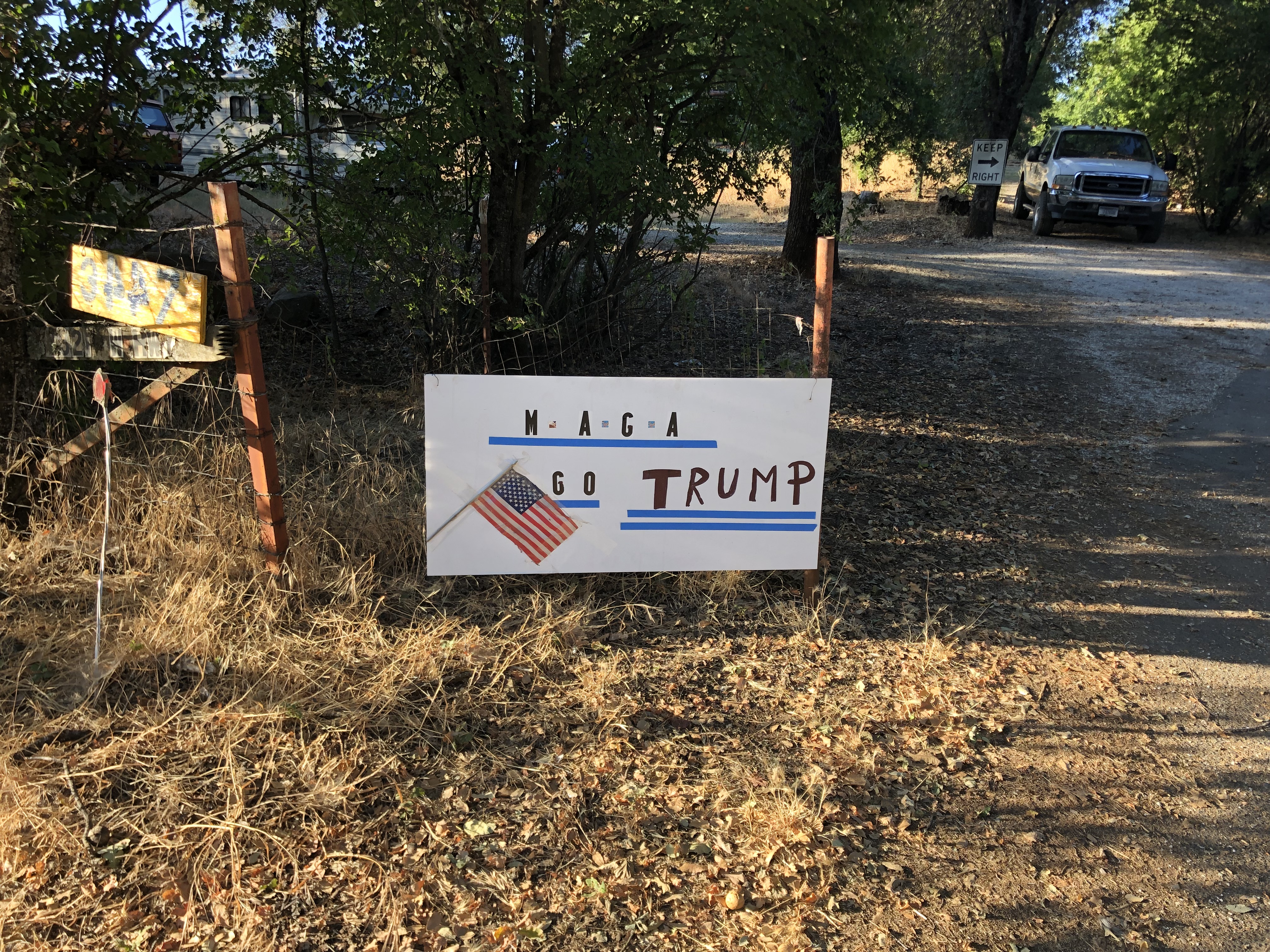
There’s another way that highway 4 is a study in contrasts: At its western end it begins in the deep blue Land of Pelosi and UC Berkeley. But as you move eastward on the highway…. well, let me share a few photos:
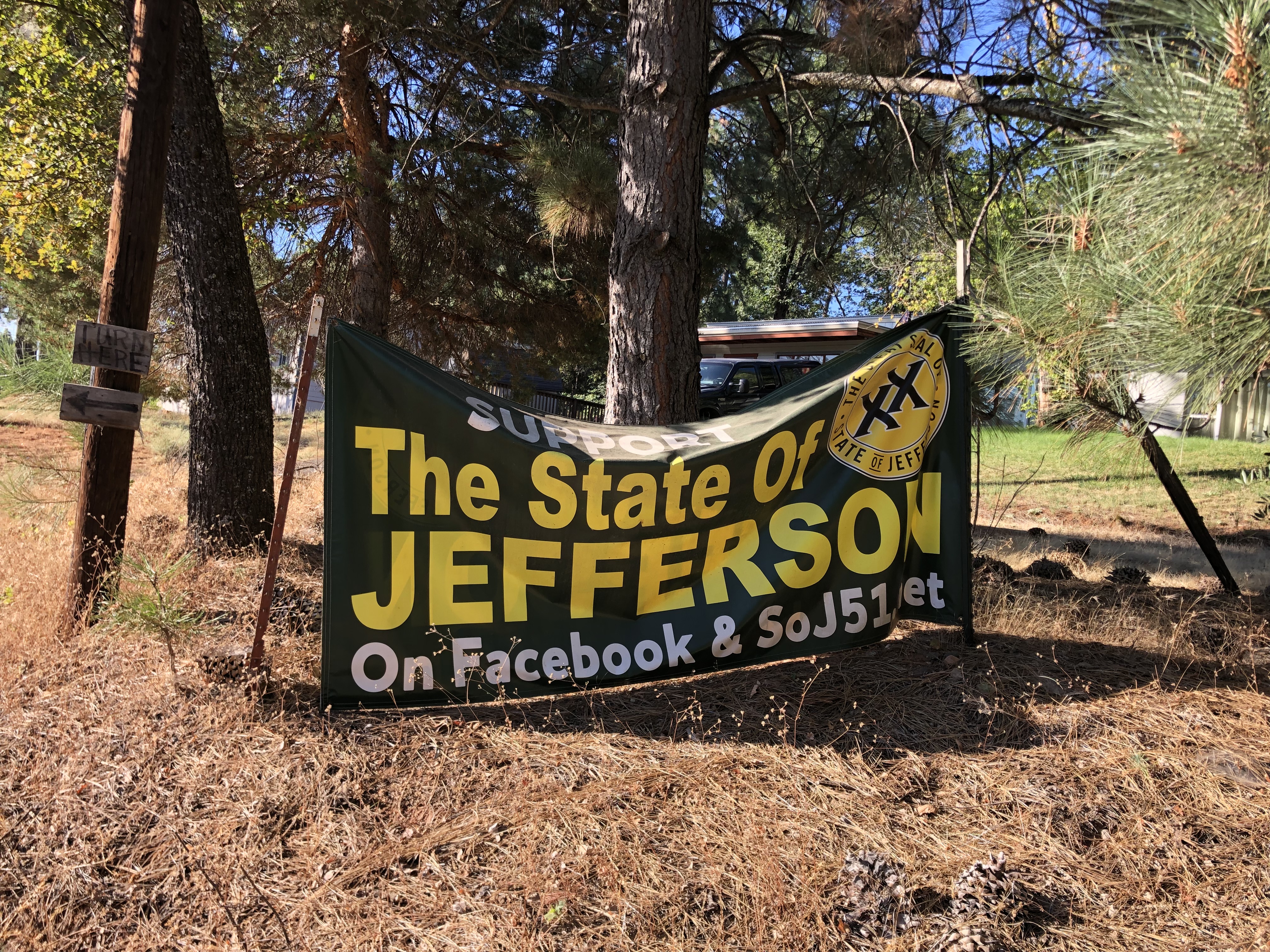
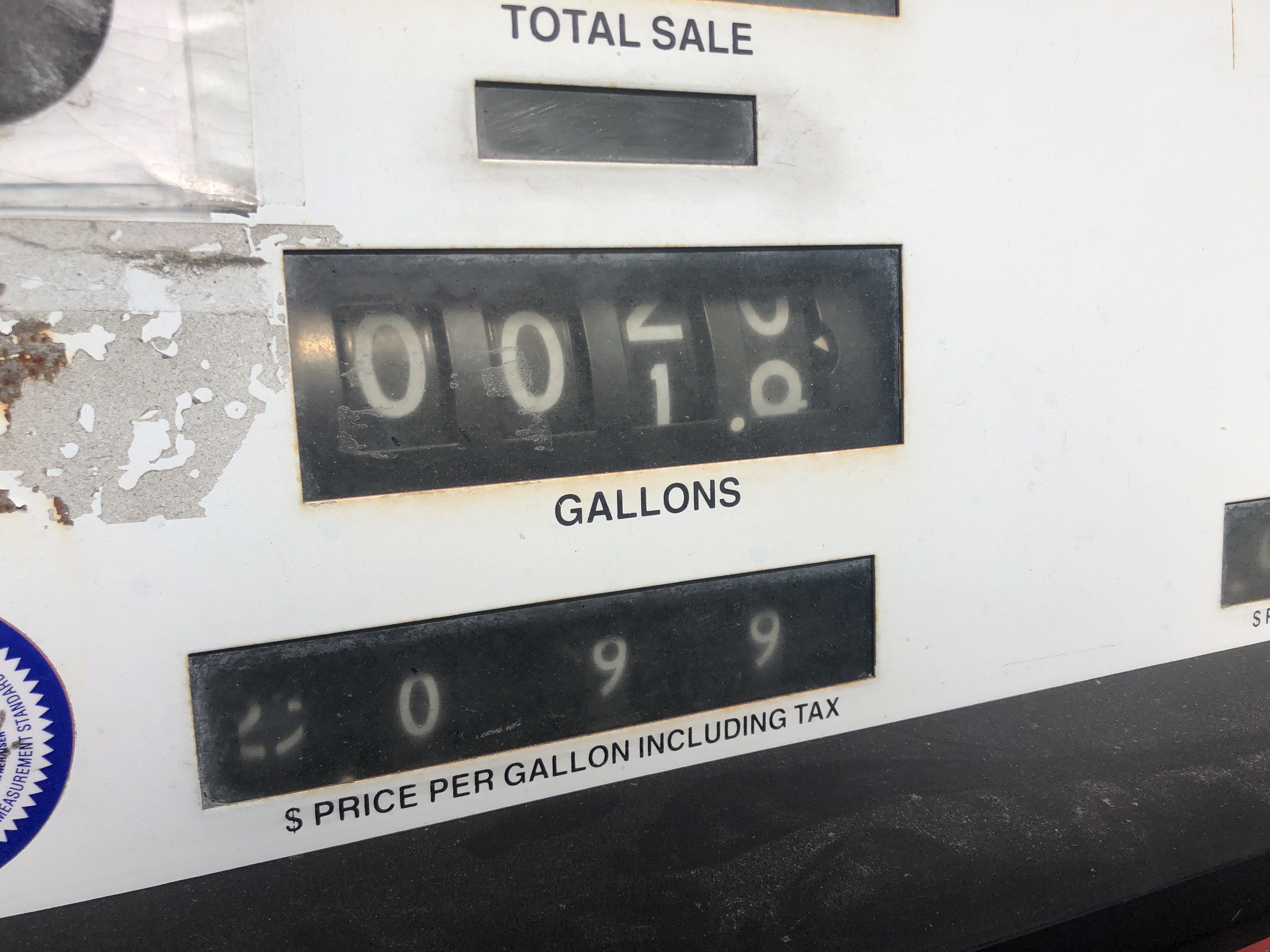
Route 4 is also something of a time machine. The farther east you go, the further you go back in time. For example, when stopping for gas late this morning, I encountered a gas pump that had mechanical dials and no place to insert a credit card. I actually had to talk to a human being to make the transaction. The young woman at the cash register was earnest and friendly, but she seemed a little flummoxed by my credit card. I get the sense that most people out here use cash.
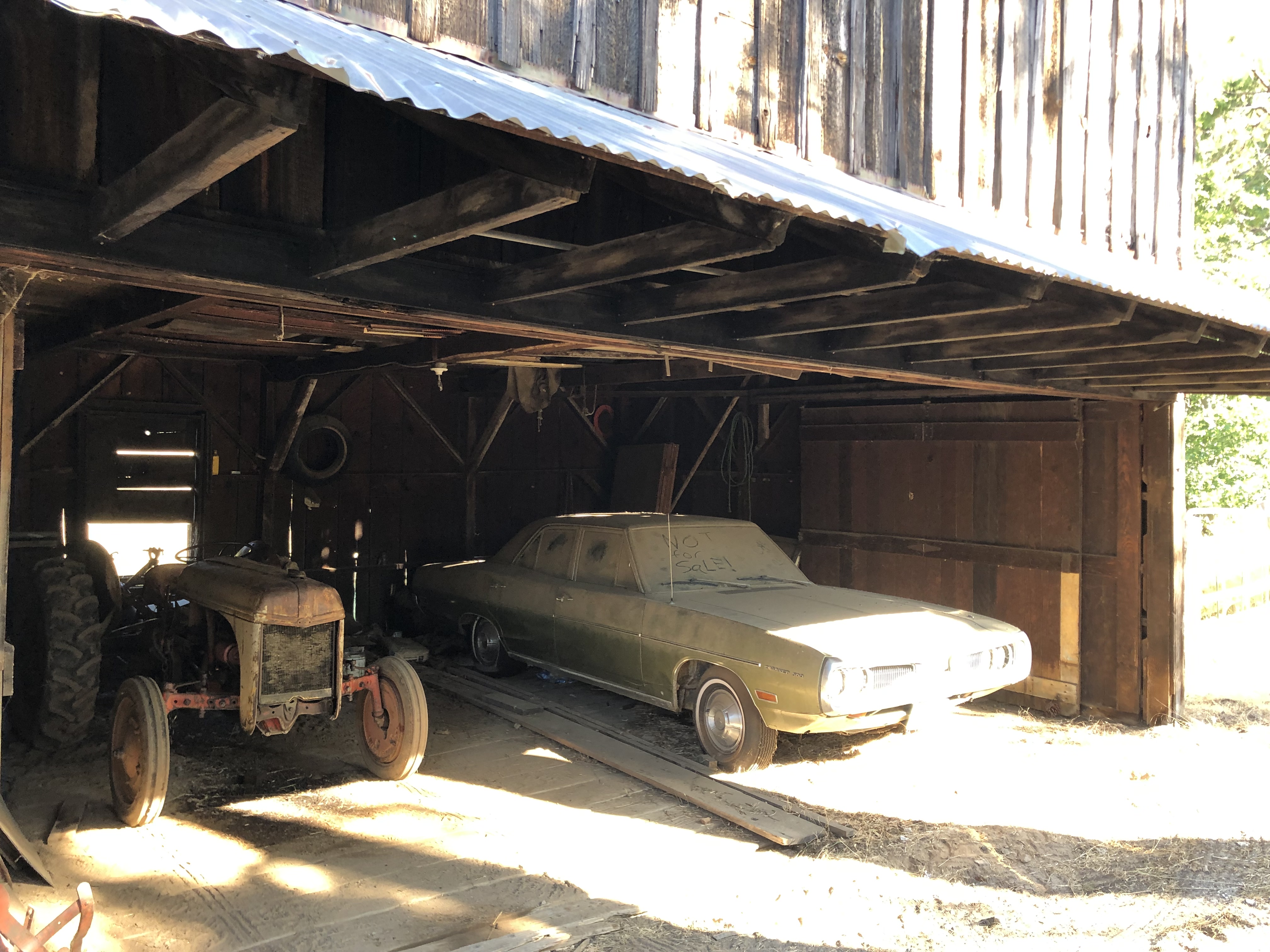
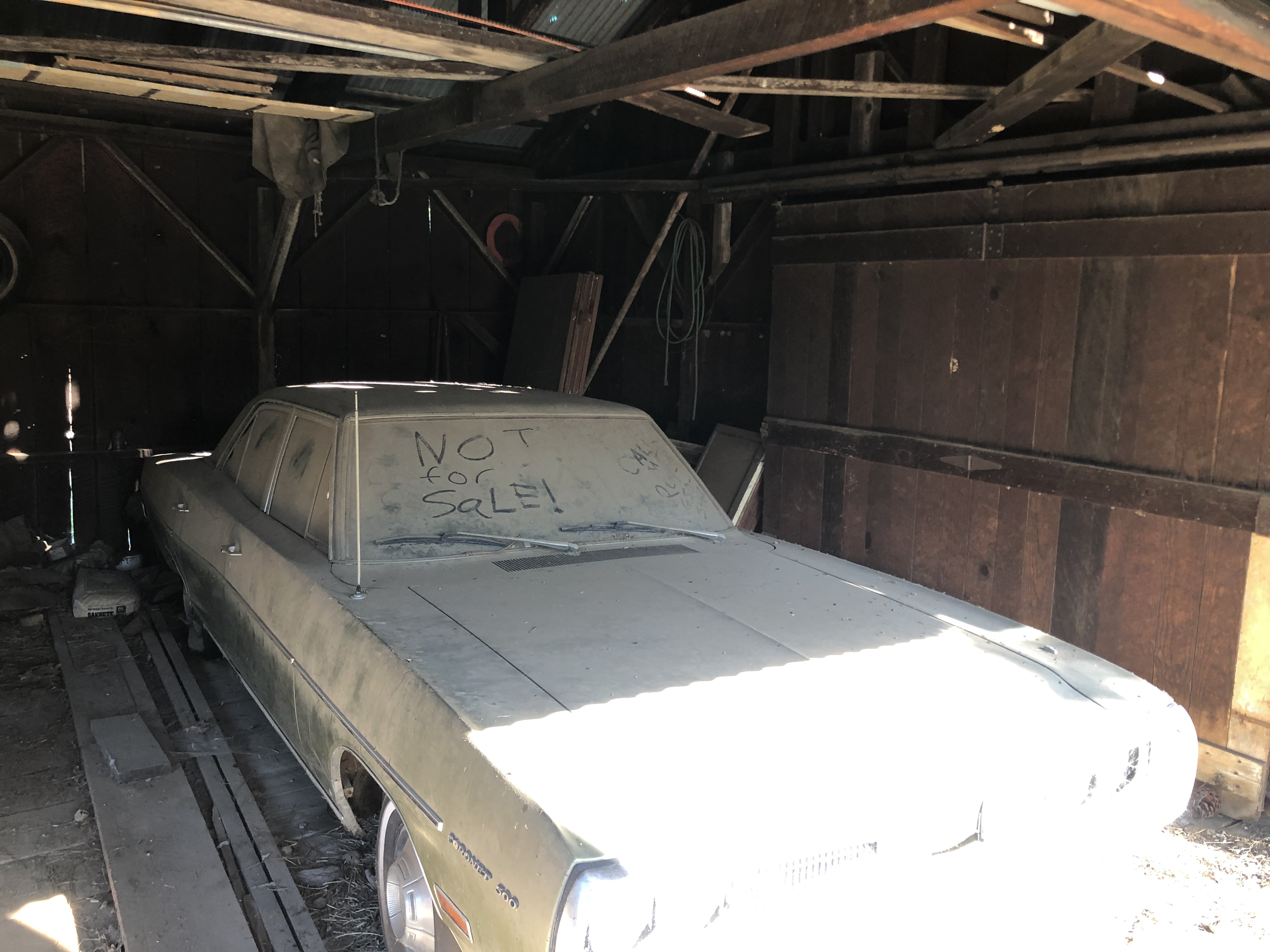
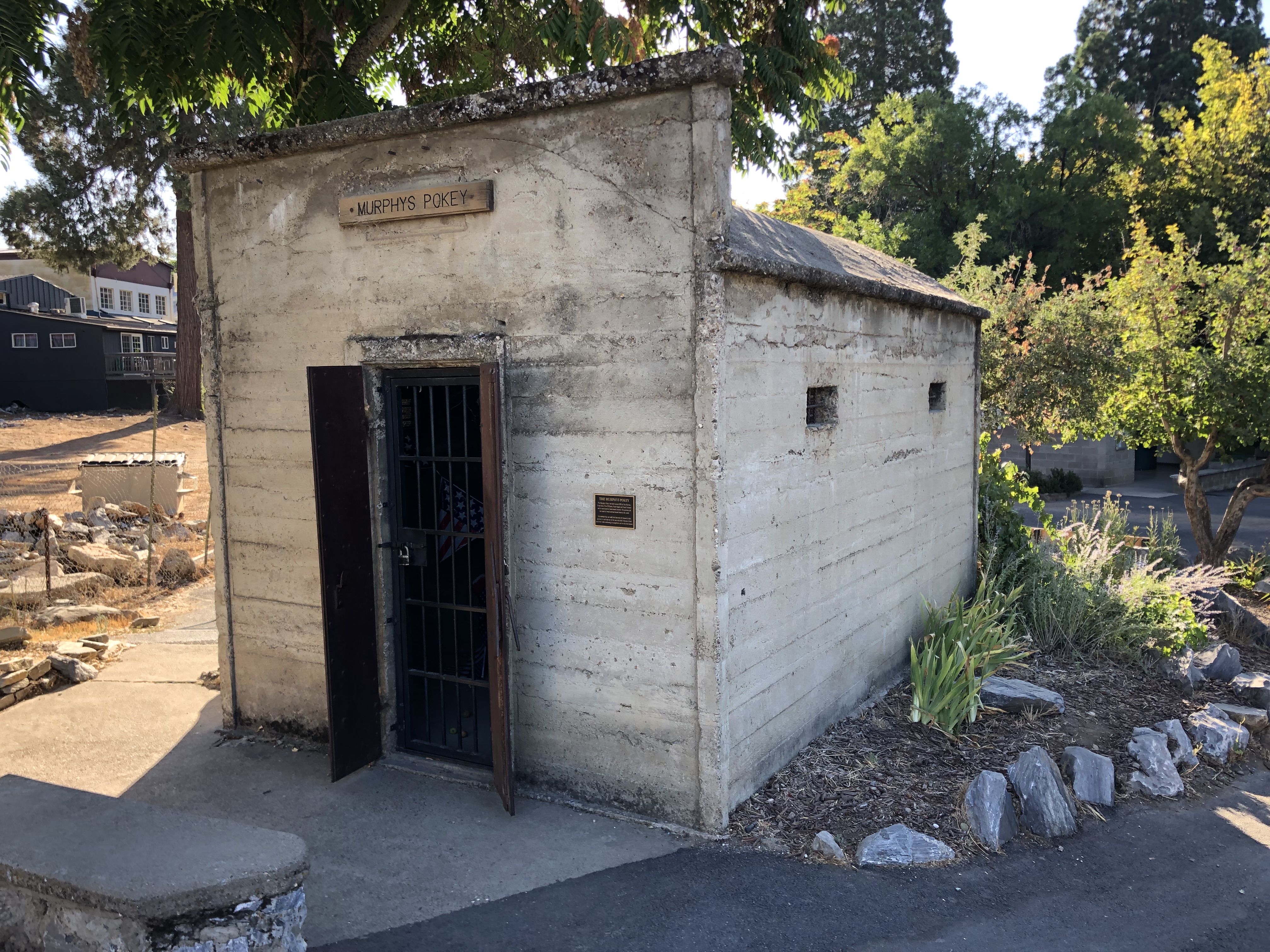
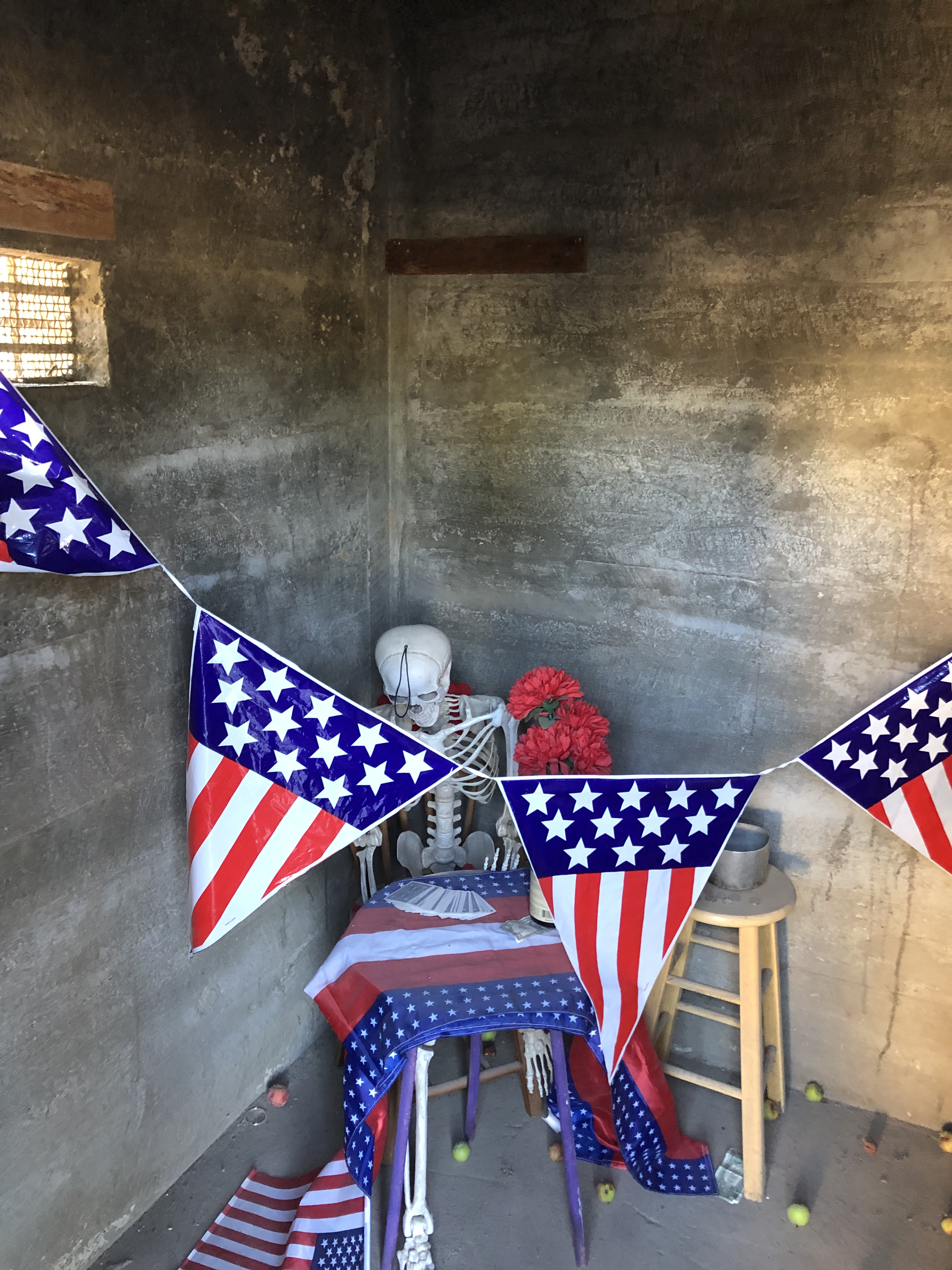
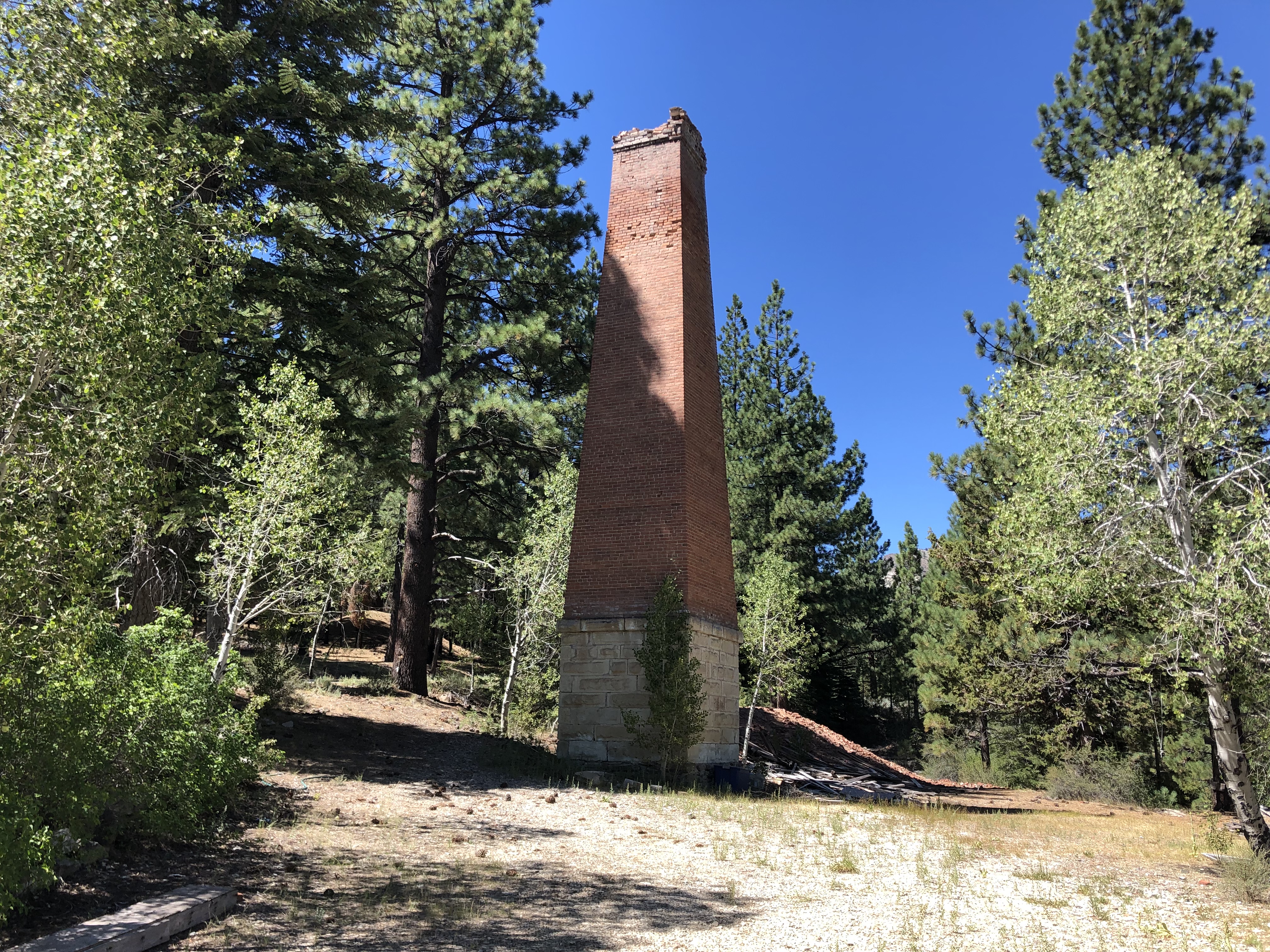
Most of all, today was day of crossing through passes and over summits. Given that I was climbing over the Sierras, it’s not surprising that I was getting up to 7,000 and 8,000 feet and higher. Some of the views were breathtaking. A few times the road brought me unsettlingly close to the edge of oblivion.
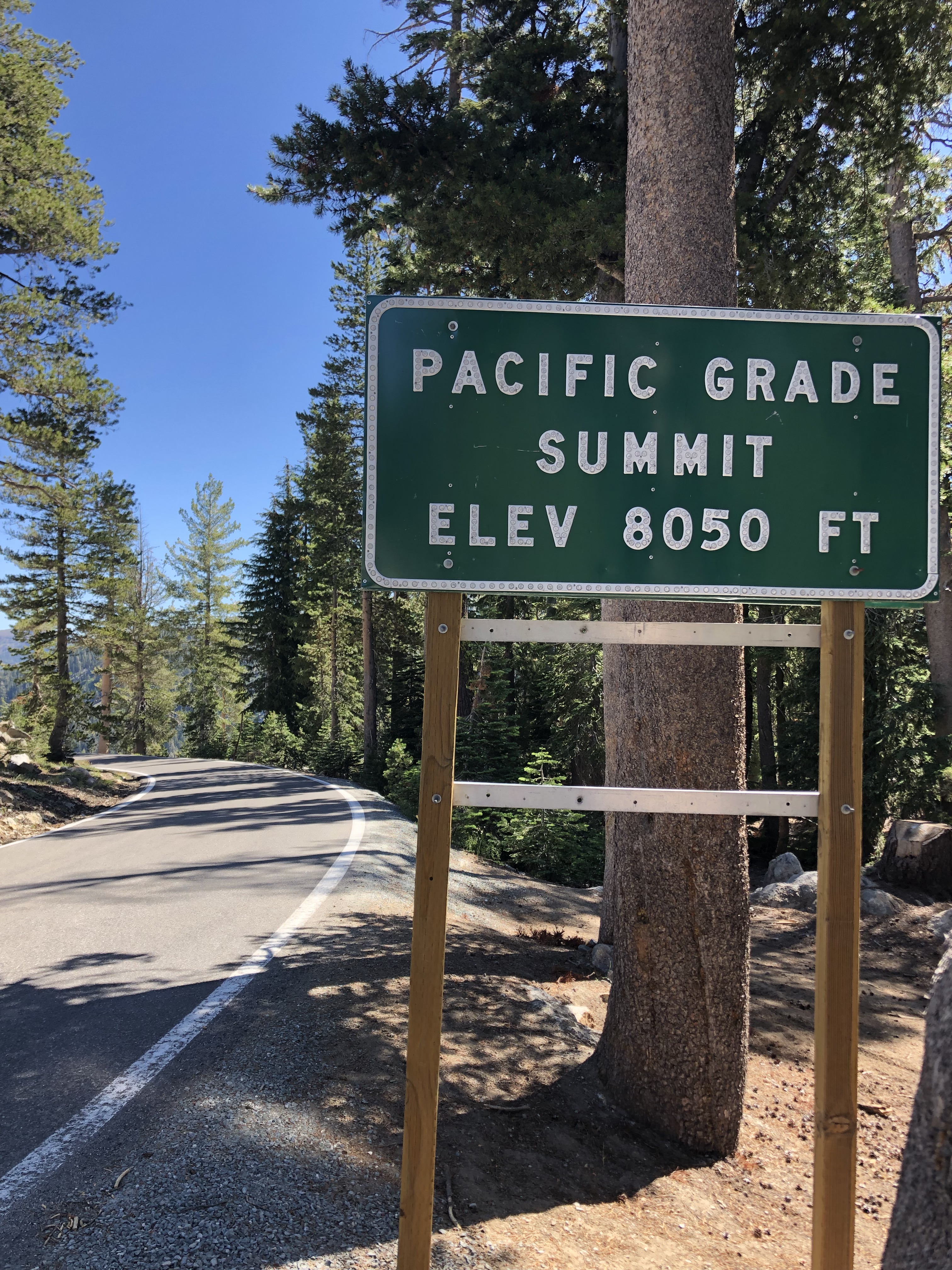
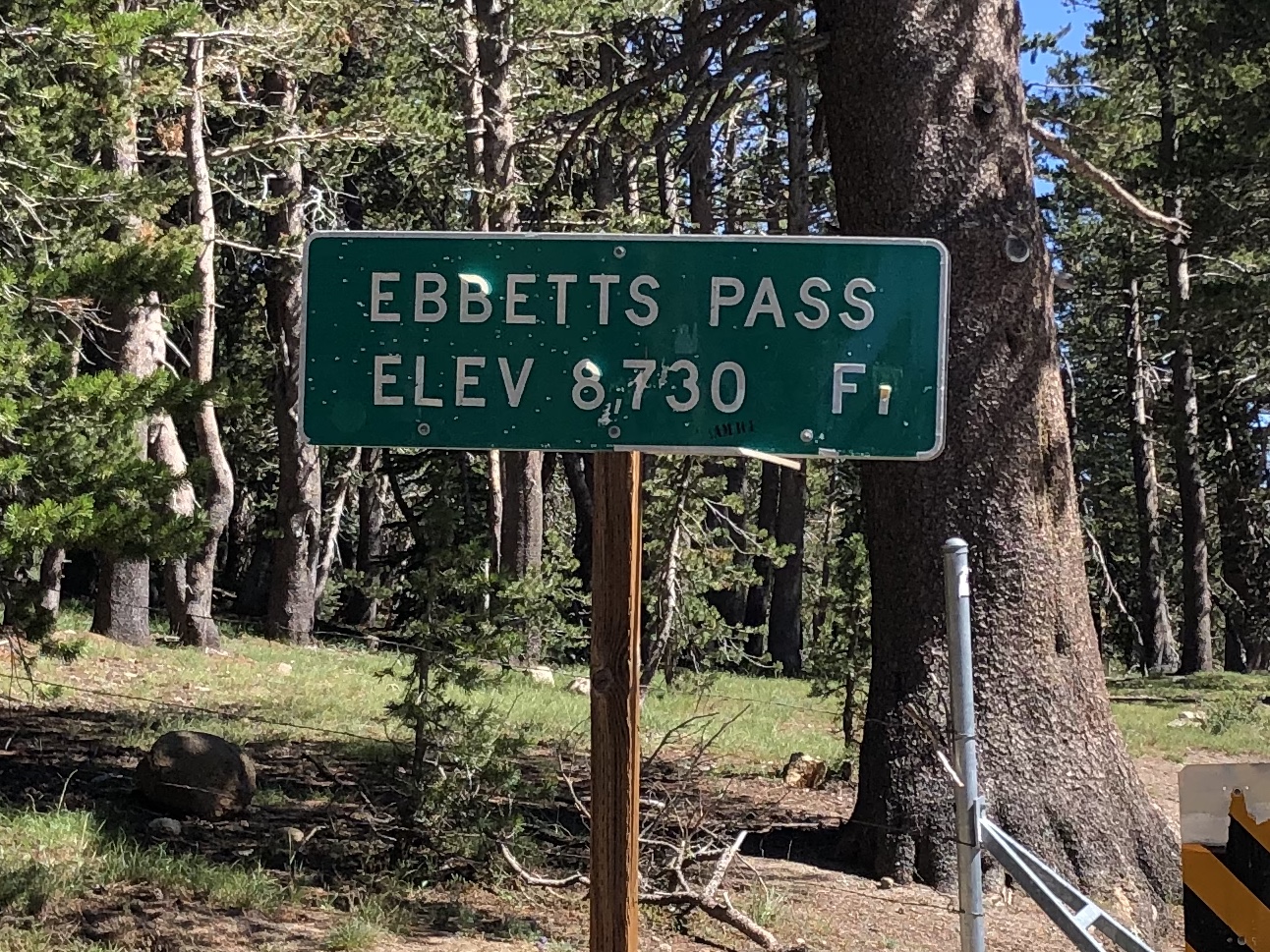
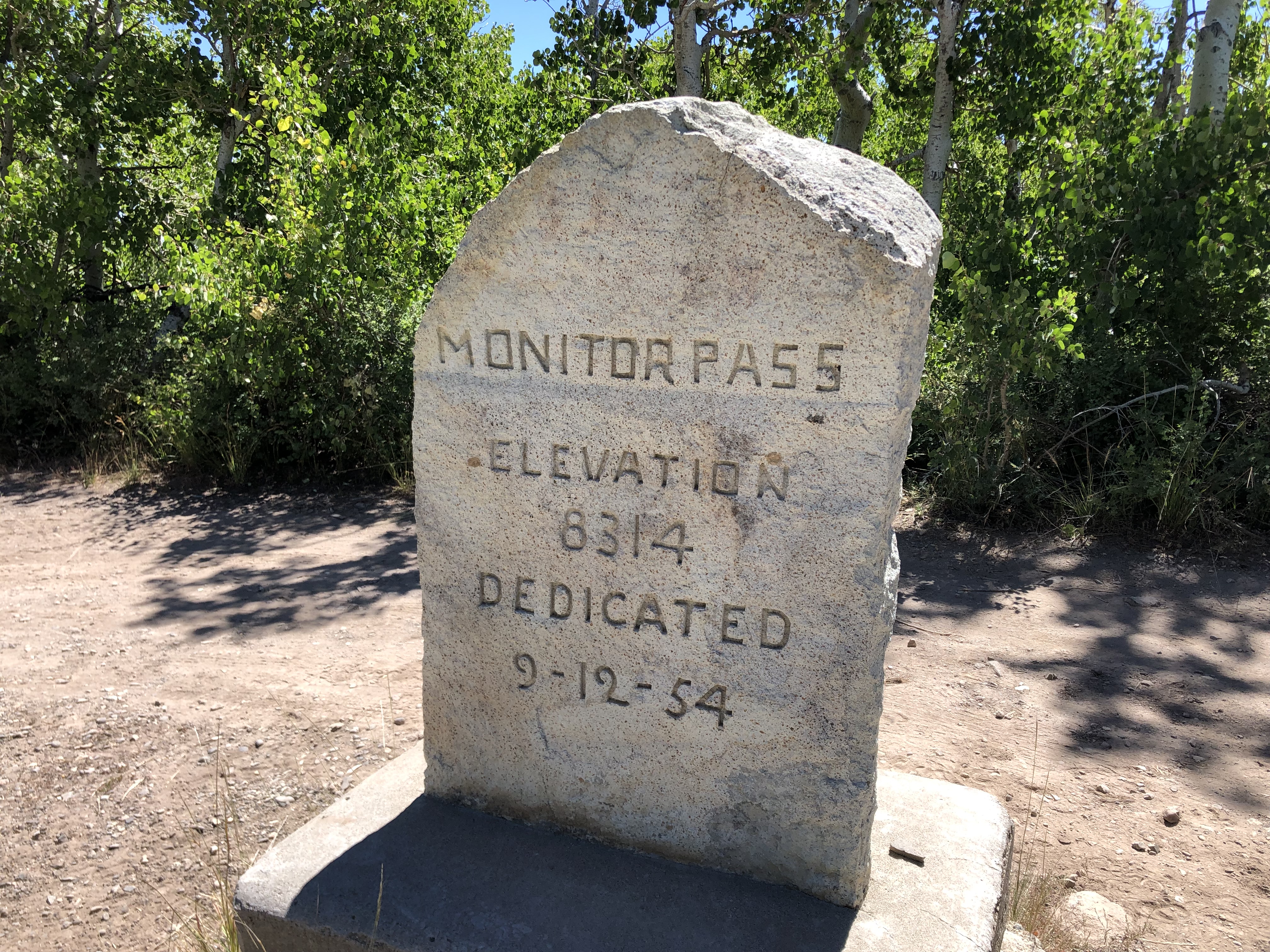
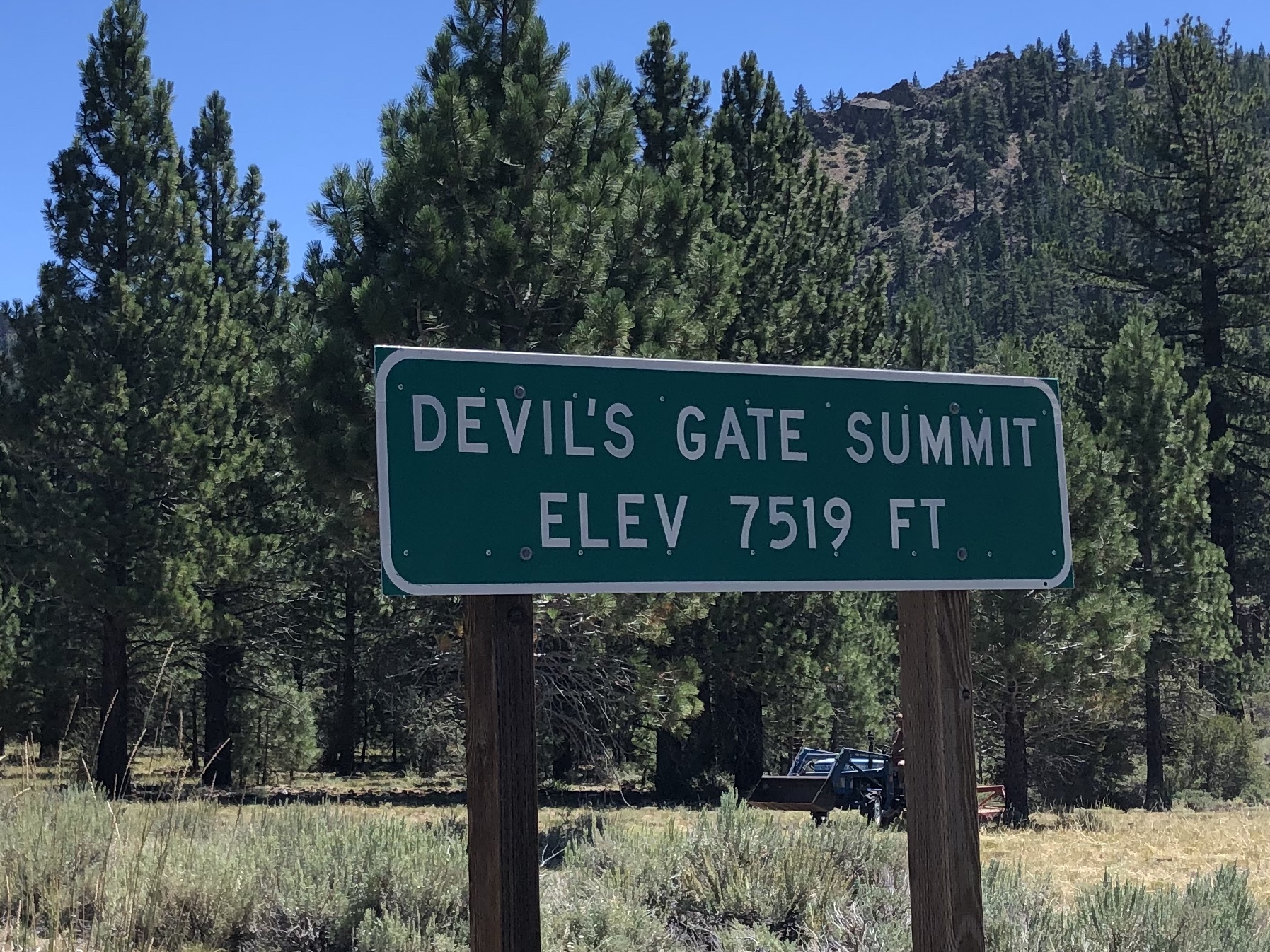
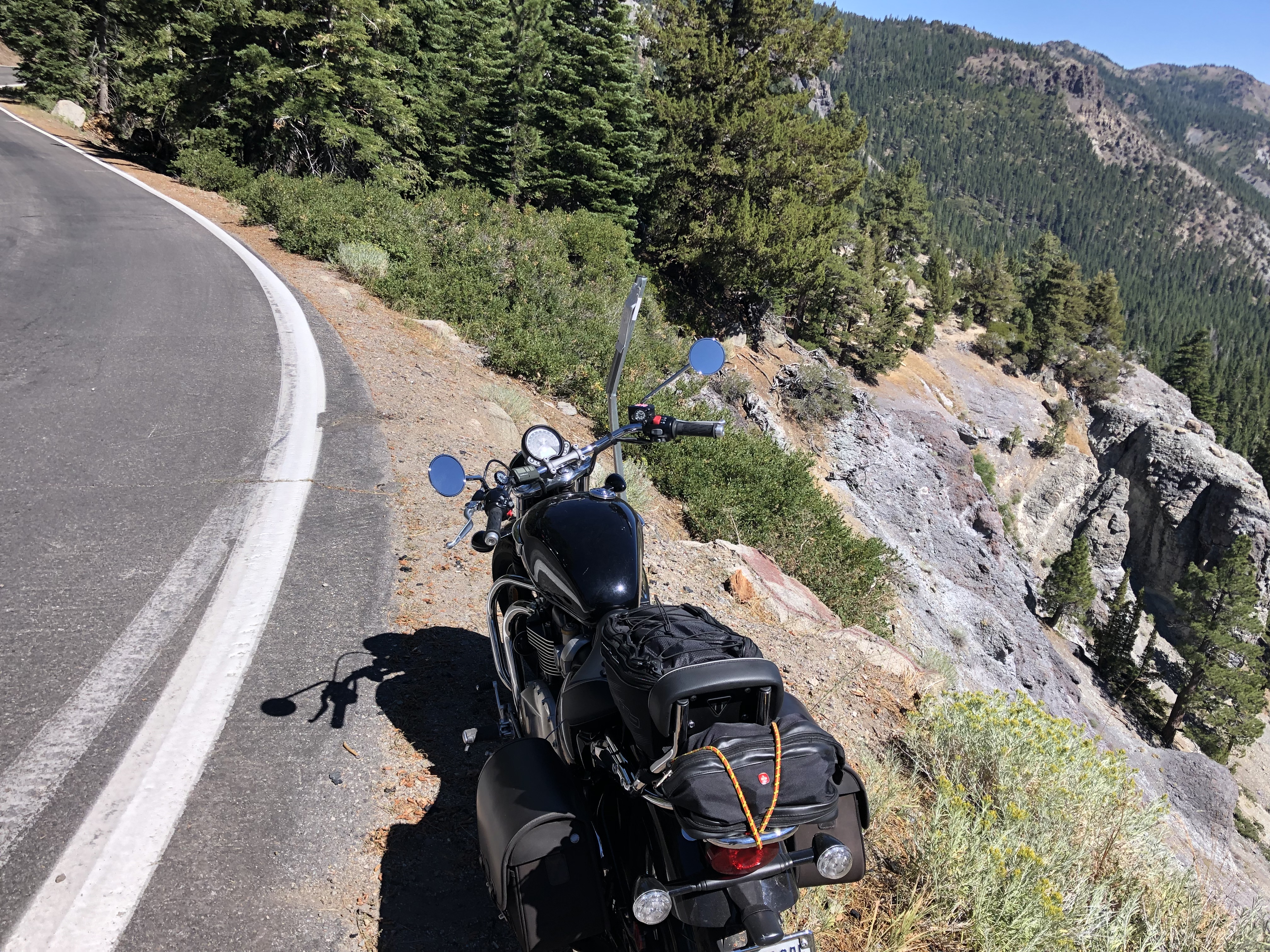
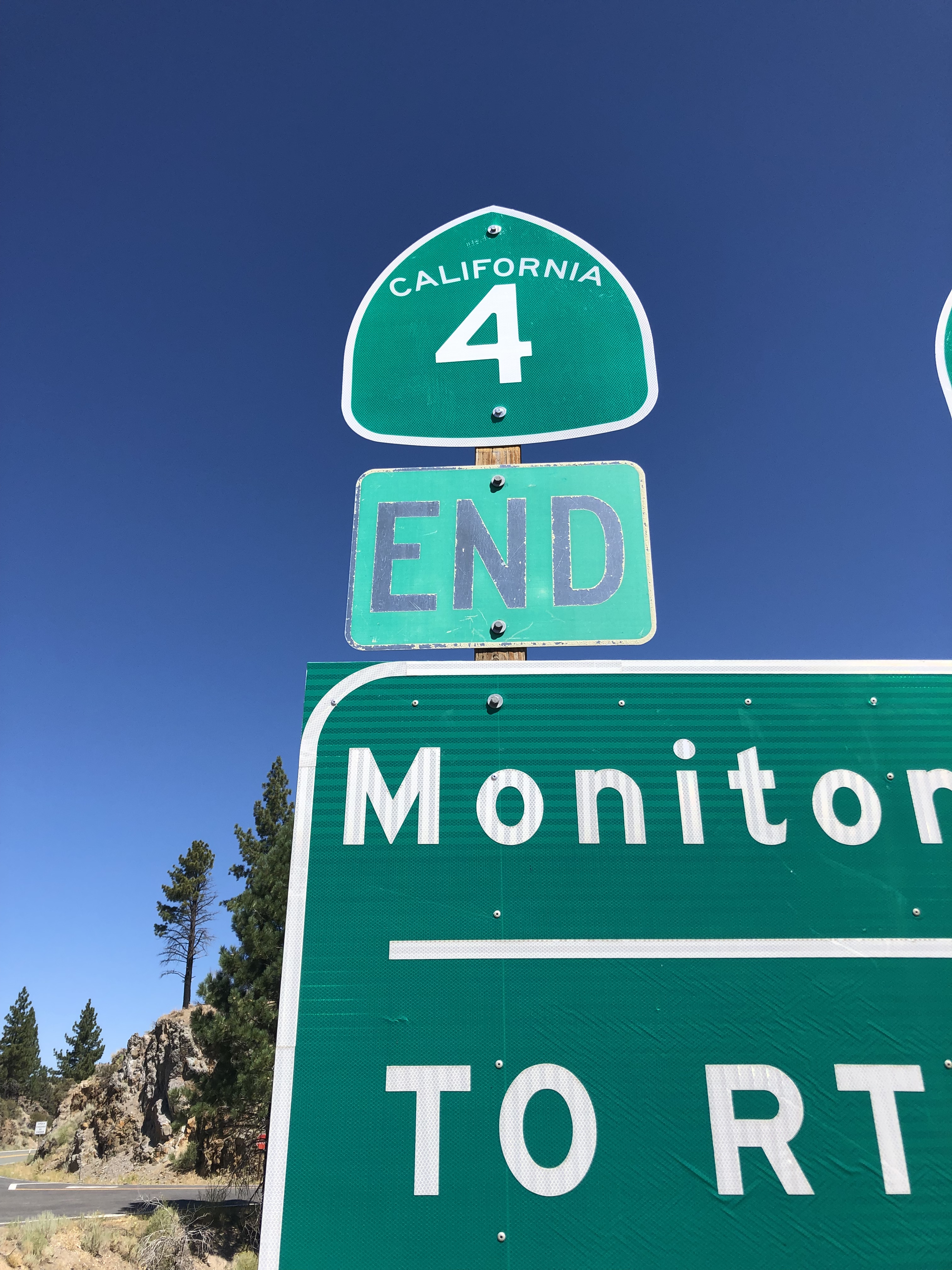
And then, somewhat abruptly, I was at the end of Route 4. After a quick photo op, I turned onto CA 89, and then to US 395 south. But that’s the domain of another blog (coming shortly).
BREW OF THE DAY
In the town of Bridgeport, I stumbled upon a self-proclaimed Craft Brewery. It was set in a historic building on the main street, and had inviting signage and a big picture window. It was almost 1 pm, and I hadn’t yet had lunch. It was positively providential. Only after I’d hopped off the Triumph did I notice that they didn’t open for another hour.
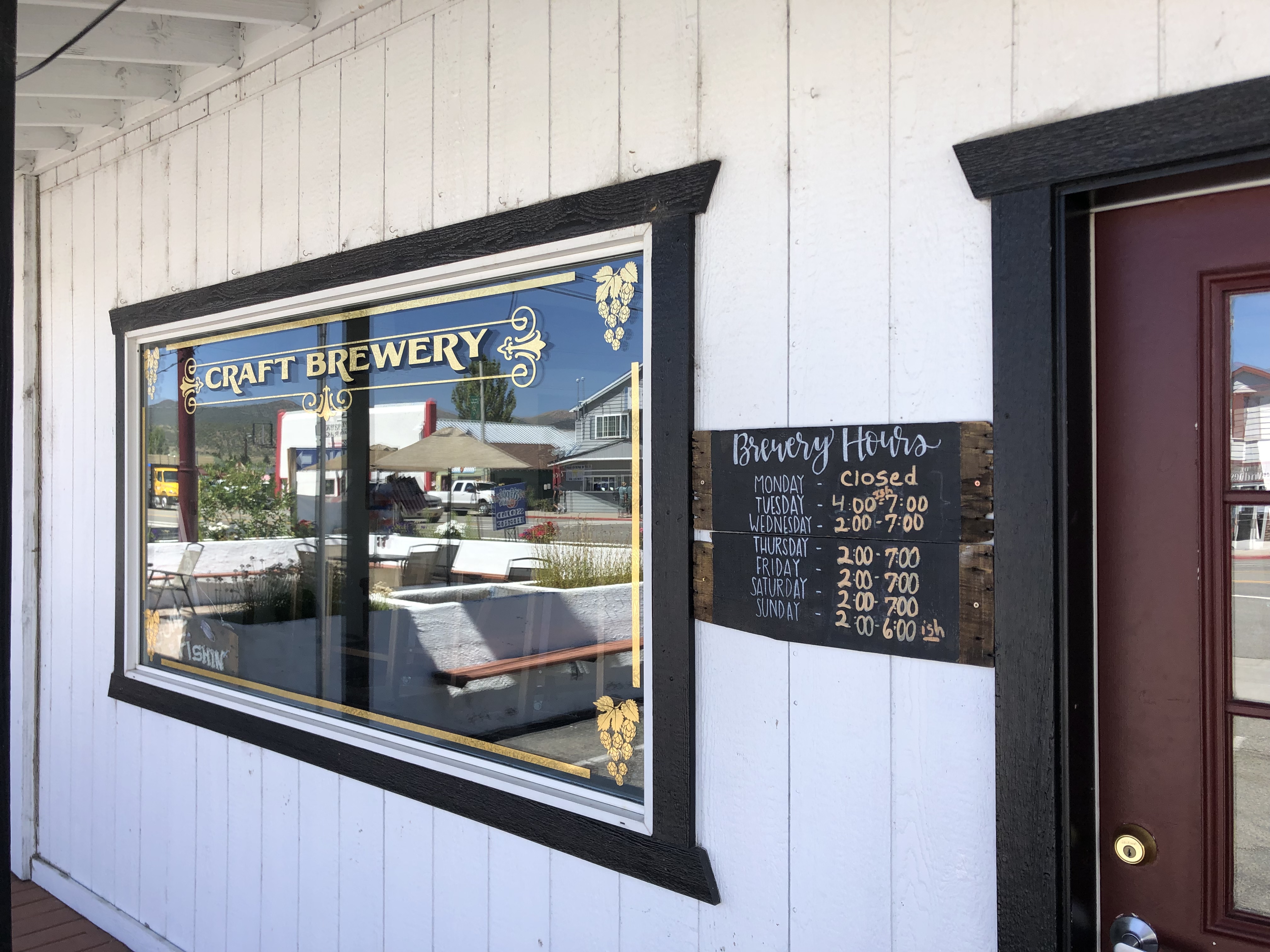
Disappointed, I sat on their porch and started checking my phone for another brewery option in town. There were none. Just as I was about to get back on the road, the door opened and a woman asked me if I was there to get a beer. Yes, I answered, but I didn’t want to wait for an hour. She turned out to be the owner, and welcomed me to come in while she set the place up for business. She introduced herself as Rose, and told me that she and her husband had moved up to Bridgeport from Temecula, and opened this brewery just a year ago. (The place is called “Big Meadow Brewing.”) Rose does the front office stuff like serving customers, while her husband brews the beer. It’s a pretty small operation, but she said they were making a go of it. They’d actually run through over 30 kegs last month.
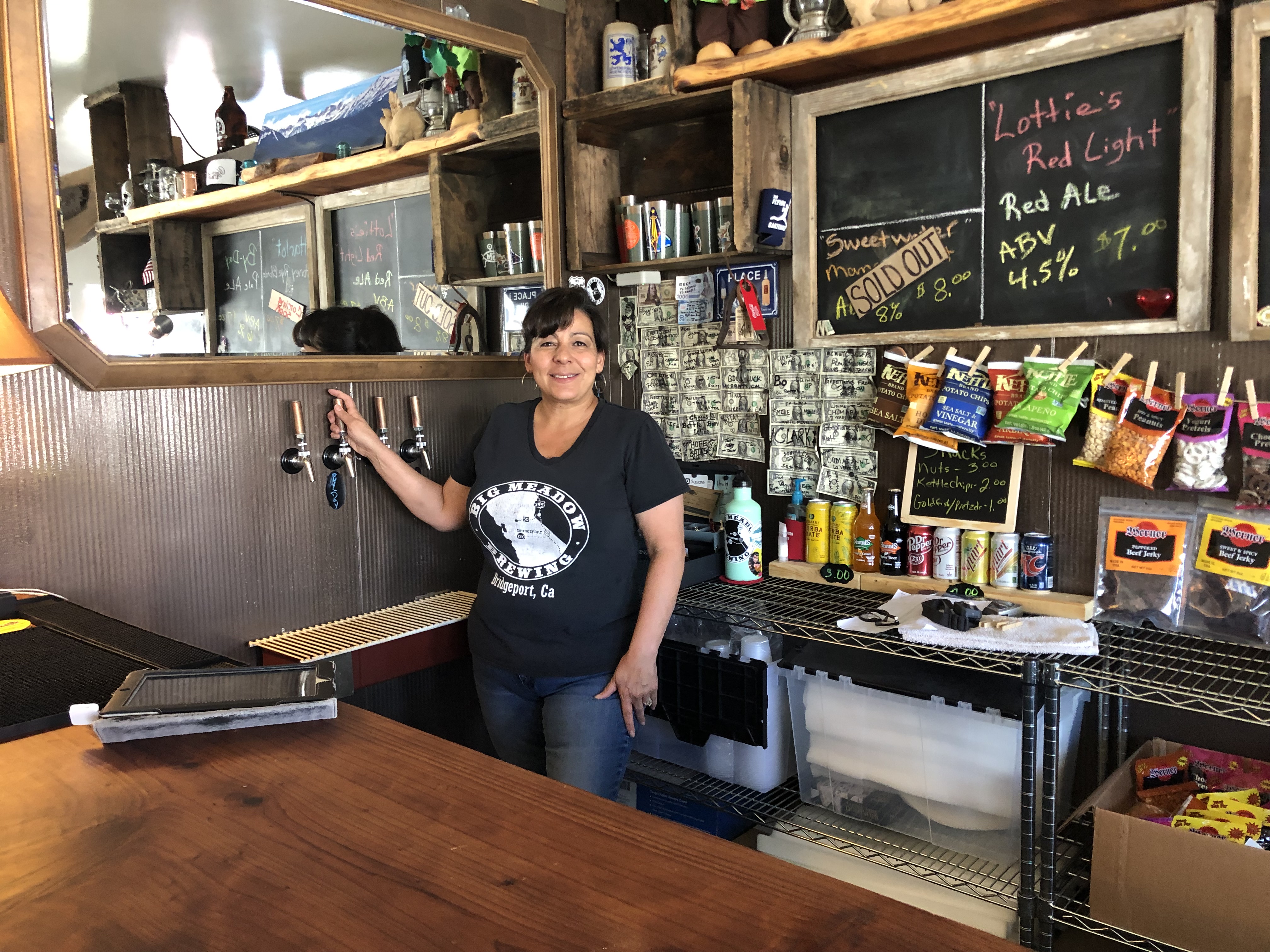
Rose poured me a “Lottie’s Red Light Red Ale,” which was delicious indeed. It’s a fairly light-bodied red ale, with a modest 4.5 percent ABV. It wasn’t overly hopped, but it had a pleasant bitterness on the finish. The malt profile was also moderate, coming across more nutty than sweet. It was perfect for a hot day. If you find yourself in Bridgeport, you should pop in for a pint.
ADDENDUM ON NILES FOR TRUE RAILFANS
Uncle Ed sent the following to supplement the link from his Dome of Foam that I’d included in my blog. He says that he’s learned a lot since he wrote that entry for the Dome some years ago. He writes:
A bit over 100 years ago, when local and branch line passenger service – not freight trains and posh limiteds – constituted Southern Pacific’s major source of income, Niles was literally awash in passenger trains from the four winds. A fair number of local trains on the old Western Pacific (the Central Pacific’s WP, that is) ran from San Jose through Milpitas, Niles and Hayward to Oakland, while four milk trains (yep, milk trains outside of Wisconsin!) described a giant X by running part of the way between Oakland and San Jose on the Milpitas – Hayward route, then crossing over to the old South Pacific Coast line via Centerville. Santa Cruz – Sacramento and Dumbarton Bridge local trains to/from Redwood City also called at Niles. There also was heavy Oakland to Tracy / Sacramento / Stockton / Fresno and even Coalinga service. Although a couple of them were “flyers” with open tail cars for a few years, essentially they all were merely long-winded, makes-all-stops locals like Santa Cruz – Sac. Oddly, the latter were the only ones that ever ran directly from San Jose over the Altamont to the Valleys, and only for a couple of years, at that. Niles was the point where passengers on turn-around locals out of San Jose changed to the Valleys trains. San Jose’s old Market Street depot handled most of the Niles trains, while West San Jose (Diridon) depot remained largely a calling point for trains running over the old SPC. There was never a direct connection between the two SJ depots. When SP opened the present depot in 1935, a connecting link was finally put into service that enabled Niles trains via Milpitas to operate out of the new facility, but only for a short time before they were eliminated entirely.
The big show lasted about 15 years before SP began the first of its periodic purges of passenger trains shortly after World War I. By then, many of the trains had long been running empty due to the completion of paved state highways in the East Bay just before the war’s onset. The last couple of passenger trains through Niles, the remnants of the old Stockton Flyers, disappeared at the beginning of World War II. Niles did continue on as an important point for adding and subtracting helper engines as long as steam lasted, however.

 Chasing Phantoms