Some of you may recall that I’d recently read a book on William Mulholland that got me interested in the Los Angeles Aqueduct. And that earlier this summer I made the trip a few miles north of downtown LA to visit the terminus of the aqueduct, where the water cascades into the LA river. Here’s a picture of the cascades (that someone else took; I don’t have my own photo handy):

Recall that this is at the end of the water’s 233-mile journey from the Owens Valley, through an aqueduct that was built over 100 years ago, and which exclusively uses gravity to get it from there to here. (That is, there are no pumps to get the water over the mountains. Instead, it employs “inverted siphons.” You may want to read up on this fascinating technology.)
Anyway, after seeing this end of the operation in the flesh, I decided to try to find the place where it starts out. That was one of the goals of this whole road trip that I’m taking this week. And thus I found myself crossing the Sierras on Route 4, with the goal of getting to the Owens Valley.
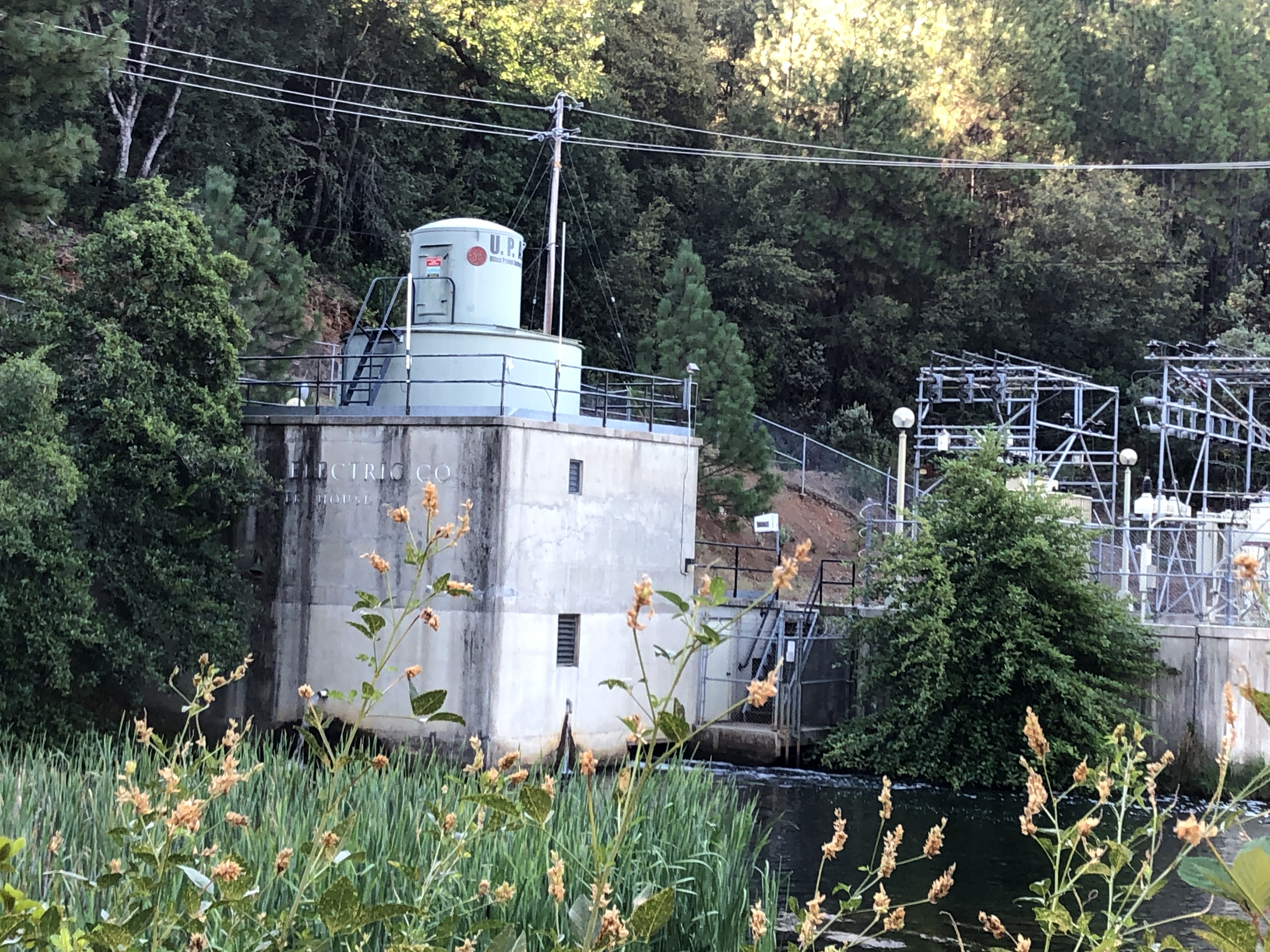
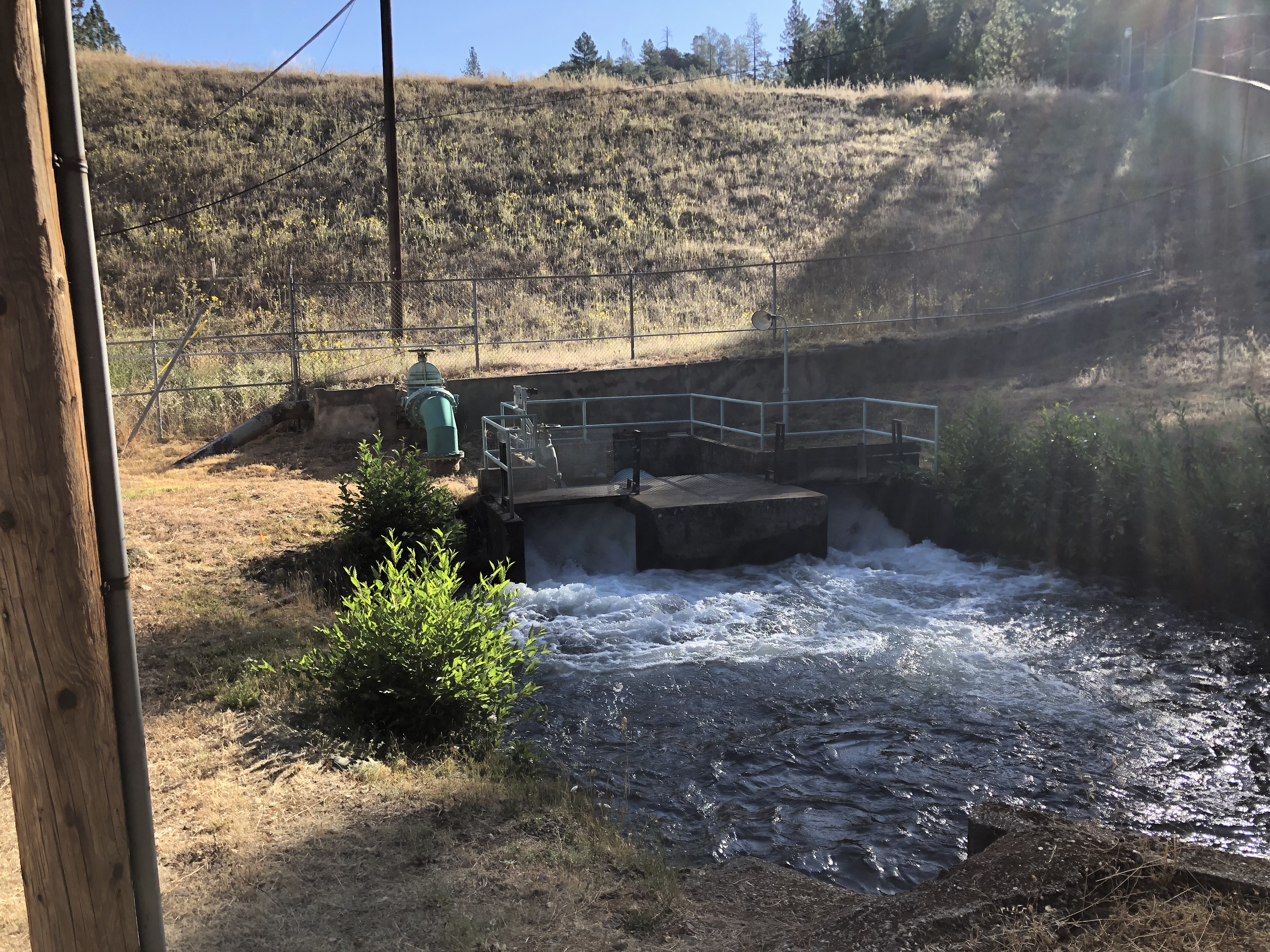
On my way, I encountered a small water and power operation near Murphys. A sign told me it was the property of the Utica Power and Water Authority. Based in Angels Camp, the tiny UPWA dates back to the gold rush, when water was routed to run hydraulic mining operations, and the channeled water was employed to produce power.
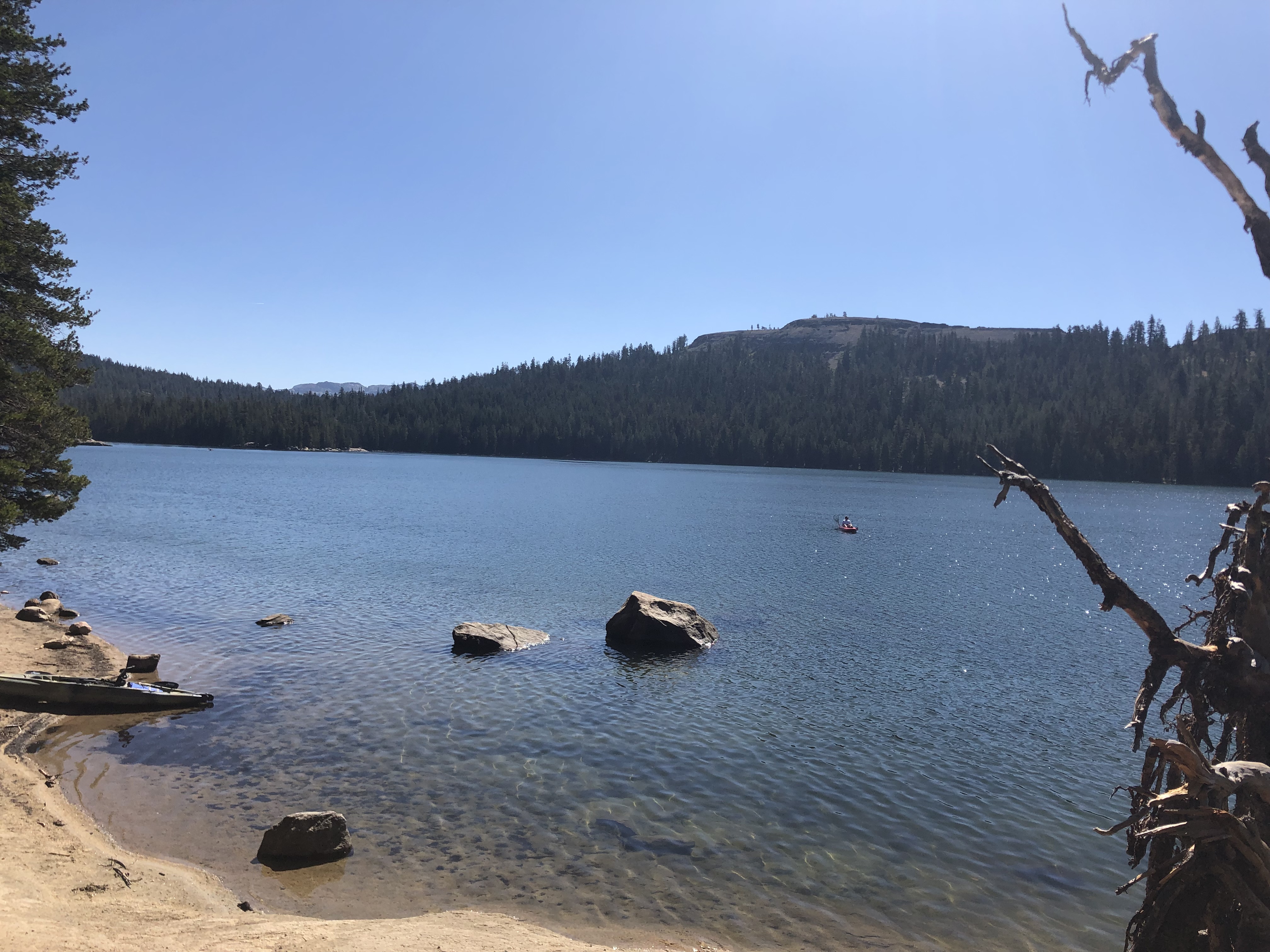
Continuing along Route 4, I arrived at beautiful Lake Alpine. As I stood there admiring it, I noticed a sign. Turns out that this, too, is a hydroelectric project of the Utica Power and Water Authority. Maybe they’re not as tiny as I’d thought. The notable point, though, is that much of our built environment, and even some of the natural environment, are inextricably linked to our power and water infrastructure. These are probably only rivaled by our transportation infrastructure.
But as much as this interests me, my quest is not so much to explore local water and power arrangements as it is to find the place were William Mulholland reached up into the eastern Sierra to divert water over 200 miles to the thirsty, nascent metropolis of Los Angeles. And for this, I had to get past the end of Route 4, and onto the US 395 highway. So, I did.
Cruising down 395 in the shadow of the Sierras is a meditative experience. The landscape has completely changed from that of Route 4, in that vegetation becomes scarce and the ground becomes rocky. The road is largely flat and much less curvy than on Route 4. And you look up at the mountains, rather than drive over them. Traffic is a little more present on 395, but you’re still usually by yourself.
After a bit I saw the looming presence of Mono Lake. I know there’s a link between the lake’s level and the LA aqueduct. In fact, environmental and business groups in Mono County successfully sued Los Angeles for imperiling the lake by taking water from the tributaries that feed it.
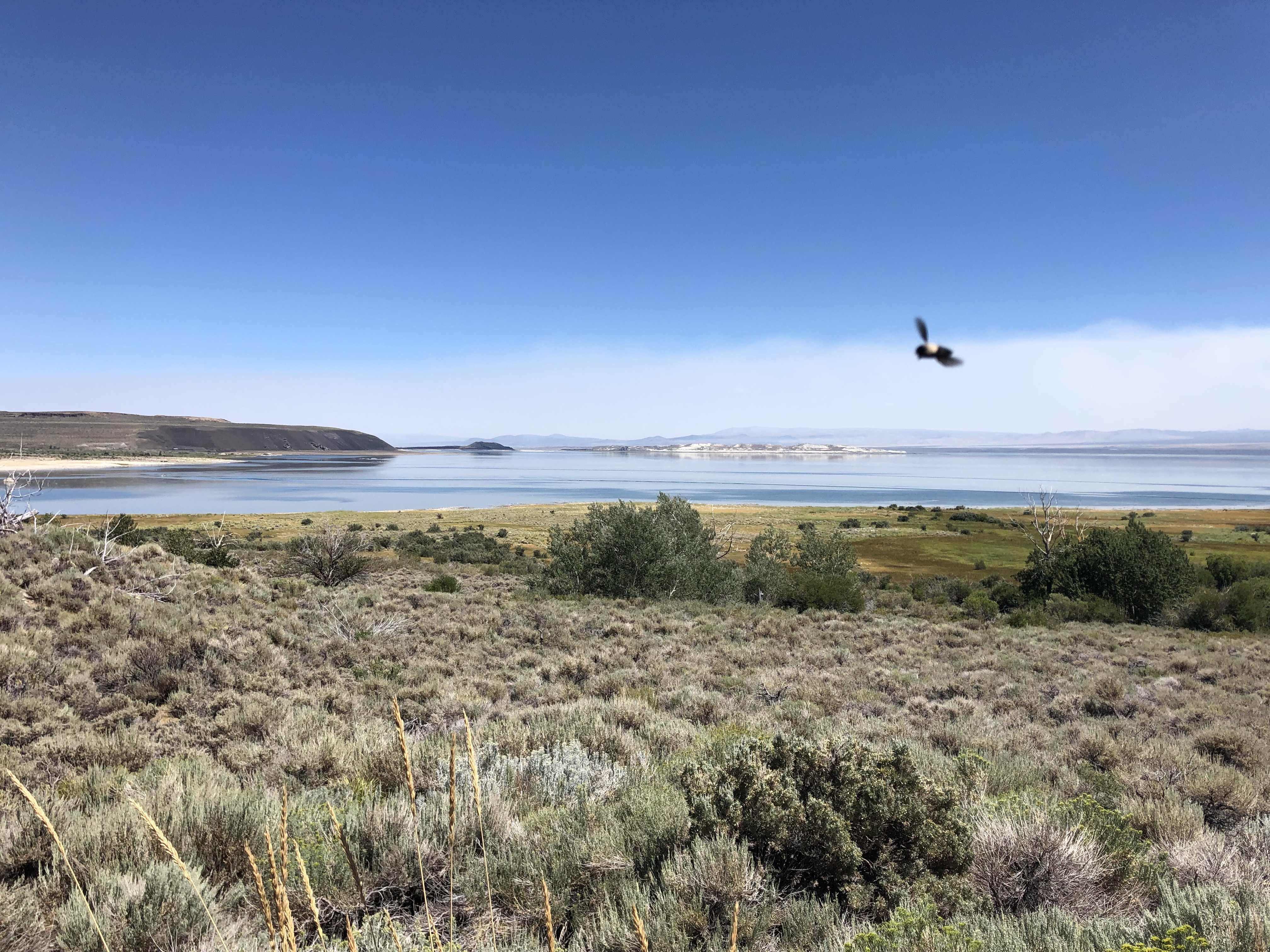
I went into a local visitors bureau and asked where I might find the aqueduct. The young woman got riled up about the whole concept of the thing, and started lecturing me about how Los Angeles has been stealing their water. Yes, but can I actually see the facilities they use to steal it? She wasn’t aware of anything that was visible, speculating that it’s all underground. I thanked her and went to the Mono County museum, and asked the young man there the same question. He listed the three creeks that were being robbed of water, but similarly didn’t think any evidence of the dastardly activity was visible.
Disappointed, I got back on 395 and tried to think this through. In the book I’d read about Mulholland, there was mention of open channels and exposed pipelines. Surely something is visible. And at that moment, on the eastern side of the highway, I saw an enormous, 6-foot diameter pipeline snaking parallel of the road. I found a dirt access road and went to check it out.
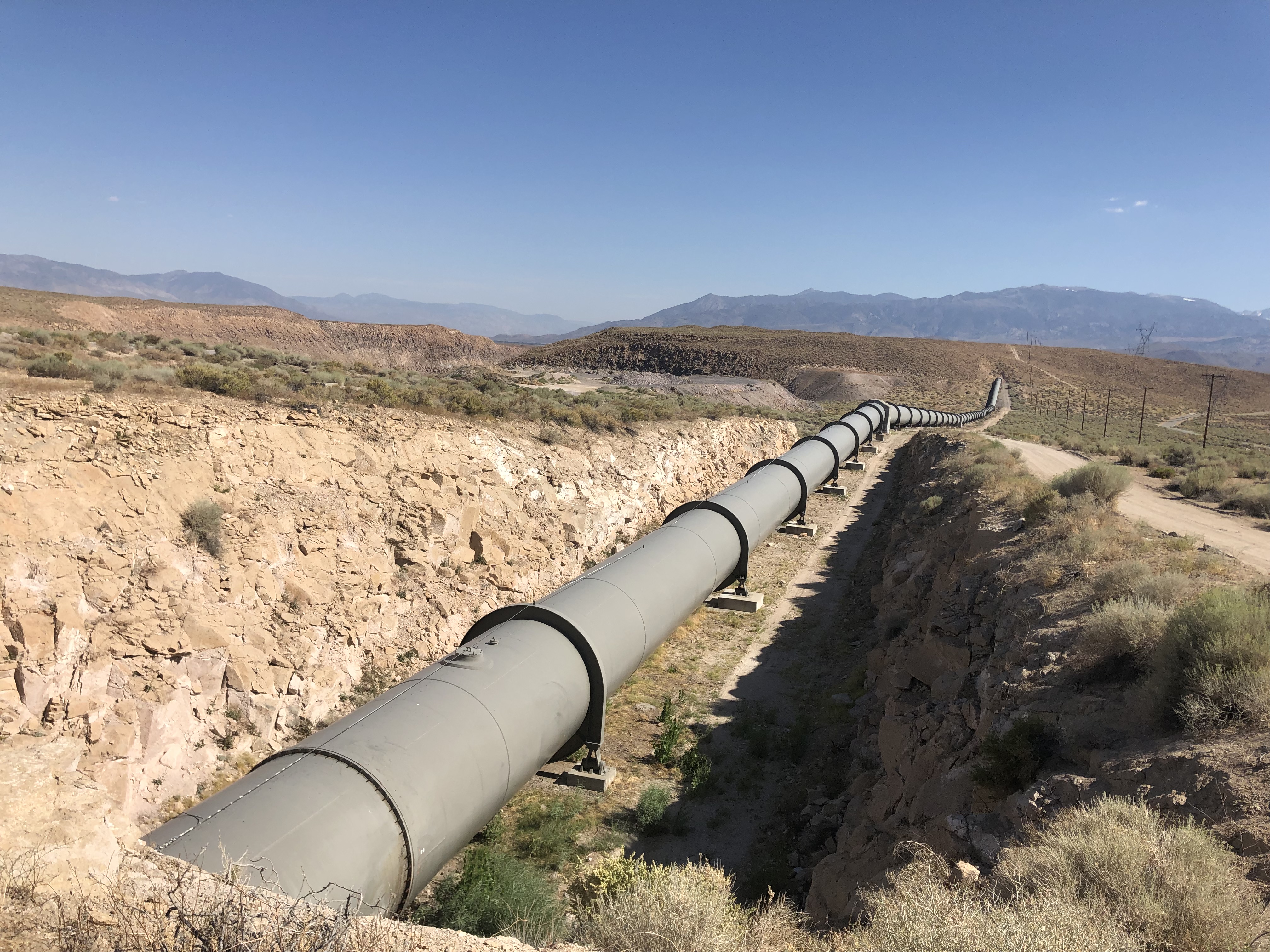
A sign said this was the property of LADWP [Los Angeles Department of Water and Power], so surely this was the pipeline. I put my ear up to the metal wall of the pipe and heard running water. I had expected the metal, which had been baking in the arid, 90-degree heat, to be hot to the touch. But it was refreshingly cool. Stopping to think about it, that makes sense since they’re running zillions of gallons of snowmelt through the insides.
The pipeline segment depicted in this picture is the furthest north I could trace it. At this point, it goes underground. I suspect it goes a little further north to draw water from the creeks near Lee Vining.
If any other evidence were needed to confirm that this is indeed a water pipeline, I found a significant leak a couple of miles to the south:
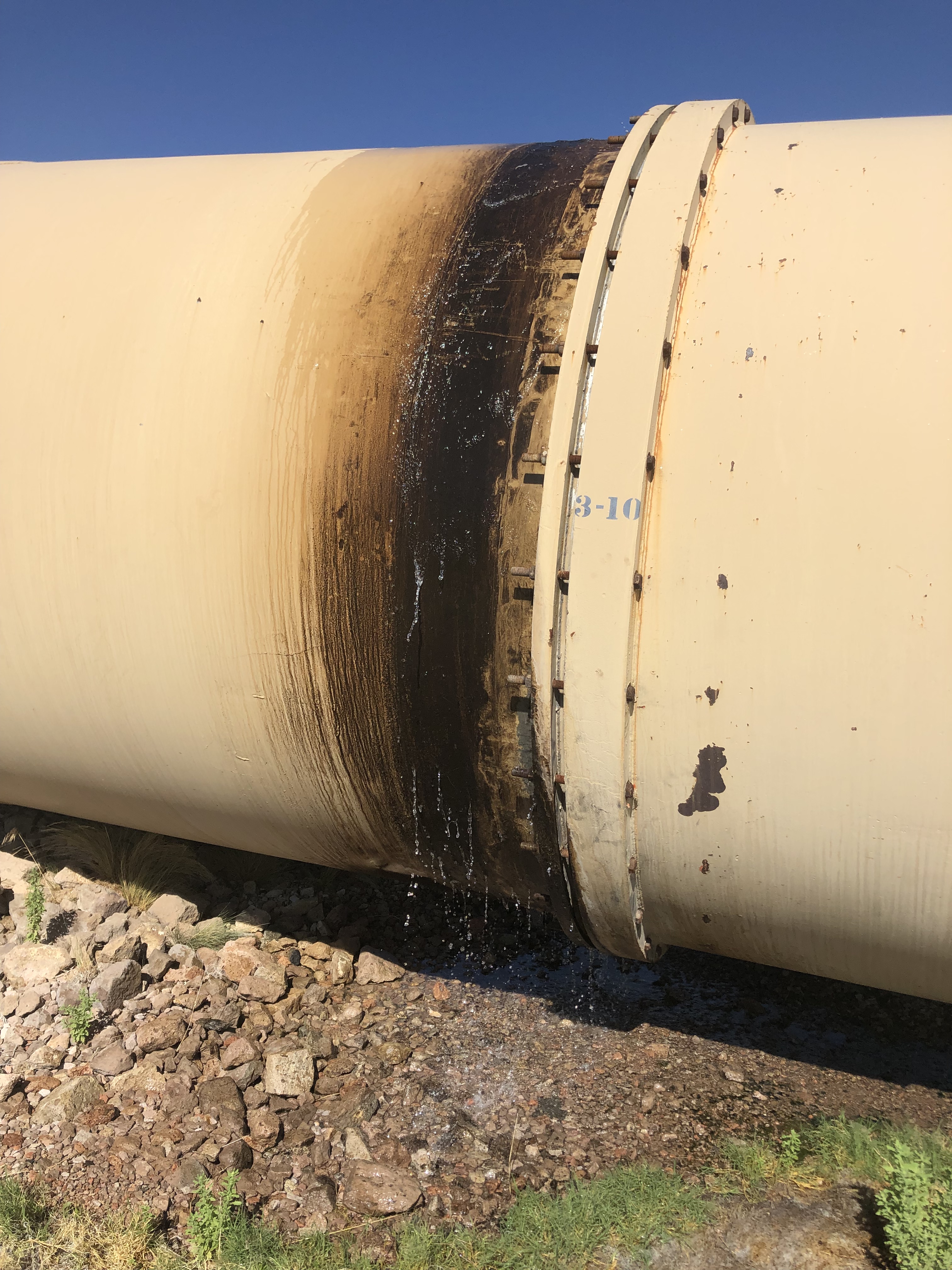
By the way, check out this 15-second video of the leak in action:
So, I’d finally found the aqueduct. But wait–there are actually two Los Angeles Aqueducts. The original aqueduct, built by Mulholland, only got as far north as the Owens Valley, in Inyo County. The spot I was standing on was some 100 miles further north. It is part of the so-called “Mono Extension” which wasn’t completed until 1940. What I really wanted to see was the headwaters of Mulholland’s aqueduct. So I got back on 395 and headed for the Owens Valley.
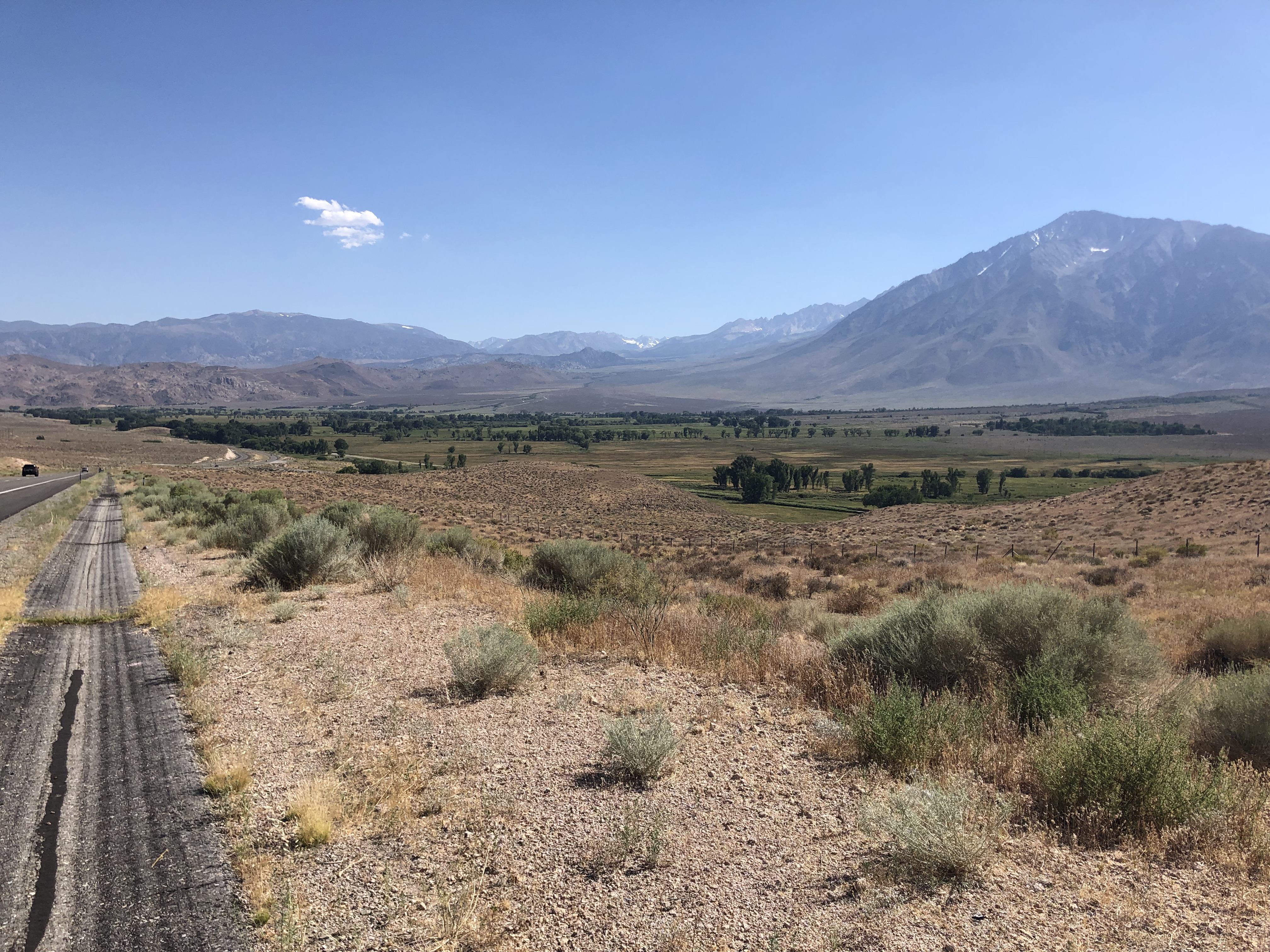
The pipeline I’d seen earlier had long since disappeared. I was surrounded by an endless, semi-arid valley. How would I be able to find the aqueduct? In desperation, I simply asked Siri. And she told me to take a dirt road near the town of Independence. Knowing that Siri is only as good as the Internet, and thus could be sending me on a wild goose chase, I wasn’t getting my hopes up. But I figured it was worth a try. I found the dirt road, and immediately encountered a gate.
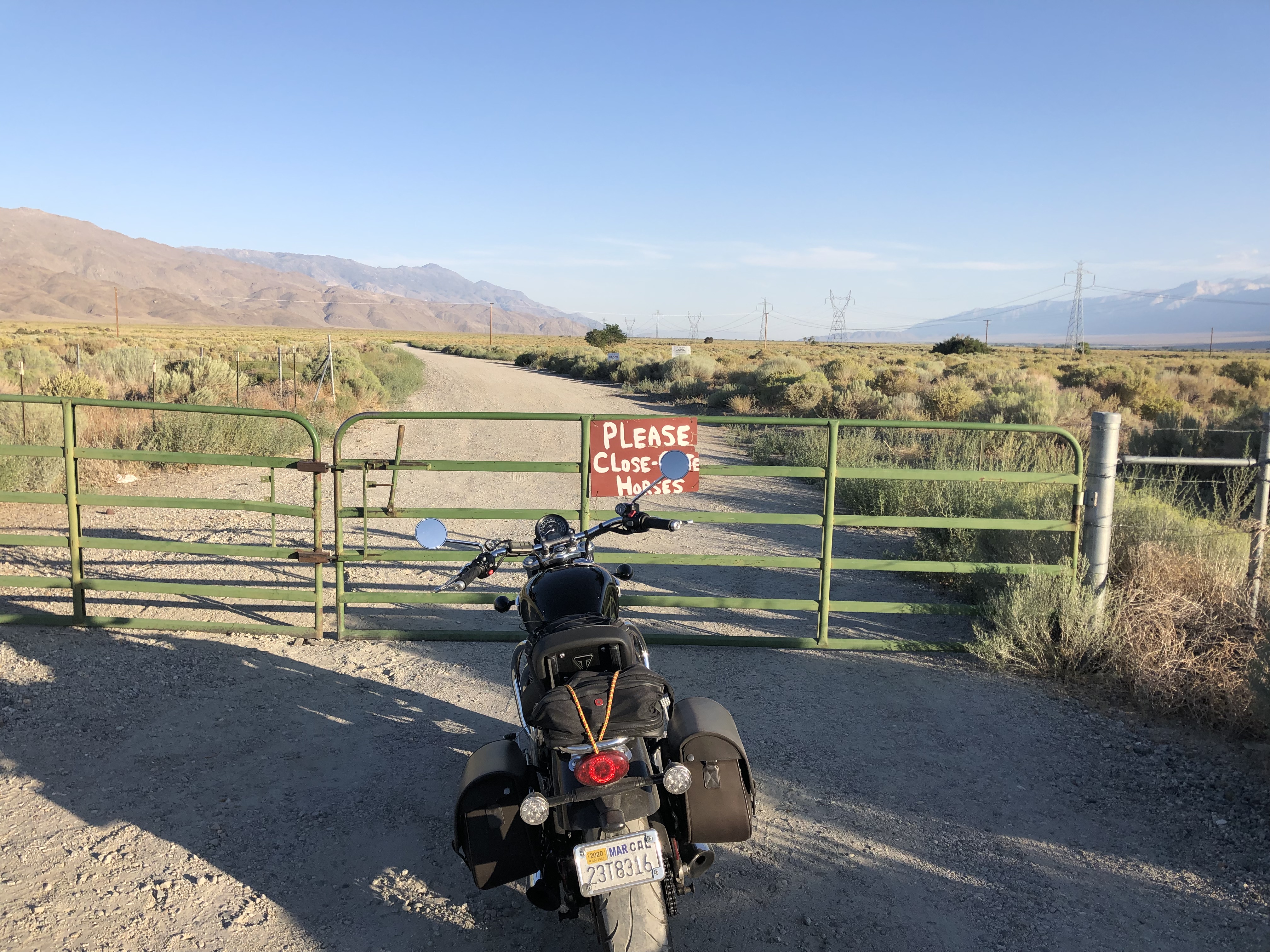
I could see no sign that prohibited trespassing. There was only a sign on the gate, saying “Please close gate–Horses.” I thought it was impressive that the horses could make a sign. Anyway, by asking me to close the gate, the sign implied that I could open the gate first. So I did.
I short distance past the gate was a marker set on the side of the dirt road:
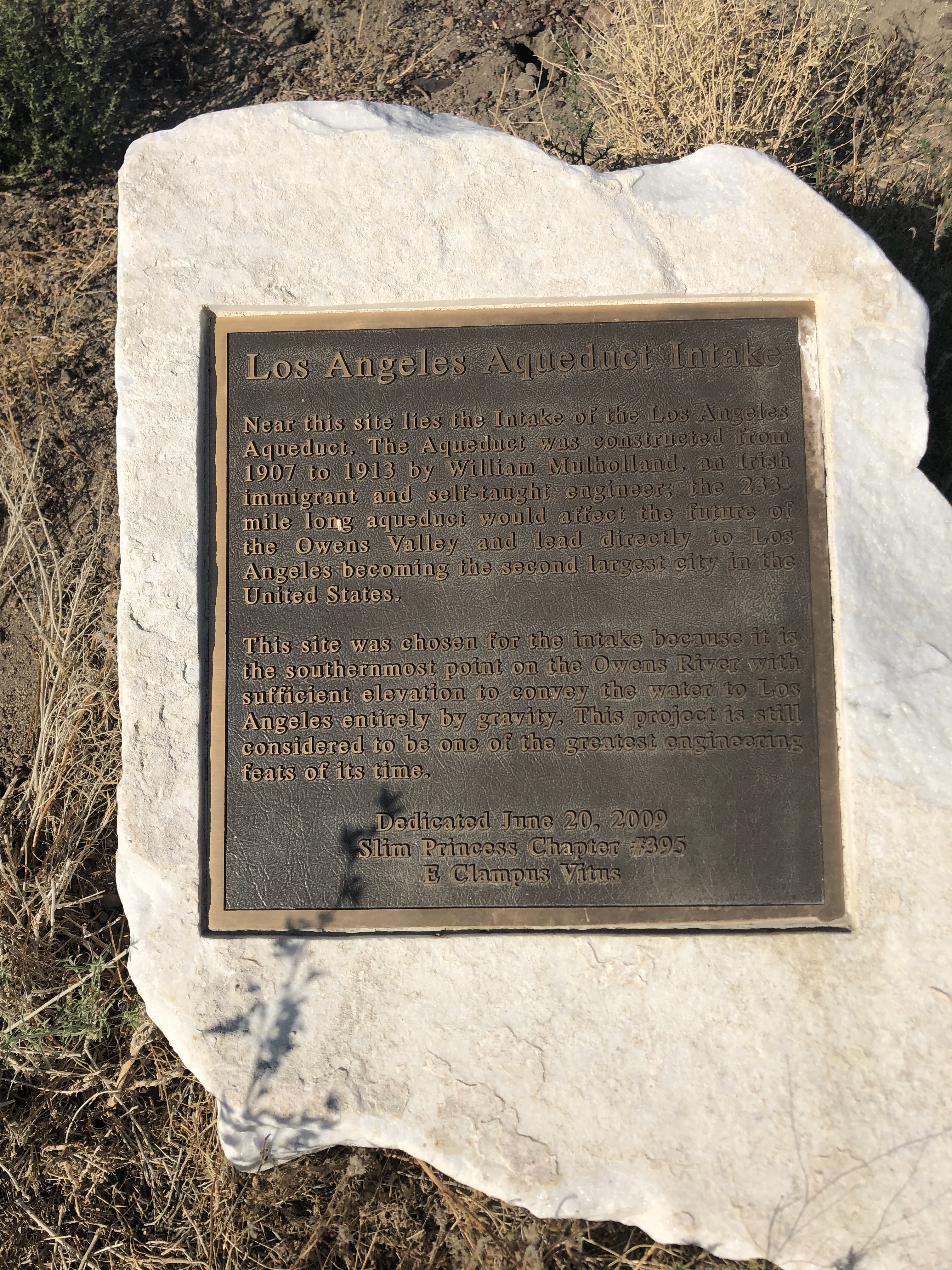
The marker said that “near this site lies the intake of the Los Angeles Aqueduct.” I was close! It gave no directions to said intake, but I presumed I just had to continue along the road.
After a couple of miles I came to a second gate, with another sign hand-painted by the horses. I passed through. I little further still and arrived at Mecca.
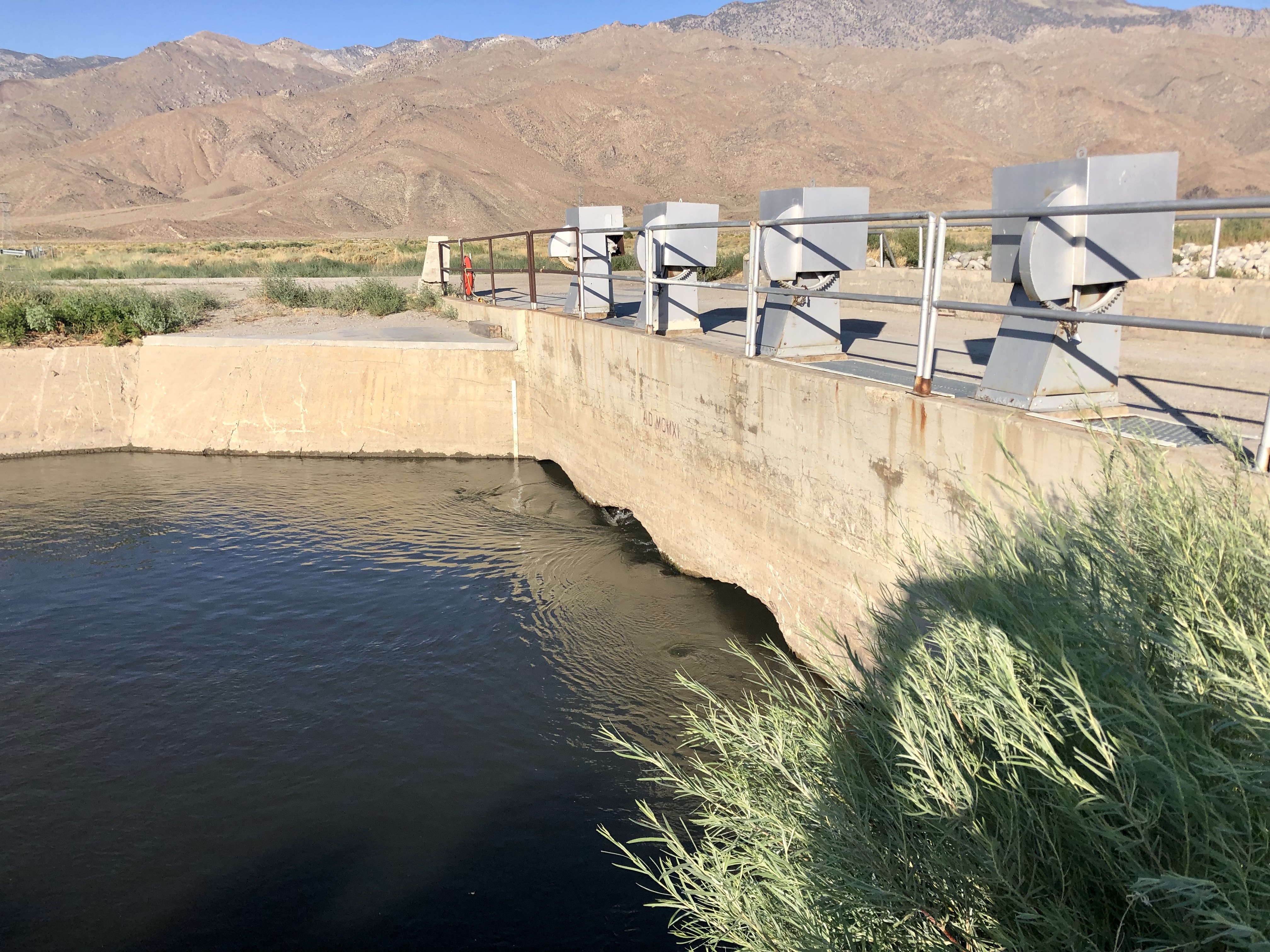
Just sitting there, in the middle of nowhere, surrounded by the parched, dusty Owens Valley, was the intake to the (original) Los Angeles Aqueduct. It’s been sending water on its 230 mile journey for over a century, silently and virtually unwitnessed.
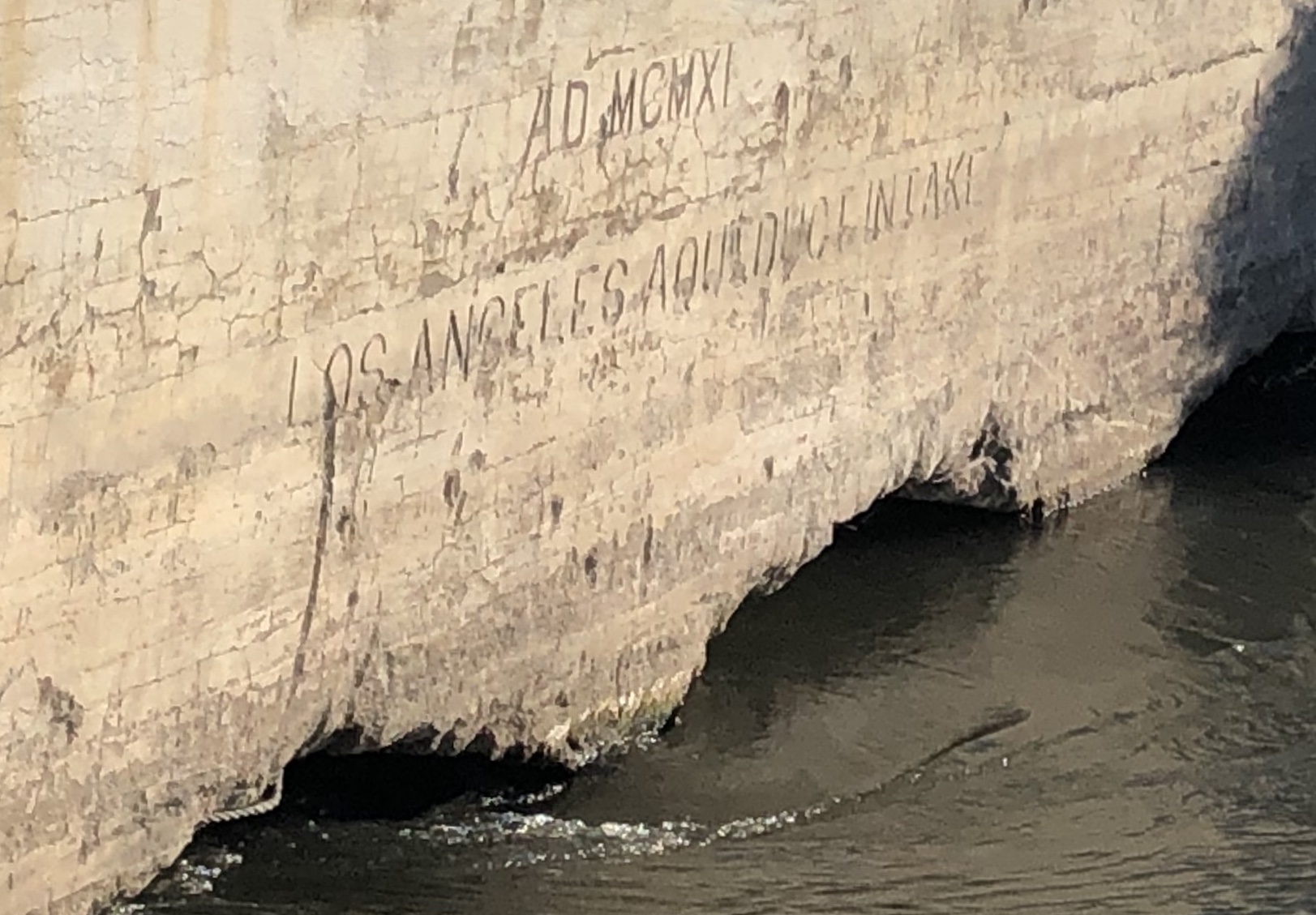
On the other side of the intake, the water enters a canal and is on its way. I watched it for a few minutes.
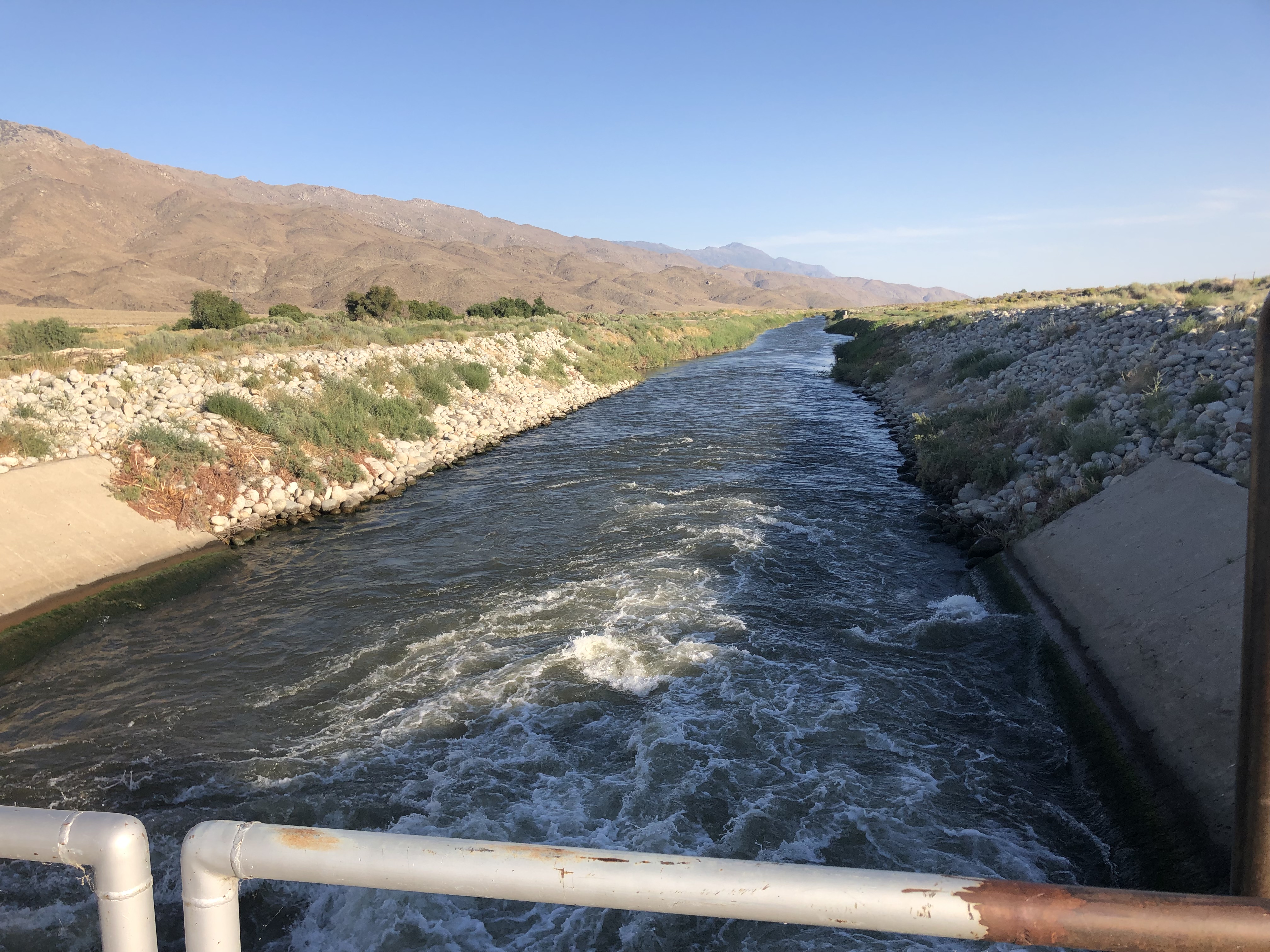
You can too! Watch it in action:
So that was that. I’d now visited both ends of the LA Aqueduct, a 116-year-old feat of engineering that is as impressive as it is politically and environmentally questionable.
I took the dirt road back to 395 and headed south. After a couple of dozen miles I encountered a coda to the LA Aqueduct story. Up on a hill to the right of the highway I saw this structure:
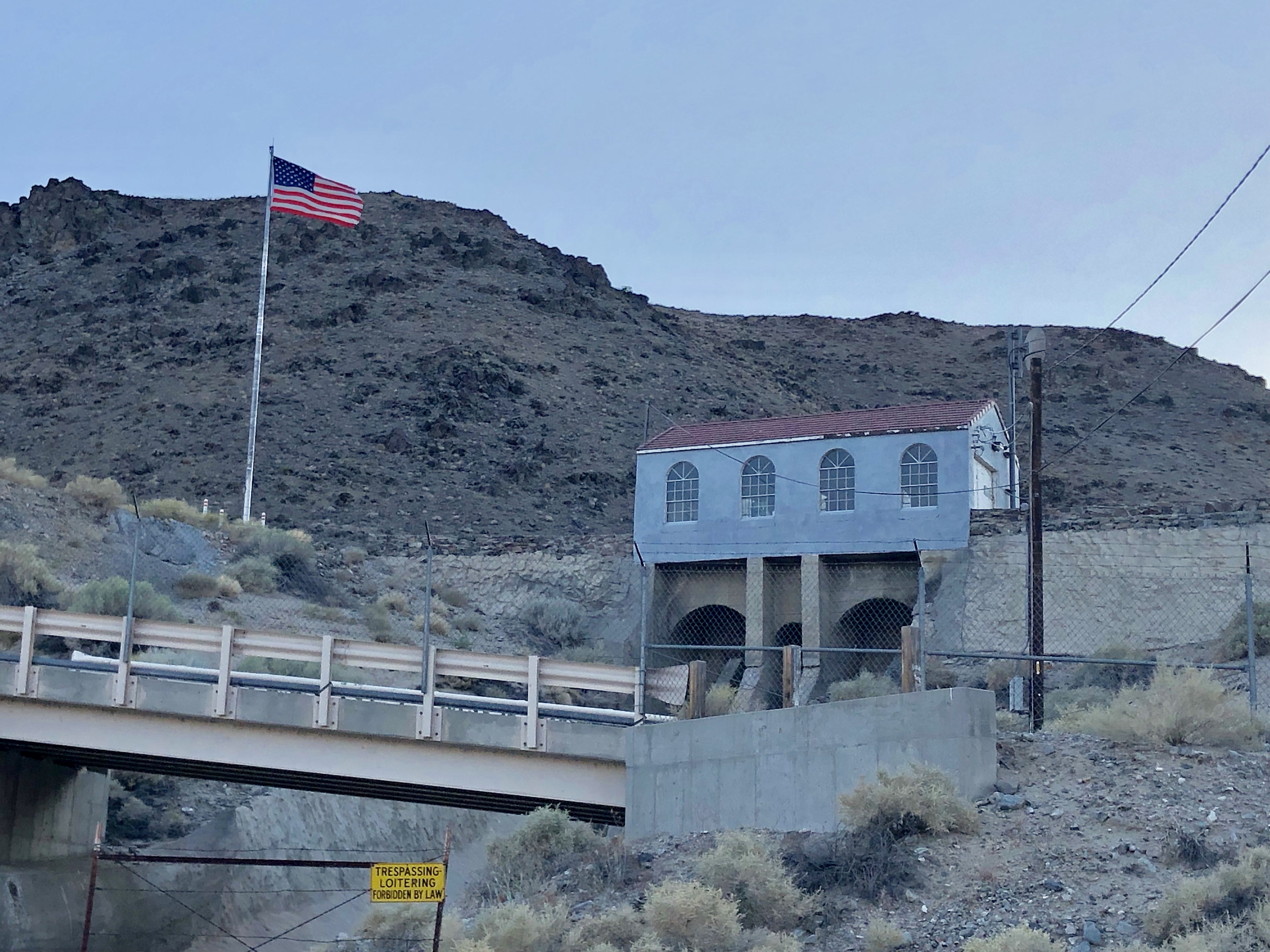
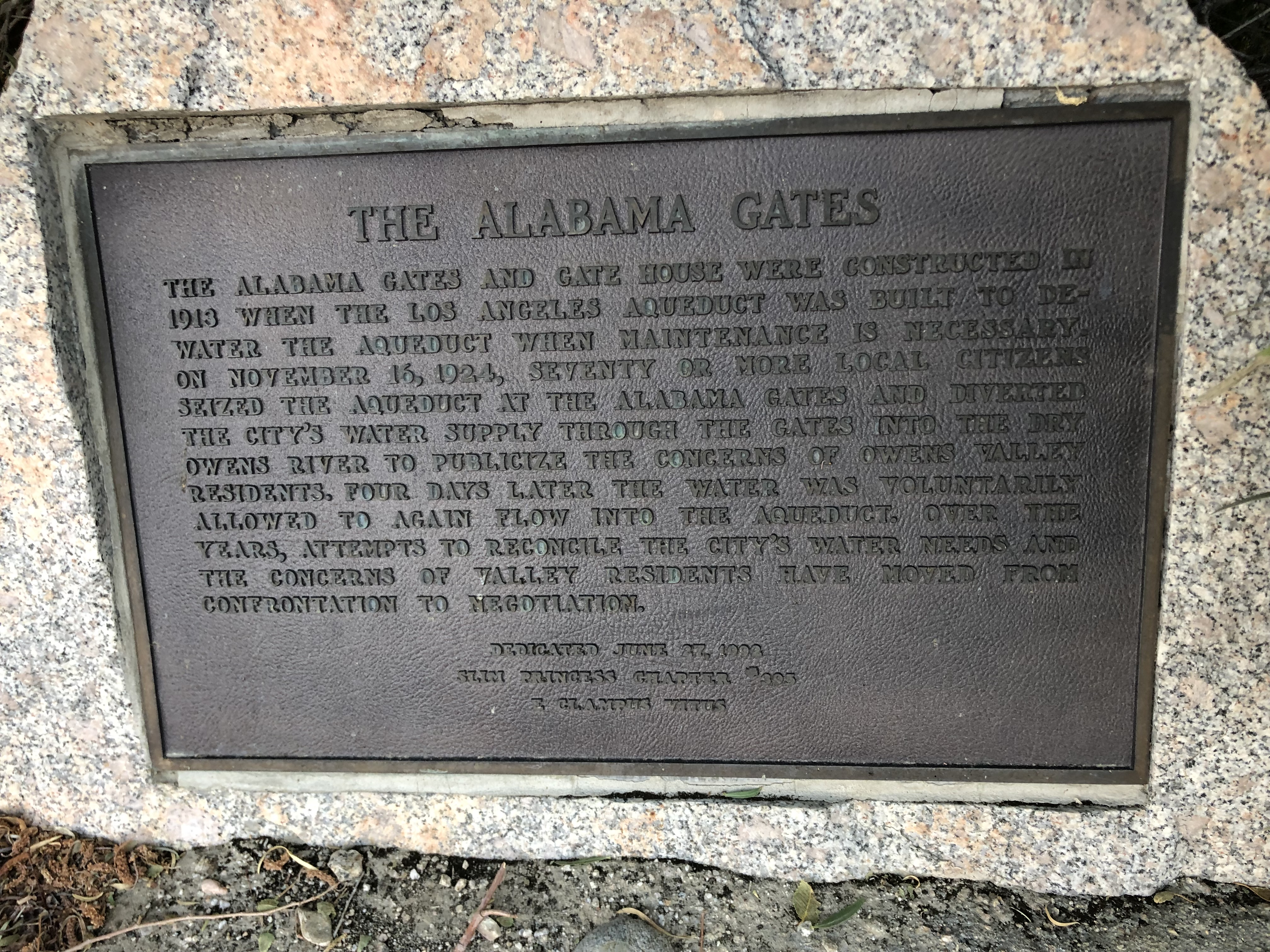
The architectural style suggested it was from the same era as the aqueduct, and the large, dry spillway dropped down to the other side of the highway. I turned up a dirt road and found a plaque with the story. For those of you (foolishly) reading this blog on your smartphones rather than a proper, full-size laptop display, here’s the text in its entirety.
THE ALABAMA GATES The Alabama Gates and gate house were constructed in 1913 when the Los Angeles Aqueduct was built to dewater the aqueduct when maintenance is necessary. On November 16, 1924, seventy or more local citizens seized the aqueduct at the Alabama Gates and diverted the city’s water supply through the gates into the dry Owens River to publicize the concerns of Owens Valley residents. Four days later the water was voluntarily allowed to again flow into the aqueduct. Over the years, attempts to reconcile the City’s water needs and the concerns of Valley residents have moved from confrontation to negotiation.
So, there you have it. The Los Angeles Aqueduct. Makes you realize that Chinatown wasn’t that far fetched of a movie after all.

 Chasing Phantoms