Surely you’ve heard of Burning Man, the 9-day counterculture celebration that takes place late each summer at a desolate location in the Nevada desert. I’m old enough to remember when the festival was a new thing, in which a few hundred die-hard hippies congregated for a little debauchery and drug-influenced philosophizing. It was edgy and unique — an anti-event, with almost nothing in terms of structure or rules or even a goal.
Over the years Burning Man became more and more institutionalized and, dare I say, established (as in, establishment). What began as a celebration of free spirit and dada art has become a major, organized event, with 70,000 attendees, $425 entrance fees, and a list of rules, regulations, and principles to be followed. The 2019 festival, which took place a little over a month ago, saw Silicon Valley millionaires flying in for the weekend and “social media influencers” live-streaming their incredibly interesting and profound activities and insights.
But my point today is not to critique Burning Man. Rather, it’s to share some observations about the Black Rock Desert (BLD), which has been home to Burning Man for most of the latter’s existence. The BRD is a huge, flat expanse of dry lakebed over 100 miles northeast of Reno. The silt surface of the playa covers more than 300,000 acres, surrounded by various mountain ranges and criss-crossed by a couple of historic emigrant trails. It’s truly astounding that this desolate, remote, isolated stretch of desert becomes a noisy, colorful, thriving city for about a week out of the year. So when you combine the natural, rugged beauty with the historical significance and the pop-cultural relevance, the BRD is a worthy destination.
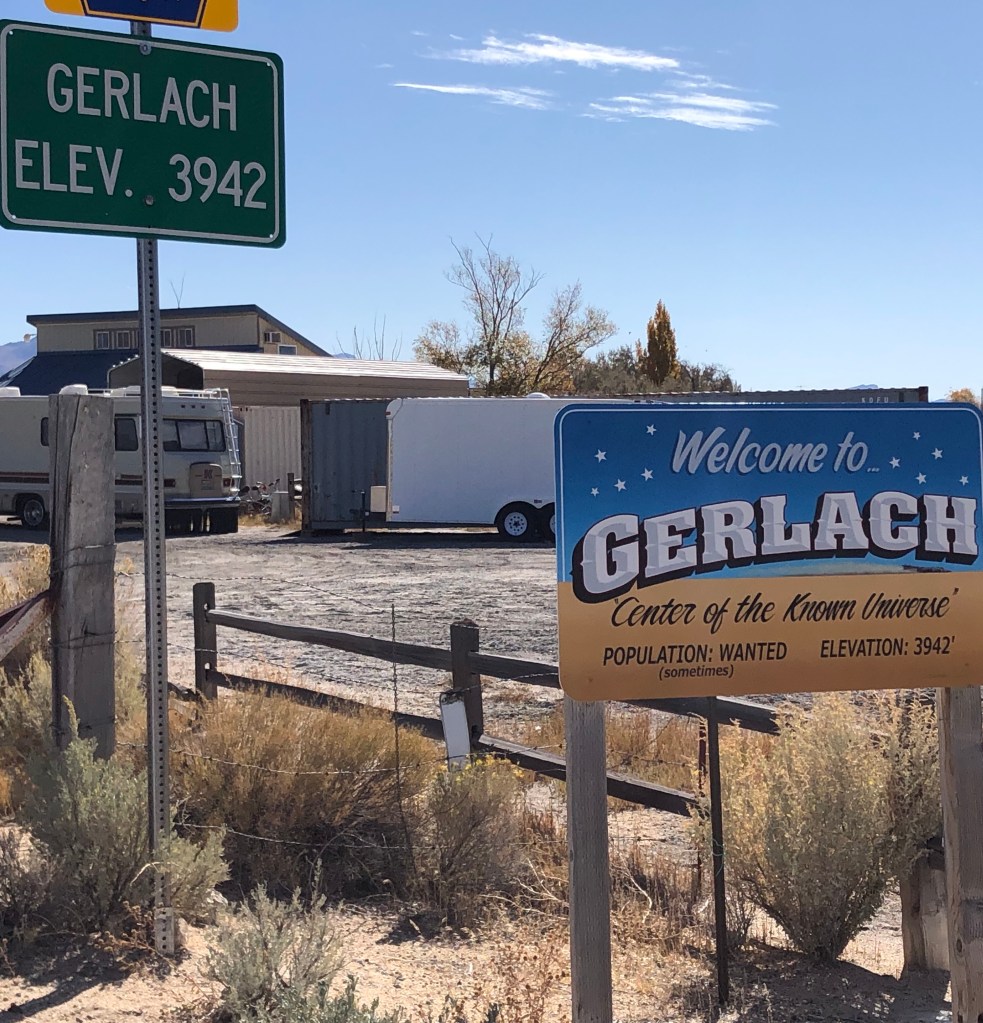
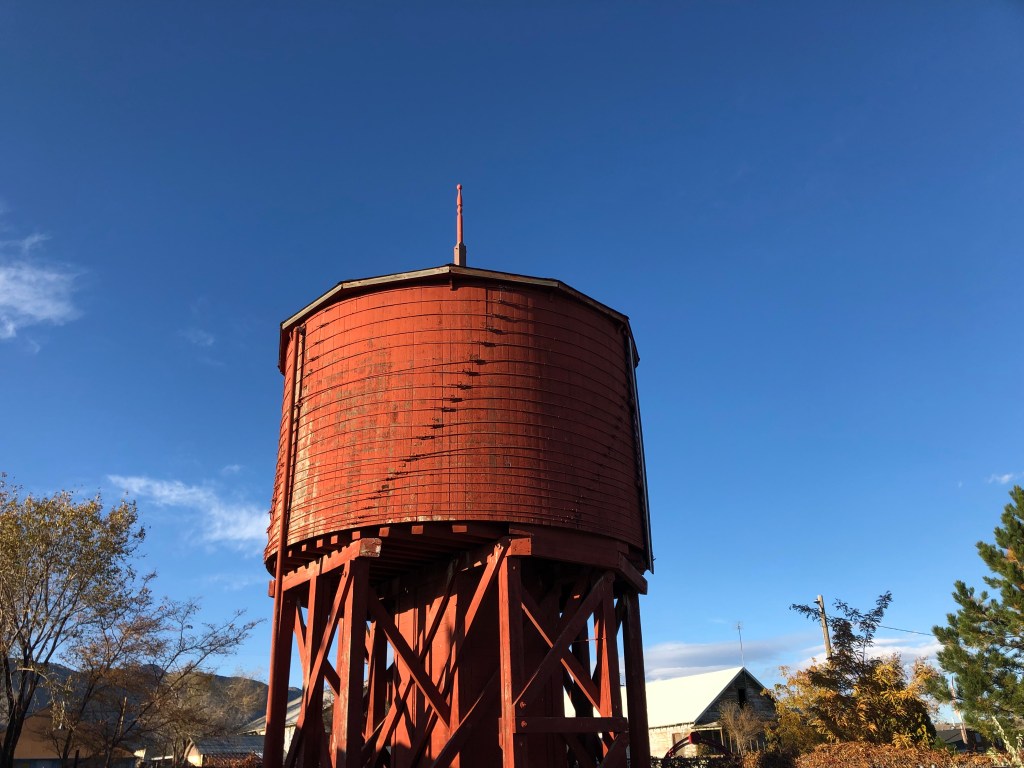
And so it was that on Friday I found myself headed out of Reno along Nevada Route 447, along with my offspring (Ian) and another passenger that will become evident in a moment. The last outpost of civilization that we passed before entering the desolation of the BRD was the tiny town of Gerlach, which is an old railroad whistlestop which today has fewer than 200 residents.
Soon we entered the “playa” of the BRD. It was surreal — table-top flat and expansive, the cracked-mud surface was uninterrupted by a single weed or stone. There were no “roads’ in the conventional sense; rather, the whole surface could act as a road. Hence, Ian took advantage of the opportunity to find the top-end of the RAV4’s power curve. (In 1997, a Brit named Andy Green drove a rocket-powered car on the playa, breaking the sound barrier at 763 miles per hour.)
It was also here, on the playa, that our passenger decided to get out of the car and relax a bit.
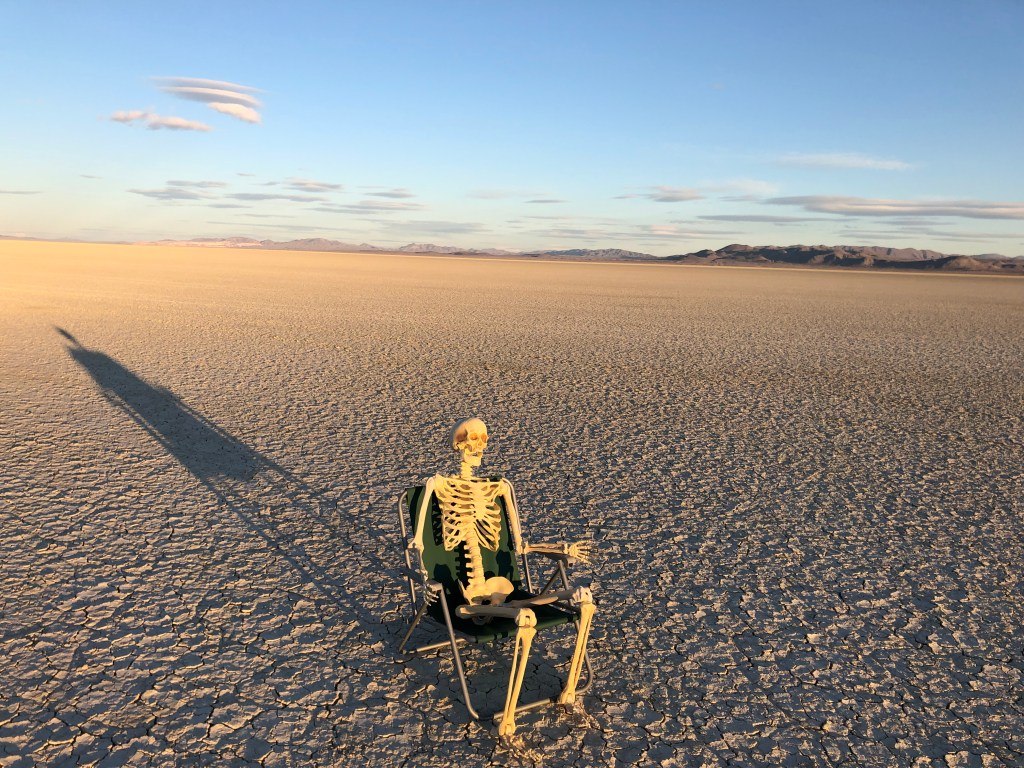
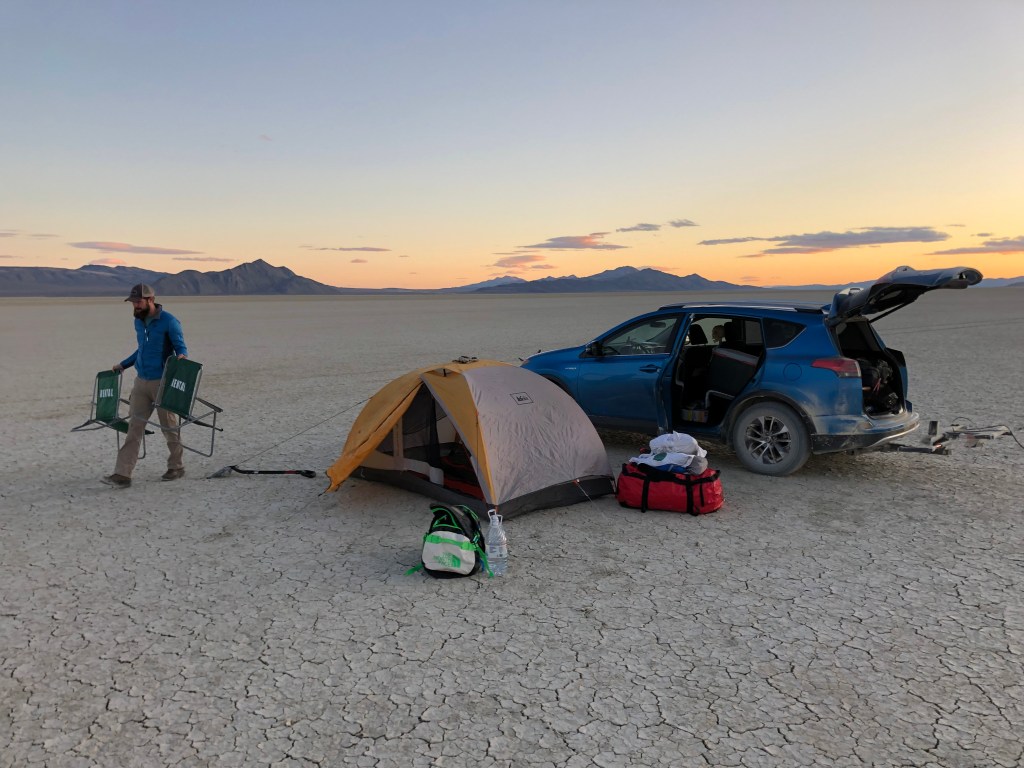
We camped out on the playa the first night, and prepared to go up into the surrounding hills and mountains the next day.
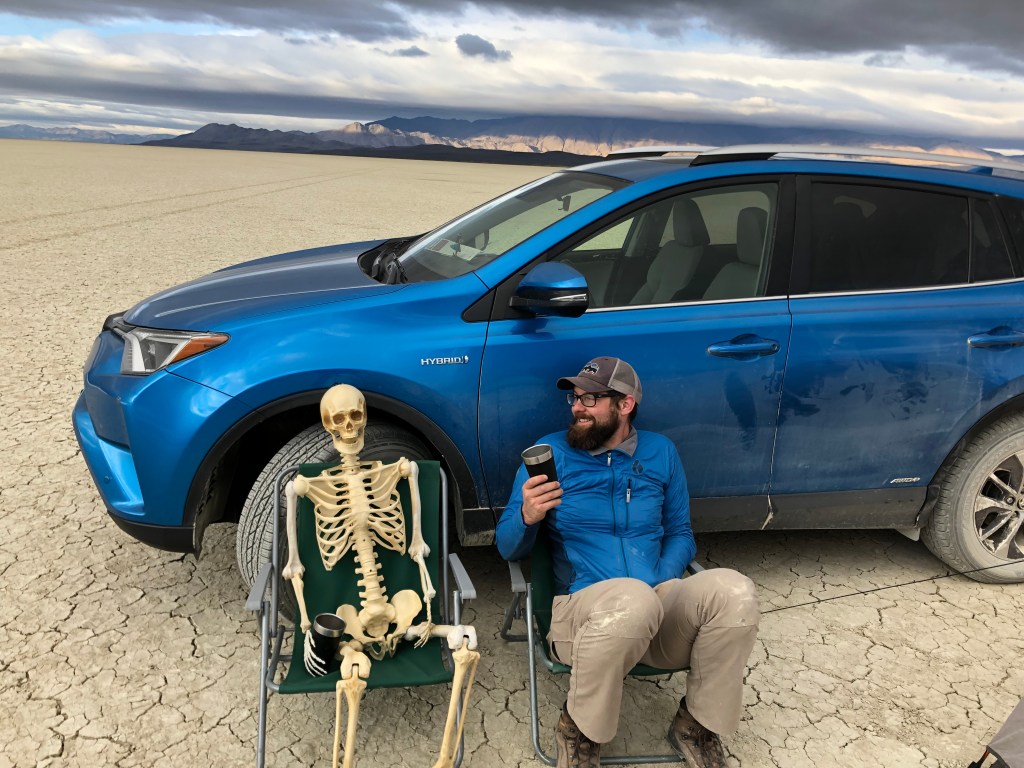
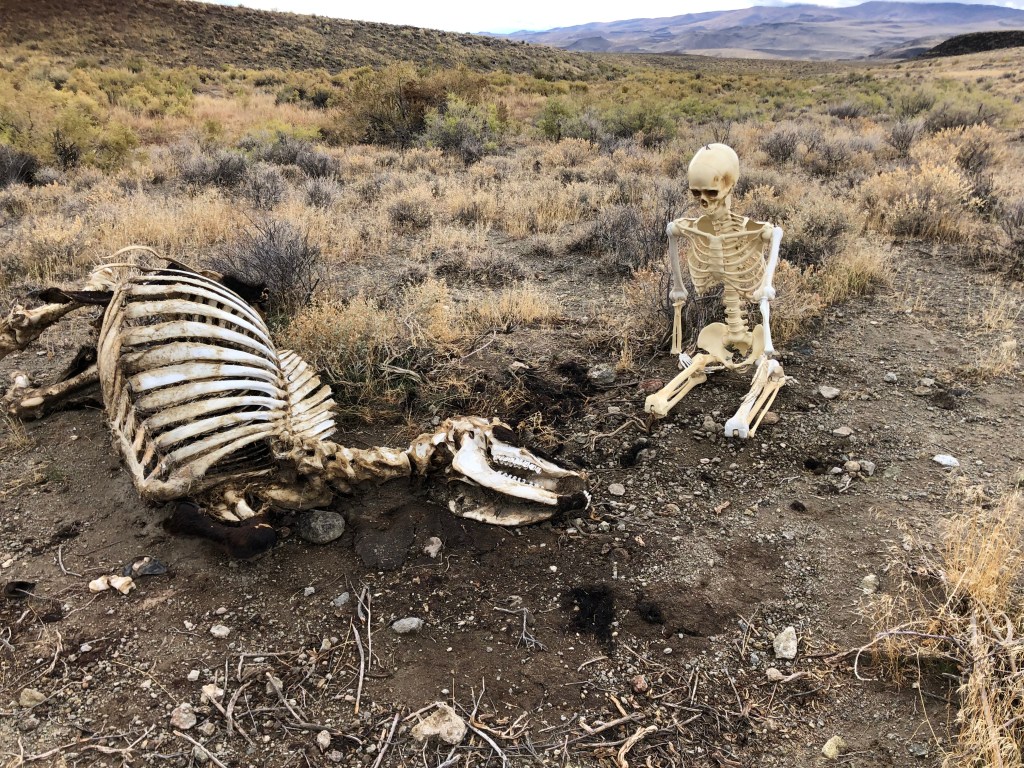
The next morning, after consuming a satisfying breakfast of Ramen noodles and beef jerky, we set off into the surrounding hills. Before long we came upon an unfortunate cow, which Mr. SB showed some interest in.
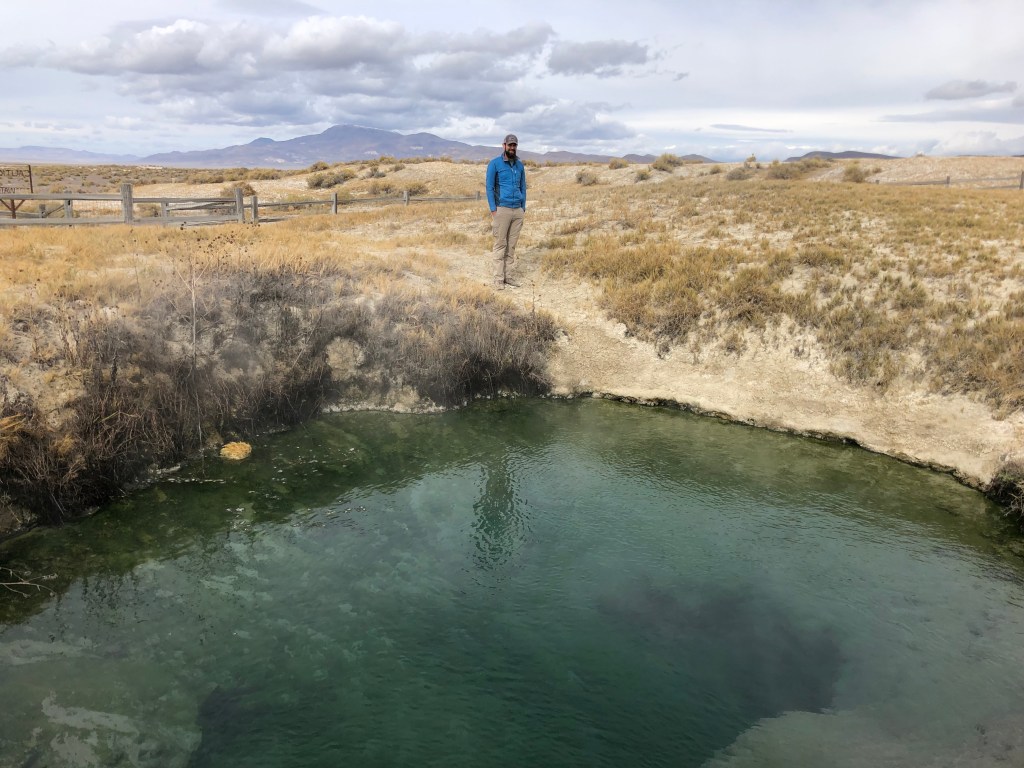
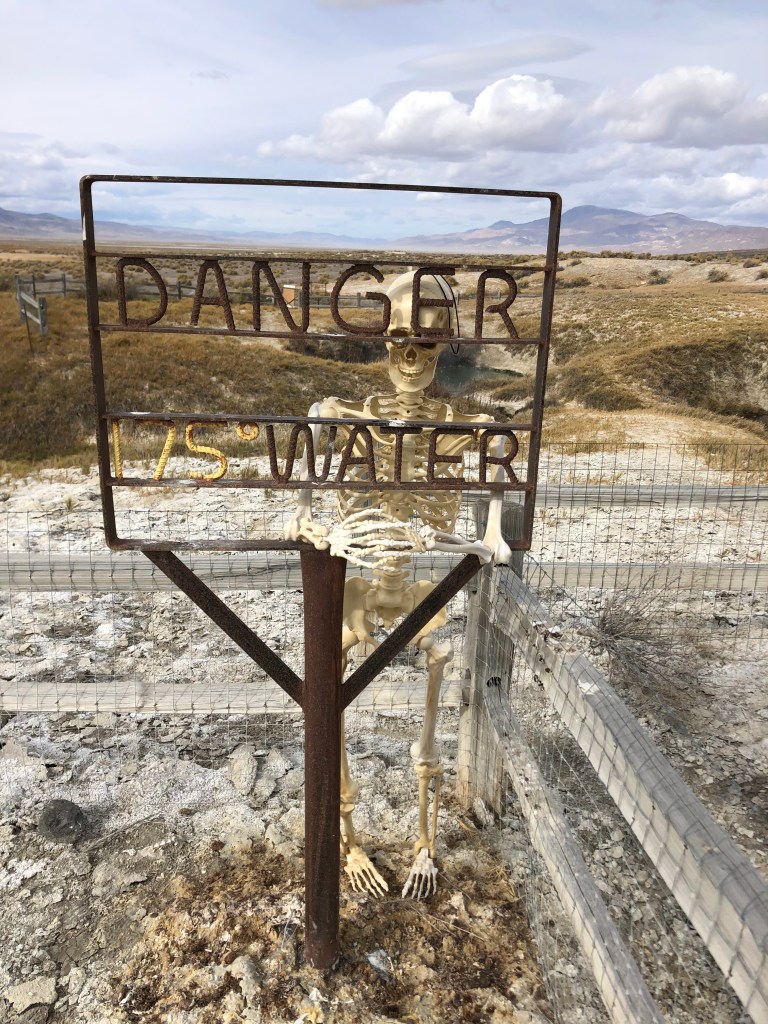
Later, we came upon a couple of hot springs, bubbling up from the ground, which were far too hot even to feel with a hand. (An accompanying sign stated the water was 175 degrees Fahrenheit). The springs, like much of the route we took on this day, were situated on an old wagon trail that ran from Idaho to Oregon. An emigrant diary entry from 1849 reads: “At the noon halt…were several boiling springs, two of which were great curiosities, like twins standing side by side,..Here we did our washing, and cooked our beans in the springs.”
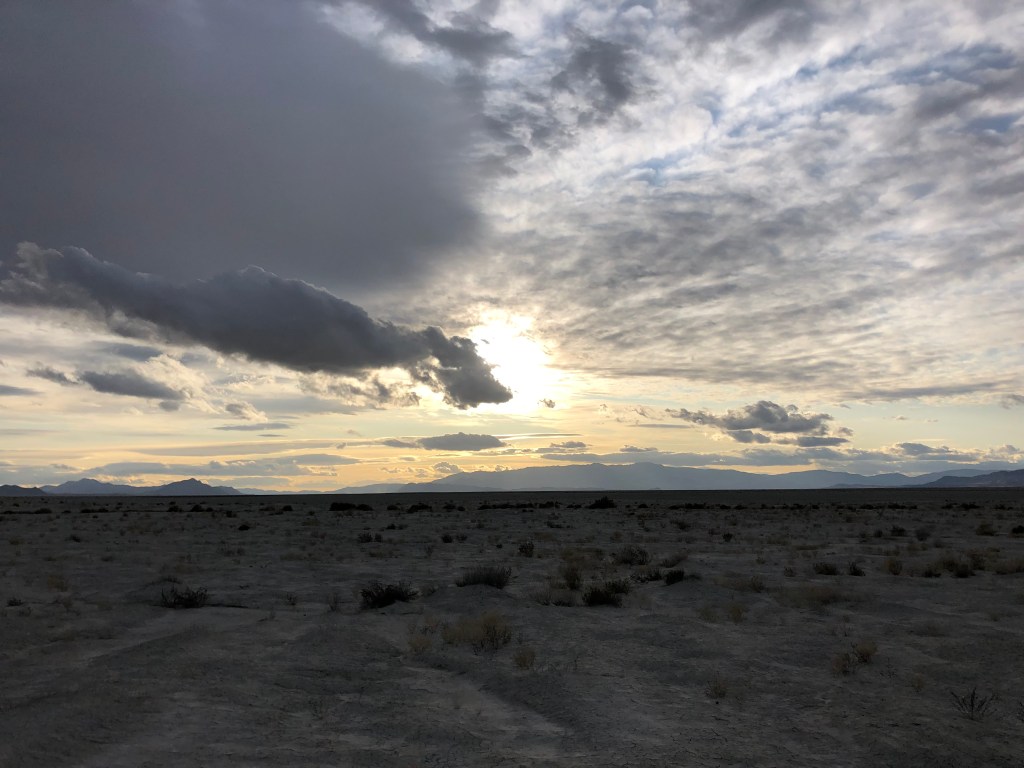
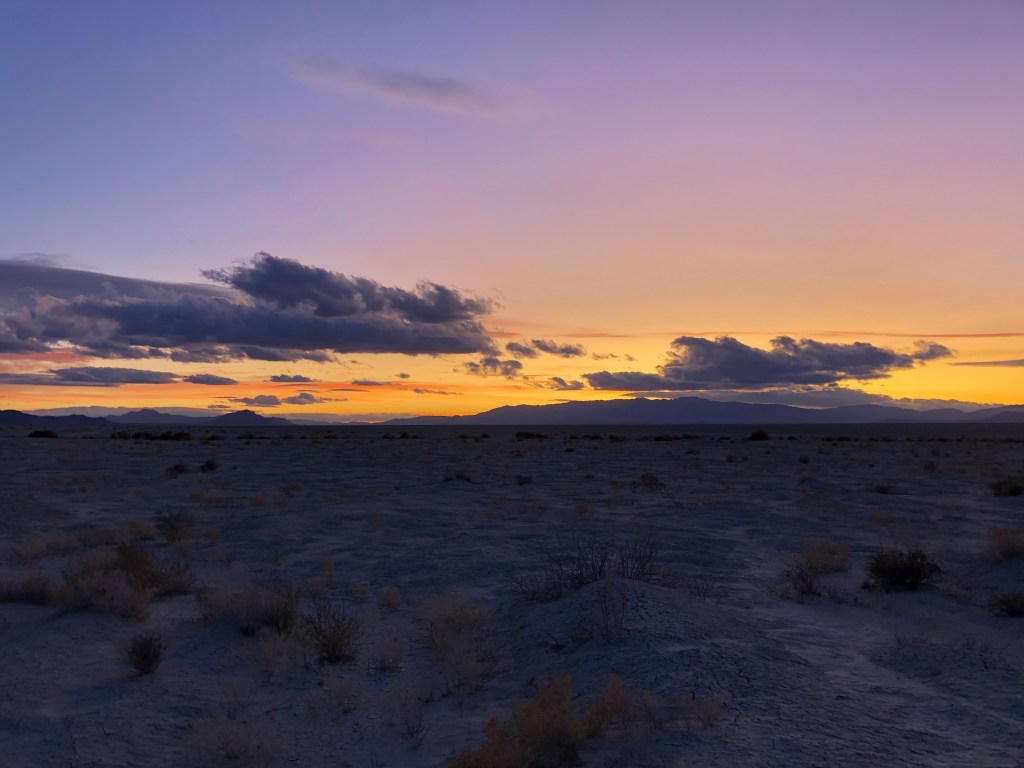
We later found a second, smaller playa, where Ian rode his bike a bit. After some more exploration along old, rutted wagon roads, we eventually set up camp for the second night. The sunset was impressive.
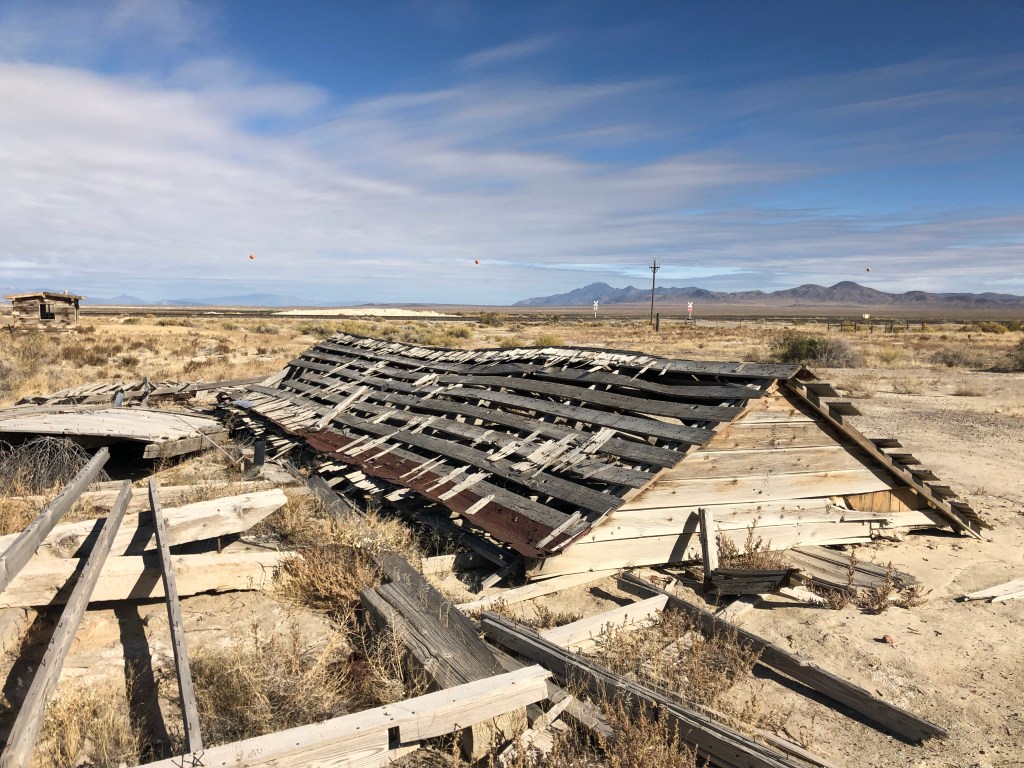
The next morning I suggested that we explore the ghost town of Sulphur, which, not surprisingly, is named after sulphur deposits that were mined in the area . Ian asked me, innocently, why I’m so interested in ghost towns. It’s a good question. I think it’s partly that I find it humbling, to know that others had come to this place before, and built something upon the uninhabited land, and made a life for themselves, under conditions much less conducive than the conditions I take for granted. But also, in an odd way, I think you can understand and maybe even sense the importance of those people best after they are gone. It’s our curse, to appreciate things best only when they’re absent. Somehow, the ghosts of pioneers in the remnants of an abandoned town become more colorful and important than the multitude of souls crowding a modern city. Certainly more than the 70,000 would-be hippies on the BRD playa.
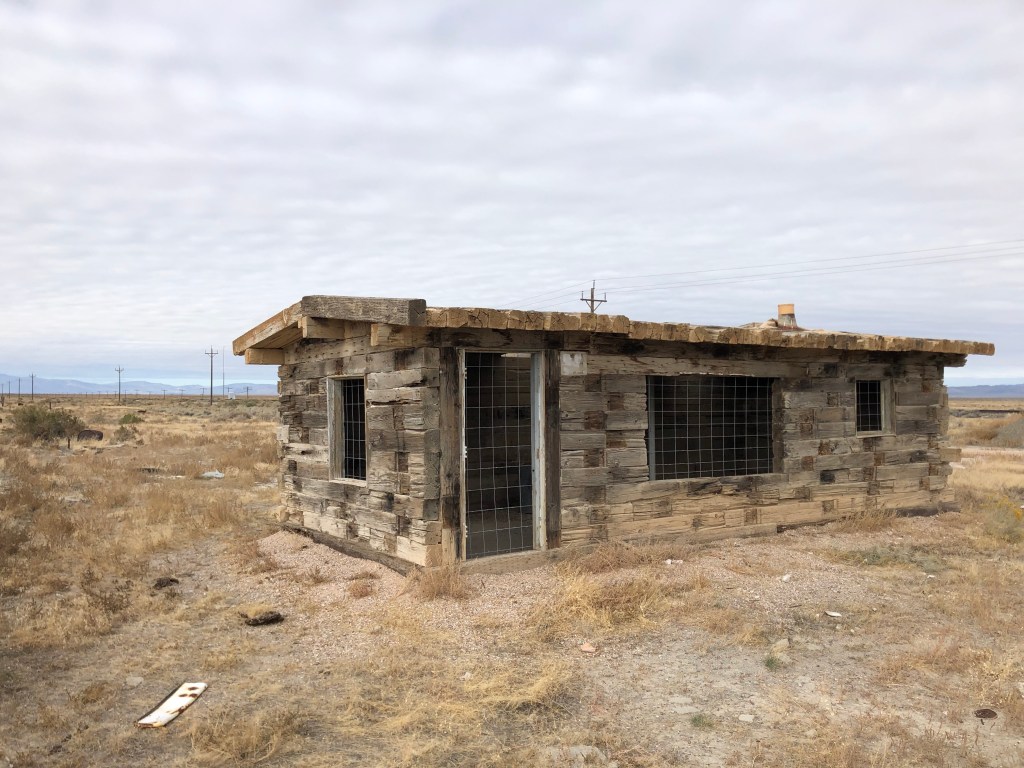
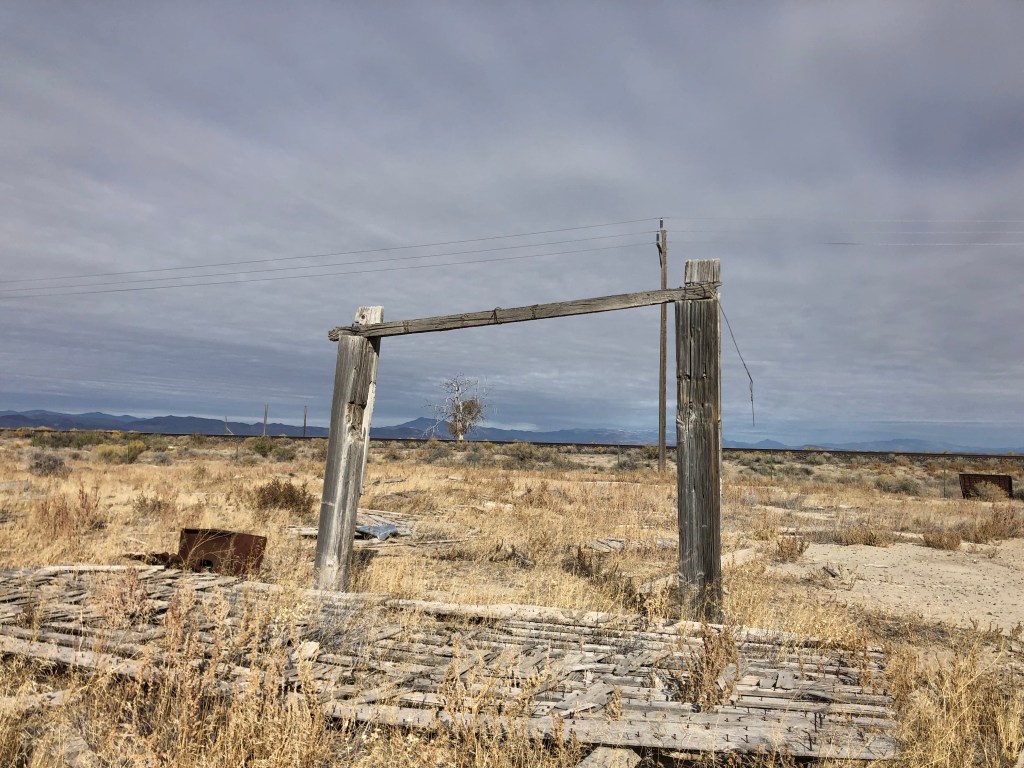
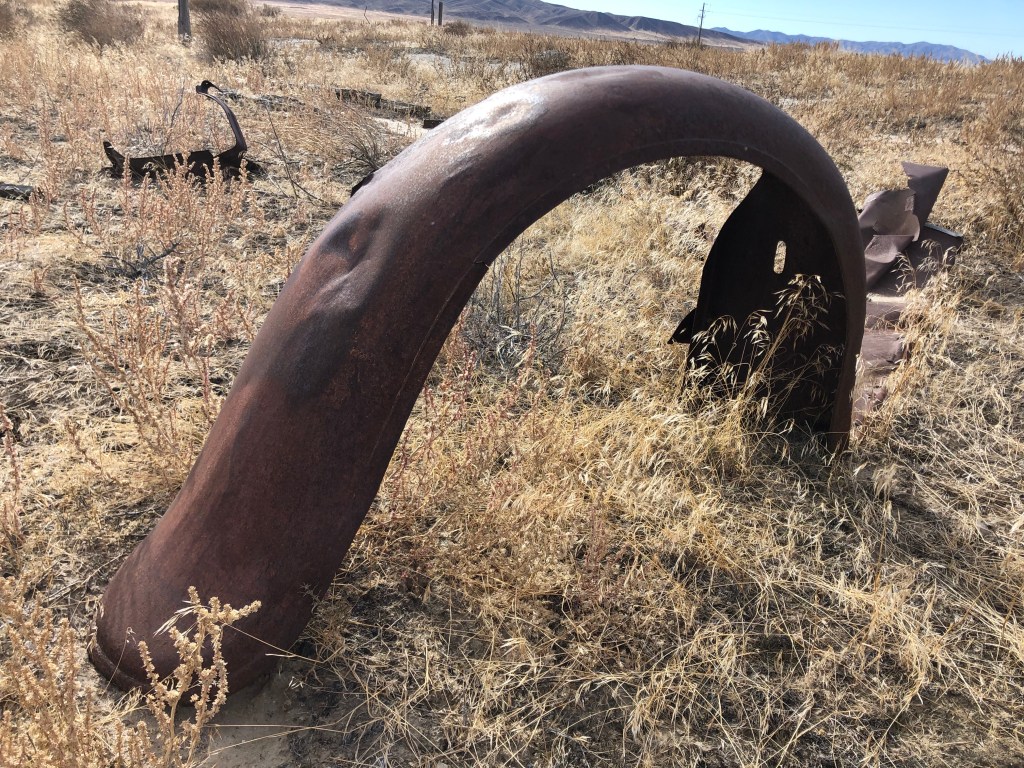
After Sulphur, we found another hot spring, and spent some more time driving carelessly across the vast expanse of the playa. And then, all too soon, it was time to head back to civilization.
As I write this, I’m struck that we didn’t experience a lot of individually notable sights (or sites). But the overall experience of the Black Rock Desert is notable, even profound. It’s the stark, otherworldly wilderness, with an almost complete lack of living souls. It’s the pure, clear air and distant vistas, the colorful and craggy mountains surrounding the uninterrupted playa. Spending a few days out here recalibrates one’s sense of time and space. It’s an antidote to modern conveniences and comfortable furniture.
Special Notice
A few of you (Bruce, I’m looking at you) still ask me how you can know when I’ve posted a new blog entry. If it’s connected with a road trip, I usually send out an email. But for the month of October I’m posting SpookyBones each and every day. And who knows what hijinks might appear in November and December? My advice is to “subscribe.” which is as easy as clicking the button at the bottom of this page.
And Speaking of SpookyBones….
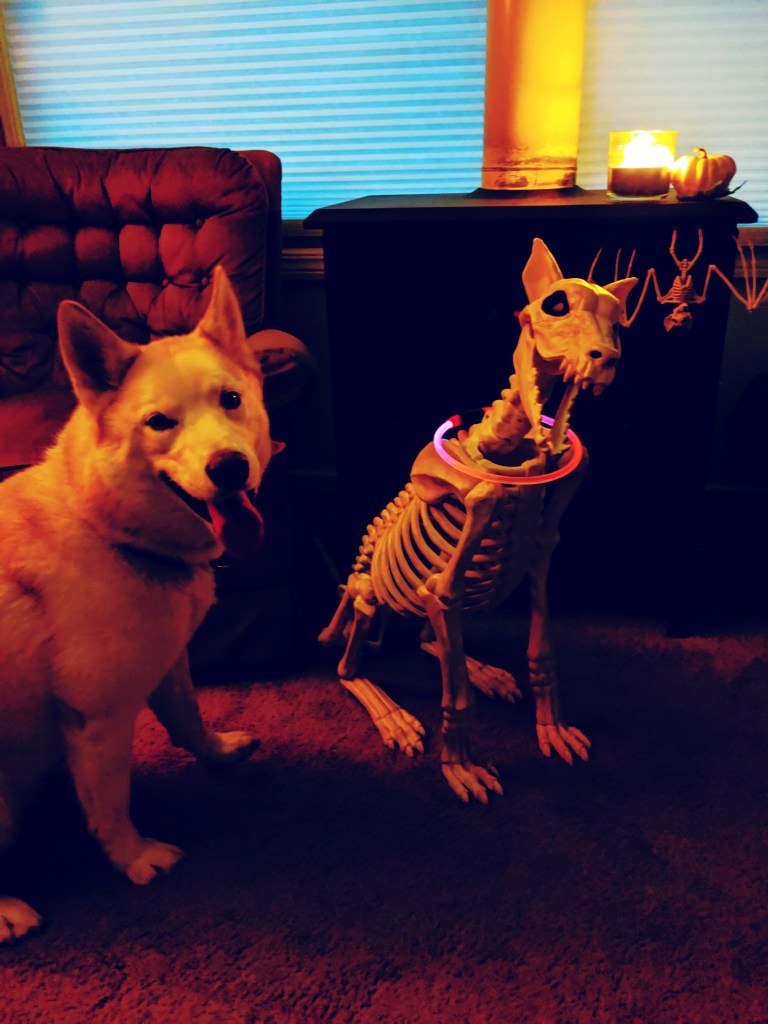
I think you’ve seen enough of him in today’s post. So let’s close with a special guest photo, of my Grand-dog, Sienna, and “Little Miss SpookyBones.”

 Chasing Phantoms