This morning I woke up in Hugo, OK, which you’ll recall has been called “Circus City USA” because it plays hosts to various circuses (circi?) in the off-season. It turns out that some of the circus folks never leave; that is, they are buried in the local cemetery. In fact, I was told there’s a special section set aside in the cemetery called “Showmen’s Rest,” which is dedicated to them.
So at dawn this morning I found the Mt. Olivet cemetery, which has an impressive set of gates built as a WPA project in 1937.
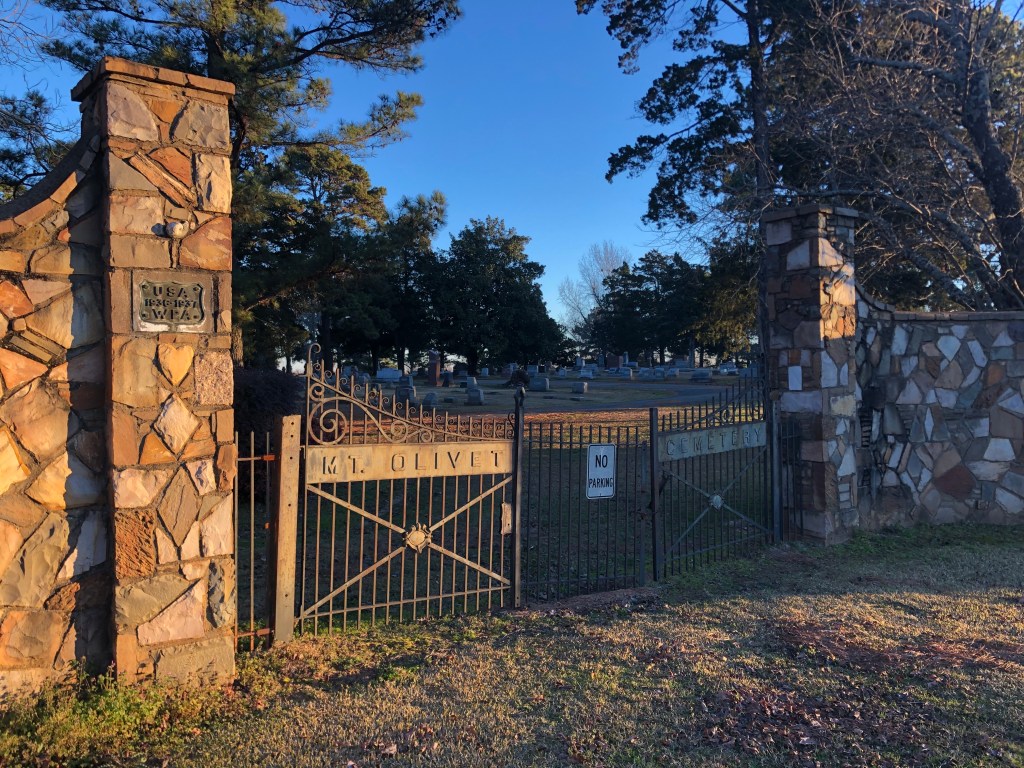
Unfortunately the gates were still locked. And so it was that I found myself, for the first time in years, scaling a fence under cover of (almost) darkness.
The cemetery is enormous, and it took me quite some time stumbling among graves dating back to the first world war before I finally located the Showmen’s Rest. It was outlined with elephant-topped columns, and a large monument in the middle of the them identified the area as “A Tribute To All Showmen Under God’s Big Top.”
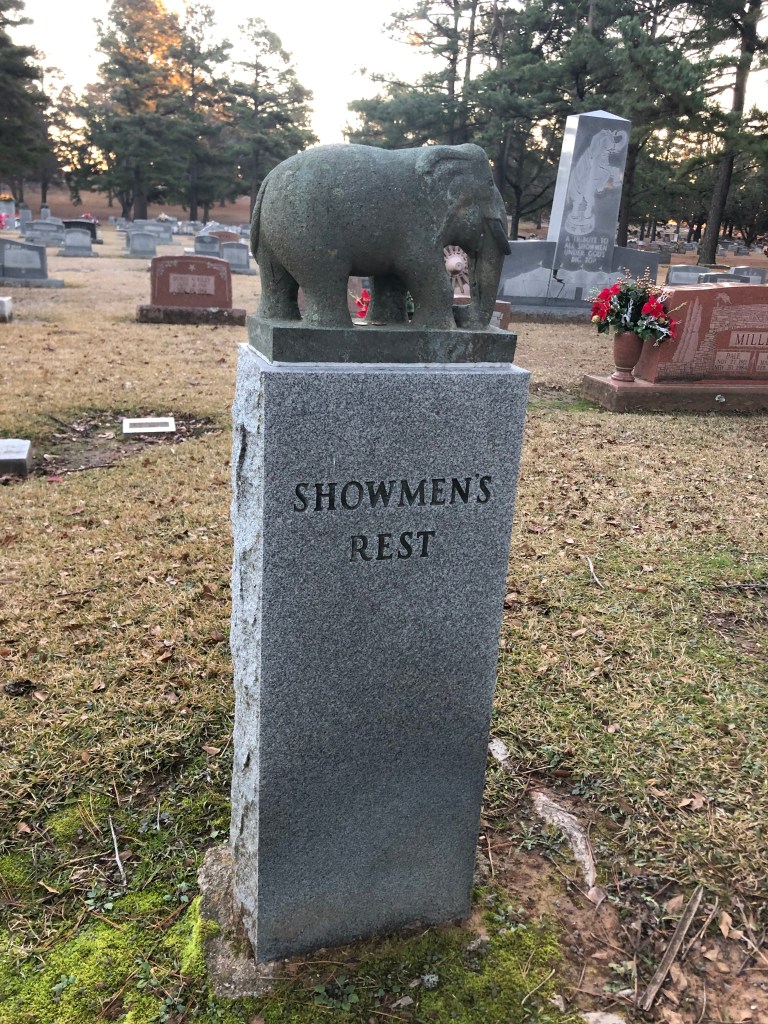
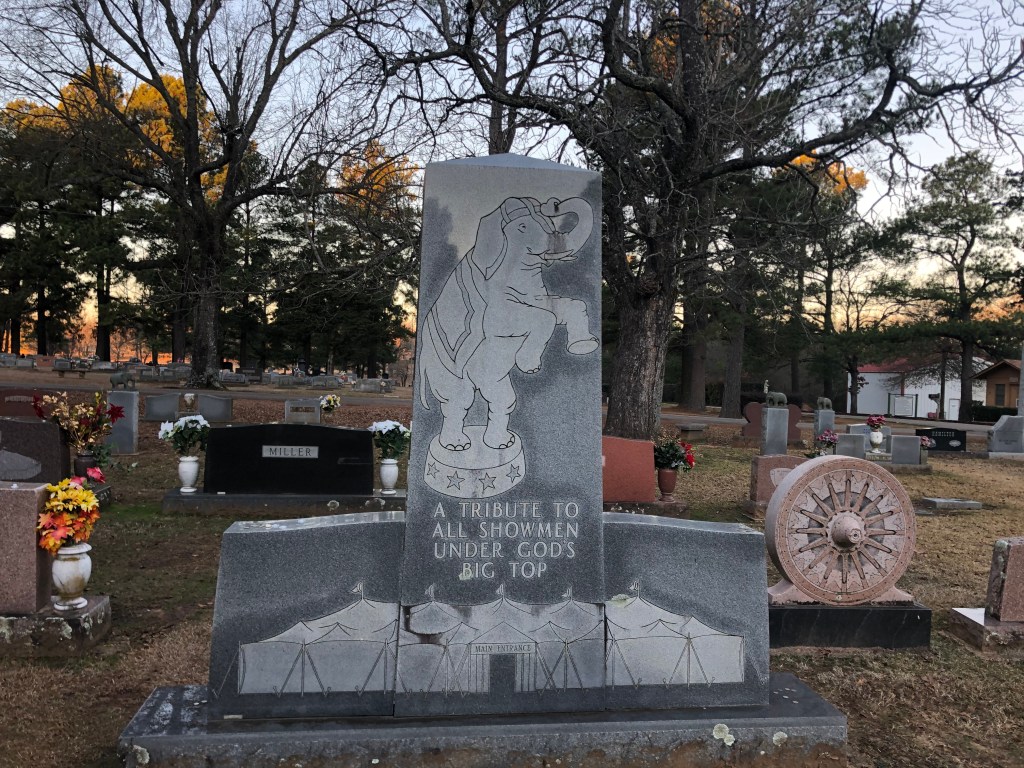
There were many headstones within the Showmen’s rest, a few of which I captured on my camera. Many of the permanent residents had the last name of Miller, which evidently was a major circus family.
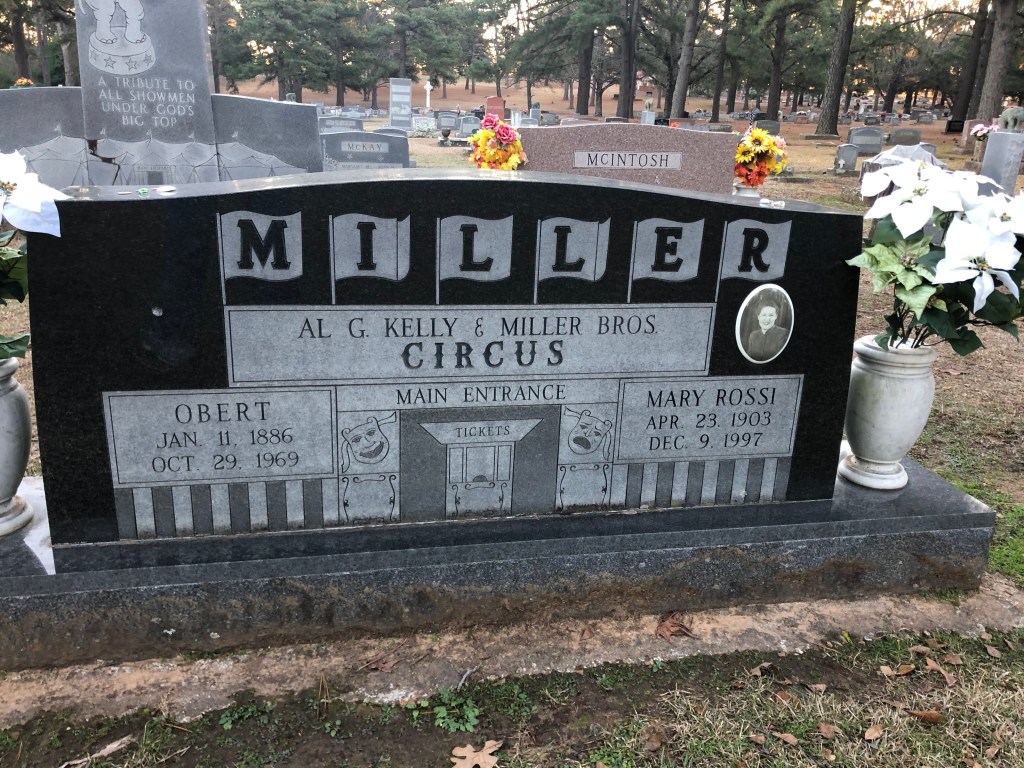
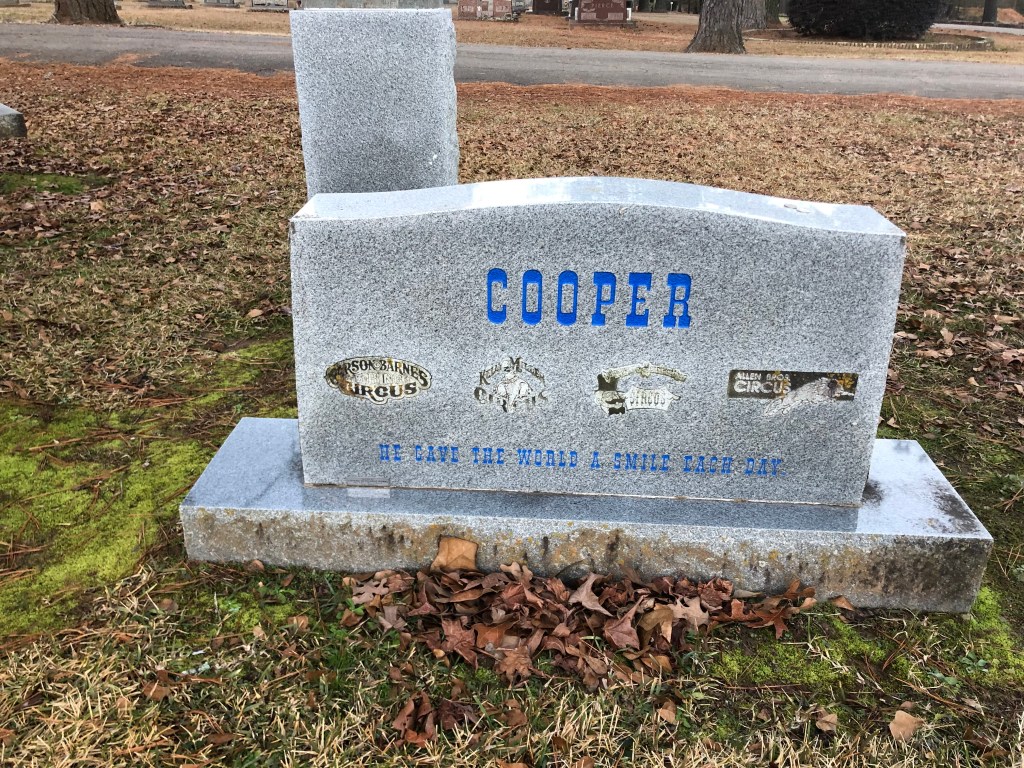
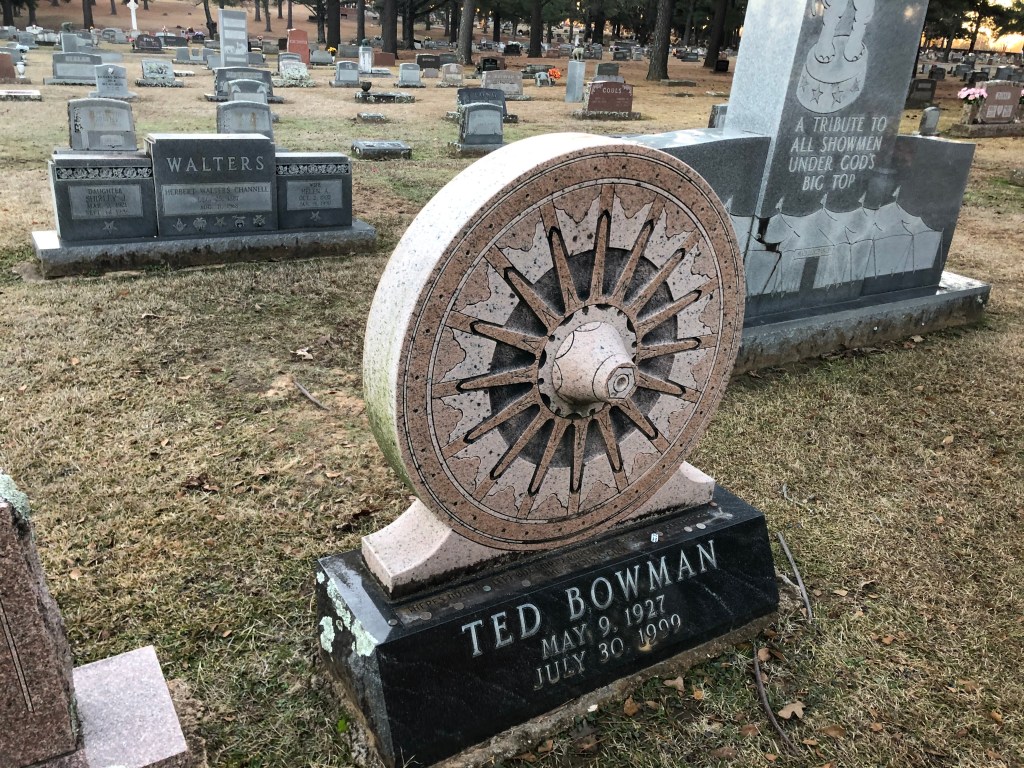
All this circus atmosphere (albeit in a graveyard) reminded me that a day earlier I had passed through an Oklahoma town called Ringling (pop: 1,037). That sure sounds like a circus name, yes? With a little research I discovered that the town was founded in 1914 by the very same John Ringling of Ringling Brothers. If it were up to me, it would have been the town of Ringling, rather than the town of Hugo, that served as the winter home of the traveling circuses. But I suppose the non-Ringling circuses would have resented that.
But that’s not the end of today’s circus antics. In the afternoon US 70 took me through Hot Springs, Arkansas (population: 35,000). I noticed a sign for something called the Hot Springs Showmens Association, and the sign also bore images of a big top and a Ferris wheel.
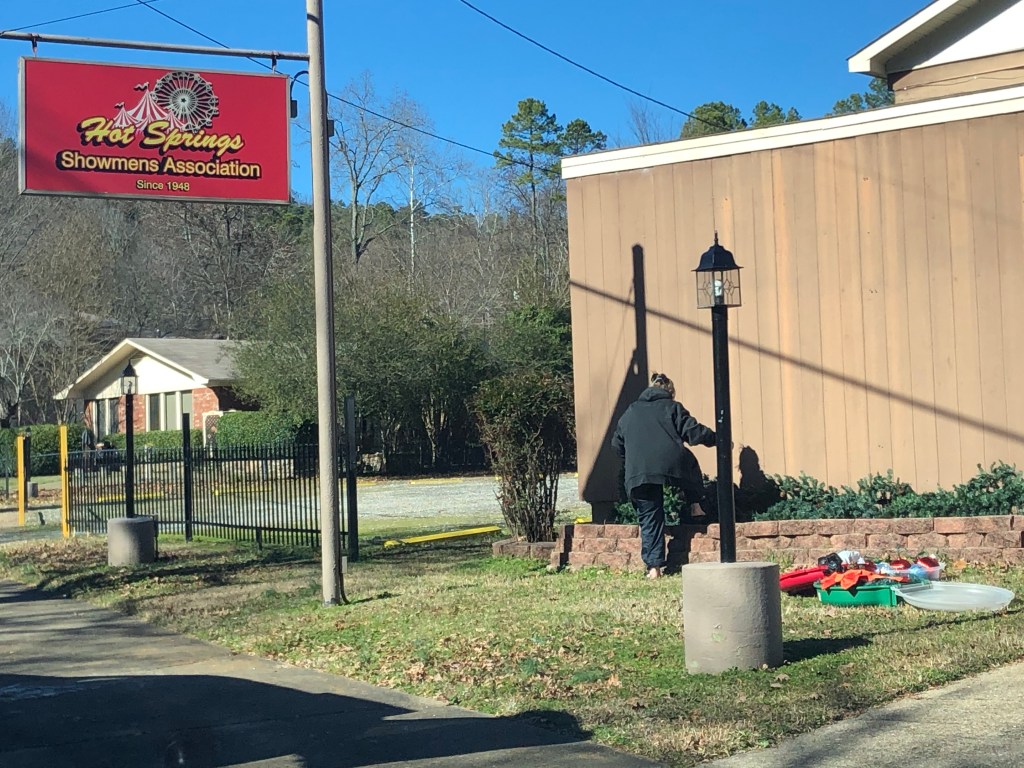
Atuned as I now was to the term “Showmen” as a reference to circus folk, coupled with the circus imagery on the sign, I stopped to talk to a woman who was taking down Christmas decorations from the building. She greeted my question about the mission of the Hot Springs Showmens Association with an incredulous look. “You don’t know??!” I told her I’m not from around here. “Neither am I,” she sneered. “I’m from Massachusetts, but I know about it.” She didn’t acknowledge that, even though she may originally be from Massachusetts, she was currently working at the building owned by the Hot Springs Showmens Association, so I’d sure hope she’d know what the organization does. I tried another tack: “I assume it has to do with circuses. This morning I was in Hugo, which I guess also has a lot of circus connections.” Blank stare. “Well, I guess I’ll be getting back to my car.” As I tried to back away without getting assaulted, she mumbled something about how all showmen–not just circus people–are served by the Hot Springs Showmens Association. I locked my door and got back on my way.
Just another mile or two down the road I saw the kind of sign that one always looks for on road trips such as this: A sign promoting a tacky roadside attraction that’s probably hokum, but that offers early-20th-century-style entertainment.
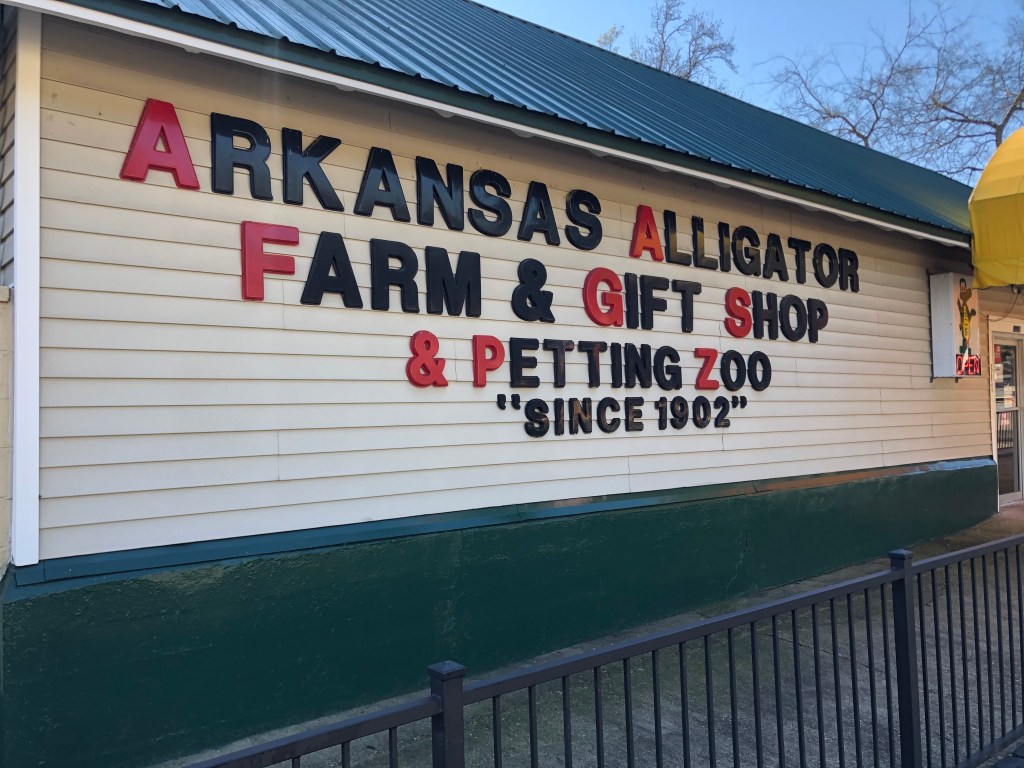
It’s not often that one sees the words “Alligator Farm” and “Petting Zoo” on the same sign. So I went in to investigate. It turns out this place, which supposedly has been around for over 100 years, raises over 100 alligators each year, most of which are destined to become handbags or wallets. But in the meantime, you’re welcome to pet them! And so I did.
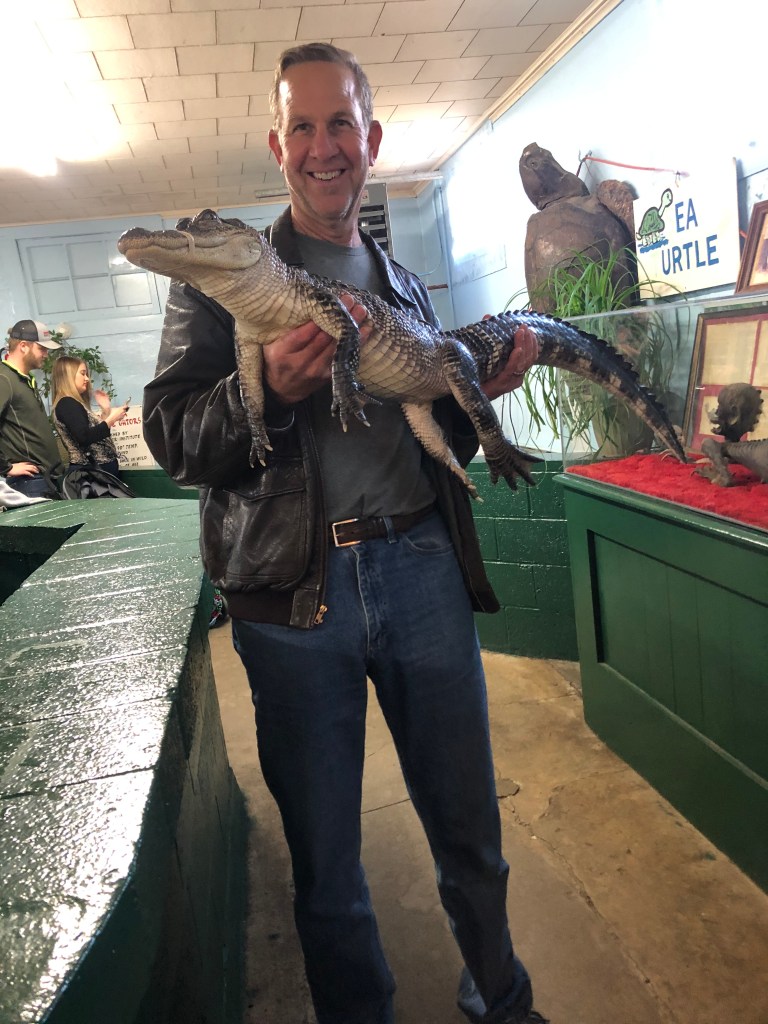
The Alligator Farm had lots of other curiosities as well, including this taxidermy Merman:
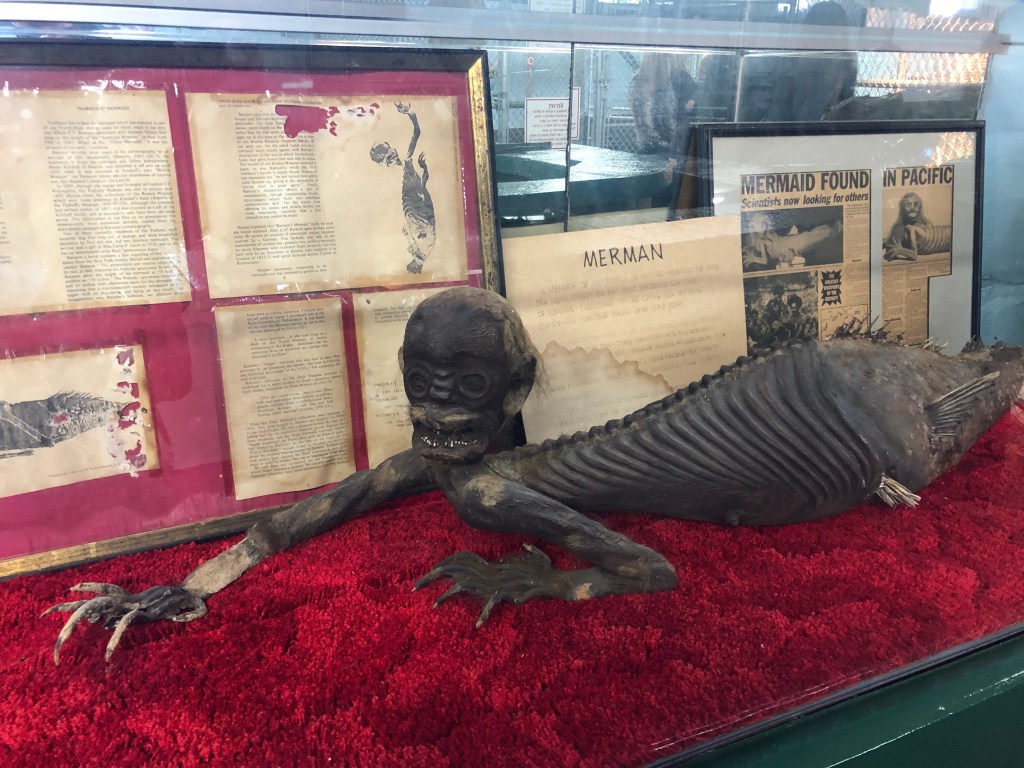
Now this is the kind of roadside attraction that road trips are all about. According to the signage, the merman was captured 500 miles off the coast of Hong Kong, and displayed in the Chinese National Museum. Danny Older (the original owner of the Alligator Farm) bought the merman and brought it back to Arkansas for travelers like me to marvel at.
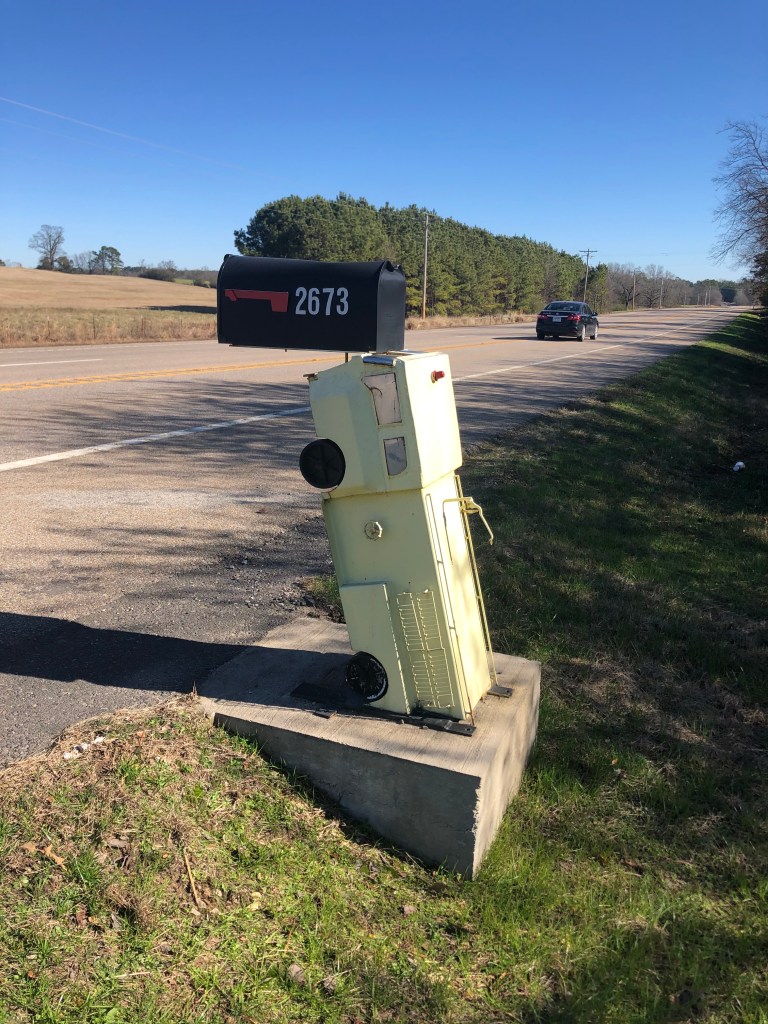
One of the fun aspects of a trip like this is encountering whimsical roadside art. Many of you have seen Cadillac Ranch in Amarillo, TX, where ten vintage Caddies are half-buried nose-first in the ground. This has spawned imitative tributes, such as the combine harvester version I saw along Route 60 last year. So now we can add to the list this effort that I spotted in Bonnerdale, Arkansas:
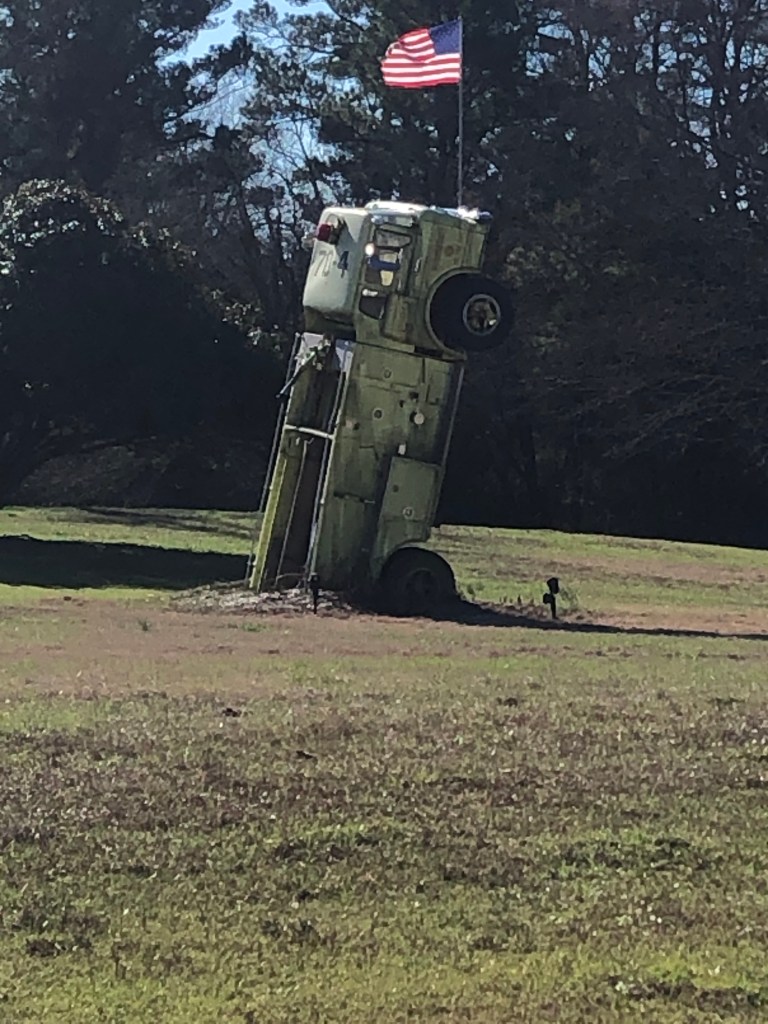
And, as proof that this guy really has too much time on his hands, he designed a matching mailbox:
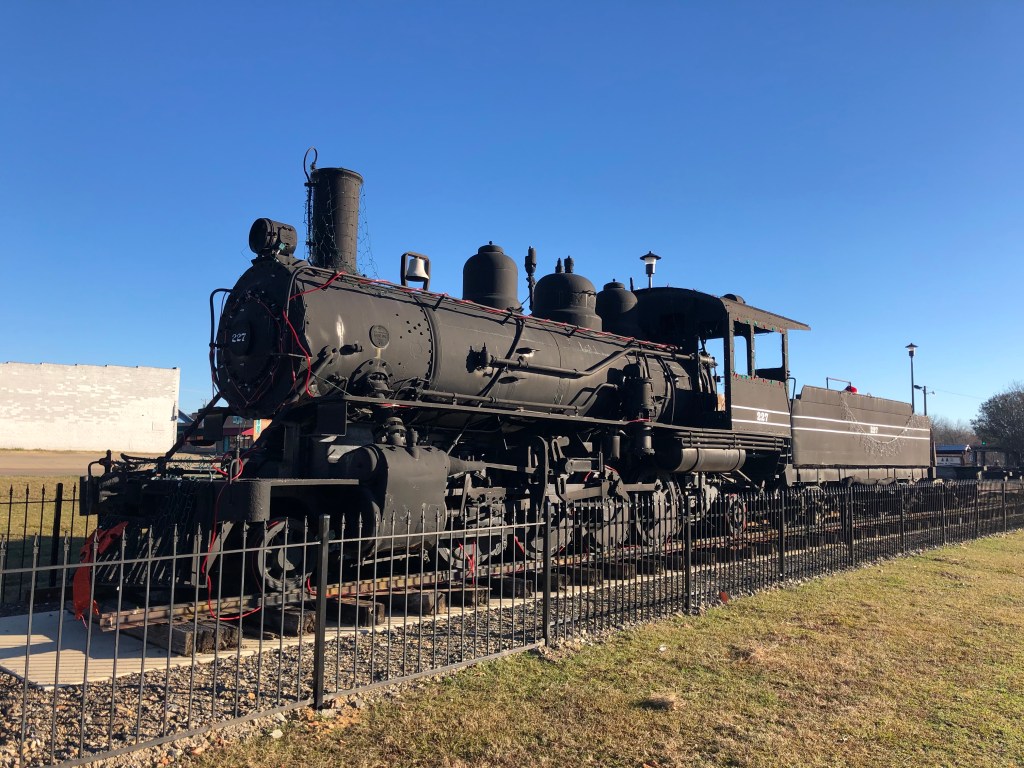
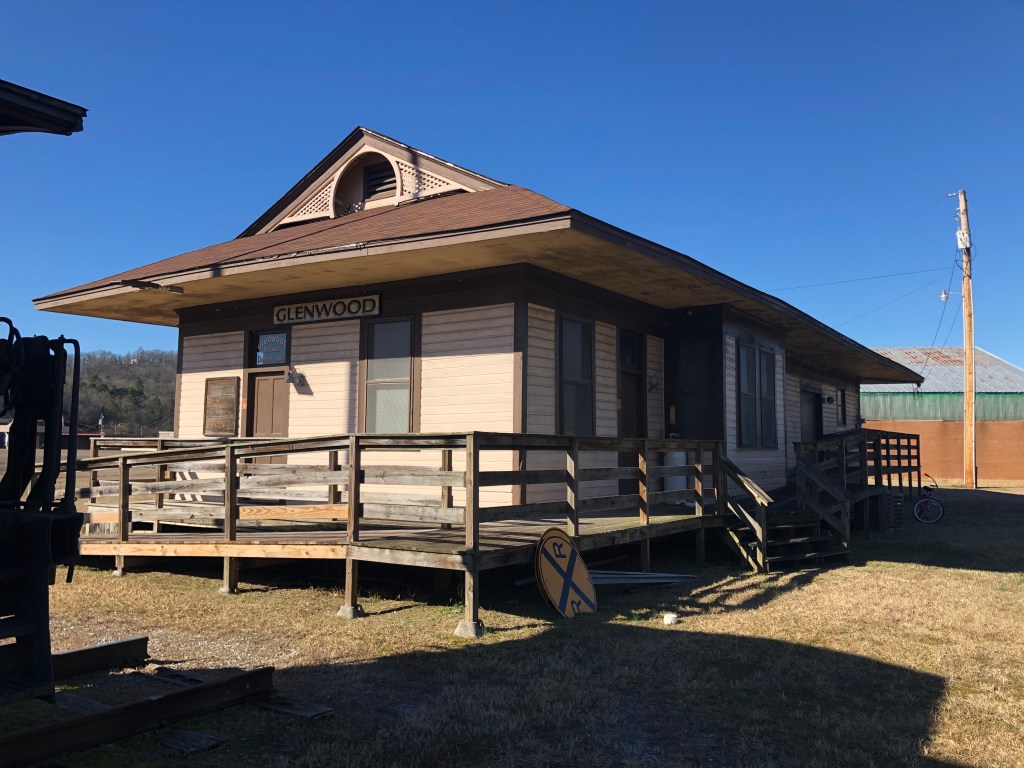
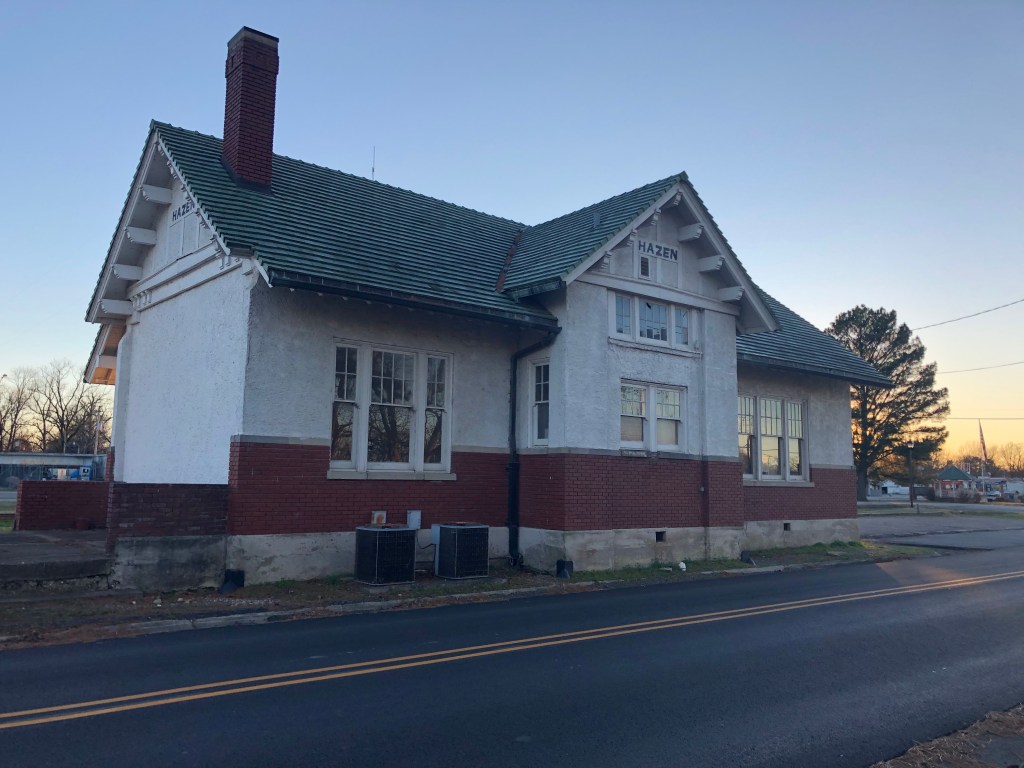
Before we get to the Brew of the Day, here are the day’s railroad finds:
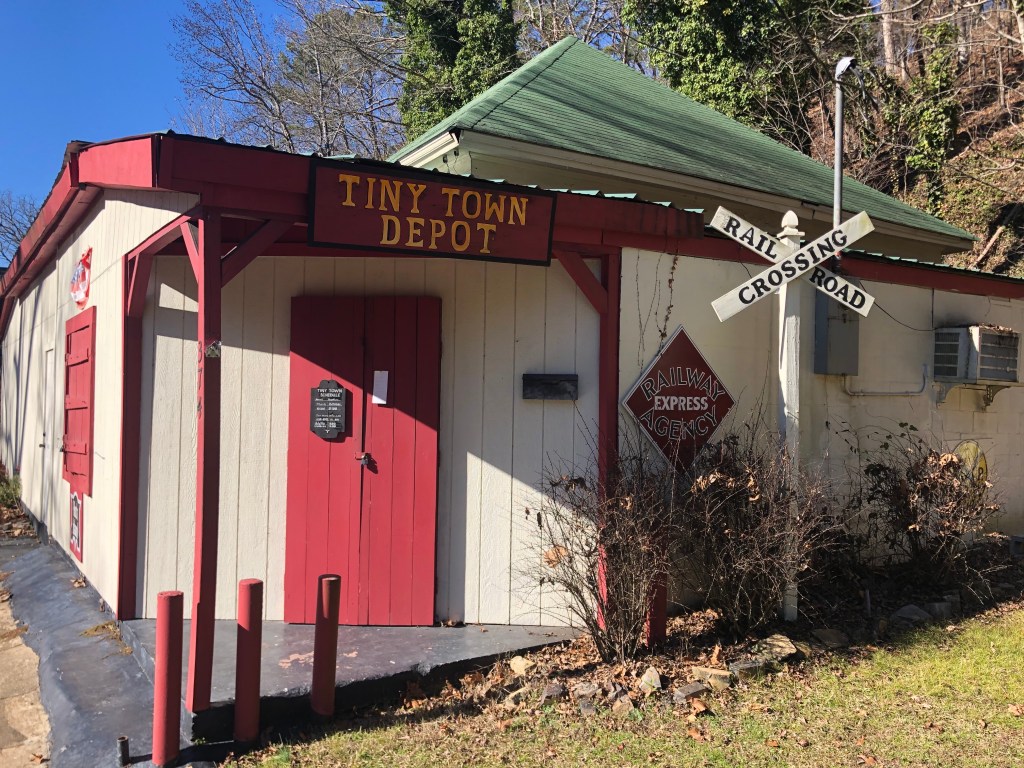
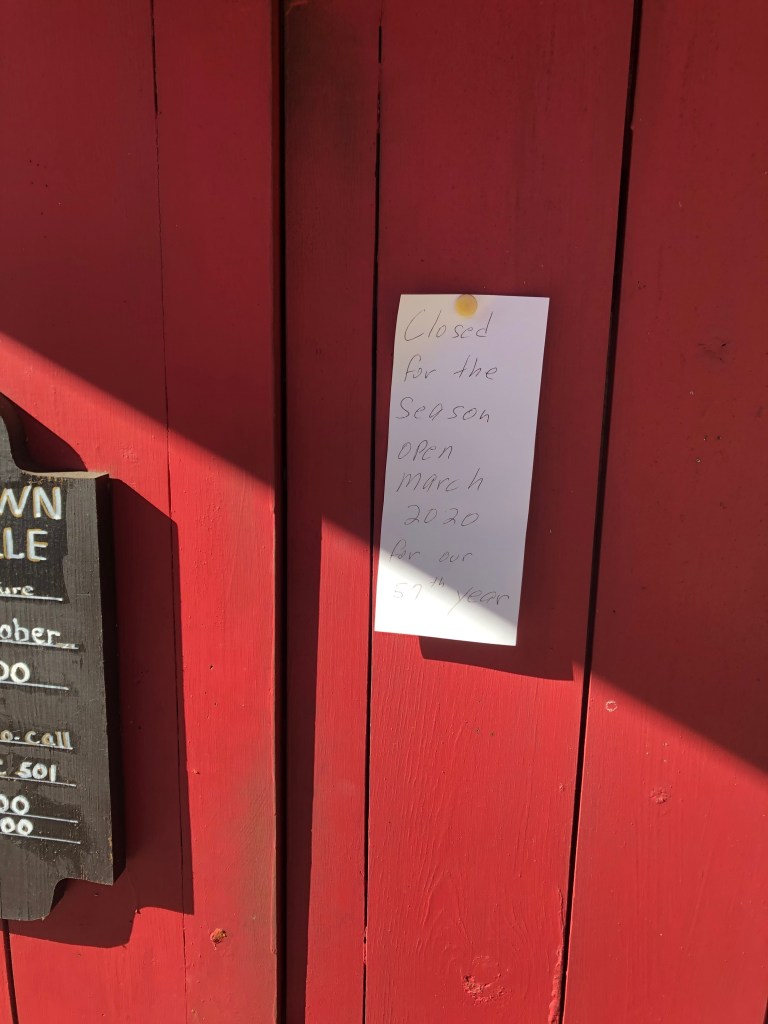
BREW OF THE DAY
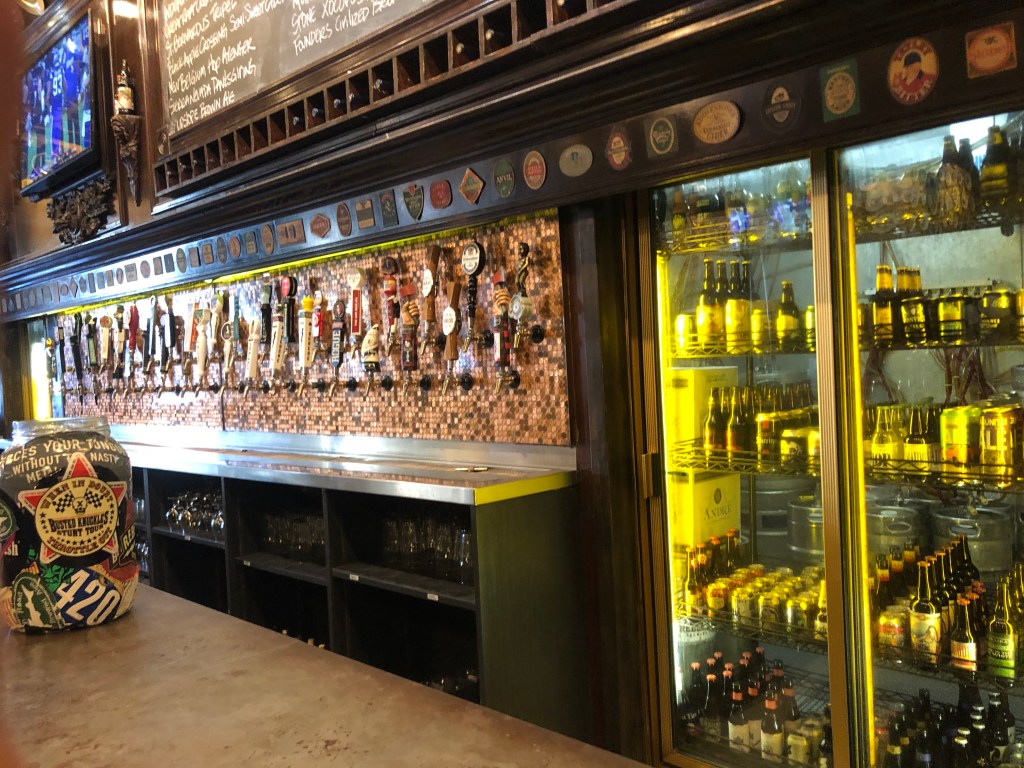
I managed to find a good local taphouse in Little Rock, called Flying Saucer. It calls itself a “Beer Emporium,” and it’s an apt description. Check out their online “beer finder.” The range of beers available at any given time is staggering. Working tap handles line an entire wall.
The name “flying saucer” is a reference to “saucers” (plates, really) that are affixed to the ceiling of this cavernous building. Here’s a small section of ceiling:
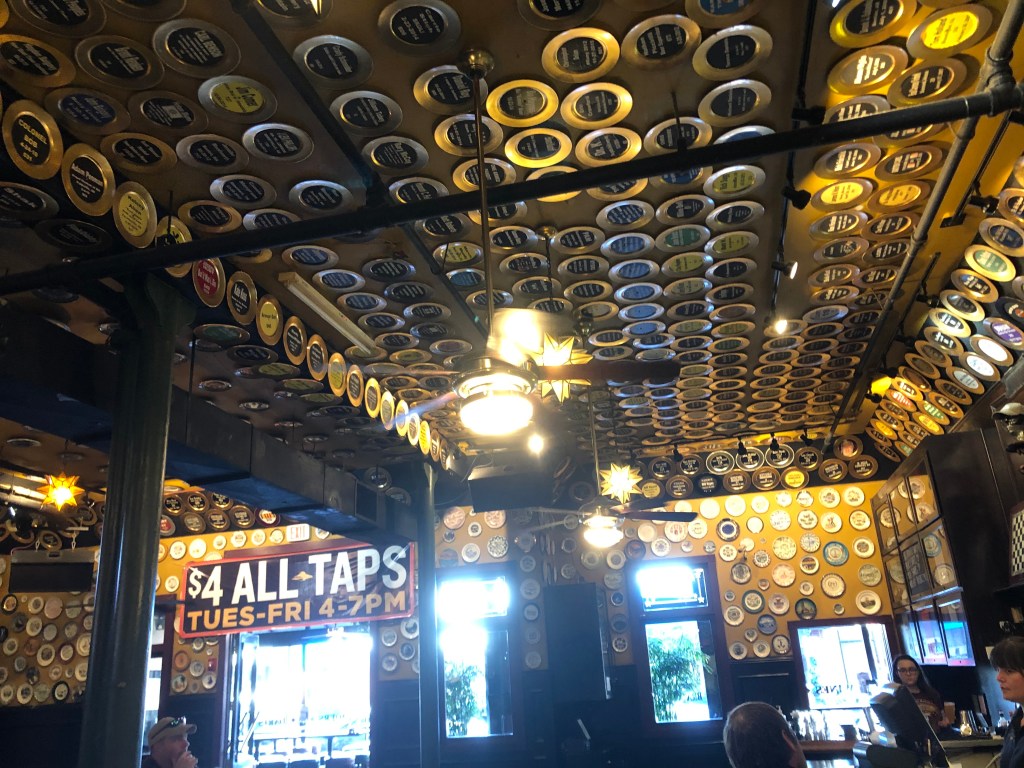
You’ll note that the saucers all have writing on them. The bartender explained to me that patrons can join their “UFO Club” for $18 (plus tax), and they’ll get a magnetic card. But you don’t get a saucer until you’ve consumed 200 different beers. Let me repeat that: You have to come in to the Beer Emporium and select a beer. You drink it, and they swipe your magnetic card. You then pick a different beer, drink it, and you get a second swipe of your card. Repeat this 198 more times, and you get to put your saucer on the ceiling. I estimate that there are about 500 saucers on the ceiling, which would represent 100,000 beers.
So, I decided to do 1/2 of 1 percent of this task, and ordered me an Ozark Cream Stout. (The Ozark Beer Company is local, based in Rogers, Arkansas.) It was exceptionally smooth, with very little head. It was malty and roasty, as you’d expect from a stout, but it didn’t have any of the burnt taste you sometimes get. That’s the beauty of a “cream” stout (sometimes called a “milk” stout), with its added lactose that sweetens the finish.
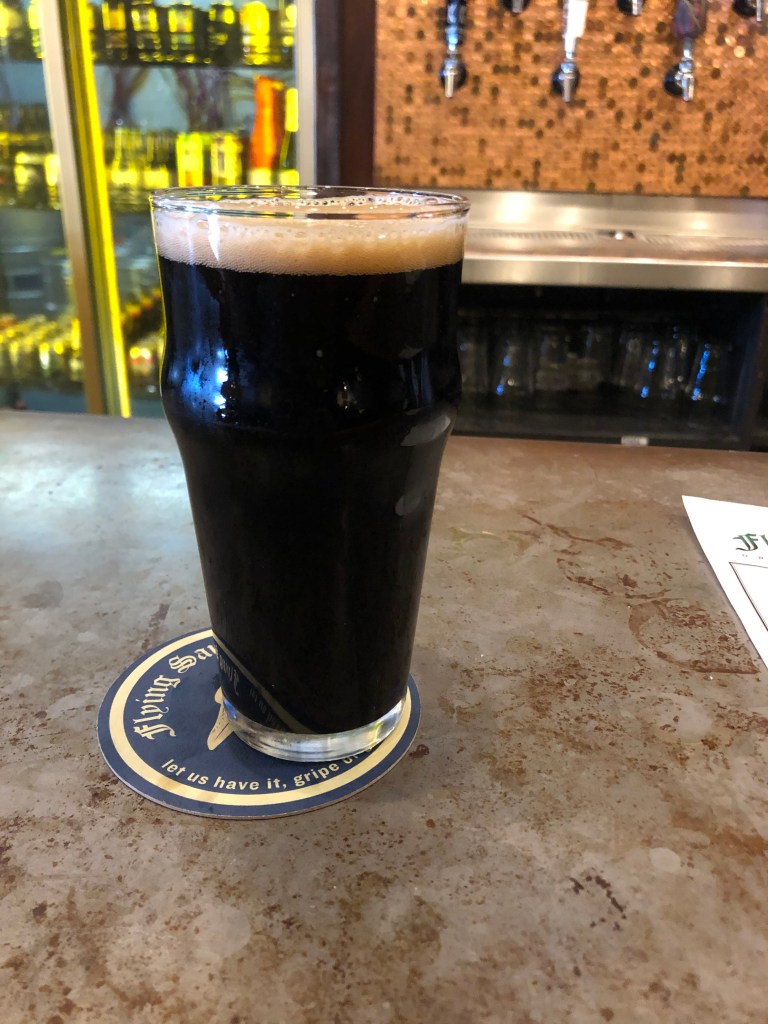
While I was enjoying my drink, a young man at the bar next to me asked me if he should get what I was drinking. I asked what he normally drinks, and he said “Corona.” I noted that the stout was at the opposite end of the spectrum from his lager, but he figured he’d try it anyway. We got to talking about my road trip, and Dale (for that was his name) told me he wants to move out to California “in six years.” I asked why six years, and he told me that’s when his probation is over.
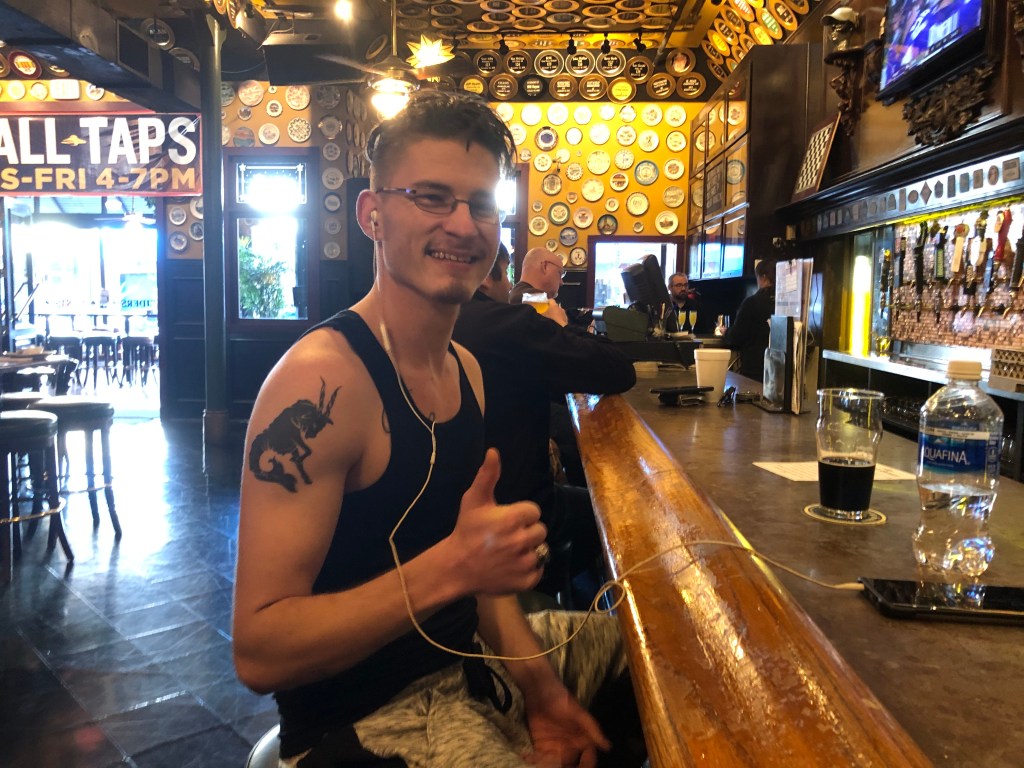
He seemed like a great guy, though, for someone whose felonious activities have bound him here in Little Rock. He works at a local Mexican restaurant, and wants to save up some money, get married, and move out west. When I asked Dale why he wanted to move west, the bartender, who had been eavesdropping, said “everyone that lives here wants to move west.” Once again, it seems that lots of people wish they were somewhere else, but family, or money, or the local criminal justice system, prevent them from acting on that desire. I think I found the remedy for that thinking, though, on one of the gravestones at Showmen’s Rest. It’s a simple phrase that suggests happiness comes not from a place, but from an attitude:
“May all your days be circus days.”

 Chasing Phantoms