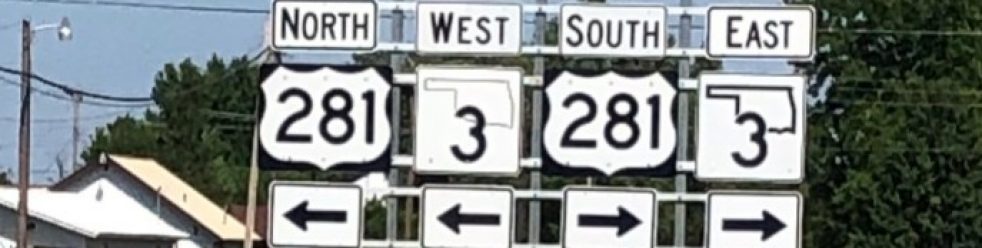
This morning I left my motel early and got back on US 70, which now feels like an old friend. As I passed through the rolling hills of eastern Arkansas I spotted an old caboose set back from the road. (I suppose all cabooses are “old” at this point, since all the major American railroads stopped using them in the 1980s.)
Turning off the road toward the caboose, I came upon a large brick building that advertised itself as the Central Delta Depot and Museum. It didn’t look like your typical train depot; it was far too stately, more like an old library or courthouse. I decided to take a quick walk around to see what this place was exactly. It was only about 7 am, and the place was locked up tight. I peered in the windows, and then took a walk around the back to see if I could find evidence of railroad tracks.
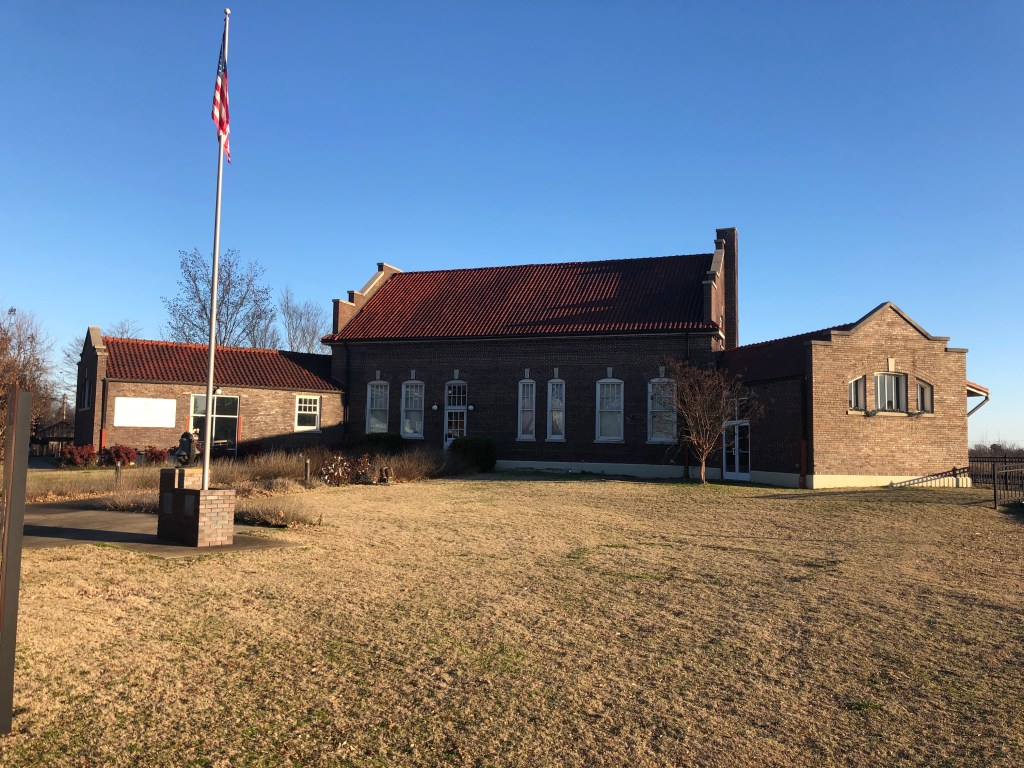
The back of the building was fairly nondescript, and it didn’t have the usual freight loading facilities or other aspects of a traditional train station. As I came around the corner and returned to the front, I encountered a man of a certain age, sporting a neatly-trimmed white beard and a bomber jacket. He had just stepped out of his car and was approaching me. “Can I help you?” he asked. Worried that he assumed I was engaged in early-morning trespassing (akin to my behavior at the graveyard the prior morning), I launched into my monologue about traveling US 70 and stopping at anything that interests me. “And your depot really interests me,” I said, a little too enthusiastically, hoping to soften him up with praise. He looked at me for a long moment, then seemed to relax. “I’m Bill,” he said, holding out his hand. “I’m the museum director.” I observed that he sure came to work early. “I don’t have a lot else to do,” he replied, with a tinge of regret.
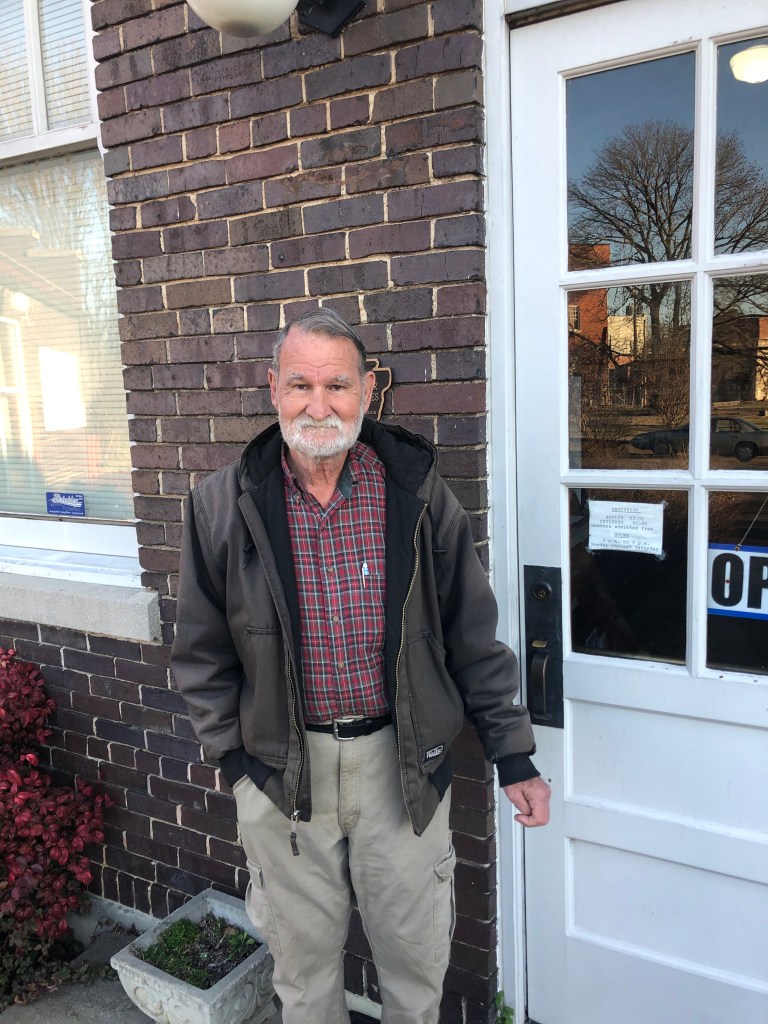
Just as I thought the conversation was over, his eyes fixed on me again. “So you’re driving Route 70? The whole thing?” This is the first person on the trip who showed any real interest in my road trip. We started talking about key railroad towns on my route when he suddenly interrupted himself and said “would you like to come inside?”
For the next hour Bill gave me a guided tour of the museum/depot. It turns out that the building was built for the Rock Island Railroad in 1912. The building is located in Brinkley, AR (population: 2,700) which is about halfway between Little Rock and Memphis. Bill considers it to be the most visually striking depot in the region. The building had been restored in 2003, when it reopened as a museum. Bill was made the museum director, a post he has held to this day. He takes great pride in the museum, which hold an eclectic combination of artifacts related to blues music, textile arts, airplanes, photography, nature, and of course railroads. But to me, it’s the inside of the structure itself that’s remarkable. They did a first-class job of restoring the building, with its high ceilings, hardwood floors, and many windows. Bill’s only regret is that they didn’t retain the doors to the “colored” and “white” waiting rooms. He thought (and I agree) that it would have served as a good reminder of the segregation that existed for so long in this part of the country. But evidently the museum board didn’t want anyone to be offended by them.
As the morning wore on, Bill shared some of his personal life. He was born just about 15 miles from the museum, and still lives in the same house he was born in 76 years ago. He hasn’t lived there continuously, though, since he’d spent some 25 Corpus Christi, TX, before returning. He wishes he could go back to Texas for one more visit before he dies, but doesn’t think he could afford the trip.
Bill got visibly upset when talking about the current, national political climate, and also sounded rueful when he observed that the town of Brinkley is dying. “The population is about half what it once was. And few of the townspeople ever come here to the museum. They don’t have much interest in it.” I asked how many visitors he gets on a typical day. “Sometimes I don’t see anyone all day.” He went quiet, his mind occupied with, what? The town of Brinkley? The state of politics? His desire to go back to Corpus Christi? “It’s sad,” he said finally. And after a bit more silence as the gears turned in his head, he opened his mouth and said, “Over here is a poster of the ivory-billed woodpecker…”
Eventually it was time for me to get back on the road, and I thanked Bill for the personal tour. “You’ve done me a favor. I enjoy talking about this stuff.” It must be frustrating to have a passion for history, to have learned so much about your subject and curated this enormous collection of local history, which is housed in a beautifully restored, 100 year old building….and not be able to share that with anyone on most days.
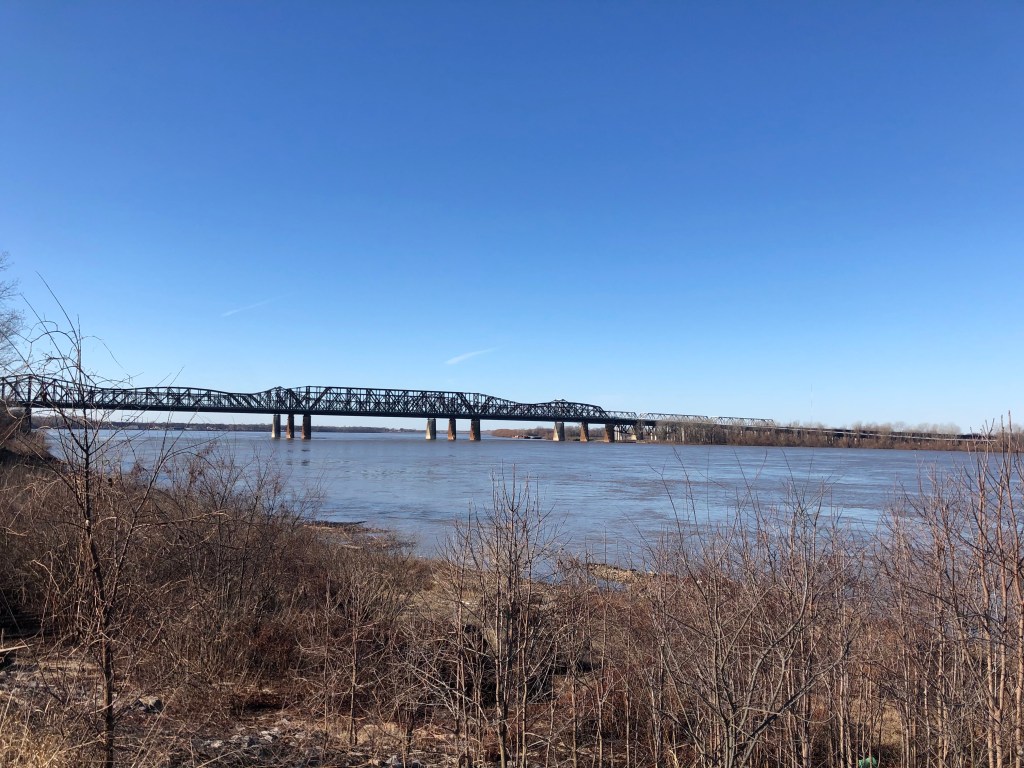
Not too long after leaving Brinkley I was crossing the mighty Mississippi River and entering Memphis, Tennessee (population: 650,000). The bridge that sends US 70 over the river is older and, to me, more impressive than the bridge that the interstate (I-40) uses a few miles to the north.
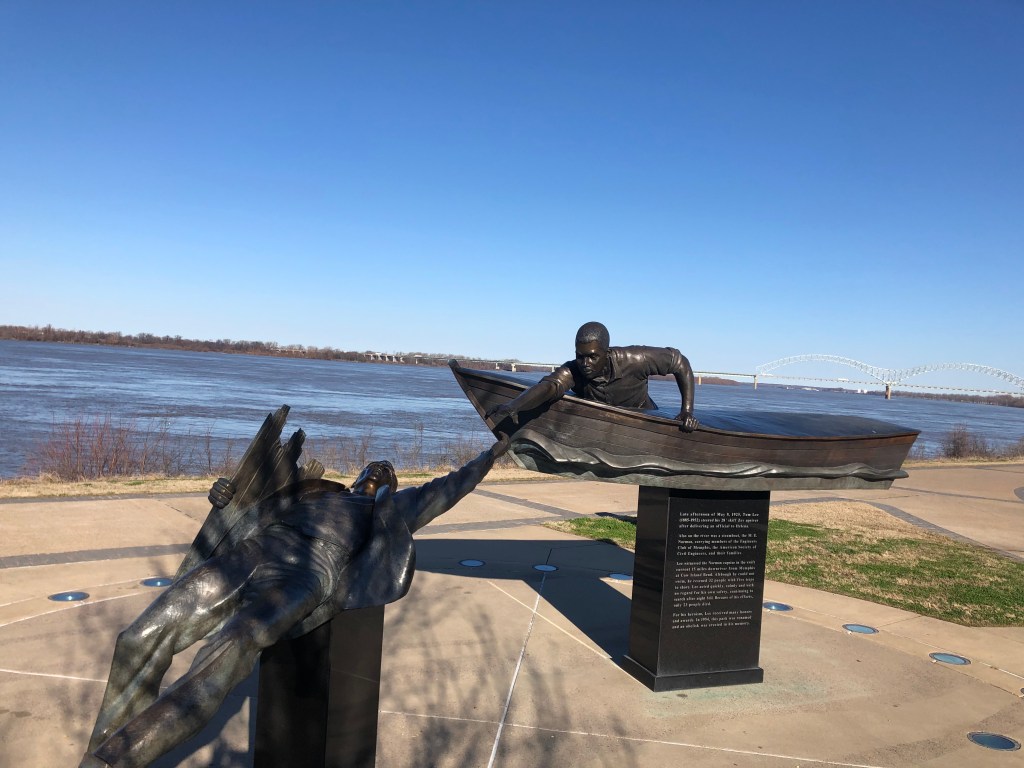
I took a brief walk along the waterfront, and encountered this sculpture of a dramatic rescue of 32 survivors from a capsized river boat in 1925. The man doing the rescuing is Tom Lee, an African American resident who, though he couldn’t swim, repeatedly took his small boat out on the river to rescue survivors one by one.
Since I was in Memphis, I made a point to visit the Stax Records Museum. Until the last year or so all I knew about Stax is that they were the label for Booker T and the MGs. My dad had one of their records when I was growing up, and it was probably the only reasonably “hip” record in our household. You know the MG’s music, even if you don’t know them as a band. A couple of the musicians went on to become members of the Blue Brothers band (with John Belushi and Dan Akroid) in the 1970s. Stax was never a huge label in terms of gross receipts, but they sure had some influential R and B acts: in addition to Booker T and the MGs, Stax recorded Otis Redding, Sam and Dave, Isaac Hayes, Albert King, Wilson Picket…. the list goes on. It’s Stax that defined the “Memphis sound.”
Anyway, last year Karen and I saw Booker T Jones (front man of the MGs) perform with a band of all-stars at the Hollywood Bowl. I enjoyed it immensely. It was the 1960s all over again. Booker T was charming and he hadn’t lost his musical touch. Then, a few months later, Booker T released an autobiography and went on a book tour. We saw him give a talk about his book at an intimate venue in Los Angeles, and again he was charming and thoughtful and accomplished. I read the book last November, and in addition to describing Booker’s life it presented a lot of history about Stax. You should read the book if this kind of thing interests you, but all I’ll say here is that Stax was created on a shoestring, and the recording studio and offices were in an old movie theater east of the downtown. It’s amazing how much influence came from such a modest venue. The building was eventually razed after Stax went out of business in 1976, But it was eventually rebuilt just as it had been, and it reopened as a museum in 2003. It was this building that I drove through some sketchy neighborhoods to see.
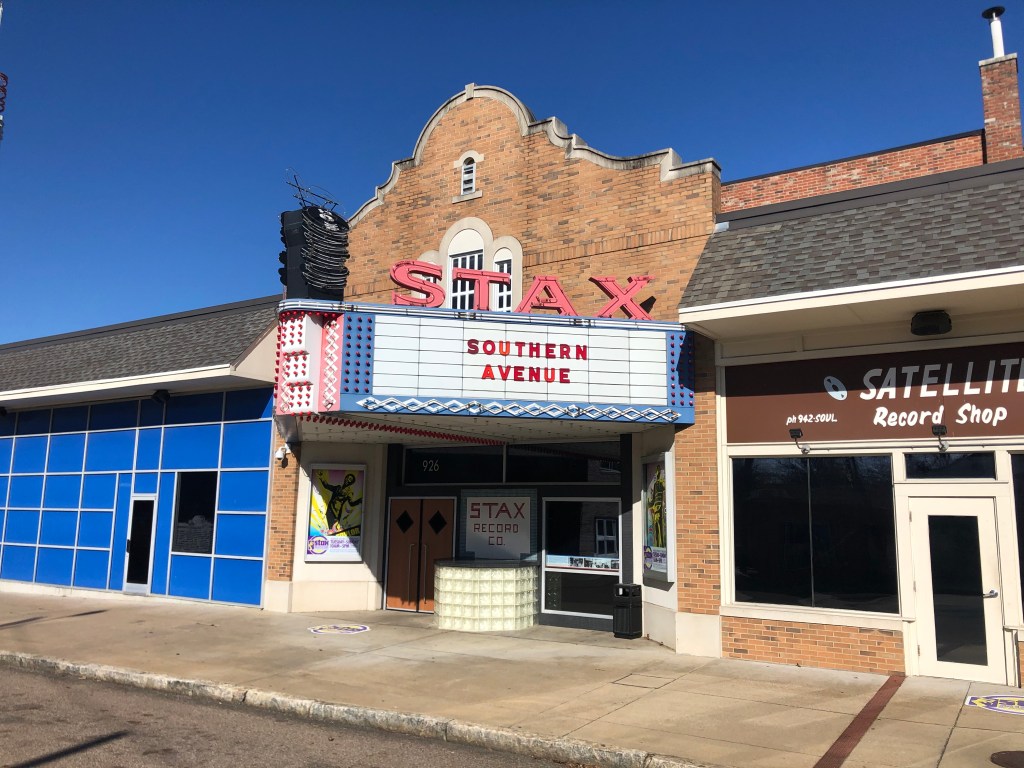
Unfortunately, Monday (today) is the only day that the museum is closed, so I was unable to go in. But there was something remarkable about being at the very grounds where that musical magic was worked. Do yourself a favor a play a little of the Memphis Sound for yourself on YouTube tonight.
I got back onto US 70, and soon left the hustle and bustle of Memphis behind me. I do like Memphis, but this trip is meant to explore the small, forgotten towns across the country. Memphis needs to be experienced when I have a few days at my disposal, and when I’m prepared to stay up late listening to music and abusing my liver with cocktails.
The highway continued to wind through the gently rolling landscape of western Tennessee, and I eventually found myself in the town of Jackson (population: 67,000). As you may or may not know, Jackson was the adopted home of Casey Jones.
Now, Casey Jones, along with Sherlock Holmes, are historical figures who most Americans aren’t quite certain whether they were real or not. I’m here to assure you that Casey Jones was very real. He was born John Luther Jones in 1864, and grew up in Cayce, KY. When he moved to Jackson, TN, people started calling him “Casey,” in reference to the Kentucky town he hailed from. He loved railroads and began to work for them as a teenager. He eventually became an engineer (at age 26!) and was renowned among railmen as one of the most reliable engineers to keep a schedule. But then, on April 29, 1900, he was killed when he heroically remained at the controls to try to stop his locomotive before it hit a stalled train ahead. All that stuff you know from the Casey Jones song is essentially true; he slowed the train sufficiently to prevent any deaths of passengers, and he did tell his fireman, Simeon “Sim” Webb, to jump just before the crash. Sim survived, and lived another 57 years to tell the tale.
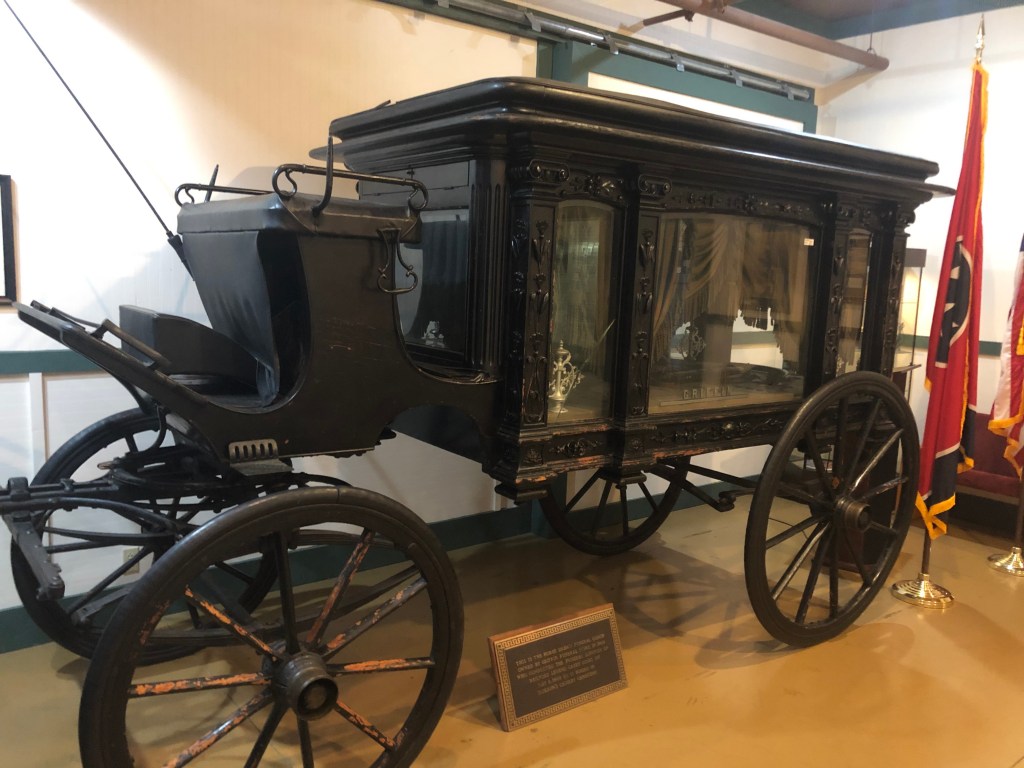
Much of this I learned from the Casey Jones Museum in Jackson. It contains an impressive collection of memorabilia related to Casey Jones, Sim Webb, their families, and railroading in general. Among the artifacts that are most likely still haunted by Casey are these:
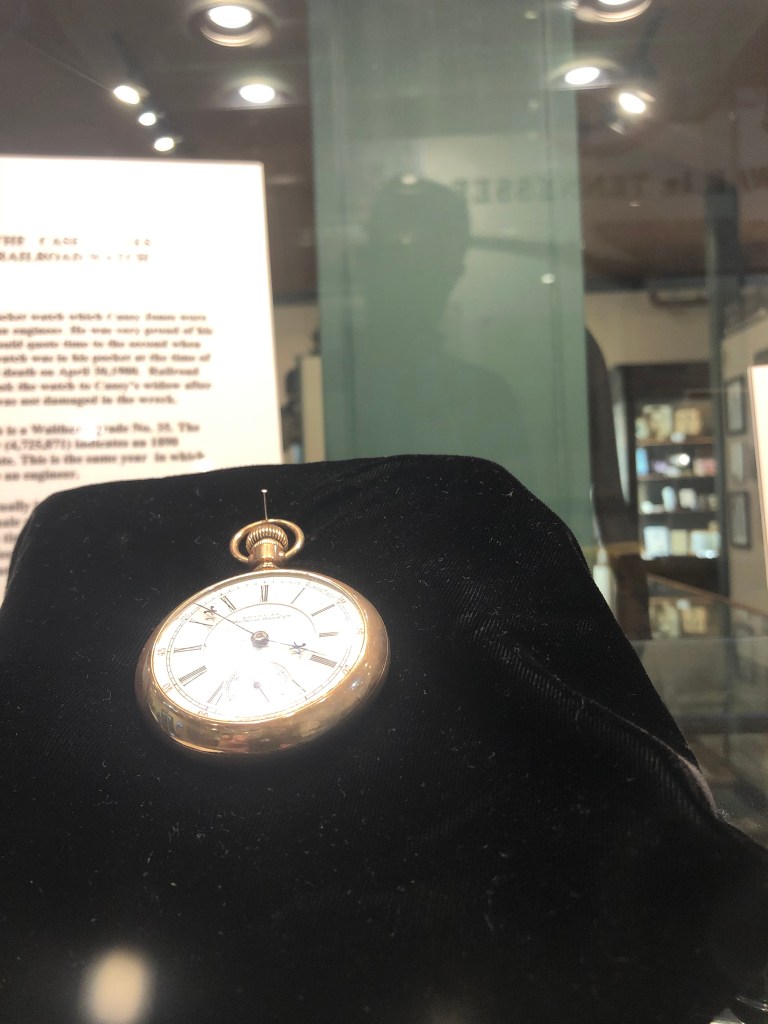
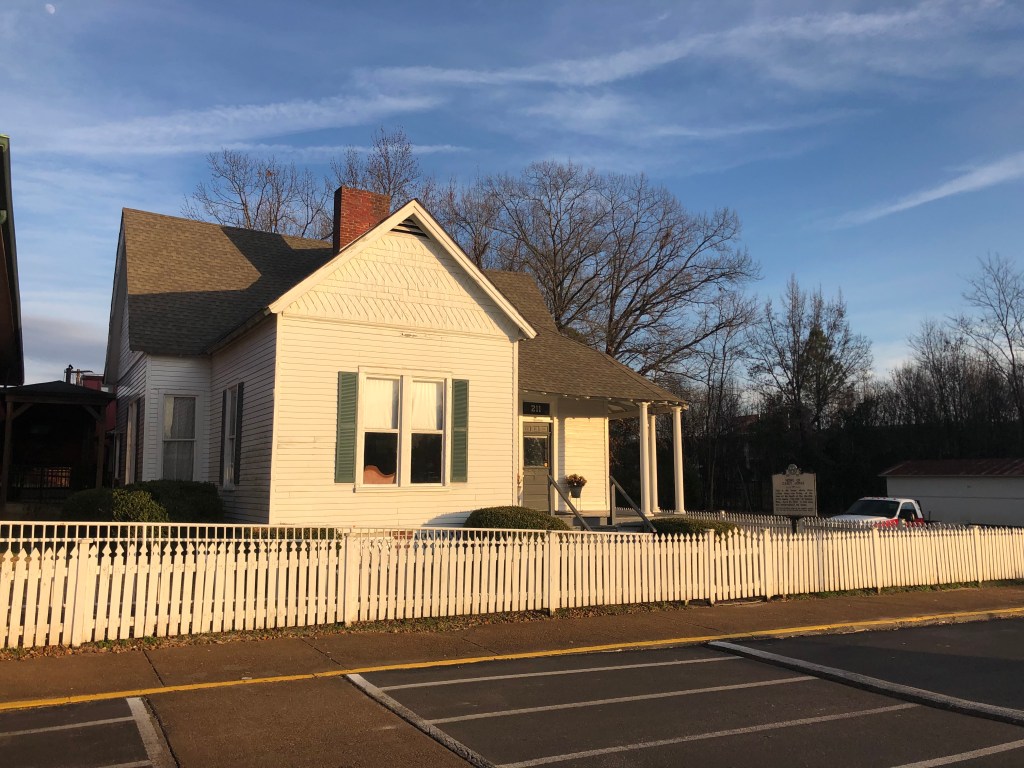
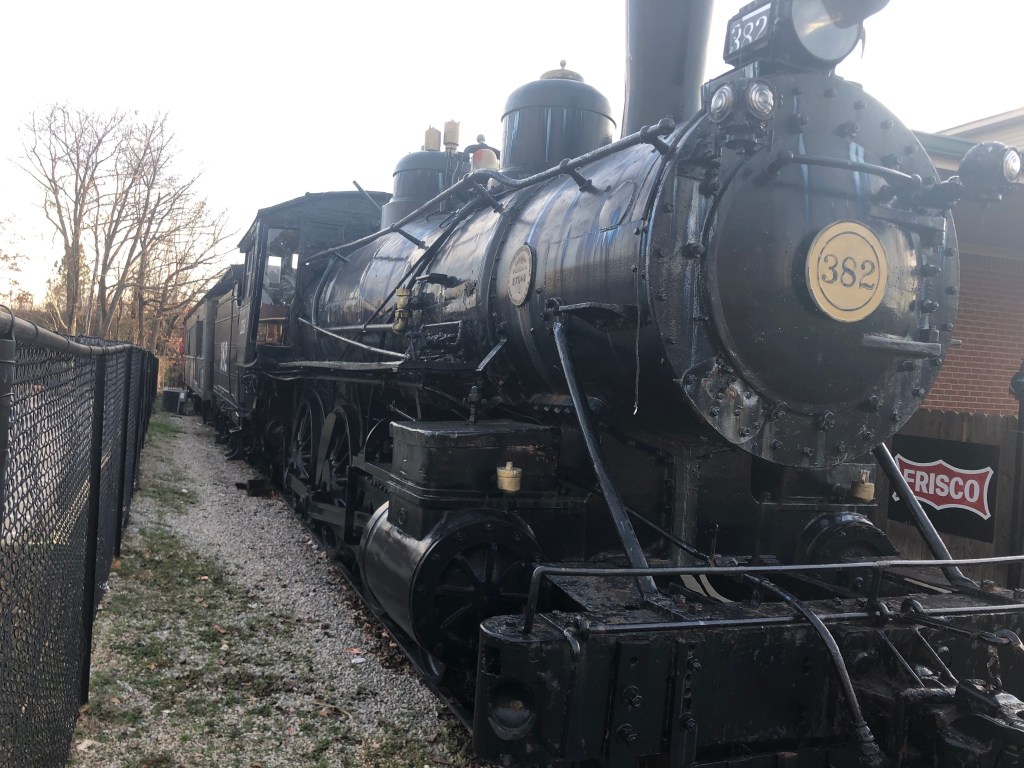
The museum also has a locomotive that’s been renumbered to match Casey Jones’ engine (except this is not Casey’s actual locomotive, which was destroyed in the crash). It looks the same, though.
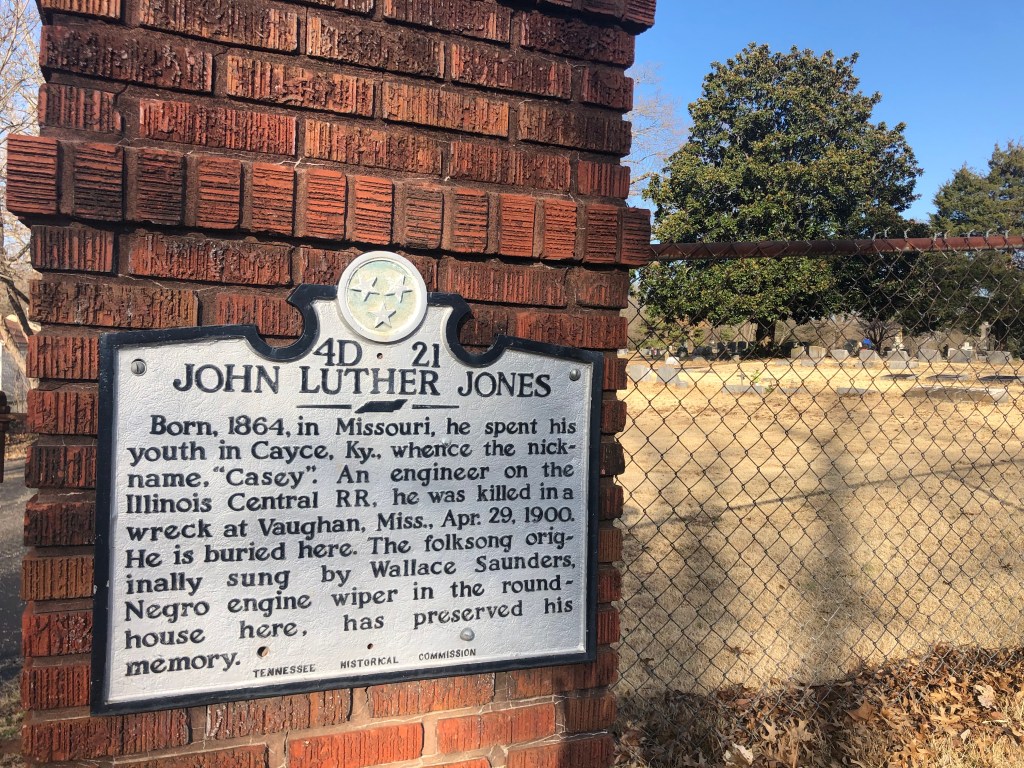
After leaving the museum, I made a visit to Mount Calvary Cemetery, where Casey Jones is buried. A plaque at the front gates announces the famous resident:
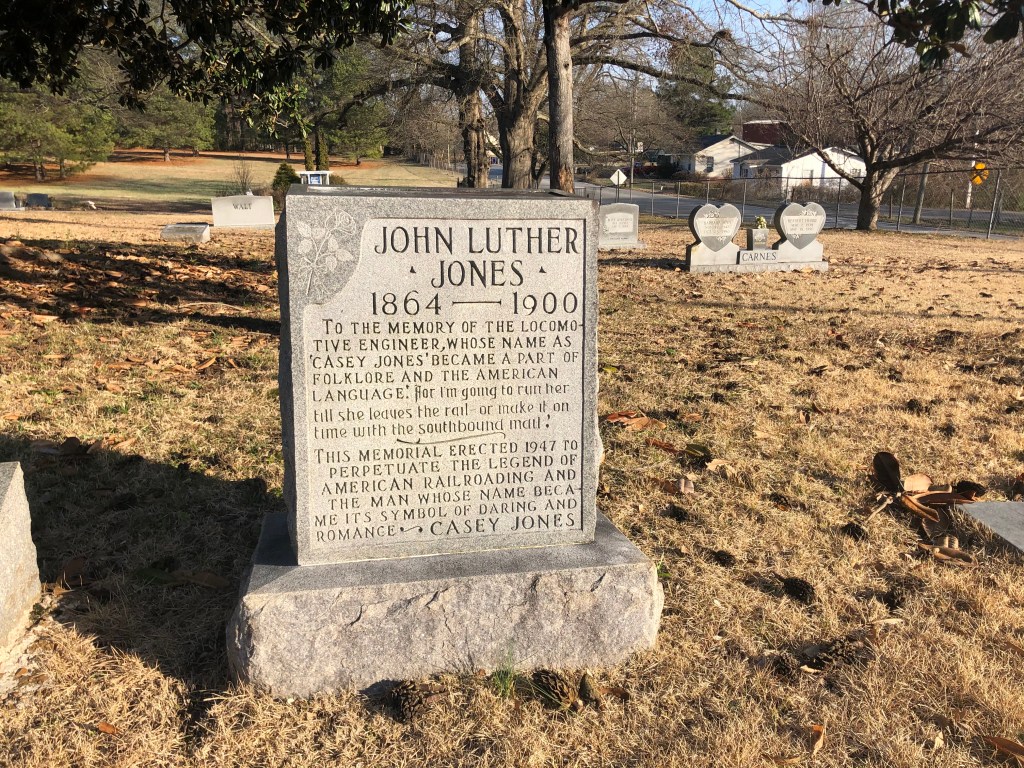
But what’s this? Another locked cemetery gate! A sign informed me that the cemetery is only open on Sundays, but it also noted that I could get the key from the local church office. Wanting to remain on the right side of the law, this I did, and soon I was paying homage at the gravesite of John Luther “Casey” Jones.
Overall, it was quite a pilgrimage to Jackson. There’s something very powerful about encountering the tangible relics of a historic figure. I had a similar feeling when I worked in Washington, DC and daily would pass by a glass case at the Library of Congress which contained the contents of Abraham Lincoln’s pockets on the night he was assassinated. I guess that’s part of why I take these trips. Somehow being in these places and seeing these artifacts conveys truths and feelings and context that simply doesn’t come through on the printed page.
BREW OF THE DAY
No BOTD today. There was not a single craft beer joint along today’s route (with the exception of Memphis, but it was too early in the morning when I was there). I think paucity of good brews is one of the hazards of traveling off the beaten path in the south.

 Chasing Phantoms