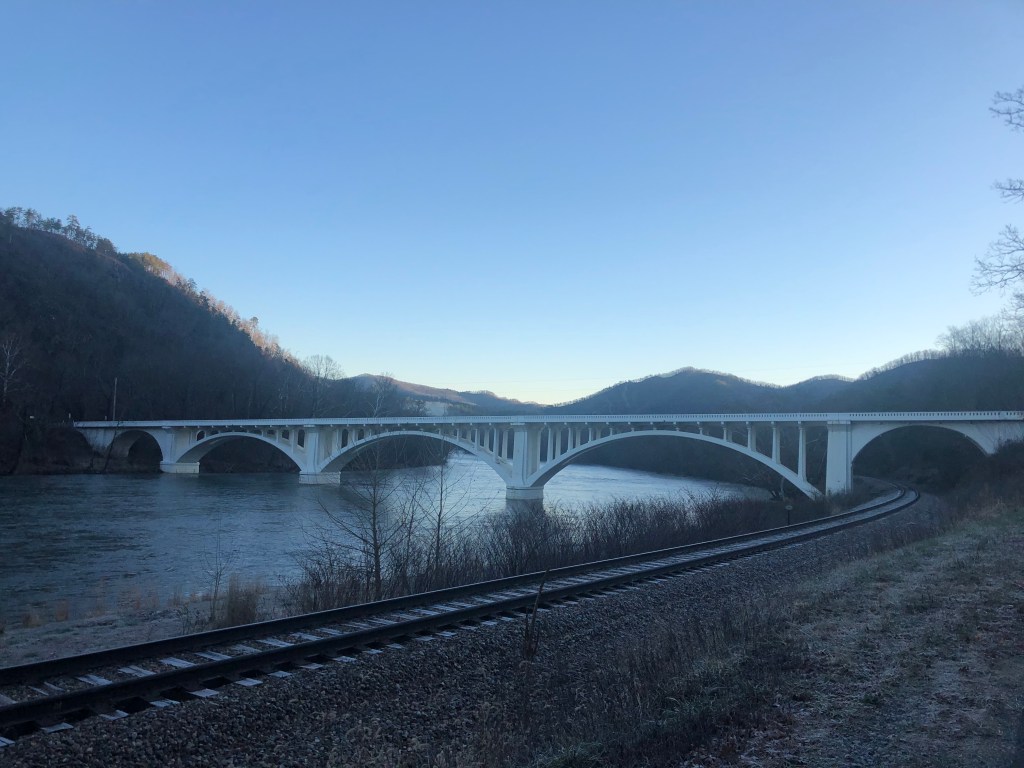
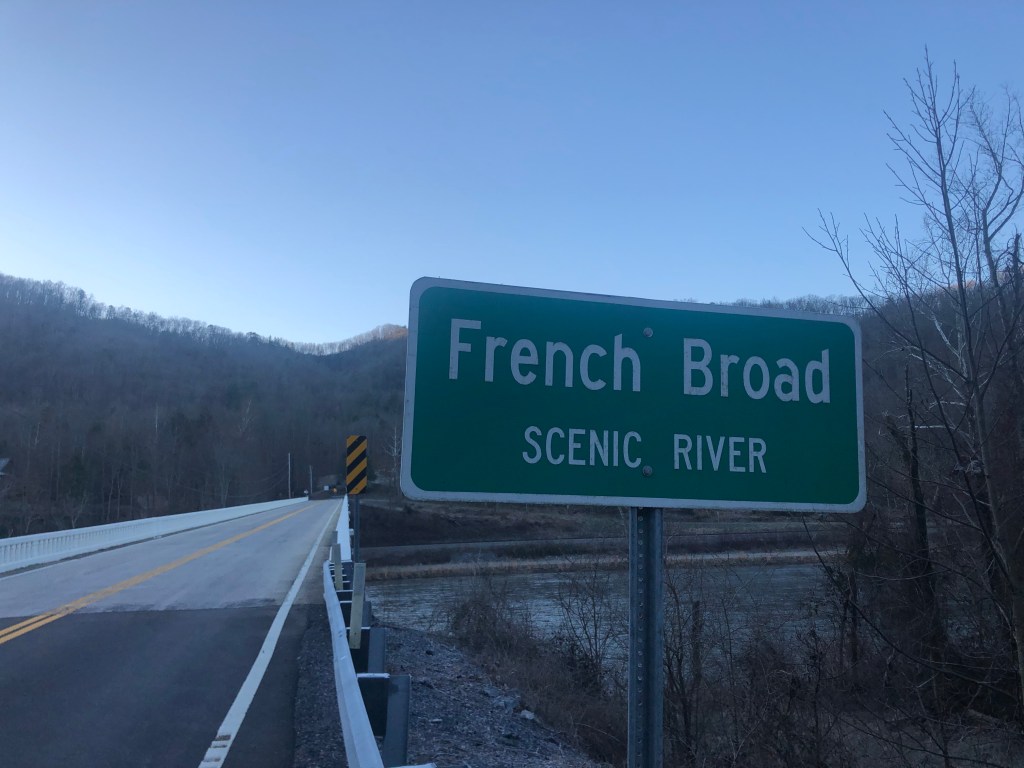
Today’s travels began in eastern Tennessee. The drive was quiet and scenic, crossing Douglas Lake, with all its fjord, snaking through the Appalachians, and crossing the French Broad River . The bridge over said river in Cocke County is especially picturesque. I’m always struck by how graceful these old bridges are. That’s one of the advantages of taking these lesser highways; the old bridges haven’t been replaced with 6-lane monstrosities. This bridge is called the Wolf Creek Bridge. Which makes you wonder, since it crosses the French Broad River.
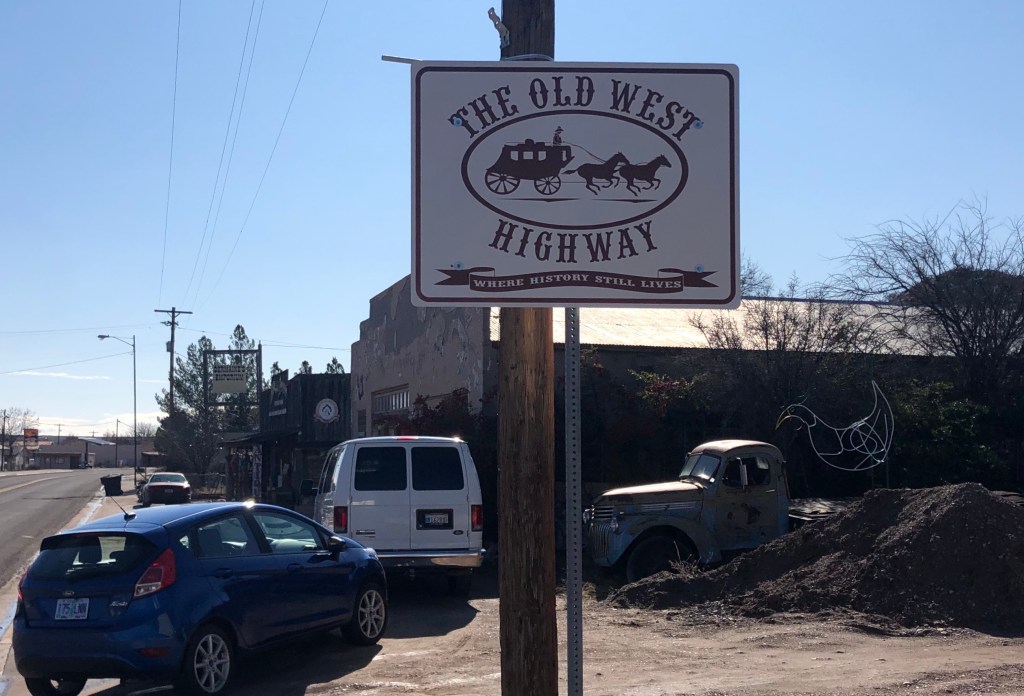
Now, remember at the beginning of this trip, when I said that US 70 was sometimes called the Lee Highway, as a counterpoint to the northern Lincoln Highway? I hadn’t seen any evidence of the Lee designation along my long drive. Along the way I noticed signs calling it different names, from The Old West Highway in Arizona, to the Gold Star highway in Arkansas, to various veterans memorial formulations in Tennessee.
But then, this morning in North Carolina, I encountered a marker “in loving memory of Robert E. Lee,” and dubbing this stretch of road the Dixie Highway.
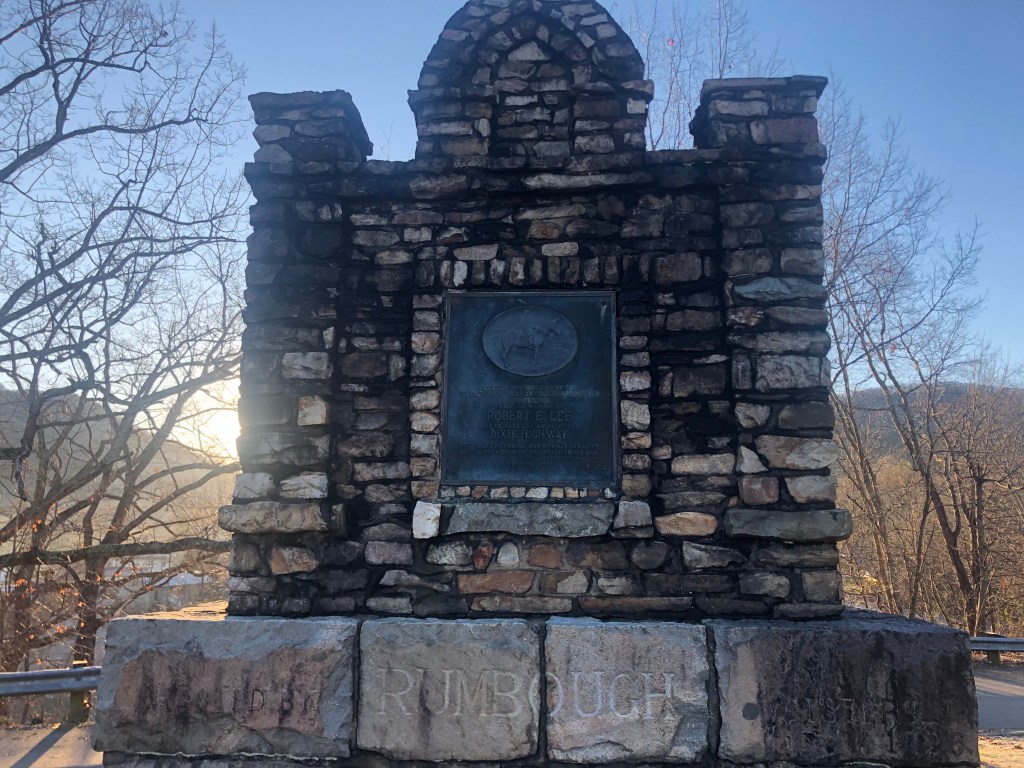
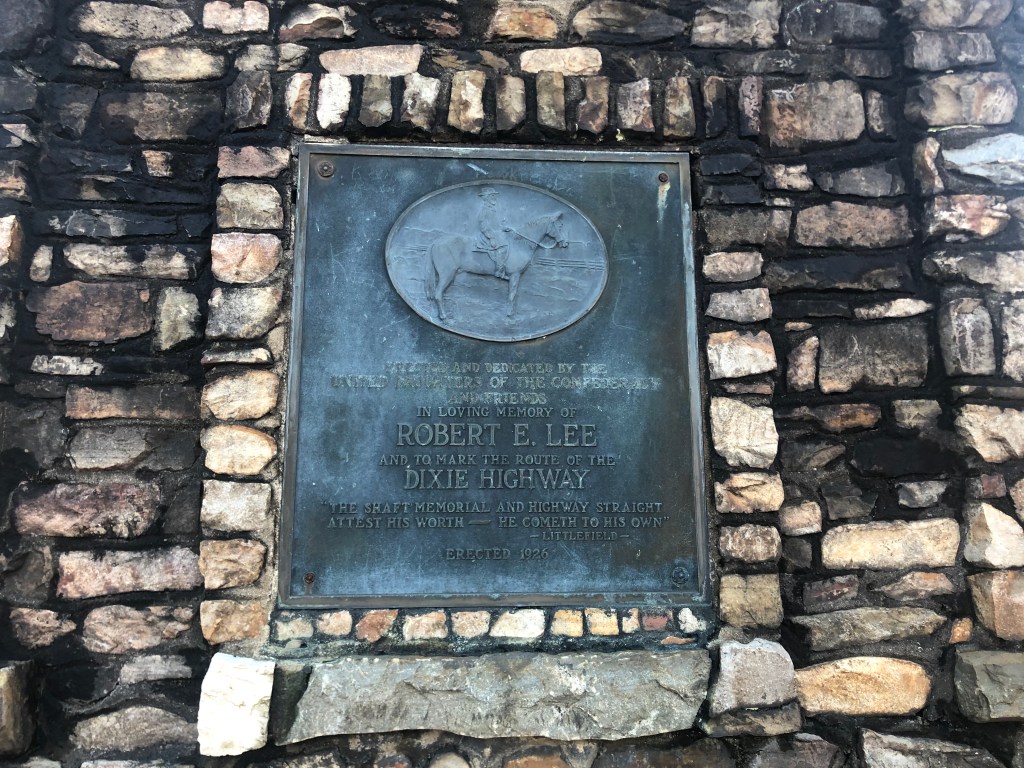
In loving memory of Robert E. Lee and to mark the route of the Dixie Highway.
“The shaft memorial and highway straight attest his worth — he cometh to his own. –Littlefield
Erected 1926
So. I guess I’m in the old confederacy now.
A little later I found a reference to a “geyser” that was reputed to exist over small pass. I turned onto the narrow road, and went up into the hills. Soon I was at what appeared to be a large fountain poured out of concrete.
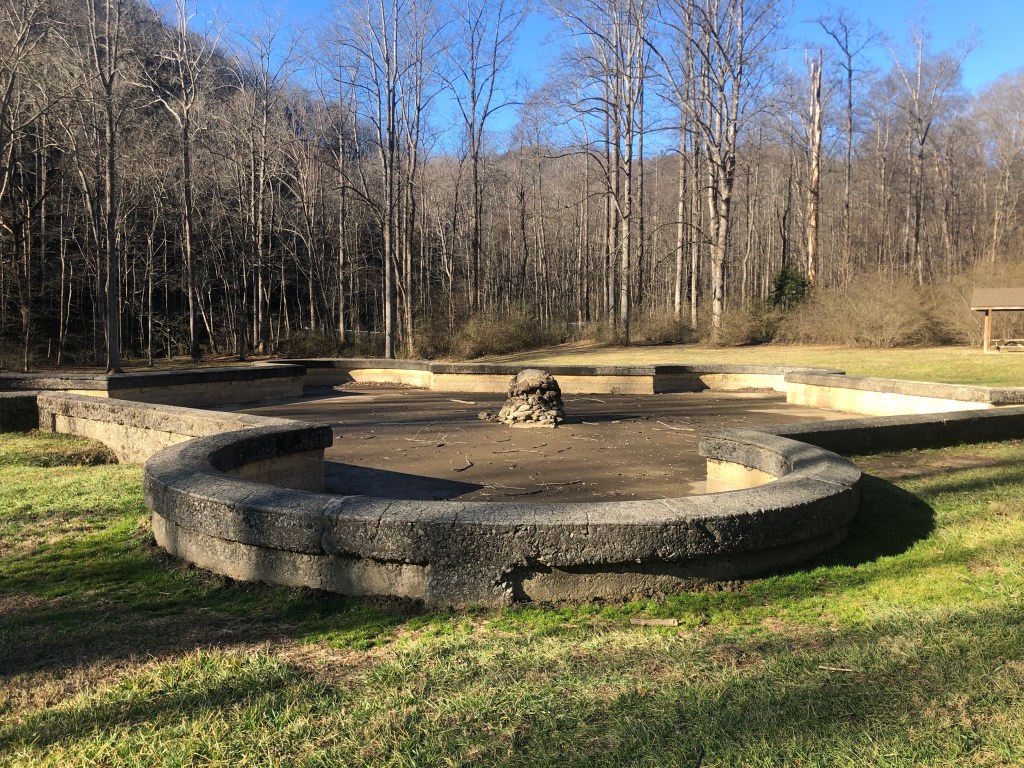
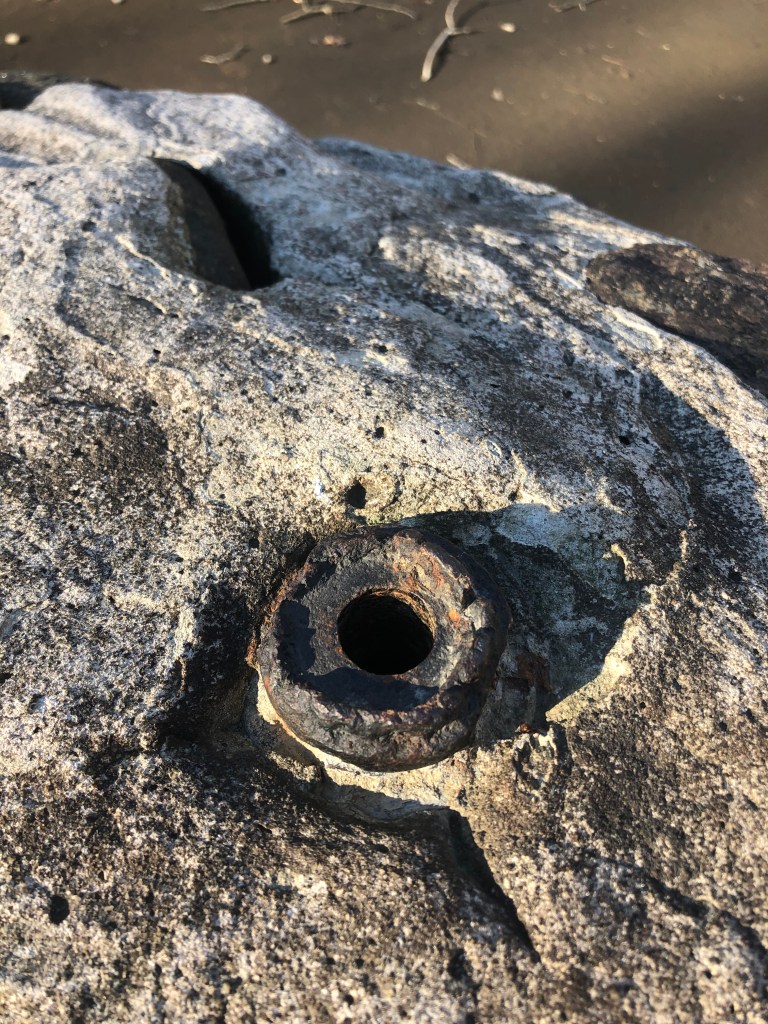
Signage on the site tells an story about his “geyser.” It was originally constructed as a tourist attraction in 1885 by the owners of a nearby resort hotel. The fountain, fed by a buried pipe conducting water from a pond higher in the mountains, reputedly shot about 80 feet in the air. After the hotel burned down in 1903, the geyser fell into disrepair. Then a railroad and banking magnate named George Fisher Baker paid to have the geyser restored. It was he who is responsible for the existing cement basin. (Notably, Baker was considered to be the third richest man in America, after Henry Ford and John D. Rockefeller.) Alas, even after another restoration in the 1970s, the geyser appears to again be dry. I’m told by locals that the water supply has dried up, and there is talk of installing a new pump.
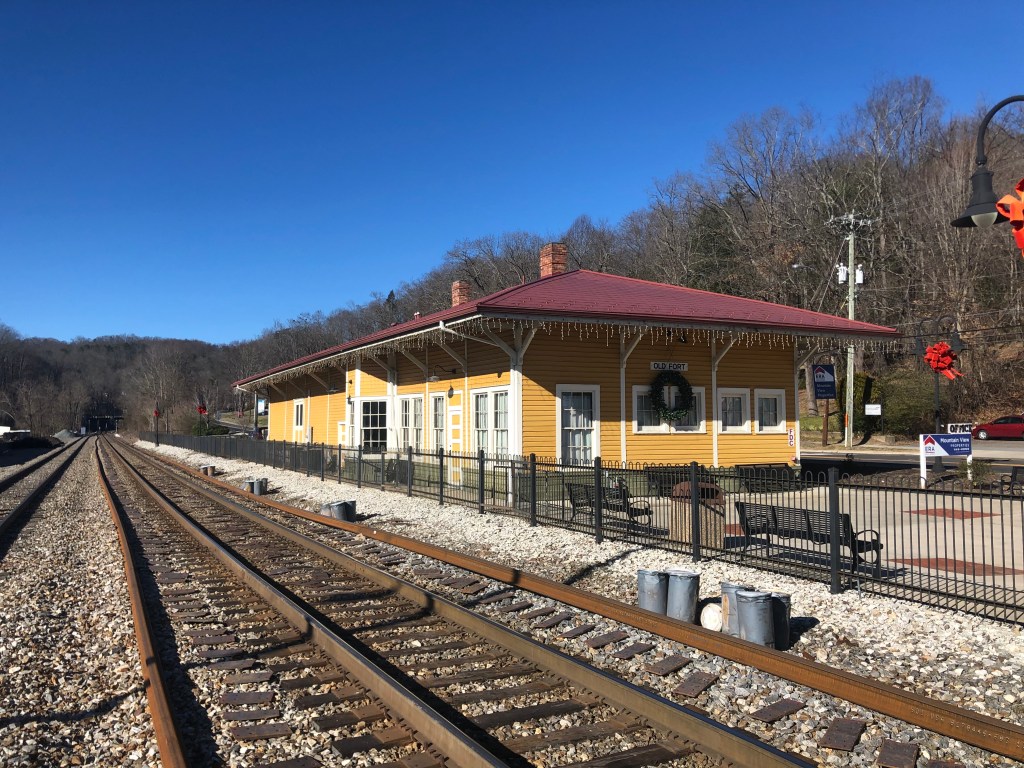
Not to long after my disappointing “geyser” experience I came upon a railroad depot in the town of Old Fort,NC (population: 908). The depot was originally built in 1881 to serve the Western North Carolina Railroad. Passenger service ceased in 1975, after which the building was eventually fully restored. Today the depot serves as a museum, as well as a real estate office. The 140-year-old (!) architecture is beautiful, and I’m impressed with the quality of the restoration.
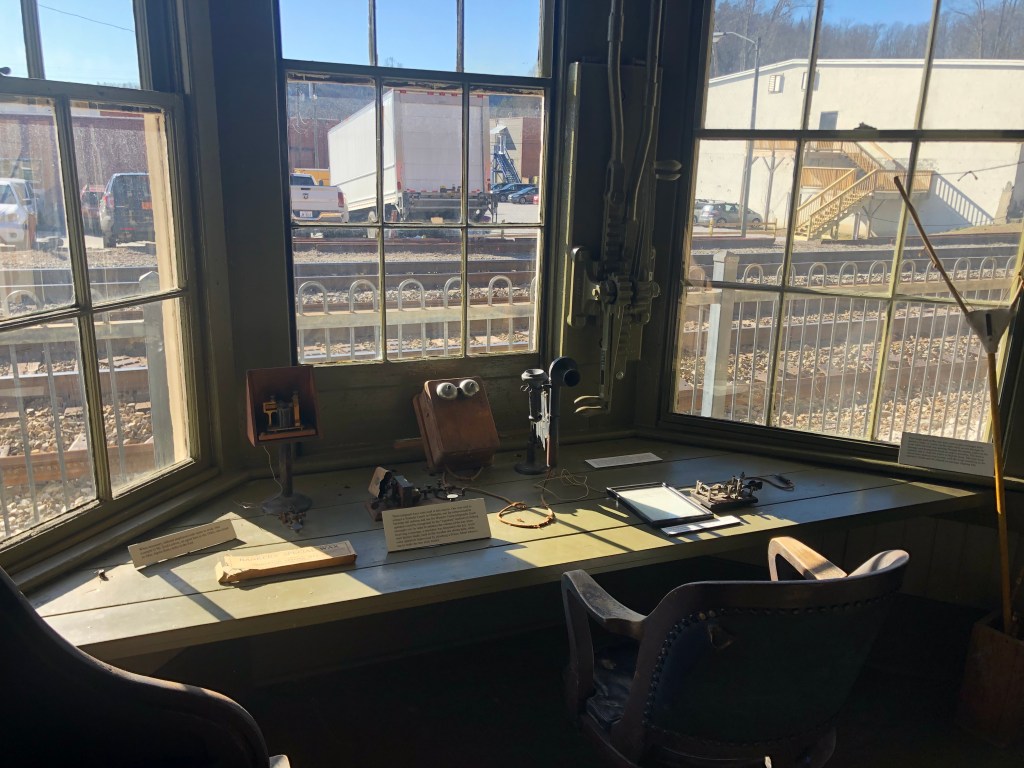
Now, there are two ways to organize a museum: with everything carefully protected behind glass and velvet ropes, or with artifacts out in the open, as they would have been encountered back in the day. This museum has employed the latter approach, and it very much allowed me to feel as though I’d stepped back in time. The telegraph room, looking out through the bay window at the tracks, was superb.
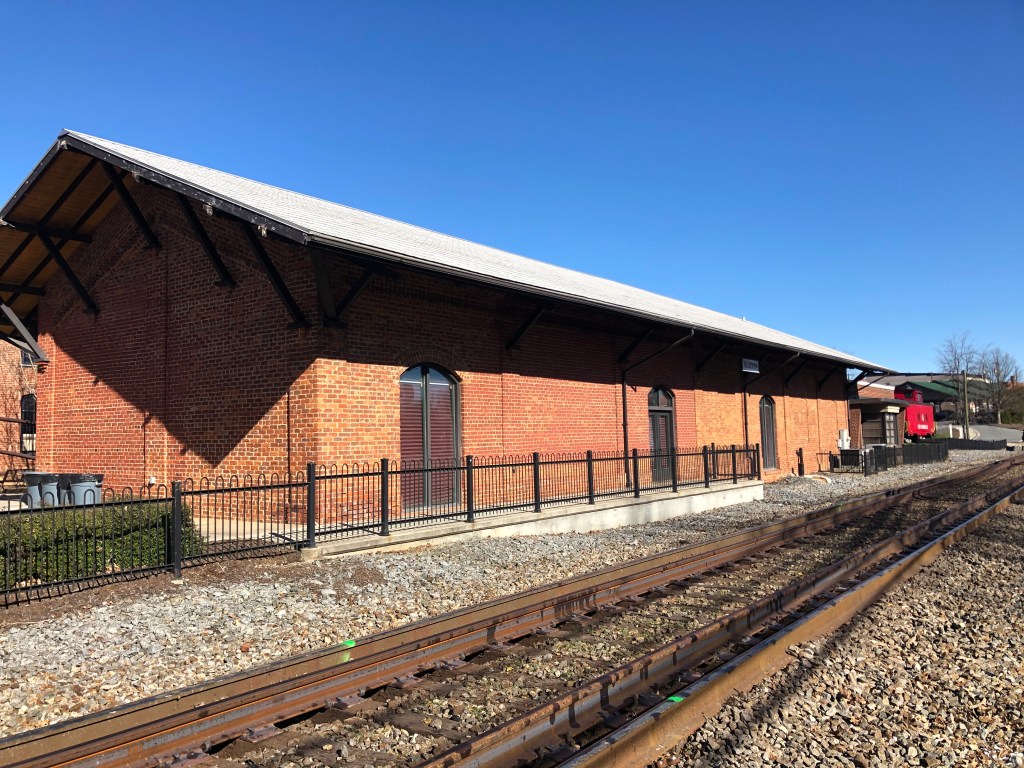
OK, one more station–this one in Marion, NC (pop: 7,800). This freight depot was originally built in 1867, to serve the same Western North Carolina Railroad mentioned above. Over the years the building was expanded, then fell into disrepair, and finally was restored, serving today as an event venue. Again: What explains why some of these old buildings get lovingly restored, and others are neglected or razed?
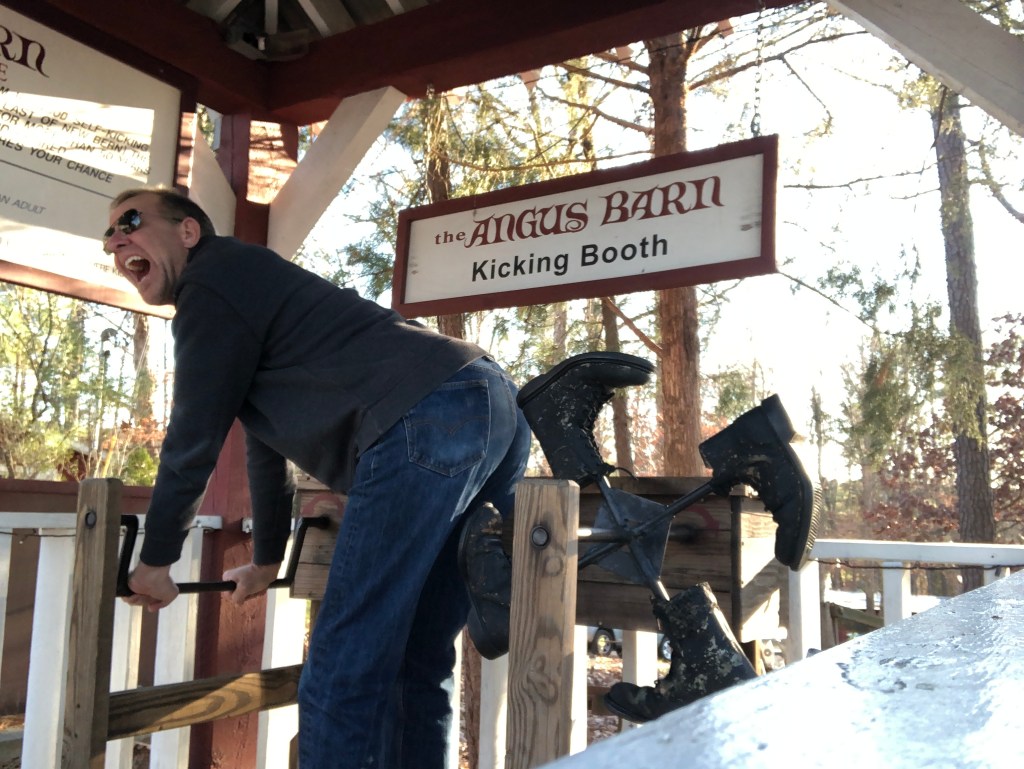
Eventually I found myself in North Carolina’s capital city of Raleigh (pop: 465,000). I was running behind schedule, so I only stopped long enough to refuel the car and engage is a bit of flagellation.
Back on the road, the sun was dipping behind the hills as I got closer to the coast. It’s remarkable how you can sense the presence of the ocean without even seeing it. It’s evident in the smell and feel of the air, and the change in vegetation, and the price of the gasoline.
Soon I was driving through the Outer Banks, with its archipelagos, inlets, and spits. The highway took on one final name change: the Outer Banks National Scenic Byway. By this time the sun had set, but an almost-full moon illuminated the landscape. It was an eerie scene, driving though this mostly deserted country in the moonlit darkness, with the outlines of leafless trees overhead and the moon reflected on the water. I’m sure the drive would have been beautiful during the day. (See a stock photo of Atlantic, NC, below.) But the evening drive had its own beauty, I wish I could have captured it with my camera, though.
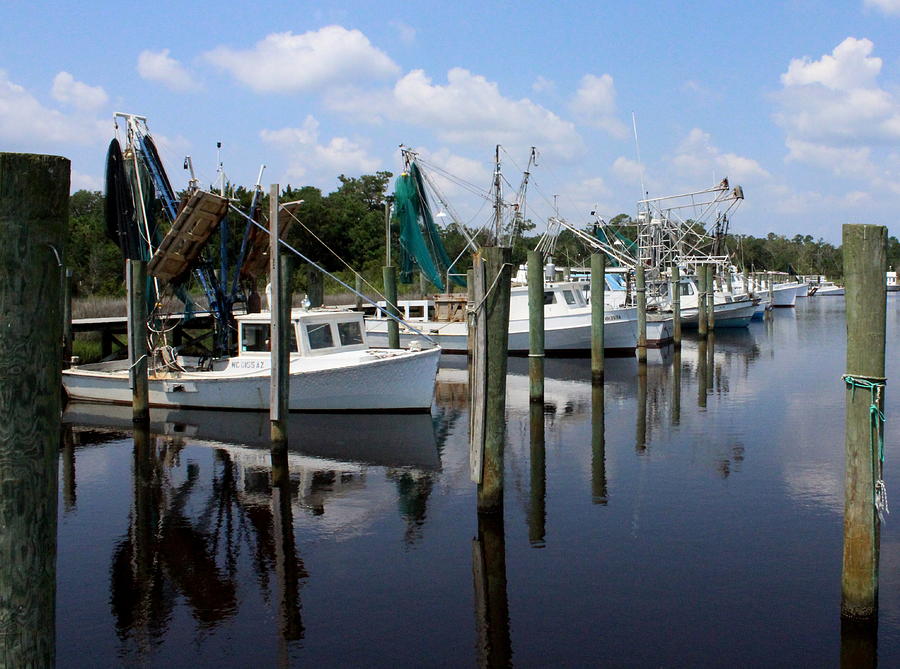
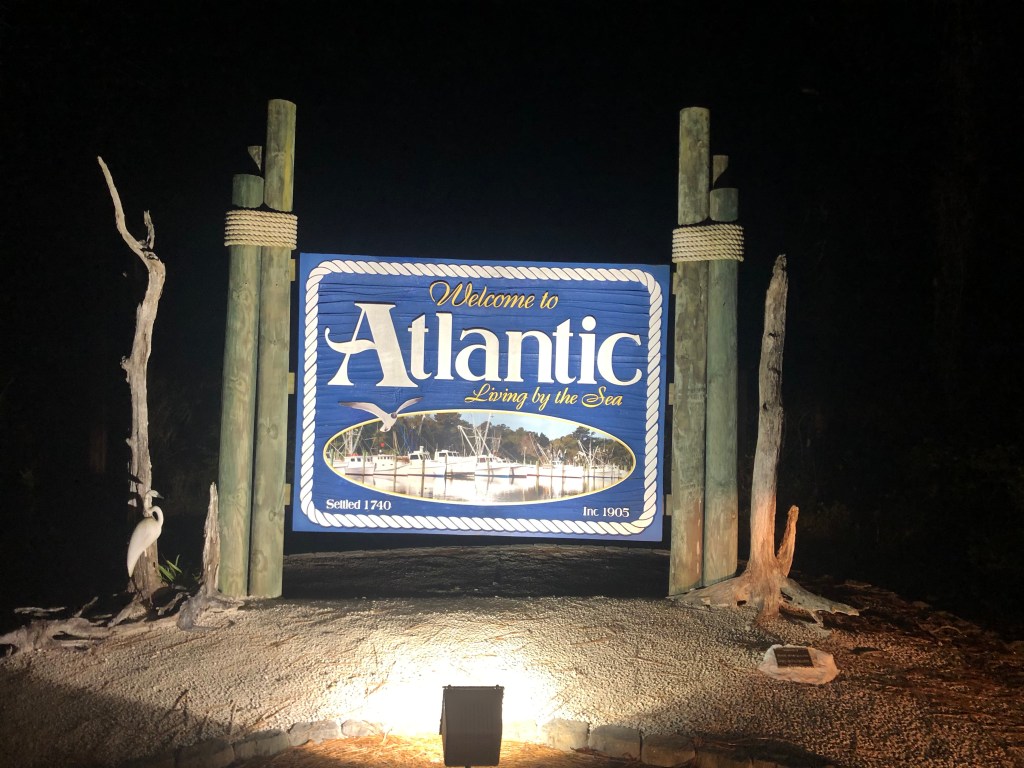
So, having arrived in Atlantic (population: 543), I was at the end of my journey. I had succeeded in driving the 2,381 miles of US Route 70.
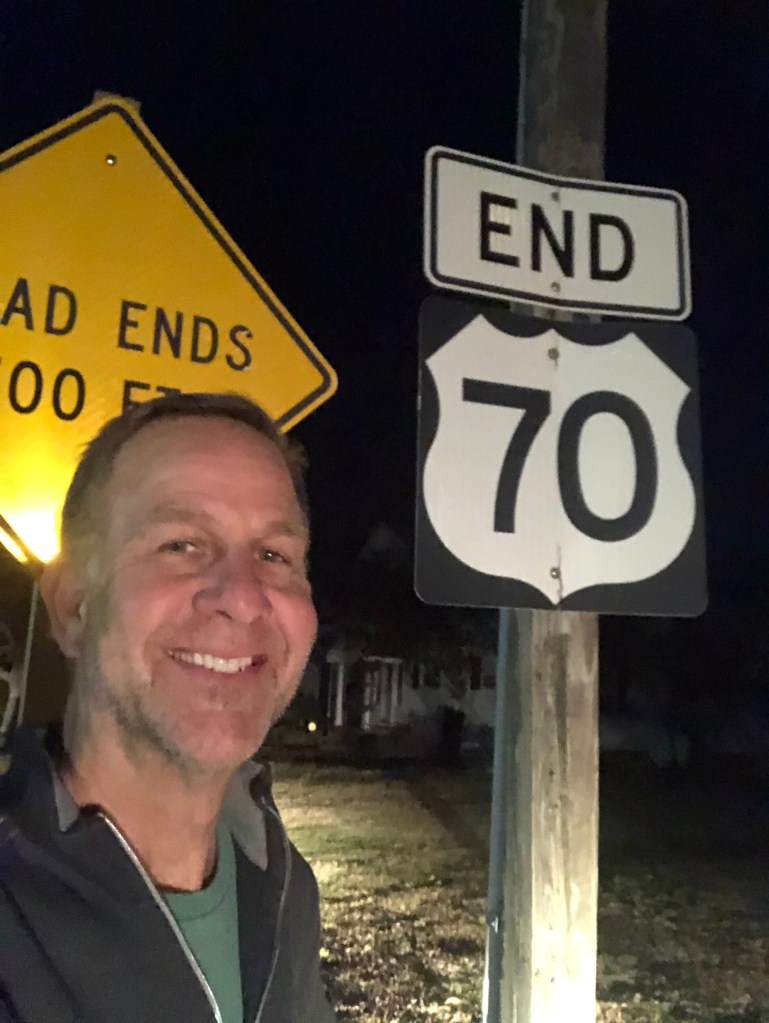
All that was left was to have a celebratory beer. But the town of Atlantic is Nowheresville. It appears not to possess a single restaurant, or any other business for that matter. It seems to be almost strictly residential. And even the homes all seemed to be dark. It’s as though I’d stumbled upon another ghost town.
So I backtracked on US 70 about 40 miles to Morehead City (population: 8,660), where I found a local brewery by the name of Tight Lines Pub and Brewing. The place first opened in 2014, but it closed temporarily in September 2018 when Hurricane Florence destroyed the roof. The place didn’t reopen until just a few months ago. My waiter, Kenny, told me that the building just celebrated its 100th anniversary.
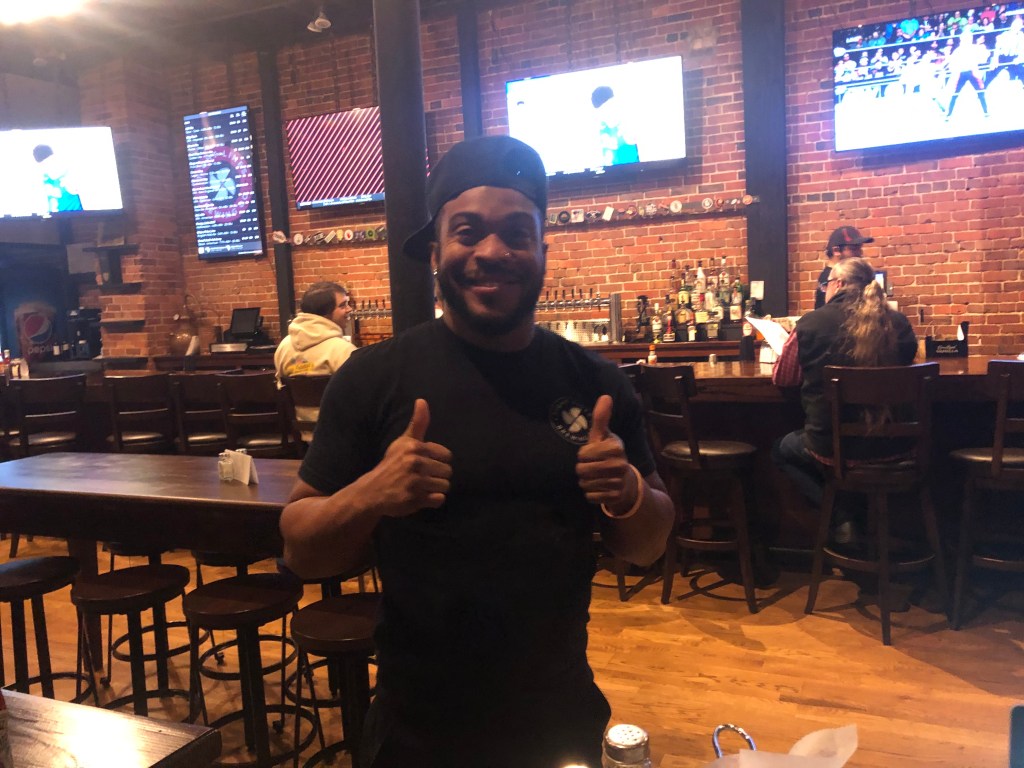
Anyway, Tight Lines had over a dozen of its own beers on tap. I told Kenny I was in a celebrating mood, and wanted something dark and heavy. He brought me their “Small Craft Advisory Stout.” It’s oak aged (though not bourbon barrel aged), with 7.7 percent ABV. It’s lightly carbonated and lightly hopped, and doesn’t have a lot of complexity. This is a very mellow beer, with oatmeal notes dominating. I wouldn’t consider it to be a “celebration” kind of beer. But it went down easy enough. An undramatic end to a fun, but thankfully undramatic, trip.

 Chasing Phantoms
Sounds like it was a great trip. Thanks for sharing the story!
LikeLike