It was the best of times, it was the worst of times, it was the age of wisdom, it was the age of foolishness…
Last weekend, my brother (Dave) and I visited the ghost town of Bodie. It’s situated on the eastern slope of the Sierras, a little northeast of Yosemite. You have to turn off US 395 onto a narrow road for about 10 miles, and the last few miles of this road are gravel. You would never find yourself in Bodie unless you really, really wanted to be there.
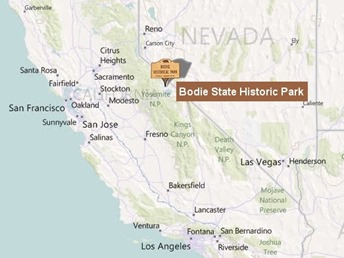
Bodie (population: zero) began as a gold rush town in 1876. Many, many boom towns sprang up during California’s gold rush, but the remarkable thing about Bodie is that it’s been preserved much the way it was left by its departing residents in the early 20th century. The California Department of Parks and Recreation effects only minimal repairs to keep the 100-plus extant structures from declining further. Most of the buildings still contain the furnishings, personal effects, and even canned goods that were left behind by the last residents. At its peak, Bodie was a thriving town of almost 10,000 souls. Walking Bodie’s dusty streets, even on a hot July afternoon, has a touch of the spooky about it, as you come face to face with the remnants of so many lives eked out in the eastern Sierra.
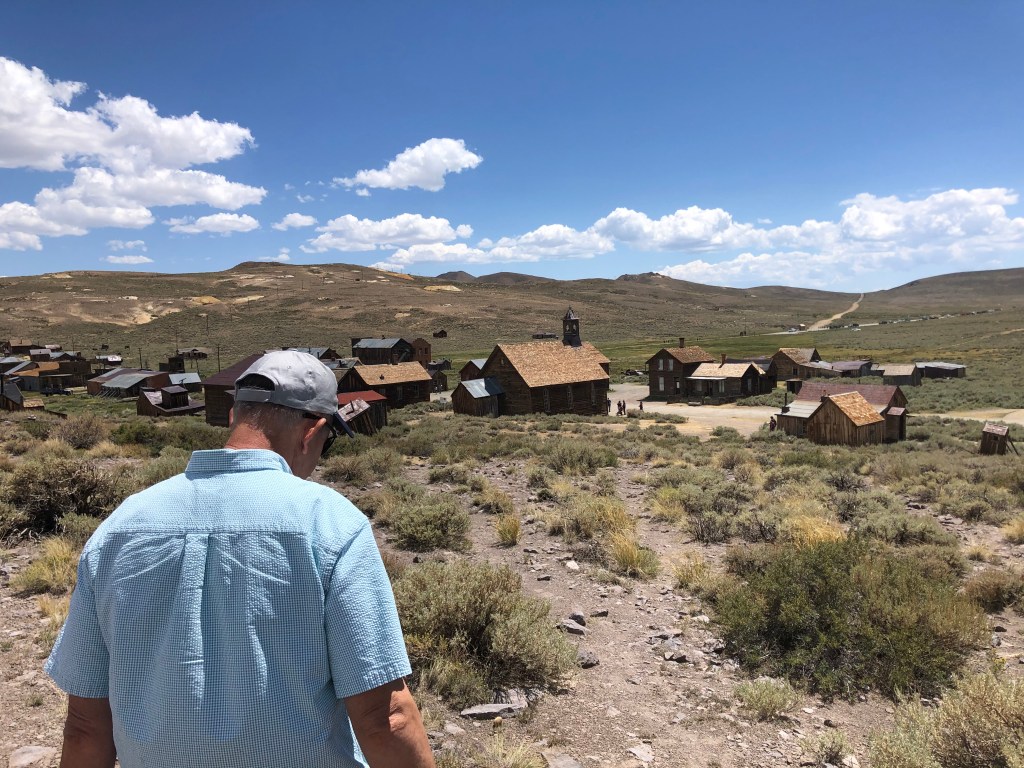
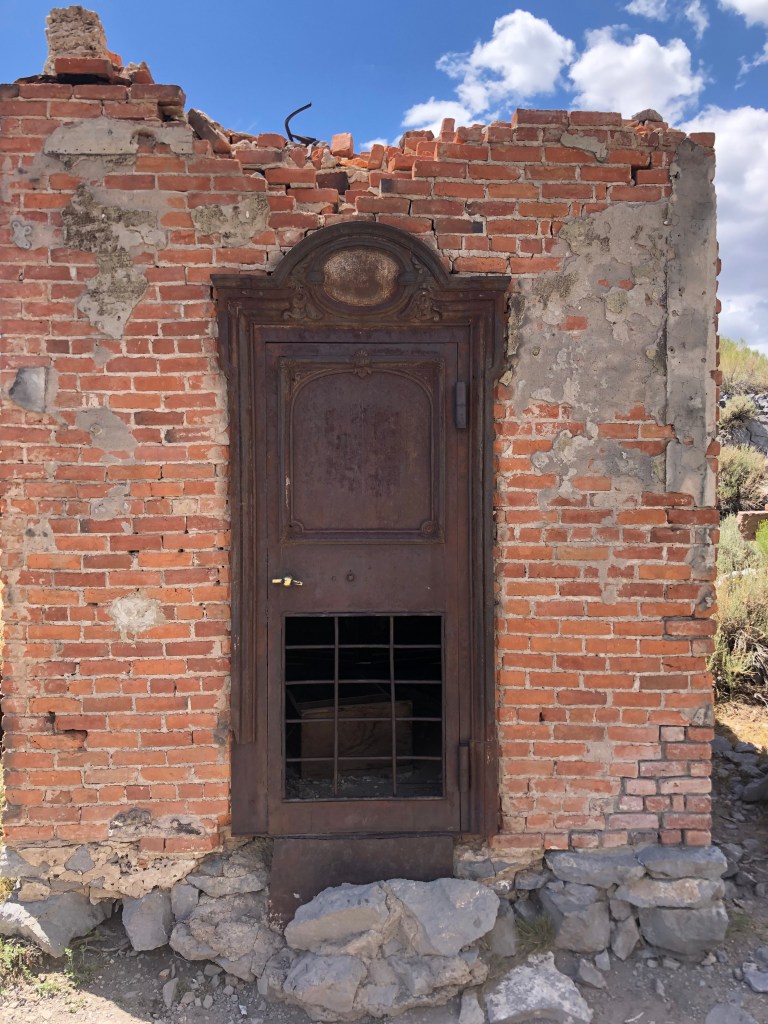
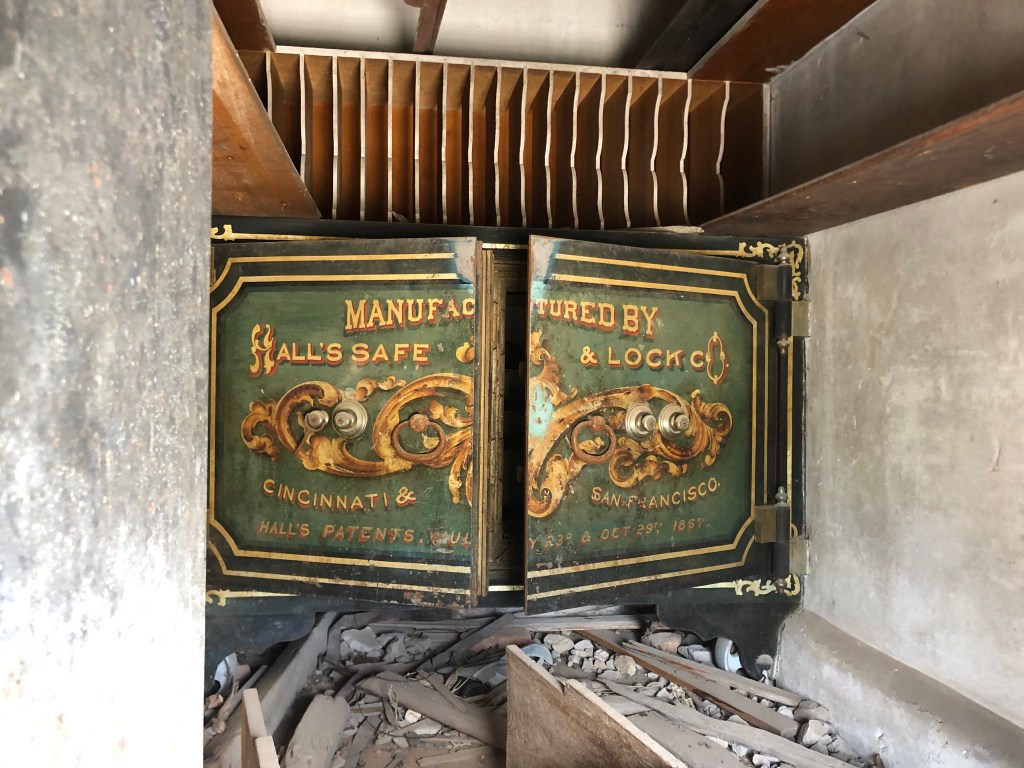
Before last week’s trip, I had last visited Bodie 40 years ago with my friend Detlef. The town hadn’t changed a bit during those decades. The same, of course, can’t be said for me…
Bodie is a well-preserved, publicly-owned and maintained, well-visited ghost town. If you’re interested, you can learn a lot about it, and see plenty of photos, on the California State Parks website and in various books.
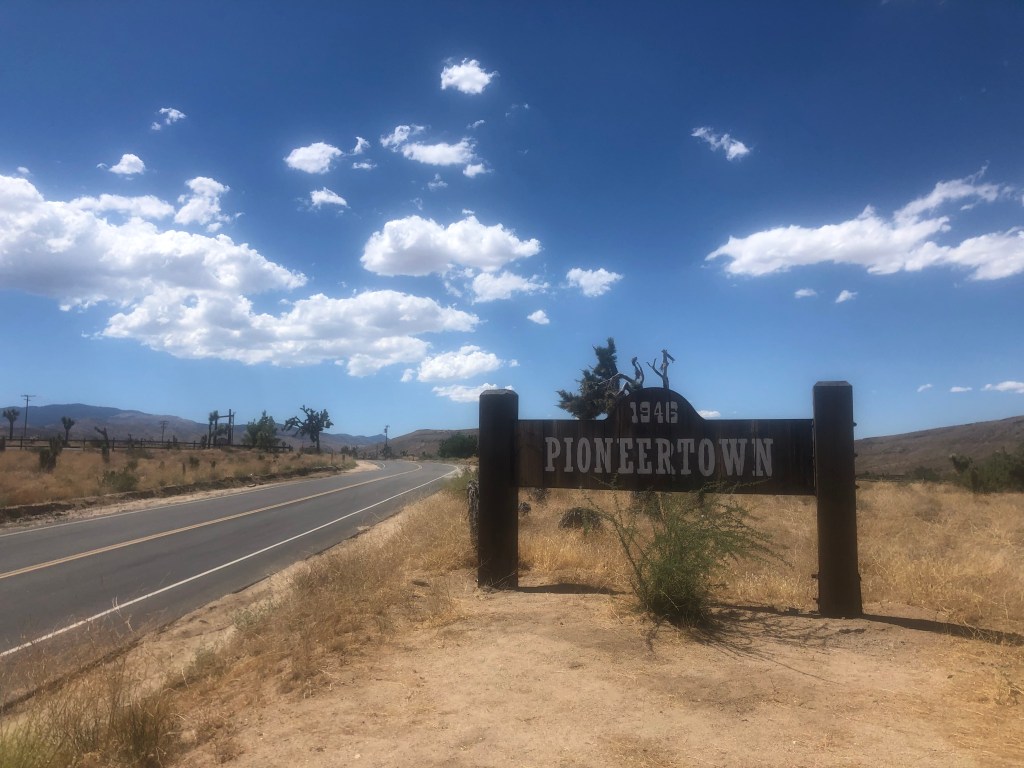
Today, almost a week after my Bodie trip, I visited a ghost town of a very different type. Pioneertown sits out in the high desert of San Bernardino County, not far from Joshua Tree National Park. It was 100 degrees in the shade.

Pioneertown (population: 420, so technically it’s not a ghost town) was the brainchild of western movie actor Dick Curtis. He founded the town in 1946 as a real, inhabited town constructed to look like an Old West movie set. (This is of course the reverse of what normally is done.) The town was used for filming westerns throughout the 1940s and 1950s. You probably haven’t seen many of the movies it “starred” in (the Cisco Kid movies of the late 1940s, Gene Autry movies of the early 1950s, Jeopardy with Barbara Stanwyk, “The Adventures of Judge Roy Bean” television series…). But for awhile there, Pioneertown was overrun with production crews. Today it’s almost entirely ignored by film crews. (One exception that proves the rule is a 2019 music video by Kidz Bop Kids. I haven’t heard of them either.)
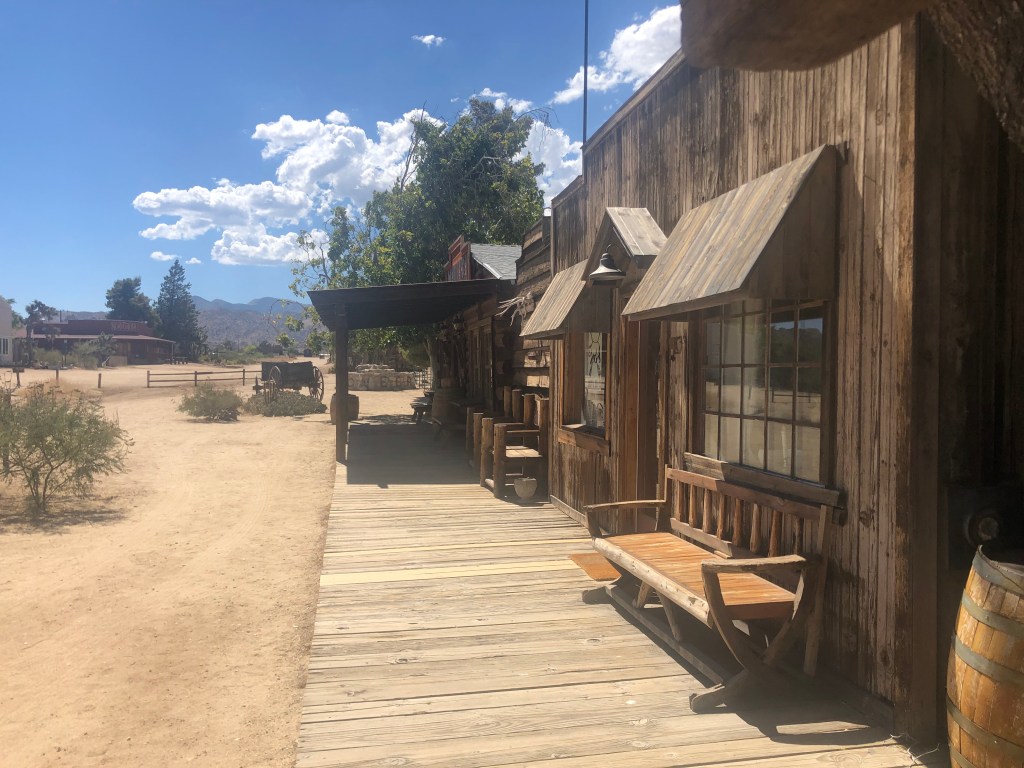
The main street (or, as the horse-themed signage indicates, “Mane Street”) contains most of Pioneertown’s Old West structures. It’s closed off to traffic and has a forlorn feel to it, accentuated by the Covid-inspired paucity of tourists.
I wanted to visit the Pioneertown Film Museum, to learn more about the film history (otherwise known as the entire history) of this town. Alas, the building, like most on Mane Street, was closed. The door to the “General Mercantile” store, however, was open, so I entered to see what I could see. And what I could see was a wine fridge with 58-degree Cokes for sale at a dollar each, bags of chips, and mass-produced faux-old-timey art pieces. The proprietor, Katrina, greeted me with genuine enthusiasm, and when I asked her about the film museum her face clouded over. “The owners have some health challenges,” she said with some obvious concern, “and they figured they shouldn’t risk working there during the ‘Corona scare’.” I asked Katrina if she could fill me in on the history of the town. “Oh, I wish my brother were here! He’s the historian. He literally wrote the book on Pioneertown.” And she held up a copy of Kenneth Gentry’s Pioneertown USA to prove it.
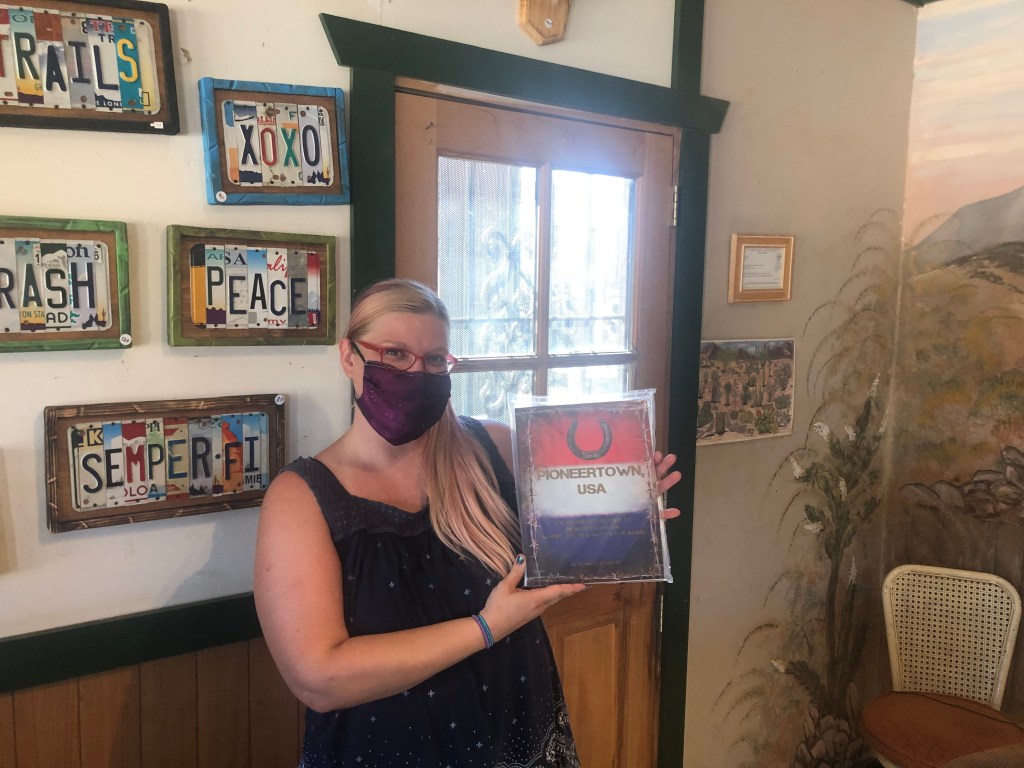
She gave me a thumbnail sketch of the town (which informed the introduction I shared with you), and insisted that “on weekends we have a lot more going on, like melodramas and shootouts.” (So far this was sounding no different than downtown Los Angeles…) She admitted that the crowds had dropped to about 10 percent of their former size as a result of the pandemic, and she hoped they’d bounce back soon. I thanked her, bought a lukewarm Coke, and resumed my walk along Mane Street.
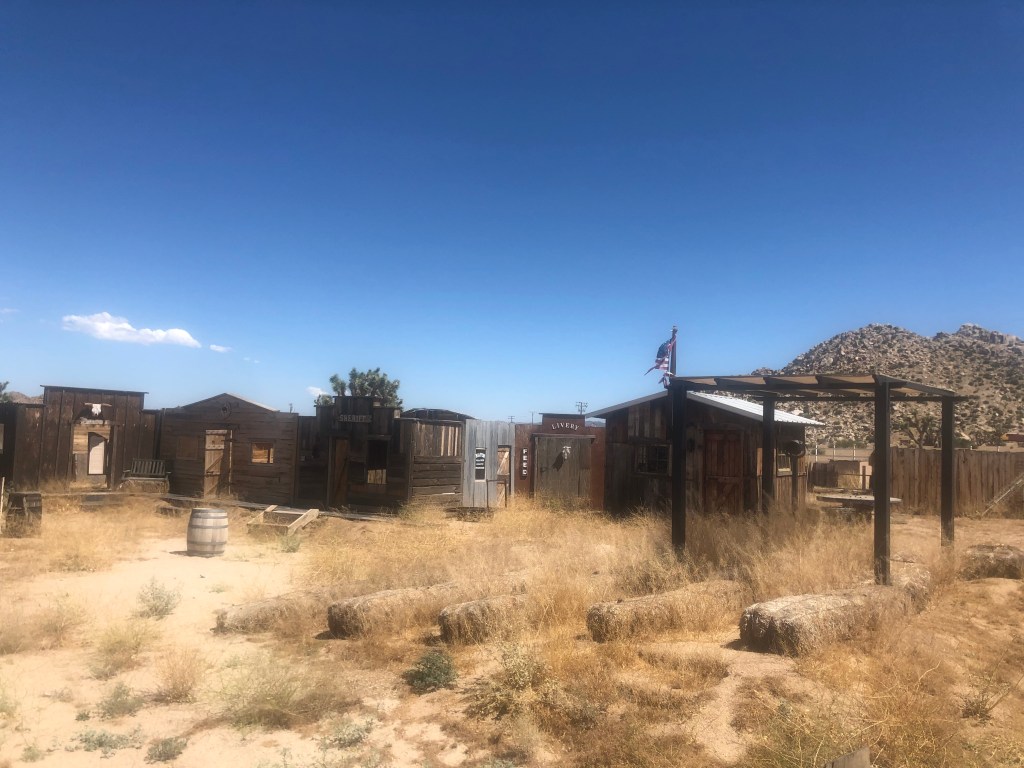
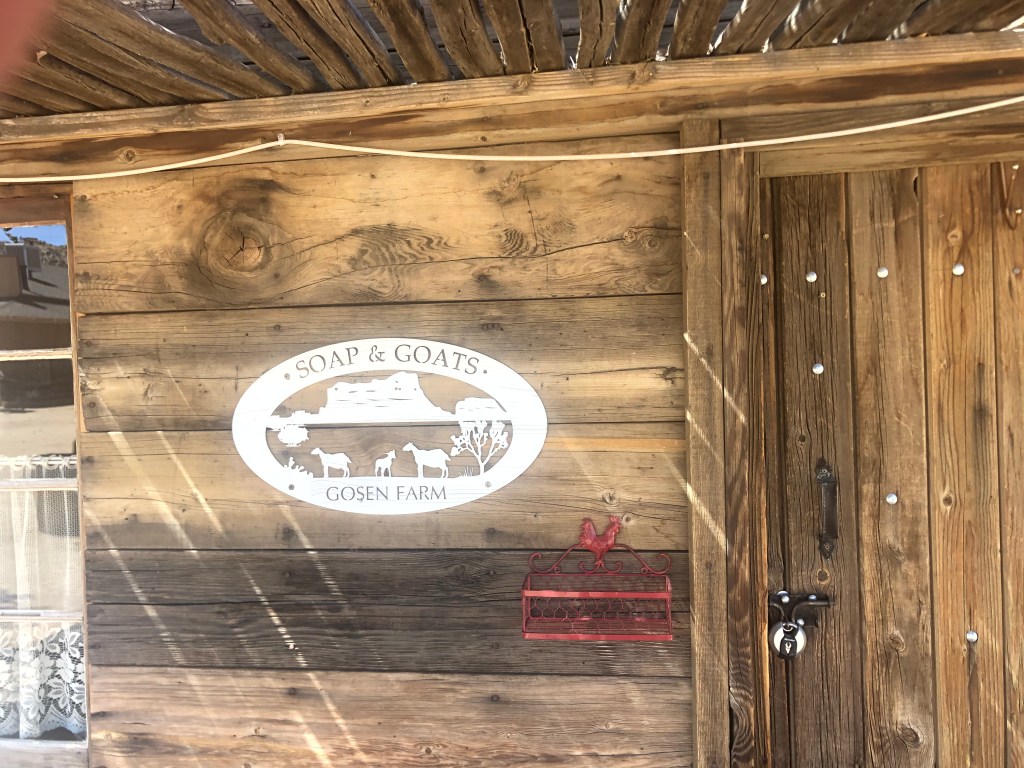
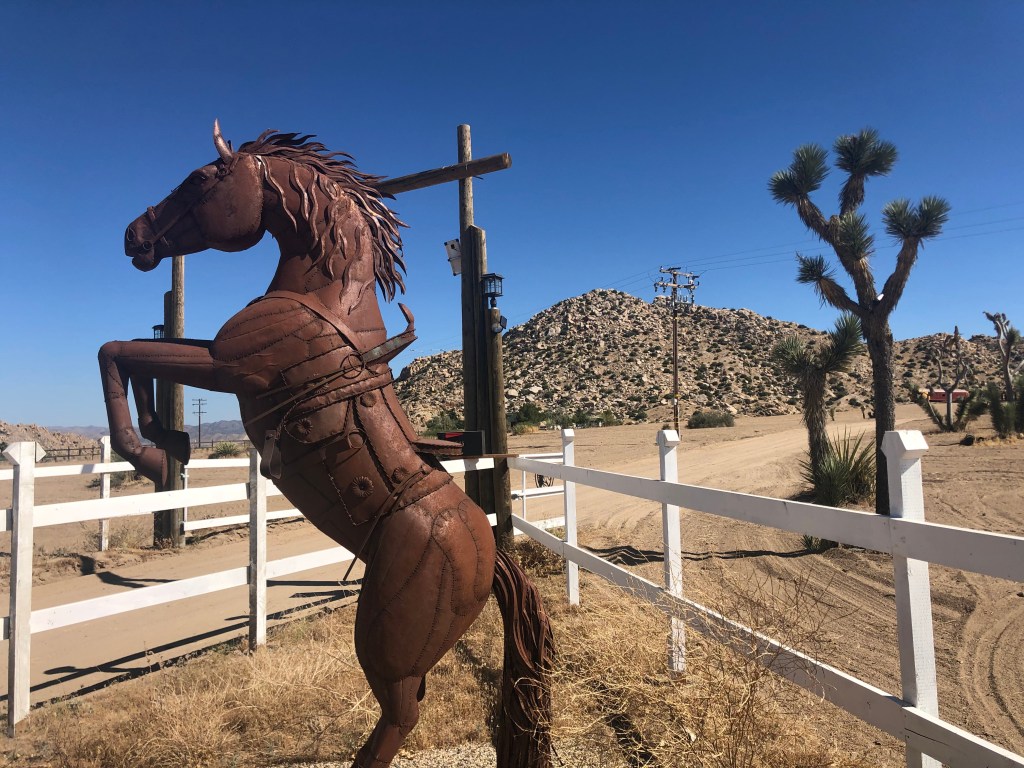
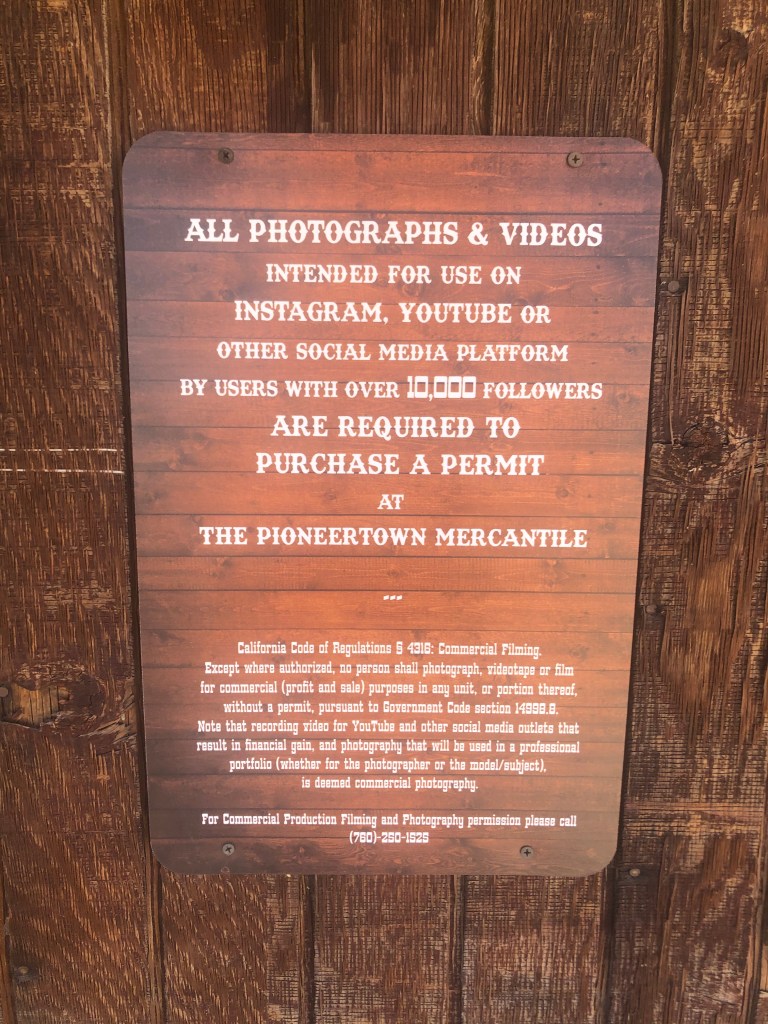
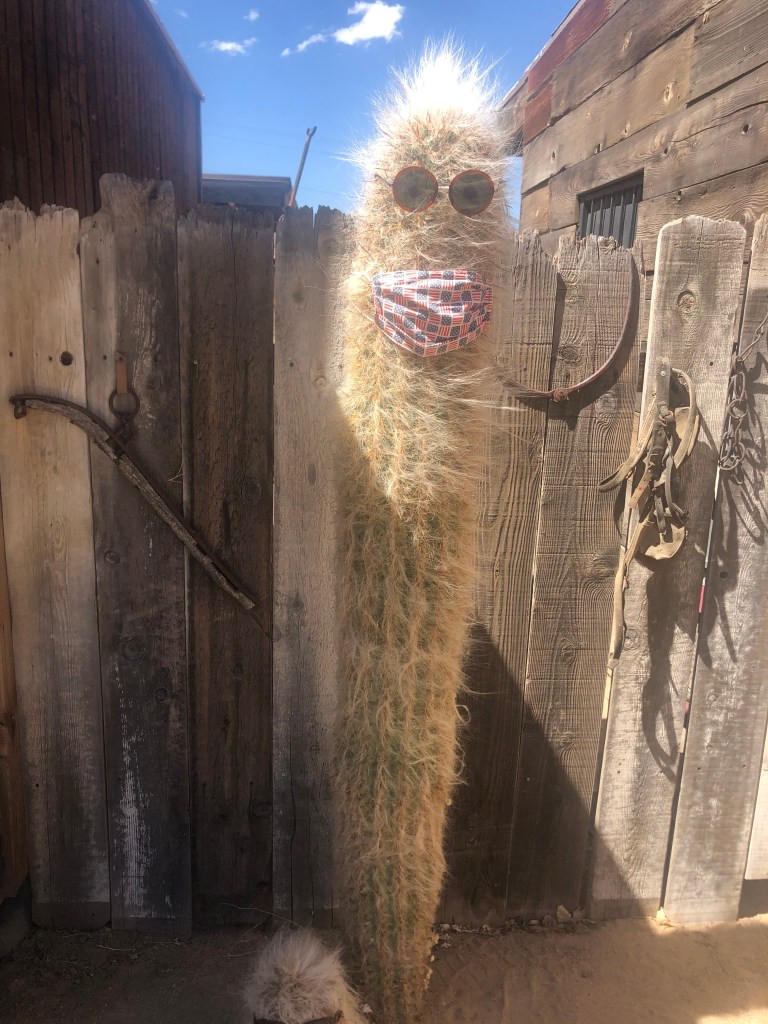
Just as I was inspecting a cactus wearing sunglasses and a Covid mask (it was the cactus, and not I, who was wearing them), Katrina came out into the dusty street and told me that someone had just opened the Film Museum for a private tour, and I was welcome to join them.
The film museum was contained within a small, one-room structure, and primarily consisted of old movie posters. However, the proprietor did show us a short documentary (produced by Katrina’s brother!) that contained some old movie clips. After watching the movie, I asked the proprietor a few leading questions about Pioneertown, and I received pretty much the same basic outline that Katrina had already provided.
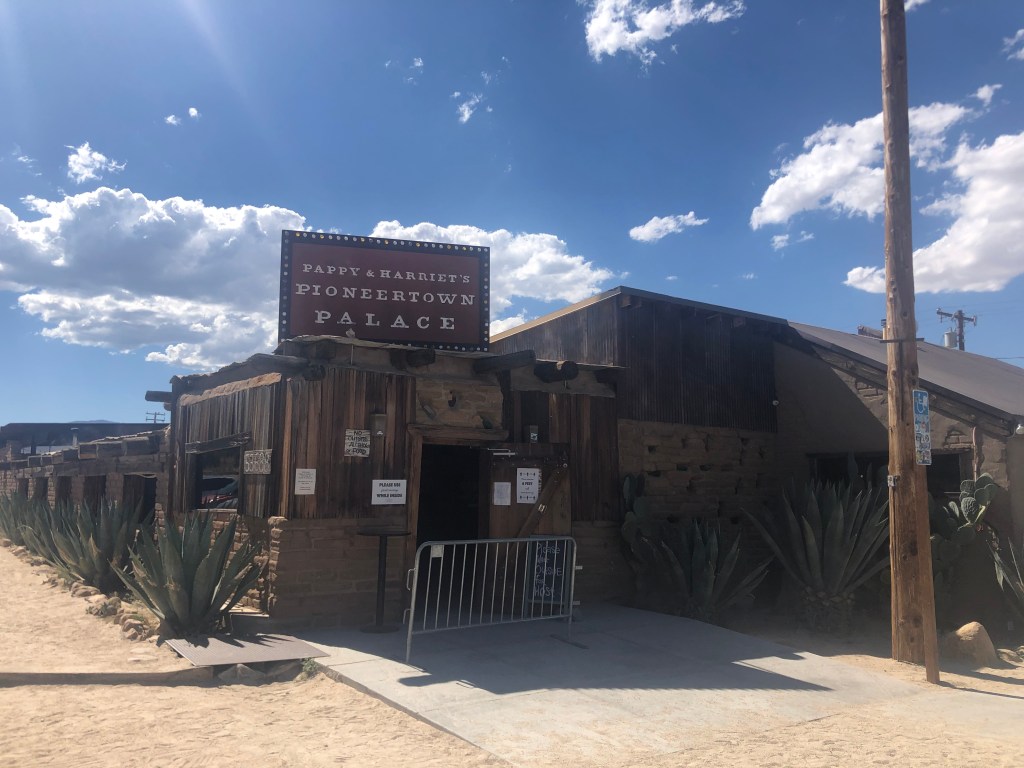
Feeling a bit peckish in the desert heat, I repaired to Pioneertown’s cantina. (Katrina had recommended it as the most popular establishment in Pioneertown.) The cantina has appeared in various films since 1946, and today has a full-service kitchen serving some of the best barbecue in, well, this deserted region of San Bernardino. It also claims to be the “eighth largest music venue in the world.” When I asked by what metric that claim is measured, the waitress just looked at me and said “I don’t know what you mean.” Still, it does appear that Pappy and Harriett’s (the venue’s current name) has had a number of biggish acts, including Paul McCartney and Robert Plant.
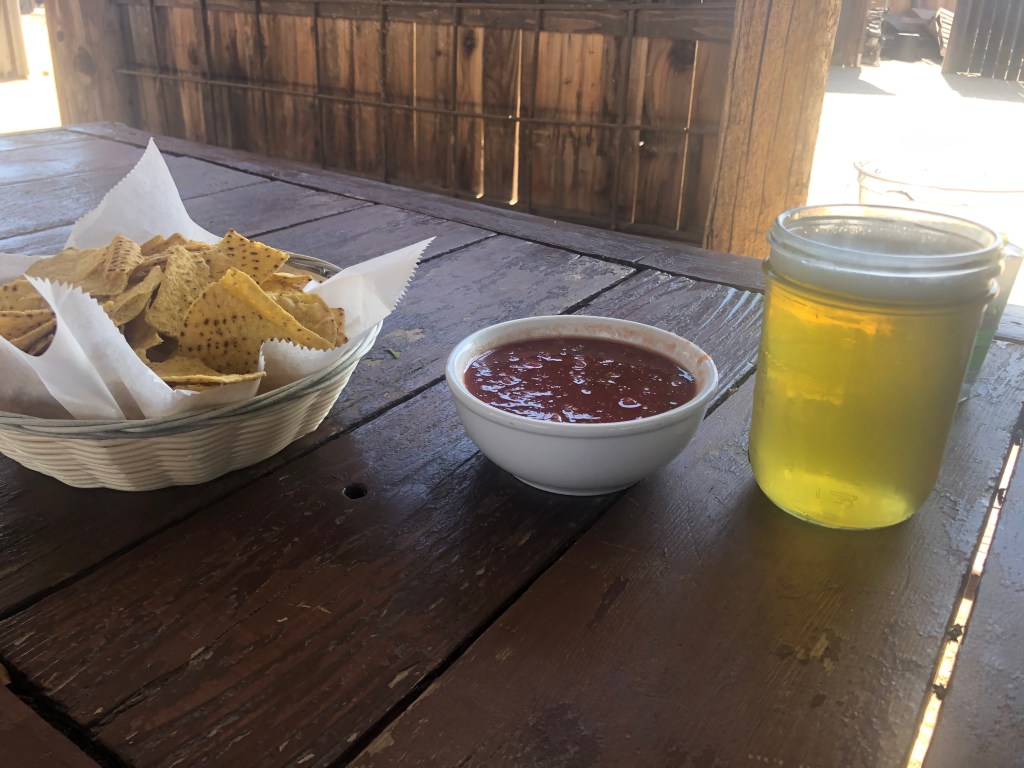
I sat out on the patio and had an order of chips and salsa which I washed down with an Elysian Hazy IPA. I wouldn’t say the food and drink were worth a 300-mile round trip, but they were tasty enough.
Refueled and rested, I threw a leg over the Triumph and headed back to civilization. My only regret about the trip — and I mean this seriously — is that I didn’t purchase the book by Katrina’s brother. She seemed so earnest about the town, it’s the least I could have done. I may be making a return trip in the fall…

 Chasing Phantoms