Today covered a lot of ground (literally). We began our day by leaving modern-day Salem and heading out to the nearby town of Danvers (pop: 27,000). Back in the day Danvers was known as “Salem Village” (to distinguish it from the larger town of Salem which holds that name to this day). Are you following me so far?
Danvers (nee Salem Village) gave birth to the Salem witch trials. For it was here in 1692 that the daughter (Betty) and niece (Abigail) of the village minister (Samuel Parris) accused the household’s slave of witchcraft. Accusations and counter-accusations flew, until some 19 people were hanged as witches. The hysteria eventually died down, and the village did its best to leave the whole ordeal behind it. Little was spoken about the events, and after Samuel Parris died in the 1780s, his home was torn down.
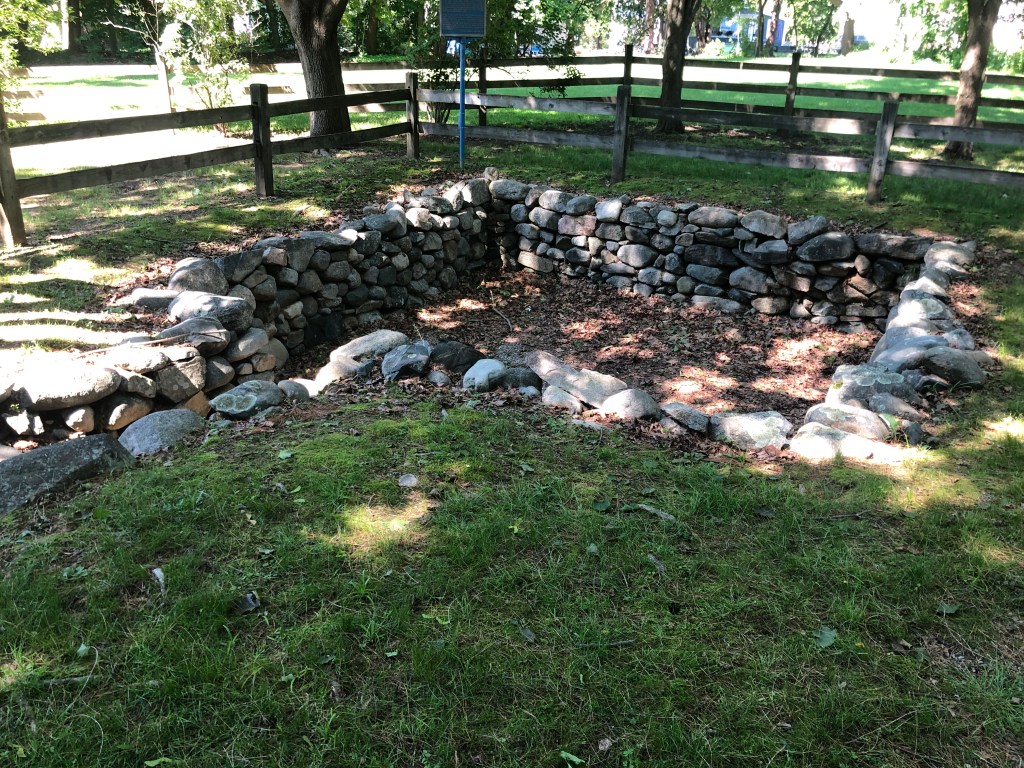
Then, in 1970, a young historian in town sought permission to do an archaeological dig at the site of Samuel Parris’ home. The foundation of the original home, where Betty and Abigail made those initial accusations that set into motion the witch hysteria, was uncovered in a field. The site was purchased by the city and today is preserved as a (not-well-marked) historic site. After some Google searches and a number of passes down the same stretch of a leafy, suburban street, we eventually found a narrow path leading to the archaeological site. Soon we were standing at Ground Zero of the Salem witch trials. There, in a shaded corner of the neighborhood, obscured by trees, we could almost feel the dread and fear that had sprung from that house.
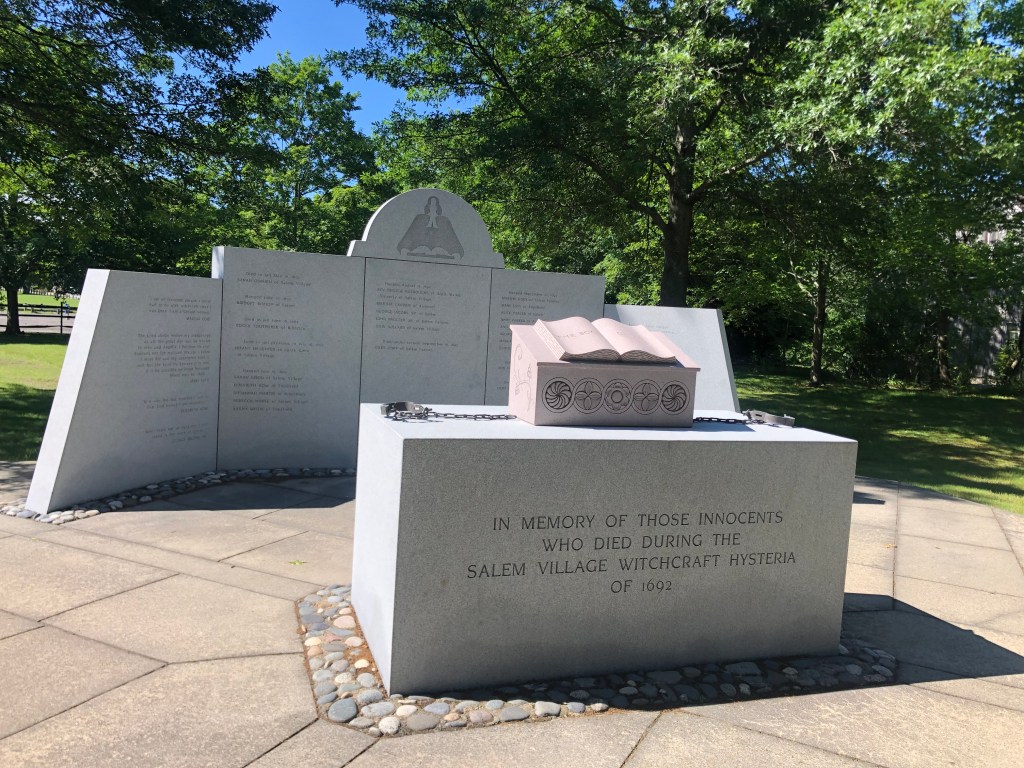
Not far from the Parris site is a slightly more accessible memorial to the victims of the witch trials. But still, unlike the witch-obsessed Salem, Danvers seems not to want to call a lot of attention to those past events.
After paying our respects, we left Danvers and headed out toward Boston (pop: 684,000). Boston is of course known for many things, but today’s focus was on Paul Revere. This reminds me of an incident when I was about 7 years old: My brother Dave and I decided (for no discernible reason) to sneak out of the house at 1 or 2 in the morning, and walk the sidewalks of our suburban neighborhood with a bedspread draped around our shoulders. We didn’t go very far and we didn’t engage in any kind of skullduggery, but it was exhilarating to be out when the entire city was asleep. After an hour of aimless wandering, we returned to our house and our beds.
The next day the neighbor girl, Jeanine, ratted us out. We were getting out of the family sedan with Mom and Dad when Jeanine scampered up our driveway. “Oh, it was so funny to see Steve and Dave outside last night!” she exclaimed. “I happened to be up and looking through the window when I saw them. They looked so funny with that bedspread! I don’t mean to get them in trouble or anything, but boy was that a sight!” Dad wasn’t quite as amused as Jeanine, and I recall that some kind of punishment was meted out.
The next day I was talking to my grandma on the phone. “I heard about your Midnight Ride of Paul Revere,” said she. I asked her what she was talking about. “The Midnight Ride of Paul Revere! You know, ‘Listen my children and you shall hear/Of the midnight ride of Paul Revere.” I still didn’t know what she was talking about. This triggered a five-minute remonstrance about how kids these days don’t get instructed in the classics.
I say all this because today, finally, I developed a decent understanding of Paul Revere’s ride while visiting his home in Boston’s North End. As my readers no doubt know, Paul Revere was a very accomplished and respected native son of Boston, and it was from this house that he made his “midnight ride” to warn of the approaching British troops in 1775.
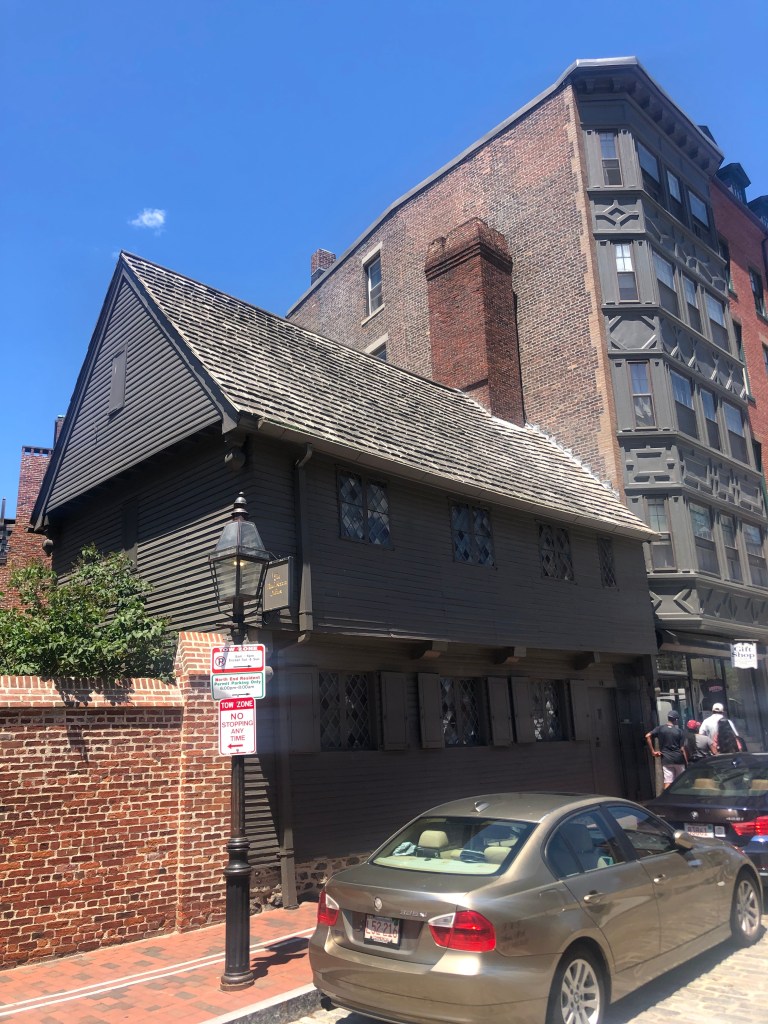
Apparently Henry Wadsworth Longfellow exercised some literary license when he wrote his ode to the event that later was quoted by my grandmother. For example, there were several riders that night, not just Revere riding alone, and Revere was actually captured before he reached Concord. And the placing of the lanterns (“one if by land, two if by sea”) was not to meant as a signal to Revere, but rather was used by him to signal others. Still, I found it moving later today when we visited the Old Church where the lanterns had indeed been hung.
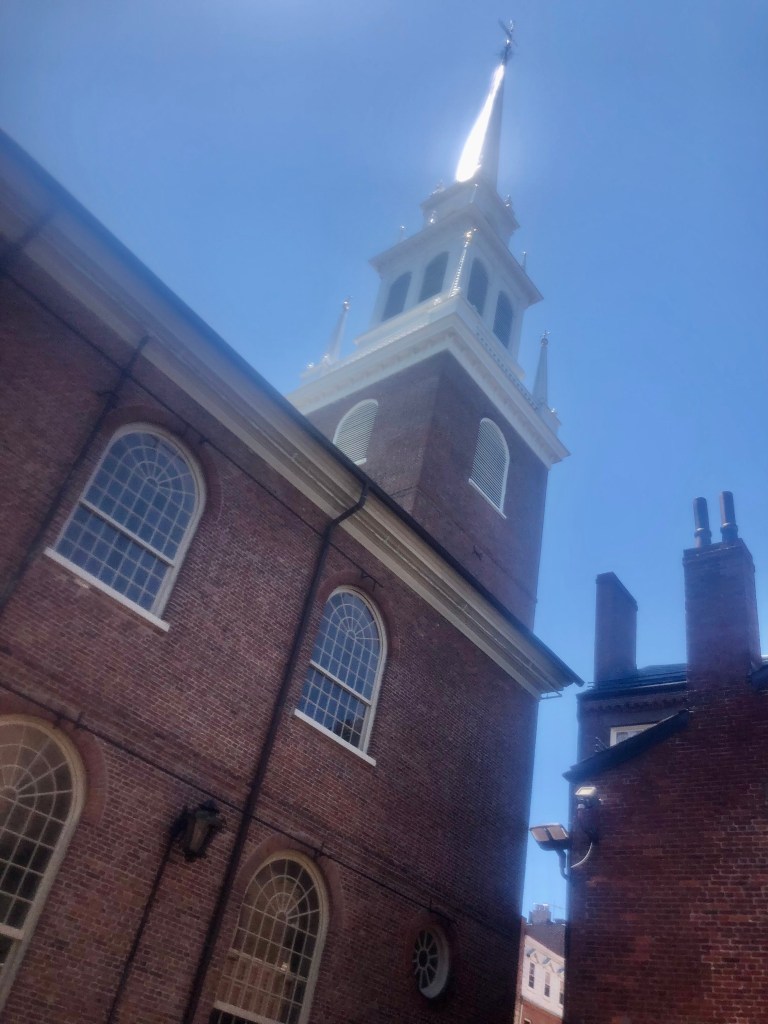
After taking a lunch break at a local trattoria (this neighborhood is wonderfully full of Italian restaurants), we made our way across the Charles River to visit the USS Constitution. That wooden frigate was commissioned a few years after Paul Revere’s ride, and fought nobly in a number of sea battles. Over the centuries it has of course become obsolete, and a few times it’s come close to being scrapped. But each time it’s been saved, and today it’s a carefully-restored and well-preserved floating museum at Boston’s Charlestown Naval Yard. It’s said to be the oldest ship of any type that is still afloat.
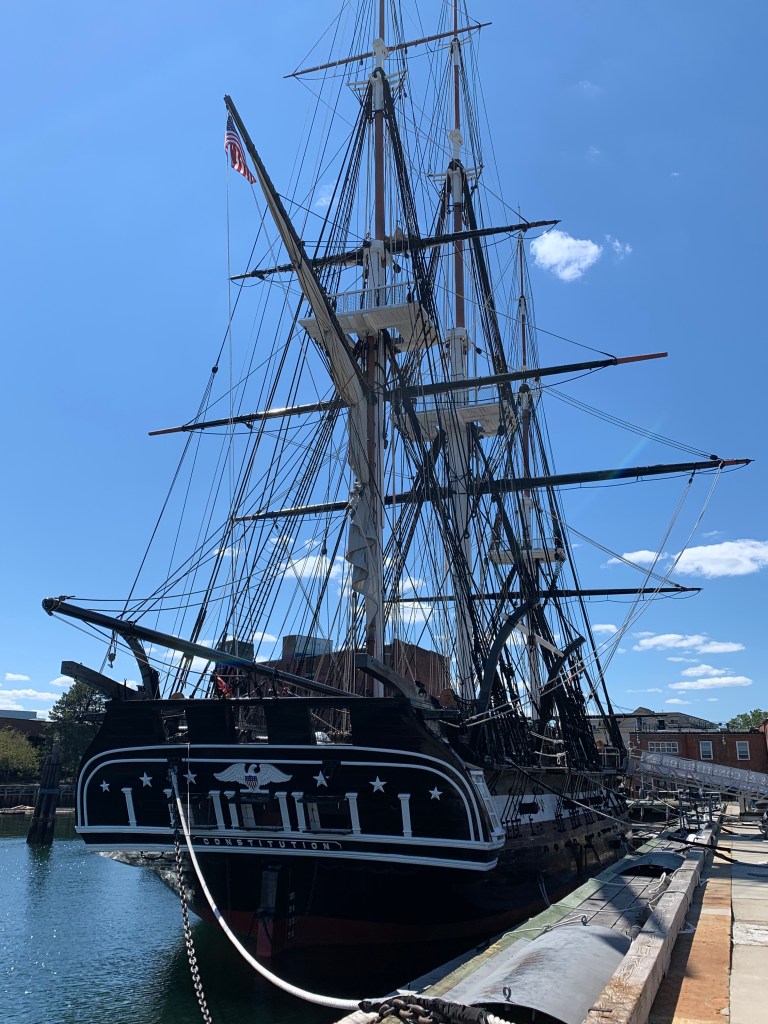
Sadly, Constitution wasn’t open to the public today. While we stood there looking at the ship from the shore, I noticed a structure that looked surprisingly like the Washington Monument. Let’s do a quick review:
Here’s the Washington Monument
And here’s the obelisk I saw in the distance behind the USS Constitution:
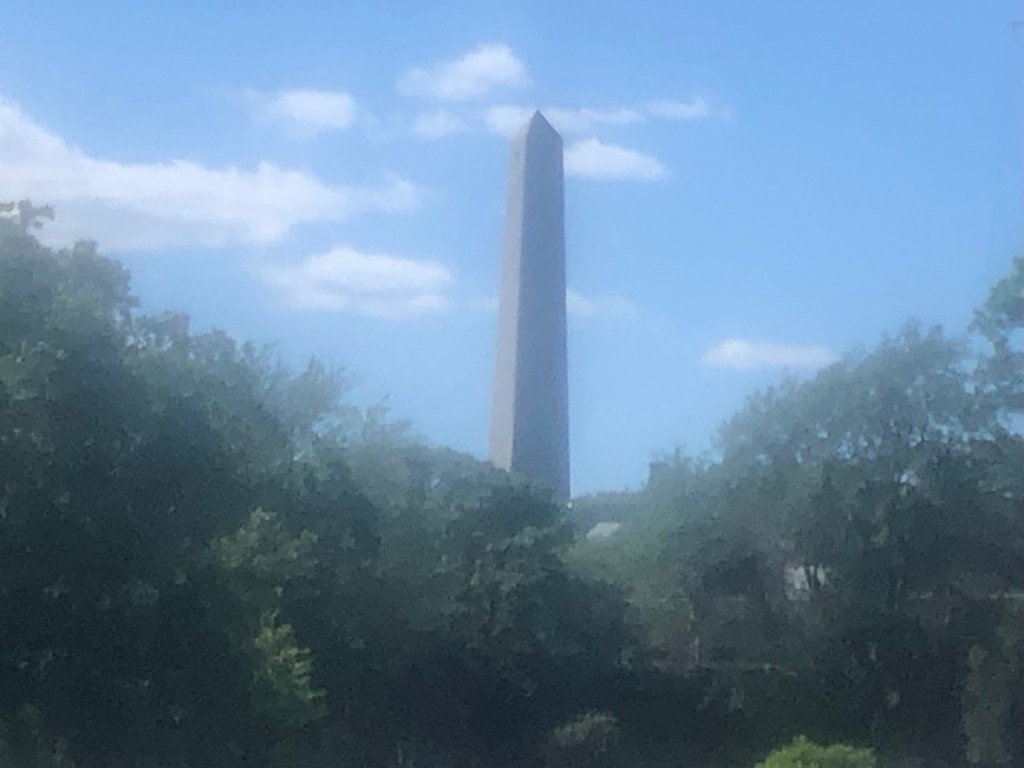
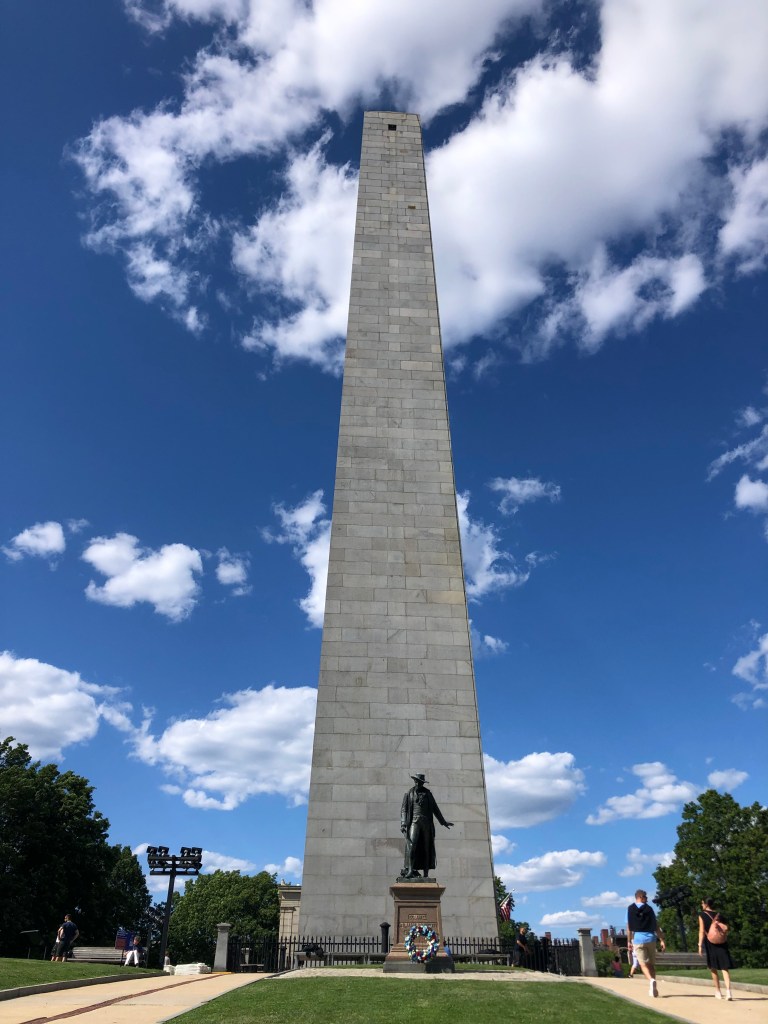
I asked a docent near the USS Constitution about the structure that “looks like the Washington Monument.” You’d think I insulted his family. He sharply informed me that it’s the Washington Monument that copied Boston’s memorial, and not the other way around. Boston’s memorial is the Bunker Hill Monument, erected between 1825 and 1843. (Construction of the Washington Monument didn’t begin until 1848.) We took a hike to get a closer look at the Bunker Hill version.
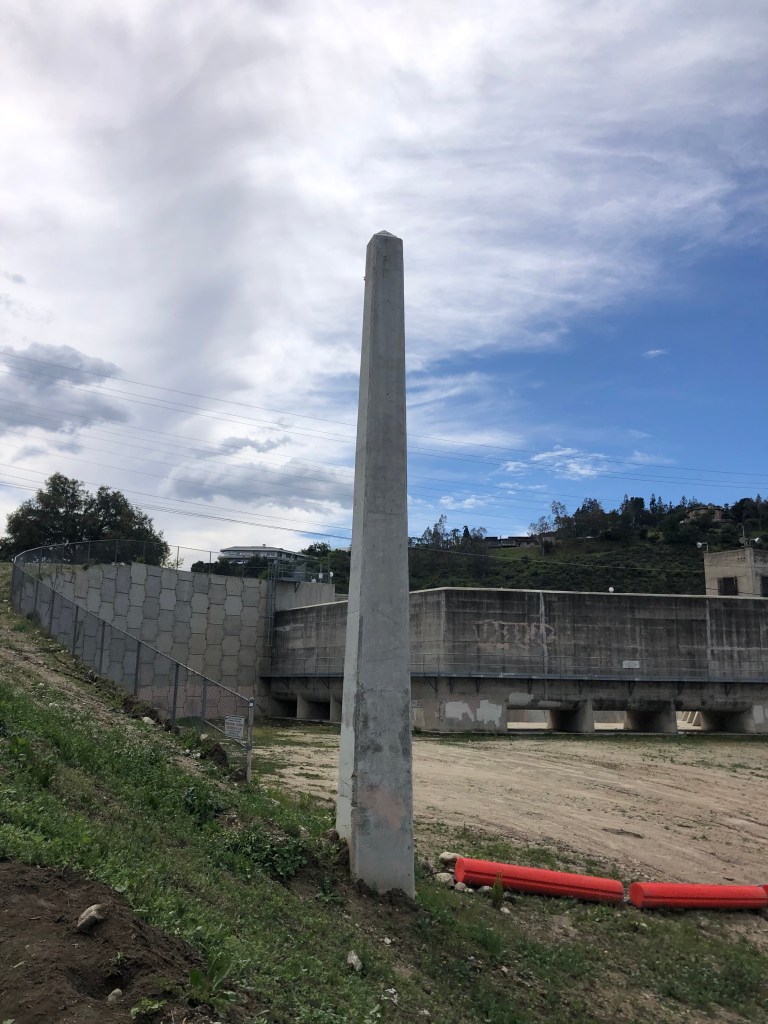
For good measure, let me share with you a picture I took in 2019 at the Devil’s Gate Dam in Pasadena. Seems that the “Bunker Hill” obelisk has a lot of company.
Tomorrow will be our last day in Massachusetts before we head back west.
BEER OF THE DAY
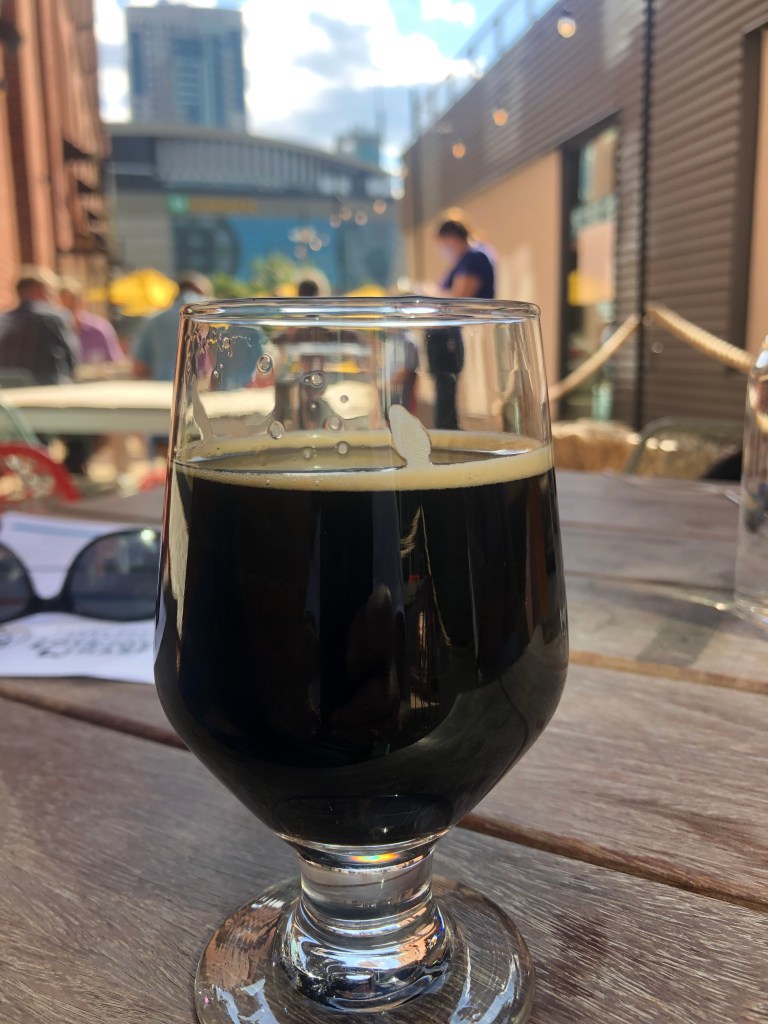
After close to ten miles of walking today, we felt we earned a refreshing beer at the Night Shift Brewing (est. 2012). I had the 2020 Darkling — an imperial stout aged in bourbon barrels. This is what I’ve been pining for since I left California. It’s dark as coal, rich as Midas, and big as Topsy. It has flavorful notes of toffee, coffee, caramel, and even butterscotch. The flavors constantly shift as it washes over your tongue, and they keep mixing a bit between sips. It’s balanced with a decent amount of hops bitterness and medium carbonation. At 12.8 percent ABV, this is not a beer to be trifled with. But I had two glasses anyway. I give it 5 well-earned points.

 Chasing Phantoms
Holmes & Watson emerge, like the cicada brood, in wee little Danvers. Good sleuthing!
LikeLike
But did your Grandma know of Israel Bissell’s Ride?
LikeLike
“To arms! To arms! The war has begun!”
LikeLike