[Delayed posting from Friday] Today we took a break from our tear-y travels and spent a day in Kentucky’s bourbon country. As many of you know, Kentucky is a beautiful state, with rolling green hills, expansive maple and poplar forests, picturesque horse and tobacco farms, and some of the nicest damn people you’d ever want to meet.
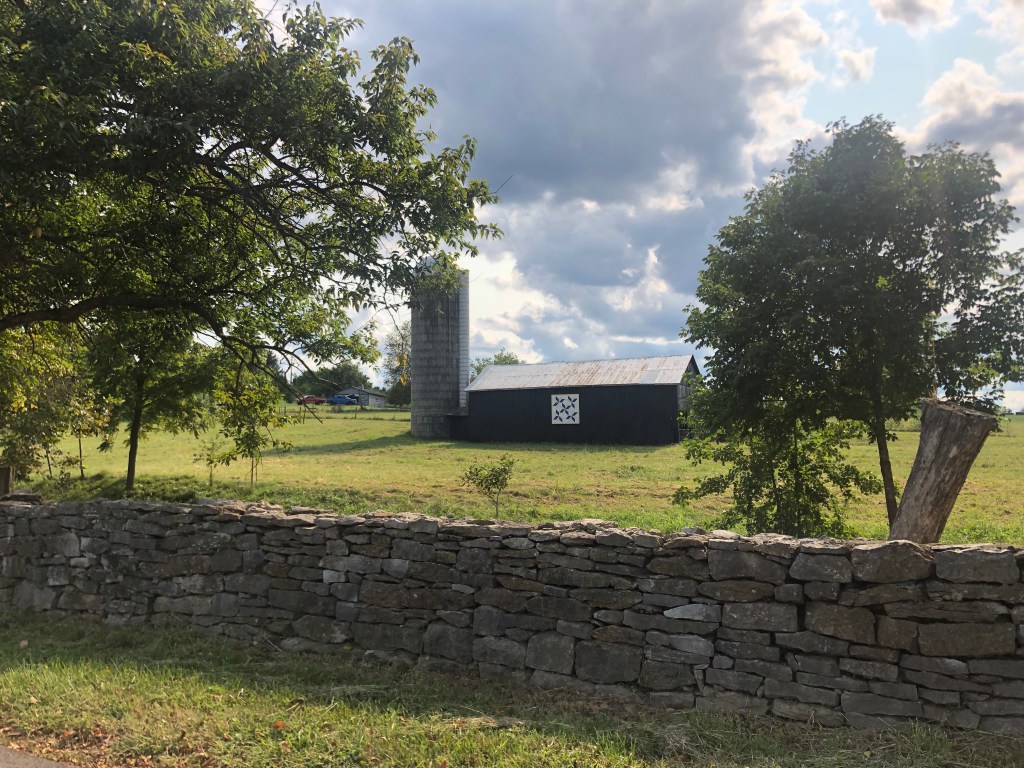
Most of Kentucky’s distilleries are clustered between Louisville and Lexington. Each has its own story to tell, but pretty much all of them try to convince you that their particular bourbon is the best.

Of course, all bourbons are remarkably similar in that they all must follow the same stringent guidelines to be marketed as bourbon. Let’s review those requirements:
- The majority (i.e., 51%) of grains used must be corn.
- It must be produced in the United States. (Note that it does not have to be produced in Kentucky, although about 95 percent of all bourbon happens to be made in Kentucky.)
- It must be distilled at 160 proof (i.e., 80% alcohol by volume) or less. This will not be the final ABV, of course. Water will be added later to cut the ABV.
- It must be stored in new (i.e., not previously used) barrels that have been charred inside. (You’ll recall that Scotch Whisky is stored in used bourbon barrels.)
- It must enter the barrels at no more than 125 proof.
- There is no absolute requirement as to how long it ages, but to be called “straight bourbon” it must be aged at least two years.
- It must not have any additives or coloring agents.
- Once it is bottled, it must be at least 80 proof.
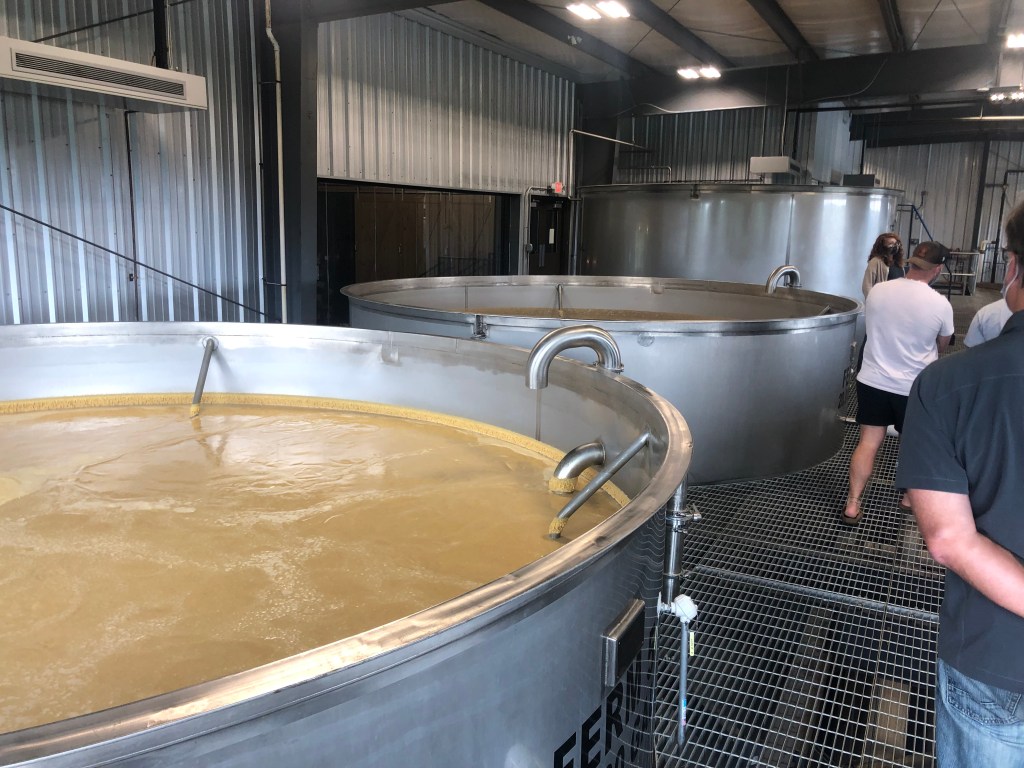
So, working within those constraints, distilleries essentially just take a bunch of corn (and a smaller amount of other grains), cook it in water, ferment the resulting soup with yeast, distill the alcohol from it, and put the resulting alcohol distillate in barrels. If you want it to taste any good, you’ll let it age in those barrels for some years.
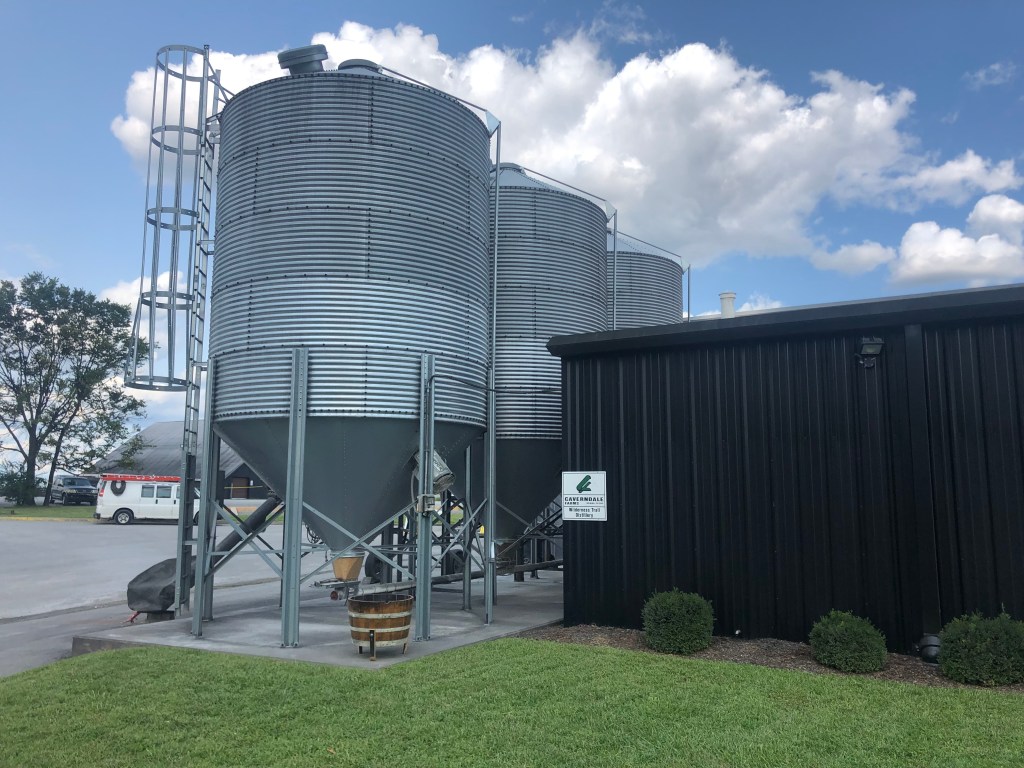
Scott and I went to two distilleries today: Four Roses in Lawrenceburg, and Wilderness Trail in Danville. They represent a rather old and a very new distillery, respectively. Here are a few photos from Wilderness Trail.
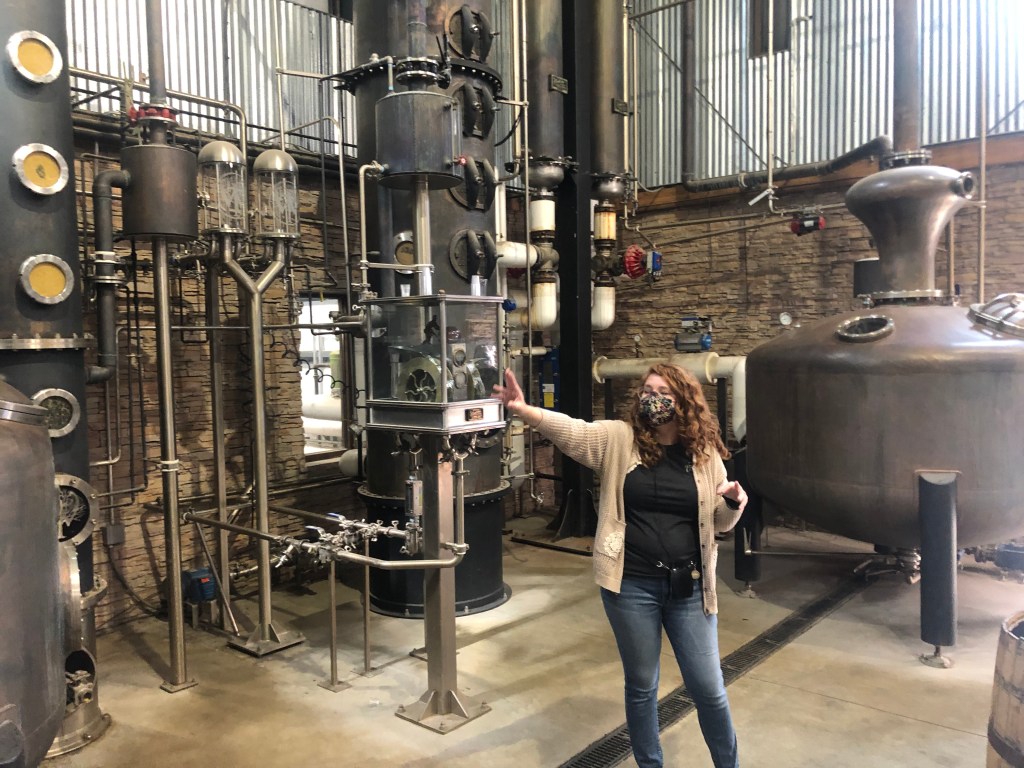

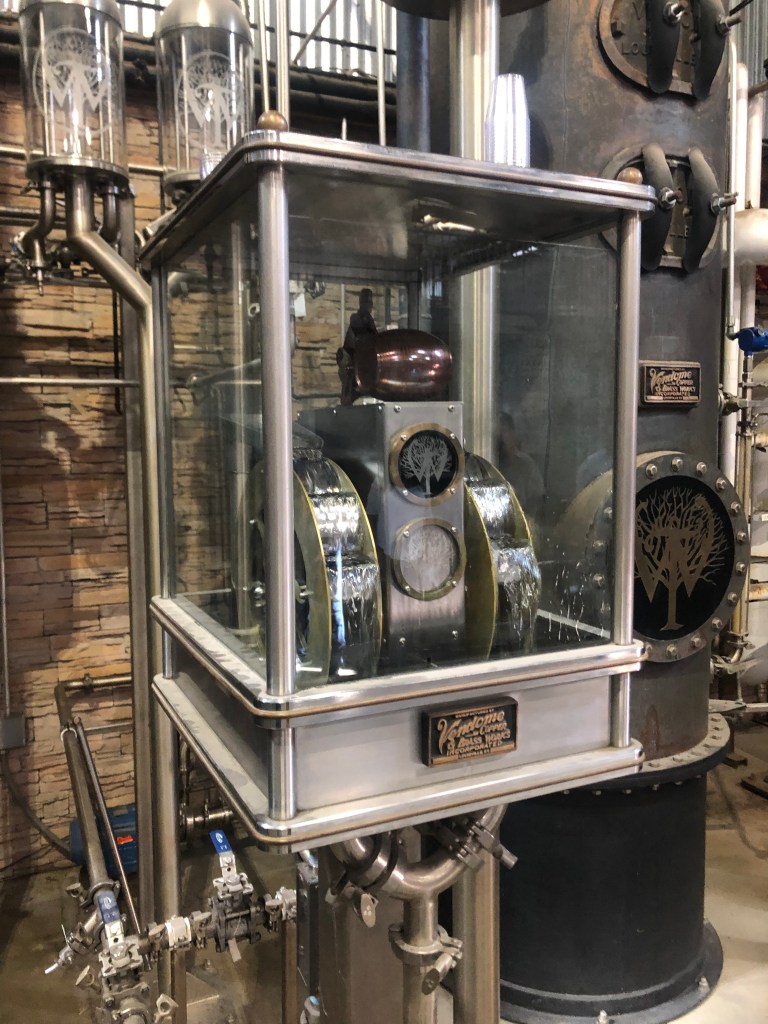
After visiting the distilleries, we got dinner in downtown Louisville, where we plan to do some exploring tomorrow, before returning to the Trail of Tears on Sunday. Which leads us to the…
BREW OF THE DAY
We went to the improbably-named Mussel and Burger Bar on 7th Street. Feeling a need to stick with the day’s vibe, I ordered a Goodwood Bourbon Barrel Stout. Goodwood Brewing Company is based right here in Louisville.
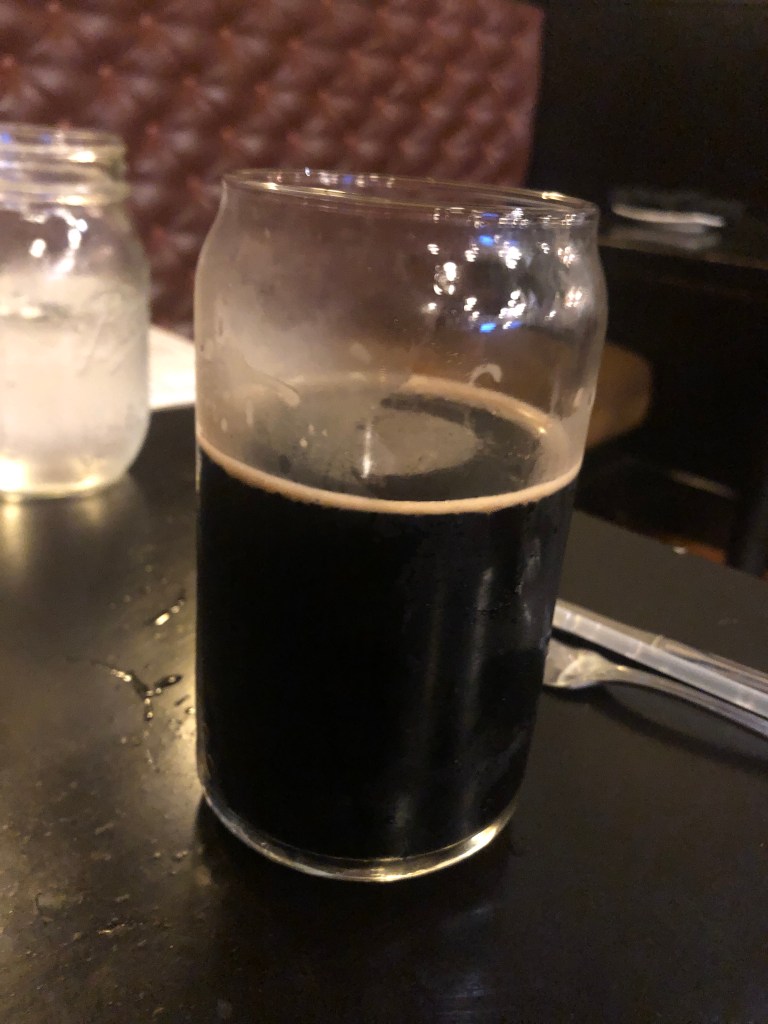
As the name suggests, this is an imperial stout that’s been aged in bourbon barrels. The barrels impart a rich and smoky flavor that nicely complements a stout. It probably deepens the color as well.
I’m trying to imagine how this particular stout tasted before it was barrel aged. I suspect it’s one of the less complex stouts, with a pretty straightforward malty character. They probably chose a simple recipe in order to allow the barrel’s flavors to shine through. This is an imperial stout, meaning that it has a somewhat higher ABV (8%, which is actually on the low side for an imperial), and a somewhat stronger finish. You definitely get some hints of bourbon on the nose and the finish, but they’re not overwhelming. I’m not a guy who likes subtlety, though, and I would have preferred a bolder bourbon taste in this beer. Of course, maybe my taste buds were inured to bourbon after a day at the distilleries….
I’d give this beer a 3.5 out of 5 stars, but if I had an option, I would have chosen a competitor brand, Kentucky Bourbon Barrel Stout, where the stout is made with coffee, and then aged in bourbon barrels. This is not a drink for the timid.
Tomorrow (Saturday) we’ll spend the day checking out Louisville, then it’s back to the TOT on Sunday morning.

 Chasing Phantoms