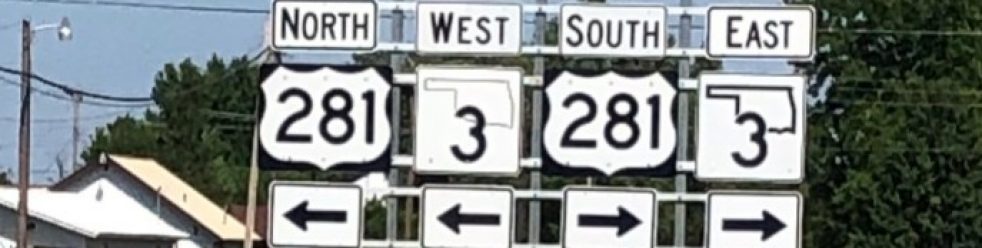
In mid-October I snuck in a short road trip on the Triumph. But with the self-imposed task of reviewing 31 Frankenstein movies over the course of the month, I didn’t have time to write about it. Now, with that Frankenfoolery behind me, I can tell the story. (For those of you who missed any of the Frankenstein reviews, the full list of movies with links to the reviews is available here.)
The route I took came at the recommendation of my friend Chris P, who travels a couple of times a year between his homes in Lake Tahoe and in San Diego. (Life can be hard.) US 95 is a north-south highway, mostly with one or two lanes each direction, that runs from the Canadian border in western Idaho down to the Mexican border in western Arizona. I wish I’d had the time and inclination to ride the entire length, but it was getting late in the season, the days were short, and the temperatures were low. So I just took the segment of the highway that runs through the Nevada desert from Fallon to Las Vegas.

Since I now call the Sacramento area my home, getting to US 95 means heading east on US 50 across the Sierras and skimming under south Lake Tahoe, then crossing about 75 miles of Nevada’s Great Basin Desert before connecting with US 95. The first leg of the trip provided dismal scenery, with evidence of the recent Caldor fire made manifest in large swaths of blackened forest. I encountered snow flurries going over Echo Summit, which reinforced my decision to make this the last road trip of the year. Thankfully, when I got into Nevada things warmed up a bit. I passed through Carson City (Nevada’s capital, pop. 55,000), after which US 50 palpably earns its moniker “The Loneliest Road in America.”
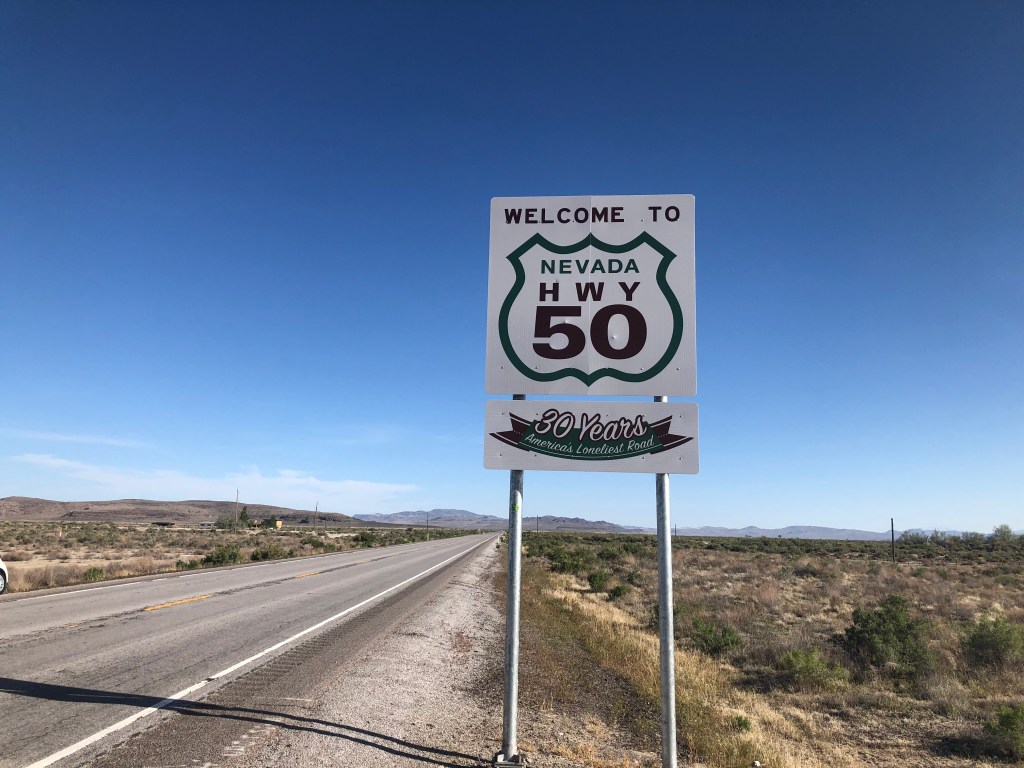
Along this road you encounter scant traffic, and so you’re inclined to stop at virtually every one of the scarce, isolated towns just to remain connected with humanity. One such stop is the hamlet of Stagecoach (pop: 1,800).
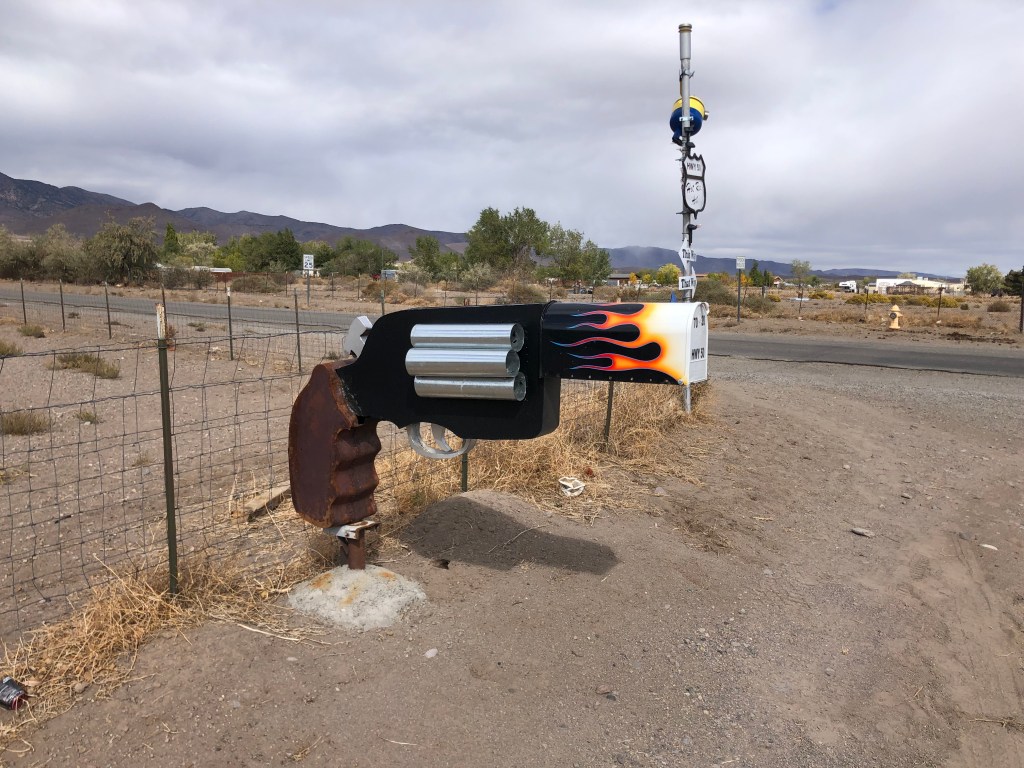
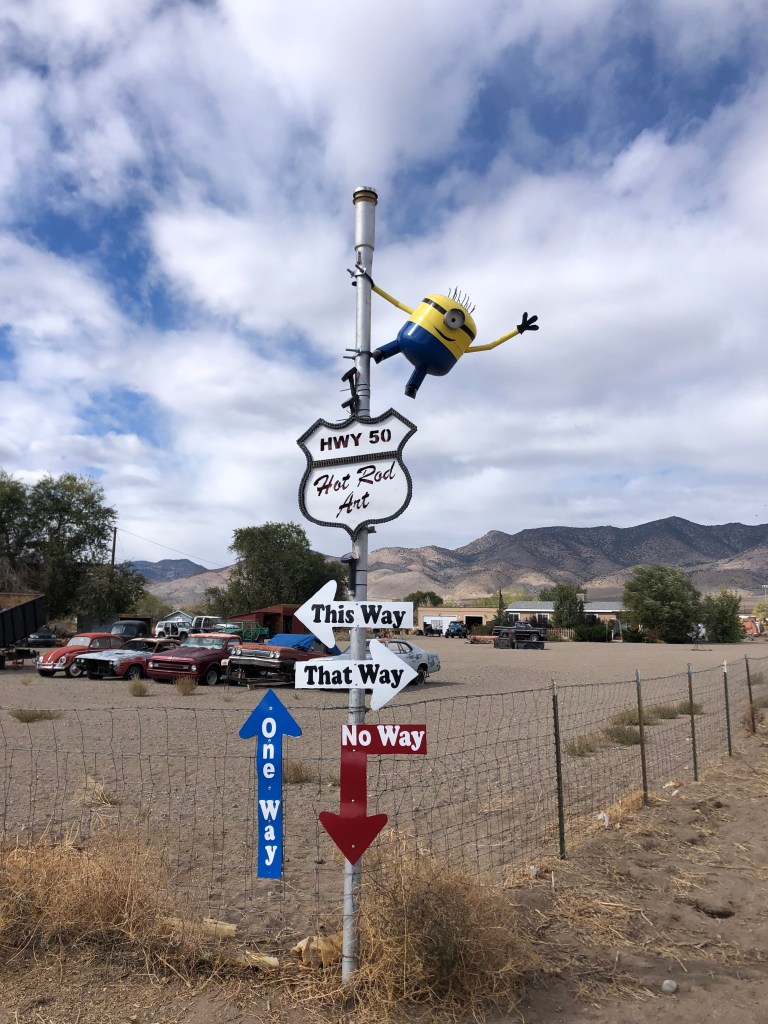
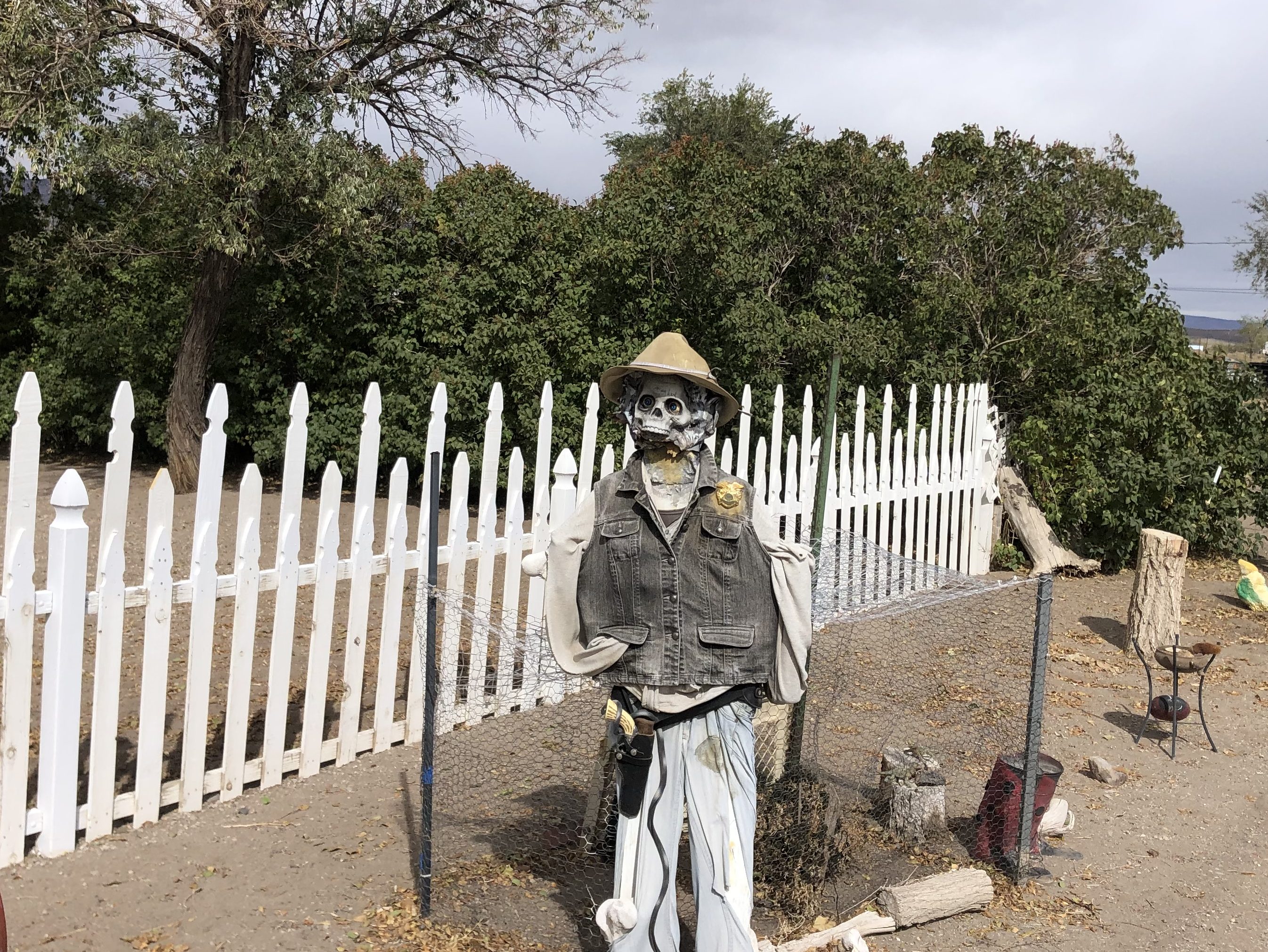
Stagecoach, NV is one of those outposts that either attract or trap individuals who hang their hat outside the mainstream. This is often evident in their roadside folk art installations, of which Stagecoach boasts several.
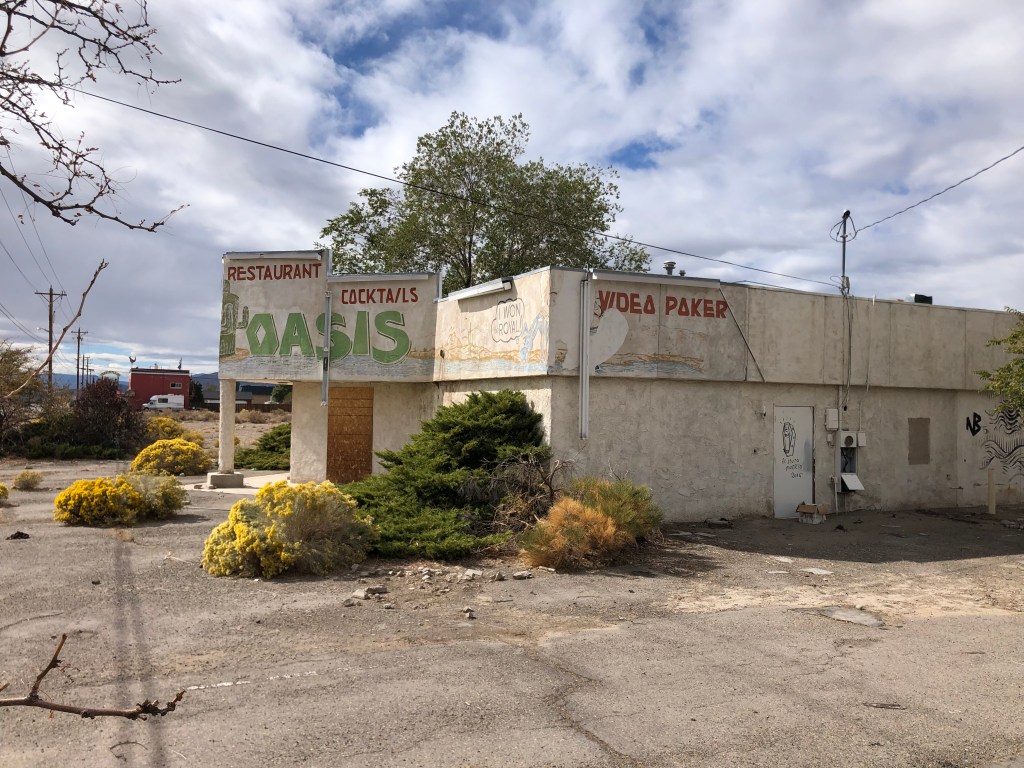
Stagecoach, as you might imagine, used to be a stagecoach stop (as well as a Pony Express stop). For many years, one of the main attractions was the Oasis Restaurant. Sadly, the Oasis seems to have fallen on hard times, and was not just closed but apparently abandoned.
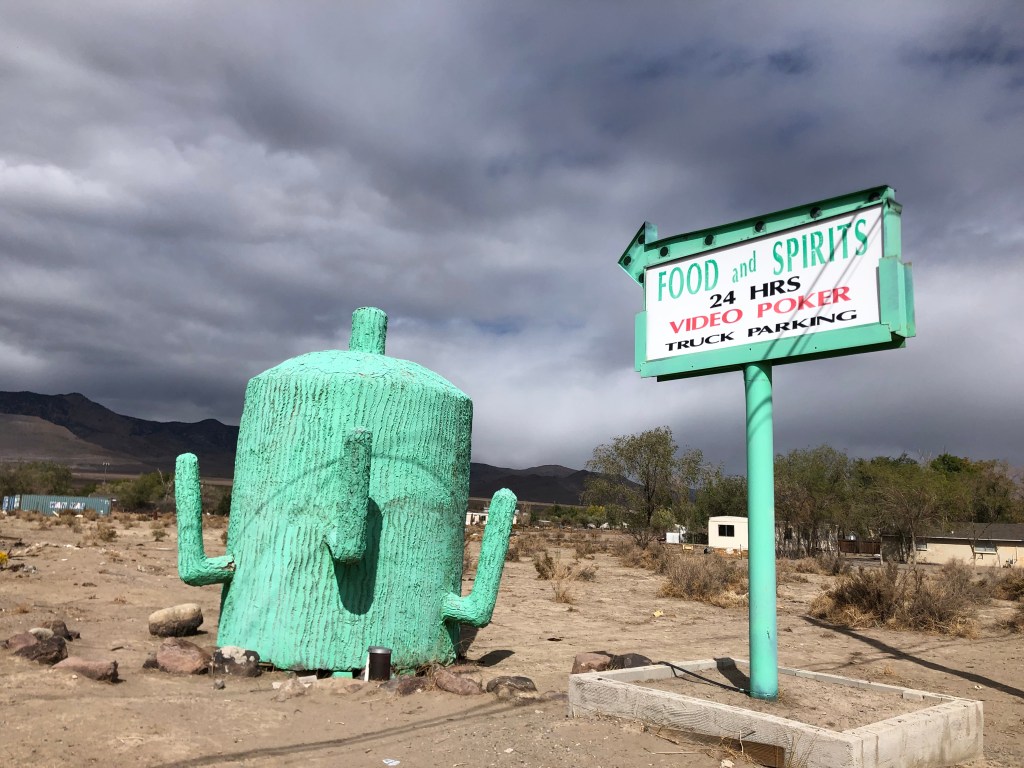
Road trippers along US 50 have long admired the odd, cactus-shaped water tank (?) on the Oasis’ property. Admittedly, it’s not especially well executed, and it’s not especially attractive. But out here there’s not a lot of competition for best-dressed water tank. So somehow I have admiration for this spearmint-colored cactus. I guess it’s because out here, in the middle of nowhere, with presumably no code enforcement and no competition from nearby businesses, there’s little reason to gussy up a water tank. But the good folks at the Oasis took it upon themselves to do so. I’ve commented before that there’s something about the desert that brings out this kind of whimsy.
Finally I connected with US 95 at the town of Fallon (pop: 8,600). By Nevada standards, Fallon is a decent-size city (#26 in population, out of 131 Nevada cities listed). The town’s main street is named “Maine Street.” At first I thought it was just a hilarious misspelling, but I later learned that the name is a reference to the home state of the town’s founder.
I spent an hour or so at the city’s history museum (whose collection is drawn from the entire county). According to the museum displays, Fallon was largely settled by would-be 49ers who stopped short of California’s gold fields. Fallon grew after the turn of the 20th century as a dam and various irrigation projects allowed the desert town to support farming and a larger population. Around World War II Fallon acquired a naval air station.
More recently, Fallon was home to the storied Fallon Shoe Tree. Ian and I managed to see it when we took a road trip through here some years back. Sadly, some miscreant cut town the tree. What a heel that guy was!

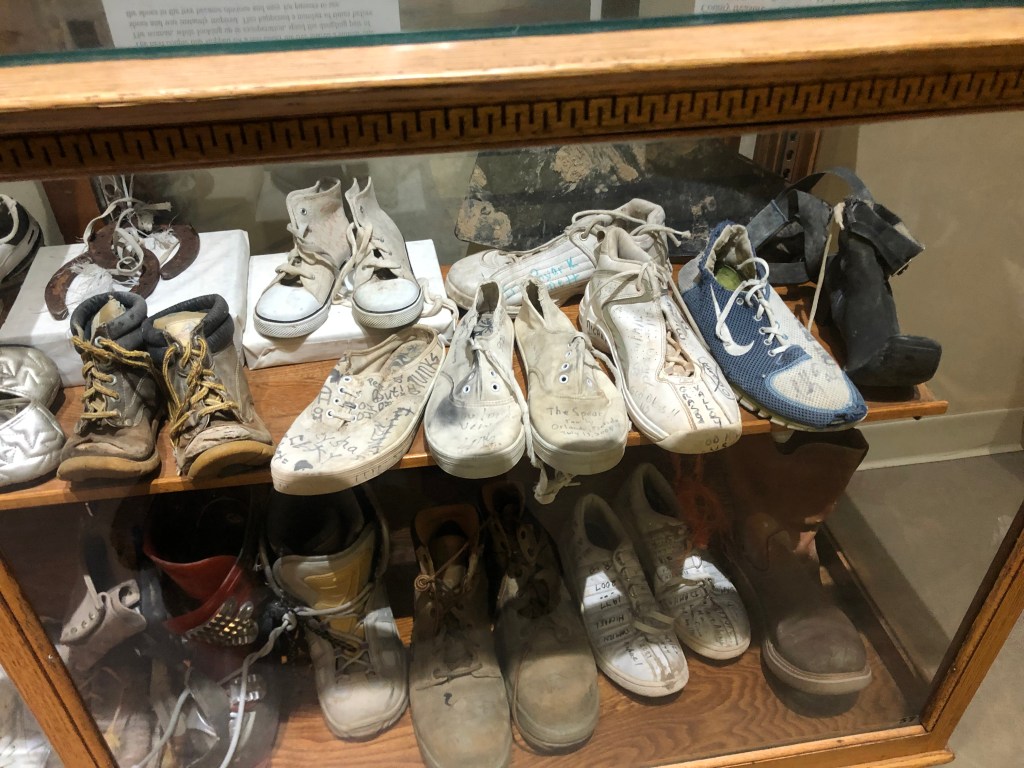
The museum even has a display case with a small selection of shoes removed from the fallen tree.
The museum’s docent, Brianna, was friendly and helpful, perhaps because the museum had until recently had only 2 visitors during the Covid era. Brianna originally hails from northern California, but the man she married originally comes from Fallon, and they had a kid and made a home here.
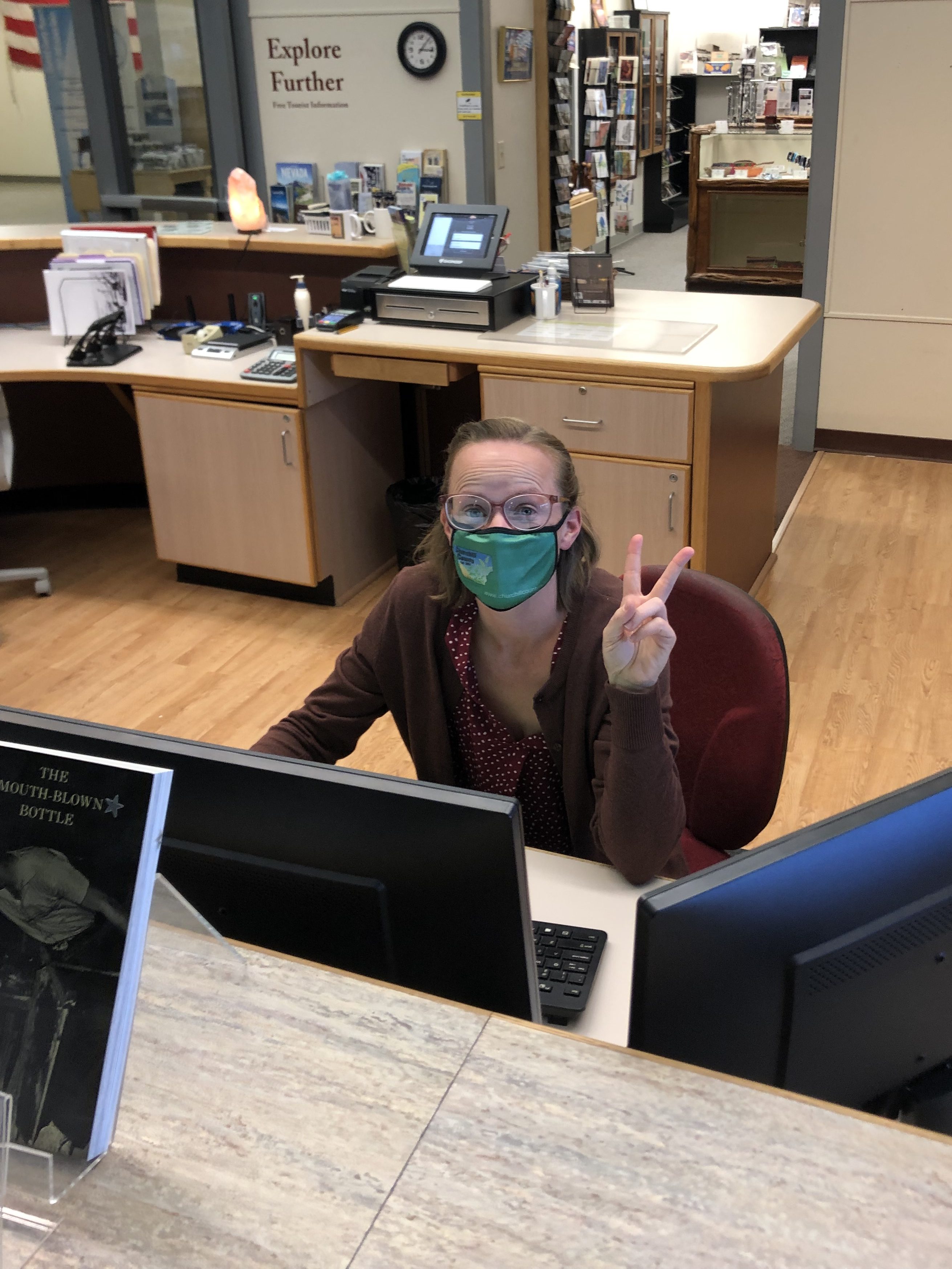
For a docent at the Fallon museum, she didn’t come across as a huge town booster. She prefers the coastal areas of northern California. “Someday I’ll move back to the west coast,” she said. Funny, her sense of being stuck sounds a lot like the waitress I talked to when I came through Fallon on my US 50 trip a few years ago. Here’s what I wrote at that time:
My waitress was very authentic and friendly, though. She saw me consulting my Rand McNally atlas at the table and asked me about my trip. It turns out that she is from Sacramento, and has noticed the same US 50 sign and wondered about Ocean City, MD as well. But here in Fallon is as far as she ever got. She’s raising an 11 year old, and hopes that, after he’s graduated from high school, she can do some travelling. By which she means getting an hour or two out of Fallon.
I did find that Fallon has some notable architecture. The Douglass Mansion is especially impressive. Built in 1904, it’s a classic example of Queen Anne style.
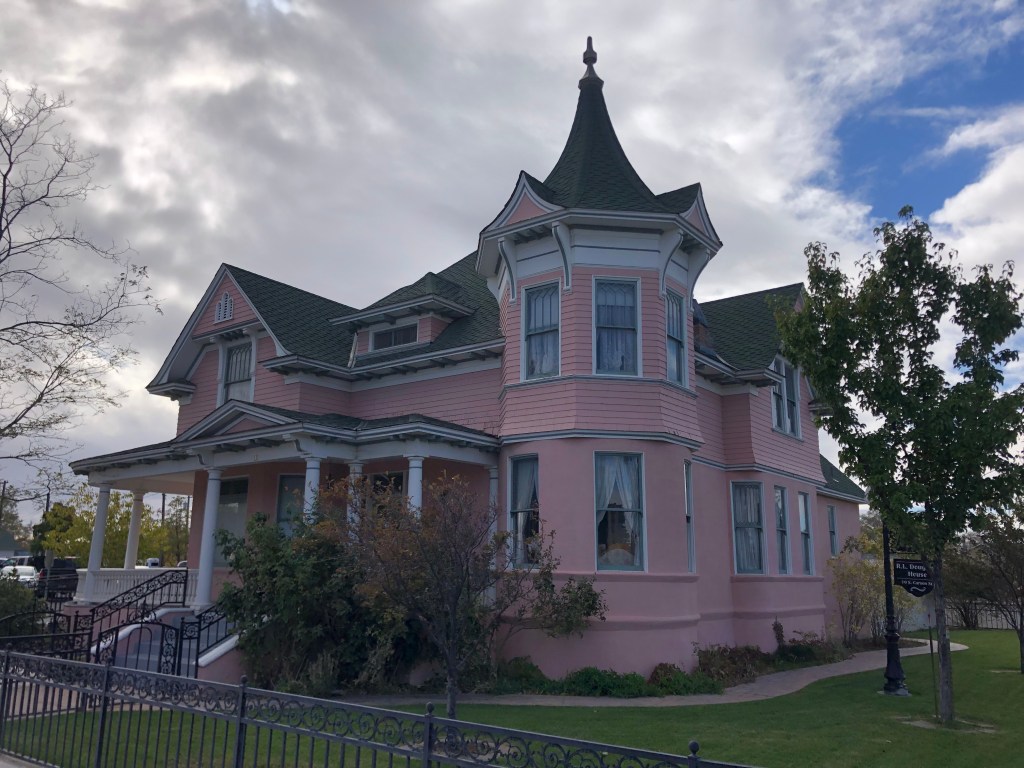
The house once had a detached garage, which the second owner (a physician) had outfitted with a turntable, much like the one in Batman’s Batcave, I imagine. Sadly (for me) that garage and turntable were torn down and replaced with a small hospital.

Not far from the Douglass Mansion is the old high school. I know this because the building is helpfully labeled as such. The building dates back to 1917, so it has earned the moniker.
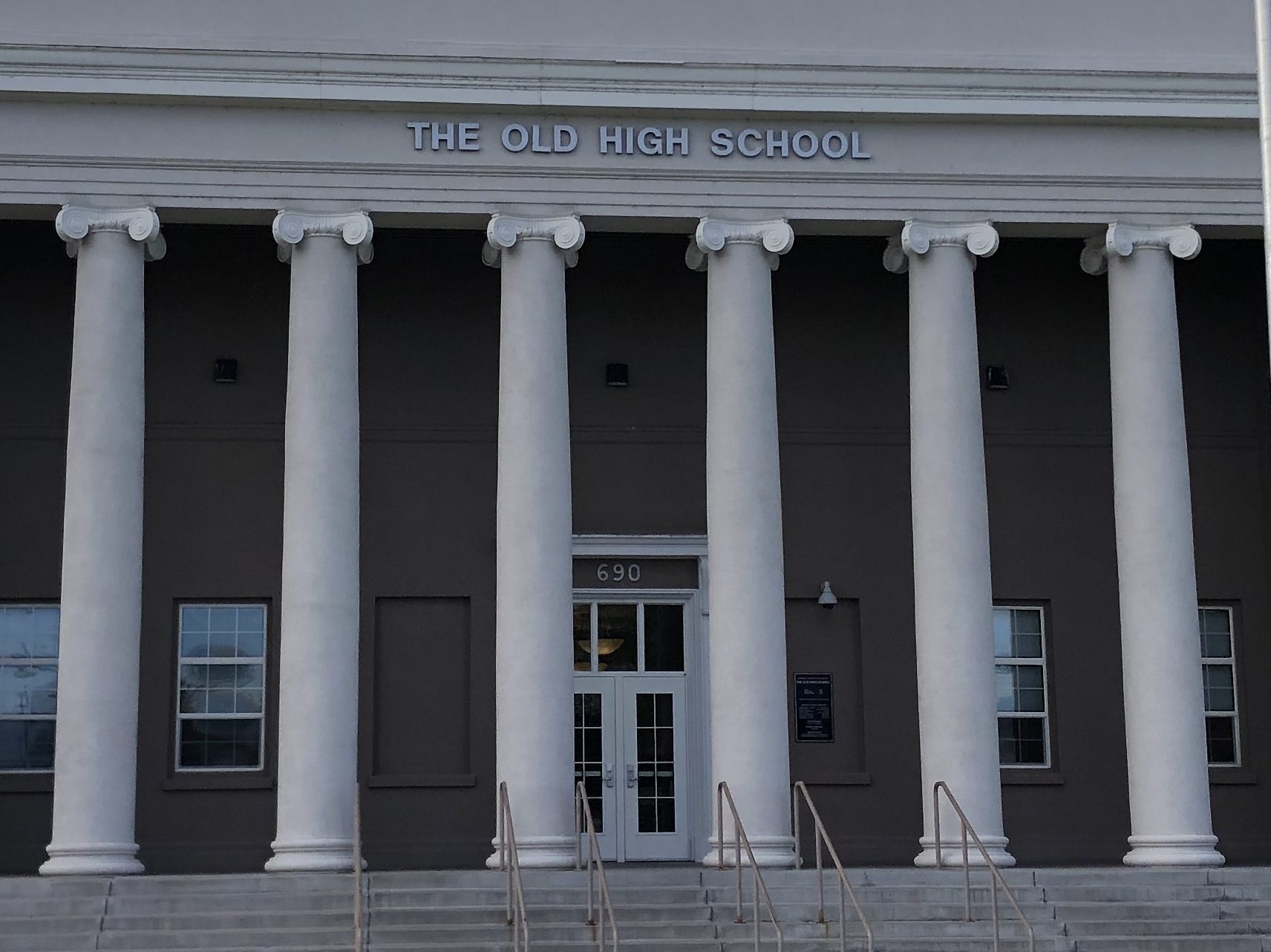
Overall, the town feels well cared for, pleasant, and hardy. The same cannot be said for most of the other encampments along US 95.
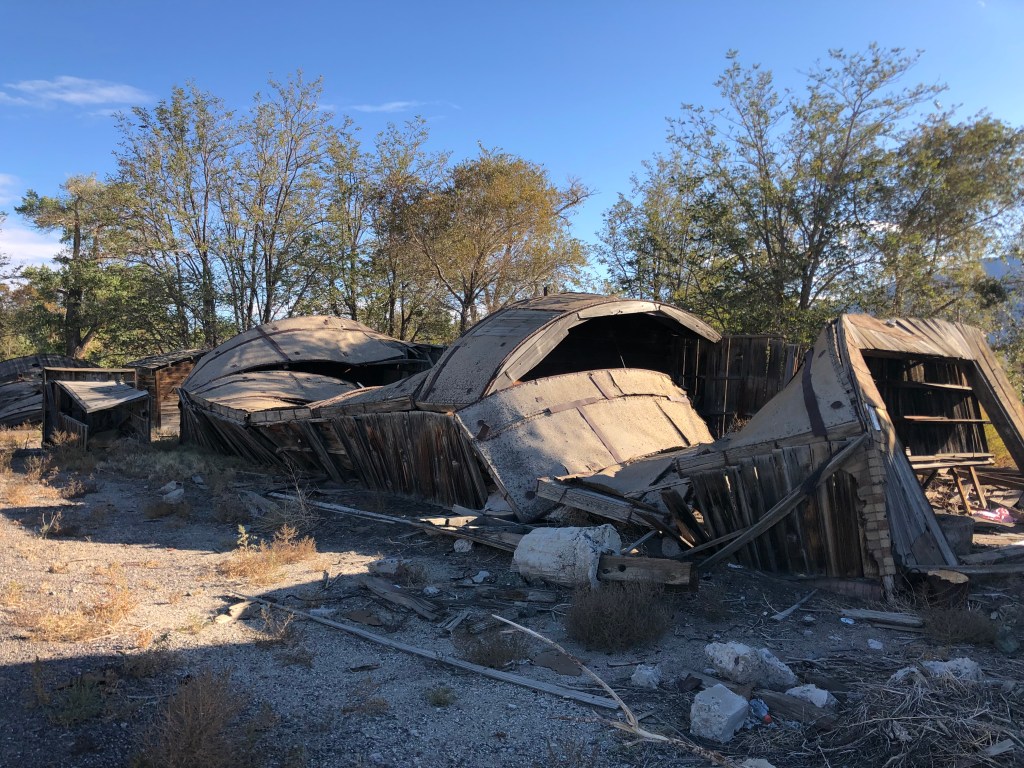
Take, for example, the town of Schurz, named (for some reason) after the then-US Secretary of the Interior in 1891. Located within a Paiute Indian reservation, Schurz was once a viable town near Walker Lake, with homes, community buildings, parks, and services. Today is practically a ghost town. (Coincidentally, the town is the birthplace of the Paiute spiritual leader, Wovoka, who established the Ghost Dance movement in the late 1800s.) Everywhere you see abandoned or badly neglected buildings. And I didn’t see a single living soul on the streets.
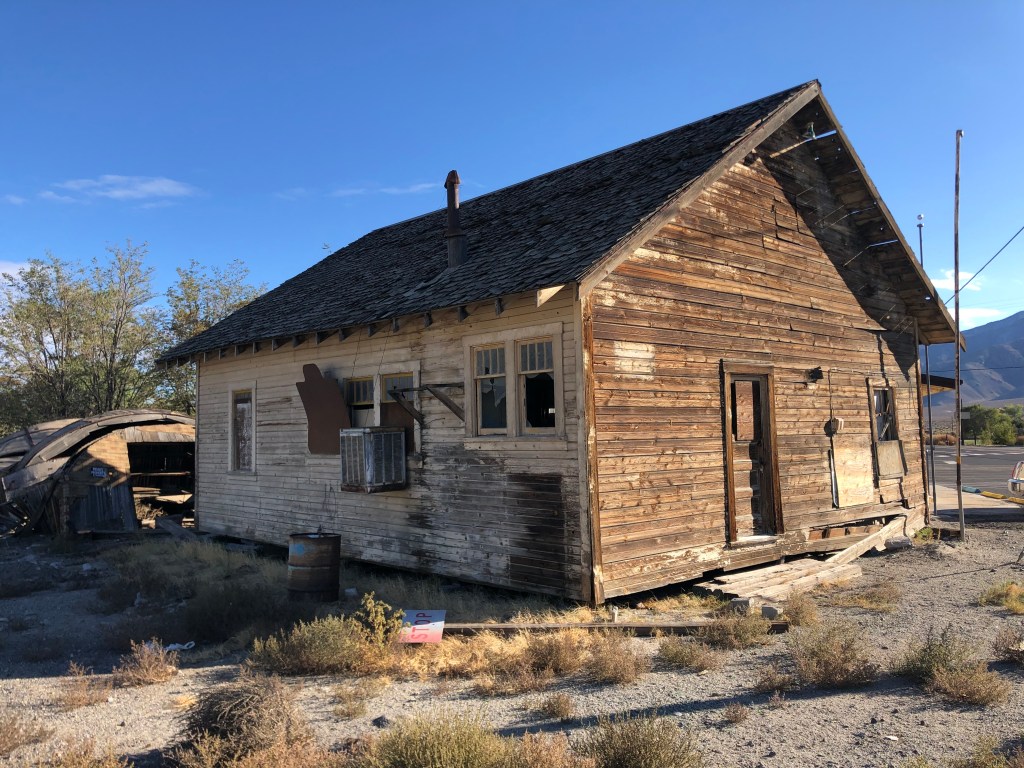
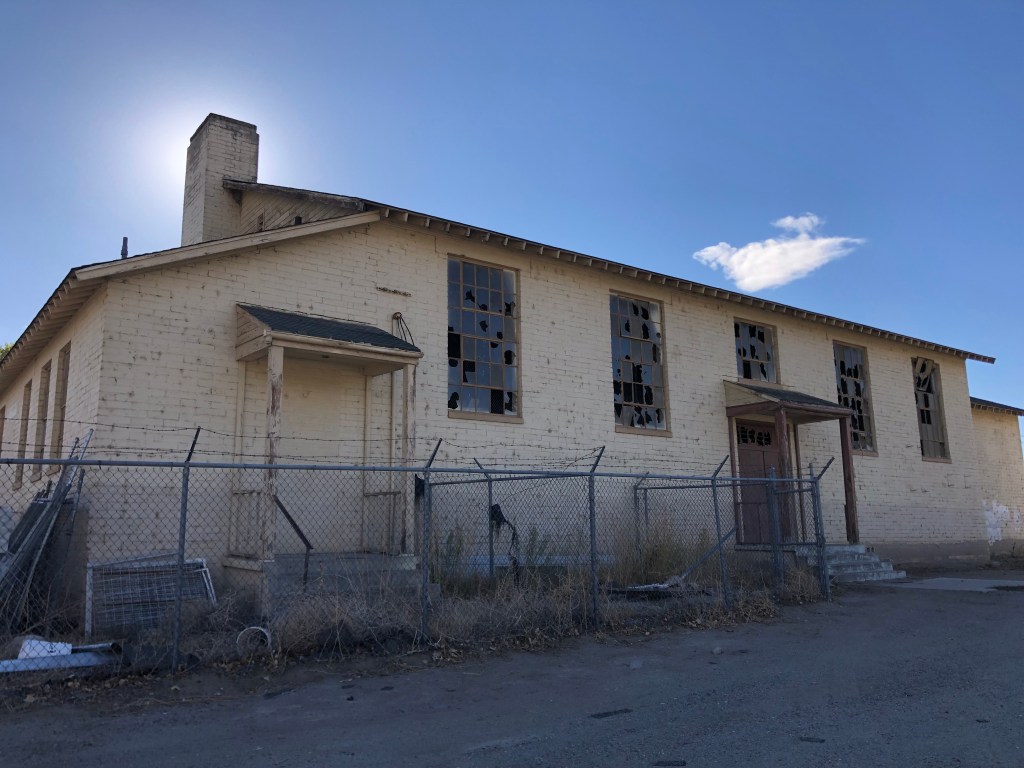
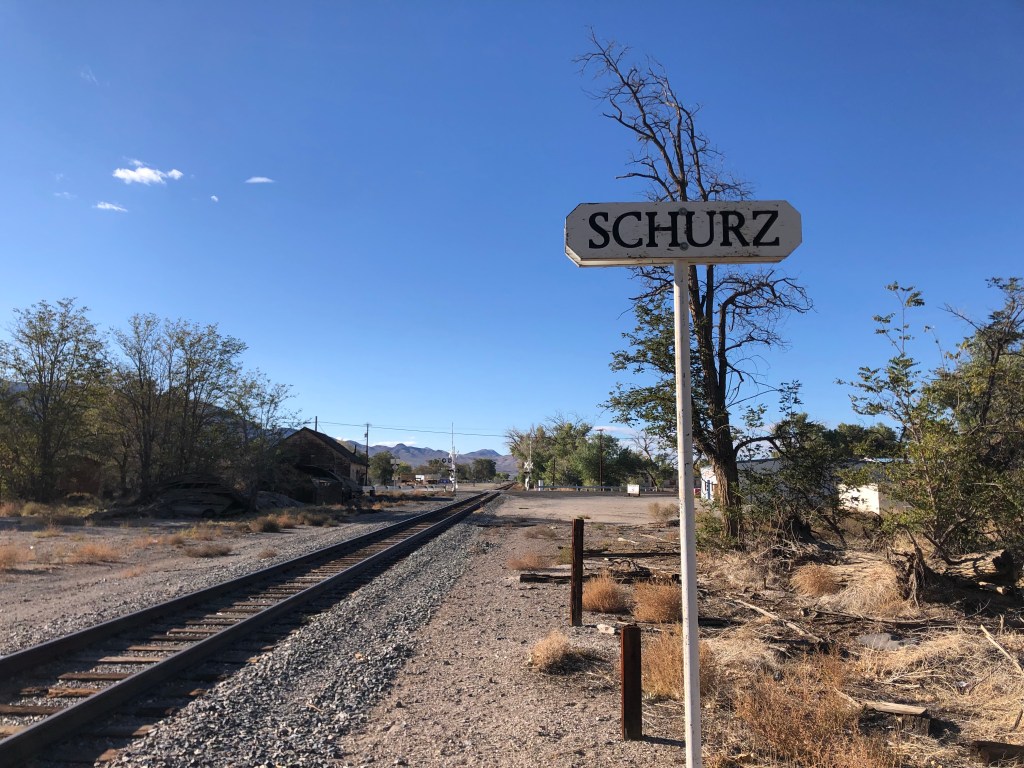
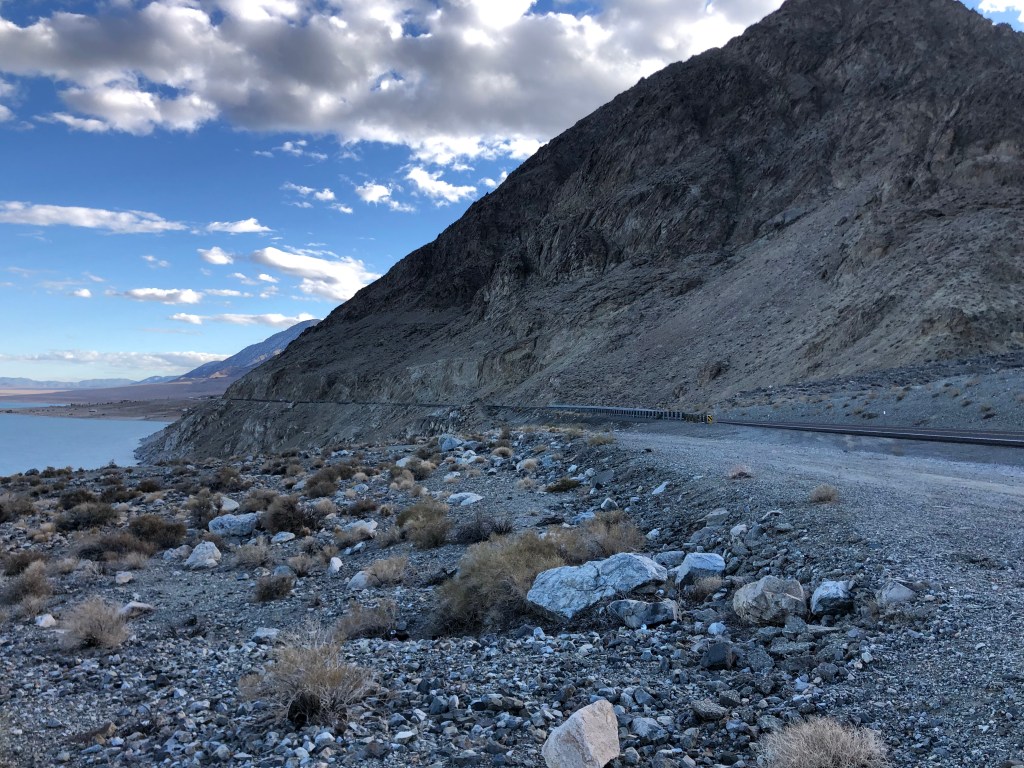
Traveling a little further south along US 95 takes you along the steep shore of Walker Lake, which is Nevada’s second-largest natural lake (after Lake Tahoe).
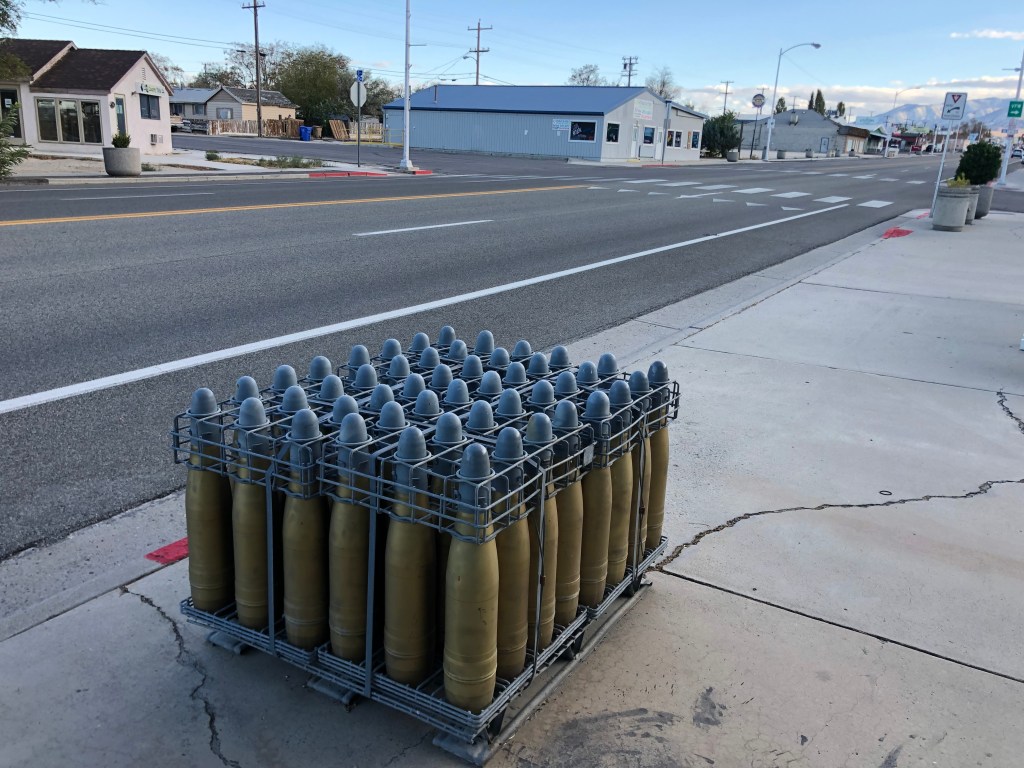
About five miles past Walker Lake is the town of Hawthorne (pop: 3,300), which touts itself as “America’s Patriotic Home” (a claim which might rightly be challenged by any number of cities). Hawthorne’s claim is based on its hosting the US Army’s largest ammunition storage facility. From US 95 you can see some of the 2,500 bunkers which are used to store ammunition.
Naturally, most of the town’s households are connected in some way with the ammo storage facility. There’s an ordnance museum (which unfortunately was closed when I got there), and even the local park has playground equipment made out of bomb casings.
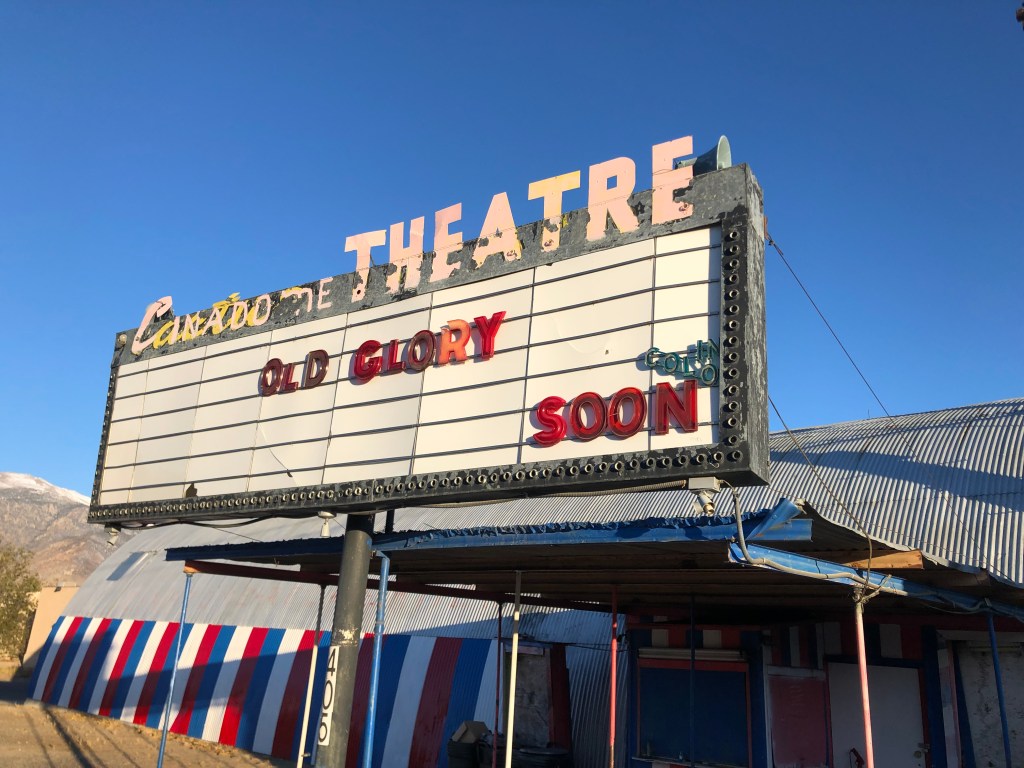
Other than zillions of tons of ammo and a faded casino, the only other notable sight in Hawthorne was the derelict Cactus Theatre. Built in the late 1940s out of a quonset hut, the 300-seat venue achieved notoriety in 1972 as one of only two theaters in the state of Nevada to show the pornographic film, Deep Throat. The theater closed in 1997, but reopened in 2005 as the Cinadome Theatre. (Look closely at the sign, and you can make out both its old and new names.) The Cinadome closed in 2012, but the waitress at the local pizza joint told me that there’s an effort to get it open again.
Speaking of the local pizza joint, I had one of the best pizzas of my life at Old Nevada Pizza. Seriously, their sweet and spicy pizza is to die for, with a perfect and unlikely balance of jalapenos, pineapple, bacon, and barbecue sauce.
[Special Update: As I write this, my son Ian is taking his own trip through western Nevada and he just passed through Hawthorne. He reports, and I quote, “Everyone there looked like they wanted to leave.”]
Hawthorne is where I laid my head for the night. Part II comes tomorrow!

 Chasing Phantoms
Thanks, Steve. Good travel story. I’m continuing to enjoy ‘Midcentury Miscreant.’ I’m getting some great laughs out of it. Keep the stories coming! Chris
LikeLike