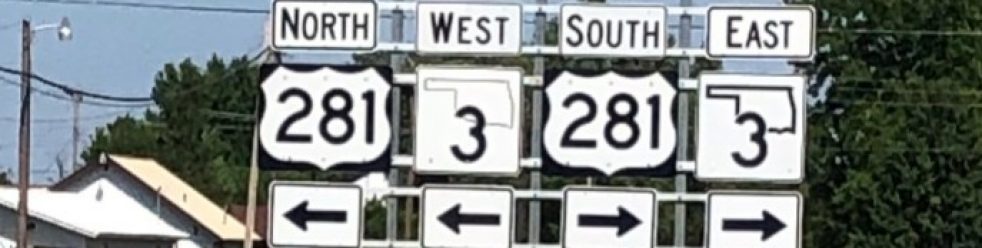
Today I finished crossing the Great Plains and made my way over the Rockies. But to start at the beginning:
The Hi-Line/Route 2 in Montana cuts through exceedingly wide, open spaces–at least until you get to the western mountains. I think this is what makes the smallest of ancient settlements stand out in such stark relief; one’s eye is drawn to any interruption of the rolling prairie.
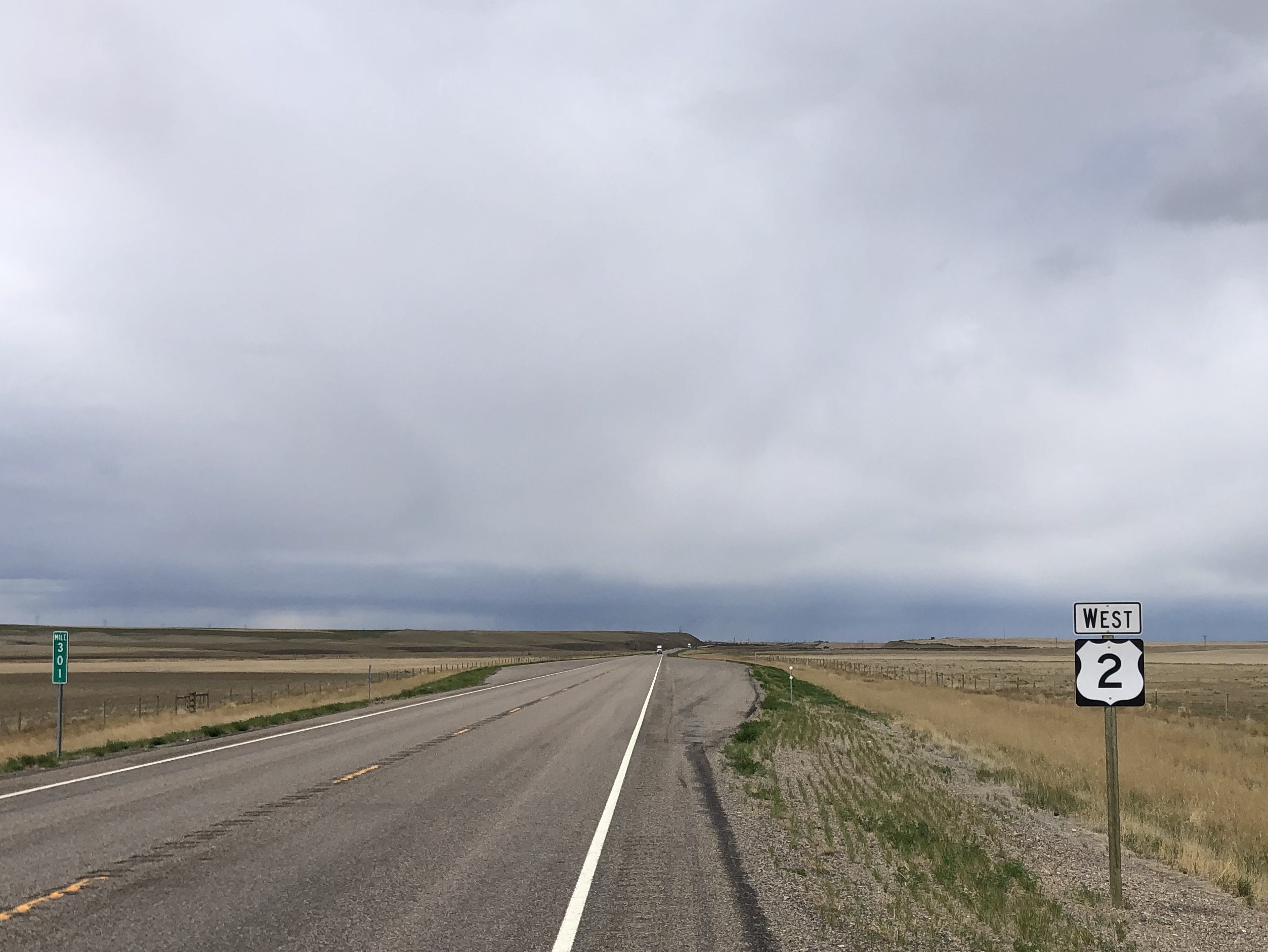
Now, one of the great things about much of US Route 2 is that it closely parallels Great Northern’s transcontinental route. Small towns were established all along the Hi-Line, and almost all of those settlements still exist in one form or another. Most of them still retain some aspect of their original, century-old incarnation, which makes this drive feel like a journey through an earlier time. And the towns have looked for ways to remain relevant and economically viable–with varying degrees of success. If they don’t do it right, their young people seek opportunities elsewhere, the labor force goes away, business dries up, and the town shifts into ghost town status.
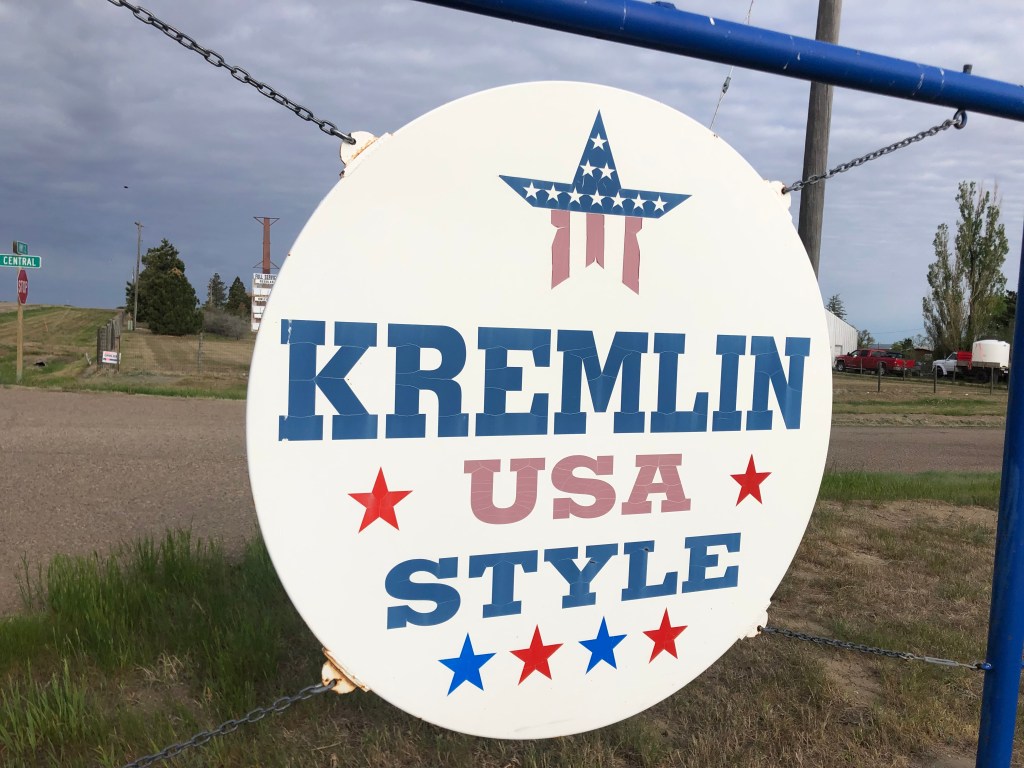
Let’s take two examples from today’s journey. The first is the town of Kremlin, MT (pop: 98). The unusual name owes to founding by ethnic Russian homesteaders in the early 20th century–before the Russian Revolution.
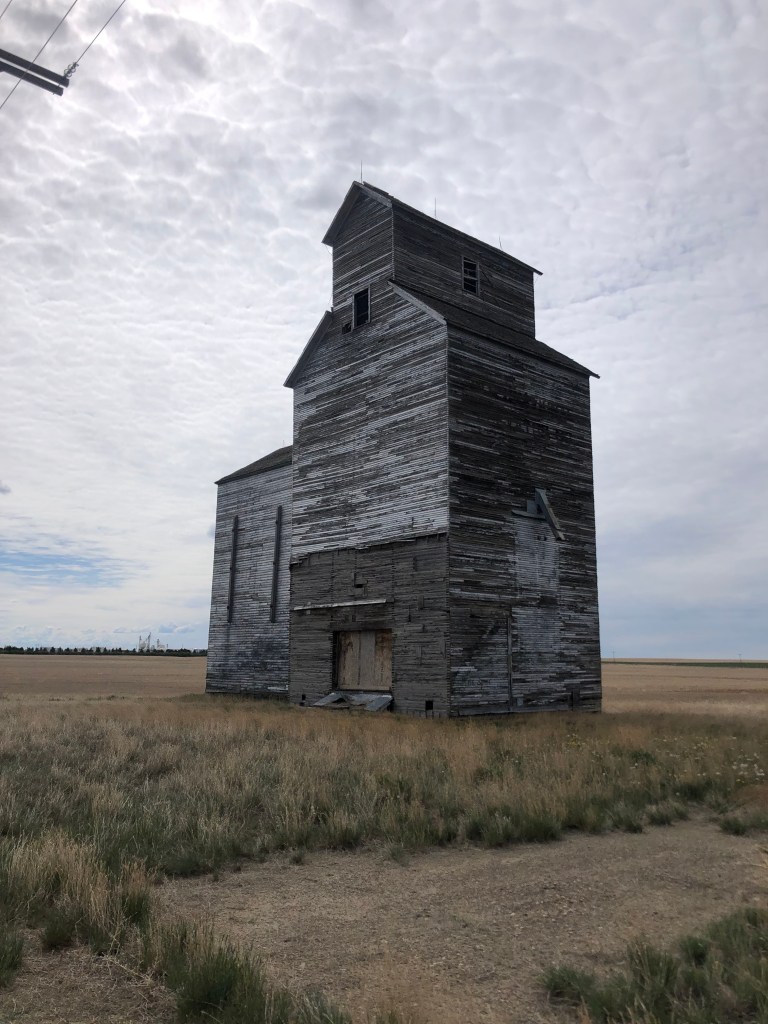
I took a quick pass over the town’s dirt roads and saw only one business (a bar), several derelict granaries, and a handful of houses in various states of disrepair. The only public building I saw was a school house, which was evidently permanently closed.
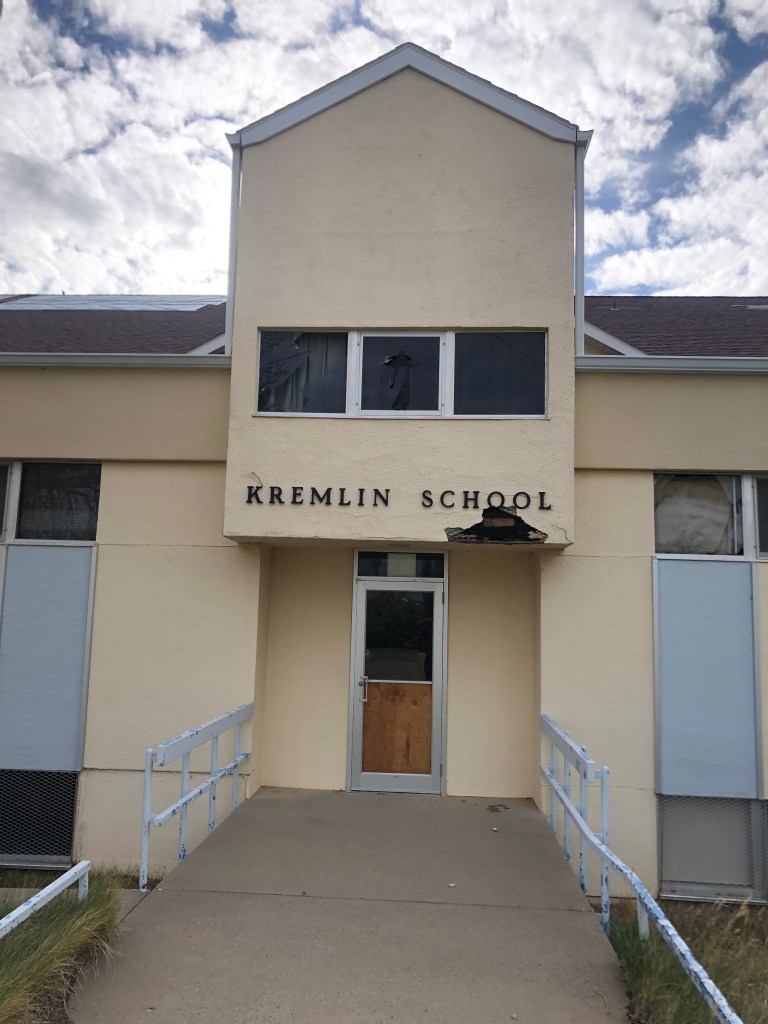
Kremlin is fast approaching ghost town status, with the population dropping about 20 percent per decade. You can almost feel the despair in the air.
Just a few miles up US Route 2 is the town of Rudyard (pop: 200), named after Rudyard Kipling. (An outdated sign at the entrance to town boasts “596 nice people and one old sorehead.”) But it was the sign announcing the Rudyard Depot Museum that caught my eye. I turned down the narrow main street and came to the museum complex, which is a collection of tidy buildings behind a memorial rock wall.
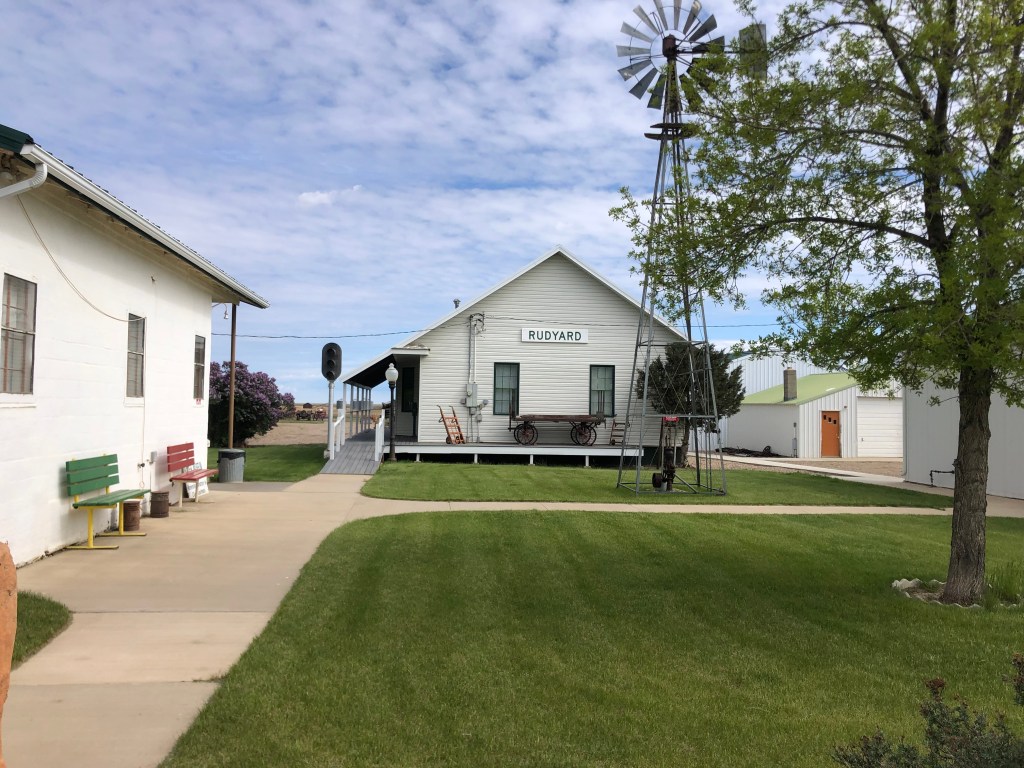
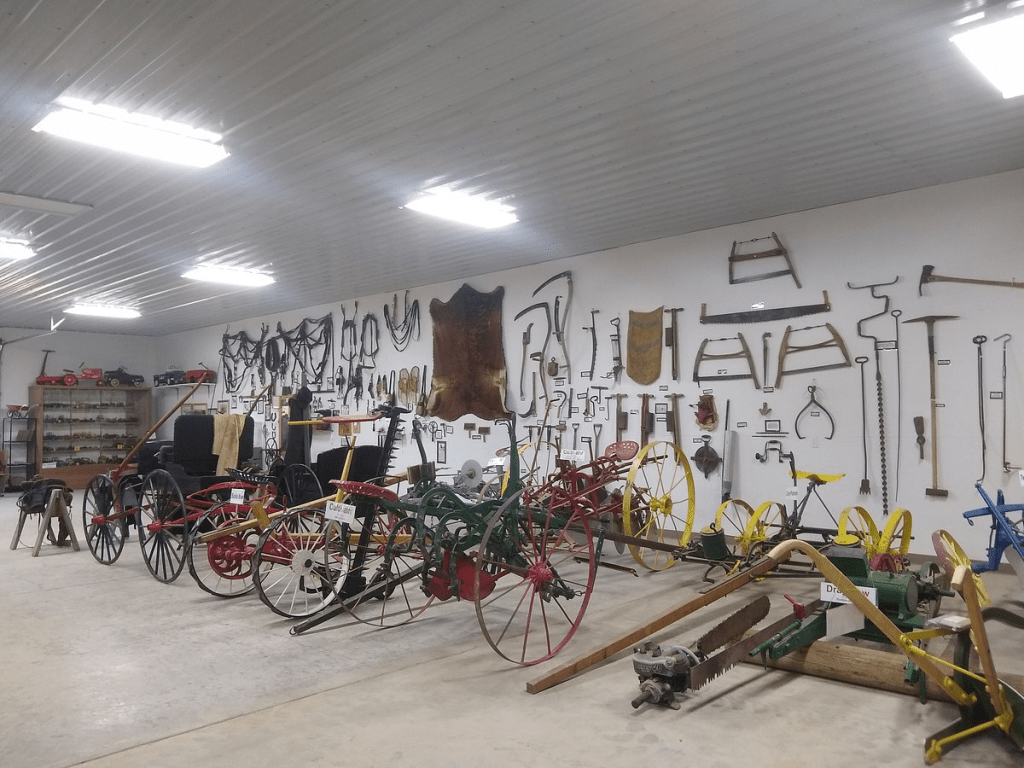
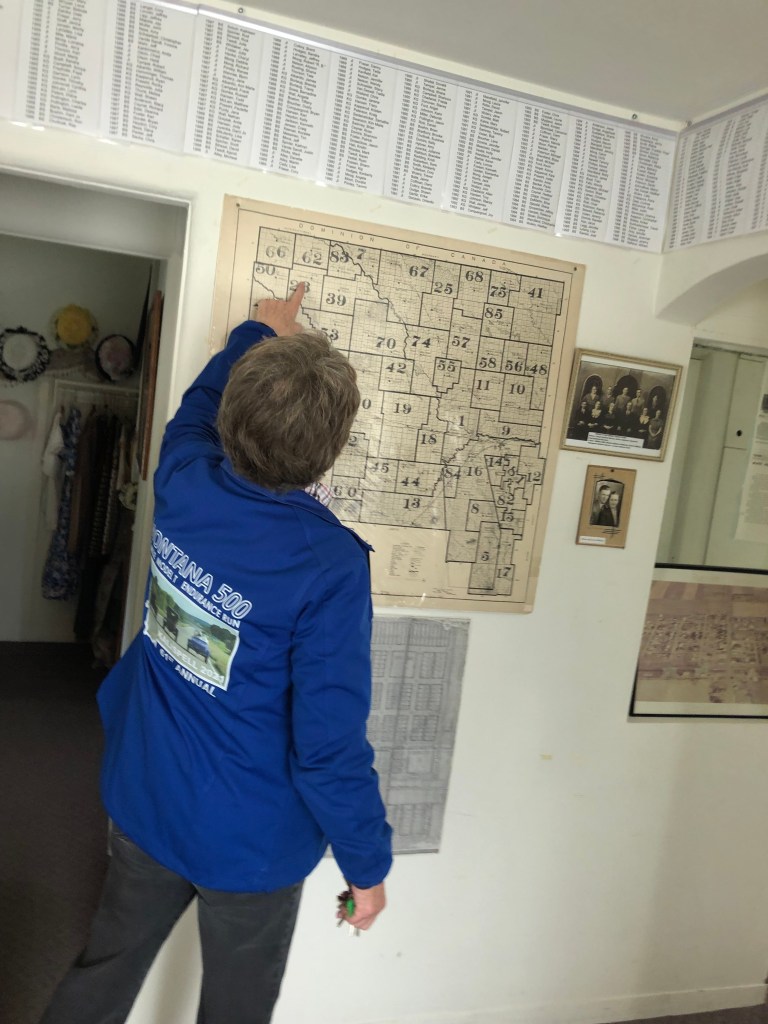
A sign on a locked door said “We really want to show you the museum; call this number and we’ll come right over.” So I called, and within 3 or 4 minutes a friendly, talkative woman named Willie showed up. She then spent well over an hour showing me around each of the buildings. It’s really an astounding collection: Uncountable historic household goods, rows of showroom-quality refurbished tractors and buggies, various agricultural implements, shelves full of about 100 historic railroad lanterns, turn-of-the-century appliances, military uniforms, telephone switchboards, and beauty shop hairdryers that look like they could give you a lobotomy. The collections are housed in a historic upper-middle class house, a railroad depot, a post office, a homesteader’s cabin, and other buildings. After an hour we had barely scratched the surface; I could easily have spent the whole day there.
But beyond all that, they have something that drawfs the other collections I’ve mentioned: They have dinosaurs.
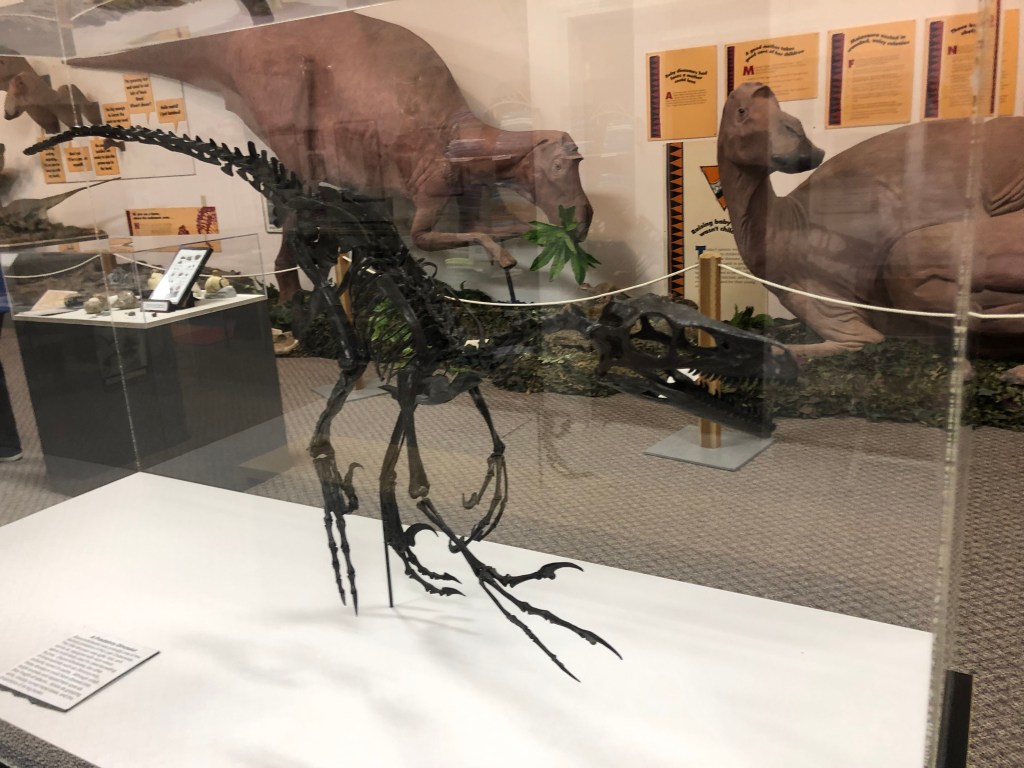
You probably know that Montana is home to various fossil dig sites. It turns out that of the more productive sites is right here in Rudyard. And a very large number of specimens–individual bones, complete skeletons, and full-size models–are housed in a separate building at the museum. The collection is so authentic and extensive that it’s frequently visited by paleontologists and other academics. Plus, Stephen Spielberg came here when he was working on Jurassic Park.
All of this is collected, organized, and maintained by volunteers from Rudyard. Many hundreds of visitors come through each year, and they are all warmly welcomed by Willie and the other volunteers. It’s a significant labor of love, and really says something about the pride these people have in their comunity.
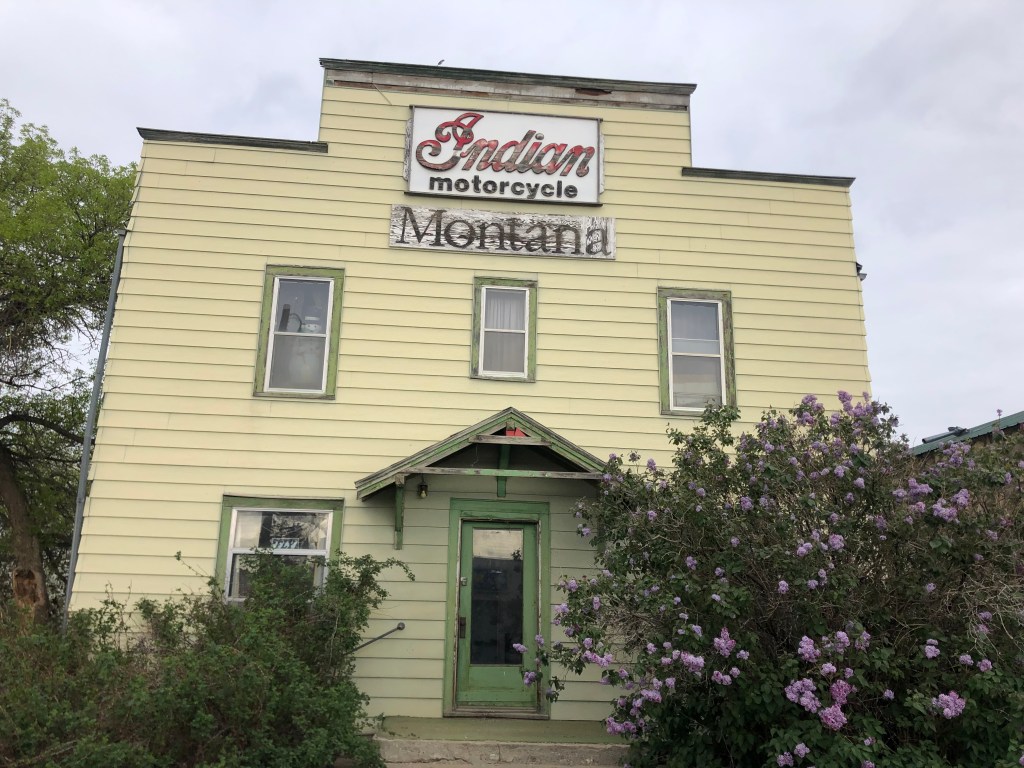
There are other aspects of the town that reveal a special pride, such as the playful population sign at the town entrance. (Willie acknowledged that the population has been dropping, not just in Rudyard but all along the Hi-Line. That’s why Kremlin’s school closed, and their children now come to school in Rudyard.) Rudyard is also distinguished by a number of historic buildings lining the main street.
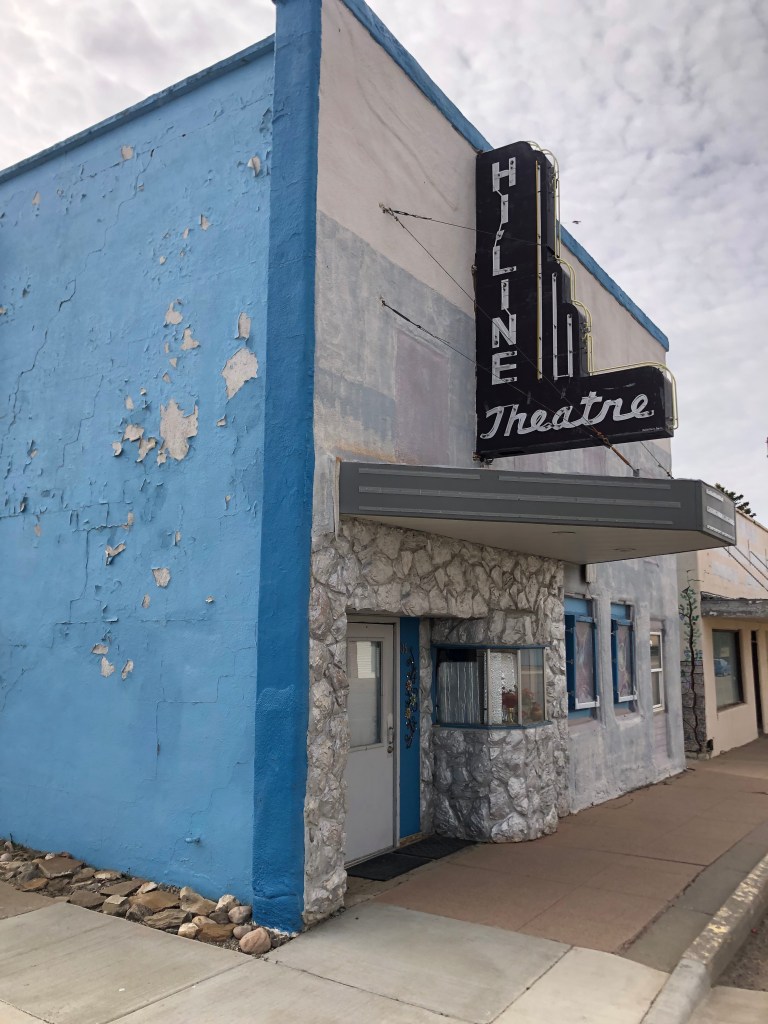
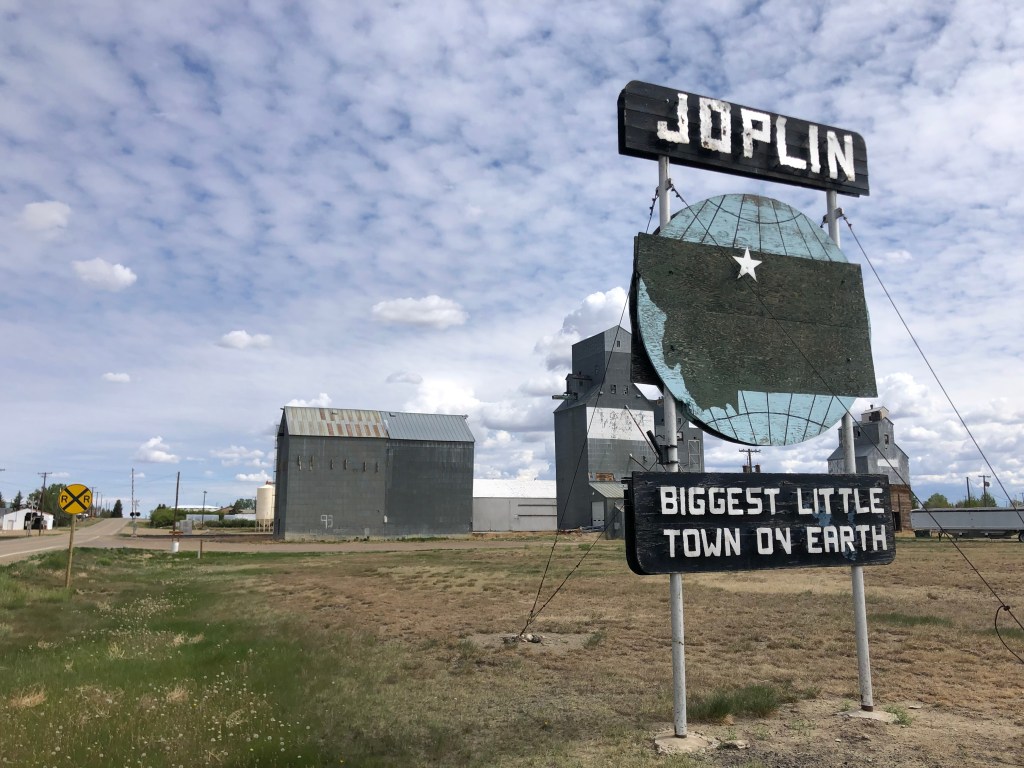
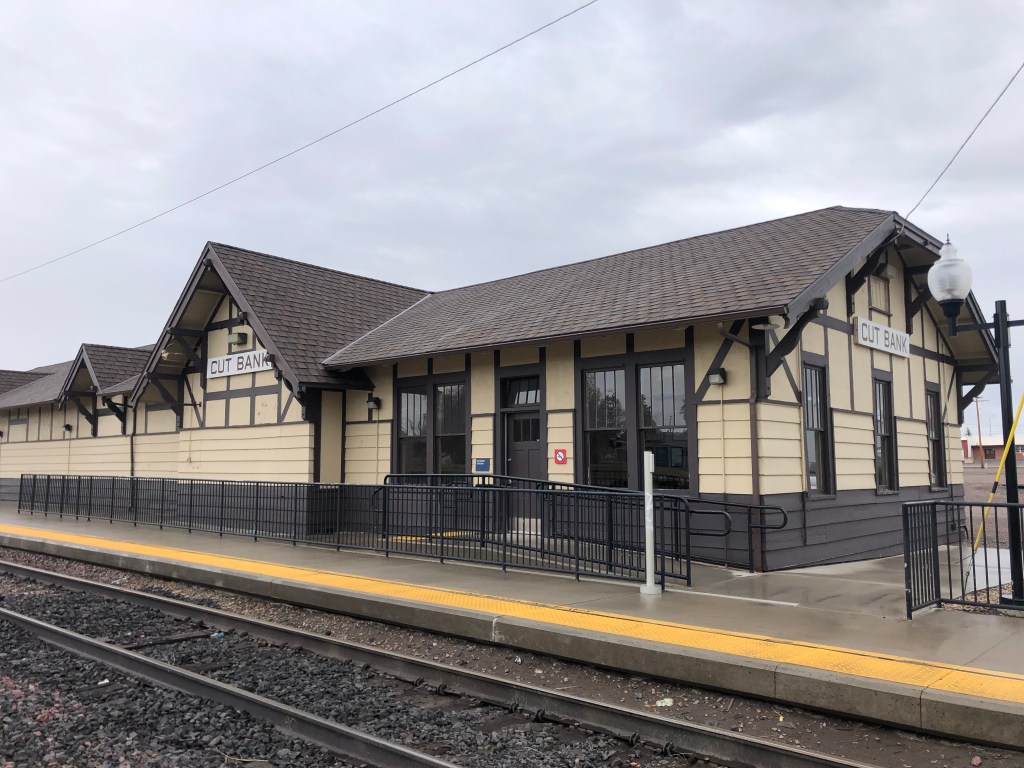
I thanked Willie for her time and got back on Route 2, stopping at each small town that I passed. A few of them still have railroad depots, though many do not. The depot-less towns seem especially isolated and neglected. Still, each of these towns has at some point tried to market itself to the world with a nickname. For example, Joplin (pop: 150) calls itself the “biggest little town on earth.”
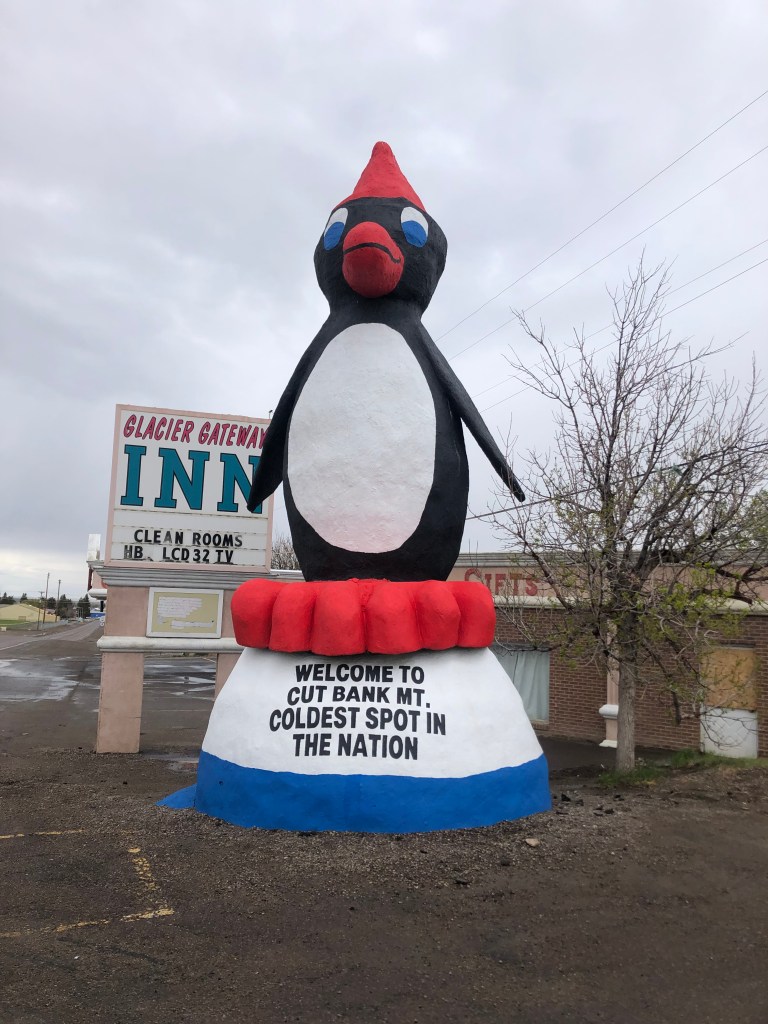
Meanwhile, Cut Bank (pop: 3,000) calls itself “the coldest spot in the nation.” Which is strange, because after I passed through Cut Bank and went up into the Rockies, the temperature dropped precipitously.
Eventually, after hours of driving the flat, open landscape of northern Montana, the horizon suddenly changed. Route 2 was about to ascend 5,000 feet into the Rockies.
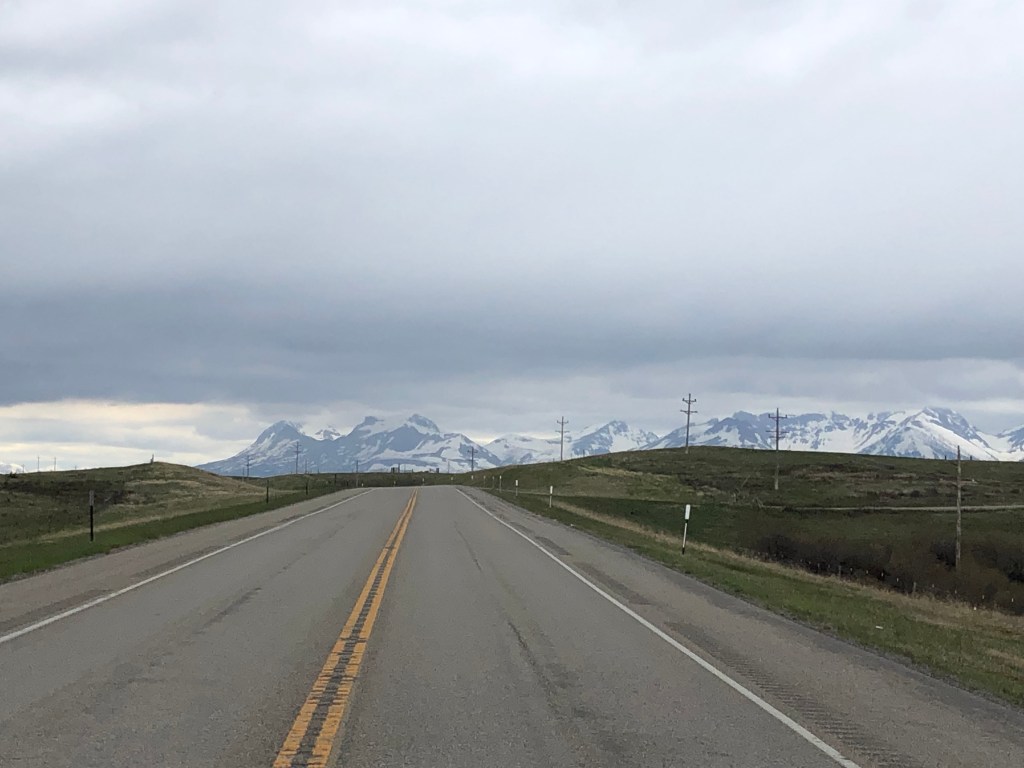
The Great Northern Railroad found a suitable pass and constructed a route over the summit of the Rockies in the late 1800s, but Route 2 didn’t extend over the mountains until 1930. In the interim, automobiles were loaded onto rail cars and transported over the Rockies by train.
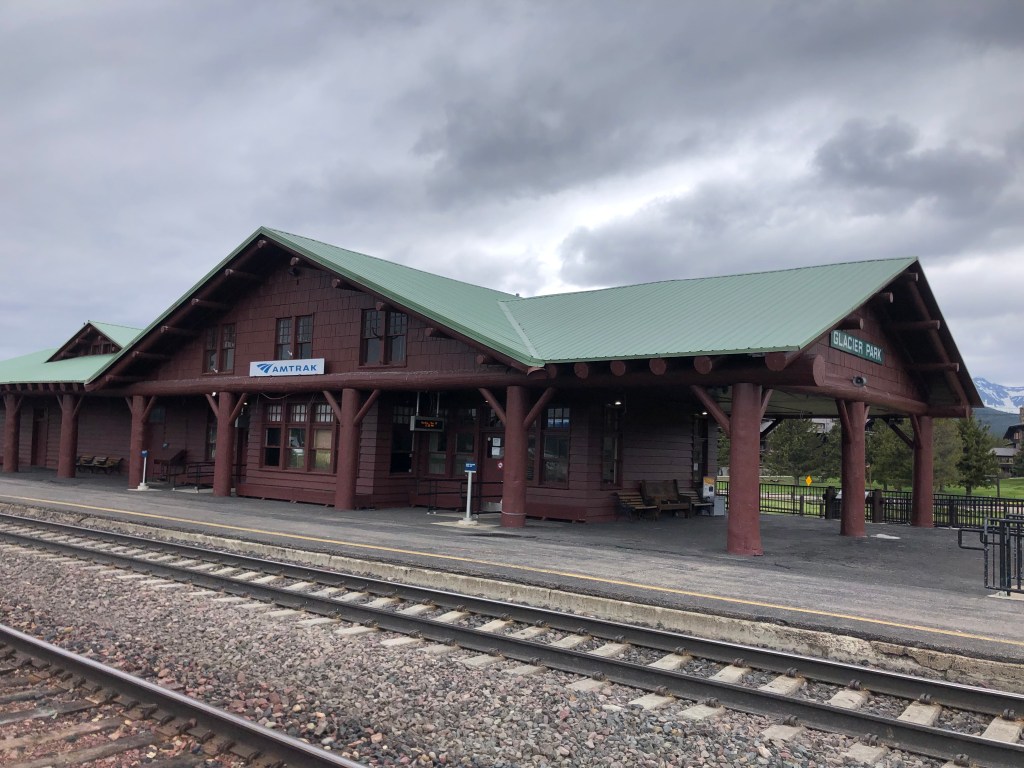
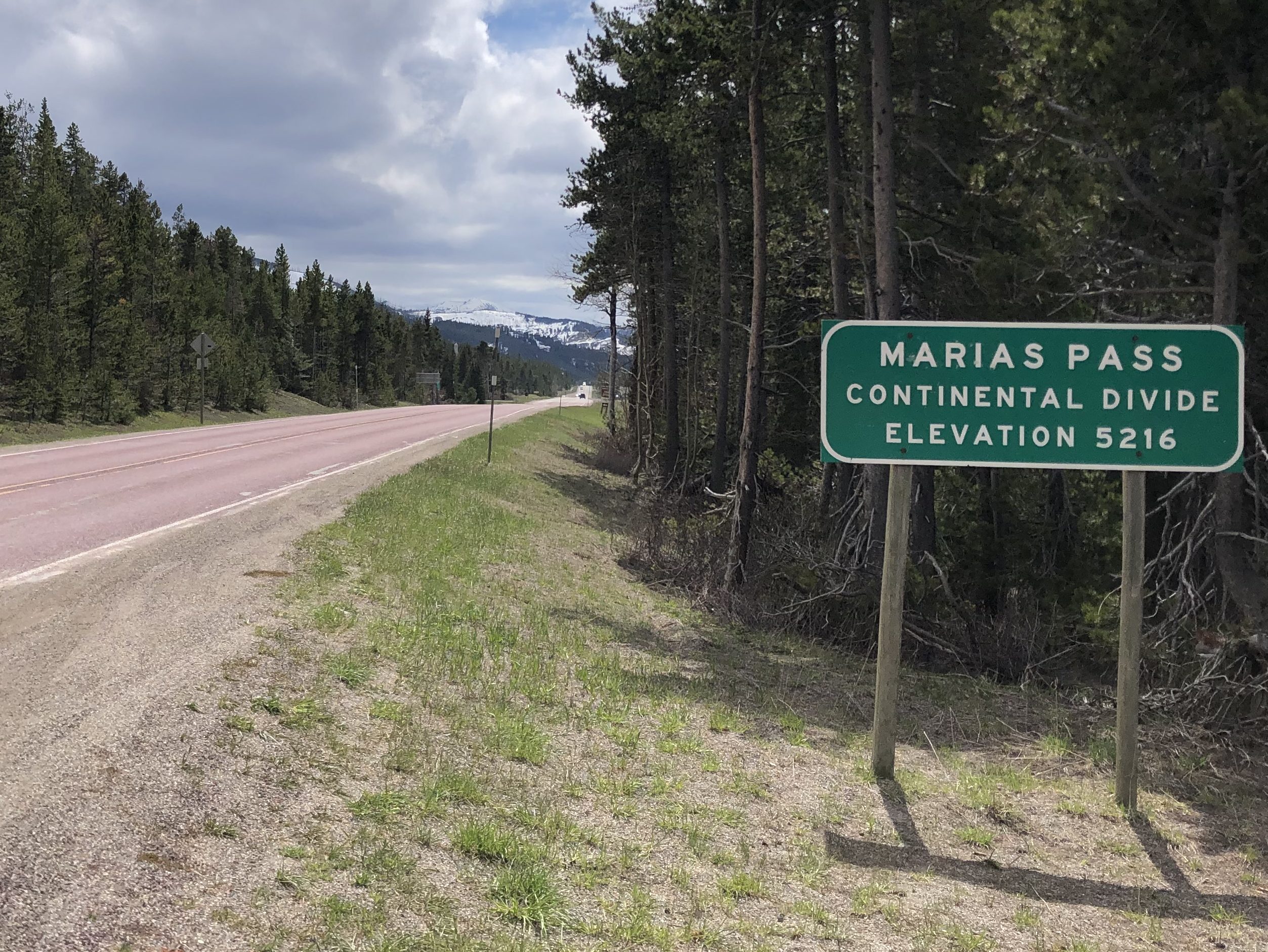
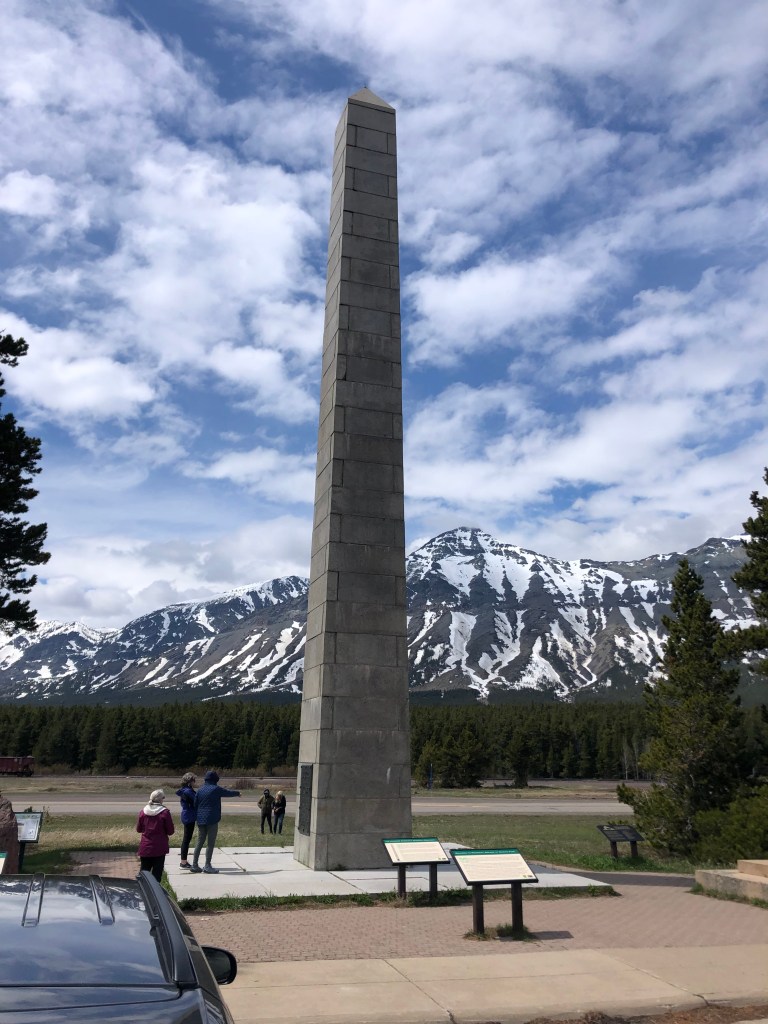
Once I descended on the western side of the summit, the Route 2 driving experience changed again. The road skims the southern edge of Glacier National Park, and you pass numerous ski lodges, outdoor equipment rental businesses, coffee shops, lodges, restaurants, and other tourist-serving businesses. It feels like South Lake Tahoe in the 1970s. What a far cry from the desolation and tiny, struggling towns of the past couple of days.
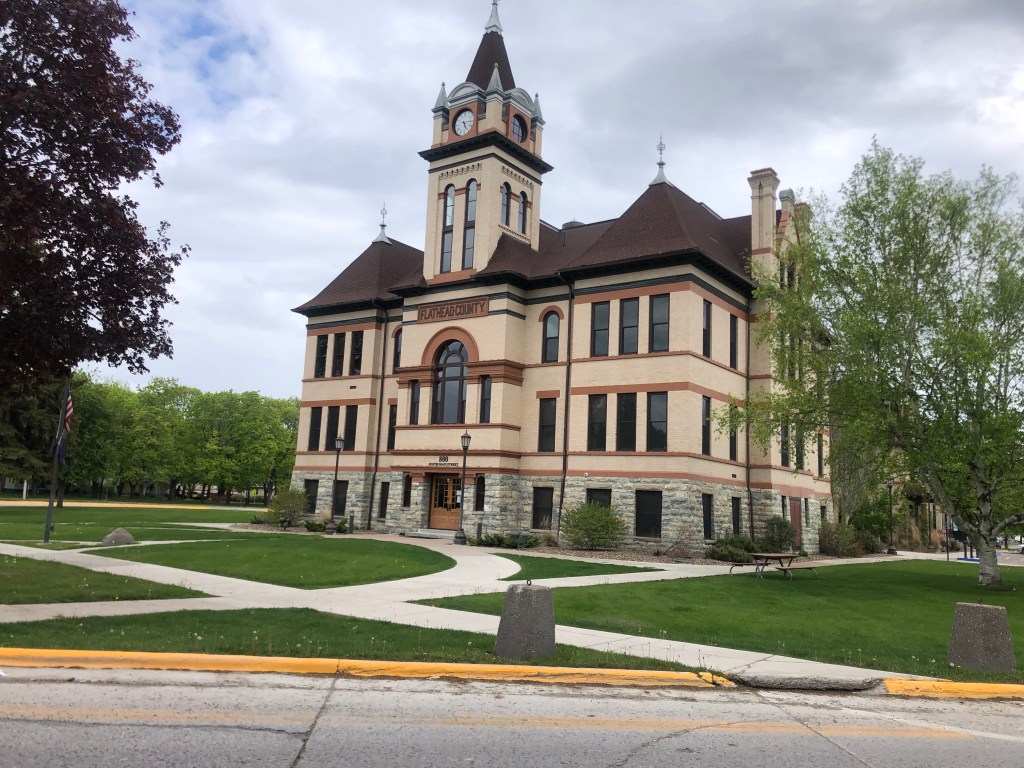
Finally I stopped for the night in Kalispell, MT (pop: 25,000). It feels like a vibrant, prosperous town, taking advantage of its location at the gateway to Glacier National Park. It’s also the county seat of Flathead County, with a nicely restored courthouse and other civic buildings. Moreover, as described in the BOTD report (immediately below) it has more than one microbrewery.
Brew(s) of the Day
Based on a recommendation from loyal reader Ron P., I stopped in at Kalispell Brewing Co for their Imperial Stout (10% ABV). I rolled in around 5:30 pm, and they were already putting chairs on the tables for a 6 pm close. But I did manage to get a glass of their imperial stout.
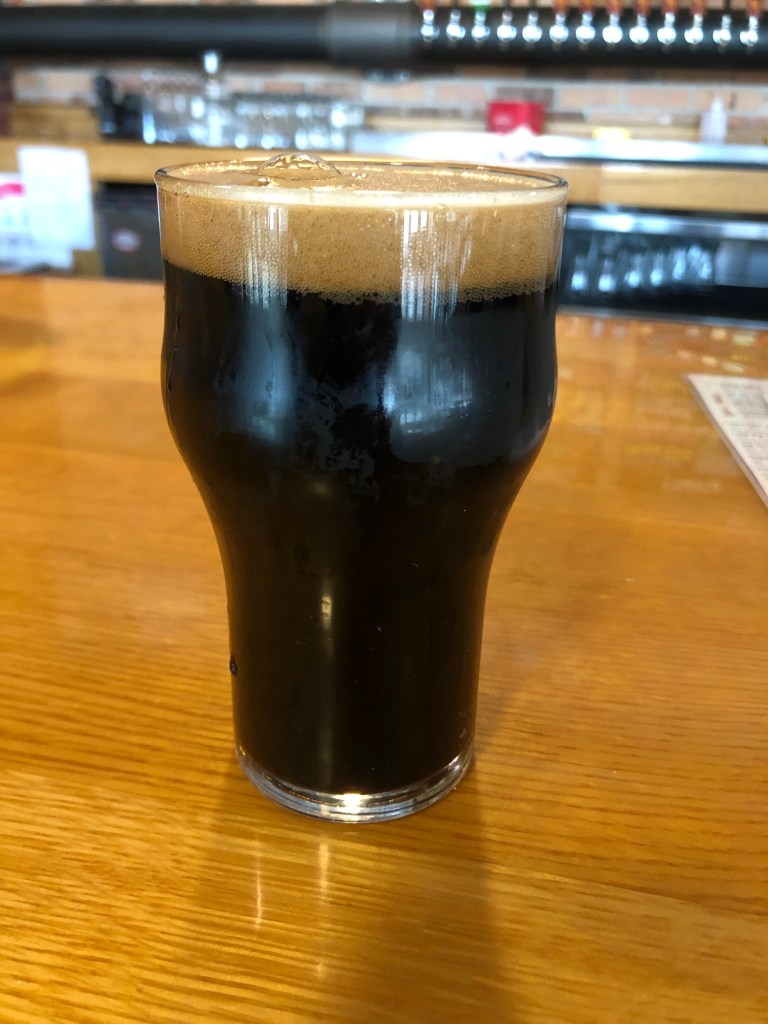
Now, I don’t want to sound too high-maintenance, but what’s so hard about brewing a malty imperial stout? The offering at KBC is definitely overhopped. I mean, it’s pleasantly roasty, with dark coffee notes and a good creamy head. That’s good. But there’s simply no sweetness on the palate. This is unacceptable.
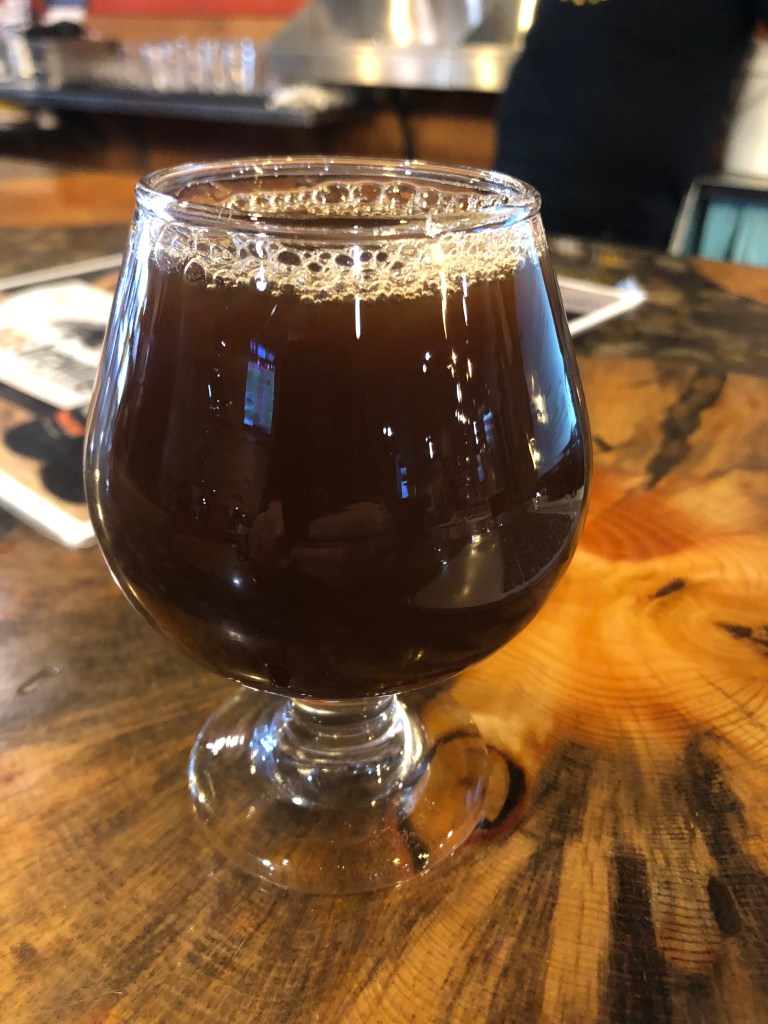
Next I moved over a few blocks to Bias Brewing, where bartender Rem recommended the Logan’s Lass Scotch Ale (8.5% ABV). I had a sample, and it was a pretty beer, with a slightly peaty (but not exactly smoky) flavor. But what I landed on was the Barro Sabroso Mexican Chocolate Porter (6% ABV). It was superb! After badmouthing porters a couple of nights ago, I now have found one of my favorite beers. This porter tastes almost exactly like a Mexican hot chocolate, with dark chocolate and coffee notes and a generous sprinkling of cinnamon. It’s even slightly sweet. Seriously, this was an enjoyable, interesting, tasty beer. I give it 4.5 points.
Tomorrow I cross the state line into Idaho. Until then.

 Chasing Phantoms