Have you ever had one of those days were everything works out perfectly?
Me neither. But today came pretty close. At the end of this blog post I will reveal why.
I left my cheap motel room in Ontario, Oregon, crossed the Snake River, and before you could sing the first stanza of “Here We Have Idaho” (which we all know is Idaho’s official state song), I was in Weiser.
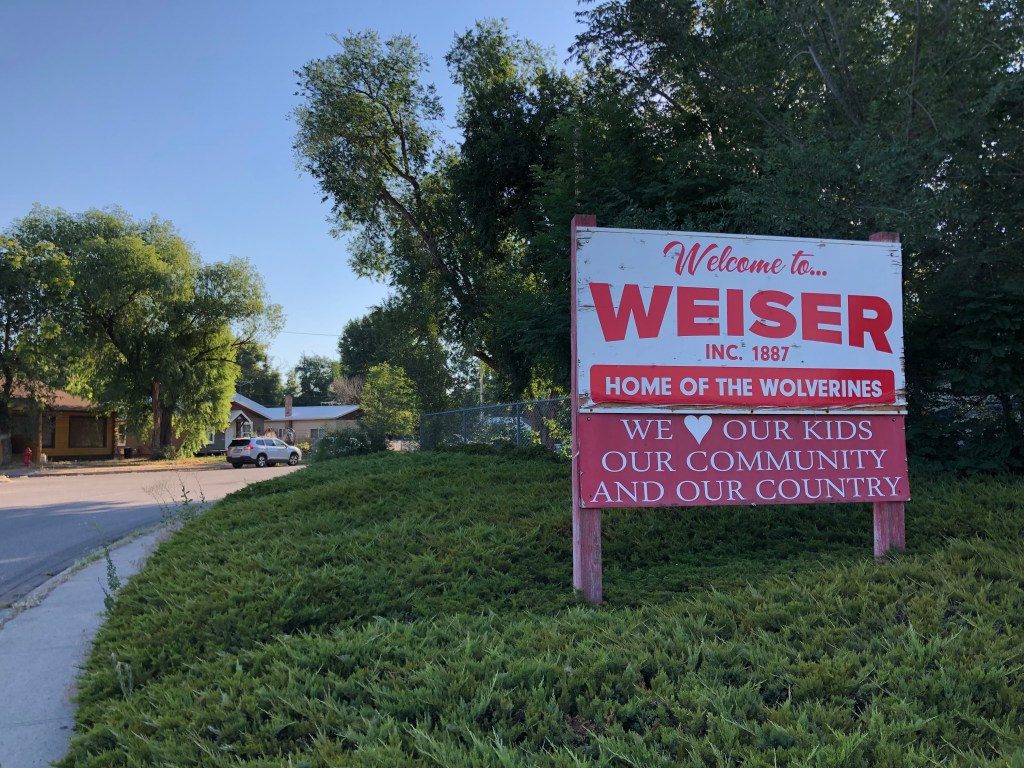
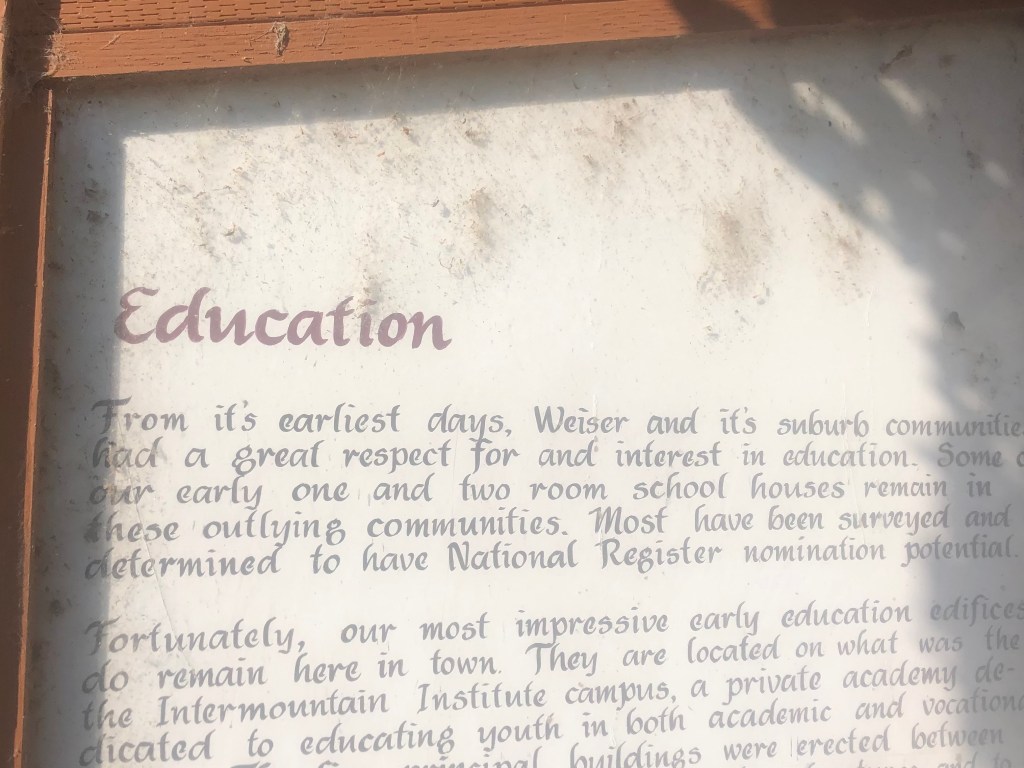
But more important than punctuation, Weiser has done an impressive job of preserving historic structures. The downtown in particular has dozens of well-maintained, functioning buildings that my Grandma must have walked past or even visited. These include the following:
- The Odd Fellows building. It was constructed before 1903 (for the town newspaper dated November 25, 1903, mentions a social held there. “It was one of the pleasantest social events of the season.”
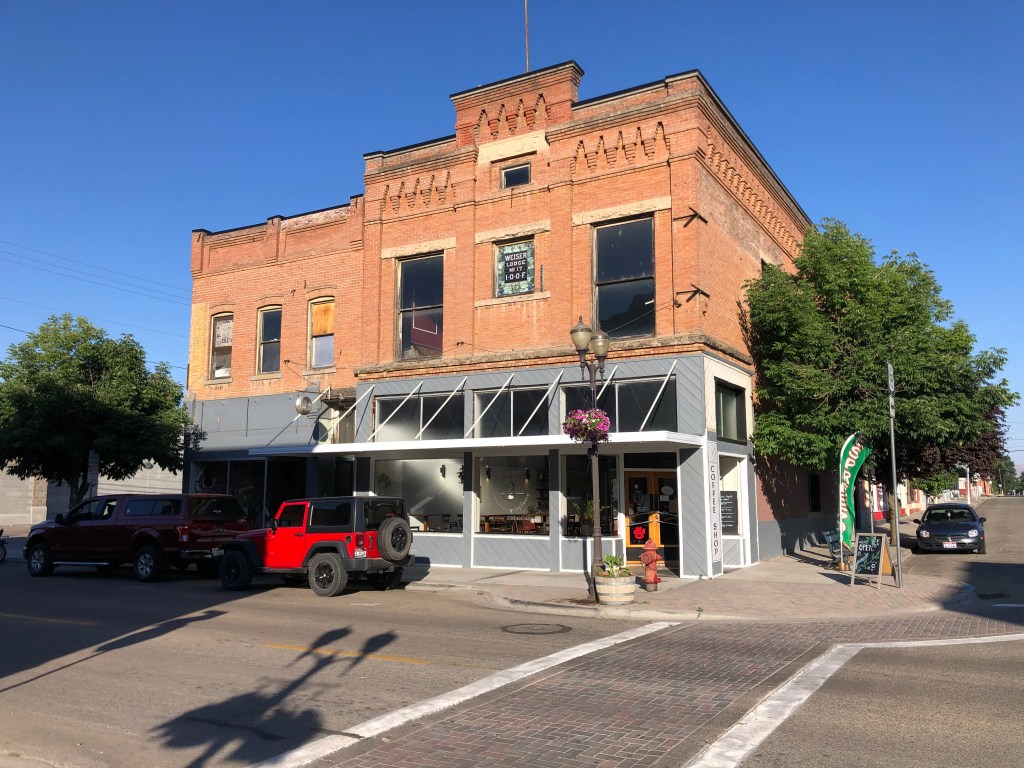
In the cafe on the building’s first floor I had a cup of coffee and a cinnamon roll the size of a small watermelon. I asked the barista about the building’s history but she said she’s new in town and didn’t know much about it. It turns out she’s from Sacramento–pretty much where I’d just driven from.
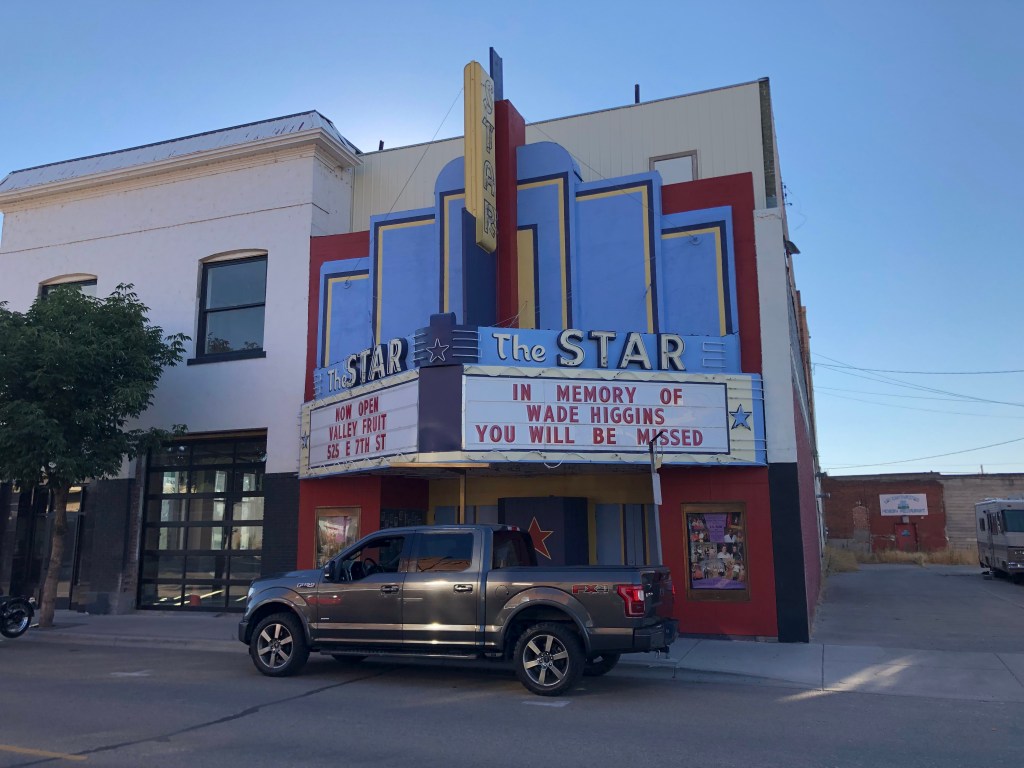
2. The Star Theater. It moved to its current location in 1917 (when Grandma was six). It was a vaudeville house that also showed silent movies. Today it is used for live theater productions and other events. It looks like it’s been extensively modified since 1917. I wished I could have peeked inside.
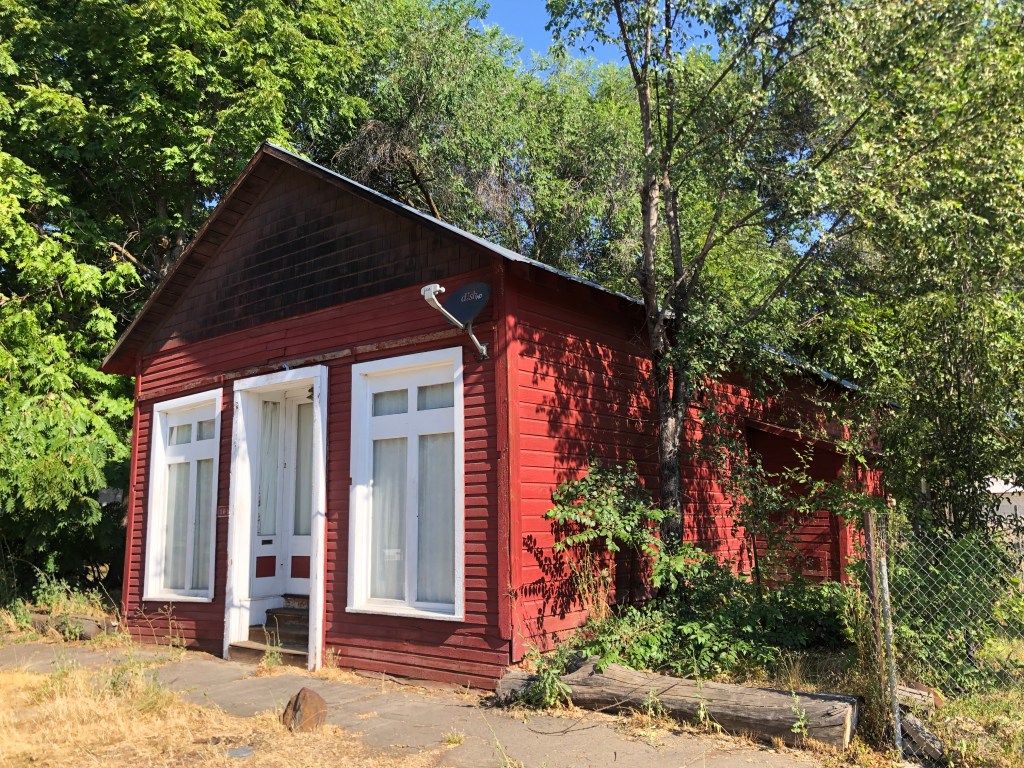
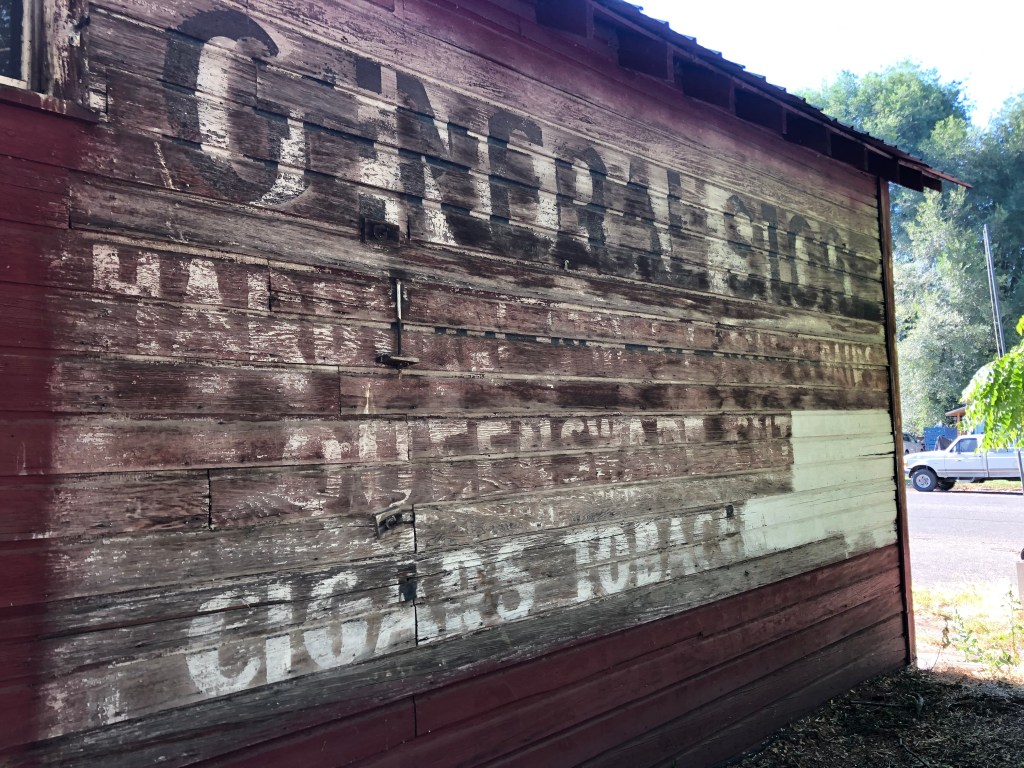
3. The Red Store. One of the oldest buildings in Weiser, The Red Store dates back before the turn of the 20th century. I couldn’t find an exact date of construction, but the old signage on the west side of the building (left untouched by the owners, who’ve otherwise repainted the building) appears to be late-19th century.
4. Knights of Pythias Lodge. In her memoir Grandma writes that her father (aka my Great Grandfather Burley) “occasionally went to a card game at the Woodmen of the World Lodge, which he had joined in order to qualify for their life insurance.” I couldn’t find any evidence of the Woodmen lodge in Weiser, but I did find this very cool old lodge building from the Knights of Pythias. The building was constructed in 1904 and sits prominently on the main drag, so doubtless it was familiar to Grandma.
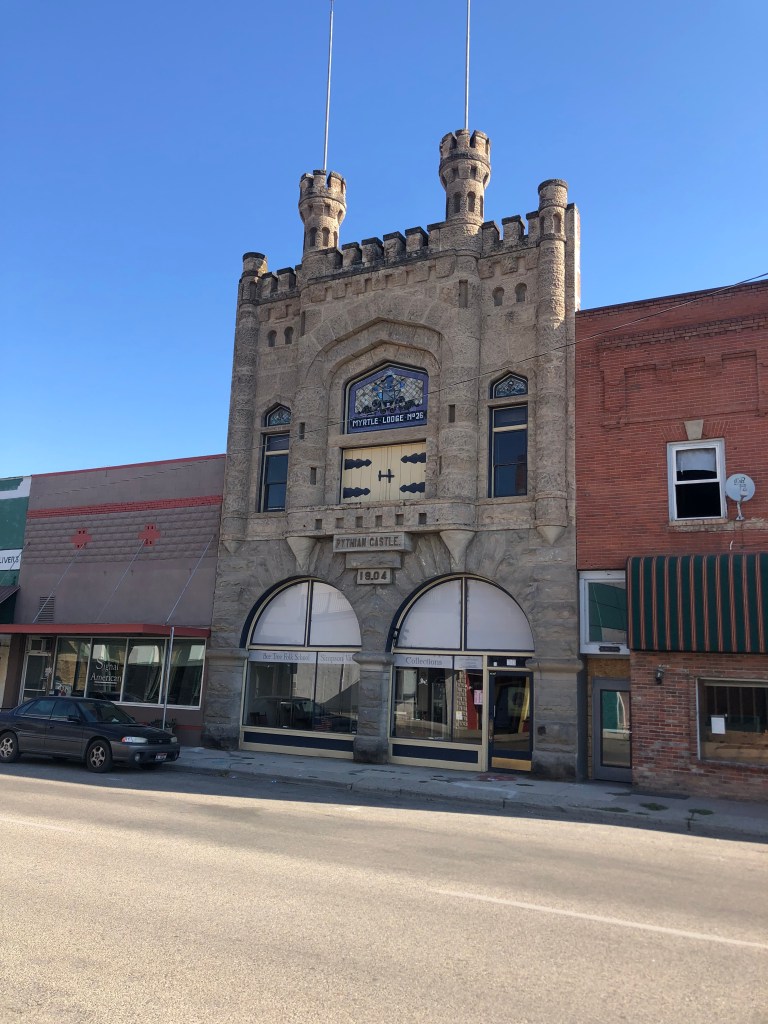
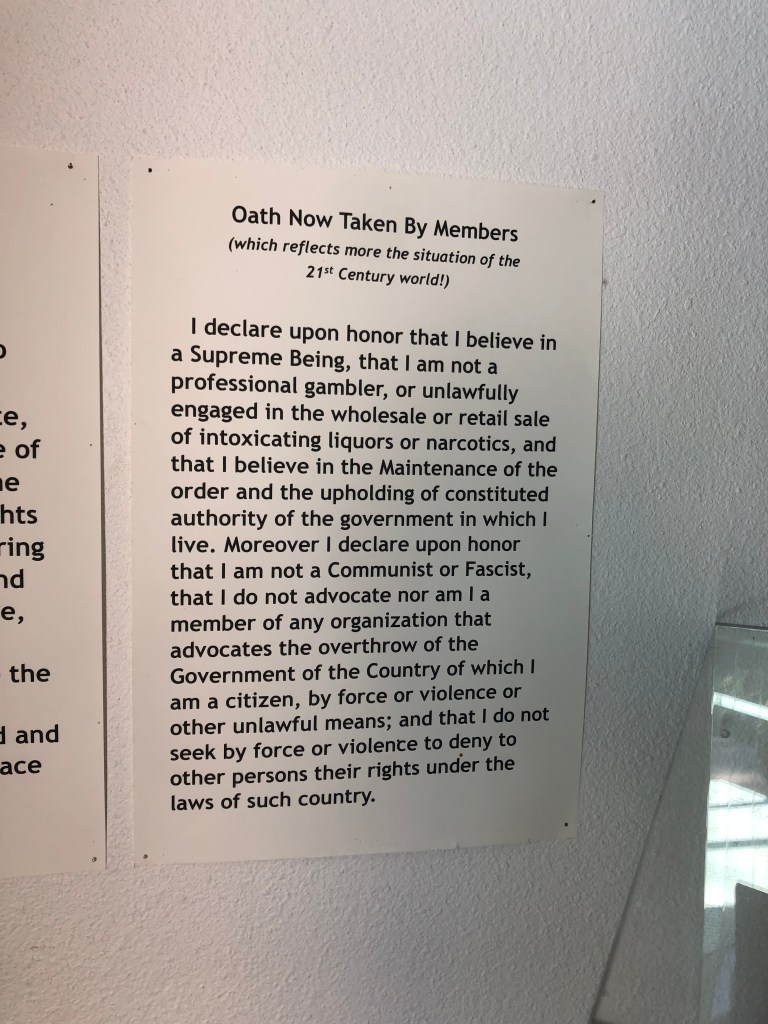
The Knights of Pythias (KOP) was founded as a fraternal order during the Civil War. Like many fraternal organizations, its purpose was primarily to provide assistance to its members and their families when serious illness, death, or some other crisis befell them. It’s not unlike Great-Grandpa Burley’s joining the Woodmen of the World to get life insurance. Also like many other fraternal organizations, the KOP was a secret society that was steeped in rituals borrowed from foreign cultures.
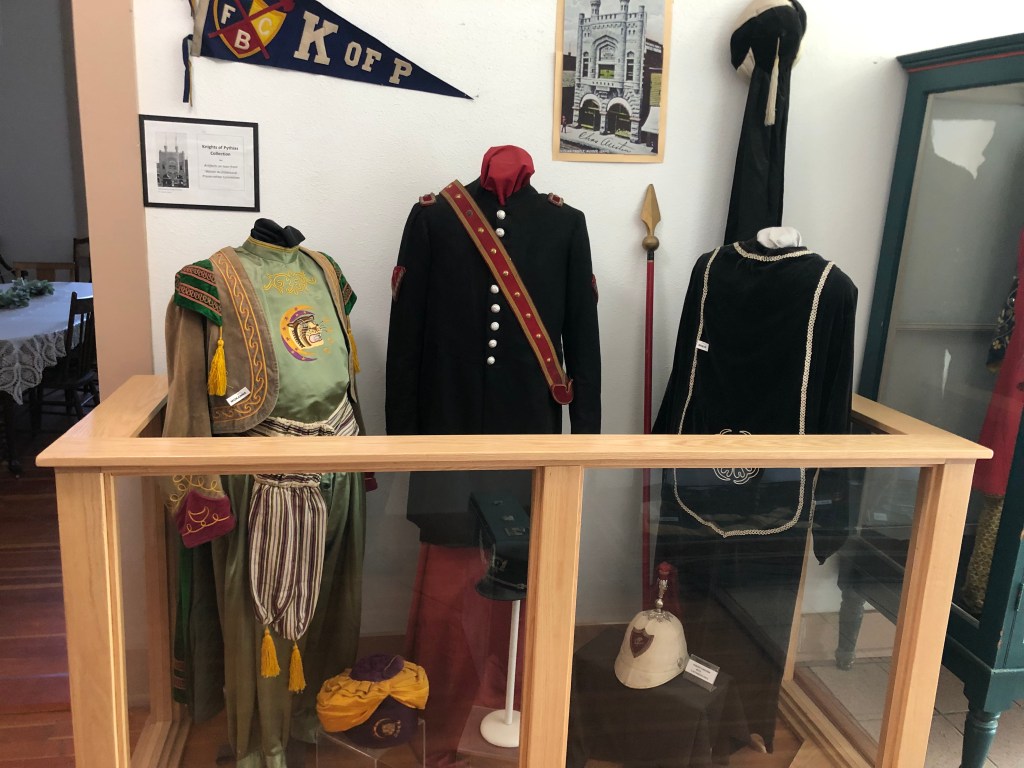
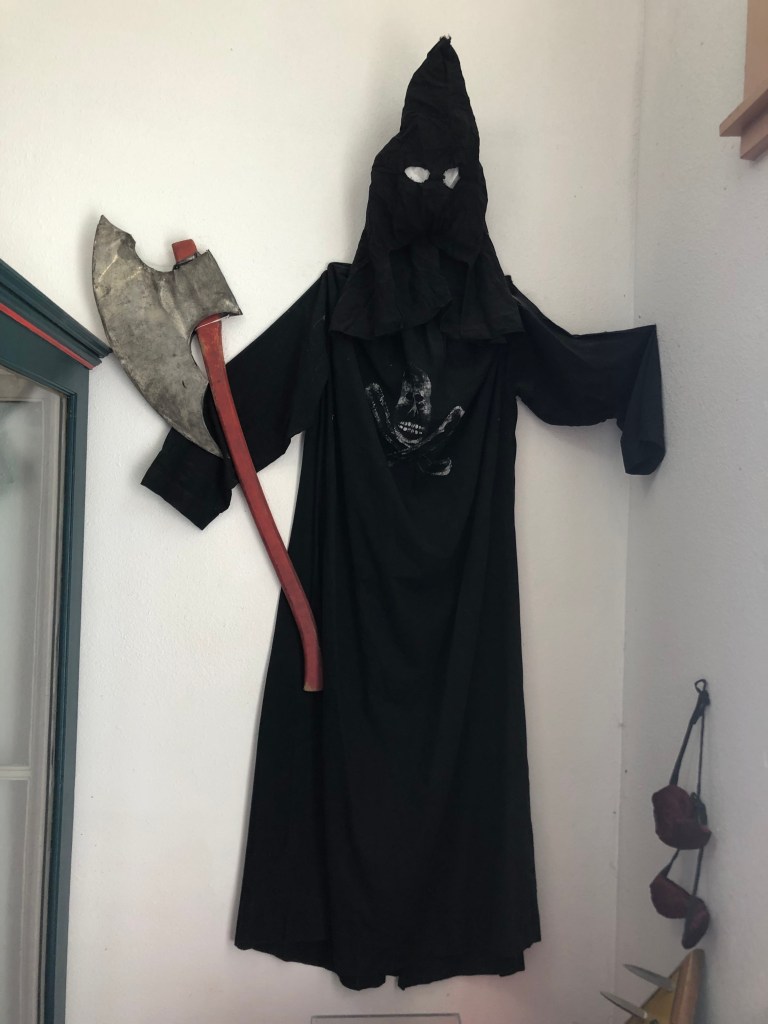
The Weiser chapter of the KOP closed in the middle of the 20th Century, and parts of the building have been used primarily for storage since that time. Then, a few years ago, some boxes were discovered that contained costumes and props for the KOP ceremonies. Some of these are now on display in the regional museum. I took a few pictures of them:
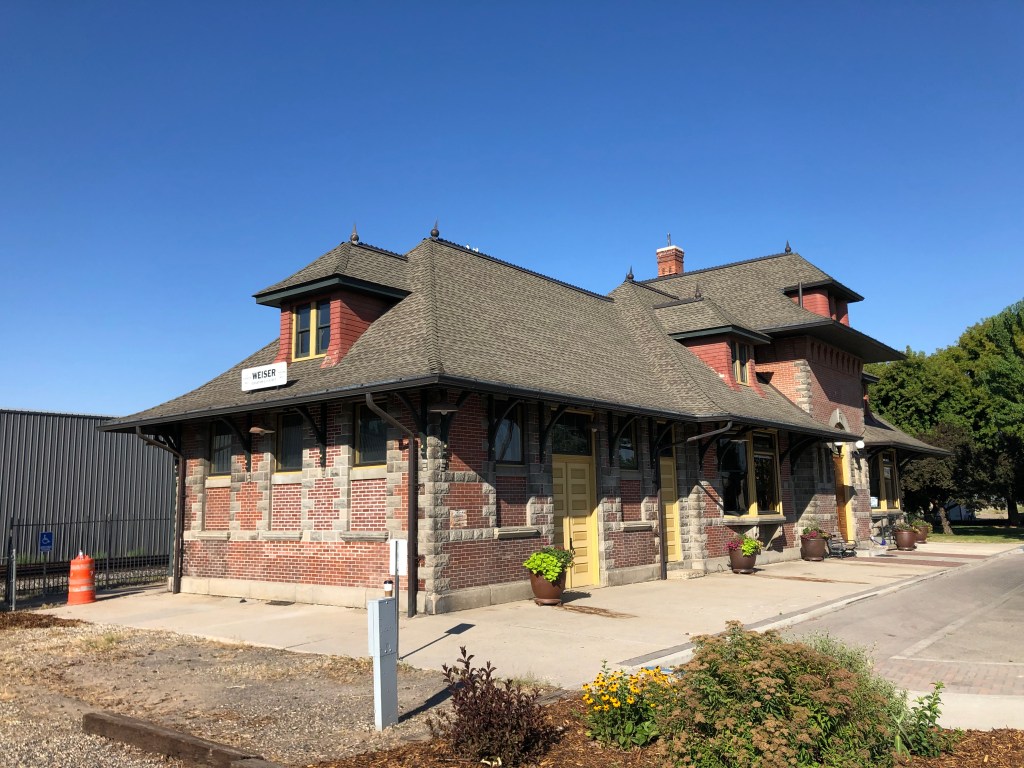
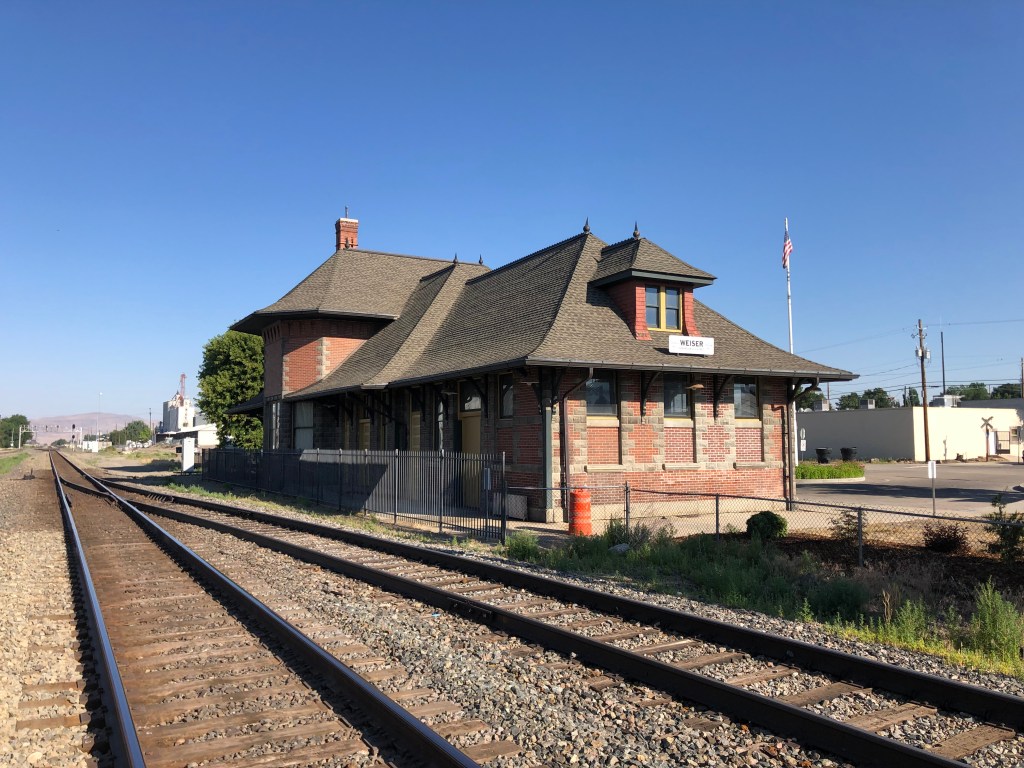
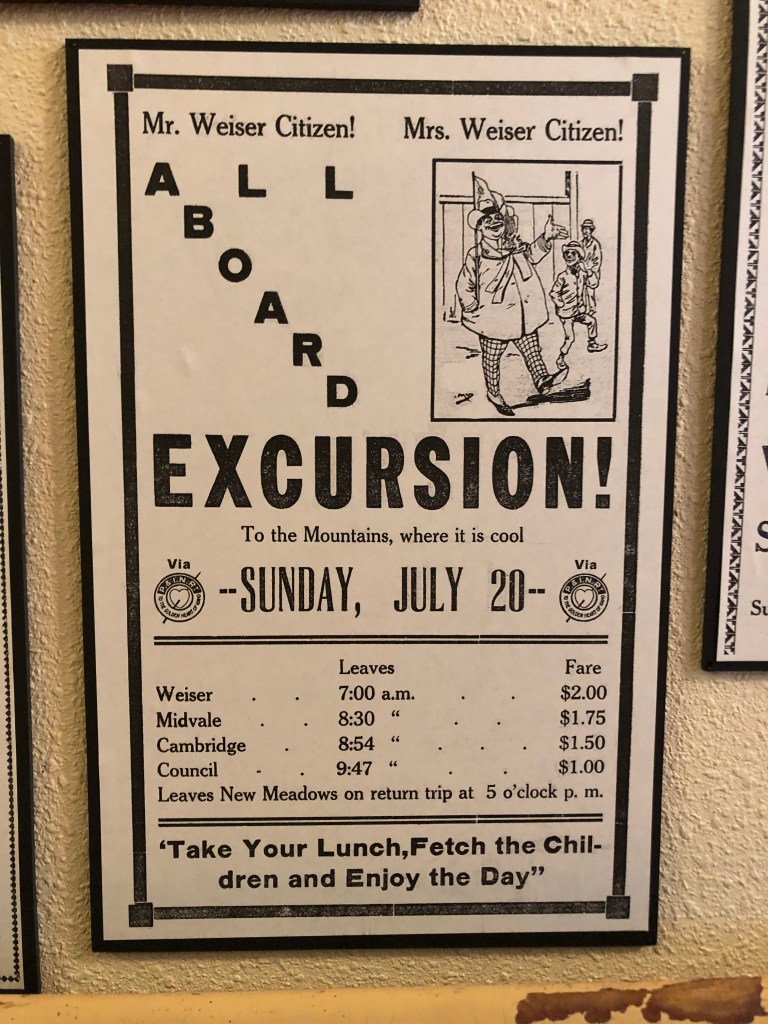
5. Weiser Depot. Weiser lobbied for the Union Pacific to bring its mainline to their town. But they only got a shortline. Still, the UP built them this beautiful Queen Anne-style depot in 1907. In her memoir Grandma talks about taking various train trips, but I don’t know if she ever boarded at this particular depot. Still, she must have had occasion to visit it. Some years ago trains stopped stopping (can I say that?) in Weiser, and the station closed. It’s been restored and for awhile it was a museum, but when I saw it today it was empty.
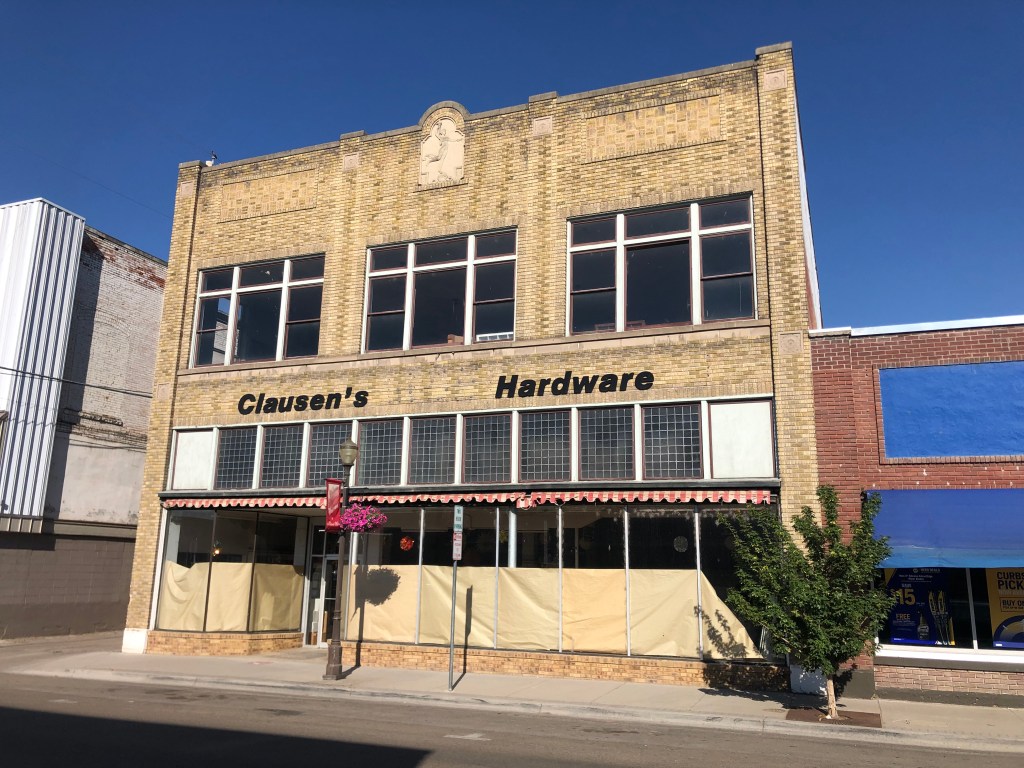
6. Clausen’s Hardware Building. I couldn’t find when this was built, but surely Grandma must have seen it. This became an ACE hardware store in the middle of the last century, but it recently closed.
7. Site of the Wheaton Theater. In her memoir, Grandma writes that she and other schoolchildren sang “in the town hall, which, apparently anticipating events that never materialized, the town fathers had given the name of Opera House. Actually it was nothing more than a hole in the wall.” The only building that had been described as an opera house (that I could find) was the Wheaton Theater, which was constructed in 1908 and was destroyed by fire in 1937.
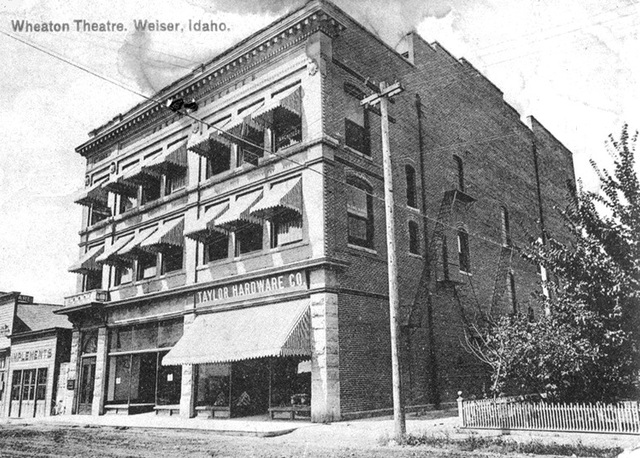
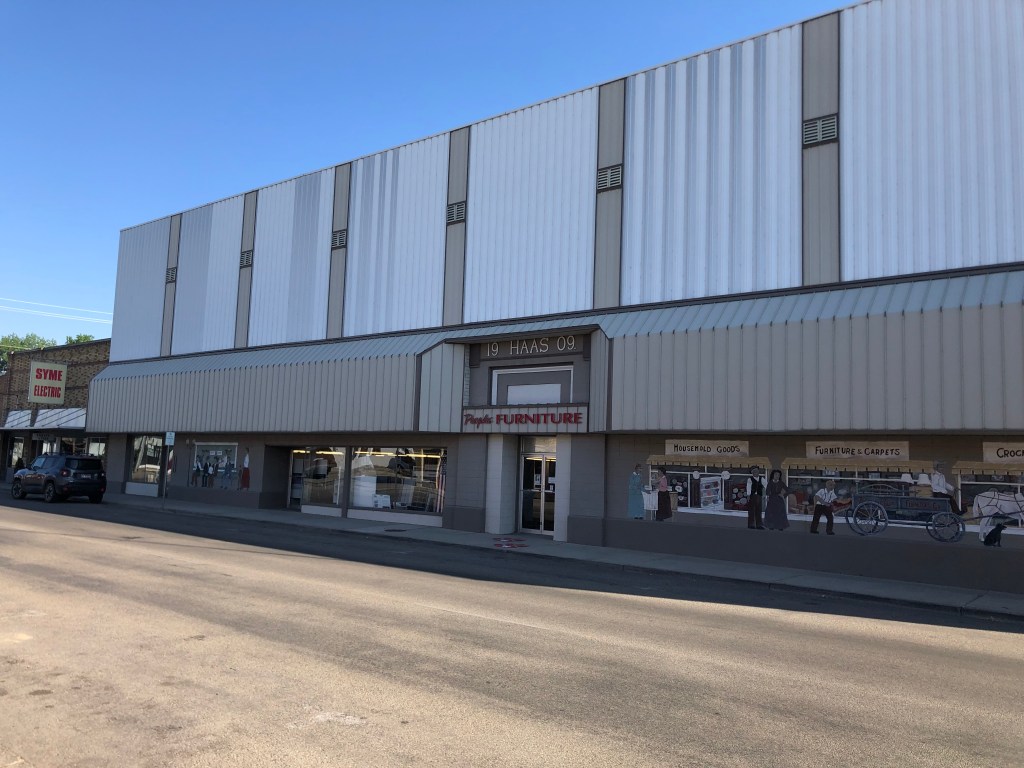
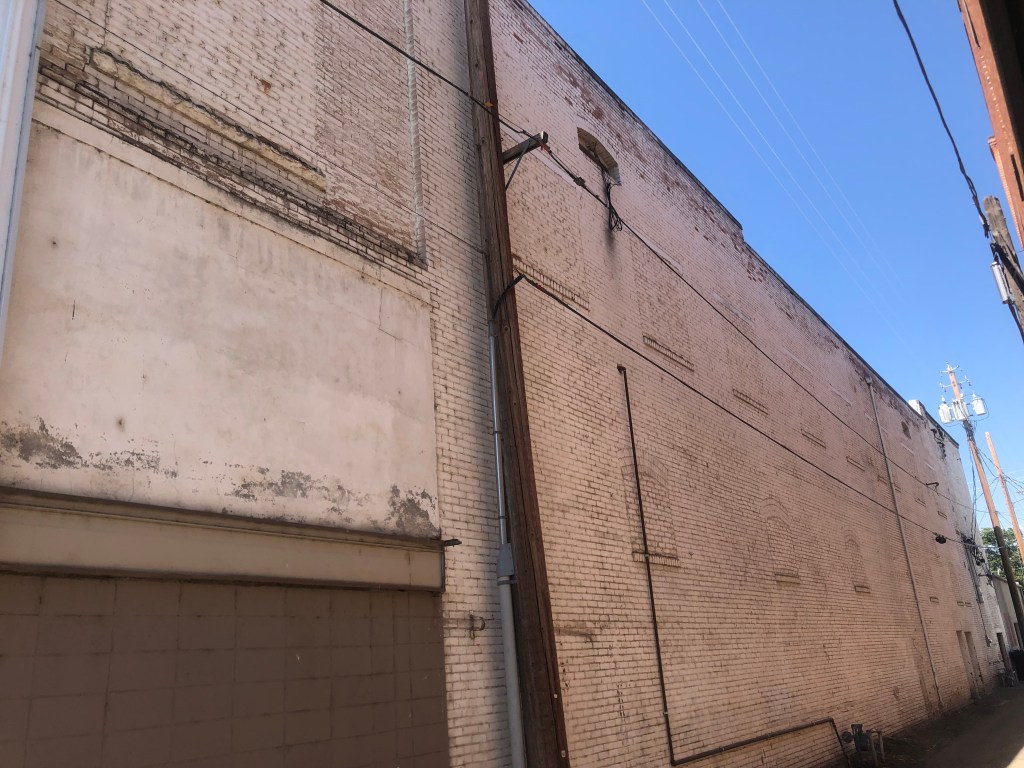
Today, the People’s Furniture building occupies what is said to be part of the site that was once the Wheaton. Looking at the picture, I’m guessing that People’s combines the old Haas Building (from 1909) and the old Wheaton Building.
8. Site of the First National Bank of Weiser. In her memoir, Grandma writes that her father (my great-grandpa Burley) had a sometimes-stressful job with the local bank, and that her mother “took her position as wife of a bank officer very seriously and felt she must live up to it.” However, the 1915 City Directory identifies Great-Grandpa Burley as being an “Asst Cashier First National Bank.” I wouldn’t think to call that a “bank officer.” But evidently the whole family felt Great-Grandpa had a high level of responsibility.
Sadly, the First National Bank of Weiser no longer stands. In its place there is a vacant lot, next to which stands a new(ish) Zions Bank. None of the staff at Zions could tell me anything about the old First National Bank.
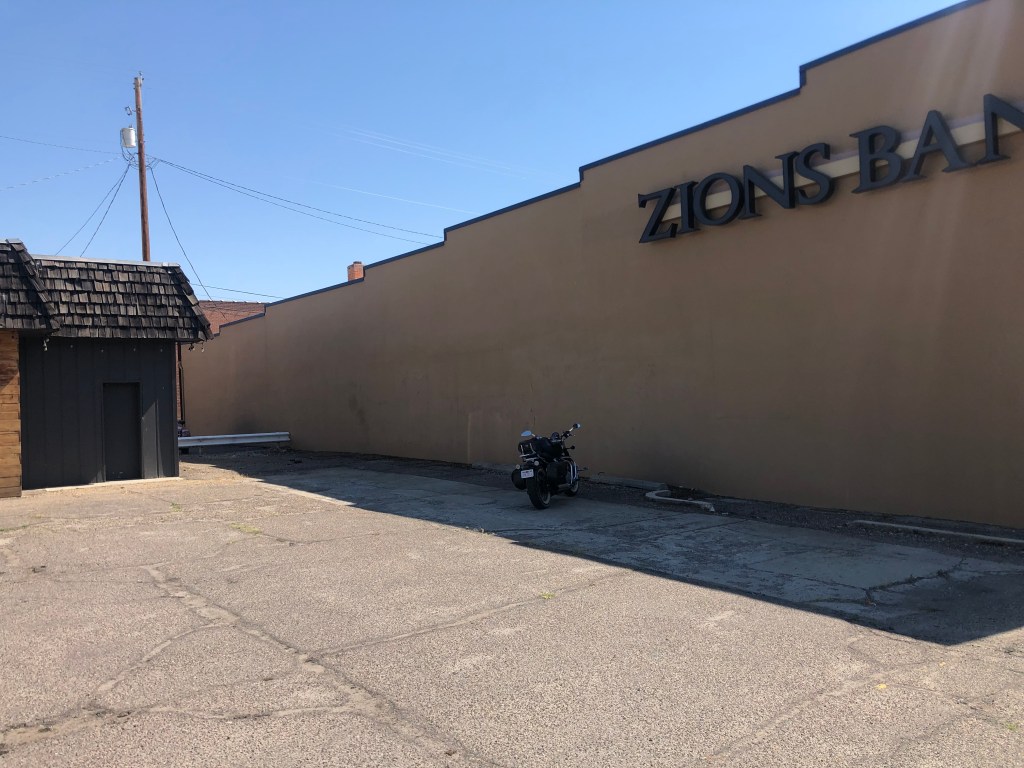
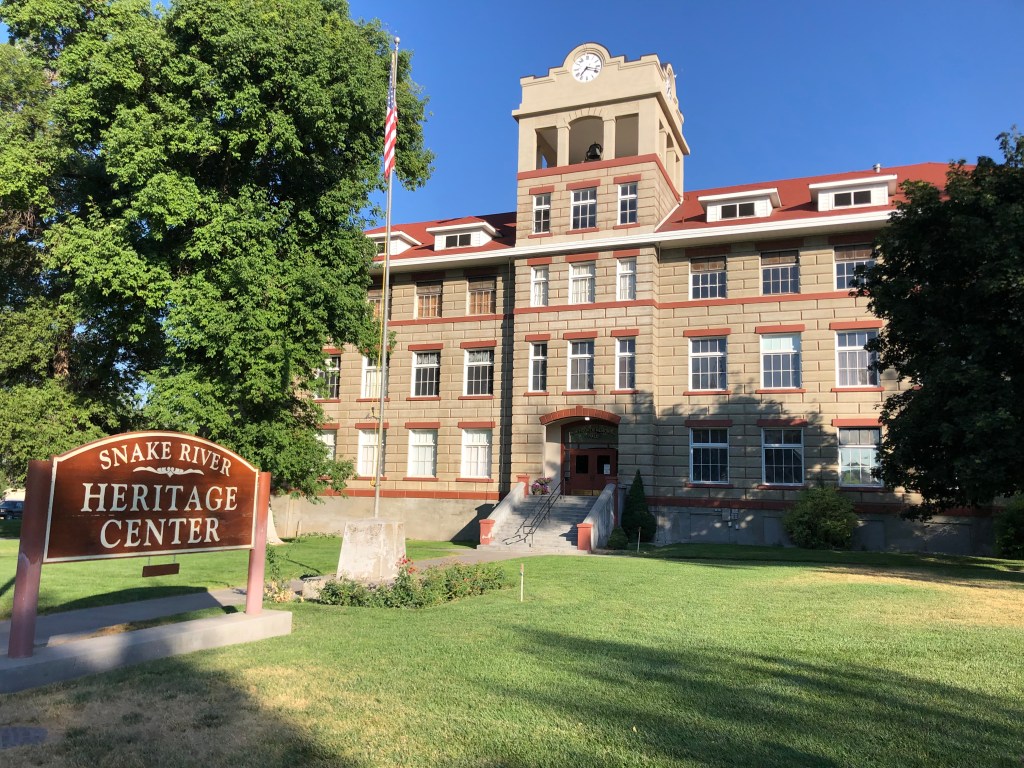
9. The Intermountain Institute. Although Grandma probably never was on the campus, the Intermountain Institute was a boarding school whose extant buildings date back to 1907–a few years before Grandma was born. The Institute closed after Weiser constructed a public high school in the mid-twentieth century. Today, one of the Institute’s main buildings (Hooker Hall) is home to the Snake River Heritage Center, which has historical artifacts and exhibits related to Weiser and the surrounding area. It’s at this Heritage Center that I saw the Knights of Pythias regalia.
10. Grandma’s Childhood Home. Weiser’s 1915 City Directory lists Great Grandpa Burley’s address as 931 West 3rd Street. Now, Grandma writes “Our first home was close to downtown, and Papa’s job at the bank was only a few minutes away. But in Papa’s eyes the pasture on the other side of the fence was always greener, and so we moved often.” So it’s not clear how long they lived in this house; I only know they were there in 1915.
So today I drove out to West 3rd street, and the house is still standing!
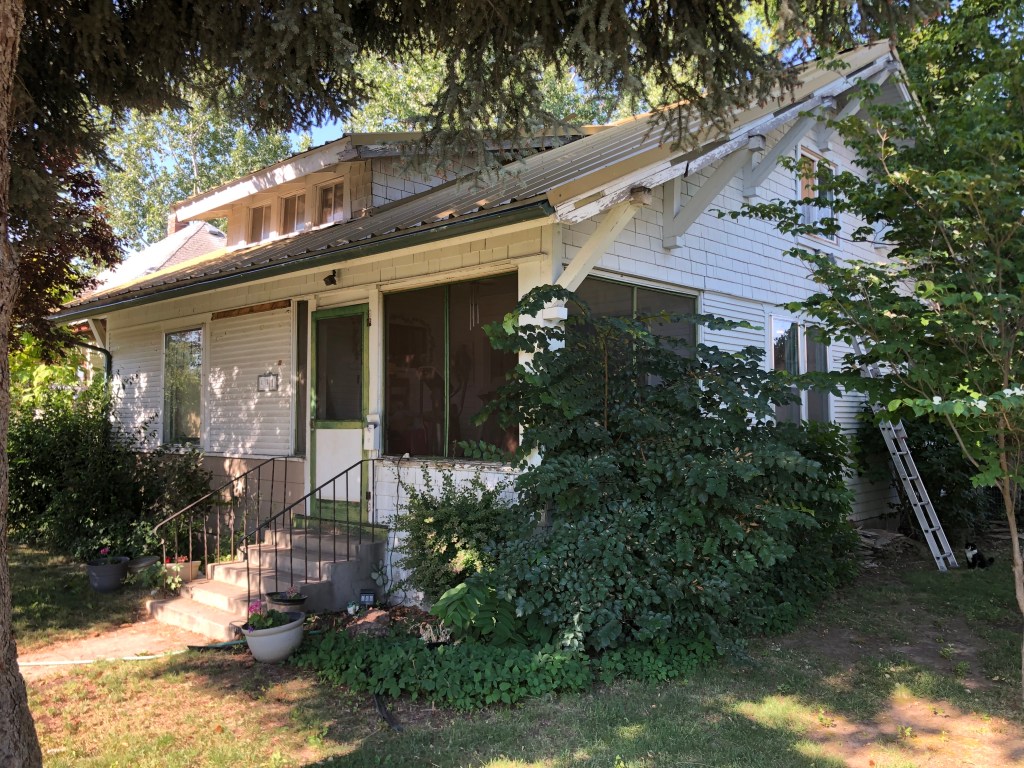
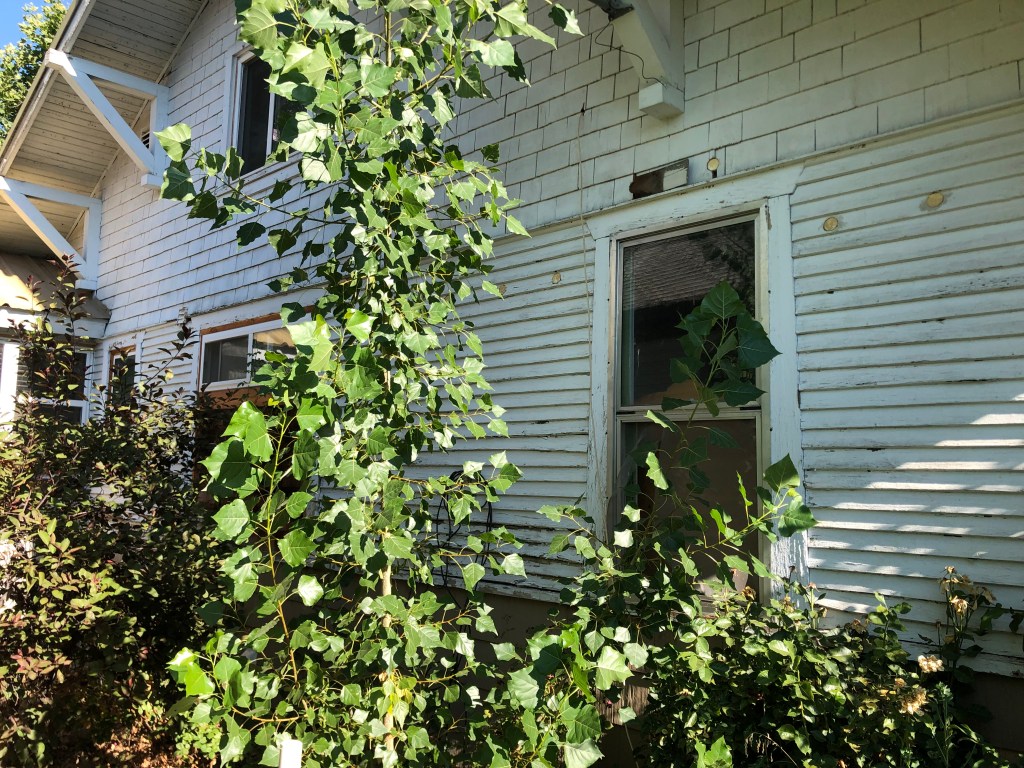
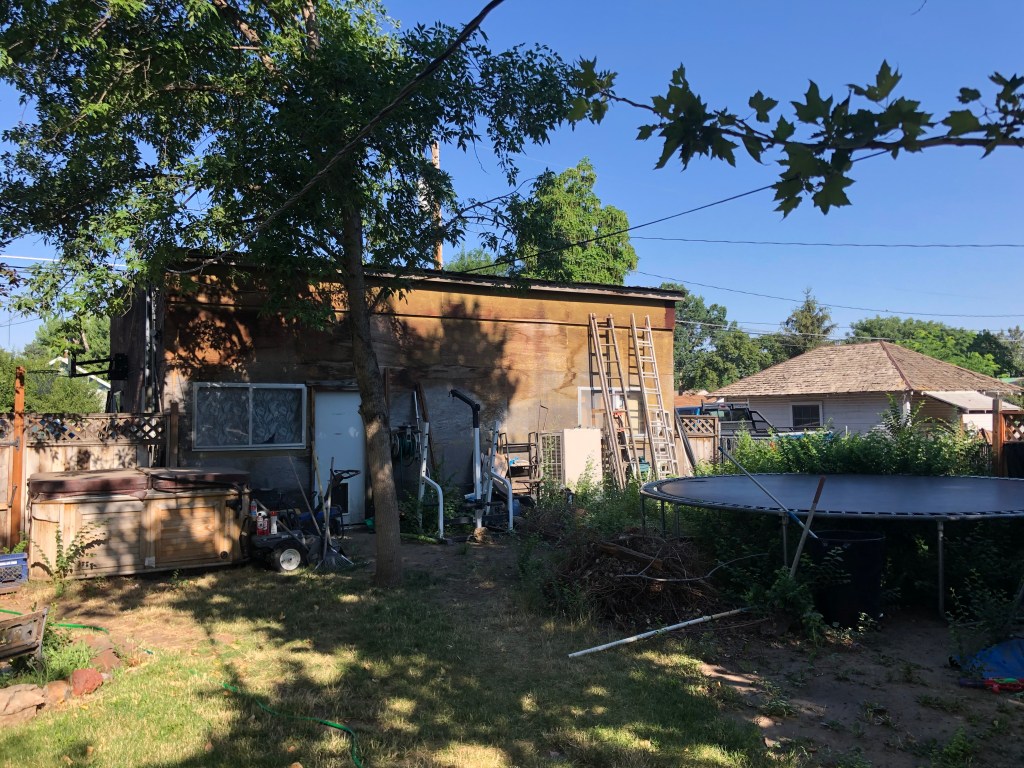
As luck would have it, just as I arrived a woman was parking her car in front of Grandma’s old house. And it turns out she’s the current owner! Stephanie (for that is her name) and her husband bought the house about six years ago, and they’ve made some considerable repairs and improvements.
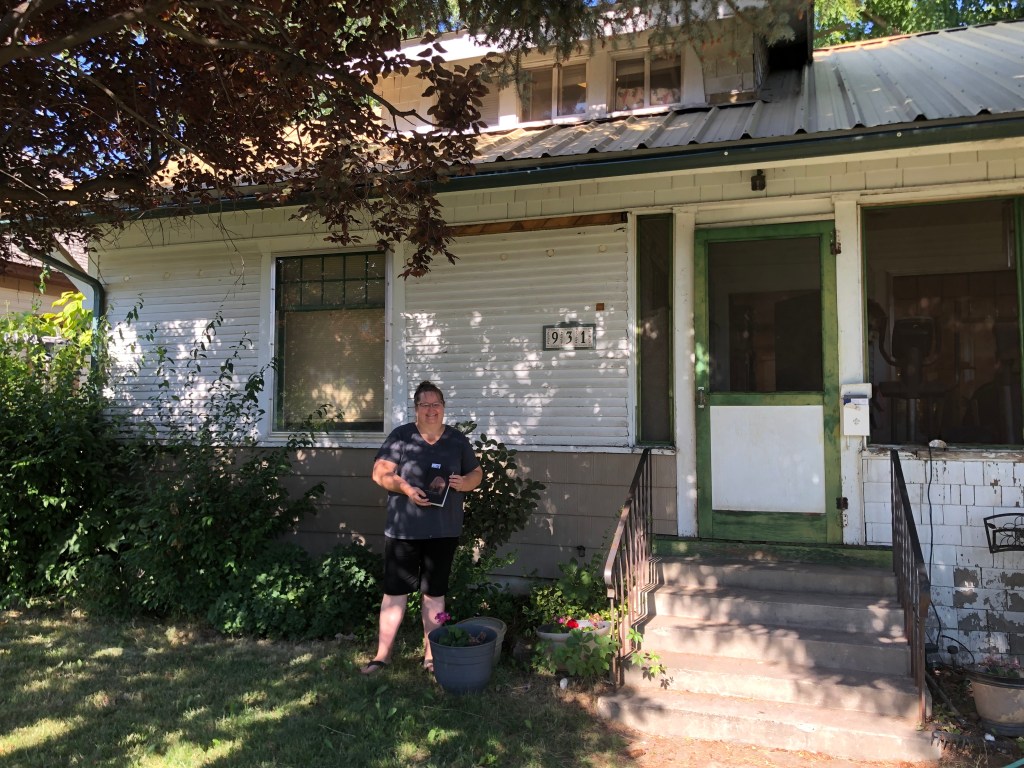
Their work to the house includes some sheetrocking of walls, moving a bathroom, and converting the attic space to bedrooms. But still there is plenty of the original house that Grandma would surely recognize. And how do I know this? Because Stephanie, bless her, invited me in and showed me around. I was literally walking in Grandma’s footsteps.
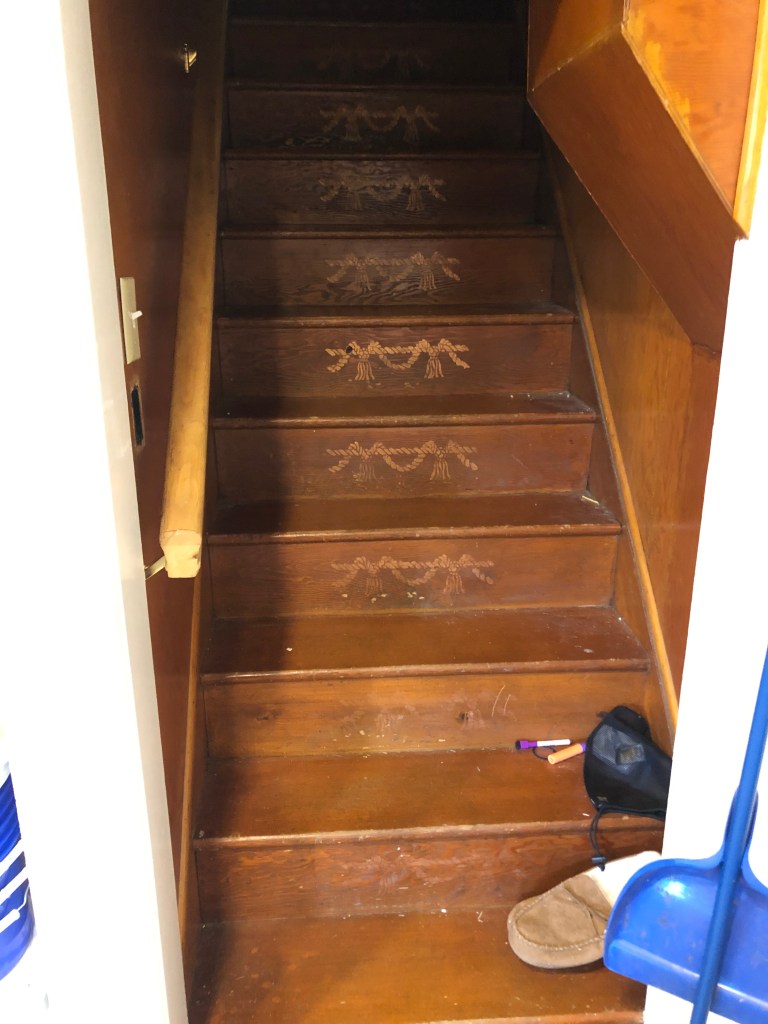
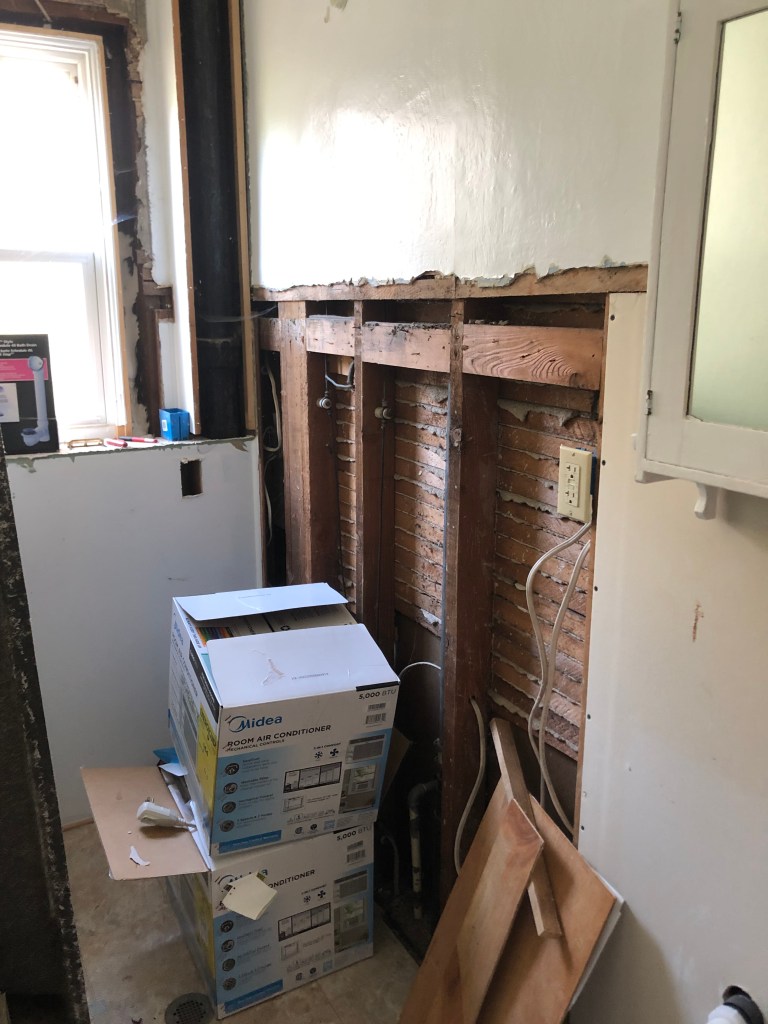
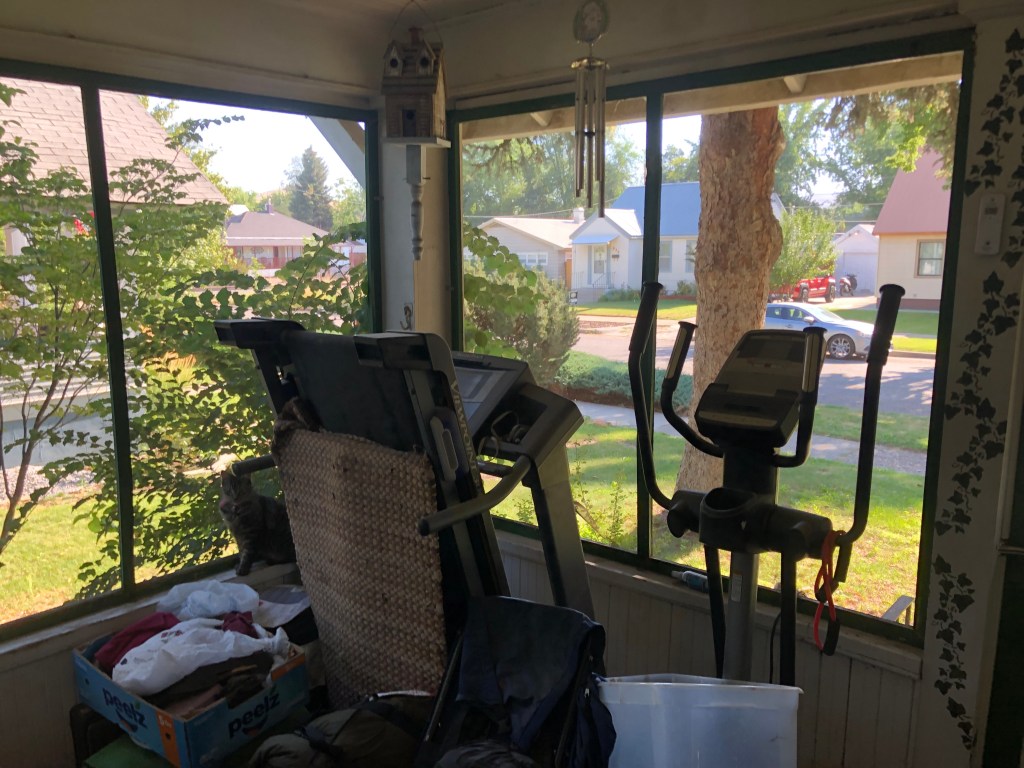
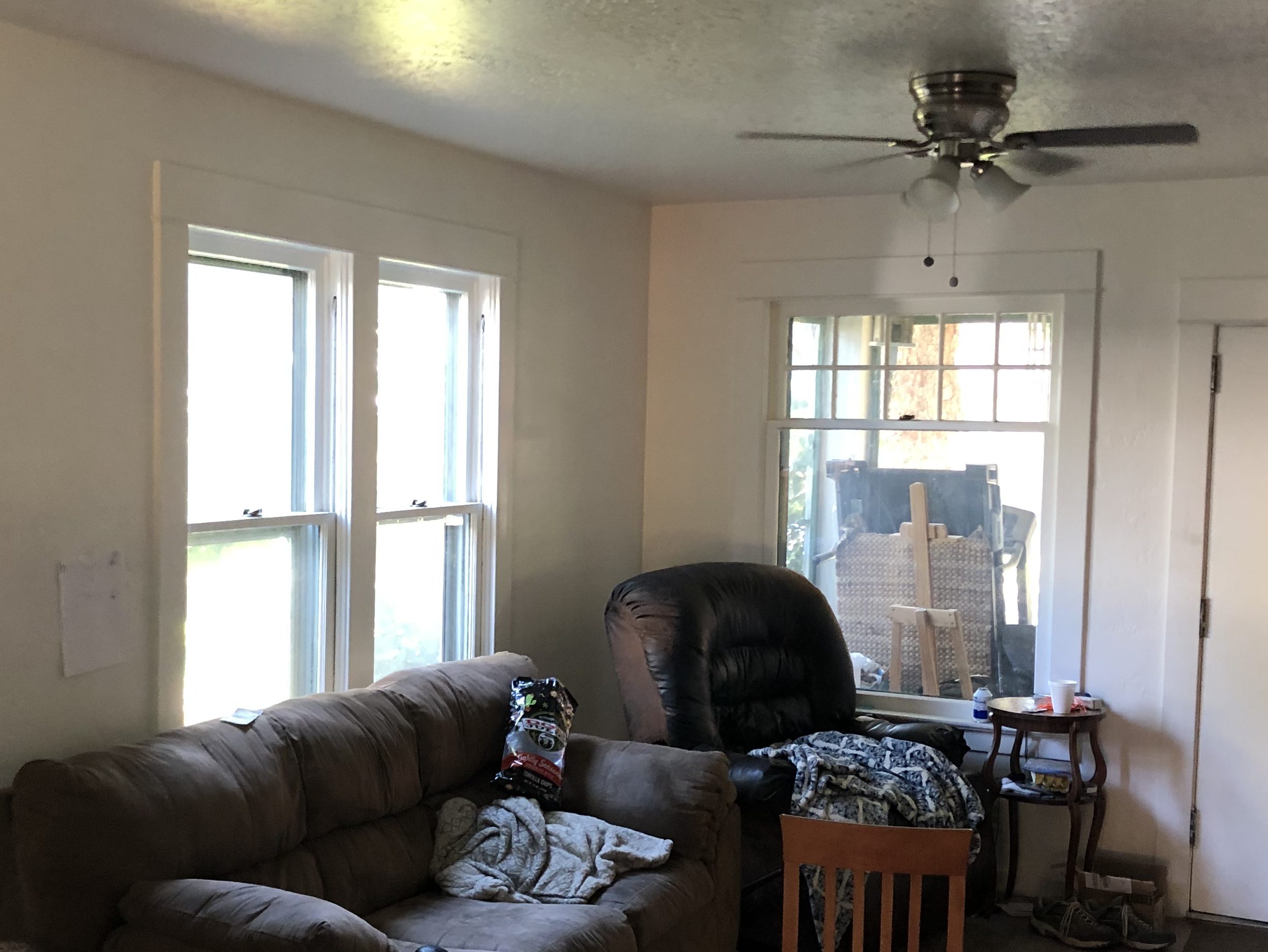
So that’s why I opened this blog post with remarks about the day going to well. I came to Weiser to learn more about my Grandmother. And while I didn’t learn a lot of new facts, what I already knew somehow gelled became textured as a result of spending some time in her childhood home and walking the streets of her town.
And so, feeling satisfied, it was time for me to hop on la machine and head back toward Placerville…which, as it turns out, is the hometown of Stephanie’s husband. Small world, isn’t it?
(Tomorrow I’ll share other photos and remarks from the 1000-mile round trip to Weiser.)

 Chasing Phantoms
Love it, Steve. The pictures really brought her memoir to life. By the way, I lent my mom the book and she’s really enjoying it up in Gig Harbor. Chris
LikeLike