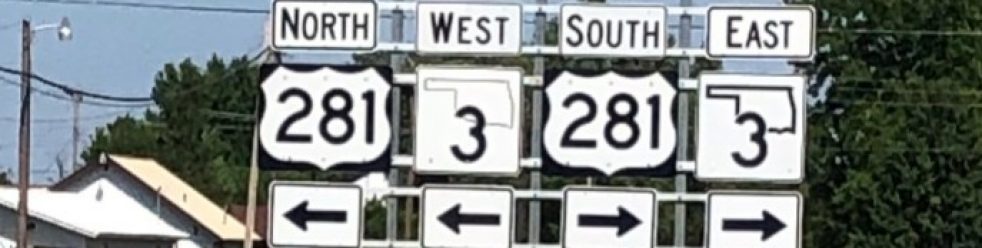
I spent an hour this morning puttering around Hattiesburg a little longer. I really like this city. Two recurring themes really struck me:
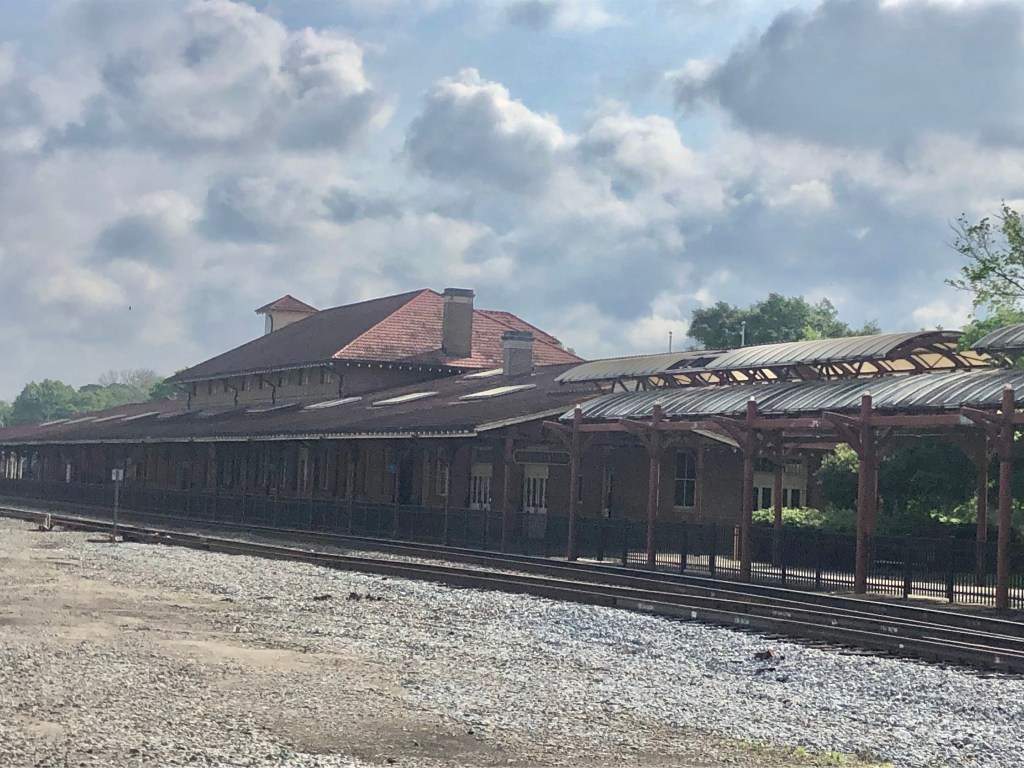
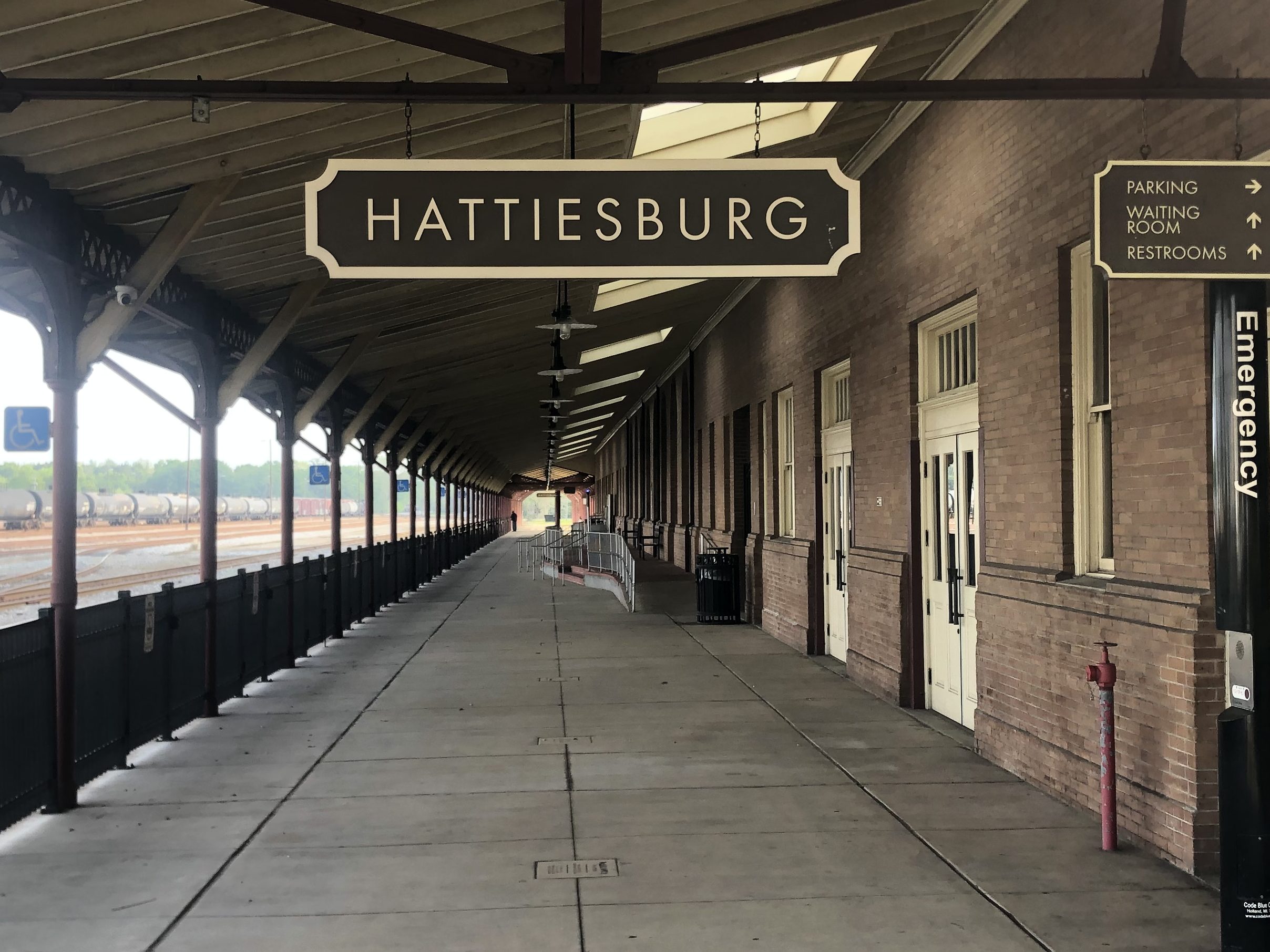
First, how many cities call themselves Hub City?? I’d thought it was a quaint moniker for Clarksdale, with its Devils Crossroads and all that. But Hattiesburg also claims the nickname. A quick search of Wikipedia lists about a score of cities that refer to themselves as “Hub City,” so it’s not at all unique. But admittedly Hattiesburg has good cause: it’s strategically located, with numerous highways and freeways and historic railroad routes. Indeed, its 1910 railroad station is huge, suggesting that a large number of trains came through here in the day.
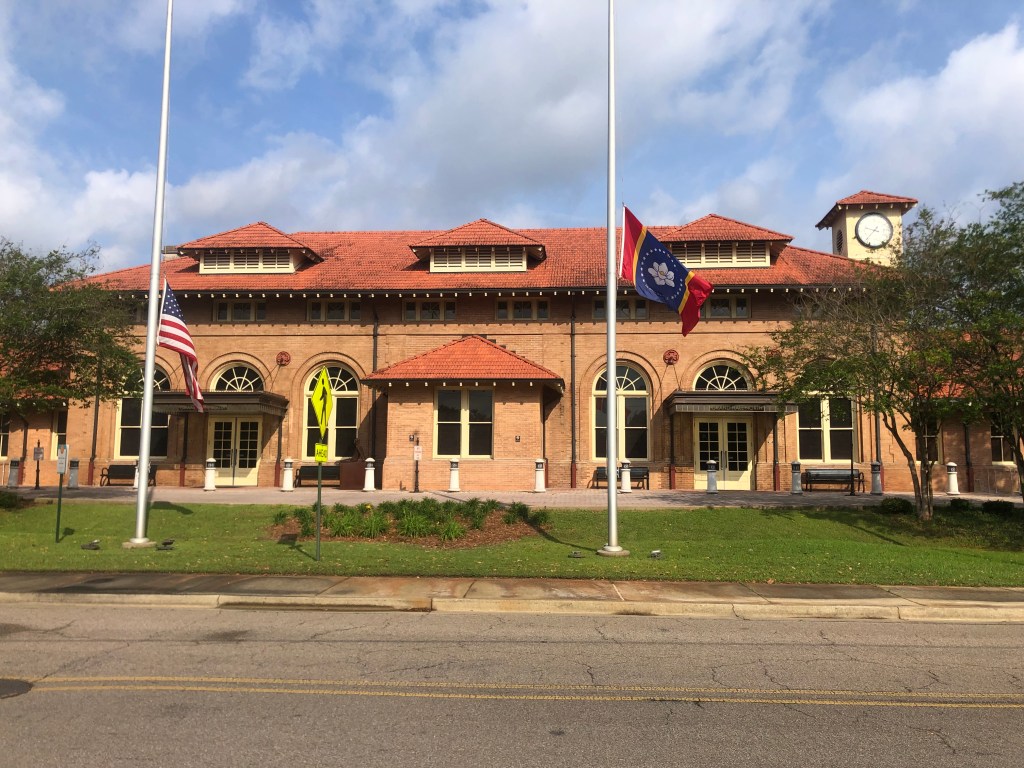
The station was restored about 15 years ago, and today serves as an intermodal transportation hub (there’s that word again), including daily Amtrak service.
The second thing that struck me about Hattiesburg is that this city values the arts. Music (a recurring theme of this trip) is celebrated everywhere, such as this public art installation called “The Jook.”
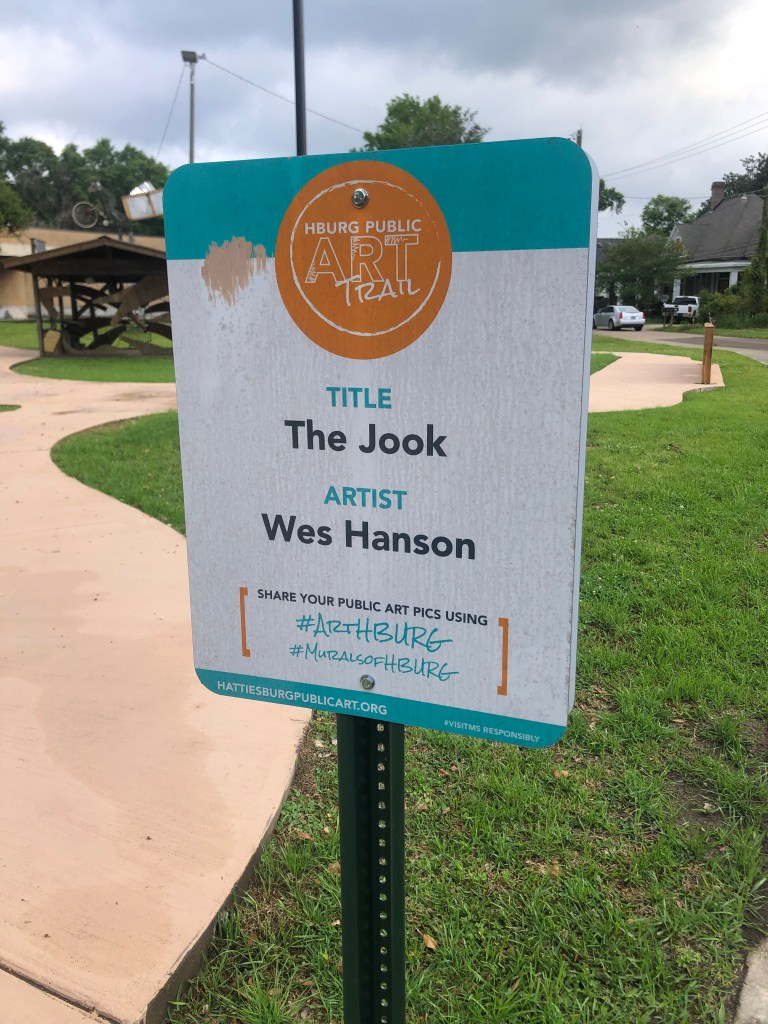
The Jook is a collection of whimsical instruments that the public is invited to use to make their own music. They include a trash can bass, chimes and bells, a giant guitar, and a xylophone (of sorts).
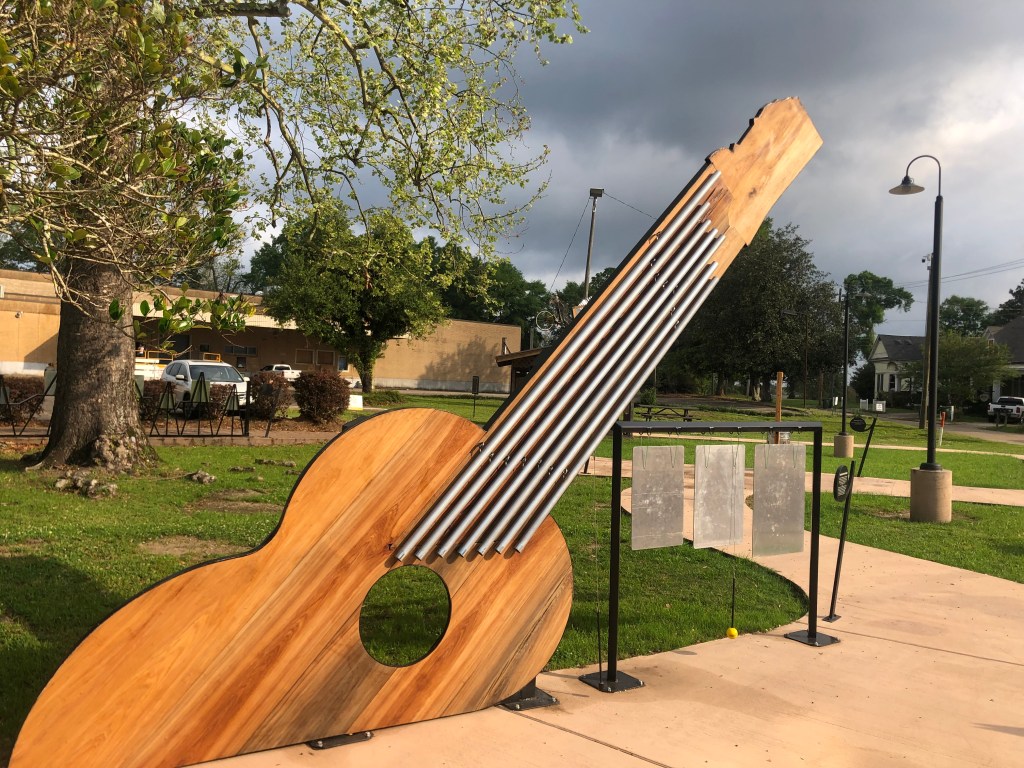
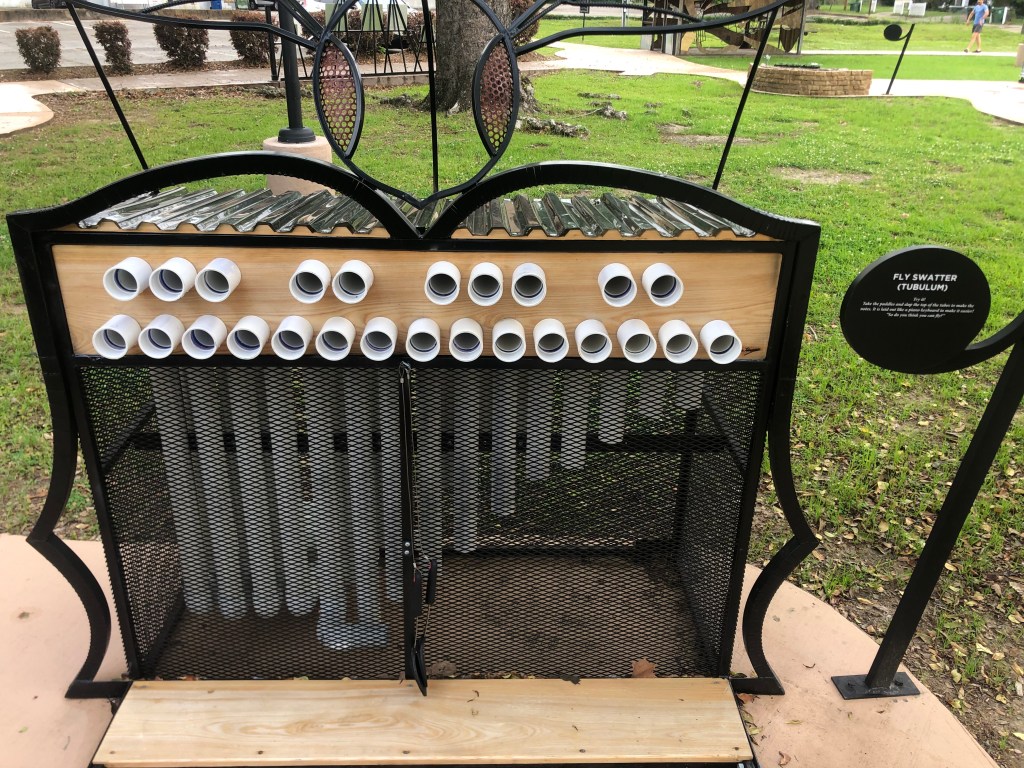
The Jook’s name is a reference to Blind Roosevelt Graves and his Mississippi Jook Band, which recorded blues music in Hattiesburg in the 1920s and 1930s. Two of their 1936 songs–“Barbeque Bust” and “Dangerous Woman”–are considered by some to be the first rock&roll songs. Listen and decide for yourself:
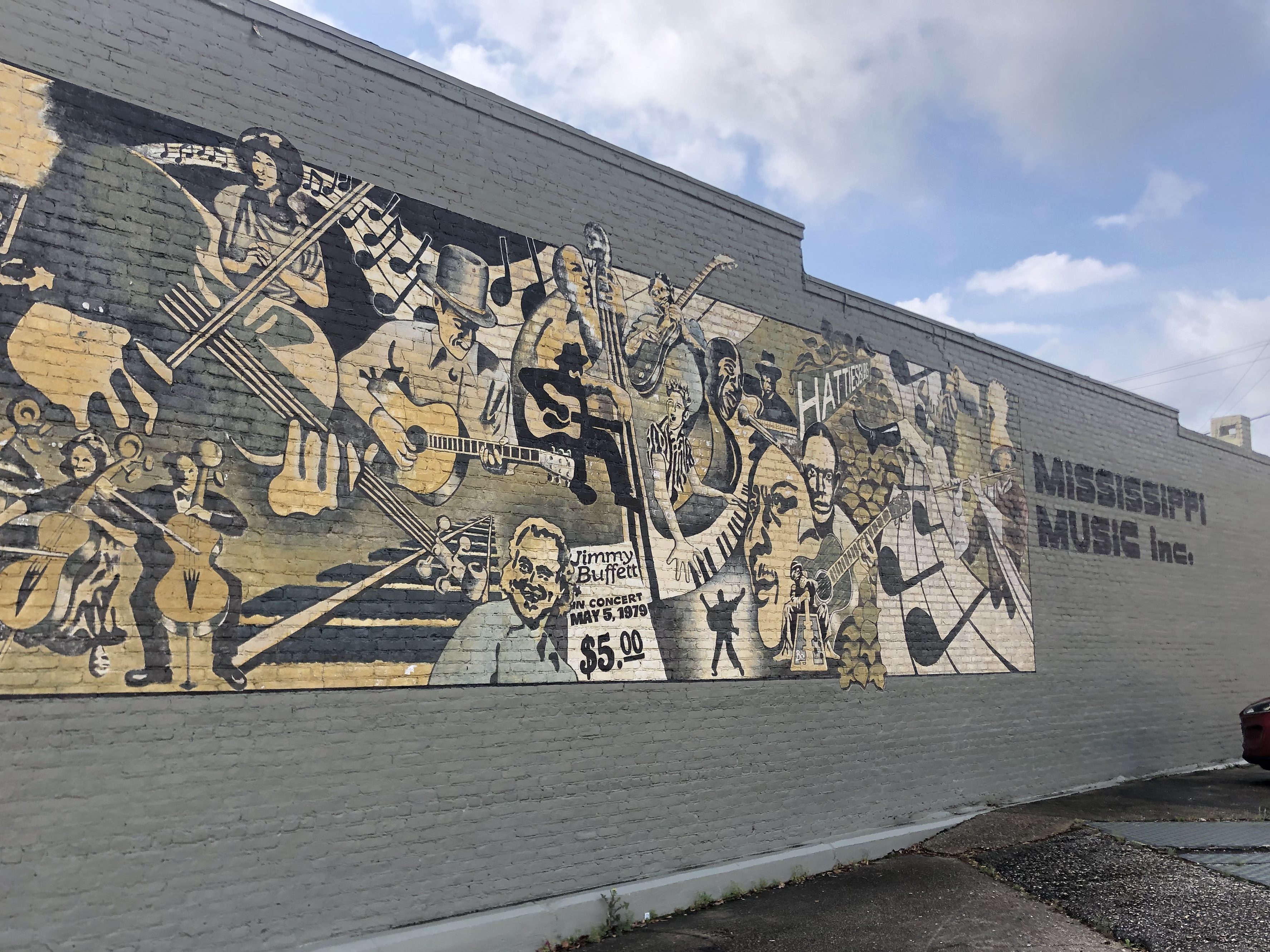
Other evidence of Hattiesburg’s musical bona fides is Mississippi Music Inc., a musical instrument sales and repair service and music teaching academy that opened in Hattiesburg in 1946.
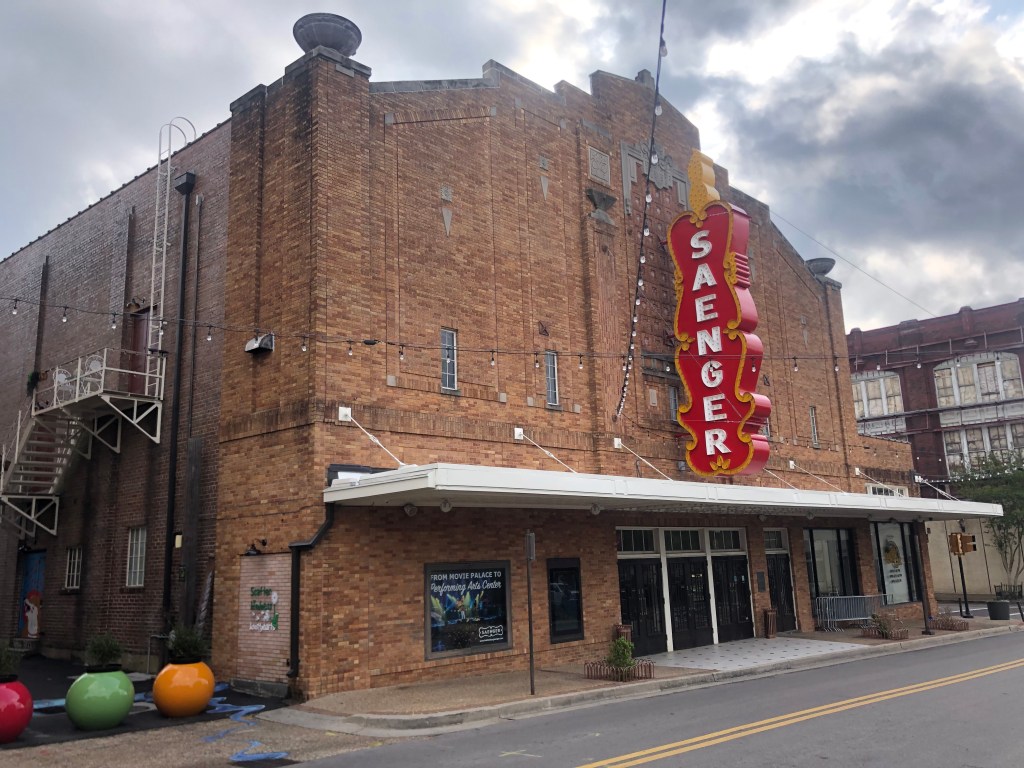
And then there’s the theater. I’ve come to the conclusion that one of the quickest, surest ways to measure a town’s cultural health is to see what they’ve done with their historic theater. Hattiesburg’s Saenger Theater was built in 1929 as a huge, thousand-seat silent movie theater, and it had an equally-impressive 778-pipe theater organ. The theater remained open for about 45 years, and closed in 1974. Along the way the organ (largely obsolete after the introduction of talkies) was sold off.
The city of Hattiesburg acquired the theater from Saenger, restored it, and (here’s the impressive part) managed to track down the original organ, purchased it, and put it back into the theater. The theater underwent a more extensive renovation in 2000, and today it serves as a major performing arts venue.
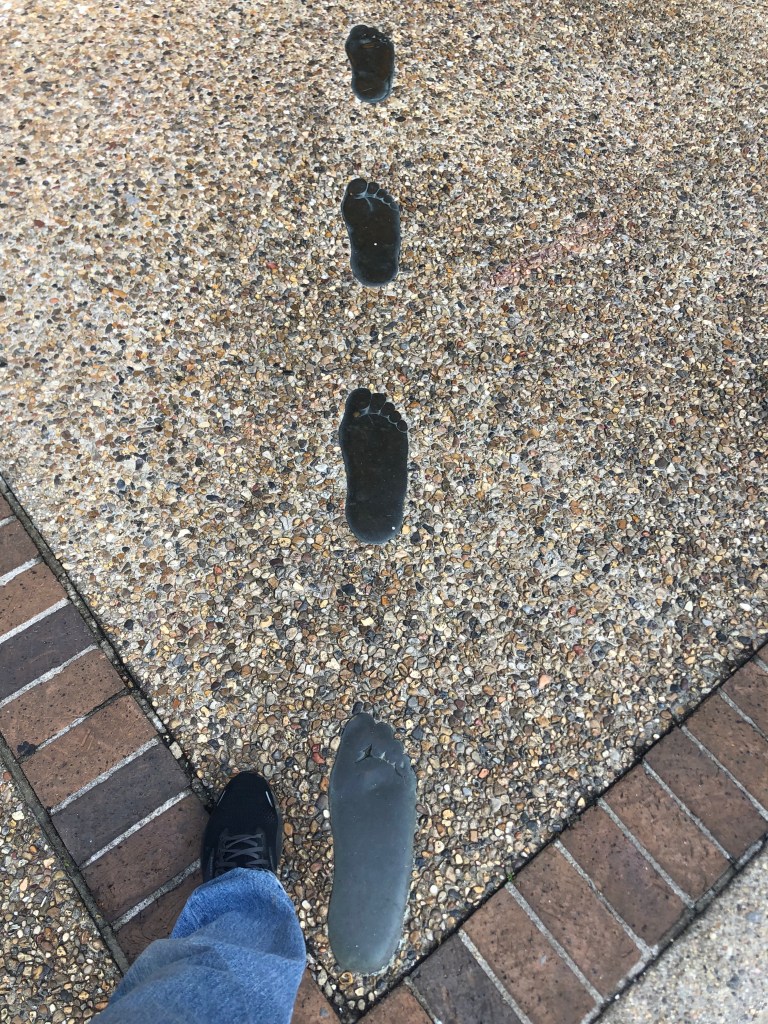
While I was exploring the downtown I was literally walking in the footsteps of a long-ago Hattiesburgian (?) named John Wesley Farley. Mr. Farley had once been enslaved, but eventually became a successful businessman in town. As a publicity stunt that I still don’t quite understand, he had bronze casts made of his size-14 feet. These were set into the sidewalk in front of a department store in 1903. The sidewalks were replaced in 1983, but the public works dept returned the footprints to their original location. Somehow that warms my heart.
Another impressive story about Hattiesburg’s commitment to historic preservation is found at the old high school.
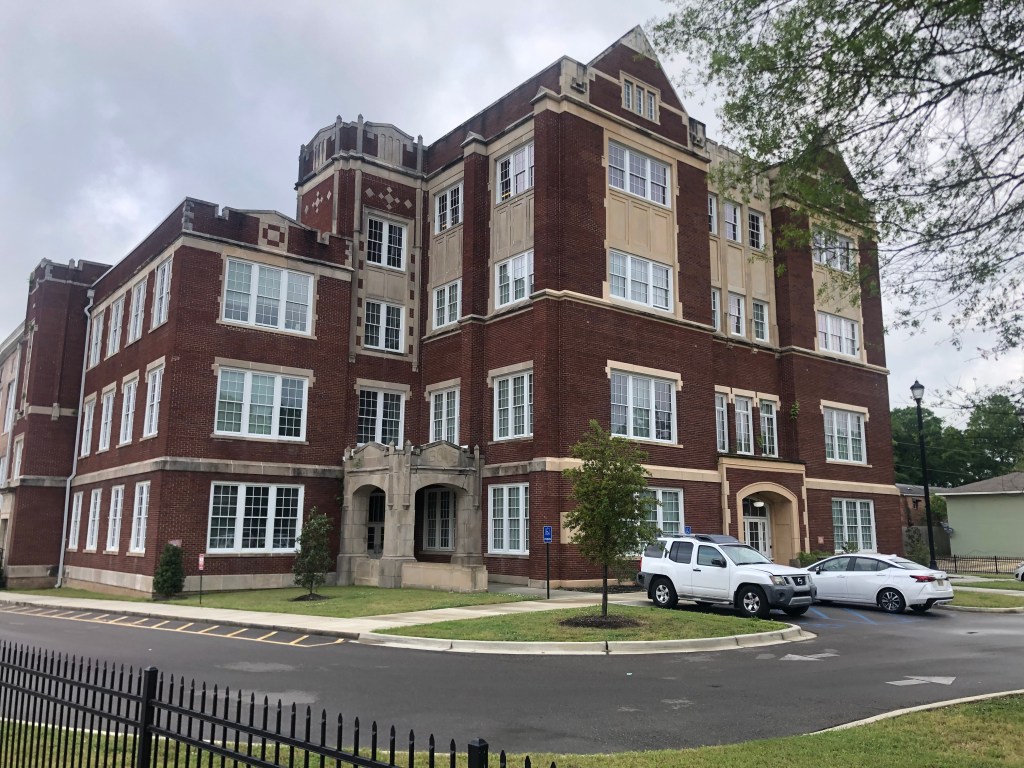
Originally built in 1921, the original high school building closed in 1959. After being used as the school district’s administrative offices for a few years, it became an antiques mall–which is typically the last stop before the wrecking ball. However, in 2002, the local historical society acquired the property with the intention of renovating it. Then Hurricane Katrina hit in 2005, And if that weren’t enough, arsonists torched the place in 2007. Despite all this, a project was funded to restore the historic structure and convert the interior to senior apartments. I consider this another sign of a healthy city: addressing civic needs while preserving the town’s history.
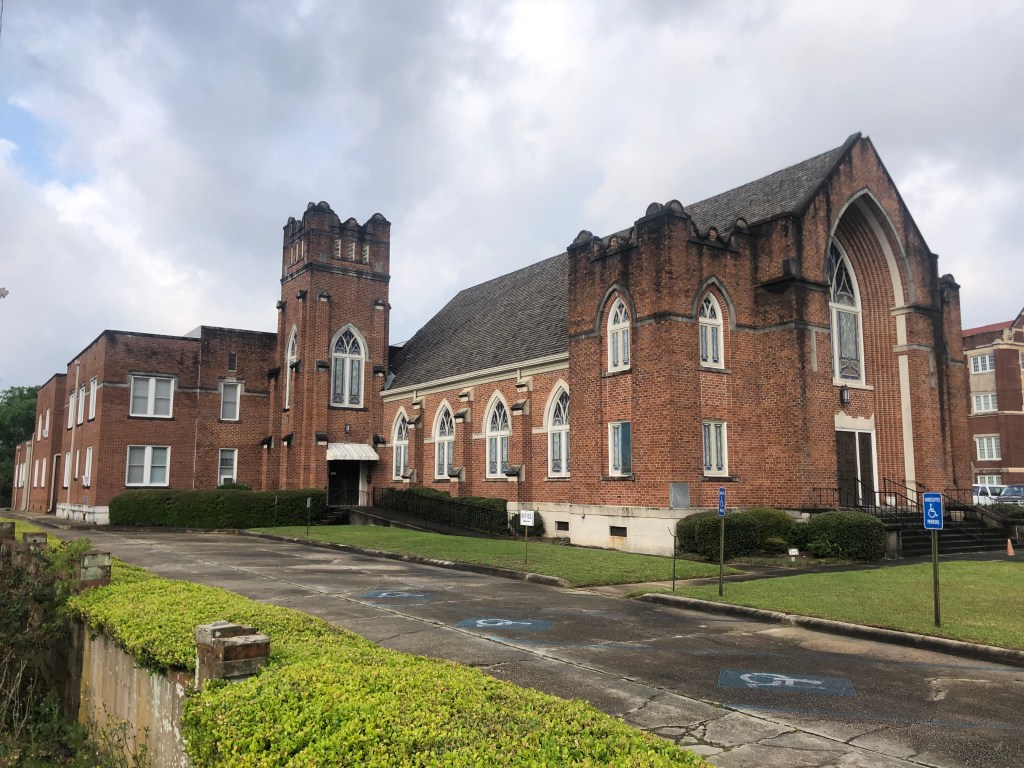
Oh, and I just wanted to include this photo of True Light Missionary Baptist Church (a name which rivals “the Holy Ghost Big Bang Theory Pentecostal Fire and Brimstone Mission Temple Firework Stand“). Anyway, this huge, impressive structure was built in 1903 and renovated in 1990. I can only imagine what it must be like in there on a Sunday. They also run a childcare center and various other missions.
But what really delighted me (a phrase I seldom use) most about Hattiesburg was the “pocket art gallery” on a random alley behind a parking garage. At first I simply noticed what I thought were some tiny plastic figures that some child left on a water meter.
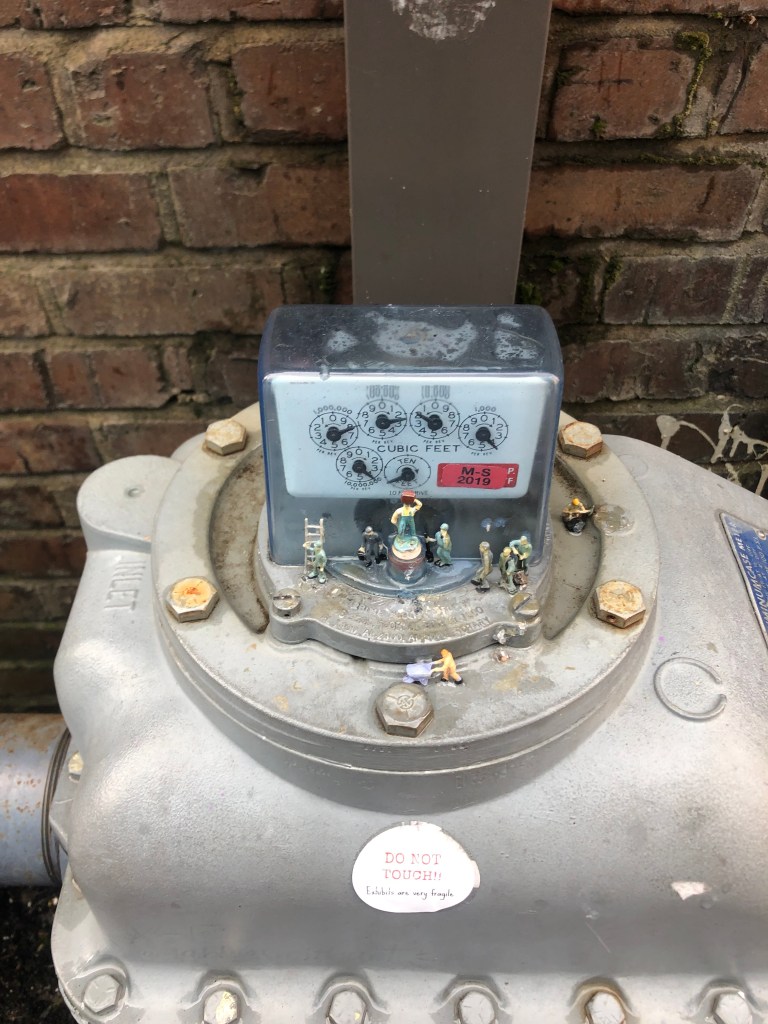
But then I saw more….
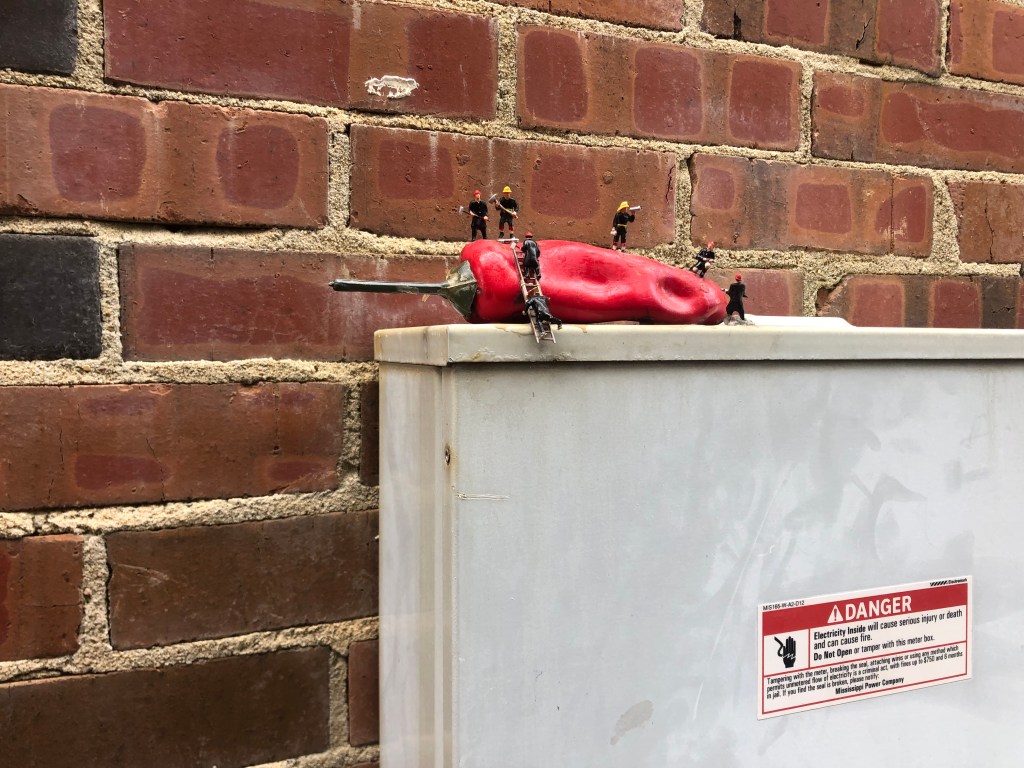
…and more…
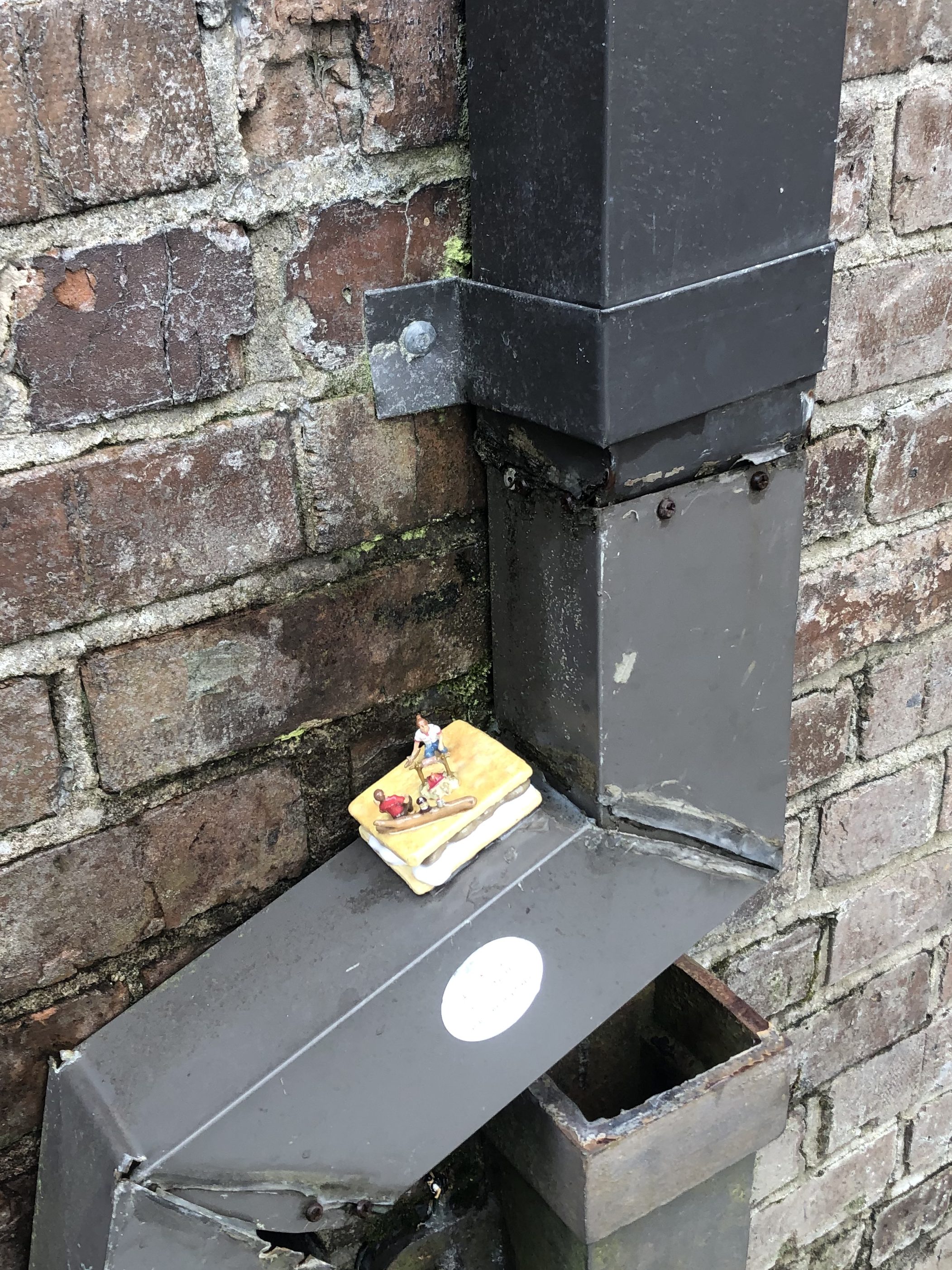
…and more.
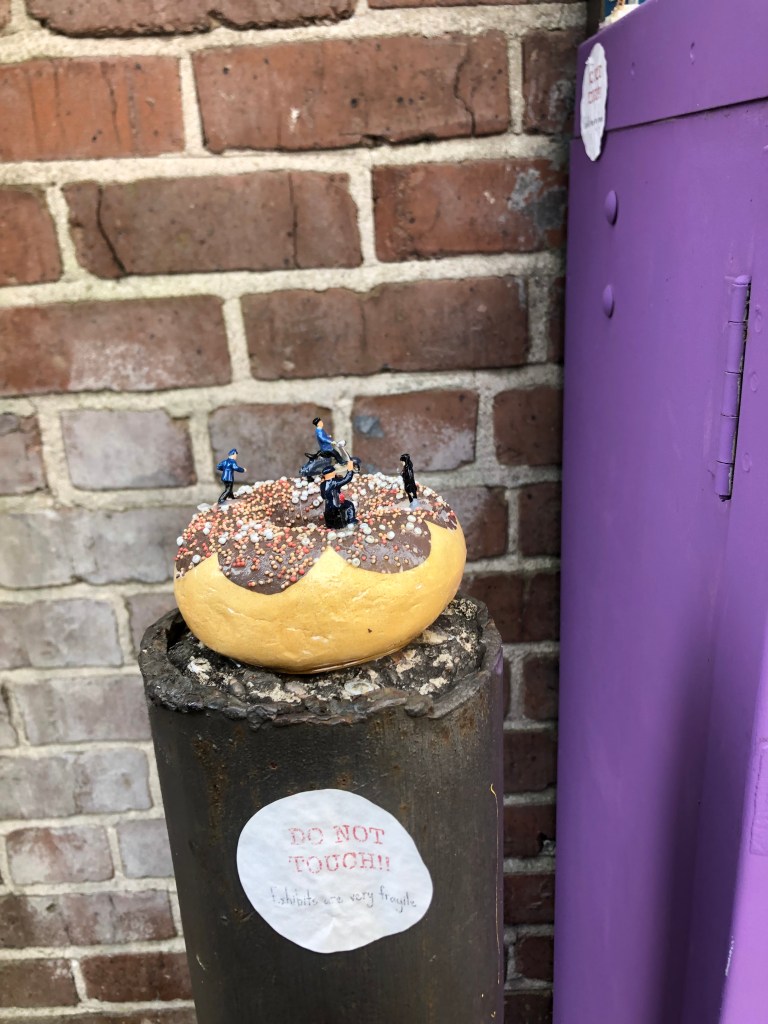
Soon, I realized the the alley was full of random, whimsical art installations.
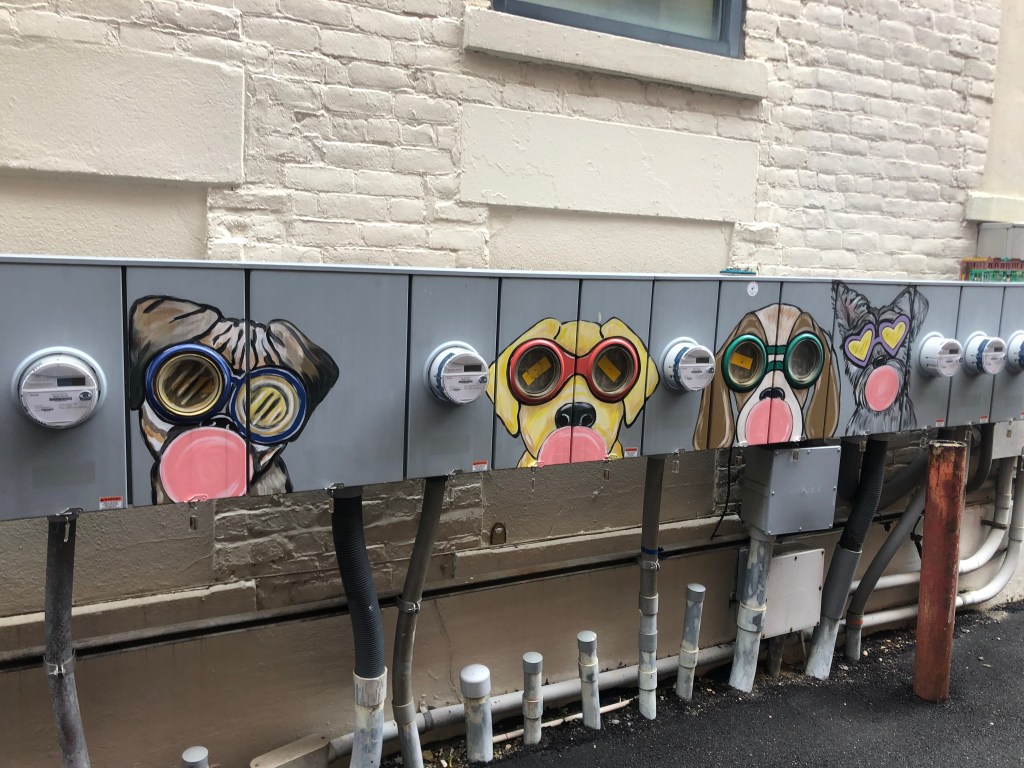
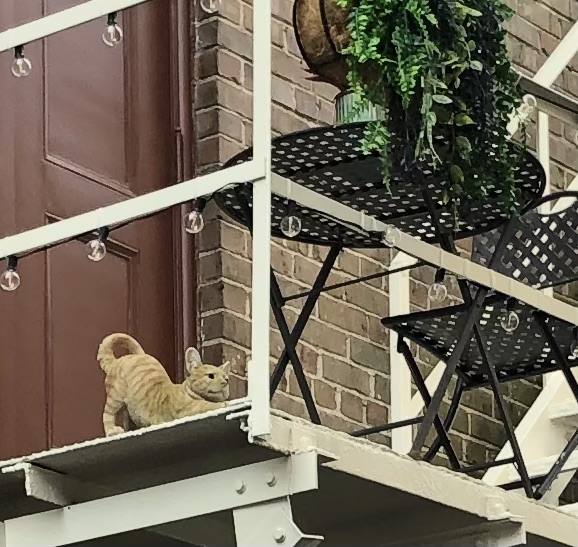
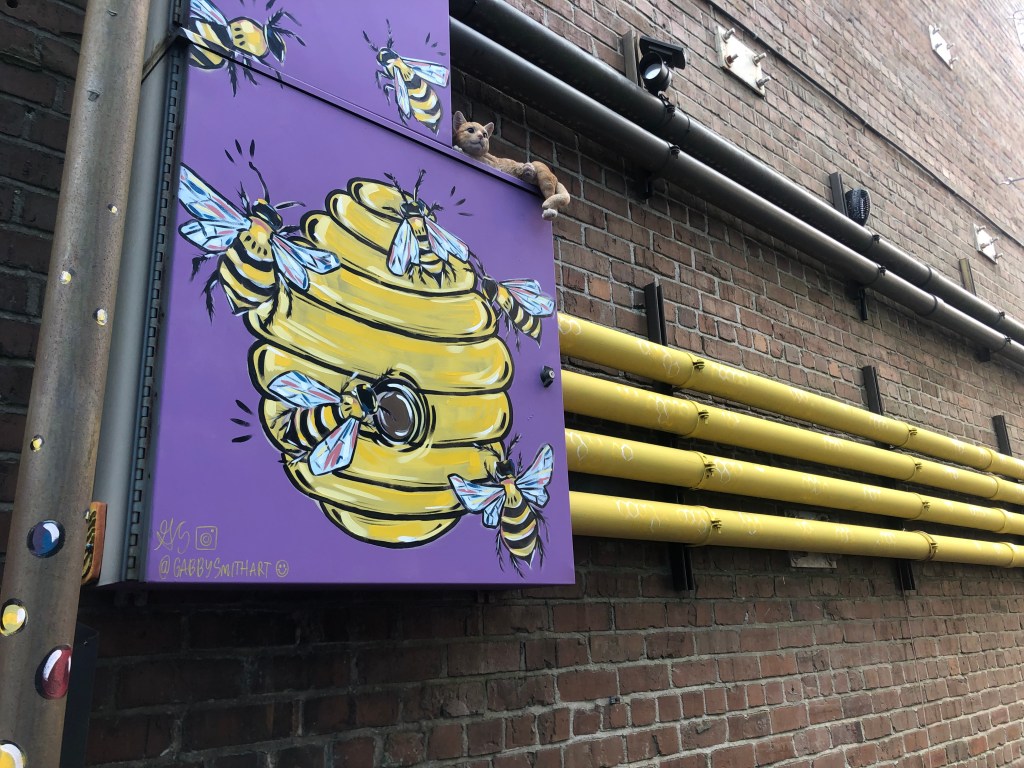
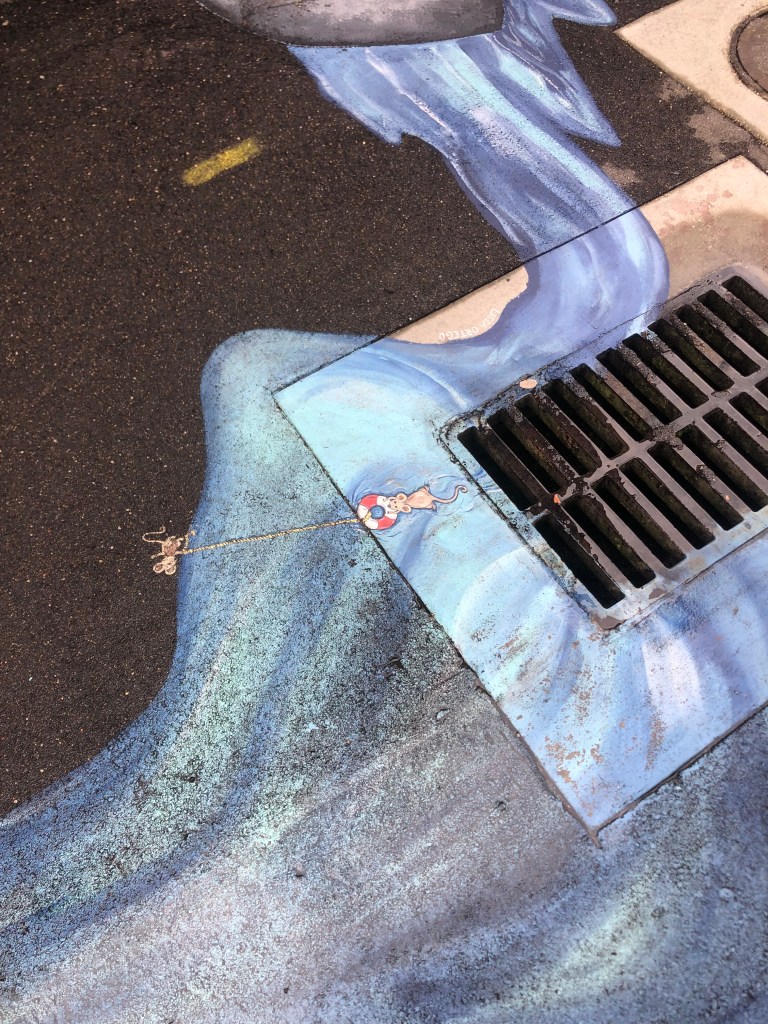
What I found most notable was that these small, delicate installations were unmolested. So that’s another sign that Hattiesburg values the arts.
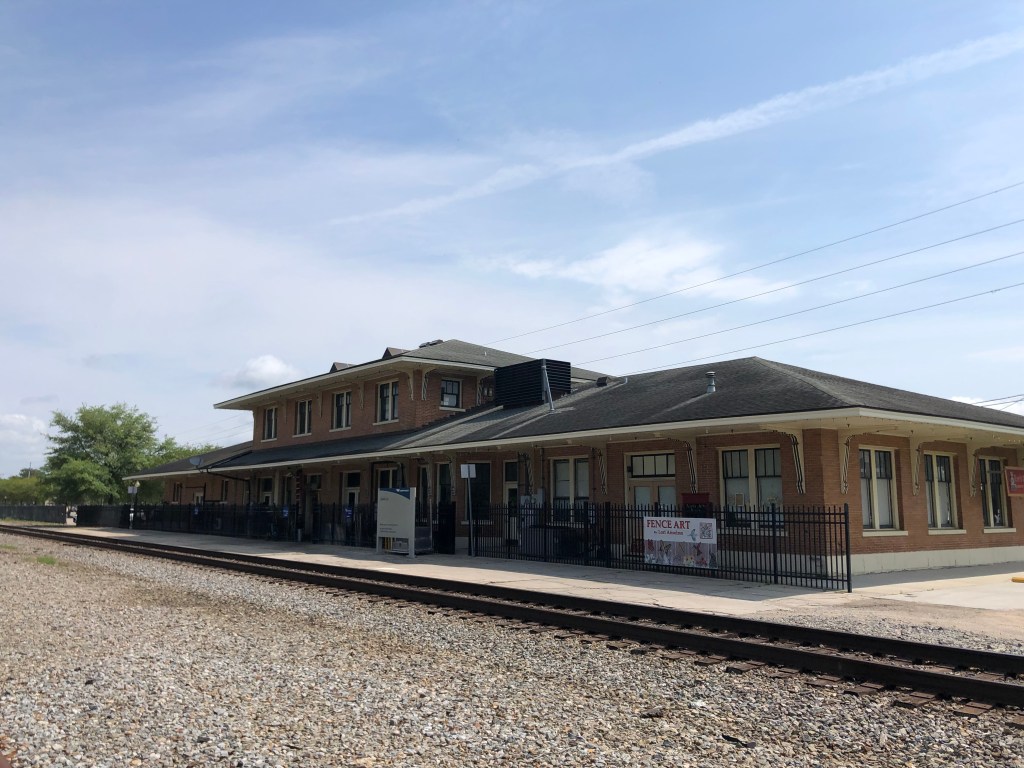
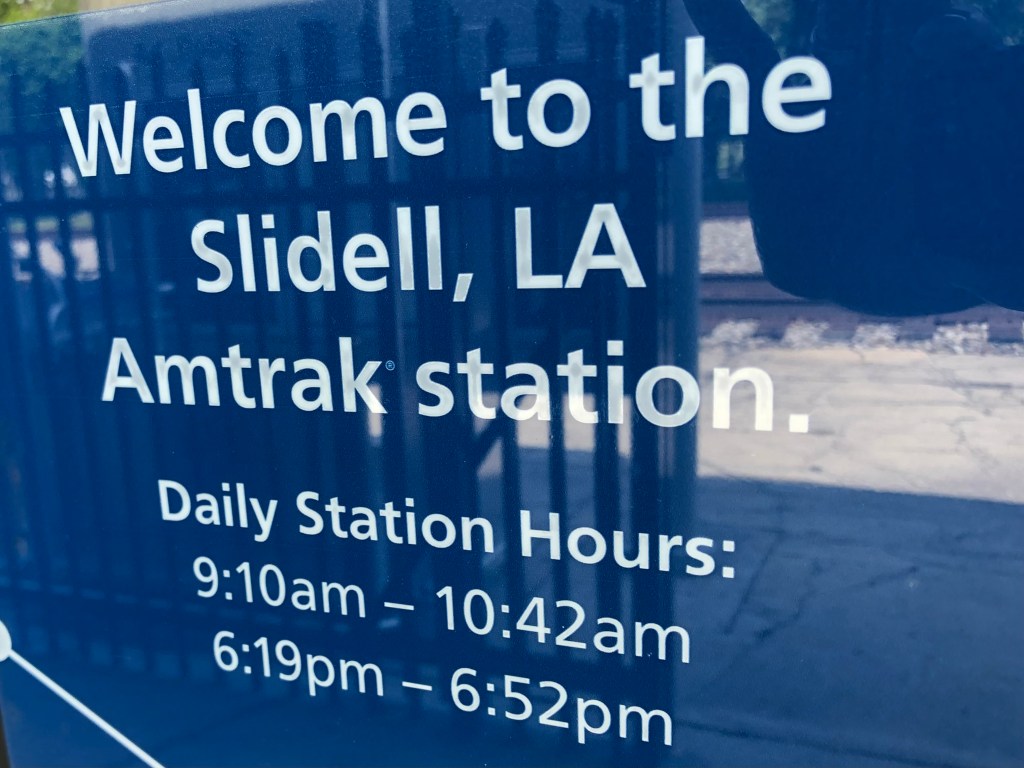
I hated to leave Hattiesburg–my new favorite city–but it was time to head south to the Big Easy. Along the way I stopped for gas in Slidell, Louisiana, which was the last stop before New Orleans. Like so many of these towns, Slidell (pop: 29,000) has a historic railroad station. This one, built in 1913, is still a functioning Amtrak station, but it also houses a popular restaurant and an art gallery. I’m starting to feel that the Deep South has something to teach the rest of us about preserving historic civic buildings.
After getting gas and a coffee, I eased onto the 5-1/2 mile long causeway that crosses Lake Ponchartrain and drops you into New Orleans.
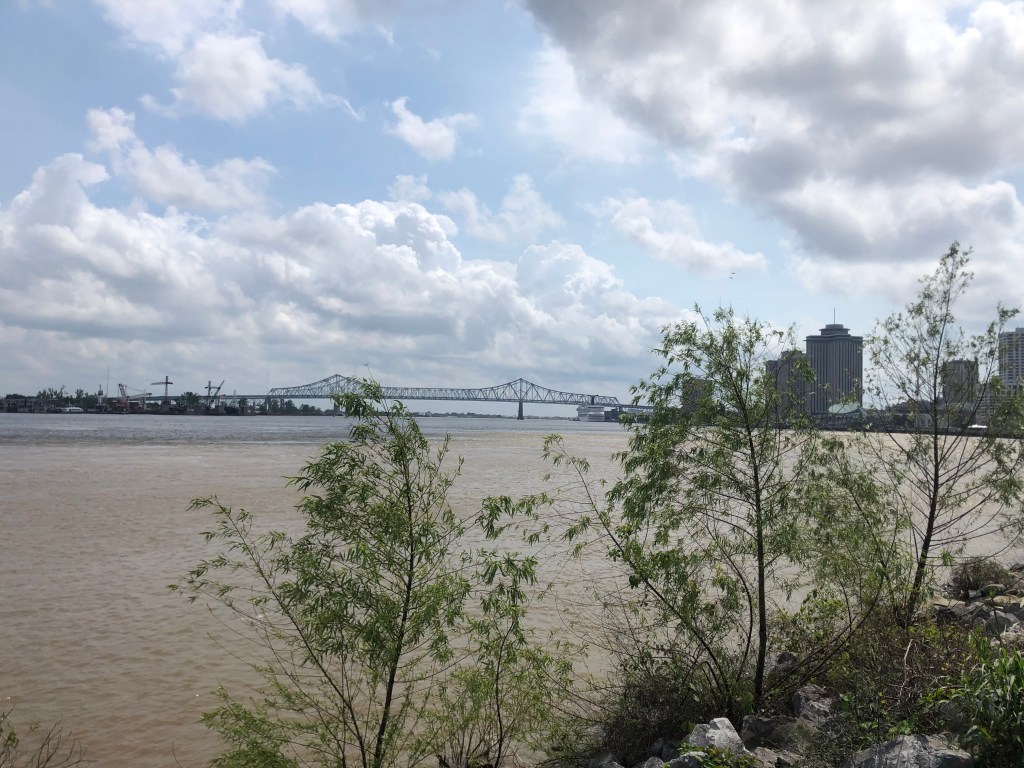
New Orleans (pop: 380,000) is of course a historic, culturally-rich, music-infused city. It’s also almost as hard to navigate by car as San Francisco. My goal was to get to the New Orleans Jazz Museum, which required life-threatening maneuvers along the narrow streets, several illegal turns, and a 20-minute search for a parking spot. Alas, after all that, I found the door to the museum was locked. They’re closed on Monday. So I spent the afternoon walking around the French Quarter. It was actually a good way to end this trip. Music floated from every corner. There were street buskers, jazz combos playing in restaurants, stereos blaring from upstairs apartments, and a second line performance, to name a few. Heck, there was even a pair of obviously inebriated street beggars who decided to sing their appeal for funds (“Can you spare a buck?/We’re down on our luck.”)
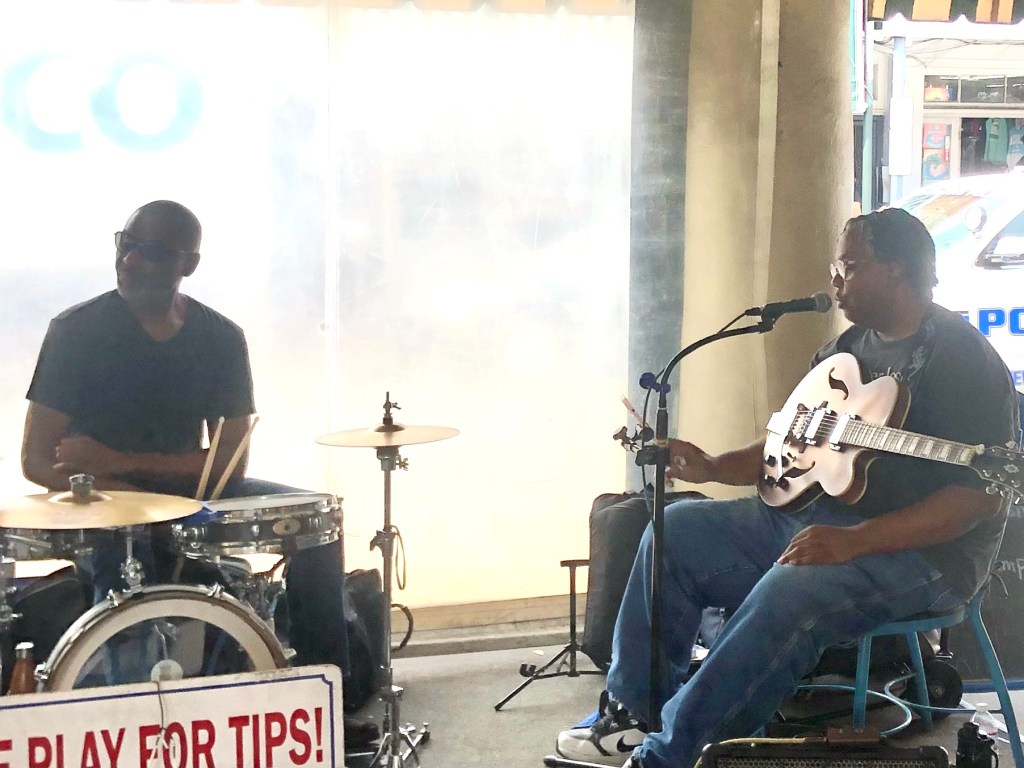
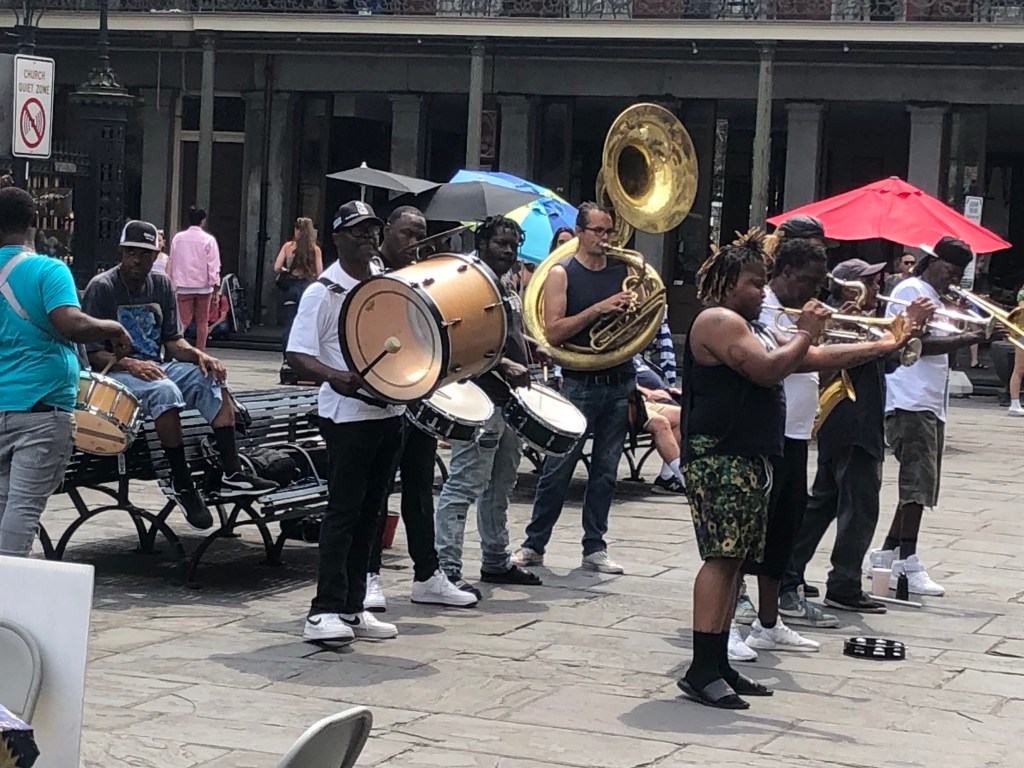
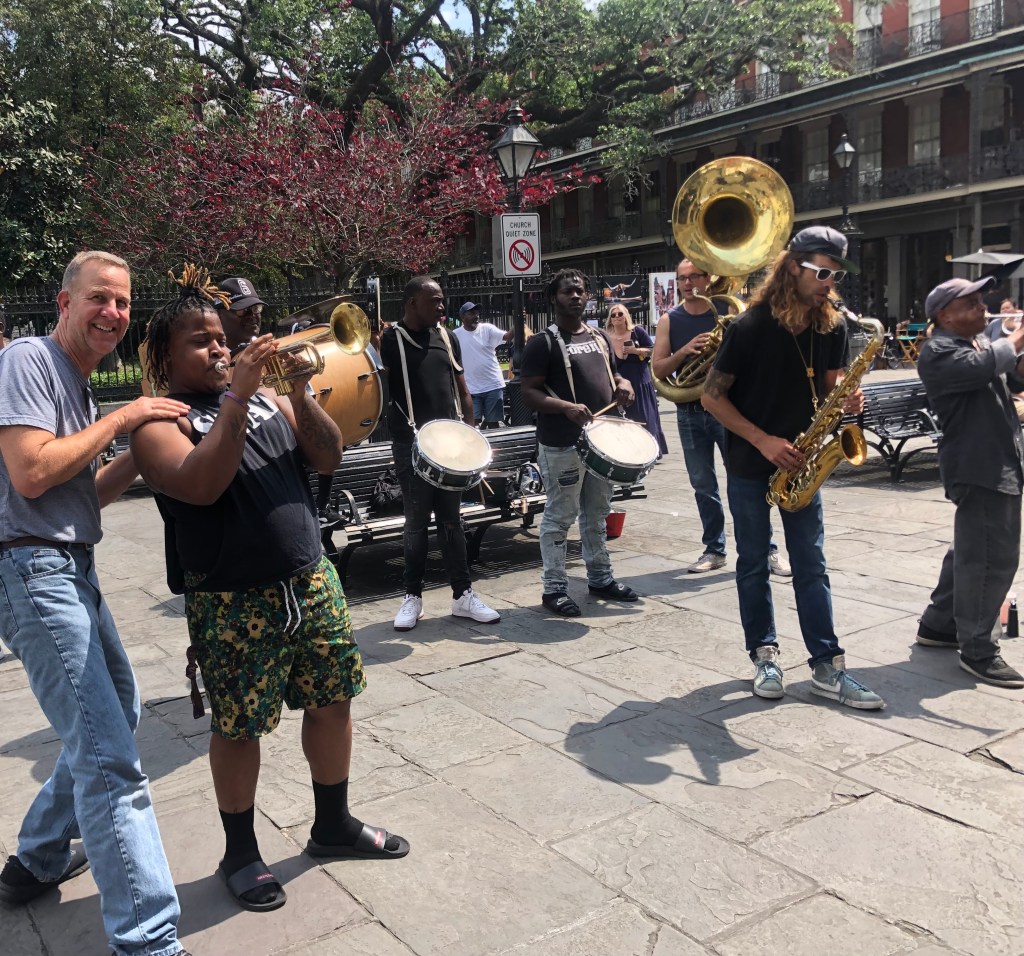
There are lots of different types of music played here in New Orleans, but the city is best known for its jazz. It feels like the natural progression from the other musical styles I’ve encountered on this road trip: Country, bluegrass, soul, R&B, Memphis blues, delta blues, and so on. I’m no expert on any of this music, but I can understand how they’re related–how they grow out of a uniquely American experience. I intend to expand my listening when I get home, following up on some of the styles and artists that I’ve encountered.
So that’s it for the trip. As always, I’m thankful for all the people I encountered along the way who’ve patiently explained their cities to me, taken me on tours, cooked food for me, served me drinks, and even cut my hair. I really love the people of this country.
I’m at the Airport Hilton getting ready to fly home on an early morning flight. But there’s one thing left, and that’s the…
BREW OF THE DAY
While wandering around the French Quarter I paid a visit to the Crescent City Brewhouse. They have a good selection of beers, all of which they brew themselves. I asked my server what he recommended, and he told me his favorite hands down was the “Weizenboch.” So that’s what I had–living on the edge.
This is a German style beer (as should be obvious from the name). The appearance screams the opposite of a Sleepy Hollow beer (i.e., it has a very prominent head). All that foam ensures an attractive presentation and it makes the first few sips especially enjoyable. The appearance is very cloudy, with a golden tan color. At only 6 percent ABV, it’s well suited for a mid-afternoon drink.
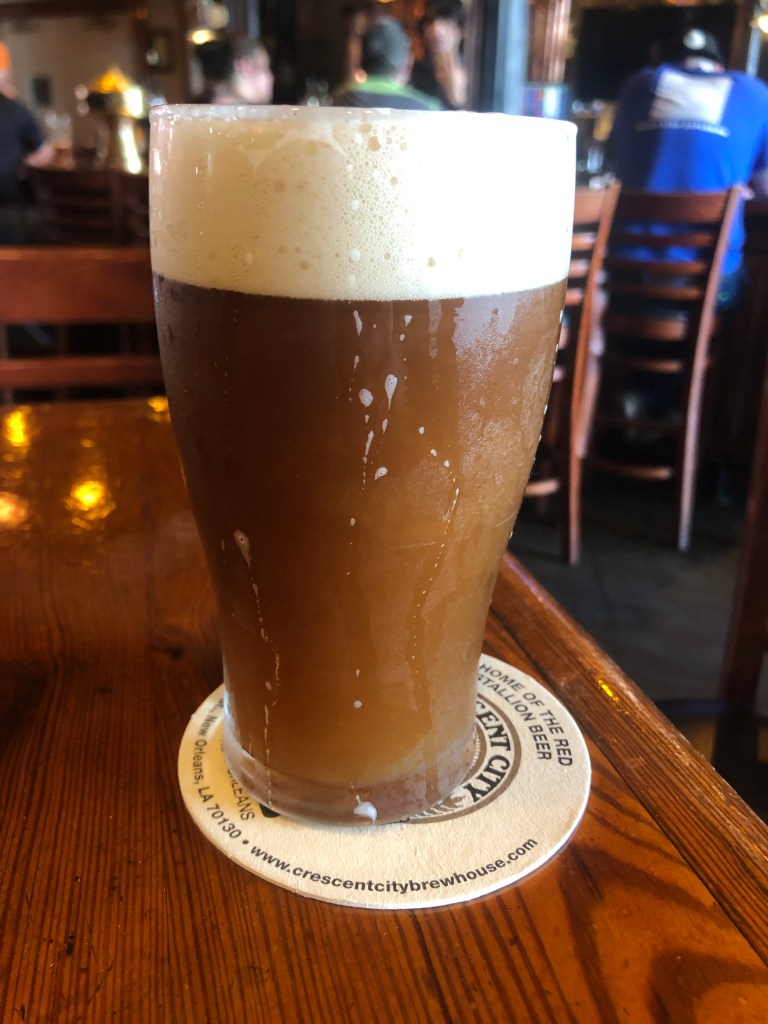
The taste is incredibly yeasty–like sourdough starter. Notes of banana peel and clove are prominent. Maybe a tiny bit of lemon? It’s not too hoppy (unlike some of the English styles I normally drink). Overall this is a very drinkable, approachable beer. It gets a solid 4 stars. Heck, I’m feeling good at the end of this trip; let’s give it a 4.5.

 Chasing Phantoms
Bravo! Excellent post and wrap up. So much to see and do down there. Thanks for sharing the adventure!
LikeLike