
NOTE: As we take the weekend off from our Halloween tale, I figured I’d update my loyal readership on my latest travels (which is, after all, the putative purpose of Chasing Phantoms.)
Last week I took a motorcycle trip in a formerly fascist country that’s now run by a far-right government, where people treat traffic laws as mere suggestions, and where still-active volcanoes periodically spew lava. What could go wrong?
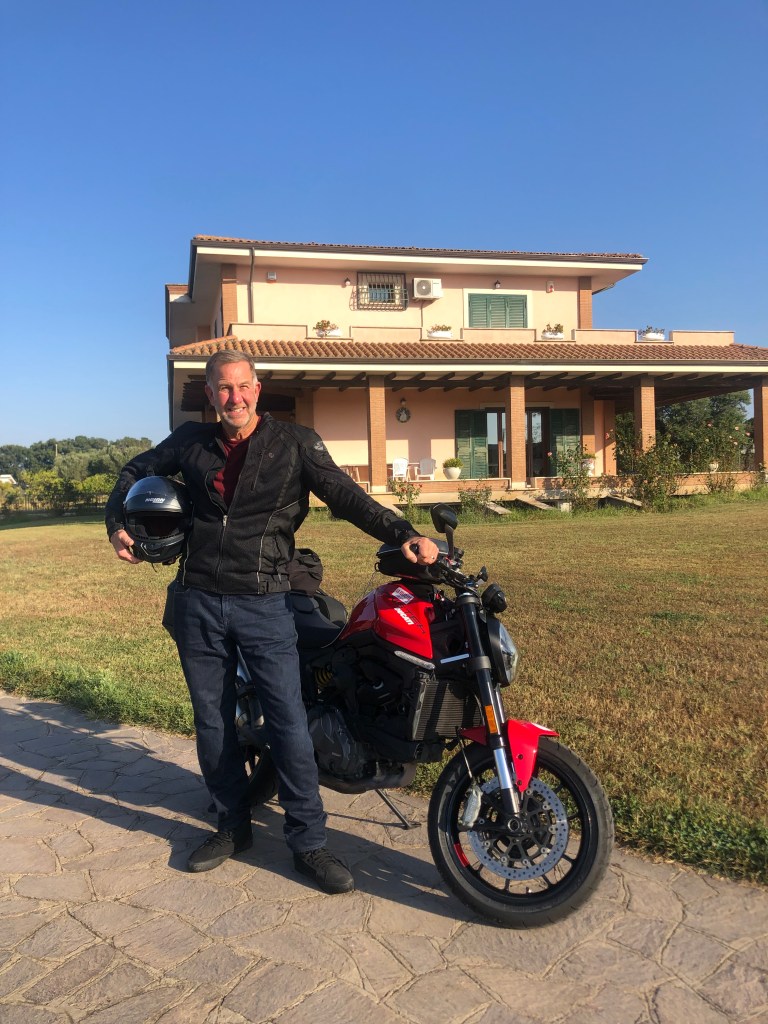
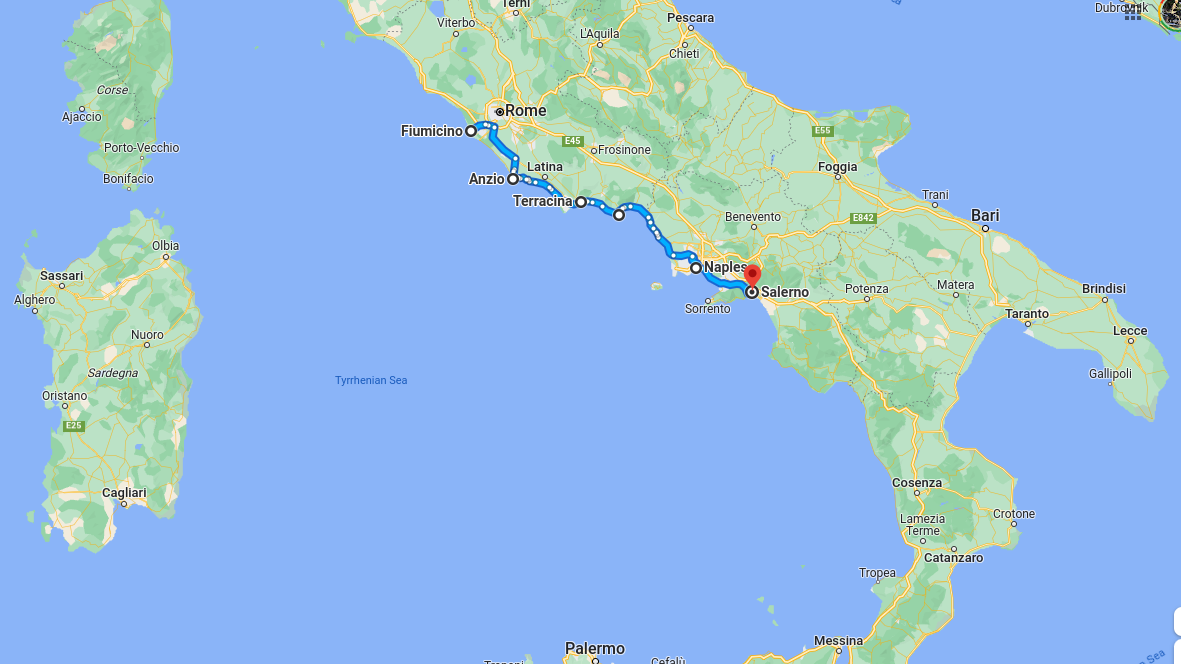
I speak, of course, of Italy. My wife and I decided to take a trip to Europe, and as part of our Preserve The Marriage Pact (whereby we try to keep at least two countries between us while on vacation), she went to Portugal and I got The Boot. I rented a Ducati motorcycle with the unsettling model name “Monster,” and started cruising down the Italian coast from Fiumicino to Salerno.
Now, the Internet already has tons of reviews and photos of Italy’s coastline, so I’m not going to add to that saturated theme. But I would like to make a few observations about Italy’s drivers. You may have heard that they’re insane. That charge is patently unfair–to the mentally ill.
Let me paint a picture for you: Most of the roads I’ve been riding are two lanes (i.e., one in each direction). The lanes are narrow, but they’re sufficient to allow one car width each. So I can comfortably keep the Monster in the center of my lane. Periodically another motorcycle will pass me in my lane, which makes for a pretty tight squeeze, but you get used to it. However, cars do the same thing; they come up behind me and pass me in my lane.
The real challenge, though, comes from the oncoming vehicles. In my lane. Seriously. Sometimes oncoming drivers find that there’s no room left to pass someone in their own lane, so they shift over to the opposing traffic lane to pass. But they are totally unconcerned about the presence of other vehicles. As a result, many times I looked ahead to see an Alfa Romeo coming straight at me at 100 km/hour. I get the sense that whoever’s got the smaller vehicle is the one who’s expected to take evasive action, so, since I’m on a motorcycle, I move toward the right shoulder and let the guy pass me. Did I mention this all takes place in my lane?
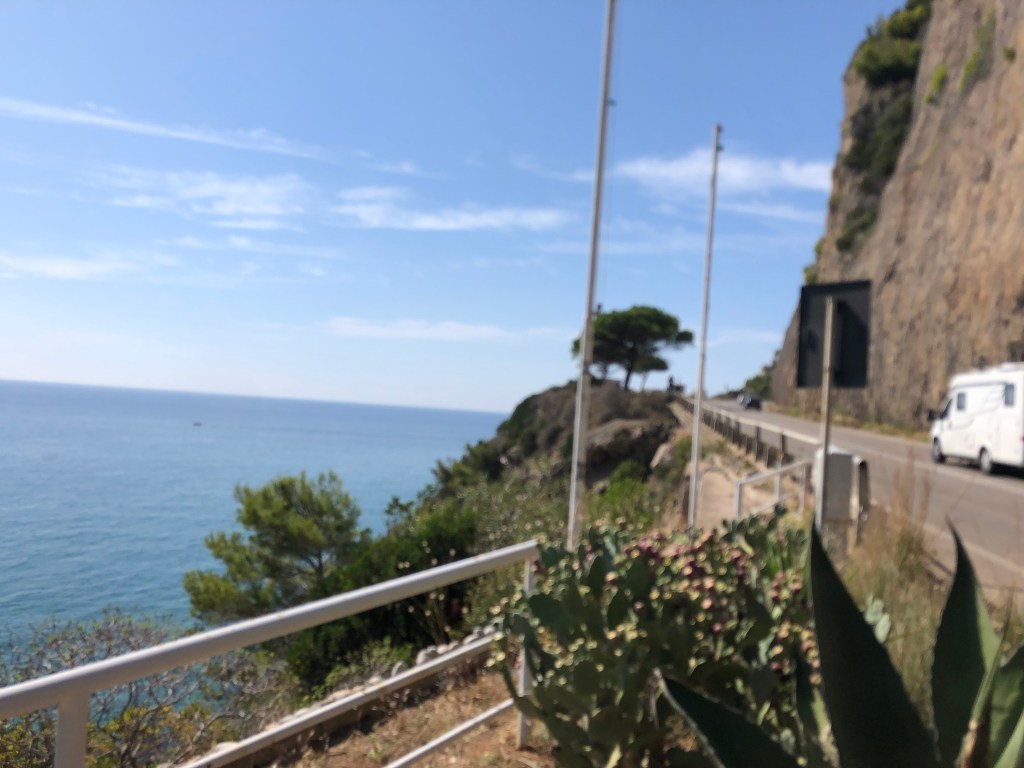
The other notable thing is the speed of traffic. These coastal roads have posted speed limits of anything from 30 km/hr up to 80 km/hr. (The inland “Autostrada” goes up to 130 km/hr.) But on all these roads they might as well display meaningless symbols like the one Prince confusingly adopted, since the actual speed of traffic bears no relationship. Periodically you’ll see a sign that says “controllo della velocita con sistema Tutor,” which seems to mean that speed is monitored electronically. Either these are just empty warnings, or half of Italy’s GDP is based on traffic fines.

And then there’s Naples (pop: 900,000). Naples makes the hazards of Italy’s coastal motorways seem like the Autopia at Disneyland. Neopolitans must dodge speeding, swerving cars and everyone tries to avoid the motorcycles that are parked helter-skelter…and that’s just the sidewalks I’m talking about!
I can’t let this topic go without commenting on Italian parking. To be fair, these people are pros. They can parallel park a 9-foot minivan into a 9.5-foot space. And I have proof. Check out this video I took from my hotel room in Rome, figuring I’d need it for my insurance claim when the guy hit my motorcycle. Somehow there was no collision!
Anyway, it’s the smaller towns where one really experiences Italy’s charm. For me, the unsung gem is the town of Anzio (pop: 60,000), where I spent my first night. Anzio is an unpresupposing fishing port just a little south of Rome. Ancient ruins from the Roman empire (including the remains of Nero’s villa) still stand in the town, largely ignored by the residents. And, somewhat randomly, it’s a sister city to Brooklyn.
In January 1944 Anzio was the site of an Allied landing which slowly (over four long months) pushed the Germans out of their strongholds and eventually led to the liberation of Rome. This paved the way for D-Day and, ultimately, the defeat of Germany. Anzio seems to be quite proud of its accidental heritage, and the local museum is largely dedicated to the allied landing.
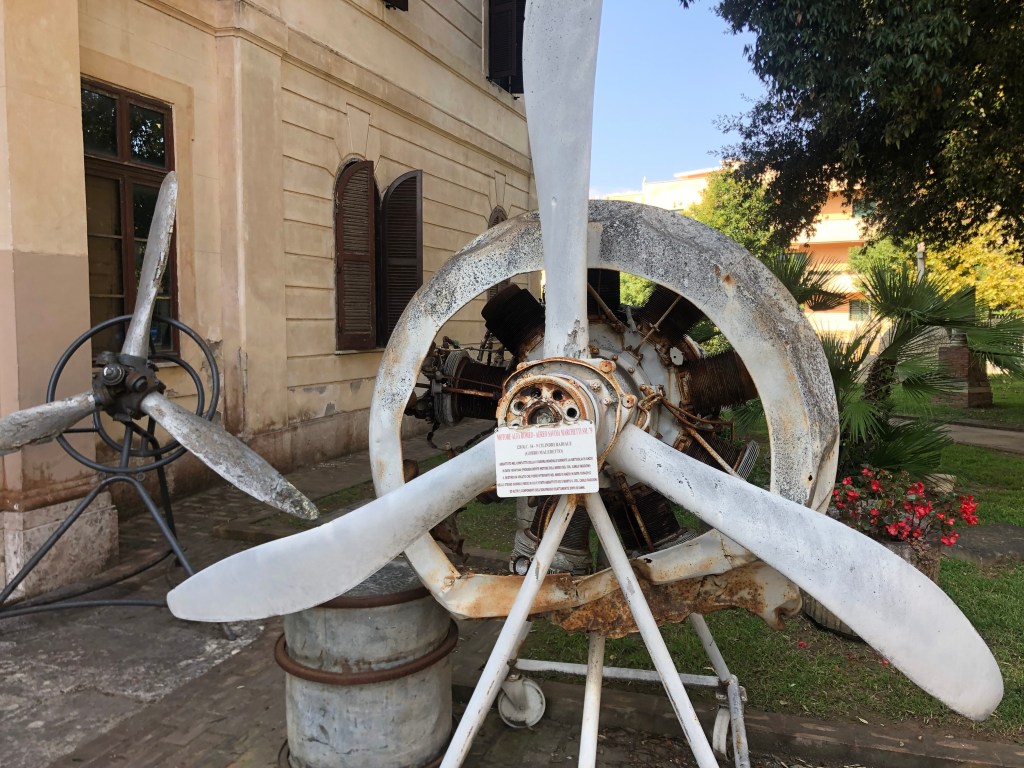
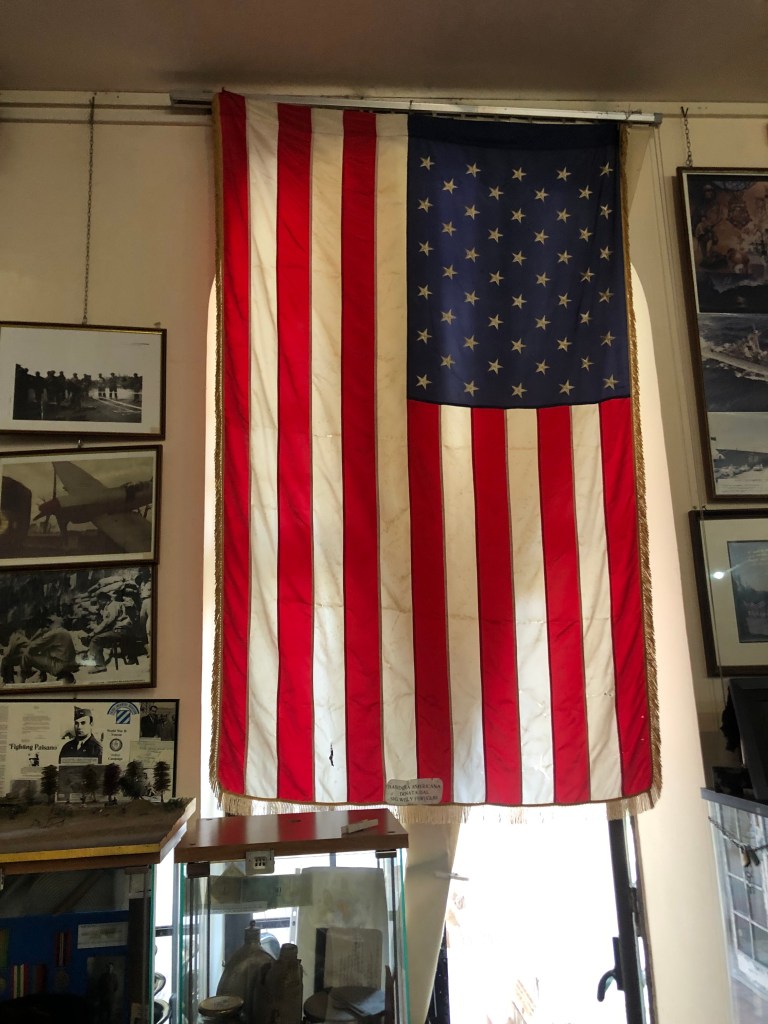
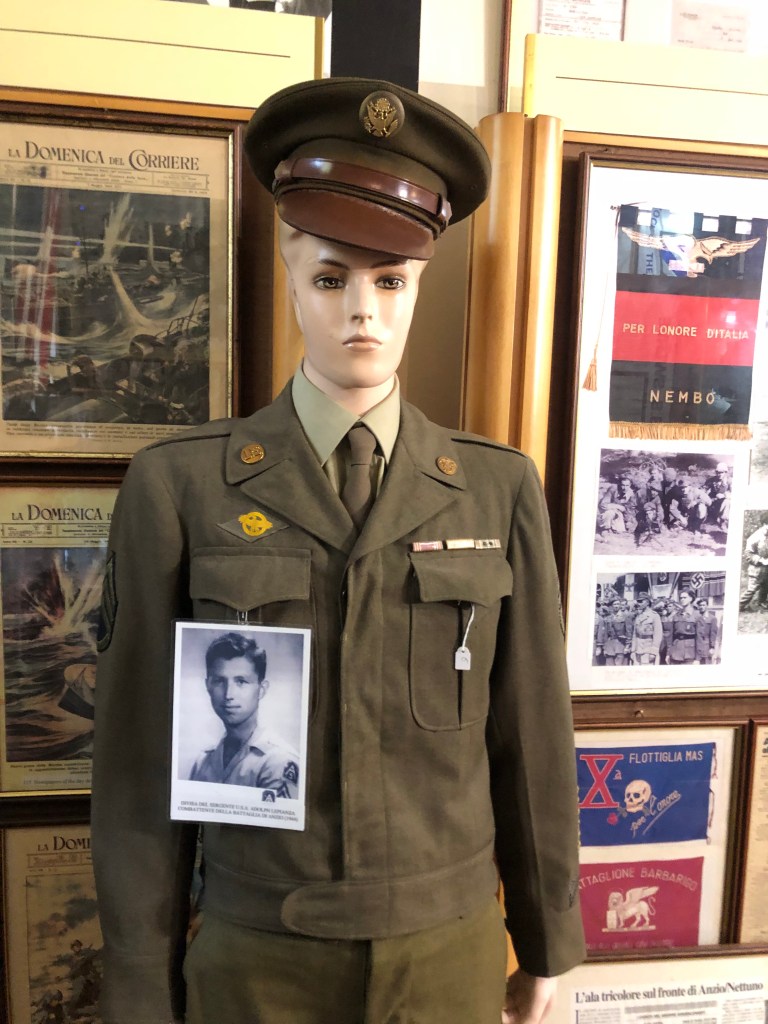
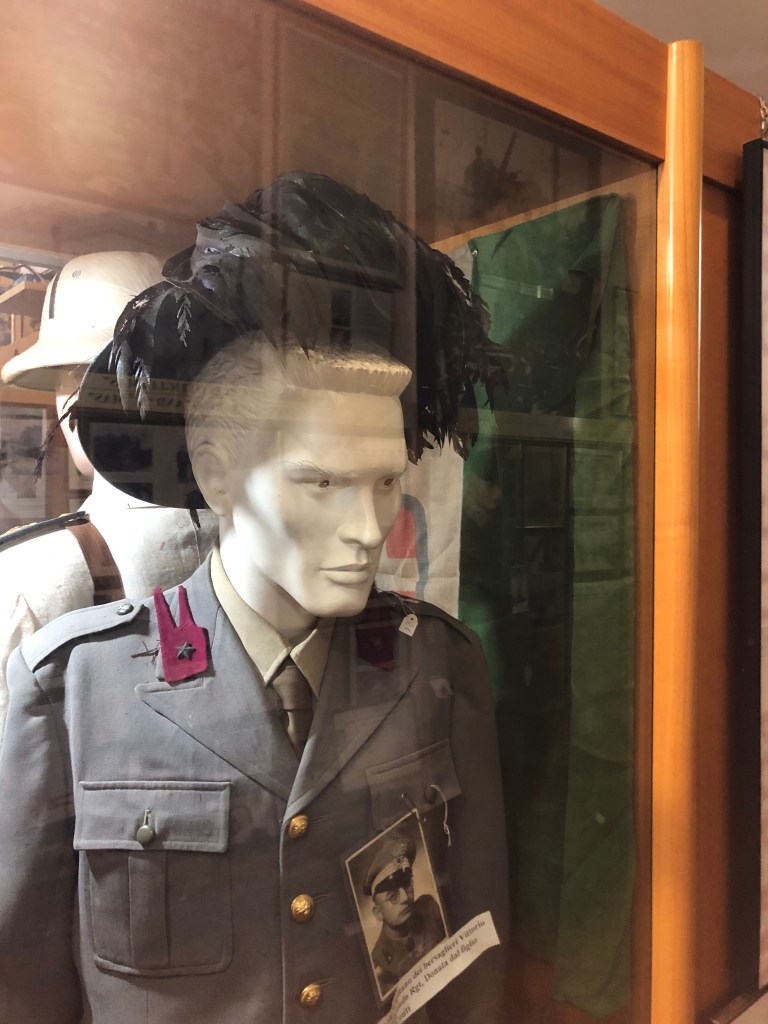
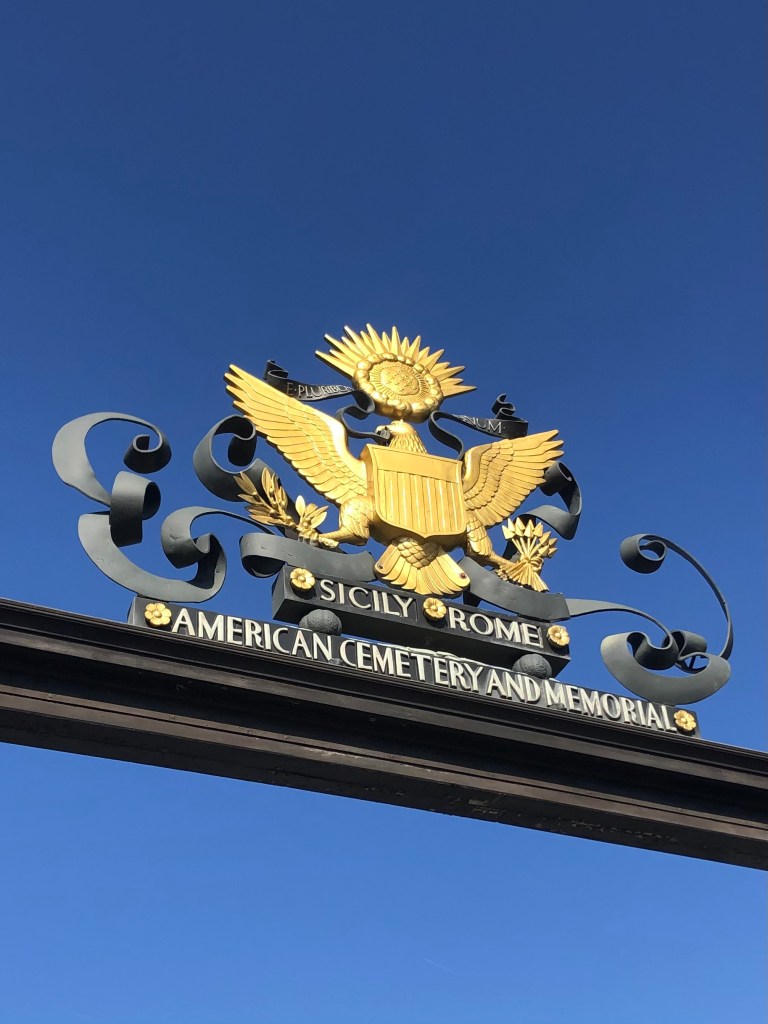
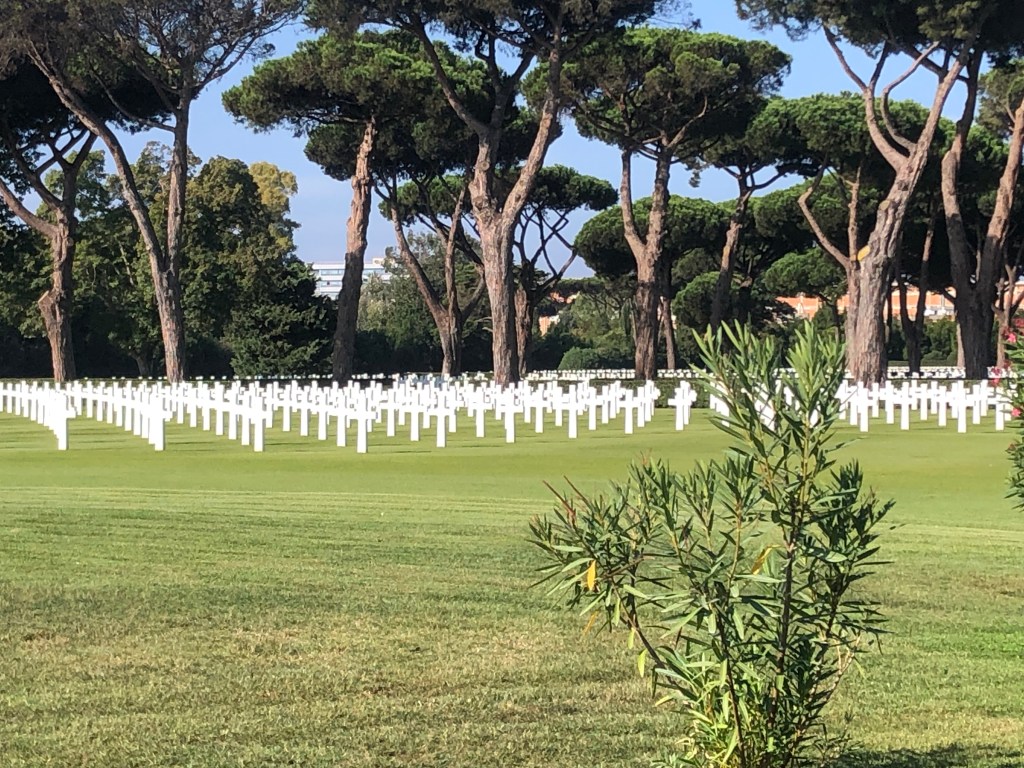
Anzio also hosts an American cemetery with the remains of over 7,800 American war dead.
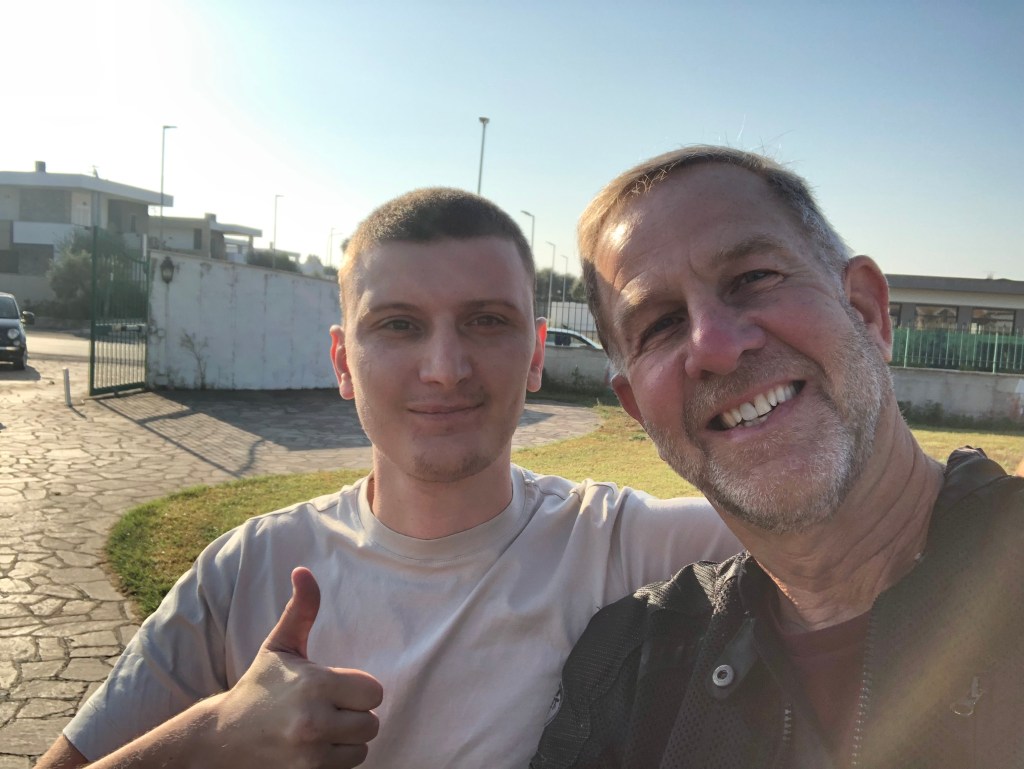
For me, the best part of Anzio was the Villa Romano B&B. It’s a spacious and comfortable home off the beaten track. It’s also the family homestead of brothers Alessandro and Francesco, whose family has deep roots in the town. They were the perfect hosts, and shared good tips for visiting the area. Francesco tells me they’re planning to open an American-style barbecue restaurant and plant a vineyard on the property. If you ever find yourself in central Italy, you must visit.
Anyway, I promised not to try to replicate the much-better Italian travelogues that are readily available online. So I’ll say “Arrivederci.” I’ll be back Monday with the next installment of A Dying Wish.

 Chasing Phantoms