Like Texarkana and many other cities across the country, Starkville once had a “Union Station.” Unlike many of those other Union Stations, Starkville’s was not grand or ornate or even impressive. It was pretty much just your basic depot, one of many on the Mobile & Ohio line. Behold:
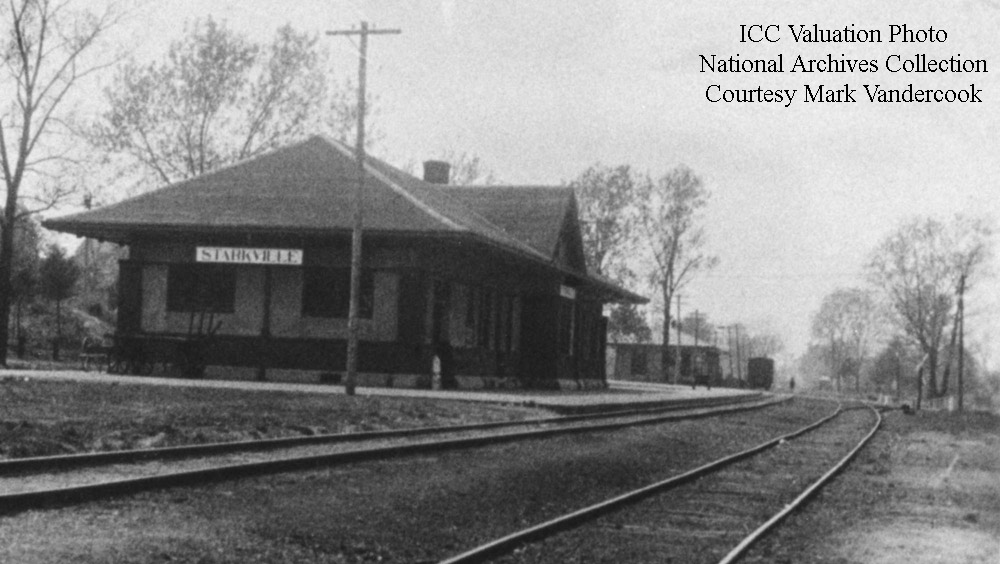
The station was built in 1914, and after the trains quit stopping in Starkville the building was converted into a pharmacy. In the course of time the pharmacy closed. And then, this morning, I had my breakfast in Union Station.
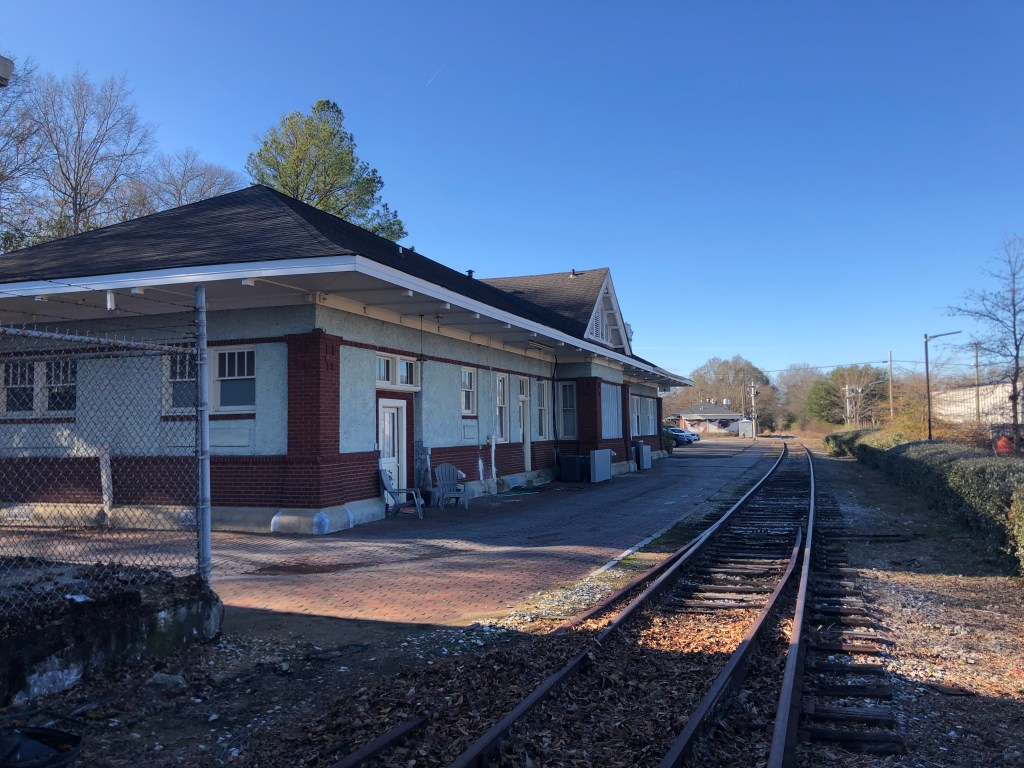
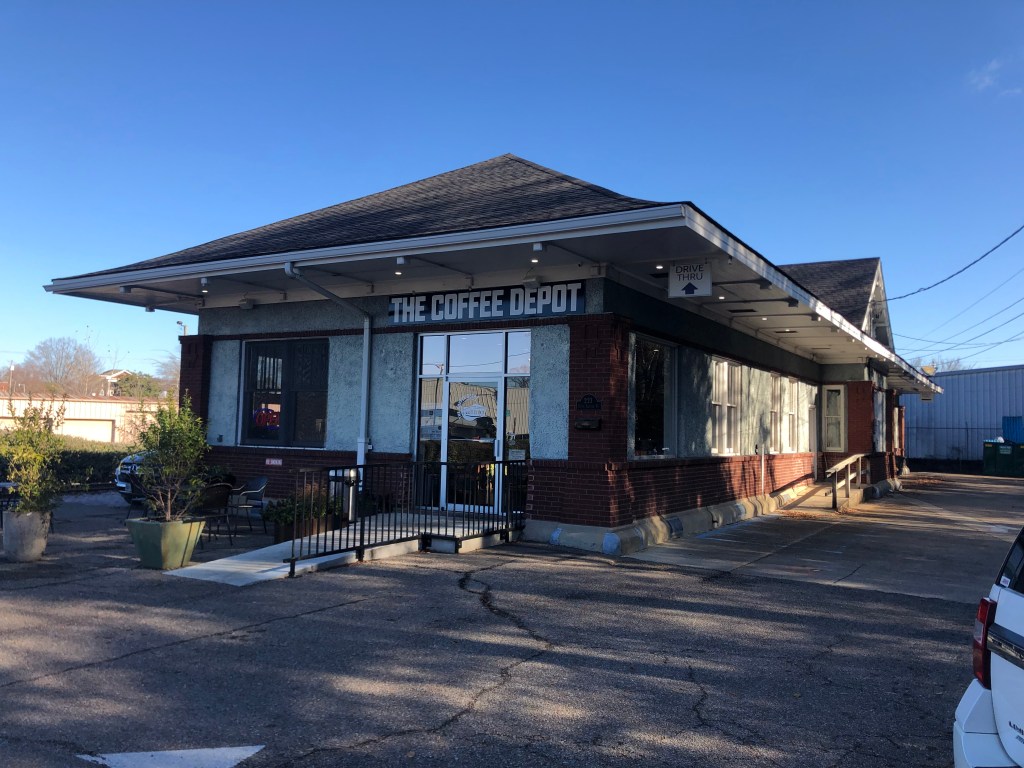
They’re calling it “The Coffee Depot” these days, though from the inside you’d never know it had once been a train station. Renovations were completed just last year, and it opened for business in June. The Coffee Depot is one of those modern, quality-focused coffee bars that cater to college students and what we used to call yuppies. It’s the first such place I’ve seen on my trip so far.
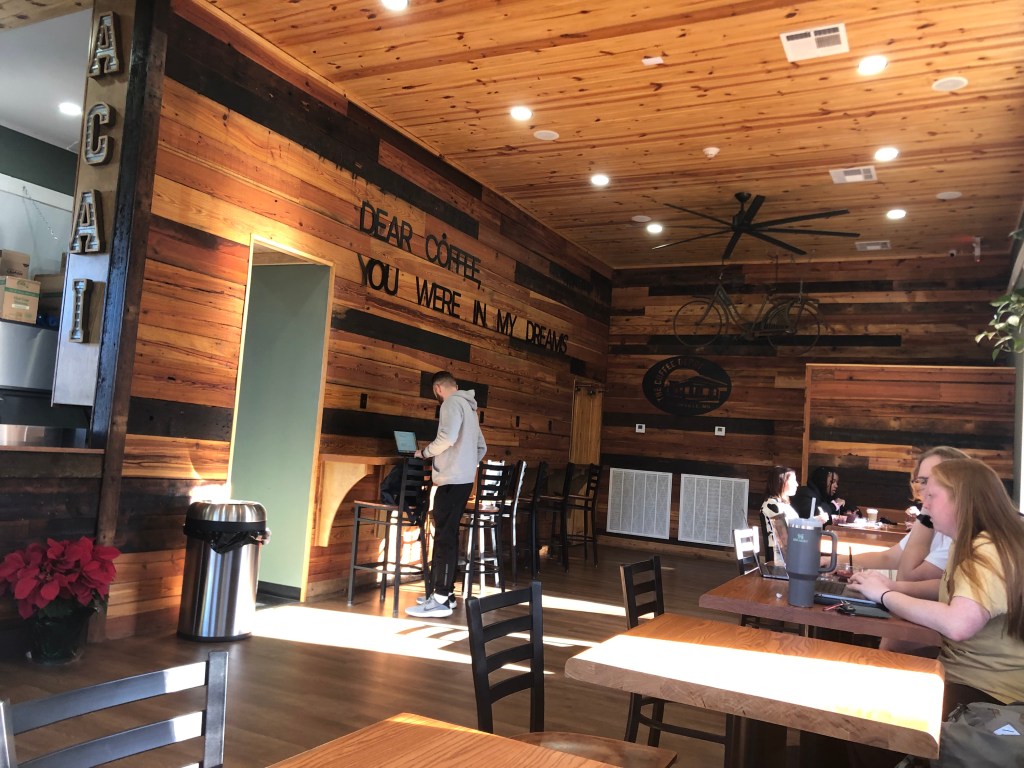
Though the breakfast menu is limited, the food is quite good. I had something called a “Depot Bowl,” which involved an acai base, strawberries, almonds, and peanut butter. The service is incredibly attentive and friendly. I would make this my usual coffee spot if I lived here.
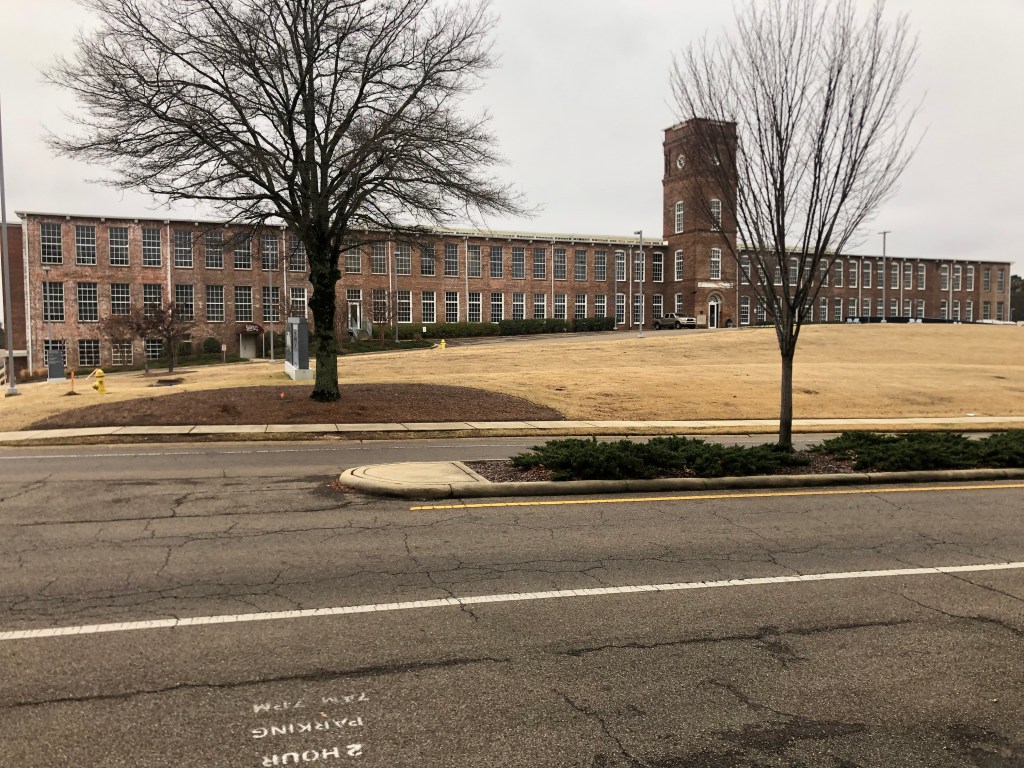
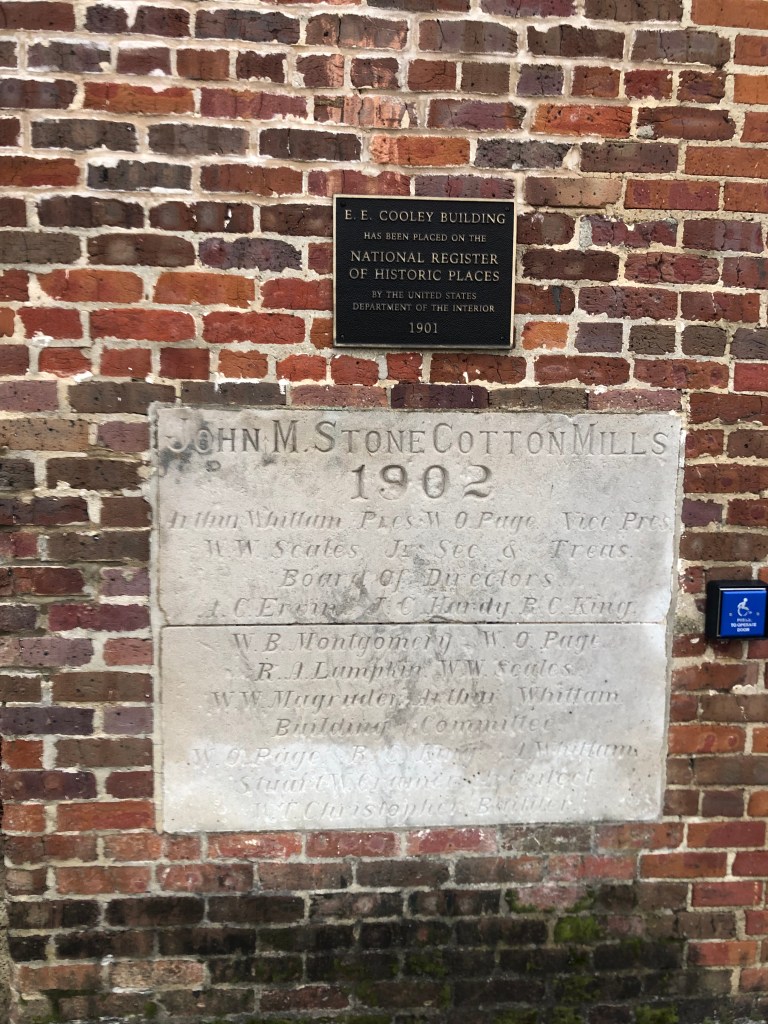
The Coffee Depot is located in the heart of Starkville’s historic downtown. Among other notable historic structures is the 1902 John M. Stone cotton mill. It closed and was sold to MSU in 1965 to house the university’s physical plant. Then, a few years ago, it was converted to an (enormous) events center.
Starkville’s Main Street is a wonder to behold. It’s full of historic buildings, almost all of which have been lovingly restored. The pedestrian-friendly sidewalks are outfitted with benches and street art, and some of the cafes have outdoor seating. On top of all that, the sun finally came out and we’re enjoying glorious January weather.
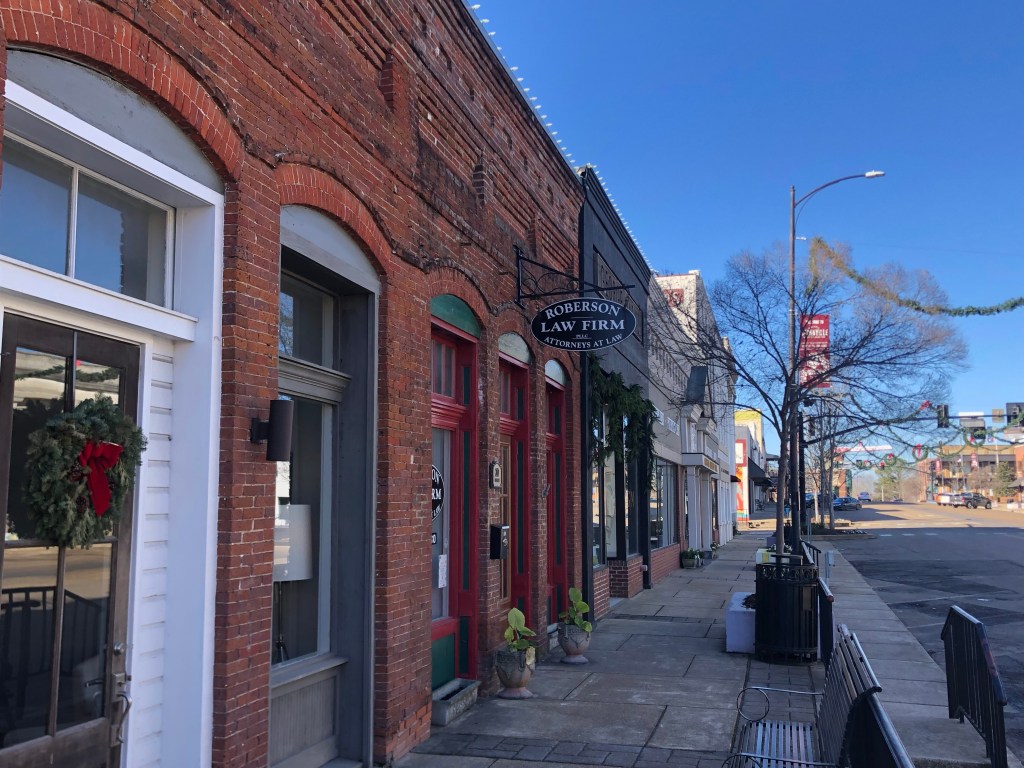
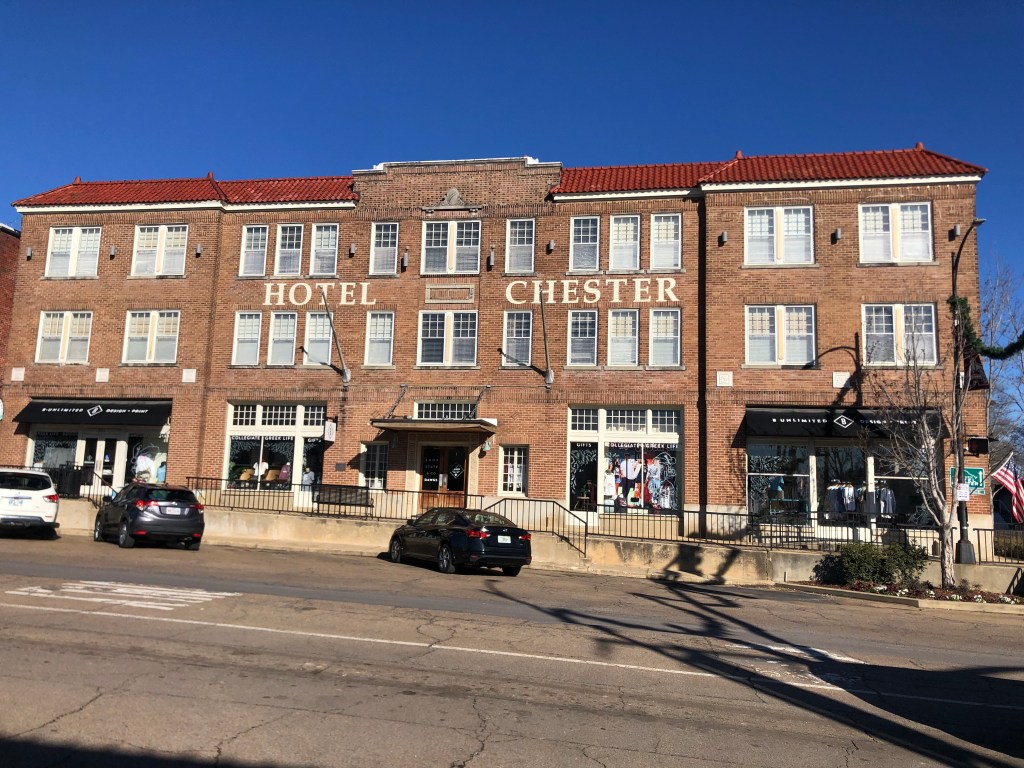
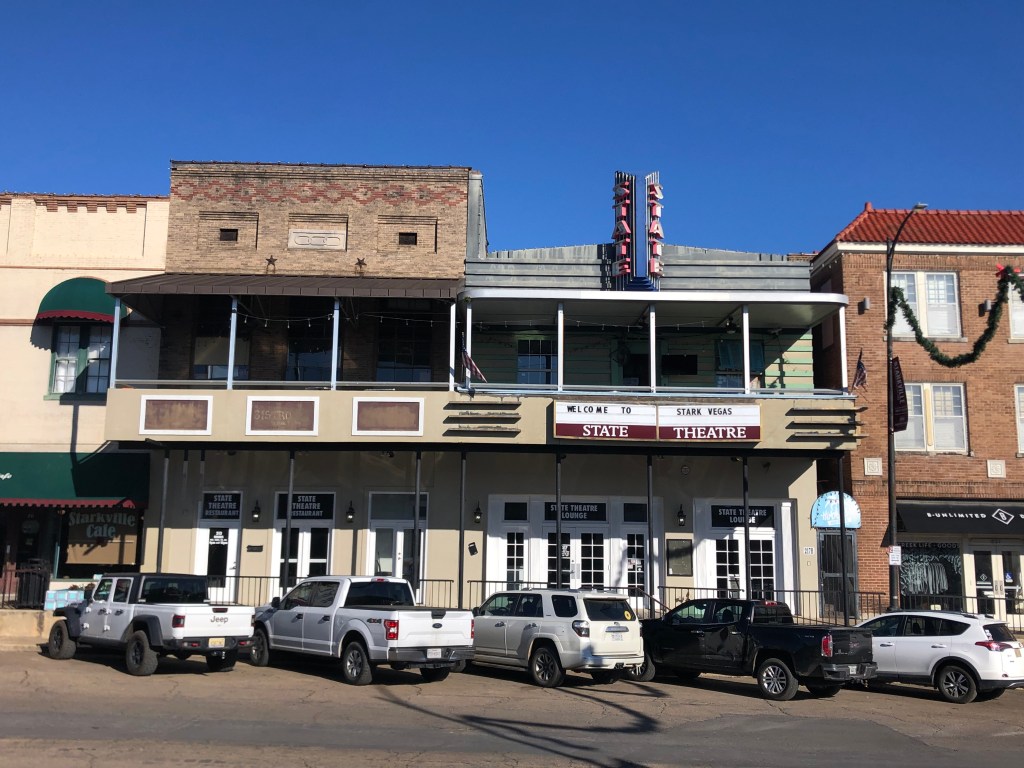
I think it’s no mystery why Starkville prospers while some of the other towns along this route are slowly dying. It’s got to be the presence of a major university. All that youthful energy, their future-oriented perspective, and of course their student loan money are all drivers for the local economy.
As much as I hated to leave the sunshine and the pleasant town, it came time to get back on the road. I was overdue for Reform. I speak, of course, about the town of Reform, Alabama.
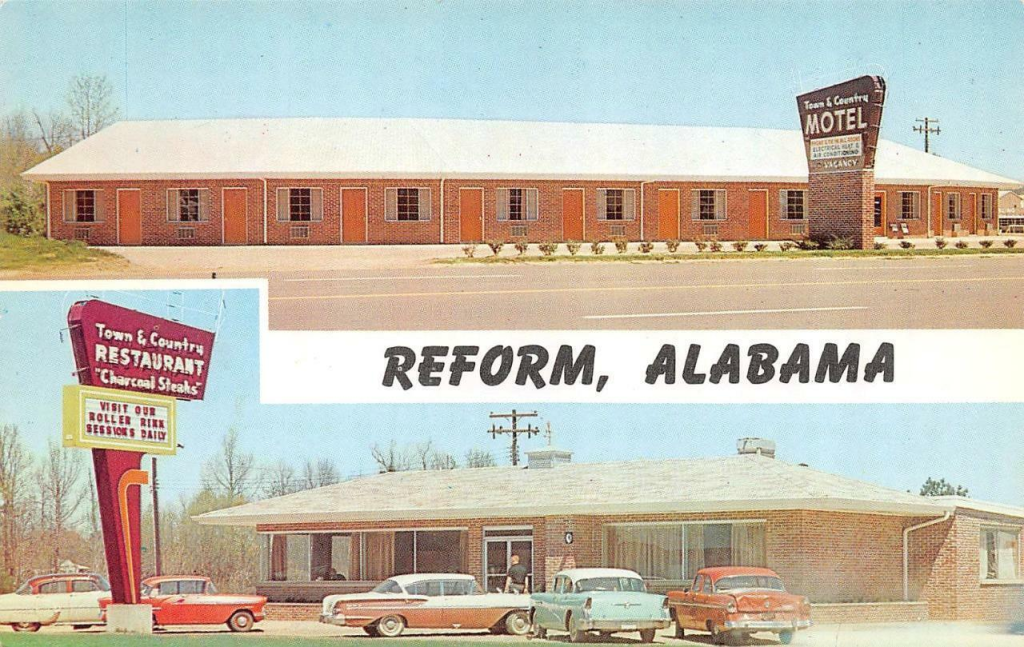
Reform (pop: 1,700) was incorporated in 1898. The story goes that a visiting evangelist urged the community to “reform,” and the townsfolk figured that was as good a name as any. Sadly, it appeared that none of the local businesses have capitalized on the obvious possibilities for a good pun or double entendre. Remember my visit to the town of Cool, California? Those people made use of the potential their name afforded. And Weed, Calif. sells T-shirts with its name in large letters. But not reform. There is no Reform School, no Reform Church, no Reform Fabricating Plant, and definitely no local chapter of Ross Perot’s political party. Even worse, the town apparently couldn’t be bothered to put up a sign at the city limits, thus denying me a photo opportunity.
On the other side of the ledger, Reform counts among its native sons a number of football luminaries: Tony Dixon of the Dallas Cowboys, Doug Elmore of the (then-) Washington Redskins, Michael Williams of the New England Patriots, and James Malone, who was head football coach at Northeast Louisiana State College in the 1950s. (Vic, that list was for you!)
Moving on.
I next came to the town of Northport, Alabama (pop: 31,00), which is planted on the periphery of Tuscaloosa. Northport is another college town. The influence of the University of Alabama is everywhere.
And, as we saw in Starkville, college towns tend to be more lively. Northport’s downtown restaurants were packed, and a whimsical art gallery was just opening. The arts scene is big here, with art walks held on the first Thursday of each month, and a major arts festival each October.
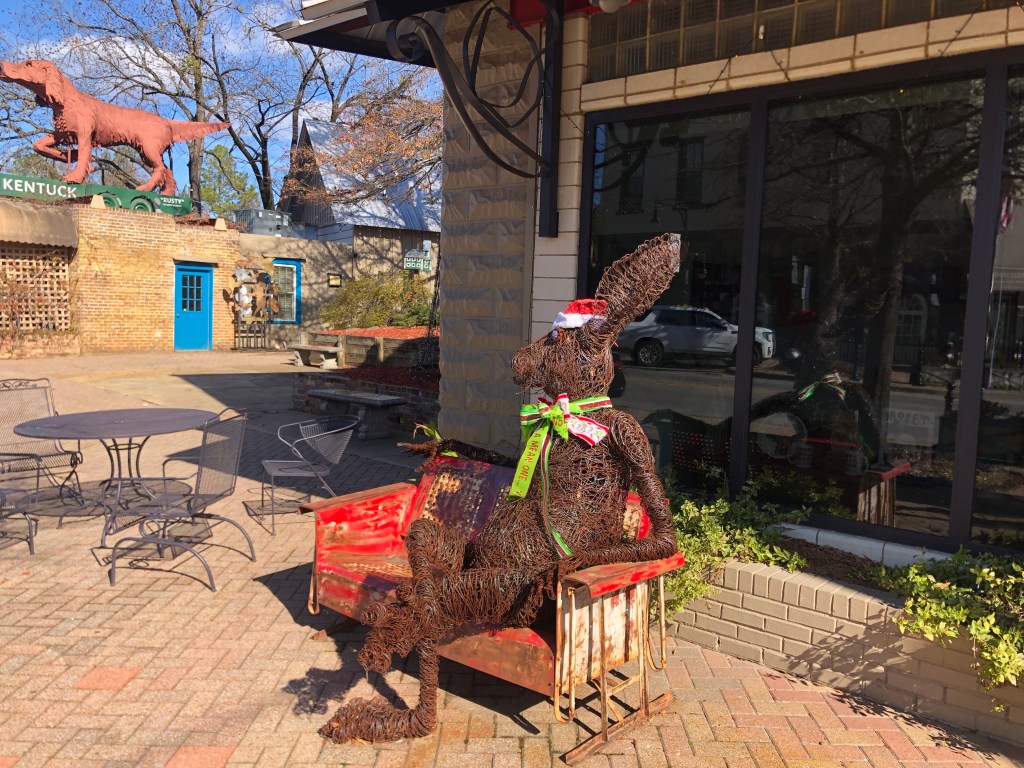
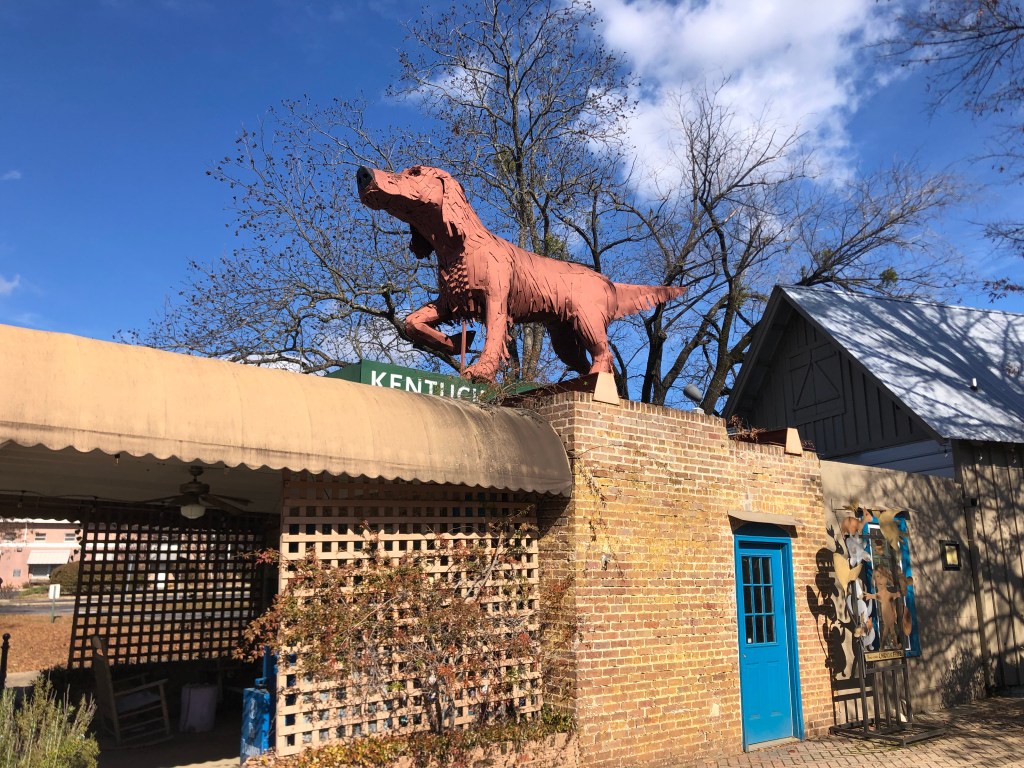
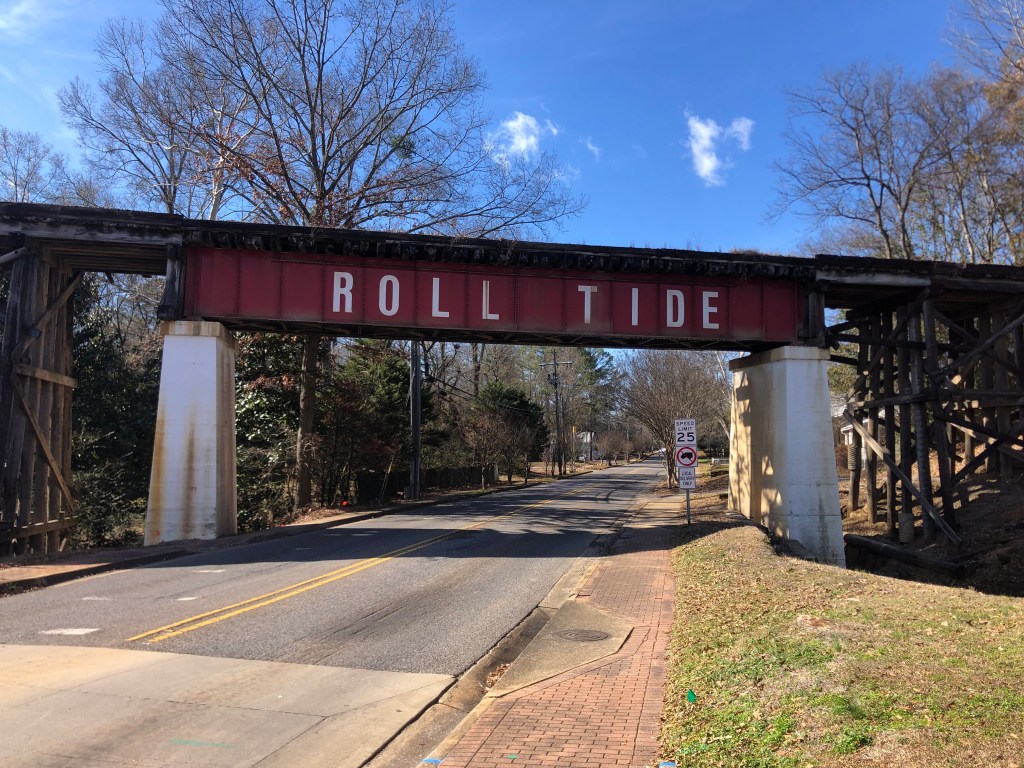
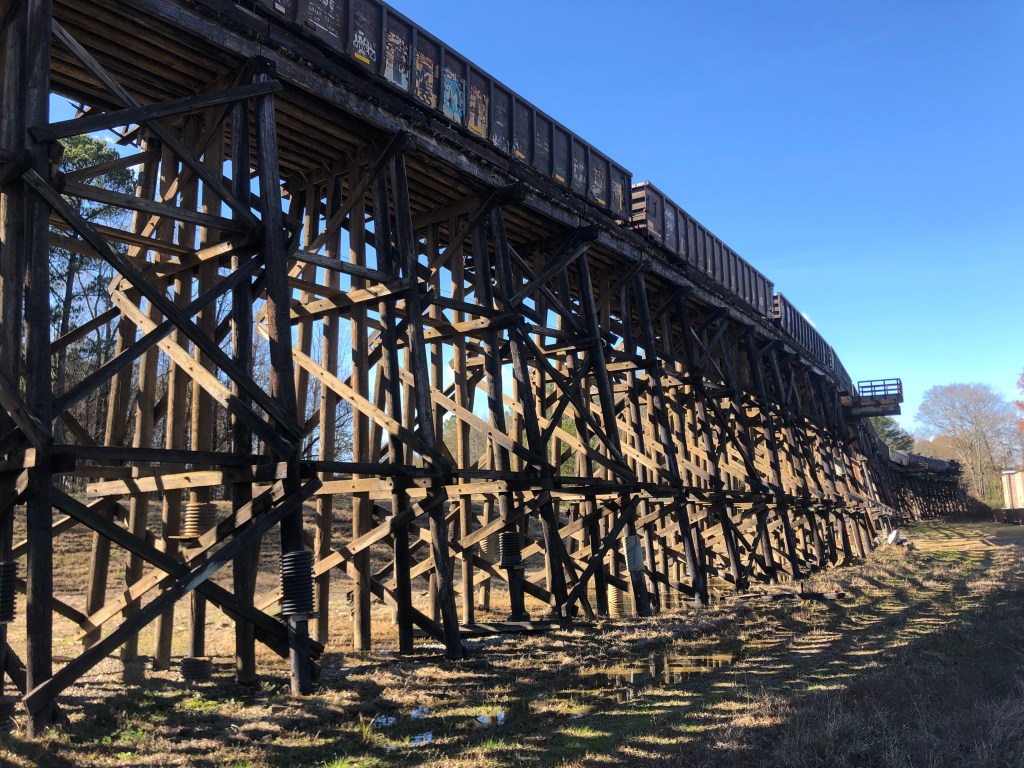
But it’s not all arts. Like so many of these towns, Northport has a rich railroad heritage. Remember the girder bridge in the “Roll Tide” photo, above? It’s part of a railroad trestle that was once the longest in the United States. It was designed and constructed for the Mobile and Ohio Railroad in 1898.
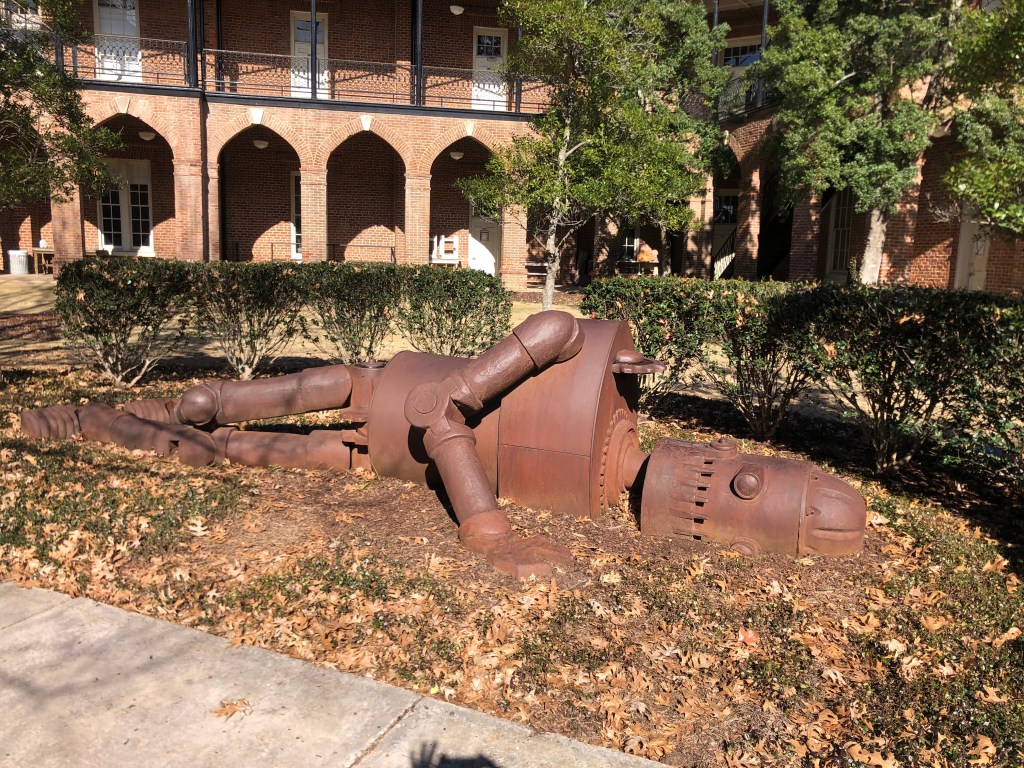
After taking a nice stroll in sunny Northport, I headed across the river to Tuscaloosa (pop: 101,000). Given all the focus on the Crimson Tide I felt compelled to make a visit to U of A (student pop: 39,000). It’s admittedly a beautiful, historic campus that feels orderly and cloistered. I especially enjoyed checking out the student art installations at Woods Quad.
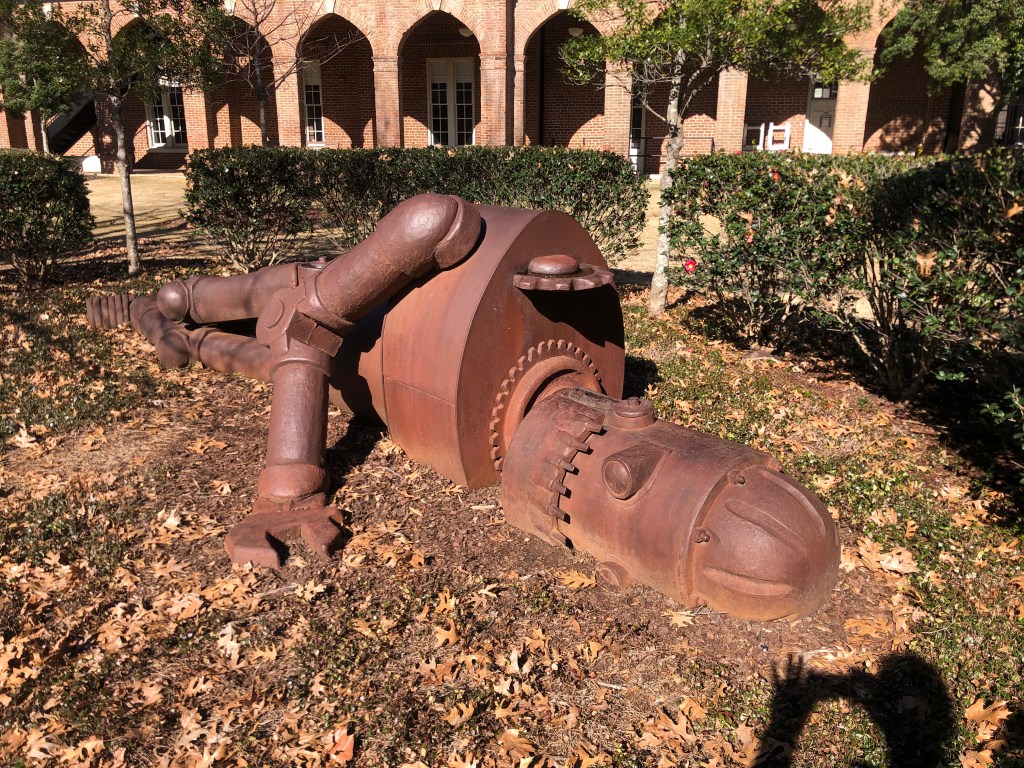
While in Tuscaloosa I stopped for lunch at Jack Brown’s Beer & Burger Joint. The place had just opened three months earlier, and it was packed to the rafters. What a setup! It felt like a roadhouse/dive bar, with that seat-of-your-pants vibe and tons of regulars bantering good-naturedly with the bartender. But wait: It turns out Jack Brown’s is a (privately-owned) chain of 17 restaurants. You can watch the owners telling the story here:
Anyway, chain or no chain, this place has customer service dialed in. Even though the place was packed, the staff were all over me, refilling my drink, bringing me food, asking about my trip, answering my questions about the town.
I decided to order the “Shocker” burger (a hamburger topped with fresh jalapeños, fresh habaneros, house-made Shocker sauce, and 2 slices of Pepper Jack cheese). I asked one of the servers about the sauce, but he said it was a trade secret. No matter; it was truly delicious. I topped it off with a deep-fried Oreo, which is evidently Jack Brown’s trademark (and only) dessert. It tastes kind of like a beignet, but with a core of softened chocolate cookie. What’s not to like?
While I ate my Shocker the manager speculated about the success of the place. It’s not just the awesome customer service and great food, he said. It’s also the “Notch Club.” All it takes to join is drinking 100 beers at your local Jack Brown’s. (After today I am already 2% of the way there, but more on that later.) Once you achieve Notch status, you get an official shirt, your picture goes on the wall, and you get invited to special events just for Notchers. With each 100 additional beers you get a patch for your shirt. And when you get to 1,000 beers, you become a “Saint.” Saints undergo a special investiture ceremony, get some kind of robe or something (I can’t quite remember the details here), and they get to add their own custom burger to the menu that is offered each year on your Saint Day. I tell you: If I lived in the south, I would be all over this thing.
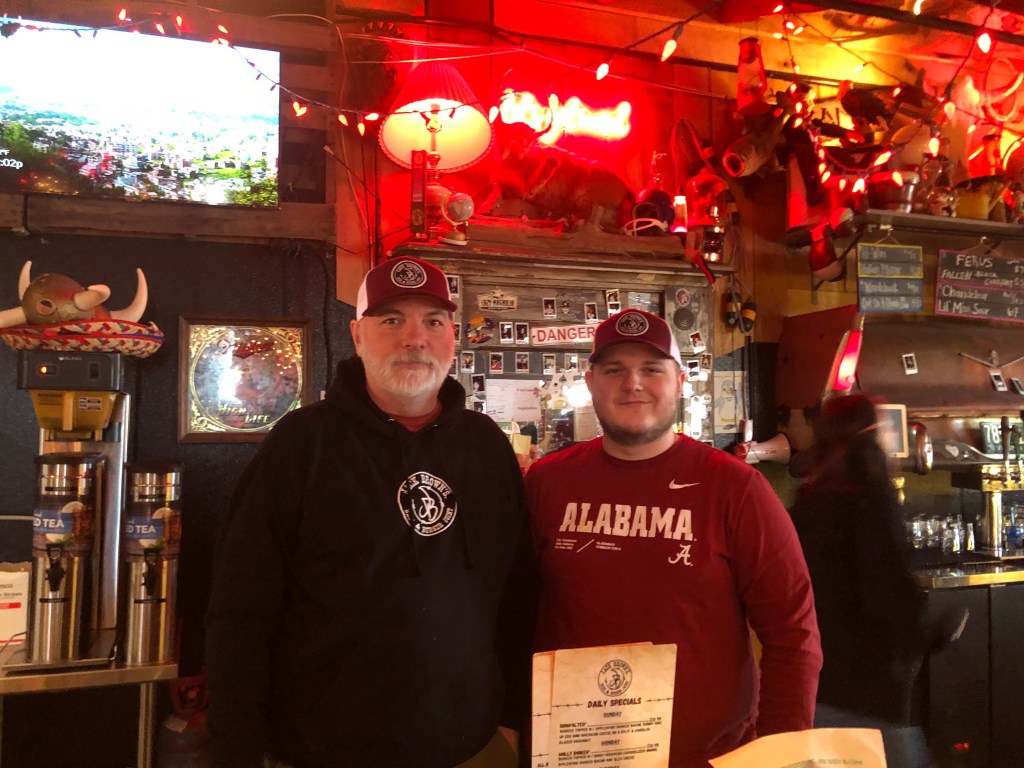
Restored and rested from an enjoyable lunch and a few drinks, I got back onto Route 82 East. I’ve noticed that 82 is generally a straight road, but with gently rolling hills to vary the horizon as you drive. At this stage in these cross-country trips I find myself viewing the road, with its uniform signage and federally-mandated lane widths, to be a familiar, comfortable friend. Also, as I’ve mentioned in prior blogs, these US highways tend to be assembled out of pre-existing local roads, and therefore you have no choice but to cruise right through the center of each town along the way, as US 82 becomes, say, Main Street. Or you could think of it as Main Street filling in for US 82 for a few miles. Either way, it guarantees that the driver encounters the brick-and-mortar communities along the way.
Speaking of which: I’ve noticed some cultural themes as I’ve been driving through this part of the country. Some of them are what you’d expect: Lots of barbecue joints, lots of churches, lots of American flags. But some of the stereotypes are not in abundance. I have not seen a single Stars and Bars flag. I have seen only one sign professing support for Donald Trump. And while I’ve seen a lot of pickups, I’ve actually seen far more Nissan Altimas. [Editor’s note: Evidently Altimas are manufactured in Mississippi and Tennessee.]One welcome surprise (compared to my experience in California) is that gasoline can be purchased for about $2.59 a gallon.
The ubiquity of crosses all along the highway is perhaps most foreign for this California native. Most of the time it’s a simple and low-key statement in someone’s front yard, but today I passed an enormous display that was quite in-your-face. It’s really too big to be conveyed in a single photograph, so I took this video:
The display is the life work of one William Carlton Rice. He’d been building, expanding, and maintaining this “cross garden” from the 1960s until his death in 2004. His family promised to maintain it after his passing, but old-timers say the place ain’t what it once was. If you’re interested, brief descriptions of the project and W.C. are here and here.
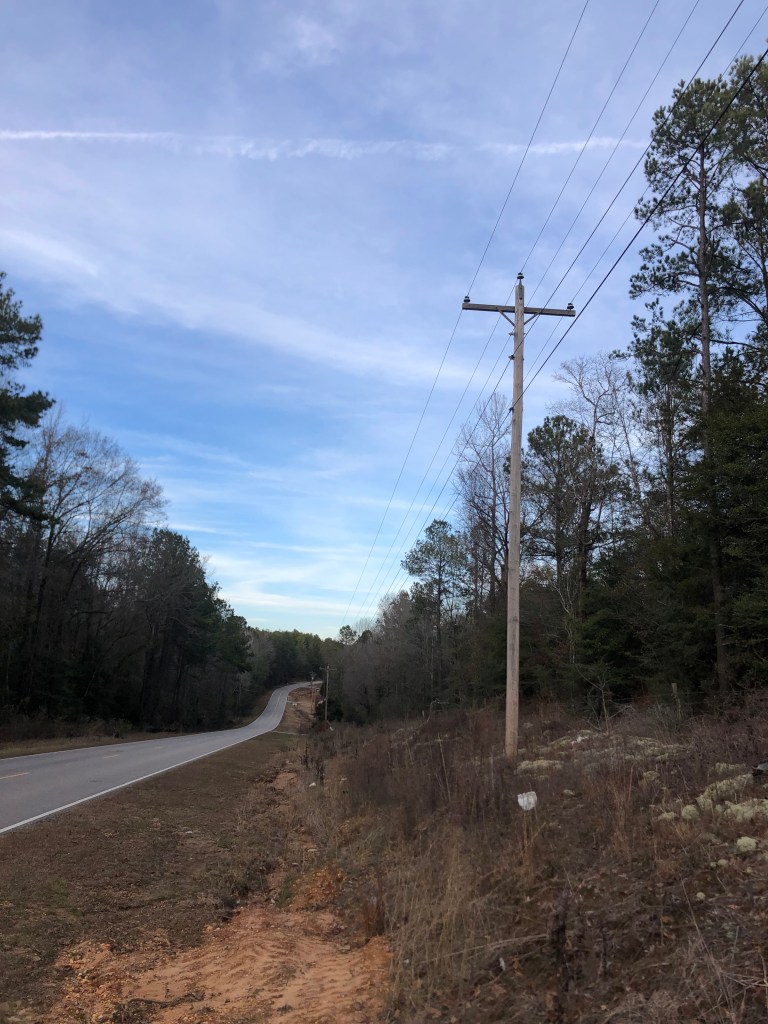
Daylight was growing short when I got to the town of Prattville (pop: 38,000). It was founded by the eponymous Daniel Pratt in 1839. Pratt was an industrialist from New Hampshire, and he figured that the flow of Autauga Creek, which runs through the area, would be a good power source for 19th-century industrial applications. Before long a thriving city had grown up, and today, for some wonderful reason, much of the historic town remains intact, like a giant time capsule. (Check out this list of historic structures from Wikipedia.)
I arrived at Prattville just at dusk, and I must say it felt otherwordly. The lighting was like a Thomas Kinkade painting, the creek was flowing steadily over a stepped dam next to the cotton gin manufacturing plant, and a young couple was holding hands and walking across a bridge.
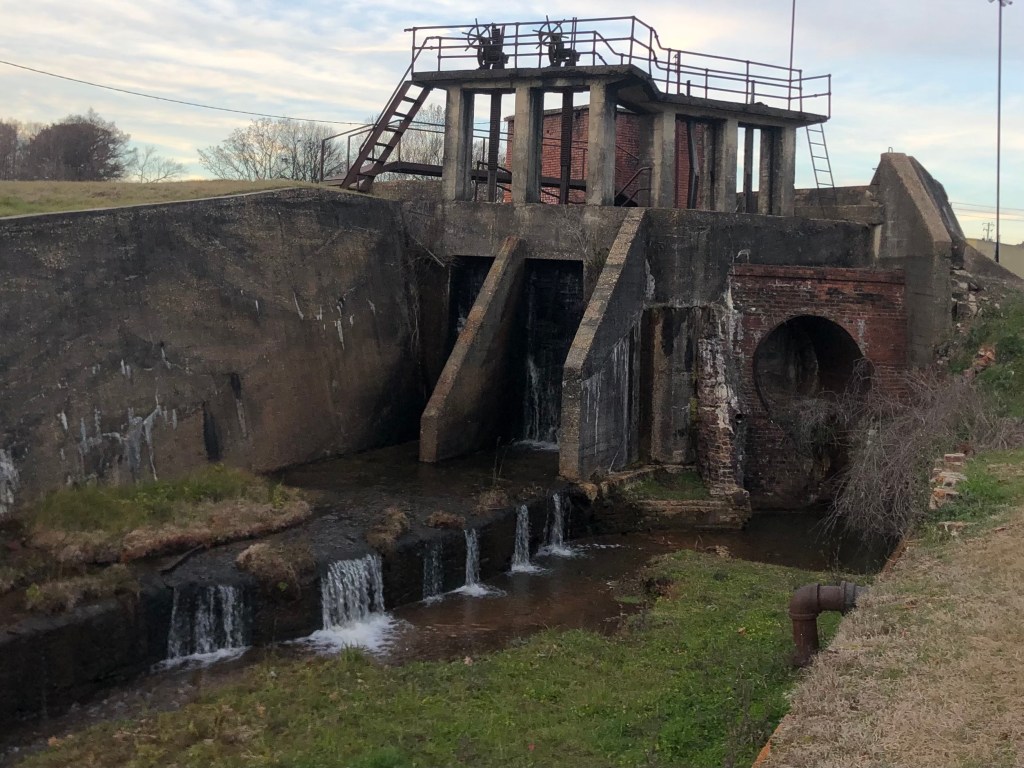
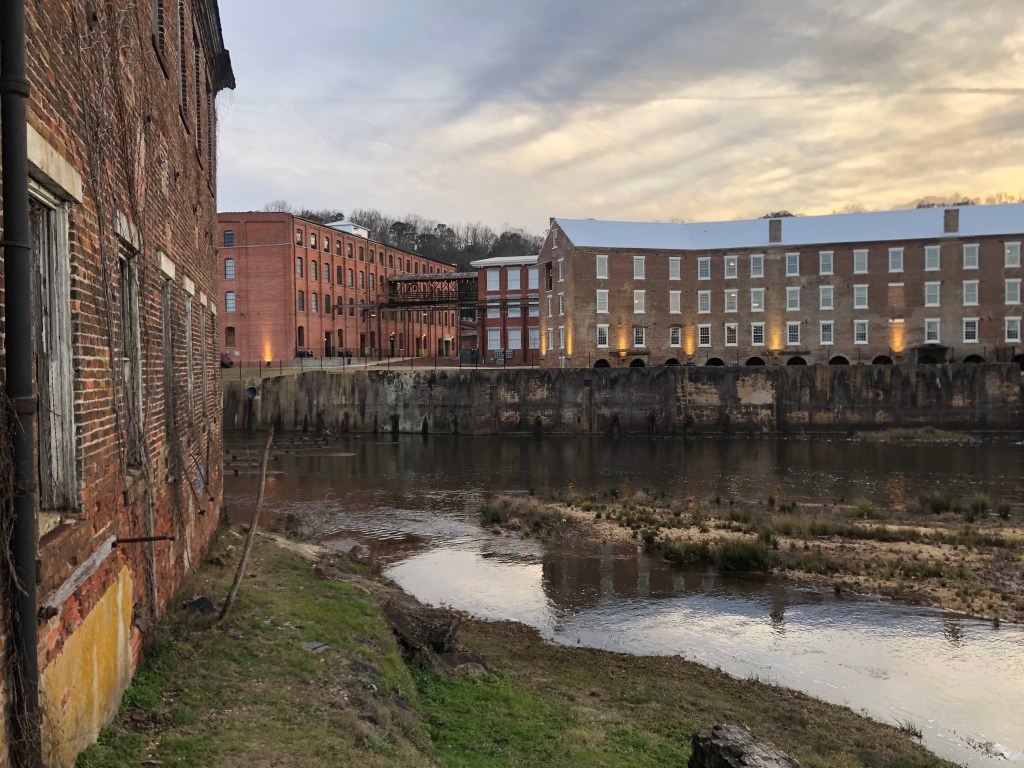
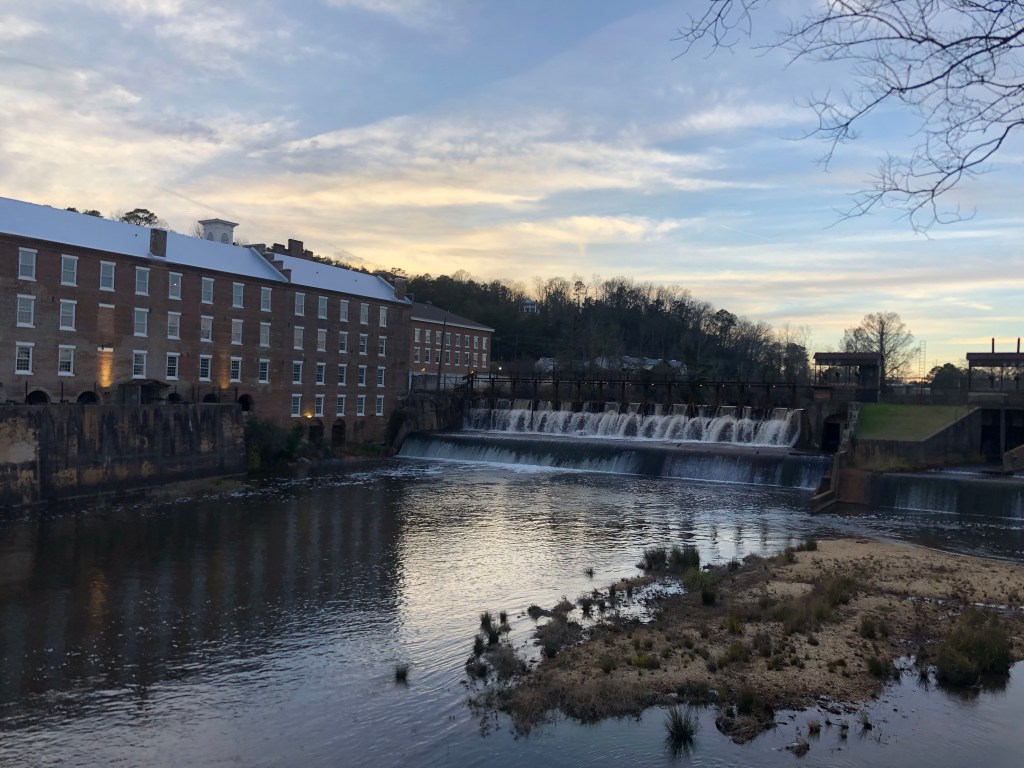
Next to all these industrial remnants is the historic business district, which is now largely oriented toward tourists.
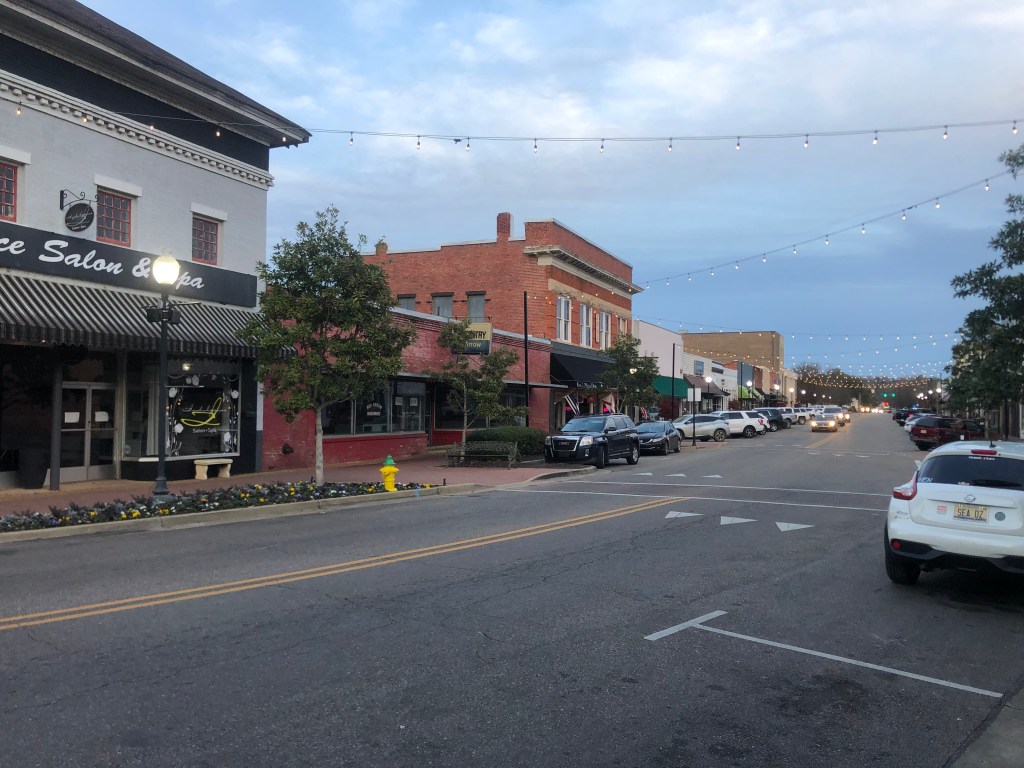
As it was getting dark, I decided to spend the night in Prattville. Tomorrow I will make my way into Georgia.
Brew of the Day
I got my BOTD at Jack Brown’s in Tuscaloosa. It was a milk stout from Southern Prohibition Brewing in Hattiesburg, Mississippi.
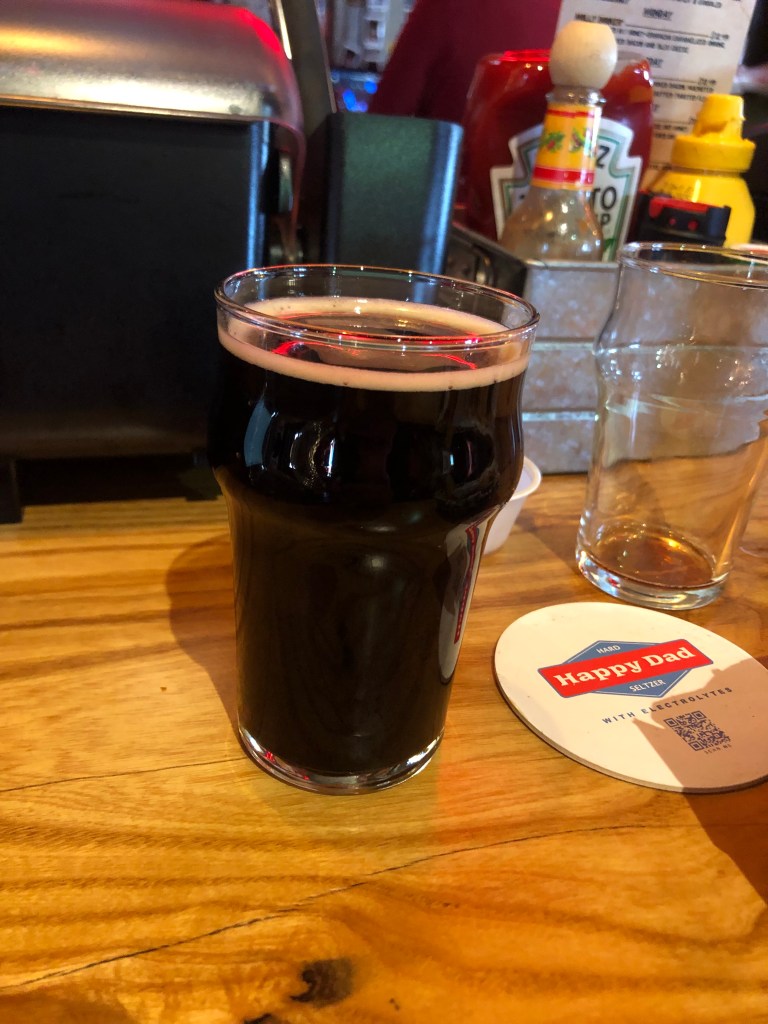
It was a very drinkable beer. Only lightly hopped (as is customary for this style of beer), it also had very little foam. The color was dark brown, like espresso. It even had a bit of roasty, espresso taste, though this was well balanced by the sweet, creamy goodness of lactose. I found this to be a rich, tasty brew, and at only 5.2 ABV, I treated myself to a second glass. Definitely worth 4 starts out of five.

 Chasing Phantoms
Another great post! Keep ’em coming!
LikeLike
Loved the “Happy Dad” coaster next to your BOTD!
LikeLike
I was wondering if anyone would notice that…
LikeLike