I’ve been working on a top-secret project (which will likely be revealed by the end of the year) and it involves, oddly, Benjamin Franklin. I’m not making this up. And this project has made clear to me how much my grasp of American history is lacking.
Growing up in California, I never learned much about the Continental Congress or the Revolutionary War or really anything that took place before 1849. I’ve made a few attempts to remedy this, including my trip with friend Vic to Salem, Mass.
So I’m now trying to fill in some of the gaps in my education Which is why this morning I found myself in The Quaker City for a few days of exploration. What could go wrong?
My crash course on Philadelphia actually began on the plane ride. I’d taken a red-eye from Sacramento, and my seatmate was a garrulous Philadelphian (if you’ll permit me that redundant phrase). He was on his way home after a vacation with his wife, but they were taking separate planes. It seems there was some kind of booking mix-up related to the use of frequent flyer points. But the real point, for my purposes, is that he was unexpectedly flying solo and looking for someone to talk to. And having learned that I was going to be sight-seeing around his home turf, he spent the next few thousand miles sharing his insights about the city. (Did you know that Elphreth’s Alley is the oldest continuously-habitated street in America?)
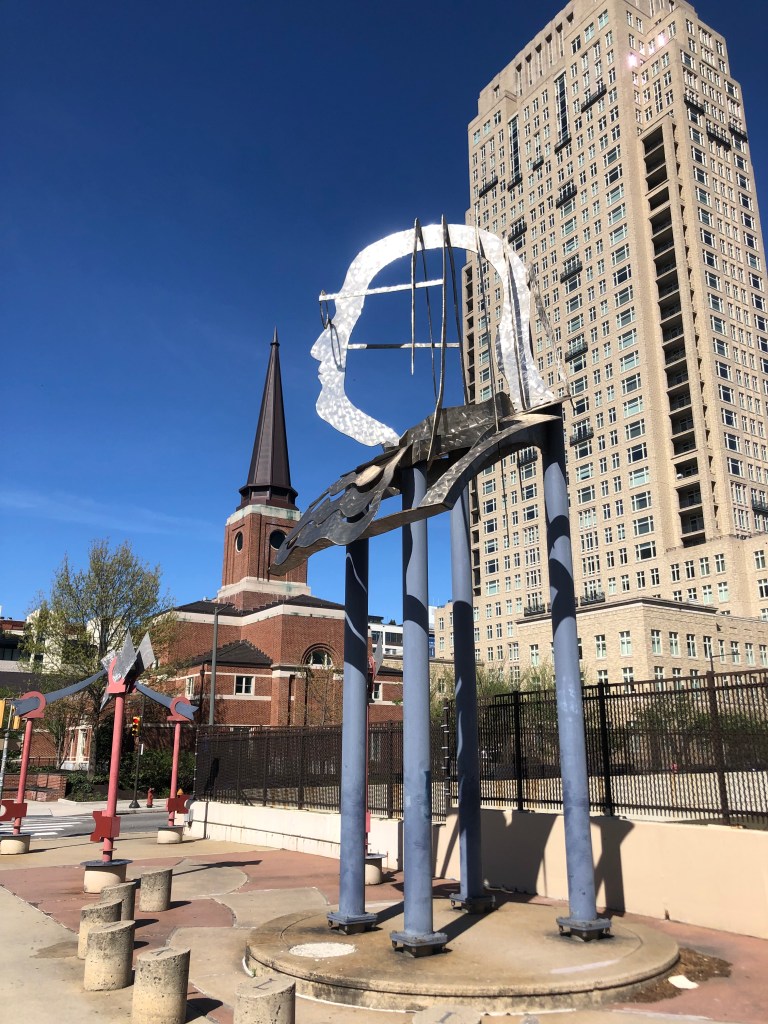
Anyway, I got breakfast and a Nissan Sentra near the airport and set out for downtown Philly. Ben Franklin is certainly well represented around the city. Bridges, parkways, institutes, boulevards, schools, and various other features of the city are named after Franklin. There’s even a large, modern sculpture of his distinctive bespectacled face and stringy hair on a random street corner.
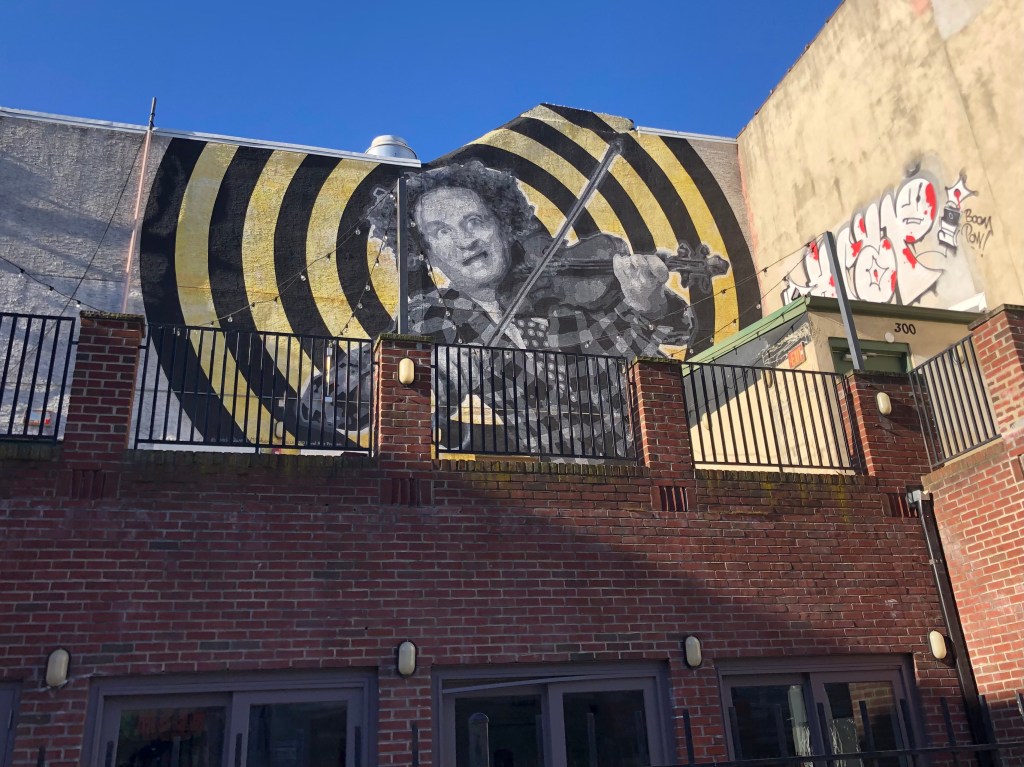
While chatting up the National Park ranger at the Ben Franklin Museum, I learned the following story: Some years back the Philadelphia Inquirer was taking up a collection for a Frank Sinatra mural somewhere in the city. A rival paper objected, pointing out in an editorial that Philadelphia should instead create a mural for one of its native sons. And, perhaps as a joke, the editorial noted that Larry Fine (of Three Stooges fame) is one such native son. The idea nevertheless caught on, donations were made, and the mural was painted at the location (S. 3rd and South Street) where Fine was born.
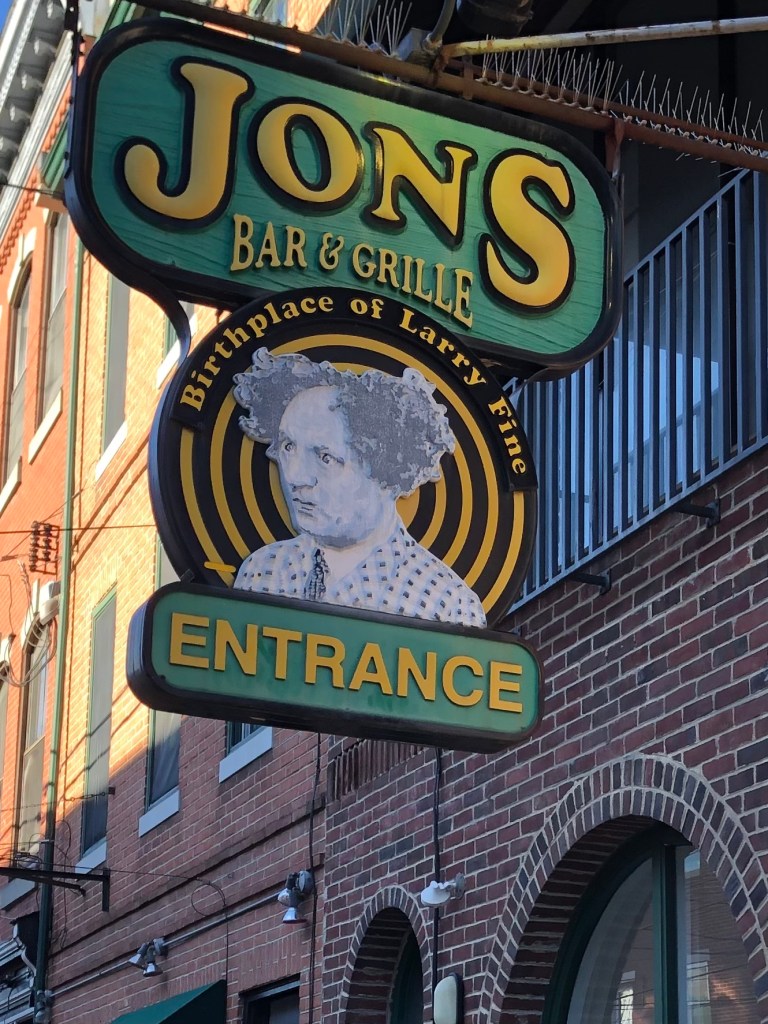
But I digress. I was talking about how Ben Franklin has captured this city’s imagination. And in addition to all the named structures and graven images, the city has been tagged with various plaques that commemorate Franklin’s various activities in the area. For example, on St. Stephen’s Church is a brass plaque which claims Ben Franklin conducted his famous kite experiment on this site in 1752.
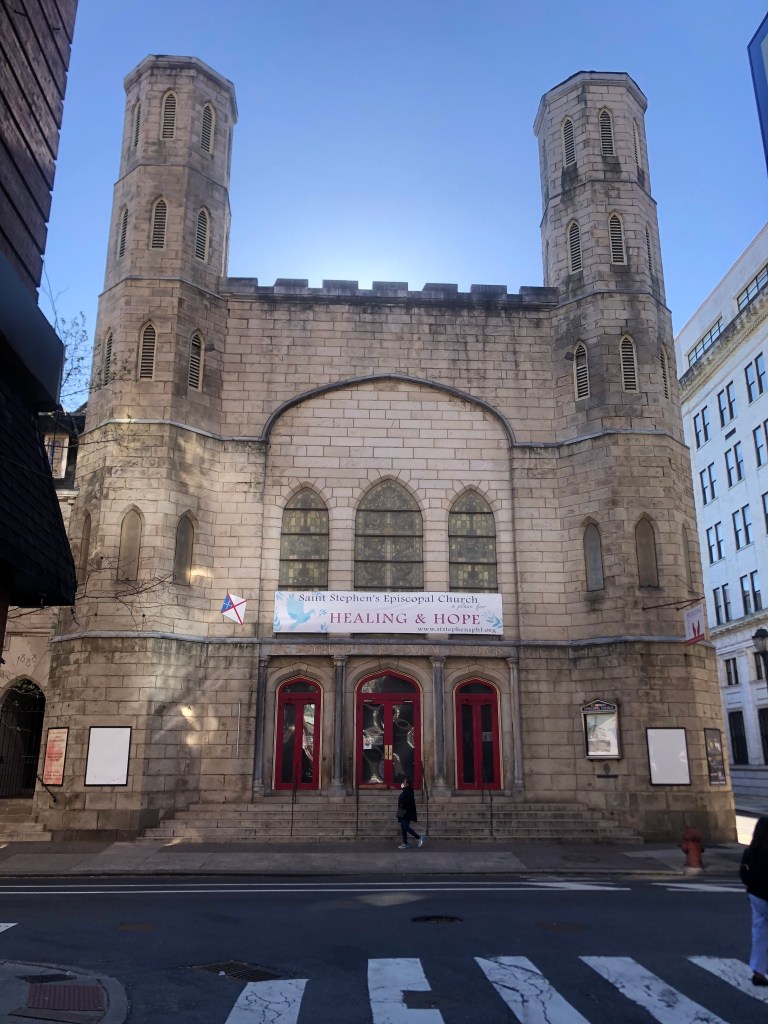
Here’s a closer look at the plaque:
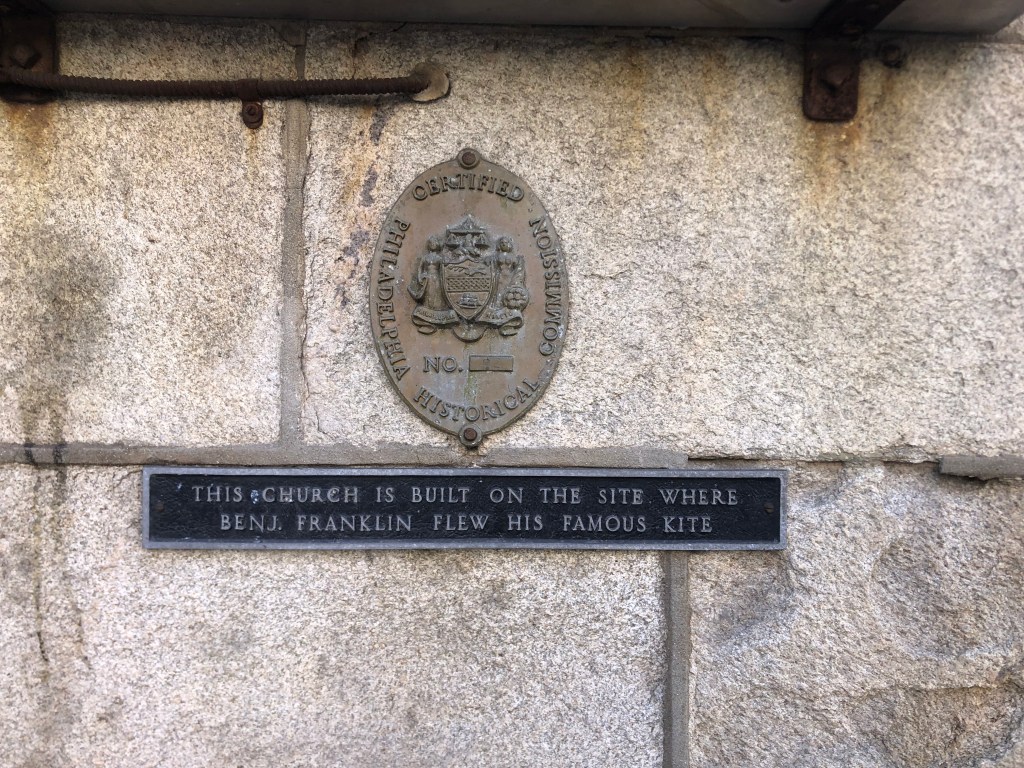
Now, it turns out that there’s considerable debate as to whether this is really the site of Frankin’s kite adventure. And while the “Certified” marker above the plaque would seem to lend credence to the plaque’s claim, it turns out the marker relates to the church building, and not to the plaque.
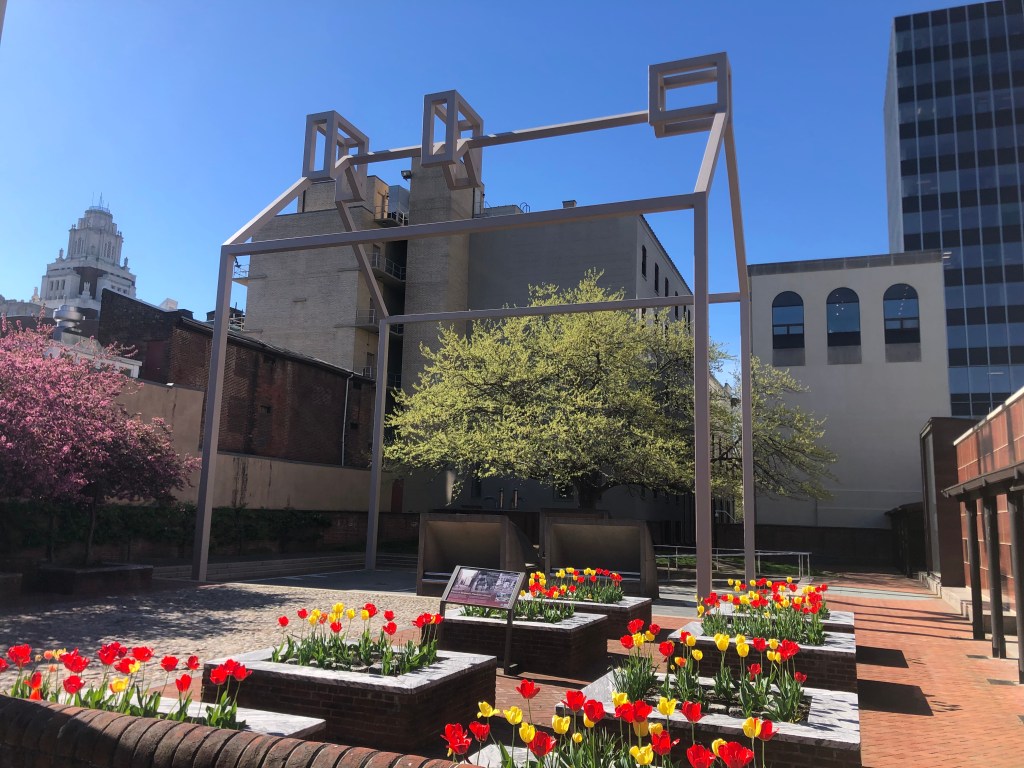
A few blocks from the dubious kite claim is a bare steel pipe structure outlining where Franklin’s last family home had stood. Ben’s kids had the house razed some years after he died. But in the 1940s, archeological efforts uncovered the foundations of the house. The steel “ghost house” was erected in the 1970s, since there were insufficient records or drawings to reconstruct the house itself.
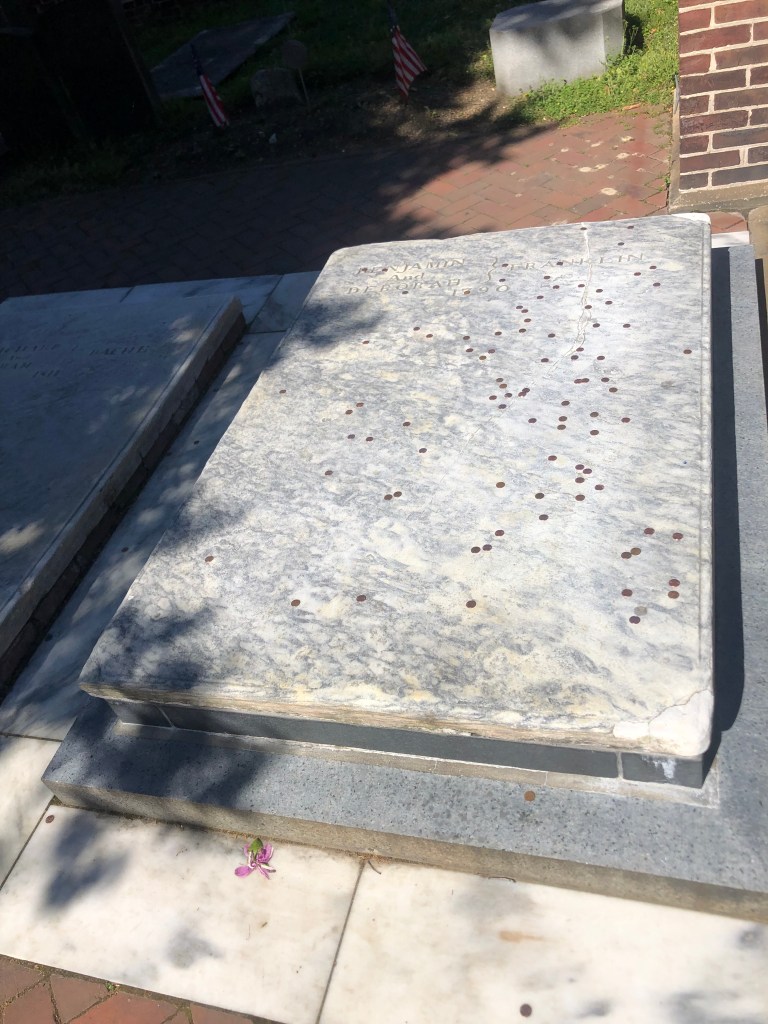
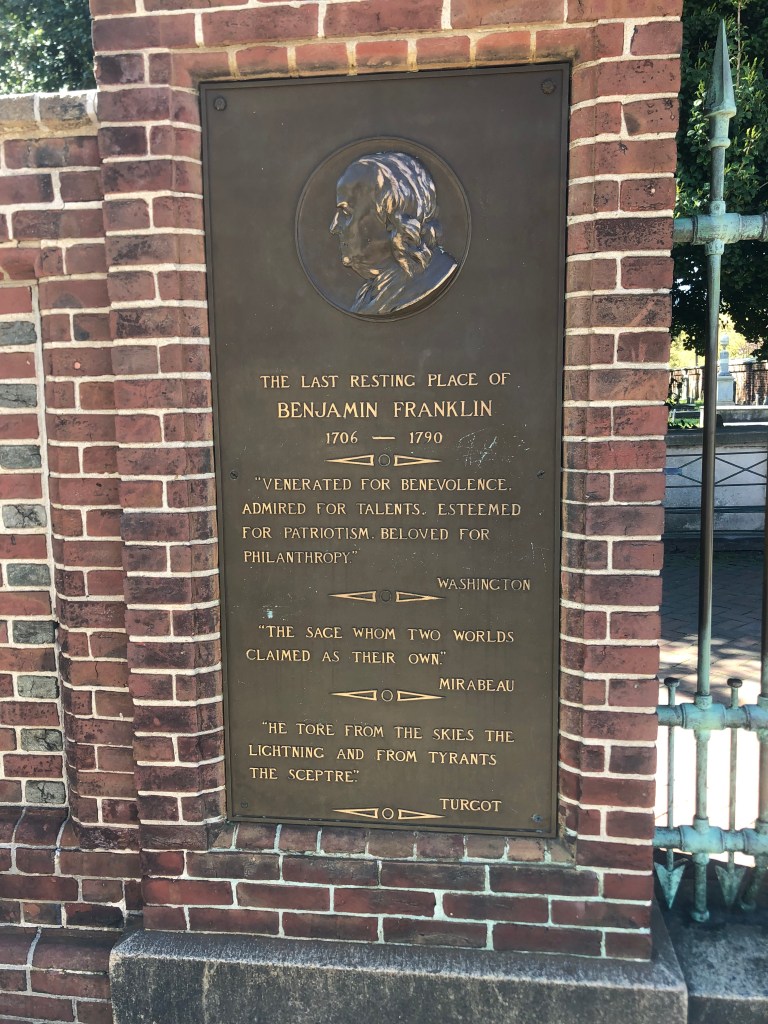
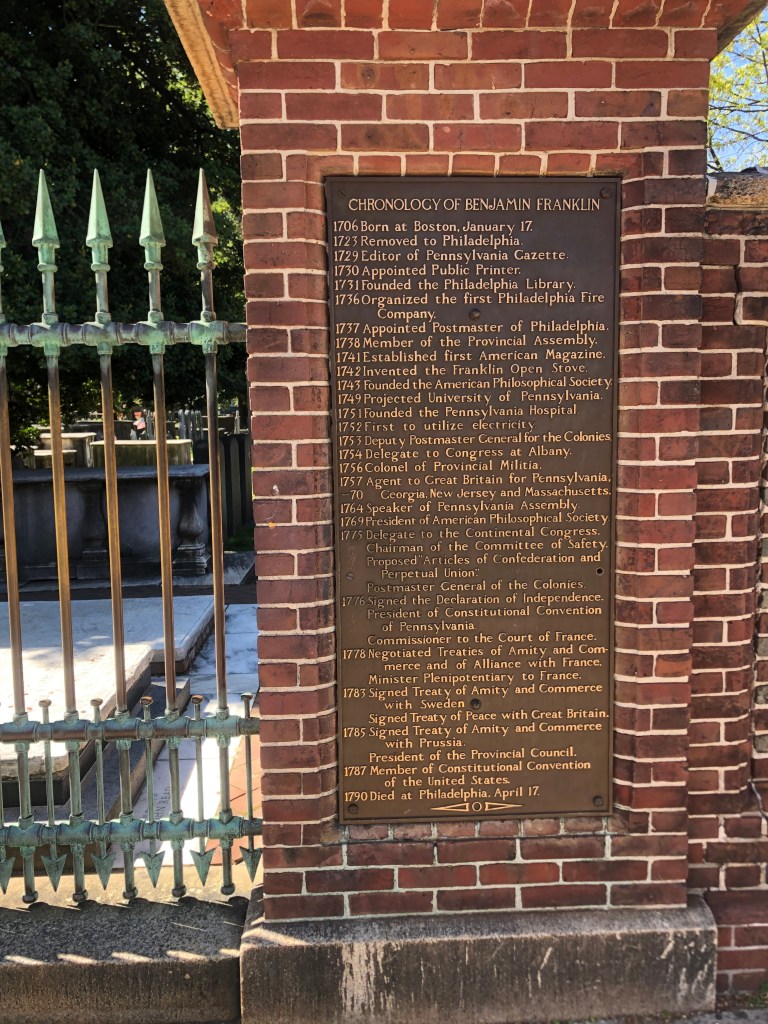
Finally, and inevitably, Franklin’s body rests in Philadelphia, not far from the ghost house. He is buried at Christ Church Burial Ground under a smooth marble tablet that’s perpetually covered with a scattering of pennies from passersby.
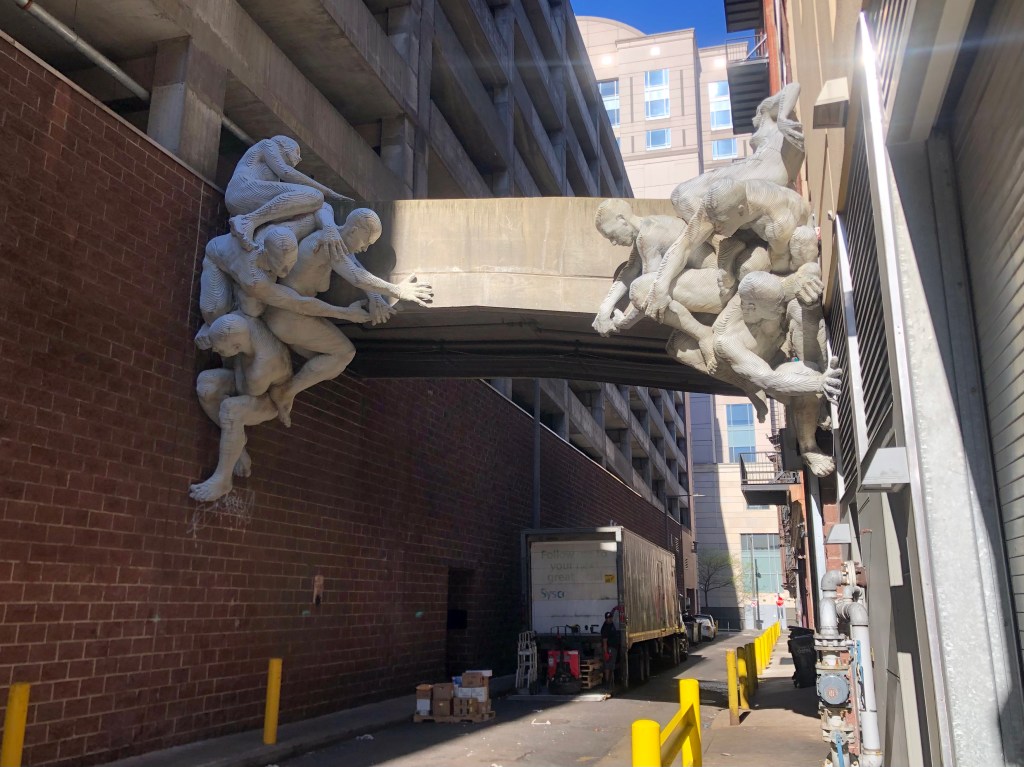
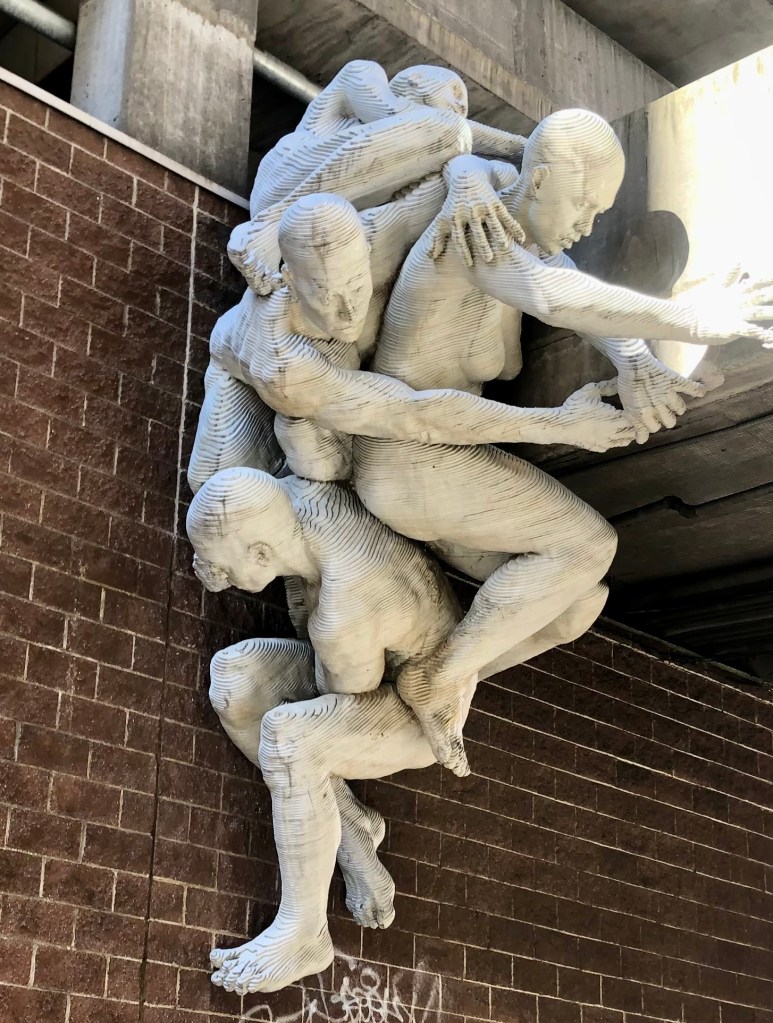
Of course, Philadelphia isn’t all Ben Franklin and Larry Fine. For example, there are these random nudes built into a pedestrian walkway. For no discernible reason.
There’s also Auguste Rodin’s bronze sculpture The Thinker on the grounds of Philadelphia’s Rodin Museum:
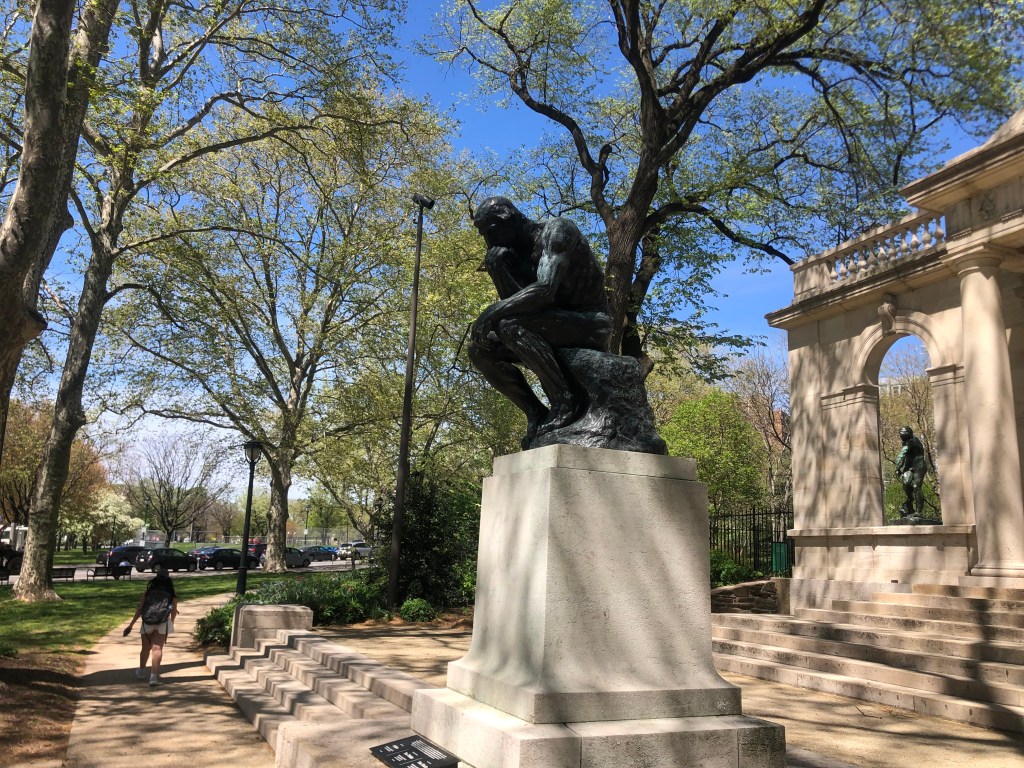
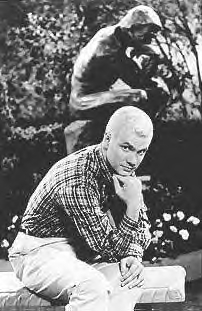
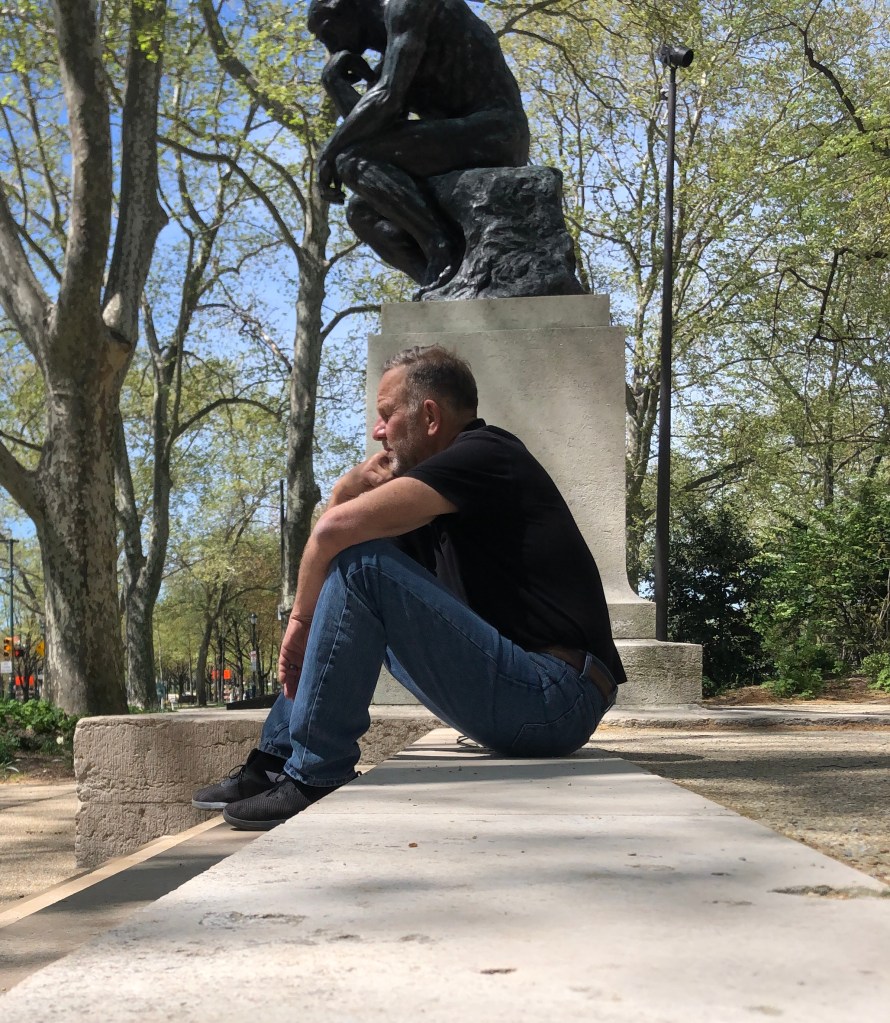
You probably know of this piece. Rodin actually cast a number of identical bronze Thinkers. I remember once seeing one at Stanford University. But I’ll forever associate it with Dobie Gillis, who had a habit of sitting next to the statue in a copycat pose.
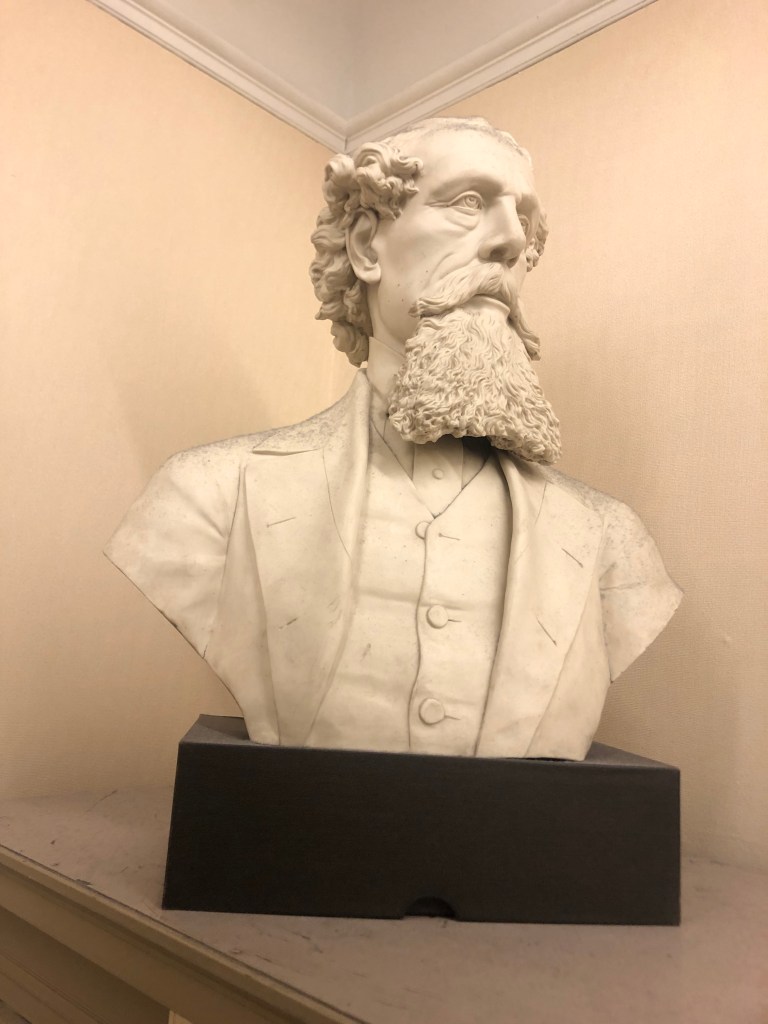
And if that’s not enough, today I also ran into some literary luminaries that you don’t often associate with Philadelphia. In the Philadelphia Free Library’s Central branch (built almost a century ago in the beau arts style) one finds a bust of Charles Dickens in the Rare Books Room.
Not far from the Dickens’ bust is his actual pet bird, now stuffed and mounted in a glass box.
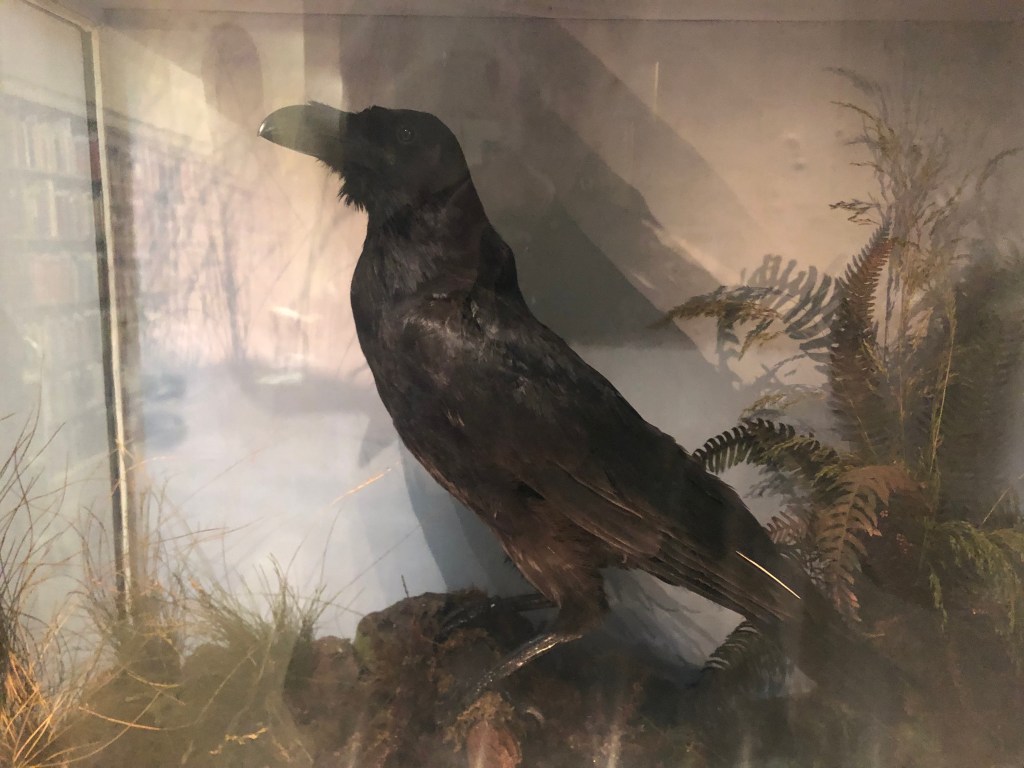
The bird is (was?) a raven by the name of Grip. Grip even gets some speaking lines in Dickens’ novel Barnaby Rudge. But she (for Grip is a female) also played a much more important literary role: She is said to be the inspiration for Edgar Allan Poe’s The Raven.
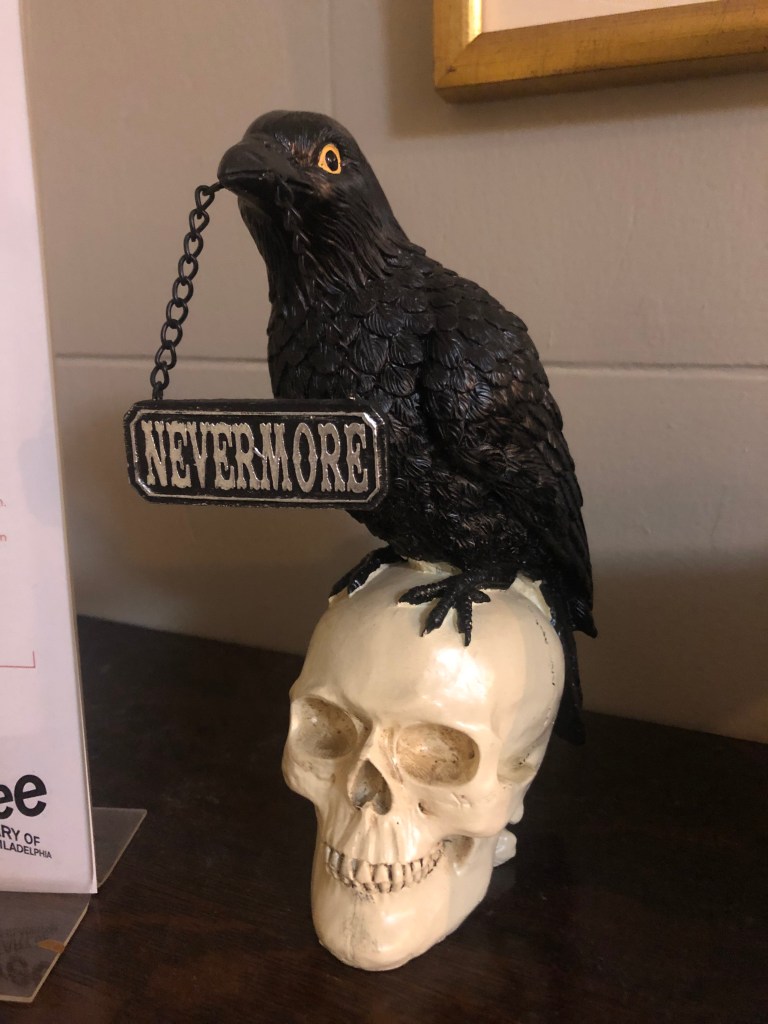
As we all know, Poe lived in Philadelphia for six years. And one of his Philadelphia homes still stands. I will be visiting it on Friday, so we’ll be returning to this theme later.
It’s now getting late, but I do have two more items to share from today. The first is:
OBELISK CORNER
I was taking an afternoon walk through Philadelphia’s Woodlands Cemetery. It dates back to the 1840s, and has a distinctive Victorian air about it. Many of the grave markers take the form of obelisks, with some quite large specimens cropping up here and there.
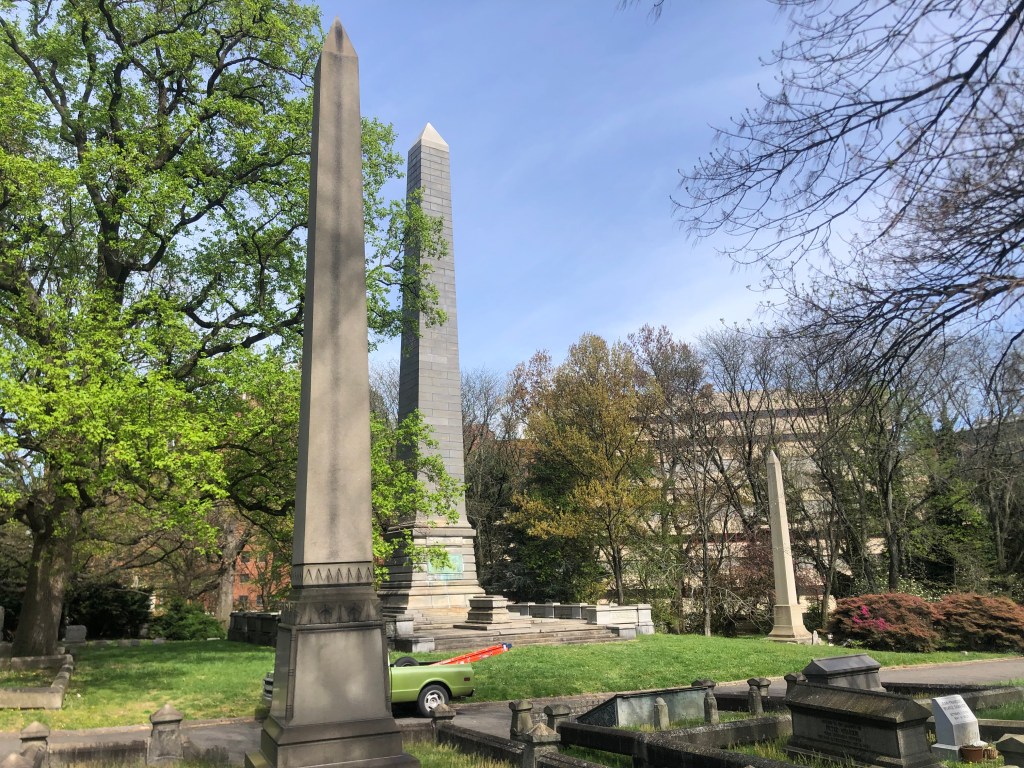
But take a closer look at that one in the center. Though it doesn’t appear especially large in the photo, it’s actually about 15 stories high. In fact, it’s the largest gravestone in the Continental U.S. Let’s take a closer look:
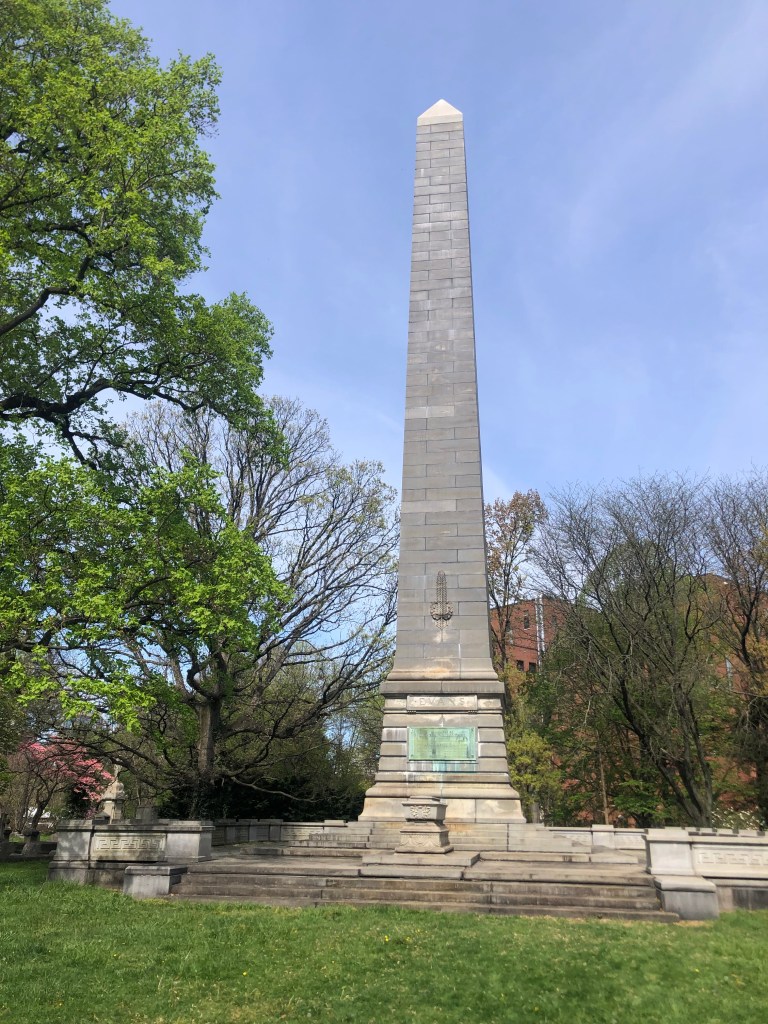
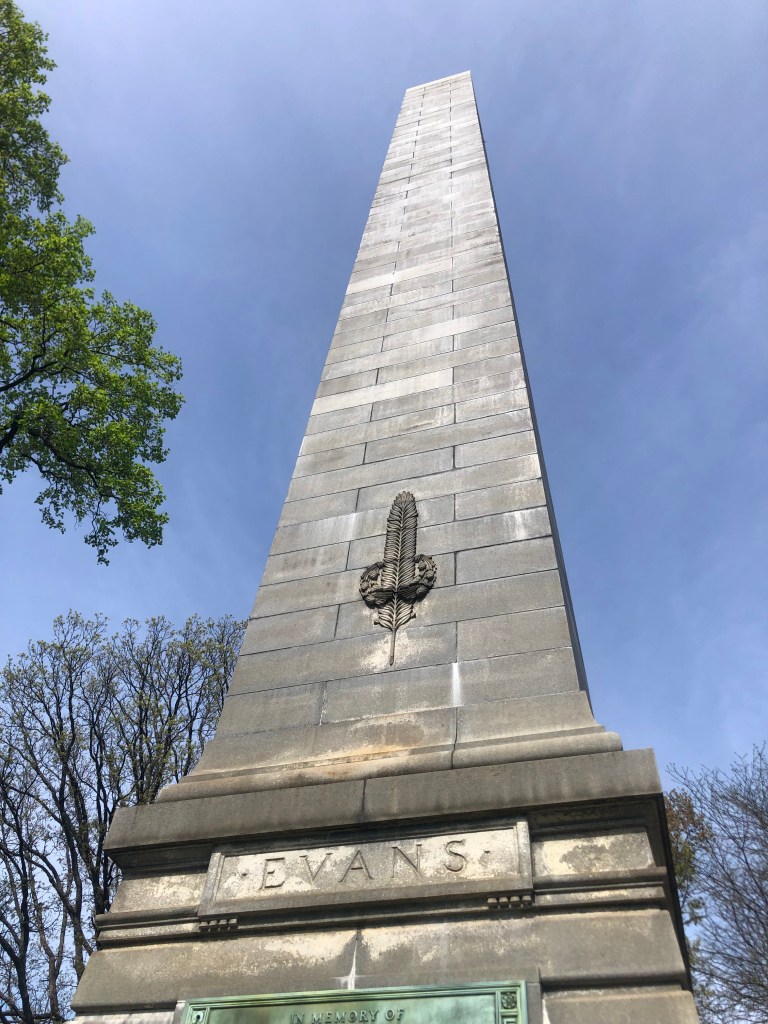
The obelisk marks the grave of one Thomas Wiltberger Evans, who died in 1897. You never heard of him either? It seems that the man with the country’s tallest headstone was a….dentist.
And now, let’s finish up with the
BREW OF THE DAY
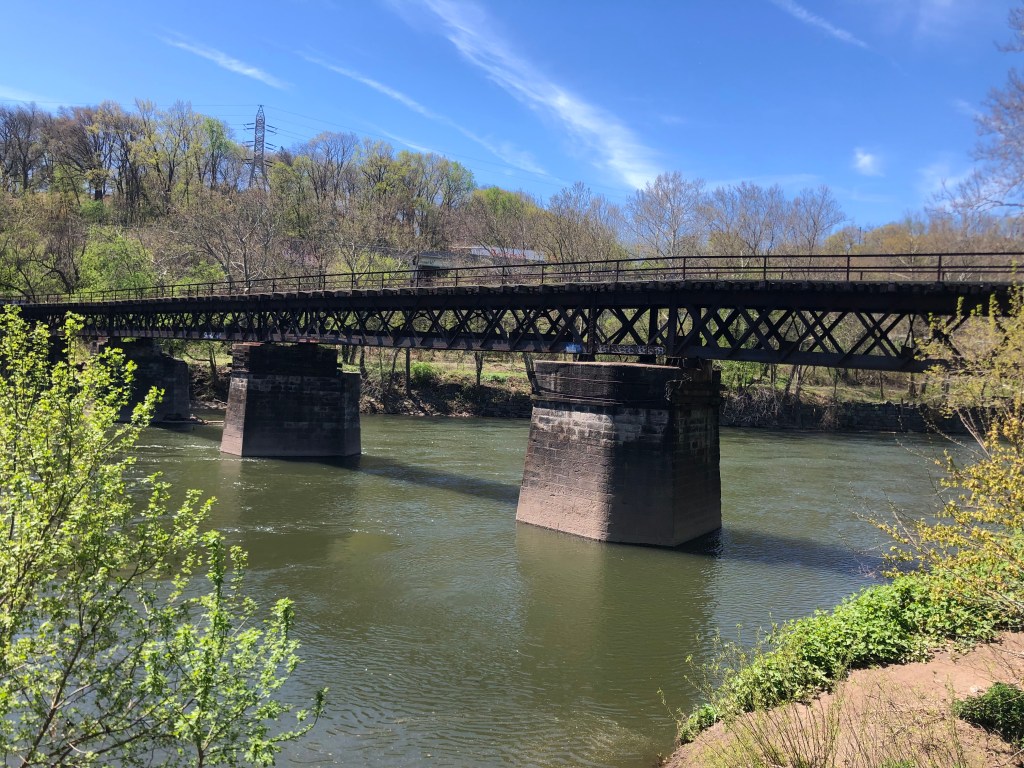
I drank my BOTD at Manayunk Brewing Company, which sits in a cavernous, historic cotton mill on the banks of the Schuylkill River. The cotton mill dates back to 1822, and it operated (making cotton or, later, wool) until 1992. At that point it became a brewery.
My words can’t do justice to the wonderful setting. Not only is the historic building awe-inspiring, but there’s an old railroad (?) bridge crossing the river right behind the brewery. And I had a great spot in the sun to enjoy the view.
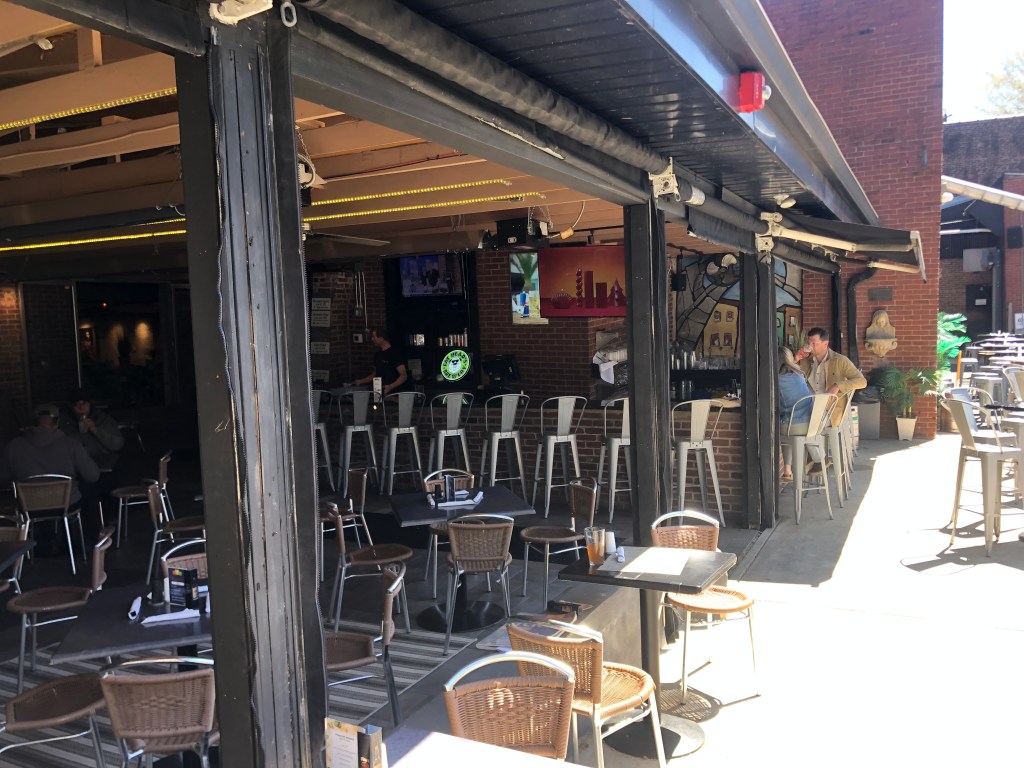
I had my heart set on getting one of Manayunk’s home-made brews. But sadly, my server informed me that they lost their entire brewing setup to a flood a few years back. It seems that flooding has been a recurrent problem, judging from the “high water mark” signs in the bar.
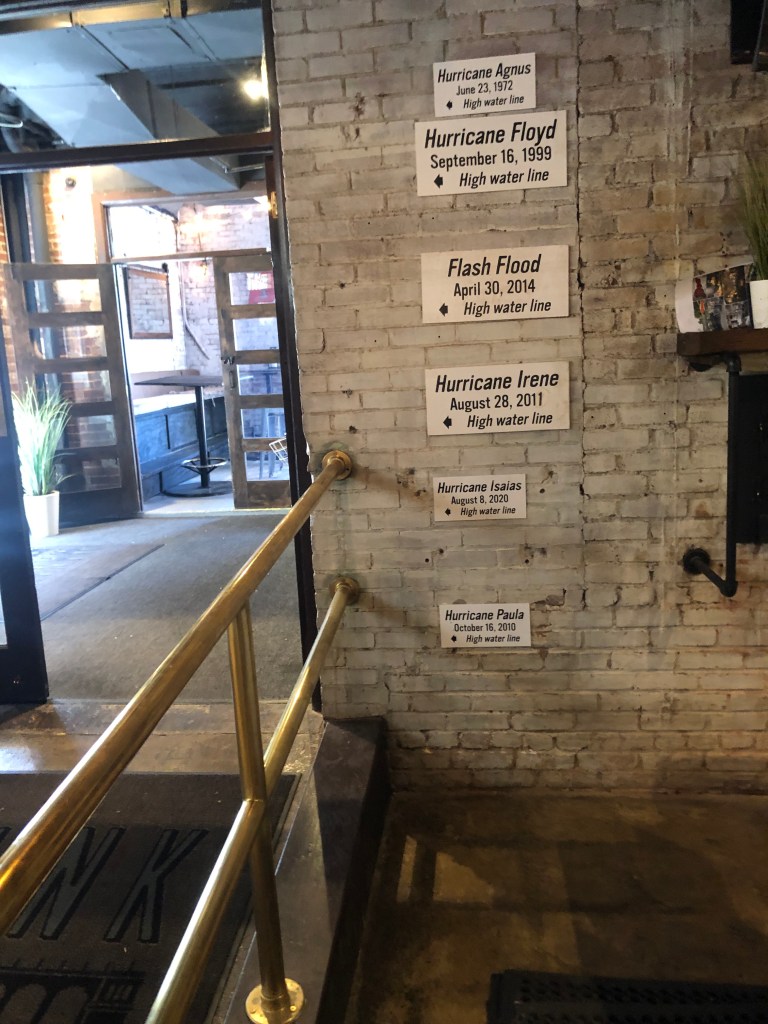
However, a few of their beer recipes are still being faithfully produced by local brewing partners. I selected the Schuylkill Punch, which is being brewed by Yards Brewing.
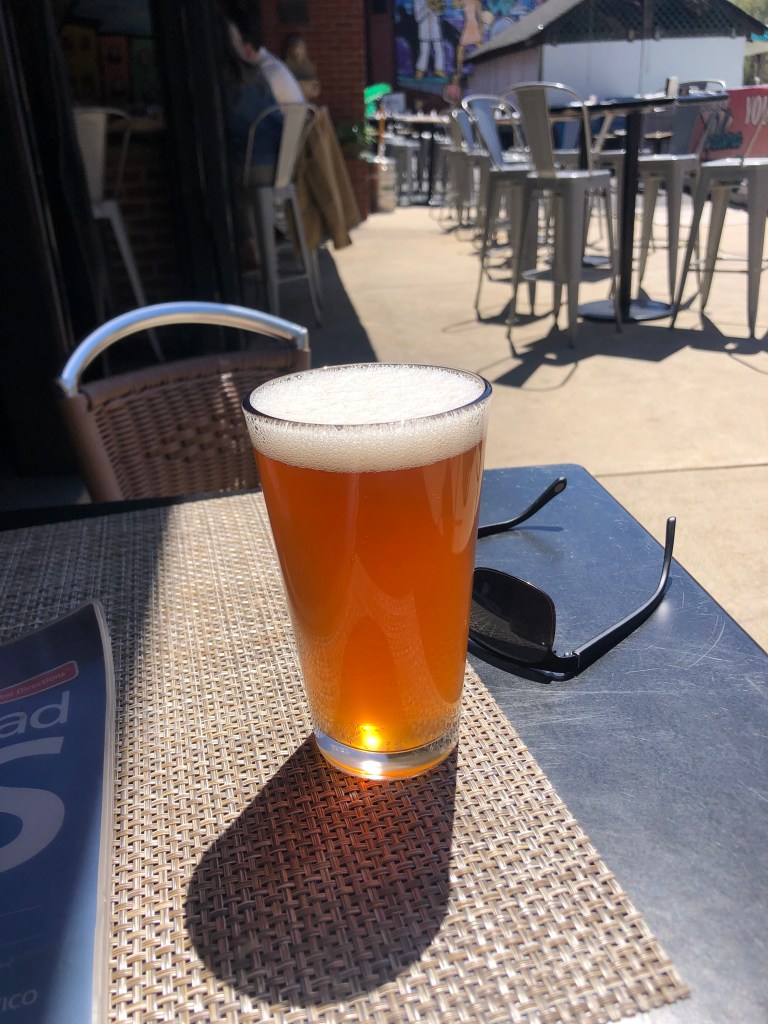
This is nothing like what I normally drink. It’s light, with a body light iced tea. There’s almost no malt. And with an ABV of 4.5 percent, it has about half the alcohol of my usual brews.
But this is an exceedingly smooth beer, and it complemented the warm weather perfectly. It’s slightly sweet, with distinct citrus notes of grapefruit, lemon, and some tropical fruits. Carbonation is low, but it has a nice head. Overall, I’d call this a “session” beer, especially if your session is outdoors on a warm day next to the Schuylkill River. I give it 3.5 stars out of five. If they could up the flavor a bit (maybe brewing it with more fruit), I’d knock it up to a solid 4.

 Chasing Phantoms
Philly’s great! City Tavern would’ve thrust you right back into 17th C. america, dining with the Founders’ ghosts.
Competitor to E Alley: new Paltz Ny: Huguenot St 1600s established…still inhabited!🍻
LikeLike