Today I returned to Philadelphia to finish up my Ben Franklin research. This took me to a couple of sites that you might not associate directly with Franklin. For example, I spend a couple of hours meandering about the labyrinthine Eastern State Penitentiary. Opened in 1829, it’s considered the world’s first true “penitentiary,” designed specifically to promote penitence among its inmates. Toward this end, prisoners at Eastern State were kept entirely isolated from one another, housed in (relatively large, by today’s standards) cells that resembled small chapels, prohibited from speaking, and given solitary jobs to perform. The idea was that isolation would impel prisoners to reflect on their crimes and on spiritual salvation.
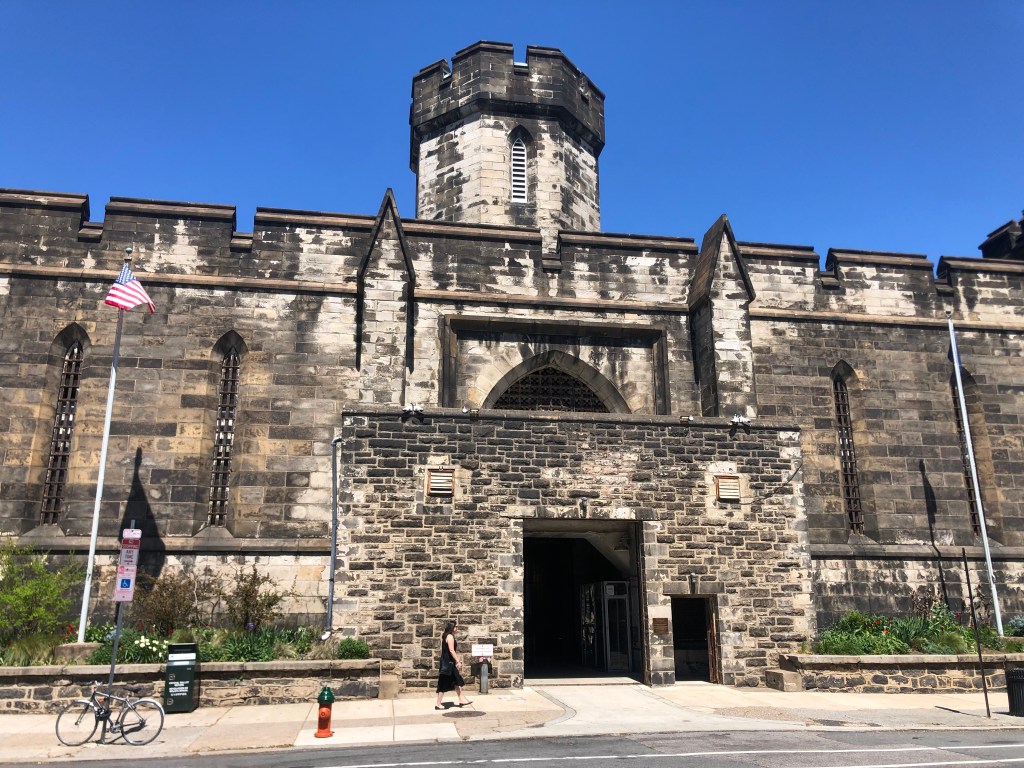
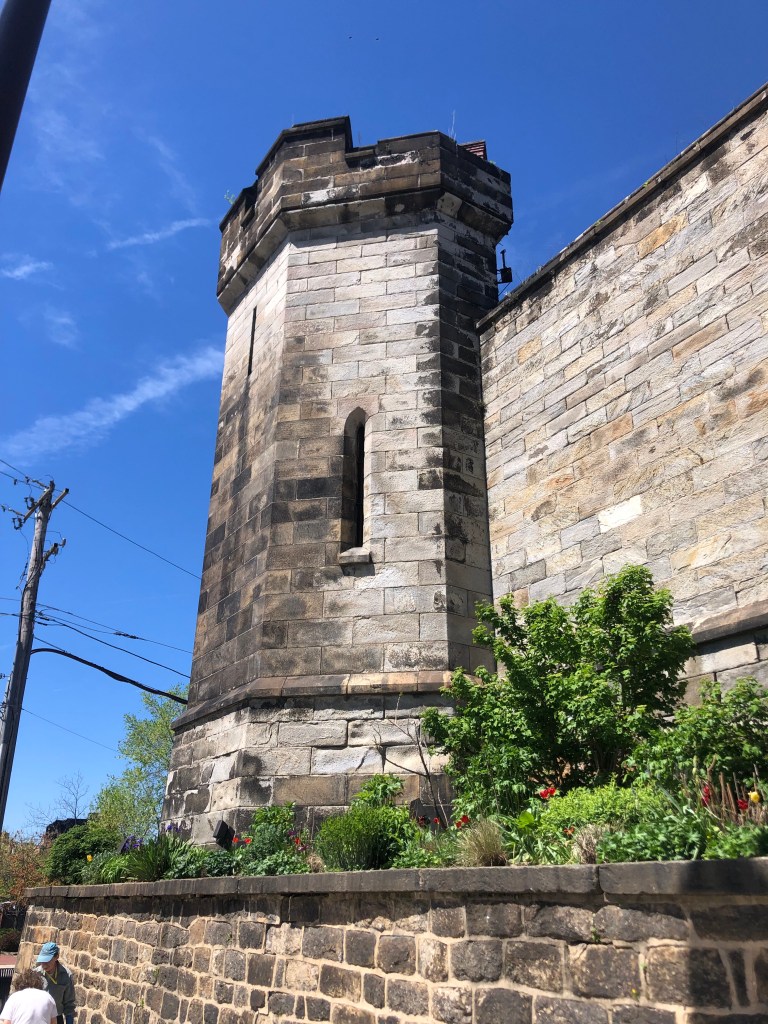
What does this have to do with Ben Franklin, you ask? Eastern State Penitentiary was a direct (though delayed) outgrown of a meeting held at Ben Franklin’s house in 1787. Franklin and other notable Philadelphians formed “The Philadelphia Society for Alleviating the Miseries of Public Prisons,” and many of the points for which the Society advocated were adopted into the design of the new prison. It was truly a paradigm shift in the punishment of lawbreakers.
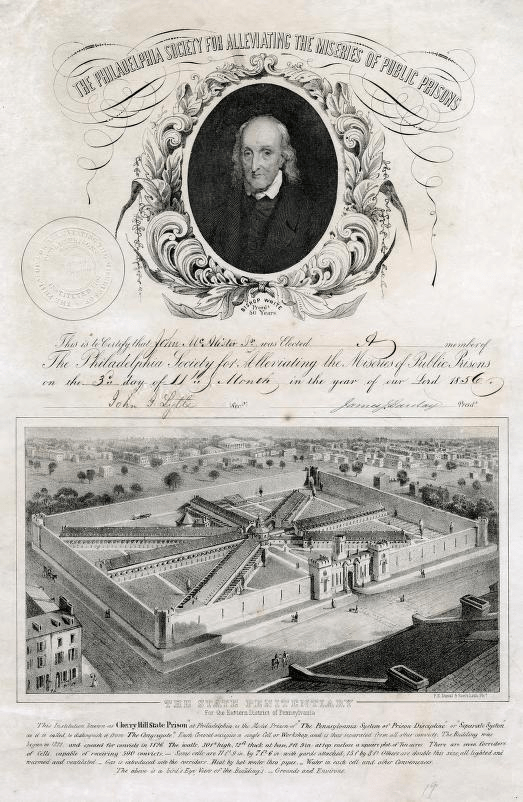
The model underlying Eastern State was adopted across the world, with many hundreds of prisons following the so-called “Pennsylvania System.” Over time, however, Eastern State’s approach proved too costly, and the principles of isolation and silence were officially abandoned at the prison in 1913. It closed due to obsolescence in 1970.
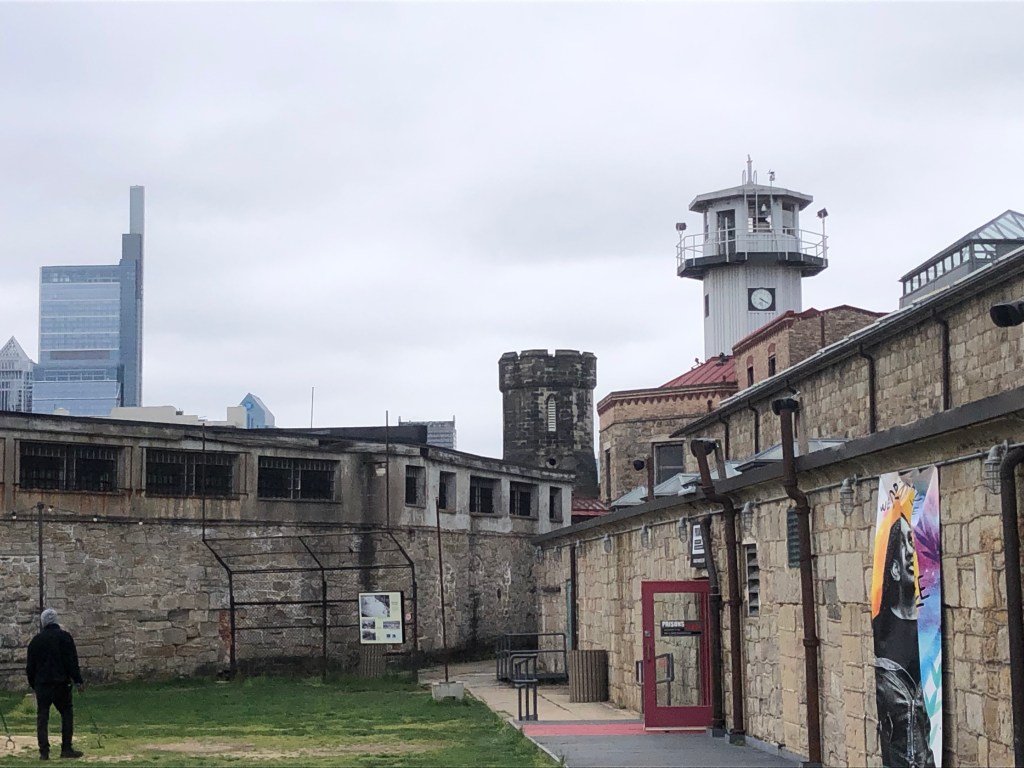
For decades the prison simply decayed in place and was eventually slated for demolition. But it was saved by preservationists at the last minute, and since the 1990s it has been maintained in a state of arrested decay, with tours offered most days of the week.
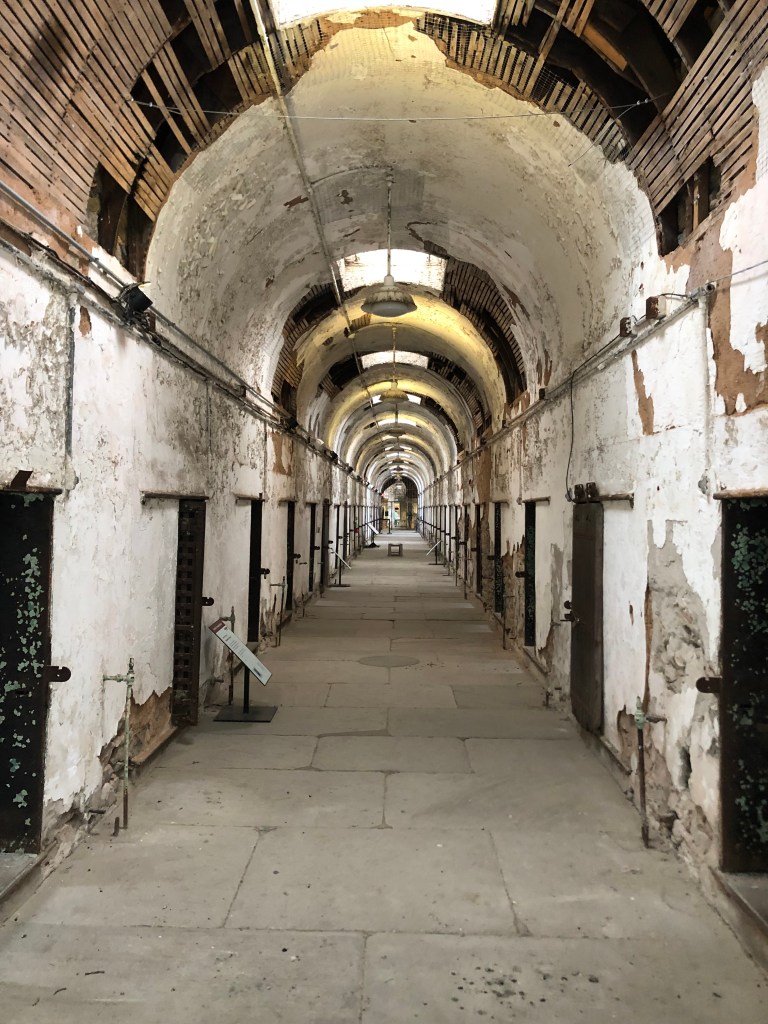
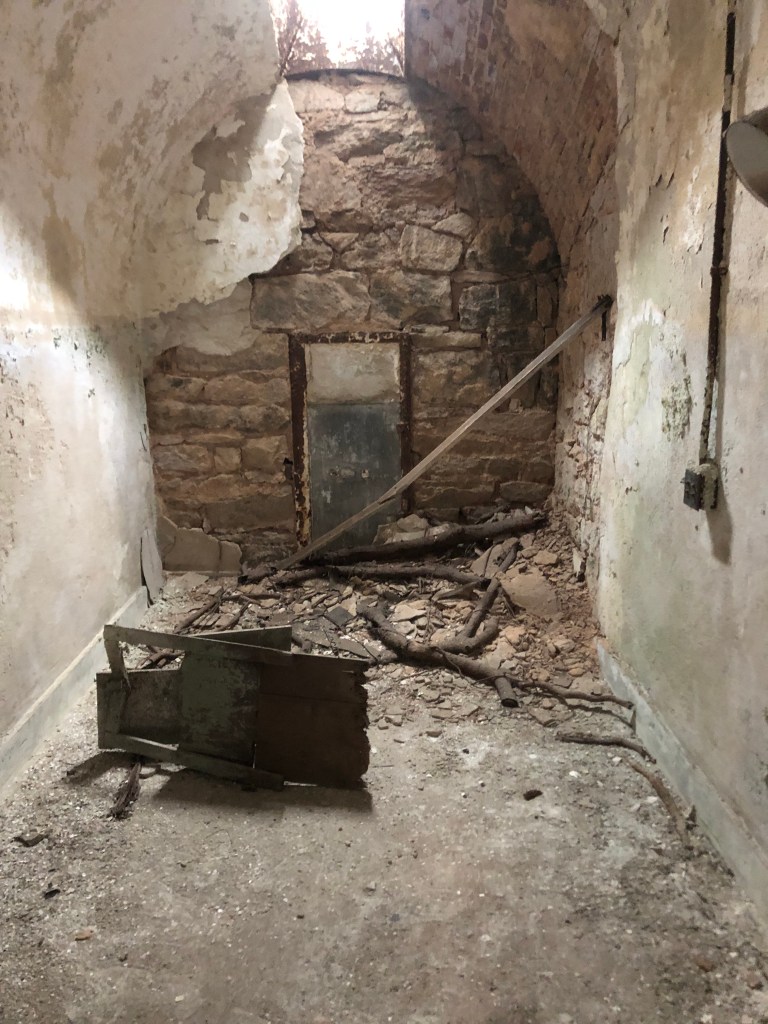
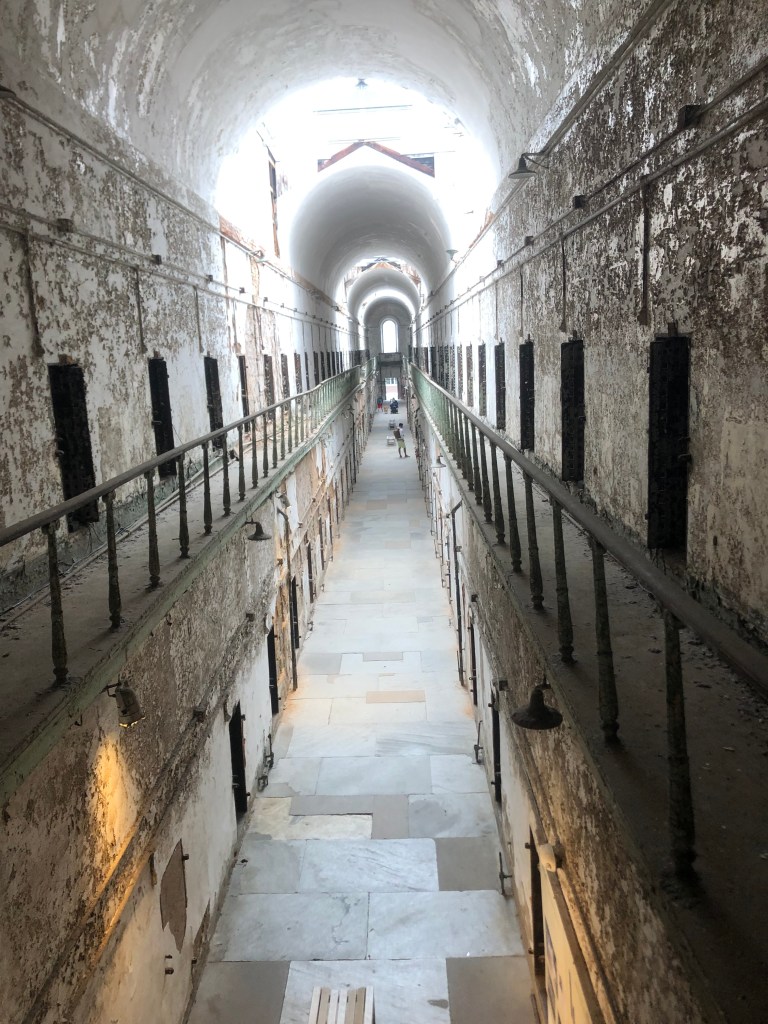
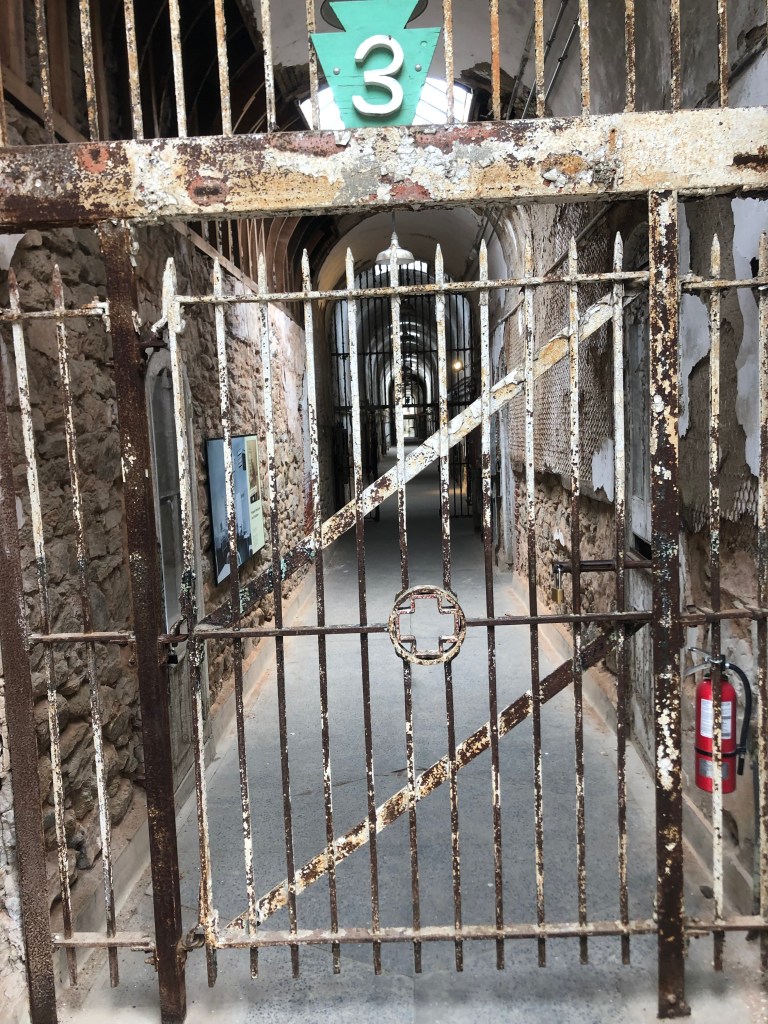
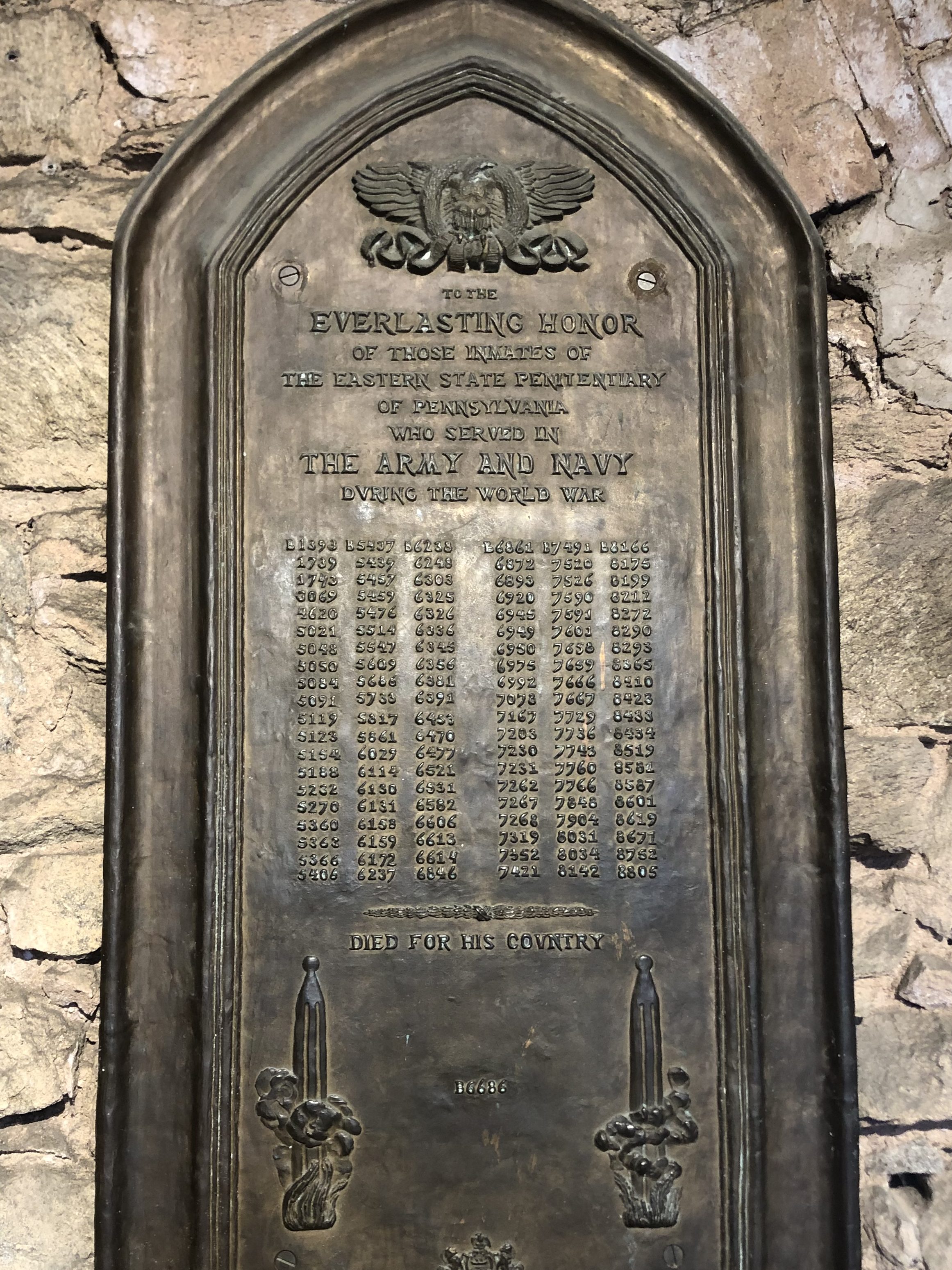
It was a sobering visit. And while one can certainly find fault with the system of incarceration, we can thank Ben Franklin (among others) for helping to move the country away from the horrific practices of the 18th century.
My next visit of the day is harder to connect with Ben Franklin: the Edgar Allan Poe house on N. 7th Street. But there is a connection. Poe wrote a short story titled “The Business Man” that, some scholars claim, is meant as a satire of Benjamin Franklin’s autobiography. (Poe actually wrote several satirical pieces that ridicule the concept of a “self-made man” and conceit more generally.)
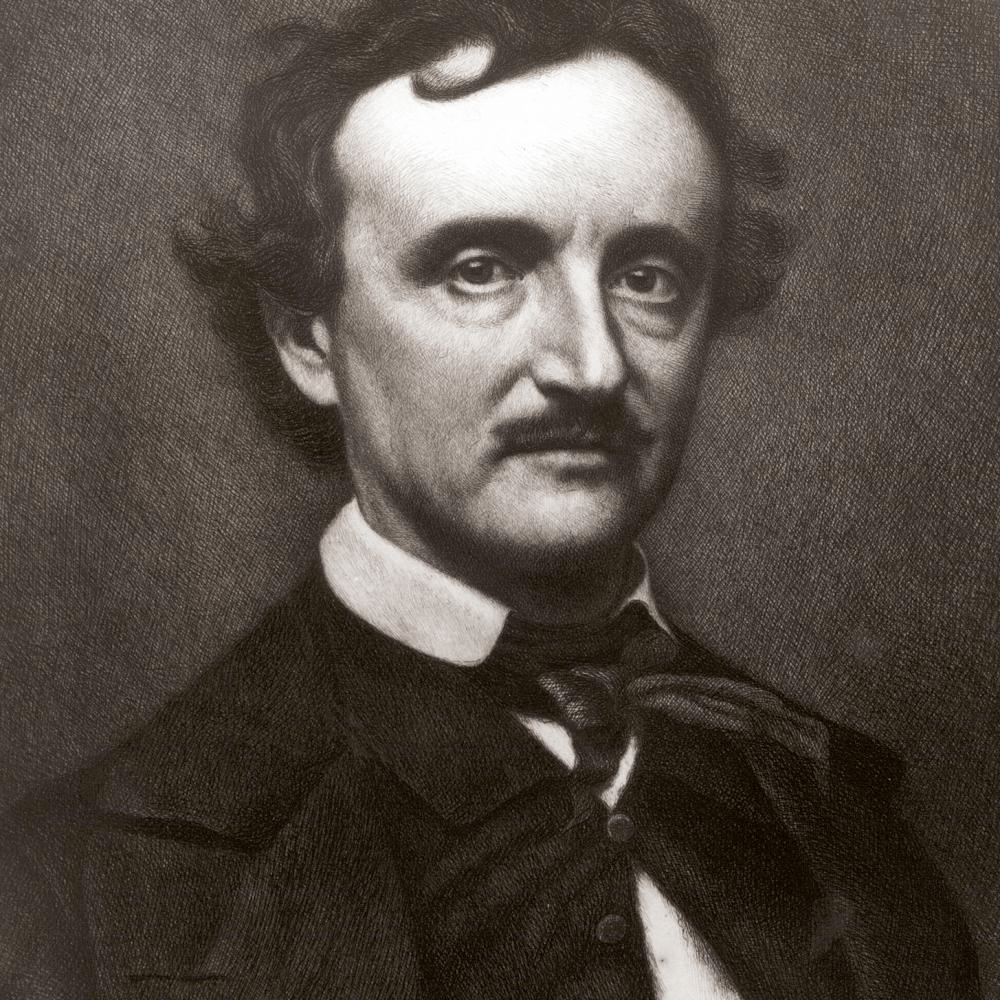
Anyway, as we learned a couple of days ago at The Philadelphia Free Library, Edgar Allan Poe had called Philadelphia home for about six years, from 1838 to 1844. The last year of that time was spent at the house on N. 7th Street, which is now a US Parks Service site.
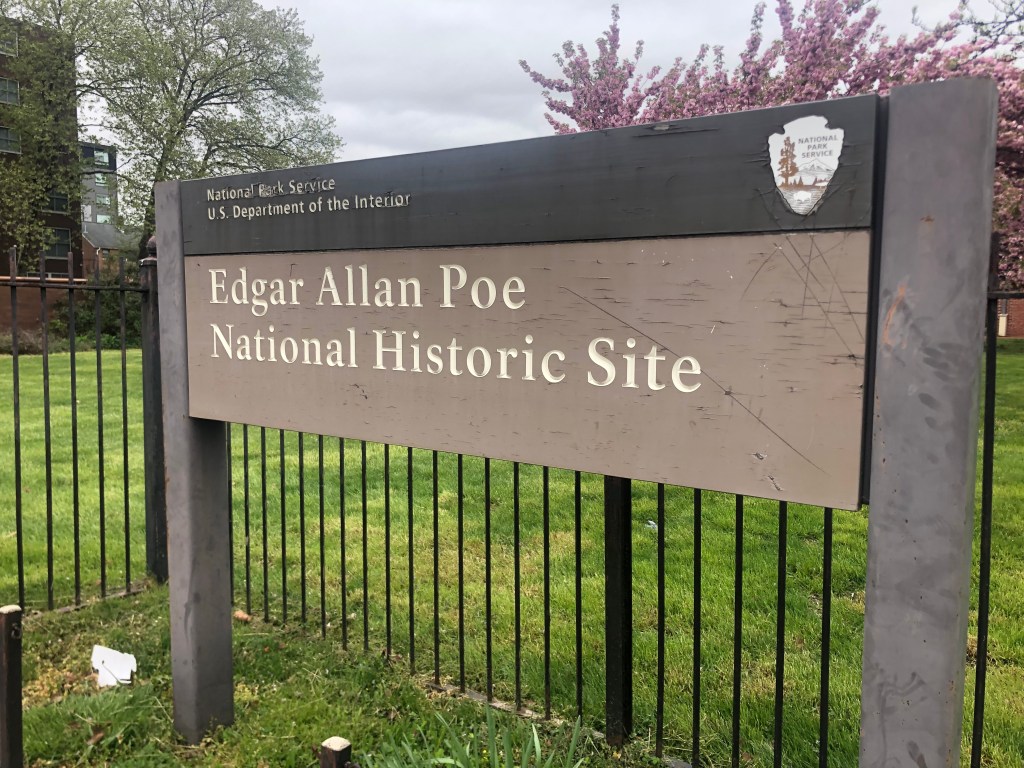
The house is a small, three-story brick structure that was built sometime between 1840 and 1842, so it was still quite new when Poe lived there. After Poe moved out the house changed hands dozens of times, with very little if any attention to its Poe connection. Finally it was purchased by Richard Gimbel (son of the department store magnate), who was a Poe fanboy. After his death in 1970, it eventually ended up with the National Park Service.
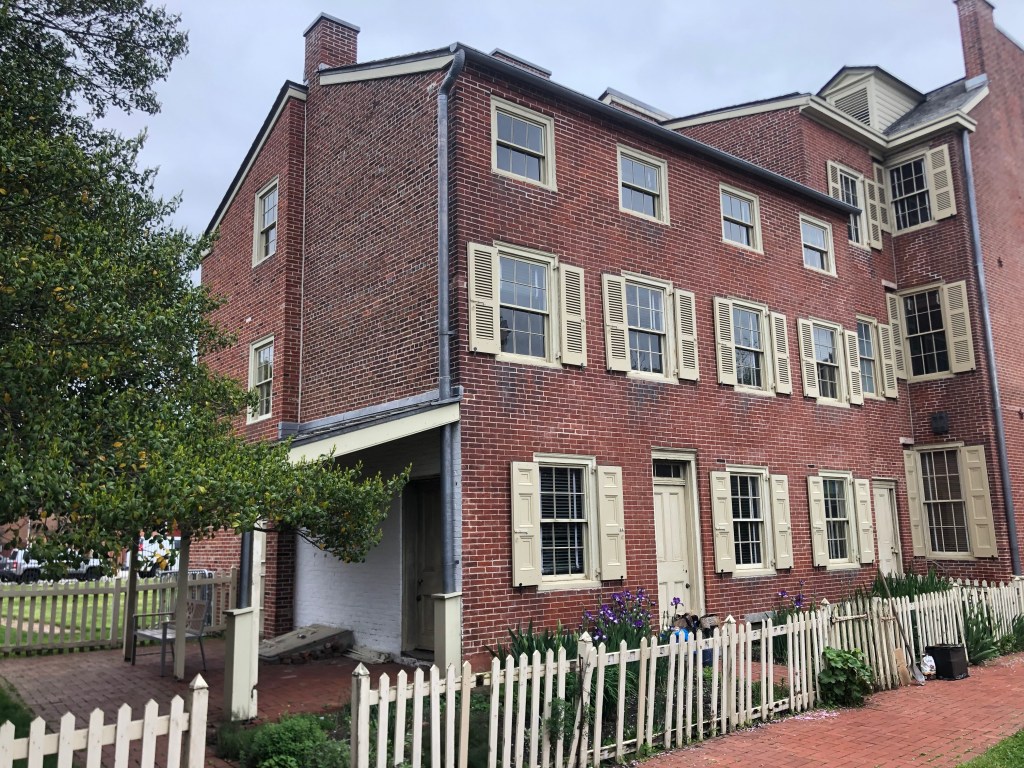
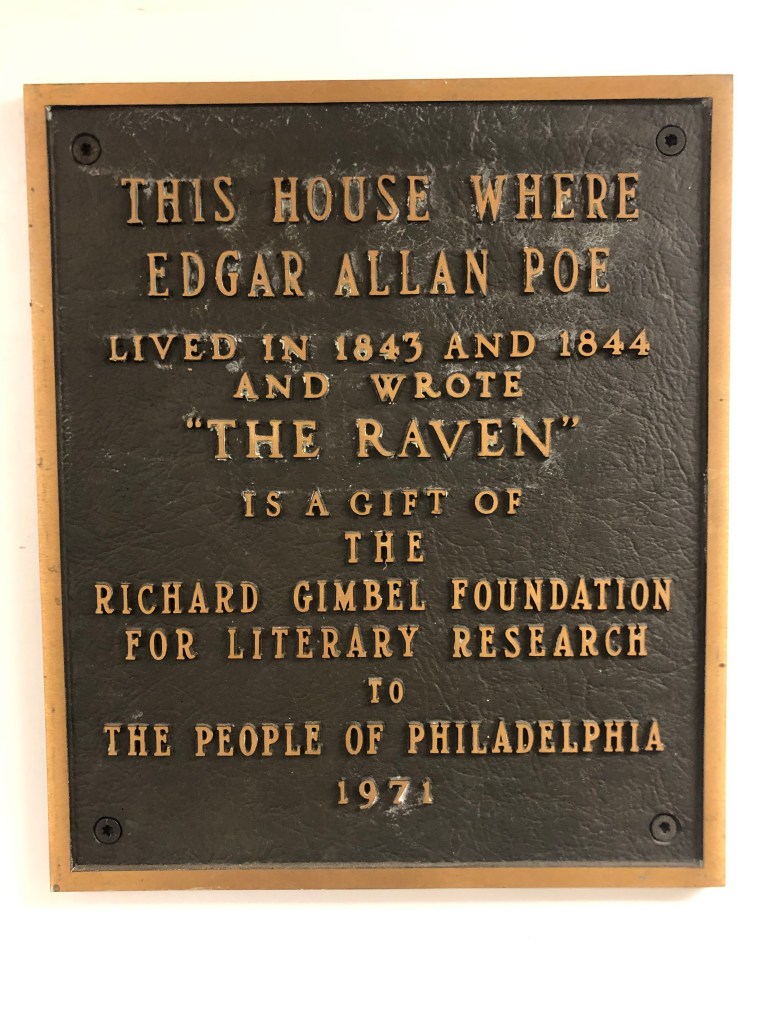
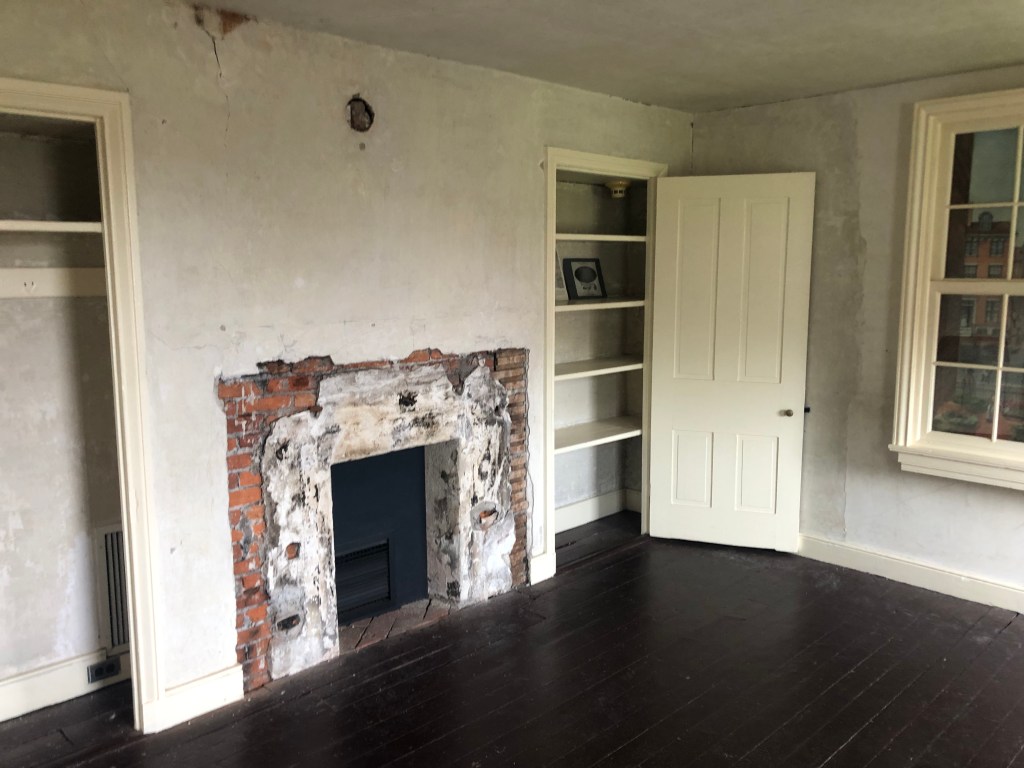
The house is mostly unfurnished, but the Park Rangers told me the floorplan and “bones” of the house are virtually unchanged from Poe’s day. In fact, I think this unfurnished space is more conducive to Poe’s spirit than one filled with period antiques and interactive displays and such. I found it quite easy to imagine Poe in this house, climbing these stairs, writing next to that window.
Poe wrote a number of his best-known stories while living in Philadelphia. It’s difficult to connect specific tales with each of his four Philadelphia homes. But the basement of this house is very, very suggestive of the basement in “The Black Cat.”
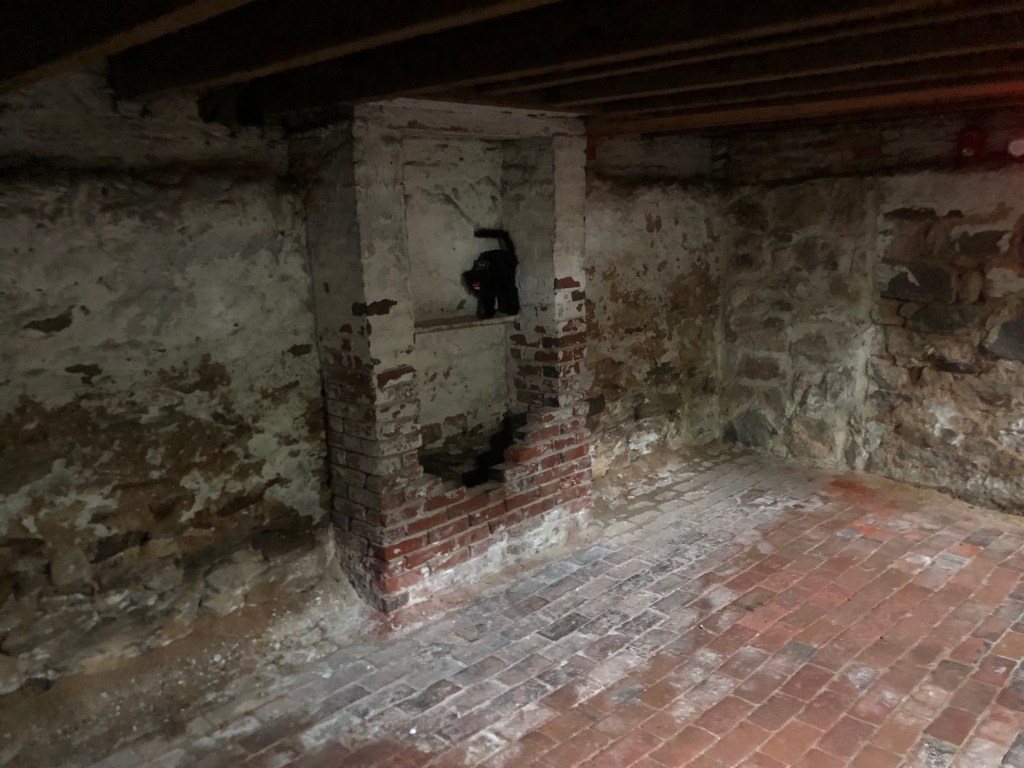
Do yourself a favor and re-read the story.
While visiting the yard surrounding the house I ran into a trio of women tending the planting beds. They are Daughters of the American Revolution and they care for the plants once a week. They are very enthusiastic, and explained in some detail the types of herbs and flowers that Mrs. Poe probably grew out here.

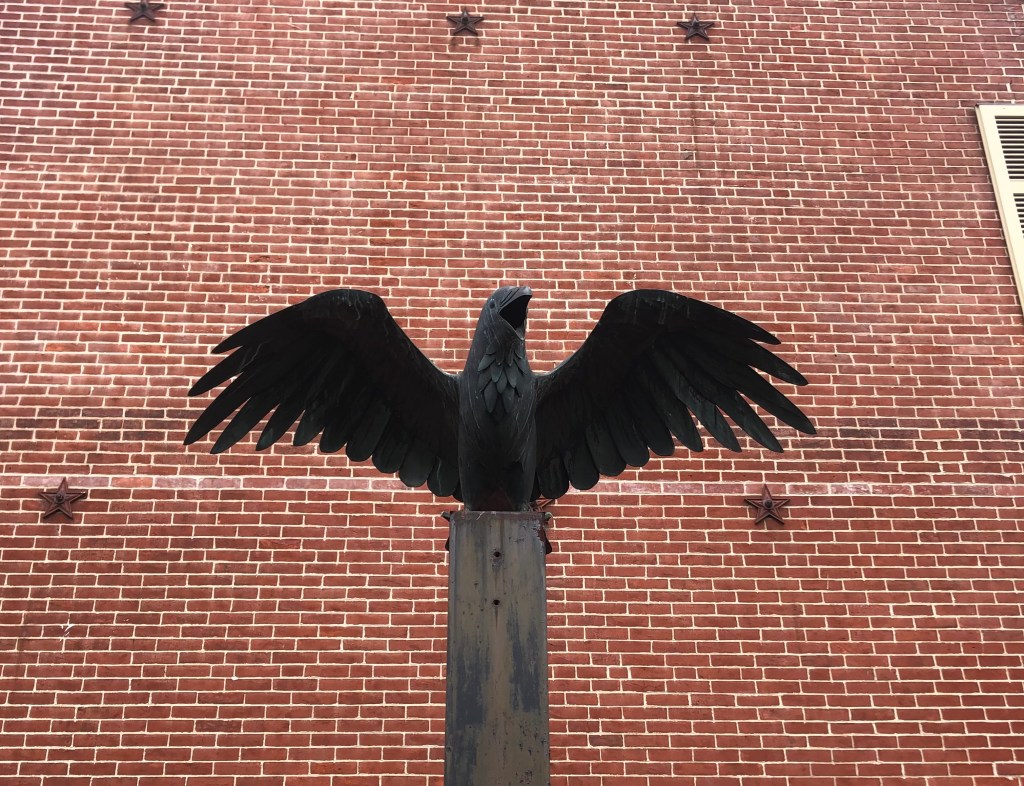
Also in the garden area was this sculpture of a raven. I’ve got to say, though: It looks a little, uh, Third Reich for my tastes. I thought Dickens’ stuffed raven (Grip) looked more like it belonged on a pallid bust of Pallas.
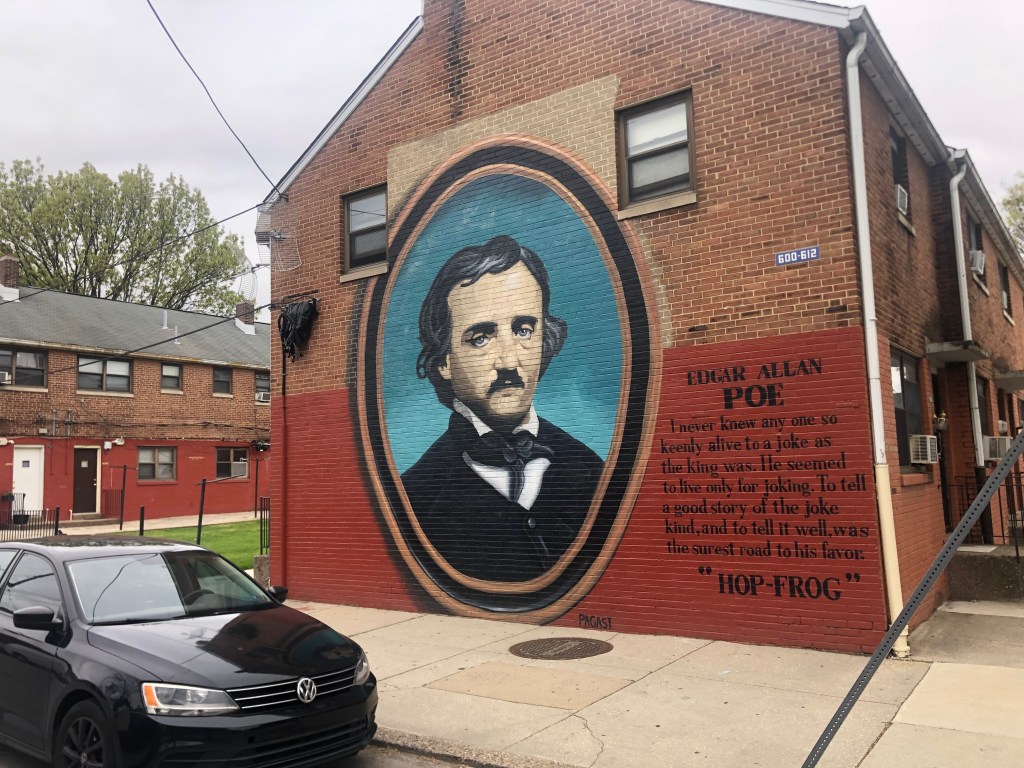
Finally, as I was leaving Poe’s house, I noticed a neighboring building with a Poe mural. It does seem that Philadelphia takes its Poe connections seriously.
The Park Rangers at the Poe house told me there are two other Poe homes in existence. The one in Baltimore (which I describe in this 2022 blog post, which also contains an Easter Egg related to The Thinker!) and one in The Bronx (which will have to be the subject of a later trip). I did impress the Rangers by pointing out that there’s a third extant Poe domicile in the form of his dorm room at UVA. (I describe it in this blog post.)
BREW OF THE DAY
My final Ben Franklin experience today took place at Victory Brewing Company. The connection here is simply that it’s located at 1776 Benjamin Franklin Parkway.

In 1996 Victory Brewing was established in Downingtown, PA (which you will recall is home to the diner featured in The Blob). This Philadelphia location opened in 2021.
I ordered Victory’s Moonglow, which is a weizenbock. As you know, a weizenbock is a like a bock, but much of the barley is replaced with wheat. It’s a German style that you might find at the Munich Oktoberfest.
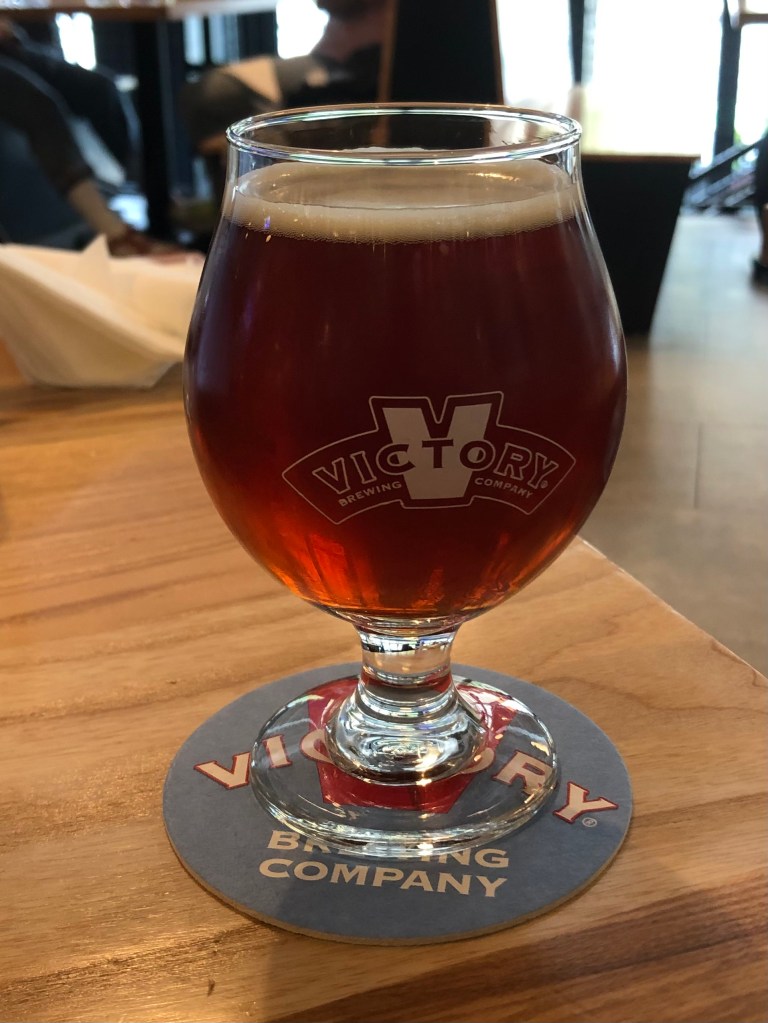
Victory’s version displays a medium copper color, almost no head, and high carbonation. At the front it’s quite sweet, and reminiscent of a classic saison. You can’t help but notice the distinct flavor of dried apricot and raisins. Then there’s a burst of spices mid-palate, including clove, cinnamon, and maybe anise. This morphs into the distinctive flavor of banana Runts, which I consumed by the handful in the 1990s. Finally there’s a little bit of menthol on the finish. Overall, it’s an interestingly complex beer. At 8.7 percent ABV, it’s a beer for sipping rather than quaffing. But I ordered a second one anyway. I’m compelled to give it 4.5 stars out of 5.


 Chasing Phantoms