When I awoke in Geneva NY this morning I was relieved to discover that yesterday’s rain had stopped. It was going to be a good day.
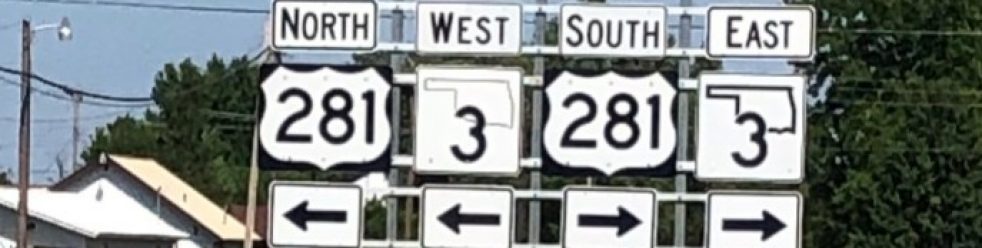
After my morning ablutions I eased the Altima back onto US 20, which at this point was feeling like an old friend. Those iconic white-and-black shield signs, with the reassuring “West” designation, appear every few miles, or even more frequently when encountering some complicated twists and turns through the towns. For it’s worth remembering this 3,365-mile road was largely assembled from preexisting roadways which didn’t always line up perfectly. I have to admit, though, the USDOT has done a great job of making the route clear. I have hardly used a map or nav at all, instead relying almost exclusively on the road signs.
I encountered today’s first sight of note in the town of LeRoy NY (pop: 7,700). Do you recognize this?
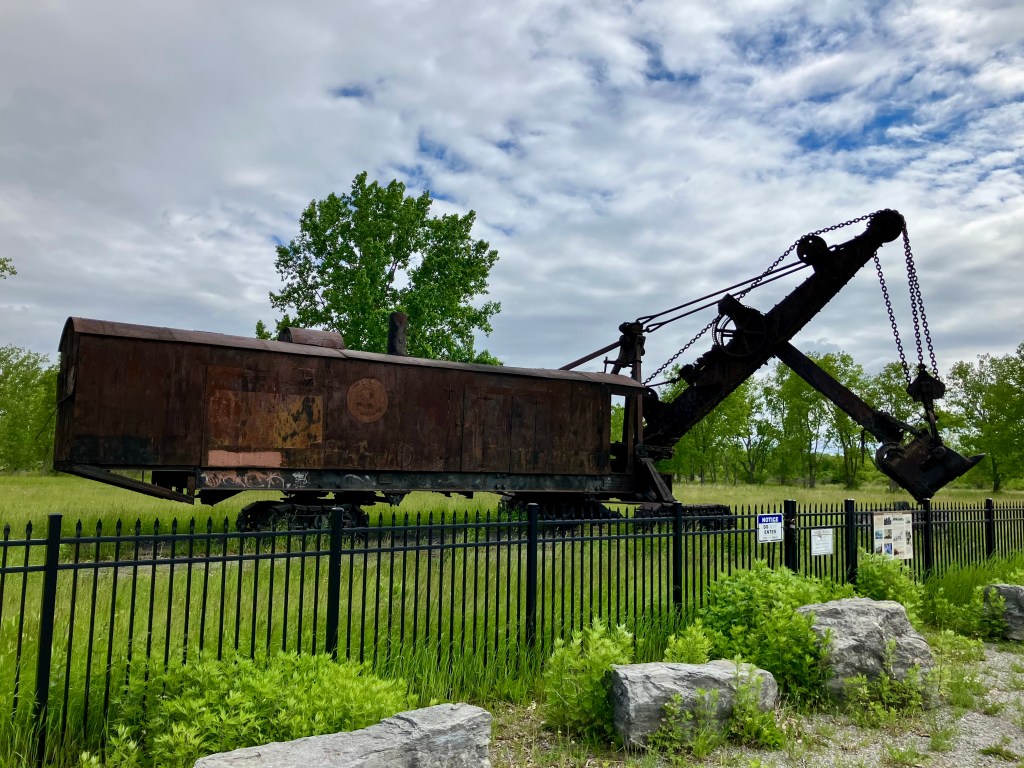
Doesn’t it reminds you a lot of this?
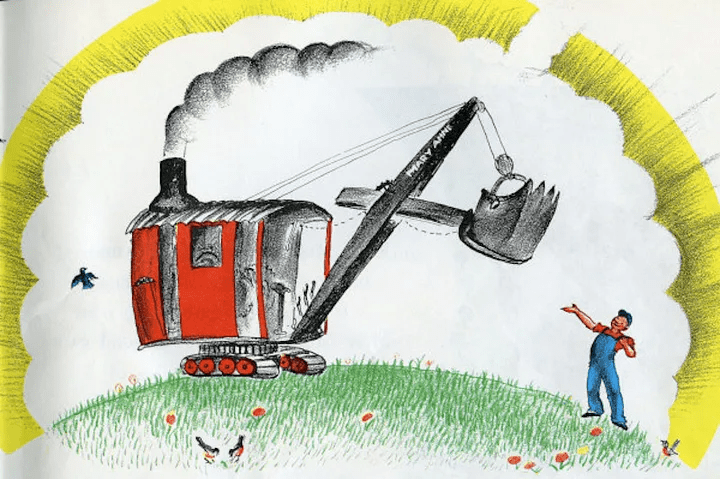
Surely you remember Mike Mulligan and his steam shovel. The rusty hulk I saw in LeRoy this morning was made by the Marion Steam Shovel Company in 1906. (Notably, the name of Mike Mulligan’s steam shovel was Mary Anne-almost certainly a nod to the Marion company.) For decades the LeRoy shovel worked in a quarry across the street from where it now stands. It was retired to that spot in 1949…just a few years after Mike Mulligan’s Mary Anne was converted into a boiler for a building’s heating system. I’m just impressed with the scale of this beast. It took a crew of four men just to operate the thing!
Next up was the town of East Aurora, NY, where I saw the first of several giant sculptures. This first one is affectionately known as Vidler on the Roof:
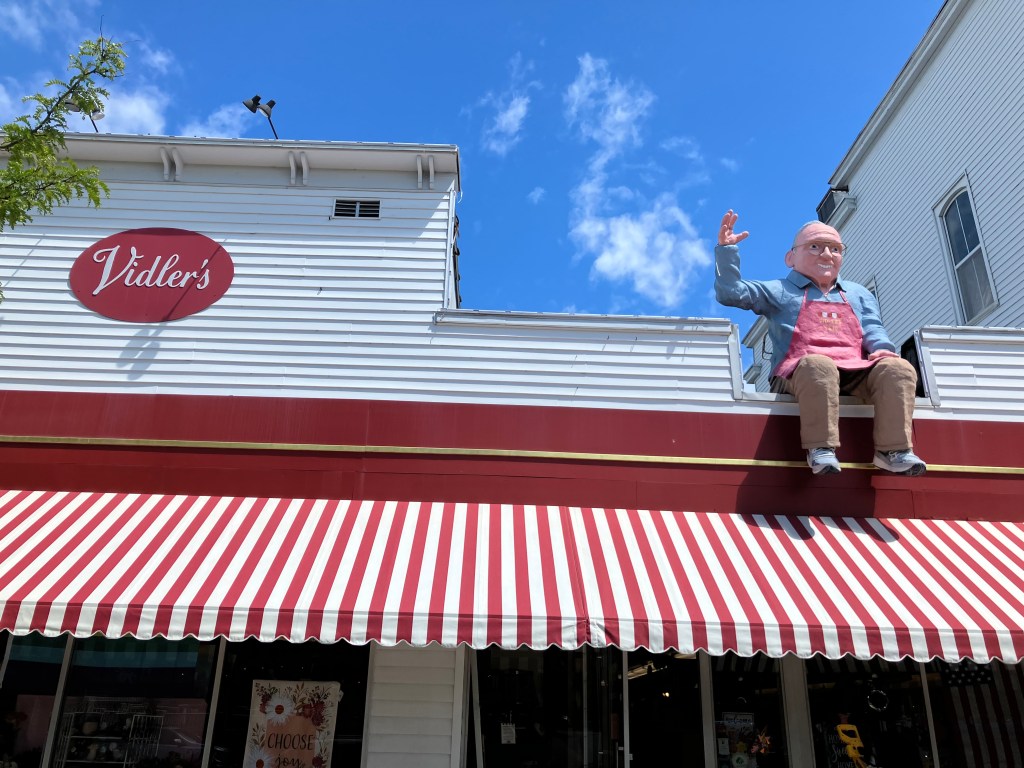
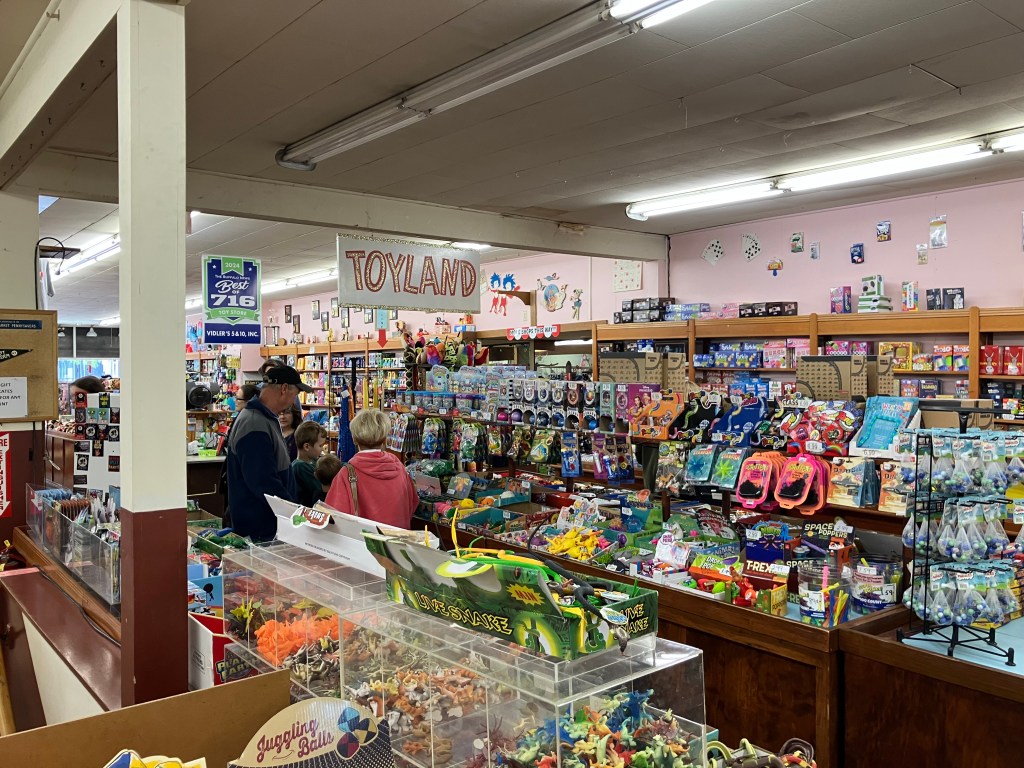
Vidler’s is an old-timey five and dime store founded by Robert Vidler in 1930. This East Aurora location was established 65 years ago by Robert’s son, Ed. The inside of the store still looks very much like the old five and dimes…except the prices are much higher. The statue of Ed was placed on top of the building in 2009; Ed died ten years later, at age 90.
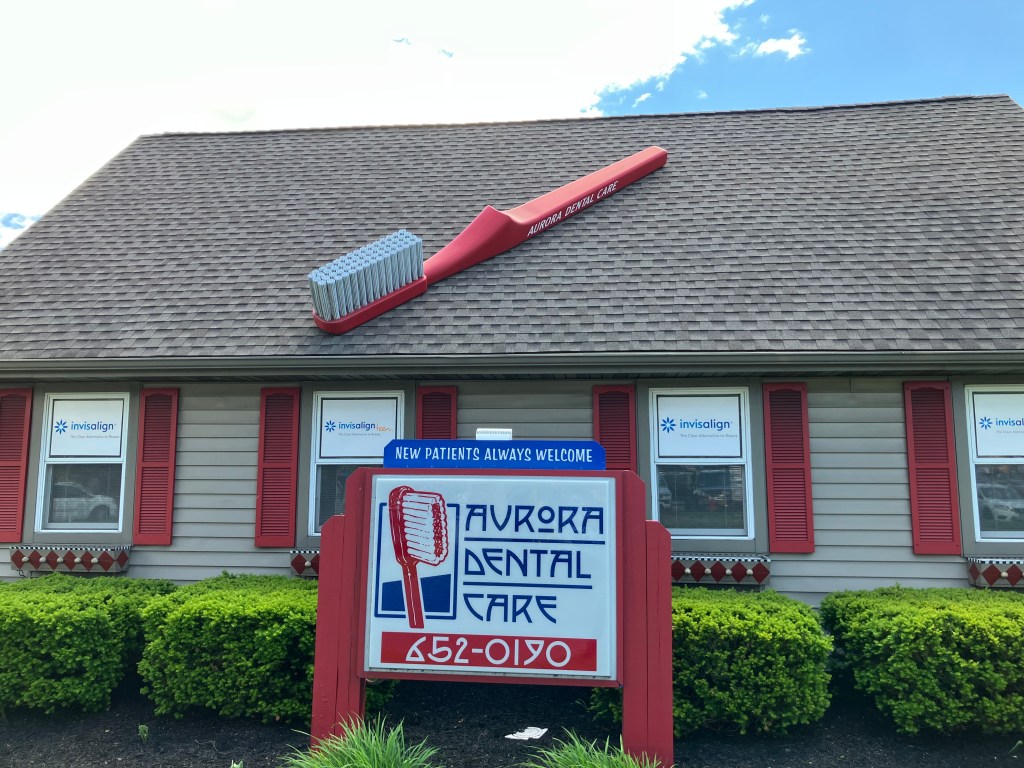
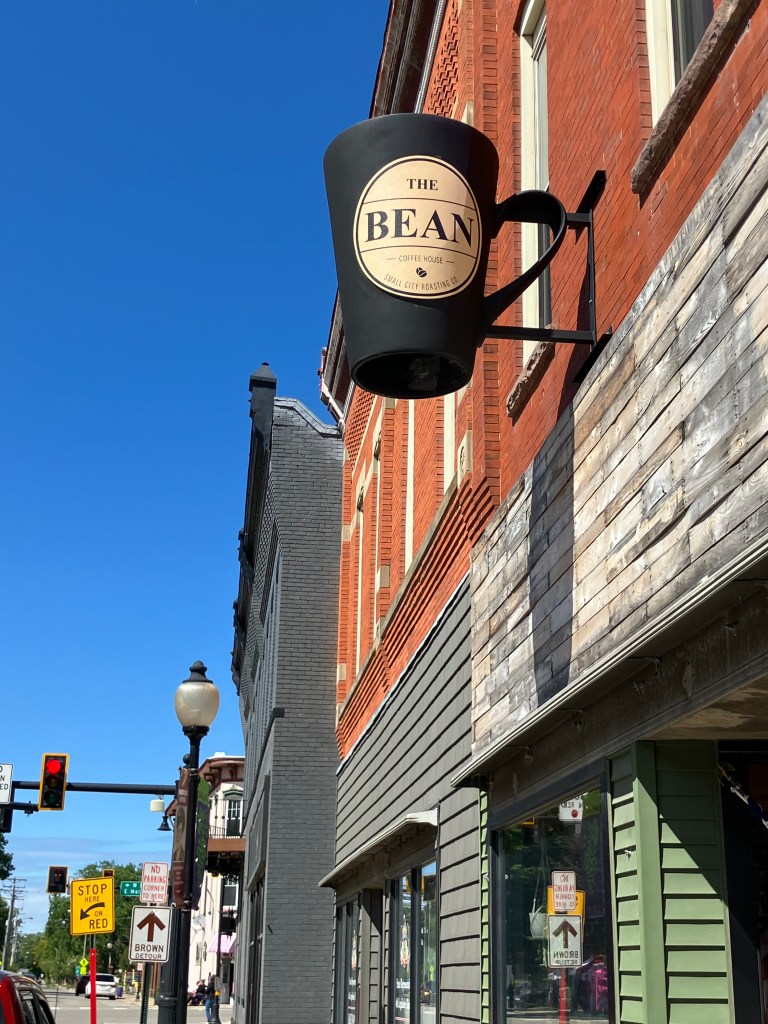
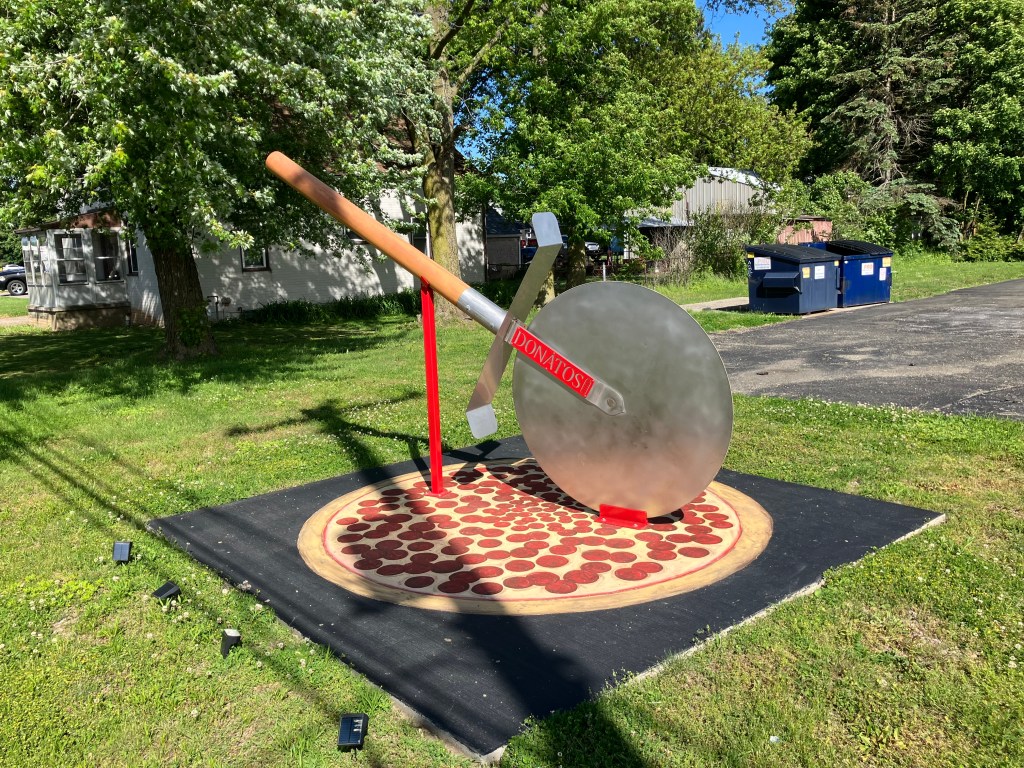
It seems that this part of the country really likes to place giant objects on their buildings. A few other examples from today:
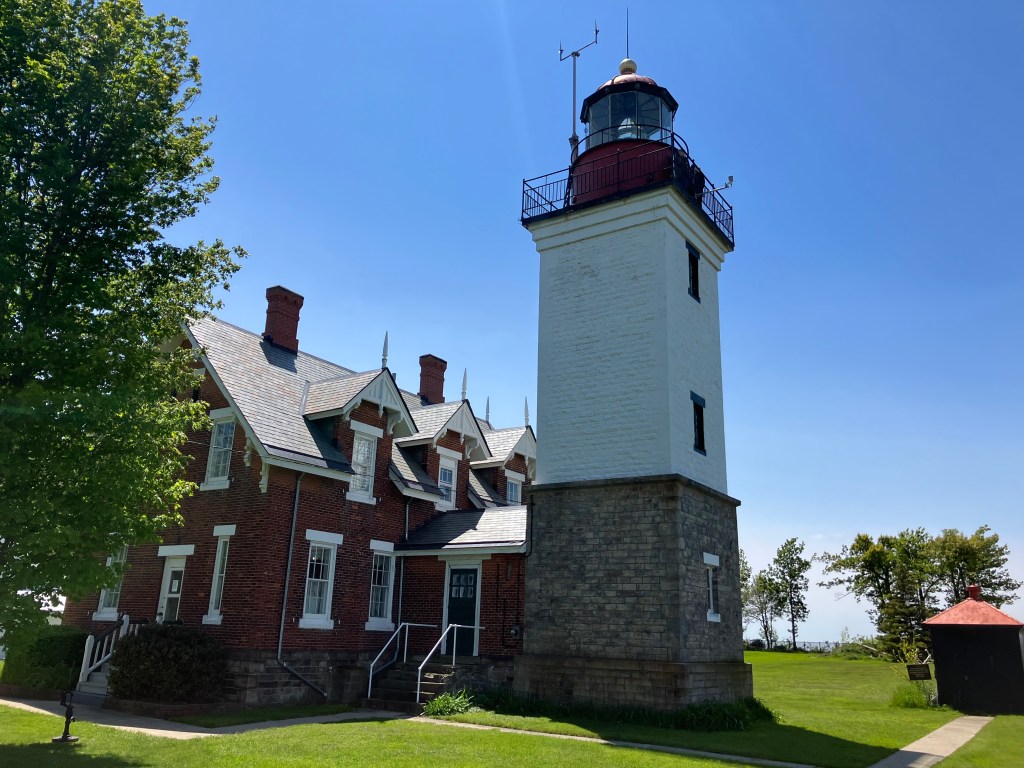
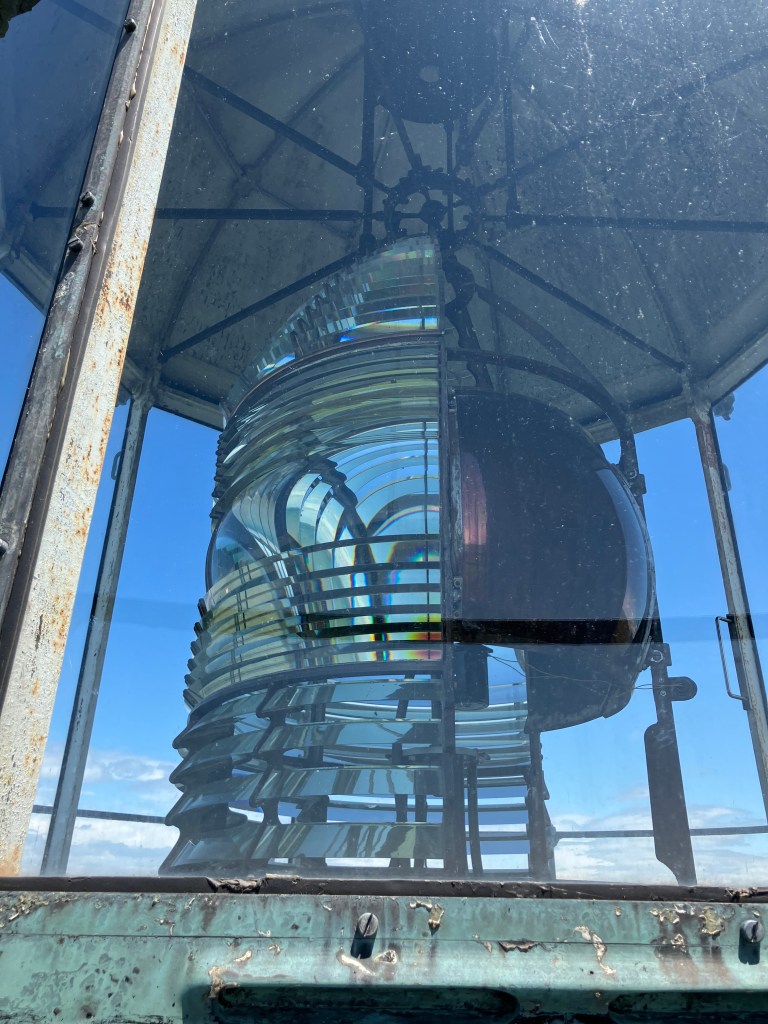
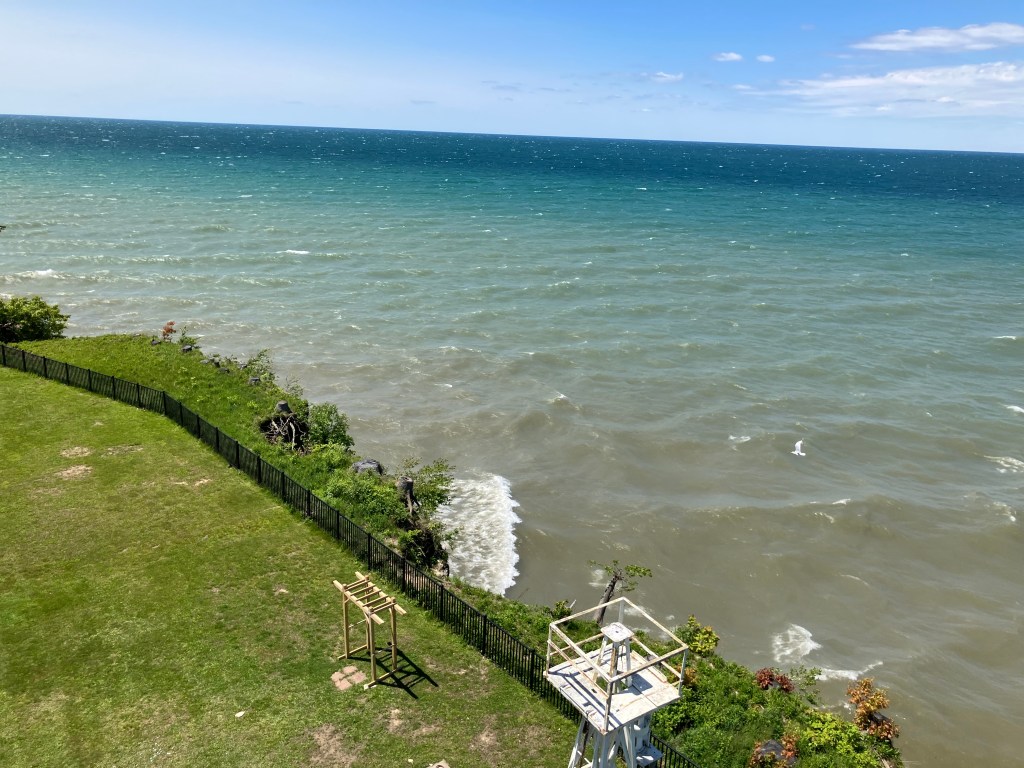
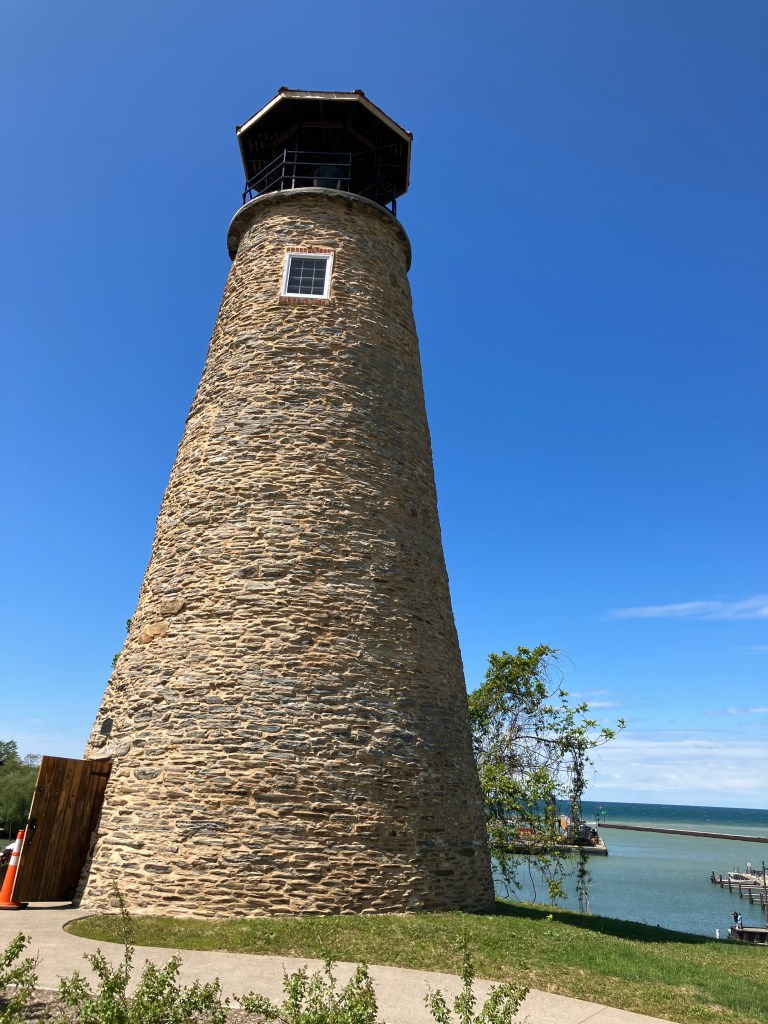
My main objective of the day was to see some lighthouses on Lake Erie. Alert readers will recall that I’ve had a passing interest in lighthouses as interesting pieces of history, architecture, and (possibly) ghost lore. More to the point, though, last time I visited a light house I bought one of those souvenir “passports” that can be stamped at all the lighthouses in the US. I’ve already got five stamps. I only have 772 more to go…
Anyway, today I climbed to the top of the Dunkirk Lighthouse and the Barcelona Lighthouse. Both had docent-led tours, but I had to fake an emergency to escape the endless, meandering stories and dad jokes from one of the docents. I’m not making this up. Anyway, both lighthouses date from the 19th century, and the Dunkirk Lighthouse is still active. The Barcelona Lighthouse had the world’s first natural-gas powered lighthouse light. It hasn’t been active for well over a century, and is now run by the NY Parks Department. It was recently renovated and re-opened just this week!
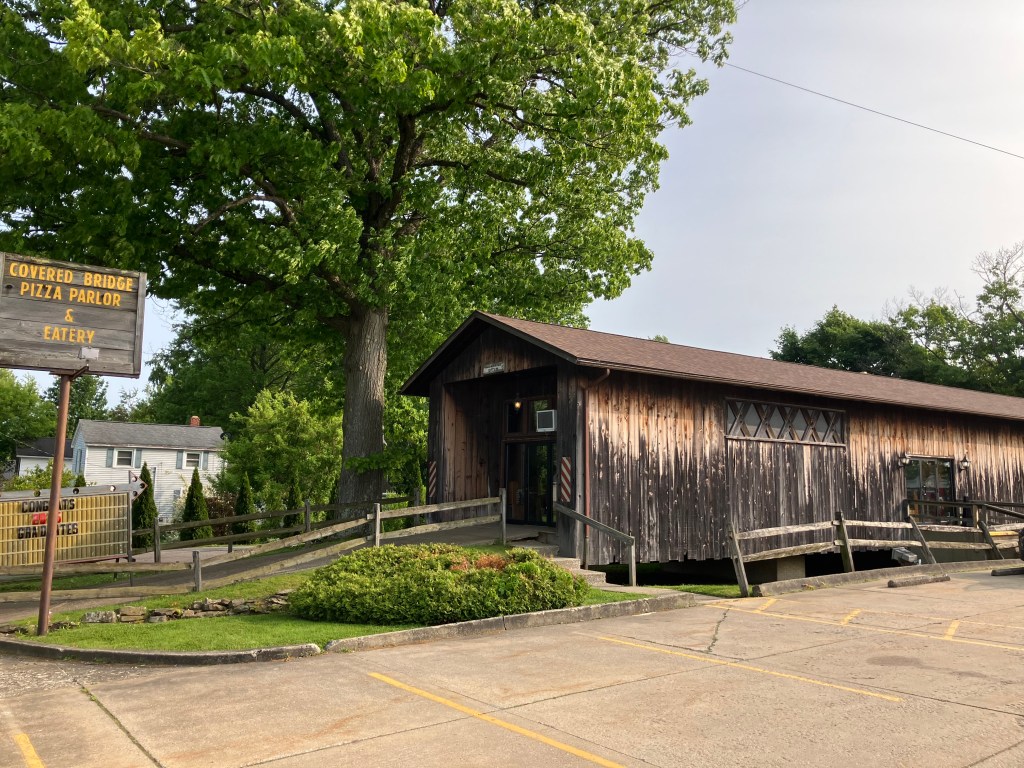
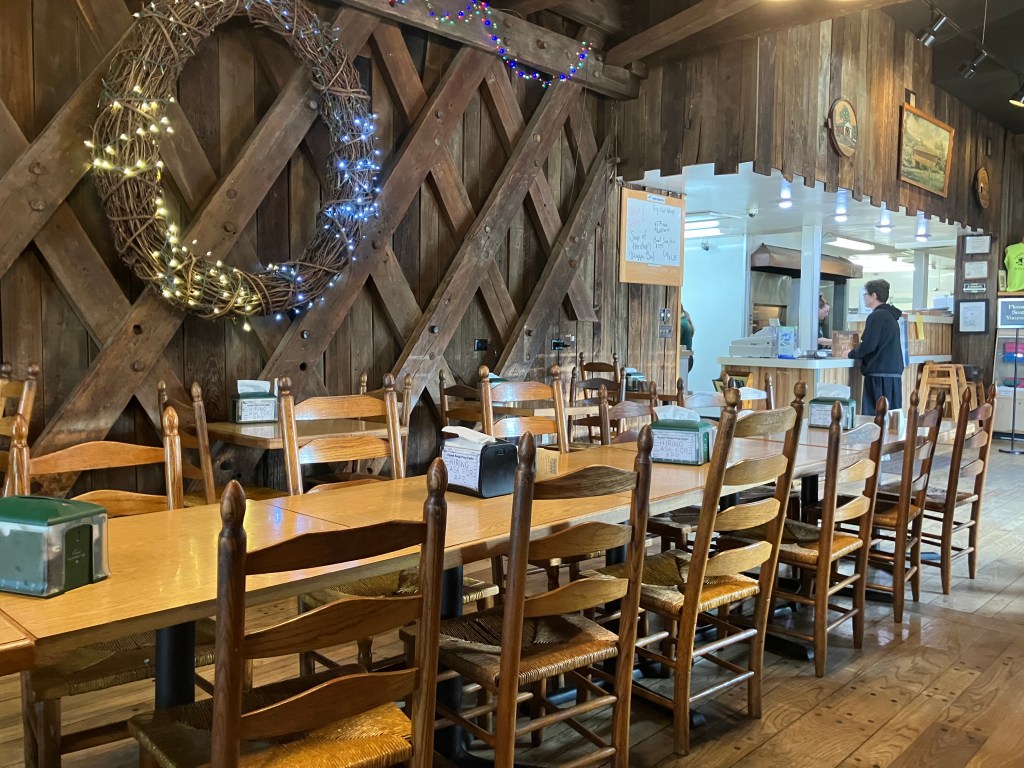
It was now getting close to dinnertime, so I went to a pizzeria in Ashtabula, PA that’s situated entirely within a covered bridge. Seriously. The 1862 town truss bridge was originally located about 11 miles south of its current location until it was slated for replacement in 1972. It was auctioned off, and the highest bidder was Gary Hewitt. His bid was five bucks. Gary had the bridge disassembled and then reassembled on its current site. He named the place Covered Bridge Pizza Parlour, which is kind of on the nose.
Sitting in the dining room of Gary’s restaurant you’re surrounded entirely by the bridge. It’s a neat and well-executed concept. I wish I could say the same for the pizza.
Now here’s where things start to get a little weird. Just minutes after leaving the covered bridge restaurant, I encountered this monster of a covered bridge:
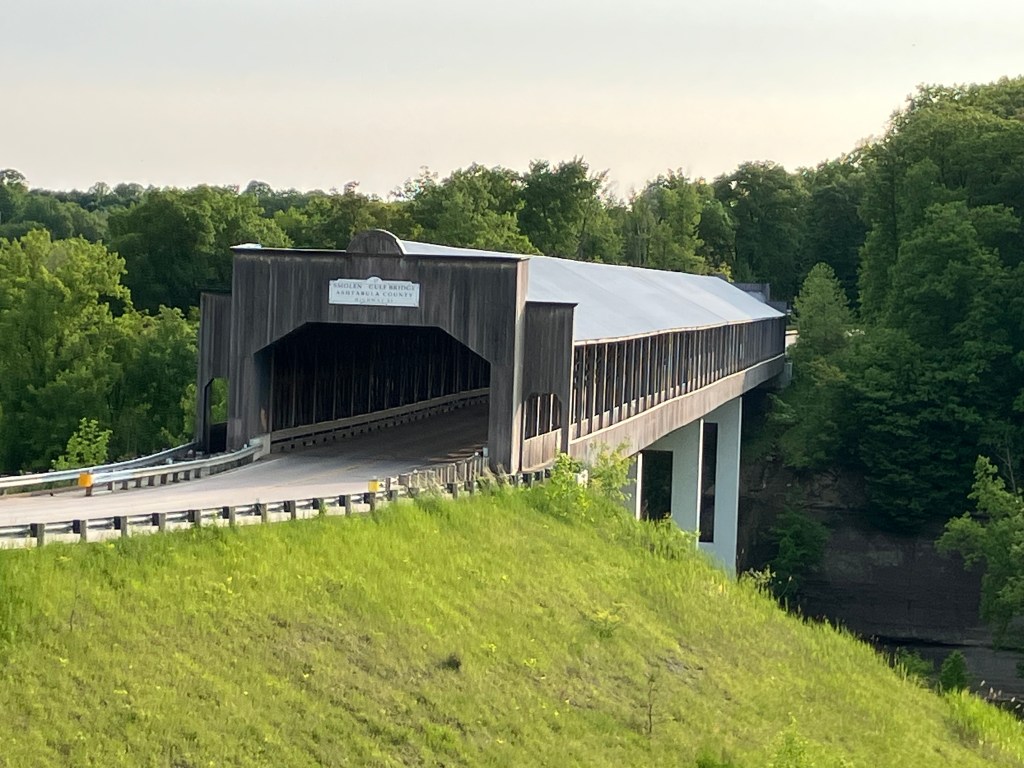
I stopped to get a better view, but couldn’t find a decent angle.
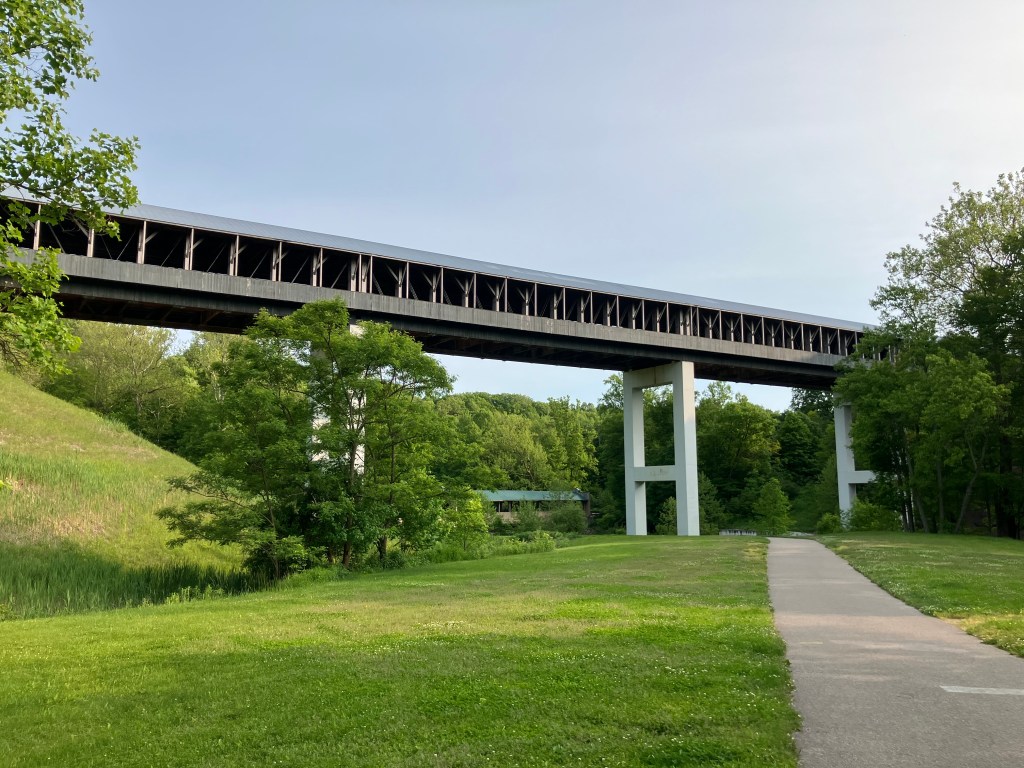
A nearby kiosk explains that this is the longest covered bridge in the entire country, at 613 feet long. It was built in 2008. Come with me as I drive over it!
Now, a few minutes after crossing the country’s longest covered bridge, I enter the next town and decide to get a motel for the night. During my search I encounter another covered bridge. This time it’s the shortest covered bridge in the US!
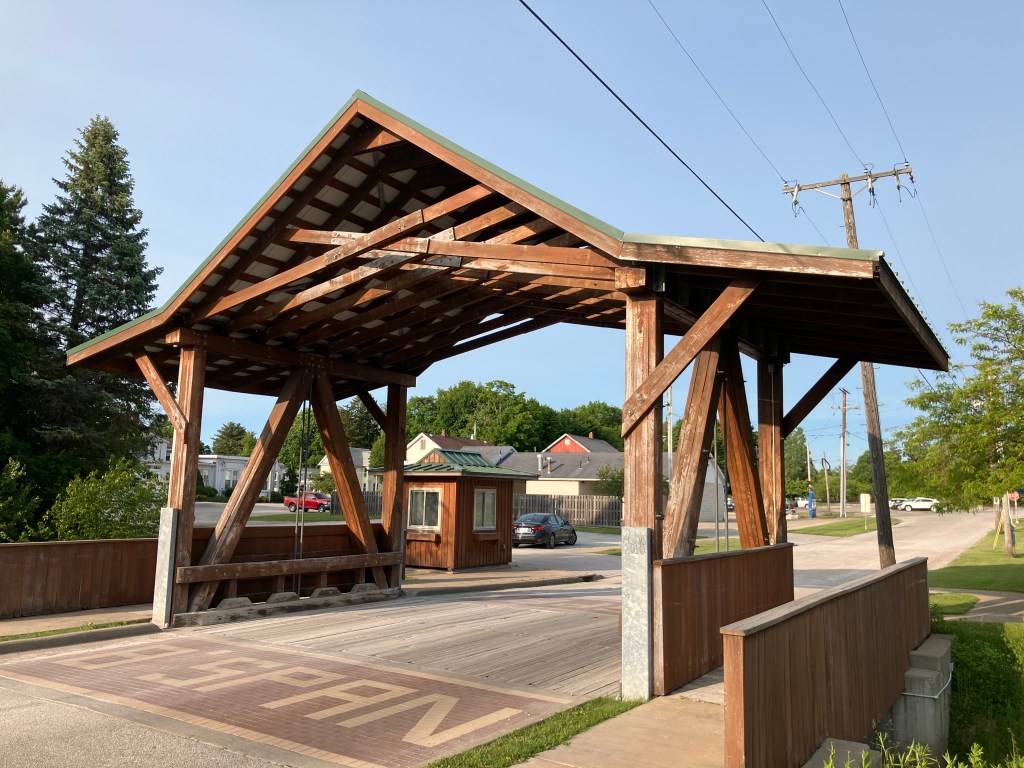
What are the odds of the country’s shortest and longest covered bridges being within a few miles of each other along Route 20?? Of course, this is easily explained: Shortly after Ashtabula got all the attention for building the longest covered bridge in 2008, the folks in this neighboring town decided to replace an old cement culvert with an 8-foot-long covered bridge. It’s not a joke, exactly, but it’s certainly a lighthearted statement piece.
And what’s the name of this town where I’m ending my day’s travels? Geneva, Ohio. Which is fitting, since I started the day in Geneva, New York. There’s been a lot of doppelgangers today…
BOTD
I got my Beer of the Day here in Geneva, OH, close to the banks of Lake Erie. It’s a brewery called The Darkroom Brewing Company, for the space it occupies used to be a commercial photography darkroom. (Note to you young ones: In the old days, before pics were digital, you had to develop your photographs on paper with chemicals in the dark.)
I had something called “Nachthexen” Russian Imperial Stout. The name–which translated from German means something like “Night Witches”–was a term the Germans used to describe a special all-female bombing unit in the Soviet air force during the Second World War. So that’s cool.
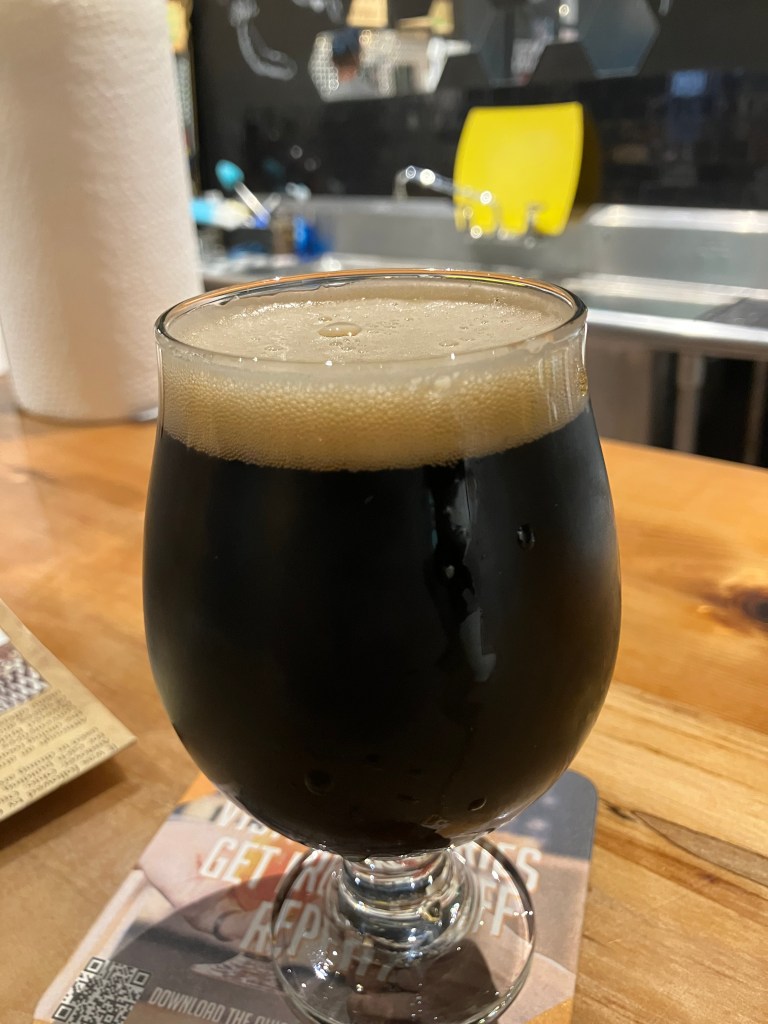
The Nachthexen is very approachable for an imperial stout. It’s not as sweet or as heavy as some renditions of this style can be. It has decent carbonation, and it has 10% alcohol by volume..which may sound like a lot, but I typically encounter imperial stouts that have ABVs of 12, 13, even 15 percent.
This is an interesting beer. The nose is very malty, and a bit like unfermented wort. On the tongue it’s roasty almost to the point of burned. It starts out like dark coffee, but midpalate you get hints of burned popcorn, cork, and pencil lead. The finish has some bitterness and astringency, somewhat reminiscent of the volatile organic compounds in PVC pipe glue. Somehow, when you put it all together, it’s pleasantly interesting and strangely balanced. I give it 4.5 out of 5 stars.

 Chasing Phantoms
What, no video of driving through the shortest covered bridge? And maybe I am missing something, but describing anything consumable with words such as pencil lead and PVC pipe glue in a favorable light has me wondering.
LikeLike
Yes, it wasn’t until afterwards that I realized I should have done a companion video driving across the Geneva bridge. I may try to do it this morning…
LikeLike