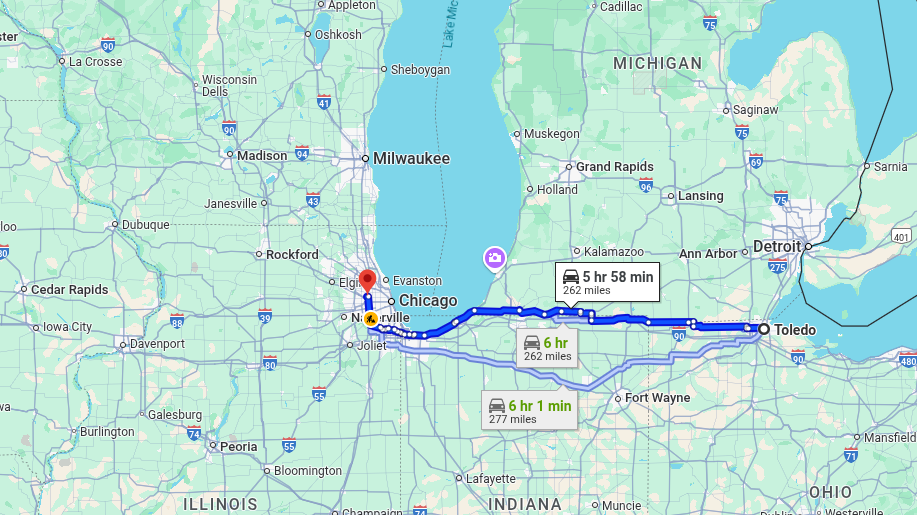
Today’s drive along highway 20 was reflective. The route took me from Toledo Ohio (at the west end of Lake Erie), around the bottom of Lake Michigan, and up to the town of North Lake, Illinois, which is just west of Chicago. Here’s a map:
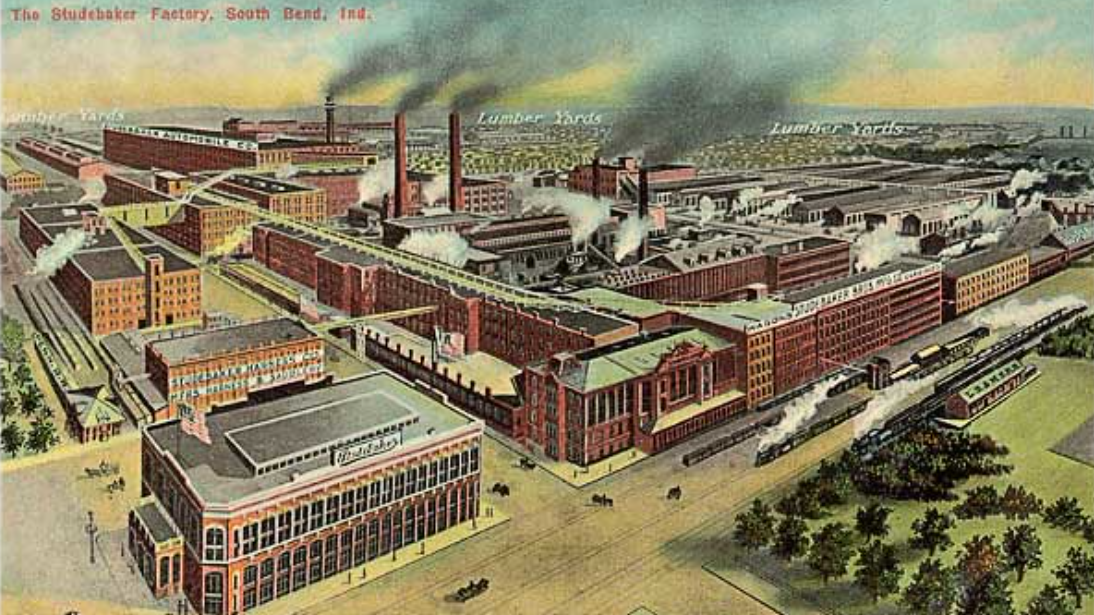
Though it doesn’t show up on this map, Route 20 passes through the city of South Bend, Indiana (pop: 103,400). Named after the southernmost bend of the St. Joseph River, South Bend has an interesting history. It’s been home to Notre Dame University since 1842 (Go Fighting Irish!), of course. But ten years later the Studebaker Brothers came to town and established a very successful wagon manufacturing plant that, around the turn of the century, switched to building automobiles. Studebaker was one of the larger “independent” auto manufacturers, and at its peak it employed 22,000 workers in South Bend. It would be stretching things to say that South Bend was a company town, but Studebaker certainly was a major contributor to the local economy.
Some of you young ones might never have heard of Studebaker; it closed its doors in South Bend in 1963, and then shut its last remaining facility in Canada three years later. But I actually owned one. It was my first car, which I bought in 1978. Behold!
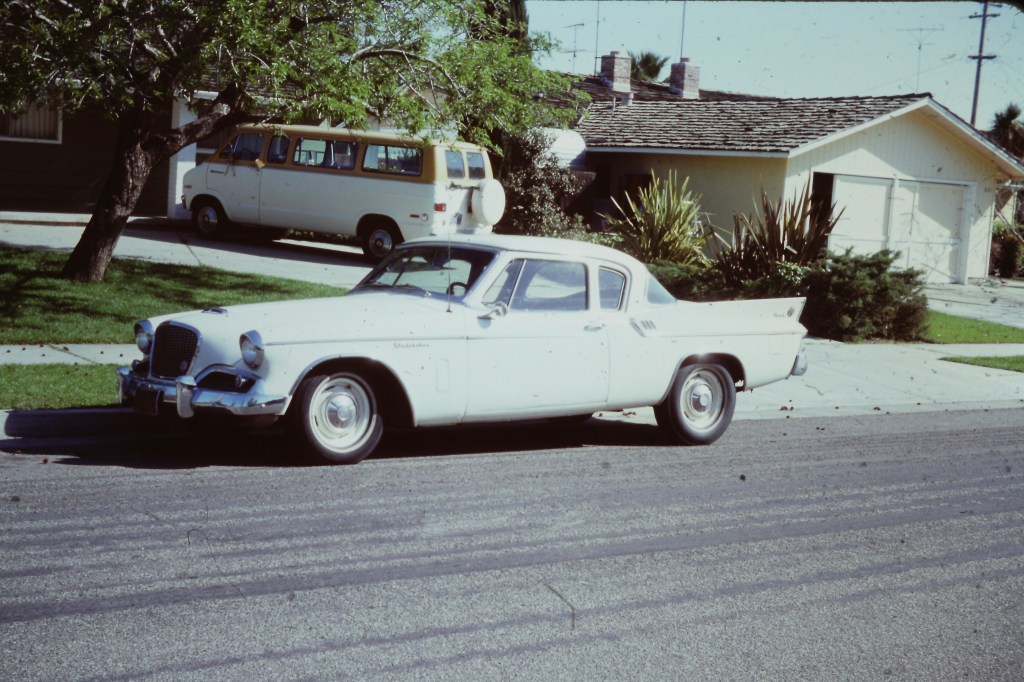
I owned that car for about 25 years, and then, in a rash act, I sold it. Recently I’ve been wondering if I should have kept it. I’ve even had dreams about it. And then, a couple of days ago, I spotted what at first glance appeared to be my old car on the side of US 20 in New York:
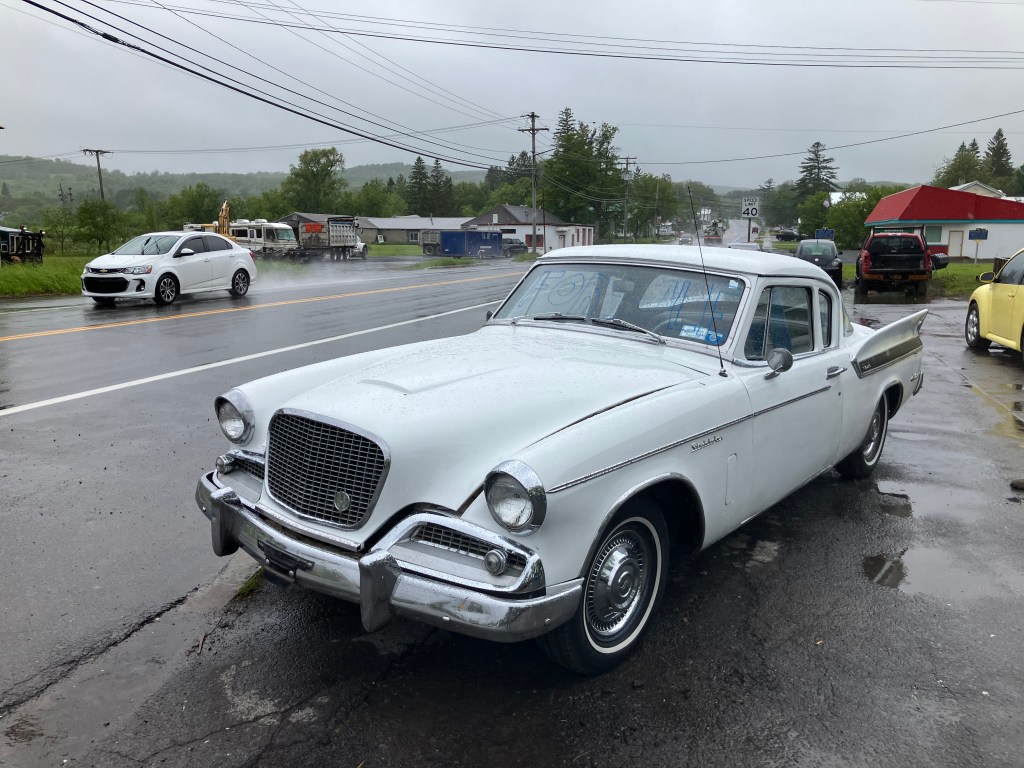
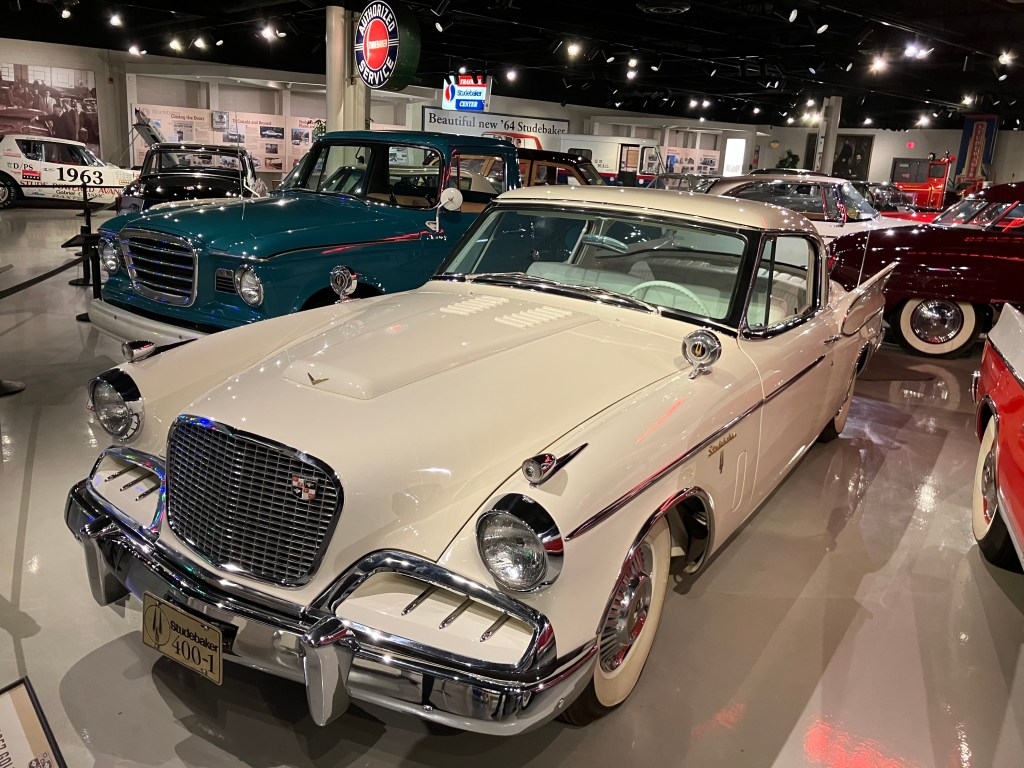
A couple of telltale signs convinced me this wasn’t the same car. But it was eerie nonetheless. And it was eerier still to see a version of the car again today, in the Studebaker National Museum in South Bend:
But I digress. My point was that Studebaker was a major contributor to South Bend’s economy. And so when it shut down in the 1960s, it had a major negative impact on unemployment. It’s estimated that, at the time of its closure, Studebaker employed two thirds of the city’s African-American labor force. To make matters worse, South Bend was already suffering from the general effects of deindustrialization that were besetting towns throughout the Rust Belt.
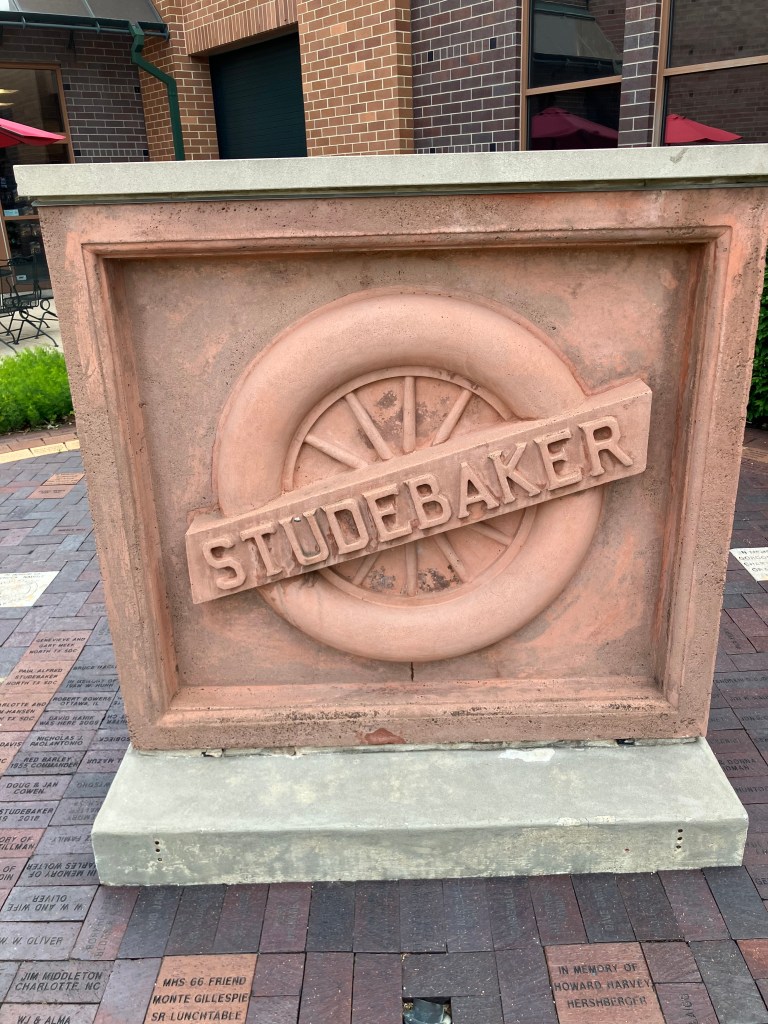
South Bend gained national prominence with presidential candidate Pete Buttigieg as mayor from 2011-2018. He and others have worked to gain investment in the city’s businesses and infrastructure. But I can report from my visit today there’s still a long way to go. Block after block has vacant and dilapidated buildings. The area around the old Studebaker factory is especially rough. Most of the Studebaker buildings have been torn down, but a few, such as Studebaker’s main administration building, still stand, albeit to no good purpose.
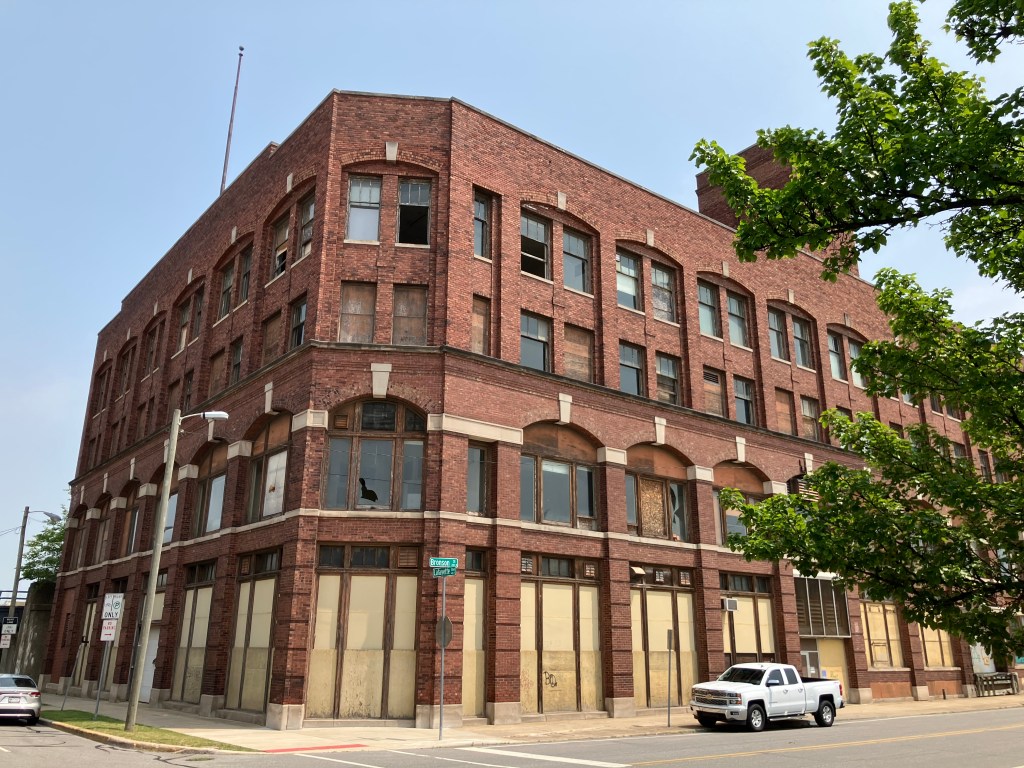
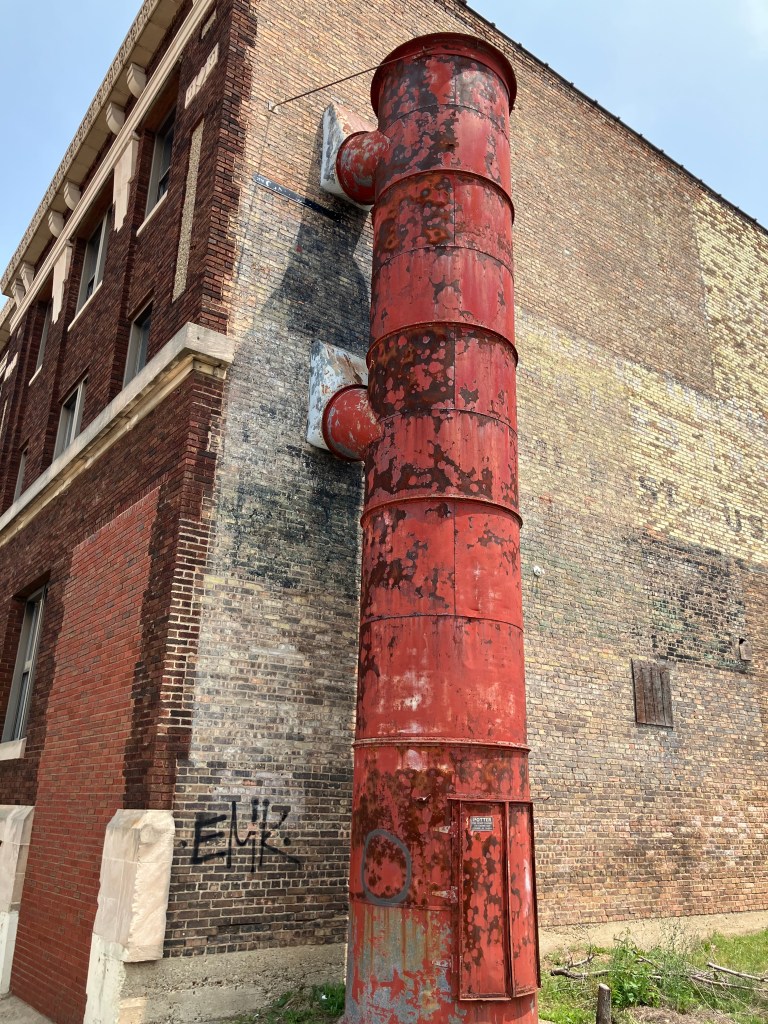
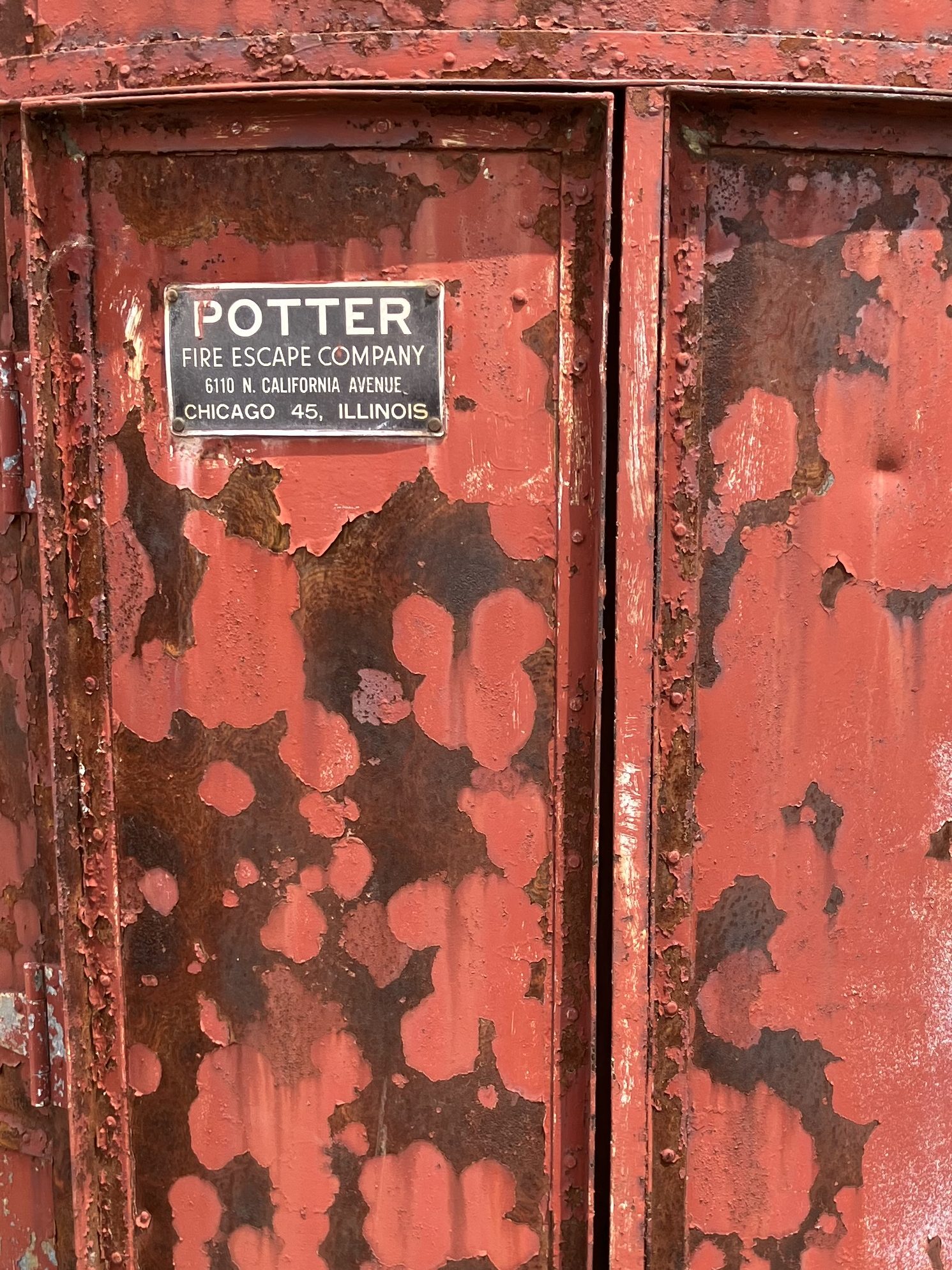
Here’s another random, old building on Michigan Street that appears to be serving no purpose. It caught my eye for two reasons: First, because of the tubular external fire escape.
Second, and more importantly, the building caught my eye because of this barely-legible painted signage facing the road:
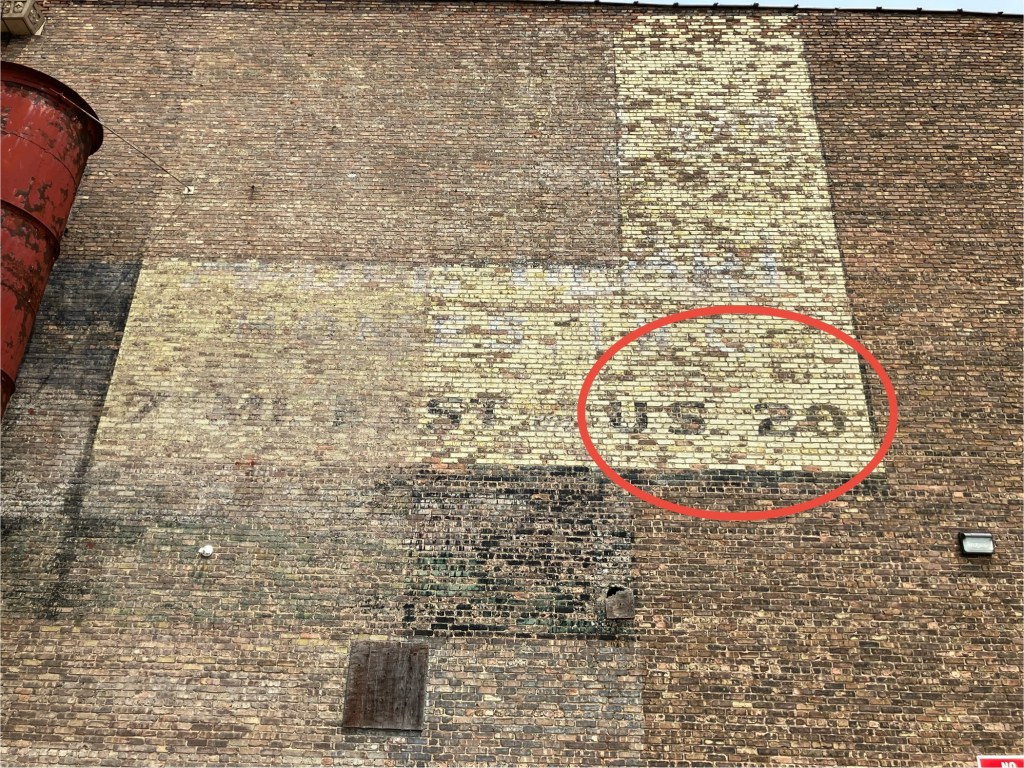
“US 20” is still clearly visible. (Less clearly, it seems to read “7 MICH ST.”) Funny thing, though, I had to turn off US 20 to drive down this road (on my way to a brew pub. More on that later). It turns out that US 20 used to be routed through here, before being re-routed around the downtown in the 1960s.
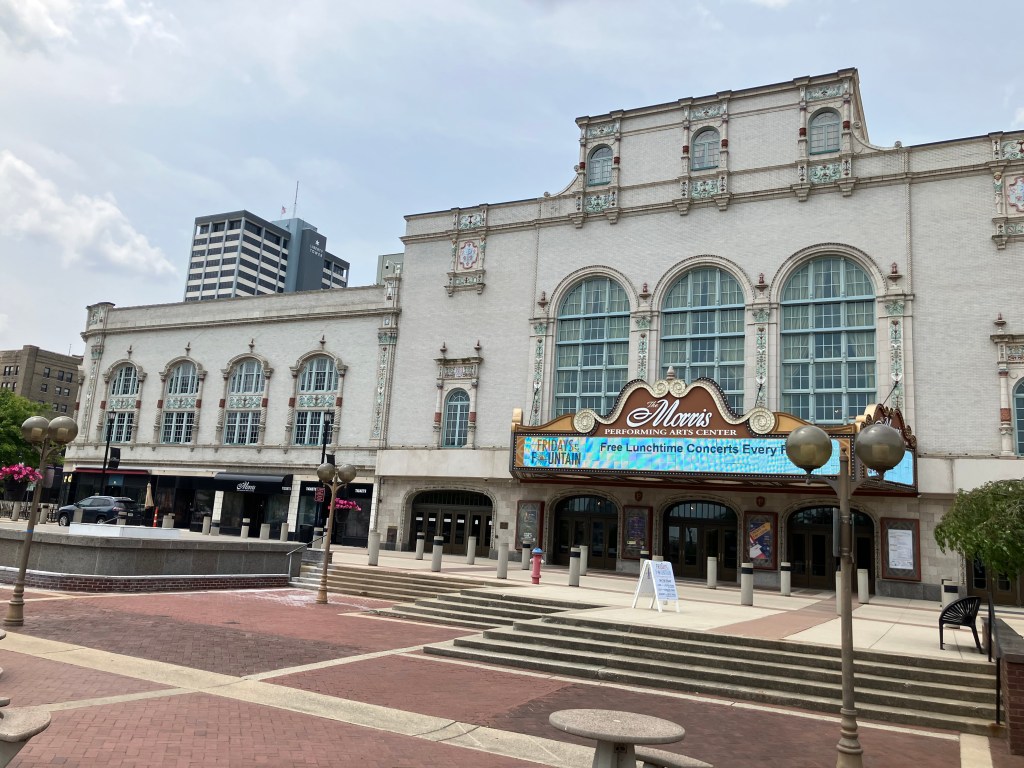
Now, some of you know my pet theory that you can tell a lot about the health of a town by its historic theaters. Almost all older towns have had a theater or two along the way. And almost all theaters declined with the advent of television and VCRs and such. But what did the towns do with their old theaters? Did they knock them down to make way for “progress”? Did they let them decay? Did they repurpose them? The answers to these questions tell a lot about the priority of the arts in the community, the extent of civic pride in the city’s history, the functionality of local government, and so forth. And I’m happy to report that South Bend has restored and preserved its beautiful, large, historic Morris Theater. The original theater opened in 1922 as a vaudeville house. It’s now a performing arts center that seats over 2,500. It’s home to the South Bend Symphony Orchestra, and it hosts broadway shows.
What’s more, South Bend has a second historic theater that it’s actively working to restore. The 1919 Blackstone-State theater was operating on and off up until 2016. As of a couple of months ago, the South Bend Redevelopment Commission approved the City’s purchase of the building for $800,000. Presumably, as a city-owned property, it will have more stability going forward.
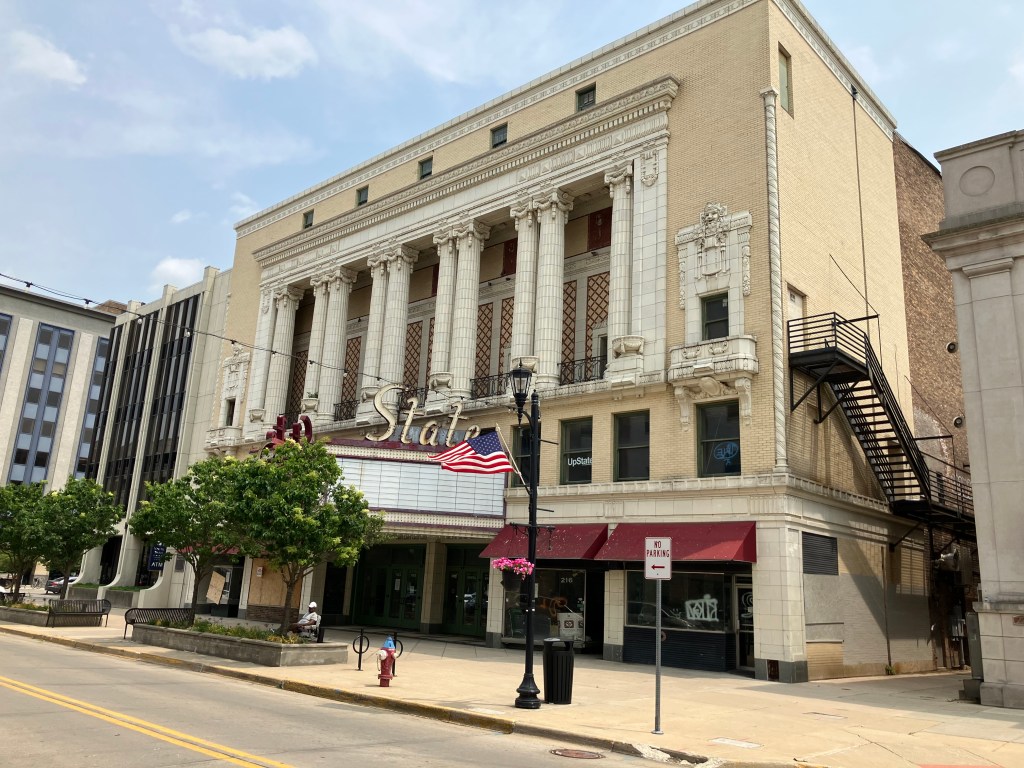
So I judge South Bend to be on an upward trajectory, despite the significant challenges it still faces.
I’m less bullish on the next major town I drove through today: Gary, Indiana. I became quite depressed just passing through. Broadway was once a grand boulevard, but now it looked like it’d been bombed, with half-standing buildings, vacant lots, and rubble lining the street. People roamed the sidewalks in a fashion that seemed aimless and hopeless. And, most damningly, the historic theaters looked like they weren’t ever going to be saved.
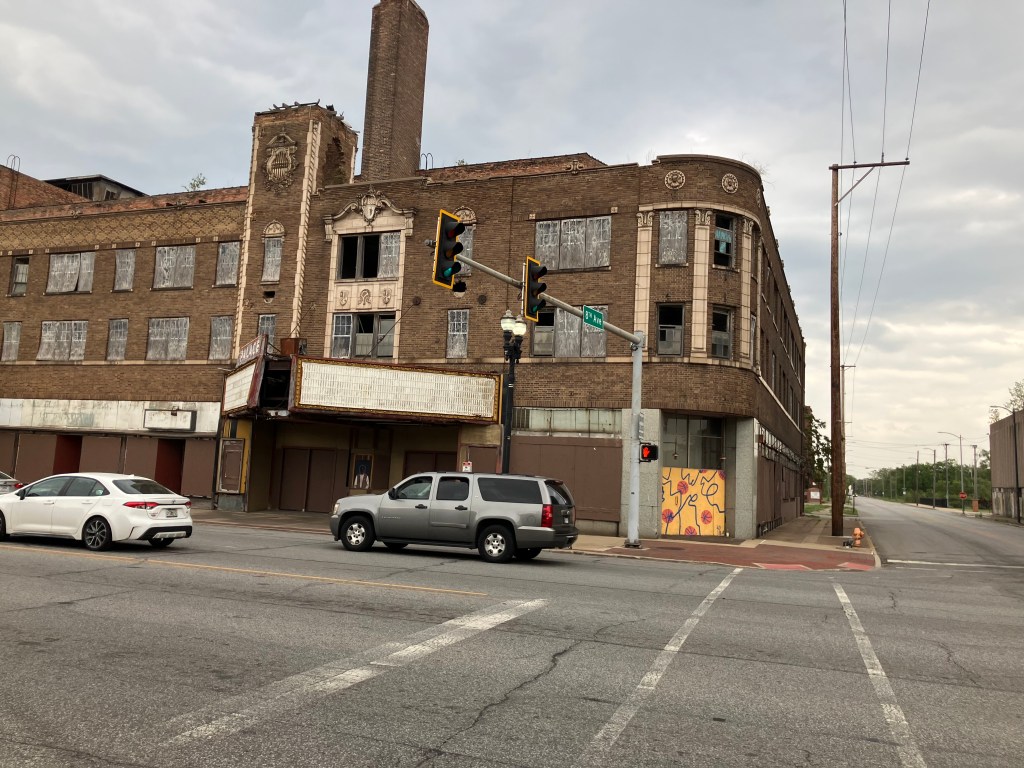
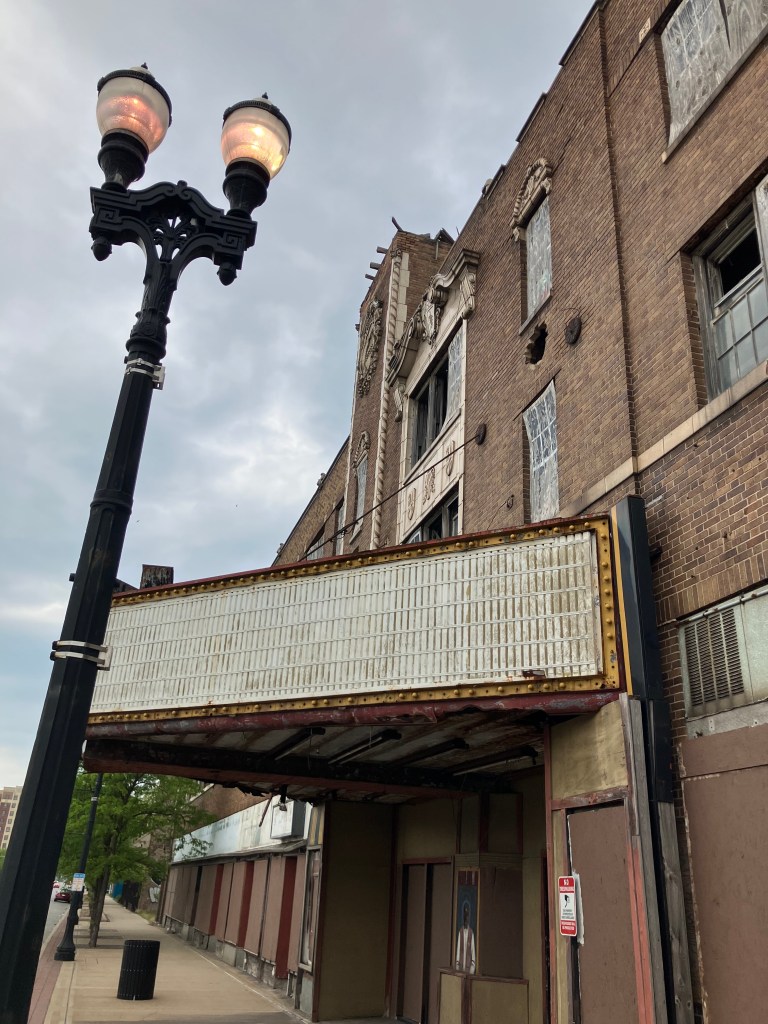
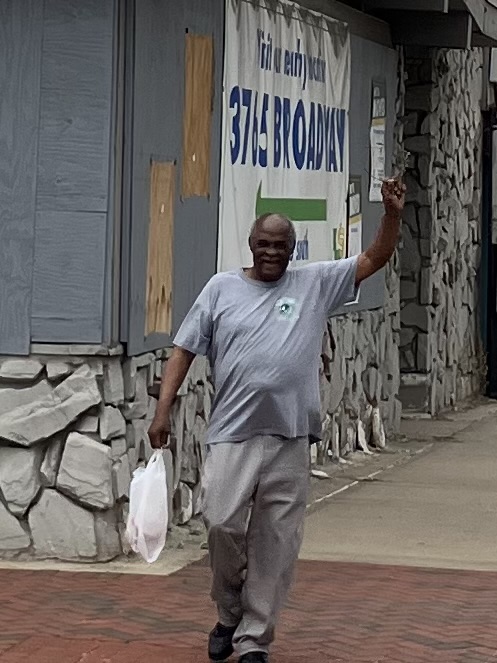
While I was taking a picture of the Palace theater (above) a man who was passing by stopped to tell me about how it used to be his favorite movie theater. “Apple” (as he called himself) used to sit up in the balcony and watch double features in the 1960s. He was sorry to see it go. Now, he says, he lives in an “old people’s home” and walks past the theater every day on his way to the corner store. He was a kind and sympathetic man, but he didn’t seem to have any spark in his eyes.
Now, you probably know Gary Indiana for one of two things: the song from The Music Man (sung by a young Ron Howard), or the birthplace of Michael Jackson.
In fact, while driving through the town I passed a sign directing me to the Jackson House. I dutifully followed the sign and ended up on Jackson Street (whose name, I assume, was changed after the Jacksons became famous. Otherwise it would be too much of a coincidence!) The neighborhood is severely run down, and seems to be populated by people who haven’t had a break. There’s no obvious signs of graffiti or gangs or drugs or anything like that; just poverty and neglect. Many houses are boarded up and/or abandoned.
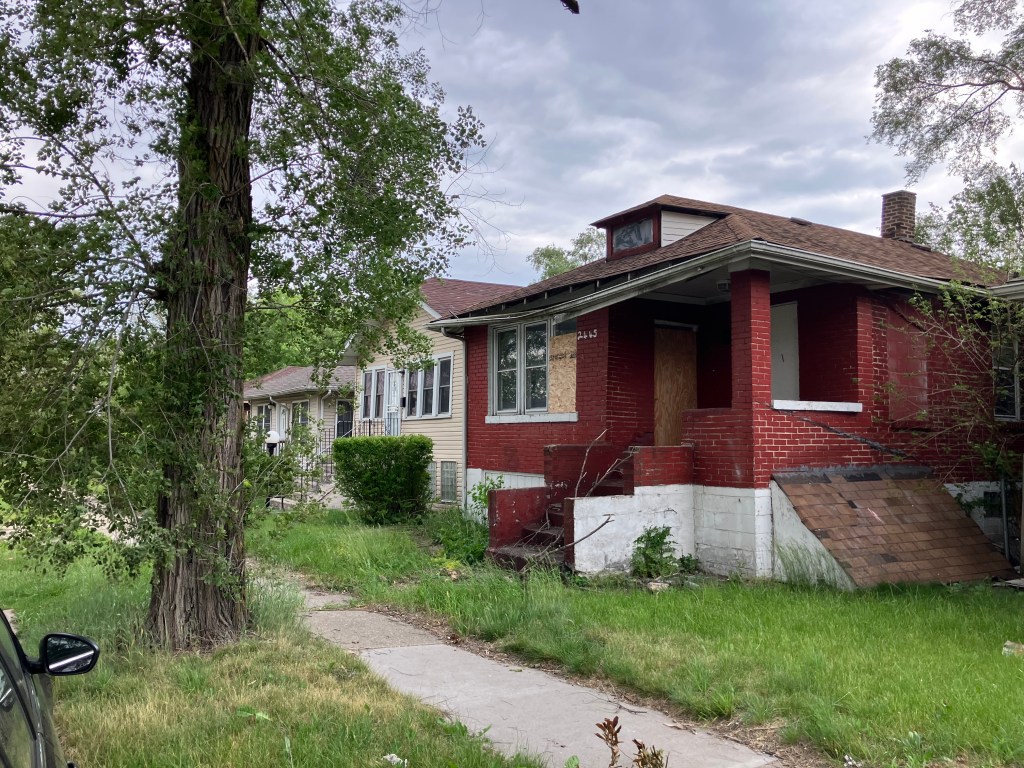
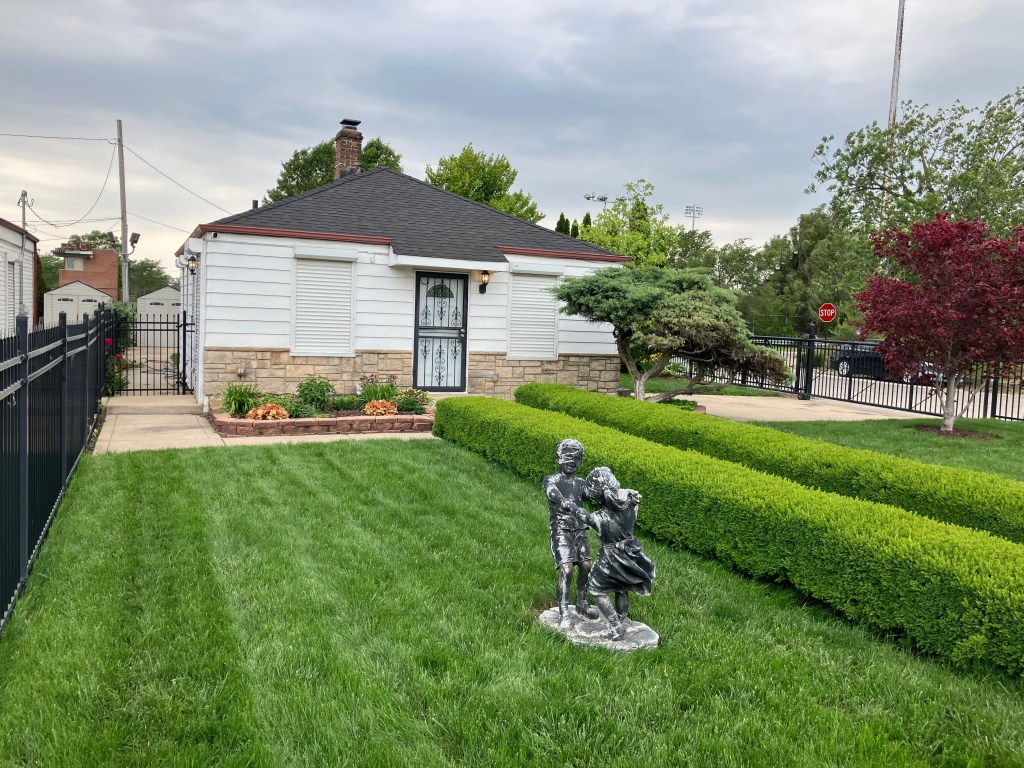
But then you come to the Jackson place. It’s a tidy and tiny (two-bedroom) bungalow, in which the eleven Jackson family members somehow lived. It makes me glad to know they hit the big time, but my heart goes out to the rest of the folks around here who didn’t.
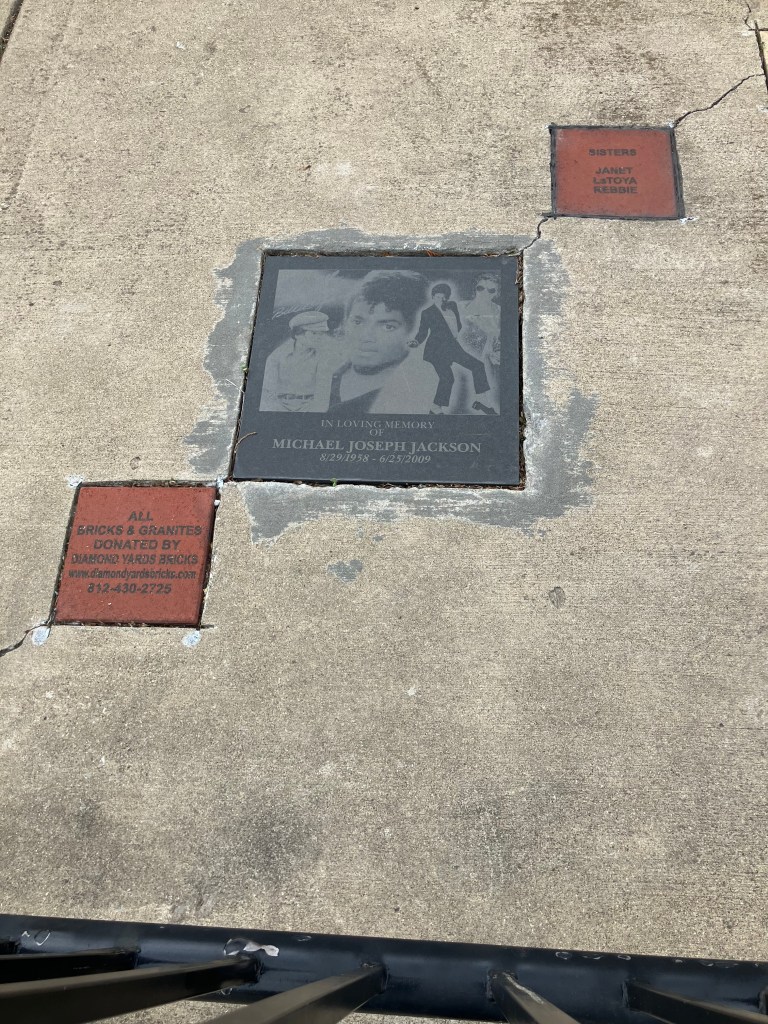
Anyway, I left Gary feeling sad for a dead city and the people who still live in it.
After passing through Gary Indiana, Route 20 skirts around the edge of Chicago. I happen to love Chicago as a city, but visiting it is a commitment, and this is not that kind of road trip. So I stuck to Route 20, skirting around the outer edges of the city. I’ve parked myself in a nondescript town called North Lake, about 13 miles west of Chi-Town. Tomorrow I should finish crossing Indiana.
BEER OF THE DAY
I nabbed my BOTD at the South Bend Brew Werks. It’s another example of how South Bend is on the way up: It’s a nice, bright, new space with art on the walls and a big outdoor patio. They’re part of an energetic business district near the Morris Theater. They take their beer and their food seriously.
My server–Jason–was incredibly knowledgeable about beer, not just the stuff they brew but also the beers at breweries throughout the region. He’s also a rubber-stamp artist, and his work is currently hanging in this restaurant.

On Jason’s recommendation, I had the “Disinhibited Ep. IV: A New Haze.” It’s a double hazy IPA.

It’s a highly drinkable beer, though it clocks in at 8 percent ABV. The appearance, as you would expect, is hazy. And as an IPA, it has the expected piney hoppiness and medium carbonation. But the flavor is more interesting than your average IPA. It has notes of grapefruit and dandelion, balanced by the aforementioned hops. There’s just a suggestion of sweetness. Overall, the flavor is more sunny than bright, and more juicy than refreshing. It’s a very solid effort and manages to stand out in a world dominated by endless IPAs. 4 stars.
COINCIDENCE CORNER:
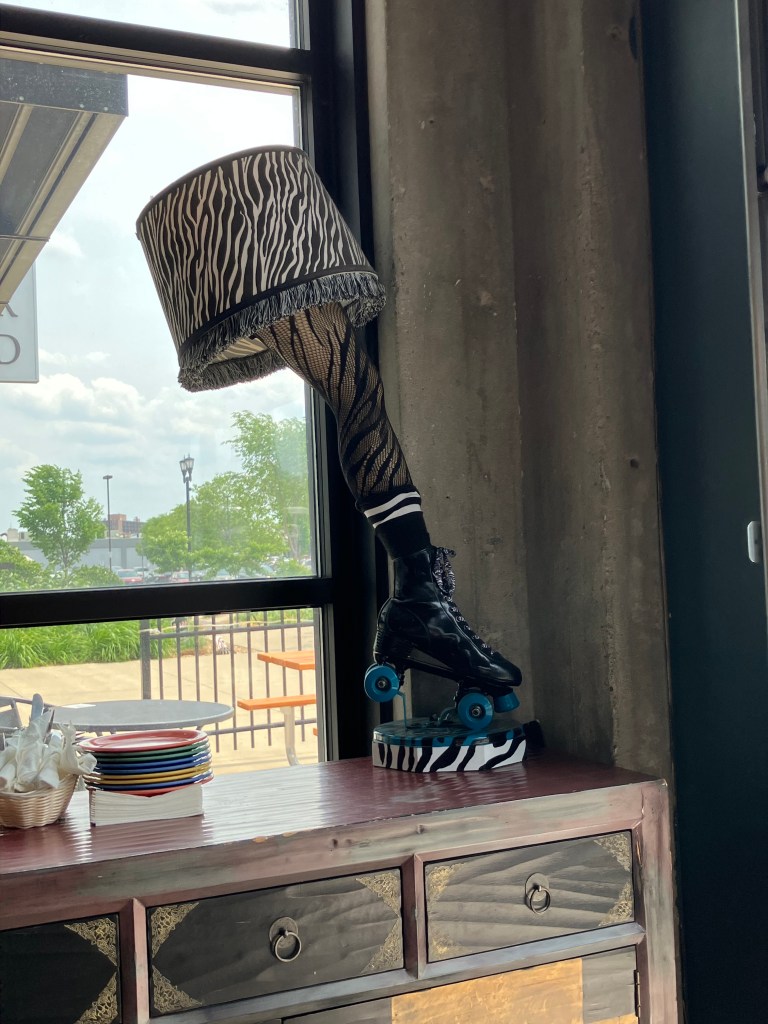
Yesterday I posted a picture of the Christmas Story house in Cleveland. Today I saw this in the corner of the South Bend Brewing Company:
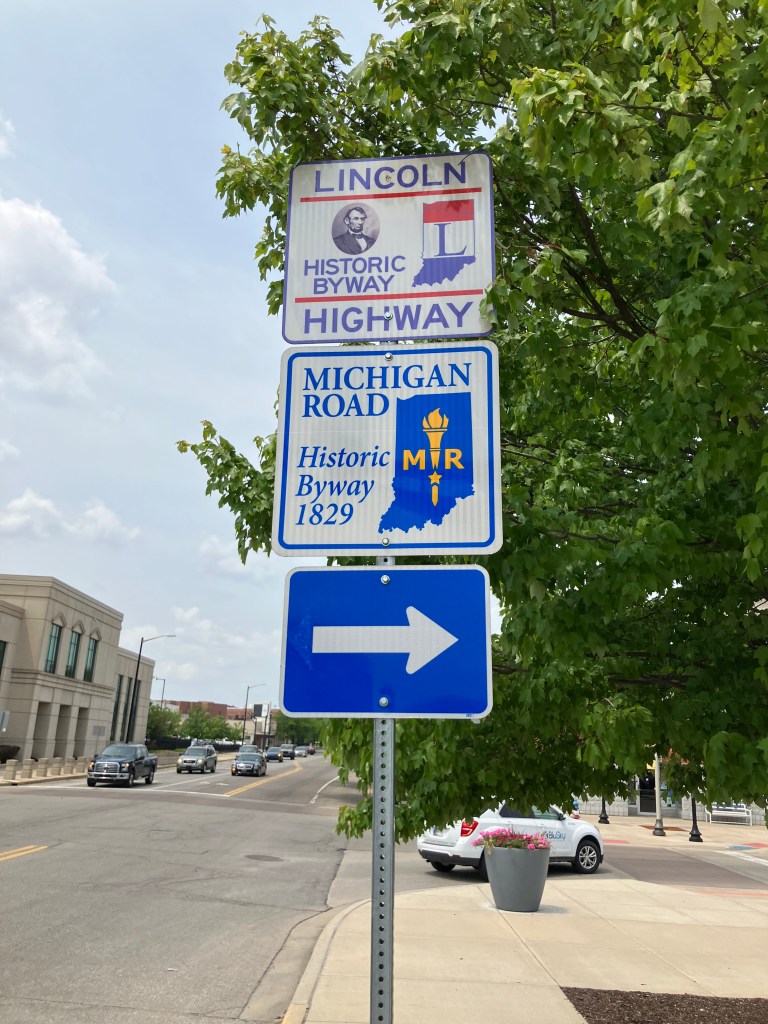
Also, in April I did a blog post about the stretch of the Lincoln Highway that runs near my home in El Dorado County, CA. Today I saw this on a street corner in downtown South Bend:

 Chasing Phantoms
Appreciate you for featuring our brewery. Your review is honest and heart felt.
I hope your wife enjoys the art you took home and I wish you nothing but the best on your travels.
If you find yourself on the US20 corridor coming back this way, I hope you will stop and say hi again.
LikeLike
Hey Steve: How is it possible to explore South Bend without mentioning the three Studebaker Brothers who got their manufacturing start in your adopted hometown of Placerville?
LikeLike
Yes, I was thinking of including the story of John Studebaker heading out to Hangtown to make his fortune (and possibly meet Edgar Allan Poe). As you know, he returned to South Bend and founded an expansion of his brothers’ wagon manufacturing business. Among other things, it supplied wagons to the Union Army during the Civil War. John Studebaker became the company’s President. But I opted not to tell that story, because the company was already established before John returned from California with his fortune. It’s more of a side note. But now I’ve told it!
LikeLike
Steve, looks like you’re meeting some interesting people as you partake of local cultures and BOTD. That’s awesome! So great of you to cruise by the Jacksons’ home, too. Enjoy the trip. Safe travels!
LikeLike