Speaking of Edgar Allan Poe…today is the 176th anniversary of his death. In celebration of the occasion, I’m providing this bonus post. No need to thank me, but feel free to remember me in your will.
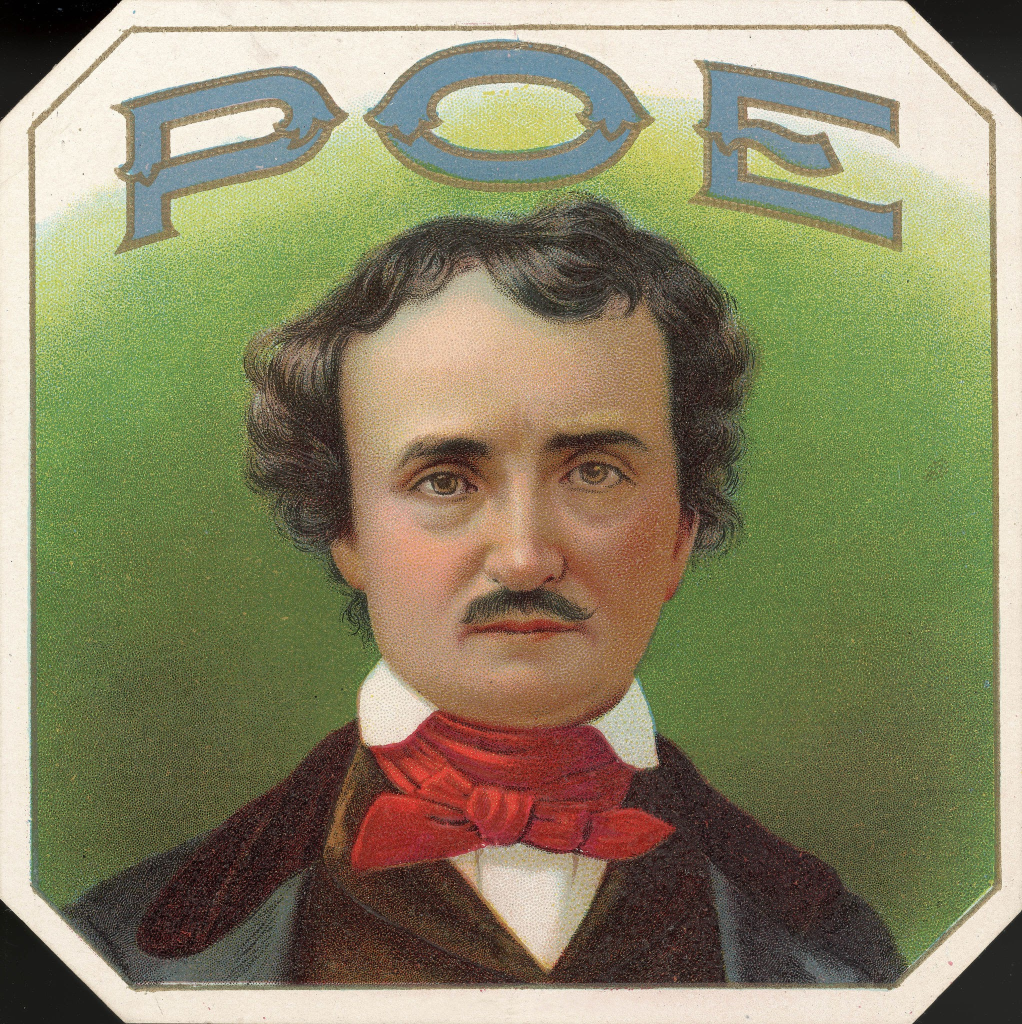
So, I spent last weekend in Baltimore–the city where Poe wrote several of his better-known works, and where he is said to have died under mysterious circumstances. (For an entertaining, alternative history explaining those and subsequent events in Poe’s life, please see my short story “Poe’s Last Lament.”)
Anyway, I was, as I say, in Baltimore, where every October a crowd gathers in the neighborhood, where Poe once lived with his wife and mother-in-law/aunt, to participate in the International Edgar Allan Poe Festival. Among other things, we drank a toast to Poe at his gravesite at Baltimore’s Westminster Hall, visited the catacombs beneath the church, and watched a burlesque performance by an Australian stripper whose precise connection to Edgar Allan Poe continues to elude me. I’m not making this up.
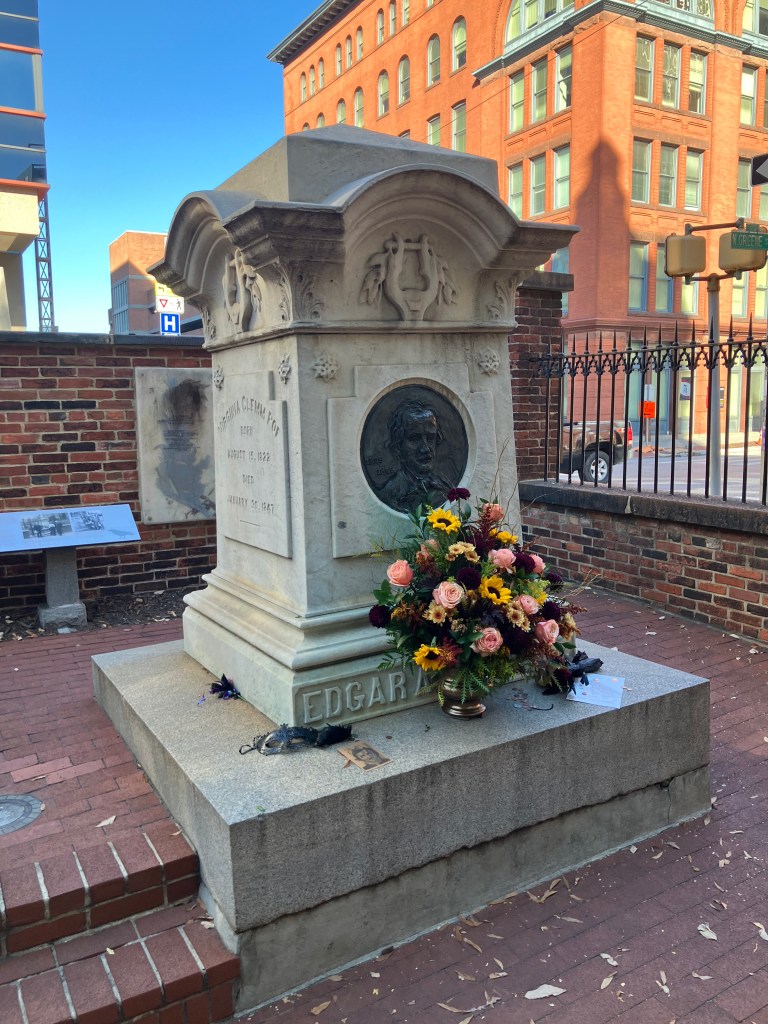
We also toured the beautiful and brooding Green Mount Cemetery (est. 1838), where a number of Poe’s relatives are buried. Green Mount is where I encountered the topic for this blog post. Take a gander at this headstone:
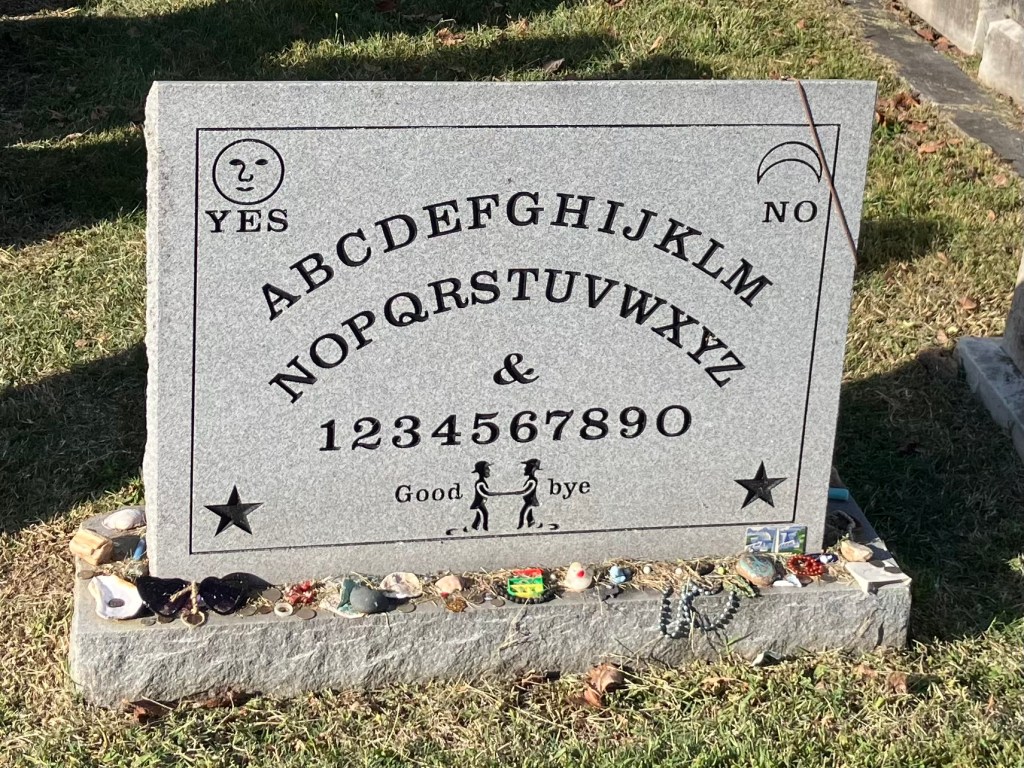
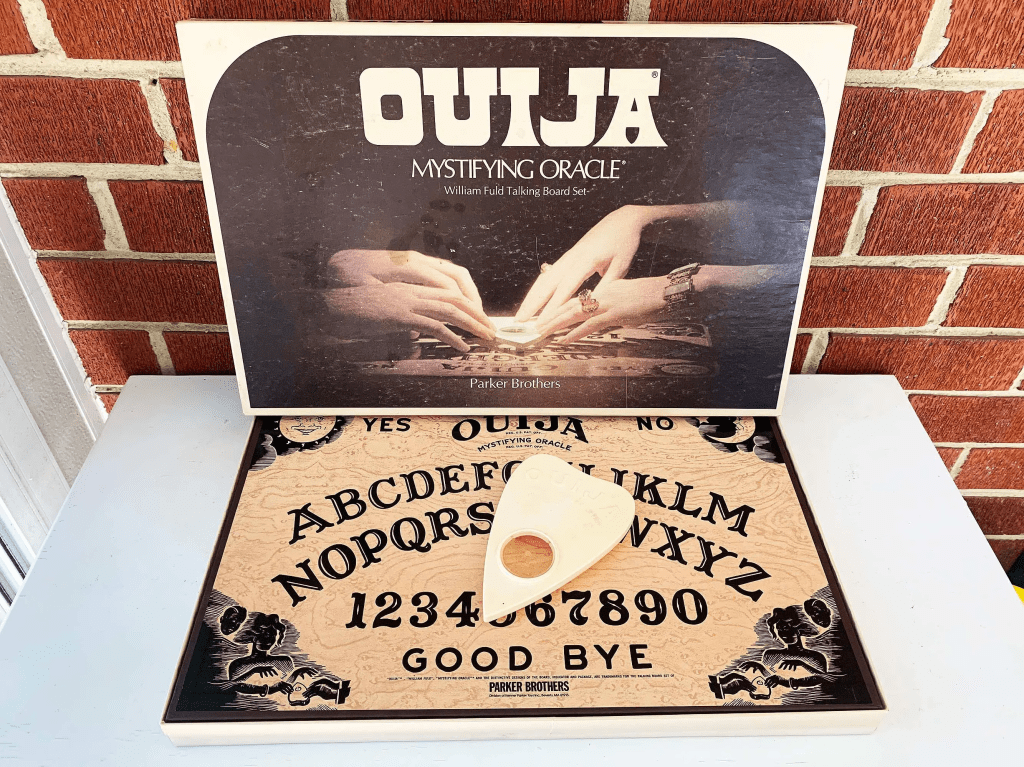
Readers of a certain age might remember this design from the family game closet, where the Parker Bros. Ouija game was kept.
Turns out the Ouija headstone marks the mortal remains of the man who patented the Ouija board. Here’s a pic of the reverse side of the headstone:
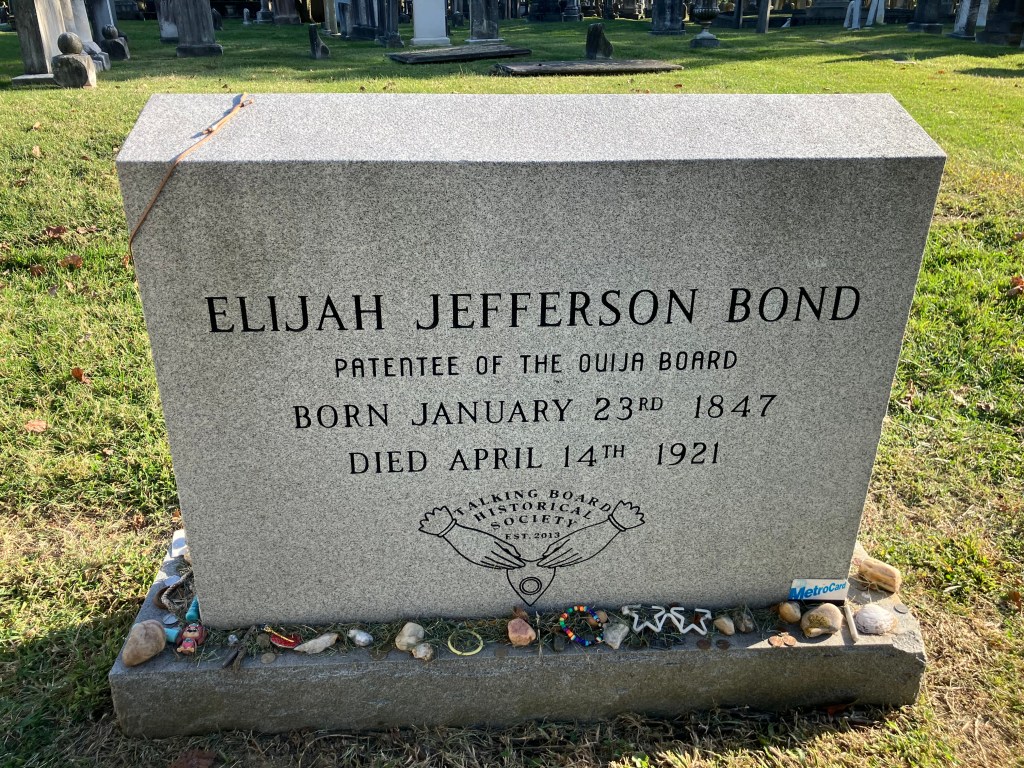
Note that this headstone does not claim that Elijah Bond is the inventor of the Ouija board; he’s just the patentee. The full origin story of the Ouija board is quite convoluted, disputed, and fascinating, and I have now spent several days going down an Ouija rabbit hole. Here’s the Cliff’s Notes version:
- The “talking board” (which is the broad category the Ouija board fits into) has been around for over a thousand years….well before the establishment of the US Patent Office.
- Talking boards became insanely popular in the US near the end of the 19th century and the early 20th century, during the heyday of Spiritualism.
- A prototype of the Ouija board was made famous in 1886, when it was used to supposedly communicate with a long-dead spirit.
- A few years later, Elijah Jefferson Bond–a Confederate veteran, inventor, and lawyer–sensed an opportunity and patented this version of the talking board. He called it Ouija. The Baltimore boarding house where he came up with the name still stands. Of course I had to visit it.
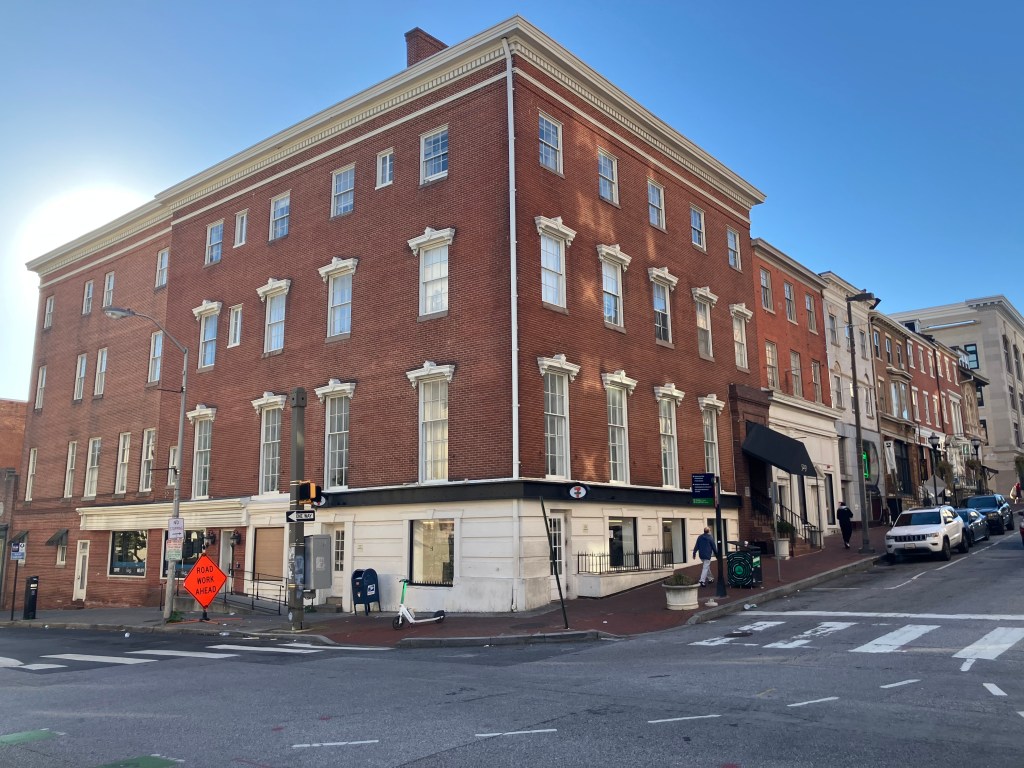
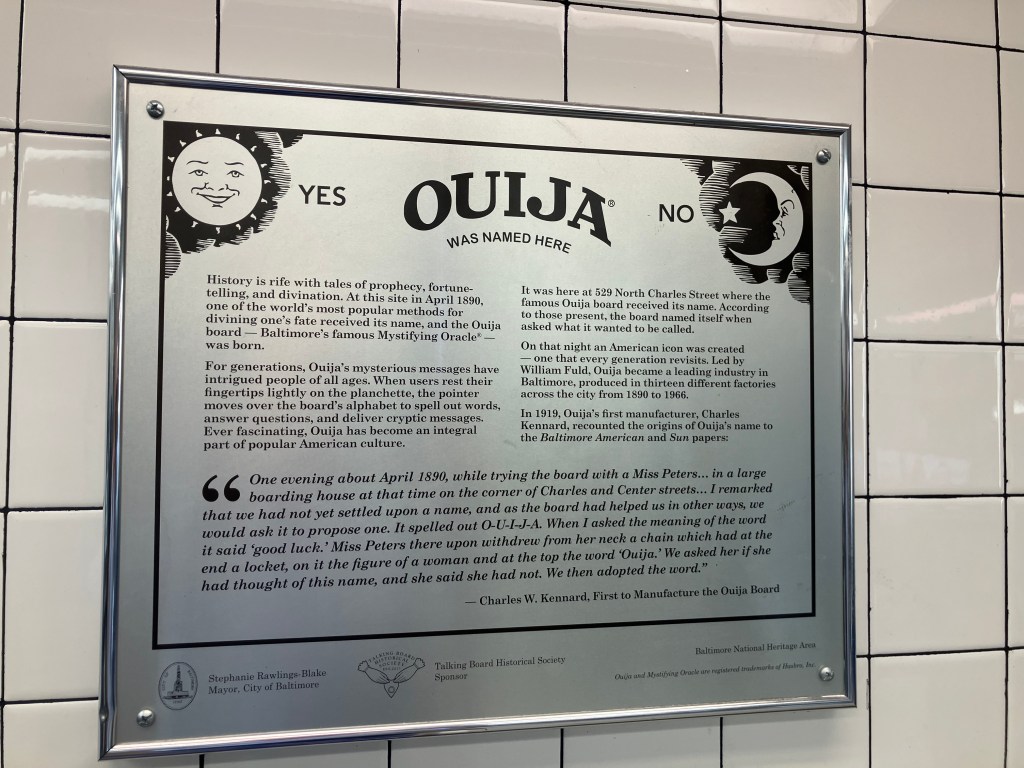
- Bond sold the US distribution rights for the Ouija board to the Kennard Novelty Company.
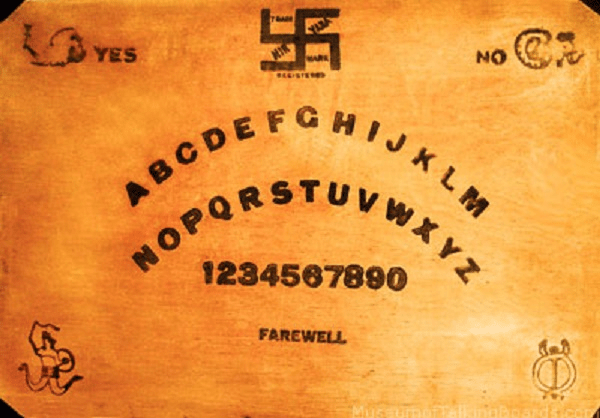
- A few years after selling the distribution rights, however, Bond started selling a knock-off version of the Ouija board that he called “Nirvana.”
- And here’s where I really feel down the rabbit hole: Bond created a company in 1907 to sell his Nirvana board. And what was its name? The Swastika Novelty Company. These are words that I would never expect to go together.
- Now, to be fair, the swastika would not come to be associated with the Nazis for another decade or two. But according to Wikipedia, the company wasn’t dissolved until 2014!
Sadly (?), Parker Bros (now owned by Hasbro) no longer produces the Ouija board as part of its regular lineup. But it does occasionally offer a specialized version as a movie tie-in. Therefore, it seems that your best bet might be to seek out an old, original one on eBay. You might even track down an old Nirvana version…but you’d have to explain to your friends that the swastika is “grandfathered in,” as it were.
Please let me know if you know of any other trivia related to the Ouija board (besides the oh-so-obvious link to The Exorcist). And thus we end this special post related to Poe, Baltimore, and Ouija.

 Chasing Phantoms
A little inspiration from Mr Poe himself (received via a quote of the day feed):”They who dream by day are cognizant of many things which escape those who dream only by night.”
– From Edgar Allan Poe’s “Eleonora”
LikeLike
Wise and apropos words indeed. Thanks!
LikeLike