cemeteries · Obelisks · Road trips

End of the Line

We made it!

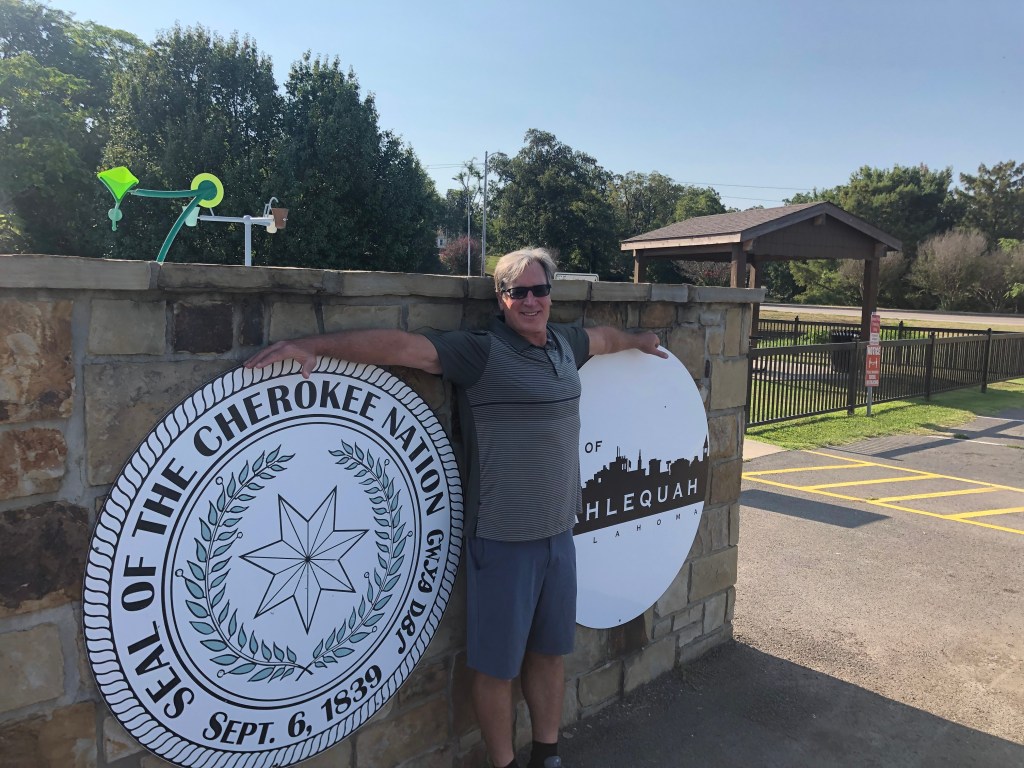
Today Scott and I ended our journey along the Trail of Tears at Tahlequah, Oklahoma, where the bedraggled and exhausted survivors of the original ordeal arrived 182 years ago. As we’ve learned, some 16,000 Cherokees had been forced from their homeland in and around Georgia after the federal government passed the Indian Removal Act of 1830. The idea was to free up the Indian lands for the use of white settlers. The forced march of the Cherokees took place between 1838 and 1839, and up to 4,000 of them died during or immediately after the forced removal.

The survivors then went about the business of re-establishing their nation on these new lands. They chose Tahlequah as their new capital, and began planning streets, government buildings, homes, and other facilities. The Cherokees had adopted many aspects of the European Americans’ society, including western dress, a written language, democratic governance, agriculture, Christianity, and frame architecture. In fact, even in its early years, Tahlequah very much resembled any other small American town. Today the town is tidy, respectable, and generally quiet, though we had breakfast at a bustling downtown cafe next to a jazz club. Afterwards we walked through the historic district, which stands alongside a clear and gently-flowing creek.
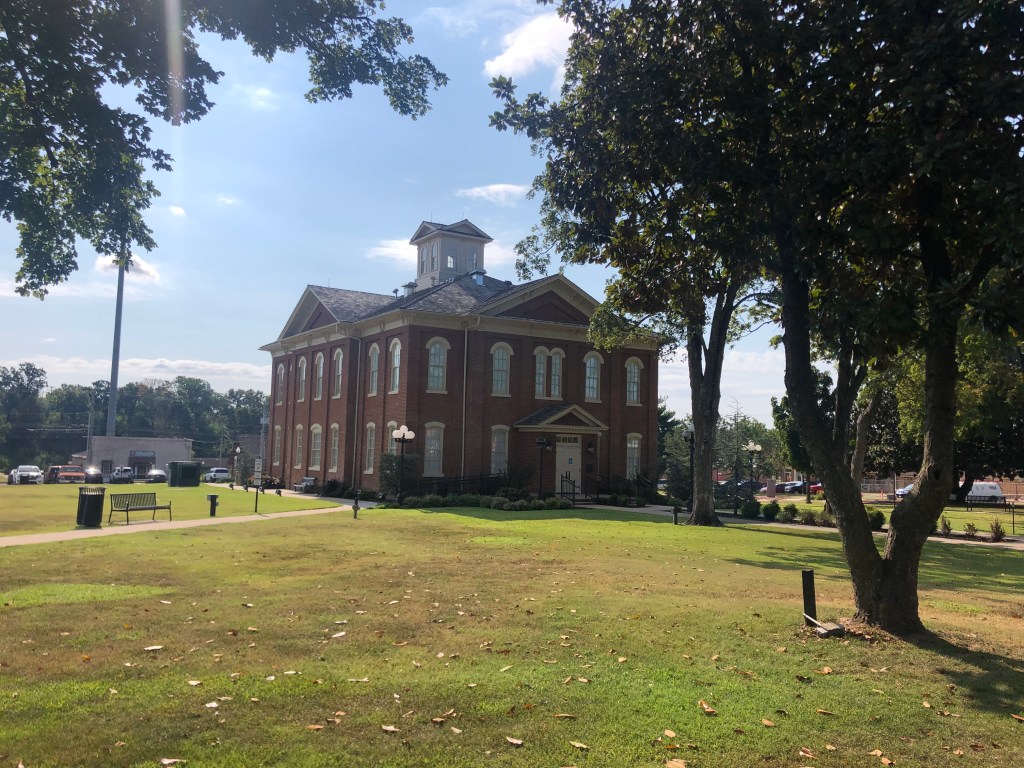
The old Cherokee Capitol building, in Tahlequah’s town square. Not that different from many small, old American towns.

You’ll remember John Ross, who had been Principal Chief of the Cherokee Nation since 1828. He had fought the diaspora for years, desperately lobbying the Congress in Washington, DC, appealing to President Jackson, and even taking the State of Georgia to the Supreme Court (not literally, of course). After exhausting all avenues, and after a cabal of other Cherokee leaders surreptitiously signed a separate treaty with the federal government giving up the Cherokee lands, Ross resignedly helped manage the movement of his people out west to present-day Oklahoma. He joined them on the Trail of Tears, and his wife Quatie died along the way, in Arkansas. Ross helped to establish the new capital in Tahlequah, and was re-elected principal chief until his death in 1866. Today, Tahlequah (pop: 17,000) remains the Cherokee national capital. The Cherokee nation has jurisdiction over most of the land in northeastern Oklahoma. About 300,000 people belong to the nation.
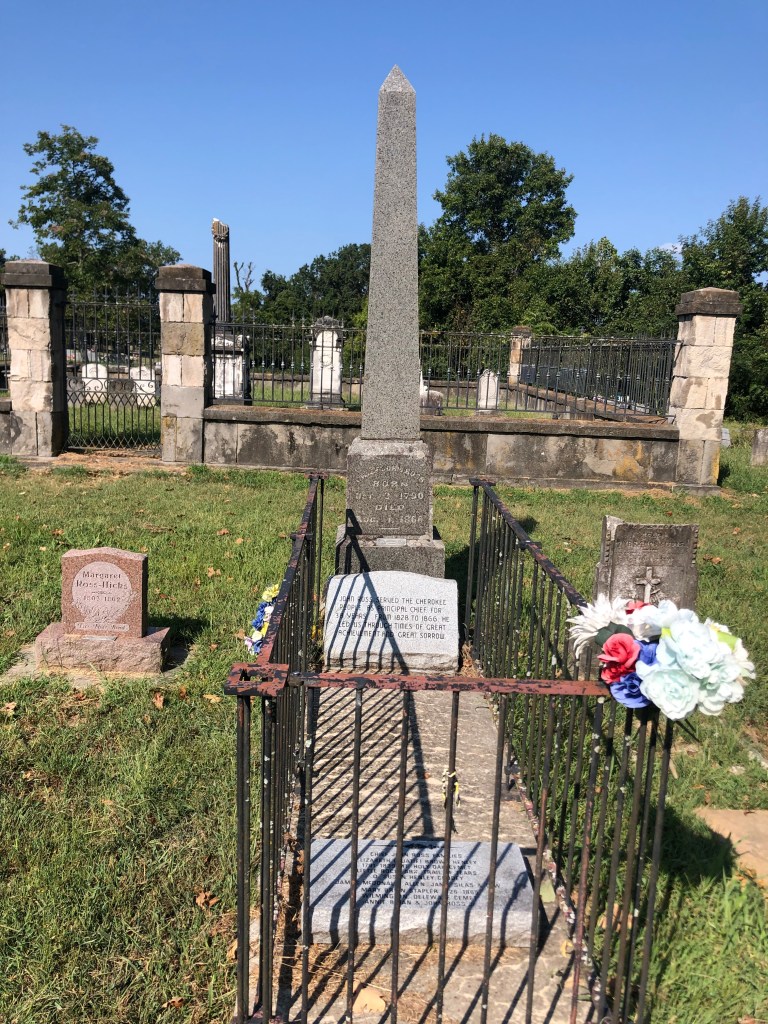
Grave of John Ross (1790-1866), in Tahlequah. Note the obelisk!

So, while it’s not exactly a story of triumph, the Trail of Tears and its aftermath constitute a story of survival. Still, it’s notable to me that few of the people we met along the way had much knowledge of or interest in the TOT. Even the hotel clerk in Tahlequah didn’t seem much to care when we informed her that we’d just finished covering the entire route. “Did you walk it?” she asked, unimpressed. To be fair, ours wasn’t much of an accomplishment when compared to that of the original travelers.

We did, though, receive genuinely enthusiastic responses from precisely two individuals along the route. One was Amy, who managed the visitors center in Hopkinsville, KY. The other was Gena, who we met today at Tahlequah’s Chamber of Commerce. Gena is the director of tourism for Tahlequah, and like Amy, she’s well suited to the role. She clearly loves this town, having moved here from Mt. Shasta, CA. (It’s a long story.) Gena patiently answered our questions about the town’s history, gave us directions to several historic sites, and hooked us up with some Tahlequah swag.
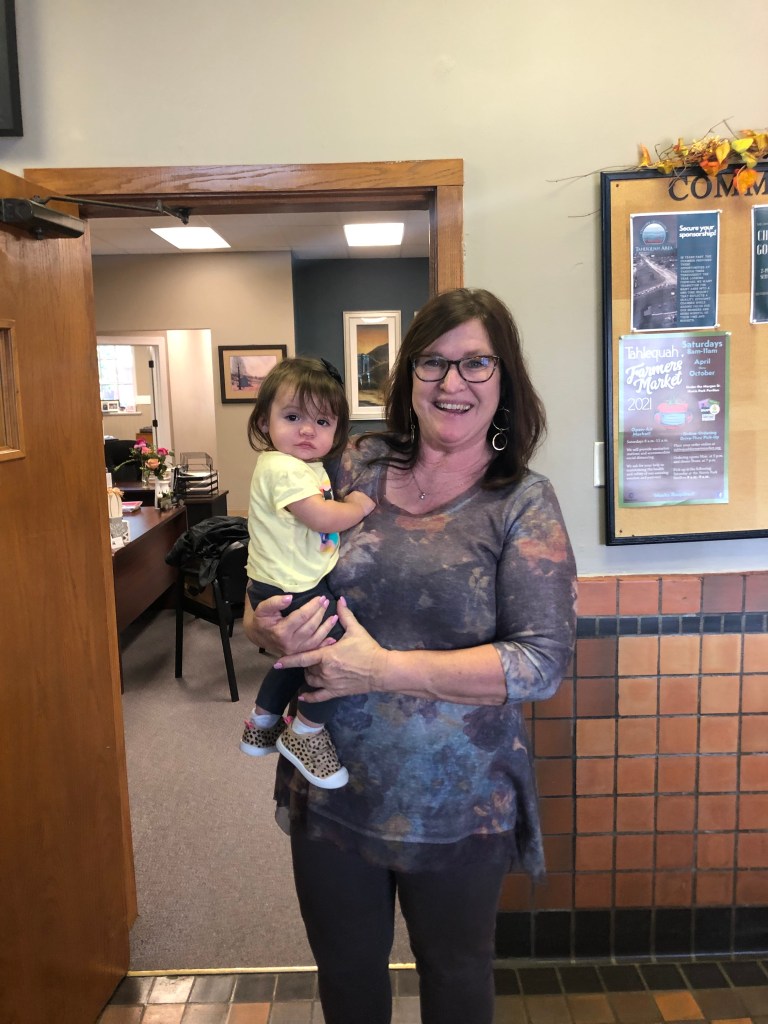
Gena and her Granddaughter, Ellis

On our way out of town we stopped at two cemeteries. The Ross Cemetery is the final resting place for John Ross and many of his relatives. (It had originally been the homesite of one of Ross’s nephews.)
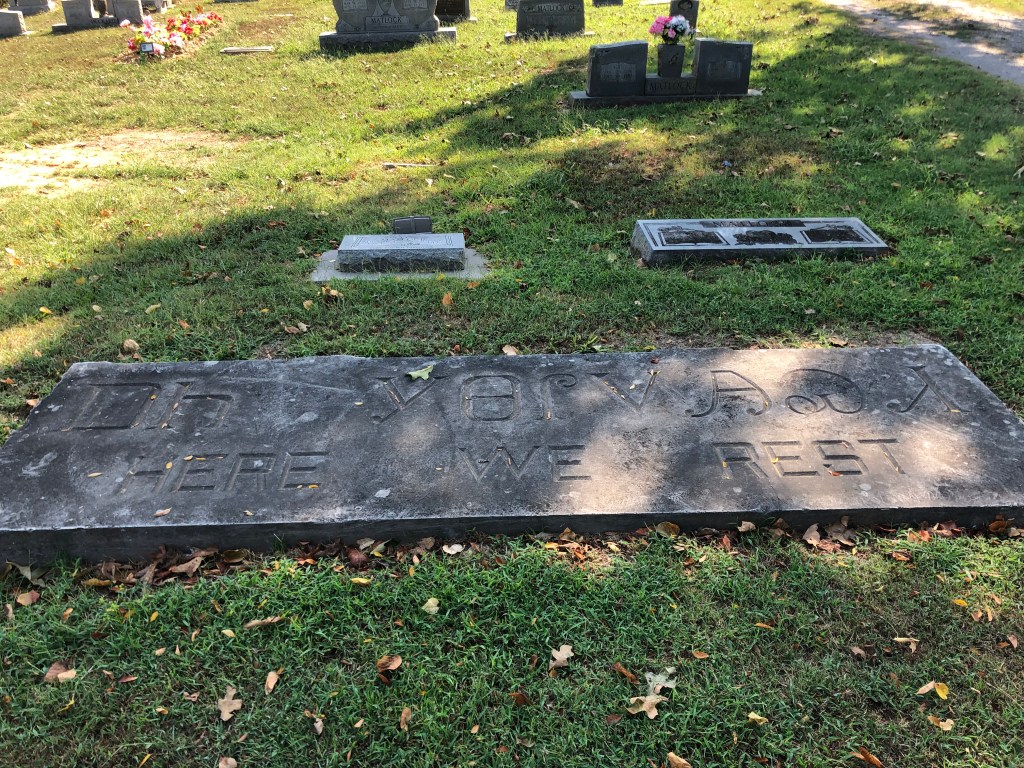
“Here We Rest,” at the Ross family cemetery.

The other was the Caney Cemetery, which holds the remains of many figures from this area, including a handful who had survived the Trail of Tears. Scott and I were struck by the number of graves of children and infants, which may speak to the state of healthcare among the nation, or to other issues. On the other end of the spectrum, though, were graves from individuals who had walked this earth for many, many years. One such long-lived individual was Betsey Snaketail, a Trail of Tears survivor who died in 1881. She was born in 1771, before the American Revolution.
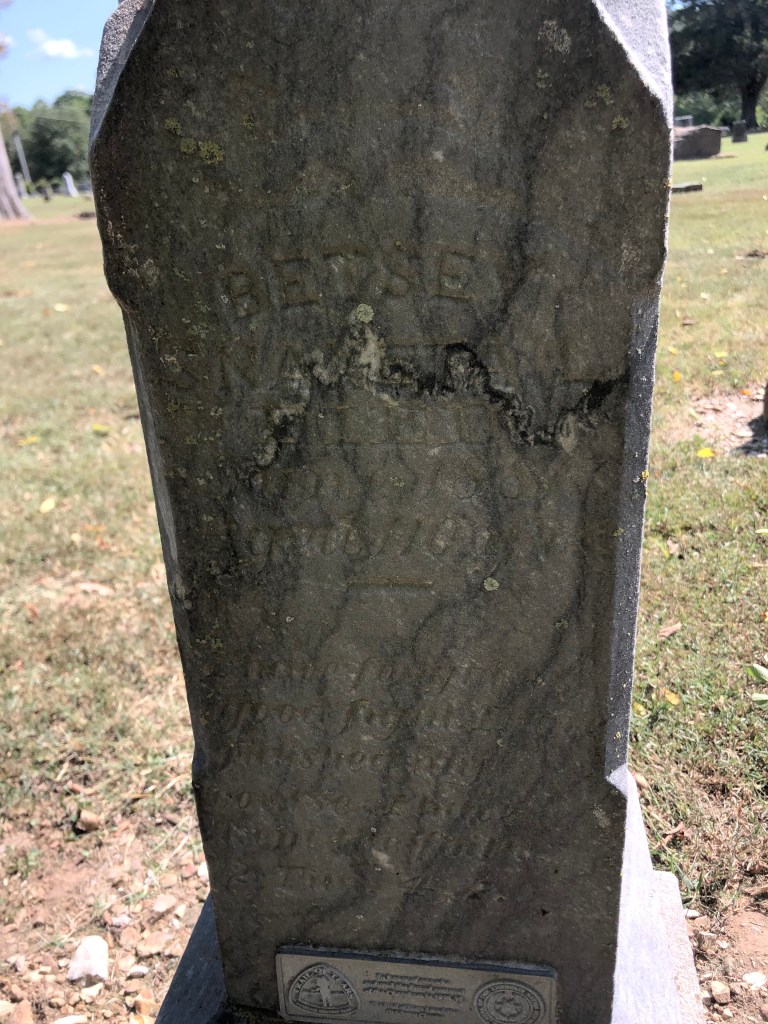
Little could stop Betsey Snaketail, God bless her.

We lingered a bit at this place where a handful of the TOT survivors have finally found their rest. Then we got in the car and headed for Tulsa to catch our flights home. Those of you who know me well are aware that I’m not normally given to sentimentality or mawkishness. But I’m left with an enduring sadness about the treatment of these people by our government. And even if you take the government out of it, it’s distressing to be reminded how individuals can mistreat other individuals, sometimes harshly. I recognize that mistreatment of others is not unique to any time or place, and that it goes on even today. But I wonder if the experience of the Trail of Tears holds any answers that might help us to do better, even as individuals.
bridges · Road trips

Onward to Tahlequah

This morning Scott and I set out early from Louisville. With flights to catch on Monday afternoon, we realized that we were running a bit behind on our schedule, so we were facing almost 600 miles of driving today.

The first 100 miles or so was needed just to drive south from Louisville to reconnect with the Trail of Tears. Once that was accomplished, we were back on the hilly, windy green hills of Kentucky, roughly following the original route that the Cherokees walked.

It’s a nice travel experience….if you aren’t being driven out of your homes by the U.S. Government.

The day’s trip would involve driving west from Hopkinsville, KY to Tahlequah, OK. Our route (which is essentially the Cherokees’ northern route) would take us from Kentucky through Illinois Missouri, and Arkansas, before we crossed the border into the old Indian Territory of Oklahoma.

Trail of Tears, Northern Route
It’s not a great map, but you get the basic idea.

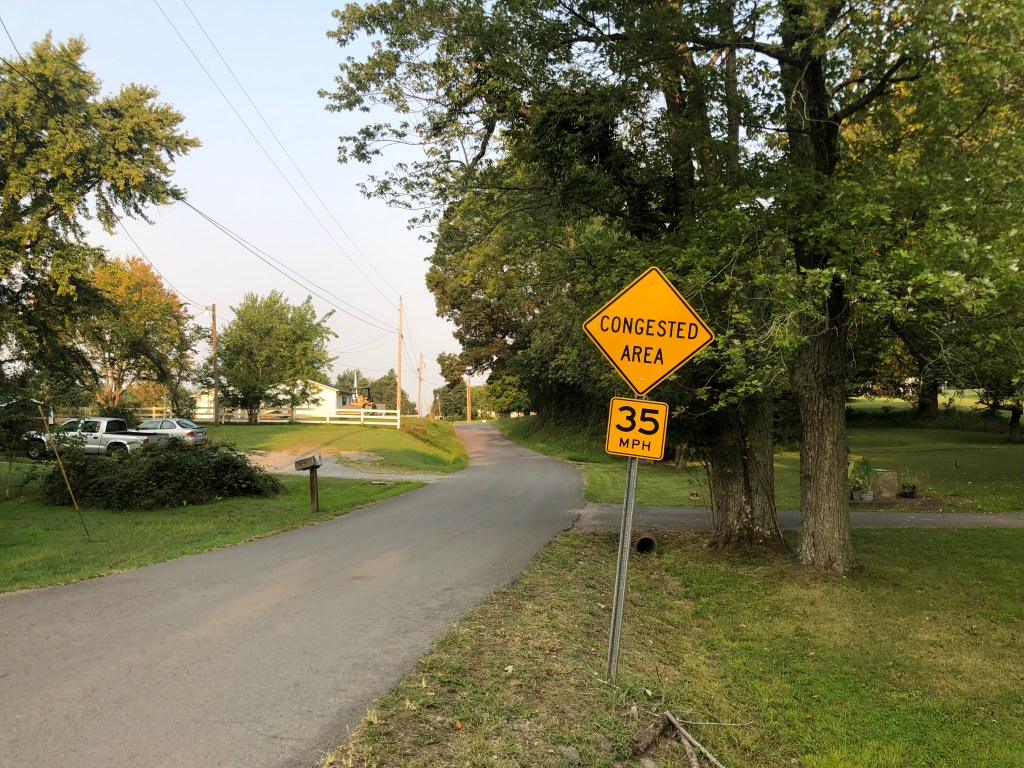
It was still early in the morning on a Sunday in rural Kentucky, so we were pretty much the only ones on the road. As two California boys, we had to chuckle at the Kentuckians’ idea of congestion.

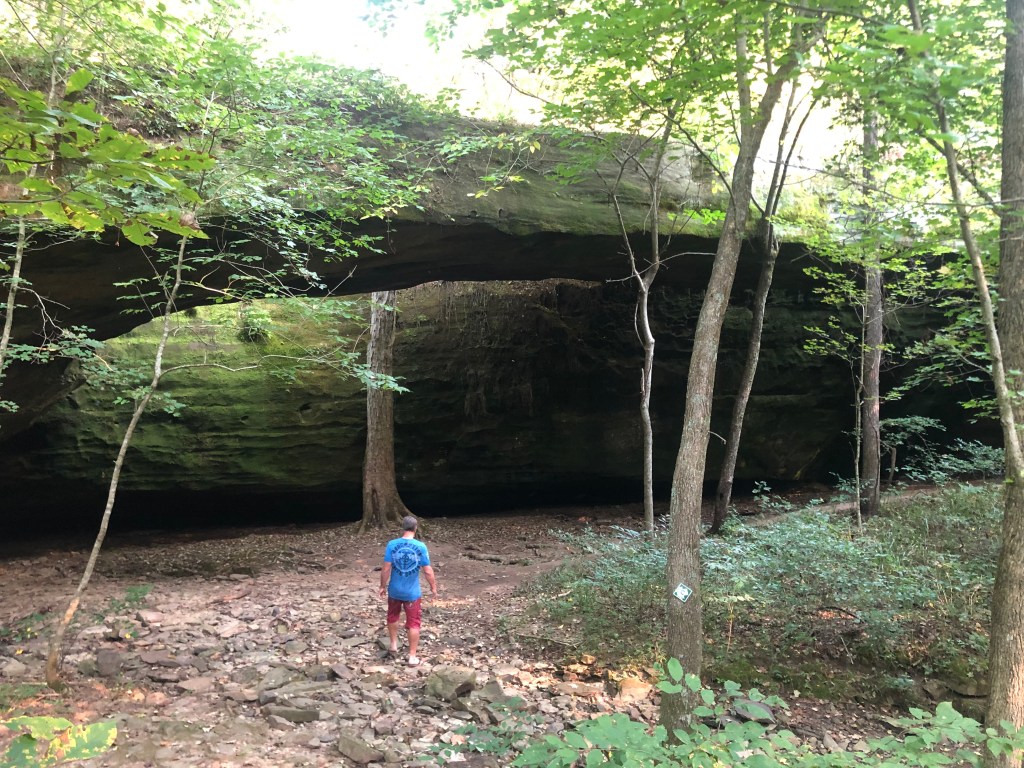
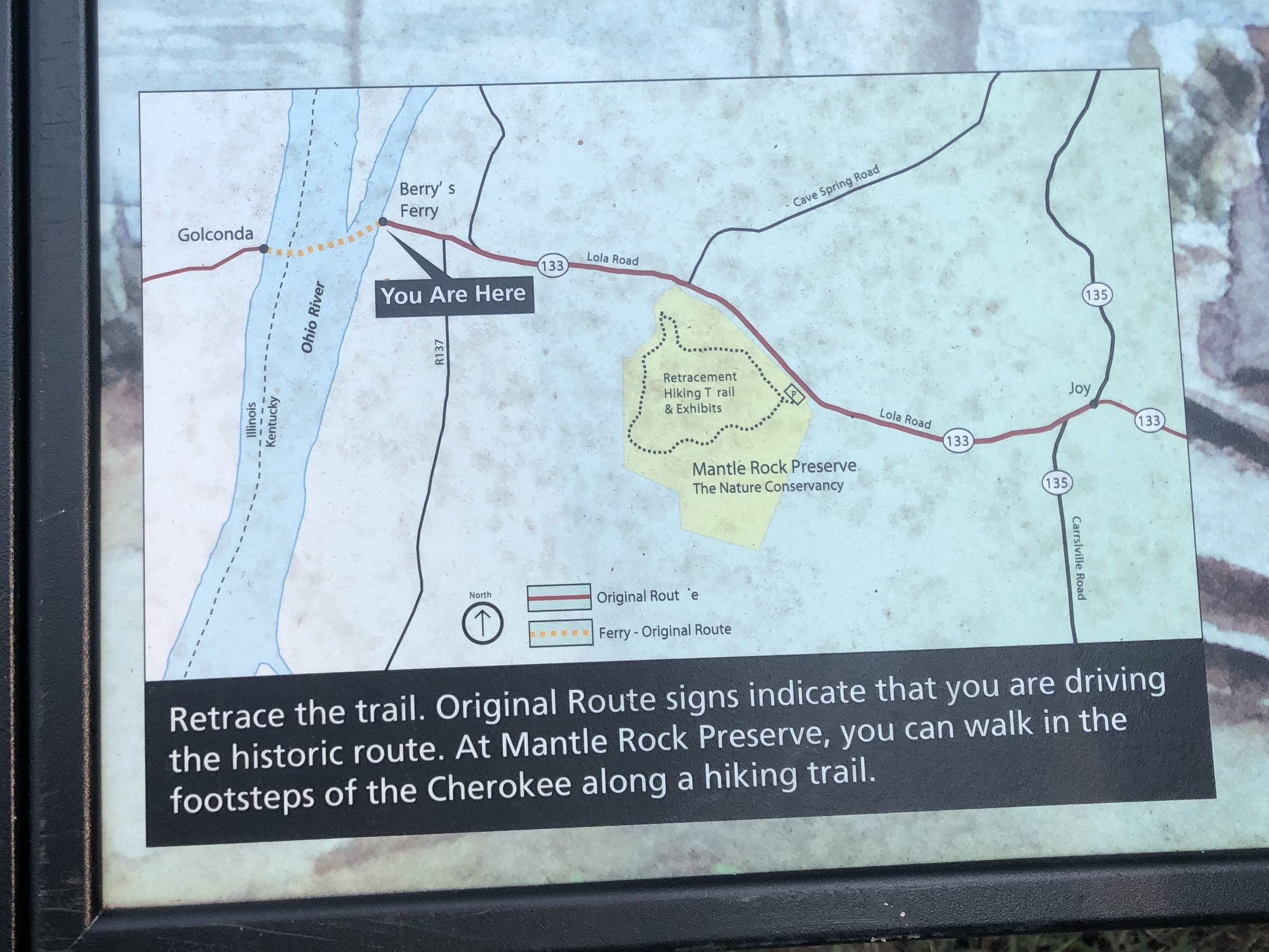
Mid-morning we arrived at Mantle Rock, near the bank of the Ohio River. This is where the Cherokees camped (some for up to two weeks) while waiting for ice on the river to break up enough to permit a ferry crossing. We hiked a short section of trail to get to Mantle Rock.

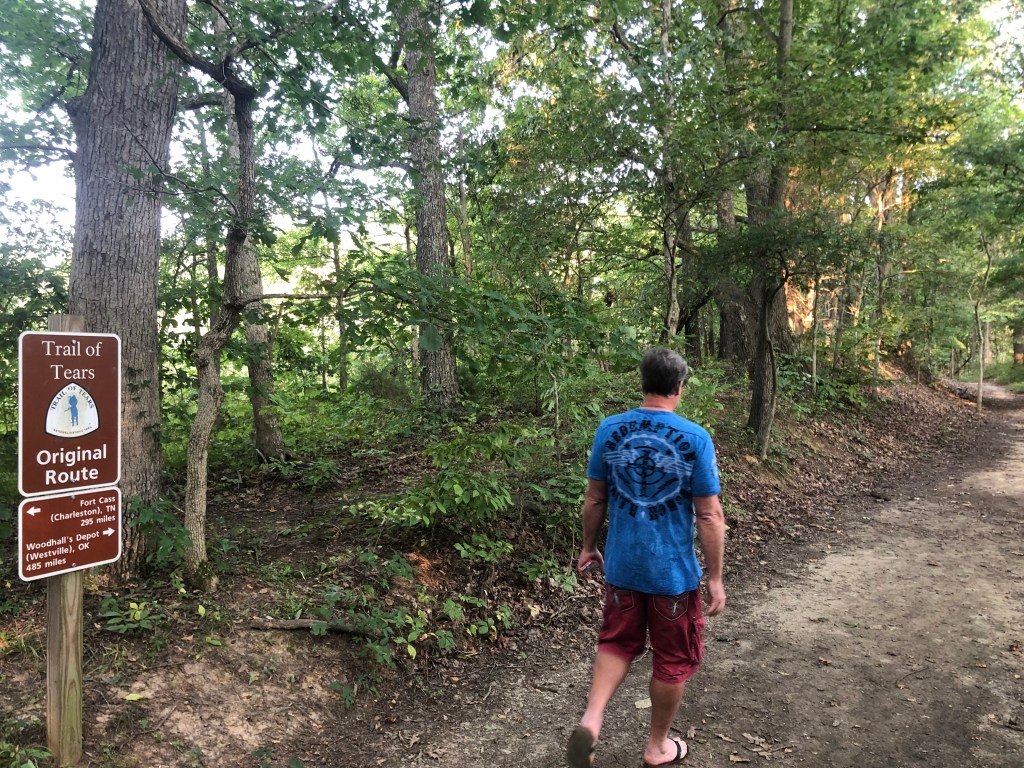
Only 485 more miles to go….
Mantle Rock, where some of the Cherokees took (inadequate) shelter from the rain and cold.

I get the sense that this was one of the more commodious stops along the TOT. It’s hard to imagine the pain, discomfort, and danger of spending three months out on the trail like this.

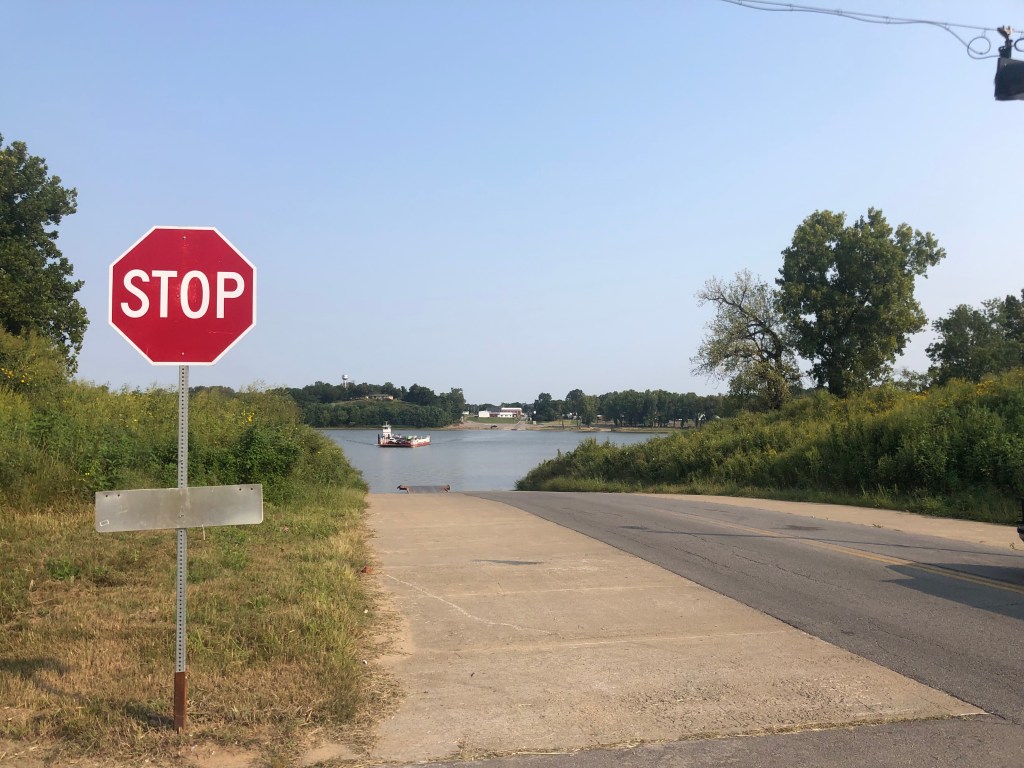
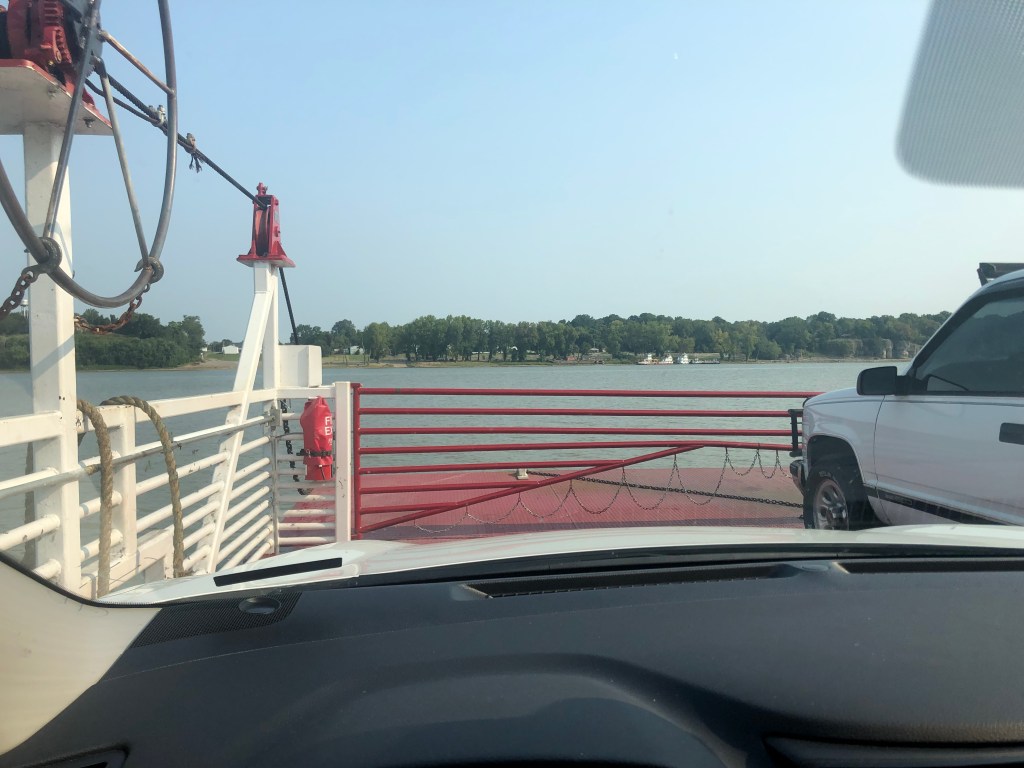
After we got back to the car, we made a short drive to the river and took a ferry across the Ohio River to Golconda, Illinois, and continued in the Cherokees footsteps.

Don’t pay the ferryman.
As Spartan as it is, this ferry is a Princess Cruise compared to what was available to the Cherokees.

It was now close to noon, and we settled in for a long drive along the rest of the route, taking in the scenes of rolling hills and endless forests in Illinois Missouri, and Arkansas. About 10 pm we finally crossed the state line into Oklahoma, which at the time of the TOT was the Indian Territory, and the new home for the Cherokees. Tomorrow morning we will explore their national capital of Tahlequah, and complete the trip.

BREW OF THE DAY

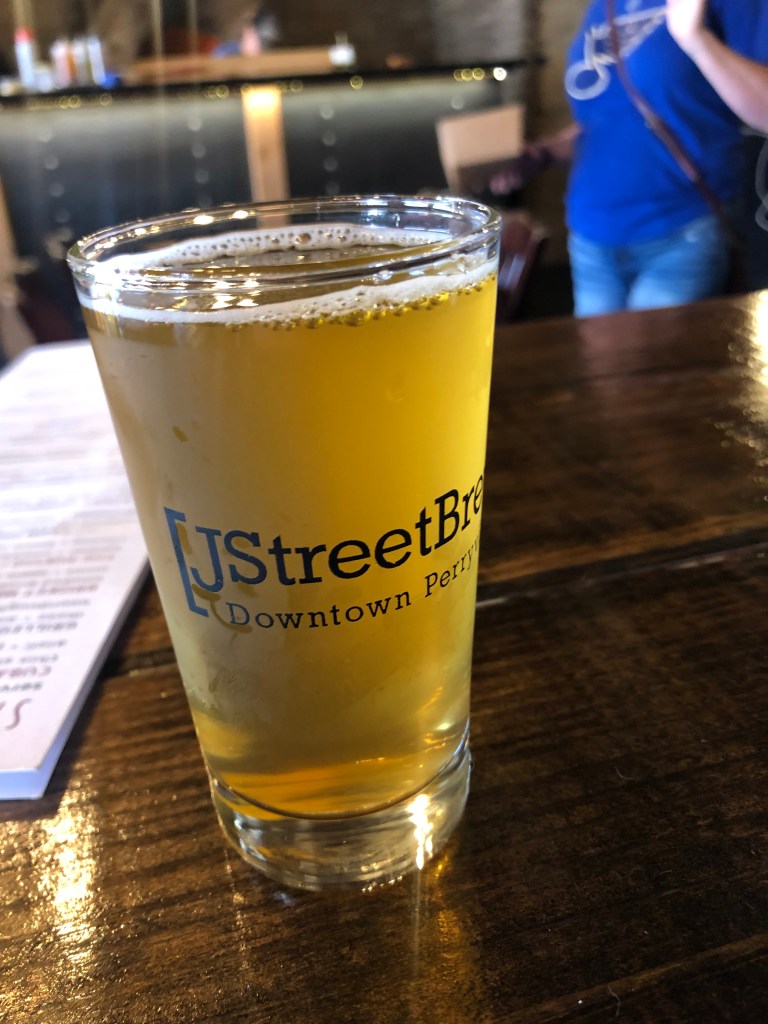
Today’s BOTD comes from the J Street Brew Company in Perryville, Missouri. Perryville is another of the many quaint, quiet, historic towns we passed along our journey. I had a Pineapple Habanero Saison. It’s lighter than I normally drink, but this place seems to specialize in pepper-infused beers. (They also had a Mango Chile IPA, a Jalapeno Lime Lager, and a Poblano Pale Ale). The saison is an uncommon style of beer these days, but it’s refreshing as an afternoon beer in summer. This one tasted somewhat sour, coming, I think, from the combination of the pineapple and peppers. The body is quite light. It’s very fizzy, almost like champagne. The ABV of 5.8 is friendly for a mid-day driving stop.

bridges · Road trips · trains

Trolls and Ghosts of Louisville

Today Scott and I stuck around Louisville. This city, perched on the bank of the Ohio River, is very much a city of the past, with ancient structures, deep historical connections, and enduring traditions.

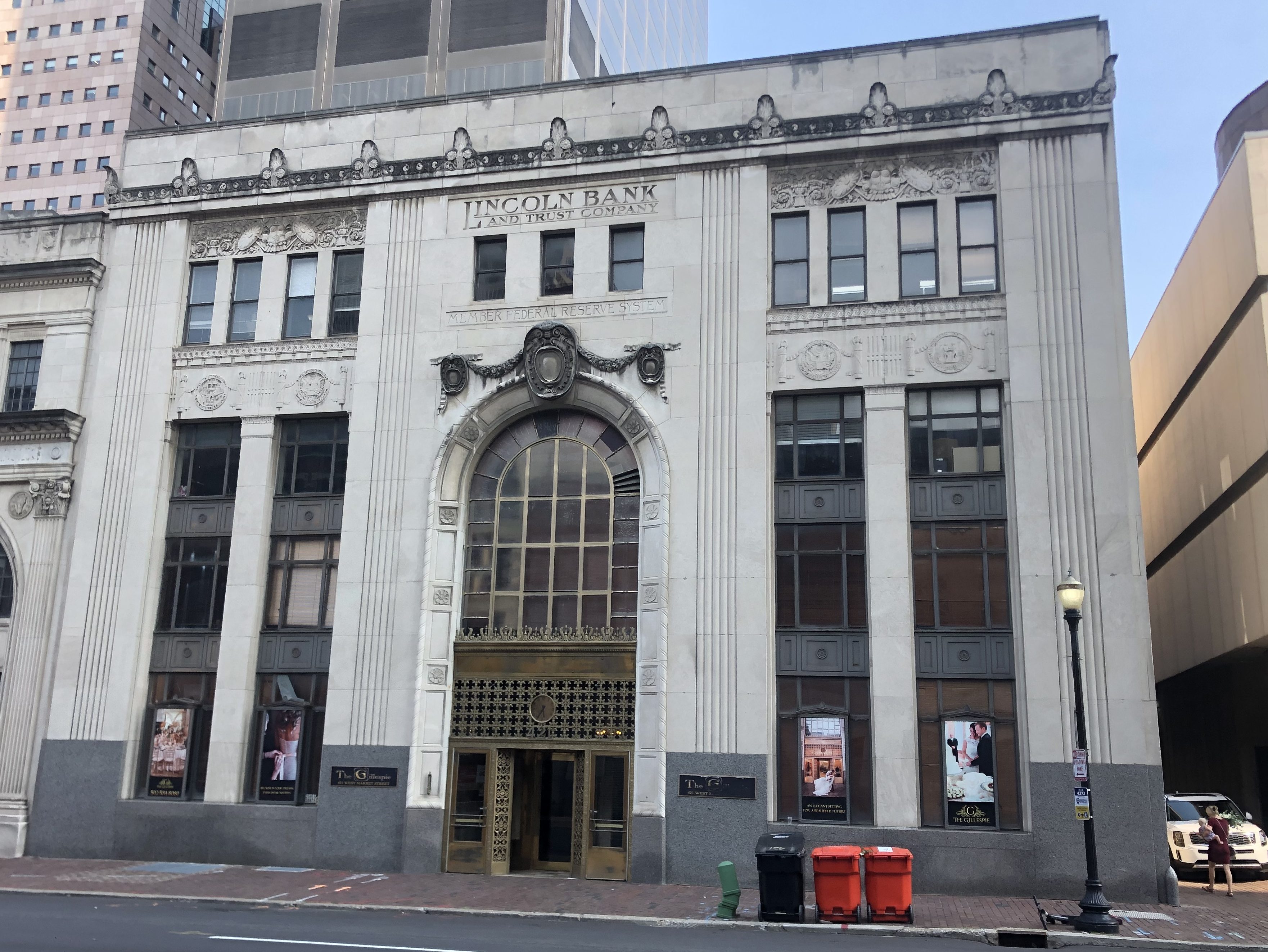
We spent the morning walking around downtown Louisville’s old financial district. It’s lined with looming, imposing banks and stock exchanges from the turn of the century. Most of these are now serving other purposes, such as art galleries or lofts or restaurants. They’re impressive and anomalous in the 21st century, and very much give Louisville a unique, historic vibe that you just can’t get from a hipster urban renewal project.

Lincoln Bank and Trust Co. building, constructed in 1929…right at the onset of the Great Depression. It remained a bank until 2005, and now serves as a reception venue.
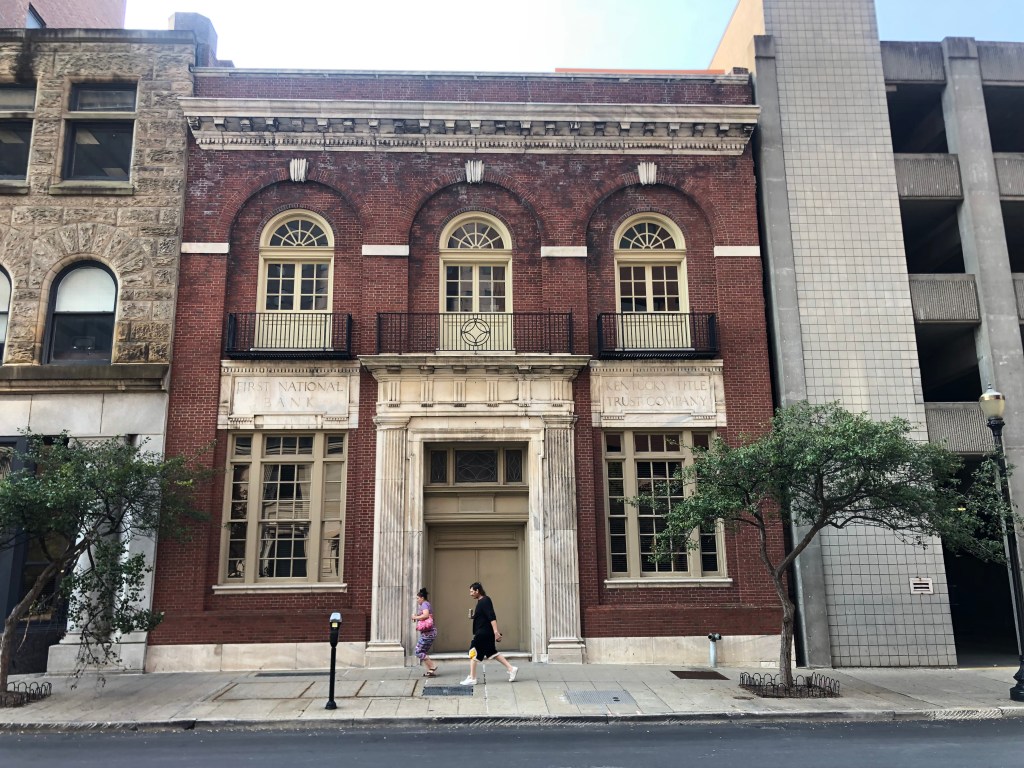
First National Bank – Kentucky Title building, from 1927.
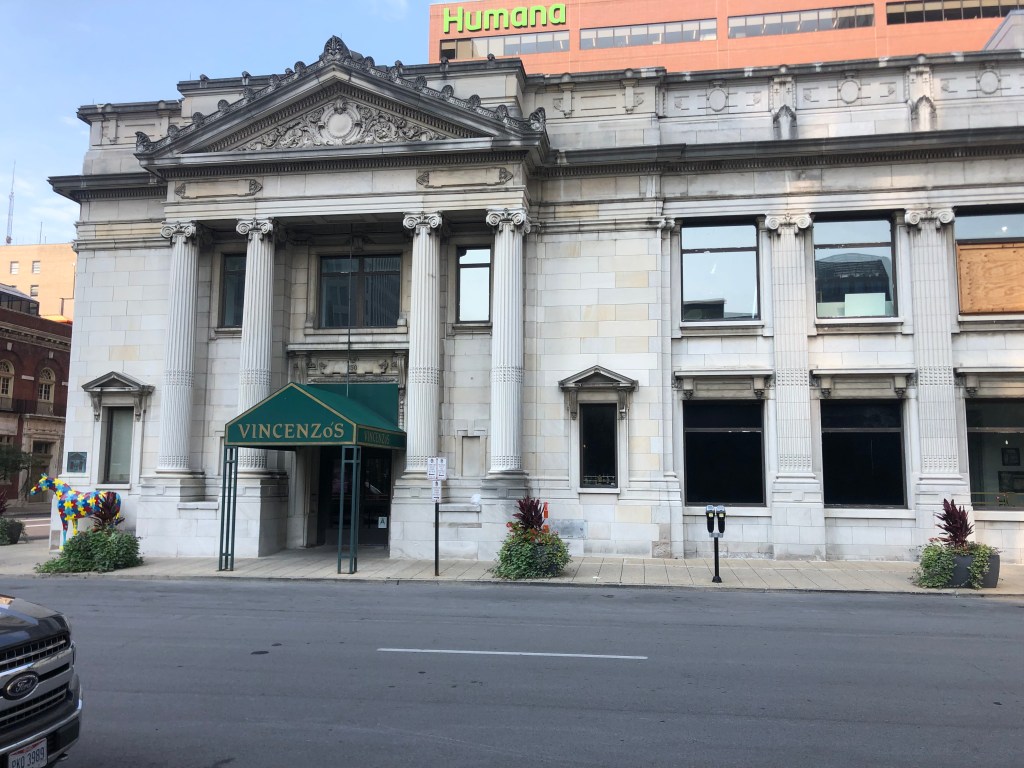
The German Bank Building, constructed in 1914. Four years later it was renamed Louisville National Bank. (Like many institutions, it was renamed during World War I to disassociate itself with the Germans.) Today it’s an Italian restaurant…thus associating itself with a different Axis power…
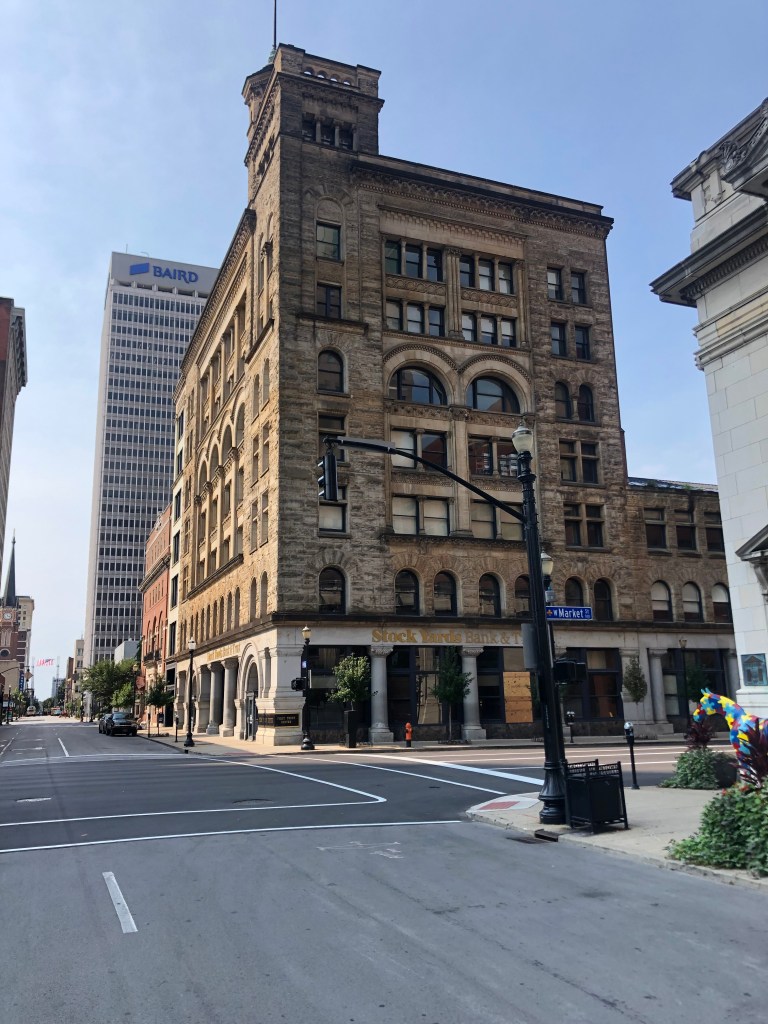
Stock Yard Bank and Trust building, of unknown age.
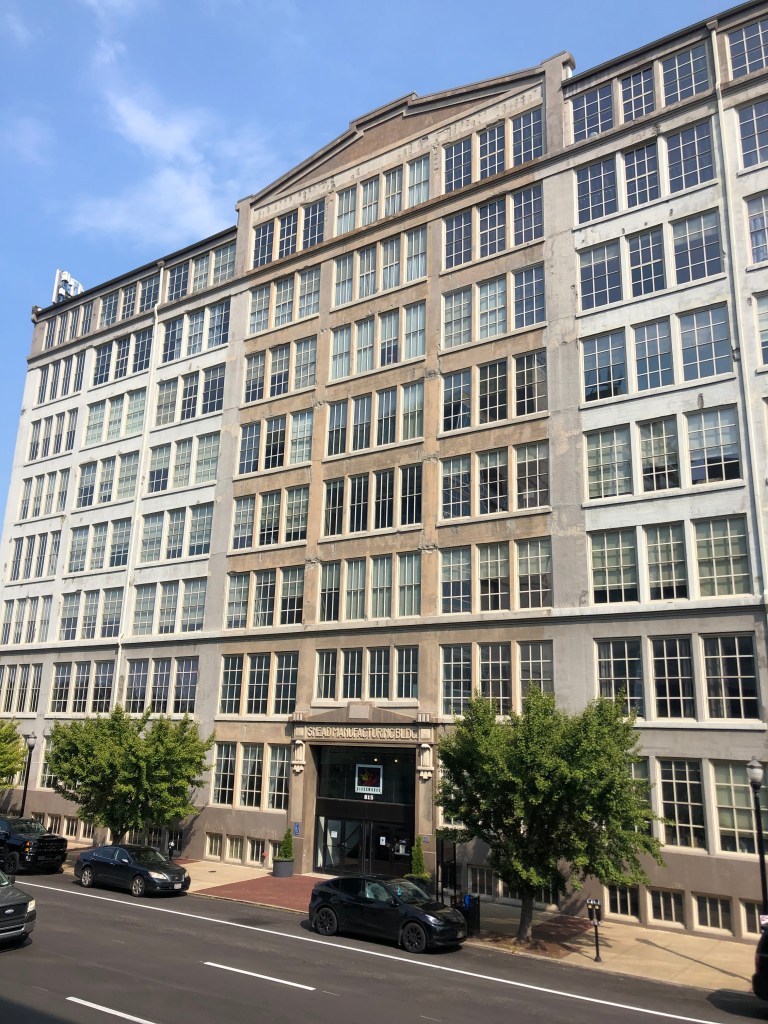
The Snead Manufacturing building was constructed in 1909, as a glassworks. In its later years it was widely regarded as one of Louisville’s ugliest buildings. (It also has one of the ugliest names.) It closed in 2012. Today it’s been converted to lofts and office space, and retains an artists glass studio.
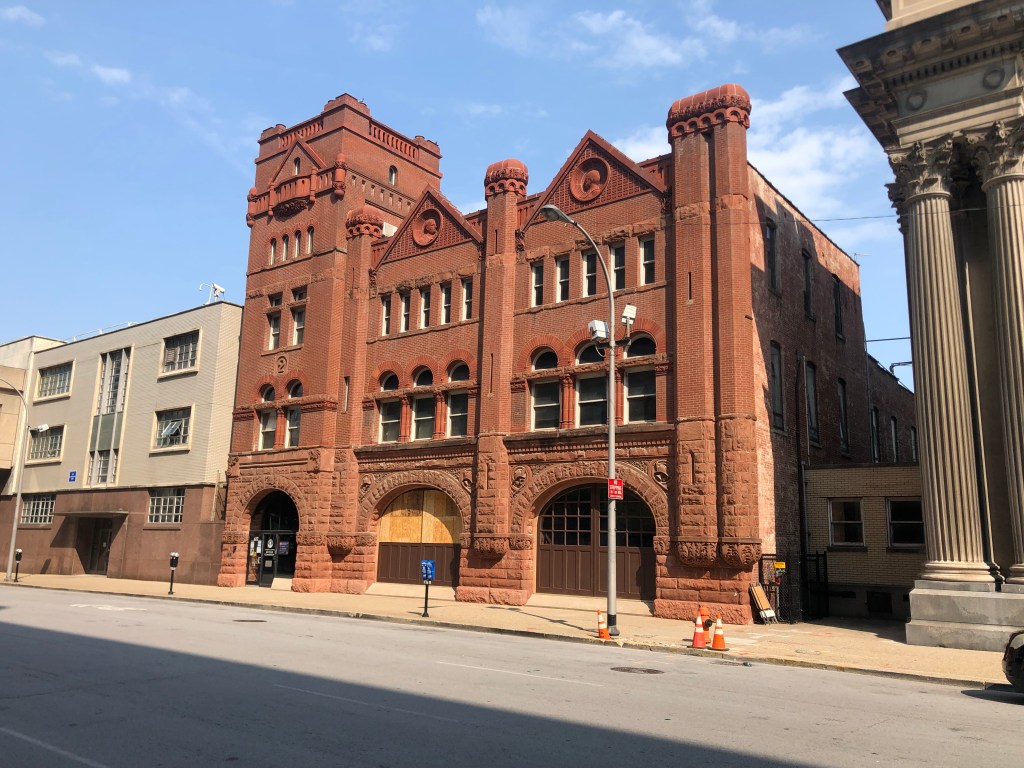
Historic fire station (Steam Engine Company #2), built in 1890. Now the Metro Revenue Commission building.
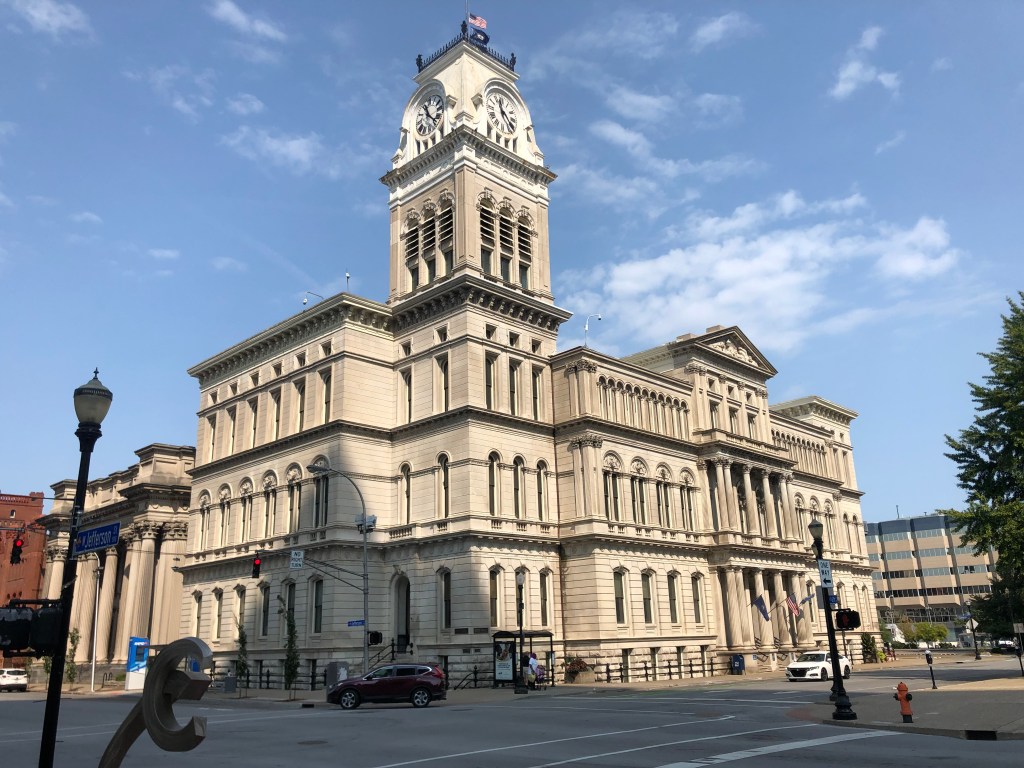
The awesome City Hall building, from 1873.
And, just for contrast, check out this more recent abomination from the so-called “modern” era. What was the architect thinking?? “I know! Let’s flank the doors with giant neon swizzle sticks!”

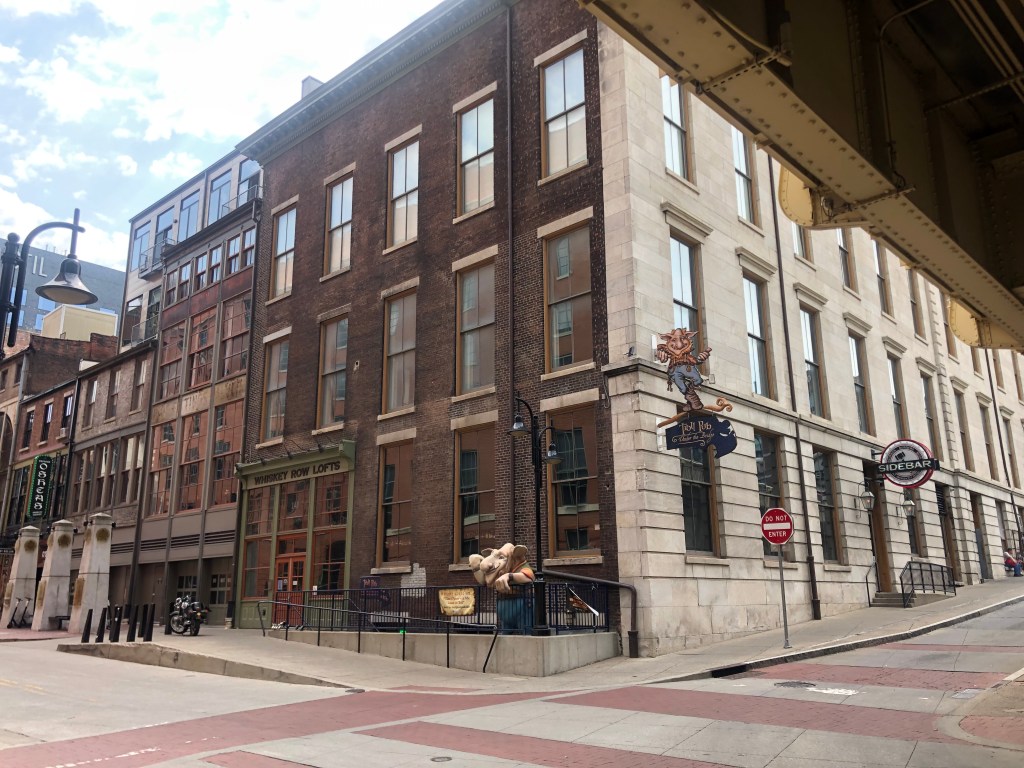
For lunch, we thought we would try the (slightly) celebrated Troll Pub. The name comes from the Three Billy Goats Gruff, since the pub sits under a bridge (Louisville’s Clark Bridge, which crosses the Ohio River into Indiana). The pub is in yet another of Louisville’s historic structures; this one was the headquarters of the Louisville and Nashville Railroad in the late 1800s.

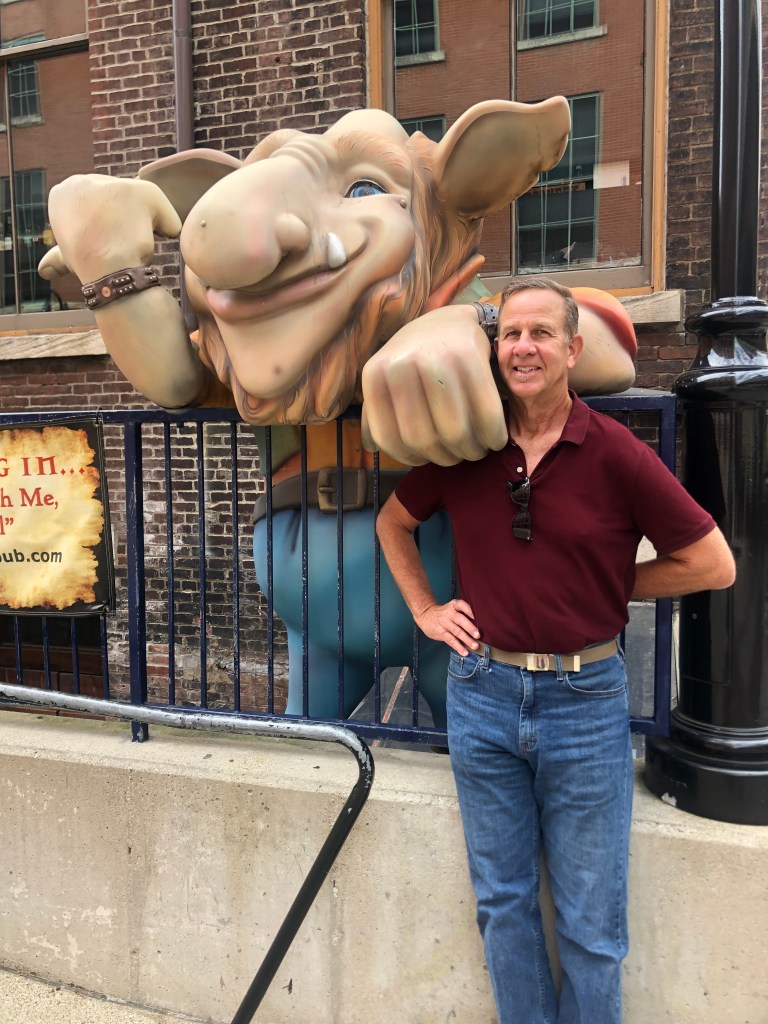
Alas, the pub’s kitchen didn’t open until 1 pm (which seems like an odd time to start serving the lunch crowd), so we left and I got a stale corn dog at a gas station. But at least we were able to get this cool picture with the troll.

“Who’s that tripping over my bridge?!”

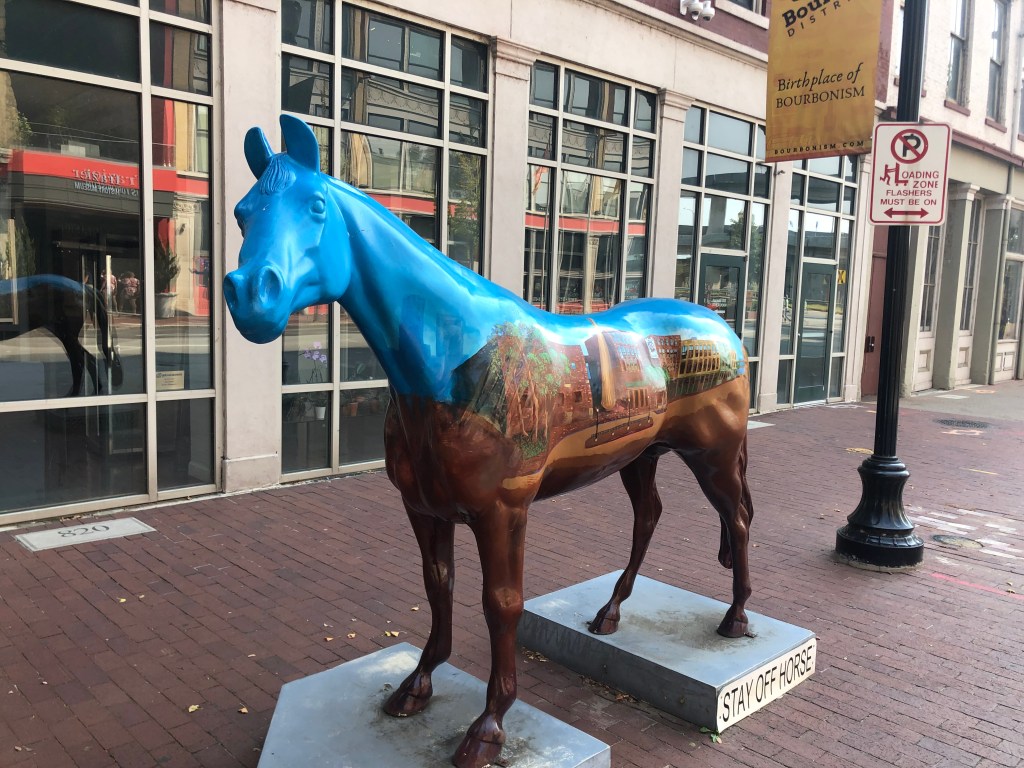
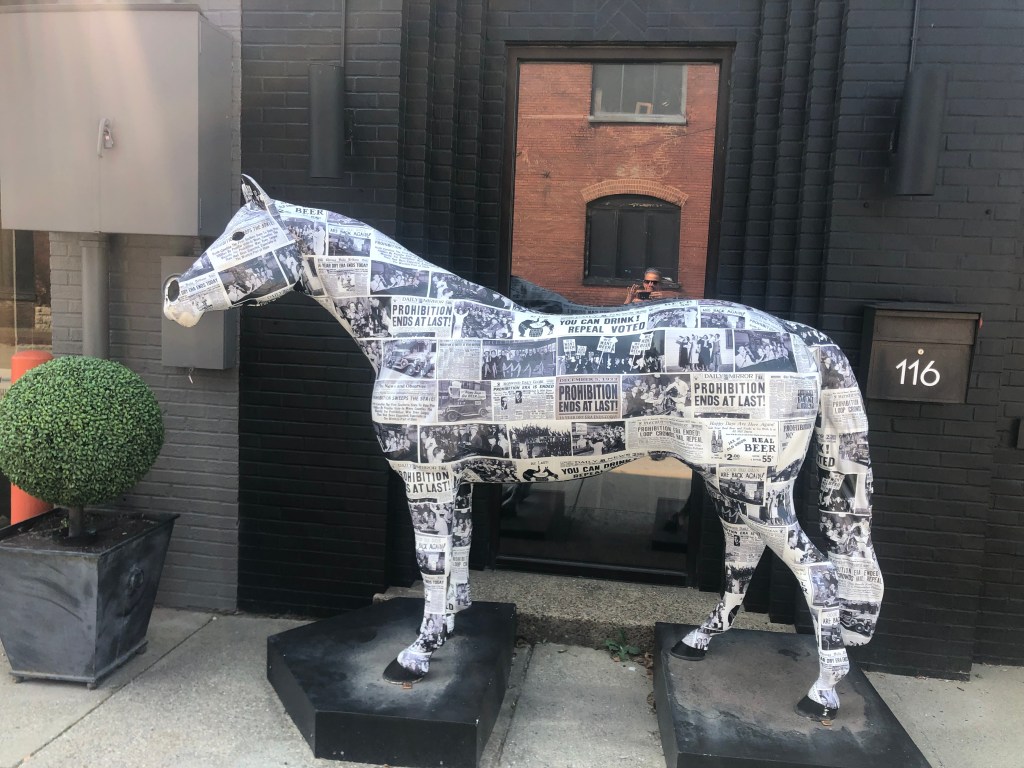
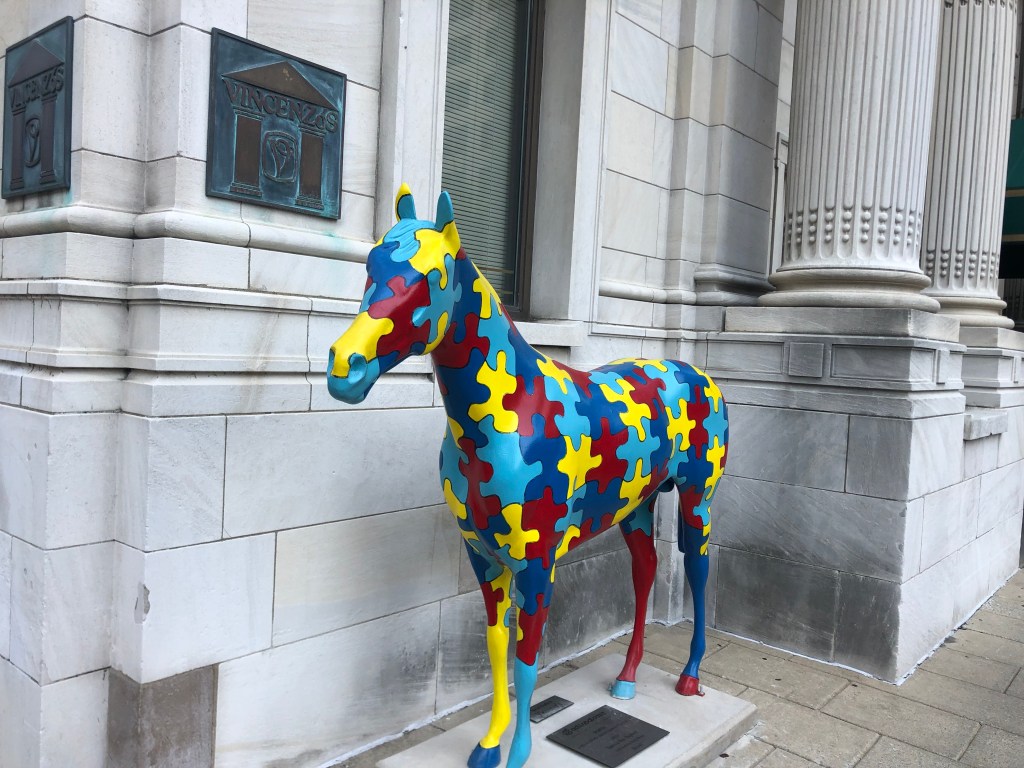
I addition to its cool architecture, Louisville has a strong sense of civic pride. A tangible example is the city’s Gallopalooza, which was a fundraising project whereby businesses and other groups bought and decorated fiberglass horses that were then placed around town. (This followed a popular trend adopted by a number of other towns in the early 2000s.) We encountered a handful of these horses today.

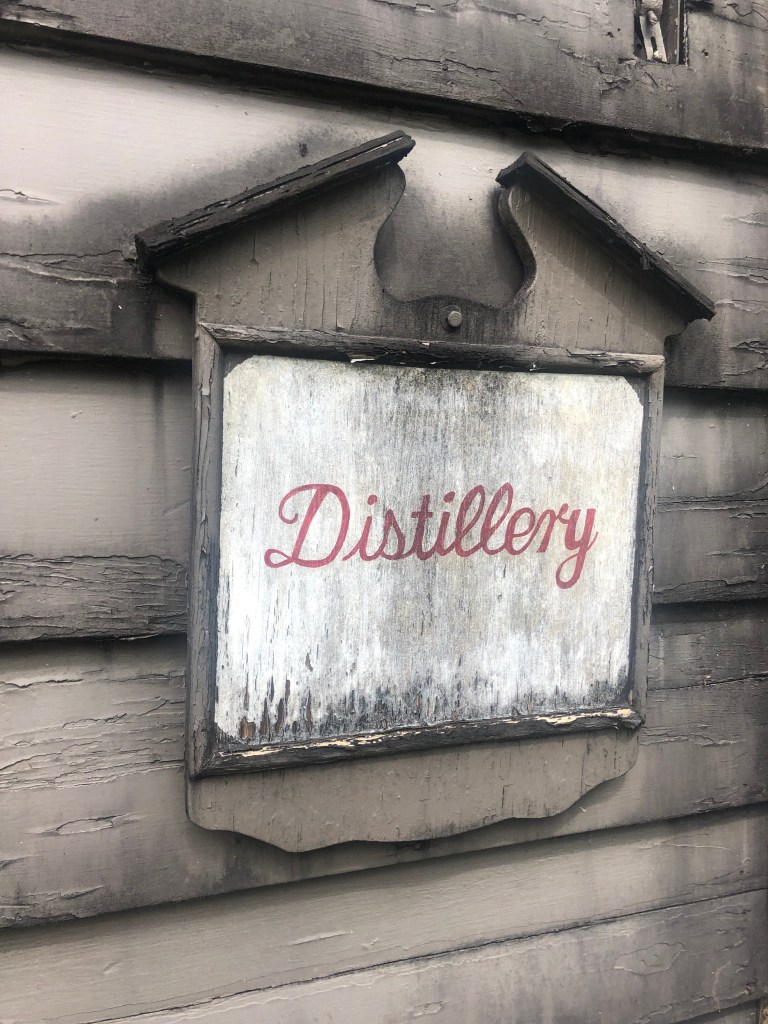
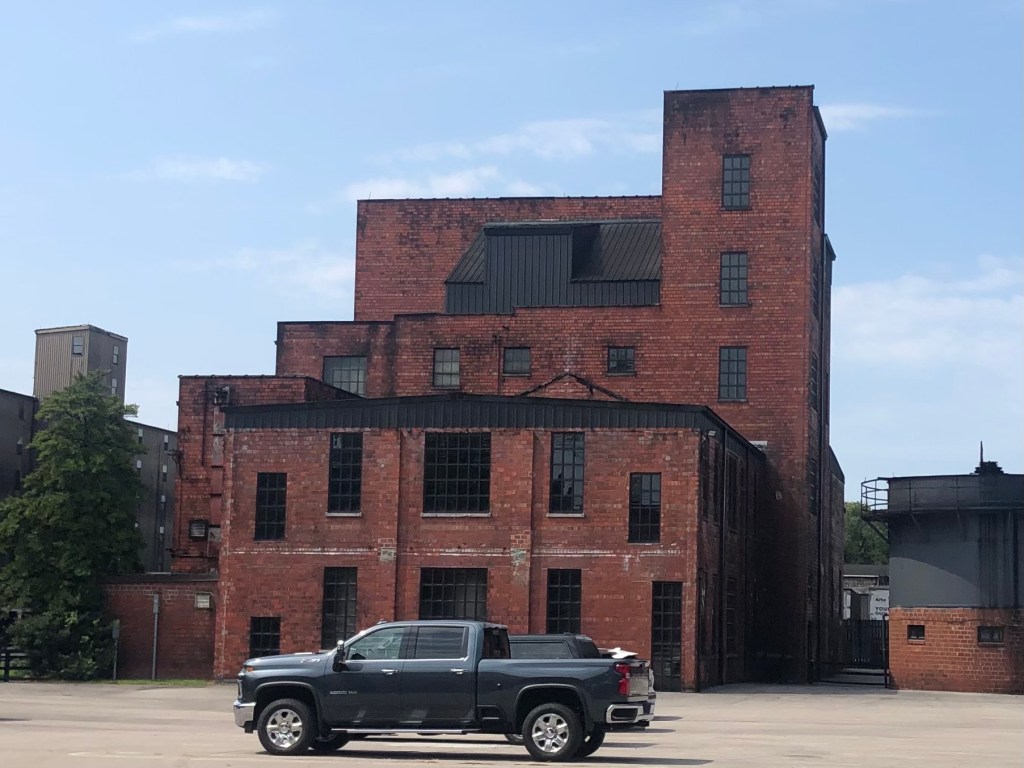
After lunch, we headed out for one final distillery tour, at Stitzel-Weller. The facility, which was constructed in 1935, was both fascinating and depressing.

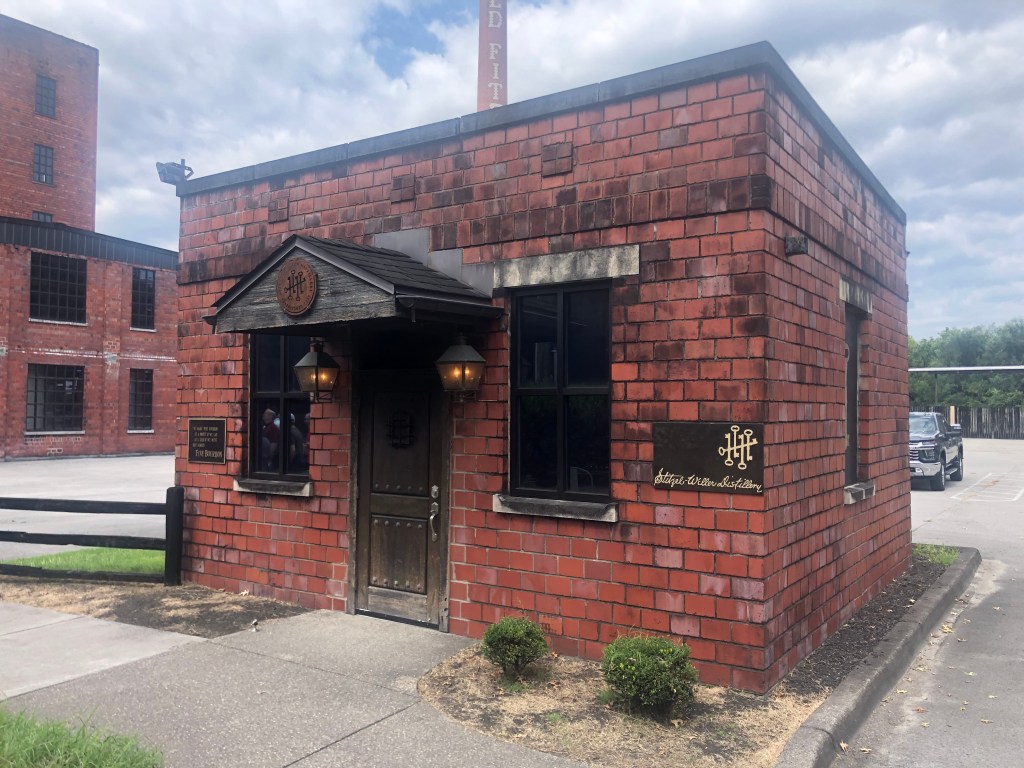
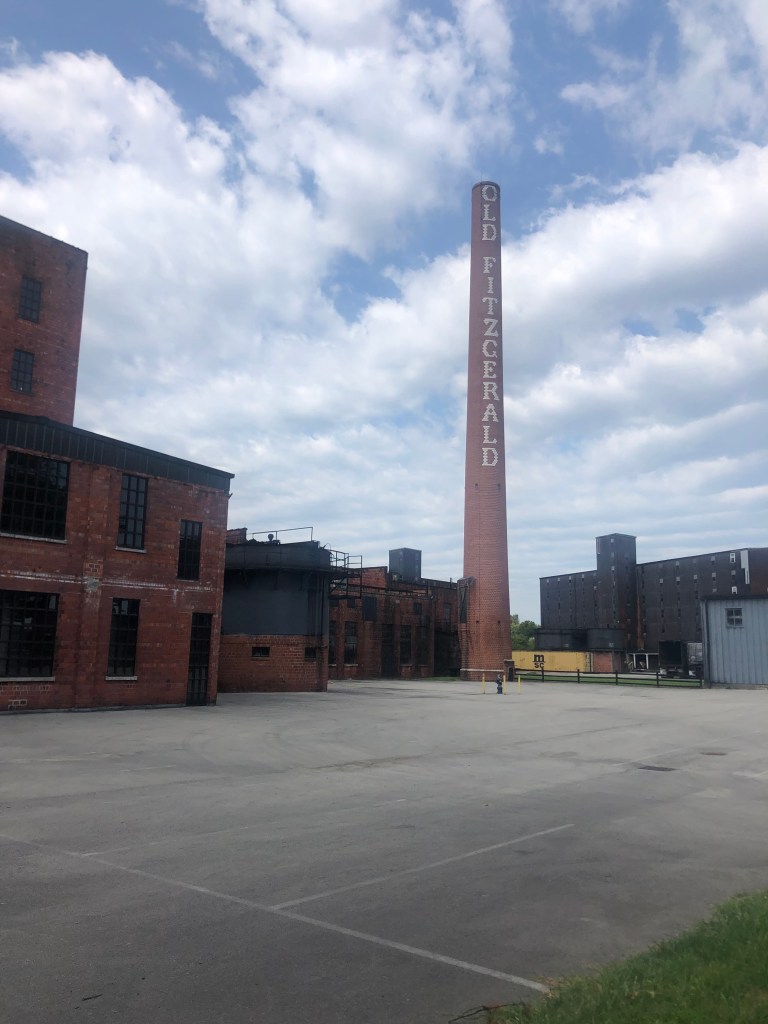
When we arrived, we were struck by the picturesque, historic setting with ancient trees, rambling old rick houses, an enormous brick smoke stack, and a tidy prewar administrative building in a state of arrested decay. It’s exactly the kind of place that I want to imagine my bourbon comes from: historic, well-worn, traditional, slow-paced, and unpolished.

(Old Fitzgerald had been one of Stitzel-Weller’s labels.)

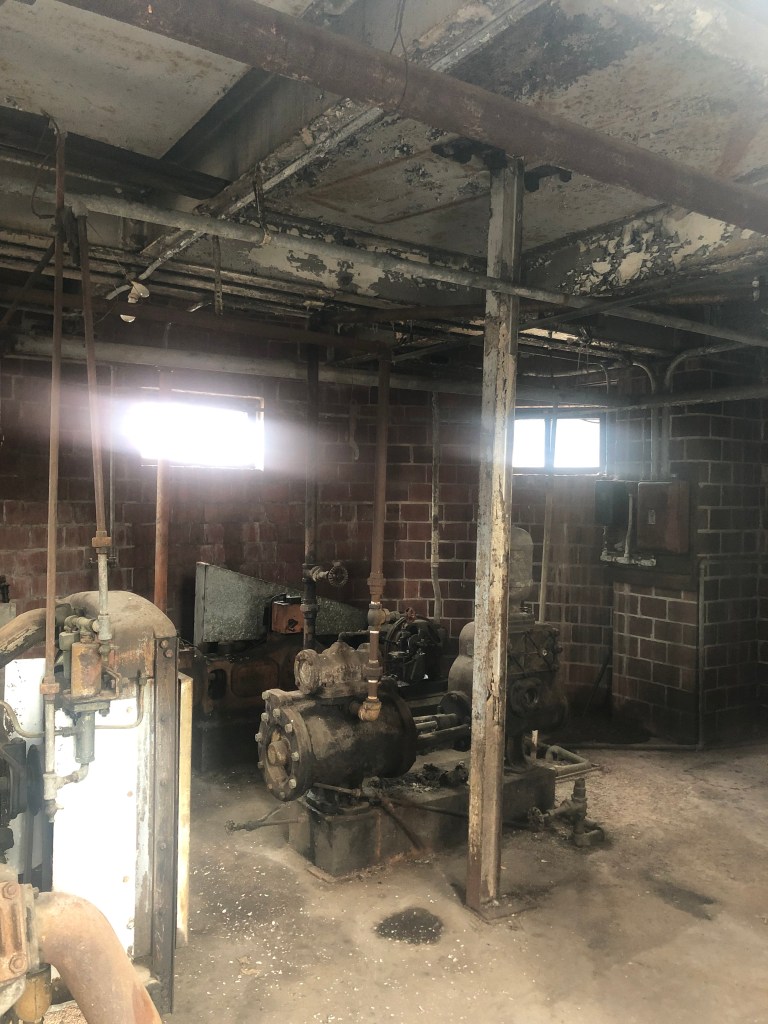
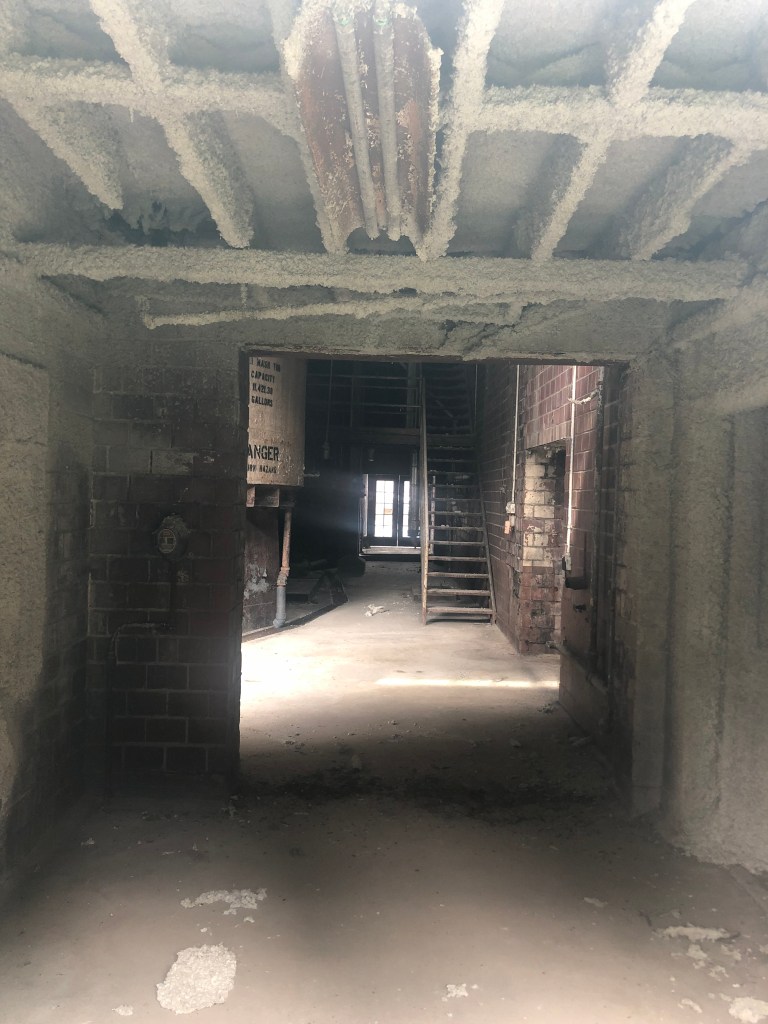
We were soaking up the atmosphere (quite literally in Kentucky’s summer humidity) and enjoying the tour when it became clear that this distillery has not produced whisky in over a quarter of a century. The family that owned it since its inception sold it in 1972, and it fell into the hands of a mega-corporation which shifted production to more efficient plants. The distillery’s buildings are now mainly just used to store barrels from other distilleries, and to conduct tours and tastings. It was somewhat eerie to walk through these buildings that once saw round-the-clock activity, but which now are inhabited mainly by ghosts.

Just imagine what asbestos abatement would cost…

Furnished with this story of commercial quietus and exposed to this setting of decline and decay, we feel properly equipped to return to the Trail of Tears in the morning.

Until then.

Road trips

Subourbon Lifestyle

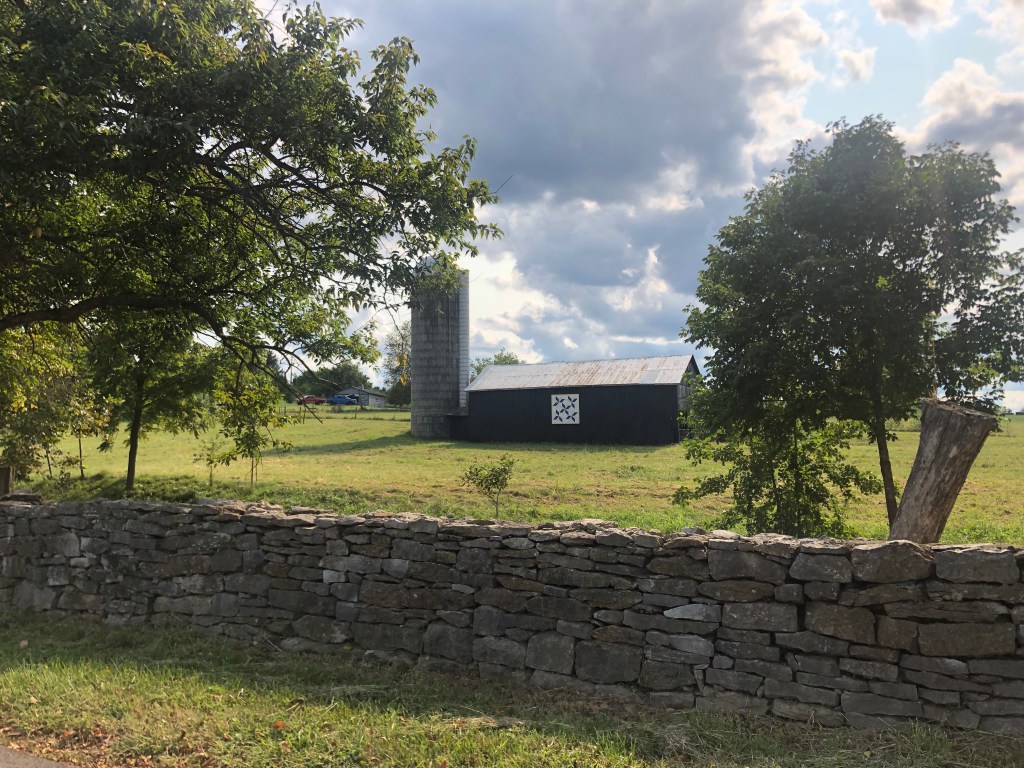
[Delayed posting from Friday] Today we took a break from our tear-y travels and spent a day in Kentucky’s bourbon country. As many of you know, Kentucky is a beautiful state, with rolling green hills, expansive maple and poplar forests, picturesque horse and tobacco farms, and some of the nicest damn people you’d ever want to meet.

Idyllic countryside of the Bluegrass State

Most of Kentucky’s distilleries are clustered between Louisville and Lexington. Each has its own story to tell, but pretty much all of them try to convince you that their particular bourbon is the best.

The Kentucky Bourbon Trail: Why You Need to Visit Before You Die

Of course, all bourbons are remarkably similar in that they all must follow the same stringent guidelines to be marketed as bourbon. Let’s review those requirements:

  1. The majority (i.e., 51%) of grains used must be corn.
  2. It must be produced in the United States. (Note that it does not have to be produced in Kentucky, although about 95 percent of all bourbon happens to be made in Kentucky.)
  3. It must be distilled at 160 proof (i.e., 80% alcohol by volume) or less. This will not be the final ABV, of course. Water will be added later to cut the ABV.
  4. It must be stored in new (i.e., not previously used) barrels that have been charred inside. (You’ll recall that Scotch Whisky is stored in used bourbon barrels.)
  5. It must enter the barrels at no more than 125 proof.
  6. There is no absolute requirement as to how long it ages, but to be called “straight bourbon” it must be aged at least two years.
  7. It must not have any additives or coloring agents.
  8. Once it is bottled, it must be at least 80 proof.

So, working within those constraints, distilleries essentially just take a bunch of corn (and a smaller amount of other grains), cook it in water, ferment the resulting soup with yeast, distill the alcohol from it, and put the resulting alcohol distillate in barrels. If you want it to taste any good, you’ll let it age in those barrels for some years.
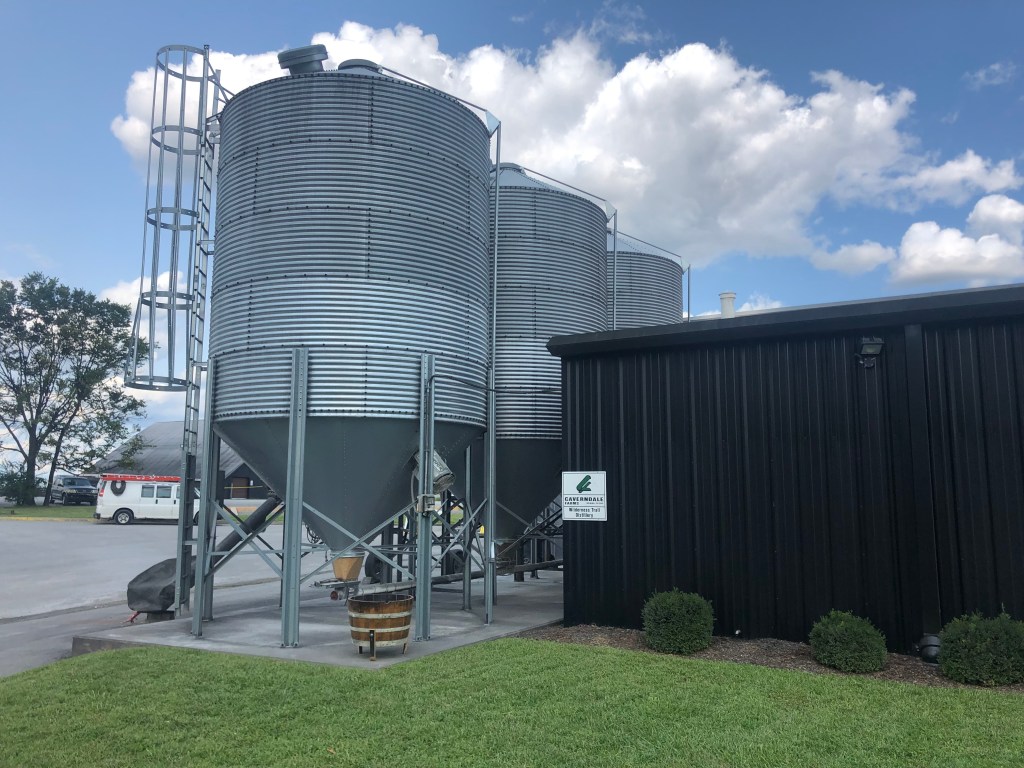
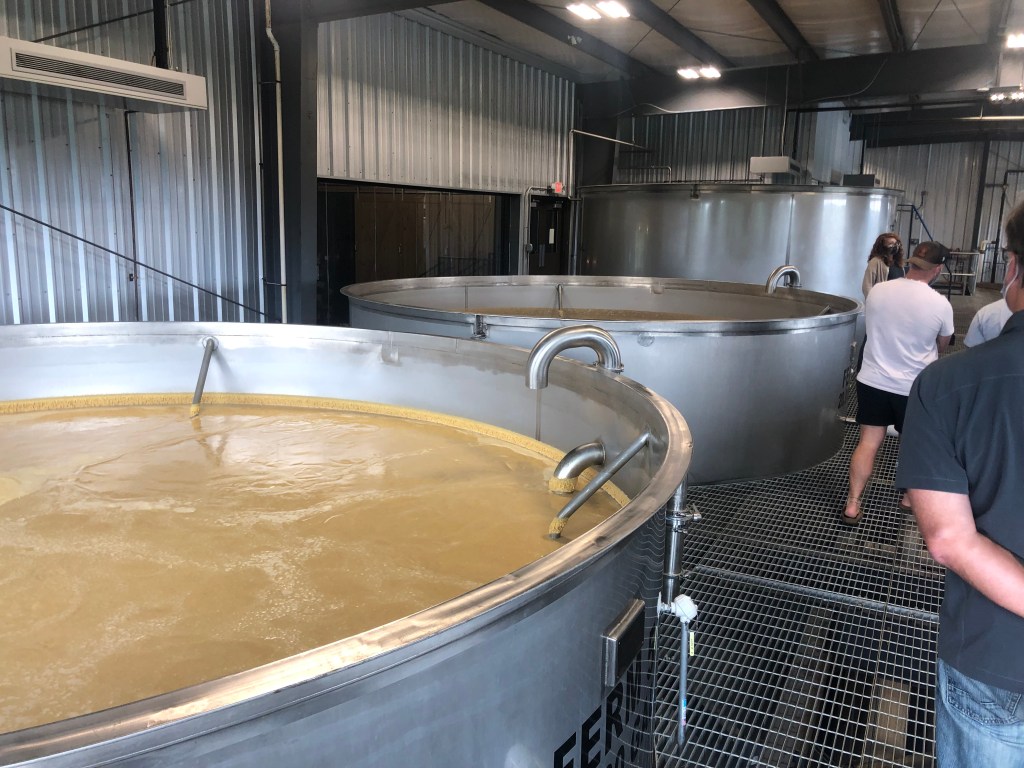
Scott and I went to two distilleries today: Four Roses in Lawrenceburg, and Wilderness Trail in Danville. They represent a rather old and a very new distillery, respectively. Here are a few photos from Wilderness Trail.
A place to store the grains.
Fermenting the mash.
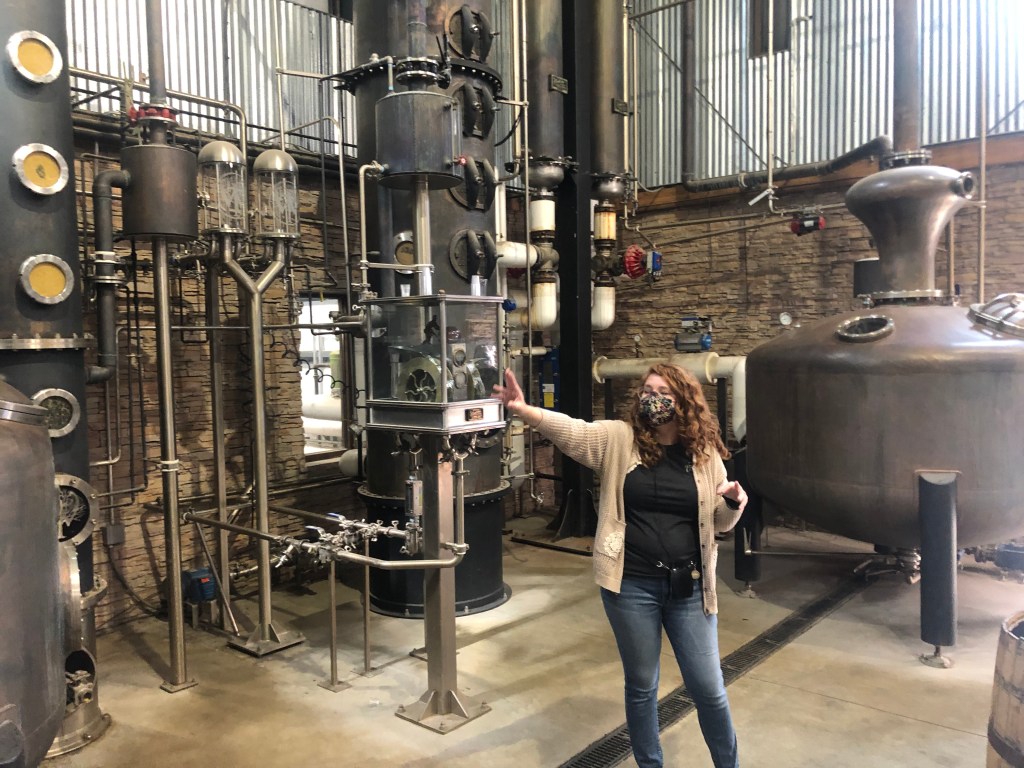
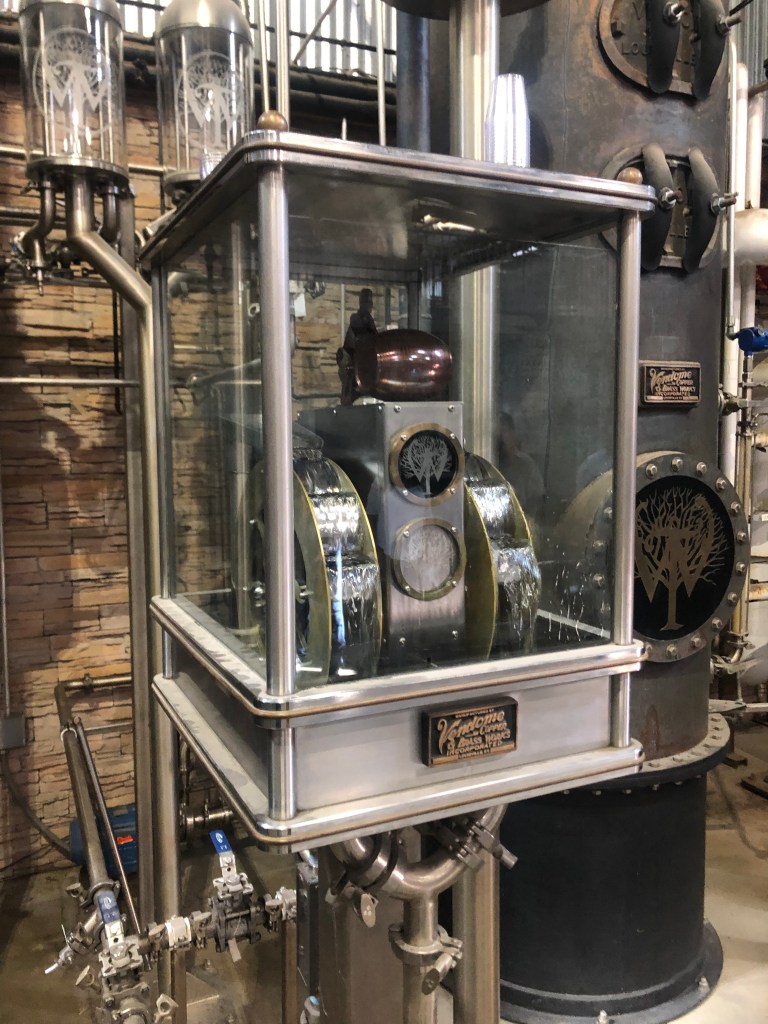
Distilling the wort. Doesn’t this look like Frankenstein’s laboratory?

Halloween Science: Dr. Frankenstein and his monster-Death Wish Coffee  Company
Distillate (the results of the distillation process) flowing like a spring.
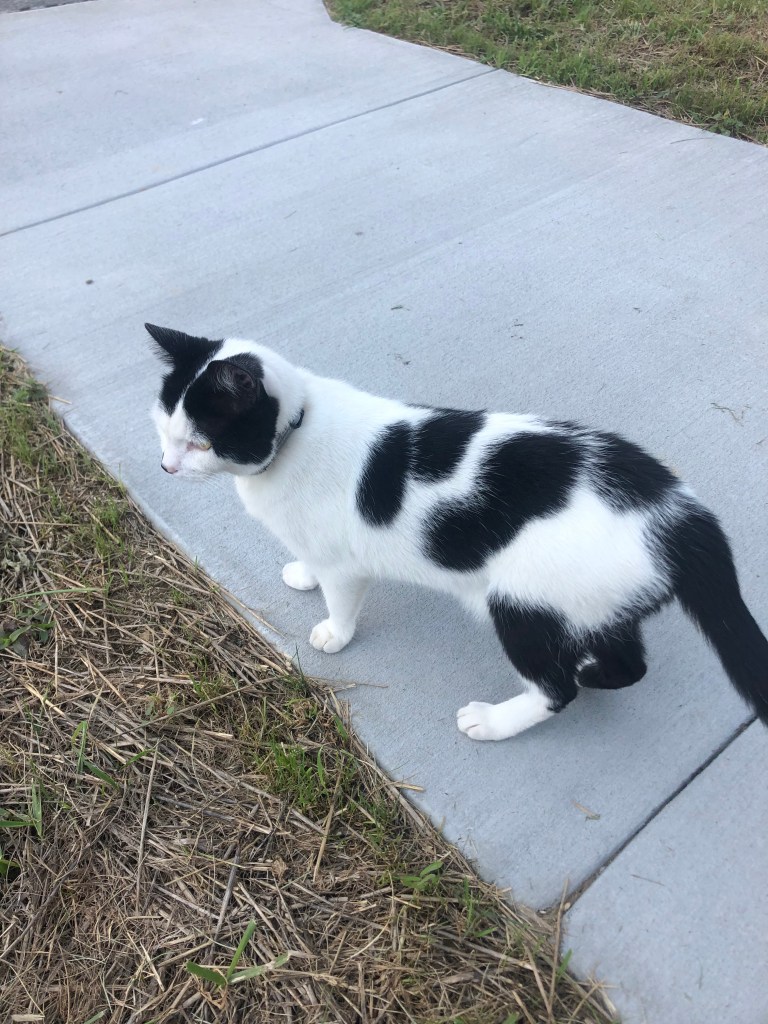
Cooper, the distillery’s cat, leading our tour group.

After visiting the distilleries, we got dinner in downtown Louisville, where we plan to do some exploring tomorrow, before returning to the Trail of Tears on Sunday. Which leads us to the…

BREW OF THE DAY

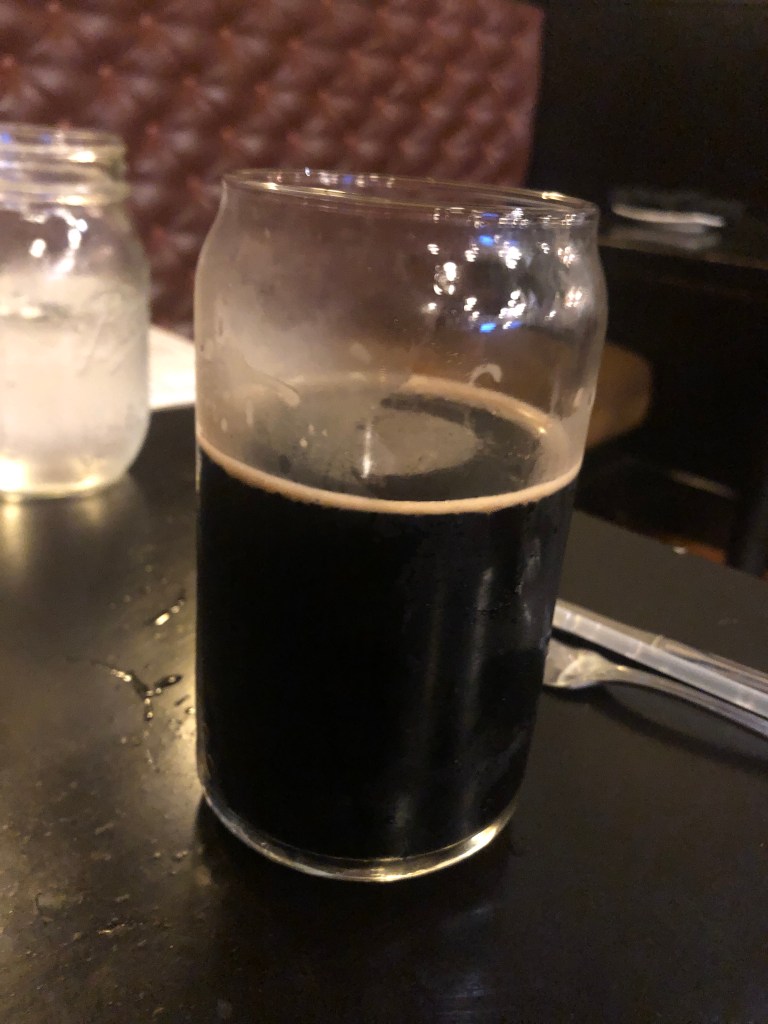
We went to the improbably-named Mussel and Burger Bar on 7th Street. Feeling a need to stick with the day’s vibe, I ordered a Goodwood Bourbon Barrel Stout. Goodwood Brewing Company is based right here in Louisville.

As the name suggests, this is an imperial stout that’s been aged in bourbon barrels. The barrels impart a rich and smoky flavor that nicely complements a stout. It probably deepens the color as well.

I’m trying to imagine how this particular stout tasted before it was barrel aged. I suspect it’s one of the less complex stouts, with a pretty straightforward malty character. They probably chose a simple recipe in order to allow the barrel’s flavors to shine through. This is an imperial stout, meaning that it has a somewhat higher ABV (8%, which is actually on the low side for an imperial), and a somewhat stronger finish. You definitely get some hints of bourbon on the nose and the finish, but they’re not overwhelming. I’m not a guy who likes subtlety, though, and I would have preferred a bolder bourbon taste in this beer. Of course, maybe my taste buds were inured to bourbon after a day at the distilleries….

I’d give this beer a 3.5 out of 5 stars, but if I had an option, I would have chosen a competitor brand, Kentucky Bourbon Barrel Stout, where the stout is made with coffee, and then aged in bourbon barrels. This is not a drink for the timid.

Tomorrow (Saturday) we’ll spend the day checking out Louisville, then it’s back to the TOT on Sunday morning.

cemeteries · Road trips · trains

Volunteers and Bluegrass

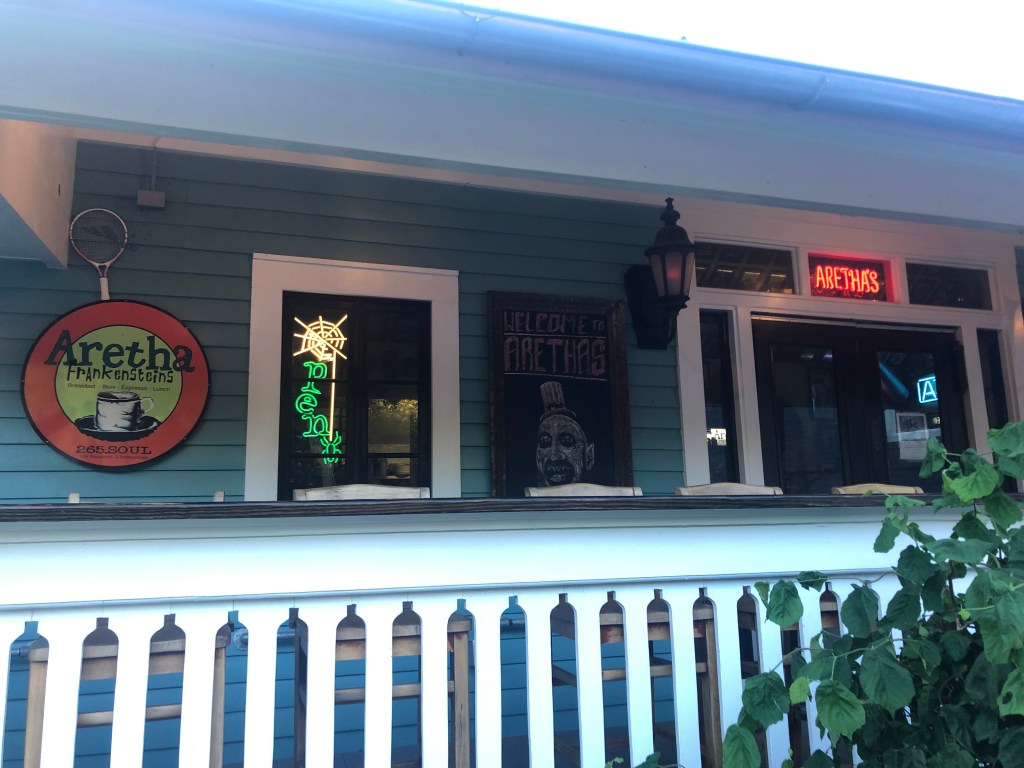
This morning we awoke in Chattanooga, and got a good, greasy breakfast at a place called Aretha Frankensteins. The restaurant is in a tidy house on a residential street, where the cook was smoking a doobie out on the porch.

R.E.S.P.E.C.T. the zoning ordinances…

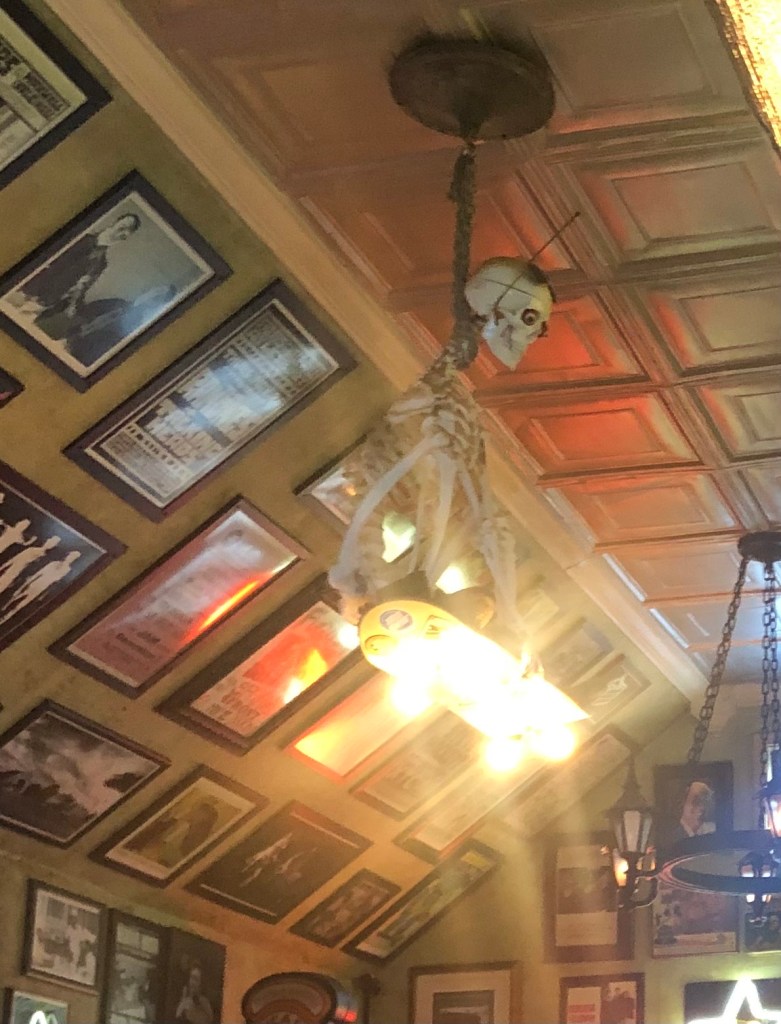
The interior is a mish-mash of horror movie stills, plastic skeletons, and various Halloween props. The biscuits were, um, to die for.

I say a little prayer…

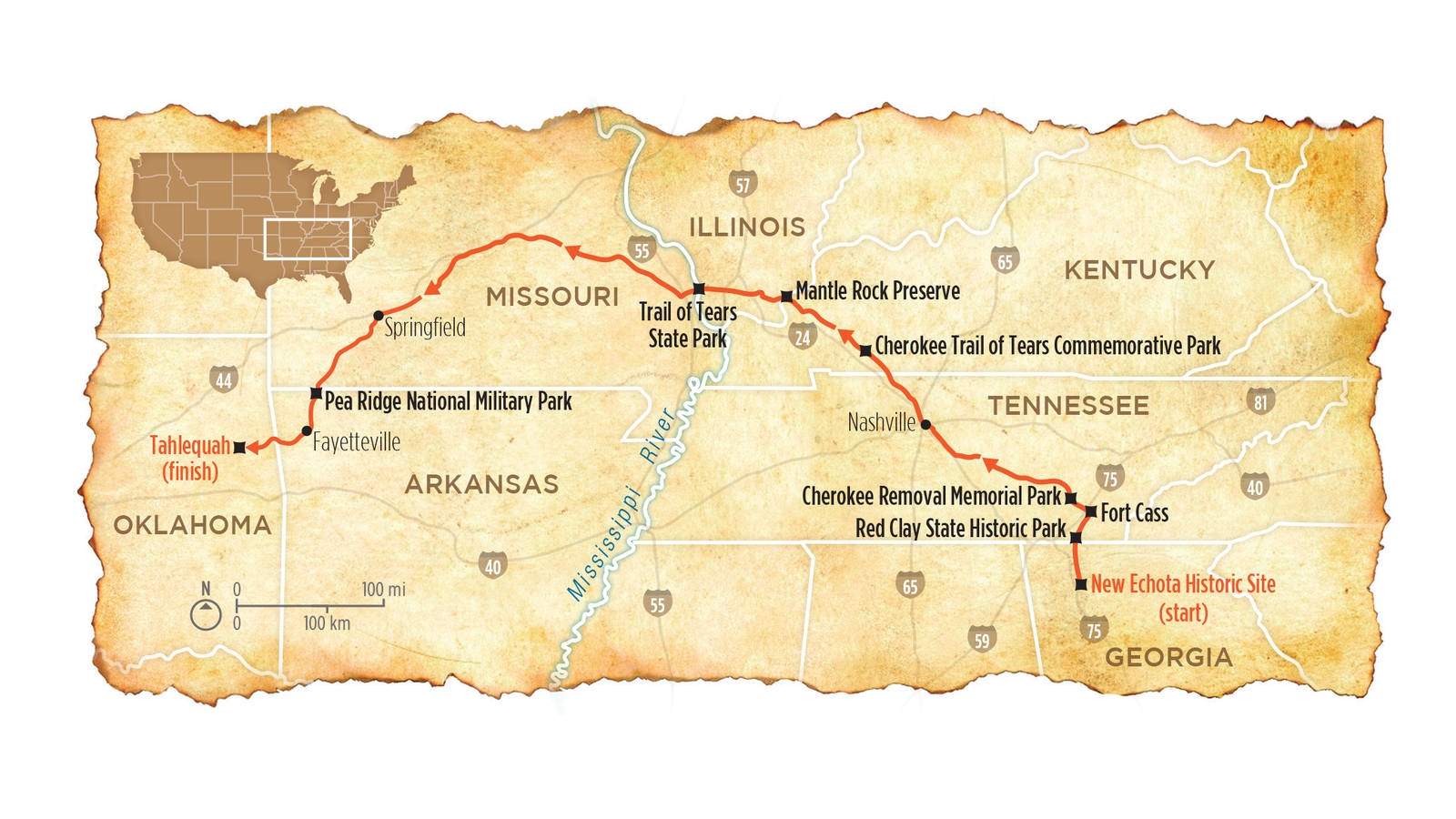
Suitably fortified, we headed out eastward to Red Clay State Historic park, just over the border from Georgia. This served as the Cherokee’s national seat of government from 1832 to 1837. But wait, you say: Wasn’t New Echota, Georgia (that we visited yesterday) the Cherokee capital? Indeed it was, but in the early 1830s Georgia passed a state law making it illegal for the Cherokees to gather and officially vote on anything. In order for their national Council to convene, therefore, they moved across the state line into Tennessee. See the two points at the right-hand end of the Trail of Tears, below.

Following In Their Footsteps · National Parks Conservation Association

The state park at Red Clay includes the reconstructed Council meeting house, as well as other structures. It’s much less impressive than New Echota, and clearly served as a makeshift site for a government-in-exile.

From Red Clay, we roughly followed the northern route that the Cherokees took when they were forced from Georgia to Oklahoma. We passed through a number of small, out-of-the way Tennessee towns, and skirted around the west side of Nashville. Along the way we stopped in McMinnville, TN (pop: 14,000) for lunch. We tried the Vanilla Bean Bakery, which hooked us up with baked goods an coffee. (I never said it was going to be a healthy lunch.)

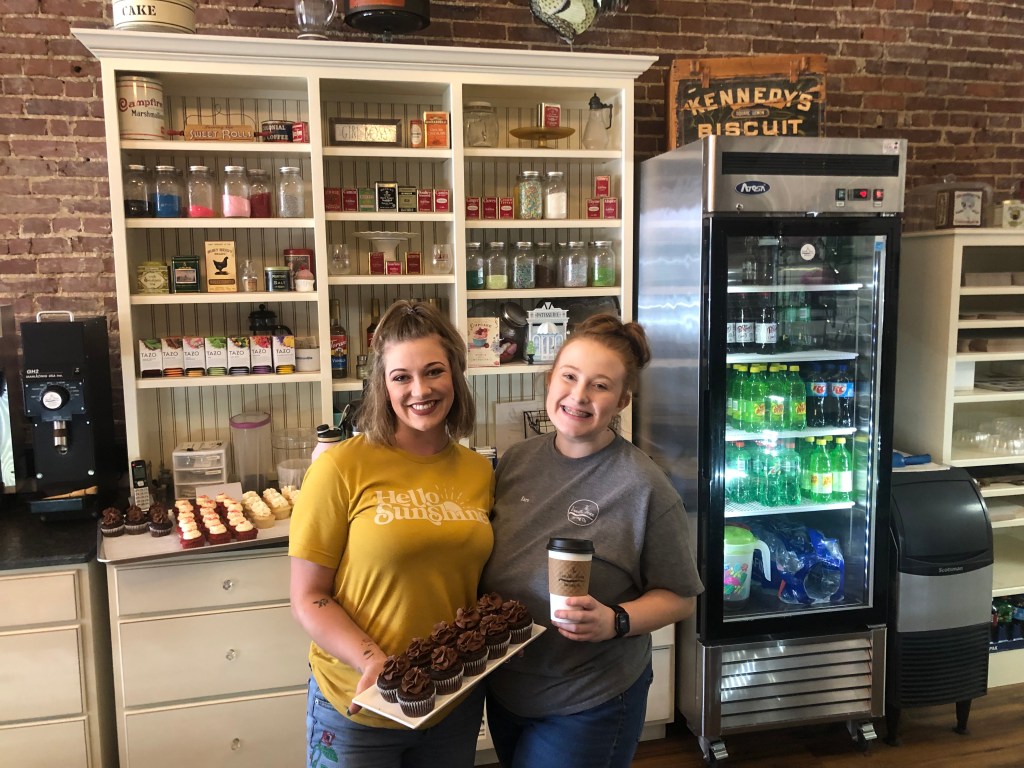
The girls at The Vanilla Bean put together our to-go order…

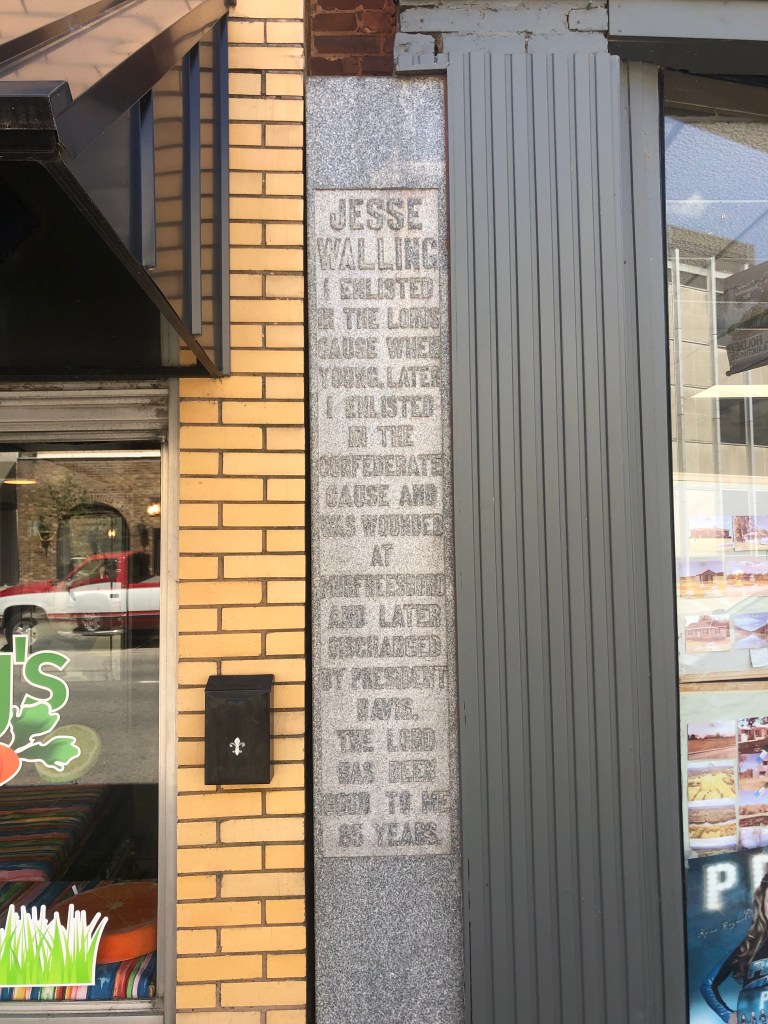
On the way out of The Vanilla Bean we passed a narrow, granite monument of sorts that was squeezed between two buildings. The monument reads: “JESSE WALLING. I enlisted in the Lord’s cause when young. Later I enlisted in the Confederate cause and was wounded at Murfreesboro and later discharged by President Davis. The Lord has been good to me 85 years.”

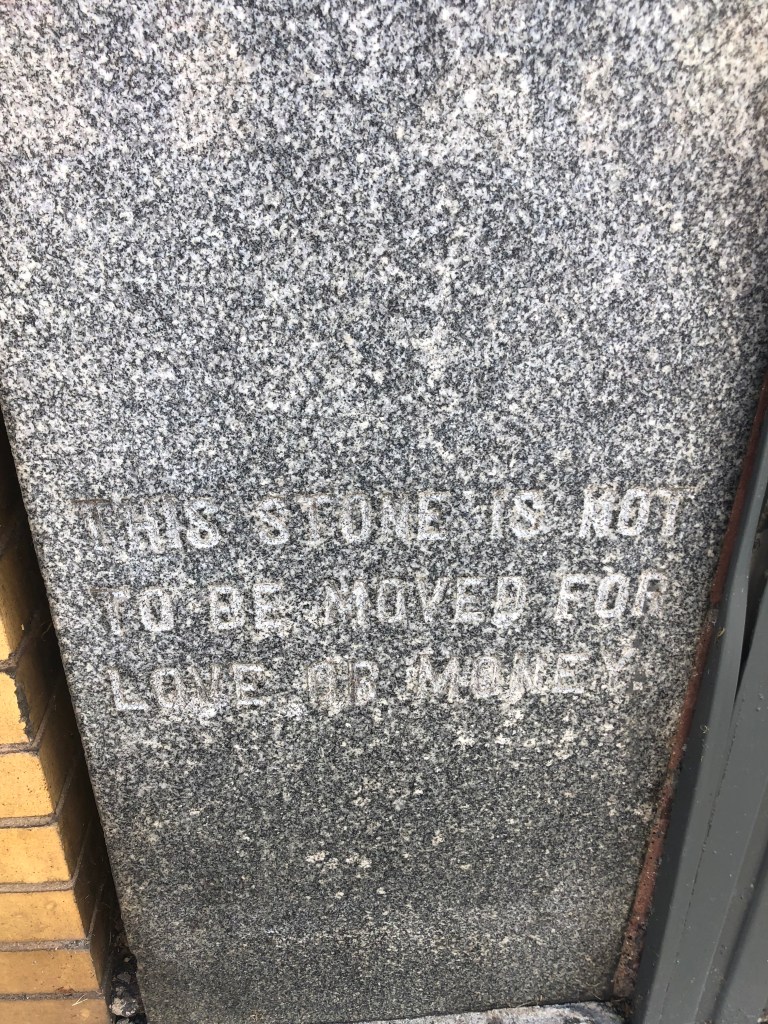
And just beneath the monument is an engraved notation: “This stone is not to be moved for love or money.” So evidently, Jesse’s wishes have been honored.

It turns out that Jesse Walling had been mayor of McMinnville, and he’d founded a bank, a power company, and a cotton mill. He died in 1930 at the age of 89. The Lord had been good to him, indeed.

 Jesse Walling
He collected properties like a Monopoly player.

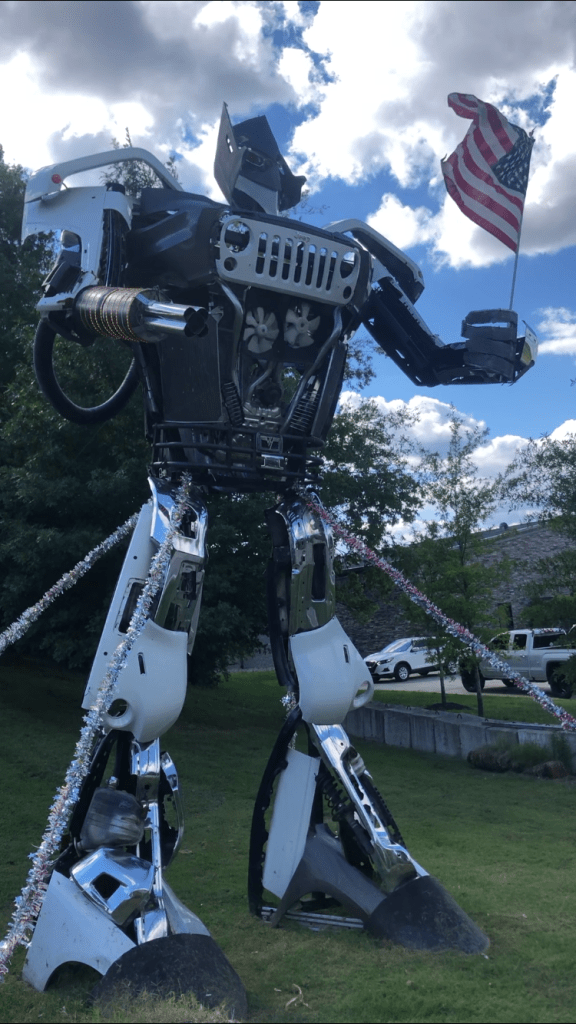
A little later along our route, in Goodlettsville, Tennessee, we encountered this Transformer-like yard art.

“I will never stop fighting for our freedom.” –Optimus Prime

It even has (barely) moving parts! Watch it in action.

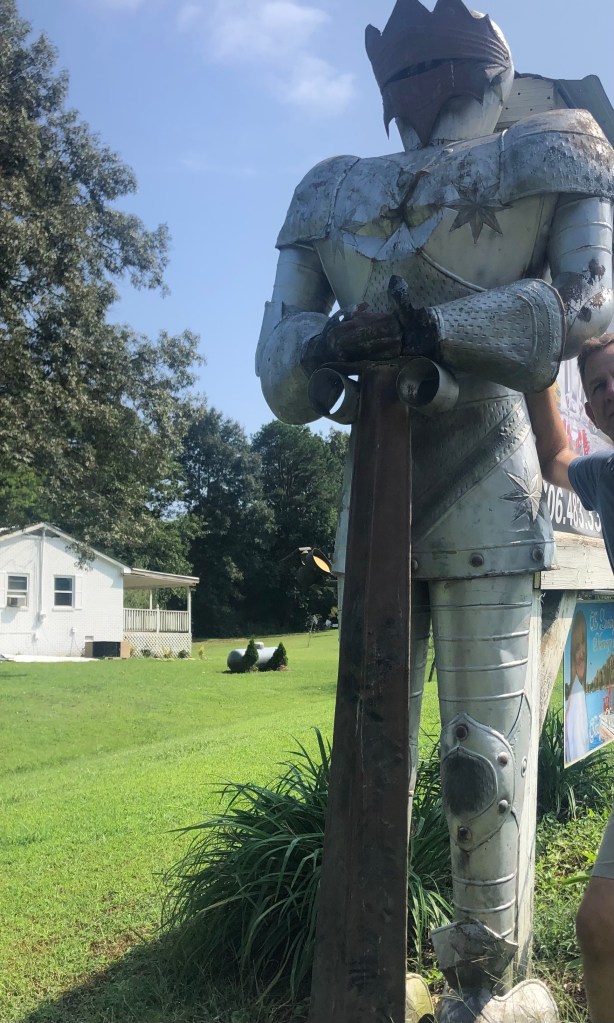
I’d love to see it go head-to-head with this medieval bad boy that we found guarding a junkyard yesterday:

None shall pass.

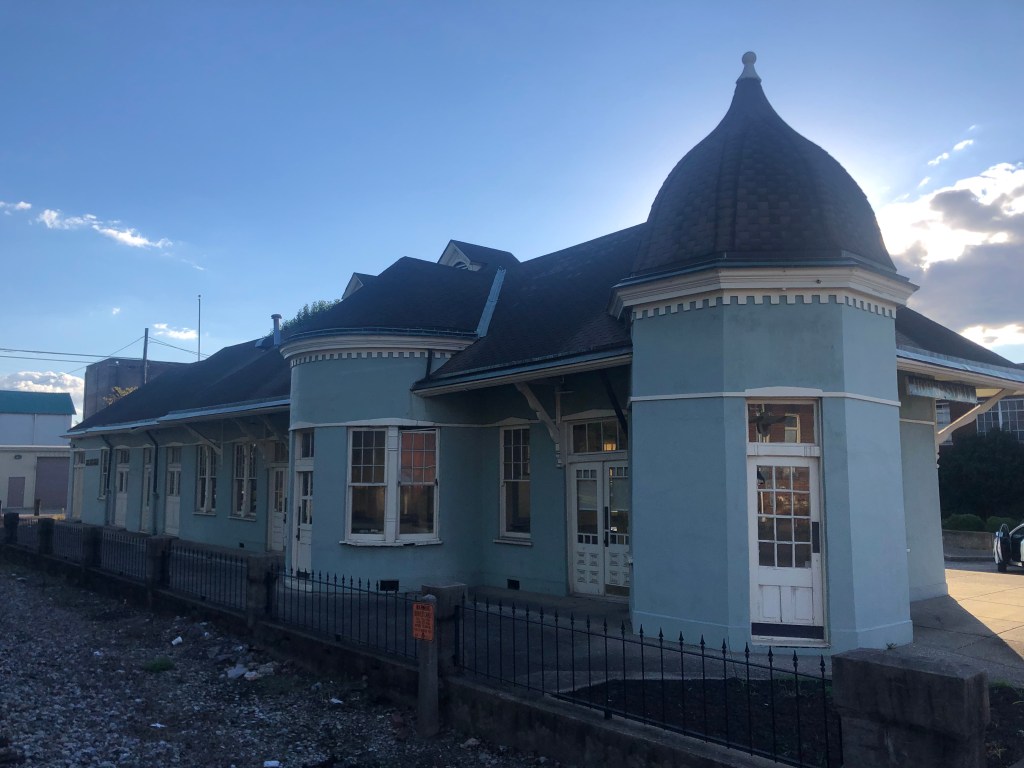
Eventually we entered Kentucky at roughly the same point that the Cherokees did 183 years ago. We headed up the “Dixie Beeline Highway,” and eventually found ourselves in the quaint town of Hopkinsville (pop: 32,000). It’s home to an unusual 1892 depot of the Louisville and Nashville Railroad.

The architect may have been suffering from “turrets” syndrome.

Hopkinsville was one of the few towns in the region permitting alcohol sales. It’s said that Hopkinsville was often referred to as “Hoptown,” because it was only station between Evanston, IL and Nashville, TN where a passenger could “hop off” and get a drink. I’m not making this up.

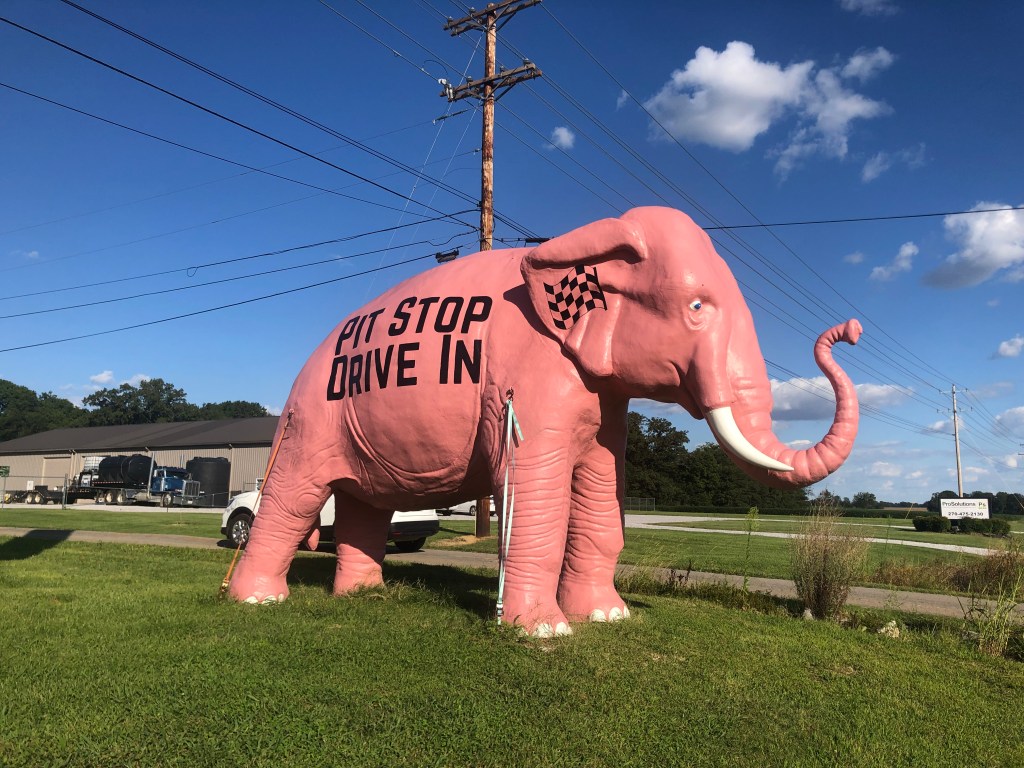
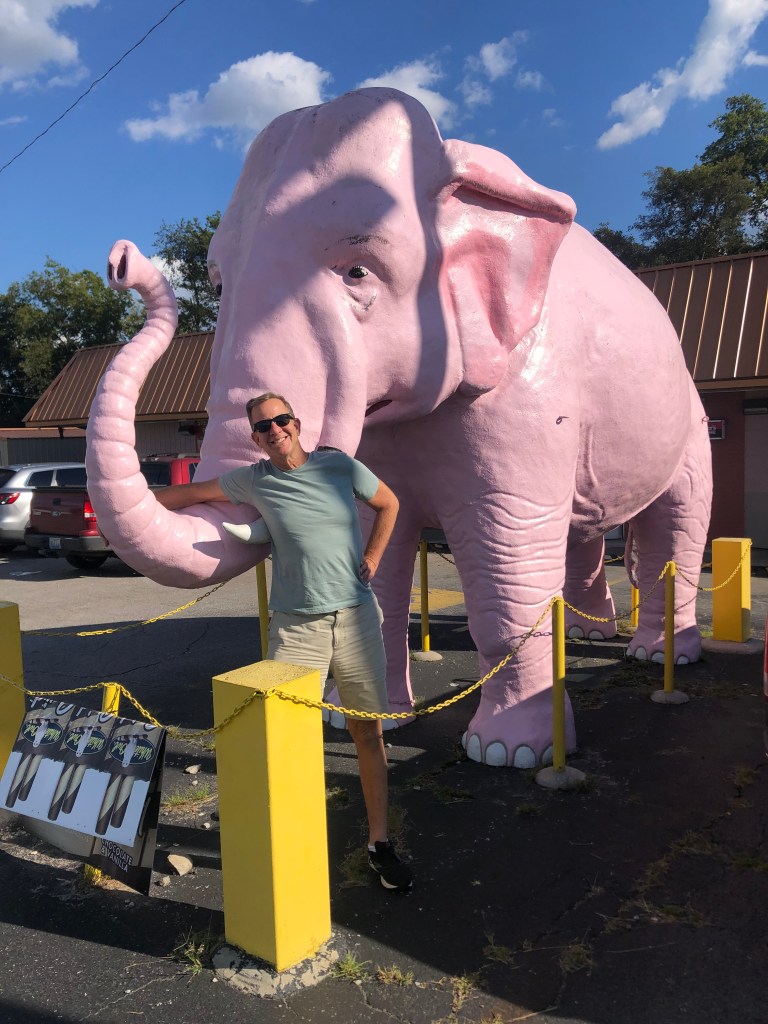
Speaking of drinks, on today’s drive we encountered a few pink elephants. Though located in different cities, they appear to have been manufactured out of fiberglass from the same mold. Alert readers will recall that I’ve run into a couple of similar (though slightly different) pink elephants on my Route 70 trip (see near the end of this post and this post.)

Outside a liquor store (of course) in Hopkinsville, KY
Outside a gas station in Guthrie, KY

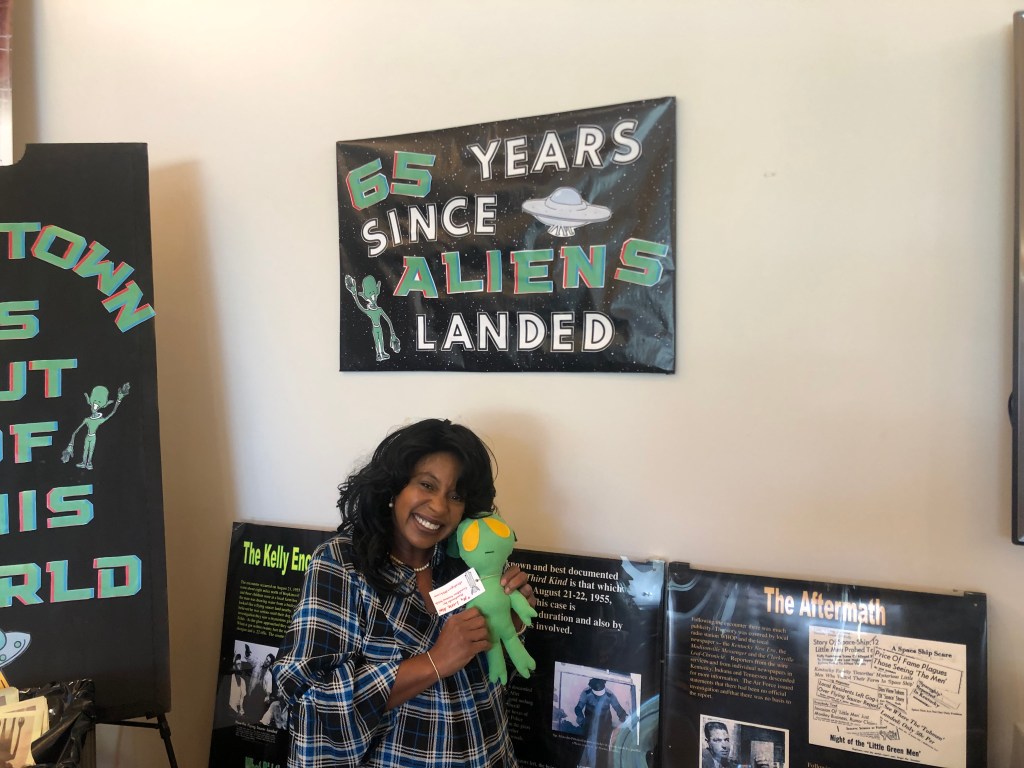
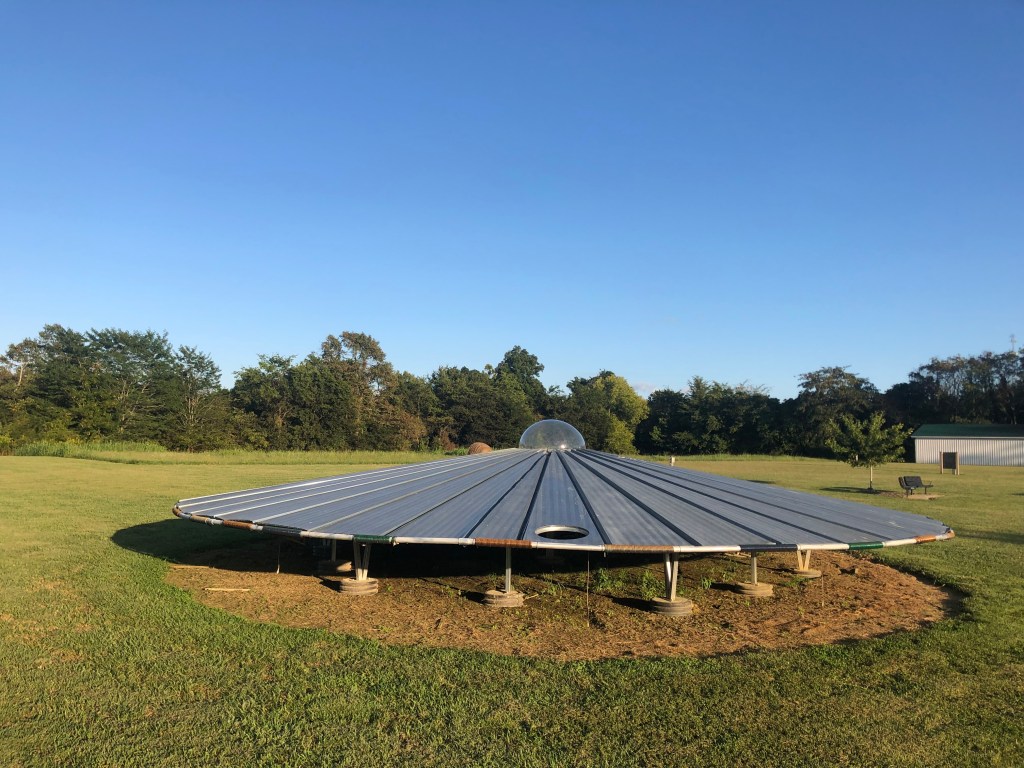
Finally, just three minutes before its 5 pm closing time, we arrived at the Hopkinsville-Christian County Visitors Center. It was on this land that Cherokees on the Trail of Tears camped, were reprovisioned, and (for a couple of them at least) died. We were greeted by Amy, who was the only person so far who’s showed any enthusiasm for our trek. In fact, Amy seems to show enthusiasm for everything, including a story about aliens landing in the area in 1955. It seems that the Lankford-Sutton family, which lived in a farmhouse a few miles up the road, watched a spaceship land on an adjoining field on the night of August 21, 1955. Little silver beings emerged from the ship and converged on the farmhouse. Some of the menfolk in the house fired shots at the beings (as one does), but the shots had no effect on them. The police were called out, but they could find no evidence of an alien invasion. The story was largely forgotten until 2005, when some townsfolk figured a 50th anniversary celebration would be a good way to draw tourists. There’s been an annual “Little Green Men” festival ever since. (Never mind that the men were originally claimed to have been silver, not green.)

Amy hawks an Alien doll, that she’s named Cletus.
“”Flying saucer” at the scene where the alien invasion “happened” some 66 years ago. (Yes, Scott and I felt compelled to drive out to the field and check it out.)

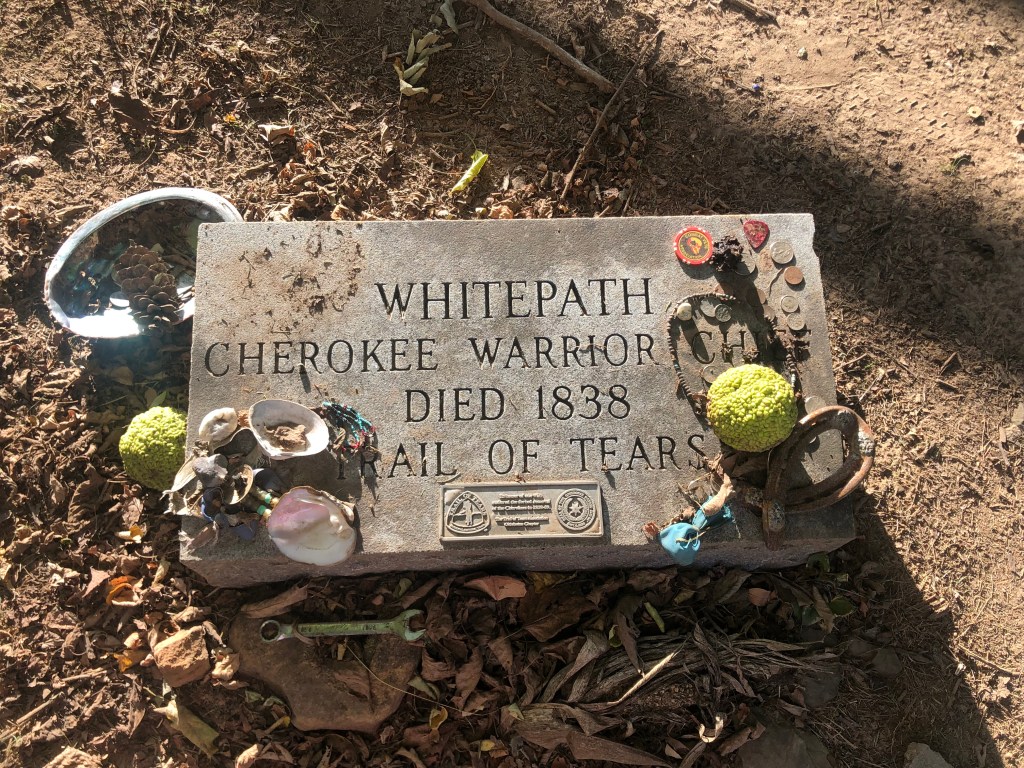
We spent some time chatting with Amy about her job (the Lord answered her prayers and led her to it two months ago), her home (on her parents’ 150-acre farm), the Trail of Tears (there’s going to be a big commemorative meeting of Indians at the Visitors Center this weekend), and various other topics. Sensitive that we were keeping her at her job well past closing time, we let her lock up while we moved outside to the area where the Cherokees had camped. Next to a creek were the graves of two Cherokee chiefs who had succumbed during the forced march. These are among the very few verified graves along the Trail of Tears.

After a quick trip to a nearby field to view the “flying saucer” that commemorates the invasion (see above), it was time for us to take a long detour off the Trail of Tears, and head to Louisville for a day or two on Kentucky’s Bourbon Trail. But before we could start that detour, we got clipped by a maroon Dodge Caravan, which shot across four lanes to make a turn while we waited patiently at a stoplight. We tried to catch up with this hit-and-run driver, but lost him/her. Let us know if you see this vehicle!

You bastard.
The damage.

Eventually we did make it to Louisville. It was now quite late, so there was no time for a BOTD. In fact, we barely had time to get a drive-though sandwich from Subway just as they were closing. Notably, Michelle (the cheerful southern belle who was working the take-out window) insisted she could guess our occupations based strictly on our voices when we ordered through the microphone. “One of you is in insurance, and the other is in the ministry.” She didn’t indicate who was the minister. But either way, she’s zero for zero.