2025 Advent cocktails

Advent Spirits Day 9: Ezra Brooks 99 Proof Bourbon

We’re back to bourbon again. This time it’s a high-alcohol variant (essentially 50 percent alcohol) of straight bourbon. What we have here is something called Ezra Brooks 99 Proof Bourbon.
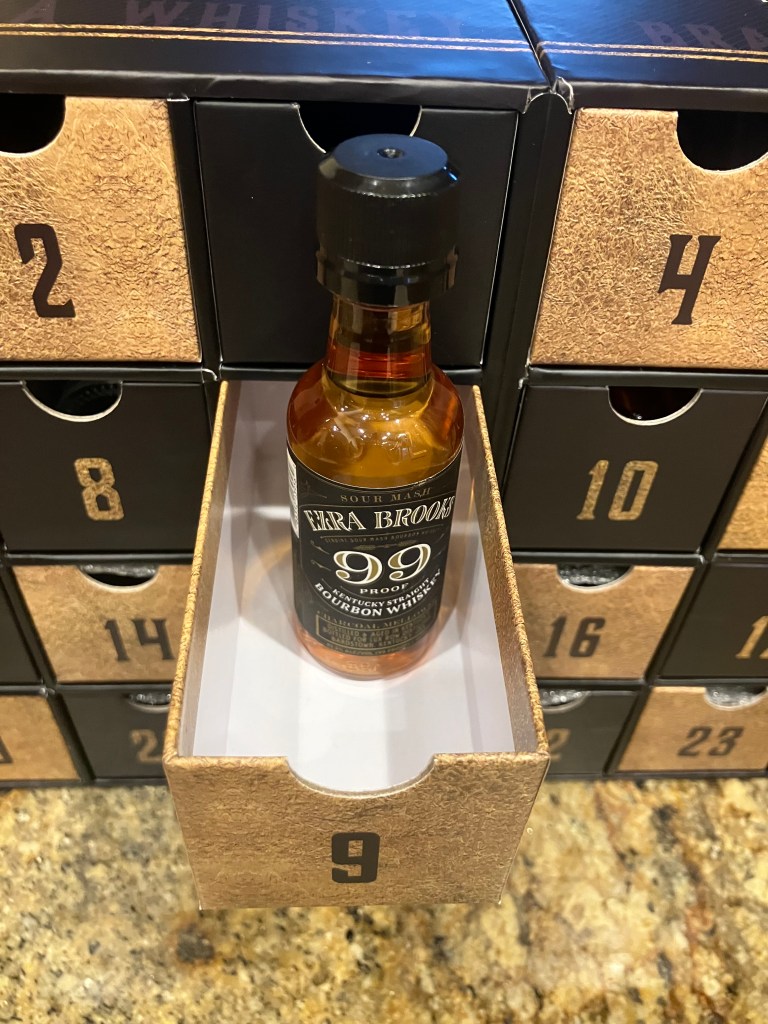
Now, for bourbon to be bourbon, it has to be at least 80 proof, so at 99 proof this stuff goes the extra mile. But that doesn’t necessarily mean it’s a better bourbon. Let’s just go to the Ezra Brooks website and see how they describe this spirit:

“Bottled at an elevated 99 proof for an enhanced flavor profile, this pure, oak-barrel-aged Kentucky straight bourbon whiskey is charcoal filtered for a smooth, mellow finish and features a spicy, ryed bourbon mash bill. [It’s] smooth and drinkable with hints of caramel, vanilla, chocolate, and spice.”

OK, now let’s fact-check those statements.
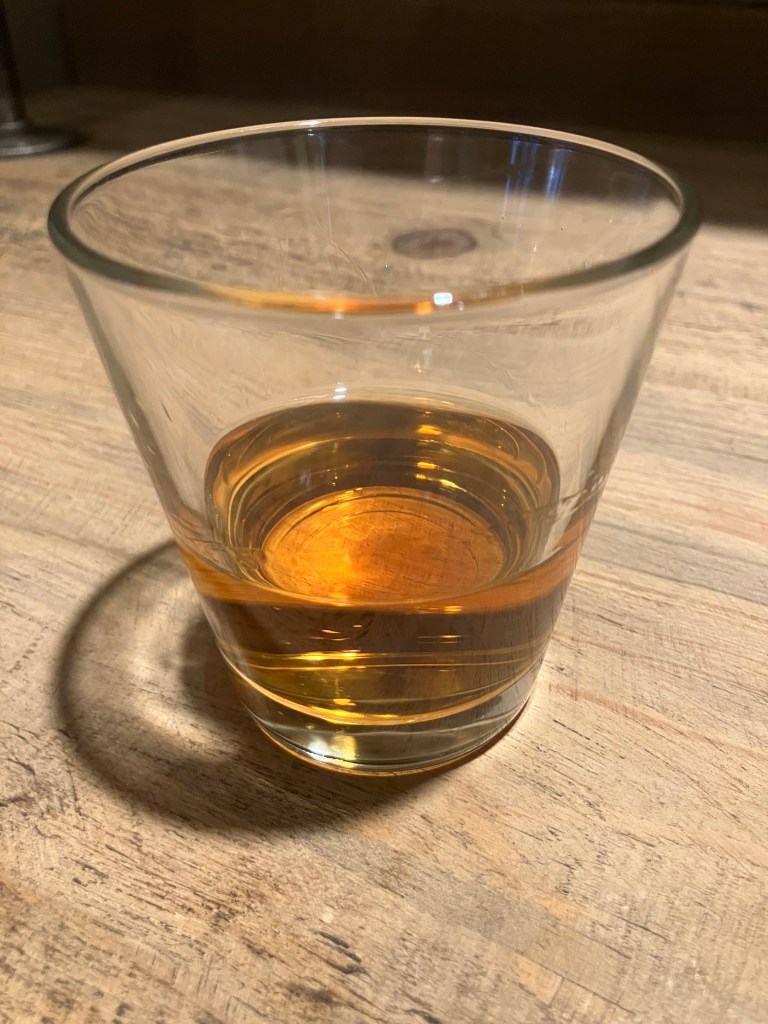
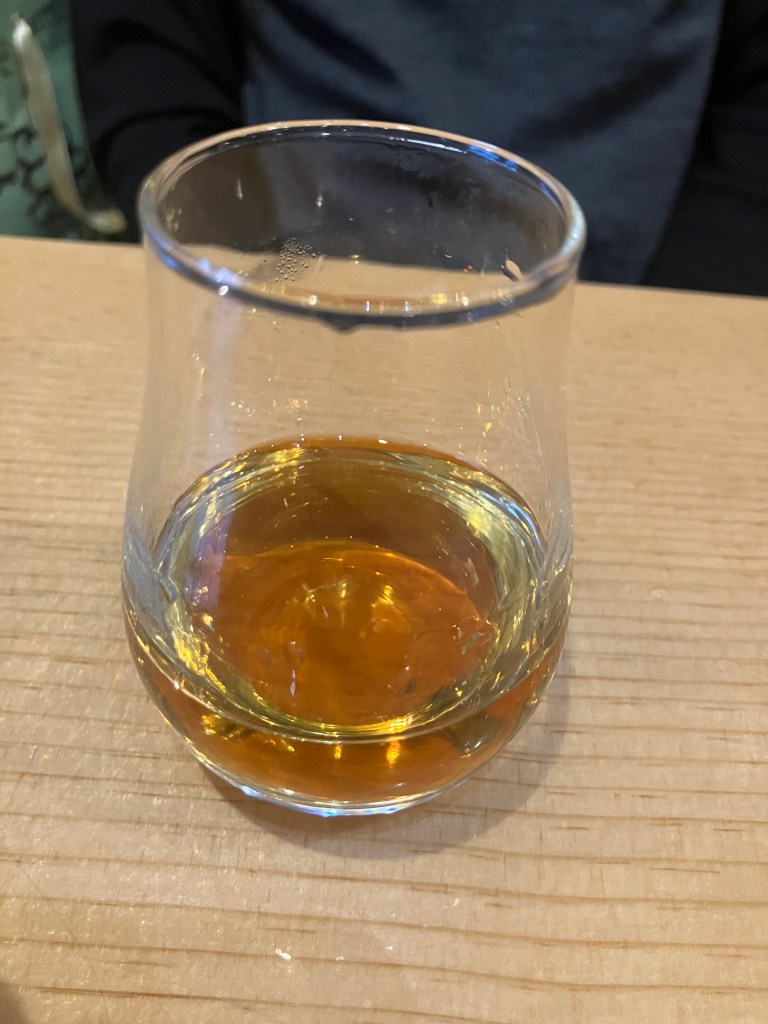
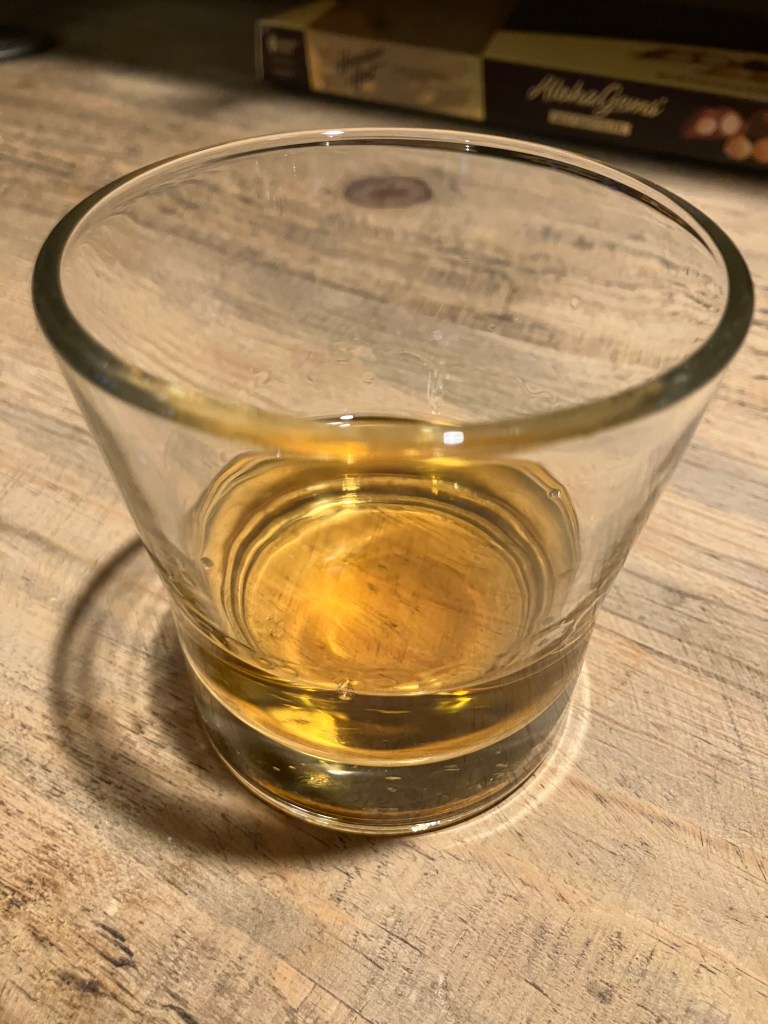
Appearance: Very brassy, almost a Herb Alpert level. It’s an attractive color, and, as Bruce would say, it has great legs.

Aroma: For such a high-test spirit, this has a pretty light nose. It reminds me of liquid amber leaves that have fallen on my lawn, on a damp and foggy December afternoon. It’s a little woody, a little damp, and a little in need of raking.

Taste: This stuff will wake you up! Sharp, strong, bold, and various other adjectives that the girls used to describe me in high school. It reminds me of cognac, which I may or may not have tasted in the past. I’m getting a strong hint of stewed prunes, with some pepper and vanilla. It’s not offensive, but it seems unusual for a bourbon.

Finish: The finish is actually better than the taste. It’s warm and pleasant, a little astringent, but it leaves the tip of your tongue tingling. In a good way.

Bottom Line: If you’re going to drink a spirit that’s one-half pure alcohol, either (1) you should be looking for a quick buzz, or (2) that alcohol should be counterbalanced with rich, solid flavors. Judging from my current disoriented state, this stuff delivers on the first part. But I think it falls short on the second.
2025 Advent cocktails

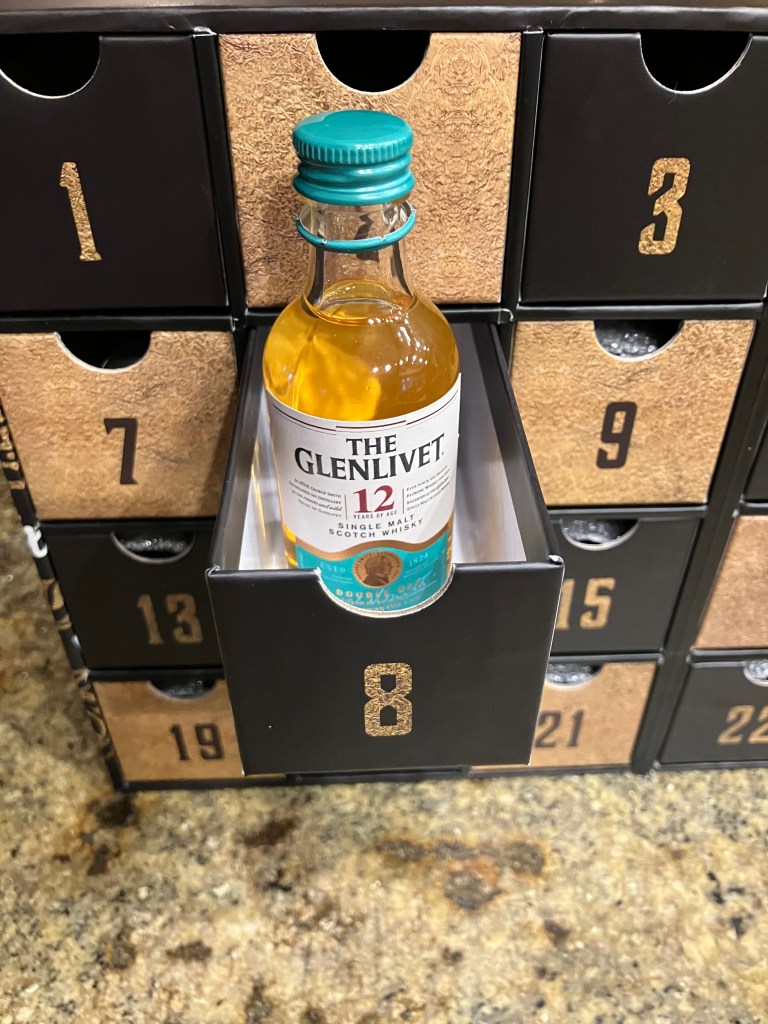
Advent Spirits Day 8: The Glenlivet

Finally we’ve arrived at Scotch! Hallelujah!

Scotch is a spirit that’s not especially popular in the US, accounting for less than 3% of hard alcohol sales. (Vodka’s share is about 30 percent.) So this might be the only bottle of Scotch we get in this Advent calendar. Let’s hope it’s a good one.

For those of you who need a refresher, Scotch is a style of whiskey that uses malted barley, is aged in oak casks for at least three years, and is produced in Scotland. Typically those oak casks previously held bourbon or sherry, and now can impart some of that goodness into the new spirit. There are several sub-types of Scotch, but the only one you really want is Single Malt Scotch, which uses 100 percent malted barley and is distilled at a single distillery. There are other technical regulations imposed by the EU’s bureaucracy, such as requiring the distillate is converted to a fermentable substrate only by endogenous enzyme systems. Whatever that means. Oh, and the Scots spell it “whisky,” rather than “whiskey.”

Anyway, let’s see what the Glenlivet website has to say about today’s sample:

“One of the world’s most popular malts, the double-oak-matured 12 Year Old whisky embodies The Glenlivet’s signature fruity style. Representing the heart of The Glenlivet’s signature fruity style, this 12 year old single malt is first matured in traditional oak casks before resting in American oak casks intertwining tropical fruit and sweet vanilla flavours notes. The result is an irresistibly smooth whisky, crafted to be savoured slowly.

The mineral-rich water that comes from Josie’s Well helps form the flavours during mashing and fermentation, whilst the specific height and width of the copper stills add a delicate yet complex character.”

Here we go:

Appearance: It’s a little lighter than I’m used to seeing in a Scotch. It’s a light yellow, reminiscent of straw. But I’m keeping an open mind.

Aroma: There’s a strong scent of vanilla, with more subtle notes of pineapple and maybe dragon fruit. It’s got an inviting nose, to be sure.

Taste: I have good news and bad news. On the plus side, this tastes very smooth, no doubt as a result of resting in barrels for a dozen years. The taste is very round, easy, graceful, civilized. The mouth feel is high-viscosity, like a light honey. It’s really a pleasure to sip.

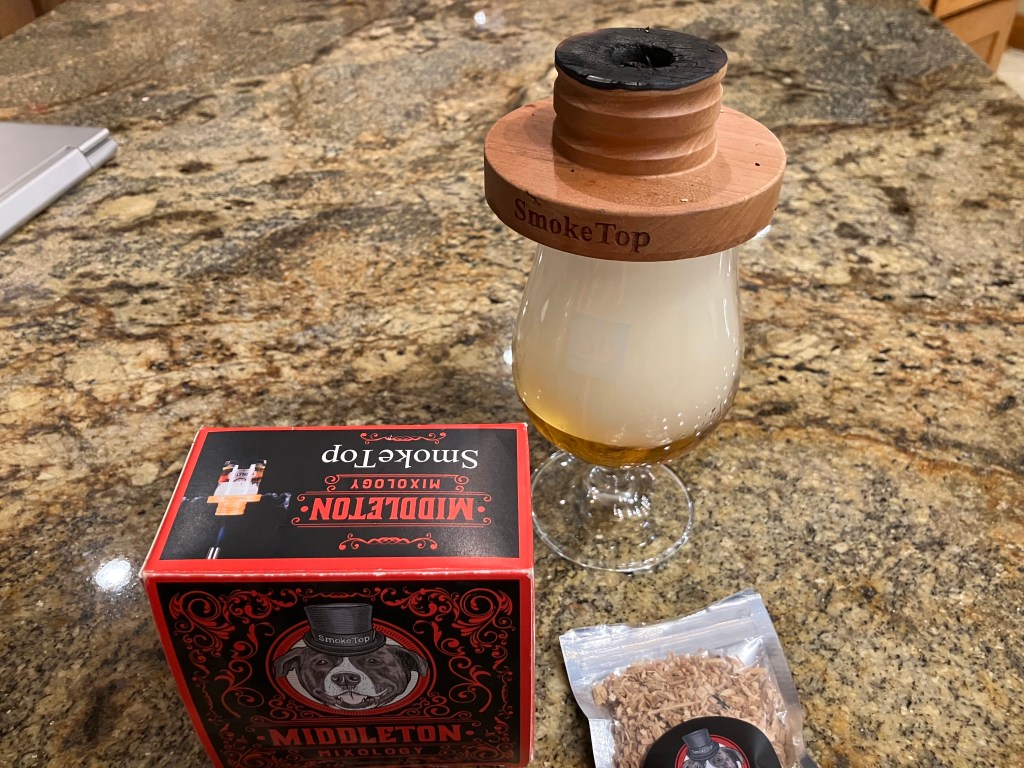
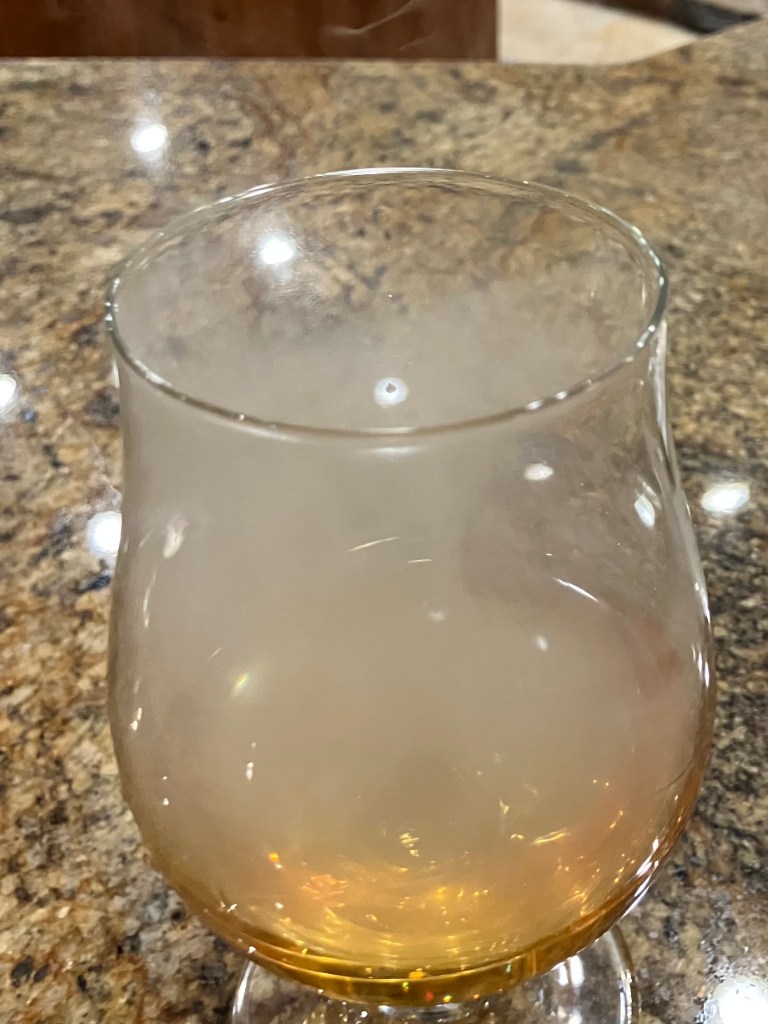
And yet, this stuff is inexplicably unpeated! Here is where I should mention that, in my opinion, the best Scotches come from the Islay, where they take enormous quantities of peat moss from the local bogs, dry it out, and then burn it under the barley malting floor, which imparts a distinctly smokey flavor into the resulting distillate. In my opinion, Scotch without peat smoke is like tortilla chips without salsa, like soft pretzels without pub cheese, like French fries without salt, like Chinese food without MSG….You get the idea. In my opinion, the whole reason to buy Scotch instead of some other whisk(e)y is the peat smoke. In fact, I use something called a SmokeTop (TM), which adds still more smoke to your Scotch just before you drink it. It’s essentially a wooden chimney that you fill with wood chips, place on your glass of Scotch, then ignite with a torch, forcing smoke down into the glass. I’m not making this up. Observe:

Finish: The finish is inoffensive. There’s no harshness, no bite, no bitterness. But there’s also no smoke. Which raises the question: What’s the point?

Bottom Line: There are two kinds of people in this world: Those who like their Scotch to be full of smoke, and those who are afraid of their own shadow. Which are you?

2025 Advent cocktails

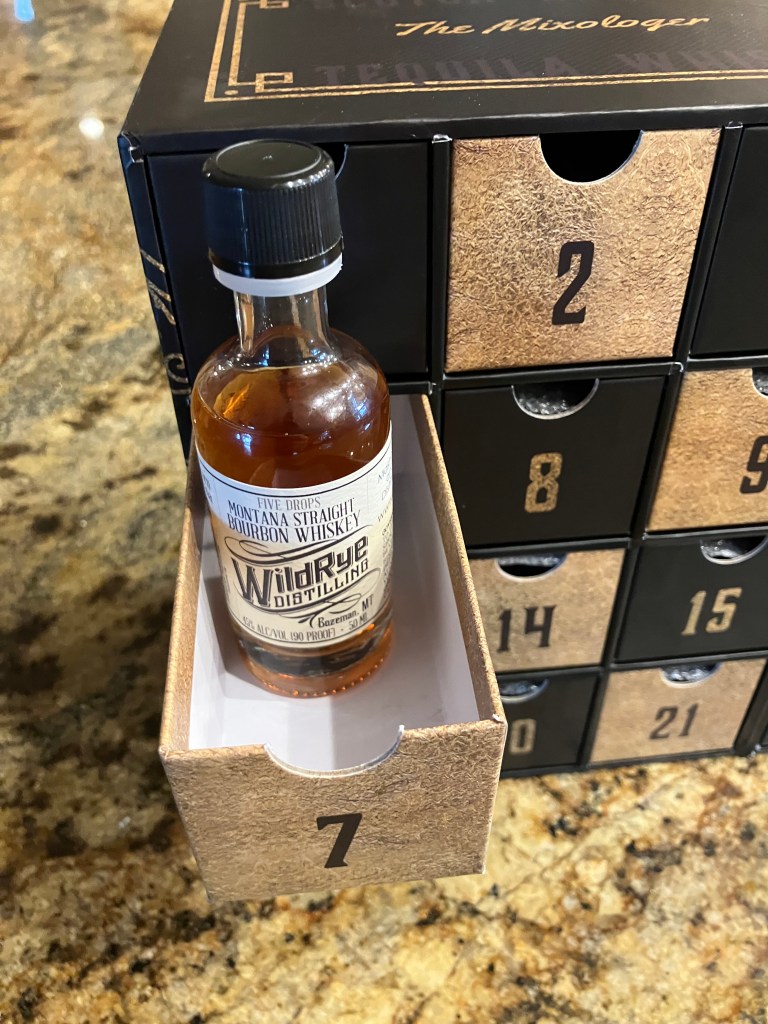
Advent Spirits Day 7: Five Drops Straight Bourbon Whiskey

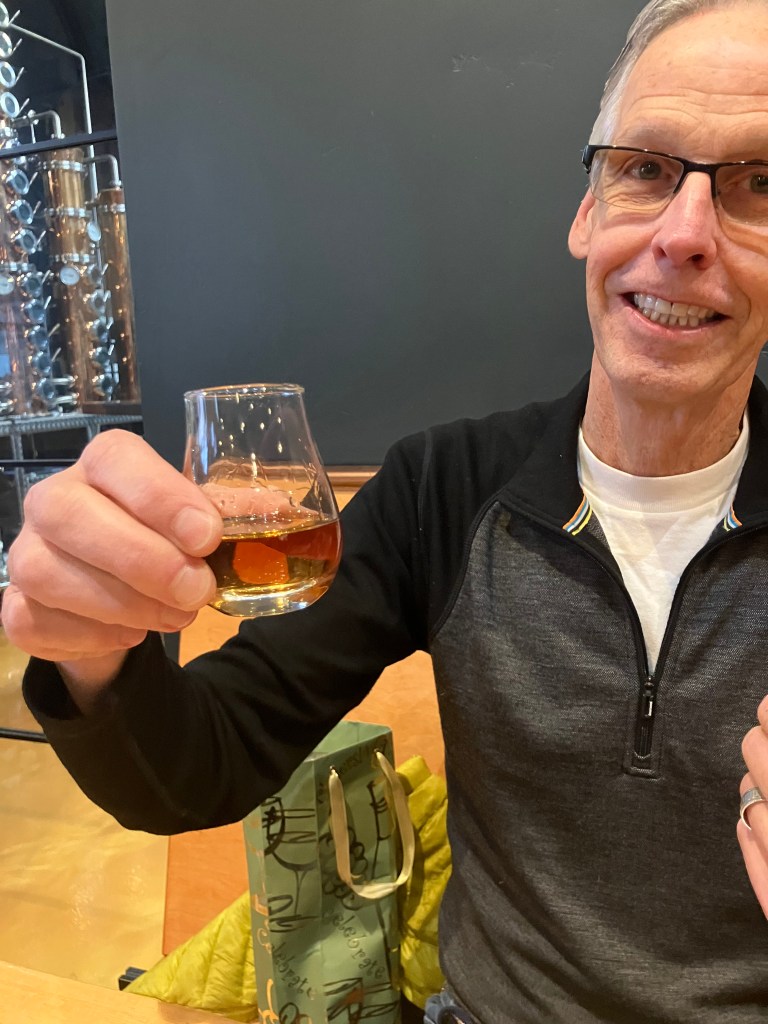
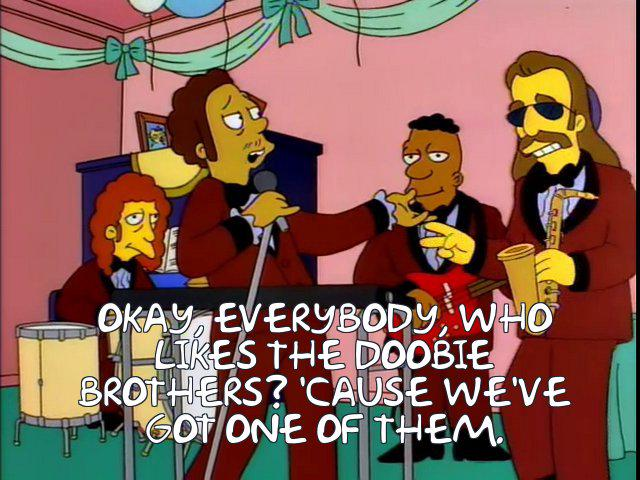
Today we’re back to sampling bourbon. Fortunately my old college roommate, Bruce, is in town to celebrate his birthday at a Doobies concert, and he knows a thing or two about bourbon. So I’ve asked him to do the heaving lifting.

Bruce doing the heavy lifting.

But first, let’s introduce the spirit. What we have here is Five Drops Straight Bourbon from a place in Bozeman, Montana, called WildRye Distilling. For a bourbon to be called “straight” it must be aged for at least two years (versus a one-year aging requirement for run-of-the-mill bourbon). Straight bourbon also can have no colorings or flavorings added, and must be at least 80 proof at the time of bottling.

Here’s the blurb from their website. I have helpfully flagged with italics the empty phrasing that really has no true meaning.

Born from Montana soil and built for adventure.

We craft Five Drops Montana Straight Bourbon with locally grown sweet corn—picked at peak ripeness from our family fields in Southwest Montana—and malted barley sourced from the heart of the state. Milled, mashed, and distilled using pure mountain water, then aged in charred American oak barrels, every bottle carries the flavor of the land and the grit of the journey.

Smooth, rich, and distinctly Montana, this bourbon is made for trail’s-end toasts, campfire conversations, and anyone who knows the reward of going the extra mile.

So, if you strip away the vacuous marketing-speak, all they are really saying is that they make this stuff with corn and barley and water, and age it in oak. And all of these characteristics are essential for any bourbon. Oh, and despite the name “WildRye,” this stuff contains no rye.

Let’s turn to our guest-taster, Bruce, for his review:

Appearance: Bruce says “It has a nice, rich caramel color” and that “it runs nicely along the side of the glass–I think they call that ‘legs’.”

Aroma: Bruce: “It’s sweet and spicy. There’s some caramel.” Steve: “It also has a woody smell, like my pencil sharpener in elementary school.”

Taste: Bruce: “It tastes sweet and peppery. There’s big flavor. It’s not especially smooth–not as complex as Michter’s [Bruce’s Bourbon of choice].” Steve: “Definitely a big taste. Which isn’t always a good thing; I mean, blood sausage has a big taste. But this is pretty drinkable. I can see how you’d get tired of it after a bottle or two, though.”

Finish: Bruce: “The finish is bitter. It’s kind of harsh.” Steve: Ditto.

Bottom Line: Bruce: “I have a headache.” Steve: “I probably wouldn’t seek this stuff out. In fact, I’m starting to develop a theory that one should avoid bourbon that doesn’t come from Kentucky or at least Tennessee. But, like Bruce, if it were my birthday and I just came from a Doobies concert, I would drink a shot if it were offered to me.”

2025 Advent cocktails · Uncategorized

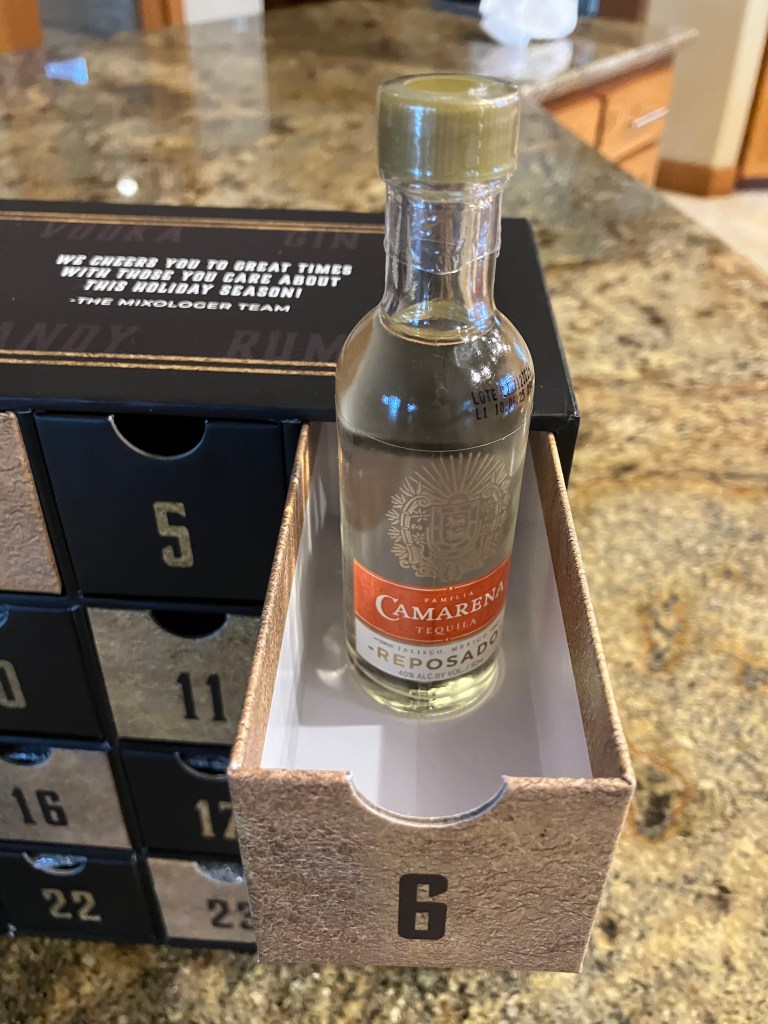
Advent Spirits Day 6: Camarena Reposado Tequila

As every schoolchild knows, tequila is made from the blue agave plant. It’s kind of a brutal process: the agave plant’s “heart” is cut from it, boiled, and then stomped on to release the juice. (I went through a similar process when my girlfriend Susie broke up with me in high school.) It’s then fermented and (sometimes) aged in oak barrels. But the “aging” is more of a brief pause on the way to the store, rather than the mellowing-for-years-in-a-dark-warehouse that we associate with whiskey. Indeed, over half of all tequila produced is not aged at all, instead going directly into a bottle and being deemed “Blanco.” In (slight) contrast, “Reposado” tequila is aged for 2-11 months, and the “old” stuff (“Añejo”) has been aged for at year or more.

Today we’re trying a Reposado tequila. This one supposedly comes from Familia Camarena, which sounds like a homey family-run business in the Mexican countryside. But it’s actually owned by the cheap-wine behemoth Gallo. Be that as it may, this is 100 percent agave tequila (you’re only required to use 51 percent agave). On the other hand, they only age it for the bare minimum of 60 days.

Here’s the blurb from their website:

“Aged 60 days in Tennessee Whiskey barrels, Camarena Reposado balances natural agave sweetness with soft vanilla and caramel notes. Reach for Reposado the next time you’re in the mood for a bold and smooth cocktail.”

OK, that’s not much to go on. Let’s pour some and see if it’s any good.

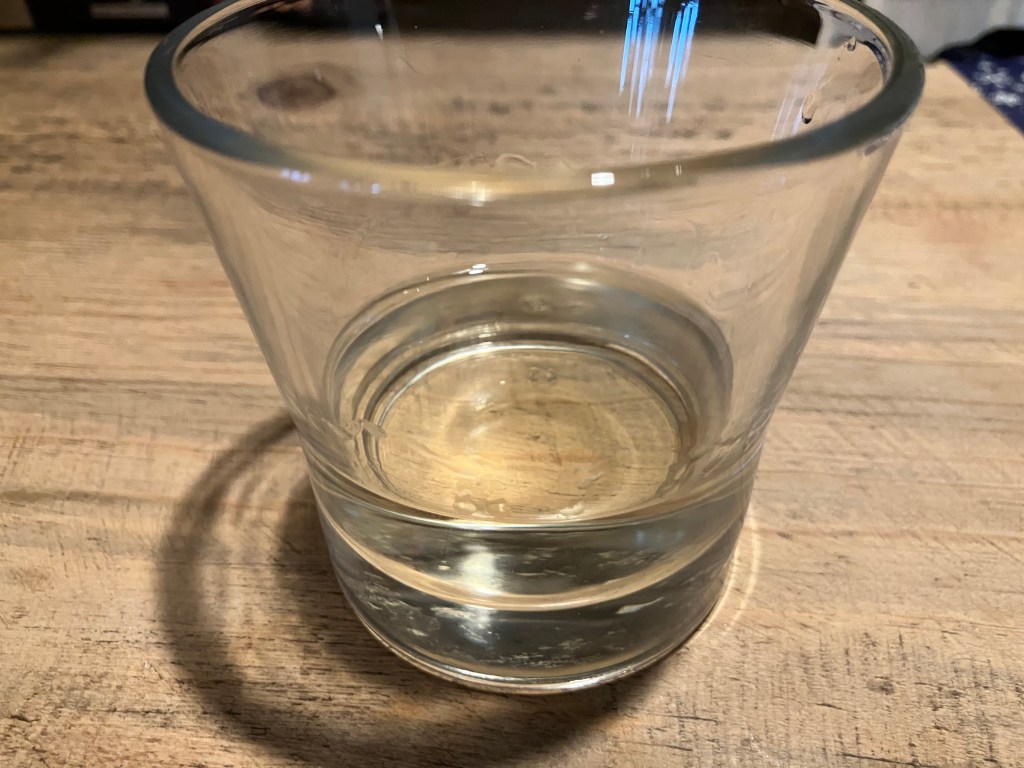
Appearance: Even though this has been aged for (barely) two months, this tequila hasn’t developed much color. I would describe it as dishwater, before you even wash any dishes in it.

Aroma: This tequila appears to have no nose at all. It is the snake of tequilas. (Ask a herpetologist to explain that witticism.) Seriously, I can’t smell much of anything from this tequila, except an almost-imperceptible whisper of honeysuckle–and not the flower, but the stem.

Taste: Here’s where Gallo lives up to its reputation. This stuff tastes like lighter fluid. It’s bitter and harsh, though I do notice a little bit of cantaloupe trying to break through. There’s also a hint white pepper and maybe a little Oxalis. Overall, though, this will probably bring back bad memories from your first bender in college.

Finish: The finish is essentially a sensation that your tongue has been run through a meat tenderizer and then dipped in pool acid. Clearly this stuff would benefit from longer aging. Sort of like me.

Bottom Line: A quick Google search tells me you can get a bottle of this stuff for around twenty bucks. If you are drawn to this for the price, you’ll want to only use it in mixed drinks. Which probably means margaritas.

2025 Advent cocktails

Advent Spirit Day 5: Painted Stave Bourbon

You know, all these little 50 ml bottles are almost perfect miniature versions of the full-size bottles, with the same general shape and the same labeling and, of course, the same spirit visible through the glass or plastic. But the giveaway is the cap, which is grotesquely out of proportion with the bottle. It’s comically huge and clunky and destroys the illusion. We can put a man on the moon, and yet no one has yet figured out how to do a cap or cork to proper scale?

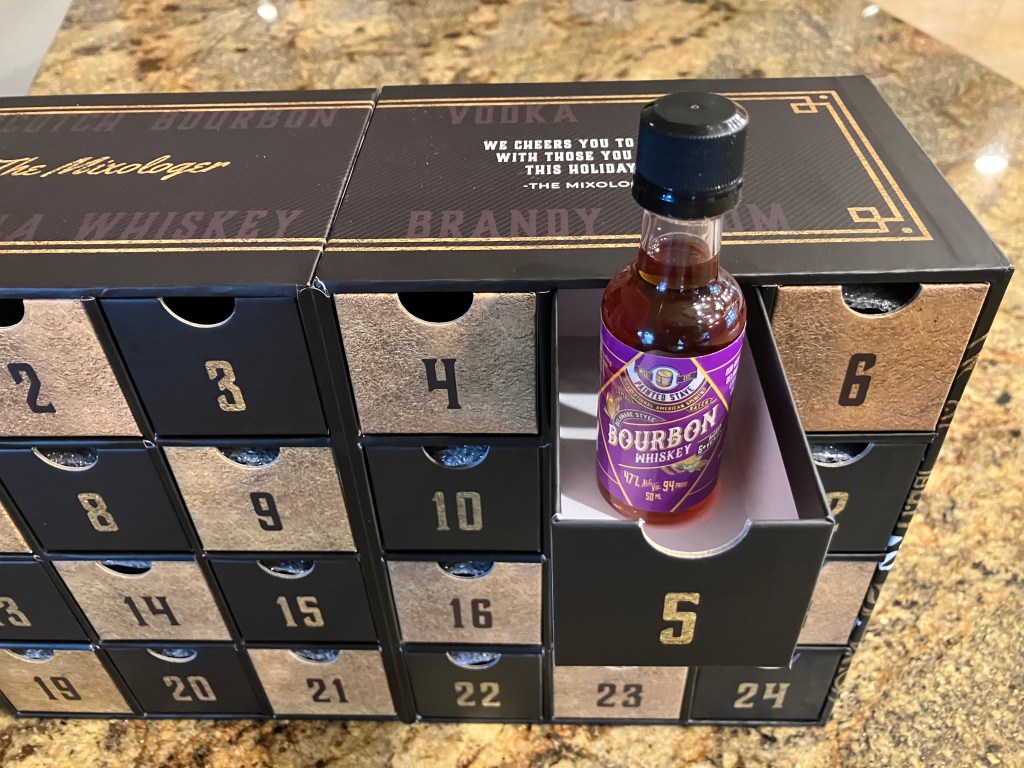
Such was my chain of thought when I removed today’s spirit from its Advent Drawer. And that spirit is Painted Stave Bourbon Whiskey.

Now, I know what you’re thinking: Another bourbon? And the answer is, technically, yes, but this one seems to be going out of its way to be different. For starters, it’s not made in Kentucky but rather Delaware, a state known more for soybeans than whiskey. Second, it uses an unusually high proportion of rye. (Recall that to make a bourbon, over half of the grain used must be corn. For most bourbons, about 10 percent is rye. Painted Stave uses 26 percent.) Third, there’s that purple label. In my experience, almost all bourbons use dark or muted colors, to evoke age and solid stability and no-nonsense tradition. This label looks like it belongs on a bottle of Fabuloso.

Anyway, here’s the blurb from their website:

“Painted Stave Delaware Style Bourbon is rested in new, charred American oak for at least six years and represents Delaware’s first Bourbon from Delaware’s first craft distillery. We distill a mash of Corn, Rye and Malted Barley (66:26:8) and age for at least 6 years in heavily charred barrels for a bold whiskey flavor. It is then bottled at 94 proof in house. Its nose presents Vanilla, Caramel, Spice, Apple, and Spiced Cookie notes, with hints Oak. In the mouth one finds corn sweetness, that give way to dry spicy notes of cinnamon, raisin, and white pepper.”

All that remains now is for us to try a shot of the stuff. Here ‘goes.

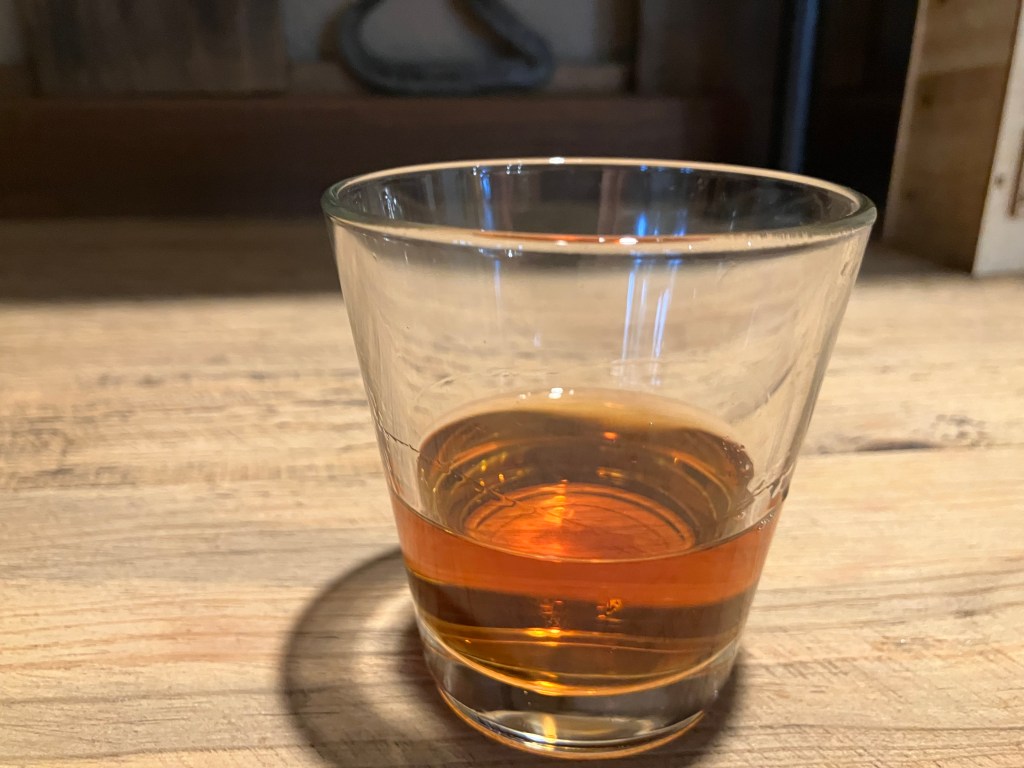
Appearance: This looks a little richer or darker than yesterday’s bourbon. I’d call it an orangish copper, kind of like the poorly-dyed hair of the lady who worked at the Rexall down the street from us when I was growing up.

Aroma: There’s something very fruity about the aroma of this bourbon. I get apples and currants that had been stored in the pantry next to the Duncan Hines vanilla cake mix and then placed on your patio table under a hot summer sun.

Taste: This is really hot and spicy. I might even go so far as to say hot ‘n’ spicy. Some spice is to be expected with so much rye, but this comes across more like cayenne. There’s also an astringent quality that reminds me of rubbing alcohol. That might be good for cleaning an abrasion, but I’m not convinced it works as a drink.

Finish: A few years back I had a colonoscopy. And readers of a certain age know what it’s like to drink the “prep,” which is positively disgusting. You have to knock back like a couple of liters of the stuff over the course of an evening. When you finally finish the last gulp, you are exhausted but relieved. You’ve gotten past the worst of it.

That’s what the finish on this bourbon is like.

Bottom Line: The Delawareans should stick to soybeans.