2025 Poe Cocktails

Cocktail 17: The Pit and the Pendulum

I was sick — sick unto death with that long agony; and when they at length unbound me, and I was permitted to sit, I felt that my senses were leaving me. The sentence — the dread sentence of death — was the last of distinct accentuation which reached my ears.
The Tale

This might well be Poe’s best-known story…or at least his best-known title. It describes an unfortunate individual who has been sentenced to death by the Spanish Inquisition, to face a series of ever-worsening tortures with the promise of eventual death. Two of these tortures are the titular pit (a literally abysmal well of doom) and the pendulum (a large steel blade at the end of a long rod that swings back and forth, gradually and ineluctably descending toward the narrator’s bound body). At the final moment the narrator is liberated by General Lasalle of Napoleon’s army. Huzzah!

The full story is available here.

The Drink

Like the Inquisition’s torture chamber, this drink is not for the faint-hearted. It’s based on a 19th-century cocktail called a Turf Club. It starts harmlessly enough with some good, dry gin and vermouth, but the addition of maraschino cherry liqueur creates an unexpected and not altogether harmonious flavor. It’s also got the requisite Poe-esque absinthe which, we’ve learned, must be handled with care.

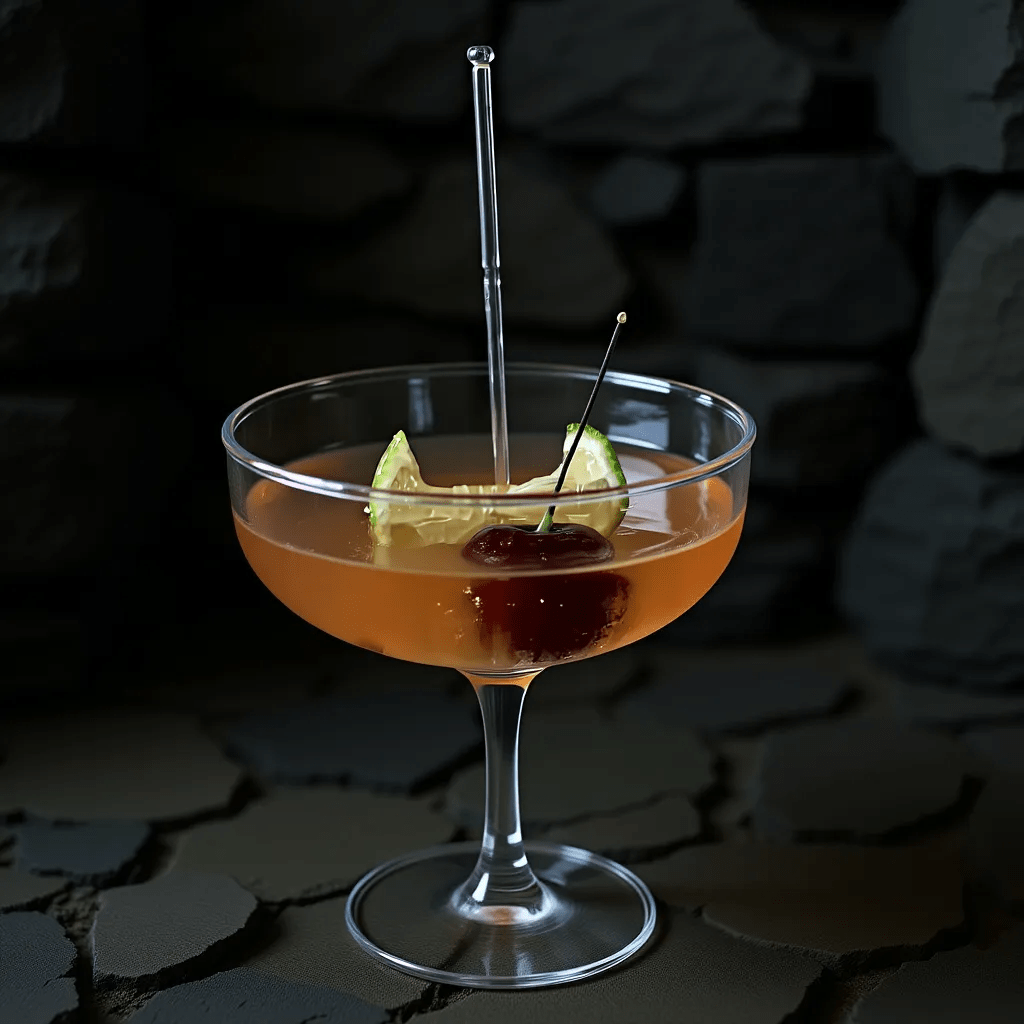
Admittedly, the central gimmick to this drink is the play on the word “pit,” as well as the visual allegory of a lime pendulum blade. The umami bitters are the most reckless of the ingredients, mucking up what might otherwise be a refreshing drink, but I felt them necessary to evoke the spicy meat that the narrator rubbed on the rope that bound him, in order to entice the rats to gnaw through it and set him free. So there’s that.

Ingredients:

2 oz. dry gin

¾ oz dry vermouth

¼ oz. maraschino cherry liqueur

2 dashes absinthe

2 dashes umami bitters

½ of a lime wheel, for garnish

1 cherry (with pit)

First, carve up a lime wheel into a crescent shape and place it at the end of a cocktail pick, to resemble the deadly “pendulum.” Place it at a menacing angle in a chilled coupe glass. Combine the gin, liqueur, and bitters in a mixing glass with ice and stir, then strain into the prepared glass. Add a cherry (with the pit–that’s the whole point!).

(Originally I tried using Scotch and orange juice, but you couldn’t easily make out the pendulum through the murky liquid. This is a form-over-function kind of situation.)
Poe-Script

This story first appeared in 1842, in a compendium of Christmas-themed (!) stories entitled The Gift: A Christmas and New Year’s Present. Poe’s entry must have seemed a bit jarring among the other stories in the volume, including “Billy Snub, the News-Boy,” “Flowers,” and “The Lace Cap.”


2025 Poe Cocktails

Cocktail 16: The Conqueror Worm

It writhes!–it writhes!–with mortal pangs

The mimes become its food,

And the angels sob at vermin fangs

In human gore imbued.

The Tale

The Conqueror Worm is one of Poe’s more gruesome poems, describing how, at the end of our mortal lives, our bodies are consumed by worms (or, to be more precise, maggots). It’s a fair (though disgusting) characterization, though his broader conclusion (What’s the point of life, as in the end we’re all dead) isn’t exactly uplifting. This isn’t the kind of poem that you’d want to include in a valentine.

The basic outline of the poem presents a theater presentation that is horribly ruined by a “conqueror worm” that essentially eats up the performers (“mimes”). Poe ends the poem on this cheery note: “…the play is the tragedy, ‘Man,’ / And its hero the Conqueror Worm.”

The poem (or at least its title) has made its way into songs and movies. For example: The 1968 British horror film The Witchfinder General, starring Vincent Price, was retitled The Conqueror Worm for its release in the US. But the film really has nothing to do with Poe’s poem.

The full story is available here.

The Drink

This cocktail employs the humble gummy worm in the lead role. It sits atop a mountain of ice, which seems like an appropriate pose for a conqueror. 

For the ingredients, I figured we needed a neutral spirit so as not to clash with the distinct gummy flavor. So I chose vodka. To this we add some Aperol, whose sweetness is in sync with the gummy’s sugar, but whose bitterness saves this drink from being too cloying. A couple of dashes of chocolate bitters adds depth; trust me on this one.

Ingredients:

1-1/2 oz vodka

½ oz Aperol

2 dashes chocolate bitters

I Gummy worm (flavor of your choice; I used a sour gummy)

Mix the vodka, aperol, and bitters in a shaker with ice. Strain into a coupe glass that’s been filled to the top with crushed ice. Add a single gummy worm on top of the ice, leaning over the rim of the glass.

This drink goes down easy, like a Sunday morning. Eat the alcohol-soaked worm at the end as a special treat.

Poe-script

Poe’s birth-parents were both actors. Surely this somehow figures into his describing life as a stage. And yet, didn’t someone else once use that metaphor?

2025 Poe Cocktails

Cocktail 15: The Devil in the Belfry

Owing to their vast antiquity, the style of architecture is somewhat odd — but is not for that reason the less strikingly picturesque. They are fashioned of hard-burned little bricks, red, with black ends, so that the walls look like chess-boards upon a great scale. The gables are turned to the front, and there are cornices as big as all the rest of the house over the eaves, and over the main doors. The windows are narrow and deep, with very tiny panes and a great deal of sash. On the roof is a vast quantity of tiles with long curly ears. The wood-work, throughout, is of dingy oak, and there is much carving about it, with but a trifling variety of pattern; for time out of mind, the carvers of Vondervotteimittiss have never been able to carve more than two objects — a time-piece and a cabbage. But these they do excellently well, and intersperse them with singular ingenuity wherever they find room for the chisel.

The Tale

An unnamed narrator describes “the Dutch borough of Vondervotteimittiss.” If you relax your ears enough, the town’s name sounds like “Wonder-what-time-it-is.” Which is apropos, because the town’s inhabitants famously fixate only on clocks and, even more outre, cabbages. Indeed, in all of the town’s near-identical homes, the mantelpieces all have engravings of clocks and cabbages, and upon each mantelpiece sits a clock and a potted cabbage plant. To top it off, the town’s council adopted a resolution that “We will stick by our clocks and our cabbages.”

The plot, such as it is, centers on the town’s enormous, seven-faced clock, which is the village’s “pride and wonder” that sits atop a steeple. One day a sinister-looking stranger gets to the top of the tower, assaults the clock-keeper, and causes the clock to strike thirteen, which in turn throws the time-fixated and routinized townspeople into rudderless confusion. The narrator concludes with this: “Let us proceed in a body to the borough, and restore the ancient order of things in Vondervotteimittiss by ejecting that little chap from the steeple.” If only all of life’s problems could be solved so easily!

The full story is available here.

The Drink

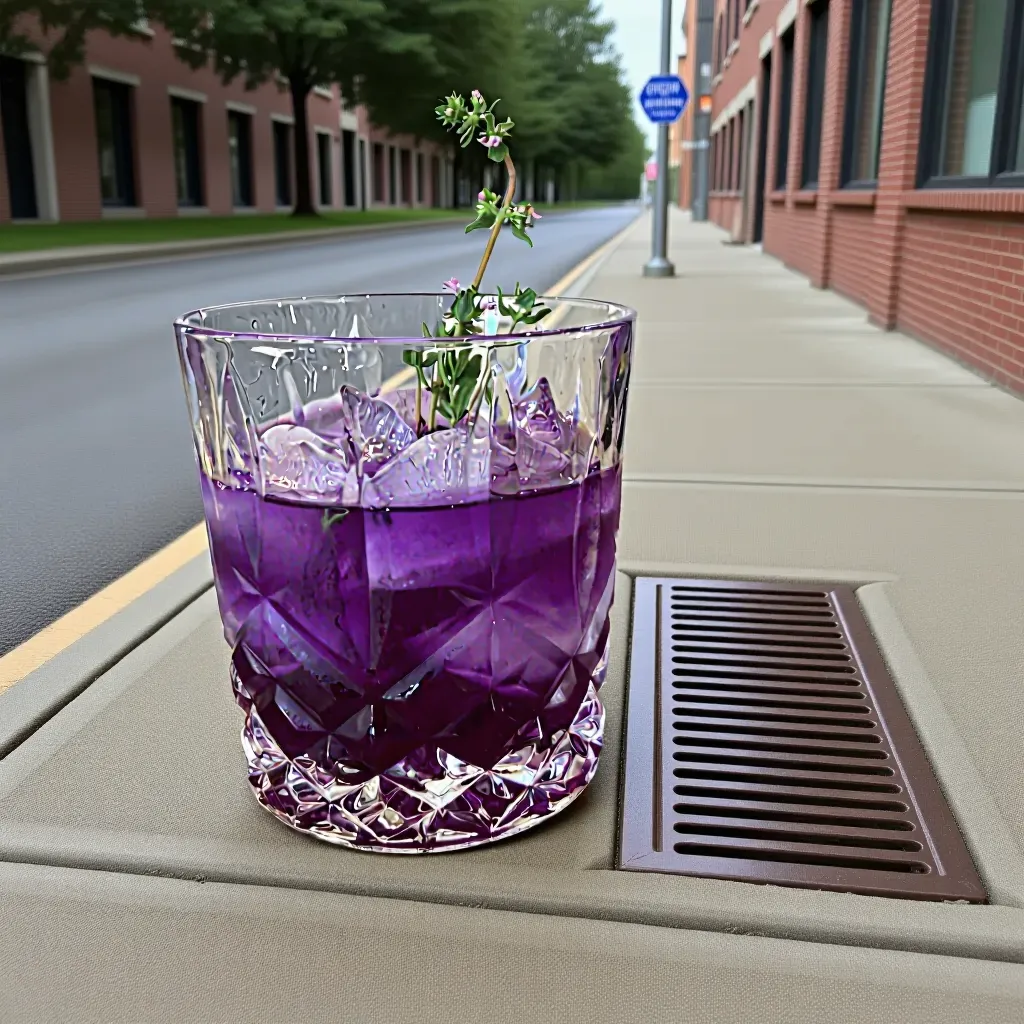
Obviously the only kind of cocktail to evoke this story must somehow incorporate clocks and cabbages. The first of these is easy enough, if you’ll allow me to use “thyme” as a stand-in for a clock. Get it?

The cabbage part is simultaneously simple and fraught. I opted for a purple cabbage, which will impart a lovely hue but also a disgusting, flatulent taste and smell. I’m told that one can somewhat mitigate the taste and smell by using dehydrated cabbage. But really, where am I going to find that? No, this is one of those cases where I’m just going to have to (literally) hold my nose and soldier through.

I chopped up some cabbage and thyme, and steeped them in vodka for an hour. The longer it steeps, the more intense the color…and the more disgusting the taste. So you’ll have to use your own judgment here. I then added some triple sec to try to mask the cabbage a bit, but this strategy invokes the proverbial lipstick-on-a-pig epithet. Finally, as the cabbage is readily evident in the color of the drink, I added a spring of thyme to drive home the timepiece reference. The result was visually satisfactory, though, alas, the same cannot be said for its gustatory qualities.

Ingredients:

2 oz. vodka

⅛ cup of chopped red or purple cabbage

1 oz. triple sec

⅛ cup of chopped thyme, plus a sprig of thyme as garnish

Add the vodka, cabbage, and chopped thyme to a cocktail shaker. Shake it up, then let it steep for 10 minutes to an hour, depending on where you draw the line between attractive color and disgusting taste. Strain into a rocks glass with fresh ice. Add triple sec, stir, and add a sprig of thyme as a garnish.

I’m not going to lie: This is quite possibly the most revolting cocktail I’ve ever experienced. I would encourage you to pour it down the sink. Unless you have old, unreliable plumbing, in which case I would pour it down the sewer grate in the gutter in front of your house. Make sure the local environmental-quality authorities are not watching.

Poe-Script

As hard as it might be to believe, this story with its exceedingly-thin plot was the subject of an unfinished comic opera by none other than Claude Debussy. Le Diable dans le beffroi was meant to be rather faithful to Poe’s story, and the voiceless Devil’s solo part was to be whistled and played on the violin.

2025 Poe Cocktails

More Poe-Nus Material

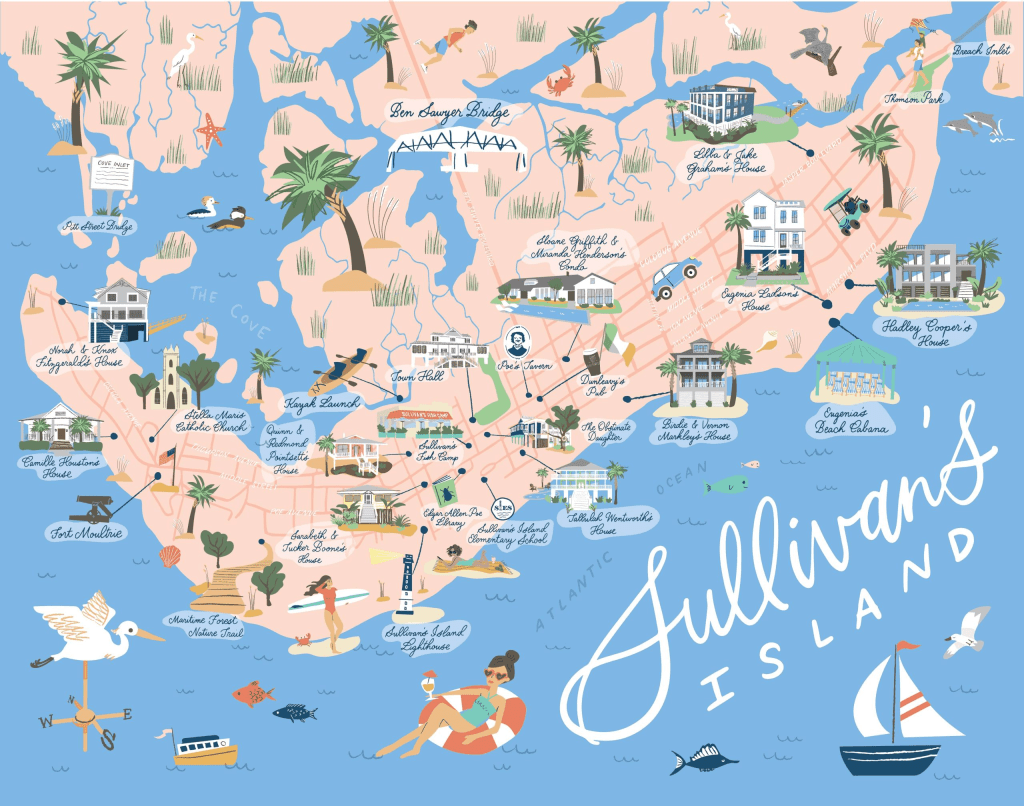
Our eastern correspondent, Christopher F., was evidently so inspired by our Gold Bug cocktail and associated palaver that yesterday he made the trek to Sullivan’s Island, S.C., which is the setting for Poe’s “The Gold Bug.” Poe describes the setting in some detail in his story, evidently drawing on his experience living on the island for about a year between 1827 and 1828, when he was stationed at Fort Moultrie.

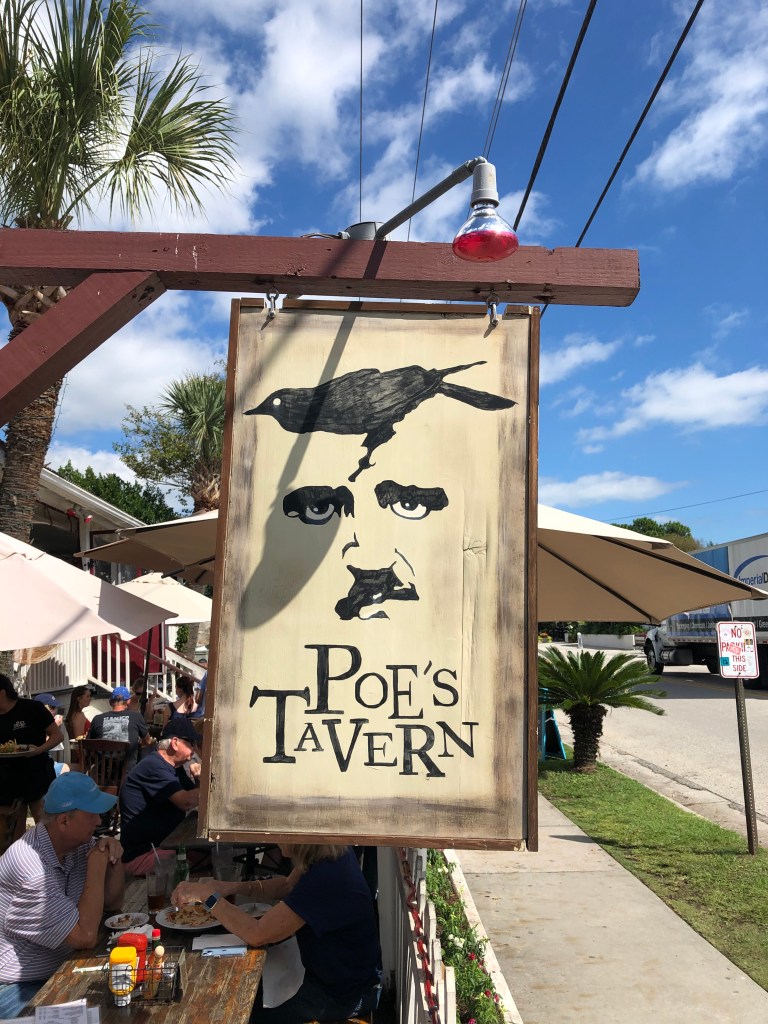
The good people of Sullivan’s Island know a good tourist opportunity when they see it, which explains the presence of Poe’s Tavern.

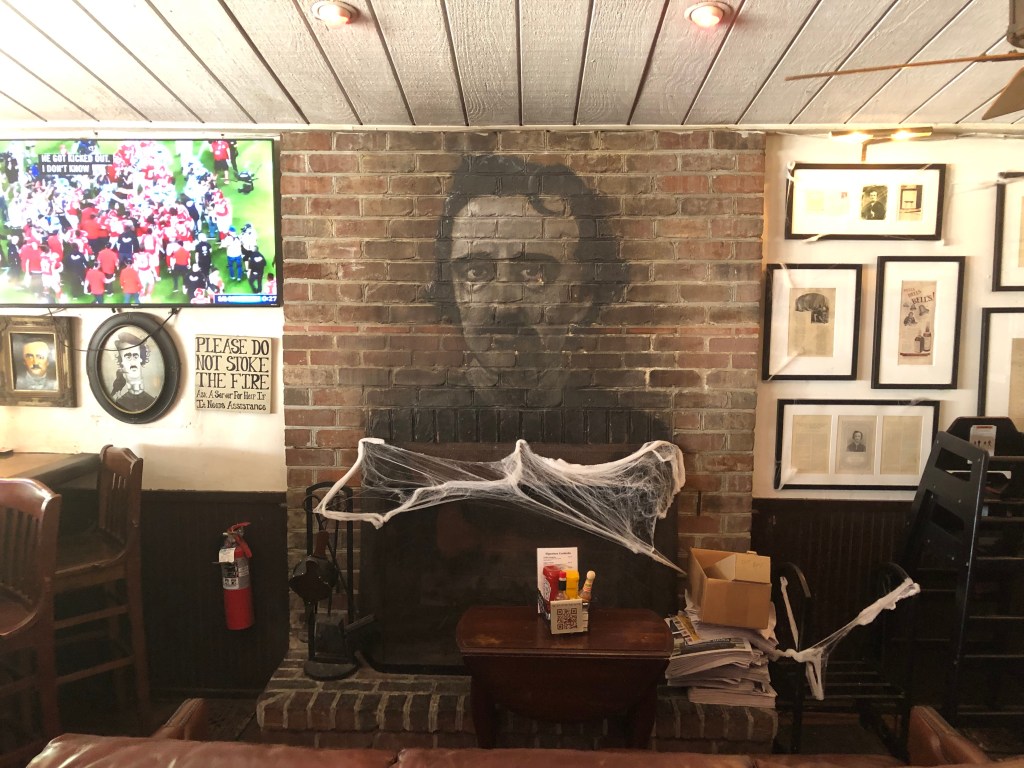
Correspondent Chris reports that the burgers all have Poe-themed names (The Raven, the Pit and the Pendulum, the Rue Morgue), and yet he ordered the fish tacos. He sent us this photo of the fireplace, which, he reports, “is cool and the image of Poe looks like it could have been done in soot.”

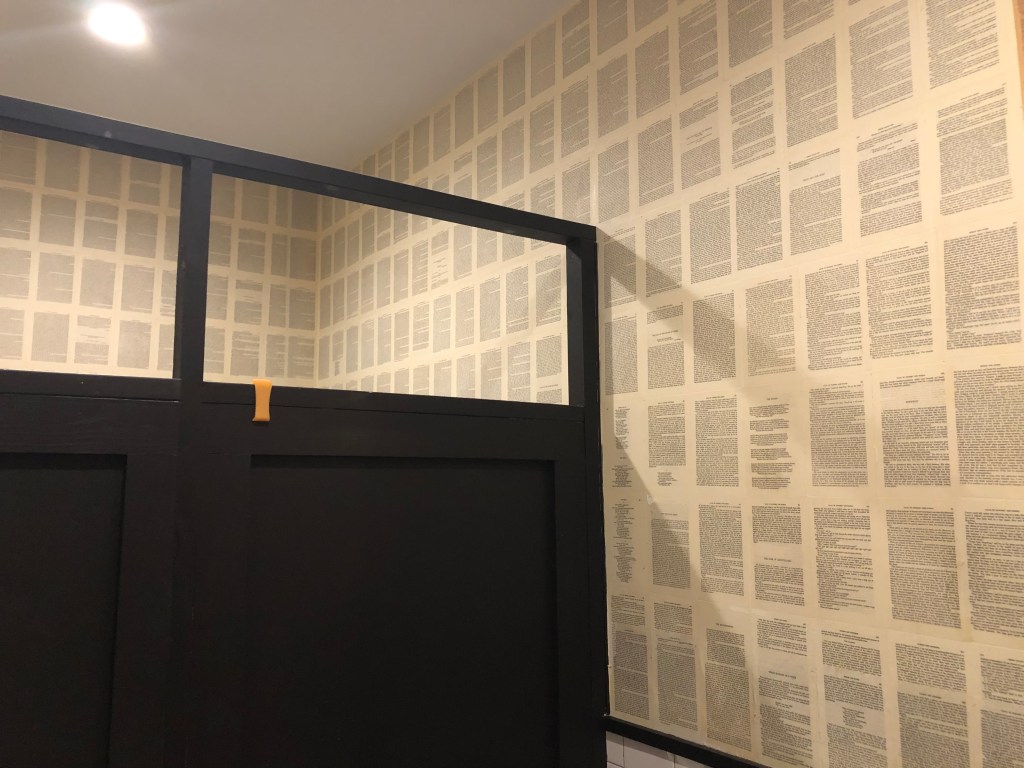
The restrooms have literally been wallpapered with pages from Poe tales (“The Mystery of Marie Bidet”, perhaps?)

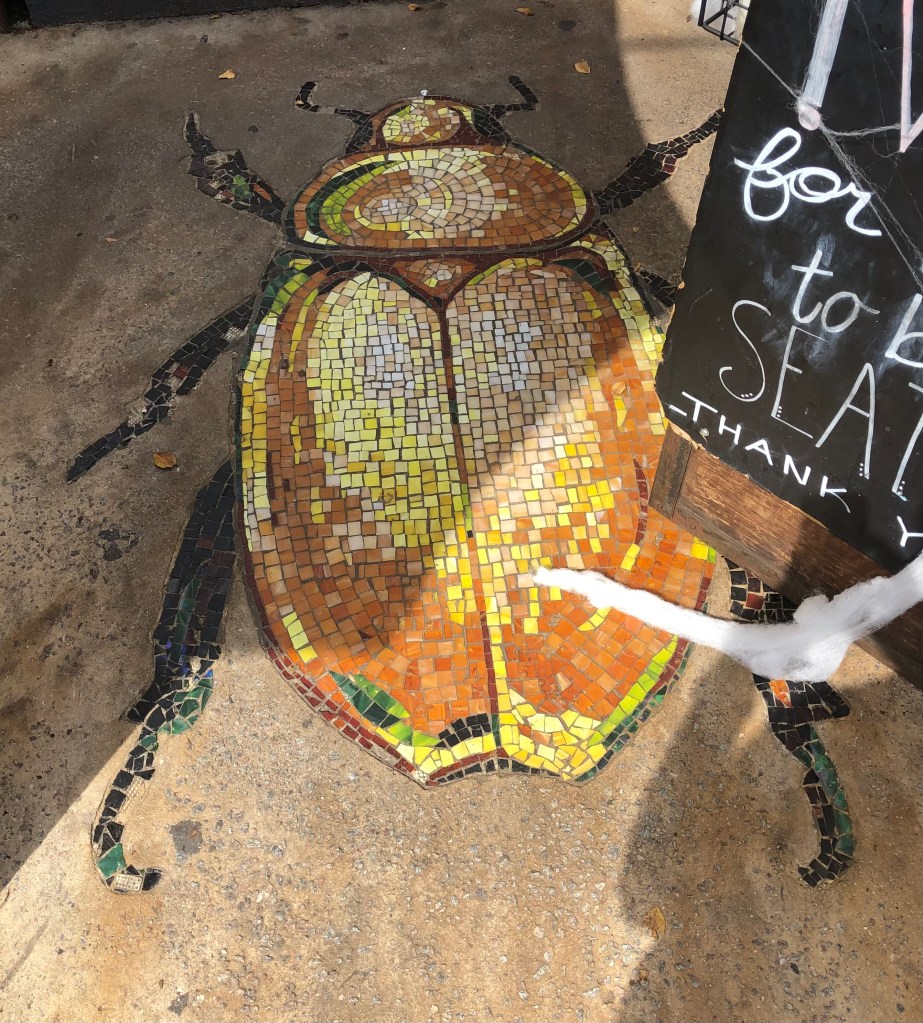
But the coolest element of the Tavern, given its location, has got to be the Gold Bug mosaic that greets you on the walkway.

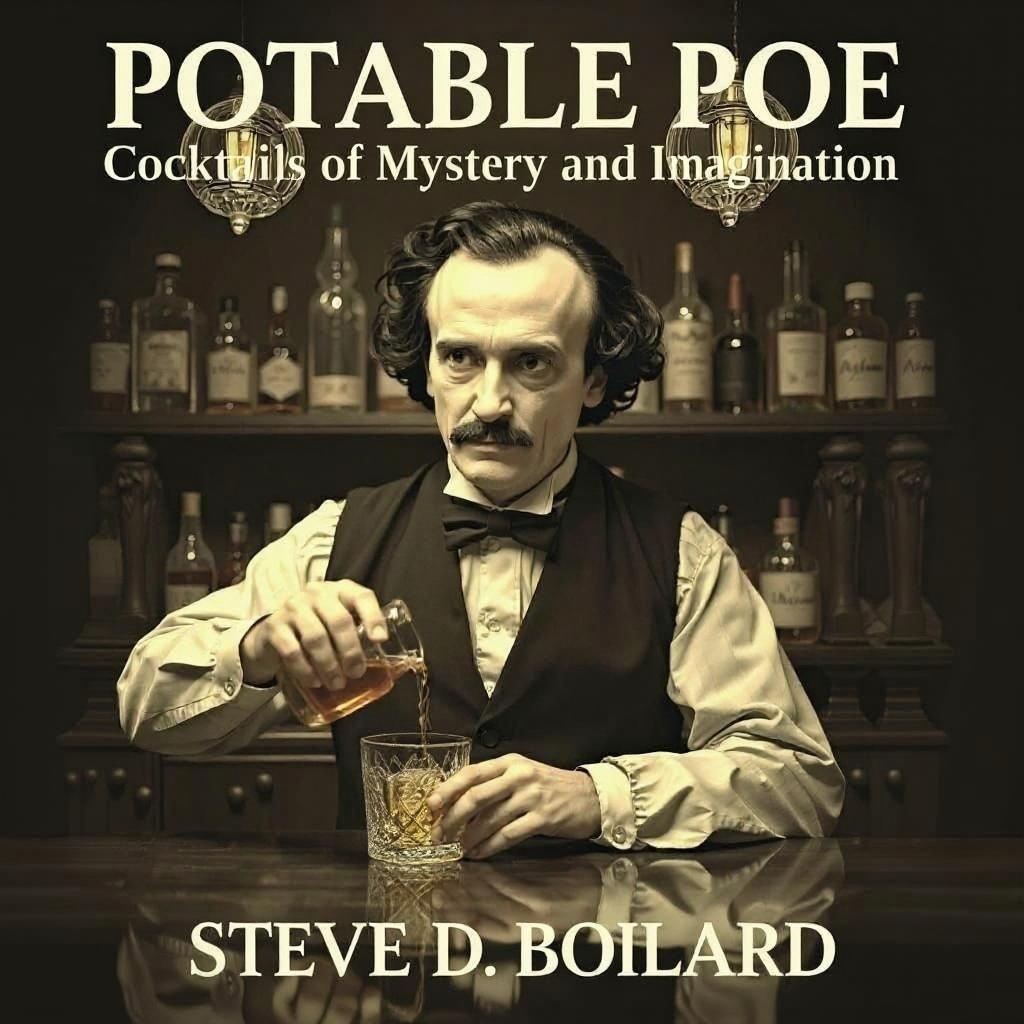
We thank correspondent Chris for his report, and encourage the thousands of our other loyal readers to keep an eye out for anything related to the Poe cocktails/stories being posted this month. We will be issuing a prize for the best photo. First prize is a signed copy of my forthcoming cocktail book, Potable Poe. Second prize is two signed copies of the same.

2025 Poe Cocktails · Uncategorized

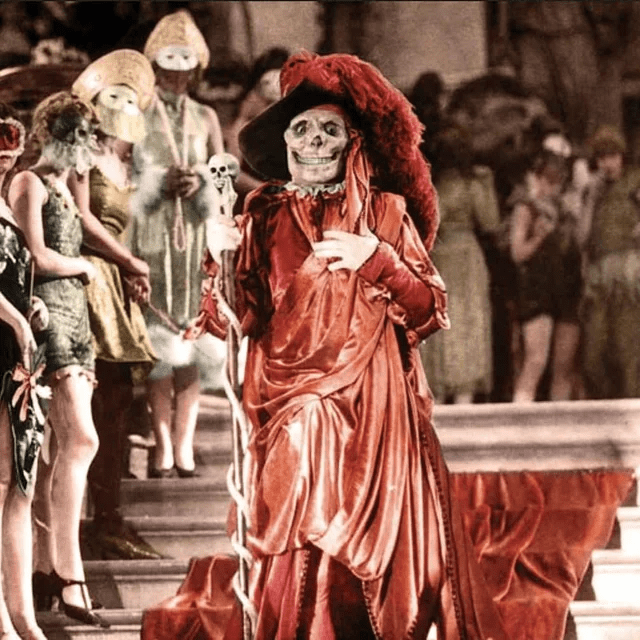
Cocktail 14: The Masque of the Red Death

And now was acknowledged the presence of the Red Death. He had come like a thief in the night. And one by one dropped the revellers in the blood-bedewed halls of their revel, and died each in the despairing posture of his fall. And the life of the ebony clock went out with that of the last of the gay. And the flames of the tripods expired. And Darkness and Decay and the Red Death held illimitable dominion over all.

The Tale

Poe’s short story “The Masque of the Red Death” was first published in 1842. In essence, it’s a tale about a self-seeking prince’s attempt to sequester himself and a large number of his friends and courtiers in his large castle, away from a fearsome plague that was rife throughout the land. You can guess how well that plan worked out.

The story works on a number of levels. On its face it’s a Gothic tale rich in imagery and Angst and, ultimately, doom. But it also works on an allegorical level, reminding us of the folly of trying to cheat Death. It’s been the subject of many films and plays over the years, most notably the 1964 Roger Corman movie starring Vincent Price. You could do worse than to spend an evening watching it with the lights down and with this cocktail in hand.

The full story is available here.

The Drink

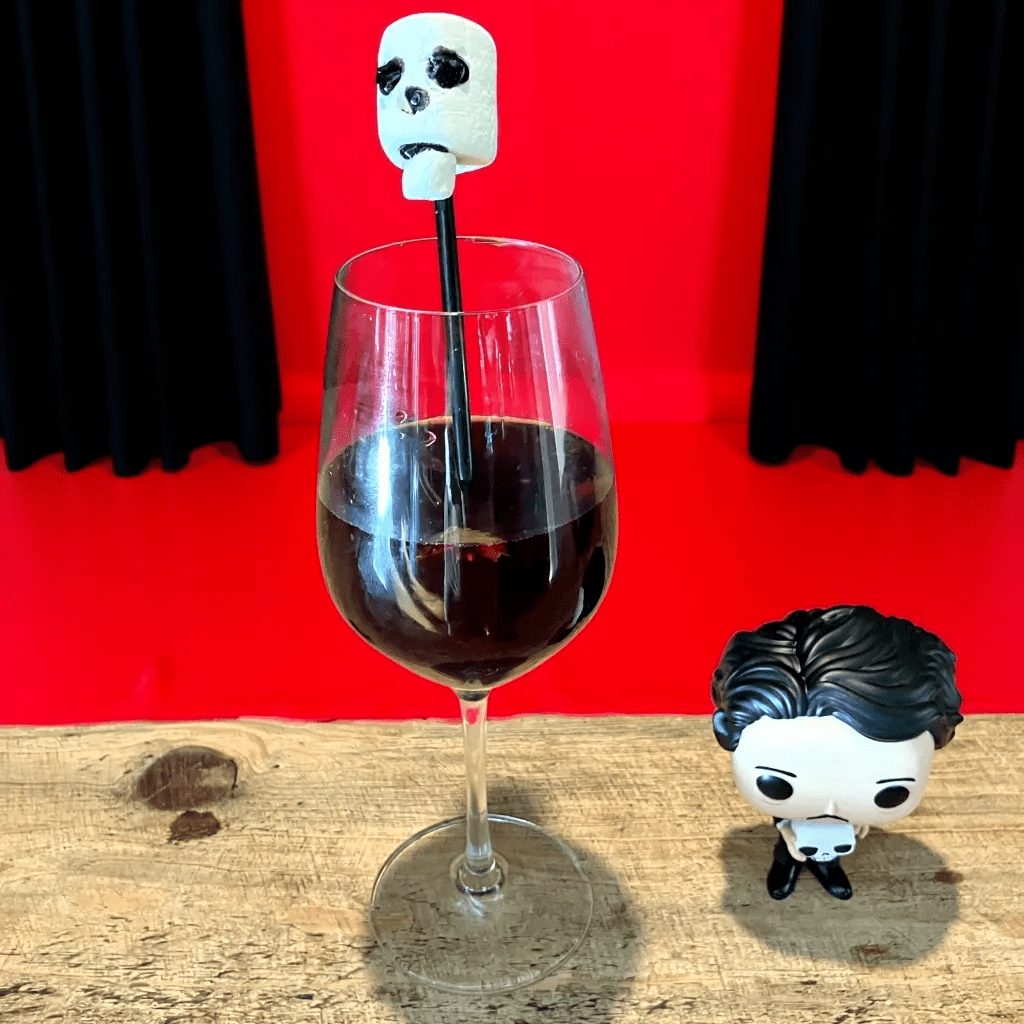
Obviously, the drink has to be red. The “death” part is symbolized by a marshmallow garnish in the shape of a skull. OK, subtlety is not my strong suit.

The red color comes largely from pomegranate juice. I added some muddled blackberries (which darken the color a bit) and some mint (which prevents the drink from becoming too heavy). 

Ingredients:

1-½ oz. white rum

½ cup pomegranate juice (chilled)

A small handful of blackberries

A few mint leaves

For the skull:

1 regular marshmallow and one mini marshmallow

Black icing and/or black jelly beans

First you gotta make your skull. (That would make a good bumper sticker.) Use a standard, regulation marshmallow for this, and add eye sockets and a nose hole. Use your own instincts here. You can use either small, black jelly beans or icing for these.Then dab the top of a mini marshmallow with black icing, and stick it on the bottom of the regular marshmallow to serve as the jaw. Add a little icing where the two marshmallows meet to represent the mouth.

Set aside your skull (another bumper sticker candidate) and muddle the blackberries and mint leaves in a cocktail shaker. Add rum and chilled pomegranate juice. Shake it up. Then remove the top and pour the un-strained mixture into a wine glass. (I suppose you could strain it if you don’t want bits of blackberry and mint leaves in your drink, but I like the added texture.) Add the skull as a garnish, perhaps at the end of a straw, a cocktail pick, or a catheter…whatever you have around should work.

This drink is already pretty sweet, but you can add a little simple syrup if you don’t like the slight tartness of the pomegranate juice. You might want to affect a Prince Prospero pose, laughing carelessly at the latest disaster broadcast on the evening news as you throw a few of these back in your gated McMansion.

Poe-script

Despite the plot’s central reliance on the idea of a fatal plague called Red Death, there is no such disease. So, you can at least rest a little easier knowing that.