Frankenstein movies

Frankenstein Meets the Wolfman

Movie Posters:Horror, Frankenstein Meets the Wolf Man (Universal, 1943). Half Sheet (22"
X 28").. ...

I would have titled this one “Frankenstein Jumps the Shark.” Universal was clearly running out of new ideas for the Frankenstein series, so they decided to spice things up with a second monster.

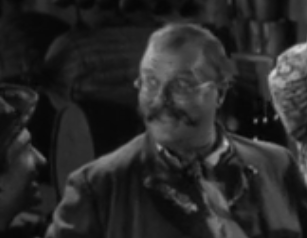
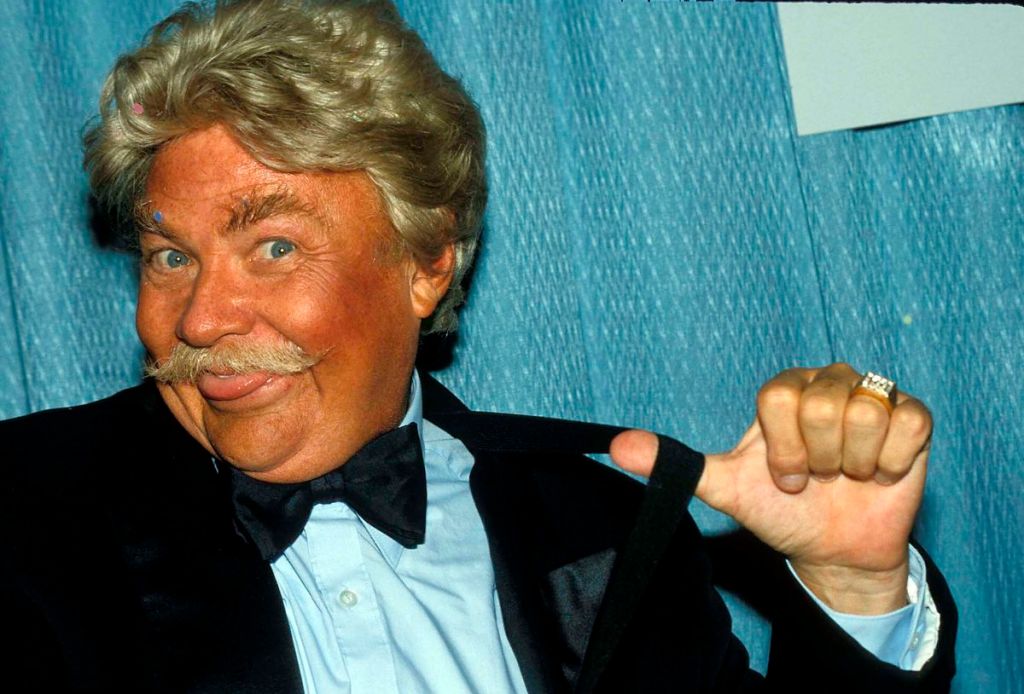
The logic seemed to run thus: Universal had had a hit with Frankenstein, and the Wolfman had been received well, so why not put the two into the same movie? (The answer to that question is: Because it’s pointless and stupid, but Universal execs didn’t see it that way.) What’s more, they felt no need to keep their growing stable of monsters associated with specific actors; they seemed to believe that actors and monsters were entirely interchangeable. So here we have the man who had played Frankenstein’s monster in the last movie (Chaney) now playing the Wolfman instead. And Lugosi, who earned his fame playing Dracula and in the last movie played Ygor, now plays Frankenstein’s monster. Meanwhile, Lionel Atwill, who had been Inspector Krogh in Son of Frankenstein, and then played Ludwig Frankenstein’s assistant in Ghost of Frankenstein, now has been drafted to play the mayor of Vasaria. Oh, and for good measure, a lot of screen time is given to a flamboyant Vasarian villager who looks a lot like Rip Taylor.
Lon Chaney, Jr. is a clunky actor. His character here is sad, melancholy, with an air of the tragic. I kept wanting to slap him out of it. His character on the screen seems more like an unemployed shoe salesman than a cursed werewolf. But since Chaney played the Wolfman in the first Wolfman movie (1941), they seem to have opted for continuity, in this case at least.

The Plot: The plot is contrived and silly, with plot holes large enough to drive Inga’s hay wagon through. It starts out promisingly enough, with grave robbers breaking into the coffin of one Larry Talbot (Chaney), who’d become a werewolf in 1941’s The Wolfman.

Quick tutorial for those of you who don’t know your Universal monster lore: a person who’s bitten (but not killed) by a werewolf becomes one himself. And as such, each time the moon is full, the afflicted individual will transform into a wolf and kill others. Once day breaks, the person is restored to his normal human form. The only way to end the cycle is for the person to be pierced with a silver bullet, or perhaps some other silver object.

Anyway, the grave robbers open Talbot’s grave, but unfortunately for them they chose the night of a full moon to do their work. You can guess what happens next….

Frankenstein Meets the Wolf Man (1943) - IMDb
Here–let me give you a hand

The first half of the movie is essentially your basic werewolf story–Chaney goes on a killing spree that night, and wakes outdoors in the morning in human form. He is found and sent to a hospital for a head wound (which was acquired in the earlier Wolfman film) where one Dr. Mannering treats him. Talbot comes to recognize his curse, and decides to find seek the help of Dr. Frankenstein (?!) as the one person who could end that curse. Chaney travels to Vasaria and learns, to his disappointment, that Dr. F had died in the last movie (Ghost of Frankenstein). But wait! Through some plot contrivances Chaney winds up at the old Frankenstein castle. And at exactly the halfway point of the movie (to the second!), he finds the creature frozen in ice. He cracks the ice with a rock, and the creature (played by Bela Lugosi) is free, alive and kicking.
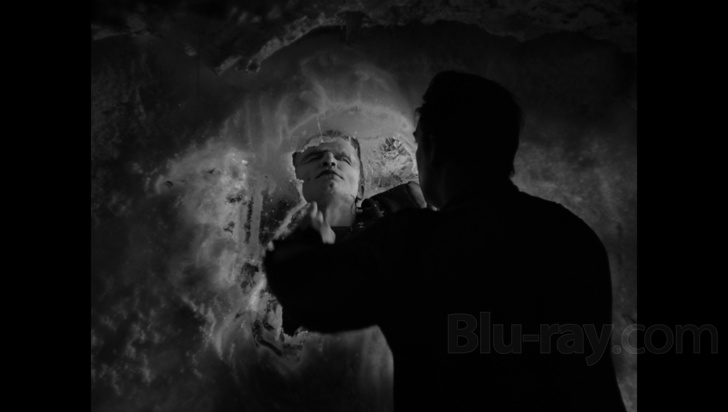
Frankenstein Meets the Wolf Man Blu-ray
Frankenstein’s monster, on the rocks

Meanwhile, that doctor who’d originally treated Talbot back in Britain tracks him down for some reason, and becomes the star of the show. He becomes obsessed with Frankenstein’s experiments, and ends up continuing them himself, somehow with the object of transferring Talbot’s life energy to the creature. (I told you this was a silly plot.) As if it’s not clear enough that the doctor is taking on the role of Dr. Frankenstein, Universal decided to make his name “Frank.” I’m not making this up. Anyway, we eventually arrive at the climax, where Frank succeeds in fully restoring the creature just at the moment that Talbot (thanks to a full moon) transforms into the Wolfman. But then, a flood washes everyone and everything away when a villager (they guy who looks like Rip Taylor, above) blows up a dam.

This story feels very much like it was made up on the fly, like the campfire game where successive people add a short segment to an unscripted story. The result is a movie with all the continuity sensibilities of a Bugs Bunny cartoon.

The Monster: Ironically, Bela Lugosi plays the monster in exactly the same manner that he complained it would be presented back in 1931, when he’d turned down the role: stiff-armed, exaggerated, mechanical. (It’s said that Lugosi emphasized the outstretched arms because his character was supposed to have become blind (as we’d learned at the end of Ghost of Frankenstein.) Anyway, the result is a very clunky monster. And yet, for one brief moment, Lugosi gives us a glimpse of the cunning, diabolical look he was famous for with Dracula.
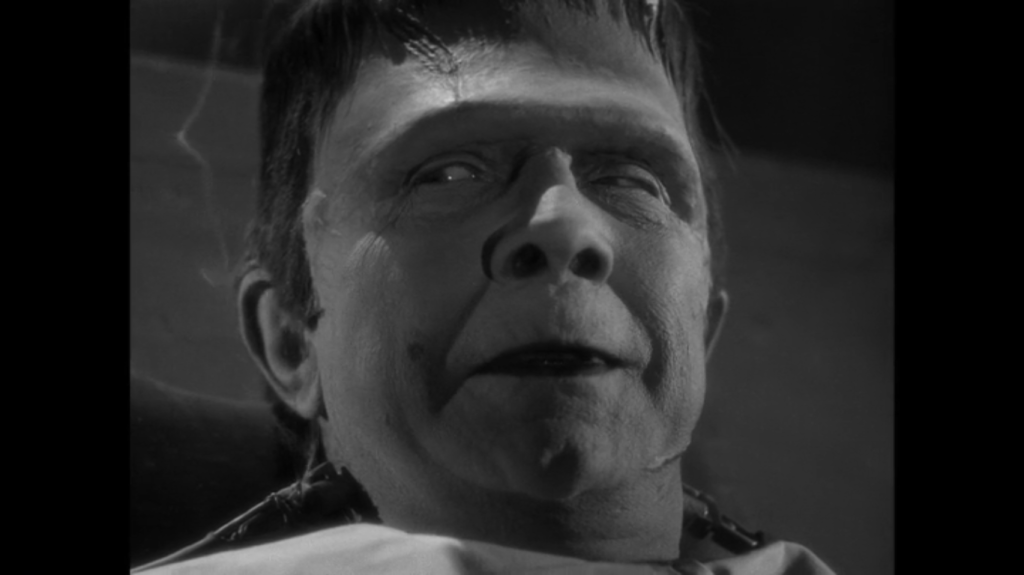
Do another sequel, you say?

When this movie was shot, Lugosi had various speaking lines as the monster. But in test screenings, audiences laughed every time the Frankenstein monster spoke with that heavy Hungarian accent. So the decision was made to erase all of Lugosi’s speaking lines. And yet, Lugosi’s lips can clearly be seen moving in various scenes. (To get a sense of what the original lines had sounded like, check out this clip.)

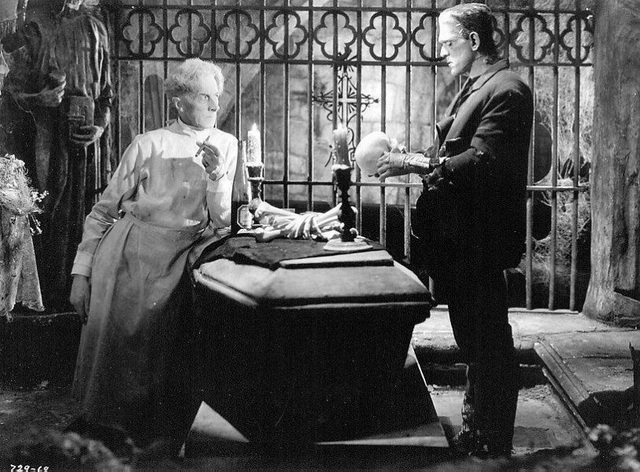
The Atmosphere: The atmosphere of the film hews pretty closely to what we’ve come to expect for a Universal horror film. The opening scene in the Talbot crypt is a classic example, as are the scenes in Frankenstein’s ruined castle.

Universal Monsters rewatch – Frankenstein Meets the Wolf Man 1942 |  macmcentire
Lugosi does the Monster Mash

Inexplicably, though, the middle of the film contains a lengthy musical number that takes place during Vasaria’s Festival of New Wine. Perhaps this was to give the audience a break from the supposed nonstop drama and shock of this supposed horror movie. But it comes across as an odd and unnecessary interruption of whatever flow this movie had managed to develop.
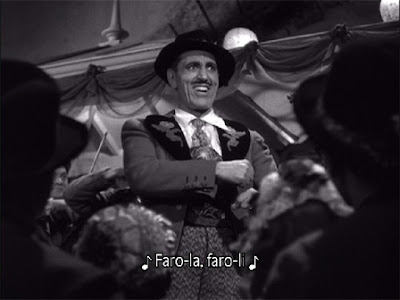
LimerWrecks: Sing-a-Lon
All together now!

General Comments: Universal’s monster cycle had clearly lost its way by the time of this movie. The casting is questionable, the sets are getting tired and cheap, the directing is uneven, the script is laughable, and the plot is absurd, even for a monster movie. Saddest of all for Frankenphiles is that the monster has become a two-dimensional caricature that is little more than a MacGuffin (to use a term coined by Alfred Hitchcock).

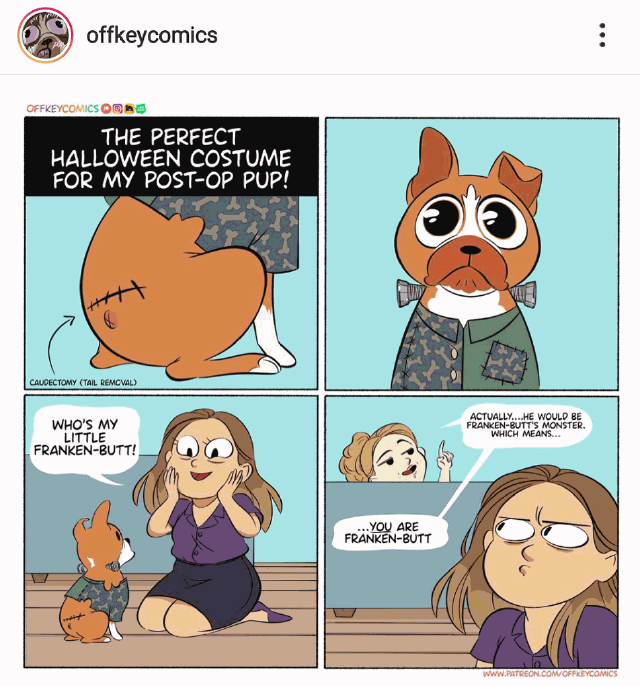
Incidently, the “Frankenstein” that the Wolfman meets is, obviously, Frankenstein’s monster. Doctor Frankenstein makes no appearance here. So, in working up the title for this film, Universal seems to have caved to the public’s common mischaracterization of Frankenstein’s monster as simply “Frankenstein.” It’s a point ably illustrated in the accompanying cartoon sent in by loyal reader Katelyn P. (who also happens to be my daughter-in-law).
Tomorrow: There’s hope! Karloff returns in House of Frankenstein (1944)…but not in the way you’d expect. Available on YouTube.

Frankenstein movies

Ghost of Frankenstein (1942)

Ghost Of Frankenstein (1942)

We now move to the 1940s and Universal’s second decade with the Frankenstein films. This is the fourth installment of Universal’s Frankenstein franchise, and it’s the first one in which Boris Karloff does not appear. That absence is strongly felt. Top billing went to Sir Cedric Hardwicke, who, as a classically-trained veteran of the stage, brought a certain stiffness and formality to the proceedings. Incidentally, he was also the father of the late Edward Hardwicke, who played Dr. Watson in the beloved Sherlock Holmes series television series in the 1980s and 1990s.

The Plot: This film picks up exactly where Son of Frankenstein left off: Wolf Frankenstein (the son of the monster’s creator) has shot Ygor full of bullets and pushed the monster into a pit of boiling sulfur. Relieved of those burdens, Wolf goes on presumably to enjoy married life with the lovely Josephine Hutchinson. In this latest movie, however, we learn that Ygor had not in fact died, and continues to live in Dr. Frankenstein’s ruined castle. Meanwhile, the villagers, fed up with how the Frankenstein “curse” has kept their village spurned and devoid of visitors, blow up the castle with dynamite. Unfortunately for them, the explosions succeed in cracking open the dried and hardened sulfur pit, and out comes a very well-preserved and very alive Frankenstein’s monster.

Ygor (again played by Bela Lugosi) is thrilled that his “friend” (as he calls him) is still alive, and the two of them manage to escape the castle before it fully collapses. But Ygor soon discovers that the creature is sickly, presumably after spending years in a sulfur pit, so he seeks help from a doctor.

Days O'Horror #23: The Ghost of Frankenstein (1942) | Ken's Alternate  Universe!
Let’s get you to Urgent Care

But wait: We haven’t arrived at the hard-to-swallow part yet. It turns out that Baron Frankenstein (the creature’s original creator) had not one but two sons. So with Wolf Frankenstein (played in the last movie by Basil Rathbone) having moved away, Ygor goes to a nearby town to track down the younger son, Ludwig Frankenstein (played by the estimable Sir Cedric Hardwicke). Ludwig refuses to help restore the creature, but he’s visited by the ghost of his father, who encourages him to give the creature a good, new brain. (The ghost, incidentally, is not portrayed by Colin Clive, who’d played Baron Frankenstein in the earlier films; instead, he’s portrayed by Hardwicke himself. So much for continuity). Oh, and Ludwig’s assistant is played by Lionel Atwill, who you’ll remember as Inspector Krogh from Son of Frankenstein.)

8x10 Print Lionel Atwell Sir Cedric Hardwicke Ghost of Frankenstein 1945  #LA82 | eBay
Lionel Atwill and Cedric Hardwicke. Did everyone have the same hair and mustache styles in those days?…
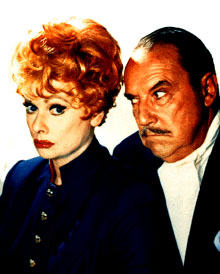
Lucy Show TV in Public Domain
…Kind of like Mr. Mooney from the Lucy Show.

Anyway, Ludwig decides he’ll follow his dead father’s advice and replace the creature’s damaged brain with a good one. The creature, meanwhile, wants the brain of a little girl he’s befriended. And Igor wants for his own brain to be placed in the creature’s body. Through some trickery, Igor gets his wish, and his brain ends up controlling the monster. What’s more, somehow the monster now talks with Igor’s voice. But in the end, the creature is killed in a conflagration. Of course, given that the monster was presumably killed in Universal’s last three movies, we shouldn’t count him out too quickly.

The Monster: Boris Karloff declined to play the creature in this movie, partly because he was starring in a successful run of Arsenic and Old Lace on the stage, but also perhaps because he felt the role had run its course. So in his place we have Lon Chaney, Jr, who had just finished starring in Universal’s The Werewolf. The son of the silent movie actor Lon Chaney Sr., Chaney Jr. played a number of Universal’s monster films, including The Mummy and Dracula.

Chaney is a far cry from Karloff. For starters, he’s much heavier, a fact which is evident even through the makeup. (Makeup artist Jack Pierce again applied the same trademarked image that he’d done for Karloff. And this was the first time Pierce would be acknowledged in the movie credits.)

The Ghost of Frankenstein - Movies on Google Play
No Karloff.

Chaney is also much less expressive. Karloff didn’t speak in two of his three Frankenstein movies, but at least he grunted and growled and whimpered and changed his facial expressions. Chaney does not do any of this. Sadly, it’s this less personable monster, with outstretched arms and granite expression, that has come to define the creature in the public imagination.

The Atmosphere: This was the cheapest of Universal’s Frankenstein movies so far. But it’s still atmospheric. It’s filmed in black and white, with heavy shadows, an oppressive sky, stone dungeons, and gnarled trees.

Halloween Havoc!: GHOST OF FRANKENSTEIN (Universal 1942) – cracked rear  viewer

Overall Comments: Ghost of Frankenstein didn’t do as well at the box office as its predecessors had, perhaps because of the smaller budget or due to Karloff’s absence. Or, some say, it’s because audiences in 1942 were experiencing enough death and evil coming from the war in Europe, and preferred lighter fare.

So, with a Frankenstein franchise that is getting long in the tooth, and with the true star of the series–Boris Karloff–refusing to participate, you’d think it would be a good time for Universal bring the Frankenstein procession to a close. But you’d be wrong. For in a desperation move, Universal decided to pair Frankenstein and Wolfman in a single movie! Tomorrow we’ll review the unlikely Frankenstein Meets the Wolfman. You can watch it on YouTube.

Frankenstein movies

Young Frankenstein (1974)

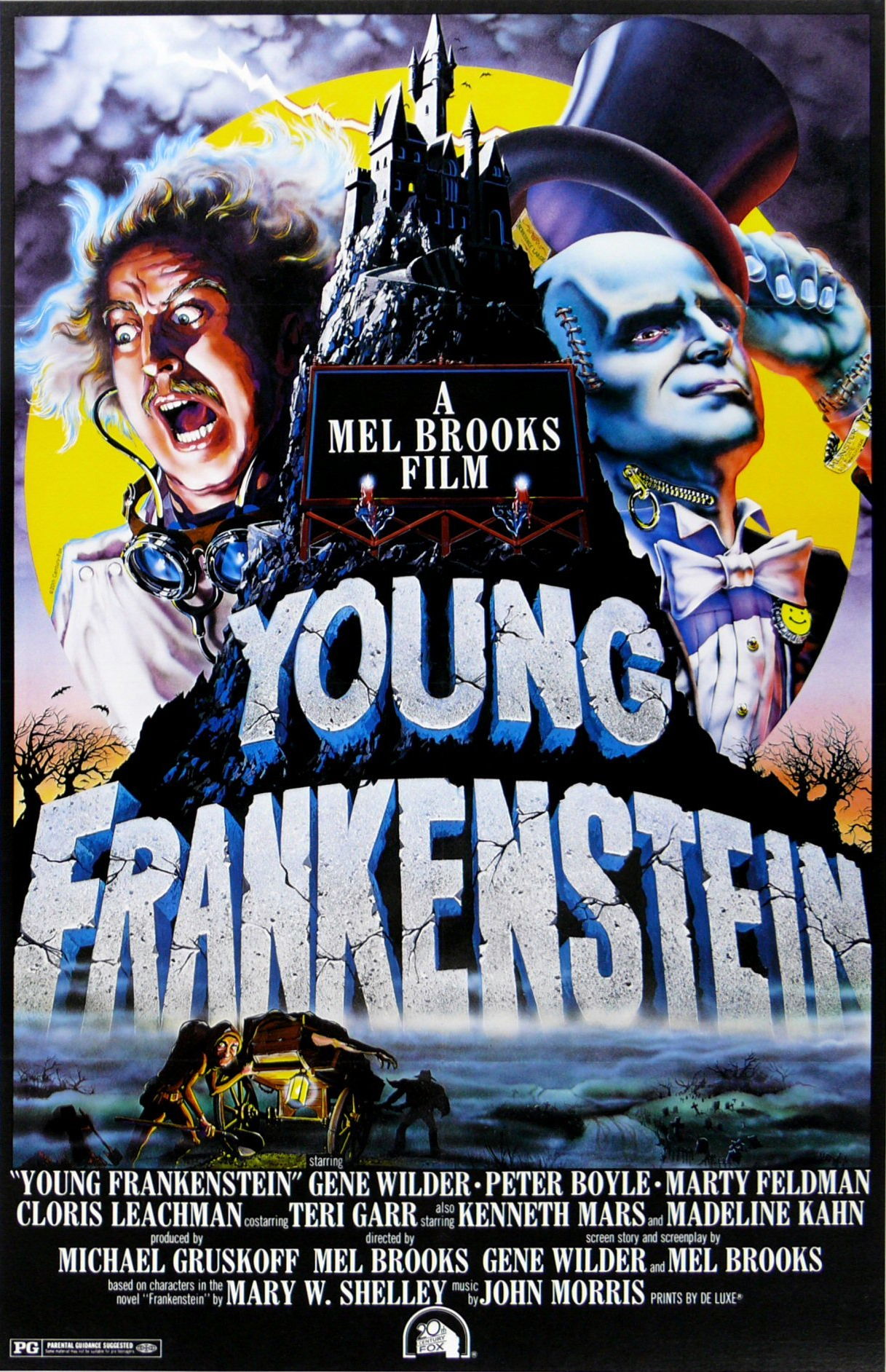
In 1974, some 43 years after Universal released its first Frankenstein film, Mel Brooks released a movie that gently, even reverently, spoofed it and its sequels. (Shocking reality check: 1974 is closer to 1931 than it is to 2021!) Young Frankenstein is, quite frankly, a masterpiece. It manages to evoke all the main aspects of the Karloff movies, riffs on most of the beloved scenes from those earlier movies, and reminds us why we love them so much. (Because we do, don’t we??)

Young Frankenstein (1974) - IMDb

The Plot. Young Frankenstein is a pastiche of key scenes and themes from Universal’s Frankenstein (1931), Bride of Frankenstein (1935), and Son of Frankenstein (1939). Set in the modern day (well, modernish), Gene Wilder plays Frederick Frankenstein, the grandson of the man who created the original monster. Frederick, a successful surgeon, has just inherited his grandfather’s castle in Transylvania, where he arrives by train.(Note that the essential elements of this plot set-up are borrowed directly from Son of Frankenstein, including even Gene Wilder’s mustache, which mimics that of Basil Rathbone in Son.)

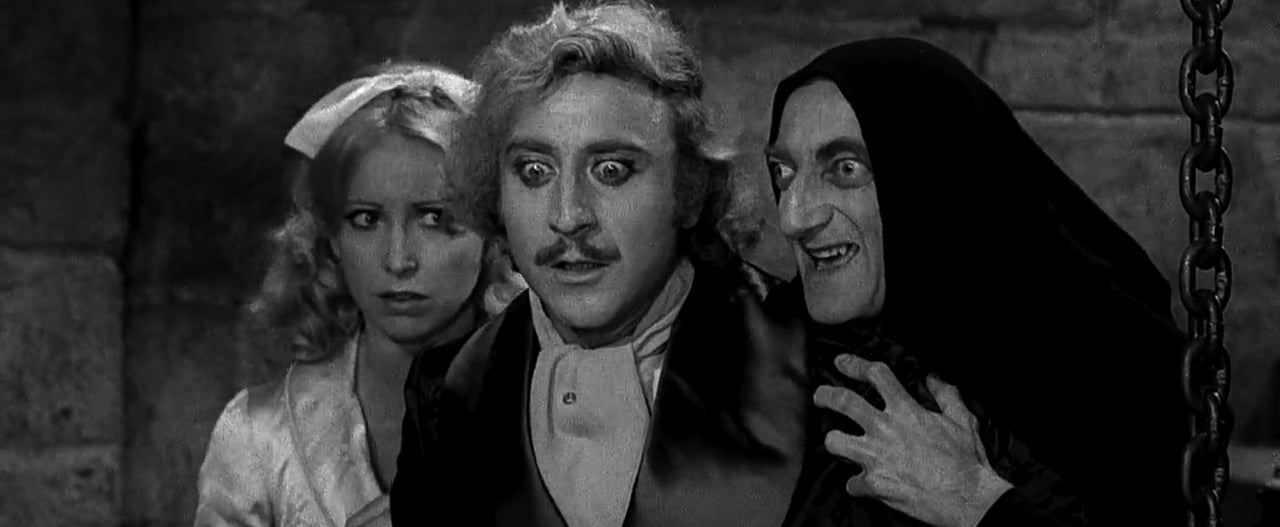
With his assistants Igor (Marty Feldman) and a very delectable Inga (Teri Garr), Frederick is ineluctably is drawn to continue his grandfather’s experiments, and before long he creates a monster that subsequently escapes and wreaks havoc in the village. Although there are a number of typical Mel Brooks plot twists, the main elements of the earlier movies are all there: The basic creation sequence, the laboratory, the bad blood between Igor and the creature, the angry villagers, the little girl with the flowers, the blind hermit, the wooden-armed police inspector, Dr. Frankenstein’s wife, and on and on.

Young Frankenstein Featured
Teri Garr, Gene Wilder, and Marty Feldman.

The Monster. Frankenstein’s creature is played by Peter Boyle, who’s generally made up as Karloff appeared in the Universal movies. Like Karloff’s monster, Boyle’s creature doesn’t speak (except at the very end of the movie, as a gag), and has to express himself with his eyes, face, and gestures. Boyle is masterful at this, in much the same way Karloff had been. Boyle’s version of the monster is somewhat less scary than Karloff’s. With a balding head and a bewildered face, Boyle’s creature is in some ways the straight man of the movie.

From the Archives: On the set of 'Young Frankenstein' - Los Angeles Times
Peter Boyle

The Atmosphere. Clearly Mel Brooks had set out to capture the look and feel of those old Universal pictures, and just as clearly he succeeded. Overcoming resistance from the studio, Brooks had the movie filmed in black and white, just as those 1930s films had been. Much of the story takes place in Frankenstein castle, replete with cobwebs, dark corners, and secret passageways. We see a graveyard (very similar to the one in the opening of 1931’s Frankenstein), and a village like the ones that appeared in the Universal films. There is fog, lightning storms, horses (“Blucher!”), moonlit nights, and wolves. It seems that nothing was left out.

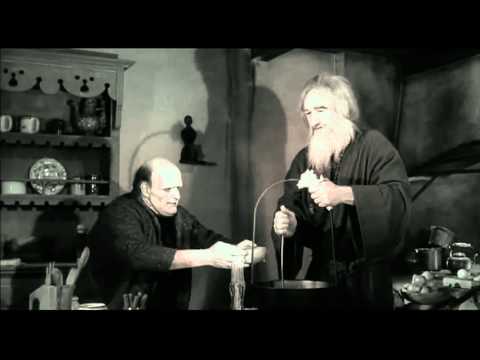
WebM Test II - Blind Priest Scene
That’s Gene Hackman as the blind hermit.

Indeed, Young Frankenstein even features the same laboratory equipment from the 1931 original. I don’t mean it just looks the same; I mean, Mel Brooks got his hands on the very same props. Evidently all the equipment had been stored in the garage of Ken Strickfaden — the Universal props guy who’d designed it in 1931. Strickfaden was getting on in years by 1974, but he was game for the project.

Young Frankenstein (1974)

General Comments. If you’ve seen the three Karloff Frankensteins, you owe it to yourself to watch this paean to them. You’ll appreciate the in-jokes, and in some ways you might even appreciate those old movies more as a result of this send-up.

But if you can’t find the time to watch the whole movie, at least watch this clip.

Tomorrow: Things go downhill a bit. We’ll go back to the Universal films, with their first post-Karloff Frankenstein movie: Ghost of Frankenstein (1942). You can watch it on YouTube, but I’m not sure it’s worth the $3.99 it’ll cost you.

Frankenstein movies

Son of Frankenstein (1939)

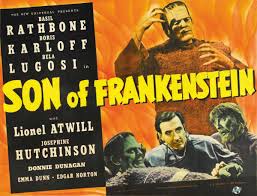
Today we reiew Universal’s third Frankenstein movie, which is the last one in which Boris Karloff plays the creature. Many consider it to be the best of the three. Perhaps that’s because cinematography was developing rapidly throughout the 1930s, and quality of the film, cameras, sound, and sets was considerably improved. Perhaps its because the actor playing Baron Frankenstein (Basil Rathbone) was a better actor than Colin Clive, who played the Baron in the other two movies. Or maybe it’s just because Universal was hitting its stride with the Frankenstein story. In any event, this film is a must for the completist, if for no other reason than because it’s the main source material for Young Frankenstein (which we’ll get to in due time).

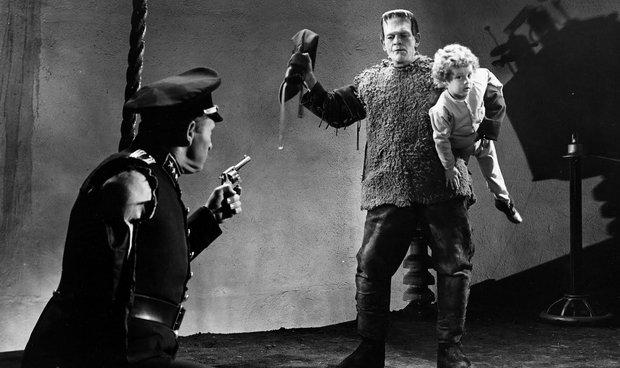
The Plot: Wolf Frankenstein (the son of Henry Frankenstein, who’d created the monster in the first film) has come to live in his ancestral home in the burg of Frankenstein (presumably somewhere in Germany). The townsfolk are unhappy about this, as they remember the havoc created by Henry and his monster. Wolf has arrived with his wife and his son (played by a precocious 4-year-old Donnie Donagan, with an anachronistic Texas accent. Donagan, who soon left show biz and went on to become a career, decorated Marine, appears to be the only surviving actor associated with the early Frankenstein films. If you have evidence to the contrary, please let me know!)

Anyway, Wolf discovers Ygor (or Igor, if you prefer), who has been living in Dr. Frankenstein’s abandoned laboratory and tending to the Monster, who somehow has survived the castle explosion at the end of Bride, but now is sickly and in some sort of a coma. Wolf decides to help the creature, in the hope that it will then be available for study and the advancement of science. Of course, things don’t work out that way…

Nothing is Written: Son of Frankenstein
Donnie Donagan, in the grips of something less menacing than the Viet Cong soldier who later would stab him.

After the usual mayhem, Wolf realizes he has to terminate the experiment, and the creature is dispatched into a pit of boiling sulfur. Surely that will kill the creature once and for all, right? (Spoiler alert: Probably not.)

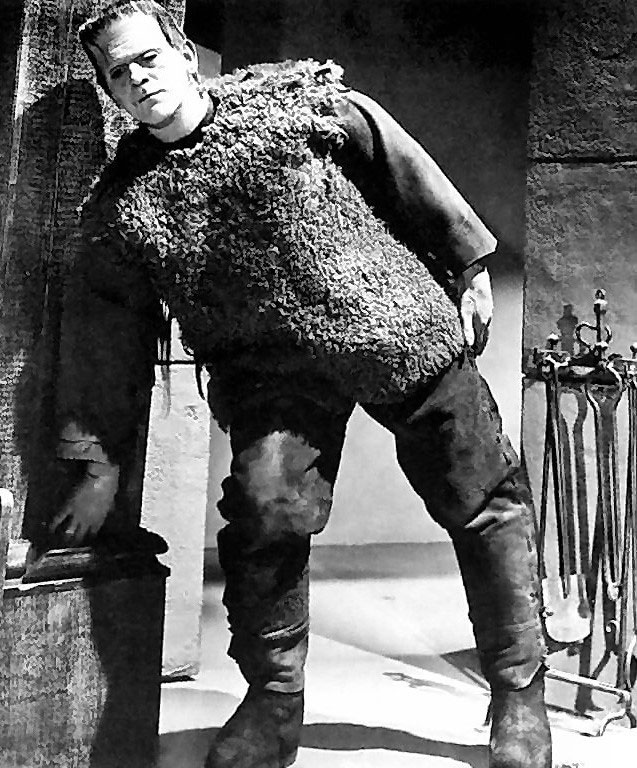
The Monster: Played once again by Boris Karloff. You’ll recall that he developed the ability to speak in Bride of Frankenstein, but for some reason he no longer speaks in this installment. He’s also got a mohair suit (but no electric boots; you know I read it in a magazine).

Eerie Essentials: Son of Frankenstein (1939) - Morbidly Beautiful
Hey Kids, Shake it loose together…

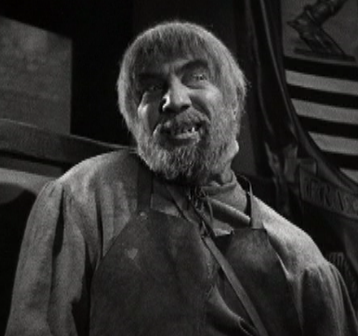
Karloff’s performance is one of this film’s major attractions, but he doesn’t actually get a huge amount of screen time. Clearly the real stars of this film are Basil Rathbone (Wolf Frankenstein), Bela Lugosi (Ygor), and Lionel Atwill (Inspector Krogh). What? Didn’t I mention that Bela Lugosi (of Dracula fame) plays Ygor? It’s actually a very impressive performance. In fact, it’s probably Lugosi’s best role after Dracula. (You’ll recall that Lugosi originally turned down the role as Frankenstein’s monster in the 1931 classic, and eventually came to regret that decision. It’s nice that he could finally get into one of Universal’s Frankenstein movies.)

Classic Film and TV Café: Is "Son of Frankenstein" the Best of Universal's  Series?
Lugosi, lacking a vampire’s dental care.

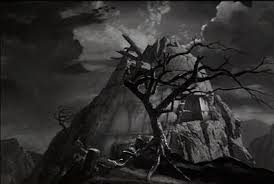
The Atmosphere: It’s said that this movie was originally planned to be filmed in color, but ultimately it was decided that black and white would provide the better atmosphere. This movie feels like a German expressionist film, with huge sets built at odd angles, deep shadows, the otherworldly laboratory of Baron Frankenstein, and Wolf’s growing detachment from reality.

The Son of Frankenstein | Scifist
Paging Dr. Caligari….
The ruined laboratory

This has the ideal, classic monster-movie atmosphere: an ancient castle, bleak landscapes, lightning storms, steaming sulphur pits, secret passageways, science-fiction-inspired laboratory equipment, and an all-star cast (Karloff, Lugosi, Rathbone). So much of this film has become monster-movie cliches, but at the time is was fresh indeed. For the modern viewer it has a comfort-food quality, offering familiarity and old-fashioned formulas while not placing much demand on our brains or palates.

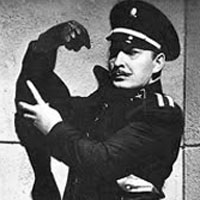
General Comments: I really like this movie. True, I can’t see Basil Rathbone without thinking of Sherlock Holmes, and Donnie Donagan is a little too precocious for my tastes. But Karloff does a masterful job again as the monster, and Bela Lugosi is downright scary as the crazed outcast with a broken neck who somehow is able to control the monster. I also want to give special recognition to Lionel Atwill, who plays a police inspector that’s reminiscent of Claude Rains’ French police captain in Casablanca. Both characters have a duty to stop the lead character (Baron Frankenstein and Rick Blaine), but they both also find themselves befriending those lead characters. Atwill’s police inspector is the hinge of the whole plot, and he plays it convincingly and with flair.

The Son of Frankenstein | Scifist
Inspector Krogh, The Man with the Wooden Arm (apologies to Frank Sinatra).

So I urge you to check out The Son of Frankenstein. And do so before you watch tomorrow’s entry, which is….

Tomorrow: Mel Brooks takes all three of the Karloff/Universal Frankenstein movies and creates a spoof that’s become a classic in its own right. You can watch Young Frankenstein on Amazon Prime Video, if you have that service. (It doesn’t seem to be available on YouTube.)

Frankenstein movies

Bride of Frankenstein (1935)

The unexpected success of Universal’s original Frankenstein got the studio execs thinking: Let’s do a sequel! They asked director James Whale to crank out another one, but he demurred for several years. Eventually he relented, and in 1935 Universal released its second Frankenstein movie: “The Bride of Frankenstein.”

Amazon.com: Bride of Frankenstein (1935) Movie Poster 24"x36": Posters &  Prints

In addition to getting James Whale take the director’s chair again, Universal again signed up Boris Karloff as the monster and Colin Clive as Baron Henry Frankenstein. Dwight Frye (who’d played Fritz [essentially, Igor] in the first movie reappeared here as a different assistant. A few other bit players were also recast. The movie was so successful that Universal would go on to make a number of other Frankenstein movies, and for the next decade or so the studio would be known for a whole range of monsters.

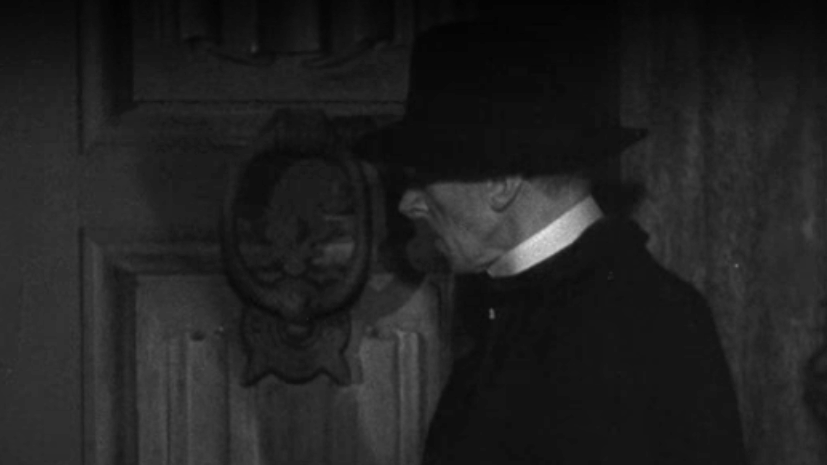
The Plot: This movie picks up essentially where its predecessor left off: With the monster presumably destroyed in a fire in an abandoned windmill, and with Baron Frankenstein recuperating at home and vowing to put all this behind him. Of course, we soon learn that the monster is not in fact dead, and he re-emerges, a bit the worse for wear, to terrorize the village. At almost the same moment, Baron Frankenstein’s old teacher, Dr. Pretorius, shows up on the Baron’s doorstep, looking for all the world like “The Exorcist.” But rather than casting out demons, Pretorius is clearly on the dark side, and wants to team up with his old pupil to create a female creature. The monster (Karloff), evidently feeling a bit randy, is all for that idea. So between the monster’s threats and Pretorius’ kidnapping of Henry’s wife, Henry agrees to the scheme. What could go wrong?

Dr. Pretorius-cum-Father Damien

And yet it’s worth noting that the idea of the monster demanding a female mate was actually part of Shelly’s original story. It’s one of the small ways that the movie hews to its source material.

The Monster: Boris Karloff reprises his role as the monster. But there are a few small changes. For starters, Karloff’s makeup now includes some burns (because he’s supposed to have survived a fire) and his hair is largely singed away. He face also looks fuller, because (unlike in the first movie) he did not take out the removable bridgework from his mouth. (He’d removed it in the first movie in order to create a more hollow-cheeked, cadaverous appearance.)

But the biggest change to the monster is that he now speaks, albeit with a limited vocabulary. (One review I read pegs his vocabulary at 41 words.) Karloff is said to have been strongly against the decision to have the monster talk, feeling that it removes some of the mystery from the creature. But director James Whale and the Universal execs insisted, presumably knowing a good gimmick when they see one.

Watch The Bride of Frankenstein | Prime Video
Words cannot express

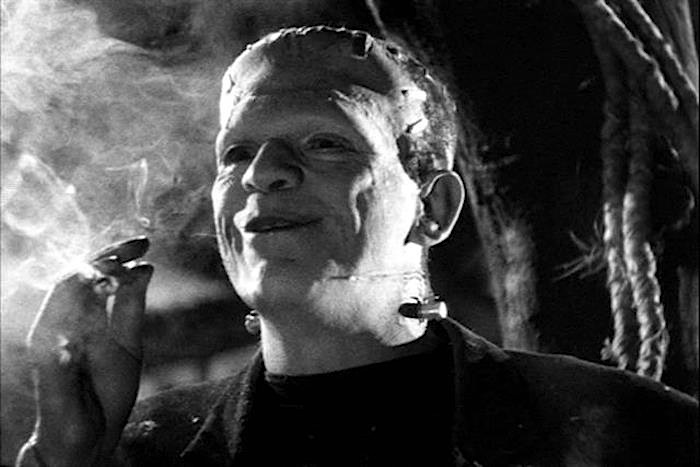
As with the first movie, the monster is portrayed sympathetically. In fact, this time around, he’s almost downright likable. He befriends a lonely hermit, and delights with childlike wonder at food, drink, music, and even cigars.

bride-of-frankenstein | The Kim Newman Web Site
Who cares about emphysema when Doc Frankenstein can hook you up with new lungs?

But wait! There’s more! There’s a second monster in this movie, and it’s the titular Bride. And yet, the Bride does not even show up until the last few minutes of the film. She has no speaking role, and doesn’t do much more than just peremptorally spurn her would-be mate. Still, her character would go on to become one of the most iconic monsters in Universal’s stable.

Never the Monster, Always the Bride: The Bride of Frankenstein in film and  television
A hunka-hunka burnin’ love

The Atmosphere: “Bride of Frankenstein” was filmed entirely on Universal’s sets, and the atmosphere feels very similar to the first movie. There are graveyards, castles, electrical storms, that same mad-scientist’s laboratory, and torch-lit dungeons. But James Whale had clearly honed his craft between the two movies, adding atmospheric touches throughout. For starters, there’s actually a music score (underpinning most scenes). The cinematography seems a bit more nuanced, and the use of shadows is spooky and powerful.

MEMORABLE MOVIE QUOTES: THE BRIDE OF FRANKENSTEIN (1935) | This Is My  Creation: The Blog of Michael Arruda
Alas, poor Yorick…

In fact, the atmosphere is so strong and, well, “atmospheric,” that the movie is able to indulge in a bit of humor without descending into farce. Dr. Pretorius is of course a villainous character in this movie, but he’s also the main source of comic relief. Start with the fact that he’s a bit over-the-top as an (unacknowledged) “old queen” (to use a term that the actor, Ernest Thesiger, would use). One wonders if it’s an in-joke when Baron Frankenstein’s maid says Pretorius is “a very queer old gentleman.” Pretorius also seems to engage in a pun when says he’s come to speak with Herr Frankenstein on a “grave” matter. There’s also an extended sequence where Pretorius shows off miniature people he’s created (having not yet figured out how to make them full size), and the antics of these miniature people are a source of hijinks. There are other occasions for levity involving the Burgomaster, as well as a scene with some “resurrection men.”

General Comments: It’s a fun movie that’s well worth watching, certainly for Karloff’s acting but also for the added fun of Dr. Pretorius. The movie contains a number of the cliches that we’ve come to associate with the Frankenstein story (the monster’s interaction with the blind man, the iconic “Bride of Frankenstein” creature, the lightning storms, the old castle on a hill….)

There’s just one part of this movie that’s really odd, and that’s the beginning. The movie opens with Mary Shelley (author of the original Frankenstein story), the poet Percy Shelley (her husband), and the poet Lord Byron, sitting together in a drawing room while a fierce storm lashes at the windows. In real life, these three had engaged in a competition to see who could write the best horror story, and it was in this way that the book Frankenstein was born. In this vignette in the movie, Lord Byron contrives to summarize Mary Shelley’s book, then asks her to develop the story further. We then shift to the Karloff movie, which presumably is the unfolding of the rest of Mary’s story.

Discovery of Lord Byron's Copy of FRANKENSTEIN Seems to Verify Questions of  Authorship | Unleash The Fanboy
Yes, she also plays the–ahem–titular Bride.

The woman who plays Mary Shelley is Elsa Lanchester. Interestingly, it is she who plays the Bride of Frankenstein as well. And while Lanchester is listed in the opening and closing credits as Shelley, the credits don’t list her as the Bride. Instead, the actress playing the Bride is listed simply as “?” (You’ll recall that the actor portraying the monster was listed as “?” in the opening credits of the first movie, and that Boris Karloff was listed only in the closing credits. In Bride, Universal makes a big deal of listing their star simply as “Karloff.” Man, had he gone from no one to a major star in just a few years!)

One other character note: The inimitable Billy Barty appears in this movie. Most of his scene ended up on the cutting room floor, but you can catch a glimpse of him. Hint: He’s the baby in one of Dr. Praetorius’s bottles. I’m not making this up.

Anyway, if you enjoyed the first Frankenstein movie, you’ll almost certainly enjoy this one. In fact, you really need to do so if you’re going to appreciate Mel Brooks’ satire from the 1970s, which we’ll get to in due course…

TOMORROW: Son of Frankenstein, available on YouTube.