Halloween Cocktails

Of Celery and Olives

You’ve played the game…now make the drink!

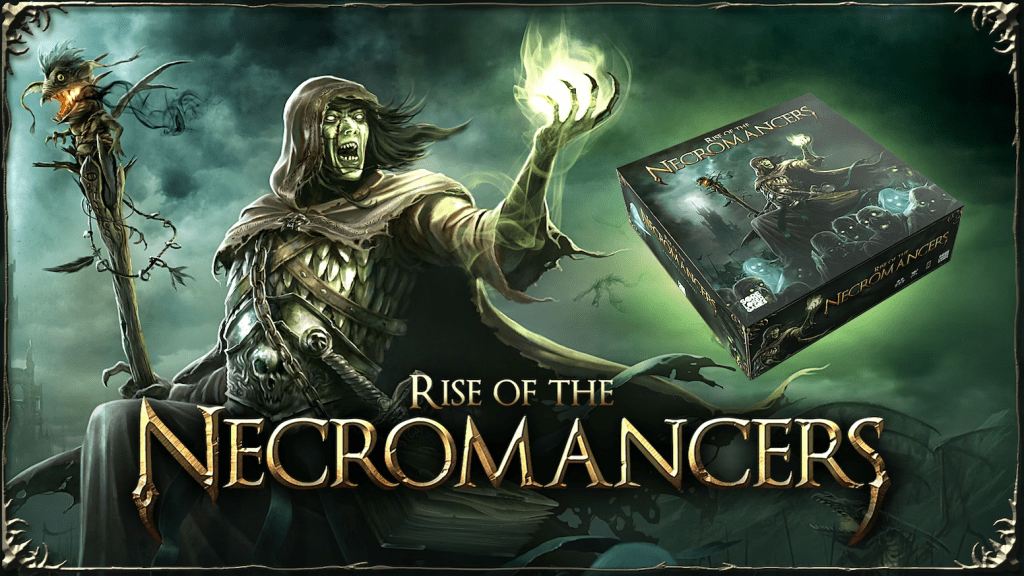
Today’s drink is the mysteriously-named Necromancers Martini, thoughtfully brought to my attention by my daughter-in-law Katelyn. (Thanks, Katelyn!) But first let me tell you a little story:

When I was a wee lad, my grammar school would occasionally have a book sale, and we’d be sent home with brochures from Scholastic Book Services (TM) hawking cheap paperbacks. Mom and Dad would usually let me get a book or two, and one year, for reasons still unclear to me, I chose something called “Peanuts Cook Book.”
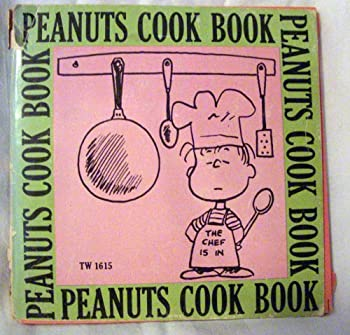
I had absolutely no interest in cooking, but I suppose the Peanuts theme appealed to me. The book contained recipes for “Lucy’s Lemonade,” “Great Pumpkin Cookies,” “Linus’s Security Cinnamon Toast,” and a bunch of others. The only thing I ever made was the cinnamon toast, which involved (1) toasting bread, and (2) sprinkling it with sugar and cinnamon. (By the way, I think my parents paid like a buck for that book in 1969; a used “collectible” copy is currently available for $51!)
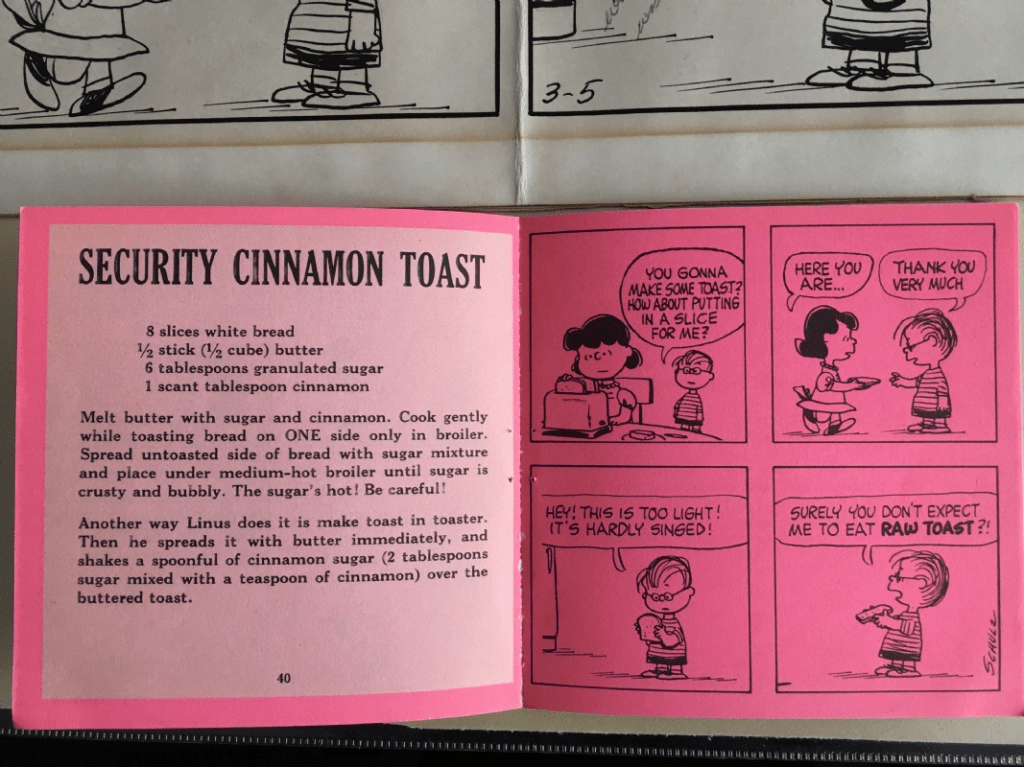
Anyway, my point in bringing this up is that, even at the tender age of eight, I realized that the book was a cynical effort to capitalize on the popularity of Peanuts. The recipes really had nothing to do with Peanuts at all. They were just basic recipes for midcentury kids fare, such as mac and cheese, a hot cheese and tomato sandwich, and the aforementioned cinnamon toast. The only difference is they slapped a Peanuts-related name onto each recipe, and added a few topical Peanuts cartoons.

I think you can see where this is going.

The Necromancers Martini comes from the latest issue of Benicia Magazine, which also contains a couple of other Halloween recipes that the author promises are “just the thing to get us into the spooky season.” A necromancer, as you may or may not know, is a person who communicates with the dead. I know this because a year or two ago I watched a movie from 1941 called The Necromancers. (It’s also called The Spell of Amy Nugent, Passing Clouds, Spellbound, and Ghost Story.) Almost everyone reviewing it on IMDB hates the movie, and admittedly Citizen Kane it ain’t. But I found it oddly entertaining, relating the story of a young man seeking help from spiritualists to get in touch with his deceased, young fiancee.
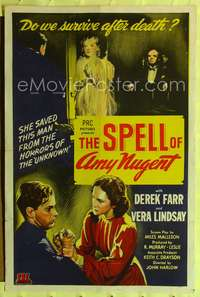
Anyway, a Necromancer Martini sounds suitably spooky and appropriate for our Great Halloween Cocktail Adventure, so let’s make one!

The recipe: Add 1 oz Bloody Mary mix, 1.25 oz gin, and 1/4 oz. dry vermouth to a cocktail shaker. Add ice and shake. Pour into a martini glass that has celery salt on the rim. Add a garnish of olives.
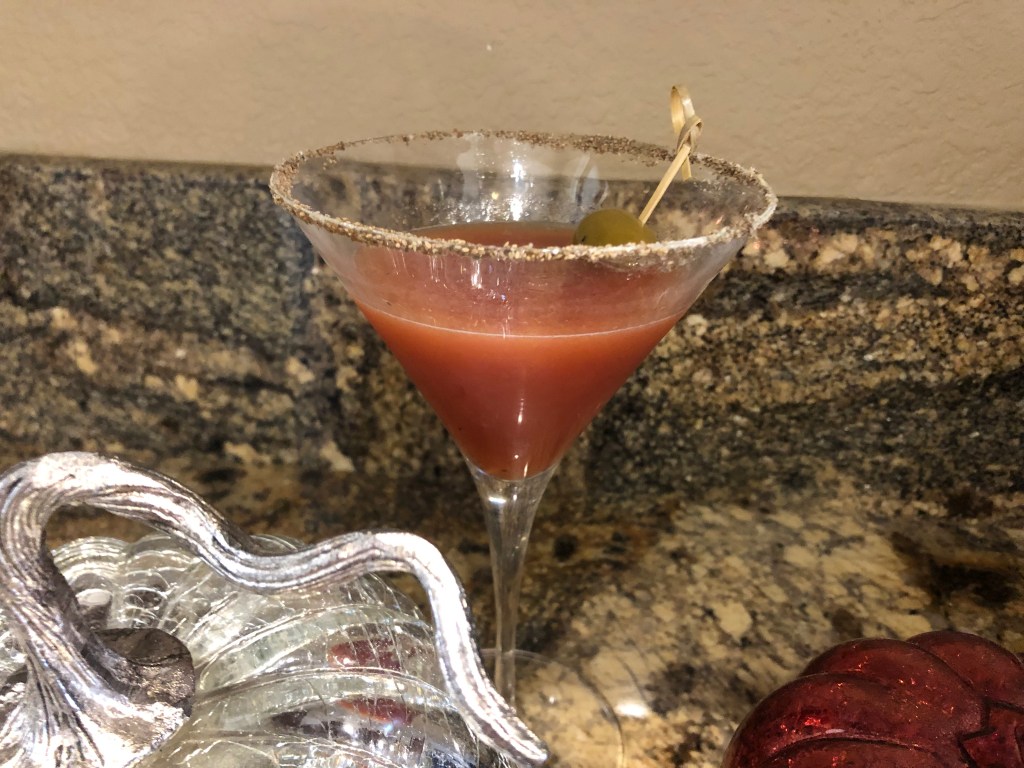
The Ratings: Did you see what just happened? We took your standard martini and added some Bloody Mary mix. That’s it. So part of me feels cheated — there was no effort (at least, none written into the recipe) to link the name (“necromancer”) to the finished product. It’s like Linus and the cinnamon toast. The name is irrelevant to the drink.

But maybe I’m being too unimaginative. Bloody Mary, of course, comes from 19th-century folklore as an apparition that appears in a mirror and conveys information about your future (or scratches your eyes out, depending on the version). So maybe it’s not a huge stretch to say that the necromancer martini cleverly symbolizes a folk story about communicating with the dead.

Anyway, the appearance is very much like a standard Bloody Mary breakfast drink that’s been poured into a martini glass. The dissonance of the stemware is playful, I suppose. And the drink does kind of resemble blood. So, while I wouldn’t normally think of this as a “Halloween” drink, I do understand how it could be so categorized. I’ll give the appearance two points.

The taste is confusing. We’ve either taken a perfectly good dry martini and added Bloody Mary mix, or we’ve taken a perfectly good Bloody Mary and substituted gin for the vodka and olives for the celery. Either way, the overall effect is a little jarring. It’s not bad, though, and by the last gulp I actually wished I had a little more. I’ll give it 2.5 points. But it would probably have received more points if it were just a straight-up Bloody Mary.

In terms of the name: You had me at necromancer. Either as a cynical effort to pass off this martini as a Halloween drink, or as a clever and subversive link between Bloody Mary and necromancy, the name features a solid link to Halloween and doubtless sent many people running for their dictionaries. Two points.

Grand Total: 6.5 points.

Bonus: You can watch The Necromancers/Spellbound/Passing Clouds/Ghost Story/The Spell of Amy Nugent for free on YouTube. Drink a Necromancers Martini while you do so!
Halloween Cocktails

Absinthe makes the heart grow fonder

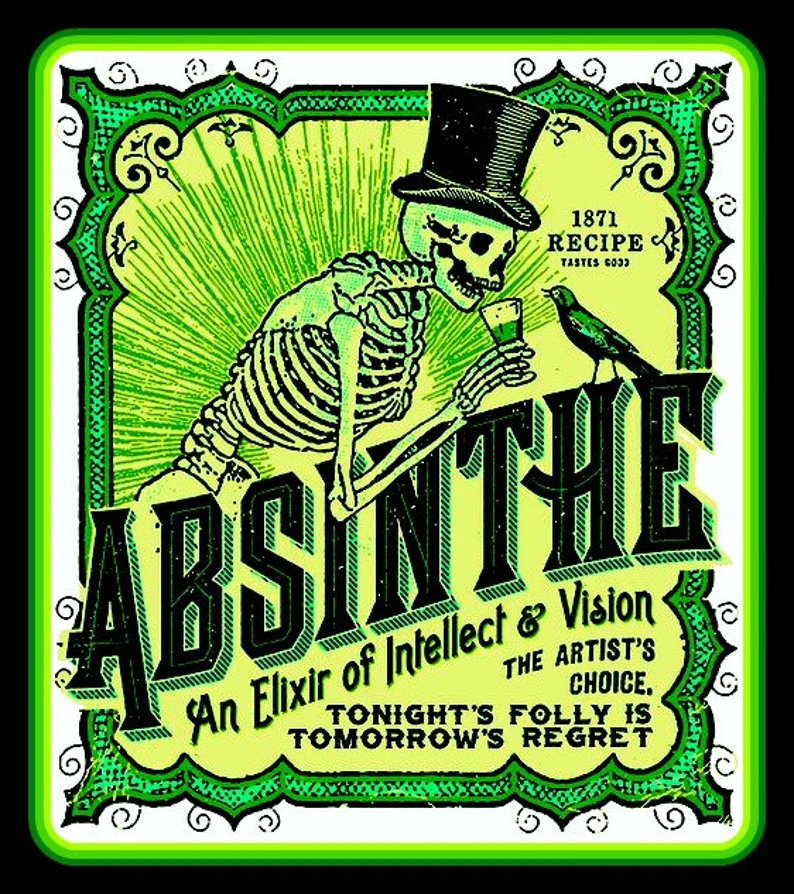
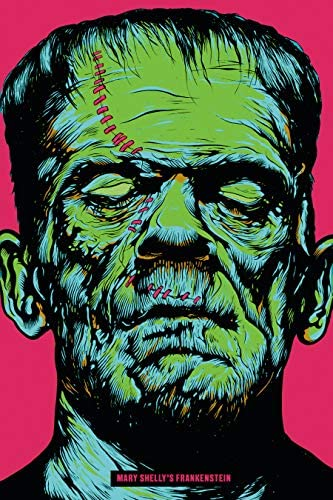
One drink that shows up on a couple of Halloween cocktail lists is absinthe–not as a mere ingredient, but rather as the whole drink. The unearthly green color is in the Frankenstein vein, but more to the point, it has a mysterious and Byzantine history that involves hallucinogenics, evil spirits, and the likes of Edgar Allan Poe. Let’s review:

Color me absinthe

Absinthe is a high-alcohol spirit made from wormwood, anise, fennel, and various other exotic and ordinary ingredients. It tastes strongly of anise, and has been compared (usually favorably) to Jagermeister. Absinthe has a distinct green color which, in the more authentic (and expensive) versions occurs naturally from the ingredients. In the 19th Century absinthe became a popular drink among the Bohemian set, who would gather in cafes and drink the stuff all evening. They called the drink “The Green Fairy” for its supposed magical effects.

Tinkerbell she’s not.

Conservatives railed against absinthe as a hallucinogenic spirit that was wreaking havoc with young people. Those claims were overblown, although absinthe does include trace amounts of thujone. As is often the case, the moral outrage from conservatives made absinthe all the more popular among the hipsters. Notable absinthe drinkers (addicts?) included Edgar Allan Poe, Oscar Wilde, and Lord Byron, which would be enough to solidify its Bohemian street cred.

Rhapsodic Bohemian (“He’s just a Poe boy from a Poe family…)

For most of the 20th century absinthe was banned in the US and most of Europe. It wasn’t until 2007 that America’s ban was lifted. Because we’re fortunate enough to be living in the post-absinthe Prohibition era, we’re able to add this drink to our October list. So what are we waiting for?

The recipe: With its high alcohol content (the stuff I used is 100 proof), absinthe is traditionally diluted with water. Also, as absinthe contains no sugar (and thus it is not classified as a liqueur), the drink is normally prepared with the addition of a sugar cube. Now, there are two ways to do this preparation: the French method and the Bohemian method. Guess which one I used?

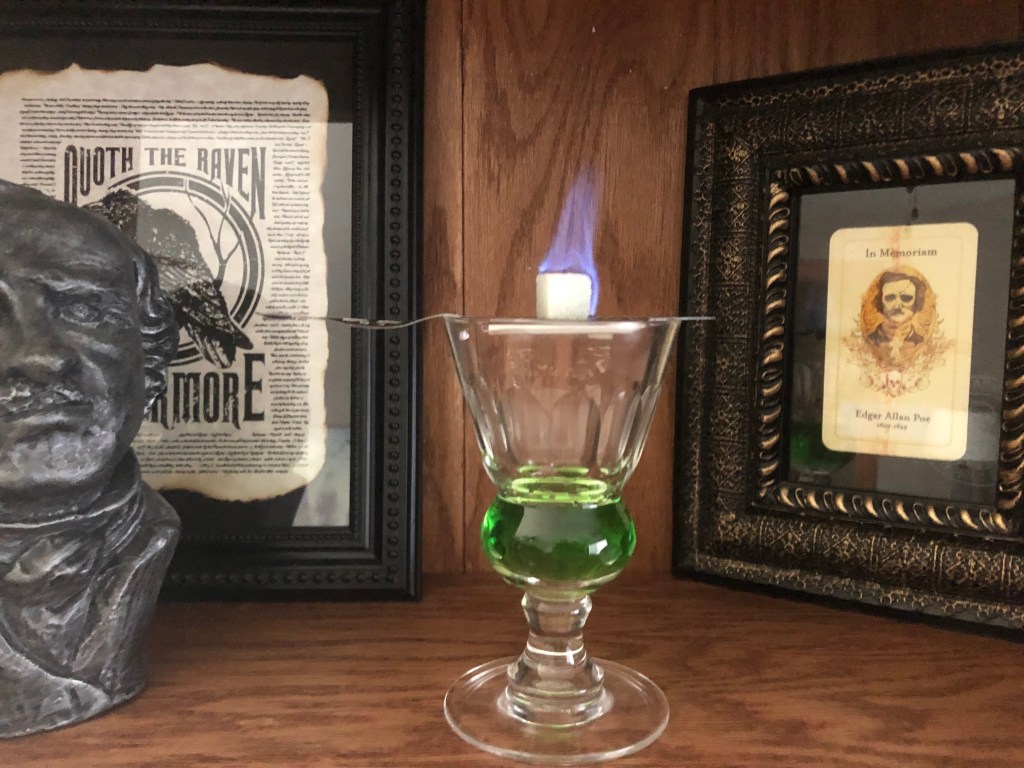
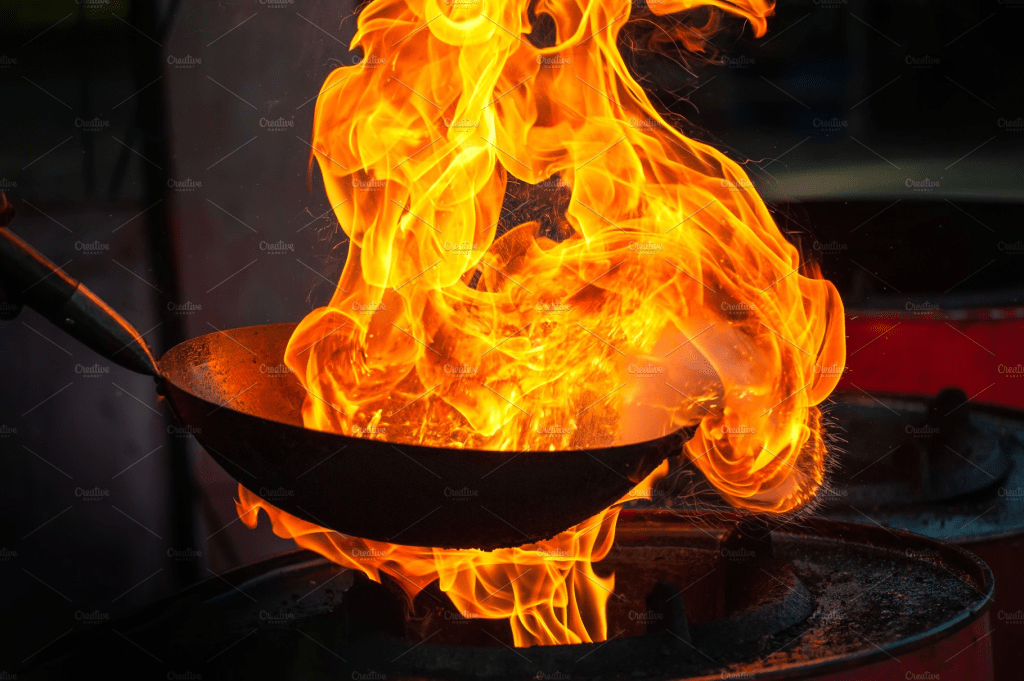
There is a distinct ritual to all this. First you need to get yourself an absinthe glass, whose shape makes it easy to measure the exact amount of absinthe to pour from the bottle. Then you need to get a slotted absinthe spoon. (All this stuff is available on Amazon.) Rest the spoon on top of the glass, and place a sugar cube on the spoon. (I had to go out to the barn and steal a sugar cube from the horses’ treat stash.) Now, pour a little more absinthe over the sugar cube to soak it with alcohol. Then light it on fire. I’m not making this up.

Horse treats burn, evidently.

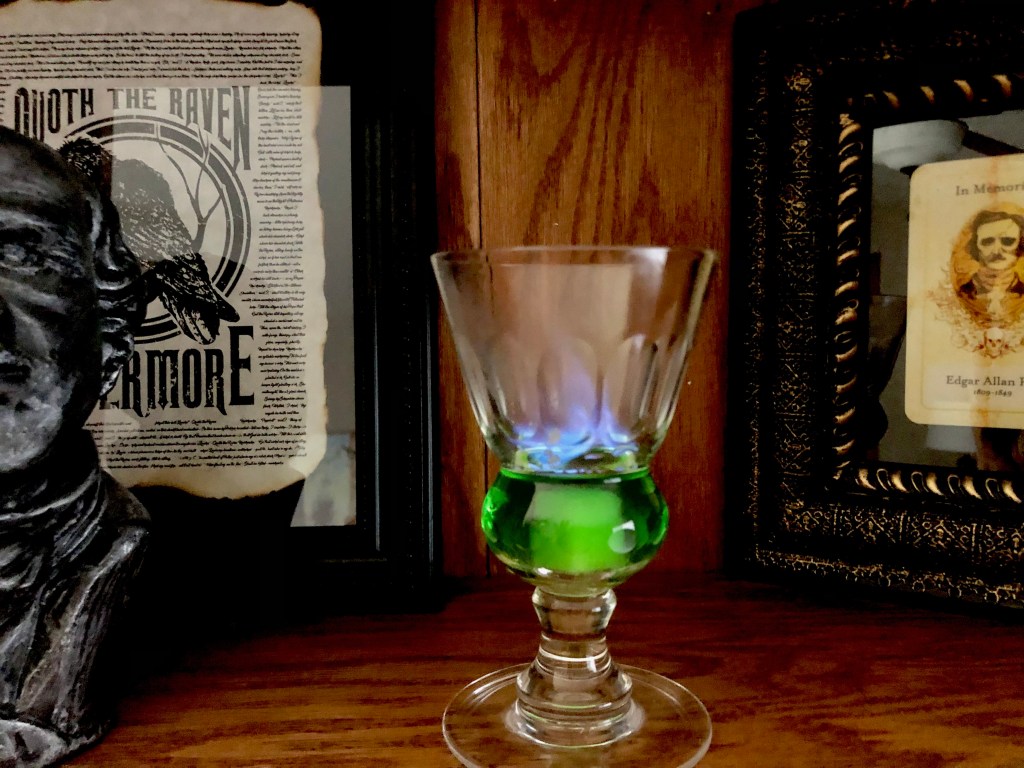
Now, dump the flaming sugar cube into the absinthe, setting it ablaze.

Trouble and toil indeed!

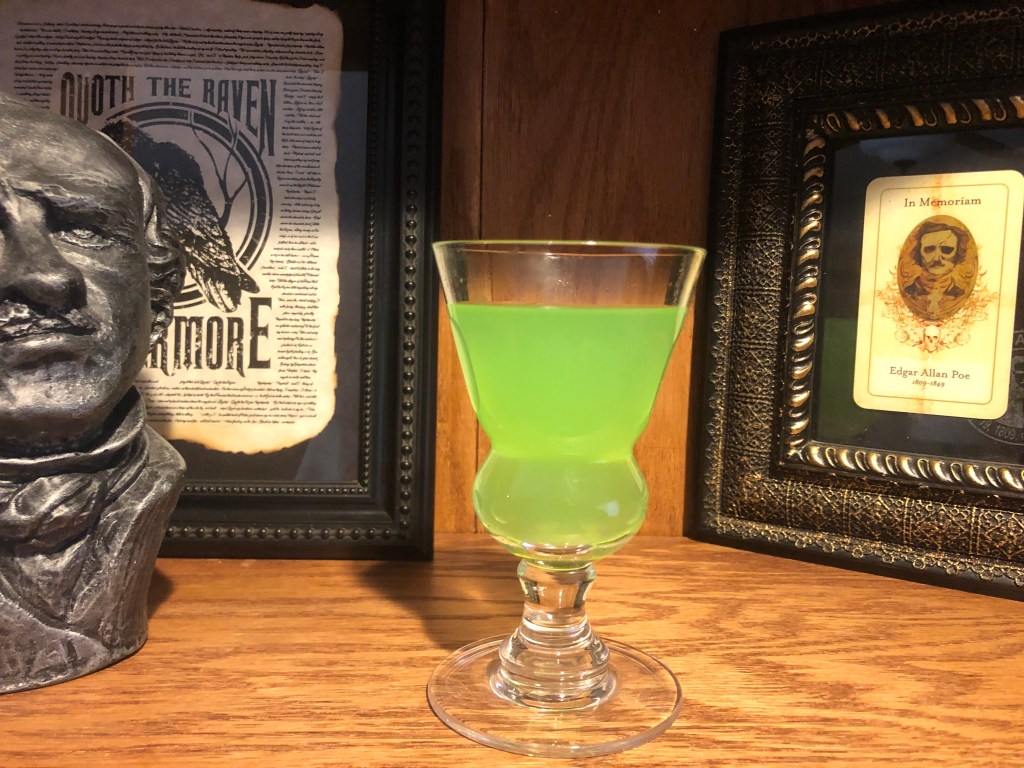
And finally douse the flames with a shot glass full of water. Everything mixes together, with some of the ingredients dissolving and some coming out of solution, resulting in a cloudy liquid called louche. Drink up and meet the Green Fairy!

I didn’t get much of a louche. I’m told that’s because I used a cheap absinthe.

The Ratings: I’m going to consider all the ritual to be part of the “appearance,” and for that I’m awarding full points. The whole process is quite Steampunk, and all the flames and color changes remind one of a mad scientist’s laboratory. The final product looks suitably Gothic in its fussy stemware. 4 points.

But how did it taste? The resulting drink felt more watery than I expected it would be. I used 1 oz of absinthe and 3 parts of water, while Wikipedia says one typically uses between 5 and 7 parts water! So, I guess this preparation is supposed to be watery. The water of course dilutes the alcohol content, which would allow you to spend all day drinking the stuff in a Parisian cafe. Still, even though I thought it watery, it wasn’t unpleasantly so. The taste stands up to the water, with the botanicals fighting each other on your tongue, and there’s a sweet, medicinal bite that hangs on the finish. Clearly this is for sipping rather than quaffing. I can see how you could get used to this. The taste pairs really well with a standard Bohemian lifestyle, but for drinking under more prosaic circumstances, it’s really not appropriate “cocktail” fare. Therefore I’ll rate the taste in the middle at 2.

I’m not sure about how to rate the name. The simple name of the spirit doesn’t exactly evoke Halloween, but absinthe’s close association with insanity, hallucinations, and moral degradation surely helps nudge up the rating. And of course the nickname–Green Fairy–is a worthy Halloween name. So I’ll give it 2 points.

Grand Total: 8 points


Mixology Mailbag–

Acclaimed mixologist and family friend Erin R informs me that my misadventures with Chartreuse were my own damn fault. Apparently the amount of Chartreuse I was using in those drinks was absurd. She writes: “The internet is full of bad information and I blame that [the online recipe] for Steve’s mishaps here. Chartreuse should be used sparingly, most recipes use a quarter to half ounce. There are people who take shots of it, but that’s insane and very expensive!”

Erin also offers a superior Corpse Reviver recipe, which I may try before this month is out. Plus, I’m trying to commission her to design her own Halloween drink. Stay tuned.

Frankenstein movies · Halloween Cocktails

“OK, It’s about witch’s brew, but just hear me out.”

The relevance of the title to the post will be revealed near the end of this point. But here’s a hint:

Today’s drink recipe comes from loyal reader Alison K, who was a fellow grad student at UCSB. We’ve both moved on to greener pastures—in both our cases, quite literally.

Alison offered a drink called “Witches’ Brew,” which of course presents us with the age-old question: is it witches or witches’ or witch’s? Grammarians among my readership would weigh in. But not literally.

The 1980 movie with Teri Garr was called Witches’ Brew. You can watch it for free on YouTube here. But I can’t recommend it. The acting is as wooden as an Amish table. Garr’s work in Young Frankenstein is far superior.

“Hallo. Vould you like to have a roll in ze hay?”

Now where was I? I suppose the whole “witches/witches’/witch’s brew” trope comes from Shakespeare’s Macbeth (“Double double toil and trouble/Fire burn and cauldron bubble.”) But that recipe called for “Fillet of a fenny snake, In the cauldron boil and bake; Eye of newt and toe of frog, Wool of bat and tongue of dog, Adder’s fork and blind-worm’s sting, Lizard’s leg and owlet’s wing.” Perhaps knowing my low-level mixology skills, Alison sent a simplified verion.

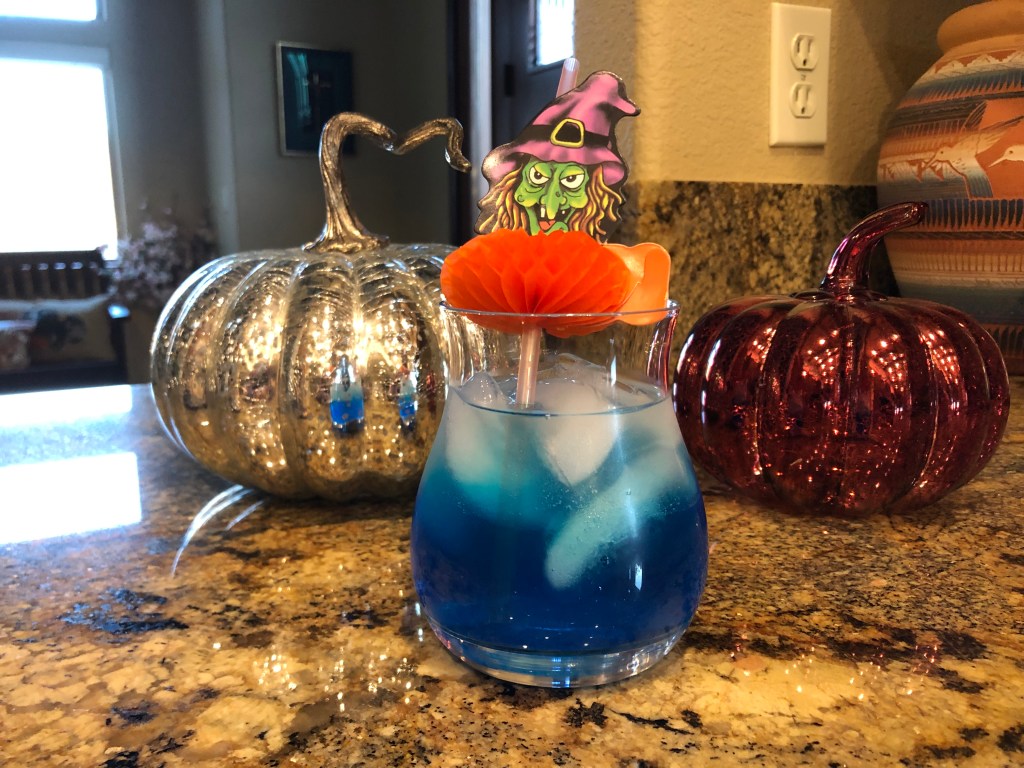
The Recipe: Fill a tall glass with ice. Pour 2 oz of gin and top with 2 oz. of sparkling lemonade. Very carefully and slowly pour 2 oz. of Blue Curacao into the glass, letting it settle on the bottom. Garnish with a sprig of rosemary.

I had no rosemary. Sorry.

The Ratings: OK, let’s be blunt: There’s nothing especially Halloweeny about a refreshing, light-blue drink. There’s no floating eyeballs or spiderweb of chocolate syrup or pumpkin puree. It’s just a light. blue. drink. The recipe implies that the Blue Curacao would be a separate bottom layer, with a lighter gin-and-lemonade layer on the top, but that’s no how it worked for me. I can’t in good conscience give this any points for appearance.

But how does it taste? My first sip of the drink was not especially positive. As the recipe directs me to let the Blue Curacao “settle to the bottom,” I figured you weren’t supposed to stir it. As a result, my first sip tasted simply of gin. So, I went ahead and stirred the drink vigorously, and that changed everything. Properly mixed, it’s a distinctly citrusy drink, with the Blue Curacao and the lemonade doing their thing. It’s both sweet and tart in a very balanced and pleasant way. And the carbonation from the lemonade keeps things fizzy and playful. I give it 3.5 points for taste. Ah, hell, I’ll give a full 4 points. That might just be the gin talking, but this is a very enjoyable drink indeed.

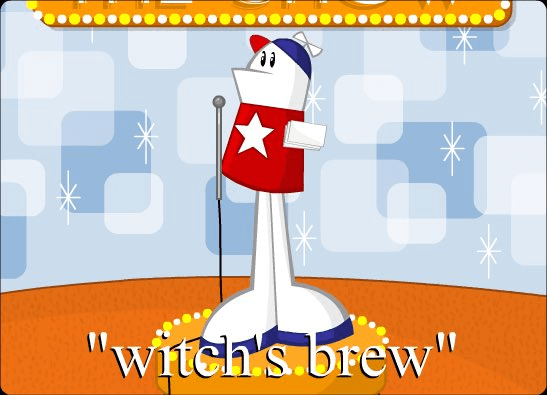
The name “Witches Brew” is certainly appropriate to the season. Although perhaps a little cliche, and perhaps not exactly a fair description of a drink with three ingredients (two of which are quite pedestrian), it’s a perfect description of our quarry in this monthlong quest. (Plus, it’s one of Homestar Runner’s catchphrases. If you weren’t an adolescent boy in the early aughts, and/or you weren’t raising an adolescent boy in the early aughts, here’s a short introduction.) Two points.

Grand Total: 6 points.

Bonus Tip: If you’re like me, you’ve been mispronouncing Blue Curacao all your life. Here’s how to say it:

Cars · Halloween Cocktails

Superannuated

Old-Fashioned Pumpkin

Today we’re going to take a break from those vile green liqueurs and get back to basics. We’re going to try a version of an Old Fashioned, that bourbon-based drink with an adjectival name. But the recipe gets Halloweenified with some pumpkin and maple syrup.

Dating back to the 19th century, the Old Fashioned is indeed old fashioned. It’s said that the drink was originally called a “bittered sling,” which I actually prefer as a name. But as drinks became ever fussier as time went on (recall my ordeal with the Herman), purists would ask their bartender for something “old fashioned,” and the new name stuck.

The Recipe: Mix 2 oz bourbon, 1 Tbsp pumpkin puree, 1/2 Tbsp maple syrup, 1/4 tsp pumpkin pie spice, 1/4 tsp vanilla extract, and a dash of Angostura bitters in a shaker. Pour over fresh ice.

The Ratings:

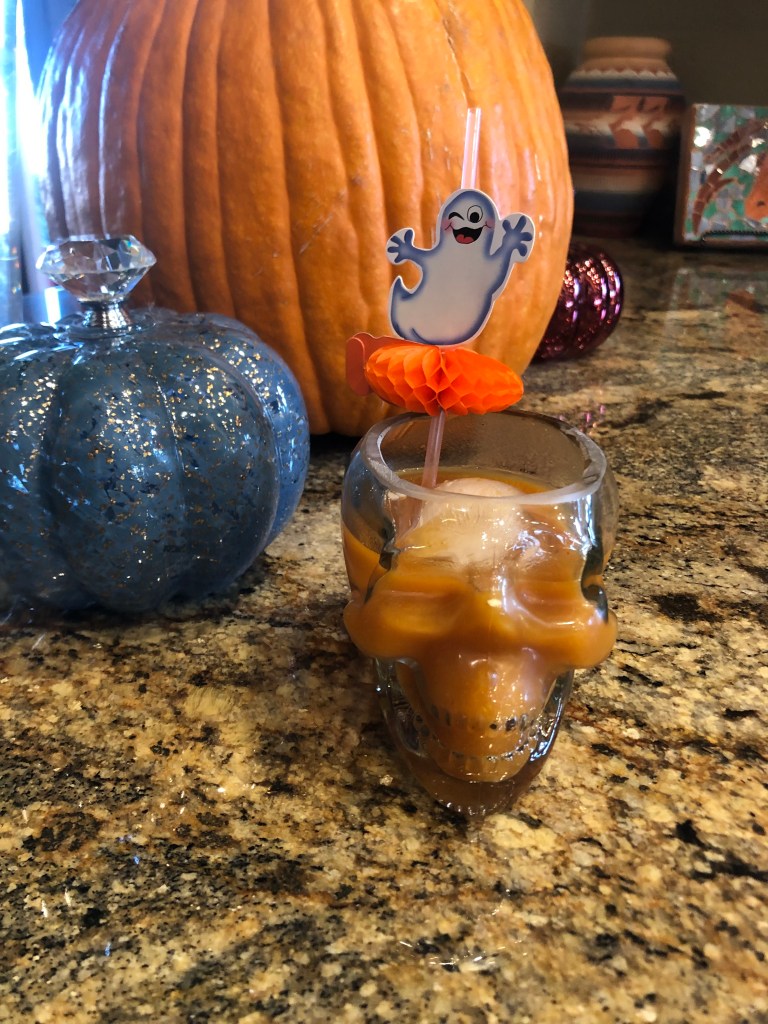
The appearance is somewhat off-putting. It’s not bright enough to be a frivolous, fun drink, and it’s not translucent enough to look like a proper Old Fashioned. The color looks like Bakelite plastic from the radio tuning knob of a 1940s Studebaker. It certainly doesn’t look like a Halloween drink. But it does have a vague pumpkin hue, so I’ll give it two points.

Old Fashioned indeed.

In terms of taste, the bourbon dominates, as it should. The bitters fight a bit against the maple syrup, and the pumpkin spices kind of get lost in all the infighting. But the pumpkin puree gives it a depth and heft not normally present in an Old Fashioned. I’ll give it 2.5 points.

I give the name one point. It would have been two points if they’d had the presence of mind to name it an Old Fashioned Pumpkin.

Grand Total: 5.5 points.


Dark N’ Stormy Corner

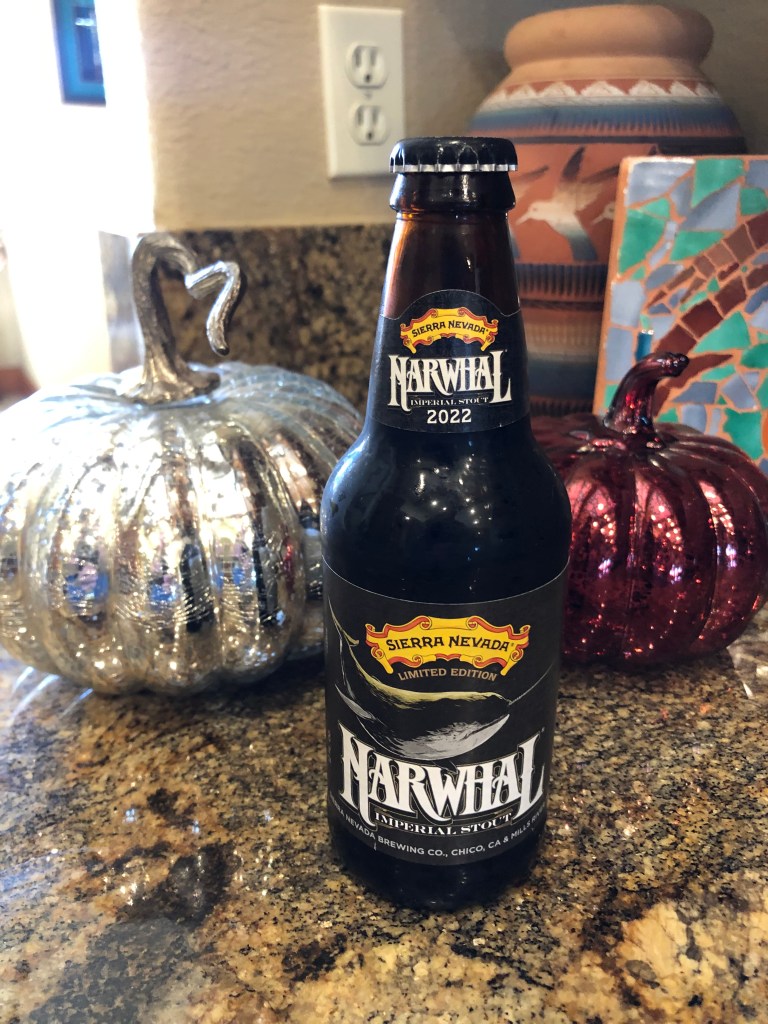
Recall that I’m trying to find a way to make this Dark N’ Stormy darker and stormier. This time I tried adding 2 oz of Sierra Nevada’s Narwhal to the drink. It did not improve on the taste. In the same way that filling your mattress with glass shards does not improve on its comfort. I find it surprising, because Narwhal (only available seasonally) is my favorite widely-available imperial stout. Best to just drink the beer on its own.

Do yourself a favor and grab a six pack before they’re gone til next year!

As for the Dark N’ Stormy, it’s back to the drawing board.

Halloween Cocktails

Frying Pan, meet the Fire.

When we left off yesterday, I had made two Munsters-themed drinks (The Herman [or, as Grandpa calls it, The Hoiman] and The Lily). The drinks were a huge disappointment, and I traced most of the problem to a foul spirit called Chartreuse. (Foul Spirits would be an excellent name for a rock band, by the way.) Now, before I tell you what happened next, let me reiterate that Chartreuse is 110 proof (i.e., 55 percent ABV). And I ended up consuming one Herman and one Lily and then another Herman (as I tried omitting the lemon juice from the second one, hoping I could make the thing drinkable). Now for a little math: I drank 1.75 oz plus 1.5 oz plus 1.75 oz of Chartreuse, for a total of 5 oz of the foul stuff. And that equates to 5 x 55% = 2.75 ounces of pure alcohol. Now, maybe that doesn’t sound like a lot to you young ones, but at my advanced age that’s enough to do some damage. Or think of it this way: I drank the alcohol equivalent of 4.58 cans of that Budweiser swill you drink.

Then I went to bed.

I awoke around 2 pm with a pounding headache; I felt feverish; and my body felt like Indiana Jones’ after he’d been dragged behind a truck. (The wife says it would be worth it if I at least looked like Harrison Ford.)

I spent the next six hours in a feverish hell, weighing the pros and cons of ending it all right now. It might sound like I’m exaggerating, but I’m not. I don’t think it was purely the fault of the alcohol content. For it seems to me that one or more of the 130 herbs in that malignant, green swill destroy a person at a cellular level. Finally, around dawn, I was able to get a little sleep, and then a shower, and my condition had improved by 75 percent. In other words, I was now only feeling ghastly. Halloween theme indeed.

Now, as luck would have it, loyal reader Chris had sent me some recipes for various types of a drink called a “Corpse Reviver.” This sounded perfect. It had a suitably Halloween vibe, and also because my corpse needed reanimating. The Corpse Reviver is billed as a kind of hangover cure. What have I got to lose?

The Recipe: There are many different versions of this drink. Here’s the one I tried: Add 25 ml each (I just round it to an ounce) of London Dry Gin, sweet vermouth, triple sec, and lemon juice to a shaker. Add 1tsp abscinthe and 1-2 tsp simple syrup. Add ice and shake and pour.

The Ratings: Careful readers will note that I’m trying to counteract last night’s kitchen-sink drink that included a fussy green liqueur by drinking a different kitchen-sink drink that included a fussy green liqueur. (Today’s green spirit is absinthe. If you hate Jagermeister, you’ll detest absinthe.) Now, the Corpse Reviver only uses one teaspoon of the stuff, but somehow it dominates the drink. All you can really taste is the absinthe and the lemon juice. Which are two flavors that don’t belong on the same counter, let alone in the same drink. One sip was enough. I’m going to cure my hangover the old fashioned way: by eating a pint of ice cream in front of the TV in my underwear. No points for taste.

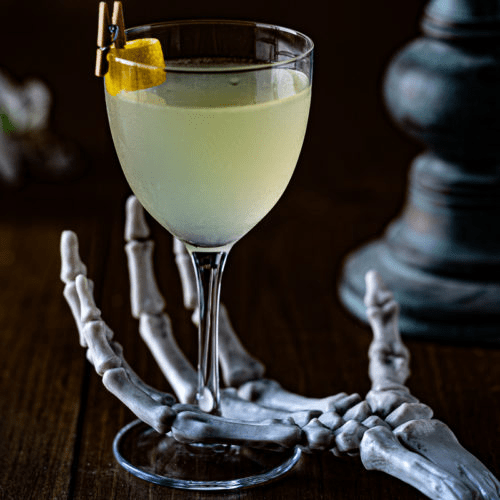
The appearance is unappealing. It resembles a cross between dishwater and a urine sample. But maybe that’s just because I’m still feeling a little green around the gills. No points.

Photo stolen from the Internet. Somehow, in my delirious state, I failed to take a picture of my version.

The name is worthy. I’ll give it two points.

Grand Total: 2 points.


Dark N’ Stormy Update:

In my spare time I’ve been experimenting with variations on the Dark N’ Stormy. I tried adding a spoonful of molasses in order to make it darker and give it a thicker profile. But the molasses congealed as soon as it encountered the cold drink. I tried shaking it up, which resulted in little shards of molasses drops swimming around the drink like dead, brown guppies. But even overlooking the appearance, the flavor was horrible. Surprisingly, molasses isn’t sweet enough for this drink. It lends a distinct tang and an odd taste of corn. Back to the drawing board…