bridges · cemeteries · churches · Obelisks · Road trips · trains

Philadelphia Stories

I’ve been working on a top-secret project (which will likely be revealed by the end of the year) and it involves, oddly, Benjamin Franklin. I’m not making this up. And this project has made clear to me how much my grasp of American history is lacking.

Growing up in California, I never learned much about the Continental Congress or the Revolutionary War or really anything that took place before 1849. I’ve made a few attempts to remedy this, including my trip with friend Vic to Salem, Mass.

So I’m now trying to fill in some of the gaps in my education Which is why this morning I found myself in The Quaker City for a few days of exploration. What could go wrong?

My crash course on Philadelphia actually began on the plane ride. I’d taken a red-eye from Sacramento, and my seatmate was a garrulous Philadelphian (if you’ll permit me that redundant phrase). He was on his way home after a vacation with his wife, but they were taking separate planes. It seems there was some kind of booking mix-up related to the use of frequent flyer points. But the real point, for my purposes, is that he was unexpectedly flying solo and looking for someone to talk to. And having learned that I was going to be sight-seeing around his home turf, he spent the next few thousand miles sharing his insights about the city. (Did you know that Elphreth’s Alley is the oldest continuously-habitated street in America?)

Anyway, I got breakfast and a Nissan Sentra near the airport and set out for downtown Philly. Ben Franklin is certainly well represented around the city. Bridges, parkways, institutes, boulevards, schools, and various other features of the city are named after Franklin. There’s even a large, modern sculpture of his distinctive bespectacled face and stringy hair on a random street corner.
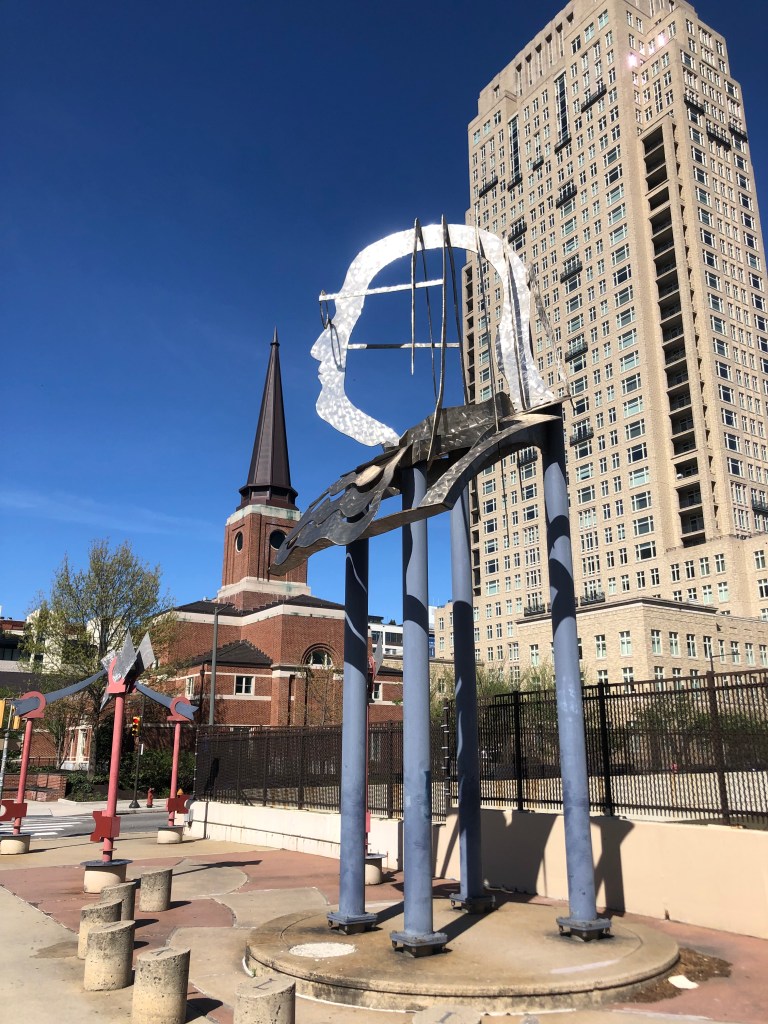
“Big Ben” sculpture from 1992.

While chatting up the National Park ranger at the Ben Franklin Museum, I learned the following story: Some years back the Philadelphia Inquirer was taking up a collection for a Frank Sinatra mural somewhere in the city. A rival paper objected, pointing out in an editorial that Philadelphia should instead create a mural for one of its native sons. And, perhaps as a joke, the editorial noted that Larry Fine (of Three Stooges fame) is one such native son. The idea nevertheless caught on, donations were made, and the mural was painted at the location (S. 3rd and South Street) where Fine was born.
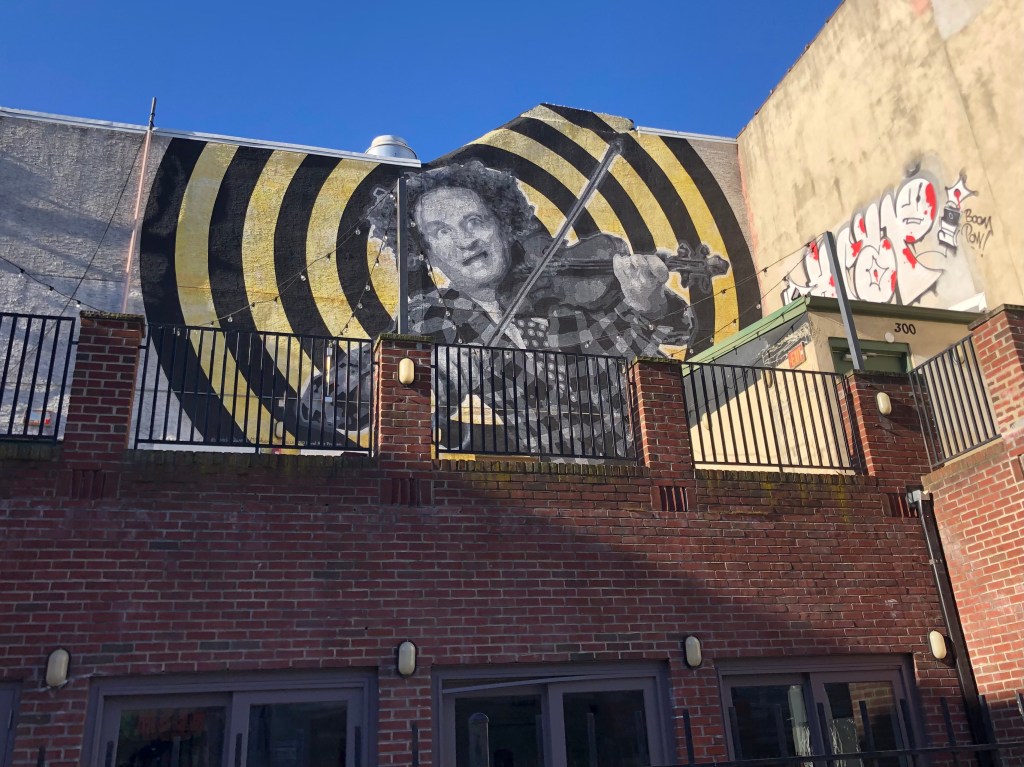
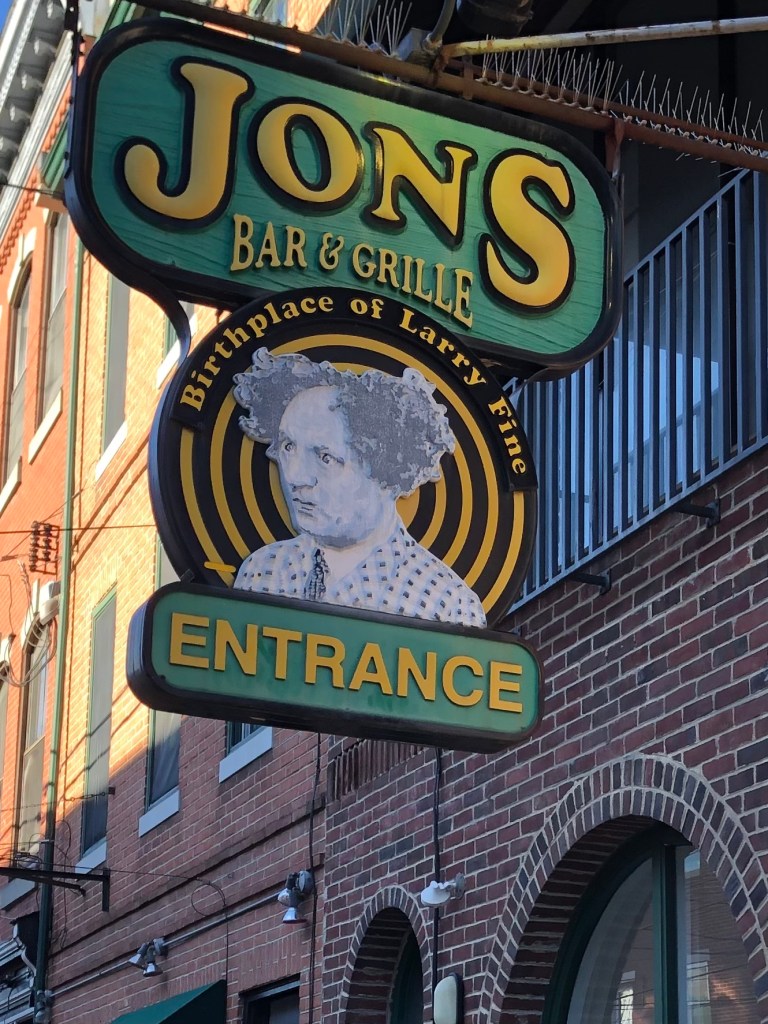
Giving Ben Franklin a run for his money.
A bar in the same building capitalizes on the Fine connection as well.

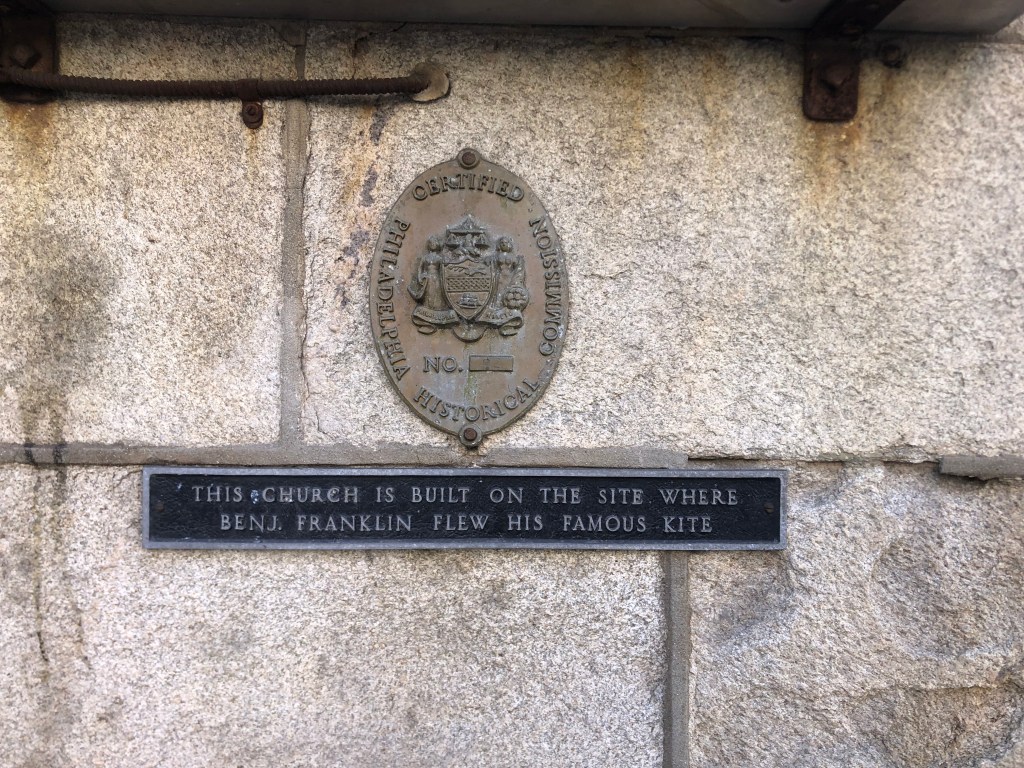
But I digress. I was talking about how Ben Franklin has captured this city’s imagination. And in addition to all the named structures and graven images, the city has been tagged with various plaques that commemorate Franklin’s various activities in the area. For example, on St. Stephen’s Church is a brass plaque which claims Ben Franklin conducted his famous kite experiment on this site in 1752.
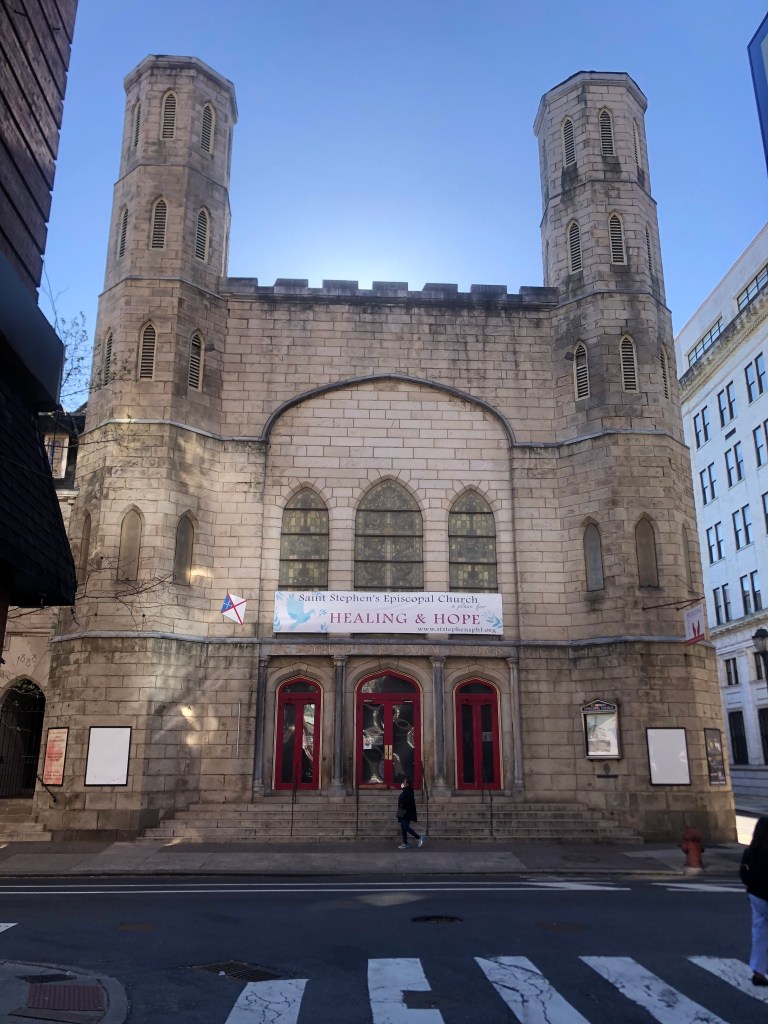
Built in 1823 at 10th and Ludlow, which may or may not be where Ben flew his kite.

Here’s a closer look at the plaque:

Now, it turns out that there’s considerable debate as to whether this is really the site of Frankin’s kite adventure. And while the “Certified” marker above the plaque would seem to lend credence to the plaque’s claim, it turns out the marker relates to the church building, and not to the plaque.

A few blocks from the dubious kite claim is a bare steel pipe structure outlining where Franklin’s last family home had stood. Ben’s kids had the house razed some years after he died. But in the 1940s, archeological efforts uncovered the foundations of the house. The steel “ghost house” was erected in the 1970s, since there were insufficient records or drawings to reconstruct the house itself.
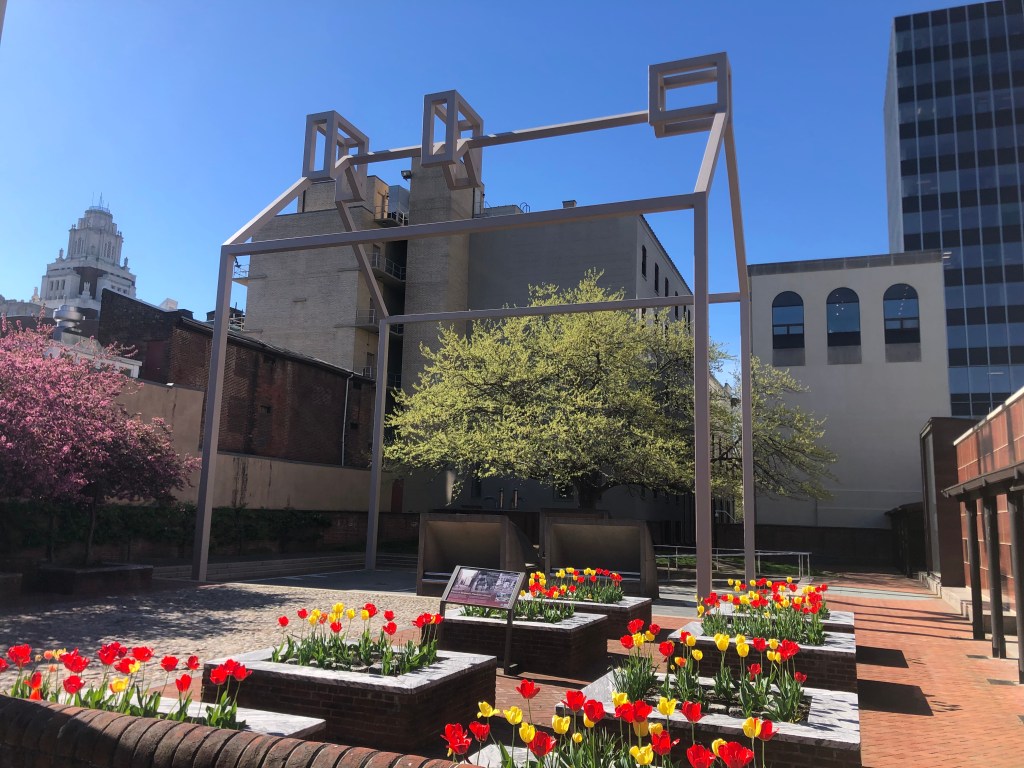
The ghostly outline of Franklin’s house, marking its exact location some two and a half centuries ago.

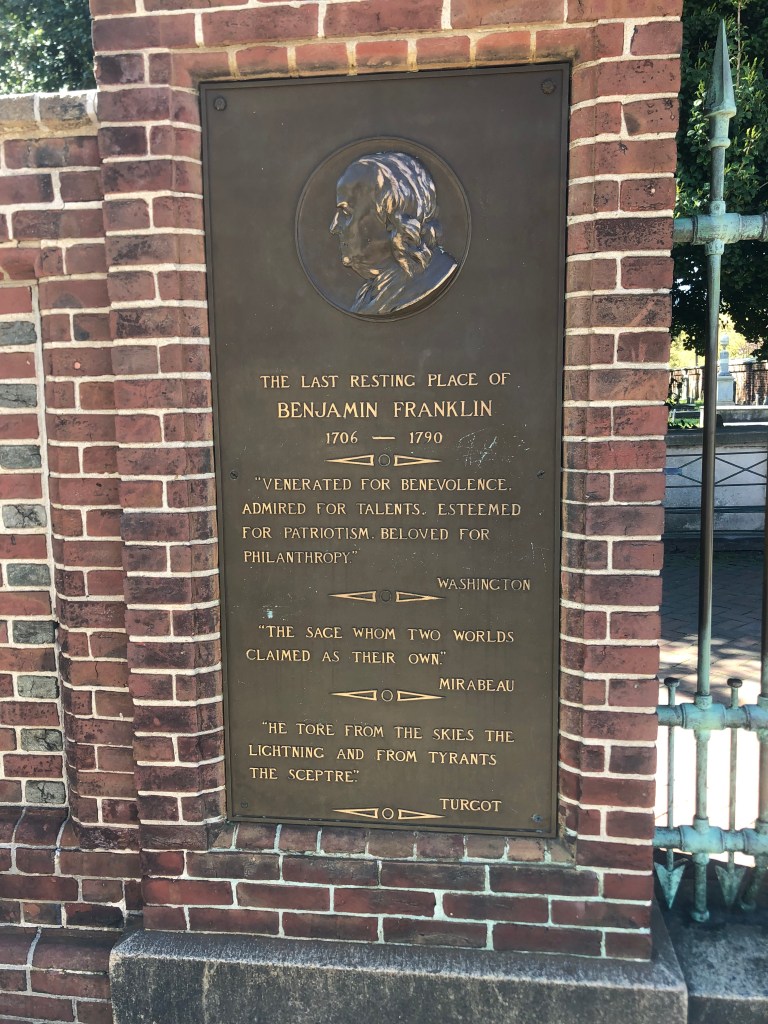
Finally, and inevitably, Franklin’s body rests in Philadelphia, not far from the ghost house. He is buried at Christ Church Burial Ground under a smooth marble tablet that’s perpetually covered with a scattering of pennies from passersby.
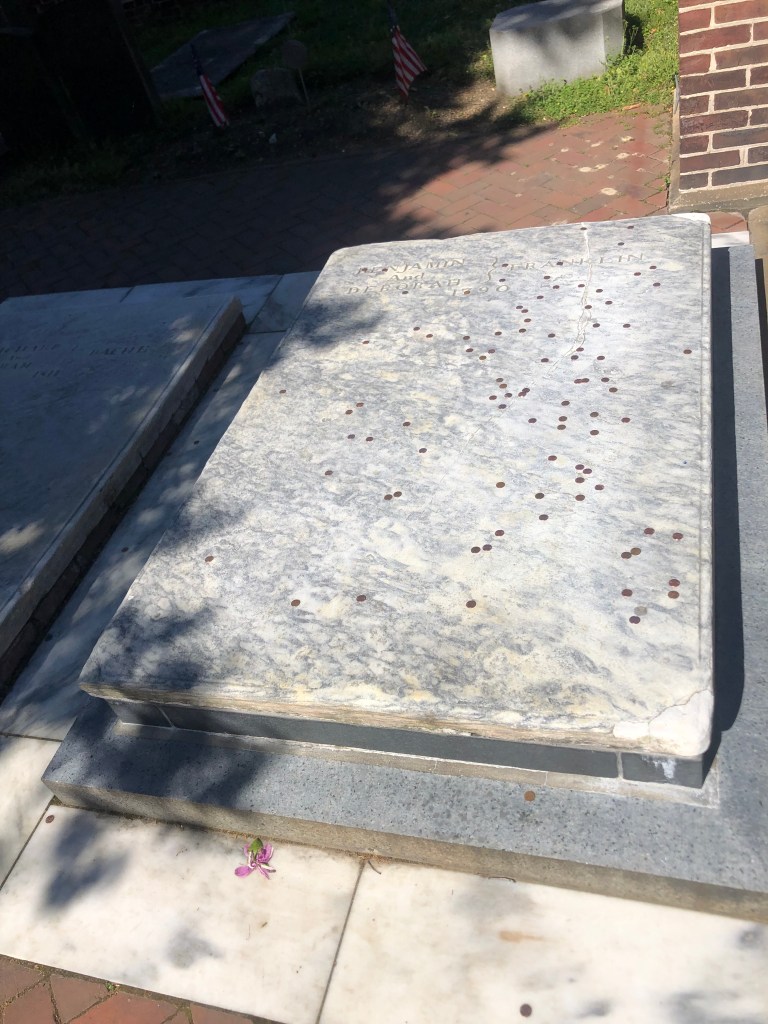
“A penny saved is a penny earned.”
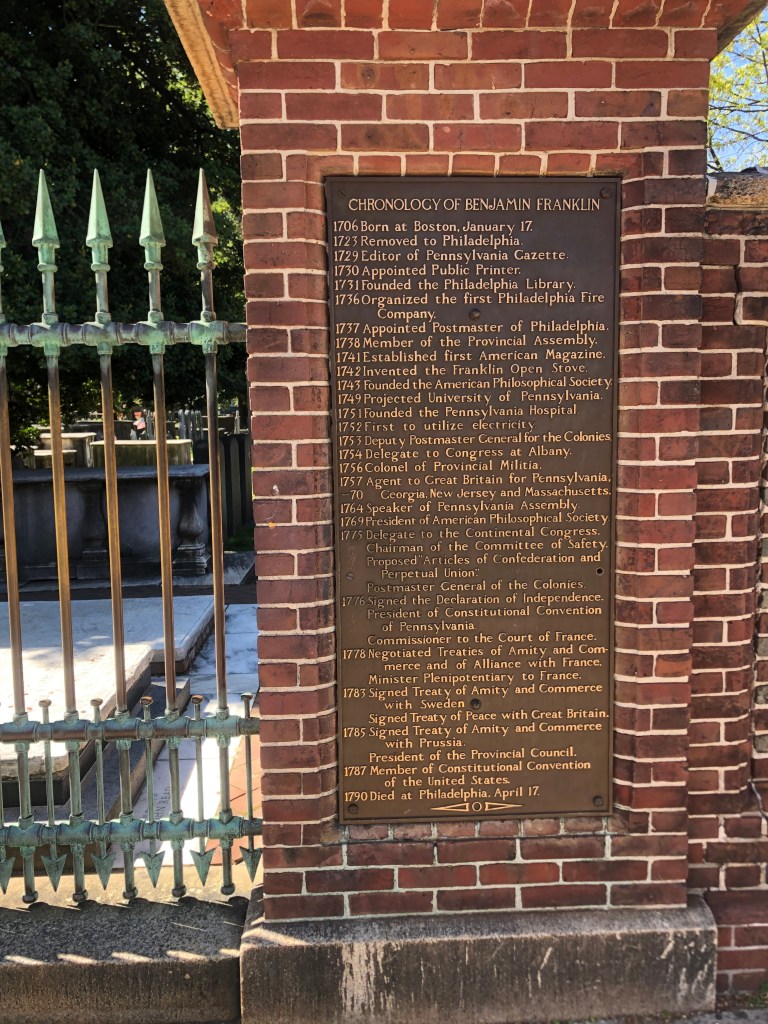
Even allowing for some resume-padding, it’s an impressive list of accomplishments.

Of course, Philadelphia isn’t all Ben Franklin and Larry Fine. For example, there are these random nudes built into a pedestrian walkway. For no discernible reason.
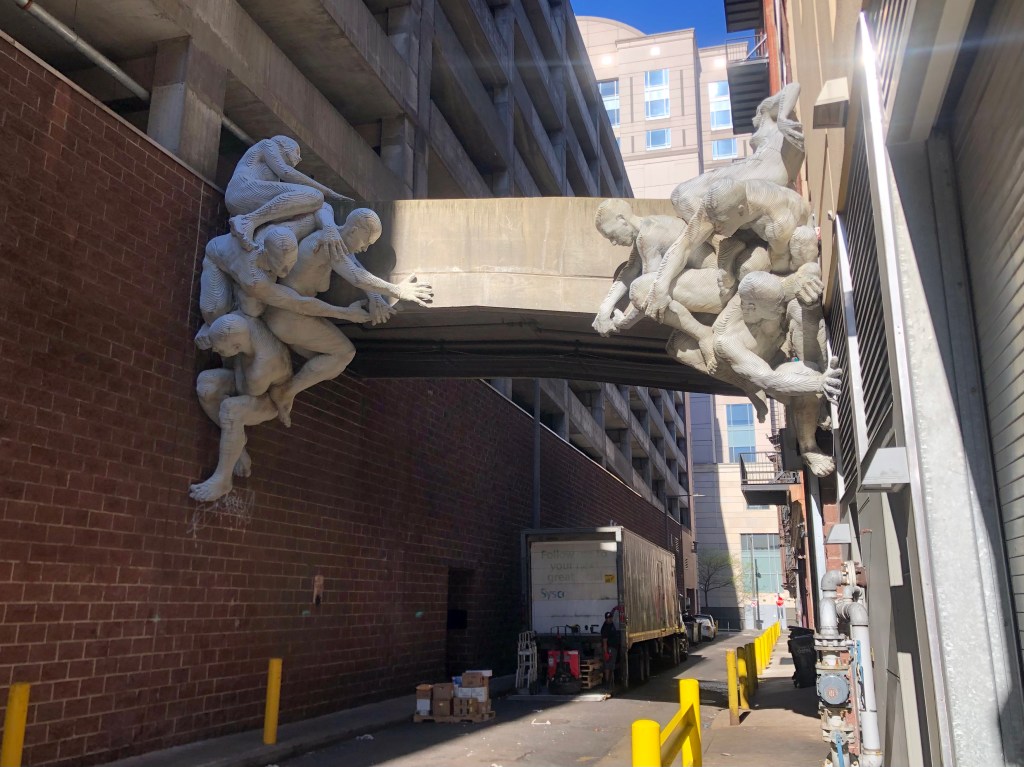
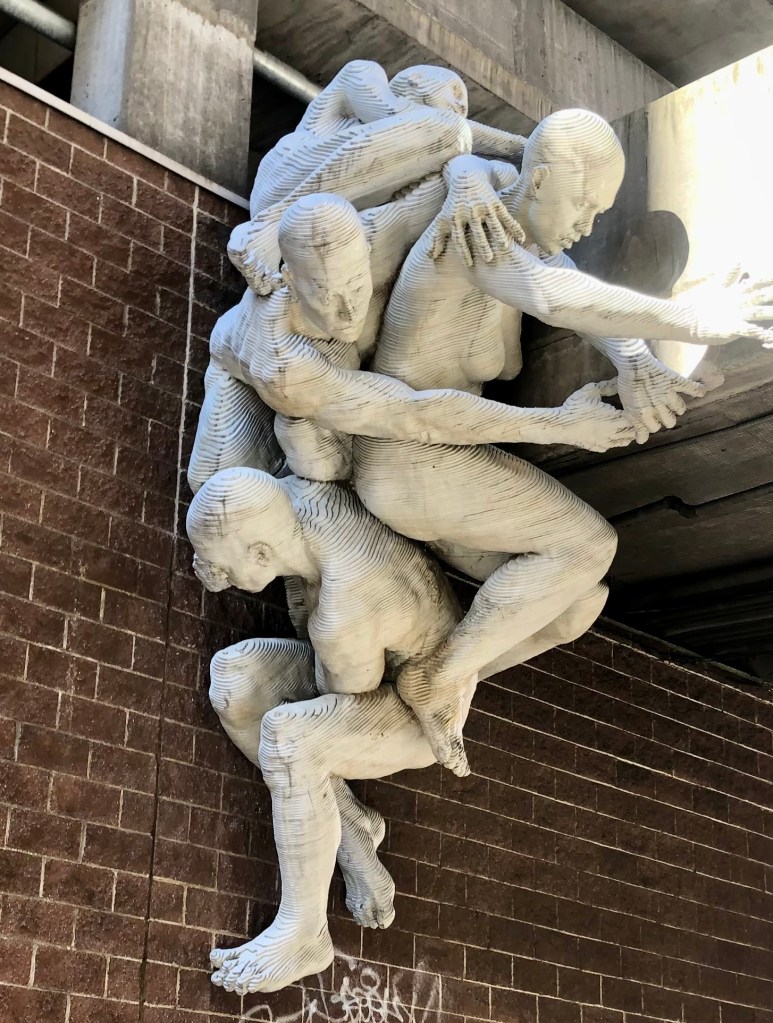
There’s got to be a flying buttress joke in here somewhere...

There’s also Auguste Rodin’s bronze sculpture The Thinker on the grounds of Philadelphia’s Rodin Museum:
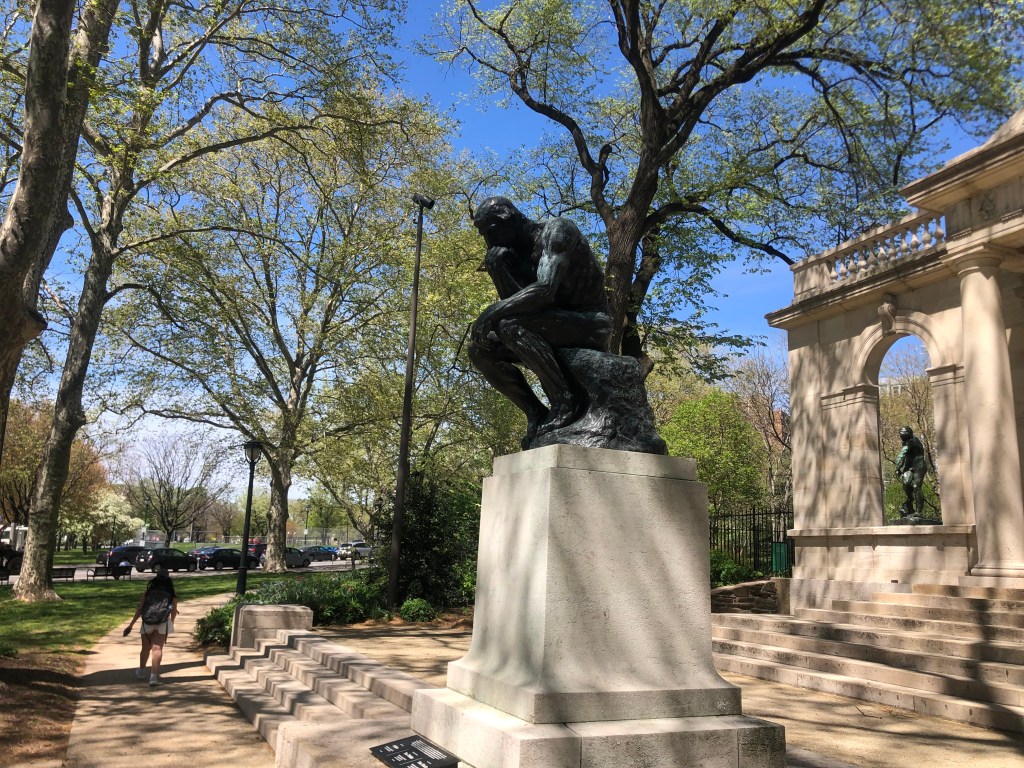
I think I can…I think I can…

You probably know of this piece. Rodin actually cast a number of identical bronze Thinkers. I remember once seeing one at Stanford University. But I’ll forever associate it with Dobie Gillis, who had a habit of sitting next to the statue in a copycat pose.
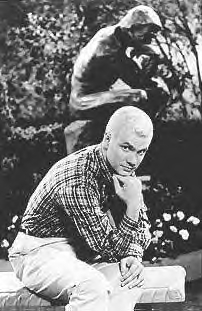
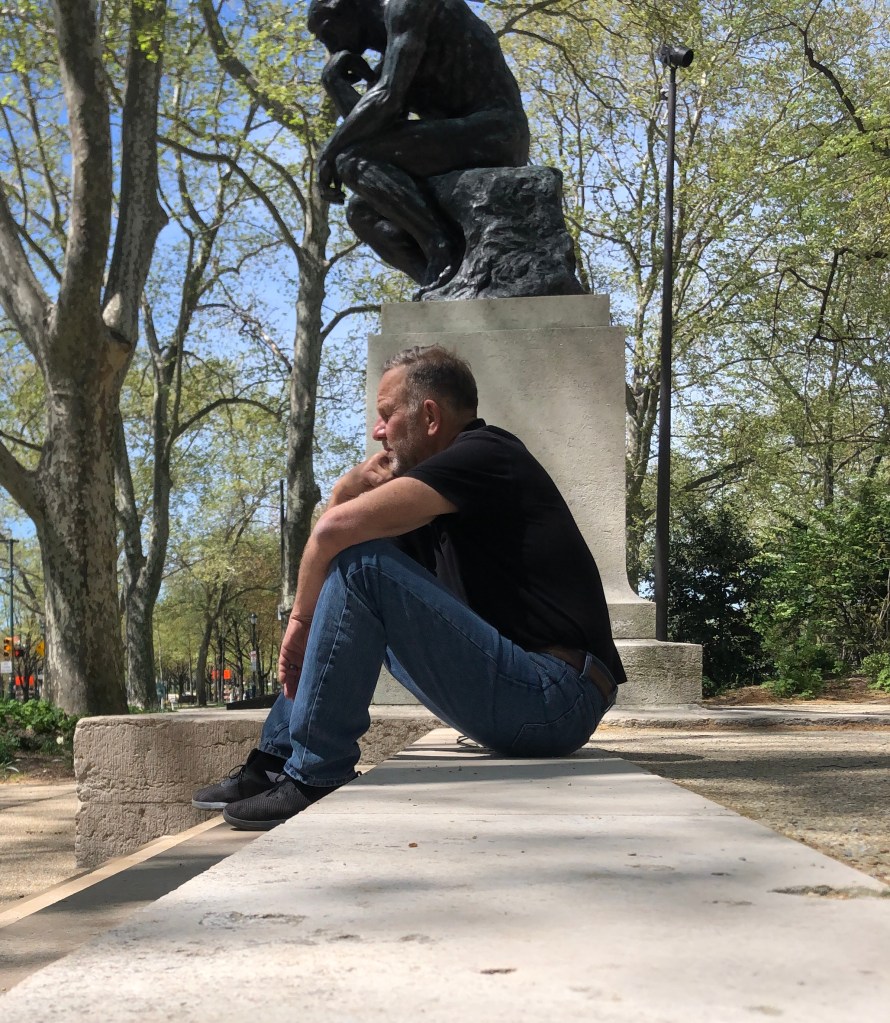
Kind of inevitable.

And if that’s not enough, today I also ran into some literary luminaries that you don’t often associate with Philadelphia. In the Philadelphia Free Library’s Central branch (built almost a century ago in the beau arts style) one finds a bust of Charles Dickens in the Rare Books Room.
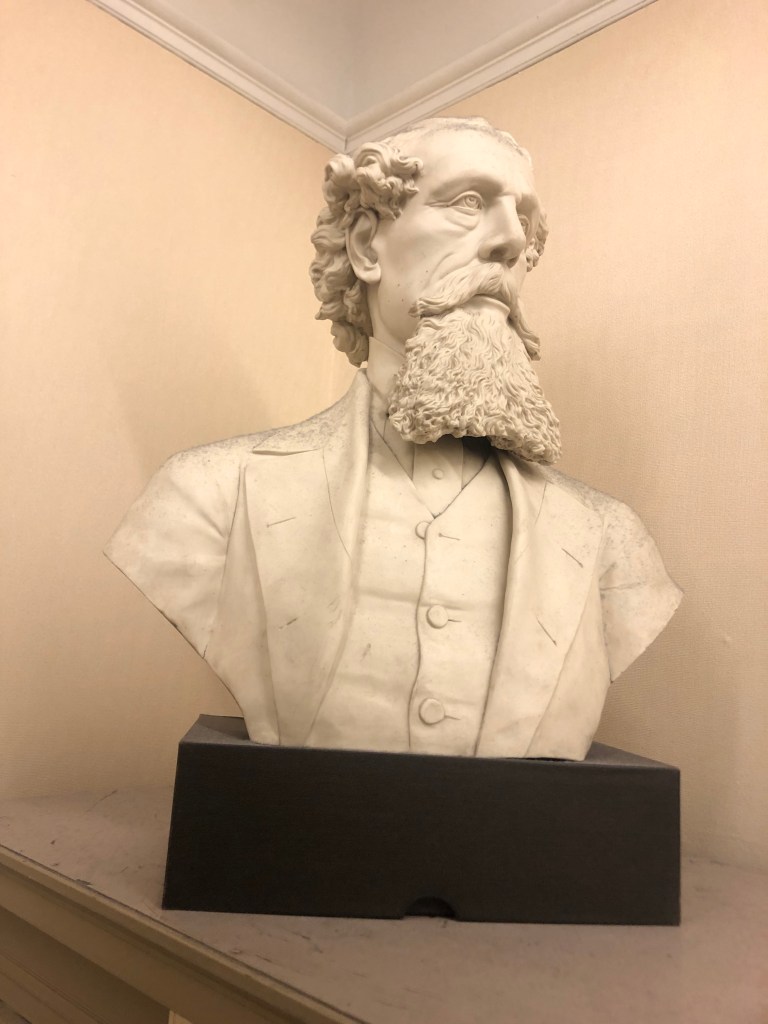
Have you ever noticed how Charles Dickens resembles Don Quixote?

Not far from the Dickens’ bust is his actual pet bird, now stuffed and mounted in a glass box.
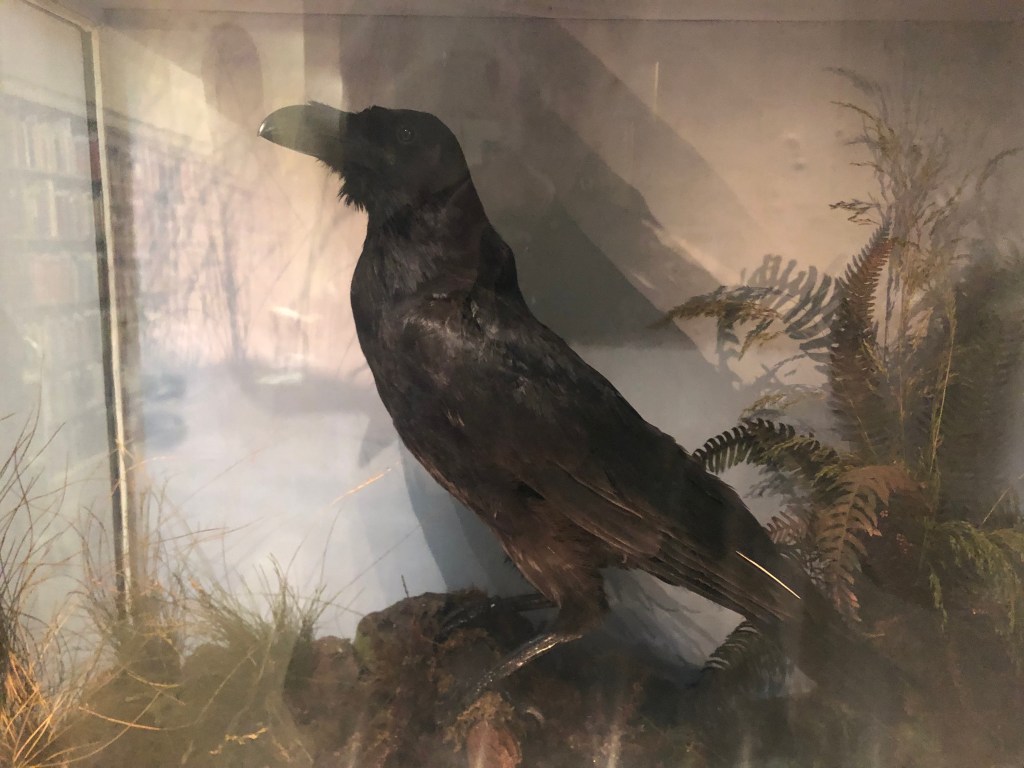
That’s so Raven.

The bird is (was?) a raven by the name of Grip. Grip even gets some speaking lines in Dickens’ novel Barnaby Rudge. But she (for Grip is a female) also played a much more important literary role: She is said to be the inspiration for Edgar Allan Poe’s The Raven.
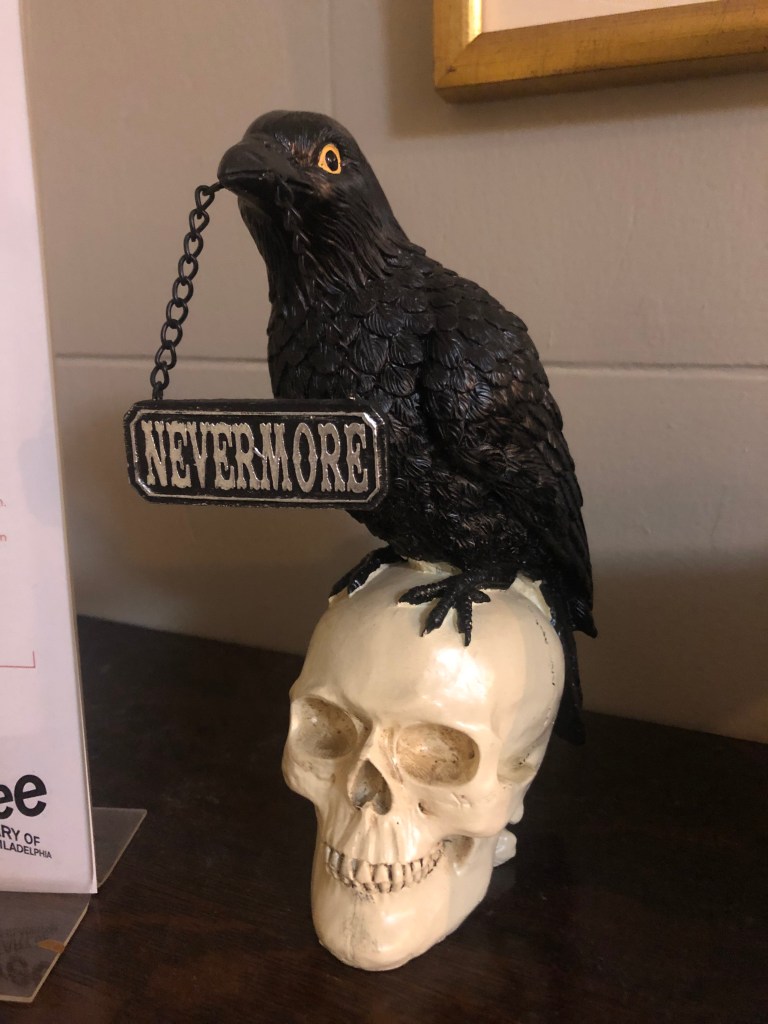
Wasn’t Nevermore the title of a Nirvana album?

As we all know, Poe lived in Philadelphia for six years. And one of his Philadelphia homes still stands. I will be visiting it on Friday, so we’ll be returning to this theme later.

It’s now getting late, but I do have two more items to share from today. The first is:

OBELISK CORNER

I was taking an afternoon walk through Philadelphia’s Woodlands Cemetery. It dates back to the 1840s, and has a distinctive Victorian air about it. Many of the grave markers take the form of obelisks, with some quite large specimens cropping up here and there.
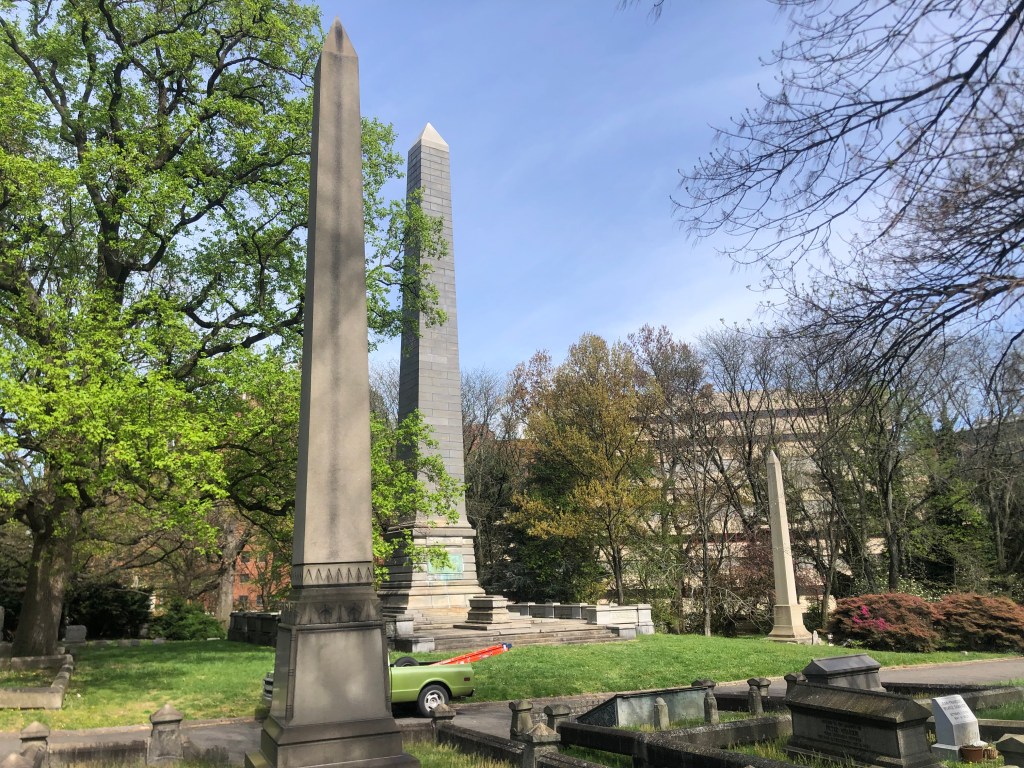
…or are you just happy to see me?

But take a closer look at that one in the center. Though it doesn’t appear especially large in the photo, it’s actually about 15 stories high. In fact, it’s the largest gravestone in the Continental U.S. Let’s take a closer look:
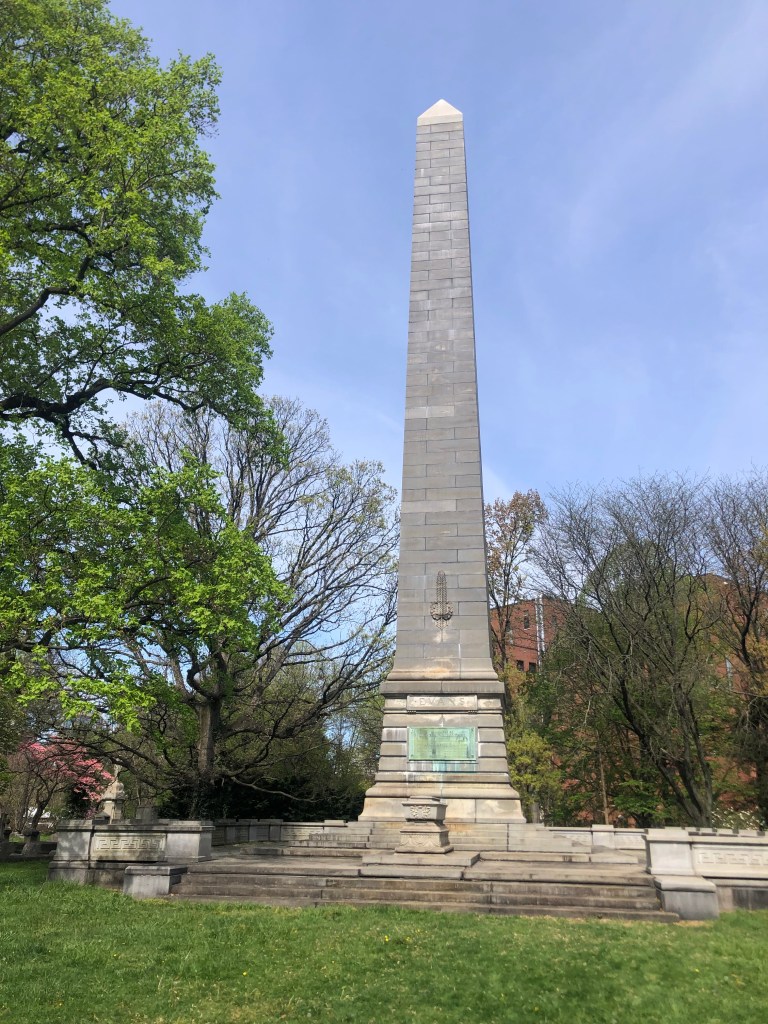
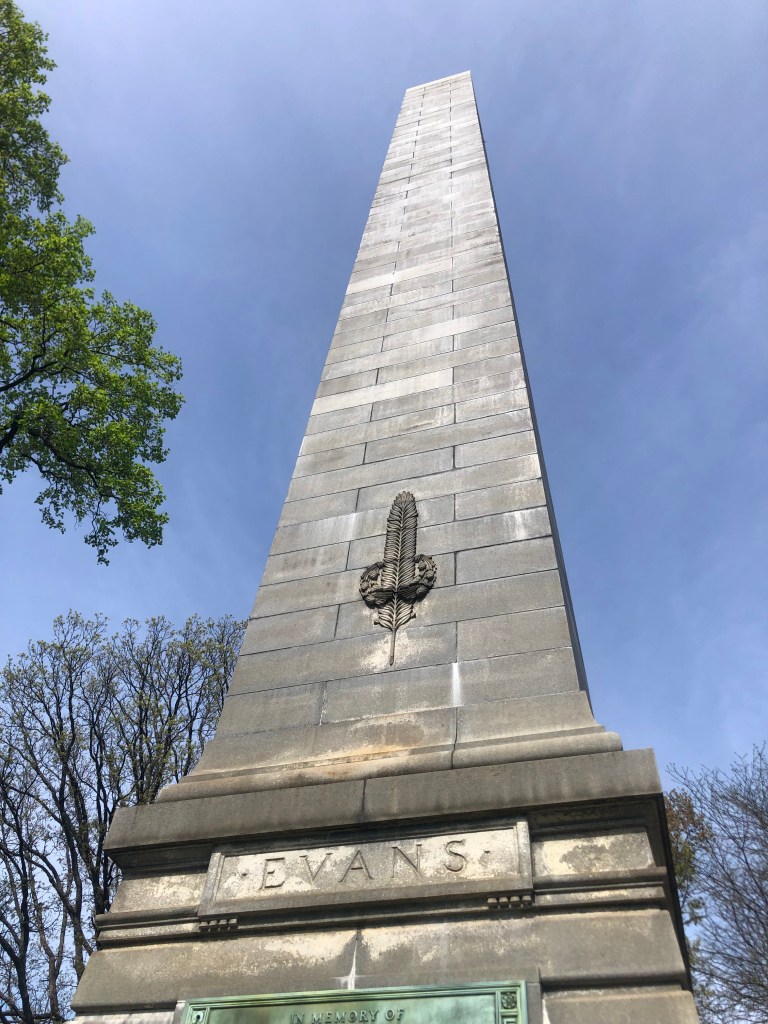
For perspective, note the two stacked sarcophagi at the foot of the obelisk.

The obelisk marks the grave of one Thomas Wiltberger Evans, who died in 1897. You never heard of him either? It seems that the man with the country’s tallest headstone was a….dentist.

And now, let’s finish up with the

BREW OF THE DAY

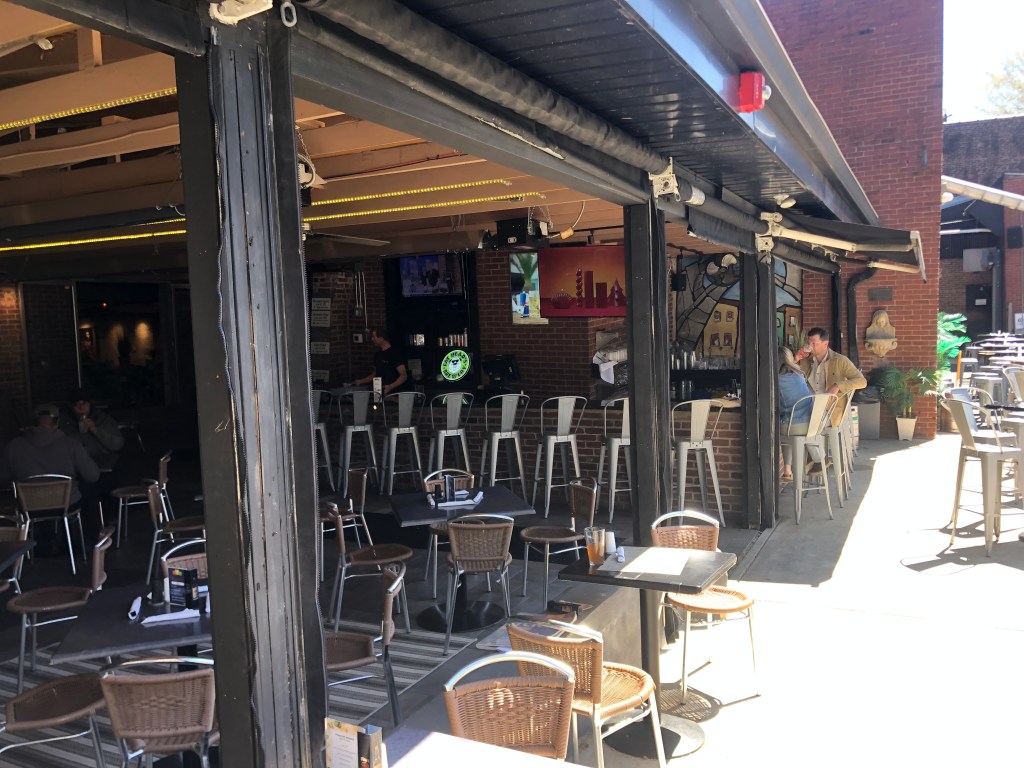
I drank my BOTD at Manayunk Brewing Company, which sits in a cavernous, historic cotton mill on the banks of the Schuylkill River. The cotton mill dates back to 1822, and it operated (making cotton or, later, wool) until 1992. At that point it became a brewery.

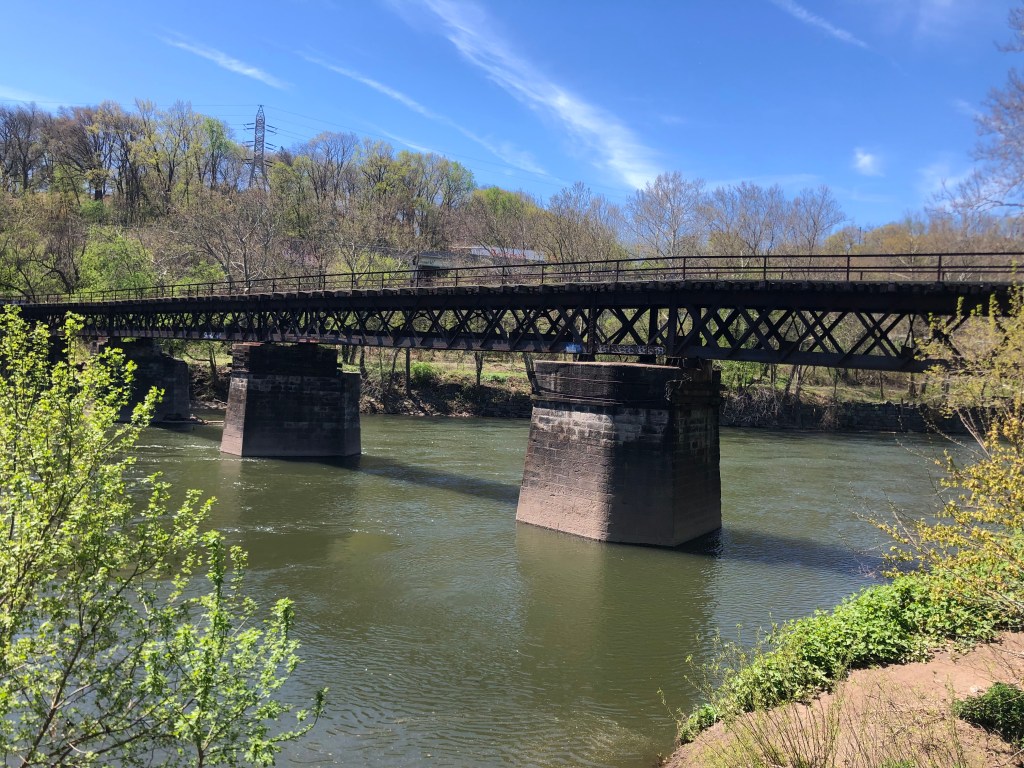
My words can’t do justice to the wonderful setting. Not only is the historic building awe-inspiring, but there’s an old railroad (?) bridge crossing the river right behind the brewery. And I had a great spot in the sun to enjoy the view.
First cotton, then wool, now ales.
I couldn’t find any info on this bridge that’s directly behind the old cotton mill. Uncle Ed, please help!

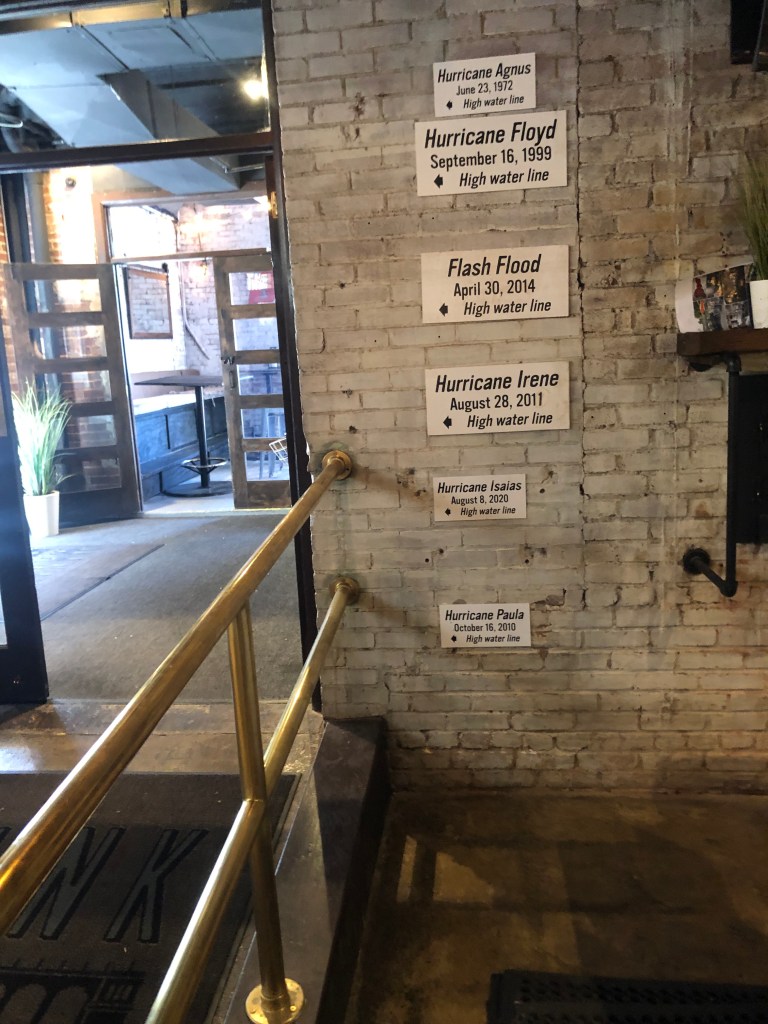
I had my heart set on getting one of Manayunk’s home-made brews. But sadly, my server informed me that they lost their entire brewing setup to a flood a few years back. It seems that flooding has been a recurrent problem, judging from the “high water mark” signs in the bar.
However, a few of their beer recipes are still being faithfully produced by local brewing partners. I selected the Schuylkill Punch, which is being brewed by Yards Brewing.
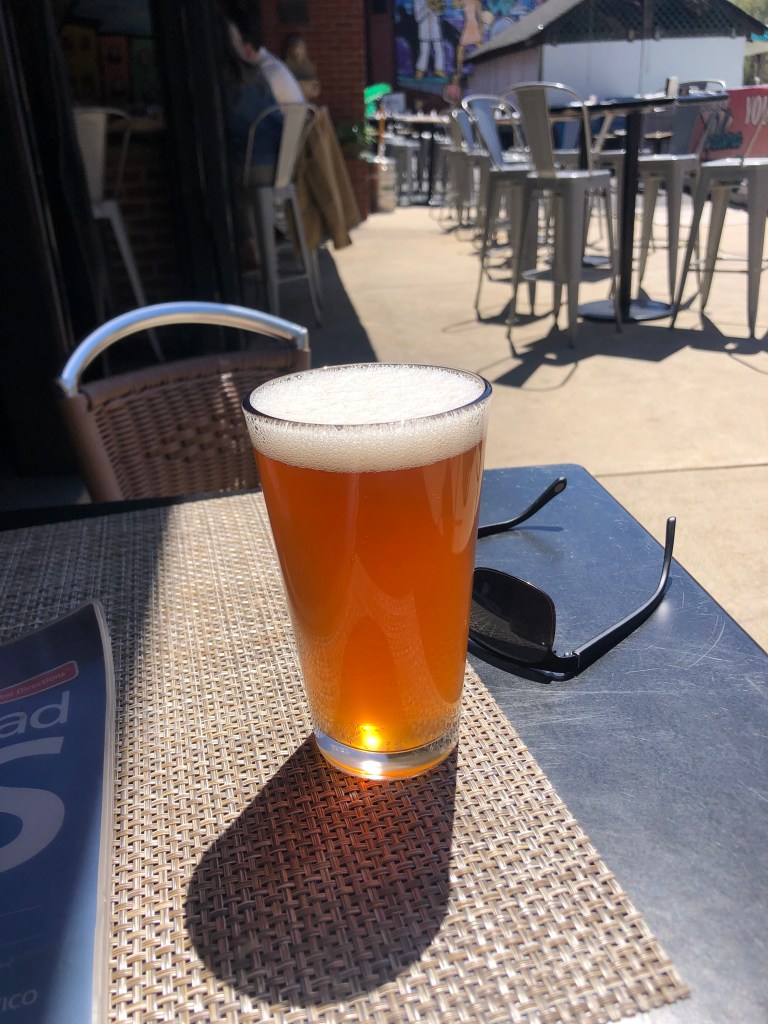
“How would you like a nice Hawaiian Punch?”

This is nothing like what I normally drink. It’s light, with a body light iced tea. There’s almost no malt. And with an ABV of 4.5 percent, it has about half the alcohol of my usual brews.

But this is an exceedingly smooth beer, and it complemented the warm weather perfectly. It’s slightly sweet, with distinct citrus notes of grapefruit, lemon, and some tropical fruits. Carbonation is low, but it has a nice head. Overall, I’d call this a “session” beer, especially if your session is outdoors on a warm day next to the Schuylkill River. I give it 3.5 stars out of five. If they could up the flavor a bit (maybe brewing it with more fruit), I’d knock it up to a solid 4.
Obelisks · Road trips · trains

Last Blog Post

Well, this is it. I arrived in Vicksburg, and I fell in love with this city. It’s beautifully situated on the east bank of the Mississippi River, the architecture is classic and handsome, the weather is fabulous, and most of all the people are wonderful. I know it sounds sudden, but I’ve already enlisted a real estate agent and I called my wife and told her to book a ticket to fly out here and look at houses with me. So, this is the last stop of my road trip and thus my last blog post.
That’s just a lame April Fools Day joke, of course. But my praise for Vicksburg is completely genuine. Let me recount my day and I’m sure you’ll agree with me:

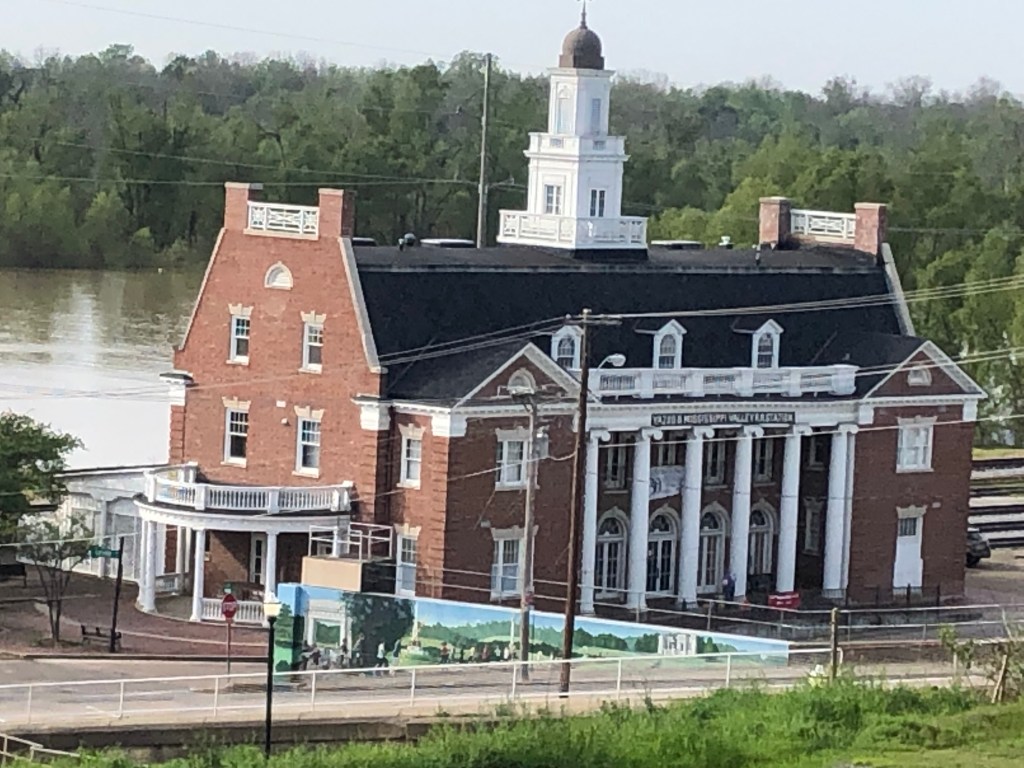
As I rolled into town I spotted a sign pointing to the “Old Depot Museum.” Naturally I turned in the direction of the arrow and was greeted with this sight:

The Old Depot Museum, on the banks of the mighty Mississippi.

Is that a beautiful railroad station or what? There were balloons in the parking lot which suggested that something special was going on, and across the street there was a line of restored, ancient tractors, some of which were spluttering to life. There were also some food trucks and tables with vendors of various sorts. A small band played blues songs. Evidently I’d come across a to-do, as they call such events in these here parts.

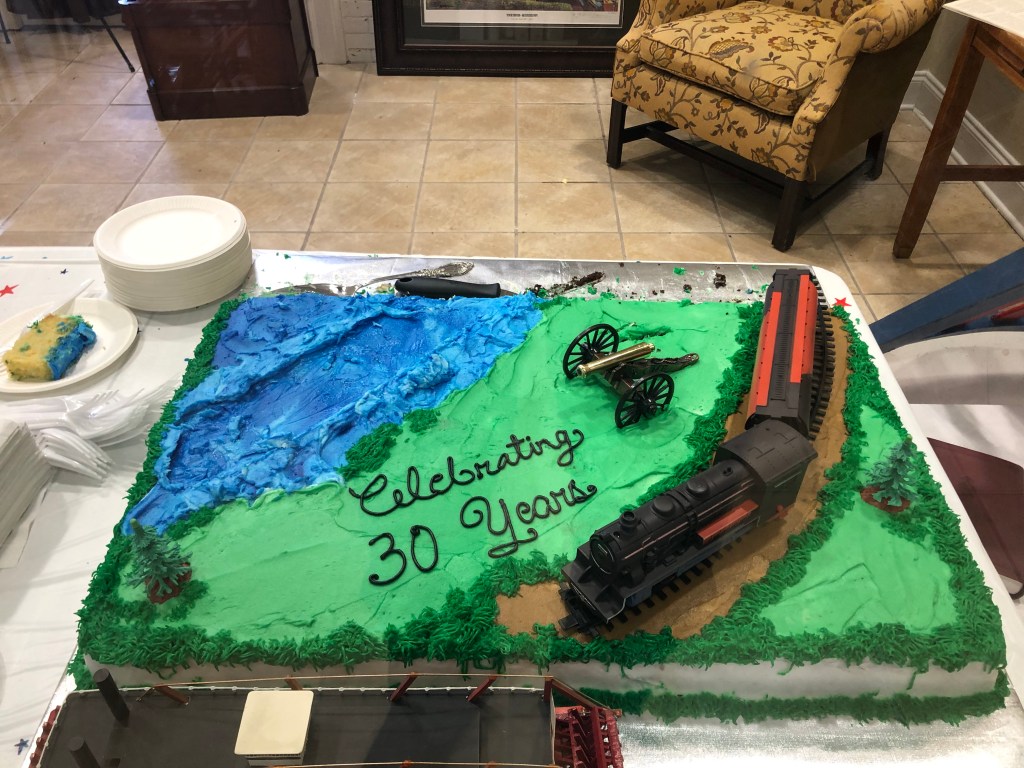
All became clear when I entered the museum and was charged a mere $3 entrance fee. “What a bargain!” I exclaimed. “It’s a special rate because today’s our thirtieth birthday,” explained the friendly young lady at the counter. “And not only that, but here’s a free civil war history book since you’re one of the first 30 visitors!” I was liking this, and I asked what other treats were in store for me. “Funny you should ask, because when you’re done touring the museum, you can get a slice of birthday cake!” Sadly, I had to turn down the cake because I’ve (foolishly) given up sweets for Lent. But I appreciated the thought.

Forbidden fruit.

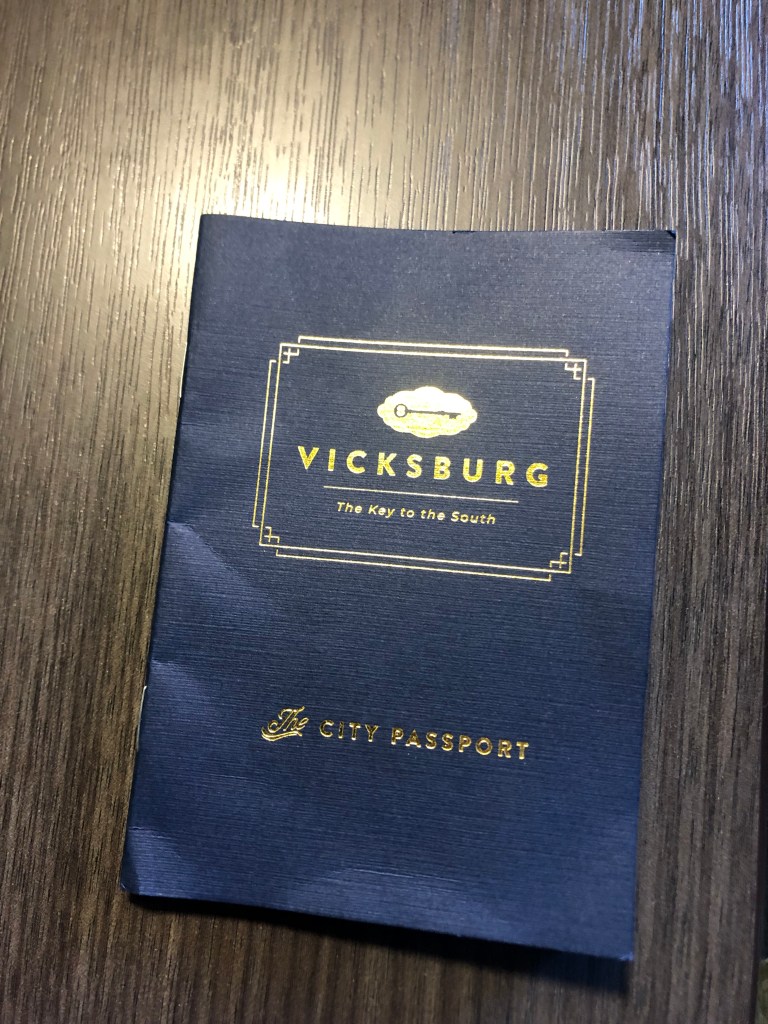
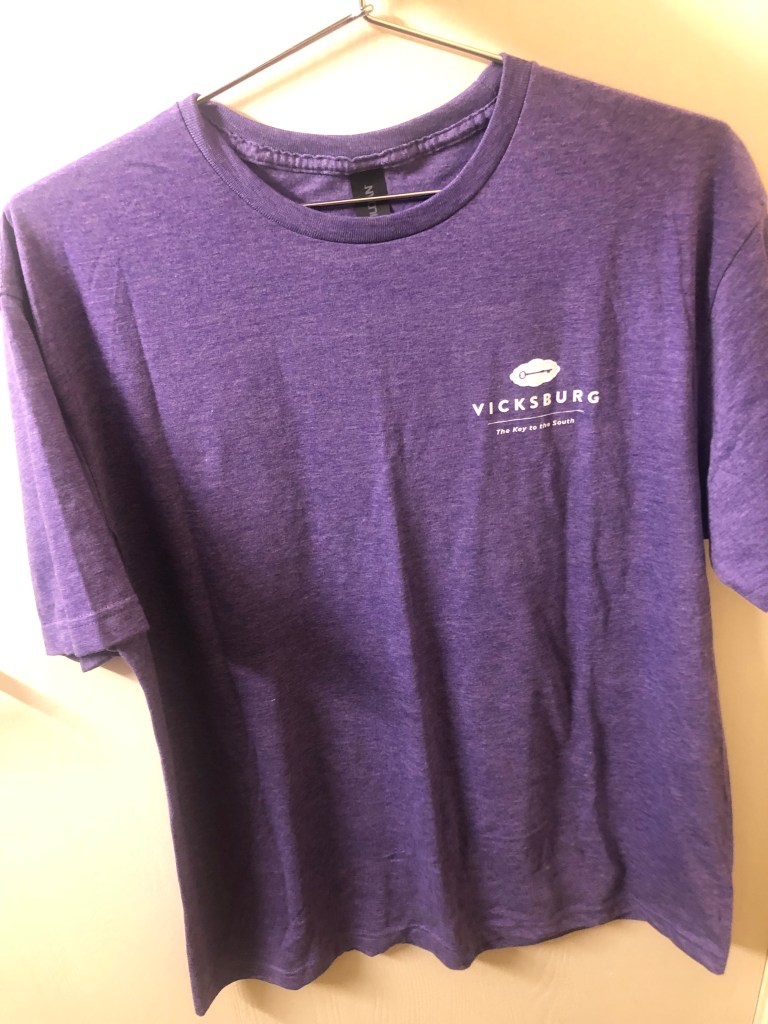
But wait! There’s more! The kind young lady handed me a “Vicksburg passport,” and explained that if I got it stamped at any five of the listed venues, the Chamber of Commerce would give me a free T shirt. I’m a sucker for challenges like this, so guess how I spent the rest of the day?

My passport to a free T-shirt.

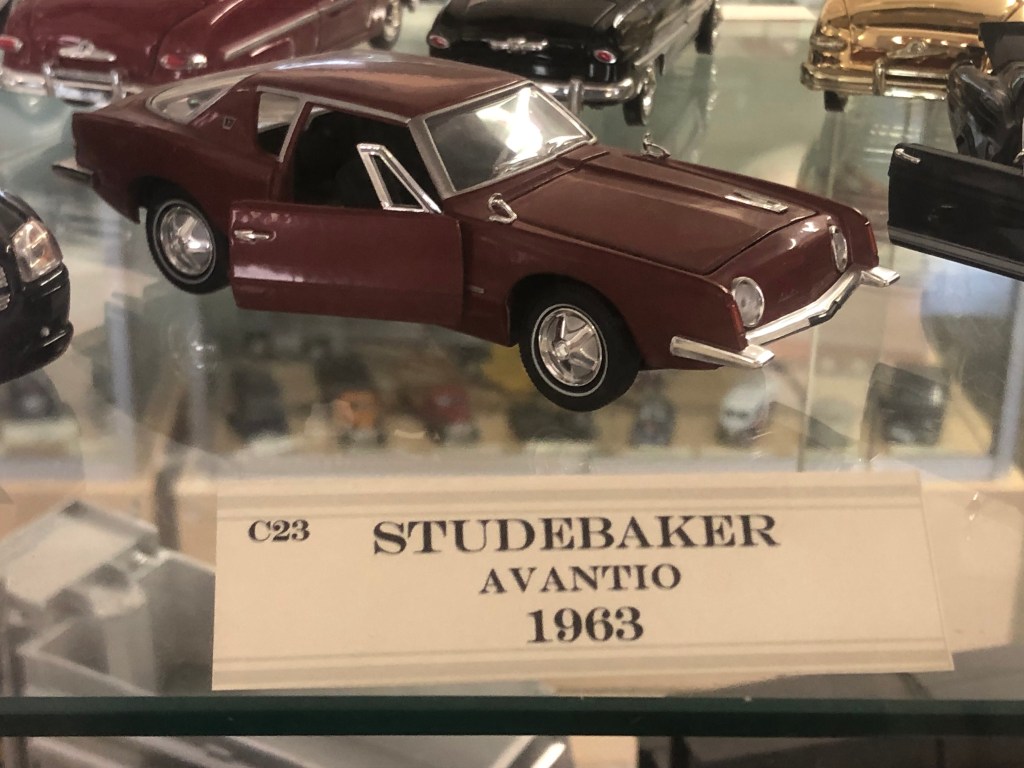
The Old Depot Museum itself was OK, but nothing to write home about. Despite being housed in the original 1904 Vicksburg depot of the Grand Rapids and Illinois RR, its railroad-related displays were limited mainly to just some model railroad layouts. The rest of the space was devoted to (admittedly impressive) models of various ships, several inevitable Civil War exhibits, and a head-scratching collection of model cars and Tonka trucks. (I subtracted points for the puzzling misspelling of Studebaker’s 1963 Avanti as “Avantio.”)

Raymond Loewy must be spinning in his grave.

One down, four to go before I got my free T-shirt. So I moseyed over to the “Lower Mississippi River Museum.” What I thought would be a helpful and engaging tutorial on The Blues Highway–or at least on the culture of the Mississippi Delta–turned out to be a shameless infomercial for the Army Corp of Engineers. Seriously: The introductory film started out with two minutes about the general history of the Mississippi Delta before it launched into soaring praise about how the Corps has done such a great job of flood control…despite the disastrous flood of 2011. The museum displays also consistently promoted the Corps, which, annoyingly, the signs kept reminding me was a trademarked name.

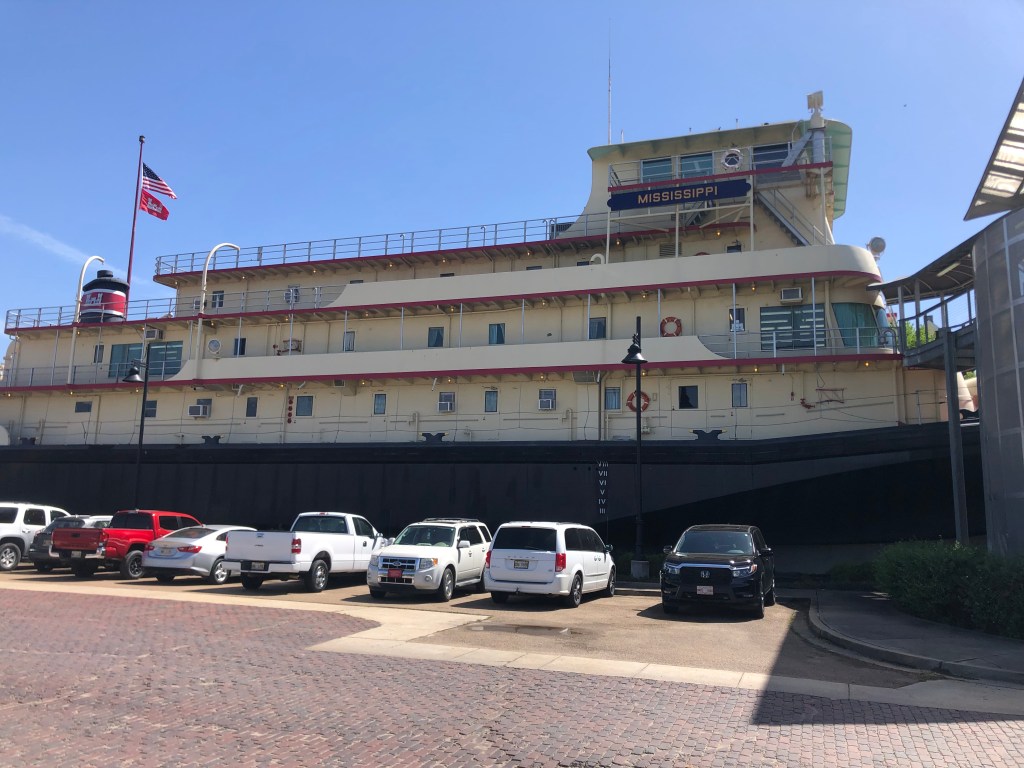
The one reasonably cool part of the museum was the Mississippi IV, a decommissioned transport and goodwill vessel of the Army Corps that I was able to walk through. The engine room was especially cool.

The Mississippi IV.

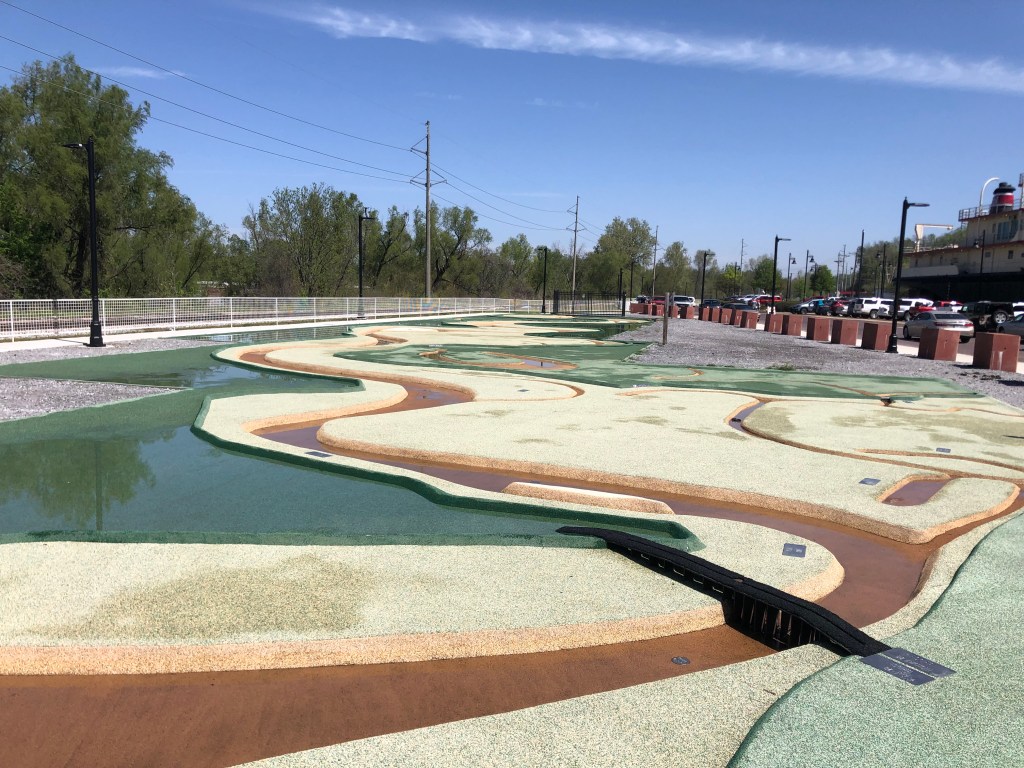
The Army Corps also built this cool scale model of the Mississippi River and surrounding wetlands that you can walk along and even trip into if you’re not careful. Ask me how I know.

Watch out for that little bridge in the foreground….

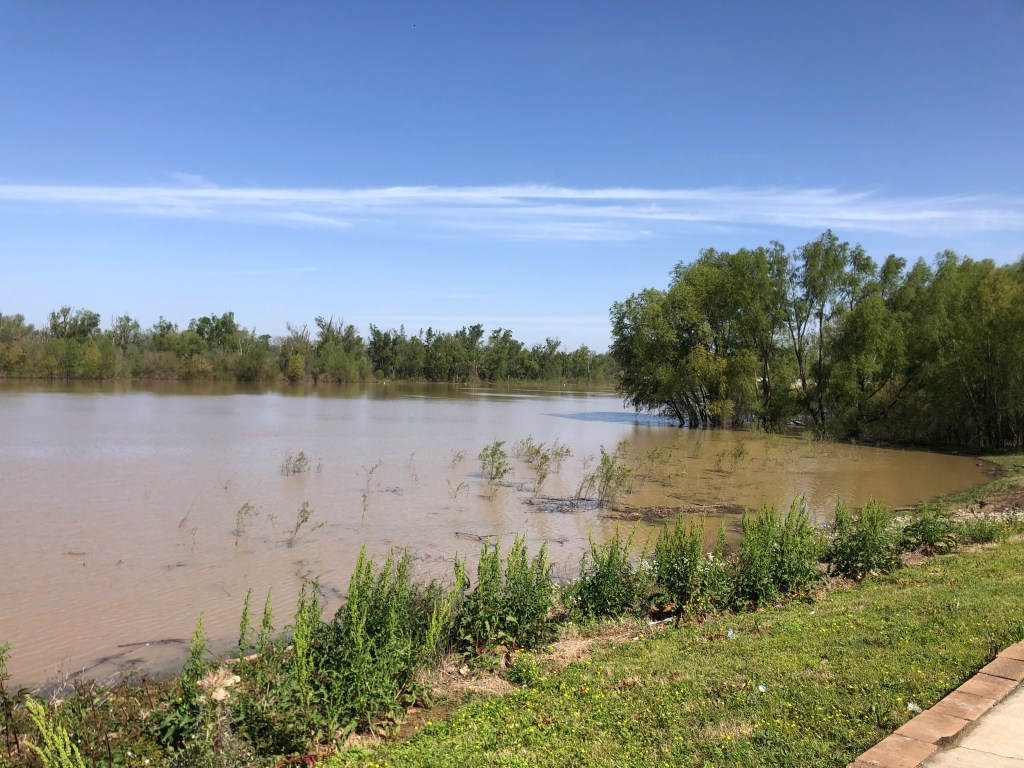
Right next to the model of the river is the real thing, with benches thoughtfully provided. I got some BBQ from a food truck and enjoyed my lunch while watching old man river just keep rollin’ along.

Muddy waters indeed.

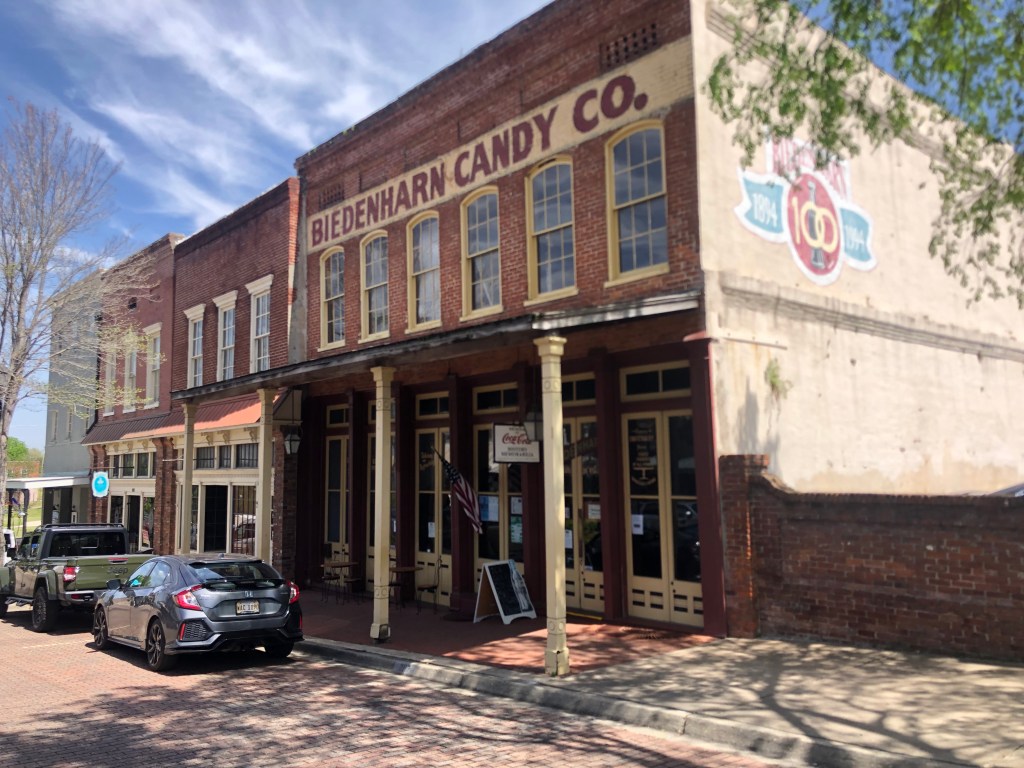
Next up was the historic candy store where Coca Cola was first bottled. This really caught my attention. Alert readers will recall that I’d once visited the pharmacy in Atlanta where Coca Cola was invented in 1886. Eight years later a Vicksburg candy story owner named Joe Biedenharn came upon the bright idea of bottling the stuff ( because up to then you could only get it in a glass at a soda fountain). The rest is history.

This is Biedenharn’s actual candy store, still very much like it was about 130 years ago. You can still buy candy and Cokes (don’t ask for Pepsi products!), but most of the space is given over to displays of Coke memorabilia. I found the descriptions of the marketing side of Coke the most interesting. (But I was unable to find any acknowledgement about cocaine being an ingredient in the early formulations.)

Old-timey drug dealer.
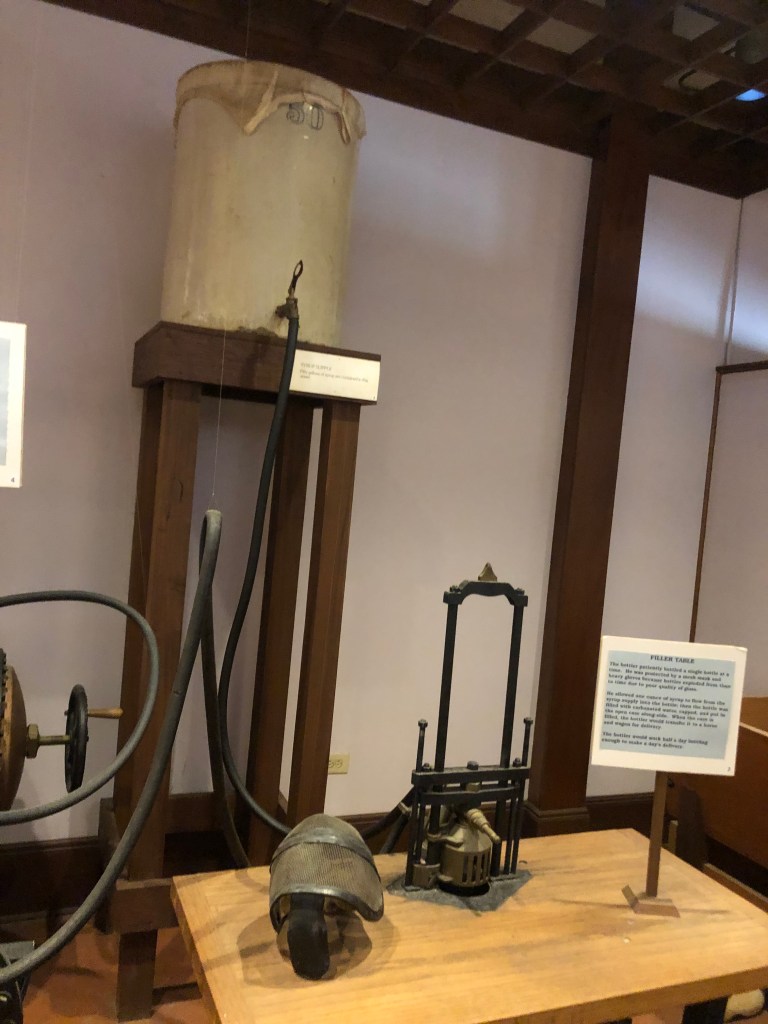
Biedenharn’s early bottle-filling apparatus.

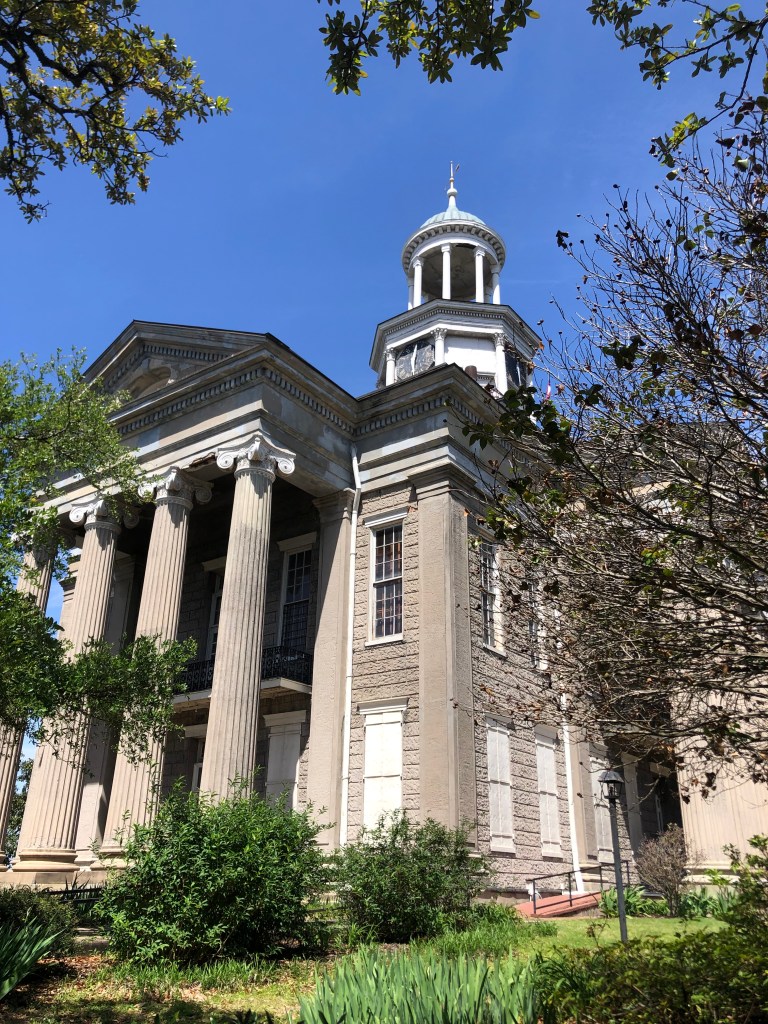
I next moved to the most informative of my stops in Vicksburg: The Old Courthouse Museum. This original courthouse was built in 1858–shortly before the Civil War and the siege of Vicksburg. It functioned as the Warren County Courthouse until 1939, when court functions were transferred to a new and larger building. After sitting abandoned for awhile and almost being torn down, this old building became a museum.

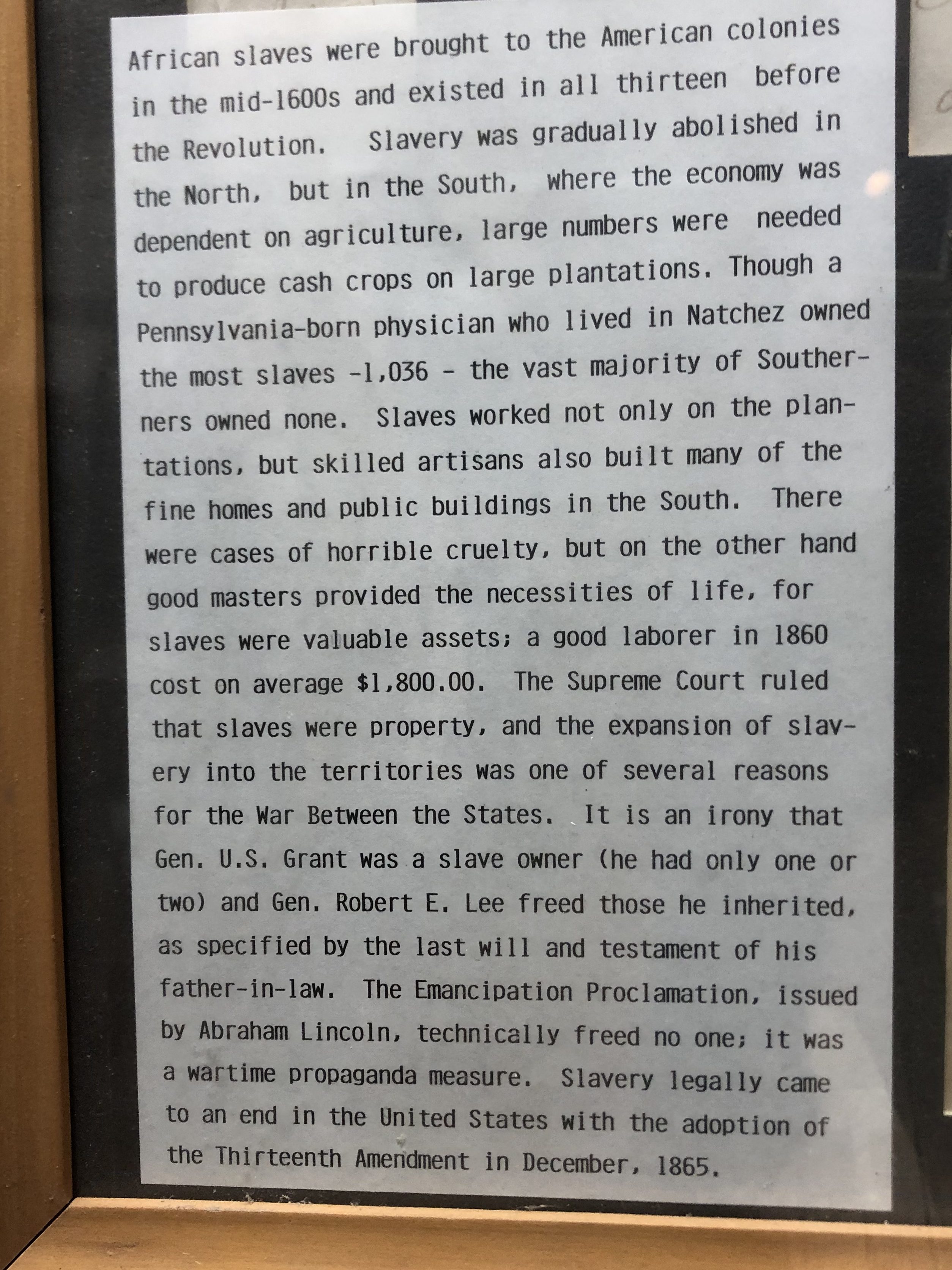
It’s an impressive, stately building with a commanding view of the city. The museum displays are focused largely on the Civil War, with an impressive array of uniforms, flags, weapons, documents, maps, and photographs. I found them to be engaging and entertaining…but some of them presented a perspective on slavery that I never learned in school.

“Good masters” indeed.

As to the siege of Vicksburg specifically, though, my heart goes out to the residents who suffered through it for 47 days. War is, as they say, hell. But the suffering of civilians is especially hard to swallow.

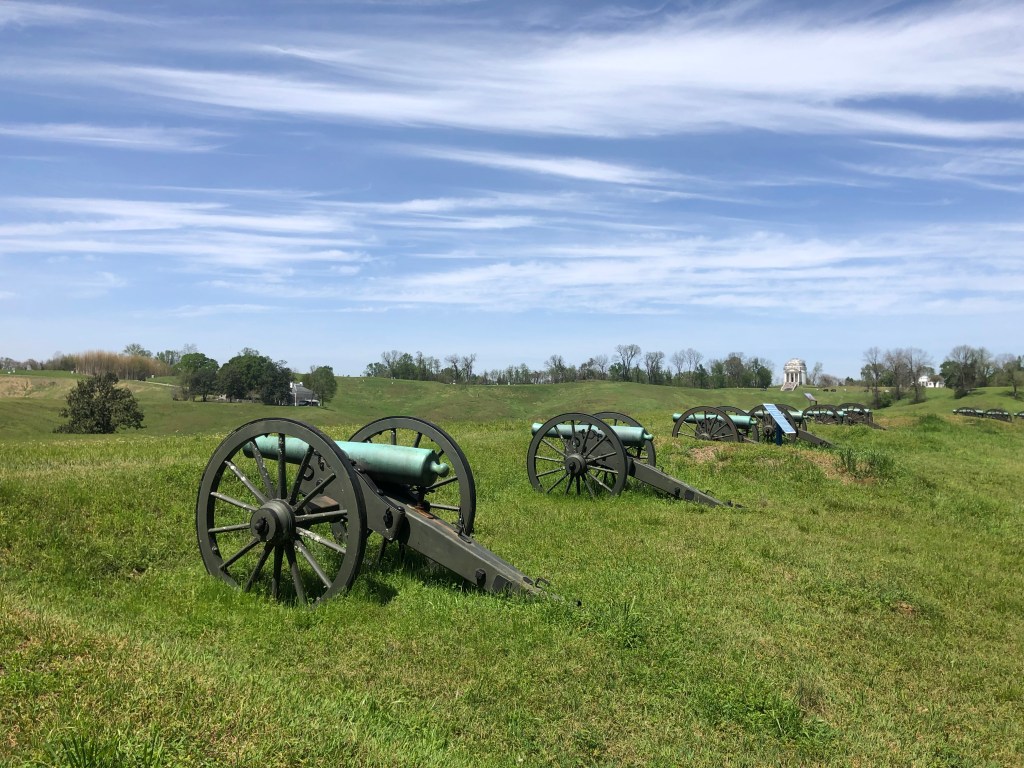
This merges perfectly with my next stop, which was the Vicksburg battlefield. It’s now a national military park, with a visitors center and a driving tour that takes you past the various Confederate fortifications, Union artillery batteries, and hundreds and hundreds of monuments which have been erected in subsequent years.

The ranger assured me that all the cannon in the park are original to the Civil War (though the wooden carriages are reproductions).
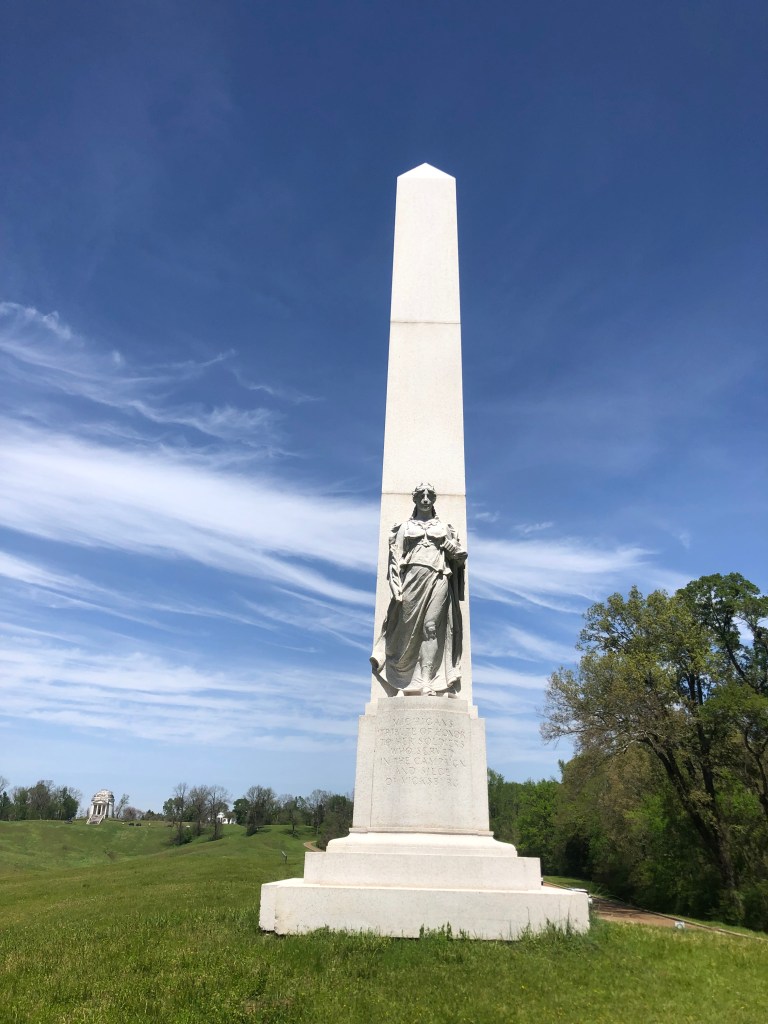
One of a zillion monuments in the park. This obelisk (!) honors Michigan’s soldiers.

When I arrived at the visitors center after driving around the park, I was just in time to witness the firing of one a Civil War cannon. Was this my day, or what??

Now, you may be wondering what all this Civil War stuff has to do with the blues, which had been the nominal focus of this trip. I think it has everything to do with the blues. Notwithstanding the perspective of the Old Courthouse museum, the Civil War was about slavery. And the legacy of slavery is inextricably linked to the blues. The effects of slavery lasted well beyond emancipation, and to some extent they exist even today. I see it as I drive along Route 61– large numbers of African Americans are here because their ancestors were brought here as slaves. And today, 150 years later, they overwhelming live in de facto segregated communities that are significantly poorer than the white communities. I’ve been a distinct minority on the Blues Highway ever since I left Jackson…until I arrived here in Vicksburg, where I’ve been surrounded by white tourists.

I don’t have any policy prescriptions. My only point is that the African American experience in the Delta is inextricably tied to the blues. That becomes painfully clear when these museums depict how Muddy Waters and Son House and Robert Johnson and so many others grew up in poverty, faced discrimination, sought strength in their faith, and channeled their pain into their music.

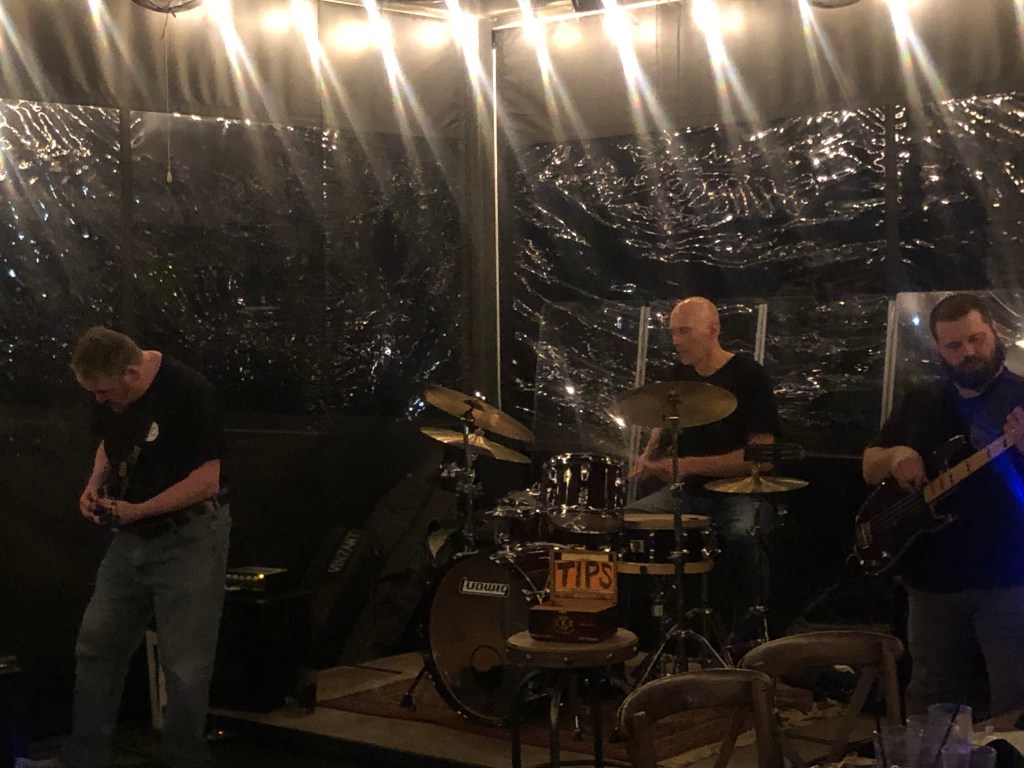
All that said, at this moment I’m sitting at the upstairs patio of Key City Brewing Company, listening to three white guys play the blues. I have to admit they’re pretty good.


Brew of the Day

The Key City Brewing Company, in the middle of the historic downtown, makes a very interesting range of brews, including red ales, oatmeal stouts, Czech dark lagers, pilsners, and saisons. (“Key City” is Vicksburg’s nickname. It comes from a quote from none other than Abraham “Abe” Lincoln, who said ““Vicksburg is the key! The war can never be brought to a close until that key is in our pocket.”)

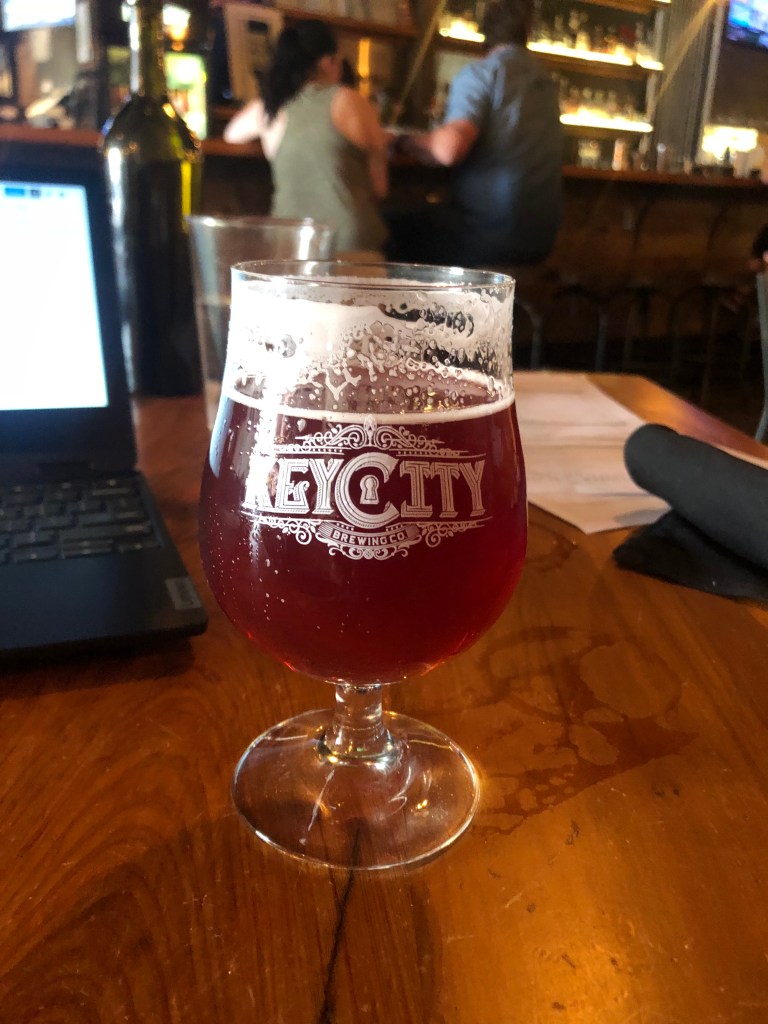
I tried Key City’s imperial “Saison d’Amour,” which is made with cabernet franc grapes. It has that slightly fruity, sweet-‘n’-sour taste that one associates with a saison, but unlike most saisons, this one clocks in at 10.3% ABV. Despite the high octane, it’s brisk and refreshing. However, the mouthfeel is a little thin, a little watery. As a small compensation, it’s quite carbonated.

Key City’s Saison.

This beer has almost no nose (something that can’t be said for me) and the flavor profile reminds me of Old English furniture polish. OK, that’s probably unfair…to the furniture polish. Seriously, though, have you ever taken a wine bottle out of the recycling bin and smelled it? That’s what this saison reminds me of.

So maybe I’m just not a huge fan of saisons. The only one I’ve really ever liked was the one that I and my good friend Scott Smith made for Christmas a few years back. So I’m giving this beer 2 stars.

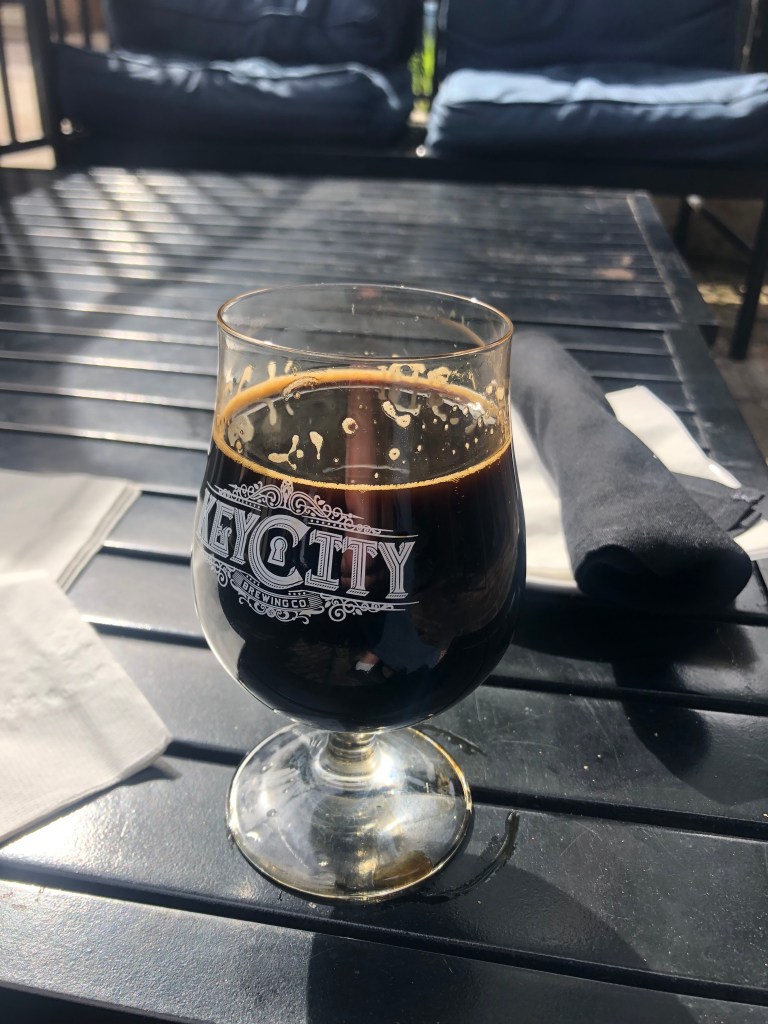
With the intention of erasing the Saison from my memory, I ordered a chaser in the form of the “Nightmare Imperial Stout.” Yes, yes, I know–it seems that the BOTD is always an imperial stout. But if you don’t like it, start your own blog.

The Nightmare Imperial Stout lives up to its name. It’s dark and somewhat unsettling. The ABV is 10.3, which means this will be my last beer tonight. There’s definitely some roastiness on the malt, and there’s very little carbonation to balance the heaviness. It’s quite sweet, tasting of off-brand chocolate Easter eggs. I think it would benefit from a bit more hops, just to balance the heavy malt. It also could use some of the coffee notes that are associated with successful imperial stouts. Overall, it’s a good concept with a weak execution. Three stars.

At this point I need to thank my server, Alexia, for being patient with me as I questioned her about the different brews and asked her to bring me a number of “tastes.” Thanks, Alexia!

Oh, and here’s my reward for the day:

Spoils of war.
cemeteries · Halloween Cocktails · Obelisks

Zombie All You Can Be

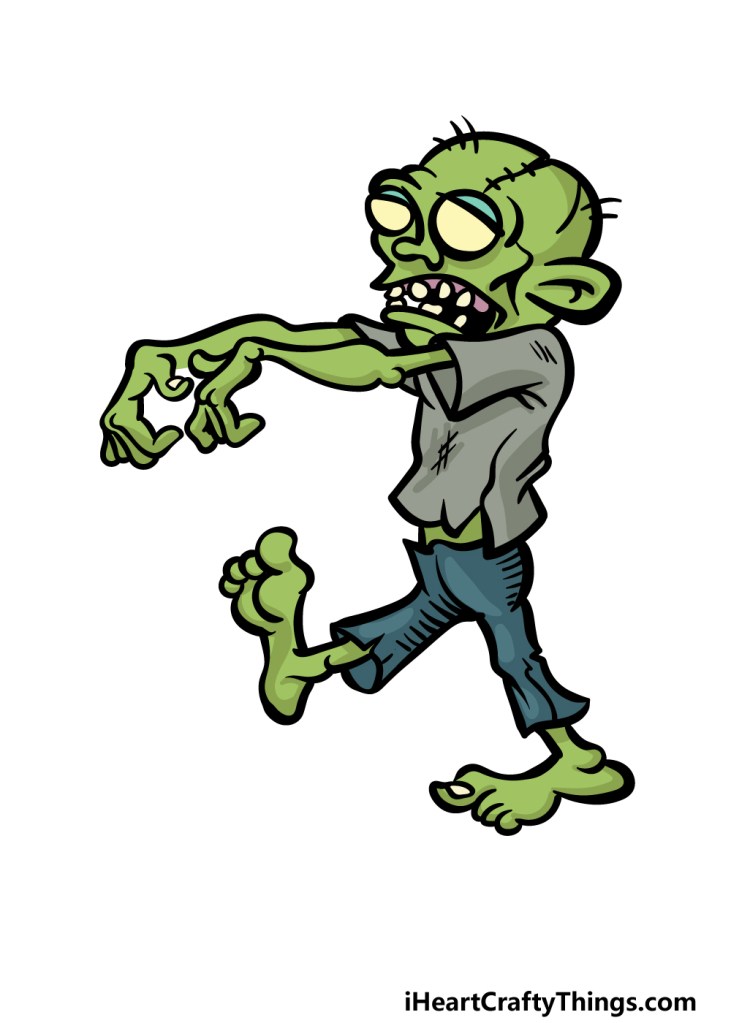
C/o “I heart crafty things,” obviously.

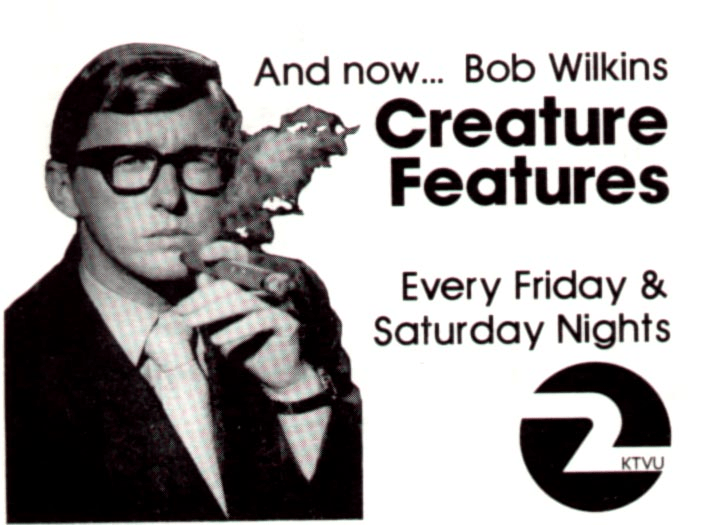
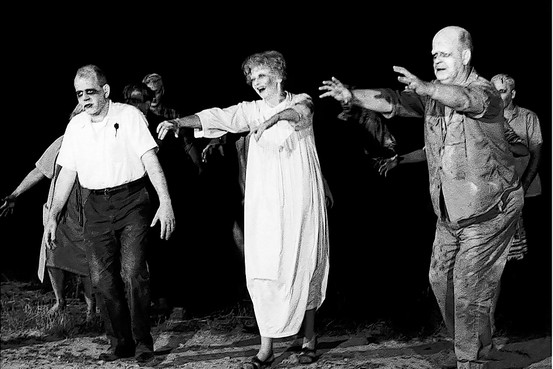
I’m not sure when it happened, but Zombies are cool again. They sure weren’t in 1932 when Bela Lugosi starred in the shlocky embarrassment called White Zombie. They sure weren’t in 1968 when George Romero made the ground-breaking horror film, Night of the Living Dead. They sure weren’t when the low-budget Italian horror film named Baron Blood appeared on Channel 2’s Creature Features in 1972, giving me nightmares for a week.

Zombies were always too clumsy to be cool, too disgusting to be slick like Dracula, too inarticulate to really even have much of a personality.

Is the one on the left a zombie accountant?

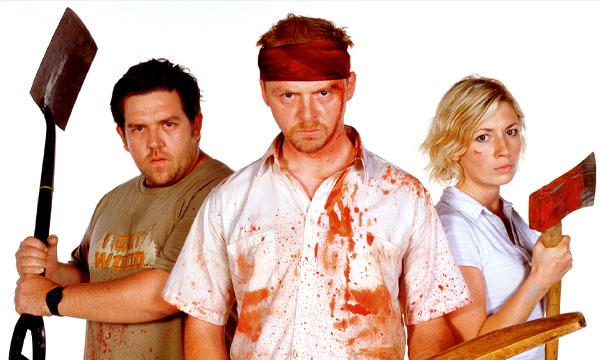
But somewhere along the line, zombies became cool. It might have been when Simon Pegg starred in 2004’s campy Shaun of the Dead. Or maybe it’s when urban hipsters started holding Zombie Walks. Or maybe it was the profusion of zombie-themed internet games like “Resident Evil” and “The Walking Dead.” All I know is: Zombies are no longer relegated to the lame zone in the pantheon of movie monsters.

Ghostbusters meets White Zombie

So, given all that, perhaps the Zombie can bring a little cachet to our list of Halloween cocktails.

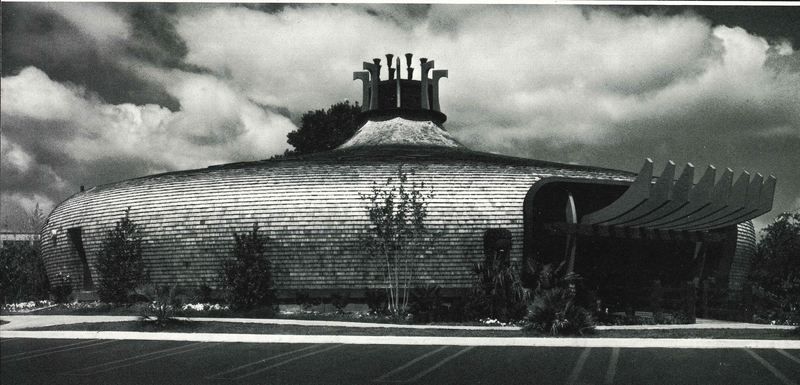
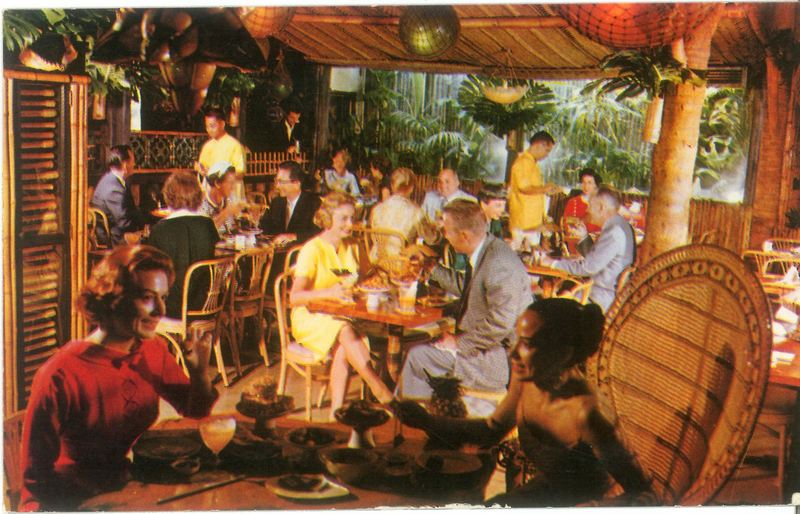
It’s said that the Zombie was invented by Donn Beach, founder of the Don The Beachcomber chain of prototypical “tiki bar” restaurants. When I was a wee lad, one such establishment was located in San Jose, on Stevens Creek Boulevard. I spied it through the car window many times, but alas, I never darkened its doorstep.

San Jose’s Don the Beachcomber, looking like a 1950’s spaceship.

Donn Beach opened his first bar, called Don’s Beachcomber, in Hollywood in 1933. It was successful, and he and his wife developed a chain of Donn the Beachcomber restaurants that numbered 16 at its height. The restaurants cashed in on the post-war Tiki fad that gripped the nation.

But let’s get back to Zombies. Beach is credited with creating the Zombie cocktail. Supposedly he came up with the drink as a courtesy to a favorite customer, who was hung over and was facing an important business meeting. The unnamed customer drank the concoction, and subsequently informed Beach that the drink had turned him “into a Zombie.” Beach recognized the marketing potential, and his drink was henceforth called the “Zombie.”

So, let’s now acknowledge that the Zombie really has nothing to do with Halloween. Its claim to fame is being a high-alcohol drink that goes down easy due to a variety of fruity juices and syrups.

The Recipe: You’ll need four (!) rums: Pour 1 oz. each of white, spiced, and dark rums into a shaker, and hold in reserve 1/2 oz. of 151. Now, to disguise the rum, add 1 oz of lemon juice, 1 oz of lime juice, 1 oz of pineapple juice, 1 oz of passion fruit syrup, and 3 dashes of orange bitters. Shake and pour into a suitable glass with ice. Now, add 1/2 oz of grenadine and the 151. Drink and pass out.

RIP Donn Beach.

The Ratings: The appearance is nothing special. Just a tropical drink. 1 point.

The taste is very tropical–the fruit juices really come through, though I think it was too strong on the lemon. The fruit juices really hide the 3.5 oz of rum, which I guess is the point. Nevertheless, the taste certainly isn’t evocative of Halloween. It’s more of your standard summer drink. 2 points.

As a Halloween name, Zombie is hard to beat. 2 points.

Total: 5 points.


RAVEN’S CORNER

In honor of Edgar Allan Poe and my recent lightning trip to Richmond, I thought I’d share a few raven (or a least big black bird) sightings.

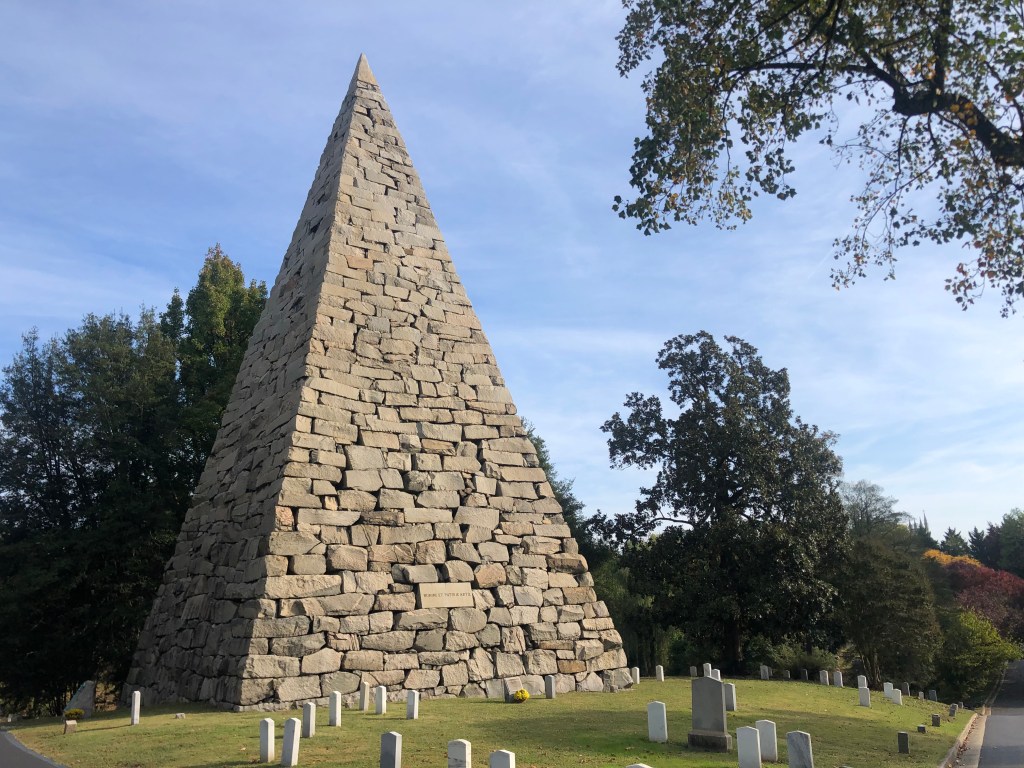
This morning Chris and I visited Richmond’s Hollywood Cemetery (est. 1847). In the midst of the confederate section (Hollywood contains about 18,000 confederate dead), there stands a 90-foot-tall granite pyramid erected in 1869.

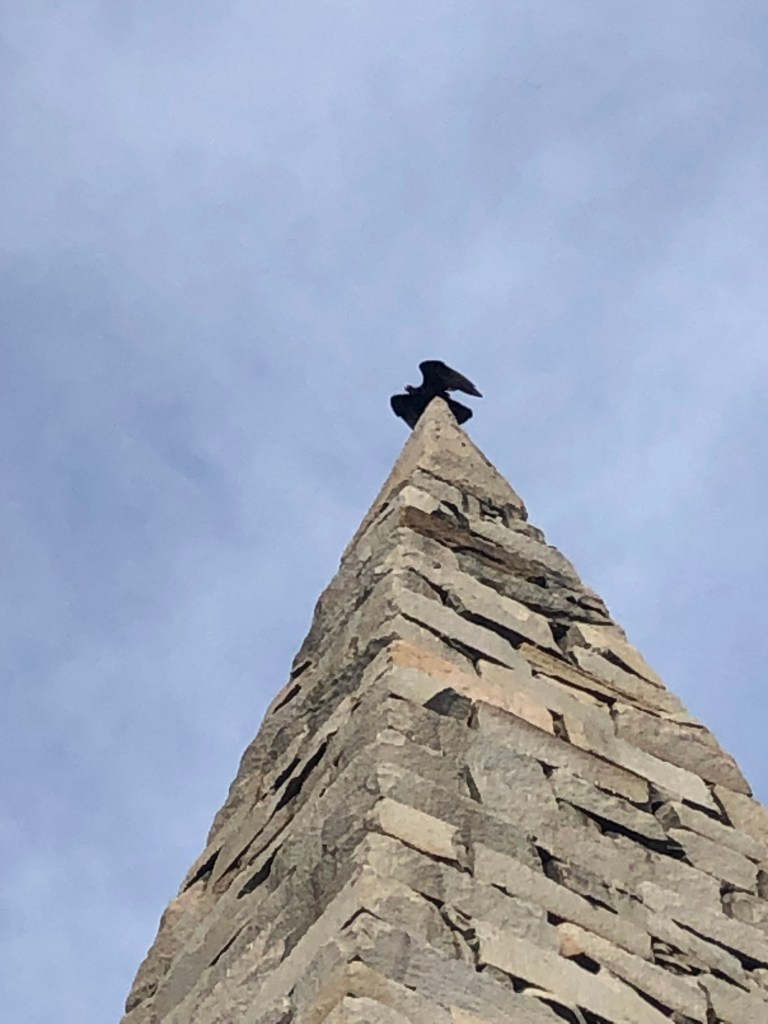
But what’s this at the apex of the pyramid?

“Then this ebony bird beguiling my sad fancy into smiling….”

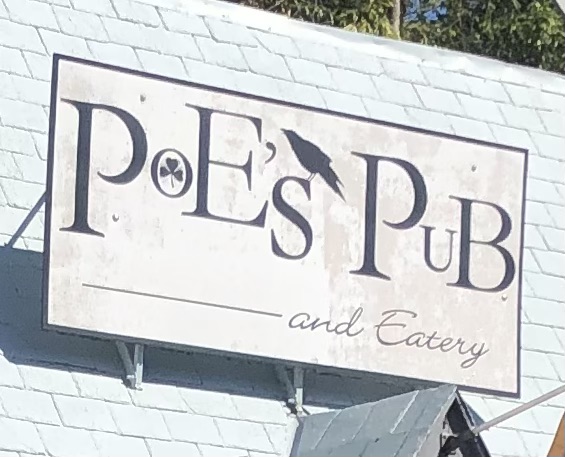
Ravens have been incorporated into some of Richmond’s signage, such as Poe’s Pub.

That’s either a stylized raven, or a rocket ship.

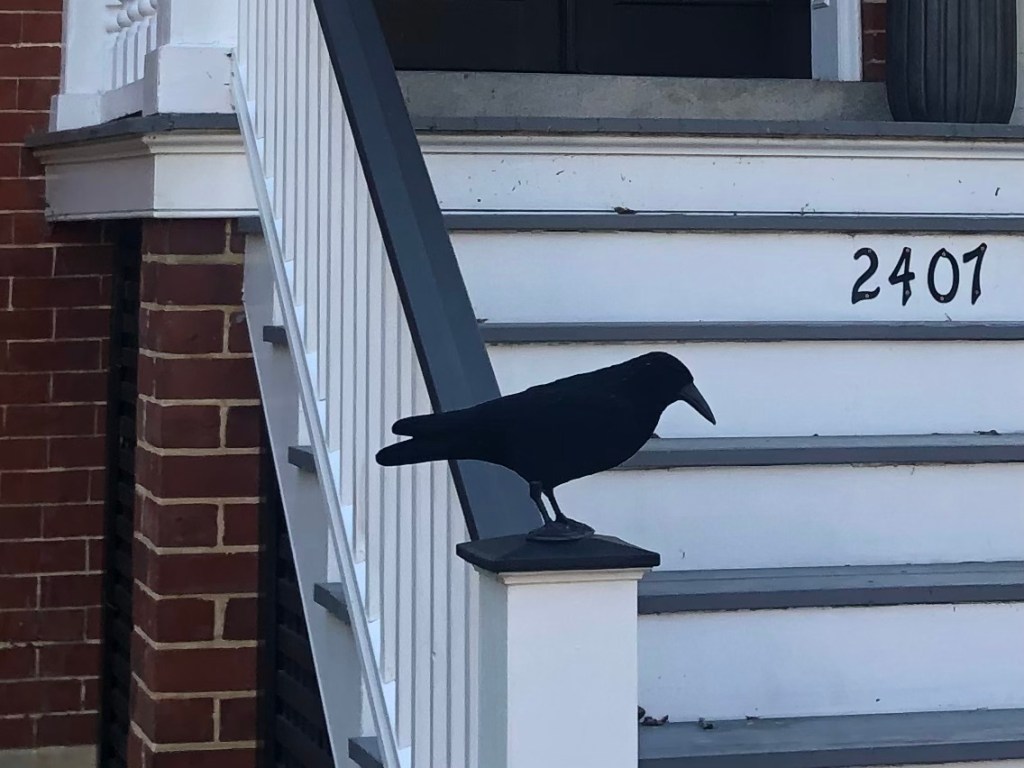
We appreciated that the owners of the Shelton House (where Poe’s last fiancee lived) have seen fit to plant a fake raven at the front steps.

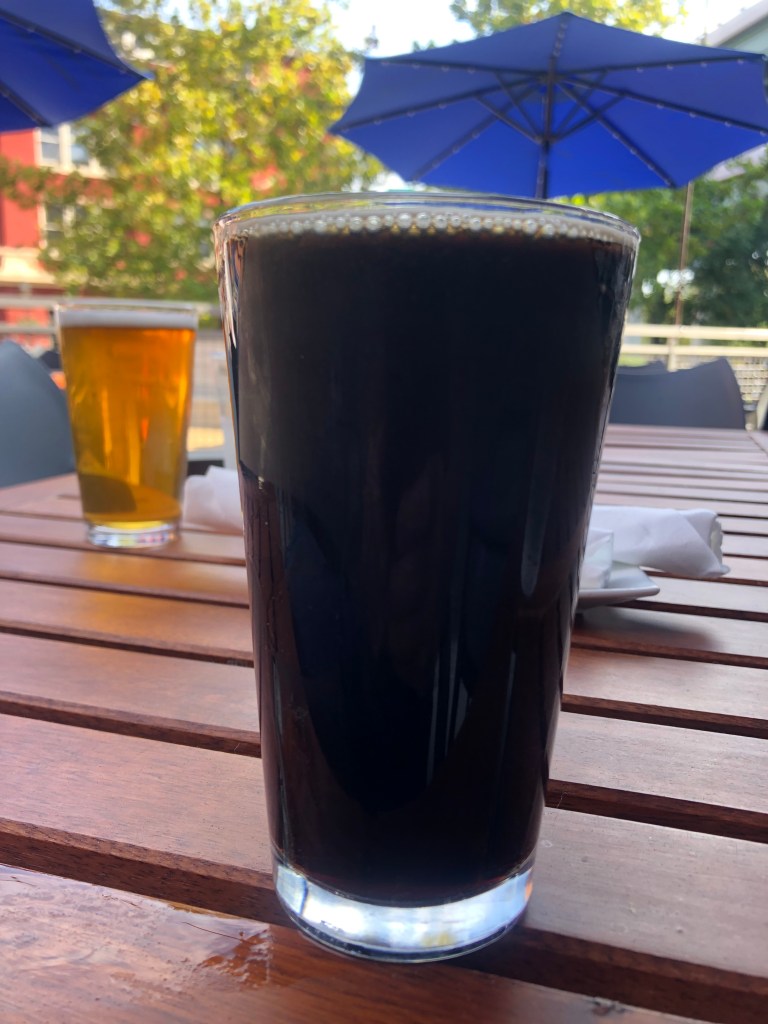
And, cap things off, today’s Beer of the Day is something called the Raven’s Roost Baltic Porter.

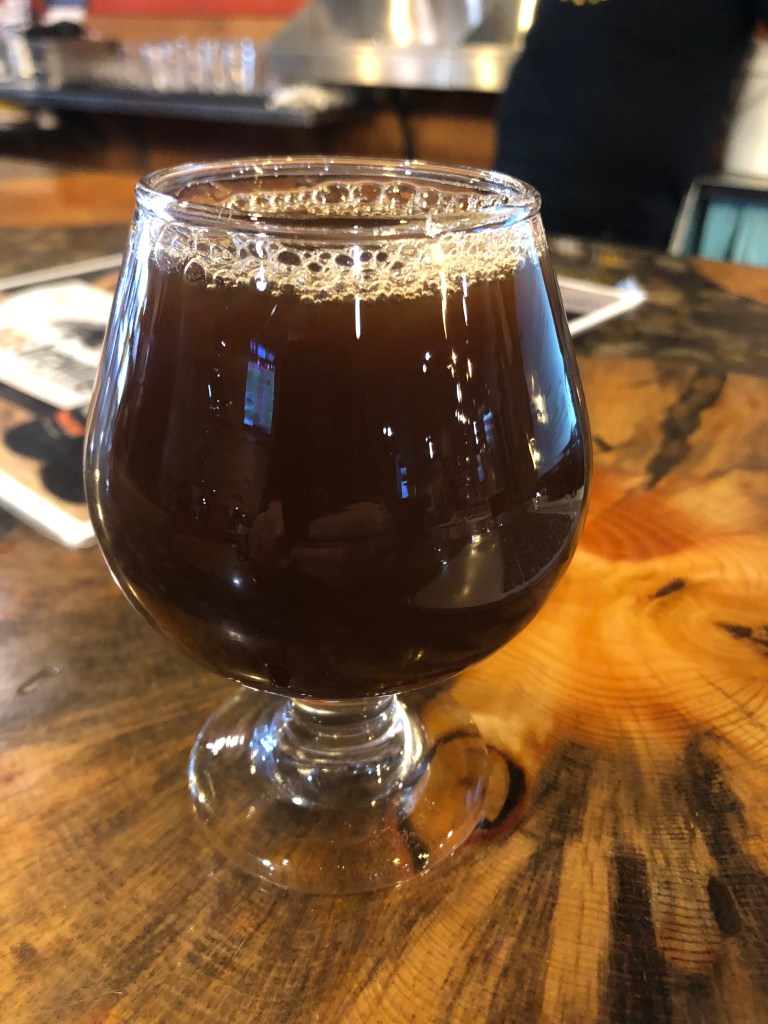
Dark as a raven is the Baltic Porter from Raven’s Roost.

This BOTD isn’t as thick as the Imperial Stouts that I’m partial toward. The body is actually rather thinner than you’d expect from something this dark. It’s also lightly hopped and lightly carbonated. Overall, it’s a rather tame beer. And yet it’s also very flavorful, with a strong chocolate profile and sweet maltiness. Clocking in at 7.1 ABV, it will improve your mood but it won’t kick your ass. I give it four out of five stars.

Obelisks · Road trips · trains

Rocky Mountain High

Today I finished crossing the Great Plains and made my way over the Rockies. But to start at the beginning:

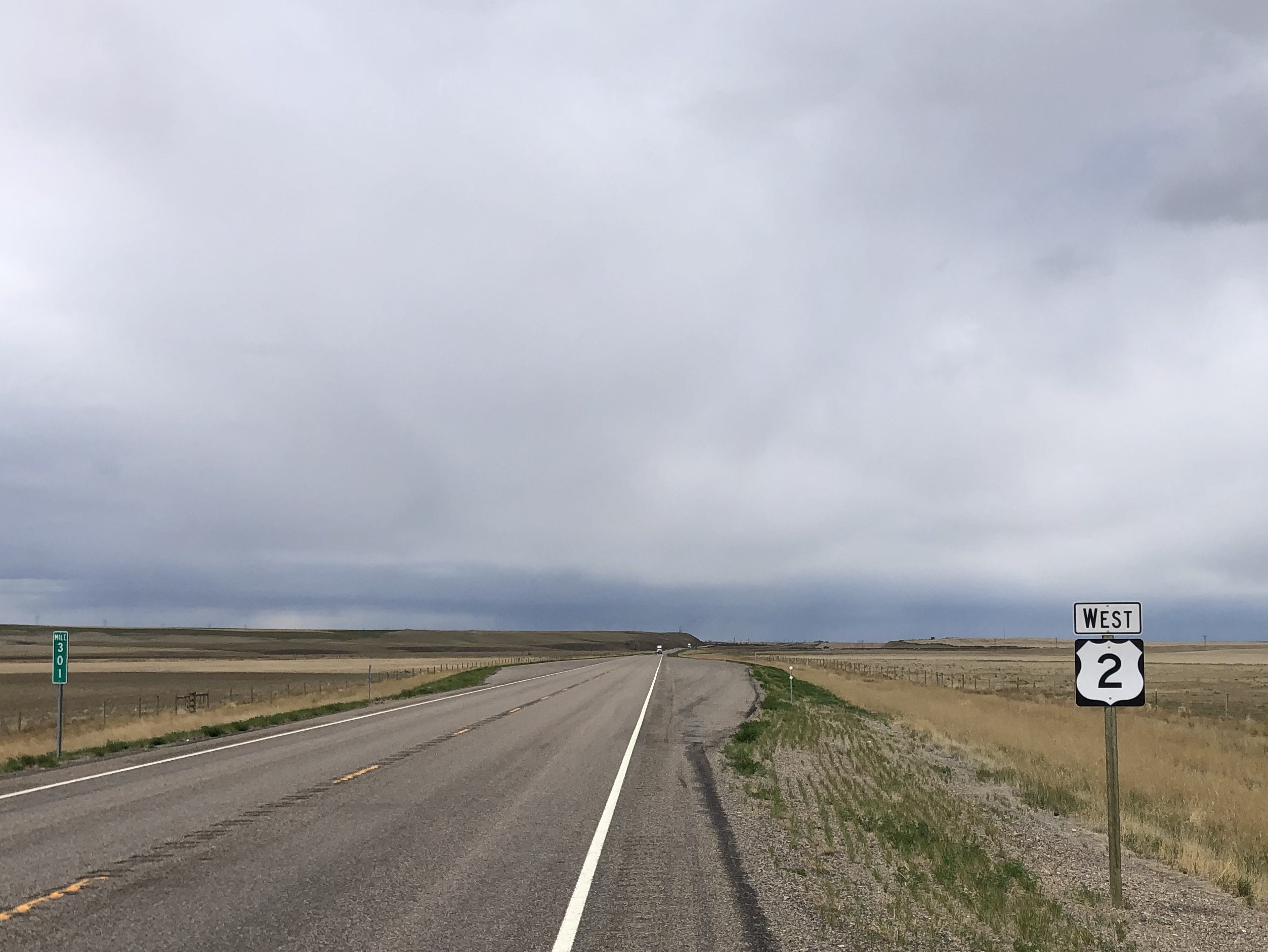
The Hi-Line/Route 2 in Montana cuts through exceedingly wide, open spaces–at least until you get to the western mountains. I think this is what makes the smallest of ancient settlements stand out in such stark relief; one’s eye is drawn to any interruption of the rolling prairie.

The Unbearable Flatness of Being

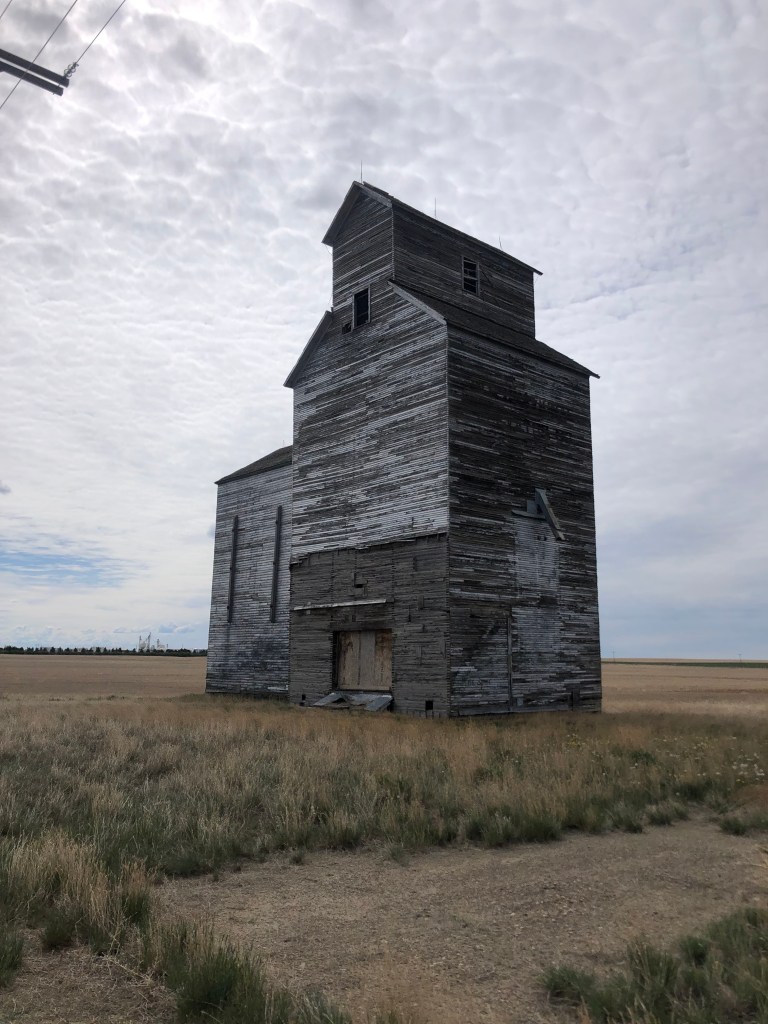
Now, one of the great things about much of US Route 2 is that it closely parallels Great Northern’s transcontinental route. Small towns were established all along the Hi-Line, and almost all of those settlements still exist in one form or another. Most of them still retain some aspect of their original, century-old incarnation, which makes this drive feel like a journey through an earlier time. And the towns have looked for ways to remain relevant and economically viable–with varying degrees of success. If they don’t do it right, their young people seek opportunities elsewhere, the labor force goes away, business dries up, and the town shifts into ghost town status.

Witness to long-past better days.

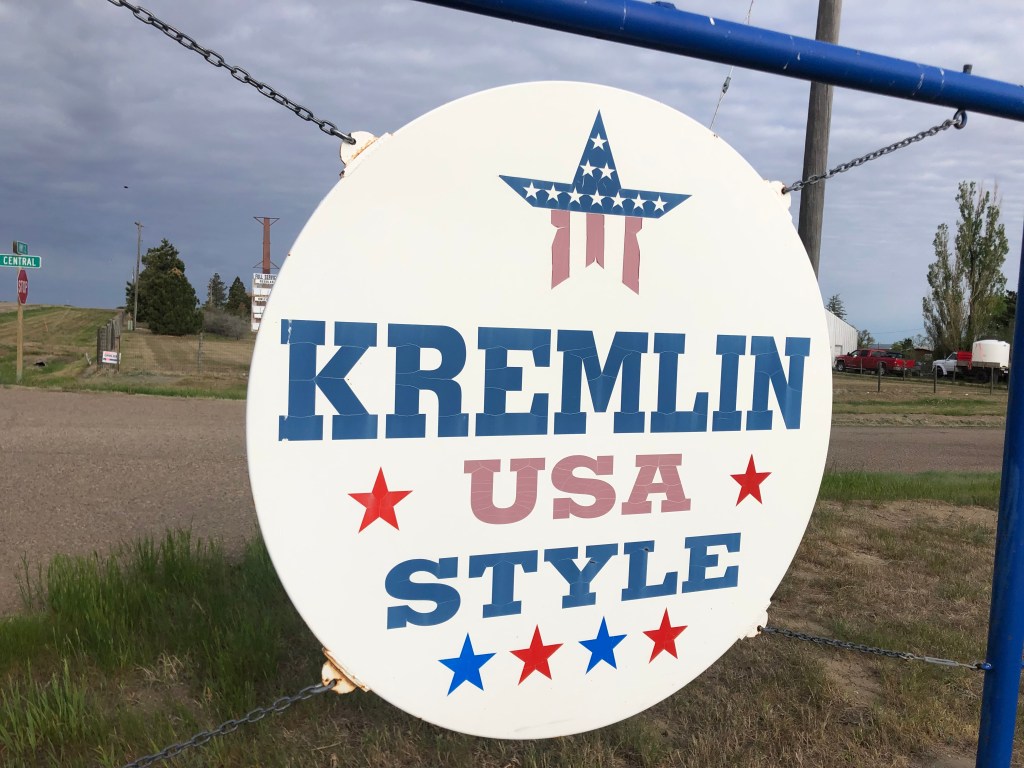
Let’s take two examples from today’s journey. The first is the town of Kremlin, MT (pop: 98). The unusual name owes to founding by ethnic Russian homesteaders in the early 20th century–before the Russian Revolution.

Kind of like Gangnam Style, only different.

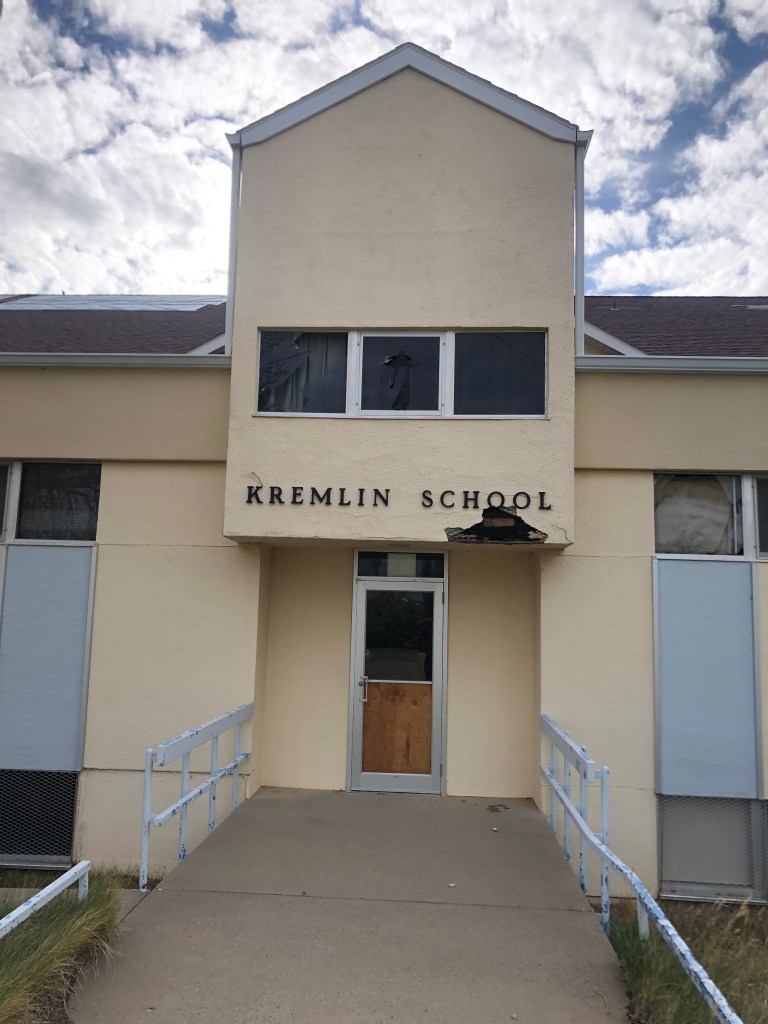
I took a quick pass over the town’s dirt roads and saw only one business (a bar), several derelict granaries, and a handful of houses in various states of disrepair. The only public building I saw was a school house, which was evidently permanently closed.

The former Kremlin school (now permanently closed.)

Kremlin is fast approaching ghost town status, with the population dropping about 20 percent per decade. You can almost feel the despair in the air.

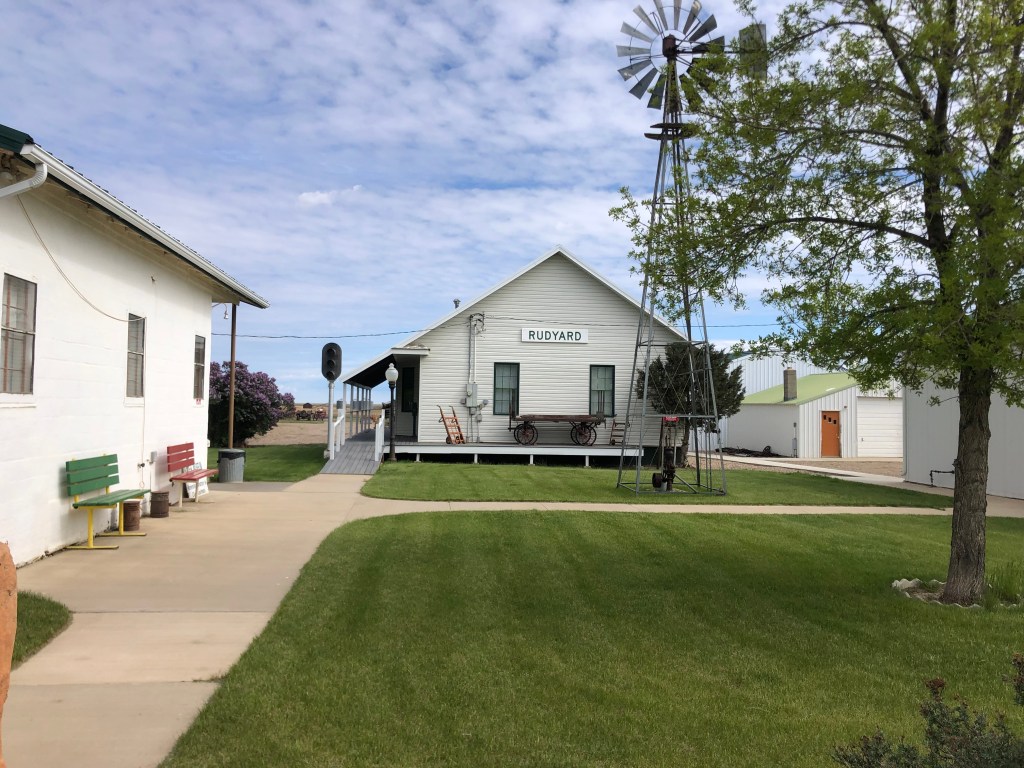
Just a few miles up US Route 2 is the town of Rudyard (pop: 200), named after Rudyard Kipling. (An outdated sign at the entrance to town boasts “596 nice people and one old sorehead.”) But it was the sign announcing the Rudyard Depot Museum that caught my eye. I turned down the narrow main street and came to the museum complex, which is a collection of tidy buildings behind a memorial rock wall.

Some of the Rudyard museum’s buildings. The depot is in the center.

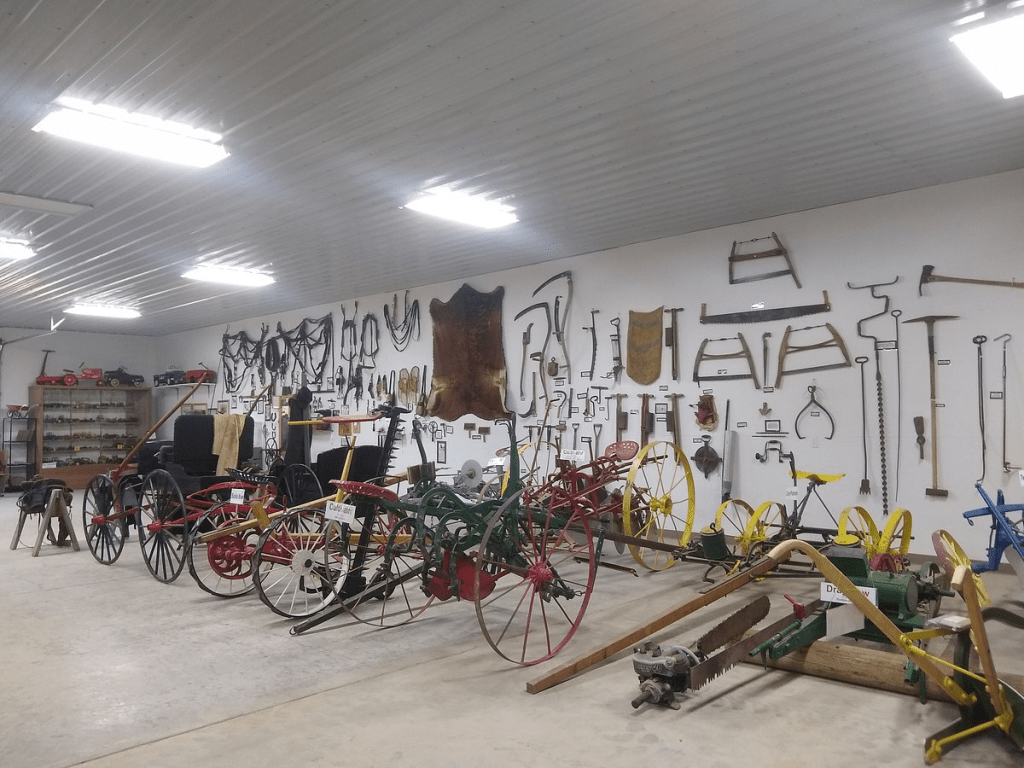
A sign on a locked door said “We really want to show you the museum; call this number and we’ll come right over.” So I called, and within 3 or 4 minutes a friendly, talkative woman named Willie showed up. She then spent well over an hour showing me around each of the buildings. It’s really an astounding collection: Uncountable historic household goods, rows of showroom-quality refurbished tractors and buggies, various agricultural implements, shelves full of about 100 historic railroad lanterns, turn-of-the-century appliances, military uniforms, telephone switchboards, and beauty shop hairdryers that look like they could give you a lobotomy. The collections are housed in a historic upper-middle class house, a railroad depot, a post office, a homesteader’s cabin, and other buildings. After an hour we had barely scratched the surface; I could easily have spent the whole day there.

This photo c/o TripAdvisor’s website.

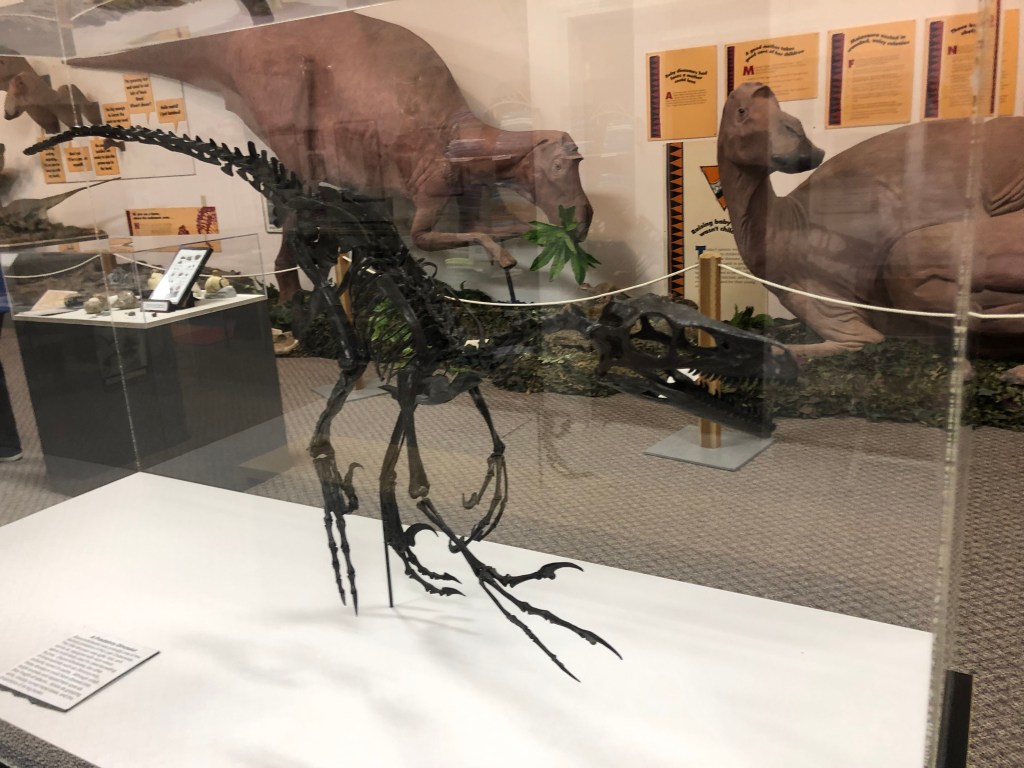
But beyond all that, they have something that drawfs the other collections I’ve mentioned: They have dinosaurs.

A small sample from Rudyard’s dinosaur collection. The skeleton in the foreground served as a model for Spielberg’s velociraptors.

You probably know that Montana is home to various fossil dig sites. It turns out that of the more productive sites is right here in Rudyard. And a very large number of specimens–individual bones, complete skeletons, and full-size models–are housed in a separate building at the museum. The collection is so authentic and extensive that it’s frequently visited by paleontologists and other academics. Plus, Stephen Spielberg came here when he was working on Jurassic Park.

All of this is collected, organized, and maintained by volunteers from Rudyard. Many hundreds of visitors come through each year, and they are all warmly welcomed by Willie and the other volunteers. It’s a significant labor of love, and really says something about the pride these people have in their comunity.

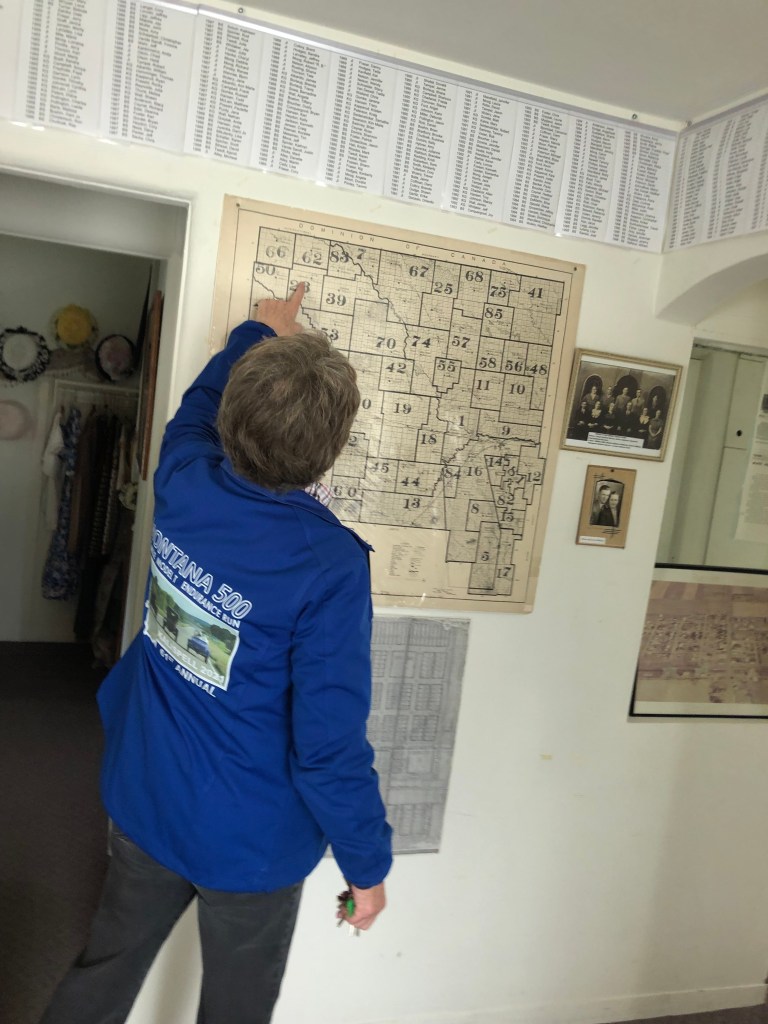
Willie wouldn’t give me permission to show her face in the blog, but here she is pointing out some of the detailed, historical town data that the museum has collected.

There are other aspects of the town that reveal a special pride, such as the playful population sign at the town entrance. (Willie acknowledged that the population has been dropping, not just in Rudyard but all along the Hi-Line. That’s why Kremlin’s school closed, and their children now come to school in Rudyard.) Rudyard is also distinguished by a number of historic buildings lining the main street.

One of the nicely preserved buildings on Rudyard’s main drag.
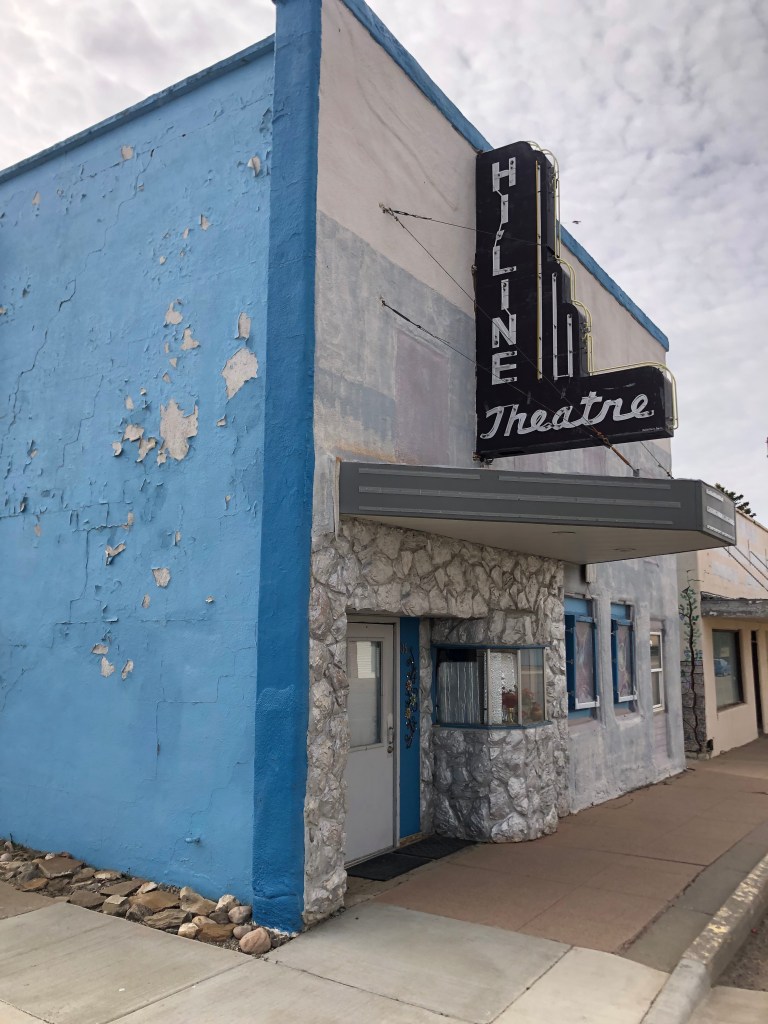
Rudyard’s 1949 Hi-Line theater is a little rough on the outside, but they still show movies on the weekends. It’s the only theater within a 100 miles. And their 1949 popcorn popper still churns out the popcorn.

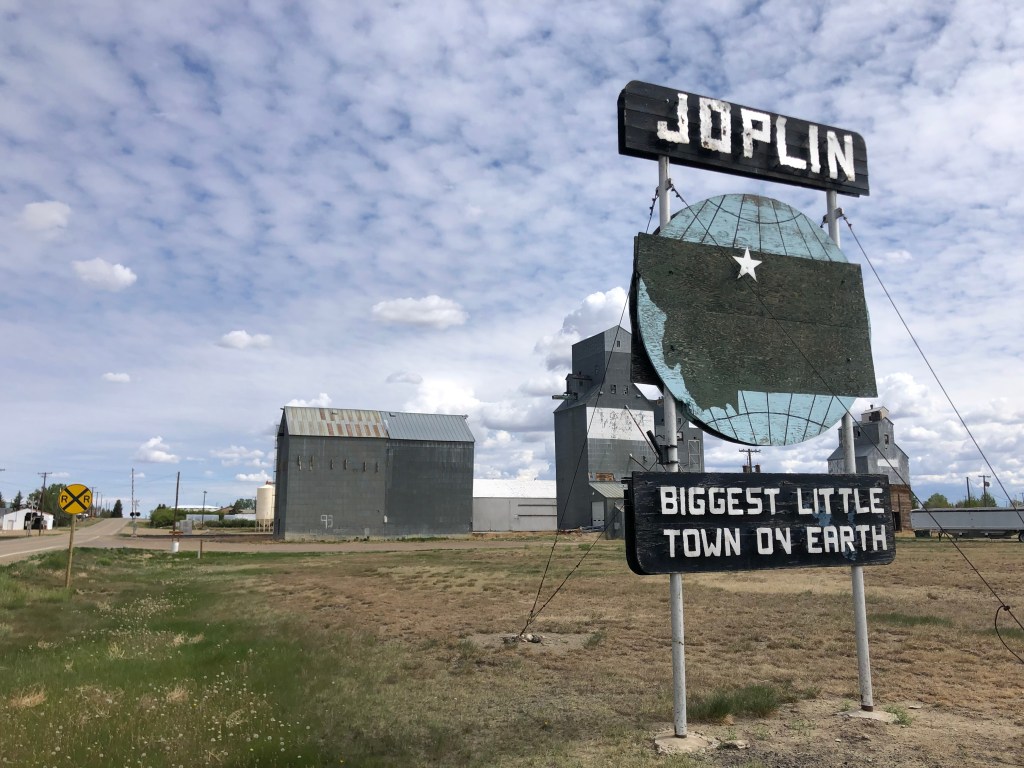
I thanked Willie for her time and got back on Route 2, stopping at each small town that I passed. A few of them still have railroad depots, though many do not. The depot-less towns seem especially isolated and neglected. Still, each of these towns has at some point tried to market itself to the world with a nickname. For example, Joplin (pop: 150) calls itself the “biggest little town on earth.”

I hadn’t realized that Montana took up so much of the earth’s surface.

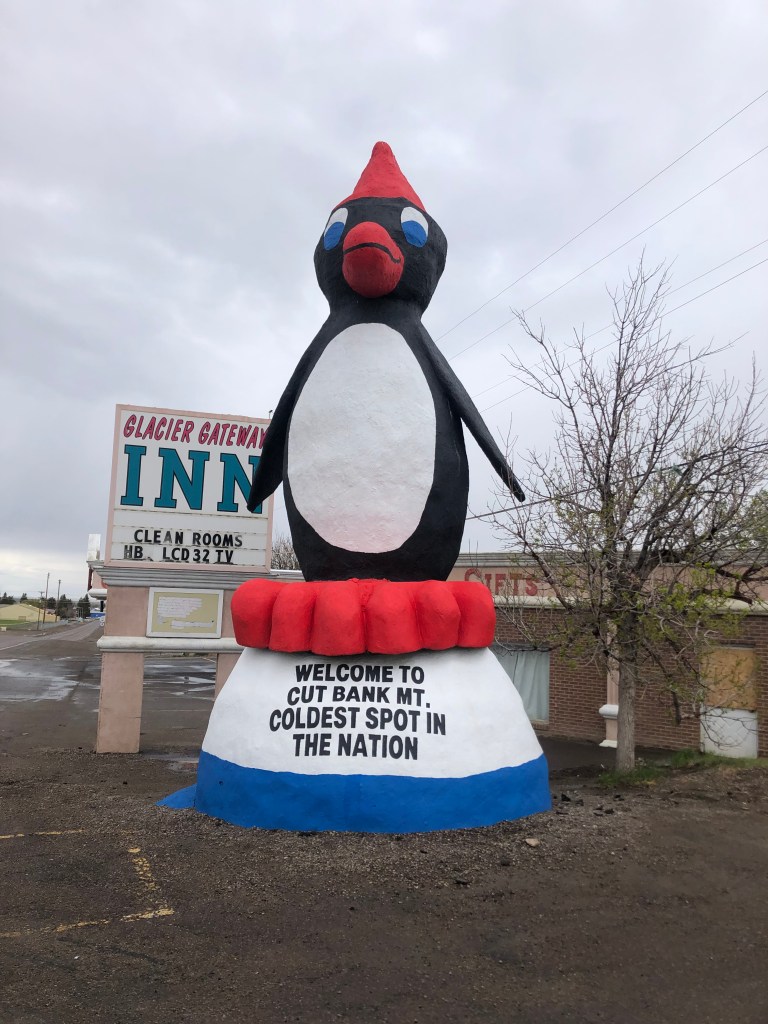
Meanwhile, Cut Bank (pop: 3,000) calls itself “the coldest spot in the nation.” Which is strange, because after I passed through Cut Bank and went up into the Rockies, the temperature dropped precipitously.

Dubious claim and incredible feet.
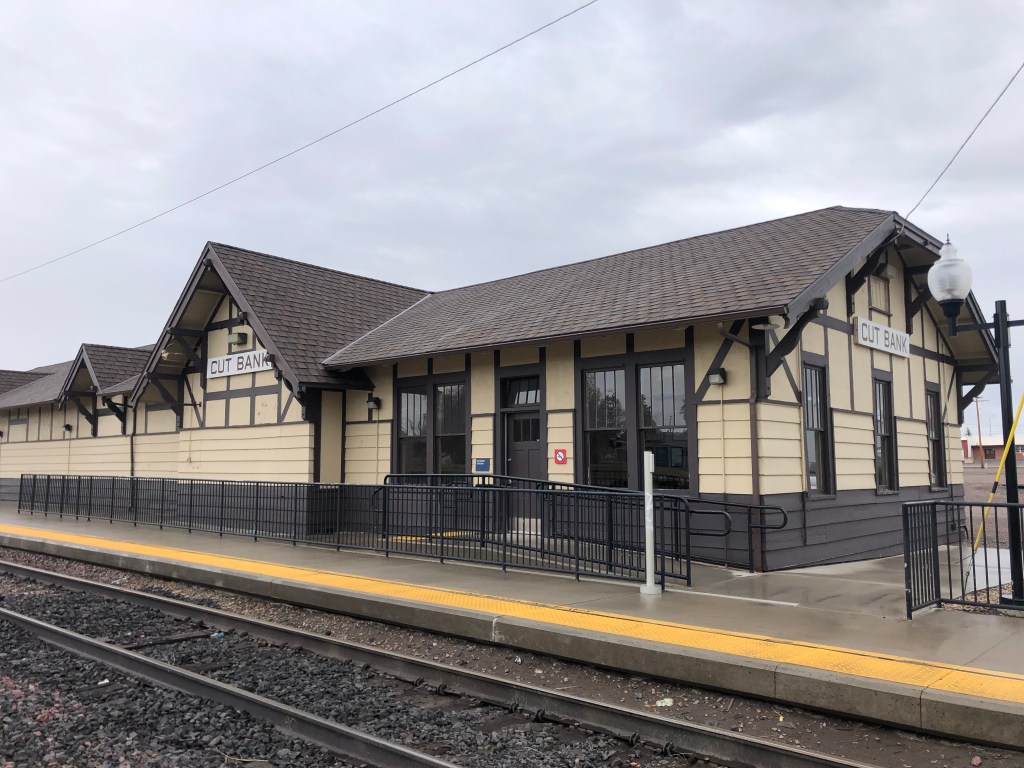
Cut Bank’s unusual 1918 depot. The young woman at the ticket window told me that the town is growing fairly rapidly.

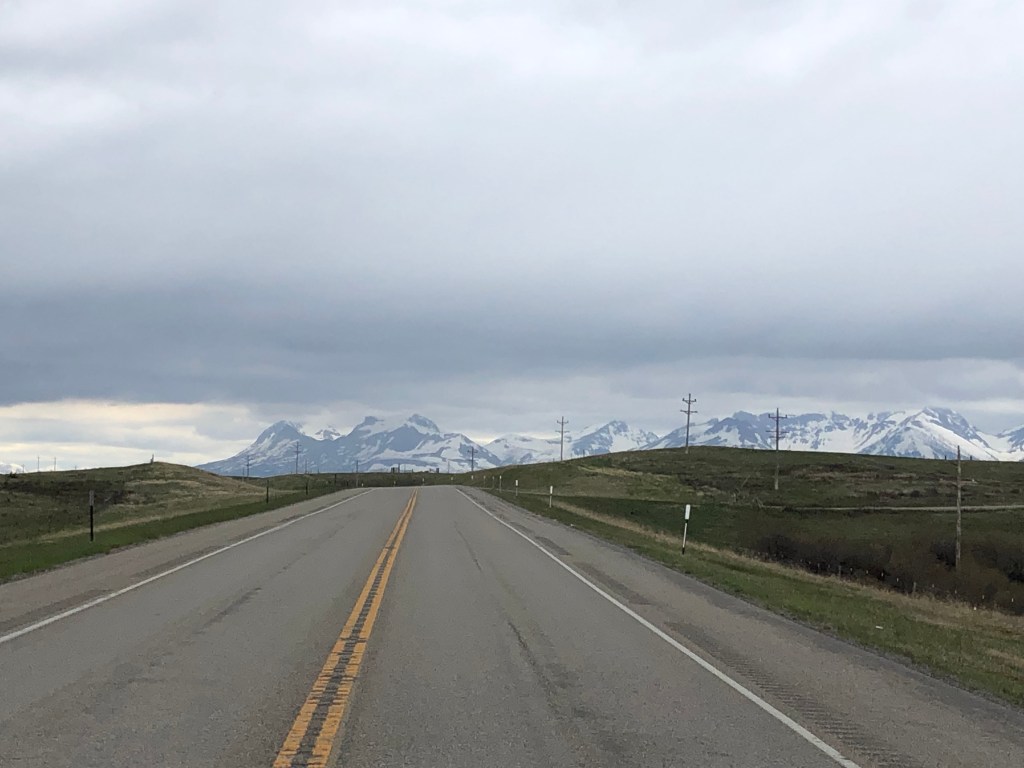
Eventually, after hours of driving the flat, open landscape of northern Montana, the horizon suddenly changed. Route 2 was about to ascend 5,000 feet into the Rockies.

Rocky road ahead.

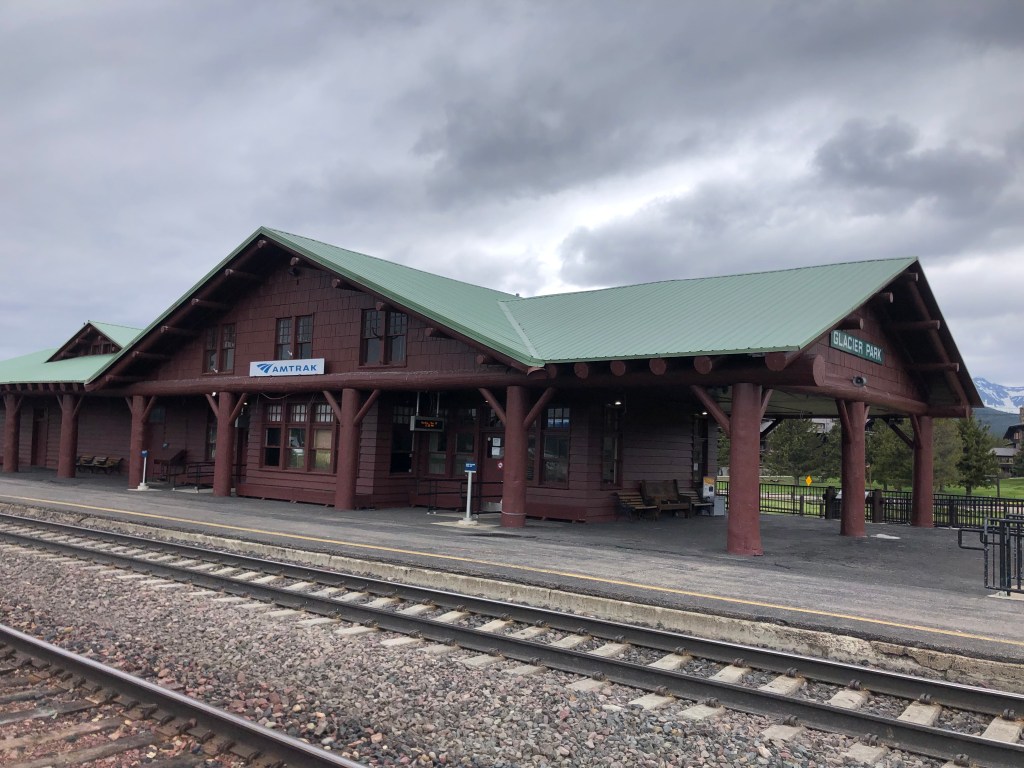
The Great Northern Railroad found a suitable pass and constructed a route over the summit of the Rockies in the late 1800s, but Route 2 didn’t extend over the mountains until 1930. In the interim, automobiles were loaded onto rail cars and transported over the Rockies by train.

Great Northern’s 1912 depot in East Glacier–where you’d load your car for the trip over the summit.
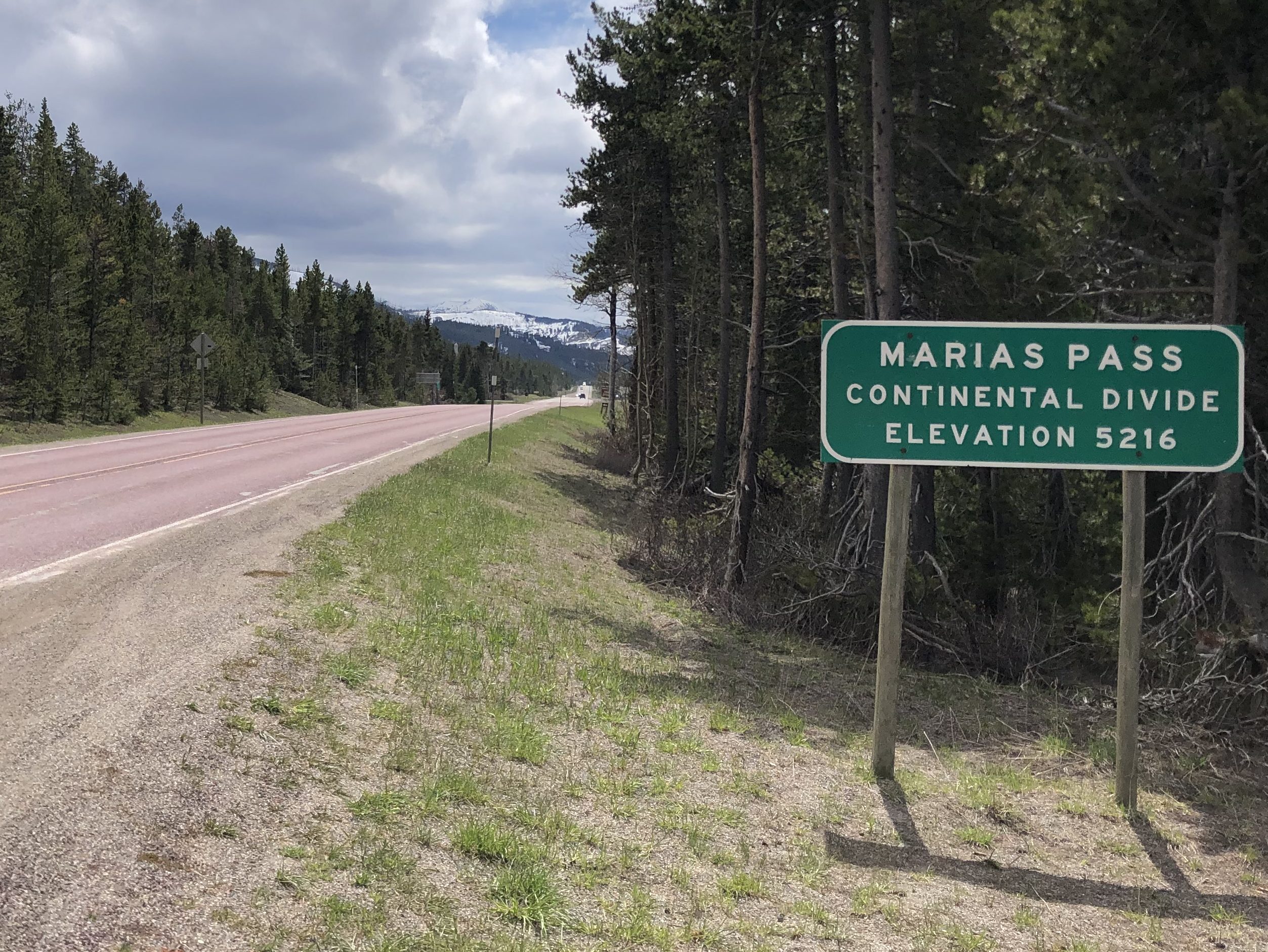
Speaking of the summit….Crossing the Continental Divide on Route 2.
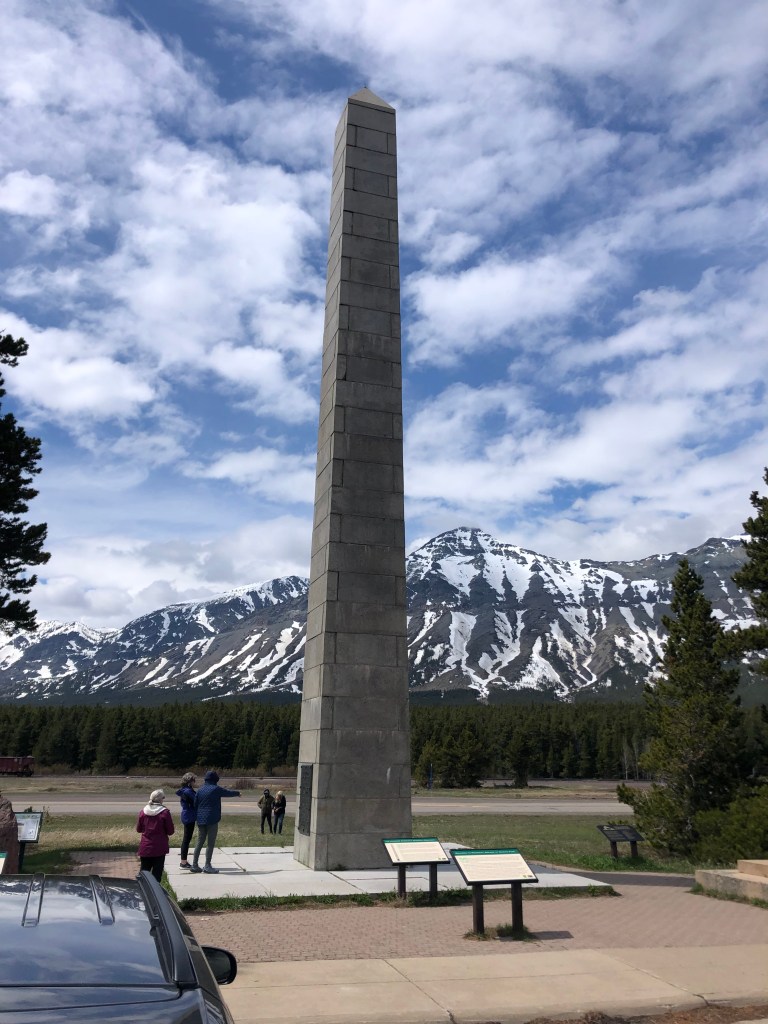
…and at the summit there’s a 1931 obelisk in honor of Theodore Roosevelt. It originally was placed between the two lanes of the newly-opened Route 2, but it was moved to the shoulder in 1989 “for safety reasons.” Special thanks to loyal reader Peter D. for bringing this monument to my attention.

Once I descended on the western side of the summit, the Route 2 driving experience changed again. The road skims the southern edge of Glacier National Park, and you pass numerous ski lodges, outdoor equipment rental businesses, coffee shops, lodges, restaurants, and other tourist-serving businesses. It feels like South Lake Tahoe in the 1970s. What a far cry from the desolation and tiny, struggling towns of the past couple of days.

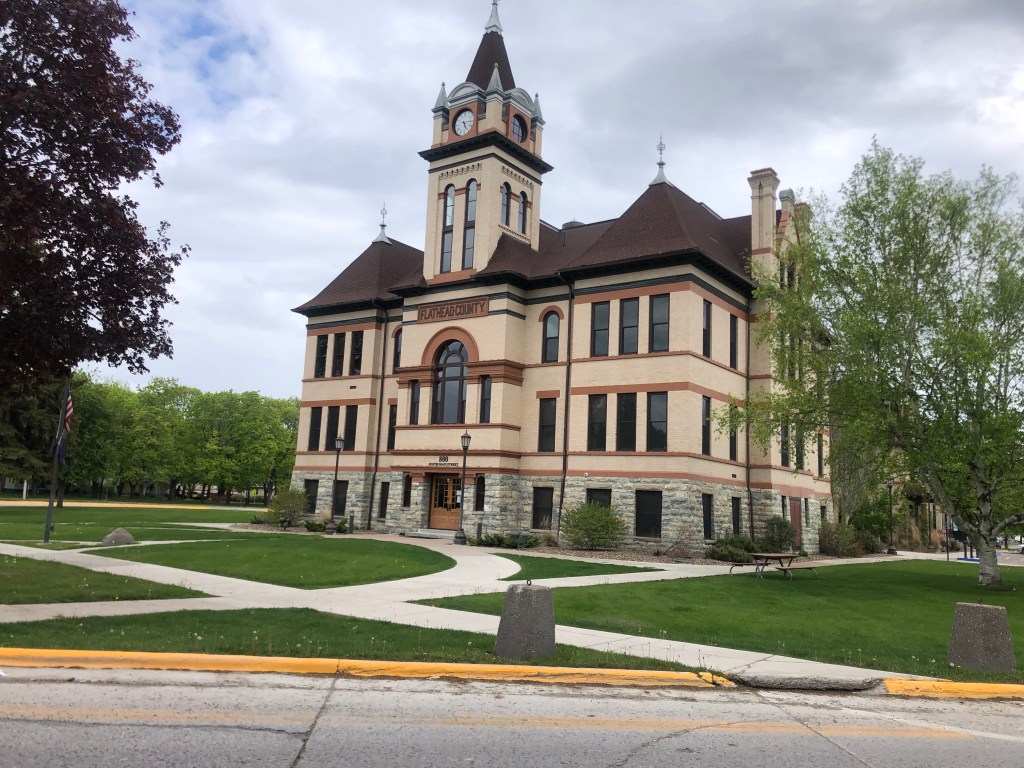
Finally I stopped for the night in Kalispell, MT (pop: 25,000). It feels like a vibrant, prosperous town, taking advantage of its location at the gateway to Glacier National Park. It’s also the county seat of Flathead County, with a nicely restored courthouse and other civic buildings. Moreover, as described in the BOTD report (immediately below) it has more than one microbrewery.

Kalispell’s 1905 courthouse

Brew(s) of the Day

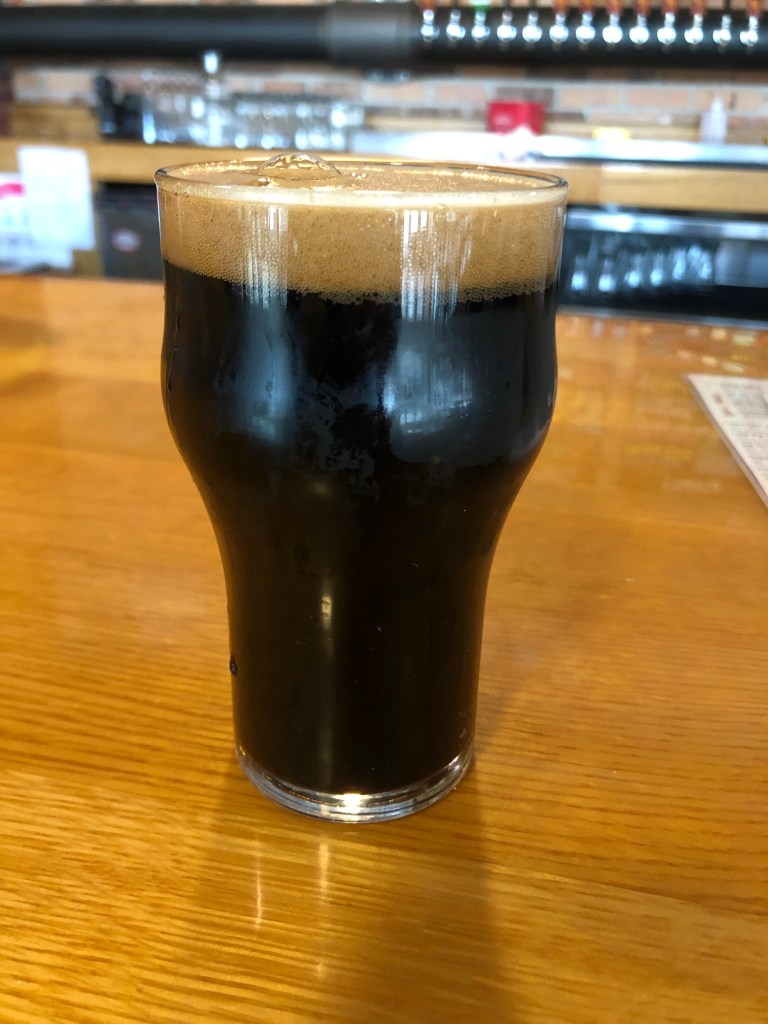
Based on a recommendation from loyal reader Ron P., I stopped in at Kalispell Brewing Co for their Imperial Stout (10% ABV). I rolled in around 5:30 pm, and they were already putting chairs on the tables for a 6 pm close. But I did manage to get a glass of their imperial stout.

Now, I don’t want to sound too high-maintenance, but what’s so hard about brewing a malty imperial stout? The offering at KBC is definitely overhopped. I mean, it’s pleasantly roasty, with dark coffee notes and a good creamy head. That’s good. But there’s simply no sweetness on the palate. This is unacceptable.

Next I moved over a few blocks to Bias Brewing, where bartender Rem recommended the Logan’s Lass Scotch Ale (8.5% ABV). I had a sample, and it was a pretty beer, with a slightly peaty (but not exactly smoky) flavor. But what I landed on was the Barro Sabroso Mexican Chocolate Porter (6% ABV). It was superb! After badmouthing porters a couple of nights ago, I now have found one of my favorite beers. This porter tastes almost exactly like a Mexican hot chocolate, with dark chocolate and coffee notes and a generous sprinkling of cinnamon. It’s even slightly sweet. Seriously, this was an enjoyable, interesting, tasty beer. I give it 4.5 points.

Worth searching for.

Tomorrow I cross the state line into Idaho. Until then.

Obelisks · Road trips · trains

For Whom the Bell Tolls

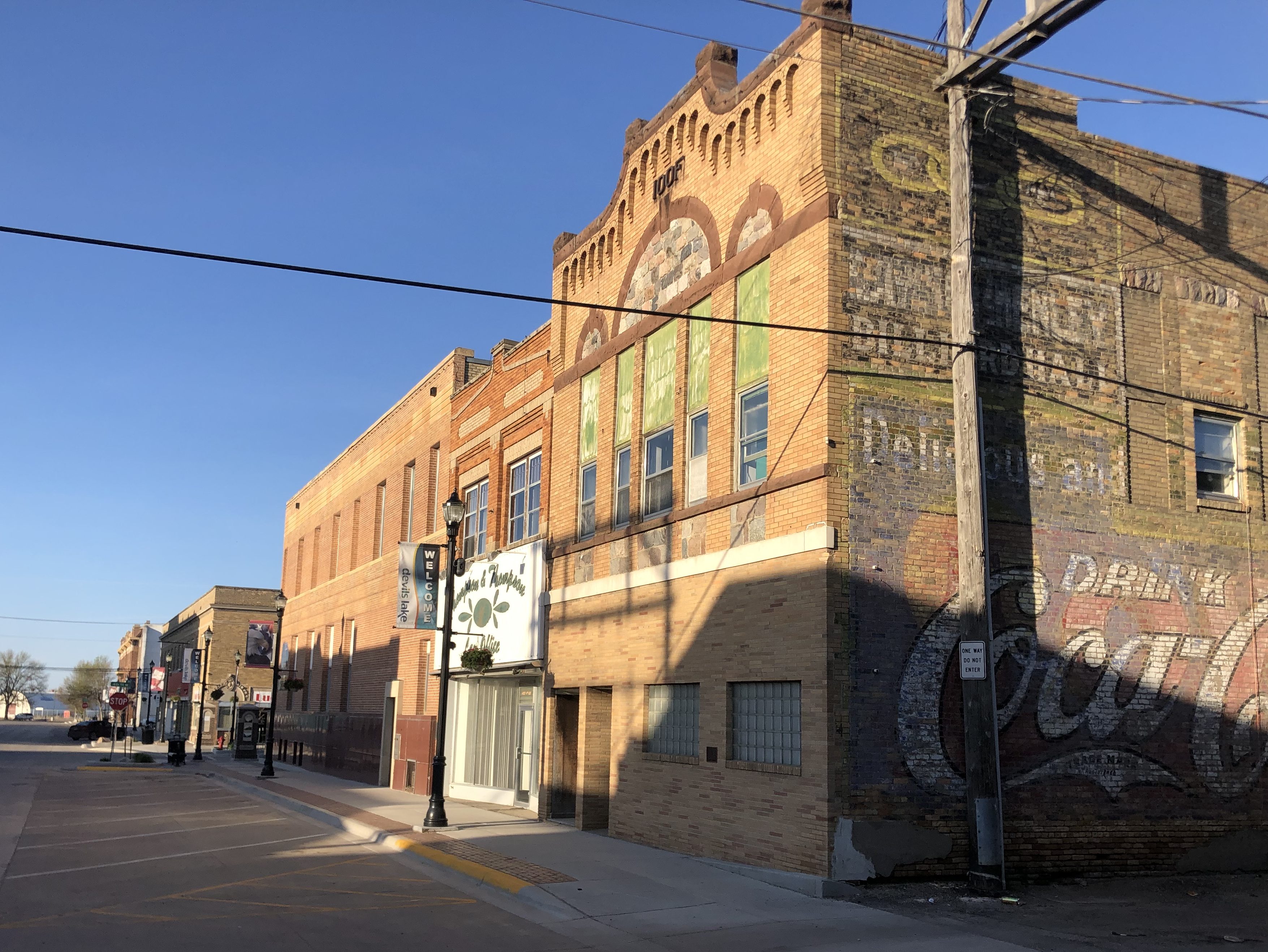
On my way out of Devils Lake I drove through its historic downtown. With numerous buildings dating back to the early 1900s, it feels like you’ve stepped back in time.

Devilishly quaint

The downtown feels viable, with various renovated structures that are occupied by active businesses.

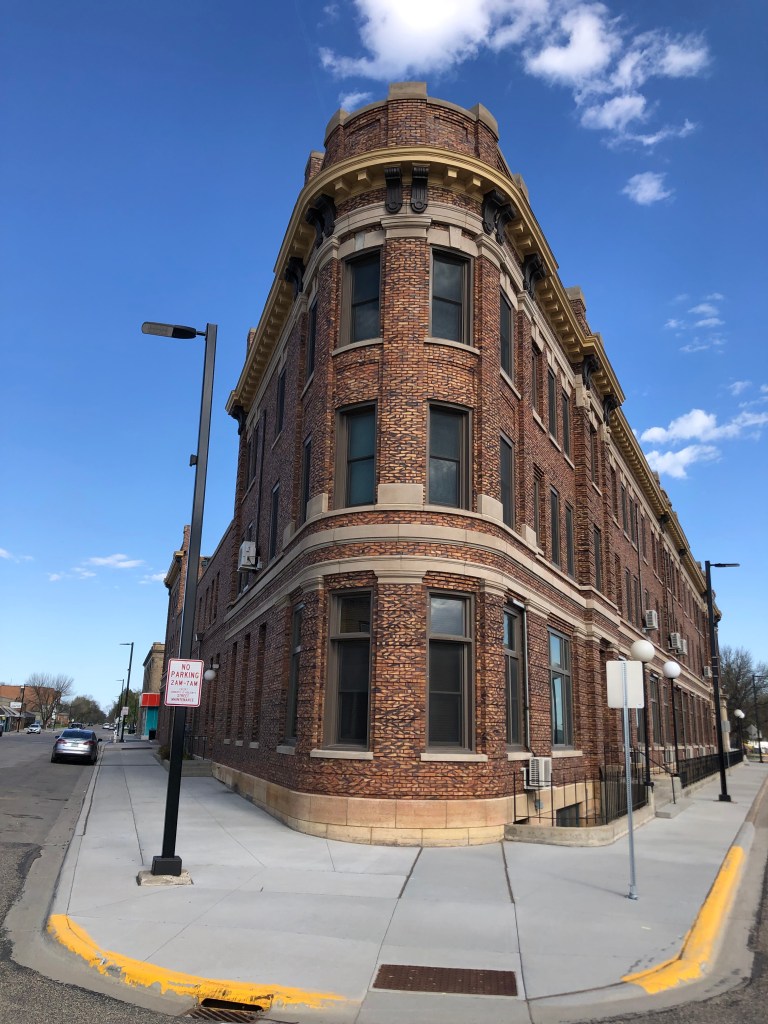
The Great Northern Hotel, originally constructed in 1911, now is home to apartments and business offices.

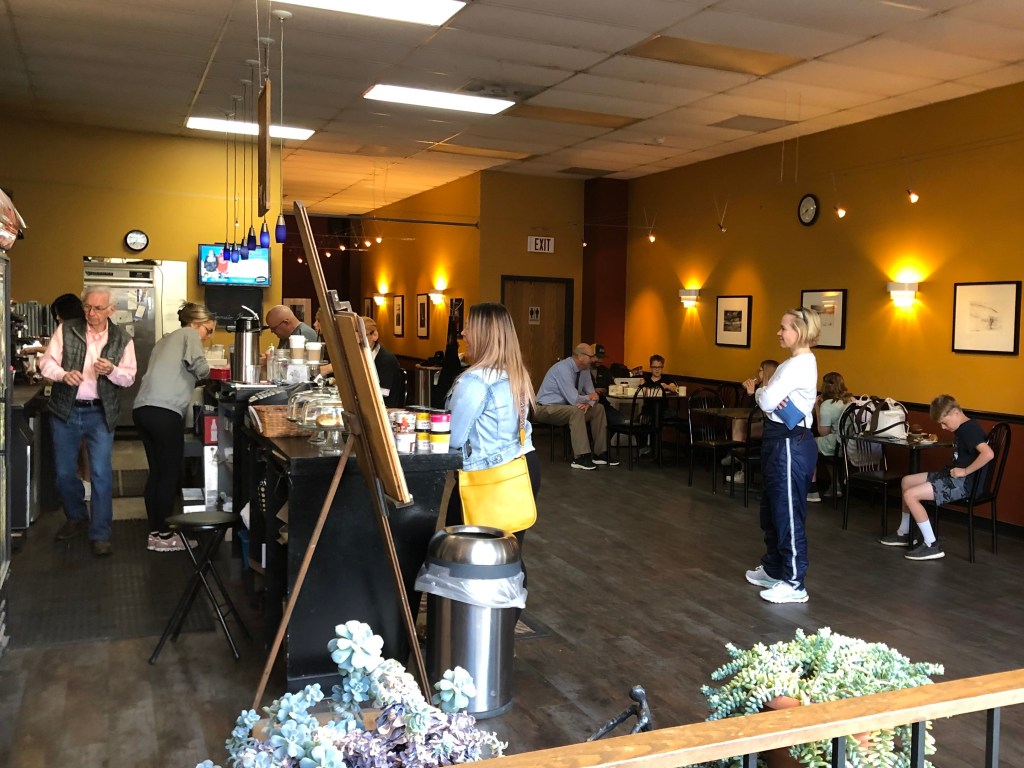
I stopped in at a coffee shop taking up a good chunk of the first floor of the historic Bangs-Wineman building that dates back to 1895. The Liquid Bean seemed unusually hip, vibrant, and busy for a coffee chop in the historic section of a small North Dakota town. It had local artwork on the walls and a steady stream of college students and moms with kids dropped by to get their coffee while on their way to school. (Today was the last day of the school year.) There was also a handful of regulars parked on stools at the coffee bar.

Wouldn’t be out of place in Portland.

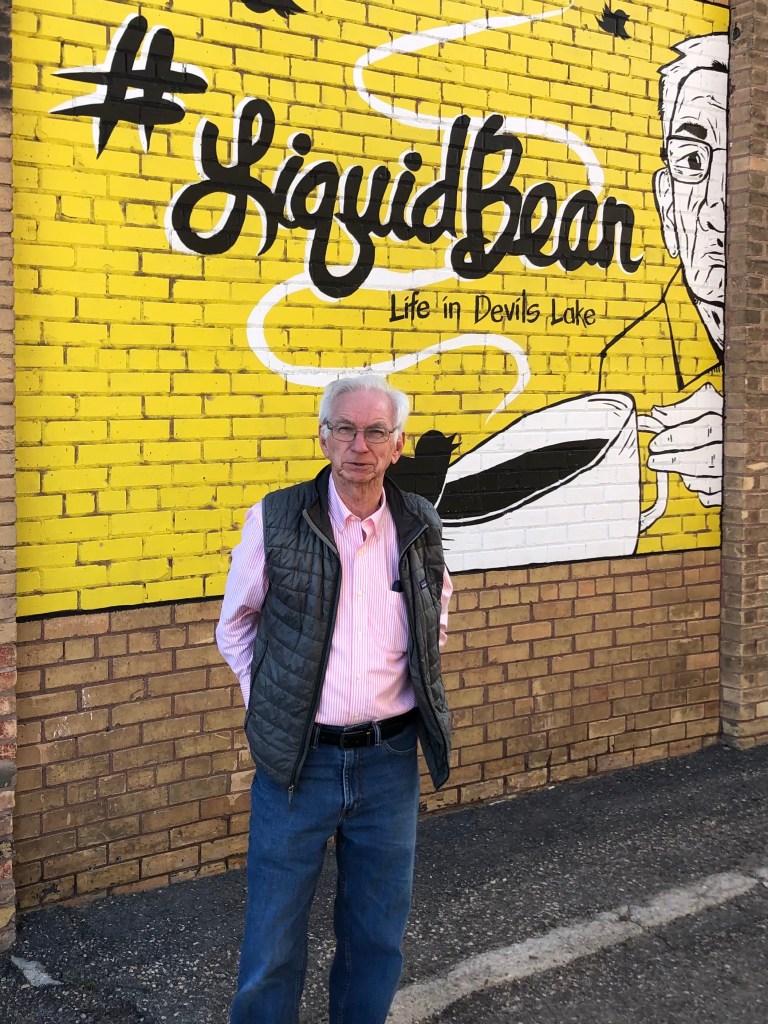
When I sat down with my coffee, the owner came to my table to ask about my road trip. Dan Johnson has owned The Liquid Bean for 28 years, and appears to know all the locals who drop by his establishment. He’s watched the downtown experience something of a renaissance in recent years, and he is an enthusiastic booster for the community. (He also works at the local two-year college.) Dan was familiar with Route 2’s long reach, and commented that the route is popular with bicyclists–though they tend to travel west to east, in order to avoid the prevailing headwinds.

“I’m fifteen years past retirement age, but I keep working to support the cost of owning a business.” –Dan

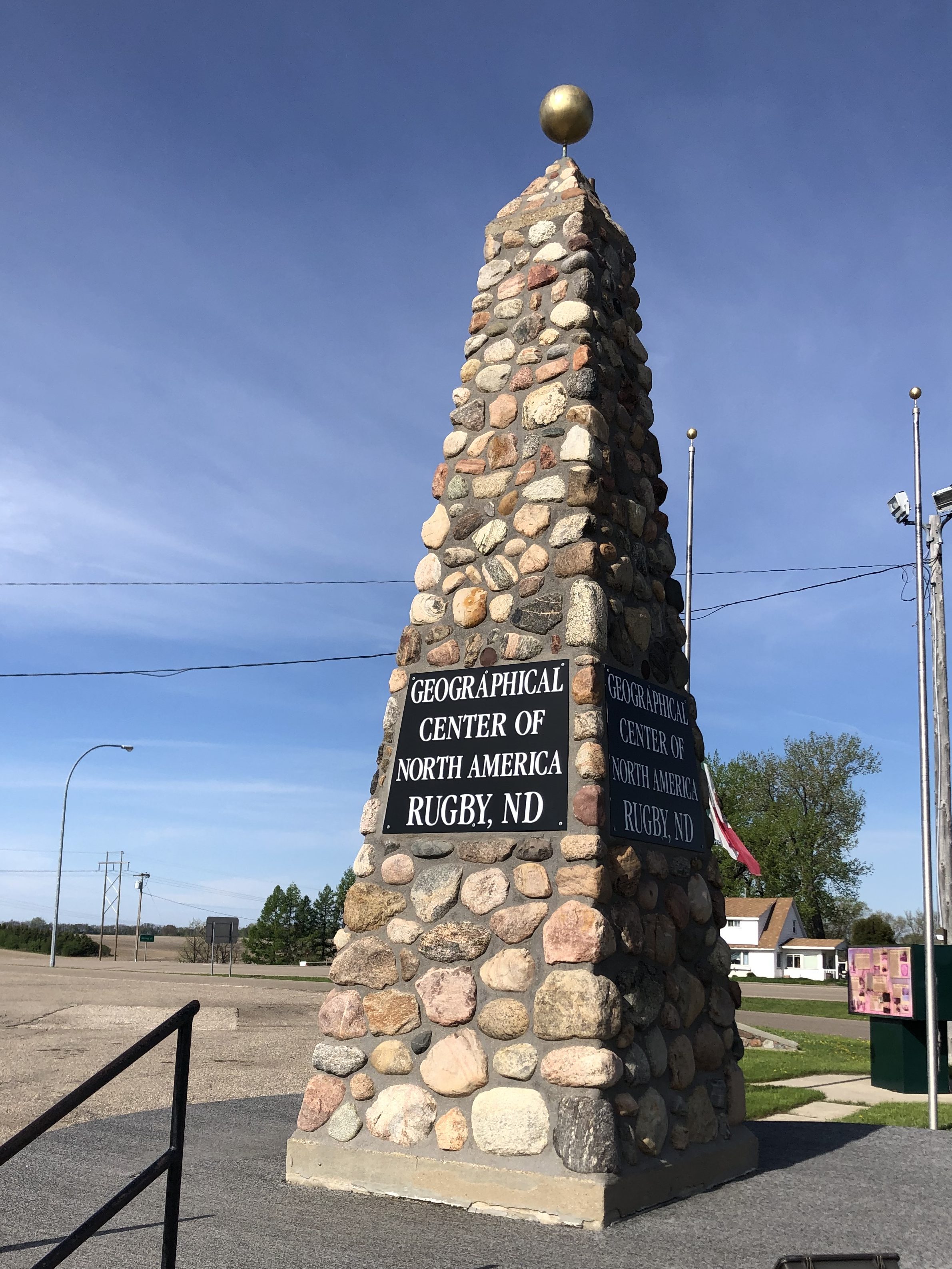
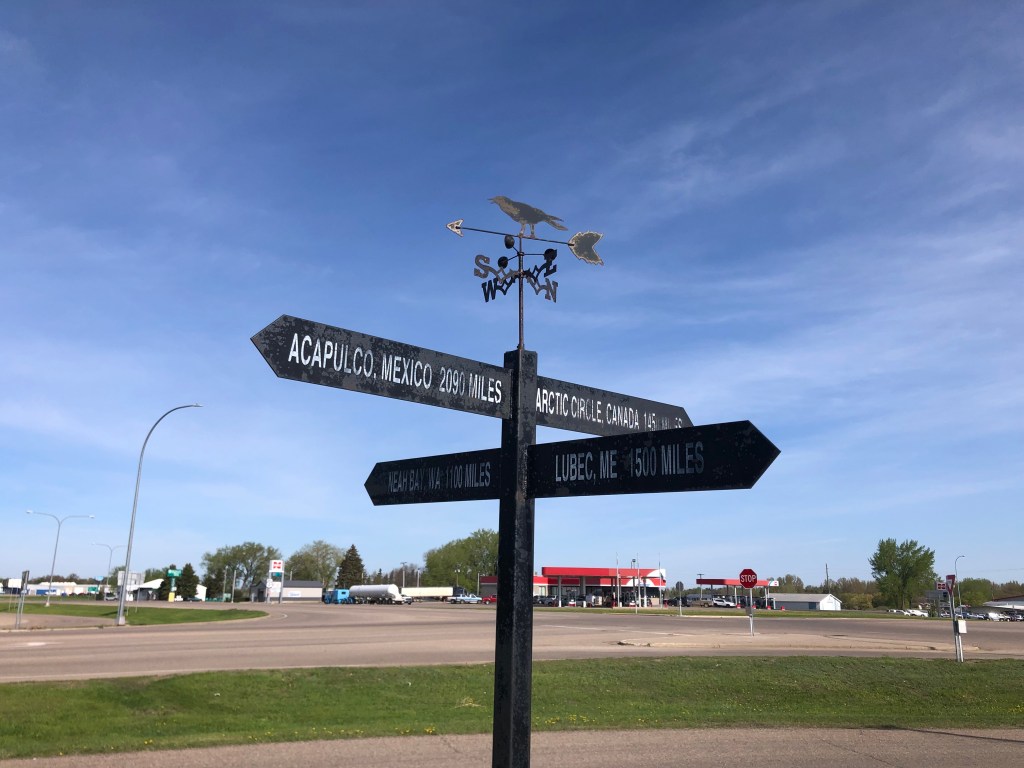
After mingling with the locals a bit longer, I got back out onto the highway. Before long I arrived at the small town of Rugby (pop: 3,000). Rugby claims it’s the geographic center of North America. And they’ve erected an obelisk (!) to commemmorate that claim.

Rugby is central.

Now, calculating the continent’s geographical center was performed in 1931 by the US Geodetic Survey Office–and it’s said that it involved a laughably low-tech process of teetering a cardboard cutout of the continent on a pencil point, and marking where it evenly balanced. That point was Rugby, ND. A year later Rugby’s Boy Scout troop got a bunch of stones, mixed up some cement, and made this obelisk. In 1971 the obelisk got moved somewhat to accommodate the widening of US Route 2, but it’s still in the ballpark.

All roads lead to–or maybe from–Rugby.

However, modern calculations place the actual geographical center over 100 miles away. About a year ago CBS News did a story on the controversy. You should read it through, all the way to the surprise ending…

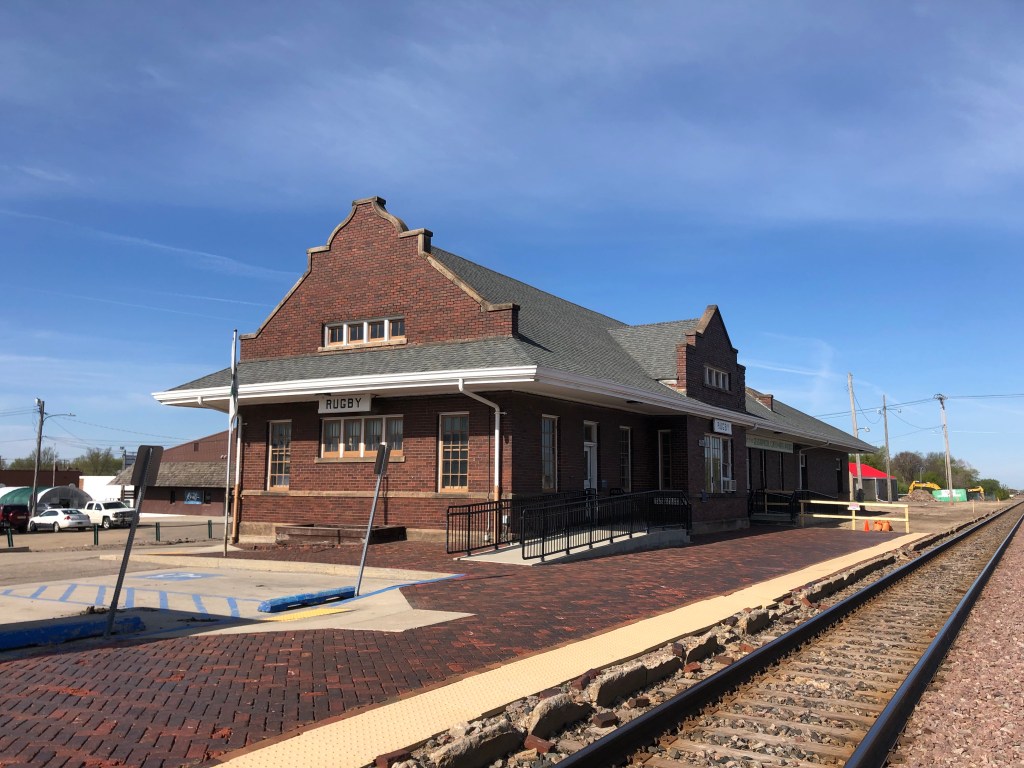
Anyway, geographical center aside, my main objective in Rugby was the railroad depot, which was built in 1907. Unlike most of the other depots I’ve stopped at along this trip, the Rugby depot still receives passenger service.

Rugby Depot
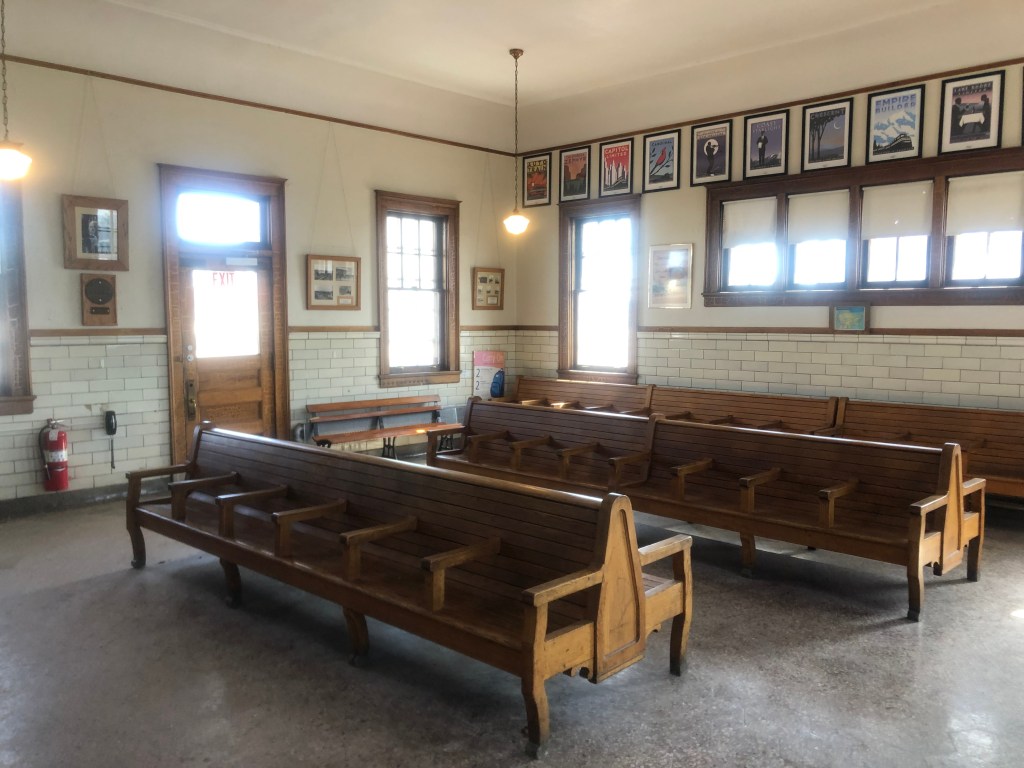
Waiting room, with original benches
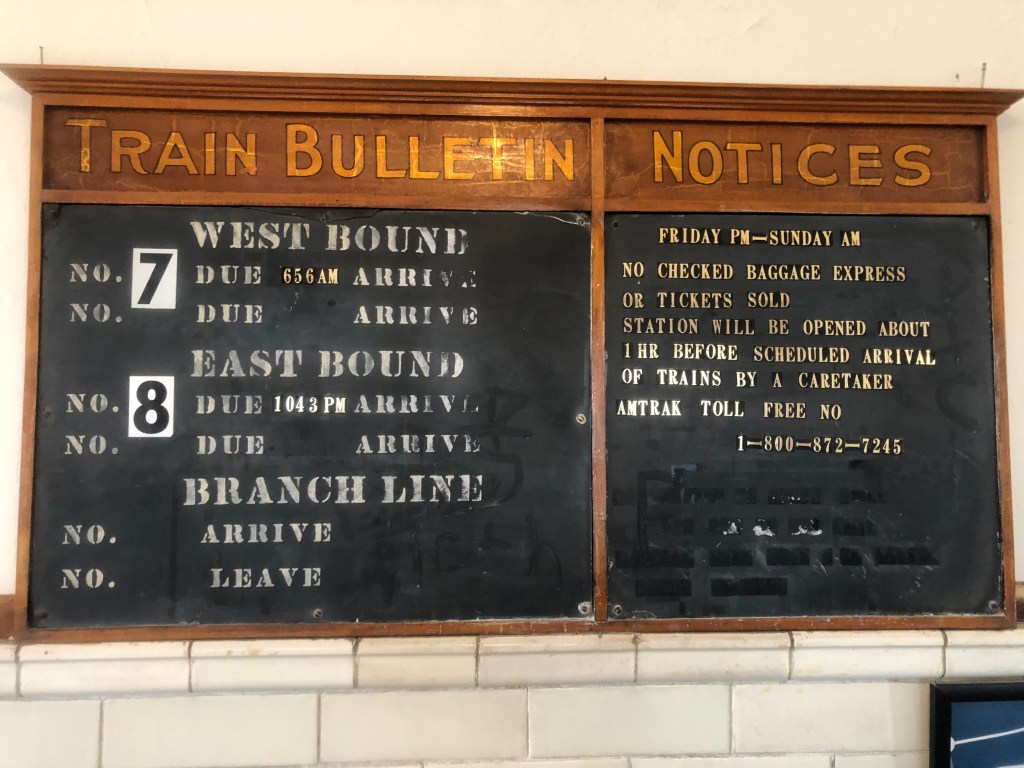
Two passenger trains a day!

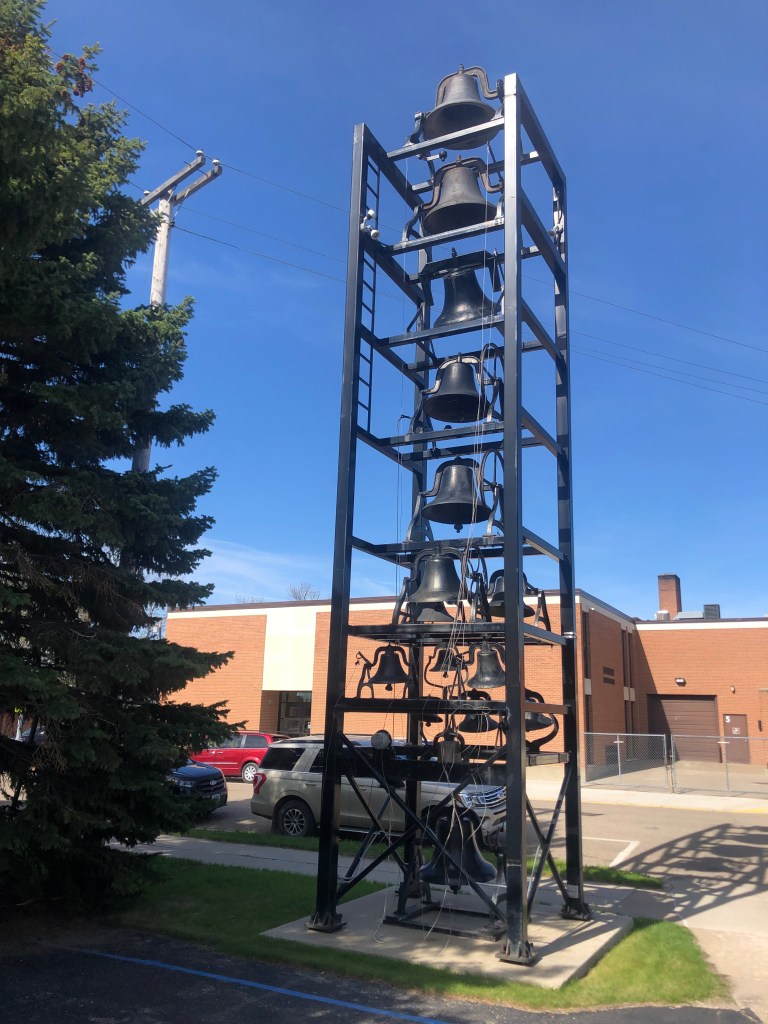
There’s something romantic about an American midwestern railroad depot. Just look at that classic architecture and that deco waiting room. And it’s all the more special when it’s still in daily use, rather than behind a museum rope. I soaked up the atmosphere a bit, watched a freight train come through, and then headed back out of town. Along the way a large bell tower caught my eye:

I really wish these had been in Devils Lake; then I could say “Hells Bells.”

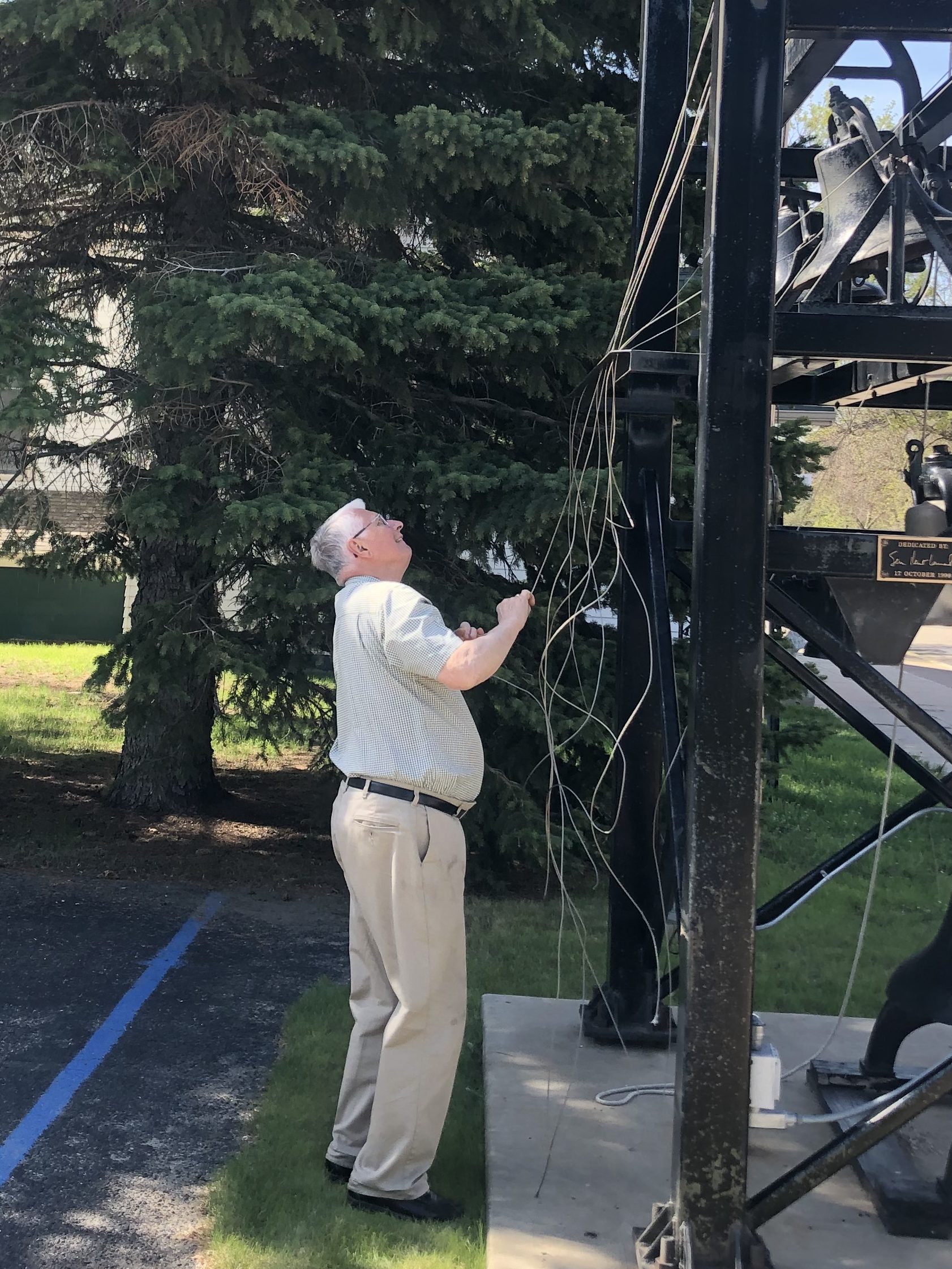
The tower stands in the parking lot of a local mortuary. I saw that there were some pull cords on the bells, and a sudden urge to ring them came over me. I parked and approached the tower, and then noticed a sign requesting that I “ask before ringing.” While I was pondering whom to ask, a middle-aged man drove into the parking lot like he owned the place. As it turned out, he owned the place. Dale Niewoehner (of Niewoehner Funeral Home) is a friendly man, and when I asked him if he knew the story behind the bells he said “Sure. Which story do you want?” He’s been collecting bells since he was a kid, and eventually he mounted the biggest ones into this tower in 1999. Among the 15 bells in the tower are church bells, school bells, fire bells, and railroad locomotive bells. He gave me a small booklet describing all the bells.

Dale rings the bells.

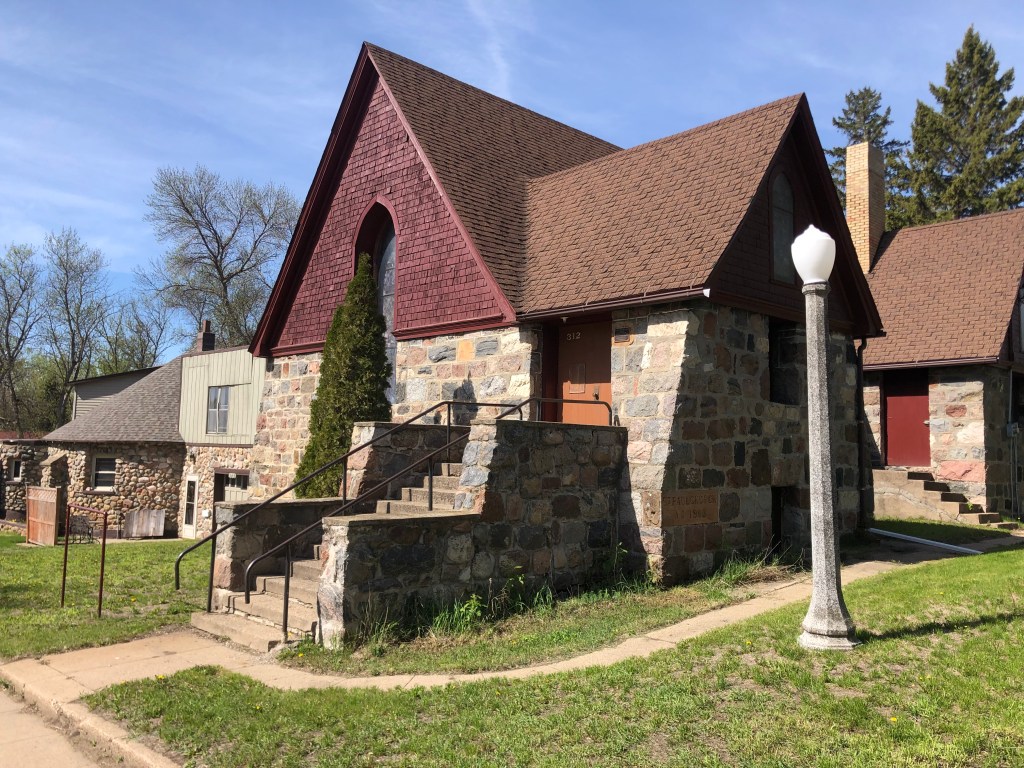
We chatted for awhile about the town. Dale is Rugby’s unofficial historian, and has been involved in a number of preservation efforts (including the mortuary building itself, which dates back to the turn of the last century). And then he mentioned that he and his wife had purchased an old Episcopal church just down the block. I was stunned; in two days, I’ve encountered two different couples who have purchased deconsecrated Episcopal churches! Is this a thing??

St. Paul Episcopal Church in Rugby. Built in 1903, and now owned by the Niewoehners

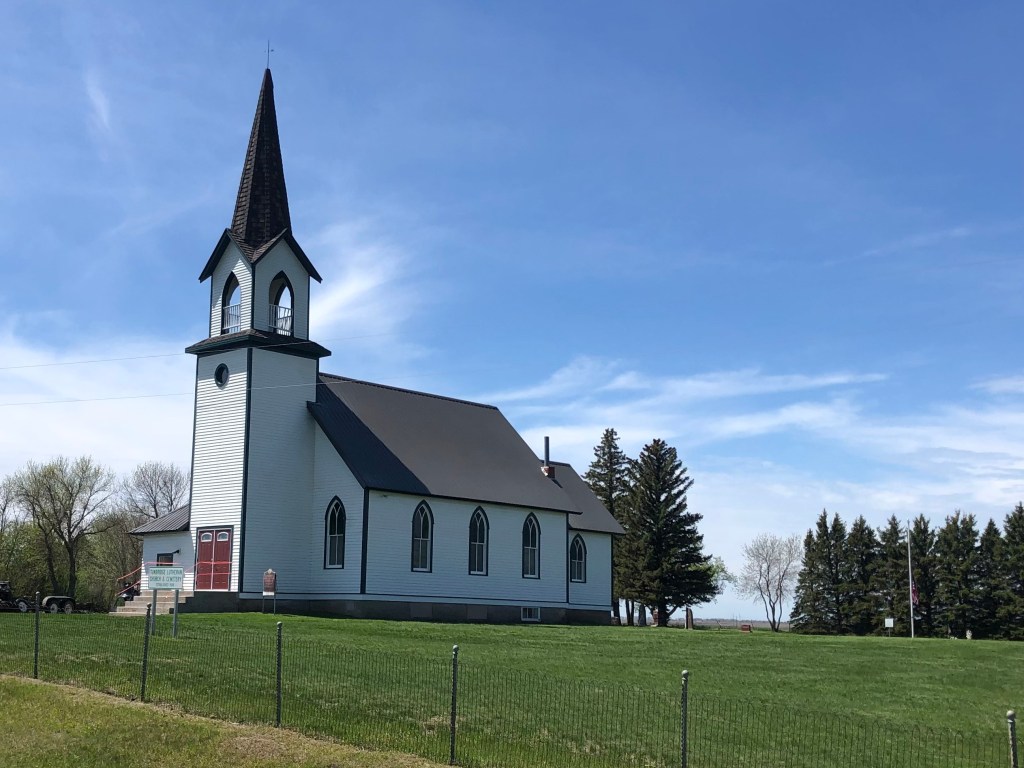
Finally I got back on the road, following the now-familiar US Route 2 West signs. Then, about 10 miles after leaving Rugby, I spotted a tall, proud whitewashed church standing alone on the prairie about a mile or two to the south. I figured I’d give in to the obvious ecclesiastical turn that this trip is taking, and I turned down a dirt road toward the church.

Tunbridge Luteheran Church, pretty as a picture.

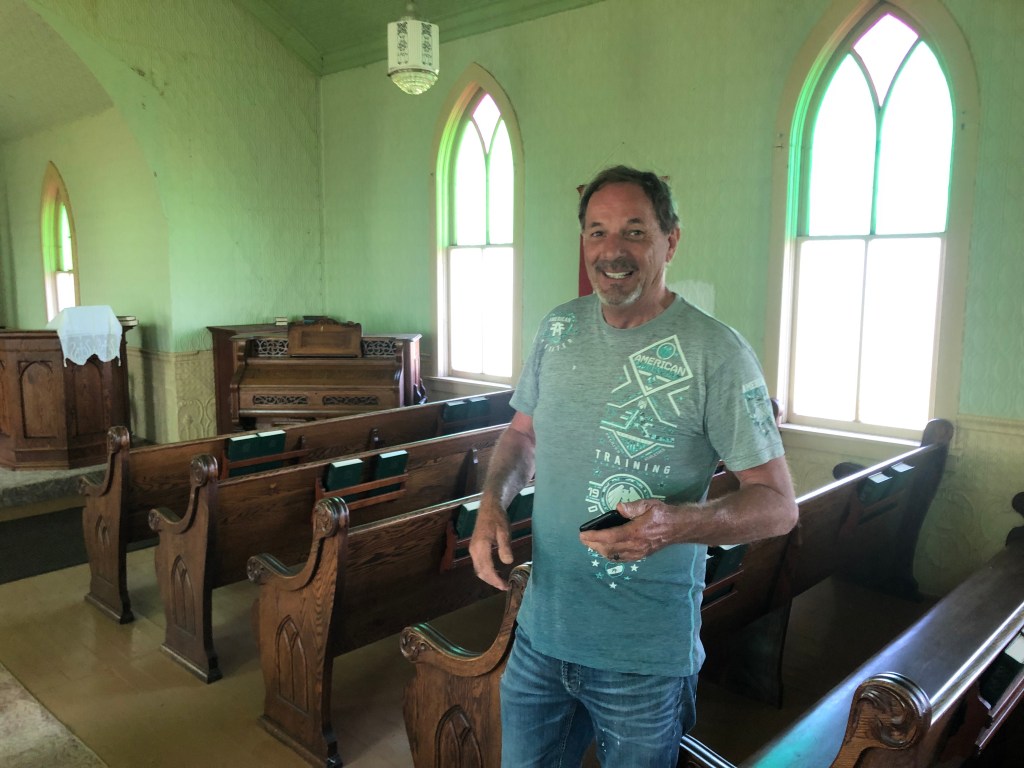
The church grounds were being prepared for a dedication ceremony planned for tomorrow. Chairs and barbecues were being set up, the lawn was being mowed, signs were being put up. I introduced myself to the guy who seemed to be in charge, and learned that Tunbridge Lutheran Church was essentially being re-opened to the community after sitting vacant since 1988. Jason, who’s my age, grew up in the community and his family is very closely connected with the church. His great-grandfather is even buried in the churchyard.

God’s Handyman.

It turns out that Jason has spearheaded the effort to restore the 1914 building, which involved replacing the roof, repairing the steeple, replacing light fixtures, painting, and other work. Almost all the work is now done, and tomorrow they’ll be holding a church service, with the regional bishop serving communion. There’ll also be some speeches and then food and drink and celebration. Jason feels strongly that the church should be a place for the community to come together and support one another. It’s a worthy sentiment, and I sense that he’s providing great benefit to his community.

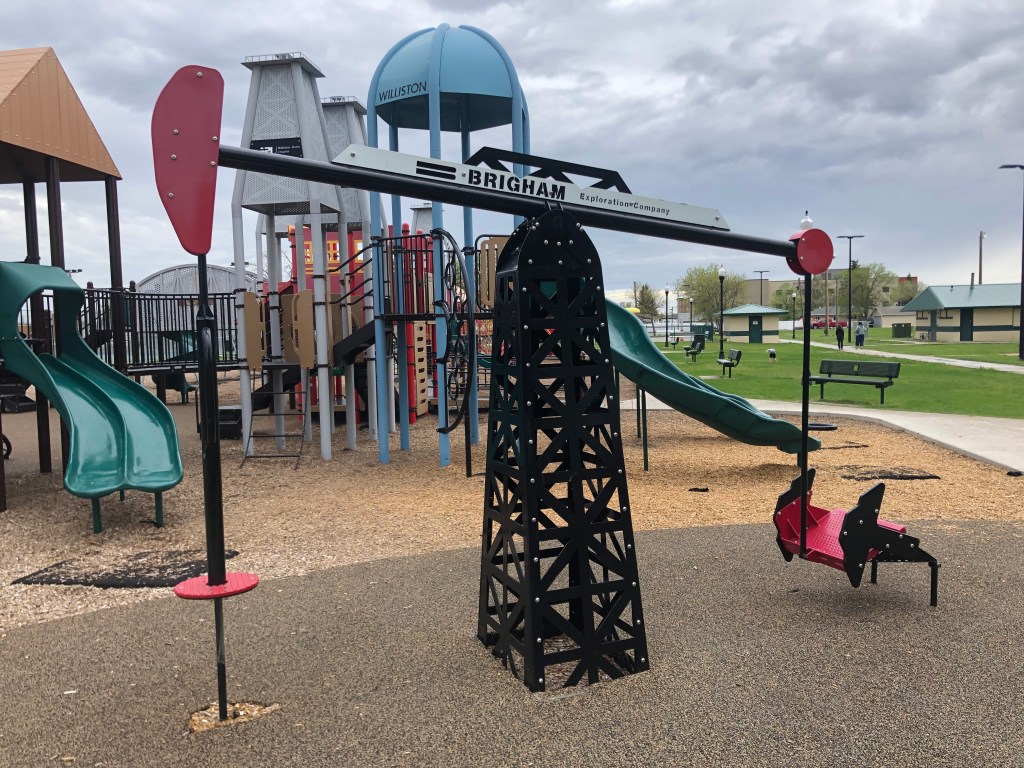
At the end of the day I arrived in Williston, ND (pop: 29,000). By Route 2 standards, this is a big city. I’m now at the western edge of North Dakota, and clearly I’m in oil country. Not only is Route 2 dotted with oil wells, tanks, and gas flares, but even the local playground has an oil rig-shaped see-saw.

Gotta indoctrinate ’em early about the benefits of oil production!

BREW OF THE DAY

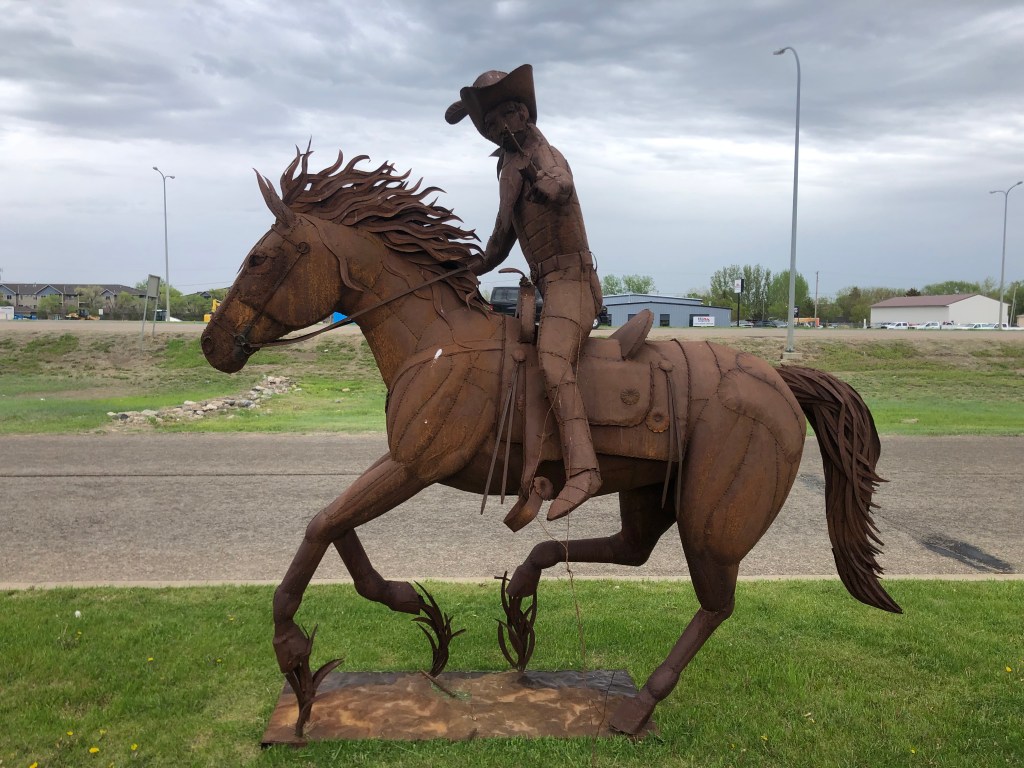
I ate dinner at a place called Doc Holliday’s Roadhouse. It’s one of those slick-looking places, with fancy signage and integrated artwork that suggests it’s part of a corporate chain. But evidently it’s not; it’s just a one-off outfit here in Williston. The lone driveway is lined with life-size, metal buffalo and horse sculptures, which must have cost a pretty penny.

Just one of the dozens of sculptures.

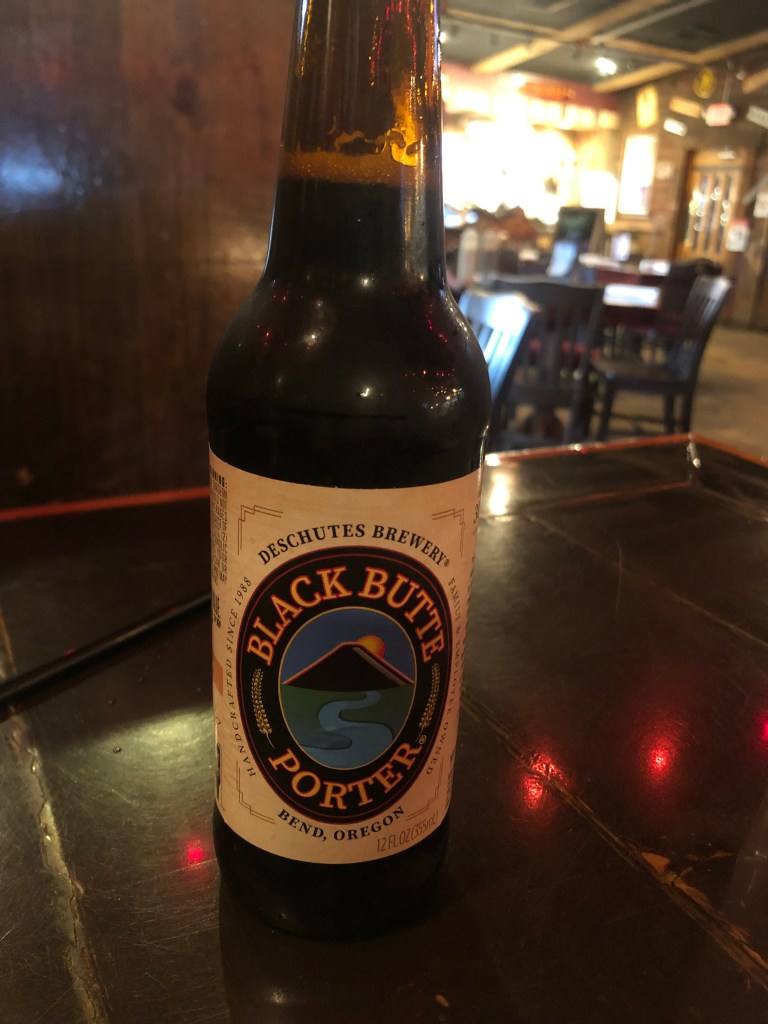
The draft beers weren’t really exciting me, so I ordered a bottle of Black Butte Porter from Deschutes Brewing Company in Bend, Oregon. For a decade or so in the 1990s we used to go on vacation in Bend every summer, and I’ve been to the brewery a number of times. Black Butte Porter (BBP) had been my go-to beer. But it’s been awhile, so I figured I’d try one for the BOTD.

Since it’s a road house, I was too embarrassed to ask for a glass.

Porters are a little lighter than stouts, but they both make use of lots of heavily-roasted malt. While there’s no hard and fast rule, I think of porters as a little less malty, a little less chewy, and maybe a bit hoppier than a stout.

Tonight’s BBP had a bit of a burnt taste, but not in a bad way. The mouthfeel was more watery than creamy, but it definitely had some heft. Unfortunately, the BBP got worse as my tastebuds acclimated to it. The flavors are not complex at all, and there’s a little bit of inexplicable Budweiser mustiness on the finish. And at 5.5 percent ABV, this is kind of a wimpy beer. I wondered why this used to be my go-to beer.

Here’s the breakthrough that came to me tonight: There are two kinds of (good) beer in this world: there are the lighter beers, which are good for quenching thirst and cooling you down on a hot day. They’re astringent, hoppy, refreshing. Think IPAs. Second, we have the darker beers. Their purpose is not to refresh, but to comfort. They are the port wine of beers. Malty, heavy, thick. The extreme of this is the imperial stout, and maybe also some barleywines. The imperials are high-gravity beers, sometimes called “big” beers, that are bold and not subtle at all. Often they are served in “tulip” glasses, which further advances the comparison to port.

The problem with BBP (and perhaps most porters) is that it falls between the light/refreshing and dark/comforting categories. It’s not at all a lighter beer, but it also pulls its punches on the key dimensions of a high-gravity dark beer. I suppose that a porter is an IPA drinker’s stout. As I’ve aged since those days at Deschutes Brewing Company in Bend, my palate has been worn down to the point where I can’t appreciate nuance. So the porters just don’t work for me anymore. I don’t want to criticize the BBP for not being something that it’s not supposed to be, so rather than give it a low rating, I’ll just say I wish I’d had an imperial stout. With any luck, tomorrow’s BOTD will feature a good one.