churches · movie theaters · Road trips · trains

Another Hub City and the Big Easy

I spent an hour this morning puttering around Hattiesburg a little longer. I really like this city. Two recurring themes really struck me:

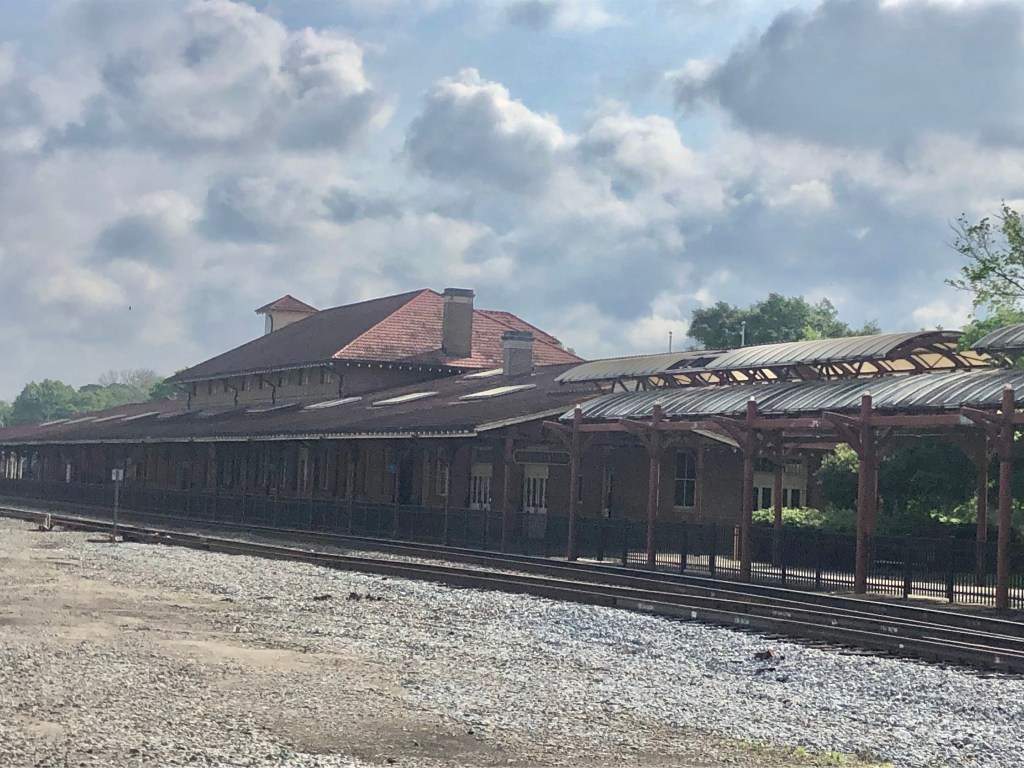
First, how many cities call themselves Hub City?? I’d thought it was a quaint moniker for Clarksdale, with its Devils Crossroads and all that. But Hattiesburg also claims the nickname. A quick search of Wikipedia lists about a score of cities that refer to themselves as “Hub City,” so it’s not at all unique. But admittedly Hattiesburg has good cause: it’s strategically located, with numerous highways and freeways and historic railroad routes. Indeed, its 1910 railroad station is huge, suggesting that a large number of trains came through here in the day.
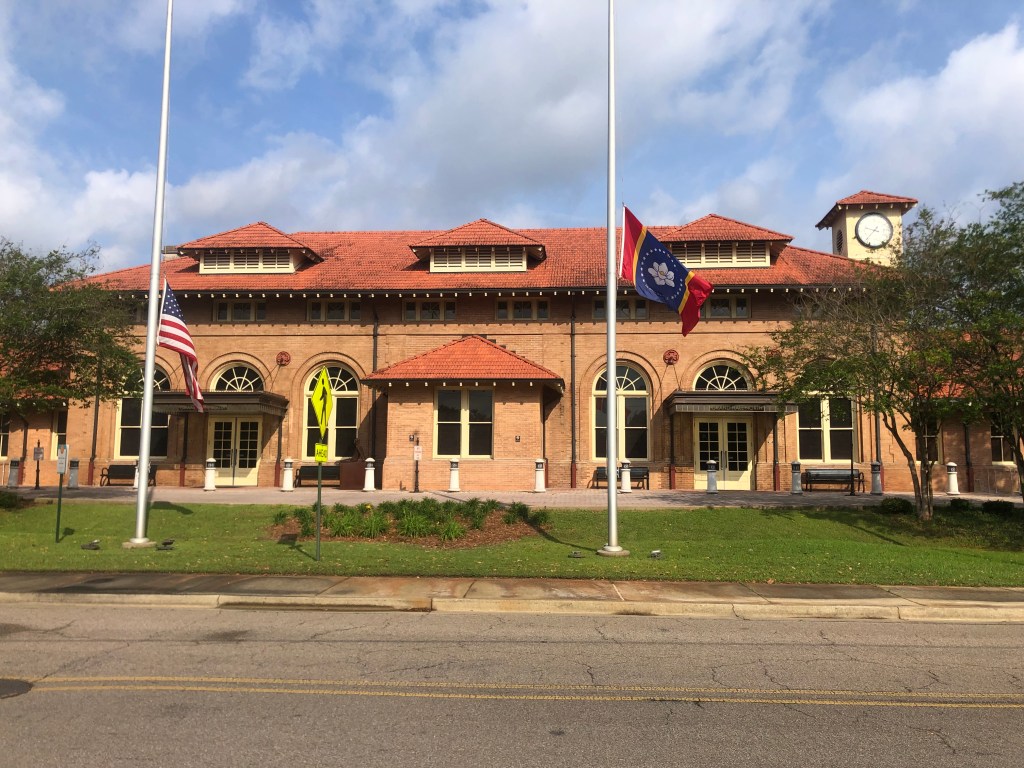
Front of the Hattiesburg station

The station was restored about 15 years ago, and today serves as an intermodal transportation hub (there’s that word again), including daily Amtrak service.
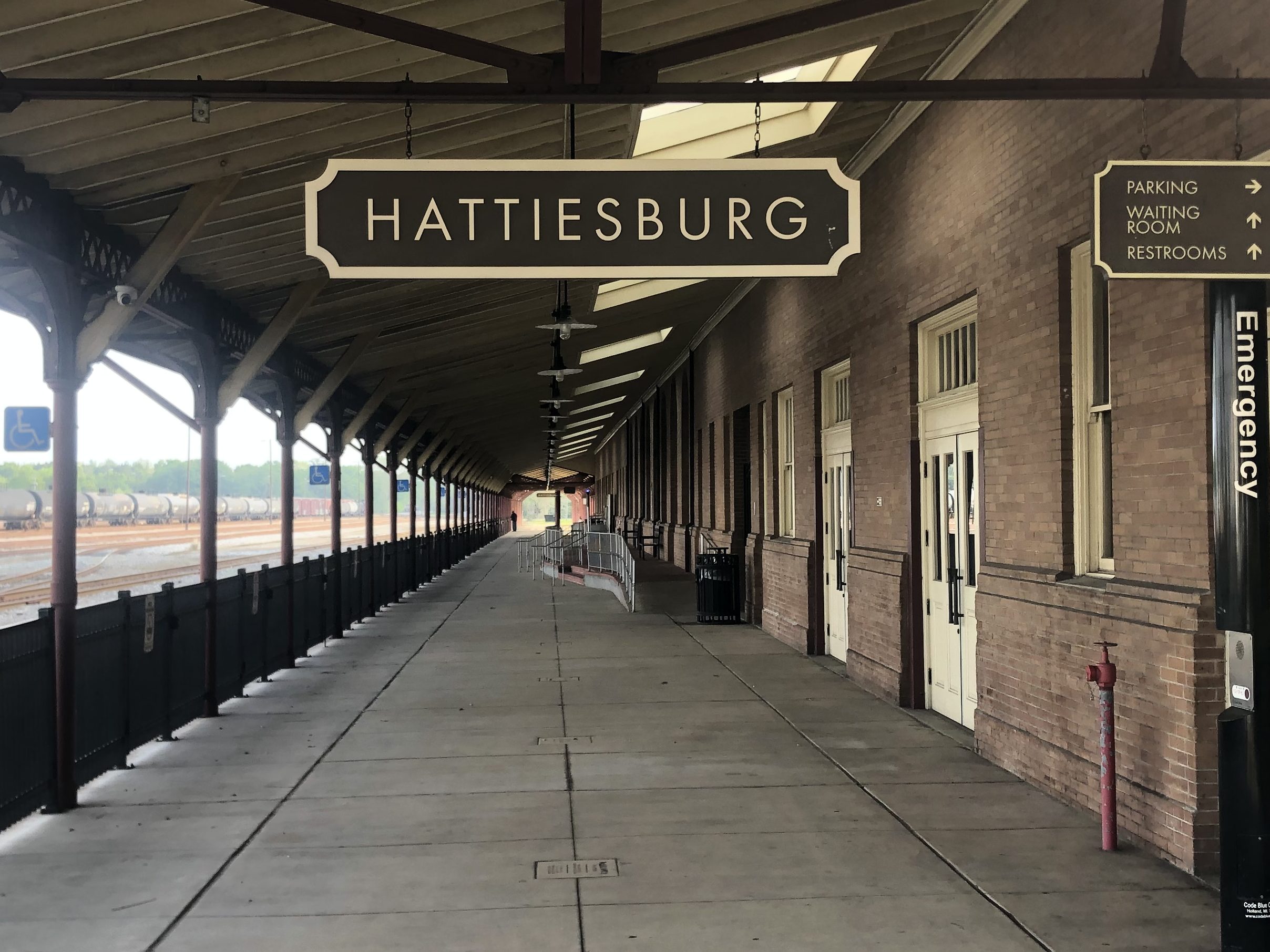
The Amtrak main line at the back of the station.

The second thing that struck me about Hattiesburg is that this city values the arts. Music (a recurring theme of this trip) is celebrated everywhere, such as this public art installation called “The Jook.”
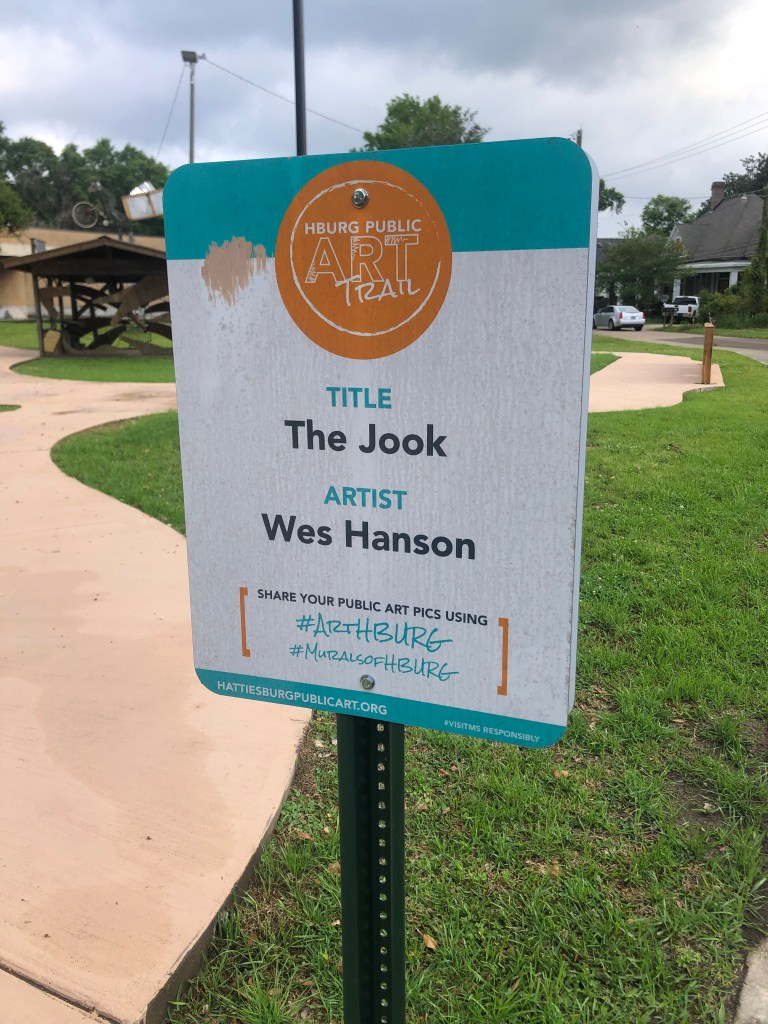
The Jook is a collection of whimsical instruments that the public is invited to use to make their own music. They include a trash can bass, chimes and bells, a giant guitar, and a xylophone (of sorts).
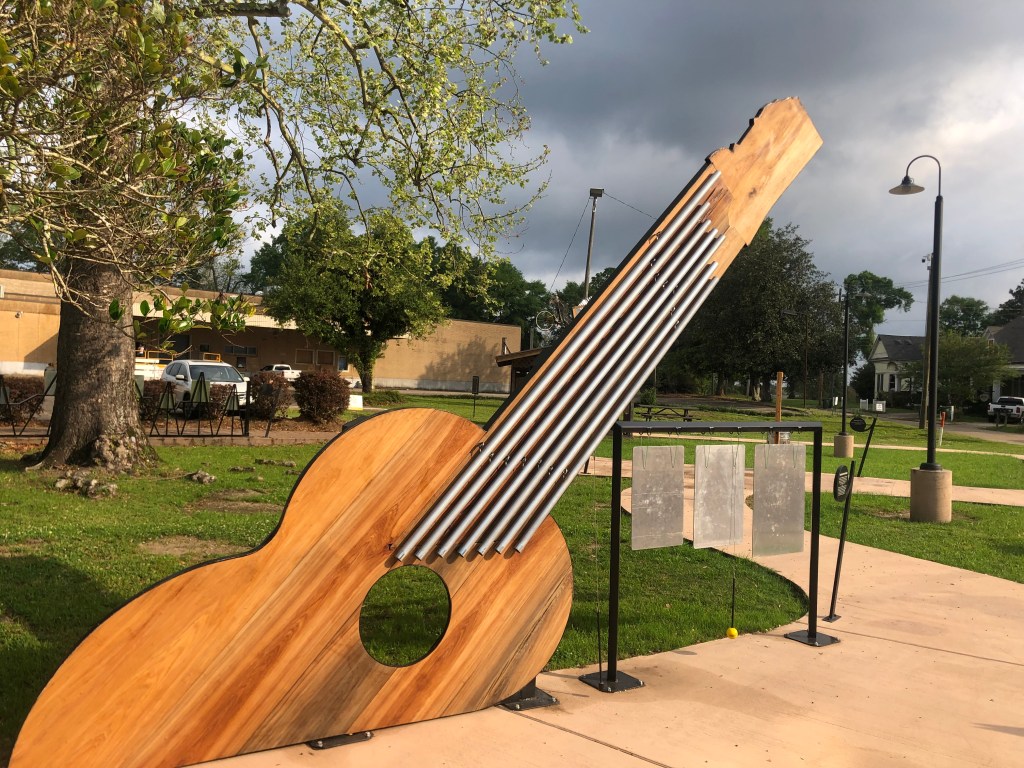
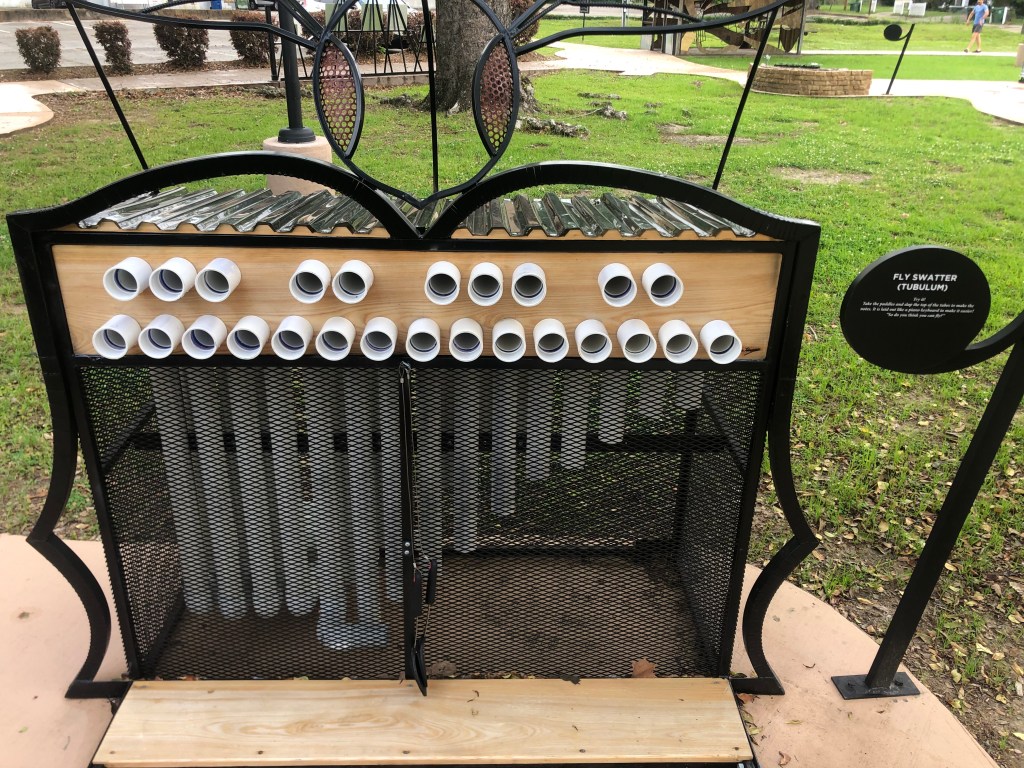
The Jook’s name is a reference to Blind Roosevelt Graves and his Mississippi Jook Band, which recorded blues music in Hattiesburg in the 1920s and 1930s. Two of their 1936 songs–“Barbeque Bust” and “Dangerous Woman”–are considered by some to be the first rock&roll songs. Listen and decide for yourself:

It’s not exactly Chubby Checker, but I do sense some elements of early Rock&Roll.

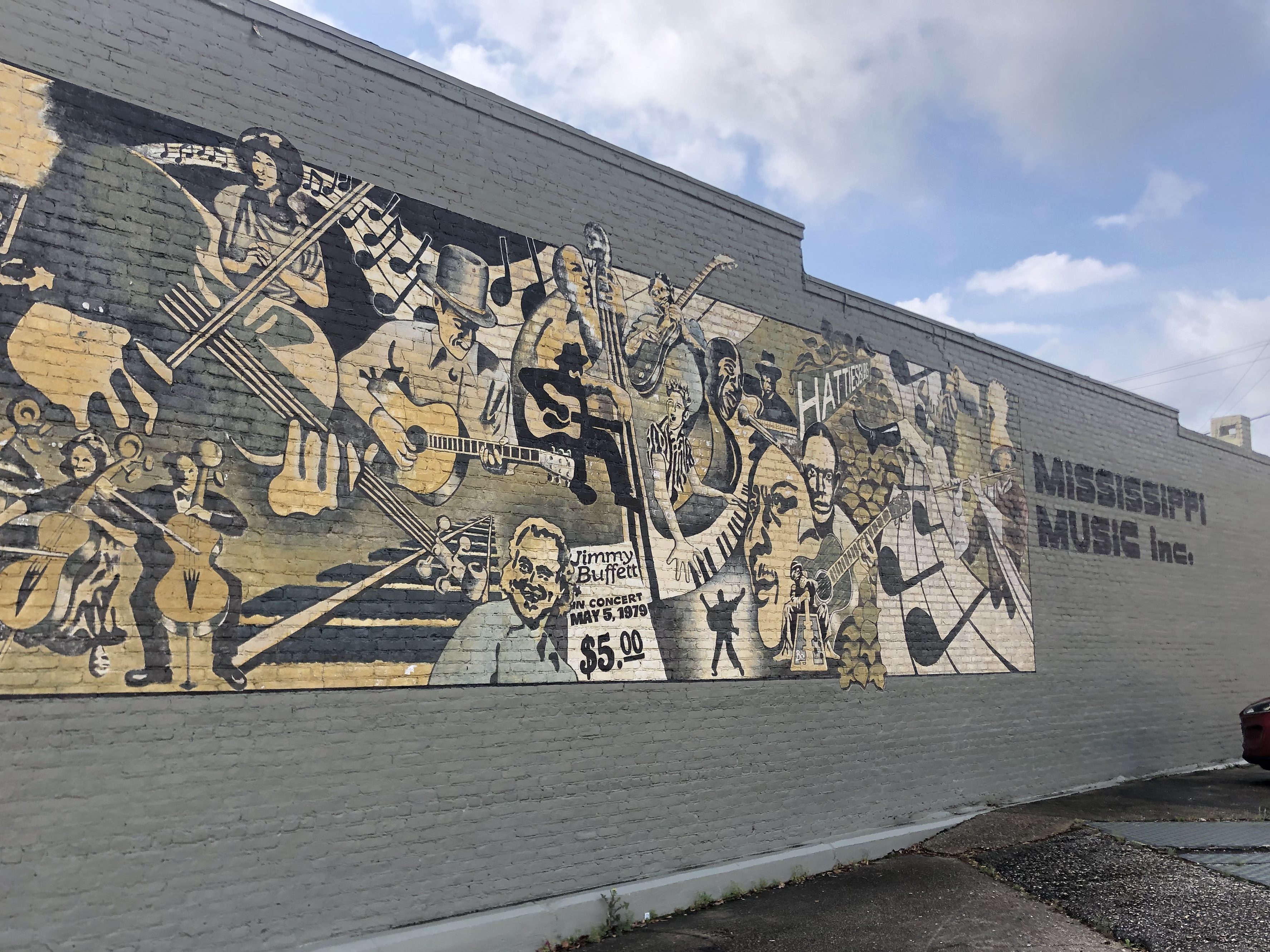
Other evidence of Hattiesburg’s musical bona fides is Mississippi Music Inc., a musical instrument sales and repair service and music teaching academy that opened in Hattiesburg in 1946.
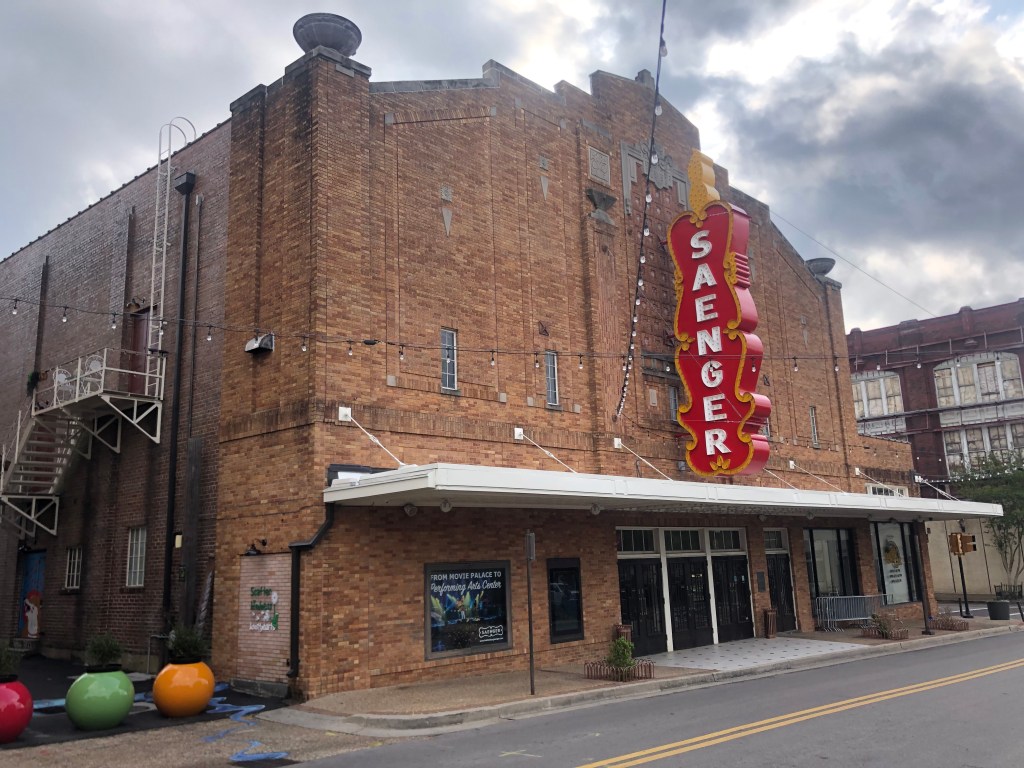
And then there’s the theater. I’ve come to the conclusion that one of the quickest, surest ways to measure a town’s cultural health is to see what they’ve done with their historic theater. Hattiesburg’s Saenger Theater was built in 1929 as a huge, thousand-seat silent movie theater, and it had an equally-impressive 778-pipe theater organ. The theater remained open for about 45 years, and closed in 1974. Along the way the organ (largely obsolete after the introduction of talkies) was sold off.

The city of Hattiesburg acquired the theater from Saenger, restored it, and (here’s the impressive part) managed to track down the original organ, purchased it, and put it back into the theater. The theater underwent a more extensive renovation in 2000, and today it serves as a major performing arts venue.
While I was exploring the downtown I was literally walking in the footsteps of a long-ago Hattiesburgian (?) named John Wesley Farley. Mr. Farley had once been enslaved, but eventually became a successful businessman in town. As a publicity stunt that I still don’t quite understand, he had bronze casts made of his size-14 feet. These were set into the sidewalk in front of a department store in 1903. The sidewalks were replaced in 1983, but the public works dept returned the footprints to their original location. Somehow that warms my heart.
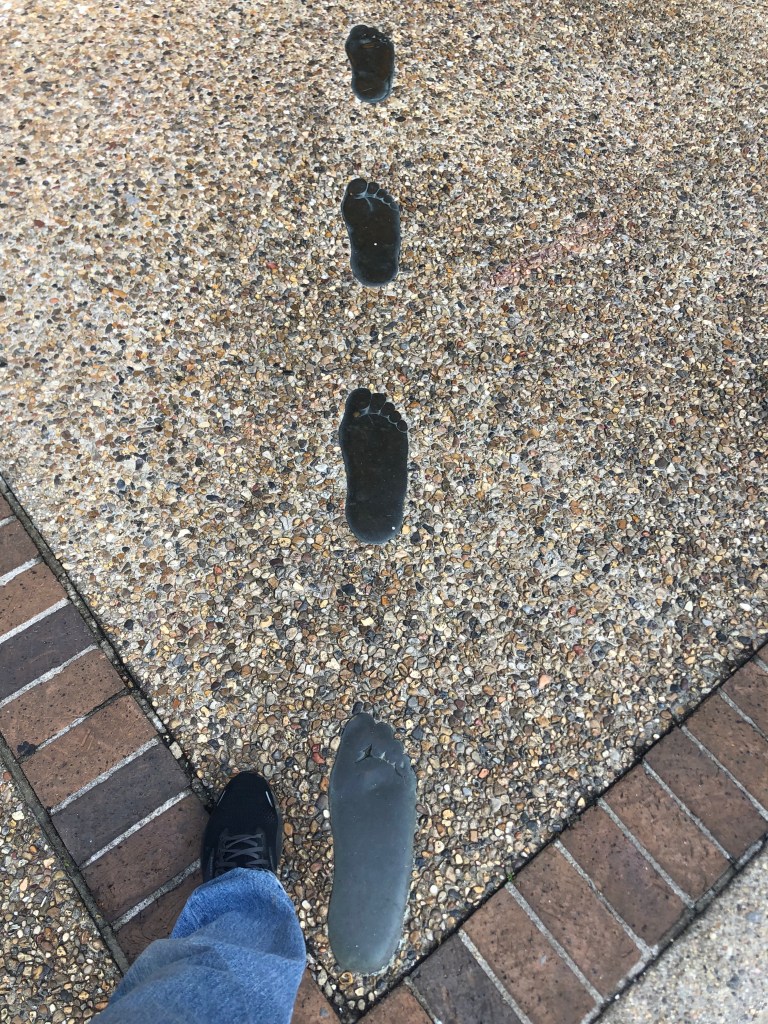
Even bigger than my clodhoppers!

Another impressive story about Hattiesburg’s commitment to historic preservation is found at the old high school.
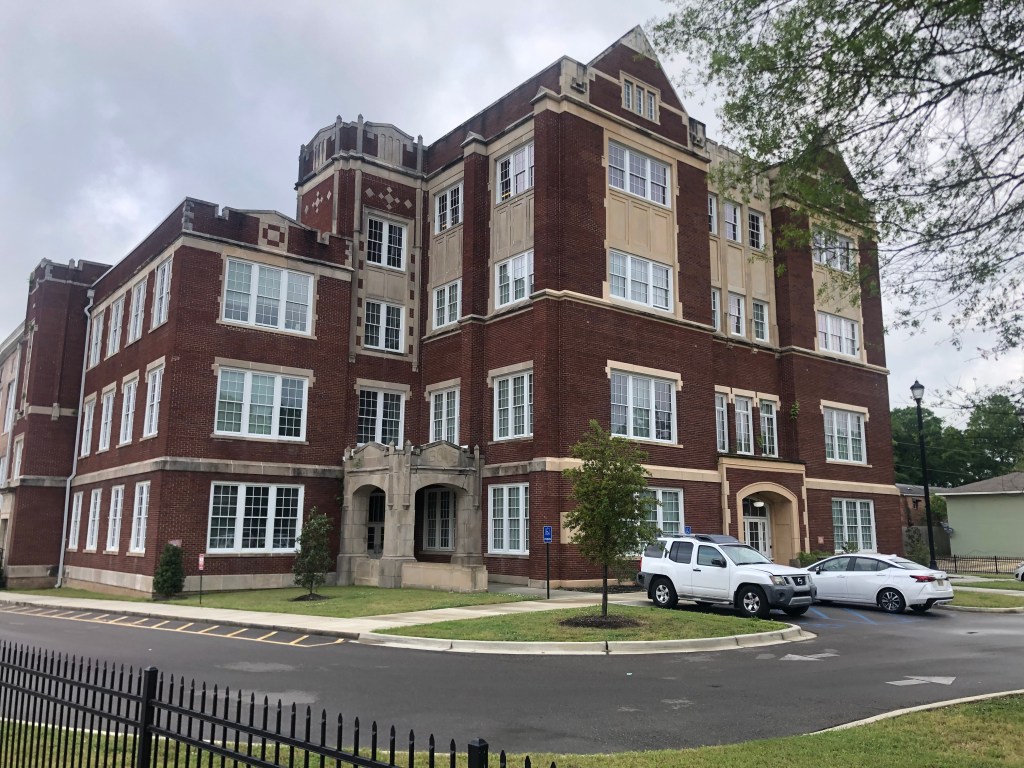
The Old Hattiesburg High School.

Originally built in 1921, the original high school building closed in 1959. After being used as the school district’s administrative offices for a few years, it became an antiques mall–which is typically the last stop before the wrecking ball. However, in 2002, the local historical society acquired the property with the intention of renovating it. Then Hurricane Katrina hit in 2005, And if that weren’t enough, arsonists torched the place in 2007. Despite all this, a project was funded to restore the historic structure and convert the interior to senior apartments. I consider this another sign of a healthy city: addressing civic needs while preserving the town’s history.

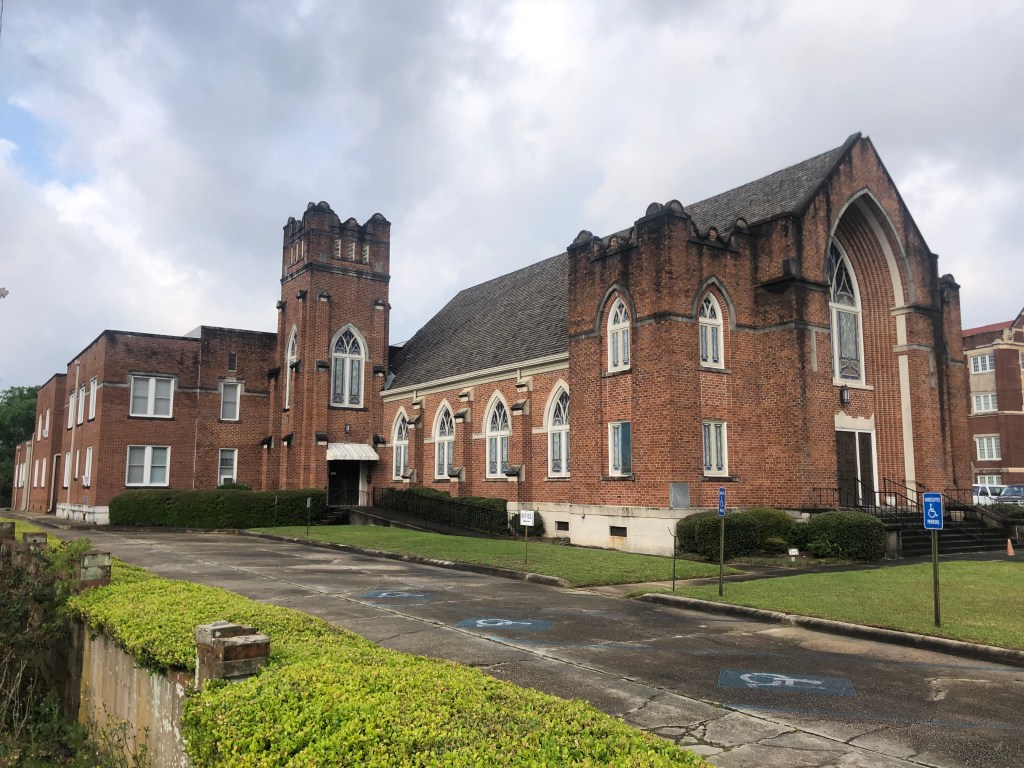
Oh, and I just wanted to include this photo of True Light Missionary Baptist Church (a name which rivals “the Holy Ghost Big Bang Theory Pentecostal Fire and Brimstone Mission Temple Firework Stand“). Anyway, this huge, impressive structure was built in 1903 and renovated in 1990. I can only imagine what it must be like in there on a Sunday. They also run a childcare center and various other missions.
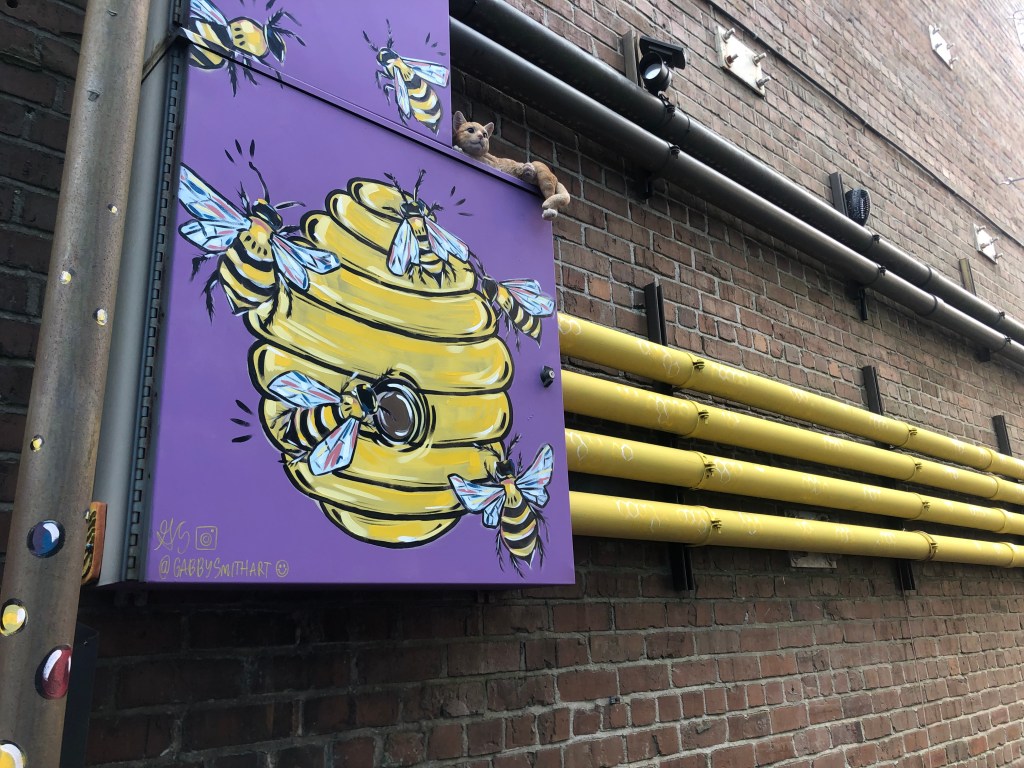
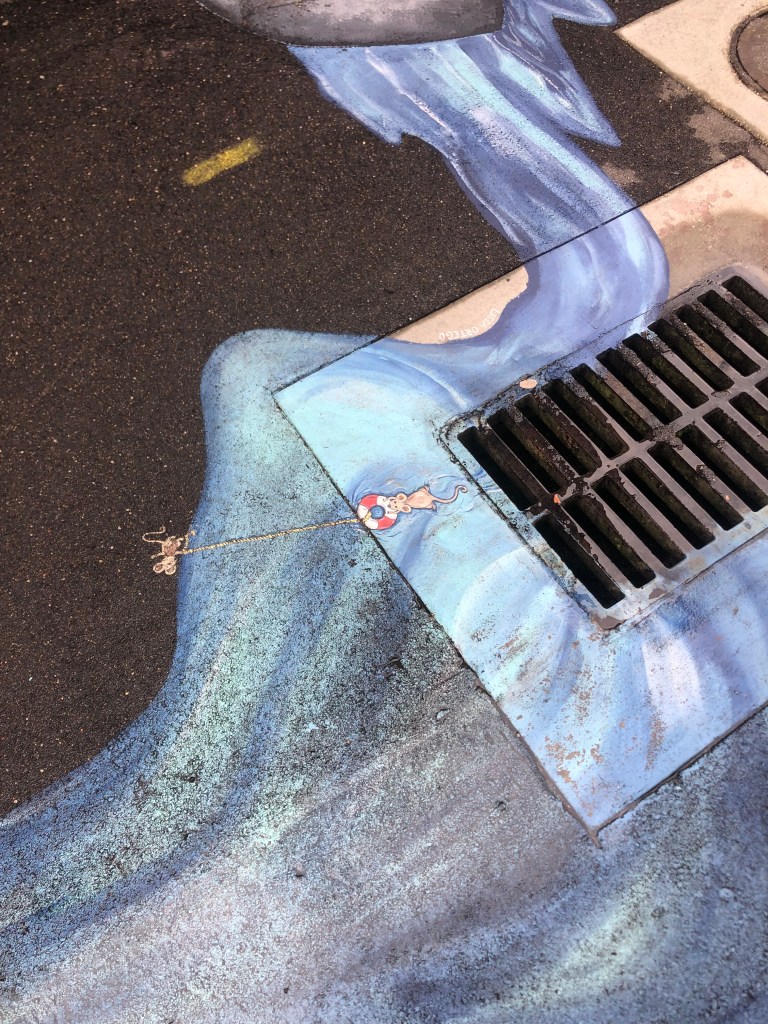
But what really delighted me (a phrase I seldom use) most about Hattiesburg was the “pocket art gallery” on a random alley behind a parking garage. At first I simply noticed what I thought were some tiny plastic figures that some child left on a water meter.
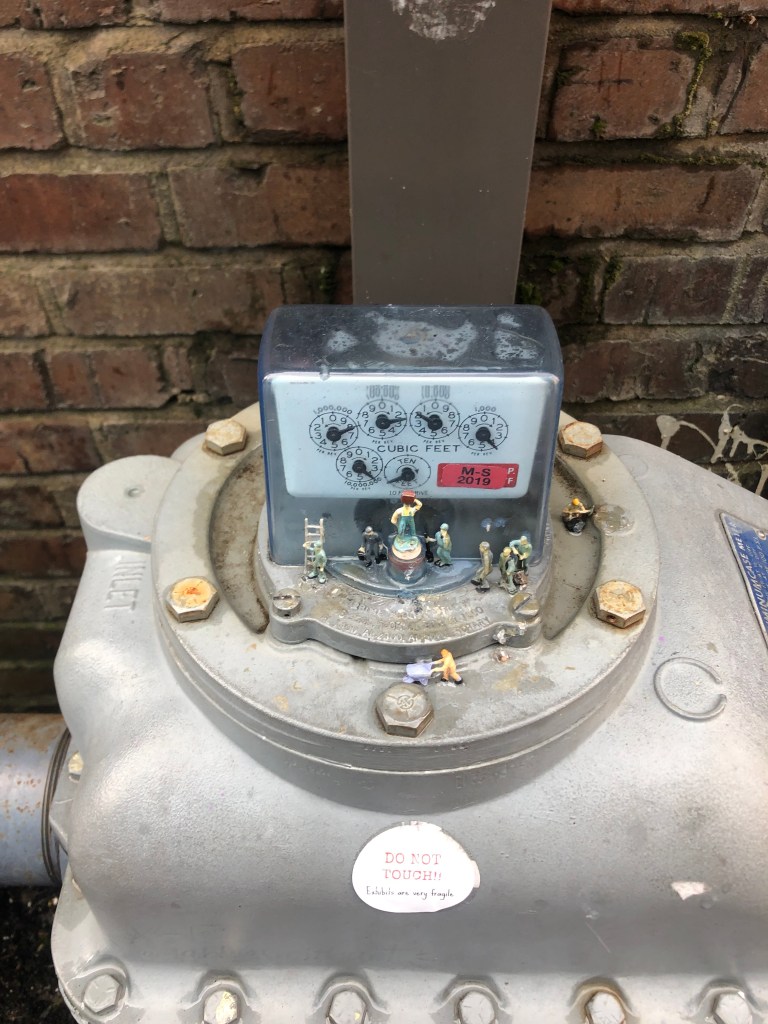
But then I saw more….
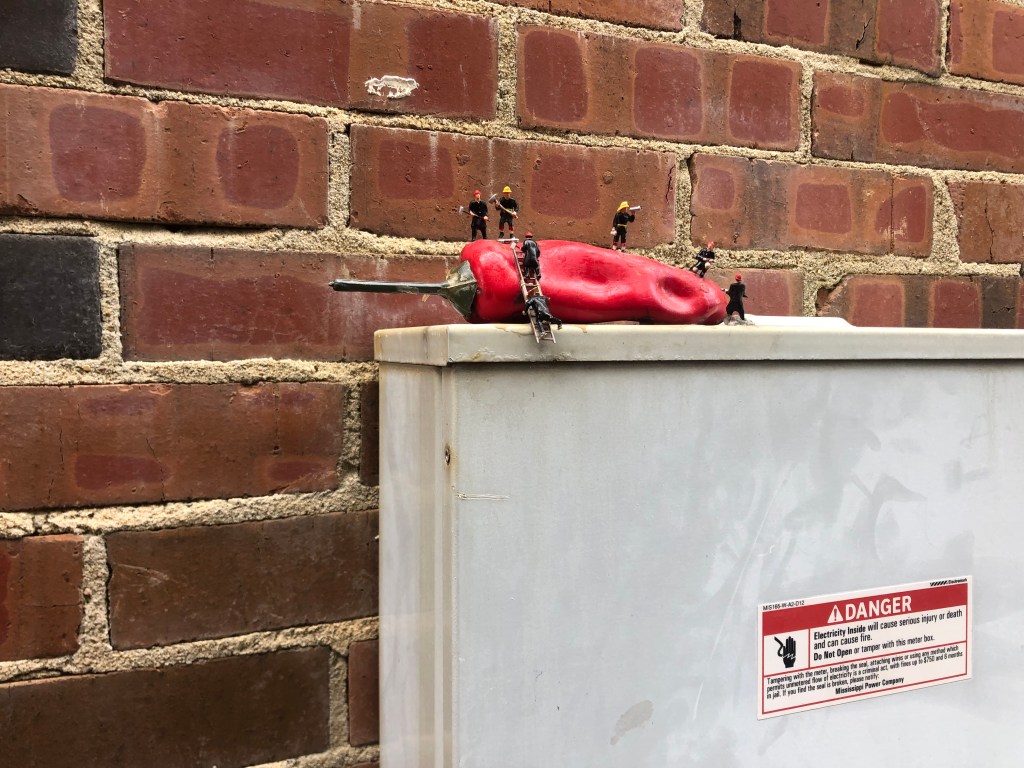
…and more…
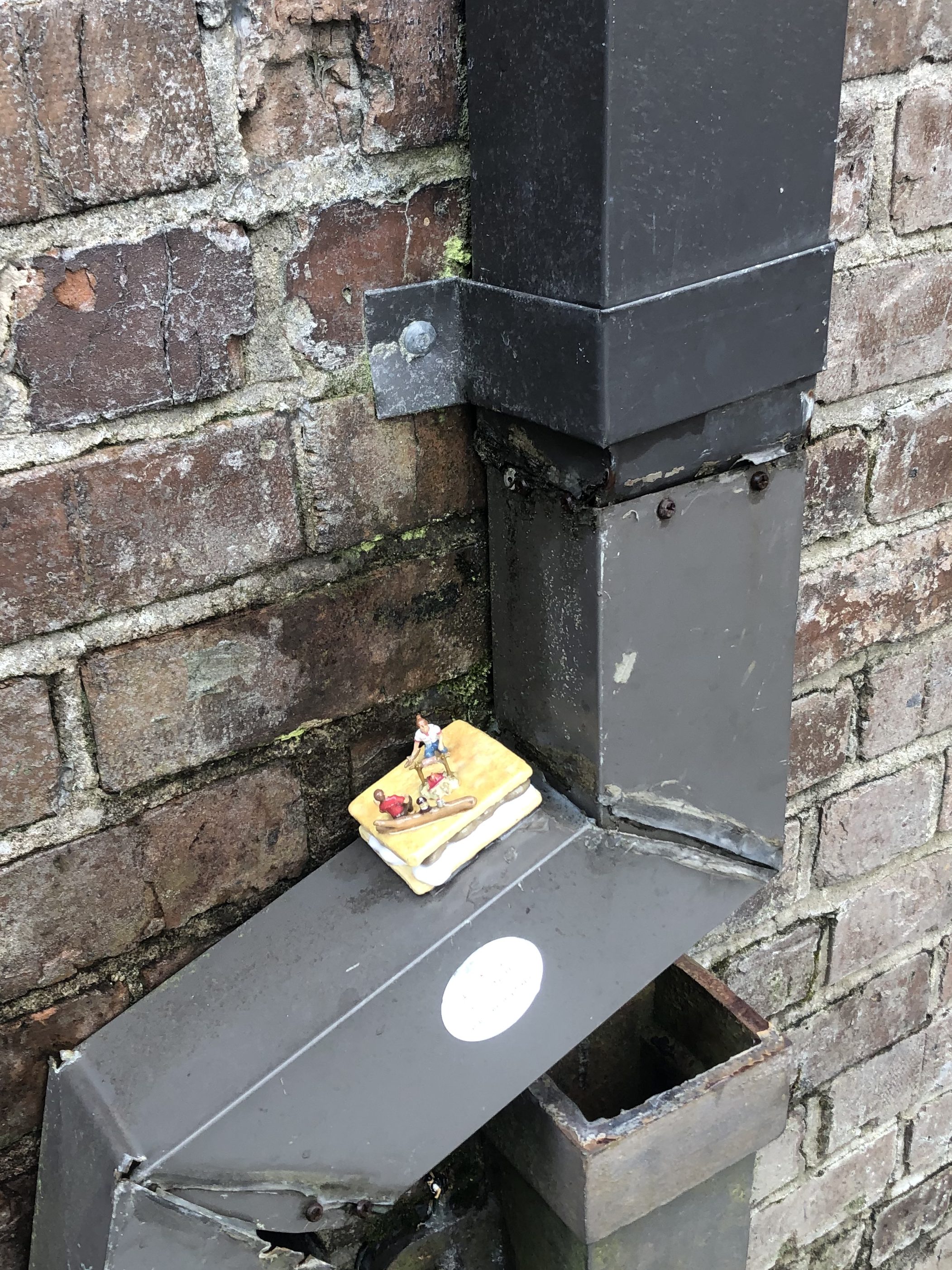
…and more.
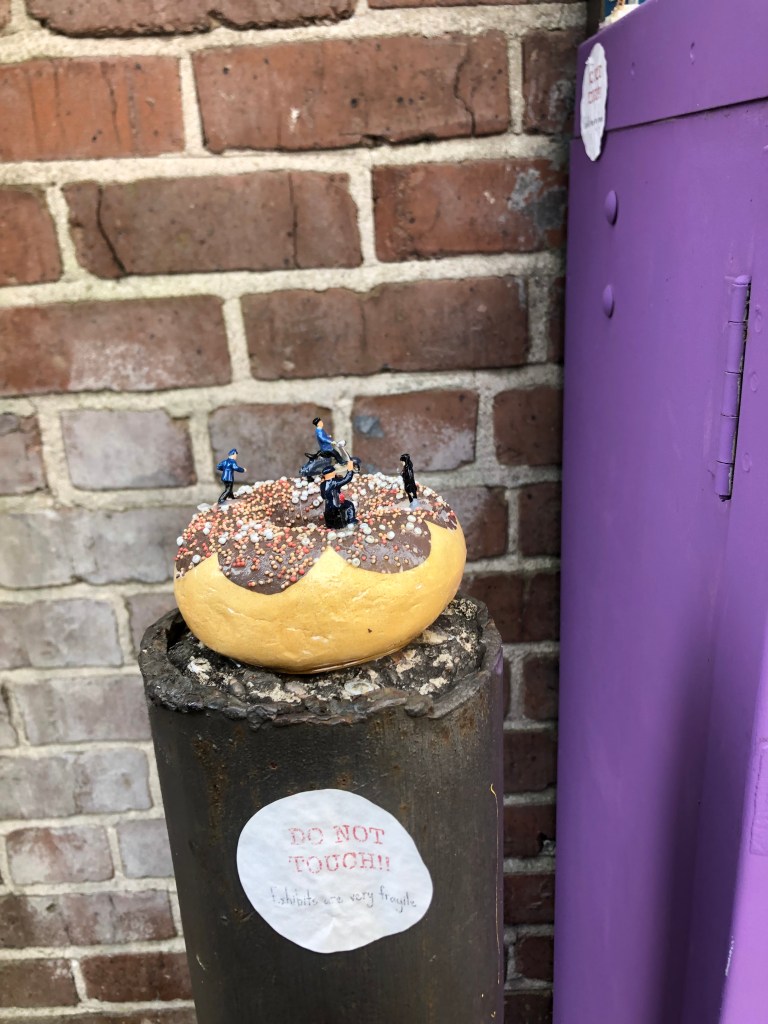
Soon, I realized the the alley was full of random, whimsical art installations.
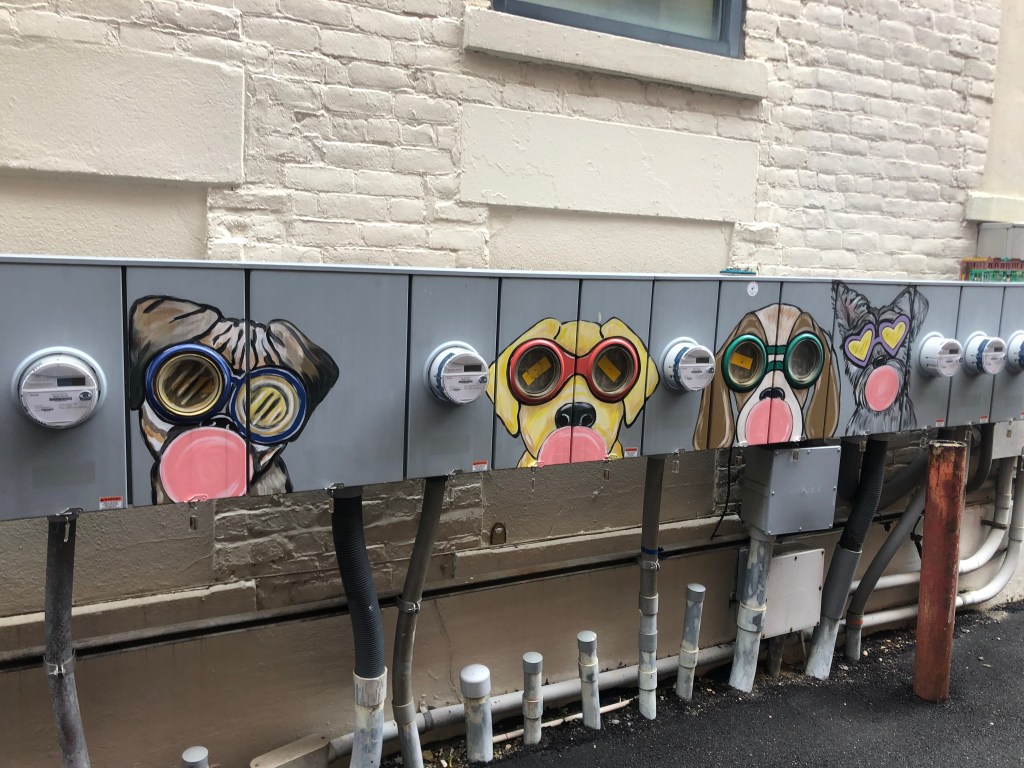
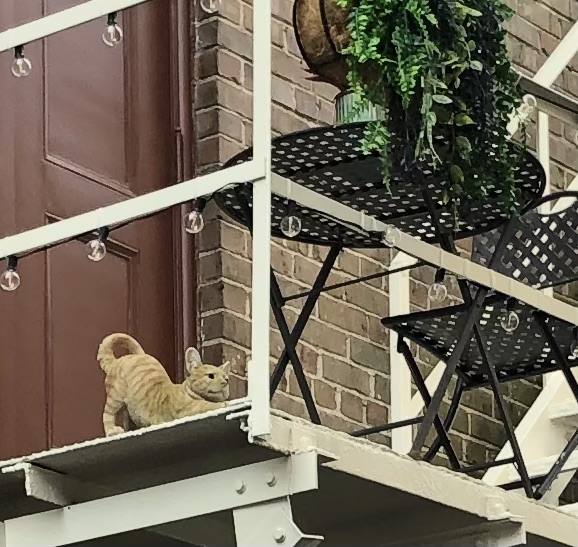
What I found most notable was that these small, delicate installations were unmolested. So that’s another sign that Hattiesburg values the arts.
I hated to leave Hattiesburg–my new favorite city–but it was time to head south to the Big Easy. Along the way I stopped for gas in Slidell, Louisiana, which was the last stop before New Orleans. Like so many of these towns, Slidell (pop: 29,000) has a historic railroad station. This one, built in 1913, is still a functioning Amtrak station, but it also houses a popular restaurant and an art gallery. I’m starting to feel that the Deep South has something to teach the rest of us about preserving historic civic buildings.
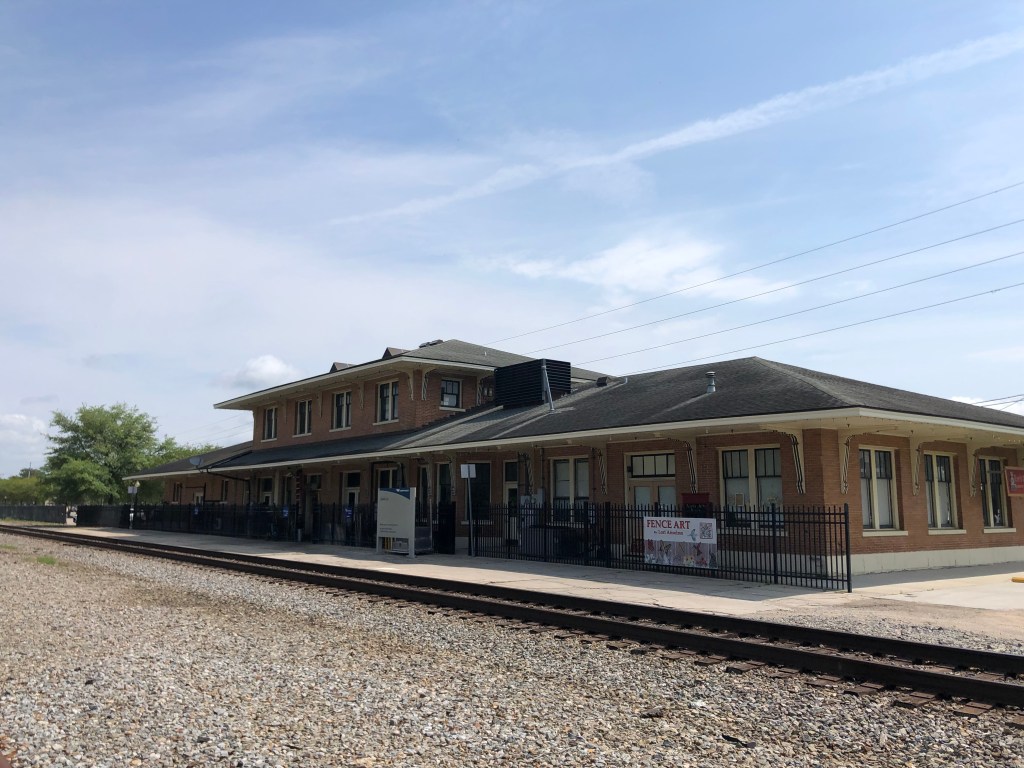
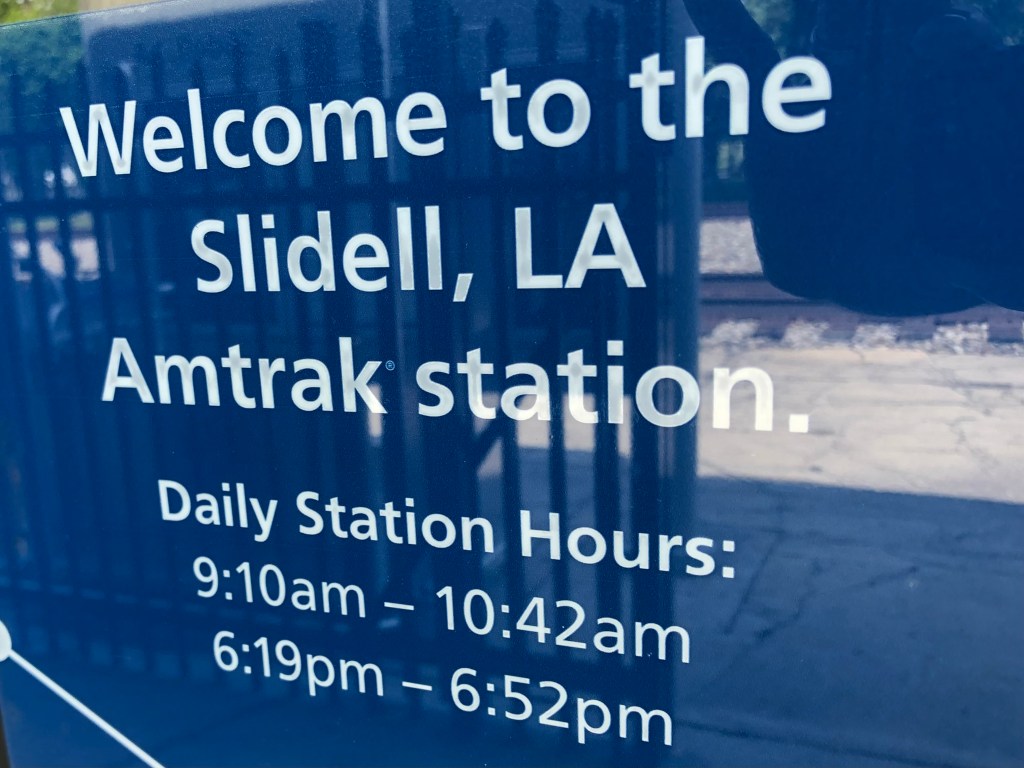
The 1913 Slidell depot.
The station supposedly has a nice waiting room…but I didn’t arrive during the 2 hours and 5 minutes that it’s open each day. (C’mon, Amtrak! Do better!)

After getting gas and a coffee, I eased onto the 5-1/2 mile long causeway that crosses Lake Ponchartrain and drops you into New Orleans.
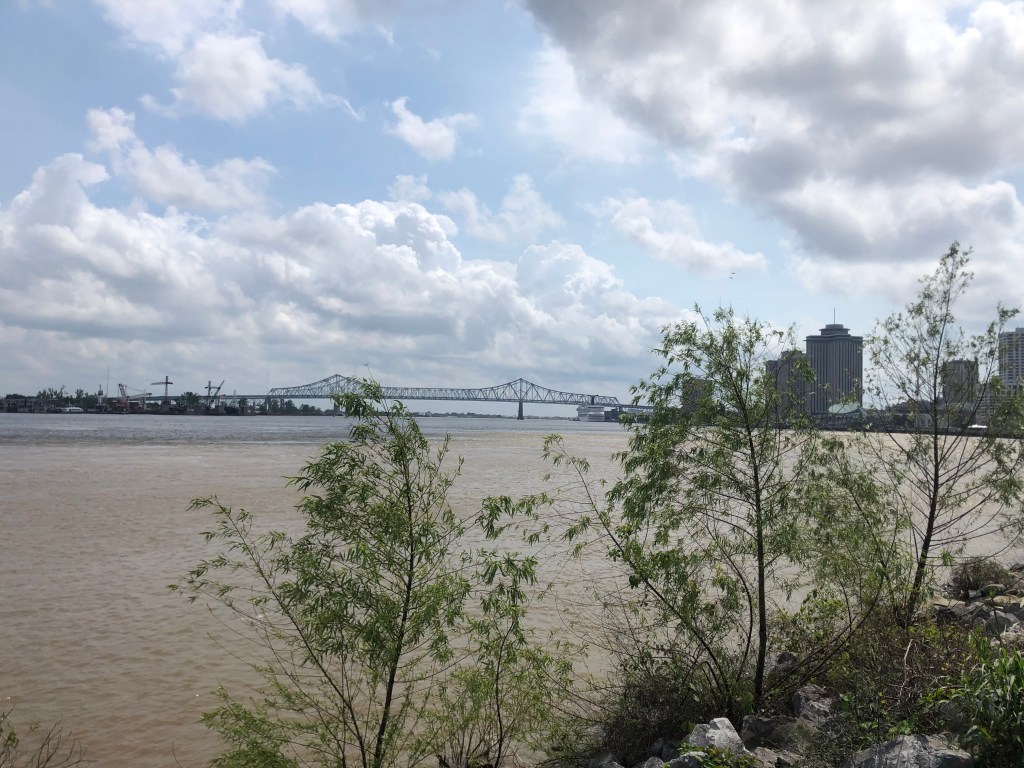
Lake Ponchartrain (viewed from downtown New Orleans).

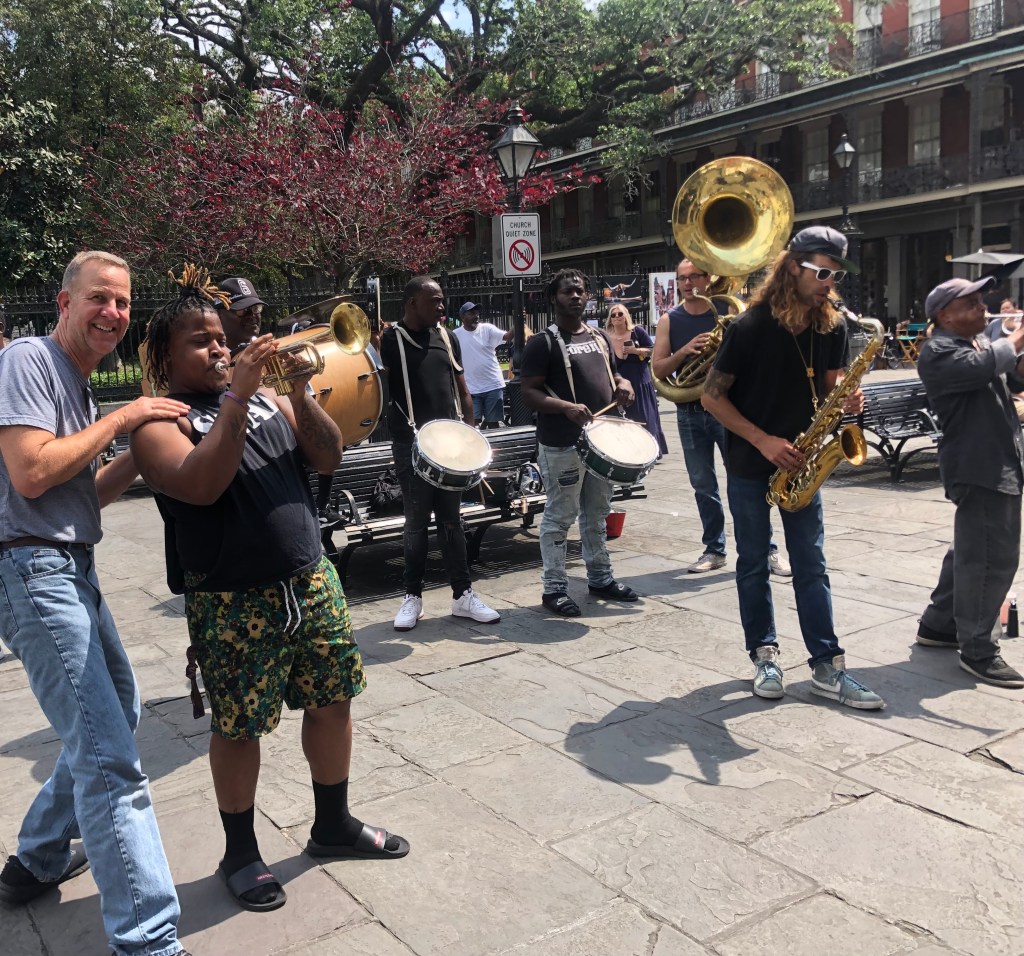
New Orleans (pop: 380,000) is of course a historic, culturally-rich, music-infused city. It’s also almost as hard to navigate by car as San Francisco. My goal was to get to the New Orleans Jazz Museum, which required life-threatening maneuvers along the narrow streets, several illegal turns, and a 20-minute search for a parking spot. Alas, after all that, I found the door to the museum was locked. They’re closed on Monday. So I spent the afternoon walking around the French Quarter. It was actually a good way to end this trip. Music floated from every corner. There were street buskers, jazz combos playing in restaurants, stereos blaring from upstairs apartments, and a second line performance, to name a few. Heck, there was even a pair of obviously inebriated street beggars who decided to sing their appeal for funds (“Can you spare a buck?/We’re down on our luck.”)
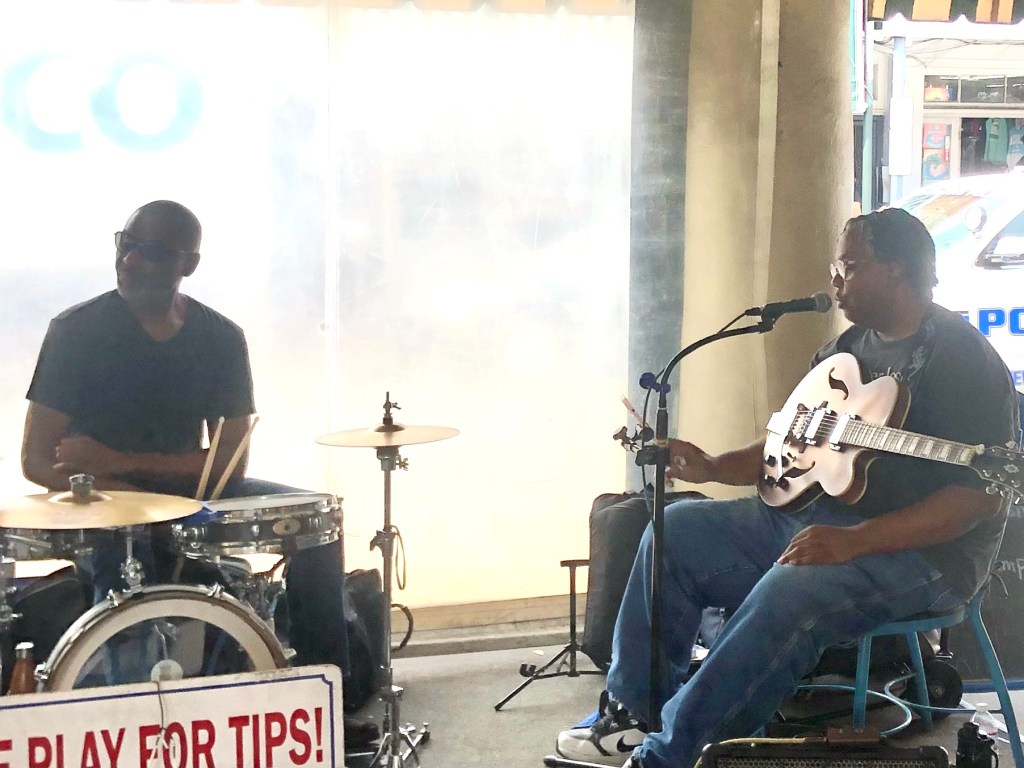
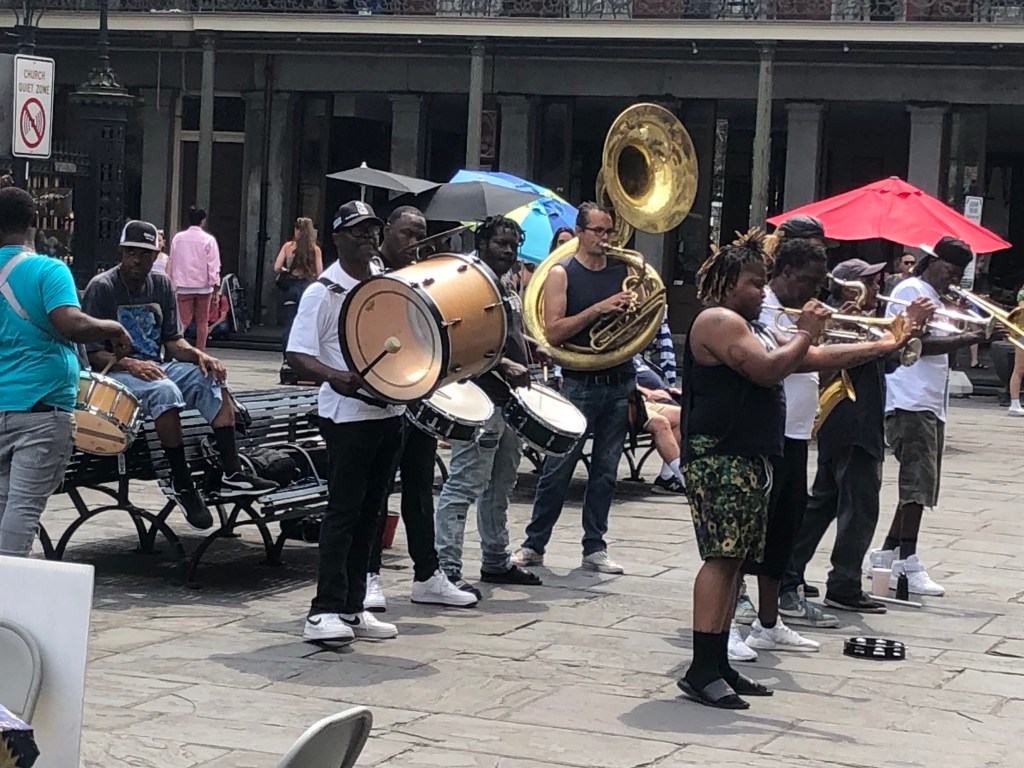
The Jazz Cats.
Second line performance.
Wish I’d brought my sax.

There are lots of different types of music played here in New Orleans, but the city is best known for its jazz. It feels like the natural progression from the other musical styles I’ve encountered on this road trip: Country, bluegrass, soul, R&B, Memphis blues, delta blues, and so on. I’m no expert on any of this music, but I can understand how they’re related–how they grow out of a uniquely American experience. I intend to expand my listening when I get home, following up on some of the styles and artists that I’ve encountered.

So that’s it for the trip. As always, I’m thankful for all the people I encountered along the way who’ve patiently explained their cities to me, taken me on tours, cooked food for me, served me drinks, and even cut my hair. I really love the people of this country.

I’m at the Airport Hilton getting ready to fly home on an early morning flight. But there’s one thing left, and that’s the…

BREW OF THE DAY

While wandering around the French Quarter I paid a visit to the Crescent City Brewhouse. They have a good selection of beers, all of which they brew themselves. I asked my server what he recommended, and he told me his favorite hands down was the “Weizenboch.” So that’s what I had–living on the edge.

This is a German style beer (as should be obvious from the name). The appearance screams the opposite of a Sleepy Hollow beer (i.e., it has a very prominent head). All that foam ensures an attractive presentation and it makes the first few sips especially enjoyable. The appearance is very cloudy, with a golden tan color. At only 6 percent ABV, it’s well suited for a mid-afternoon drink.
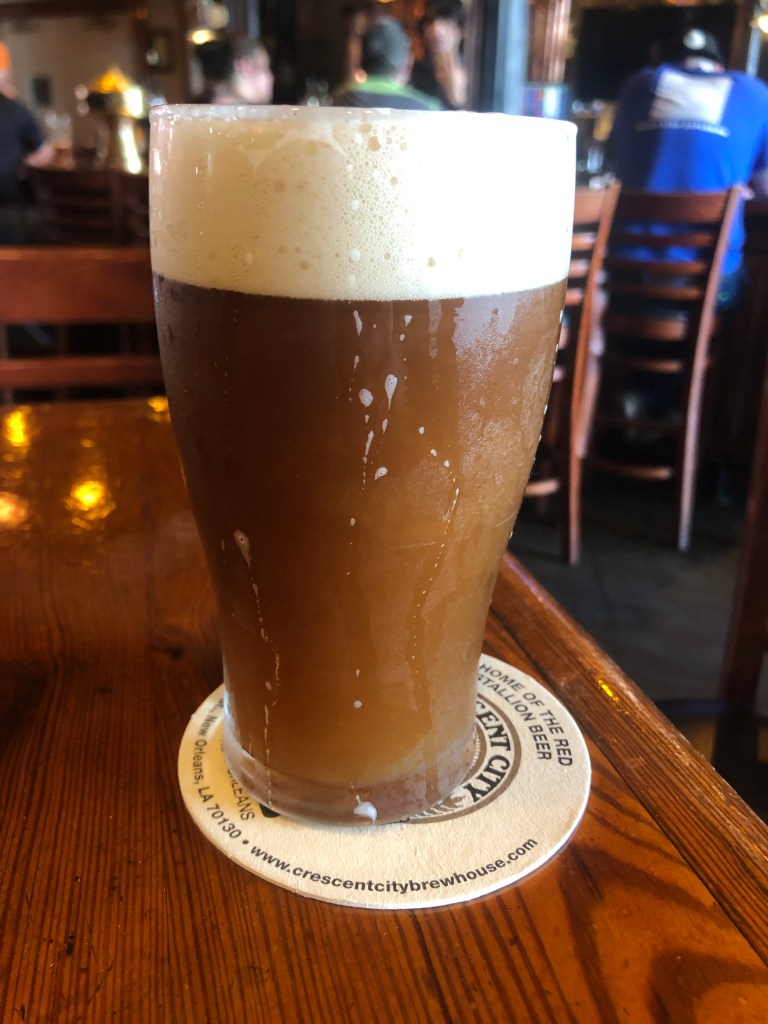
Ichabod Crane wouldn’t recognize it.

The taste is incredibly yeasty–like sourdough starter. Notes of banana peel and clove are prominent. Maybe a tiny bit of lemon? It’s not too hoppy (unlike some of the English styles I normally drink). Overall this is a very drinkable, approachable beer. It gets a solid 4 stars. Heck, I’m feeling good at the end of this trip; let’s give it a 4.5.
cemeteries · churches · movie theaters · Road trips · trains

Driving Into Natchez

One of my favorite songs is “Don’t Think About Her When You’re Trying To Drive,” recorded by Little Village on their first and only album in 1991. Little Village was a collaboration of four established musicians: John Hiatt, Ry Cooder, Nick Lowe, and Jim Keltner. Their musical style was heavily blues-influenced, and the group’s name is a reference to a famous foul-mouthed diatribe by Sonny Boy Williamson, whose name keeps showing up at the blues museums I’ve been visiting.
Anyway, I’ve been thinking about that song because one of its lines is “Driving out of Natchez/You drive her back and forth across your mind.” And the reason I’m thinking about that is because I’m driving into Natchez.

Anyway, here’s the song, if you’re interested: (the song starts at 8:40)

With that out of the way, let’s turn to today’s trip, whose theme is “southern ruins.”

On my way out of Vicksburg I passed these ruins within sigh of the Mississippi:

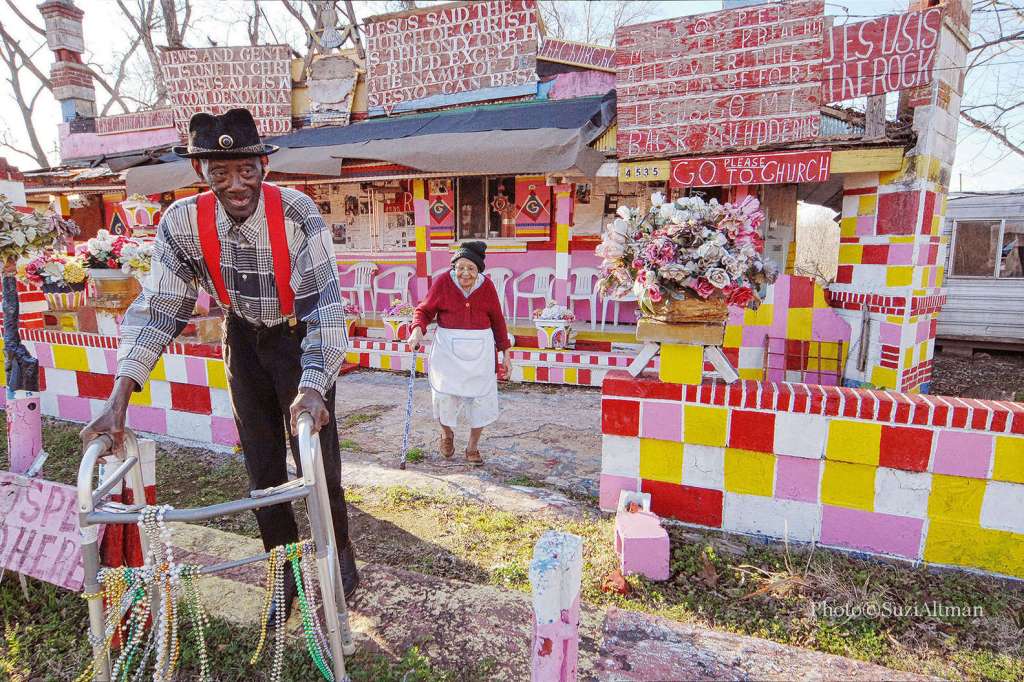
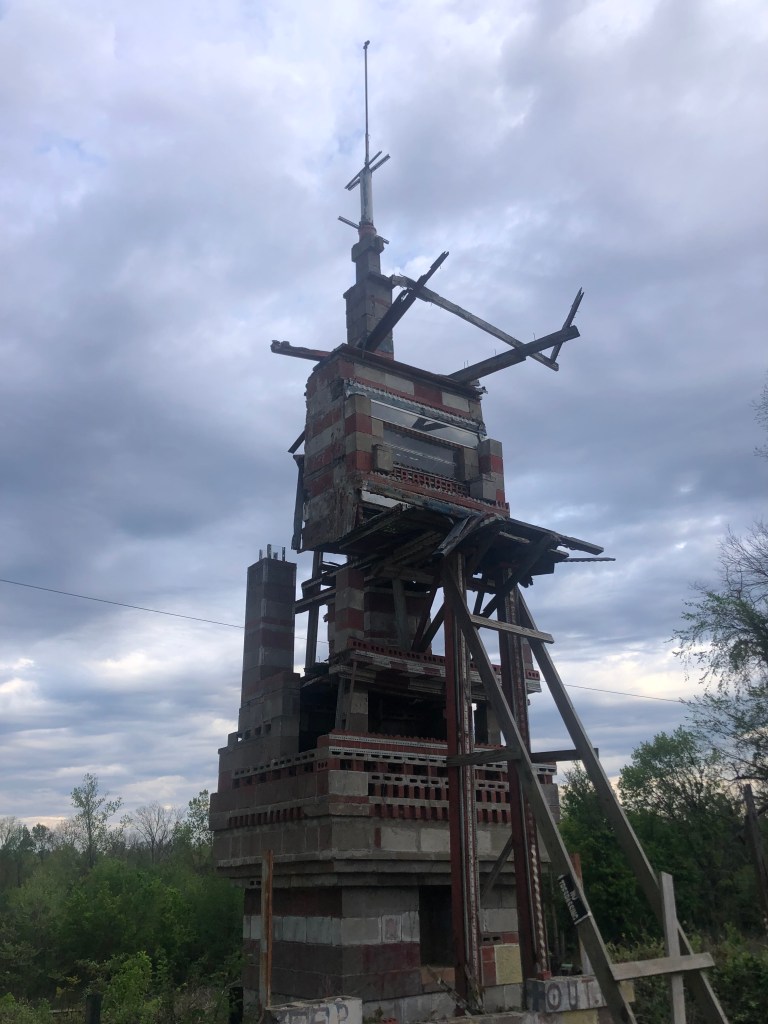
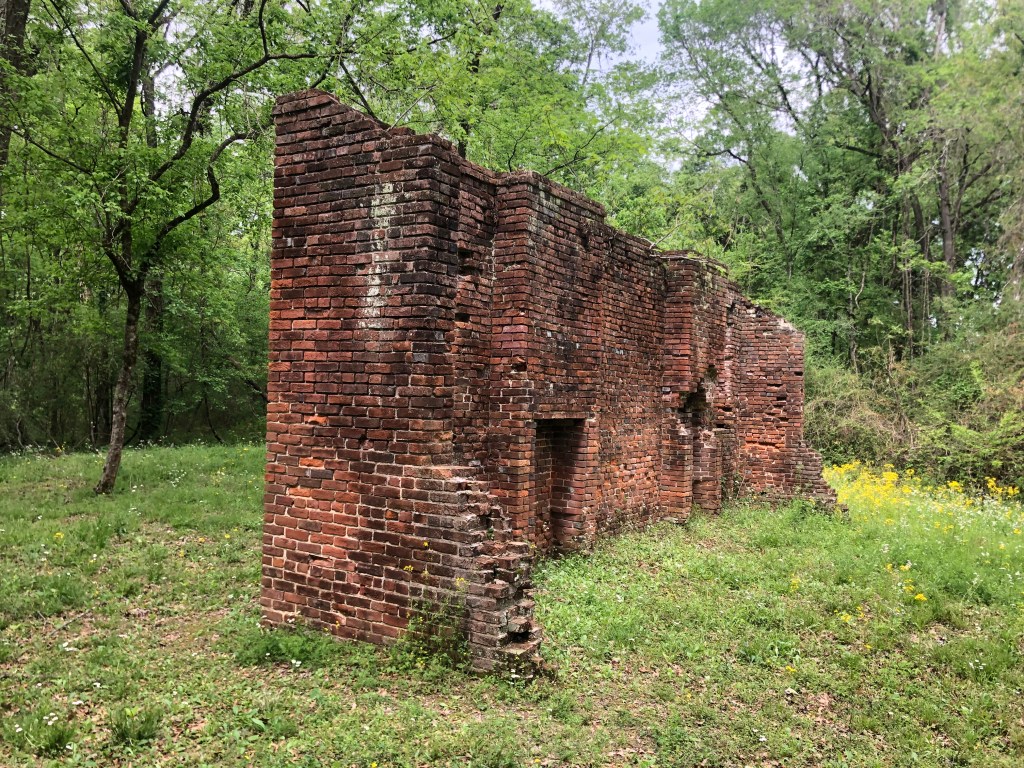
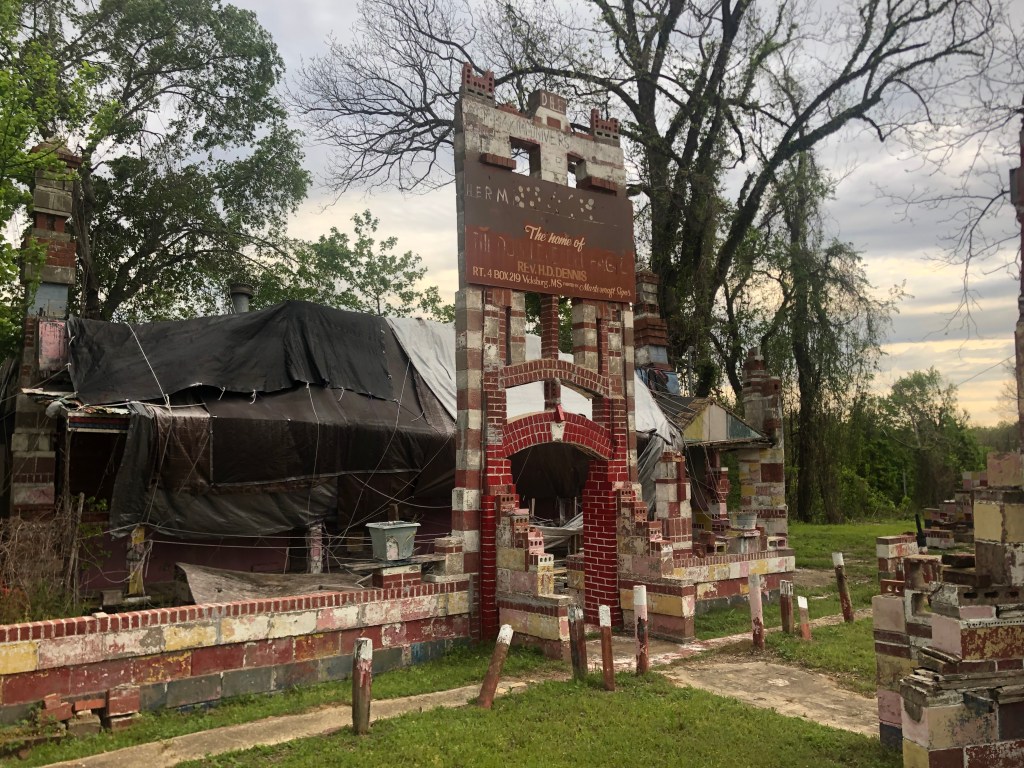
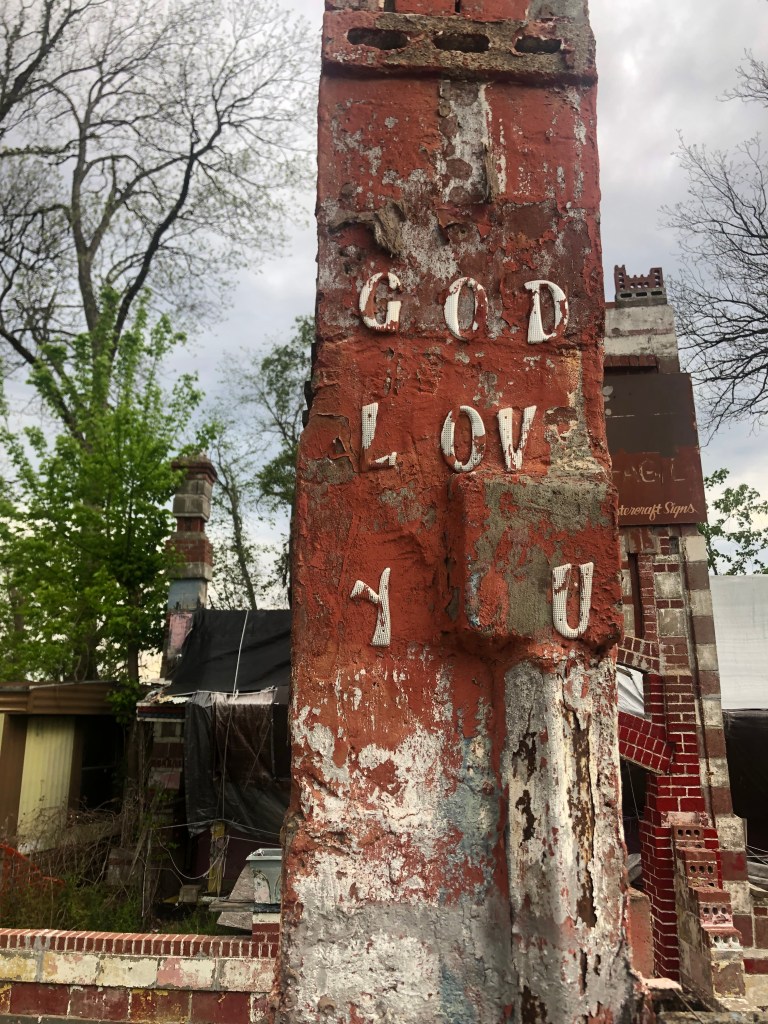
The background on this place is a little sketchy, but it seems that Margaret Rogers, who was born in the area in 1906, ran a general store on this site for many years. It’s said that throughout the 1960s and 1970s it was the only store along Route 61 that was run by an African American woman. In the late 1970s Margaret’s husband was shot and killed in a robbery. A few years later Martha met Rev. H.D. “Preacher” Dennis, who promised to build her “a castle to our love” if she would marry him. She accepted and for the many years Preacher Dennis spent each day working on this structure.

Preacher Dennis, Margaret, and their “castle.”

Margaret died in 2009 and Preacher Dennis died in 2012 (age 96). The structure has been deteriorating ever since. Many locals consider it to be a good example of folk art and there’s a group actively raising funds to restore the structure. They’ve set up a gofundme page. I’m going to make a small contribution when I get to a secure internet connection.

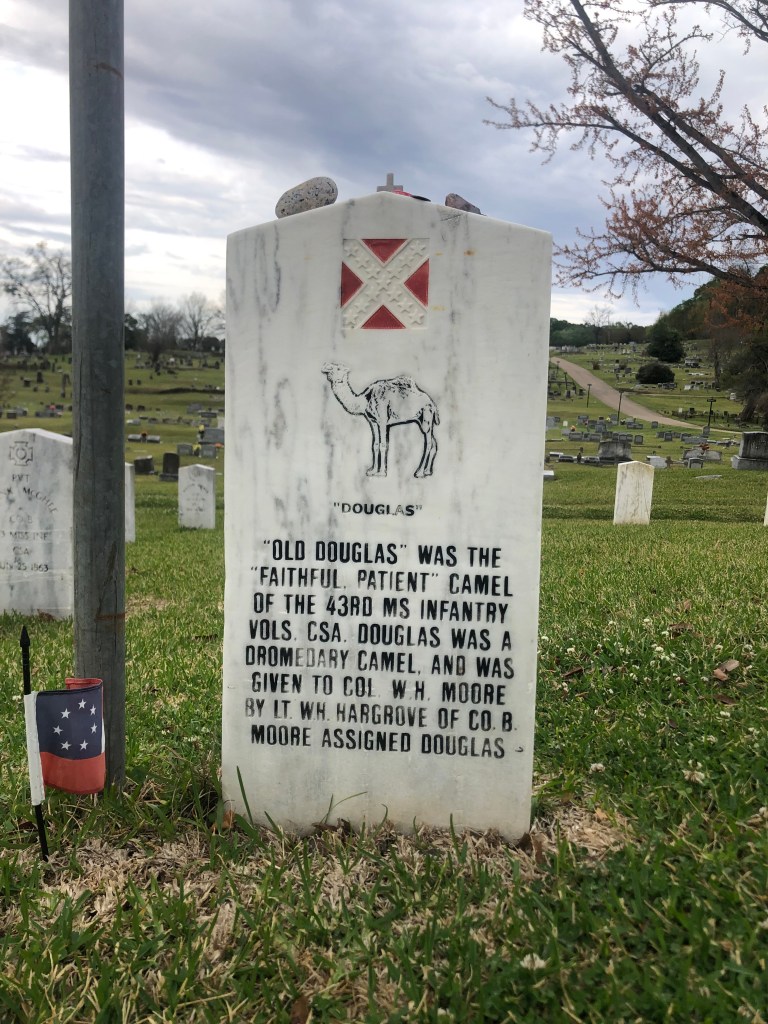
Continuing my way out of town I stopped at the historic Cedar Hill Cemetery which contains the mortal remains of a camel that was buried with military honors.

Here’s the story of the Confederate camel:

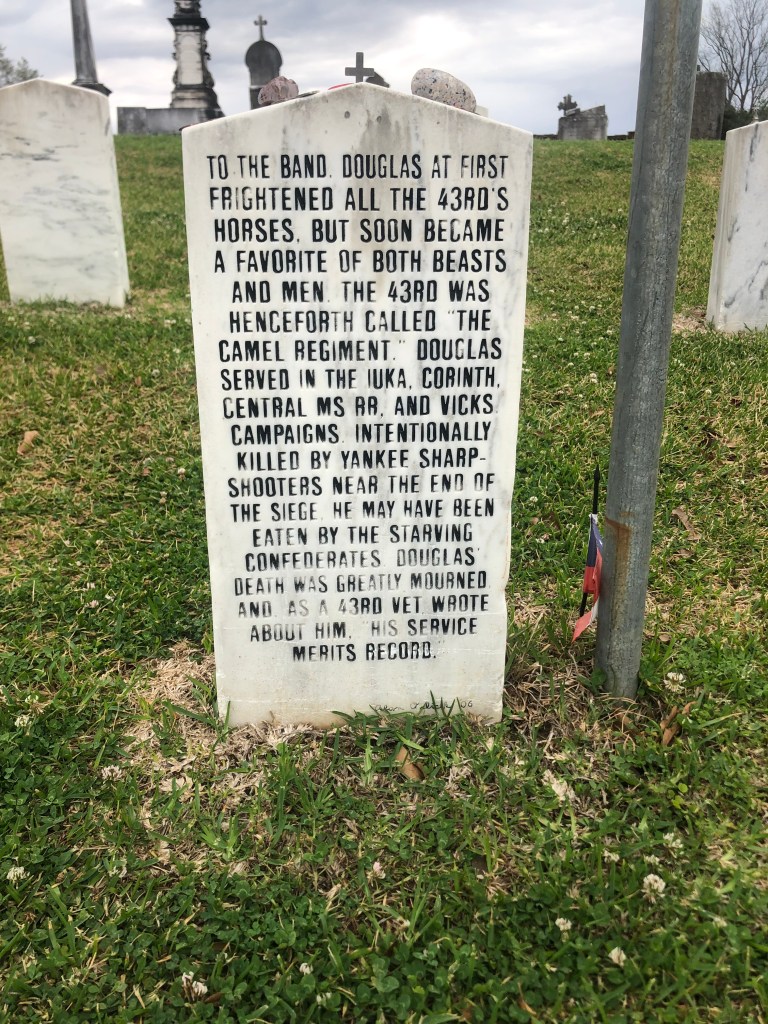
In the 1850s the War Department experimented with a “Camel Corps,” employing camels as pack animals in the arid southwest regions of the continent. The US Secretary of War at the time was one Jefferson Davis. Davis of course would become the president of the Confederacy a few years later, and so it’s not surprising that his armies would try using camels as pack animals in the Civil War. Old Douglas was a much-loved member of the 43rd infantry, but he was shot and killed by a Union sharpshooter.

The back of Old Douglas’ headstone is full of bad news.

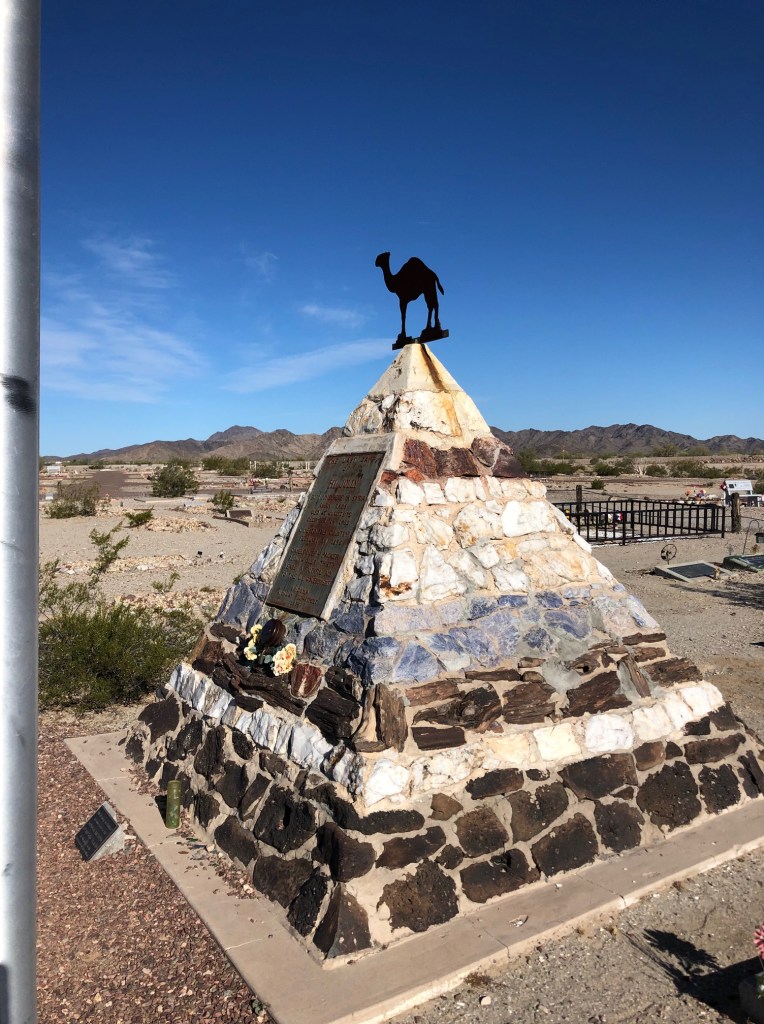
As a footnote, attentive readers will recall one of my earlier road trips where I visited the grave of Hi Jolly, one of main camel drivers of the US Army’s Camel Corps.

Hi Jolly’s tomb in Quartzite, AZ. (Photo from my Route 60 Blog, 2019)
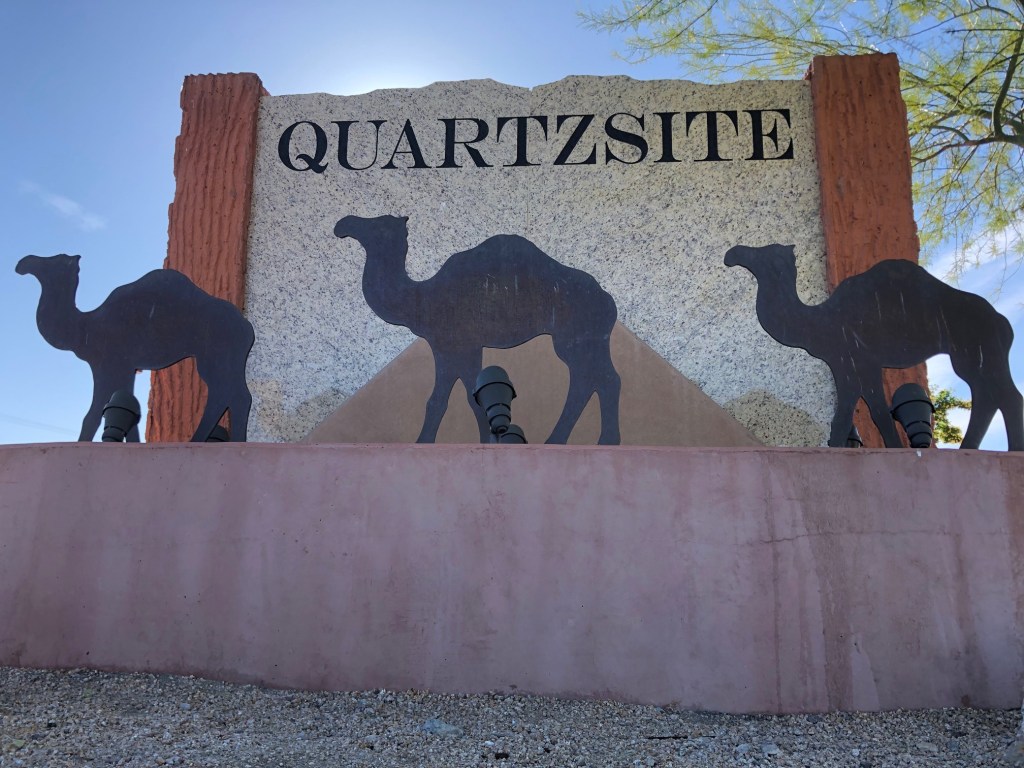
Quartzite really ran with the camel theme. (Photo from my Route 60 blog, 2019.)

Anyway, back to today’s drive. After leaving the cemetery I got back on US Route 61, heading south to Natchez. Along the way I stopped at a decimated city named Port Gibson (1,500). For the first half of the 20th century Port Gibson was the home base of an influential, traveling minstrel show called the Rabbits Foot Company. It’s been credited with influencing and advancing blues music in the Delta. There’s a placard to this effect on the site of the old Rabbits Foot offices.

The town’s economy relied on labor-intensive agricultural jobs, which largely disappeared in the post-World War II era. Since then the population has been declining and poverty is pervasive. Today I was struck by a number of historic buildings that speak of a more prosperous time. Most have been simply abandoned.

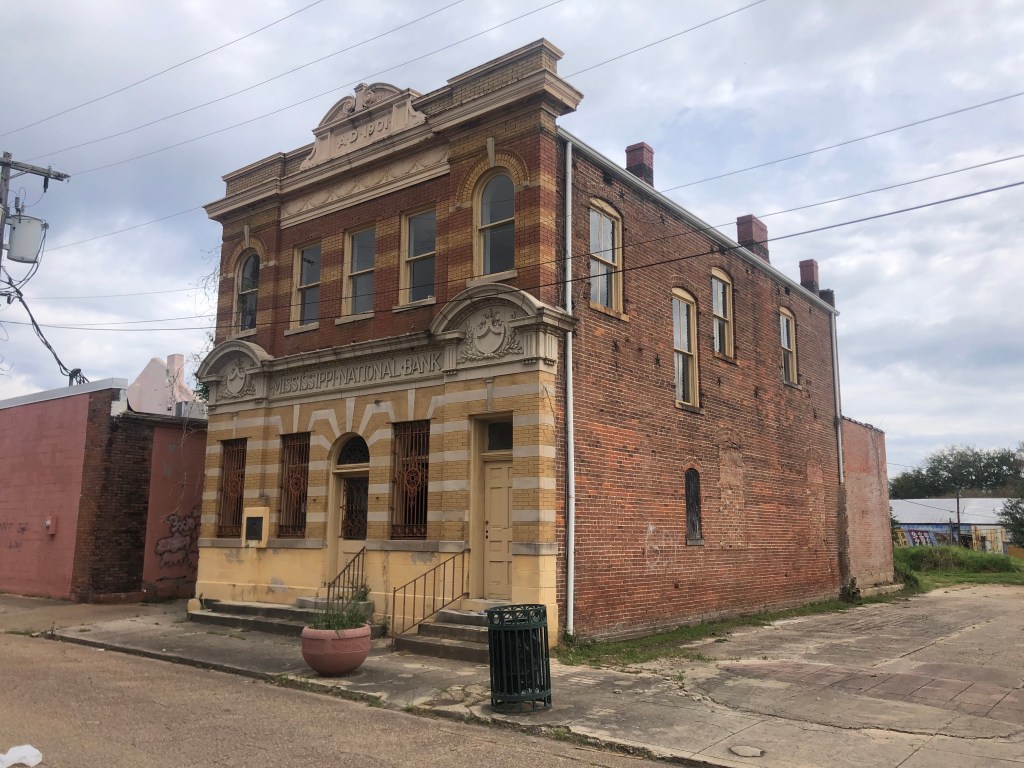
Mississippi National Bank building, built in 1901. Currently vacant.
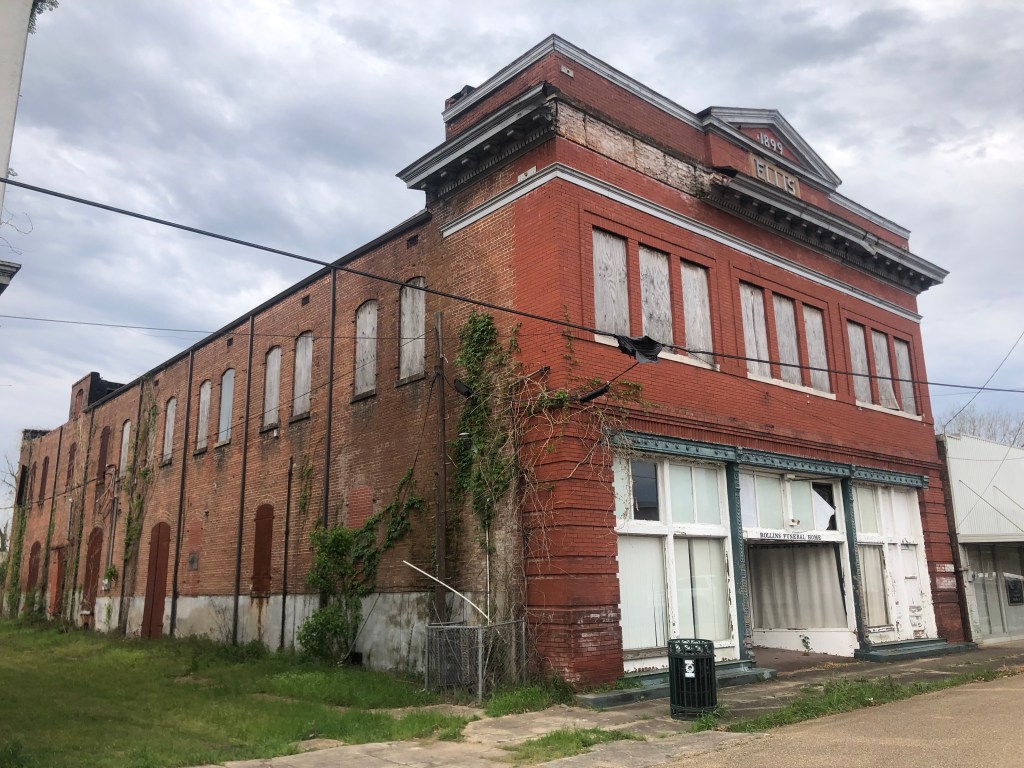
Rollins Funeral Home building, abandoned. Structure dates to 1899.
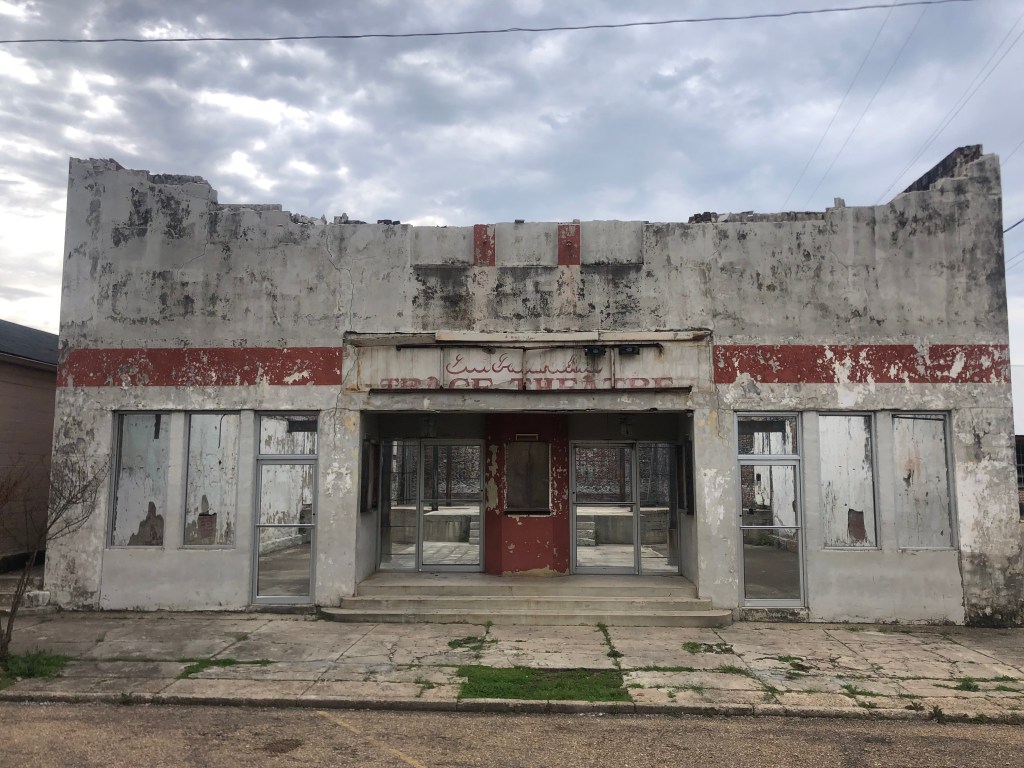
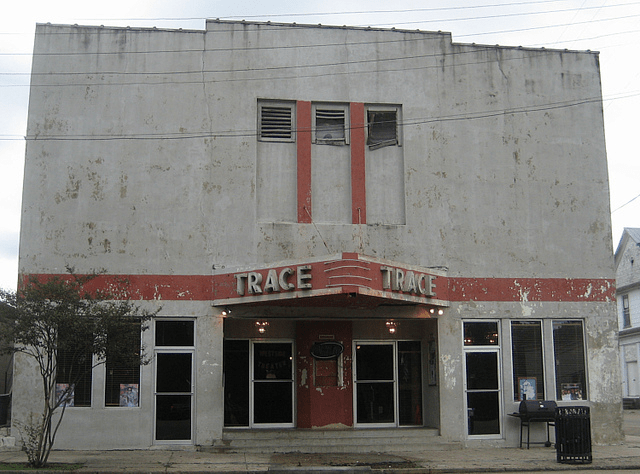
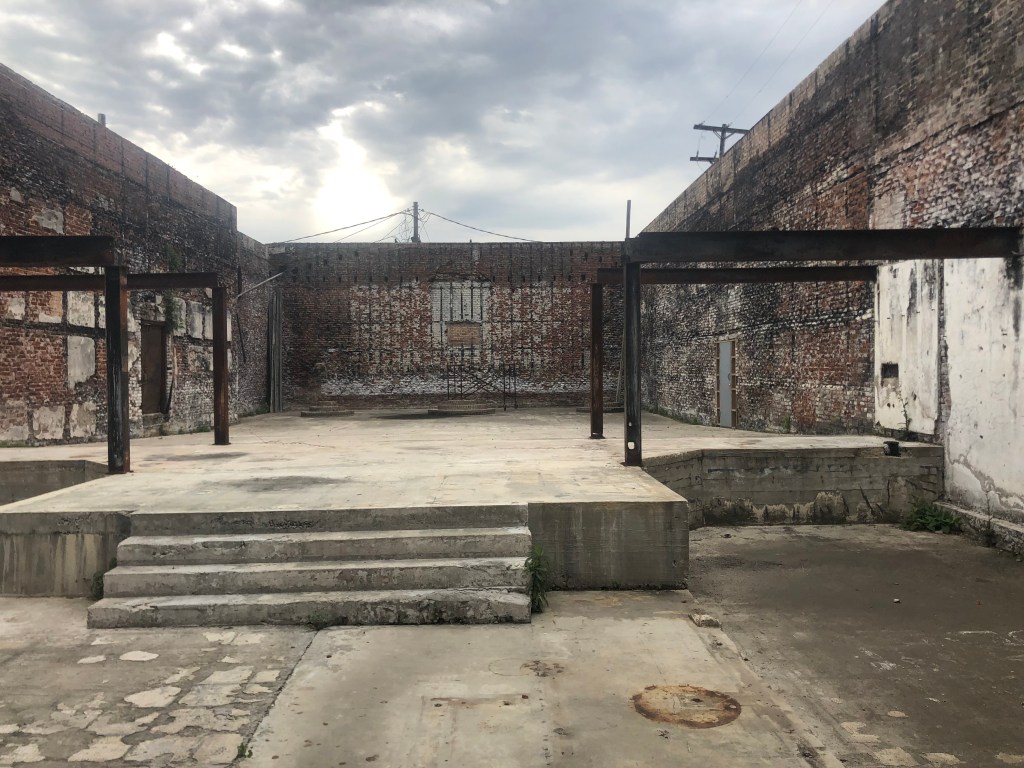
The Trace Theater, originally built in 1870 and remodeled in Art Deco style in 1940. It closed in 1968 and sat vacant for almost 50 years (!) The inside was refurbished in 2017 and it reopened as a night club. Sadly, it suffered a fire in 2020.
2011 (?) photo from Cinema Treasures website.
This is the interior of the Trace Theater today. I took this photo through the glass front doors. At least they’ve cleaned up the debris from the 2020 fire, and they appear to have installed a new set of doors on the front.
Port Gibson still has a few pockets of relative prosperity.

It was eerie walking among these vacant buildings on these empty streets. Eventually I got back in the car and continued down the Blues Highway. A few miles south of town the the highway intersects with the Natchez Trace Parkway. I recalled that my good friend Victor R had recommended I drive along that route if I had the opportunity.

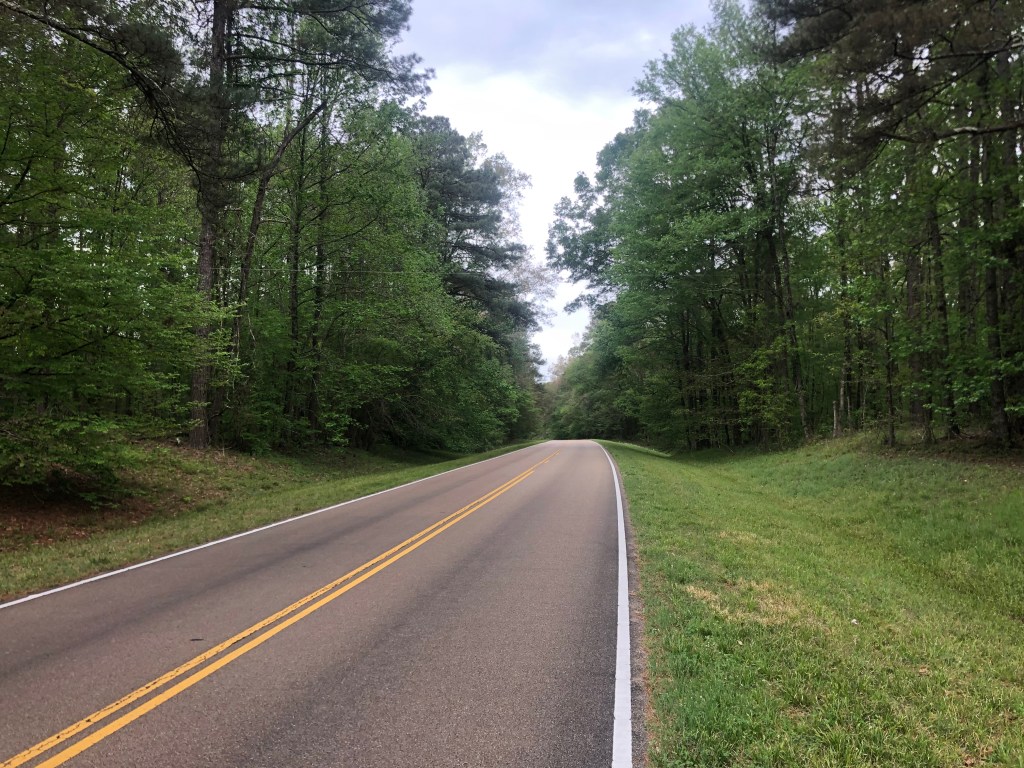
The Natchez Trace runs from Nashville to Natchez, roughly following the Cumberland, Tennessee and Mississippi Rivers. It began as an ancient trail used by Indians (themselves following trails created by grazing and migrating animals. The general contours of the trace became more firmly established over time, and it eventually became a network of major trails used by traders, emigrants, and others. In 1938 President Roosevelt signed legislation that created the Natchez Trace Parkway, a paved road built by the Civilian Conservation Corps. This is what I drove on today (or the last 40 miles of it). It’s a verdant, gracefully-meandering, low-key road that is almost entirely devoid of signage, signals, intersections, and other signs of civilization. It’s just a narrow two-lane ribbon of asphalt cutting through the woods.

The Natchez Trace Parkway.

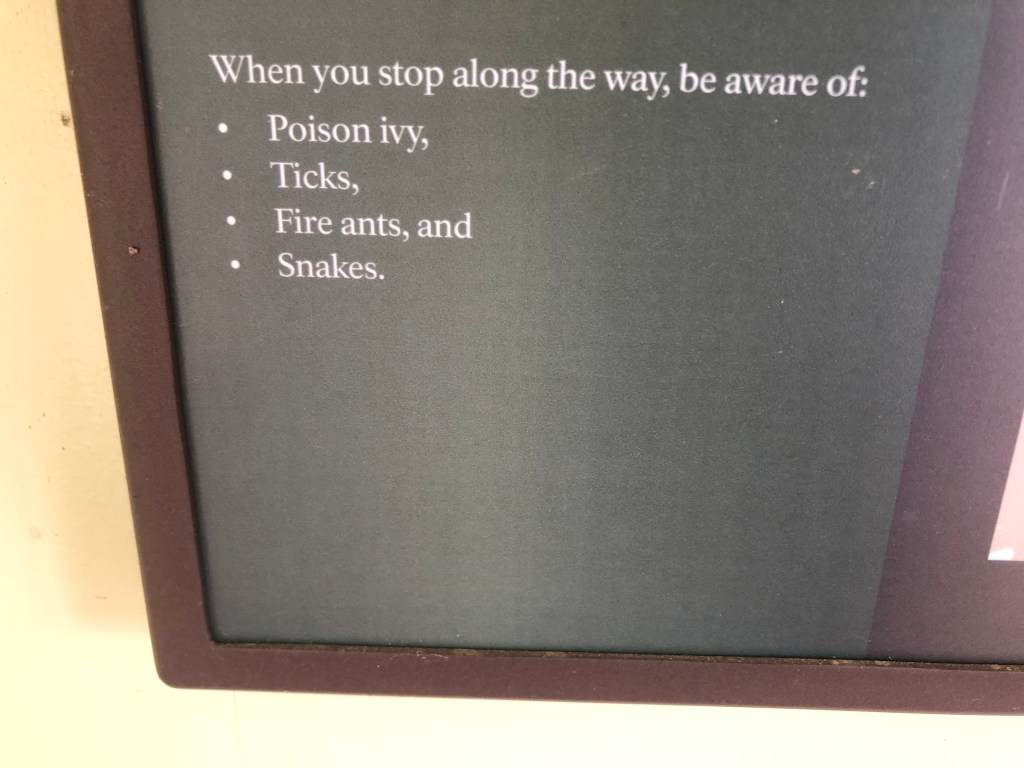
Of course, being out in nature has its drawbacks, as detailed on this “welcome” sign along the route:

It’s enough to make you stay in the car.

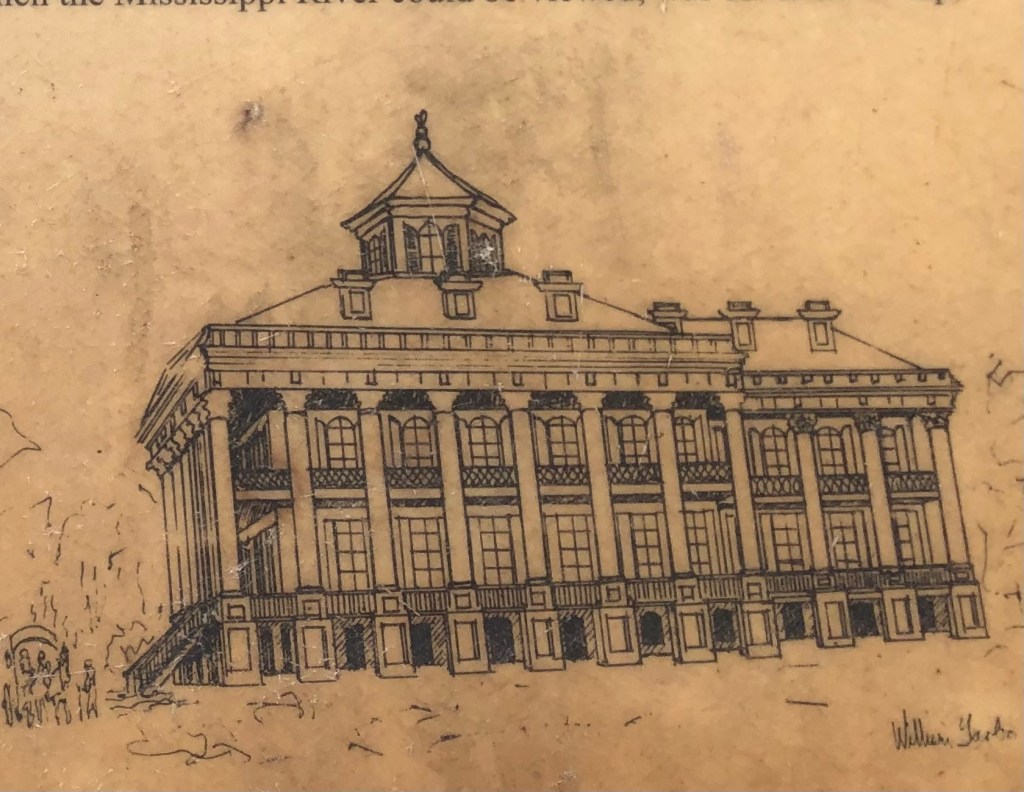
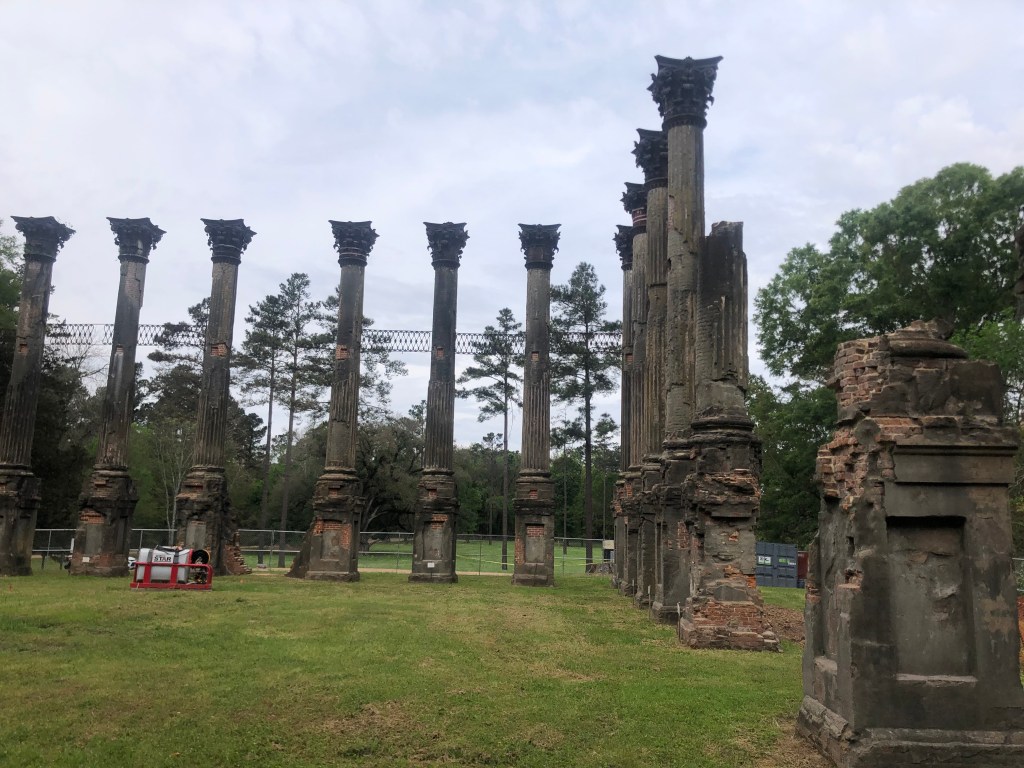
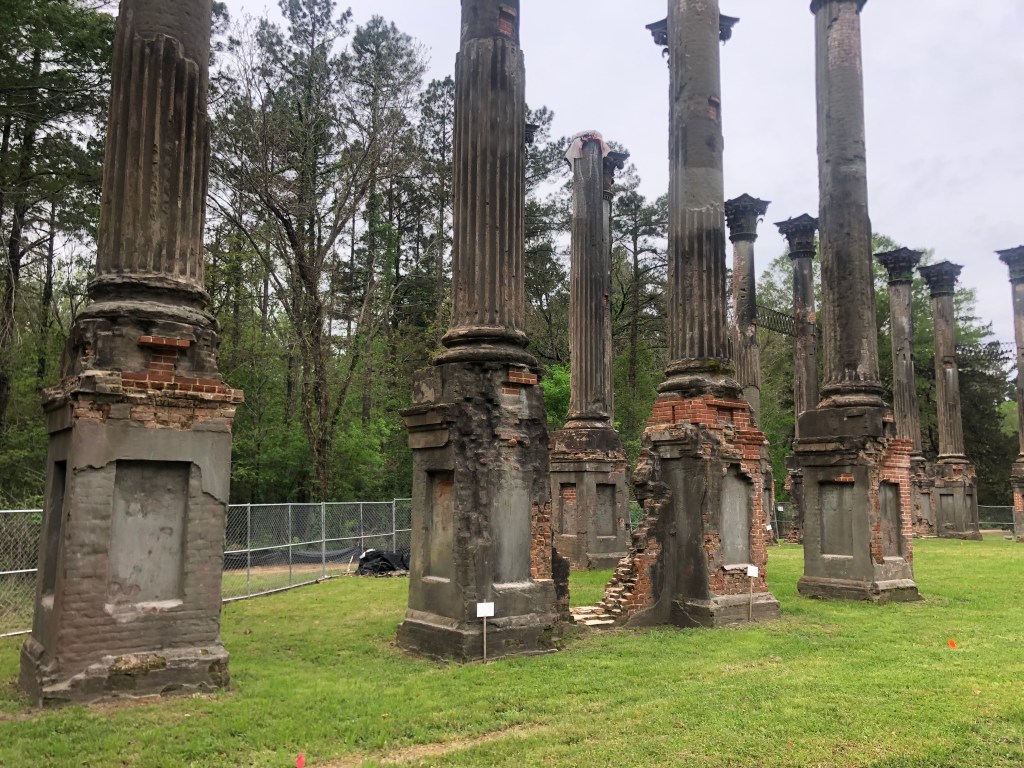
I did leave the car and risk being swarmed by fire ants and the other plagues a few times. First, I followed a side road to the “Windsor Ruins.” I had no idea what it was, but it seemed to fit within today’s theme of Southern ruins. A few miles later I was standing in a clearing from which rose an impressive display of 27 corinthian (?) columns. It used to be a plantation home, and a placard illustrated what the place used to look like:

The becolumned mansion was built in 1861 by a wealthy planter by the name of Daniell, who owned the Windsor cotton plantation. Unfortunately for him, he died just a few weeks after his home was finished. The mansion somehow survived the Civil War, but it burned to the ground in 1890. All that remains are these columns. When I arrived today, the ruins were surrounded by temporary fencing, as the state (which now owns the ruins) is working to stabilize them from damage by the elements.
Best laid plans of mice and men…

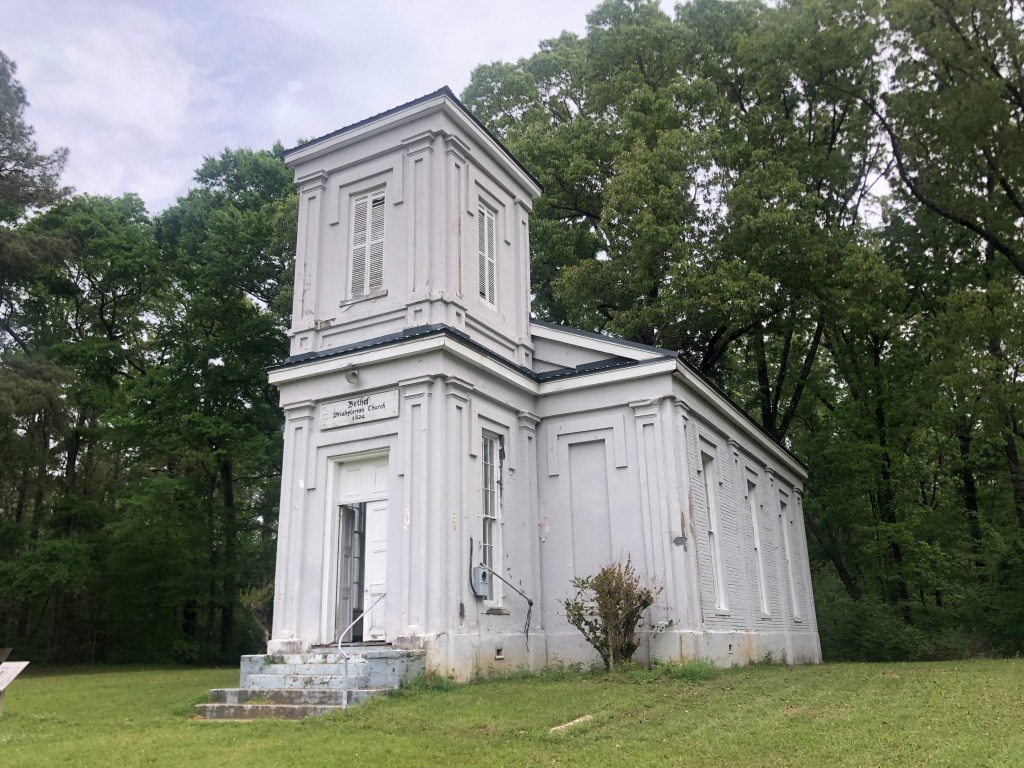
On my way back to the Natchez Trace I passed this 200-year-old Presbyterian church.

Bethel Presbyterian Church, built in 1842.

The church has been standing for over 180 years. A tornado in 143 (when the church was 101 years old) did major damage, notably tearing of its tall, pointed steeple. The church was rebuilt, but the steeple was omitted from the new design. Why tempt fate? Over the years the congregation dwindled, until it was no longer classified as an active church by the Presbyterian leadership.

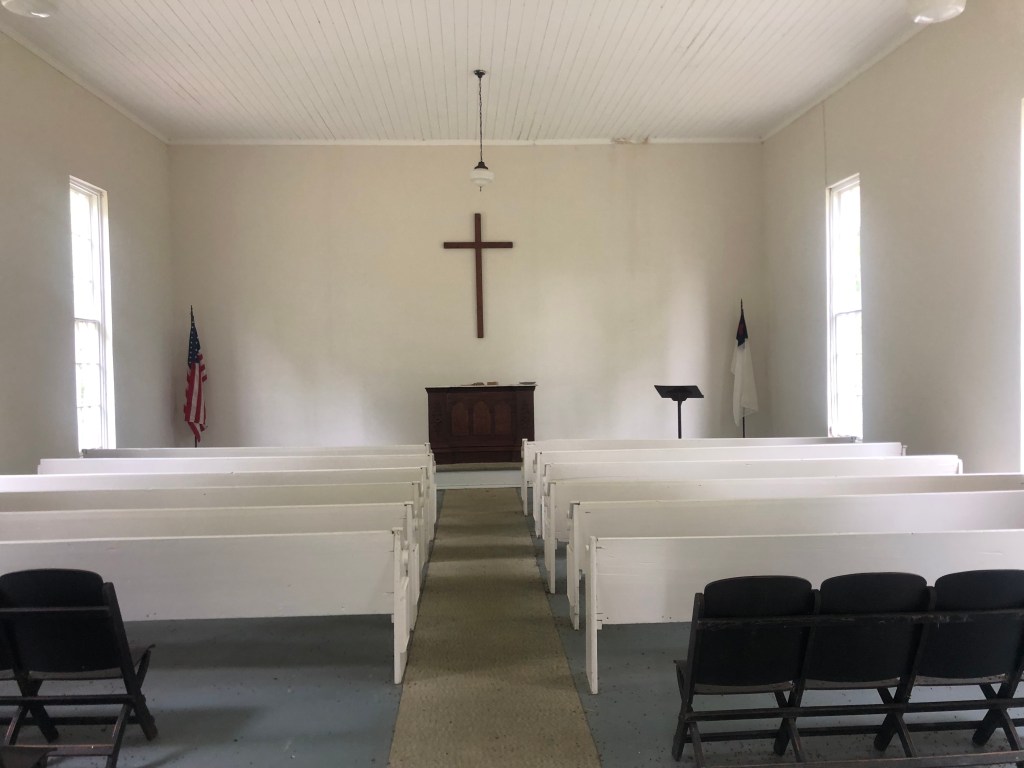
But what’s this? An open door? I poked my head inside:

Looks like you could still hold a service in here.
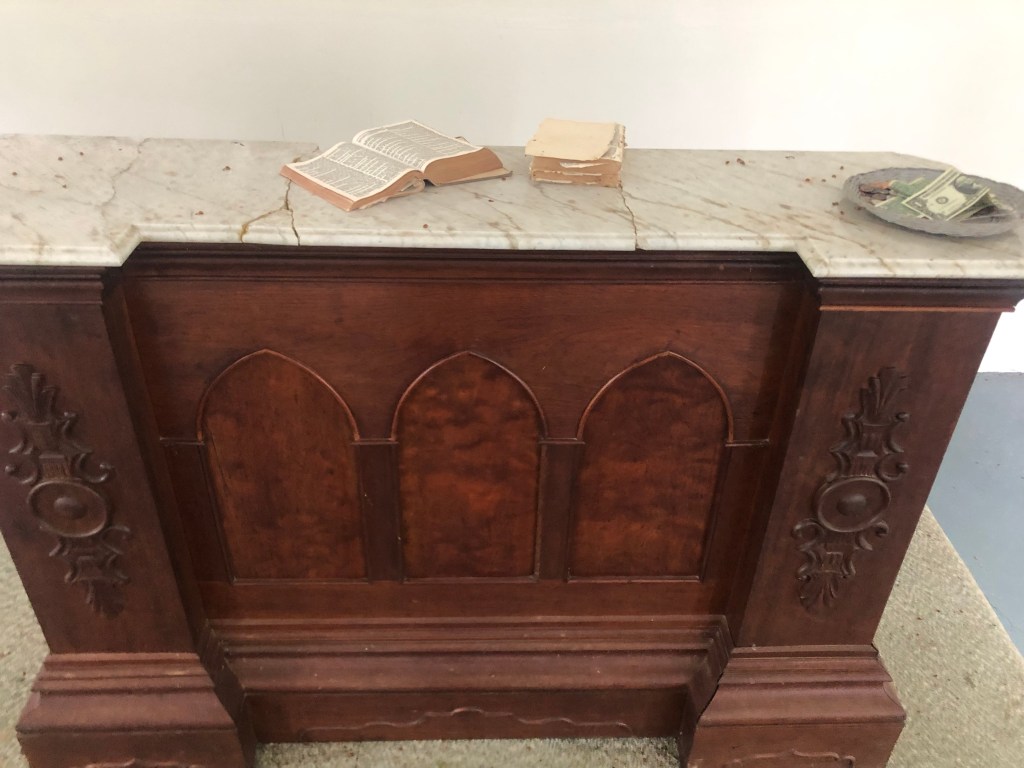
Open Bible and full collection plate.

A little research informed me that the church can still be used as a chapel by whomever wants to to do. And a nearby church in Port Gibson (!) conducts a two services here each year, in the spring and the fall.

A final set of ruins I encountered on the way to Natchez was something called the Elizabeth Female Academy. Opening in 1818, it was Mississippi’s first higher education institution for women. For a short time, the faculty included a drawing instructor by the name of John James Audubon (yes, the Audubon). The academy closed in 1845 due to declining enrollment (linked to a shrinking population in the area). The building burned in the late 1870s, and these ruins were all that remained.

And you know what’s striking about all these ruins and abandoned buildings I saw today? I didn’t spot a single bit of graffiti. The elements are certainly taking their toll on the Delta’s history, but it seems that, by and large, the residents of the region either appreciate the value of these historical treasures…or maybe they just ignore them.

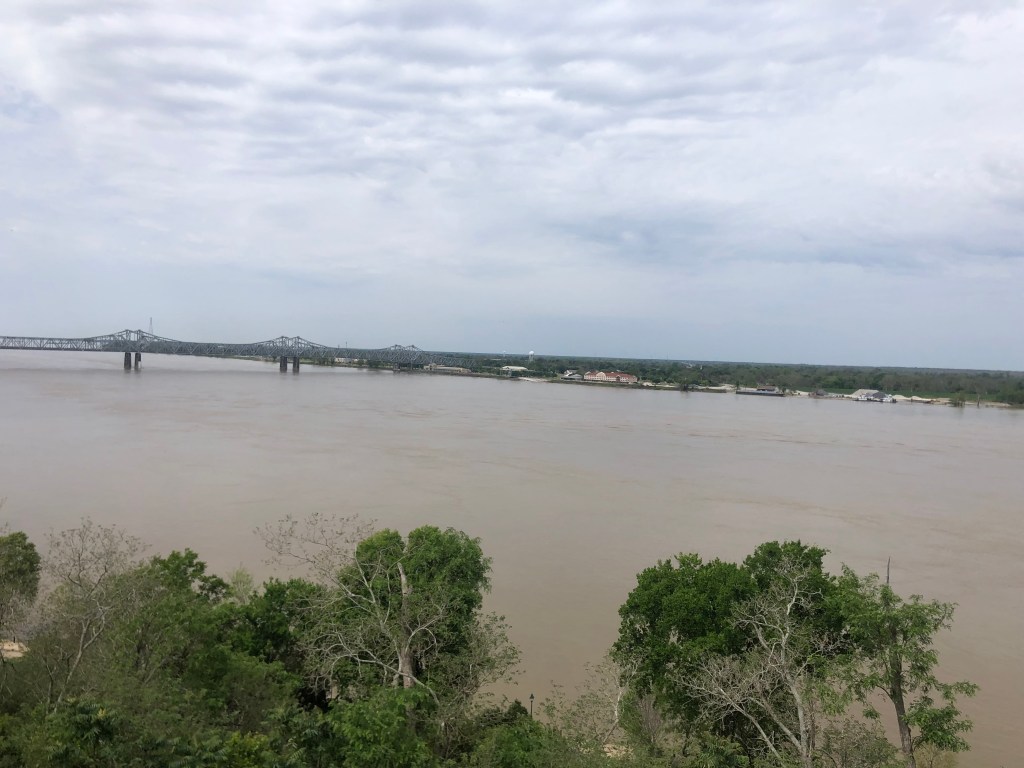
Finally I arrived at the end of the Natchez Trace, appropriately enough in the city of Natchez (pop: 14,500). The city, which for a short time had been the Mississippi state capital, reminds me of Vicksburg. Both are historic and seemingly prosperous towns located on the east bank of the Mississippi.

View of the Mississippi from downtown Natchez.

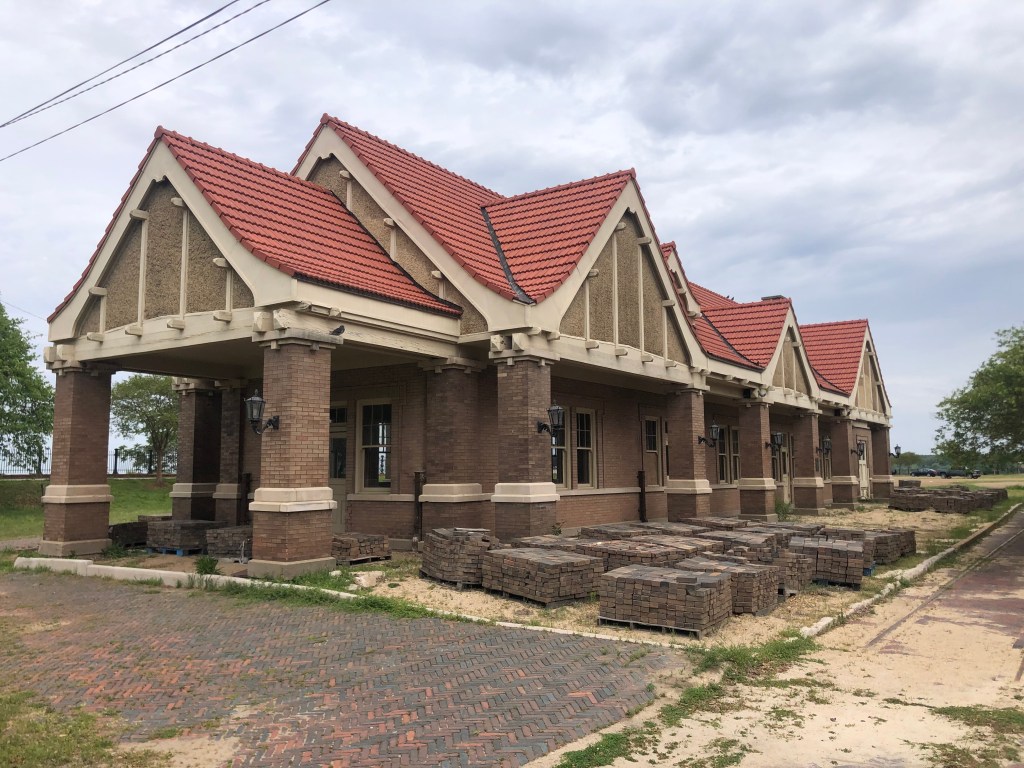
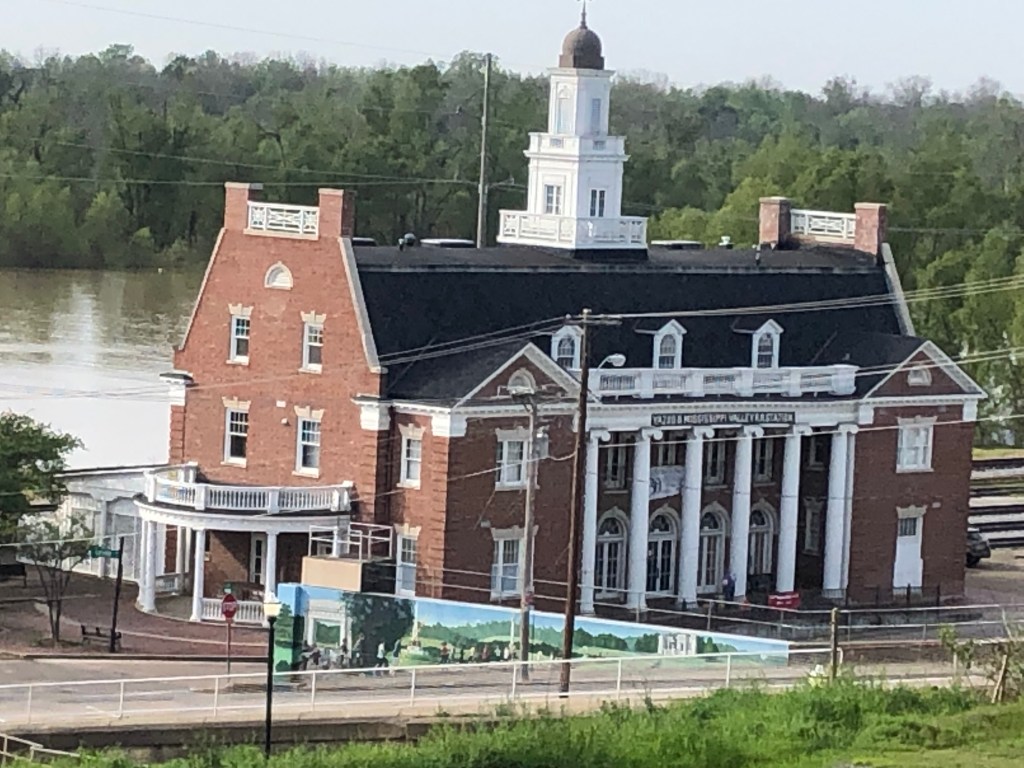
And, like Vickburg, Natchez seems to place value on its historic resources. For example, the 1915 Yazoo &Mississippi Valley Railway depot has been restored–at least on the outside. The inside is gutted, awaiting a tenant (like a restaurant) to lease it out.

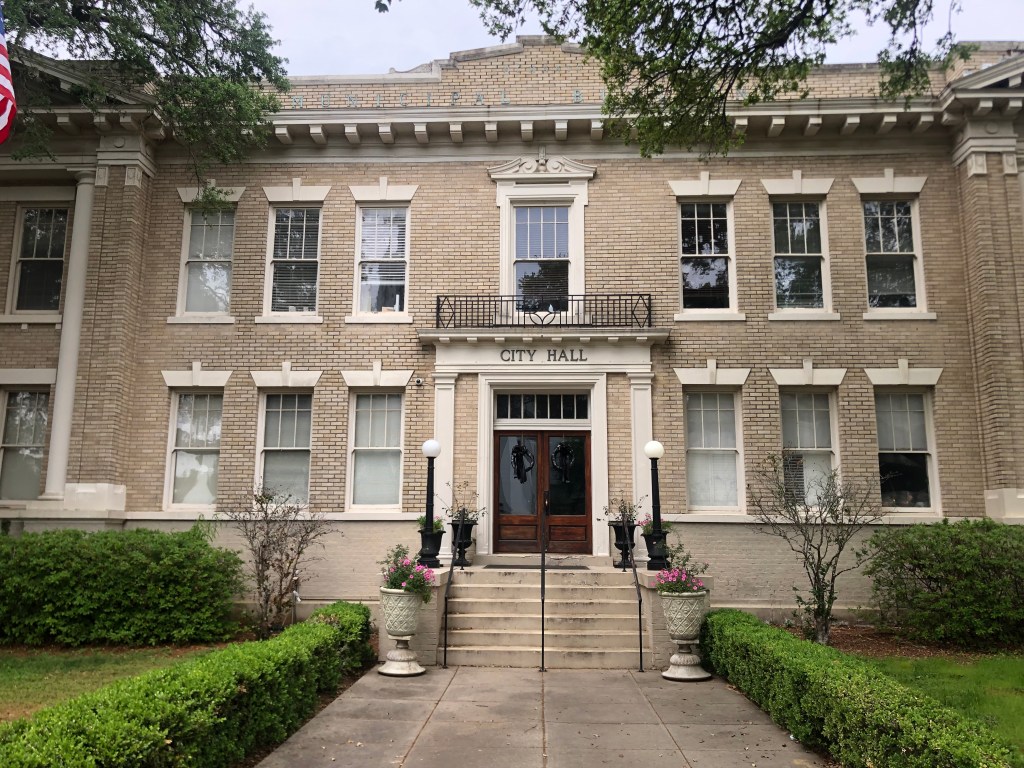
The city hall building will have its hundredth birthday next year, and it looks great as well.

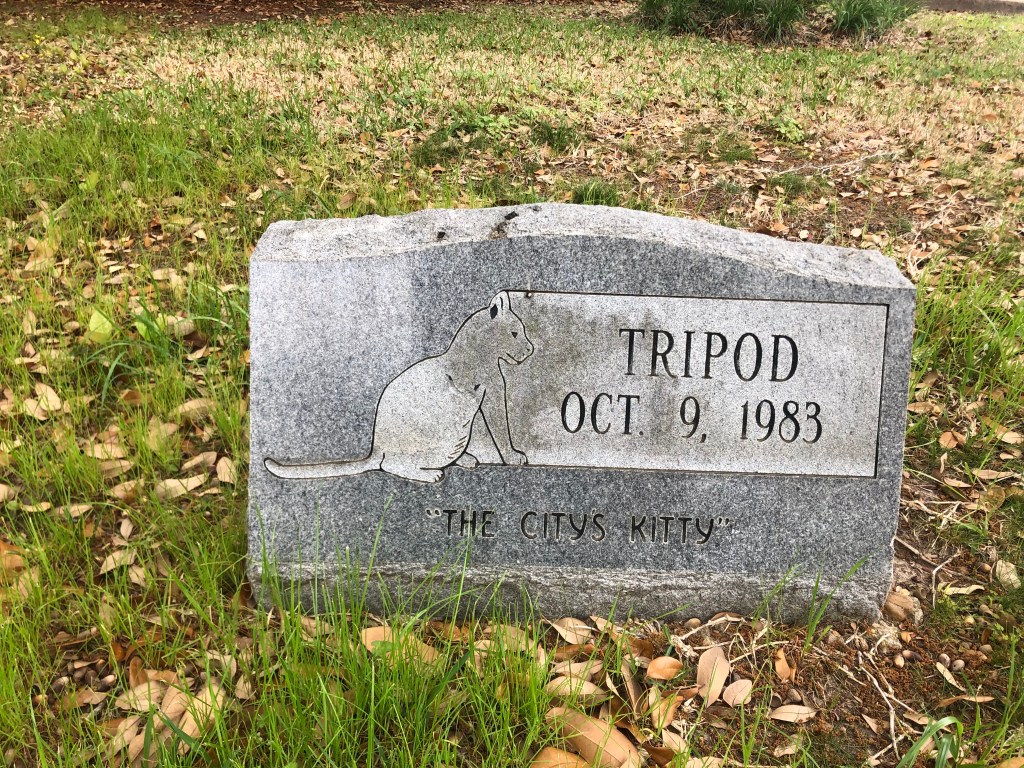
On the front lawn I noticed a small grave marker for “Tripod,” who was a feral, three-legged cat that showed up at City Hall in 1979 and never left. Literally. When he died four years later the city held a full memorial service and placed him under this marker.

Evidently Tripod was more beloved than some of the humans around City Hall. One of the city Aldermen–Hal Wilson–was allergic to cats and made a motion Tripod be banned from the building. The motion failed to get a second, and the Mayor then moved to have Wilson banned from the building. (That motion failed as well. But still.)

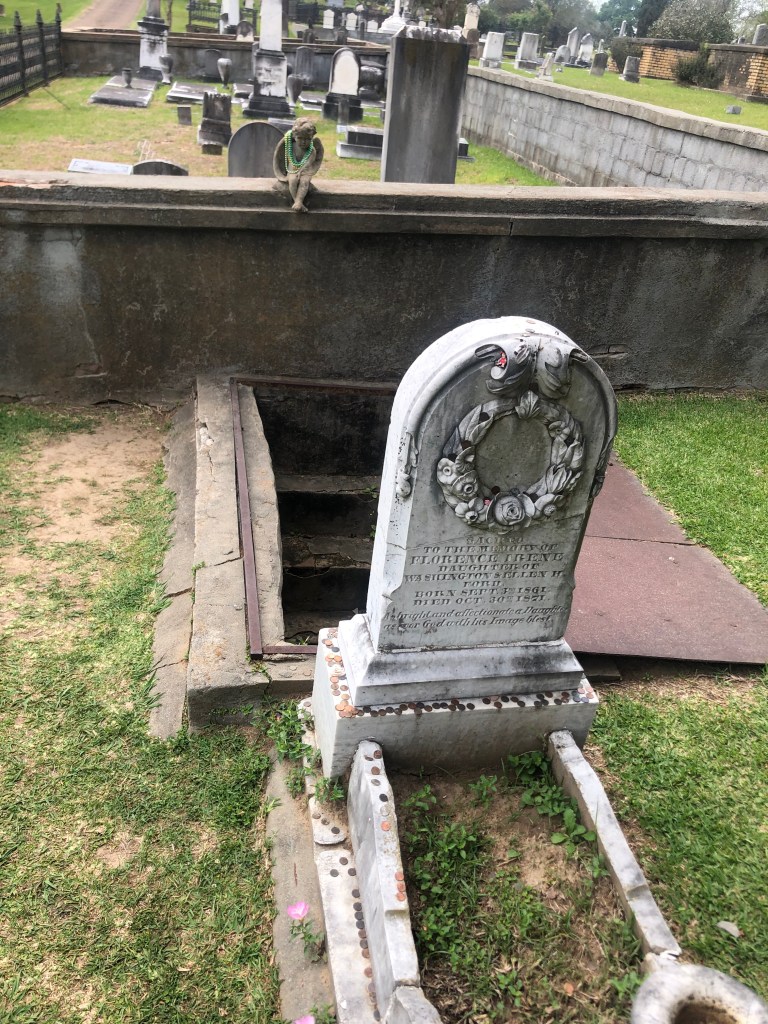
Speaking of graves, Natchez Cemetery had this unusual specimen:

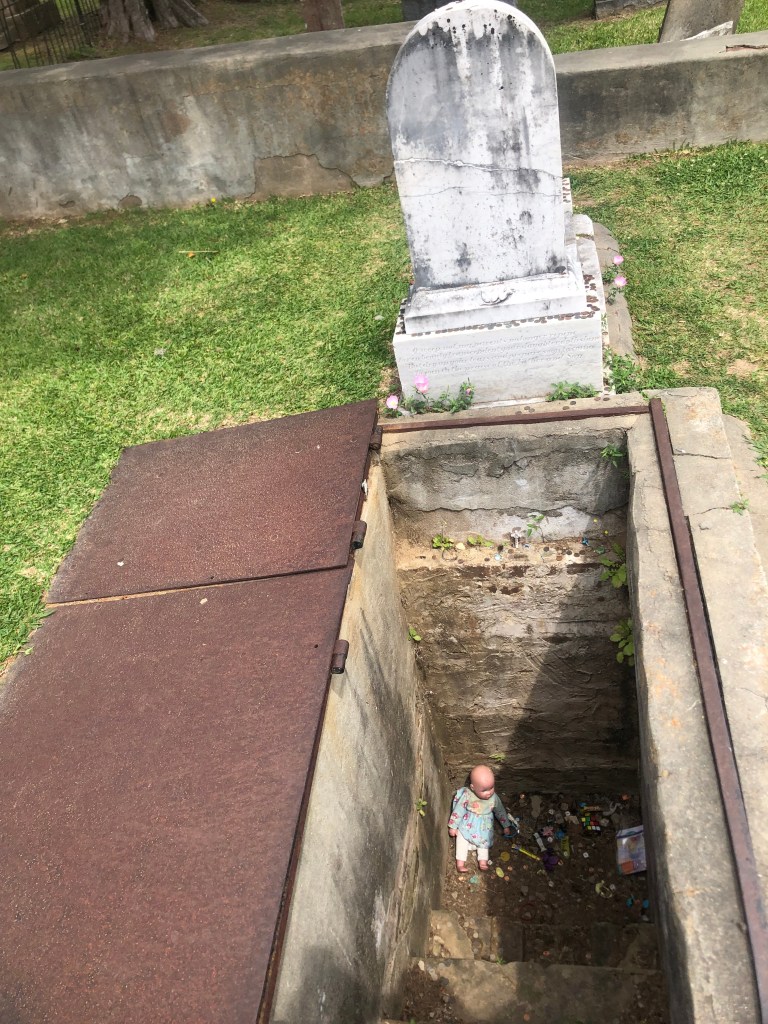
Florence Irene Ford was only 10 years old when she died of yellow fever in 1871. The story goes that she always sought comfort from her mother during a storm. So when she died her parents had a staircase built into the ground of her grave so that her mother could descend to a specially outfitted window and comfort the spirit of her daughter during storms. That’s not creepy, is it?

There used to be a glass window with a view of the Florence’s coffin, but this was cemented over in the 1950s–long after Florence’s mother had herself died.

After leaving Natchez I departed from the Blues Highway and headed southeast to the city of Hattiesburg (pop: 49,000). Hattiesburg is on US route 49–which I’d encountered way back in Clarksdale. (Recall the possibly literally damned crossroads of Route 61 and Route 49 where Robert Johnson sold his soul to the Devil.) Highway 49 essentially forms the hypotenuse of the right triangle formed by my route (Highway 61 south to Highway 84 east).

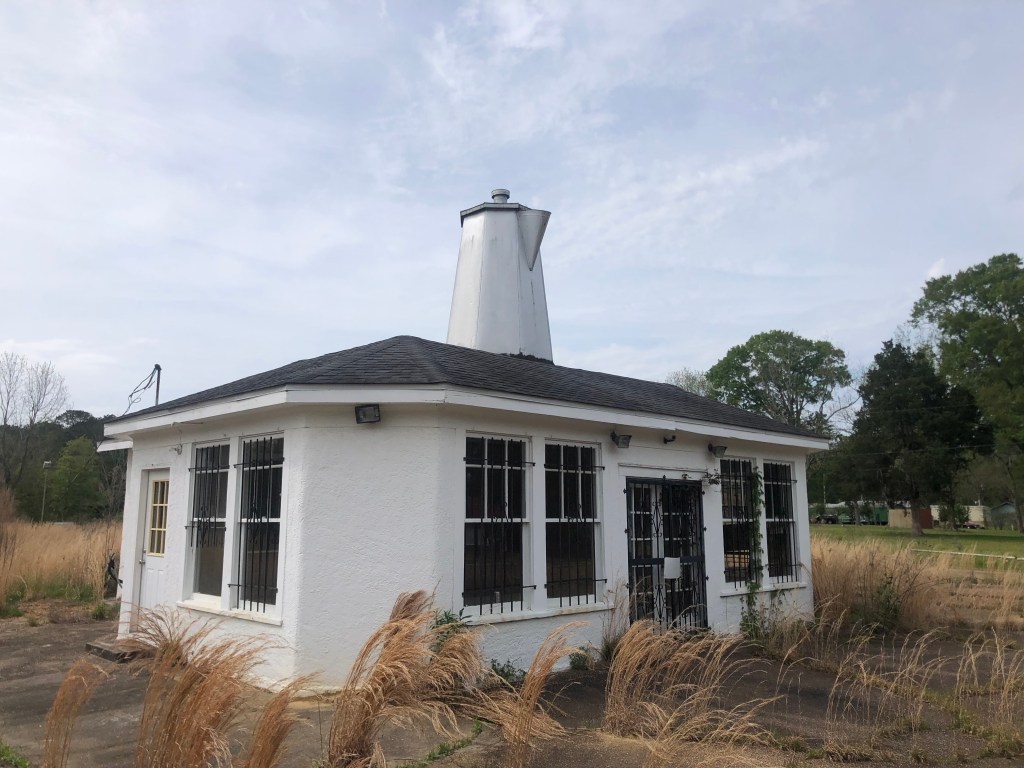
Along the way to Hattiesburg I encountered two notable pieces of historic roadside kitch:

The Coffee Pot Inn was built in 1931 as the first drive-in restaurant in Brookhaven, MS.
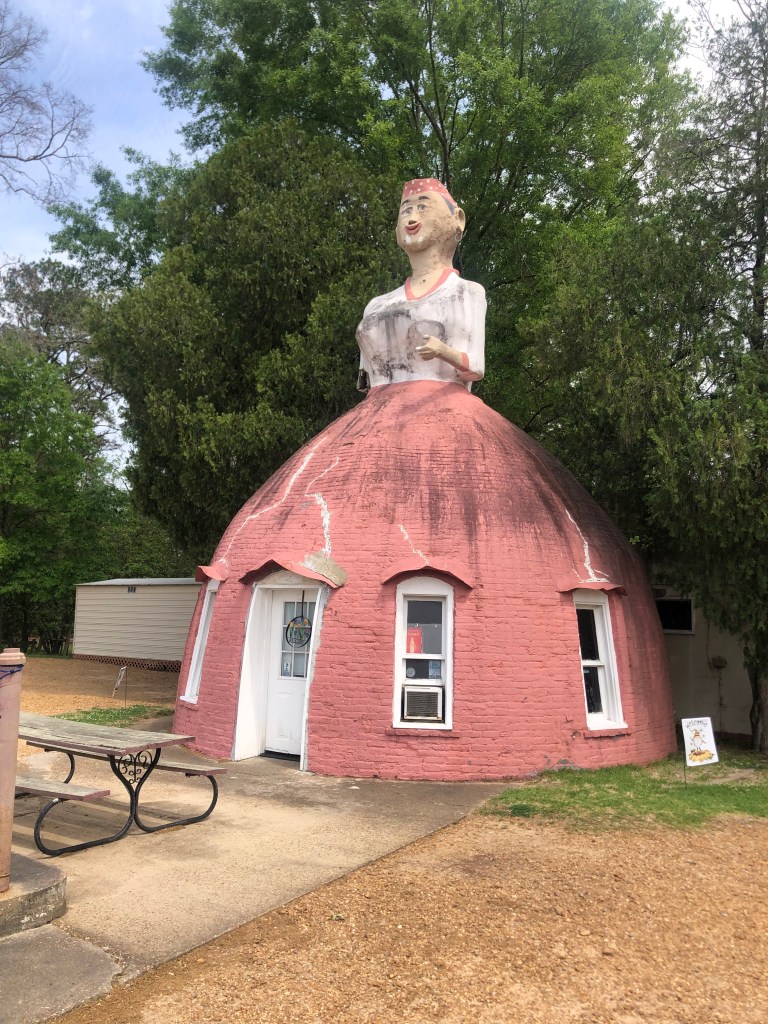
Mammy’s Cupboard is a roadside restaurant that was built at the outskirts (ha!) of Natchez in 1940. It’s still open for lunch daily except Sundays. And today is Sunday, sadly.

Tonight I’m spending the night in Hattiesburg. Tomorrow it’s off to New Orleans!

Beer of the Day

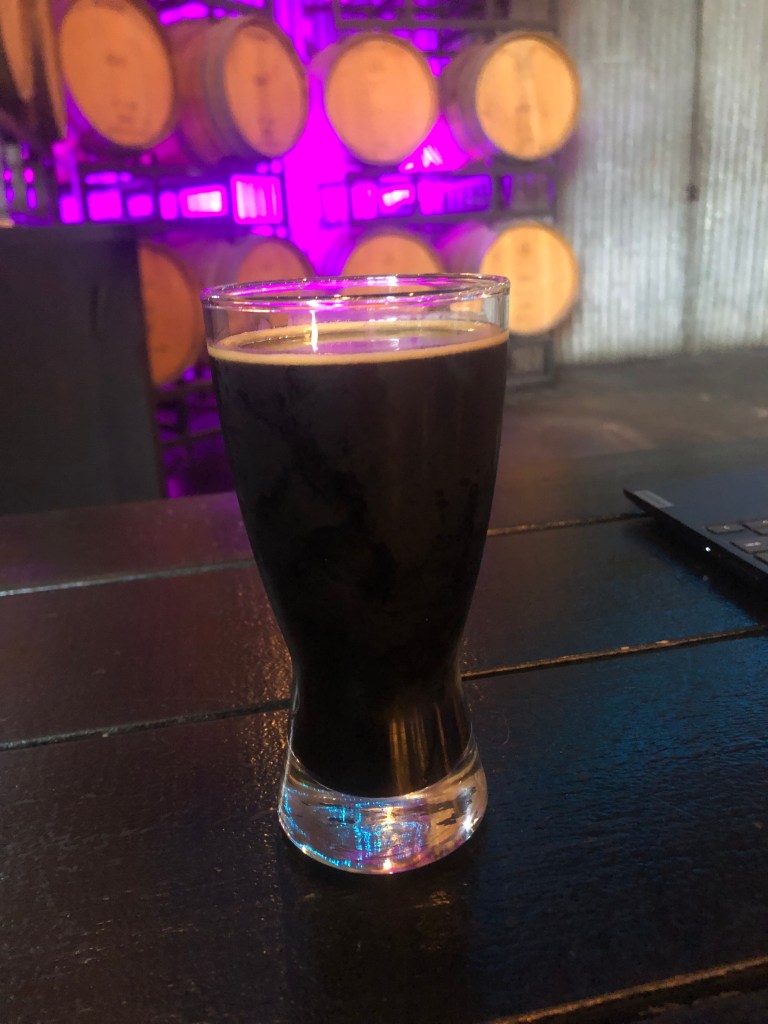
I went into Natchez Brewing Company, where owners Lisa and Patrick Miller were working hard to handle the lunch crowd. I ordered a “Smorish Imperial Stout” and a calzone the size of a Frisbee.

I think “Smorish” is supposed to evoke s’mores. Indeed the description claims it’s got chocolate, graham cracker, and marshmallow notes.

I’m not so sure about all that. The malt has a seriously roasted taste, to the point of charring. It’s as if the marshmallow of your s’more caught on fire. I don’t taste much sweetness. The dominant taste is bitter dark chocolate and black coffee. 

The mouthfeel isn’t that creamy, but it is smooth. It’s also what I call a Sleepy Hollow Beer (i.e., headless).

The ABV is 10.3 percent, which is pretty standard for an imperial stout. Overall, it’s quite drinkable, though the s’more reference is false advertising.

3.5 stars (out of 5)

Obelisks · Road trips · trains

Last Blog Post

Well, this is it. I arrived in Vicksburg, and I fell in love with this city. It’s beautifully situated on the east bank of the Mississippi River, the architecture is classic and handsome, the weather is fabulous, and most of all the people are wonderful. I know it sounds sudden, but I’ve already enlisted a real estate agent and I called my wife and told her to book a ticket to fly out here and look at houses with me. So, this is the last stop of my road trip and thus my last blog post.

That’s just a lame April Fools Day joke, of course. But my praise for Vicksburg is completely genuine. Let me recount my day and I’m sure you’ll agree with me:

As I rolled into town I spotted a sign pointing to the “Old Depot Museum.” Naturally I turned in the direction of the arrow and was greeted with this sight:

The Old Depot Museum, on the banks of the mighty Mississippi.

Is that a beautiful railroad station or what? There were balloons in the parking lot which suggested that something special was going on, and across the street there was a line of restored, ancient tractors, some of which were spluttering to life. There were also some food trucks and tables with vendors of various sorts. A small band played blues songs. Evidently I’d come across a to-do, as they call such events in these here parts.

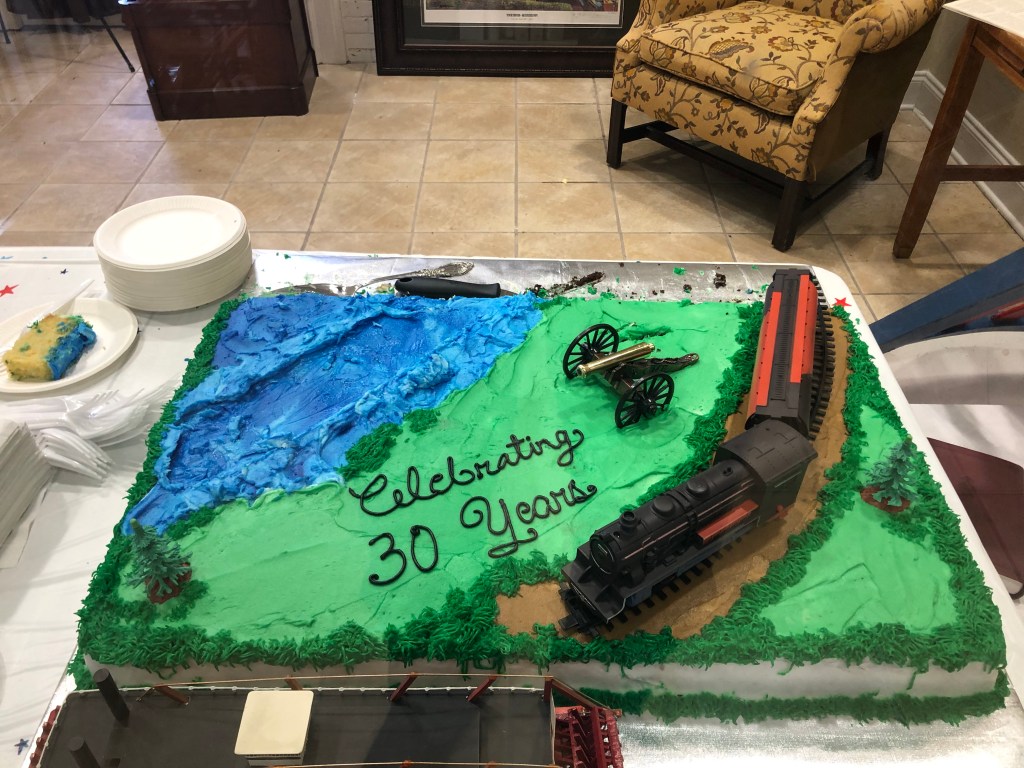
All became clear when I entered the museum and was charged a mere $3 entrance fee. “What a bargain!” I exclaimed. “It’s a special rate because today’s our thirtieth birthday,” explained the friendly young lady at the counter. “And not only that, but here’s a free civil war history book since you’re one of the first 30 visitors!” I was liking this, and I asked what other treats were in store for me. “Funny you should ask, because when you’re done touring the museum, you can get a slice of birthday cake!” Sadly, I had to turn down the cake because I’ve (foolishly) given up sweets for Lent. But I appreciated the thought.

Forbidden fruit.

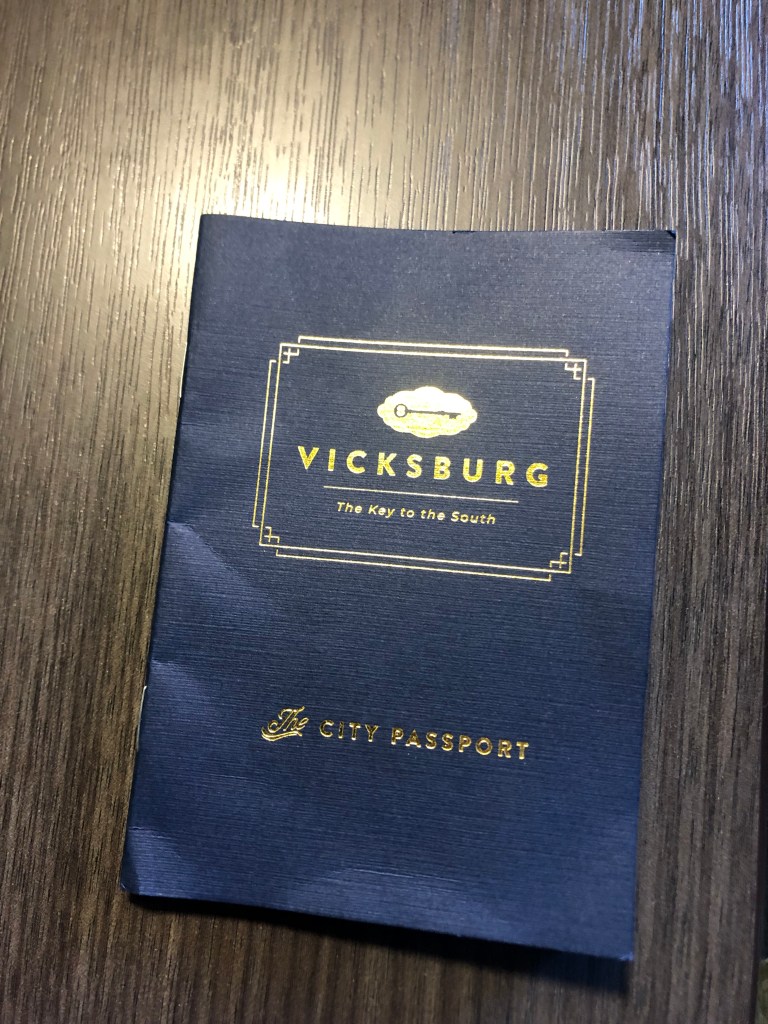
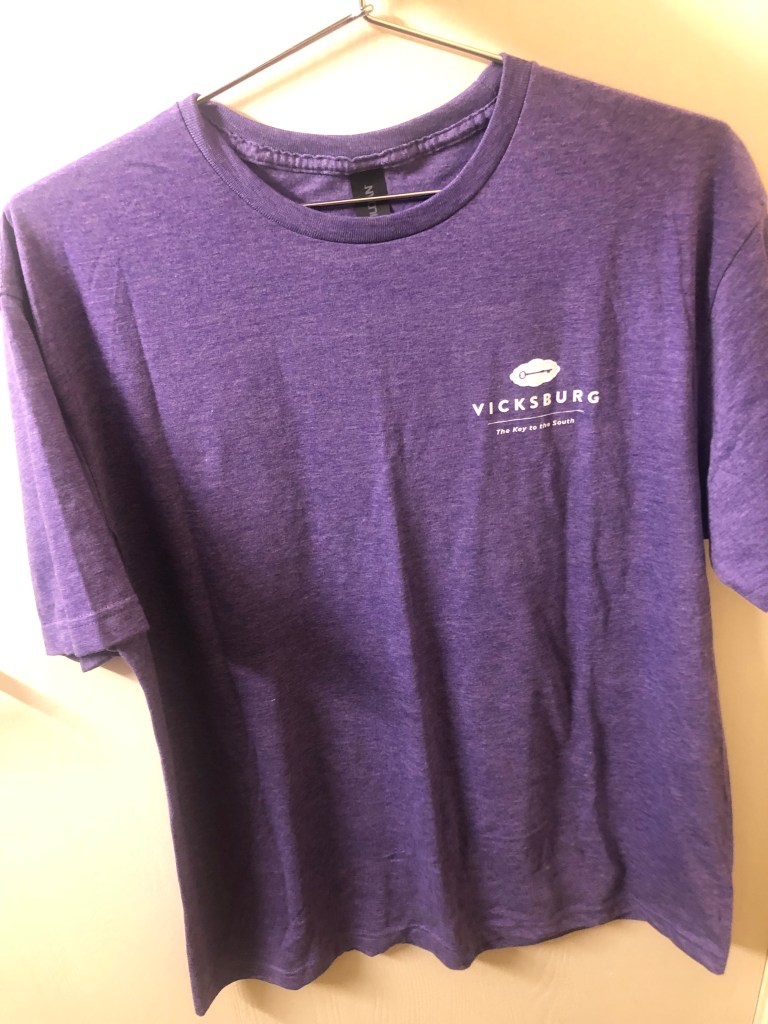
But wait! There’s more! The kind young lady handed me a “Vicksburg passport,” and explained that if I got it stamped at any five of the listed venues, the Chamber of Commerce would give me a free T shirt. I’m a sucker for challenges like this, so guess how I spent the rest of the day?

My passport to a free T-shirt.

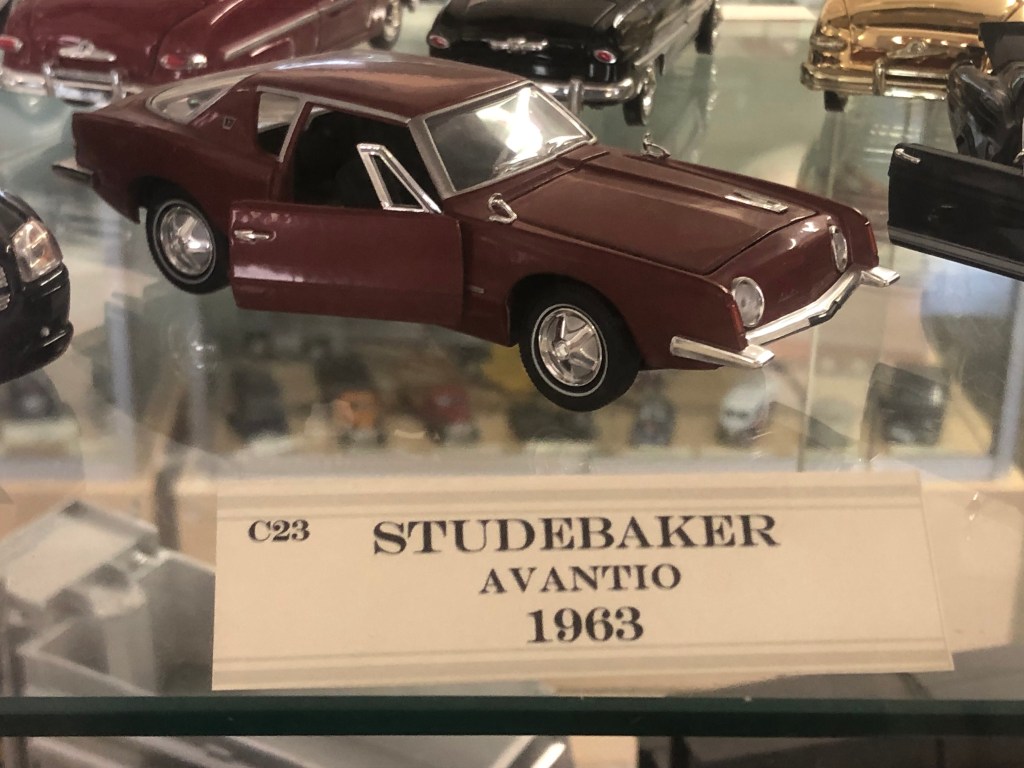
The Old Depot Museum itself was OK, but nothing to write home about. Despite being housed in the original 1904 Vicksburg depot of the Grand Rapids and Illinois RR, its railroad-related displays were limited mainly to just some model railroad layouts. The rest of the space was devoted to (admittedly impressive) models of various ships, several inevitable Civil War exhibits, and a head-scratching collection of model cars and Tonka trucks. (I subtracted points for the puzzling misspelling of Studebaker’s 1963 Avanti as “Avantio.”)

Raymond Loewy must be spinning in his grave.

One down, four to go before I got my free T-shirt. So I moseyed over to the “Lower Mississippi River Museum.” What I thought would be a helpful and engaging tutorial on The Blues Highway–or at least on the culture of the Mississippi Delta–turned out to be a shameless infomercial for the Army Corp of Engineers. Seriously: The introductory film started out with two minutes about the general history of the Mississippi Delta before it launched into soaring praise about how the Corps has done such a great job of flood control…despite the disastrous flood of 2011. The museum displays also consistently promoted the Corps, which, annoyingly, the signs kept reminding me was a trademarked name.

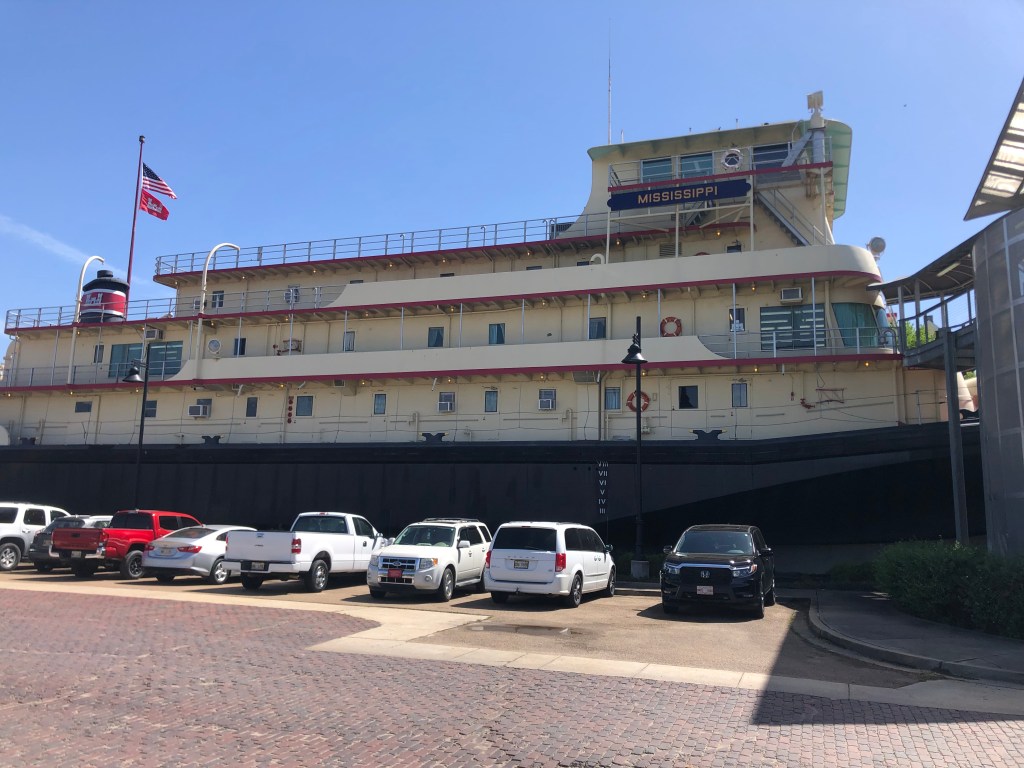
The one reasonably cool part of the museum was the Mississippi IV, a decommissioned transport and goodwill vessel of the Army Corps that I was able to walk through. The engine room was especially cool.

The Mississippi IV.

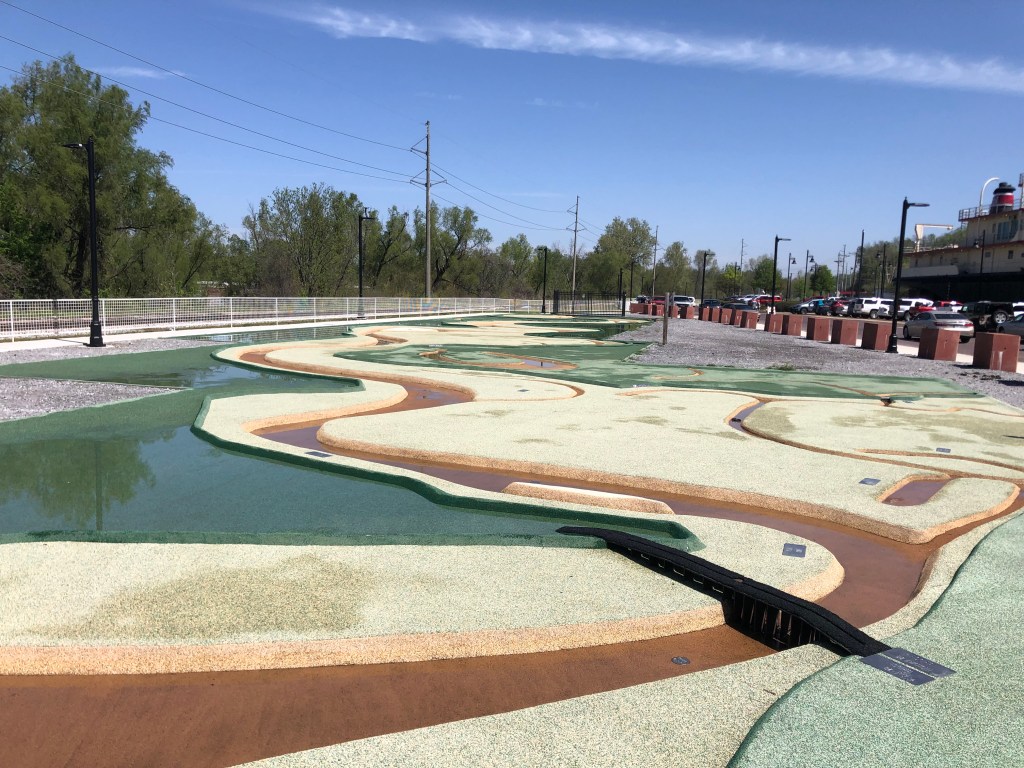
The Army Corps also built this cool scale model of the Mississippi River and surrounding wetlands that you can walk along and even trip into if you’re not careful. Ask me how I know.

Watch out for that little bridge in the foreground….

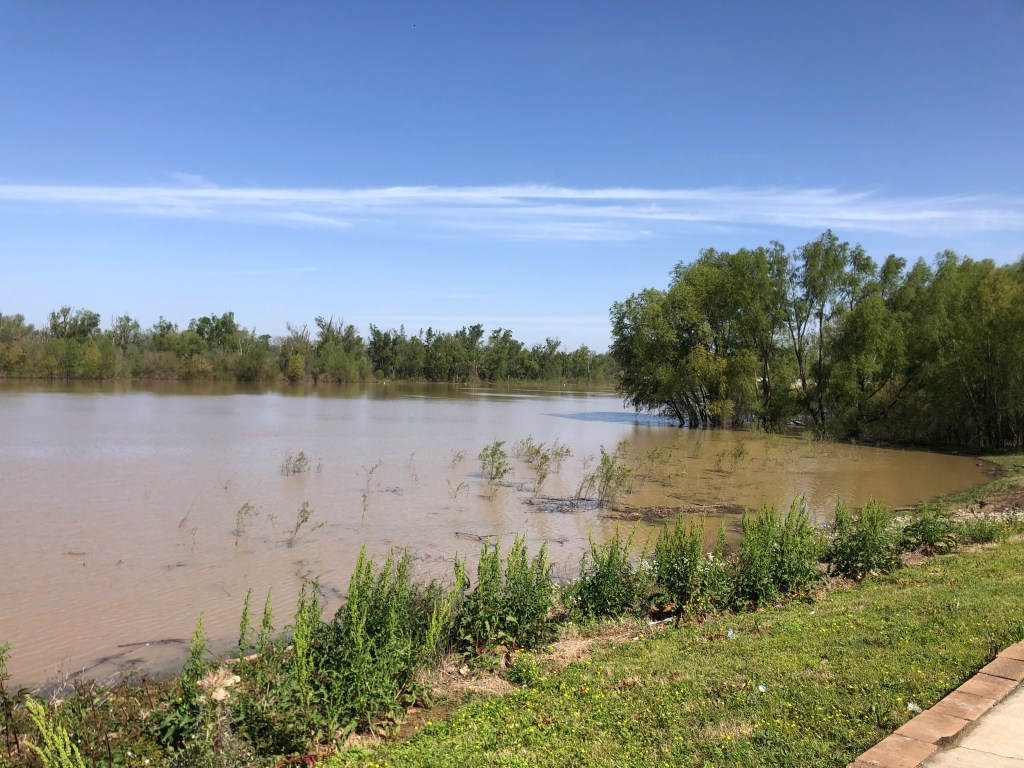
Right next to the model of the river is the real thing, with benches thoughtfully provided. I got some BBQ from a food truck and enjoyed my lunch while watching old man river just keep rollin’ along.

Muddy waters indeed.

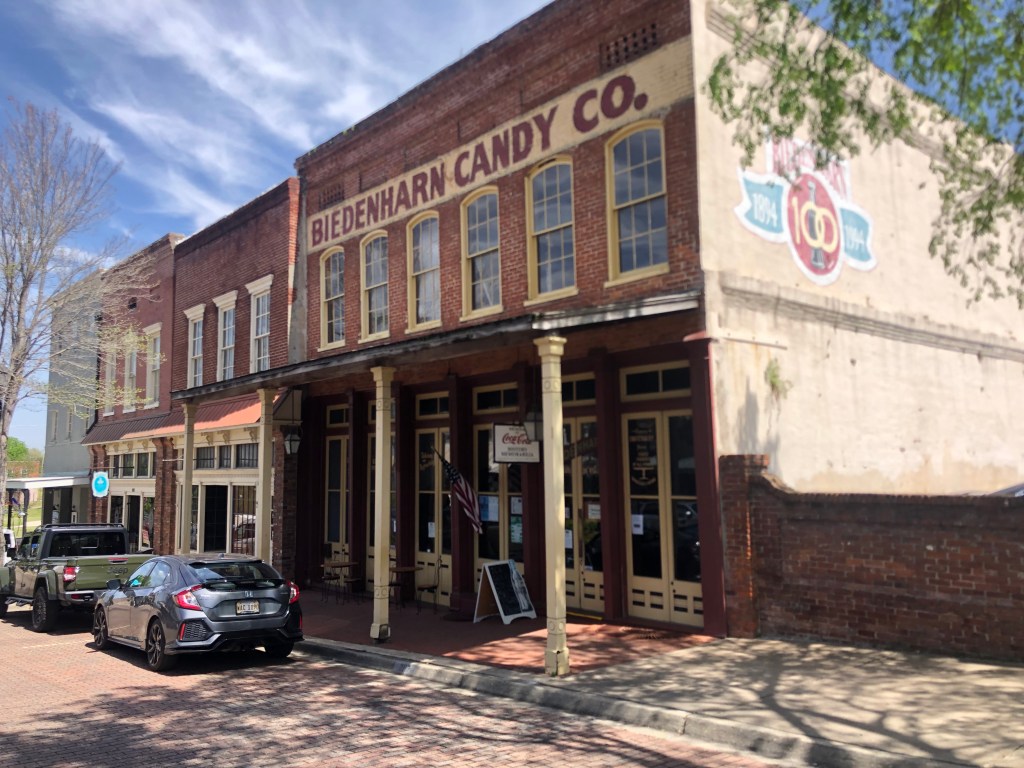
Next up was the historic candy store where Coca Cola was first bottled. This really caught my attention. Alert readers will recall that I’d once visited the pharmacy in Atlanta where Coca Cola was invented in 1886. Eight years later a Vicksburg candy story owner named Joe Biedenharn came upon the bright idea of bottling the stuff ( because up to then you could only get it in a glass at a soda fountain). The rest is history.

This is Biedenharn’s actual candy store, still very much like it was about 130 years ago. You can still buy candy and Cokes (don’t ask for Pepsi products!), but most of the space is given over to displays of Coke memorabilia. I found the descriptions of the marketing side of Coke the most interesting. (But I was unable to find any acknowledgement about cocaine being an ingredient in the early formulations.)

Old-timey drug dealer.
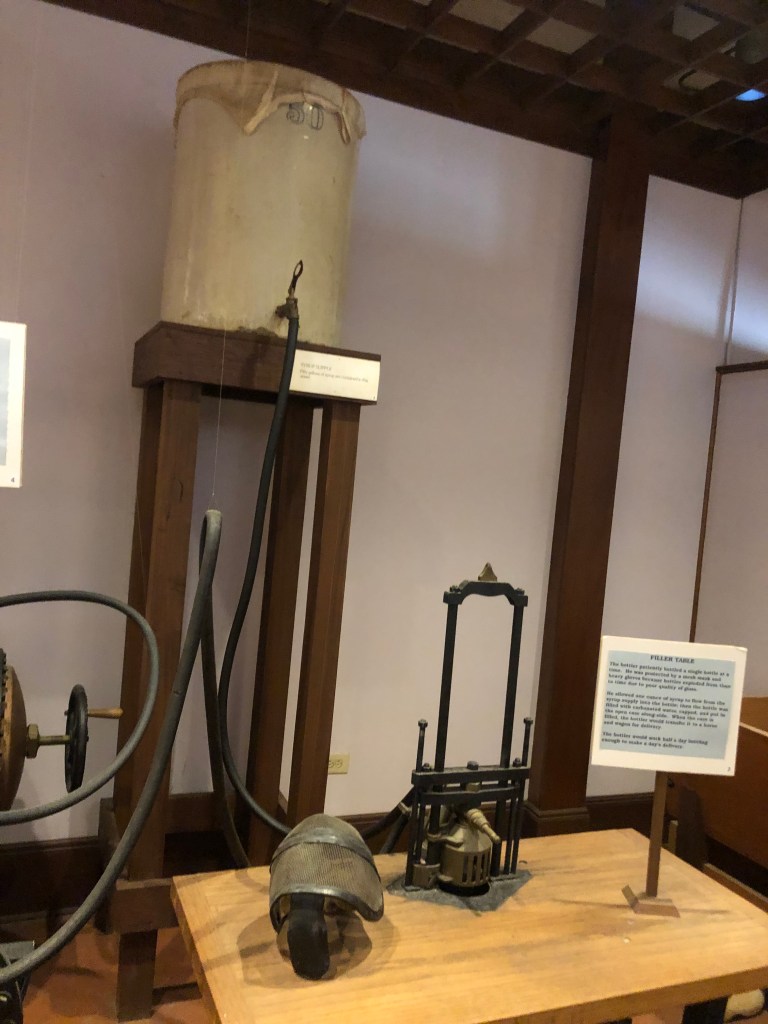
Biedenharn’s early bottle-filling apparatus.

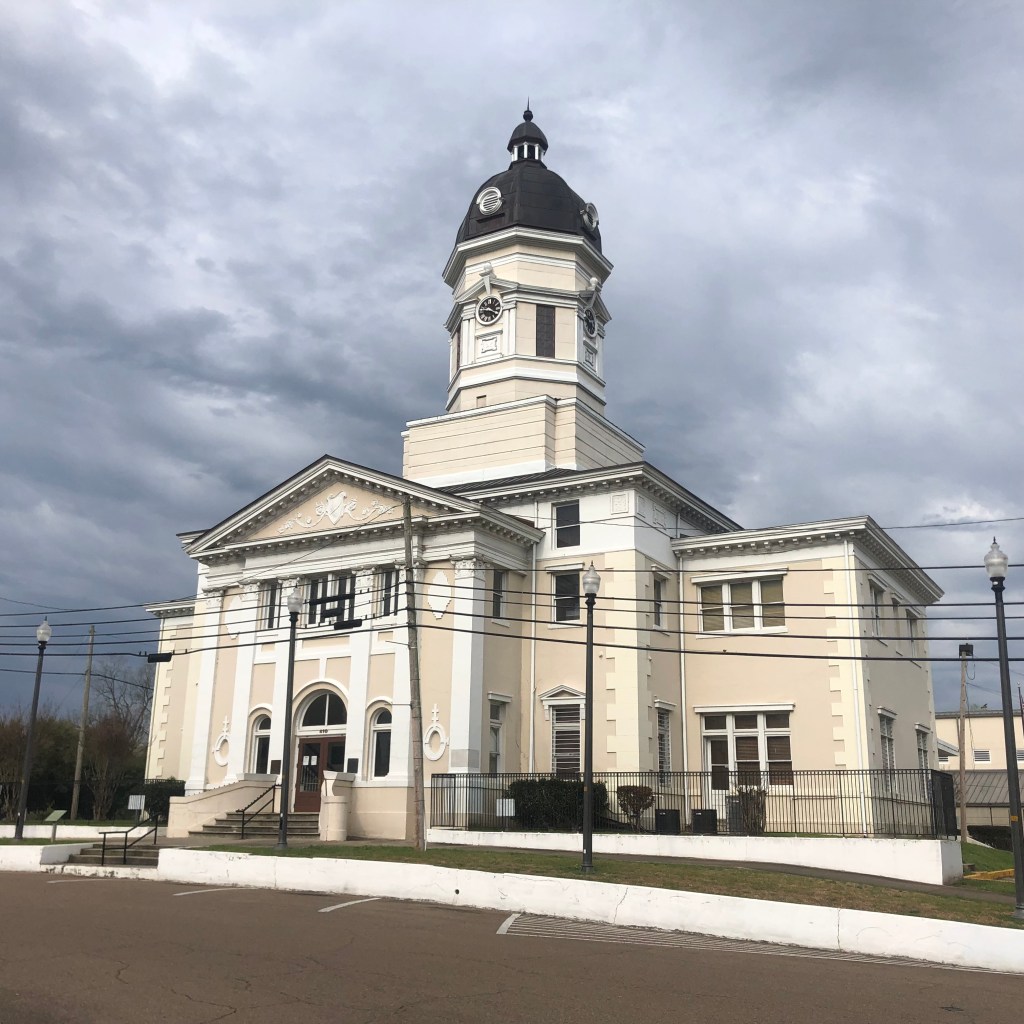
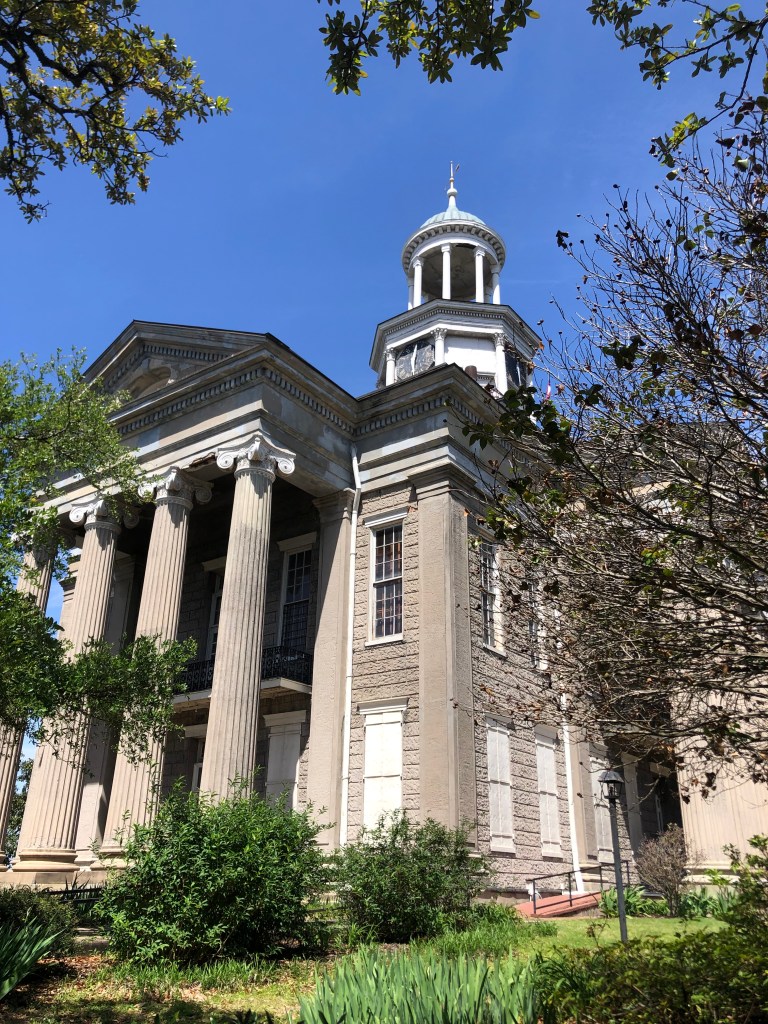
I next moved to the most informative of my stops in Vicksburg: The Old Courthouse Museum. This original courthouse was built in 1858–shortly before the Civil War and the siege of Vicksburg. It functioned as the Warren County Courthouse until 1939, when court functions were transferred to a new and larger building. After sitting abandoned for awhile and almost being torn down, this old building became a museum.

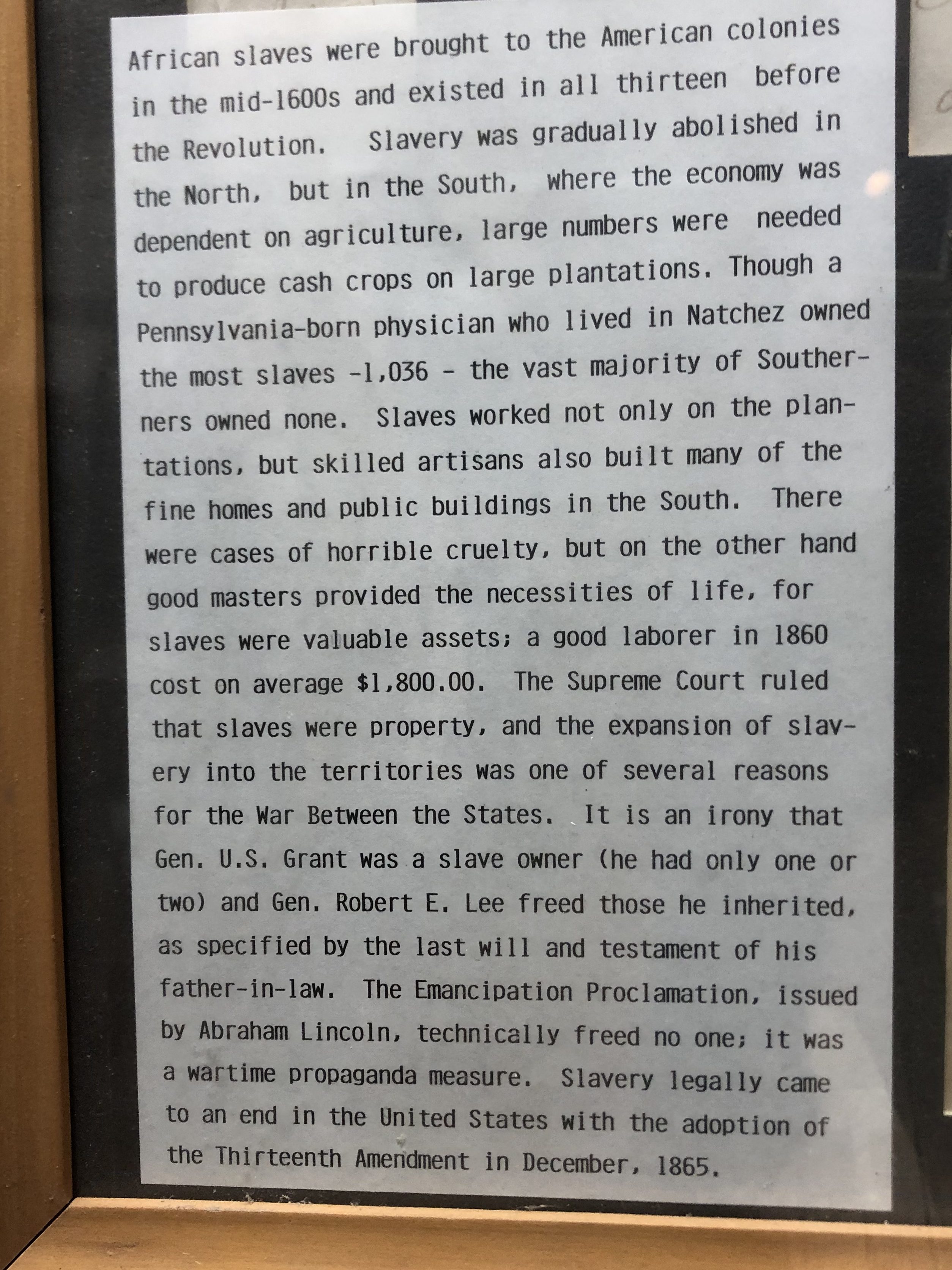
It’s an impressive, stately building with a commanding view of the city. The museum displays are focused largely on the Civil War, with an impressive array of uniforms, flags, weapons, documents, maps, and photographs. I found them to be engaging and entertaining…but some of them presented a perspective on slavery that I never learned in school.

“Good masters” indeed.

As to the siege of Vicksburg specifically, though, my heart goes out to the residents who suffered through it for 47 days. War is, as they say, hell. But the suffering of civilians is especially hard to swallow.

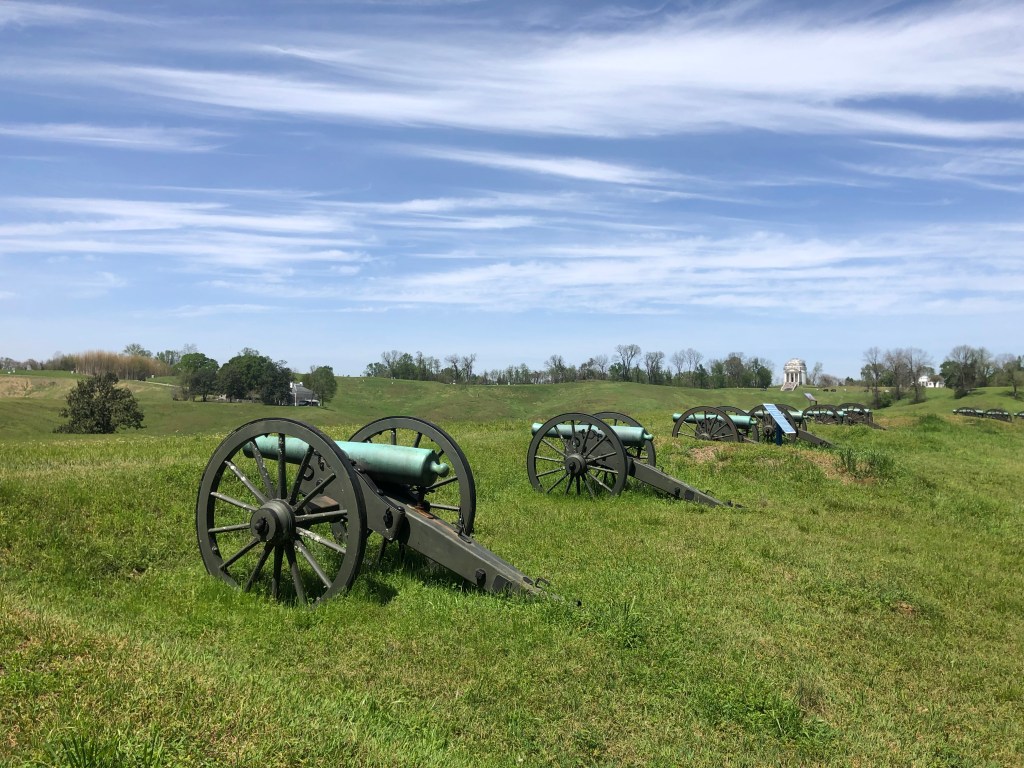
This merges perfectly with my next stop, which was the Vicksburg battlefield. It’s now a national military park, with a visitors center and a driving tour that takes you past the various Confederate fortifications, Union artillery batteries, and hundreds and hundreds of monuments which have been erected in subsequent years.

The ranger assured me that all the cannon in the park are original to the Civil War (though the wooden carriages are reproductions).
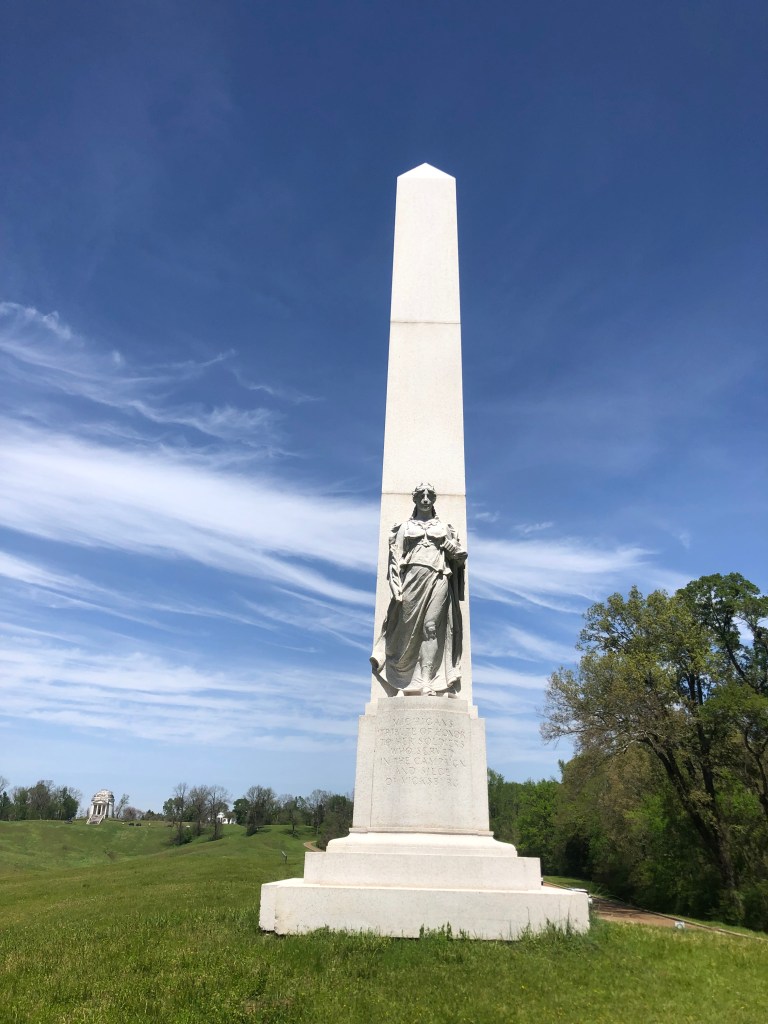
One of a zillion monuments in the park. This obelisk (!) honors Michigan’s soldiers.

When I arrived at the visitors center after driving around the park, I was just in time to witness the firing of one a Civil War cannon. Was this my day, or what??

Now, you may be wondering what all this Civil War stuff has to do with the blues, which had been the nominal focus of this trip. I think it has everything to do with the blues. Notwithstanding the perspective of the Old Courthouse museum, the Civil War was about slavery. And the legacy of slavery is inextricably linked to the blues. The effects of slavery lasted well beyond emancipation, and to some extent they exist even today. I see it as I drive along Route 61– large numbers of African Americans are here because their ancestors were brought here as slaves. And today, 150 years later, they overwhelming live in de facto segregated communities that are significantly poorer than the white communities. I’ve been a distinct minority on the Blues Highway ever since I left Jackson…until I arrived here in Vicksburg, where I’ve been surrounded by white tourists.

I don’t have any policy prescriptions. My only point is that the African American experience in the Delta is inextricably tied to the blues. That becomes painfully clear when these museums depict how Muddy Waters and Son House and Robert Johnson and so many others grew up in poverty, faced discrimination, sought strength in their faith, and channeled their pain into their music.

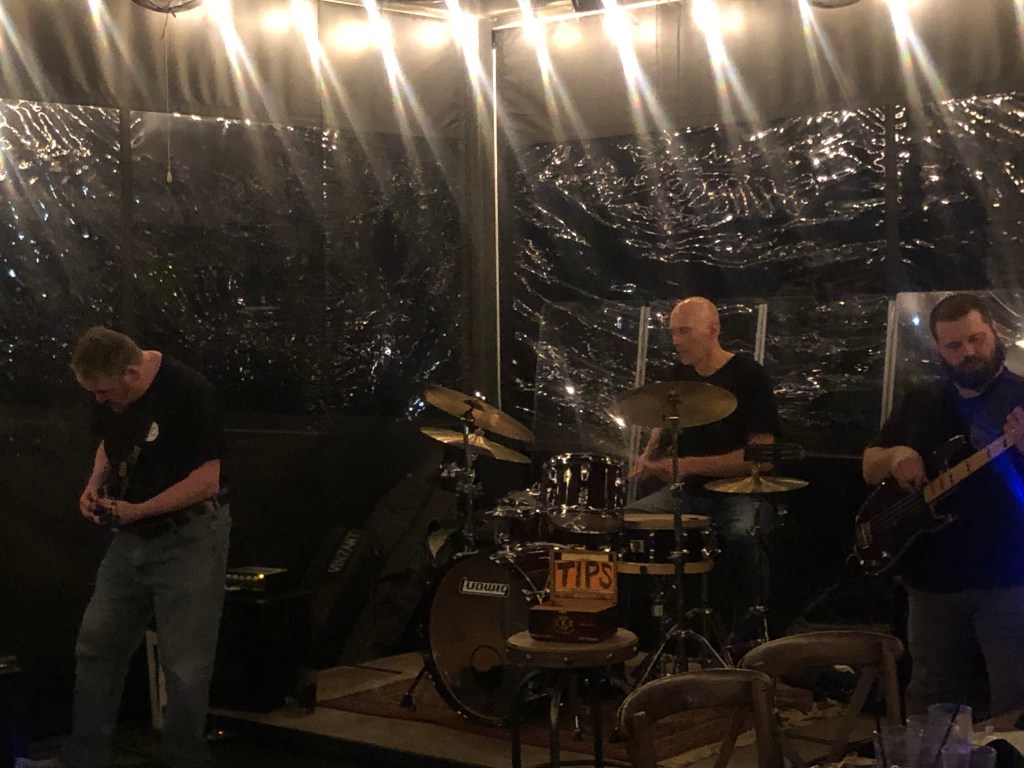
All that said, at this moment I’m sitting at the upstairs patio of Key City Brewing Company, listening to three white guys play the blues. I have to admit they’re pretty good.


Brew of the Day

The Key City Brewing Company, in the middle of the historic downtown, makes a very interesting range of brews, including red ales, oatmeal stouts, Czech dark lagers, pilsners, and saisons. (“Key City” is Vicksburg’s nickname. It comes from a quote from none other than Abraham “Abe” Lincoln, who said ““Vicksburg is the key! The war can never be brought to a close until that key is in our pocket.”)

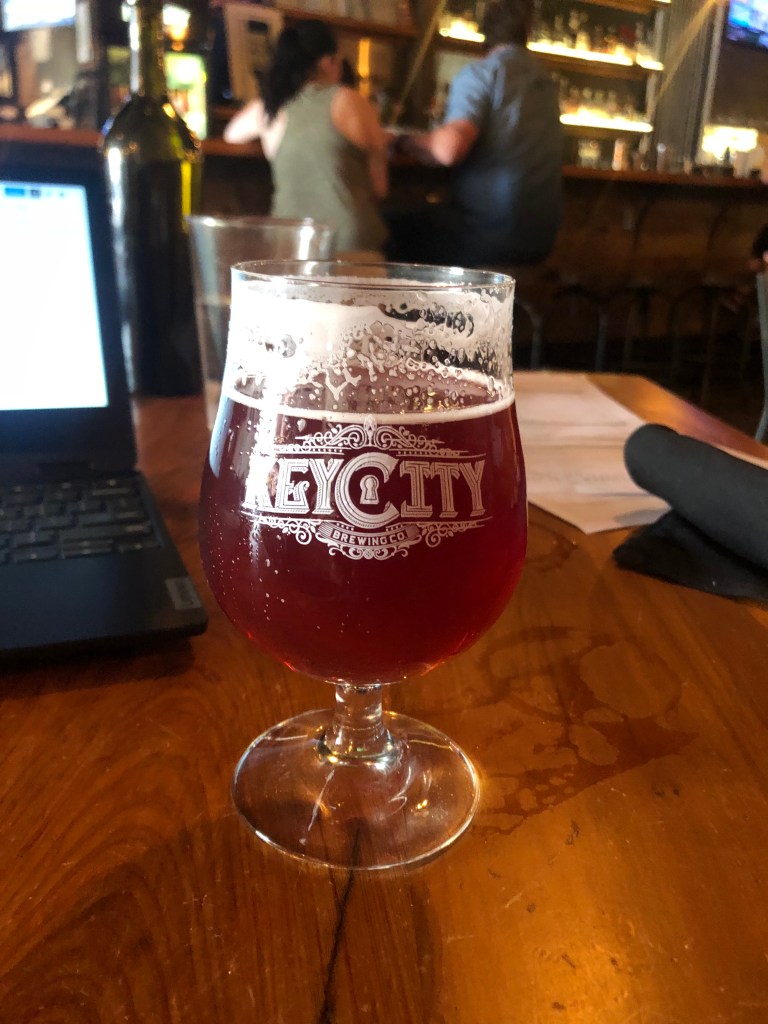
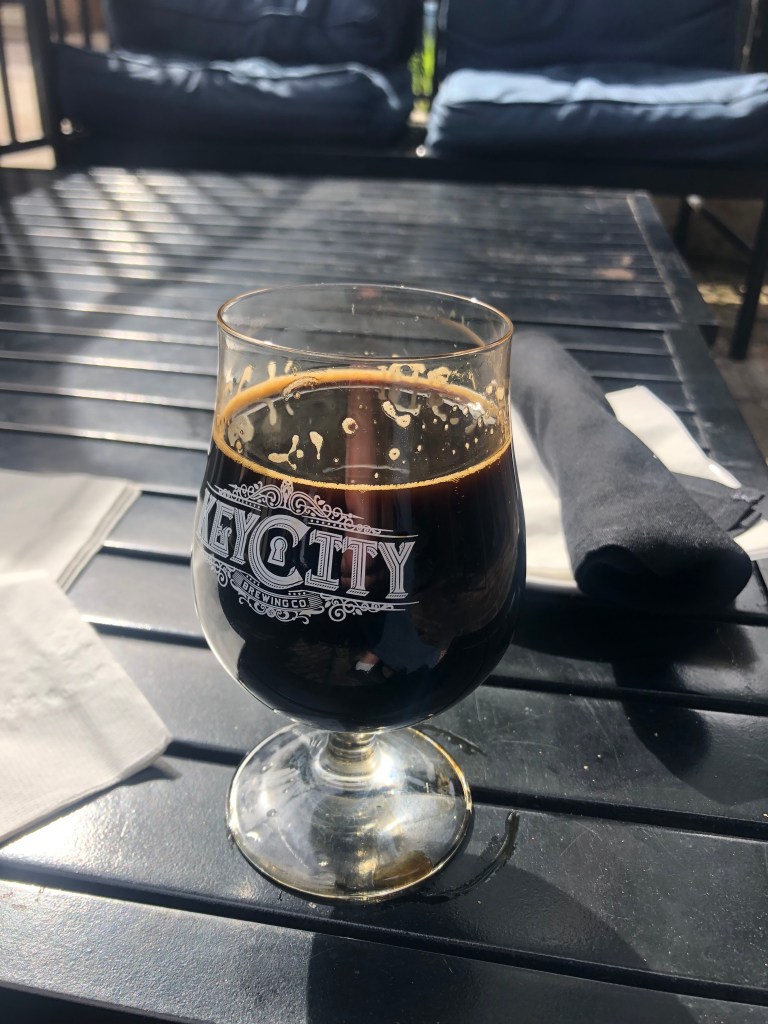
I tried Key City’s imperial “Saison d’Amour,” which is made with cabernet franc grapes. It has that slightly fruity, sweet-‘n’-sour taste that one associates with a saison, but unlike most saisons, this one clocks in at 10.3% ABV. Despite the high octane, it’s brisk and refreshing. However, the mouthfeel is a little thin, a little watery. As a small compensation, it’s quite carbonated.

Key City’s Saison.

This beer has almost no nose (something that can’t be said for me) and the flavor profile reminds me of Old English furniture polish. OK, that’s probably unfair…to the furniture polish. Seriously, though, have you ever taken a wine bottle out of the recycling bin and smelled it? That’s what this saison reminds me of.

So maybe I’m just not a huge fan of saisons. The only one I’ve really ever liked was the one that I and my good friend Scott Smith made for Christmas a few years back. So I’m giving this beer 2 stars.

With the intention of erasing the Saison from my memory, I ordered a chaser in the form of the “Nightmare Imperial Stout.” Yes, yes, I know–it seems that the BOTD is always an imperial stout. But if you don’t like it, start your own blog.

The Nightmare Imperial Stout lives up to its name. It’s dark and somewhat unsettling. The ABV is 10.3, which means this will be my last beer tonight. There’s definitely some roastiness on the malt, and there’s very little carbonation to balance the heaviness. It’s quite sweet, tasting of off-brand chocolate Easter eggs. I think it would benefit from a bit more hops, just to balance the heavy malt. It also could use some of the coffee notes that are associated with successful imperial stouts. Overall, it’s a good concept with a weak execution. Three stars.

At this point I need to thank my server, Alexia, for being patient with me as I questioned her about the different brews and asked her to bring me a number of “tastes.” Thanks, Alexia!

Oh, and here’s my reward for the day:

Spoils of war.
movie theaters · Road trips

Deep Into the Delta

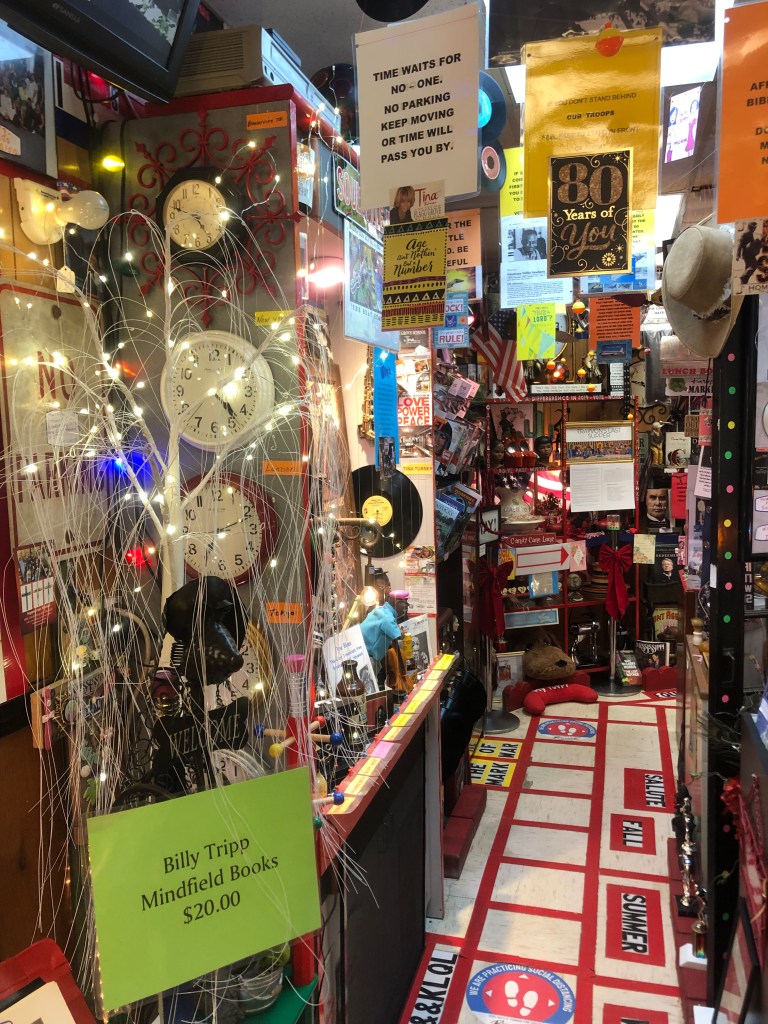
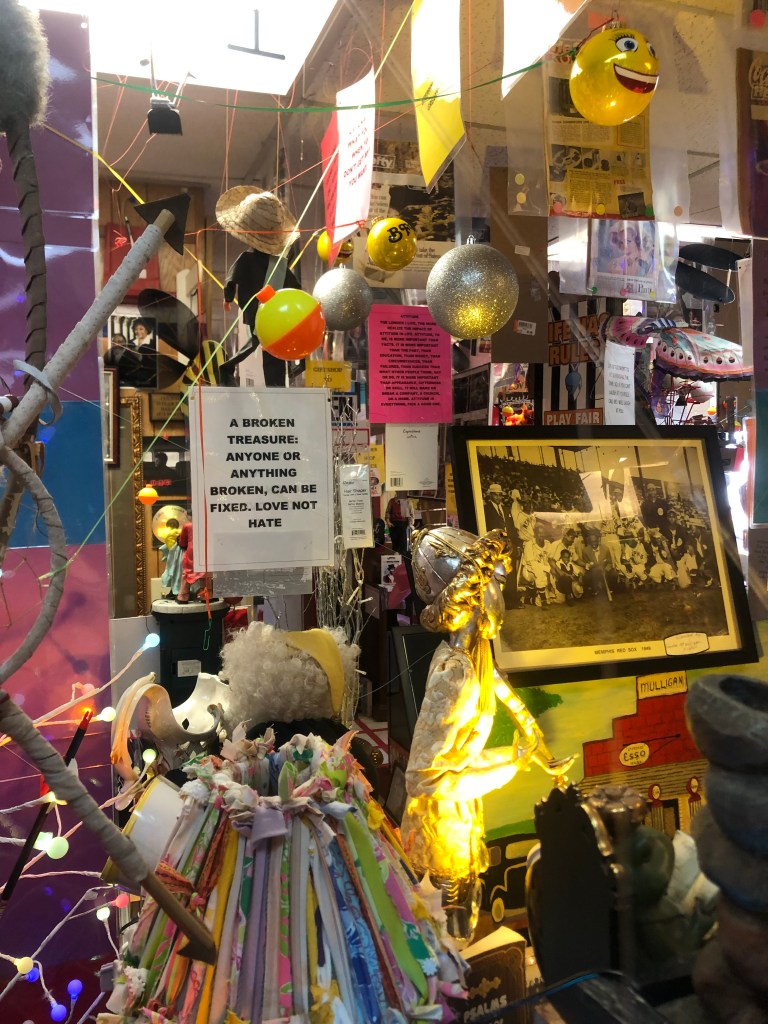
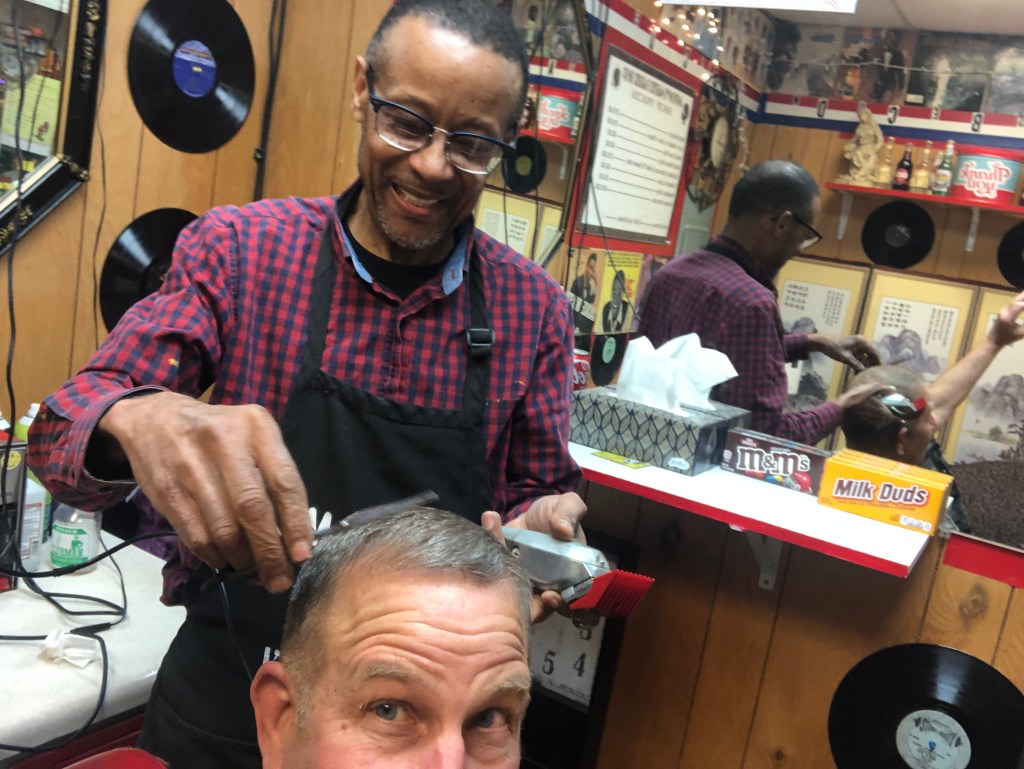
A surprising number of you were interested in learning more about Anthony Turner (my Delta barber). I’ll share two anecdotes that have been running through my head since yesterday. First, there is a method to the madness of the Menagerie Museum. Sure, it’s a tangled and confused congeries of seemingly unrelated trinkets and kitch. But it’s all connected (quite literally, with fishing line and rubber bands) in a way that Anthony seems to have dedicated much thought and deliberation. What’s more, schoolchildren visit his museum as part of their curriculum, and Anthony teaches them an inspirational lesson about what’s probable versus what’s possible. The teachers seem to think it’s a worthy message, delivered with earnestness, kindness, and the most overwhelming number of props imaginable. There’s a method to all this madness. I’m fully convinced that Anthony knows every piece of his collection, and sees a purpose for each one.

Even the markings on the floor have meaning and purpose.

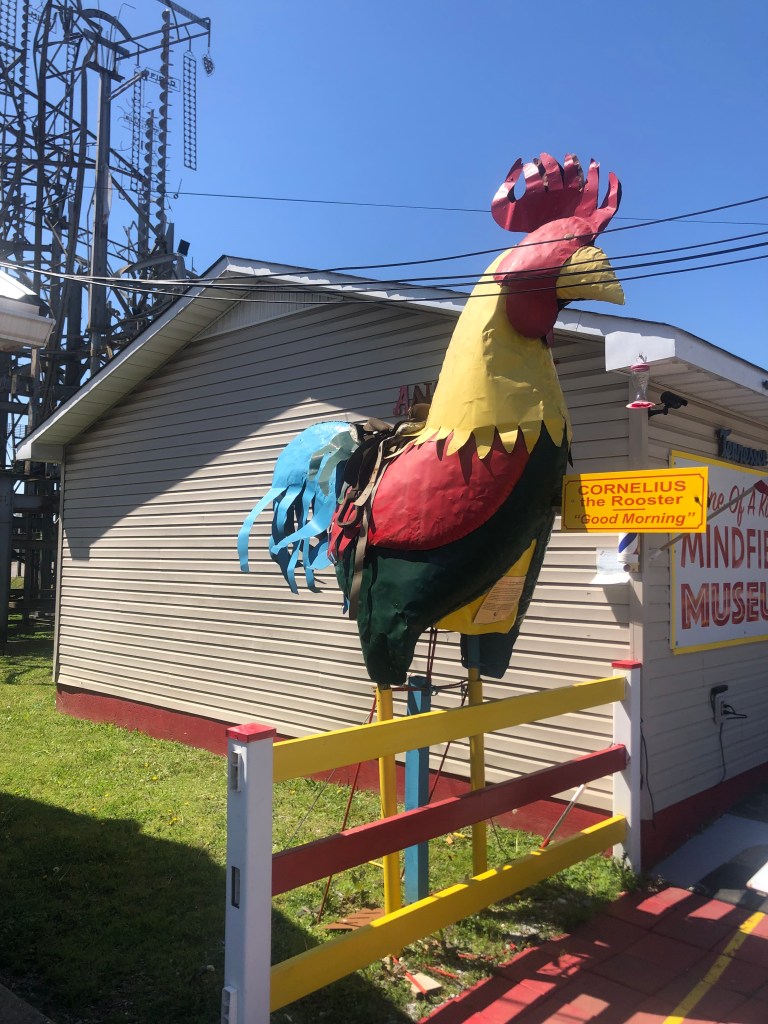
Second, Anthony told me a story about how there had been an empty spot in front of his shop that “needed something.” Then one day he spotted that something: A giant metal rooster that was for sale elsewhere in town. Alas, at $800, the rooster was beyond his means. He mentioned this in passing to a customer in his barber chair, and by the end of the day that customer had taken up a collection around town and presented Anthony with $800. The rooster now stands in the spot where it belongs.

We now return to today:

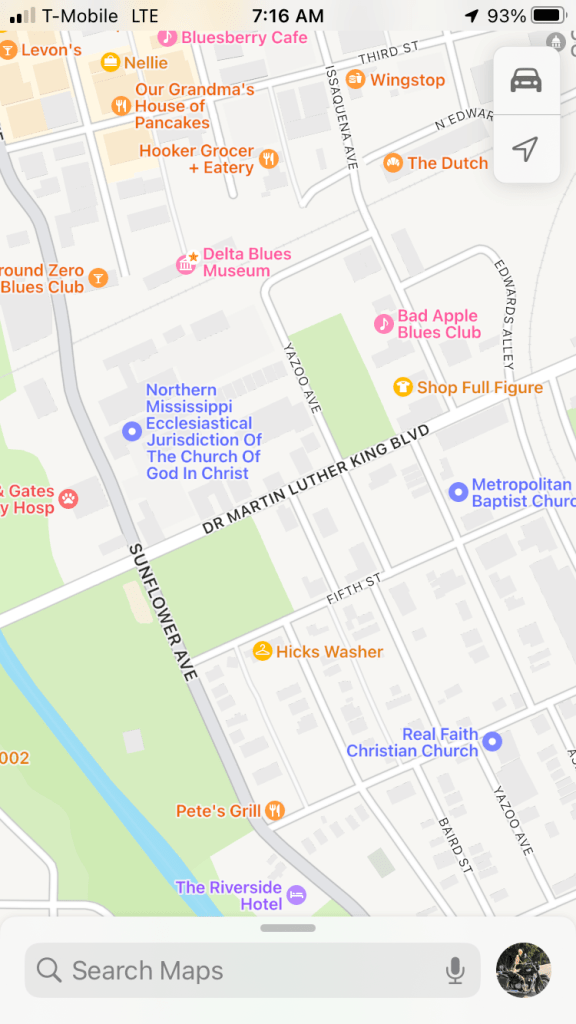
This morning I woke up in Clarksdale, Mississippi. As proof, the downstairs buffet had biscuits and gravy, and the map on my cellphone revealed there to be two blues clubs, three churches, and a blues museum in the immediate area.

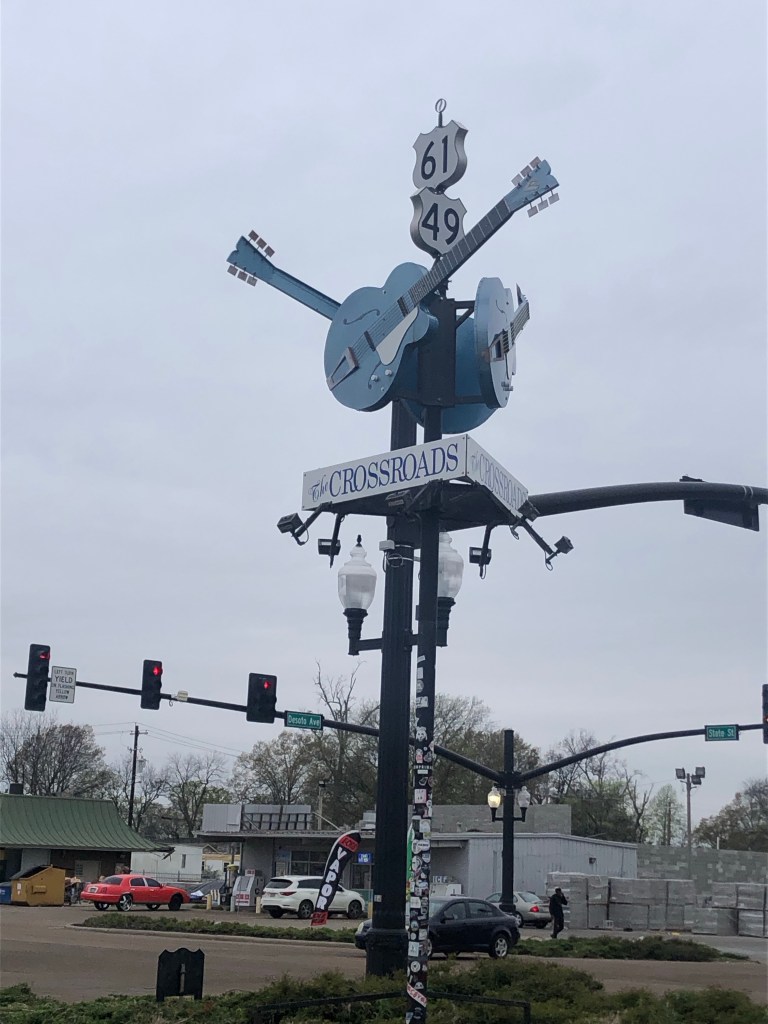
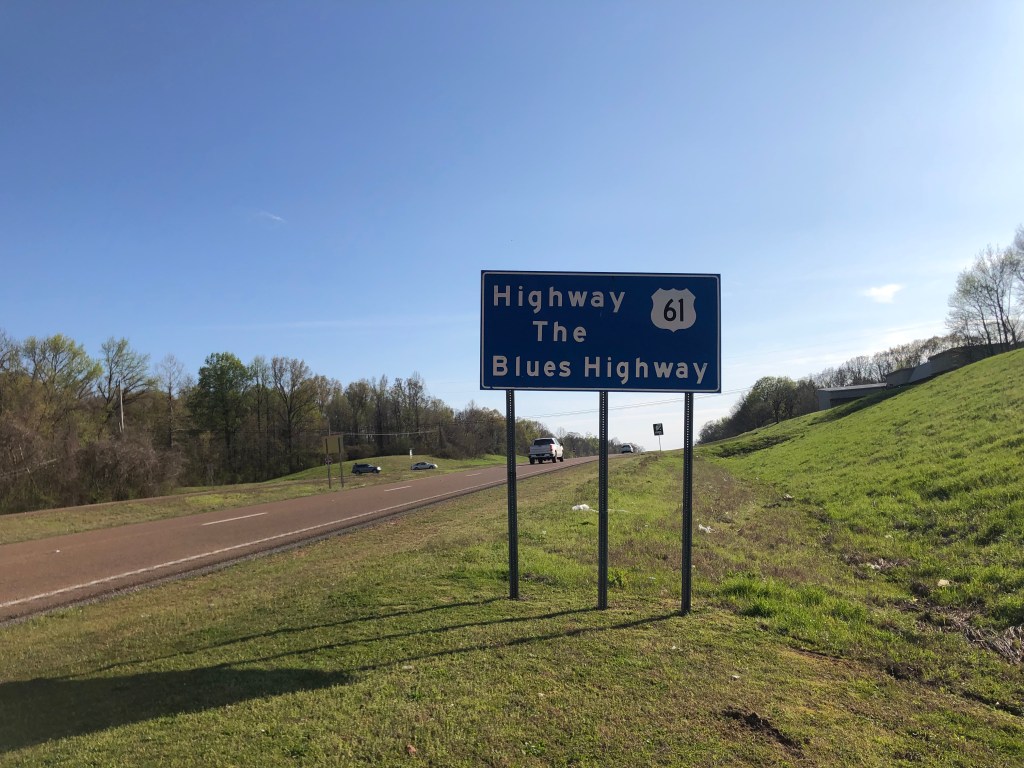
Clarksdale (pop: 14,000) is the birthplace of Sam Cooke, John Lee Hooker, Ike Turner, and many other blues musicians. Muddy Waters moved here as a child. Just east of the mighty Mississippi River (or, as the locals call it, the Mississip), Clarksdale sits at the crossroads of US Route 61 (the Blues Highway) and US Route 49 (which runs south to the Gulf Coast).

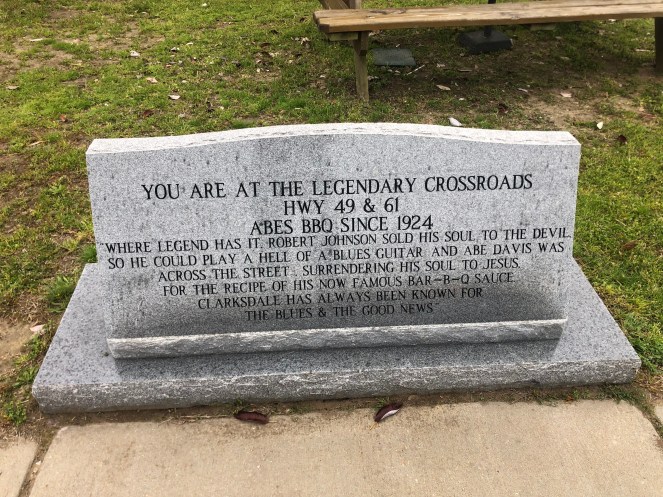
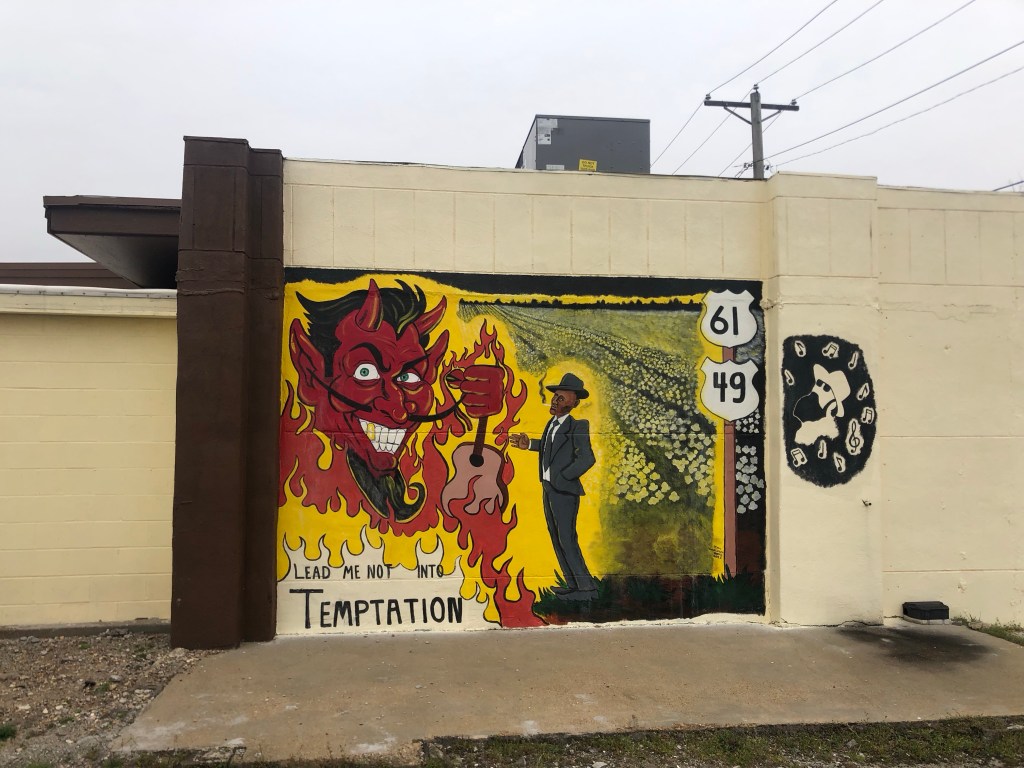
That crossroads is sometimes called the Devil’s Crossroads. Legend has it that a struggling, less-than-skilled blues player named Robert Johnson went to the Crossroads one night about a century ago, where a strange man tuned his guitar for him and showed him some techniques. Johnson disappeared for a few months. He eventually reappeared as a blues guitar virtuoso, achieving fame on the blues circuit and earning the respect of the established bluesmen.

As you might imagine, things didn’t end well for Johnson, who died under mysterious circumstances at age 27. The legend holds that Johnson had sold his soul to the Devil that night at the crossroads. And the fact that Johnson recorded a song entitled “Me and the Devil Blues” seems to support that hypothesis.

Robert Johnson goes to hell.

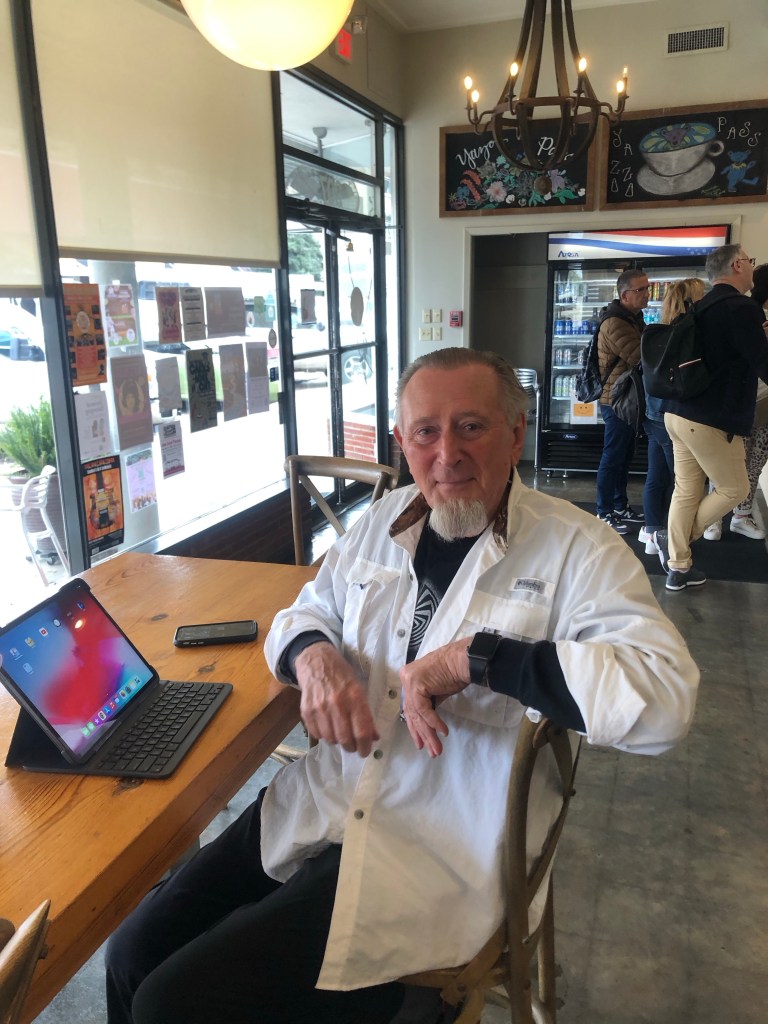
I got breakfast at a place called Yazoo Pass in the historic downtown, where I met a literal fellow-traveler. Jim has been making his own Blues pilgrimage that began in (what I assume to be his home of) Pensacola. He’s now traveling north on 61, while I’m traveling south. We exchanged a few stories and tips. He put me to shame with his extensive knowledge of blues history, his obvious emotional attachment to the art form, and his extensive photo collection from this trip.

Jim: Blues savant.

I continue to be struck by how much people are deeply affected by music, and in particular by the blues. I’m a mere novice when it comes to this music, but I’m quickly learning of its power to affect moods and impart lessons. I’m especially struck by how dedicated the musicians are to this music which they seem to treat as a religion.

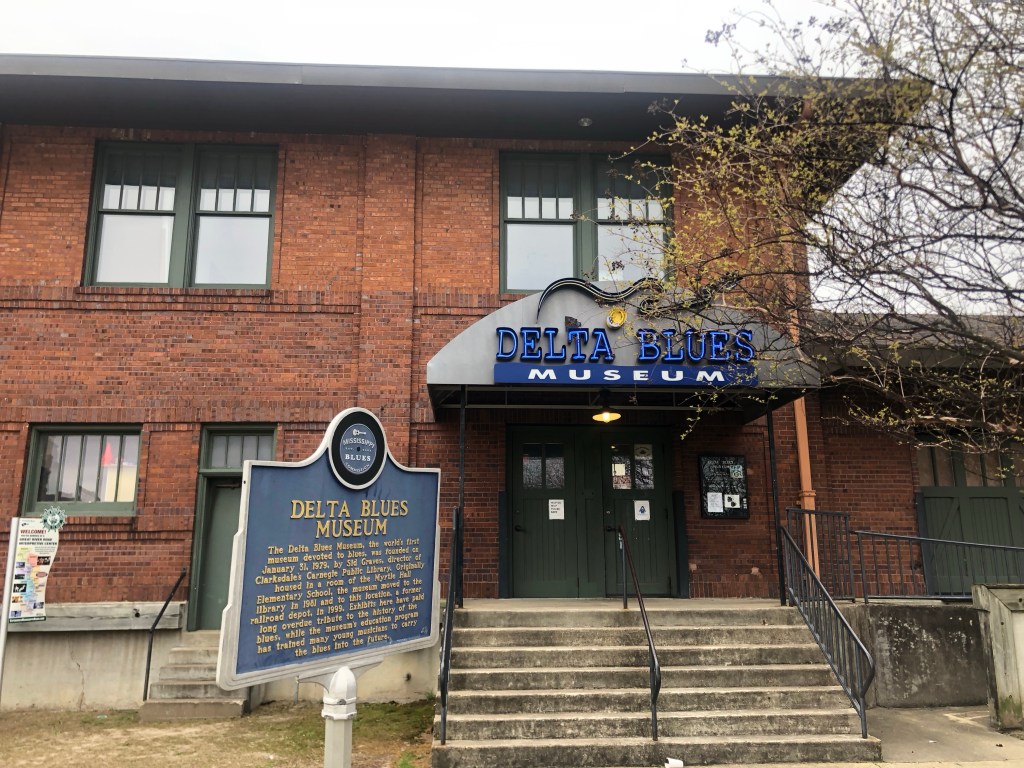
After breakfast I went to the famous Delta Blues Museum, which is housed in a hundred-year-old building that once was the freight depot of the Yazoo and Mississippi Valley Railroad.

All aboard!

It’s a modern and slick affair, but it does a great job of illustrating the importance of the blues to the delta, and vice versa. I’m beginning to learn about some of the key names in blues history. (A number of them I dimly recognize from when friends Chris and Jerry and I all went to the San Francisco (!) Blues Festival some forty (!) years ago. I knew nothing about Albert King and various other headliners, but I sure liked their music.)

I also noticed that as I get deeper into the delta, the music changes. What started as twangy country music in Nashville became gospel-infused bluegrass in Jackson and slick, horn-centered R&B in Memphis. Down here in rural Clarksdale the music is a bit more stripped-down and raw.

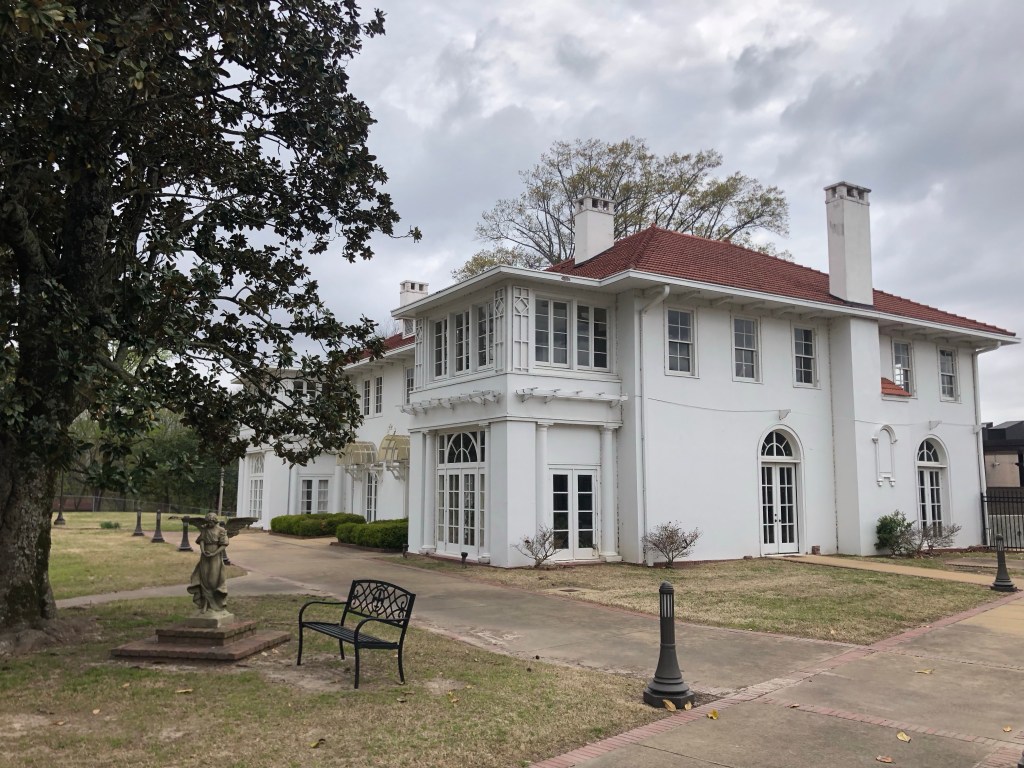
After I left the museum I took a brief break from the blues and visited the J W Cutrer House. Built in 1916 by a wealthy local attorney, the house and the Cutrer family served as inspirations for Tennessee Williams when he wrote A Streetcar Named Desire and Orpheus Descending. I don’t know about all that, but it sure is an impressive mansion.

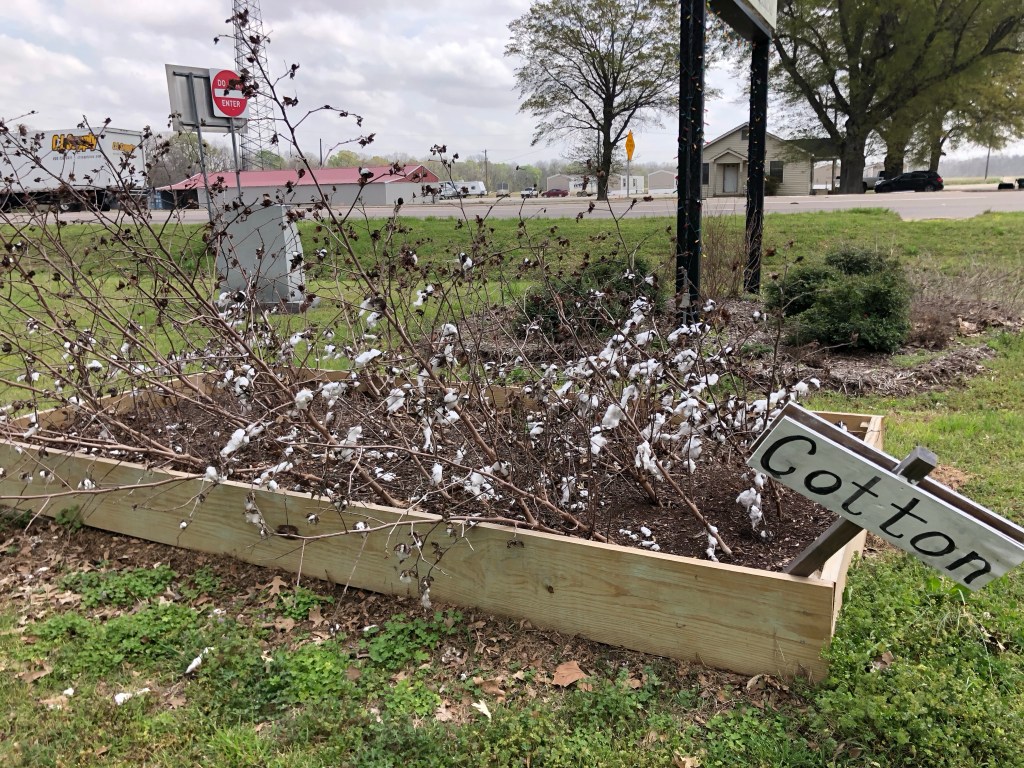
It was now time to say goodbye to Clarksdale and get back on Route 61. Truth be told, Route 61 is not the most beautiful highway I’ve been on. The countryside is relatively flat with large, treeless expanses of grasses, low scrub, and sickly-looking farms. I didn’t see much cotton, with the exception of this designer plot.

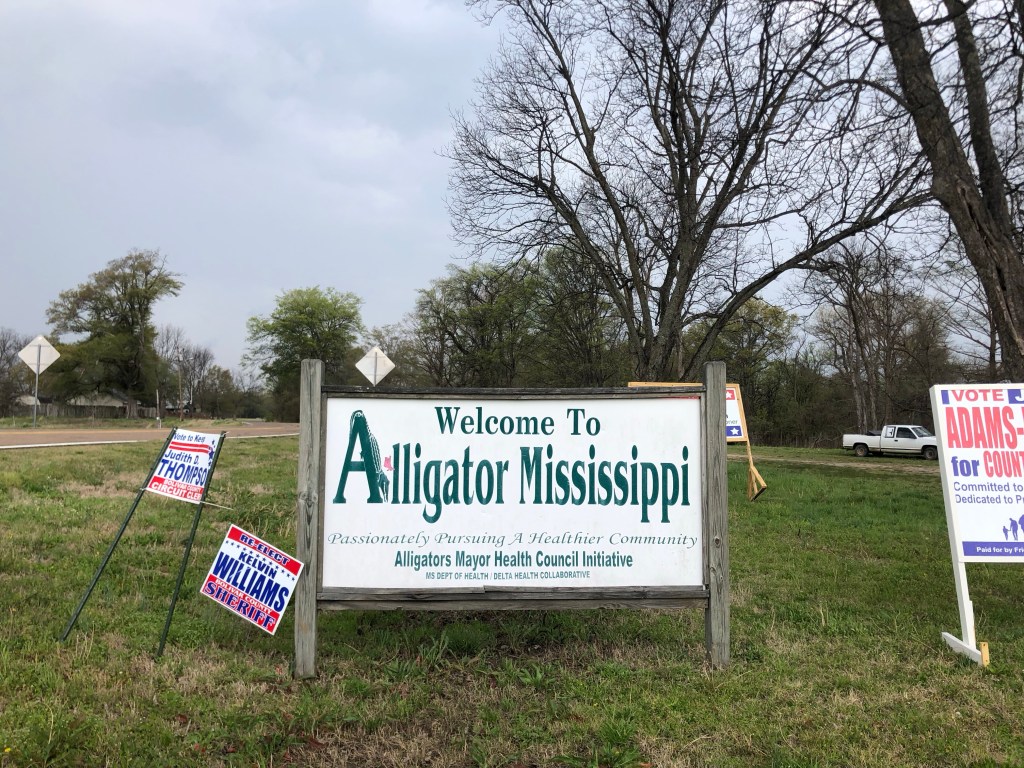
One of the sparse settlements along The Blues Highway is the town of Alligator (pop: 116).

What a croc.

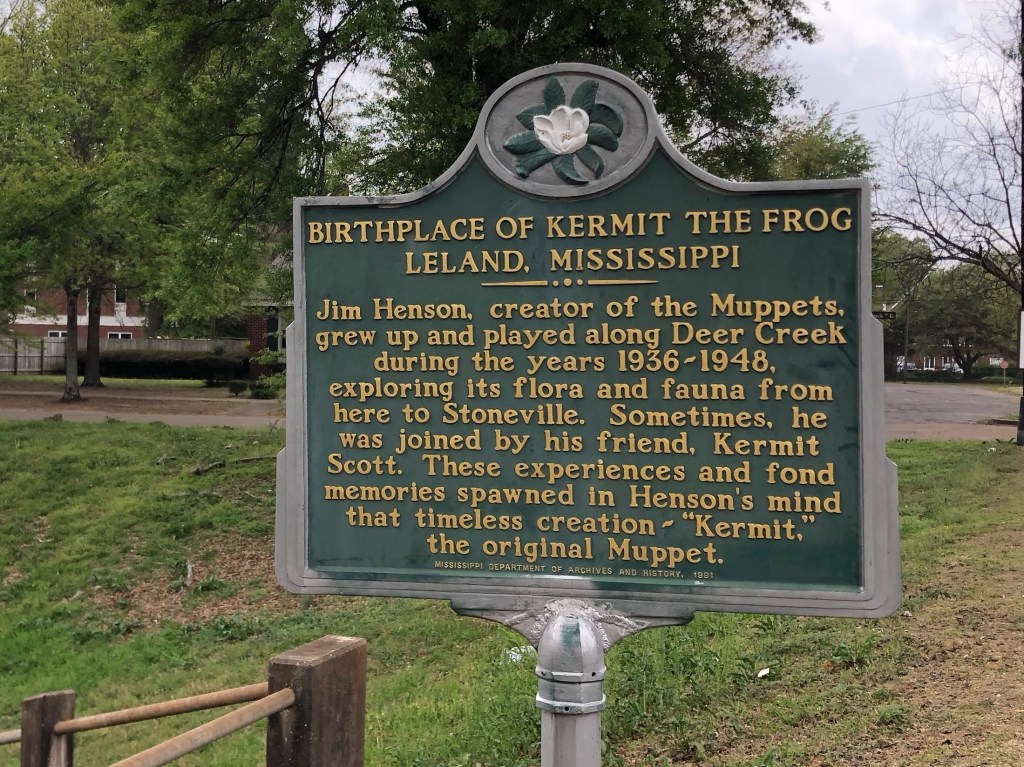
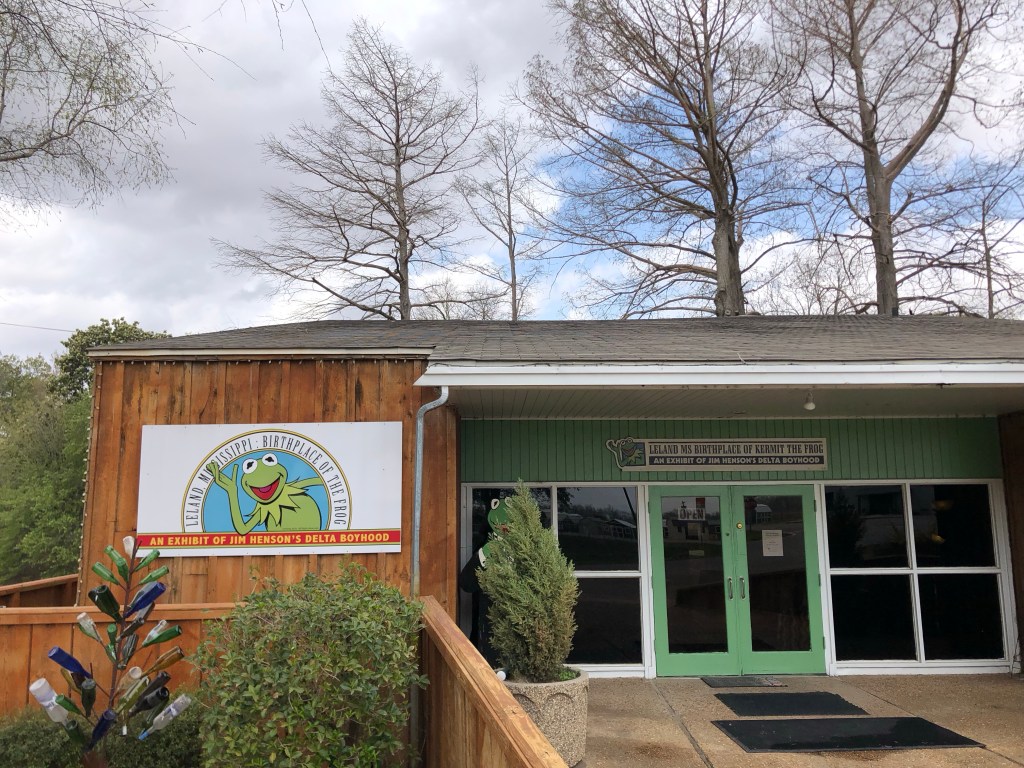
Soon I came to Leland, Mississippi, where things shifted from the Blues to the Greens. For, incredibly, it seems that this is Kermit the Frog country.

Leland was the boyhood home of Jim Henson, who lived here until he was 12. Leland claims Henson as a native son, and the chamber of commerce has set up a small Jim Henson museum just off the road.

It’s not easy being green in the land of the blues.

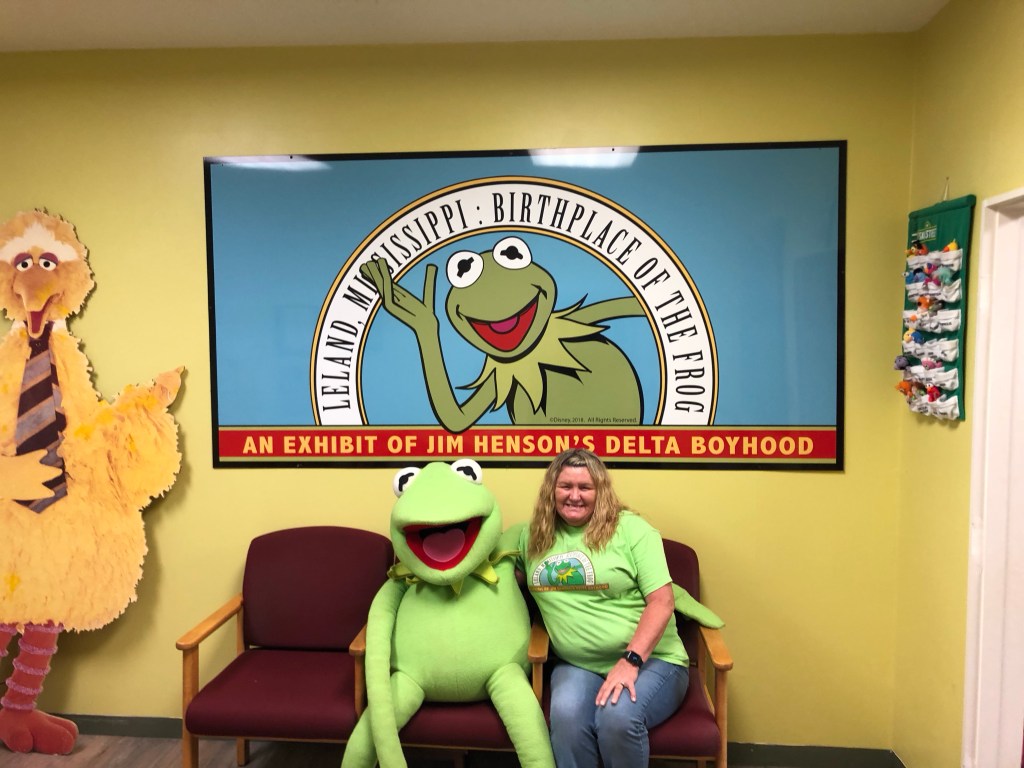
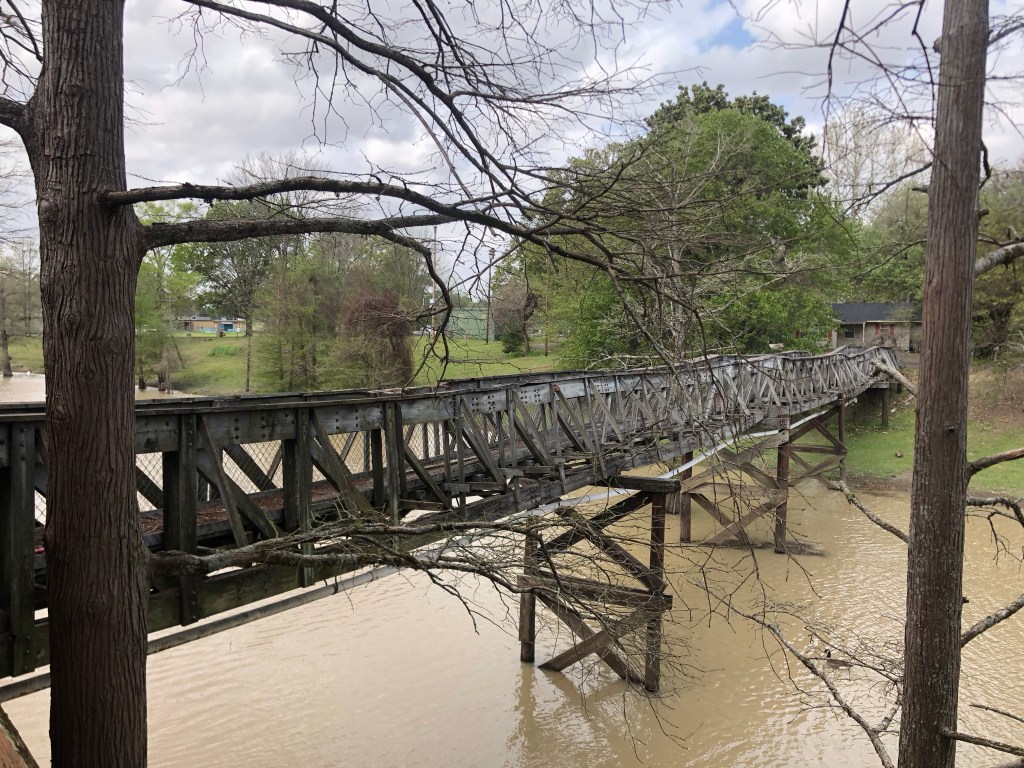
Docent Heather explained to me the history, and directed me to the nearby “Rainbow Connection Bridge.”

Kermit and Heather
Shockingly, this bridge, which is directly behind the museum, is NOT the Rainbow Connection Bridge. But it should be!

While I was in Leland I was hoping to visit the Highway 61 Blues Museum, which is touted as one of the most earnest (albeit small) of the museums along the Blues Highway. Alas, Heather reported that the museum closed at the beginning of the Covid pandemic and never reopened. As an alternative she recommended something called the “wildlife heritage museum.” I thanked her but I chose instead to head down to the next town: Indianola. It’s the birthplace (and final resting place) of B.B King, and it boasts the impressive B.B. King Museum. As you probably already know, B.B. King was one of the most successful blues artists of all time, and was known around the world.

Believe it or not, BB King’s “The Thrill is Gone” was the first record I ever bought. I was 8 years old, and my parents took my brother and me to a record store and allowed us each to pick a record. “The Thrill is Gone” was a crossover hit and playing on top 40 radio. Mom tried to steer me towards Blood, Sweat, and Tears’ “Spinning Wheel,” but I would not be moved. Interestingly, both songs seem to have a very similar groove and have stood the test of time.

Anyway, this is not the place to recount B.B. King’s life, which is well told in many, many other places. But I did want to share this small scrap I learned at the museum: When B.B. King’s mother lay on her deathbed, she held her son’s hand and said “Be kind. It will always bring you good things.” He was and it did. (It also sounds very much like something barber Anthony Turner might say!)

I’m spending the night in Greenville, which is just west of Indianola and right on the east bank of the Mississip. Tomorrow it’s onward to Vicksburg… as Ulysses S. Grant might have said…

Bonus Material!

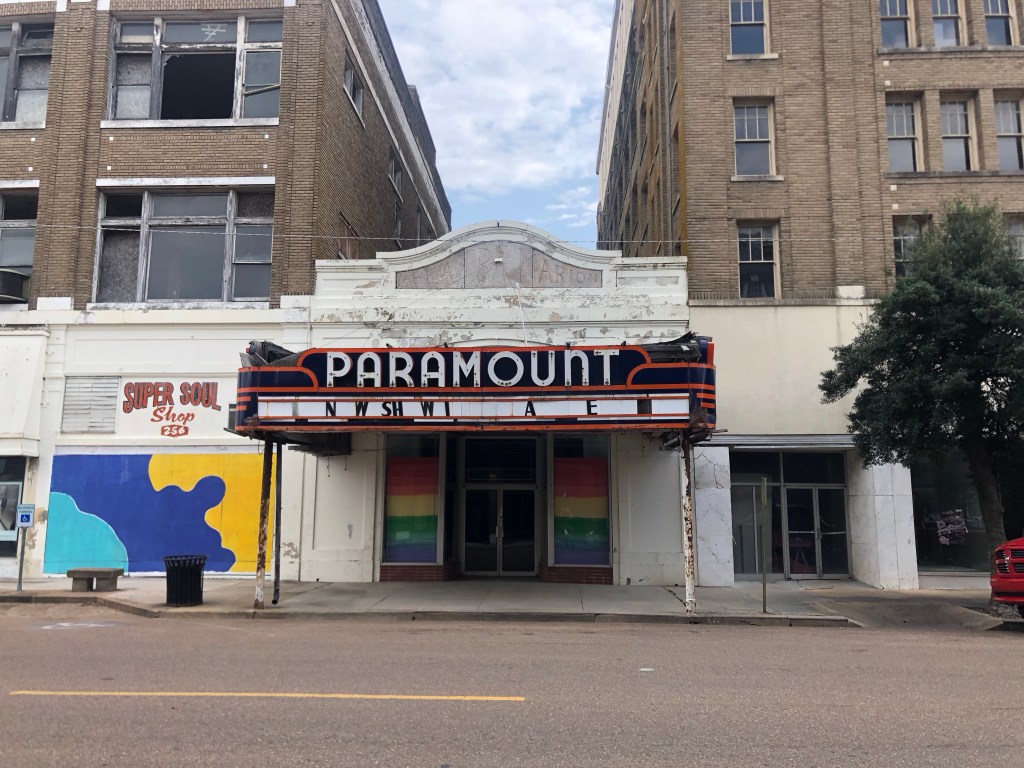
I did come across an old theater in Clarksdale. The Marion Theater opened in 1918–one of the first theaters constructed to show (silent) movies. It was renamed the Paramount in 1931. It closed in 1976, and has only been partially and fitfully restored by a local performing arts group. Heaven only knows what all those upstairs rooms are for. There is evidence of a fire in those upper rooms. But on the ground floor, I did see some evidence of recent renovation. Let’s hope they’re able to save this impressive structure!

Look carefully at the uppermost part of the sign over the entrance, and you can see “Theater Marion” cast into the cement.
Cars · Road trips · trains

I Got The Blues

If I had it to do all over again (and my wife reminds me that, if I’m not careful, I just might receive that opportunity), I would seriously consider living in a small town in middle America. But I’d put a lot of conditions on it: It would have to be out of the snow belt and out of the humidity belt. It would have to have an interesting history linked, ideally, to railroads or mining or the Marathon Motor Car. And it would have to have successfully preserved a large number of historic structures in its downtown. And it would have to exude vitality. Oh, and there’d be no dogs and the gas prices would be low.

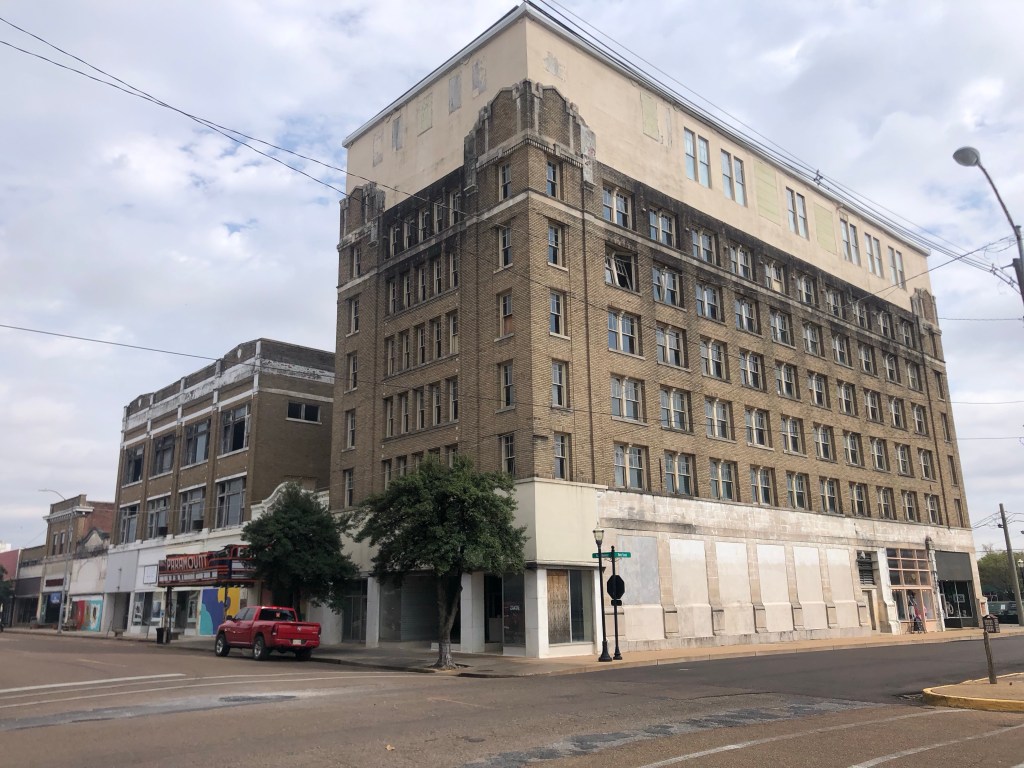
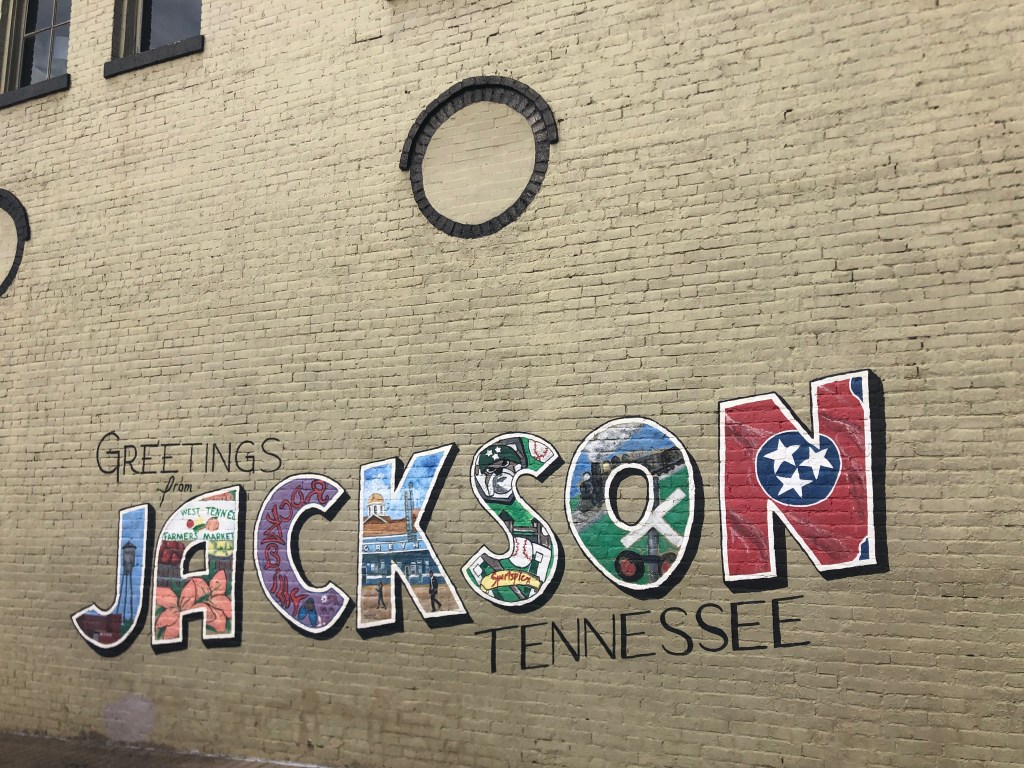
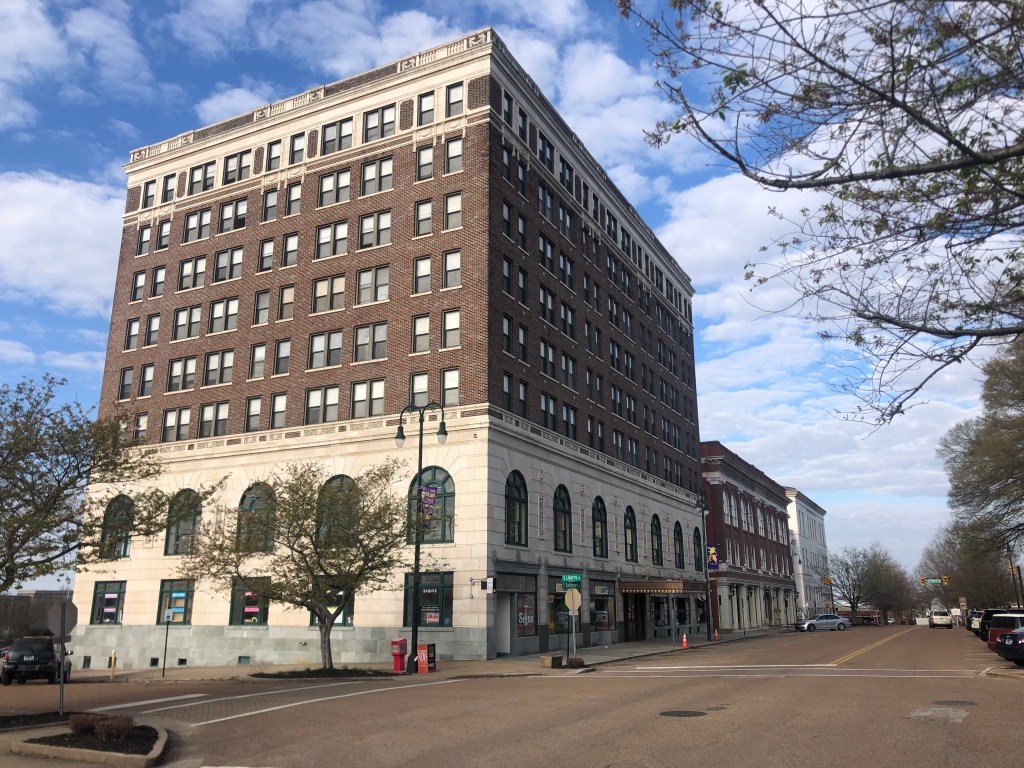
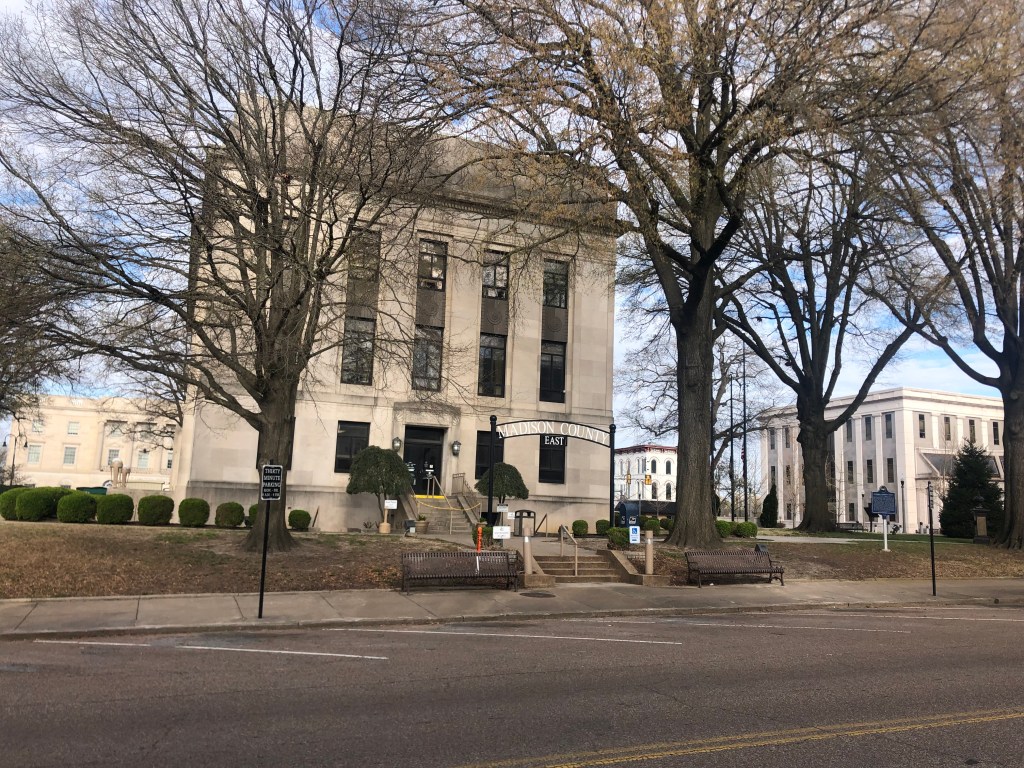
To a large extent I’ve found that city in Jackson, Tenn. It’s a little larger than my ideal, with a soulless sprawl of undistinguished national chain stores and fast food restaurants around the periphery. And there’s always something a little sinister in the air in these former Confederate strongholds. But the historic downtown is wonderful. It’s here that one finds the restored Greyhound depot I described yesterday. There’s a performing arts center in another restored, historic building, which appears to be well-utilized by the residents. As Jackson is the county seat of Madison County, there’s a historic courthouse. And today the temperature was 72 degrees.

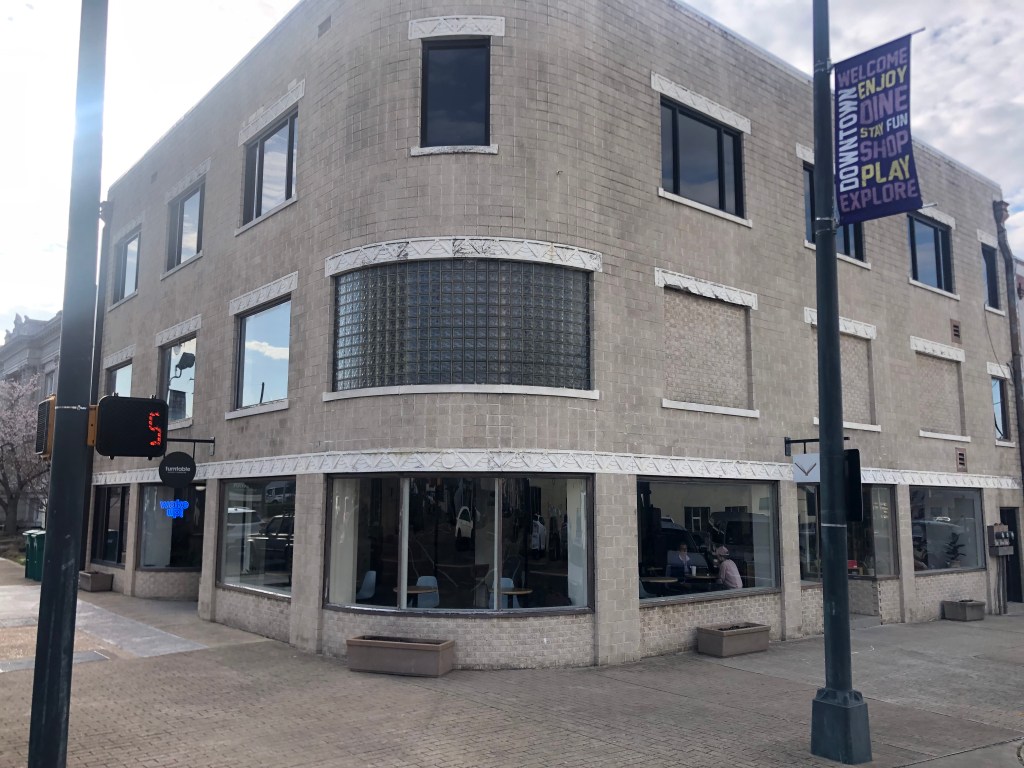
This morning I got my coffee and a galette (I’d never heard of it either) at a place called Turntable Coffee Counter. It’s almost directly across the street from the Greyhound station, in a historic building that had once been a department store. It had been vacant for years when in 2018 Anthony Kirk renovated part of the space and created this coffee place. It’s decorated in mid-century modern, with (probably faux) Eames chairs and a very hipster vibe. Racks of vinyl albums are for sale along one wall, and abstract art hangs on the walls. As I enjoyed my coffee I watched a churn of customers coming through: lawyers from the courthouse, writers with their laptops, a young couple who were getting lattes after their pilates class. This is an active community gathering place. (See related article from the local paper here.)

Turntable Coffee.

Turntable Coffee neatly illustrates what I appreciate about towns like this: They’ve created a modern (retro) space while respecting the history and flavor of the town. It works, and it draws people in. There’s a vibrancy and positivity about the place. And it’s unique–not just another Starbucks. The barista told me that Turntable began in a shared “incubator” space down the street, and after a bit was able to move to its current space. A couple of other businesses from the incubator (a book store and a record store) soon followed to the same location. So they’re doing something right.

After coffee I took a walk around the downtown and saw more examples of well-maintained historic structures that added to Jackson’s very successful formula.

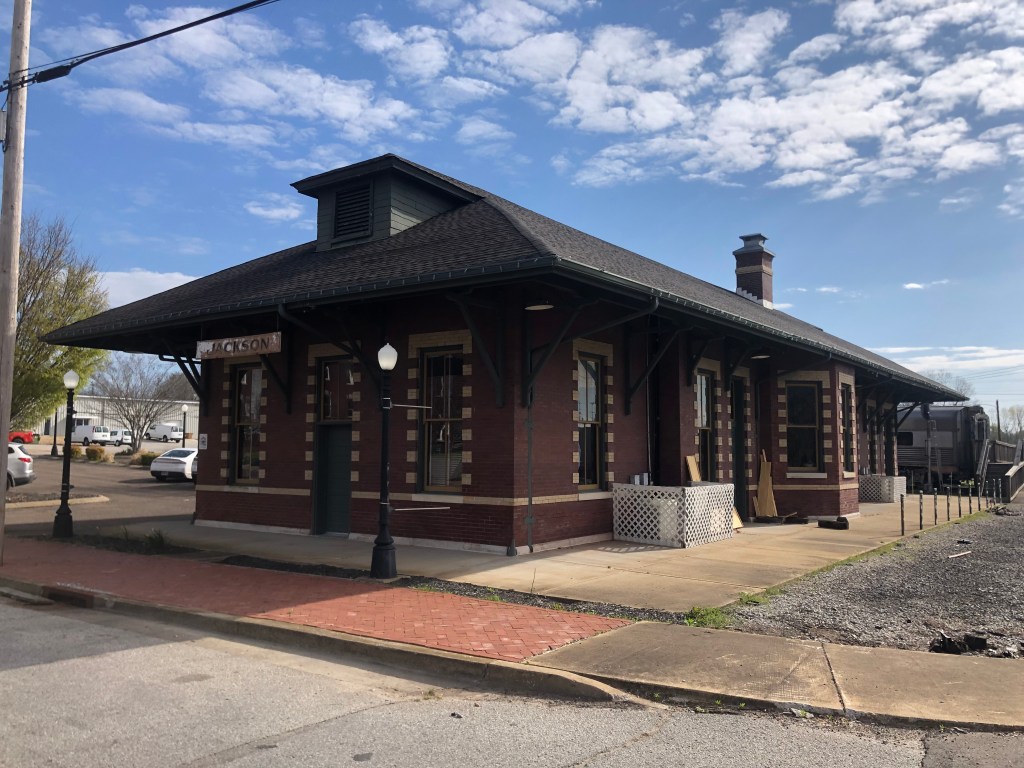
Jackson’s Nashville, Chatanooga & St. Louis Railway depot.

Of particular interest to me was the restored NC&St.L Railway depot. It was originally constructed in 1907, and after passenger trains stopped coming to town it was converted to a museum. Alas, when I arrived today the friendly woman inside told me the museum had moved and that the building was now a photography studio (among other uses). While I would have liked to have been able to spend some time in Jackson’s railroad museum, this is a good illustration of that same principle I was just describing: Jackson has wisely preserved its historic buildings, but rather than making them all into museums that the locals probably wouldn’t visit very often, they have repurposed them into vibrant, viable and useful public enterprises for which there is local demand.

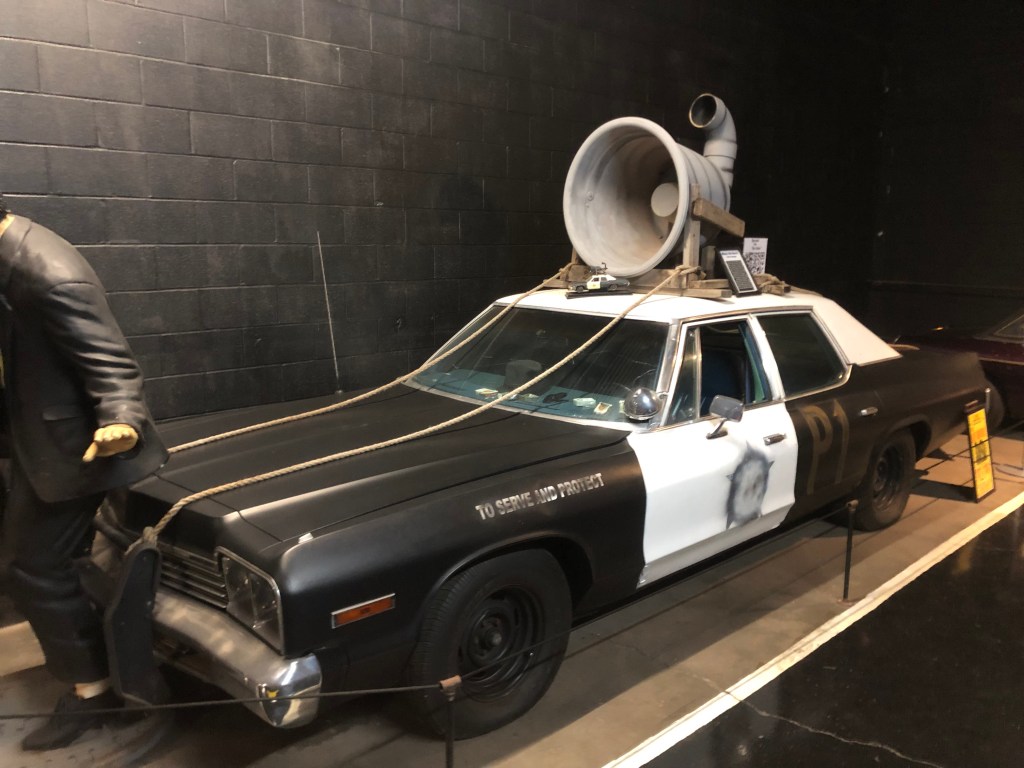
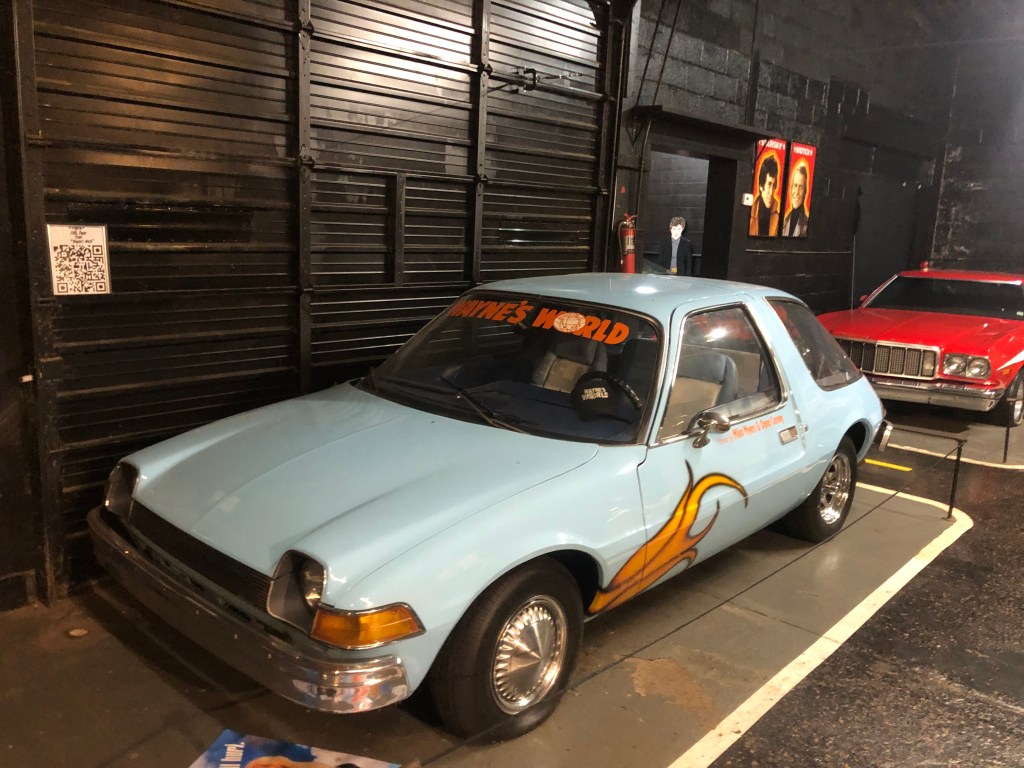
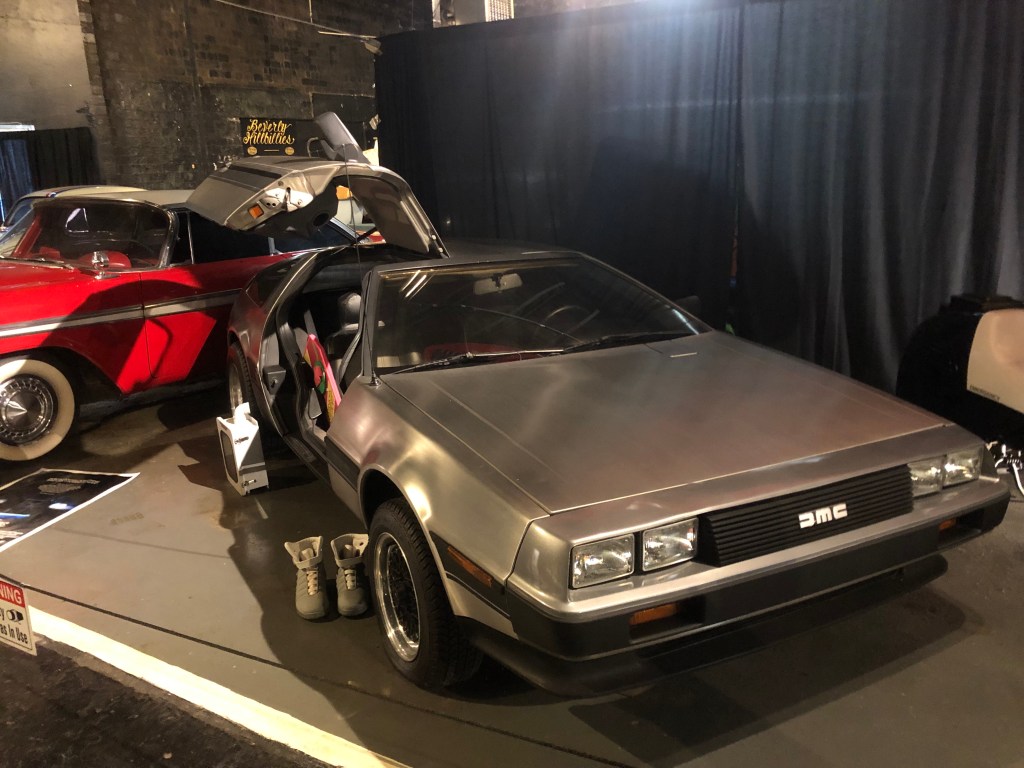
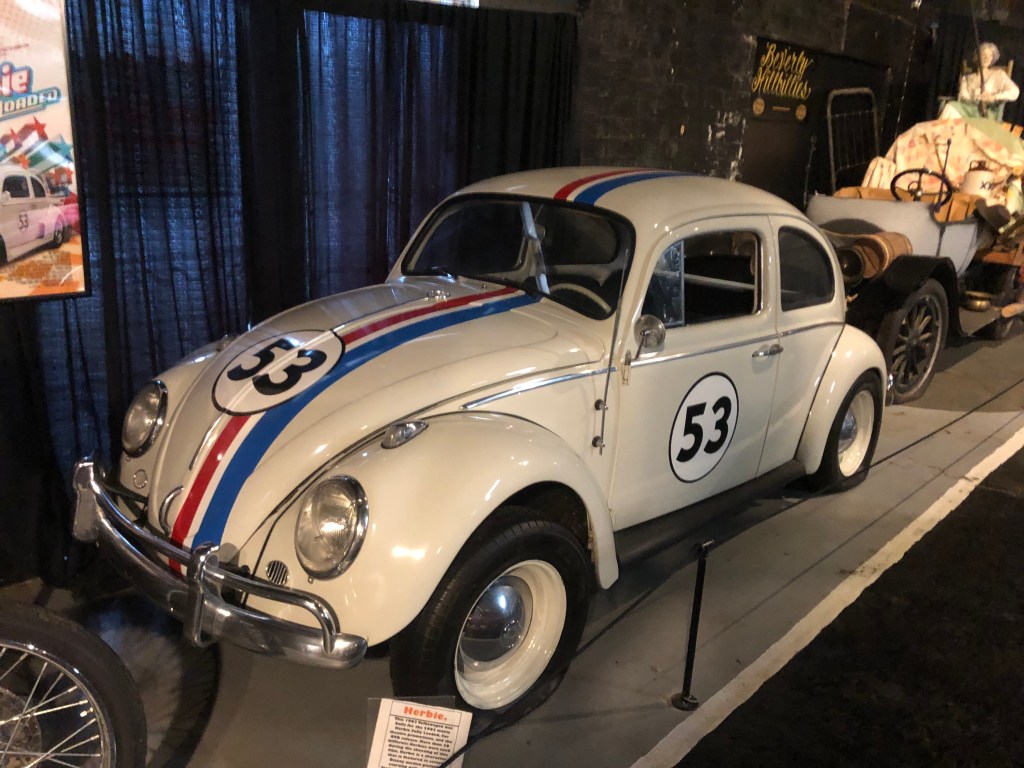
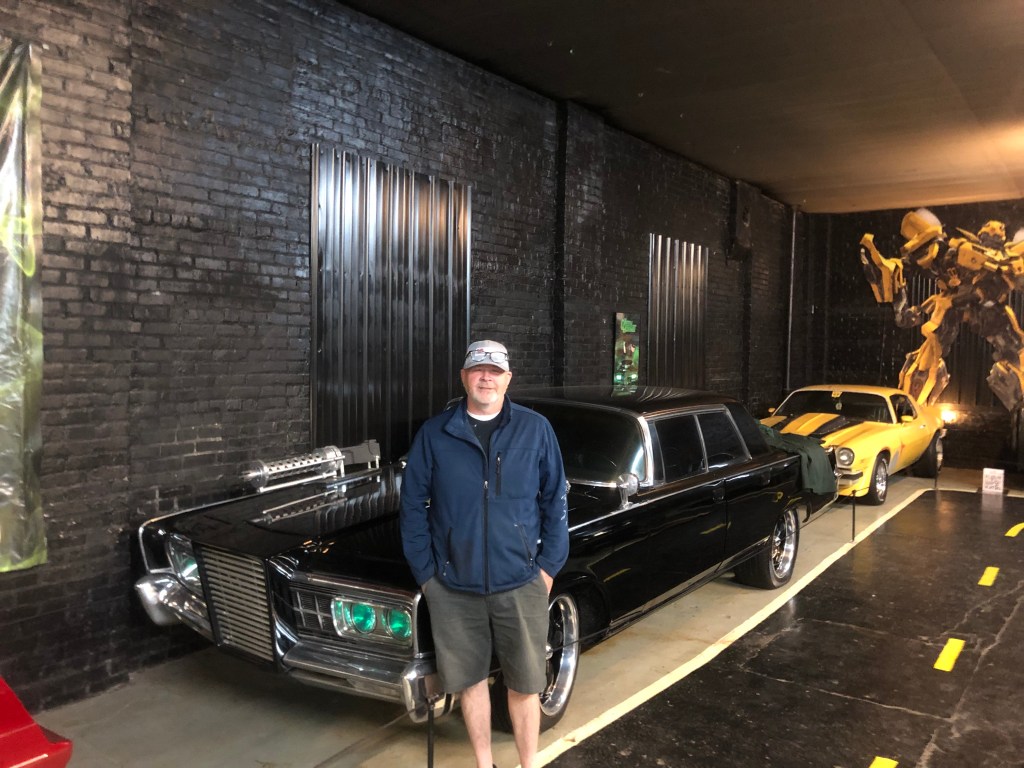
At the same time, I did visit two wonderful museums in Jackson this morning. The first is Rusty’s TV and Movie Car Museum. Rusty Robinson has been collecting cars for over a quarter of a century and he has them on display here in Jackson. Rusty was the only other person at the museum this morning, and I appreciated the opportunity to wander among his collection. It’s worth nothing that the collection is a mix of vehicles that actually appeared on the screen, as well as some reproductions that Randy himself has manufactured

Jake and Elwood’s “Blues Mobile.” (One of many cars used in that movie.)
Garth’s “Mirthmobile,” from Wayne’s World. (Original from the movie.)
Delorean time machine from Back To the Future. (Not from the movie. But it’s a real Delorean, which is rare in its own right. Rusty and I had a long talk about the new John Delorean documentary on Netflix.)
Herbie from the 2005 relaunch of the Love Bug franchise with Lindsay Lohan. (Actual car from the movie.)
Rusty himself, in front of The Green Hornet’s “Black Beauty.” (Not original from the movie; Rusty built it himself!)

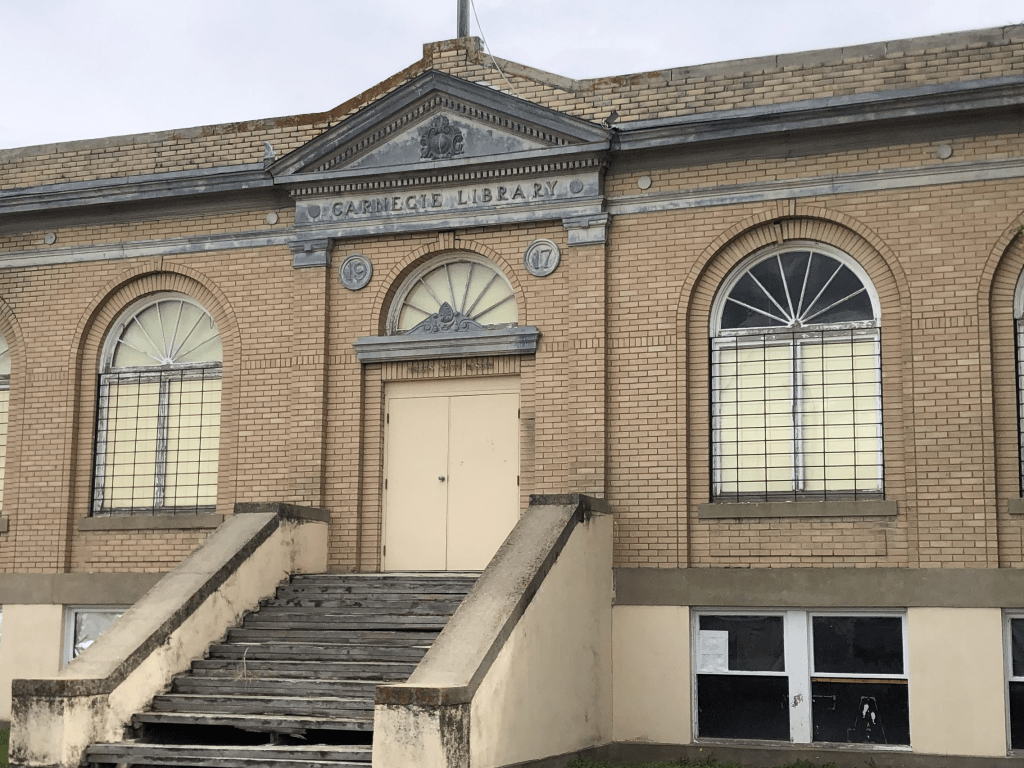
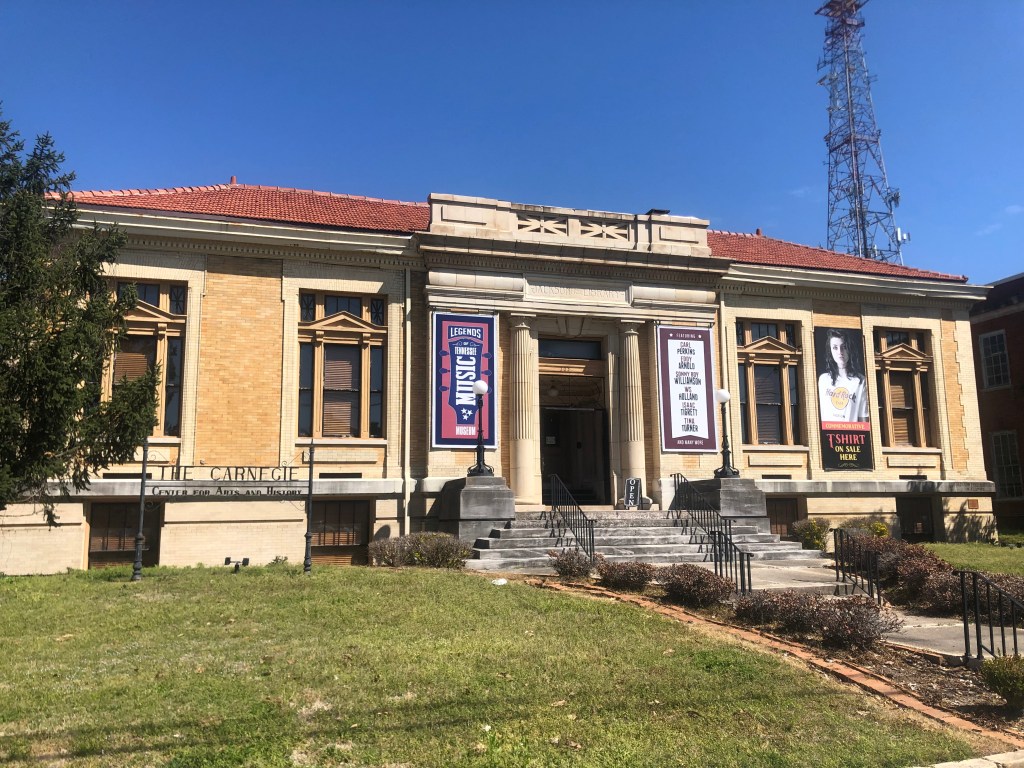
The other museum in Jackson I visited was the Southern Legends of Music at the Carnegie. It’s a very small museum inside an old library built in 1901. (Hence the “Carnegie” part. As you may know, Andrew Carnegie funded the construction of almost 1700 libraries around the country between the 1880s and the 1920s….like this one, below, that I saw on my Route 2 trip last year)

Unrestored Carnegie library from 1917, in Malta, MT. I passed it on my Route 2 trip.

Here is the Carnegie library in Jackson–fully restored and open to the public as a music museum:

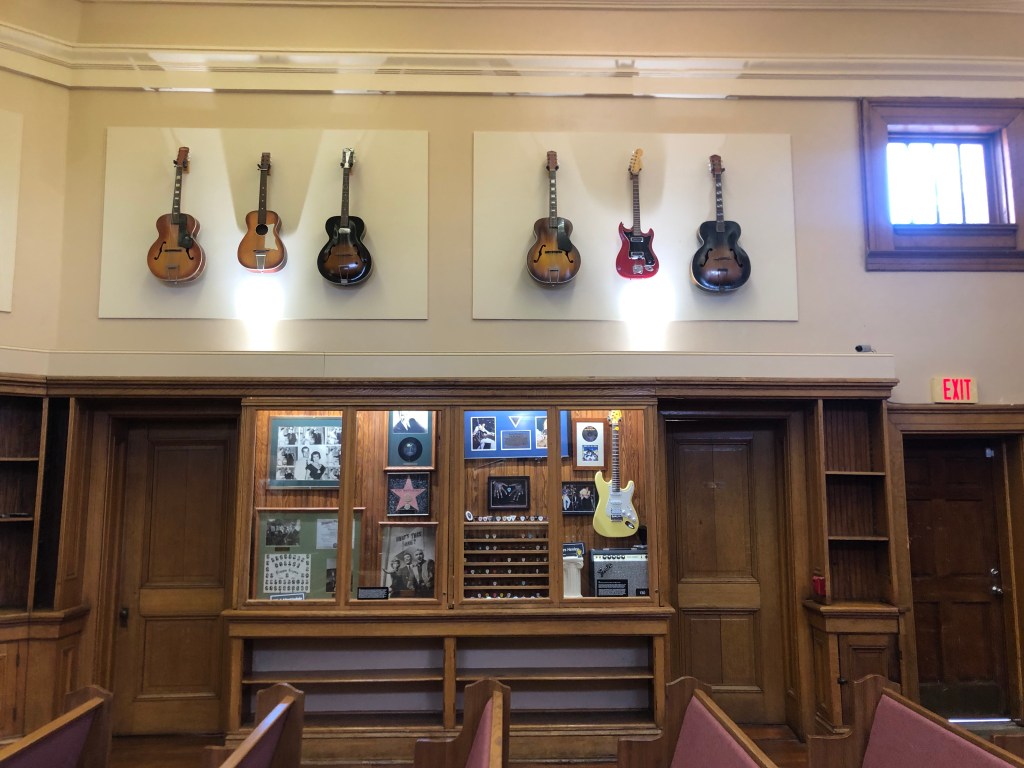
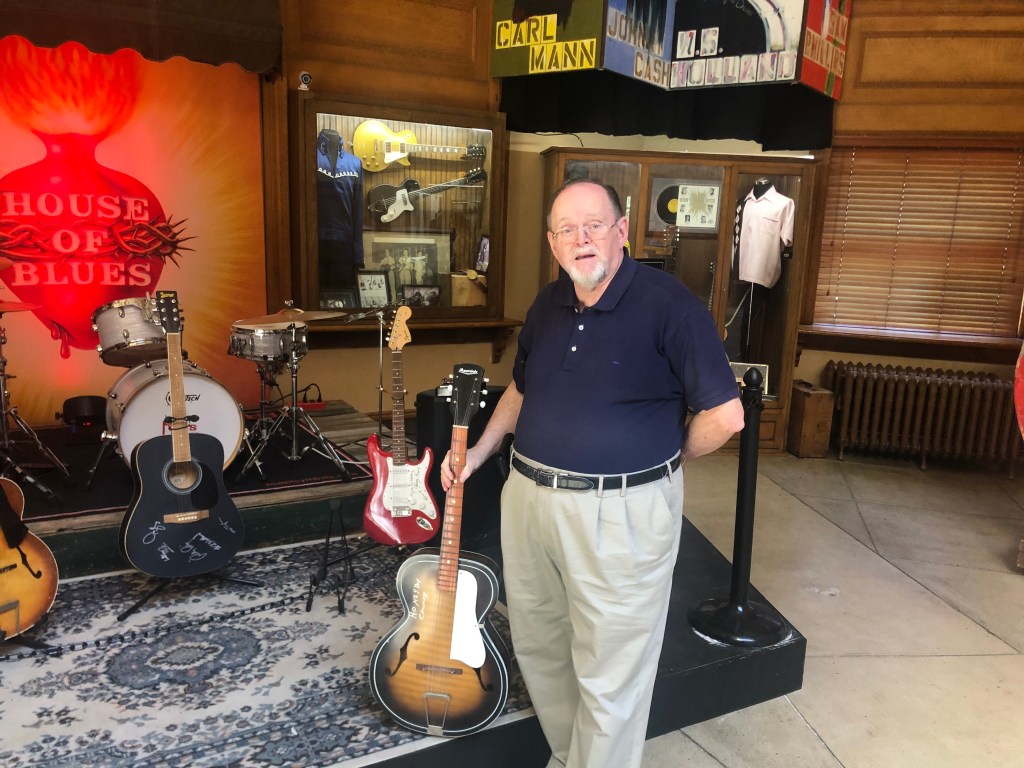
It’s a wonderful museum, focused on western Tennessee’s music history. (By “western Tennessee” they mean mainly Jackson and Memphis). While small, the museum is stuffed to the gills with guitars, recording equipment, framed photos, harmonicas, stage outfits, awards, guitar picks, sheet music, handwritten lyrics, and tons of other stuff.

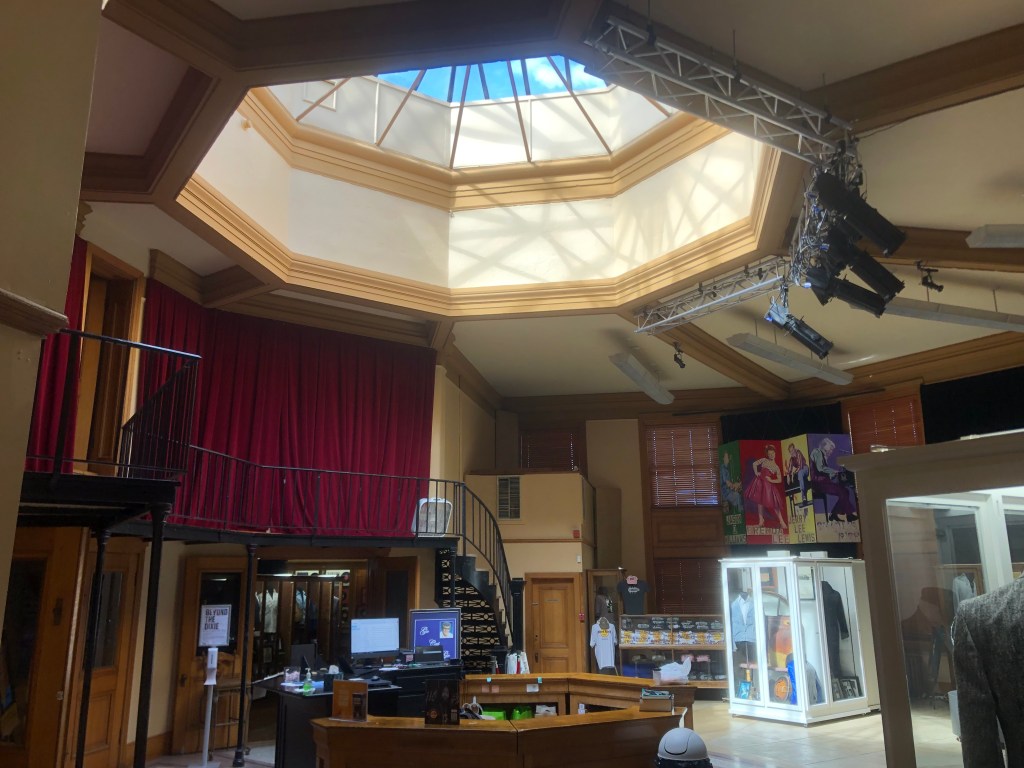
In the center of the main room is a large, octagonal skylight. It must have been an awesome place to spend an afternoon reading.

Speaking of which, the docent who helped me (Roger) told me he was drawn to work at this museum because as a kid he spent many, many hours in this library. Over the years, though, he’s learned much about western Tennessee’s music history, and he was able to convey an enthusiasm about the music that’s infectious. I’m starting to get why music is such a big deal to this area. It’s partly a shared language, partly a relieve valve for emotions, and partly storytelling. Notably, each region out here seems to put its own stamp on the music. In Nashville it’s country; here in Jackson it’s moving more to bluegrass. By the time you get to Memphis it’s blues. But there are intersections and overlap among these styles, and they all fall under an American Roots umbrella. It’s heartfelt and earnest and moving. In just a short time at this museum I got a better feel for why this music matters. And I was able to connect the through lines linking Elvis and Johnny Cash and Ray Charles and Roy Orbison and Jerry Lee Lewis and on and on….

Docent Roger sharing stories about the music of western Tennessee.

I was thoroughly enjoying my music history lesson but unfortunately I had to get back on the road to get to a haircut appointment at noon. I’m not making this up.

Before I’d left California I had learned about a quirky museum in Brownsville Tenn. that also served as a functioning barber shop. It’s only open by appointment during the week, so I called the owner (Anthony Turner) and asked if I could make a visit on Thursday. “For a haircut or for the museum?” he asked. I figured the right answer was “both.” I arrived at Anthony’s “Master Barber Shop Menagerie Museum” at the appointed time.

Anthony greeted me with a thousand-watt smile and took me to the building, which looked like a circus had exploded.

A tiny fraction of the Menagerie Museum.

I asked what it all meant, but Anthony directed me to a tiny room with a barber chair. For the next hour he cut my hair and told me his story. I can’t do justice to his whole spiel, but the basic outlines are as follows:

I told Anthony just to do whatever he thought needed doing on my head. “All’s you need is a high fade.” And so it went.

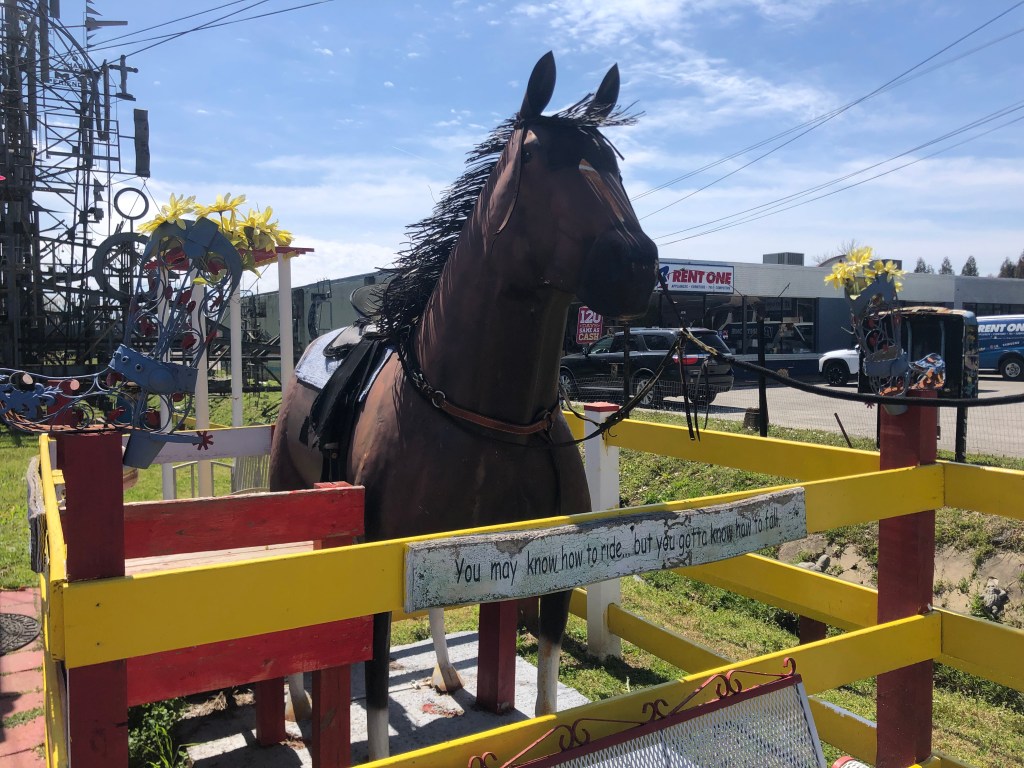
Anthony grew up here in Jackson, and after graduating he attended barber college. For reasons he doesn’t really understand, his fellow students and instructors kept bringing him various items (pieces of art, antiques, odds and ends). He opened his barber shop next to where his chum from public school, Billy Tripp, was building an enormous sculpture out of scrap metal. He felt there was a synergy between their two projects. In his shop Anthony displayed the various objects he’d received while at barber’s college. But he kept feeling he was supposed to have a bigger impact. He planned a grand opening, and for reasons not entirely clear, decided he’d invite Oprah Winfrey’s father (whom he’d never met) to MC the opening. He tracked down Mr. Winfrey, who accepted. The museum grew and grew, and more and more people brought him more stuff. Anthony was also always looking for specific additions that he would purchase, including this horse:

In a repeat of the Oprah’s dad trick, Anthony managed to get John Wayne’s grandson to show up for the unveiling of the horse, as he needed a “real cowboy” for that job.

Again I asked Anthony what the whole museum is all about; what unites everything? And he responded sincerely and convincingly that it was all united by positivity. Anthony is a man of faith, and believes that God has led him to do this project to make the world a more positive place. And if my hour with him is any indication, he’s doing a good job.

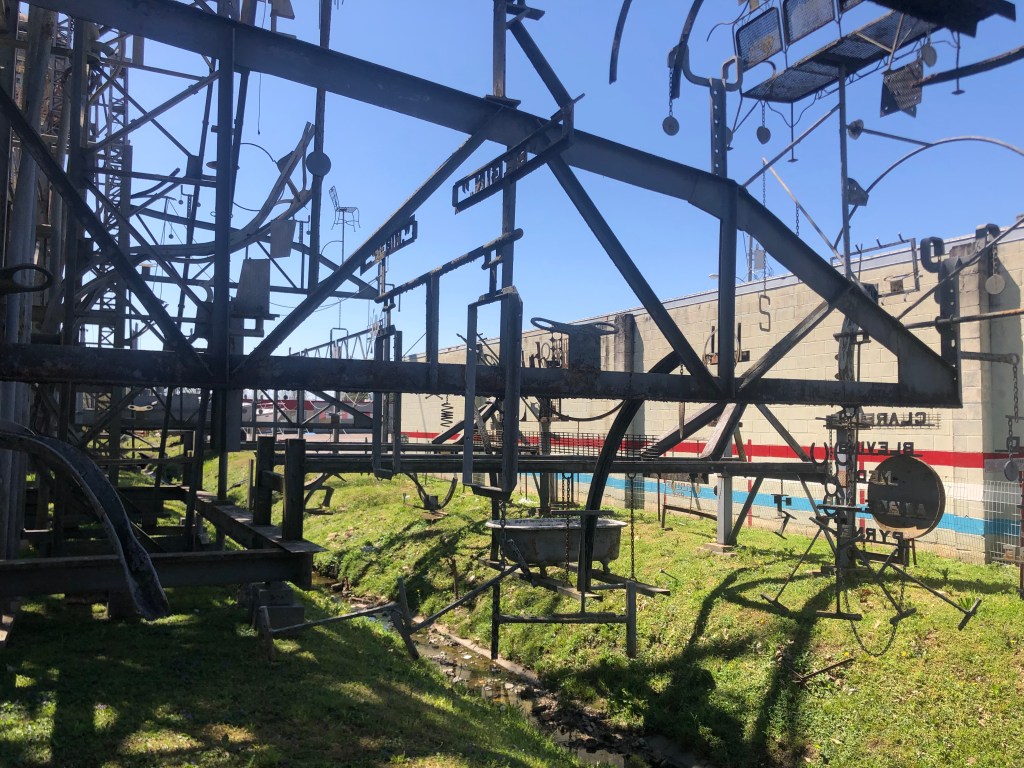
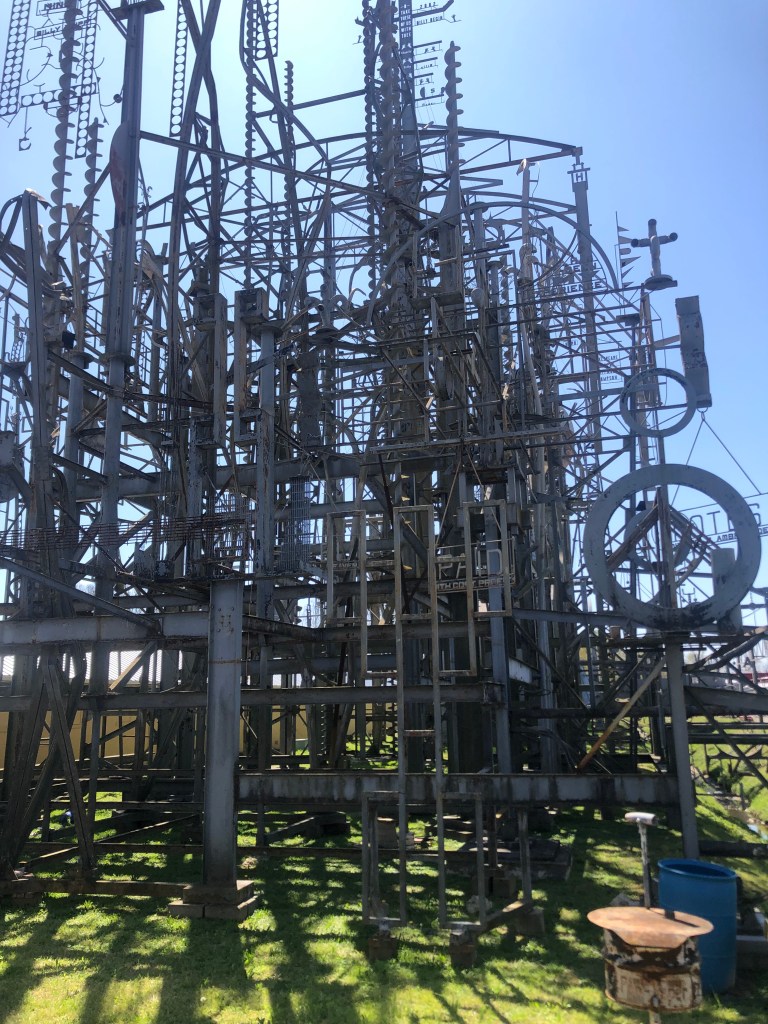
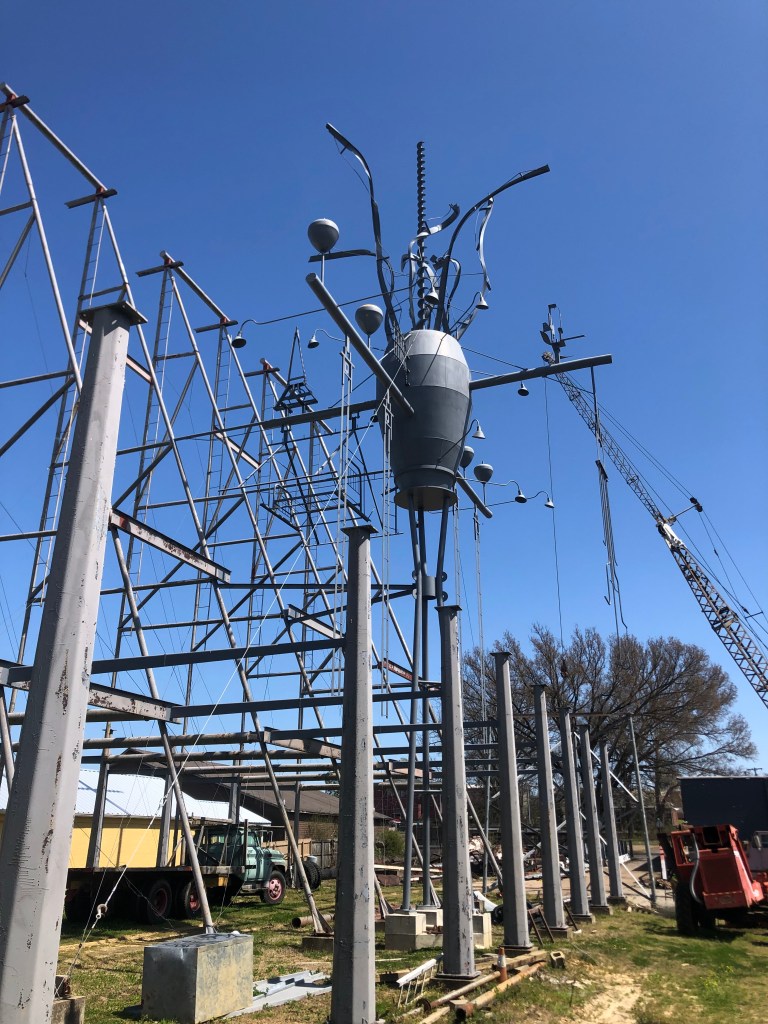
After my haircut Anthony had another customer to take care of, so I browsed his small museum and then checked out Billy Tripp’s sculpture in the back. Words cannot describe how enormous, complicated, and overwhelming the sculpture is. And pictures don’t do it justice, because it’s so large and contorted you just can’t get a full picture. But here are a few attempts:

Anthony tells me that Billy works on the sculpture almost every day, and that he plans to keep working on it until the day he dies. I suspect that Anthony takes the same approach with his museum.

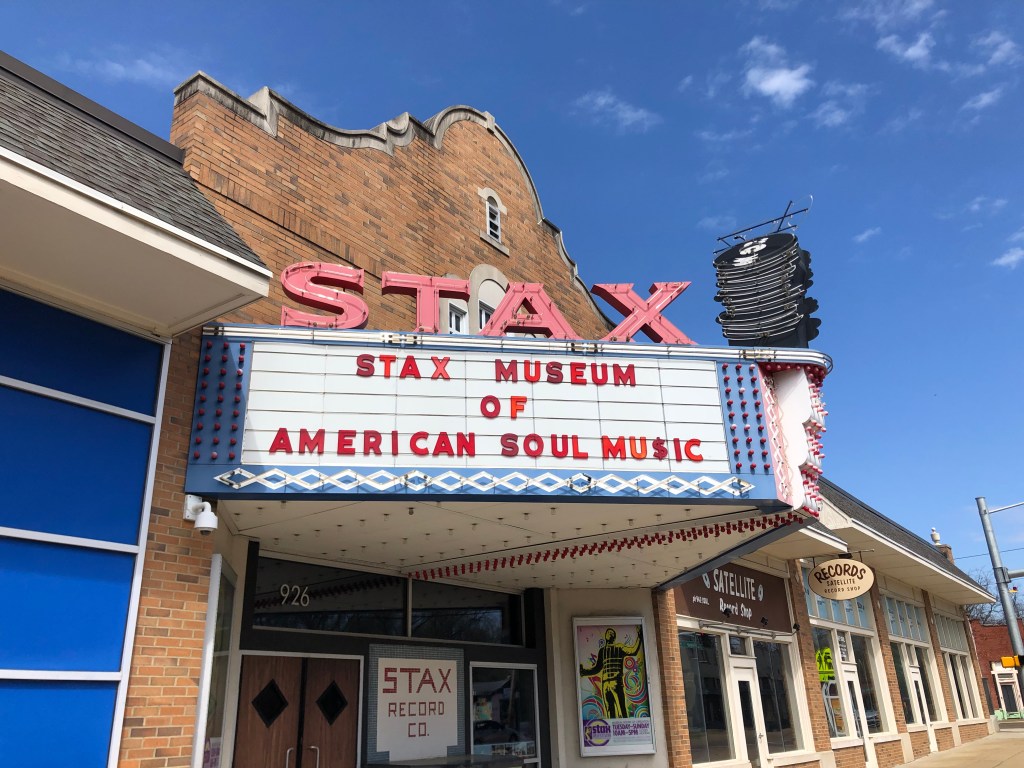
Finally, freshly shorn, I was back on the road to Memphis. I had been in Memphis just last year on my Route 70 trip. While I was there I saw the outside of the building where Stax records made music history in the 1960s and 1970s. I have a fondness for Stax in part because my dad had Booker T. and the MG’s “Greatest Hits” album, and I thought it was the coolest thing in our household. (It actually was, considering that most of Mom and Dad’s other records were stuff like Motovani and Percy Faith.) I also saw Booker T give a talk in LA a few years ago, when he was promoting his autobiography. He’s a remarkable and articulate man. Booker T and Stax represent a magical time in music history, and they’re central to the so-called Memphis sound. Recall that earlier I mentioned how Jackson merged Nashville’s country into more of a bluegrass? Well, Stax merged bluegrass and blues with soul and R&B. In addition to the MGs, classic Stax acts included Issac Hayes, Otis Redding, Sam and Dave, Albert King, and various other acts that you’ve heard on the radio.

You’ve heard this before, but you might not have known the title.

Anyway, when I’d visited the Stax building (which is now a museum) last year it was closed, so I made a point to see it today. And I’m glad I did. It further deepened my appreciation for Blues/R&B and all its variants.

Full disclosure: The original Stax building was razed in 1989, This museum was built on the same site, faithfully recreating the facade and the interior recording studio.
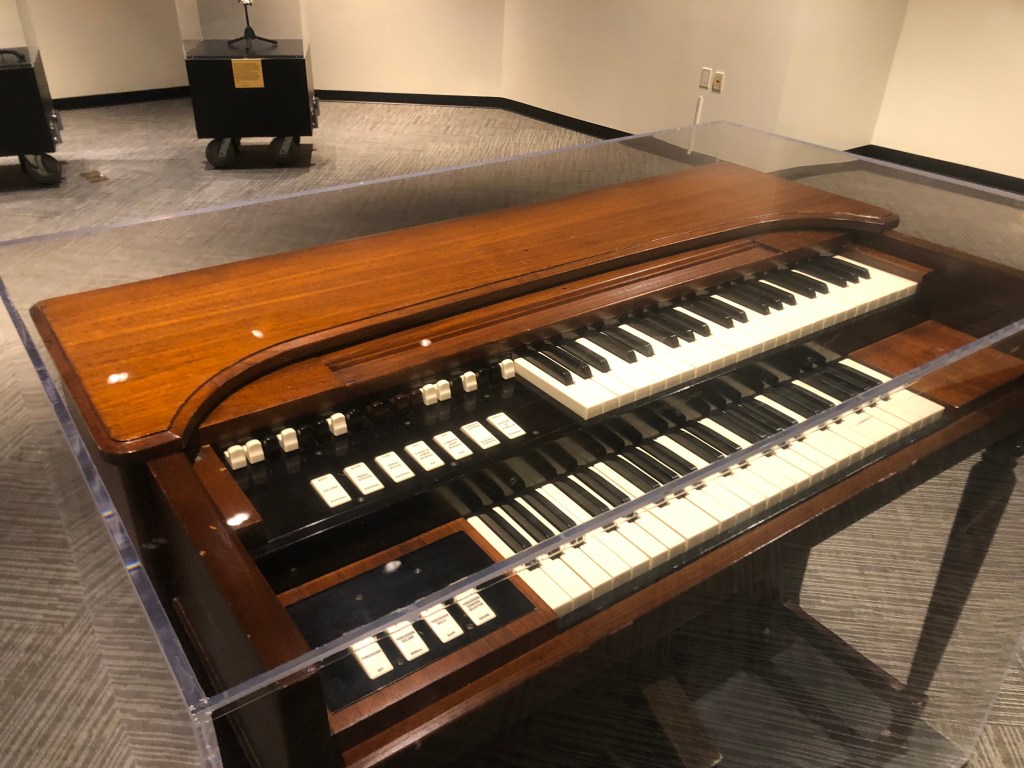
The Hammond organ that Booker T Jones used to record “Green Onions.”

Since I’d been to Memphis just last year, Stax was my only stop this time. So afterwards I got back into the trusty Trailblazer and got onto Route 61– the Blues Highway!

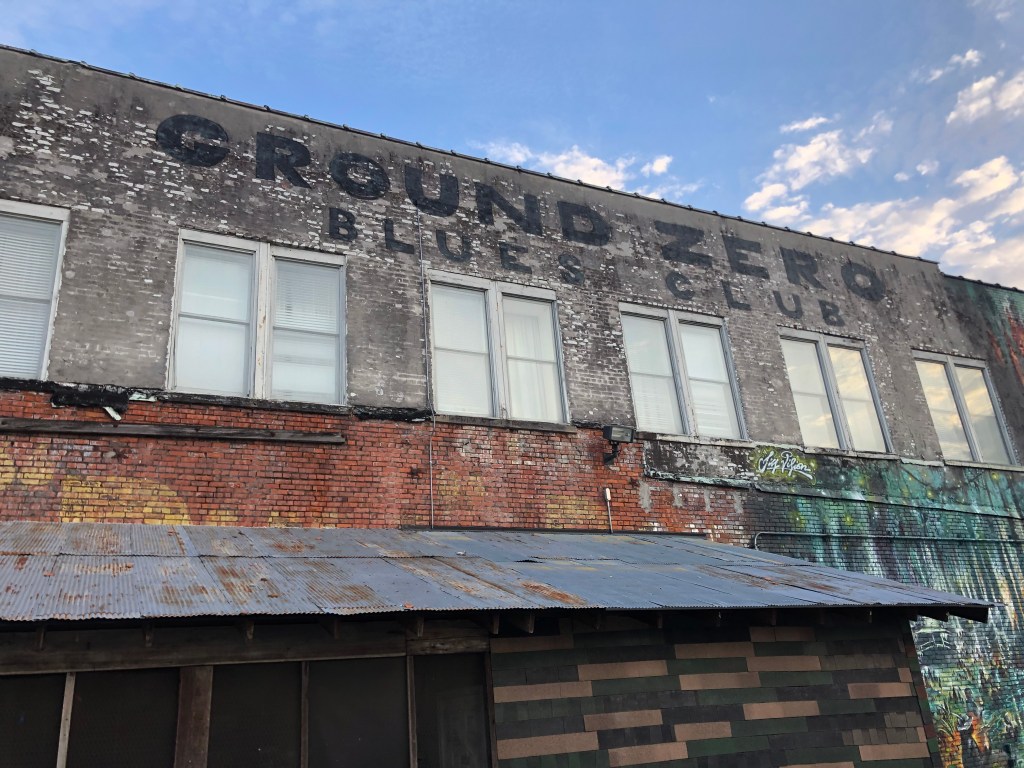
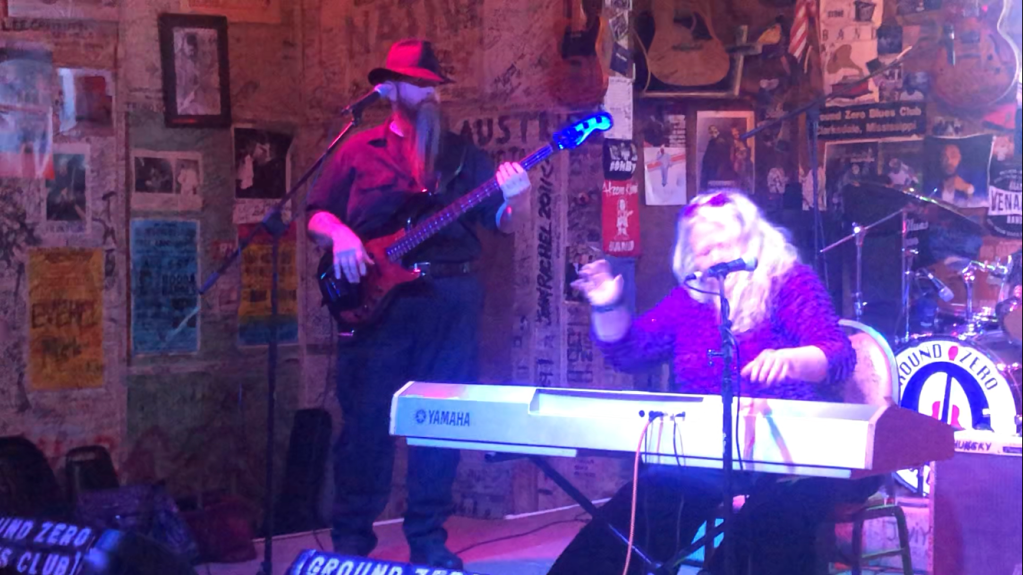
I stopped for the night in Clarksdale, Mississippi. I had dinner at the estimable Ground Zero Blues Club (owned in part by Morgan Freeman).

I had some good BBQ (as it’s called in these parts) and enjoyed listening to some live blues. It was a perfect end to this day. It’s one thing to learn about music in museums, but there’s no substitute for hearing it performed live.

BREW OF THE DAY

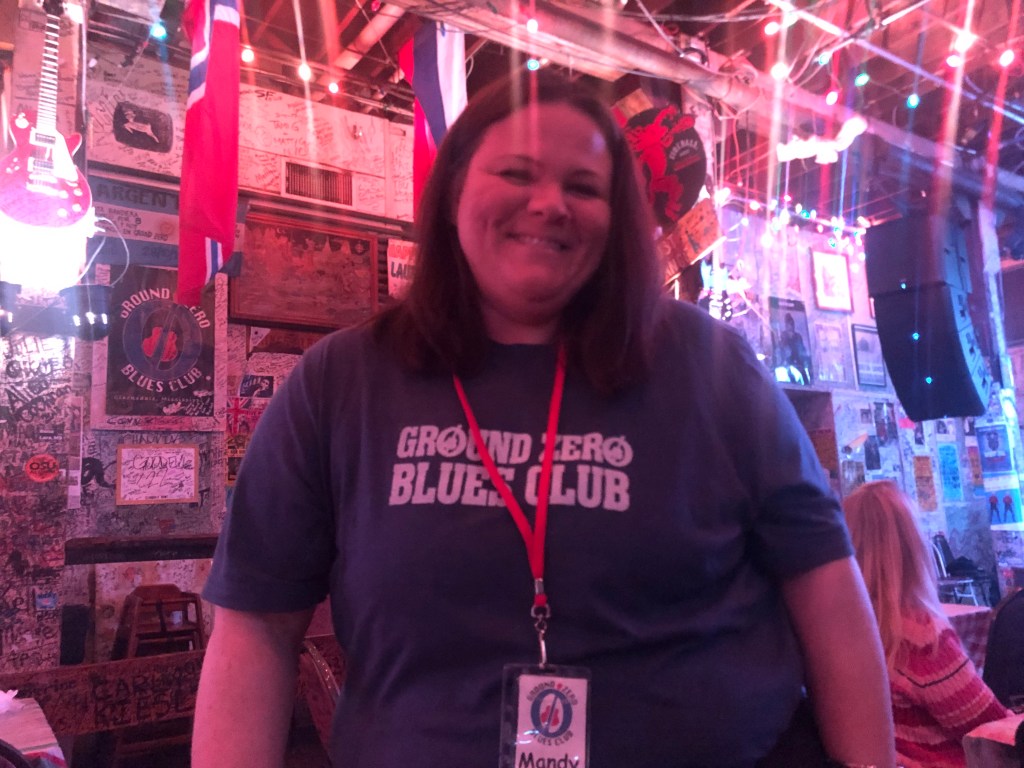
I’ve noticed that most of these music venues have a pretty crappy selection of beers. The Ground Zero Blues Club is no exception; their most interesting beer was an IPA. So I decided instead to order a cocktail. How about an Old Fashioned? That’s pretty basic, right? The waitress (Mandy, who was being very patient with me) came back and told me the bartender couldn’t make me one because they’re “out of bitters.”

Mandy, bearer of bad news.

Ok, fine. How about just a Scotch then, served neat? Again Mandy consults with the bartender, and comes back with the sad news that they’re “out of Scotch.” Borrowing a line from Monty Python’s cheese shop sketch, in which a neighborhood cheese shop was out of even the most common cheeses, I spluttered “How can a bar be out of Scotch?! It’s one of the most basic staples for making cocktails!”

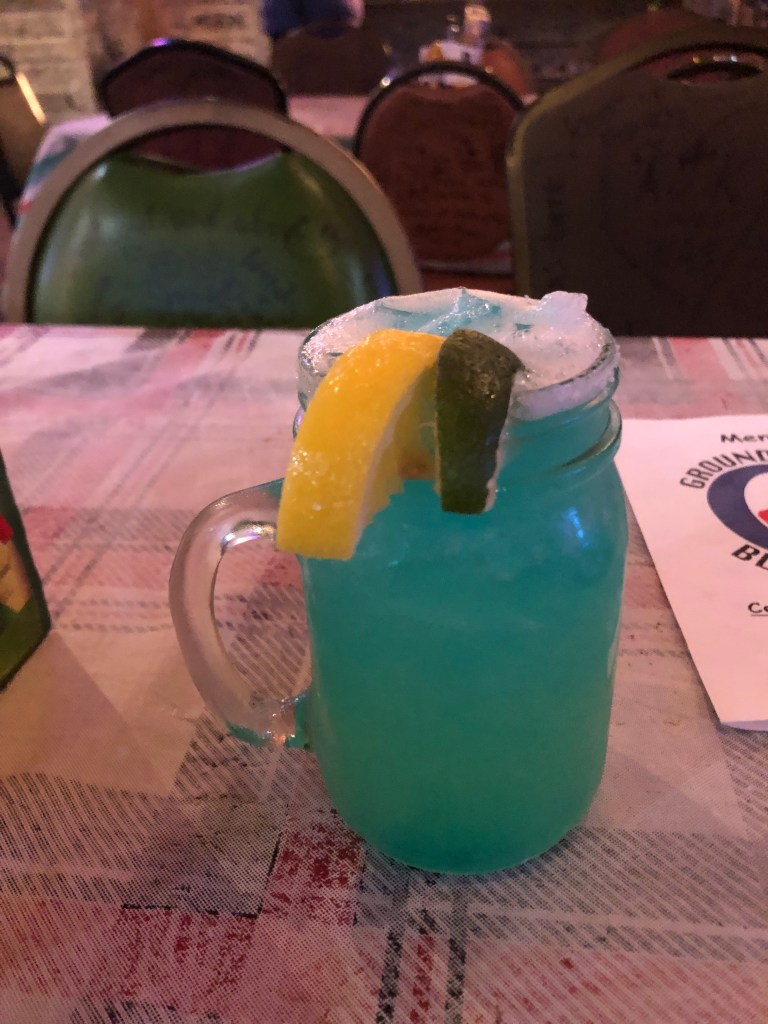
I settled for the “featured cocktail,” which is a “moonshine margarita.”

The Moonshine Margarita is essentially lots of margarita mix and some “moonshine” (i.e., distilled whiskey that hasn’t been aged in a barrel). Let me give you the pros and cons:

On the pro side, it contains alcohol, which goes well with a BBQ dinner at a blues club. But it’s cloyingly sweet, like sno-cone juice. And it’s the same color, as well. Of course, when all you have is hammer everything presents as a nail. So I ordered a second one.

First drink: 1 star out of five.

Second drink: 3 stars.