Cars · movie theaters · Road trips · trains

A Stew-pendous Day

This morning I awoke around 7:15, and looked out my window to see the world still cloaked in darkness. I figured it was still too early for the sun, since I was on the western edge of the eastern time zone. After my morning ablutions I returned to the window, but it was still dark outside. I looked up to see a blanket of black clouds covering the sky. The sun was entirely AWOL.

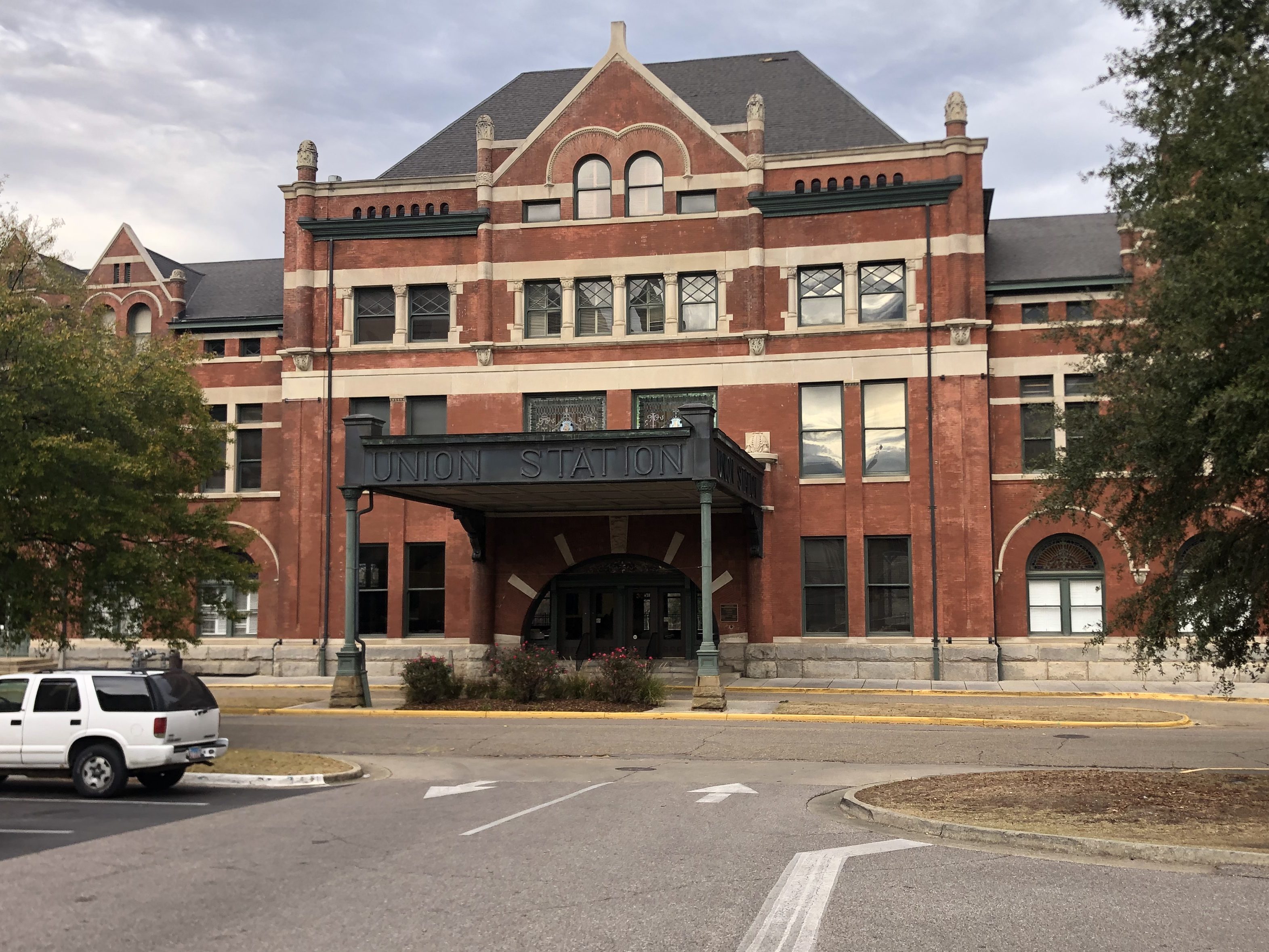
Undeterred, I got in my rental car and began to head out of Albany. But as I was passing through the historic downtown what do you think I saw? Yes, it was another Union Station. For those of you keeping score at home, I’m now up to four on this trip.
“Look for..the Union la-ble….”

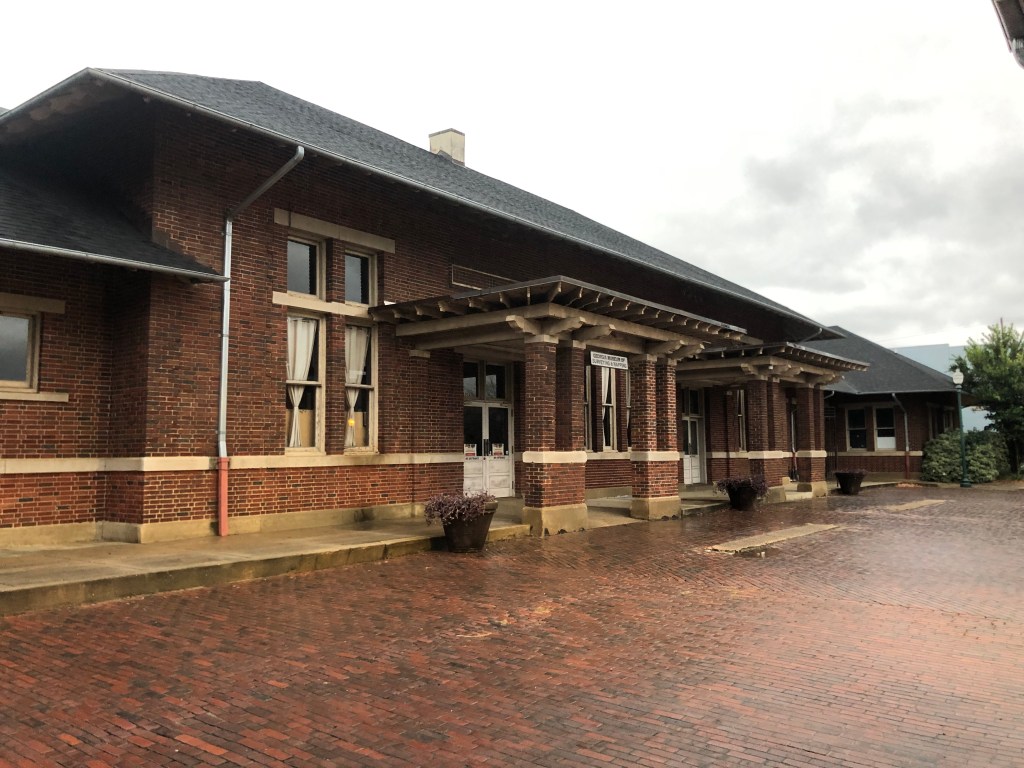
Albany’s Union Station was constructed in 1913. It replaced an earlier depot that had been built in 1857, but wasn’t able to accommodate the vast increase in rail traffic. Union Station continued to serve trains until 1971, after which it was slated to be razed. However, preservationists in the town mobilized to protect the building from the wrecking ball that was knocking down so many old buildings in the 1970s. Union Station was placed on the National Register of Historic Places in 1975.

The station was renovated and became a museum. It was part of a larger “Heritage Plaza” project that includes several other historic buildings, including the old freight warehouse. There’s also a Georgia Northern steam locomotive and rail cars on the tracks behind the station.
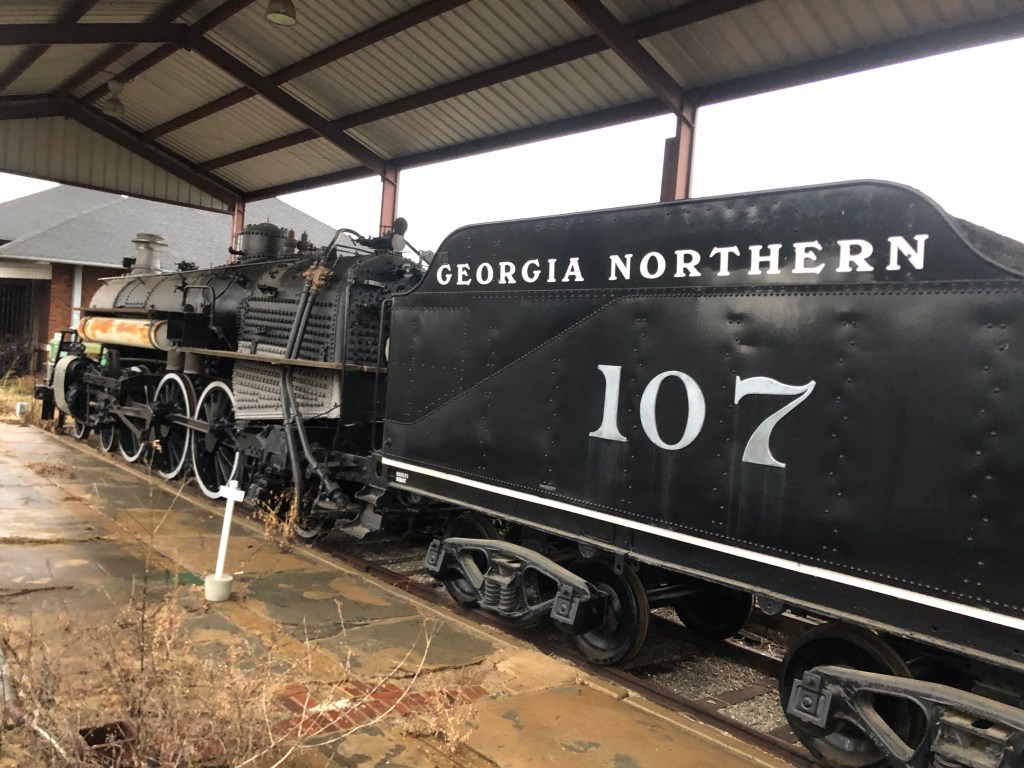
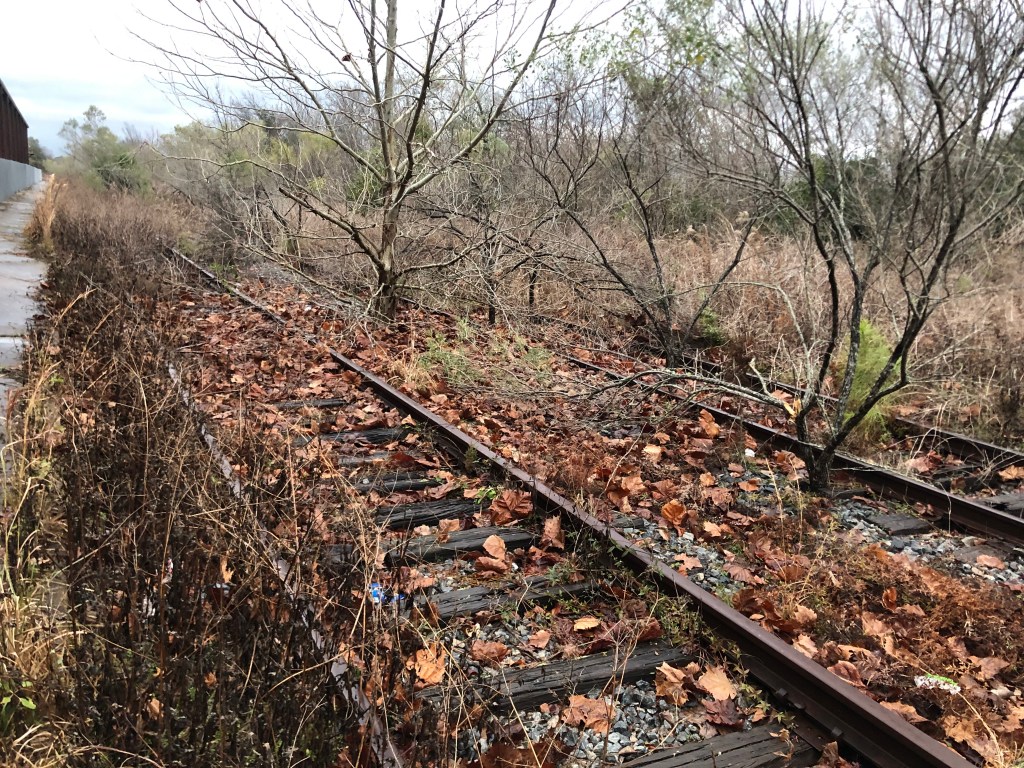
Looks like it’s been awhile since trains ran on Union Station’s tracks.

Having gotten my daily Union Station fix, I got back onto US 82 East. The wind had picked up and it was beginning to rain. As I drove out of town I saw public works crews blocking off streets and clearing drains.
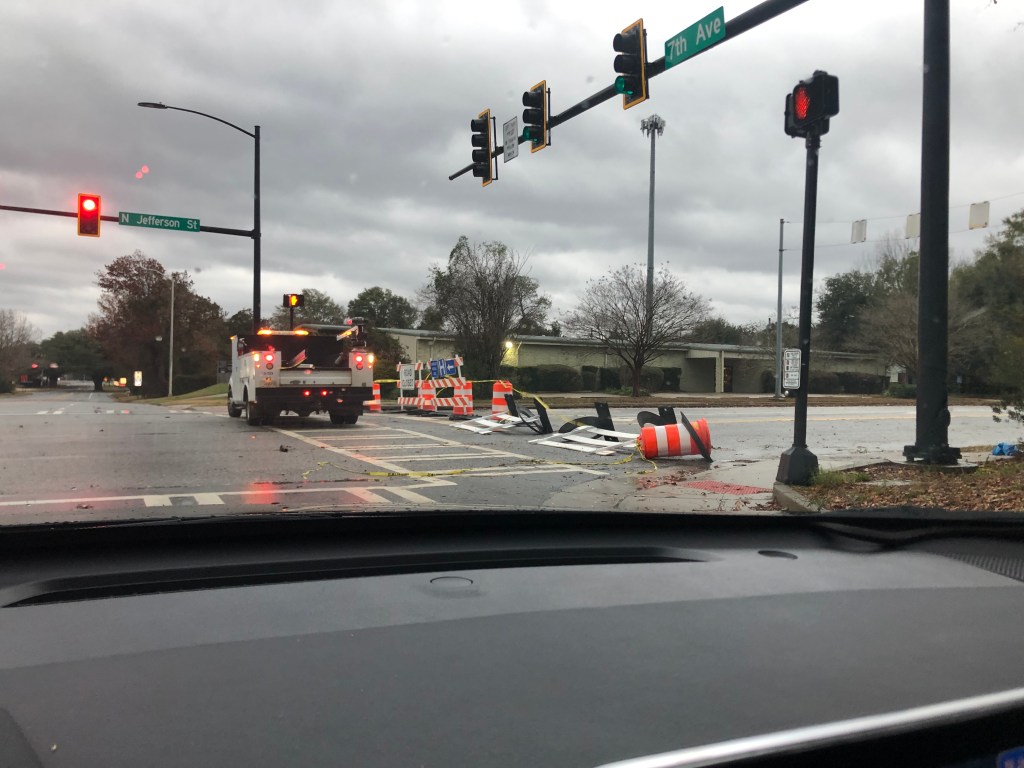
Do they know something I don’t know?

Then, all of a sudden, the leaden skies fully opened up, and lightning started flashing like paparazzi from hell. This continued for the rest of the day. And in the mid-afternoon I started receiving tornado warnings on my iphone.

Thankfully, US 82 was not closed down by the storm, so I carefully made my way across Georgia with my wipers working overtime and only a few incidences of hydroplaning.

Because of the weather, I didn’t make many stops today. But I did break for lunch in the city of Waycross (pop: 14,000). Like so many of the places along Route 82, Waycross sprung up as a railroad town. In fact, its name references the town’s location at the intersection of six railroad lines. The town’s large, 1911 railroad station (can you guess its name??) was at the center of those rail lines, and it now houses the Chamber of Commerce and serves as a visitors center.
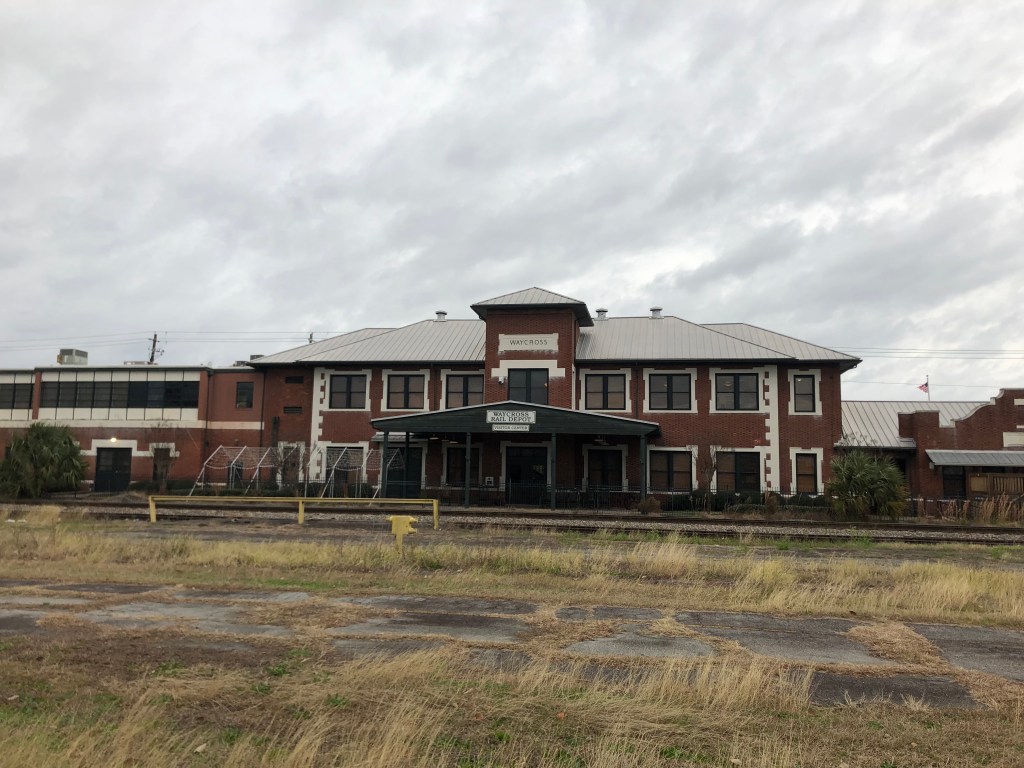
Union Station No. 5

The guy at the visitor center encouraged me to visit the nearby Okefenokee Swamp, since Waycross is “the closest city to the Swamp.” Be that as it may, it would still require a long drive along a narrow road through peat bogs during a major downpour. Maybe next time.

Instead, I took a leisurely drive around the town and encountered two historic theaters. The Ritz theater opened in 1913 as a vaudeville house called The Grand Theater. In the mid-1930s it was extensively remodeled into a movie theater and its name was changed to the Ritz. It closed in 1977. However in the mid-1980s a group of Preservationist citizens resurrected the theater as a live performance venue. Today it’s the city’s main stage for community theater.
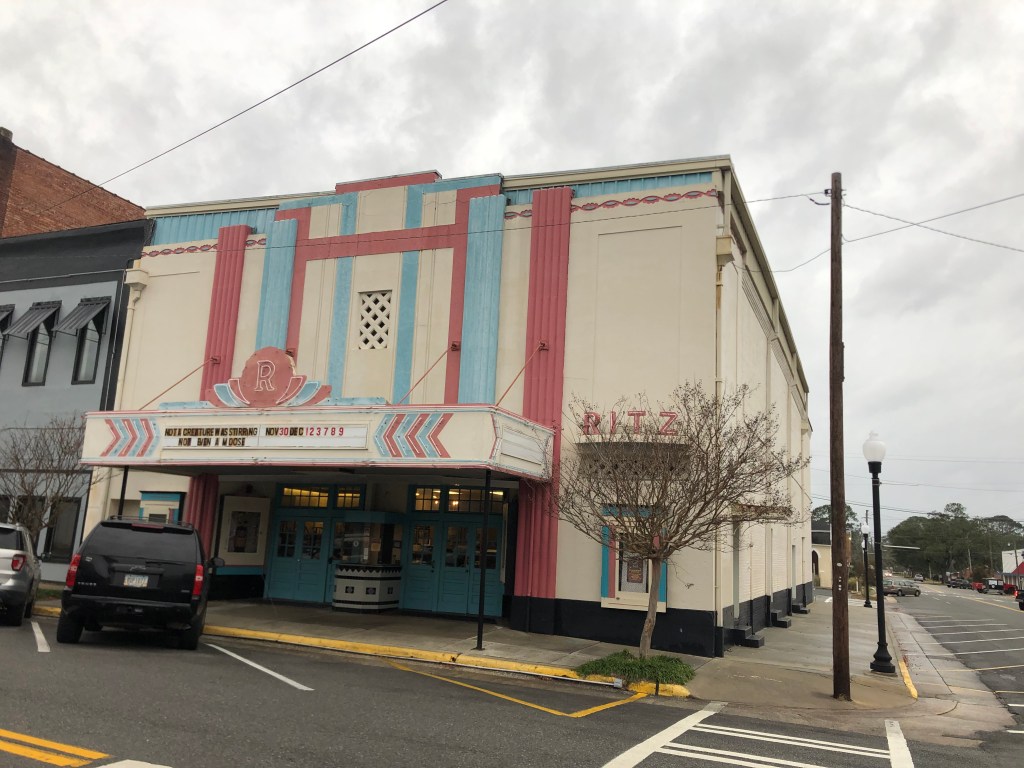
Everything’s better on a Ritz.

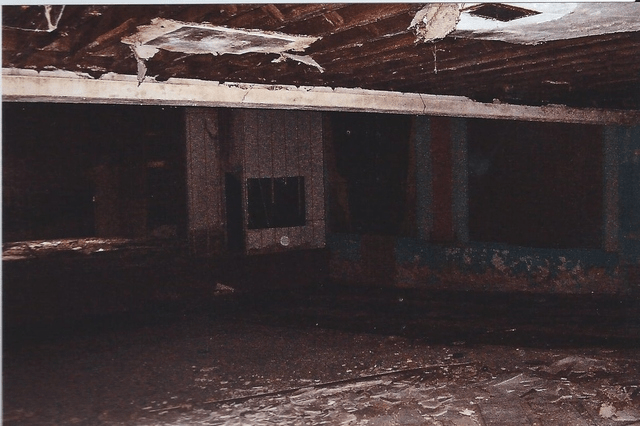
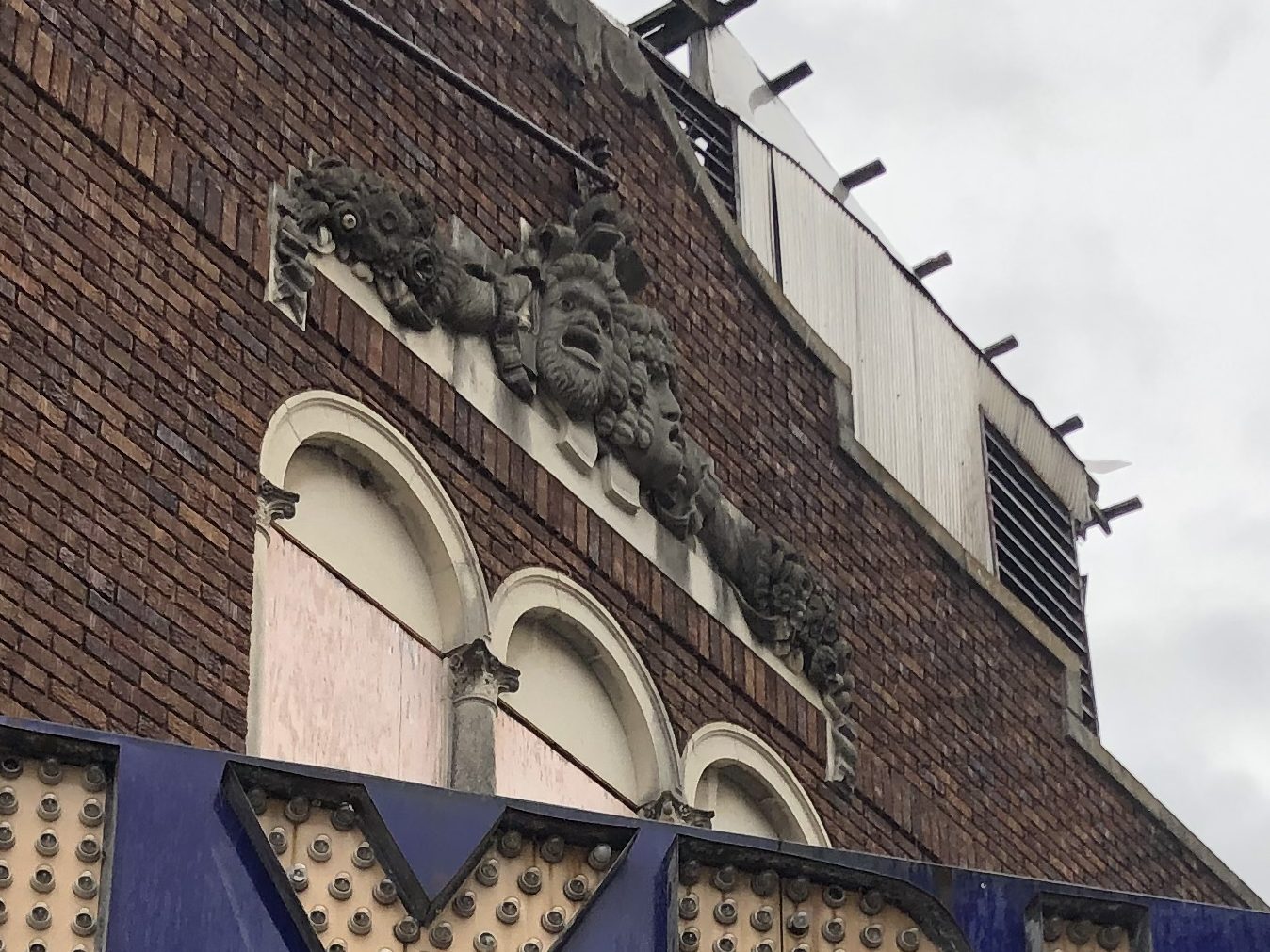
Waycross’s other theater has a less successful story. The Lyric Theater opened in 1923, and like the Ritz, it showed movies in the middle decades of the 20th century. I can’t find when it closed, but They Shoot Horses Don’t They? was playing there as late as 1970. For my money, the Lyric is far more interesting looking than the Ritz, but its interior is probably beyond salvation.
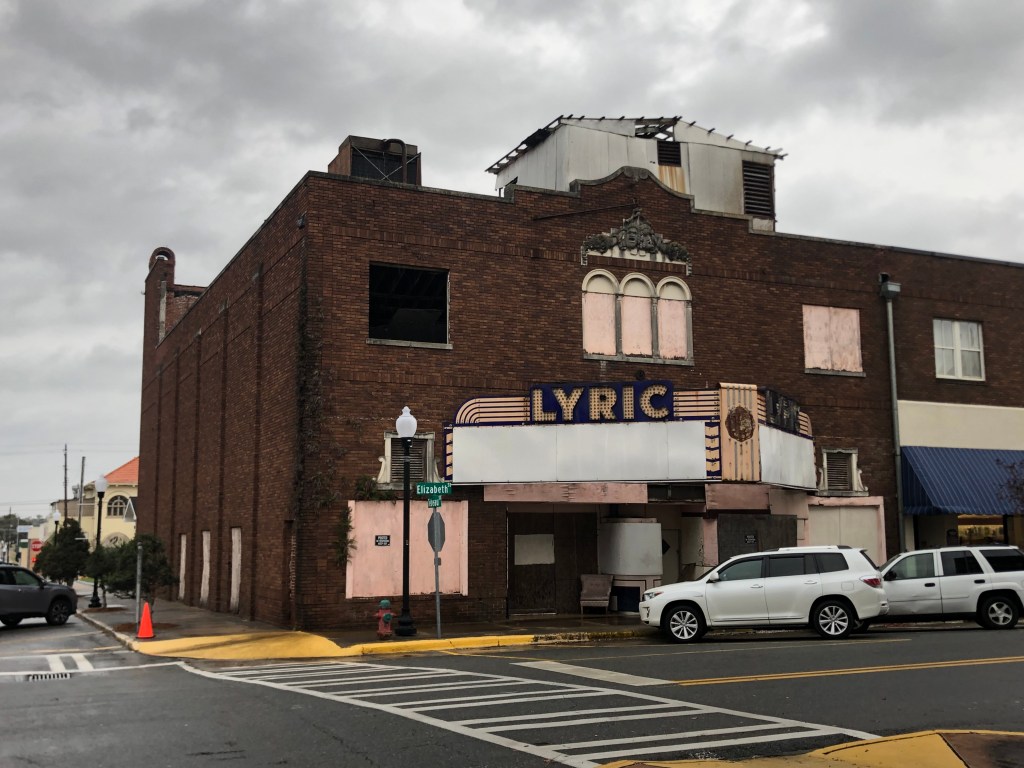
The Lyric Theater looks pretty solid, from a distance.
Note the detail in the original decoration of the facade.
2018 photo of the interior, from “Cinema Treasures” website.

The reason I came across those theaters is because I was looking for a Studebaker dealer. Let me explain:

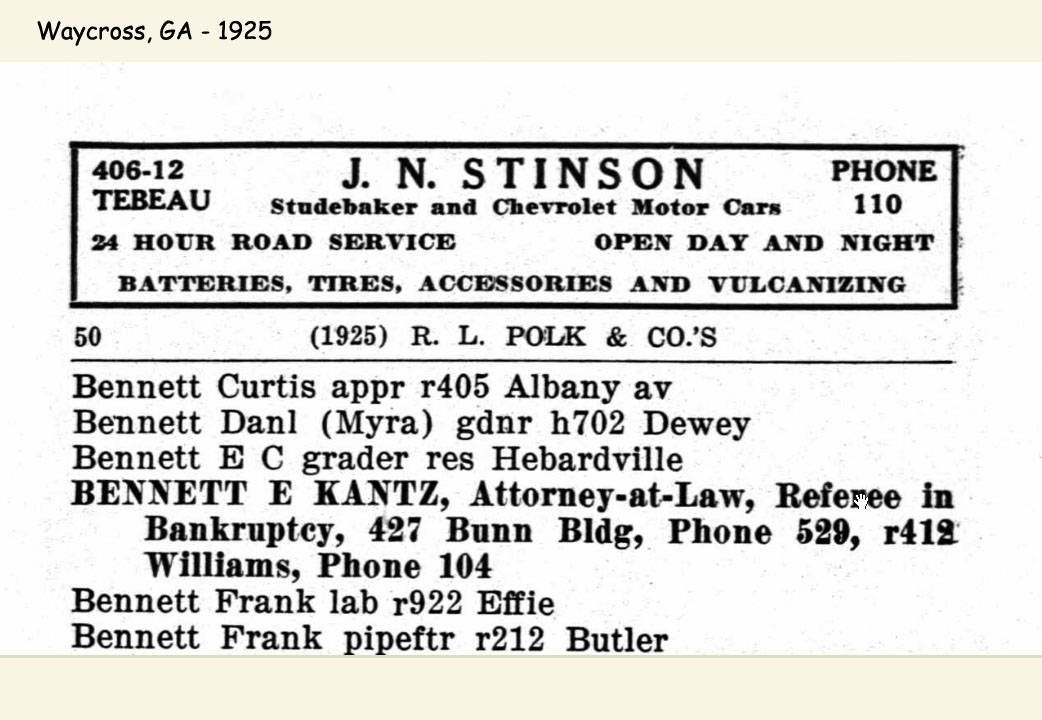
Loyal reader Victor R sent me a link to a database of Studebaker dealerships all across the country. The database lists two dealerships in Waycross: Johnson Motor Car Co. at 302 Albany Ave, and J.N. Stinson at 406 Tebeau St. The first address is now just a vacant lot, but there is a building at the Tebeau address. I think the current building is not the same as Stinson’s dealership, though, because according the database Stinson was in business in 1925. And what I saw today is clearly not a 1925 building.
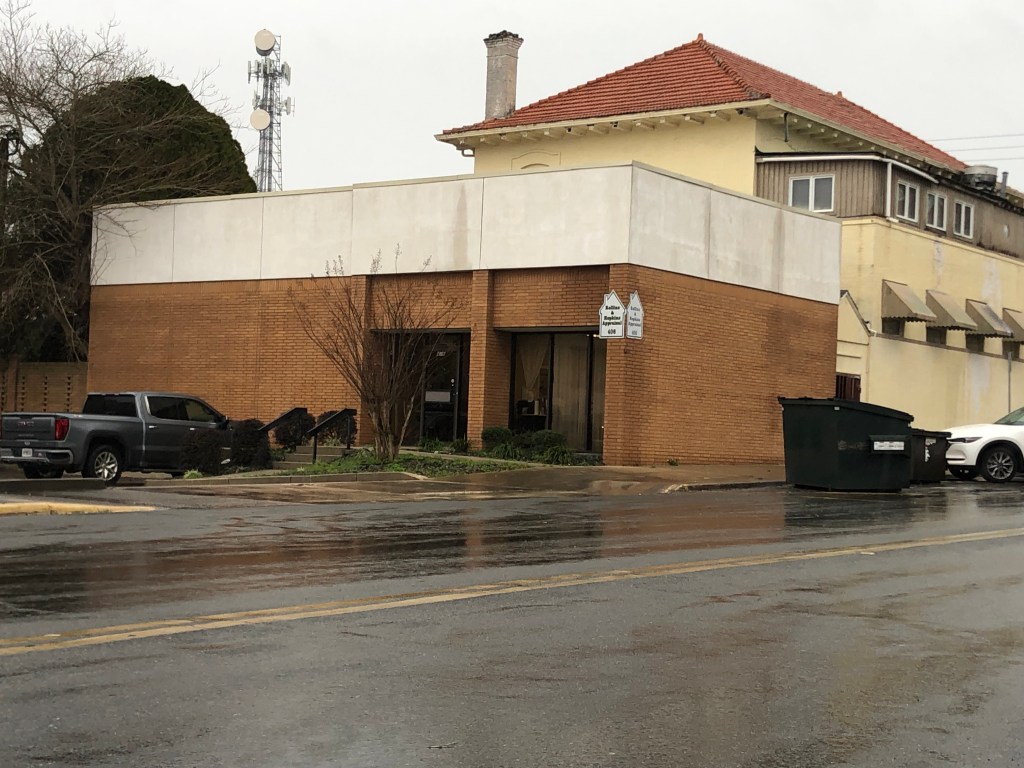
Probably was not used as a Studebaker showroom.

Eventually I got back onto Route 82 to complete the final 60 miles of the trip. The weather was worsening again, but it was still driveable. A cup of coffee from a Waycross coffee bar kept me alert.

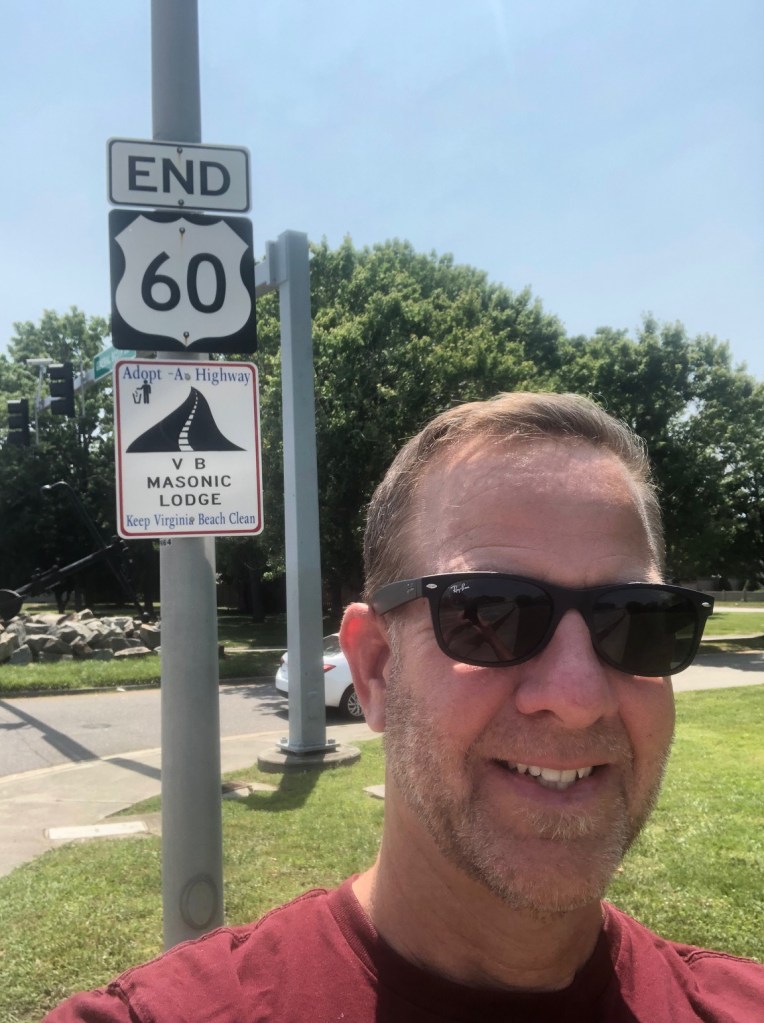
It seems that I’m always able to sense when I start to approach the Atlantic, and today was no exception. I don’t know if there’s a scent in the air, or if the landscape changes (definitely the density of trees thinned out), or if the development patterns change, or maybe the style of architecture is different. All I can say is that it felt like I was getting close to the end of the continent. I was anticipating the satisfaction, the closure, of arriving at that final Route 82 sign that says “END” on it. Like this one at the eastern end of Route 60:
The rain was getting heavier, but I just knew I was almost there. I fixed my eyes on each sign I passed, straining to see past the rain on the windshield and the rapidly-sweeping wipers, anticipating the dopamine hit I would surely receive when I caught side of the “END.” And then, suddenly…I’m on US 17 north! What happened to US 82??

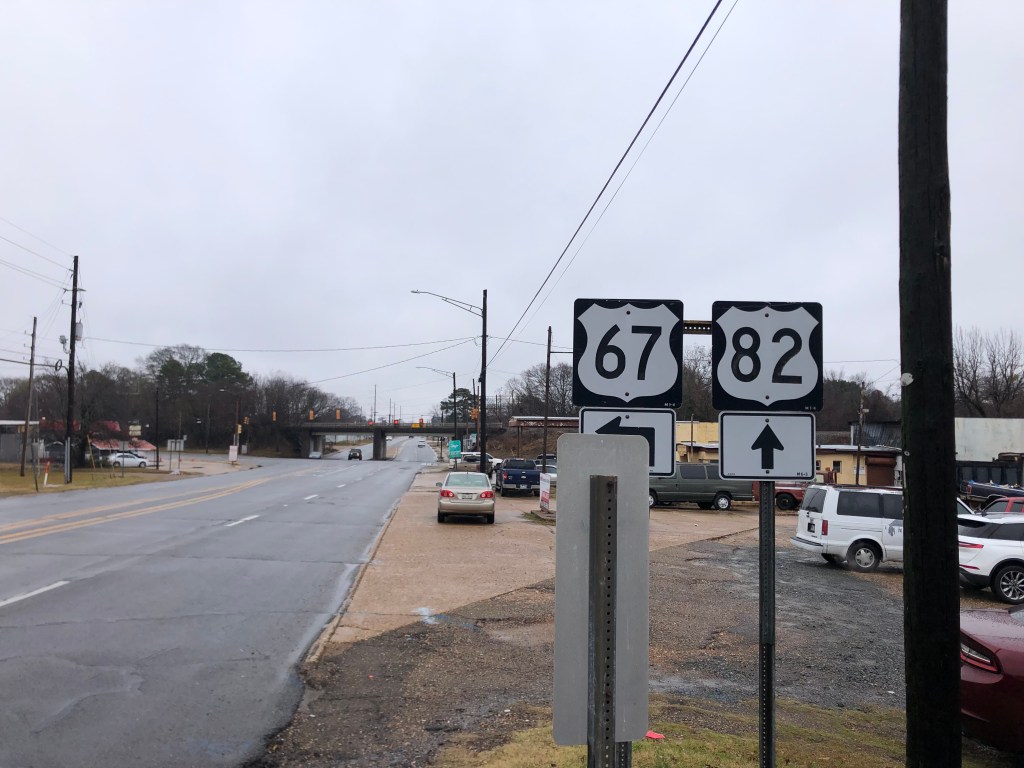
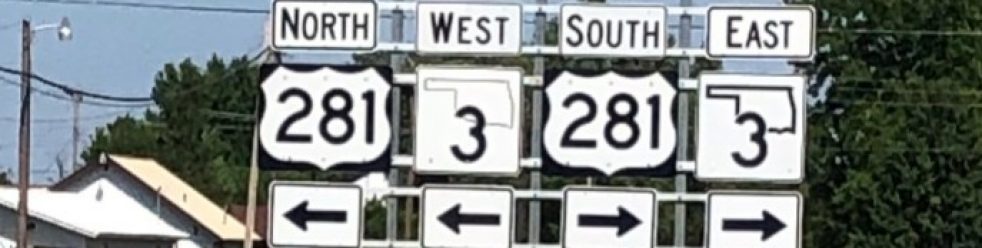
It took me some retracing of my steps to sort things out, but the bottom line is that there’s no END sign. Instead, there’s what I’ll call a “handoff” sign that marks both 82 East and 17 North simultaneously. This is the easternmost sign for US 82.
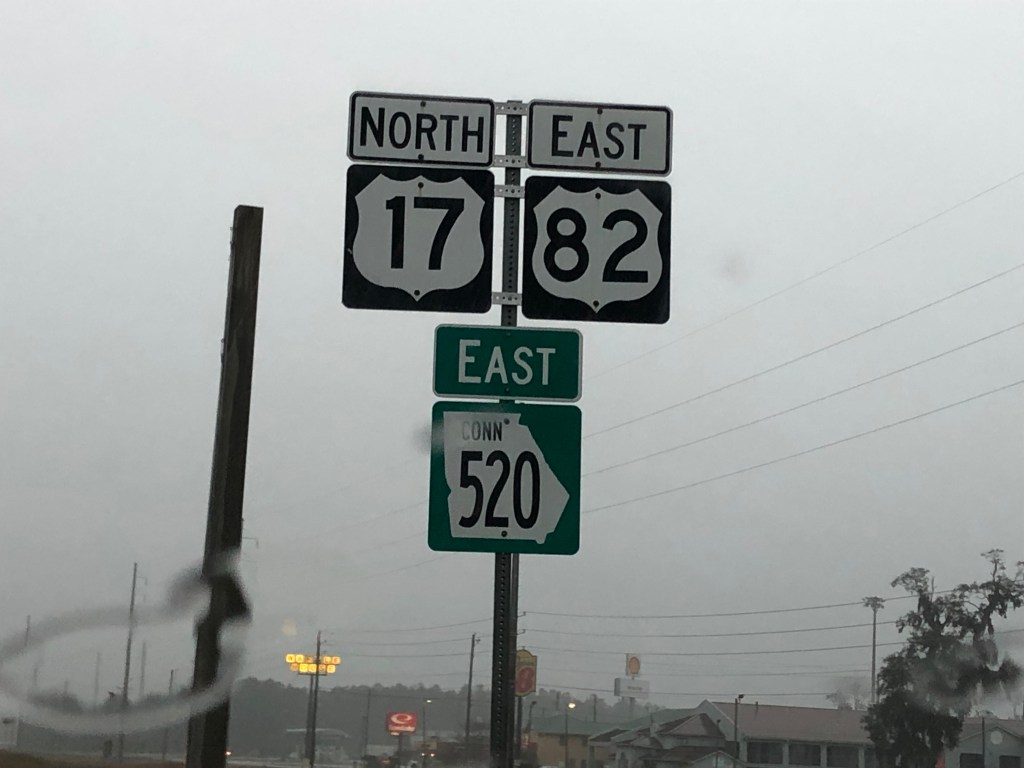
End of the line.

Well, that was anticlimactic. But no matter. I had safely made it to Brunswick, that’s what mattered. And to celebrate, I took a picture of the big stew pot that supposedly was used to make the first Brunswick Stew in 1898.
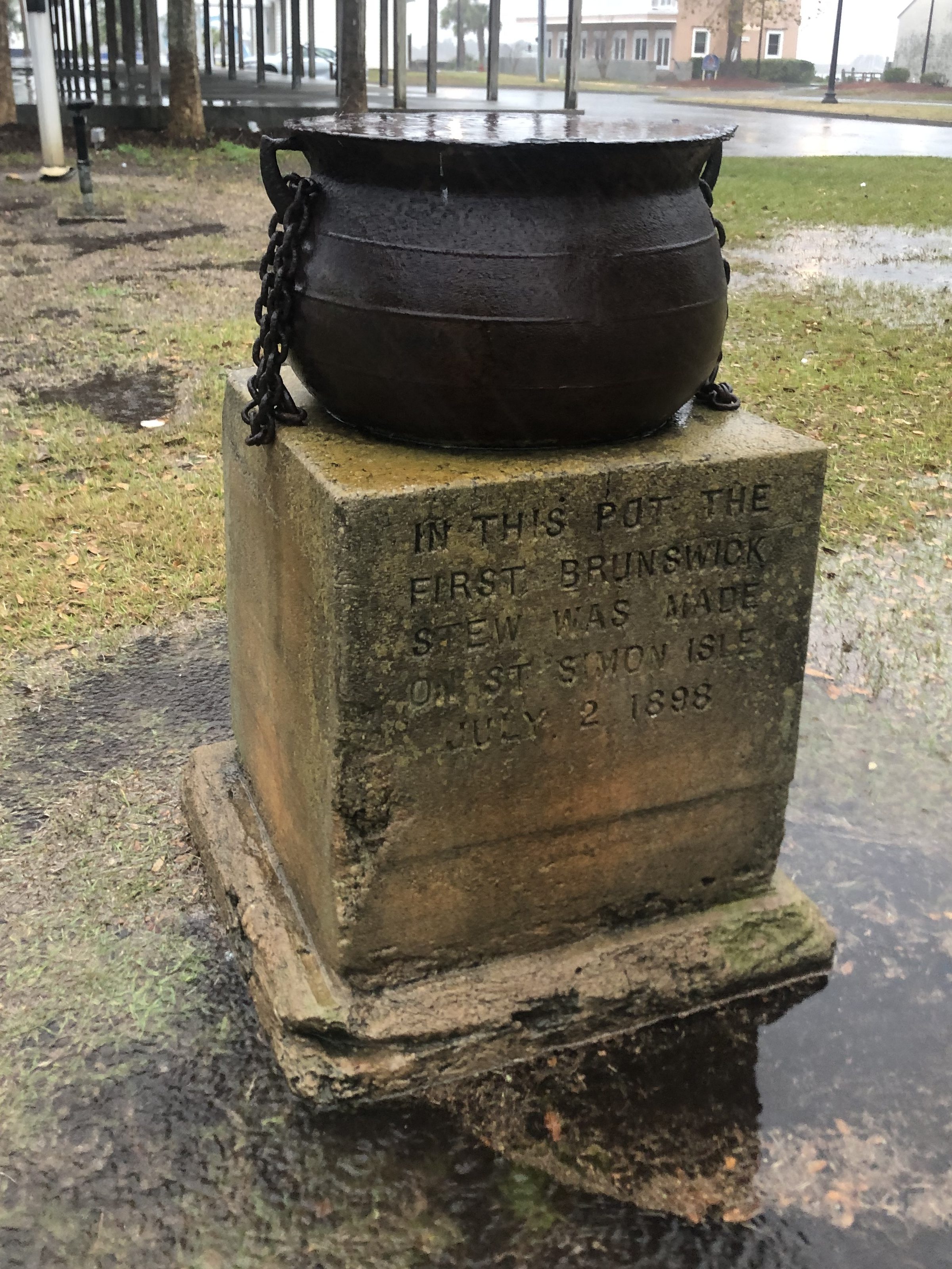
“In this pot the first Brunswick Stew was made on St. Simon Isle July 2 1898.”

There only remained two things left to do: First, I got my Brew of the Day (see below). And then, tomorrow, I will do a Mystery Travel Task that will complete an important collection for the Boilard Travel Archive. All will be made clear tomorrow. Now it’s on to the:

BREW OF THE DAY

Today’s BOTD came from Weber’s Growler Factory in Brunswick. It’s an interesting place, with forty beers on tap to fill your growler or to drink there by the glass. They also have a lot of bottled beers and an extensive selection of cigars. Sadly, they also have one of the most disinterested, unfriendly bartenders you’ll ever meet.
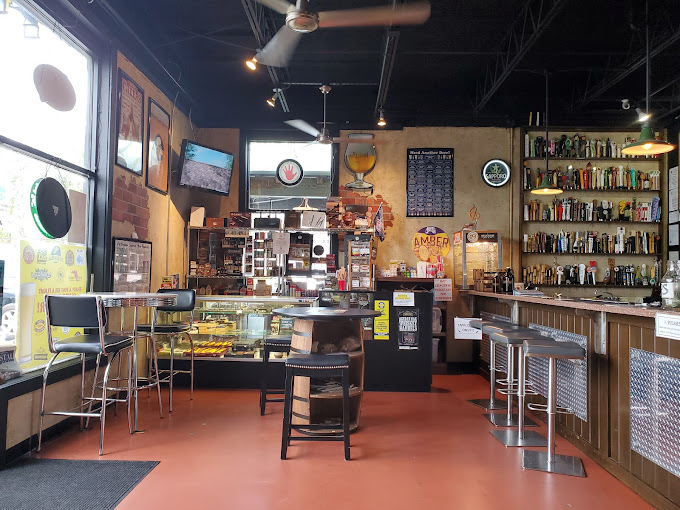
Eclectic taproom. (photo lifted from Yelp, since I didn’t want to tick off the bartender with my camera)

I was overwhelmed by the menu, so I asked for something local. Turns out the only beer from a Brunswick brewery is a Mexican lager. Lagers really aren’t my cup of tea, especially on a stormy winter day. So I asked if there was anything from elsewhere in Georgia. I ended up with a “De-stress Express” from Georgia Beer Company in Valdosta, GA.
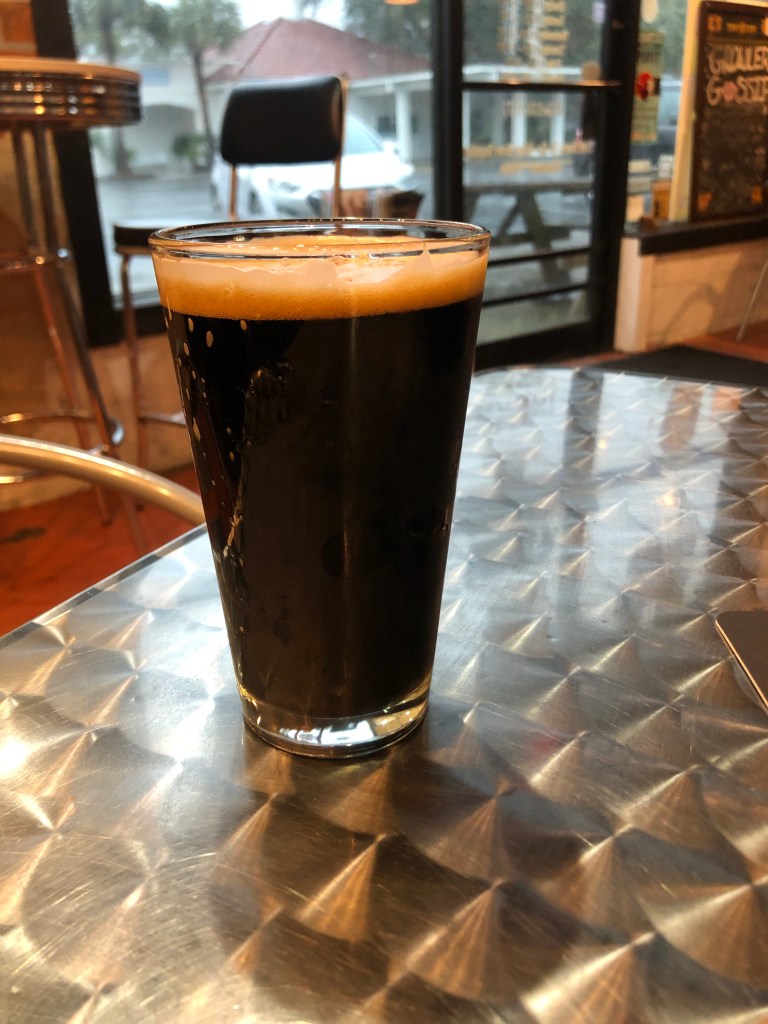
All aboard the De-stress Express!

Interestingly, though I didn’t plan it, the De-stress Express is quite similar on paper to the Stone Xocaveza I drank last night. They are both stouts that are intended to evoke a mix of coffee and chocolate. But while Stone’s effort tasted flat and uninteresting and even a little off, today’s entry from Georgia was a winner.

De-Stress Express’s chocolate and coffee tastes don’t fight against each other; they complement each other. The coffee keeps the chocolate from being too cloying, and the chocolate keeps the coffee from being too bitter. Some light hoppiness is present, nicely balanced by the creamy, milky lactose. Today’s beer also had more carbonation than Stone’s, which helped to create a foamy head and to provide a nice tickle on the tongue. The beer comes across quite bright and fresh, which is a bit unusual for a stout. Perhaps that’s because it’s a local brew? Mouthfeel is very full-bodied and creamy. Definitely for sipping rather than quaffing. It took me almost half an hour to get through mine! ABV is a manageable 6.5 percent. I wish I could get it in California. Four stars out of five.
Cars · cemeteries · movie theaters · Road trips · trains

Ruminatin’

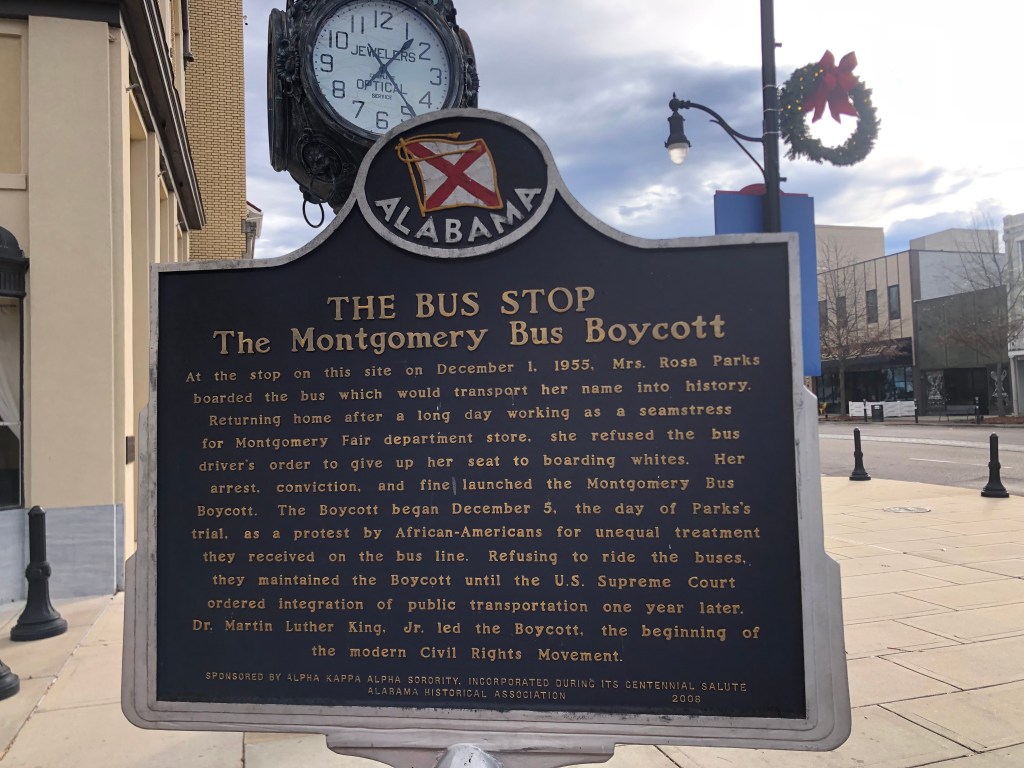
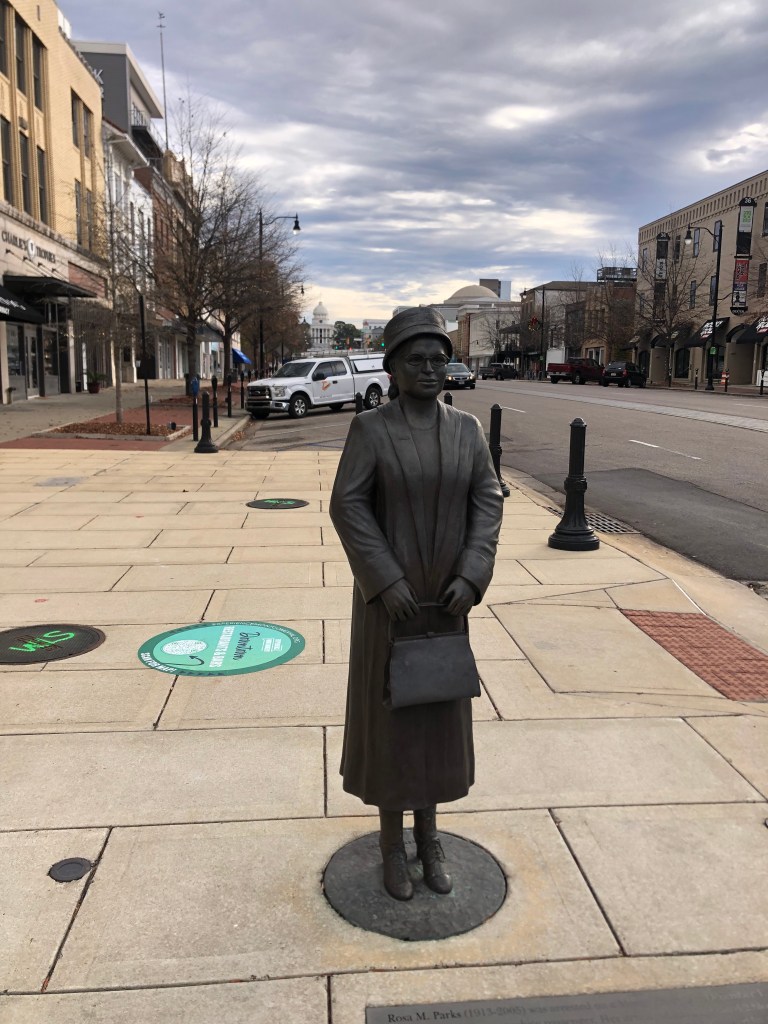
Only a short drive along Route 82 from my hotel takes one to Alabama’s capital city. Montgomery (pop: 200,000) is far and away the largest city I’ve been to on this trip. Montgomery was, of course, ground zero for the Civil Rights movement in the 1950s and 1960s. Throughout the downtown you encounter murals, statues, commemorative plaques, and other installations marking aspects of Montgomery’s civil rights history.

The spot where it all began.
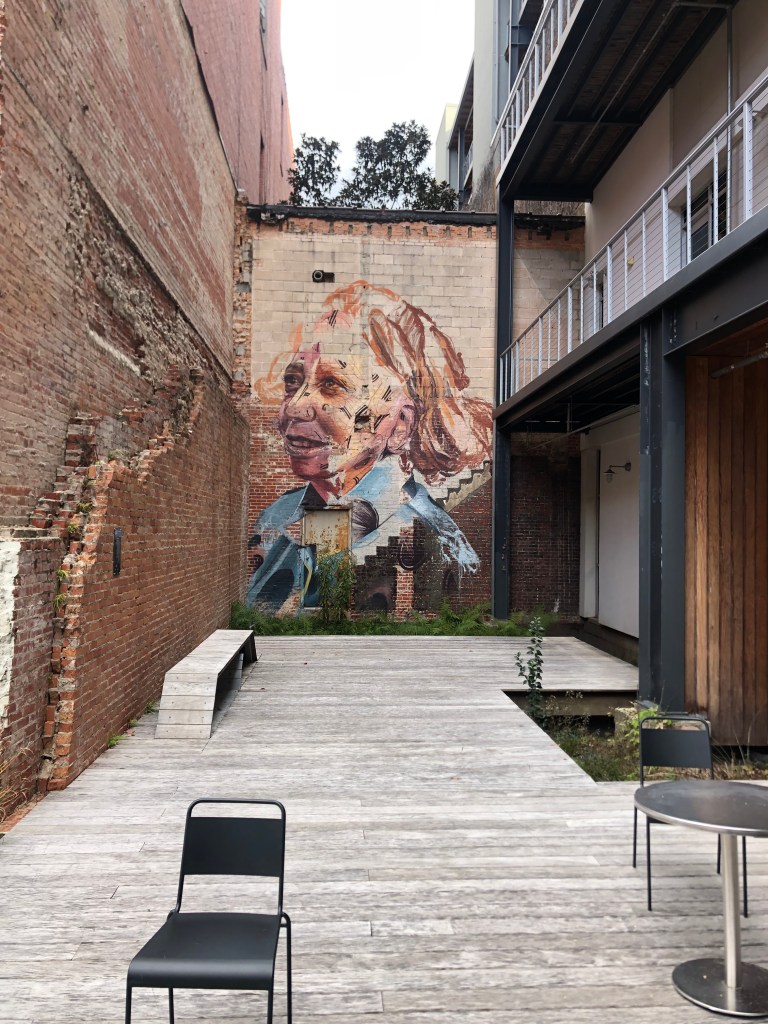
Mother of the Freedom Movement.
Valda Harris Montgomery.

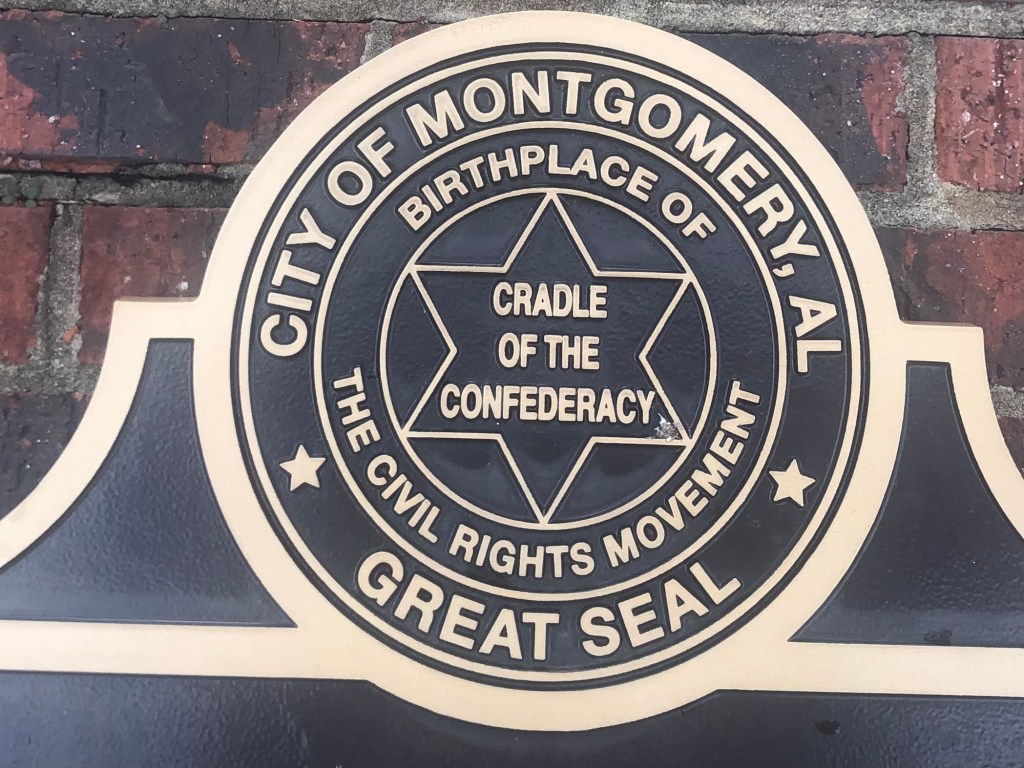
Montgomery’s streets are filled with many dozens of such iconography of the Civil Rights movement. Clearly the city’s official attitudes have changed greatly since the 1950s. And yet, it’s also evident that the city has not fully reconciled its history. The dissonance is captured in the city’s “great seal,” which I spotted on one of the historical markers:

By way of background: For many years, the city seal included the “Cradle of the Confederacy” phrase, but not the reference to the Civil Rights Movement. The latter phrase was added in 2002, in an effort to take the sting out of what sounded like a paean to the confederacy. And yet, to me this seems to simply highlight the simultaneous existence of two conflicting mindsets: an embrace of Montgomery’s history as the capital of the Confederacy, and an embrace of its role in promoting the Civil Movement.

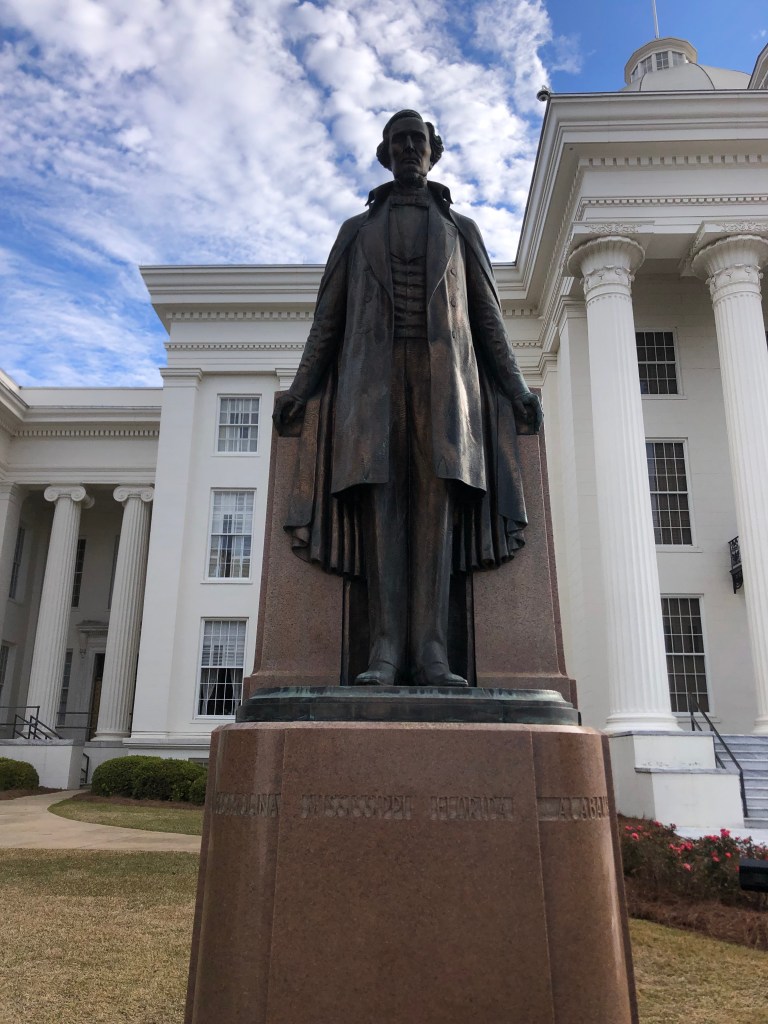
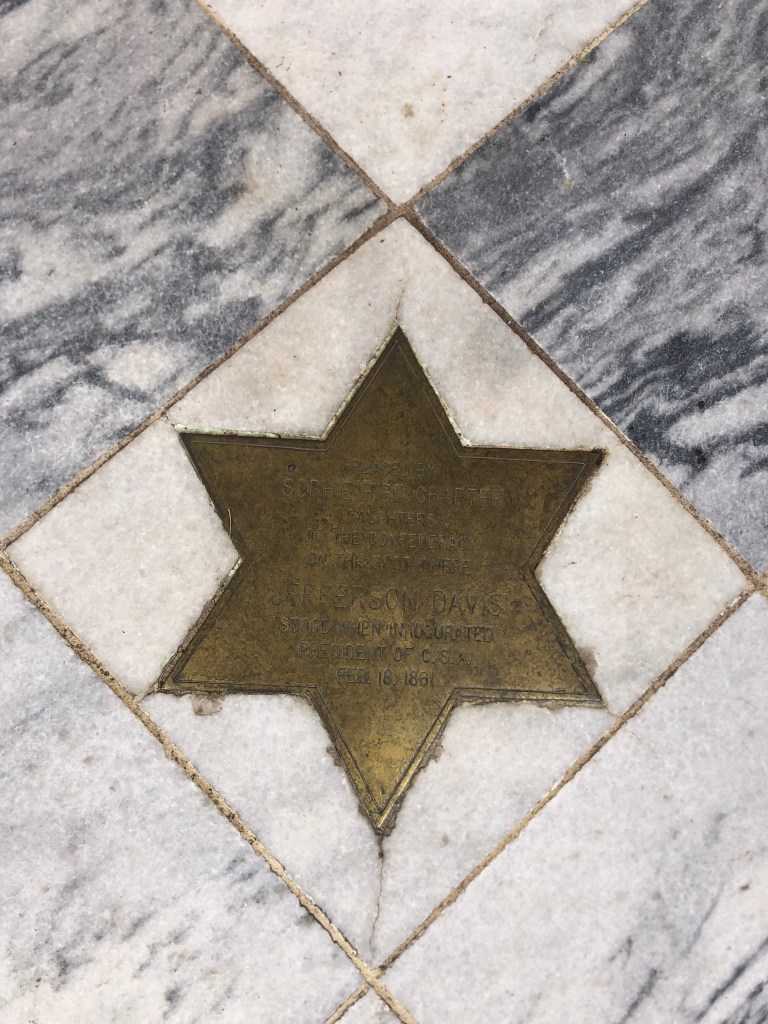
That contradiction becomes clearer as you walk up the street toward the Capitol building. There you can find a series of bronze reliefs depicting aspects of the slave trade and other mistreatment of African Americans. But you’ll also see a solemn statue of Confederate President Jefferson Davis, as well as a bronze star on the steps of the Capitol marking the spot where he took the oath of office.

Jefferson Davis doing his Count Dracula impersonation.
“Placed by Sophie Bibb Chapter Daughters of the Confederacy on the spot where Jefferson Davis stood when inaugurated President of C.S.A. Feb. 16. 1861.”

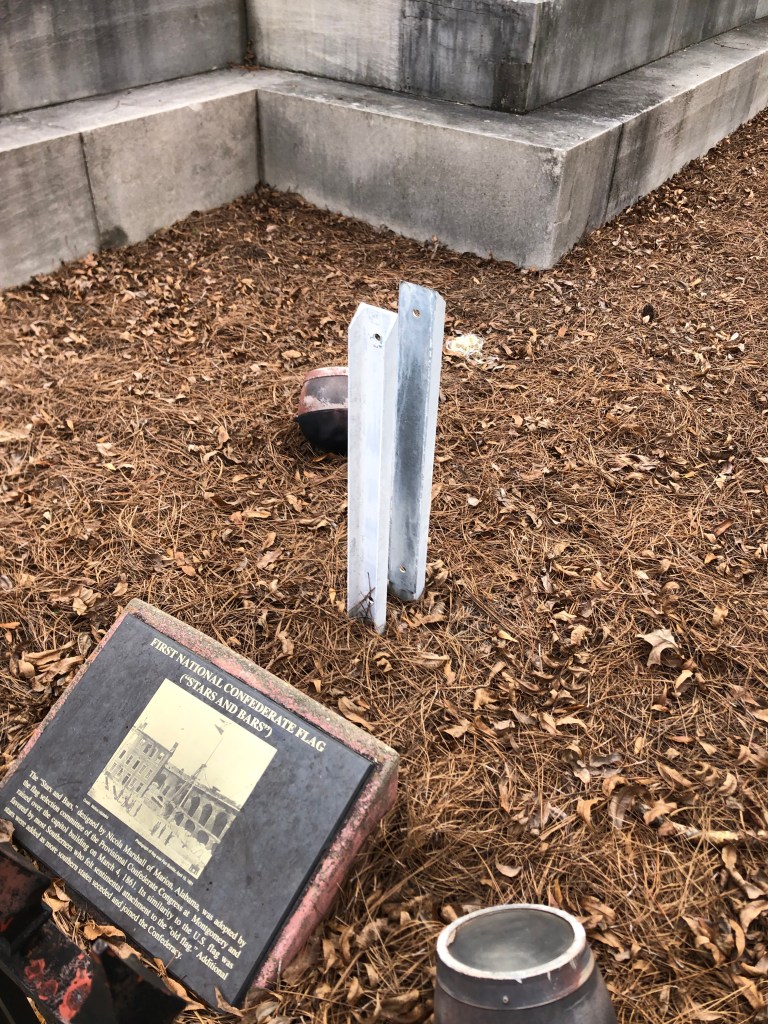
You’ll also see the empty spots where Confederate flags had flown until the Governor ordered their removal in 2015. But the bronze and limestone Confederate monument that those flags had surrounded still stands.

Flagless for over eight years.

I certainly don’t presume to tell Montgomerians how to reconcile the various aspects of their history. But I would observe that there is a difference between acknowledging history and celebrating it.

OK, now that I’ve once and for all solved the cultural arguments over the Civil War, let’s move on…

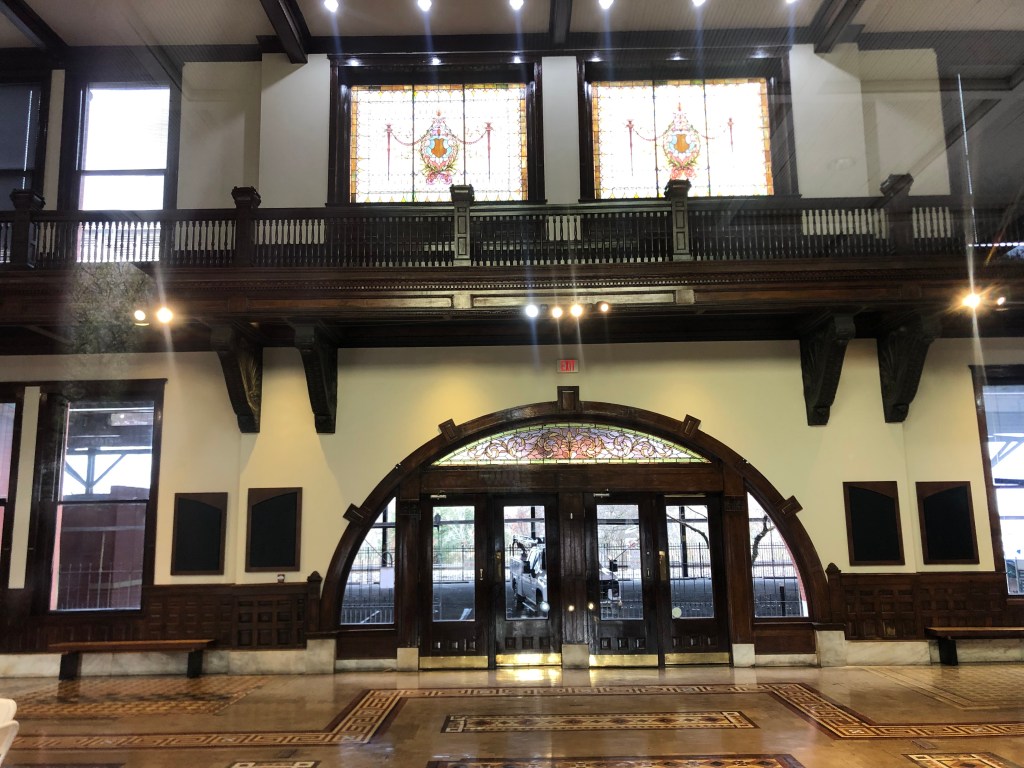
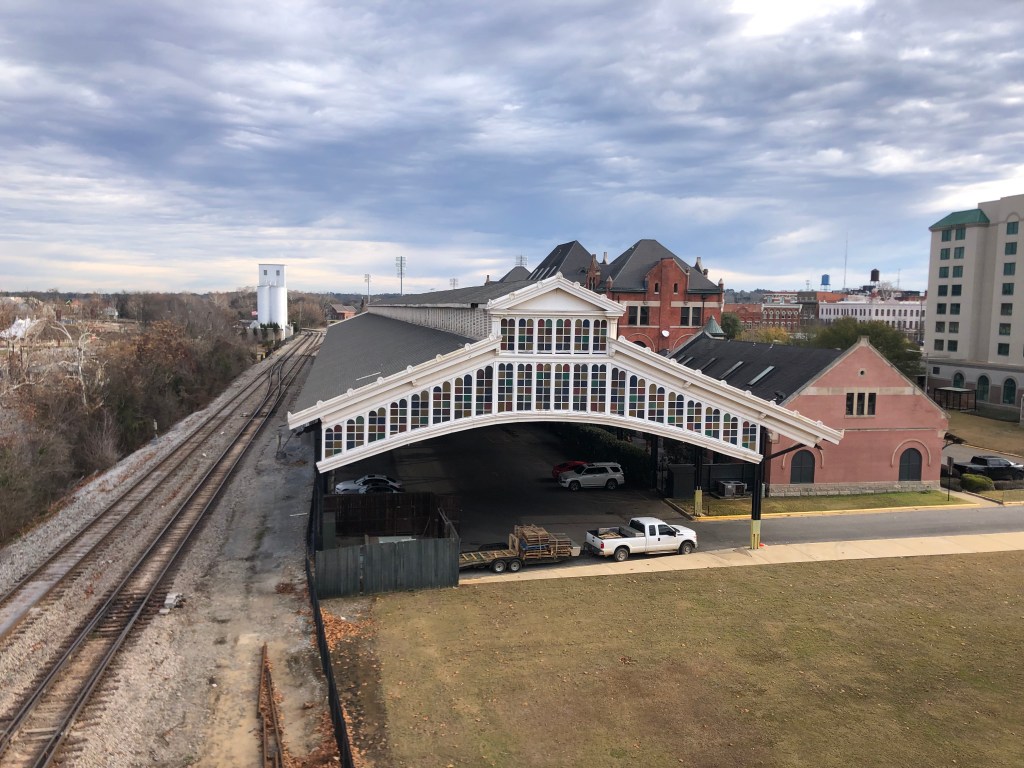
Believe it or not, while in Montgomery I encountered my third Union Station on this trip. Montgomery’s Union Station was built in 1898 for the Louisville and Nashville Railroad. It was one of the country’s busier stations, serving 44 passenger trains from a dozen railroads during its peak. Over time, of course, rail travel diminished and the last train stopped at Union Station in 1979. Since then the station was converted to a visitor center and has been leased to various commercial clients. You’ll note that this structure has been magnificently preserved; the comparison to Texarkana’s crumbling structure is stark.

Another day, another Union Station.
Interior of waiting room–now an event space.
Aerial view of covered trainshed adjoining Union Station. (Photo taken from atop a parking structure.)

Railroads were crucial to the development and survival of southern towns. That’s true for the rest of the country as well, of course. But it seems that railroad infrastructure is more prominent in the towns I’ve encountered on this trip than it is in California towns. Maybe that’s just because California has (sadly) been more aggressive in tearing out the obsolete railroad infrastructure and substituting new housing developments and business parks. Whatever the reason, scenes like the one below (from Eufaula, Alabama) seem common on this trip.

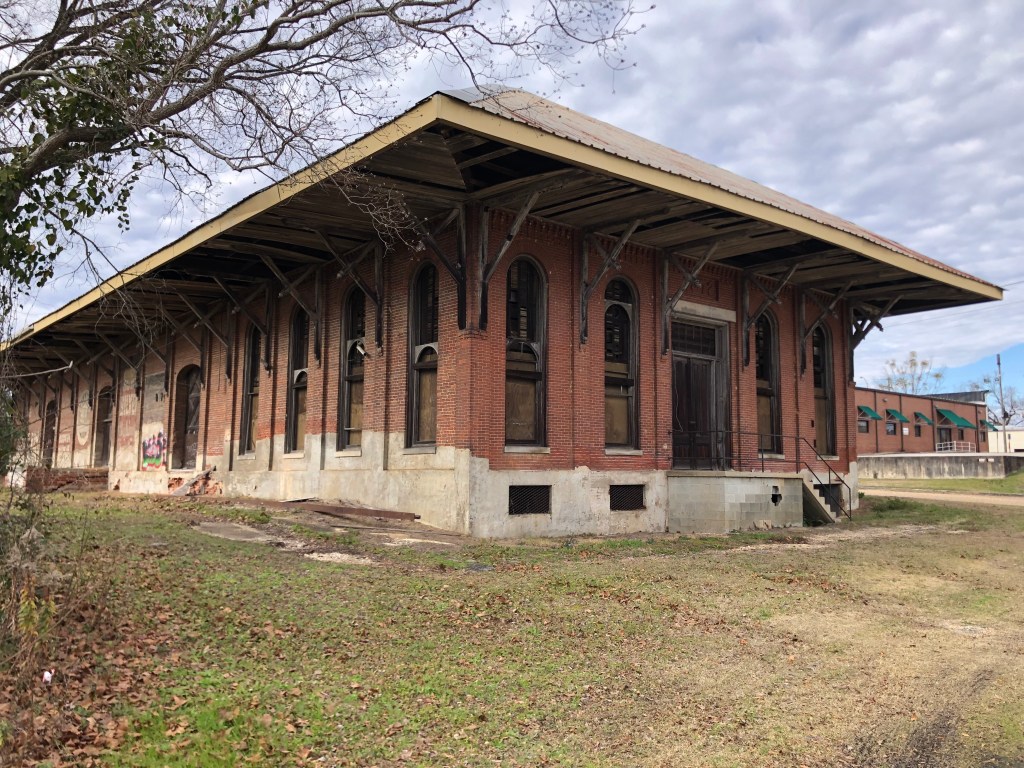
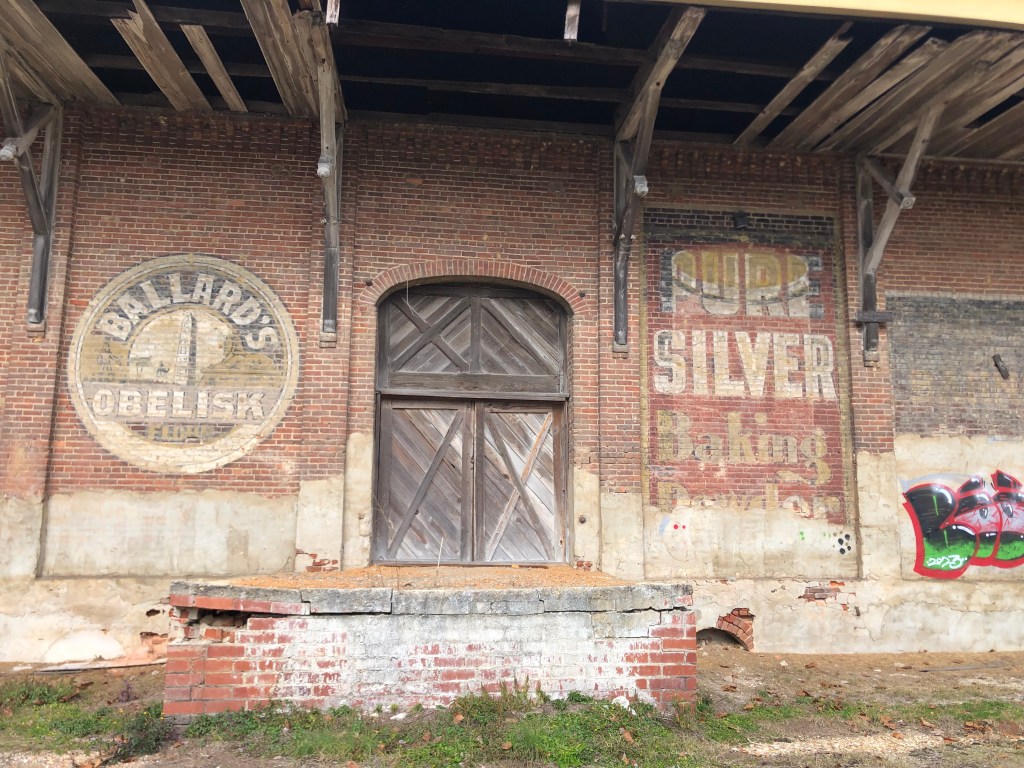
The Vicksburg and Brunswick Railroad built this passenger and freight depot in Eufaula, Alabama in 1872. It has not served passengers for over a century, and it’s now owned by the local Methodist Church for reasons that aren’t entirely clear.
Note to taggers: PLEASE don’t mess with those historic advertisements!

This leads to a third thought: I’ve given a lot of thought in this blog to the comparison of thriving and declining historic districts along various US highways, including of course Route 82. I’ve speculated about the influence of local universities, the re-routing of trains and highways (i.e., the Route 66 effect), and other possible factors. There’s also the chicken and egg question about needing funds to redevelop historic buildings, and needing redeveloped historic buildings in order to generate revenue. One thing does seem clear: some of the old towns have managed to successfully preserve and/or renovate their historic districts (let’s call them The Preservationists). Others have knocked down the old structures and replaced them with a Piggly Wiggly or a Dollar General (call them The Replacers). And still others, either due to a lack of will or a lack of funds, don’t do much of anything, and their buildings slowly decay. Call them the Porch-Sitters.

It’s not like any one approach is always the best. Circumstances and resources matter. But it should be clear that I especially appreciate those towns that have found a way to maintain aspects that make their town unique and that connect them with their history. I think the problem with the Replacers is they all end up looking alike, hosting the same Olive Gardens and Kohls and Home Depot and Bed Bath & Beyond.

I feel the sorriest for the Porch-Sitters. I think towns that slowly decay aren’t doing so because they don’t care. Rather, they’ve lost their major employers or their young people have moved away or the interstate siphoned off their drive-through traffic. They fall into a destructive cycle where the population and the infrastructure together age and eventually collapse.

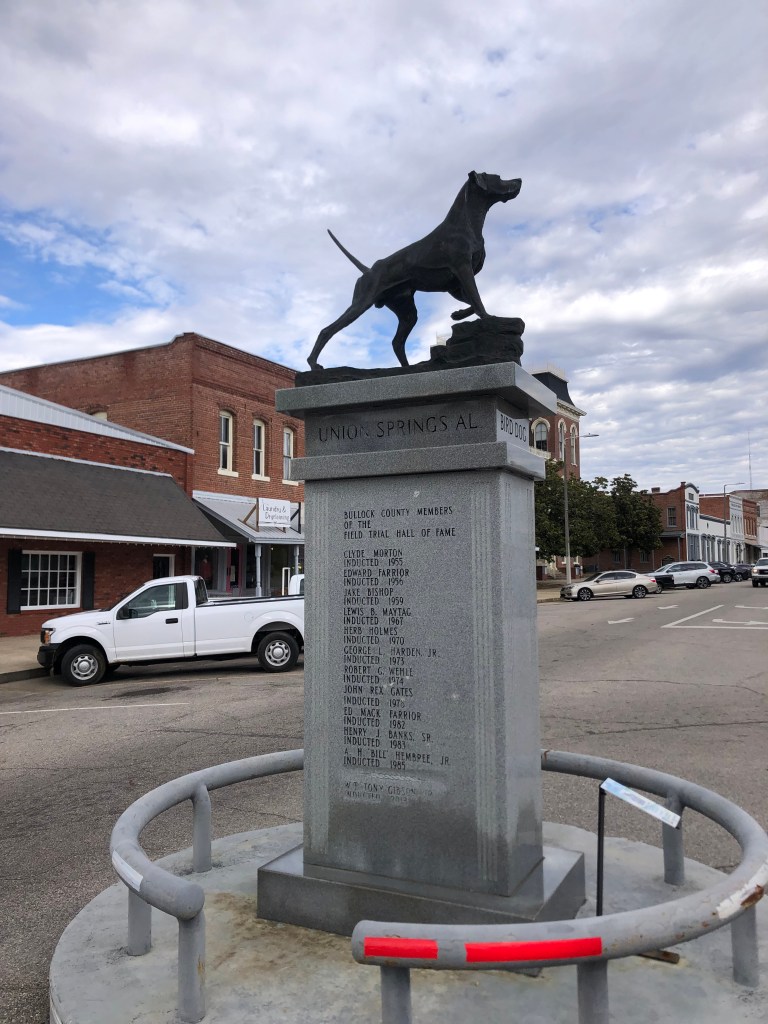
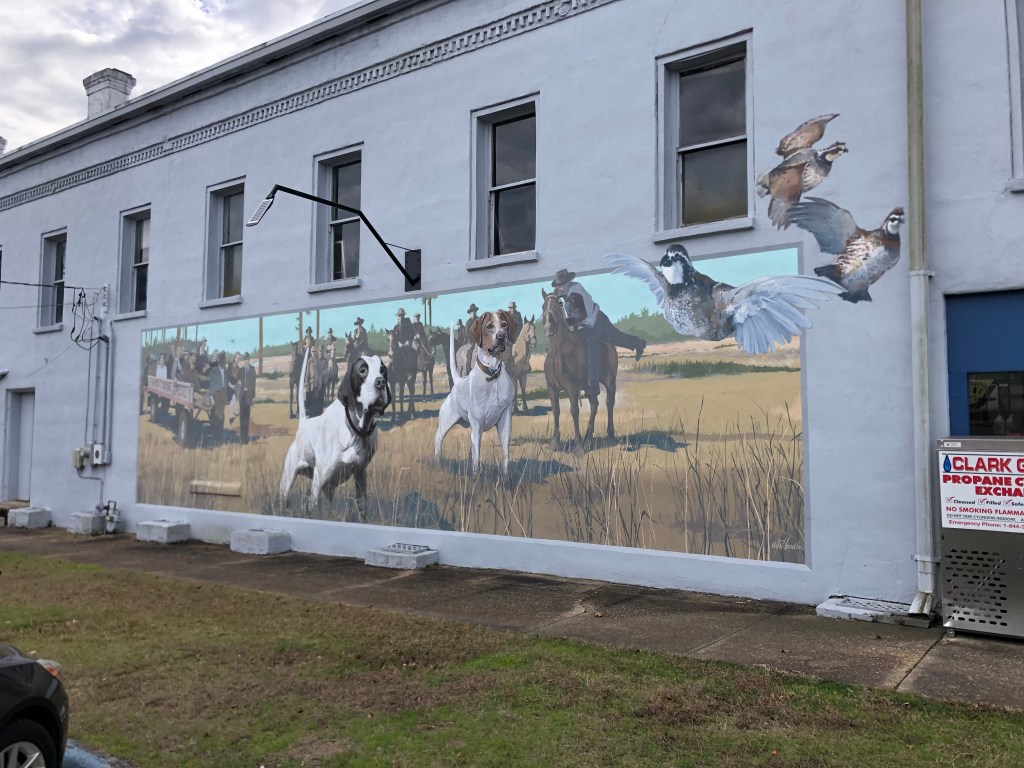
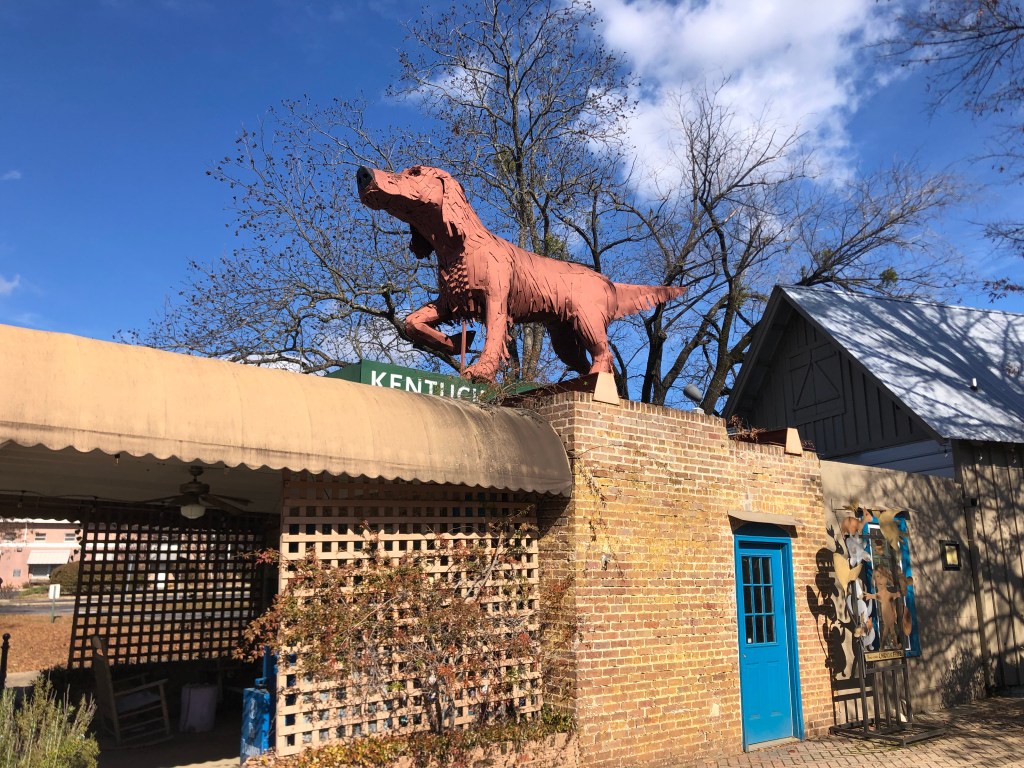
Today I drove through the town of Union Springs, Georgia (pop: 3,300). It’s not a prosperous town; about 44 percent of the population is below the poverty line. The local economy sprung up from the cotton industry, but in the 20th century many of the cotton fields were converted to hunting preserves. Interestingly, the town has capitalized on that change by rebranding itself “The Bird Dog Field Trial Capitol [sic] of the World.” The town hosts annual field trials for hunting dogs every fall and spring, and it has erected monuments and murals celebrating that fact.

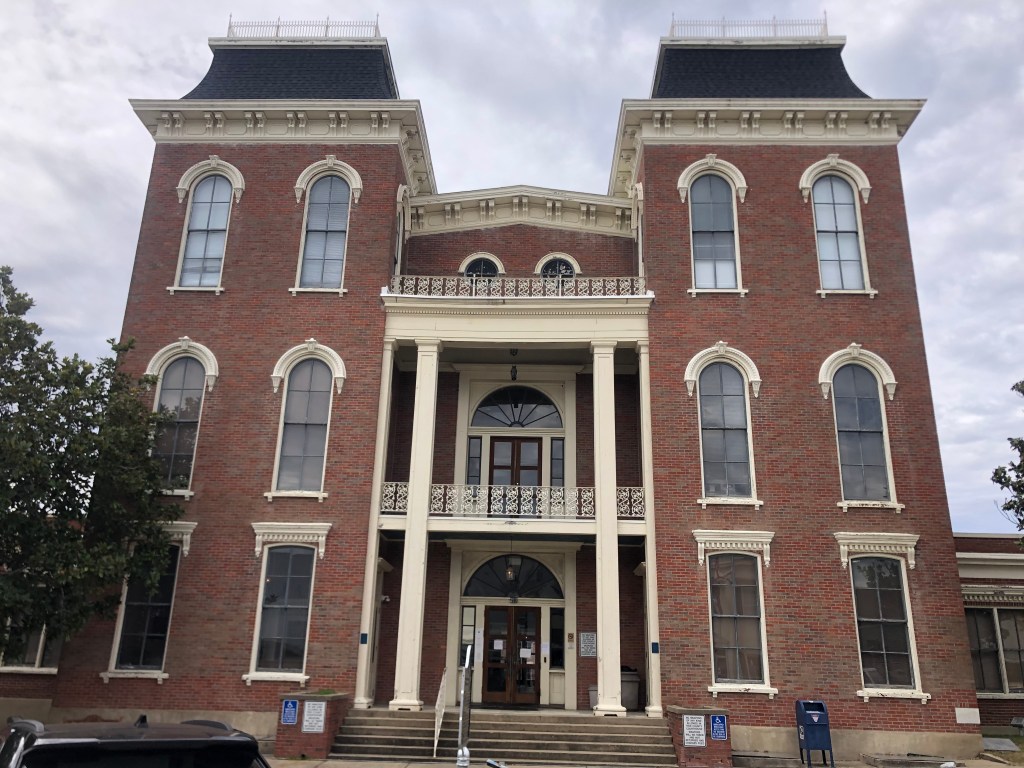
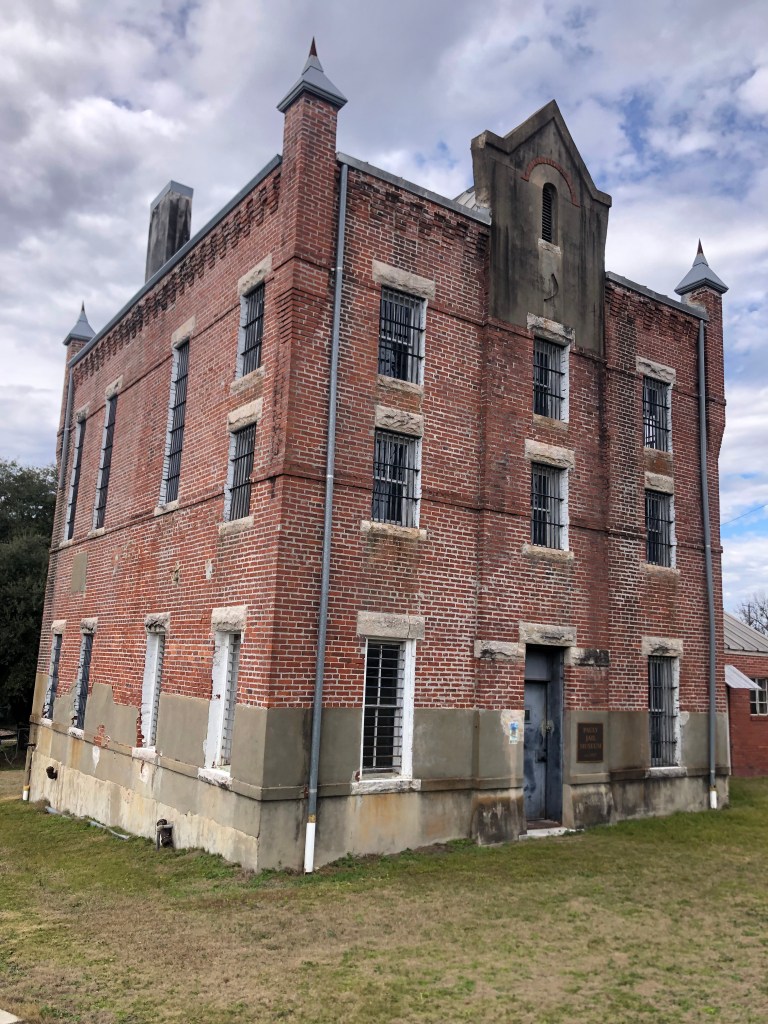
The town also restored its historic county courthouse and jail to the tune of about $2 million…

The 1871 courthouse looks impressive…but it wasn’t open to the public, because the Barney Fife-like guard was taking a break.
The 1897 jail was partially restored and converted to a museum….but it was closed to visitors when I saw it.

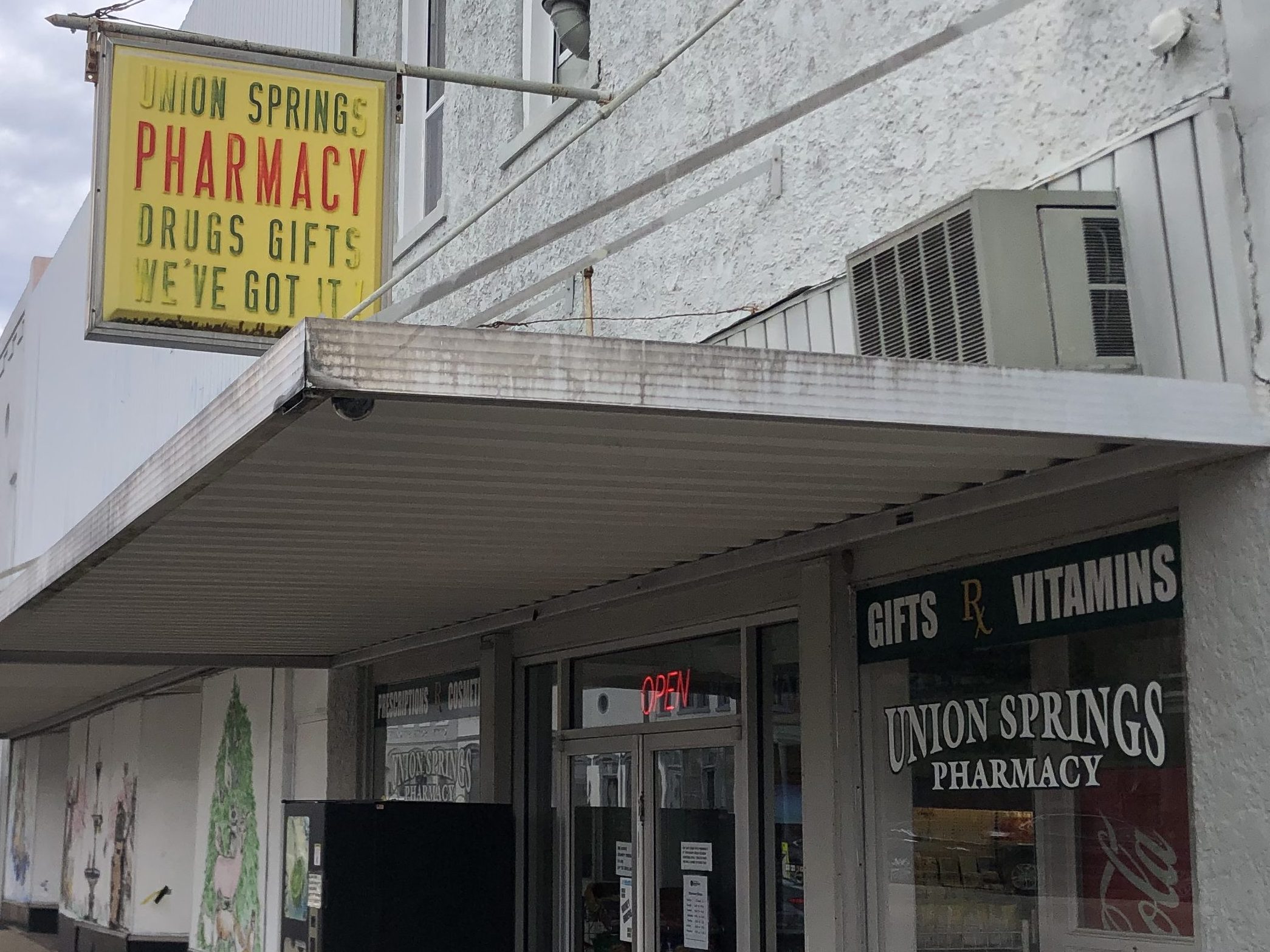
At the same time, however, most of the buildings along the commercial main street haven’t had a facelift in many years.

The one human being I saw on the street was a guard from the courthouse. He didn’t seem particularly interested in showing off his city to a (presumably rare) winter visitor. I’ll be interested to see how Union Springs fares over the next decade. I can’t quite tell whether the balance is tipping toward Preservation or Porch-Sitting.

About 40 miles further down Route 82 is the town of Eufaula (pop: 13,000). This town seems to be firmly in the Preservationist camp. Large, plantation-style homes line a section of US 82 as you come into town.

The core, historic business district, meanwhile, has a large number of shops, restaurants, cafes, professional services, and even a historic theater. I had lunch at a Mexican restaurant that was completely full of families and couples.

The 1927 theater facade was recently “restored” (with the unfortunate addition of a garish, pixelated marquee). The interior is still being renovated.

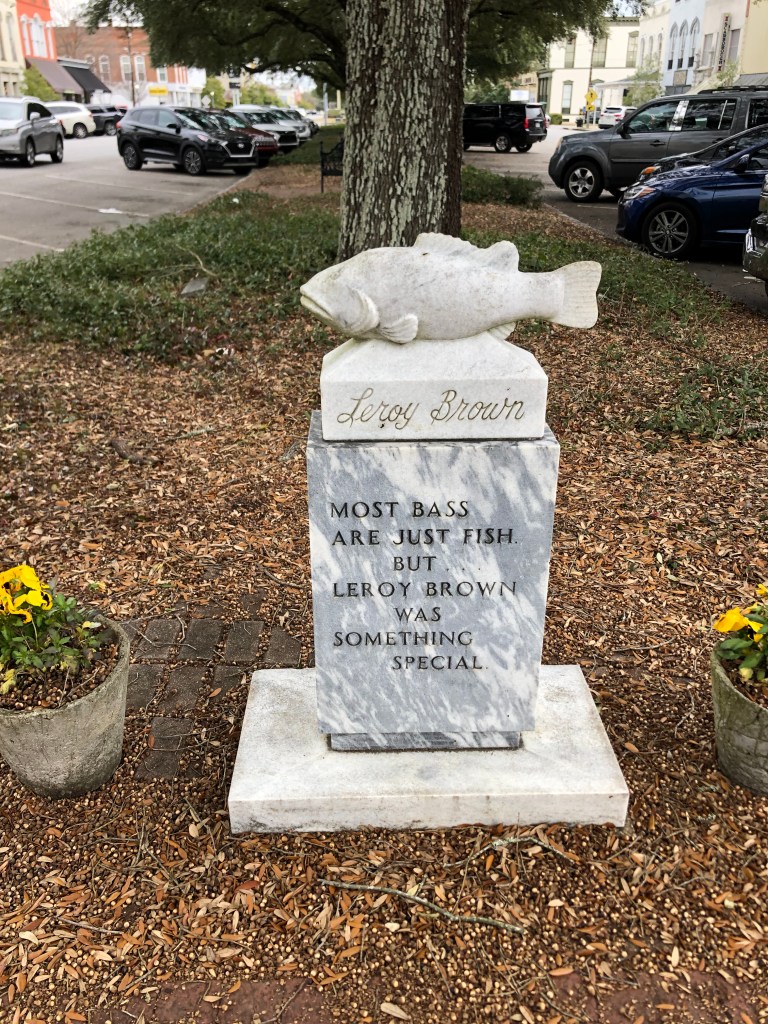
On a green, tree-lined strip in the middle of Main Street is what looks like a tombstone for a fish.

And meaner than a junkyard dog!

When the fish (a bass) was caught in 1973, the fisherman (Tom Mann) decided to keep it in an aquarium–sort of a half-ass catch-and-release, I suppose. Mann named the fish Leroy Brown (after the Jim Croce song) and taught him to jump through a hoop he held over the water. Leroy Brown became a town celebrity, and lived for seven years in that tank.

When Leroy Brown died in 1980, Mann held a funeral for him, and it’s said that over 500 mourners attended. The Governor of Alabama even declared it a day of mourning. I’m not making this up. For reasons too complicated to get into here (but not here), Leroy is not buried under this tombstone. But the town fondly recalls his memory.

And since we’re on a whimsical note: Today I had another opportunity to explore paranormal phenomena (after my failed Crossett Spook Light experiment). I learned of a place just a few miles off Route 82 in southwestern Georgia that’s been informally dubbed “Gravity Hill.” At first I thought it might be one of those roadside tourist traps like the Mystery Spot, but it’s actually just an unmarked, lonely stretch of narrow road in the countryside. Here’s how it works: After cresting a gently rolling hill, one drives down to the low point, just before the road begins to climb again. Stop your car here, put it into neutral, and let your foot off the brake. Gravity Hill is supposed to pull you backwards, uphill.

Although skeptical after the Crossett experience, I was willing to give it a whirl. So I cruised to the outskirts of the town of Fort Gaines on a narrow country road. I stopped my car at the low point, put the rental car in neutral, and released the brake. Nothing. I was about to declare this another fraud when I noticed that I was very slowly beginning to roll backwards, up the hill I’d just come down. The car gradually picked up speed until I was rolling uphill at maybe 10 mph. I repeated this several times, and it worked each time. I even recorded this video so you can judge for yourself:

I guarantee there’s no trick photography or anything like that going on. You’re seeing exactly what I saw. You may think it’s some kind of natural illusion or something like that, but I prefer not to think about it too hard.

I lost an hour due to a time zone change when I entered Georgia, so after my gravity experiment I decided to hunker down for the night in Albany, Georgia (pop: 69,000). Tomorrow I plan to reach the coastal terminus of US 82 in Brunswick.

Brew of the Day

I stopped in at the Mellow Mushroom, a pizza restaurant in Albany. It’s part of a multi-state collection of such restaurants, but each one is locally owned. And the company began in nearby Atlanta, so my guilt from eating at a chain restaurant was attenuated a bit.

As you might imagine, the “mellow mushroom” theme is expressed in the decor and menu in the form of psychedelic trips, Jimmy Hendrix, the 1960s, and general hippie-ness. The sculpture in front of the restaurant says it all:

“Tune In, Turn On, Drop Out, Dude.”

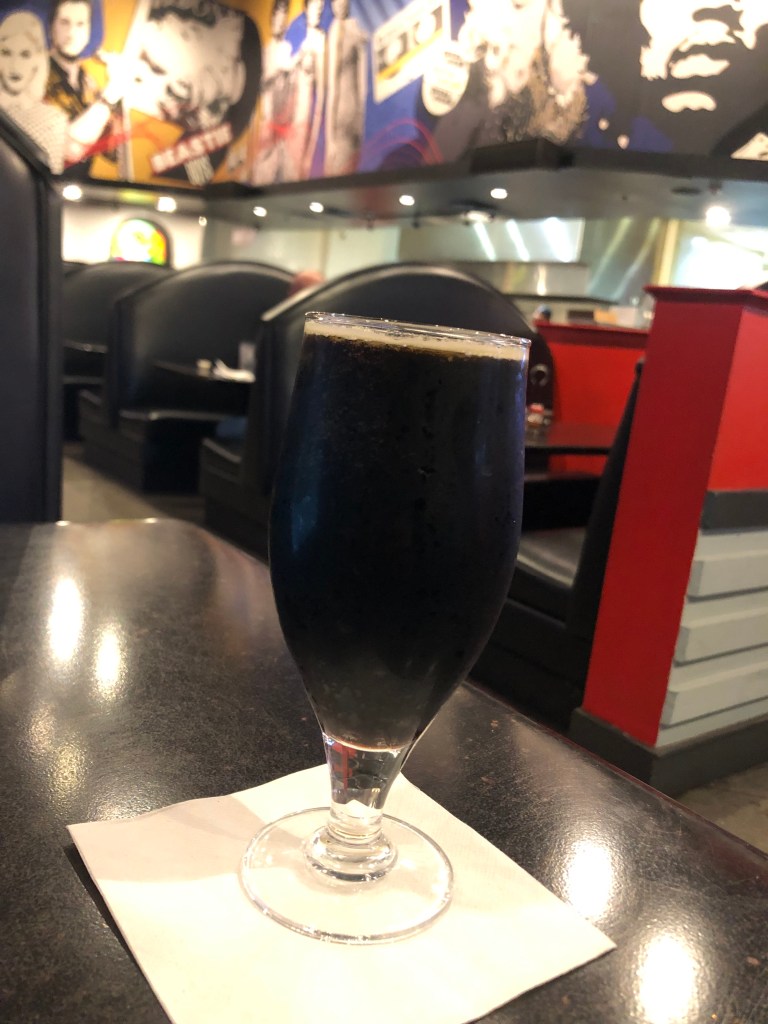
Anyway, this place has a surprisingly large beer menu. So, along with my pepperoni-bacon-jalapeno pizza, I ordered a Stone Xocaveza imperial stout.

Note the decor in the background.

Now, San Diego-based Stone is a reliable brewery, with big, hop-forward beers. I especially like their Arrogant Bastard Ale. The Xocoveza looks inviting: the color is of a ruby-shot Coca Cola. It has no head to speak of, and in fact there’s little evidence even of carbonation. But none of this is fatal for a stout. And the nose is quite inviting–it smells of chocolate, maybe a hint of anise. Let’s see how it tastes…

(Sip. Gulp. Gag.)

This is quite possibly the worst Stone beer I’ve tasted. Flat as my feet. It’s like the half-finished glass of generic-brand root beer you put in the refrigerator and then forgot about. For a month.

Unlike a normal stout, this is not malty. And it’s not hoppy. In fact, it’s not really beer-y. The taste reminds me of meatloaf, somehow converted to liquid form.

But that’s a bit unfair…to meatloaf. I’m not a fan of meatloaf, but I acknowledge that it delivers a blend of different tastes. This beer, on the other hand, is one-dimensional. It lacks the complexity that one seeks in a good beer. What you taste on the front end is what you taste on the back end. And this tastes like back end.

And another thing–this is marketed as an “imperial stout.” In my book, the “imperial” part is supposed to signify a “big” beer, with an ABV that gets into the double digits. This, however, weighs in at a puny 8.1 percent. I suppose that might be about right for some people. But unless you wear a short-sleeved white shirt and place the title “Elder” before you last name, I think you’ll find the Xocoveza to lack the bite you’d expect from an imperial stout.

I give it one star. And that’s just because I like the color and the nose on this beer.

bridges · Hydrology · Road trips · trains · Yard art

The Road to Reform

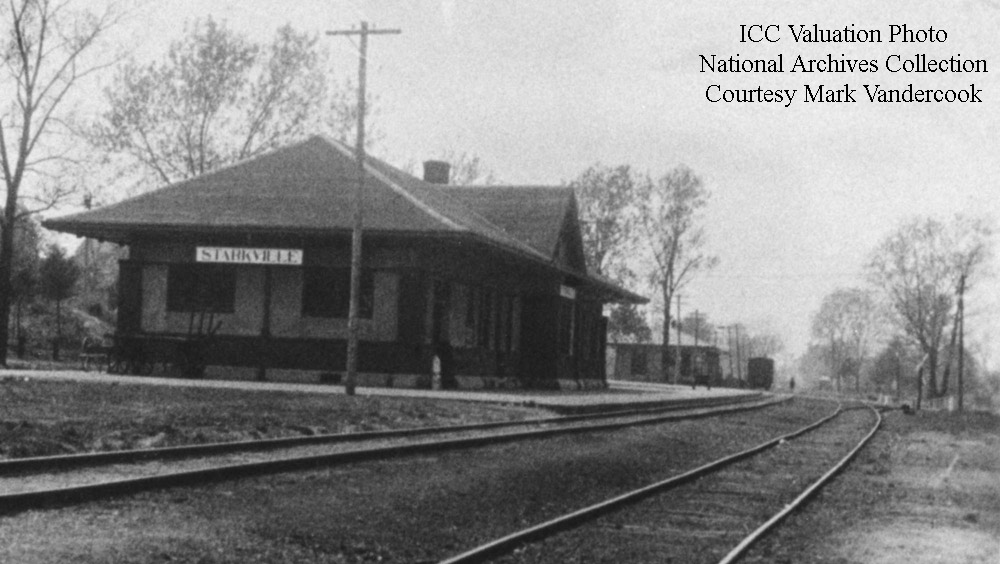
Like Texarkana and many other cities across the country, Starkville once had a “Union Station.” Unlike many of those other Union Stations, Starkville’s was not grand or ornate or even impressive. It was pretty much just your basic depot, one of many on the Mobile & Ohio line. Behold:

Starkville’s Union Station, as it appeared in 1916.

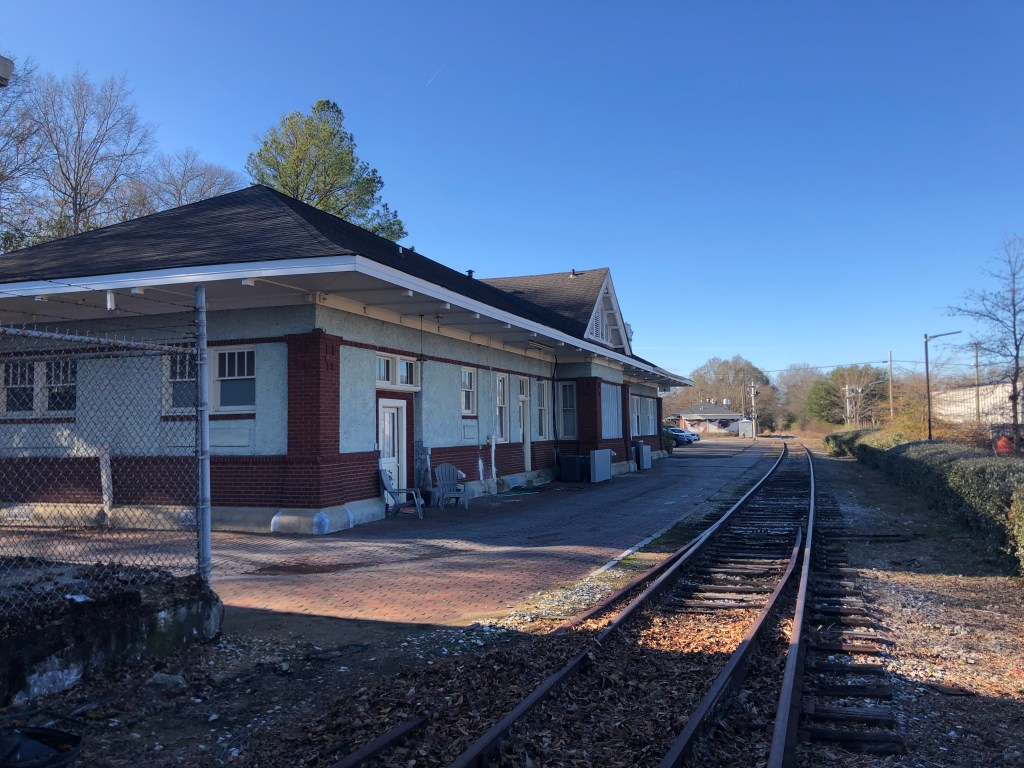
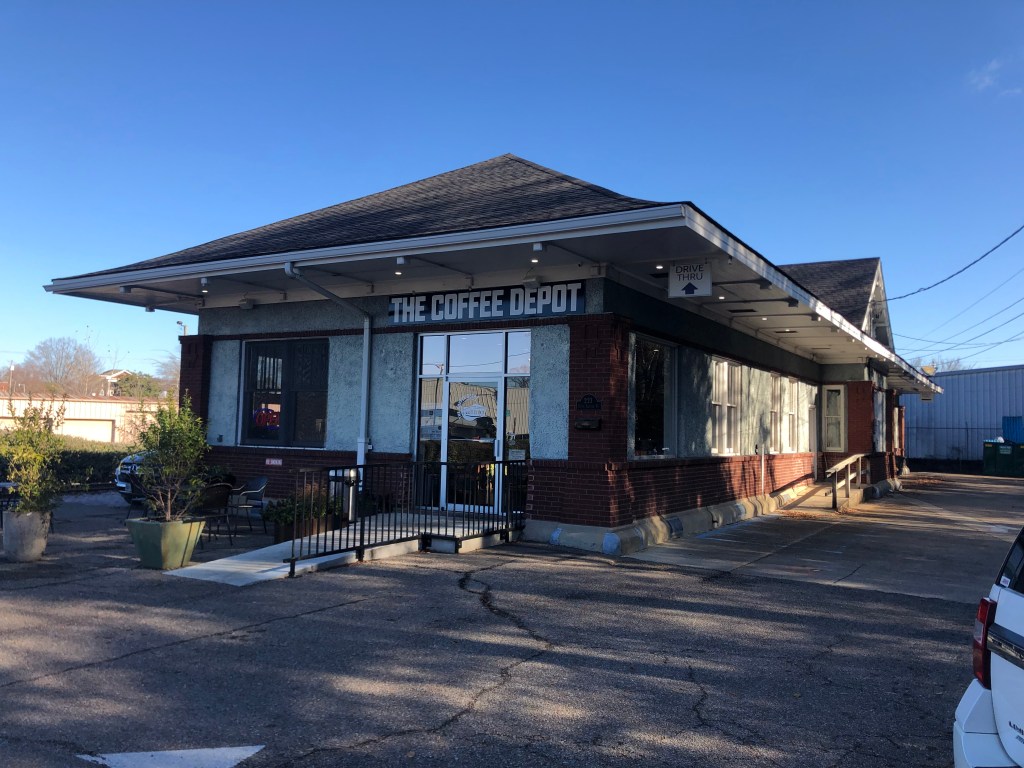
The station was built in 1914, and after the trains quit stopping in Starkville the building was converted into a pharmacy. In the course of time the pharmacy closed. And then, this morning, I had my breakfast in Union Station.

Union Station this morning. (This is the view from the back, to match the historic photo.)
Front view. Looking good after 110 years!

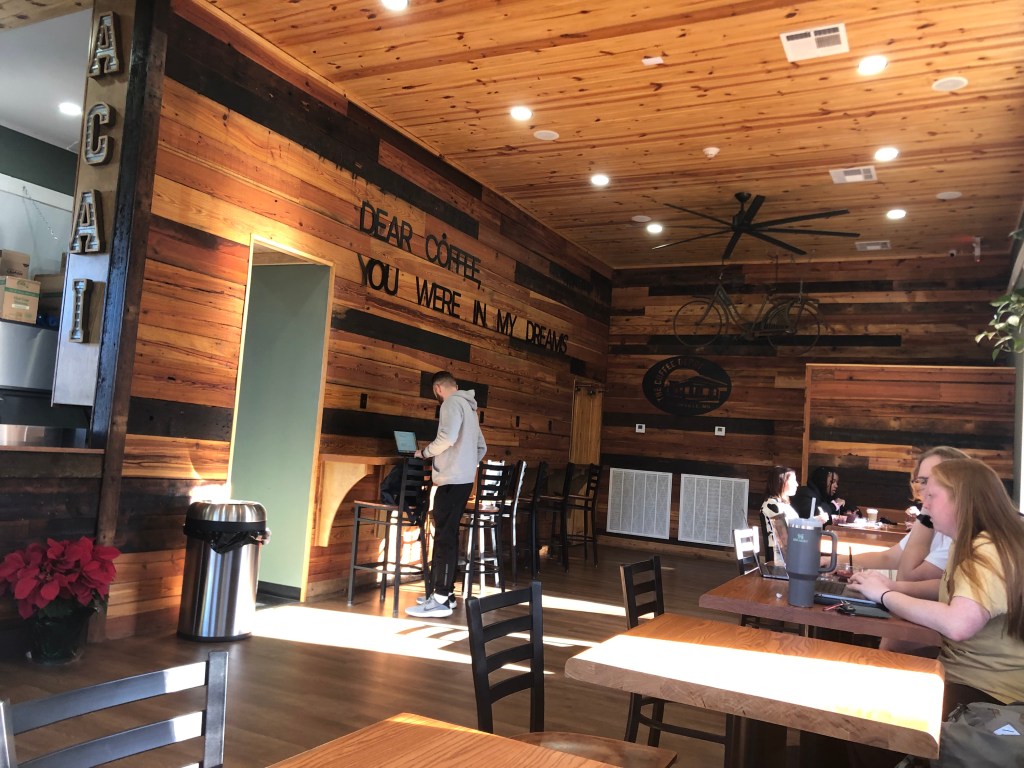
They’re calling it “The Coffee Depot” these days, though from the inside you’d never know it had once been a train station. Renovations were completed just last year, and it opened for business in June. The Coffee Depot is one of those modern, quality-focused coffee bars that cater to college students and what we used to call yuppies. It’s the first such place I’ve seen on my trip so far.

Yuppies and college students in their natural environment.

Though the breakfast menu is limited, the food is quite good. I had something called a “Depot Bowl,” which involved an acai base, strawberries, almonds, and peanut butter. The service is incredibly attentive and friendly. I would make this my usual coffee spot if I lived here.

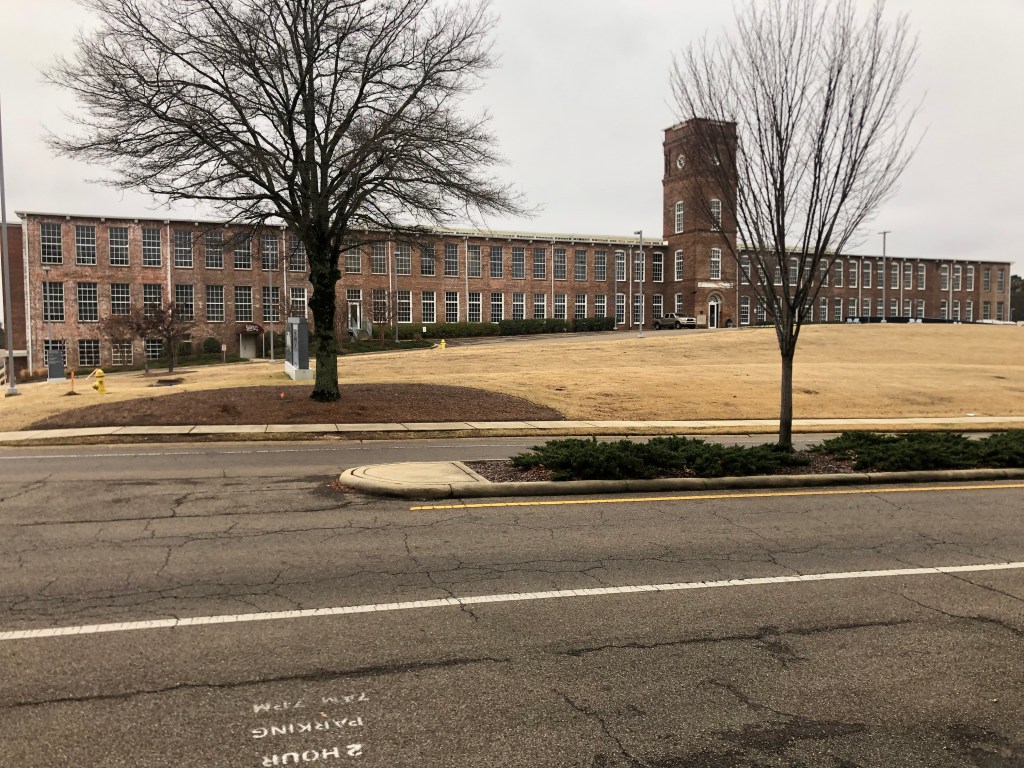
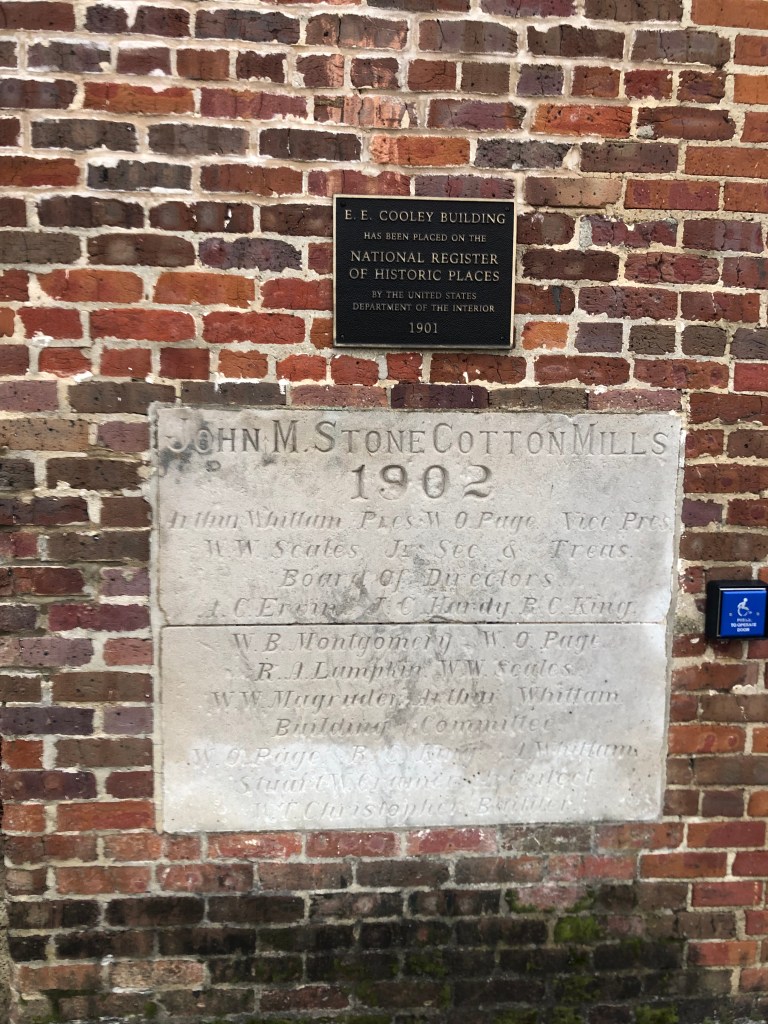
The Coffee Depot is located in the heart of Starkville’s historic downtown. Among other notable historic structures is the 1902 John M. Stone cotton mill. It closed and was sold to MSU in 1965 to house the university’s physical plant. Then, a few years ago, it was converted to an (enormous) events center.

More windows than the software aisle at Best Buy.
Relic from the days when every word was abbreviated.

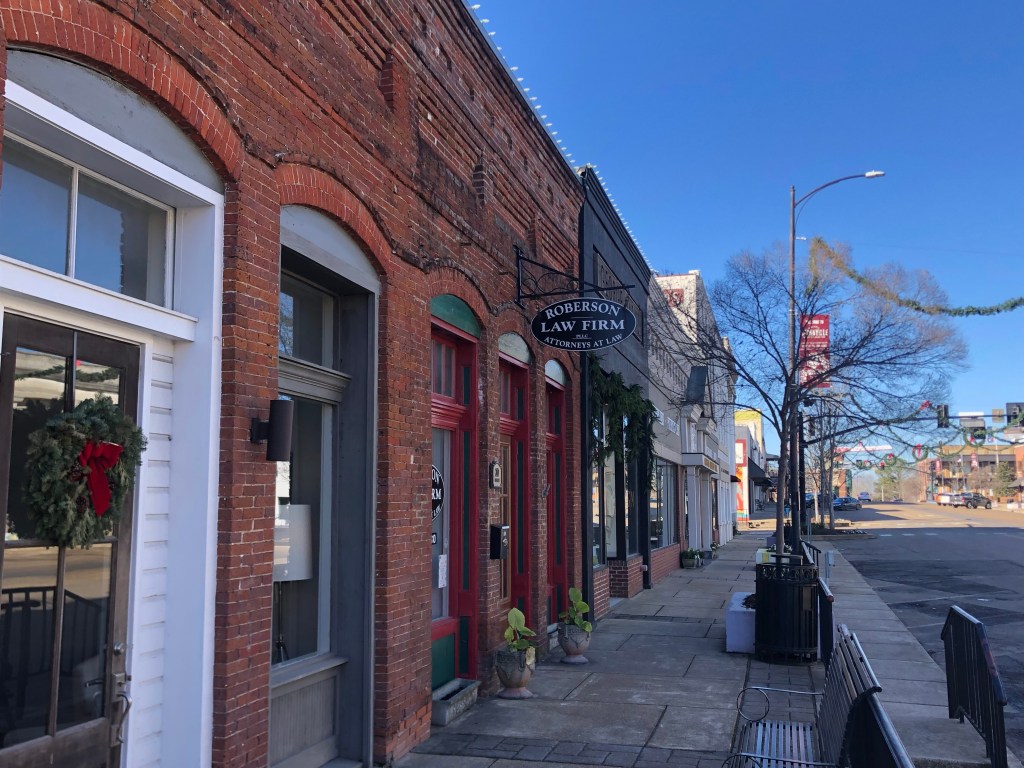
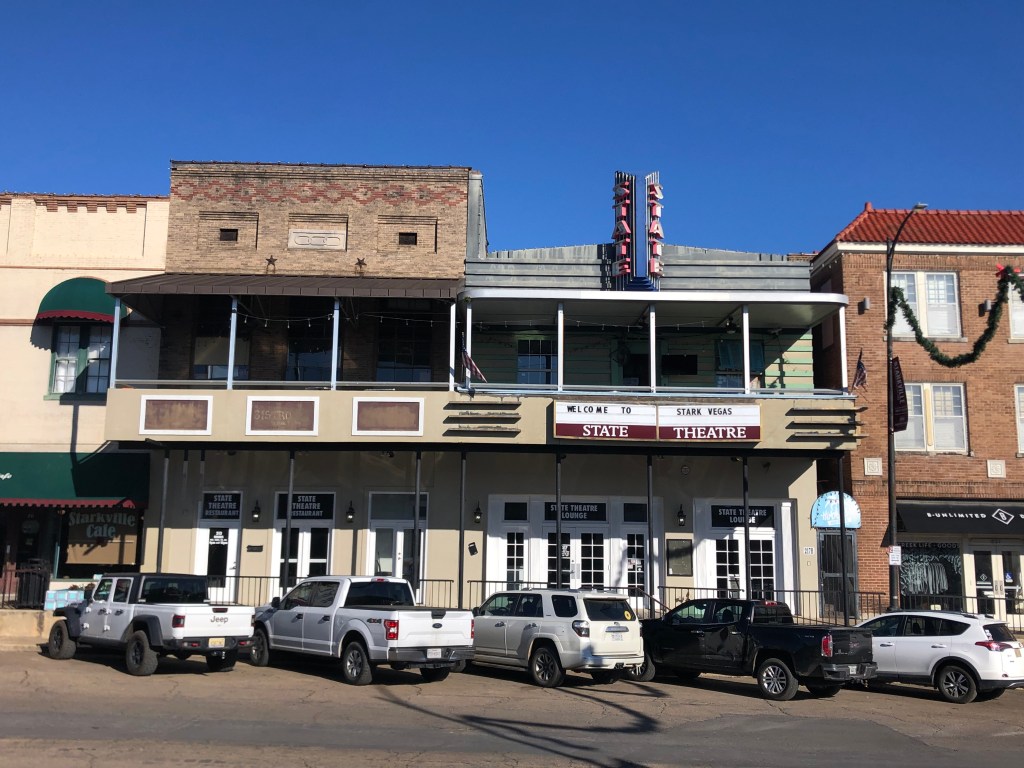
Starkville’s Main Street is a wonder to behold. It’s full of historic buildings, almost all of which have been lovingly restored. The pedestrian-friendly sidewalks are outfitted with benches and street art, and some of the cafes have outdoor seating. On top of all that, the sun finally came out and we’re enjoying glorious January weather.

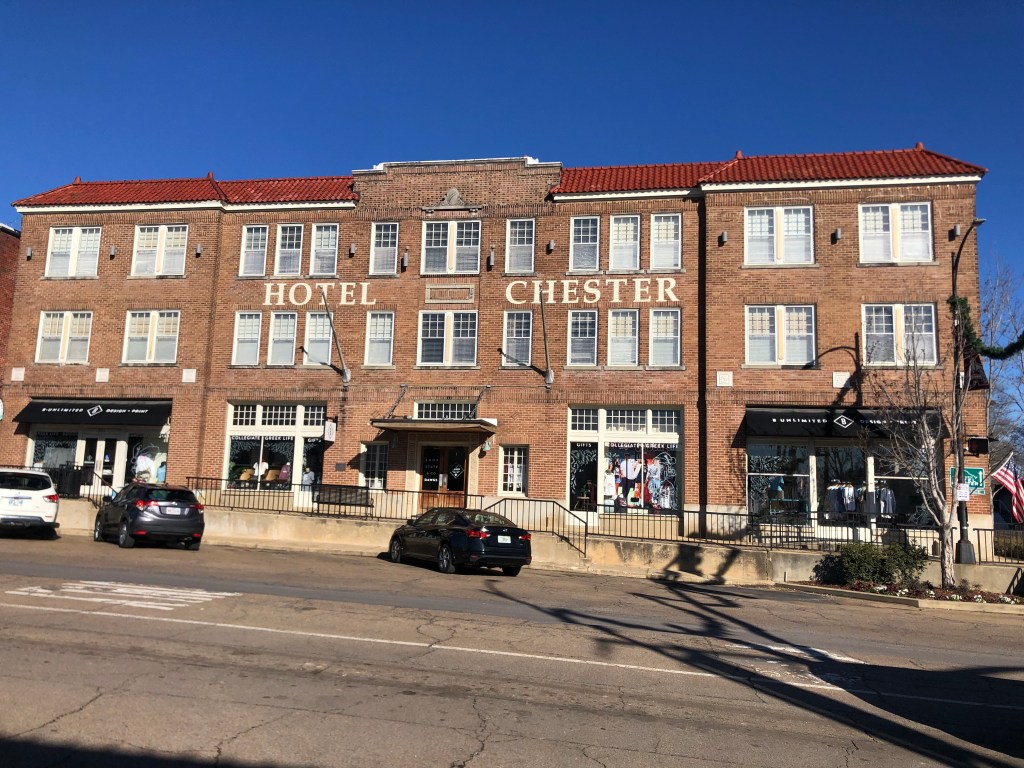
The Hotel Chester, built in 1925, is still in operation.
Note the 1937 State Theater, which is now a music venue.

I think it’s no mystery why Starkville prospers while some of the other towns along this route are slowly dying. It’s got to be the presence of a major university. All that youthful energy, their future-oriented perspective, and of course their student loan money are all drivers for the local economy.

As much as I hated to leave the sunshine and the pleasant town, it came time to get back on the road. I was overdue for Reform. I speak, of course, about the town of Reform, Alabama.

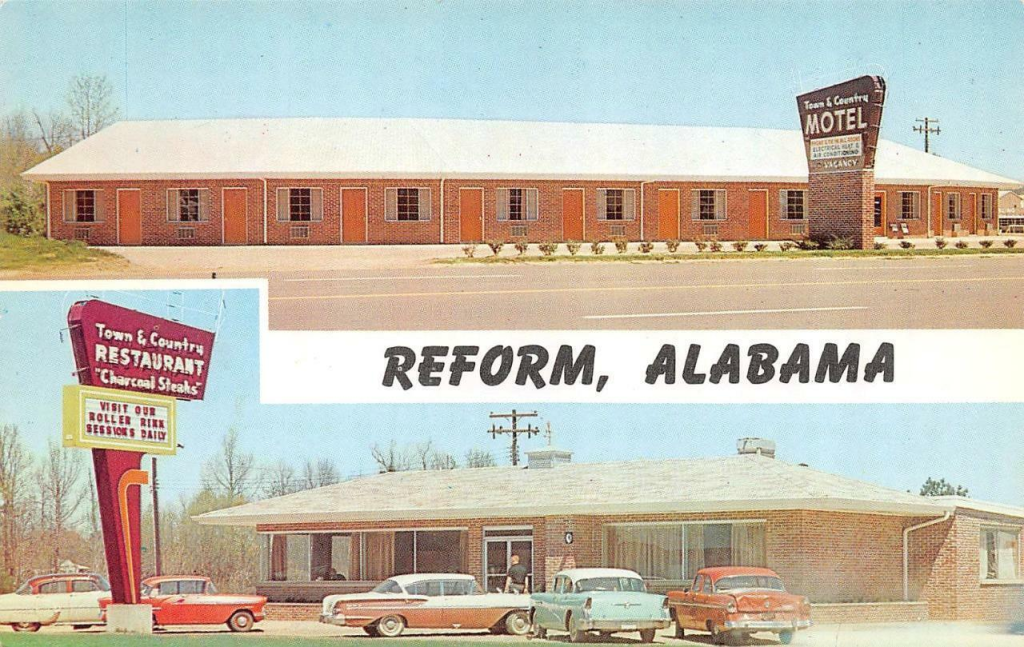
Reform (pop: 1,700) was incorporated in 1898. The story goes that a visiting evangelist urged the community to “reform,” and the townsfolk figured that was as good a name as any. Sadly, it appeared that none of the local businesses have capitalized on the obvious possibilities for a good pun or double entendre. Remember my visit to the town of Cool, California? Those people made use of the potential their name afforded. And Weed, Calif. sells T-shirts with its name in large letters. But not reform. There is no Reform School, no Reform Church, no Reform Fabricating Plant, and definitely no local chapter of Ross Perot’s political party. Even worse, the town apparently couldn’t be bothered to put up a sign at the city limits, thus denying me a photo opportunity.

On the other side of the ledger, Reform counts among its native sons a number of football luminaries: Tony Dixon of the Dallas Cowboys, Doug Elmore of the (then-) Washington Redskins, Michael Williams of the New England Patriots, and James Malone, who was head football coach at Northeast Louisiana State College in the 1950s. (Vic, that list was for you!)

Moving on.

I next came to the town of Northport, Alabama (pop: 31,00), which is planted on the periphery of Tuscaloosa. Northport is another college town. The influence of the University of Alabama is everywhere.

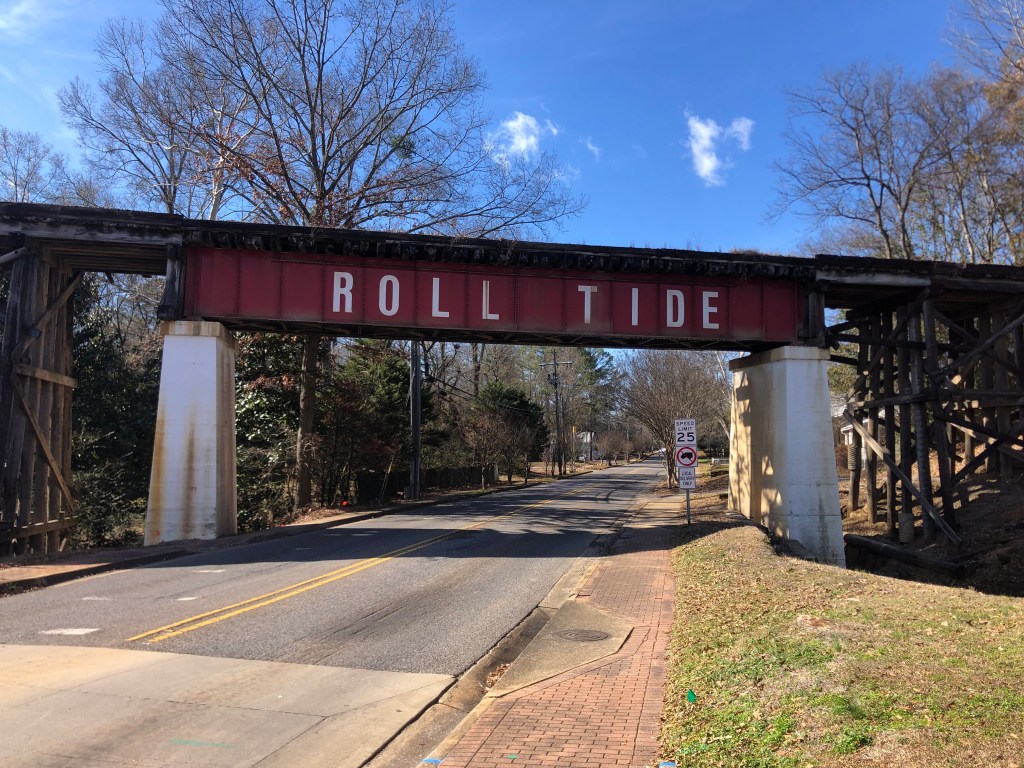
Call me Deacon Blues.

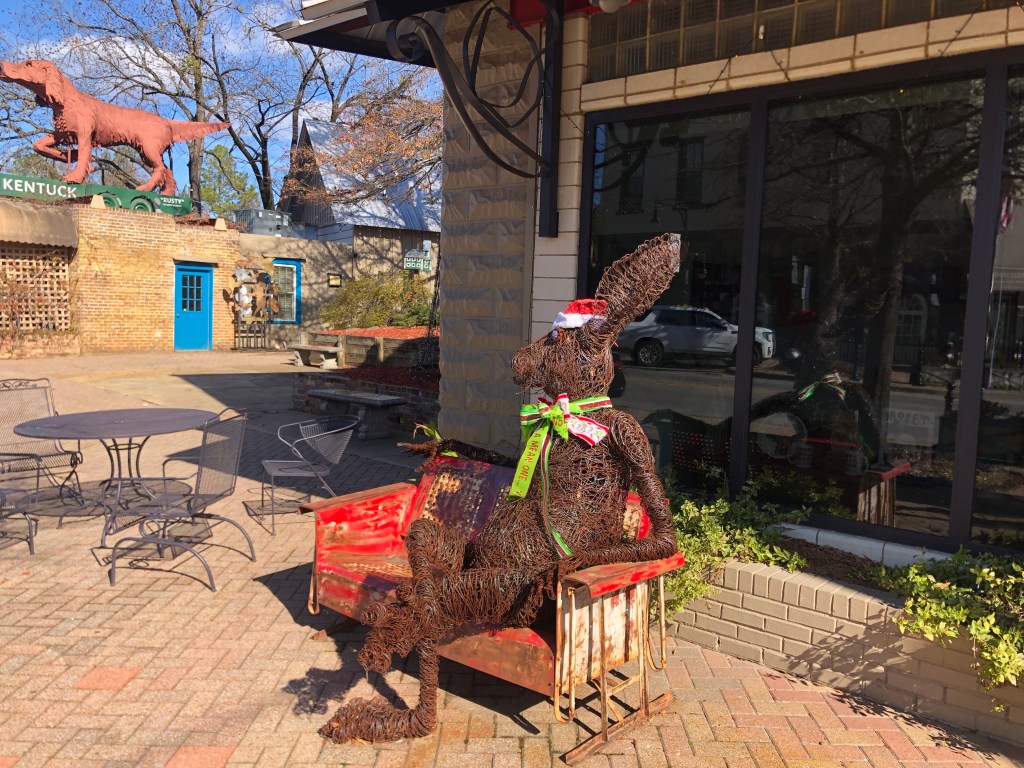
And, as we saw in Starkville, college towns tend to be more lively. Northport’s downtown restaurants were packed, and a whimsical art gallery was just opening. The arts scene is big here, with art walks held on the first Thursday of each month, and a major arts festival each October.

I love the posture of this rabbit.
Artist Larry Godwin made this dog, “Rusty,” out of scrap metal in 1983.

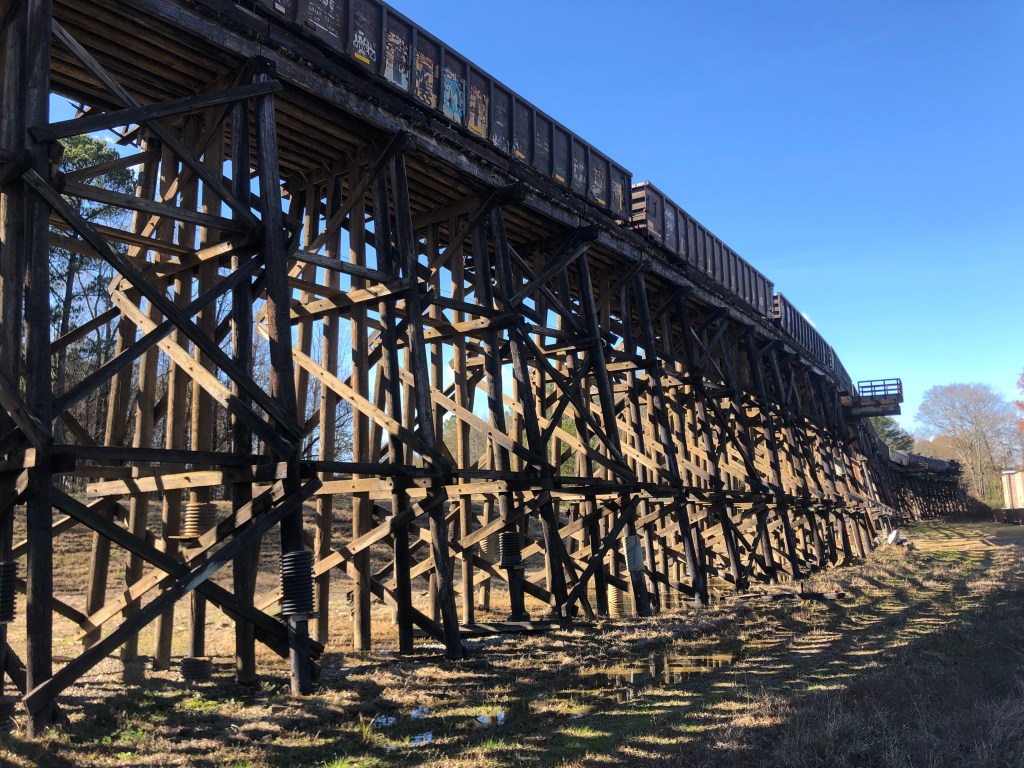
But it’s not all arts. Like so many of these towns, Northport has a rich railroad heritage. Remember the girder bridge in the “Roll Tide” photo, above? It’s part of a railroad trestle that was once the longest in the United States. It was designed and constructed for the Mobile and Ohio Railroad in 1898.

The word “spindly” comes to mind….

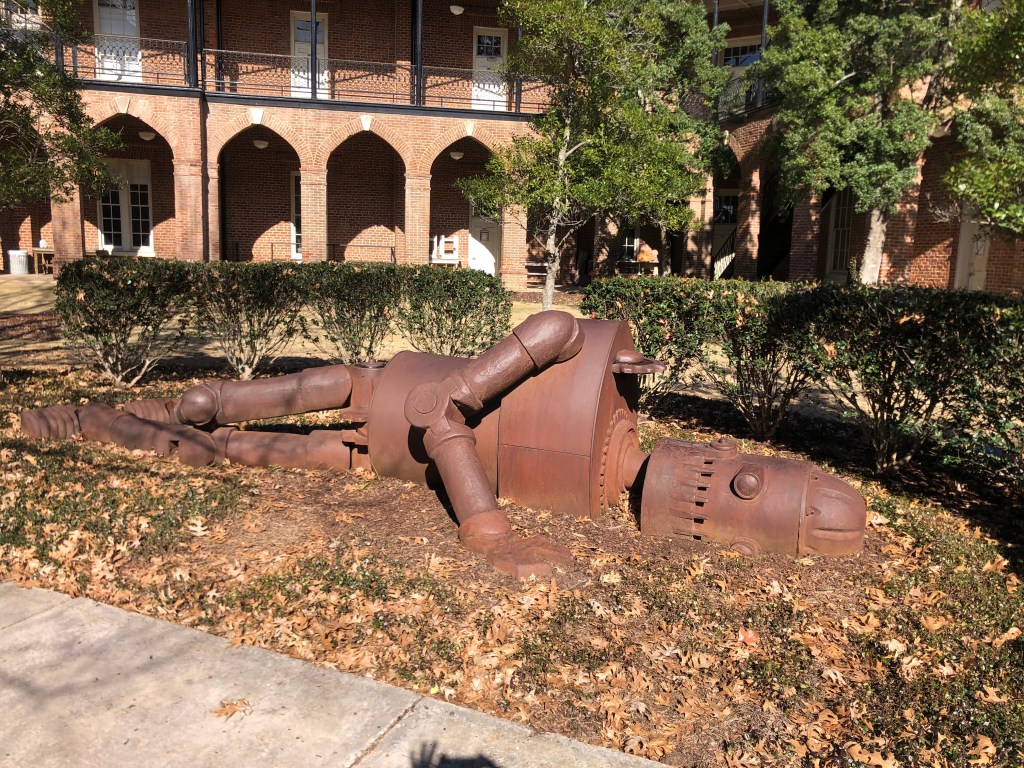
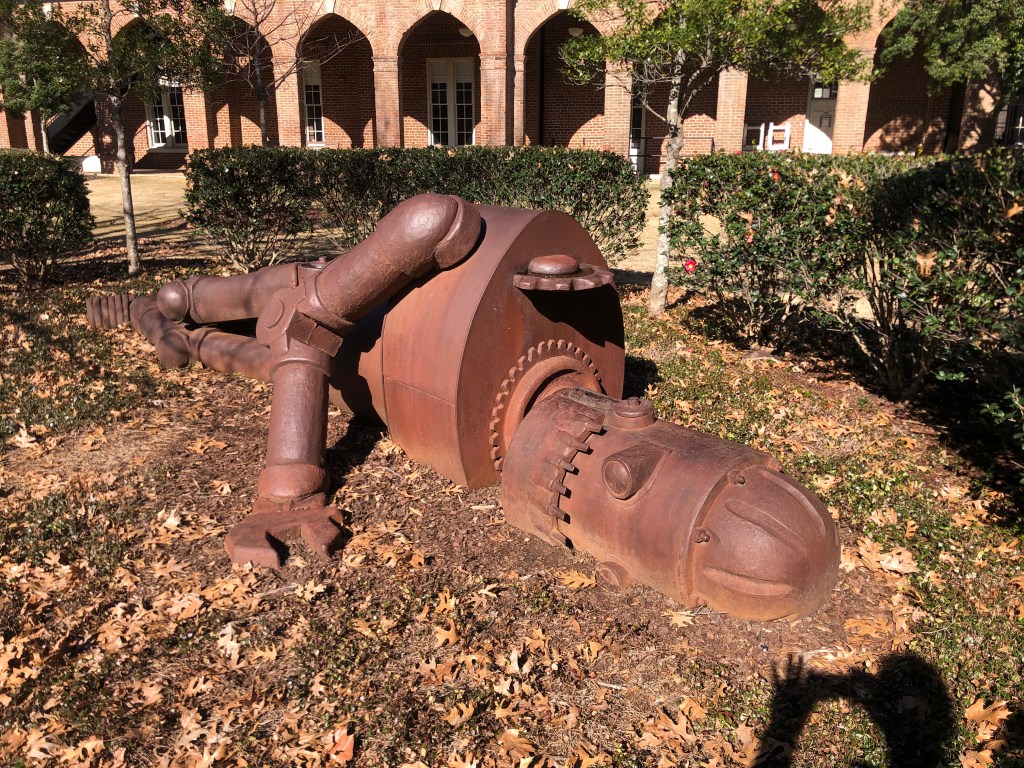
After taking a nice stroll in sunny Northport, I headed across the river to Tuscaloosa (pop: 101,000). Given all the focus on the Crimson Tide I felt compelled to make a visit to U of A (student pop: 39,000). It’s admittedly a beautiful, historic campus that feels orderly and cloistered. I especially enjoyed checking out the student art installations at Woods Quad.

“Goldie 1971,” created by U of A alum Joe McCreary, is supposed to evoke the decline of Birmingham’s steel industry.

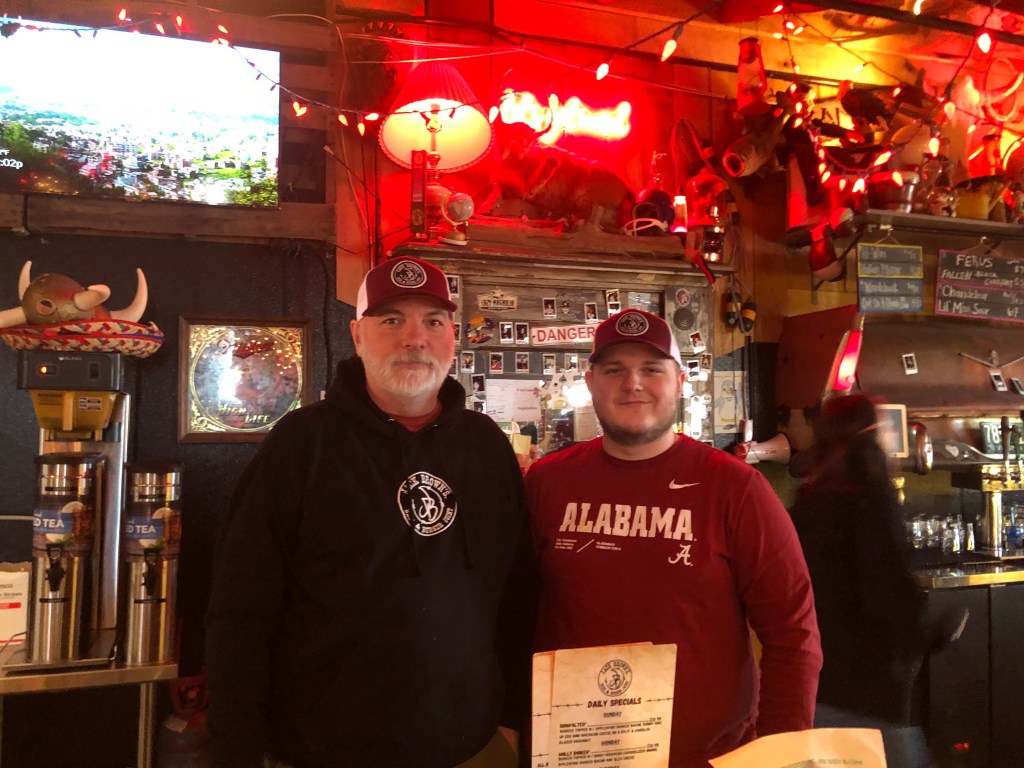
While in Tuscaloosa I stopped for lunch at Jack Brown’s Beer & Burger Joint. The place had just opened three months earlier, and it was packed to the rafters. What a setup! It felt like a roadhouse/dive bar, with that seat-of-your-pants vibe and tons of regulars bantering good-naturedly with the bartender. But wait: It turns out Jack Brown’s is a (privately-owned) chain of 17 restaurants. You can watch the owners telling the story here:

Anyway, chain or no chain, this place has customer service dialed in. Even though the place was packed, the staff were all over me, refilling my drink, bringing me food, asking about my trip, answering my questions about the town.

I decided to order the “Shocker” burger (a hamburger topped with fresh jalapeños, fresh habaneros, house-made Shocker sauce, and 2 slices of Pepper Jack cheese). I asked one of the servers about the sauce, but he said it was a trade secret. No matter; it was truly delicious. I topped it off with a deep-fried Oreo, which is evidently Jack Brown’s trademark (and only) dessert. It tastes kind of like a beignet, but with a core of softened chocolate cookie. What’s not to like?

While I ate my Shocker the manager speculated about the success of the place. It’s not just the awesome customer service and great food, he said. It’s also the “Notch Club.” All it takes to join is drinking 100 beers at your local Jack Brown’s. (After today I am already 2% of the way there, but more on that later.) Once you achieve Notch status, you get an official shirt, your picture goes on the wall, and you get invited to special events just for Notchers. With each 100 additional beers you get a patch for your shirt. And when you get to 1,000 beers, you become a “Saint.” Saints undergo a special investiture ceremony, get some kind of robe or something (I can’t quite remember the details here), and they get to add their own custom burger to the menu that is offered each year on your Saint Day. I tell you: If I lived in the south, I would be all over this thing.

Jack Brown’s manager and the guy who refused to divulge the ingredients of the Shocker Sauce.

Restored and rested from an enjoyable lunch and a few drinks, I got back onto Route 82 East. I’ve noticed that 82 is generally a straight road, but with gently rolling hills to vary the horizon as you drive. At this stage in these cross-country trips I find myself viewing the road, with its uniform signage and federally-mandated lane widths, to be a familiar, comfortable friend. Also, as I’ve mentioned in prior blogs, these US highways tend to be assembled out of pre-existing local roads, and therefore you have no choice but to cruise right through the center of each town along the way, as US 82 becomes, say, Main Street. Or you could think of it as Main Street filling in for US 82 for a few miles. Either way, it guarantees that the driver encounters the brick-and-mortar communities along the way.

Speaking of which: I’ve noticed some cultural themes as I’ve been driving through this part of the country. Some of them are what you’d expect: Lots of barbecue joints, lots of churches, lots of American flags. But some of the stereotypes are not in abundance. I have not seen a single Stars and Bars flag. I have seen only one sign professing support for Donald Trump. And while I’ve seen a lot of pickups, I’ve actually seen far more Nissan Altimas. [Editor’s note: Evidently Altimas are manufactured in Mississippi and Tennessee.]One welcome surprise (compared to my experience in California) is that gasoline can be purchased for about $2.59 a gallon.

The ubiquity of crosses all along the highway is perhaps most foreign for this California native. Most of the time it’s a simple and low-key statement in someone’s front yard, but today I passed an enormous display that was quite in-your-face. It’s really too big to be conveyed in a single photograph, so I took this video:

Don’t be cross…

The display is the life work of one William Carlton Rice. He’d been building, expanding, and maintaining this “cross garden” from the 1960s until his death in 2004. His family promised to maintain it after his passing, but old-timers say the place ain’t what it once was. If you’re interested, brief descriptions of the project and W.C. are here and here.

I noticed that somehow the road leading to W.C.’s property was lined with still more giant, wooden crosses….

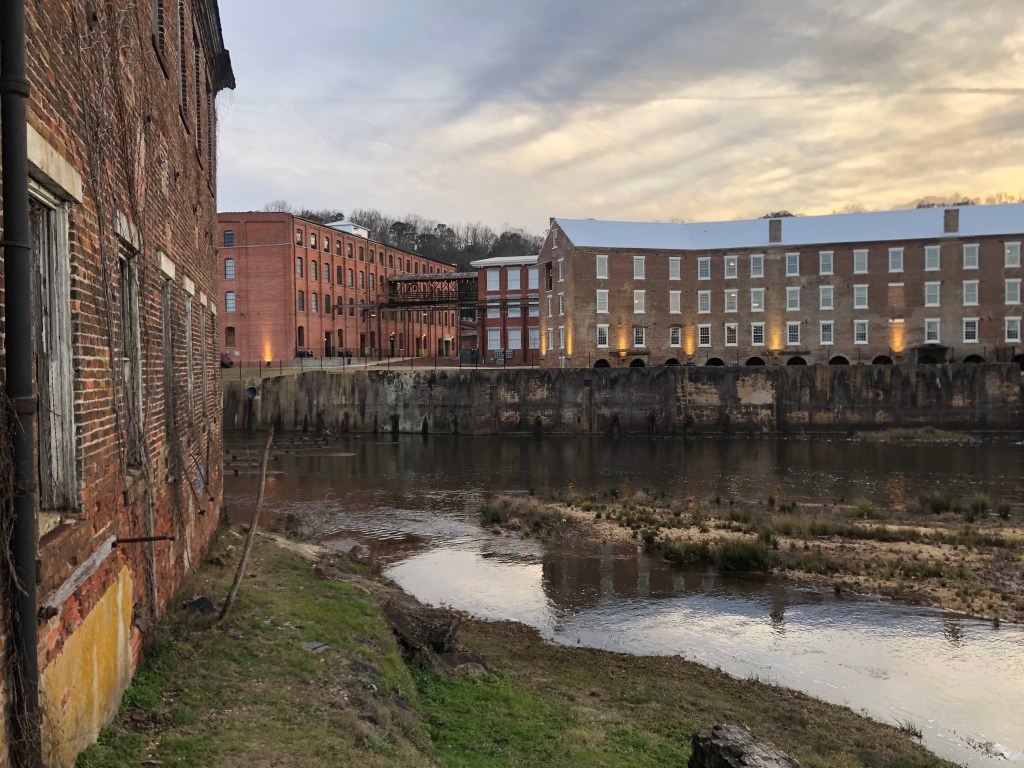
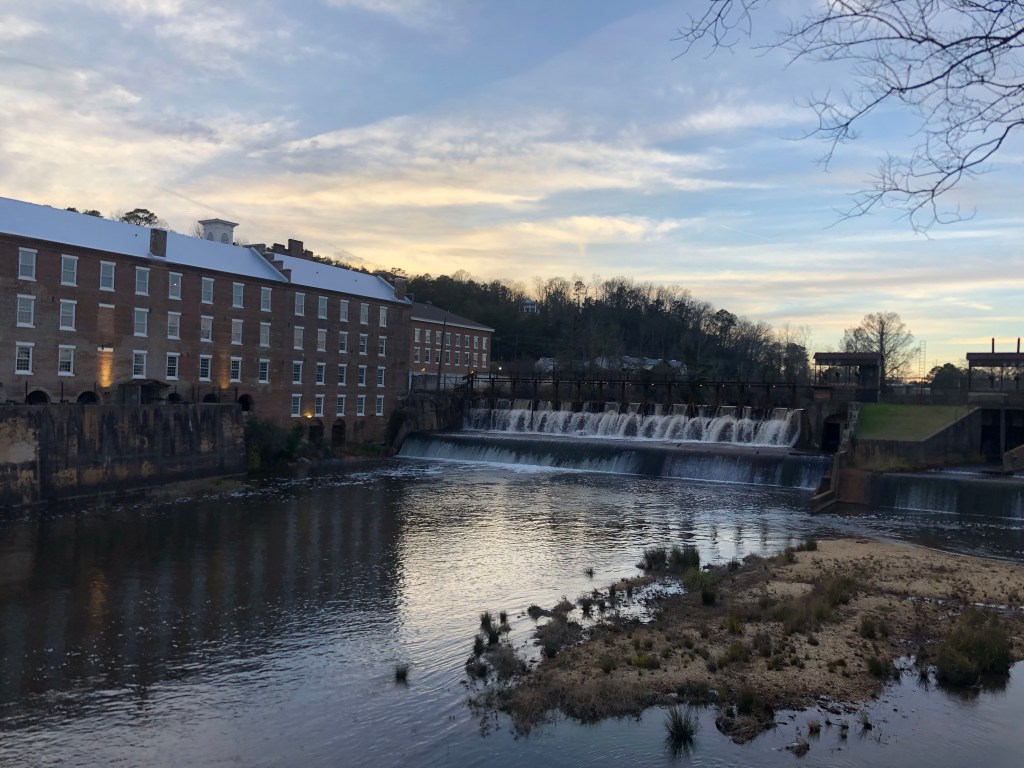
Daylight was growing short when I got to the town of Prattville (pop: 38,000). It was founded by the eponymous Daniel Pratt in 1839. Pratt was an industrialist from New Hampshire, and he figured that the flow of Autauga Creek, which runs through the area, would be a good power source for 19th-century industrial applications. Before long a thriving city had grown up, and today, for some wonderful reason, much of the historic town remains intact, like a giant time capsule. (Check out this list of historic structures from Wikipedia.)

I arrived at Prattville just at dusk, and I must say it felt otherwordly. The lighting was like a Thomas Kinkade painting, the creek was flowing steadily over a stepped dam next to the cotton gin manufacturing plant, and a young couple was holding hands and walking across a bridge.

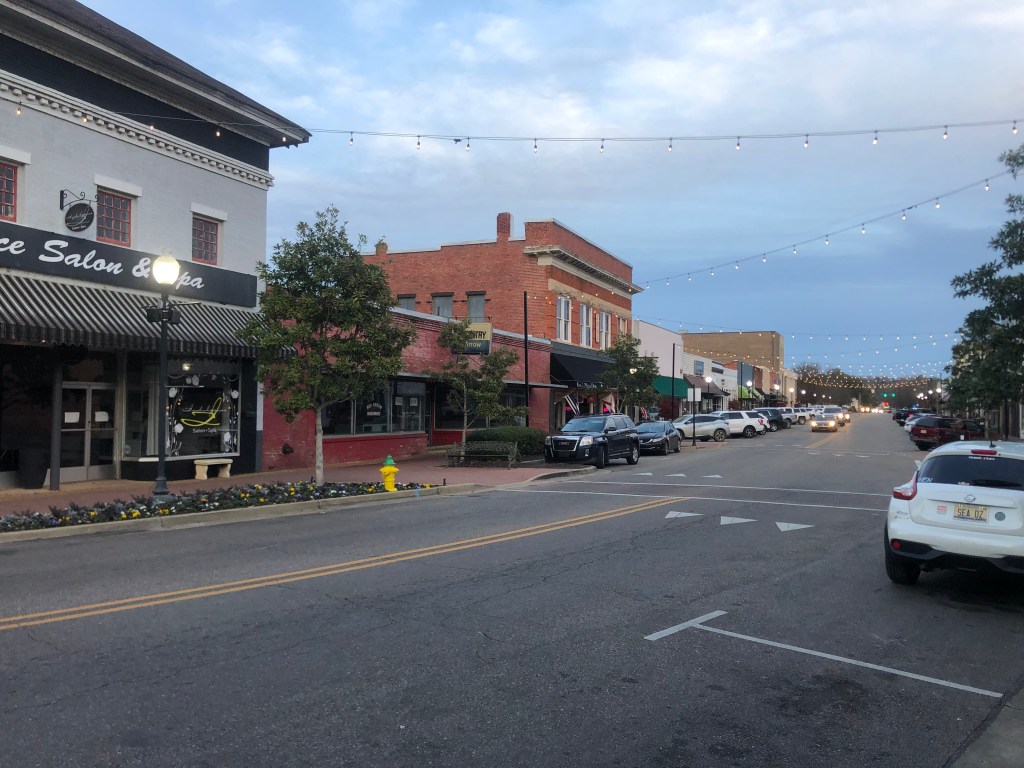
Next to all these industrial remnants is the historic business district, which is now largely oriented toward tourists.

As it was getting dark, I decided to spend the night in Prattville. Tomorrow I will make my way into Georgia.

Brew of the Day

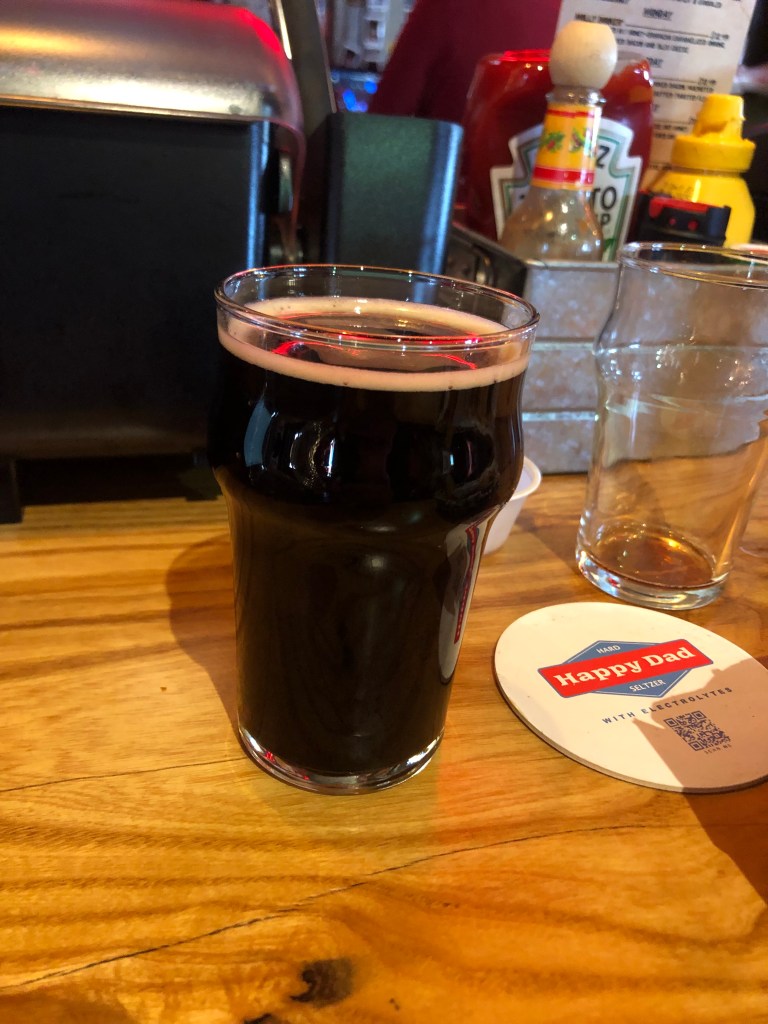
I got my BOTD at Jack Brown’s in Tuscaloosa. It was a milk stout from Southern Prohibition Brewing in Hattiesburg, Mississippi.

It was a very drinkable beer. Only lightly hopped (as is customary for this style of beer), it also had very little foam. The color was dark brown, like espresso. It even had a bit of roasty, espresso taste, though this was well balanced by the sweet, creamy goodness of lactose. I found this to be a rich, tasty brew, and at only 5.2 ABV, I treated myself to a second glass. Definitely worth 4 starts out of five.

bridges · Cars · Road trips · trains

Into the Magnolia State

This morning I left my motel in Greenville and resumed my eastward journey on US 82. After about 15 minutes I came to a familiar town: Leland, MS (pop: 3,900). I had come through Leland just last Spring, when I made my storied road trip along the Blues Highway (i.e., US Route 61). You’ll recall that The Blues Highway is a north-south route that roughly parallels the Mississippi River, and it intersects Route 82 in Leland. And as we learned in last year’s blog post, Leland is the birthplace of Muppets creator Jim Henson. Which seems pretty random.

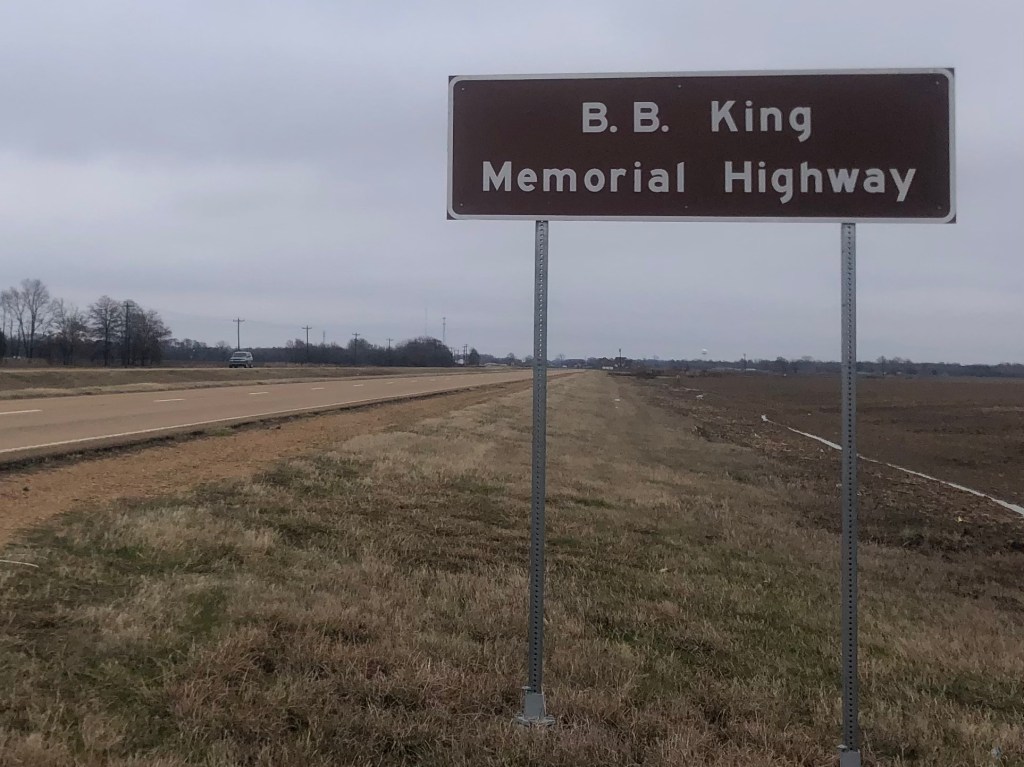
Less random is the fact that the Mississippi Legislature named this stretch of US 82 after native son B.B. King.

The thrill ain’t gone yet.

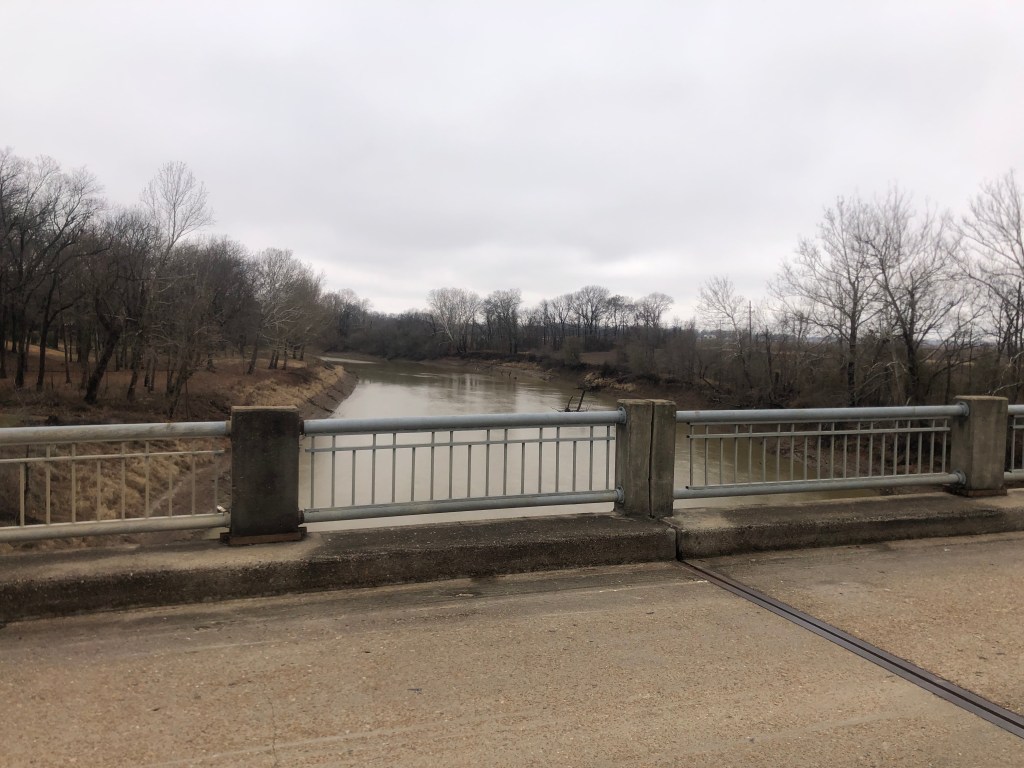
About a third of the way across Mississippi I came to the town of Greenwood (not to be confused with Greenville, where I started today’s journey). Greenwood was established at the confluence of the Yalobusha River and the Tallahatchie River. Yes, that Tallahatchie River. The one into which Billie Joe MacAllister jumped, as described in Bobbie Gentry’s “Ode to Billie Joe.” That song references a “Tallahatchie Bridge,” but the bridge Gentry was supposedly thinking about was destroyed by vandals in 1972. A few years later, in 1976, Max Baer Jr (who you know as Jethro from The Beverly Hillbillies) made a movie version of Gentry’s song. The movie used another bridge in the Greenwood area, but this too was demolished in 1987.

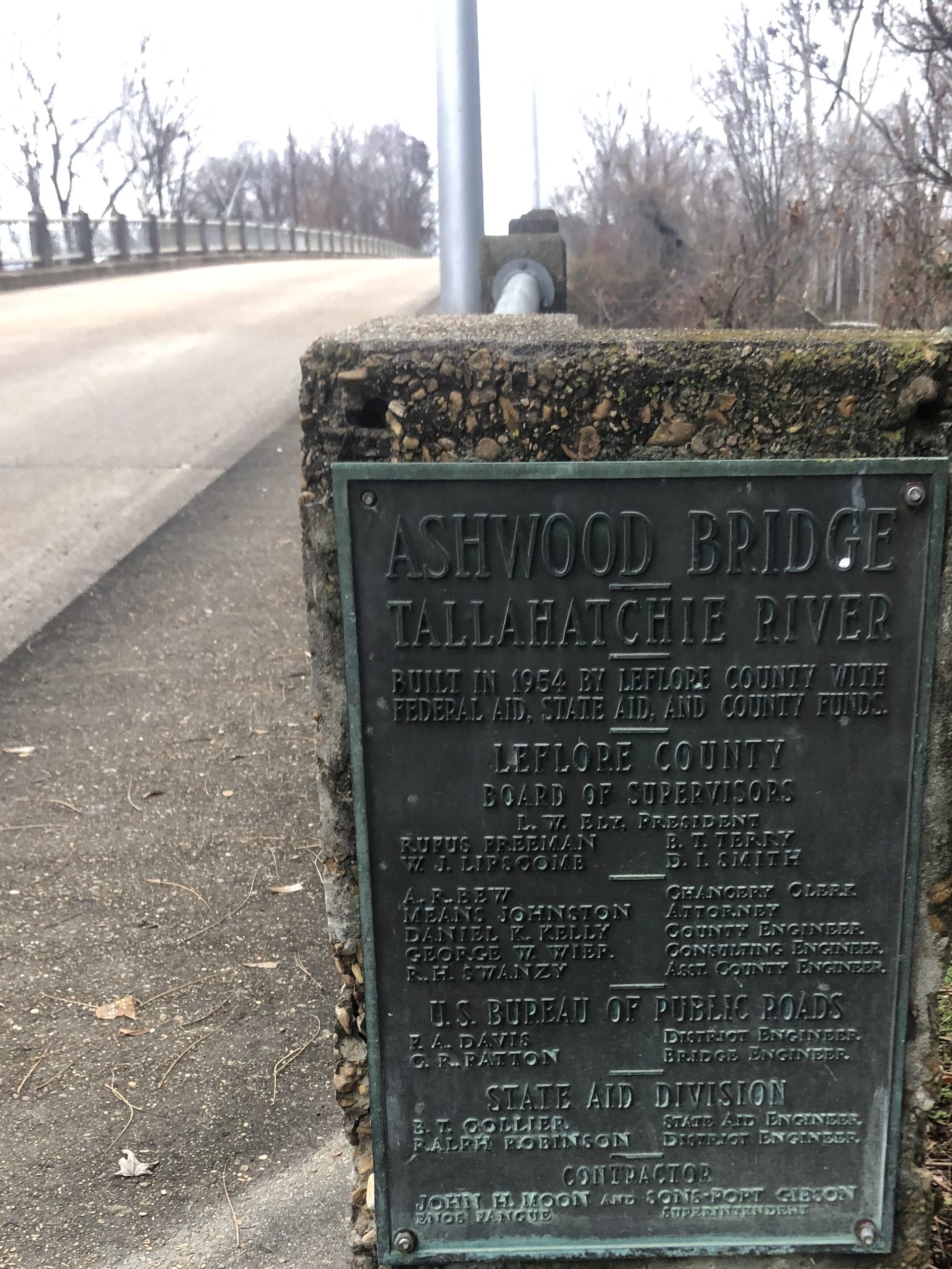
We are left, therefore, with Greenwood’s Ashwood Bridge as a decent stand-in for the place where Billie Joe ended his life. This bridge was constructed while Gentry was living in Greenwood age 12, and it stands just a block from the school she attended. So it’s certainly plausible that it was in her mind when she wrote the lyrics.

One of many Tallahatchie bridges.
Certainly it would have served Billie Joe MacAllister’s purposes.

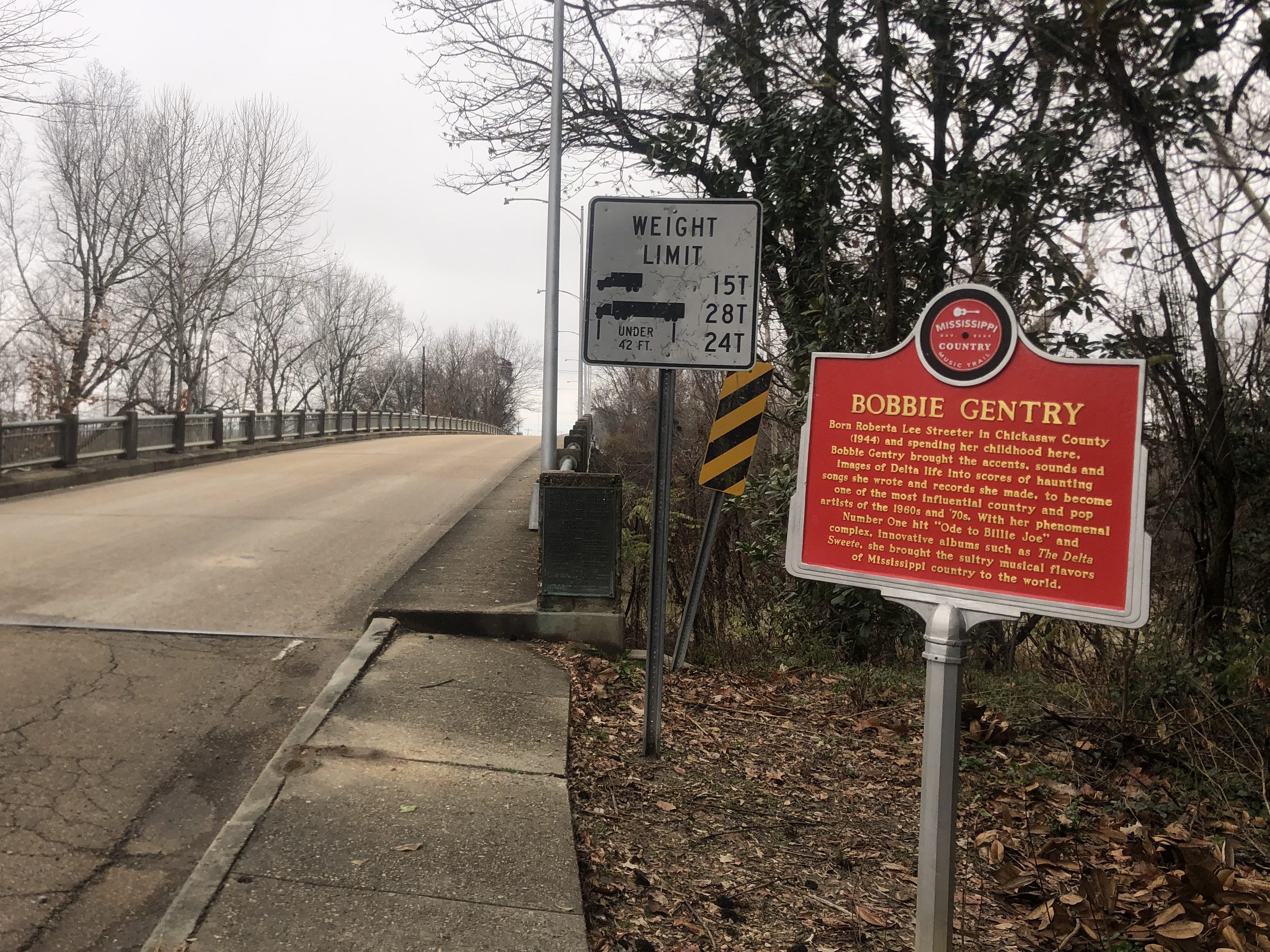
Indeed, the good people of the Mississippi Country Music Trail have placed a marker at the Ashwood Bridge to commemorate Bobbie Gentry and her song. Appropriately, however, they stopped short of saying that this bridge and the one in the song are one and the same.

Another sleepy, dusty Delta day.

If you like, you can watch Bobbie Gentry perform the song here:

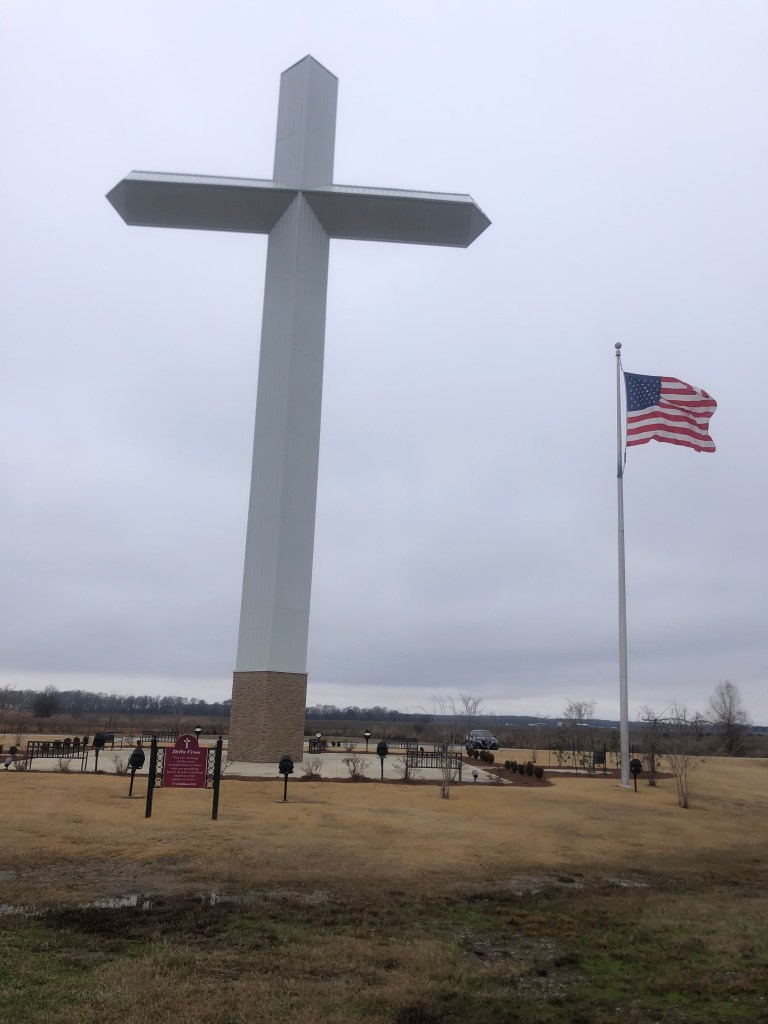
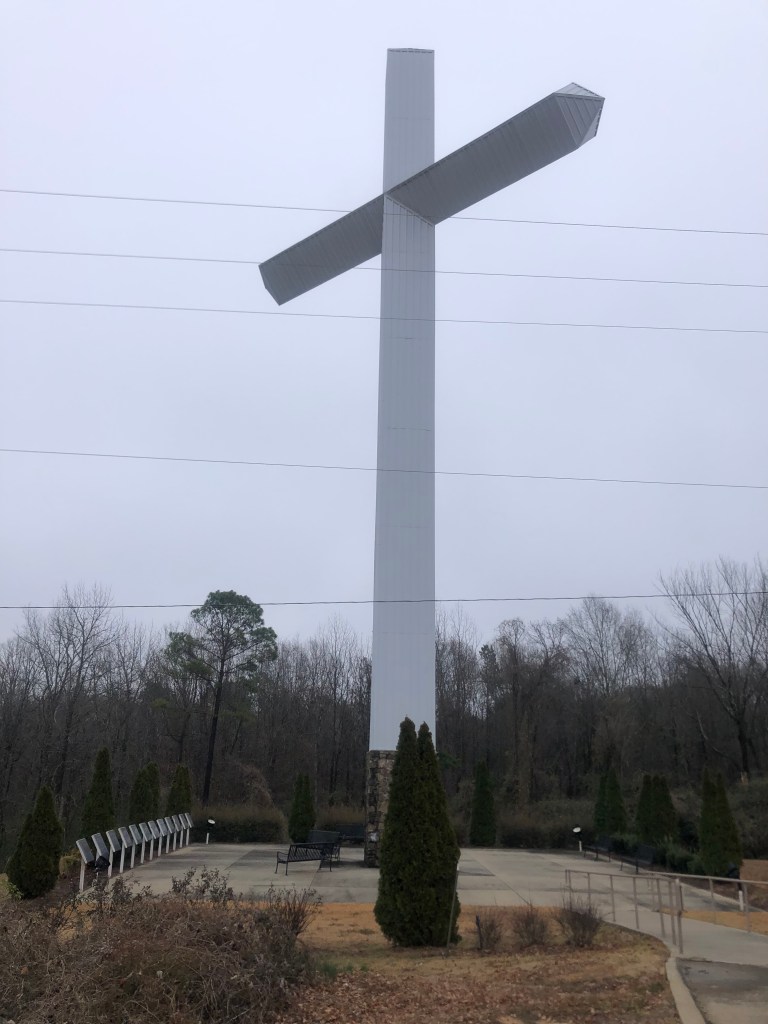
So, we got the blues, we got frog puppets, we got the Ode to Billie Joe…what else is this part of Mississippi known for? That’s right, it’s in the middle of the Bible Belt. Exhibit A can be seen on US 82 just outside of Greenwood. It’s a 120-foot-tall, 20-ton cross, complete with spotlights and surrounded by a set of speakers that perpetually play religious piano music. The cross was erected in 2021 by The Rev. Dr. Jim Phillips of North Greenwood Baptist Church.

Now, while that might look to you to be a one-of-a-kind project, take a look at what I encountered just 30 minutes further down US 82:

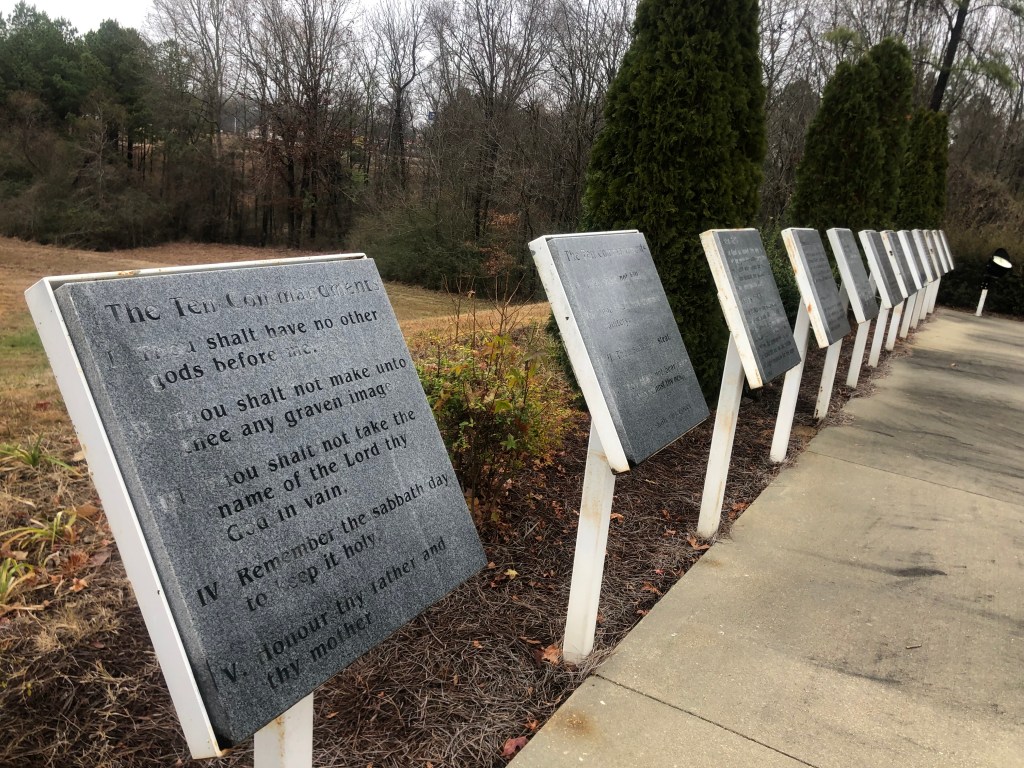
This one, however, dispenses with the piano music and instead displays a dozen tablets with scripture engraved on them.

I was unable to dig up anything about this second cross, other than it was erected in 2014 and it is 120 feet tall (just like the one in Greenwood). I also learned that evidently there are a number of other, identical crosses scattered around the state.

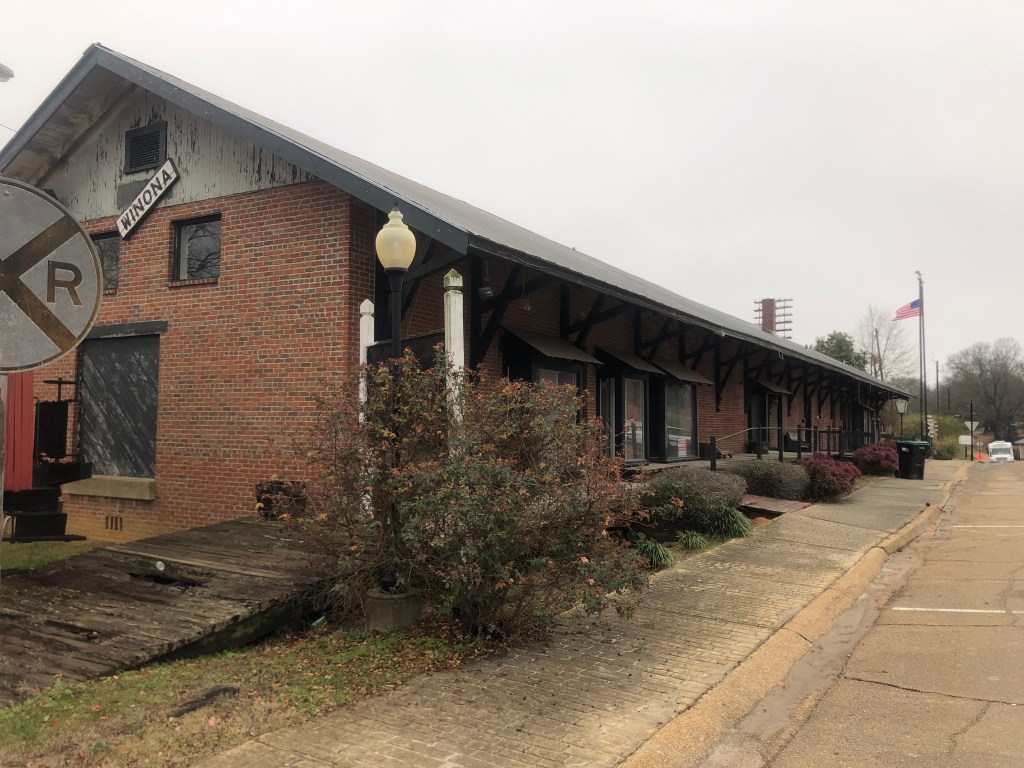
This second cross is on the outskirts of Winona (pop: 4,500). Like so many other towns from the 19th century, Winona sprung up around a railroad station (and not the other way around). In this case, the railroad was the Mississippi Central. The station and the town were established in 1860 and 1861, respectively. Winona’s rail service was discontinued by Amtrak in 1995, but the station still stands.

I had a particular reason for wanting to visit the depot: I had read a newspaper article touting a worthy restaurant named “The Tracks” that had opened in the depot in 2019. I found the depot easy enough, but the restaurant had evidently gone out of business.

Winona’s forlorn depot, now stripped of trains and eateries.

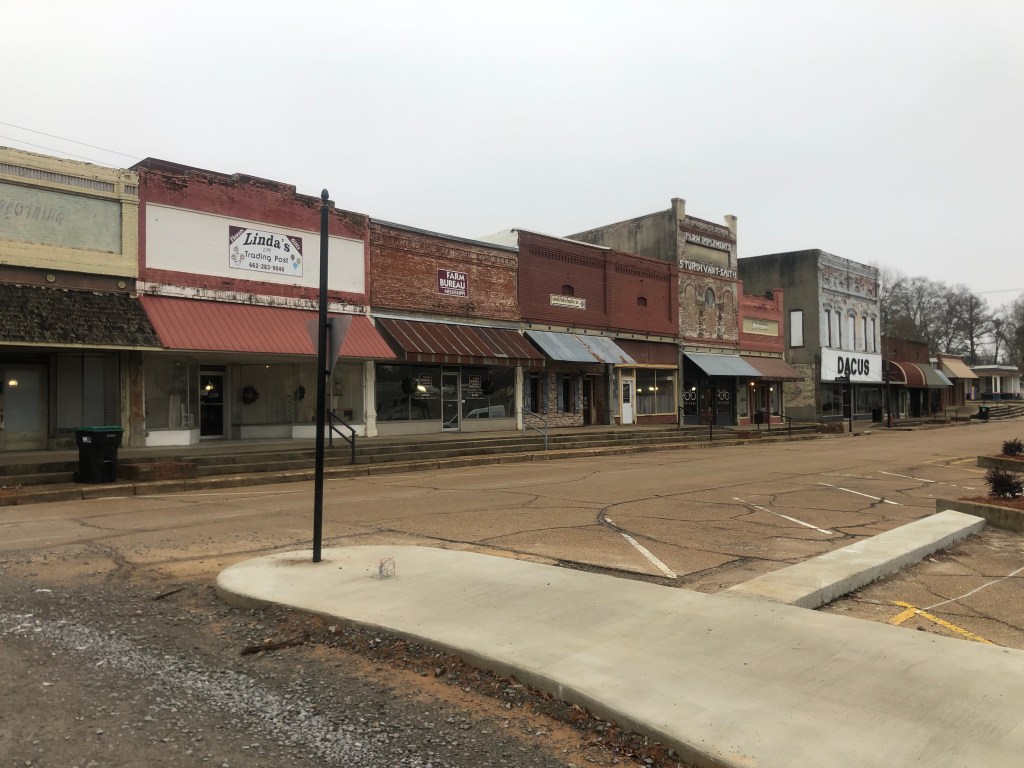
A passerby saw me looking in the windows and said “You’re scopin’ the place out because you want to open a restaurant here, huh?” I told him I was actually just looking to eat at a restaurant, not open one. He responded that the owner moved his restaurant to another location when the city started construction on a big clock tower across the street. I get the sense that the city was trying to improve the commercial attractiveness of the area, but it backfired when one of their few businesses got angry about the construction noise and dust. I grimly observed that a whole block of historic buildings across the street from the depot were all closed, and none seemed to be about to open any time soon.

Wouldn’t this make a great historic business district?

I asked my new friend if he had any suggestions for getting lunch. He directed me to a mobile barbecue rig that comes to the area on the first and third Saturday of each month. I thanked him. Then he asked me if the recommendation was worth a few bucks, “so as I could get a cup of hot coffee.” It was.

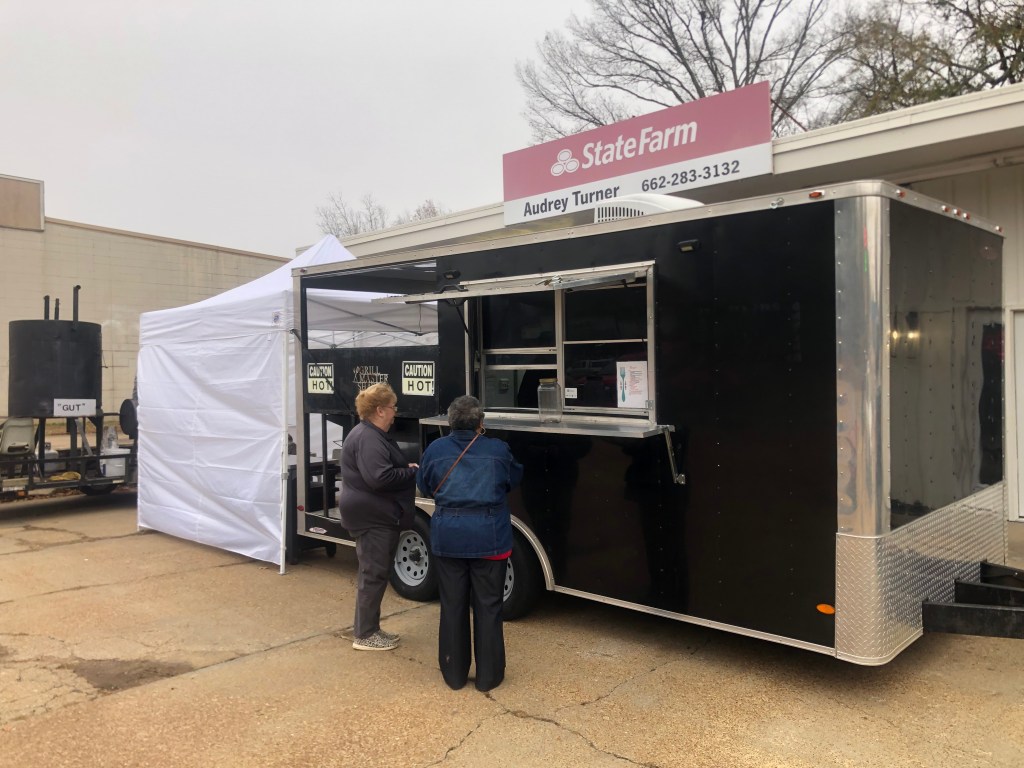
The mobile barbecue joint was a family affair set up in the parking lot of a State Farm office. The wife (or maybe the daughter) took my order from a trailer.

A small but steady stream of patrons kept coming by while I waited for, and then ate, my food.

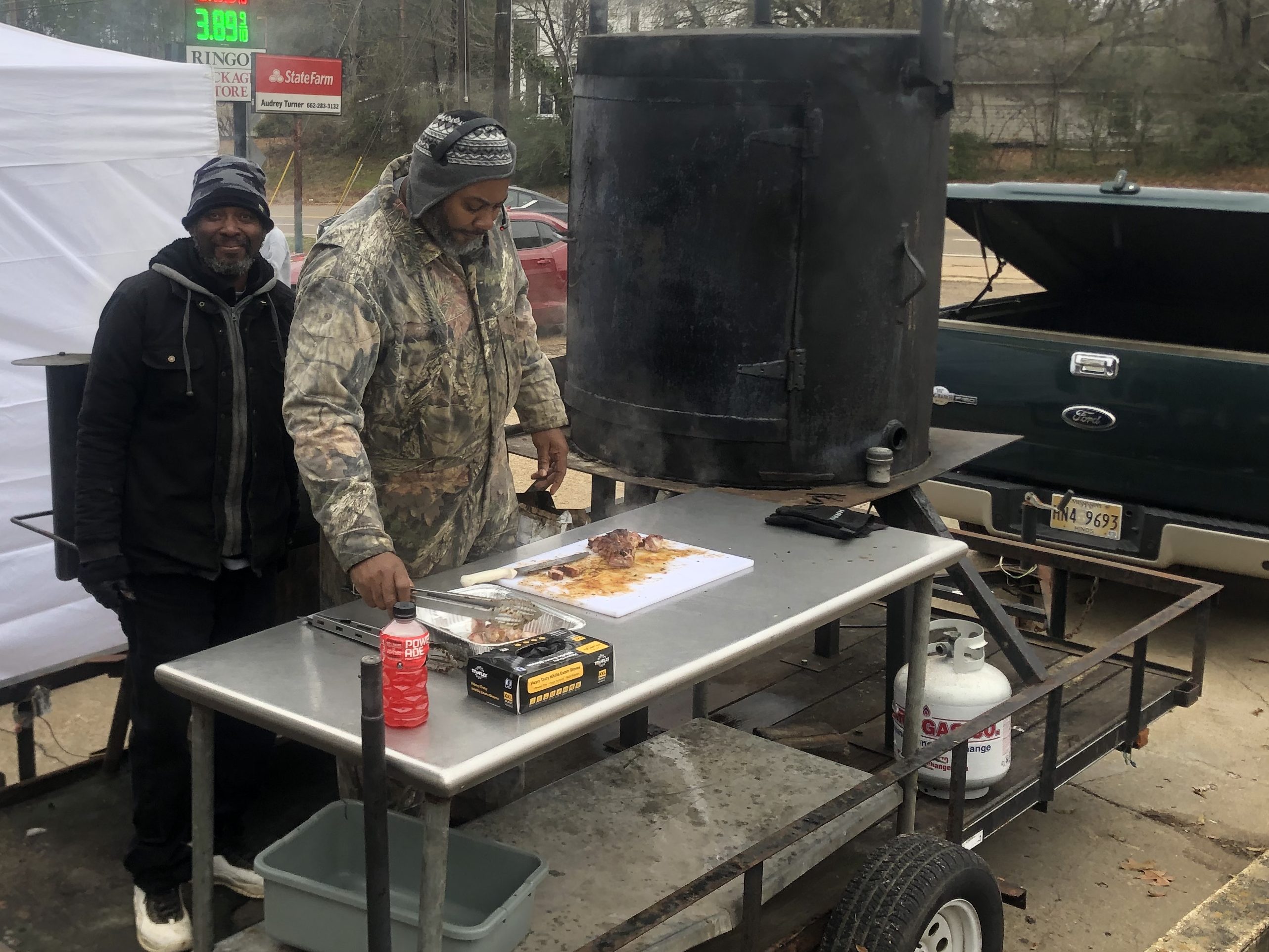
Meanwhile, the husband (who calls himself “Grill Master Shawn”) and his friend (?) were working the barbecue.

Grill Master Shawn and sidekick.

While the cole slaw was forgettable, I have to admit that the pulled pork sandwich was one of the best I’ve eaten. So if you ever find yourself in Winona on the first or third Saturday of the month, check out the Grill Master!

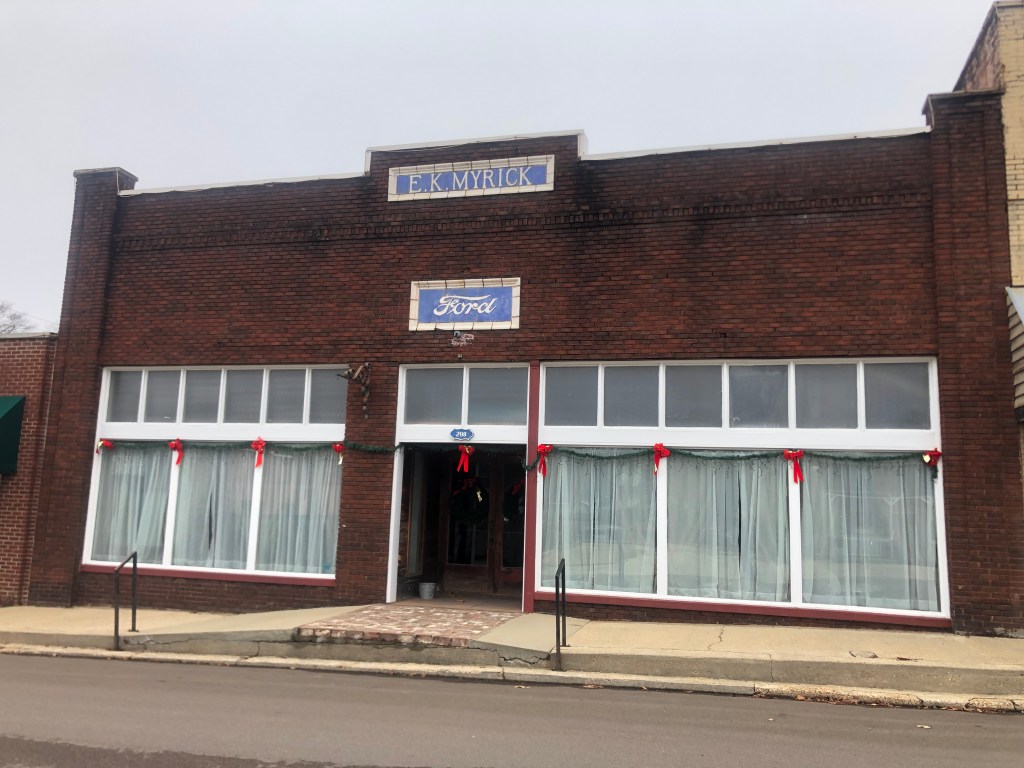
On the way out of town I passed an old Ford dealership, which is in remarkably good shape. According to my research, it was built around 1920, making it one of the earliest buildings dedicated specifically to Ford. (Recall that the Model T had first come out just a dozen years earlier, in 1908.)

Have you driven a Ford…lately?

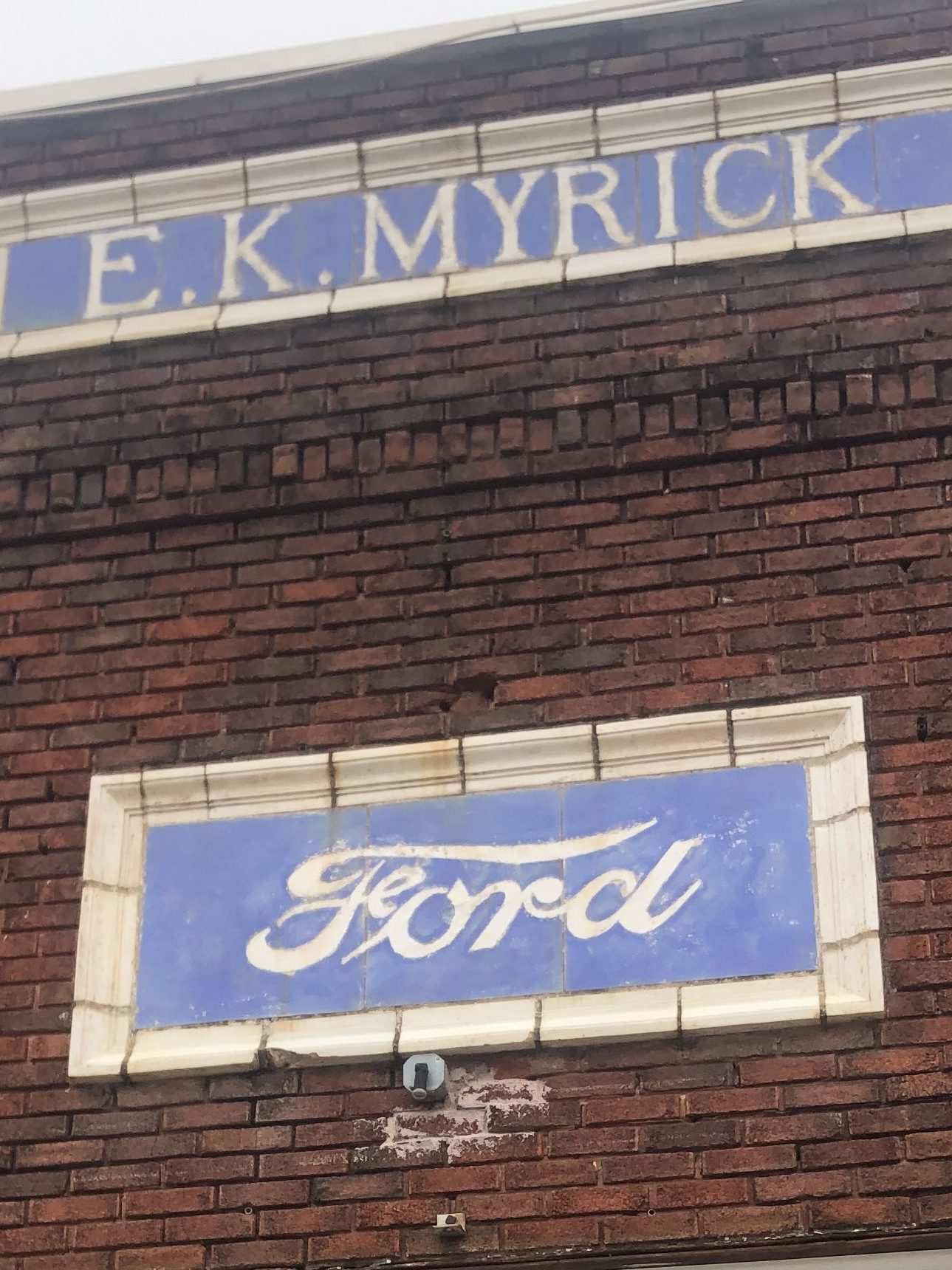
This dealership, owned by one E. K. Myrick., was Mississippi’s first Ford dealer.

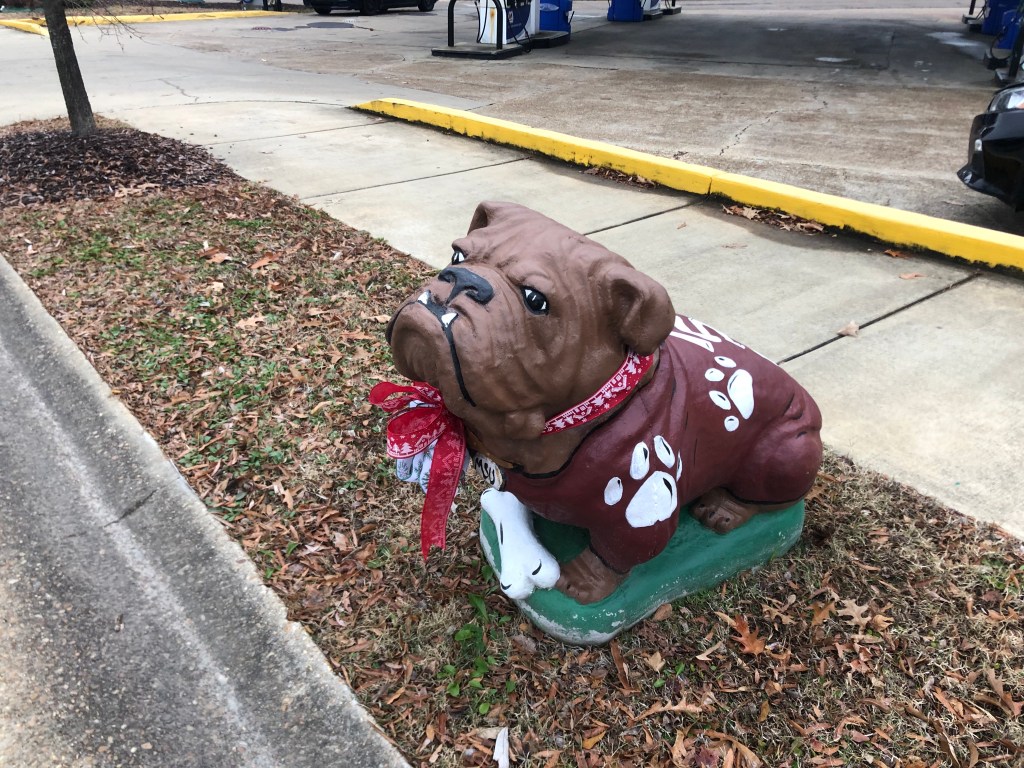
At the end of today’s travels I came to the town of Starkville, Mississippi (pop: 25,000). Starkville is known for several things, not the least of which is Mississippi State University. In fact, you see the college mascot (a bulldog) everywhere.

This one is a little weird, but it scores points for originality.

But I have known about Starkville for a different reason, since I was a mere lad of 8 years old. That was the year my Dad let me buy a record album for the family stereo, and for reasons now unclear to me I selected the Johnny Cash at San Quentin live album. One of the songs on that album is “Starkville City Jail,” whose lyrics describe how Johnny Cash was arrested for picking flowers in the town in 1965. Or so he says. The full story is here. Anyway, the only thing I knew about Starkville until today was that it was where Johnny Cash got arrested for picking flowers.

Oh, and here’s the song:

Tomorrow I plan to take US 82 through the rest of Mississippi and into Alabama. But first, I need to leave you with the:

Brew of the Day

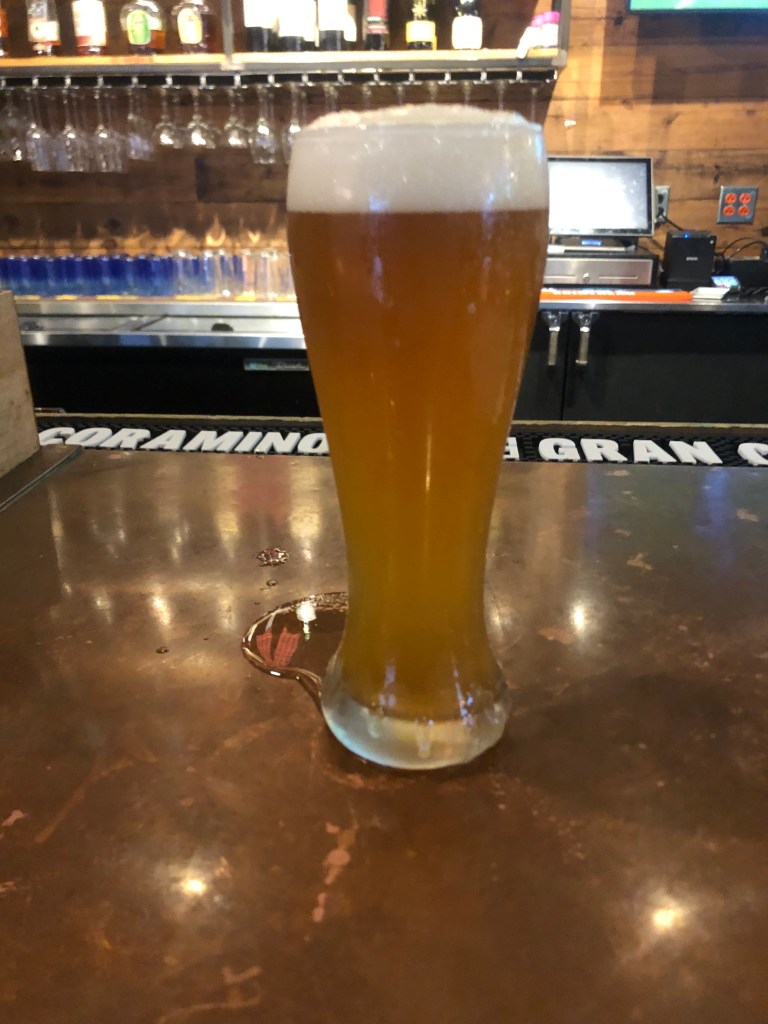
I got today’s BOTD at a restaurant called Georgia Blue in Starkville, MS. It’s an imperial IPA made by Southern Prohibition Brewing in Hattiesburg, MS. They call it “Crowd Control,” for reasons that I’m unable to divine.

As you can see, this beer is slightly cloudy and has a thick head. The mouthfeel is smooth and pleasing. This beer lacks the strong, bitter hoppiness of the California IPAs that I’m familiar with. As a result of all this, the beer is quite quaffable. In terms of taste, pineapple and citrus notes predominate. But the taste is somewhat one-dimensional. It lacks the complexity you’d want from an imperial IPA. The ABV clocks in at 8 percent. Overall, it’s a serviceable beer, but not worth driving to Mississippi for. I give it 3.5 stars out of five.
Ghost stories · Road trips · trains

I do believe in spooks! I do, I do, I do….

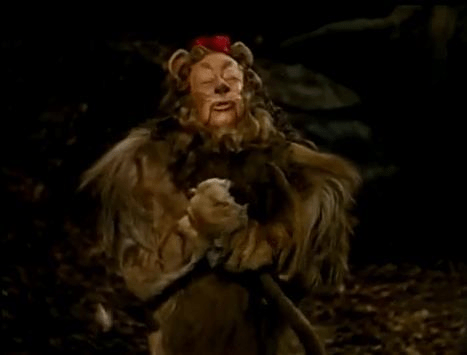
Just a dandy lion.

So much for my grand plan of escaping the wintry weather by taking a southern road trip. It’s been raining cats and dogs all day.

I knew something was up when I was on the second leg of my flight (from DFW to Texarkana). At our scheduled arrival time we found ourselves circling for three-quarters of an hour over thick fog and rain. Thankfully, the pilot of our tiny plane (there were only about 20 of us on board) handled the tiny plane as well as could be hoped. The whole situation reminded me of Gilligan’s Island; if not for the courage of our fearless crew, the airplane would be lost.

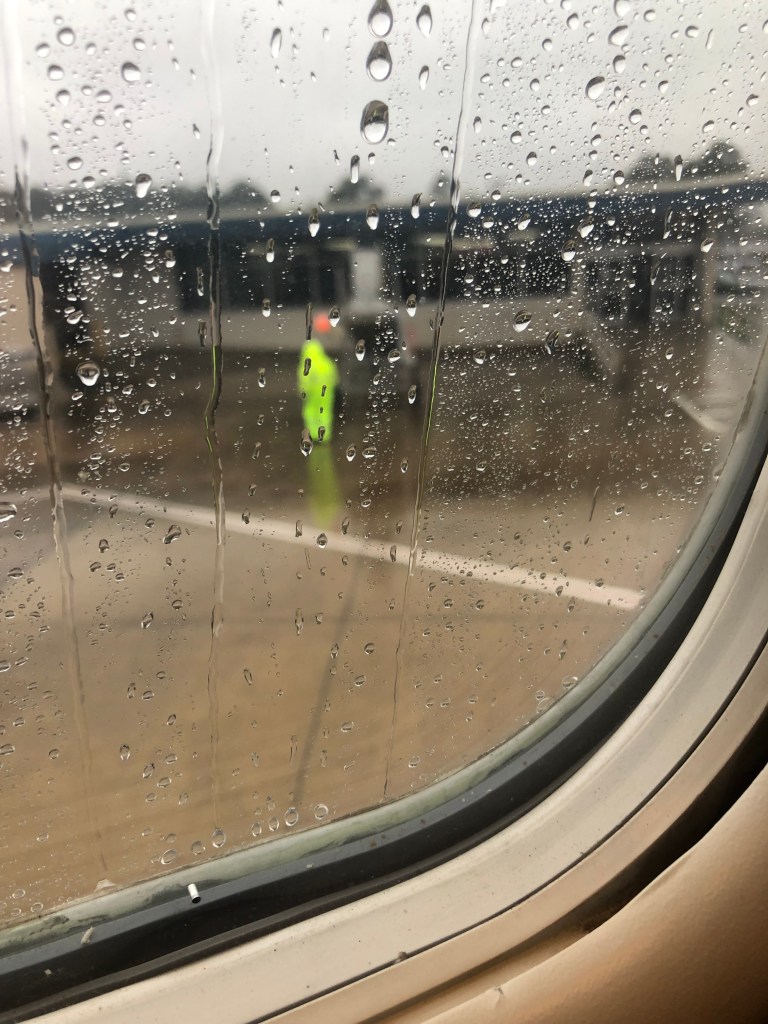
Anyway, we finally landed at Texarkana, which appears to be world’s smallest airport. Seriously. This airport does not seem designed to handle commercial aircraft. I think there’s just one runway. And some unfortunate employee had to literally wrestle the (apparently only) deplaning ramp into position by hand in the rain. When we made it across the small patch of tarmac and entered the tiny building, I practically bumped into the (single) car rental counter that is squeezed into an inadequate space next to the baggage claim. On the positive side, their single rental car was parked right next to the door. I was off in a flash!

Welcome to Texarkana.

There are actually two Texarkanas, which togetherstraddle the boundary between Texas and Arkansas. Texarkana, Arkansas (pop: 30,000) sits on the Arkansas side, of course, and hosts the Lilliputian airport. Its sister city of Texarkana, Texas (pop: 36,000) is in the Lone Star state. The two Texarkanas combine into a large metropolitan area with a population of almost 150,000.

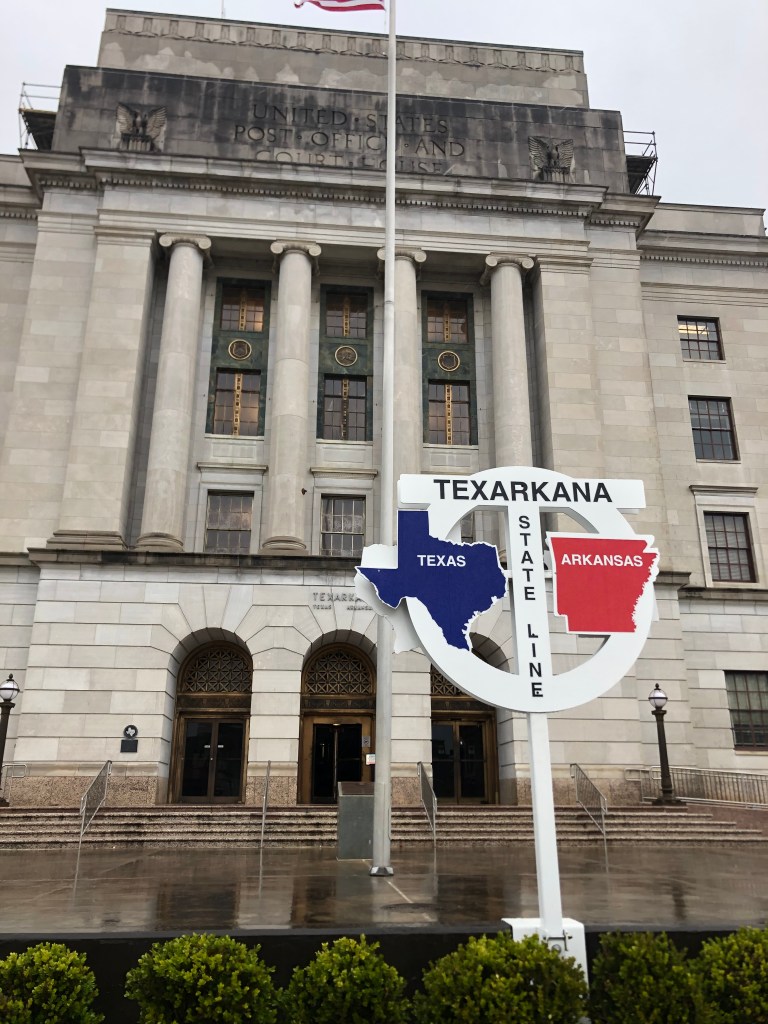
Before heading out onto Route 82 I spent a little time exploring Texarkana’s downtown core. One of the most prominent features is an imposing federal courthouse/post office building that sits squarely on the state line. Half the building resides in Texas and half in Arkansas. There’s a sign out front that helpfully commemorates that fact.

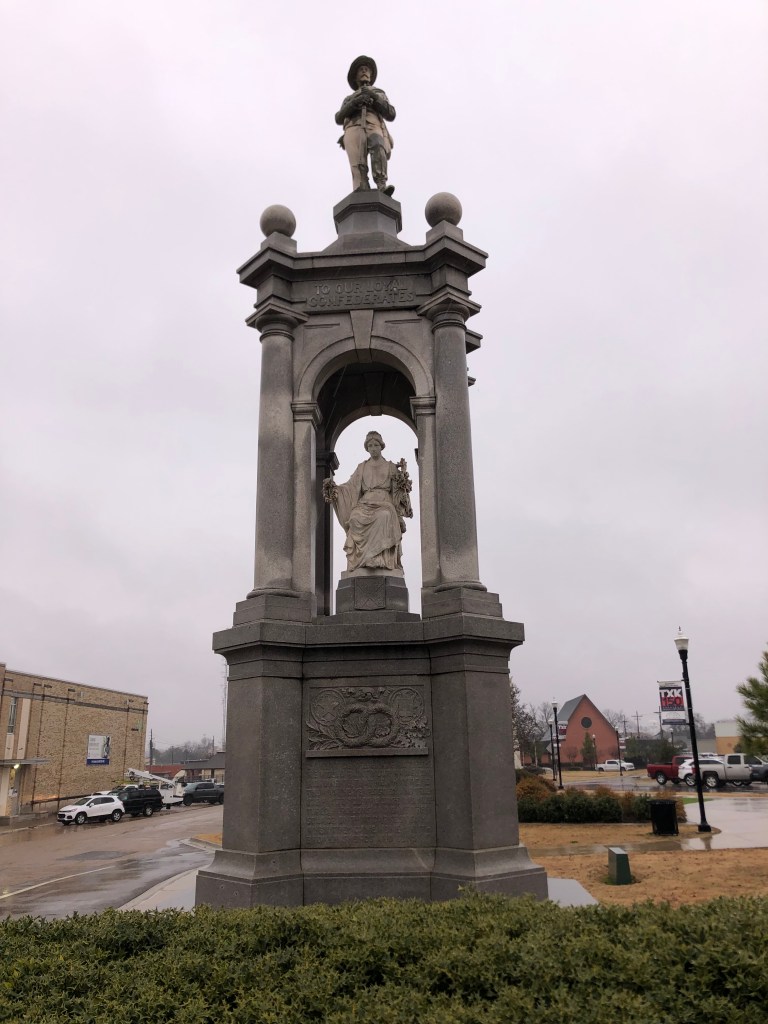
Speaking of commemoration, I spotted this nearby monument to the mothers of Confederate soldiers. Clearly I’m not in Kansas anymore.

Inscription on the base: “O Great Confederate Mothers, we would print your names on monuments, that men may read them as the years go by and tribute pay to you, who bore and nurtured hero sons and gave them solace on that darkest hour, when they came home with broken swords and guns”.

The two Texarkanas were established in 1874 (in Texas) and 1880 (in Arkansas) at an important intersection of several railroads. The railroads contributed much to the area’s growth and prosperity….and when railroads began to decline in the second half of the 20th Century, so did Texarkana.

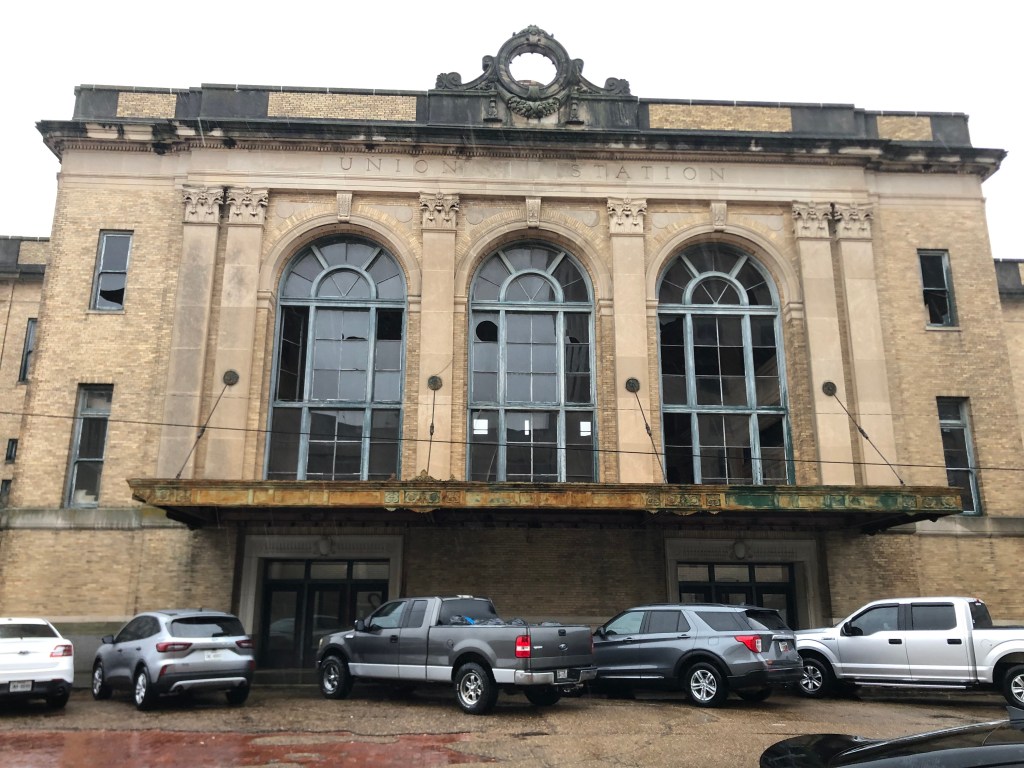
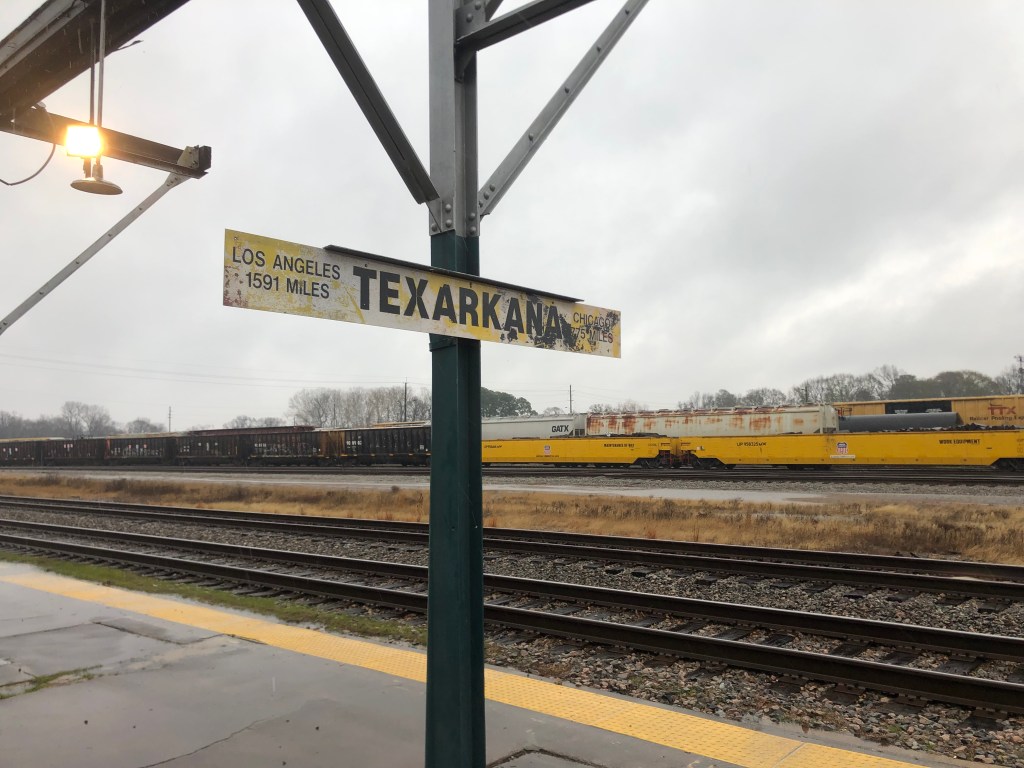
A relic of the glory days is Texarkana Union Station. It was constructed in 1928, and like the post office, it straddles Texas and Arkansas. It’s another imposing structure, and when I drove up it appeared to be alive and well.

The left side is in Arkansas.

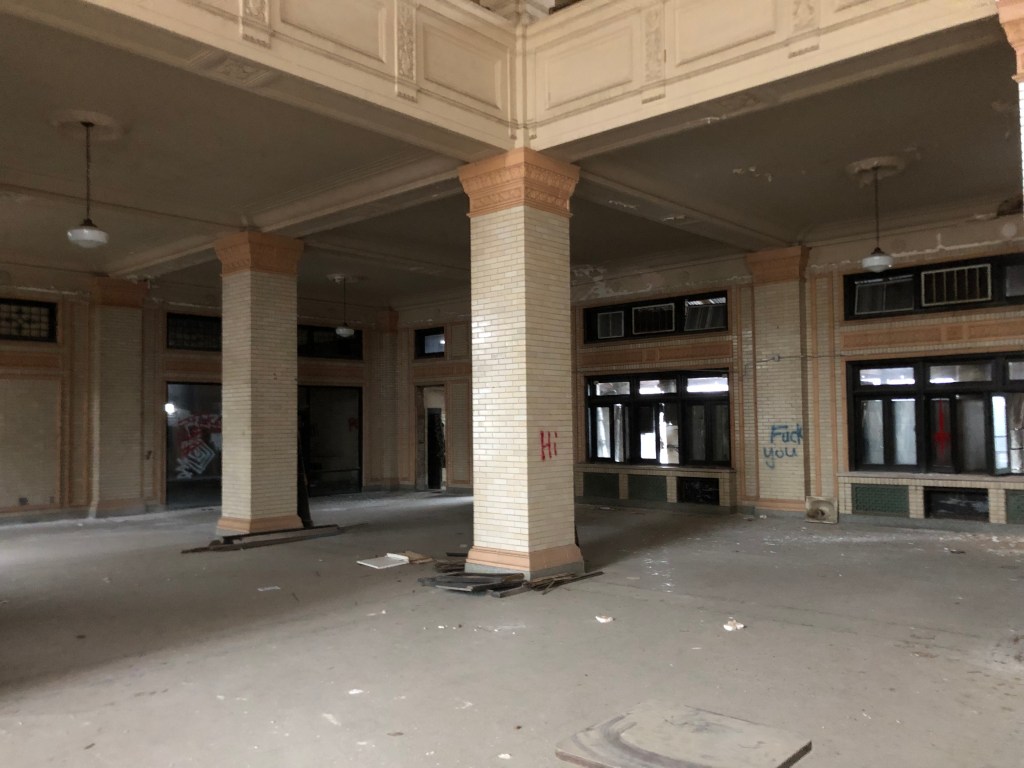
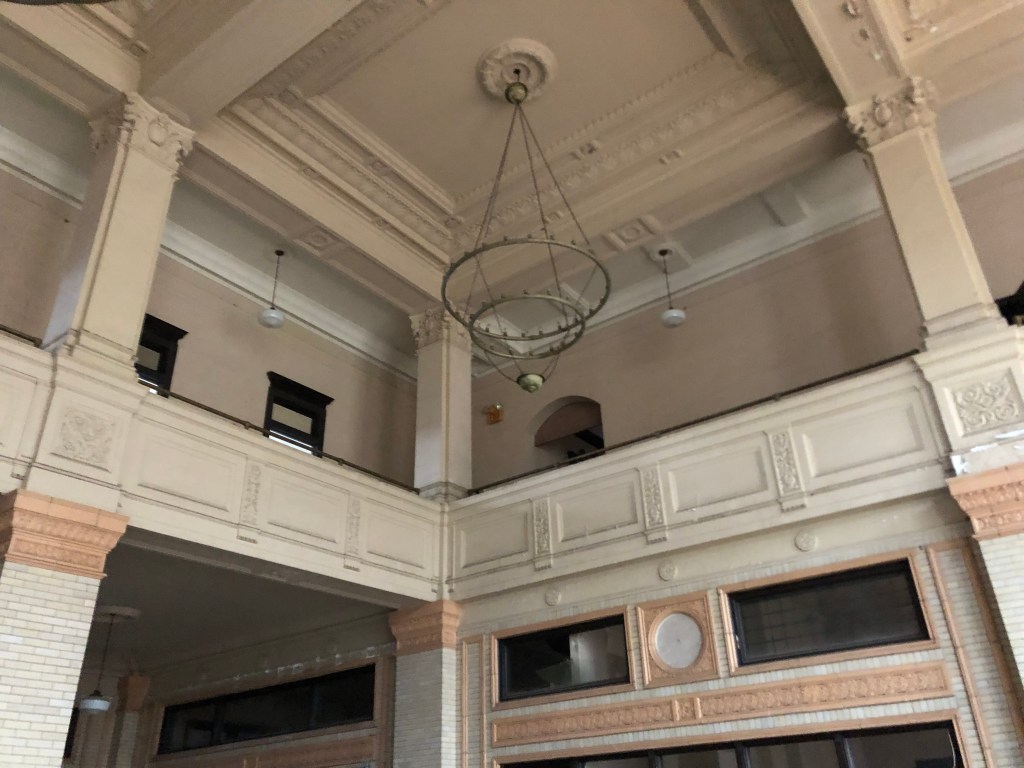
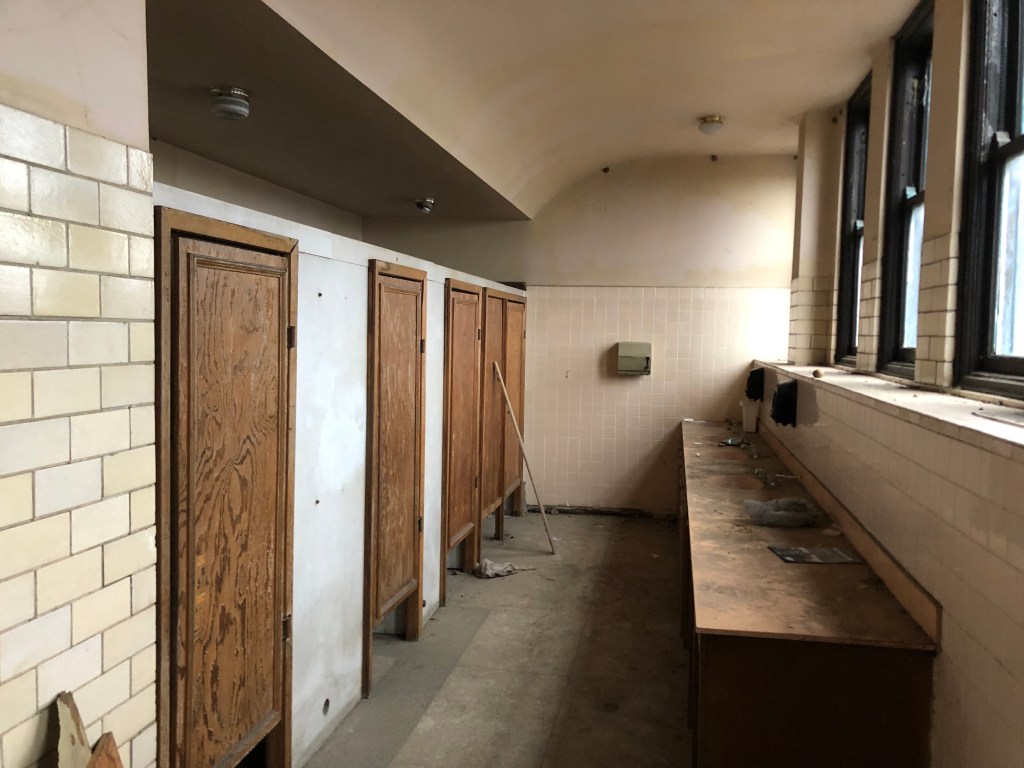
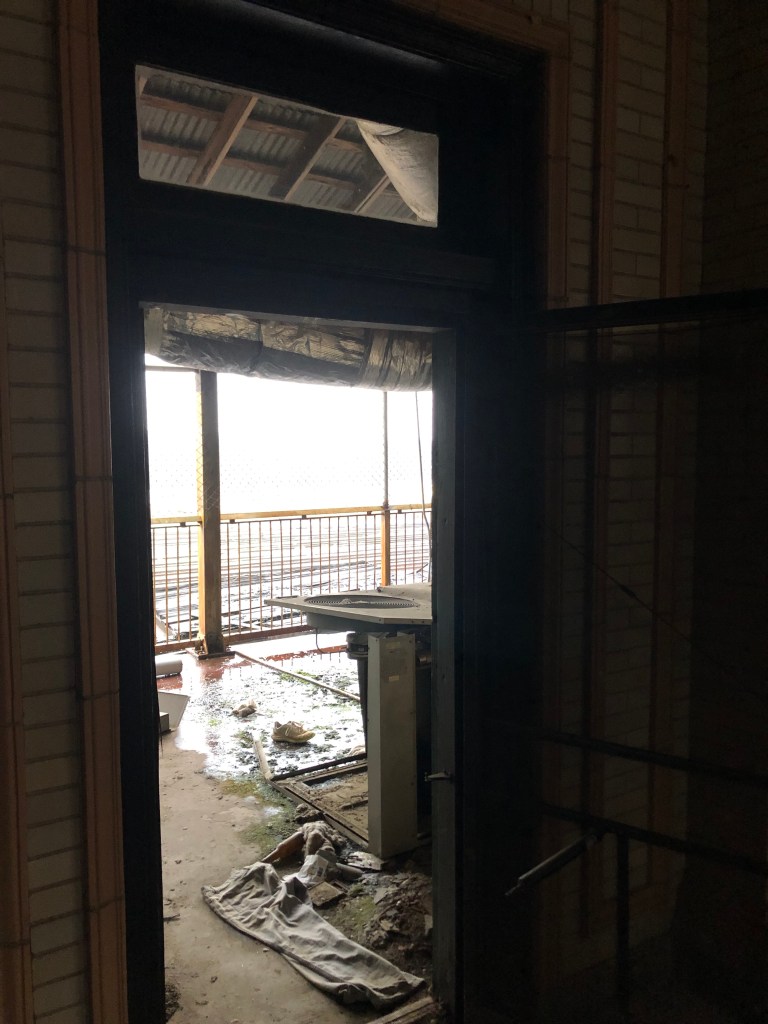
So I parked my car among the many others in front of the building, and I entered through the front doors. What I encountered was a ghostly tomb of a building, which clearly hadn’t been in operation for years.

The once-grand lobby.
The Women’s room.
Forlorn balcony overlooking the railyard.

I should emphasize that there wasn’t a living soul in this place. In some places it had been tagged with graffiti, and if other places there was evidence of recent efforts to paint or repair damage. But the whole situation felt odd: why is the front door unlocked? What is this place used for these days?

I went to the back platform, where men in their fedoras and women in their shirt waister dresses would catch their trains.

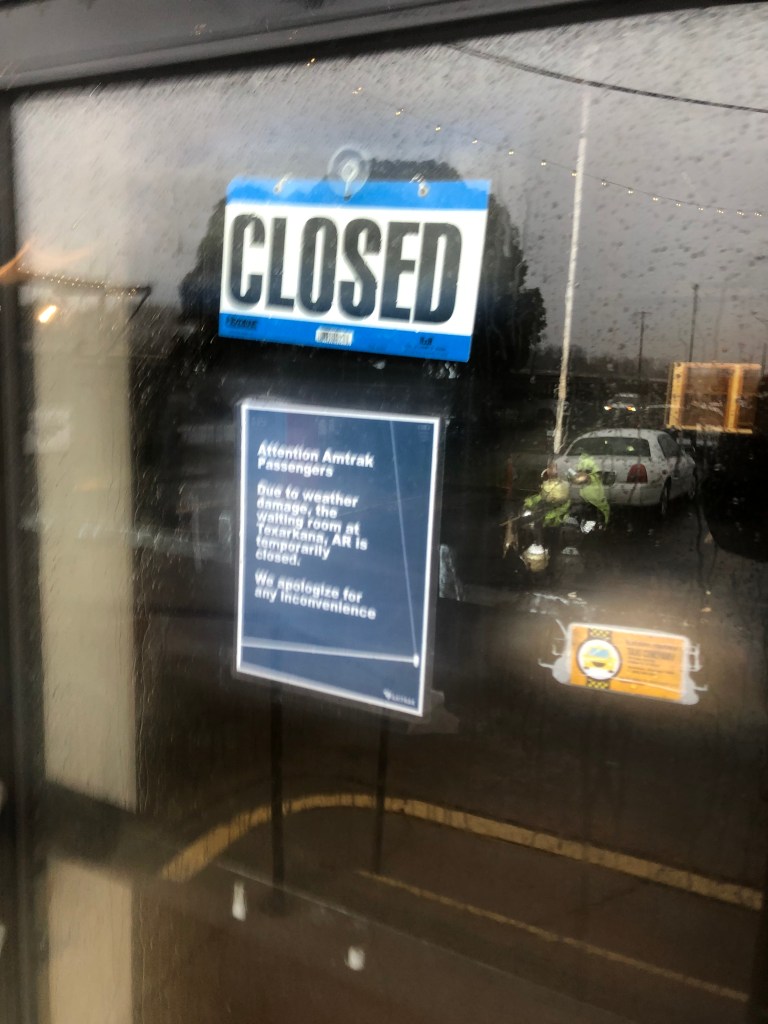
A little more exploring revealed an active Amtrak waiting room and ticket counter! And by “active,” I mean it was closed. But evidently trains still stop at this station. In fact, according to Wikipedia, it is “the second busiest Amtrak station in Arkansas.” I couldn’t tell you how much of an achievement that is, however.

One final, tantalizing piece of information about Union Station: An April 2023 story in the Texarkana Gazette reported that Amtrak and both Texarkanas had signed a good-faith agreement to restore the station, that $200,000 in seed money had been authorized, and that grant funding was actively being sought. I do hope they’re successful; this could make an impressive anchor for the downtown, which clearly has seen better days.

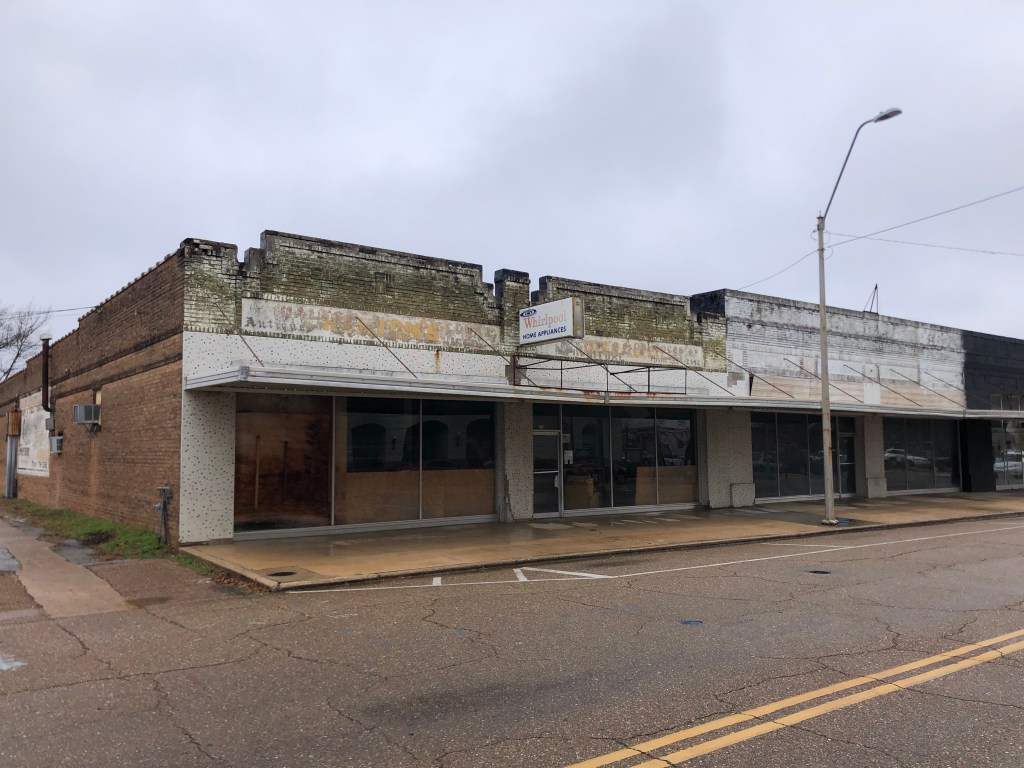
This blog project has repeatedly encountered the question of why do some historic towns survive, others die, and still others wallow somewhere in between. I was thinking about this while I explored Texarkana. There are a number of buildings that have evidently been abandoned, just slowly decaying in place, like this old appliance store.

No wonder the Maytag Man is so lonely.

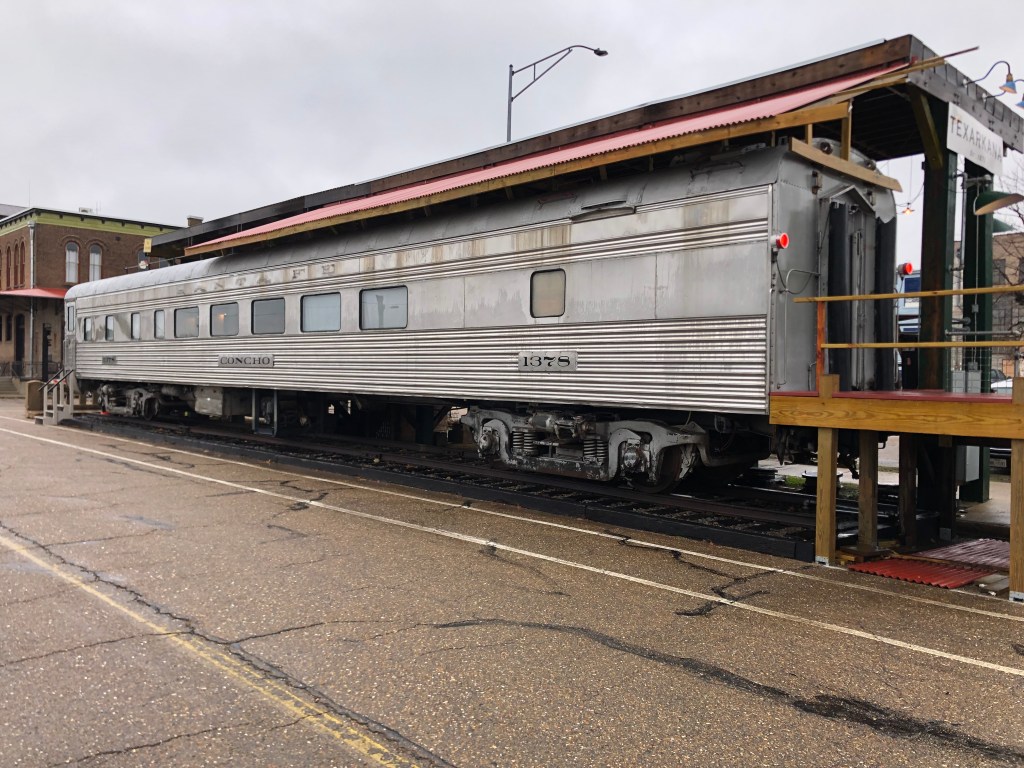
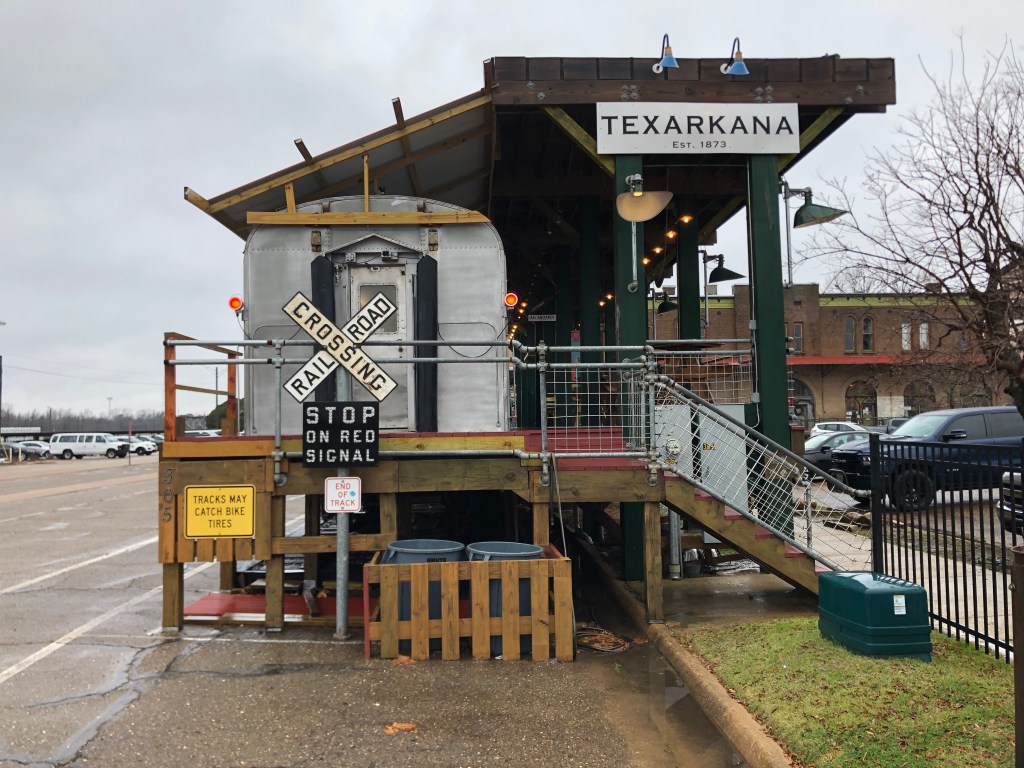
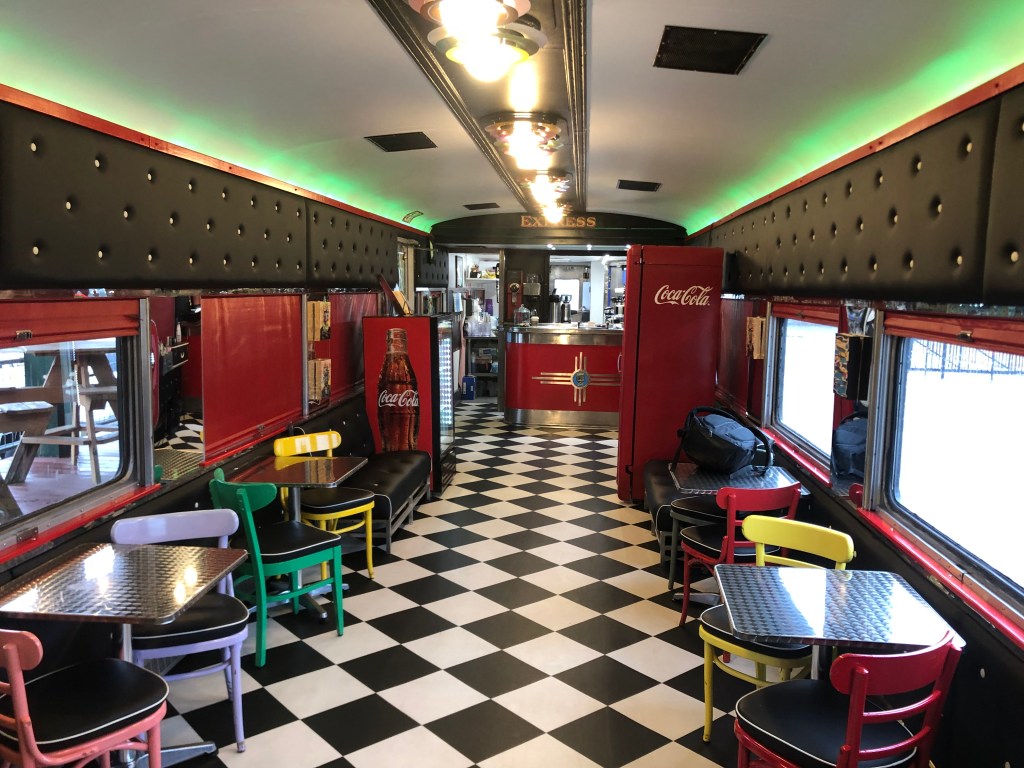
On the other hand, there are a number of public art installations and renovated structures scattered about as well. One of these is a historic streamline passenger car that’s been converted into a coffee bar.

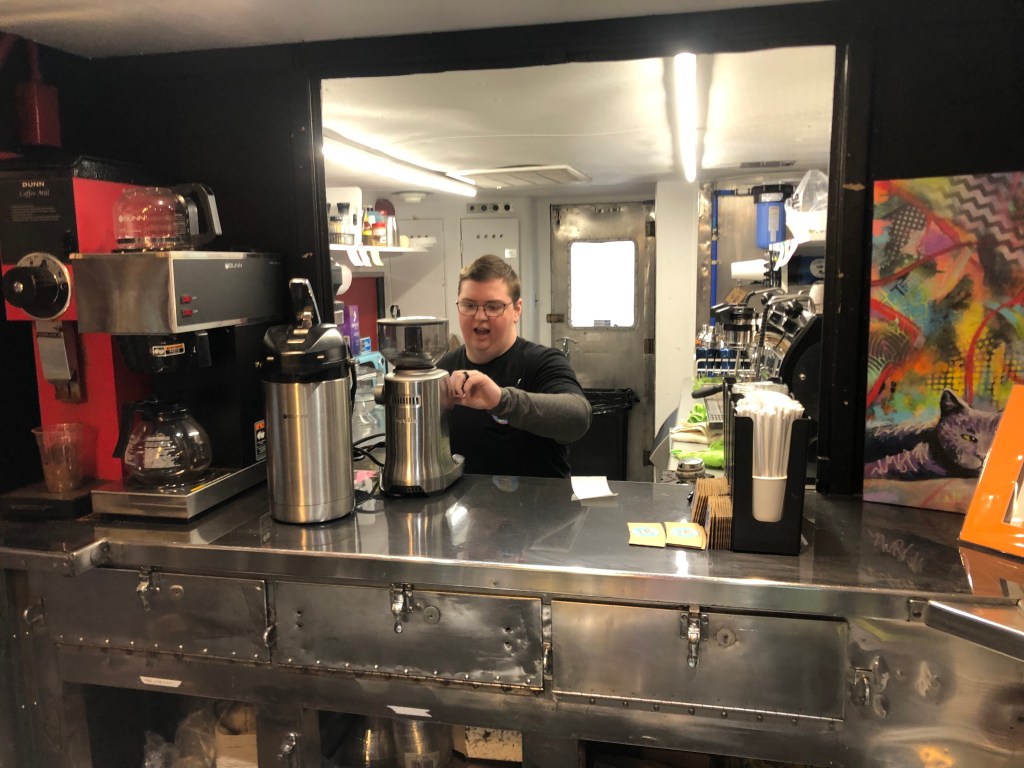
The place is called Alley Cats, and it’s appropriately located not far from Union Station. I went inside and ordered a coffee from Gus.

Gus making my espresso aboard the Concho.

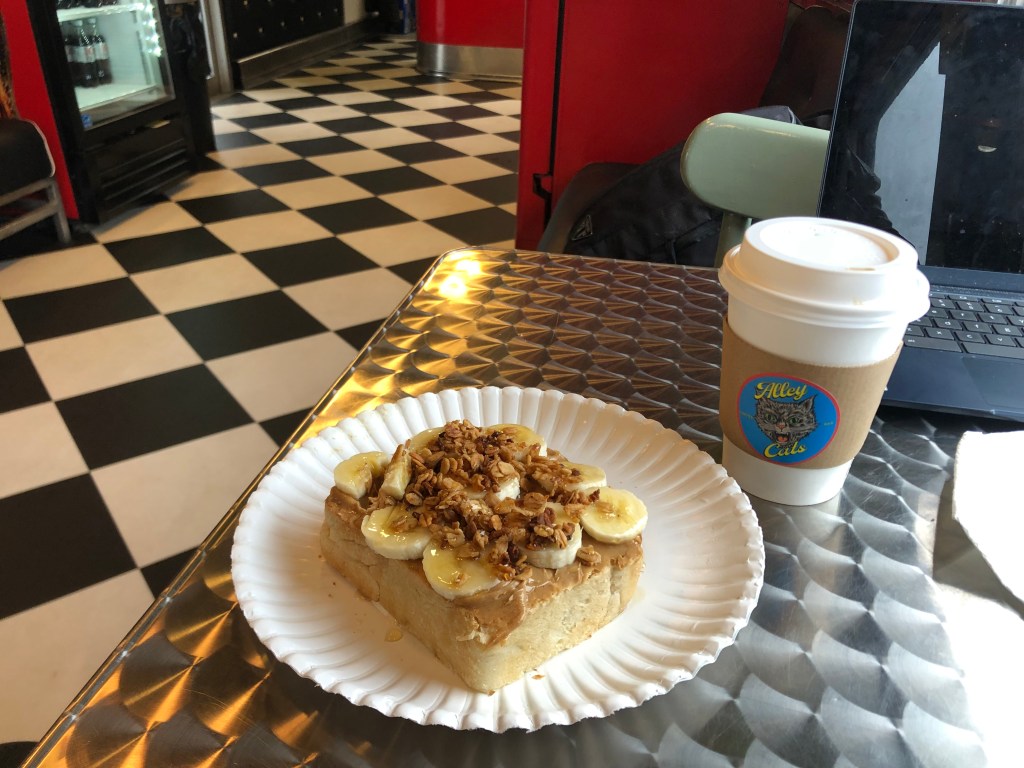
Gus also recommended their Loaded Peanut Butter Toast (thick, locally-made sourdough with peanut butter, honey, granola, and bananas). How could I turn that down??

Breakfast of Champions

Gus explained that the Concho was built in the 1930s, and it used to be a barber car (i.e., a car where train passengers could have their hair cut or perhaps get a permanent) while en route. Many of the original elements of the car, including the extensive use of stainless steel, remain. The car has also been decorated with the work of local artists.

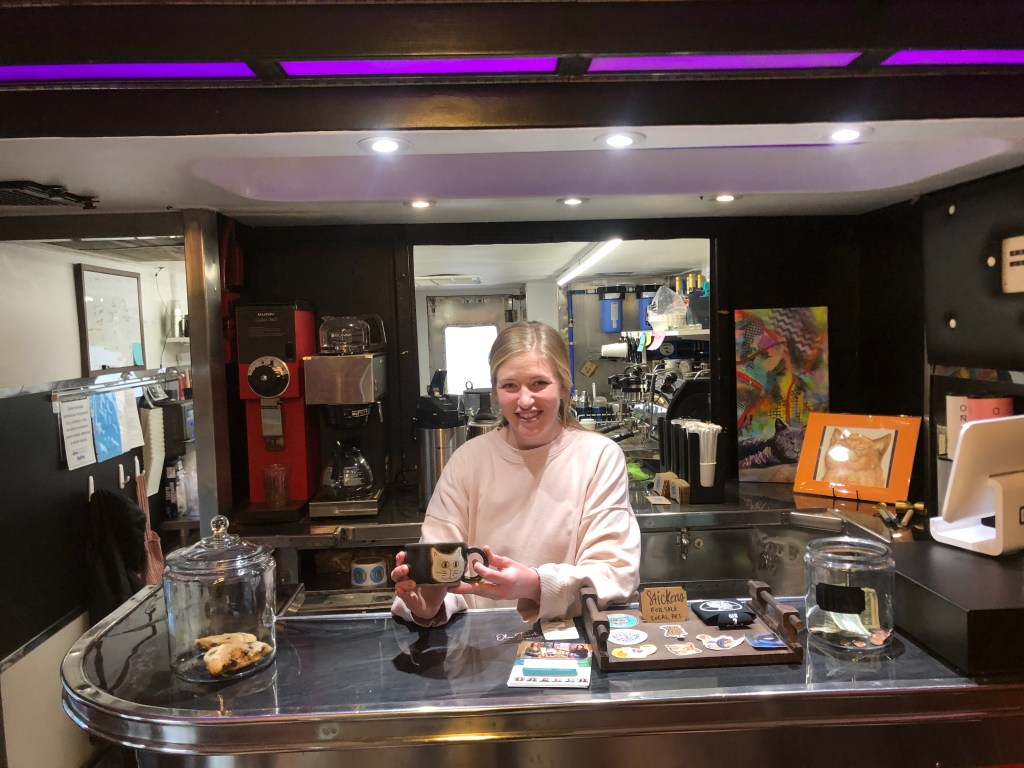
As I tucked into my Peanut Butter Toast, the owner of Alley Cats — one Hillary Cloud — came aboard. She explained to me that she used to be a loyal customer when the business was owned by others. But when those owners had to sell the place last year, she and her business partner snapped it up. She seemed to be motivated by a desire to save a business she appreciated, but also to help advance the revitalization of a downtown that she loves. Hillary is not a major land speculator. She was born and raised in Texarkana, and after going away for college and doing some coaching she returned to her hometown. She spoke passionately, but realistically, about promoting local business. Alley Cats sources some of its food (including that delicious sourdough) from local businesses, and showcases the work of local artists. It was clear to me that people like Hillary make the difference between towns that thrive and those that decline.

Owner Hillary Cloud, with a mug produced by a local artist.

Finally, well-fortified with peanut butter, it was time for me to get onto Route 82–which was the whole point of this trip.

US Route 82 is like most of the other US highways that I’ve documented on this blog: most of it has one or two lanes in each direction, and it becomes the main thoroughfare of the towns it connects. These routes are not heavily traveled, as most of them were superseded by interstates the middle of the last century. As a result, they often feel like The Land That Time Forgot.

For this first day on the road, my goal was to drive from Texarkana to Greenville, which sits just beyond Arkansas’s border with Mississippi. Along this route there are only a few towns of any notable size. Much of the drive is flat or gently-rolling hills cutting through stands of second- or third-growth hickory.

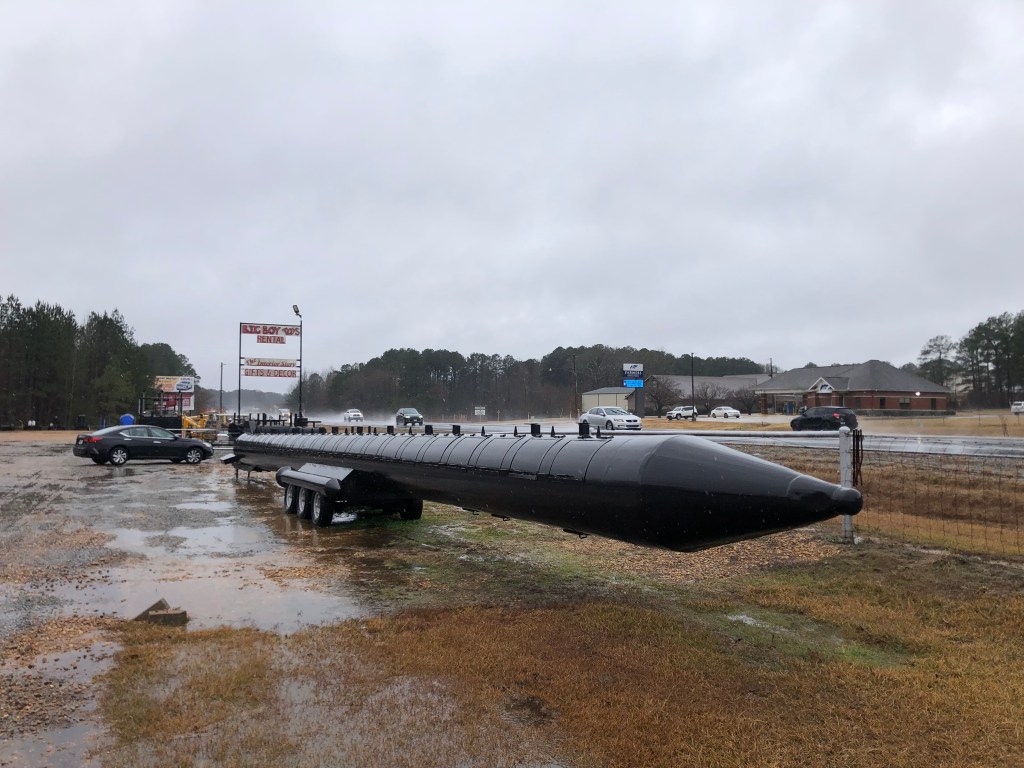
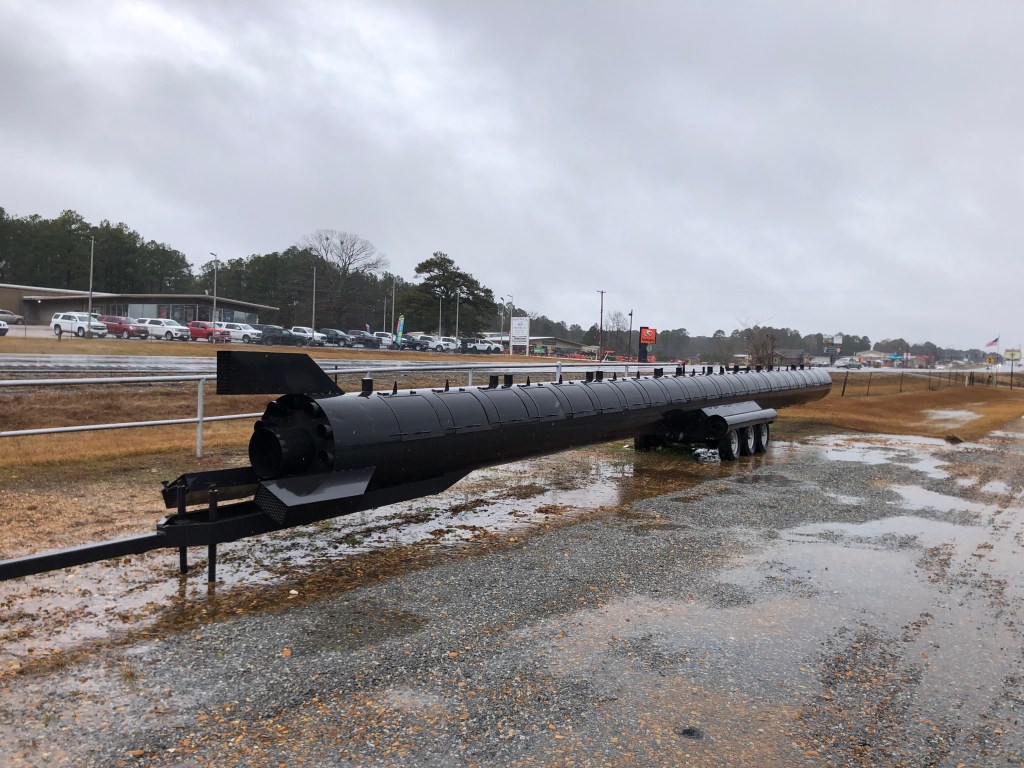
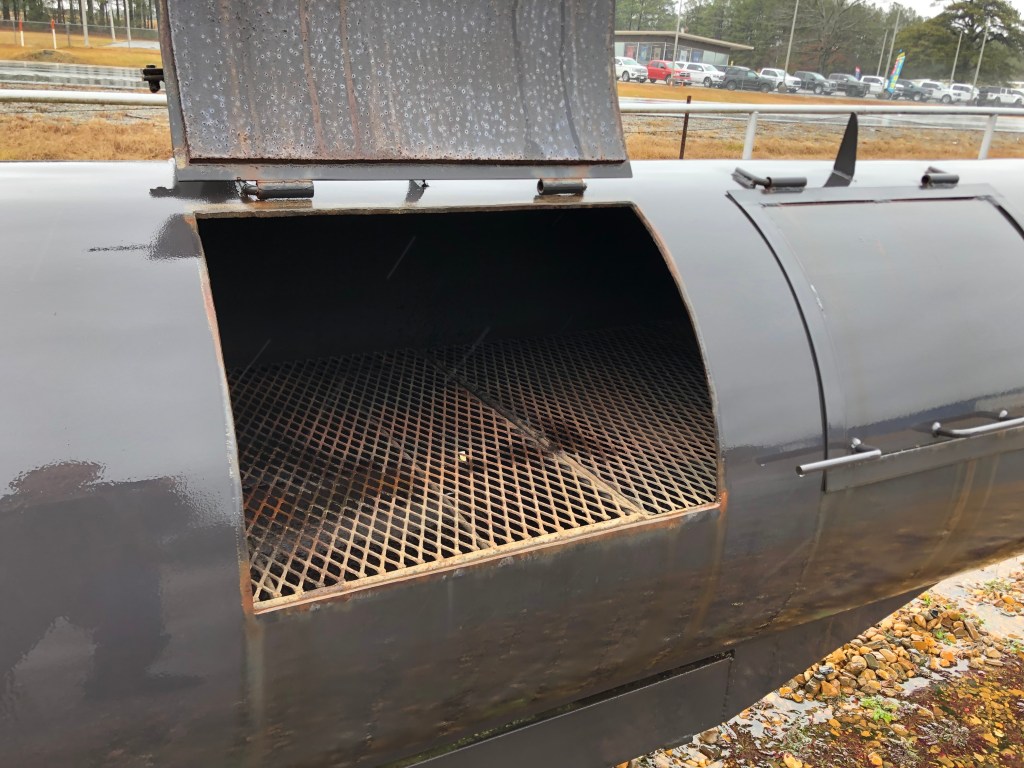
One of the first towns I came to after Texarkana was Magnolia, Arkansas (pop: 11,000). Everyone wants to be known for something, and Magnolia is known for its World Championship Steak Cookoff each spring. They like to promote their “World’s Largest Charcoal Grill,” which I saw parked alongside Route 82. It is an impressive piece of ironwork which resembles an ICBM.

View from the back. (I probably should have taken a panorama shot!)

The next town was El Dorado (pop: 17,500). Established around the same time as Texarkana, it’s downtown appears to be thriving. Attractive public spaces, prosperous businesses, and public art displays abound.

And then I came to Crossett (pop: 4,700). Crossett isn’t a big town, but it’s noted for something that’s come to be known as the Crossett Spook Lights. Rather than try to describe them myself, allow me to quote from something called The Encyclopedia of Arkansas:

Outside of Crossett, where the old railroad tracks once lay, an unexplained light has become a local legend. It has reportedly been seen consistently since the early 1900s by multitudes of people. The light is typically seen floating two to three feet above the ground but also is said to move into the treetops and sometimes side to side. The light reportedly disappears as one walks toward it and then reappears the same distance away, so that one can never get a close look at it. The Crossett Light’s color reportedly ranges from yellow or orange to blue or green.

It’s claimed that the lights are connected with a long-ago incident involving a railroad worker who was decapitated. I did a lot of research on this as I had a snack at a Crossett fast food joint, and it seems that there are many people who earnestly insist they’ve seen the Spook Lights. However, there was a lot of disagreement as to where, exactly, they were to be found, and under what conditions. Undaunted, I waited into the approach of nightfall and I headed out a lonely dirt road into the middle of a dark forest to see what I could see.

I do believe in spooks, I do, I do….

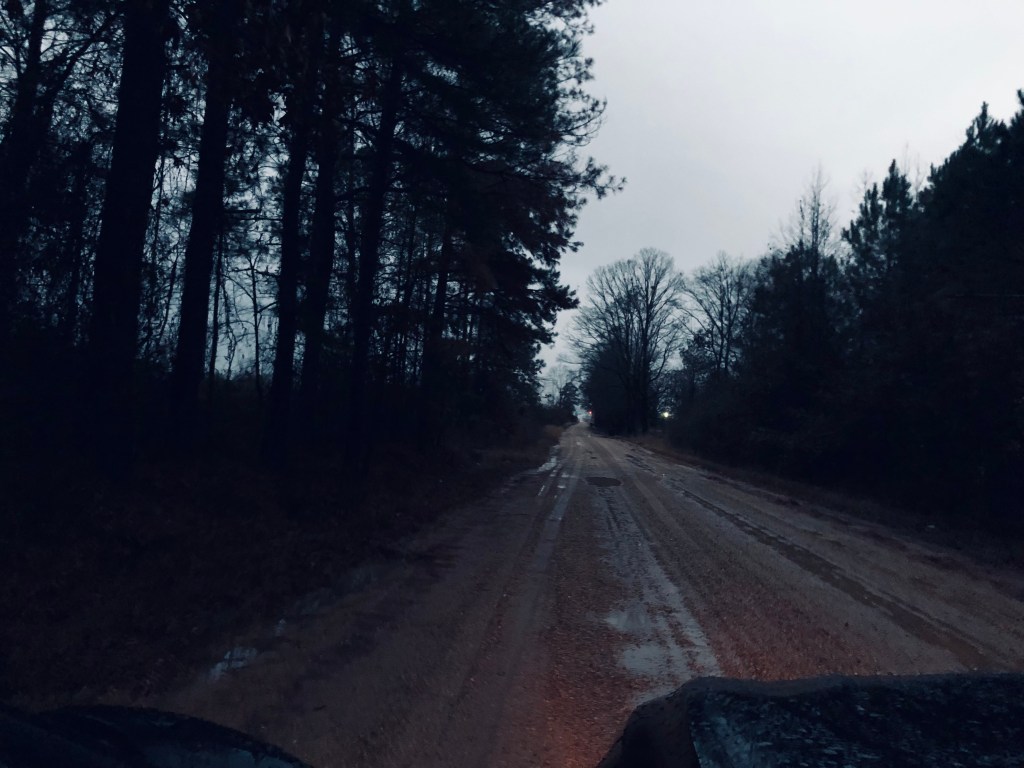
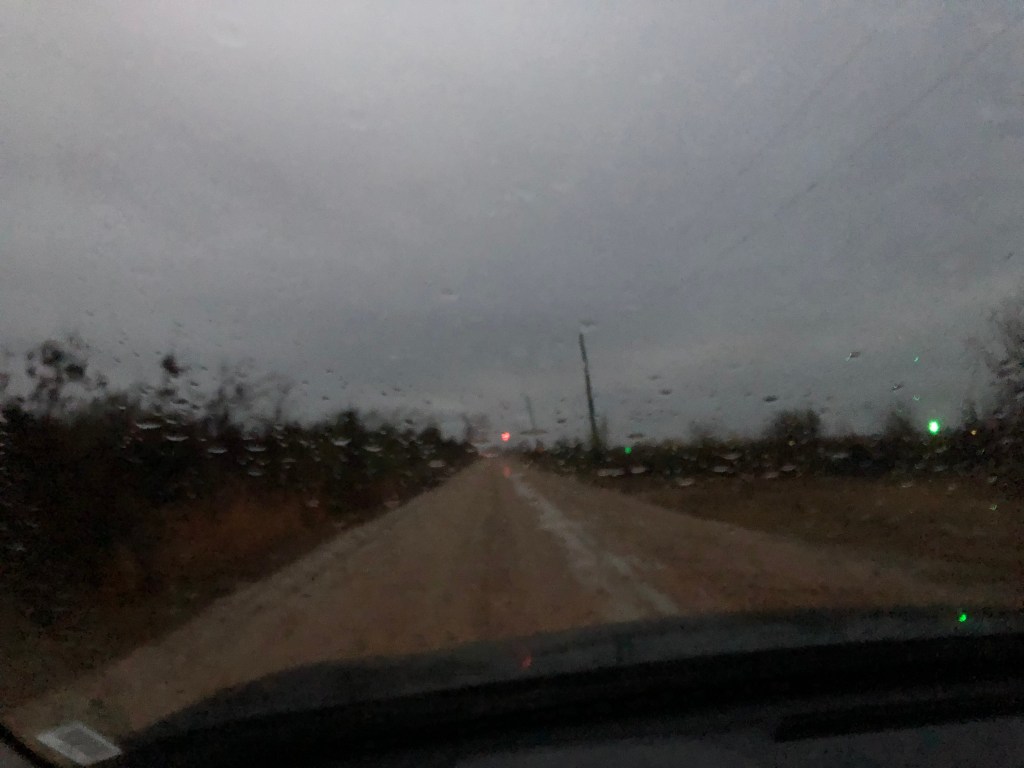
It was getting cold and dark, and the rain was unrelenting. But I dutifully parked in the middle of the narrow road (I encountered no other cars) and waited for the lights. I confess it was eerie out there, and more than one I was startled by a bird or a wind-blown tree branch. A few times I thought I saw a small light briefly winking at me through the windshield, but as it was raining, I chalked that up to the drops of water.

Finally I gave up and slowly headed back along the muddy road. Then, what should I see, but several small yet distinct red and green lights!

I was beside myself! The stories were true! I can’t wait to report back to my loyal readership! Assuming, of course, I’m not about to be abducted by aliens…

I continued forward toward the lights and…alas, I discovered their cause. There’s a small, private airfield, complete with guidance lights, a few hundred yards off to the side of the road. Talk about a buzzkill.

I got back onto Route 82 and after an hour I crossed the mighty Mississippi and entered Greenville. This is where I’m spending the night.

BEER OF THE DAY

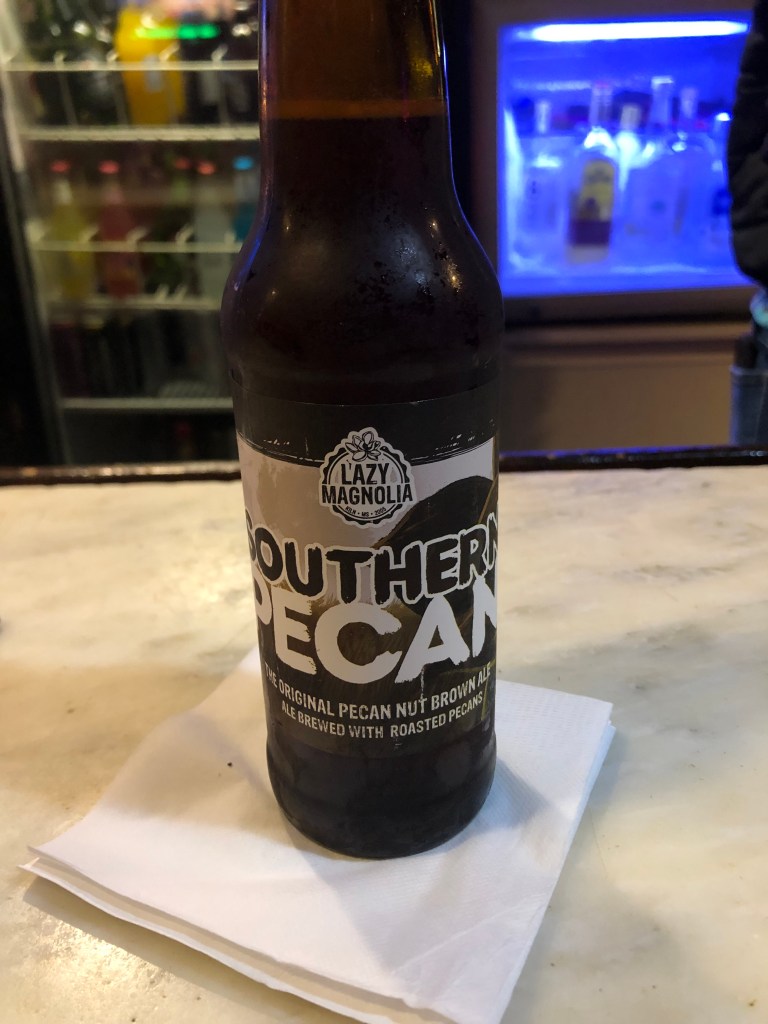
In Greenville I went to a local pub called “Spectators,” where I asked for a local brew. I was presented with a Southern Pecan nut brown ale, brewed by the Lazy Magnolia Brewing Company in Kiln, Mississippi. The beer is brewed with roasted pecans, and has an ABV at a very modest 4.5 percent.

Despite the brown ale style and the addition of pecans, this beer is pretty light. It has no bite to speak of (hops seem almost to be absent). But neither is is malty sweet. Still, it’s as smooth as silk, going down very easy indeed. I would have liked to have seen it in a glass (it was served in a bottle), for its dark color and head. (I was able to see some foam in the bottle.) Anyway, it’s an inoffensive beer, but not memorable. I give it 2.5 starts out of five.
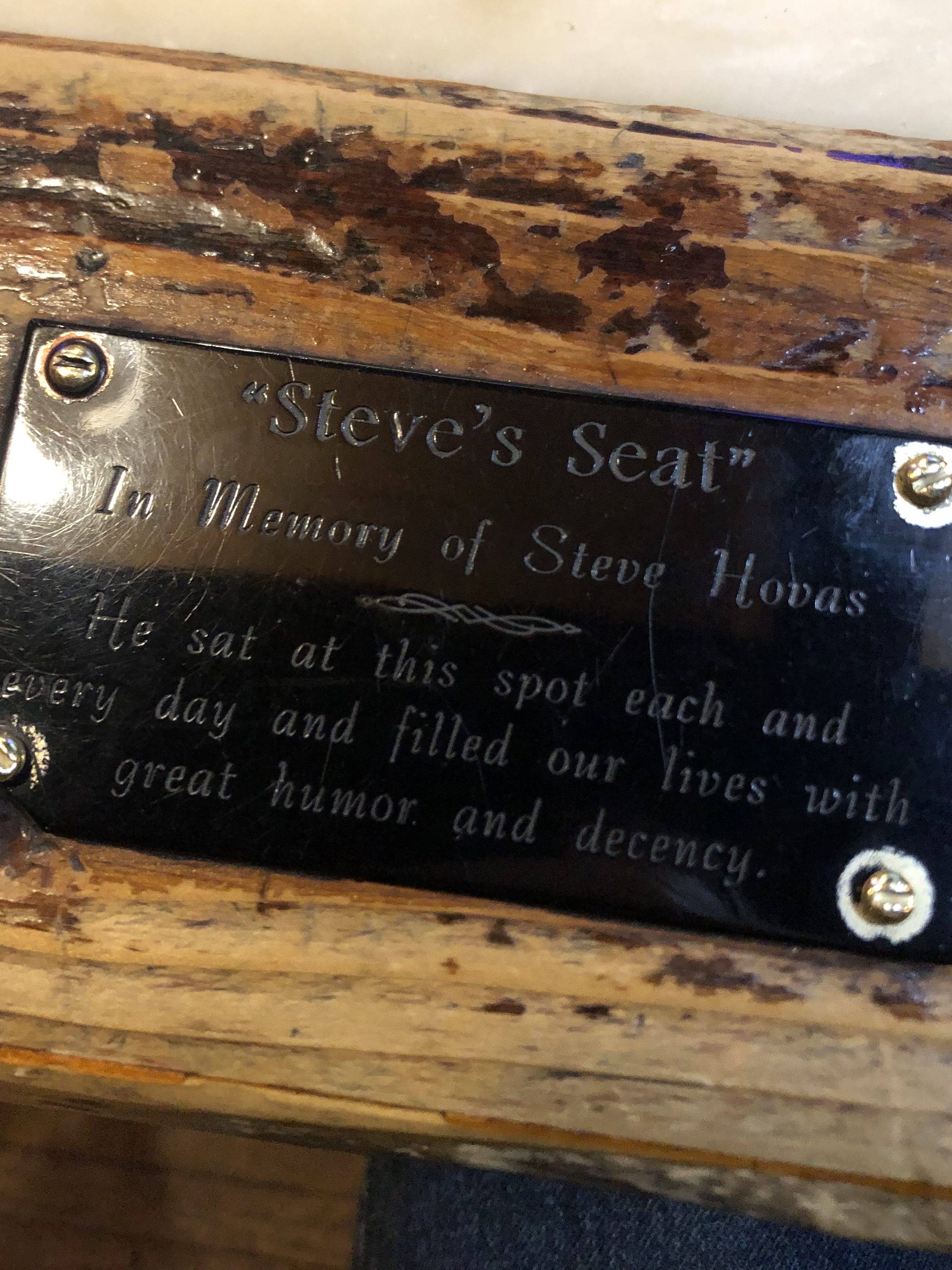
Oh, as I was leaving, I noticed a plaque on the edge of the counter where I was sitting. I guess it was meant to be!