2025 Advent cocktails

Advent Spirits Day 12: Elijah Craig Bourbon

Today’s spirit presents us with an interesting opportunity. It’s Elijah Craig Straight Kentucky Bourbon. Checkitout:
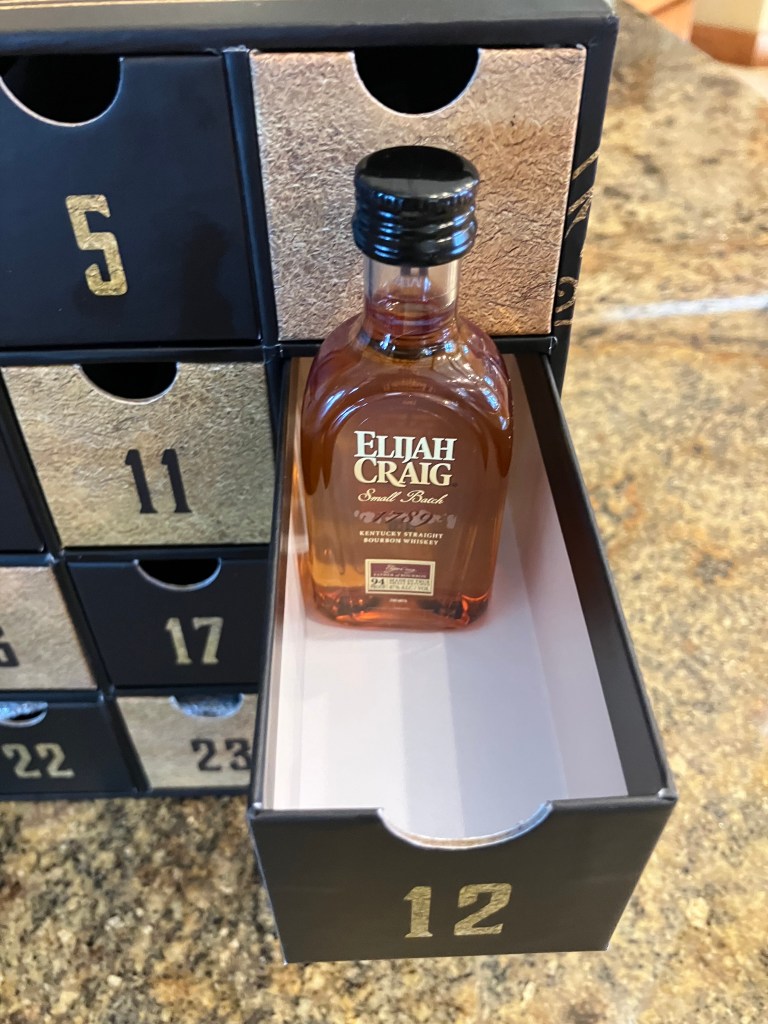
As soon as I opened the drawer I recognized the distinctive shape of the bottle. It turns out that Elijah Craig is one of the staples of my bar that’s always on-hand. Observe:
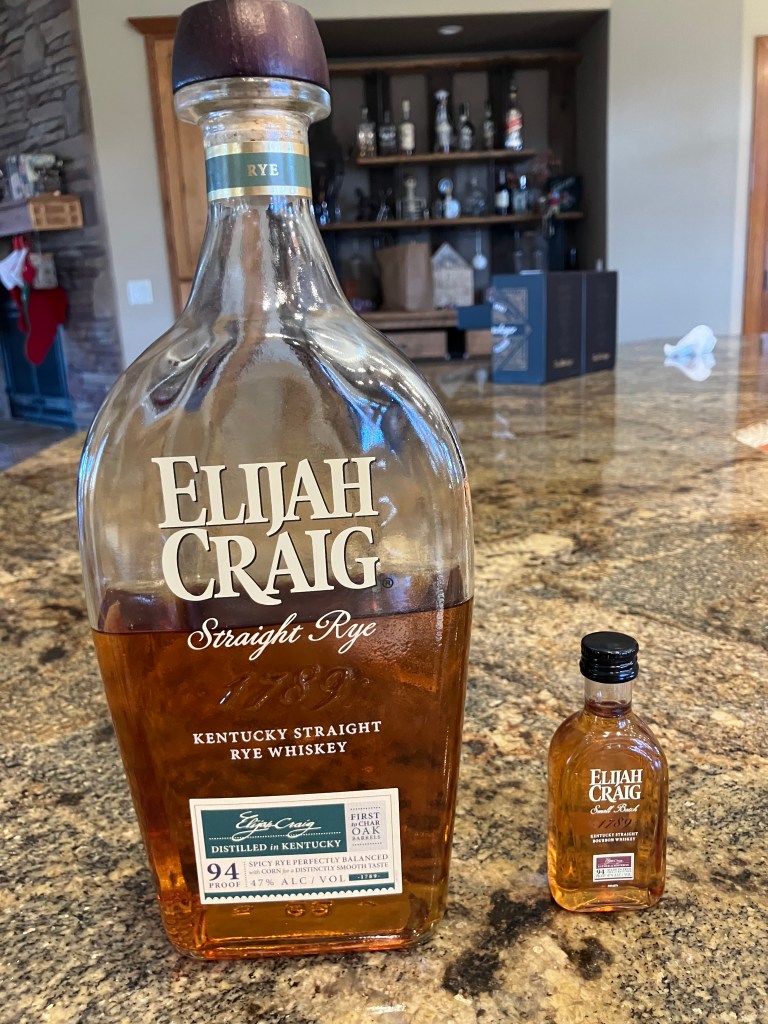
Now, attentive readers will have already noticed that the Elijah Craig from my bar is a rye whiskey, while today’s Advent Spirit is a bourbon whiskey. What’s the difference? Recall that helpful ditty:

Bourbon is born from majority corn/If you want something spicier you need a good Rye, me sir!

OK, I actually just made that up. Let’s see if ChatGPT can do better:

Though Bourbon is sweet, its corn base is known, While Rye offers spice, with a sharper, dry tone.

(Please vote on whether I’ve been outdone by ChatGPT, and/or provide your own couplet in the comments.)

Anyway, the point we’re trying to make is that bourbon is made from at least 51 percent corn, while rye whiskey is made from at least 51 percent rye. Since we have both a bourbon and a rye from the same distiller, we should be able to isolate the key differences between the two styles. But first, let’s see what Elijah himself has to say about the bourbon:

“This is the award-winning bourbon that started it all. Our signature Small Batch owes its distinctive warm spice and subtle smoke flavor to Level 3 charred oak barrels. A favorite of bourbon connoisseurs and casual whiskey fans alike.”

(I don’t know if it’s a true point of pride to say that even people who don’t know much about whiskey choose this as their favorite. It’s like saying “our premium wagyu beef is appreciated by people who love to eat Big Macs.”)

Be that as it may, let’s crack open a mini bottle and see what we have here.
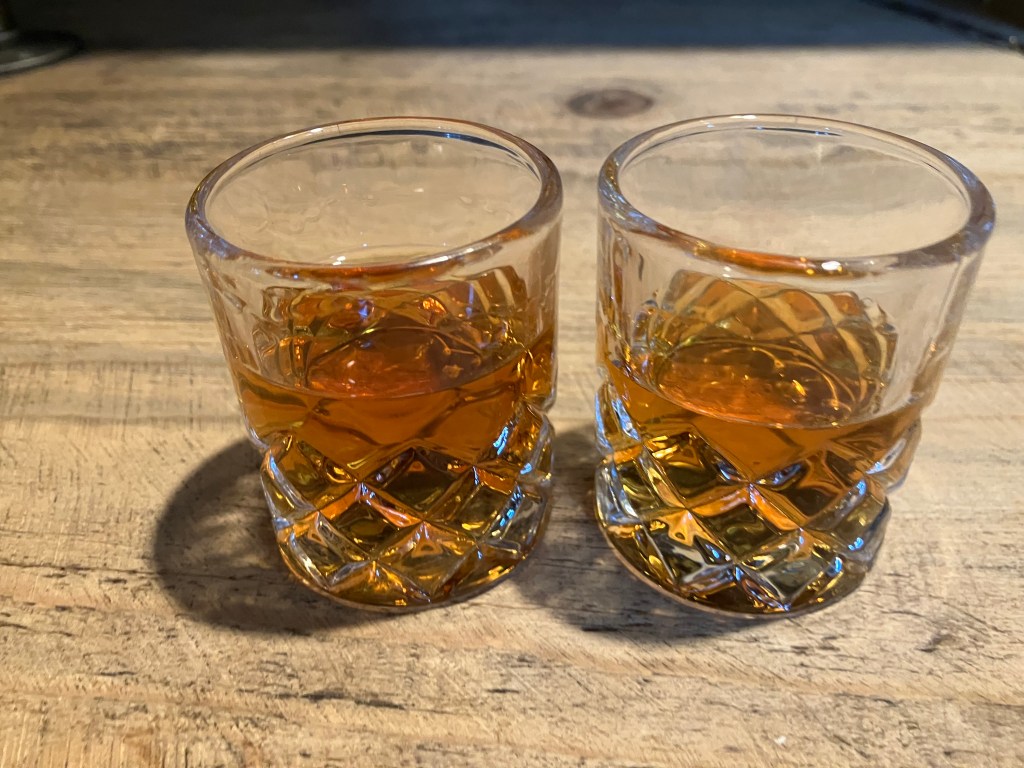
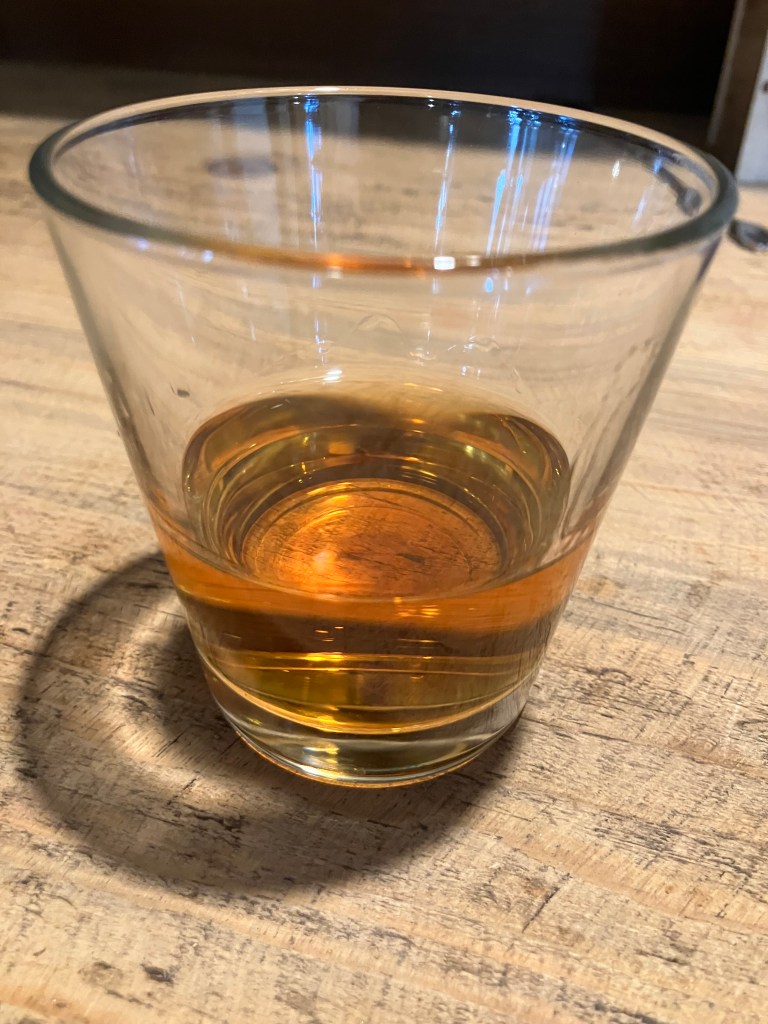
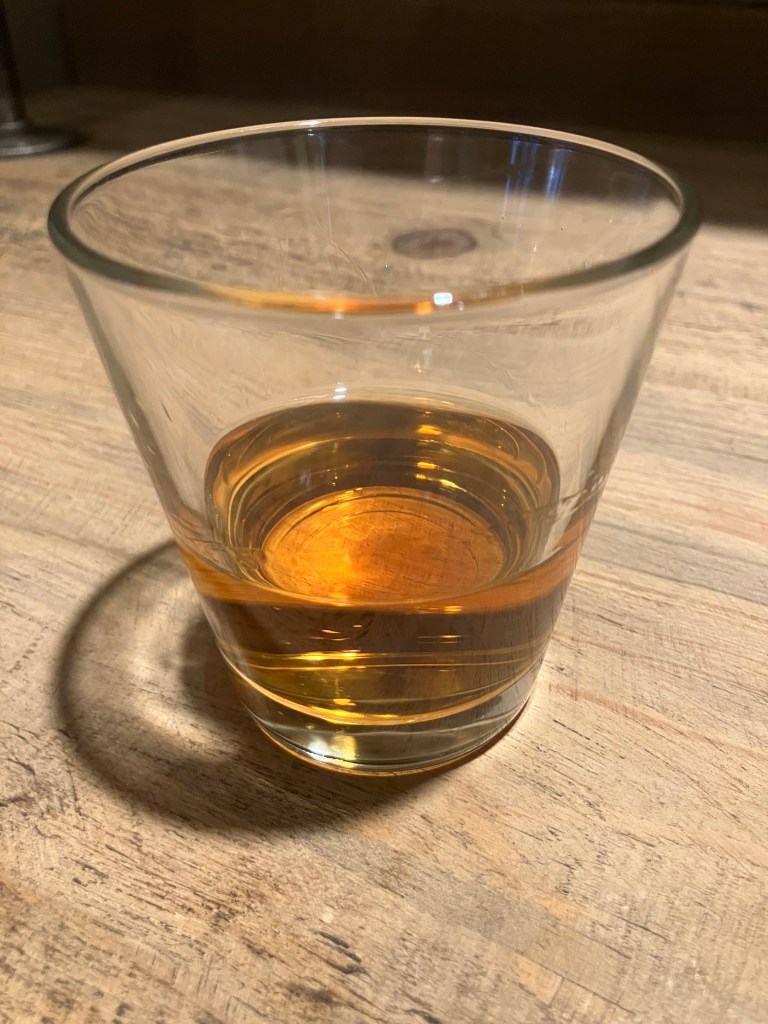
E.C. bourbon on left, rye on right. Or is it the other way around?

Appearance: The bourbon is honey-gold, while the rye is….pretty much honey-gold. The rye might be a little lighter, but it’s barely a perceptible difference. I’m guessing that the color is imparted more from the barrels than from the grains, and I’m further guessing that Elijah Craig uses the same kinds of barrels for both.

Aroma: The bourbon smells sweet and has a distinct note of vanilla. There’s no sharp smell of alcohol. The rye….smells about the same. Again, I wonder if the nose comes more from the barrels?

Taste: OK, here’s where the difference becomes evident. The bourbon tastes sweet (and when I say “sweet,” I don’t mean sweet exactly, but rather “less bitter.” It’s kind of like calling crude oil “sweet” or “sour”) with a secondary note of sourgrass/oxalis. The rye, on the other hand, is a little peppery and a bit bolder. We should note, however, that this rye uses only the bare-minimum 51 percent rye, as opposed to other brands which use as much as 75 percent. For this reason, Elijah Craig rye is sometimes referred to as “barely legal” rye. I’m not making this up.

Finish: It actually seems like the finish is the aspect that differentiates the two whiskeys the most. The sweetness of the bourbon and the spiciness of the rye are most pronounced after you’ve swallowed and let your tongue try to sort things out.

Bottom Line: I’m not gonna lie–there’s not a huge difference between these two whiskeys. I’m beginning to think that a large amount of the supposed difference we normally observe between the two styles is more a function of comparing products from two different distilleries, rather than comparing different mashbills. That said, I will continue to stock Elijah Craig rye in my bar, rather than their bourbon.
2025 Advent cocktails

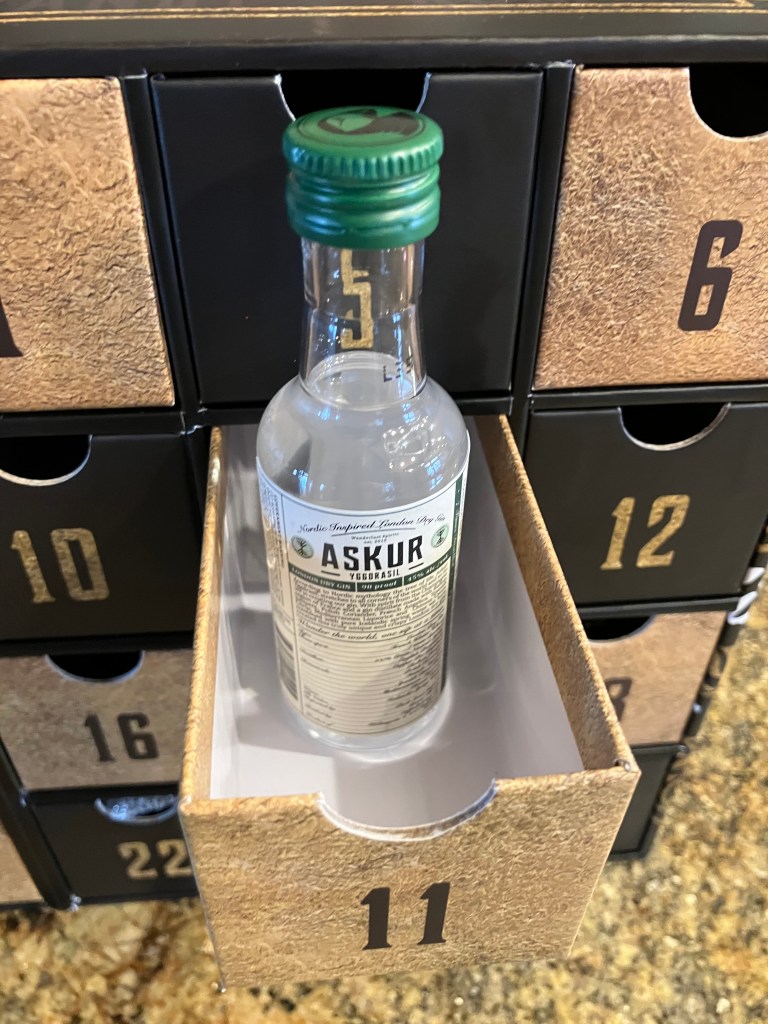
Advent Spirits Day 11: Askur Dry Gin

So, just to give you a peek behind the curtain: As soon as I open the Advent Drawer O’ Spirits and see the drink of the day, I go to the company website to get a feel for what they are trying to do. Today’s spirit is something called Askur Dry Gin.

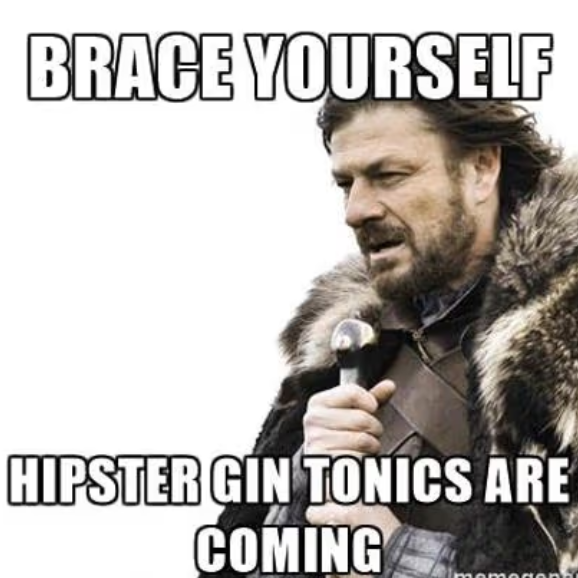
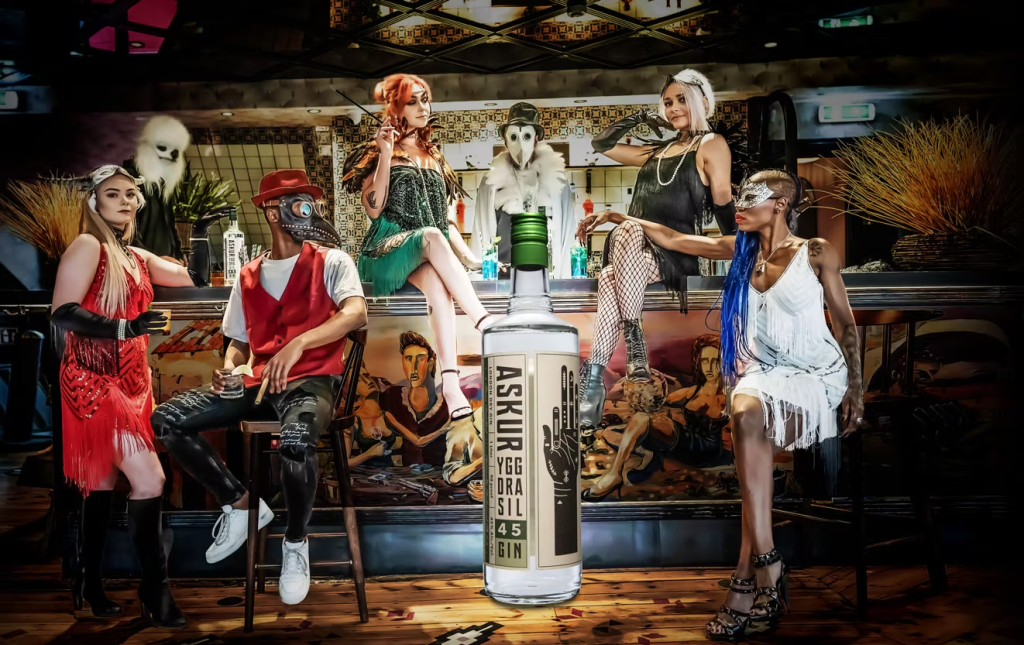
So I dutifully plugged that name into Google and was immediately met with these images:

This in itself should speak volumes about how desperate spirits companies are to try to snag younger customers. But what struck me even more than the painfully desperate attempt to appear hip and relevant and ironic was the uncanny sense of déjà vu I felt when I saw the website. Especially when I read their description of their gin: “The base spirit is made from the highest quality wheat from the champagne region of France,” then “Blended with pure Icelandic water which is very low in minerals and high in PH allows the character of our distillates to flourish.” Remember this from Day 2 of this series? The “Helix7 Vodka“? It too used French wheat and Icelandic water.

Turns out both Helix7 and Askur Gin are made by a company called Wanderlust Spirits, based in Florida. And they evidently used the same models for the respective websites of the two spirits.

Anyway, Wanderlust is not unique it trying to portray its spirits as small, quirky, stand-alone companies. It’s not an unforgivable sin. So let’s just proceed with our tasting.

Color: The color is identical to that of Costco’s bottled drinking water. In other words, there is no color. And that’s as it should be.

Aroma: There is a strong scent of juniper–overwhelmingly so. It reminds me of when I hid in the juniper bushes while playing hide and seek as a child, and I kept picking off juniper berries and tossing them at my brother (who was “It”) whenever he had his back to me. For the rest of the day my hands smelled of juniper berries/gin. Returning to the present day, I do note that this gin also has a bit of a citrus aroma on the nose, which adds a note of freshness to the piney smell of the juniper berries.

Taste: This is honestly like no other gin I’ve tasted. Sure, it’s got the expected botanicals, though this has a bit of a medicinal taste mid-palate. I also am reminded of those mysterious, unpopular nuts that are always the last to be eaten from the bowl of mixed nuts my mom would put out on Christmas. (Brazil nuts? Filberts? I never knew which was which.) But there’s something else going on with this gin–something unexpected and interesting.

In the interests of science, I did a side-by-side comparison with Bombay London Dry Gin. The difference is astounding. The Askur is brighter, bolder, more complex, and more citrus-y. The Bombay, by comparison, is muted and boring. I don’t know if that French wheat and Icelandic water really make a difference, or if there’s something else going on. But this is a far superior gin, in my opinion.

Finish: There’s a pronounced warmth on the finish, and a lingering hint of limoncello. Somehow it also feels like you just brushed your teeth.

Bottom Line: To be honest, I wasn’t prepared to like this, given the website that seems to be trying way too hard to show how hip and different and trendy they are. But this is truly delicious. What’s more, it looks like you can buy a bottle for about $22. So I’m definitely going to try this in my next martini and/or Gin and Tonic.

2025 Advent cocktails

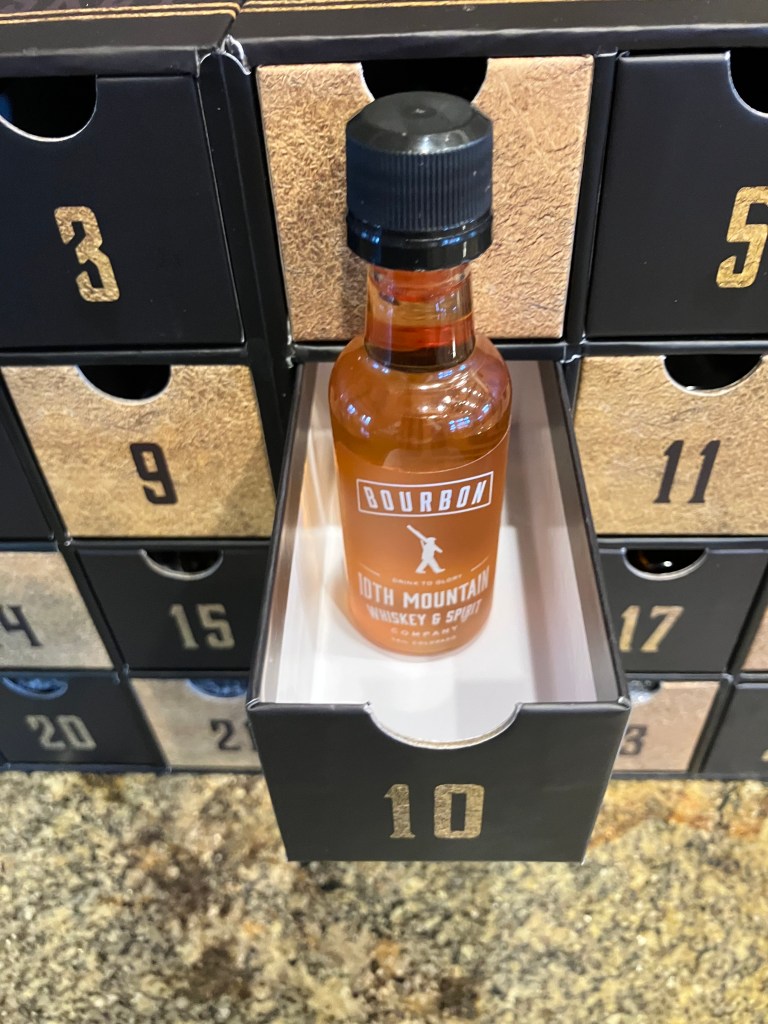
Advent Spirits Day 10: 10th Mountain Bourbon

There can be many reasons to choose a bourbon. Ideally you select it for its taste. But cost probably figures in as well. And maybe the alcohol content. And then sometimes you just like the look of the bottle on your liquor shelf. Or perhaps you want to show support for a cause, such as Freeland Spirits (women-owned) or Uncle Nearest (black-owned). Today’s bourbon is from 10th Mountain Whiskey and Spirit Company, which is named in honor of the 10th Mountain Army Division, that fought in the Italian mountains during the Second World War. The company is veteran-owned and much of its marketing plays up support for veterans and active soldiers.

That’s all well and good, but how the heck does it taste?? First, let’s see how they describe it on their website:

“Our 10th Mountain Bourbon is an award-winning spirit made from a handcrafted blend of Colorado Corn (75%), American Rye (20%), and Malted Barley (5%). This 750ML bottle will make a lasting impression with a bold flavor and smooth finish.”

OK, so with a fairly high rye content we might expect some spice. Let’s check it out…

Appearance: Honey-gold, like the stuff dripping off the drizzler on a box of Golden Grahams.

Aroma: I can’t detect much but macerated pencil shavings stewed in lacquer thinner. This got me wondering how long it’s been aged. There is no age statement on the bottle, but a quick Google search tells me it’s aged for six months. I think this may be our culprit.

Taste: It’s definitely strong and bold and spicy, and at 92 proof, you definitely taste and feel the alcohol. But it’s not unpleasant. There’s a sweet vanilla note that takes the edge of the burn. I also taste a little honey mustard, like you’d put on a pub pretzel.

Finish: Surprisingly for such a strong spirit, the finish is neither harsh nor bitter. There is a pleasant lingering warmth.

Bottom Line: This seems to be an interesting and well-crafted bourbon. But at sixty bucks a bottle, it ought to be. I think there are better bourbons out there for the price (or equally good bourbons for a lower price). Unless you just want to show your support for veterans. But if that’s the case, why not just donate to the USO?

2025 Advent cocktails

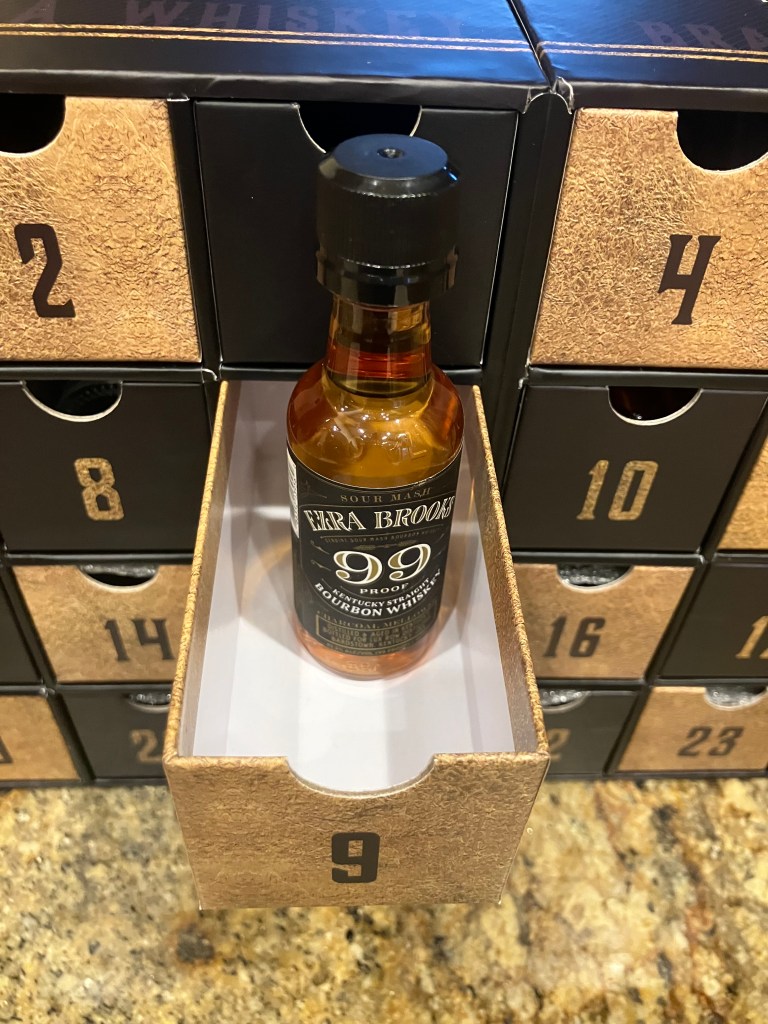
Advent Spirits Day 9: Ezra Brooks 99 Proof Bourbon

We’re back to bourbon again. This time it’s a high-alcohol variant (essentially 50 percent alcohol) of straight bourbon. What we have here is something called Ezra Brooks 99 Proof Bourbon.

Now, for bourbon to be bourbon, it has to be at least 80 proof, so at 99 proof this stuff goes the extra mile. But that doesn’t necessarily mean it’s a better bourbon. Let’s just go to the Ezra Brooks website and see how they describe this spirit:

“Bottled at an elevated 99 proof for an enhanced flavor profile, this pure, oak-barrel-aged Kentucky straight bourbon whiskey is charcoal filtered for a smooth, mellow finish and features a spicy, ryed bourbon mash bill. [It’s] smooth and drinkable with hints of caramel, vanilla, chocolate, and spice.”

OK, now let’s fact-check those statements.

Appearance: Very brassy, almost a Herb Alpert level. It’s an attractive color, and, as Bruce would say, it has great legs.

Aroma: For such a high-test spirit, this has a pretty light nose. It reminds me of liquid amber leaves that have fallen on my lawn, on a damp and foggy December afternoon. It’s a little woody, a little damp, and a little in need of raking.

Taste: This stuff will wake you up! Sharp, strong, bold, and various other adjectives that the girls used to describe me in high school. It reminds me of cognac, which I may or may not have tasted in the past. I’m getting a strong hint of stewed prunes, with some pepper and vanilla. It’s not offensive, but it seems unusual for a bourbon.

Finish: The finish is actually better than the taste. It’s warm and pleasant, a little astringent, but it leaves the tip of your tongue tingling. In a good way.

Bottom Line: If you’re going to drink a spirit that’s one-half pure alcohol, either (1) you should be looking for a quick buzz, or (2) that alcohol should be counterbalanced with rich, solid flavors. Judging from my current disoriented state, this stuff delivers on the first part. But I think it falls short on the second.

2025 Advent cocktails

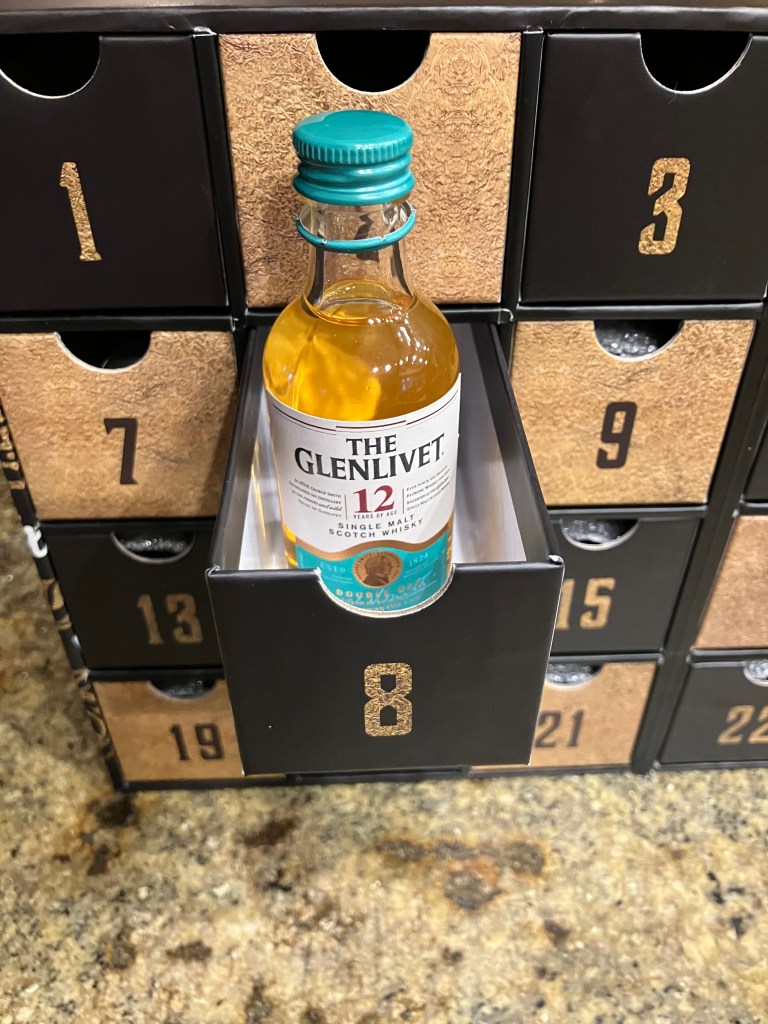
Advent Spirits Day 8: The Glenlivet

Finally we’ve arrived at Scotch! Hallelujah!

Scotch is a spirit that’s not especially popular in the US, accounting for less than 3% of hard alcohol sales. (Vodka’s share is about 30 percent.) So this might be the only bottle of Scotch we get in this Advent calendar. Let’s hope it’s a good one.

For those of you who need a refresher, Scotch is a style of whiskey that uses malted barley, is aged in oak casks for at least three years, and is produced in Scotland. Typically those oak casks previously held bourbon or sherry, and now can impart some of that goodness into the new spirit. There are several sub-types of Scotch, but the only one you really want is Single Malt Scotch, which uses 100 percent malted barley and is distilled at a single distillery. There are other technical regulations imposed by the EU’s bureaucracy, such as requiring the distillate is converted to a fermentable substrate only by endogenous enzyme systems. Whatever that means. Oh, and the Scots spell it “whisky,” rather than “whiskey.”

Anyway, let’s see what the Glenlivet website has to say about today’s sample:

“One of the world’s most popular malts, the double-oak-matured 12 Year Old whisky embodies The Glenlivet’s signature fruity style. Representing the heart of The Glenlivet’s signature fruity style, this 12 year old single malt is first matured in traditional oak casks before resting in American oak casks intertwining tropical fruit and sweet vanilla flavours notes. The result is an irresistibly smooth whisky, crafted to be savoured slowly.

The mineral-rich water that comes from Josie’s Well helps form the flavours during mashing and fermentation, whilst the specific height and width of the copper stills add a delicate yet complex character.”

Here we go:

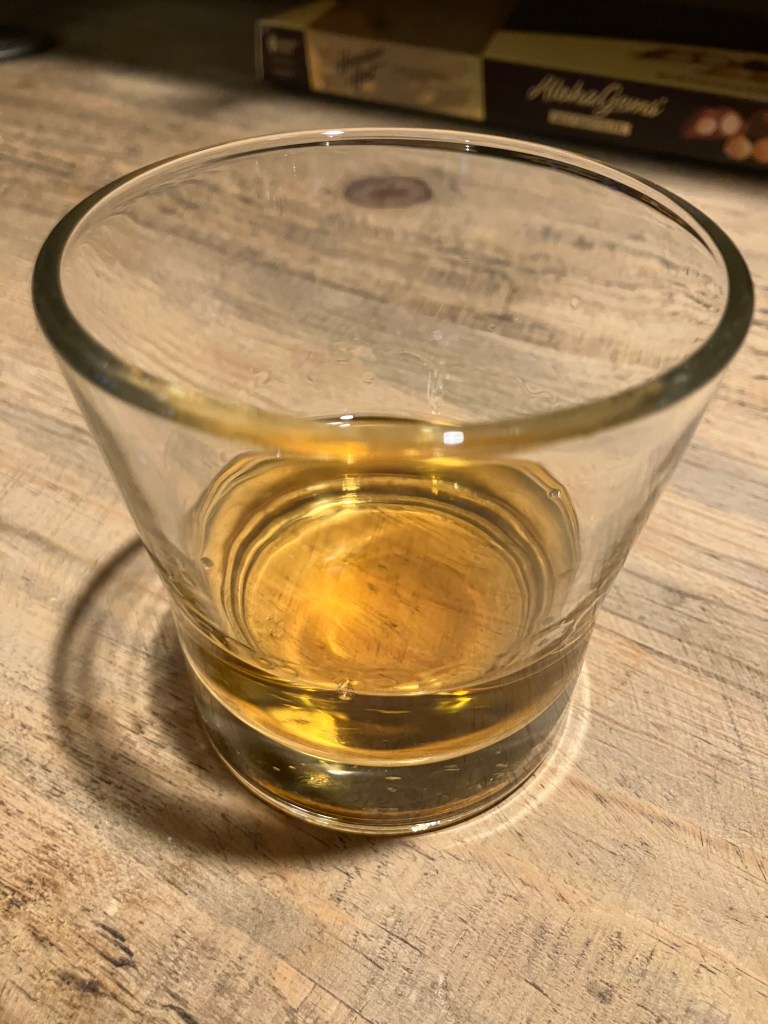
Appearance: It’s a little lighter than I’m used to seeing in a Scotch. It’s a light yellow, reminiscent of straw. But I’m keeping an open mind.

Aroma: There’s a strong scent of vanilla, with more subtle notes of pineapple and maybe dragon fruit. It’s got an inviting nose, to be sure.

Taste: I have good news and bad news. On the plus side, this tastes very smooth, no doubt as a result of resting in barrels for a dozen years. The taste is very round, easy, graceful, civilized. The mouth feel is high-viscosity, like a light honey. It’s really a pleasure to sip.

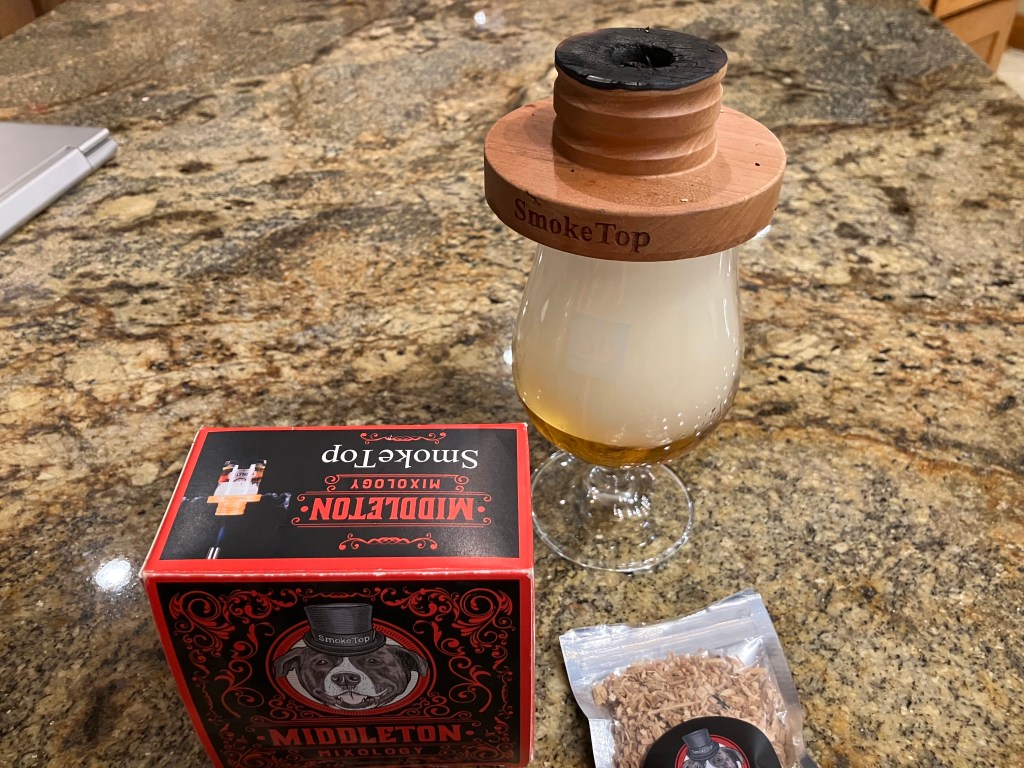
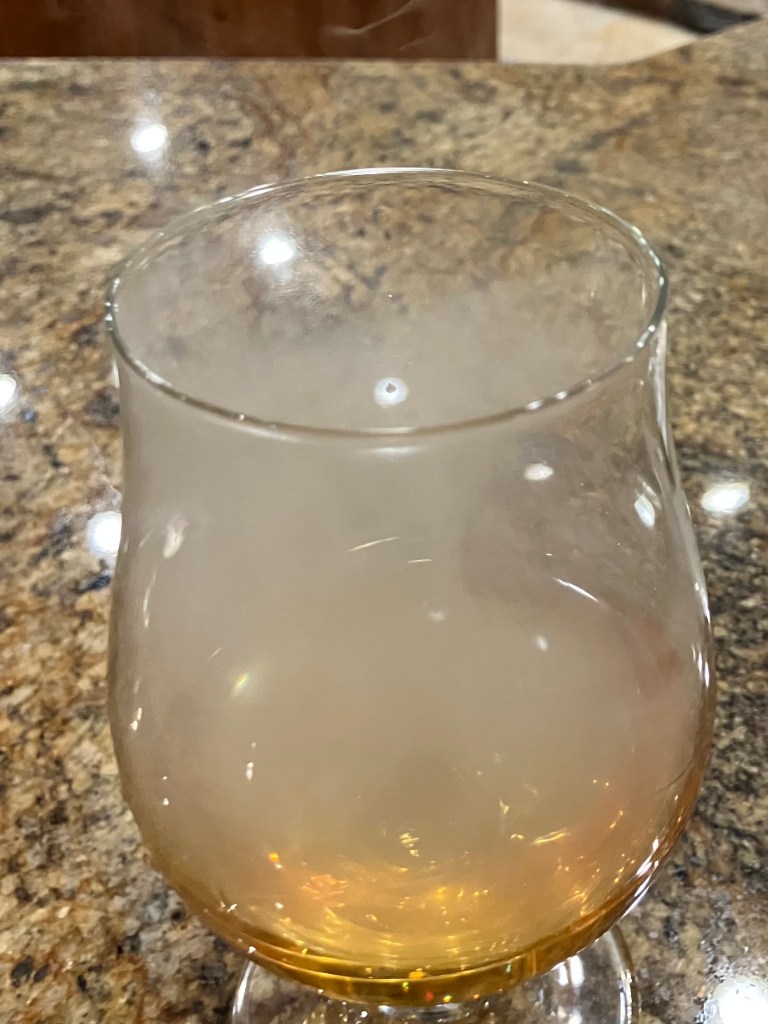
And yet, this stuff is inexplicably unpeated! Here is where I should mention that, in my opinion, the best Scotches come from the Islay, where they take enormous quantities of peat moss from the local bogs, dry it out, and then burn it under the barley malting floor, which imparts a distinctly smokey flavor into the resulting distillate. In my opinion, Scotch without peat smoke is like tortilla chips without salsa, like soft pretzels without pub cheese, like French fries without salt, like Chinese food without MSG….You get the idea. In my opinion, the whole reason to buy Scotch instead of some other whisk(e)y is the peat smoke. In fact, I use something called a SmokeTop (TM), which adds still more smoke to your Scotch just before you drink it. It’s essentially a wooden chimney that you fill with wood chips, place on your glass of Scotch, then ignite with a torch, forcing smoke down into the glass. I’m not making this up. Observe:

Finish: The finish is inoffensive. There’s no harshness, no bite, no bitterness. But there’s also no smoke. Which raises the question: What’s the point?

Bottom Line: There are two kinds of people in this world: Those who like their Scotch to be full of smoke, and those who are afraid of their own shadow. Which are you?