2025 Advent cocktails

Advent Spirits Day 7: Five Drops Straight Bourbon Whiskey

Today we’re back to sampling bourbon. Fortunately my old college roommate, Bruce, is in town to celebrate his birthday at a Doobies concert, and he knows a thing or two about bourbon. So I’ve asked him to do the heaving lifting.
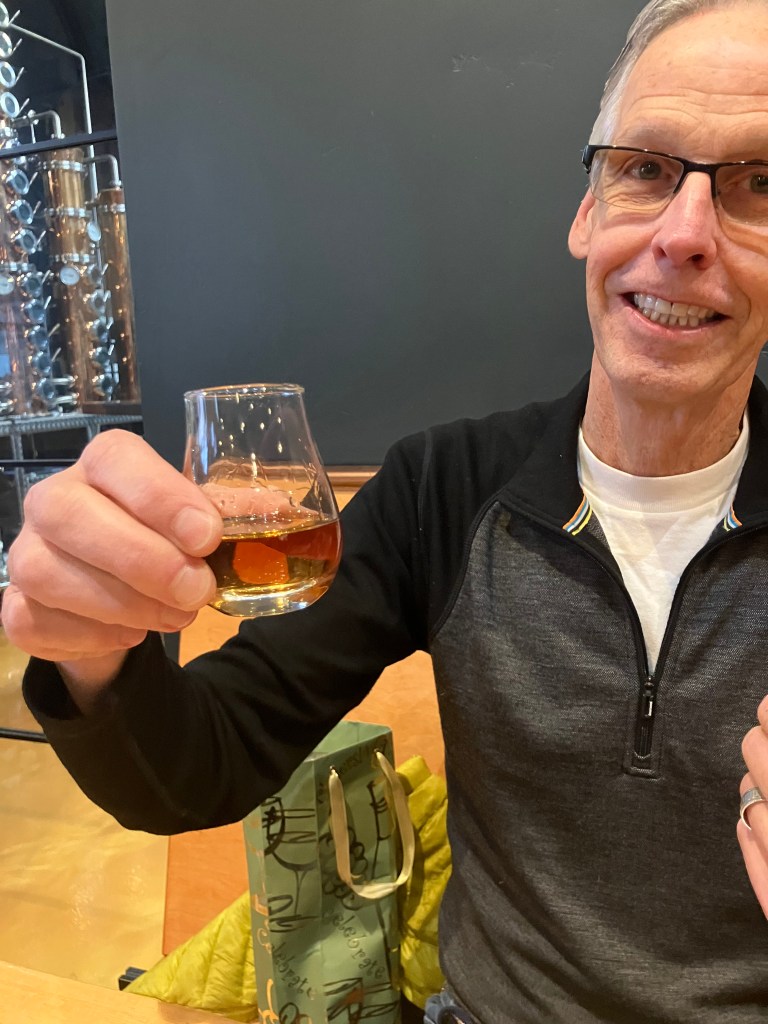
Bruce doing the heavy lifting.

But first, let’s introduce the spirit. What we have here is Five Drops Straight Bourbon from a place in Bozeman, Montana, called WildRye Distilling. For a bourbon to be called “straight” it must be aged for at least two years (versus a one-year aging requirement for run-of-the-mill bourbon). Straight bourbon also can have no colorings or flavorings added, and must be at least 80 proof at the time of bottling.
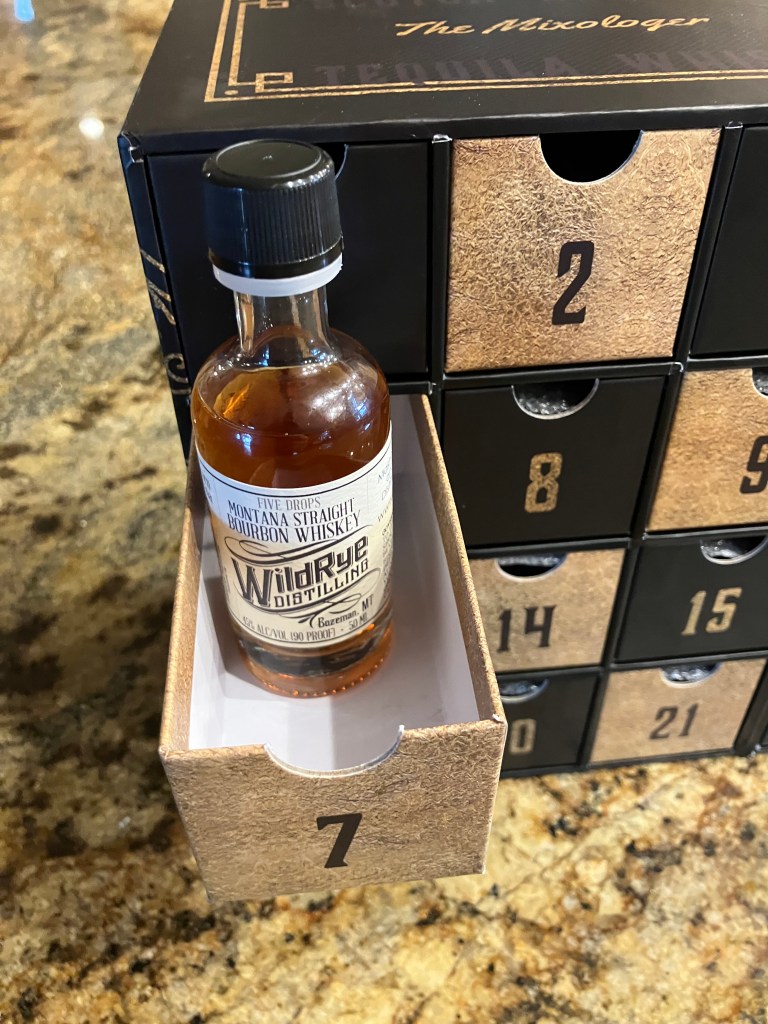
Here’s the blurb from their website. I have helpfully flagged with italics the empty phrasing that really has no true meaning.

Born from Montana soil and built for adventure.

We craft Five Drops Montana Straight Bourbon with locally grown sweet corn—picked at peak ripeness from our family fields in Southwest Montana—and malted barley sourced from the heart of the state. Milled, mashed, and distilled using pure mountain water, then aged in charred American oak barrels, every bottle carries the flavor of the land and the grit of the journey.

Smooth, rich, and distinctly Montana, this bourbon is made for trail’s-end toasts, campfire conversations, and anyone who knows the reward of going the extra mile.

So, if you strip away the vacuous marketing-speak, all they are really saying is that they make this stuff with corn and barley and water, and age it in oak. And all of these characteristics are essential for any bourbon. Oh, and despite the name “WildRye,” this stuff contains no rye.

Let’s turn to our guest-taster, Bruce, for his review:
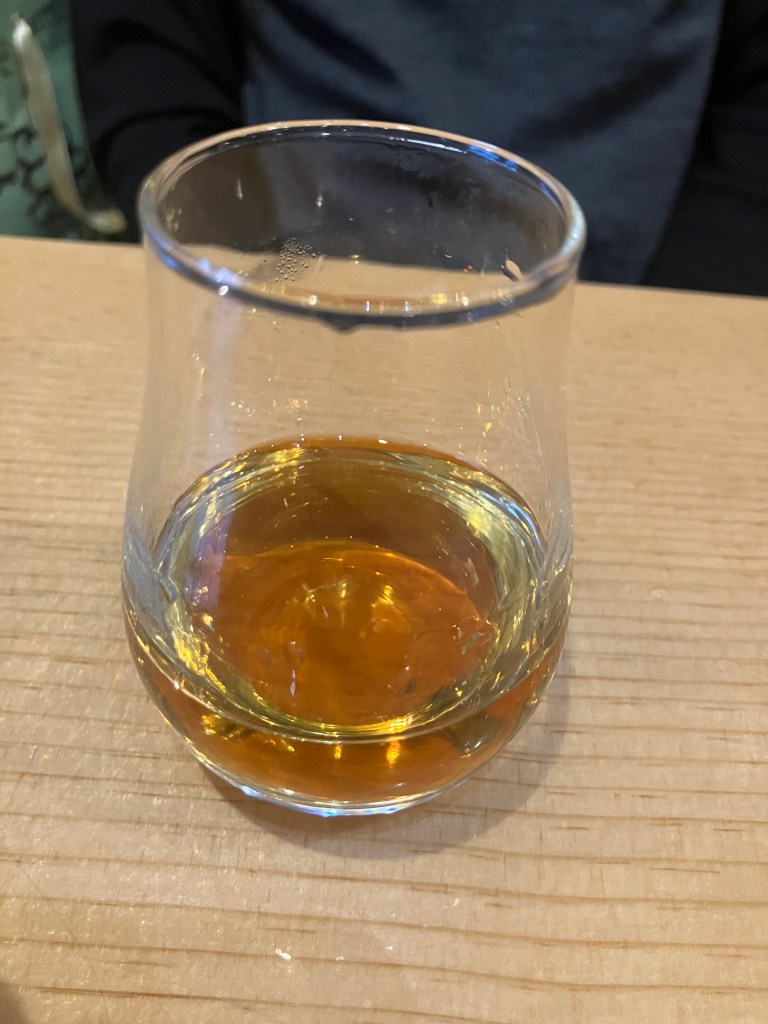
Appearance: Bruce says “It has a nice, rich caramel color” and that “it runs nicely along the side of the glass–I think they call that ‘legs’.”

Aroma: Bruce: “It’s sweet and spicy. There’s some caramel.” Steve: “It also has a woody smell, like my pencil sharpener in elementary school.”

Taste: Bruce: “It tastes sweet and peppery. There’s big flavor. It’s not especially smooth–not as complex as Michter’s [Bruce’s Bourbon of choice].” Steve: “Definitely a big taste. Which isn’t always a good thing; I mean, blood sausage has a big taste. But this is pretty drinkable. I can see how you’d get tired of it after a bottle or two, though.”

Finish: Bruce: “The finish is bitter. It’s kind of harsh.” Steve: Ditto.

Bottom Line: Bruce: “I have a headache.” Steve: “I probably wouldn’t seek this stuff out. In fact, I’m starting to develop a theory that one should avoid bourbon that doesn’t come from Kentucky or at least Tennessee. But, like Bruce, if it were my birthday and I just came from a Doobies concert, I would drink a shot if it were offered to me.”
2025 Advent cocktails · Uncategorized

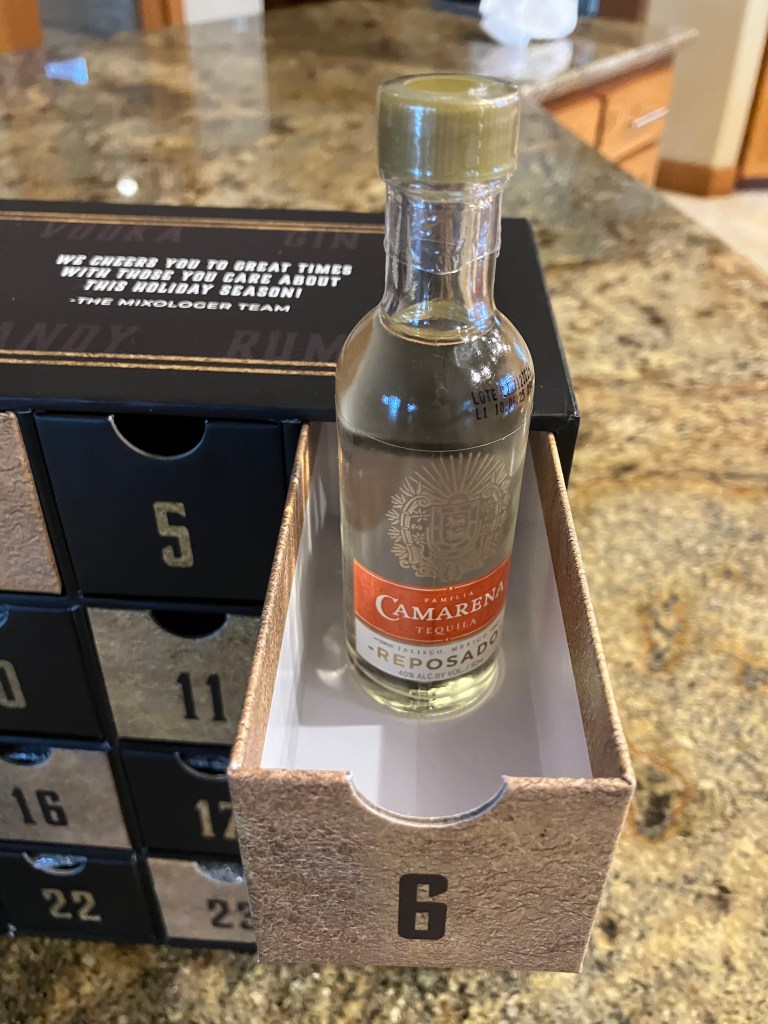
Advent Spirits Day 6: Camarena Reposado Tequila

As every schoolchild knows, tequila is made from the blue agave plant. It’s kind of a brutal process: the agave plant’s “heart” is cut from it, boiled, and then stomped on to release the juice. (I went through a similar process when my girlfriend Susie broke up with me in high school.) It’s then fermented and (sometimes) aged in oak barrels. But the “aging” is more of a brief pause on the way to the store, rather than the mellowing-for-years-in-a-dark-warehouse that we associate with whiskey. Indeed, over half of all tequila produced is not aged at all, instead going directly into a bottle and being deemed “Blanco.” In (slight) contrast, “Reposado” tequila is aged for 2-11 months, and the “old” stuff (“Añejo”) has been aged for at year or more.

Today we’re trying a Reposado tequila. This one supposedly comes from Familia Camarena, which sounds like a homey family-run business in the Mexican countryside. But it’s actually owned by the cheap-wine behemoth Gallo. Be that as it may, this is 100 percent agave tequila (you’re only required to use 51 percent agave). On the other hand, they only age it for the bare minimum of 60 days.

Here’s the blurb from their website:

“Aged 60 days in Tennessee Whiskey barrels, Camarena Reposado balances natural agave sweetness with soft vanilla and caramel notes. Reach for Reposado the next time you’re in the mood for a bold and smooth cocktail.”

OK, that’s not much to go on. Let’s pour some and see if it’s any good.

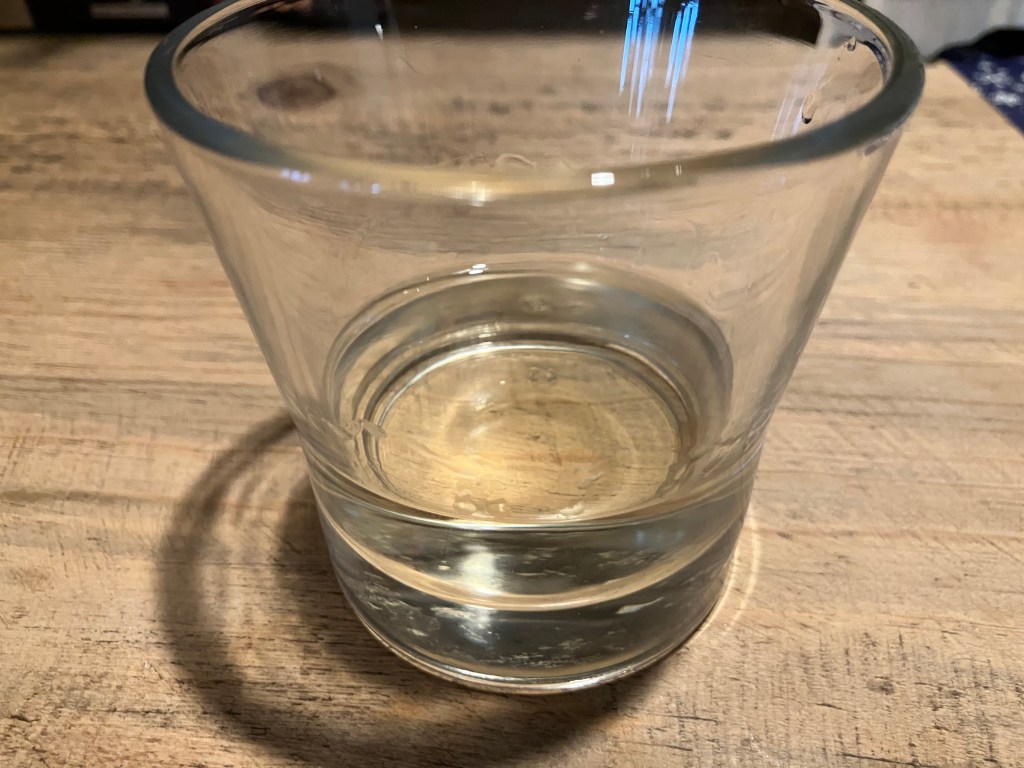
Appearance: Even though this has been aged for (barely) two months, this tequila hasn’t developed much color. I would describe it as dishwater, before you even wash any dishes in it.

Aroma: This tequila appears to have no nose at all. It is the snake of tequilas. (Ask a herpetologist to explain that witticism.) Seriously, I can’t smell much of anything from this tequila, except an almost-imperceptible whisper of honeysuckle–and not the flower, but the stem.

Taste: Here’s where Gallo lives up to its reputation. This stuff tastes like lighter fluid. It’s bitter and harsh, though I do notice a little bit of cantaloupe trying to break through. There’s also a hint white pepper and maybe a little Oxalis. Overall, though, this will probably bring back bad memories from your first bender in college.

Finish: The finish is essentially a sensation that your tongue has been run through a meat tenderizer and then dipped in pool acid. Clearly this stuff would benefit from longer aging. Sort of like me.

Bottom Line: A quick Google search tells me you can get a bottle of this stuff for around twenty bucks. If you are drawn to this for the price, you’ll want to only use it in mixed drinks. Which probably means margaritas.

2025 Advent cocktails

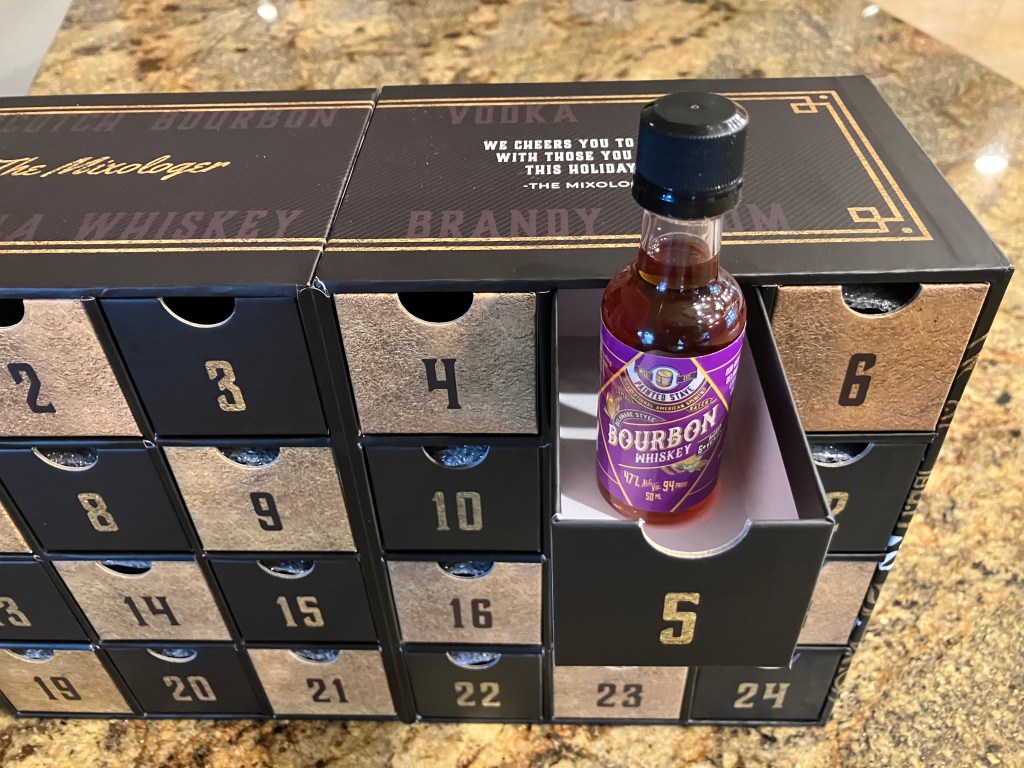
Advent Spirit Day 5: Painted Stave Bourbon

You know, all these little 50 ml bottles are almost perfect miniature versions of the full-size bottles, with the same general shape and the same labeling and, of course, the same spirit visible through the glass or plastic. But the giveaway is the cap, which is grotesquely out of proportion with the bottle. It’s comically huge and clunky and destroys the illusion. We can put a man on the moon, and yet no one has yet figured out how to do a cap or cork to proper scale?

Such was my chain of thought when I removed today’s spirit from its Advent Drawer. And that spirit is Painted Stave Bourbon Whiskey.

Now, I know what you’re thinking: Another bourbon? And the answer is, technically, yes, but this one seems to be going out of its way to be different. For starters, it’s not made in Kentucky but rather Delaware, a state known more for soybeans than whiskey. Second, it uses an unusually high proportion of rye. (Recall that to make a bourbon, over half of the grain used must be corn. For most bourbons, about 10 percent is rye. Painted Stave uses 26 percent.) Third, there’s that purple label. In my experience, almost all bourbons use dark or muted colors, to evoke age and solid stability and no-nonsense tradition. This label looks like it belongs on a bottle of Fabuloso.

Anyway, here’s the blurb from their website:

“Painted Stave Delaware Style Bourbon is rested in new, charred American oak for at least six years and represents Delaware’s first Bourbon from Delaware’s first craft distillery. We distill a mash of Corn, Rye and Malted Barley (66:26:8) and age for at least 6 years in heavily charred barrels for a bold whiskey flavor. It is then bottled at 94 proof in house. Its nose presents Vanilla, Caramel, Spice, Apple, and Spiced Cookie notes, with hints Oak. In the mouth one finds corn sweetness, that give way to dry spicy notes of cinnamon, raisin, and white pepper.”

All that remains now is for us to try a shot of the stuff. Here ‘goes.

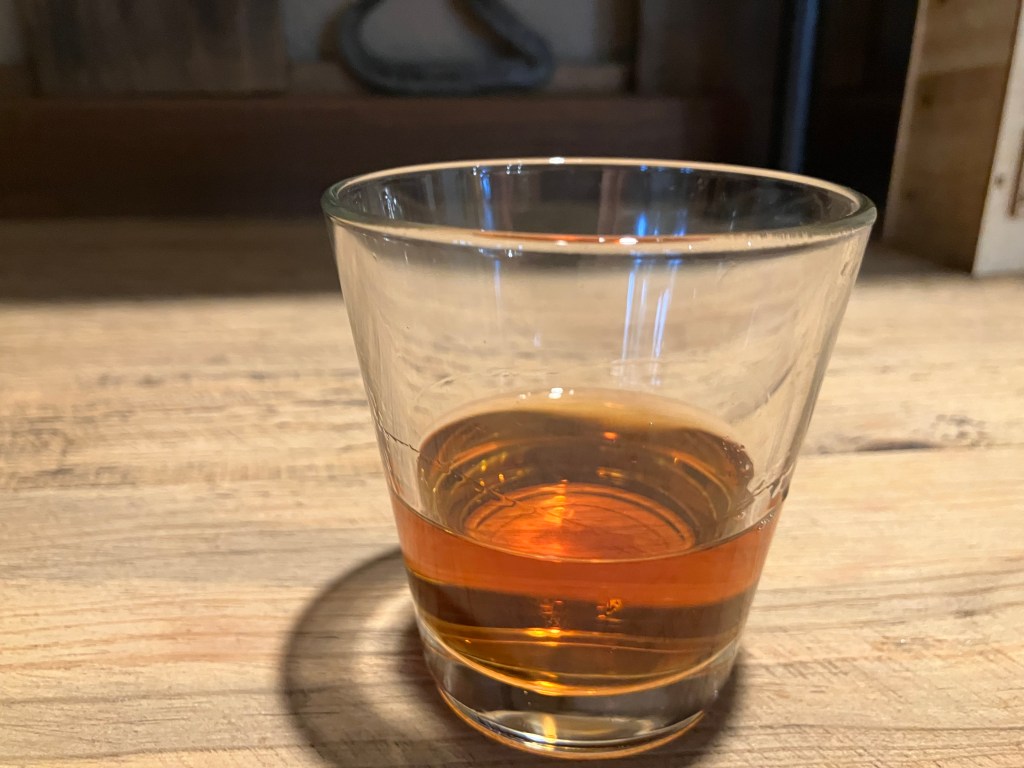
Appearance: This looks a little richer or darker than yesterday’s bourbon. I’d call it an orangish copper, kind of like the poorly-dyed hair of the lady who worked at the Rexall down the street from us when I was growing up.

Aroma: There’s something very fruity about the aroma of this bourbon. I get apples and currants that had been stored in the pantry next to the Duncan Hines vanilla cake mix and then placed on your patio table under a hot summer sun.

Taste: This is really hot and spicy. I might even go so far as to say hot ‘n’ spicy. Some spice is to be expected with so much rye, but this comes across more like cayenne. There’s also an astringent quality that reminds me of rubbing alcohol. That might be good for cleaning an abrasion, but I’m not convinced it works as a drink.

Finish: A few years back I had a colonoscopy. And readers of a certain age know what it’s like to drink the “prep,” which is positively disgusting. You have to knock back like a couple of liters of the stuff over the course of an evening. When you finally finish the last gulp, you are exhausted but relieved. You’ve gotten past the worst of it.

That’s what the finish on this bourbon is like.

Bottom Line: The Delawareans should stick to soybeans.

2025 Advent cocktails

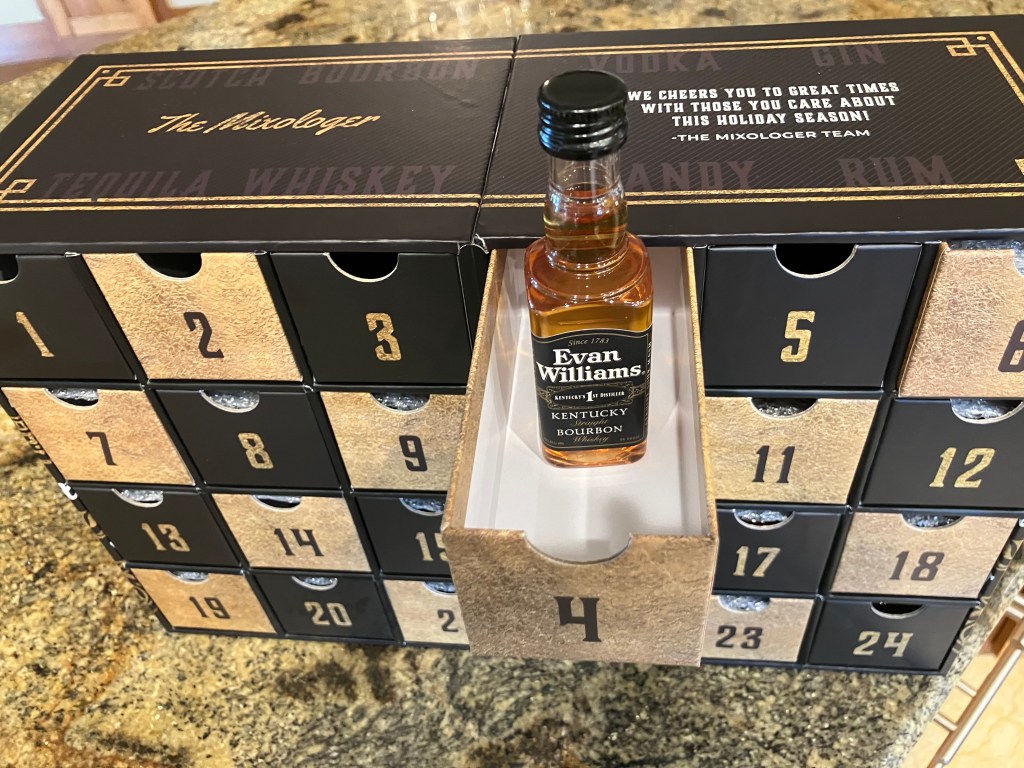
Advent Spirits Day 4: Evan Williams Straight Bourbon

I spent about five years of my squandered early adulthood in Kentucky, about 100 miles from Louisville’s famed and historic Distillery Row. And yet I never went to a bourbon distillery during that time. Years later, I found myself on a trip along the Kentucky Bourbon Trail, and made a stop at a place in downtown Louisville called the Evan Williams Experience–which sounds like a tribute band show at an Indian casino. The EWE is essentially a visitor center, Disney ride, propaganda machine, and boutique distillery for Evan Williams, which claims to be Kentucky’s “oldest licensed distiller.” 

Now, I didn’t know much about bourbon at that time (and, if truth be told, I still don’t), but as I passed through the dioramas of 18th-century distilling techniques, sampled small pours of their bourbon, and was lectured by a hologram of Evan Williams himself, I came to believe that I should become a bourbon drinker. For a short time I drank only Evan Williams bourbon, but over time I was introduced to other brands, and I forgot all about Evan Williams. Such is the tenuousness of my brand loyalty.

But with today’s Advent Spirit I am reunited with Evan. Will he live up to my memory, or will he let me down? Let’s find out.

First, here’s the blurb from their website:

“Our Kentucky Straight Bourbon is full of character and simply done right. Named after Evan Williams, who opened Kentucky’s First Distillery along the banks of the Ohio River in 1783, it’s aged far longer than required by law. The result is a Bourbon that’s smooth, rich, and easy to enjoy.”

OK, that sounds pretty good. Let’s try it.

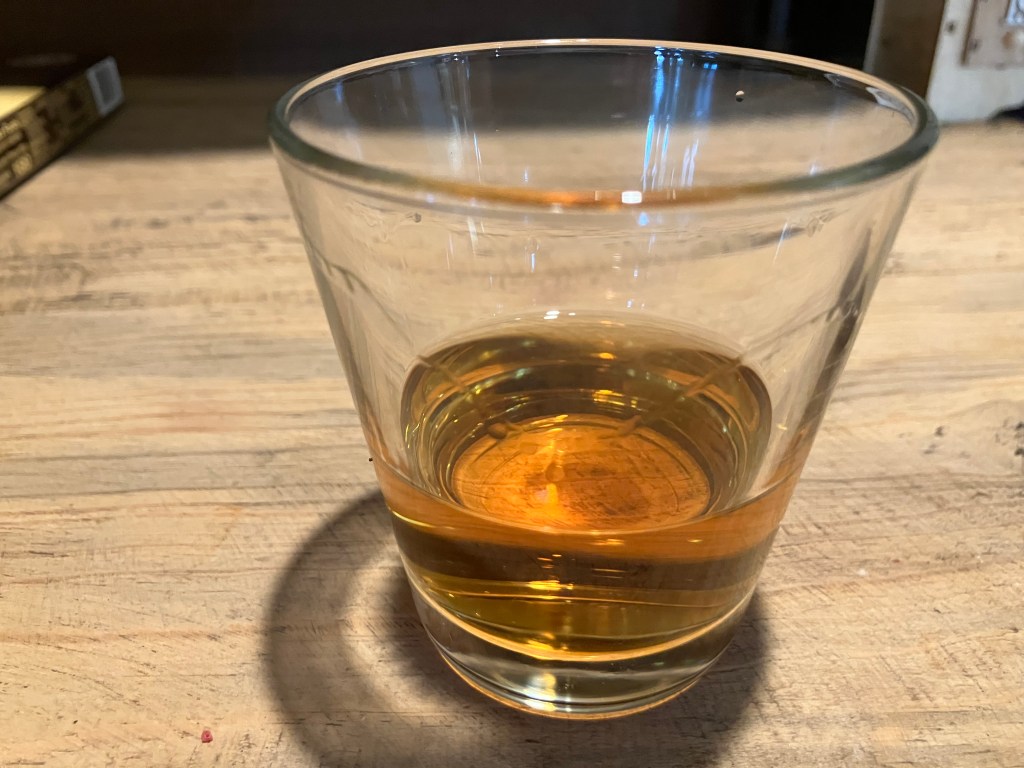
Appearance: The color reminds me of yellow Paas easter egg dye when it’s first mixed with vinegar. It’s a little brighter than I’d expect from a bourbon. Let’s hope this doesn’t presage a brassy taste.

Aroma: There’s a pleasant mix of the scents of clove, vanilla, and fresh morning dew on pasture grass. 

Taste: I taste lots of citrus. A strong taste of orange peel dominates, with a little lemon and grapefruit. It’s a round, wholesome flavor that keeps you raising the glass for another sip. I taste a little toffee and cinnamon in the background, but it’s really that orange that predominates.

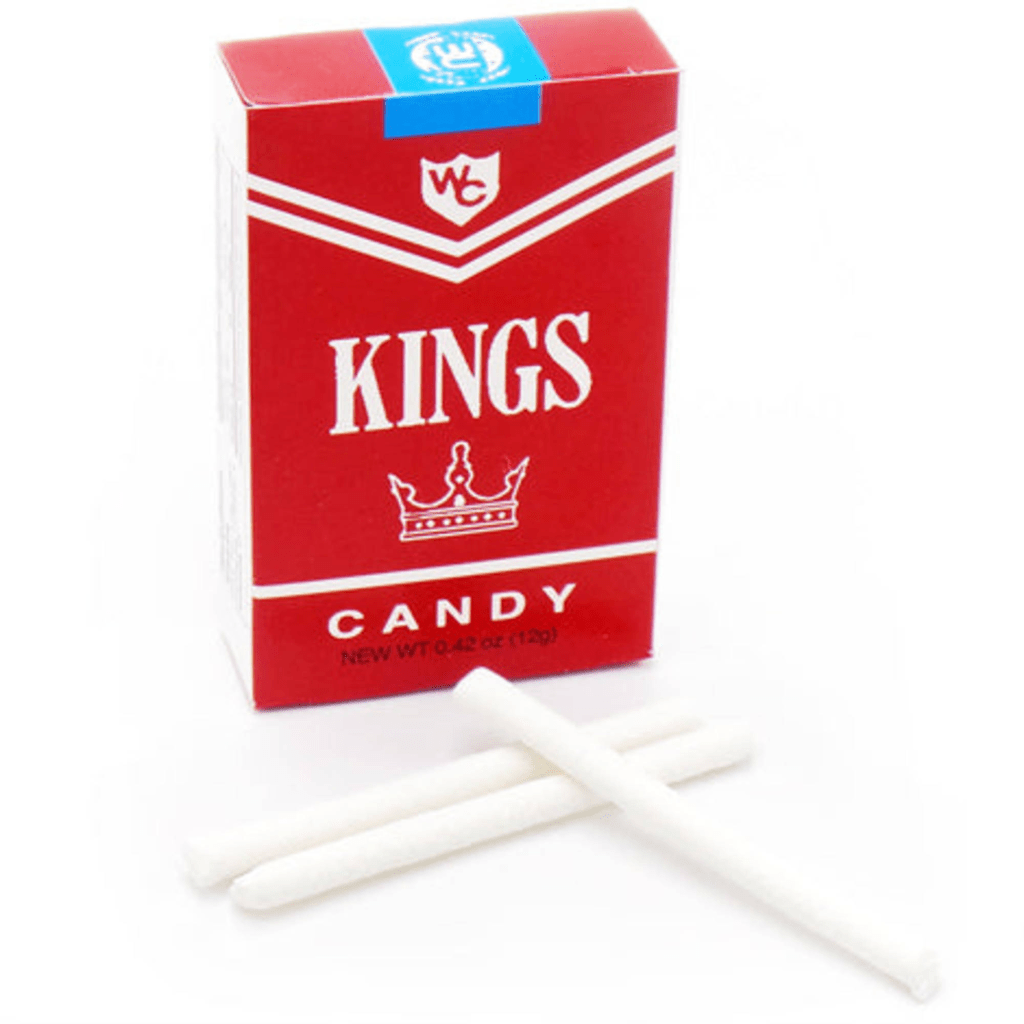
Finish: The finish is warm and satisfying. A sweet dextrose flavor, reminiscent of candy cigarettes, lingers at the end.

Bottom Line: There is something distinctive about this bourbon, and I think it has something to do with that orange peel flavor. It’s a good sipping bourbon, but I would never return to making it my go-to drink.

2025 Advent cocktails

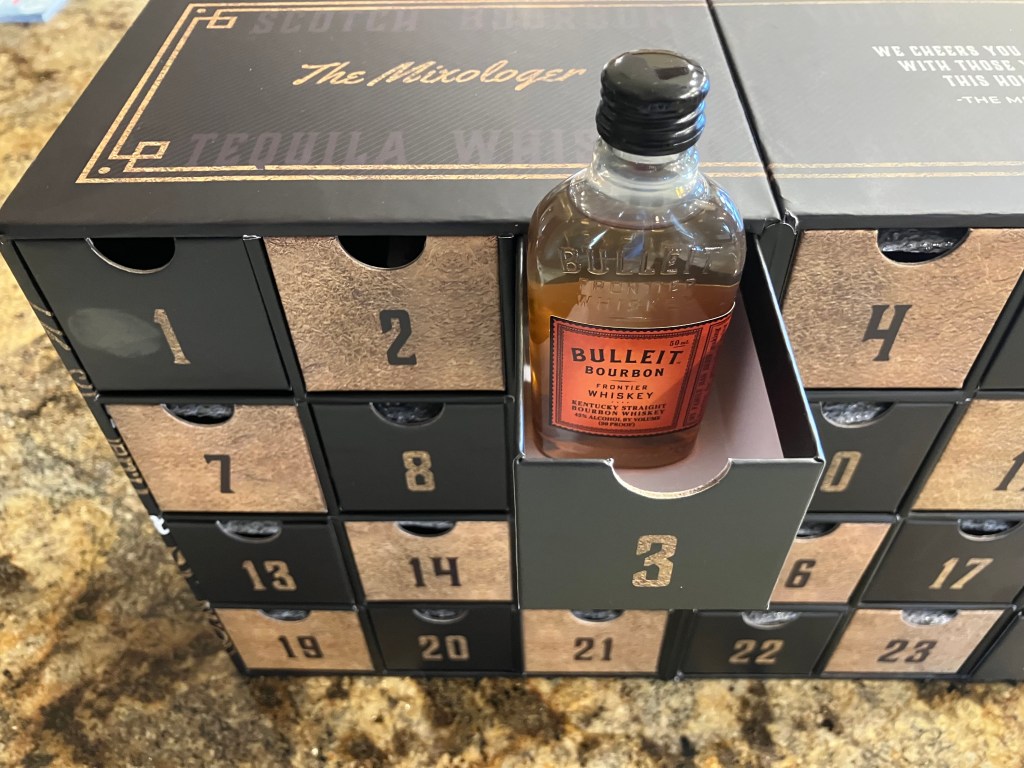
Advent Spirits Day 3: Bulleit Bourbon

As an old geezer in modern America, I am legally required to keep several bottles of bourbon in my liquor cabinet. I’m not sure why that’s so, but I’m sure you’ve noticed the preponderance of brownish liquors whenever you visit your retired Uncle or anyone else of this demographic.

First, let’s review the definition for a bourbon (which is, of course, a type of whiskey). Bourbon must be produced in the United States; the grains that are fermented to make it must be at least 51 corn; it must be aged in new, charred oak barrels; it must clock in at least 80 proof; it must not include any added coloring or flavoring; and it can only be consumed by white males with receding hairlines and a closet full of polo-style shirts. (I made up that last part.)

Today’s spirit is Bulleit Bourbon. Bulleit is made in Kentucky, which, to repeat, is not a requirement for bourbon, but the two are closely associated in the minds of many. Bourbons are also frequently associated with slow and labor-intensive manufacturing processes, preferably in weathered old distilleries in the hills of Kentucky, and using a family recipe that goes back generations. Bulleit checks a number of those boxes, and it’s been around since 1830. However, like so many distillers, it’s been acquired by the global spirits company Diageo. What’s more, Diageo has moved production to modern distilling facilities. When Diageo took over, they claimed they weren’t going to mess with Bulleit’s traditions. But how many times have we fallen for that line? I still remember when Heineken bought the scrappy and wonderful Lagunitas, and Lagunitas has gone downhill ever since.

Anyway, I’m willing to approach this Bulleit stuff with an open mind. Here’s the description from their website:

“Bulleit Bourbon is inspired by the whiskey pioneered by an old family recipe over 150 years ago. Only ingredients of the very highest quality are used. The subtlety and complexity of Bulleit Bourbon come from its unique blend of rye, corn, and barley malt, along with special strains of yeast and pure Kentucky limestone filtered water. Due to its especially high rye content, Bulleit Bourbon has a bold, spicy character with a finish that’s distinctively clean and smooth.

Medium amber in color, with gentle spiciness and sweet oak aromas. Mid-palate is smooth with tones of maple, oak, and nutmeg. Finish is long, dry, and satiny with a light toffee flavor.”

Time to get to work.

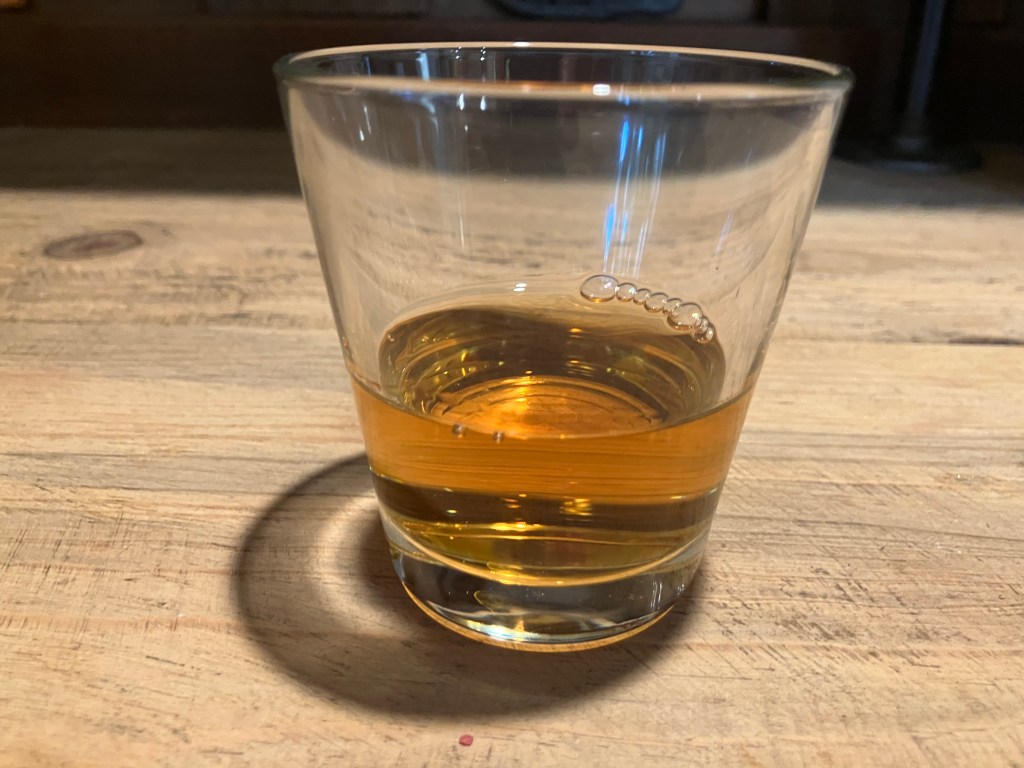
Appearance: It’s got a nice, mellow honey color, evocative of extremely old hydraulic clutch fluid. A glass full of this stuff looks iconic, like something Sam Spade would drink in his seedy private-eye office on Sutter Street in San Francisco. It would look good on a cluttered desk next to a Webley-Fosbery automatic.

Aroma: The nose on this Bourbon is woody and sweet and spicy, like a muted version of your teenage daughter’s Billie Eilish perfume.

Taste: This is a very spicy bourbon. It’s peppery and tumeric-y with just a bit of clove. (The spice is to be expected, as Bulleit is made from 28% rye. Compare that to a typical Bourbon, which uses more like 10% rye.) Underlying the spicy notes is a warm mix of caramel and orange peel. It’s an enjoyable, interesting taste.

Finish: The finish is warm and satisfying. The spices linger, although there is also a bit of an astringency that remains on the tongue.

Bottom Line: This is a very solid, reliable bourbon, albeit one that is unusually spicy. It’s worth keeping a bottle or two on your liquor shelf, particularly if you fit the target demographic, and/or if you like spicy rye. It’s also a good choice if you like the lore that typically accompanies a bourbon. In Bulleit’s case, there’s a story that their founder, Augustus Bulleit, filled a flatboat with barrels of his bourbon in 1860 and headed to New Orleans. He never made it, mysteriously vanishing, never to be heard from again. No Bulleit whiskey was produced for over a century, until his great-grandson Thomas Bulleit revived the brand in 1987. Some say you can summon Augustus’s spirit if you whisper “Justice for Augustus” while making the first pour from a fresh bottle. That last sentence might be a total fabrication…but isn’t it worth a try?