2025 Poe Cocktails

Cocktail 29: Silence–A Fable

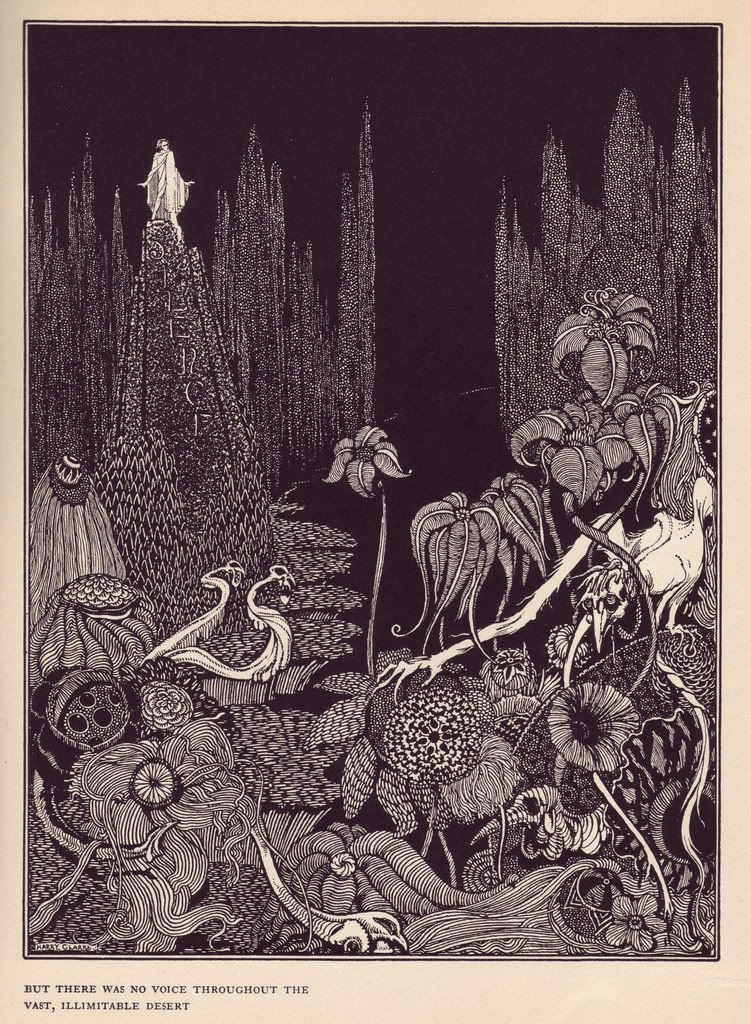
“Then I grew angry and cursed, with the curse of silence, the river, and the lilies, and the wind, and the forest, and the heaven, and the thunder, and the sighs of the water-lilies. And they became accursed, and were still. And the moon ceased to totter up its pathway to heaven — and the thunder died away — and the lightning did not flash — and the clouds hung motionless — and the waters sunk to their level and remained — and the trees ceased to rock — and the water-lilies sighed no more — and the murmur was heard no longer from among them, nor any shadow of sound throughout the vast illimitable desert. And I looked upon the characters of the rock, and they were changed; — and the characters were SILENCE.”
The Tale

OK, this is one of Poe’s more “trippy” tales (to use an adjective popularized during my long-past and wasted youth). It takes place in a mysterious, melancholy, and rather depressing world of vast deserts and monotonous weather patterns. “The waters of the river have a saffron and sickly hue; and they flow not onwards to the sea, but palpitate forever and forever beneath the red eye of the sun with a tumultuous and convulsive motion.” It’s like the Cuyahoga River in 1969.

Now, in this land there was a demon. The demon observes a man standing on a rock and, for some unknown reason, imposes a curse:

“Then I cursed the elements with the curse of tumult; and a frightful tempest gathered in the heaven where, before, there had been no wind. And the heaven became livid with the violence of the tempest — and the rain beat upon the head of the man — and the floods of the river came down — and the river was tormented into foam — and the water-lilies shrieked within their beds — and the forest crumbled before the wind — and the thunder rolled — and the lightning fell — and the rock rocked to its foundation. And I lay close within my covert and observed the actions of the man. And the man trembled in the solitude; — but the night waned and he sat upon the rock.”

So now the demon decides to curse the region into silence, as described in the excerpt I shared at the beginning of this entry. At this frightening silence the man flees in terror. That’s pretty much the whole tale.

The full story is available here.

The Drink

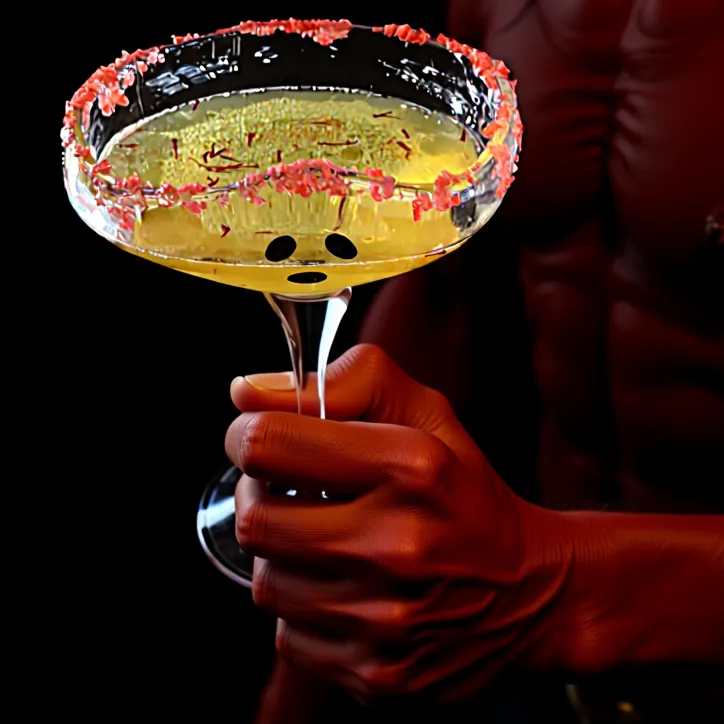
For this cocktail, we’re going to zero in on two central aspects of Poe’s story. First is the  “saffron and sickly hue” of the river. And what better ingredient to represent this saffron color than…saffron? Saffron is a spice with floral and earthy qualities that, I think, might pair well with tequila. So let’s make a saffron margarita. Second, I want to capture the turmoil of the first curse and for this we turn to that questionable treat (?) at the bottom of every trick-or-treater’s Halloween haul in the 1970s: Pop Rocks.

Ingredients

2 oz. reposado tequila

1 tbs lime juice

½ oz Cointreau

¼ oz agave syrup, plus a little more for rimming the glass

A half-dozen strands of saffron (soaked in 1 tsp warm water), plus a few more as a garnish

1 pkg Pop Rocks (to rim glass)

Prepare a margarita glass by coating the rim with some agave syrup and rolling the rim in Pop Rocks. (Extra points if you, like me, couldn’t find a margarita glass anywhere in the house, and so in desperation you go to Target and find a couple of these “ghost” margarita glasses, which are simultaneously cute and embarrassing.)

Combine the tequila, lime juice, Cointreau, agave syrup, and saffron water in a shaker with ice. Shake it “with the violence of a tempest.”

Strain the drink into your prepared ghost glass. Use crushed ice if you must, but I’m too manly for that. Garnish with a few more strands of saffron. If you’re up for it, curse the world about you.
Poe-Script

This fable is often referred to as a “prose-poem,” which is another way of saying that it doesn’t rhyme and it doesn’t really tell a coherent story. Still, it’s a haunting narrative that seems to communicate the horror of silence. Which is a phrase that nicely describes my first date in high school.


2025 Poe Cocktails

Cocktail 28: The Imp of the Perverse

A paradoxical something, which we may call perverseness, [prompts us to] act, for the reason that we should not. In theory, no reason can be more unreasonable, but, in fact, there is none more strong. With certain minds, under certain conditions, it becomes absolutely irresistible.

The Tale

It’s a compelling thesis: we are tempted to do things that we shouldn’t. A museum display’s “do not touch” sign gives rise to the desire to do just that, resulting in unintentional damage.  (Ask me how I know.) An adolescent sneaks his first smoke behind the proverbial shed. A hunter takes a pot shot at a No Trespassing sign. Part of the attraction of these acts is the thrill of committing a taboo. Indeed, I have a friend who confides that he feels an urge, whenever he’s near a police officer, to grab the holstered pistol. (I do not recommend trying this.) But the urge is there. Perhaps Poe’s observation goes a long way toward explaining the sin of adultery.

The first half of Poe’s story is essentially an essay explaining this phenomenon. (Along the way he mentions man’s “organ of amativeness,” which simultaneously provides fodder for sophomoric giggles and explains a lot about man’s compulsion to misbehave.) It’s a bit unclear whether the notion that “we should not” is imposed externally (like the stricture against adultery) or rather more intrinsically (i.e., that the act would be harmful to us). At one point in his essay Poe speaks of our desire “to do wrong for the wrong’s sake,” which sounds like a desire to go against convention. And yet the long example he provides–in which the story’s narrator describes how he was compelled to incriminate himself for a murder that he’d gotten away with years earlier–suggests the essay is concerned with how we act against our own interests. Either way, Poe’s “Imp of the Perverse” is the personification of the urge to misbehave, even (or especially) when it’s bad for us.

Surely you can recall instances where you felt compelled to act in a way that, deep down, you knew you shouldn’t. Did you give in to the urge? Or did something–a sense of morality or conscience, or perhaps just a desire for self-preservation–prevent you from acting on that urge? Would that I had been blessed with a bit more self-restraint when I was younger. (For the back story, see my memoir, Midcentury Miscreant.) Meanwhile, an article in a 2018 issue of Pacific Standard magazine describes the Imp phenomenon, and helpfully explains that “the thoughts themselves are fairly harmless…but how we respond to them can be a problem.” You don’t say.

Now, Poe’s story concerns major wrongful acts–neglect of duty, opposing the will of God, suicide, and murder. He did not include on his list the category of crimes against Mixology.  But I will. So join me as we blithely and recklessly give in to the Imp of the Perverse.

The full story is available here.

The Drink

Let’s start by violating the “Golden Ratio,” which decrees cocktails should contain 2 parts spirit, 1 part a sweet mixer, and 1 part a tart mixer. Let’s reverse this to 1:2:2. Doesn’t that make you feel perverse?

Let’s also blithely ignore the aphorism “Grape or grain, but never the twain.” This piece of folk-wisdom holds that you should never mix wine and spirits, either in a single drinking session or, presumably, in a cocktail. Here comes the twain!

Finally, it’s commonly held that one should only shake cocktails that contain fruit juice; all other cocktails should be stirred. Our drink eschews fruit juice, and yet we’re going to shake the hell out of it. Embrace your inner Caligula!

The central crime of grape and grain is provided by some Amontillado (for obvious, Poe-related reasons) and some neutral vodka (because even in this “perverse” cocktail it’s probably wise to minimize the extravagant clash of tastes). As mixers let’s use some Triple Sec and Cynar. (Cynar, as you probably know, is a liqueur made from artichokes, of all things. This in itself lends a bit of perversity.)

Ingredients:

½ oz Amontillado

½  oz vodka

1 oz Triple Sec

1 oz. Cynar

(Optional) some tonic water

Perverse garnish of your choosing

Add the first four ingredients to a shaker with ice, and shake it. Then, pick up the shaker and shake that. (Haha!) Strain the mixture into some ridiculous non-barware. (I used my Studebaker Museum coffee mug.) Maybe add one of those giant ice cubes that are all the rage these days, simply because they’re ridiculous. If you want to make the drink a little less disgusting, you can dilute it with some tonic water. Garnish with your own token of perversity. I used a candle, which, it may be remembered, was the murder weapon used by the narrator in this tale. Seriously.

Take a swig, and you’ll understand why those cocktail rules were created in the first place. You’ll also be tempted to never again give in to the Imp of the Perverse. You’re welcome.

Poe-Script

Psychological researchers have produced voluminous studies, papers, and articles that reference and attempt to explain the Imp of the Perverse. Indeed, our capacity for self-destructive actions is probably one of the main reasons for the field of psychology itself. And yet I’m not convinced that any of the academics’ offerings succeeds in explaining the phenomenon any better than Poe did in 1845.

2025 Poe Cocktails

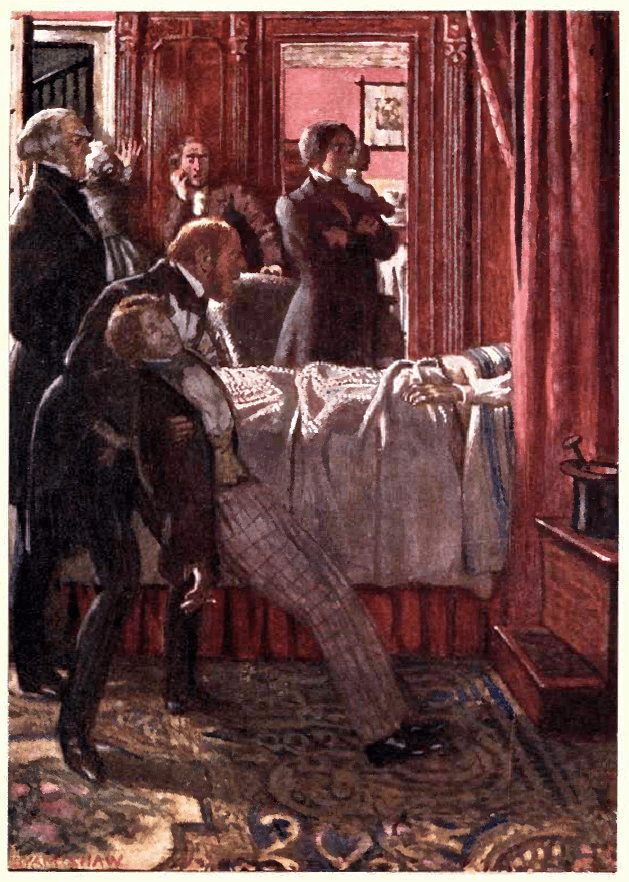
Cocktail 27: The Facts in the Case of M. Valdemar

I was thoroughly unnerved, and for an instant remained undecided what to do. At first I made an endeavor to re-compose the patient; but, failing in this through total abeyance of the will, I retraced my steps and as earnestly struggled to awaken him. In this attempt I soon saw that I should be successful — or at least I soon fancied that my success would be complete — and I am sure that all in the room were prepared to see the patient awaken.

For what really occurred, however, it is quite impossible that any human being could have been prepared.

As I rapidly made the mesmeric passes, amid ejaculations of “dead! dead!” absolutely bursting from the tongue and not from the lips of the sufferer, his whole frame at once — within the space of a single minute, or even less — shrunk — crumbled — absolutely rotted away beneath my hands. Upon the bed, before that whole company, there lay a nearly liquid mass of loathsome — of detestable putrescence.

The Tale

This is another of Poe’s suite of mesmerism stories (which includes “Mesmeric Revelation” and yesterday’s “A Tale of the Ragged Mountains”). In this story, a Mesmerist hypnotizes a man (M. Valdemar) at the moment of his expected death from tuberculosis. This somehow holds Valdemar in a state of suspended animation so that, it would seem, death is indefinitely delayed. The Mesmerist is able to communicate with his patient, as I suppose one can talk to someone in a state of hypnosis. Valdemar explains that he is dying. Then, it would seem, he dies. His breathing and pulse stop, and his skin turns cold.

As the nurses prepare to remove the body, Valdemar’s voice is heard–though his lips don’t move–and he says “I am dead.” For the next seven months, Valdemar’s body is monitored, and while it shows no signs of life, neither does it show signs of decay. Finally, the Mesmerist decides to try to wake Valdemar from his trance. Valdemar’s voice is again heard, saying ““For God’s sake! — quick! — quick! — put me to sleep — or, quick! — waken me! — quick! — I say to you that I am dead!” At that request, the Mesmerist “earnestly tries to awaken him,” and immediately Valdemar’s body undergoes the decomposition that should have been occurring on the dead body over the preceding months.

The full story is available here.

The Drink

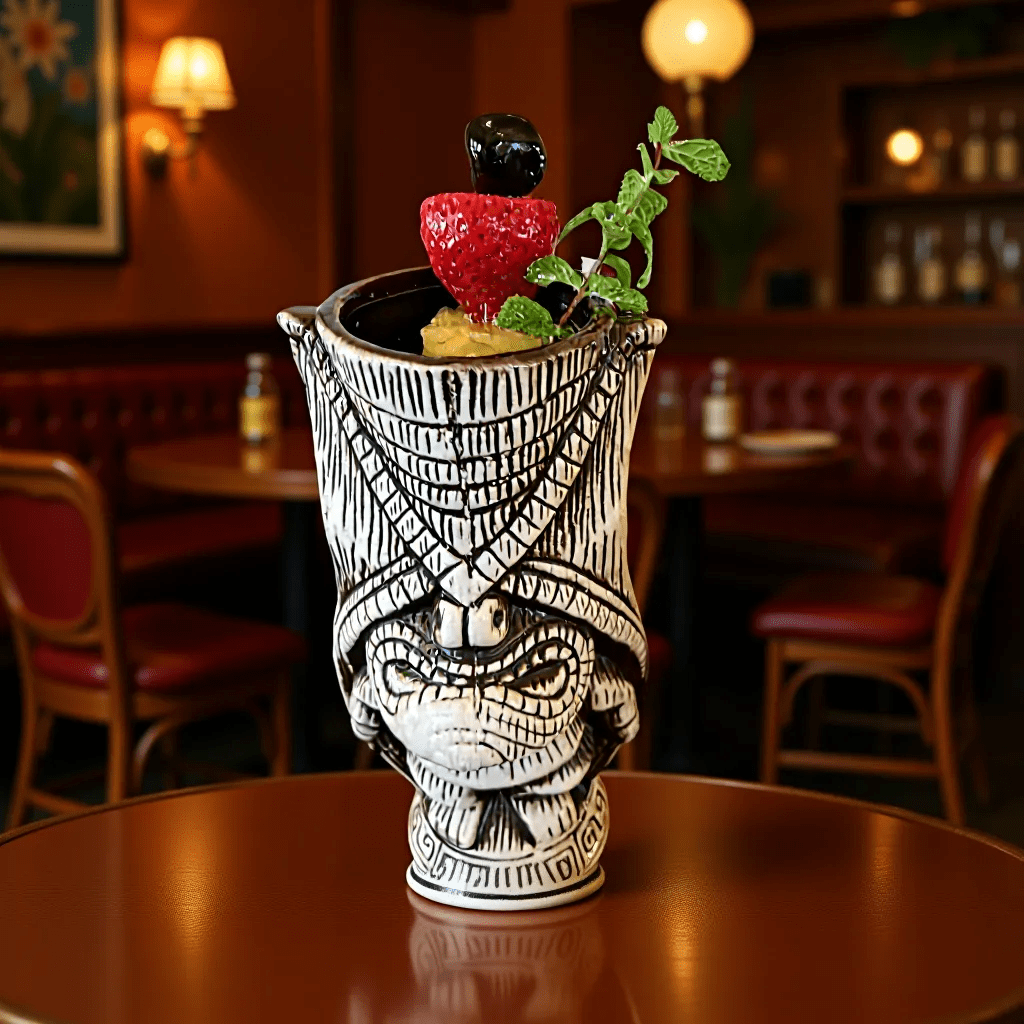
Riffing off the excerpt I shared at top of this post, I at first considered creating a drink called “Detestable Putrescence.” Cooler heads prevailed, however, and instead we’re going to make your standard, classic zombie. For isn’t a zombie, essentially, what M. Valdemar became?

The zombie cocktail was created by that godfather of the tiki bar, Donn Beach, in the 1930s. It’s said the name was inspired by one of Donn Beach’s customers, who said the strong drink turned him into “the walking dead.” We’ve all been there, right?

Here’s the classic recipe:

Ingredients:

1 1/2 ounces Jamaican rum

1 1/2 ounces Puerto Rican gold rum

1 ounce 151-proof demerara rum

3/4 ounce lime juice, freshly squeezed

1/2 ounce Don’s mix (see discussion below)

1/2 ounce falernum

1 teaspoon grenadine

4 dashes absinth

1 dash Angostura bitters

Crushed ice

Tropical fruits, a maraschino cherry, and a sprig of mint (as a garnish)

Dump it all (except the garnish) into a blender and blend. Pour into your favorite Tiki mug. Add crushed ice, if needed. Garnish. Drink. Pass out.

This is simultaneously one of the most complicated drinks (in terms of number of ingredients) and one of the most forgiving (in terms of receptivity to substitutions). But I would caution that a little absinth goes a long way. (If anyone wants to make T-shirts with this slogan, accompanied by an image of Poe looking a little loopy, please do so with my blessing.) The main ingredients for this drink are various rums (including the critical 151-proof rum) and sweeteners (especially the falernum and/or the “Don’s Mix.”)

The Don’s Mix is something that’s difficult, if not impossible, to obtain commercially. To make a decent facsimile of your own, just combine two parts fresh grapefruit juice with one part cinnamon syrup. Note that, even though the creator was Donn Beach, his mix is called Don’s Mix.

Poe-Script

When this story was published in two journals in late 1845, many assumed it to be a true report of an actual event. It’s unclear whether Poe intended for his story to be received in this way. But the clinical and authoritative writing style does come across as rather convincing. It’s not hard to imagine the rubes of 1845, who believed in the healing powers of snake oil nostrums, would accept Poe’s tale as fact. Of course, 13 percent of us still believe in Bigfoot…

2025 Poe Cocktails

Cocktail 26: A Tale of the Ragged Mountains

“For many minutes,” continued the latter, “my sole sentiment — my sole feeling — was that of darkness and nonentity, with the consciousness of death. At length there seemed to pass a violent and sudden shock through my soul, as if of electricity. With it came the sense of elasticity and of light. This latter I felt — not saw. In an instant I seemed to rise from the ground. But I had no bodily, no visible, audible, or palpable presence. … Beneath me lay my corpse, with the arrow in my temple, the whole head greatly swollen and disfigured. But all these things I felt — not saw. I took interest in nothing. Even the corpse seemed a matter in which I had no concern.”

The Tale

This is one of Poe’s more convoluted stories, around which I’m still trying to wrap my head. In it, the narrator recounts a tale told to him by an acquaintance named Bedloe, who had mysteriously disappeared in the back country of Virginia, and then he just as mysteriously reappeared. To make matters more confusing, Bedloe claims that, during his disappearance, he had died and somehow recovered. Meanwhile, Bedloe’s personal doctor, who was also present when Bedloe tells his tale,suggests that Bedloe’s temporary death had been a recollection of a historic death in battle that originally had been suffered by Bedloe’s doppelganger…a man named Oldeb. Which, in the big reveal, we are informed is Bedloe spelled backwards, minus the E. Oh, and somehow Mesmerism  (aka animal magnetism, coupled with maybe hypnotism) figures into the plot.

Meanwhile, the eponymous Ragged Mountains of the title are simply the place where Bedloe had temporarily disappeared. They are described as a “chain of wild and dreary hills that lie westward and southward of Charlottesville, and are there dignified by the title of the Ragged Mountains.” They do in fact exist; they’re near the University of Virginia, where Poe spent his brief stint as a student in 1826.

The full story is available here.

The Drink

Given that I can derive little coherent meaning from the tale itself, I figured I would focus on its evocative title. Surely this calls for a drink that features some manner of mountain peaks. And these, I initially thought, can be portrayed with some carefully-sculpted meringue.  Now, to be honest, I have never made meringue. My experience with it limited primarily to my mom’s lemon meringue pies, which are a whole other Tale of the Grotesque. In any event, the meringue on a pie isn’t really defined by sharp peaks; rather, it evokes low, rolling hills. But perhaps that’s what, in actuality, Poe is describing??

So I tried to make meringue. It’s a pretty simple recipe–mainly just sugar and egg whites. And the final step involves browning the outside with a culinary torch….or, in my case, a plumber’s butane torch from a cabinet in my garage. Flame is flame, right?

Alas, I learned that there’s some black magic aspect to making the meringue that I failed to master. My meringue never advanced beyond the thick icing stage. No way that it would evoke mountains…or even “wild and dreary hills.” I nevertheless browned it with my torch and dejectedly ate it by the spoonful over the kitchen sink. Waste not want not, I always say.

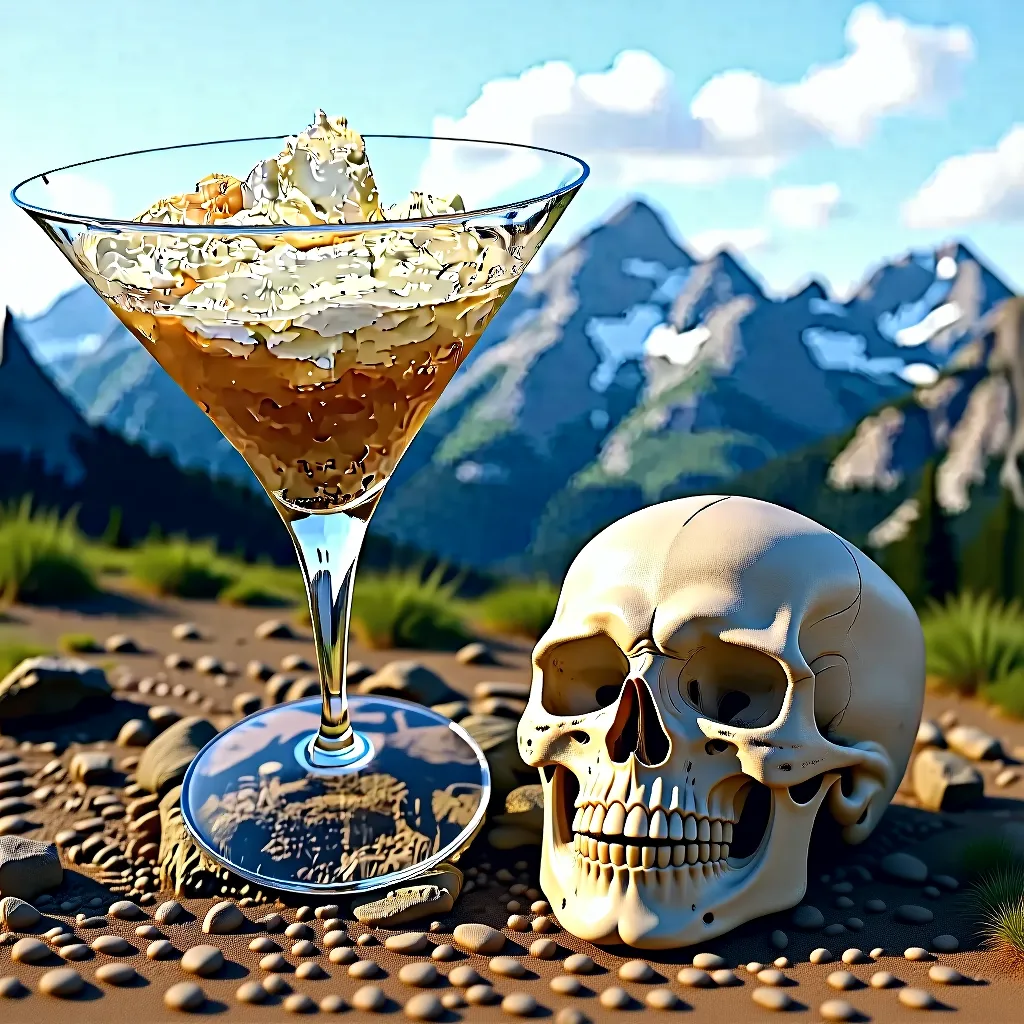
So, moving on to Plan B, I figured I would make the Ragged Mountains out of whipped cream. This worked a little better. The only question was what kind of spirit to place it atop? I settled on a simple chocolate martini. Now, chocolate martinis are not really my bag, baby. I’m far too insecure to drink such a froofy drink. But what else are you going to put under whipped-cream mountains? My manly persona braced for a direct attack as I assembled the ingredients:

Ingredients:

2 oz. vodka

1-1/2 oz. creme de cacao

¼ cup heavy whipping cream

1 tsp vanilla

1 tsp sugar

Grated nutmeg

Combine the whipping cream, vanilla, and sugar. Whip with a whisk until it forms stiff, raggedy peaks…or at least least wild and dreary hills. Set aside. Combine the vodka and creme de cacao in a shaker with ice. Shake until chilled, then strain into a martini glass. Top with the whipped cream, forming ragged peaks. Sprinkle with grated nutmeg (as I did), or with chocolate sprinkles, if you are feeling really secure.

Poe-script

Poe’s original manuscript for this story takes the form of a long roll of paper (like a scroll, perhaps?) that’s 15 feet long and 8 inches wide. It’s owned by the Morgan Pierpont Library in New York City. I dare you to try to steal it.

2025 Poe Cocktails

Cocktail 25: A Dream Within a Dream

I stand amid the roar

Of a surf-tormented shore,

And I hold within my hand

Grains of the golden sand —

How few! yet how they creep

Through my fingers to the deep,

While I weep — while I weep!

O God! Can I not grasp

Them with a tighter clasp?

O God! can I not save

One from the pitiless wave?

Is all that we see or seem

But a dream within a dream?

The Poem

This poem was published in 1849, just months before Poe died. It comprises two stanzas (the second of which is reproduced above). It’s a somewhat nihilistic poem, questioning the meaning and purpose of existence. He suggests that we cannot have any real influence on our surroundings; that our puny little actions are ultimately impotent and purposeless. Indeed, his central proposition is that our lives are mere illusions–that “all that we see or seem is but a dream within a dream.” It would seem that Poe is here channeling Eeyore.

The full poem is available here.

The Drink

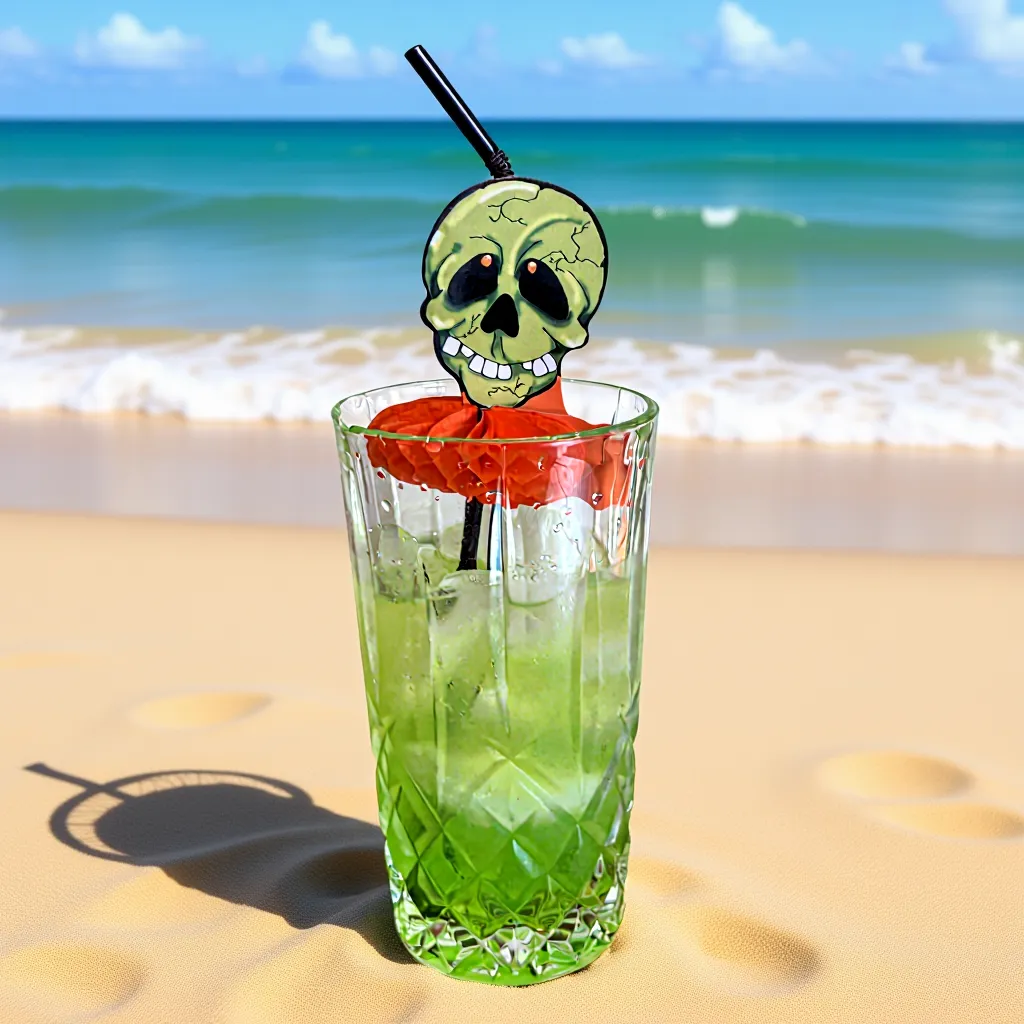
This idea of Life’s Illusions was, of course, picked up by Joni Mitchell 120 years later in “Both Sides Now.” It also inspired a class of cocktail called the Midori Illusion. And that’s what I’ve selected to represent this poem. (Note: There’s really no illusion involved with this drink. It’s just an unnaturally-neon green cocktail. But it’s the best I could do. Give me a break.)

Ingredients:

1-½ oz Midori

1 oz vodka

½ triple sec

1 oz. pineapple juice

Splash of lime juice

If you have anything on hand to suggest “illusion” by way of garnish, go for it. All I could find was a goofy-looking skull-straw.

Mix everything together in a Collins glass filled with ice. Stir. Drink. Despond.

Poe-Script

I cannot encounter the word “illusion” without thinking of William Castle’s 1960 schlock horror film, 13 Ghosts. Castle had developed a reputation for (generally silly) gimmicks to promote his films. Accordingly, he claimed that 13 Ghosts was filmed in “Illusion-O,” which supposedly made ghosts visible on the screen. What’s more, movie patrons were provided with a “ghost viewer” (a cheap set of cardboard glasses with red and blue cellophane lenses) that allowed you to choose whether to see the ghosts or, if you’re a scaredy-cat, not.

I confess that I find this low-tech, sideshow-level gimmick to be rather endearing. But it really has nothing to do with “A Dream Within a Dream,” aside from the “illusion” reference.