Today we left the witches completely behind and focused on Boston’s colonial and revolutionary history.
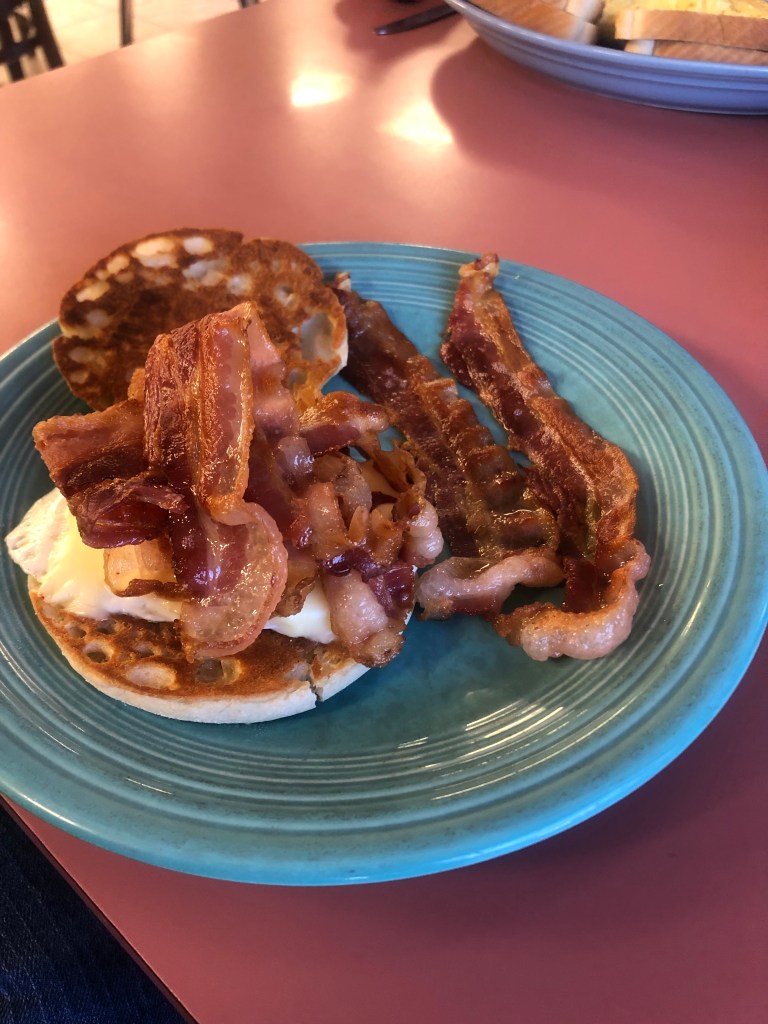
But first let me give a shout-out to Donna’s Restaurant of Boston’s North End. Donna herself served us. Her energy and sass reminded me of Flo on the 1970’s sitcom “Alice,” but with a Boston accent. This is where I started the day with a bacon-and-egg breakfast sandwich, plus a side order of bacon. If they served bacon juice, I would have had a glass of it.
After satisfactorily clogging our arteries, we made our way into the downtown, where we visited Boston’s “Old Statehouse.” It’s the oldest surviving public building in Boston (and one of the oldest in the country), dating back to 1713. Boston was not just the provincial capital but it also served as the political and commercial center of New England. The city (like all of New England) was of course under British rule, so the “state house” was answerable to the Crown.
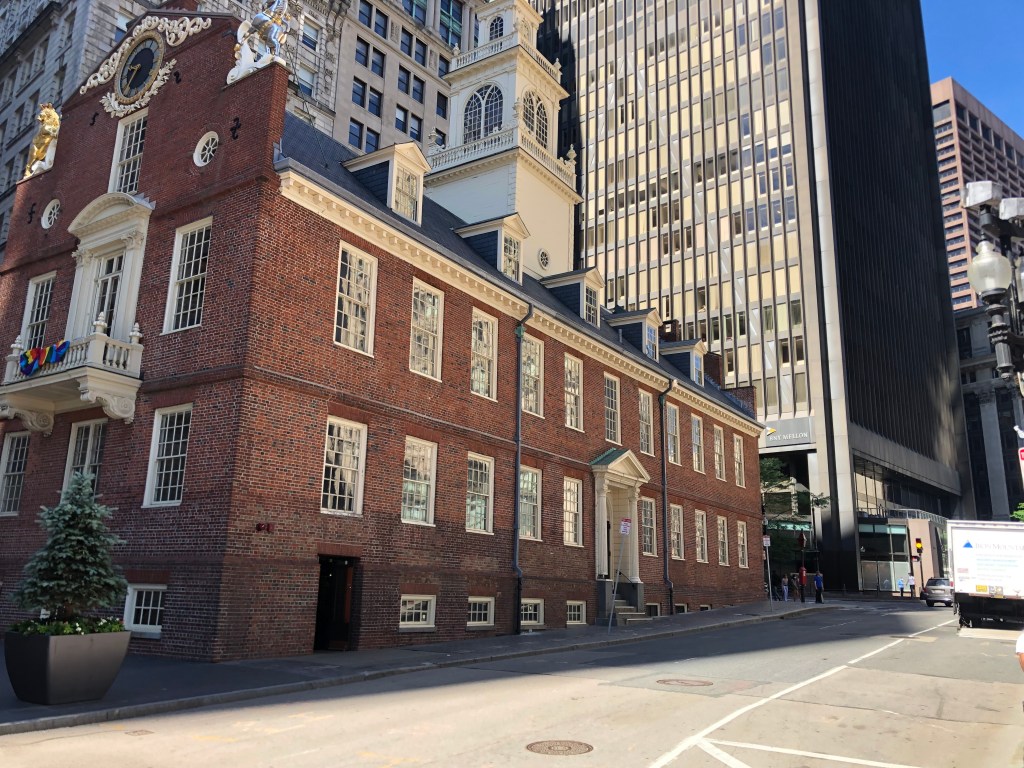
But as we know, the early 18th century saw worsening relations between Britain and the colonists. The protests against the stamp acts, the Boston tea party, Paul Revere’s ride (Listen my children….), and ultimately the battles of Concord, Lexington, and Bunker Hill all were Boston’s contributions to the revolution. As Boston got too big for its Colonial britches, Britain suspended the colonial Assembly, which thus was prevented from meeting in the old statehouse for almost a year. After the American Revolution, the old statehouse was used for a short time as the state of Massachusetts’ legislative building, but the growing state soon outgrew it and the legislature moved to the “new” (circa 1798) state house.
The old state house then became Boston’s city hall, and then a commercial building, before finally, in the 1880s, becoming the museum that we visited today. And an impressive museum it was. This is not just because of its artifacts (which were authentic and well-displayed) or even its docents (who were helpful and knowledgeable). Rather, what struck me about the museum was its story. Boston was, quite simply, the key to the American Revolution. I’m a sucker for the inspirational, heroic, and idealistic story of the revolution. Many Americans, and especially I, tend to take our system of government for granted. We think of it as our birthright, guaranteed to afford us the rights and protections we deserve. But when you dig into our revolutionary history, you’re reminded how tenuous this experiment once was, and how much it depended on a relatively small number of patriots, statesmen, and soldiers to keep it alive. Of course those people weren’t perfect; they had their flaws like all of us. But the history reminds us of our own responsibility to do our best in protecting our democracy and upholding its ideals.
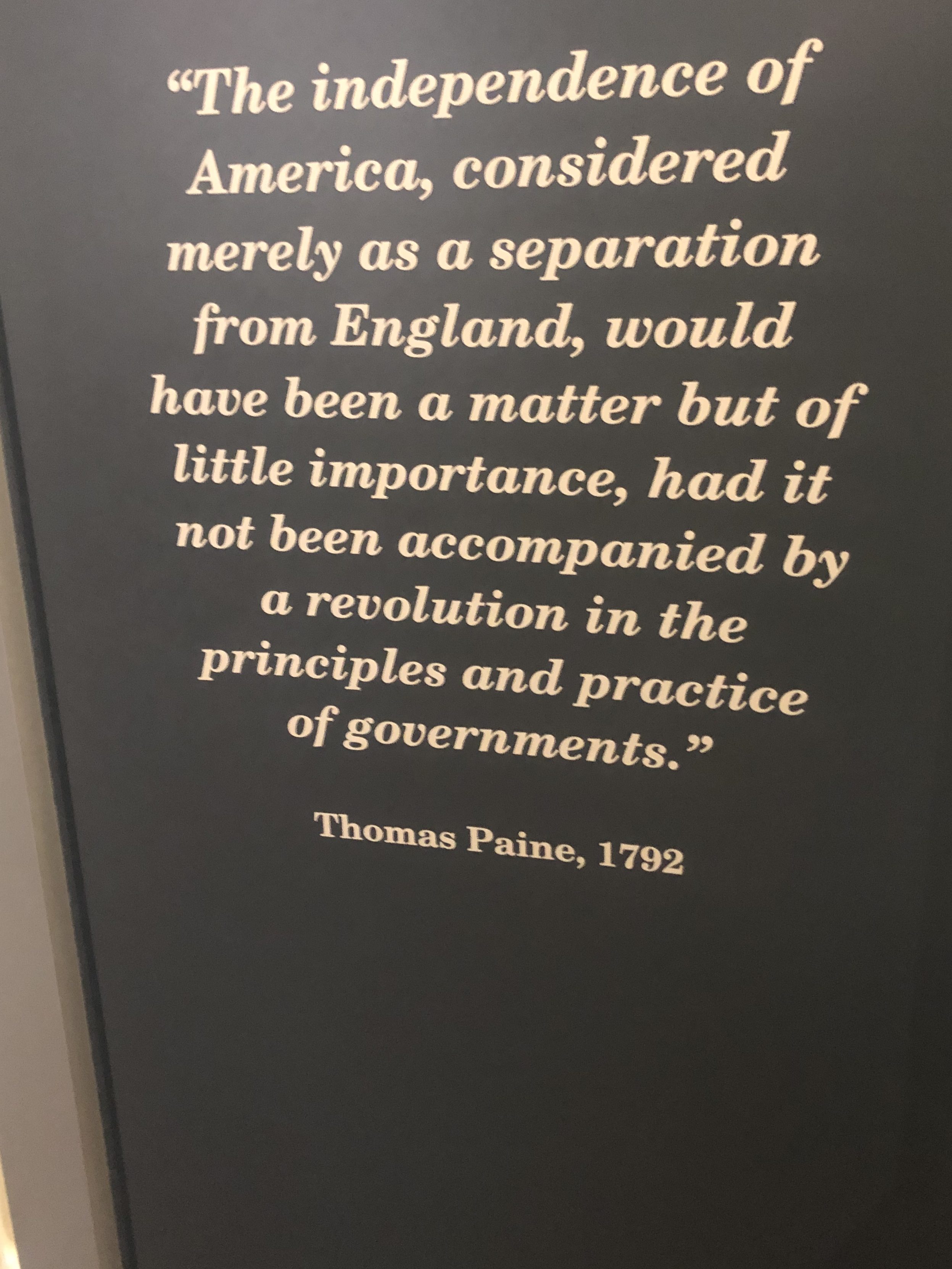
OK. Lecture mode is now off.
After the Old State House, we went to visit the “new” one (built in 1798 and where Massachusetts’ legislature meets to this day). Sadly, the building was being renovated, and we were only able to see it from the outside.
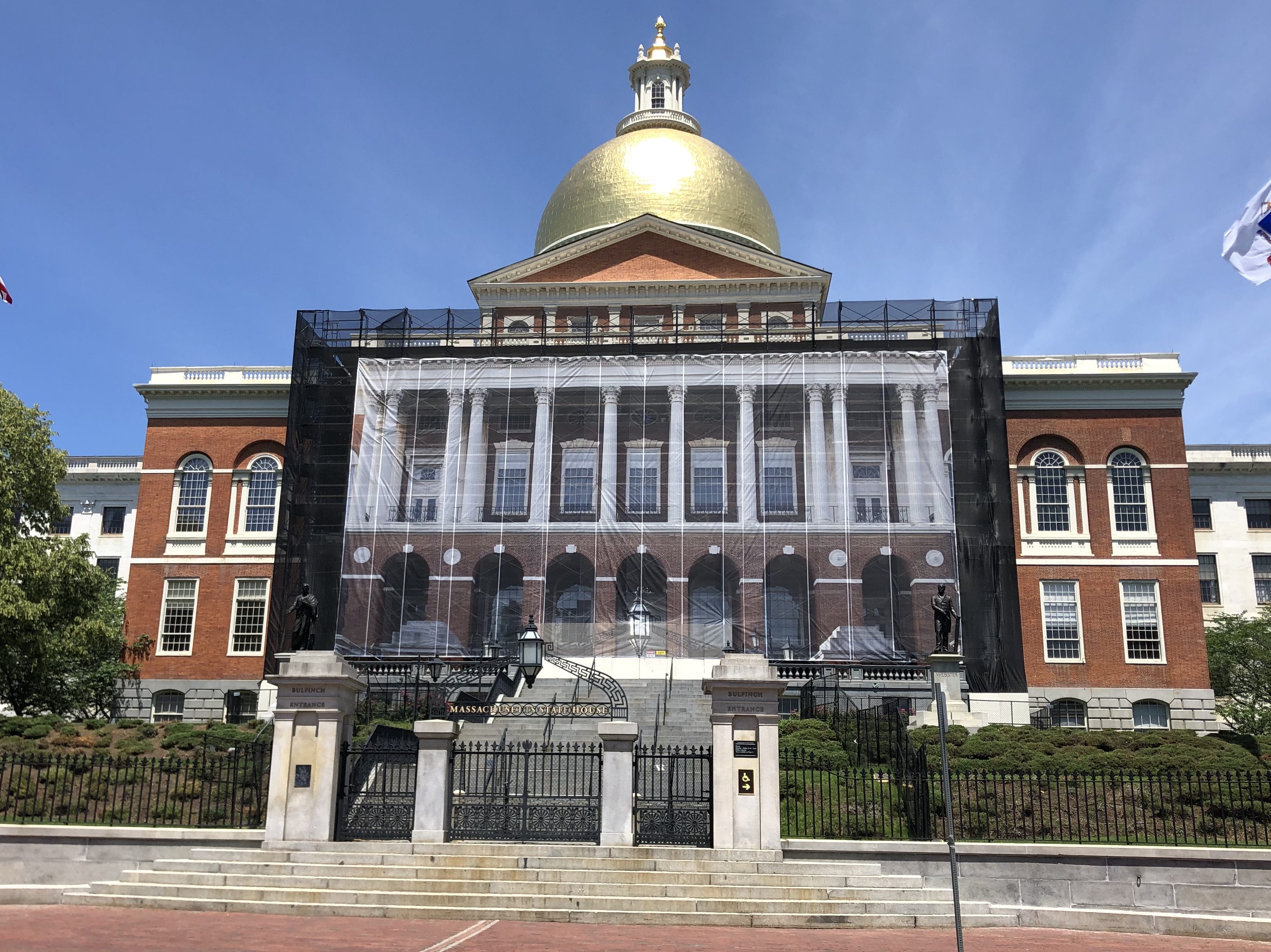
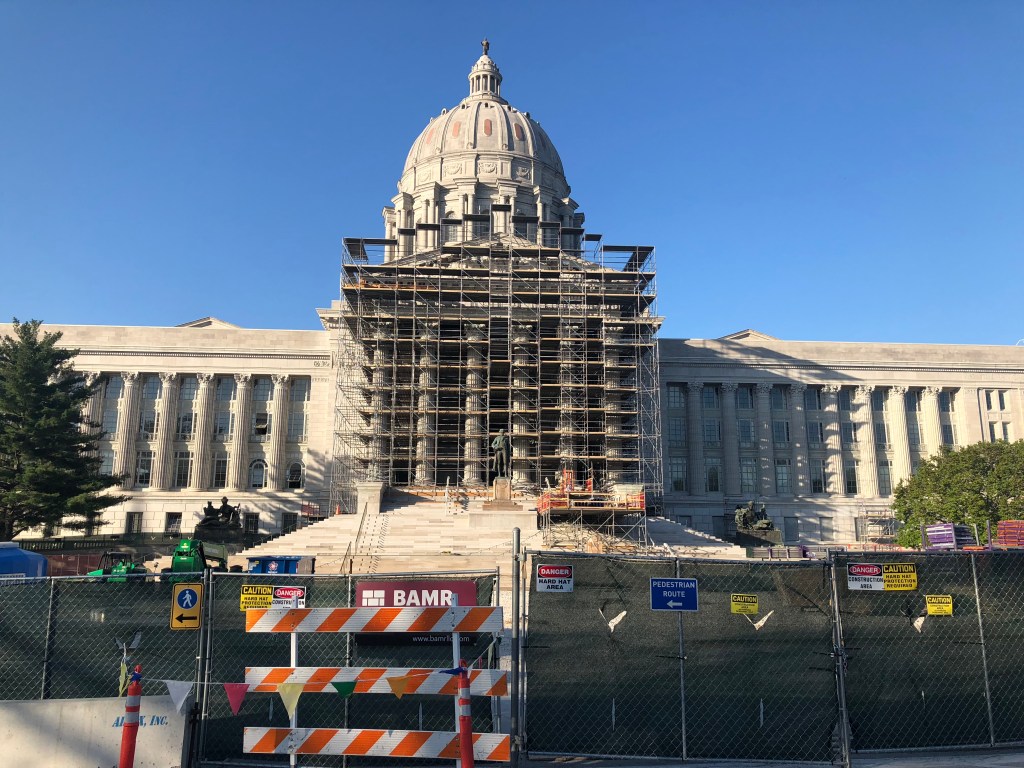
This nicely complements the photo I took in Jefferson City, MO on my Route 50 trip:
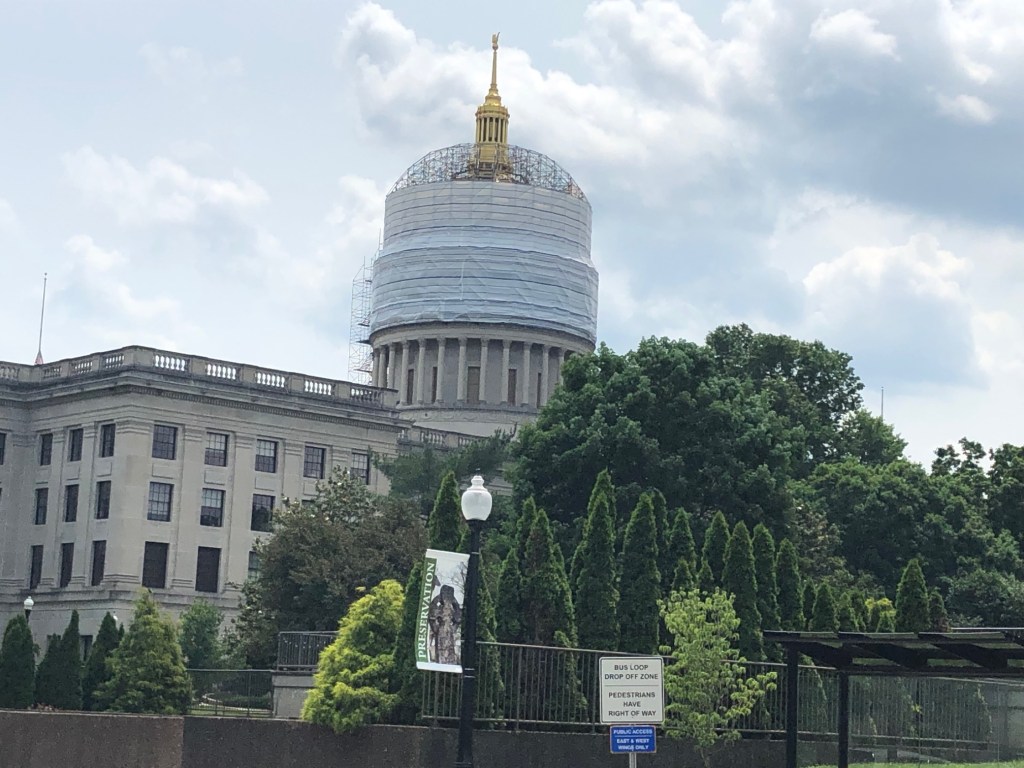
Oh, and I took this photo of West Virginia’s capitol in Charleston during my Route 60 trip:
But I digress.
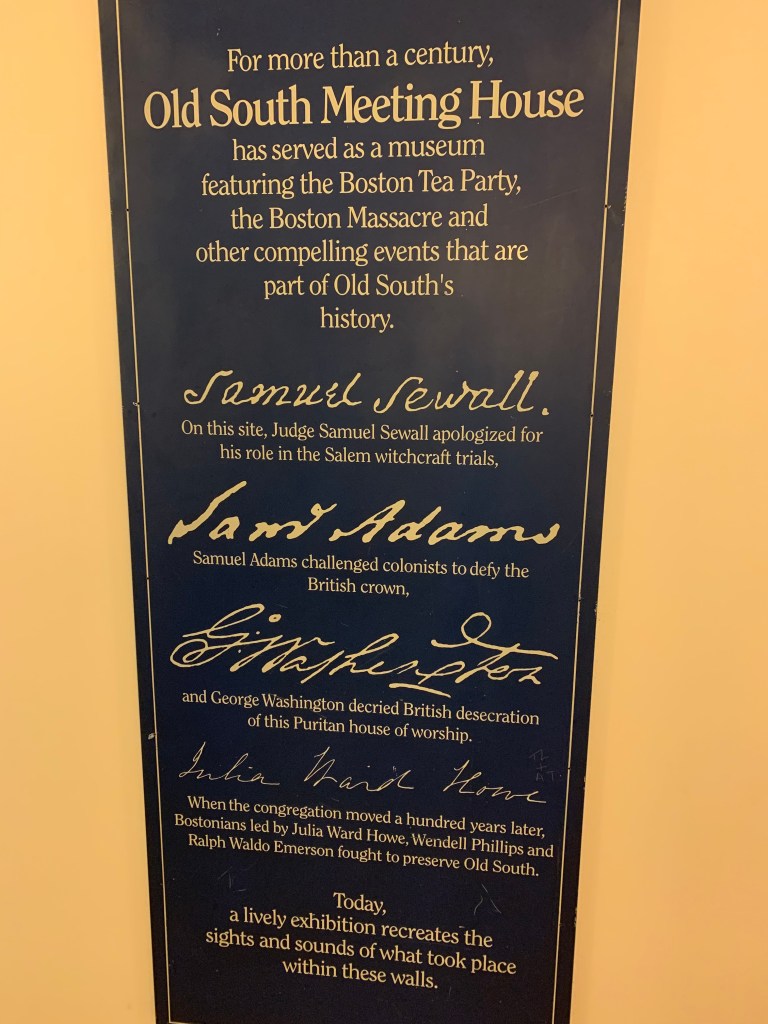
The rest of the day we spent at two main sites: One is the Old South Meeting Hall (constructed 1729), which was where much of the planning for the Boston Tea Party took place.
The other place we visited was the Boston Museum of Science, which was founded in 1830 and features (at least as far as we’re concerned) the world’s largest (three stories tall!) Van de Graaff generator. (If you don’t know what a Van de Graaff generator is, re-watch the laboratory scene in Frankenstein.)
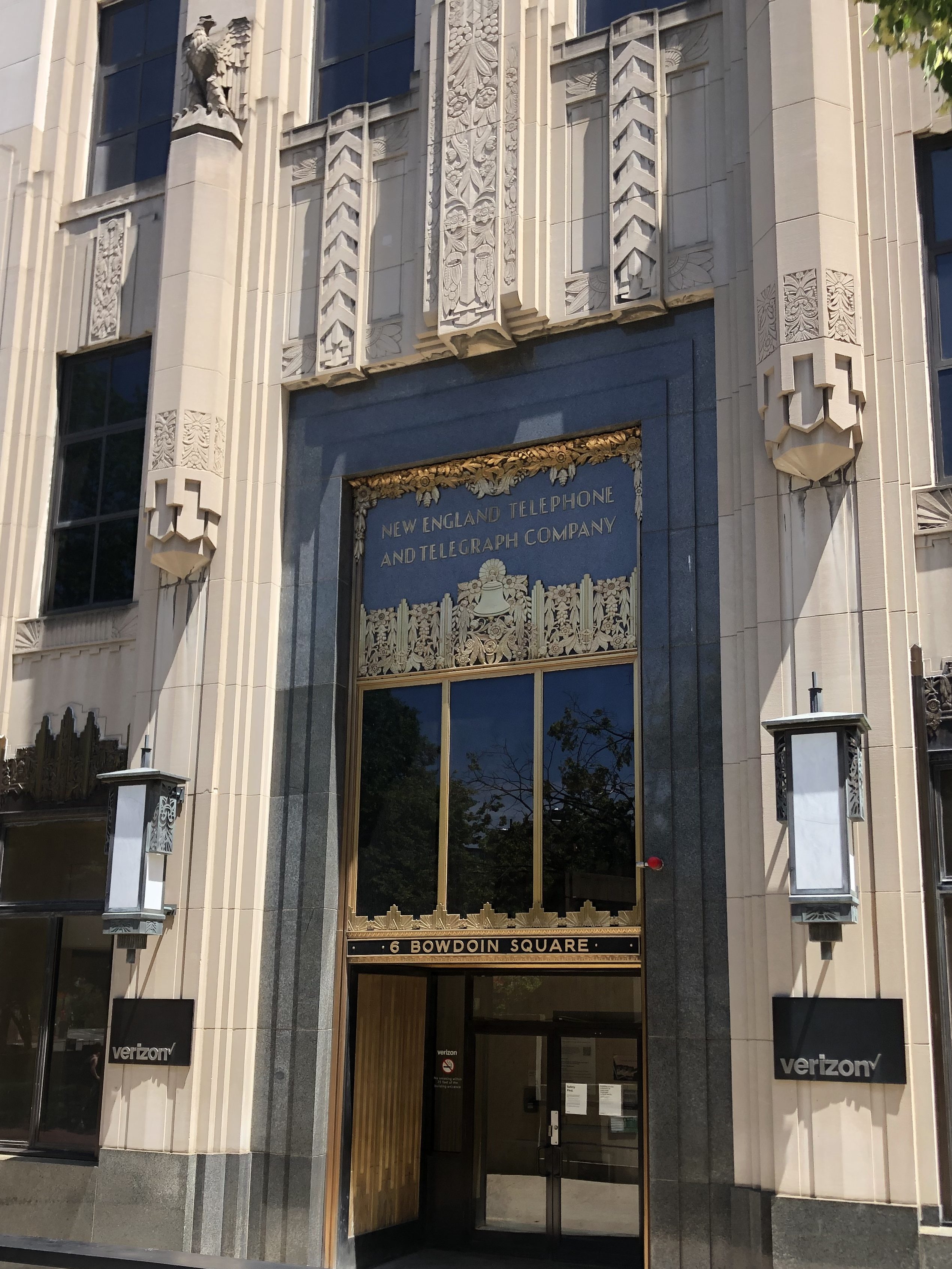
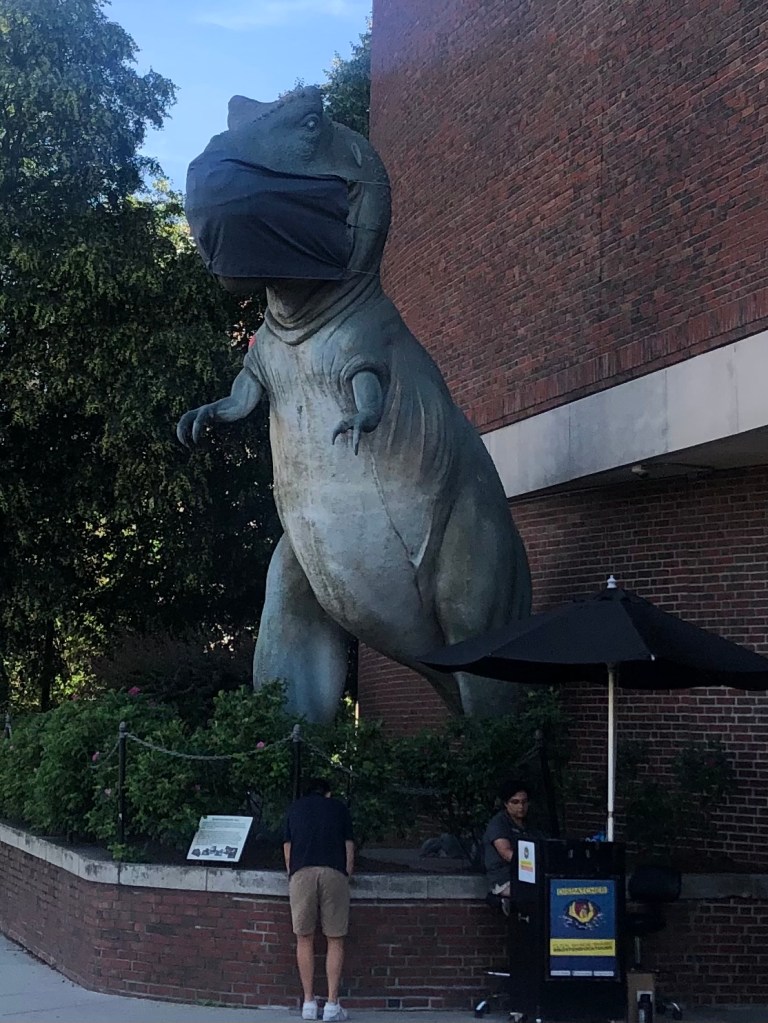
It’s been a great trip. Before ending with today’s BOTD, I’ll leave you with a few random photos from today:
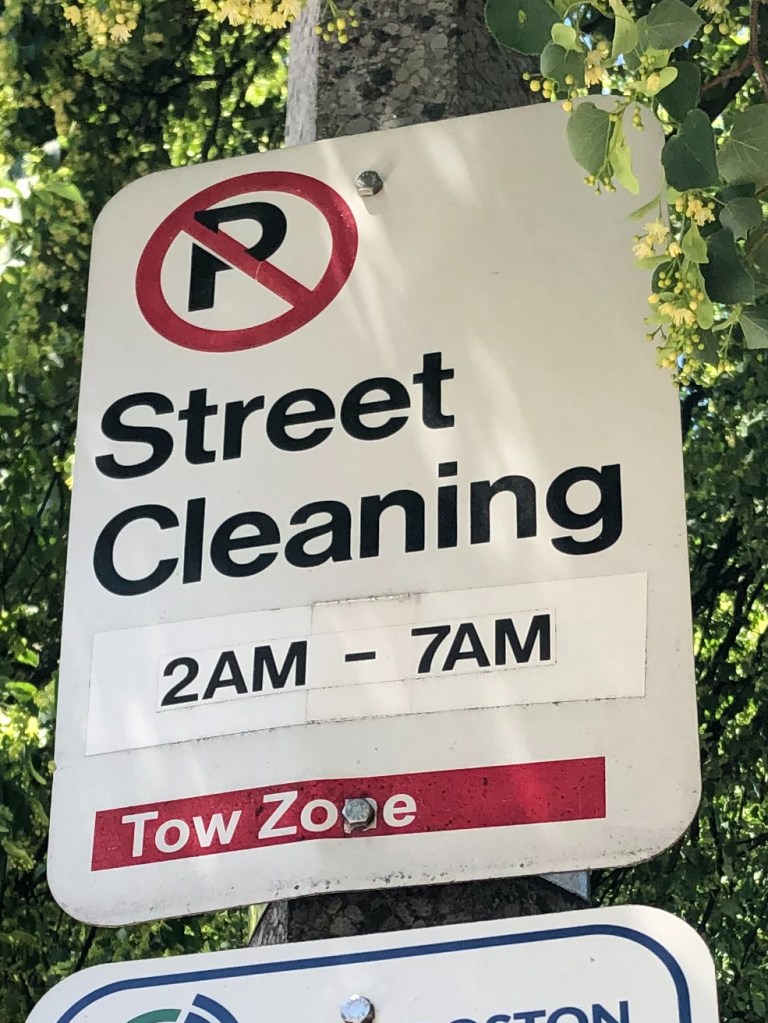
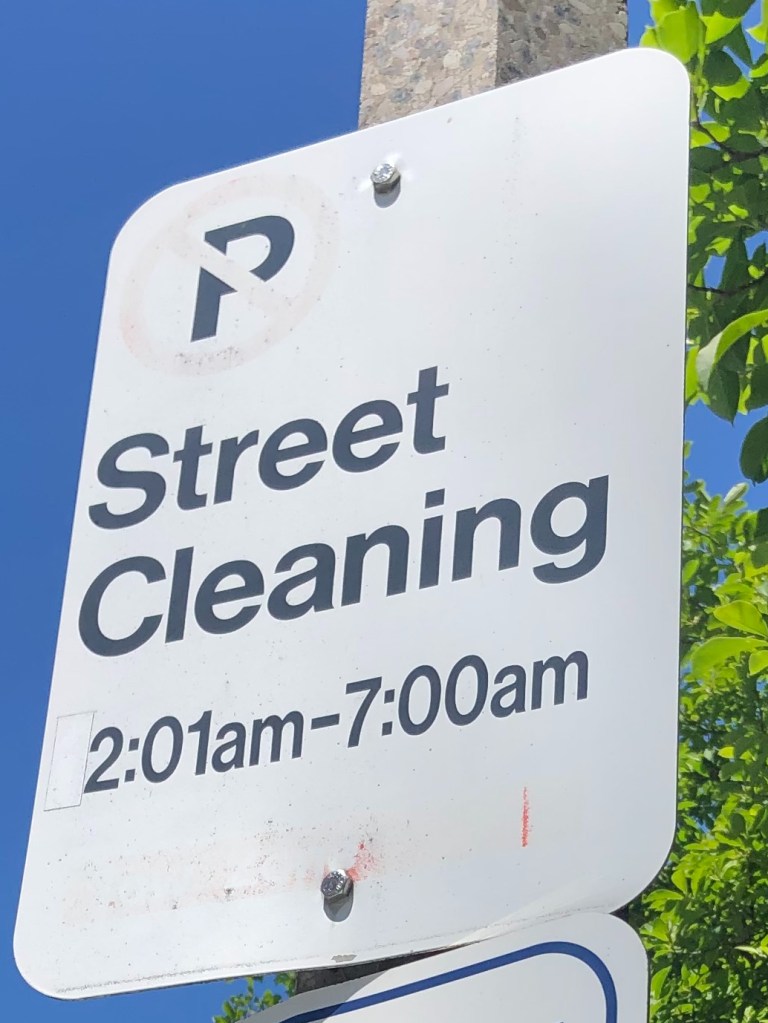
Check out the start times on these two signs, which are just one parking space away from each other. Clearly you’d want to choose the second one.
BREW OF THE DAY
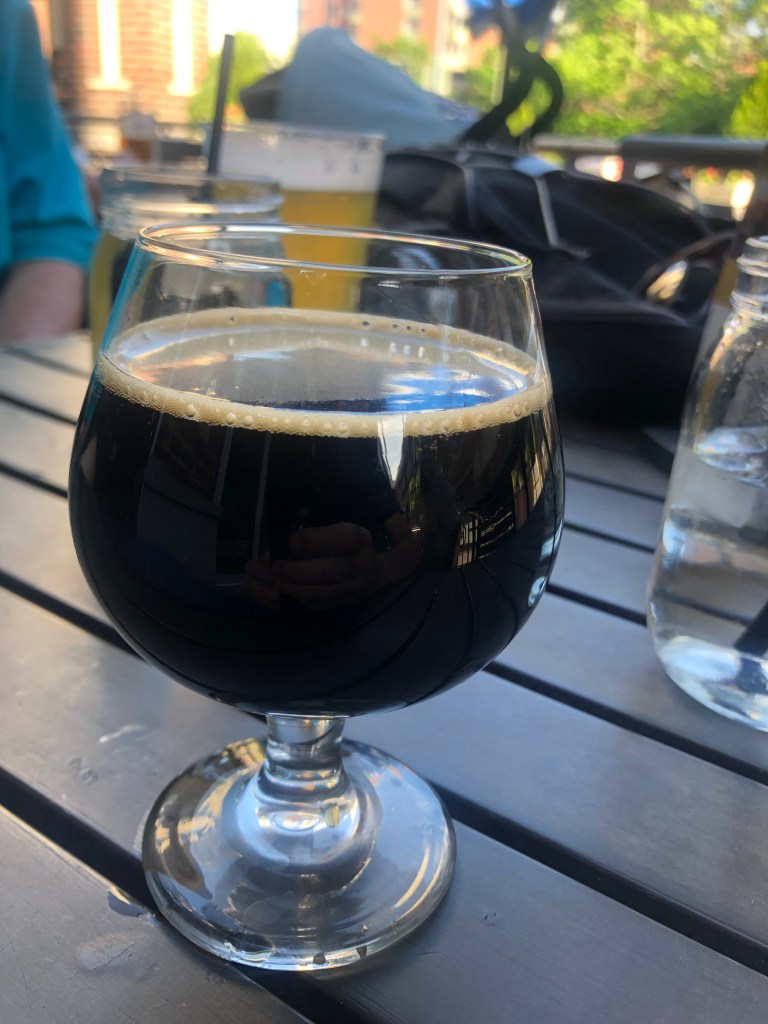
After about 40 miles of walking this week, we sat down for a final beer at “World of Beer” in downtown Boston. The place has the misfortune of being situated in a mall, and being part of a Florida-based chain, but it makes up for it with its extensive menu of literally hundreds of beers. After careful study (and tasting a few samples), I settled on a stout from Widowmaker Brewing (Braintree, MA). Like so many of these Massachusetts microbreweries, Widowmaker was started up by a couple of young home brewers a less than a decade ago. I had their “Candymaker with Coffee” stout. The front end of this beer is just what a like: big flavor, plenty of maltiness, some roasty notes, some sweetness, and some real body. It starts out great. But then it just kind of peters out. There’s no counter-balancing bitterness on the finish, and almost no carbonation to wash away the cloying sweetness. The coffee is hardly noticeable. And the ABV is a modest 7.0. So, despite the “Widowmaker” brand, this is a milquetoast beer. I give it three points.
——————————————————————
Tomorrow morning we fly back to California. Thanks to everyone for your comments and suggestions during this trip. And thanks to my good friend Vic for making this a team effort.
Until the next trip,
sdb
 Chasing Phantoms