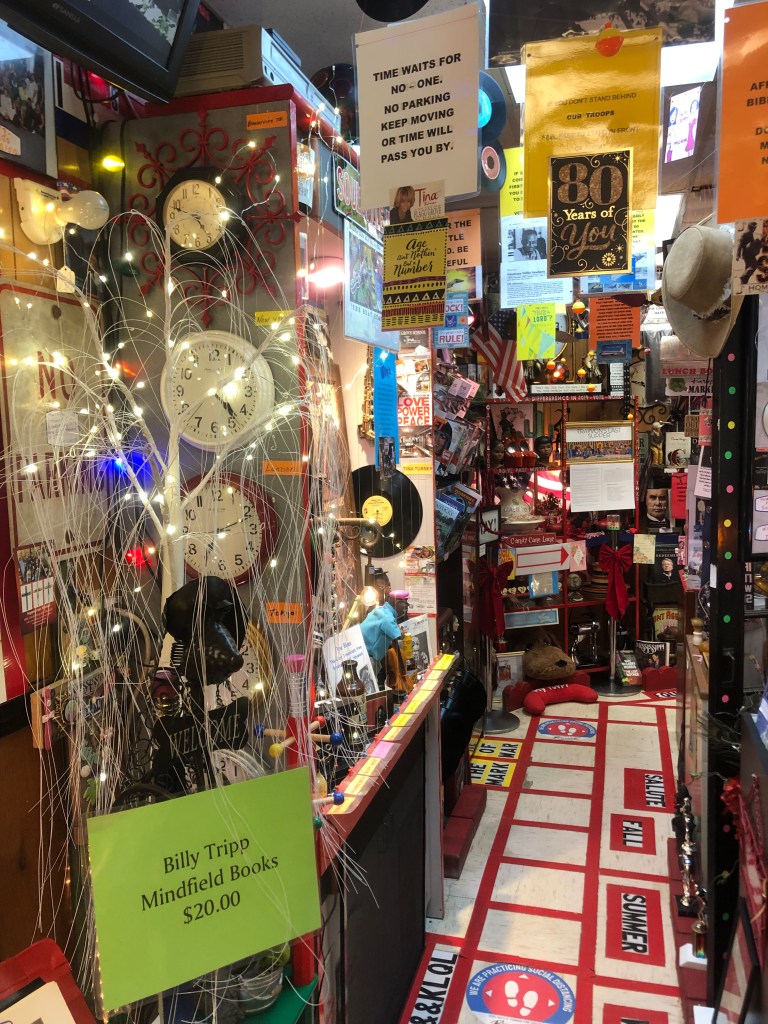
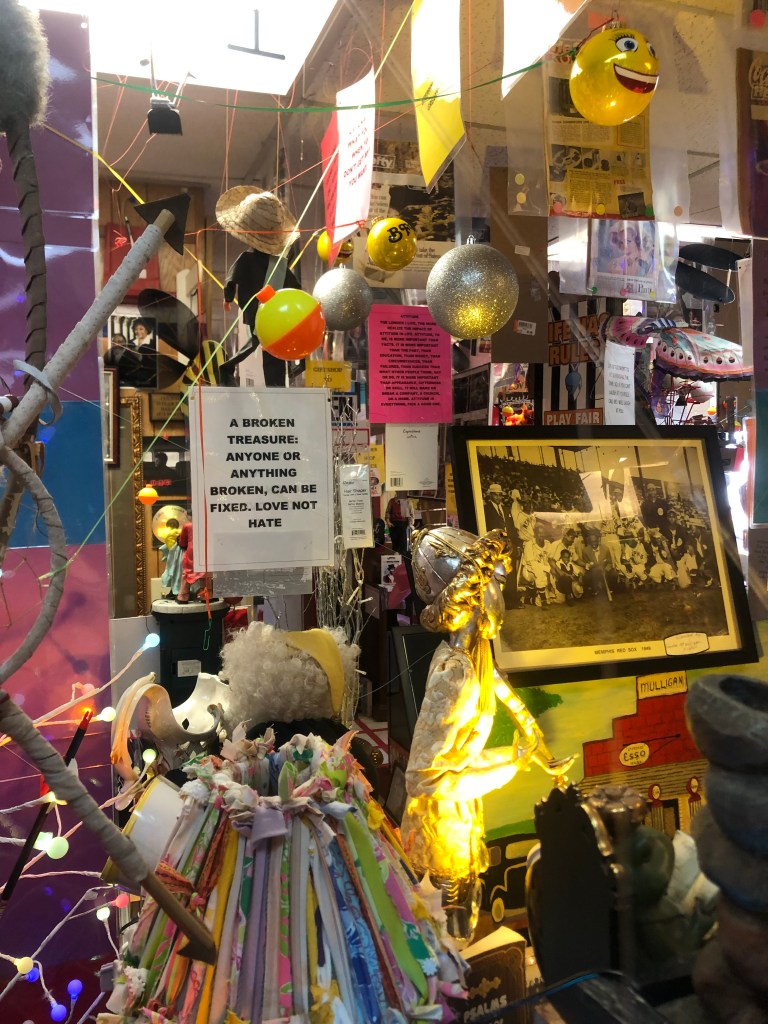
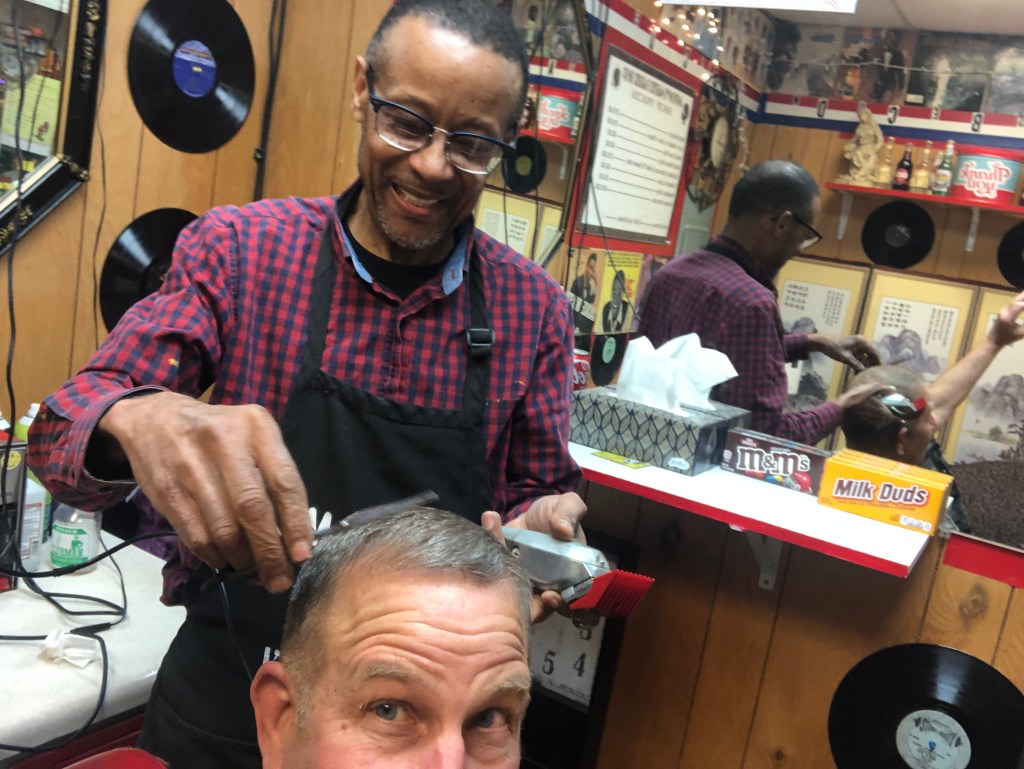
A surprising number of you were interested in learning more about Anthony Turner (my Delta barber). I’ll share two anecdotes that have been running through my head since yesterday. First, there is a method to the madness of the Menagerie Museum. Sure, it’s a tangled and confused congeries of seemingly unrelated trinkets and kitch. But it’s all connected (quite literally, with fishing line and rubber bands) in a way that Anthony seems to have dedicated much thought and deliberation. What’s more, schoolchildren visit his museum as part of their curriculum, and Anthony teaches them an inspirational lesson about what’s probable versus what’s possible. The teachers seem to think it’s a worthy message, delivered with earnestness, kindness, and the most overwhelming number of props imaginable. There’s a method to all this madness. I’m fully convinced that Anthony knows every piece of his collection, and sees a purpose for each one.
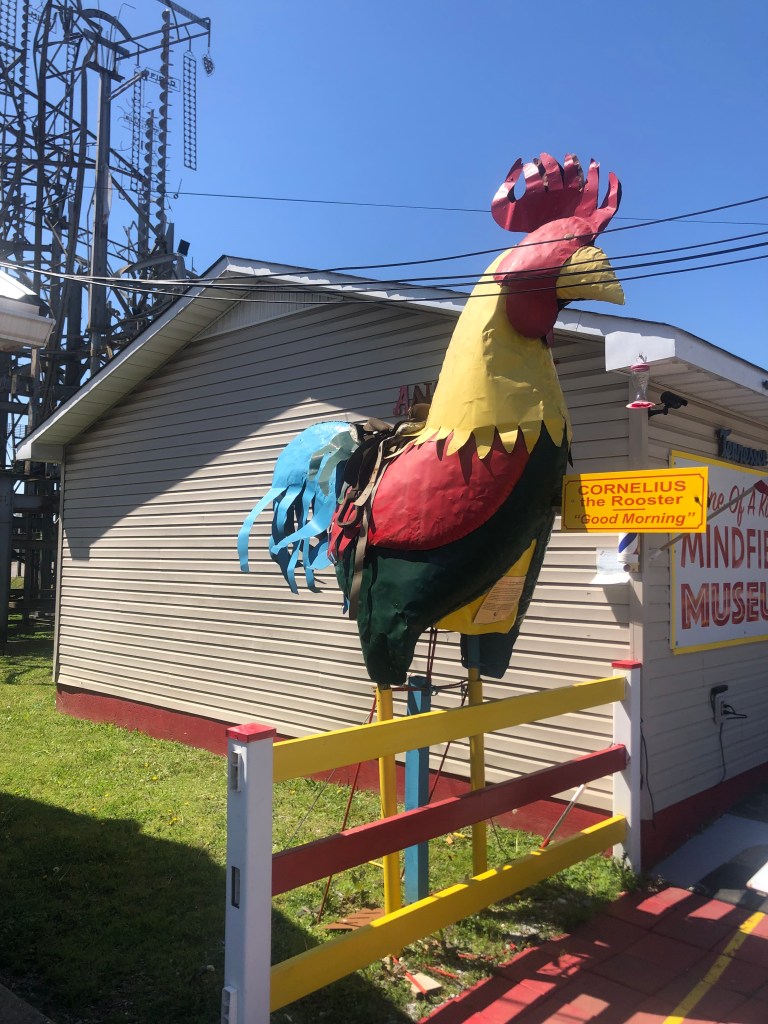
Second, Anthony told me a story about how there had been an empty spot in front of his shop that “needed something.” Then one day he spotted that something: A giant metal rooster that was for sale elsewhere in town. Alas, at $800, the rooster was beyond his means. He mentioned this in passing to a customer in his barber chair, and by the end of the day that customer had taken up a collection around town and presented Anthony with $800. The rooster now stands in the spot where it belongs.
We now return to today:
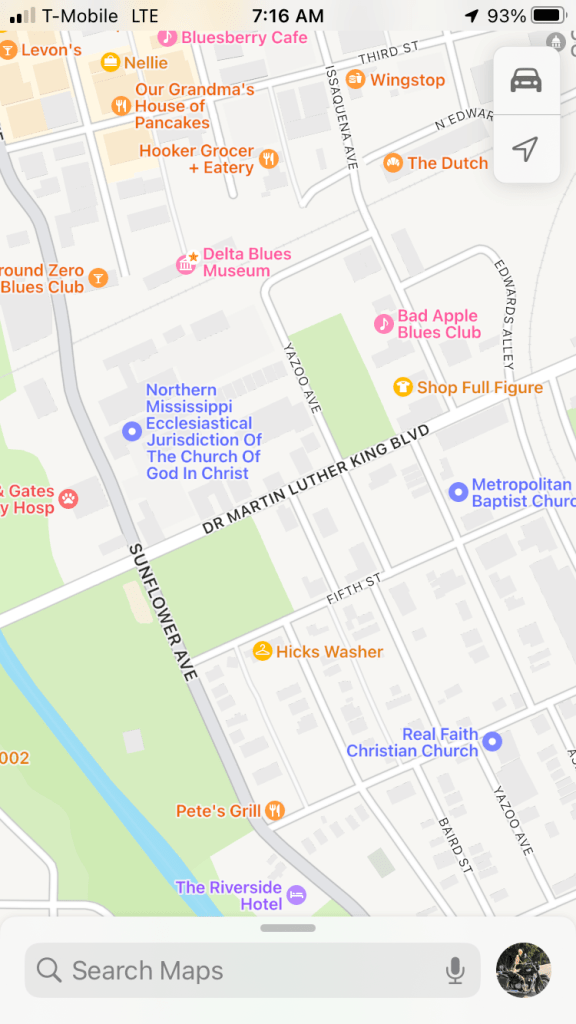
This morning I woke up in Clarksdale, Mississippi. As proof, the downstairs buffet had biscuits and gravy, and the map on my cellphone revealed there to be two blues clubs, three churches, and a blues museum in the immediate area.
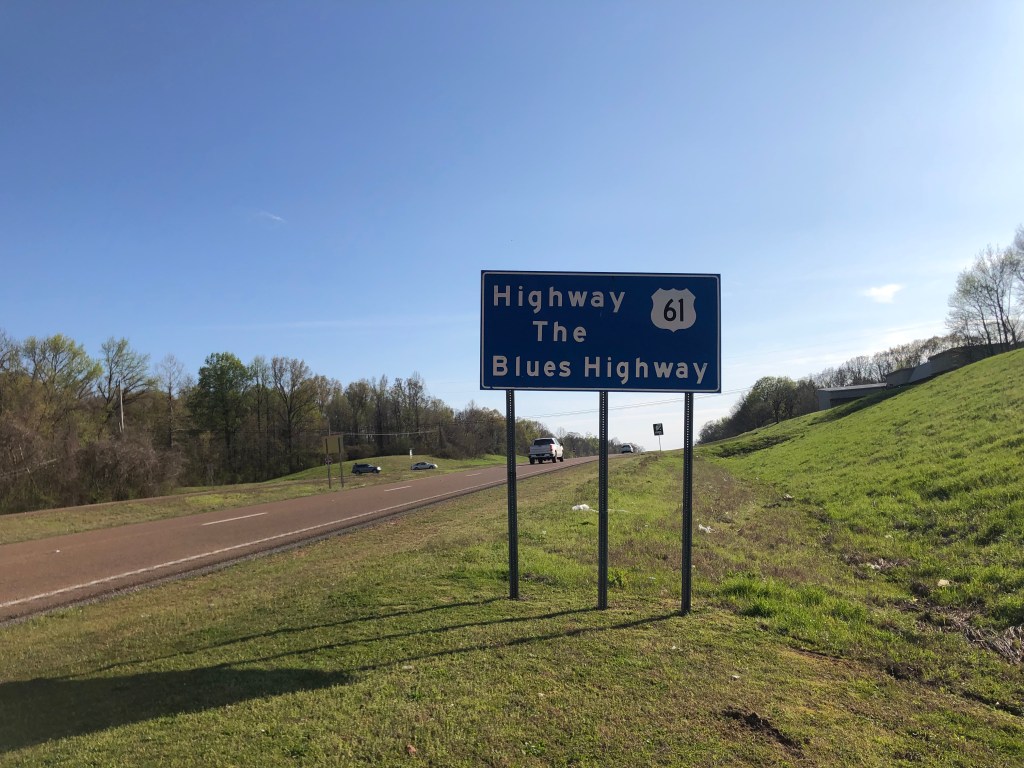
Clarksdale (pop: 14,000) is the birthplace of Sam Cooke, John Lee Hooker, Ike Turner, and many other blues musicians. Muddy Waters moved here as a child. Just east of the mighty Mississippi River (or, as the locals call it, the Mississip), Clarksdale sits at the crossroads of US Route 61 (the Blues Highway) and US Route 49 (which runs south to the Gulf Coast).
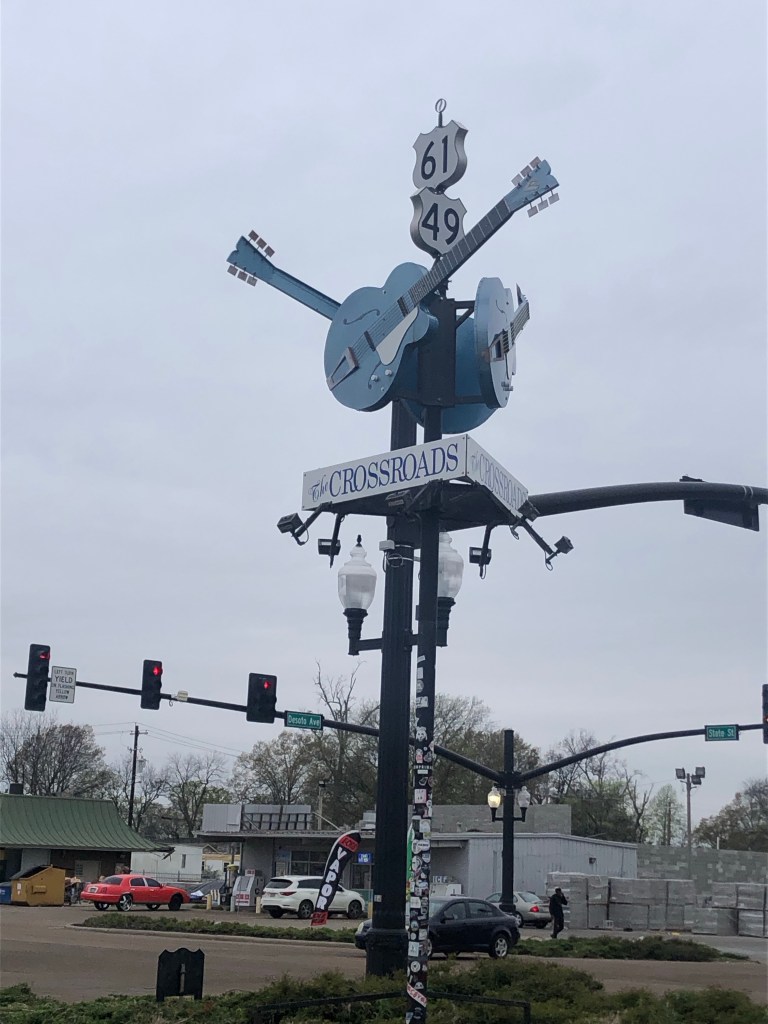
That crossroads is sometimes called the Devil’s Crossroads. Legend has it that a struggling, less-than-skilled blues player named Robert Johnson went to the Crossroads one night about a century ago, where a strange man tuned his guitar for him and showed him some techniques. Johnson disappeared for a few months. He eventually reappeared as a blues guitar virtuoso, achieving fame on the blues circuit and earning the respect of the established bluesmen.
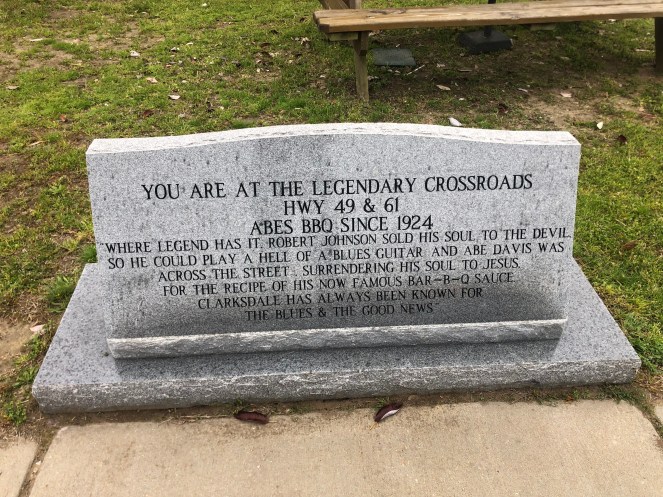
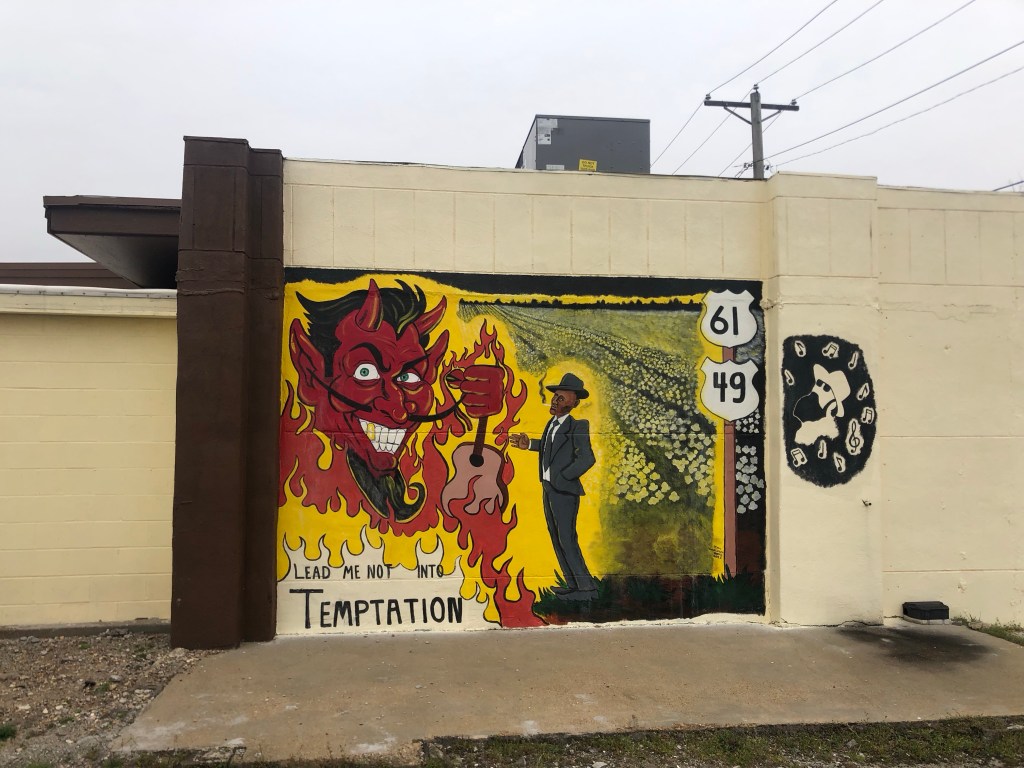
As you might imagine, things didn’t end well for Johnson, who died under mysterious circumstances at age 27. The legend holds that Johnson had sold his soul to the Devil that night at the crossroads. And the fact that Johnson recorded a song entitled “Me and the Devil Blues” seems to support that hypothesis.
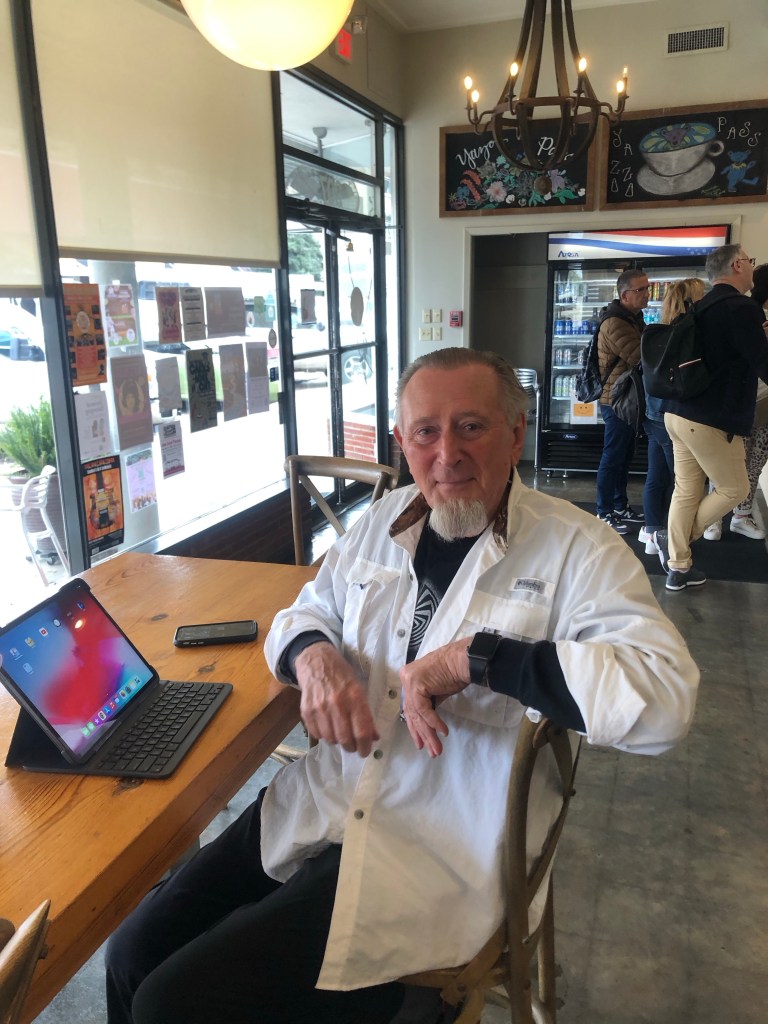
I got breakfast at a place called Yazoo Pass in the historic downtown, where I met a literal fellow-traveler. Jim has been making his own Blues pilgrimage that began in (what I assume to be his home of) Pensacola. He’s now traveling north on 61, while I’m traveling south. We exchanged a few stories and tips. He put me to shame with his extensive knowledge of blues history, his obvious emotional attachment to the art form, and his extensive photo collection from this trip.
I continue to be struck by how much people are deeply affected by music, and in particular by the blues. I’m a mere novice when it comes to this music, but I’m quickly learning of its power to affect moods and impart lessons. I’m especially struck by how dedicated the musicians are to this music which they seem to treat as a religion.
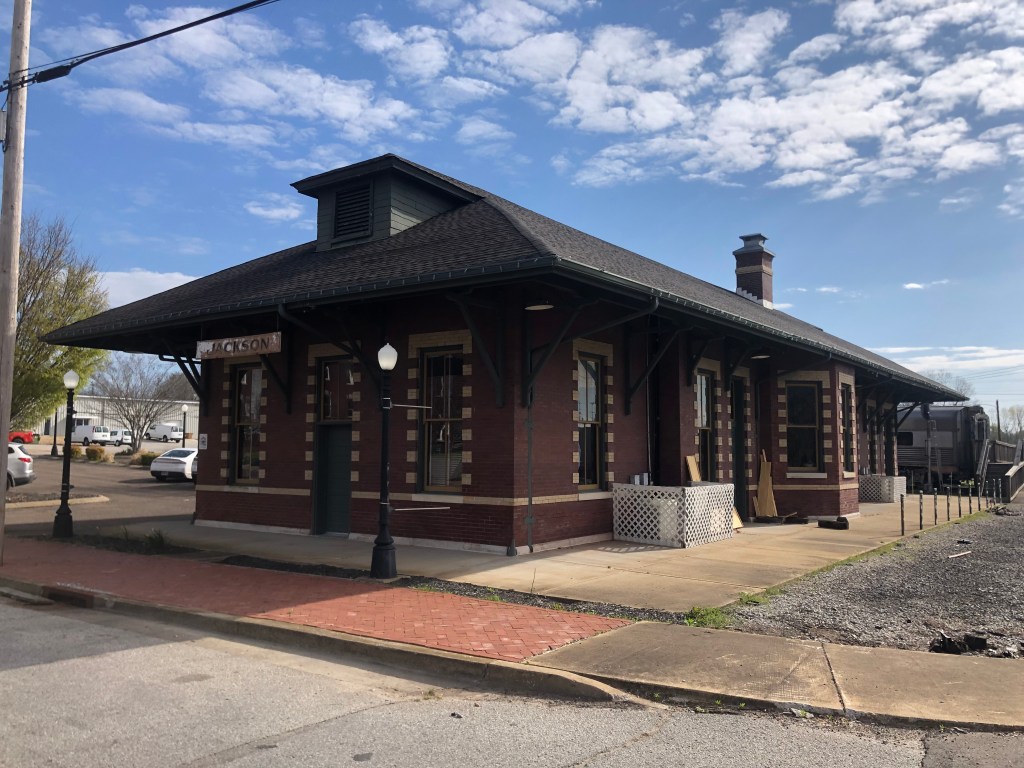
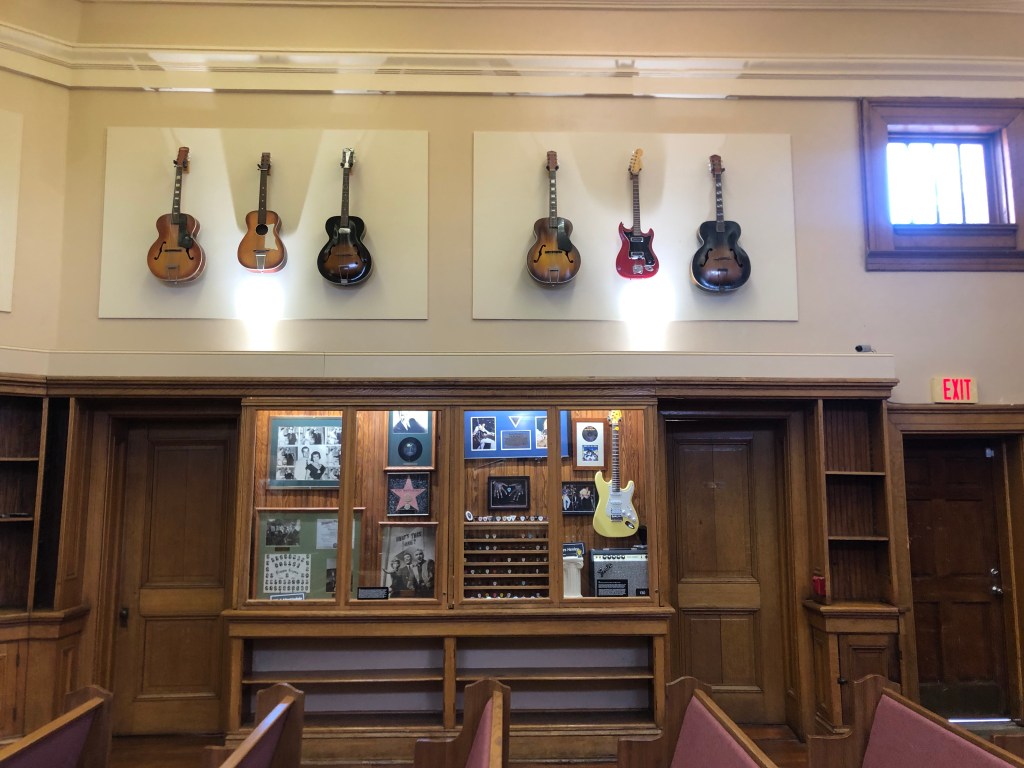
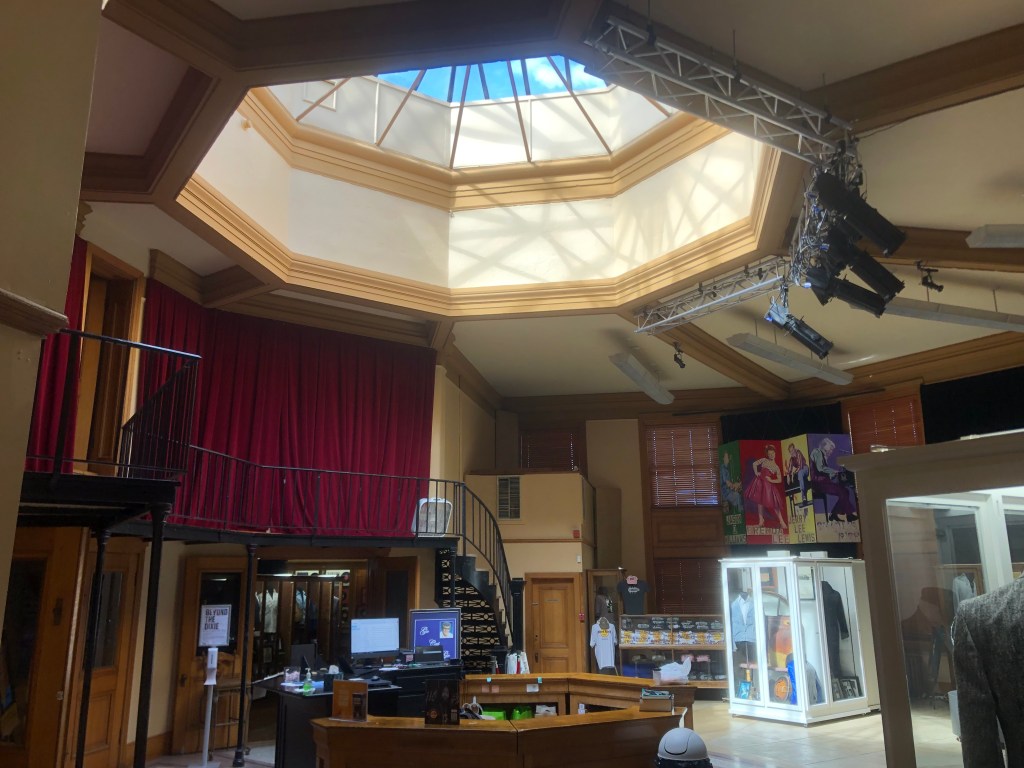
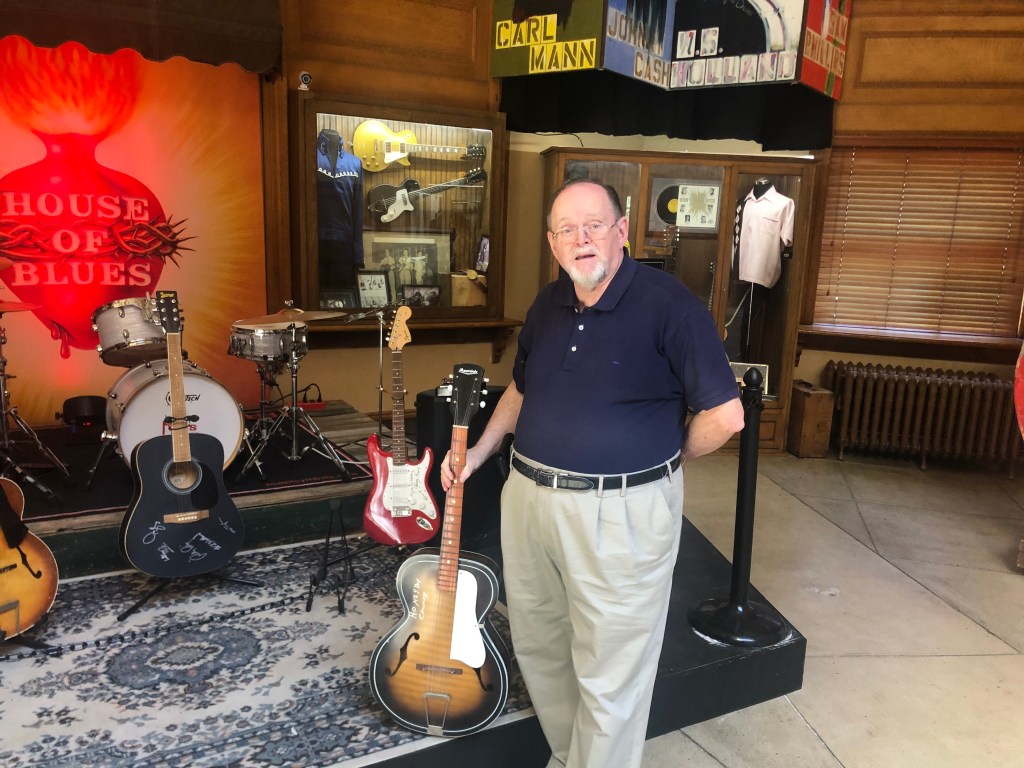
After breakfast I went to the famous Delta Blues Museum, which is housed in a hundred-year-old building that once was the freight depot of the Yazoo and Mississippi Valley Railroad.
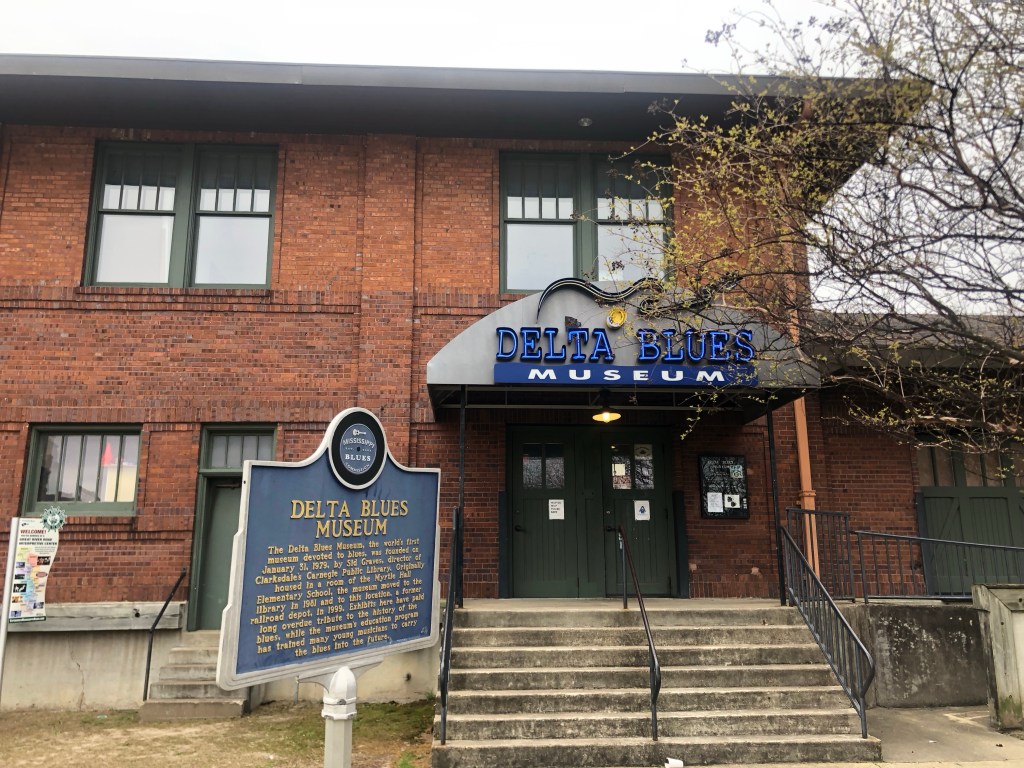
It’s a modern and slick affair, but it does a great job of illustrating the importance of the blues to the delta, and vice versa. I’m beginning to learn about some of the key names in blues history. (A number of them I dimly recognize from when friends Chris and Jerry and I all went to the San Francisco (!) Blues Festival some forty (!) years ago. I knew nothing about Albert King and various other headliners, but I sure liked their music.)
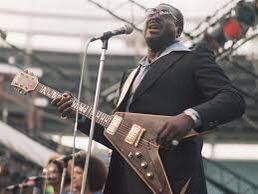
I also noticed that as I get deeper into the delta, the music changes. What started as twangy country music in Nashville became gospel-infused bluegrass in Jackson and slick, horn-centered R&B in Memphis. Down here in rural Clarksdale the music is a bit more stripped-down and raw.
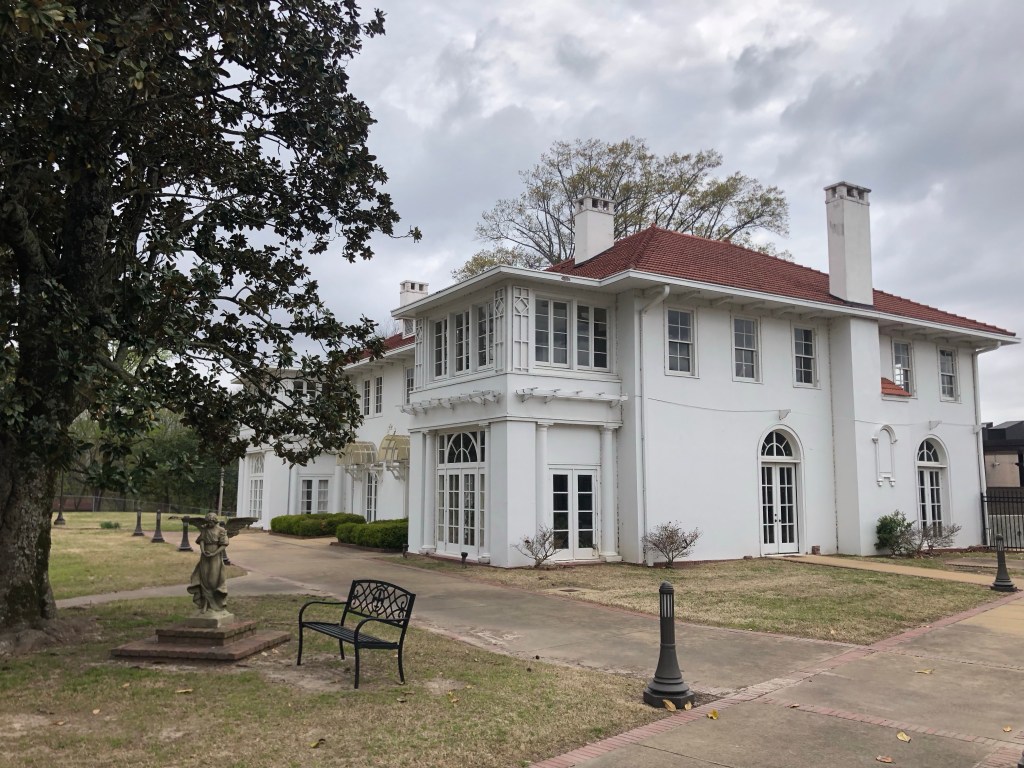
After I left the museum I took a brief break from the blues and visited the J W Cutrer House. Built in 1916 by a wealthy local attorney, the house and the Cutrer family served as inspirations for Tennessee Williams when he wrote A Streetcar Named Desire and Orpheus Descending. I don’t know about all that, but it sure is an impressive mansion.
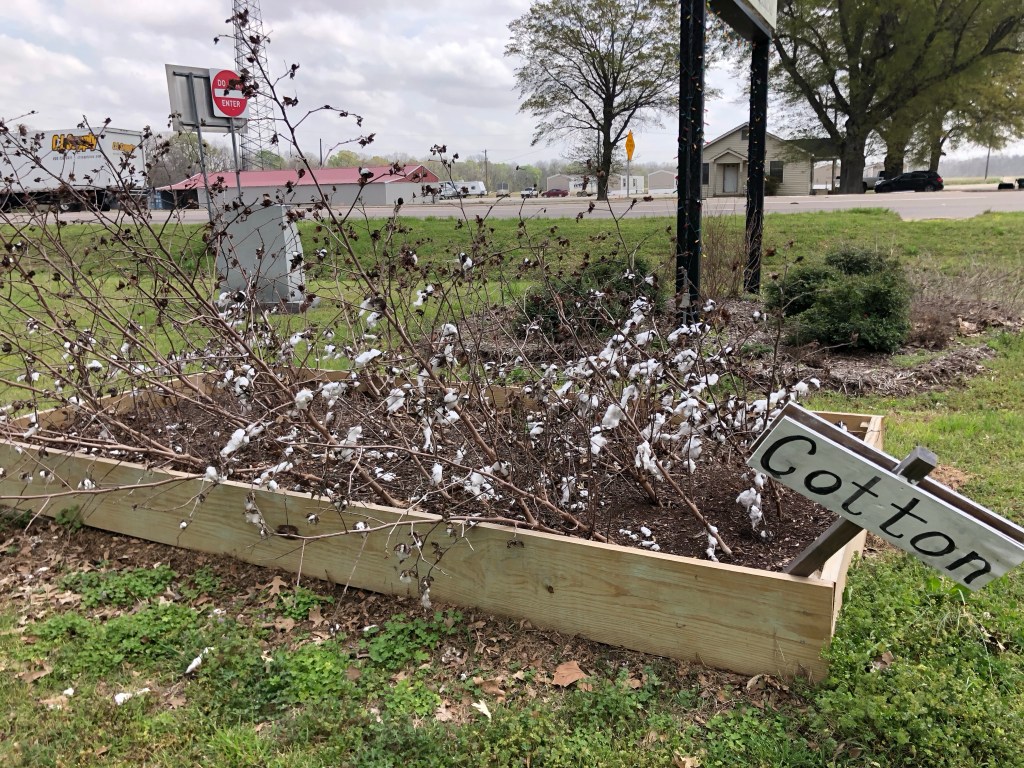
It was now time to say goodbye to Clarksdale and get back on Route 61. Truth be told, Route 61 is not the most beautiful highway I’ve been on. The countryside is relatively flat with large, treeless expanses of grasses, low scrub, and sickly-looking farms. I didn’t see much cotton, with the exception of this designer plot.
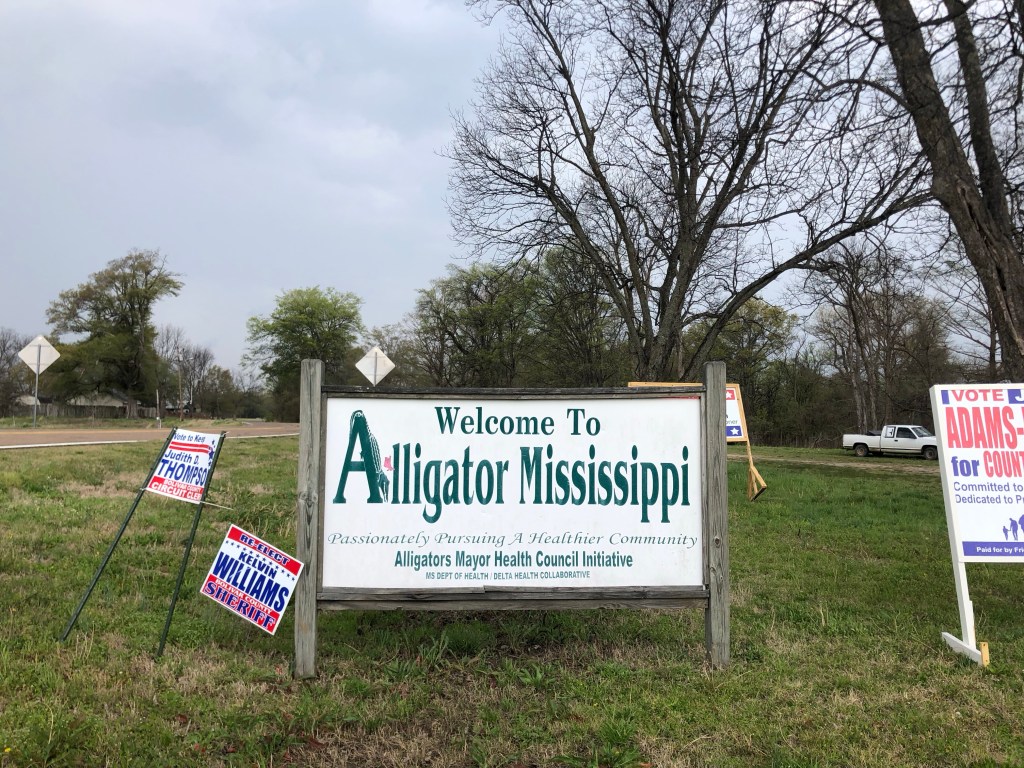
One of the sparse settlements along The Blues Highway is the town of Alligator (pop: 116).
Soon I came to Leland, Mississippi, where things shifted from the Blues to the Greens. For, incredibly, it seems that this is Kermit the Frog country.
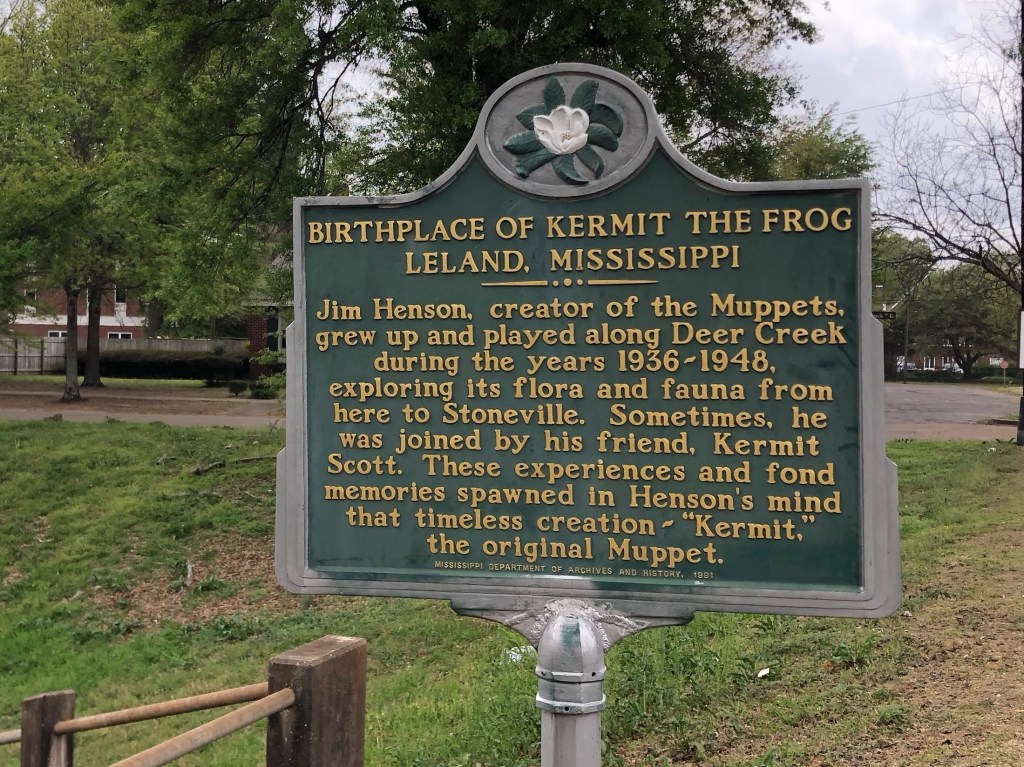
Leland was the boyhood home of Jim Henson, who lived here until he was 12. Leland claims Henson as a native son, and the chamber of commerce has set up a small Jim Henson museum just off the road.
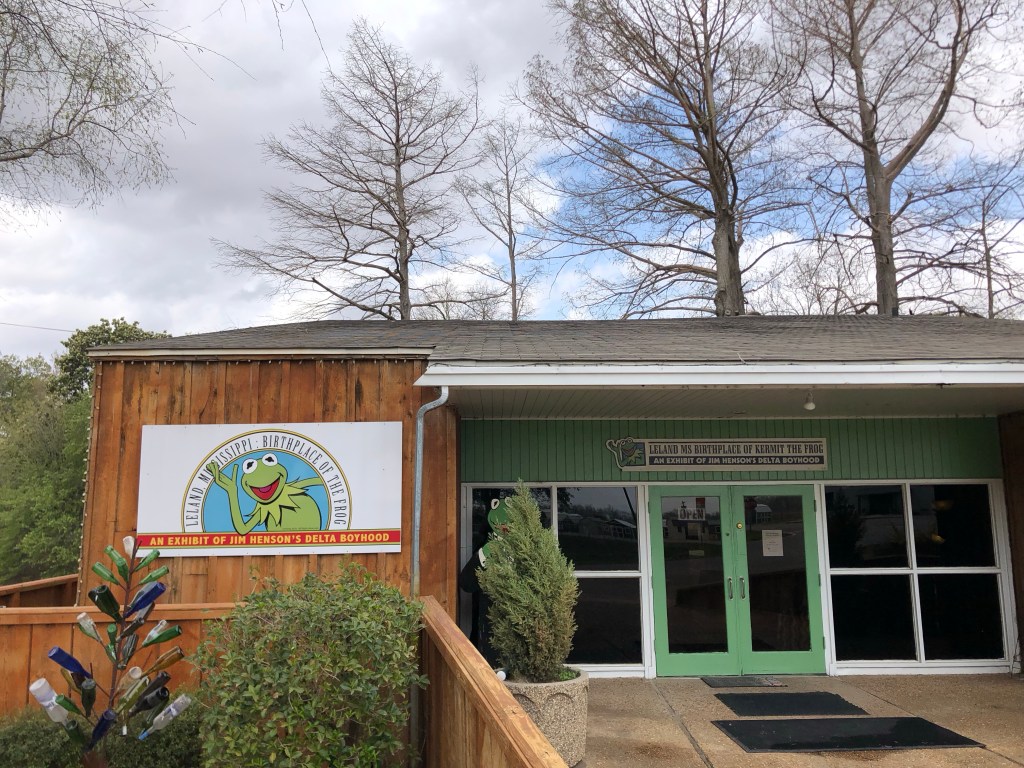
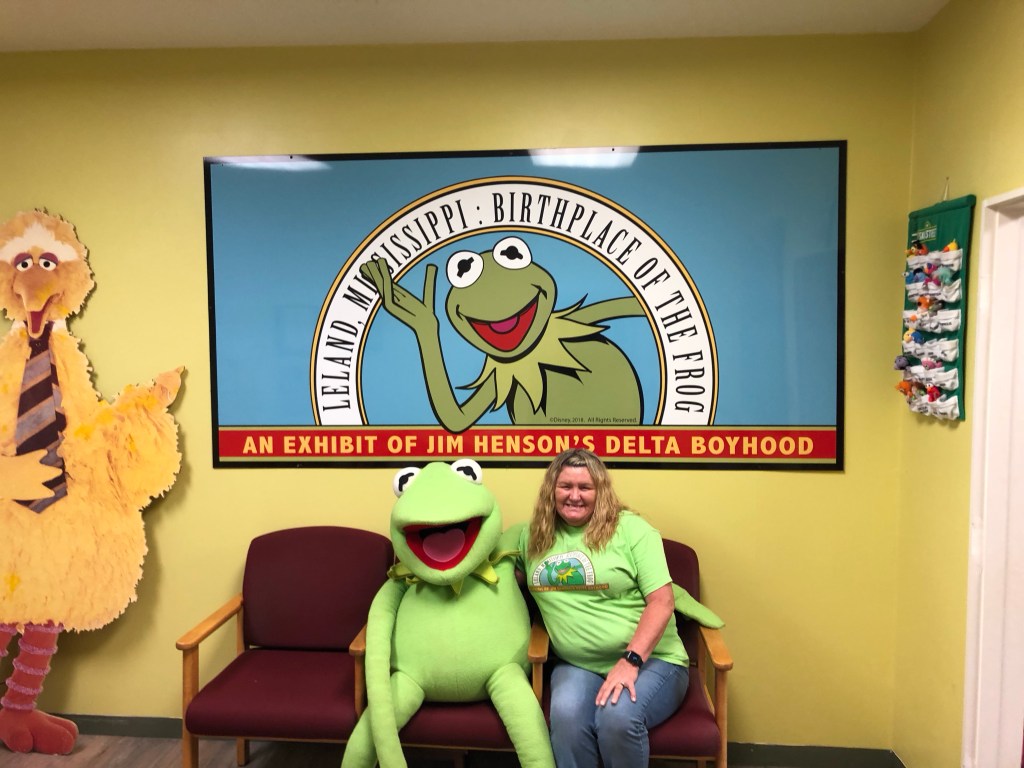
Docent Heather explained to me the history, and directed me to the nearby “Rainbow Connection Bridge.”
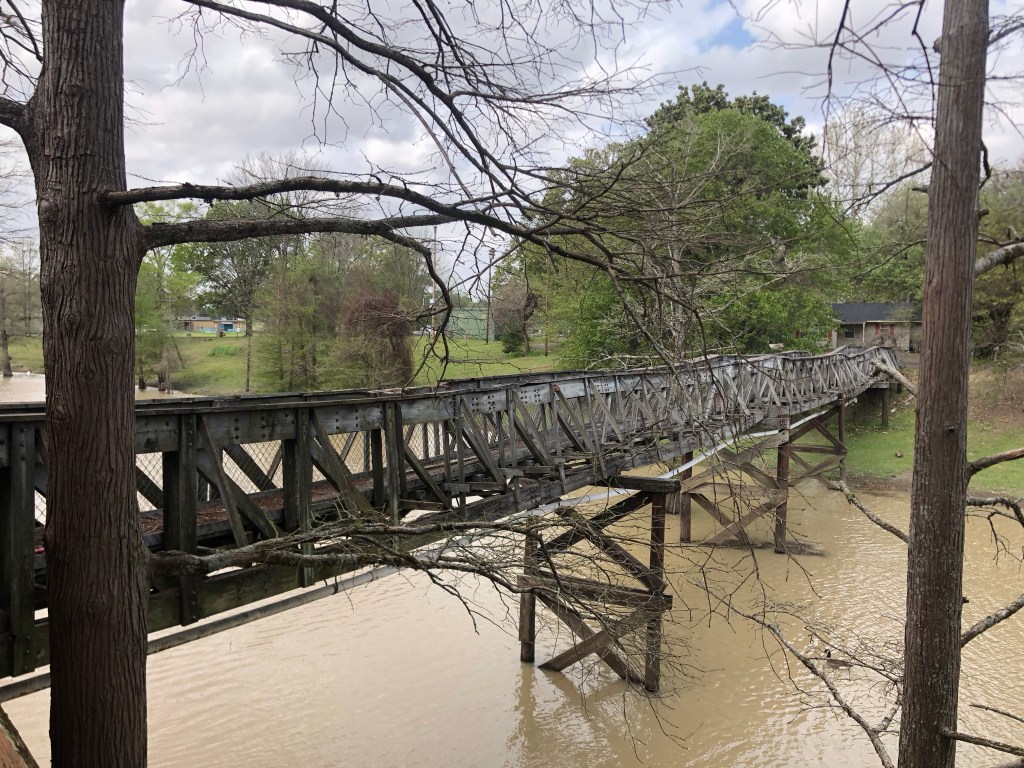
While I was in Leland I was hoping to visit the Highway 61 Blues Museum, which is touted as one of the most earnest (albeit small) of the museums along the Blues Highway. Alas, Heather reported that the museum closed at the beginning of the Covid pandemic and never reopened. As an alternative she recommended something called the “wildlife heritage museum.” I thanked her but I chose instead to head down to the next town: Indianola. It’s the birthplace (and final resting place) of B.B King, and it boasts the impressive B.B. King Museum. As you probably already know, B.B. King was one of the most successful blues artists of all time, and was known around the world.
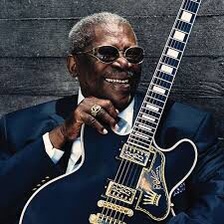
Believe it or not, BB King’s “The Thrill is Gone” was the first record I ever bought. I was 8 years old, and my parents took my brother and me to a record store and allowed us each to pick a record. “The Thrill is Gone” was a crossover hit and playing on top 40 radio. Mom tried to steer me towards Blood, Sweat, and Tears’ “Spinning Wheel,” but I would not be moved. Interestingly, both songs seem to have a very similar groove and have stood the test of time.
Anyway, this is not the place to recount B.B. King’s life, which is well told in many, many other places. But I did want to share this small scrap I learned at the museum: When B.B. King’s mother lay on her deathbed, she held her son’s hand and said “Be kind. It will always bring you good things.” He was and it did. (It also sounds very much like something barber Anthony Turner might say!)
I’m spending the night in Greenville, which is just west of Indianola and right on the east bank of the Mississip. Tomorrow it’s onward to Vicksburg… as Ulysses S. Grant might have said…
Bonus Material!
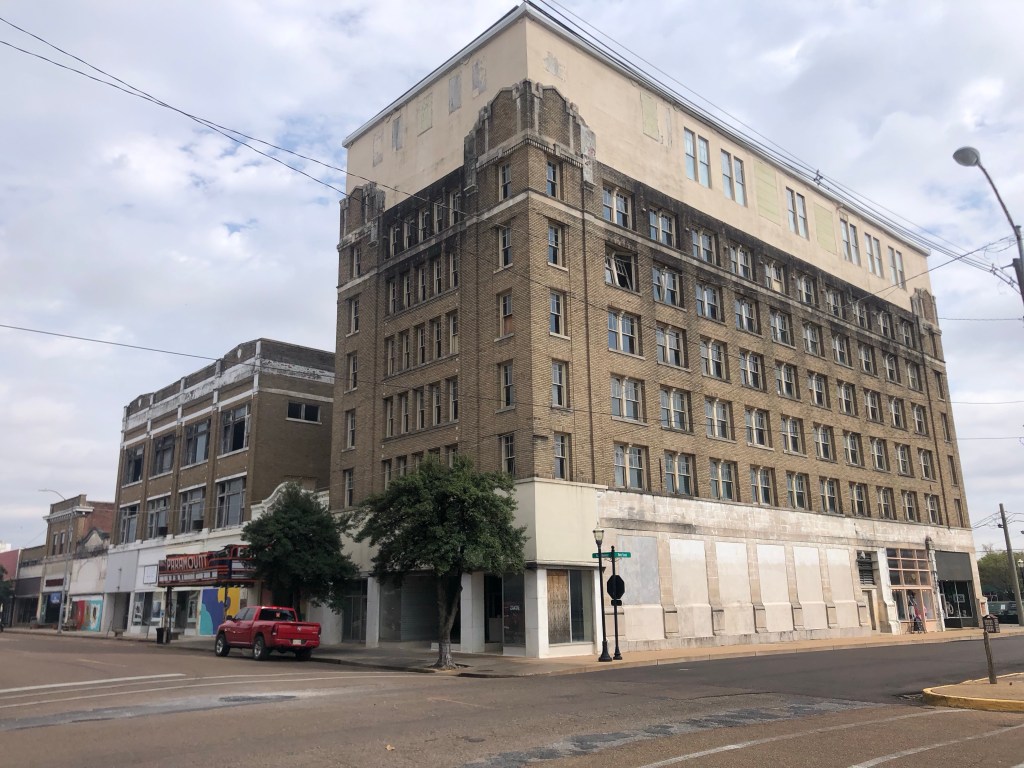
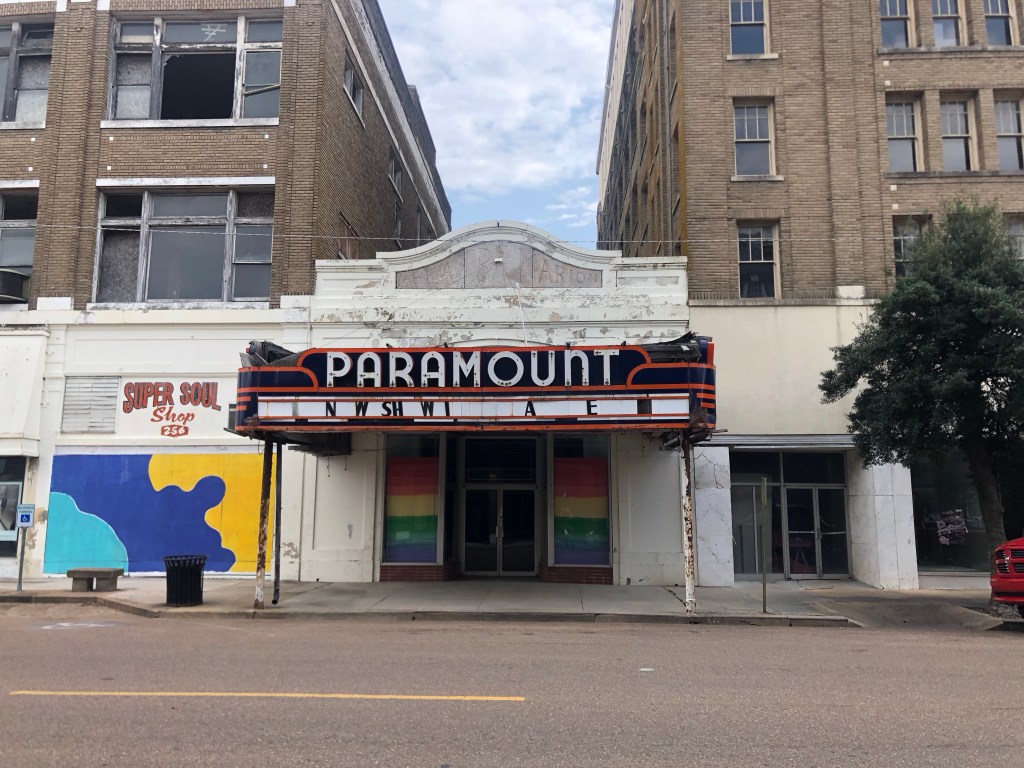
I did come across an old theater in Clarksdale. The Marion Theater opened in 1918–one of the first theaters constructed to show (silent) movies. It was renamed the Paramount in 1931. It closed in 1976, and has only been partially and fitfully restored by a local performing arts group. Heaven only knows what all those upstairs rooms are for. There is evidence of a fire in those upper rooms. But on the ground floor, I did see some evidence of recent renovation. Let’s hope they’re able to save this impressive structure!
 Chasing Phantoms