movie theaters · Road trips

Deep Into the Delta

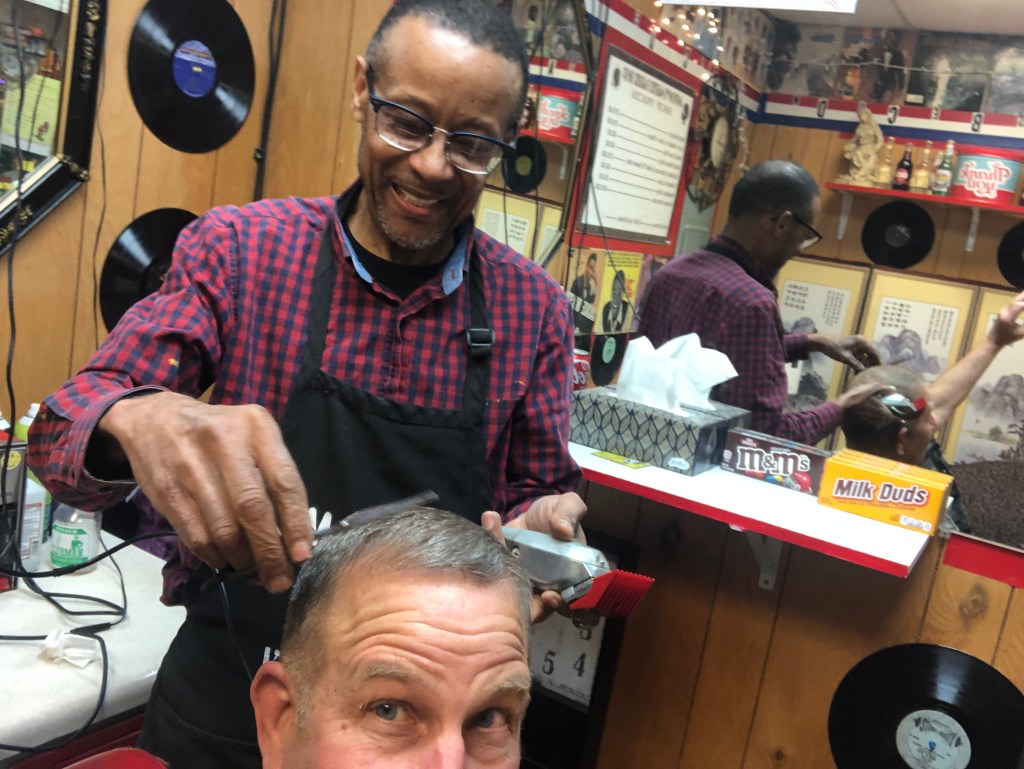
A surprising number of you were interested in learning more about Anthony Turner (my Delta barber). I’ll share two anecdotes that have been running through my head since yesterday. First, there is a method to the madness of the Menagerie Museum. Sure, it’s a tangled and confused congeries of seemingly unrelated trinkets and kitch. But it’s all connected (quite literally, with fishing line and rubber bands) in a way that Anthony seems to have dedicated much thought and deliberation. What’s more, schoolchildren visit his museum as part of their curriculum, and Anthony teaches them an inspirational lesson about what’s probable versus what’s possible. The teachers seem to think it’s a worthy message, delivered with earnestness, kindness, and the most overwhelming number of props imaginable. There’s a method to all this madness. I’m fully convinced that Anthony knows every piece of his collection, and sees a purpose for each one.
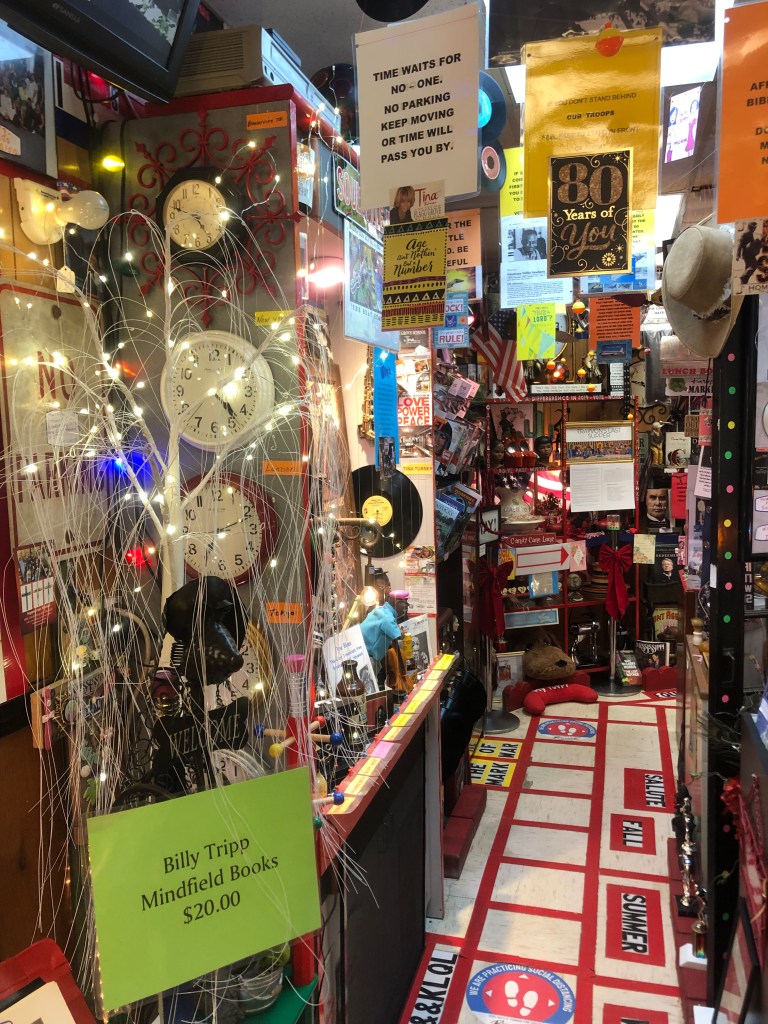
Even the markings on the floor have meaning and purpose.

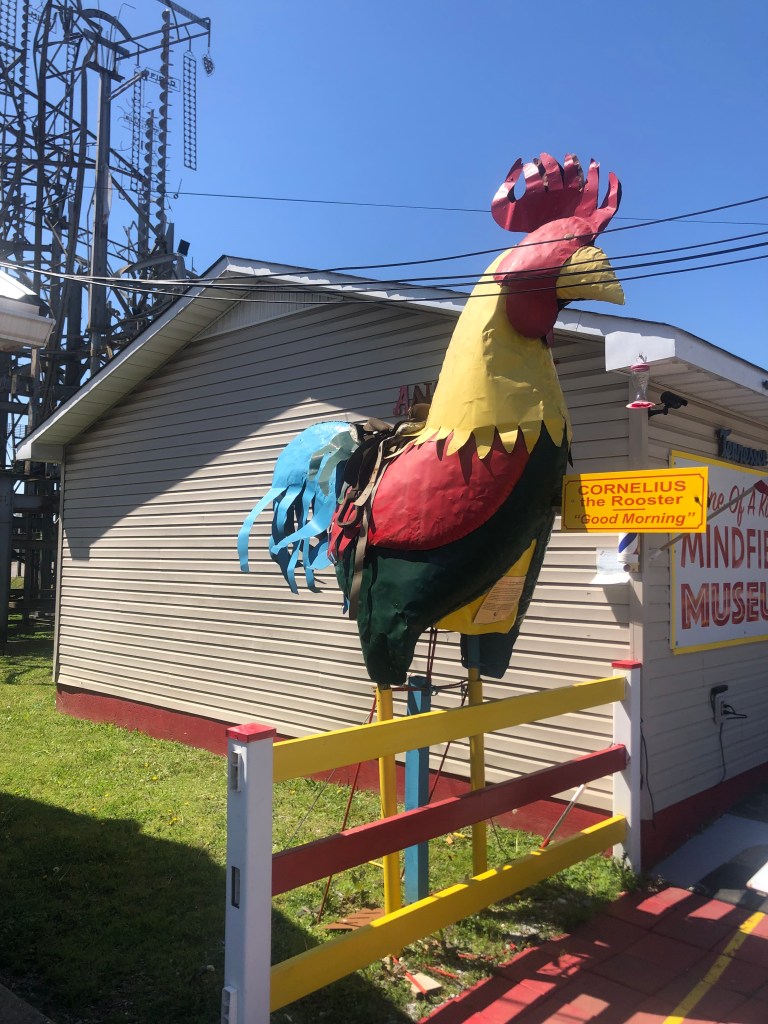
Second, Anthony told me a story about how there had been an empty spot in front of his shop that “needed something.” Then one day he spotted that something: A giant metal rooster that was for sale elsewhere in town. Alas, at $800, the rooster was beyond his means. He mentioned this in passing to a customer in his barber chair, and by the end of the day that customer had taken up a collection around town and presented Anthony with $800. The rooster now stands in the spot where it belongs.
We now return to today:

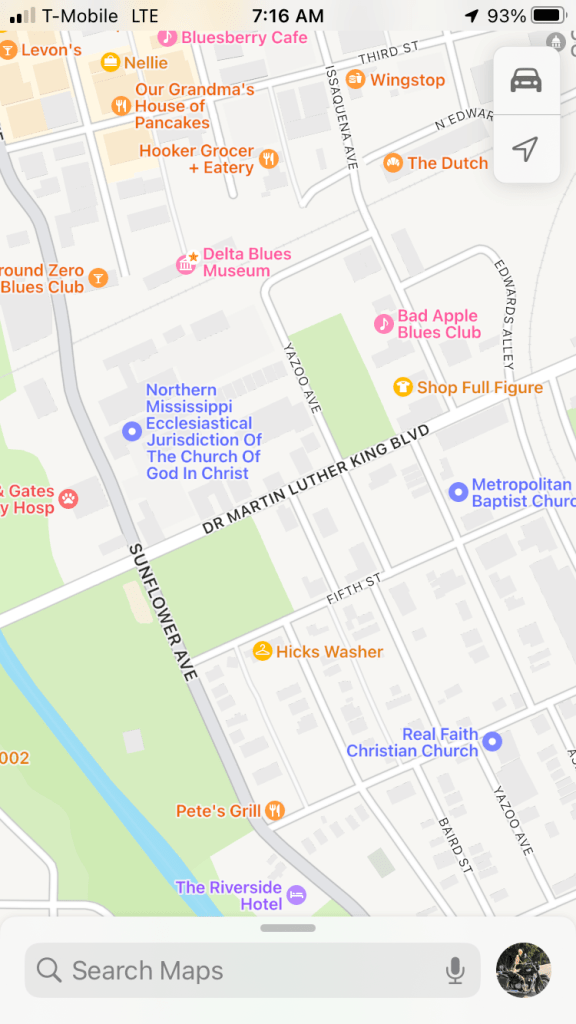
This morning I woke up in Clarksdale, Mississippi. As proof, the downstairs buffet had biscuits and gravy, and the map on my cellphone revealed there to be two blues clubs, three churches, and a blues museum in the immediate area.
Clarksdale (pop: 14,000) is the birthplace of Sam Cooke, John Lee Hooker, Ike Turner, and many other blues musicians. Muddy Waters moved here as a child. Just east of the mighty Mississippi River (or, as the locals call it, the Mississip), Clarksdale sits at the crossroads of US Route 61 (the Blues Highway) and US Route 49 (which runs south to the Gulf Coast).
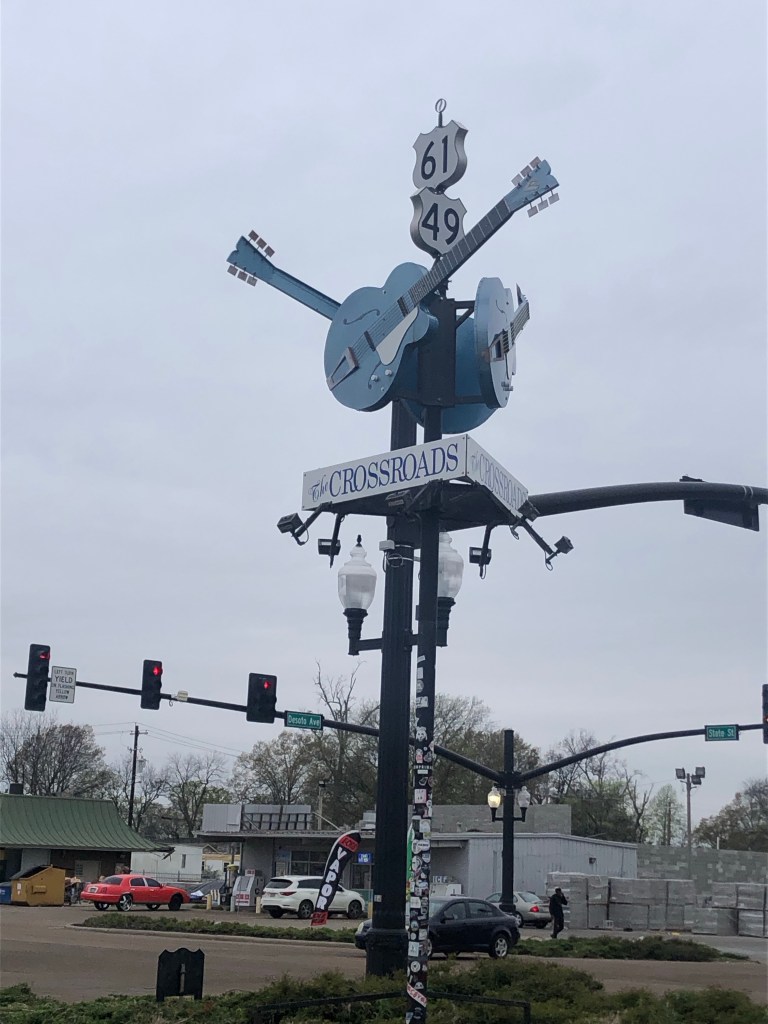
That crossroads is sometimes called the Devil’s Crossroads. Legend has it that a struggling, less-than-skilled blues player named Robert Johnson went to the Crossroads one night about a century ago, where a strange man tuned his guitar for him and showed him some techniques. Johnson disappeared for a few months. He eventually reappeared as a blues guitar virtuoso, achieving fame on the blues circuit and earning the respect of the established bluesmen.
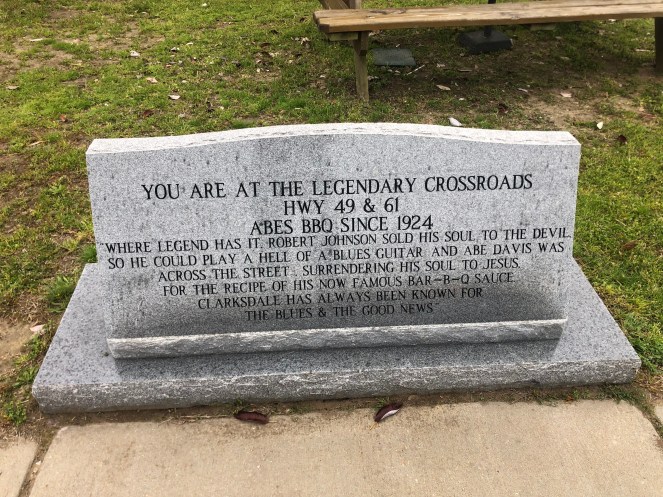
As you might imagine, things didn’t end well for Johnson, who died under mysterious circumstances at age 27. The legend holds that Johnson had sold his soul to the Devil that night at the crossroads. And the fact that Johnson recorded a song entitled “Me and the Devil Blues” seems to support that hypothesis.
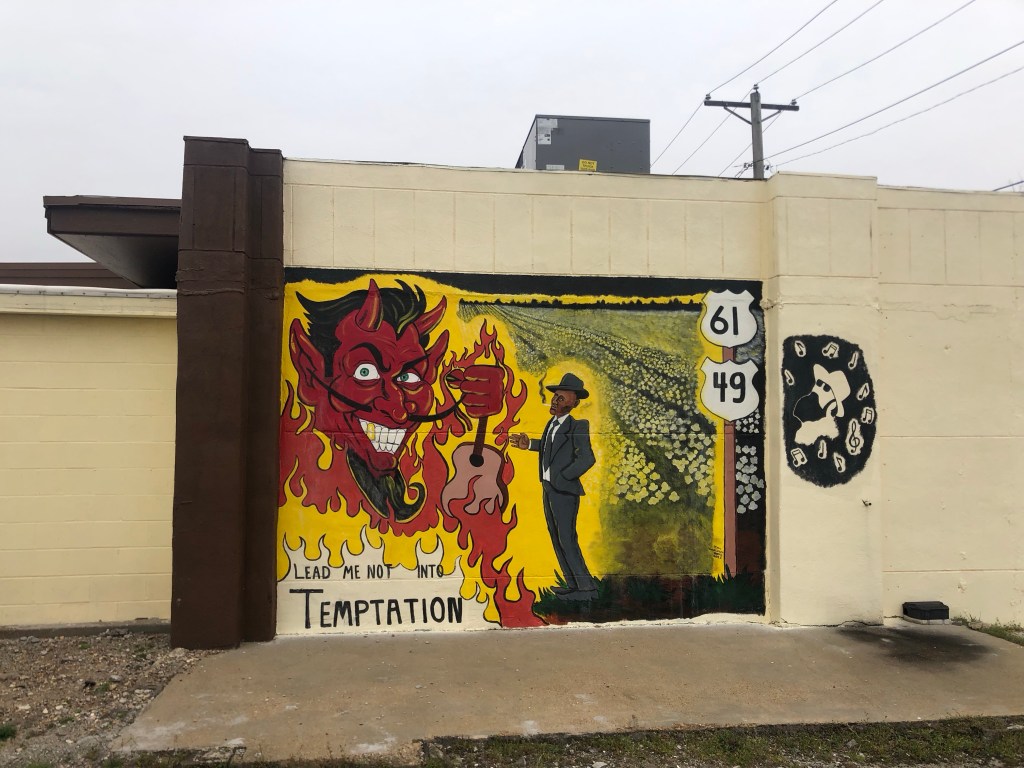
Robert Johnson goes to hell.

I got breakfast at a place called Yazoo Pass in the historic downtown, where I met a literal fellow-traveler. Jim has been making his own Blues pilgrimage that began in (what I assume to be his home of) Pensacola. He’s now traveling north on 61, while I’m traveling south. We exchanged a few stories and tips. He put me to shame with his extensive knowledge of blues history, his obvious emotional attachment to the art form, and his extensive photo collection from this trip.
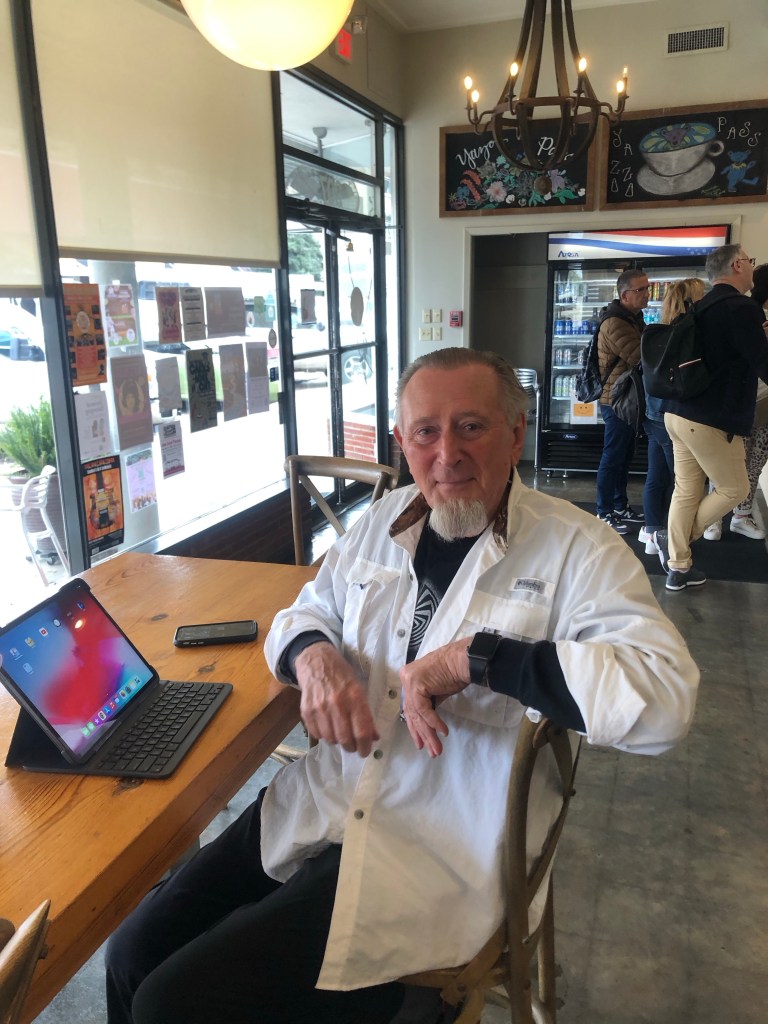
Jim: Blues savant.

I continue to be struck by how much people are deeply affected by music, and in particular by the blues. I’m a mere novice when it comes to this music, but I’m quickly learning of its power to affect moods and impart lessons. I’m especially struck by how dedicated the musicians are to this music which they seem to treat as a religion.

After breakfast I went to the famous Delta Blues Museum, which is housed in a hundred-year-old building that once was the freight depot of the Yazoo and Mississippi Valley Railroad.
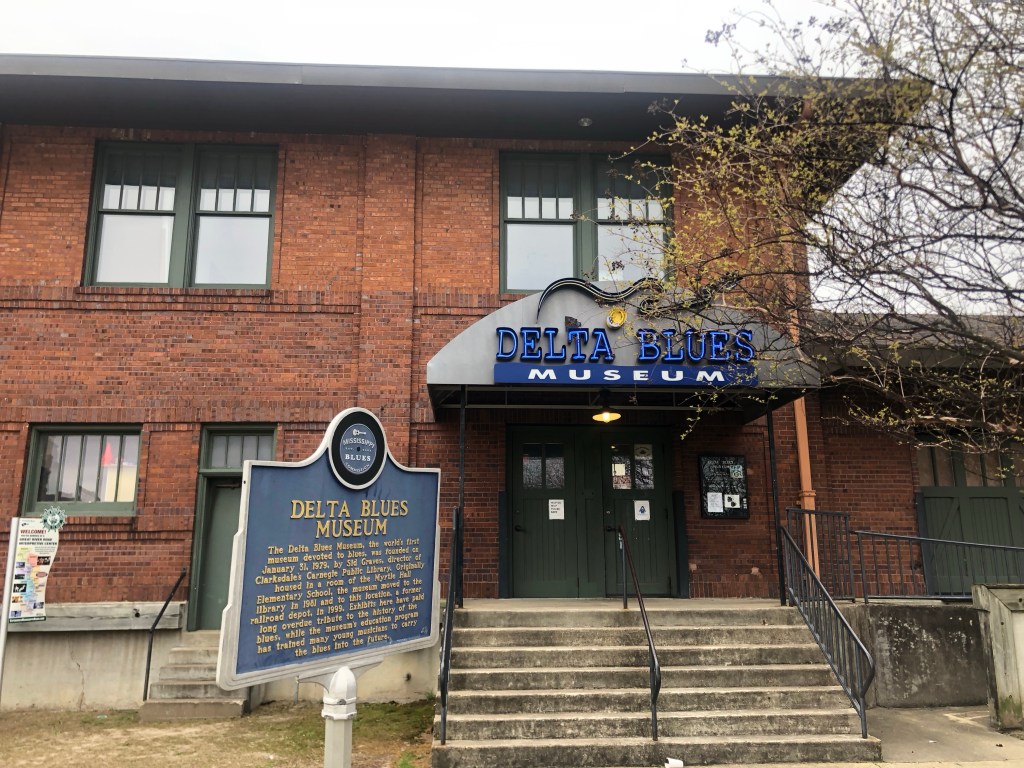
All aboard!

It’s a modern and slick affair, but it does a great job of illustrating the importance of the blues to the delta, and vice versa. I’m beginning to learn about some of the key names in blues history. (A number of them I dimly recognize from when friends Chris and Jerry and I all went to the San Francisco (!) Blues Festival some forty (!) years ago. I knew nothing about Albert King and various other headliners, but I sure liked their music.)
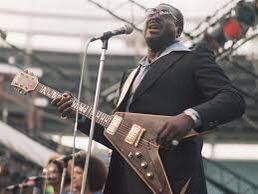
I also noticed that as I get deeper into the delta, the music changes. What started as twangy country music in Nashville became gospel-infused bluegrass in Jackson and slick, horn-centered R&B in Memphis. Down here in rural Clarksdale the music is a bit more stripped-down and raw.

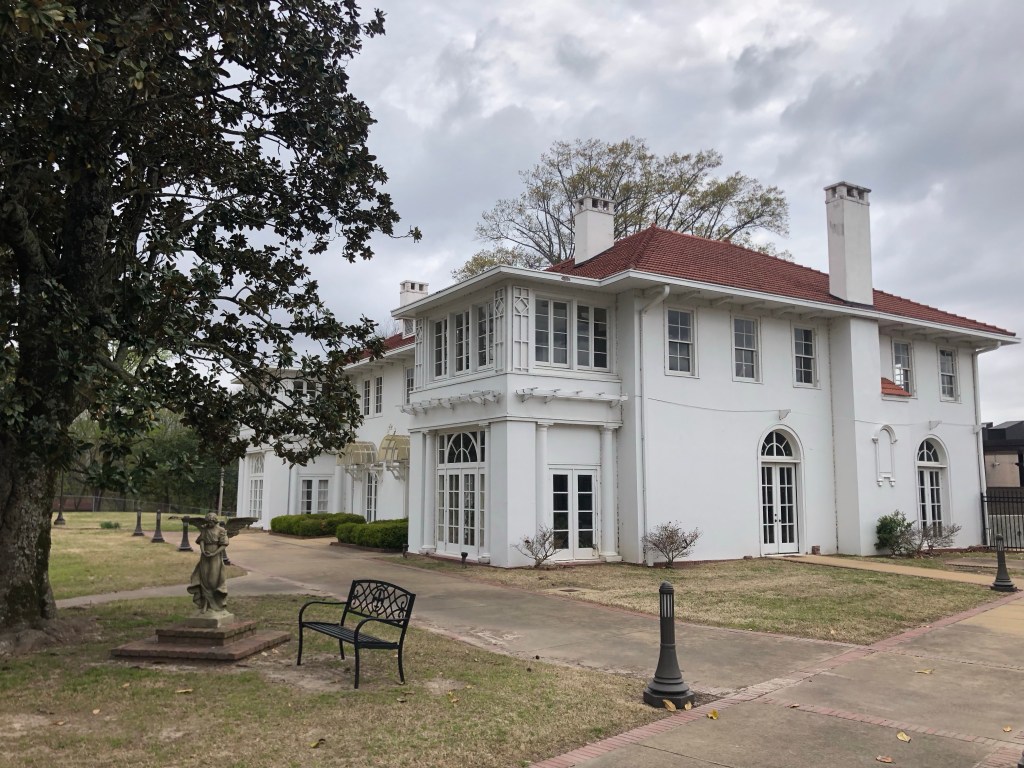
After I left the museum I took a brief break from the blues and visited the J W Cutrer House. Built in 1916 by a wealthy local attorney, the house and the Cutrer family served as inspirations for Tennessee Williams when he wrote A Streetcar Named Desire and Orpheus Descending. I don’t know about all that, but it sure is an impressive mansion.
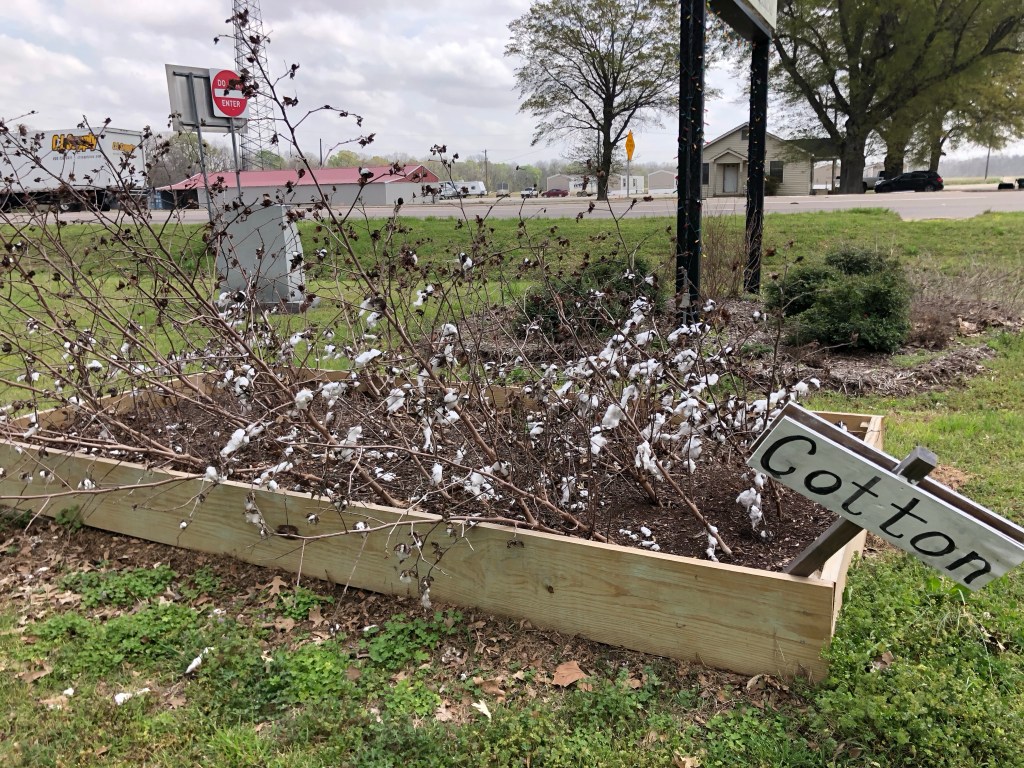
It was now time to say goodbye to Clarksdale and get back on Route 61. Truth be told, Route 61 is not the most beautiful highway I’ve been on. The countryside is relatively flat with large, treeless expanses of grasses, low scrub, and sickly-looking farms. I didn’t see much cotton, with the exception of this designer plot.
One of the sparse settlements along The Blues Highway is the town of Alligator (pop: 116).
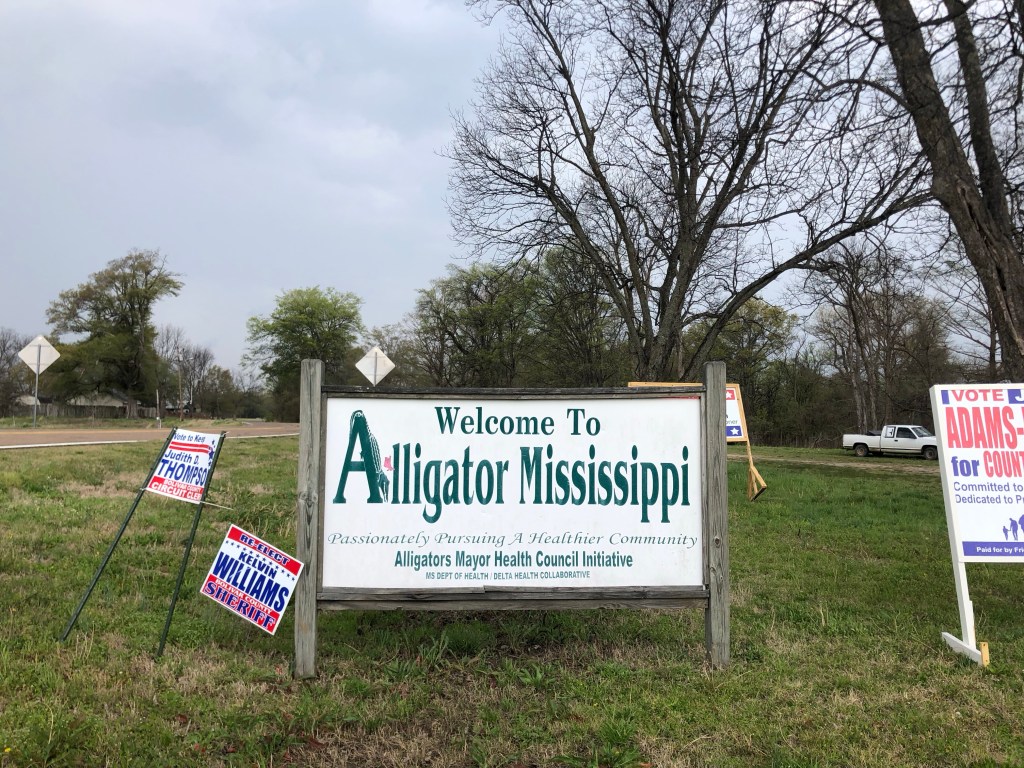
What a croc.

Soon I came to Leland, Mississippi, where things shifted from the Blues to the Greens. For, incredibly, it seems that this is Kermit the Frog country.
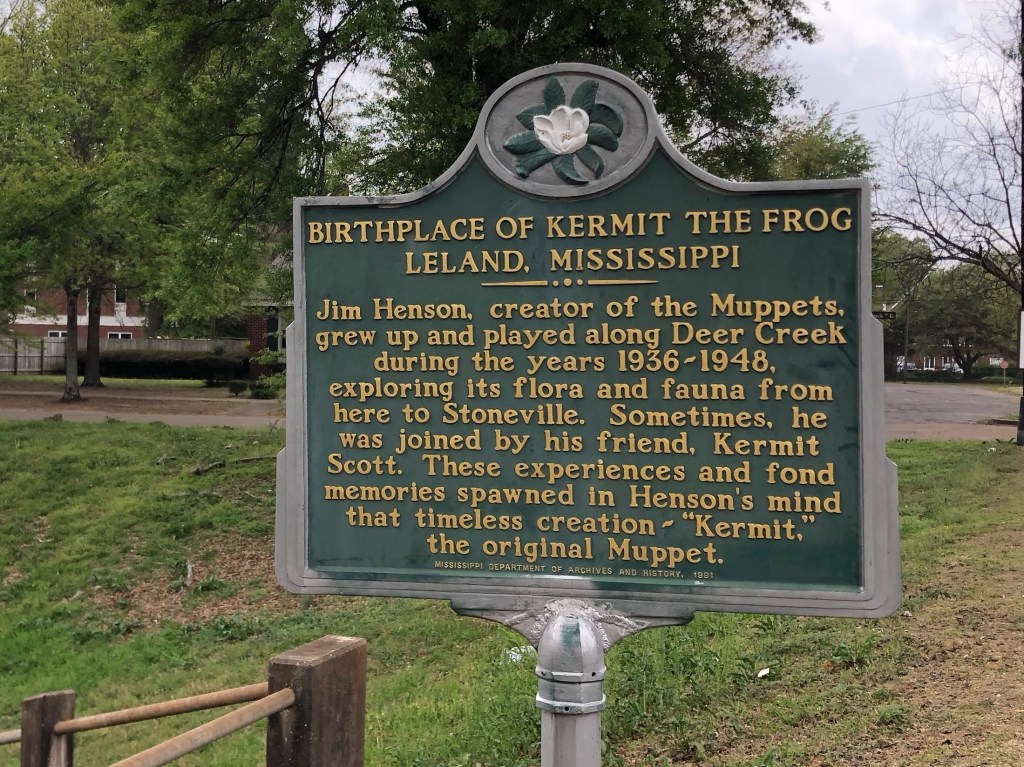
Leland was the boyhood home of Jim Henson, who lived here until he was 12. Leland claims Henson as a native son, and the chamber of commerce has set up a small Jim Henson museum just off the road.
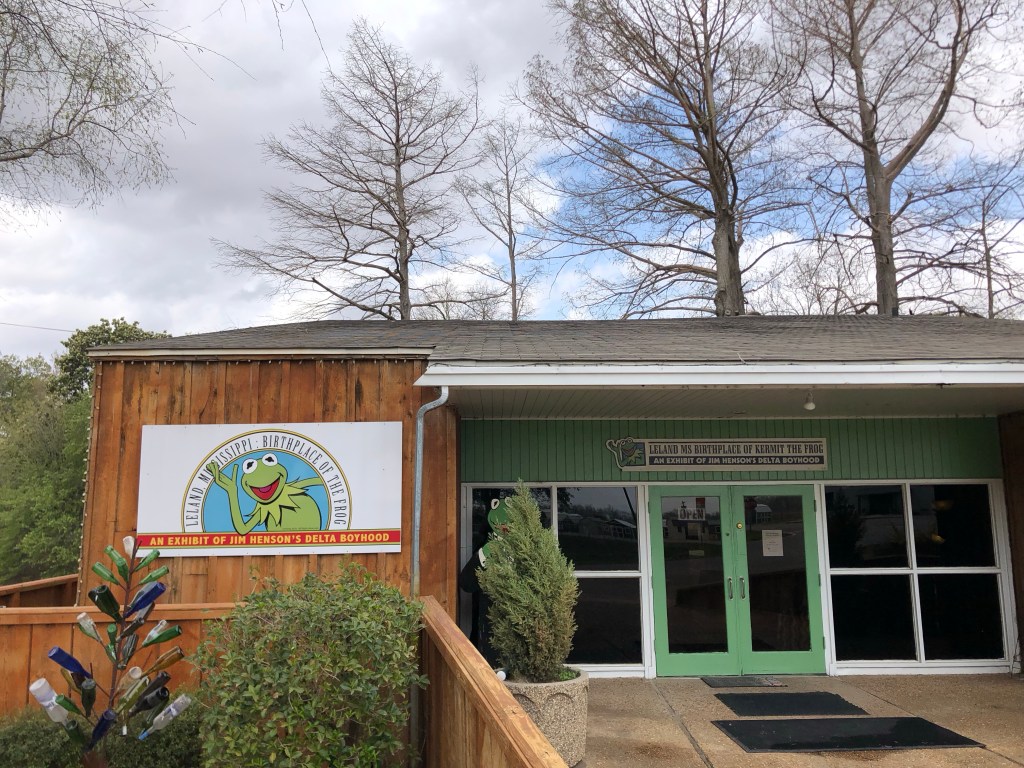
It’s not easy being green in the land of the blues.

Docent Heather explained to me the history, and directed me to the nearby “Rainbow Connection Bridge.”
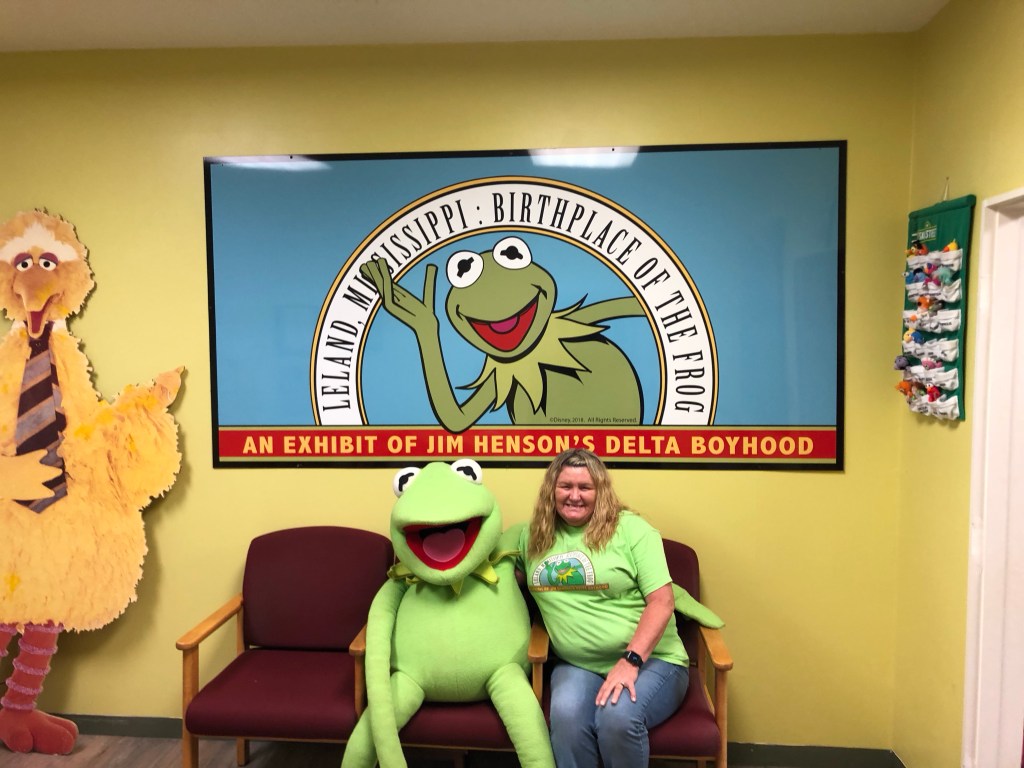
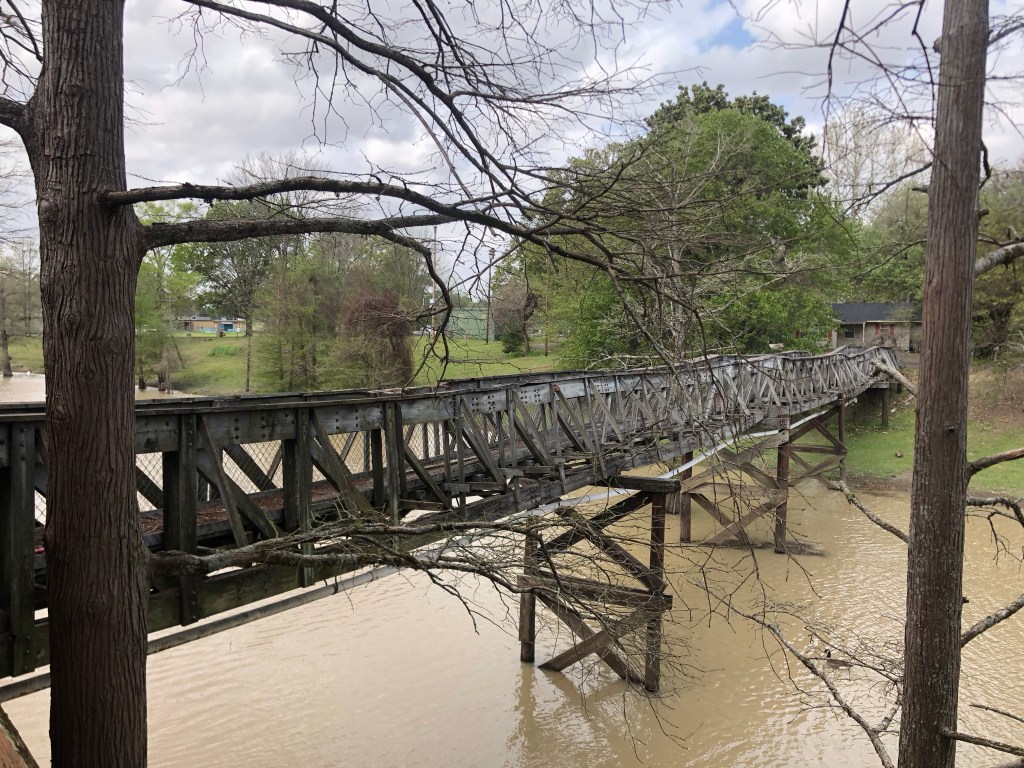
Kermit and Heather
Shockingly, this bridge, which is directly behind the museum, is NOT the Rainbow Connection Bridge. But it should be!

While I was in Leland I was hoping to visit the Highway 61 Blues Museum, which is touted as one of the most earnest (albeit small) of the museums along the Blues Highway. Alas, Heather reported that the museum closed at the beginning of the Covid pandemic and never reopened. As an alternative she recommended something called the “wildlife heritage museum.” I thanked her but I chose instead to head down to the next town: Indianola. It’s the birthplace (and final resting place) of B.B King, and it boasts the impressive B.B. King Museum. As you probably already know, B.B. King was one of the most successful blues artists of all time, and was known around the world.
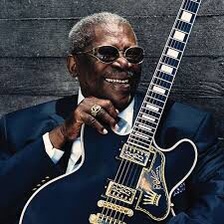
Believe it or not, BB King’s “The Thrill is Gone” was the first record I ever bought. I was 8 years old, and my parents took my brother and me to a record store and allowed us each to pick a record. “The Thrill is Gone” was a crossover hit and playing on top 40 radio. Mom tried to steer me towards Blood, Sweat, and Tears’ “Spinning Wheel,” but I would not be moved. Interestingly, both songs seem to have a very similar groove and have stood the test of time.

Anyway, this is not the place to recount B.B. King’s life, which is well told in many, many other places. But I did want to share this small scrap I learned at the museum: When B.B. King’s mother lay on her deathbed, she held her son’s hand and said “Be kind. It will always bring you good things.” He was and it did. (It also sounds very much like something barber Anthony Turner might say!)

I’m spending the night in Greenville, which is just west of Indianola and right on the east bank of the Mississip. Tomorrow it’s onward to Vicksburg… as Ulysses S. Grant might have said…

Bonus Material!

I did come across an old theater in Clarksdale. The Marion Theater opened in 1918–one of the first theaters constructed to show (silent) movies. It was renamed the Paramount in 1931. It closed in 1976, and has only been partially and fitfully restored by a local performing arts group. Heaven only knows what all those upstairs rooms are for. There is evidence of a fire in those upper rooms. But on the ground floor, I did see some evidence of recent renovation. Let’s hope they’re able to save this impressive structure!
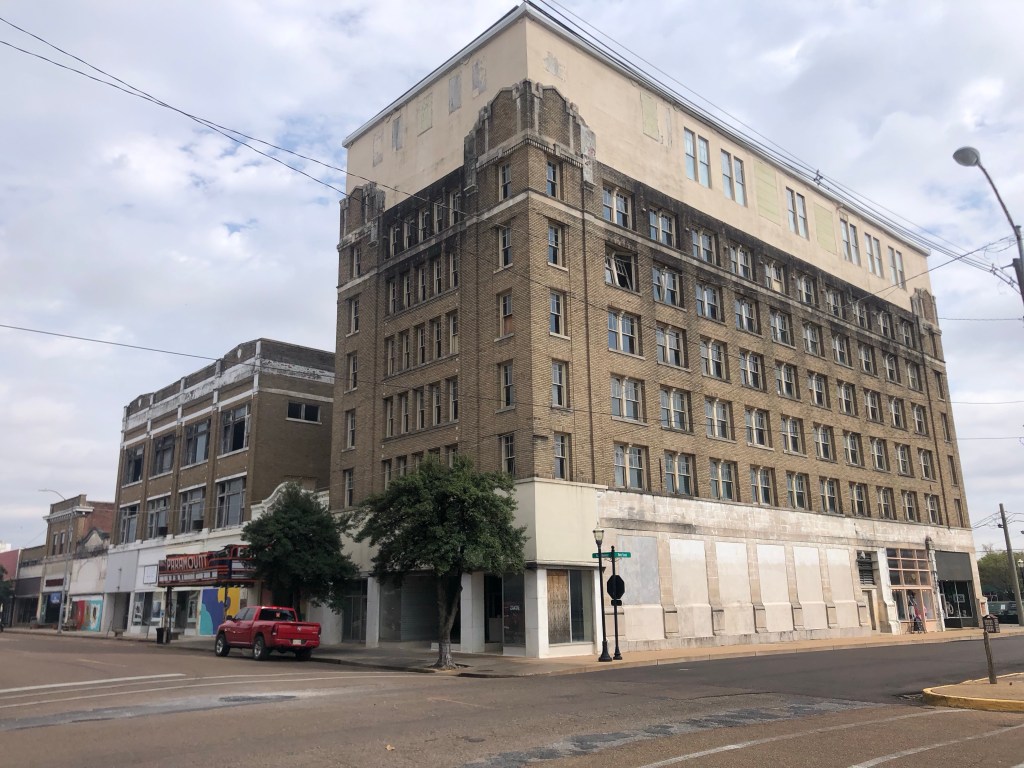
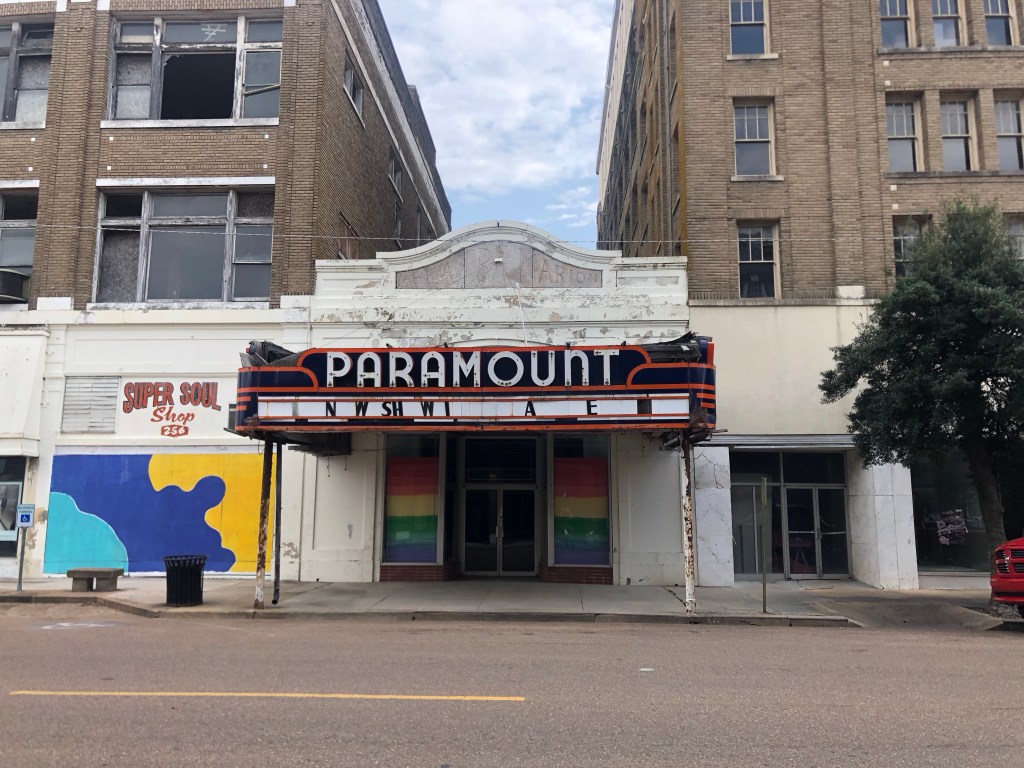
Look carefully at the uppermost part of the sign over the entrance, and you can see “Theater Marion” cast into the cement.
Cars · Road trips · trains

I Got The Blues

If I had it to do all over again (and my wife reminds me that, if I’m not careful, I just might receive that opportunity), I would seriously consider living in a small town in middle America. But I’d put a lot of conditions on it: It would have to be out of the snow belt and out of the humidity belt. It would have to have an interesting history linked, ideally, to railroads or mining or the Marathon Motor Car. And it would have to have successfully preserved a large number of historic structures in its downtown. And it would have to exude vitality. Oh, and there’d be no dogs and the gas prices would be low.

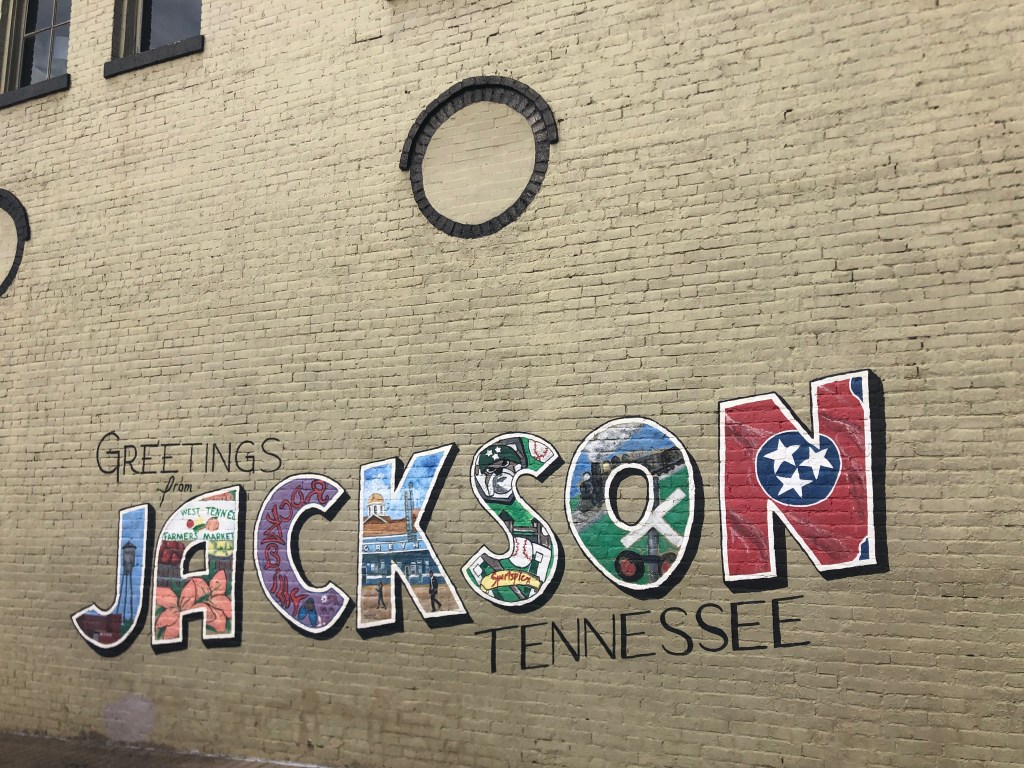
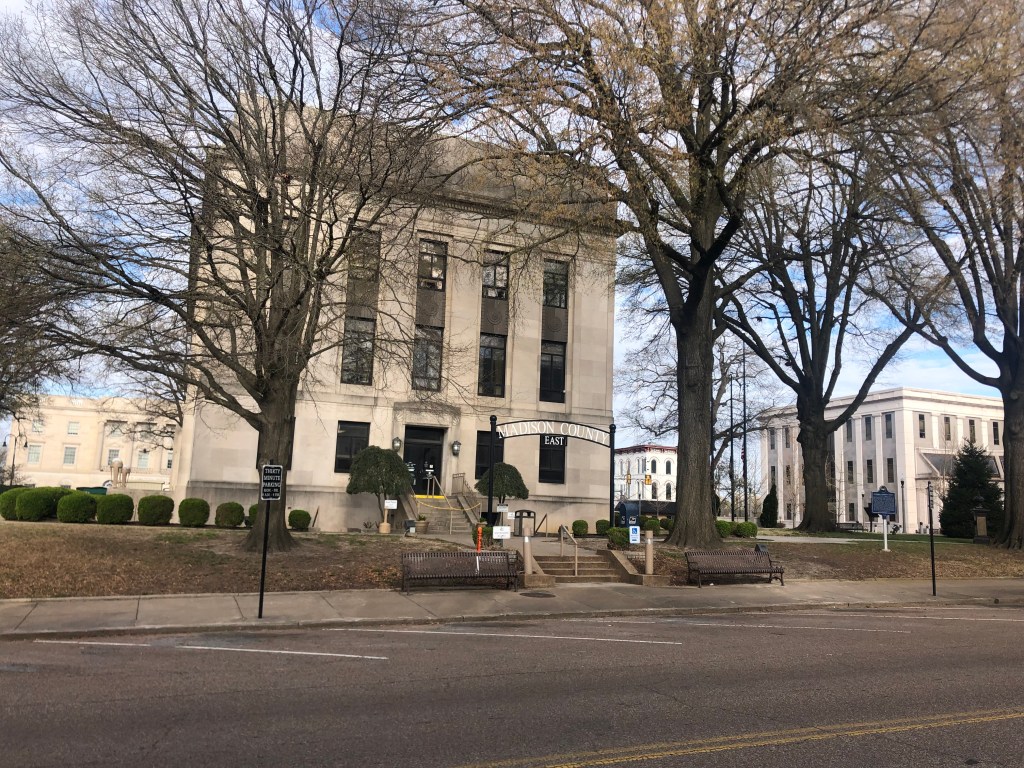
To a large extent I’ve found that city in Jackson, Tenn. It’s a little larger than my ideal, with a soulless sprawl of undistinguished national chain stores and fast food restaurants around the periphery. And there’s always something a little sinister in the air in these former Confederate strongholds. But the historic downtown is wonderful. It’s here that one finds the restored Greyhound depot I described yesterday. There’s a performing arts center in another restored, historic building, which appears to be well-utilized by the residents. As Jackson is the county seat of Madison County, there’s a historic courthouse. And today the temperature was 72 degrees.

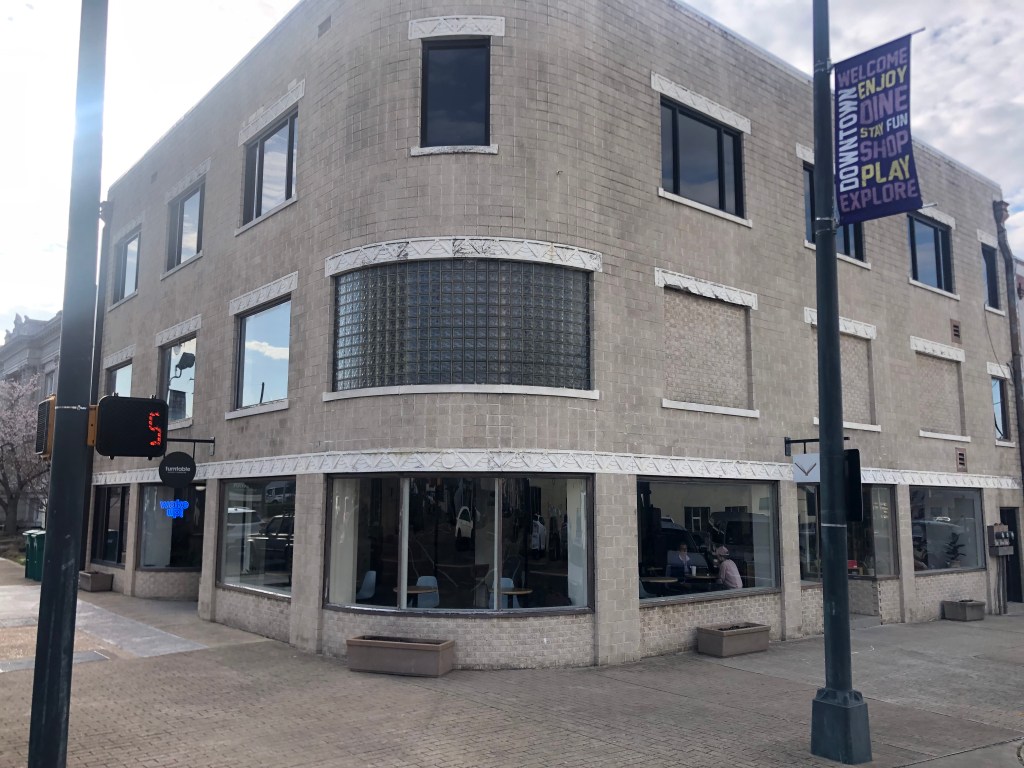
This morning I got my coffee and a galette (I’d never heard of it either) at a place called Turntable Coffee Counter. It’s almost directly across the street from the Greyhound station, in a historic building that had once been a department store. It had been vacant for years when in 2018 Anthony Kirk renovated part of the space and created this coffee place. It’s decorated in mid-century modern, with (probably faux) Eames chairs and a very hipster vibe. Racks of vinyl albums are for sale along one wall, and abstract art hangs on the walls. As I enjoyed my coffee I watched a churn of customers coming through: lawyers from the courthouse, writers with their laptops, a young couple who were getting lattes after their pilates class. This is an active community gathering place. (See related article from the local paper here.)

Turntable Coffee.

Turntable Coffee neatly illustrates what I appreciate about towns like this: They’ve created a modern (retro) space while respecting the history and flavor of the town. It works, and it draws people in. There’s a vibrancy and positivity about the place. And it’s unique–not just another Starbucks. The barista told me that Turntable began in a shared “incubator” space down the street, and after a bit was able to move to its current space. A couple of other businesses from the incubator (a book store and a record store) soon followed to the same location. So they’re doing something right.

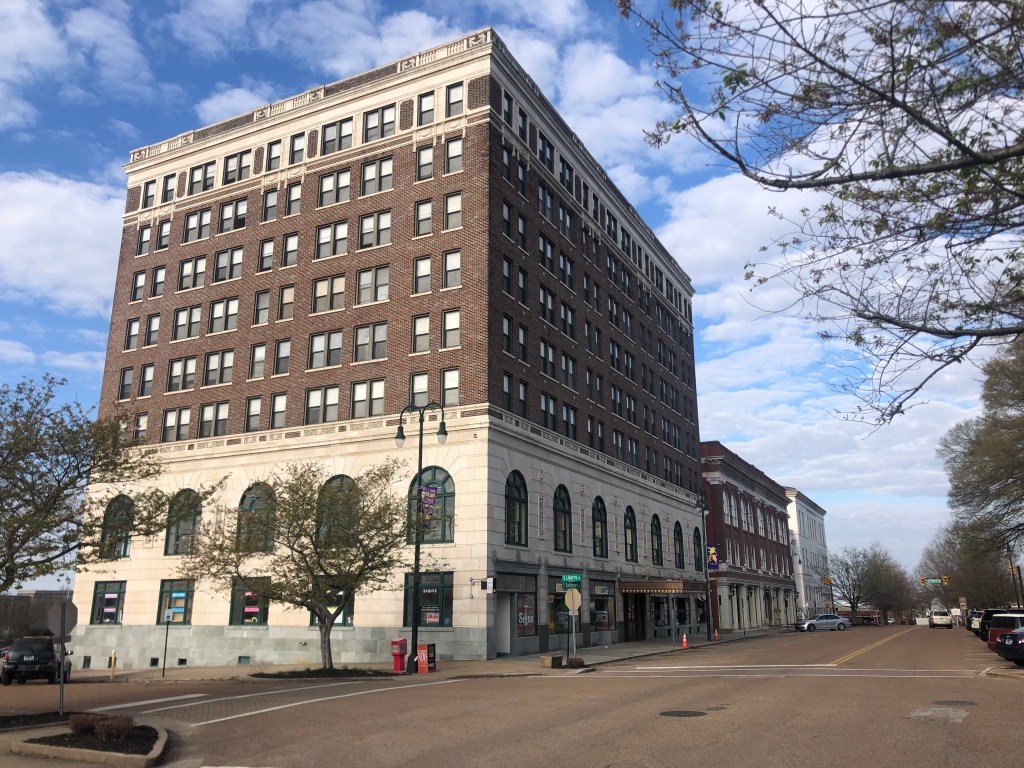
After coffee I took a walk around the downtown and saw more examples of well-maintained historic structures that added to Jackson’s very successful formula.

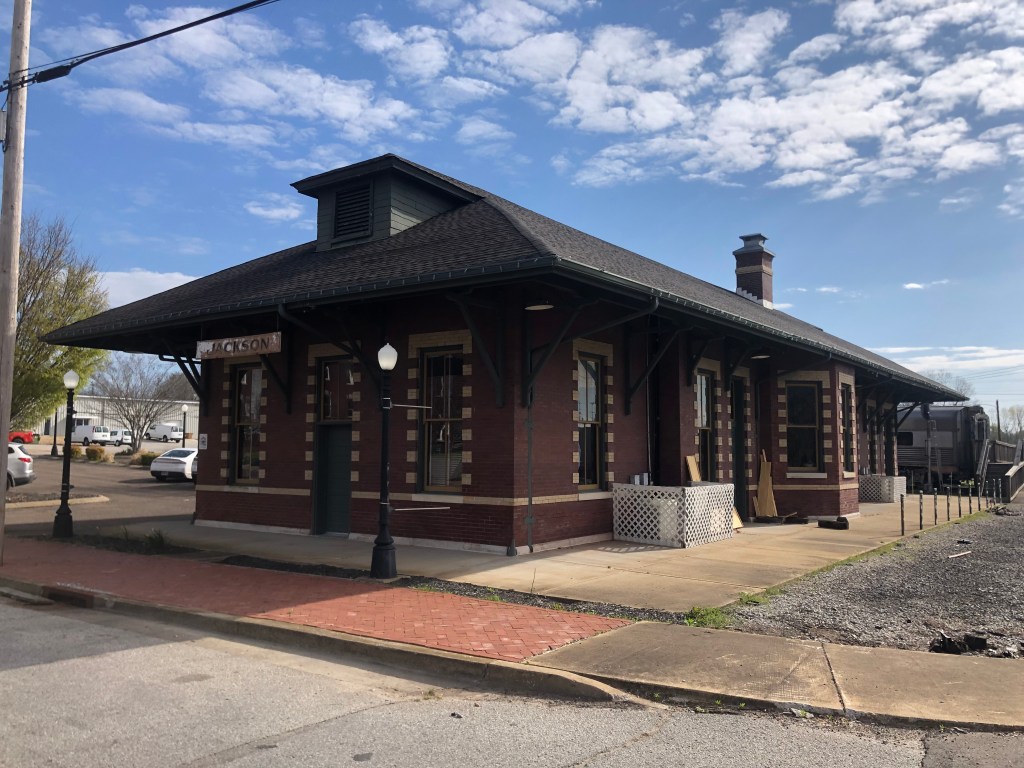
Jackson’s Nashville, Chatanooga & St. Louis Railway depot.

Of particular interest to me was the restored NC&St.L Railway depot. It was originally constructed in 1907, and after passenger trains stopped coming to town it was converted to a museum. Alas, when I arrived today the friendly woman inside told me the museum had moved and that the building was now a photography studio (among other uses). While I would have liked to have been able to spend some time in Jackson’s railroad museum, this is a good illustration of that same principle I was just describing: Jackson has wisely preserved its historic buildings, but rather than making them all into museums that the locals probably wouldn’t visit very often, they have repurposed them into vibrant, viable and useful public enterprises for which there is local demand.

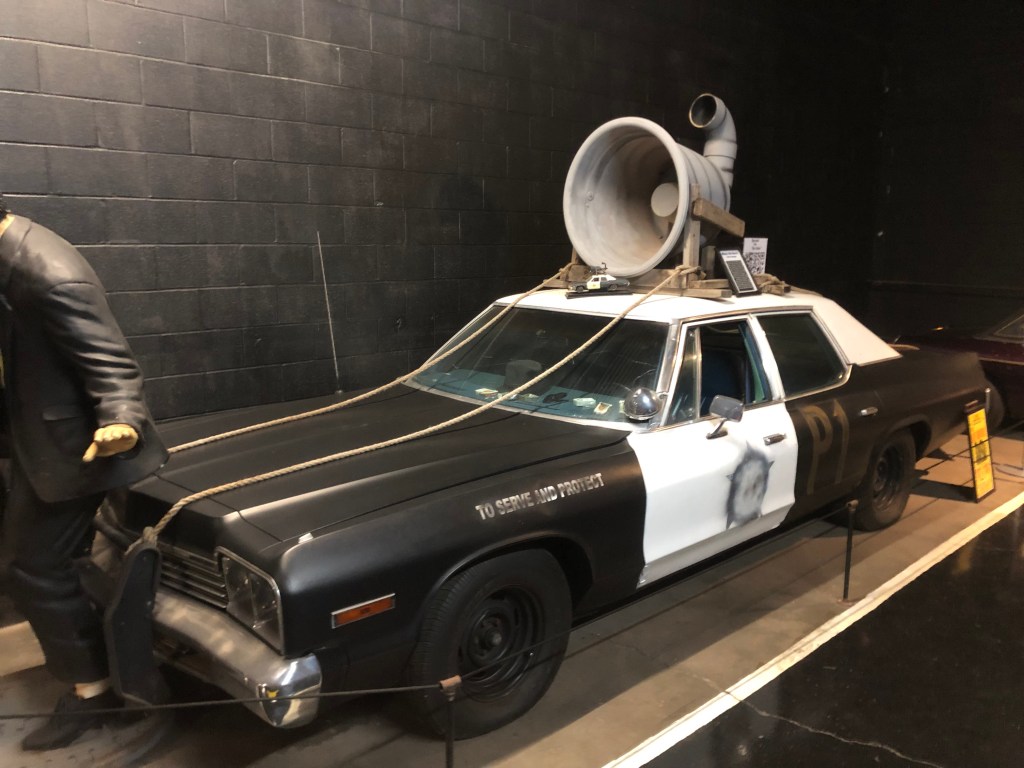
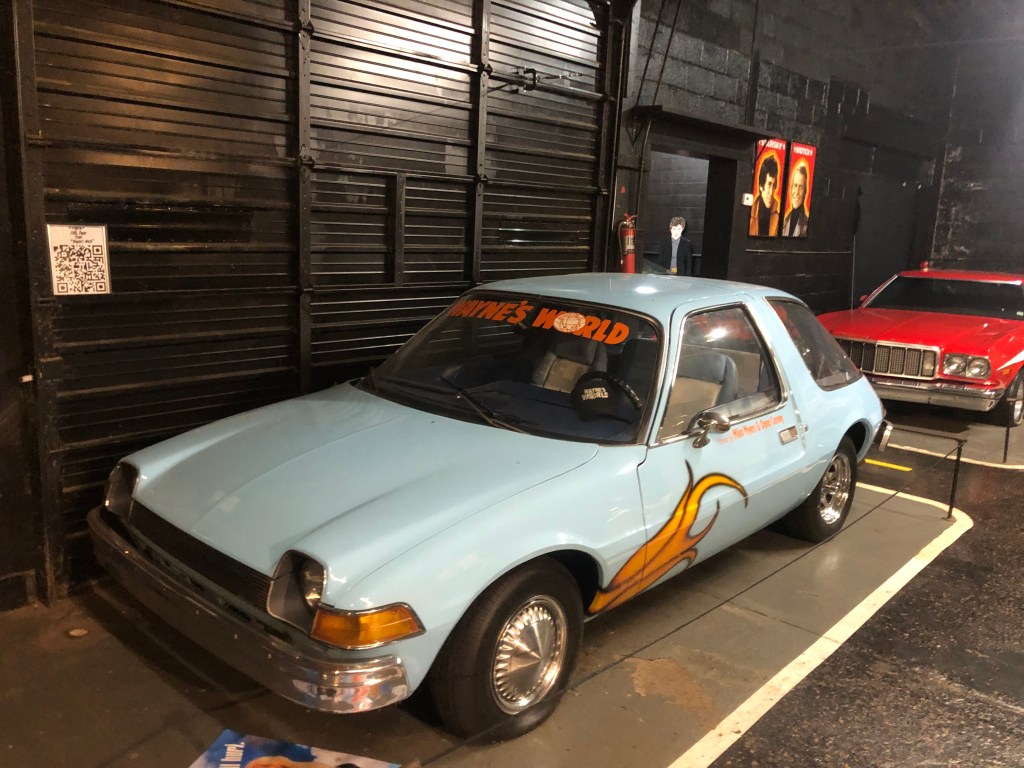
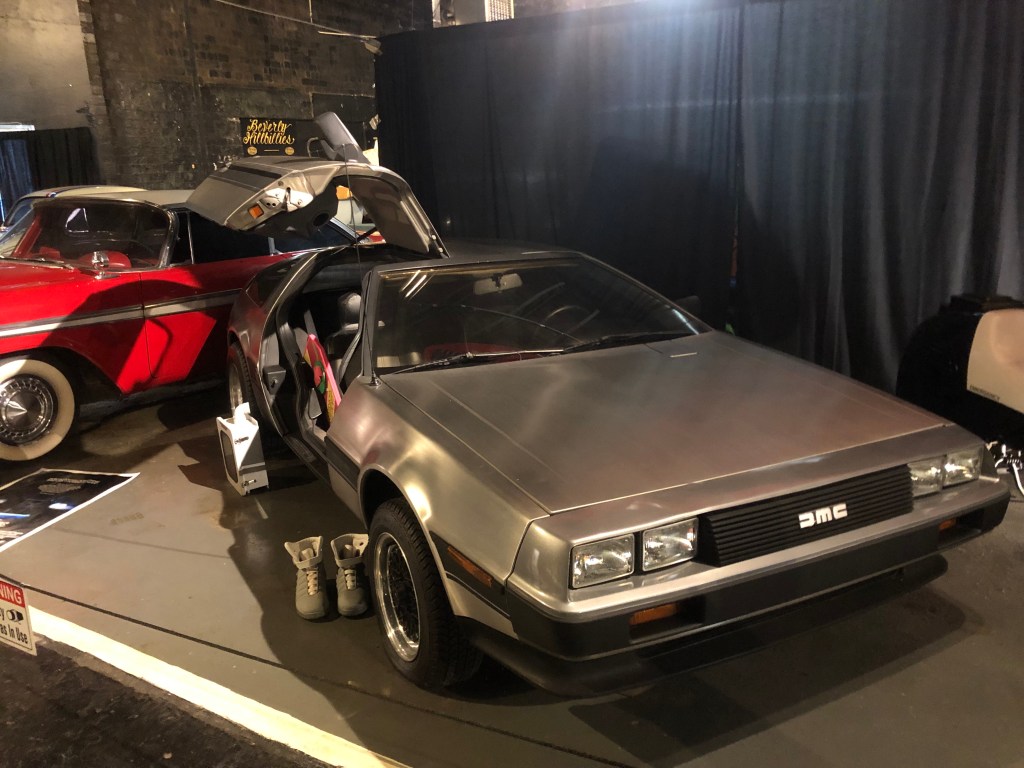
At the same time, I did visit two wonderful museums in Jackson this morning. The first is Rusty’s TV and Movie Car Museum. Rusty Robinson has been collecting cars for over a quarter of a century and he has them on display here in Jackson. Rusty was the only other person at the museum this morning, and I appreciated the opportunity to wander among his collection. It’s worth nothing that the collection is a mix of vehicles that actually appeared on the screen, as well as some reproductions that Randy himself has manufactured

Jake and Elwood’s “Blues Mobile.” (One of many cars used in that movie.)
Garth’s “Mirthmobile,” from Wayne’s World. (Original from the movie.)
Delorean time machine from Back To the Future. (Not from the movie. But it’s a real Delorean, which is rare in its own right. Rusty and I had a long talk about the new John Delorean documentary on Netflix.)
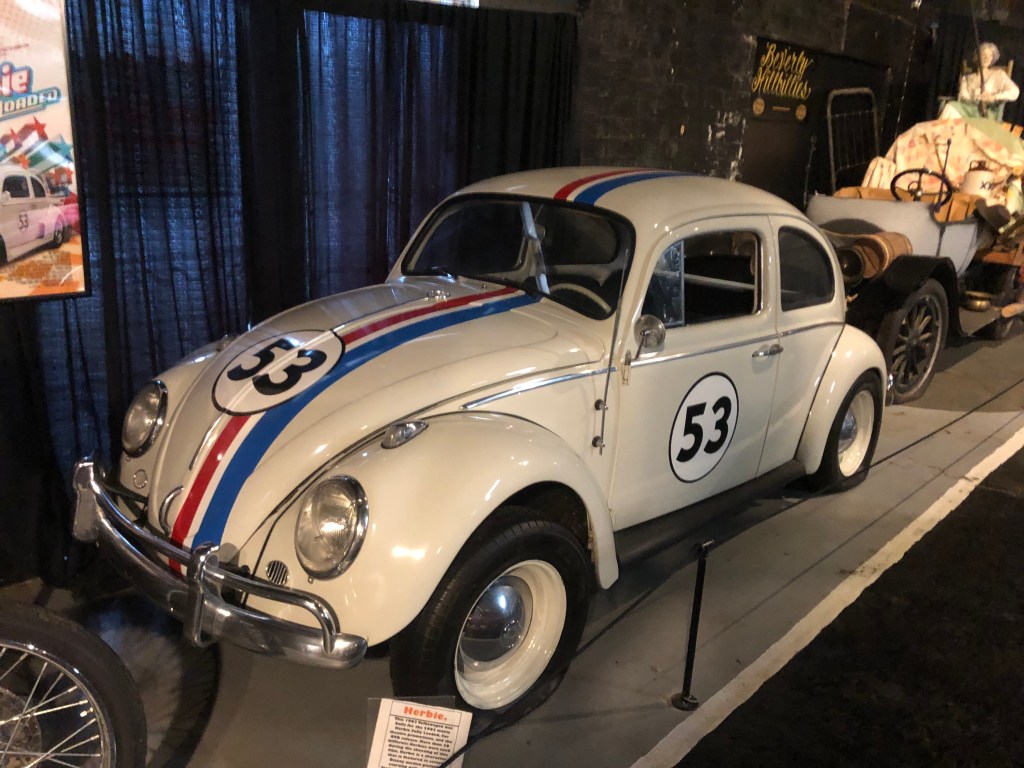
Herbie from the 2005 relaunch of the Love Bug franchise with Lindsay Lohan. (Actual car from the movie.)
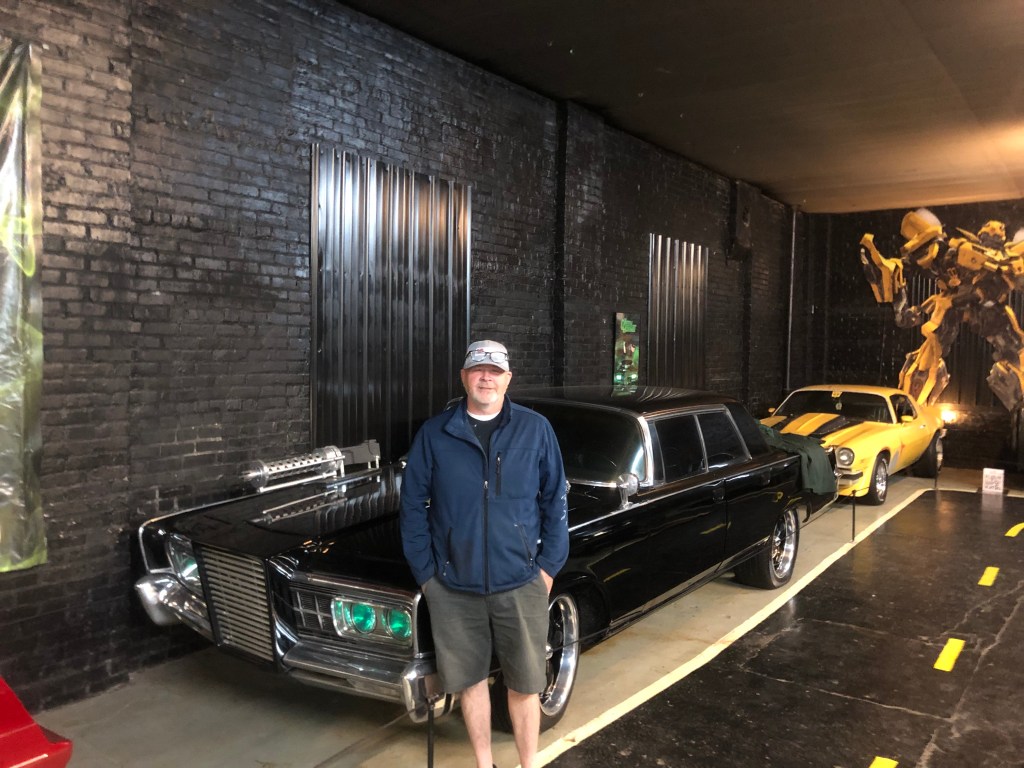
Rusty himself, in front of The Green Hornet’s “Black Beauty.” (Not original from the movie; Rusty built it himself!)

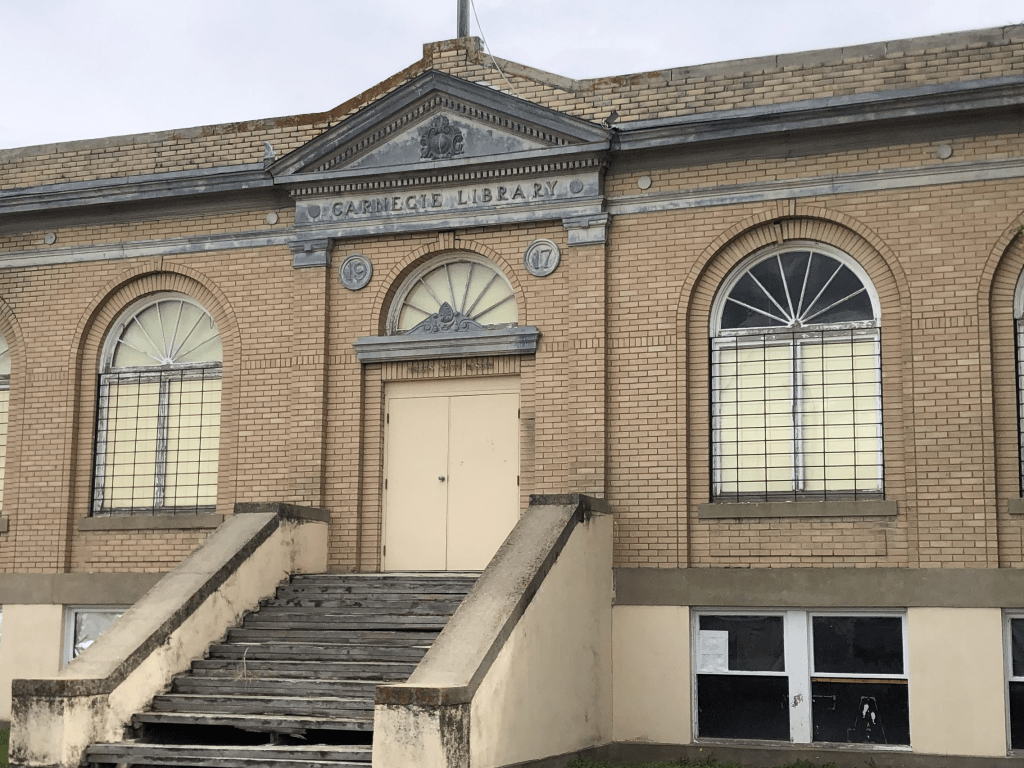
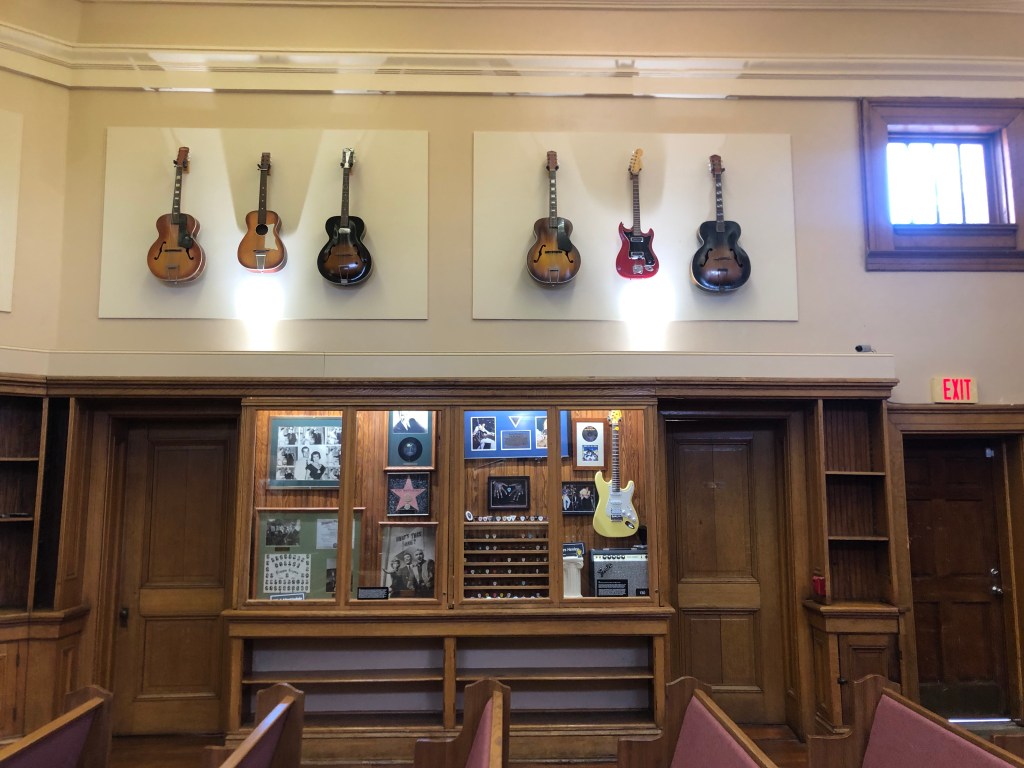
The other museum in Jackson I visited was the Southern Legends of Music at the Carnegie. It’s a very small museum inside an old library built in 1901. (Hence the “Carnegie” part. As you may know, Andrew Carnegie funded the construction of almost 1700 libraries around the country between the 1880s and the 1920s….like this one, below, that I saw on my Route 2 trip last year)

Unrestored Carnegie library from 1917, in Malta, MT. I passed it on my Route 2 trip.

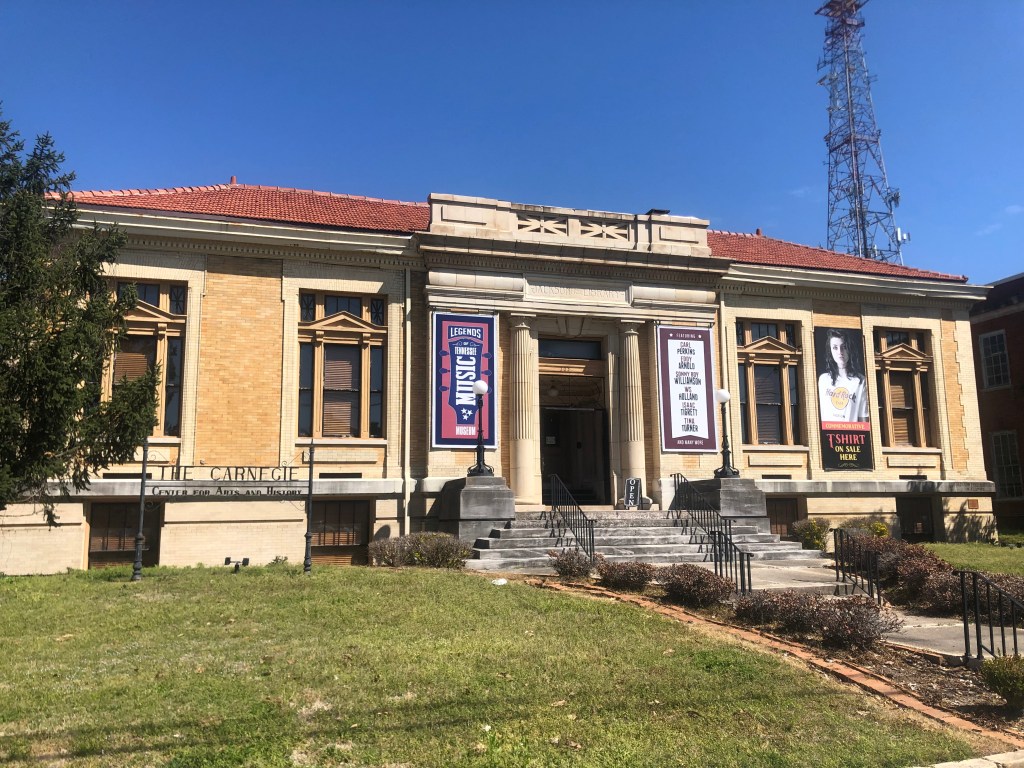
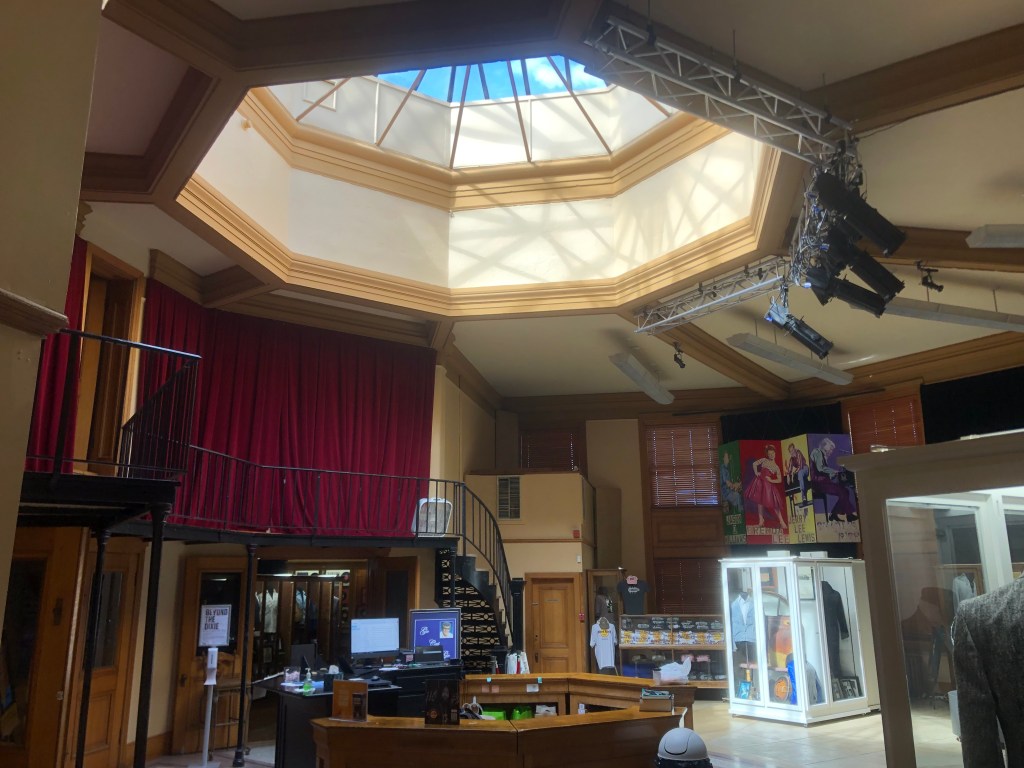
Here is the Carnegie library in Jackson–fully restored and open to the public as a music museum:

It’s a wonderful museum, focused on western Tennessee’s music history. (By “western Tennessee” they mean mainly Jackson and Memphis). While small, the museum is stuffed to the gills with guitars, recording equipment, framed photos, harmonicas, stage outfits, awards, guitar picks, sheet music, handwritten lyrics, and tons of other stuff.

In the center of the main room is a large, octagonal skylight. It must have been an awesome place to spend an afternoon reading.

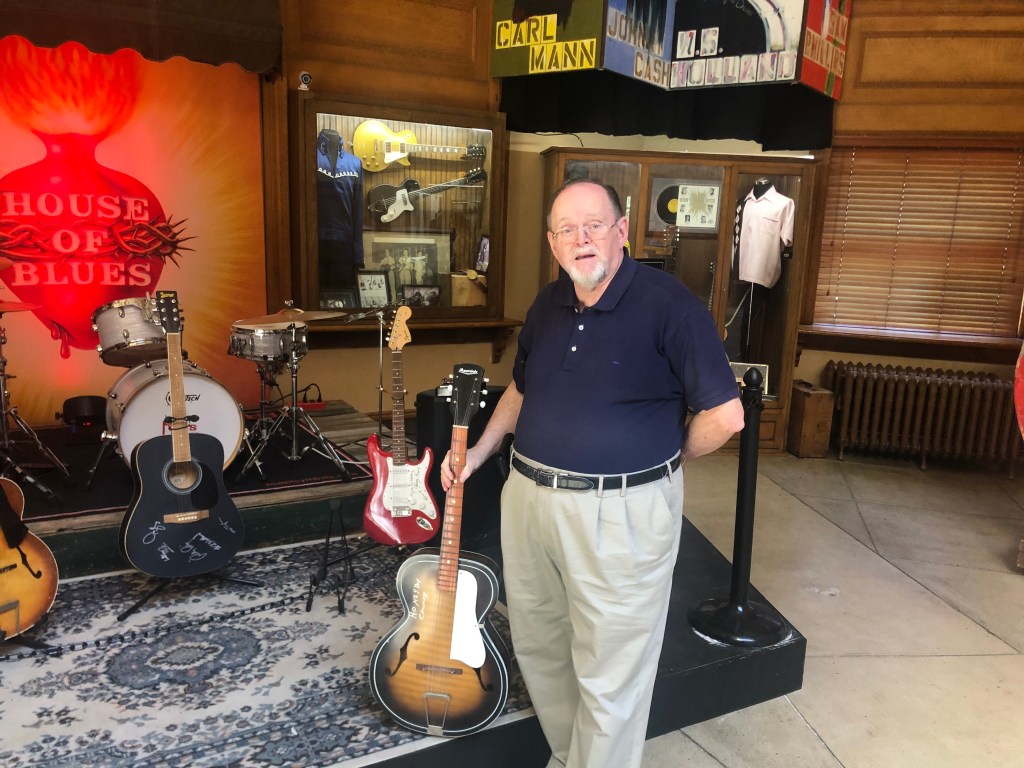
Speaking of which, the docent who helped me (Roger) told me he was drawn to work at this museum because as a kid he spent many, many hours in this library. Over the years, though, he’s learned much about western Tennessee’s music history, and he was able to convey an enthusiasm about the music that’s infectious. I’m starting to get why music is such a big deal to this area. It’s partly a shared language, partly a relieve valve for emotions, and partly storytelling. Notably, each region out here seems to put its own stamp on the music. In Nashville it’s country; here in Jackson it’s moving more to bluegrass. By the time you get to Memphis it’s blues. But there are intersections and overlap among these styles, and they all fall under an American Roots umbrella. It’s heartfelt and earnest and moving. In just a short time at this museum I got a better feel for why this music matters. And I was able to connect the through lines linking Elvis and Johnny Cash and Ray Charles and Roy Orbison and Jerry Lee Lewis and on and on….

Docent Roger sharing stories about the music of western Tennessee.

I was thoroughly enjoying my music history lesson but unfortunately I had to get back on the road to get to a haircut appointment at noon. I’m not making this up.

Before I’d left California I had learned about a quirky museum in Brownsville Tenn. that also served as a functioning barber shop. It’s only open by appointment during the week, so I called the owner (Anthony Turner) and asked if I could make a visit on Thursday. “For a haircut or for the museum?” he asked. I figured the right answer was “both.” I arrived at Anthony’s “Master Barber Shop Menagerie Museum” at the appointed time.

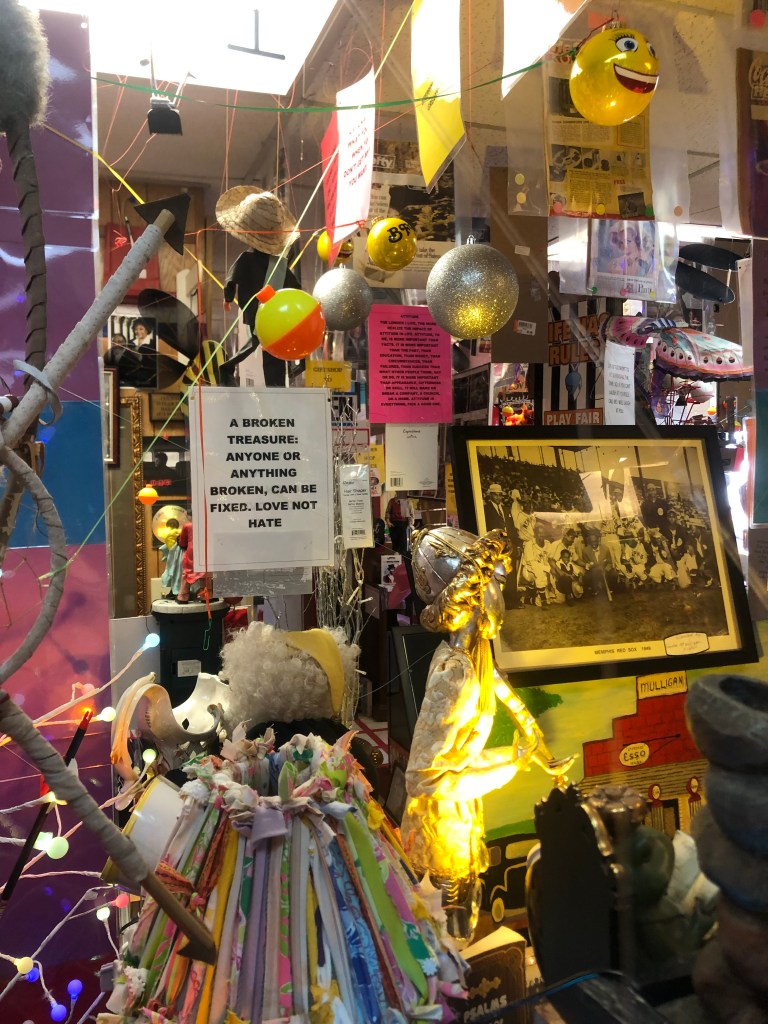
Anthony greeted me with a thousand-watt smile and took me to the building, which looked like a circus had exploded.

A tiny fraction of the Menagerie Museum.

I asked what it all meant, but Anthony directed me to a tiny room with a barber chair. For the next hour he cut my hair and told me his story. I can’t do justice to his whole spiel, but the basic outlines are as follows:

I told Anthony just to do whatever he thought needed doing on my head. “All’s you need is a high fade.” And so it went.

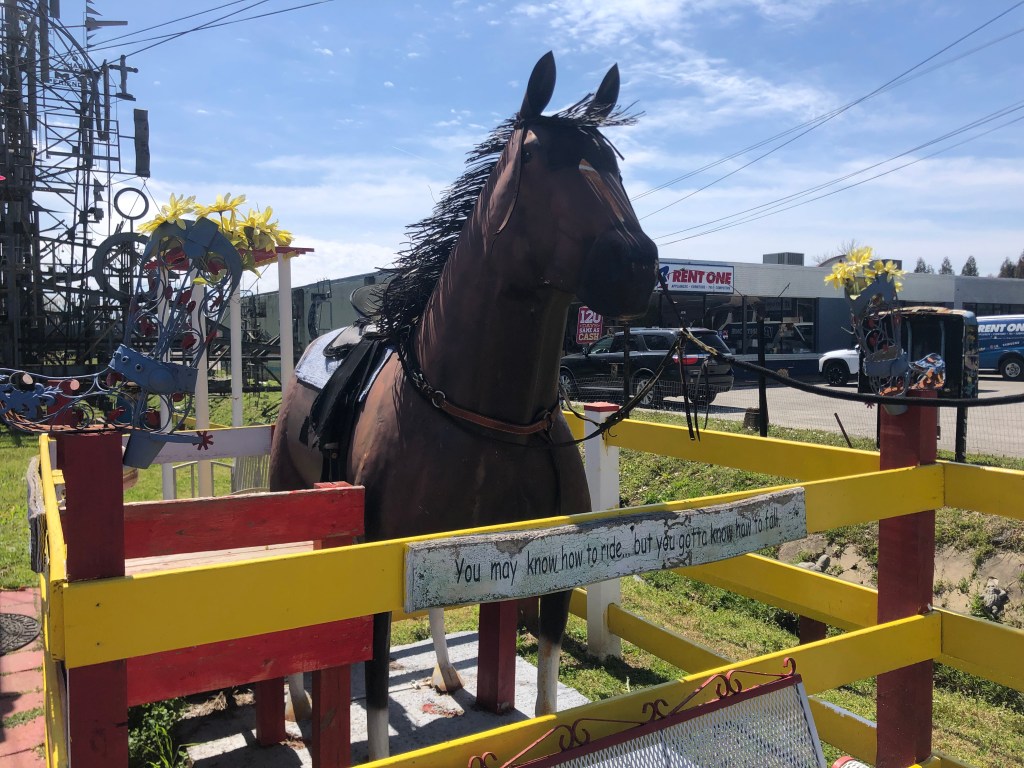
Anthony grew up here in Jackson, and after graduating he attended barber college. For reasons he doesn’t really understand, his fellow students and instructors kept bringing him various items (pieces of art, antiques, odds and ends). He opened his barber shop next to where his chum from public school, Billy Tripp, was building an enormous sculpture out of scrap metal. He felt there was a synergy between their two projects. In his shop Anthony displayed the various objects he’d received while at barber’s college. But he kept feeling he was supposed to have a bigger impact. He planned a grand opening, and for reasons not entirely clear, decided he’d invite Oprah Winfrey’s father (whom he’d never met) to MC the opening. He tracked down Mr. Winfrey, who accepted. The museum grew and grew, and more and more people brought him more stuff. Anthony was also always looking for specific additions that he would purchase, including this horse:

In a repeat of the Oprah’s dad trick, Anthony managed to get John Wayne’s grandson to show up for the unveiling of the horse, as he needed a “real cowboy” for that job.

Again I asked Anthony what the whole museum is all about; what unites everything? And he responded sincerely and convincingly that it was all united by positivity. Anthony is a man of faith, and believes that God has led him to do this project to make the world a more positive place. And if my hour with him is any indication, he’s doing a good job.

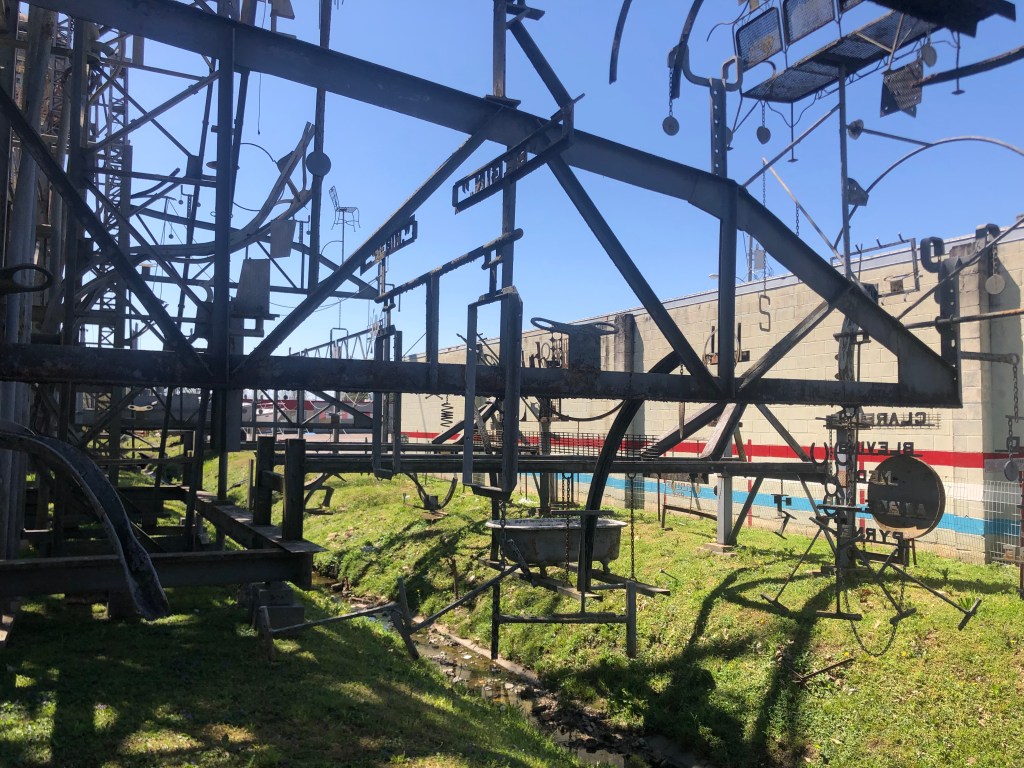
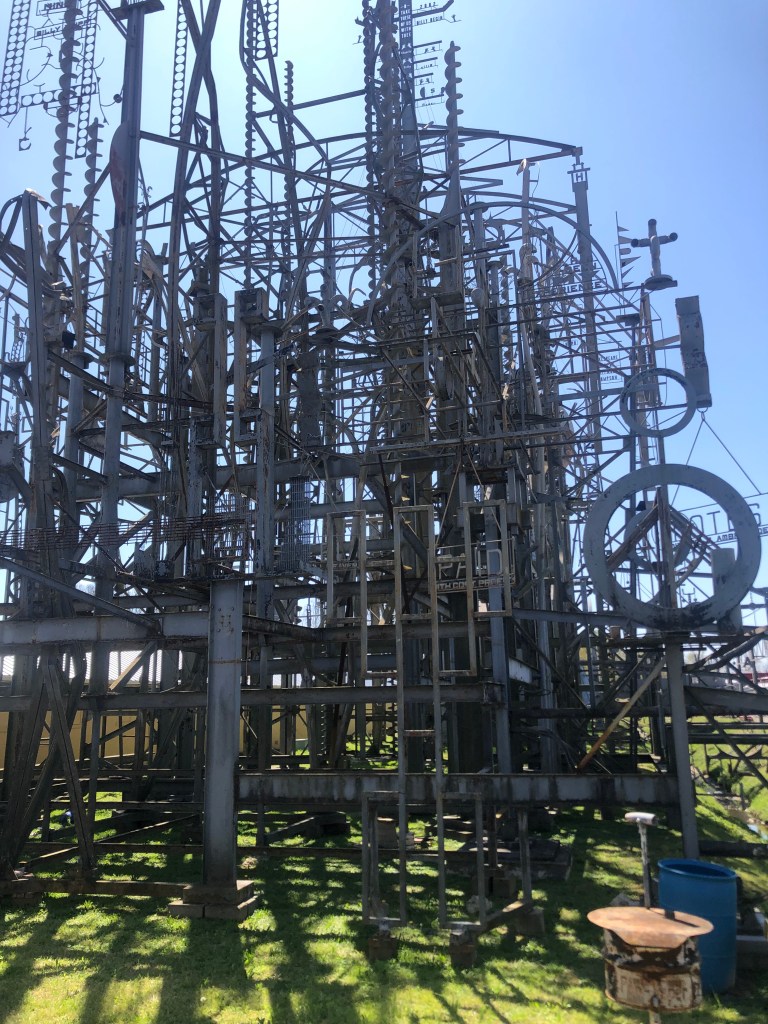
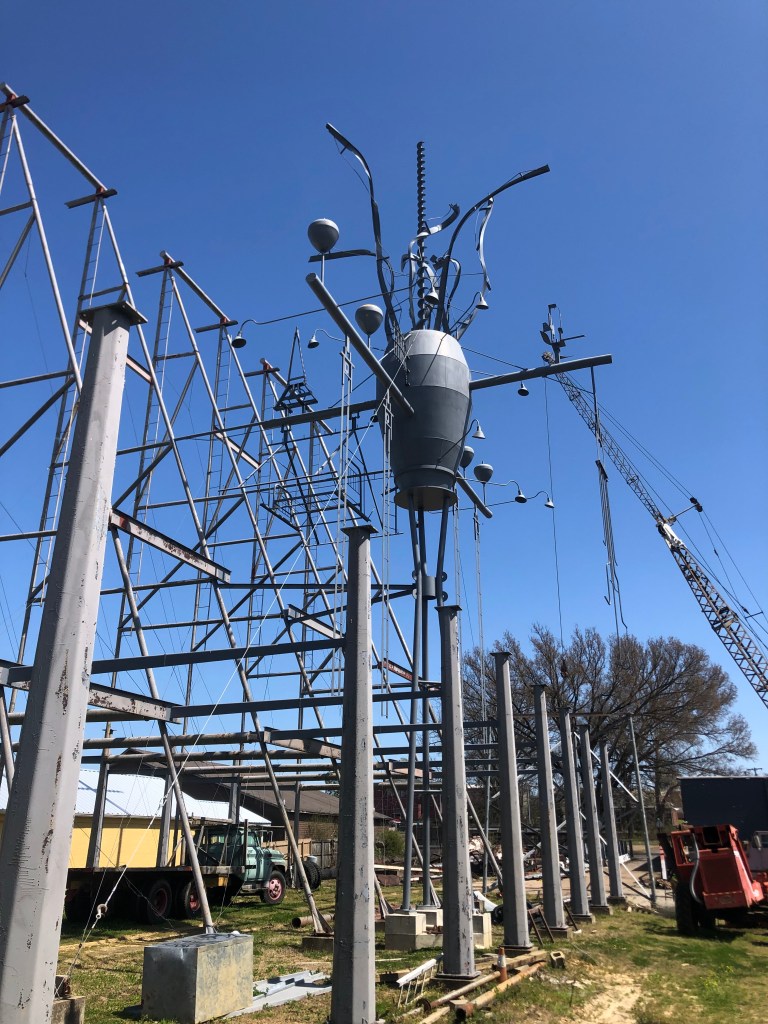
After my haircut Anthony had another customer to take care of, so I browsed his small museum and then checked out Billy Tripp’s sculpture in the back. Words cannot describe how enormous, complicated, and overwhelming the sculpture is. And pictures don’t do it justice, because it’s so large and contorted you just can’t get a full picture. But here are a few attempts:

Anthony tells me that Billy works on the sculpture almost every day, and that he plans to keep working on it until the day he dies. I suspect that Anthony takes the same approach with his museum.

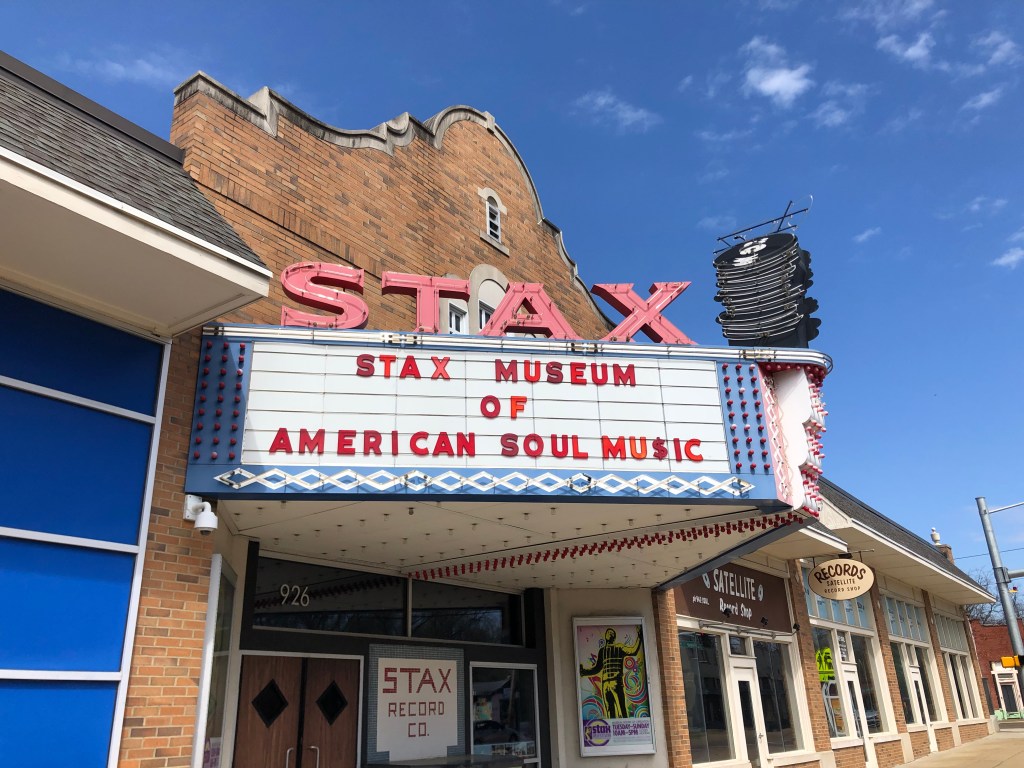
Finally, freshly shorn, I was back on the road to Memphis. I had been in Memphis just last year on my Route 70 trip. While I was there I saw the outside of the building where Stax records made music history in the 1960s and 1970s. I have a fondness for Stax in part because my dad had Booker T. and the MG’s “Greatest Hits” album, and I thought it was the coolest thing in our household. (It actually was, considering that most of Mom and Dad’s other records were stuff like Motovani and Percy Faith.) I also saw Booker T give a talk in LA a few years ago, when he was promoting his autobiography. He’s a remarkable and articulate man. Booker T and Stax represent a magical time in music history, and they’re central to the so-called Memphis sound. Recall that earlier I mentioned how Jackson merged Nashville’s country into more of a bluegrass? Well, Stax merged bluegrass and blues with soul and R&B. In addition to the MGs, classic Stax acts included Issac Hayes, Otis Redding, Sam and Dave, Albert King, and various other acts that you’ve heard on the radio.

You’ve heard this before, but you might not have known the title.

Anyway, when I’d visited the Stax building (which is now a museum) last year it was closed, so I made a point to see it today. And I’m glad I did. It further deepened my appreciation for Blues/R&B and all its variants.

Full disclosure: The original Stax building was razed in 1989, This museum was built on the same site, faithfully recreating the facade and the interior recording studio.
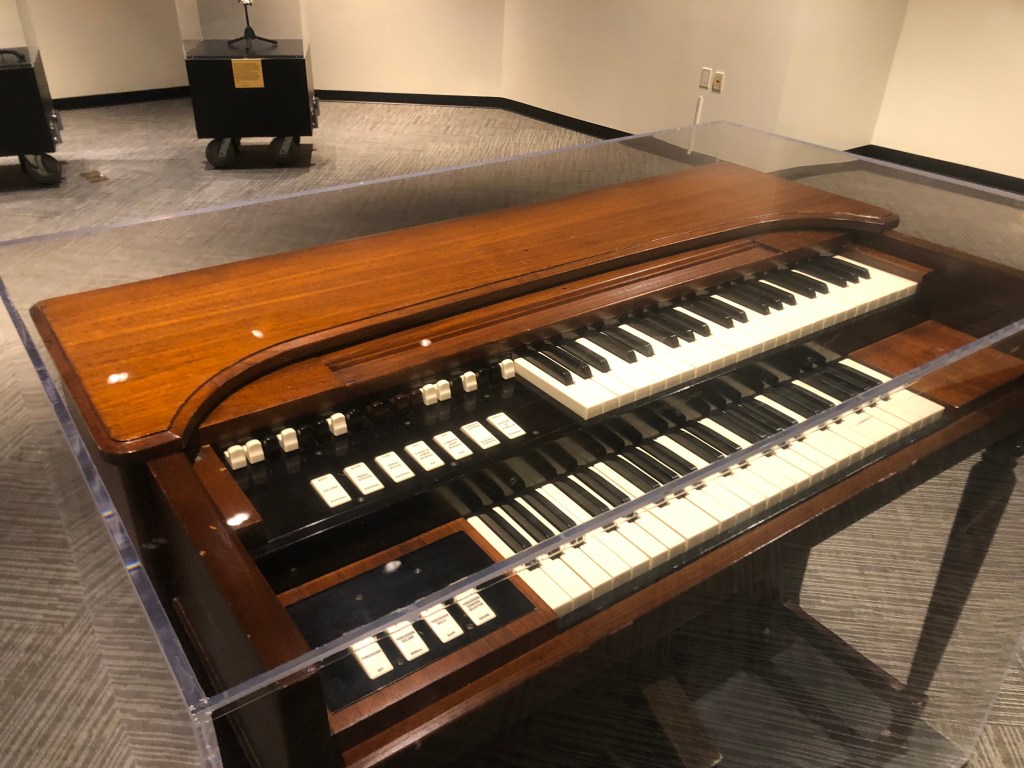
The Hammond organ that Booker T Jones used to record “Green Onions.”

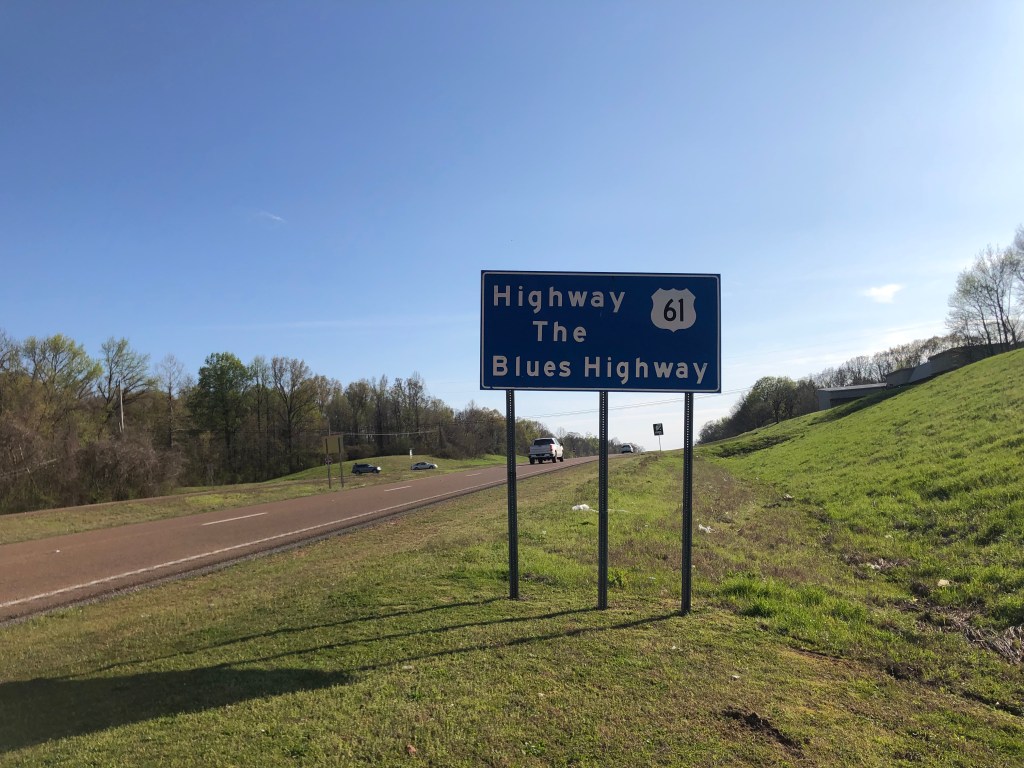
Since I’d been to Memphis just last year, Stax was my only stop this time. So afterwards I got back into the trusty Trailblazer and got onto Route 61– the Blues Highway!

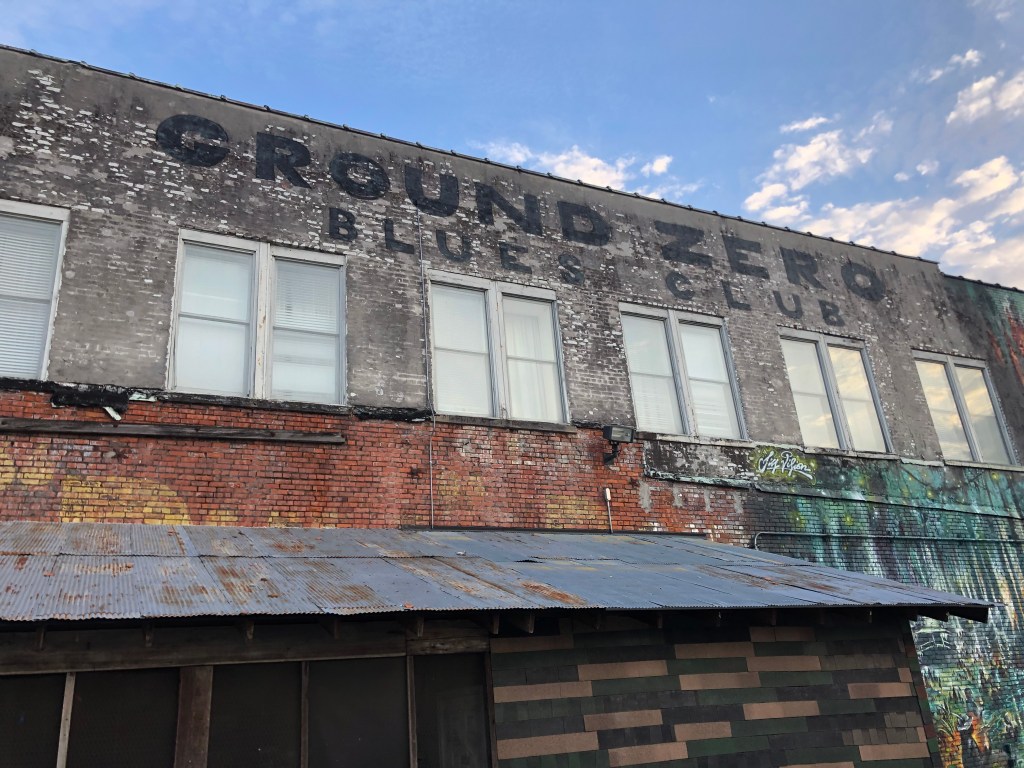
I stopped for the night in Clarksdale, Mississippi. I had dinner at the estimable Ground Zero Blues Club (owned in part by Morgan Freeman).

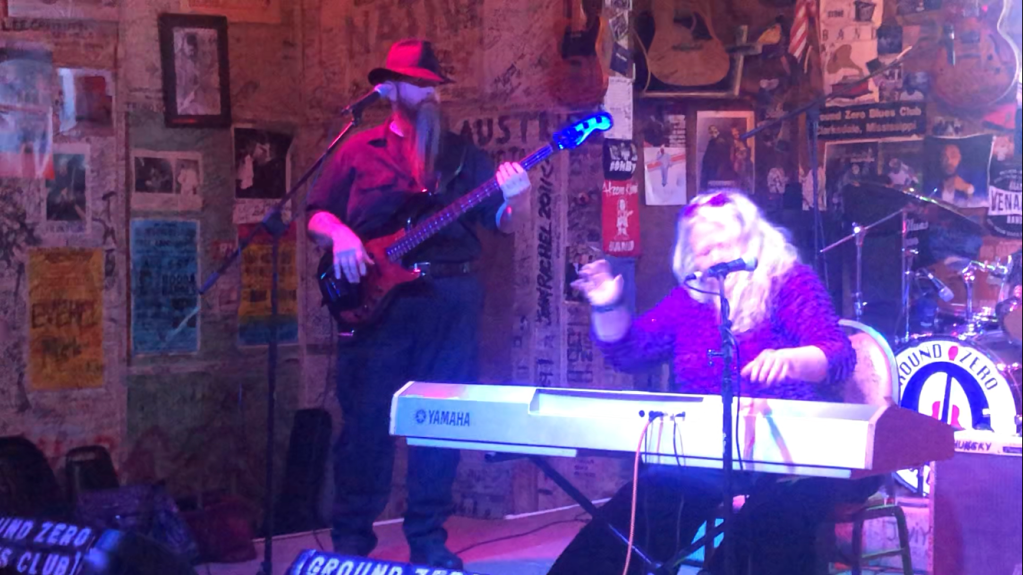
I had some good BBQ (as it’s called in these parts) and enjoyed listening to some live blues. It was a perfect end to this day. It’s one thing to learn about music in museums, but there’s no substitute for hearing it performed live.

BREW OF THE DAY

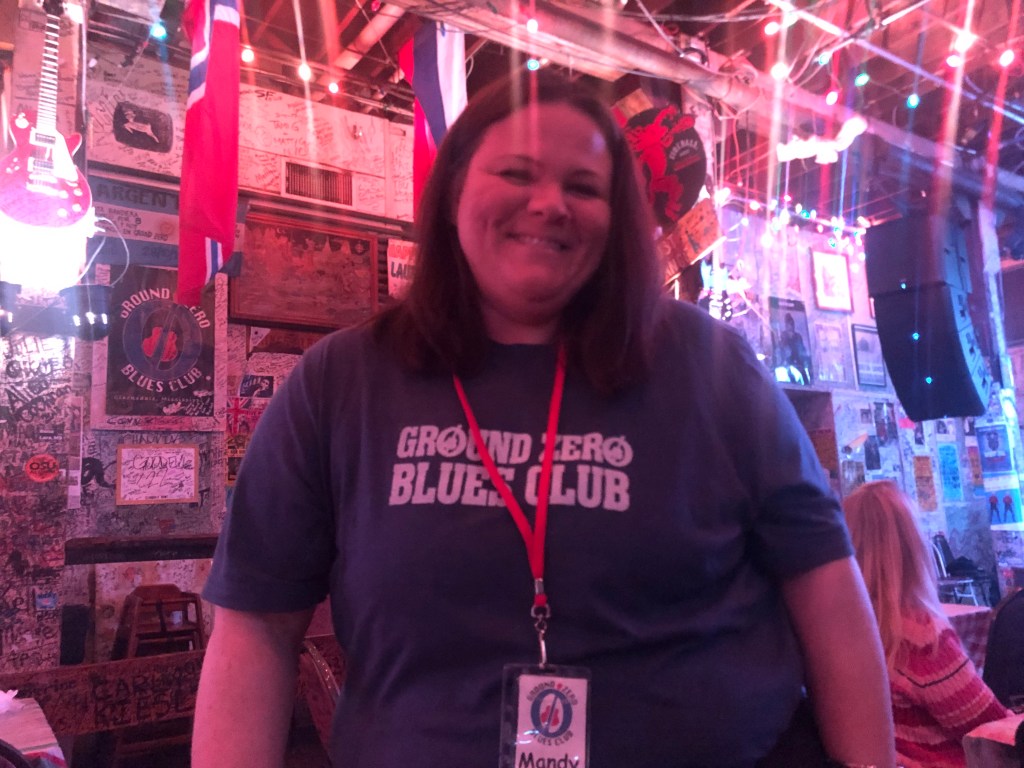
I’ve noticed that most of these music venues have a pretty crappy selection of beers. The Ground Zero Blues Club is no exception; their most interesting beer was an IPA. So I decided instead to order a cocktail. How about an Old Fashioned? That’s pretty basic, right? The waitress (Mandy, who was being very patient with me) came back and told me the bartender couldn’t make me one because they’re “out of bitters.”

Mandy, bearer of bad news.

Ok, fine. How about just a Scotch then, served neat? Again Mandy consults with the bartender, and comes back with the sad news that they’re “out of Scotch.” Borrowing a line from Monty Python’s cheese shop sketch, in which a neighborhood cheese shop was out of even the most common cheeses, I spluttered “How can a bar be out of Scotch?! It’s one of the most basic staples for making cocktails!”

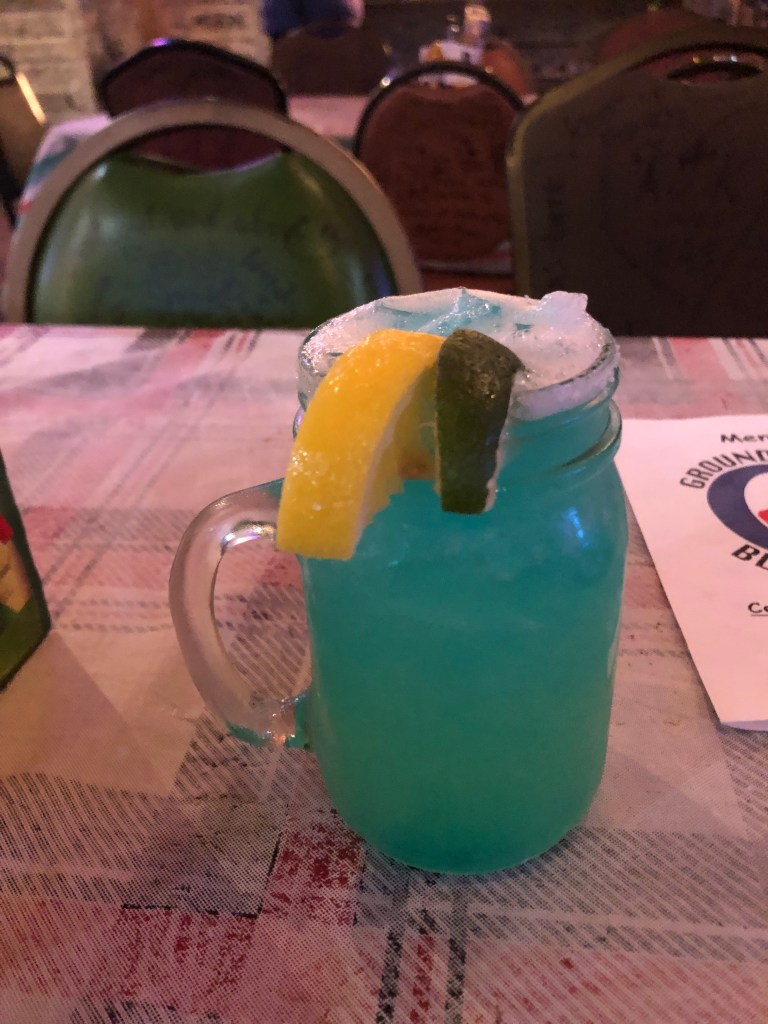
I settled for the “featured cocktail,” which is a “moonshine margarita.”

The Moonshine Margarita is essentially lots of margarita mix and some “moonshine” (i.e., distilled whiskey that hasn’t been aged in a barrel). Let me give you the pros and cons:

On the pro side, it contains alcohol, which goes well with a BBQ dinner at a blues club. But it’s cloyingly sweet, like sno-cone juice. And it’s the same color, as well. Of course, when all you have is hammer everything presents as a nail. So I ordered a second one.

First drink: 1 star out of five.

Second drink: 3 stars.