Road trips

The Final Frontier

Alert readers will recall that in my May 25 blogpost, I wrote:

In the town of Mason, Wisconsin a gas station attendant encouraged me to check out an old, abandoned, Wild West theme park that was homemade by a man (recently passed) named Ed Sandor on his farmland. This I did, and it was one of the most enjoyable hours I’ve spent. It deserves its own blog post, which I hope to write in the next day or two. 

I’m now finally able to share the whole story. It was a cold, drizzly spring day in rural Wisconsin. The somewhat rustic attendant at the nondescript gas station noticed my rental car’s Florida plates and made the observation that I was a long way from home. I told him about this road trip, and he said, “Well, then I reckon you oughtta check out the old Sandor place. He built an Old West town to entertain the kids while families camped on his farm. It’s abandoned and pretty run down, but it’s still worth a gander.” I told him I was game, and he provided me with moderately vague directions, using terms like “Bill Rabbs farm” and “the place where the school bus stops” as landmarks. Undeterred, I drove about a mile off of Route 2, and spotted the old, weathered sign the attendant had mentioned.
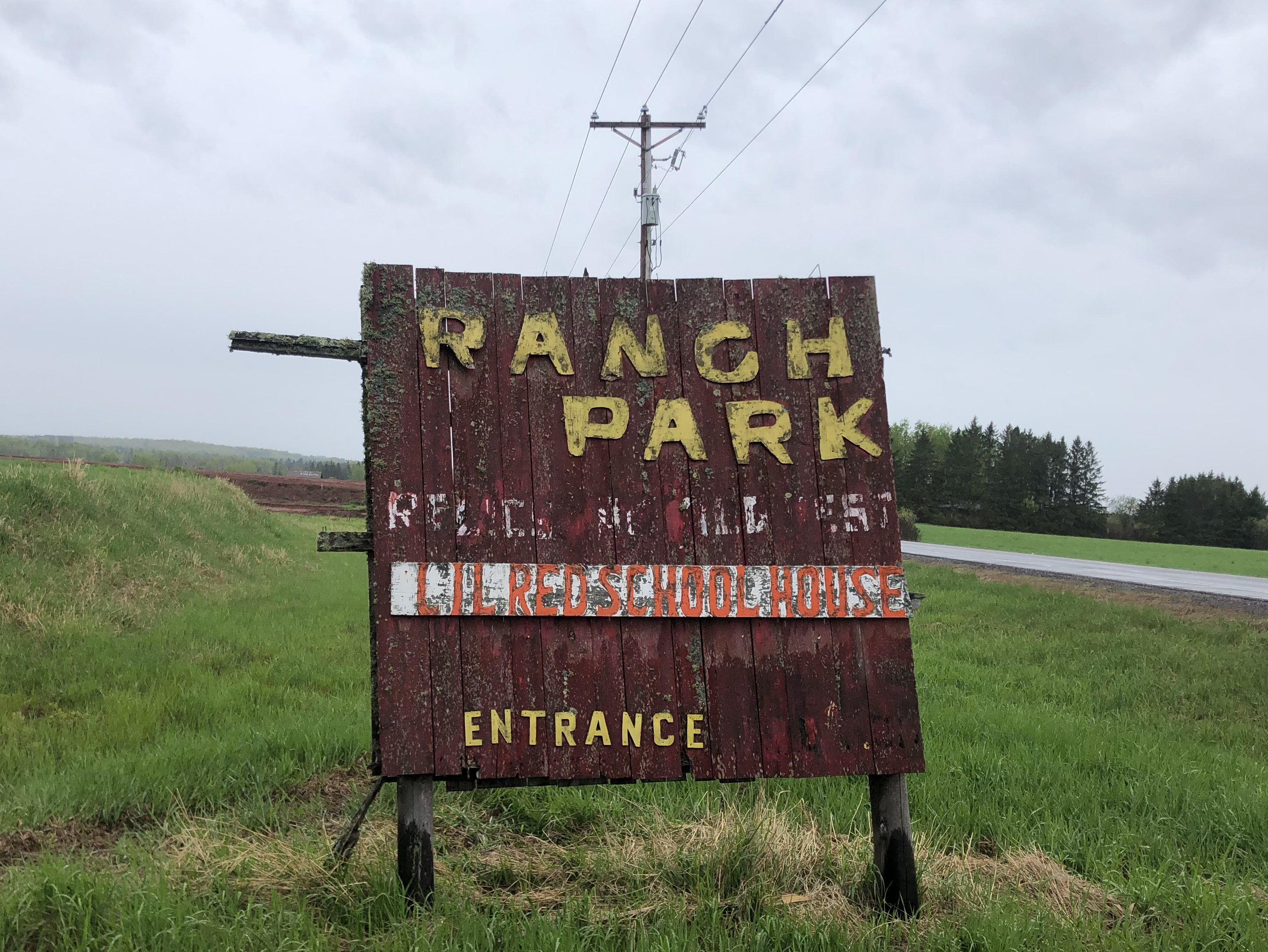
Why am I thinking of the Bates Motel?

The sign stood next to a narrow dirt road which had been dampened by the morning drizzle. I put the Jeep into 4WD mode and turned onto the dirt side road. Wooden fences ran along both sides of the road, presumably marking private property. After about half a mile the road split into two, narrower dirt driveways. This sign was posted at one of the driveways:
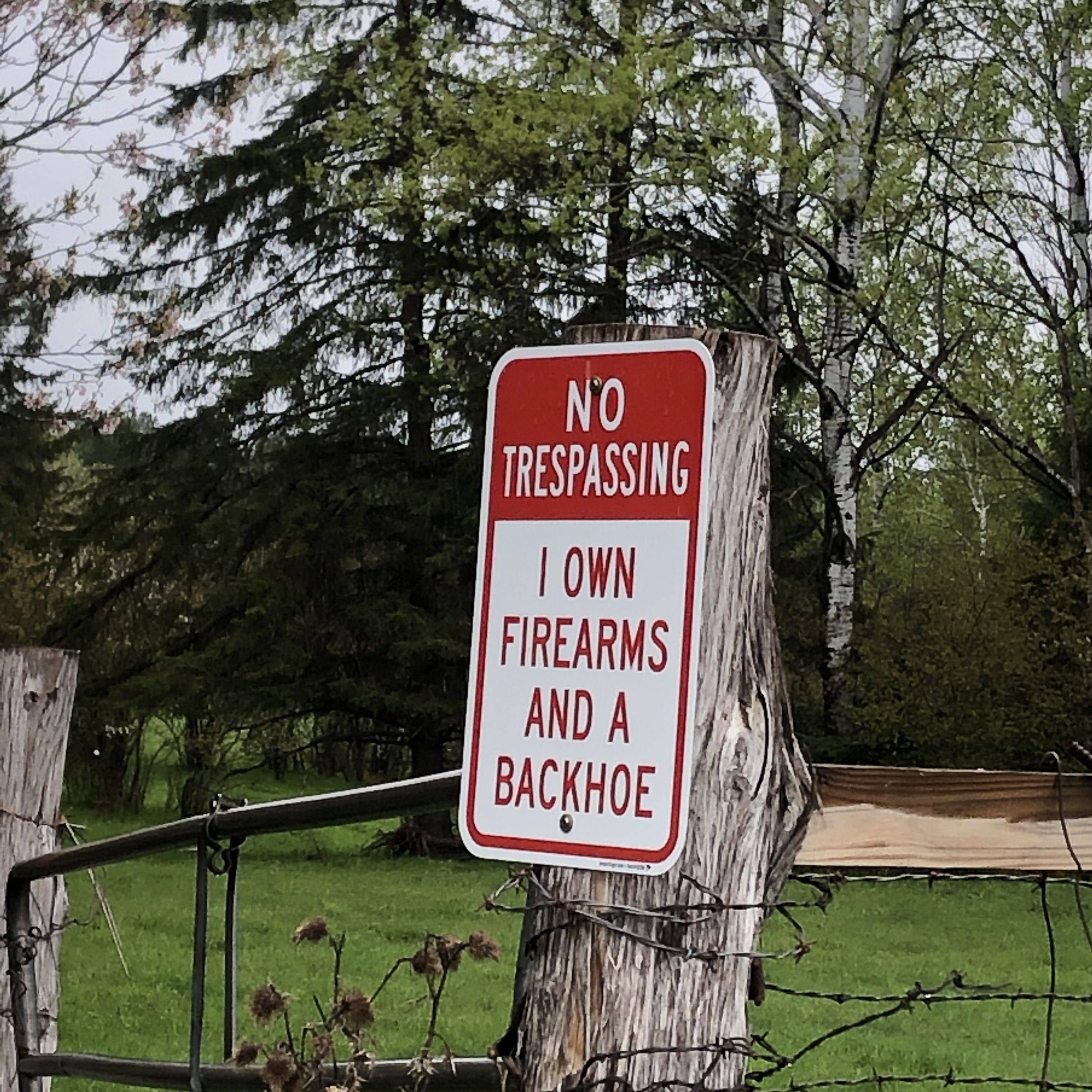
Country hospitality

Needless to say, I took the other driveway.

Just as I thought I’d been led on a wild goose chase I spotted a fake, cartoonish saguaro cactus which would be de rigueur at a 1950s Old West theme park. I had to be close.
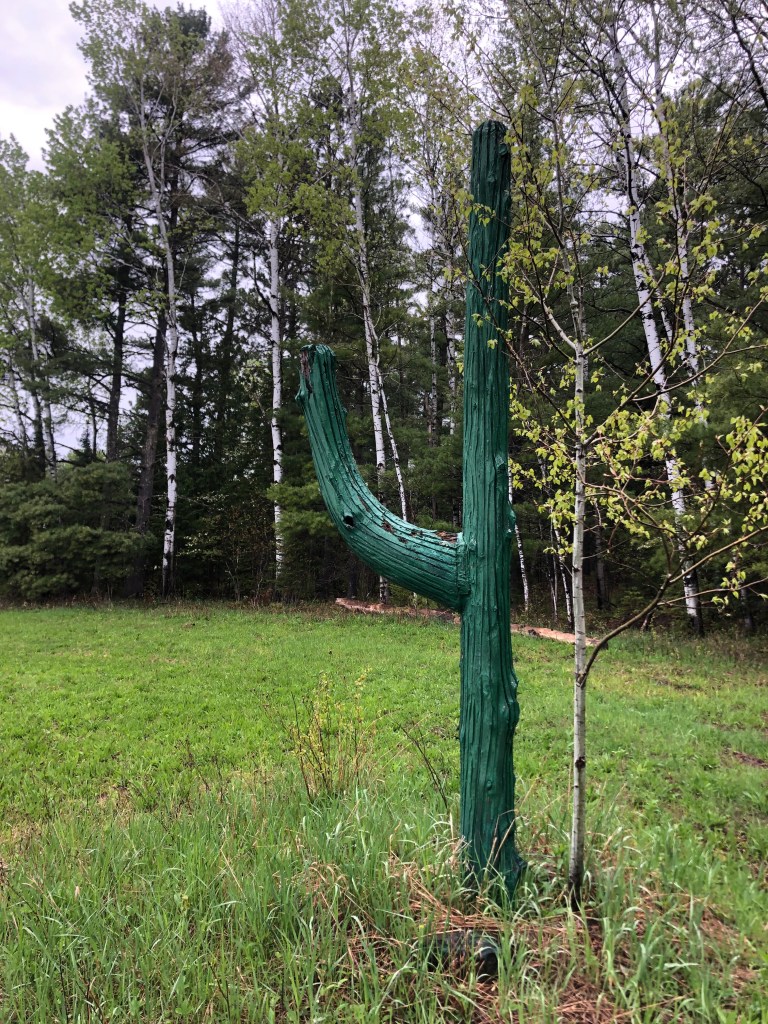
Invasive species

Then, around the next curve, I arrived at what must be Ranch Park….though I still didn’t really know what to expect.
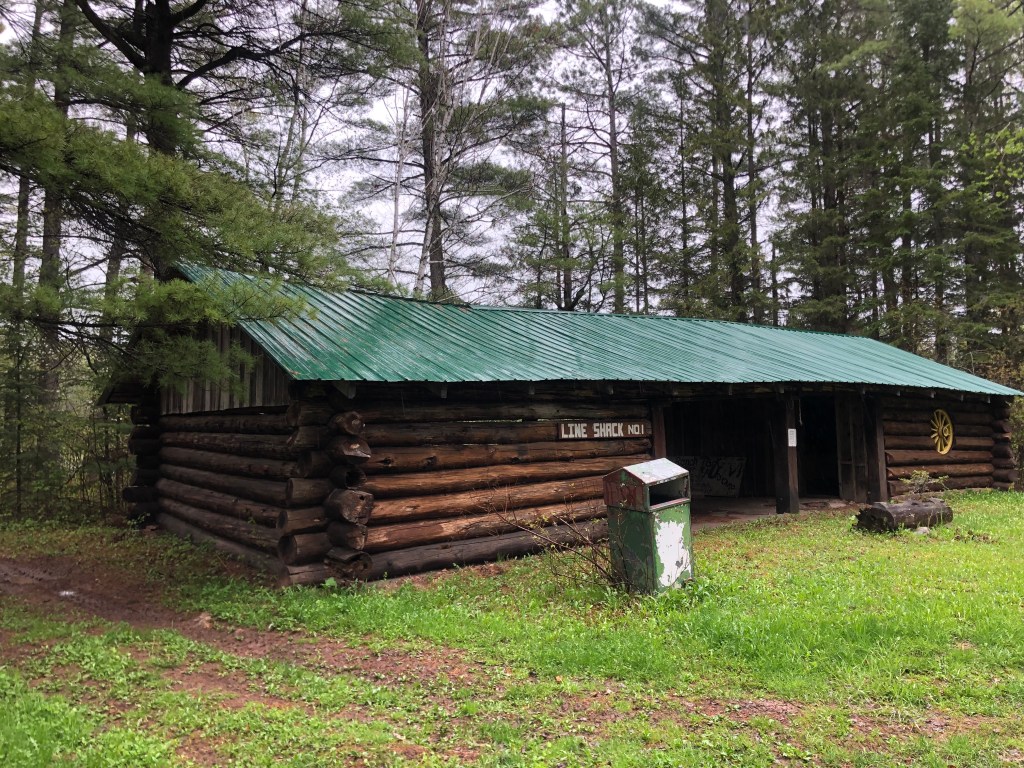
This is not my beautiful house.

A rustic log cabin with a doorless open front stood in front of me, with a sign indicating that it was “Line Shack No. 1.” It was largely empty, except for a couple of picnic tables and a large, carved serpent (?) hanging from the rafters.
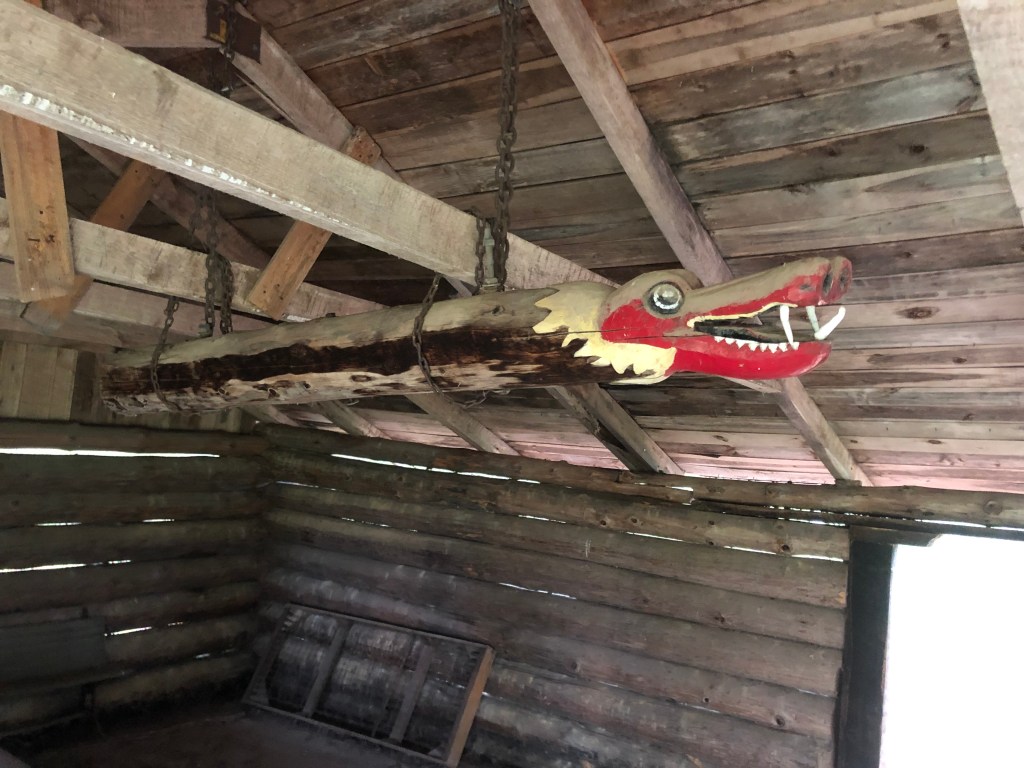
Serpentine wood carving?

Based on a few notices stapled to a bulletin board, I determined that this had been a communal gathering place for people who camped on Ed Sandor’s land. But if that saguaro cactus was all that makes this an “Old West theme park,” I’m sure the visiting kiddies were disappointed.

The rain was coming down harder, so I told myself I’d just make a quick search of the grounds for something more interesting before I left. A sign pointed to the “History Story Trail,” and when I walked 100 feet in that direction I encountered a carved, life-size viking.
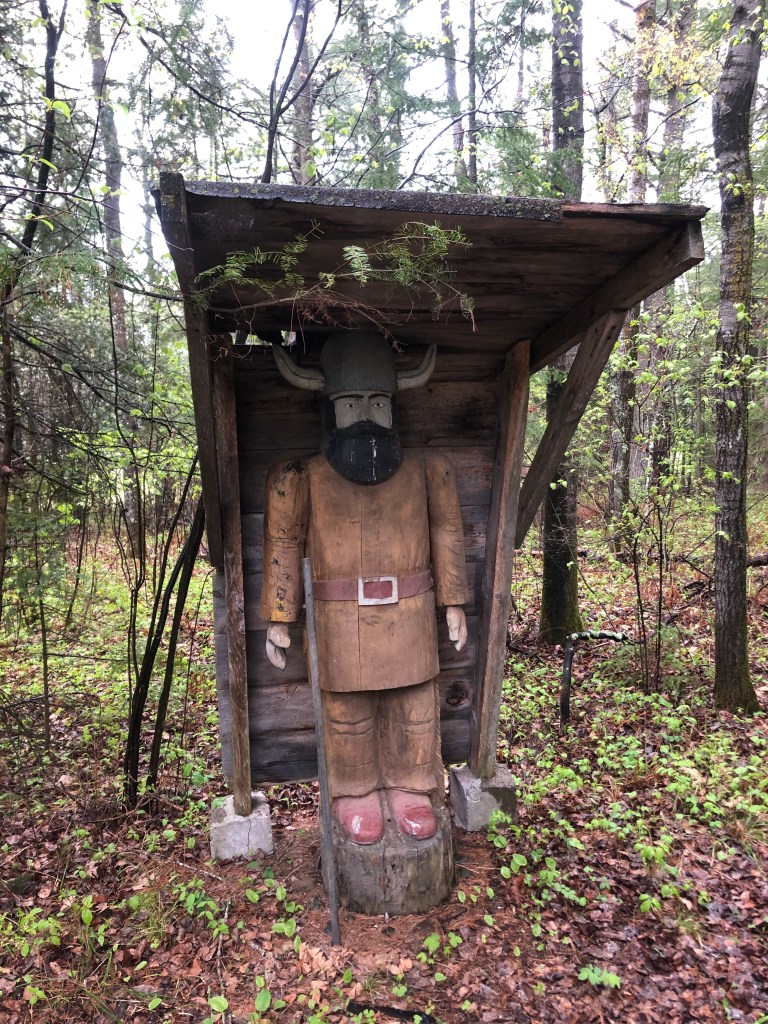
OK, this didn’t exactly evoke the Old West, but it was definitely getting interesting. The Viking stood near the beginning of an overgrown trail. I got onto the trail, thinking perhaps I’d find a carved Visigoth.
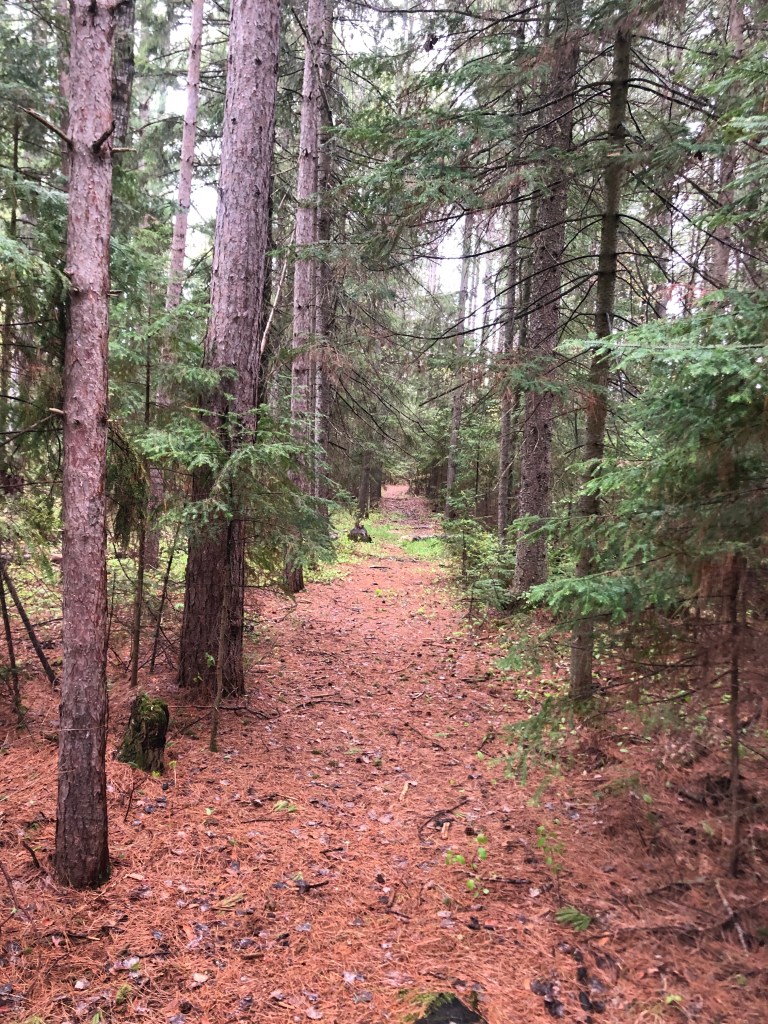
Here and there along the trail someone had staked small paper signs, obviously not suited for outdoor use. They seemed intended to educate visitors about various aspects of pioneer life.
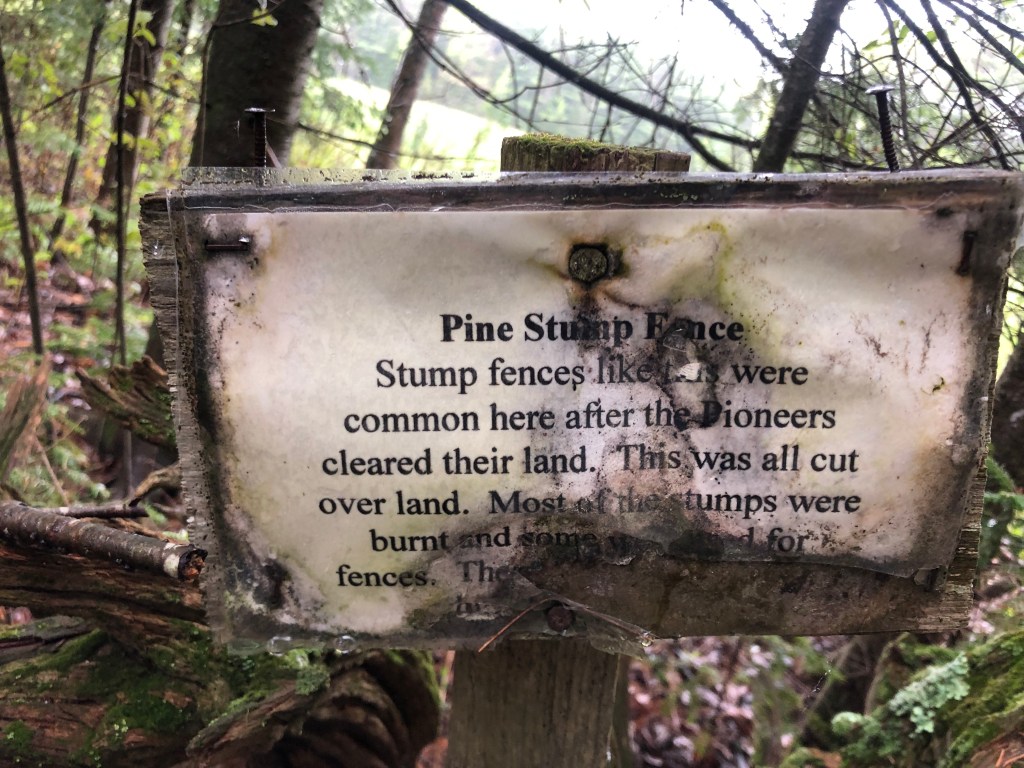
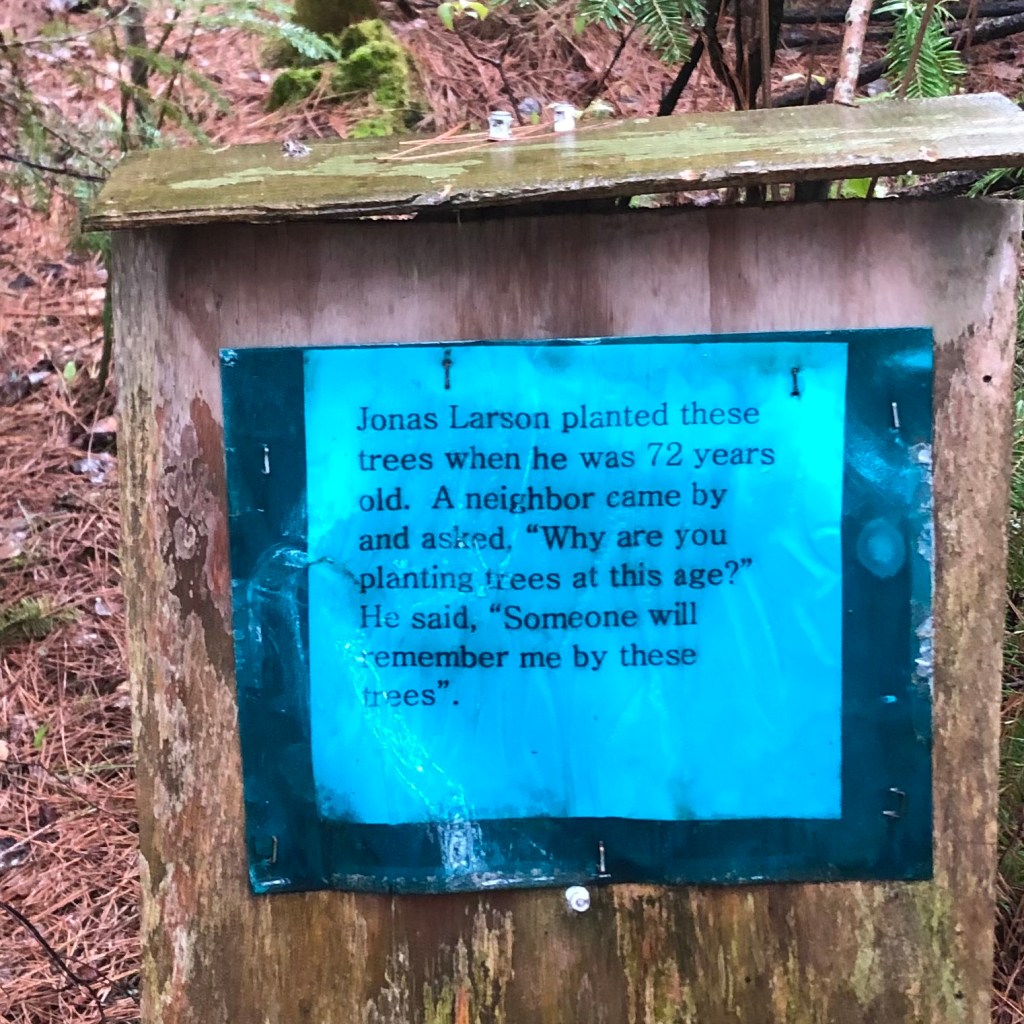
I studied each of these little placards as I passed them, and before long I stumbled upon a rabbit hole. Literally.
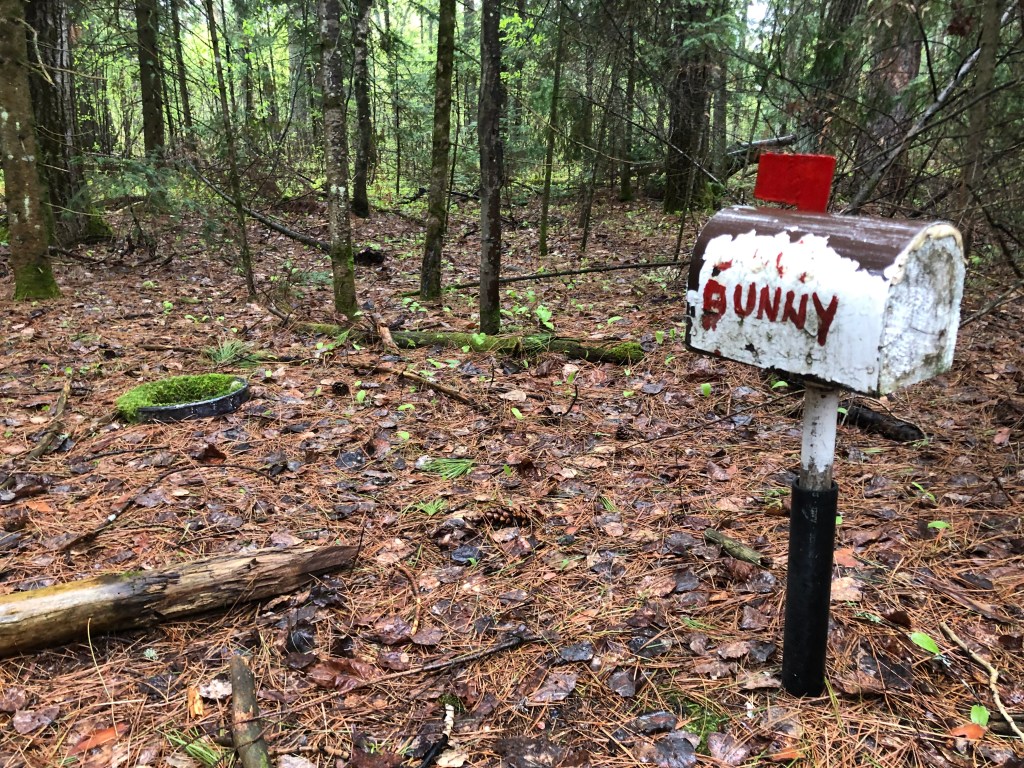
What’s next? “Tresspassers Will”?

I continued to push forward, encountering these small gifts as though they’d been left by Boo Radley in a tree’s knothole. Finally I reached a clearing and I discovered what all the fuss was about.
Howdy, Pardner

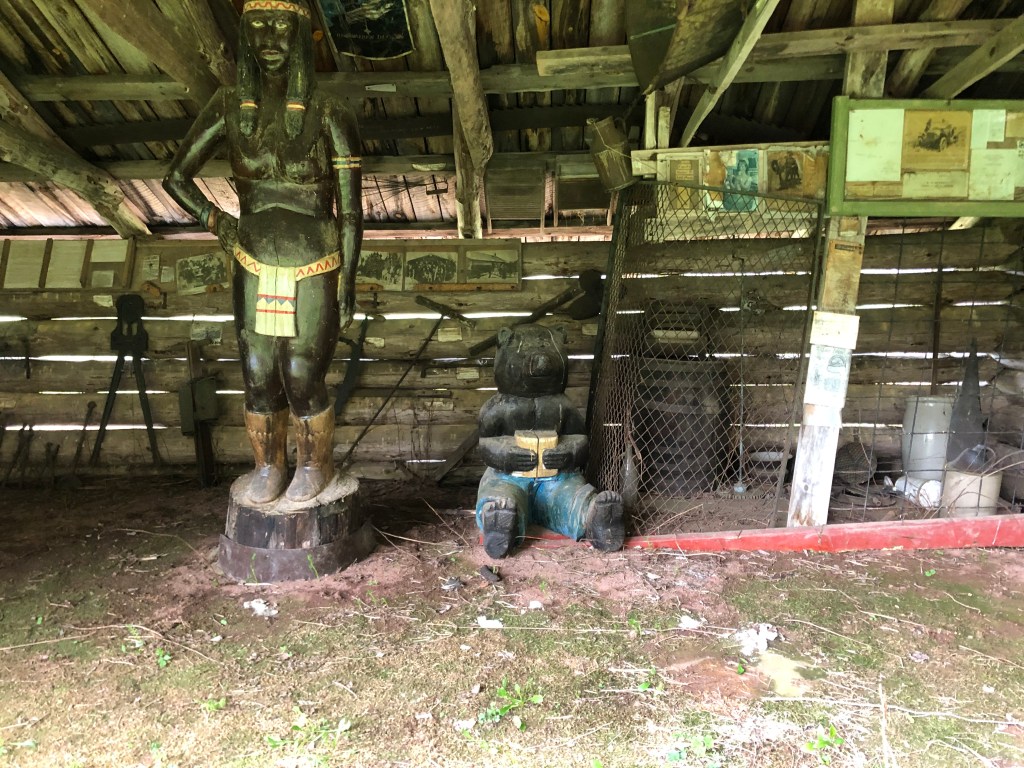
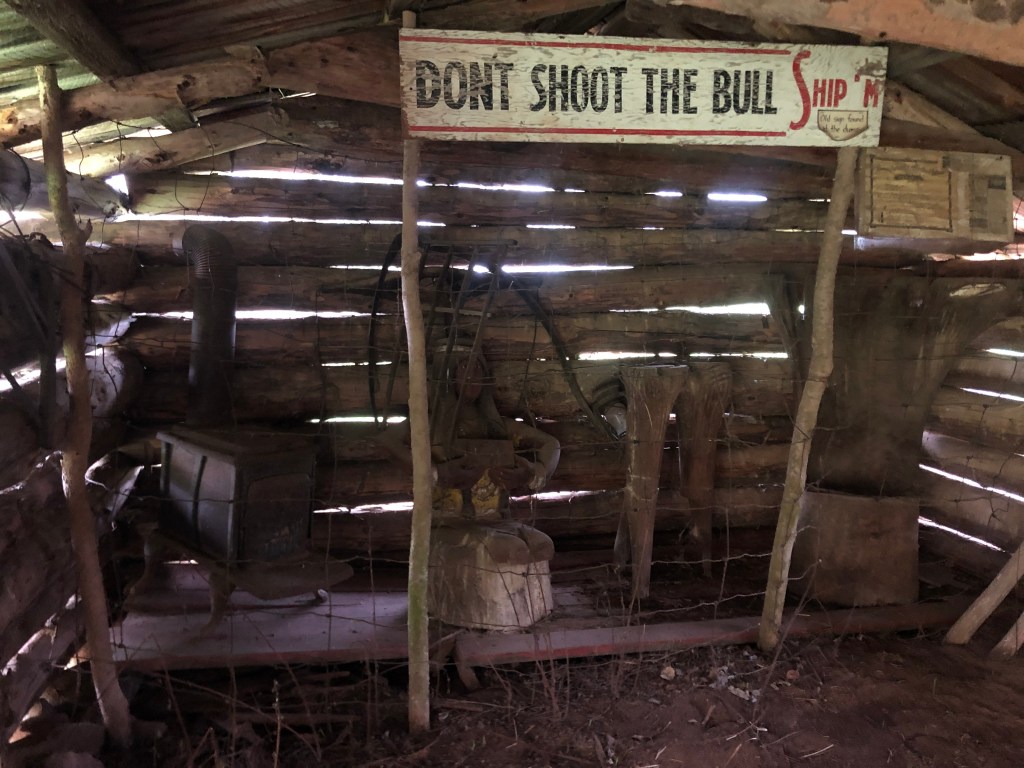
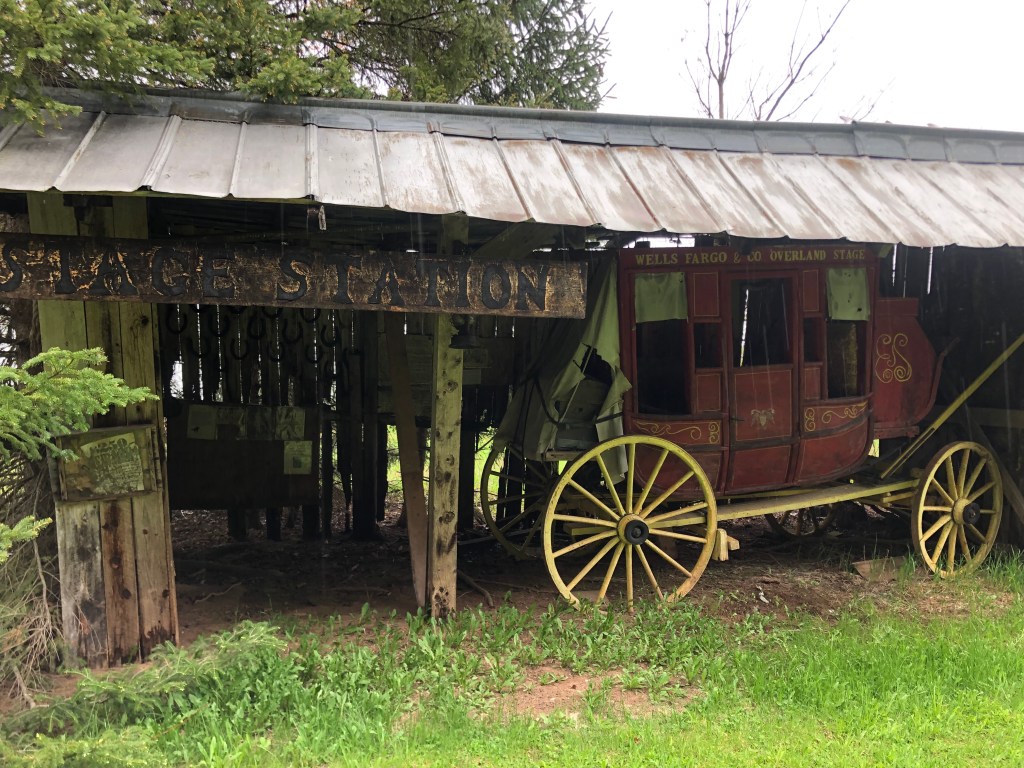
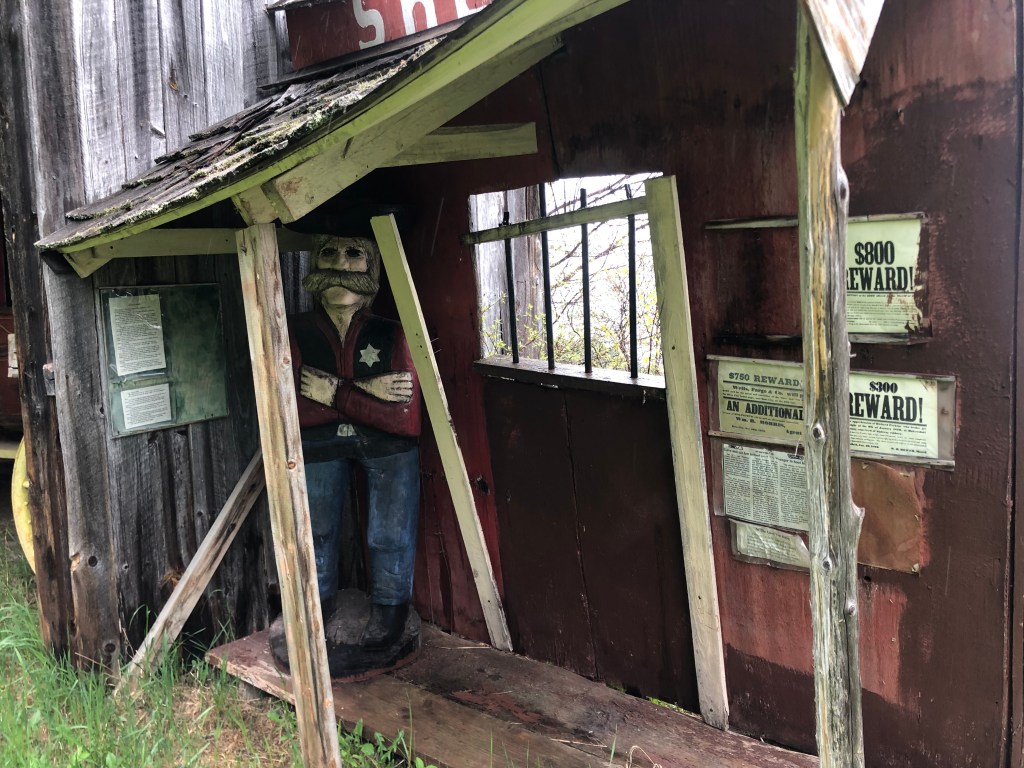
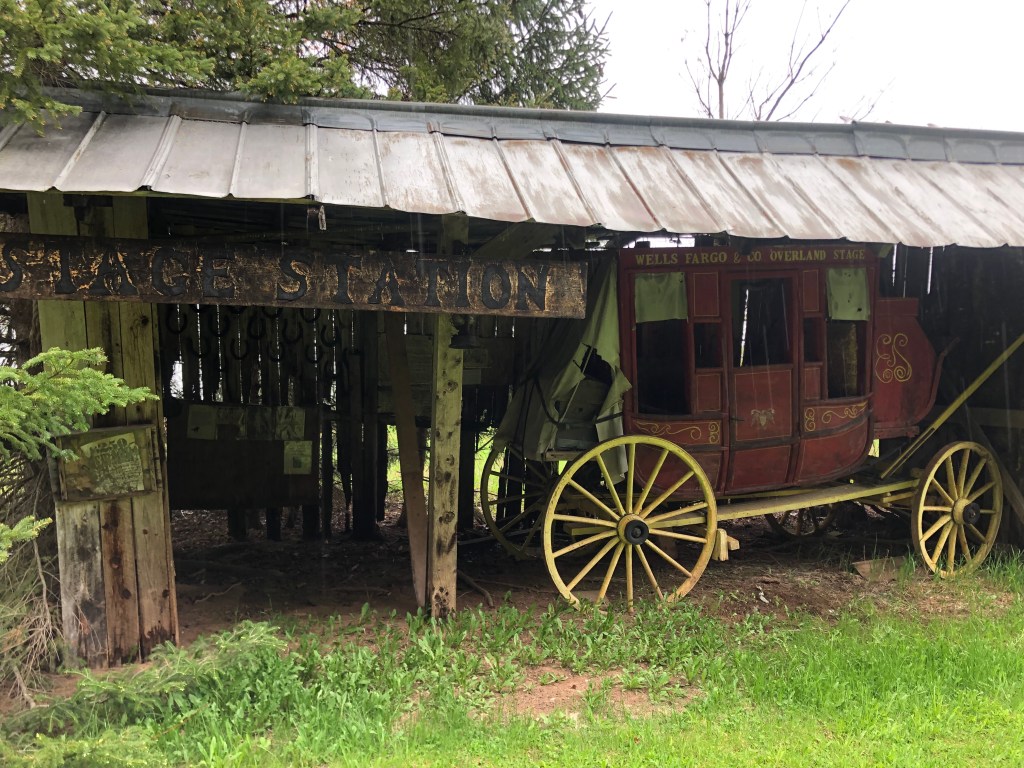
It was remarkable. Ed Sandor had built a small cluster of buildings, resembling a frontier town of the Old West, and filled them with various artifacts, most of which are authentic. There were carriages, tools, furniture, saddles, bridles, books, cookware, and numerous other antiques. What’s more, they weren’t behind glass or protected with cameras or alarms. Everything was just sitting out there to be touched, examined, and appreciated. (There were a few displays behind chicken wire, but it would be easy to circumvent and I think it was just there to keep the youngest kids from getting themselves in trouble.)
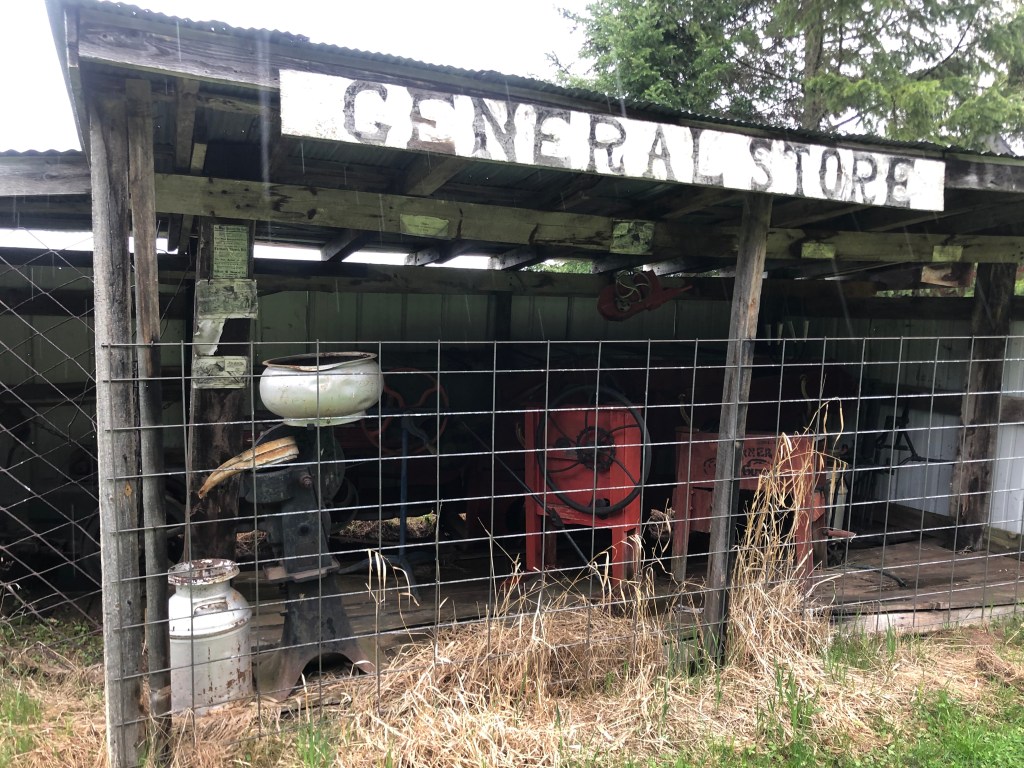
It wasn’t a carefully-curated collection by any stretch of the imagination; the displays didn’t have much rhyme or reason. But there were some explanatory labels and newspaper clippings tacked up here and there.
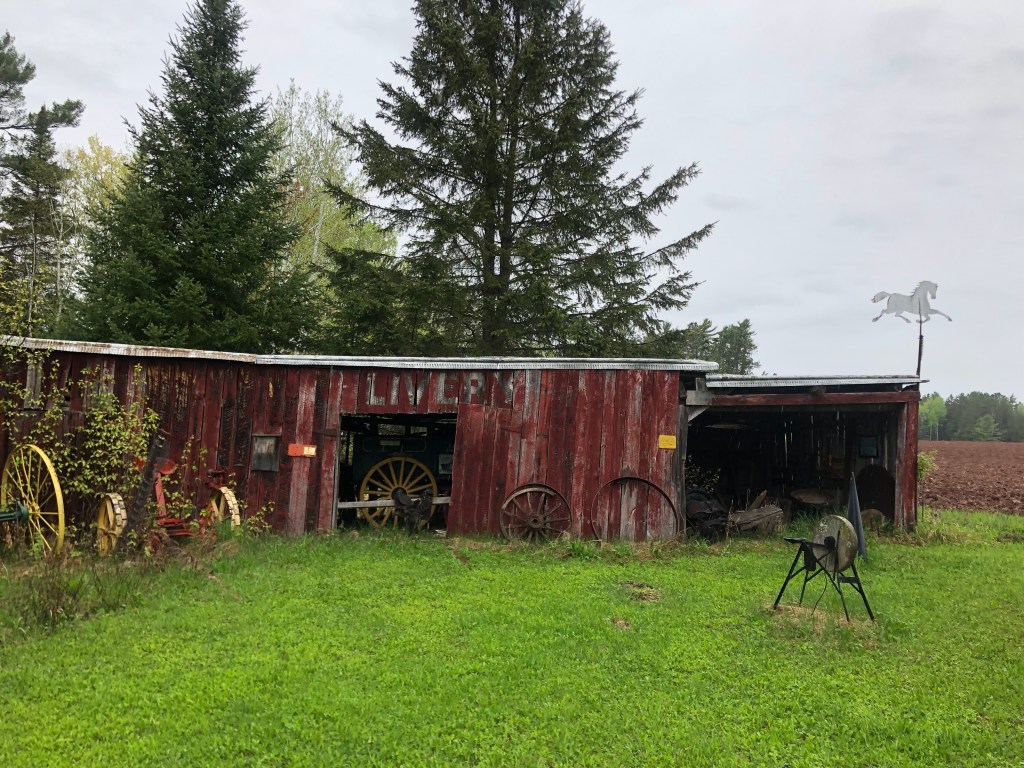
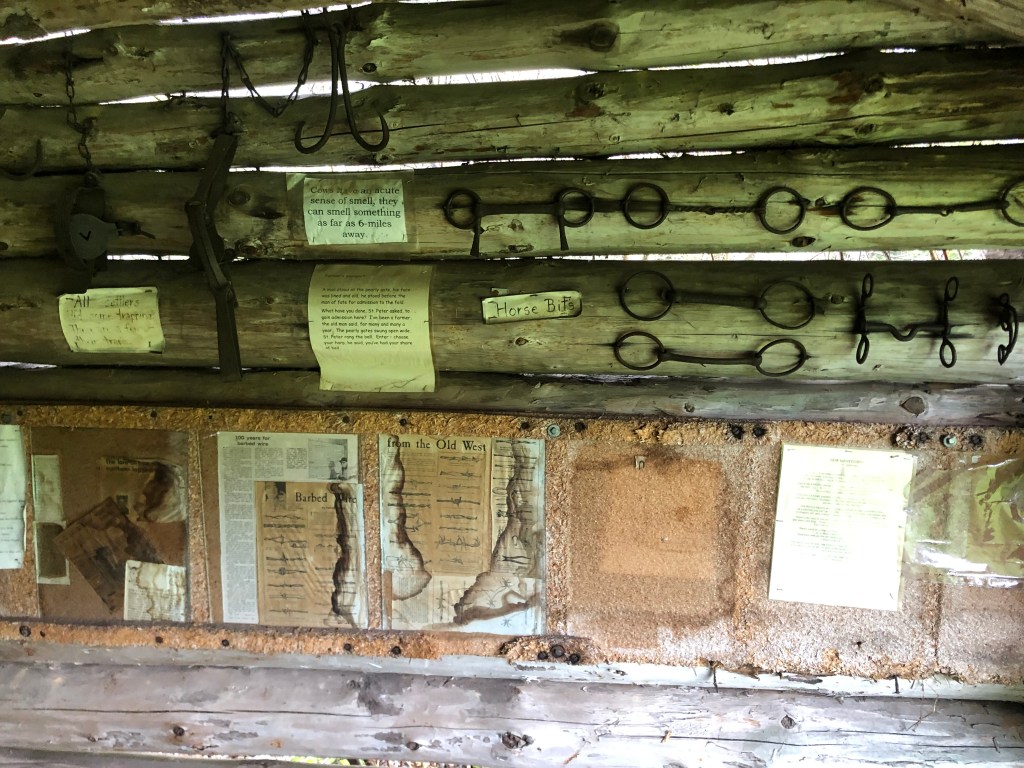
The photos included here barely scratch the surface of the collections hidden away here in the woods. And I later learned that Ranch Park used to be even more extensive, back in its day. Ed Sandor (1924-2019) began to accommodate camping on his farmlands in the 1950s, and in the early 1960s he began creating this western theme town pretty much single-handedly. It grew to become a popular stop for families, much like some of the tourist attractions along Route 66 in its heyday. Ed Sandor and his family kept the place running, making small repairs as needed and occasionally adding some new displays. Sadly, Ed’s declining health forced him to stop working on the Ranch in 2015. He died in 2019, and the Ranch is now for all intents and purposes abandoned, left to decay in the elements.

Here’s a video that shows the Ranch a few years before I visited:

I have a hard time putting into words my feelings as I walked among these decaying displays. The dark skies and drizzling rain, coupled with my being isolated in the forest far from home, lent a distinct melancholy feeling. I felt sad that Ed Sandor’s life work was being left to disintegrate; surely the place would be unrecognizable in a few more years. It also seemed like a waste that no one was working to preserve those genuine and rare artifacts. And I had a nostalgic longing for those simpler times of my childhood, where entertainment was found outdoors and we played in a tangible (rather than digital) world.
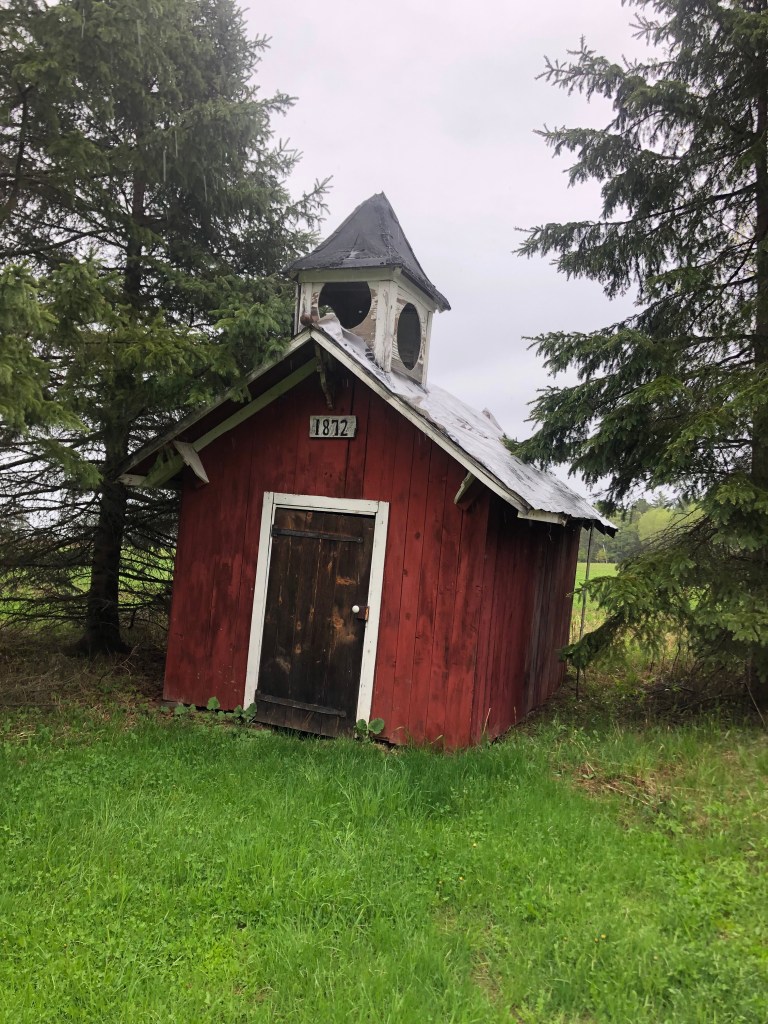
And yet there are some positive and hopeful aspects to this story. For starters, Ed Sandor spent over 50 years running this “ranch” and entertaining kids and families. In a guest book next to Line Shack No. 1 are hundreds of heartfelt testimonials from grownups who have fond memories of the place from their childhood, and from people like me who just now discovered it.

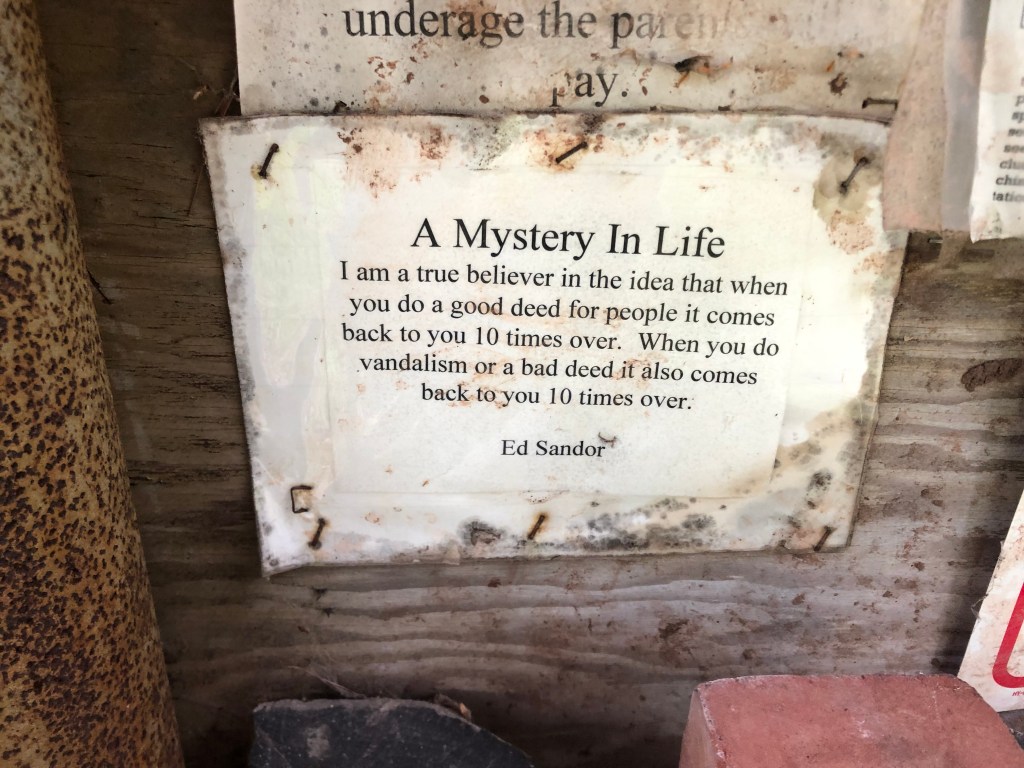
Another thought that struck me was that there wasn’t a single jot of graffiti anywhere at the ranch. This place is completely open and has been abandoned for about 8 years now, and yet no one has felt an urge to deface it. I can’t say for sure whether anyone has walked off with any of the artifacts, but I can say that there is a treasure trove of artifacts that no one has disturbed. And I wonder if one of the reasons why comes from this little sign that Ed posted on the bulletin board by Line Shack No. 1:
The world needs more Ed Sandors.
bridges · Cars · Road trips · trains

Of Badgers and North Stars

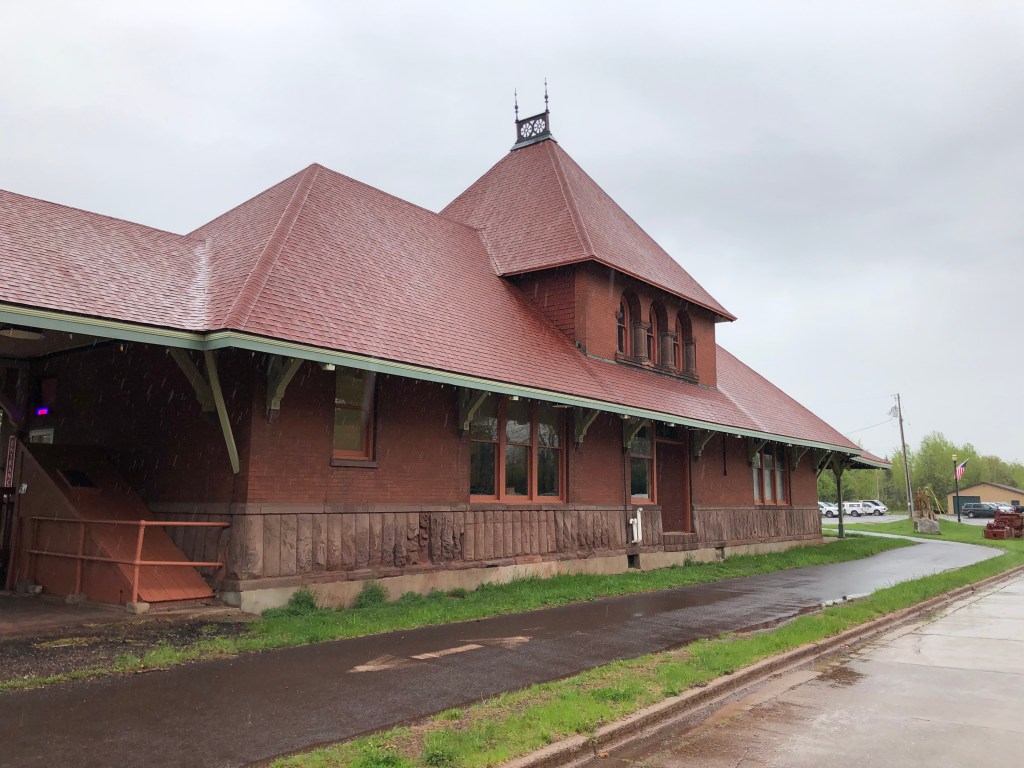
As I headed out of Ironwood this morning, I passed another venerable old railroad depot.

Ironwood Railroad Depot, looking good at 130 years old.

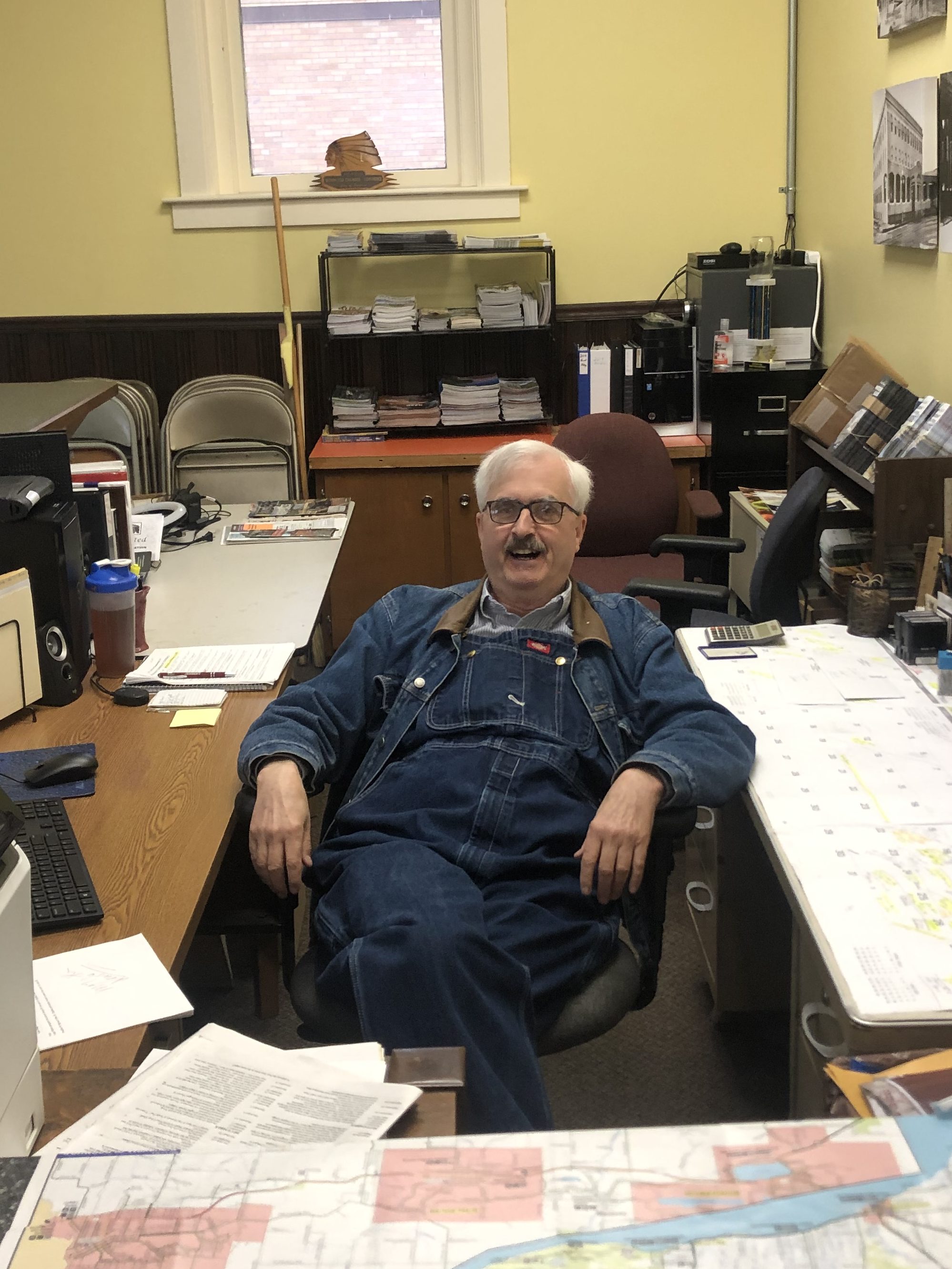
The Ironwood depot of the Chicago and Northwestern Railroad was the town’s transportation hub since it opened in 1892, but the trains stopped coming through in 1970. It’s now a museum and the headquarters for Ironwood’s Chamber of Commerce. It was a few minutes after 7 am when I arrived there, but I found the door unlocked and entered, being greeted by the Chamber of Commerce’s director, Michael Meyer.

Michael gets points for wearing the railroad overalls.

Michael spent close to an hour with me, explaining the history of the depot and of the town. He’s a transplant (from Indiana, if I recall correctly), and thus can speak somewhat objectively about the Yoopers. He’s also a great booster for the town. Apparently the economy took a major jolt when the railroads left and mining petered out, but now, to listen to Michael, the town is experiencing a renaissance.

Michael hepped me to a documentary film about Route 2 called “Route 2 Elsewhere.” (I wish I’d thought of that name!) I’ll have to check that out when I get home. He’s the first person I’ve talked to on this trip who even knew that Route 2 spans the entire country.

After we’d talked awhile Michael was called to a meeting of some kind, and I wandered the displays of the museum. It was the usual stuff–interesting to me, but not really worth describing in a blog. With one exception:

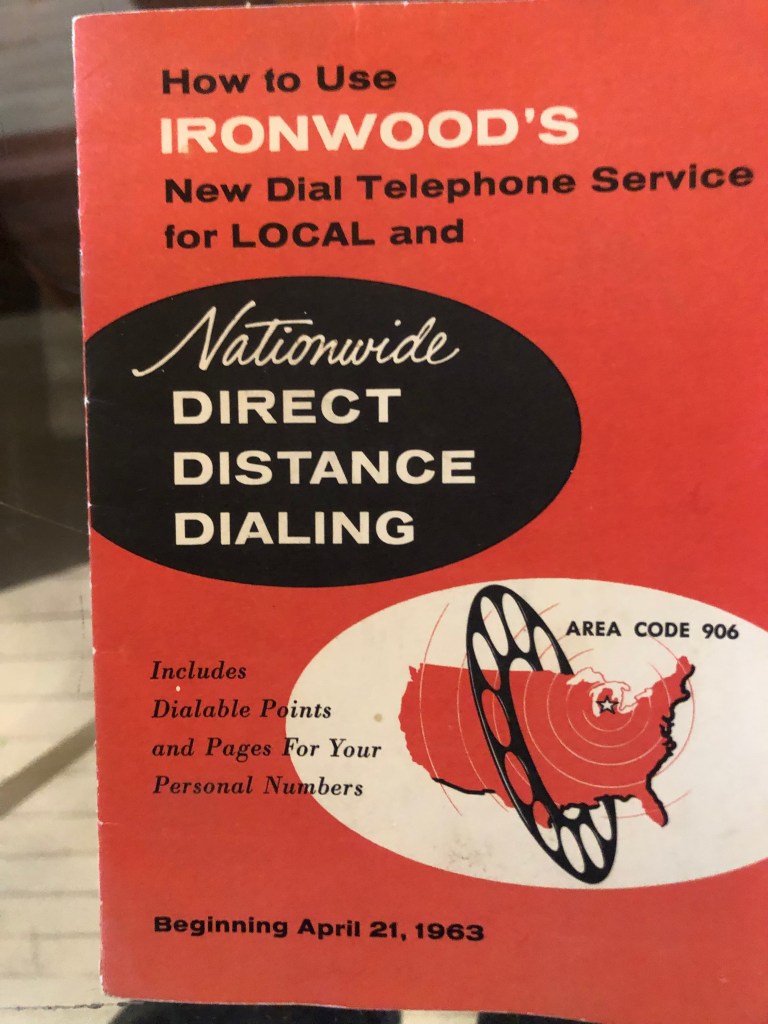
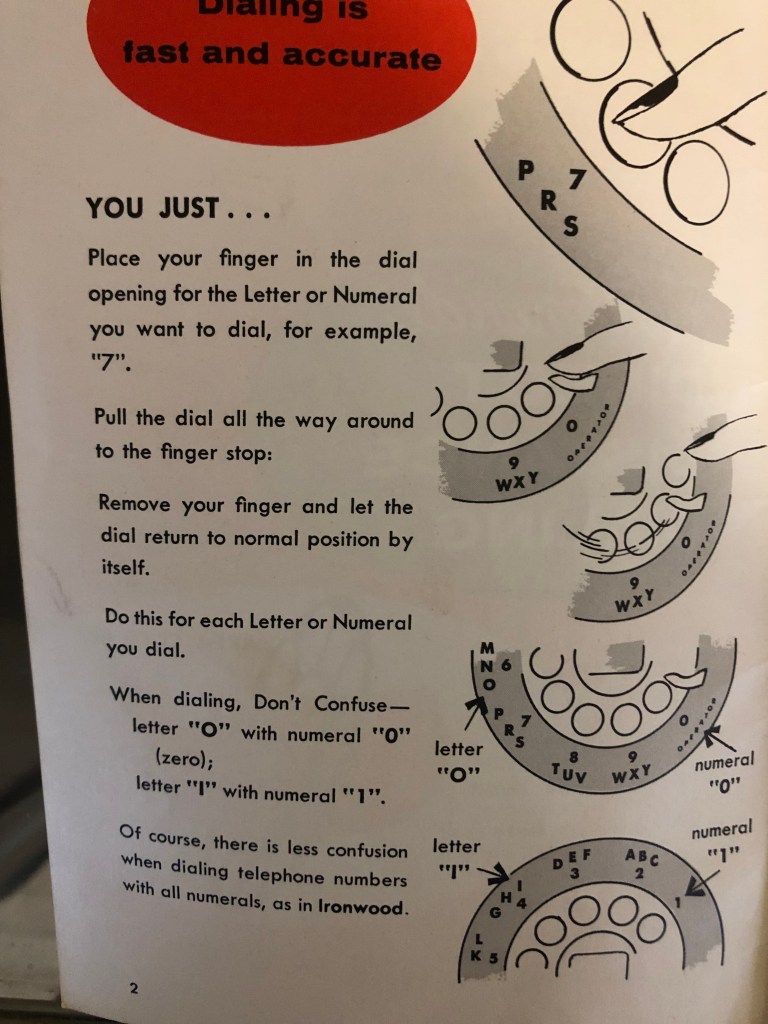
The museum has an old telephone switchboard, and on it was this brochure that evidently was provided to all phone customers in 1963. Now, I’m not saying that Ironwood was a little behind the times, but the brochure explains in excruciating detail how to dial a phone. (I realize that some of my younger readers might not understand this concept, either.)

From the days before instructional Youtube videos.

After reviewing these eye-opening displays about my own early childhood, I got back into the rental car (which is a Jeep, for those of you who have asked) and headed into the great state of Wisconsin.

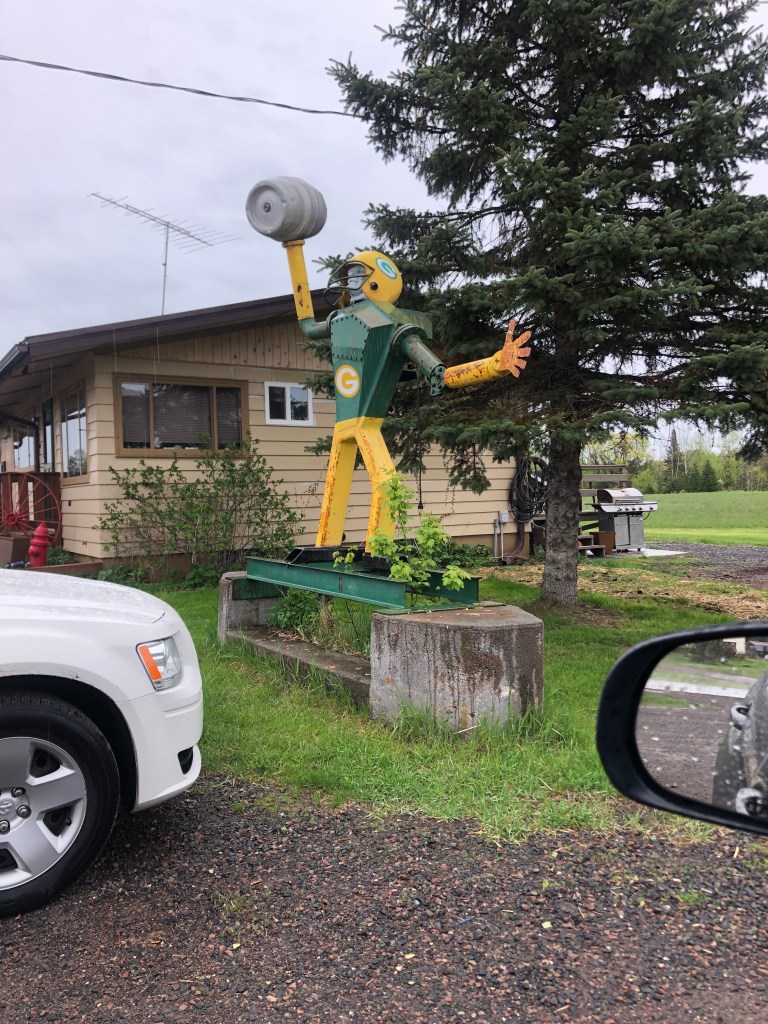
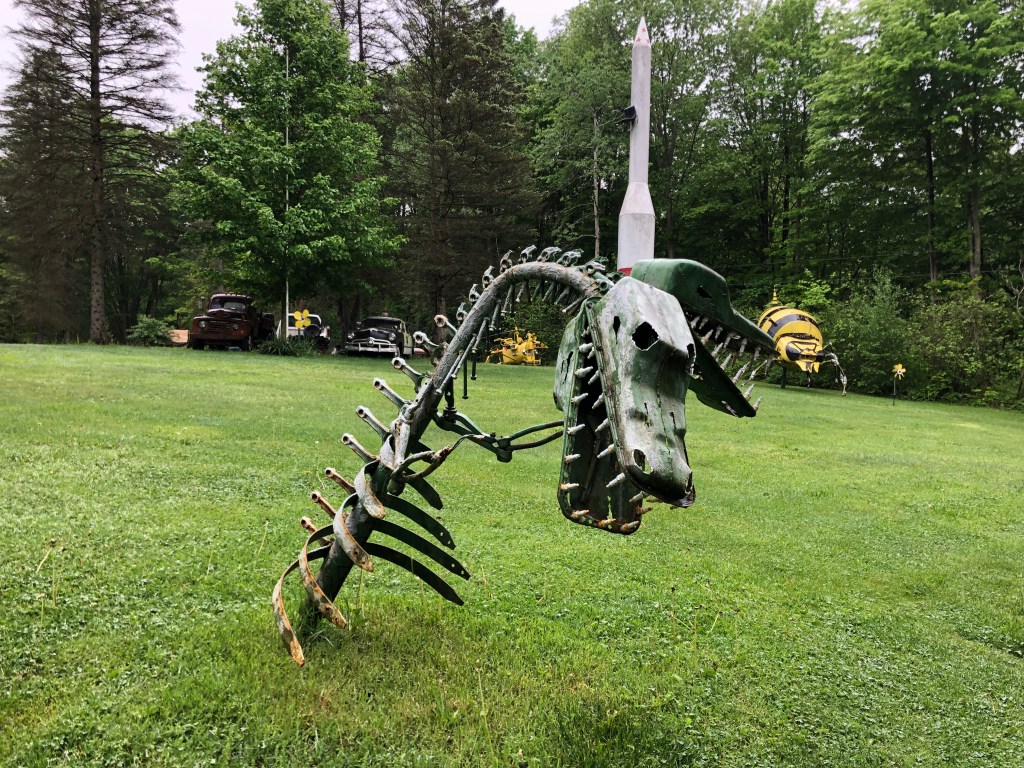
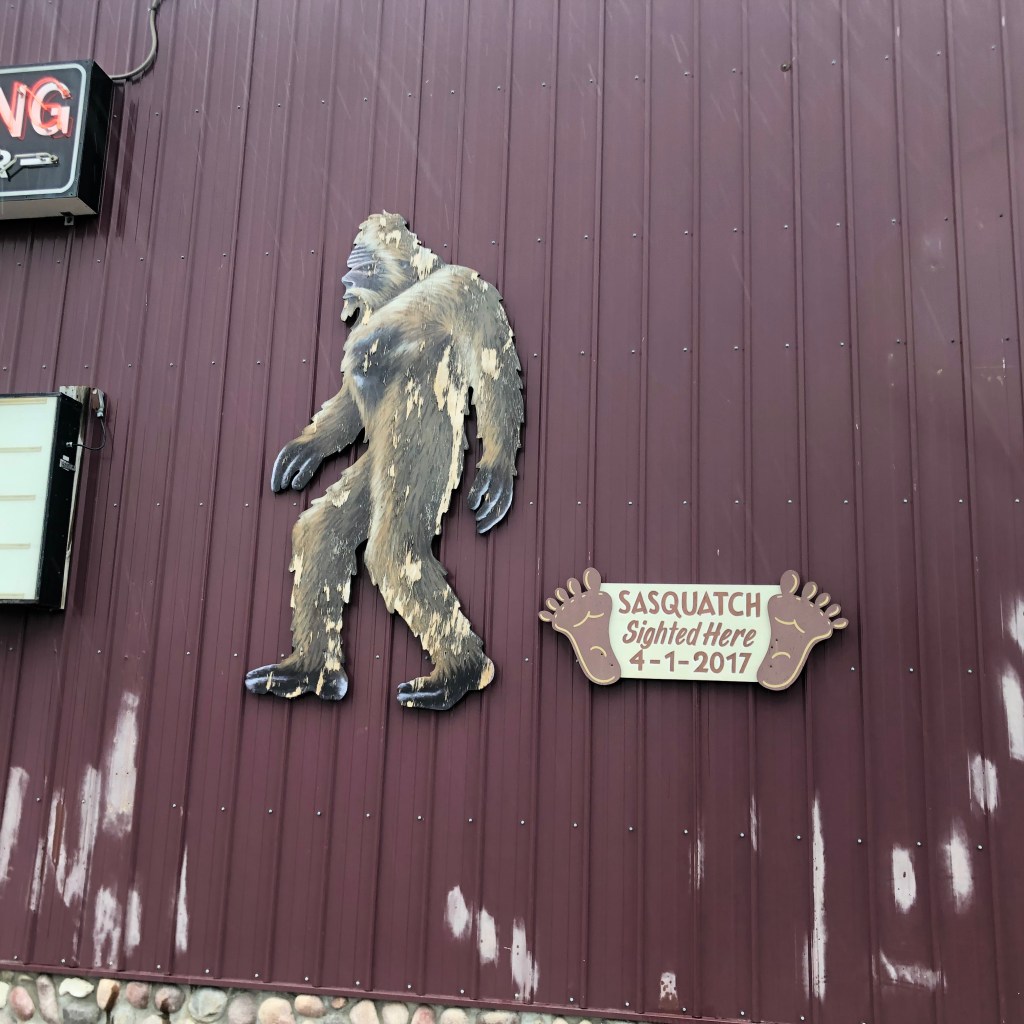
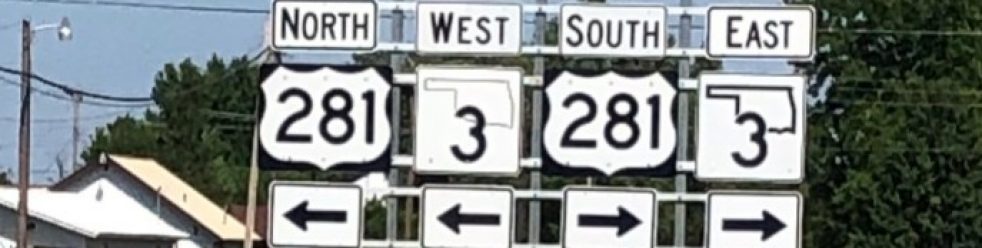
I have to say this about Route 2: It’s really a very reliable, comfortable, friendly road. This is in part due to the fact that it goes through very few big cities; most of the towns you encounter are small villages that aren’t going to ticket you for parking in the wrong spot or prohibit you from turning left. The gas station attendants and restaurant servers are uncommonly friendly, and graffiti is practically unheard of. Moreover, property owners seem to be compelled to communicate with passersby through yard art. A few examples:

On the side of the road in Solway, Minnesota
In front of a liquor store. The keg is a nice touch.
Made from car parts. Note the spark plug teeth.
The April 1 date might be a giveaway.

There’s something reassuring about people taking the time and making the effort to add some whimsy for the benefits of passersby. I encounter a lot of this kind of thing out on the US highways. If you were to seek out the opposite of a twitter flame war, surely this kind of thing would qualify. God bless these people.

In the town of Mason, Wisconsin a gas station attendant encouraged me to check out an old, abandoned, Wild West theme park that was homemade by a man (recently passed) named Ed Sandor on his farmland. This I did, and it was one of the most enjoyable hours I’ve spent. It deserves its own blog post, which I hope to write in the next day or two. Here’s a photo to whet your appetite:

RIP Ed Sandor

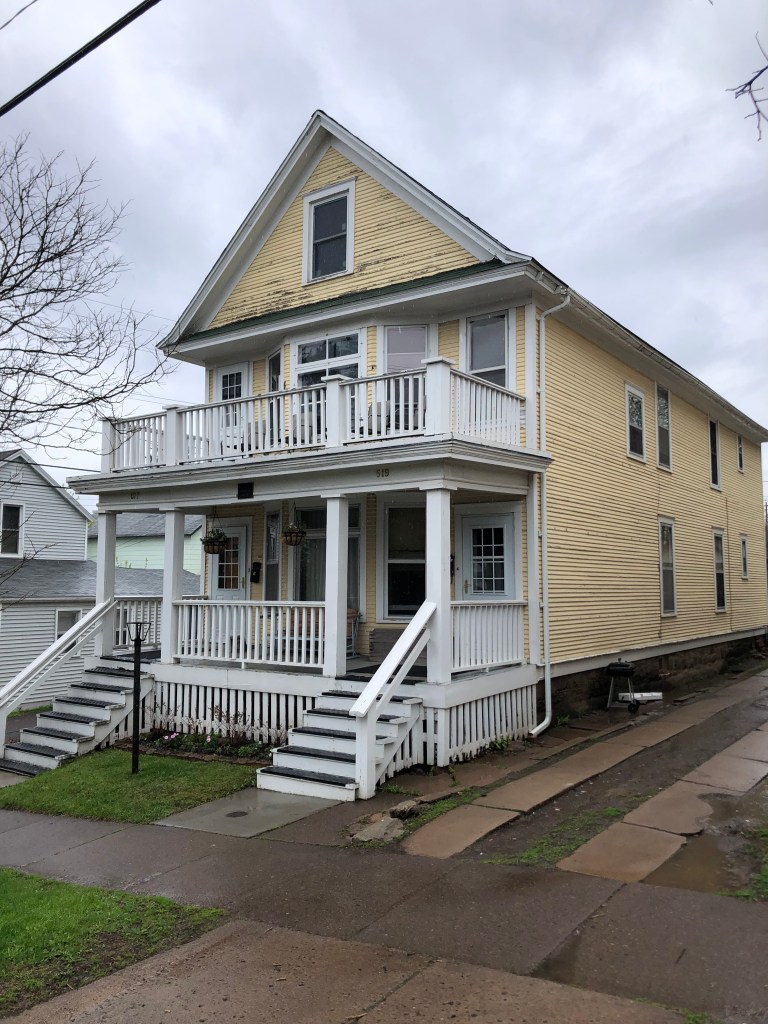
Eventually I came to my first biggish town on this trip: Duluth, Minnesota (pop: 87,000). While stopping to get a sandwich, I asked the proprietor what Duluth is known for. Without skipping a beat, she said “Dylan.” It turns out that one Robert Allen Zimmerman (aka Bob Dylan) spent his early childhood in a modest home on North Third Avenue. I made the pilgrimage, and offer this humble photo.

House of the Risin’ Sun

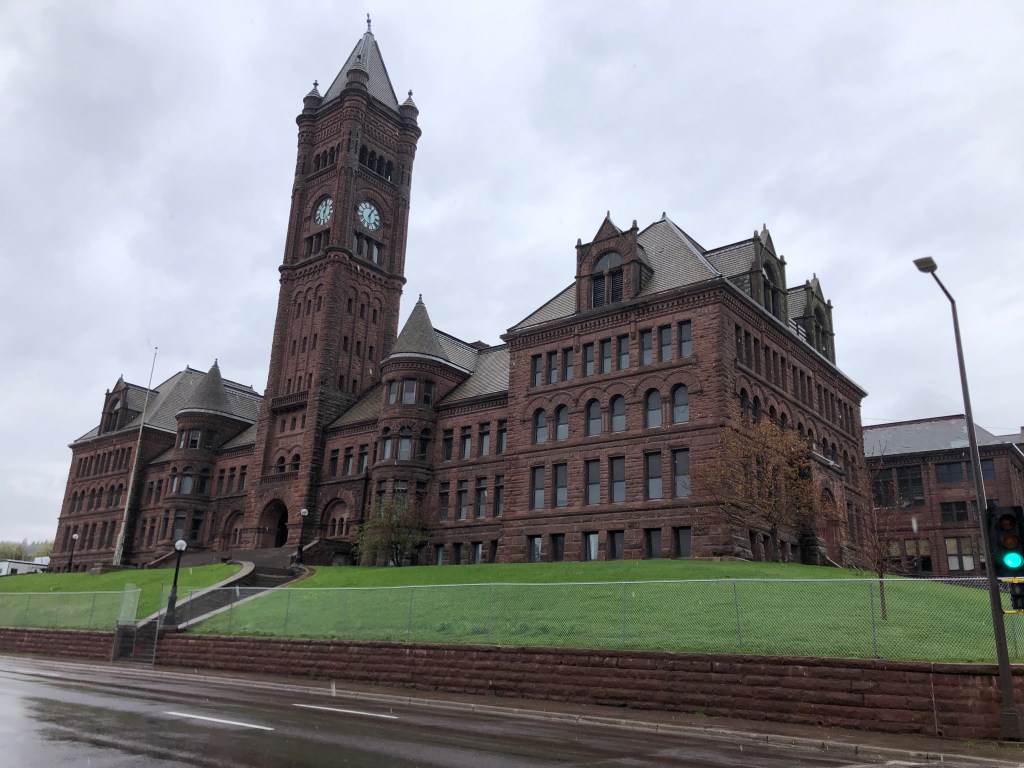
While in Dylan’s neighborhood, I passed Duluth’s Central High School. This is a breathtaking gothic building, originally constructed in 1893, and it didn’t close until 1970. And even then it remained open as administrative offices until 2011.

I can’t figure out what’s happening with the property now, but this is a staggeringly-impressive, large, historic property. Clearly it speaks of a day when public buildings were not just respected but revered. I do hope that Duluth’s leaders find a suitable use for this historic property.

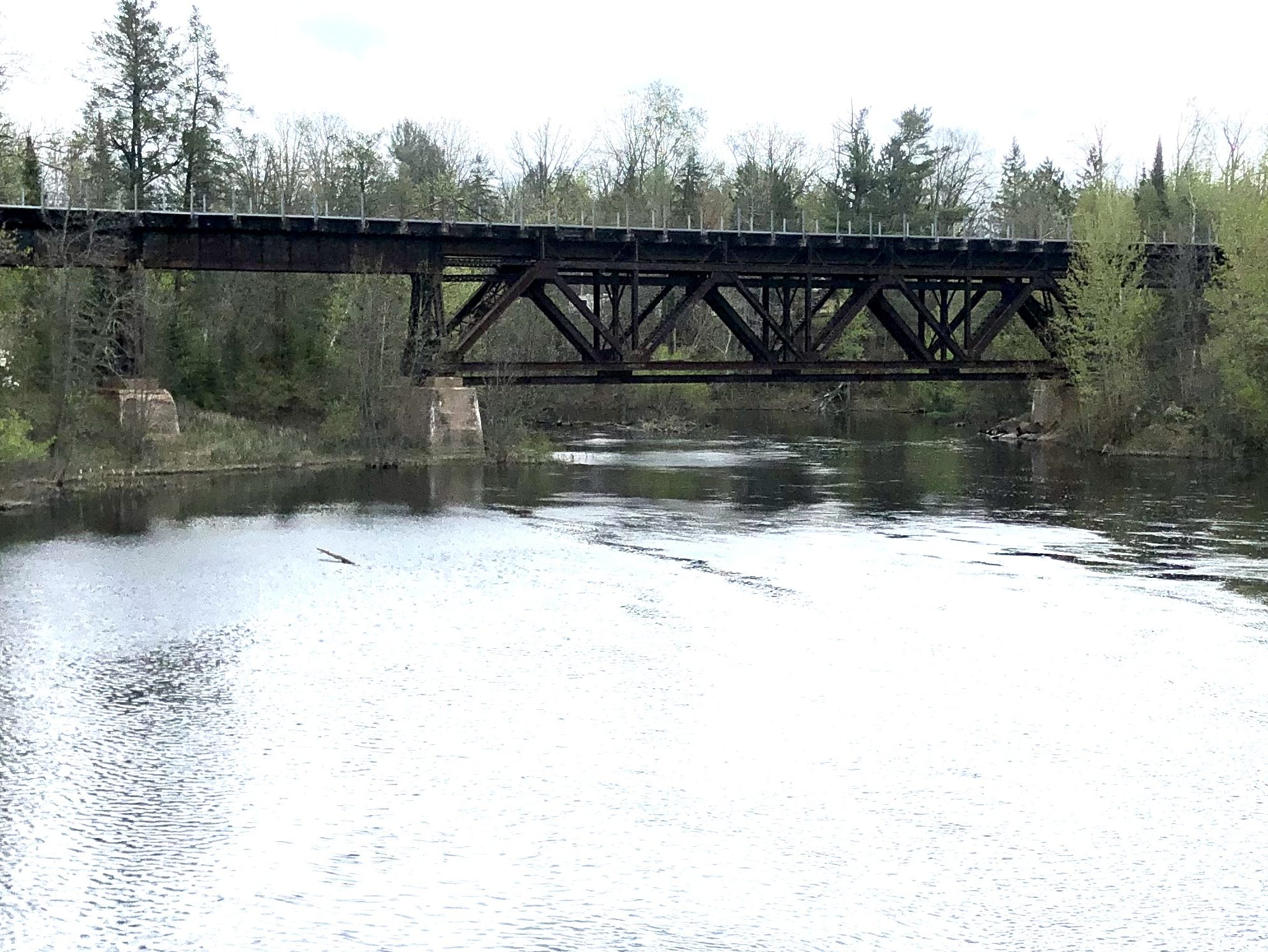
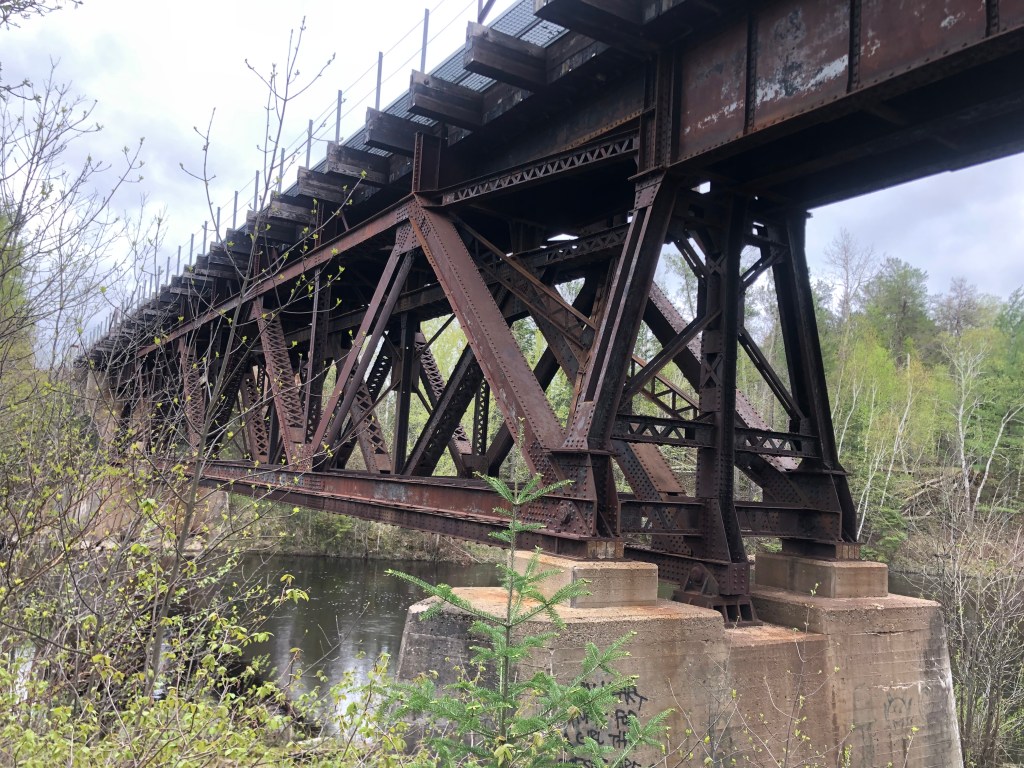
I ended the day’s travels in Grand Rapids, Minnesota (pop: 11,000). Based on my experiences as a tourist, Grand Rapids is known for two things. The first is that it sits at the upper navigable end of the Mississippi River. I noted this when I crossed the Mississippi on Route 2–it was nice to see a body of water that wasn’t one of the Great Lakes, after the past few days of Lakes Erie, Michigan, and Superior! I took a few photos of a picturesque, turn-of-the-century railroad bridge, and I noticed that the Mississippi wasn’t as mighty as I remember it from past encounters further south. (Edit: I later learned that this river is only a tributary of the Mississippi–the Prairie River.)

Carrying trains since 1899.

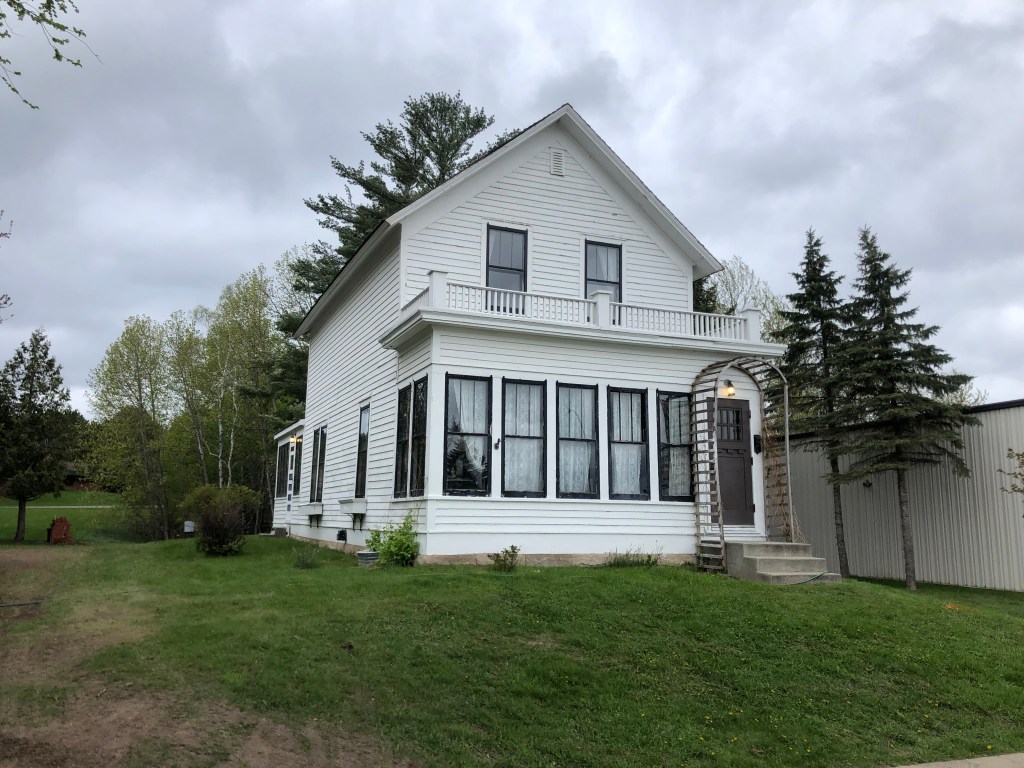
Second, Grand Rapids the birthplace of Judy Garland. Indeed, the hotel in which I’m staying tonight is next door to the Judy Garland museum, which includes the (relocated) home where Judy grew up.

There’s no place like home…

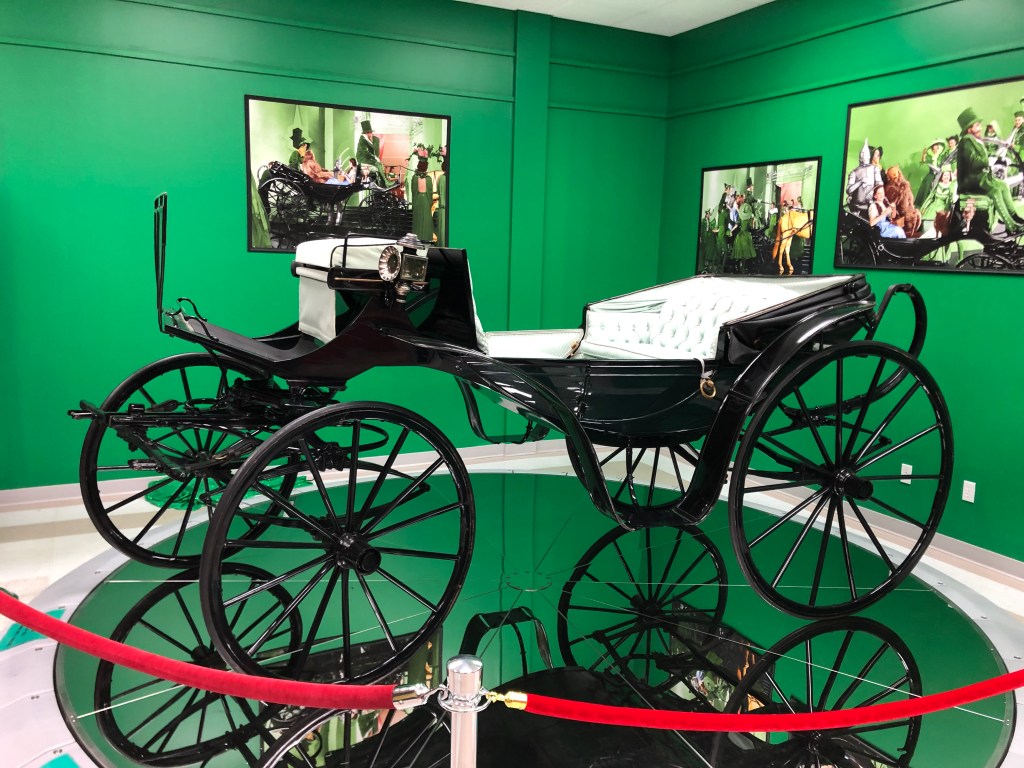
Now, to be clear, I’m not a total fanboy of Judy Garland, but I certainly find her story to be compelling. And I always loved The Wizard of Oz. So the museum (which I toured) intrigued me, with various artifacts from her movies and her (somewhat tragic) life.

The actual carriage from Oz. Remember?

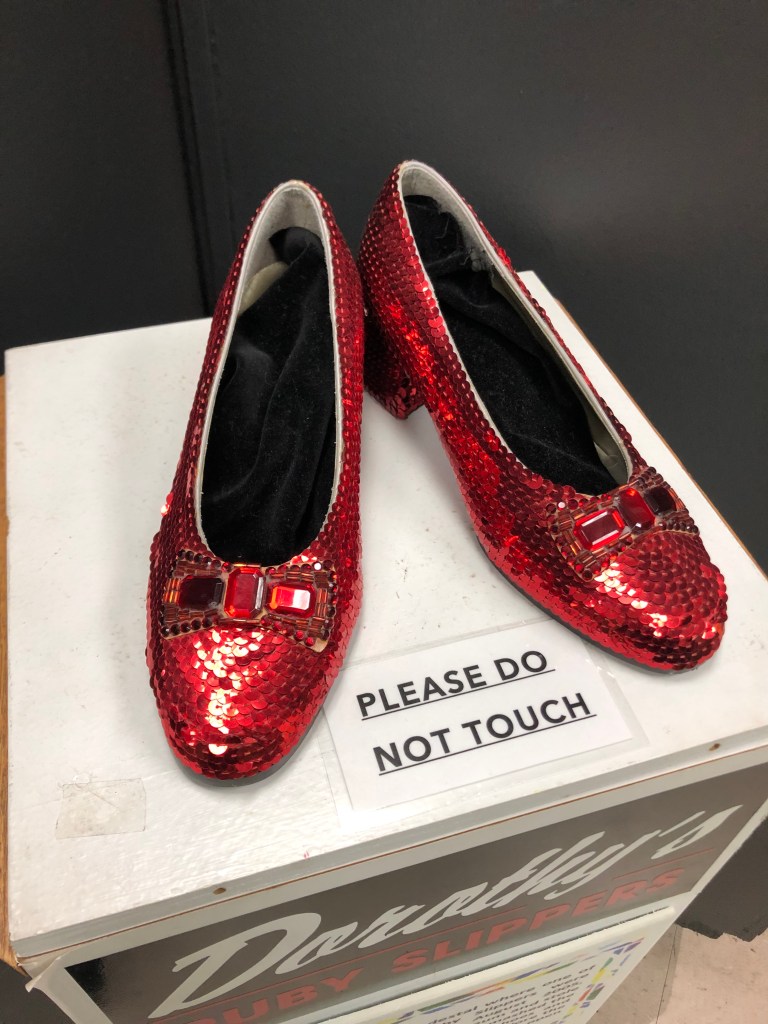
Naturally, my primary objective at the Judy Garland museum was to see the ruby slippers. And behold, there they were, just sitting on a pedestal with no barrier separating me from them!

“Their magic must be very powerful, or she wouldn’t want them so badly.”

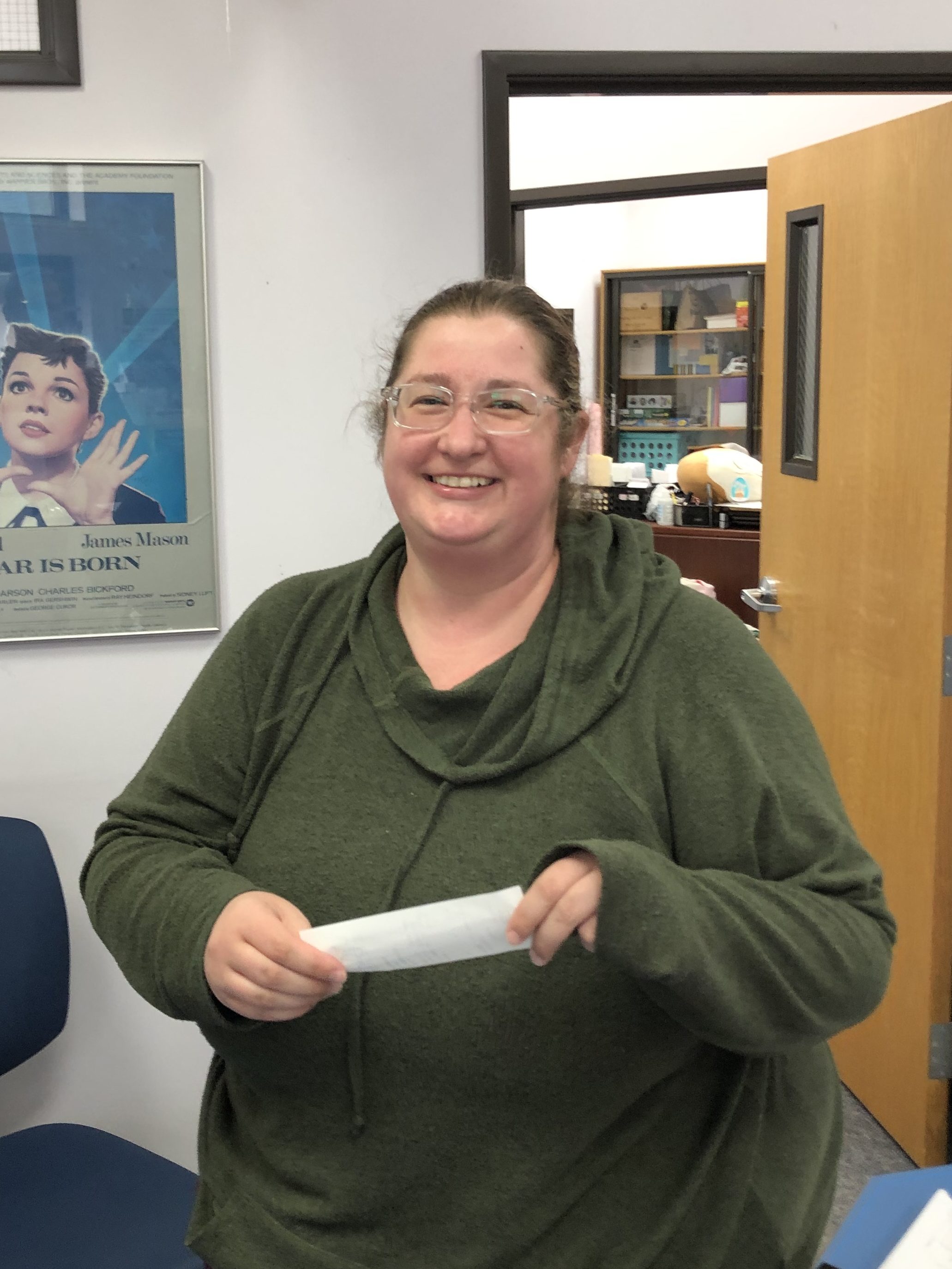
Alas, a sign explained that while this was the “original pedestal” on which the ruby slippers used to sit, the slippers were reproductions. The original slippers were stolen in 2005. A docent (Sheena, pictured below) told me that the slippers were recovered in 2018 in Minneapolis, but they remain in the possession of the FBI, which continues to gather evidence of the crime. What’s worse is that the slippers were just on loan to the museum, so if and when the FBI releases them, they’ll go to the owner, and not to the museum.

Sheena, the Wizard of…the Garland Museum.

Still, the museum contains numerous authentic artifacts, and I recommend it. Meanwhile, when she heard I was driving the length of US Route 2, Sheena encouraged me to visit the headwaters of the Mississippi River, which are a short drive from the highway. This I will do tomorrow. Until then.

BOTD

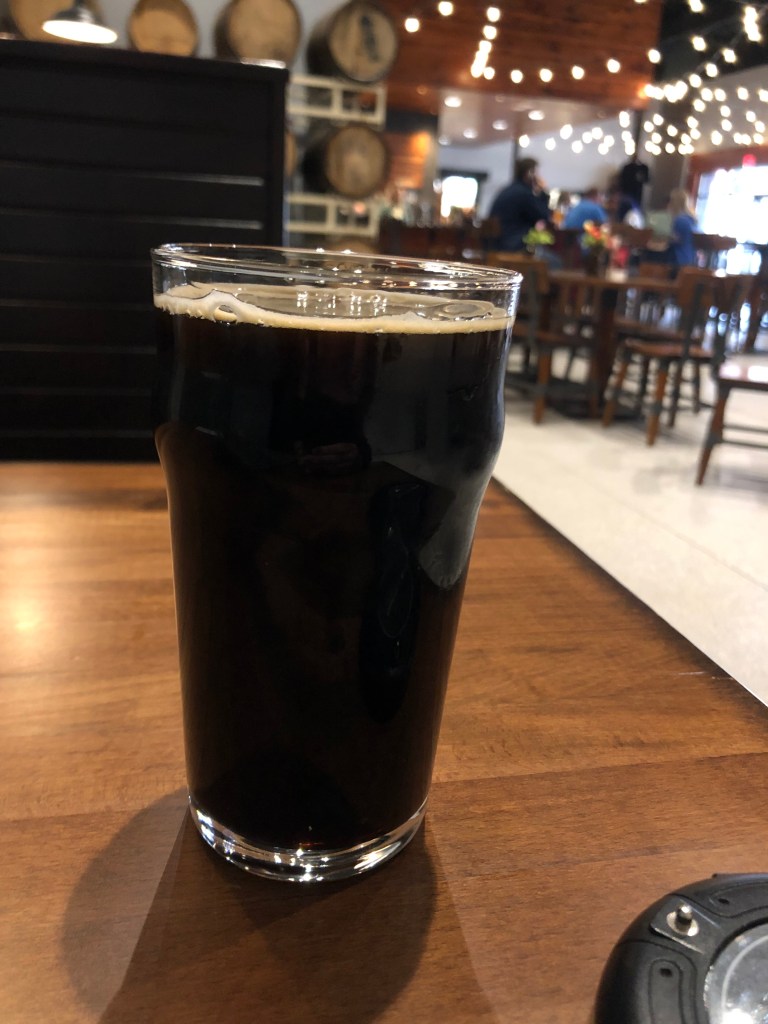
The Ichabod Crane of beers.

The Brew of the Day was a “Cocon-Oat and Boat Stout” from Rapids Brewing Co., in Grand Rapids, Minnesota. RBC has only been around for about 3 years, and it looks like your typical modern brewpub with a spacious floor in a warehouse-like building, minimalist industrial-chic decor, and lots of bearded hipsters. But unlike some other such brewpubs that I’ve visited, this place has nailed the food and the staff really makes an old guy like me feel welcome.

As its somewhat-forced name suggests, the “Cocon-Oat” stout is an oatmeal stout brewed with toasted coconut. This won’t be everyone’s cup of tea, but it totally worked for me. The toasted coconut isn’t overpowering, but it adds just the right amount of sweetness and interest to the flavor profile. Don’t think Mounds candybar; think macaroon. The oatmeal lends a creamy smoothness, and it has just the right amount of hops. It goes down really easy, but at 5.9 percent ABV, this isn’t going to put you on the floor. I give it 4.5 stars.

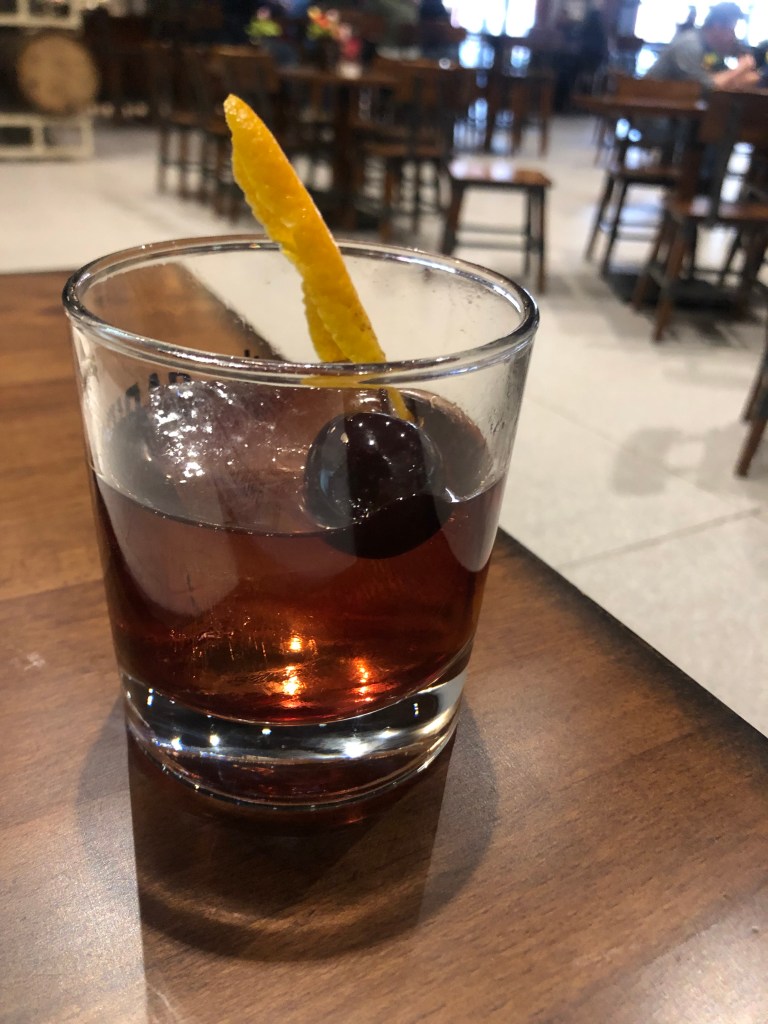
PS: The bartender told me that today is Whiskey Wednesday, which means that I get $2 off any bourbon cocktail. So I chased the stout with an Old Fashioned, to which I give 5 stars.