Halloween

More Ghosts

Even though Halloween has passed, I’ve got a few more ghosts to share. First, remember my picture of that rambling house in Placerville that was done up for Halloween?
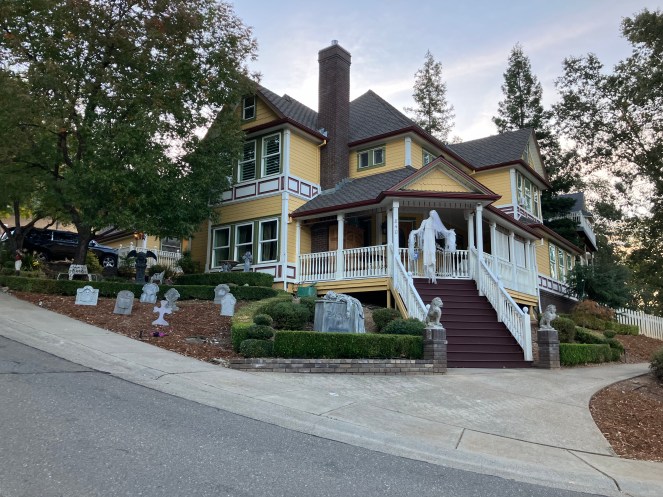
Well, I passed it the other night and it looks wonderfully spooky.
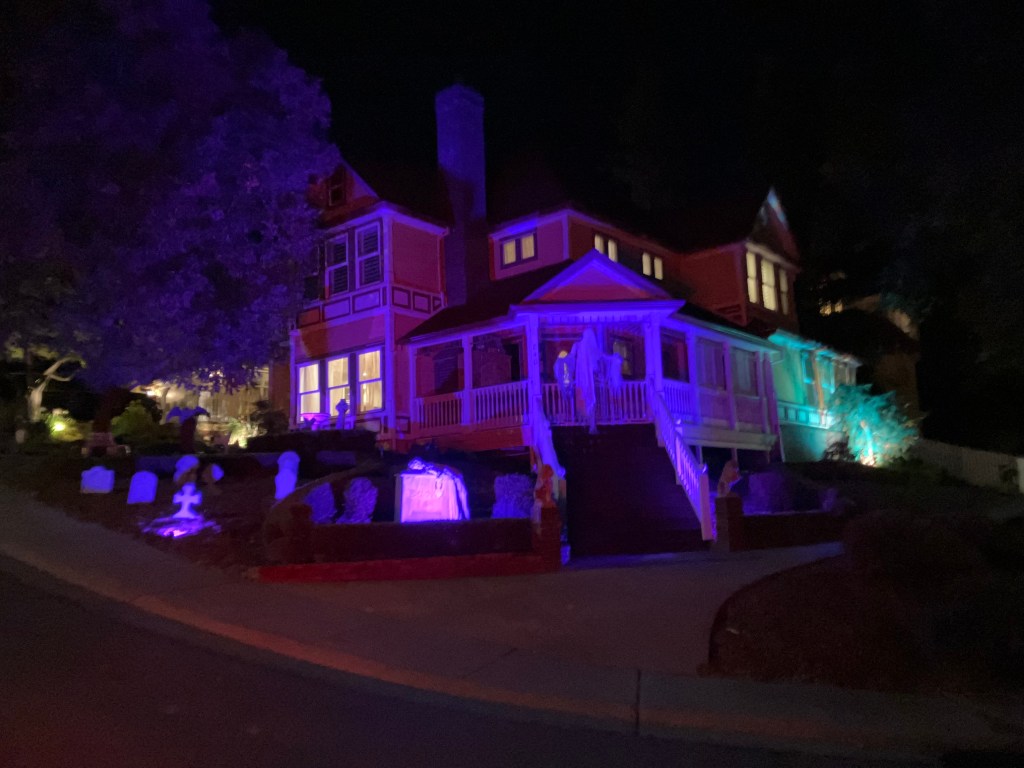
Amazing how a few colored lights can spookify a house.

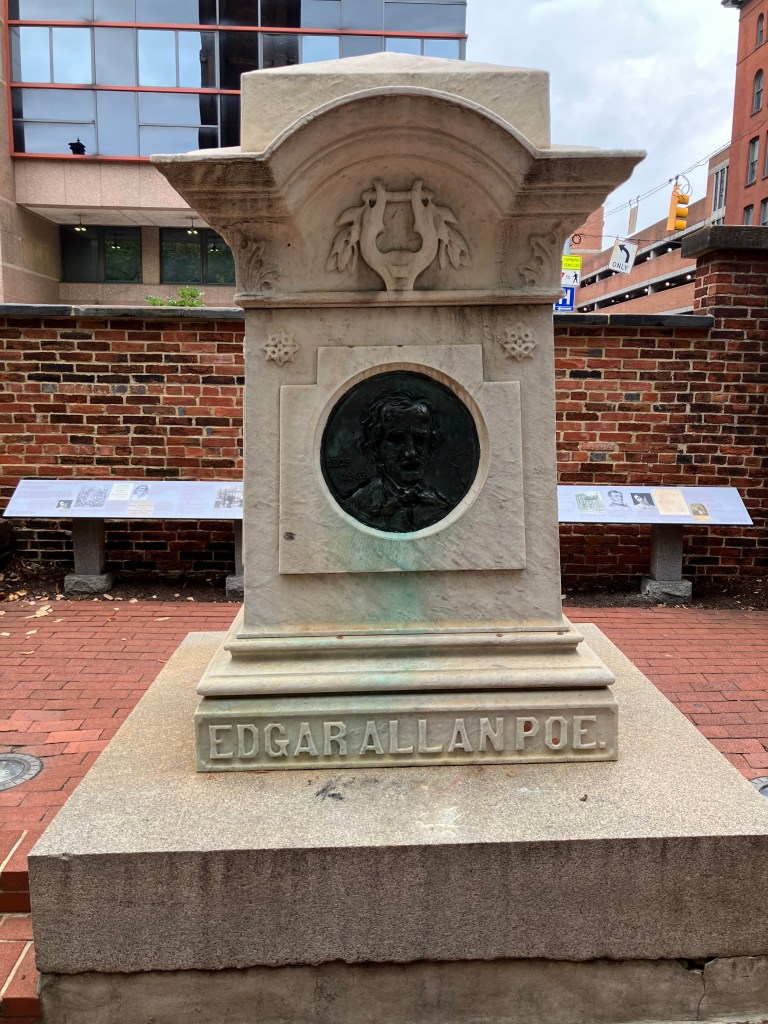
Second, remember that I had attended Poe Fest in Baltimore last month? Well, loyal reader Peter D found this (dubious) evidence of Poe’s presence among us in Berkeley, CA:
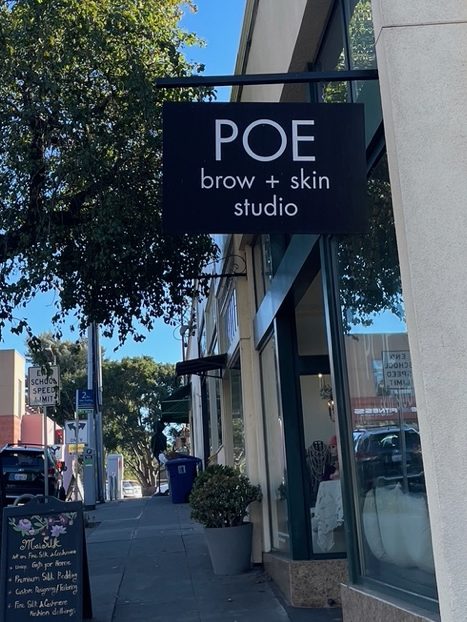
One wonders how wise it would be to entrust your “brow and skin” to someone named Poe.

But what I really want to focus on is a ghost from my own past: my grandfather Henry Boilard (i.e., my dad’s dad). I never met the man. What’s more, neither did my dad. Grandpa Henry shipped out in the merchant marine just days after dad was conceived, and Grandma Ruth never saw him again. His name was never spoken around our house, as dad could never forgive his father for abandoning the family.

That’s pretty much all I knew about Grandpa Henry until a dozen years ago. That’s when I was contacted out of the blue by someone in Vermont named Bonnie. Bonnie had come into possession of a letter that my grandmother had sent to Bonnie’s grandfather in the 1980s. Bonnie’s grandfather was none other than Henry Boilard.

By sending her letter Grandma Ruth was trying to track down the man who had once been her husband and who was the father of her son. What she did not know was that Henry had died years earlier, and the letter she sent was received by Henry’s widow, Margaret. And Bonnie, who is Margaret’s granddaughter, found that letter and contacted me. Perhaps a family tree is in order:
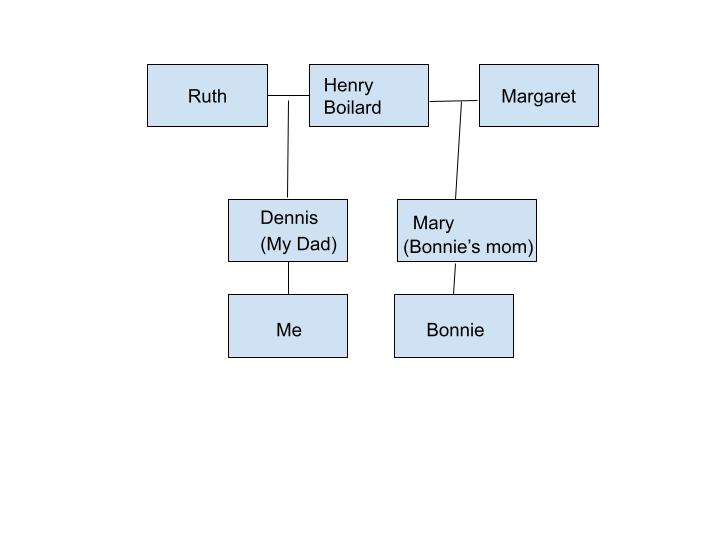
So far as I know, no one among the west coast Boilards knew that Henry founded a second family on the east coast.

So, Bonnie and I are cousins. Her mom, Mary, is my aunt (and my dad’s half-sister). Bonnie knew Grandpa Henry until he died in 1967. She has shared stories and even some mementos with me.

At almost the exact same time that Bonnie contacted me, I came across a dusty old stack of typewritten pages that turned out to be my grandmother’s unpublished memoir. In it she describes the early years of her life in great detail, including her courtship and brief marriage to Henry. I edited that manuscript and had it published. If you’re interested, more information is here.

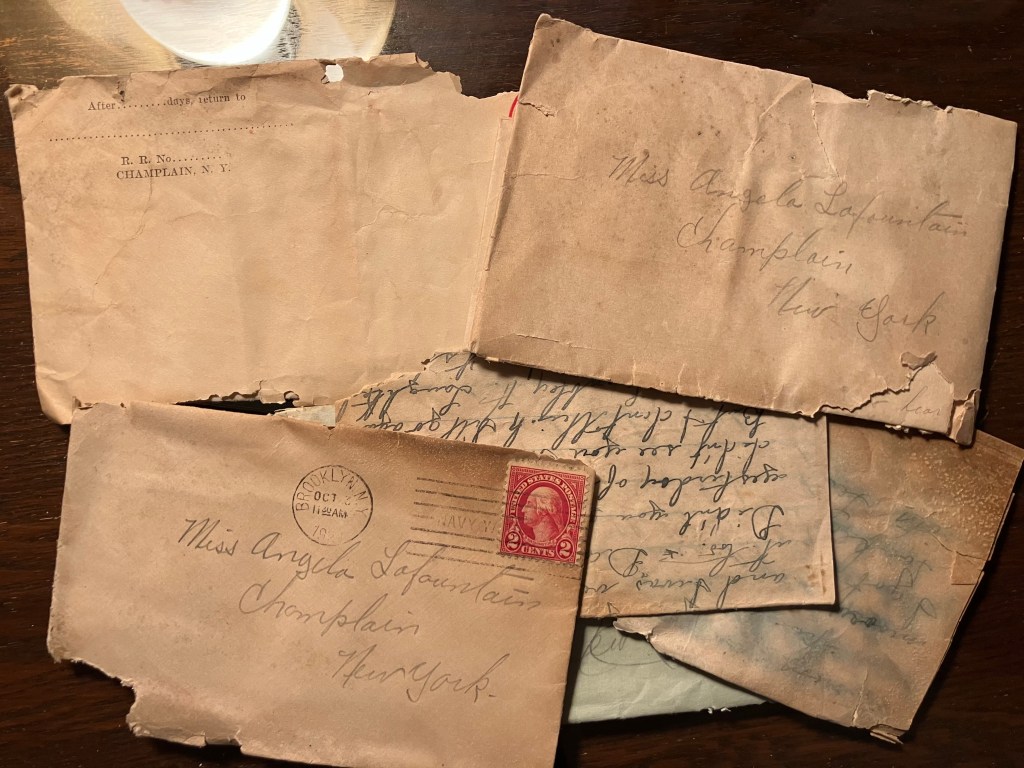
Just a month or two ago, however, Grandpa Henry came back into the picture. For the second time in a decade I’ve been contacted from out of the blue by someone who discovered a letter. This time my correspondent was a man named Jason, who came across some hundred-year-old letters in the attic of his childhood home in Champlain, NY. The home had once been owned by a family named LaFountaine, and somehow they left behind a sheaf of love letters that had been sent to the teenage daughter, Angela. Can you guess the letters’ author?

Henry Boilard
Grandpa’s Ghosts

Once Jason had discovered the letters in the attic he was kind enough to try to track down Angela’s descendants. In this effort he was unsuccessful, so he refocused his effort on the descendants of the letter’s writer. And that’s how I came into possession of a stack of brittle, yellowed, termite-chewed letters that Grandpa Henry had written to Angela LaFountain almost exactly a century ago.

Grandpa Henry at time of enlistment in the US Navy, when he was only 16 years old. (He lied about his age.)

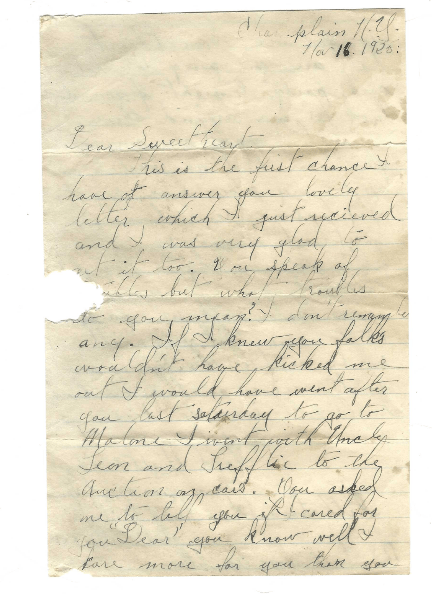
It is taking me some time to carefully open each letter, digitally scan it, and transcribe it for posterity. Let me share, without further comment for now, a letter from November 1925–written within a few months of his enlistment photo, above. Transcriptions of all 17 letters are posted on the “Grandpa’s Letters” section of my website.
Champlain, N.Y.

Nov. 16, 1925

Dear Sweetheart

This is the first chance I have to answer your lovely letter, which I just received and I was very glad to get it too. You speak of troubles but what troubles do you mean? I don’t remember any. If I knew you folks wouldn’t have kicked me out I would have went after you last Saturday to go to Malene. I went with Uncle Leon and Trefflie to the auction on car’s [sic]. You asked me to tell you if I cared for you “Dear” you know well I care more for you than you do for me Sweetheart.

Well are you going to that card party tonight if you do look for me around there. I wish I could see you more often “Dear.” But you want to come up to my place some day it’s very lonesome here alone.

Sweetheart if you show this letter to anybody as you did the last time I’ll never [write] again. Leslie told me you showed it to him that very night so be careful this time or you won’t receive another, Darling.

Well I’ll have to close as this is getting late now. 

Good night dear Angela.

From your very best friend,

With love and kisses, Henry Boilard

About a million xxxx

P.S. Don’t show this letter.
2024 Halloween treats · Halloween Cocktails

The Queen of Poisons

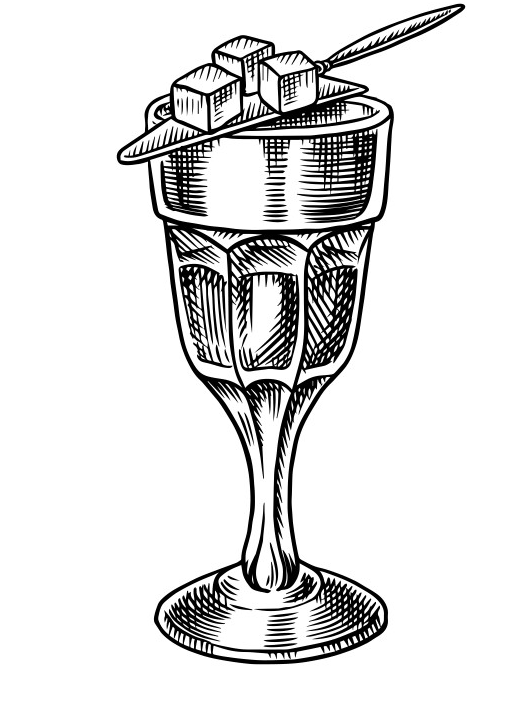
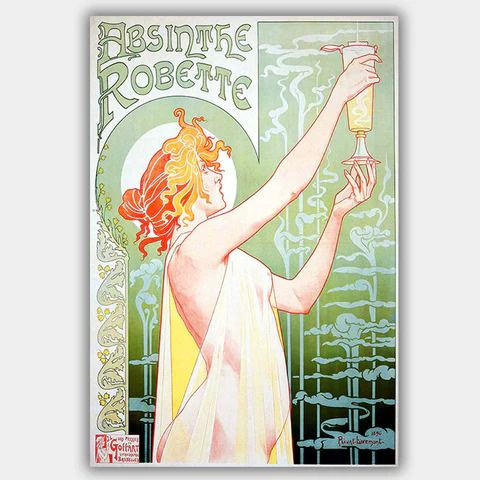
Once a year around this time I break out the absinthe. And then, after having a drink, I put the bottle away in disgust until the next year.

Why do I keep going back??

Attentive readers will recall my review of absinthe in 2022. That was straight absinthe which I drank via the”Bohemian” method. It wasn’t terrible.

The proper apparatus.

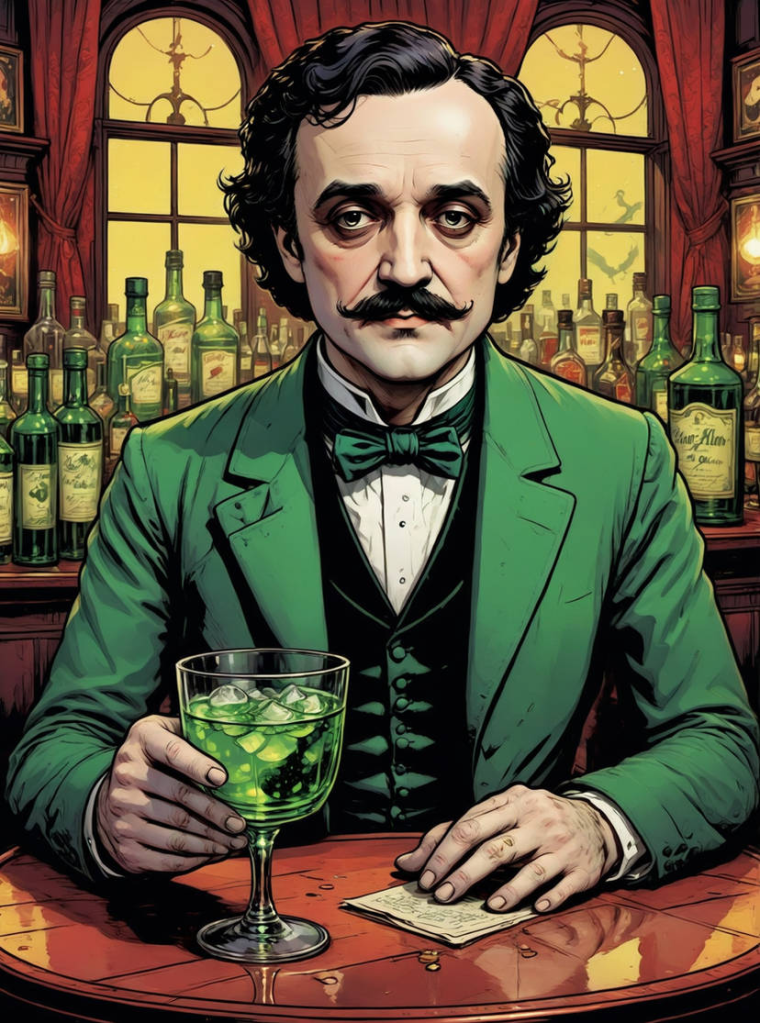
The real attraction of absinthe is not the flavor (which is rather foul), but the appearance, the lore, and the association with the likes of Edgar Allan Poe and Oscar Wilde. Let’s take them one by one:

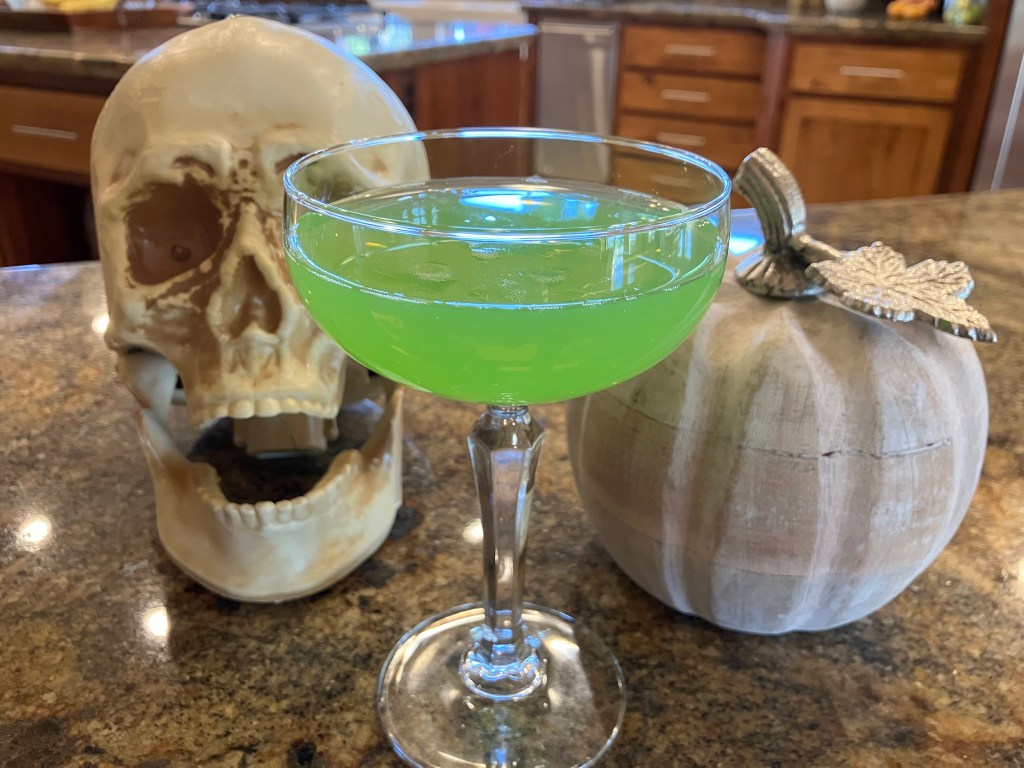
Absinthe is characterized by a bright green color, which is imparted from chlorophyll in its constituent herbs. It’s an otherworldly color which is perfect for Halloween.

Absinthe was popular among artists and other members of society’s fringe in the 19th century. It was considered the LSD of its day. Many claimed that the drink was highly addictive and promoted hallucinations and even, eventually, insanity. This led to its being banned in Europe and the US. Interestingly, this prohibition wasn’t lifted until 2007.

Absinthe is associated with some famous offbeat characters. It’s said that the drink was responsible for Van Gogh’s ear-lopping incident. It’s also said to have inspired some of Edgar Allan Poe’s more outre tales. (Interested readers can learn more here.)

Absinthe is also associated with Ernest Hemingway, who created a cocktail he called “Death in the Afternoon” (after his 1932 book about bullfighting). Here’s how Hemingway described the drink: “Pour one jigger absinthe into a Champagne glass. Add iced Champagne until it attains the proper opalescent milkiness. Drink three to five of these slowly.” I love a challenge–let’s make five of them!

Conceptual Soundness: As noted above, the mere inclusion of absinthe imbues the drink with Bohemian cred. But the addition of champagne seems an odd choice, especially for a two-ingredient cocktail. What’s more, the name, while perhaps evocative for a Halloween cocktail, seems to have nothing to do with the drink itself. 1 point.

Appearance: In a bit of reverse alchemy, this cocktail takes two attractive ingredients–bright green absinthe and pale gold champagne–and combines them into a sickly viridescent color reminiscent of lime Kool-Aid cut with cat urine. I can’t get behind this. Zero points.

Meow!

Taste: The combination of brut champagne and absinthe is rather jarring. It’s like sucking on a lime immediately after brushing your teeth with Pepsodent. You simultaneously experience a sickly sweet taste on the front of your tongue while back around your adenoids a sour, citrus flavor is triggering your saliva glands. I haven’t experienced a taste like this since a fluoride treatment I received in the third grade. Zero points.

Ease of Preparation: Combining these two ingredients is simplicity itself. Absinthe might not be a staple in your home bar, though. And I daresay this cocktail might be too simple. There’s no complexity at all. I’ll give it two points, and that’s being generous.

Total Treat Score: 3 points, making this drink the worst we’ve reviewed so far!

Full disclosure: I only drank one of these, so technically I didn’t follow Hemingway’s directions which require you drink “three to five slowly.” If any of you is up for the challenge, please follow these directions to the letter and report back.

2024 Halloween treats · Halloween Cocktails

That’s So Raven

Attentive readers will recall that I recently returned from Poe Fest in Baltimore. Edgar Allan Poe produced a large number of poems and short stories in his short lifetime, though most people today could probably only name a few of them. One of those well-known works is his poem “The Raven,” which Poe published in 1845. He was paid $9 for it.

The last stanza of the poem, in Poe’s hand.

Though it never made Poe rich, the poem made him famous. It has been reprinted in countless publications, and various artists have tried their hand at illustrating the atmospheric, spooky tale. At Poe Fest I had the opportunity to admire 27 steel-plate engravings that famed illustrator Gustave Doré made for an 1884 edition of “The Raven.” (Sadly, Doré died just months before that publication saw the light of day.) Poe had himself died in 1849, so Doré couldn’t consult with the author when he made his illustrations. Still, it’s a haunting series of etchings.

One of Dore’s etchings.

Indeed, I was so taken by the etchings that I immediately purchased a modern volume that includes Dore’s illustrations, along with the original text.

Nice Addams Family house on the cover.

Unfortunately, upon closer inspection, I see that the publisher managed to mar Poe’s prose. Some of the words have changed (“farther” instead of “further,” “thus” instead of “this”), and the punctuation is quite different from that used in more authoritative texts. However, this does beg the question: How do I know which version of “The Raven” is truly authoritative? I was unable to find the full poem in Poe’s handwriting (which to me would be the gold standard), but know that we here at Chasing Phantoms are on the case!

Clearly the bottom of this page contains a couple of obvious typos.

All this talk of “The Raven” leads us to today’s Treat of the Day. This week we’re shifting our focus to Halloween-themed cocktails. Providentially, I stumbled upon a recipe for something called The Raven. It combines 1 oz rum, 1 oz vodka, 1 oz. Blue Curacao, and 1/2 oz Chambord. A quick check of my bar confirmed that all those ingredients are present, so let’s make one!

Conceptual Soundness: I think the concept here is simply leveraging the Raven name by making a dark, almost black, drink. It’s not a bad concept, although it’s not especially inventive. Let’s give it 2.5 points.

Appearance: Strictly following the recipe, the color is not especially dark; its mainly just Curacao blue. So I added an activated charcoal capsule (left over from an earlier Halloween effort), which seems to have done the trick. Now my drink is dark like a raven–it clearly screams “Halloween.” That’s worth 3 points.

Raven Cocktail, with charcoal.

Taste: This drink tastes festive, or at least it comes across as something that’s special and different from your average cocktail. There’s a lot going on here: The first thing you taste is the rum, and then the vodka’s extra boost of booziness hits you soon afterward. Next you notice the sweet citrus from the blue curacao. On the finish, you get more sweetness and some distinct raspberry notes from the Chambord. Those various layers actually works together quite well. The Raven has two ounces of 80-proof spirits, plus another 1.5 ounces of 25-proof liqueurs, so it’s probably not a good idea to pound these drinks. Ask me how I know. 4 points.

Value/Ease of Preparation: As we shift our Treat Reviews to cocktails this week, the rating category of “value” will be replaced with “ease of preparation.” This category combines the ready availability of ingredients, the hit they make to your wallet, and the complexity of the recipe. In the case of The Raven, this is a simple drink to prepare. The ingredients are pretty much staples in a well-stocked home bar. I give it 3.5 points.

Total Treat Score: 13 points/16 points.

MAILBAG

Attentive readers will recall that our first Halloween treat review this month was the Starbucks Racoon Pop. We gave it a middling score of 8 out of 16 points.

Loyal reader Detlef K reports that his granddaughter recently got her hands on a raccoon pop, possibly as a result of her mother having read our review. Sadly, the little tyke didn’t seem too taken by the treat.

BTW: We’re told that this is a girl who has no problem shoving lasagna and zucchini into her water glass and drinking the soggy mess.

2024 Halloween treats · Halloween · Puns

It’s Easy Being Green

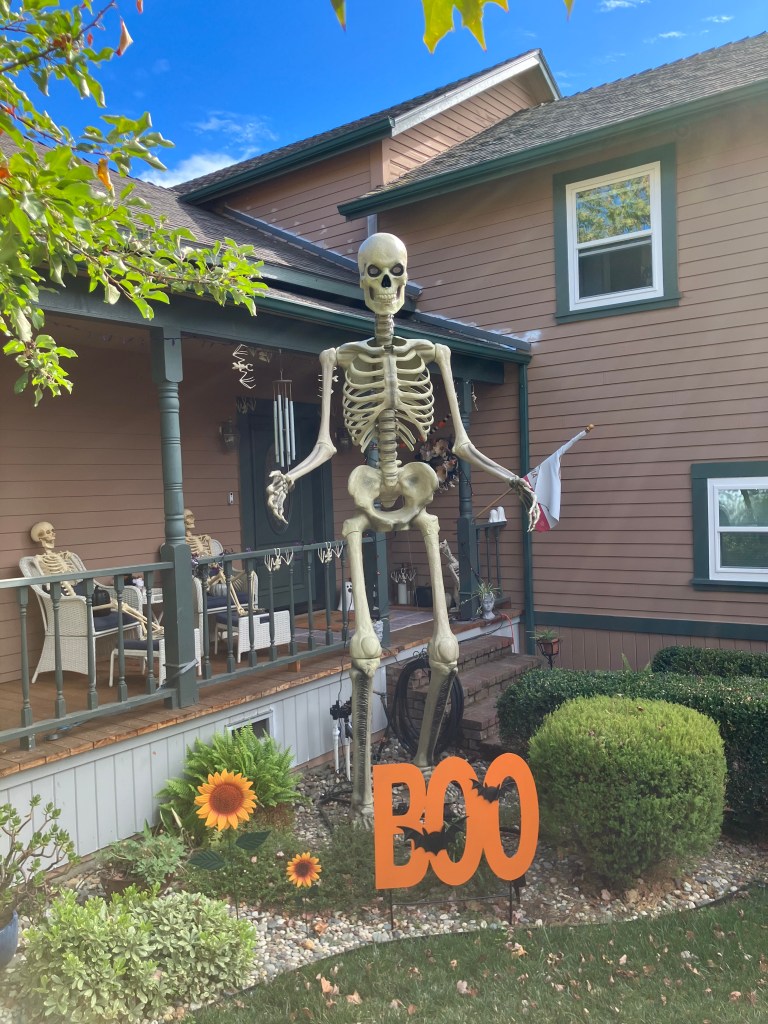
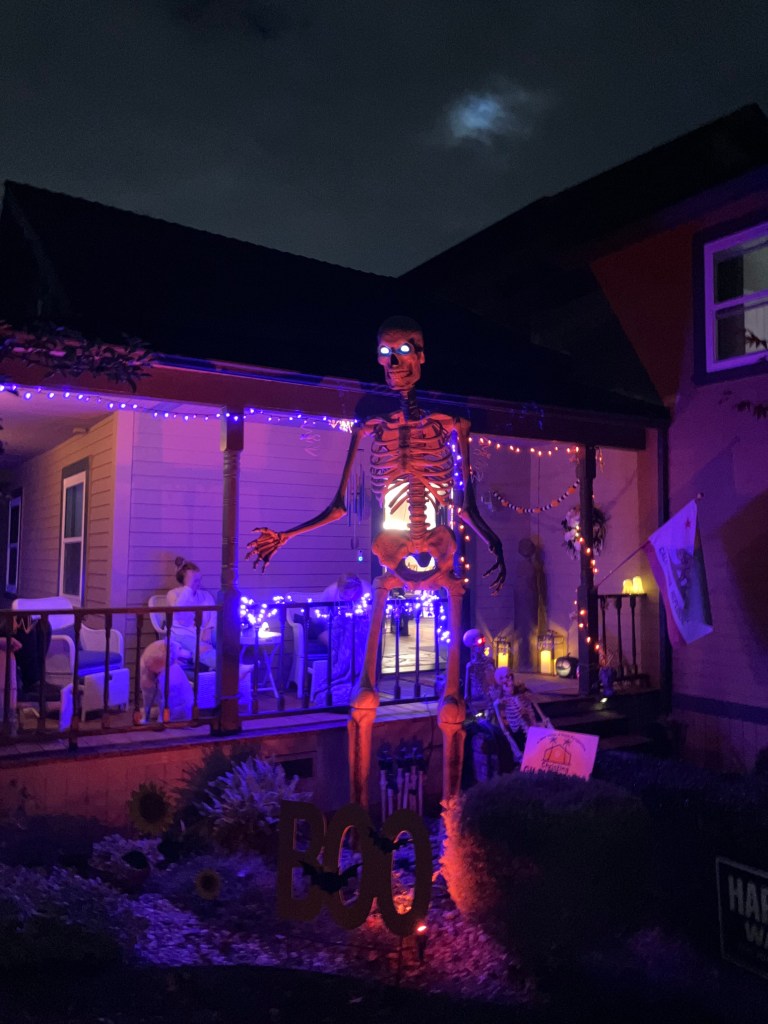
Today’s Halloween-themed spotting is at the home of son Ian and daughter-in-law Katelyn. It’s a 12-foot skeleton that makes even me feel short. Note his smaller companions lounging on the porch. What, that’s not scary enough for you? Then check out the scene at night:

Even more spooky: The skeletons on the porch have fleshed out!

Note how the scene becomes spookier with the addition of unexpected color–in this case, the red and blue light that washes over the whole scene.

The folks at Mars, Inc. seem to understand this principle, and have applied it to the inveterate Snickers bar. Specifically, in an effort to dress up the candy bar for Halloween, they have changed the color of the nougat from light tan to “ghoulish green.” Let’s determine whether this is a trick or a treat.

Conceptual Soundness: Many food purveyors will try to goose sales by giving their product a holiday tweak. Examples include red and green M&Ms, green beer, and eggnog ice cream. Such moves are intended to renew interest in the product and create a sense of ephemeral exlusivity. In this case, Mars has taken a classic candy bar that everyone knows well, and added green food coloring to the nougat. It’s definitely different and does radiate a bit of a Halloween vibe. That’s worth 3 points.

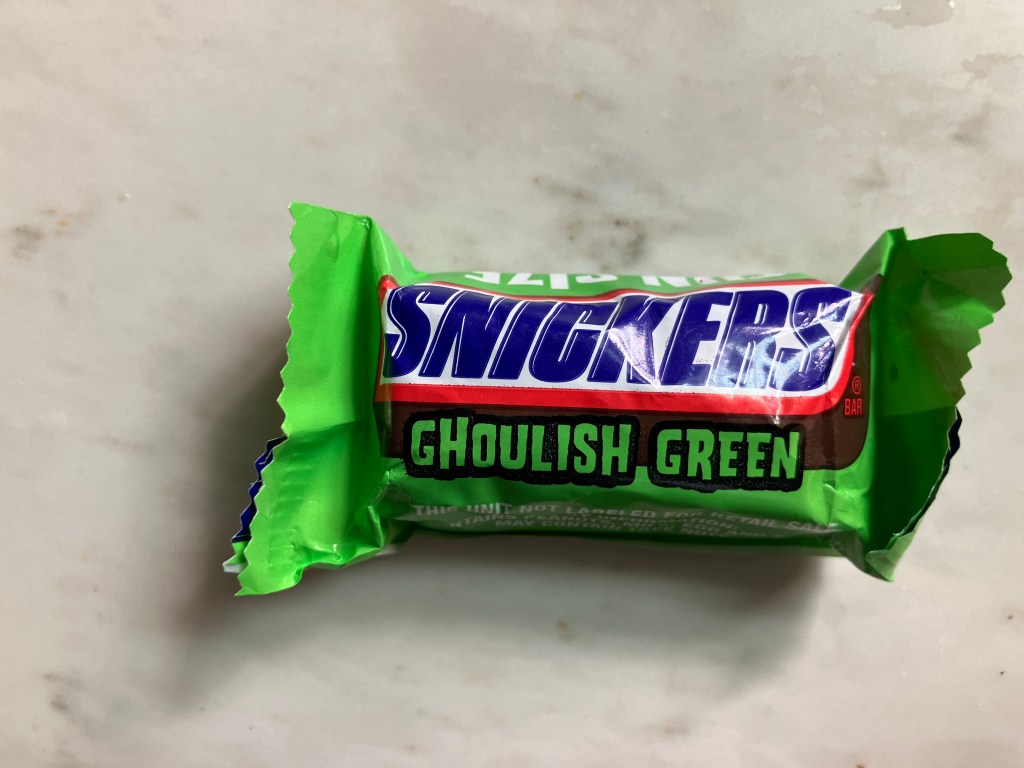
Appearance of the Treat: The most noticeable difference is the green wrapper. And in case you’re colorblind, they print the words “Ghoulish Green” just under the traditional Snickers logo. Now, I’m not sure there’s anything “ghoulish” about green. I assume the word choice had more to do with alliteration.

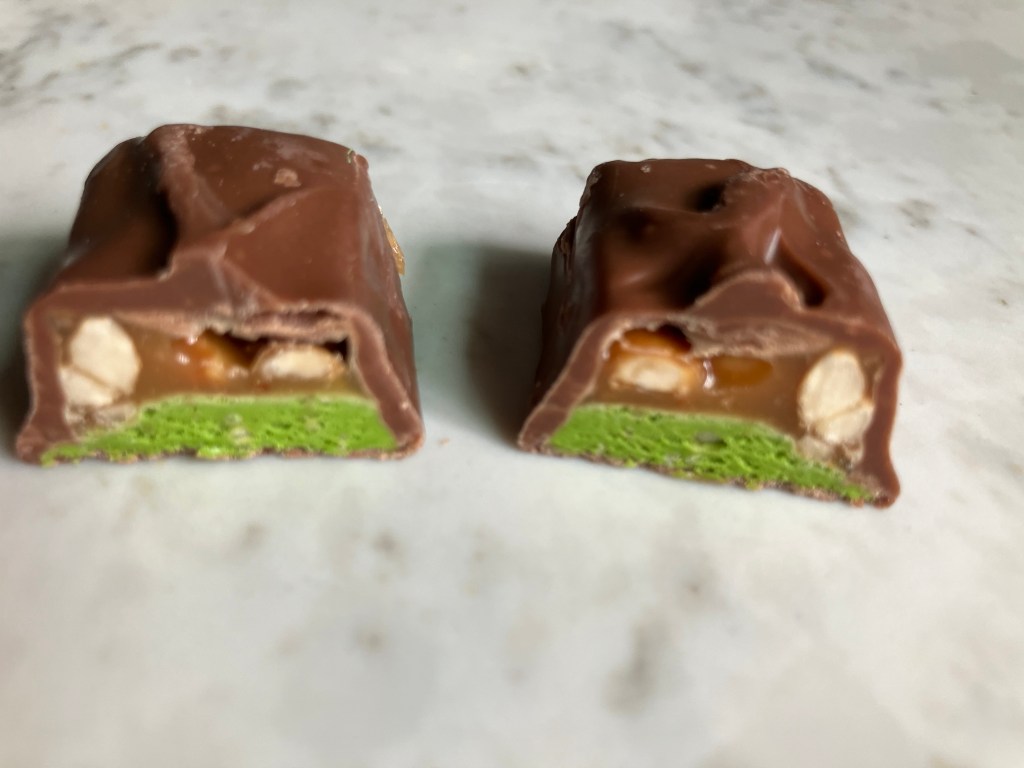
If you remove the wrapper, the candy bar looks identical to any other Snickers bar you’ve eaten. But bite into it (or cut it in half, as I did) and you see that the nougat is the exact same shade of green as the wrapper.

Now, these are “fun size” bars, which means they’re less than an ounce. You probably will eat it in two bites. So that leaves just those few moments between the first and second bite to admire (or even notice) the green nougat. Still, it’s novel, and the color is truly putrid. As a Halloween gag (if you’ll pardon the pun), it’s worth 3 points.

Taste: These taste exactly the same as any other Snicker’s bar. The “ghoulish green” nougat has no impact on the flavor. Now, in my opinion, the Snickers bar is a delicious candy, with the ideal balance of caramel, nougat, chocolate, and peanuts. But if you’re going to hype a candy as being redesigned for Halloween, shouldn’t you also give it a new taste? Maybe a little mint, which is suggested by the green color? Or substitute pistachios for the peanuts? The people at Mars missed a huge opportunity here. Treats sporting a different look should taste different.

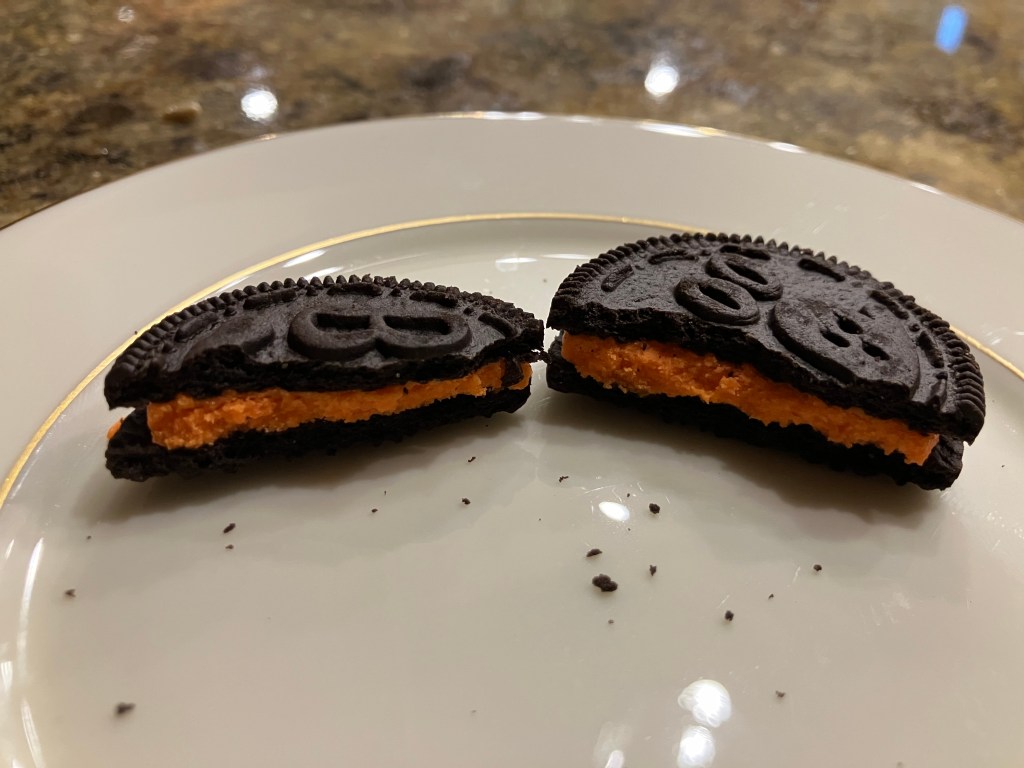
Now, I should probably admit here that, to me, Halloween Oreos, with their orange filling, taste much better than regular Oreos. I realize the package says “same great taste,” and the ingredient list is identical to regular Oreos. But somehow I find the Halloween Oreos to be far tastier than the regular ones. I am open to the possibility that the visual appearance of the Halloween Oreo somehow tricks my brain into thinking I’m tasting something different. But that’s OK. As we know, the placebo effect can cause genuine health improvements in clinical trials. So, as far as I’m concerned, if I think the Halloween Oreos taste better, then they taste better.

“Same great taste” my ass; these taste much better than the run-of-the-mill Oreos.

Anyway, my point is simply that the “ghoulish green” Snickers do not taste any different than regular Snickers. So I can’t give them any points for taste. Zero points.

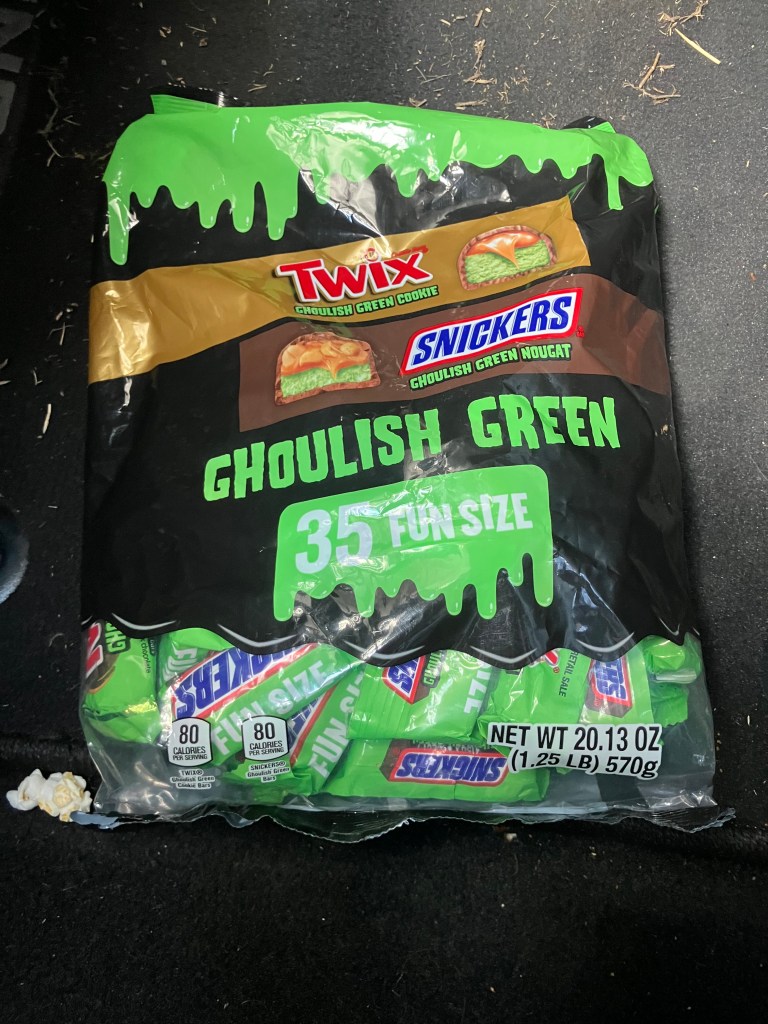
Value: The fun-size “ghoulish green” Snickers come in a bag that also includes “ghoulish green” Twix bars. You get 35 bars to a bag, which costs $12 on sale at Safeway. That works out to 35 cents per bar, which really isn’t bad. Let’s give it 3 points.

Total Treat Score: 9/16 points. If you like Snickers, then you should get yourself a bag.

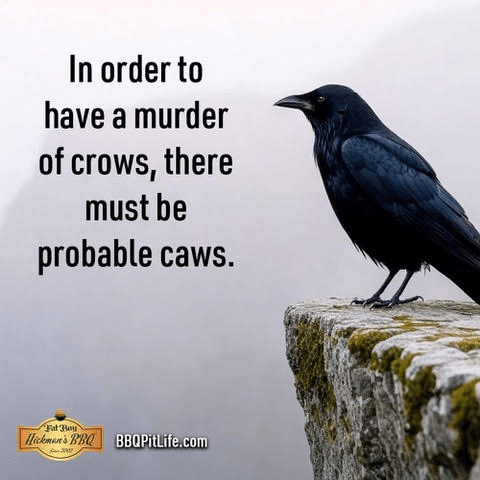
Speaking of bags, our mailbag received the following item which is evocative both of The Birds and Poe:

Submitted by loyal reader Peter D.
"A Dying WIsh" · 2024 Halloween treats · cemeteries

Not a Slam Dunk

That headline has multiple meanings for today’s post.

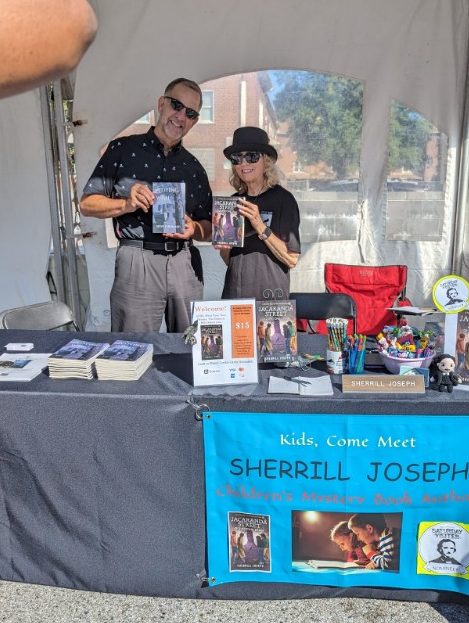
First, just to get this out of the way, I did not receive the Saturday ‘Visiter’ Award last night at Poe Fest’s Black Cat Ball. But I’m pleased to report the award went to a worthy recipient: Sherrill Joseph has been writing a book series aimed at a youth audience that features a group of young investigators that evokes the Hardy Boys. The fifth book of her series is centered on Edgar Allan Poe, and it garnered the award. I spent much of the day yesterday with Sherrill and her daughter Nicole, and I couldn’t be more pleased that she won.

Sherrill and I promoting our SVA-nominated publications at Poe Fest.

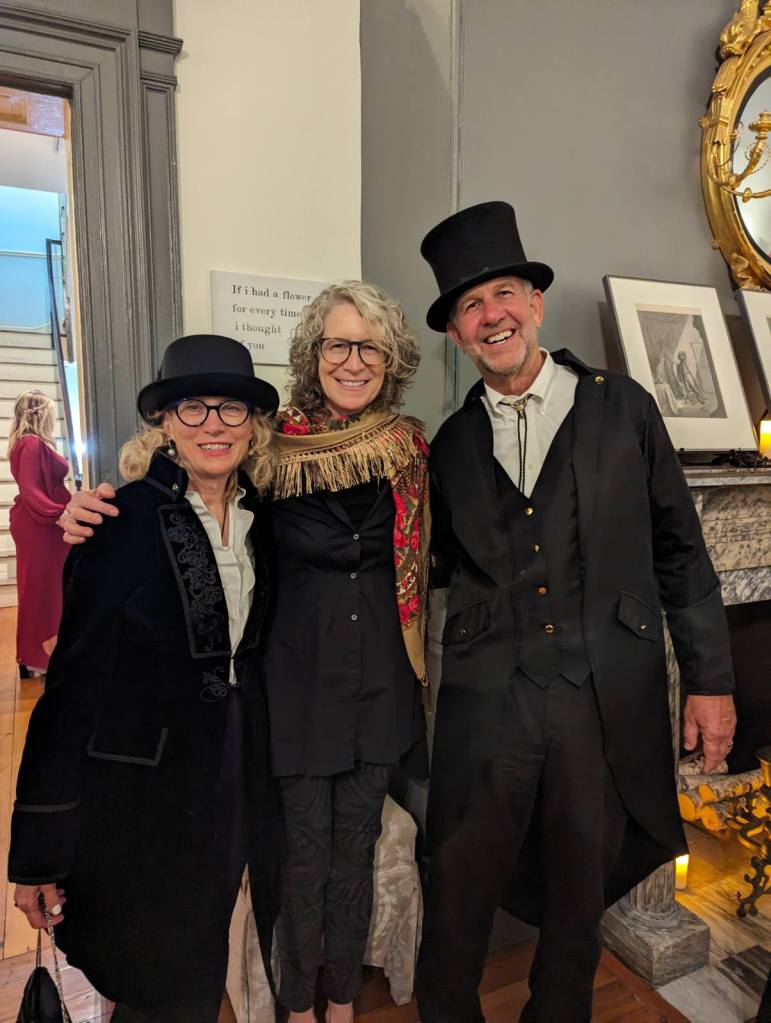
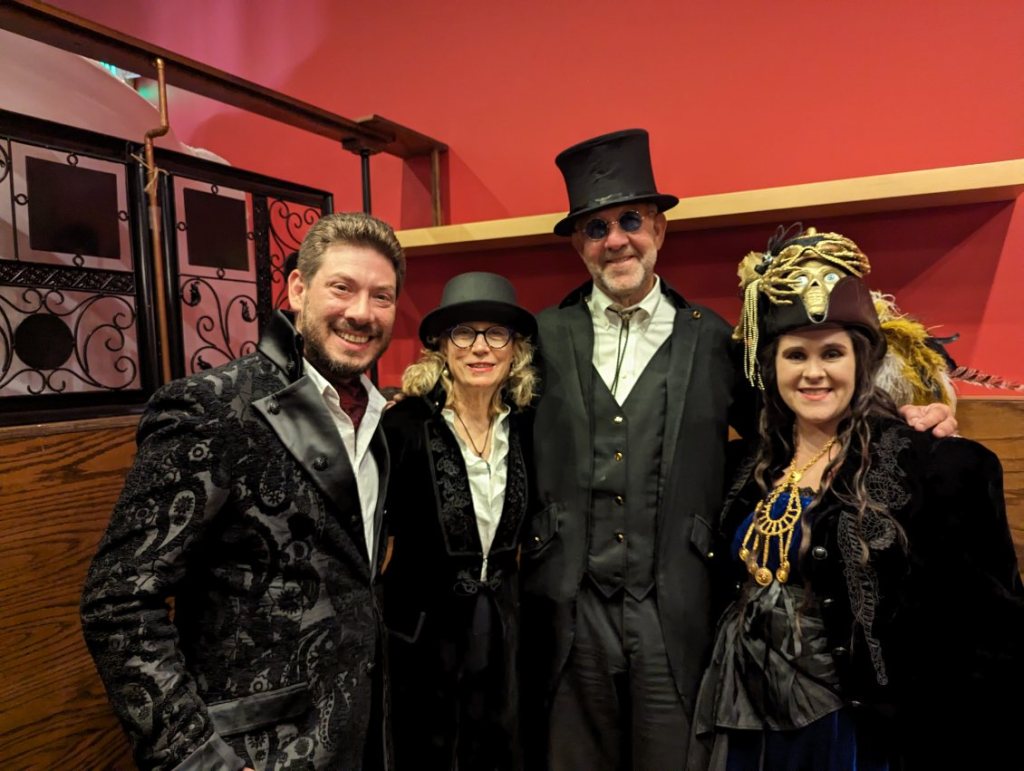
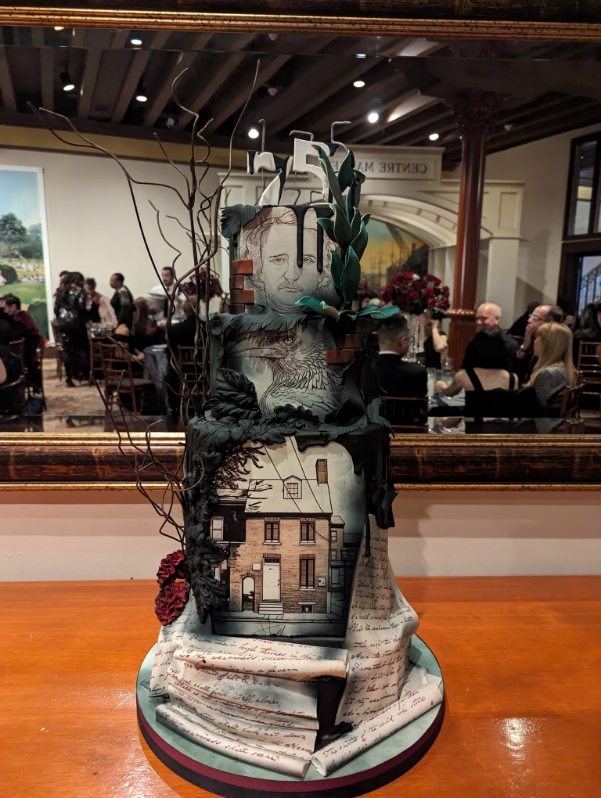
So, before we move on to the Treat of the Day, permit me to share a few photos from last night’s Black Cat Ball.

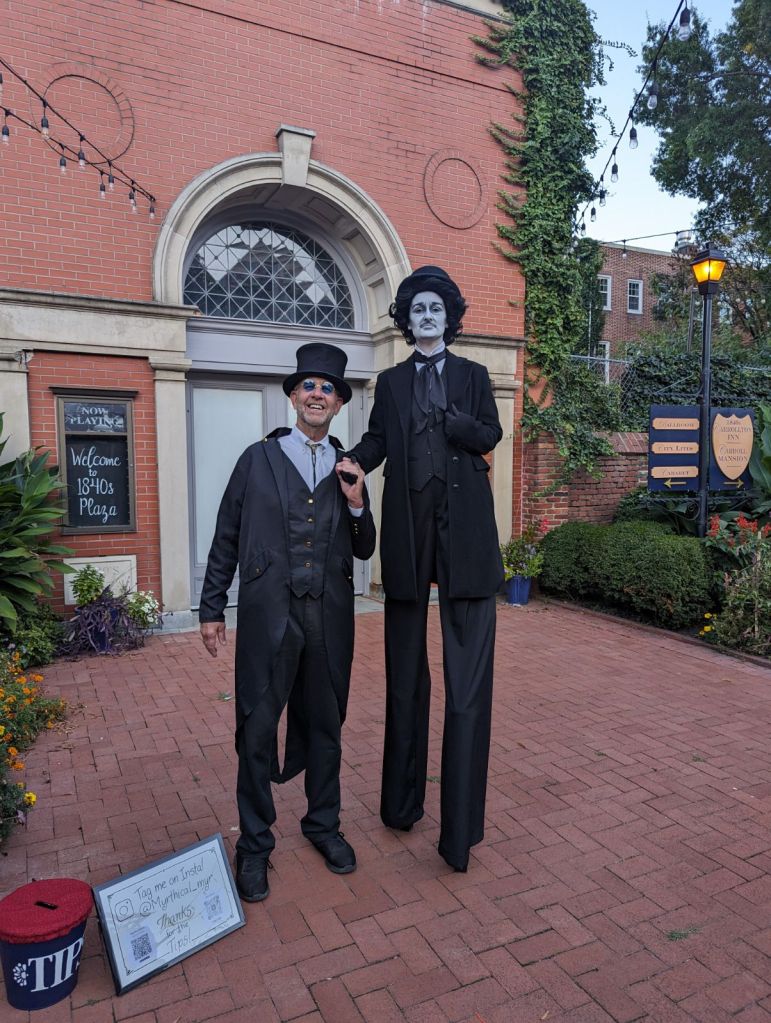
I’ve never felt so short.

Sherrill and I with Vincent Price’s daughter, Victoria (center).
Four of the authors at the Saturday ‘Visiter’ Awards: AA Rubin, Sherrill Joseph, yours truly, and Holly Knightley.
Now that’s a cake!

OK, now let’s move from one not-a-slam-dunk to another.

Across the street from my hotel (the historic Lord Baltimore Hotel) was a Dunkin’ [Donuts]. I immediately recalled the delicious Spider Donut that I reviewed a couple of years ago. Could I experience the magic again?

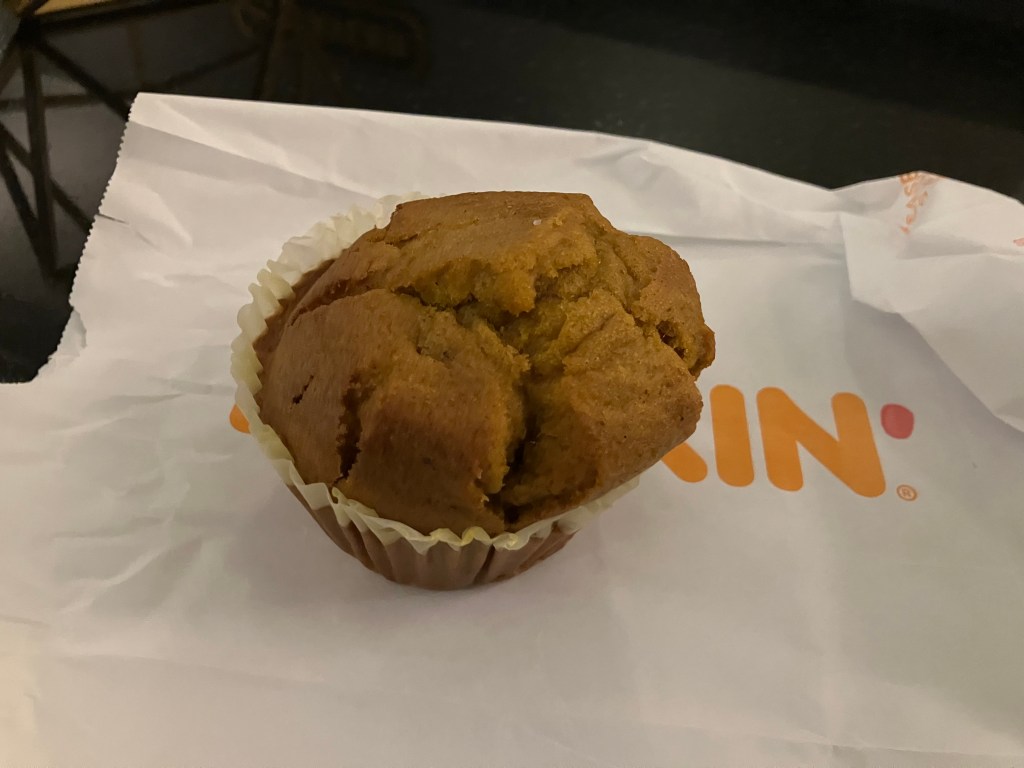
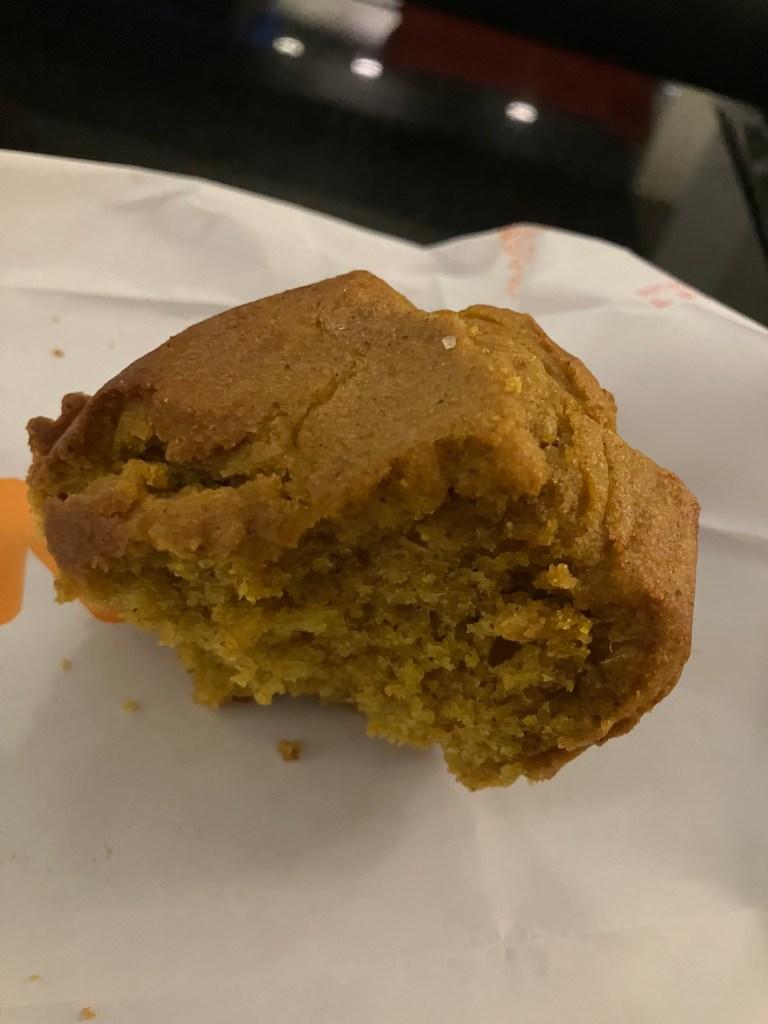
Alas, the Spider Donut has crawled off Dunkin’s menu. The only “fall treat” they had on offer was a Pumpkin Muffin. Resignedly, I took the muffin and walked back to the hotel lobby to conduct this review.

Conceptual Soundness: C’mon. It’s an unadorned pumpkin muffin. It’s not a complicated concept, but neither is it especially interesting. 2 points.

Appearance of the Treat: Unlike the Starbucks muffin that I reviewed a few days ago, this is deeply cracked and misshapen. It looks like the unholy spawn of a bear claw and a Soufflé. The color is reasonably pumpkin-y, but I suspect the presence of food coloring. There’s no cream cheese or pepitas or anything to make this muffin special. They couldn’t even be bothered to use a seasonally-appropriate orange muffin cup. 1 point.

Taste: The taste is actually pretty good. There’s a slight pumpkin flavor, and it’s sweet, but not to the point of cloying. Unlike some grocery store muffins, this has no artificial or off taste.

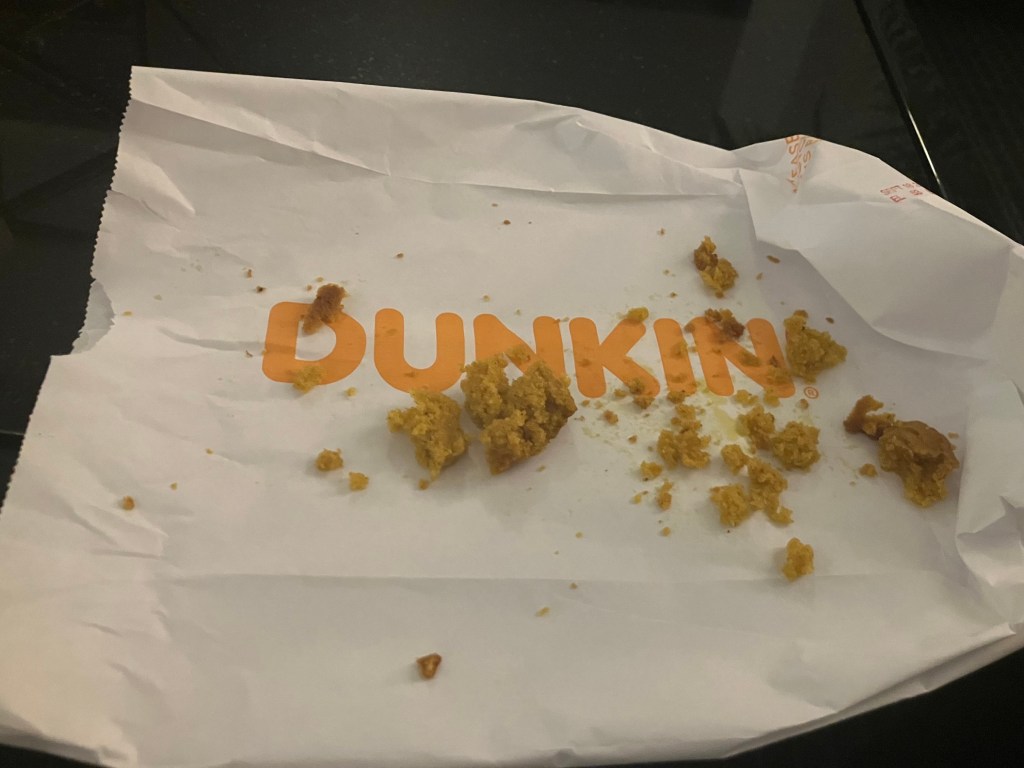
The cake is very moist, to the point of being almost soggy. It would have benefited from another couple of minutes in the oven. The top has none of that slight crusting that I find so satisfying to bite through. Instead, the whole muffin just kind of collapses on contact. But then, somehow, each bite of this overly moist muffin ends with a dry, desiccated, crumbly finish. It seems to defy the laws of baking physics.

Post-snacking detritus.

Overall, despite the decent taste, the eating experience is fatally compromised. The mouthfeel just doesn’t work, and the unadorned cake is so homogeneous that you’re sick of it by the time you finish. This is why breakfast cereals have crunch berries or marshmallow moons or whatever. 1 point.

Value: I paid $2.75 for this is downtown Baltimore. The price compares favorably to the Starbucks cream cheese muffin ($3.95). But you’ll recall that was a delicious treat; this is not. I’ll score the value at 2 points.

Total Treat Score: 6/16 points.

Now it’s time to leave Baltimore and say goodbye to Poe Fest. Tomorrow our seasonal treat focus will shift to Halloween candy.

Until next time, Eddie.