Once a year around this time I break out the absinthe. And then, after having a drink, I put the bottle away in disgust until the next year.
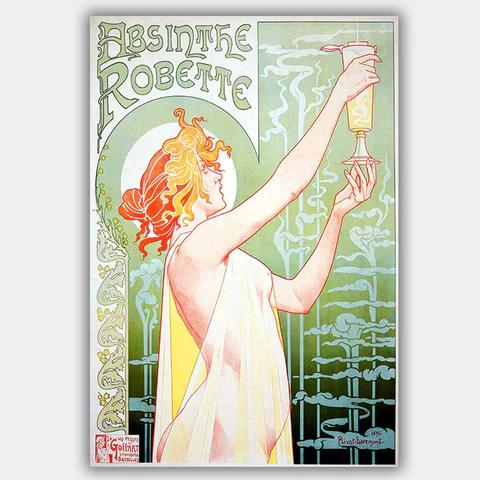
Attentive readers will recall my review of absinthe in 2022. That was straight absinthe which I drank via the”Bohemian” method. It wasn’t terrible.
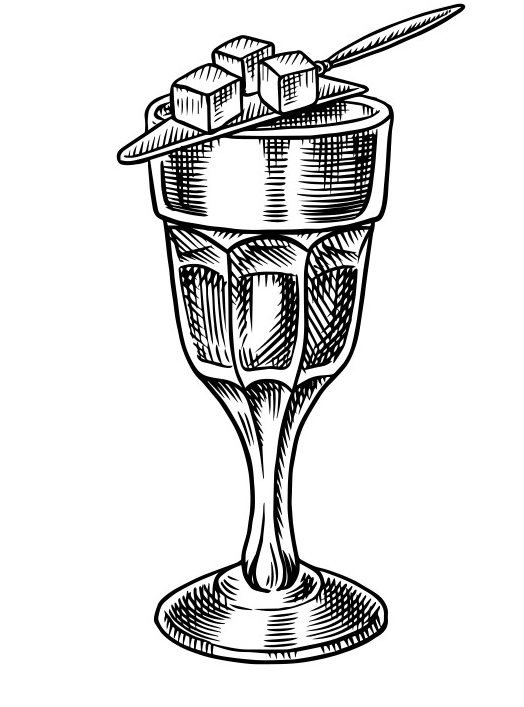
The real attraction of absinthe is not the flavor (which is rather foul), but the appearance, the lore, and the association with the likes of Edgar Allan Poe and Oscar Wilde. Let’s take them one by one:
Absinthe is characterized by a bright green color, which is imparted from chlorophyll in its constituent herbs. It’s an otherworldly color which is perfect for Halloween.
Absinthe was popular among artists and other members of society’s fringe in the 19th century. It was considered the LSD of its day. Many claimed that the drink was highly addictive and promoted hallucinations and even, eventually, insanity. This led to its being banned in Europe and the US. Interestingly, this prohibition wasn’t lifted until 2007.
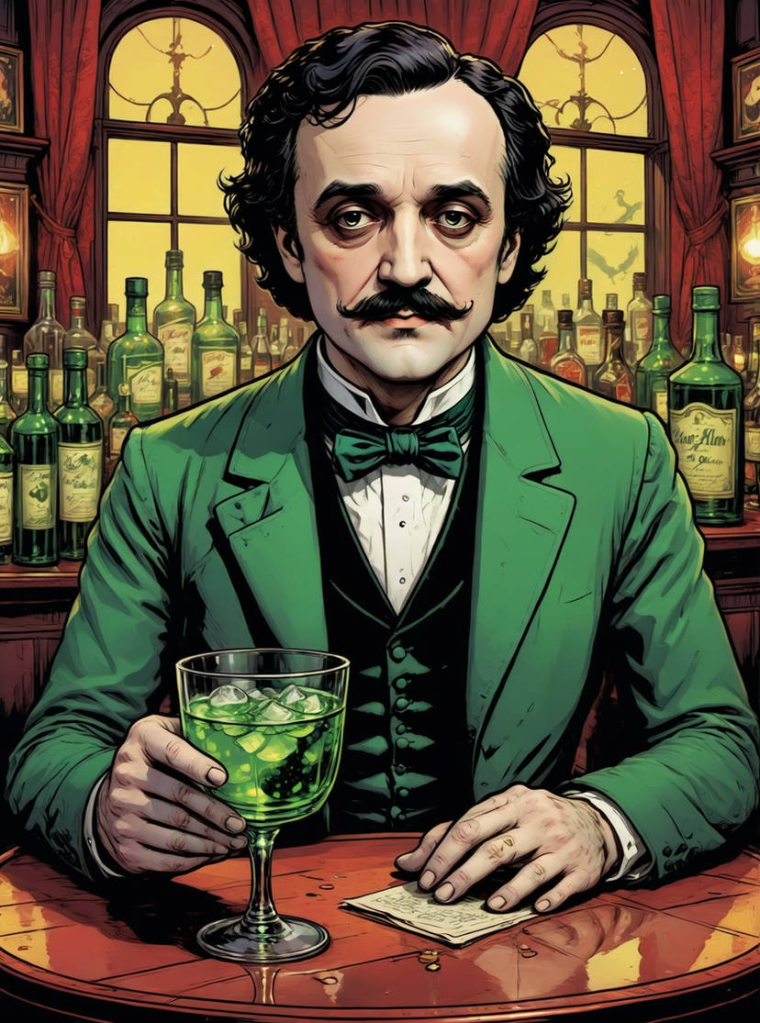
Absinthe is associated with some famous offbeat characters. It’s said that the drink was responsible for Van Gogh’s ear-lopping incident. It’s also said to have inspired some of Edgar Allan Poe’s more outre tales. (Interested readers can learn more here.)
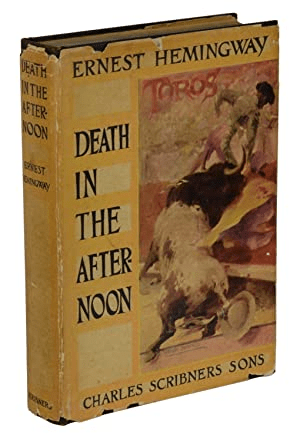
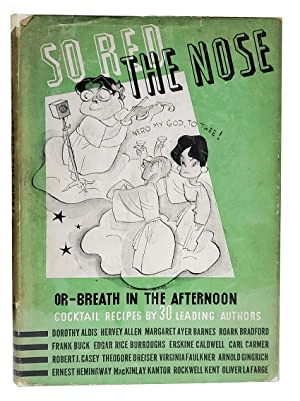
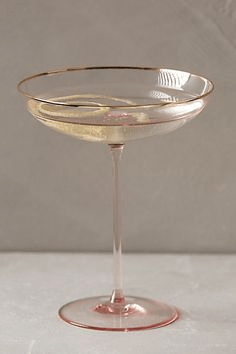
Absinthe is also associated with Ernest Hemingway, who created a cocktail he called “Death in the Afternoon” (after his 1932 book about bullfighting). Here’s how Hemingway described the drink: “Pour one jigger absinthe into a Champagne glass. Add iced Champagne until it attains the proper opalescent milkiness. Drink three to five of these slowly.” I love a challenge–let’s make five of them!
Conceptual Soundness: As noted above, the mere inclusion of absinthe imbues the drink with Bohemian cred. But the addition of champagne seems an odd choice, especially for a two-ingredient cocktail. What’s more, the name, while perhaps evocative for a Halloween cocktail, seems to have nothing to do with the drink itself. 1 point.
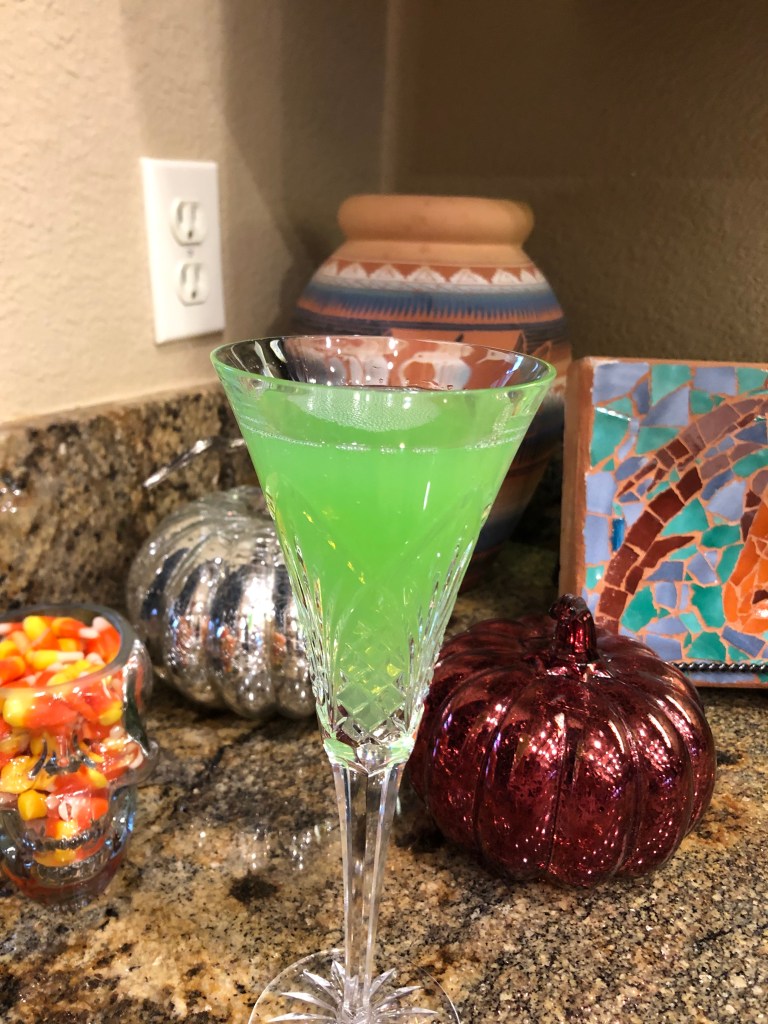
Appearance: In a bit of reverse alchemy, this cocktail takes two attractive ingredients–bright green absinthe and pale gold champagne–and combines them into a sickly viridescent color reminiscent of lime Kool-Aid cut with cat urine. I can’t get behind this. Zero points.
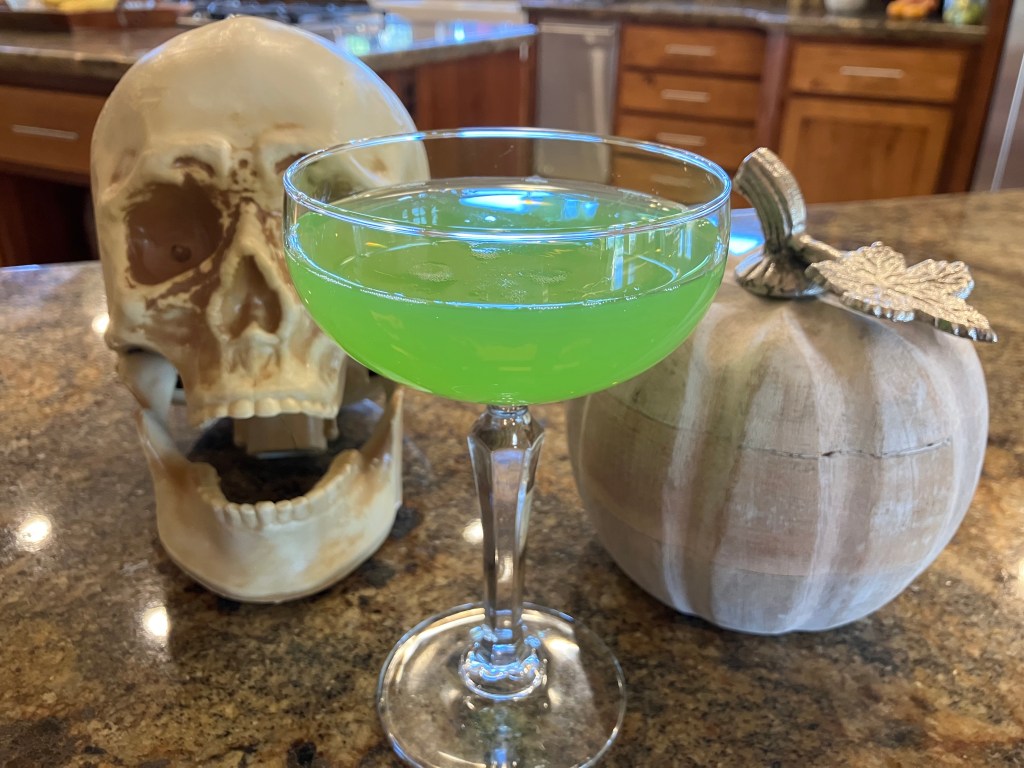
Taste: The combination of brut champagne and absinthe is rather jarring. It’s like sucking on a lime immediately after brushing your teeth with Pepsodent. You simultaneously experience a sickly sweet taste on the front of your tongue while back around your adenoids a sour, citrus flavor is triggering your saliva glands. I haven’t experienced a taste like this since a fluoride treatment I received in the third grade. Zero points.
Ease of Preparation: Combining these two ingredients is simplicity itself. Absinthe might not be a staple in your home bar, though. And I daresay this cocktail might be too simple. There’s no complexity at all. I’ll give it two points, and that’s being generous.
Total Treat Score: 3 points, making this drink the worst we’ve reviewed so far!
Full disclosure: I only drank one of these, so technically I didn’t follow Hemingway’s directions which require you drink “three to five slowly.” If any of you is up for the challenge, please follow these directions to the letter and report back.

 Chasing Phantoms