churches · movie theaters · Road trips · trains

Another Hub City and the Big Easy

I spent an hour this morning puttering around Hattiesburg a little longer. I really like this city. Two recurring themes really struck me:

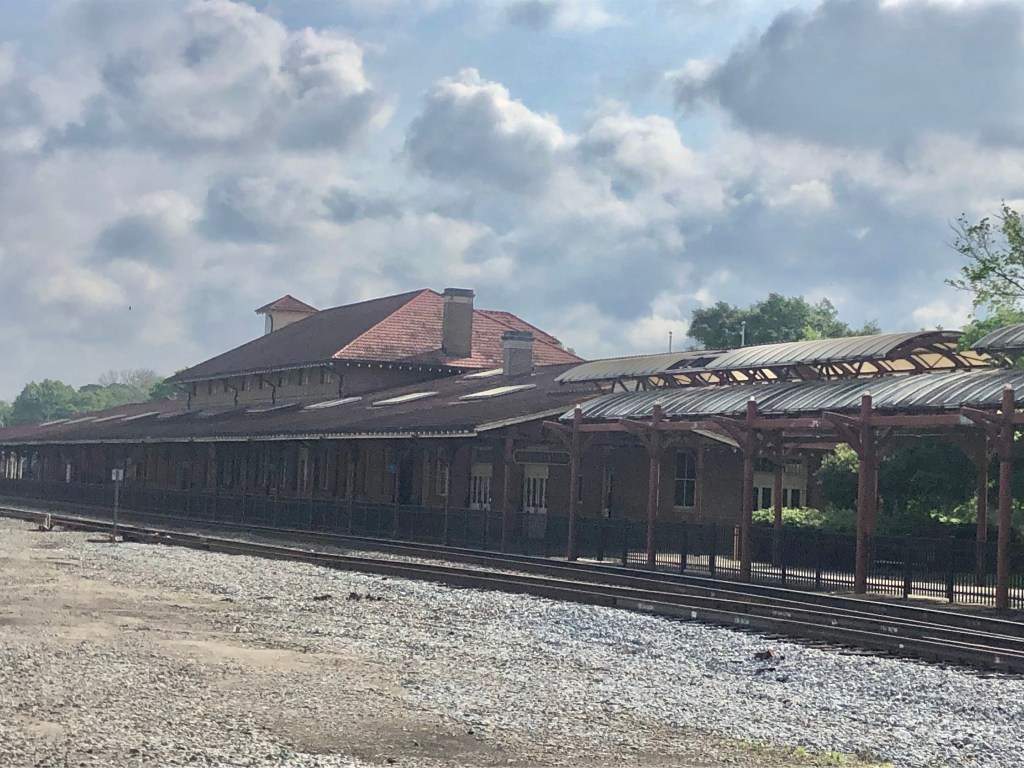
First, how many cities call themselves Hub City?? I’d thought it was a quaint moniker for Clarksdale, with its Devils Crossroads and all that. But Hattiesburg also claims the nickname. A quick search of Wikipedia lists about a score of cities that refer to themselves as “Hub City,” so it’s not at all unique. But admittedly Hattiesburg has good cause: it’s strategically located, with numerous highways and freeways and historic railroad routes. Indeed, its 1910 railroad station is huge, suggesting that a large number of trains came through here in the day.
Front of the Hattiesburg station

The station was restored about 15 years ago, and today serves as an intermodal transportation hub (there’s that word again), including daily Amtrak service.
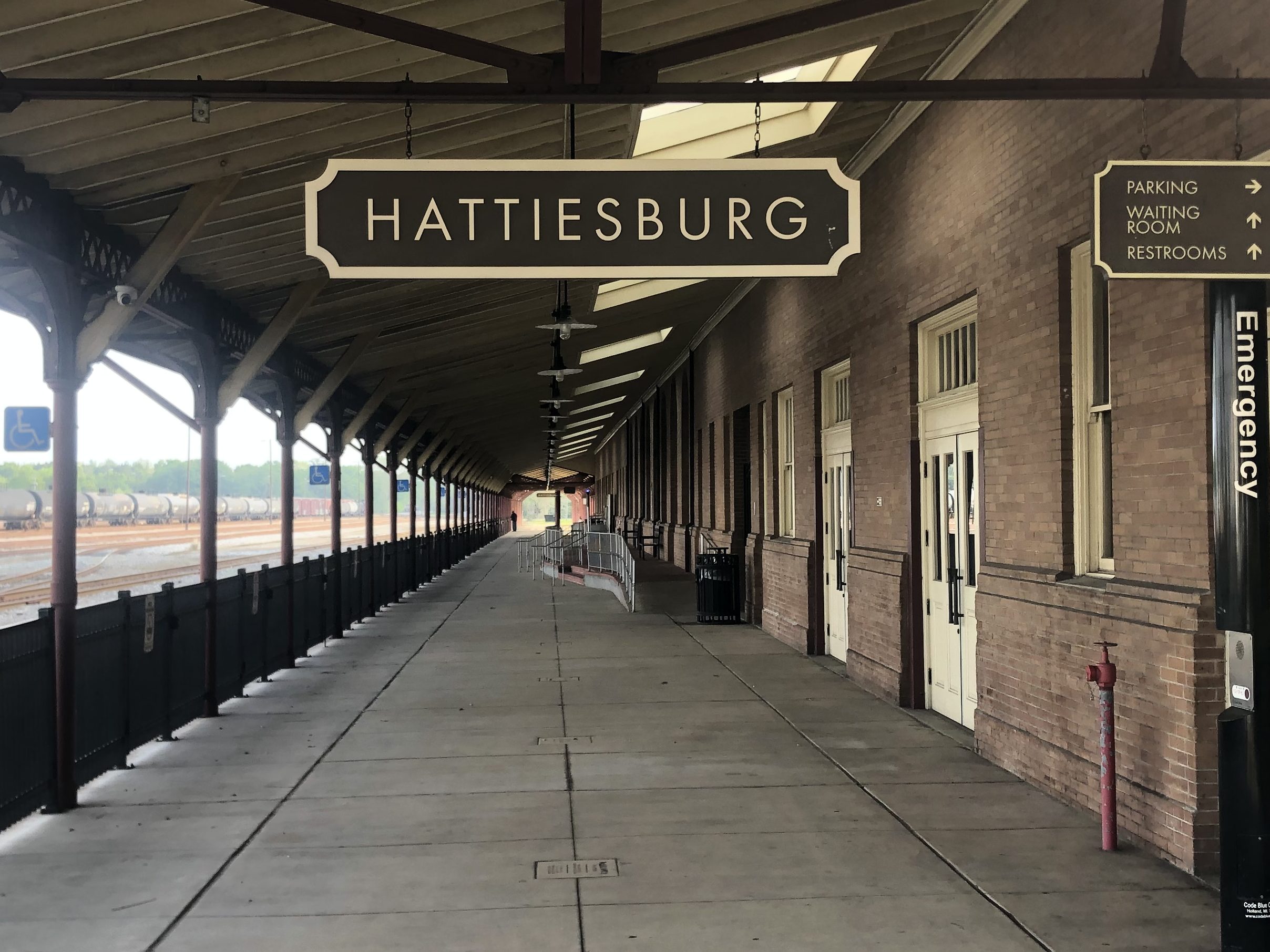
The Amtrak main line at the back of the station.

The second thing that struck me about Hattiesburg is that this city values the arts. Music (a recurring theme of this trip) is celebrated everywhere, such as this public art installation called “The Jook.”
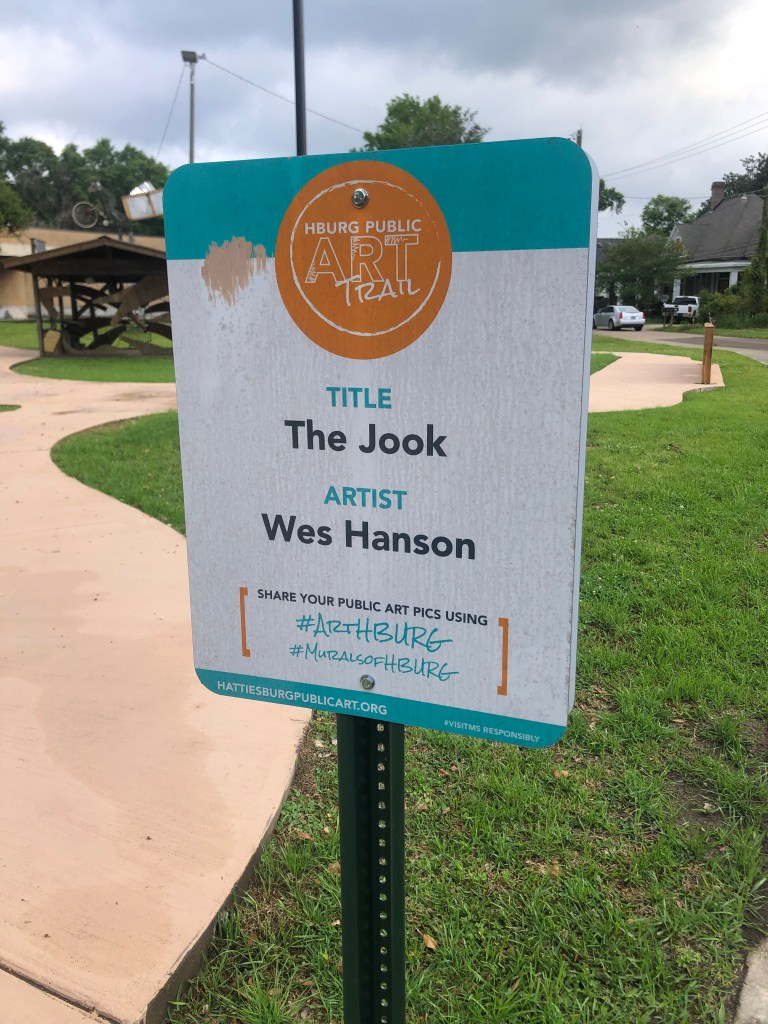
The Jook is a collection of whimsical instruments that the public is invited to use to make their own music. They include a trash can bass, chimes and bells, a giant guitar, and a xylophone (of sorts).
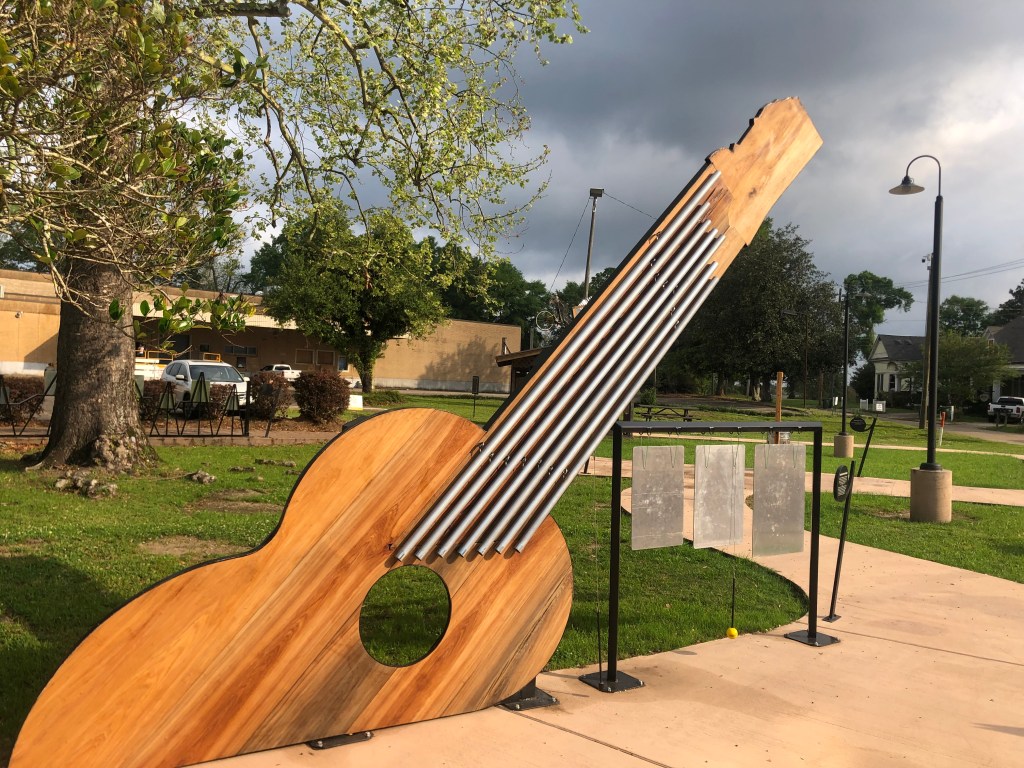
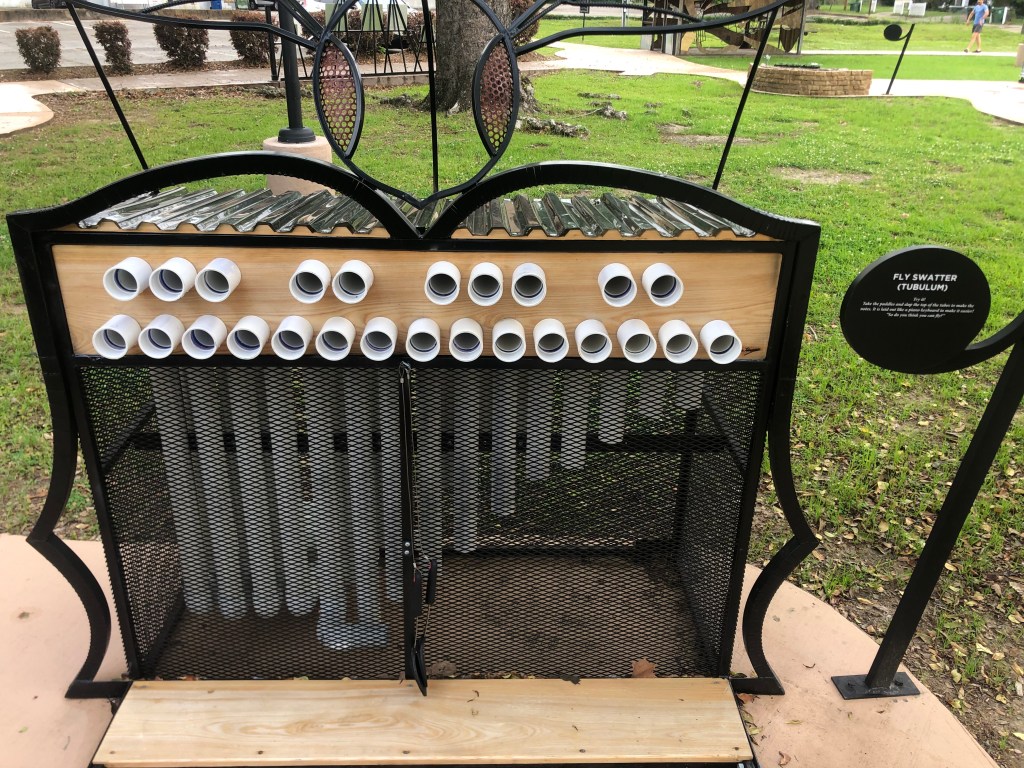
The Jook’s name is a reference to Blind Roosevelt Graves and his Mississippi Jook Band, which recorded blues music in Hattiesburg in the 1920s and 1930s. Two of their 1936 songs–“Barbeque Bust” and “Dangerous Woman”–are considered by some to be the first rock&roll songs. Listen and decide for yourself:

It’s not exactly Chubby Checker, but I do sense some elements of early Rock&Roll.

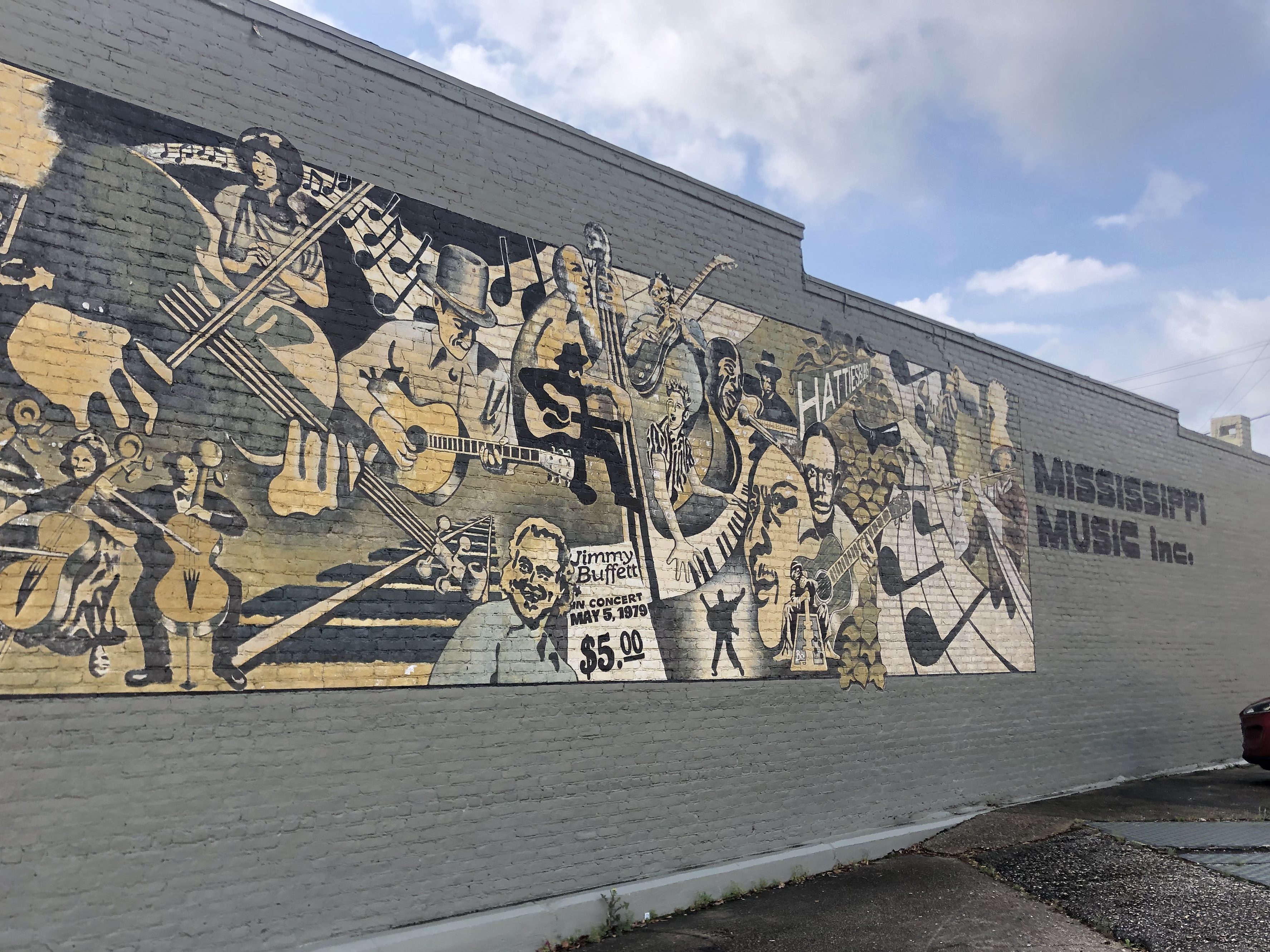
Other evidence of Hattiesburg’s musical bona fides is Mississippi Music Inc., a musical instrument sales and repair service and music teaching academy that opened in Hattiesburg in 1946.
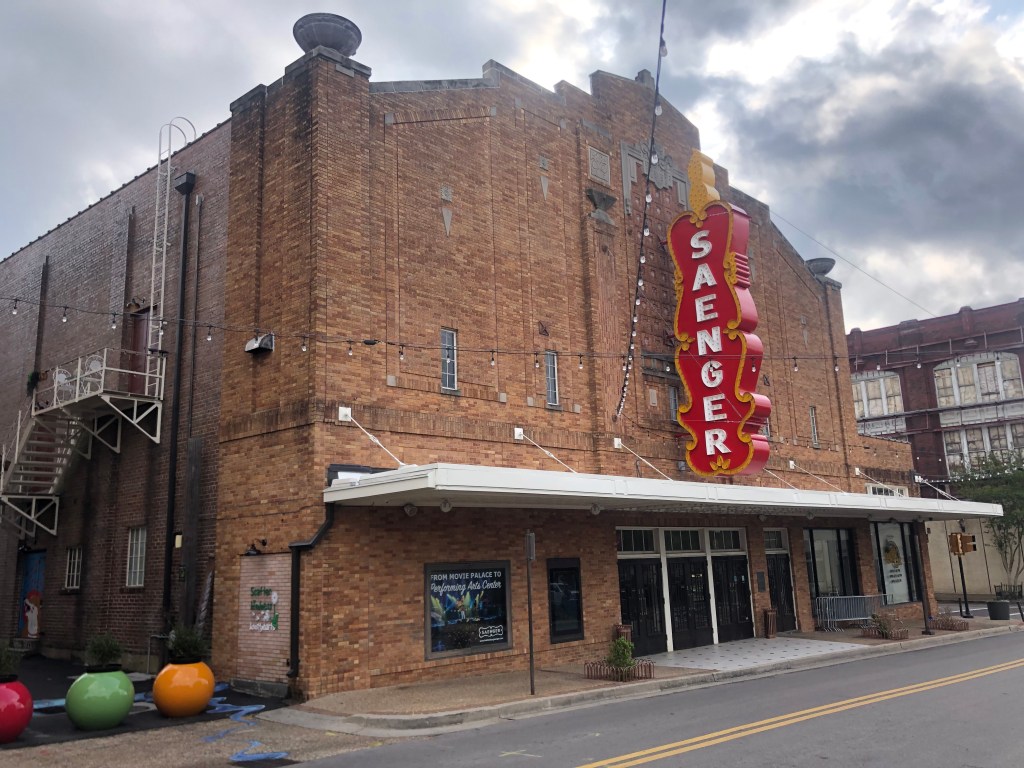
And then there’s the theater. I’ve come to the conclusion that one of the quickest, surest ways to measure a town’s cultural health is to see what they’ve done with their historic theater. Hattiesburg’s Saenger Theater was built in 1929 as a huge, thousand-seat silent movie theater, and it had an equally-impressive 778-pipe theater organ. The theater remained open for about 45 years, and closed in 1974. Along the way the organ (largely obsolete after the introduction of talkies) was sold off.

The city of Hattiesburg acquired the theater from Saenger, restored it, and (here’s the impressive part) managed to track down the original organ, purchased it, and put it back into the theater. The theater underwent a more extensive renovation in 2000, and today it serves as a major performing arts venue.
While I was exploring the downtown I was literally walking in the footsteps of a long-ago Hattiesburgian (?) named John Wesley Farley. Mr. Farley had once been enslaved, but eventually became a successful businessman in town. As a publicity stunt that I still don’t quite understand, he had bronze casts made of his size-14 feet. These were set into the sidewalk in front of a department store in 1903. The sidewalks were replaced in 1983, but the public works dept returned the footprints to their original location. Somehow that warms my heart.
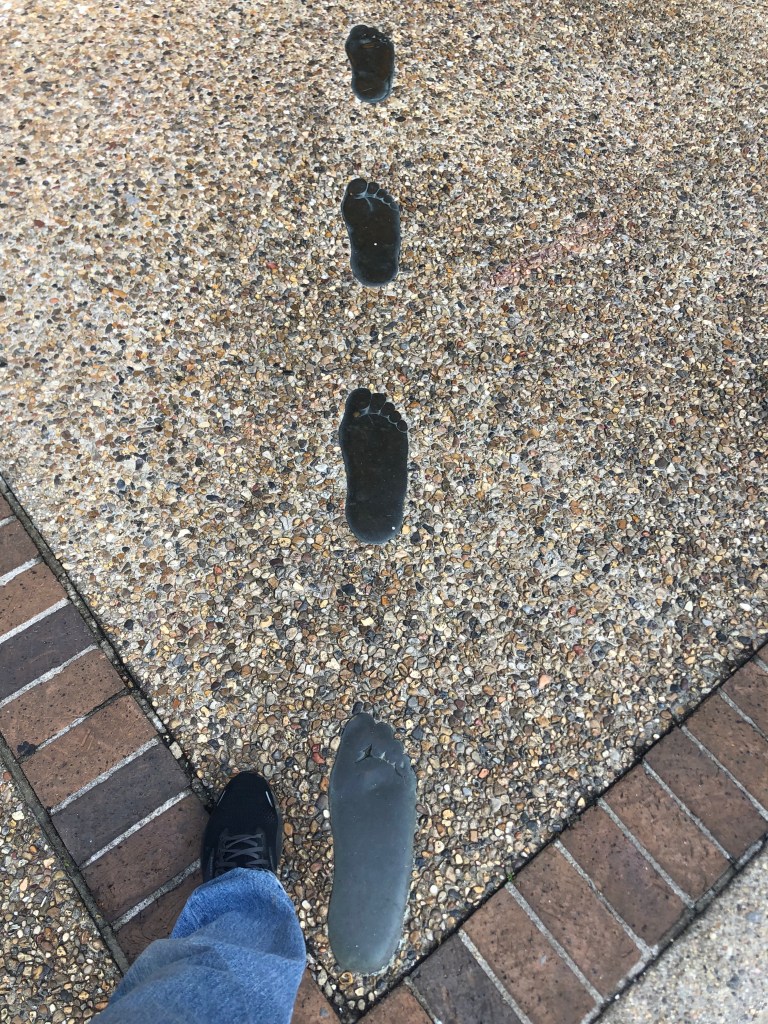
Even bigger than my clodhoppers!

Another impressive story about Hattiesburg’s commitment to historic preservation is found at the old high school.
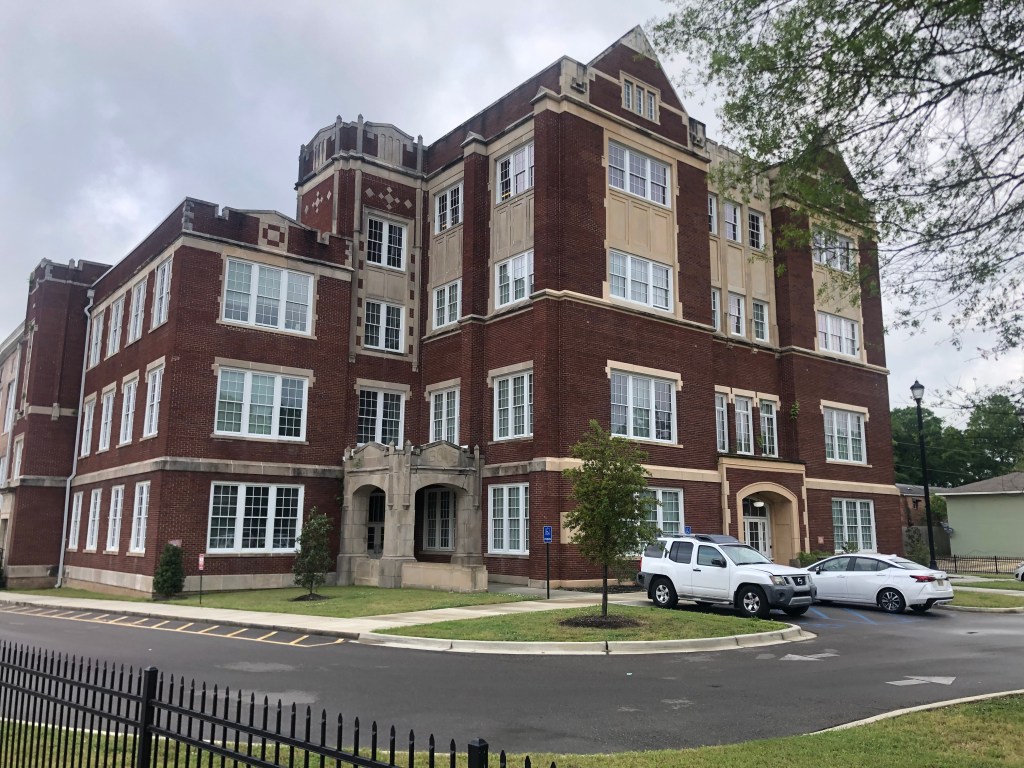
The Old Hattiesburg High School.

Originally built in 1921, the original high school building closed in 1959. After being used as the school district’s administrative offices for a few years, it became an antiques mall–which is typically the last stop before the wrecking ball. However, in 2002, the local historical society acquired the property with the intention of renovating it. Then Hurricane Katrina hit in 2005, And if that weren’t enough, arsonists torched the place in 2007. Despite all this, a project was funded to restore the historic structure and convert the interior to senior apartments. I consider this another sign of a healthy city: addressing civic needs while preserving the town’s history.

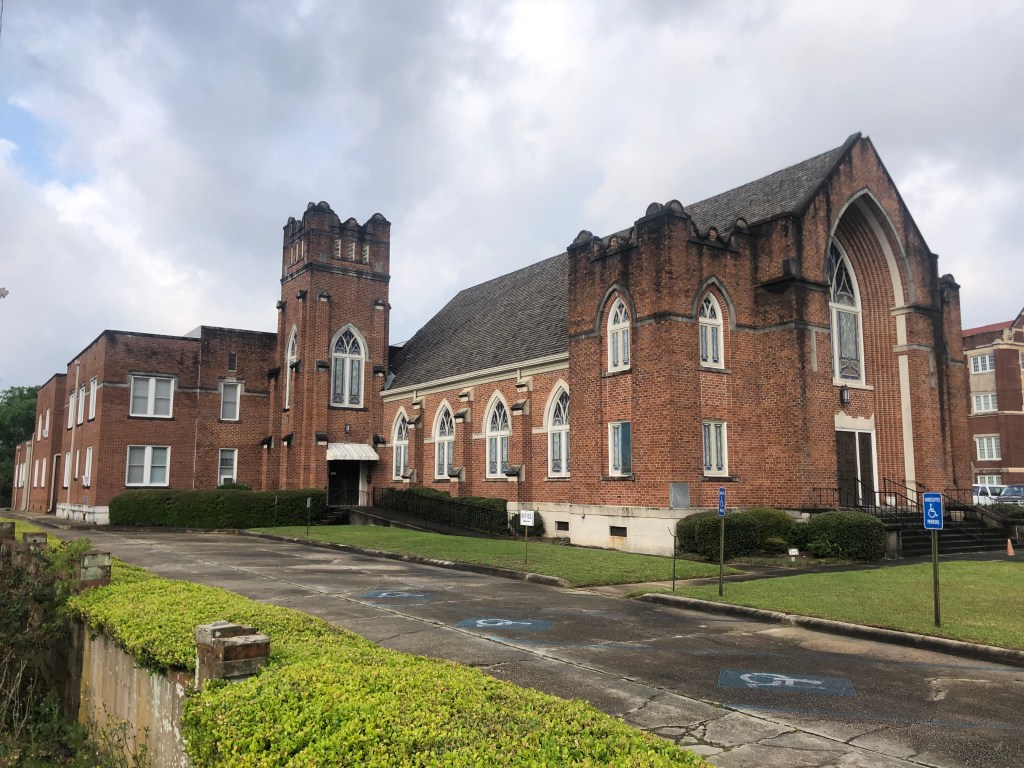
Oh, and I just wanted to include this photo of True Light Missionary Baptist Church (a name which rivals “the Holy Ghost Big Bang Theory Pentecostal Fire and Brimstone Mission Temple Firework Stand“). Anyway, this huge, impressive structure was built in 1903 and renovated in 1990. I can only imagine what it must be like in there on a Sunday. They also run a childcare center and various other missions.
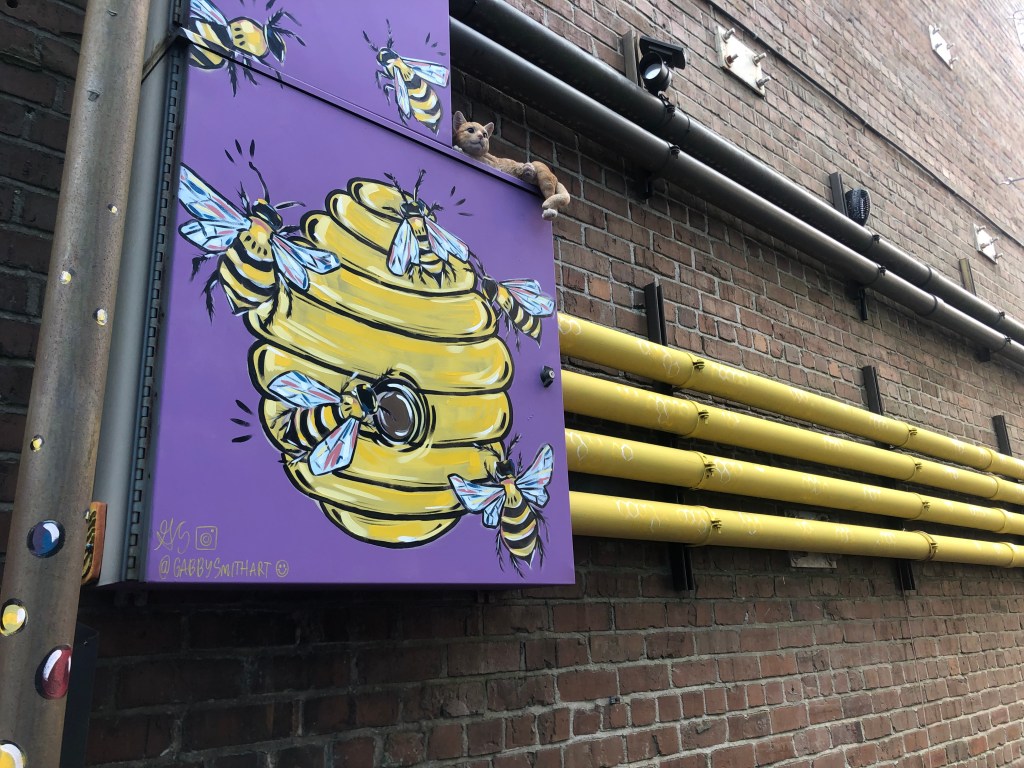
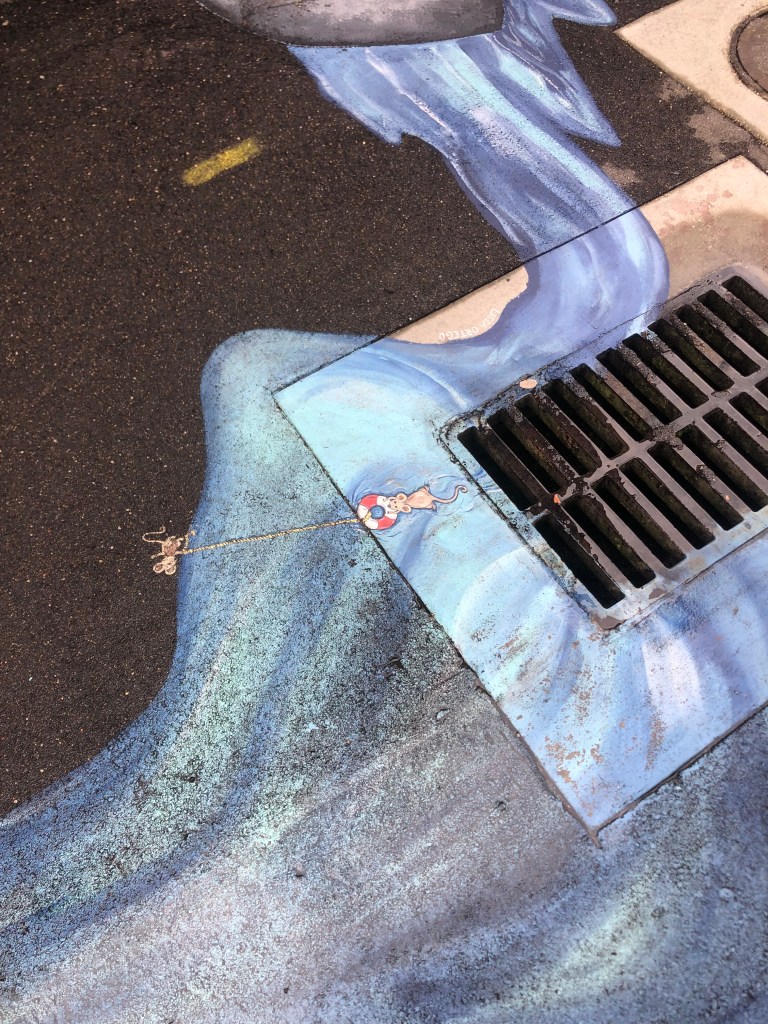
But what really delighted me (a phrase I seldom use) most about Hattiesburg was the “pocket art gallery” on a random alley behind a parking garage. At first I simply noticed what I thought were some tiny plastic figures that some child left on a water meter.
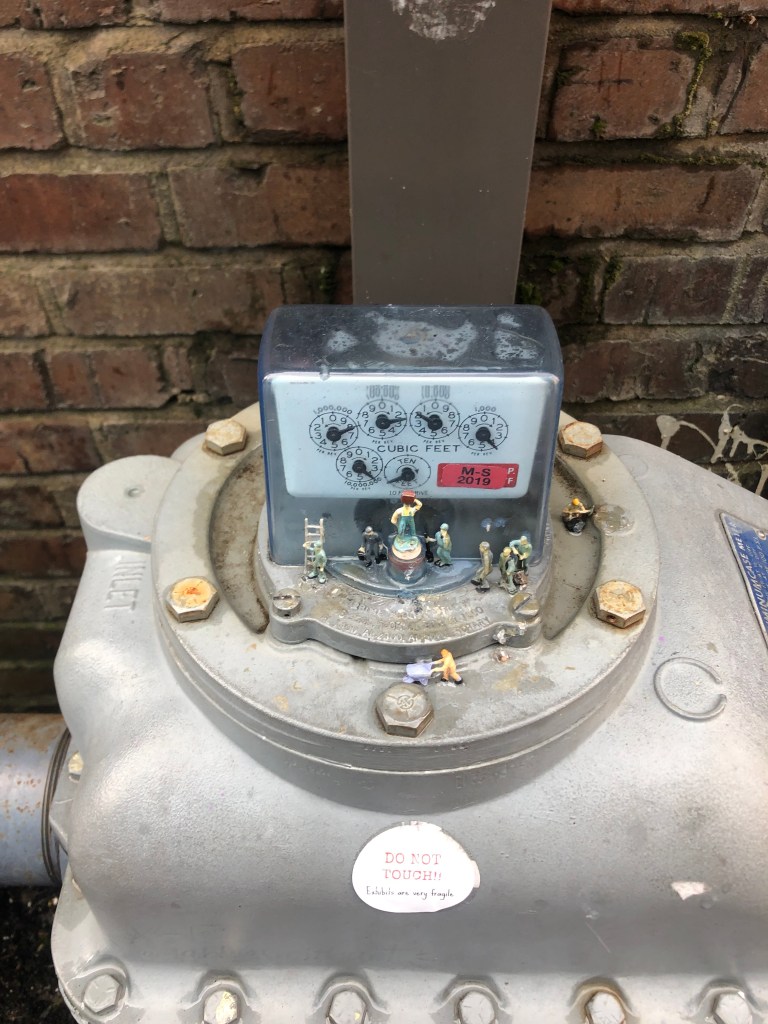
But then I saw more….
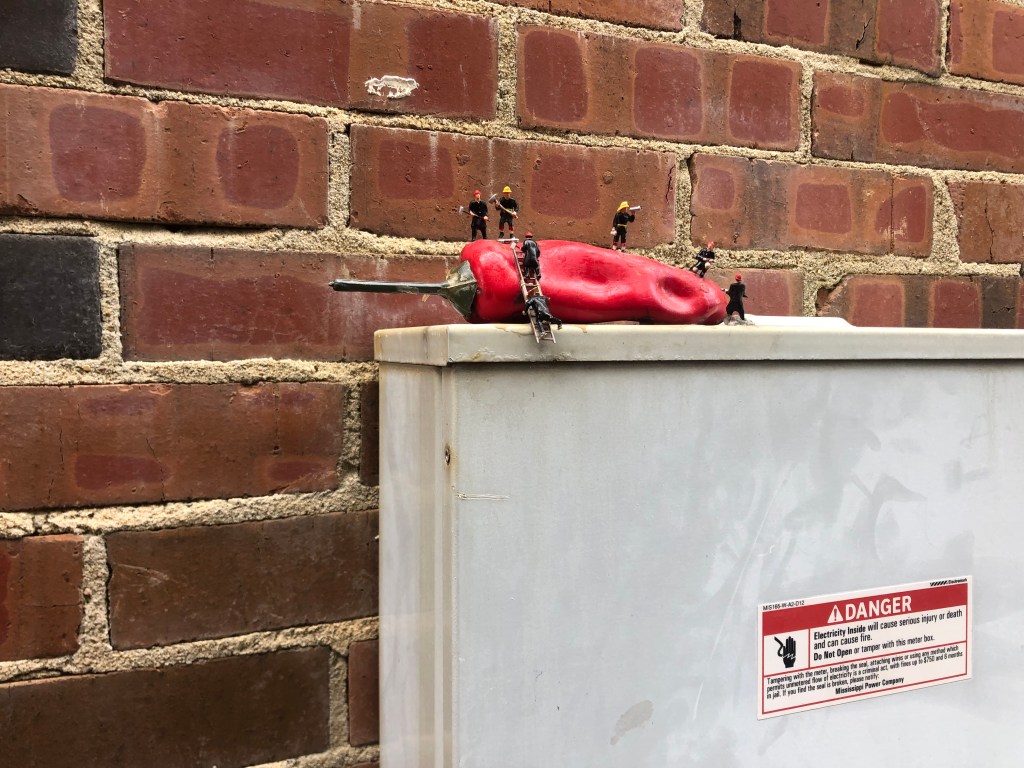
…and more…
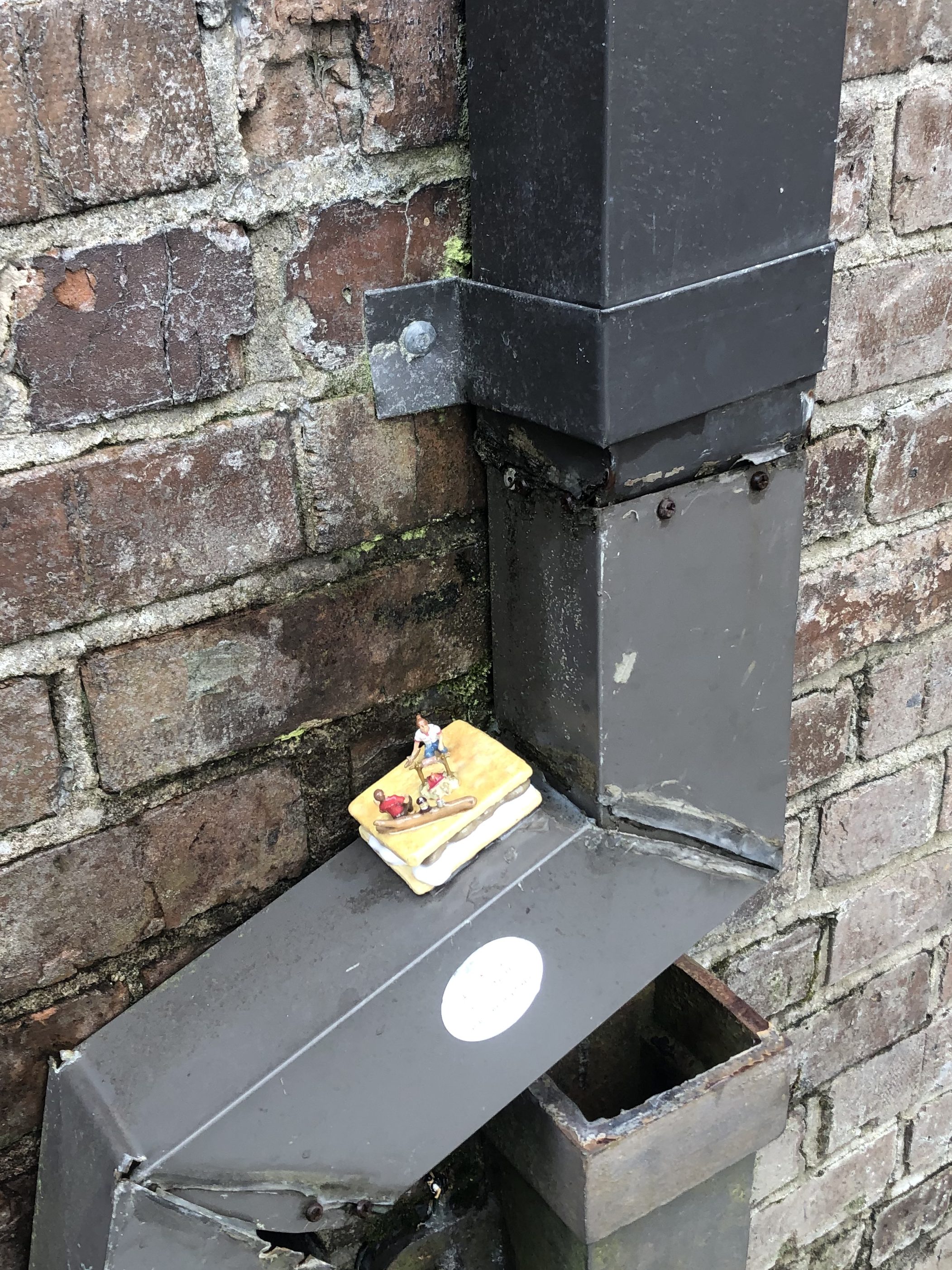
…and more.
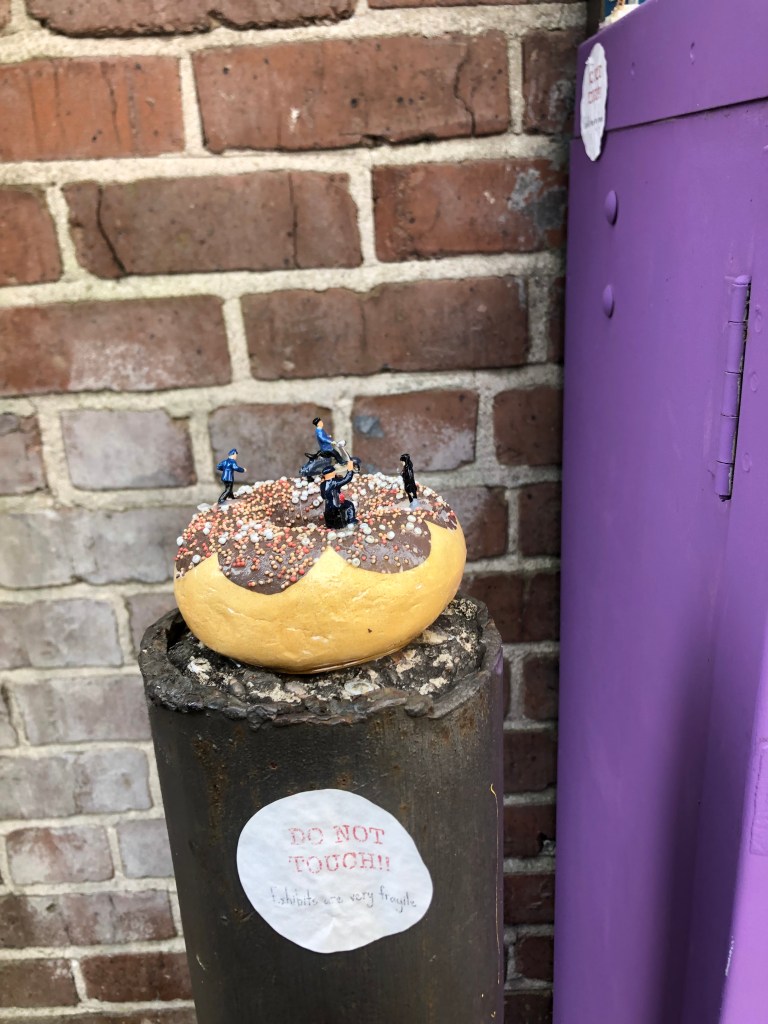
Soon, I realized the the alley was full of random, whimsical art installations.
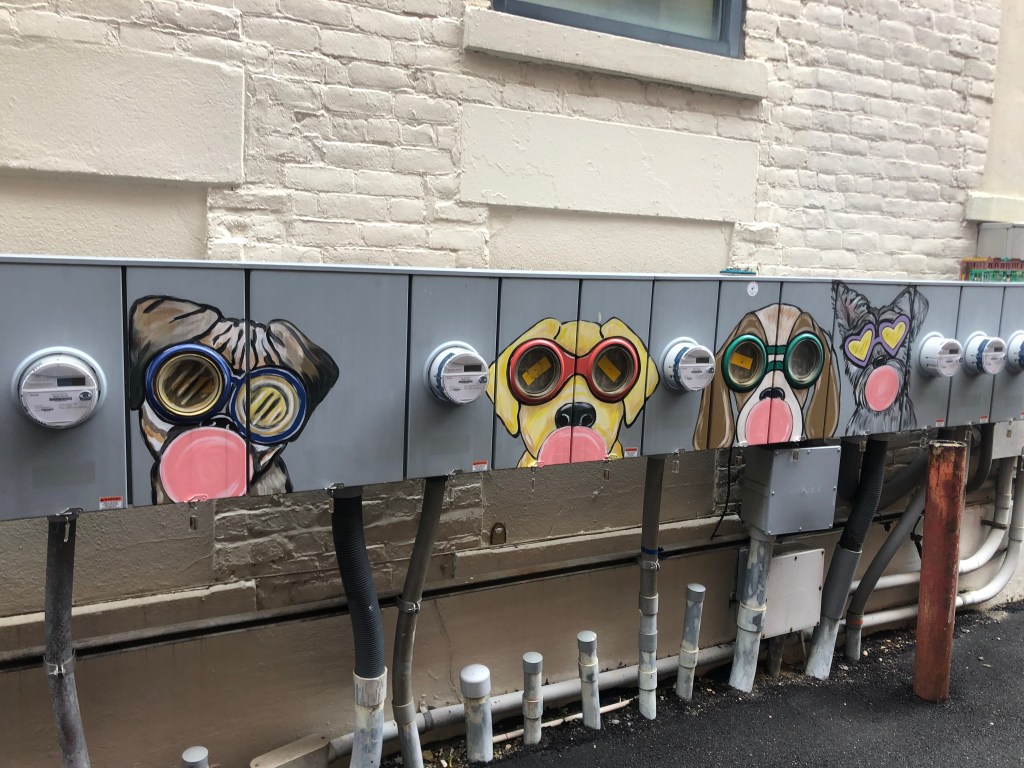
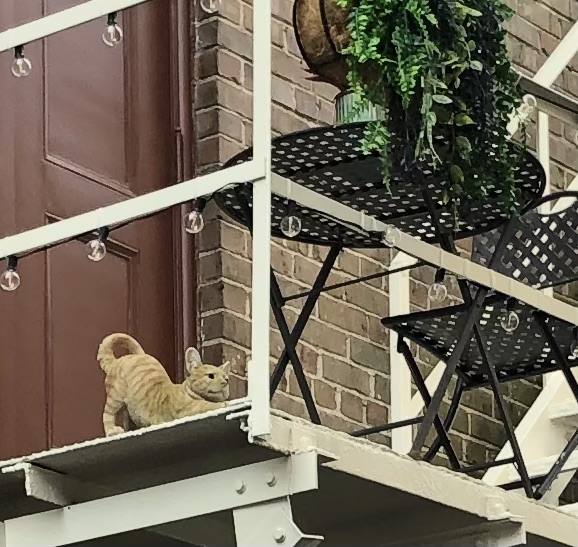
What I found most notable was that these small, delicate installations were unmolested. So that’s another sign that Hattiesburg values the arts.
I hated to leave Hattiesburg–my new favorite city–but it was time to head south to the Big Easy. Along the way I stopped for gas in Slidell, Louisiana, which was the last stop before New Orleans. Like so many of these towns, Slidell (pop: 29,000) has a historic railroad station. This one, built in 1913, is still a functioning Amtrak station, but it also houses a popular restaurant and an art gallery. I’m starting to feel that the Deep South has something to teach the rest of us about preserving historic civic buildings.
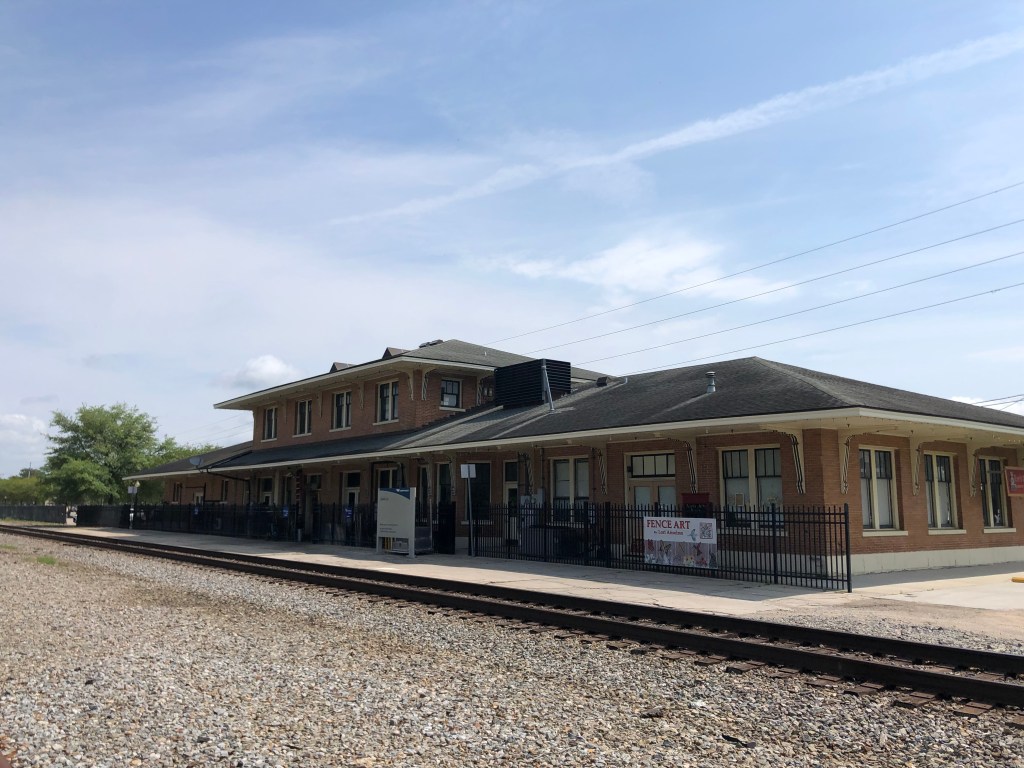
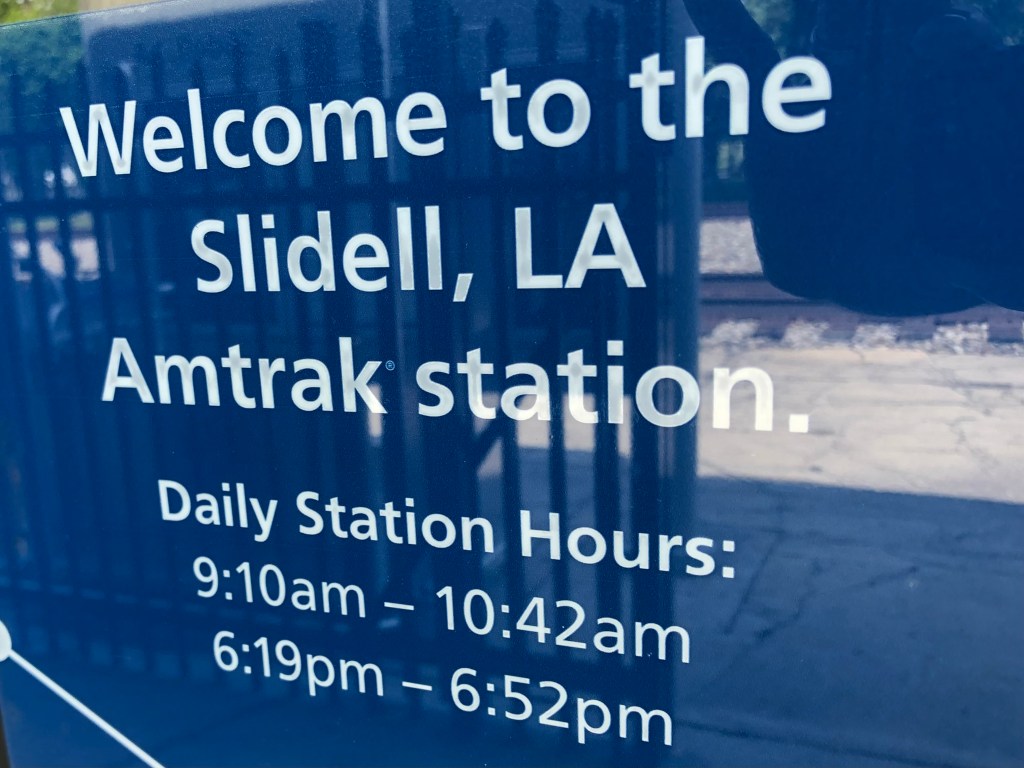
The 1913 Slidell depot.
The station supposedly has a nice waiting room…but I didn’t arrive during the 2 hours and 5 minutes that it’s open each day. (C’mon, Amtrak! Do better!)

After getting gas and a coffee, I eased onto the 5-1/2 mile long causeway that crosses Lake Ponchartrain and drops you into New Orleans.
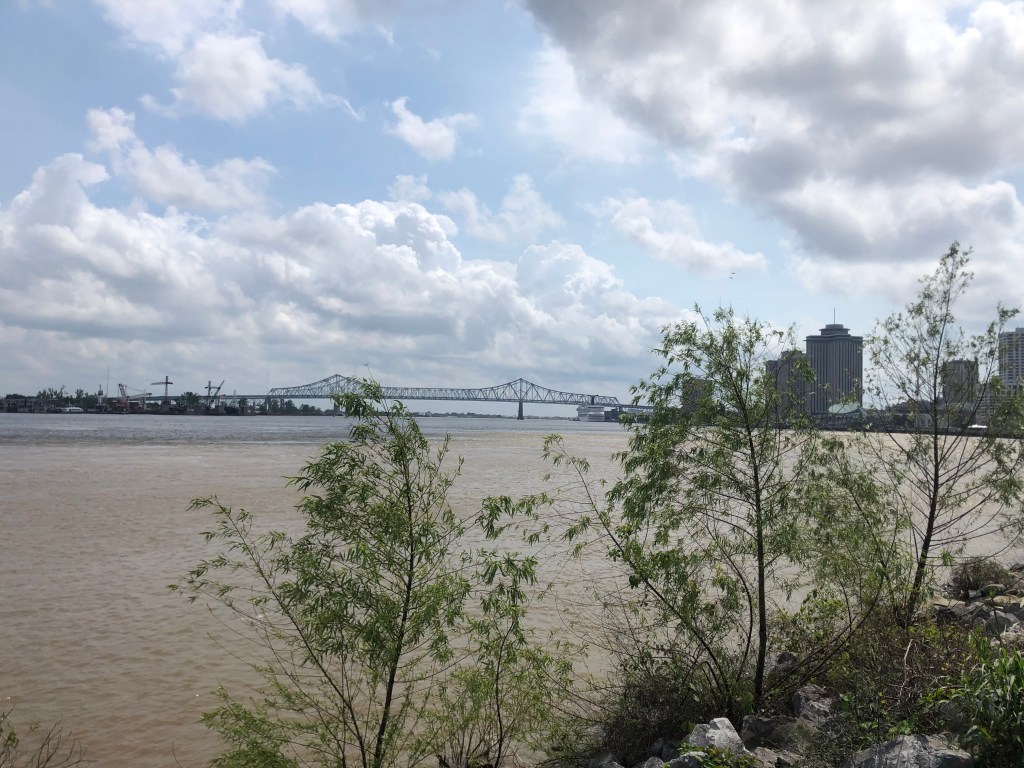
Lake Ponchartrain (viewed from downtown New Orleans).

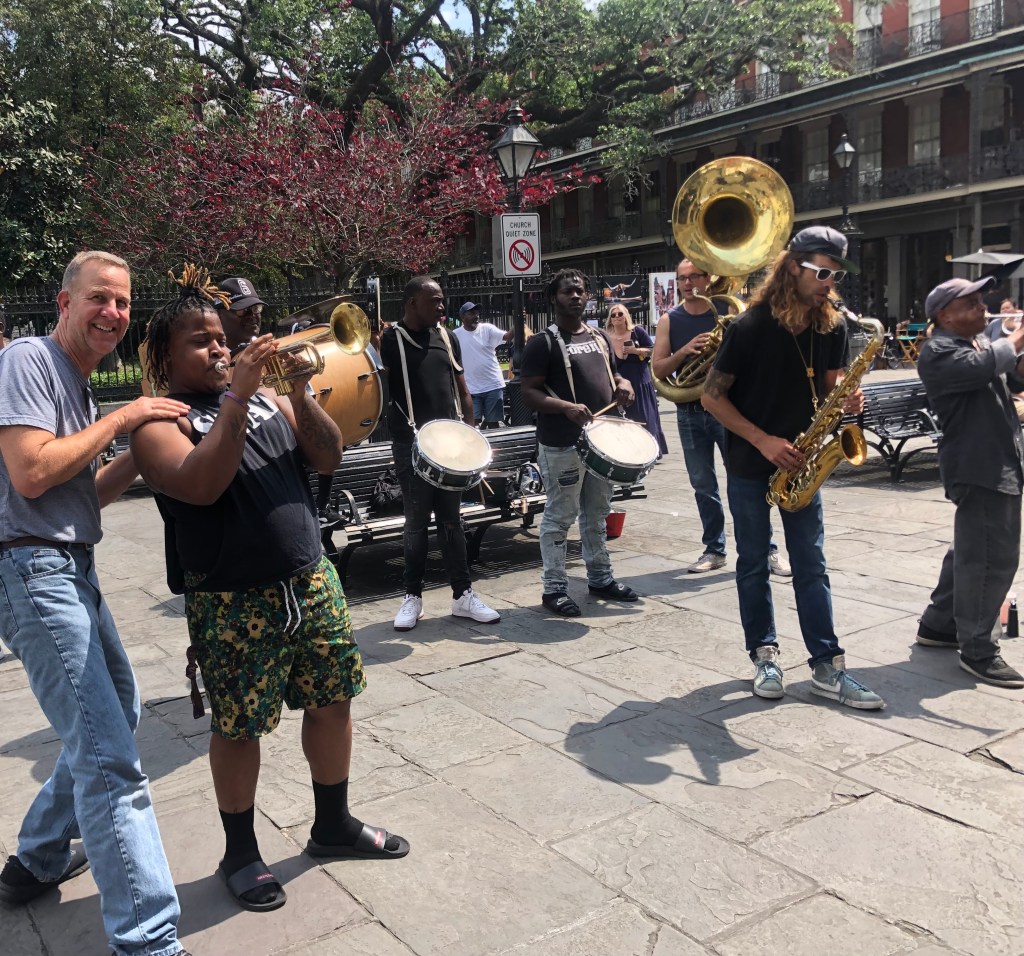
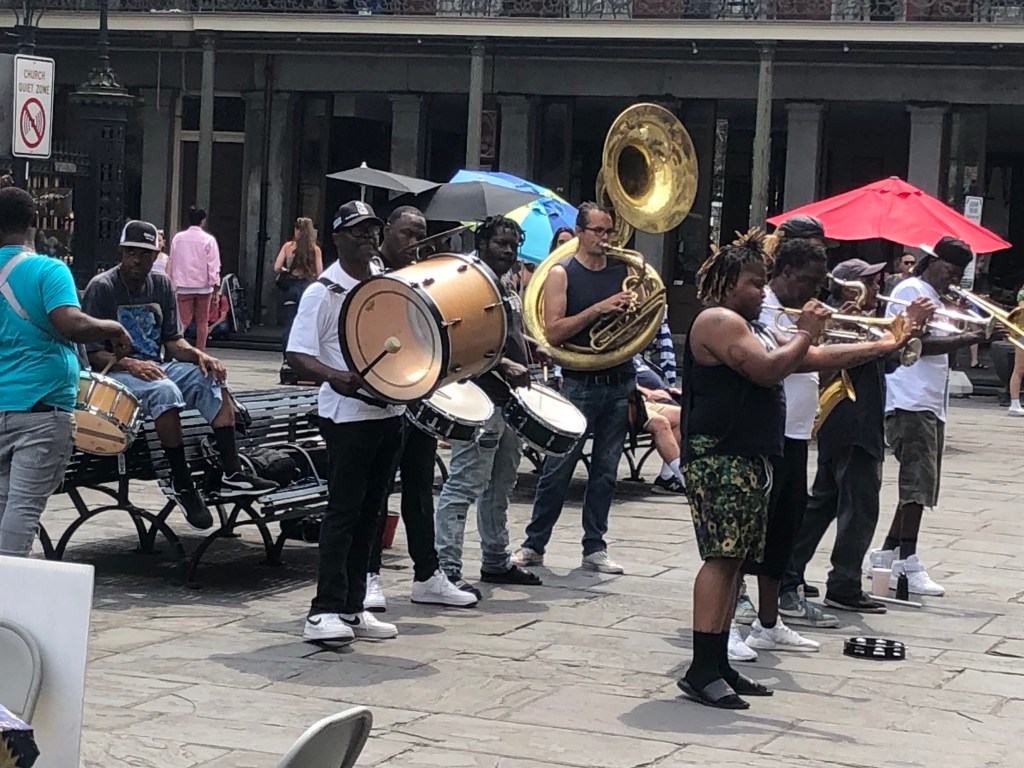
New Orleans (pop: 380,000) is of course a historic, culturally-rich, music-infused city. It’s also almost as hard to navigate by car as San Francisco. My goal was to get to the New Orleans Jazz Museum, which required life-threatening maneuvers along the narrow streets, several illegal turns, and a 20-minute search for a parking spot. Alas, after all that, I found the door to the museum was locked. They’re closed on Monday. So I spent the afternoon walking around the French Quarter. It was actually a good way to end this trip. Music floated from every corner. There were street buskers, jazz combos playing in restaurants, stereos blaring from upstairs apartments, and a second line performance, to name a few. Heck, there was even a pair of obviously inebriated street beggars who decided to sing their appeal for funds (“Can you spare a buck?/We’re down on our luck.”)
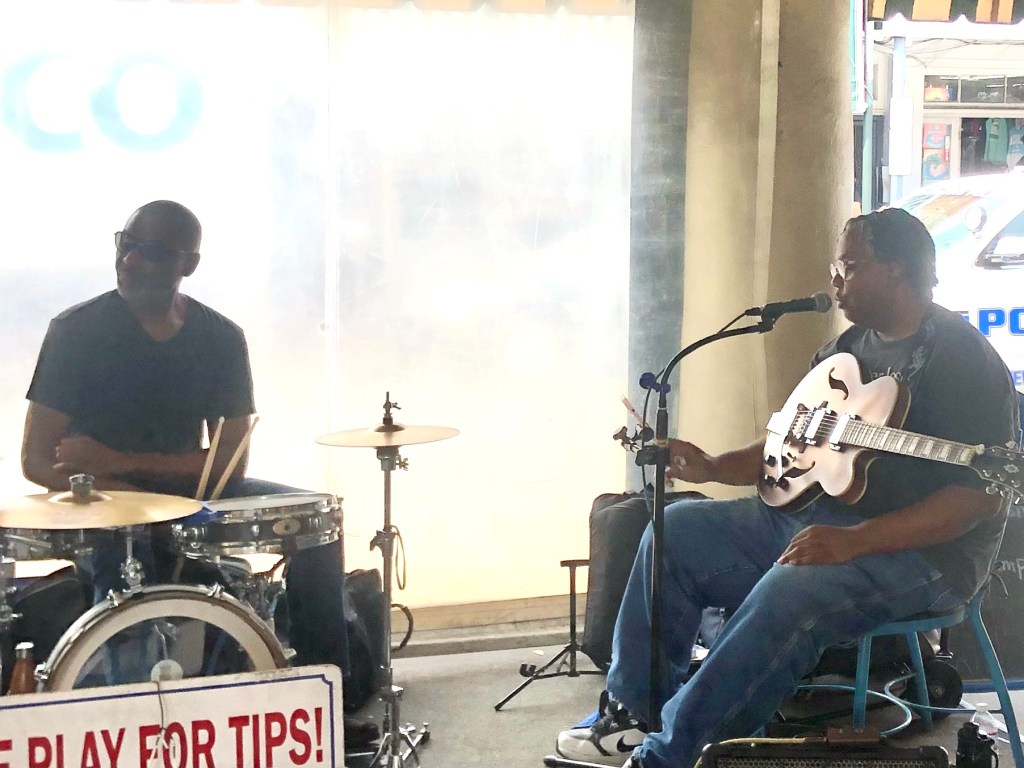
The Jazz Cats.
Second line performance.
Wish I’d brought my sax.

There are lots of different types of music played here in New Orleans, but the city is best known for its jazz. It feels like the natural progression from the other musical styles I’ve encountered on this road trip: Country, bluegrass, soul, R&B, Memphis blues, delta blues, and so on. I’m no expert on any of this music, but I can understand how they’re related–how they grow out of a uniquely American experience. I intend to expand my listening when I get home, following up on some of the styles and artists that I’ve encountered.

So that’s it for the trip. As always, I’m thankful for all the people I encountered along the way who’ve patiently explained their cities to me, taken me on tours, cooked food for me, served me drinks, and even cut my hair. I really love the people of this country.

I’m at the Airport Hilton getting ready to fly home on an early morning flight. But there’s one thing left, and that’s the…

BREW OF THE DAY

While wandering around the French Quarter I paid a visit to the Crescent City Brewhouse. They have a good selection of beers, all of which they brew themselves. I asked my server what he recommended, and he told me his favorite hands down was the “Weizenboch.” So that’s what I had–living on the edge.

This is a German style beer (as should be obvious from the name). The appearance screams the opposite of a Sleepy Hollow beer (i.e., it has a very prominent head). All that foam ensures an attractive presentation and it makes the first few sips especially enjoyable. The appearance is very cloudy, with a golden tan color. At only 6 percent ABV, it’s well suited for a mid-afternoon drink.
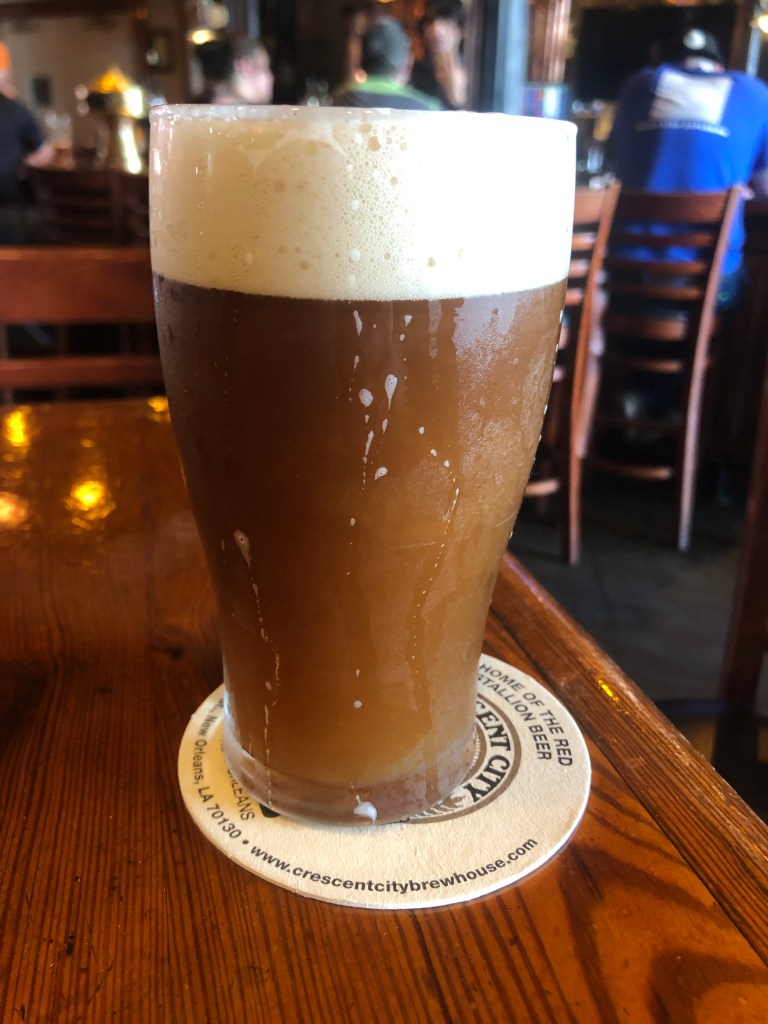
Ichabod Crane wouldn’t recognize it.

The taste is incredibly yeasty–like sourdough starter. Notes of banana peel and clove are prominent. Maybe a tiny bit of lemon? It’s not too hoppy (unlike some of the English styles I normally drink). Overall this is a very drinkable, approachable beer. It gets a solid 4 stars. Heck, I’m feeling good at the end of this trip; let’s give it a 4.5.
cemeteries · churches · movie theaters · Road trips · trains

Driving Into Natchez

One of my favorite songs is “Don’t Think About Her When You’re Trying To Drive,” recorded by Little Village on their first and only album in 1991. Little Village was a collaboration of four established musicians: John Hiatt, Ry Cooder, Nick Lowe, and Jim Keltner. Their musical style was heavily blues-influenced, and the group’s name is a reference to a famous foul-mouthed diatribe by Sonny Boy Williamson, whose name keeps showing up at the blues museums I’ve been visiting.

Anyway, I’ve been thinking about that song because one of its lines is “Driving out of Natchez/You drive her back and forth across your mind.” And the reason I’m thinking about that is because I’m driving into Natchez.

Anyway, here’s the song, if you’re interested: (the song starts at 8:40)

With that out of the way, let’s turn to today’s trip, whose theme is “southern ruins.”

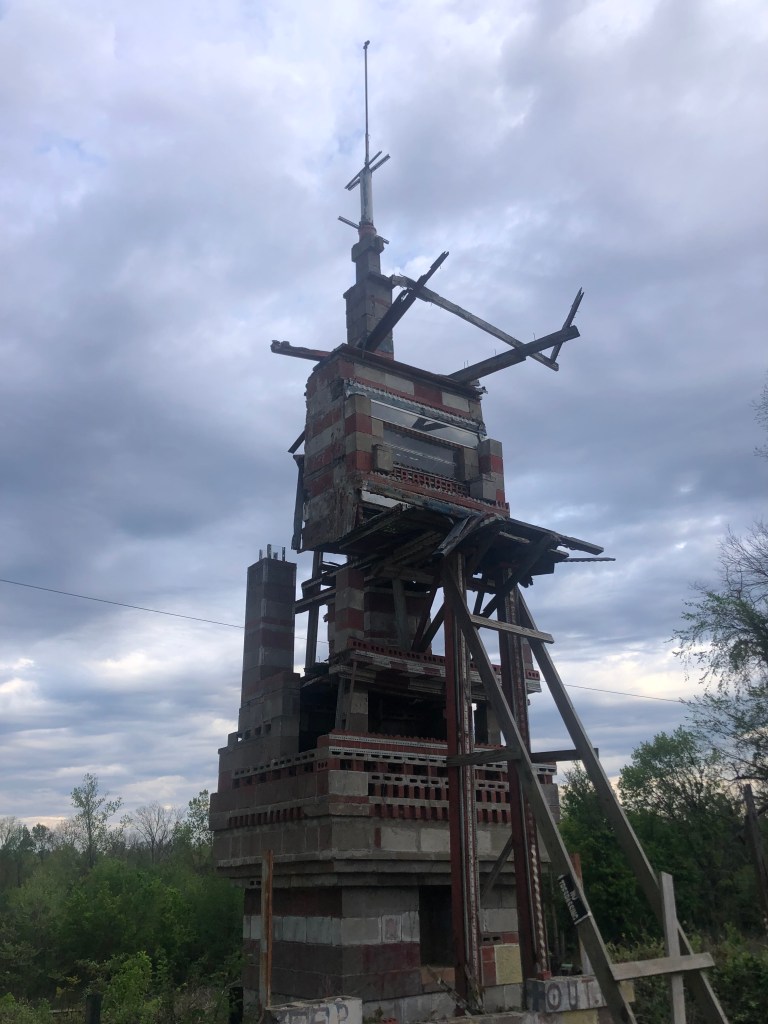
On my way out of Vicksburg I passed these ruins within sigh of the Mississippi:

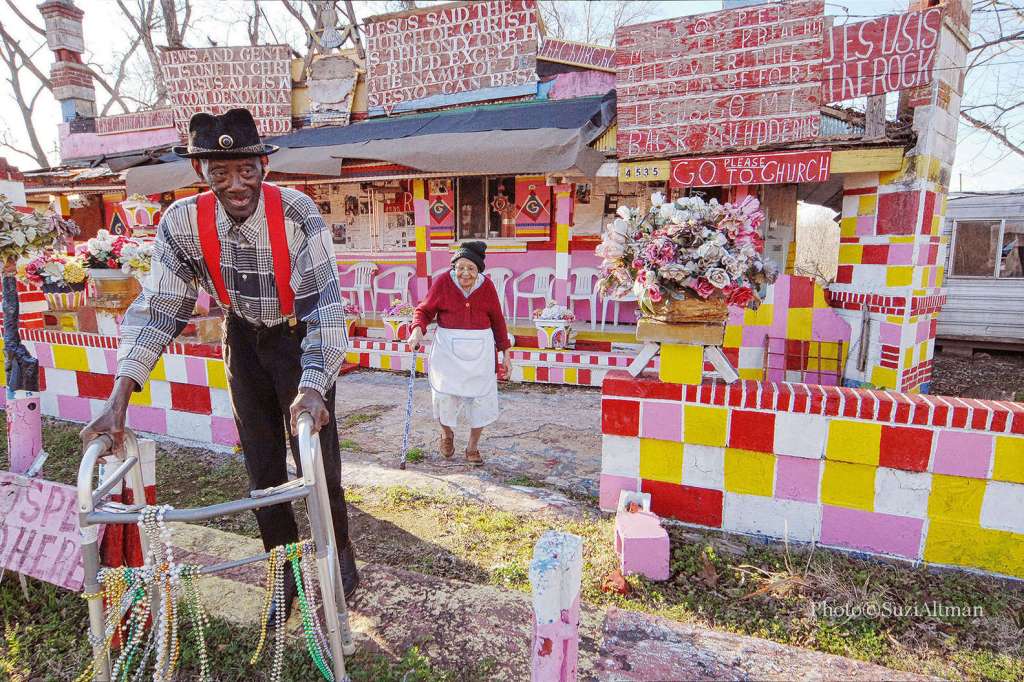
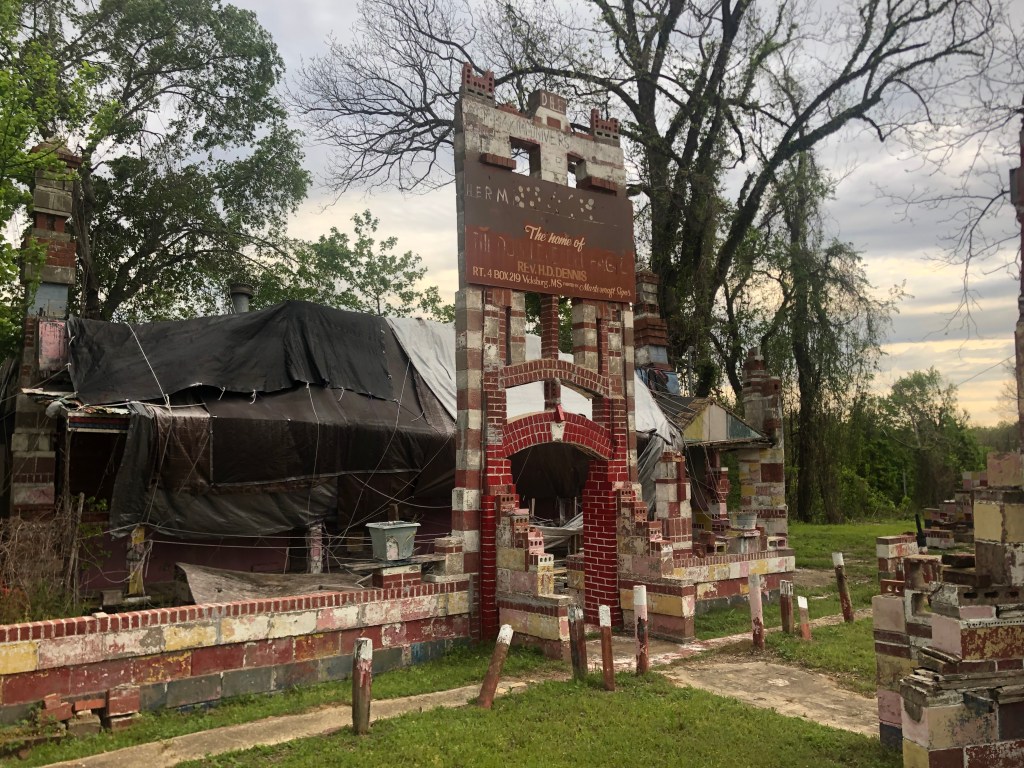
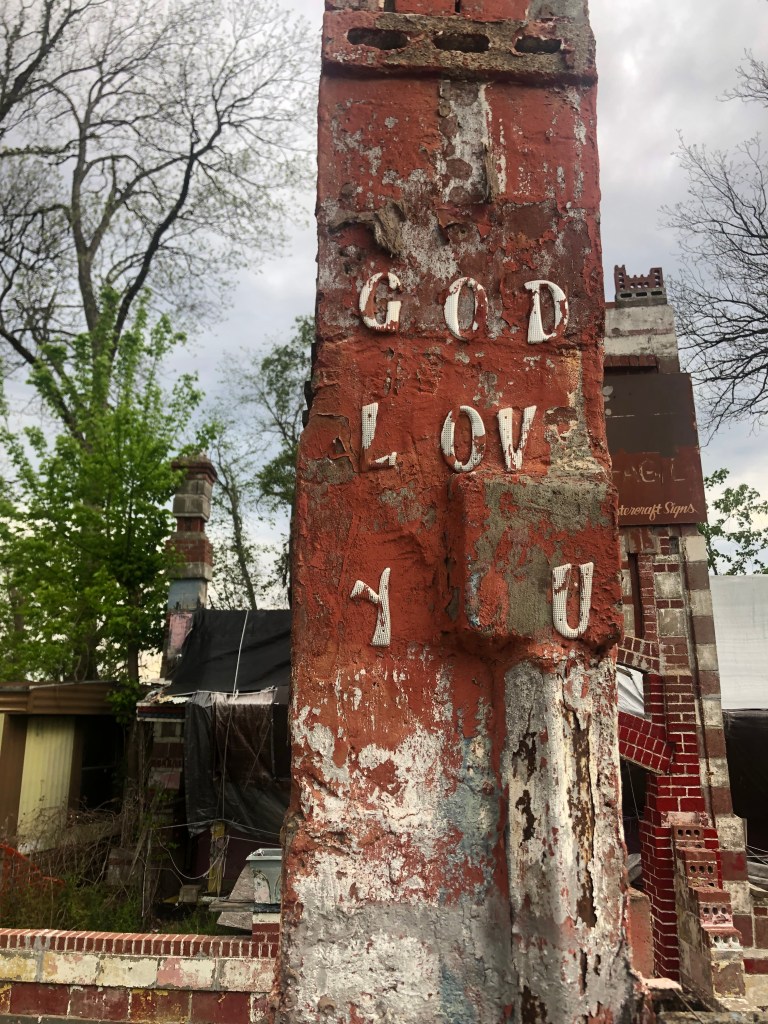
The background on this place is a little sketchy, but it seems that Margaret Rogers, who was born in the area in 1906, ran a general store on this site for many years. It’s said that throughout the 1960s and 1970s it was the only store along Route 61 that was run by an African American woman. In the late 1970s Margaret’s husband was shot and killed in a robbery. A few years later Martha met Rev. H.D. “Preacher” Dennis, who promised to build her “a castle to our love” if she would marry him. She accepted and for the many years Preacher Dennis spent each day working on this structure.

Preacher Dennis, Margaret, and their “castle.”

Margaret died in 2009 and Preacher Dennis died in 2012 (age 96). The structure has been deteriorating ever since. Many locals consider it to be a good example of folk art and there’s a group actively raising funds to restore the structure. They’ve set up a gofundme page. I’m going to make a small contribution when I get to a secure internet connection.

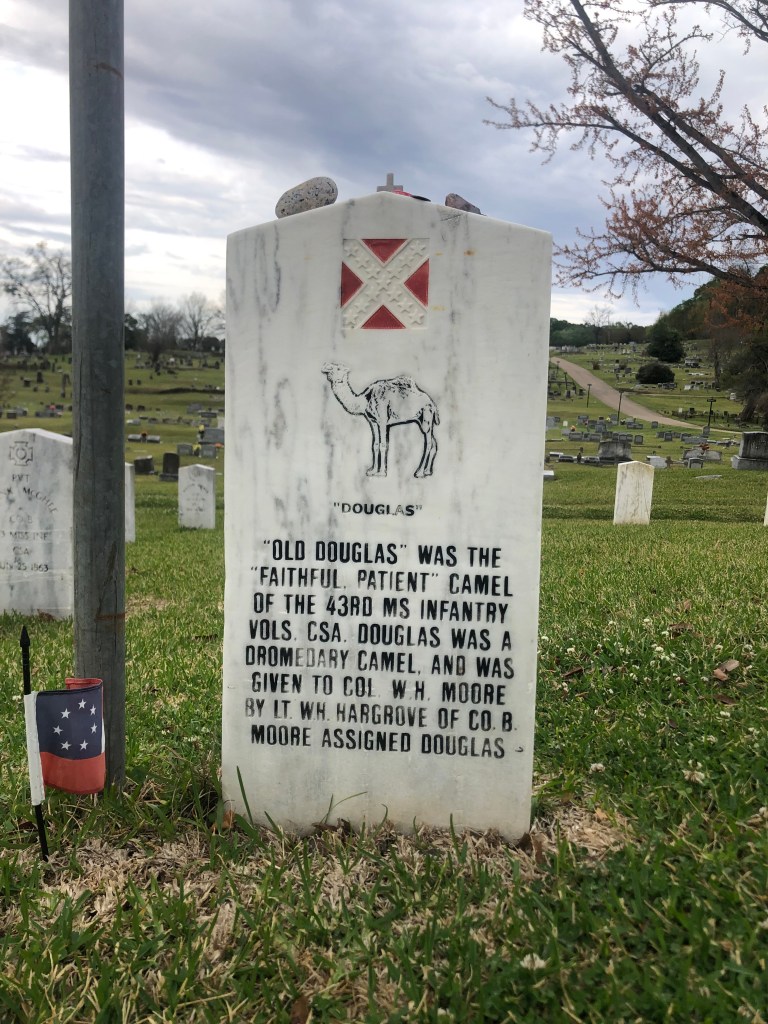
Continuing my way out of town I stopped at the historic Cedar Hill Cemetery which contains the mortal remains of a camel that was buried with military honors.

Here’s the story of the Confederate camel:

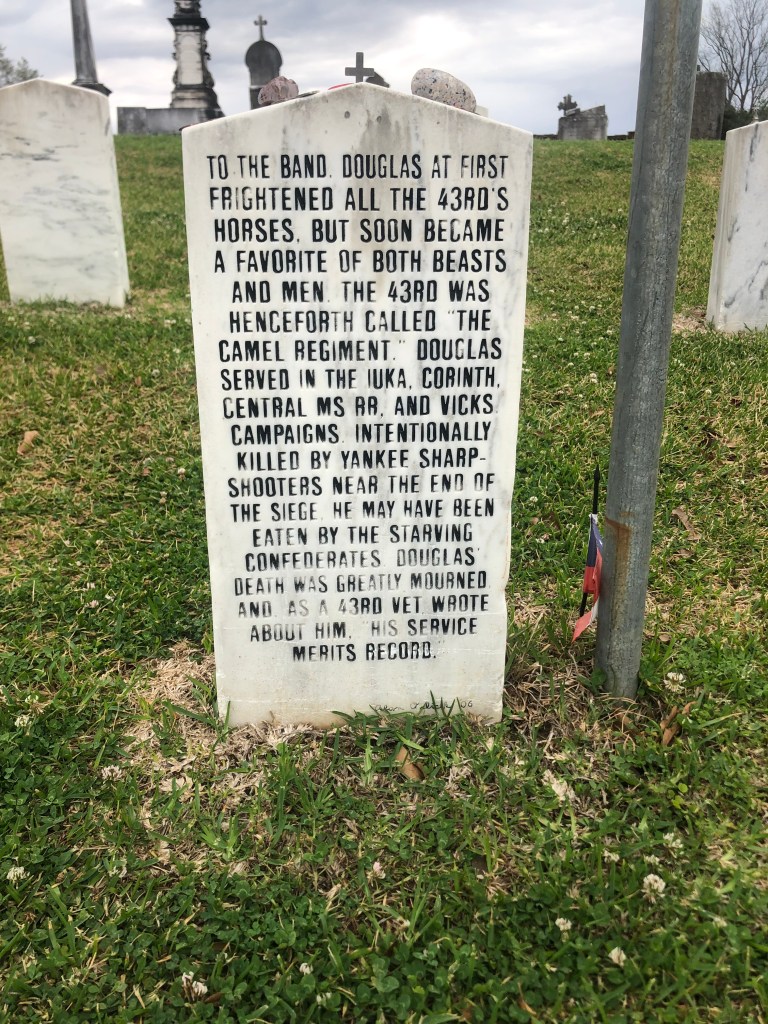
In the 1850s the War Department experimented with a “Camel Corps,” employing camels as pack animals in the arid southwest regions of the continent. The US Secretary of War at the time was one Jefferson Davis. Davis of course would become the president of the Confederacy a few years later, and so it’s not surprising that his armies would try using camels as pack animals in the Civil War. Old Douglas was a much-loved member of the 43rd infantry, but he was shot and killed by a Union sharpshooter.

The back of Old Douglas’ headstone is full of bad news.

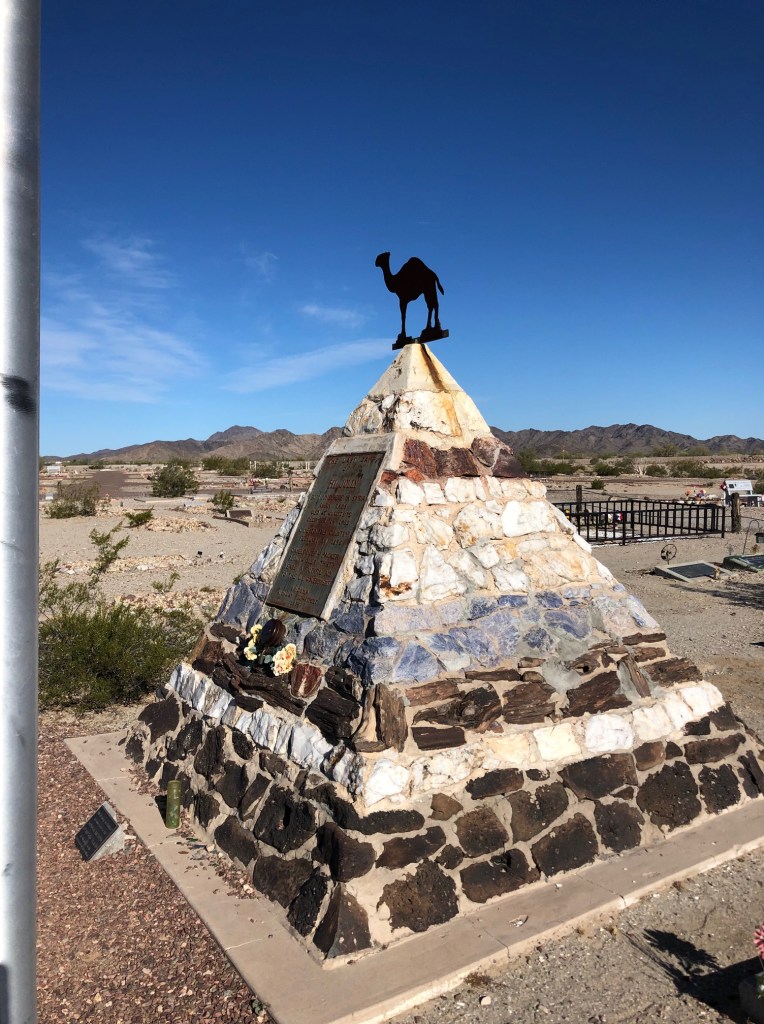
As a footnote, attentive readers will recall one of my earlier road trips where I visited the grave of Hi Jolly, one of main camel drivers of the US Army’s Camel Corps.

Hi Jolly’s tomb in Quartzite, AZ. (Photo from my Route 60 Blog, 2019)
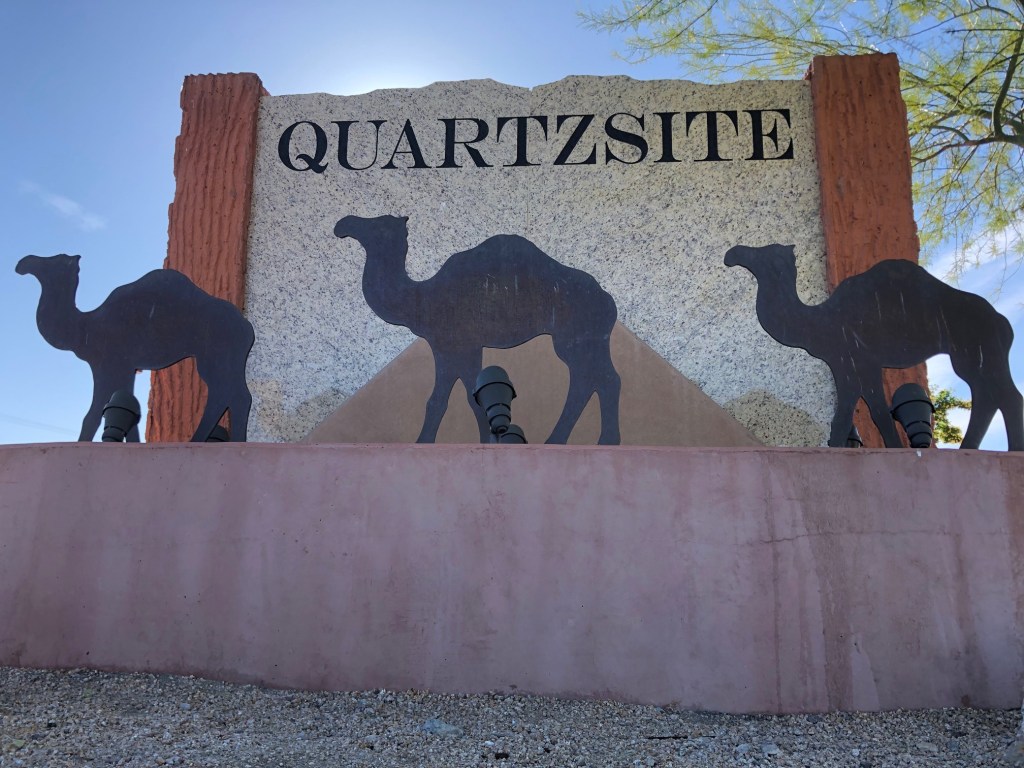
Quartzite really ran with the camel theme. (Photo from my Route 60 blog, 2019.)

Anyway, back to today’s drive. After leaving the cemetery I got back on US Route 61, heading south to Natchez. Along the way I stopped at a decimated city named Port Gibson (1,500). For the first half of the 20th century Port Gibson was the home base of an influential, traveling minstrel show called the Rabbits Foot Company. It’s been credited with influencing and advancing blues music in the Delta. There’s a placard to this effect on the site of the old Rabbits Foot offices.

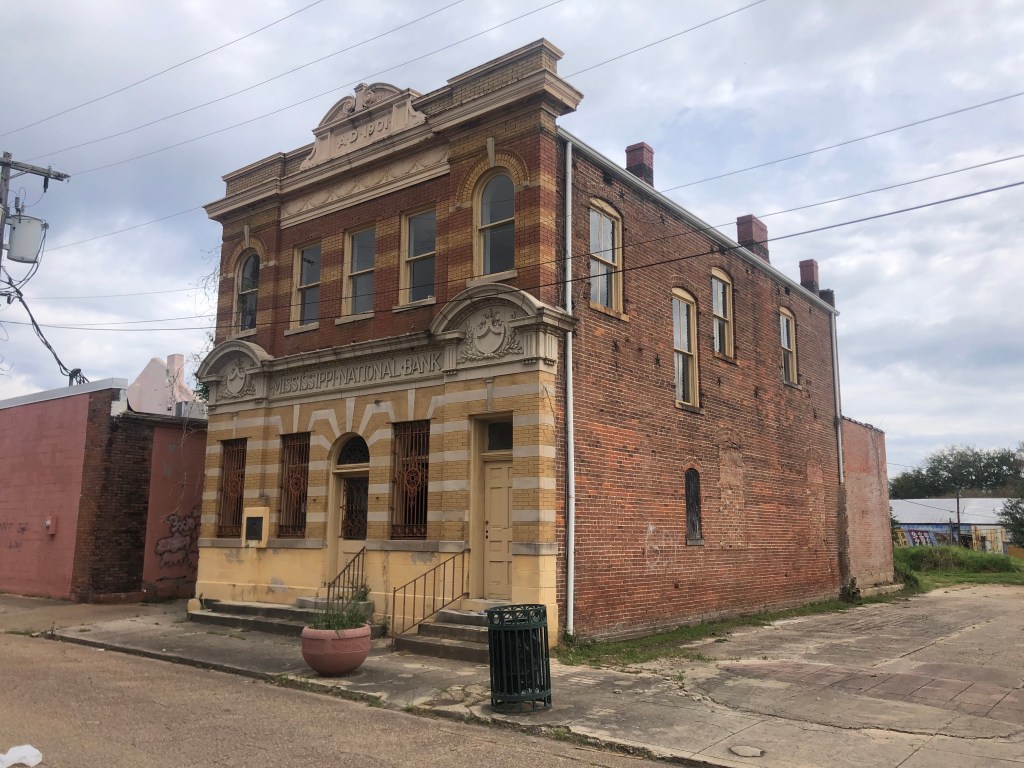
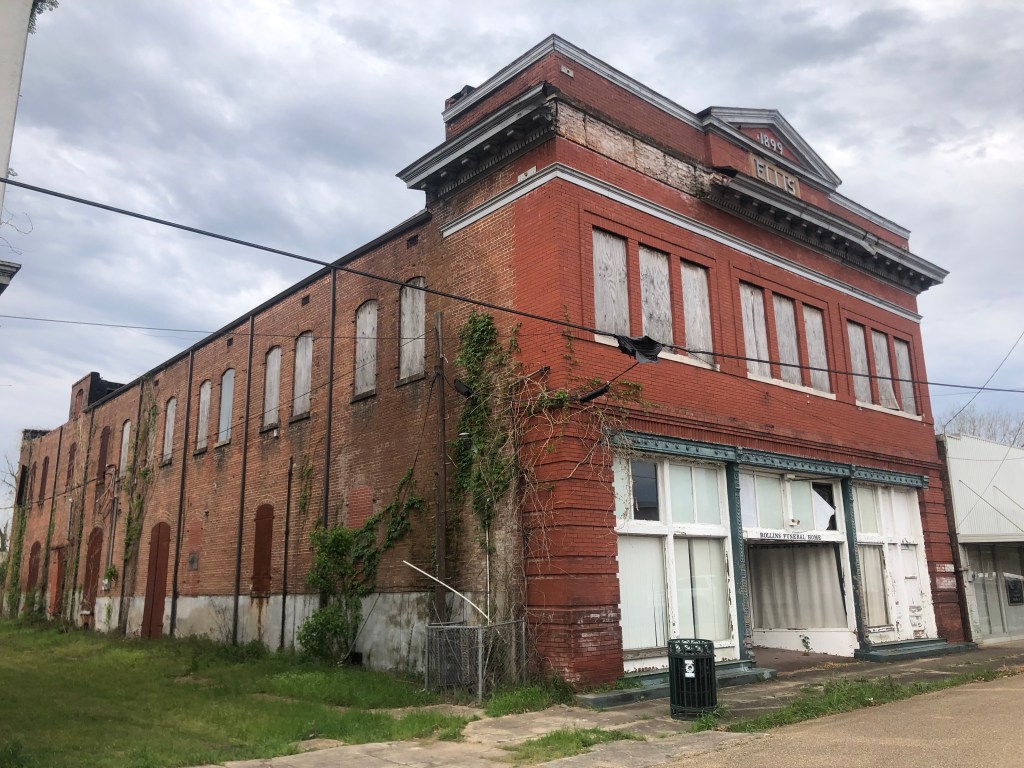
The town’s economy relied on labor-intensive agricultural jobs, which largely disappeared in the post-World War II era. Since then the population has been declining and poverty is pervasive. Today I was struck by a number of historic buildings that speak of a more prosperous time. Most have been simply abandoned.

Mississippi National Bank building, built in 1901. Currently vacant.
Rollins Funeral Home building, abandoned. Structure dates to 1899.
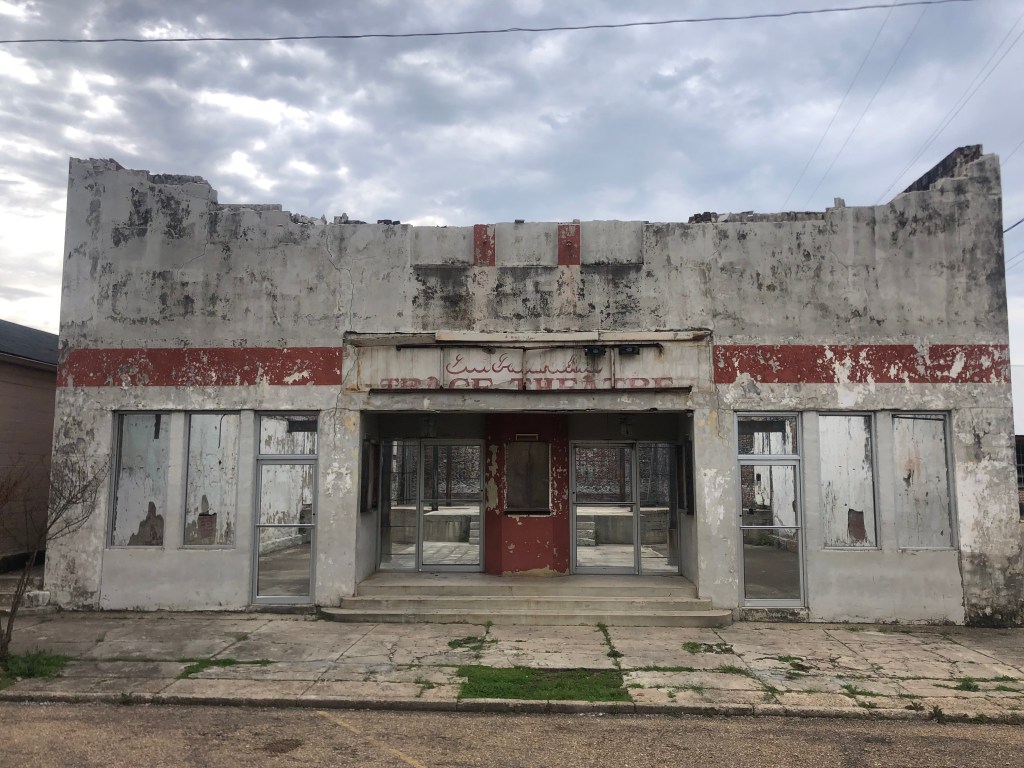
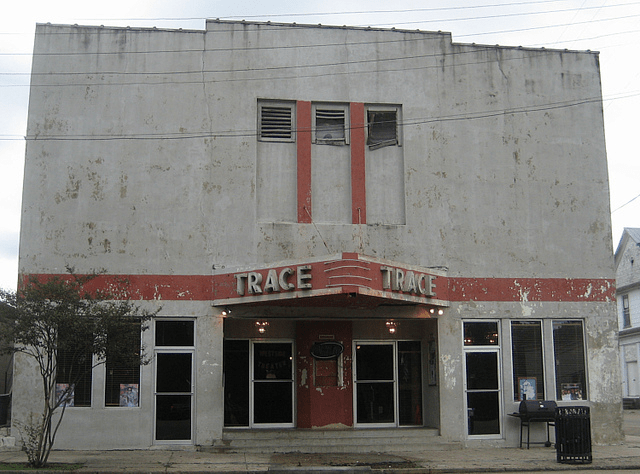
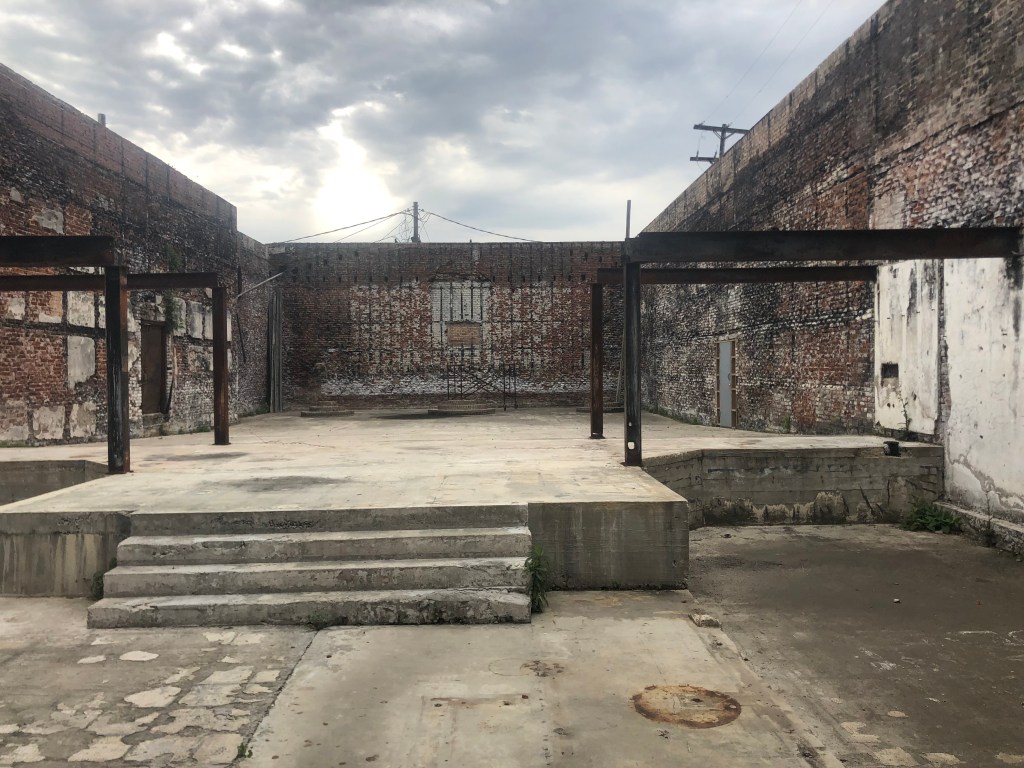
The Trace Theater, originally built in 1870 and remodeled in Art Deco style in 1940. It closed in 1968 and sat vacant for almost 50 years (!) The inside was refurbished in 2017 and it reopened as a night club. Sadly, it suffered a fire in 2020.
2011 (?) photo from Cinema Treasures website.
This is the interior of the Trace Theater today. I took this photo through the glass front doors. At least they’ve cleaned up the debris from the 2020 fire, and they appear to have installed a new set of doors on the front.
Port Gibson still has a few pockets of relative prosperity.

It was eerie walking among these vacant buildings on these empty streets. Eventually I got back in the car and continued down the Blues Highway. A few miles south of town the the highway intersects with the Natchez Trace Parkway. I recalled that my good friend Victor R had recommended I drive along that route if I had the opportunity.

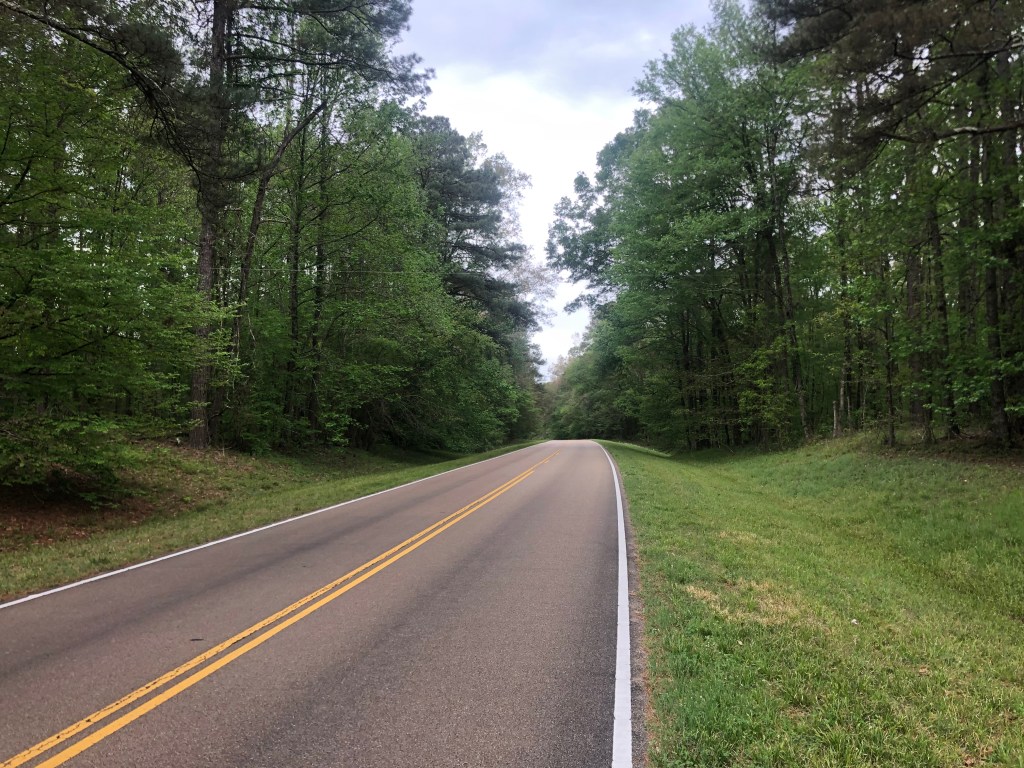
The Natchez Trace runs from Nashville to Natchez, roughly following the Cumberland, Tennessee and Mississippi Rivers. It began as an ancient trail used by Indians (themselves following trails created by grazing and migrating animals. The general contours of the trace became more firmly established over time, and it eventually became a network of major trails used by traders, emigrants, and others. In 1938 President Roosevelt signed legislation that created the Natchez Trace Parkway, a paved road built by the Civilian Conservation Corps. This is what I drove on today (or the last 40 miles of it). It’s a verdant, gracefully-meandering, low-key road that is almost entirely devoid of signage, signals, intersections, and other signs of civilization. It’s just a narrow two-lane ribbon of asphalt cutting through the woods.

The Natchez Trace Parkway.

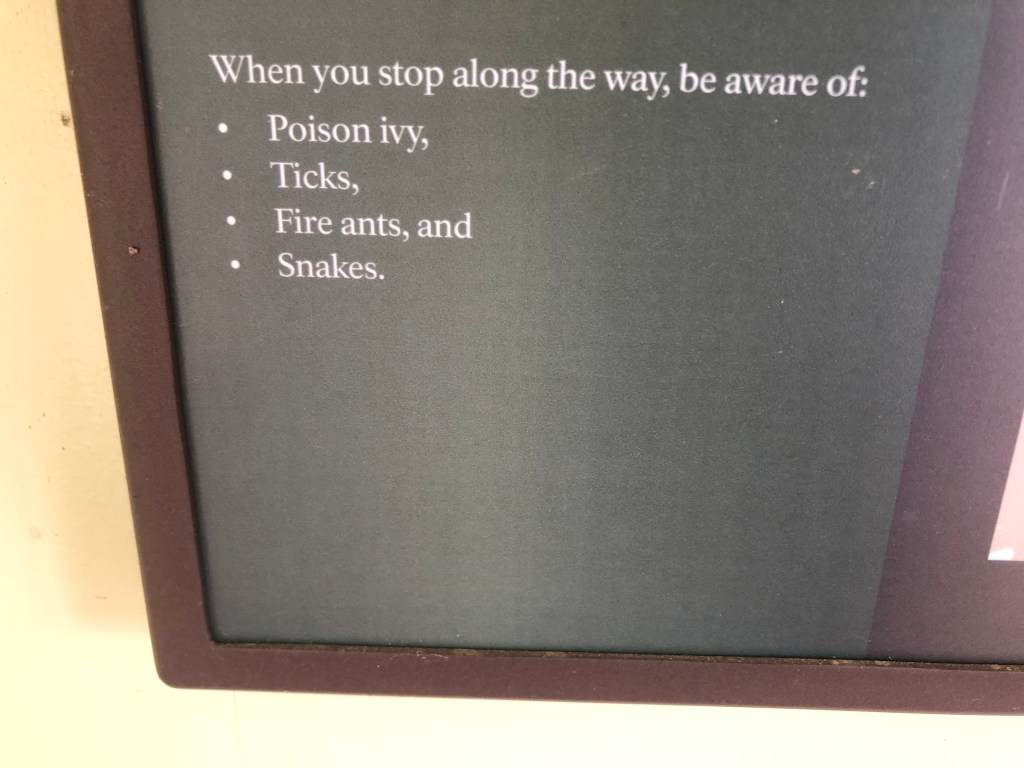
Of course, being out in nature has its drawbacks, as detailed on this “welcome” sign along the route:

It’s enough to make you stay in the car.

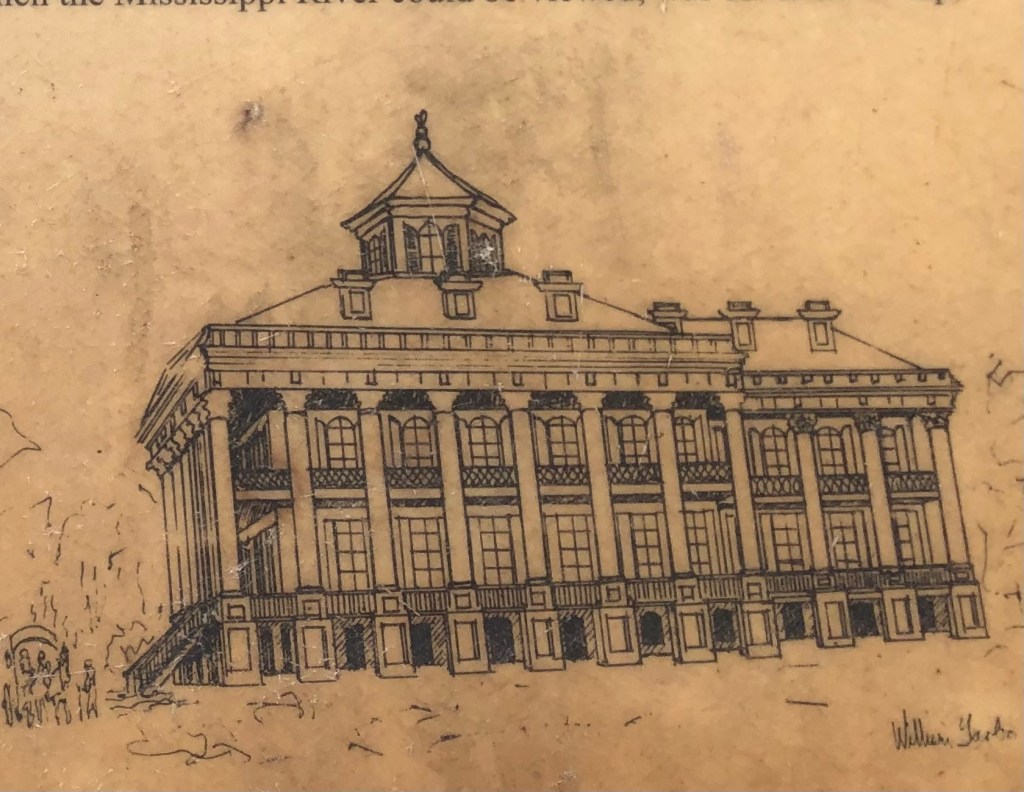
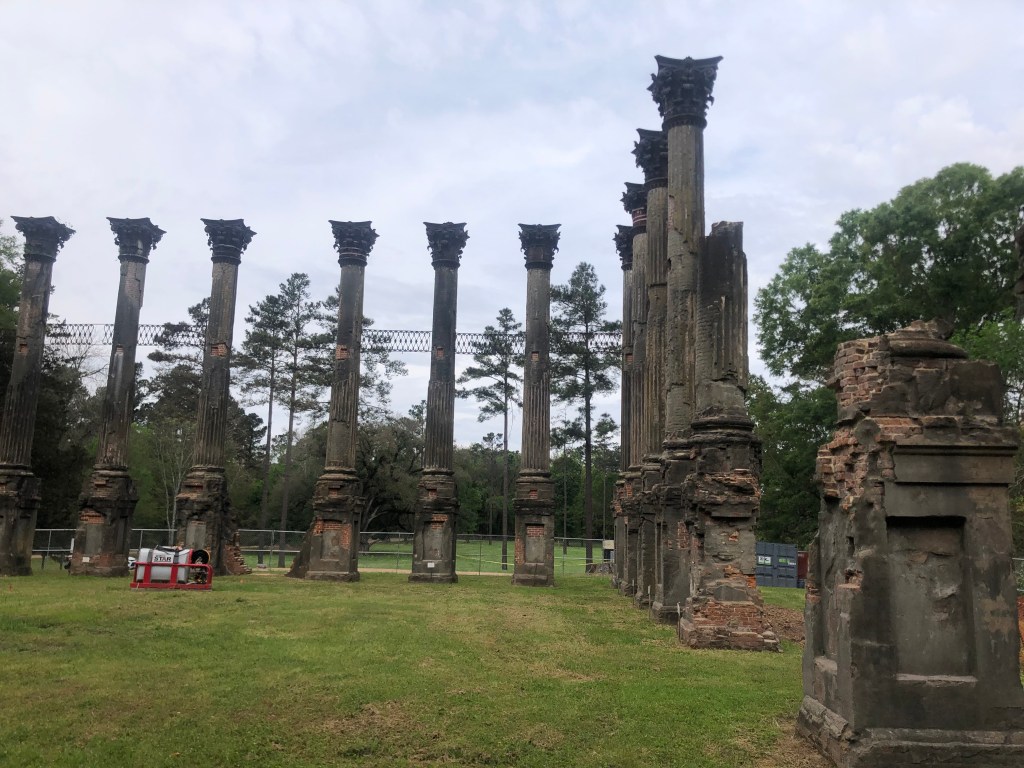
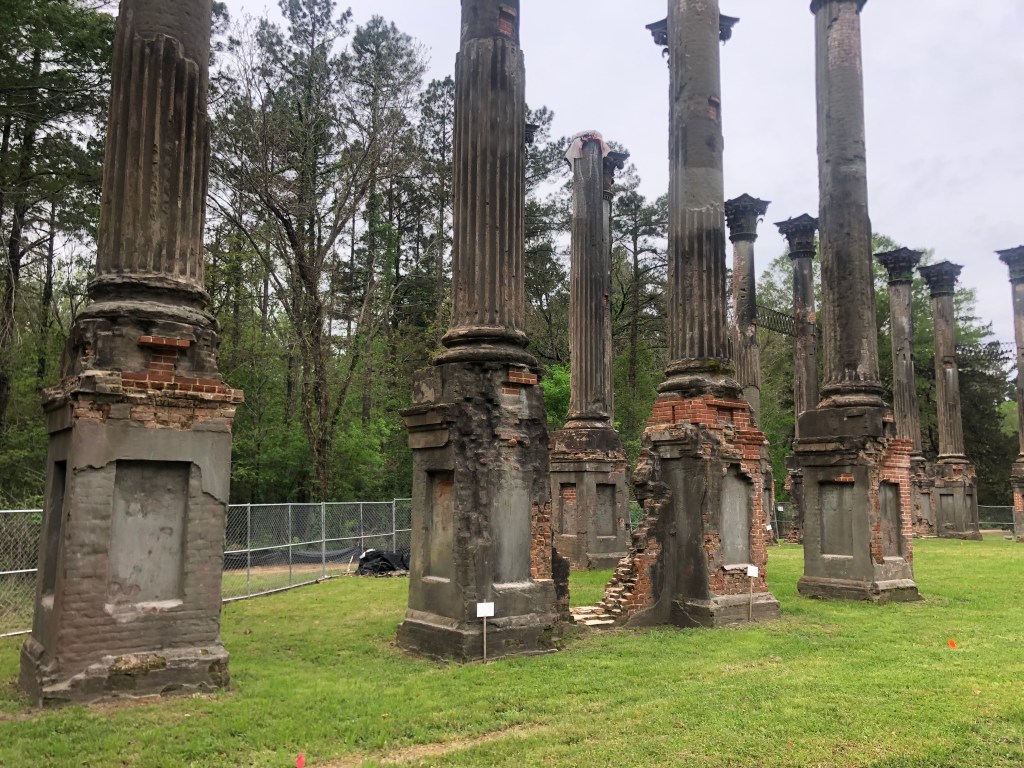
I did leave the car and risk being swarmed by fire ants and the other plagues a few times. First, I followed a side road to the “Windsor Ruins.” I had no idea what it was, but it seemed to fit within today’s theme of Southern ruins. A few miles later I was standing in a clearing from which rose an impressive display of 27 corinthian (?) columns. It used to be a plantation home, and a placard illustrated what the place used to look like:

The becolumned mansion was built in 1861 by a wealthy planter by the name of Daniell, who owned the Windsor cotton plantation. Unfortunately for him, he died just a few weeks after his home was finished. The mansion somehow survived the Civil War, but it burned to the ground in 1890. All that remains are these columns. When I arrived today, the ruins were surrounded by temporary fencing, as the state (which now owns the ruins) is working to stabilize them from damage by the elements.
Best laid plans of mice and men…

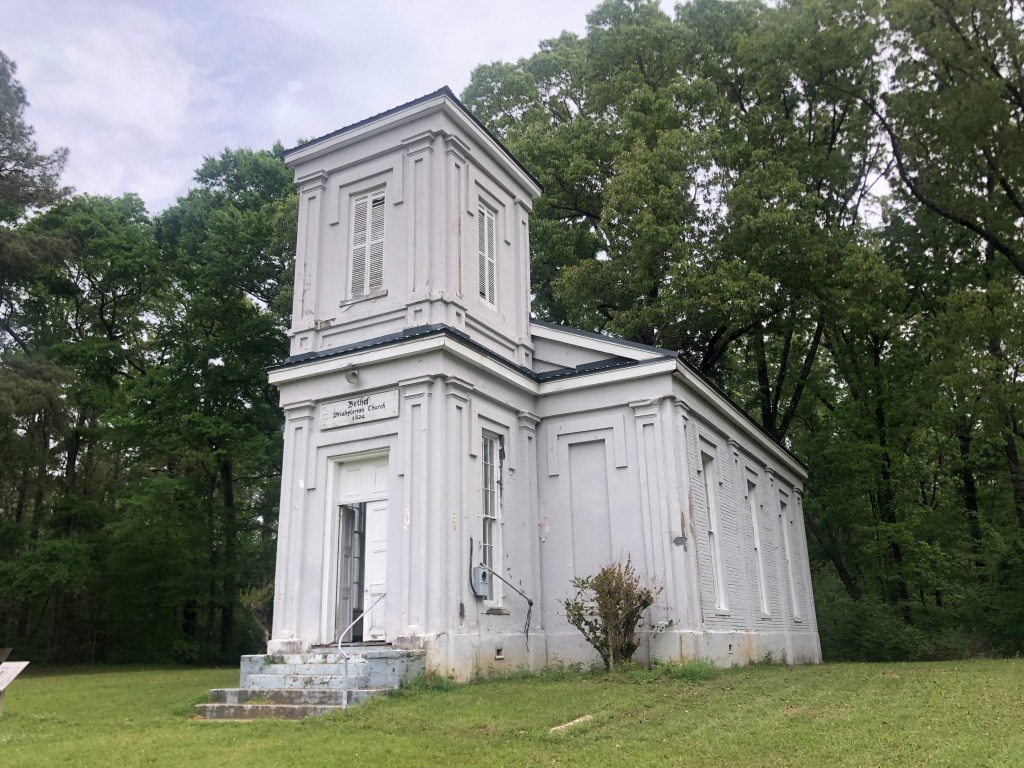
On my way back to the Natchez Trace I passed this 200-year-old Presbyterian church.

Bethel Presbyterian Church, built in 1842.

The church has been standing for over 180 years. A tornado in 143 (when the church was 101 years old) did major damage, notably tearing of its tall, pointed steeple. The church was rebuilt, but the steeple was omitted from the new design. Why tempt fate? Over the years the congregation dwindled, until it was no longer classified as an active church by the Presbyterian leadership.

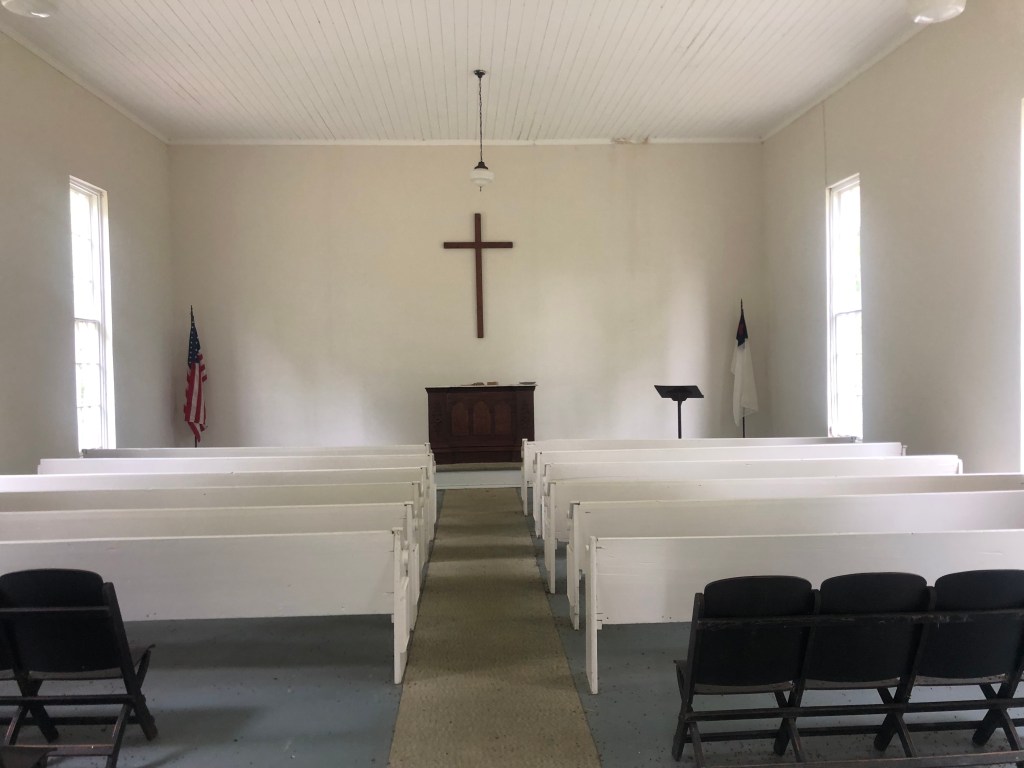
But what’s this? An open door? I poked my head inside:

Looks like you could still hold a service in here.
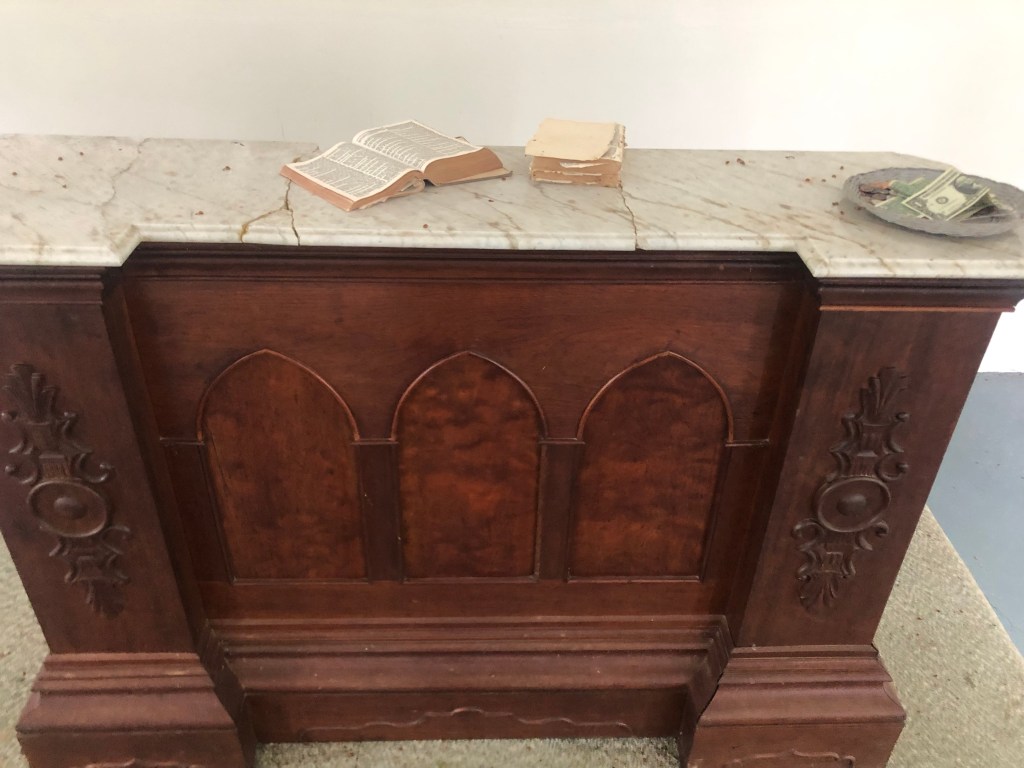
Open Bible and full collection plate.

A little research informed me that the church can still be used as a chapel by whomever wants to to do. And a nearby church in Port Gibson (!) conducts a two services here each year, in the spring and the fall.

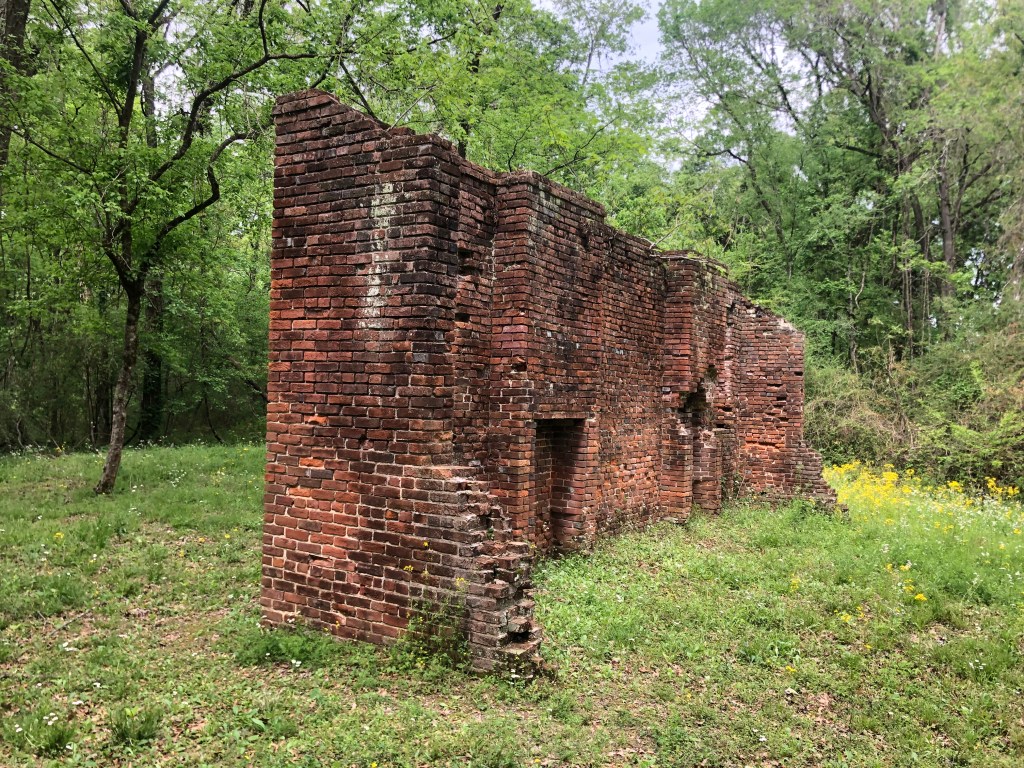
A final set of ruins I encountered on the way to Natchez was something called the Elizabeth Female Academy. Opening in 1818, it was Mississippi’s first higher education institution for women. For a short time, the faculty included a drawing instructor by the name of John James Audubon (yes, the Audubon). The academy closed in 1845 due to declining enrollment (linked to a shrinking population in the area). The building burned in the late 1870s, and these ruins were all that remained.

And you know what’s striking about all these ruins and abandoned buildings I saw today? I didn’t spot a single bit of graffiti. The elements are certainly taking their toll on the Delta’s history, but it seems that, by and large, the residents of the region either appreciate the value of these historical treasures…or maybe they just ignore them.

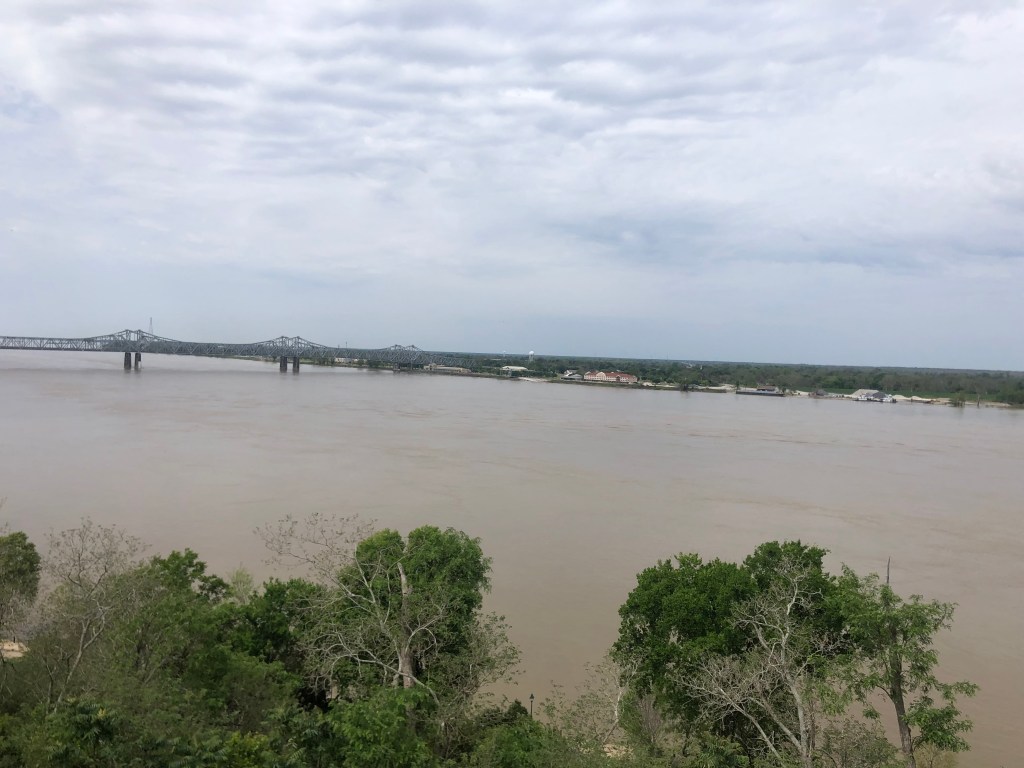
Finally I arrived at the end of the Natchez Trace, appropriately enough in the city of Natchez (pop: 14,500). The city, which for a short time had been the Mississippi state capital, reminds me of Vicksburg. Both are historic and seemingly prosperous towns located on the east bank of the Mississippi.

View of the Mississippi from downtown Natchez.

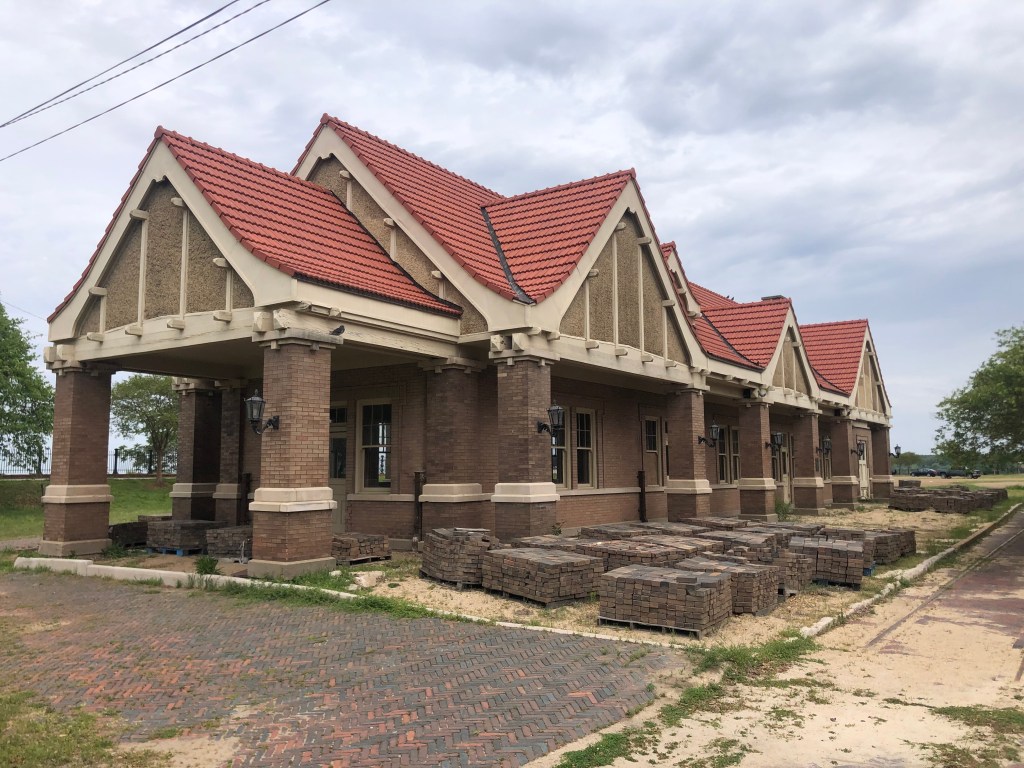
And, like Vickburg, Natchez seems to place value on its historic resources. For example, the 1915 Yazoo &Mississippi Valley Railway depot has been restored–at least on the outside. The inside is gutted, awaiting a tenant (like a restaurant) to lease it out.

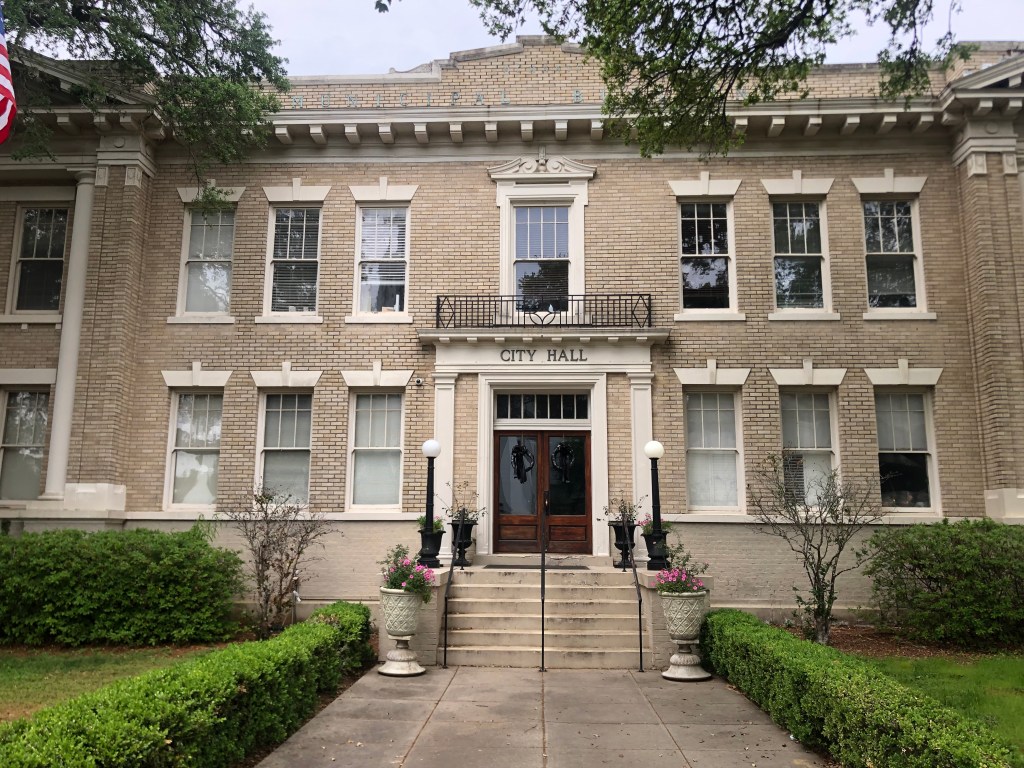
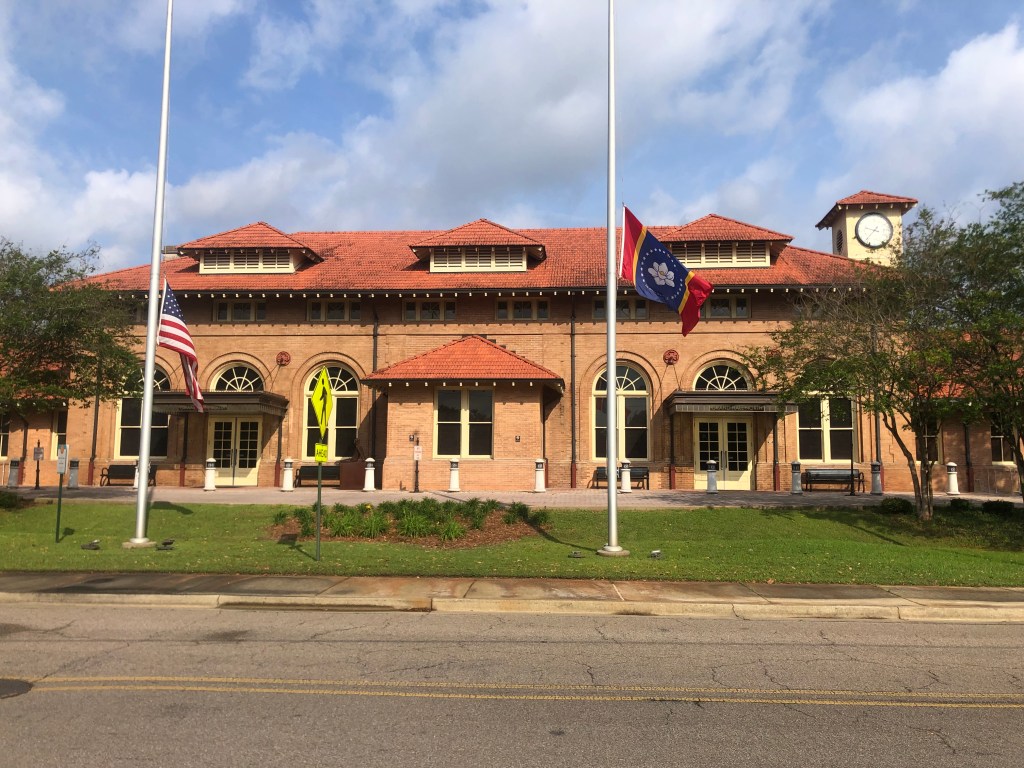
The city hall building will have its hundredth birthday next year, and it looks great as well.

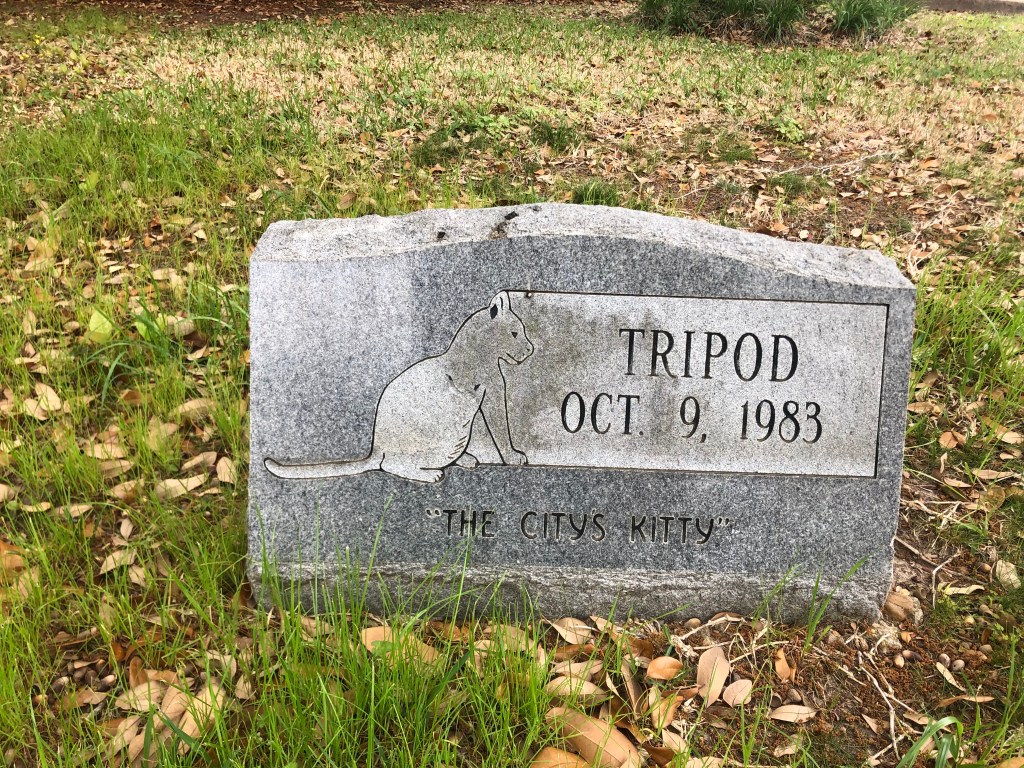
On the front lawn I noticed a small grave marker for “Tripod,” who was a feral, three-legged cat that showed up at City Hall in 1979 and never left. Literally. When he died four years later the city held a full memorial service and placed him under this marker.

Evidently Tripod was more beloved than some of the humans around City Hall. One of the city Aldermen–Hal Wilson–was allergic to cats and made a motion Tripod be banned from the building. The motion failed to get a second, and the Mayor then moved to have Wilson banned from the building. (That motion failed as well. But still.)

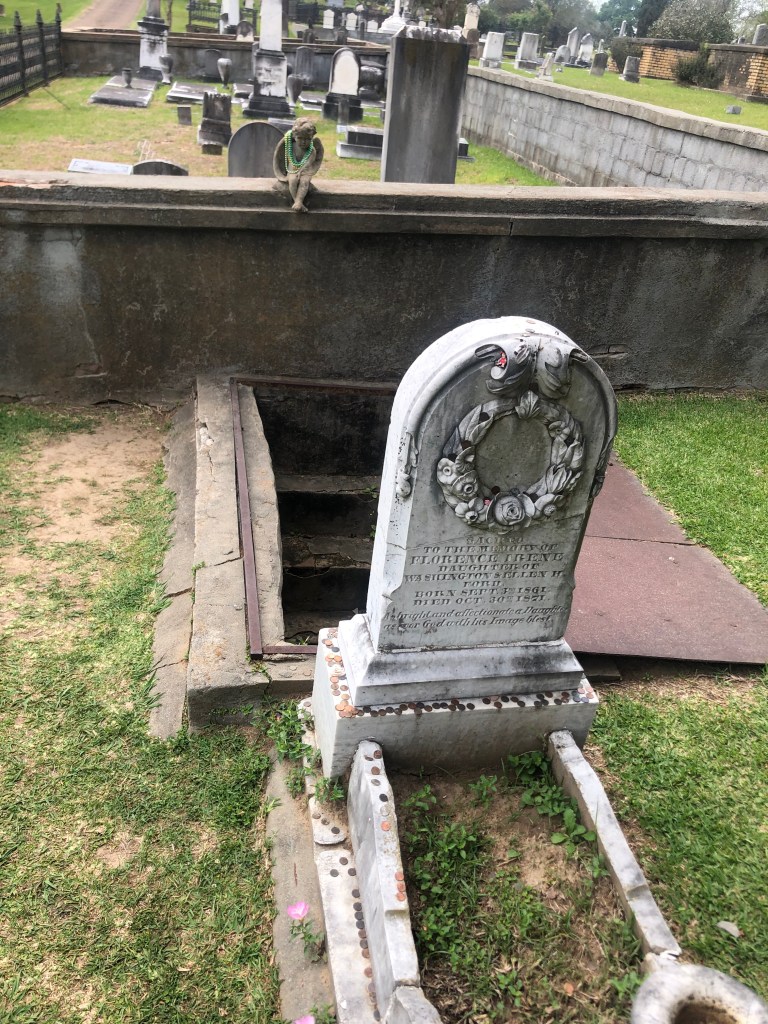
Speaking of graves, Natchez Cemetery had this unusual specimen:

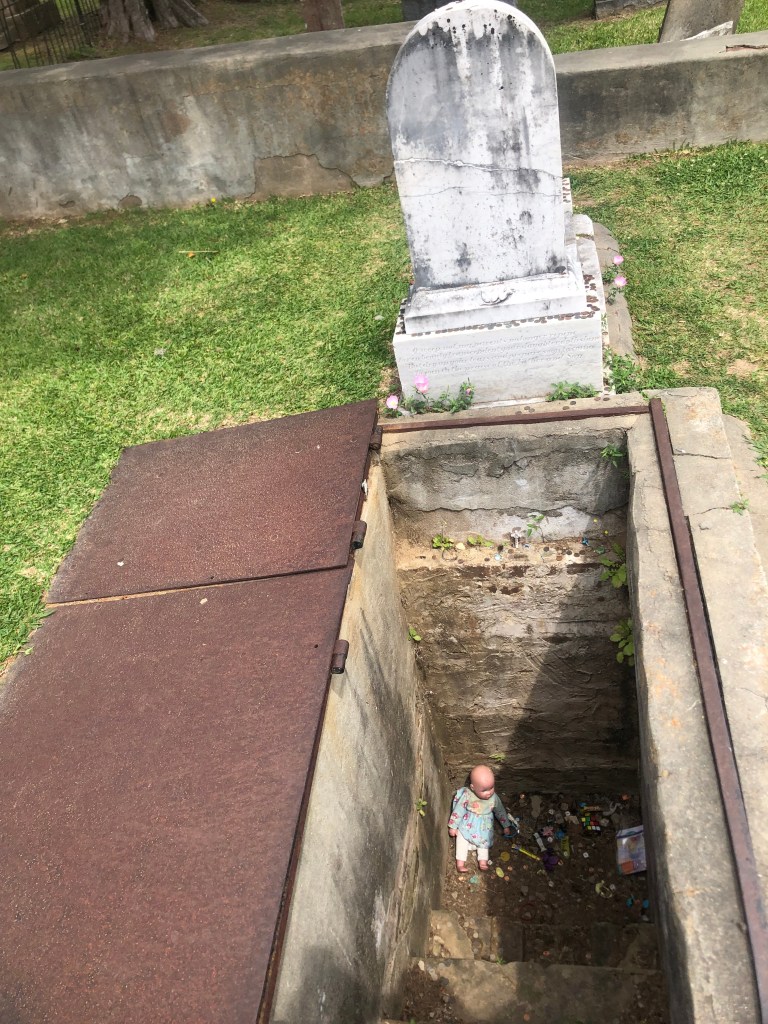
Florence Irene Ford was only 10 years old when she died of yellow fever in 1871. The story goes that she always sought comfort from her mother during a storm. So when she died her parents had a staircase built into the ground of her grave so that her mother could descend to a specially outfitted window and comfort the spirit of her daughter during storms. That’s not creepy, is it?

There used to be a glass window with a view of the Florence’s coffin, but this was cemented over in the 1950s–long after Florence’s mother had herself died.

After leaving Natchez I departed from the Blues Highway and headed southeast to the city of Hattiesburg (pop: 49,000). Hattiesburg is on US route 49–which I’d encountered way back in Clarksdale. (Recall the possibly literally damned crossroads of Route 61 and Route 49 where Robert Johnson sold his soul to the Devil.) Highway 49 essentially forms the hypotenuse of the right triangle formed by my route (Highway 61 south to Highway 84 east).

Along the way to Hattiesburg I encountered two notable pieces of historic roadside kitch:

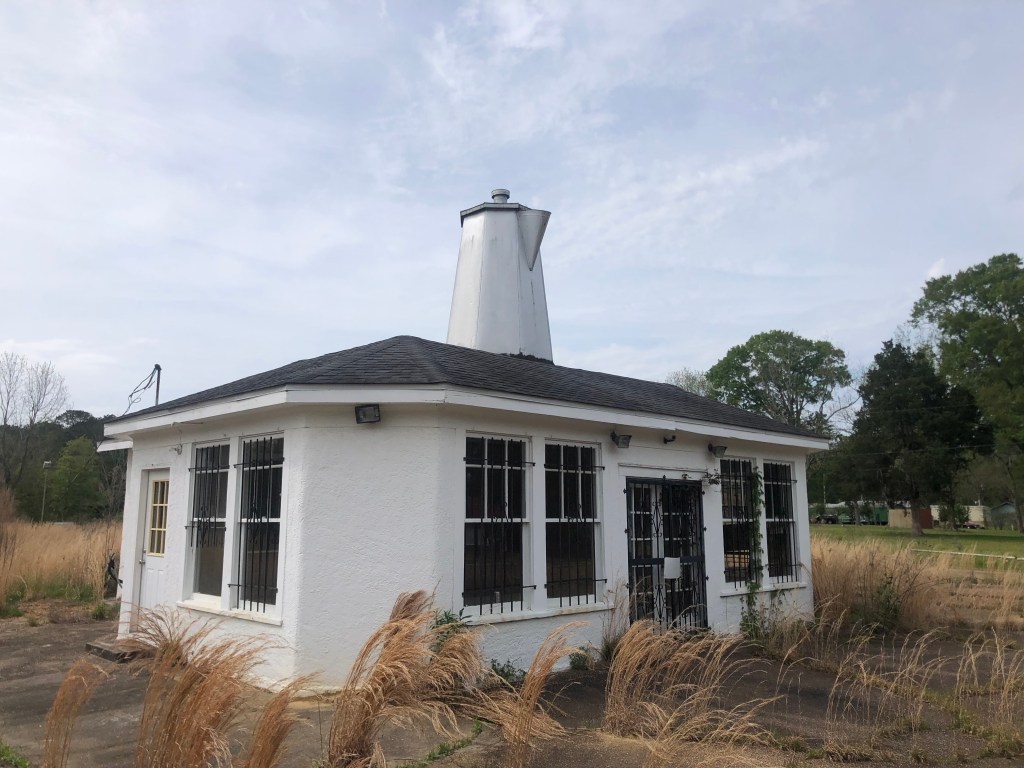
The Coffee Pot Inn was built in 1931 as the first drive-in restaurant in Brookhaven, MS.
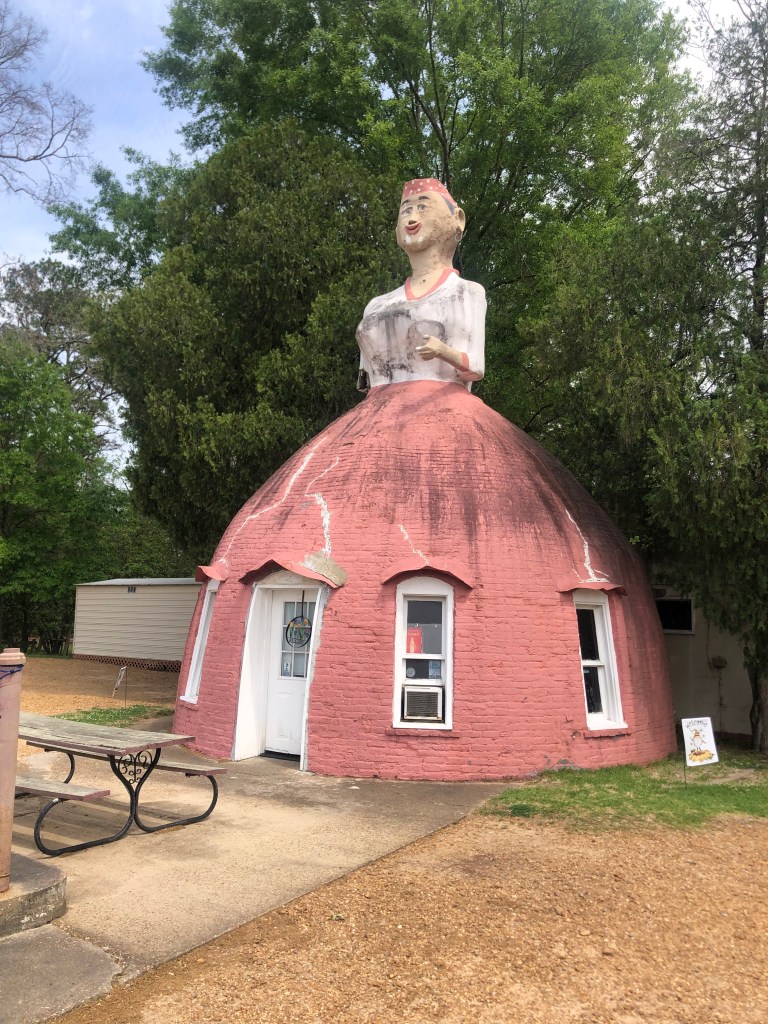
Mammy’s Cupboard is a roadside restaurant that was built at the outskirts (ha!) of Natchez in 1940. It’s still open for lunch daily except Sundays. And today is Sunday, sadly.

Tonight I’m spending the night in Hattiesburg. Tomorrow it’s off to New Orleans!

Beer of the Day

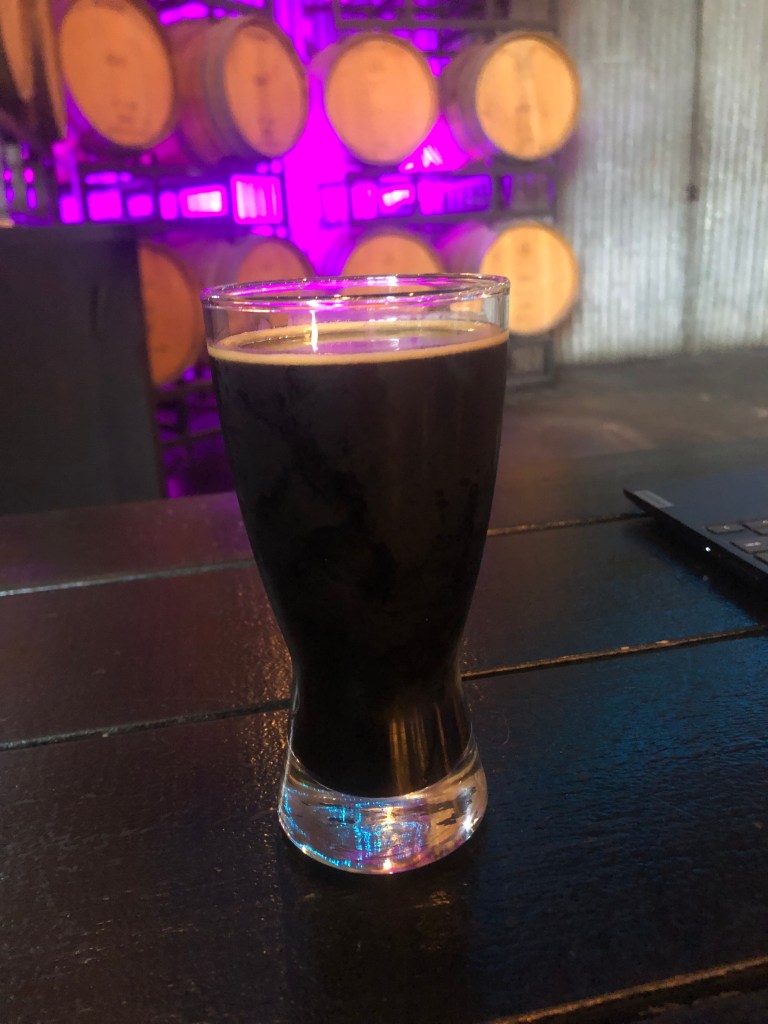
I went into Natchez Brewing Company, where owners Lisa and Patrick Miller were working hard to handle the lunch crowd. I ordered a “Smorish Imperial Stout” and a calzone the size of a Frisbee.

I think “Smorish” is supposed to evoke s’mores. Indeed the description claims it’s got chocolate, graham cracker, and marshmallow notes.

I’m not so sure about all that. The malt has a seriously roasted taste, to the point of charring. It’s as if the marshmallow of your s’more caught on fire. I don’t taste much sweetness. The dominant taste is bitter dark chocolate and black coffee. 

The mouthfeel isn’t that creamy, but it is smooth. It’s also what I call a Sleepy Hollow Beer (i.e., headless).

The ABV is 10.3 percent, which is pretty standard for an imperial stout. Overall, it’s quite drinkable, though the s’more reference is false advertising.

3.5 stars (out of 5)