Today I decided to track down a very special Brew of the Day. This quest took me to the site of a crucial World War II battle, in an abbey where Saint Benedict himself is entombed.
Oh, did I not mention I’m in Italy?
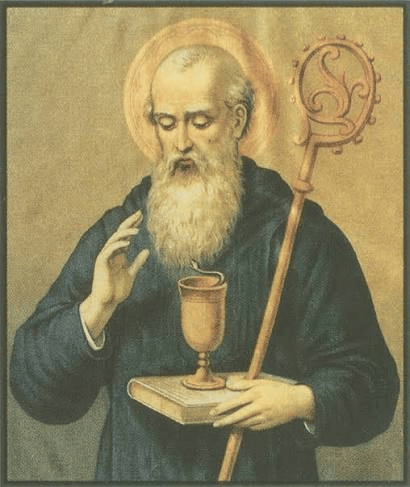
I speak, of course, of Montecassino Abbey, which Benedict founded high on a mountain in central Italy in 529. It’s an impressive structure and is considered the largest abbey in the world.
I won’t go through the full 15 centuries of history, so let’s jump forward to 1943, when Nazi Germany held control over Italy. Given its central, mountaintop location, the abbey was a key strategic site.
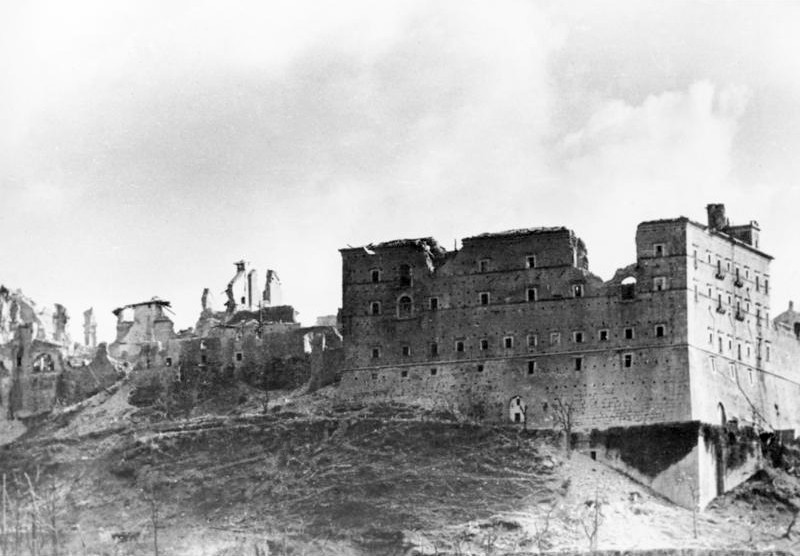
After the Allies defeated the Axis forces in North Africa, they turned to the task of liberating Italy. Allied troops landed in Sicily in July of 1943, and began slowly marching north toward Rome. By the winter of 1944 they were approaching the region of Montecassino. They believed the Germans had taken up positions at the abbey (a belief that may have been mistaken) and so in February Allied planes began a massive bombing of the structure. It was destroyed, and many monks and townspeople died. War, as they say, is hell.
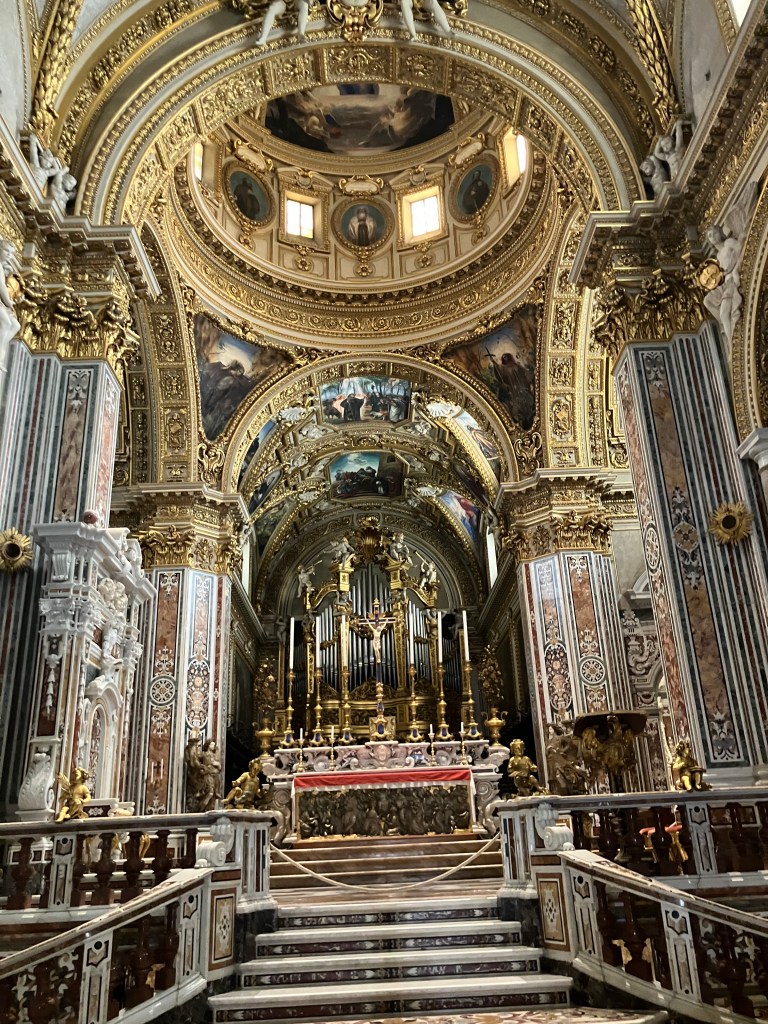
The structure was completely and faithfully rebuilt after the war, and the abbey remains active and important to this day. Indeed, the Pope visited here just a couple of weeks ago.
Now here’s the important part: It’s said that the abbey’s monks had been brewing beer since the time of St. Benedict (who himself advocated brewing as a form of self-sufficiency for the abbey). They grew their own barley and used rock-filtered water from a nearby spring. This all ended in 1944 with the Allied bombing.
Then–a miracle!–brewing came back to the abbey in 2018, when an entrepreneur named Daniele Miri launched Birrificio Montecassino (“Montecassino Brewery”). He set the place up in a rustic building on the abbey grounds.
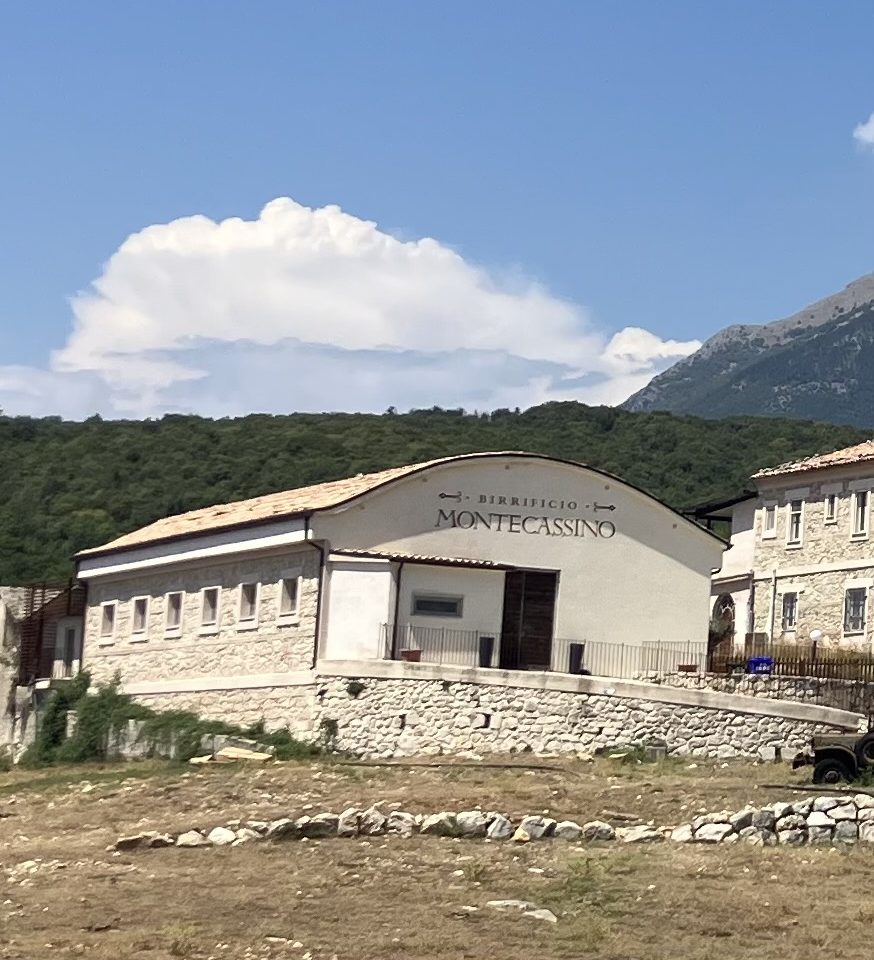
And so it was that this afternoon I found myself at the brewery with friends Kristen and Dave, who happen to spend a couple of months in this region every summer. It was a hot day, and we had visions of a nice, welcoming brewpub with homemade beers on tap, a chatty brewmaster behind the bar, some good pub food, and comfortable high-tops. But it turned out to be more of a, well, Benedictine kind of brewery. The place is like a crowded warehouse with fermenting tanks running at full speed and workers turning valves and connecting hoses. There was really no room for guests, other than a small sales counter in the corner where a busy worker told us “we have three beers. Which do you want?” I chose the “Dubbel,” and we made our way to what appeared to be an old church pew in a shady spot outside of the brewery.
And that finally brings us to the:
BOTD
A Dubbel is a type of ale often associated with modern Belgian beers. It’s a traditional abbey-style ale. Like Birrificio’s other beers, it’s brewed using the same process used by the monks at Montecassio. So they’re again using that natural spring water and estate-grown barley, and allowing relying on the yeast to naturally carbonate the beer.
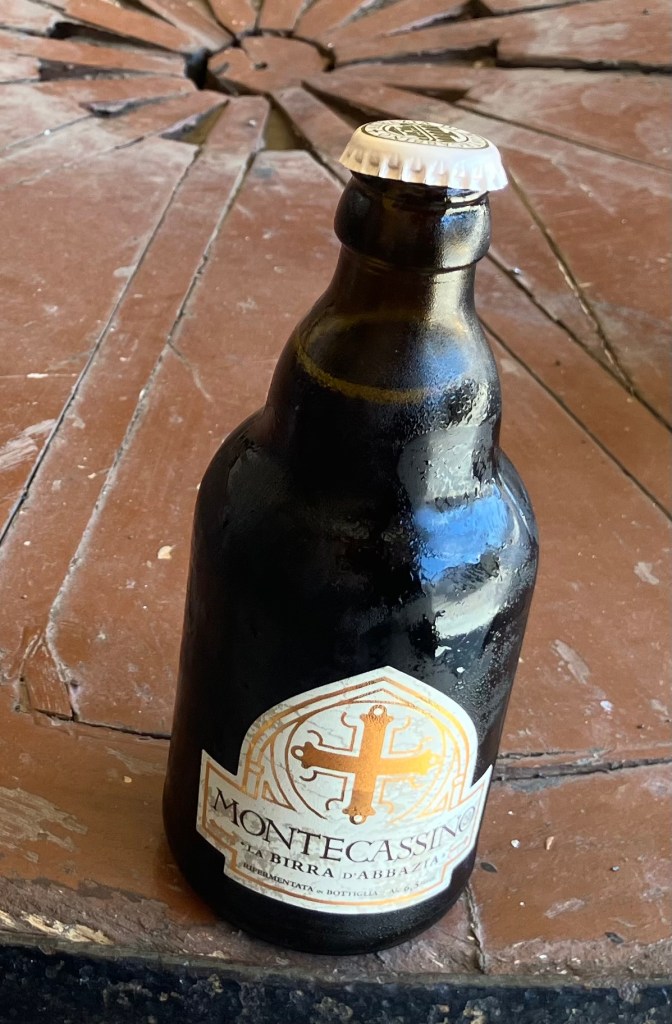
And you know what? This is a stunningly good beer. Let me count the ways. First, it has a rich, dark-chestnut color that’s got hints of dark ruby.
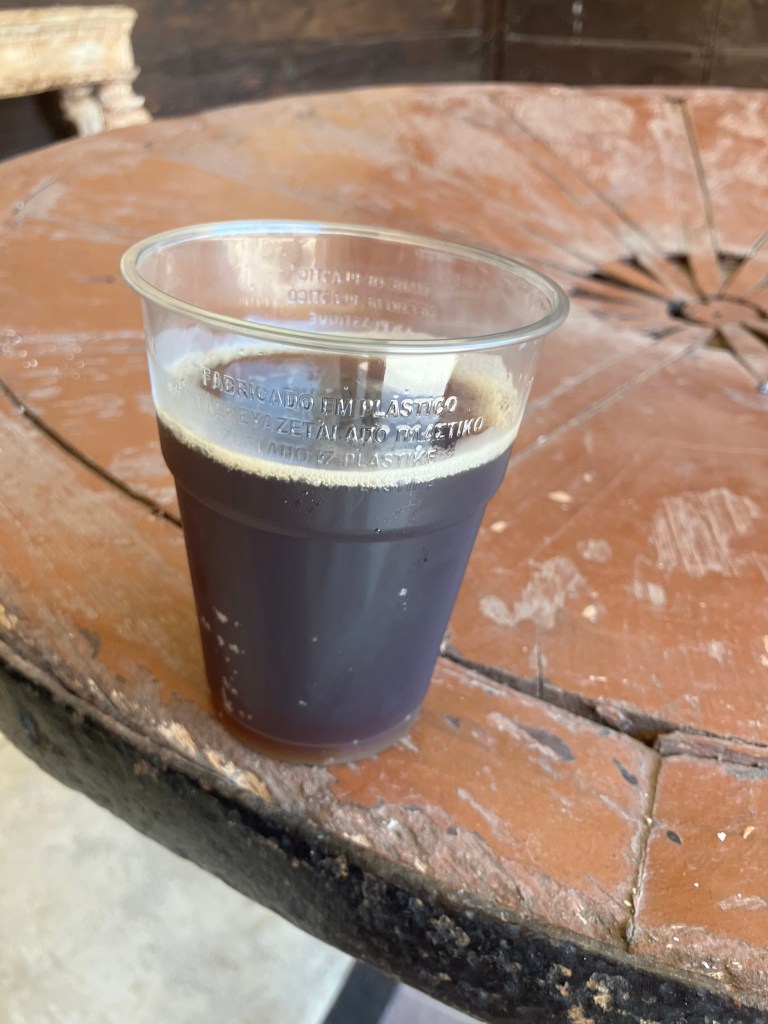
Second, that natural carbonation is more delicate and better integrated than what you get from typical pressure-blasted CO2. This beer is fizzy enough to be interesting and bright, without assaulting your tongue and palate with what feels like a pack of Pop Rocks at every sip. Probably because of this, the beer has almost no head, save a bit of tan foam around the edges.
But let’s talk about the flavor: it’s malty and slightly sweet, with recognizable caramel and toffee flavors, mingled with hints of brown sugar and maybe anise. There’s just enough hops to prevent the sweetness from dominating. At 6.5 percent ABV, there’s also a slight alcohol burn that wards off any danger cloyingness that sometimes afflicts this style.
Now, in full disclosure, I should note that I was rather parched and hot when I drank this beer, so that may have contributed to my pleasure in drinking it. But there was absolutely no mistaking that I was drinking a high-quality, well-balanced beer. I may need to try another one.
Five stars.

