Today we made one more foray into Salem’s witch-infested past, this time at the Salem Witch Museum.The museum is housed in a Gothic Revival church originally constructed in the 1840s. The church closed in 1902, and after being used for a few other purposes (including an auto museum), it was transformed into the Witch Museum in 1972.
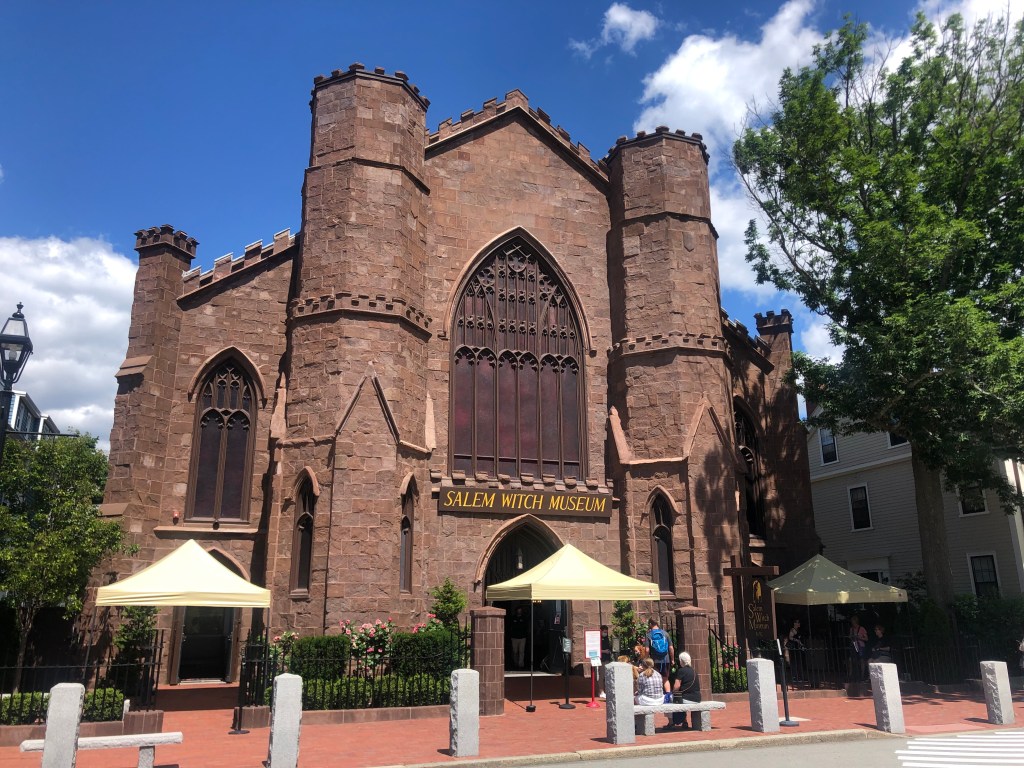
It’s an impressive structure, and the multimedia presentation of the Salem witch trials was entertaining. Still, Vic and I realized that by now we knew Salem’s witch story pretty well, so we didn’t learn much that was new. What’s more, the museum’s message is overly tendentious, hammering on the point, over and over, that our society still engages in forms of witch hunts. (I seem to remember a recent president making this claim…)
After the museum, we took the rental car on a leisurely trip along the Essex Coastal Scenic Byway. It was a breathtaking drive, with sweeping views of the Atlantic from Massachusetts’ north coast. The towns along the way are idyllic, and the homes are right out of the pages of Better Homes and Gardens. The weather was perfect, with temperatures in the mid-70s and a slight breeze.

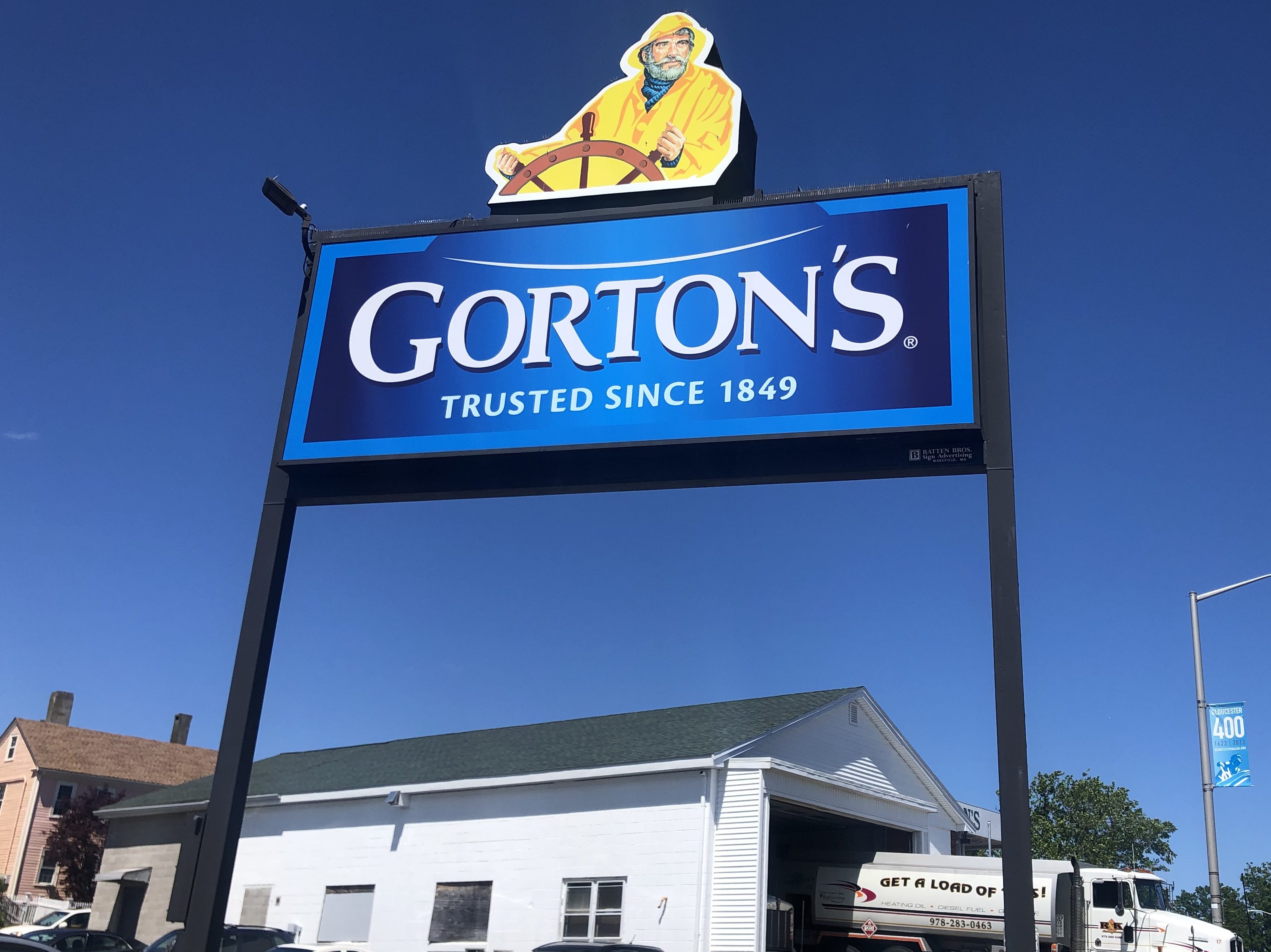
Being a native Californian, I don’t know much at all about the eastern seaboard. I did, however, recognize the Gorton’s Seafood fisherman in Gloucester. Gorton’s was founded in Gloucester in 1849, but their iconic fisherman didn’t appear in advertising until 1975.
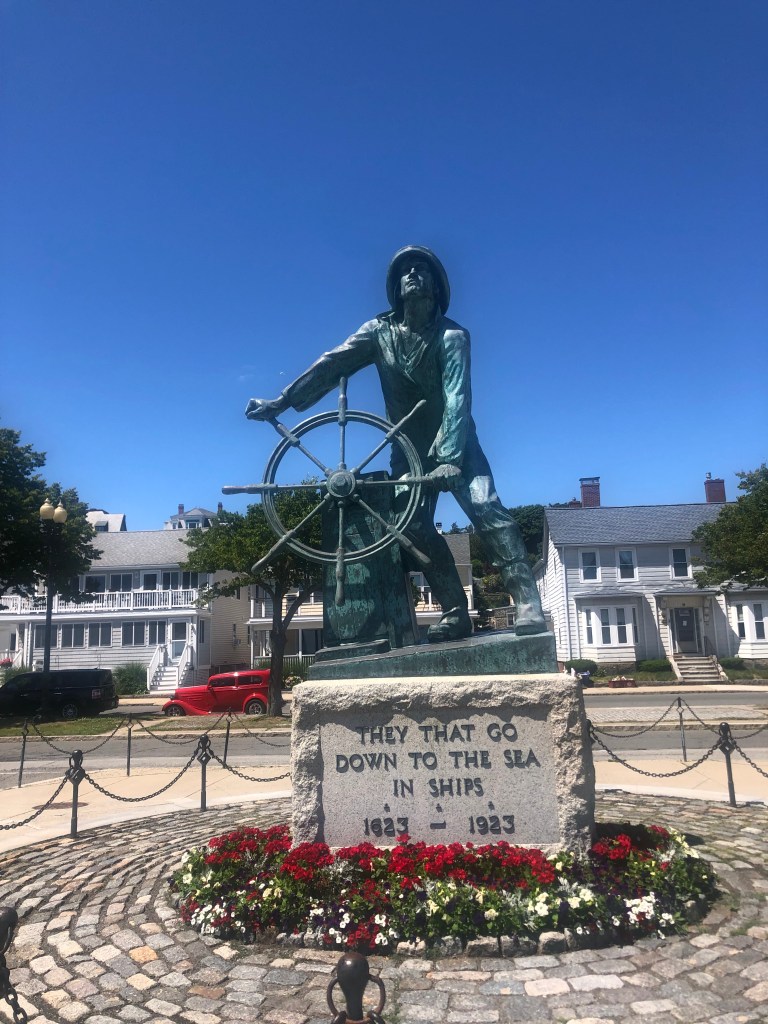
We also passed a bronze statue of a mariner at the wheel that looked suspiciously like the Gorton’s fisherman. The statue is part of a memorial to sailors lost at sea since 1716, with an array of plaques listing their names. The memorial statute was installed in 1925, so clearly it was Gorton’s (with their 1975 character) that copied the memorial, and not the other way around.
Upon returning to Salem, we continued with our witch-free diversions with a visit to The House of the Seven Gables. This, of course, is the mansion that Nathaniel Hawthorne wrote of in his 1851 novel of the same name. The house was originally constructed in 1668, and by the time Hawthorne visited it in the mid-19th century, it had been remodeled so that it only had only three gables. Hawthorne thought the idea of a house of seven gables sounded more interesting than “the house of the three gables,” so he envisioned its original form when he wrote his book.
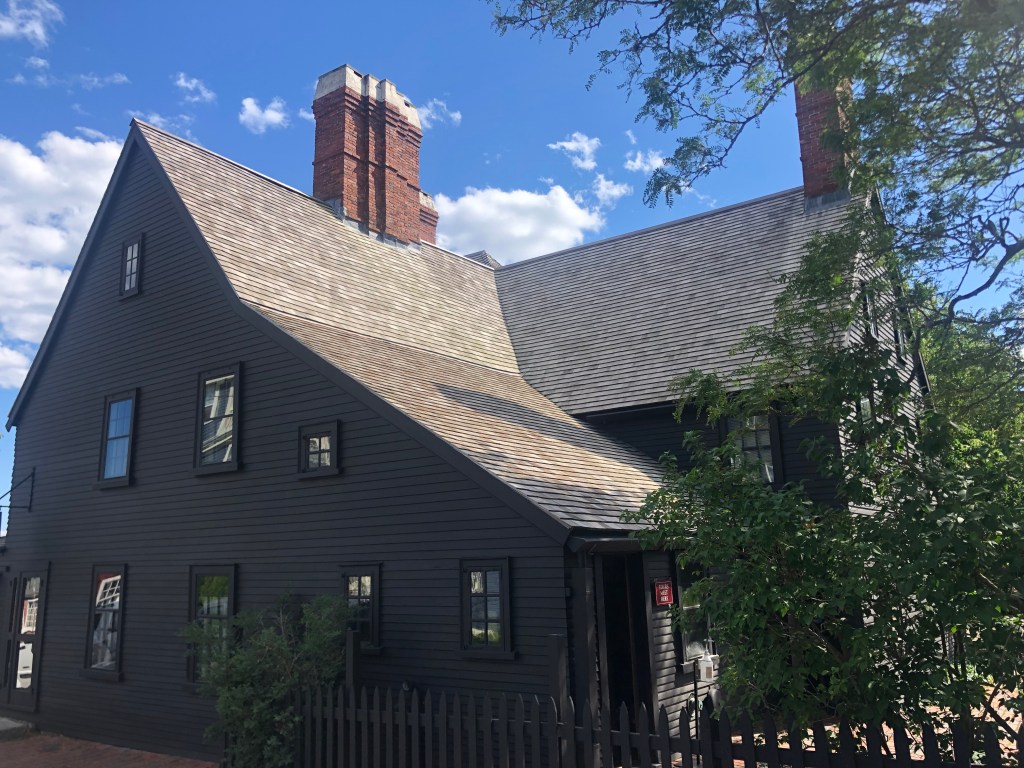
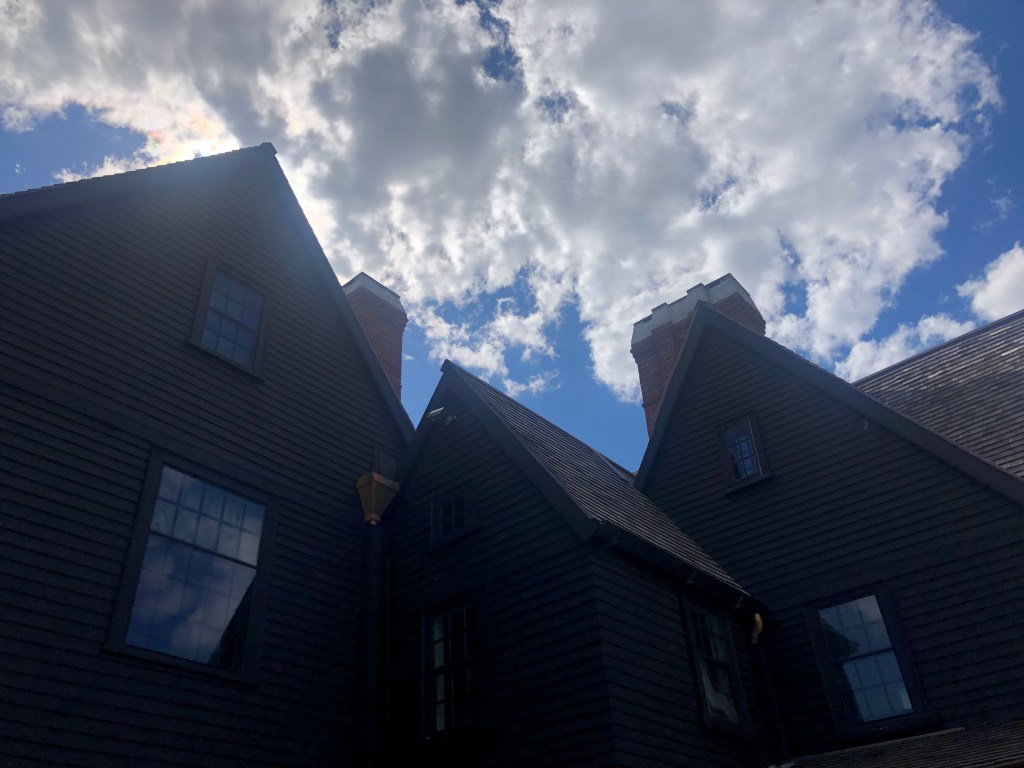
By the way, our Seven Gables diversion was not entirely witch-free. Nathaniel Hawthorne’s great-great-grandfather was John Hathorne (no “W”), who was a key, influential judges in the Salem witch trials. Nathaniel changed his last name from Hathorne to Hawthorne, in part to disassociate himself from his ancestor.
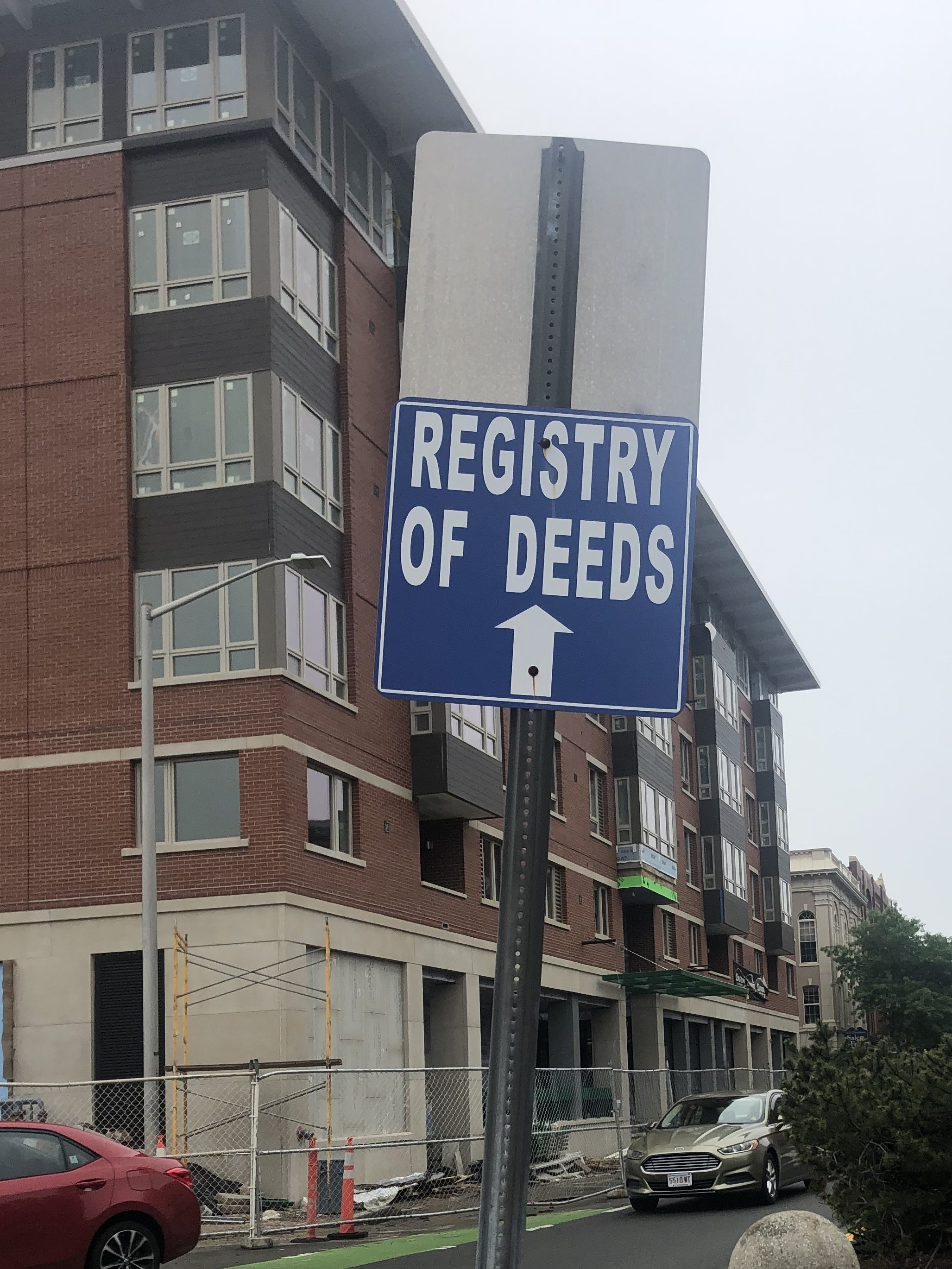
One final Hawthorne reference from today: The sight of this sign reminded me of Hawthorne’s The Scarlet Letter. Doesn’t it evoke a ledger of one’s offenses and wrongdoings?
And finally, speaking of signs, this local liquor store certainly sports a colorful moniker.
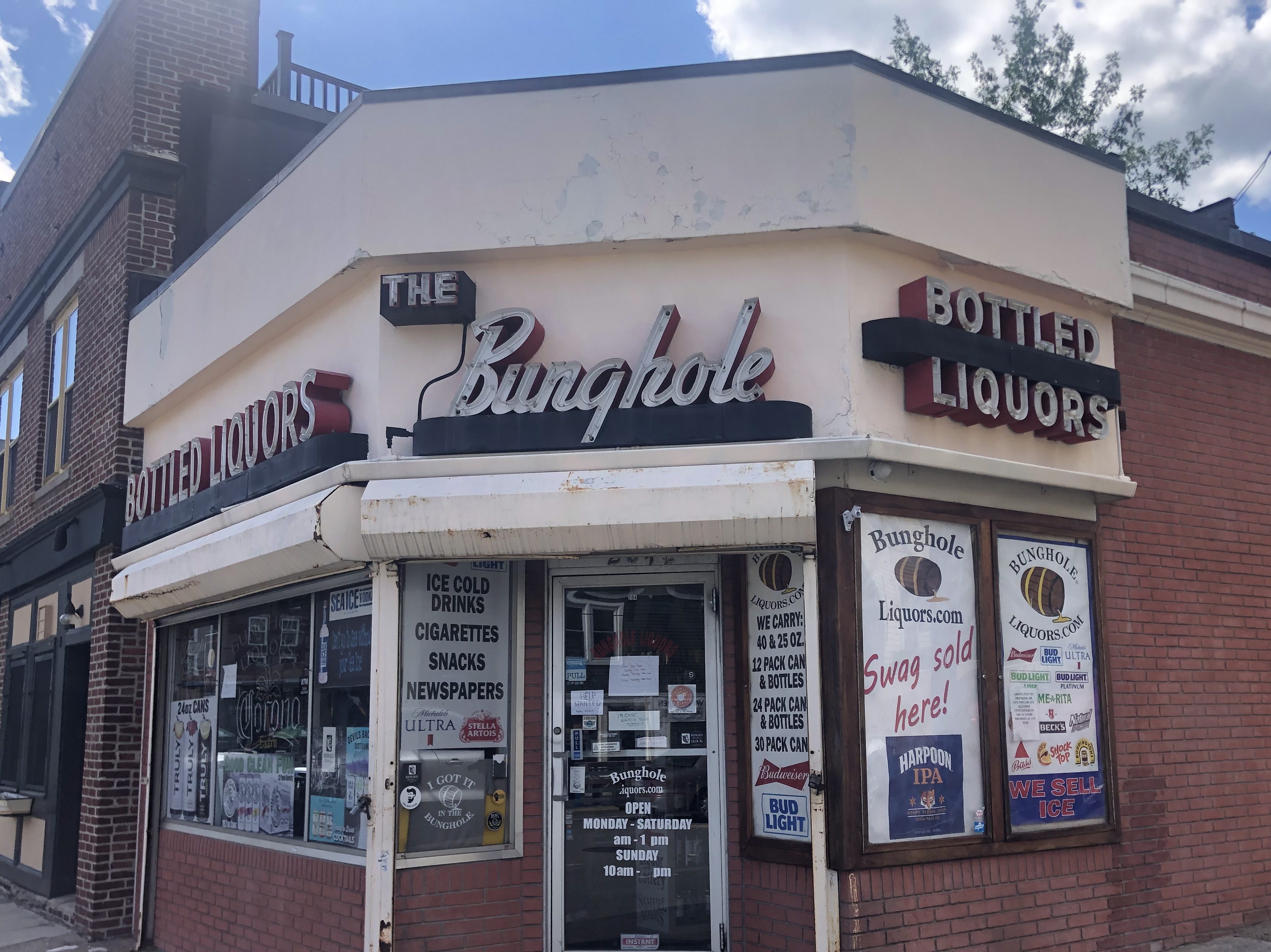
The place was a funeral home in the early 20th century, and during Prohibition the owner surreptitiously served liquor out of the basement. Such establishments at that time were sometimes called “bungholes” (a term related to wine barrels). After the 21st amendment was passed in 1933, the owner converted the funeral parlor to a full-scale liquor store. The nickname became the official name, providing endless amusement for visitors. (There’s also a line of tasteless merch.)
And so ends our third day in Salem. Tomorrow morning we’re off to historic “Salem Village,” aka Danvers.
BREW OF THE DAY
We found a local brewpub called East Regiment Beer Company. Established in 2014, it resides in what used to be Salem’s first fire station.The name references colonial Massachusetts’ militia, which is claimed to be the origin of the National Guard. This is a small (three-barrel) brewery, with a handful of their own beers on tap at any given time. I selected the BAF Porter.
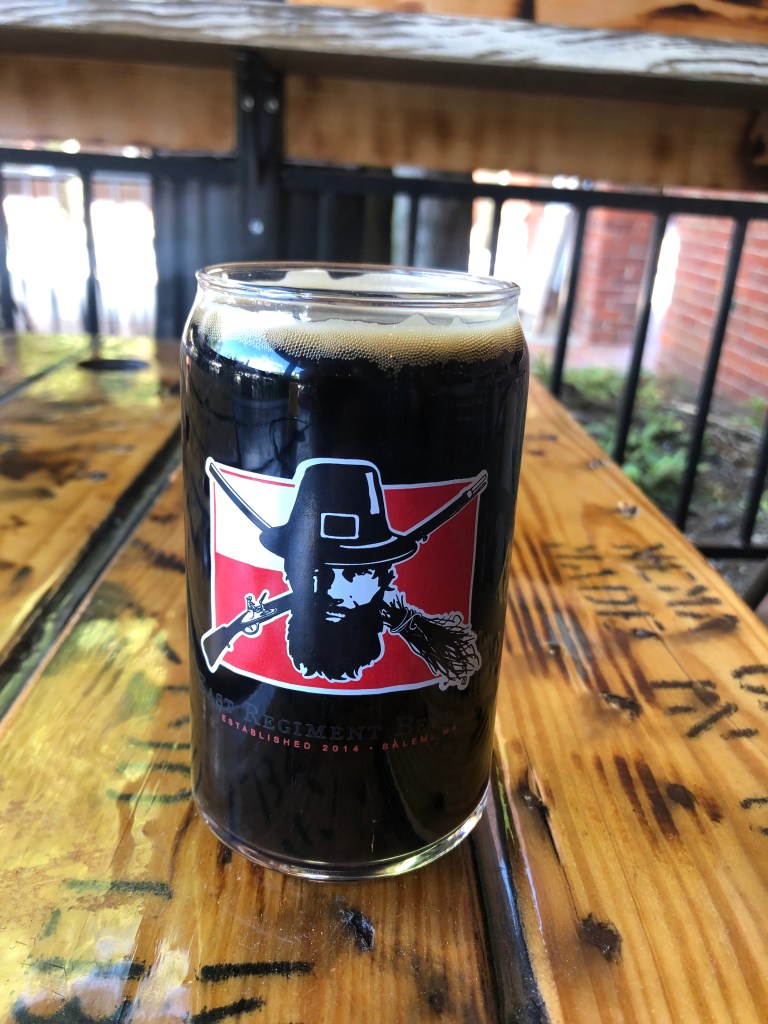
This is a mahogany-colored brew with just the slightest hint of lacy foam at the top. On the first sip, you’re greeted with roasty and nutty flavor that washes over your tongue. You notice a mild carbonation, which is just enough to keep things interesting. It’s not a thick or heavy beer — but it’s not watery either. It strikes that ideal viscosity that a porter should have.
The finish is slightly bitter, as you’d expect from a lightly hopped beer. Overall, I’d have to say the beer is balanced. But after a few sips, it becomes clear that this beer lacks complexity. There is no play of flavors, no grace notes. Just a big glass of roasty sameness, sip after sip after sip. By the time you’re drinking the second half, you’re tired of it. Let’s give it 3.5 stars.
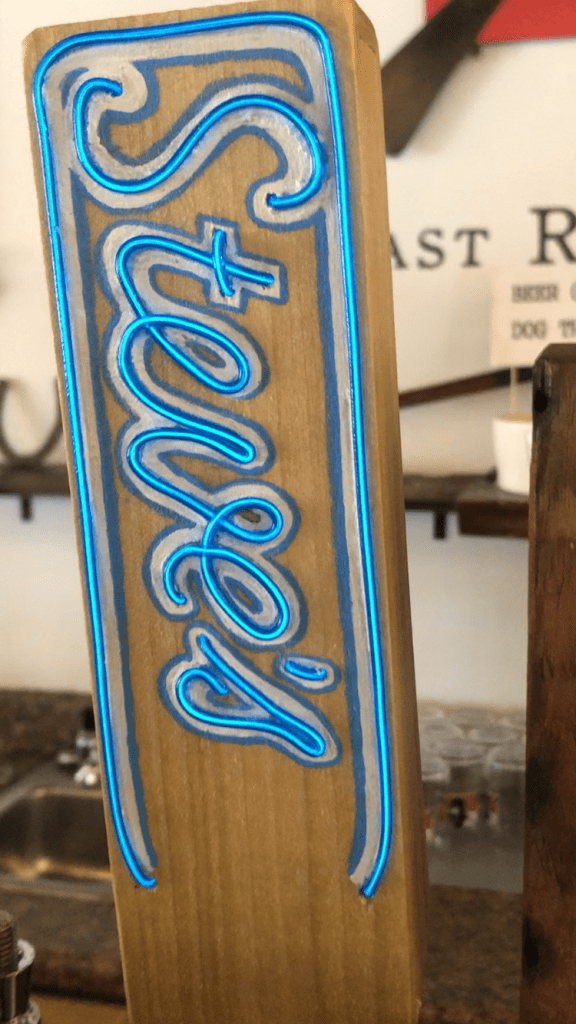
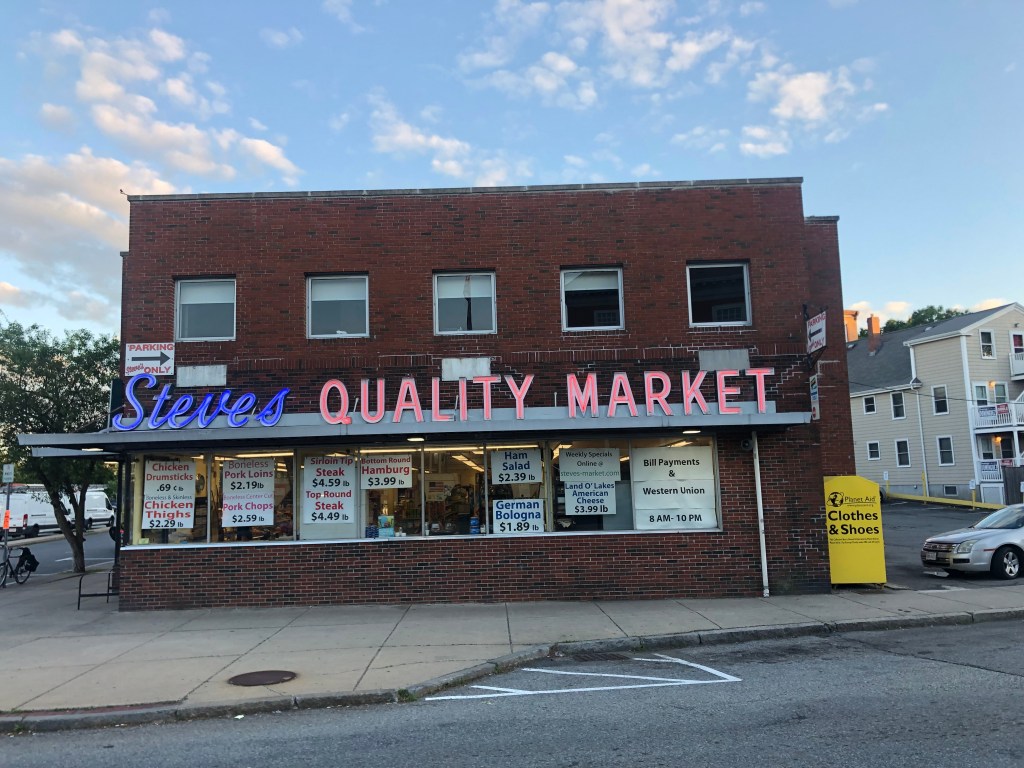
PS: As I was settling our account, the barkeep (Mike) pointed out a beer on tap that shares my name. “Steve’s Quality Saison” is a paean to the local “Steve’s Quality Market,” and the tap handle even has the same neon script as the signage on the store (which happens to be across the street from our hotel.) I wish I’d been aware of it when I ordered my porter!
 Chasing Phantoms