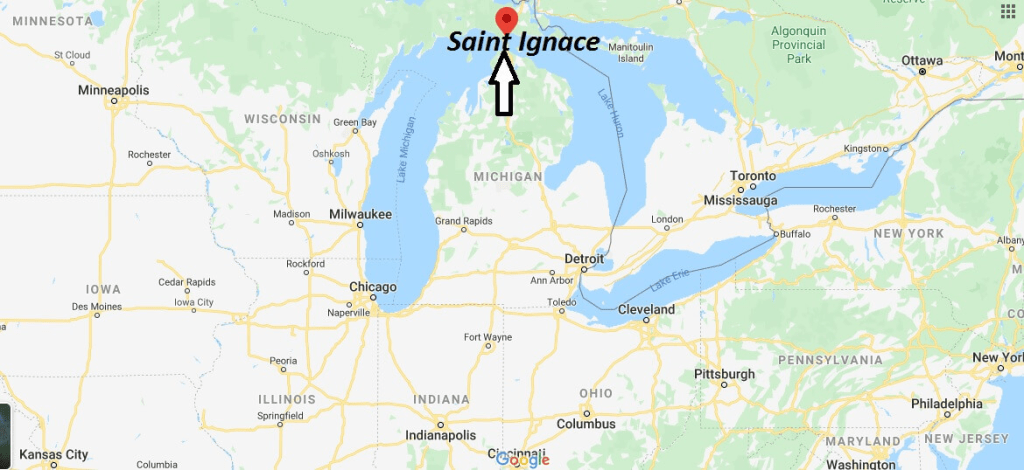
This morning I awoke to a pleasant, clear, sunny day in St. Ignace, Michigan—a city that straddles Lake Huron and Lake Michigan.
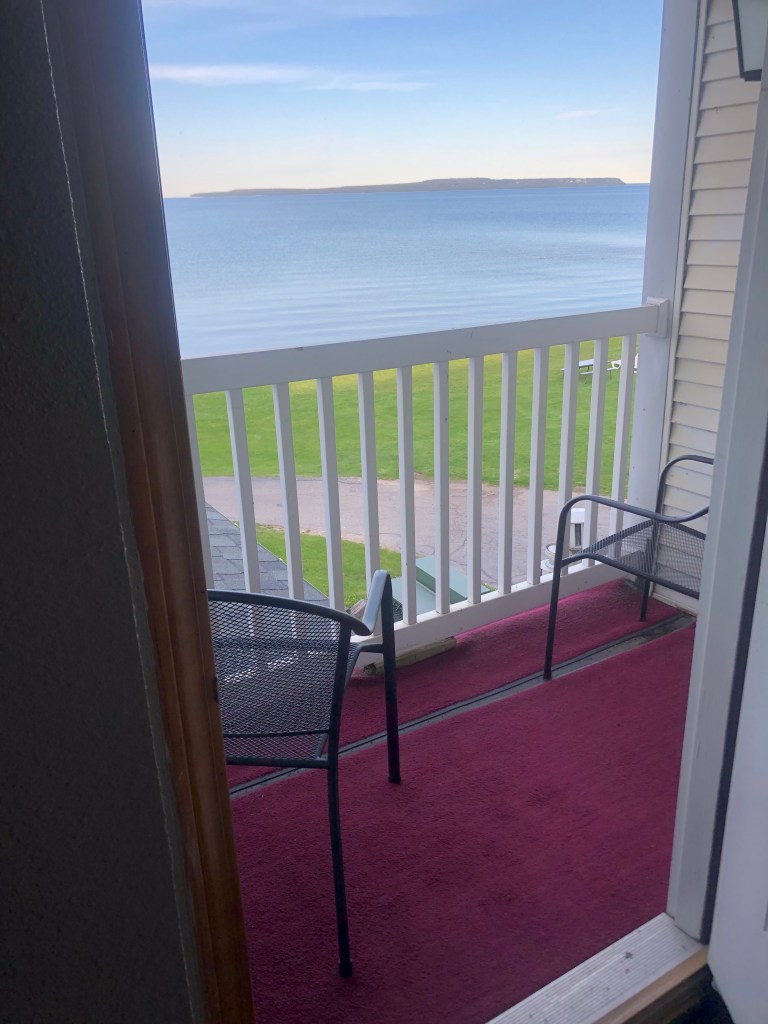
Uncharacteristically, I even sprang for a room with a view. When I awoke in the middle of the night and observed that there were virtually no lights to be seen out around the lake. I guess there’s very little development out in these parts.
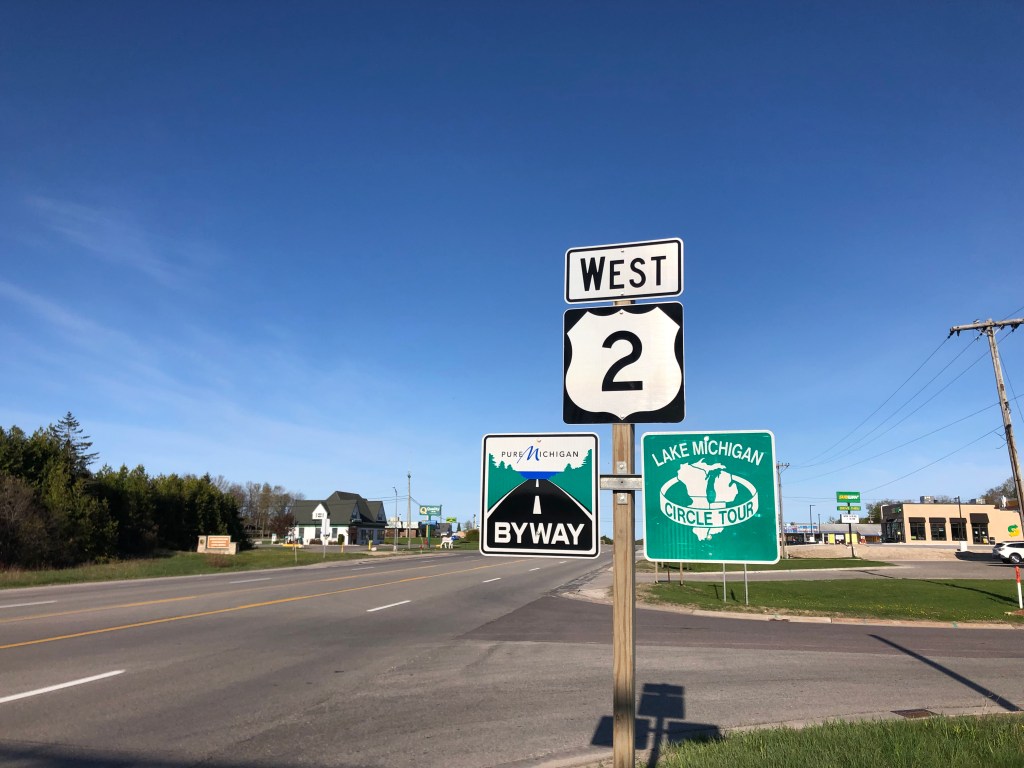
After a virtually inedible continental breakfast at the hotel, I drove a few blocks to the beginning of US Route 2’s western segment.
The day’s travel took me about 300 miles due west across Michigan’s Upper Peninsula, or UP (sounds like “you pee”) (that’s a quote from a helpful cashier at the local BP [“bee pee”?] gas station). Residents of the UP are therefore called “Yoopers.”
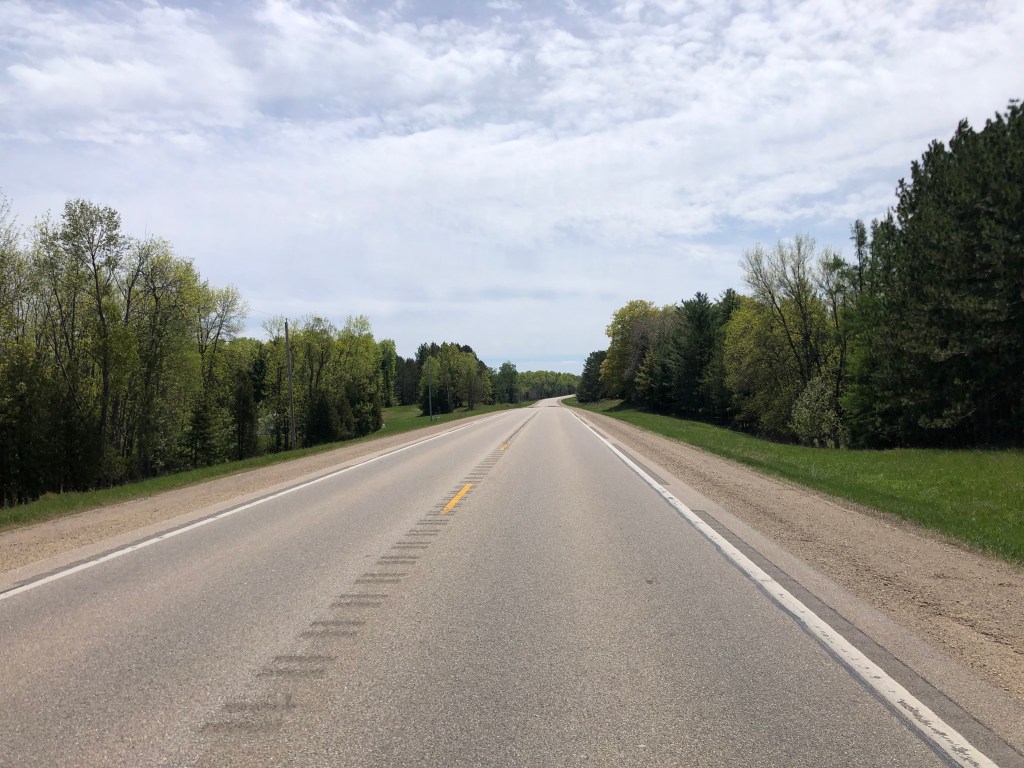
Anyway, I pointed the car west and soon the touristy town of St. Ignace was in the rearview mirror. US 2 is a simple two-lane road surrounded by pine and spruce, and offers occasional glimpses of Lake Michigan to the south. It has virtually no stoplights or even stop signs, except when it passes through the occasional small town. It’s a great road for decompressing and pondering the meaning of life.
Now, I don’t pretend to be an expert on the UP. In fact, this is the first time I’ve ever set foot in the territory. But after 300 miles of driving, with numerous stops and exploratory side trips, I can offer the following top five things that the UP is (or should be) known for:
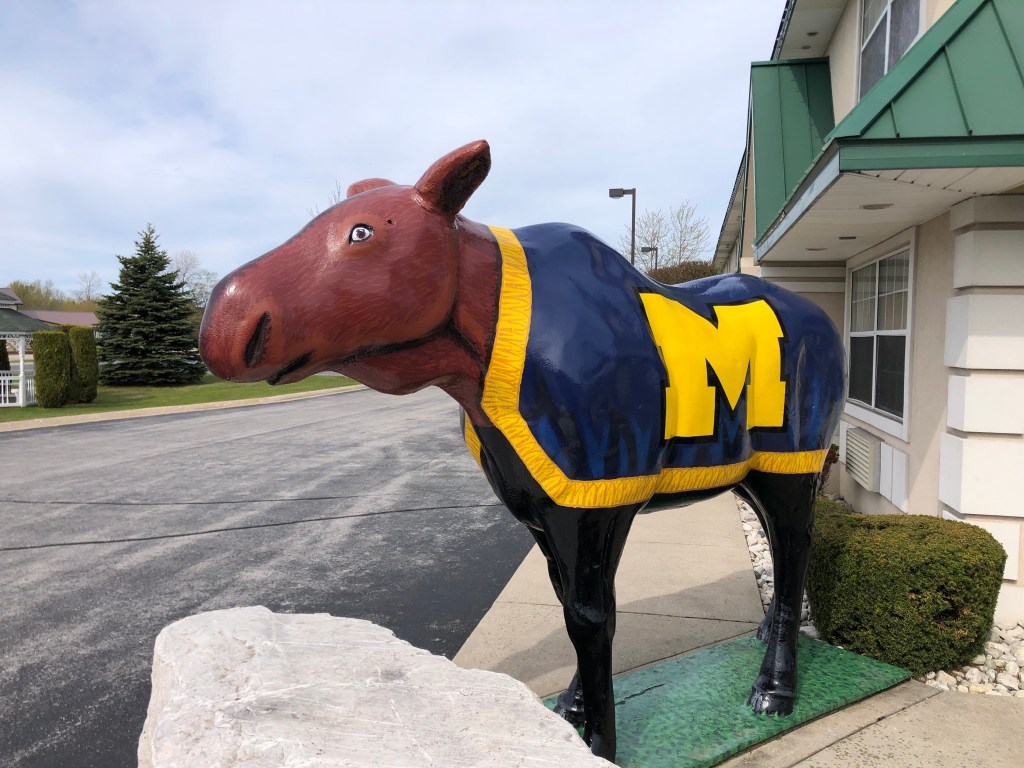
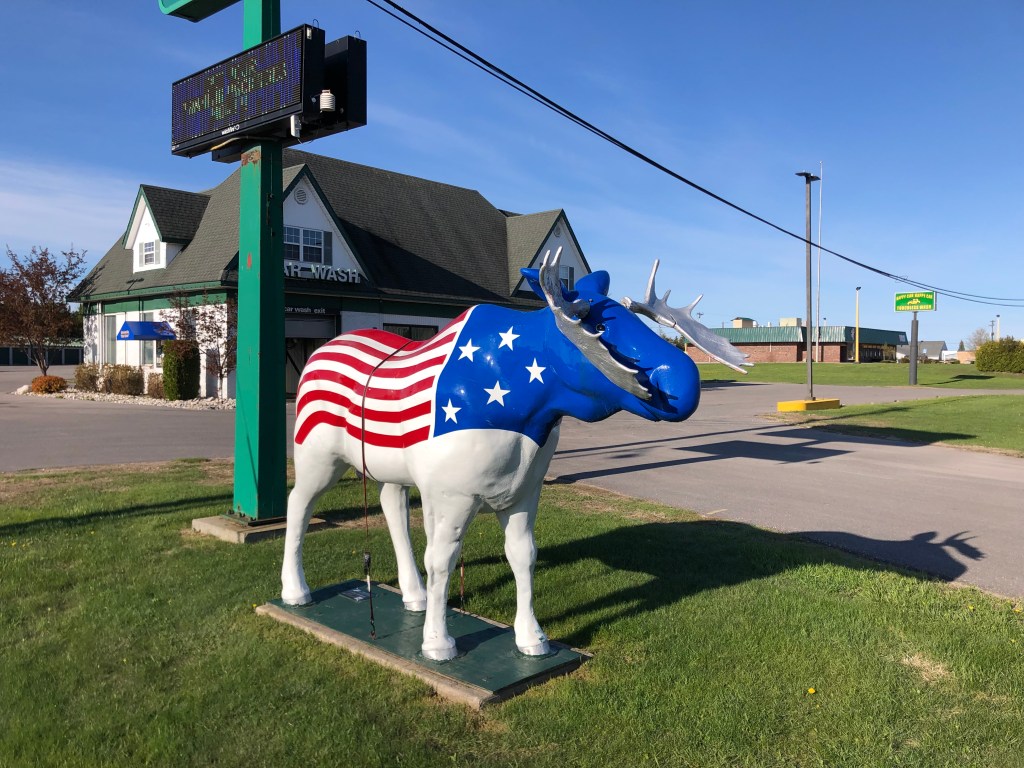
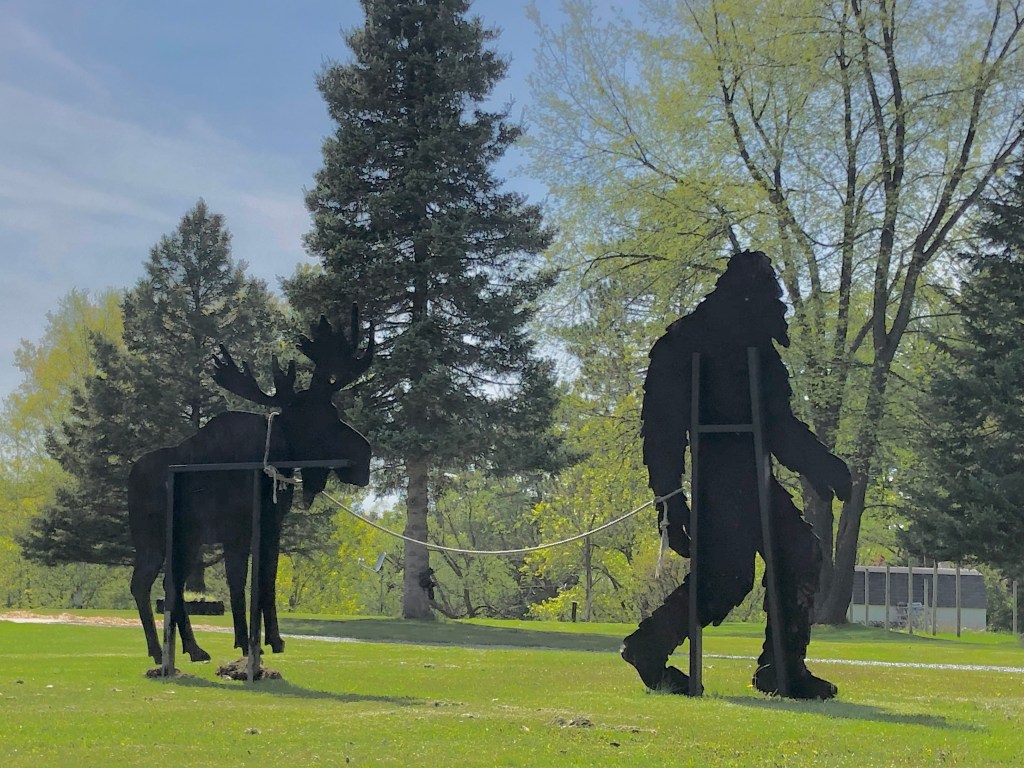
1: Moose. Moose are native to Michigan, but they were heavily predated and largely eliminated from the lower part of the state in the 1800s. In the 1980s Michigan’s Department of Natural Resources introduced more moose into the UP, where they maintain a self-sustaining population. The moose seems to have become an unofficial mascot, which I came across repeatedly.
2: Bigfoot. His likeness is everywhere. I guess the fact that the UP is remote, with lots of trees to hide among, makes for good Sasquatch habitat. There’s even a UP Bigfoot Conference each year.
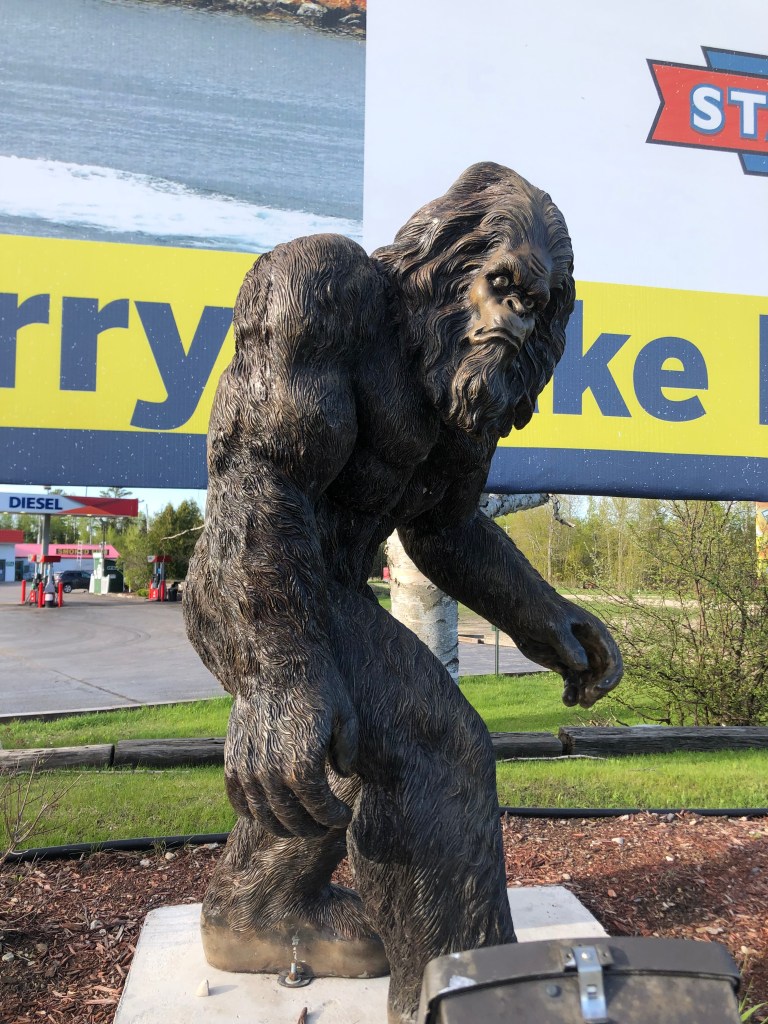
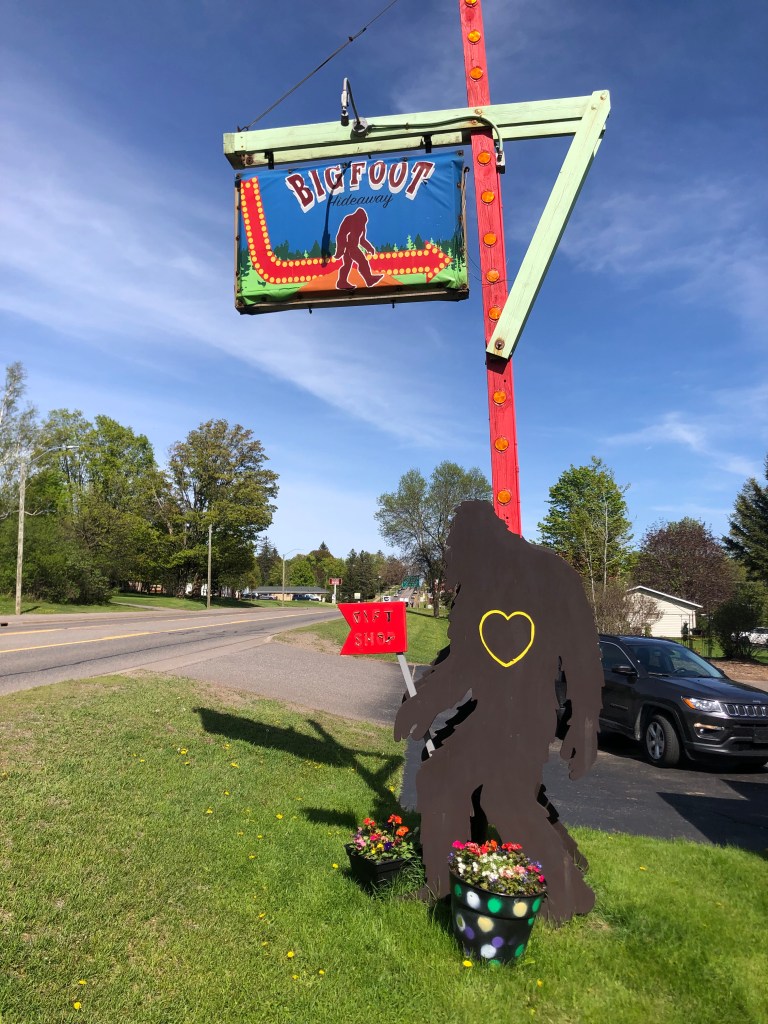
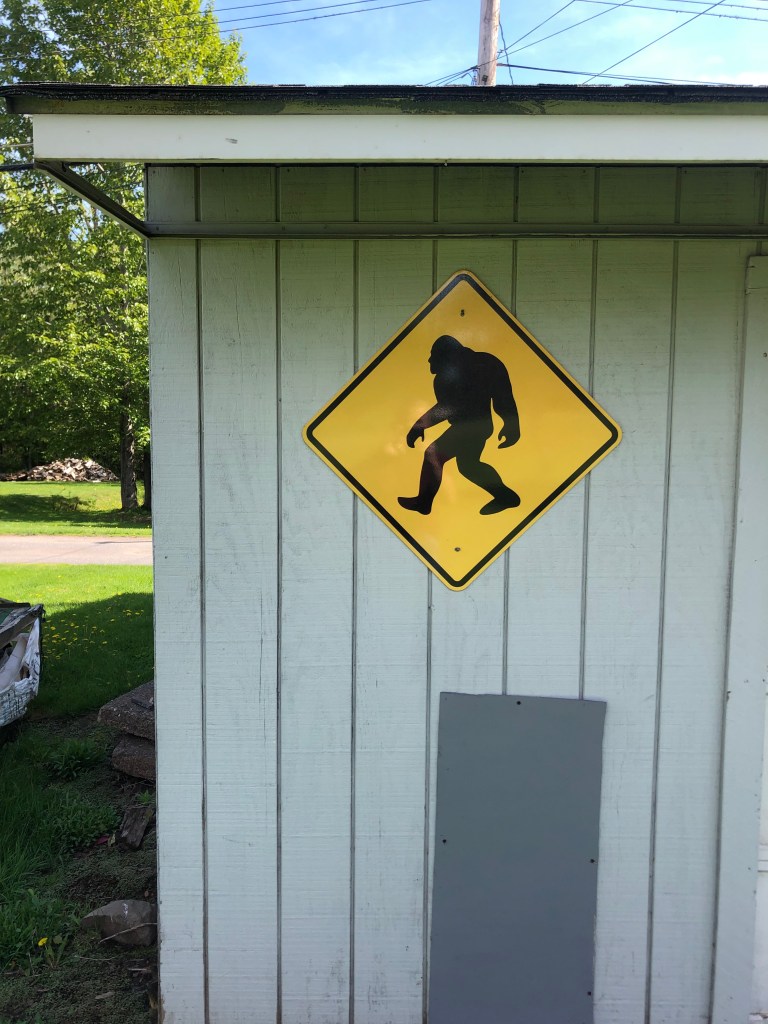
And perhaps inevitably, I even encountered a Bigfoot with a Moose on a leash…
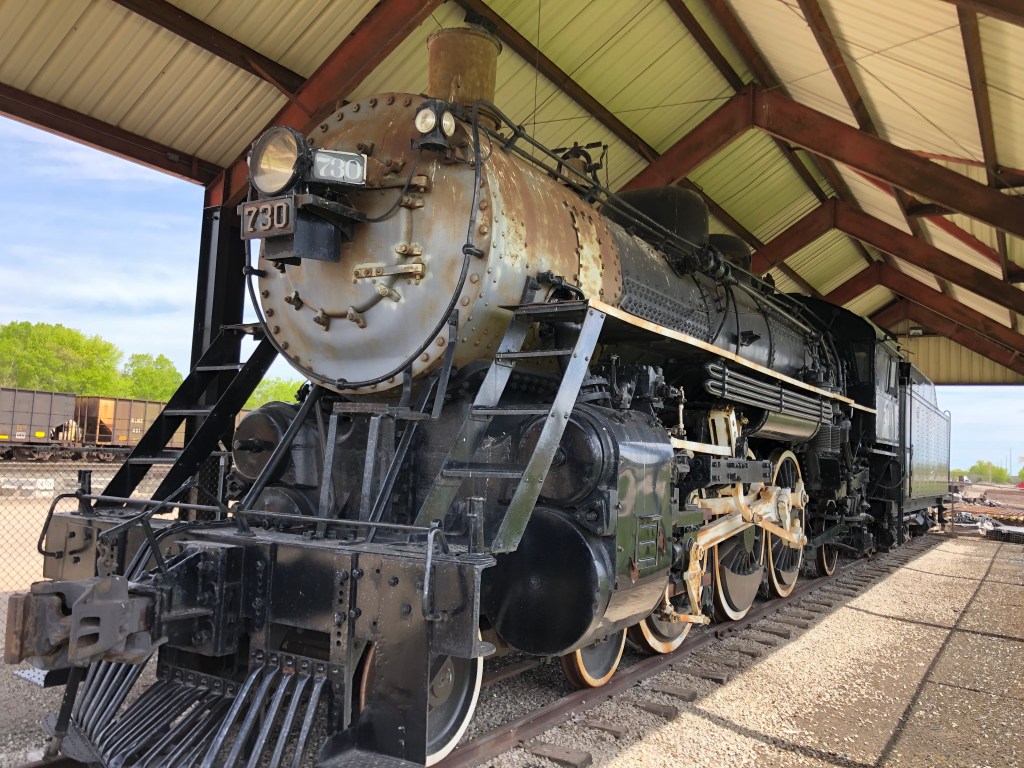
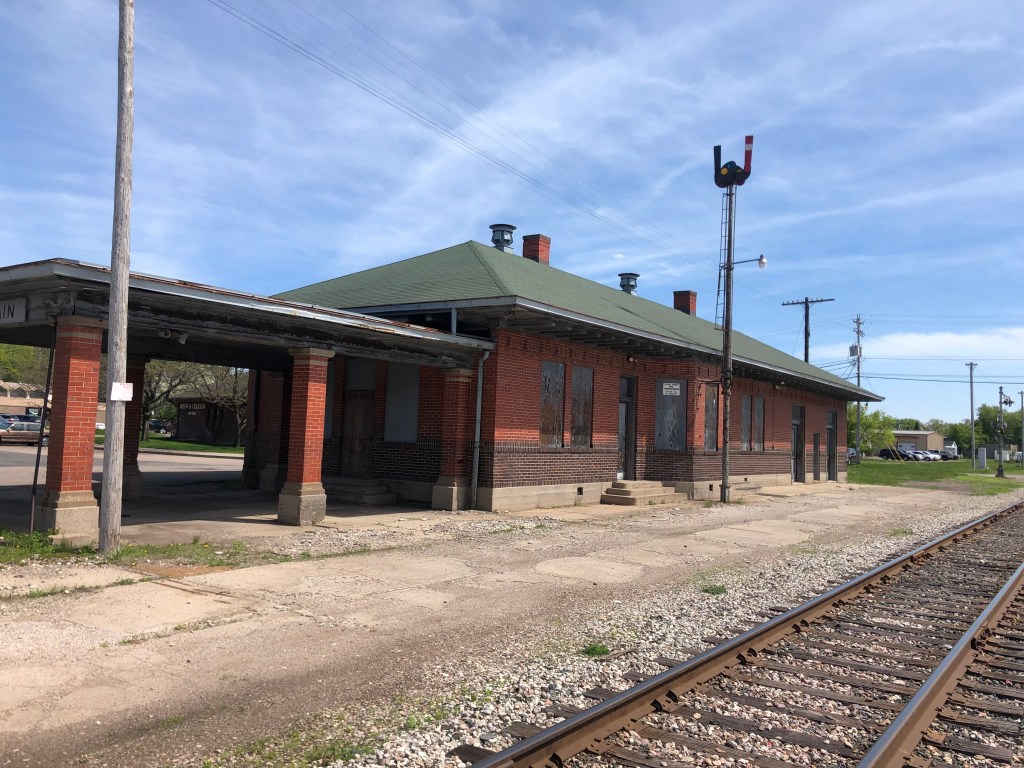
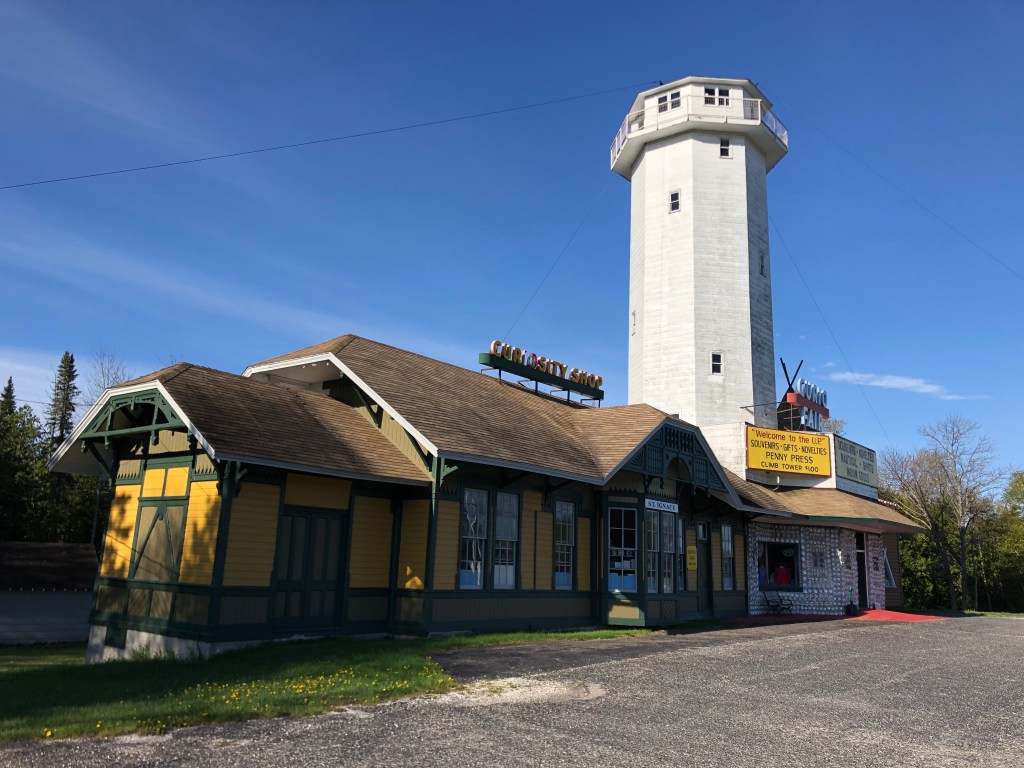
3: Trains. Railroads played a key role in the development of Michigan, of course. But with the long stretches of undeveloped land in the UP, trains were especially vital for communications, transportation, economic development, etc. in the region. Parts of the UP are major producers of iron, and railroads made it possible to export the ore to far-flung markets. Throughout my drive I encountered remnants of the old railroad infrastructure, now largely abandoned.
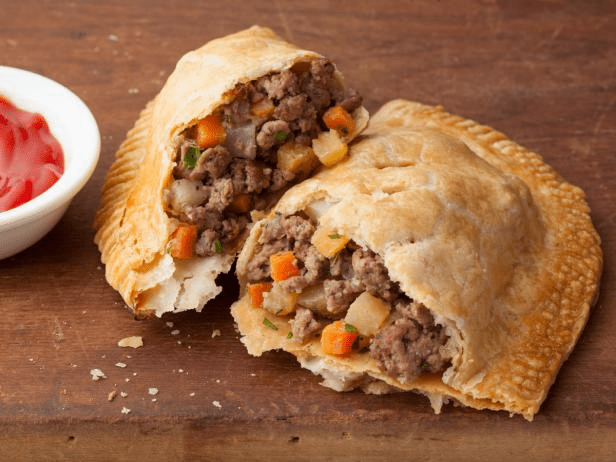
4: Pasties. No, pasty doesn’t rhyme with tasty; it rhymes with nasty. Pasties are advertised everywhere in the UP. Supposedly they were introduced by Cornish settlers to the region in the 19th Century. Essentially, they’re meat pies. I had one today and it was definitely tasty–not nasty at all.
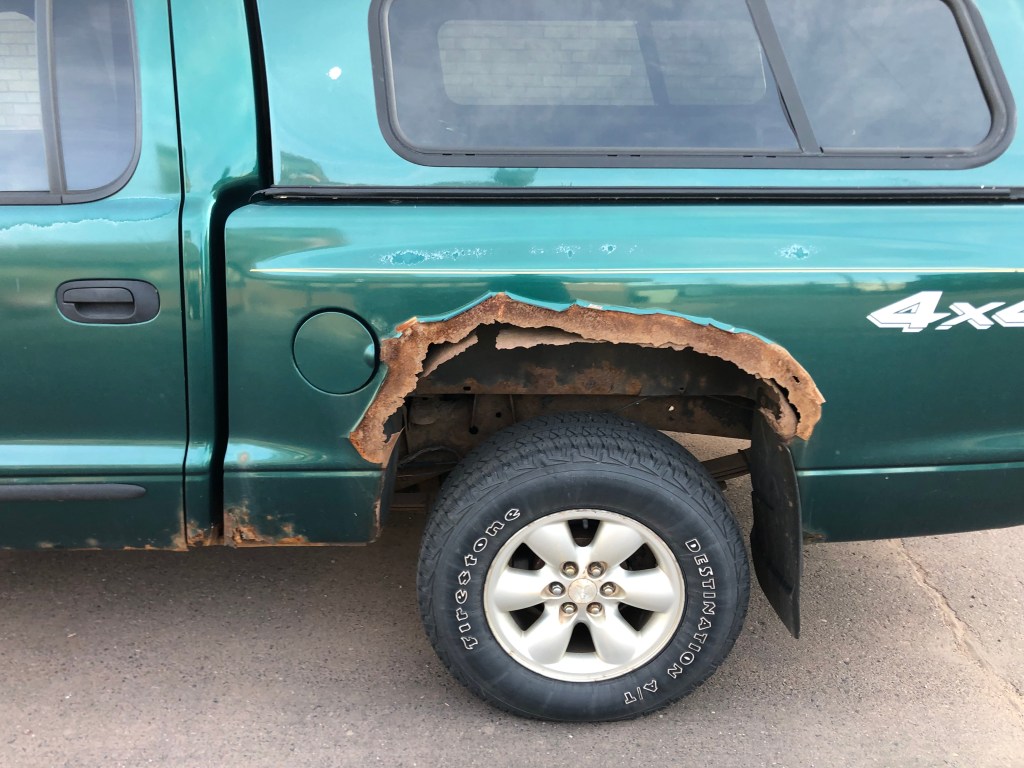
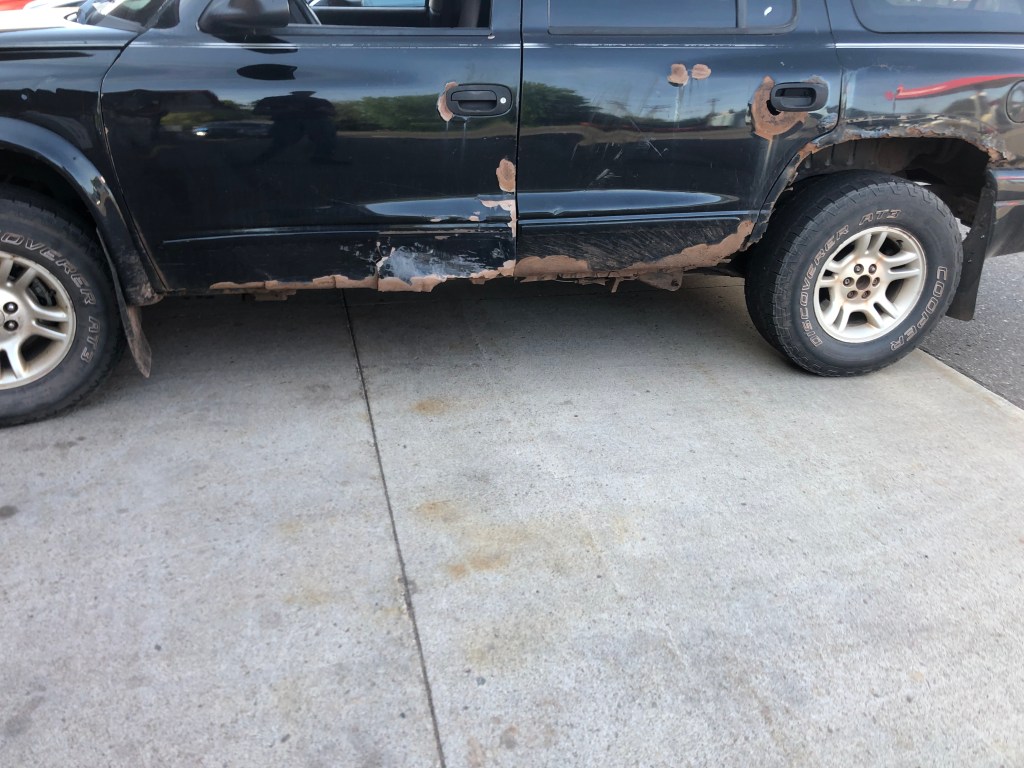
5: Rust. Winter in the UP brings freezing temperatures, ice, and snow, which requires that the Transportation Department spread salt on the roads. The combination of continuous moisture and salt hastens the formation of rust on iron and steel, which means that your F150 is going to gradually disappear.
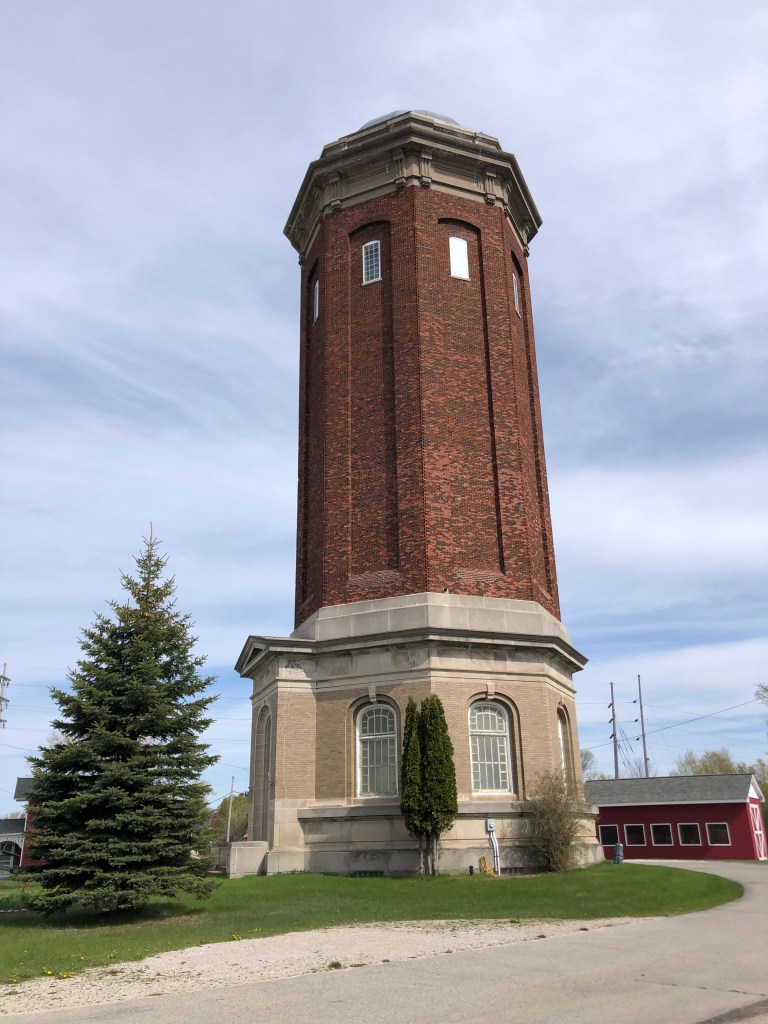
Anyway, that’s my view of the UP, based on a drive along Route 2. I’m sure I’m missing some key elements… But before I get to the BOTD, let me share one other historic structure I came across in the city of Manistique, MI (pop: 2,800). It’s a water pumping station that was constructed in 1922. It operated into the 1950s, but then was replaced by a more modern facility. It’s currently part of a museum complex. It’s a good example of neoclassical, brick structures that I saw in historic downtowns throughout the UP. Courthouses, city halls, theaters, even office buildings have a similar grandeur that, to me, seems really out of place given the UP’s rustic culture.
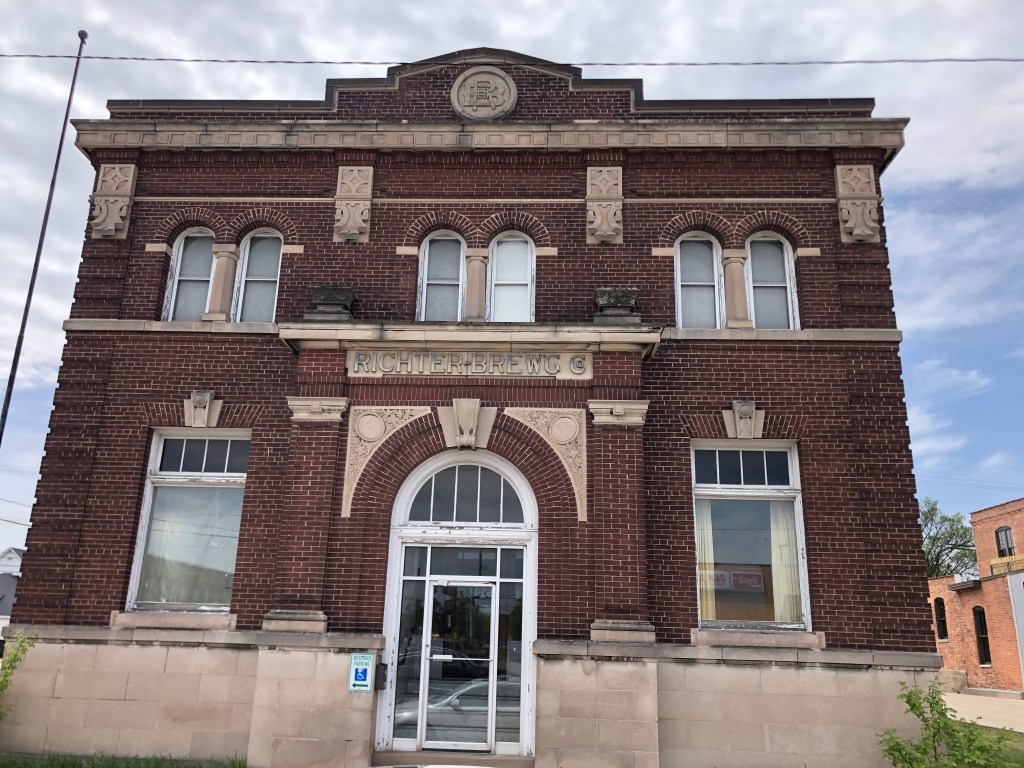
Now, as we move into the BOTD, let me set the mood with one more structure: The Richter Brewing Company building was constructed in 1915 in Escanaba, MI. Brewing operations were shut down with Prohibition, and Richter sold off the building. But it was again used to brew beer by another company until 1940. Then it stood vacant for about 50 years. It was renovated in 2012, and now houses loft apartments.
Tonight I’m in Ironwood, MI, and will drive across the border into Wisconsin tomorrow morning.
BREW OF THE DAY
Close to the Richter Brewing Company is the Delta Hotel, built in 1915. The first floor of the hotel building is now a brewpub named Hereford and Hops.
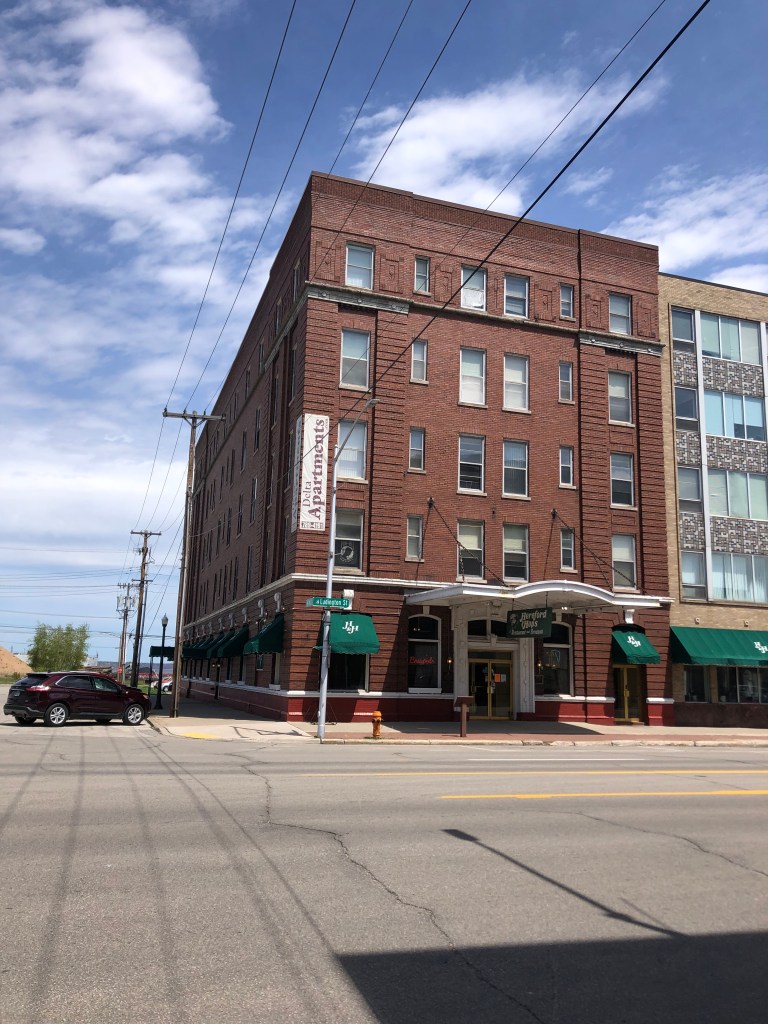
It was here that I ordered a pint of the Blackbird Oatmeal Stout, which is made on the premises. It was a beautiful pour: a dark mahogany color with a perfect, creamy head. The temperature was just right, with a bit of condensation on the glass.
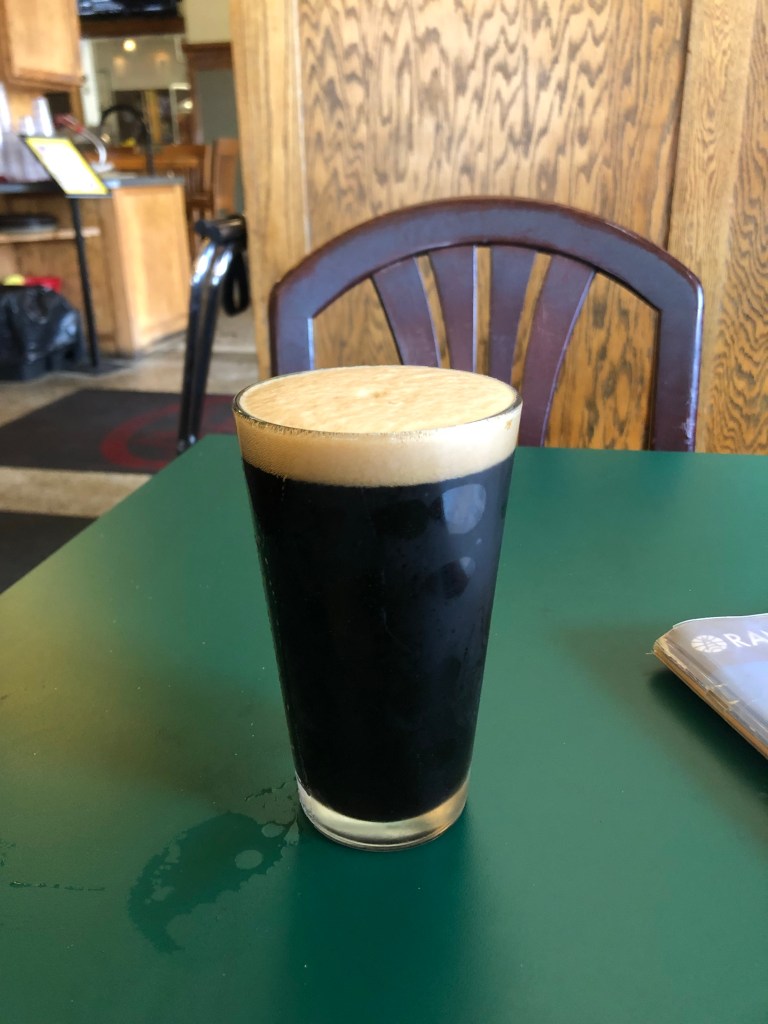
Sadly, though, I can’t recommend this beer. It seemed overhopped–just too bitter for a stout. And the malt flavor that did manage to make itself known was one-dimensional, completely lacking in that kaleidoscope of changing flavors you expect from a stout. It had more of an earthy taste than the caramel, malty taste I was hoping for. Partly redeeming it was a satisfying, creamy mouthfeel courtesy of the oatmeal. I’ll give this a three out of five stars.
 Chasing Phantoms