churches · Golden Bear signs · Road trips · trains

Dem Bones

Back in Devils Lake I took a photo of an art deco sign for a chain called “Home of Economy.” (It didn’t make my cut for that day’s blogpost, though.) “Home of Economy” is a small chain of discount stores in North Dakota. It’s said to be America’s first discount chain. The story is here. Well, it turns out there’s another one of these signs in Williston. And when I came into town last night it was illuminated. I thought I’d share it with you, so you can get the whole effect:

Welcome to 1952. I love how garish this sign is–especially when it’s promoting “economy.”

I was back on the road this morning around 7 am, and before long I crossed the state line into Montana. The flat plains and distant horizon reminded me that they call Montana “Big Sky Country.” My dad (rest his soul) used to complain that the sky is the same size wherever you go; what right does Montana have to claim it as their distinctive characteristic? But a few hours on Montana’s roads convinced me that Dad was wrong and Montana is right. Sorry, Dad.
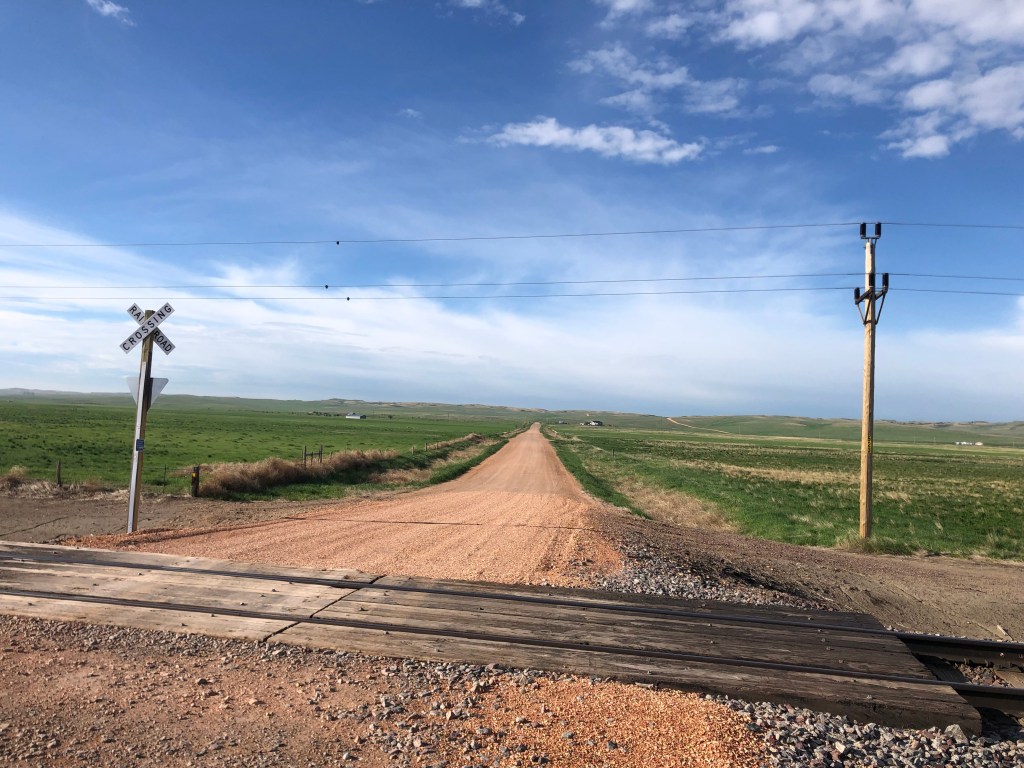
Size matters

Anyway, today’s theme seems to be bones. For starters, Montana is well known for its dinosaur fossils. There are some good specimens at the “interpretive center” at Fort Peck.
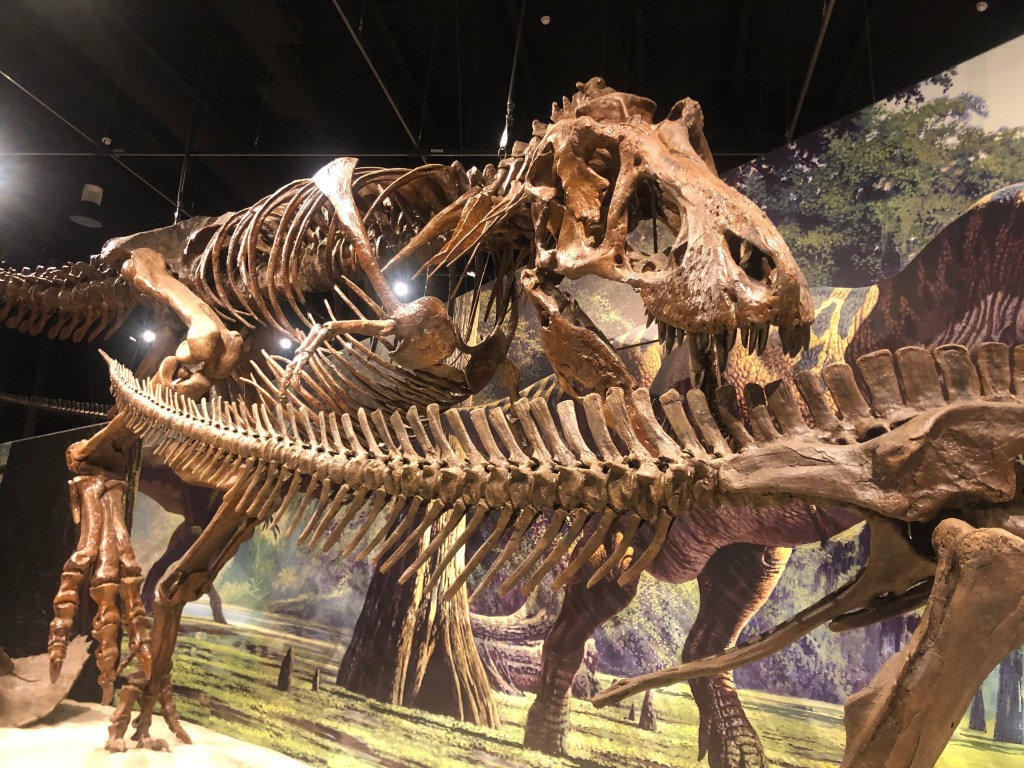
Jurassic Denticles

Second, Montana seems to have adopted the cow skull as some kind of a mascot. I see it everywhere, from storefront logos, to ranchhouse decorations, and even to art installations in the roundabouts on Route 2.
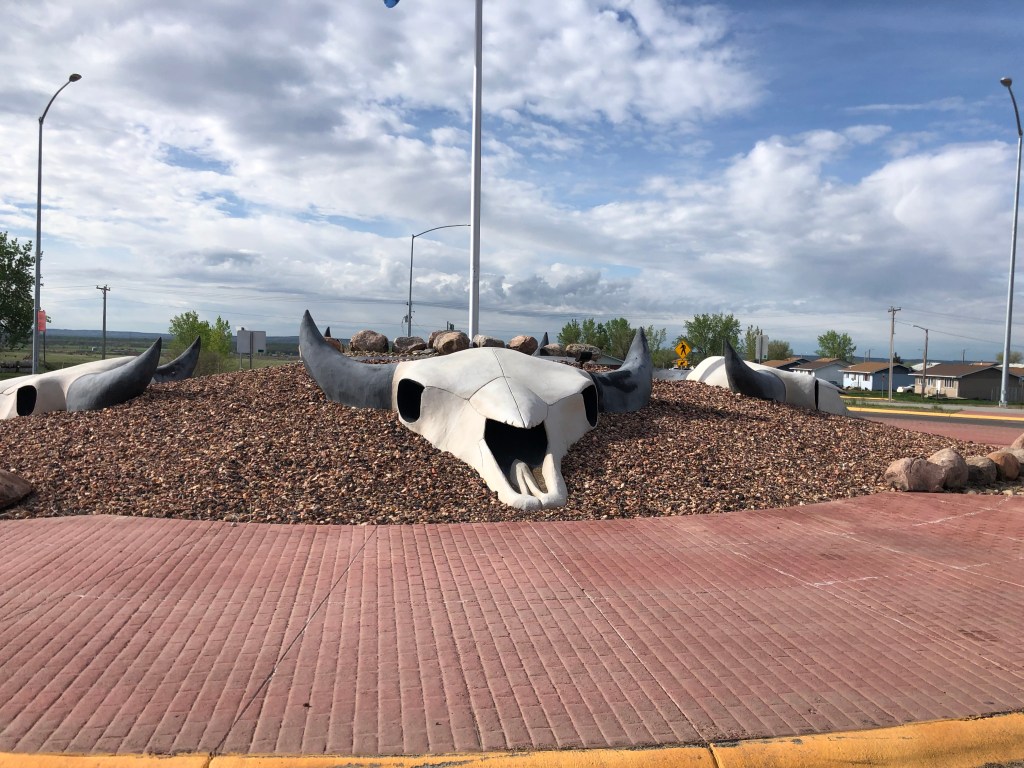
Skeletal streetscape

Third, there are actual skulls scattered about on the landscape, the inevitable result when Montana’s extensive wildlife clashes with predators.
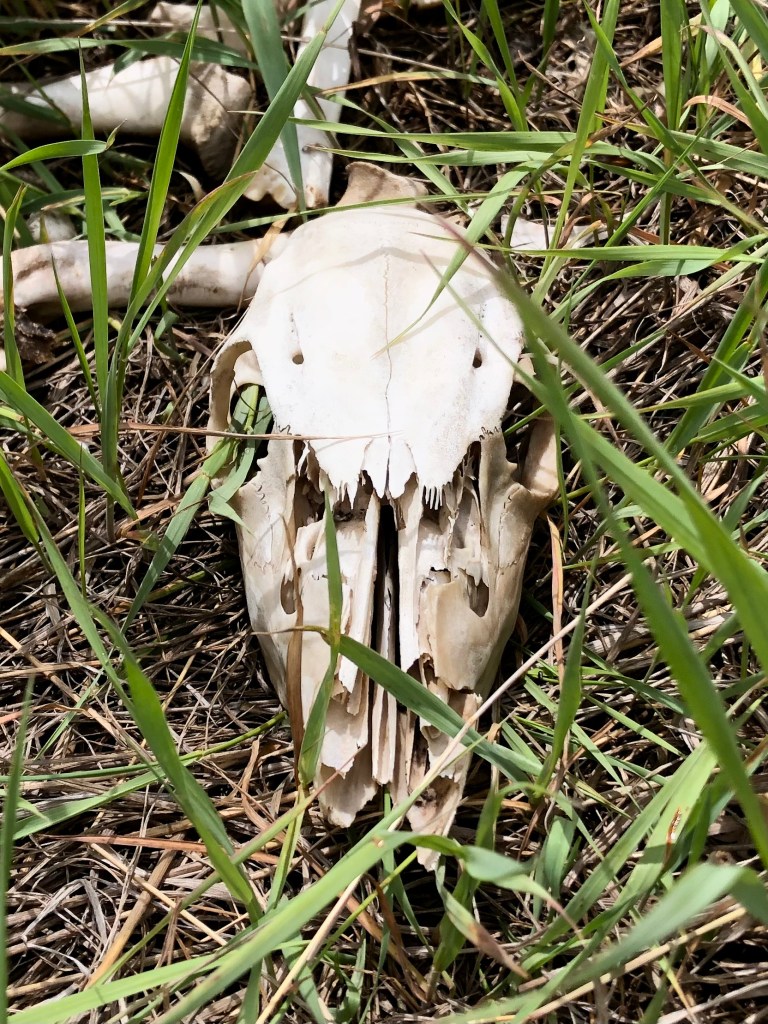
At least the crows are well fed.

Throughout the day I drove about 300 miles. A goodly portion of Route 2 between Wiliston and Havre follows the Missouri River, and, not coincidentally, it tracks with the Lewis and Clark route.
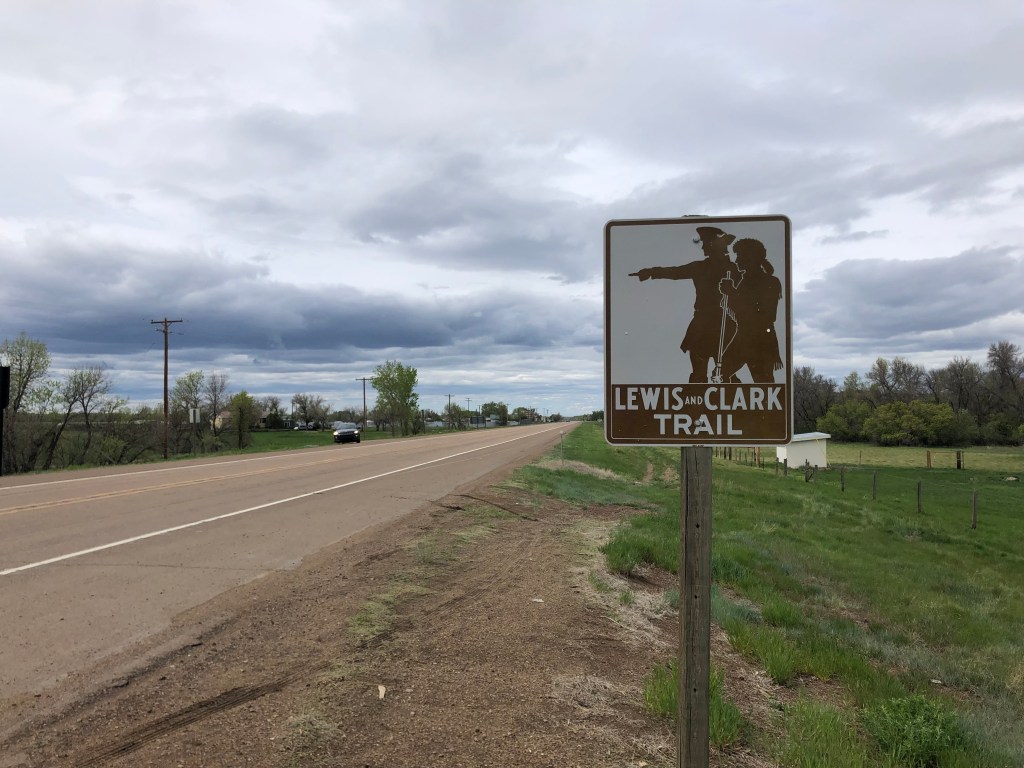
“Over there–is that an obelisk?”

My favorite town on today’s drive was Glasgow, MT (pop: 3,300). It was named by Great Northern Railroad magnate James Hill, who supposedly picked the name by spinning a globe and randomly dropping his finger on Glasgow, Scotland. Glasgow, MT embraces its Scottish connection by depicting plaid color schemes, bagpipes, and Scottie dogs on various buildings and logos. And to contrast with Rugby, ND’s “geographical center of North America” claim, Glasgow proudly calls itself “The Middle of Nowhere.”
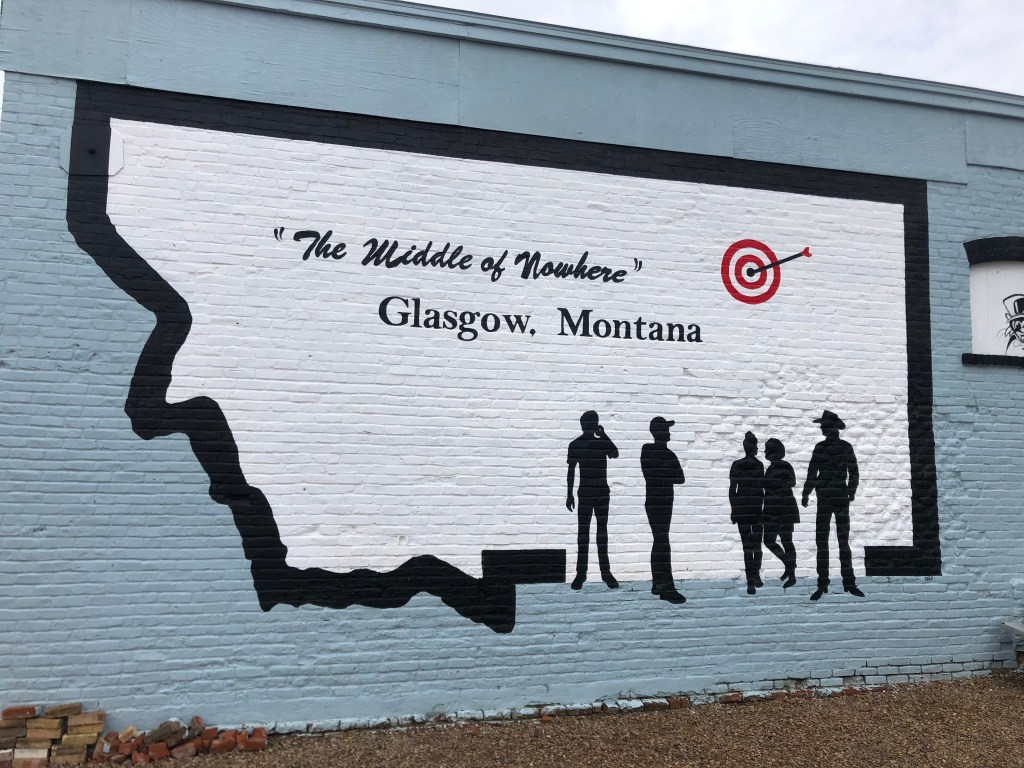
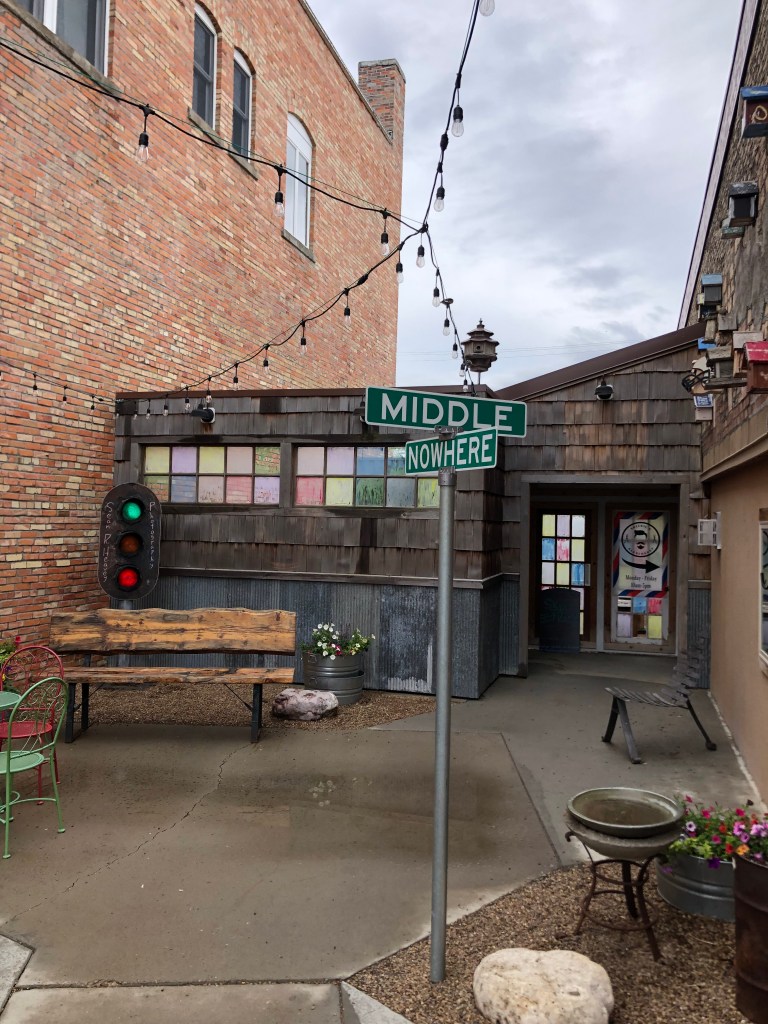
I went into a Glasgow coffee shop (“The Loaded Toad”), which, surprisingly for a town this size, offers honest-to-goodness espresso drinks, and I asked what’s up with the “middle of nowhere” slogan. The barista didn’t really have an answer, but one of the patrons (a guy named Nick) told me that it’s actually a scientific fact. It seems that a team of researchers at Oxford University collected data from all towns in the continental US with populations of up to 1,000 residents, and then determined which one of these is the farthest from any city of at least 75,000 residents. The answer: Glasgow, MT. You can read about it here.
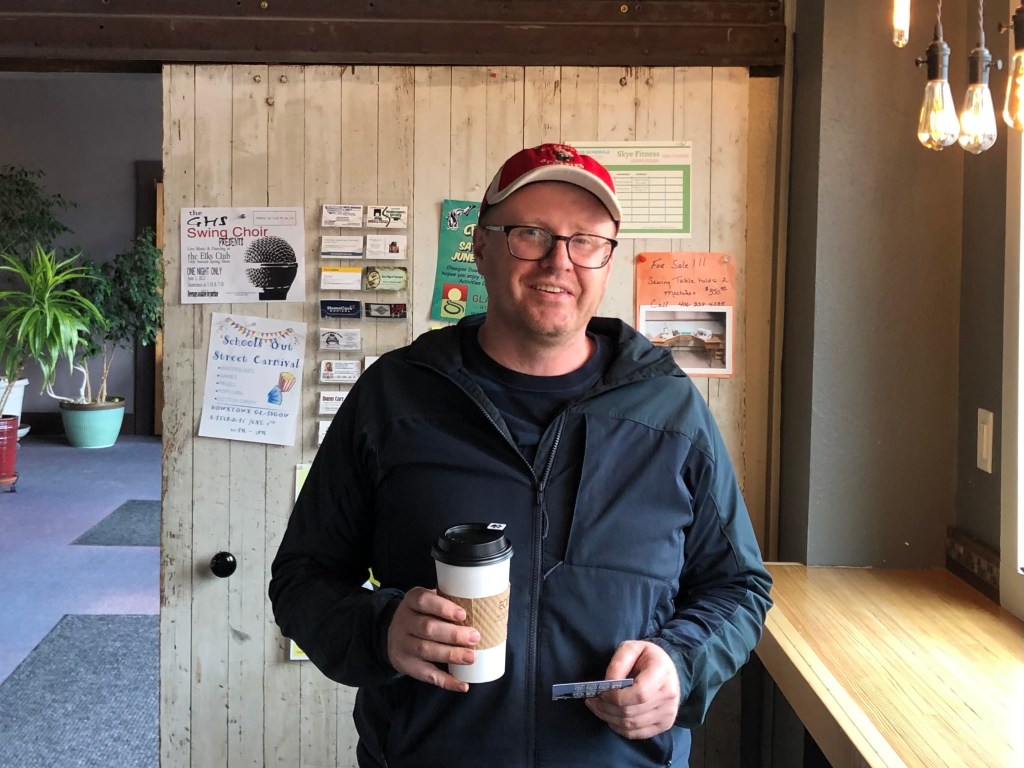
Nick: Master of Glasgow trivia.

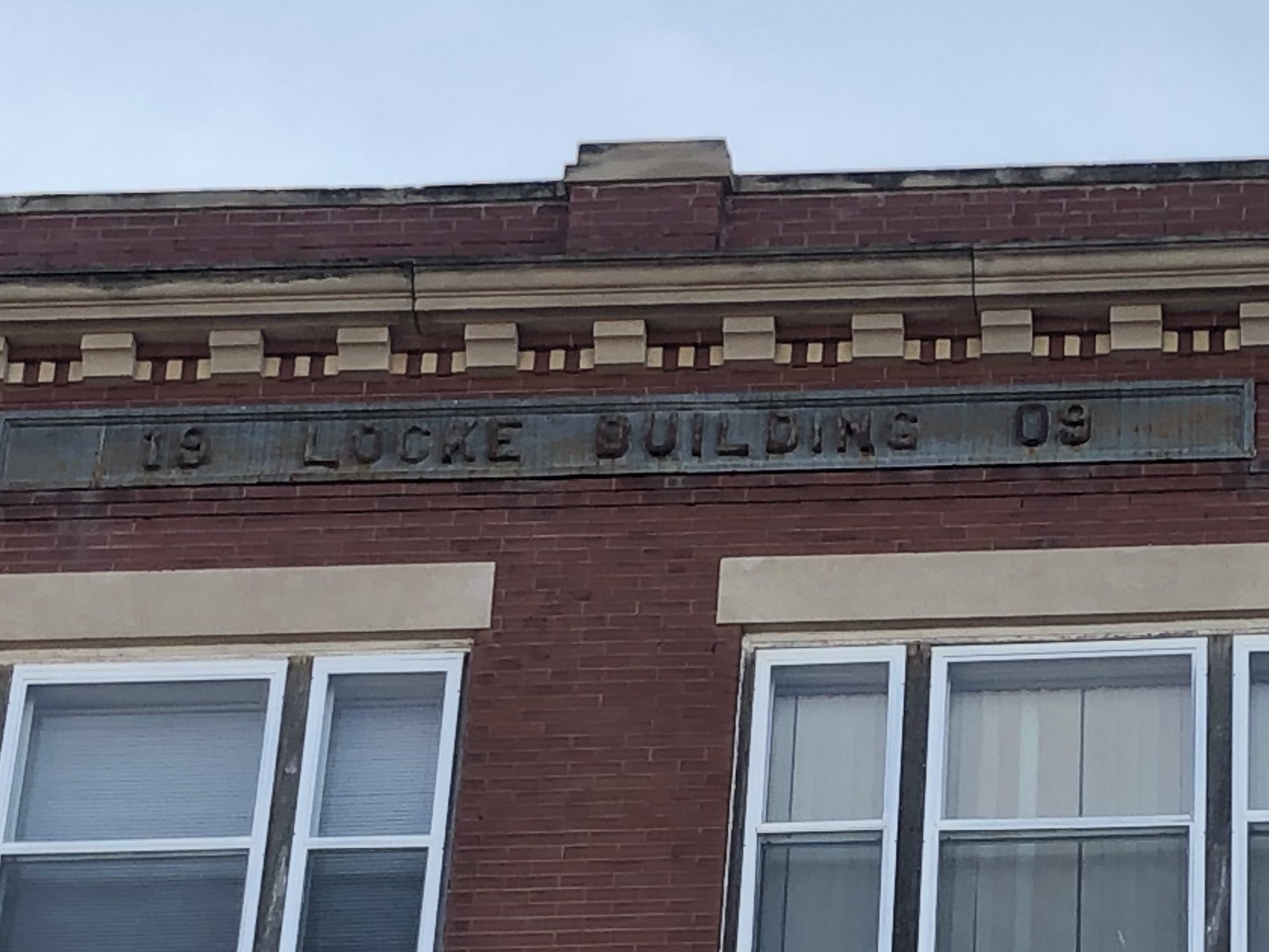
For such a small and demonstrably isolated town, Glasgow has a lot to offer. Not only does it have hipster quality coffee, but it also has a healthy, historic downtown, centered on the recently-renovated Rundle Hotel that dates back to 1915.
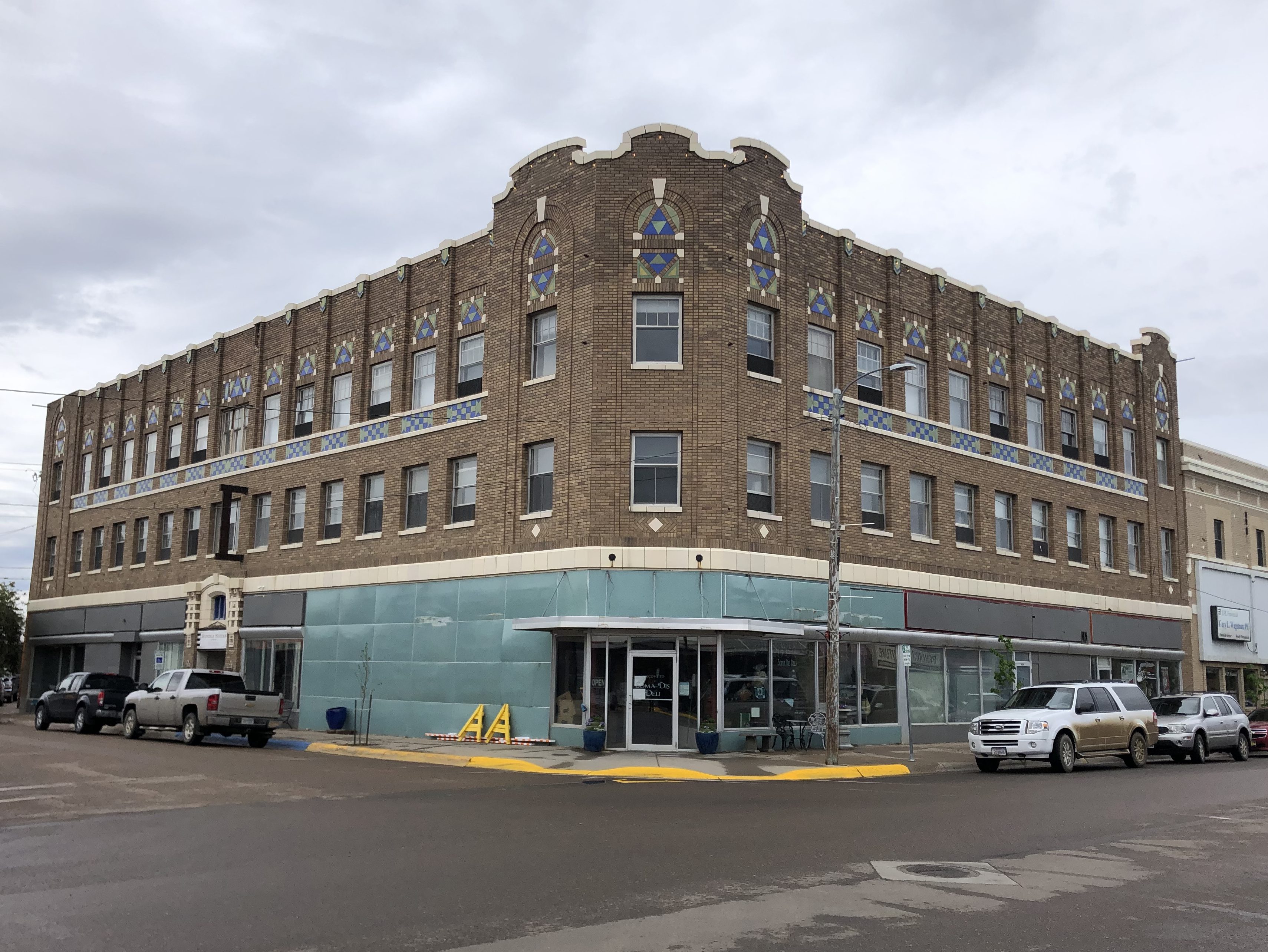
The Rundle Building, age 107.

Glasgow also has an operating, historic depot with daily passenger service. As I noted in an earlier post, trains no longer stop at many of the small towns along the Hi-Line.
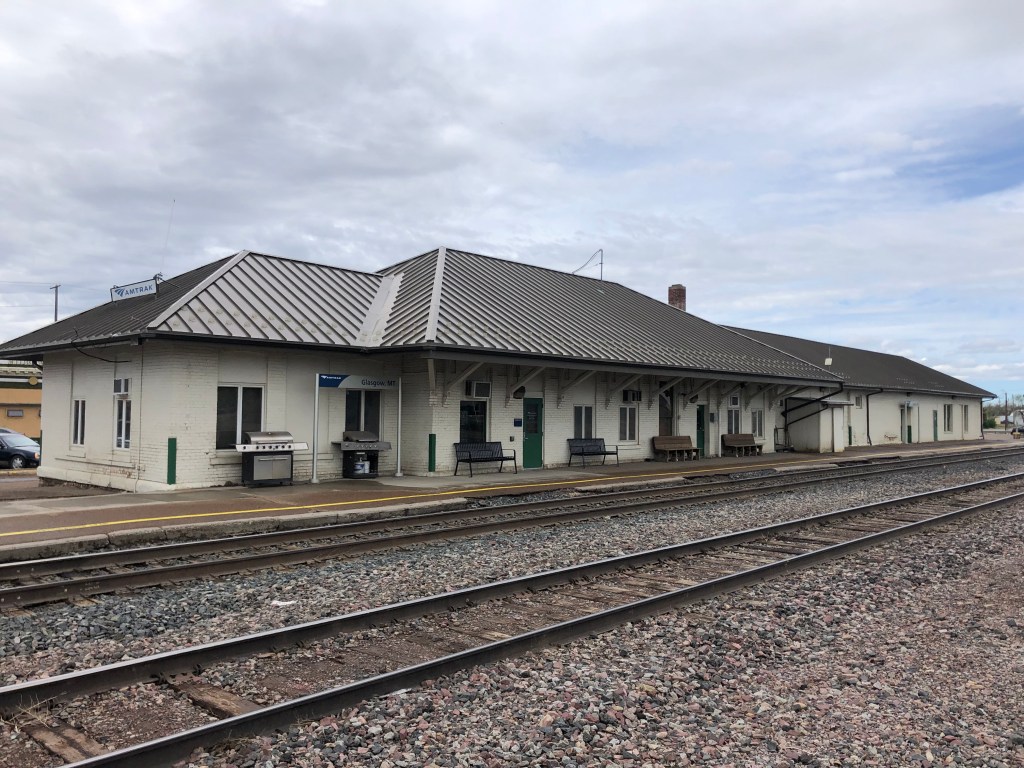
Your portal to the Middle of Nowhere.

And as if that’s not enough for a town of 3,300 souls, Glasgow has a well-curated, large Pioneer Museum of Valley County, which covers the history of the region. It has displays on the railroads, schools, agriculture, industries, domestic life, government, and many other aspects of life in northeast Montana. The staff was very welcoming and opened up a frozen-in-time 1924 home for me. They even let me take a selfie with them.
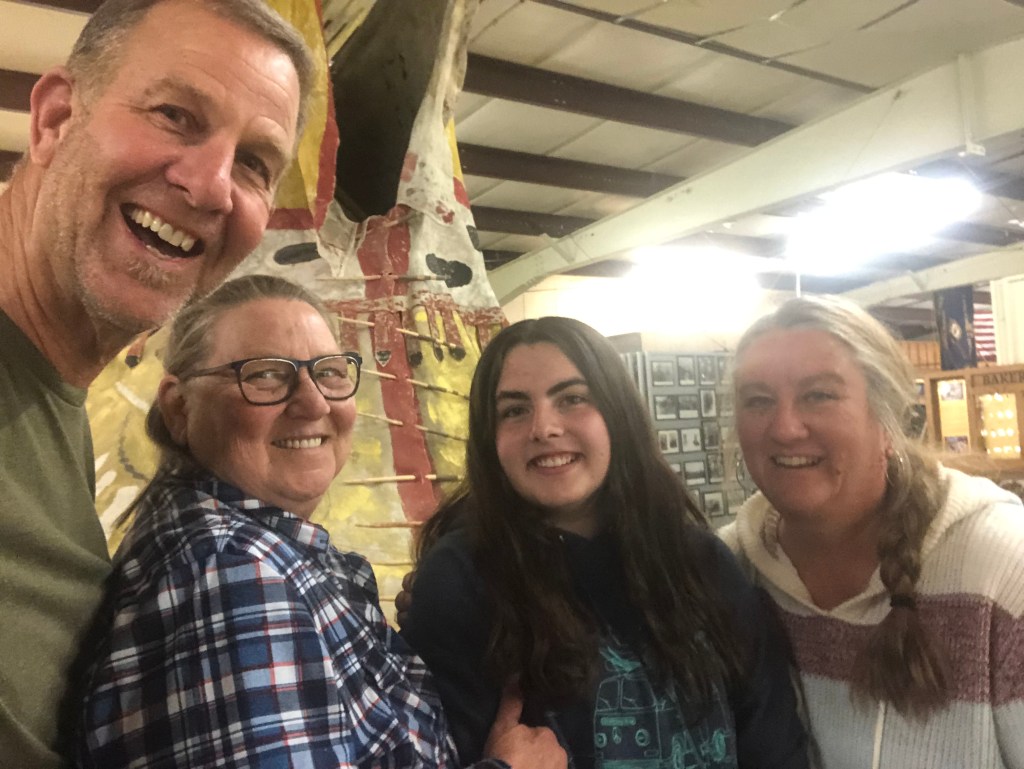
Steve’s Angels.

Although Glasgow was founded as a railroad town, much of its growth occurred in the 1930s, when a major influx of workers and their families came to build the nearby Fort Peck Dam. It was an monumental undertaking, and the completed dam created a 134-mile-long lake in the course of the Missouri River. The flood control, electrical generating, and recreational benefits of the project were enormous (not to mention the economic stimulus during the Great Depression).
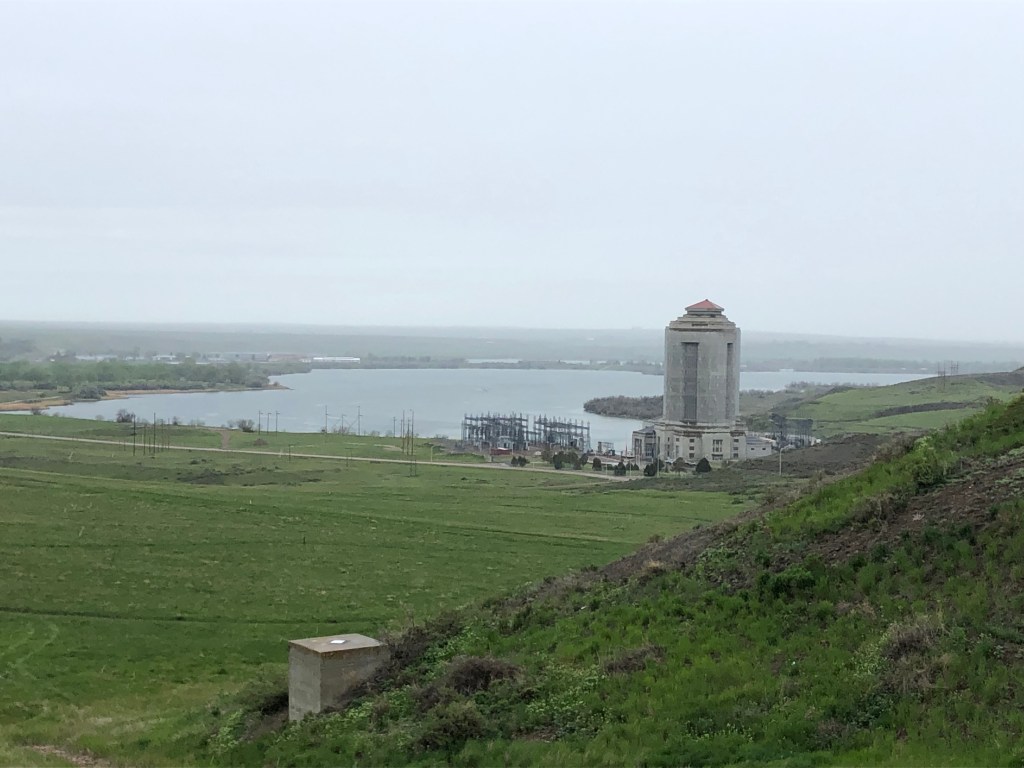
To parallel my earlier visit to the headwaters of the Mississippi, here I’m overlooking the point where the Missouri resumes its course after passing through Fort Peck Dam.

Sadly, though, 60 men died in the course of construction, and six bodies couldn’t be recovered. They are forever entombed deep in the dam.
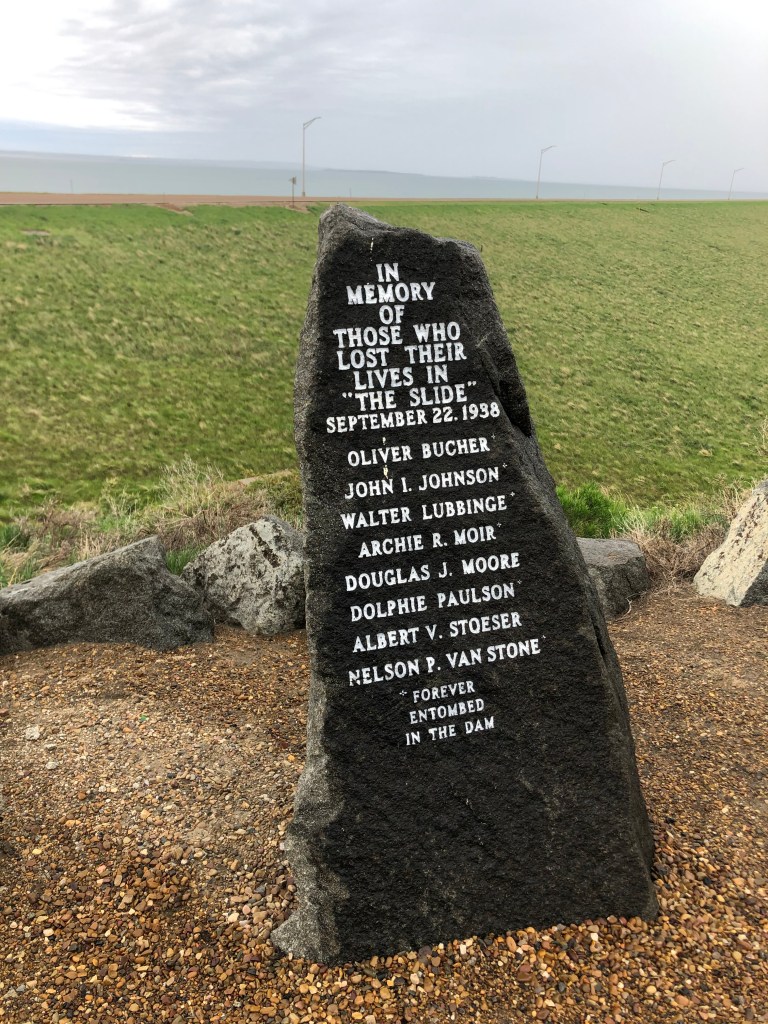
Requiescat in pace.

Naturally, churches made another appearance today. My eye was once again caught by the classic Prairie architecture of an old, whitewashed, clapboard church with that distinctive belfry. Built in 1904, this particular church has some real history behind it. It was attended by some of the Sioux Indian band that was once led by Chief Sitting Bull. (Some of that band had converted to Christianity.) There are also some urban legends about a “goat man” occasionally seen jumping from the church’s belfry. A little info is here.
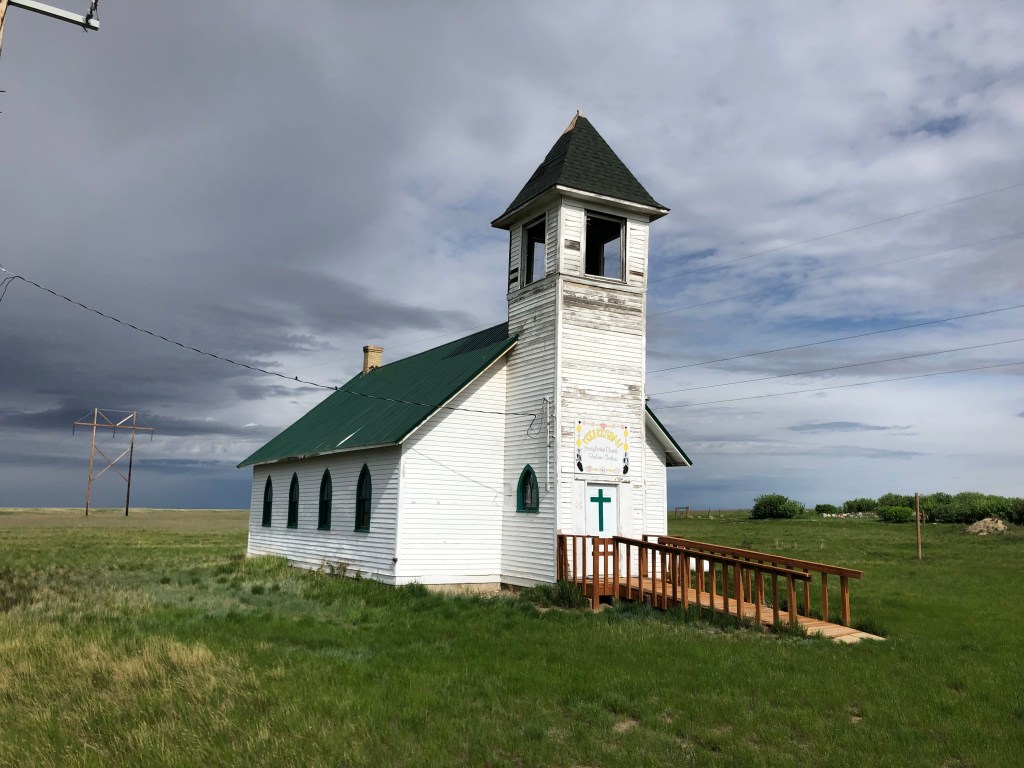
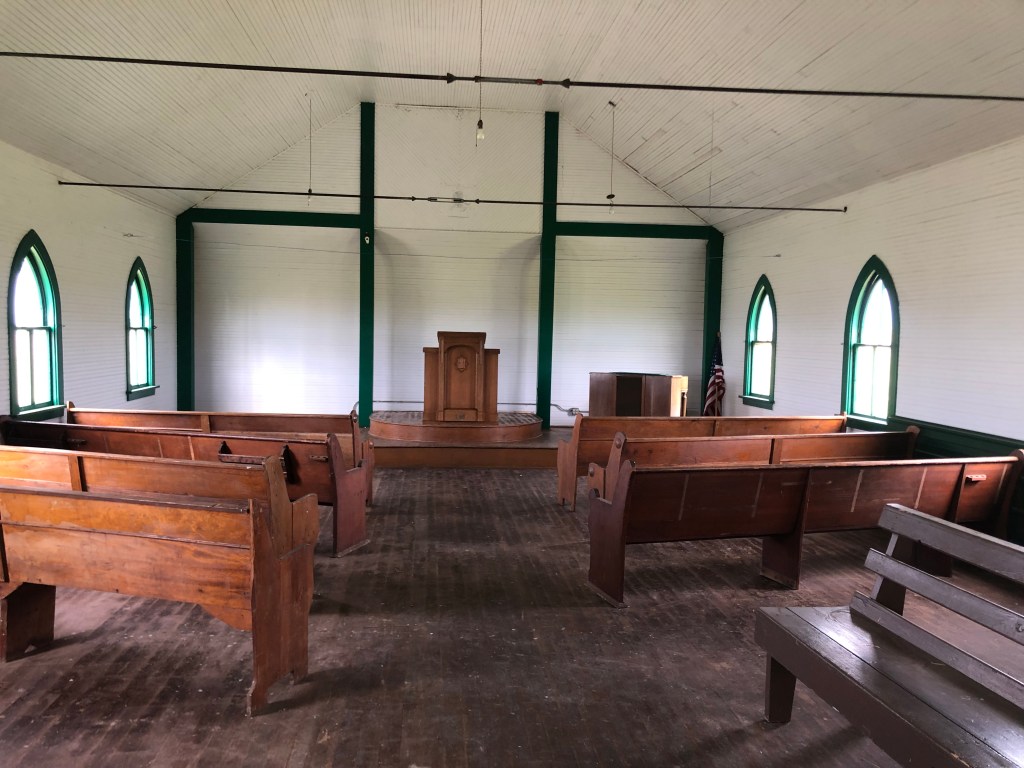
If I were a supernatural being, I’d probably hang around a church like this too.
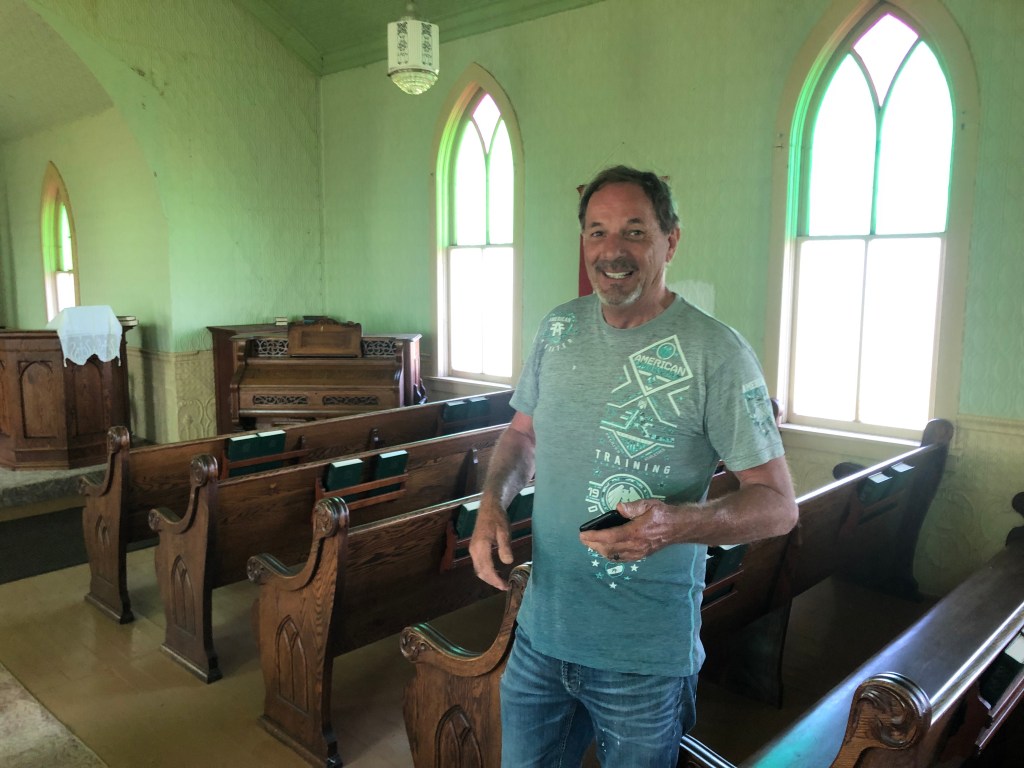
Inside the Chelsea Church. Pretty minimalist.

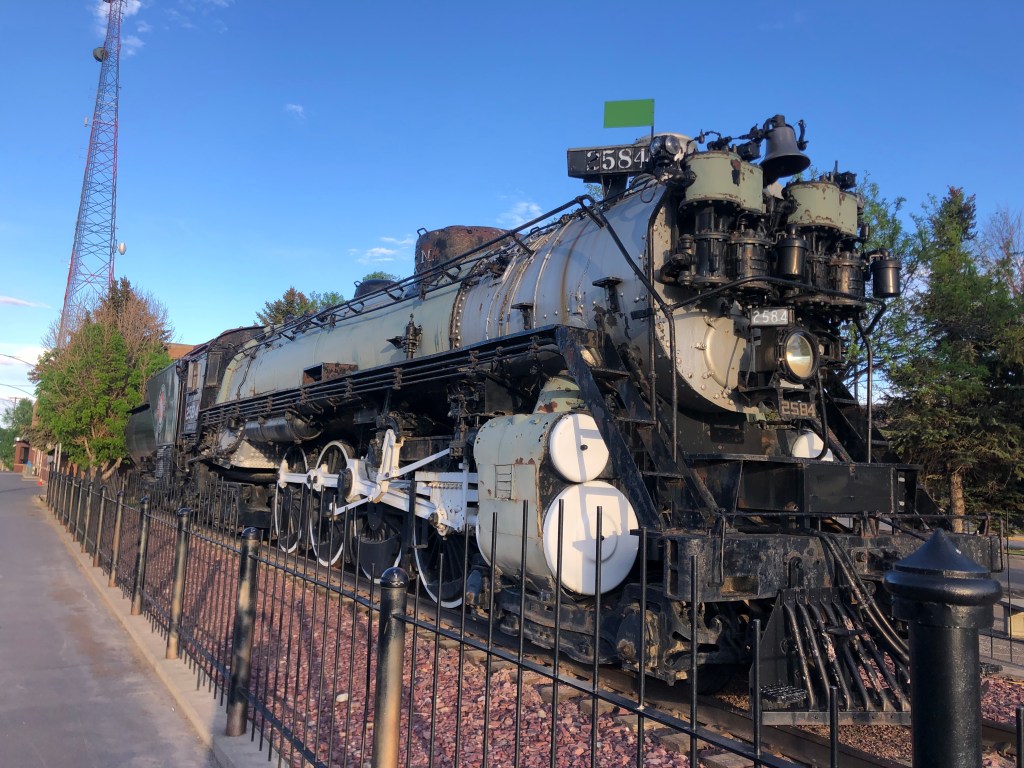
I wound up today’s travels in Havre (pronounced “HAVE-er), Montana (pop: 9,500). It’s one of the larger towns on Route 2, and it seems to have a pretty vibrant economy. Once again I encountered a functioning railroad station, with some impressive art installations (if I can call them that).
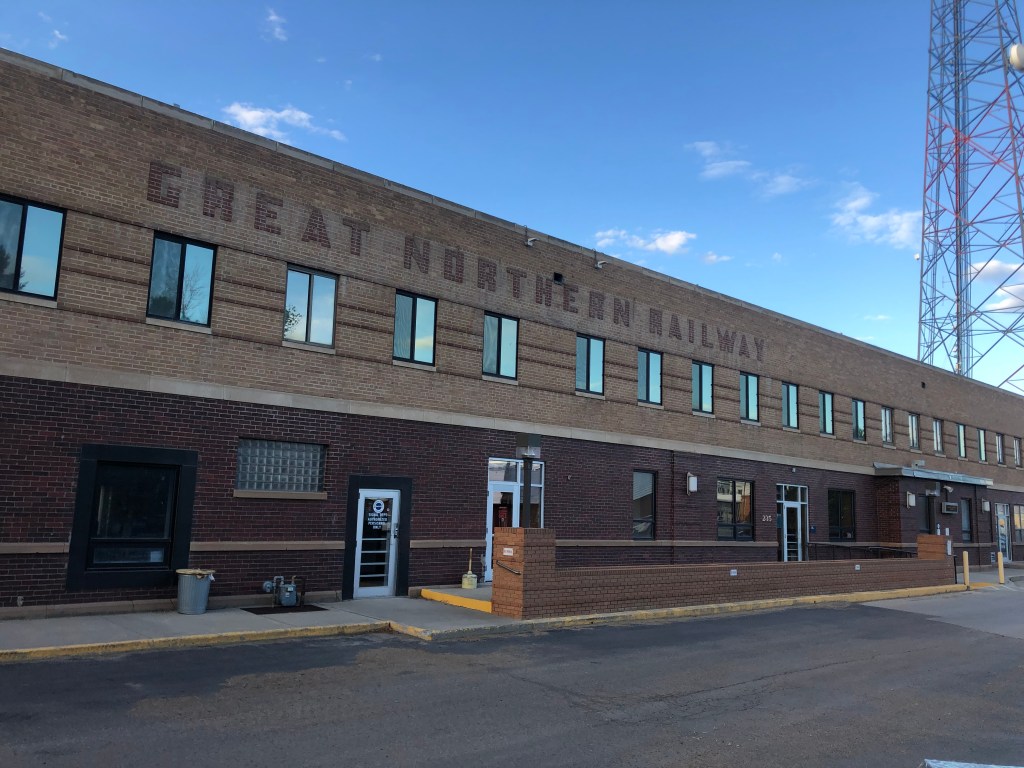
Havre Train Station, built in 1904 and significantly remodelled (in streamline moderne fashion) in 1949. Is it just me, or is it intended to look like a railroad passenger coach?
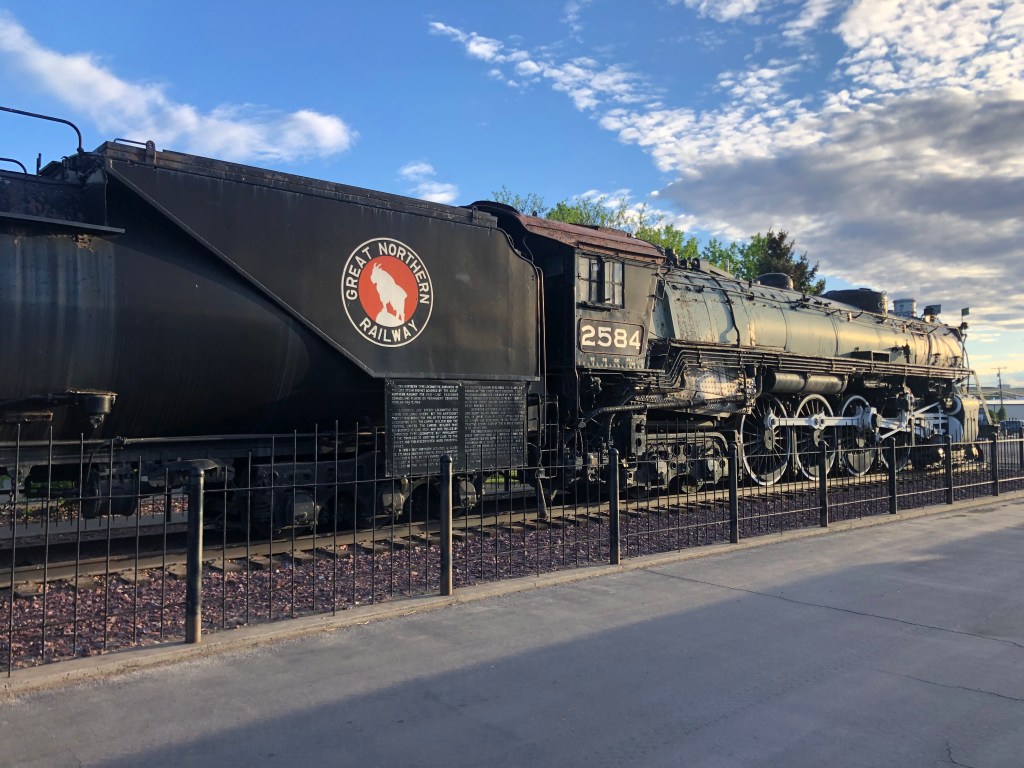
Great Northern’s #2584 was built in 1930, retired in 1957, and has been on display at the Havre station since 1964.
Even if you’re not into trains, you have to find this piece of machinery impressive, right?
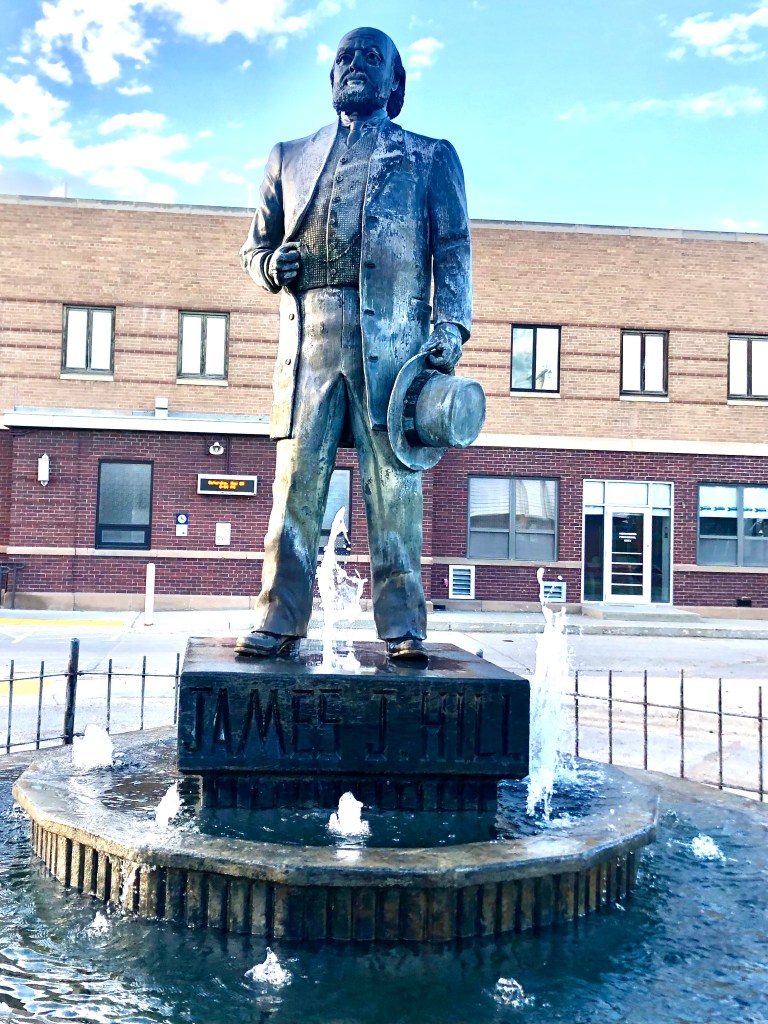
Statue of James J. Hill, Great Northern’s founder and CEO. He was called “The Empire Builder.”

Not far from the station I spotted what seems like it could be a Laughing Bear. (For a refresher on what I’m talking about, click here.) It has the same outline and expression, but inexplicably it’s blue rather than gold. Please let me know whether you think this was originally a proper laughing bear, or just a coincidental doppelganger.
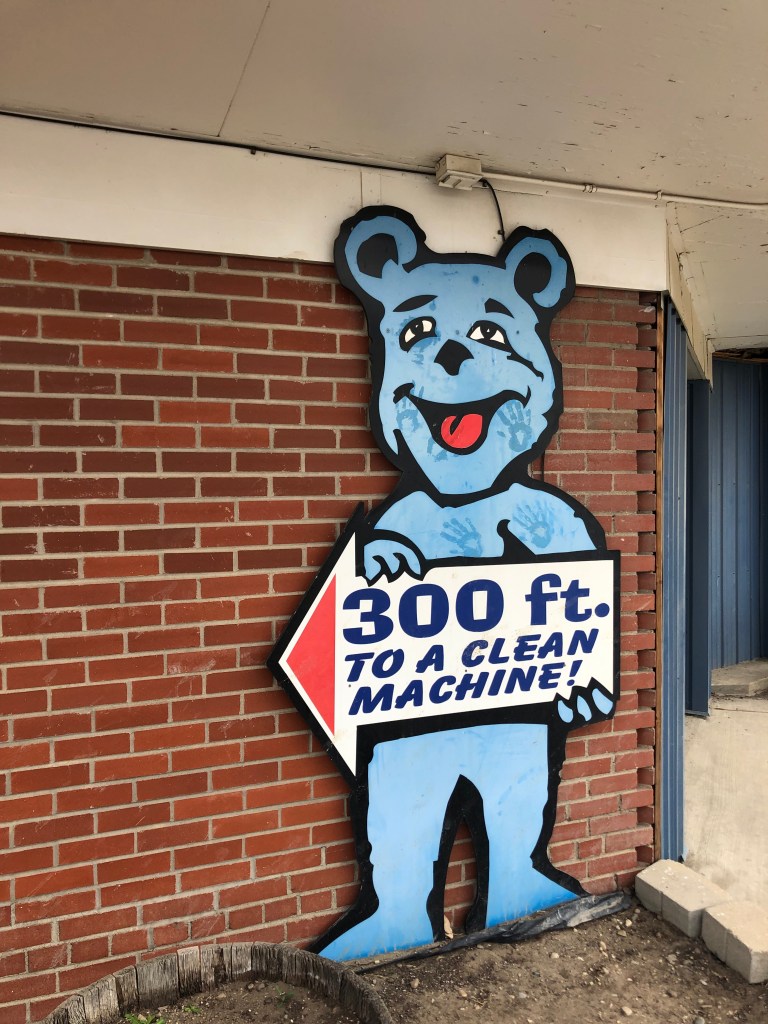
YOU make the call.

BREW OF THE DAY

In honor of my visit to Glasgow, I had the Aberdeen Scotch Ale at Triple Dog Brewing Company in Havre. Triple Dog is a hip brewery with the usual industrial-chic vibe, and it’s populated by 20-somethings (both employees and clientele). The only reason that I didn’t significantly increase the average age is because this place was packed. I mean, for such a small town, this place was hopping (brewing related pun unintended). They don’t have a kitchen, but a food truck in the front parking lot supplied me with a wonderful concoction called Irish Nachos. I love this place, and if you’re interested in the back story, here’s an interview with the young founder:

Anyway, as I mentioned, I ordered a Scotch Ale. I had fully intended to get myself an imperial stout, but evidently the folks out here in northern Montana aren’t manly enough for this kind of beer. (Note to the guys sitting behind me here at the brewery, who look like they could snap me in two: I’m just joshin’.)
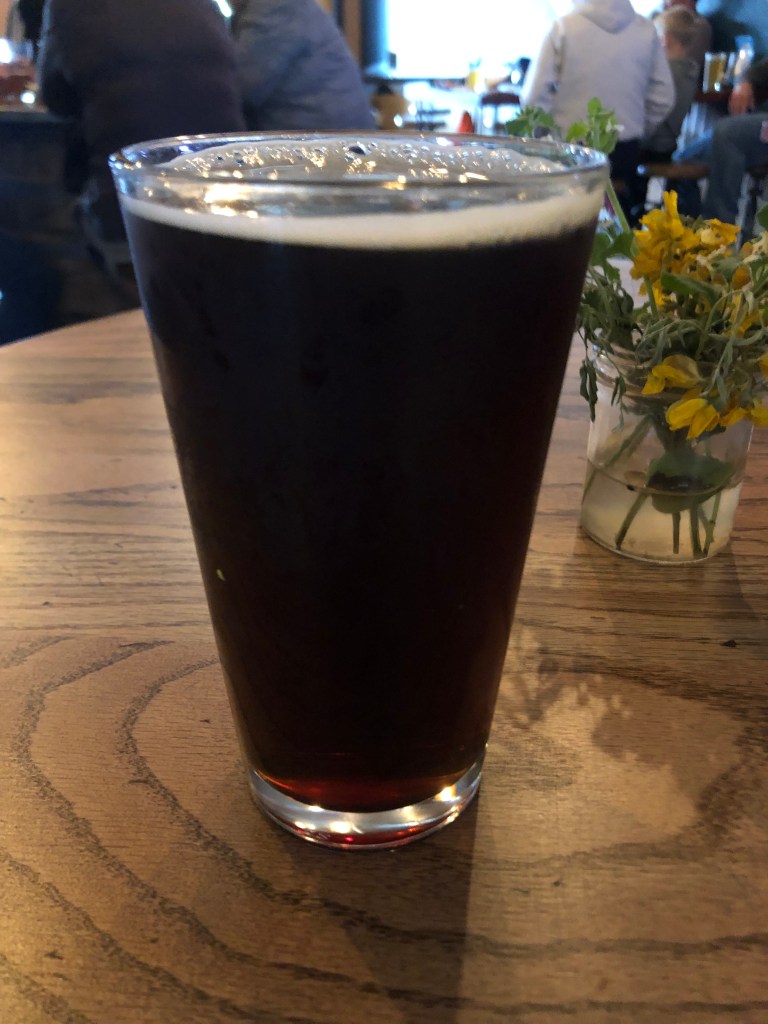
Not exactly a kilt-lifter.

Scotch ale is a difficult beer to do right. You really need to get your hands on some good peated malt, so that the resulting drink evokes Scotch whisk(e)y. The other key characteristics of a good Scotch ale (in my humble opinion) are a malty-sweet backbone and a boozy ABV. Sadly, this beer had none of these characteristics. (The ABV clocked in at 6 percent.) That said, and in contrast with last night’s beer, this Scotch ale got better the more sips I took. I’m thinking that the first sips were disappointing because they didn’t match my expectations for a Scotch ale. But with further sips, I was able to appreciate it for what it was: Essentially, a good brown ale. Judged by that standard, this was flavorful, suitably hopped, and pleasantly fresh and, dare I say, bright. I give it a 2.5 as a Scotch ale, but 4.0 as a brown ale.

BONUS: DISTILLERY SIGHTED IN HAVRE

After dinner I was driving to my hotel when I spotted the Crawford Distillery. It’s an awesome place: they hand-craft their own whiskies, vodkas, and rums. It’s not the kind of place I’d expect to find in a small Montana town along the Hi-Line; the attention to quality, enthusiastic atmosphere, and craft cocktails would seem more common in a place like San Diego. So I wasn’t surprised when I learned that the owners (Alyssa and Neil Crawford) are transplants from San Diego. Alyssa’s mom also helps out behind the bar and offers humorous, Shirley Booth-like commentary. I felt welcomed and their cocktails were first-rate. Alyssa even burned wood chips to make me a smoked whiskey. You can buy their spirits online. Just sayin’.
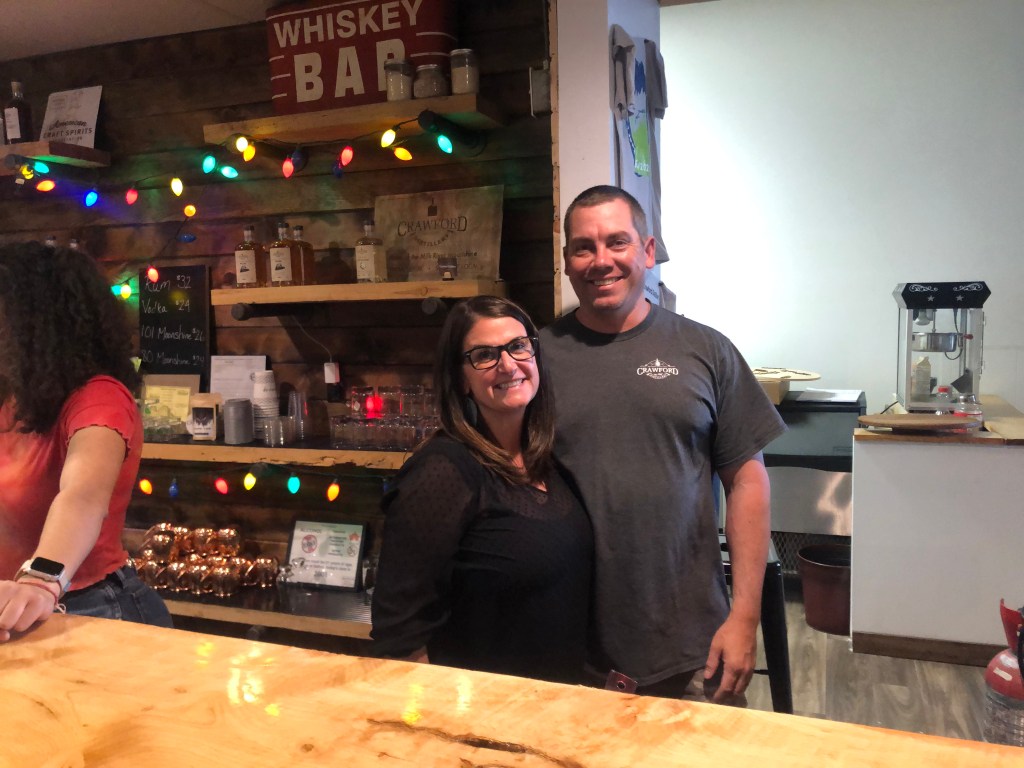
Alyssa and Neil Crawford–owners of my new favorite bar.

Tomorrow I cross the Rockies.
Obelisks · Road trips · trains

For Whom the Bell Tolls

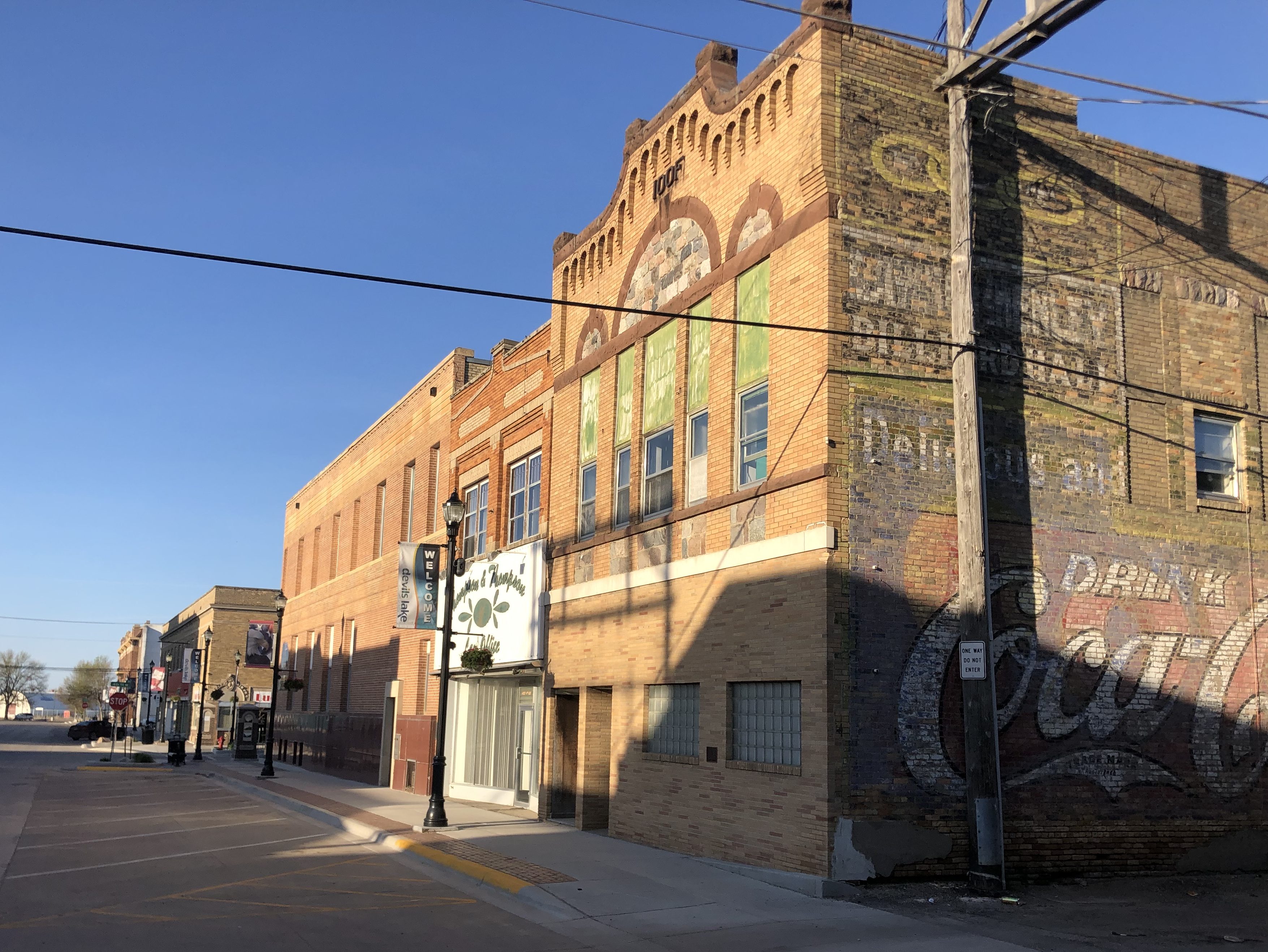
On my way out of Devils Lake I drove through its historic downtown. With numerous buildings dating back to the early 1900s, it feels like you’ve stepped back in time.

Devilishly quaint

The downtown feels viable, with various renovated structures that are occupied by active businesses.

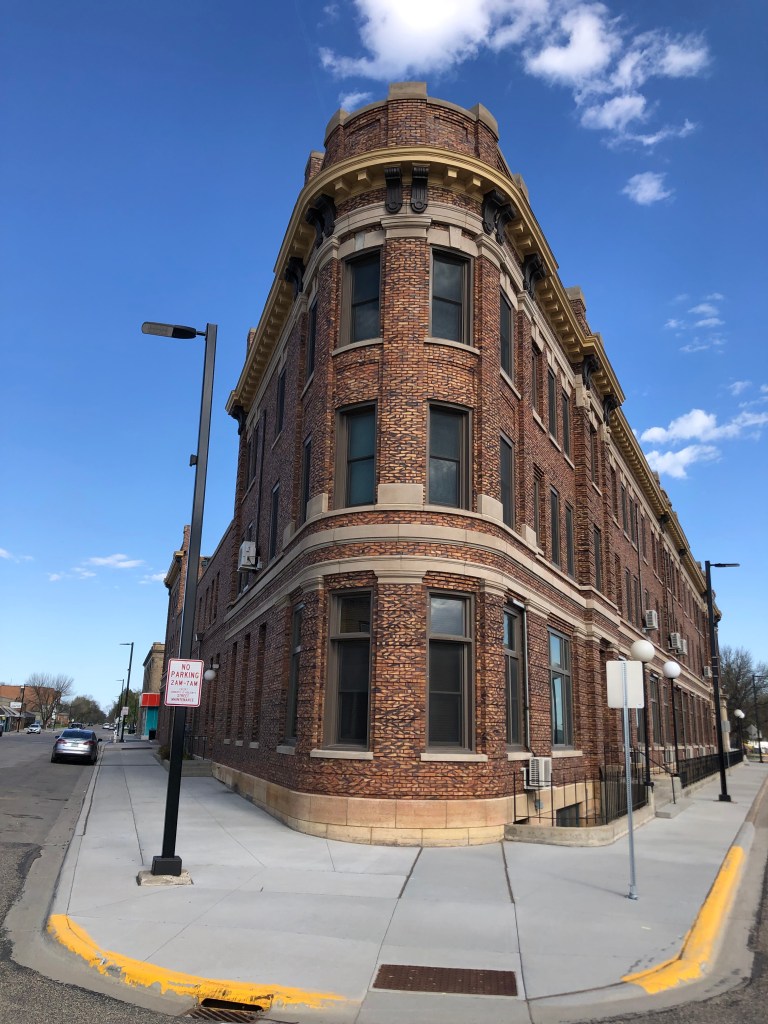
The Great Northern Hotel, originally constructed in 1911, now is home to apartments and business offices.

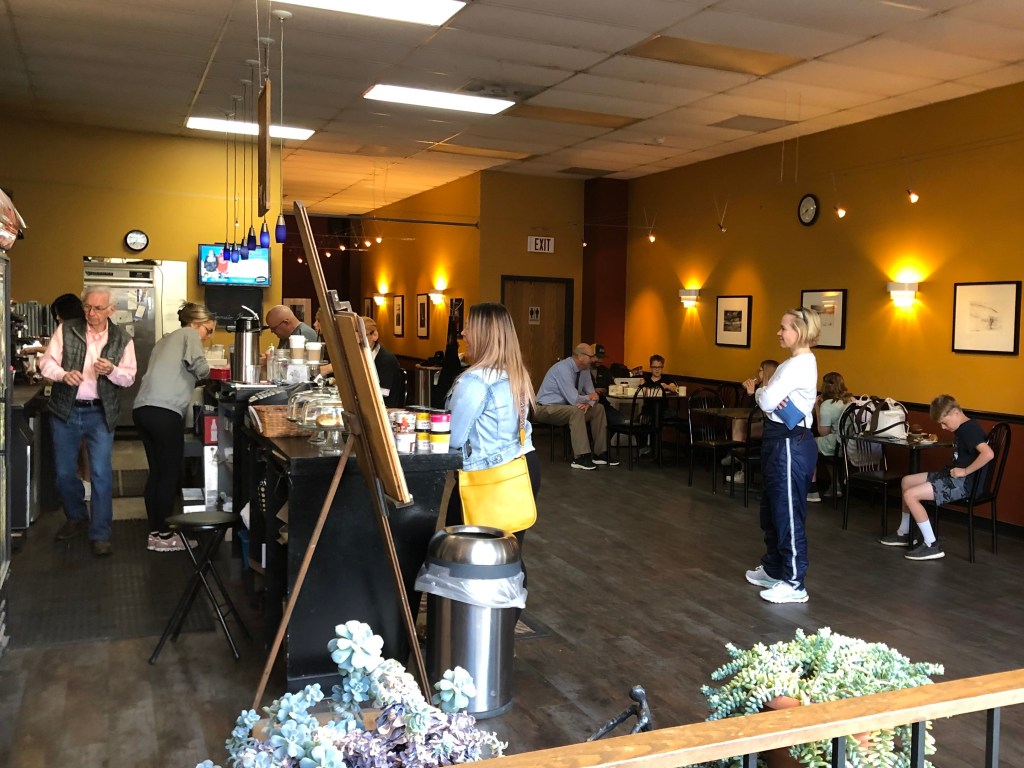
I stopped in at a coffee shop taking up a good chunk of the first floor of the historic Bangs-Wineman building that dates back to 1895. The Liquid Bean seemed unusually hip, vibrant, and busy for a coffee chop in the historic section of a small North Dakota town. It had local artwork on the walls and a steady stream of college students and moms with kids dropped by to get their coffee while on their way to school. (Today was the last day of the school year.) There was also a handful of regulars parked on stools at the coffee bar.

Wouldn’t be out of place in Portland.

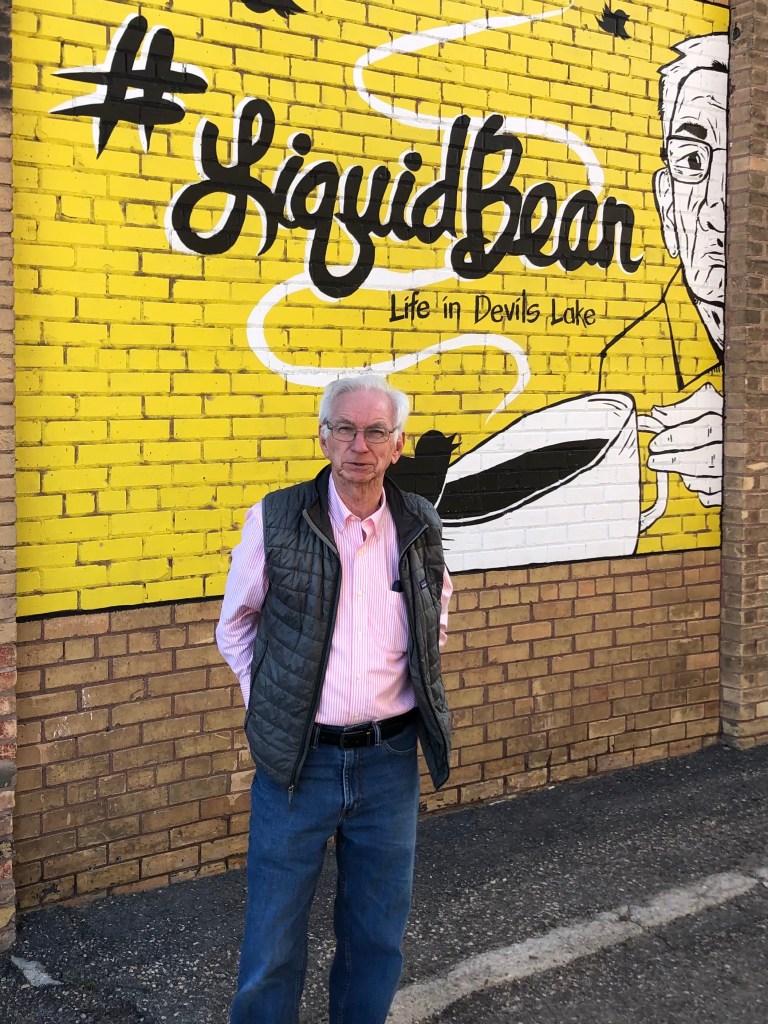
When I sat down with my coffee, the owner came to my table to ask about my road trip. Dan Johnson has owned The Liquid Bean for 28 years, and appears to know all the locals who drop by his establishment. He’s watched the downtown experience something of a renaissance in recent years, and he is an enthusiastic booster for the community. (He also works at the local two-year college.) Dan was familiar with Route 2’s long reach, and commented that the route is popular with bicyclists–though they tend to travel west to east, in order to avoid the prevailing headwinds.

“I’m fifteen years past retirement age, but I keep working to support the cost of owning a business.” –Dan

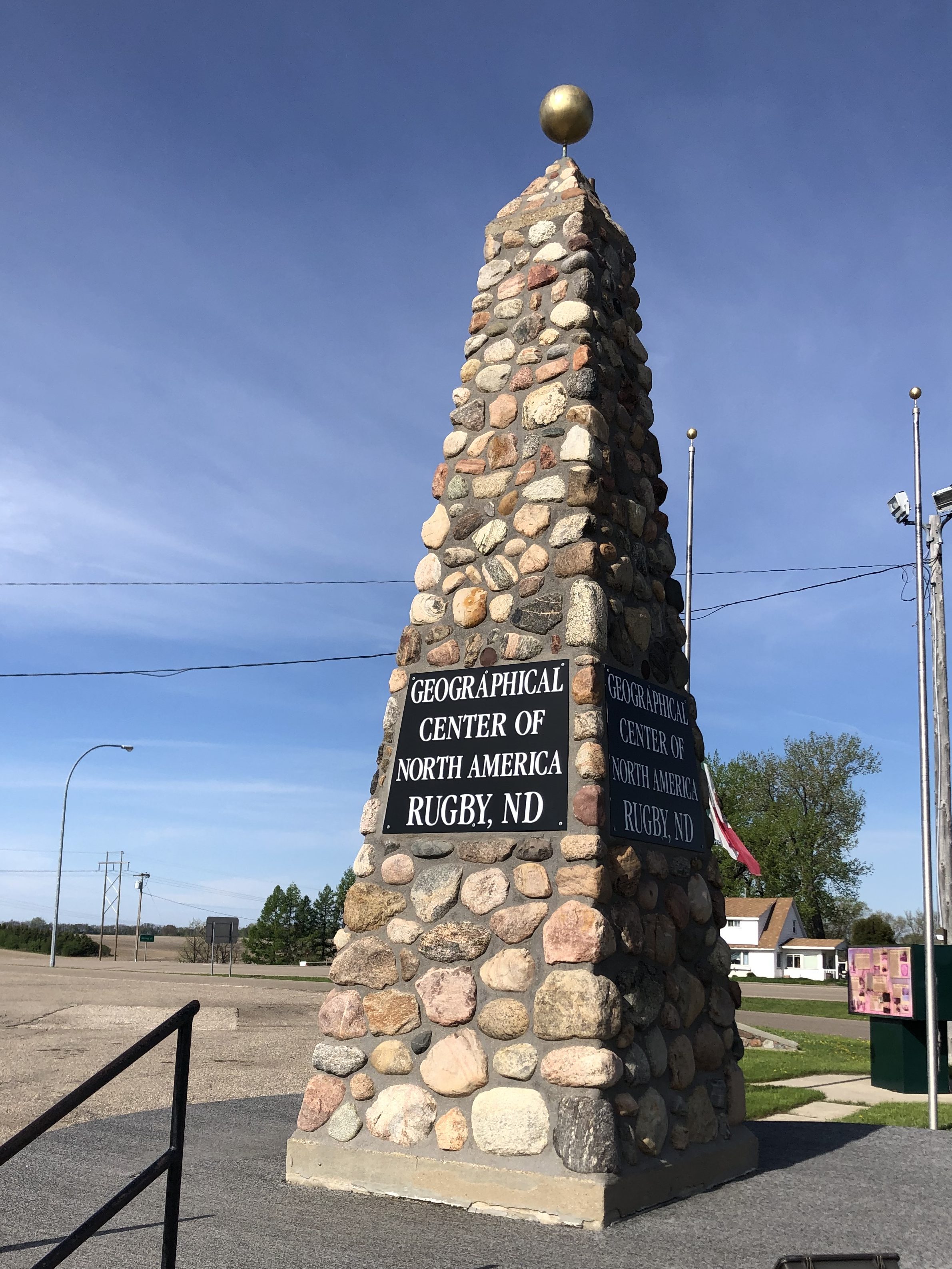
After mingling with the locals a bit longer, I got back out onto the highway. Before long I arrived at the small town of Rugby (pop: 3,000). Rugby claims it’s the geographic center of North America. And they’ve erected an obelisk (!) to commemmorate that claim.

Rugby is central.

Now, calculating the continent’s geographical center was performed in 1931 by the US Geodetic Survey Office–and it’s said that it involved a laughably low-tech process of teetering a cardboard cutout of the continent on a pencil point, and marking where it evenly balanced. That point was Rugby, ND. A year later Rugby’s Boy Scout troop got a bunch of stones, mixed up some cement, and made this obelisk. In 1971 the obelisk got moved somewhat to accommodate the widening of US Route 2, but it’s still in the ballpark.

All roads lead to–or maybe from–Rugby.

However, modern calculations place the actual geographical center over 100 miles away. About a year ago CBS News did a story on the controversy. You should read it through, all the way to the surprise ending…

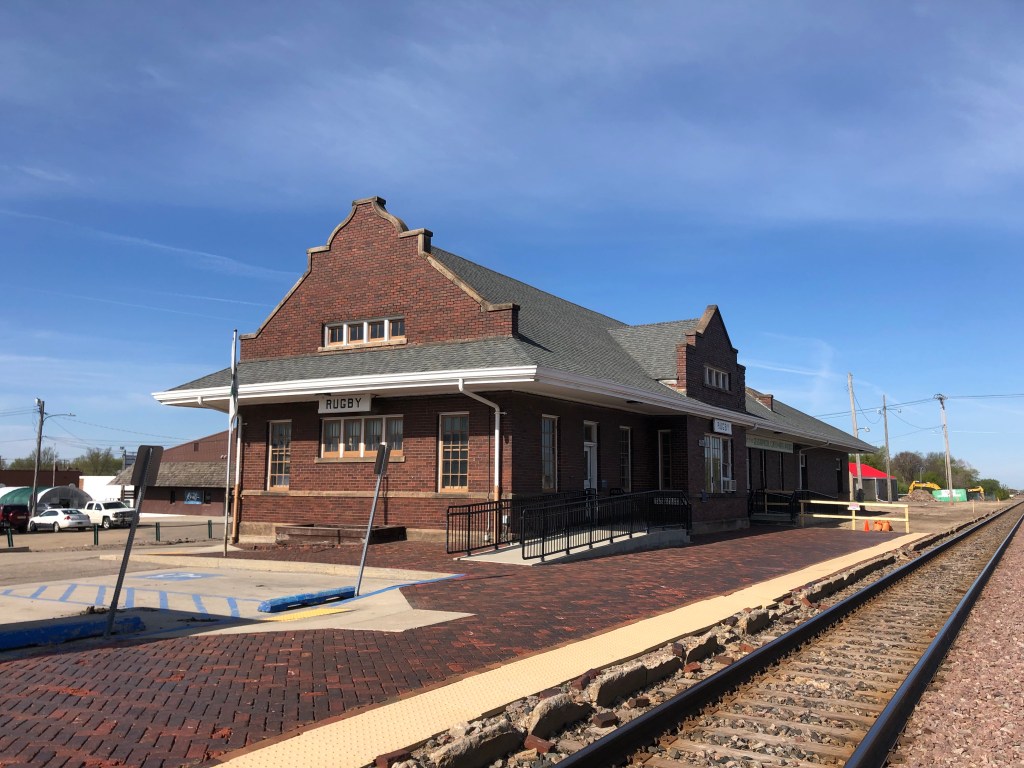
Anyway, geographical center aside, my main objective in Rugby was the railroad depot, which was built in 1907. Unlike most of the other depots I’ve stopped at along this trip, the Rugby depot still receives passenger service.

Rugby Depot
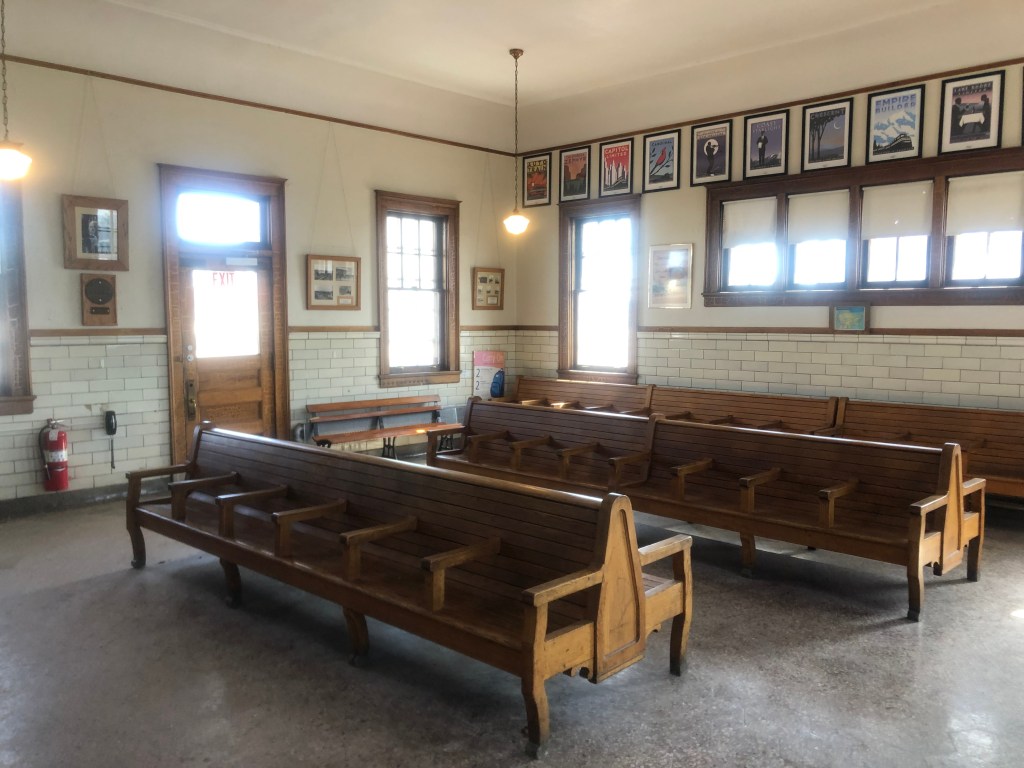
Waiting room, with original benches
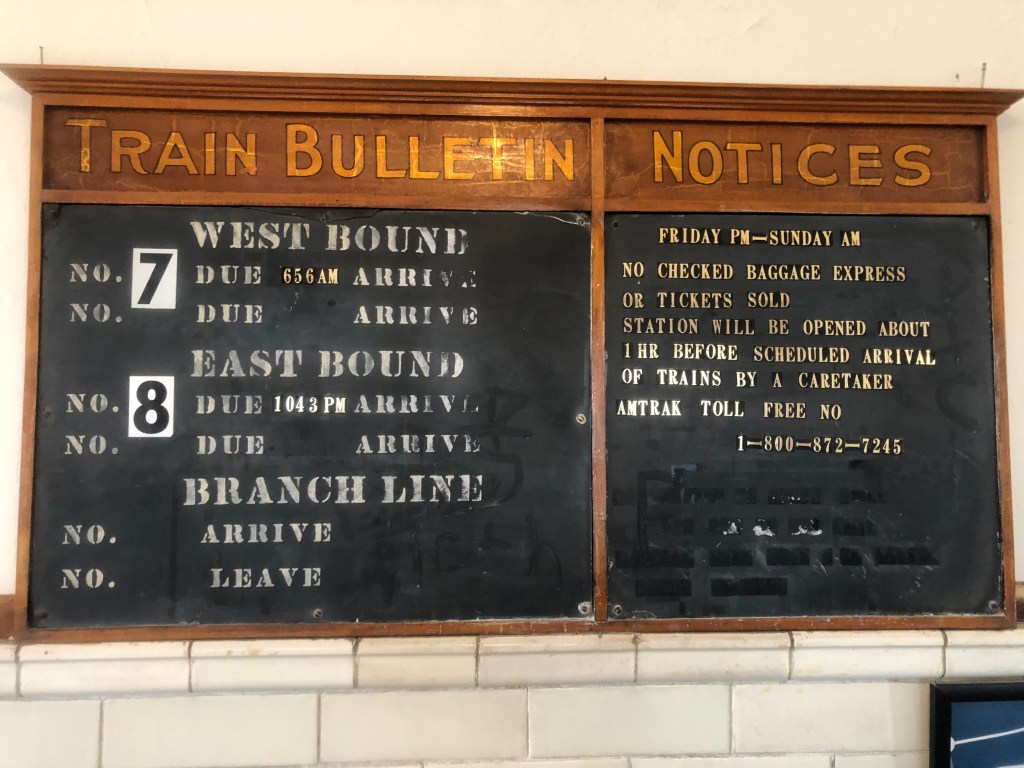
Two passenger trains a day!

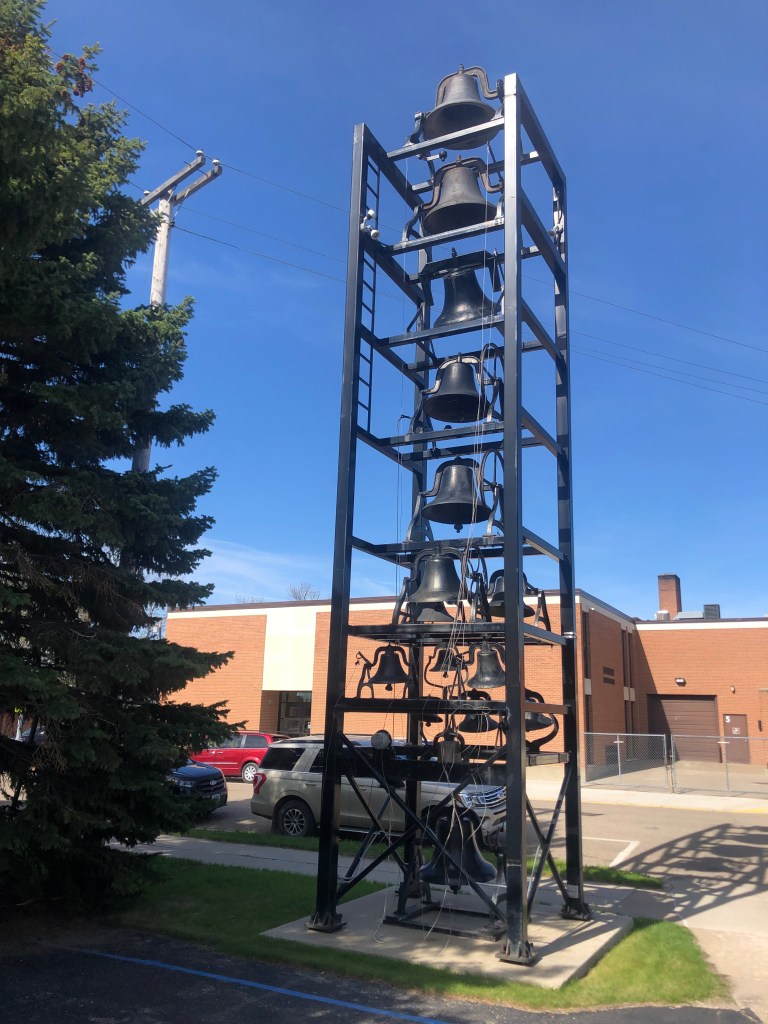
There’s something romantic about an American midwestern railroad depot. Just look at that classic architecture and that deco waiting room. And it’s all the more special when it’s still in daily use, rather than behind a museum rope. I soaked up the atmosphere a bit, watched a freight train come through, and then headed back out of town. Along the way a large bell tower caught my eye:

I really wish these had been in Devils Lake; then I could say “Hells Bells.”

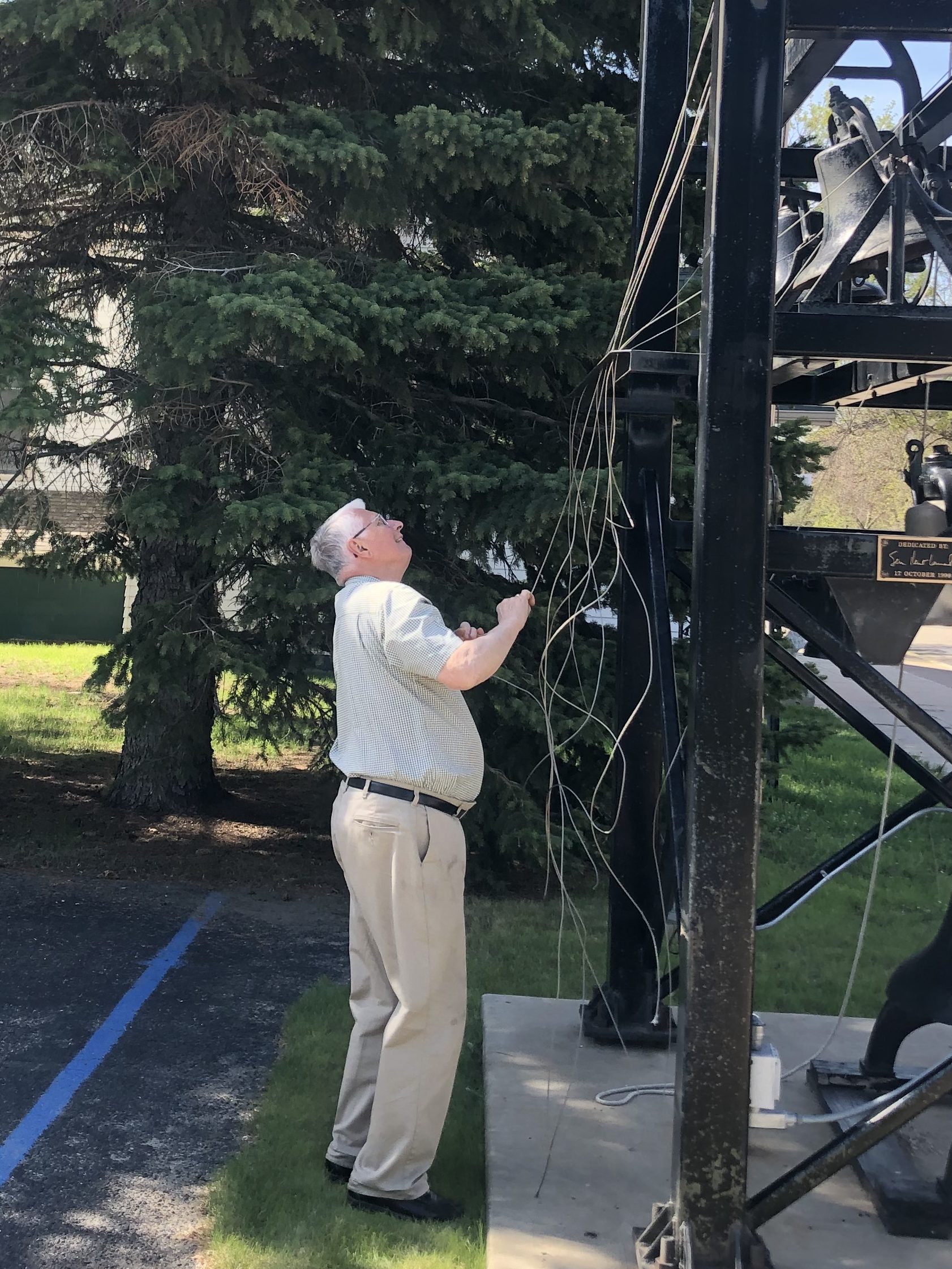
The tower stands in the parking lot of a local mortuary. I saw that there were some pull cords on the bells, and a sudden urge to ring them came over me. I parked and approached the tower, and then noticed a sign requesting that I “ask before ringing.” While I was pondering whom to ask, a middle-aged man drove into the parking lot like he owned the place. As it turned out, he owned the place. Dale Niewoehner (of Niewoehner Funeral Home) is a friendly man, and when I asked him if he knew the story behind the bells he said “Sure. Which story do you want?” He’s been collecting bells since he was a kid, and eventually he mounted the biggest ones into this tower in 1999. Among the 15 bells in the tower are church bells, school bells, fire bells, and railroad locomotive bells. He gave me a small booklet describing all the bells.

Dale rings the bells.

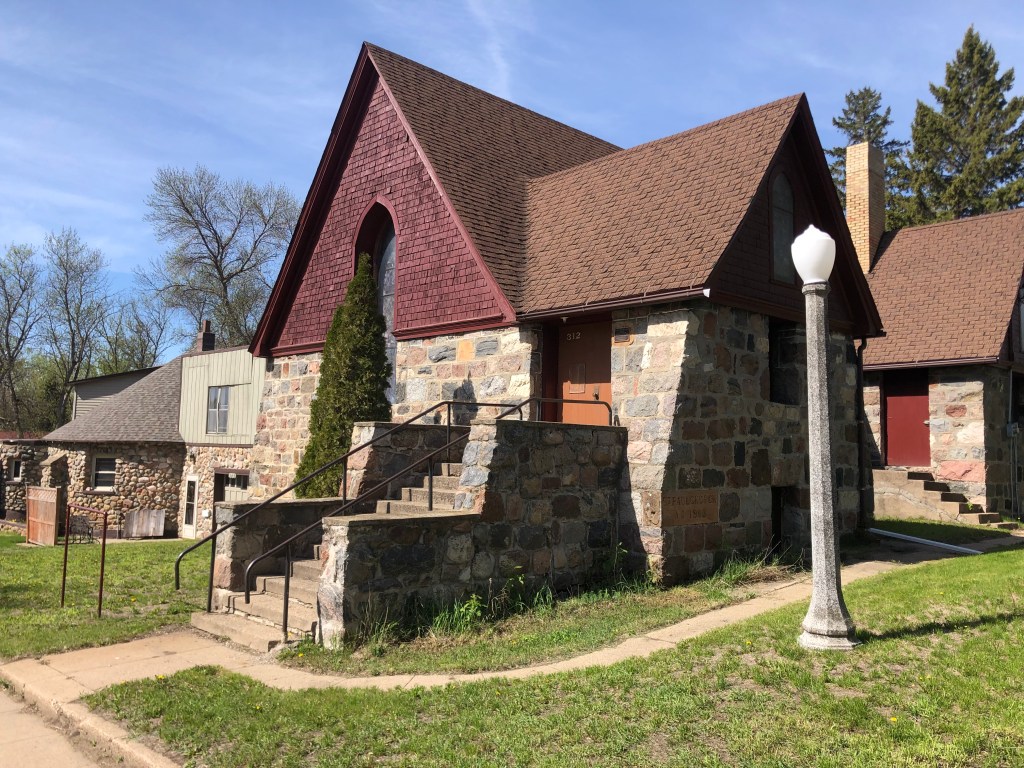
We chatted for awhile about the town. Dale is Rugby’s unofficial historian, and has been involved in a number of preservation efforts (including the mortuary building itself, which dates back to the turn of the last century). And then he mentioned that he and his wife had purchased an old Episcopal church just down the block. I was stunned; in two days, I’ve encountered two different couples who have purchased deconsecrated Episcopal churches! Is this a thing??

St. Paul Episcopal Church in Rugby. Built in 1903, and now owned by the Niewoehners

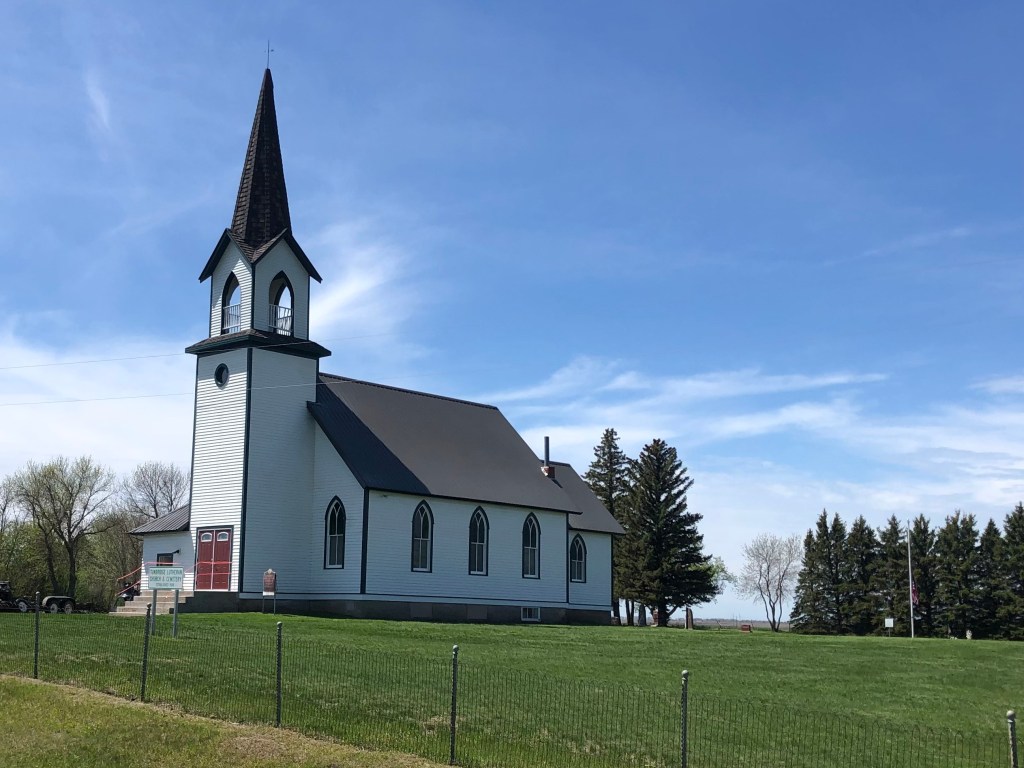
Finally I got back on the road, following the now-familiar US Route 2 West signs. Then, about 10 miles after leaving Rugby, I spotted a tall, proud whitewashed church standing alone on the prairie about a mile or two to the south. I figured I’d give in to the obvious ecclesiastical turn that this trip is taking, and I turned down a dirt road toward the church.

Tunbridge Luteheran Church, pretty as a picture.

The church grounds were being prepared for a dedication ceremony planned for tomorrow. Chairs and barbecues were being set up, the lawn was being mowed, signs were being put up. I introduced myself to the guy who seemed to be in charge, and learned that Tunbridge Lutheran Church was essentially being re-opened to the community after sitting vacant since 1988. Jason, who’s my age, grew up in the community and his family is very closely connected with the church. His great-grandfather is even buried in the churchyard.

God’s Handyman.

It turns out that Jason has spearheaded the effort to restore the 1914 building, which involved replacing the roof, repairing the steeple, replacing light fixtures, painting, and other work. Almost all the work is now done, and tomorrow they’ll be holding a church service, with the regional bishop serving communion. There’ll also be some speeches and then food and drink and celebration. Jason feels strongly that the church should be a place for the community to come together and support one another. It’s a worthy sentiment, and I sense that he’s providing great benefit to his community.

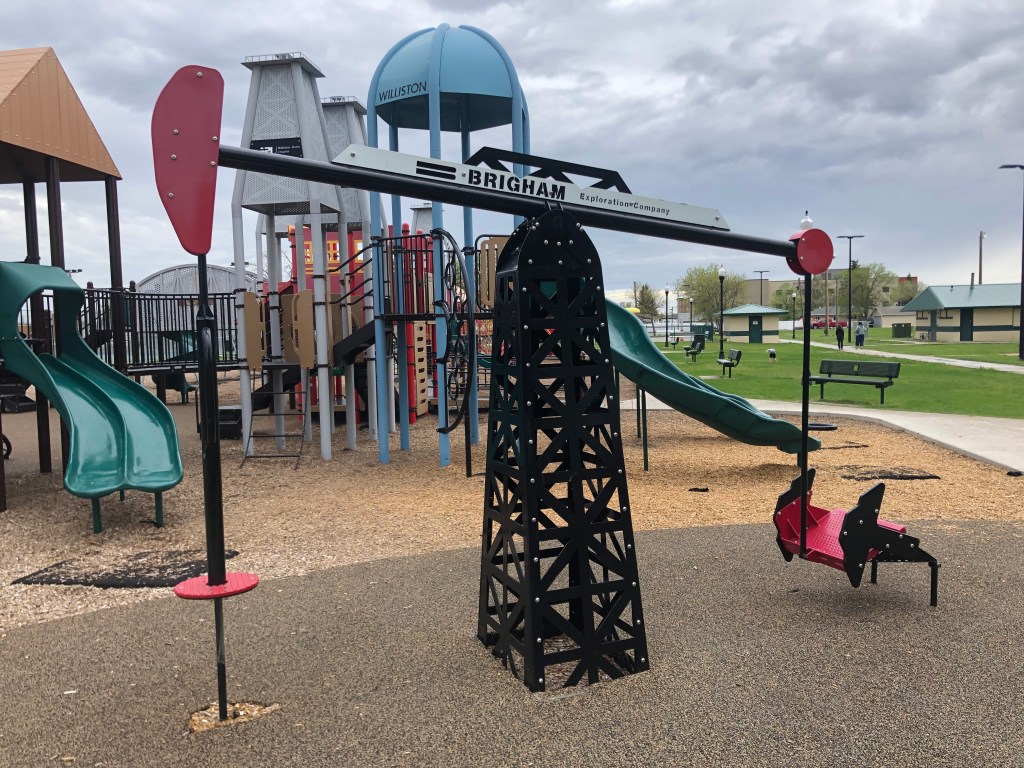
At the end of the day I arrived in Williston, ND (pop: 29,000). By Route 2 standards, this is a big city. I’m now at the western edge of North Dakota, and clearly I’m in oil country. Not only is Route 2 dotted with oil wells, tanks, and gas flares, but even the local playground has an oil rig-shaped see-saw.

Gotta indoctrinate ’em early about the benefits of oil production!

BREW OF THE DAY

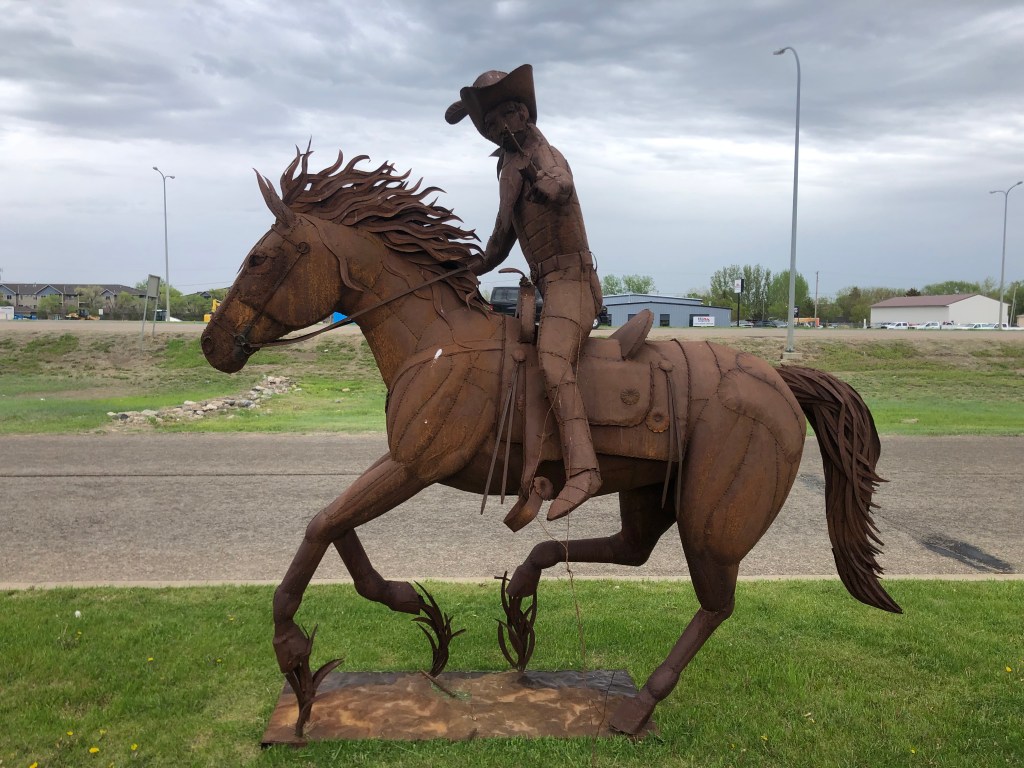
I ate dinner at a place called Doc Holliday’s Roadhouse. It’s one of those slick-looking places, with fancy signage and integrated artwork that suggests it’s part of a corporate chain. But evidently it’s not; it’s just a one-off outfit here in Williston. The lone driveway is lined with life-size, metal buffalo and horse sculptures, which must have cost a pretty penny.

Just one of the dozens of sculptures.

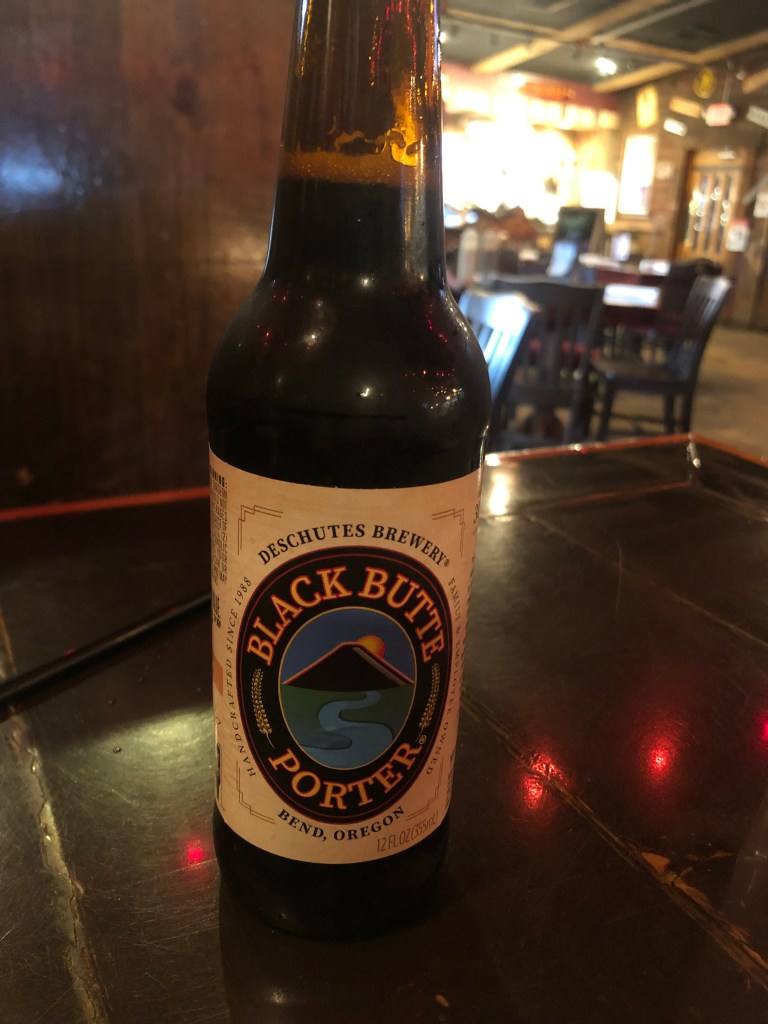
The draft beers weren’t really exciting me, so I ordered a bottle of Black Butte Porter from Deschutes Brewing Company in Bend, Oregon. For a decade or so in the 1990s we used to go on vacation in Bend every summer, and I’ve been to the brewery a number of times. Black Butte Porter (BBP) had been my go-to beer. But it’s been awhile, so I figured I’d try one for the BOTD.

Since it’s a road house, I was too embarrassed to ask for a glass.

Porters are a little lighter than stouts, but they both make use of lots of heavily-roasted malt. While there’s no hard and fast rule, I think of porters as a little less malty, a little less chewy, and maybe a bit hoppier than a stout.

Tonight’s BBP had a bit of a burnt taste, but not in a bad way. The mouthfeel was more watery than creamy, but it definitely had some heft. Unfortunately, the BBP got worse as my tastebuds acclimated to it. The flavors are not complex at all, and there’s a little bit of inexplicable Budweiser mustiness on the finish. And at 5.5 percent ABV, this is kind of a wimpy beer. I wondered why this used to be my go-to beer.

Here’s the breakthrough that came to me tonight: There are two kinds of (good) beer in this world: there are the lighter beers, which are good for quenching thirst and cooling you down on a hot day. They’re astringent, hoppy, refreshing. Think IPAs. Second, we have the darker beers. Their purpose is not to refresh, but to comfort. They are the port wine of beers. Malty, heavy, thick. The extreme of this is the imperial stout, and maybe also some barleywines. The imperials are high-gravity beers, sometimes called “big” beers, that are bold and not subtle at all. Often they are served in “tulip” glasses, which further advances the comparison to port.

The problem with BBP (and perhaps most porters) is that it falls between the light/refreshing and dark/comforting categories. It’s not at all a lighter beer, but it also pulls its punches on the key dimensions of a high-gravity dark beer. I suppose that a porter is an IPA drinker’s stout. As I’ve aged since those days at Deschutes Brewing Company in Bend, my palate has been worn down to the point where I can’t appreciate nuance. So the porters just don’t work for me anymore. I don’t want to criticize the BBP for not being something that it’s not supposed to be, so rather than give it a low rating, I’ll just say I wish I’d had an imperial stout. With any luck, tomorrow’s BOTD will feature a good one.