When I awoke in Tehachapi this morning it was 37 degrees. By mid-day, though, the temperature was flirting with 60, so most of the day’s ride was pleasant enough. But clearly this is going to be my last trip into the mountains until next spring.
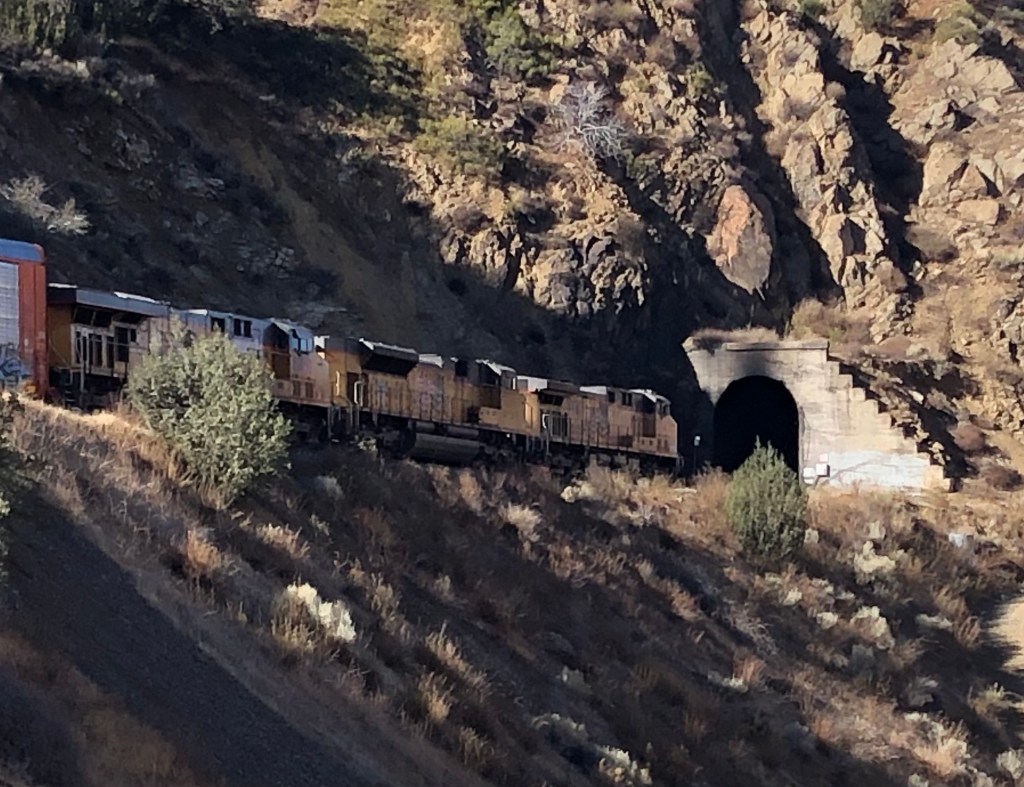
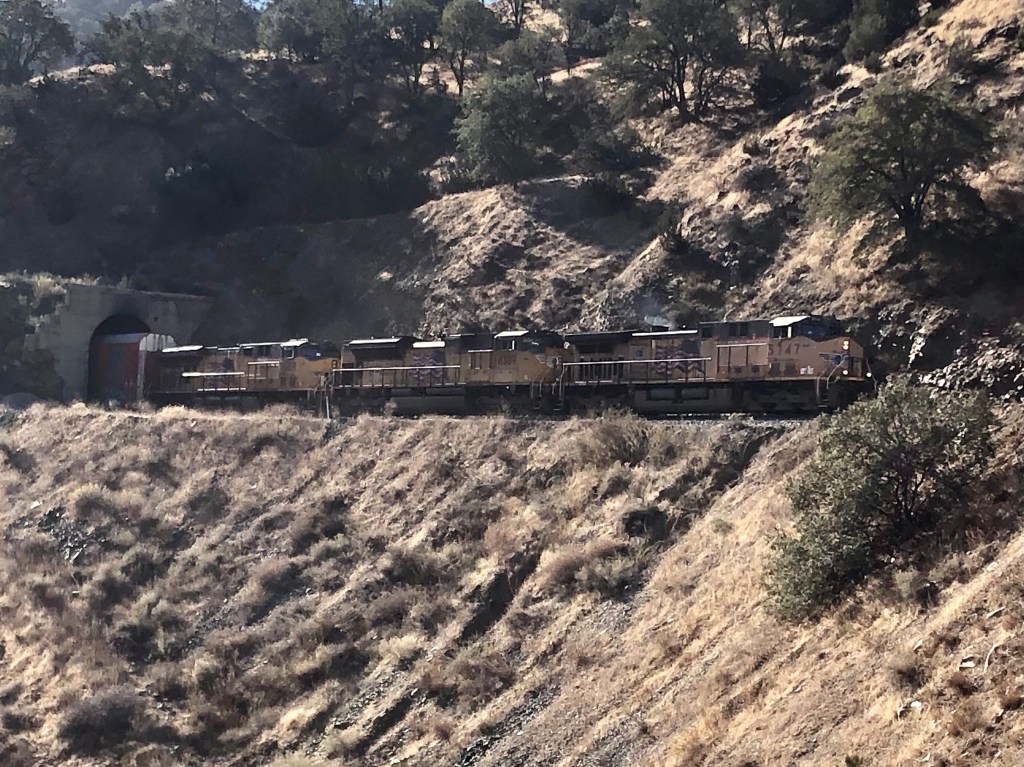
My first order of business (after choking down the microwaved egg and sausage biscuit that the Fairfield Inn calls their “complimentary breakfast) was to check out some of the 18 Southern Pacific tunnels that were bored for the Tehachapi line in the late 1800s. Tunnels are one of my favorite railroad features. Each represents a triumph over physical obstacles, but in a way that is more elegant than brutal. I say that because, viewed from the outside, very little of the mountain is altered. If not for the portal at each end, you wouldn’t know the mountain had been altered at all. And these particular tunnels along the Tehachapi route are especially impressive when you realize that they were dug without major earth moving equipment. It was mainly picks and shovels, wagons pulled by draft animals, and of course TNT.
Heading west out of Tehachapi parallel to the rail line, I caught glimpses of 4 or 5 of these tunnels. Even early in the morning the long trains with multiple locomotives were moving in and out of these tunnels with a carnal symbolism that made me blush.
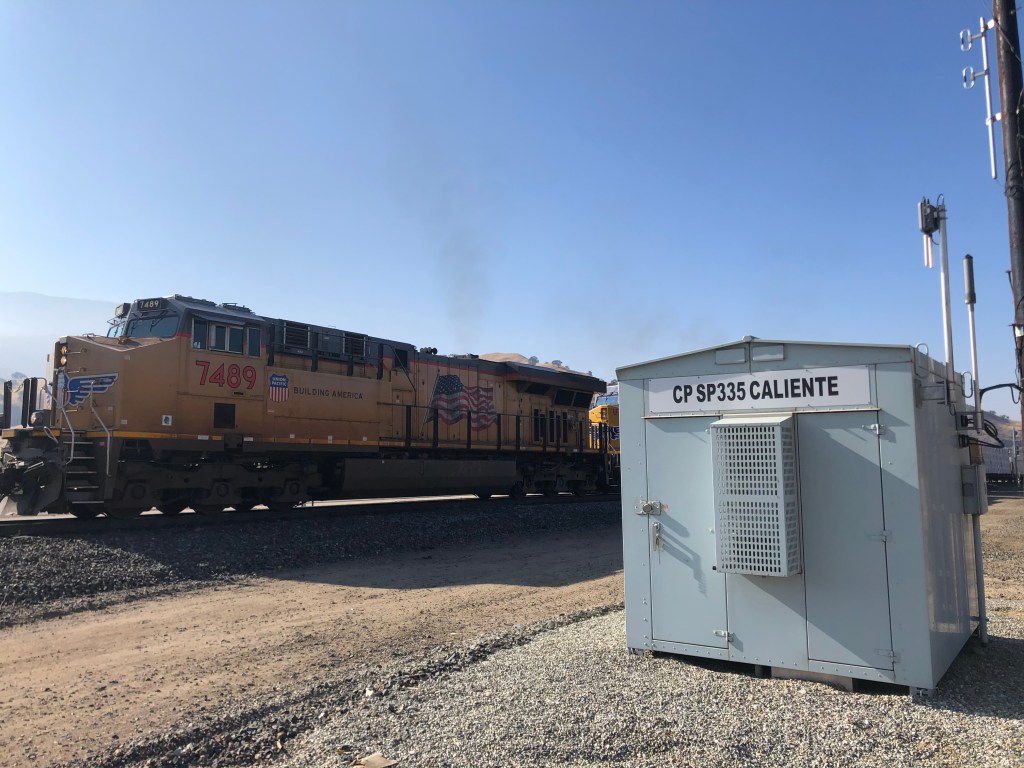
After reaching my limit of double entendres, I began my long, winding ride north through the Sequoia National Forest. The last town (and last railroad infrastructure) I passed before I began my climb into the southern Sierra Nevada was the town of Caliente. Like the city of Tehachapi, Caliente owes its existence to the Southern Pacific and its Tehachapi Line. In the late 1800s Caliente was a reasonably prosperous town, with plenty of jobs related to the railroad. The town at one time had about 60 buildings, about a third of which were purportedly saloons. Today, Caliente still sees plenty of rail traffic. But most of the buildings, and the population, are gone.
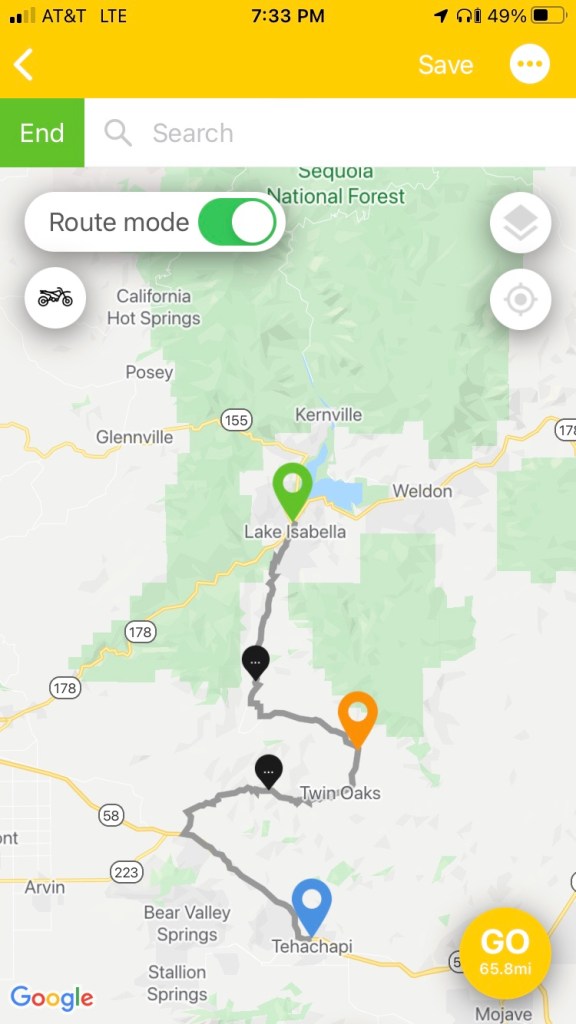
Immediately after leaving Caliente my route narrowed to a thin road twisting up into the mountains. I was headed for Lake Isabella, named after Queen Isabella of Spain. The town of Isabella (no “Lake” yet) was founded near the end of the 19th century, and when the Kern River was dammed in the 1950s the original town site was submerged under the new Lake Isabella reservoir. The town was re-established on nearby dry land, and renamed Lake Isabella. I’m telling you all that because there’s really nothing else of interest about Lake Isabella. I just chose it as a arbitrary, midway target for today’s travels.
It was a pleasant ride through the forest. Here and there were signs of long-past settlements. It seems that gold rushes over the years had brought miners to these mountains, just as 49ers flocked to the Mother Lode country up north.
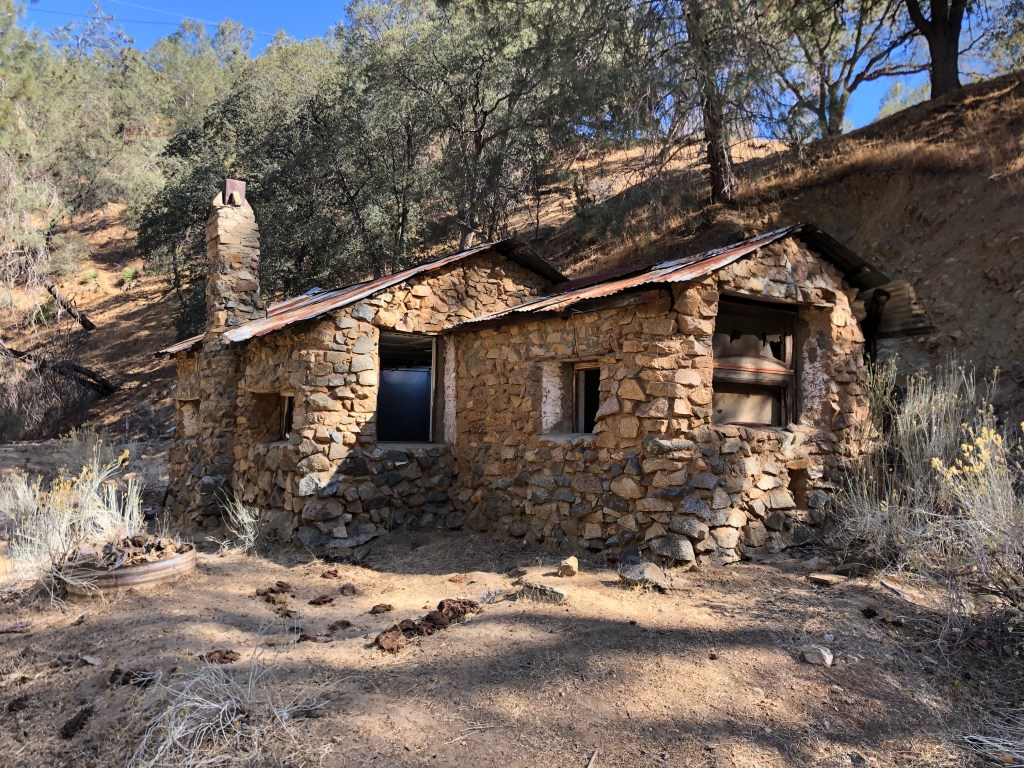
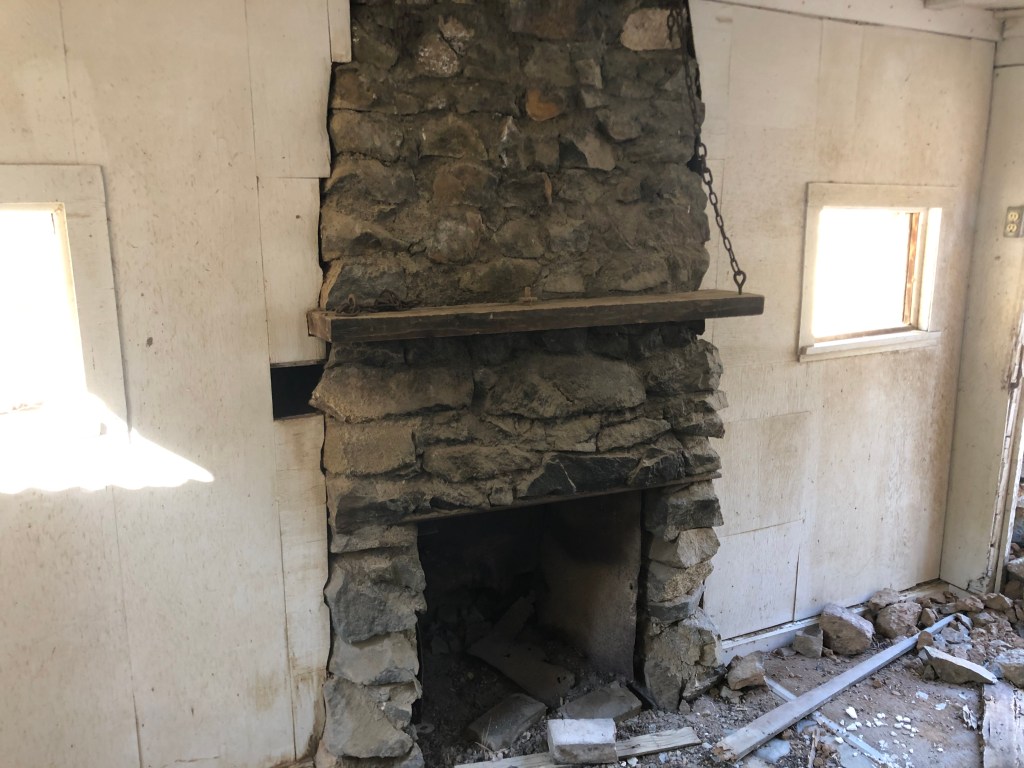
I didn’t see many other people along my route, but I did come across this arachnid. Can anyone identify it?
Along the route I noticed a rustic-looking sign with the words “Cowboy Memorial” hanging over a broad corral gate. Flanking the gate were figures of a cowboy and a cowgirl. I stopped to investigate.
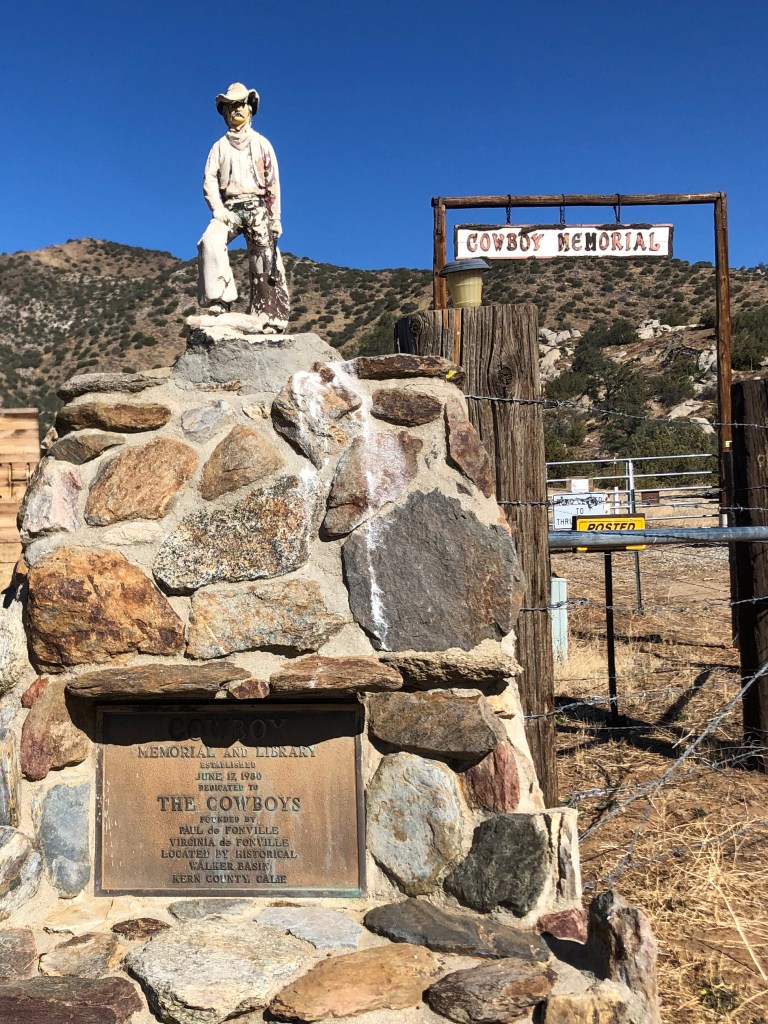
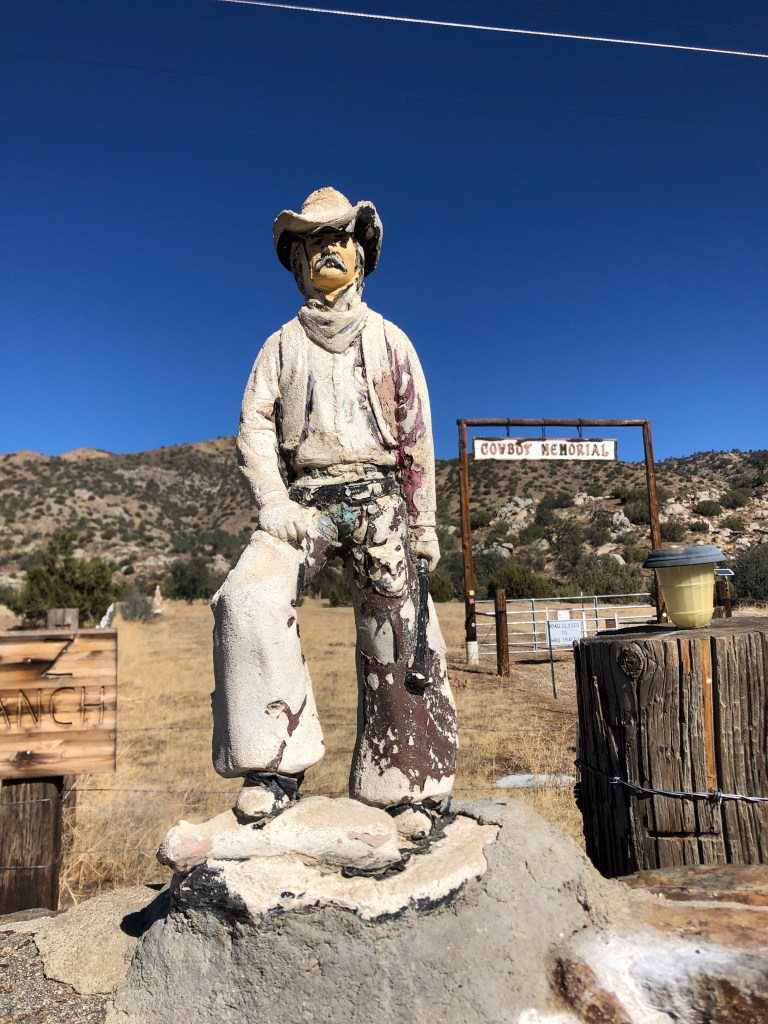
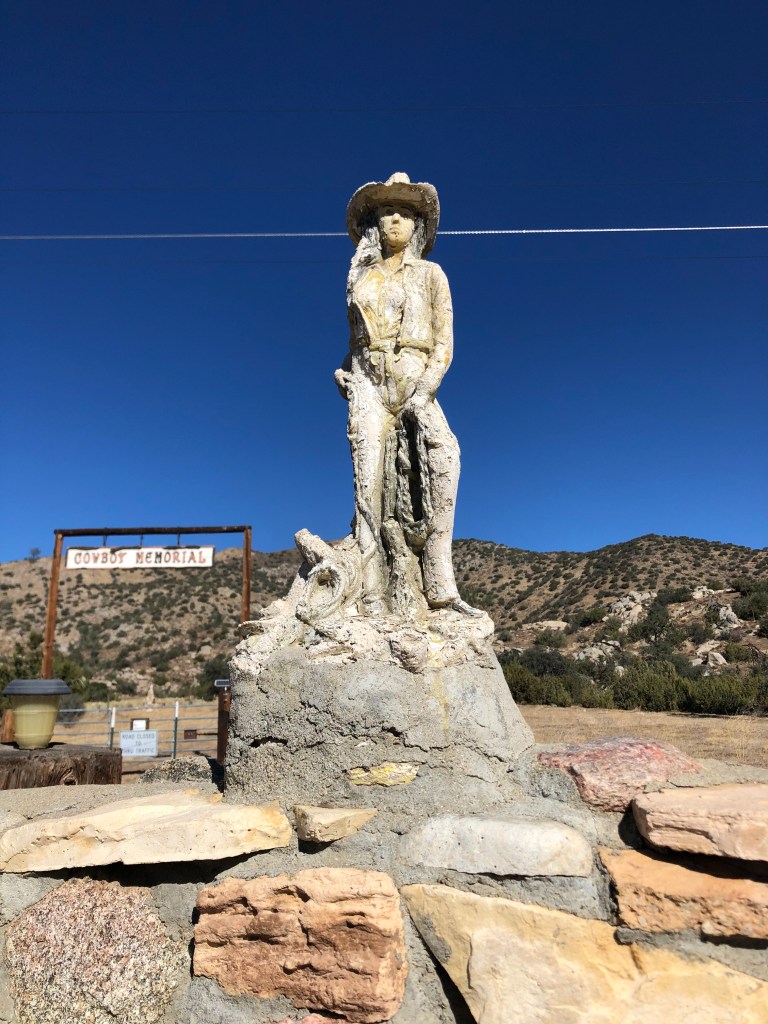
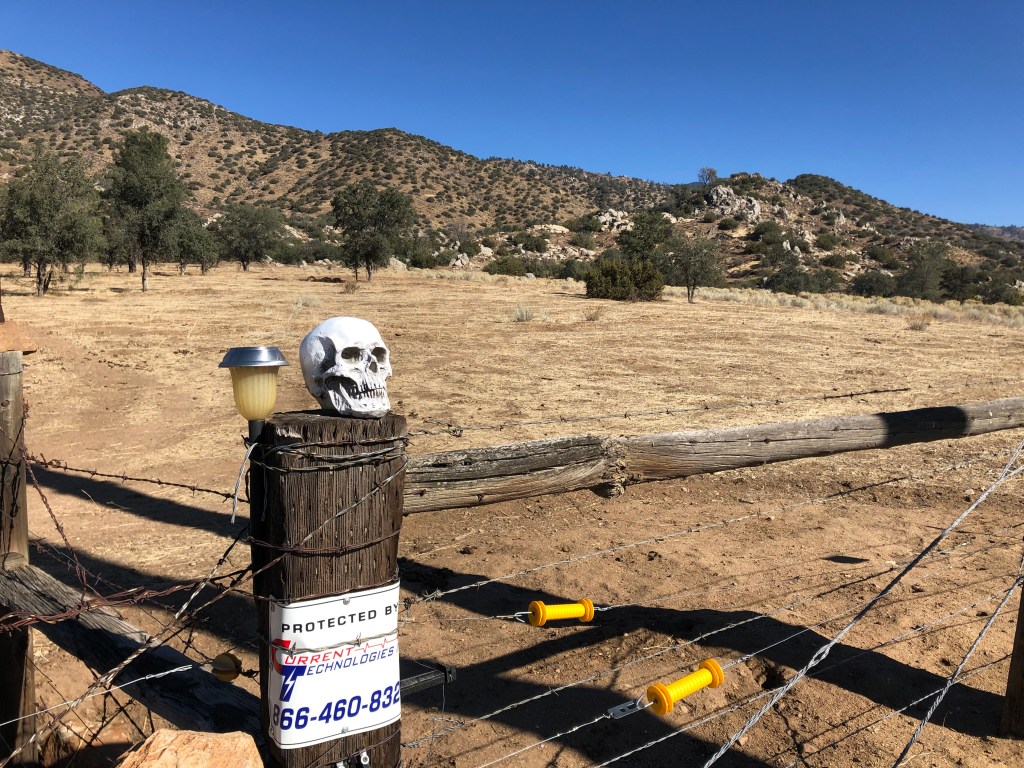
It turns out this “memorial and library” was the brainchild of one Paul de Fonville. I couldn’t find out much about him, other than he’s a former cowboy and rodeo champion. The museum and library was supposed to provide accurate information about real cowboys, as opposed to the Hollywood versions. I’m told the complex was always a little quirky and disorganized, but now it appears to be shut down entirely. I don’t know whether de Fonville even still walks this earth, but given that he was born in 1923, I doubt it. I did consider jumping the gate, but posted signs warned me not to. Skulls mounted on the fence posts convinced me that it wouldn’t be a good idea.
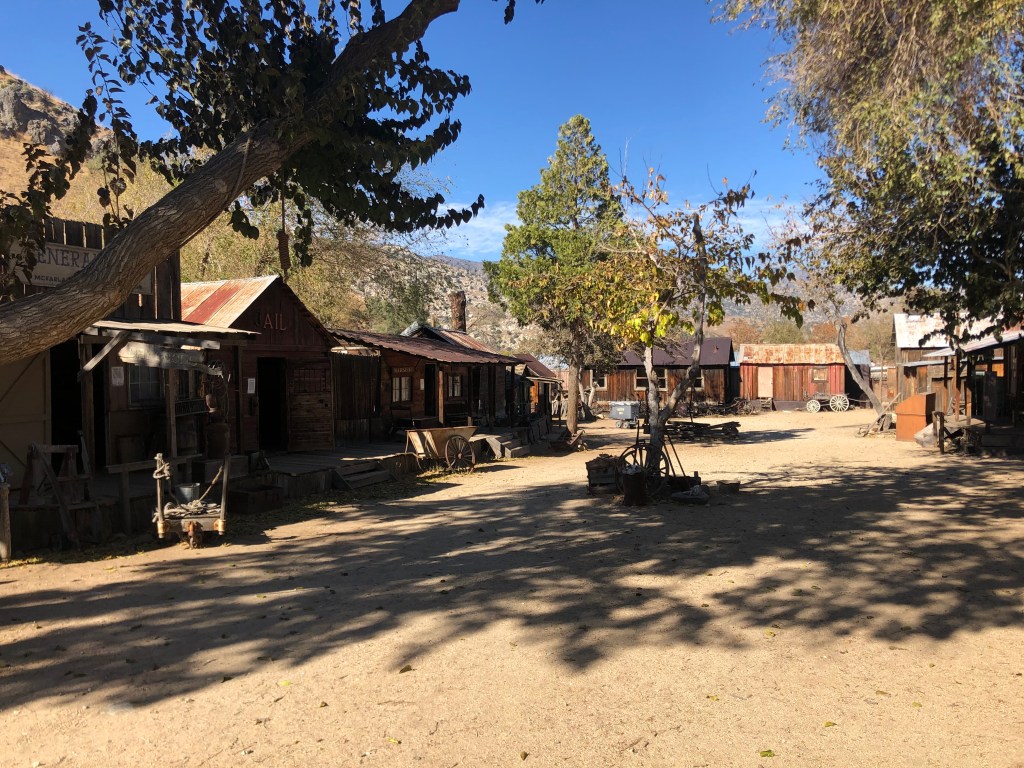
Just before I arrived at Lake Isabella, a cluster of ancient buildings caught me eye on the left. A large plaque memorialized the area as “Silver City Ghost Town.” It seems that in the 1970s a local by the name of Dave Mills decided to rescue a number of historic structures from deteriorating mining towns throughout the Kern Valley. (It was really a very different age, when you could just go in and uproot buildings and take them for yourself!) The buildings came from colorfully-named towns like Whiskey Flat, Hot Springs, Miracle, and old Isabella. Dave re-sited the buildings here in Silver City, and charged people to see ’em. For reasons that aren’t entirely clear, Silver City closed after only a few years. In 1990 it was purchased by a new owner, and it remains open to the public today. So I plunked down my $7.50 and took a stroll around. I think the idea is similar to that of Bodie State Park: To keep the buildings in a state of “arrested decay.” That is, you prevent further deterioration, but you don’t try to fully restore anything. The objective is to have these places looking like that would in a real, uninhabited, ghost town.
There were about 20 buildings altogether, and while the signage was a little wanting (most buildings just had an 8-1/2″x11″ sheet of paper with a few paragraphs of purple prose stapled to the outside), it was a fun way to spend an hour.
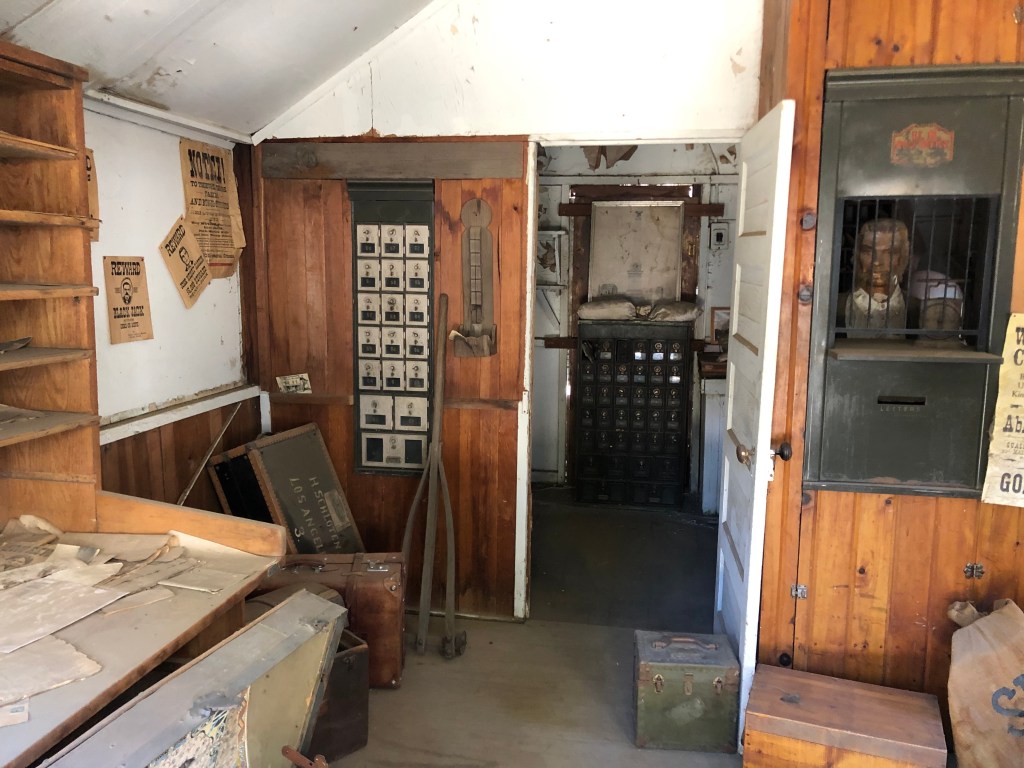
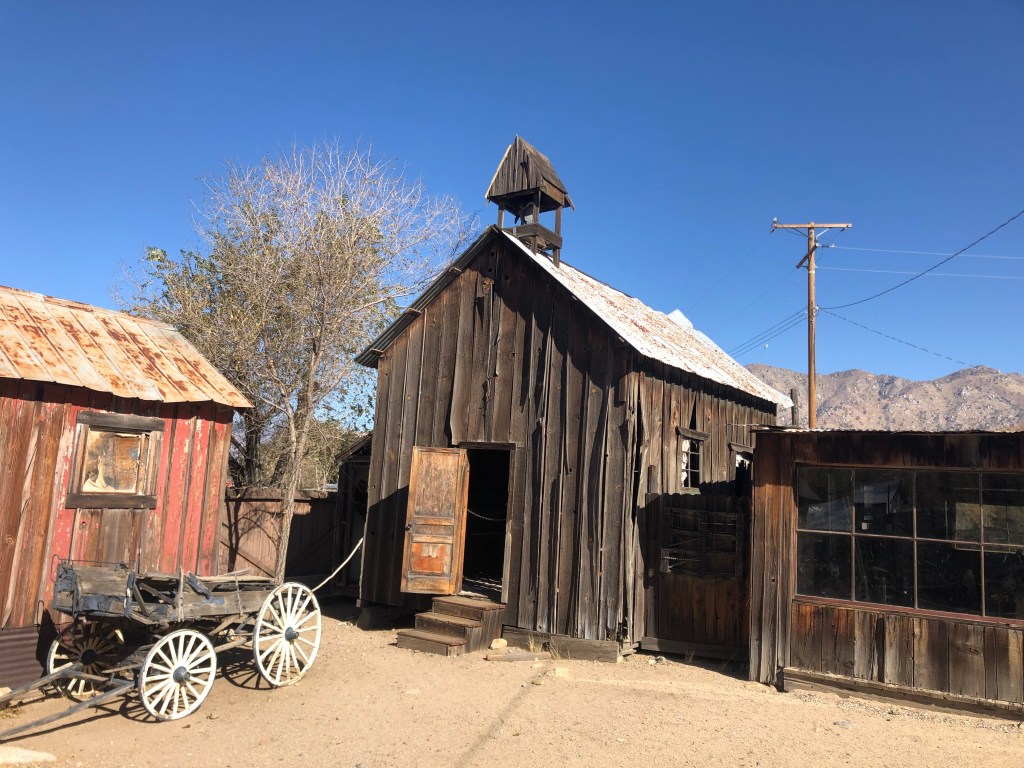
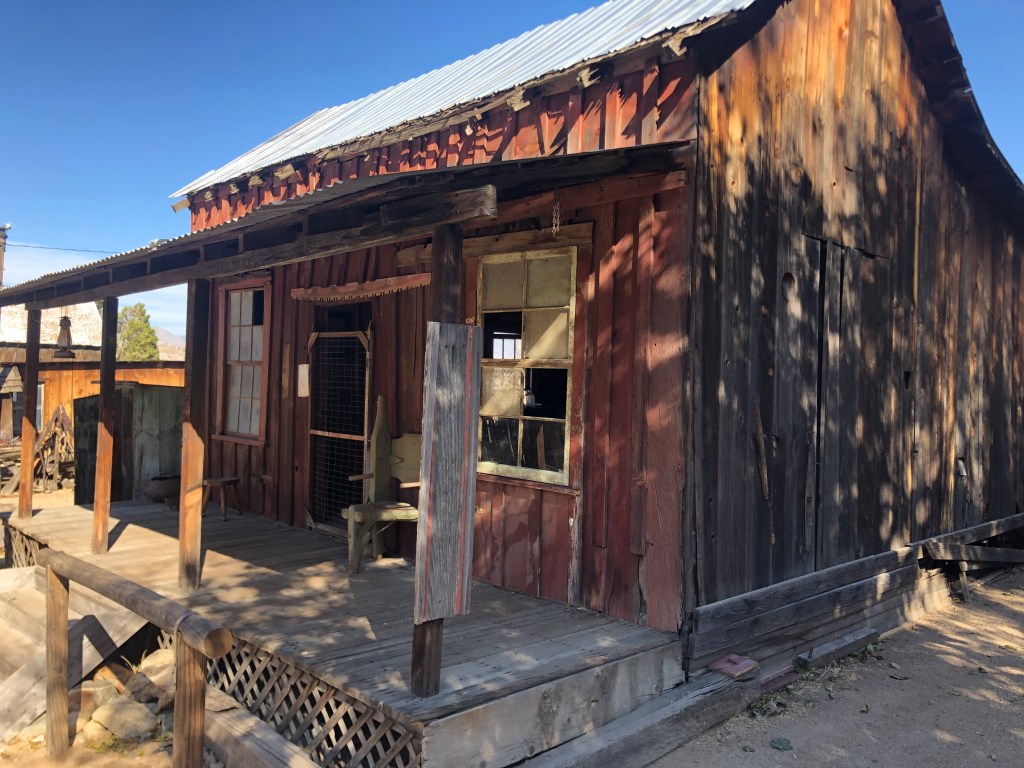
After consuming a BLT in Lake Isabella, I headed northwest through the mountains with the ultimate goal of reaching Porterville for the night. It was simply a beautiful ride.
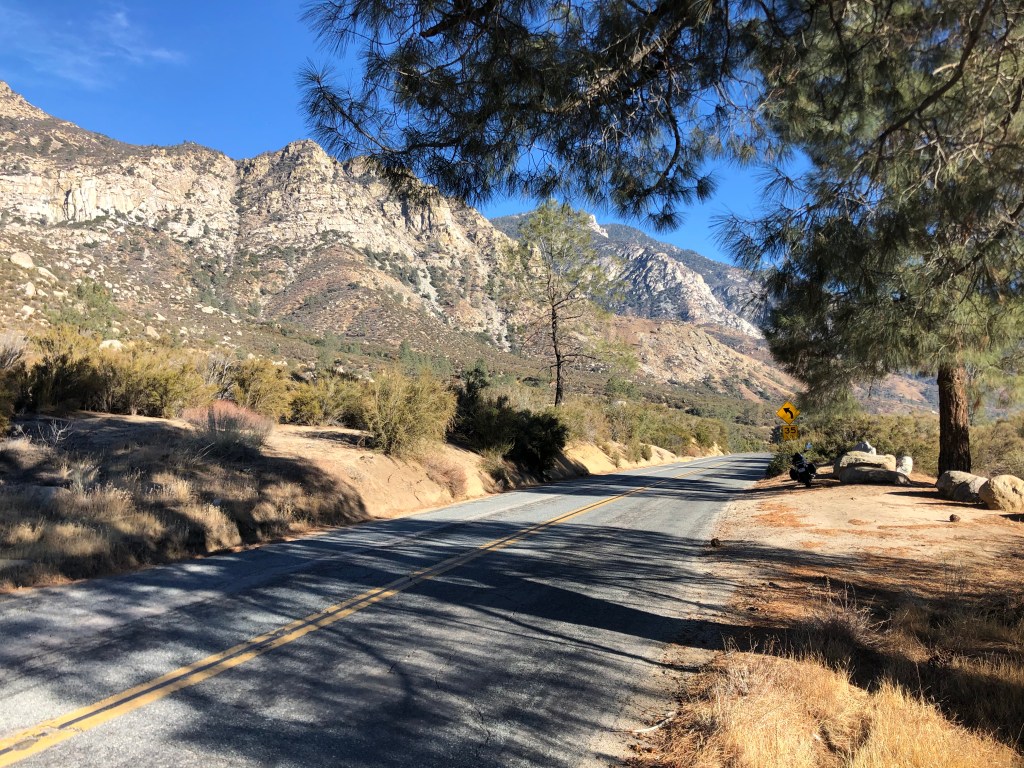
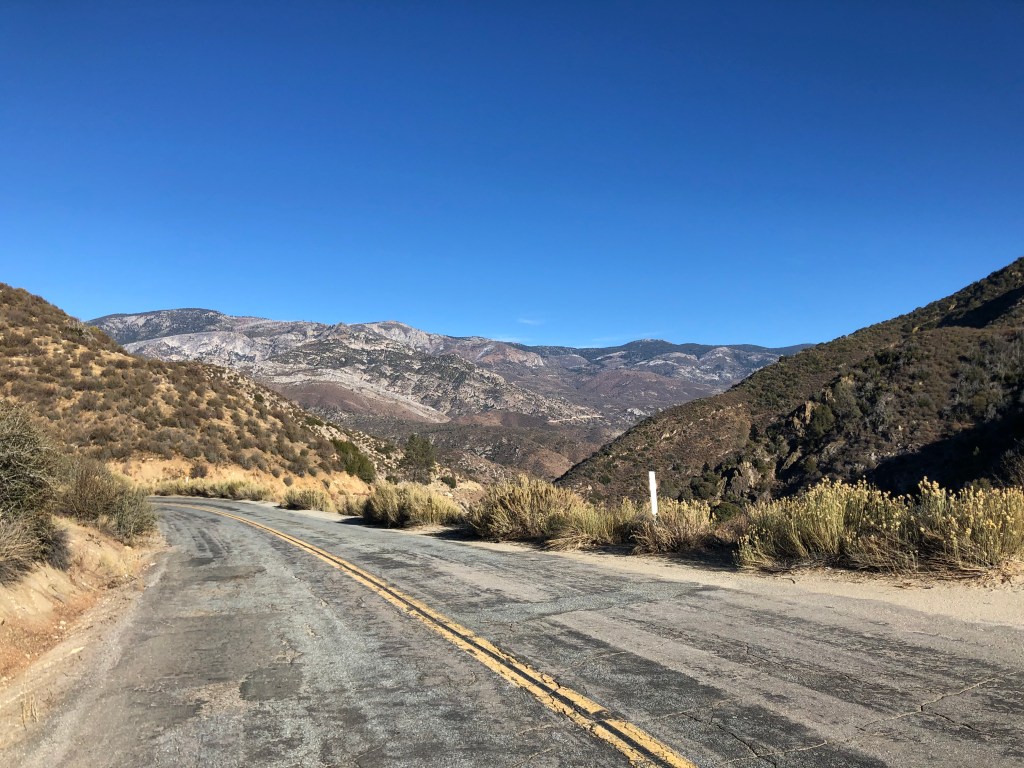
It was one of those afternoons when you feel at peace with the world. The sun is shining, the air is clean, there’s no one else around, you’re just communing with God’s world.
And then.
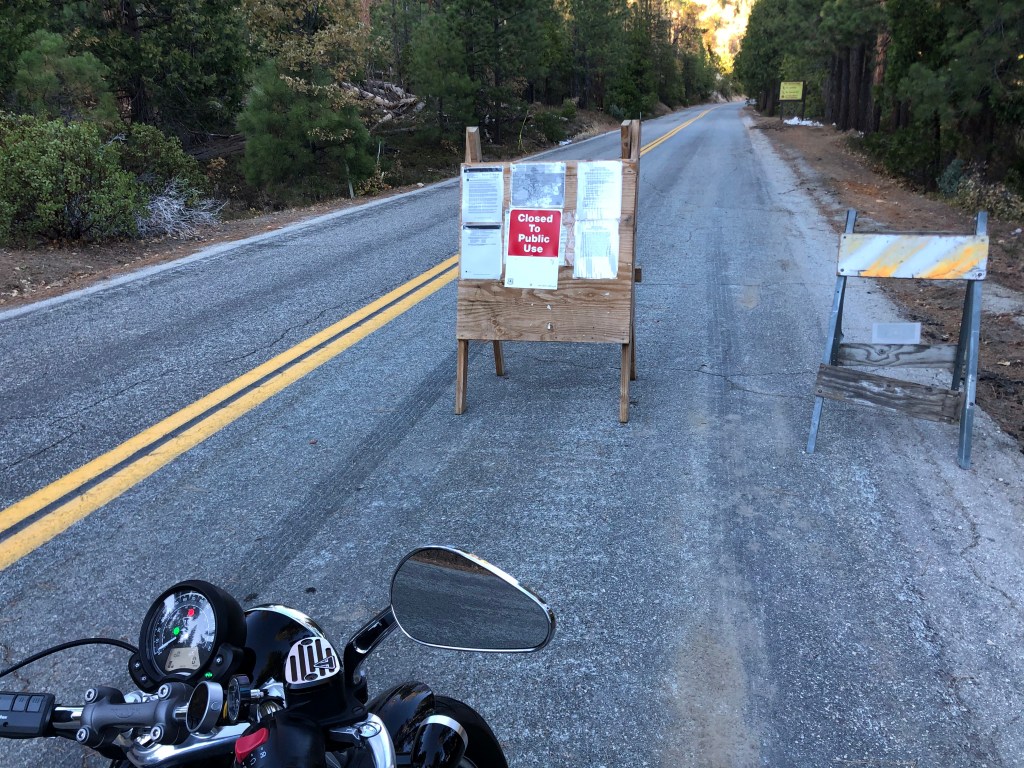
It turns out that lighting started a fire (the “SQF fire”) back in August, which is still burning in the forest and has closed my route to Porterville. I took a detour through a winding, snow-scattered pass and eventually made it to Porterville by nightfall. Near the end of this detour I managed to find one more Southern Pacific-related site: Dutch Corners/ the town of Ducor. Here’s the text from a plaque: “In 1885 four German homesteaders, Chris Joos, Ben Spuhler, Fred Schmidt, Gotlet Utley, sunk a common water well where the corners of their land met. This junction became Dutch Corners. In 1888 the east side line of the Southern Pacific railroad was built and the name was condensed to Ducor.
Tomorrow I’m traveling south on State Route 43.
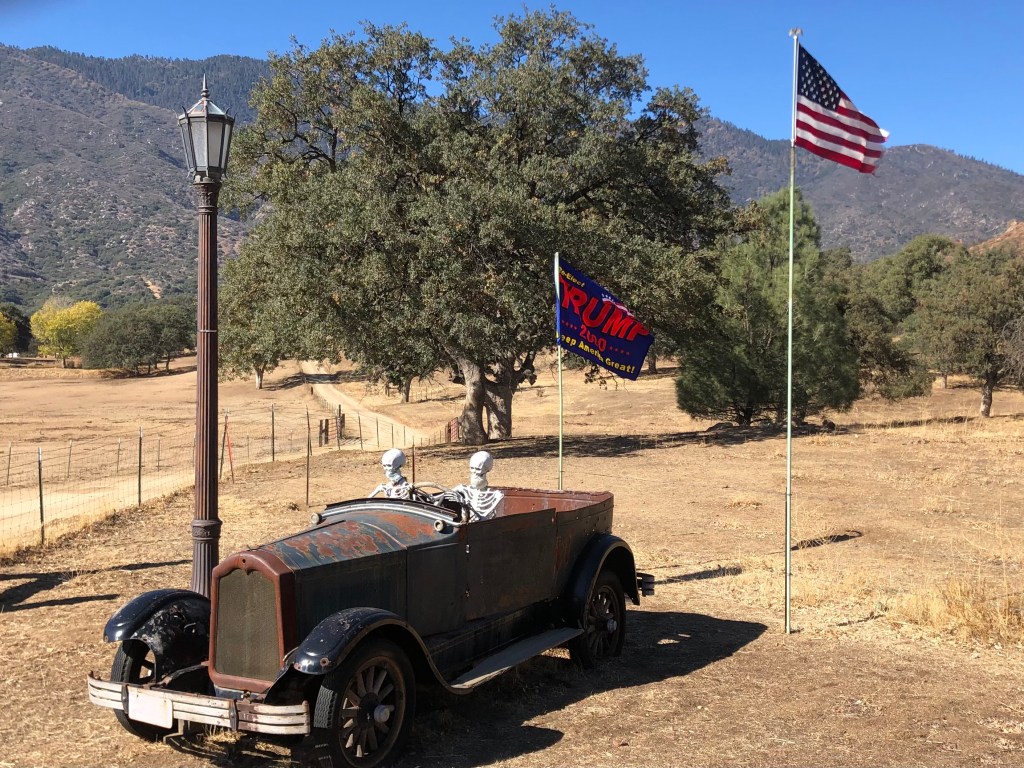
CAPTION CONTEST!
It turns out Porterville doesn’t have a single decent brew pub. So in lieu of a Brew of the Day, I offer this photo from today’s travels near the town of Loraine. Please submit caption ideas. The mind reels.

 Chasing Phantoms