Funny thing happened when I was checking out of my No-tell Motel this morning. I found the door to the office locked, and so I tried ringing the doorbell at the night window. No one ever materialized, and a hand-lettered sign in the window indicated there were “NO ROOMS!” It’s as though the proprietor suddenly got fed up with all these pesky customers showing up, so he vamoosed. Either that, or I was checked in last night by a ghost.
Speaking of ghosts, on my way out of Porterville I passed an old, ornate, and somewhat creepy Victorian mansion complete with gables, dormers, and a mansard roof. The place, which at some point seems to have become a museum, was locked up tight and surrounded by a gothic wrought-iron fence. Surely a place like this has a story.
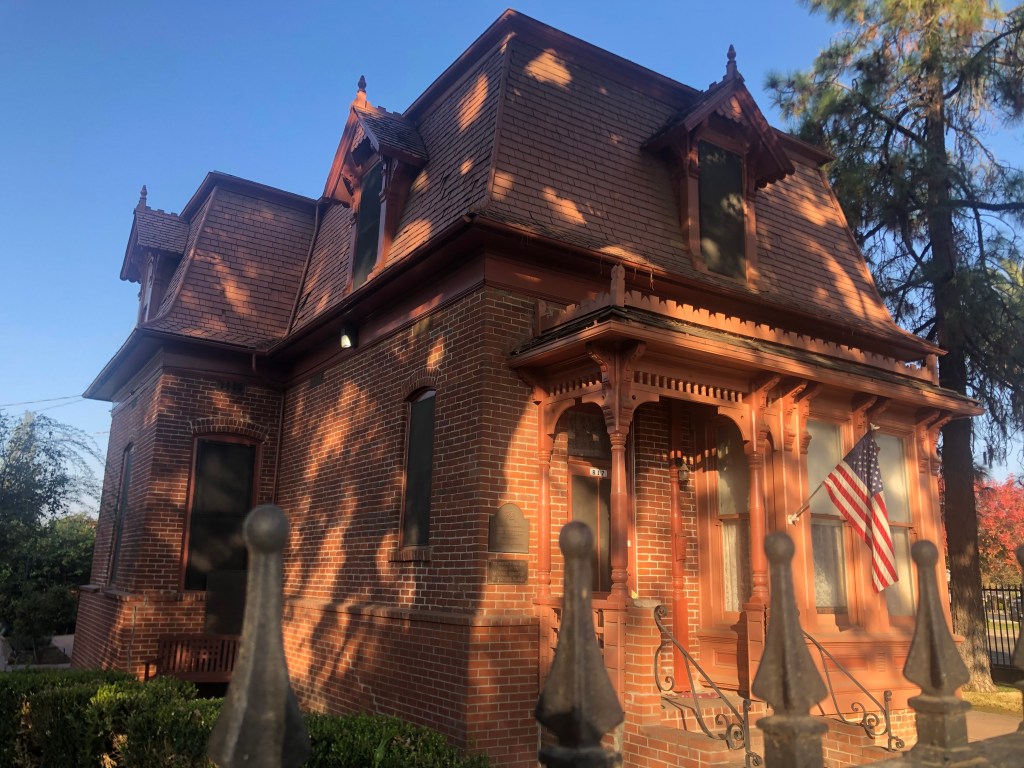
It turns out the place was built in 1891 as the home of a Bohemian immigrant couple. (I don’t mean they were unemployed pot-smokers who composed folk tunes for sitars; I mean they immigrated from the Kingdom of Bohemia.) And sure enough, the family (named Zalud) suffered a string of tragedies that has led to rumors that the house is haunted. Death was a constant companion: a daughter died of tuberulosis; a son in law was shot to death by a would-be lover, and a son was killed when he was thrown from a horse.
When the last of the Zalud children died (of natural causes, in 1962), the home was donated to the city of Porterville and it became a museum. The house contains the bullet-riddled rocking chair in which the son-in-law was seated when he was shot, as well as the saddle on which the son was seated when he was fatally thrown. Given all this, the Zalud house must be a very tempting venue for any self-respecting ghost. And indeed, paranormal activity at the Zalud house has been chronicled by the “Ghost Adventures” television series.
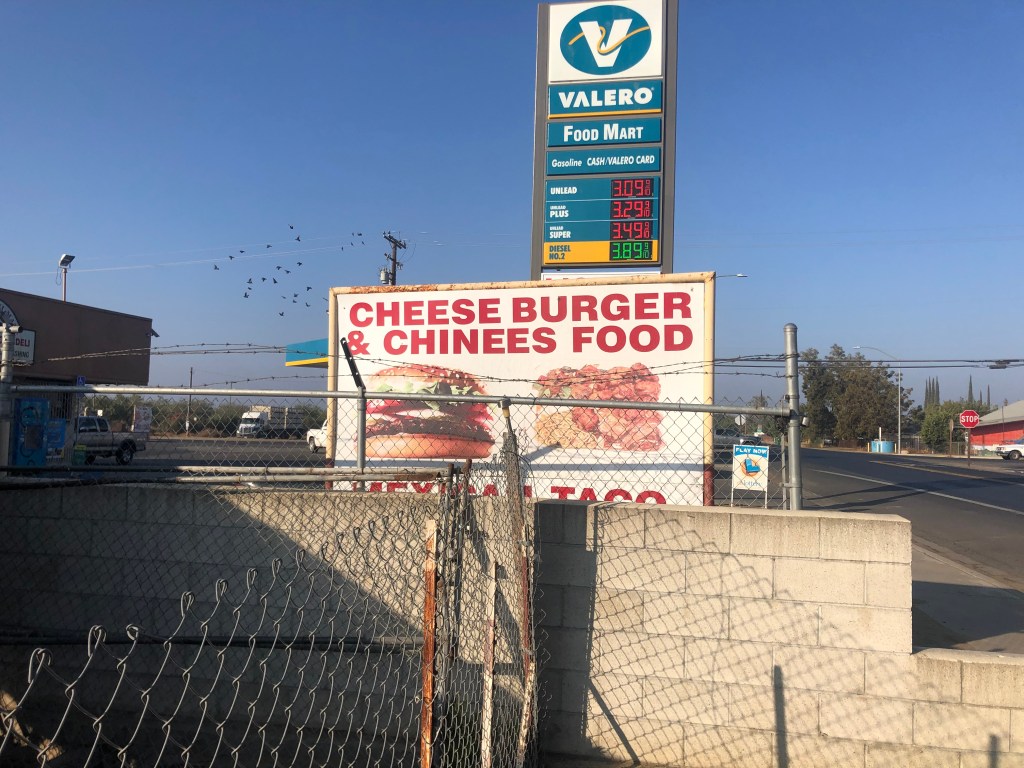
Just before I passed out of Porterville I figured I’d get a bite for breakfast. I encountered this tempting offer:
The centerpiece of today’s ride was CA Route 43, which skirts the eastern Central Valley from a little south of Fresno to a little west of Bakersfield. It’s primarily flat, agricultural land, and a far cry from the winding mountain roads I was taking yesterday. But I’m on a mission to ride all the California routes, and this number came up. Just don’t expect any scenic photos.
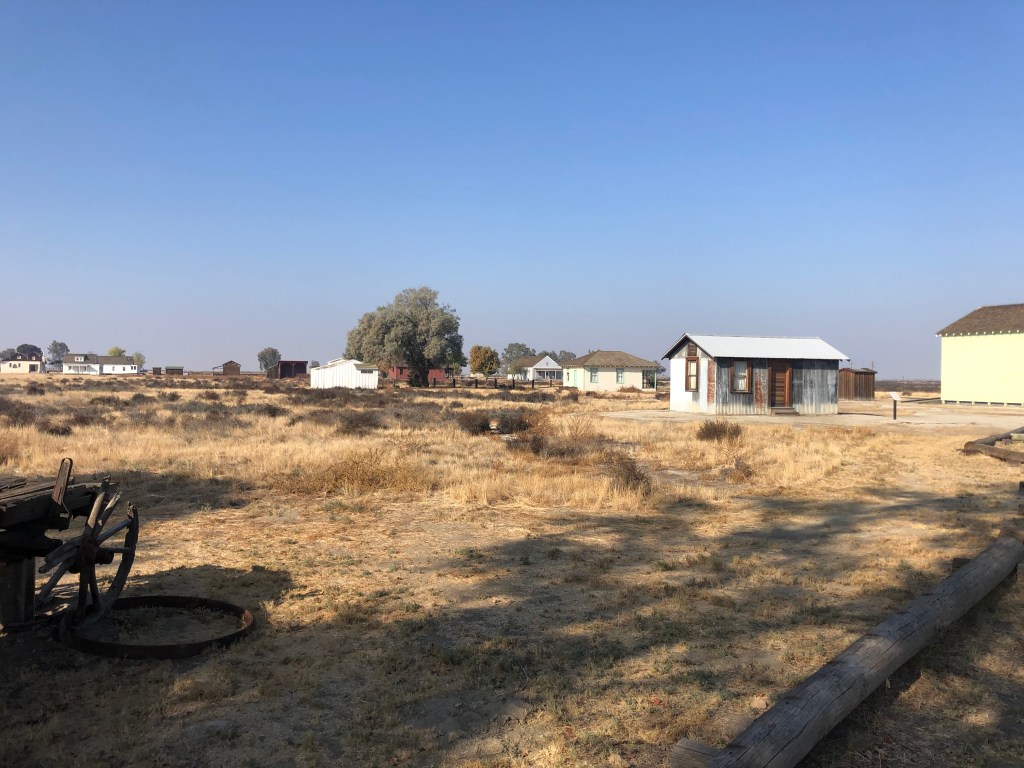
One notable sight along this route is the ghost town of Allensworth. The town was established in 1908 by an escaped former slave, Allen Allensworth, who’d joined the Union forces during the Civil War and retired in 1906 as the highest ranking African American officer in the US Army. With several compatriots, Allensworth purchased this land and created a colony for African American families.
Allensworth is credited as “the only town in California founded, built, governed, and populated by African Americans.” After only a short while, though, the well water that supplied the town began to decline in quality and quantity. By the 1950s water problems and other concerns had caused many residents to leave. The town was purchased by the state in 1970 and was made a state historic park. Today, most of the buildings have been renovated or rebuilt.
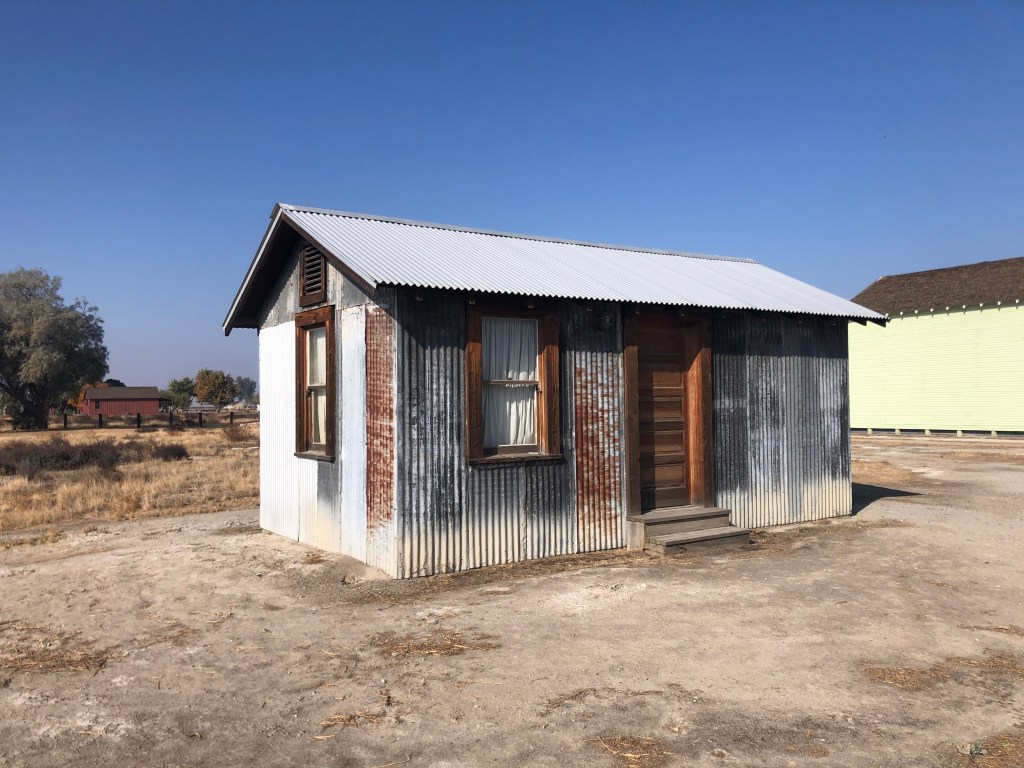
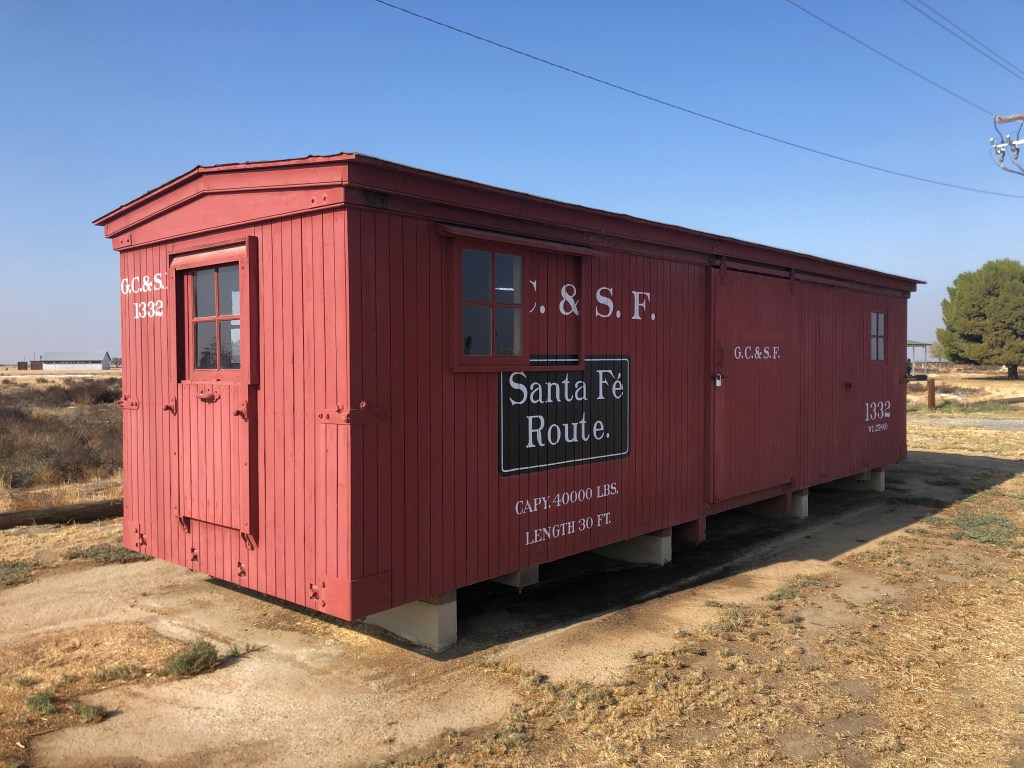
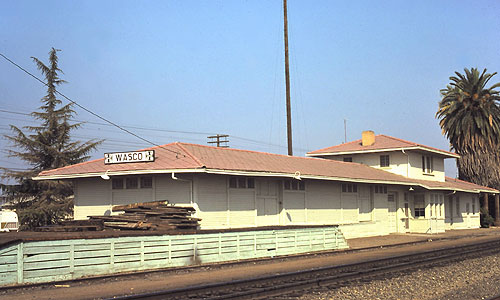
A short while after leaving Allensworth I passed through the city of Wasco. Prominently featured on a corner is the town’s Amtrak depot. The depot was constructed in 2006 to replace a historic, century-old depot that had been used by the Atchison, Topeka and Santa Fe (AT&SF) railroad. That old station fell into disrepair after AT&SF terminated passenger service in 1971.
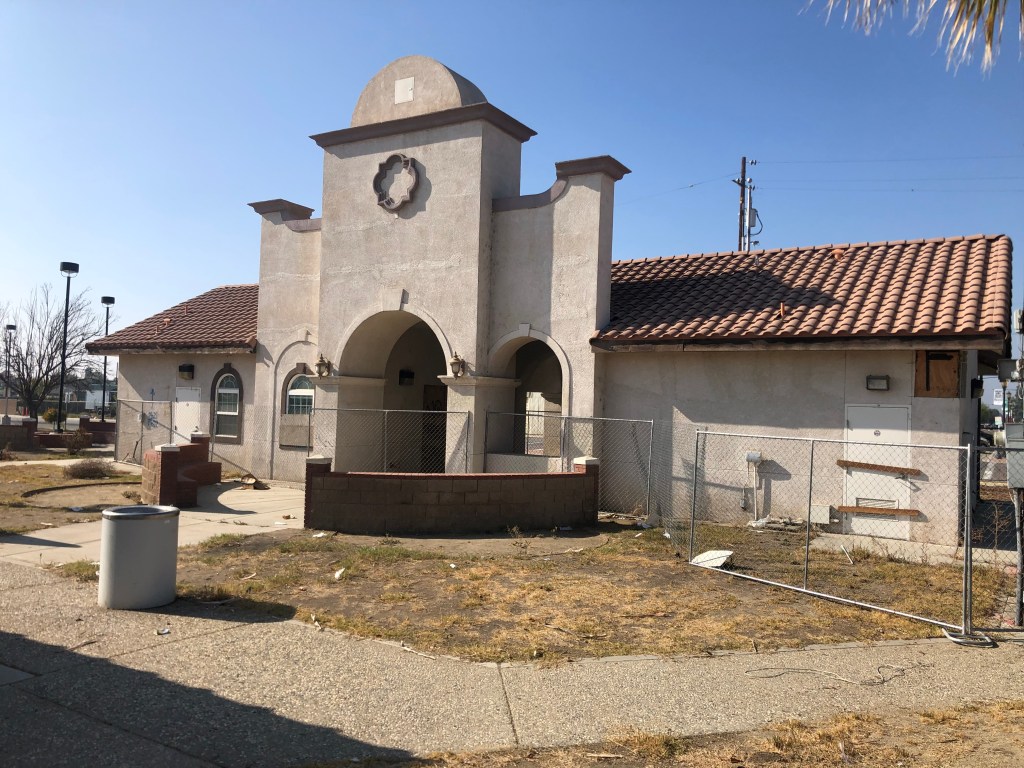
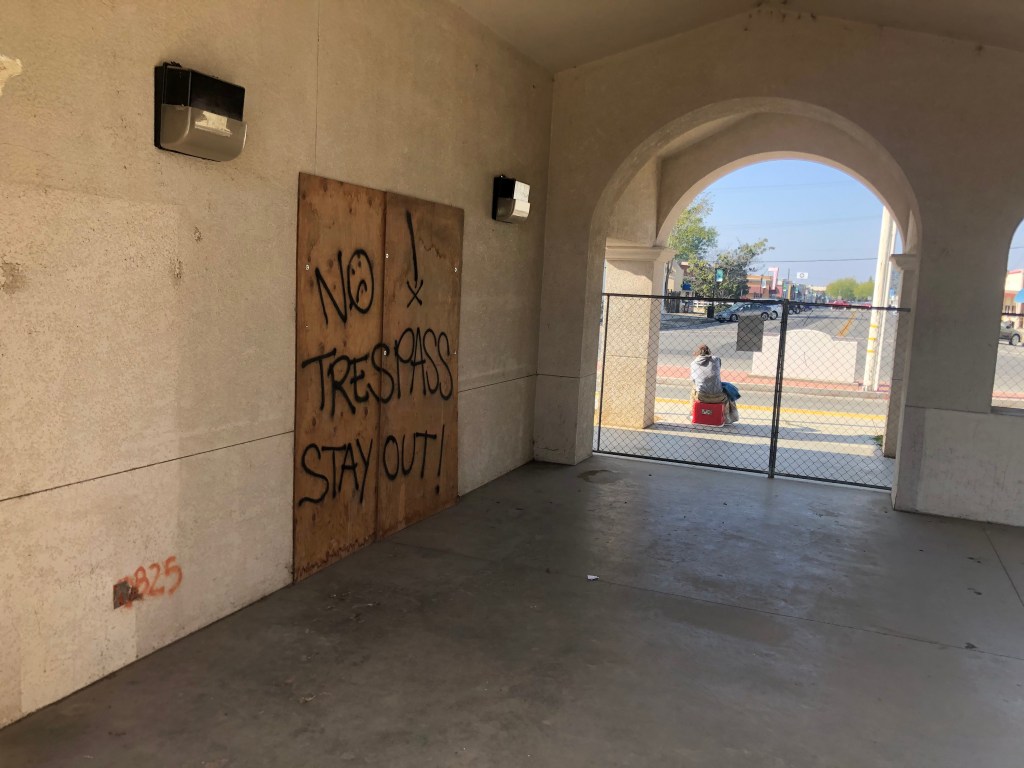
The new Amtrak station has some attractive architectural features, and passenger trains continue to stop there several times each day. So you’d think that’s a happy ending. However, in response to Covid, Amtrak has locked up the station and when I visited it today it looked post-apocalyptic: boarded up, tagged with graffiti, beset by homeless people. The landscaping has been let to die, and the entire scene is depressing.
Further down the road, the historic AT&SF depot at Shafter presents a much prettier picture. It’s been renovated and turned into a museum. It was closed today, however, and I was only able to see it from the outside.
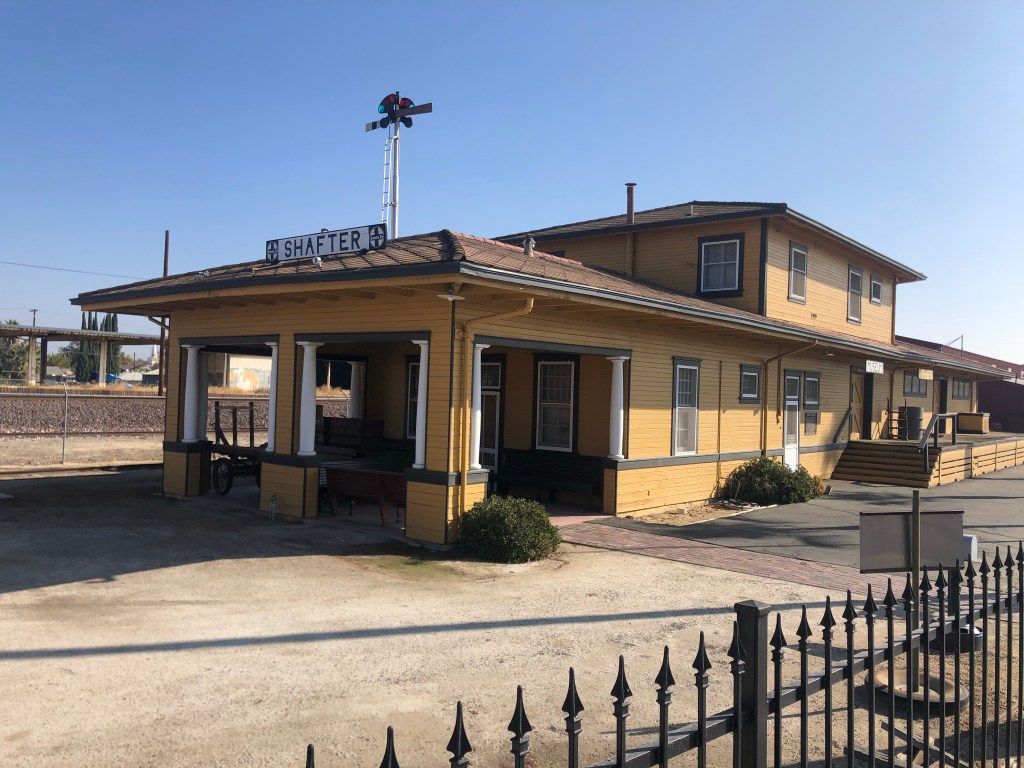
The depot dates back to 1917, and it closed, like so many other passenger depots, in the 1970s. It’s been operating as a museum since 1982.
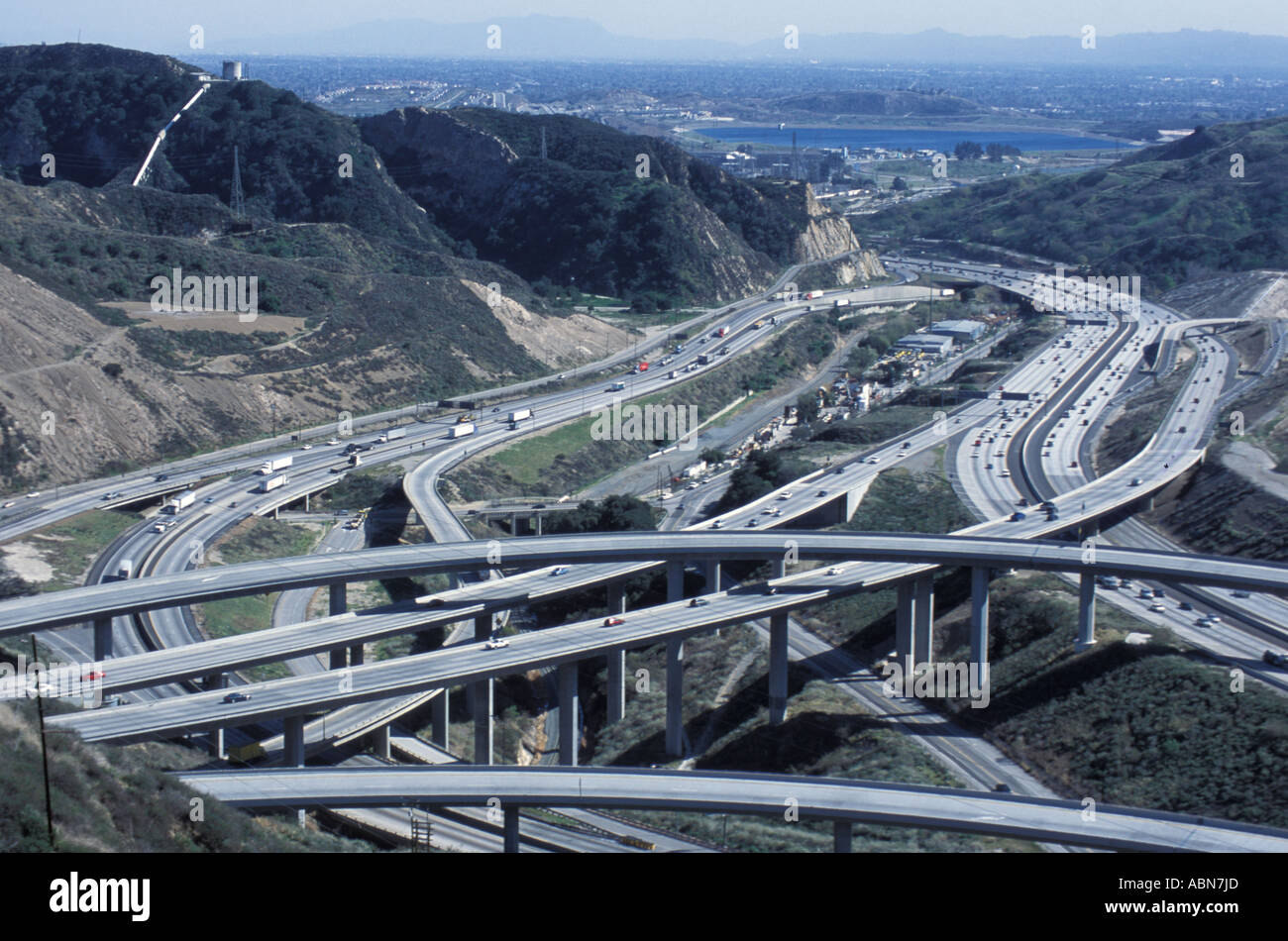
After some more driving I connected with Interstate 5, and I headed over the Grapevine into the San Fernando Valley. There were still a couple of more railroad sites to behold. In the city of Santa Clarita there’s a massive freeway interchange between Interstate 5 and CA 14. It’s an overwhelming tangle of on-ramps, off-ramps, flyovers, and suchlike, originally constructed in the mid-1970s.
Now, hidden unnoticed near the bottom of this jumble of freeway lanes is a Southern Pacific railroad tunnel originally constructed in 1875. Don’t believe me? Here’s a picture I took this afternoon:
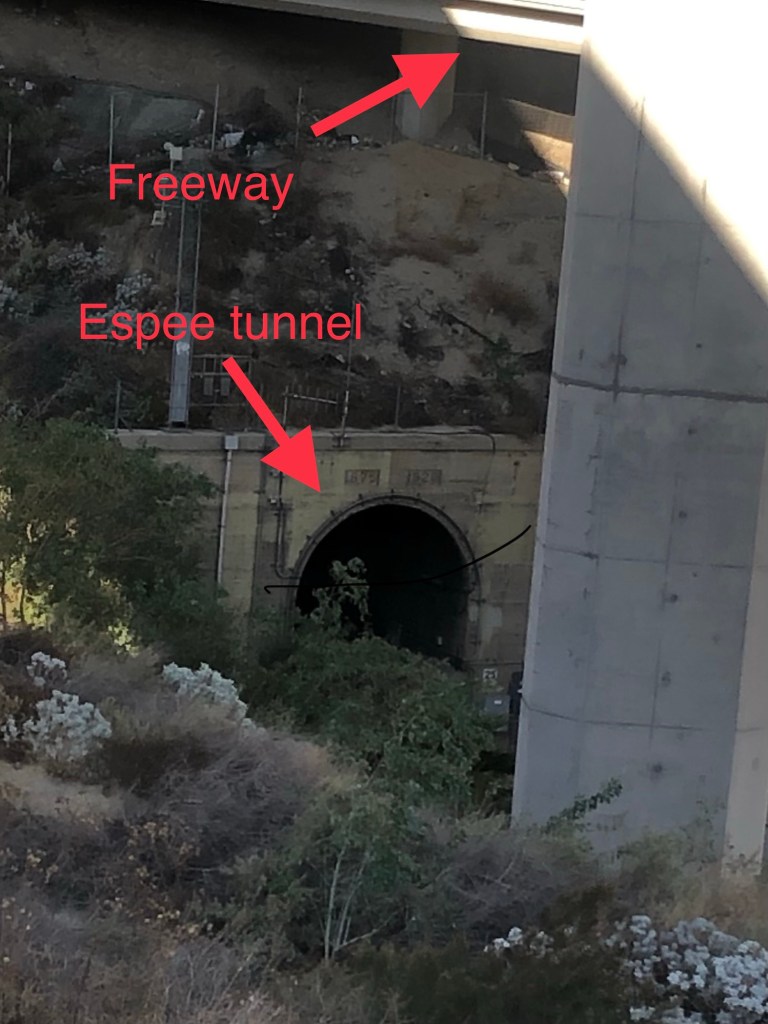
Now, remember those tunnels up in Tehachapi that allowed trains to travel over the Tehachapi range from Bakersfield to Mojave? Well, trains moving through there would eventually make their way down to Santa Clarita, where they’d be blocked from further southern movement by the San Gabriel Mountains. And so the Espee built a new tunnel — the San Fernando Tunnel–to allow its trains to enter the LA basin. It was another impressive engineering feat. To expedite the job, SP crews dug from both sides of the mountain, and when they met up in the middle they were only misaligned by one-half of an inch. That’s impressive, given the rudimentary technology of the late 1800s. The completed tunnel measures 6,966 feet long, or over 1.3 miles. It was the fourth longest tunnel in the world at the time. And today, its entrance just sits there, forlorn and unseen by the many thousands of people passing above it every day. But it’s still in use. In fact, I saw a Metrolink train emerge from the portal this afternoon.
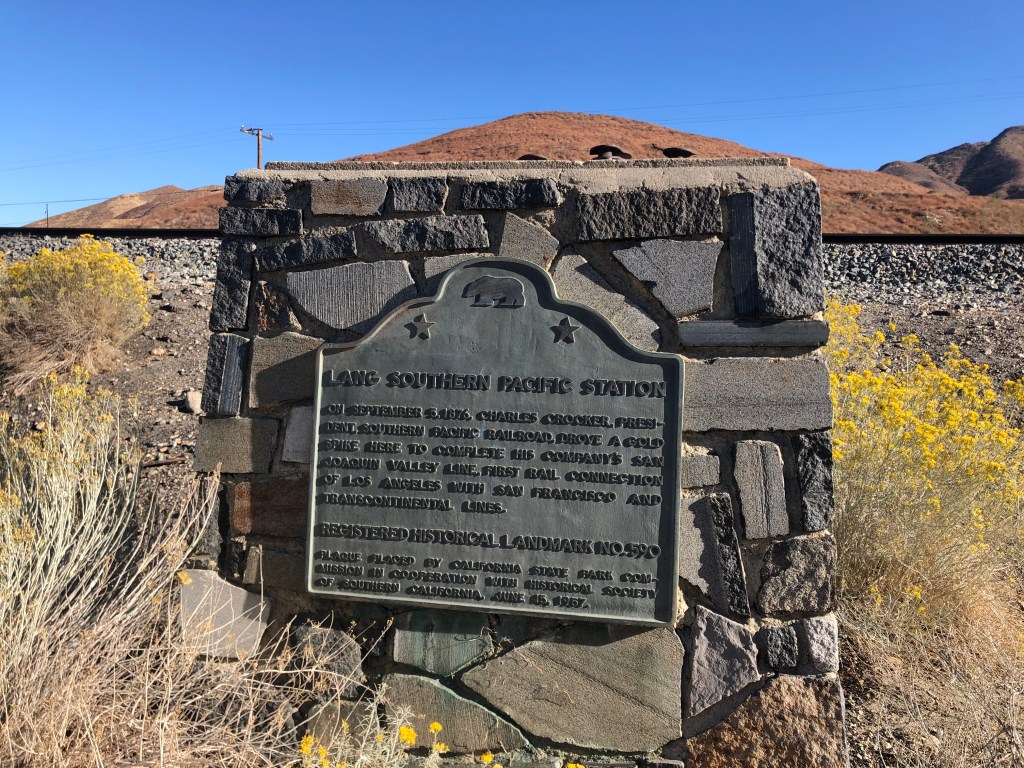
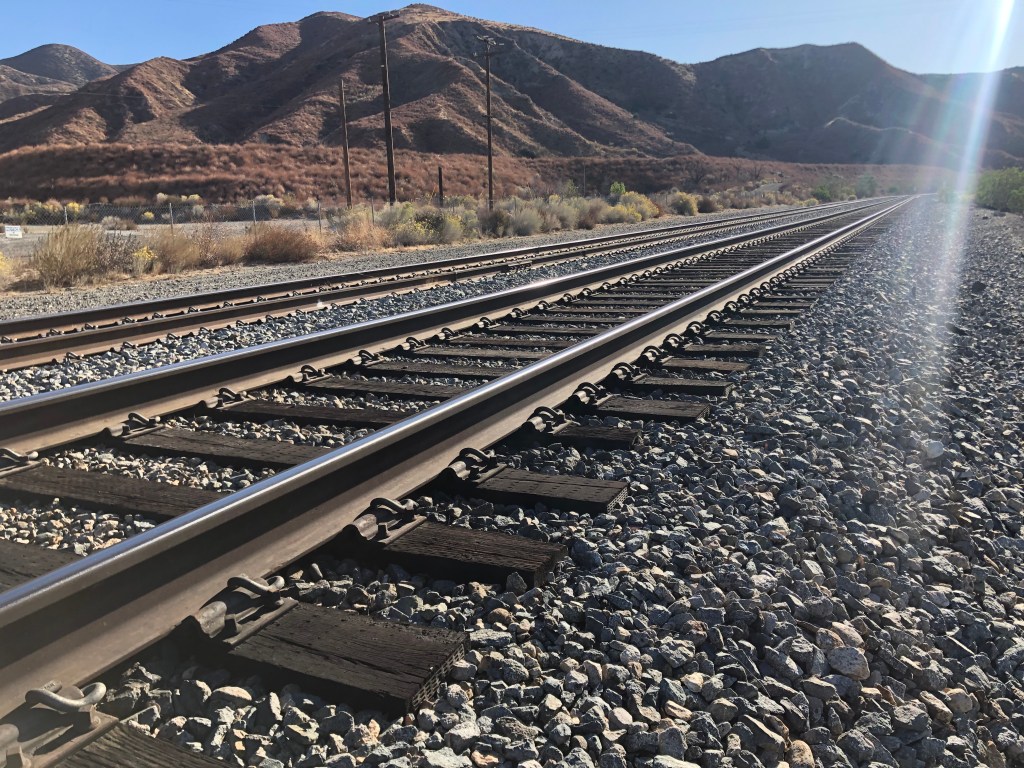
It seems that much of this trip centered around the Southern Pacific’s 1876 rail line that connected northern and southern California, mountain ranges be damned. And so there was just one more site to see: I headed northeast from Santa Clarita, on the self-same CA 14 that originates on top of the old San Fernando tunnel. In 10 minutes I was in front of a picturesque stretch of railroad right-of-way called Lang Station. Partially hidden behind some scrub brush was an old bronze plaque set in a stone block. The plaque commemorates an event that happened here in 1876, just a few weeks after the San Fernando tunnel was completed.
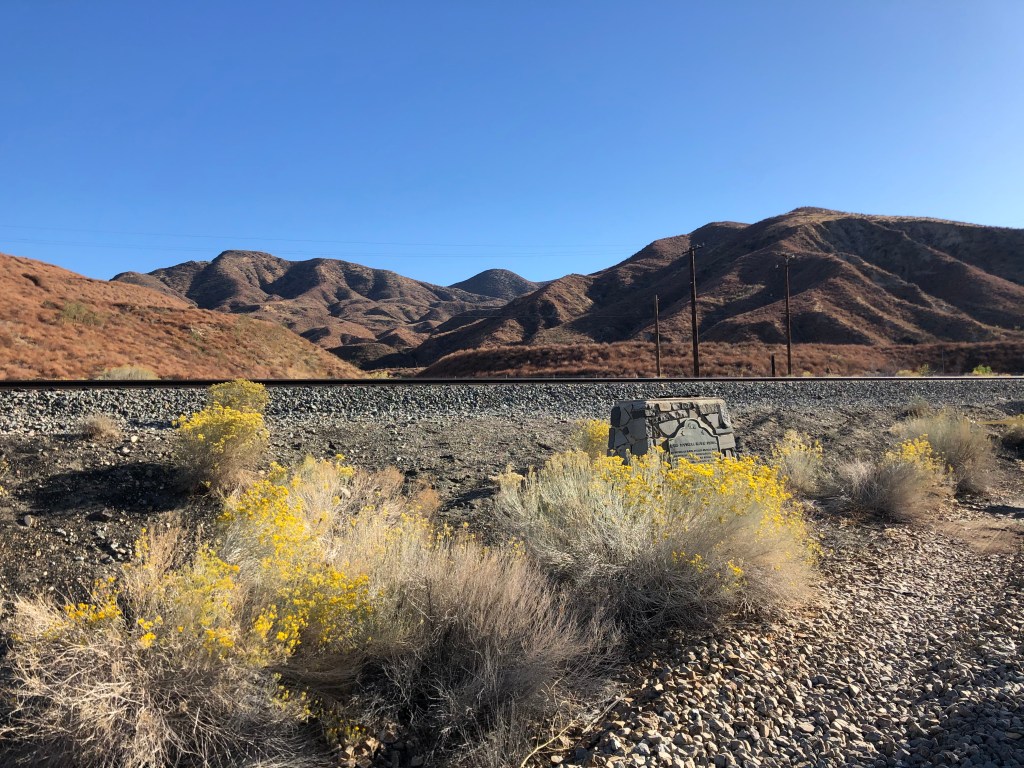
For at this spot, on September 5, 1876, the president of the Southern Pacific, Charles Crocker, drove a golden spike to complete the laying of track linking San Francisco to Los Angeles. And that’s a fitting conclusion for this road trip.
MAIL BAG
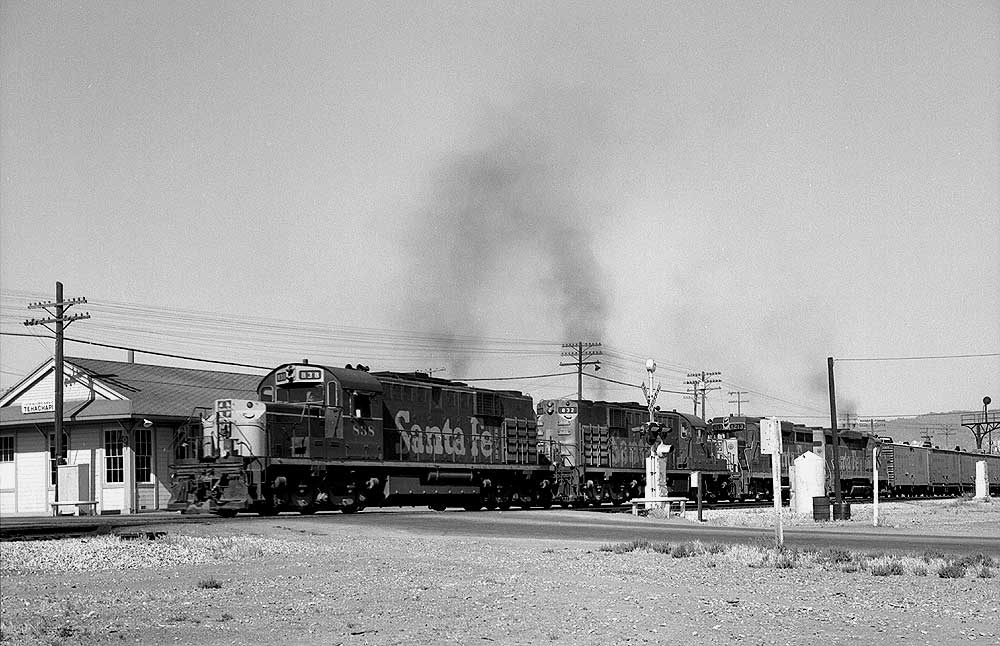
You’ll remember that Uncle Edward worried that a trip like this would be depressing, given all the Espee sites that have vanished in recent decades. He wrote to point out that the burning of the Tehachapi depot, which I recounted on Saturday, proves his point. But he also shared with me this photo of the depot that he took in 1967.
Also, we had a number of excellent submissions to yesterday’s photo contest. Our celebrity panel selected as the winner this caption, submitted by Loyal Reader Alison C.: “The Future of the Republican Party.” It’s worth noting that Alison is a lapsed Republican. Her caption might also fit in with the title for today’s blog post.

 Chasing Phantoms
Rather ironic the state is on a mission to build a high speed rail when the evidence of success of trains seems somewhat contrary.
LikeLike