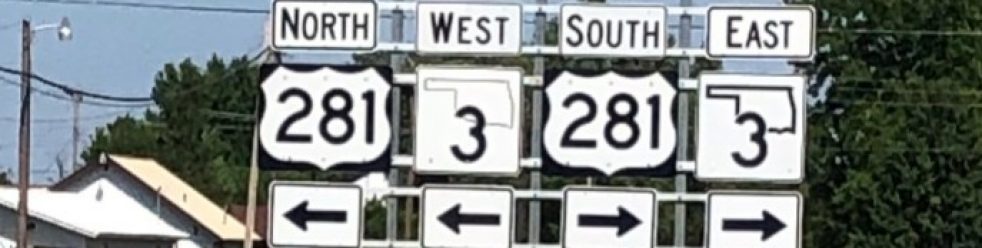
Alert readers will recall that in my May 25 blogpost, I wrote:
In the town of Mason, Wisconsin a gas station attendant encouraged me to check out an old, abandoned, Wild West theme park that was homemade by a man (recently passed) named Ed Sandor on his farmland. This I did, and it was one of the most enjoyable hours I’ve spent. It deserves its own blog post, which I hope to write in the next day or two.
I’m now finally able to share the whole story. It was a cold, drizzly spring day in rural Wisconsin. The somewhat rustic attendant at the nondescript gas station noticed my rental car’s Florida plates and made the observation that I was a long way from home. I told him about this road trip, and he said, “Well, then I reckon you oughtta check out the old Sandor place. He built an Old West town to entertain the kids while families camped on his farm. It’s abandoned and pretty run down, but it’s still worth a gander.” I told him I was game, and he provided me with moderately vague directions, using terms like “Bill Rabbs farm” and “the place where the school bus stops” as landmarks. Undeterred, I drove about a mile off of Route 2, and spotted the old, weathered sign the attendant had mentioned.
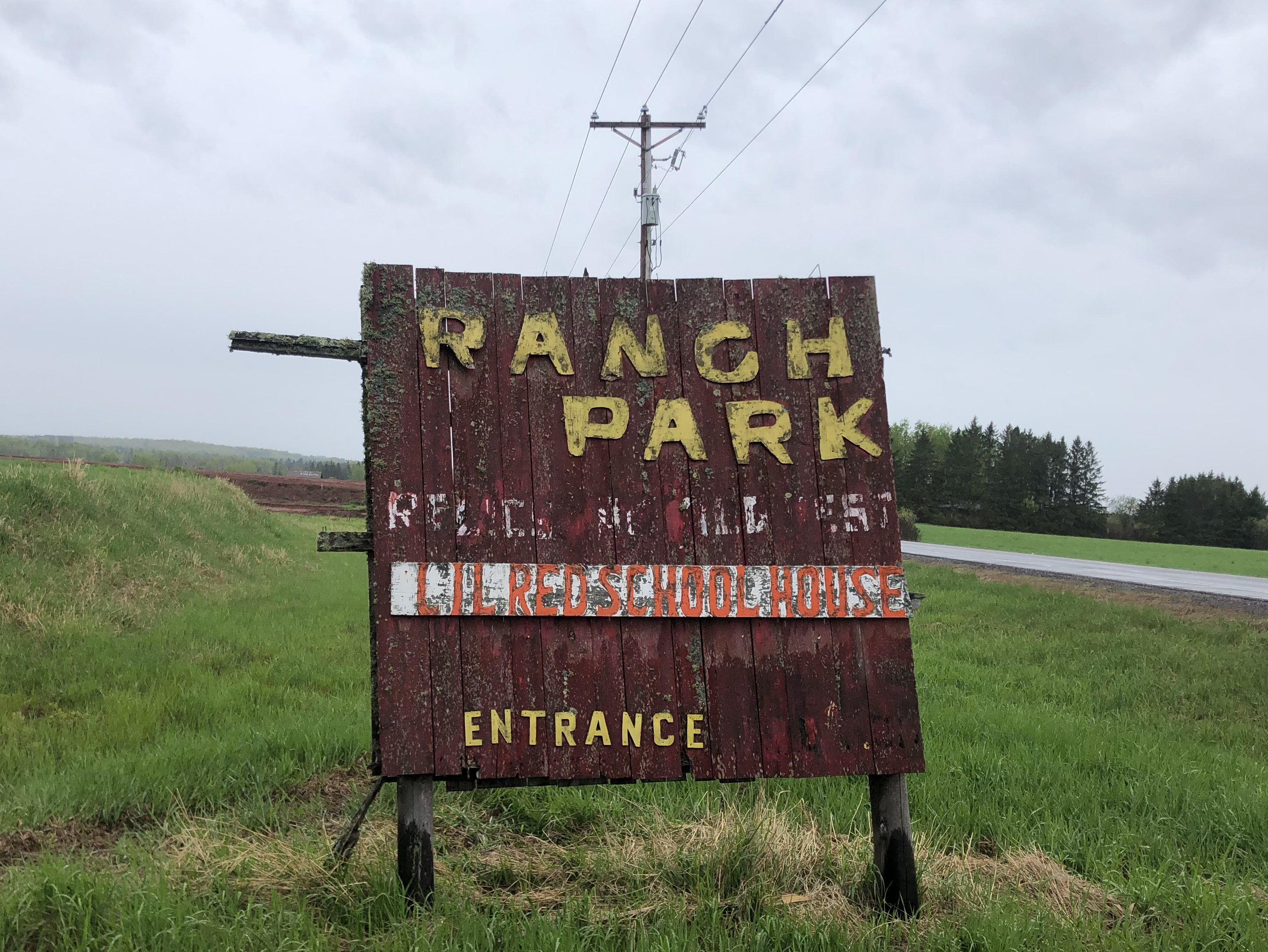
The sign stood next to a narrow dirt road which had been dampened by the morning drizzle. I put the Jeep into 4WD mode and turned onto the dirt side road. Wooden fences ran along both sides of the road, presumably marking private property. After about half a mile the road split into two, narrower dirt driveways. This sign was posted at one of the driveways:
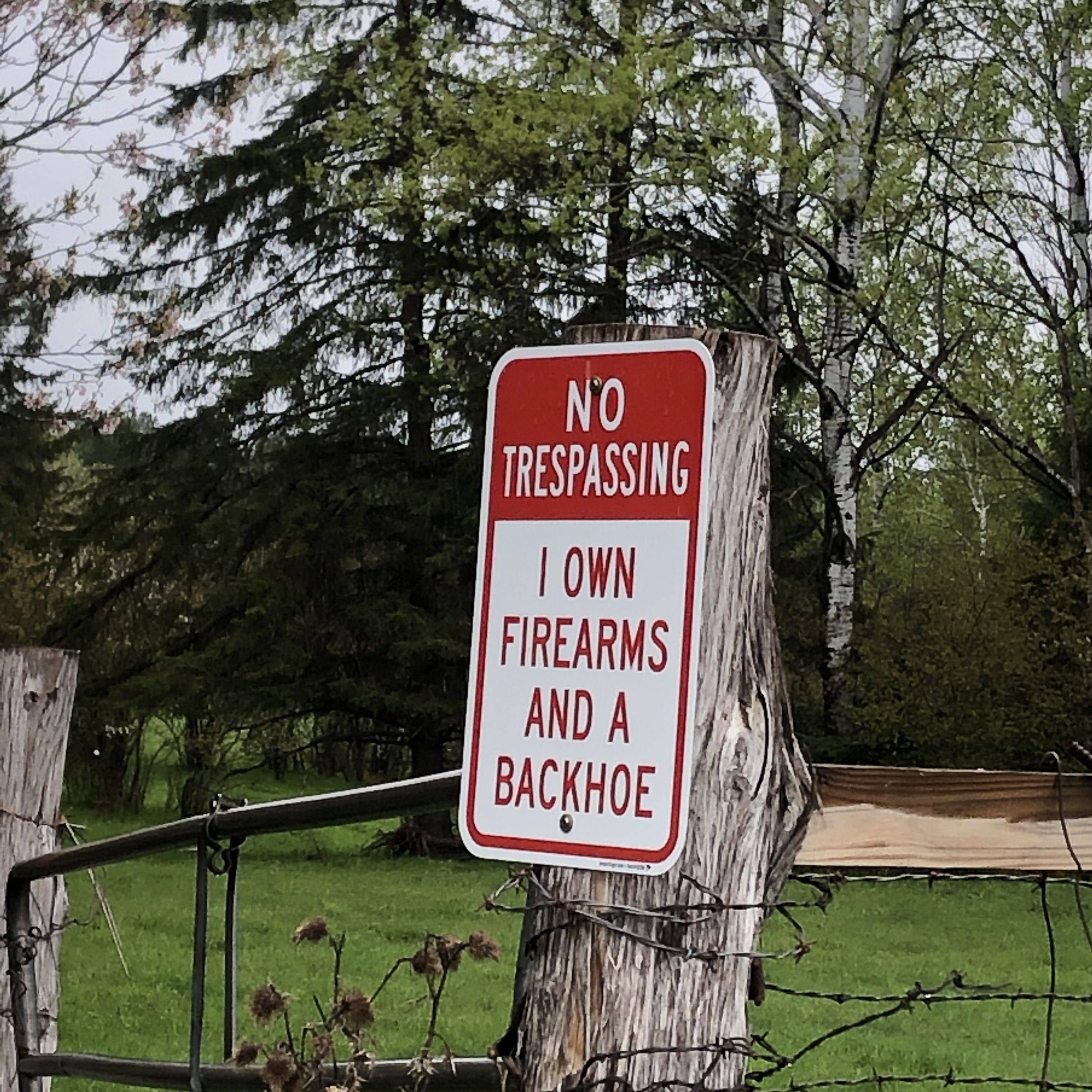
Needless to say, I took the other driveway.
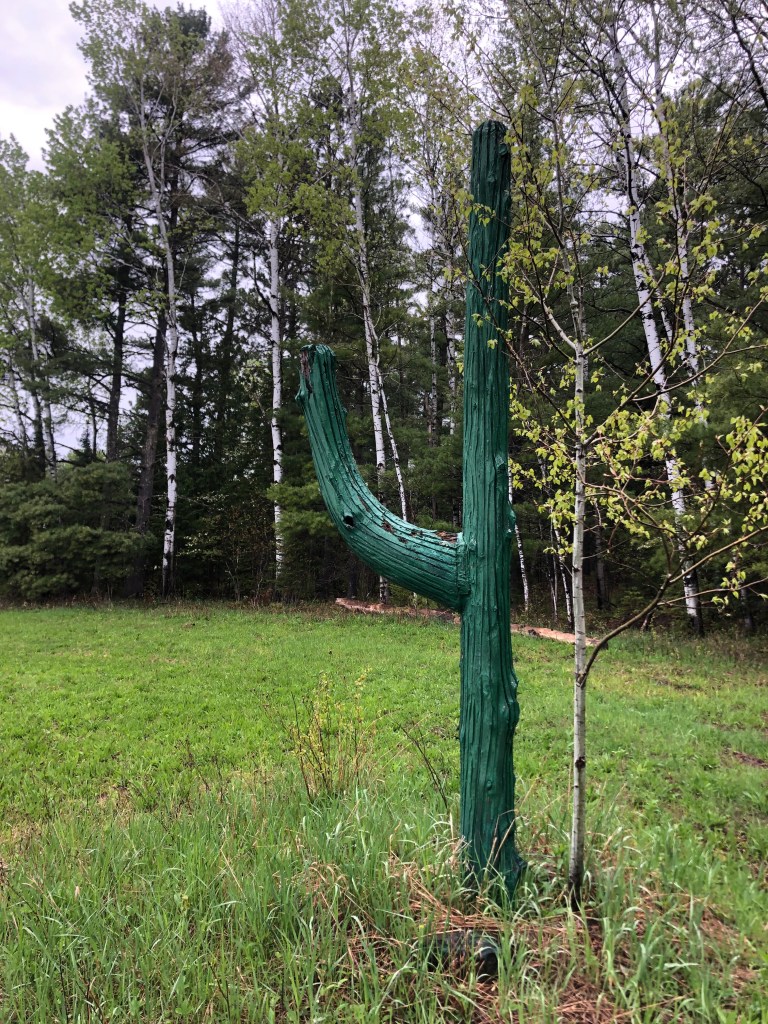
Just as I thought I’d been led on a wild goose chase I spotted a fake, cartoonish saguaro cactus which would be de rigueur at a 1950s Old West theme park. I had to be close.
Then, around the next curve, I arrived at what must be Ranch Park….though I still didn’t really know what to expect.
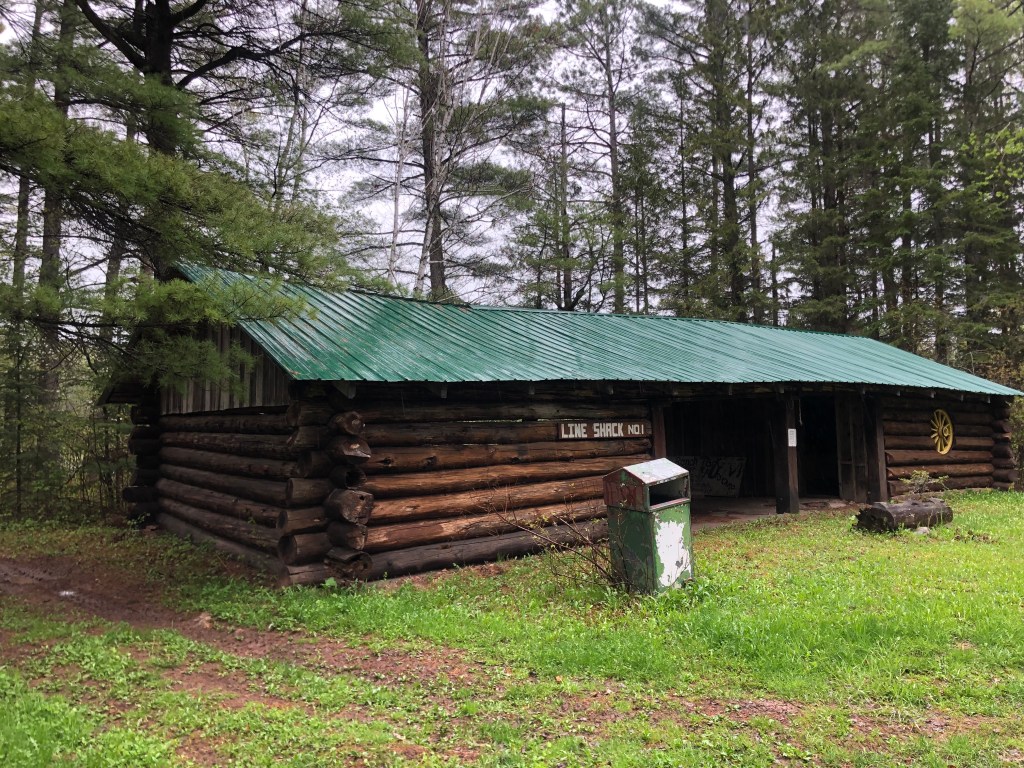
A rustic log cabin with a doorless open front stood in front of me, with a sign indicating that it was “Line Shack No. 1.” It was largely empty, except for a couple of picnic tables and a large, carved serpent (?) hanging from the rafters.
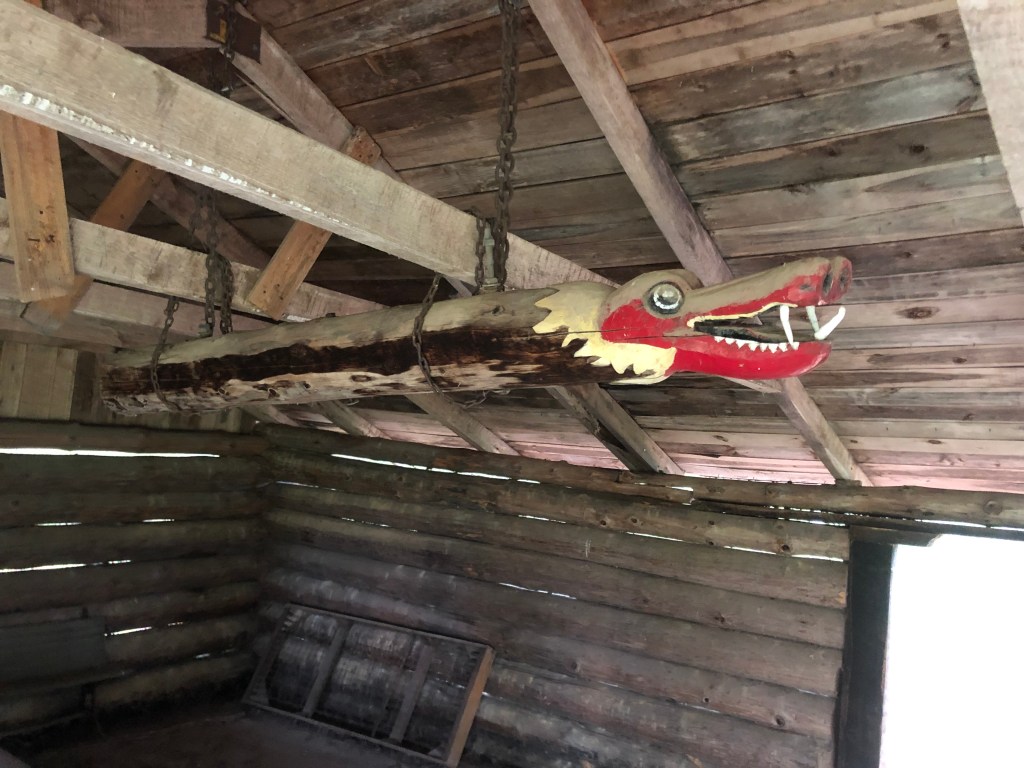
Based on a few notices stapled to a bulletin board, I determined that this had been a communal gathering place for people who camped on Ed Sandor’s land. But if that saguaro cactus was all that makes this an “Old West theme park,” I’m sure the visiting kiddies were disappointed.
The rain was coming down harder, so I told myself I’d just make a quick search of the grounds for something more interesting before I left. A sign pointed to the “History Story Trail,” and when I walked 100 feet in that direction I encountered a carved, life-size viking.
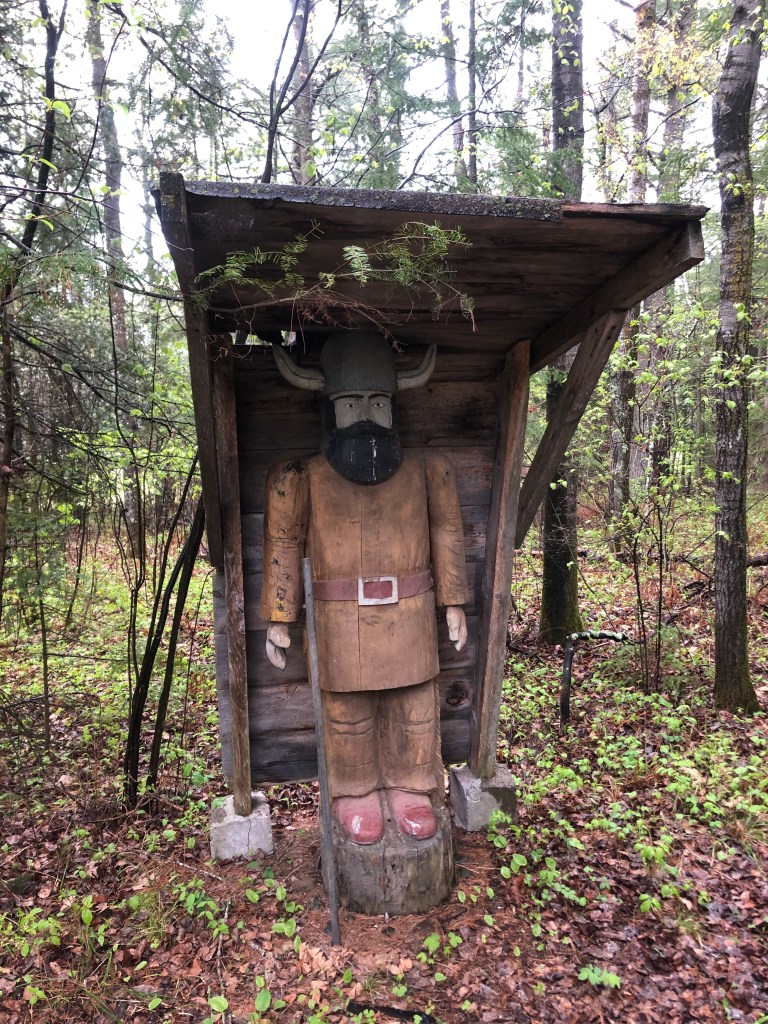
OK, this didn’t exactly evoke the Old West, but it was definitely getting interesting. The Viking stood near the beginning of an overgrown trail. I got onto the trail, thinking perhaps I’d find a carved Visigoth.
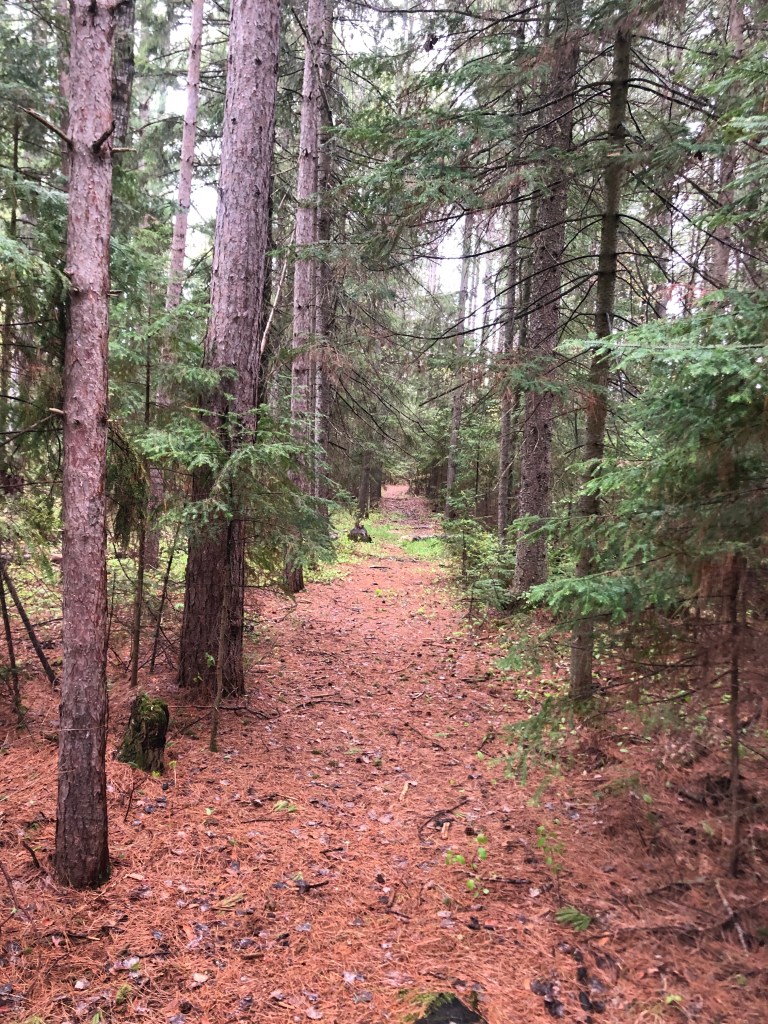
Here and there along the trail someone had staked small paper signs, obviously not suited for outdoor use. They seemed intended to educate visitors about various aspects of pioneer life.
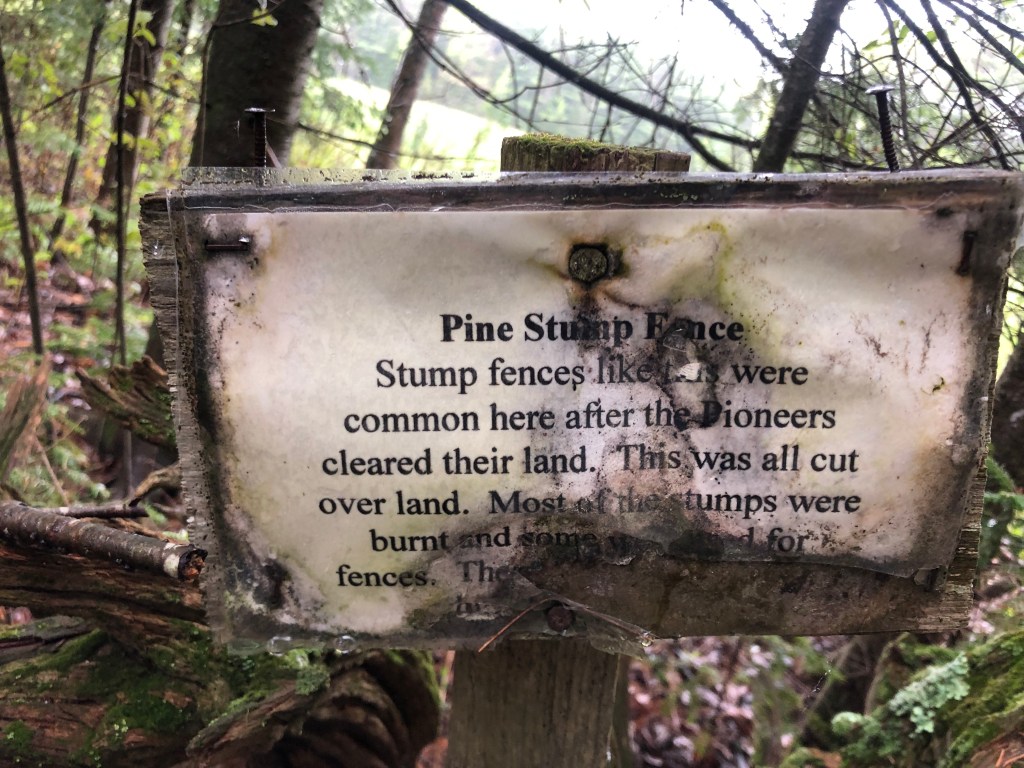
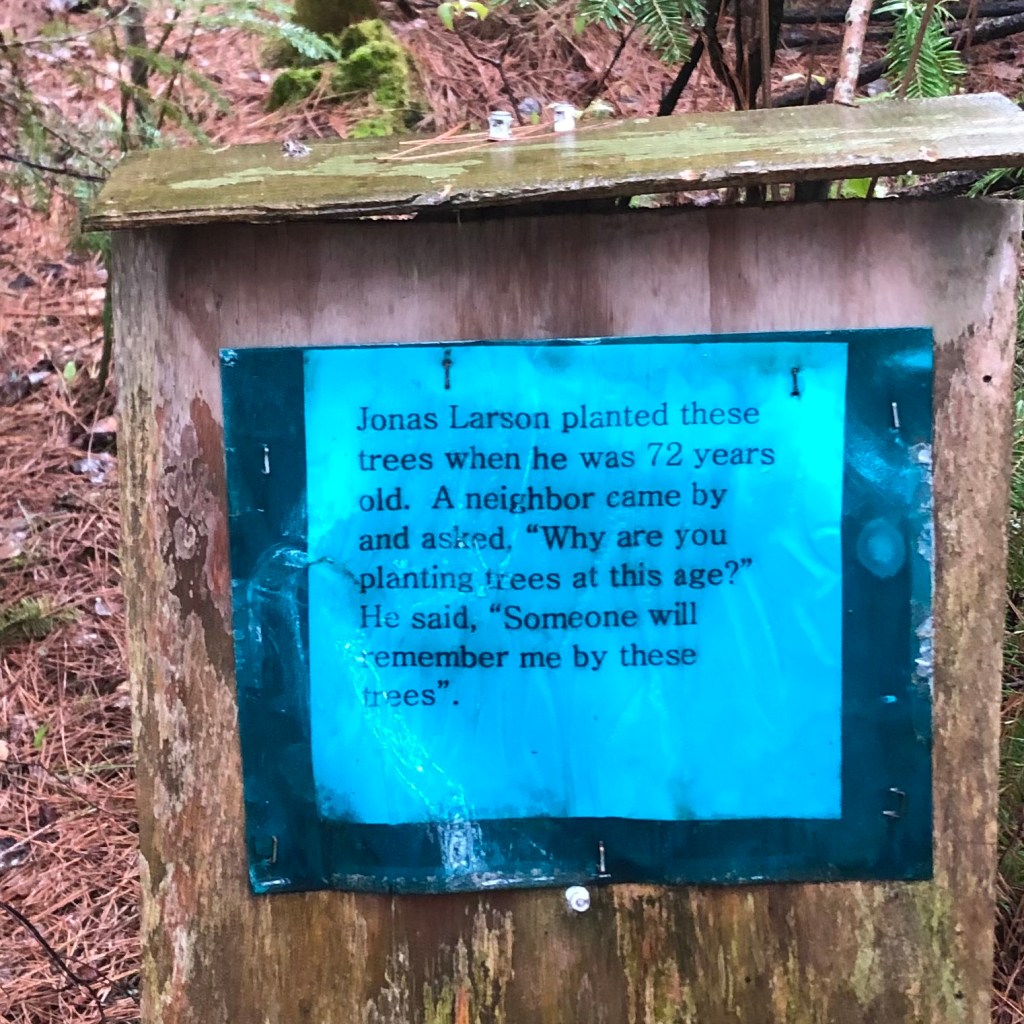
I studied each of these little placards as I passed them, and before long I stumbled upon a rabbit hole. Literally.
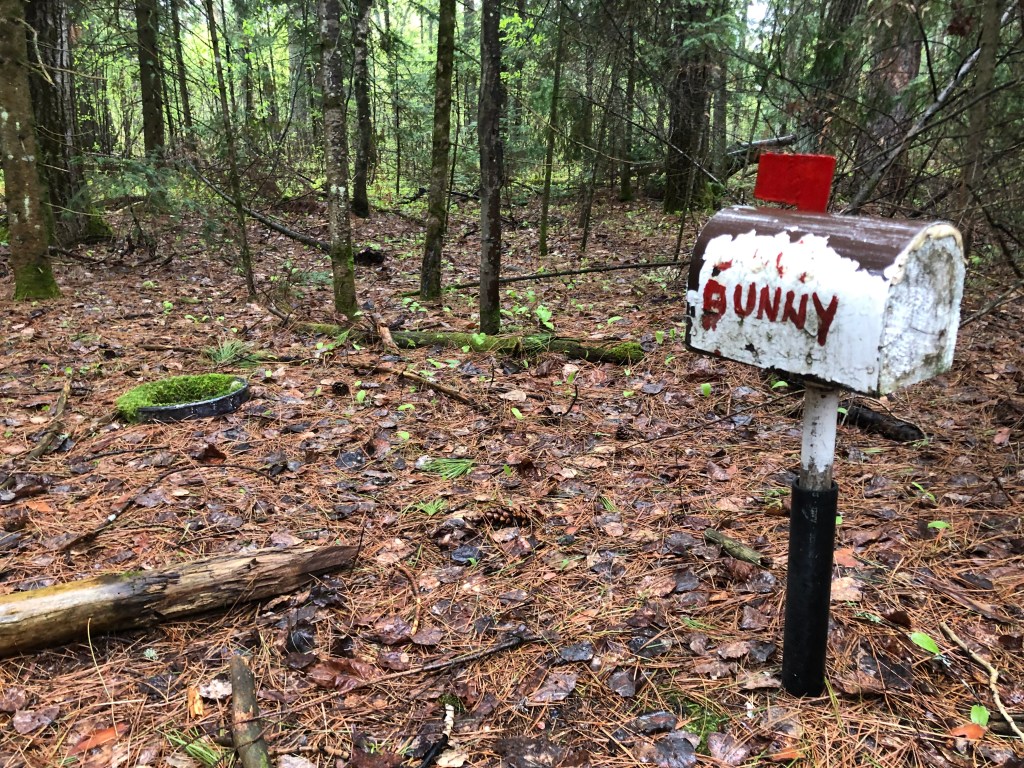
I continued to push forward, encountering these small gifts as though they’d been left by Boo Radley in a tree’s knothole. Finally I reached a clearing and I discovered what all the fuss was about.
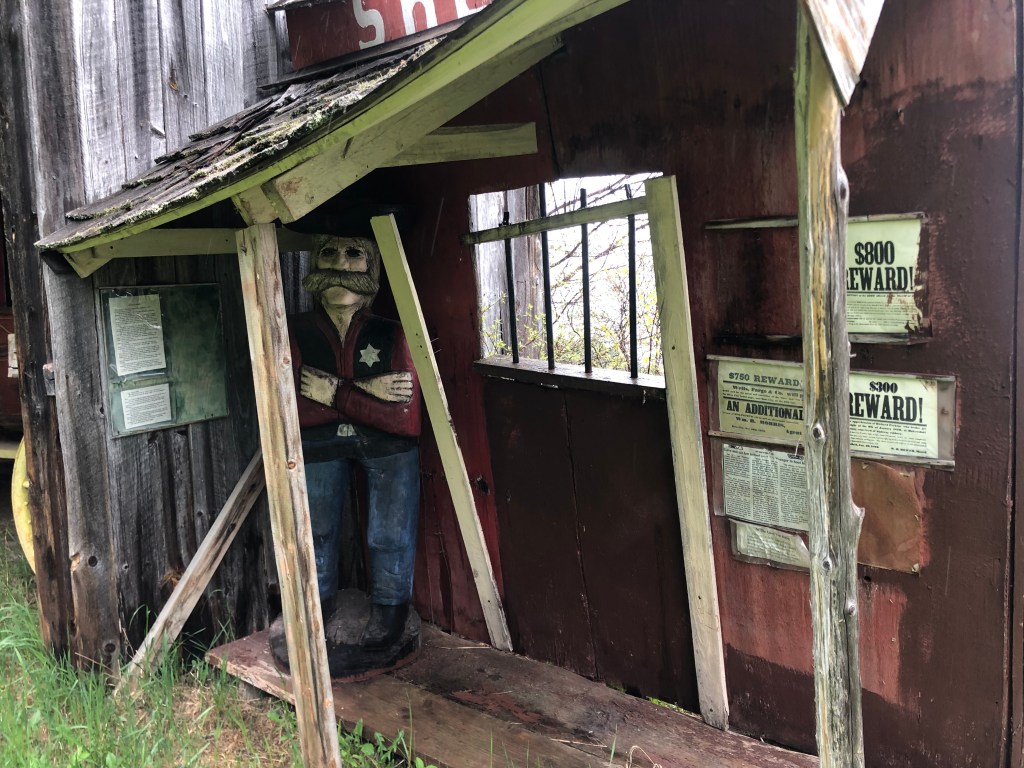
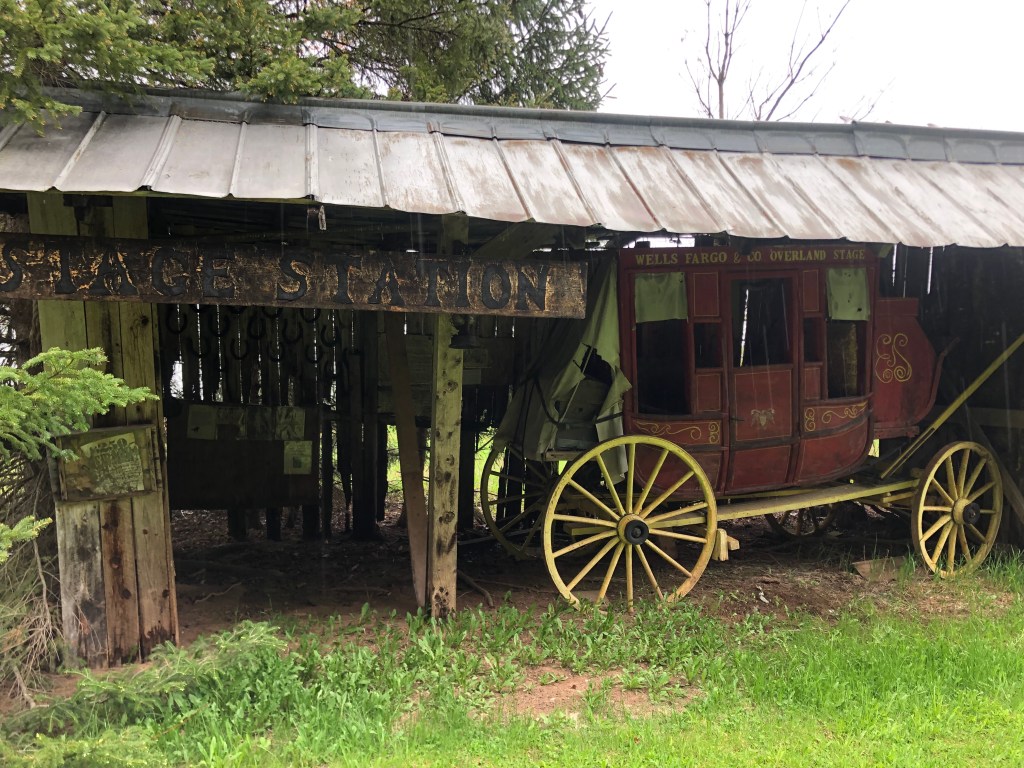
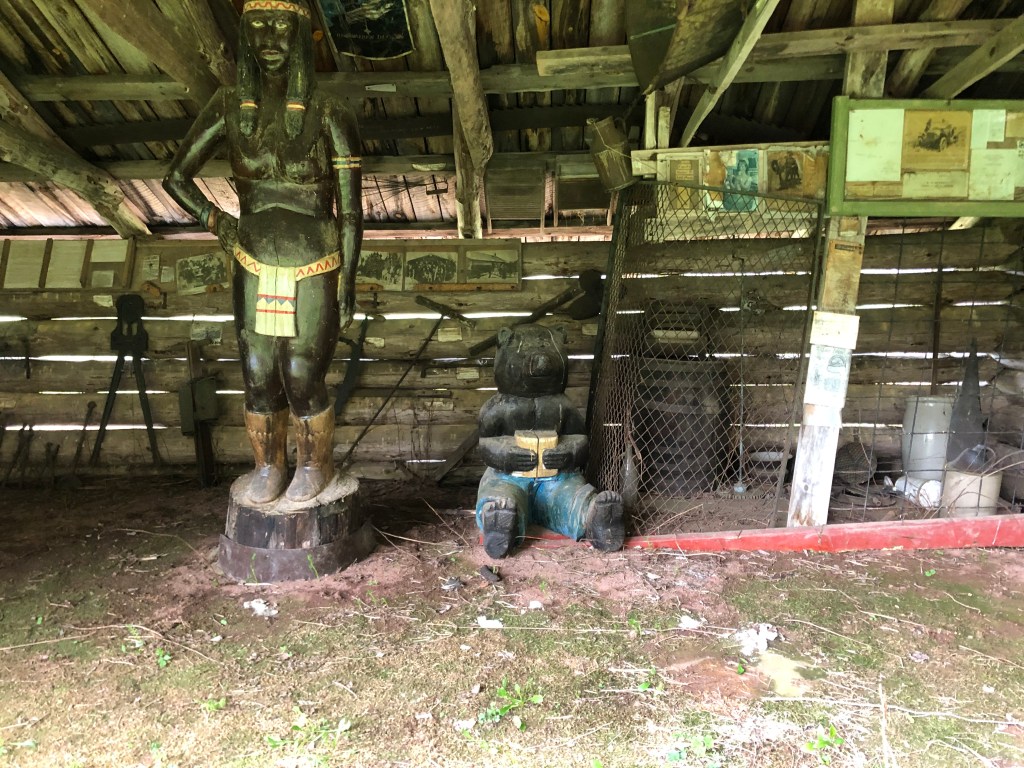
It was remarkable. Ed Sandor had built a small cluster of buildings, resembling a frontier town of the Old West, and filled them with various artifacts, most of which are authentic. There were carriages, tools, furniture, saddles, bridles, books, cookware, and numerous other antiques. What’s more, they weren’t behind glass or protected with cameras or alarms. Everything was just sitting out there to be touched, examined, and appreciated. (There were a few displays behind chicken wire, but it would be easy to circumvent and I think it was just there to keep the youngest kids from getting themselves in trouble.)
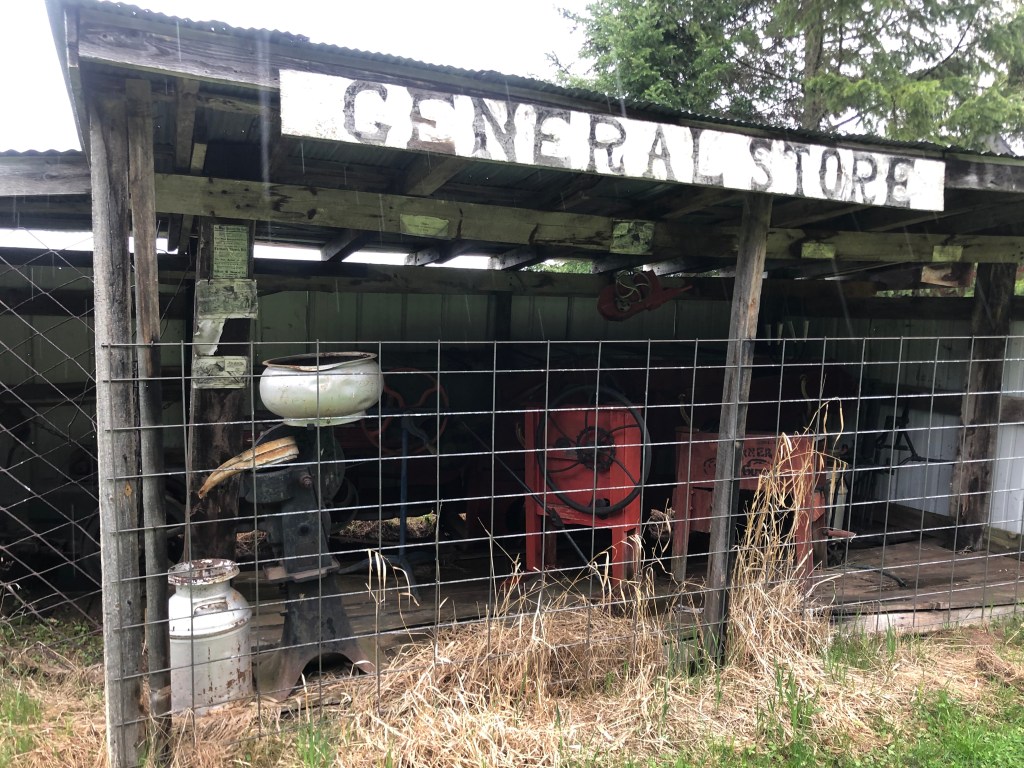
It wasn’t a carefully-curated collection by any stretch of the imagination; the displays didn’t have much rhyme or reason. But there were some explanatory labels and newspaper clippings tacked up here and there.
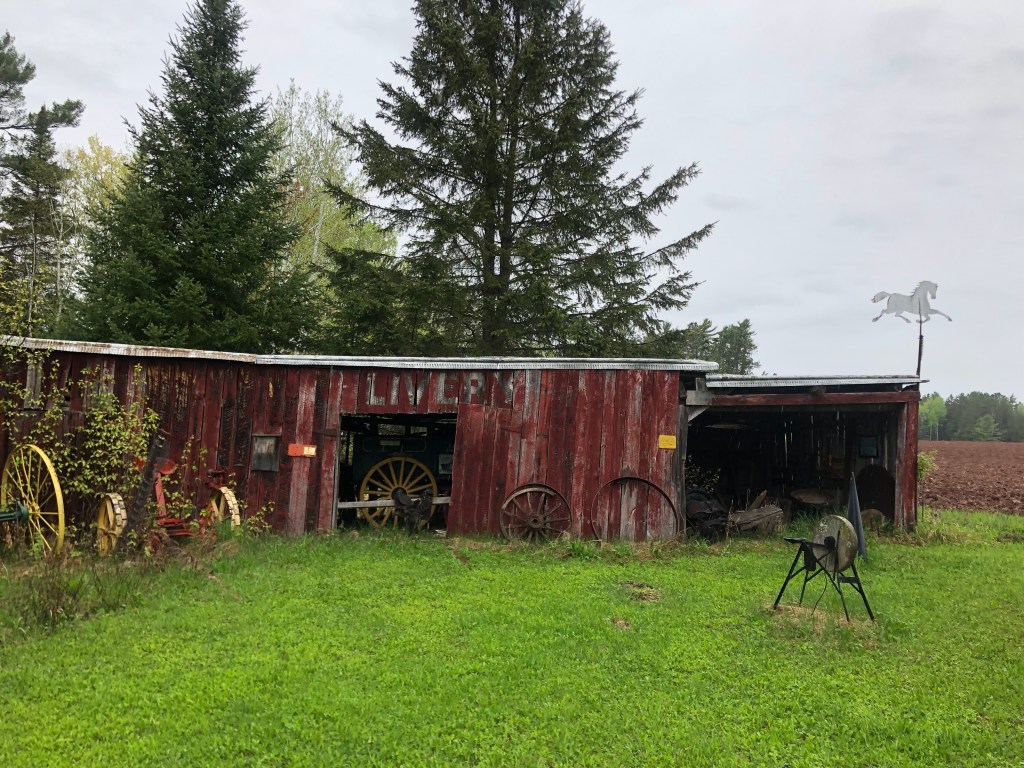
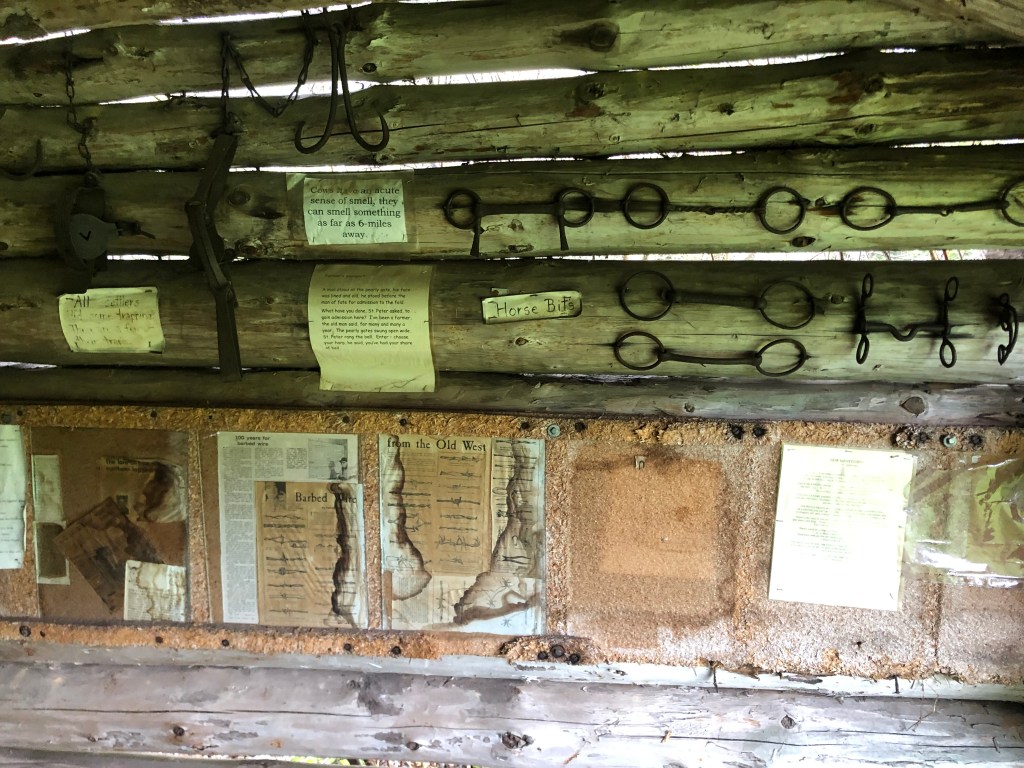
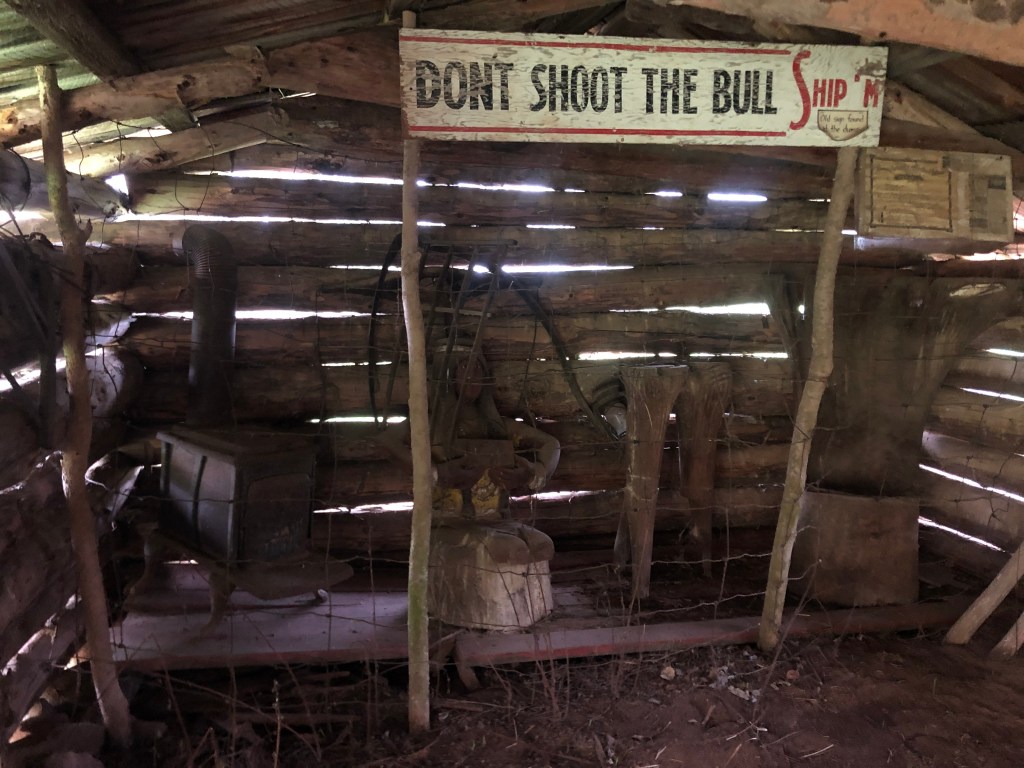
The photos included here barely scratch the surface of the collections hidden away here in the woods. And I later learned that Ranch Park used to be even more extensive, back in its day. Ed Sandor (1924-2019) began to accommodate camping on his farmlands in the 1950s, and in the early 1960s he began creating this western theme town pretty much single-handedly. It grew to become a popular stop for families, much like some of the tourist attractions along Route 66 in its heyday. Ed Sandor and his family kept the place running, making small repairs as needed and occasionally adding some new displays. Sadly, Ed’s declining health forced him to stop working on the Ranch in 2015. He died in 2019, and the Ranch is now for all intents and purposes abandoned, left to decay in the elements.
Here’s a video that shows the Ranch a few years before I visited:
I have a hard time putting into words my feelings as I walked among these decaying displays. The dark skies and drizzling rain, coupled with my being isolated in the forest far from home, lent a distinct melancholy feeling. I felt sad that Ed Sandor’s life work was being left to disintegrate; surely the place would be unrecognizable in a few more years. It also seemed like a waste that no one was working to preserve those genuine and rare artifacts. And I had a nostalgic longing for those simpler times of my childhood, where entertainment was found outdoors and we played in a tangible (rather than digital) world.
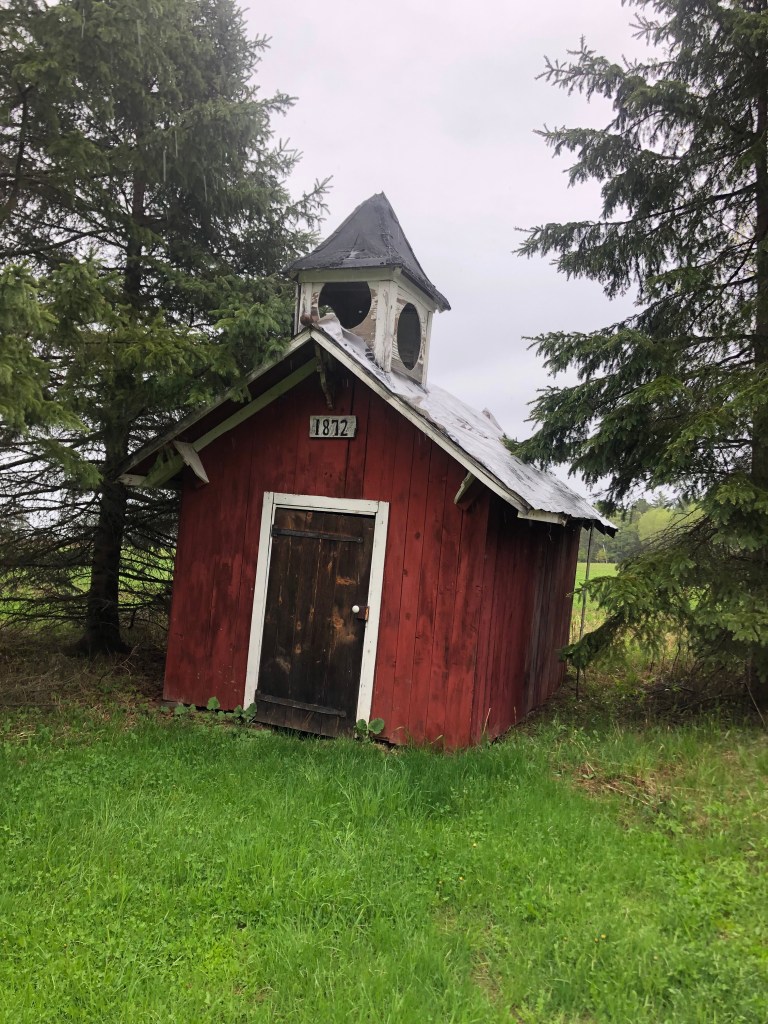
And yet there are some positive and hopeful aspects to this story. For starters, Ed Sandor spent over 50 years running this “ranch” and entertaining kids and families. In a guest book next to Line Shack No. 1 are hundreds of heartfelt testimonials from grownups who have fond memories of the place from their childhood, and from people like me who just now discovered it.
Another thought that struck me was that there wasn’t a single jot of graffiti anywhere at the ranch. This place is completely open and has been abandoned for about 8 years now, and yet no one has felt an urge to deface it. I can’t say for sure whether anyone has walked off with any of the artifacts, but I can say that there is a treasure trove of artifacts that no one has disturbed. And I wonder if one of the reasons why comes from this little sign that Ed posted on the bulletin board by Line Shack No. 1:
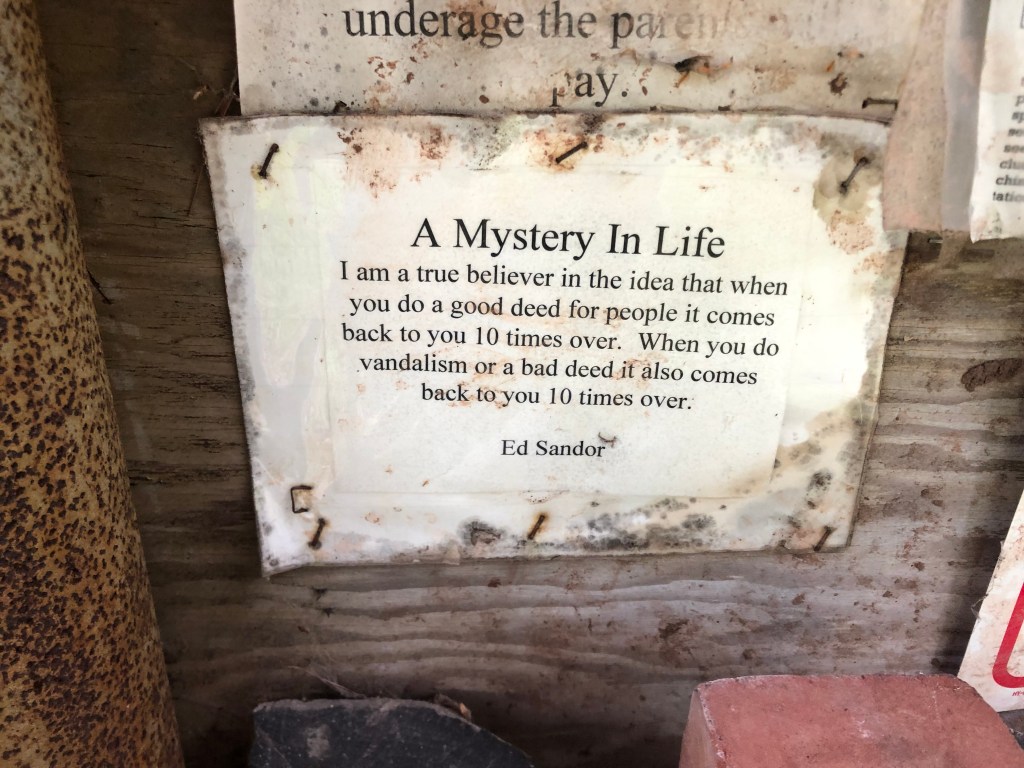
The world needs more Ed Sandors.

 Chasing Phantoms
That ranch has Stephen King written all over it.
LikeLike
You’re right!
LikeLike
As a child of Route 66, I just love this stuff. It’s still out there, but mostly in the same state of disrepair as Sandor Ranch…if you can find it. Here’s an interesting article written about the time that Ed would let go of his dream. https://www.apg-wi.com/ashland_daily_press/news/local/sandors-ranch/article_38bcc73c-3bdf-11e5-9cef-ef47ac48a2f9.html. I’ll be riding through that area in August. Hope we can add a stop there as we zoom west toward Duluth. Thanks for the great travelogue.
LikeLike
Thanks for the link! Great article. Enjoy your trip!
Steve
LikeLike
Thanks for the article, and for visiting. My name is Charles Sandor. I’m Ed’s grandson. I spent my childhood here helping my grandpa build quite a bit of what you saw. I wish I had more time and money to put the place back to its former glory, but am raising a family and working 50 hours a week….so for now I keep the grass mowed and try to prevent stuff from falling over….
LikeLike
God bless you for your kind contributions! The place really made an impression on me.
LikeLike