My friend W (whom you would have read about in my memoir) and I are planning a camping trip in the El Dorado National Forest. The weather has been absolutely beautiful of late, so today I took out the Speedmaster for some reconnaissance in the forested region between Auburn and Lake Tahoe, scouting out possible campsites.
I began by cruising up CA 49 to Coloma (pop: 400, and the birthplace of California’s Gold Rush) then heading northwest to Georgetown (pop: 2,500 and one of the original Gold Rush towns). I had planned to get a bite at a local, historic cafe, but such a thing evidently doesn’t exist in Old Georgetown. Seriously, there’s very little going on in this place. Which puzzled me, because when I came through here a couple of years ago it seemed more viable.
From Georgetown I continued east, immediately entering the El Dorado National Forest. Soon I encountered Stumpy Meadows Reservoir. It’s a peaceful, attractive spot with campsites and picnic facilities. As with many of California’s reservoirs, this one was created as part of the water infrastructure binge in the 1950s and 1960s. The Mark Edson Dam was constructed in 1960, and soon after the meadows were under a lake. Incidentally, the Edson dam is named after the first engineer at California’s Department of Water Resources. The reservoir was named after Edson at the same time, but soon thereafter, for reasons that are not entirely clear, descendants of the meadows’ original owner successfully lobbied to have the name changed to Stumpy Meadows Reservoir.
Continuing eastward I soon passed through huge swaths of charred forest that resulted from last year’s Mosquito Fire. That wildfire burned over 76,000 acres of land and destroyed or damaged almost 100 structures. It’s hard to wrap your head around the amount of destruction that can occur in just a short time…and how long it will take to grow back. No specific cause has been officially ascribed to the fire, although documents, news reports, and various lawsuits and criminal investigations all center on PG&E.
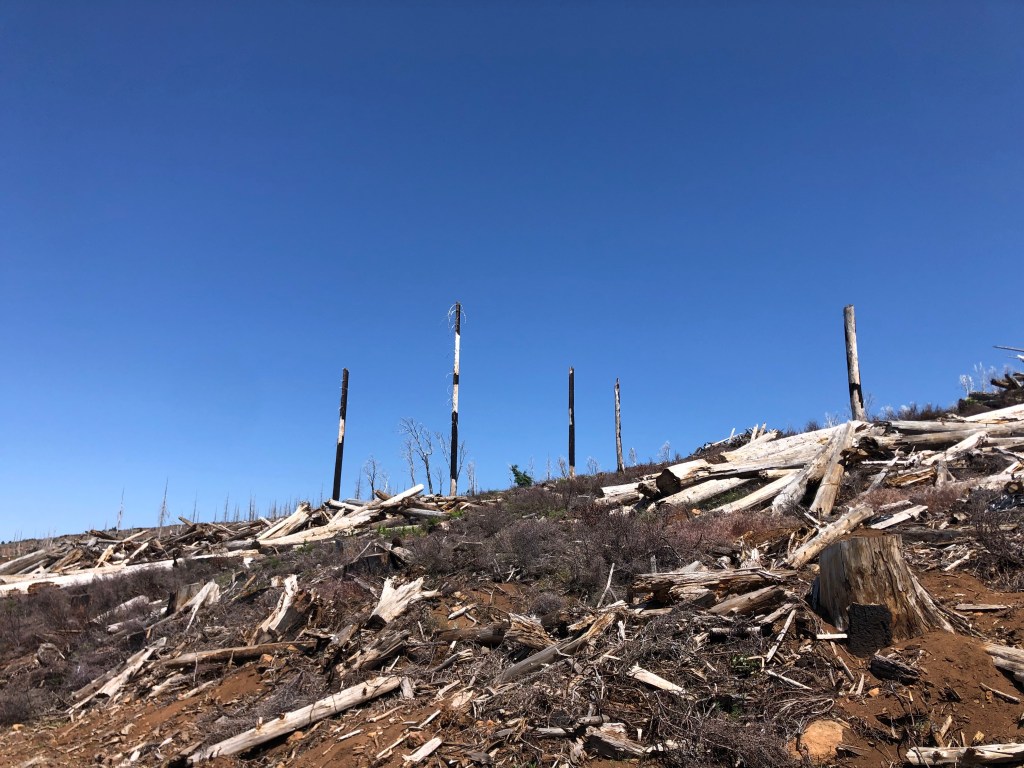
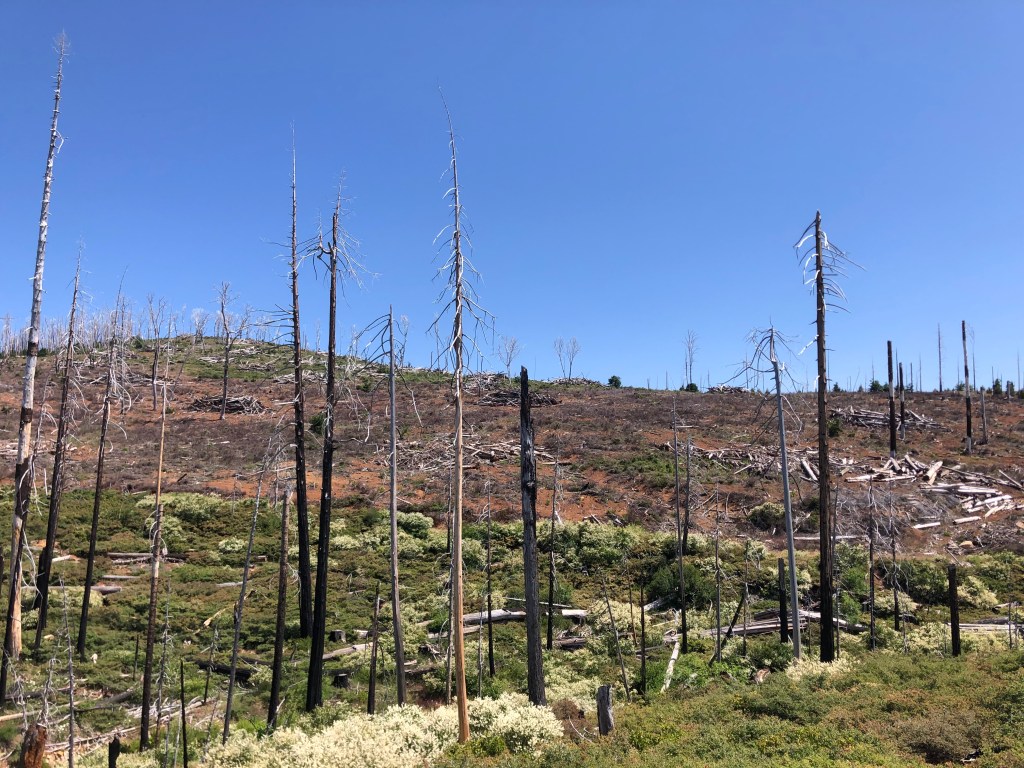
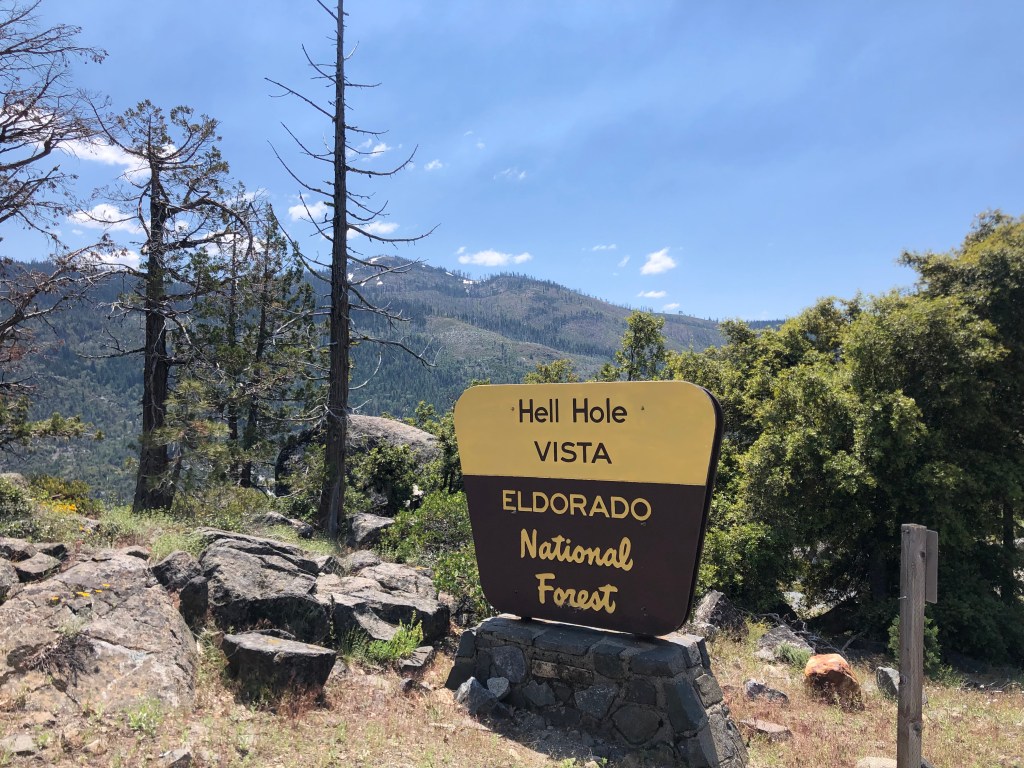
Eventually I passed beyond this hellscape and was again surrounded by green forest. I identified several prime camping spots that W and I might try out. And then I came upon something unusual:
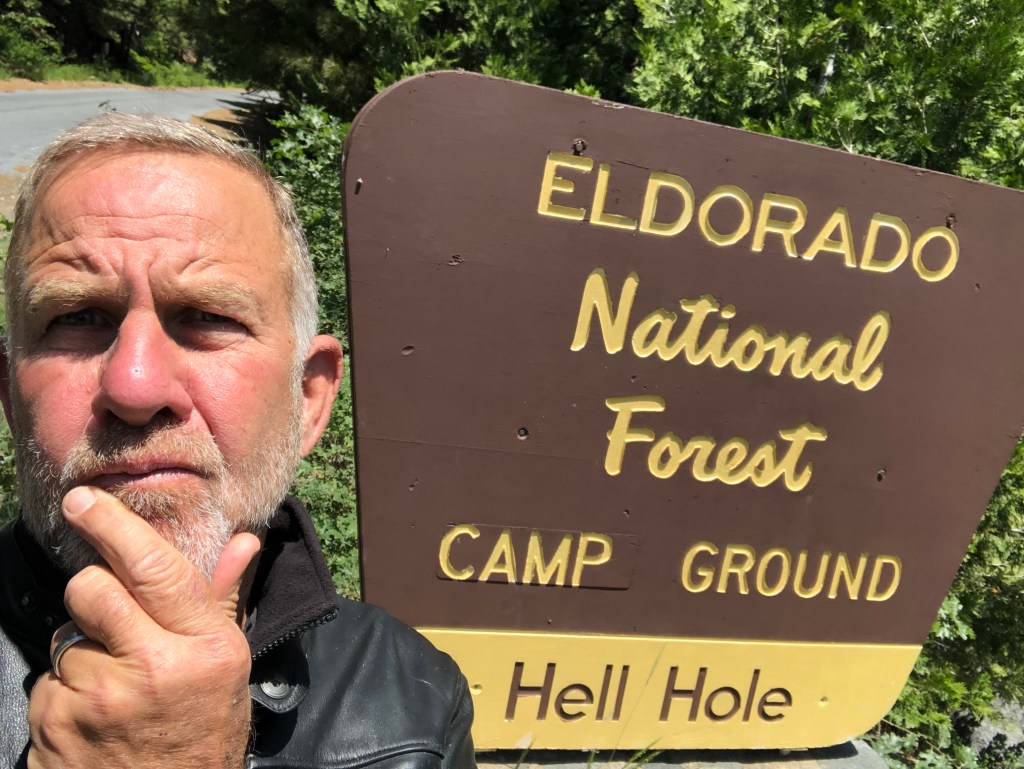
The name Hell Hole certainly doesn’t conjure up idyllic landscapes the way the names Sugar Pine and Emerald Bay and even Stumpy Meadows do. In fact, it seems like the opposite of what you’d want for a campground. The name reminds me more of my first, cramped apartment, located in a shabby building in a gritty part of Sacramento. It also brings to mind a song by the fictitious heavy metal “band” Spinal Tap.
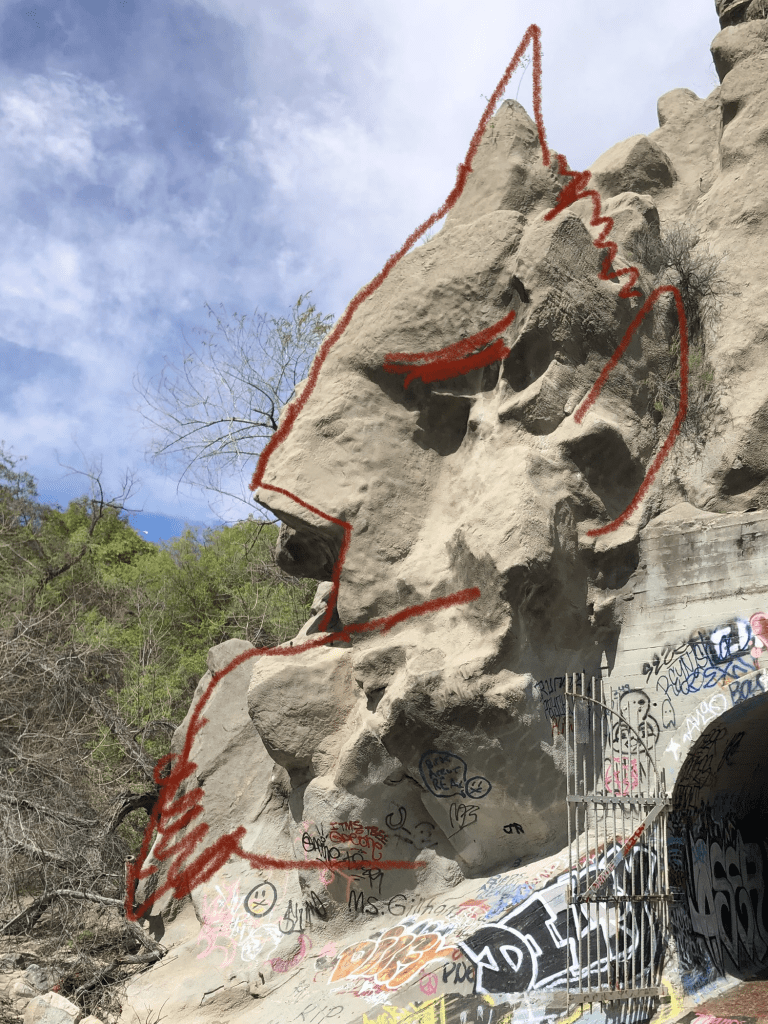
“Hell Hole” also got me thinking about an earlier trip to Devil’s Gate Dam in Pasadena, where a rock outcropping supposedly resembles a profile of the devil. Here’s my photo from that trip:
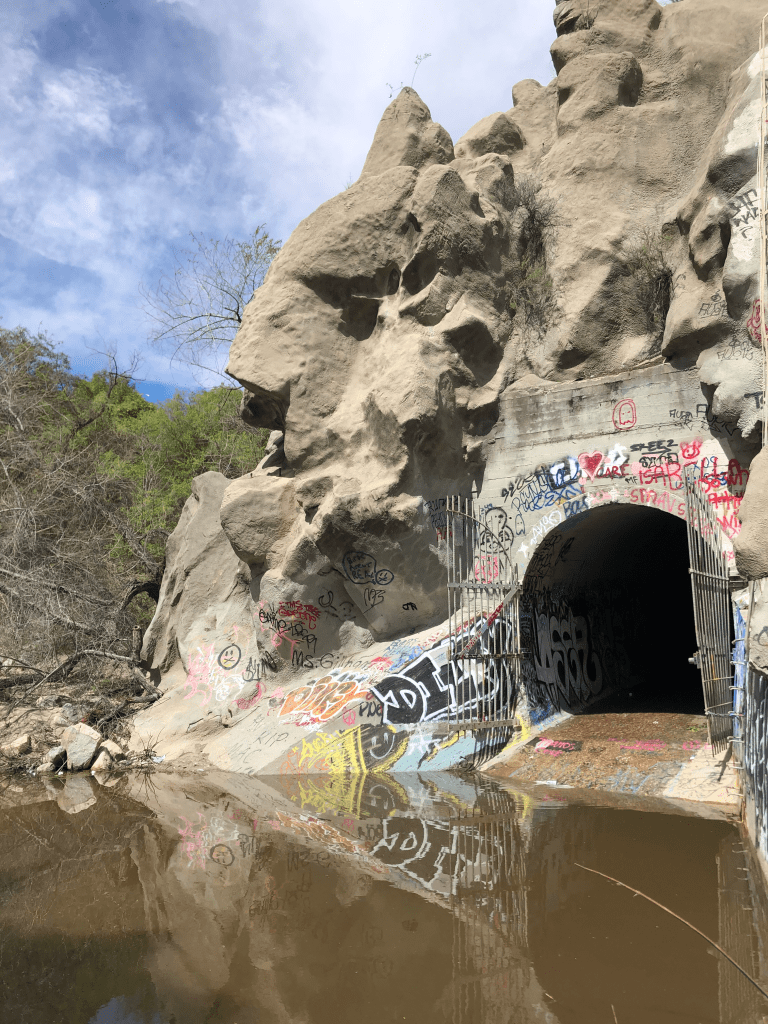
You don’t see it? How about now:
Anyway, the Hell Hole campground gets its name from the Hell Hole Reservoir, which got its name from Hell Hole canyon which it filled. Wikipedia gives this account of the name:
How the canyon came to be named Hell Hole is a combination of folklore and speculation. An early author, George Wharton James (1858–1923), visited the canyon in 1913.[2] He attributed the name to an unidentified miner seeking riches during the Squaw Valley mining excitement of 1862. It was “a hell of hole to get out of,” James wrote, but admitted his source for the place name was more speculative than the anonymous miner’s chances for riches at Squaw Valley.
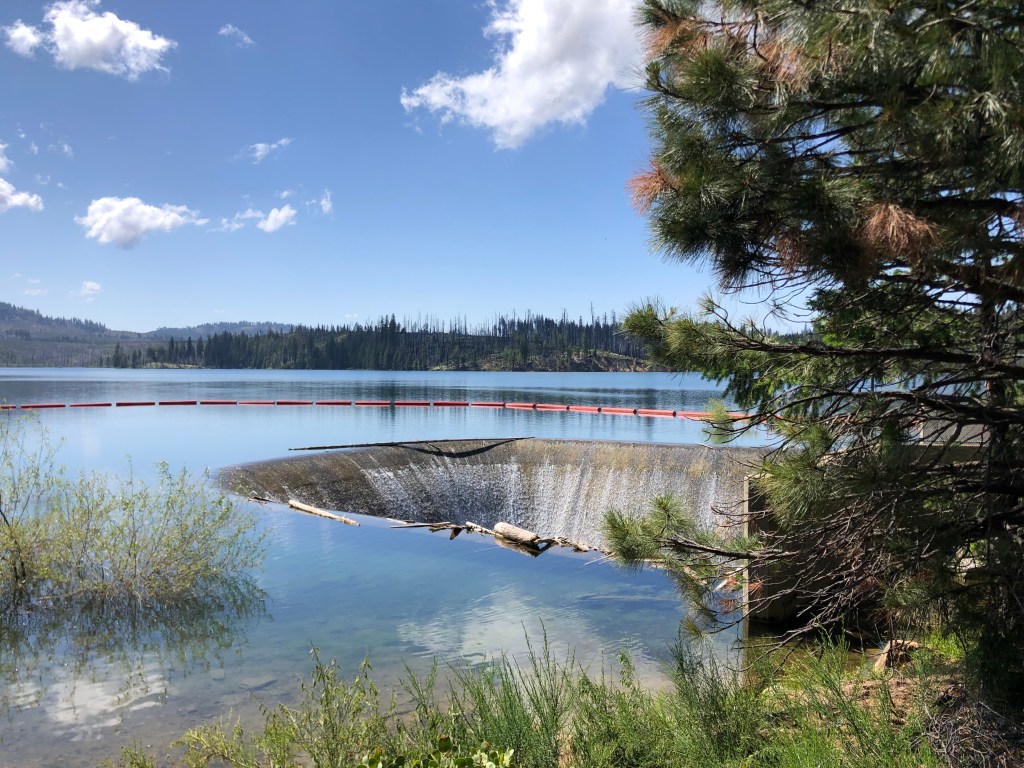
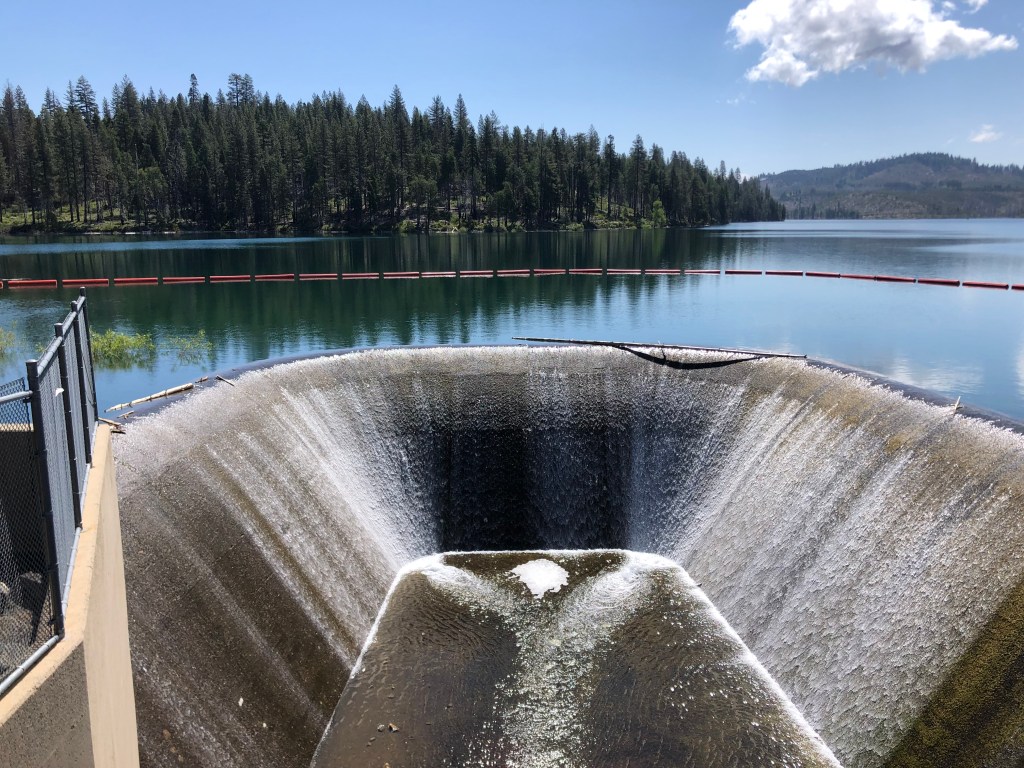
The reservoir was created in 1966 when the Placer County Water Agency dammed the Rubicon River. Covering about 1,250 acres, it’s a good-size reservoir. And despite its name, it’s a beautiful setting.
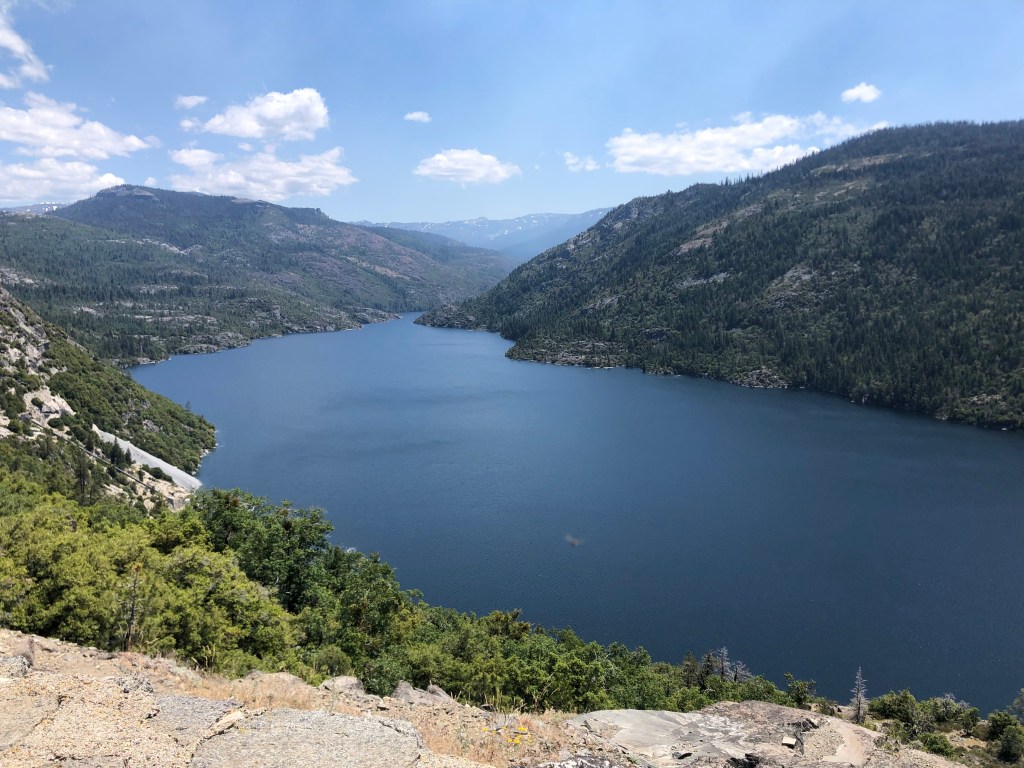
I hiked up to a scenic overlook, where I passed an enjoyable 30 minutes just looking at the scenery and enjoying the warm sunshine.
After chatting with some campers and making a mental note of this area for my outing with W, I figured it was time to start heading back. For my return trip, I planned to take Mosquito Ridge Road west to the town of Foresthill (pop: 1500), and then head home on CA-49 South. Mosquito Ridge Road is narrow and windy, and the asphalt is potholed and cracked, but the surrounding scenery made it worth the inconvenience.
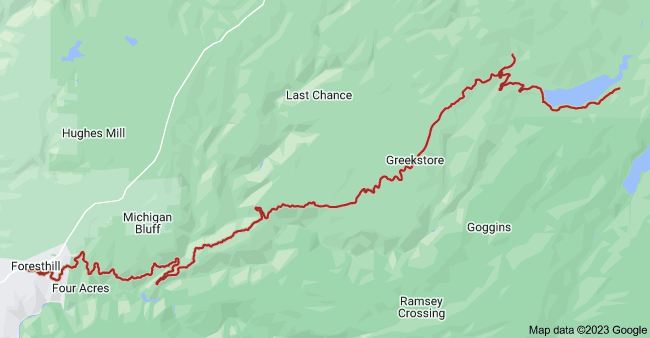
When I got on to Mosquito Ridge a sign informed me that Foresthill was 45 miles away, so I settled in for a long, slow ride. About halfway through my journey I encountered this unwelcome sight:
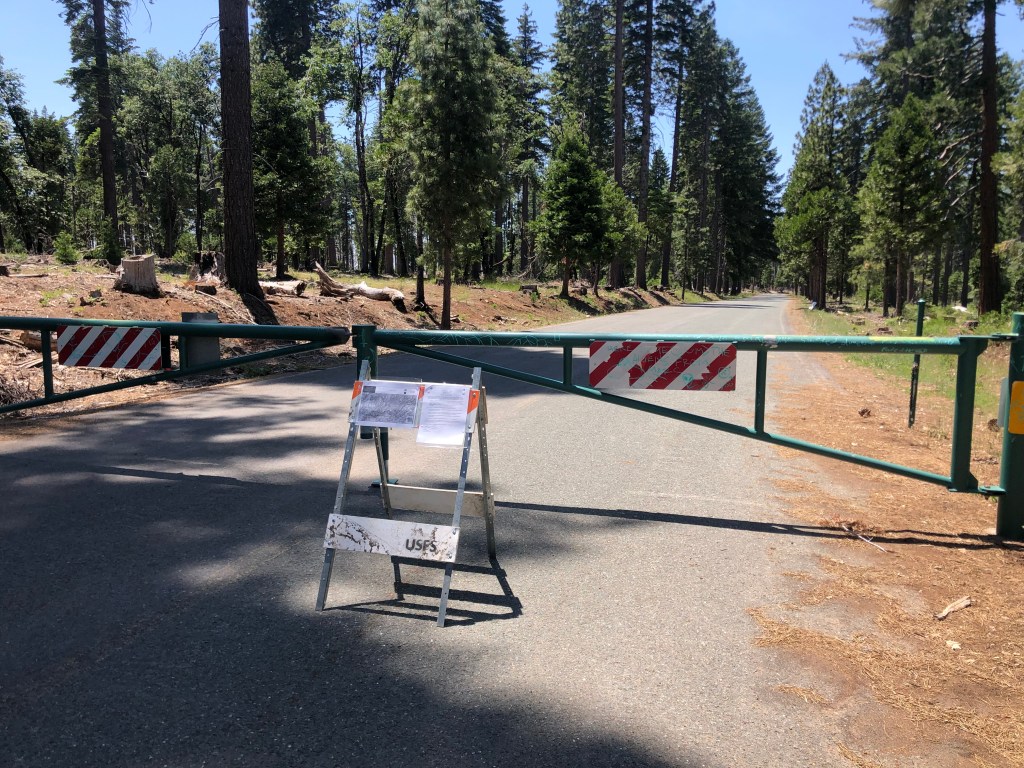
Attentive readers will recall that I’ve run into numerous road closures in my travels. It’s especially inconvenient for me as I’m riding a motorcycle with a small gas tank, so unexpected backtracking in remote areas can be stressful. What’s more irritating is this closure came with no forewarning, and the roadblock itself doesn’t really explain what’s going on. Indeed, instead of a “road closed” sign or something equally straightforward, there’s just a xeroxed office memo tacked to a folding barricade.
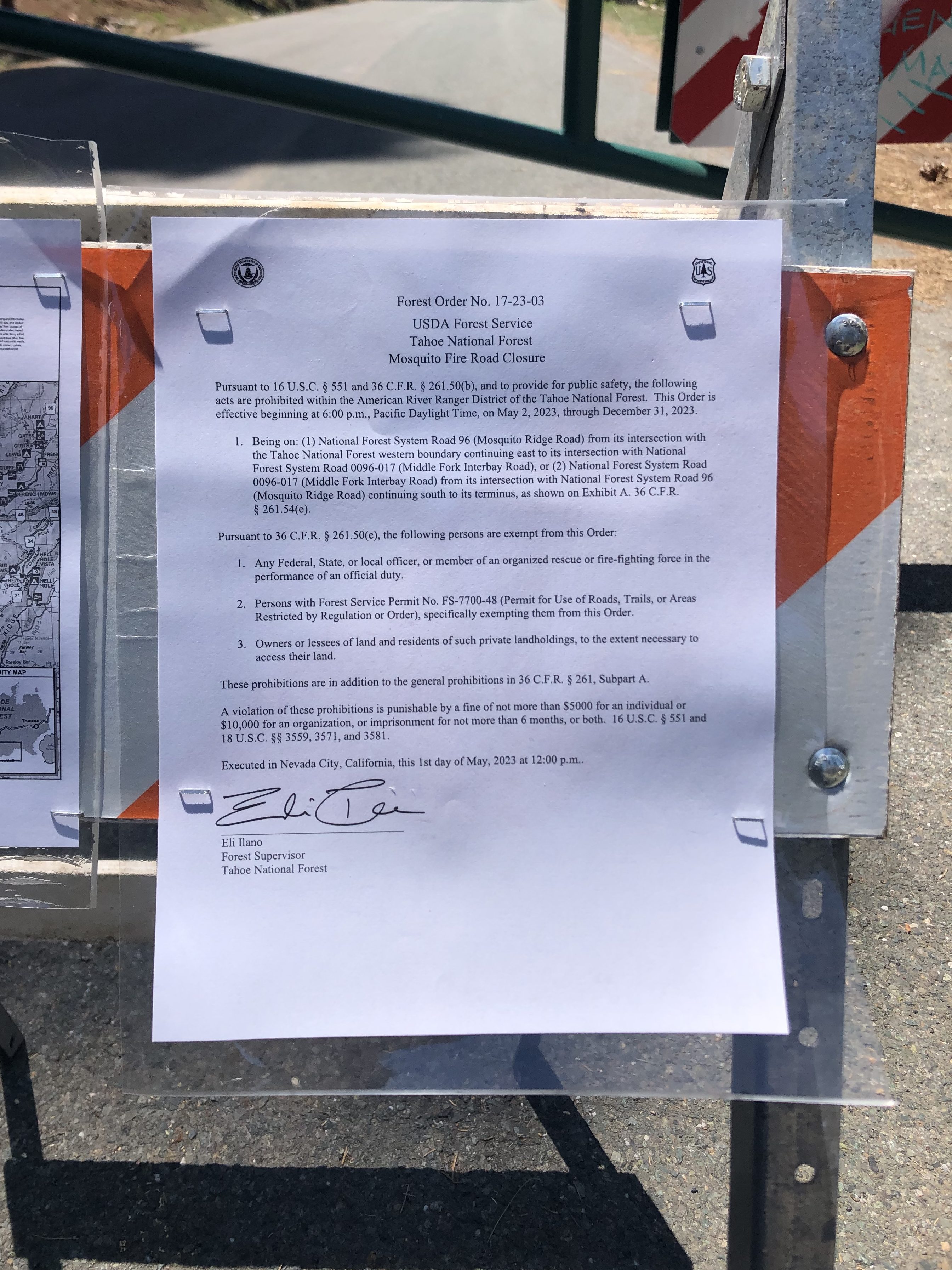
This “forest order” cites “Section U.S.C. Sec. 551 and C.F.R….” blah blah blah… What caught my eye, though was the reference to a $5000 fine and 6 months in jail. Rather than figure out the specific coordinates of the prohibited zones and the details of the exemptions, I just turned around and went back towards the Hell Hole, and then retraced by initial route through the charred hellscape back to Georgetown, hoping I wouldn’t run out of gas.
And then, as if on cue, I encountered a second unwelcome sight: A forest fire!
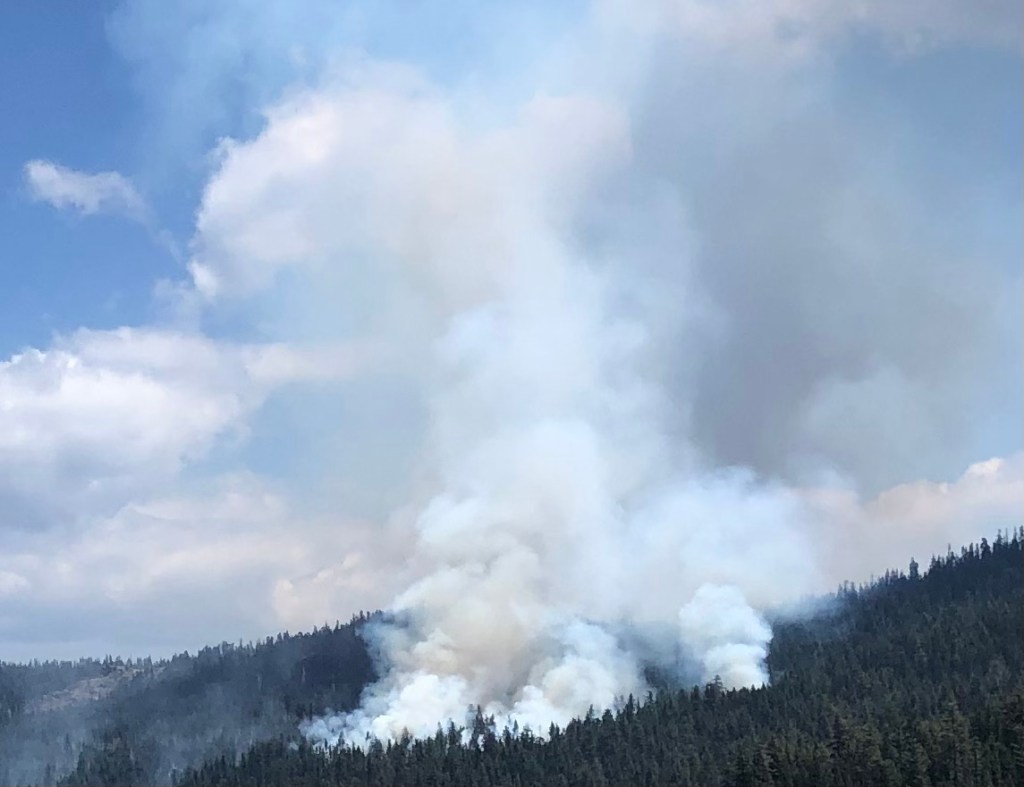
Feeling a little panicky, I got out my phone to call 911. But there’s no service out here in the middle of nowhere. I decided to find a ranger station at the Hell Hole. But then I noticed a portable, electronic sign board: “RX BURN. DO NOT REPORT.” I interpreted this to mean “prescribed burn,” even though technically their sign says “prescription burn.” What would Section U.S.C. 551 have to say about that?
The rest of the trip was uneventful. I got to Georgetown with 7 miles left in the tank, and I got home in time for cocktails. It was a hell of a trip.

 Chasing Phantoms