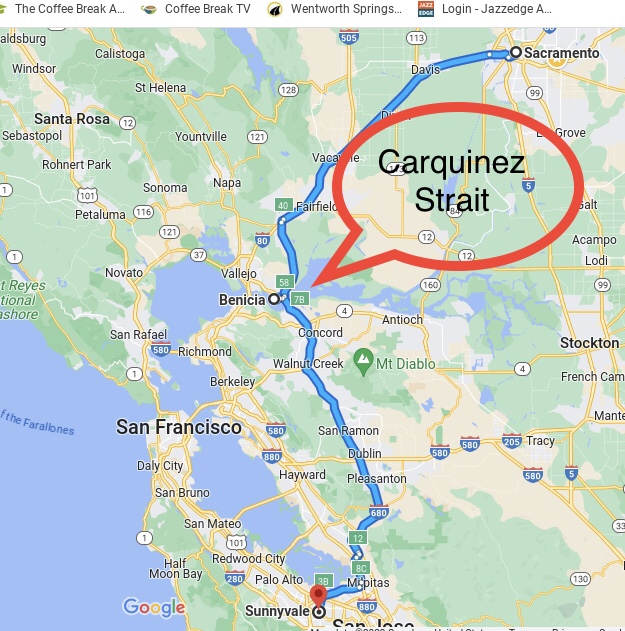
Eons ago, when I finished college, I moved to Sacramento, and in the succeeding years I made many weekend trips back to the familial homestead in Sunnyvale. The trip required crossing the Carquinez strait on the Benicia-Martinez Bridge. In those days, the bridge had traffic going in both directions, but in 2007 a second bridge was opened and each of the two bridges was henceforth devoted to traffic in a single direction.
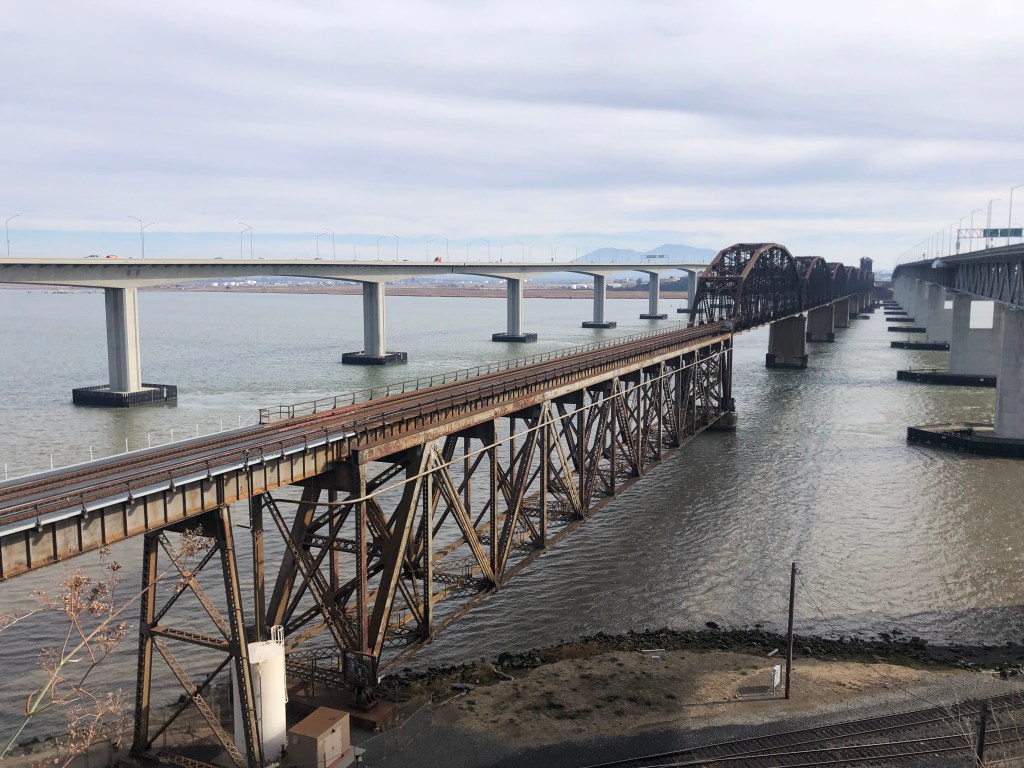
As I crossed the Carquinez Strait in my Studebaker Hawk (which I’m not making up), I would always glance at the old railroad bridge that ran alongside me. Often I’d see a train rumbling over the creaky structure. Here’s a shot I took this morning of the railroad bridge flanked by the two automobile bridges:
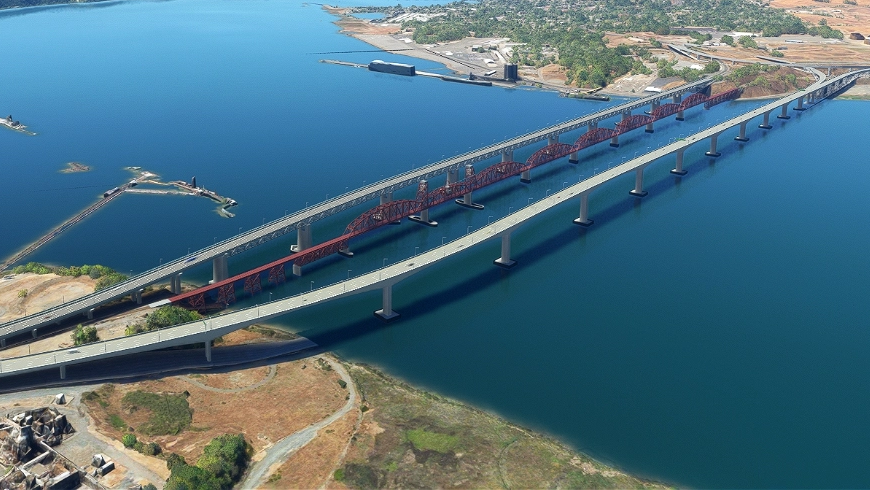
The Benicia-Martinez Bridge railroad bridge opened in 1930. It was–and still is today–the second-longest railroad bridge in North America. But did you know that trains had already begun crossing the Carquinez strait more than half a century earlier? How could this be?
To answer this question, I visited the unassuming town of Benicia (pop: 27,000). Briefly California’s capital (from February 1853 to February 1854), Benicia today is famously home to my son Ian and daughter-in-law Katelyn. But it’s also home to this old depot which can shed some light on our railroad bridge puzzle:
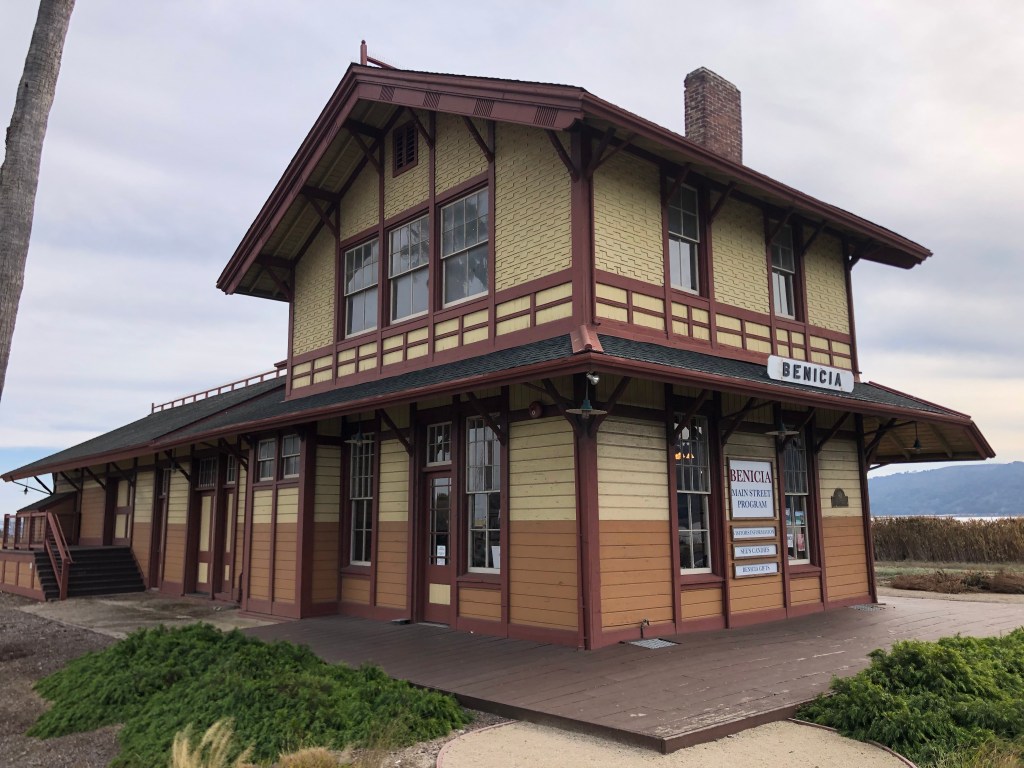
This 144-year-old depot was originally built in 1879 in the small town of Banta, California (pop: unclear, though probably around 100 according to this account). Banta was a whistlestop on the original transcontinental railroad. Westbound trains would make the final leg from Sacramento to the Bay Area by way of the Altamont Pass, which they would cross just after passing Banta.
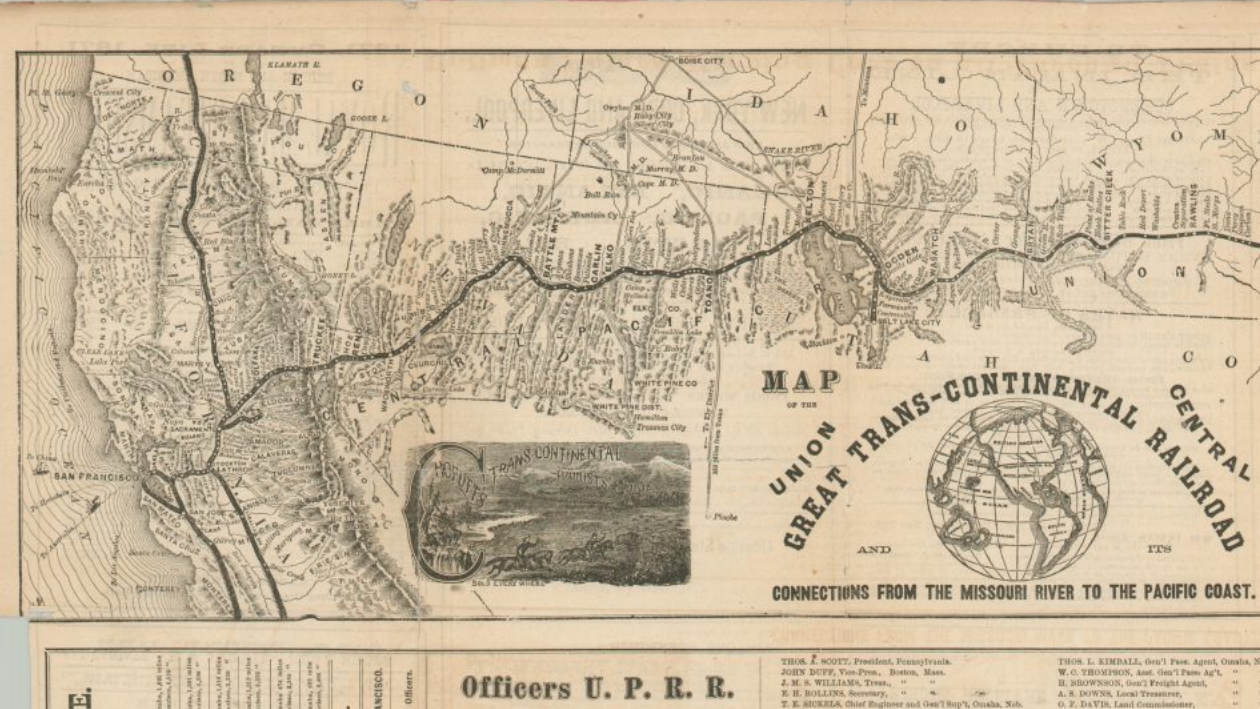
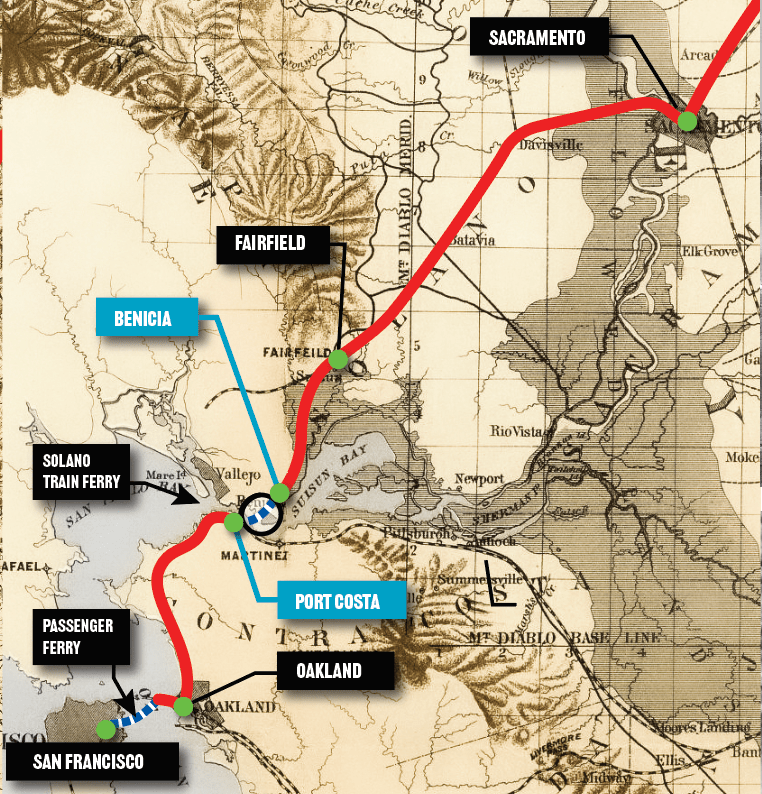
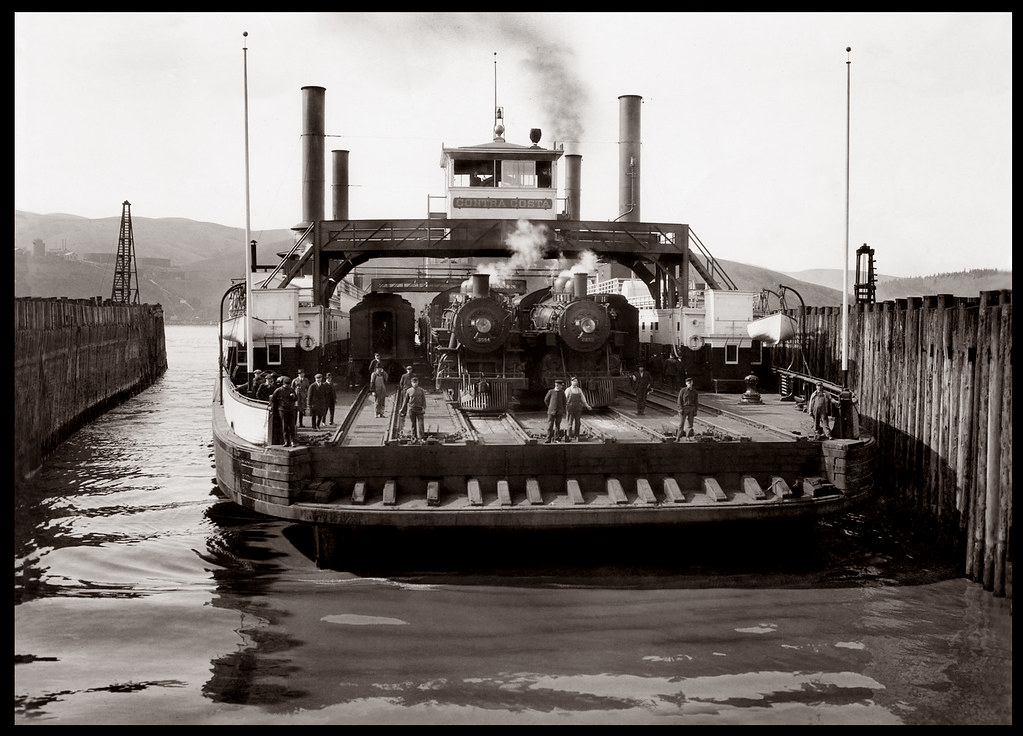
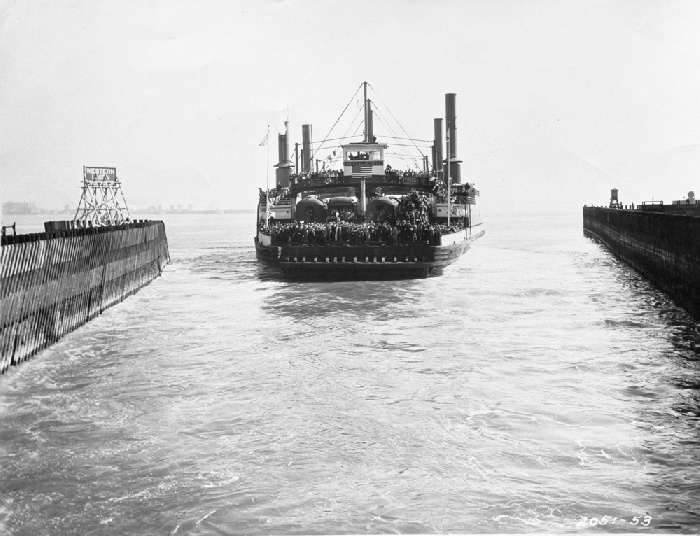
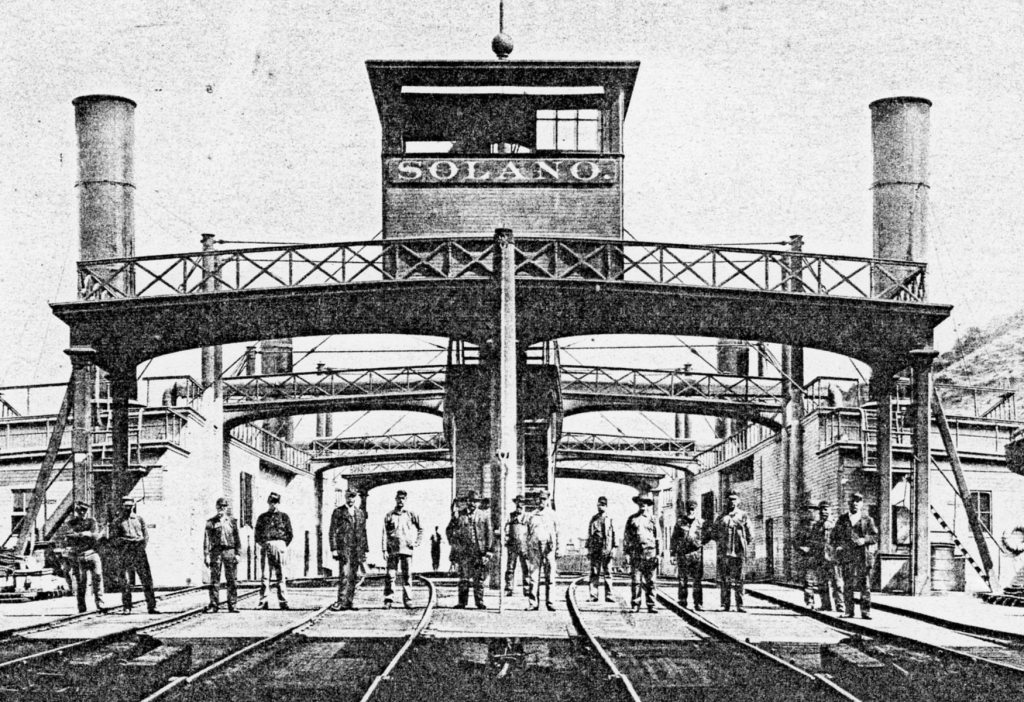
But the same year the Banta train depot was constructed, the Southern Pacific opened a new, shorter route from Sacramento to the Bay Area. This route crossed the Carquinez Strait, shaving off several hours from the old route over Altamont Pass. But since the Benicia-Martinez railroad bridge wouldn’t be constructed until 1930, trains were ferried over the Strait. Seriously. An enormous ferry dubbed The Solano was constructed for this purpose. Westbound trains would slowly chug over the Benicia Pier, roll onto the Solano, and make the half-hour trip to Port Costa, about a mile across the water. From there the trains would return to the mainline and continue to the end of the line in Oakland.
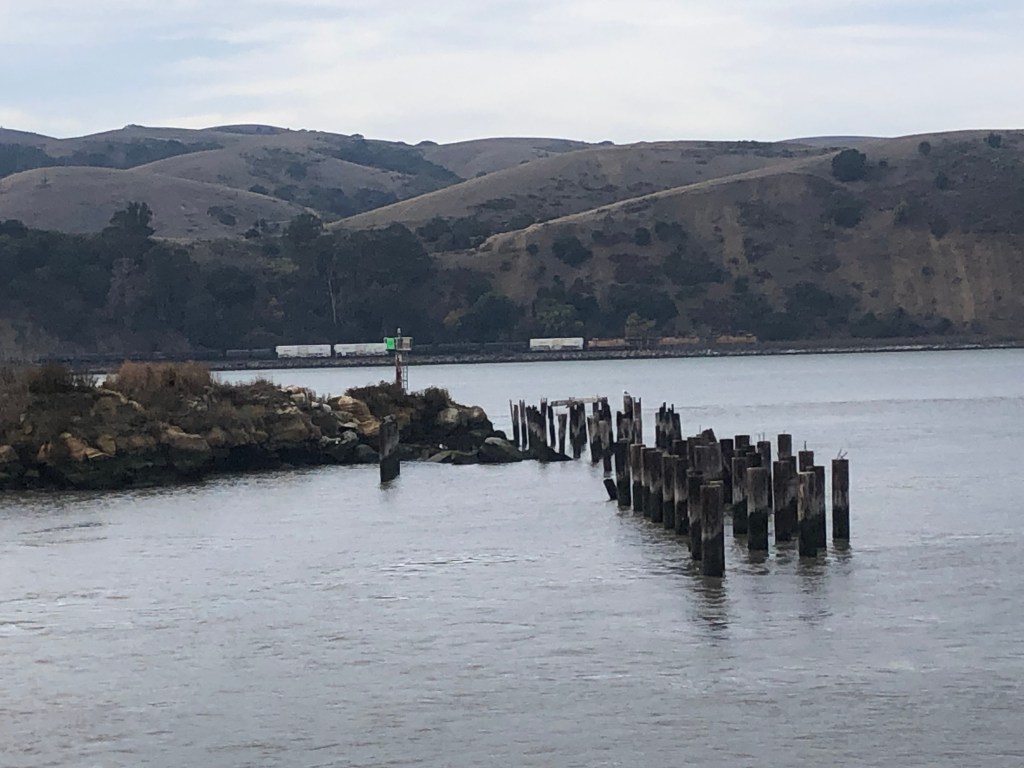
This morning I stood on Benicia’s modern fishing pier and looked out at the ancient pilings from the old pier where the Solano used to dock.
The Solano, which remained in continuous operation for 51 years, had a length of 425 feet and was equipped with four sets of tracks. It was the largest railroad ferry in the world.
Demand on the line increased continually, and eventually it was decided that a full-size railroad station was needed on the Benicia side of the ferry crossing. So in 1902, Southern Pacific uprooted that station they’d built in Banta, floated it on a barge to Benicia, and planted it where you see it today.
The Solano kept working around the clock, year in and year out. In 1914 she was joined by a sister ferry, the Contra Costa, to absorb the growing demand on the line. But then in 1930, the railroad bridge (which we encountered near the beginning of this post) opened, and the ferries instantly became obsolete. They made their last run in November 1930.
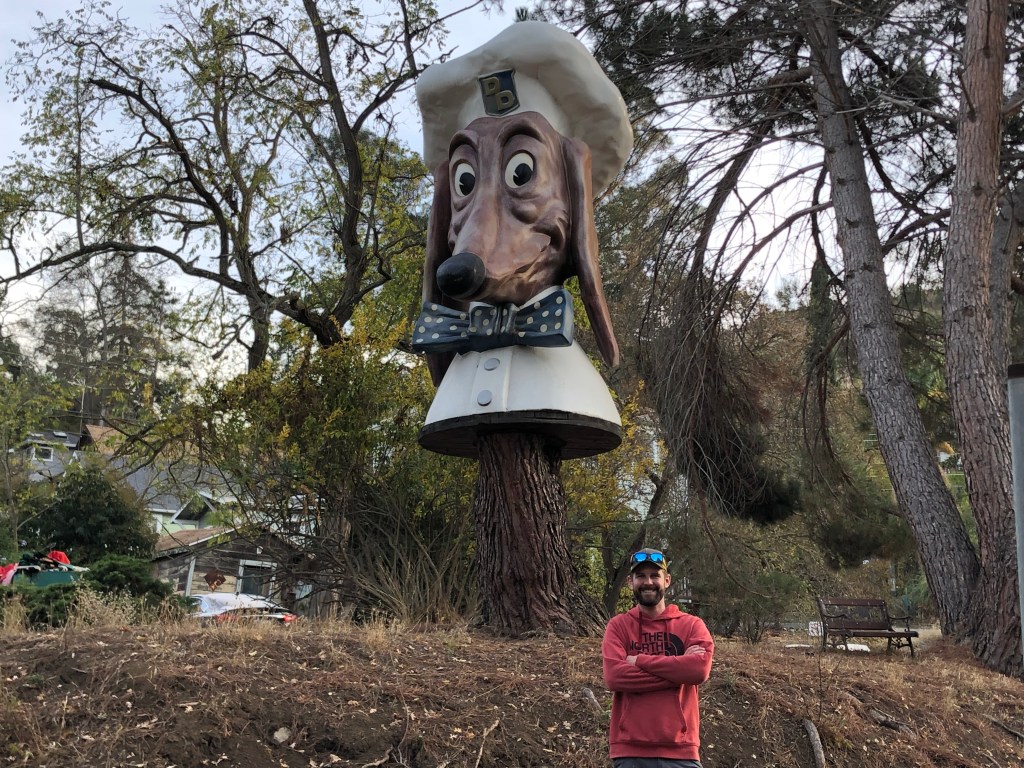
So after exploring the depot and remains of the Benicia ferry pier, I enlisted son Ian to drive us to the other end of the ferry crossing, which was in Port Costa (pop: 200). Port Costa is a small, funky, historic town, replete with a Doggie Diner head. (People of a certain age may remember getting a hotdog at one of the Doggie Diner restaurants in the Bay Area in the 1960s or 1970s. I sure do! Those who don’t remember them can get enlightened here.)
After a bit of walking around Port Costa we came upon the remains of the southern dock of the Carquinez ferry crossing:
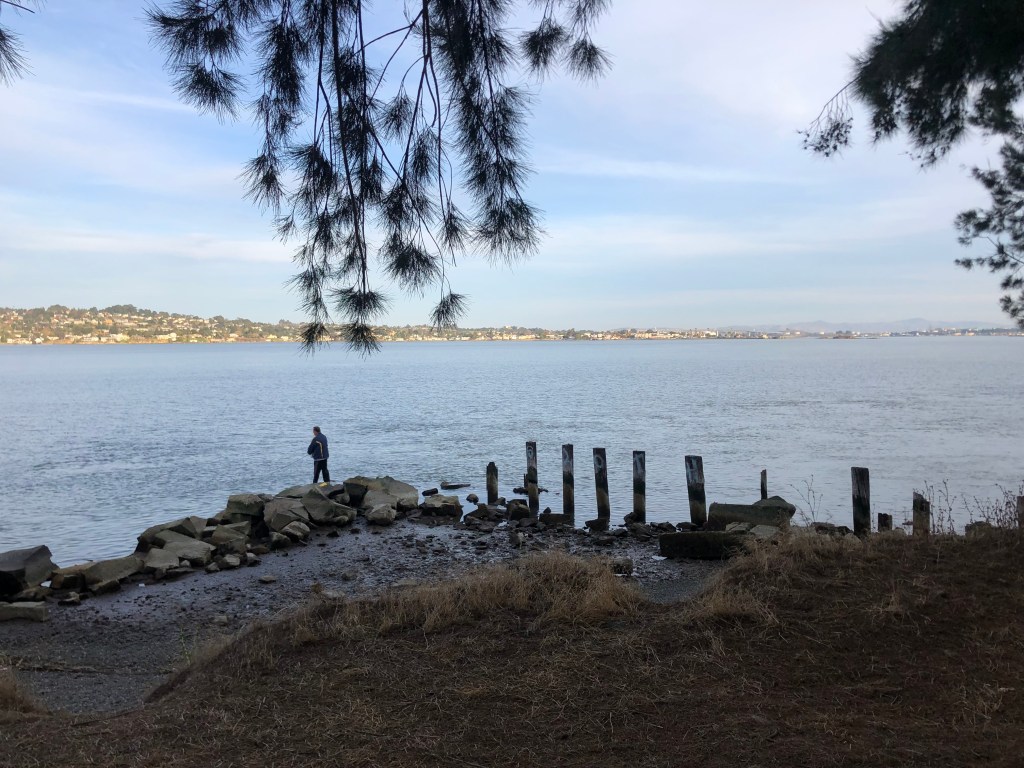
So, for those of you keeping score at home, we’ve managed to find the depot from which ferry-bound trains departed, the remains of both ferry piers, and the bridge that put the ferry out of business. But what of the ferry itself?
A little Internet research revealed that the Solano was decommissioned and towed out to Antioch in 1931. There she was scuttled near the bank of the San Joaquin River and partially submerged to serve as a breakwater. She remained there, largely identifiable in her old form, for about half a century. But in the 1980s some clown was setting off fireworks and accidentally set The Solano ablaze, and she burned to the waterline.
Naturally, Ian and I headed over to Antioch to see what remained of the Solano. The answer is “not a lot,” but there’s still a ghostly presence. Check it out:
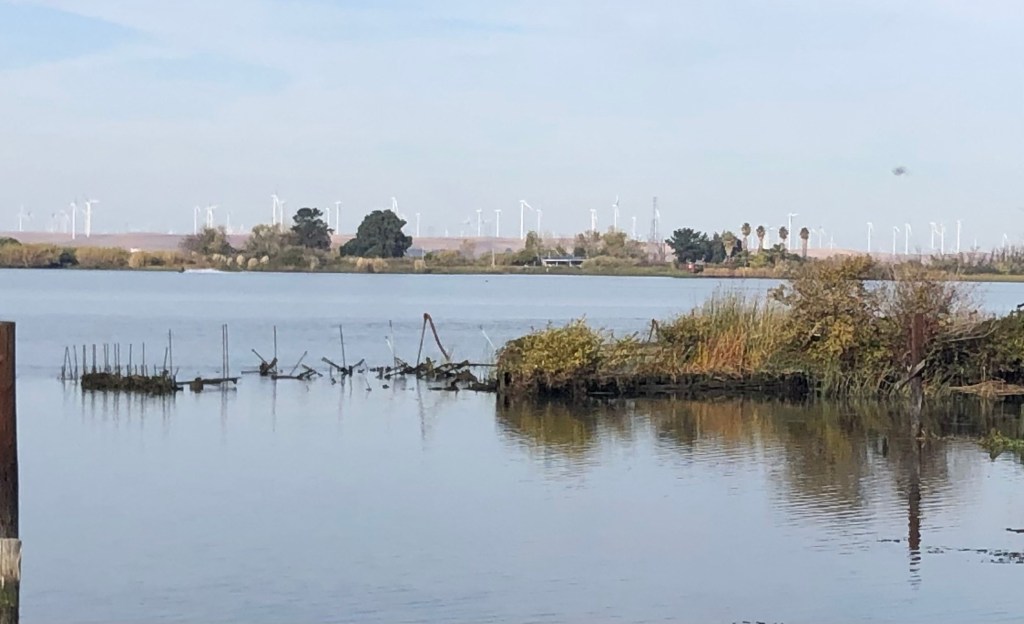
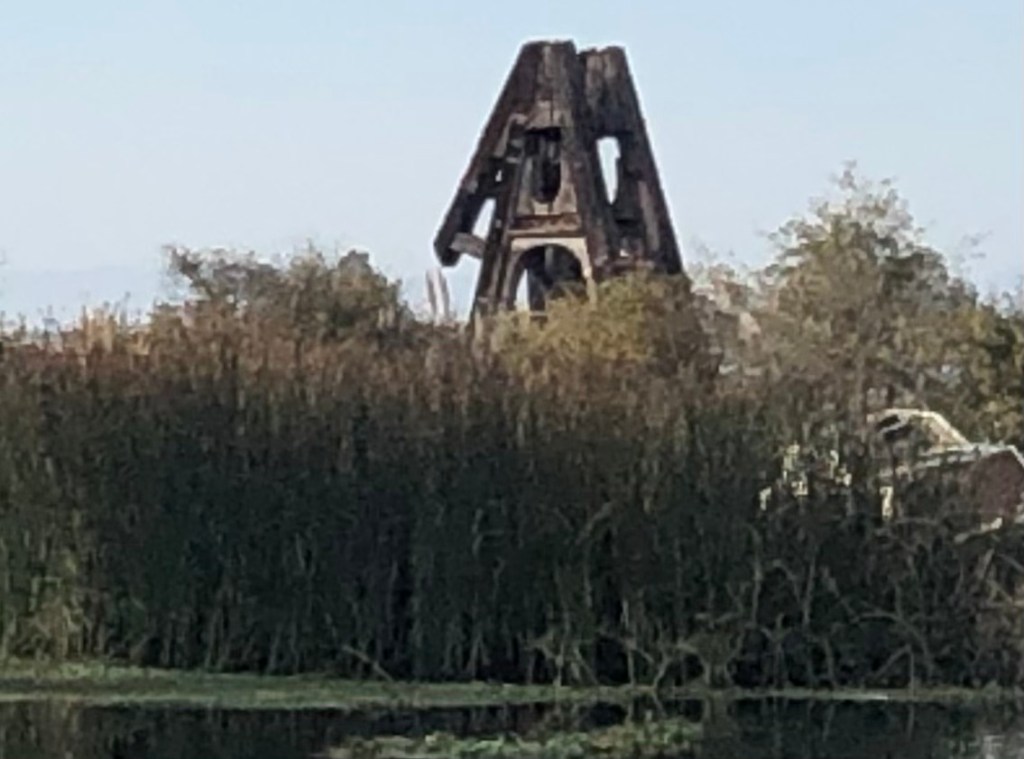
So that’s pretty much it. As always I’m struck by how physical barriers were overcome in the Age of Steam…and how remnants of that era can still be seen all around us, if we’re just willing to look.

 Chasing Phantoms
Fantastic post! Love the combination of history and exploration. Ferries were very common for RRs until bridges could be build, esp during the era around the building of the transcontinental. Check out similar stories of crossing the Mississippi and the Missouri. There was also quite a ferry system to take freight and passengers in and around the bay area, run by the SP, as well as the WP and ATSF and other local operations.
LikeLike
Steve, Fascinating story. Thanks for sharing. You guys have a great Thanksgiving! Chris
LikeLike