Only a short drive along Route 82 from my hotel takes one to Alabama’s capital city. Montgomery (pop: 200,000) is far and away the largest city I’ve been to on this trip. Montgomery was, of course, ground zero for the Civil Rights movement in the 1950s and 1960s. Throughout the downtown you encounter murals, statues, commemorative plaques, and other installations marking aspects of Montgomery’s civil rights history.
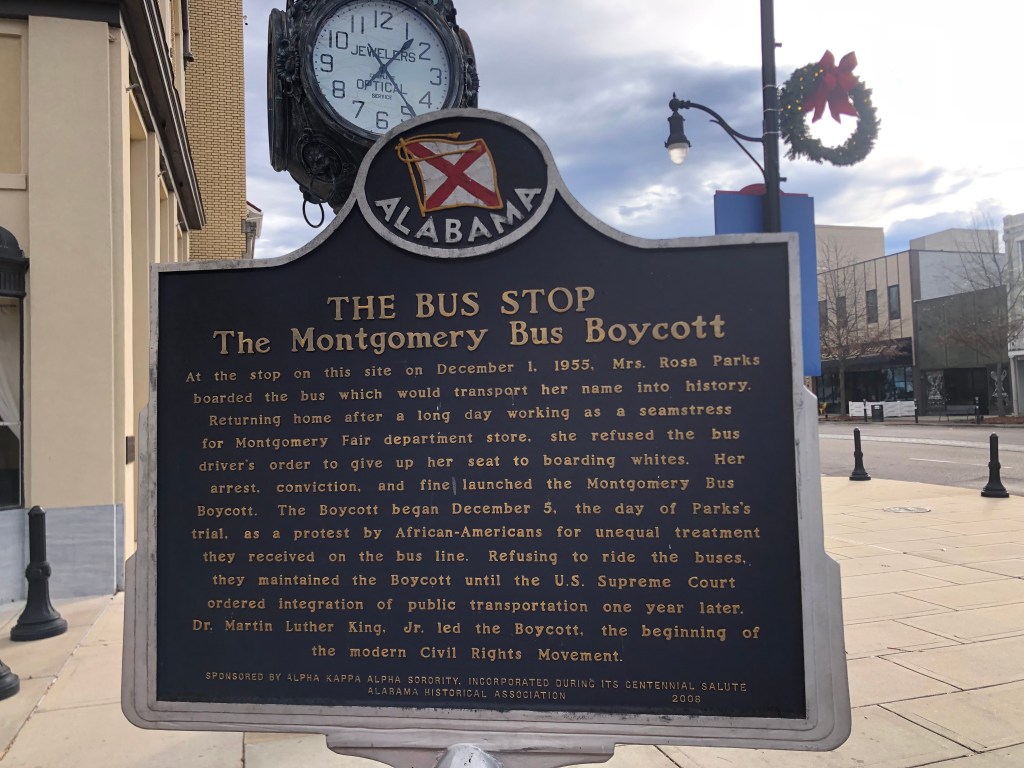
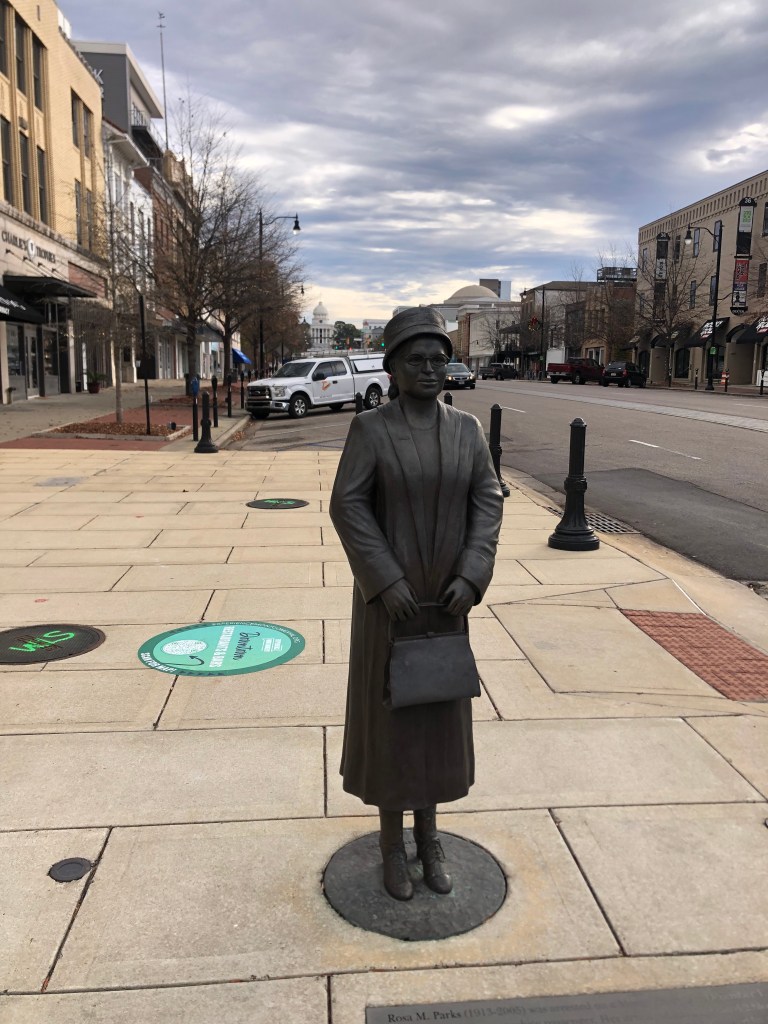
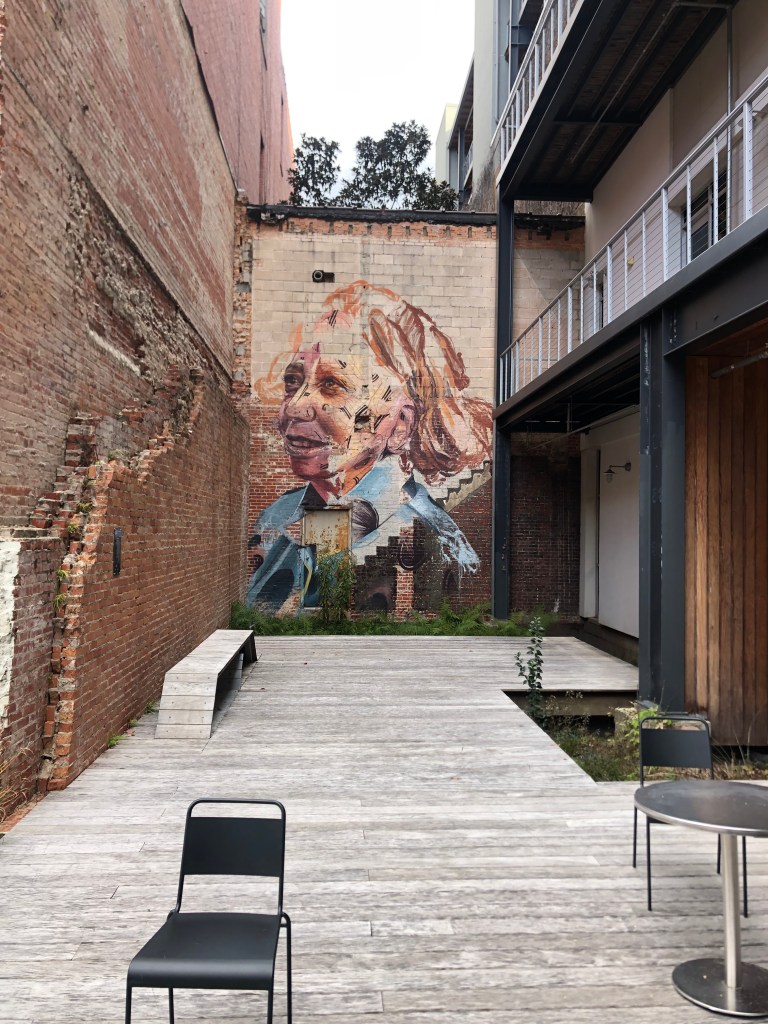
Montgomery’s streets are filled with many dozens of such iconography of the Civil Rights movement. Clearly the city’s official attitudes have changed greatly since the 1950s. And yet, it’s also evident that the city has not fully reconciled its history. The dissonance is captured in the city’s “great seal,” which I spotted on one of the historical markers:
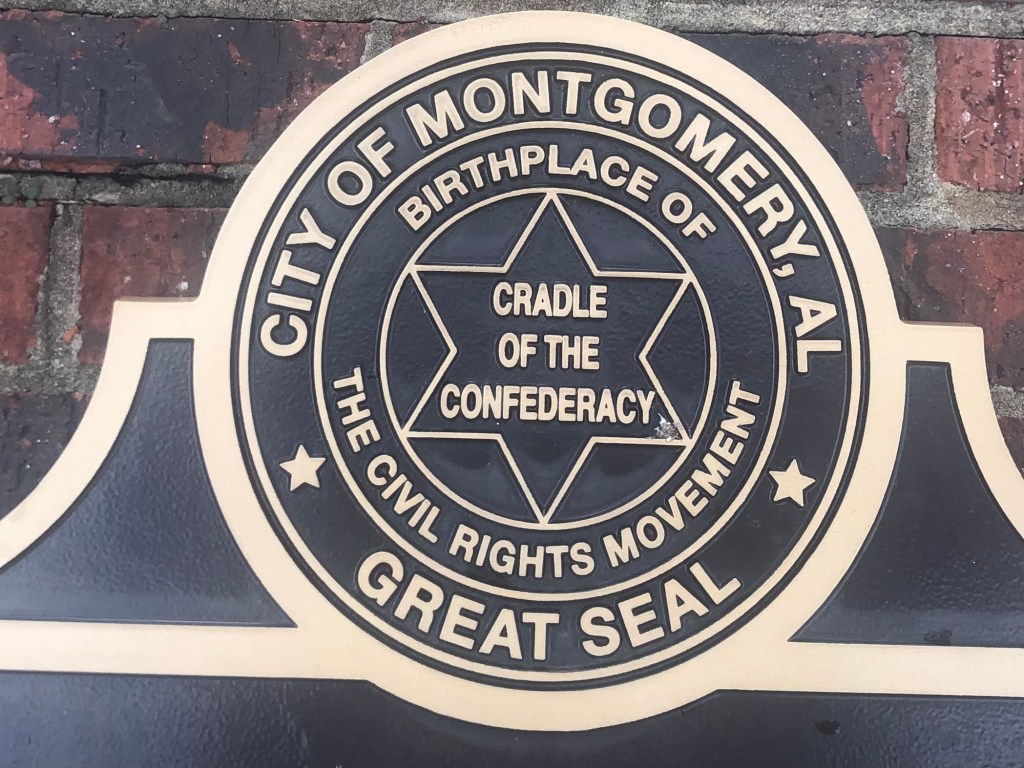
By way of background: For many years, the city seal included the “Cradle of the Confederacy” phrase, but not the reference to the Civil Rights Movement. The latter phrase was added in 2002, in an effort to take the sting out of what sounded like a paean to the confederacy. And yet, to me this seems to simply highlight the simultaneous existence of two conflicting mindsets: an embrace of Montgomery’s history as the capital of the Confederacy, and an embrace of its role in promoting the Civil Movement.
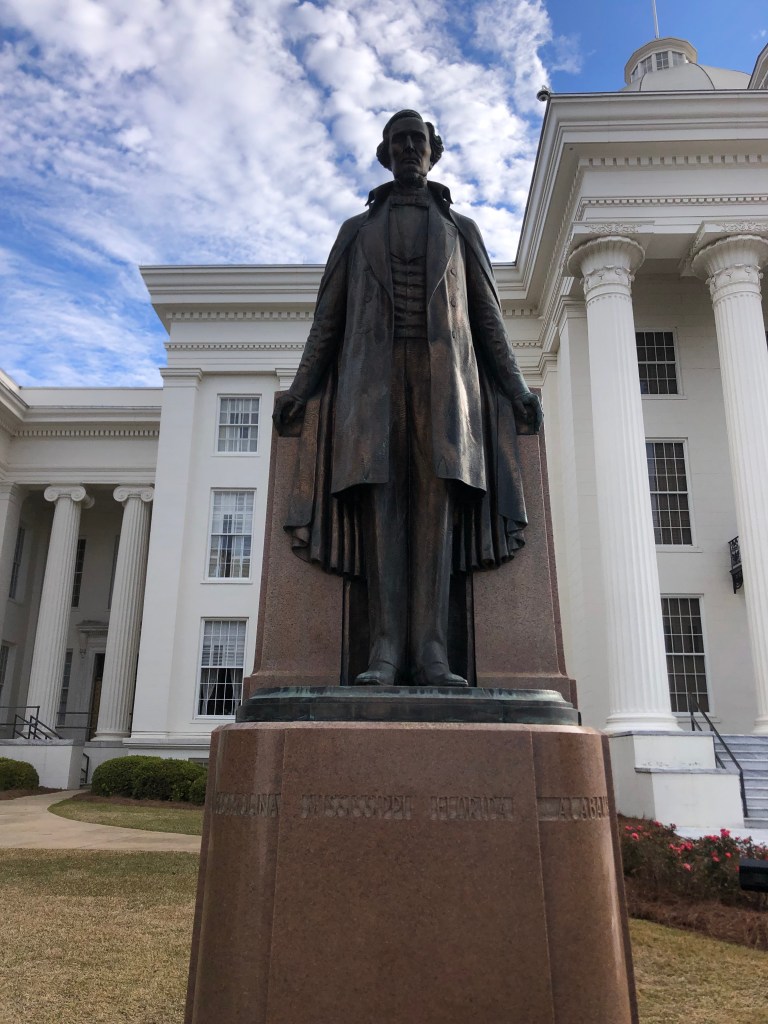
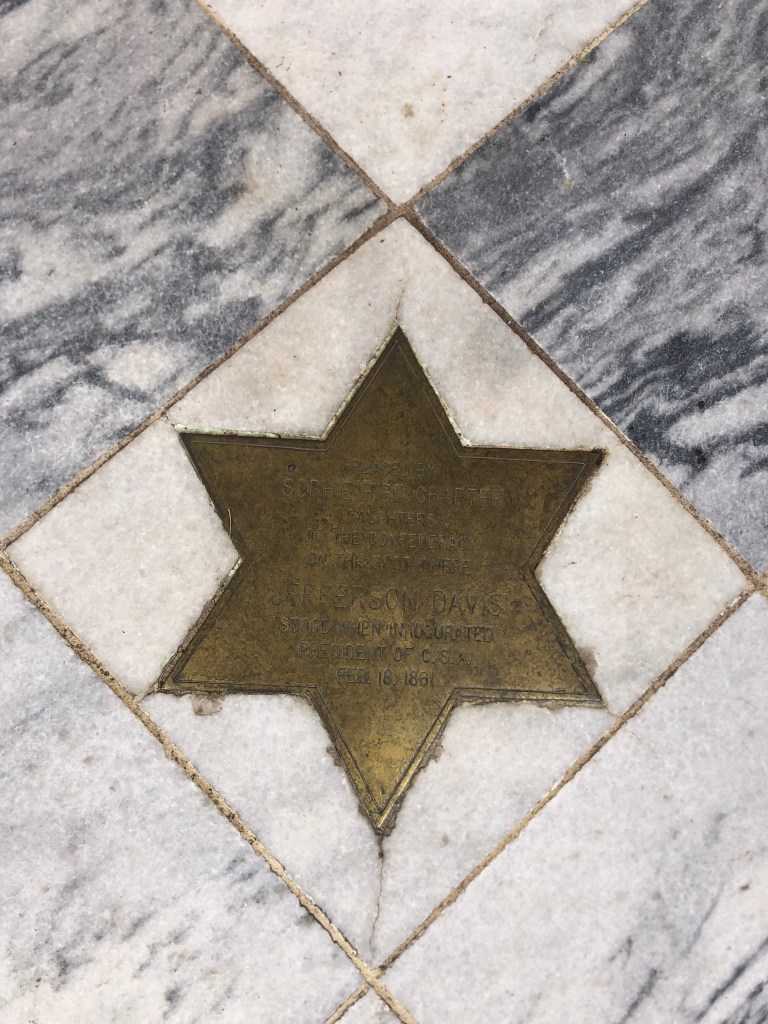
That contradiction becomes clearer as you walk up the street toward the Capitol building. There you can find a series of bronze reliefs depicting aspects of the slave trade and other mistreatment of African Americans. But you’ll also see a solemn statue of Confederate President Jefferson Davis, as well as a bronze star on the steps of the Capitol marking the spot where he took the oath of office.
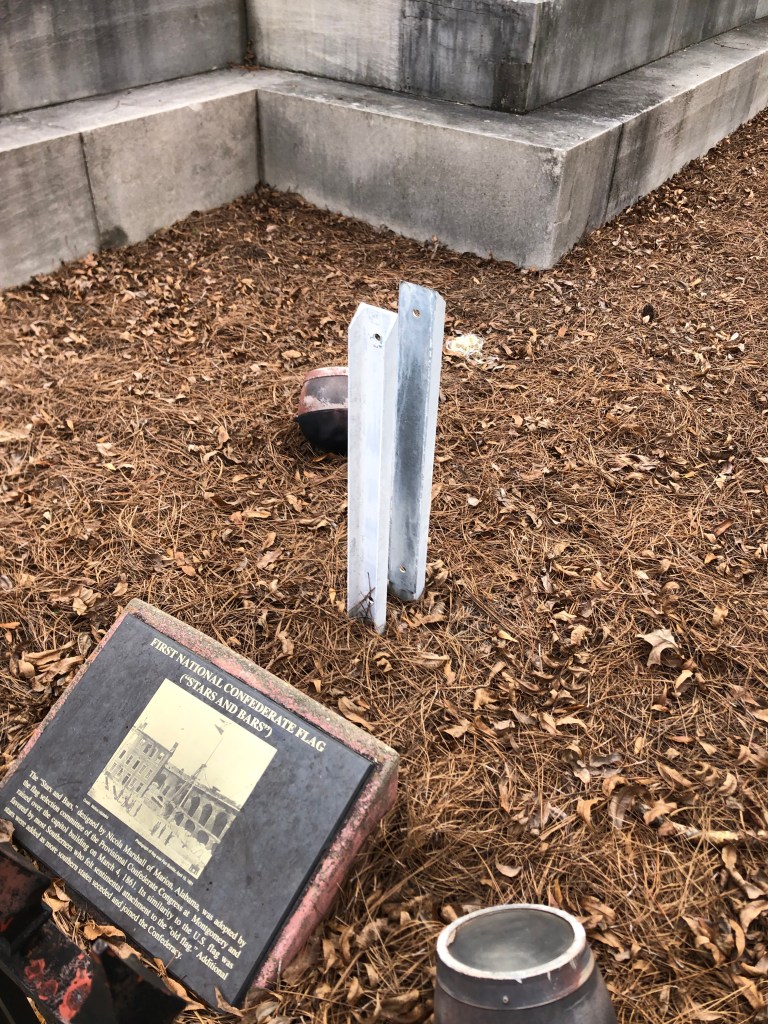
You’ll also see the empty spots where Confederate flags had flown until the Governor ordered their removal in 2015. But the bronze and limestone Confederate monument that those flags had surrounded still stands.
I certainly don’t presume to tell Montgomerians how to reconcile the various aspects of their history. But I would observe that there is a difference between acknowledging history and celebrating it.
OK, now that I’ve once and for all solved the cultural arguments over the Civil War, let’s move on…
Believe it or not, while in Montgomery I encountered my third Union Station on this trip. Montgomery’s Union Station was built in 1898 for the Louisville and Nashville Railroad. It was one of the country’s busier stations, serving 44 passenger trains from a dozen railroads during its peak. Over time, of course, rail travel diminished and the last train stopped at Union Station in 1979. Since then the station was converted to a visitor center and has been leased to various commercial clients. You’ll note that this structure has been magnificently preserved; the comparison to Texarkana’s crumbling structure is stark.
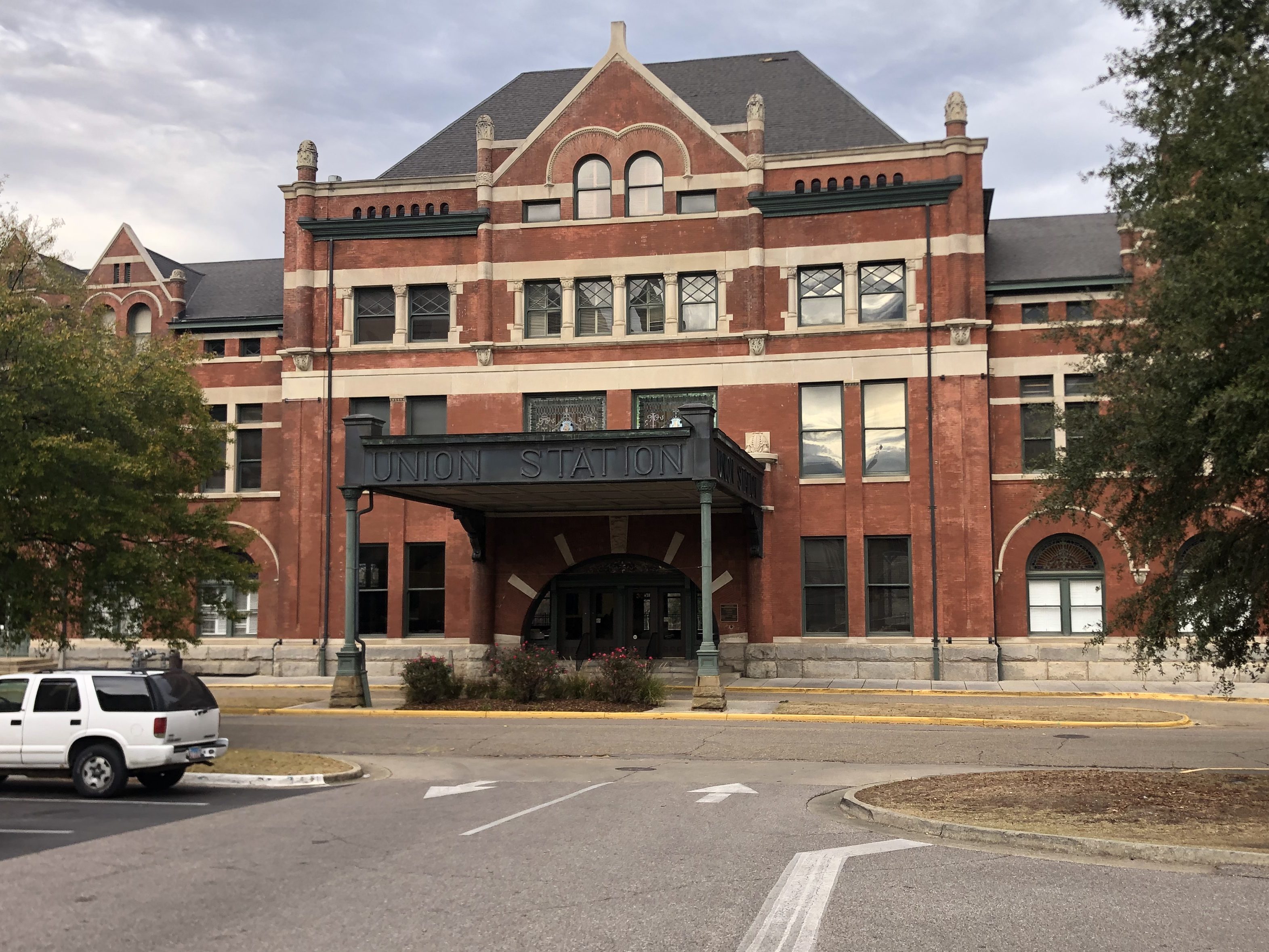
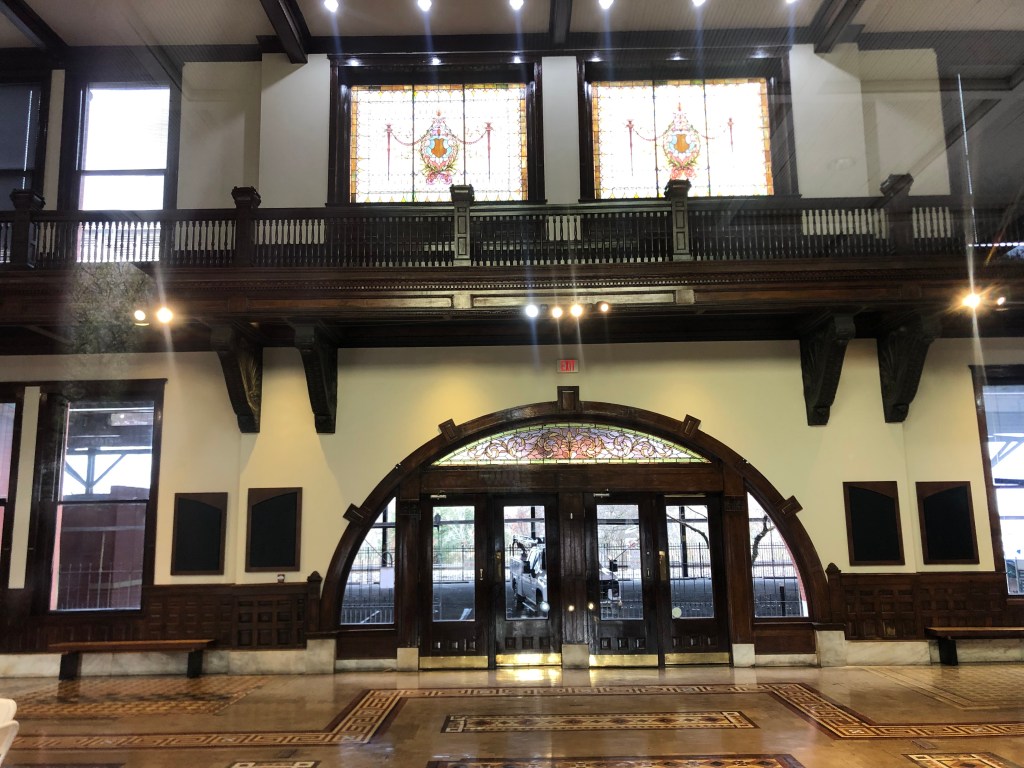
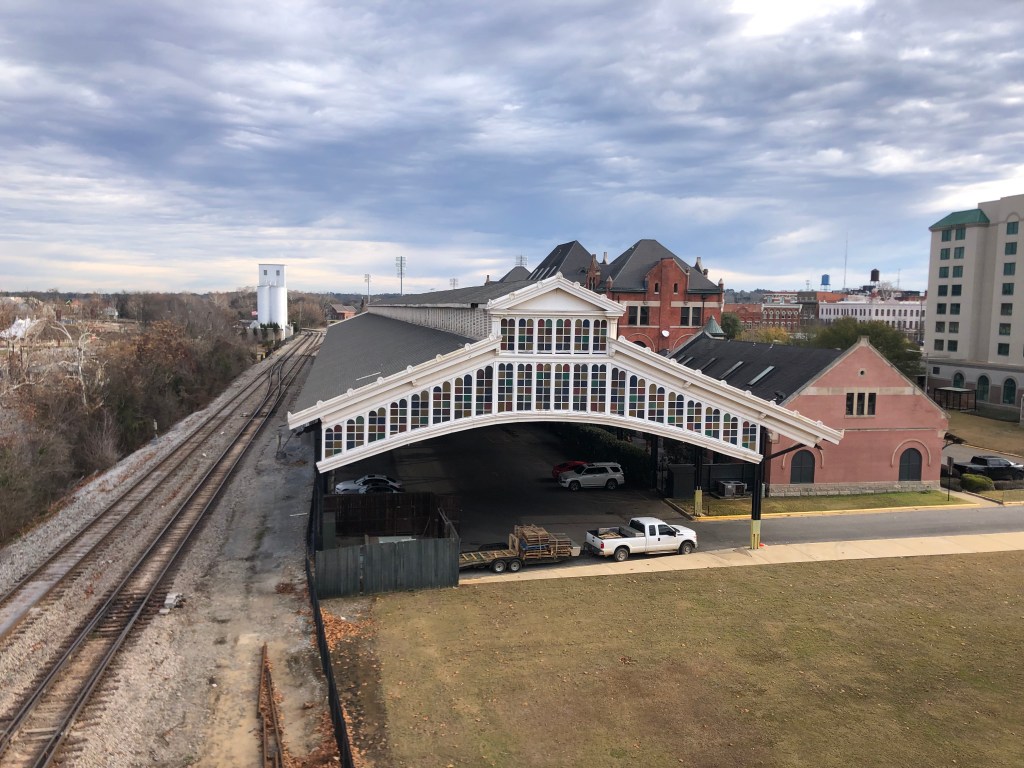
Railroads were crucial to the development and survival of southern towns. That’s true for the rest of the country as well, of course. But it seems that railroad infrastructure is more prominent in the towns I’ve encountered on this trip than it is in California towns. Maybe that’s just because California has (sadly) been more aggressive in tearing out the obsolete railroad infrastructure and substituting new housing developments and business parks. Whatever the reason, scenes like the one below (from Eufaula, Alabama) seem common on this trip.
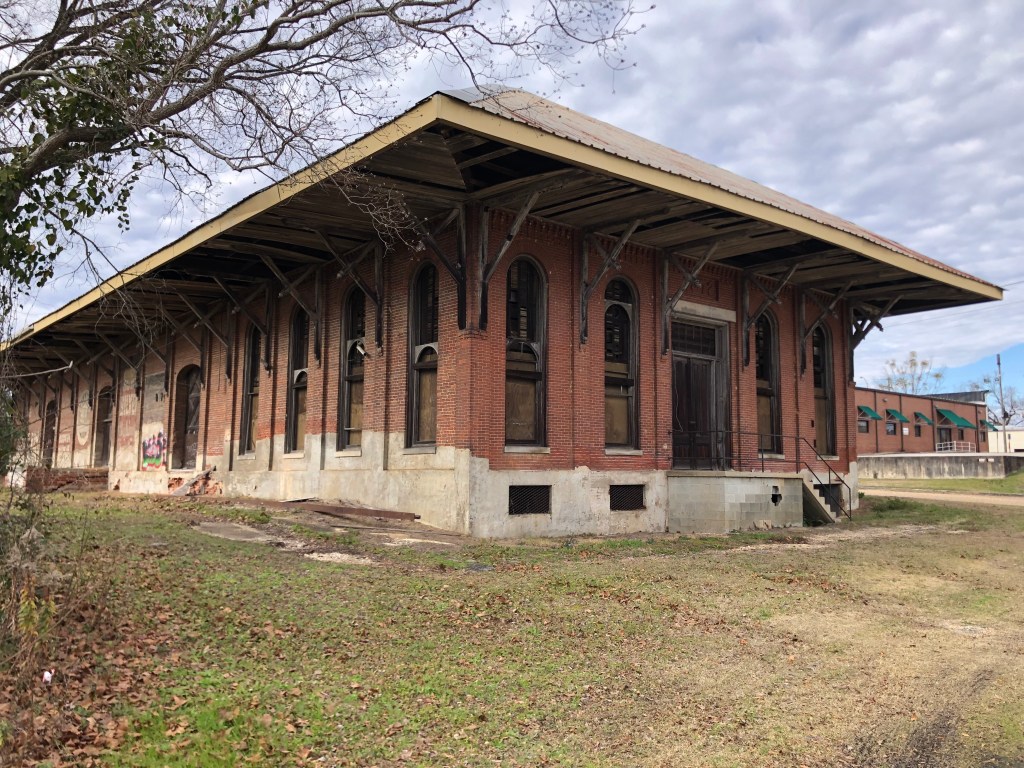
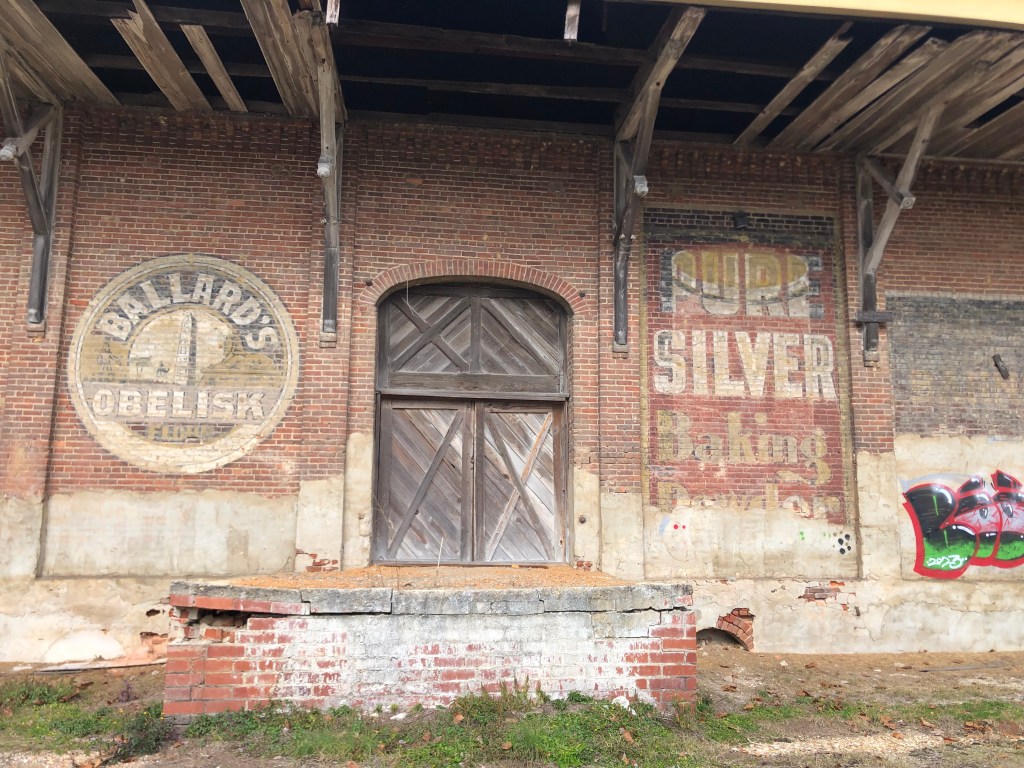
This leads to a third thought: I’ve given a lot of thought in this blog to the comparison of thriving and declining historic districts along various US highways, including of course Route 82. I’ve speculated about the influence of local universities, the re-routing of trains and highways (i.e., the Route 66 effect), and other possible factors. There’s also the chicken and egg question about needing funds to redevelop historic buildings, and needing redeveloped historic buildings in order to generate revenue. One thing does seem clear: some of the old towns have managed to successfully preserve and/or renovate their historic districts (let’s call them The Preservationists). Others have knocked down the old structures and replaced them with a Piggly Wiggly or a Dollar General (call them The Replacers). And still others, either due to a lack of will or a lack of funds, don’t do much of anything, and their buildings slowly decay. Call them the Porch-Sitters.
It’s not like any one approach is always the best. Circumstances and resources matter. But it should be clear that I especially appreciate those towns that have found a way to maintain aspects that make their town unique and that connect them with their history. I think the problem with the Replacers is they all end up looking alike, hosting the same Olive Gardens and Kohls and Home Depot and Bed Bath & Beyond.
I feel the sorriest for the Porch-Sitters. I think towns that slowly decay aren’t doing so because they don’t care. Rather, they’ve lost their major employers or their young people have moved away or the interstate siphoned off their drive-through traffic. They fall into a destructive cycle where the population and the infrastructure together age and eventually collapse.
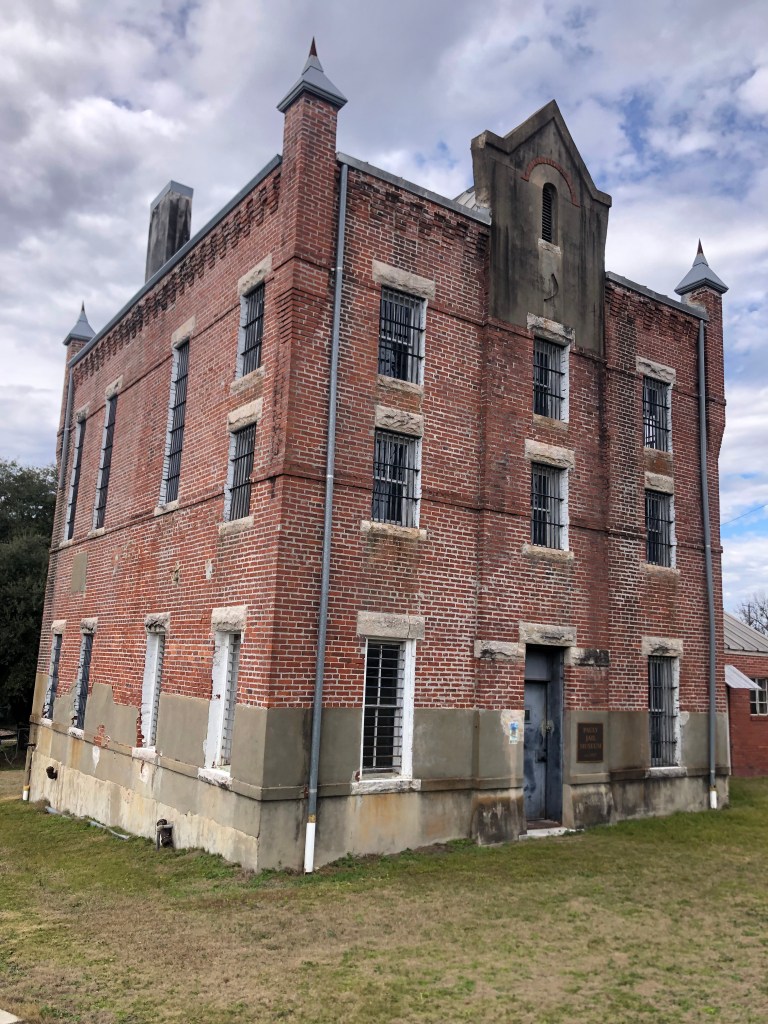
Today I drove through the town of Union Springs, Georgia (pop: 3,300). It’s not a prosperous town; about 44 percent of the population is below the poverty line. The local economy sprung up from the cotton industry, but in the 20th century many of the cotton fields were converted to hunting preserves. Interestingly, the town has capitalized on that change by rebranding itself “The Bird Dog Field Trial Capitol [sic] of the World.” The town hosts annual field trials for hunting dogs every fall and spring, and it has erected monuments and murals celebrating that fact.
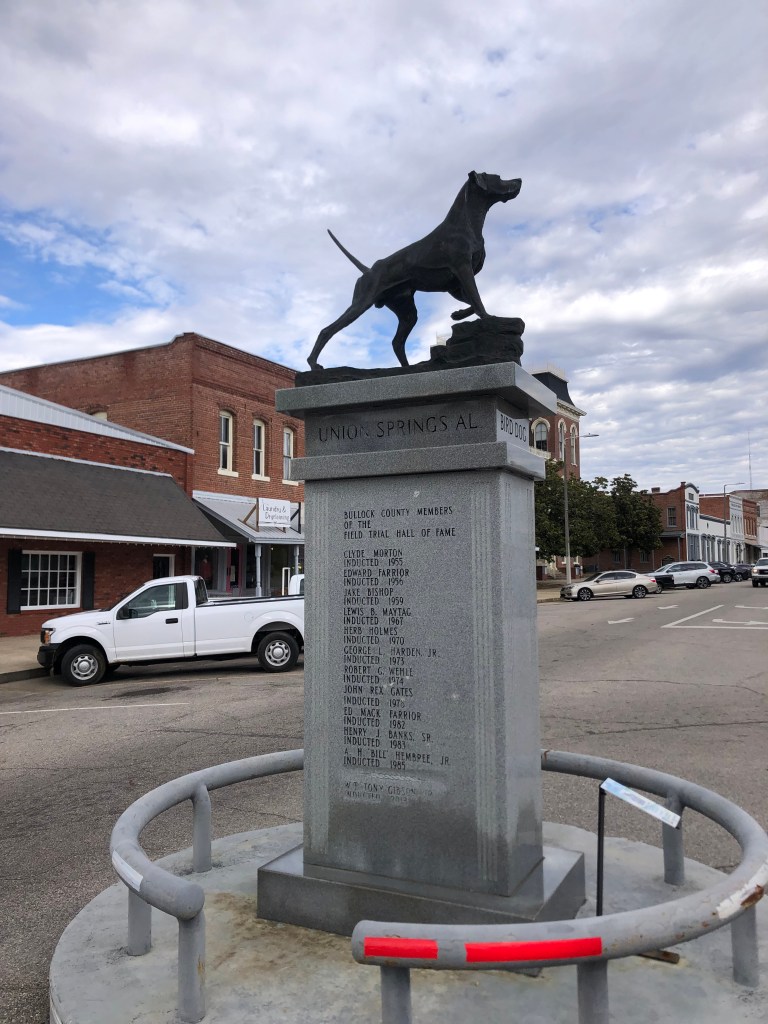
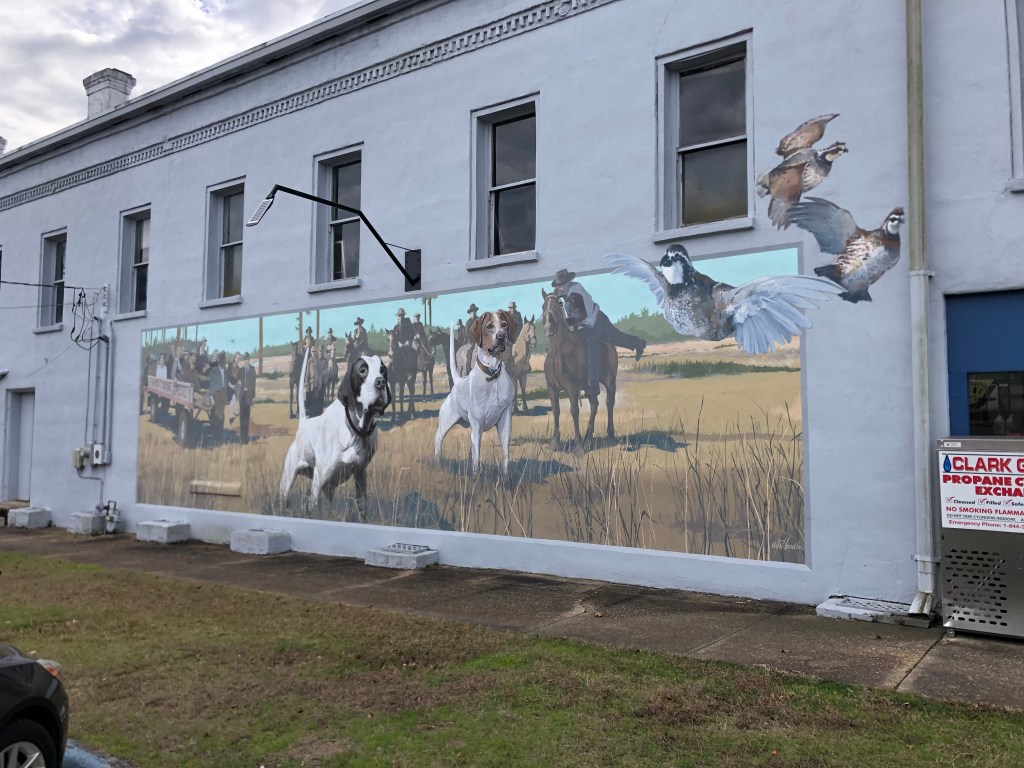
The town also restored its historic county courthouse and jail to the tune of about $2 million…
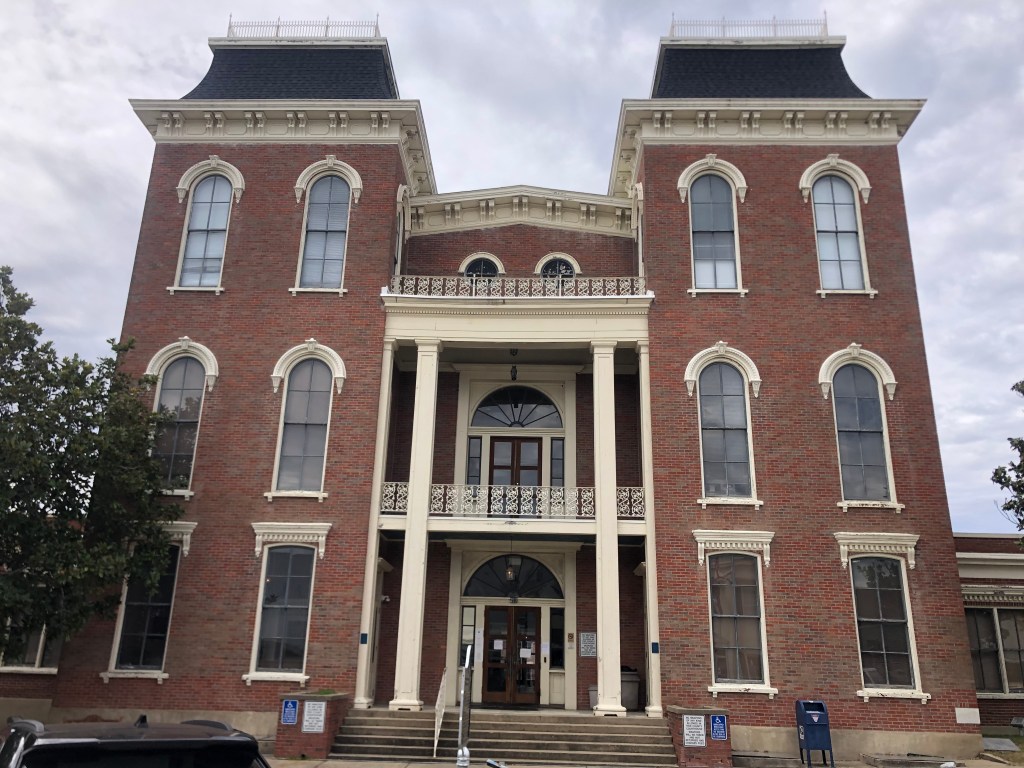
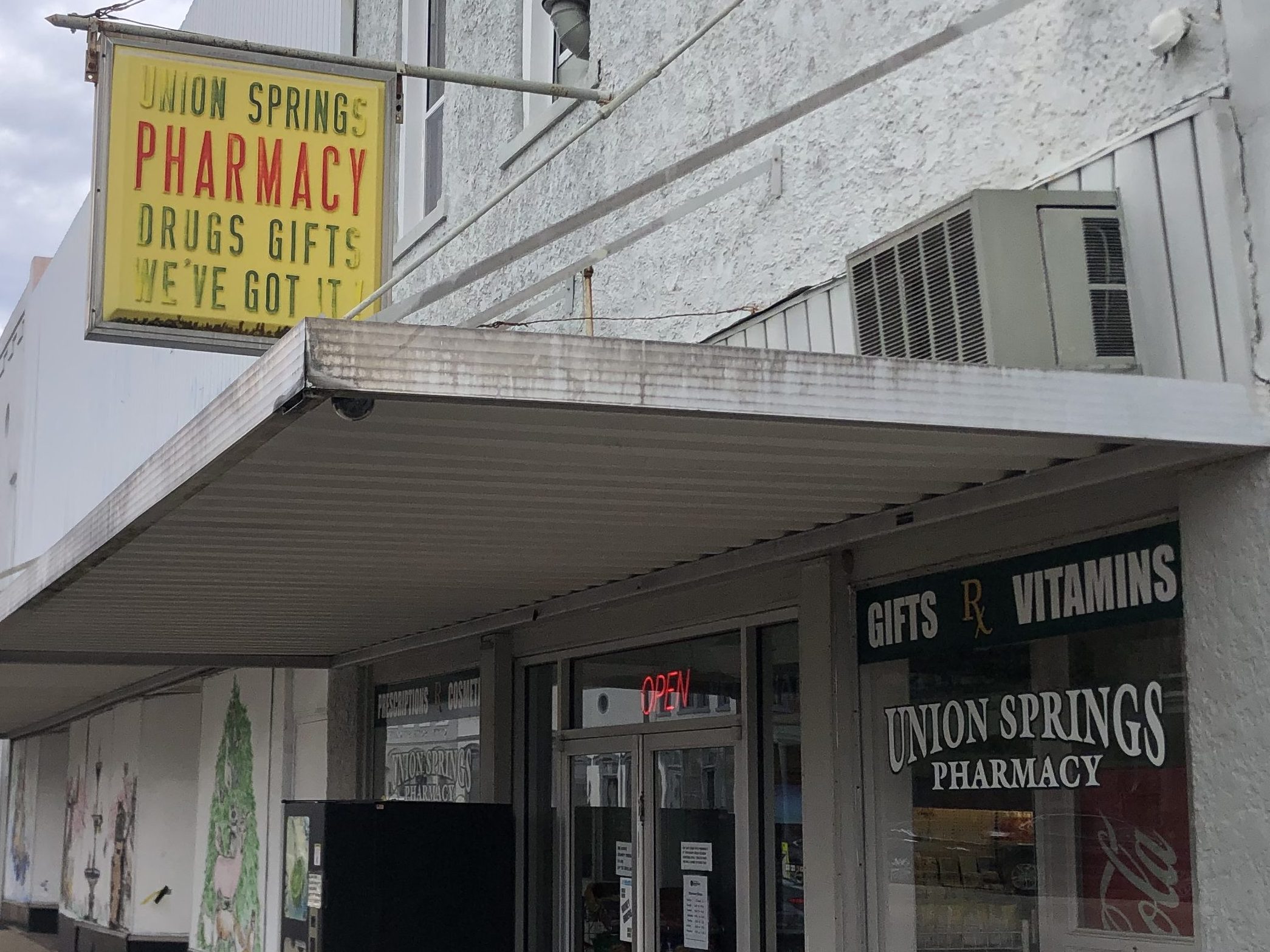
At the same time, however, most of the buildings along the commercial main street haven’t had a facelift in many years.
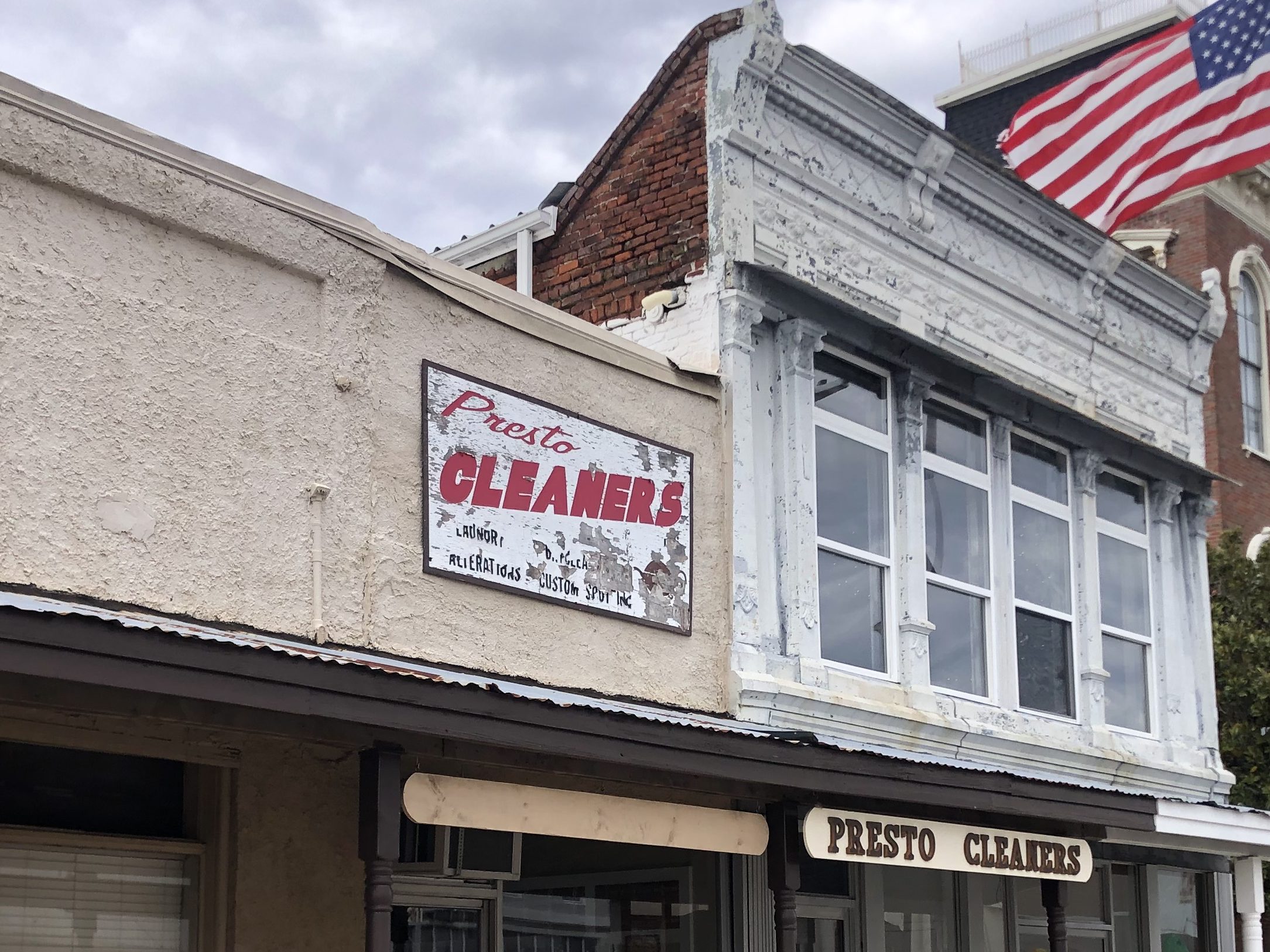
The one human being I saw on the street was a guard from the courthouse. He didn’t seem particularly interested in showing off his city to a (presumably rare) winter visitor. I’ll be interested to see how Union Springs fares over the next decade. I can’t quite tell whether the balance is tipping toward Preservation or Porch-Sitting.
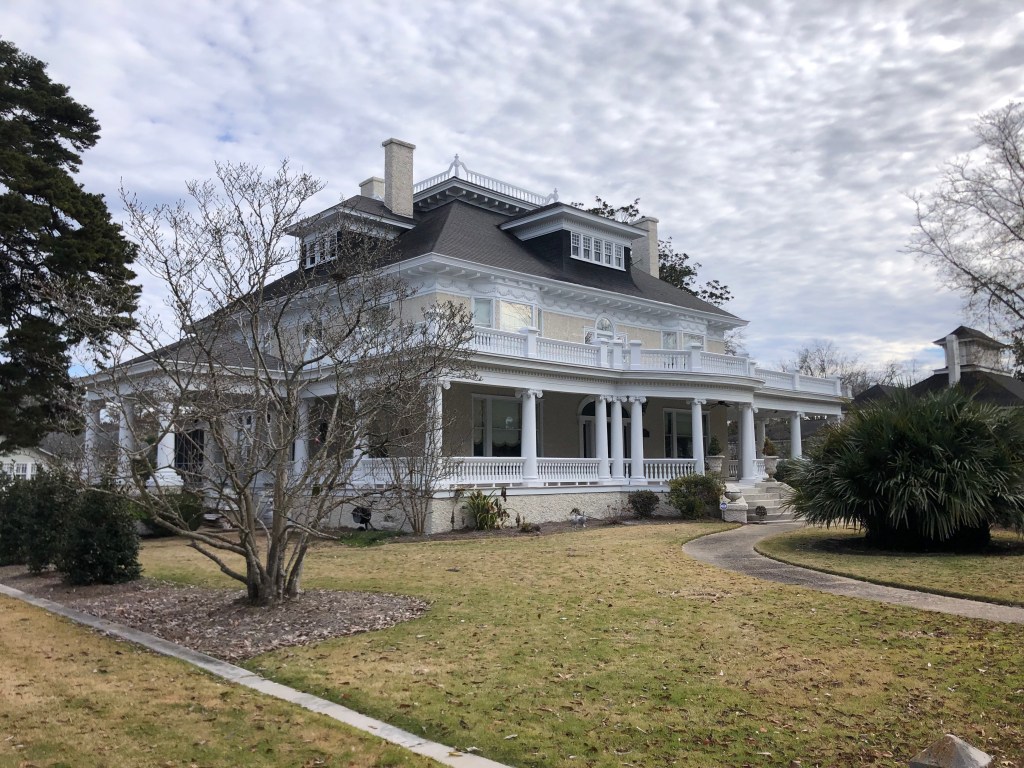
About 40 miles further down Route 82 is the town of Eufaula (pop: 13,000). This town seems to be firmly in the Preservationist camp. Large, plantation-style homes line a section of US 82 as you come into town.
The core, historic business district, meanwhile, has a large number of shops, restaurants, cafes, professional services, and even a historic theater. I had lunch at a Mexican restaurant that was completely full of families and couples.
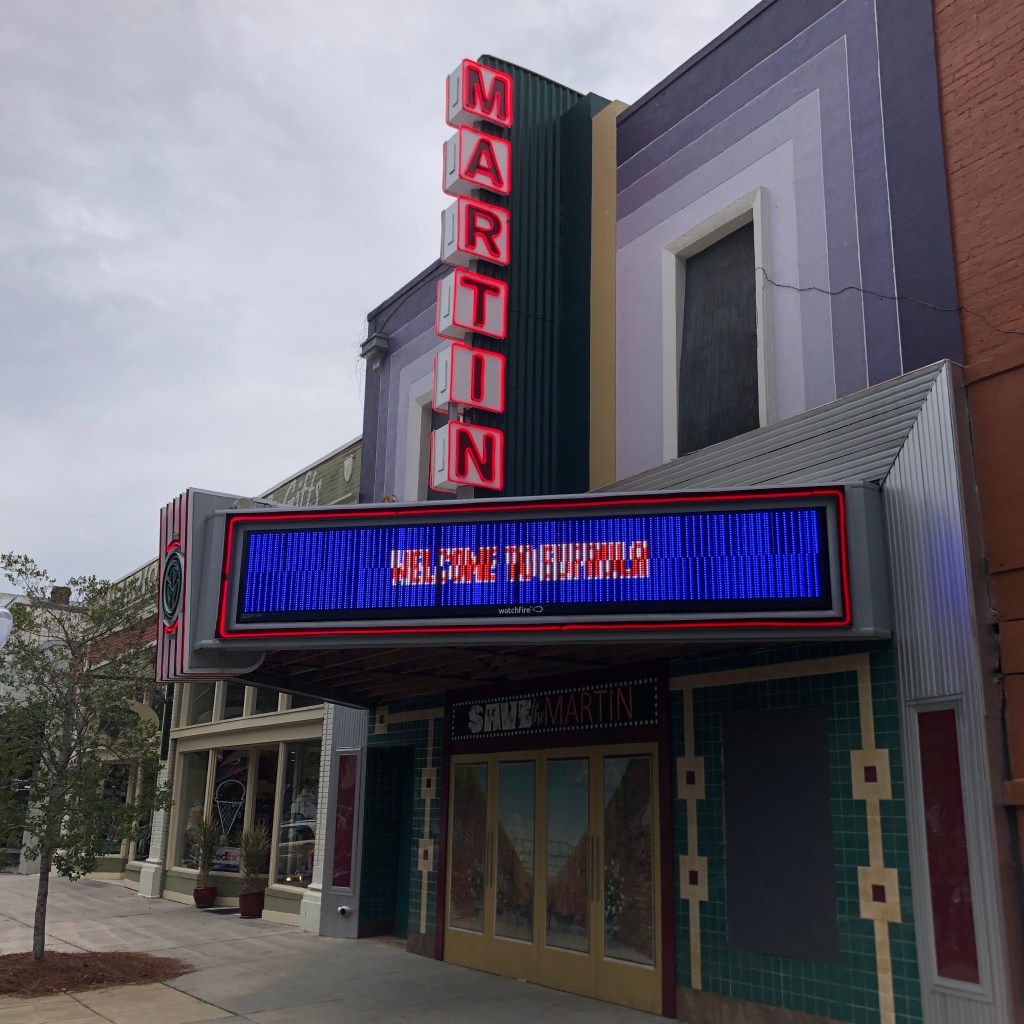
On a green, tree-lined strip in the middle of Main Street is what looks like a tombstone for a fish.
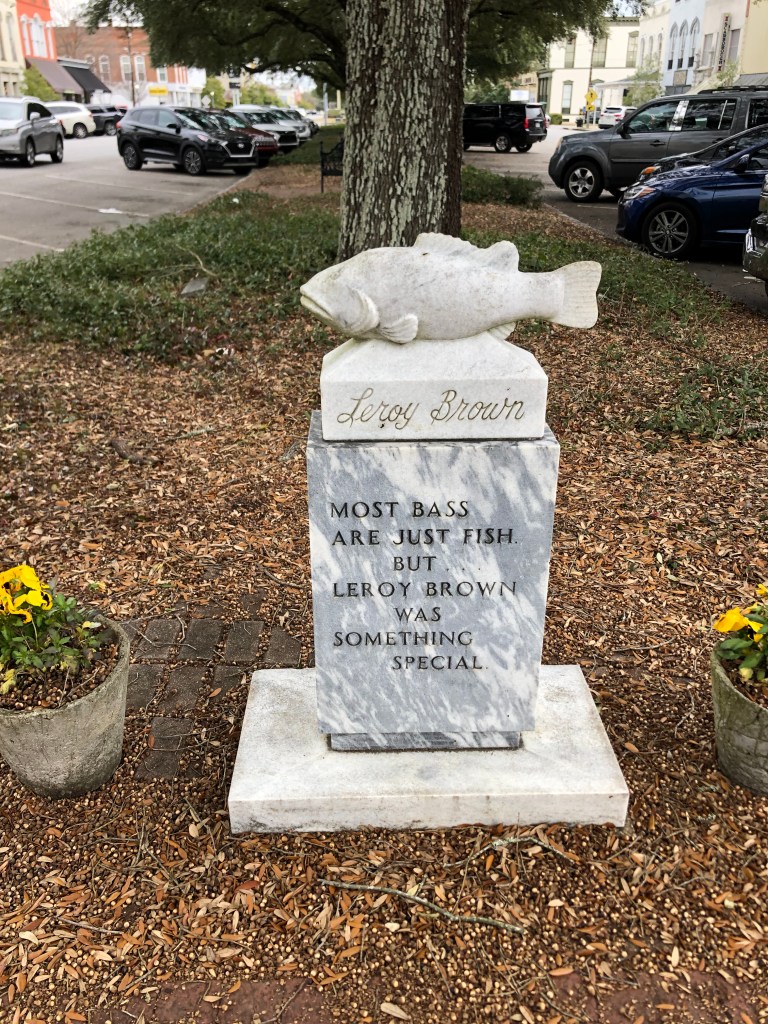
When the fish (a bass) was caught in 1973, the fisherman (Tom Mann) decided to keep it in an aquarium–sort of a half-ass catch-and-release, I suppose. Mann named the fish Leroy Brown (after the Jim Croce song) and taught him to jump through a hoop he held over the water. Leroy Brown became a town celebrity, and lived for seven years in that tank.
When Leroy Brown died in 1980, Mann held a funeral for him, and it’s said that over 500 mourners attended. The Governor of Alabama even declared it a day of mourning. I’m not making this up. For reasons too complicated to get into here (but not here), Leroy is not buried under this tombstone. But the town fondly recalls his memory.
And since we’re on a whimsical note: Today I had another opportunity to explore paranormal phenomena (after my failed Crossett Spook Light experiment). I learned of a place just a few miles off Route 82 in southwestern Georgia that’s been informally dubbed “Gravity Hill.” At first I thought it might be one of those roadside tourist traps like the Mystery Spot, but it’s actually just an unmarked, lonely stretch of narrow road in the countryside. Here’s how it works: After cresting a gently rolling hill, one drives down to the low point, just before the road begins to climb again. Stop your car here, put it into neutral, and let your foot off the brake. Gravity Hill is supposed to pull you backwards, uphill.
Although skeptical after the Crossett experience, I was willing to give it a whirl. So I cruised to the outskirts of the town of Fort Gaines on a narrow country road. I stopped my car at the low point, put the rental car in neutral, and released the brake. Nothing. I was about to declare this another fraud when I noticed that I was very slowly beginning to roll backwards, up the hill I’d just come down. The car gradually picked up speed until I was rolling uphill at maybe 10 mph. I repeated this several times, and it worked each time. I even recorded this video so you can judge for yourself:
I guarantee there’s no trick photography or anything like that going on. You’re seeing exactly what I saw. You may think it’s some kind of natural illusion or something like that, but I prefer not to think about it too hard.
I lost an hour due to a time zone change when I entered Georgia, so after my gravity experiment I decided to hunker down for the night in Albany, Georgia (pop: 69,000). Tomorrow I plan to reach the coastal terminus of US 82 in Brunswick.
Brew of the Day
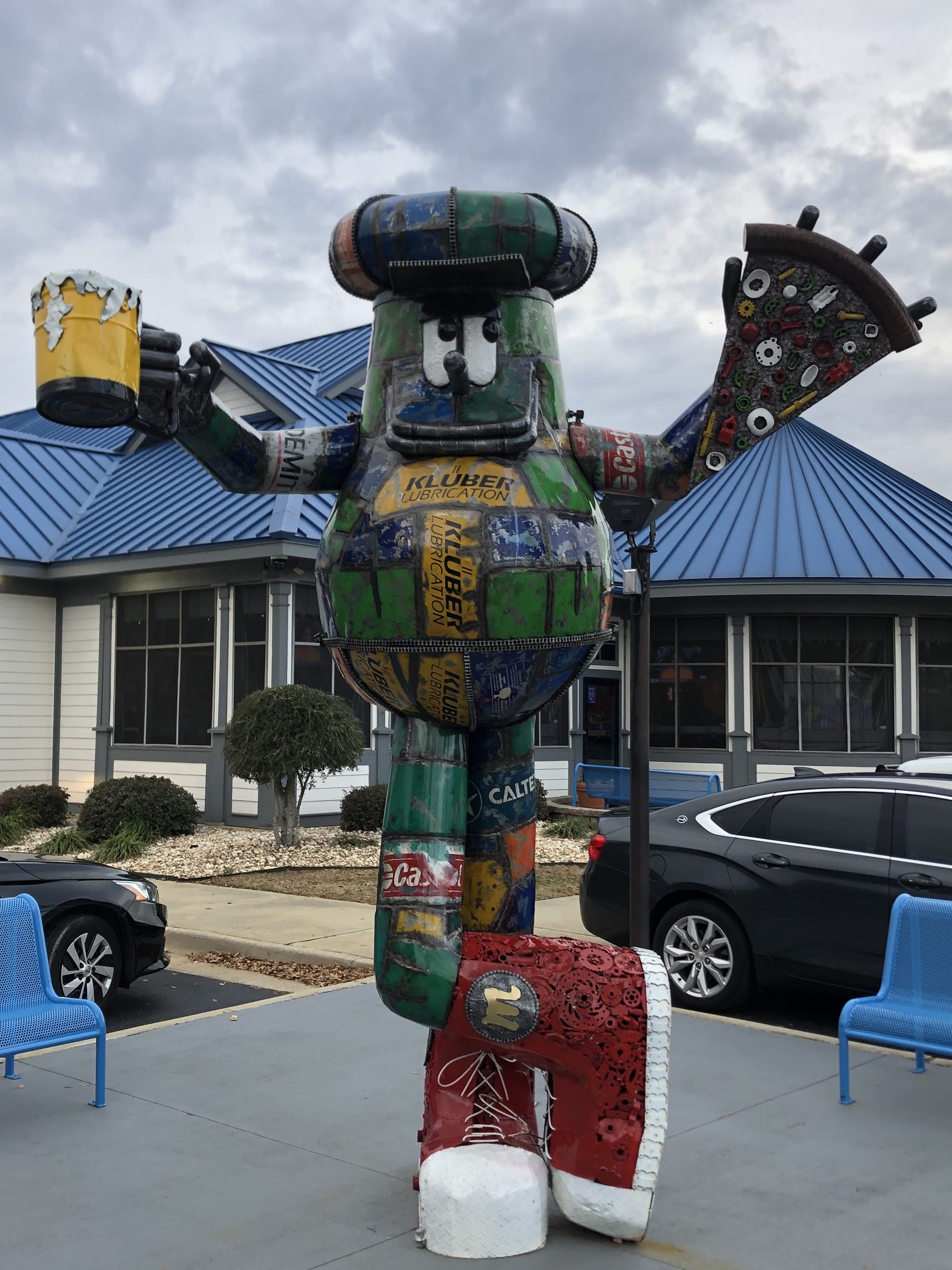
I stopped in at the Mellow Mushroom, a pizza restaurant in Albany. It’s part of a multi-state collection of such restaurants, but each one is locally owned. And the company began in nearby Atlanta, so my guilt from eating at a chain restaurant was attenuated a bit.
As you might imagine, the “mellow mushroom” theme is expressed in the decor and menu in the form of psychedelic trips, Jimmy Hendrix, the 1960s, and general hippie-ness. The sculpture in front of the restaurant says it all:
Anyway, this place has a surprisingly large beer menu. So, along with my pepperoni-bacon-jalapeno pizza, I ordered a Stone Xocaveza imperial stout.
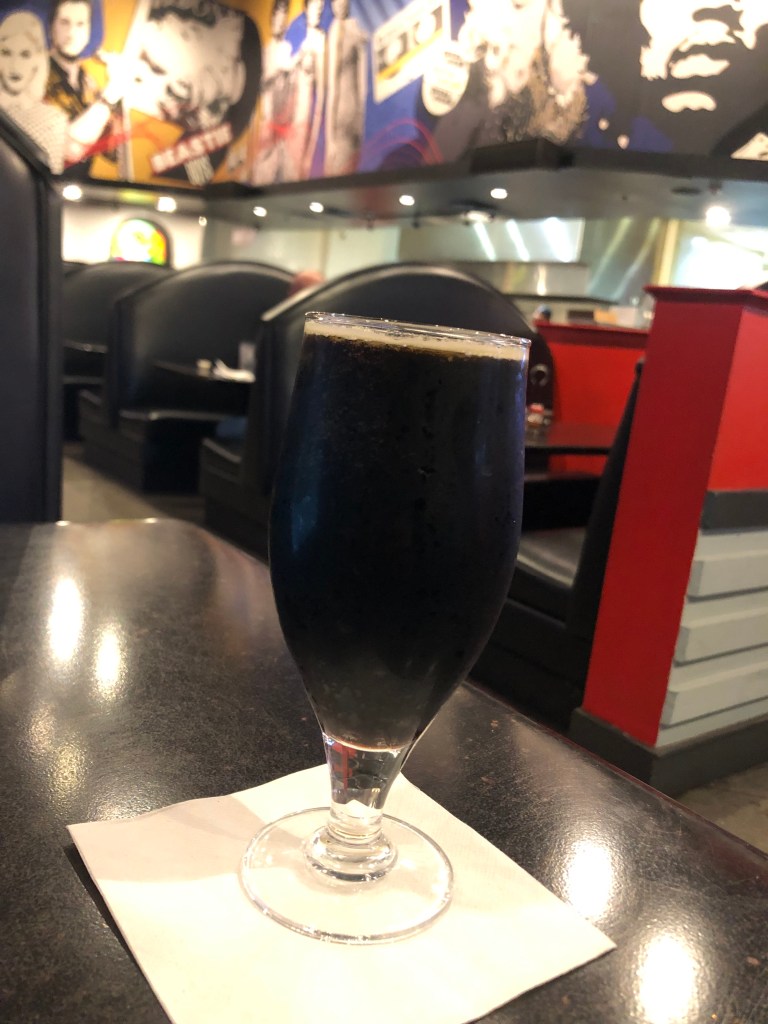
Now, San Diego-based Stone is a reliable brewery, with big, hop-forward beers. I especially like their Arrogant Bastard Ale. The Xocoveza looks inviting: the color is of a ruby-shot Coca Cola. It has no head to speak of, and in fact there’s little evidence even of carbonation. But none of this is fatal for a stout. And the nose is quite inviting–it smells of chocolate, maybe a hint of anise. Let’s see how it tastes…
(Sip. Gulp. Gag.)
This is quite possibly the worst Stone beer I’ve tasted. Flat as my feet. It’s like the half-finished glass of generic-brand root beer you put in the refrigerator and then forgot about. For a month.
Unlike a normal stout, this is not malty. And it’s not hoppy. In fact, it’s not really beer-y. The taste reminds me of meatloaf, somehow converted to liquid form.
But that’s a bit unfair…to meatloaf. I’m not a fan of meatloaf, but I acknowledge that it delivers a blend of different tastes. This beer, on the other hand, is one-dimensional. It lacks the complexity that one seeks in a good beer. What you taste on the front end is what you taste on the back end. And this tastes like back end.
And another thing–this is marketed as an “imperial stout.” In my book, the “imperial” part is supposed to signify a “big” beer, with an ABV that gets into the double digits. This, however, weighs in at a puny 8.1 percent. I suppose that might be about right for some people. But unless you wear a short-sleeved white shirt and place the title “Elder” before you last name, I think you’ll find the Xocoveza to lack the bite you’d expect from an imperial stout.
I give it one star. And that’s just because I like the color and the nose on this beer.

 Chasing Phantoms
Cars rolling uphill? WTF? But Alabama isn’t the only place. There’s a similar situation on the Isle of Man! And here’s the explanation: https://www.youtube.com/watch?v=_UpA5d5zqEc Makes sense! (Too bad about your BOTD)
LikeLike