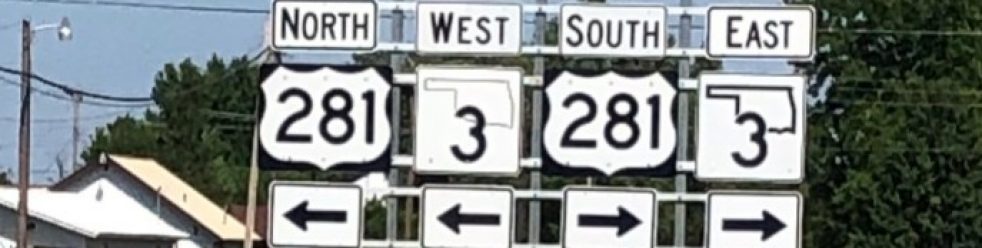
Cars · Road trips · trains

Highway 61 Revisited

Much of this trip will be spent on US Highway 61, which is sometimes called The Blues Highway. It runs from the confusingly-named town of Wyoming, Minnesota, down to New Orleans. Until about 30 years ago the highway reached further north, passing through Duluth on its way to the Canadian border. Attentive readers (I’m looking at you, Peter D) will recall that I’d visited Duluth last May as I was traveling west across the country on US Route 2. While in Duluth I visited the boyhood home of one Robert Allen Zimmerman, who you and I would know today as Bob Dylan. Dylan famously released an album in 1965 called Highway 61 Revisited, an influential, landmark album with notable roots in the blues tradition. Dylan said this about that: “Highway 61, the main thoroughfare of the country blues, begins about where I began. I always felt like I’d started on it, always had been on it and could go anywhere, even down in to the deep Delta country. It was the same road, full of the same contradictions, the same one-horse towns, the same spiritual ancestors … It was my place in the universe, always felt like it was in my blood.”

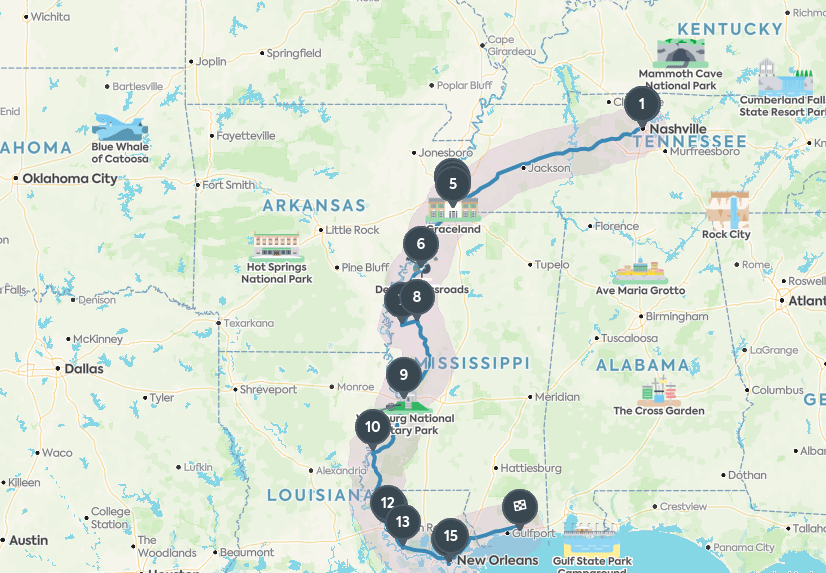
For this trip I’m going to travel the southern part of the Blues Highway, through Tennessee, Mississippi, and Louisiana. But first I’m starting in Nashville (pop: 690,000), from which I’ll head due west to pick up Route 61 in Memphis. Why am I starting in Nashville? Because the Roadtripper guide told me to.
I arrived in Nashville about 9:15 am this morning and “promptly” picked up my rental car. (I put “promptly” in scare quotes because while I went directly to the Dollar counter, the “workers” didn’t share my sense of urgency. The line ahead of me took half an hour to clear, one hapless renter at a time.Then, after finally getting to the counter, I cooled my heels while the “worker” used a single index finger to re-type all the data I’d already filled out online. (Bottom line: Don’t patronize Dollar.) Anyway, by 10:30 I was in command of a Chevy Trailblazer, making my way to the downtown Nashville farmer’s market.

By now you know that these road trips of mine don’t normally linger in big cities. But given that a theme of this trip is music (especially blues), I figured I should pay a little homage to Nashville’s iconic music scene. And who better to help me do that than the Jugg Sisters??
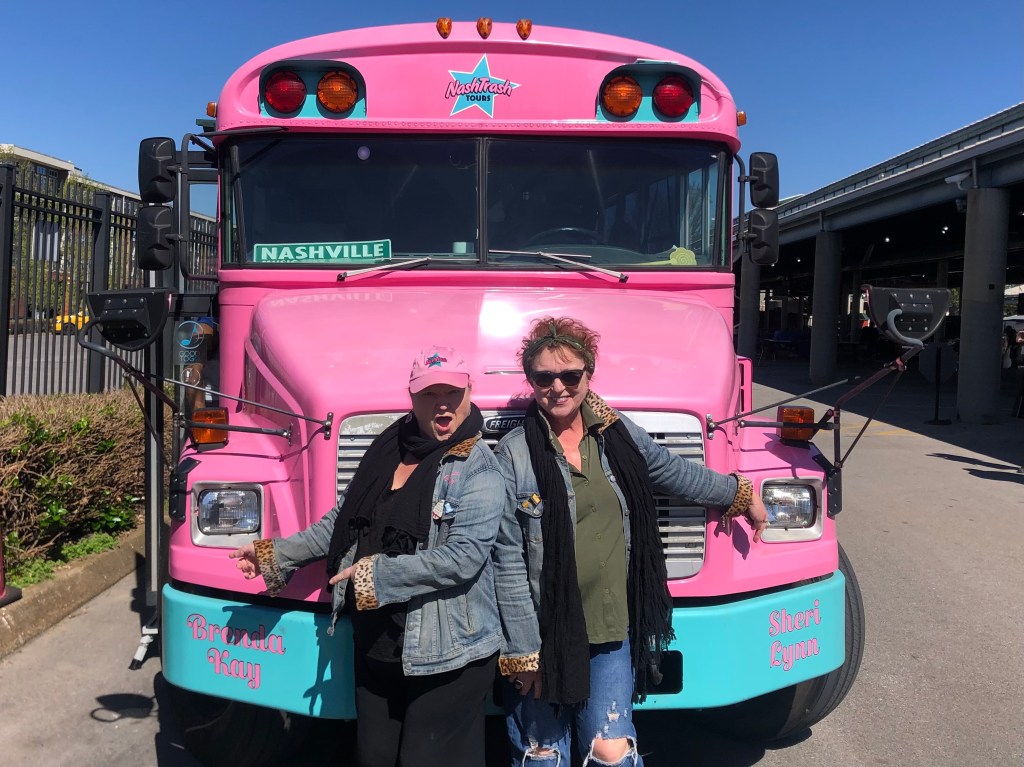
Brenda Kay and Sheri Lynn–The Jugg Sisters–kindly agreed to pose with their bus.

For decades now, The Jugg Sisters have been doing a comedy bus tour of Nashville’s music history. They created, managed, and have starred in the “NashTrash tours” that present tourists with the irreverent musical highlights of downtown Nashville. Recently, however, they’ve been farming out some of the tour guide duties to a new duo: Hank and Jenny. Today was only their sixth time giving the tour. For two hours, driver Darron drove the big pink bus while Hank sang country songs accompanied by his guitar, and Jenny mainly told him “that’s enough now.” Still, they managed to point out literally dozens of music-related sites and share tons of music-related trivia. I confess that I didn’t realize how big the music industry looms in Nashville. There are recording studios, halls of fame, museums, statues, music venues, theme restaurants, and on and on. Nashville has claimed an association with Elvis, Loretta Lynn, Dolly Parton, Chet Atkins, Rosanne Cash, and a bunch of famous people I’ve never heard of. A person could easily spend a week here soaking up the music history.

My only complaint is that, as a country-music novice, I had a hard time separating the genuine factoids from the exaggerations and jokes. Still, the overall effect was to appreciate the musical importance of this city.

I should mention that today’s bus passengers were mainly just me and a group of 10 folks from Iowa. They let me take their picture, and when I asked them how I should identify the group in my blog, they said “Just call us the Iowa Shit Show.”
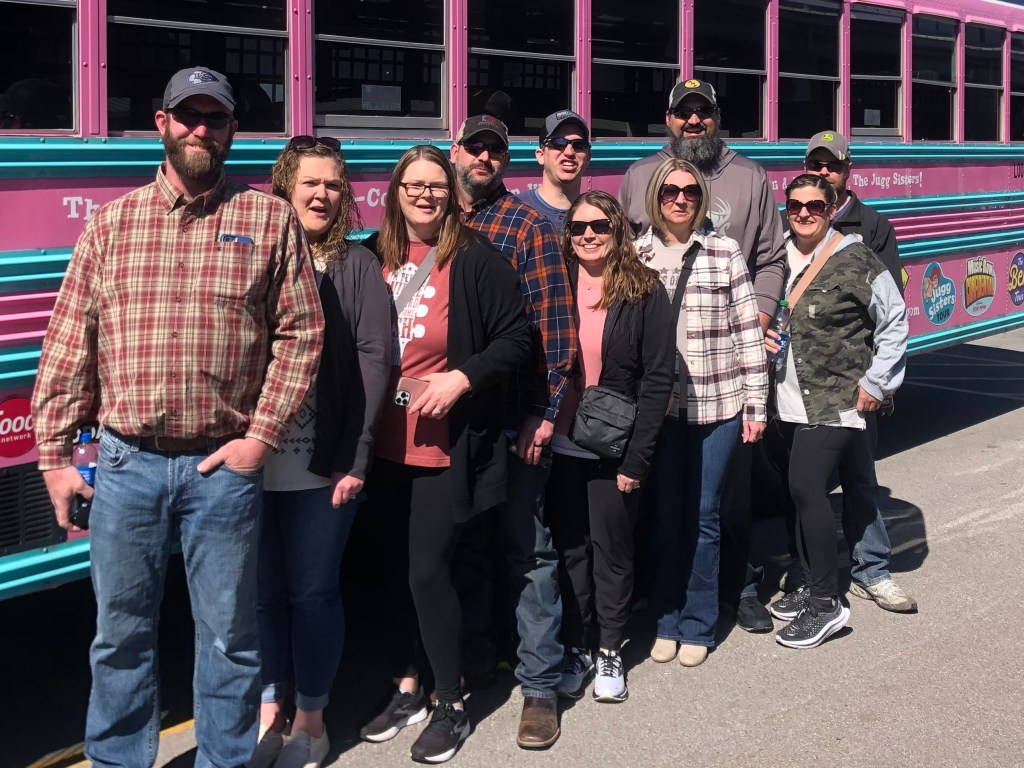
The good folks of the ISS.

Hank and Jenny let us take a 10-minute break at lower Broadway’s honky tonk district to attend to our biological needs. I used the occasion to get my fortune told by one of those animatronic fortune teller booths. But instead of a Zoltar or a gypsy or whatever, this one had….Elvis. I took a video of it, just because I didn’t think you’d believe me.

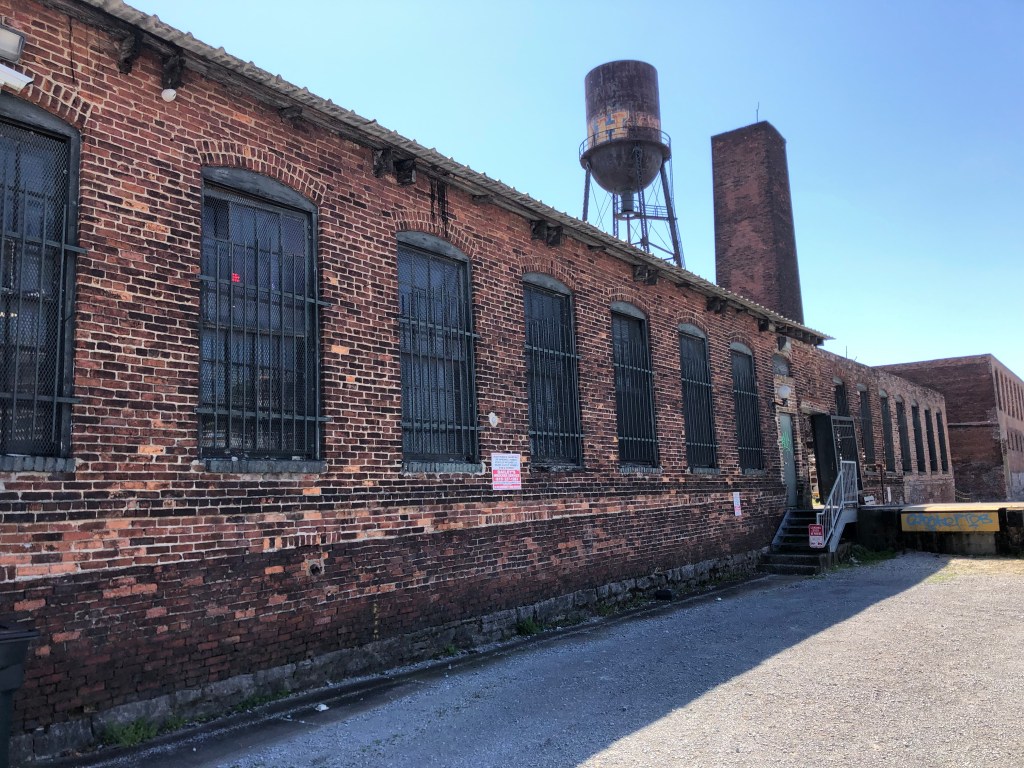
One of the rare non-music-related sites Hank and Jenny pointed out was the Marathon Motor Works. You’d never heard of it either? Apparently for five brief years in the very early 20th Century, Nashville had its own automobile company. An engineer named William Henry Collier at the Southern Engine and Boiler works in nearby Jackson decided in 1909 to try his hand at a new technology called the motor car. For a few years thousands of the vehicles were produced, but the whole operation slowed and ultimately died about the time of World War I.

It’s an intriguing story, so after NashTrash I returned to the Marathon Motor Works on my own and puttered around for a couple of hours. I was entranced by this place. Notably, the century-old buildings are remarkably well-maintained and they house museums related to the marque as well as various independent, tourist-oriented shops. (One of them is the antique shop from the TV show American Pickers.)
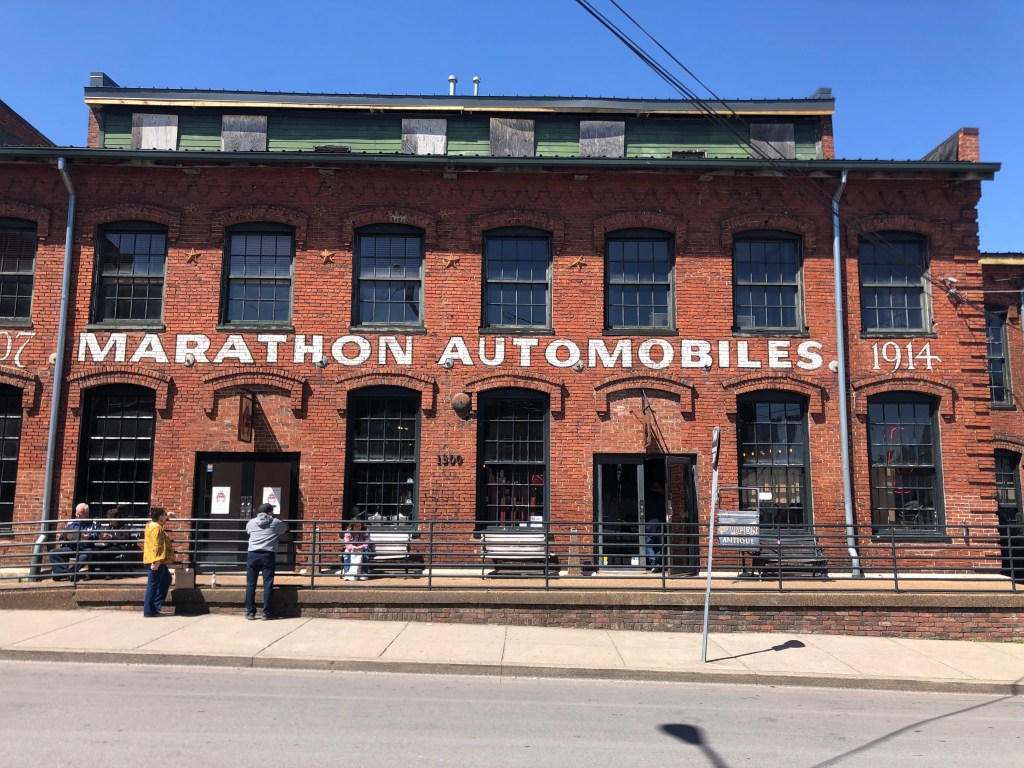
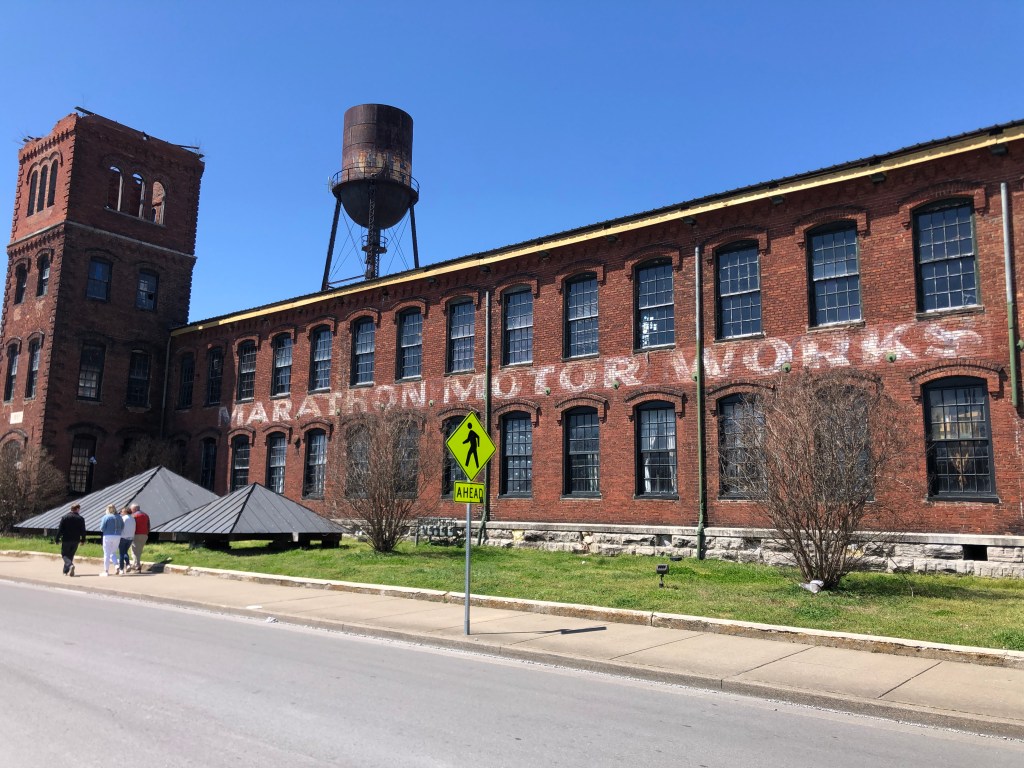
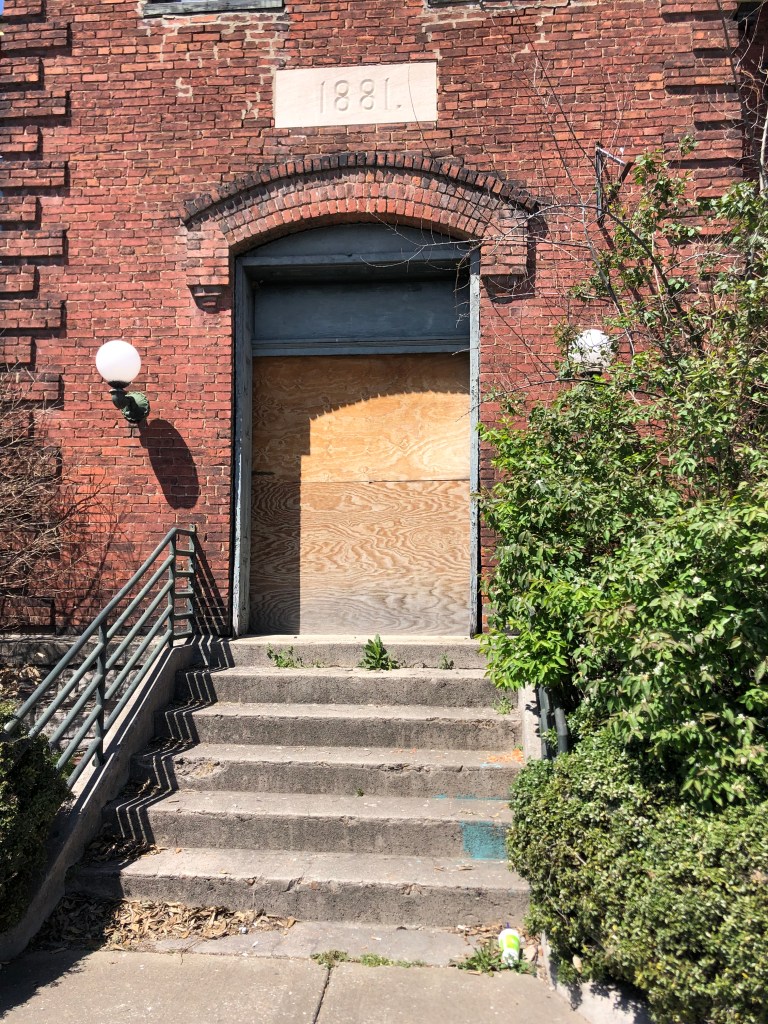
Parts of the complex predate Marathon.

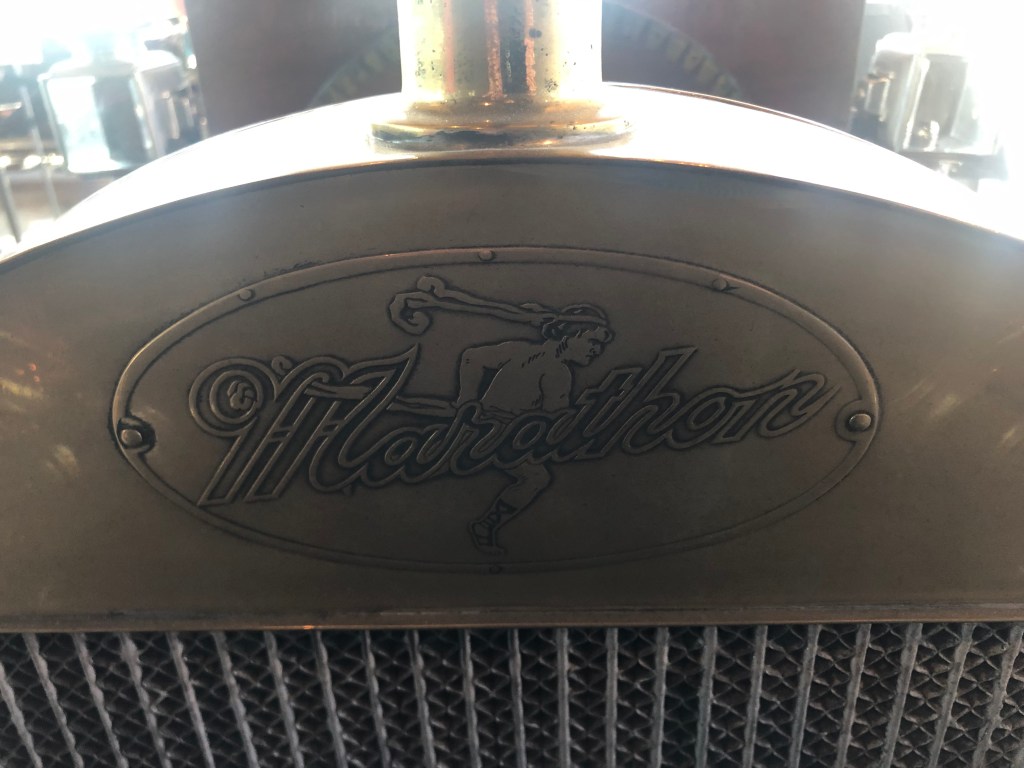
There are said to be only eight surviving Marathon automobiles. (Their production just before World War I made them highly susceptible to scrap metal recycling as part of the war effort.) Impressively, five of those remaining cars are on display at the Motor Works. Numerous other artifacts are also displayed.
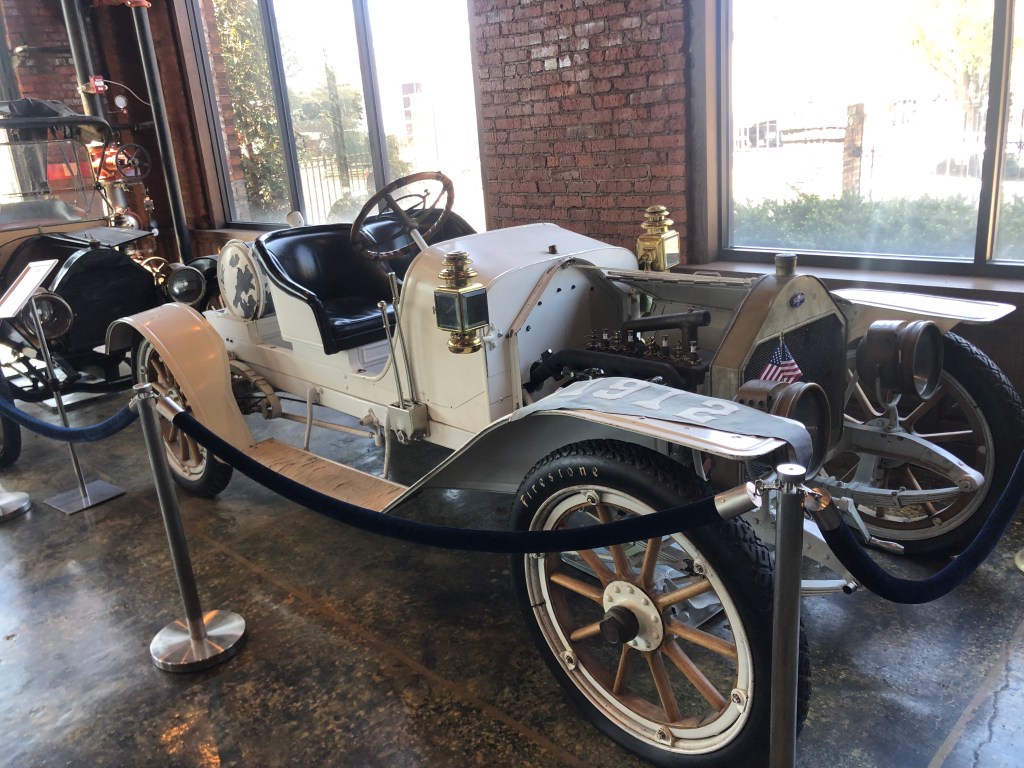
One of the few extant Marathon cars. This one is a roadster.

I’m not sure why this car plant resonated with me so much. Part of it is just the novelty of a short-lived, hundred-year-old automobile factory that’s still standing. This particular operation is not flashy like some museums can be, so you feel like the environment isn’t that different at all when workers were casting wheels and assembling frames.
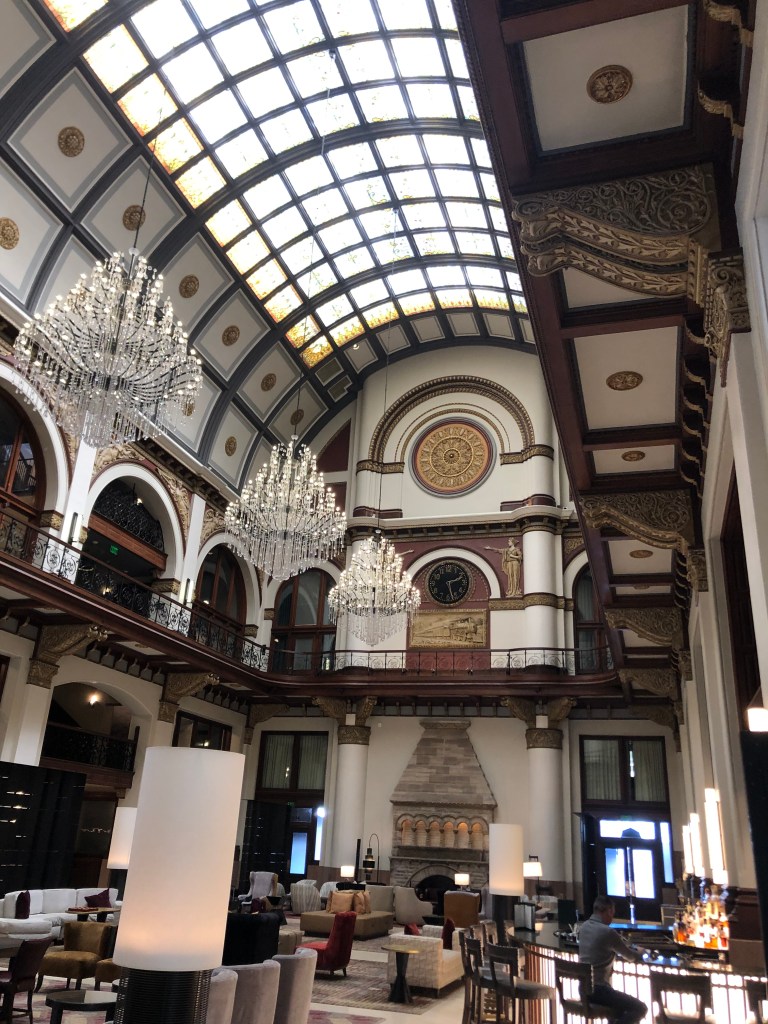
After Marathon I made another transportation-related visit to Nashville’s Union Station. Surely you’re familiar with Union Stations in other cities (Washington DC, Chicago, Louisville, Los Angeles, etc. etc). There must have been scores of them back in the Golden Age of Railroading. Nashville’s Union Station was built in 1898 and was in operation until 1979. It was slated for demolition, but local preservationists and others managed to save it from the wrecking ball. Today it is a luxury hotel, retaining the main structure and many of the appointments from its heyday.
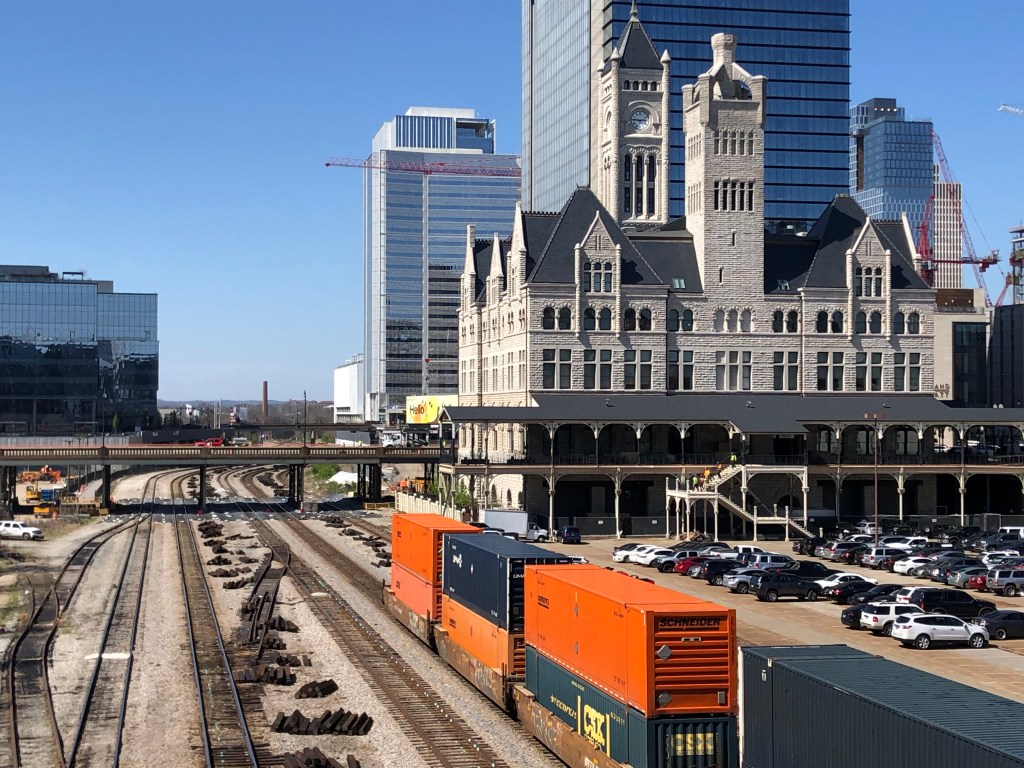
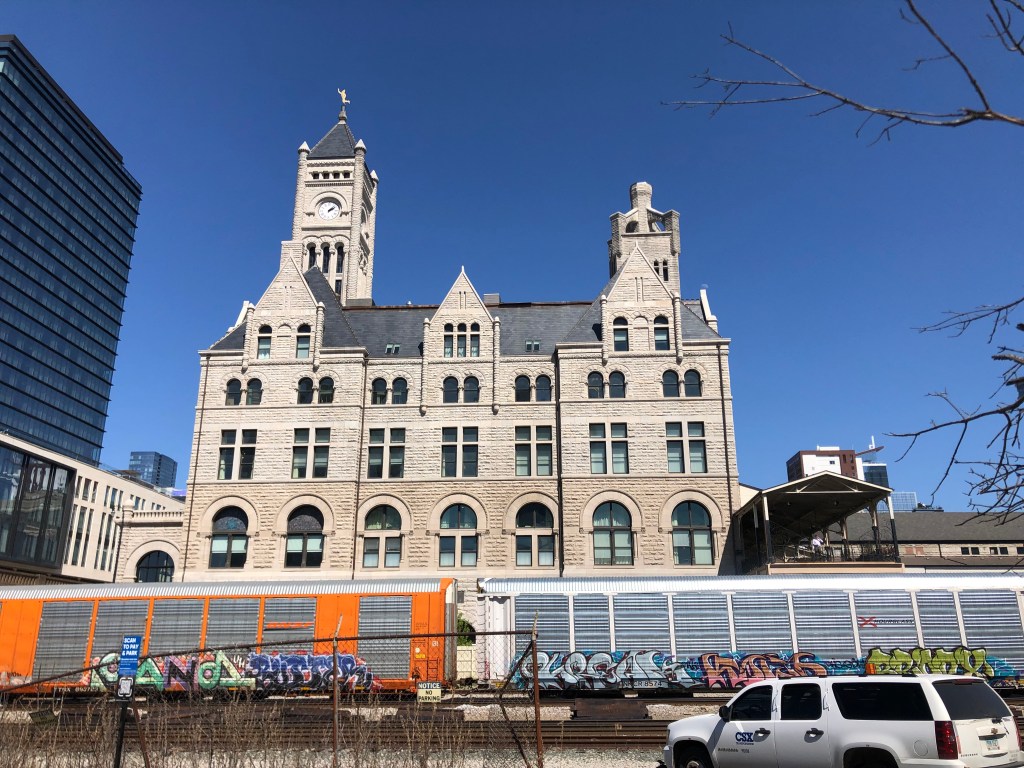
Union Station is the gothic-looking building on the right.
Inside the lobby.
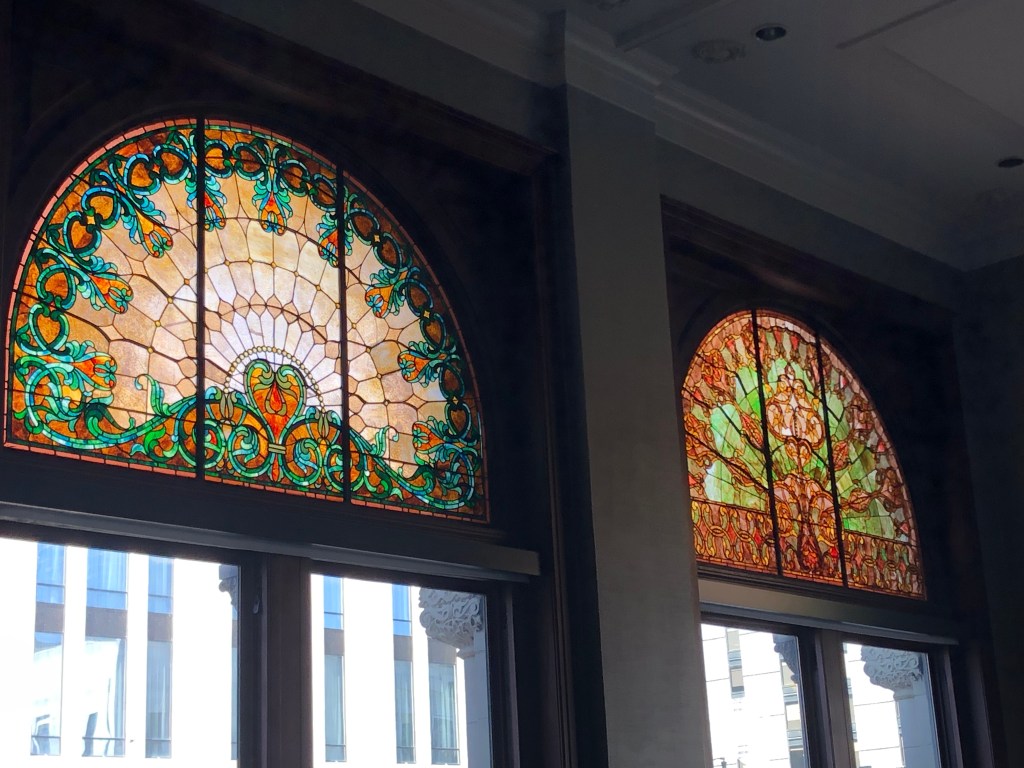
Original stained glass.
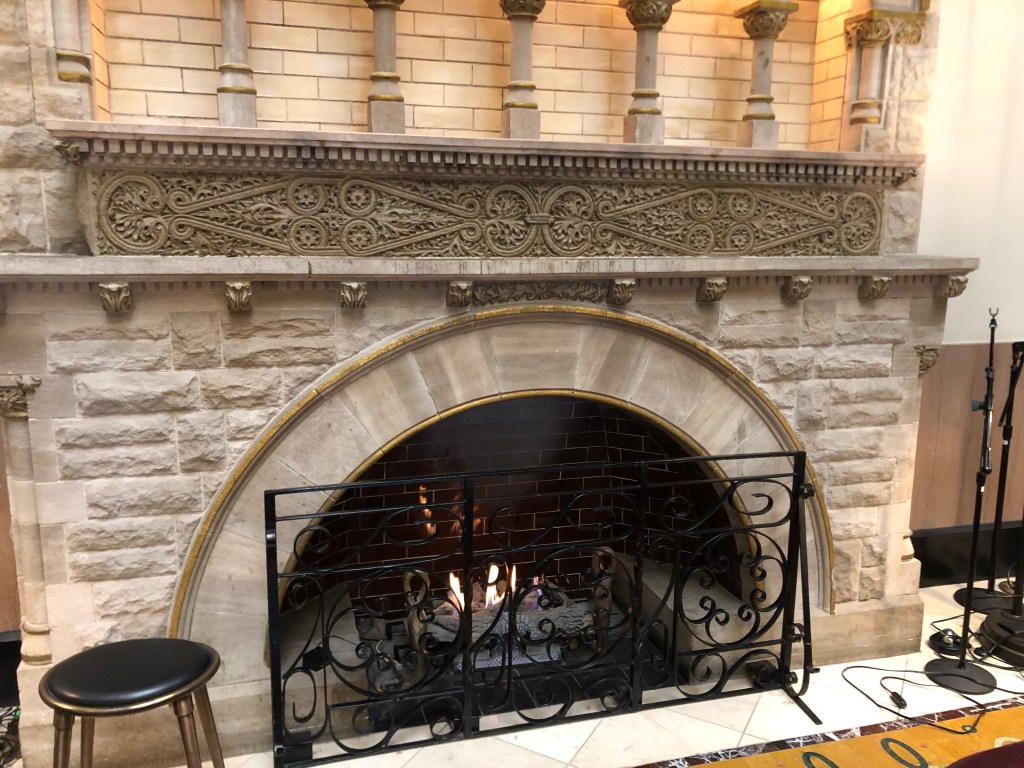
Original fireplace.

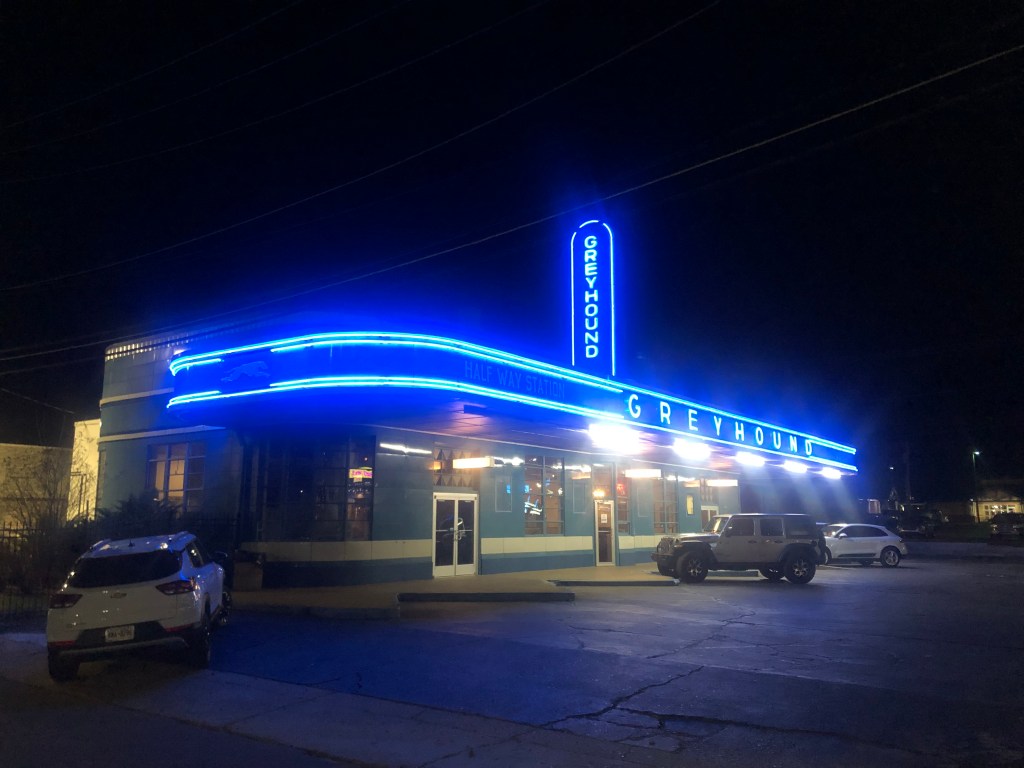
Finally it was time to leave Nashville. I got onto I-40 West toward Memphis, and made it to the halfway point at the town of Jackson, TN (pop: 68,000). Jackson has lots of music history in its own right. For example, it’s the birthplace of Big Maybelle and of Denise LaSalle. I’m spending the night here and will report more about Jackson in tomorrow’s post. But I did want to highlight the Greyhound station I saw on Main Street. Check it out:
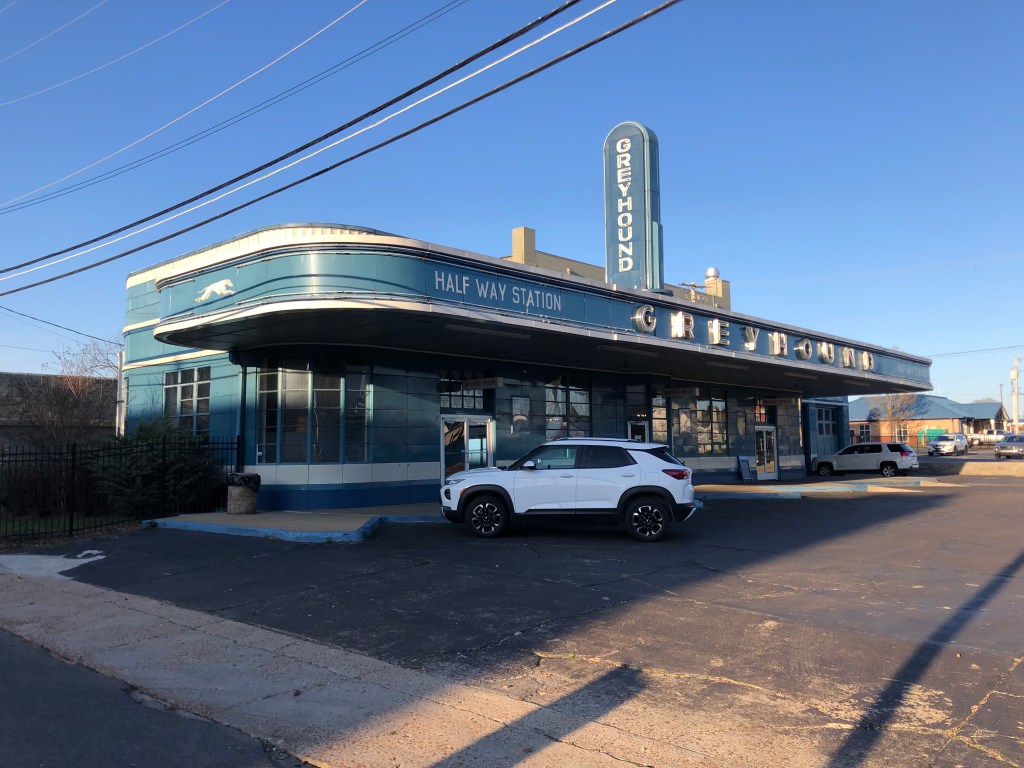
It’s a beautiful art deco, streamlined structure built in 1938. It closed in 2018, but quickly was restored and maintained as a historic structure. There was a young lady cleaning the outside windows when I drove by, and she told me it recently became the third restaurant called Doe’s Eat Place. (Doe’s has its own interesting history dating back to the 1930s which you can read here.) Since it was dinner time I went in and had the best fried shrimp I’ve ever had. I also chatted with the employees, who were all friendly and seemed to love the idea of a down-home restaurant in a converted Greyhound station.
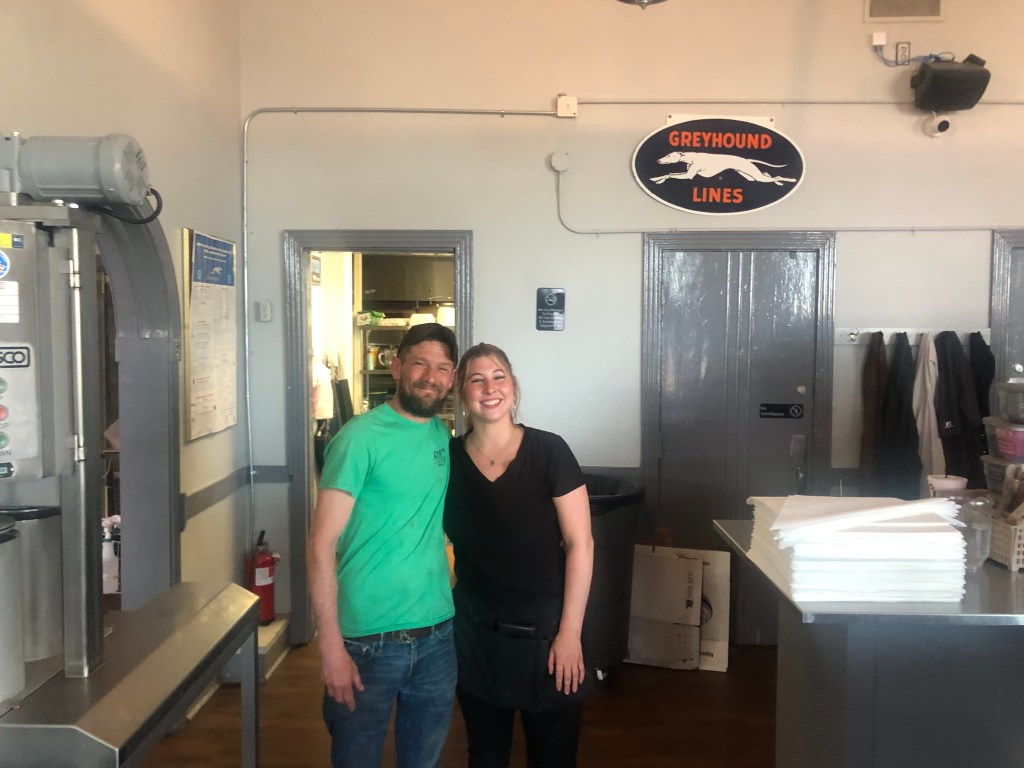
Chris and Kendall provided southern hospitality.
Since I’m spending the night in Jackson, I went back to the Greyhound station/Doe’s Eat Place to get this picture of the restored neon signage.

And thus we’re almost done with today’s blog post. All that’s left is the….

BREW OF THE DAY

For all its good points, Doe’s Eat Place has a boring beer menu. So after dinner I went to Hub City Brewing, which is just down the street. The bartender explained to me that Jackson is known as Hub City because of its strategic location halfway between Nashville and Memphis. It’s at the crossroads of I-40, US 45, US 70, US 412, and various state routes. It also was historically a railroad hub. (Alert readers will recall I visited Casey Jones’ home and his grave here in Jackson three years ago when I drove across the country on Route 70.)

Anyway, Hub City Brewing makes a healthy assortment of beers, including a few good porters and stouts. I chose the Snowplow Vanilla Porter. The first thing you notice about this beer is how dark it is, like a Starbucks cold brew. It has just enough foam to visually remind you it’s not a coffee but a beer. The nose is slightly sweet, with vanilla notes (as you’d expect) but also with a little molasses or brown sugar.

It’s incredibly drinkable. It’s malty without being cloying, and it’s roasty without any of the acidic sharpness a porter sometimes can have. The mouthfeel is meatier than your typical porter as well, reminding me a bit of a stout. With an ABV of 7.2 percent, this warms you a bit but it doesn’t kick your ass the way an imperial stout (my preferred beer) can. I give it 4 out of 5 stars.
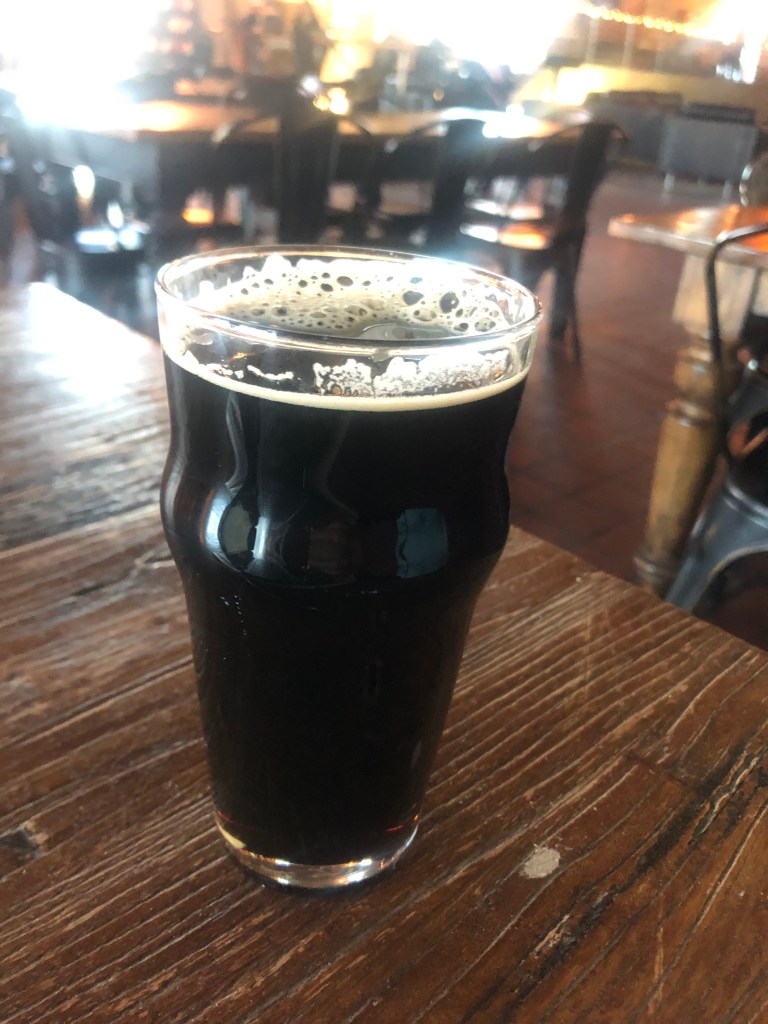
If you ever find yourself in the Hub City, get yourself one of these!
Uncategorized

Cruising the Blues Highway

About a week ago winter officially ended and we entered that most glorious of seasons, the springtime. And that means a resumption of road trips. It’s time to return to the road, throwing caution to the wind and an inadequate supply of socks into my backpack.

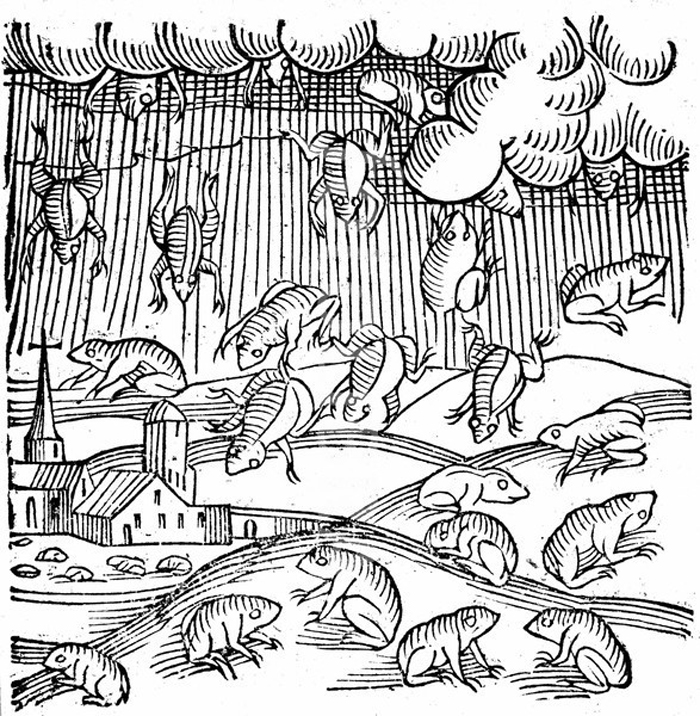
Of course, the part of this continent that seems to have missed the “end of winter” memo is the Mississippi Delta (tornadoes, flooding, plagues of locusts and frogs). And, perhaps predictably, this is the location of my newest road trip.

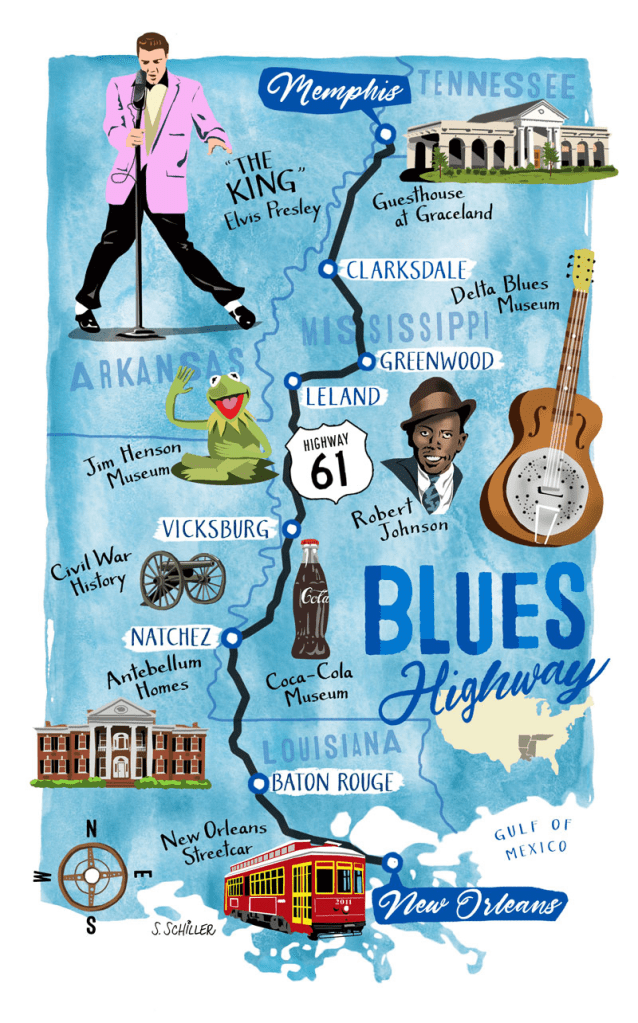
Specifically, I stumbled upon a recommended road trip described as “The Blues Highway,” from Nashville, Tennessee to New Orleans, Louisiana. It takes you through the land of Elvis, BB King, Muddy Waters, and Booker T. Jones, not to mention various quirky landmarks that are best left to be revealed as I encounter them.

So my loving wife (who is always eager to help me leave) is about to drive me to Sacramento Intergalactic Airport, where I’ll be taking a red-eye on United. I’ll be landing in The Music City tomorrow at 9 am local time. (The flight goes by way of Washington, DC, which seems a little inefficient. But hey.) I’ll be blogging daily over the coming week…unless I get taken out by a pelting of toads.

Feel free to send me a message if you have any suggestions for stops generally along the Mississippi River. As is my usual approach, this trip isn’t planned out in any great detail….

C’est tout! Allons!

California history · Hydrology · trains

Polar Express

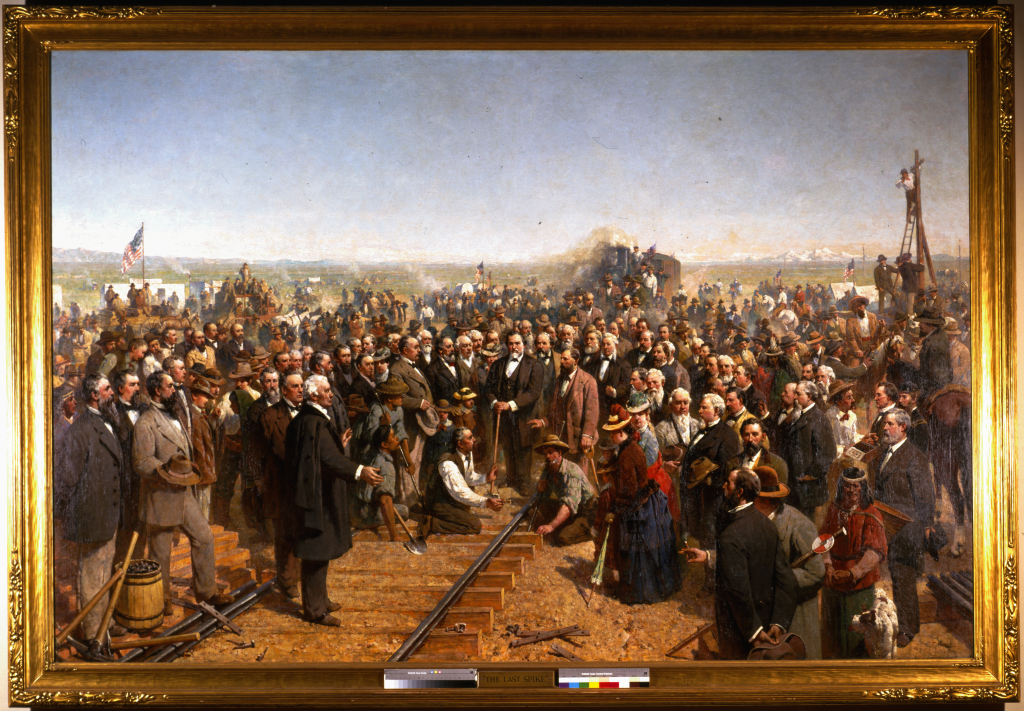
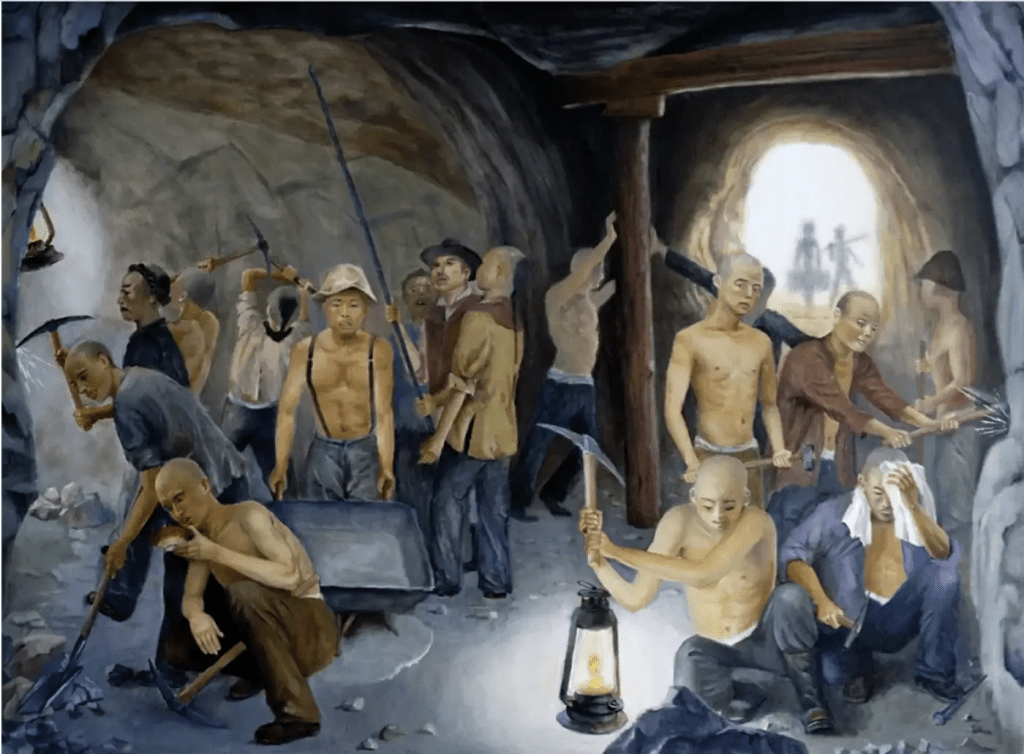
In the 1860s, the Central Pacific Railroad began laying tracks from Sacramento that would cross the Sierra Nevada mountain range and eventually connect with tracks that the Union Pacific was laying westward from Omaha. The two railroads were joined at Promontory Point, Utah on May 10, 1869. The country’s first transcontinental railroad was complete.

“The Driving of the Last Spike,” by Thomas Hill (1881). This painting, which isn’t entirely historically accurate, hangs in the California State Railroad Museum in Sacramento.

Much of the new railroad was hurriedly and haphazardly put down in a relatively straight shot across the Great Plains. But the much more difficult, dangerous, and impressive work involved cutting a roadbed across the Sierras. Fifteen tunnels would have to be dug through solid granite, using hand tools and blasting powder. Daily progress was measured in mere inches. In addition to the tunnels, various cuts, fills, and bridges were constructed to keep the roadbed at a manageably gradual incline. And because of the heavy snowfall in the Sierras, about 40 miles of snowsheds were built to protect tracks in the areas given to especially heavy snow and avalanches.

No picnic.

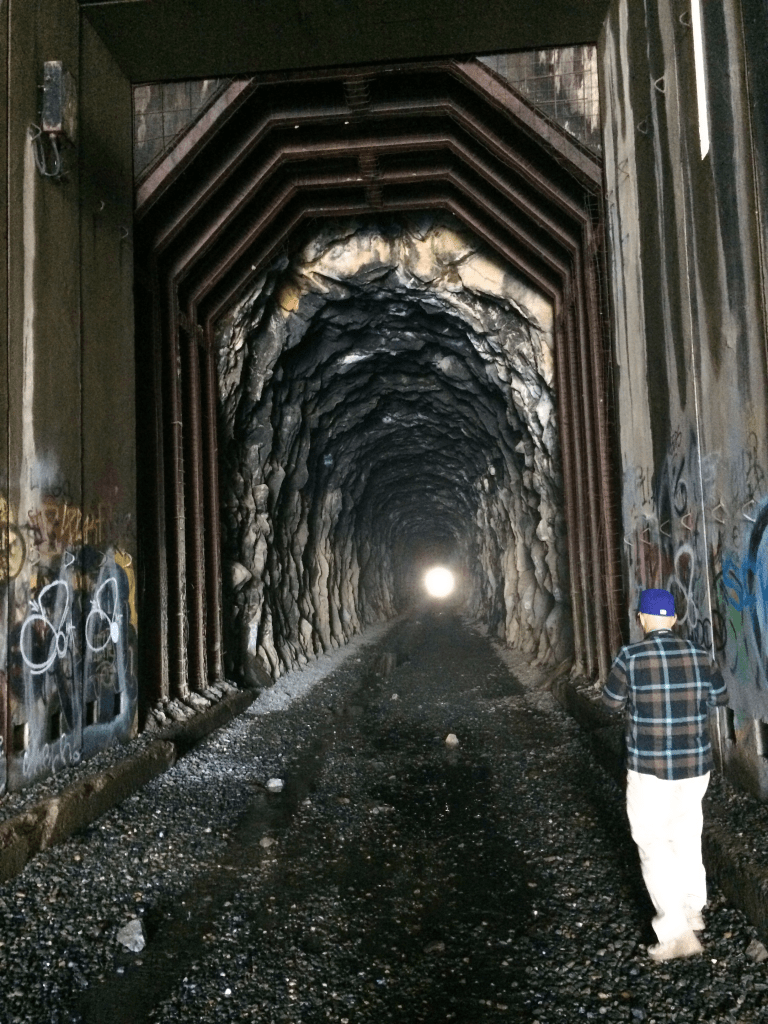
Today, over 150 years later, most of the original route is still in daily operation. (Some small improvements to the route have been made over the years, most notably the abandonment of the 1,687-foot long Summit Tunnel at Donner Pass. My friend Bill and I were able to walk through that abandoned tunnel a few years ago.)

Bill, literally walking in the footsteps of Chinese railroad workers.

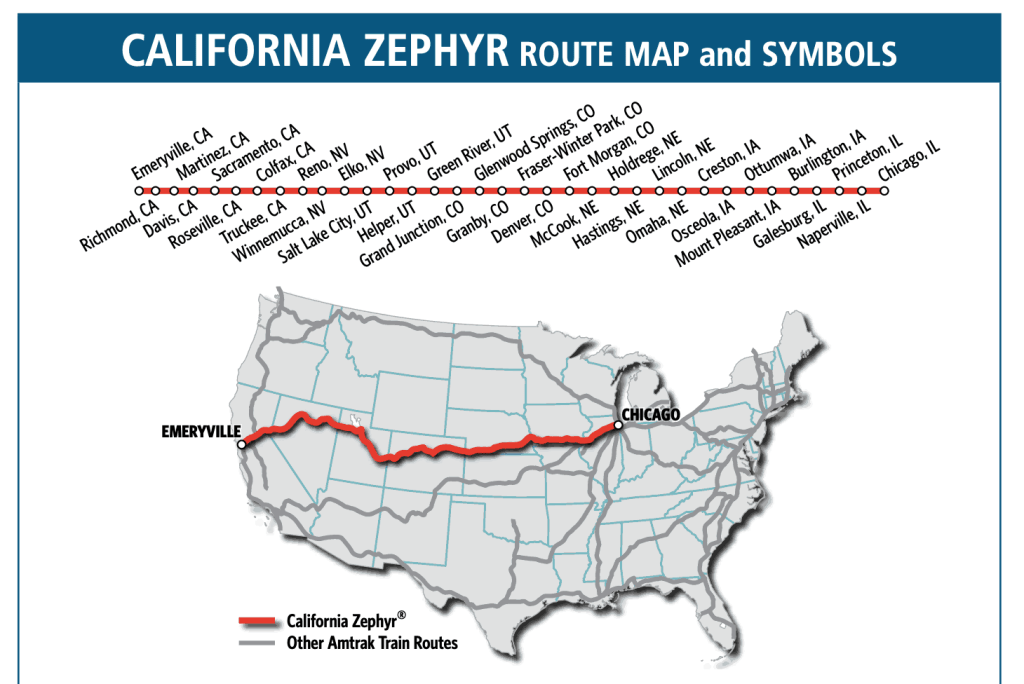
Amtrak (the country’s only remaining interstate passenger railroad) runs a daily train called The California Zephyr between Chicago and San Francisco, and naturally it travels the historic route over the Sierras. Now, you can catch glimpses of the railroad and its tunnels and snowsheds from your car window on Interstate 80, which roughly parallels the railroad. (I recommend the book Sierra Crossing by Thomas Howard, which describes the history of various routes over the Sierra Nevada.) But by car you just can’t appreciate the engineering marvel that is the Sierra route as well as you can by riding the rails themselves.

And so it was that, a few years back, my son (Ian) and I flew out to Chicago and boarded the California Zephyr. We were excited to experience the Sierra passage from the window of our compartment. But alas, Amtrak (which notoriously and habitually runs late) reached the Sierras not at midday as scheduled, but rather in the middle of the night as we slept.

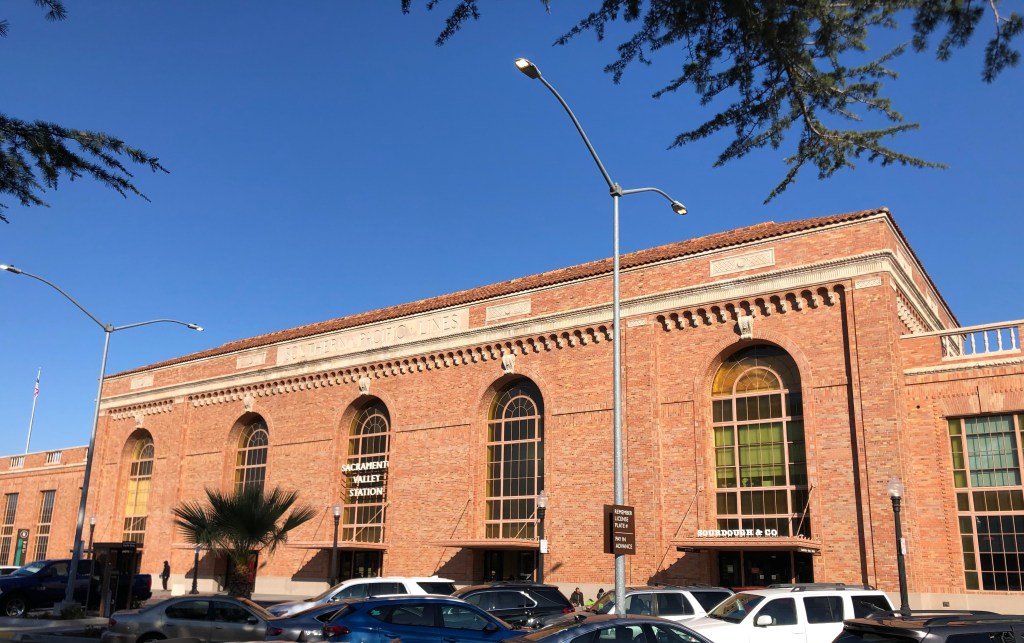
Yesterday Ian and I tried again. This time we are boarding at the historic Sacramento station and heading east. We’re only taking the Zephyr as far as Reno, because the whole point of this trip is to finally experience the Sierra crossing in daylight.

The historic Sacramento Station, built by the Southern Pacific in 1926.
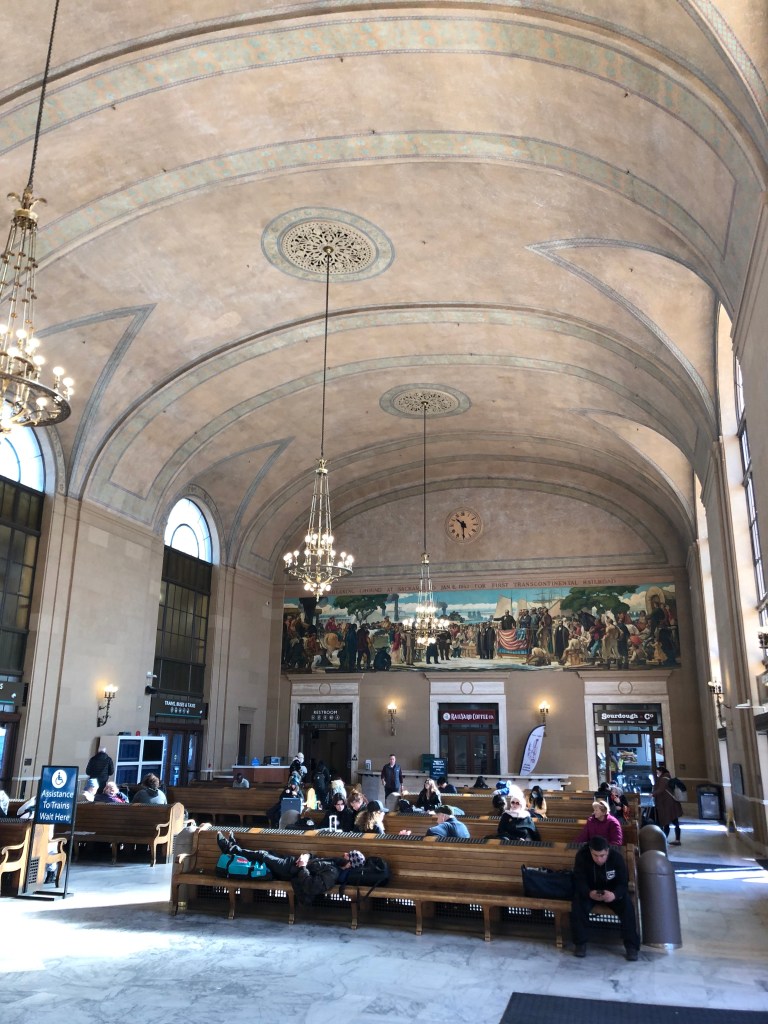
Interior of the station, in all its Renaissance Revival glory.
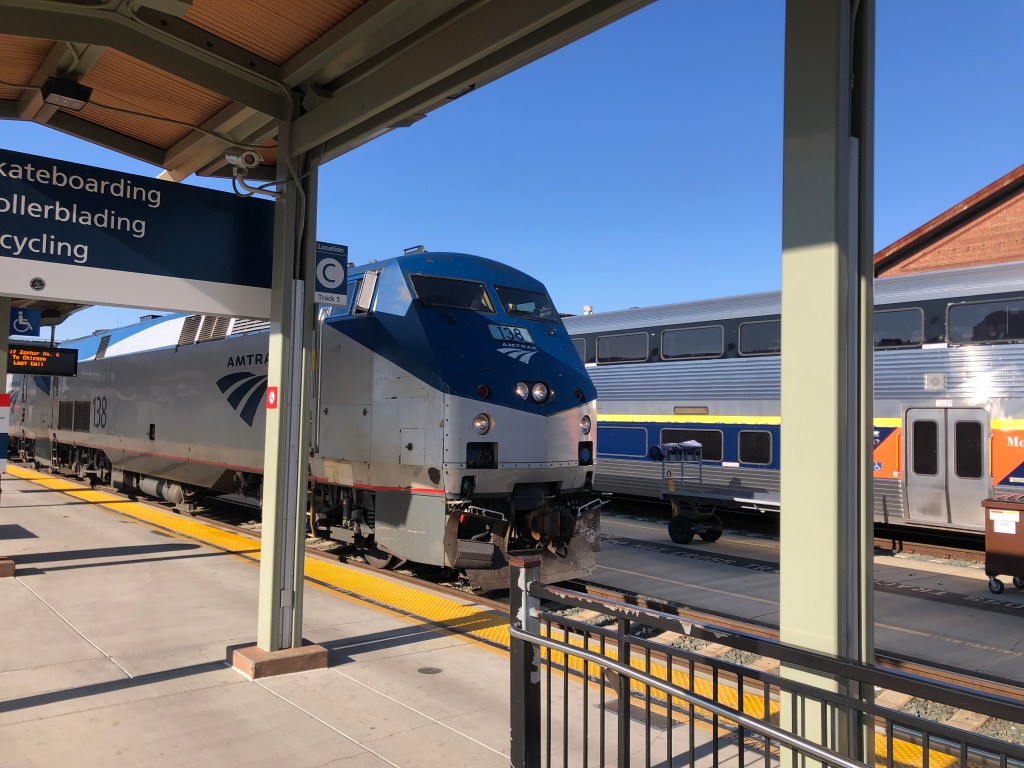
The California Zephyr arrived on time!

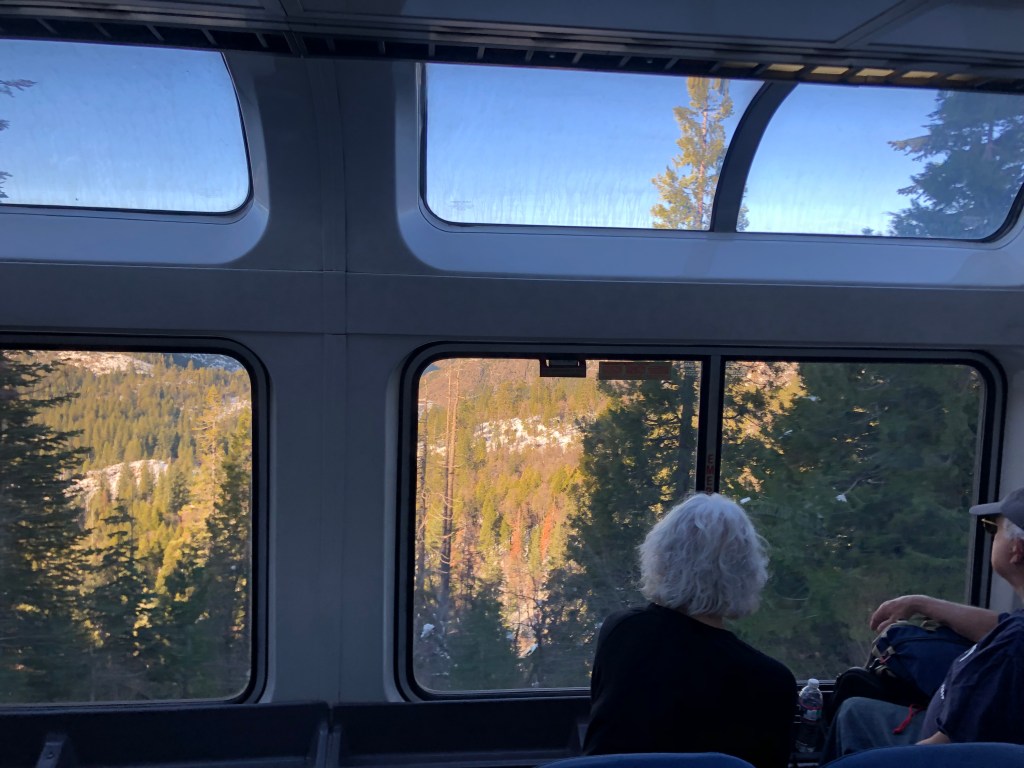
As the train started rolling we settled into our seats and began watching out the window at rather sketchy parts of Sacramento, Citrus Heights, and Roseville. We decided this might be a little more tolerable if we had beer, so we repaired to the club car. Fortified with our beers and some microwaved food, the scenery began to improve. Upstairs from the snack bar is a friendly and casual observation area, with nice big vista-dome windows and comfy chairs and tables. This is where we spent most of the trip.

Everyone loves the Vista Dome.

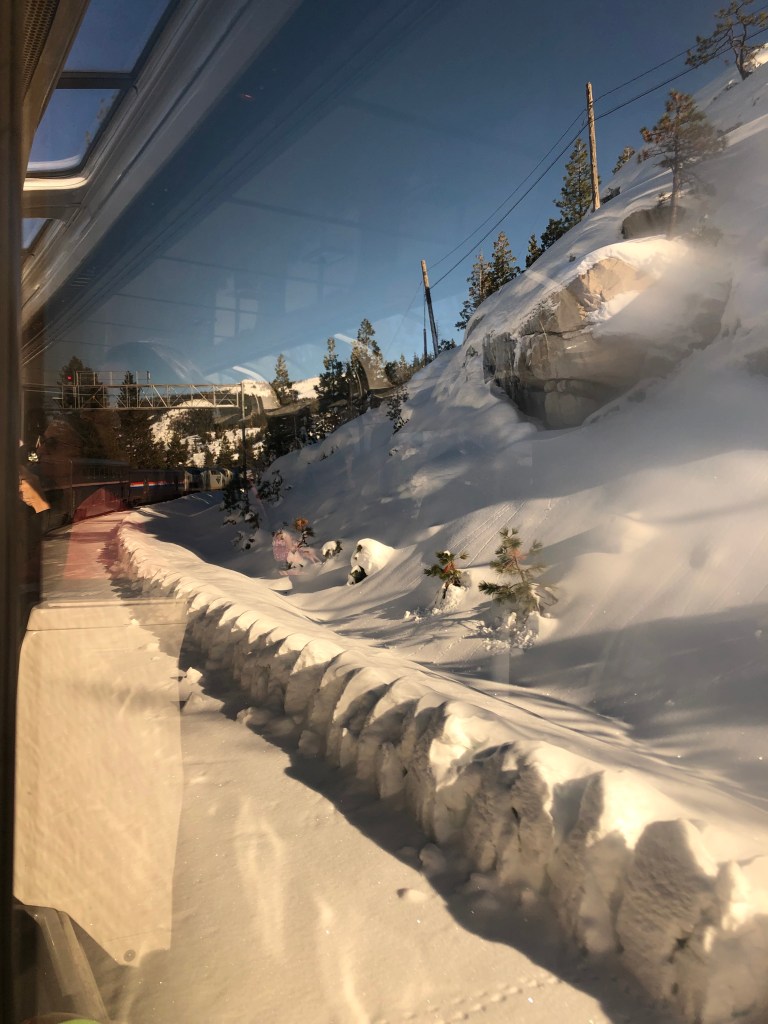
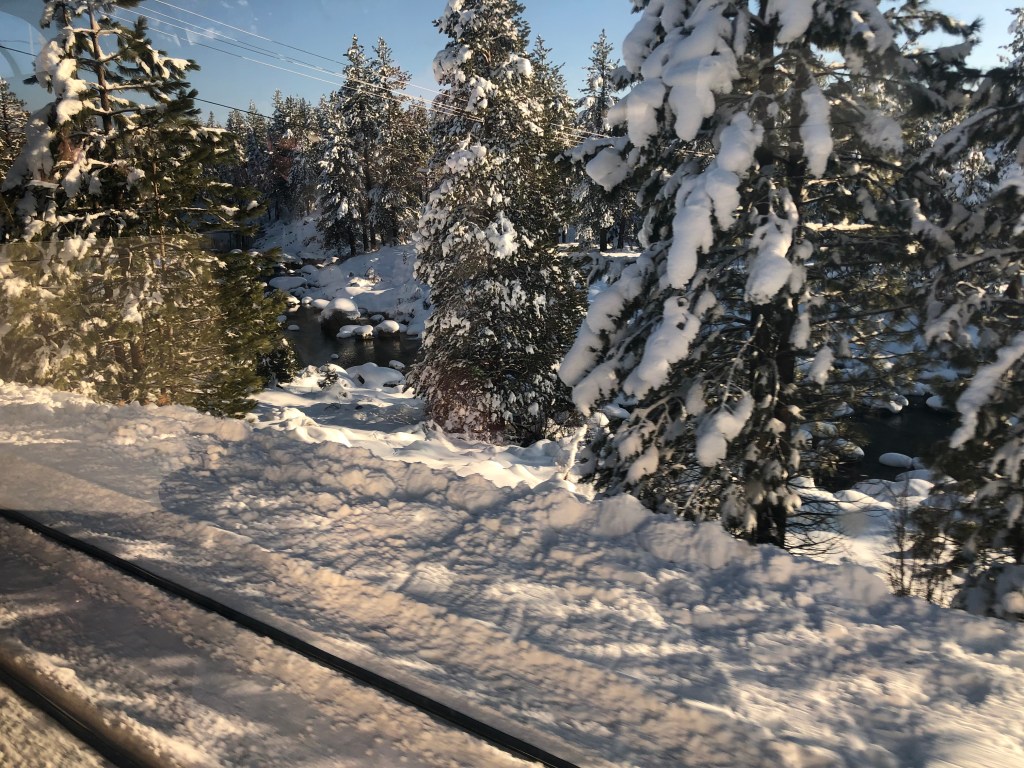
After a bit we started to climb into the foothills, and soon we encountered snow. Our climb over the Sierra had begun!

There’s something very relaxing about watching scenery through the window of a railroad car. The train moves steadily and smoothly, and the car is warm and comfortable. The passengers adopt an attitude like they’re in their own living rooms. Young parents entertain their kids, college students take pictures and send text messages, an older couple plays cards. One friendly guy was gushing to his seatmate about how he prefers train travel to the stress and hassle of flying. A few people were napping. Many just watched out the windows. It’s a remarkably relaxed way to travel, where you wear no seatbelt, you have freedom to move from room to room, and someone else up at the front of the train is in charge of getting you where you need to go.

Of course, I had my own specific interest in this particular route. I kept trying to imagine how the Central Pacific work crews managed to build this railroad over the Sierras using 1860s technology. They worked in subfreezing temperatures and massive snow drifts battling avalanches, gravity, and relentless granite walls. And yet they completed the job in just a few years. It’s hard to imagine CalTrans, even with all its modern equipment, ever matching that record.

After a few hours we reached Donner Pass at about 7,000 feet. The snow was at its thickest here, but it was pretty scanty by historic standards. A snowplow had passed through about a week earlier. Fortunately, brother-in-law Scott found a video of that very event: The plowing of Donner Pass around December 10.

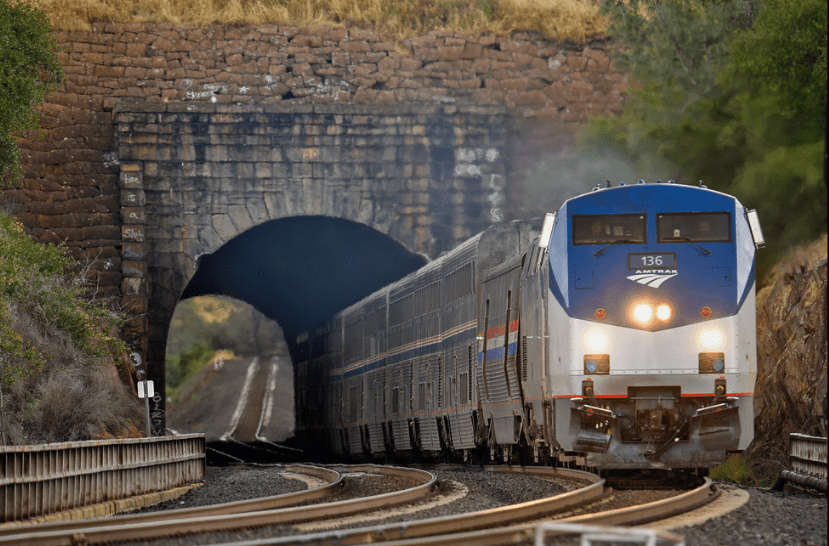
The other thing I really like about going over the Sierra by train is the visual access to California’s remote and relatively untouched lands. In the more urbanized parts of the state where most of us live, very little evidence of our history remains. Historic buildings are torn down as soon as they are deemed “outdated.” Those that do remain are often rebuilt with modern materials or modified for ADA access. But here in the Sierra it’s not unusual to see 150-year-old relics still standing proud–Like many of those original tunnels that we passed through.

I did not take this photo, since I was onboard the train! Photo taken by Tom Taylor, who does excellent railroad photography.

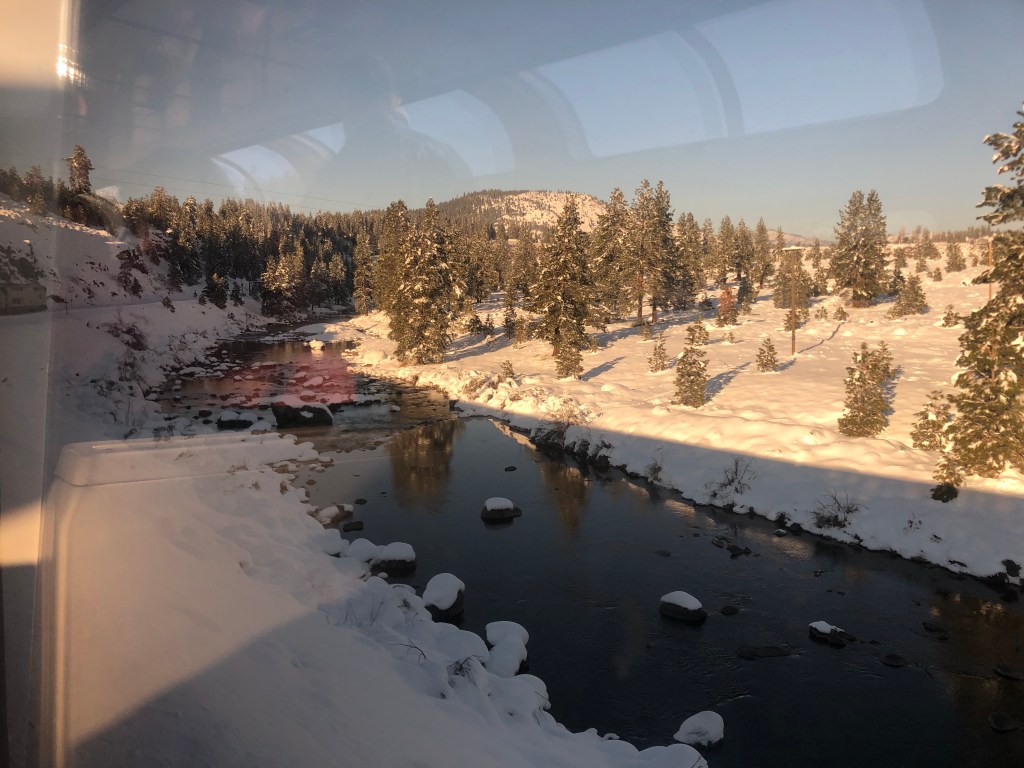
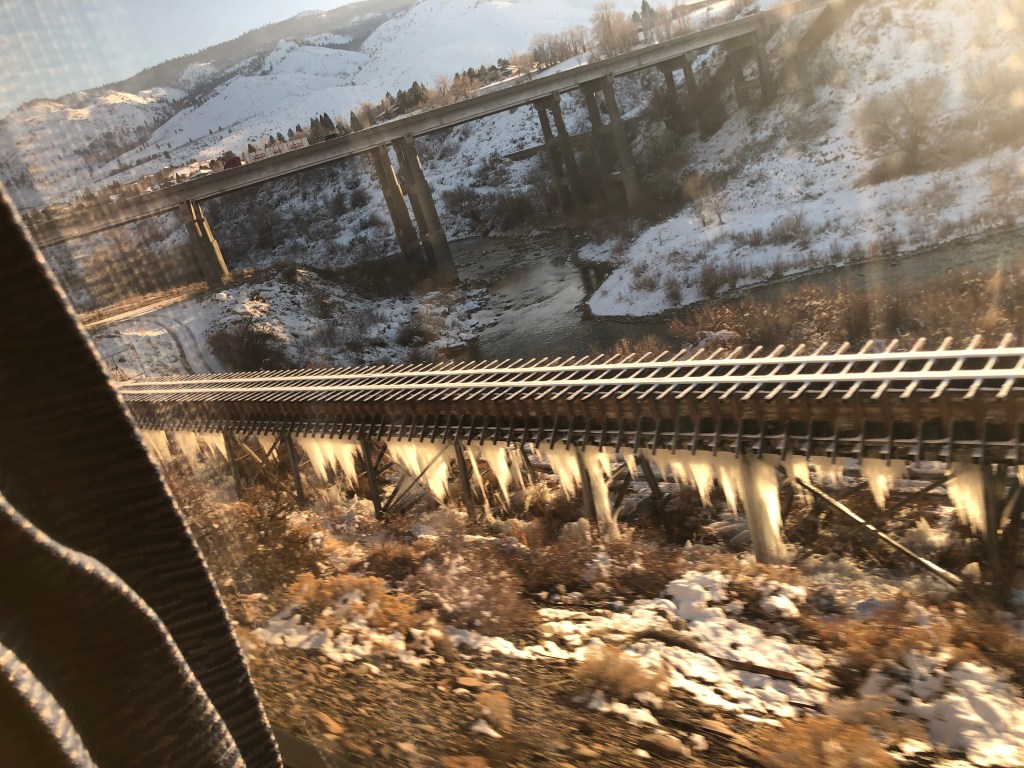
Another relic from a century ago is a collection of wooden flumes conducting water along the Truckee River. The water powers several century-old hydroelectric plants that are still in operation today.

The Truckee River.
The flume is the railroad-track-like structure at the lower third of the photo. Note the icicles hanging beneath. Evidently the wooden flumes aren’t watertight.

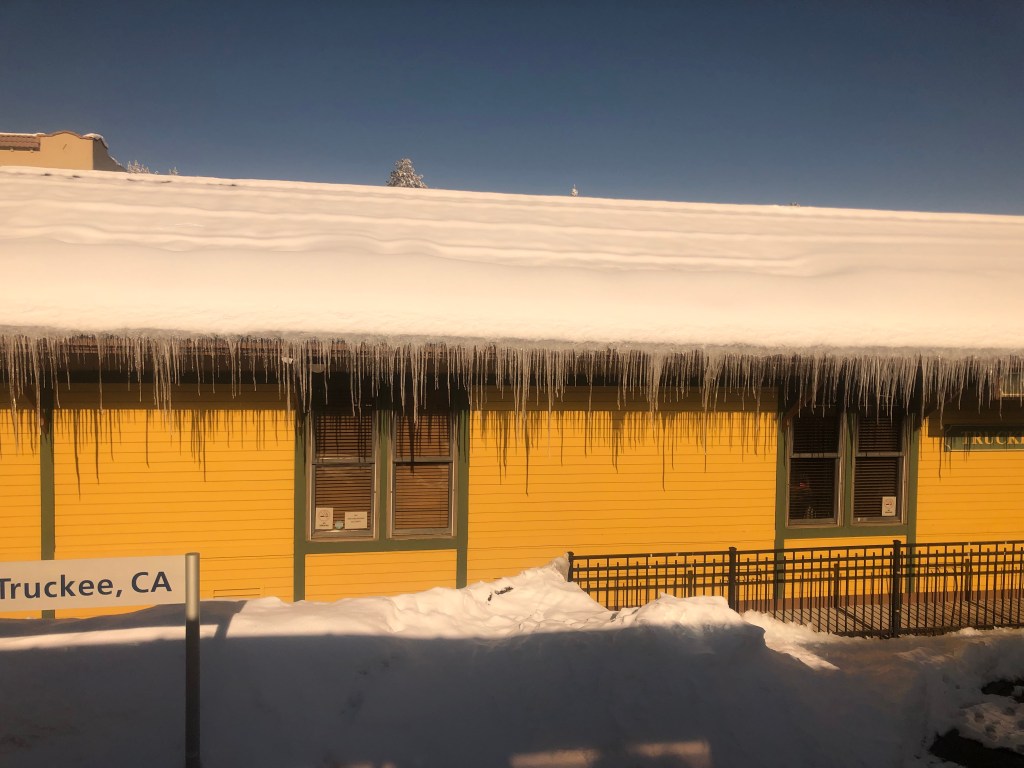
Speaking of Truckee, the town still has its old Southern Pacific station from 1900. It’s remarkably well preserved, and according to “The Great American Stations” website, “Renovations and modernization in 1985 altered the historic fabric only slightly.”

Careful standing under those eaves!

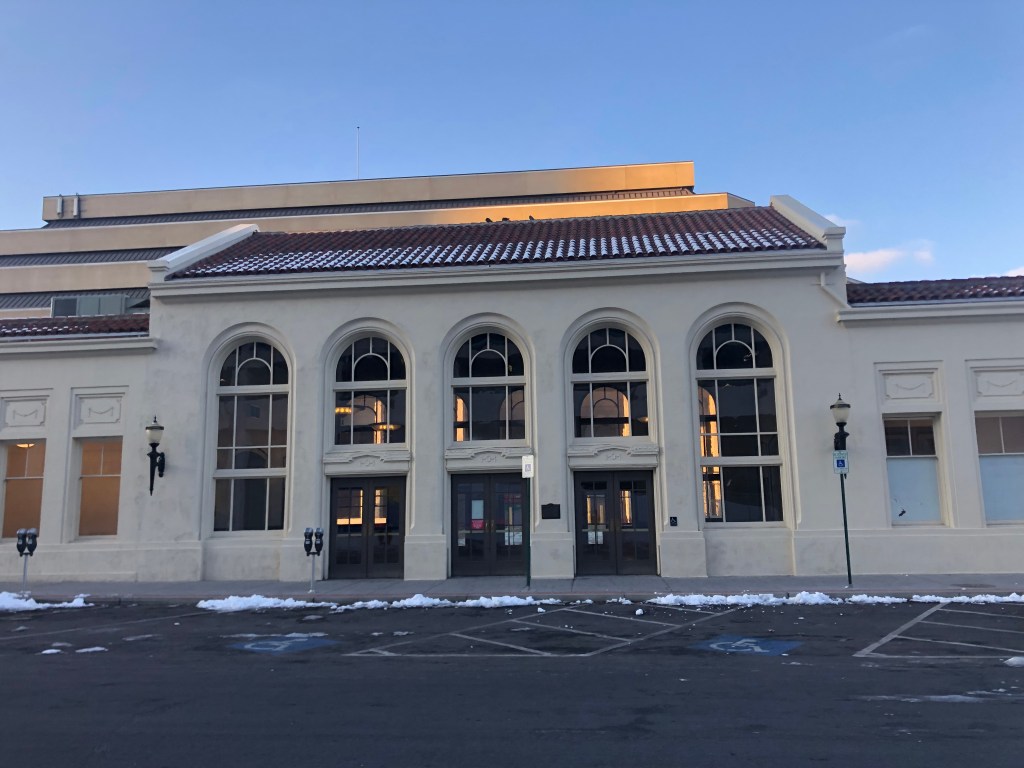
Eventually we got over the Sierras and dropped into Reno, NV (pop: 270,000). Reno’s current Amtrak station was grafted onto the city’s 1926 Southern Pacific depot in 2005. That same project lowered the railroad tracks into a 2-mile long ditch (a two-track-wide concrete canyon), in order to eliminate 11 grade crossings at street level. We got off the train down in this concrete canyon, enter a waiting room, and then climb stairs to the street level.

The Reno station at street level. (This is the original Southern Pacific portion of the structure; the Amtrak section is to the left.)
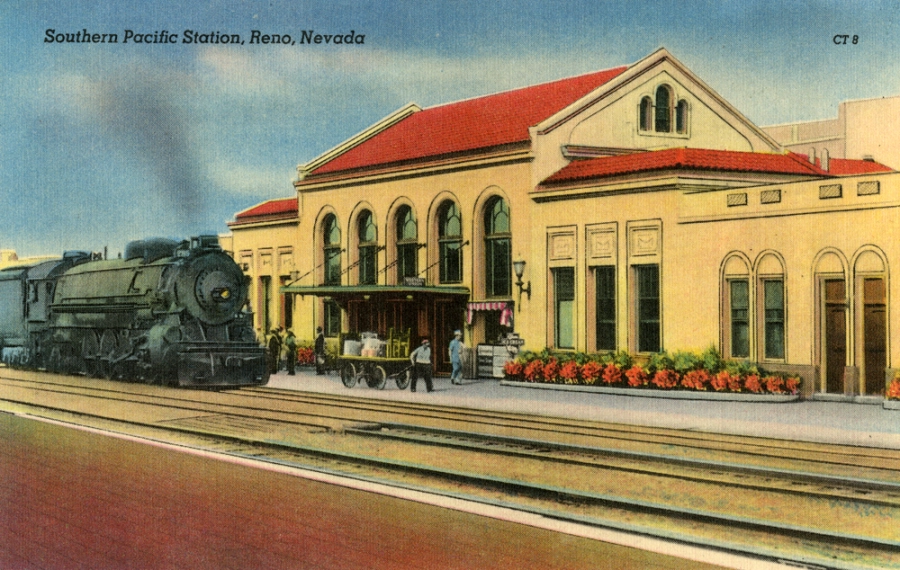
Reno’s Southern Pacific station in the steam era.

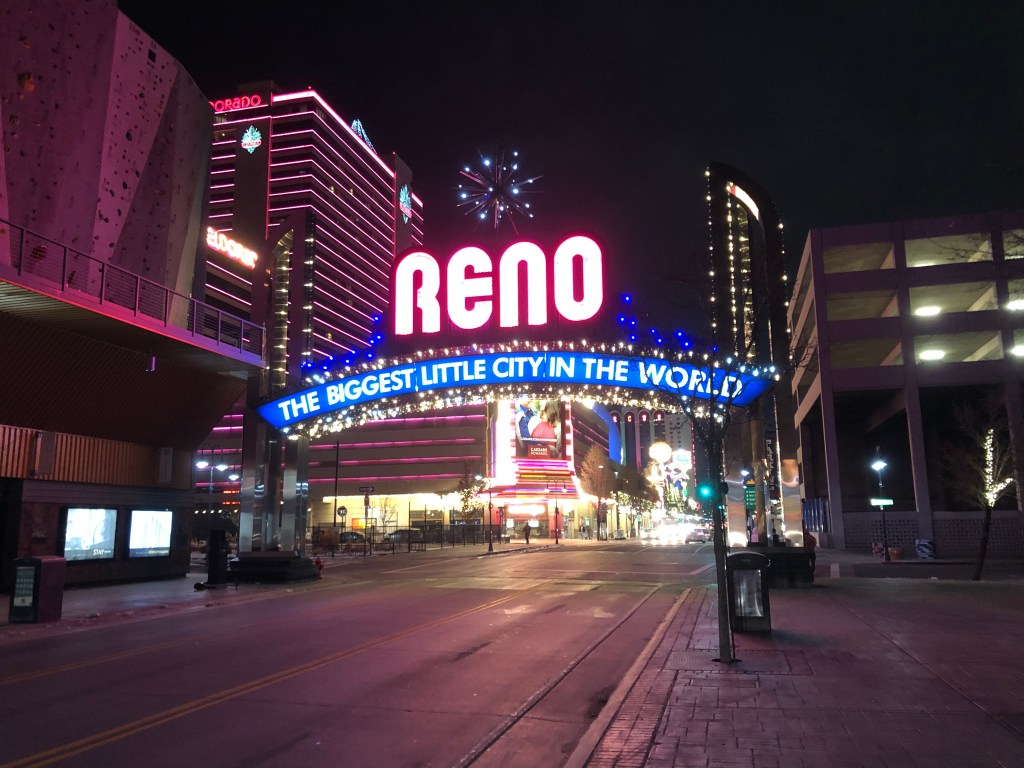
So, that’s about it for our Amtrak adventure over the Sierra. (We returned today, but obviously covered the exact same ground.) But it’s worth noting that we spent some time walking around Reno last night…

…and naturally I was able to squeeze in a Brew of the Day. So, without further ado, I present:

THE BREW OF THE DAY

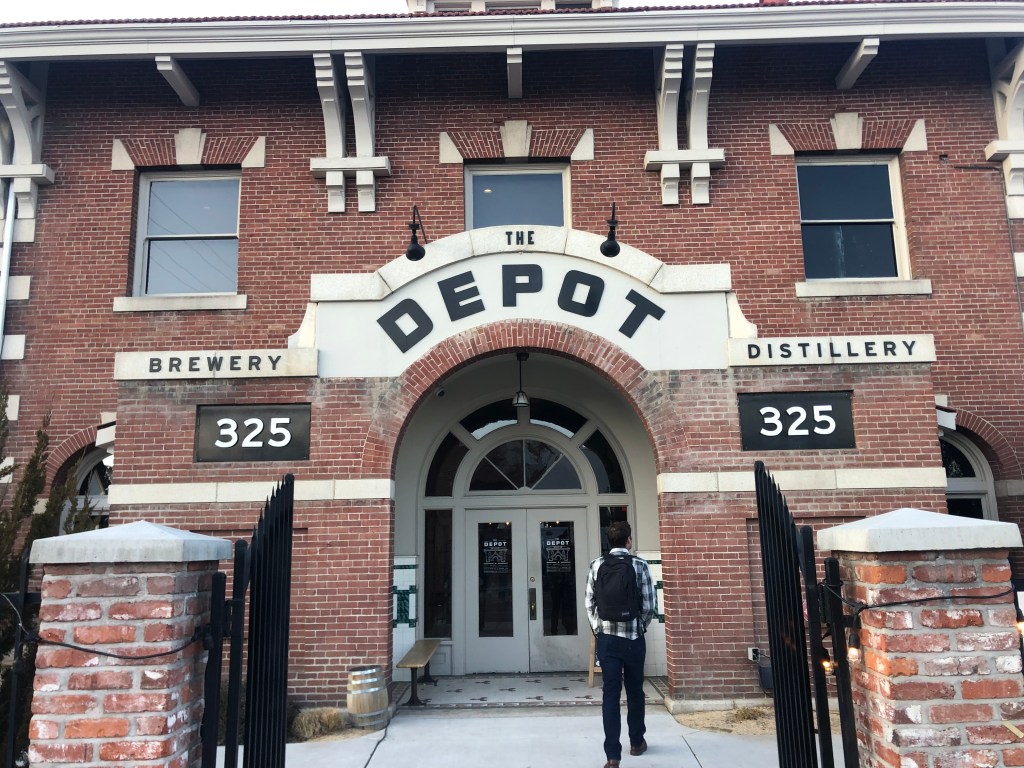
Just a few blocks from the Reno station is a brew pub named The Depot. Appropriately, it’s housed in the old Nevada-California-Oregon Railroad depot, which was built in 1910.

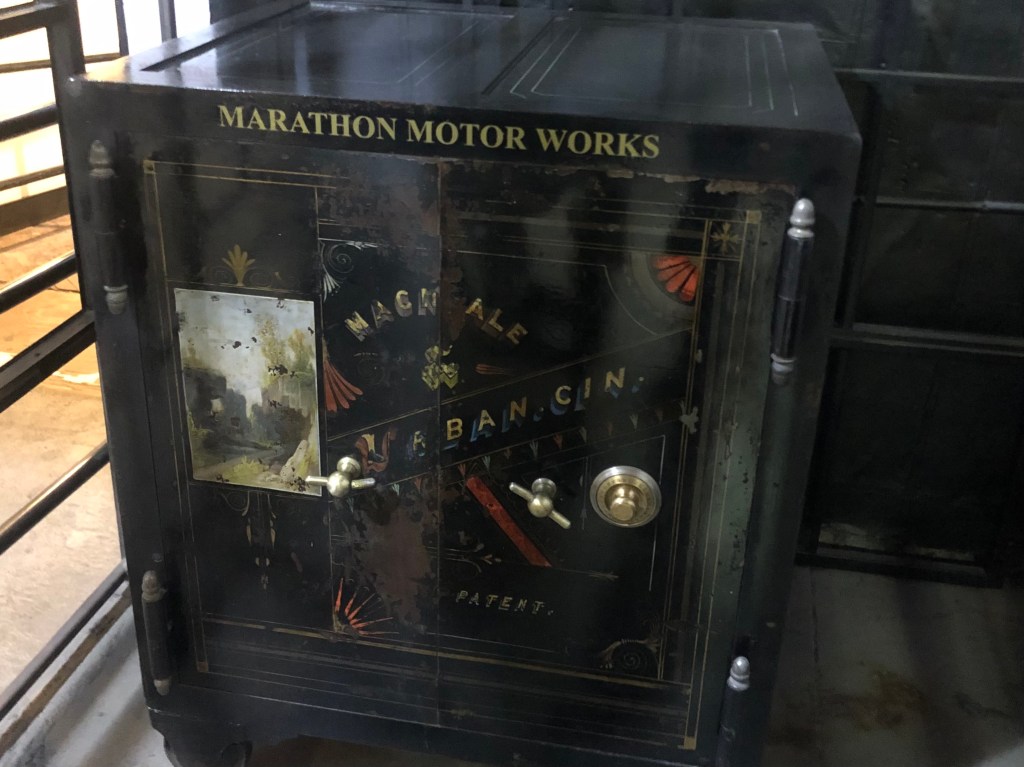
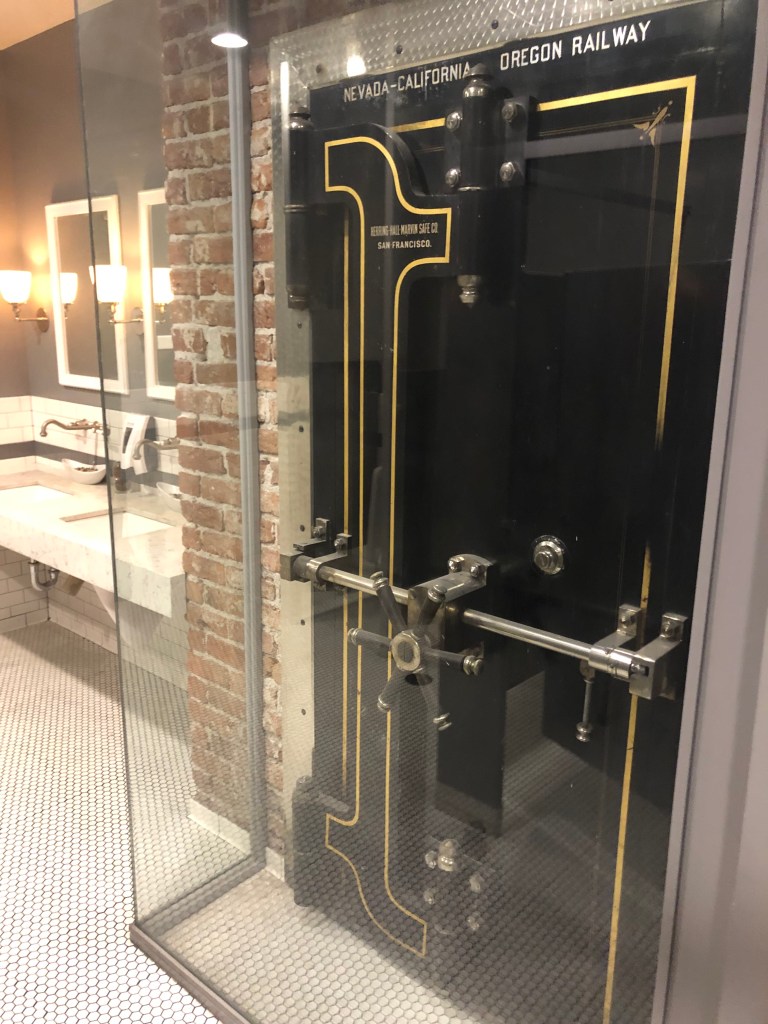
It’s a cool old building, remarkably preserved, with an impressive bar and attractive decor. There are neat old and anachronistic features everywhere, including the railroad’s ancient walk-in safe standing in the Men’s room.

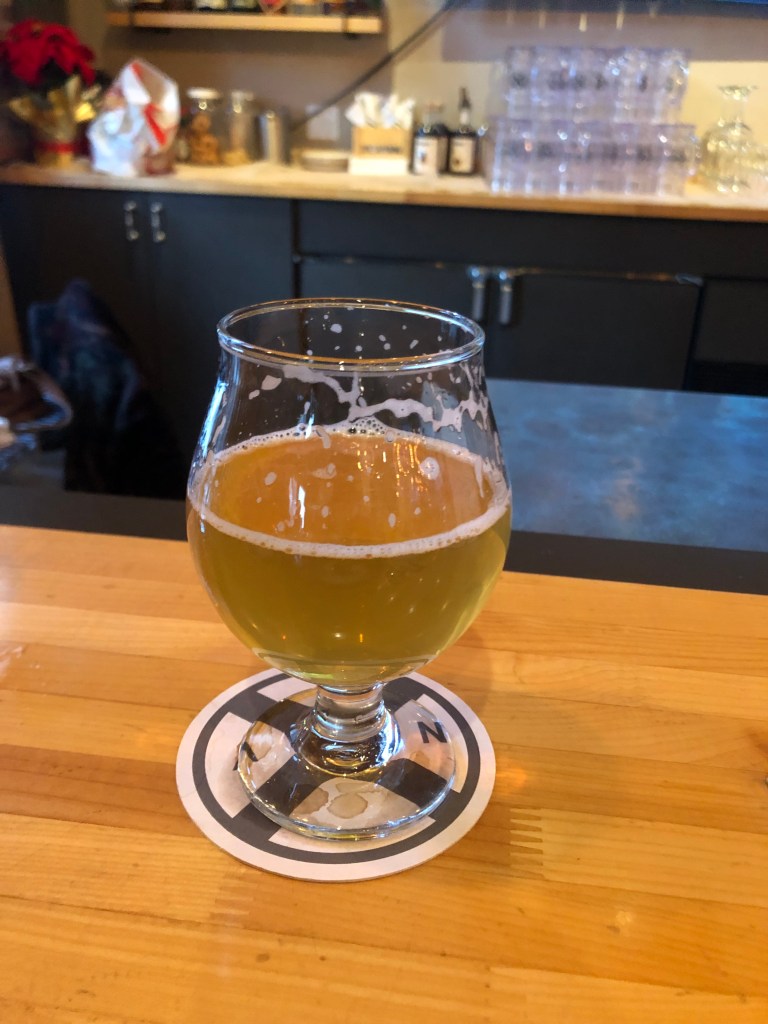
Feeling good about our find, we set ourselves down at the bar and studied the extensive beer menu. After much consideration I ordered something called a “Yankee and Kraut.” Let me quote how the menu describes it: “German beechwood smoked malt and Bavarian pretzel smoked sour ale.” (5.9% ABV.) I was intrigued. I’d literally never heard of anything like it. But I like Bavarian pretzels, and I like smokey drinks like Scotch or Mezcal or a smoked porter. What could go wrong?

Yankee and Kraut

The first sip I took definitely had a smokey profile, but it was fleeting and became immediately overwhelmed by a sour, vinegary assault on my tastebuds. This wasn’t a fun or playful sour like you get from sour gummy worms or Lemonheads. This was reminiscent of swimming pool acid. What’s more, the acidic, sour taste kept increasing with each new sip. And then, just when I thought it couldn’t get any worse, a “finish” reminiscent of off-brand window cleaner washed over my tongue and singed my sinuses. Meanwhile, there was not the slightest hint of “Bavarian pretzel” anywhere–not even the requisite salt or mustard, which would have been a welcome distraction for this beer. I cannot in good conscience give this anything higher than zero points. (The Mac ‘n’ Cheese Bites were awesome, though.)

Halloween Cocktails

Happy Halloween!

Here we are on the 31st day of October, ready to make our 31st Halloween cocktail. What a long strange trip it’s been.

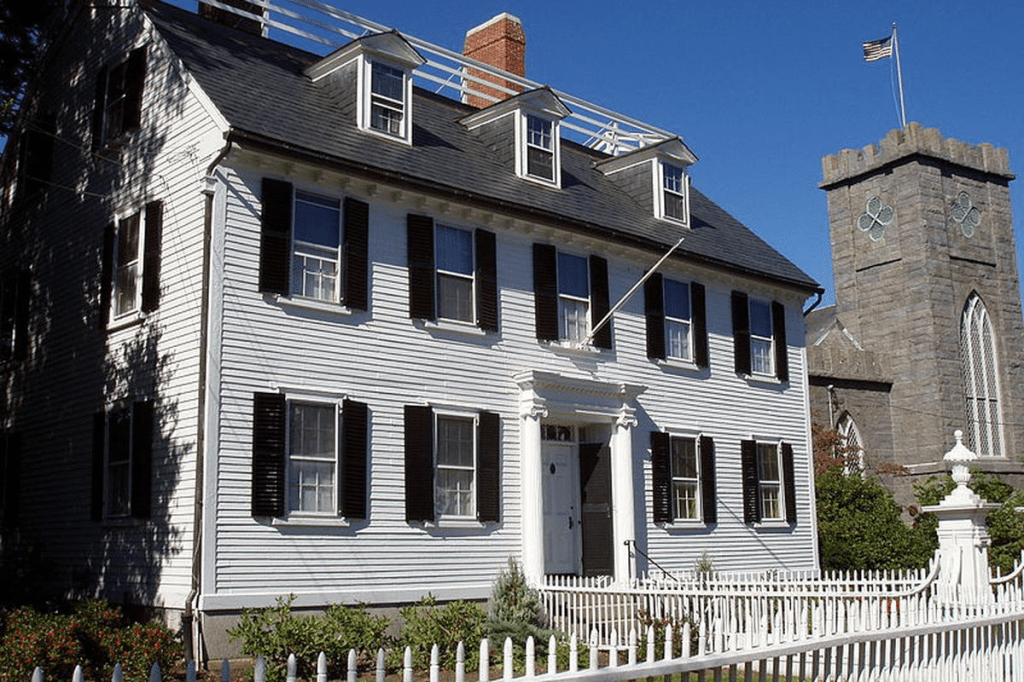
I’m about to settle down on the sofa with my wife (aka Mrs Columbo) and we’re going to watch Hocus Pocus. Neither of us has seen this 30-year-old movie, but we’re told it’s one of the few Halloween movies that both of us could appreciate. Besides, a couple of years ago I visited the location where the movie is set (Salem, Mass.), and it should be fun to see if I can recognize any of the buildings.

One of the actual homes in historic Salem that appear in Hocus Pocus.

But before settling down for the movie, I have one more cocktail to make. I tried to select a final cocktail using some of the lessons I’ve learned this month. To wit:

  • Creamy concoctions seem to beat out the less viscous drinks in terms of taste.
  • The drink’s container helps to set the mood.
  • Gimmicks are good.
  • Avoid Chartreuse at all costs.

Accordingly, I’ve found the following Halloween cocktail that seems to incorporate all those lessons. Here we go!

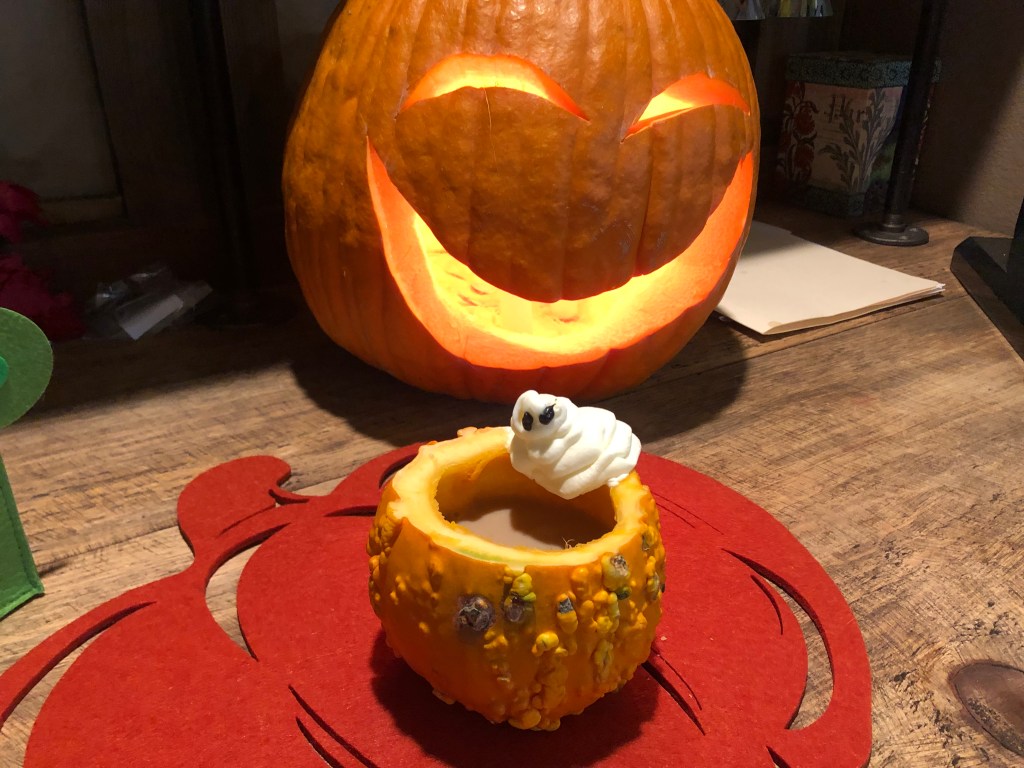
The Recipe: The “Ghostbuster Cocktail” is made as follows: First, you have to make a little ghost. Whip up some whipped cream (heavy whipping cream and sugar), and put it in a piping bag. Now, pipe out a ghost shape on a silicone mat. Add eyes using black icing, and freeze it in the freezer.

For the drink itself, fill a cocktail shaker with ice and add 2 oz vodka, 1 oz Bailey’s Irish cream, and 1 oz. Kahlua. Shake it up (as Rick Ocasek would say) and pour into a hollowed-out small pumpkin that will serve as a cup. Seat the ghost on the rim of the pumpkin.

The Ratings: The appearance is great–You have a pumpkin and a ghost. What more could you want? This screams Halloween. Four points.

The taste is less exciting. This strongly tastes of Bailey’s. The vodka just adds alcohol without imparting any real taste, and the Kahlua just gives a slight coffee flavor. This is mainly Bailey’s. Which is fine, but it reminds me of St. Pat’s rather than Halloween. The taste gets only 2 points.

The name is kind of fun. People my age (i.e., who were born during the Kennedy Administration) remember Ghost Busters well, as an innovative and fun comedy/horror movie. And the little ghost on the side of the pumpkin echoes that theme. Two points.

Grand Total: 8 points

Now, for those of you who are interested, here’s the scores for all of this month’s drinks:

NameAppearanceTasteNameTotal
Oct 1Pumpkin Martini33.517.5
Oct 2Dark N Stormy2428
Oct 3Haunted Graveyard2327
Oct 4Herman1023
Oct 4Lily21.51.55
Oct 5Corpse Reviver0022
Oct 6Pumpkin Old Fashioned22.515.5
Oct 7Witches Brew0426
Oct 8Absinthe/Green Fairy4228
Oct 9Necromancers Martini22.526.5
Oct 10Halloween Jell-O Shot3.5306.5
Oct 11N/A–Poe Trip
Oct 12Zombie1225
Oct 13Wolf BIte2.53.51.57.5
Oct 14Beetlejuice Cocktail3115
Oct 15Smokey Cauldron43.529.5
Oct 16Vampire Kiss3126
Oct 17Halloween Candy Corn Cocktail1001
Oct 18Pumpkin Spice Mudslide2204
Oct 19Zombie Socketini3328
Oct 20Nightmare on Bourbon St3429
Oct 21Death in the Afternoon21.525.5
Oct 22Headless Horseman3328
Oct 23Black Magic Margarita2.541.58
Oct 24Jack Skellington2.541.58
Oct 25Screwed-up screwdriver3.51.505
Oct 26Green Ghost0022
Oct 27Hell Fire3.5429.5
Oct 28Don Muerte231.56.5
Oct 29Otto’s 192333.506.5
Oct 30Smoke Mirrors and Colors3418
Oct 31Ghostbuster Cocktail4228

As you can see, the #1 drink in terms of appearance was a tie between the Absinthe, the Smokey Cauldron, and the Ghostbuster Cocktail. The #1 drink in terms of taste is a tie between the Dark N Stormy, the Witches Brew, Nightmare on Bourbon Street, Black Magic Margarita, Jack Skellington, Hellfire, and Smoke/Mirrors/Colors. The drink with the highest total score is a tie between the Smokey Cauldron and the Hell Fire.

Thank you to everyone who stuck with me through this experiment, and thanks especially to those who provided feedback or offered their own suggestions. I have something even bigger and better planned for October 2023, so that’s something for you to look forward to (or not). I now turn this blog back over to its primary function as a travelogue.

Any questions?
Halloween Cocktails

Dan is Back!

This just in:

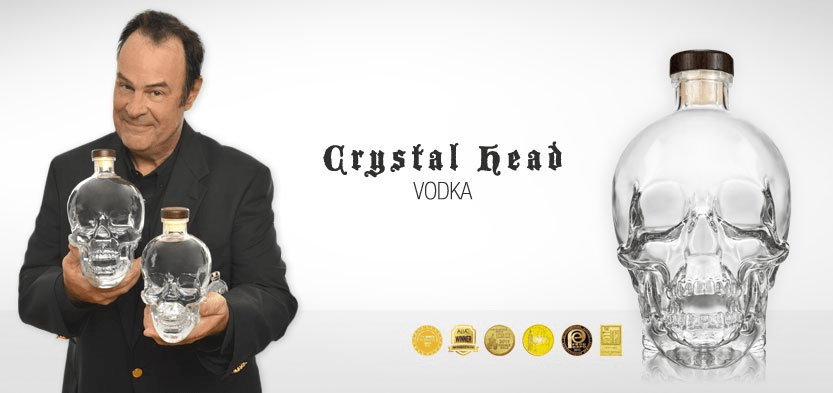
Yes, Dan Aykroyd and Chevy Chase are going to be in another movie together. This one will be based on a teen/young adult franchise by R.L Stine, so I don’t expect to be watching it. But Dan Aykroyd is a pretty decent fellow. For starters, he’s Canadian. He’s also the founder of a vodka company called Crystal Head. The notable thing about his vodka is the bottle, which is shaped like a skull. And that’s a good Halloween connection.

It turns out there’s a cocktail called “Smoke, Mirrors and Colors” which shows up on a couple of Halloween cocktail lists. It uses Dan Aykroyd’s Crystal Head vodka. It’s also very easy to make. So here we go!

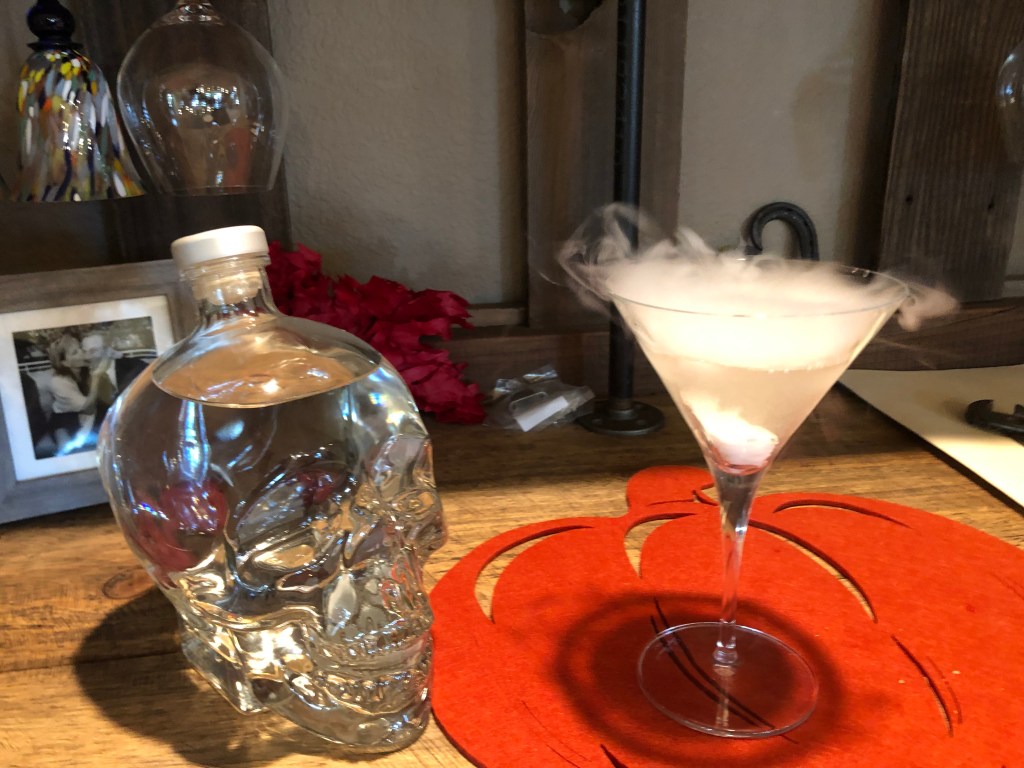
The Recipe: Combine 1.5 oz Crystal Head Aurora vodka, 1 oz dry vermouth, and 1/2 oz Mezcal in a shaker with ice. Shake and strain into a glass with dry ice.

The Ratings:

Let’s get this part out of the way: There’s no “color” to this drink. It’s only the container (the skull) that potentially has some iridescence (that doesn’t seem to even be visible in the photo). (This is what’s distinctive about the “Aurora” version of Crystal Head.) That said, the dry ice is a definite plus in that it creates a spooky “smoke.” Otherwise, it’s just a clear drink. Let’s give it three points for appearance.

The taste is distinctive and flavorful. The vermouth lends a tartness which interacts with the smoky Mezcal perfectly. And while the dry ice is obviously there mainly just to create “smoke,” it also carbonates the drink and hyper-cools it. The mouthfeel reminds me of a very cold San Peligrino. The finish is slightly briny, with a nice tang. Overall, this is an approachable, honest, straightforward drink. I can’t think of any part that needs improving. I must give it four points for taste.

The name is a little lame. The smoke part is obvious (either the smoke from the Mezcal, or from the dry ice). The “colors” are presumably from the iridescent bottle (notably NOT from the drink). The mirrors….I have no idea. And I’m not sure how the name connects with Halloween. I suppose there’s something kind of outré about smoke, mirrors, and colors. But the best I can do here is 1 point for the name.

Grand Total: 8 points.